Rawal’s departure has reportedly left both fans and colleagues disheartened. Suniel Shetty, who plays the calm and collected Shyam in the series, expressed his disappointment during an interview with ANI.
“I mean, it’s an absolute shock to me. I’m here because I heard it yesterday, and then today, some more news came about. So, I need to call and find out, and I’m completely heartbroken because if there was one film I was looking forward to, it was Hera Pheri, you know,” Shetty said.
He also emphasised that the franchise would be incomplete without Rawal’s character. “It cannot happen. One hundred per cent cannot happen without Paresh Rawal. It can have a 1 per cent chance without me and Akshay, but 100 per cent cannot happen without Paresh ji. No, it doesn’t. Raju and Shyam, if they’re not hammered by Babu here, it doesn’t work,” he added.
In the original Hera Pheri films, Akshay Kumar played Raju, Suniel Shetty portrayed Shyam, and Paresh Rawal immortalised the character of Baburao, earning widespread acclaim for his comedic timing and memorable dialogues.
As fans continue to hope for the return of the original trio, Shetty’s message serves as a poignant reminder of the camaraderie and legacy that the Hera Pheri franchise represents.
Tech Mahindra was the top laggard, falling 1.73% to ₹1,572.20
Shares of Eternal Healthcare Ltd, State Bank of India (SBI), HDFC Bank Ltd, Larsen & Toubro Ltd, and Reliance Industries Ltd were among the top gainers on Friday.
On the other hand, Infosys Ltd, NTPC Ltd, Asian Paints Ltd, HCL Technologies Ltd, and Tech Mahindra Ltd ended as the biggest losers.
Equity benchmarks ended lower as global trade concerns resurfaced. The BSE Sensex declined 182.01 points or 0.22 per cent to close at 81,451.01, while the NSE Nifty 50 fell 82.90 points or 0.33 per cent to 24,750.70. The selloff followed news that a US federal appeals court had temporarily reinstated tariffs on select foreign imports, prompting caution among investors.
Top gainers
Eternal Healthcare led the session with a 4.58 per cent rise, closing at ₹238.75. SBI gained 1.89 per cent to ₹812.40, driven by optimism in banking sector performance.
HDFC Bank added 0.81 per cent to ₹1,944.60, while Larsen & Toubro rose 0.64 per cent to ₹3,678.60. Reliance Industries edged up 0.24 per cent to ₹1,420.80.
Top losers
Tech Mahindra was the top laggard, falling 1.73 per cent to ₹1,572.20. HCLTech dropped 1.64 per cent to ₹1,637.55, while Asian Paints shed 1.62 per cent to ₹2,260.05.
NTPC declined 1.49 per cent to ₹334.25, and Infosys ended 1.43 per cent lower at ₹1,562.80.
The decline was led primarily by weakness in IT and FMCG stocks. Investor sentiment remained subdued amid fresh global macroeconomic uncertainties and caution ahead of upcoming GDP data releases.
VALLEY CENTER, Calif. — Norman Kachuck stood on a loamy ridge overlooking his inheritance.
Avocado trees blanketed the hillsides of ACA Groves in three directions, just a portion of a 372-acre spread studded with 16,000 specimens, many of them dense with branches weighed down by that quintessential California fruit.
The serene San Diego County property felt far from the chaotic epicenter of the global avocado industry in Mexico.
“Mexican avocado imports are tainted conflict fruit,” said Kachuck, 70, a former neurologist who heads his family’s business. “The Mexican avocado industry is corrupt and ungoverned — and the American consumer is being deceived.”
A deluge of inexpensive avocados from Mexico has imperiled the livelihoods of California growers, Kachuck among them.
A quirky and voluble man, Kachuck is on a quest to save the California avocado, taking political and legal action against entrenched interests he sees as an impediment to farmers like him. He calls himself a “Neuroavocado Warrior.”
ACA Groves’ Norman Kachuck, shown in May 2024, is fighting for the survival of the California avocado.
“You’ve got to be an activist, you’ve got to be proactive and you have to defend your strengths and buttress your weaknesses in everything you do,” said Kachuck, a married father of three adult children. “Everything has adversarial components to it. But the operative part is making peace.”
As recently as the 1990s, the U.S. did not import Mexican avocados. But 1994’s North American Free Trade Agreement opened the floodgates: now roughly 90% of the avocados consumed here are imported. And the bulk of that fruit — again, roughly 90% — comes from Mexico, according to the U.S. Department of Agriculture.
At the same time, Southern California farmers must survive in a drought-prone state, and extreme weather brought on by climate change has meant irregular crop yields, among other challenges. Dylan Marschall, a real estate broker who specializes in avocado properties, said the market dynamics are brutally simple: “Yeah, California has better-quality avocados, but retailers are in the business to make money. And if they can get [better] prices from Mexico, they aren’t going to pay for California fruit.”
Amid the tumult, Kachuck has battled with the California Avocado Commission, accusing it of insufficiently aiding growers. Now he is bracing for President Trump’s trade policies, unsure what they might do to his business.
A worker picks avocados at ACA Groves.
Kachuck said he would welcome a tariff, but pointed out that another major Trump initiative — deporting millions of immigrants in the U.S. illegally — could seriously deplete his and other farmers’ labor forces.
Change can’t come soon enough. Kachuck’s line of credit is tapped out and he’s had to draw hundreds of thousands of dollars from his retirement account to keep the business afloat.
Amid the avalanche of foreign fruit, the seasons spanning 2019 through 2023 were “just awful,” Kachuck said. The COVID-19 pandemic amplified the problems. But he presses on.
“Yeah, I’m taking chances. And I’m stupid enough to not know when quitting is correct,” he said. “I just have this general sense of optimism — or hubris — that I can figure it out.”
The quintessence of California
Kachuck took over his family’s business in 2010, making the long drive to San Diego County from his home in Valley Village. He had just walked away from a career in medicine — he’d practiced as a neurologist at USC for 20 years — to aid his ailing father.
Israel Kachuck, a onetime astronautics engineer and general contractor, bought more than 450 acres of mostly barren land in the 1960s and began planting avocado trees.
“He had been a restless soul for as long as I was aware,” Kachuck said. “lt was part and parcel with what he was doing: moving things around in his brain to accommodate problem solving that was interesting and remunerative.”
The son had a similar wandering spirit.
“My avocado did not fall too far from the tree,” Kachuck acknowledged.
He studied music composition and briefly played keyboard — three days in 1976 — with the Pointer Sisters. He then moved to New York to compose music for a girlfriend’s dance company until his curiosity about how the brain works led him to neurology. Next came medical school, graduating from USC in 1987.
An ACA Groves worker fills a satchel with avocados.
When he got involved in ACA Groves about 15 years ago, his dad was grateful. “For the first time in his life, he was finally sharing the business with somebody,” Kachuck said.
Before long, though, Israel was diagnosed with Alzheimer’s disease. He died in 2021 at 92. Though he’d been addled by the ailment, he understood that his son had managed to preserve the family business.
“The saving of the family legacy was a very important obligation I felt,” said Kachuck, who added, with a laugh, that he had also hoped the business would ensure his children “had more than just a neurologist’s income to support their lifestyles.”
Kachuck immersed himself in a wide-ranging education in avocados, from their agronomy to the unlikely backstory of their California triumph.
Share via
Once known as the alligator pear, the avocado traces its history to southern Mexico, where the fruit, according to some experts, was first cultivated about 5,000 years ago. (In Nahuatl, avocado is ahuacatl, sometimes defined as “testicle.”)
Though it is not native to California, the avocado is arguably as tied to the state’s identity as the orange once was. This is thanks to the venerable Hass variety, discovered in the 1920s by a Pasadena mail carrier-turned-grower, Rudolph Hass. His namesake variety accounts for 95% of avocados consumed in the U.S.
The proliferation of Mexican and other Latin cuisines cemented the avocado’s position as an American staple — largely via guacamole. But the fruit hit some speed bumps on its path to ubiquity. Amid an obsession with low-fat diets in the 1980s, avocados were spurned by many — even though their fats are mostly unsaturated.
Enter: the California Avocado Commission, which is overseen by the California Department of Food and Agriculture and whose main responsibility is to market and promote the state’s fruit. In the 1990s, the commission — which is funded by an assessment of the gross dollar value of California avocados sold — invested in research to establish the fruit’s health efficacy, said avocado farmer Duane Urquhart, a commission board member at the time.
An ACA Groves worker prepares to climb a ladder to pick avocados.
Once the avocado’s nutritiousness was established, Urquhart said, the commission launched a marketing and education campaign to teach consumers how to use them, even working with cooking schools to develop recipes. “That,” he said, “was when we really created the U.S. market for California avocados.”
Now praised as a superfood, avocados are at turns revered and vilified. Consider the endless disparaging of millennials over their avocado toast. But that hasn’t stopped anyone from eating them.
The avocado’s rise had an unintended consequence: Business interests in Mexico took notice.
Board machinations
As inexpensive Mexican avocados flooded the state, many California growers looked to the avocado commission for help. But Kachuck felt its board of directors made major missteps.
In late 2020, an agricultural trade attorney advised the commission’s board that it could petition the United States International Trade Commission for import relief, which can include tariffs.
Such a complaint, the attorney said, could prompt an investigation and have a “chilling effect on foreign competitors,” recalled avocado farmer John Cornell, then a board member.
But the avocado commission never took action.
Manuel Aquino totes a satchel full of avocados at ACA Groves.
Writing in the commission’s “From the Grove” publication in 2023, the board’s then-chairman, Rob Grether, derided what he termed “fanciful fixes for foreign fruit flow.” The California avocado industry’s retail and food-service partners would oppose such efforts, he wrote.
Kachuck was incredulous: “There was so much information about malfeasance in the Mexican avocado industry.”
Complicating matters were competing interests.
Though many California growers complained about Mexican imports, some of their peers had avocado groves or related businesses in Mexico too. Other issues pitted farmers in the north — Santa Barbara, San Luis Obispo and Ventura counties — against those south in San Diego and Riverside.
This all came to a head when Growing Coachella Valley, a nonprofit advocacy group, asked the commission in 2021 to support California legislation that sought to hold imported agriculture to state health and environmental standards.
But the commission’s board never even voted on whether to support the legislation. According to minutes from a board meeting, a staff member said he and legal counsel determined that AB 710 was not in the commission’s “best interest” in part because it would put the group in “a precarious position” with important retailers.
Kachuck fumed. In February 2024, he called out the commission’s board of directors at its meeting in Oxnard: “You betrayed my trust, that of our avocado growing community, and as well that of the American consumer.”
A worker at ACA Groves chops fallen branches.
The California Avocado Commission did not respond to multiple interview requests; instead, a staff member referred The Times to minutes from its board meetings.
Kachuck’s comments at the Oxnard meeting galvanized a loose coalition of other unhappy growers, most of them in the San Diego area. They decided to fight the issue through the 2024 board election, with six seats up for grabs on a body composed of 20 members and alternates.
‘Borrowed money’ and ballot failures
Kachuck believed the election presented a realistic opportunity to shake up the commission.
He sent out mailers and posted a get-out-the-vote appeal on the website of American Avocado Farmers, a group he and other growers formed last year.
But only 14% of eligible voters cast ballots, Kachuck said, and just one of the candidates he and a handful of like-minded farmers had backed was elected. “It’s awful,” he said. “I’m spending money I don’t have — it’s borrowed money. At this point I am 80% through my retirement account.”
Avocados are harvested at ACA Groves.
Kachuck’s failure at the ballot box may stem in part from the geographical divide. In addition to comparatively plentiful and inexpensive water, northern farmers enjoy another advantage: a later summer harvest, which means their fruit is picked after the Mexican crop has inundated the market. The Southern California avocado harvest roughly coincides with that flood.
Some farmers wonder if the gulf between the northern and southern poles of the industry is so wide that each region might be better served by having its own commission.
Others are gearing up for a different vote: Every five years, the state’s food and agriculture department holds a referendum that allows growers to decide whether the commission should continue to serve them. The next one will be held in spring 2026, a department spokesman said.
And then there is the big elephant in the boardroom: President Trump’s on-again, off-again tariffs.
Kachuck pivoted to a new strategy in the meantime: In February, he and three other farmers sued Fresh Del Monte Produce, Calavo Growers and Mission Produce in federal court, alleging they violated the California Business and Professions Code by falsely marketing their avocados as “sustainably and responsibly sourced” when they actually come from Mexican orchards planted on deforested land.
Jennifer Church, attorney for the plaintiffs, said that the case “is really about the American public being misled to the detriment of our local farmers.”
Fresh Del Monte, Calavo and Mission did not respond to requests for comment. But this month the companies filed a joint motion to dismiss the growers’ lawsuit, arguing in part that the challenged statements are typical “corporate puffery,” a legal term for exaggerated marketing claims that may not be objectively factual but are generally permissible.
A better avocado
The fight over California’s avocado industry has become Kachuck’s focus — to the detriment of other pursuits. There are things he wishes he could work on, like cultivating the Reed avocado, a little-known variety that’s about the size and shape of a grapefruit.
“It’s the most luscious, creamy, large and delicious avocado I’ve ever tasted,” he said.
He maintains 50 Reed trees, but doesn’t sell the fruit, instead giving it away to friends and family. The Reed, Kachuck said, spoils quickly after being picked, but could be made hardier via genetic intervention, such as cross-breeding.
Kachuck sits in the shade of a Reed avocado tree; he has 50 on his farm in San Diego County.
Kachuck was in his element showing off the Reed trees during a visit to ACA Groves, taking obvious pleasure in the ranch’s pastoral tableau. He crunched across alluvial soil in scuffed sneakers. A gust of wind turned an avocado tree into a viridescent blur.
“I would love to concentrate on making a better avocado for us,” Kachuck said.
He noted that Reed avocados have something unique going for them: They are not commercially grown in Mexico.
Once terrified of dogs, German adventurer Heike Pirngruber is now walking the globe with Butch, a flea-covered puppy she rescued in Mexico that’s reportedly become one of the most well-traveled dogs on the planet.
Together, the two have crossed continents by foot, canoe, motorbike and tuk tuk, news agency SWNS reported.
Pirngruber, 53, adopted the Australian cattle puppy in 2021 while she was staying in a beach hut in Baja California, Mexico.
Butch was just a month old, malnourished and alone when she found him.
“I never really liked dogs when I was a kid,” Pirngruber of Heidelberg, Germany, told SWNS. “But the first moment I had little Butch in my arms and knew he was mine now, I couldn’t believe how I felt.”
Heike Pirngruber adopted Butch in 2021 while she was staying in a beach hut in Baja California, Mexico. Her life changed from that moment, she said. (Heike Pirngruber / SWNS)
Her fear of dogs came from years of solo travel — seven of them spent cycling around the world. She was often chased by aggressive strays, she said.
But her perspective began to change after a chance encounter at the beach hut. She had cooked grilled chicken when a street dog, later named Max, appeared at her door, SWNS reported.
Initially hesitant, she was convinced by a friend to feed him.
The next day, Max returned with two companions, Brownie and Pushy.
“I never really liked dogs when I was a kid,” said Pirngruber. “But the first moment I had little Butch in my arms … I couldn’t believe how I felt.”(Heike Pirngruber / SWNS)
She began feeding them regularly and slowly shed her fear.
Later, when a local tried to give away a litter of flea-ridden puppies, Pirngruber made a life-changing decision. She chose Butch and took him on the road.
“Nothing was the same anymore,” she said. “And I had no clue how this little puppy would change my life.”
She added, “He’s my best friend. I love this guy to death and it’s awesome. I’ve never regretted picking him up and taking him with me on my travels, especially as he wasn’t treated very nicely.”
Butch is shown on the road with Pirngruber as she travels and explores the world. (Heike Pirngruber / SWNS)
Having Butch by her side changed more than her travel routine, according to SWNS.
“With Butch, I always have someone there. I am never alone. I have such a connection with him and I’m happy with him.”
A former camera operator for ZDF (Zweites Deutsches Fernsehen), Germany’s biggest broadcast station, Pirngruber has been traveling full-time for more than 12 years.
“He’s my best friend. I love this guy to death and it’s awesome. I’ve never regretted picking him up and taking him with me on my travels, especially as he wasn’t treated very nicely.”(Heike Pirngruber / SWNS)
She has visited 104 countries across every inhabited continent.
Originally, she’d planned to cross the Americas by donkey in 2020, she said, followed by a break in Baja California in 2021.
“With Butch, I always have someone there. I am never alone. I have such a connection with him.”
But after adopting Butch, she scrapped that plan and chose other ways to continue their journey.
Over the next three years, they explored the Americas together on foot, by canoe, motorcycle, and tuk tuk before flying to Madrid in April 2024, per SWNS.
Heike has visited 104 countries across every inhabited continent.(Heike Pirngruber / SWNS)
After a brief return home, just her third visit in 12 years, she quickly realized that life in Germany no longer felt like hers.
For more Lifestyle articles, visit foxnews.com/lifestyle
She was pulled back to the road.
“Now, I love my freedom, I love living day-by-day, I love not knowing where I am staying each night or where I can pitch my tent. It’s such a thrill,” she said.
For three years, the companions explored the Americas together on foot, by canoe, motorcycle and tuk tuk before flying to Madrid in April 2024.(Heike Pirngruber / SWNS)
Since then, she and Butch have walked through Spain, Andorra, France and Italy, before sailing to Greece.
As of Nov. 2024, they’d crossed five European countries.
CLICK HERE TO SIGN UP FOR OUR LIFESTYLE NEWSLETTER
“I choose where we go, mainly day by day. There are times when we want to get away from civilization and be by ourselves, and then other times I’m sitting in a square trying to get some contact with others, either in person or through my phone.”
“I love living day-by-day. I love not knowing where I am staying each night or where I can pitch my tent.”
She added, “But I’m not a planner, and that’s the fun in it. It’s about experiencing new places. I love culture. I love to understand the planet.”
She carries only the essentials she needs, she told SWNS: camping gear, a stove and pot, a camera, first aid supplies, and medicine for Butch.
The world traveler said she’s not a planner — “and that’s the fun in it.”(Heike Pirngruber / SWNS)
“Less is more,” she said. “Carrying less is more freedom. It’s always a burden having more.”
Despite occasional challenges, Pirngruber said her experiences have been overwhelmingly positive.
CLICK HERE TO GET THE FOX NEWS APP
“Ninety-nine percent of people are nice, and overall, I’ve had some great encounters with people,” she said. “It’s a safe world to travel in, in general.”
Reem Amro is a lifestyle production assistant with Fox News Digital. She and the lifestyle team cover a range of story topics including food and drink, travel, and health.
The Maharashtra Common Entrance Test (MHT CET) 2025 results are expected to be declared soon. Once declared, candidates can check scores for both PCM and PCB streams on the official website at cetcell.mahacet.org. Candidates will be required to log in using their registered email ID and password to check and download the results.
MHT CET 2025: What will the marksheet consist of?
The mark sheet will reflect the candidate’s overall performance along with subject-wise scores in Physics, Chemistry, Mathematics, and Biology. In addition to the results, the exam authorities will release the toppers list of the MHT CET 2025.
MHT CET 2025: Step-by-step guide to check scores
Here are the steps to check the MHT CET 2025 results —
Step 1: Go to the official MHT CET result website – cetcell.mahacet.org.
Step 2: Select the link for MHT CET 2025 Results on the homepage.
Step 3: Fill in the application number and date of birth in the designated fields.
Step 4: Enter the captcha code and select the login tab.
Step 5: The scores will be displayed on the screen.
Step 6: Check all the details carefully and download the marksheet for future reference.
MHT CET 2025: Exam dates
The MHT CET 2025 exam for the PCM group was conducted from April 19 to April 27. The PCB group exam was held from April 9 and April 17.
What is MHT CET Exam?
The Maharashtra Common Entrance Test (MHT CET) is an annual state-level exam administered by the State Common Entrance Test Cell, Maharashtra. It facilitates admission to undergraduate programs in Engineering, Technology, Pharmacy, and Agriculture at numerous colleges throughout Maharashtra.
MHT CET 2025: Exam pattern
The examination is divided into two groups: PCM (Physics, Chemistry, Mathematics) is for students seeking admission to engineering and technology programmes, while PCB (Physics, Chemistry, Biology) is for students applying to pharmacy and related courses.
The exam assesses candidates on topics covered in Classes 11 and 12 following the Maharashtra State Board syllabus. Usually conducted in a computer-based format, it is available to students from both state and non-state boards.
Passing the MHT CET is crucial for students who wish to gain admission into leading state institutions for BTech, BPharm, DPharm, and various related programs.
Gap Heavyweight French Terry Seamed Wide-Leg Sweatpants for $70: As I mentioned earlier, sometimes nontraditional pants are just a bit too out of my comfort zone, and I found these to be difficult to style. The heavy French terry fabric is nice and warm, and some colors look almost like denim. But on my 5’1″ frame, with no drawstring on the waistband, these regularly pooled at my ankles, and not in a cool counterculture way. I felt like I was dressing up in my dad’s clothes, and I constantly needed to hike them up on my waist. I could see these being very cool to the right demographic, and they’re well-constructed with neat seam detailing. I just didn’t love them as much as the others I tested. —Louryn Strampe
Photograph: Mack Weldon
Mack Weldon Ace Sweatpant for $88: I like that Mack Weldon offers a Regular or Tall fit for its Ace Sweatpant—I tried the latter—and it went down to my ankles (yay!). The fit is really nice here, though the pants tend to look a little wrinkly. The standout is the micro-brushed French terry texture. It feels smooth and soft to touch, though the pockets have an odd crinkly feel. There are two zippered pockets, one on the back and one low on the right side, the latter of which is a nice spot for earbuds. I like that the ankles are back-ribbed, which helps maintain a nice shape. These pants are made from 95 percent cotton and 5 percent Stretch. —Julian Chokkattu
Photograph: Buck Mason
Buck Mason Welterweight Sweatpant for $138: I love the look of Buck Mason’s 1940s-inspired Welterweight sweatpants, with a lovely wide, ribbed waistband. The 100 percent cotton French terry fleece feels hardy and, while they don’t feel tight and drape nicely, they’re not what I’d pick for lounging on a couch. If I’m wearing these, I feel like I need to put a little thought into my outfit and then head out the door and show them off. I have two main issues, though: The first is that these pants are just not long enough for my 6’4″ frame. That might not be an issue for you, but they land well above my ankles. Also, the inside of the pockets feels rough. —Julian Chokkattu
Reigning Champ Midweight Terry Standard Sweatpant for $110: I regret asking for these sweatpants in white. Don’t buy white pants. You’ll quickly learn that it’s really hard to keep stains away, especially on a piece of clothing designed for bumming around. Thankfully, Reigning Champ has multiple other color options, and the Vintage White I have isn’t available anymore (it’s not just me!). I’m 6’4″, and I would have liked the pants to be a little longer to get closer to my ankles, but this is a common problem for me. My only other gripe is the label on the inside back of the sweatpants—the corners are super sharp and scratchy, and when they inevitably make contact with the skin, it’s extremely unpleasant. When that’s not happening, these 100 percent cotton sweatpants are comfy with a nice silhouette, and the slant pockets are roomy. —Julian Chokkattu
KRONIČNE upale srž su mnogih bolesti, uključujući i autoimune bolesti u kojima tijelo pogrešno napada vlastita tkiva. Takvi procesi mogu uzrokovati simptome poput umora, bolova u zglobovima, probavnih smetnji i mnogih drugih. Iako ne postoji univerzalni lijek, određene prehrambene i životne navike mogu pomoći u kontroli upala i ublažavanju simptoma.
Dr. Terry Shintani, liječnik školovan na Harvardu, podijelio je pet ključnih savjeta koji mogu pomoći s kontroliranjem upala.
Uključite više šarenog voća i povrća u prehranu
Prema dr. Shintaniju, raznoliko voće i povrće bogato je antioksidansima, vitaminima i fitonutrijentima koji pomažu u borbi protiv oksidativnog stresa i uravnotežuju imunološki odgovor. “Što je boja intenzivnija, to je više hranjivih tvari koje mogu ublažiti upalne procese”, poručuje stručnjak, prenosi SheFinds.
Ograničite unos prerađenih ugljikohidrata
Namirnice poput bijelog kruha, slatkiša i pekarskih proizvoda mogu izazvati nagli porast šećera i inzulina u krvi, što potiče stvaranje citokina, molekula koje imaju važnu ulogu u nastanku upale.
Tekst se nastavlja ispod oglasa
Smanjite zasićene masnoće i birajte zdravije izvore masti
Zasićene masti koje se nalaze u masnijem mesu, punomasnim mliječnim proizvodima i procesiranoj hrani mogu potaknuti stvaranje upalnih tvari. Dr. Shintani preporučuje zamjenu tih masti zdravijima, poput onih iz ribe, orašastih plodova, maslinovog ulja i sjemenki.
Jedite više vlakana za zdravu crijevnu floru
“Vlakna fermentacijom u crijevima stvaraju kratkolančane masne kiseline poput butirata, koji ima snažno protuupalno djelovanje”, objašnjava dr. Shintani. Dodaje da cjelovite žitarice i mahunarke djeluju kao prirodni prebiotici, potičući rast korisnih bakterija u crijevima i jačajući imunitet, prenosi SheFinds.
Pripazite na unos omega-6 masnih kiselina
Iako su omega-6 masne kiseline važne u malim količinama, suvremena prehrana često sadrži neravnotežu – previše omega-6, a premalo omega-3. Takva disproporcija može poticati upalu. Stoga je važno smanjiti unos industrijskih ulja i povećati unos masne ribe i lanenih sjemenki, koji su prirodni izvori omega-3 masnoća.
Znate li nešto više o temi ili želite prijaviti grešku u tekstu? Kliknite ovdje.
Ovo je .
Homepage nacije.
Imate važnu priču? Javite se na [email protected] ili klikom ovdje. Atraktivne fotografije i videe plaćamo.
May 30, 2025, Special Days: May 30, 2025, marks the observance of several significant and diverse occasions. Vinayaka Chaturthi is celebrated with devotion to Lord Ganesha, while Sri Guru Arjun Dev Ji’s Martyrdom Day honours the fifth Sikh Guru’s supreme sacrifice. World MS Day raises global awareness about multiple sclerosis and the challenges faced by those living with it. National Heat Awareness Day reminds people to stay safe during extreme temperatures. National E-Bike Day promotes sustainable travel through electric bicycles, and National Creativity Day encourages innovation and imagination in all forms. Meanwhile, Hindi Journalism Day commemorates the rich history of Hindi-language journalism. Additionally, some may light-heartedly observe Fakesgiving, a playful, unofficial celebration. May 2025 Holidays and Festivals Calendar: Complete List of Important Dates and Events in the Fifth Month of the Year.
List of Festivals & Events Falling on May 30, 2025 (Friday)
Vinayaka Chaturthi
Sri Guru Arjun Dev Ji’s Martyrdom Day
Fakesgiving
World MS Day
National Heat Awareness Day
National E-Bike Day
National Creativity Day
Hindi Journalism Day
Sunrise and Sunset Time on May 30, 2025
Sunrise Time: 6:00 am on Friday, 30 May 2025 (IST)
Sunset Time: 7:12 pm on Friday, 30 May 2025 (IST)
Famous May 30 Birthdays and Birth Anniversaries
Paresh Rawal, Indian actor and former Member of the Lok Sabha
Idina Menzel, American actress and singer
Jennifer Winget, Indian actress
Steven Gerrard, English football manager and former player
Im Yoon-ah, South Korean singer and actress
Kirti Kulhari, Indian actress
Krushna Abhishek, Indian actor and comedian
Ravichandran, Indian actor and director
Ness Wadia, Indian businessman
Resul Pookutty, Indian sound designer
Eddie Nketiah, English footballer
Notable Death Anniversaries on May 30
Guru Arjan Dev Ji Death Anniversary: 30 May 1606 (age 43 years), Lahore, Pakistan
Rituparno Ghosh Death Anniversary: 30 May 2013 (age 49 years), Kolkata
May 29, 2025, Special Days.
(The above story first appeared on LatestLY on May 29, 2025 05:48 PM IST. For more news and updates on politics, world, sports, entertainment and lifestyle, log on to our website latestly.com).
LOŠ ZADAH kod pasa nije samo neugodan, već može biti i znak da nešto nije u redu sa zdravljem ljubimca. Svi psi povremeno mogu imati neugodan miris iz usta, no ako je zadah trajan i neugodan, to može ukazivati na ozbiljnije probleme. Prema stručnjacima, loš zadah obično je uzrokovan nakupljanjem plaka, bakterijskim infekcijama ili problemima s probavom. Srećom, postoji nekoliko koraka koje možete poduzeti kako biste poboljšali zadah svog psa i spriječili daljnje komplikacije.
Redovita oralna higijena
Baš kao i kod ljudi, redovito čišćenje zuba od esencijalne je važnosti za zdravlje usta vašeg psa. Ako pas ima loš zadah, vjerojatno ima nakupljeni plak i kamenac na zubima, što može uzrokovati upalu desni i infekcije.
Stručnjaci savjetuju da psu redovito čistite zube posebnim četkicama i pastama za pse, koje su formulirane tako da su sigurne za konzumaciju. Ako pas još nije navikao na ovu rutinu, počnite polako i koristite mirisne paste koje psu mogu biti privlačnije. Također, psa možete odvesti veterinaru na temeljito čišćenje zubi, što je najbolje za njihovo oralno zdravlje.
Kvalitetna prehrana
Loš zadah kod pasa često je povezan s hranom koju jedu. Hrana bogata mastima ili previše poslastica mogu uzrokovati nakupljanje bakterija u ustima koje dovode do lošeg zadaha.
Preporučuje se hraniti psa visokokvalitetnom hranom koja sadrži prirodne sastojke i ne sadrži puno umjetnih zaslađivača ili aditiva. Također, specijalizirane kosti i žvakalice za pse mogu pomoći u smanjenju plaka i održavanju zdravih zubi, čime se poboljšava i zadah.
Tekst se nastavlja ispod oglasa
Redovite veterinarske provjere
Ponekad loš zadah može ukazivati na ozbiljnije zdravstvene probleme poput bolesti desni, infekcija usta, pa čak i bolesti unutarnjih organa poput bubrega ili jetre. Ako zadah vašeg psa ne nestane unatoč čišćenju zuba i promjeni prehrane, preporuča se posjet veterinaru.
Veterinar može provesti temeljitu kontrolu usne šupljine i dijagnosticirati moguće infekcije ili druge bolesti koje mogu biti uzrok lošeg zadaha.
Dodaci za poboljšanje zadaha
Na tržištu postoji mnogo proizvoda koji pomažu u održavanju svježeg zadaha kod pasa. Specijalizirani sprejevi za usnu šupljinu, vodice za ispiranje usta i žvakalice s antibakterijskim svojstvima mogu biti korisni za smanjenje neugodnog mirisa. Iako ovi proizvodi mogu pružiti trenutno poboljšanje, važno je razumjeti da oni ne rješavaju osnovni uzrok problema, zbog čega je redovita oralna higijena ključna.
Povećajte unos vode
Dehidracija može biti jedan od uzroka lošeg zadaha kod pasa. Ako pas ne pije dovoljno vode, slina može postati gušća, što doprinosi lošoj oralnoj higijeni. Pobrinite se da pas uvijek ima pristup svježoj vodi. Također, pružanje hrane koja sadrži veću količinu vode, poput mokre hrane, može pomoći u održavanju hidracije.
Znate li nešto više o temi ili želite prijaviti grešku u tekstu? Kliknite ovdje.
Ovo je .
Homepage nacije.
Imate važnu priču? Javite se na [email protected] ili klikom ovdje. Atraktivne fotografije i videe plaćamo.
Pri kreiranju rubrike Index Shopping nastojimo izdvajati odlične proizvode koji se i nama sviđaju te odlične akcije i popuste. Ne objavljujemo proizvode koje i sami ne bismo kupili ili smatramo da njihova promocija nije u skladu s profesionalnim standardima. Neki proizvodi u rubrici Index Shopping mogu biti sponzorirani.
ADIDAS i američki košarkaš Anthony Edwards pripremili su nešto vrlo zanimljivo povodom Godine zmije. U pitanju su adidas Anthony Edwards 1 Low tenisice u kombinaciji boja naziva Year of the Snake. Pripadaju istoimenoj kolekciji koju je adidas Basketball najavio početkom godine.
Tenisice se ističu iridiscentnim bojama koje podsjećaju na sjaj zmijske kože. Gornji dio izrađen je od mrežastog materijala s teksturom nalik zmijskoj koži, dok detalji u boji fuksije dodatno naglašavaju dinamičnost siluete i pružaju upečatljiv kontrast crnoj osnovi.
Posveta Edwardsovom horoskopskom znaku
Za ovu atraktivnu kombinaciju korištene su boje pod nazivima Core Black, Aluminum Pink i Lucid Fuchsia, koje se savršeno stapaju u dizajn inspiriran kineskim horoskopskim znakom Anthonyja Edwardsa – zmijom.
Tekst se nastavlja ispod oglasa
Model adidas Anthony Edwards 1 Low Year of the Snake stiže u prodaju 30. svibnja, a preporučena maloprodajna cijena iznosi 110 dolara, što je otprilike 97 eura. Bit će dostupne putem adidas webshopa i kod odabranih trgovaca.
Znate li nešto više o temi ili želite prijaviti grešku u tekstu? Kliknite ovdje.
Ovo je .
Homepage nacije.
Imate važnu priču? Javite se na [email protected] ili klikom ovdje. Atraktivne fotografije i videe plaćamo.
International Data Corporation (IDC) has cut down its global smartphone shipment growth forecast to 0.6% from 2.3% citing high uncertainty, tariff volatility and macro-economic challenges like inflation and unemployment across various regions. IDC further predicts that growth will remain in the low single digits throughout the forecast period and a five year (2024-2029) compound annual growth rate (CAGR) of 1.4% owing to increasing smartphone penetration, lengthening refresh cycles, and cannibalization from used smartphones.
Speaking about the impact of US President Donald Trump’s so called reciprocal tariffs on the smartphone industry, Nabila Popal, senior research director at IDC’s Worldwide Quarterly Mobile Phone Tracker, said, “Since April 2nd, the smartphone industry has faced a whirlwind of uncertainty. While current exemptions on smartphones have offered temporary relief, the looming possibility of broader tariffs presents a serious risk,”
“Smartphone vendors — particularly those shipping to the US — must now navigate complex geopolitics alongside ongoing supply chain diversification efforts. Despite these headwinds, India and Vietnam are expected to remain the key alternatives to China for smartphone production. However, additional tariffs of 20-30% on US bound smartphones could post a serious downside risk to the current U.S. market outlook.” Popal added.
Amid the rising trade tensions between US and China, Apple had planned to increase its reliance on India by doubling down on its iPhone manufacturing in the country and producing all the US bound iPhones this year in India. However, earlier this month, President Trump toldApple CEO Tim Cook that he doesn’t want Apple to make iPhones in India and any iPhones not made in the US would be subject to a 25% tariff.
However, US and China are still expected to have a modest growth of 0.6% in smartphone shipments this year. China’s smartphone market is forecast to grow 3% YoY driven by government subsidies on Android devices. Meanwhile, Apple could be the biggest loser of the geopolitical tensions with a 1.9% decline in 2025 amid ongoing competition frm Huawei and overall economic slowdown.
Tom Cruise has shared on X a heartfelt message and a collection of behind-the-scenes images from the sets of his eight Mission: Impossible films, offering fans a glimpse into the epic journey that began over 30 years ago. The retrospective comes amid the grand success of Mission: Impossible – The Final Reckoning, marking Cruise’s swansong as IMF agent Ethan Hunt.
In a personal note accompanying the images, Cruise expressed his gratitude for the monumental undertaking. “Over 30 years ago, I began the journey of producing my first film, Mission: Impossible. Since then, these eight films have taken me on the adventure of a lifetime.”
The actor, renowned for his dedication to practical stunts and immersive filmmaking, recently shared in an interview that his friends and colleagues did not encourage the idea of him making a Mission: Impossible film. However, the success of Brian De Palma’s 1996 original spawned a franchise that would last more than three decades. Cruise also extended his gratitude to the countless individuals who have contributed to the franchise’s enduring success.
SEBI has set out a phased timeline for the eight measures by December 6
| Photo Credit:
ANI
The Securities and Exchange Board of India (SEBI) has issued a slew of measures to strengthen risk monitoring of equity derivatives, including a delta-based ‘future equivalent’ open interest, and revised position limits for index options and futures.
The measures aim to better align risk metrics in the derivatives segment with actual market exposure, prevent any potential manipulation, and weed out instances of a scrip going into the ban period without any extensive build-up of risk.
The future equivalent or delta-based approach calculates open interest taking into account the price sensitivity of each contract to the underlying, unlike the current method of adding up the notional value of all outstanding contracts held by participants.
SEBI has set out a phased timeline for the eight measures by December 6.
Revised position limits
This new method comes with end-of-day index derivatives open interest (OI) limits, which have been revised from the initial proposals in a move towards tighter surveillance rather than setting hard limits and stifling market making.
SEBI has raised the limit on gross options positions traders can hold to ₹10,000 crore from the ₹1,500 crore it had earlier proposed. Net options positions have been set at ₹1,500 crore, compared to the proposed ₹500 crore.
These position limits for index options will be fully implemented by December 6, following a glide path implementation from July 1 till December 5. Currently, there is a net limit of ₹500 crore and no gross limit on positions.
For index futures, the limits will be based on categories. The limit will be higher of 15 percent of futures OI or ₹500 crore for FPI category I, mutual funds, and brokers. For category II FPIs other than individuals, family offices and corporates, the limit will be higher of 10 per cent of OI or ₹500 crore. This will be effective from July 1, 2025.
MWPL tweaked
SEBI has also tweaked the market wide position limit (MWPL) for single stocks to the minimum of 15 percent of free float or 65 times the average daily delivery volumes (ADDV) across exchanges with a floor of 10 percent of free float.
The limit for single stocks has been fixed as 10 percent of MWPL for individuals and a trading limit of 20 percent has been prescribed for proprietary brokers. For FPIs and brokers, overall limit of 30 percent has been fixed. Trades will also be allowed in stocks during the ban period if it reduces the risk of the portfolio. These rules and the definition will be effective from October 1, 2025.
Further, stock exchanges will now monitor MWPL usage not just at the end of the day but at least four times a day at random intervals from November 3, 2025.
SEBI has also fixed a new eligibility criterion for F&O on non-benchmark indices effective November 3. A minimum of 14 constituents will be required as per the new criteria, and the weightage of top constituents at or below 20 per cent will be capped.
There’s no shortage of delicious things to eat in East Hollywood: herbaceous lamb kebabs at Saffy’s; garlicky prawns at Kuya Lord; the entire spicy-sweet-salty pantheon of Thai Town. But until recently, there was nowhere to try kottu roti, lamprais or string hoppers. That is, until Kurrypinch came along.
Located in the former home of a vegan pizza joint on Hollywood Boulevard, Kurrypinch is one of just a handful of Sri Lankan restaurants scattered across the Southland and the only one in Central L.A. (Most of the others are in the Valley, and there’s an outlier in Westwood.) Chef-owner Shaheen Ghazaly has big plans to introduce the cuisine — and his own personalized take on it — to as many Angelenos as possible.
Kurrypinch chef-owner Shaheen Ghazaly creates and fine-tunes his own spice blends and custom curry mixes.
But first, he’s trying to define his version of the rich, spicy Sri Lankan food that bears some resemblance to its South Indian neighbors but is very much its own thing. “I’m still trying to figure that out myself,” he says. Ghazaly walks me through the vast lineup of herbs and spices in his open kitchen: finely chopped ginger and garlic, mustard seeds (“Those three ingredients go into basically every dish,” he notes), chile flakes, paprika, turmeric, fried curry leaves, two different types of his own custom curry powders.
There are tubs of brick-hued chile sauce and garlic oil, both made in-house, and a sheet tray overflowing with burnished tangles of fried onions, awaiting their role as garnish. Coconut is everywhere too, in fresh, shredded and milk form; Ghazaly uses it as the base for many of his curries. (Rice and curry, he explains, is a staple of Sri Lankan cuisine: “Without it, we are nothing,” he says solemnly.)
Wrapped in banana leaves: The lamprais at Kurrypinch is a traditional dish of basmati rice, eggplant and potato curry, seeni sambol (sweet-spicy caramelized onions), sautéed shrimp, fried hard-boiled egg and mackerel croquette.
Hoppers and rotis on the griddle
An entire subgenre of “deviled” dishes is heavily spiced with chile and garlic, and fried snacks like fish fritters and spiced chickpeas make great drinking food. And, of course, hoppers (rice flour pancakes), string hoppers (rice noodles) and rotis underpin many meals — the latter two Ghazaly cooks on the griddle, spatulas clanging in a rhythmic blur.
Ghazaly makes his own curry blends and chile oil; eschews the use of soy sauce, black pepper and MSG; and doesn’t use any dairy as a thickener. All of his produce is fresh, including curry leaves gifted from a customer’s tree. “This is how I grew up cooking,” he says.
Ghazaly with his coconut roti made with grated coconut and his coconut chickpea curry served with lime rice.
With a majority Sinhalese population that’s mostly Buddhist, a smaller Tamil contingent who are primarily Hindu and a smattering of Muslims and Christians too, it’s impossible to neatly define the cuisine of the island nation — which also bears the influence of Dutch, Portuguese and British colonialists. But if there’s a through line, it’s that most Sri Lankan food is boldly, brightly flavored with a riot of contrasting tastes and textures that makes it nothing short of thrilling to eat.
The L.A. metropolitan area has the second-largest Sri Lankan population in the country (behind New York) with an estimated 7,000 people, many concentrated in the San Fernando Valley near Reseda and Tarzana.
“I’ve had this talent since I was very young where I can taste something, recognize its ingredients and mimic it,” says Ghazaly, whose father introduced him to cooking.
In 1952, the Immigration and Nationality Act repealed certain measures aimed at excluding Asian immigrants, and the following year the first Sri Lankan immigrant to the U.S. under said act, 19-year-old Rajah Rutnam, arrived in L.A.
Rutnam’s brother, Jayam, the co-founder of the Sri Lanka America Assn. of Southern California says that chain migration and later a lottery system encouraged more Sri Lankans — often fluent in English due to the British schooling system — to arrive in subsequent decades.
The first Sri Lankan restaurant in California
“In the ’60s, ours was one of the few families here, and the only reason we came was to visit my brother,” Rutnam says. “But we got here and we immediately liked everything about California.” It’s worth noting that Rajah Rutnam, who died in 2010, founded the first Sri Lankan restaurant in California, dubbed Rajah’s Elephant Walk, in Hollywood.
Ghazaly, 49, took a slightly different path. Born in Karachi, Pakistan, he moved to Sri Lanka at 8. As a child, Ghazaly took an active interest in the kitchen, and his single father encouraged his son to become familiar with different spices and ingredients. “I’ve had this talent since I was very young where I can taste something, recognize its ingredients and mimic it,” he says. As a young adult, he joined his father’s merchant shipping line and spent a dozen years crisscrossing the globe on cargo carriers, docking across Asia, Africa and Europe, exploring the local cuisines in each port.
Ghazaly adds chickpeas to his curry in the Kurrypinch kitchen.Then, a creamy drizzle of coconut milk.
He moved to Los Angeles in 2006 to pursue a career in IT, while spending his off-hours cooking elaborate Sri Lankan dishes to woo the family of his now-wife, a childhood friend who had immigrated a few years before. Friends and family who tasted Ghazaly’s home cooking encouraged him to go pro, and in 2018, he opened a small storefront in Van Nuys, doing a brisk takeout business.
Sri Lankans from across Los Angeles county sought him out, and in 2022, he moved his operation, dubbed Kurrypinch, to a larger location in Tarzana, just down the street from longstanding Sri Lankan destination Apey Kade.
With COVID-19’s impact on businesses and a landlord considering demolishing the building, Ghazaly closed the Tarzana location in February of last year. He considered taking a break from restaurants entirely, but when one of his former customers, Dr. Nimesh Rajakumar, offered to invest in a space in East Hollywood, Ghazaly knew it was an opportunity too good to pass up.
“I didn’t want to call it ‘authentic’”
The new Kurrypinch, designed by Jennifer Nielsen, trades the strip-mall coziness of some other Sri Lankan spots in exchange for a more modern, streamlined aesthetic, with cool concrete floors and rustic flourishes throughout. There are 26 seats, including a six-seat chef’s counter with a partial view of the kitchen, where Ghazaly holds court, experimenting with new dishes for the most adventurous diners.
The menu is a mixture of more traditional “Sri Lankan Signatures” — like kottu roti (chopped roti stir-fried with an aromatic blend of eggs, meat and vegetables) or string hopper (served in pilau form with curry leaves and spices) — and the “Chef’s Signatures,” where Ghazaly’s creativity shines, with what he describes as riffs inspired by global dishes — a coconut milk risotto with mahi-mahi inspired by shrimp and grits, or seared salmon atop a creamy curried kabocha squash puree.
Fried papadum with Ghazaly’s seeni sambol, spicy-sweet caramelized onions.
Ghazaly is attempting to strike a balance between satisfying the Sri Lankan customers who come in seeking the highly spiced flavors they grew up with, and the majority non-Sri Lankan guests who may be trying the cuisine for the first time. “That’s one of the reasons I didn’t want to call it an ‘authentic’ Sri Lankan restaurant, because everything has a different kind of spice blend and a different way of cooking,” he explains. So far, however, feedback from all parties has been positive (even if the Sri Lankans sometimes ask for extra chiles or more gravy on the side).
Kurrypinch opened at the end of February and is still fine-tuning operations. Ghazaly is currently focused on getting the restaurant open for lunch service and outdoor dining, and expanding his wine list with specific pairing options. It’s all part of his overarching goal to introduce people to the complexities of his cuisine.
“Whenever people ask me, ‘Hey, is Sri Lankan food like Indian food? Is it like Chinese food?’ I say, sure, we’re similar — but Sri Lankan is better,” he says, laughing.
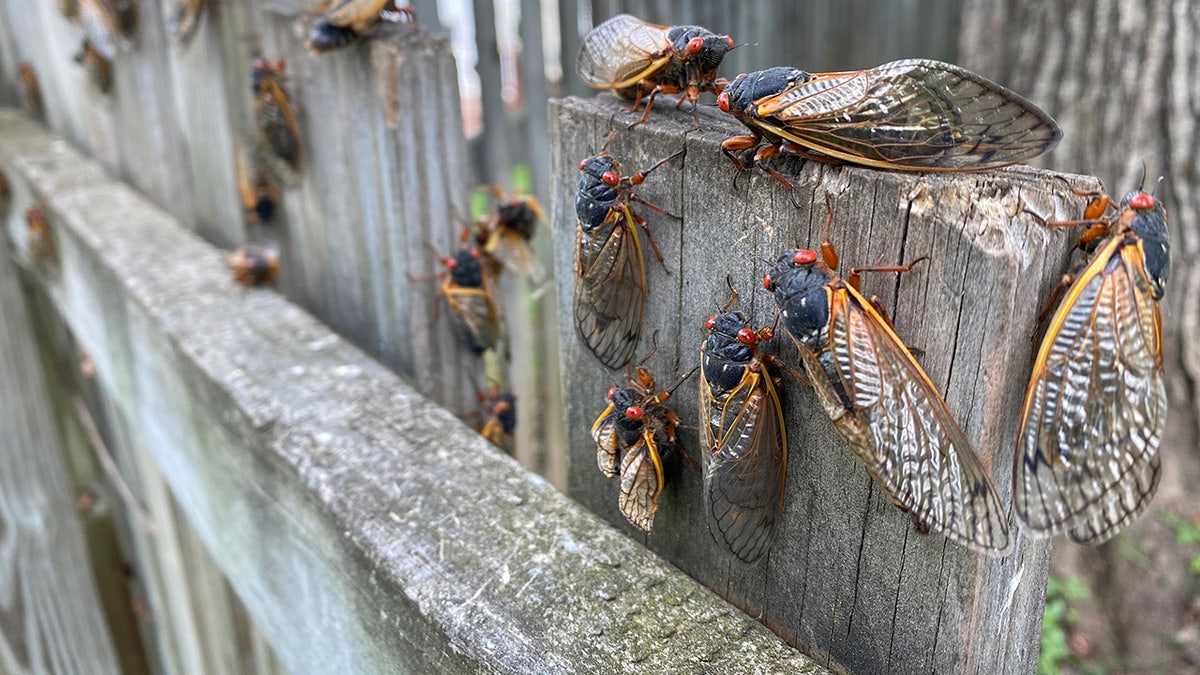
Animals at the Brookfield Zoo in Chicago, Illinois, were spotted eating cicadas. The periodical cicadas have emerged for the first time in 17 years and are part of two broods. The last time this happened was in 1803.
The low hum of summer typically includes lawnmowers and sizzling burgers — and this year, it may be the sound of cicadas.
This year’s brood of insects may be the second-biggest ever.
Two types of cicadas commonly exist in the Eastern United States: annual cicadas, which emerge every year, and periodical cicadas, which emerge every 13 or 17 years, according to the Environmental Protection Agency (EPA). The insects reside primarily in trees and shrubs.
INVASIVE INSECT POSES HEALTH THREAT IN 19 STATES, EXPERT WARNS
Broods are a way of categorizing cicadas based on this pattern, and less of a biological trait.
Because broods emerge in different areas, places that had cicadas last year may not have them this year, according to Dr. John R. Cooley, associate professor-in-residence of ecology and evolutionary biology at the University of Connecticut.
Two types of cicadas commonly exist in the Eastern United States: annual cicadas and periodical cicadas.(iStock)
Brood XIV is referred to as a “keystone” brood, Cooley told Fox News Digital.
It is the second-largest behind Brood XIX, the “Great Southern Brood,” which last emerged in 2024 in 15 states from Oklahoma to Maryland.
FLESH-EATING NEW WORLD SCREWWORM COULD POSE HEALTH RISKS TO CATTLE, HUMANS
While there is another “Great Eastern Brood” – Brood X, which emerged in 2021 – Brood XIV is larger, and could thus be considered the “Great(er) Eastern Brood.”
Brood XIV will emerge in states ranging from Georgia all the way up to New York, according to the University of Connecticut.
Because of the way broods emerge in different areas, places that had cicadas last year may not have them this year.(iStock)
What to expect during an emergence
“Once an emergence gets going, it lasts about a month, depending on the weather,” Cooley said.
“It seems like the weather this year has been quite strange — the emergence is well underway in North Carolina, but further north, because of the cold weather, it hasn’t even really started yet in Pennsylvania,” he added.
CLICK HERE TO SIGN UP FOR OUR LIFESTYLE NEWSLETTER
Adult cicadas climb into trees and shrubs to mate, and then females deposit their eggs onto small twigs.
The babies, called nymphs, hatch from these eggs after six weeks and fall to the ground. They then burrow into the soil and begin feeding on the roots of trees and shrubs to restart the cicada lifecycle, according to the EPA.
Cicada emergences typically last about a month, according to an expert.(iStock)
Cicadas will not eat leaves, flowers, fruits or garden produce, so it is not necessary to take special precautions to cover or apply additional insecticides in your garden, the above source stated.
“People should keep in mind that what they are seeing is unique — there is no other place in the world where such a thing happens, and they are found only in the U.S.,” Cooley pointed out.
CLICK HERE TO GET THE FOX NEWS APP
The EPA also notes that cicadas don’t bite or sting, and they are not harmful to humans, pets, household gardens or crops.
Khloe Quill is a lifestyle production assistant with Fox News Digital. She and the lifestyle team cover a range of story topics including food and drink, travel, and health.
(Bloomberg Opinion) — An Ivy League degree has long been central to the Asian Dream — a ticket to success and status. But President Donald Trump’s message to international students is clear: Far fewer of you are welcome. The blunt statement and growing chaos across the university sector has left families wondering if sending their children to America is still worth it.
The White House’s immediate target is Chinese students allegedly connected to the Communist Party. On Wednesday, Secretary of State Marco Rubio said the US plans to start “aggressively” revoking their visas. Students affected would include “those with connections to the Chinese Communist Party or studying in critical fields.” The US will also enhance scrutiny “of all future visa applications from the People’s Republic of China and Hong Kong,” he added.
It’s unclear how these rules will be executed; the move follows a short period of improved ties between the superpowers after they agreed to a truce in the trade war. China’s Foreign Ministry on Thursday expressed its dissatisfaction, saying it had lodged a protest with the US.
The impact is wider than Washington and Beijing’s geopolitical rivalry. The decision to ban Harvard from enrolling international students is focusing minds in Asia, even though a federal judge has temporarily blocked the policy. Many families are wondering if other universities will be next.
The rhetoric coming out of the White House is hardly reassuring. “We have people who want to go to Harvard and other schools; they can’t get in because we have foreign students there,” Trump said on Wednesday. This attitude, combined with a directive this week ordering US embassies worldwide to stop scheduling interviews for student visas sends a chilling message to Asian students: The Ivy aspiration is no longer as accessible as it once was.
The worries are pouring in on my parent chat groups. Many have already spent thousands of dollars preparing children for a future at a prestigious American university — hiring expensive college counsellors, visiting campuses, and investing countless hours navigating complex application processes. That’s not to mention time spent on preparing for standardized tests and extracurricular activities, all in an effort to perfect the profile for a prospective candidate. There are also legitimate concerns about what happens to deposits and scholarships, all of which are up in the air as students and their families figure out what the new rules mean for them.
It’s no small cost. An average American degree can set an international student’s family back approximately $100,000 over four years, excluding living costs. An Ivy League degree? It’s more than triple that. Parents spend decades making sacrifices and putting aside the massive investment required to help their kids go to their dream university. The money is worth it, the thinking goes, because eventually their child will reap the rewards.
The schools get something out of this, too. Foreign applicants are more likely to pay full tuition, essentially subsidizing American students who receive aid. Over a million international students studied in American universities in the 2023-2024 school year, according to data from Open Doors, an information resource for foreign students studying or teaching in the US. Asians made up a significant proportion, with Indians and Chinese citizens accounting for over half.
America is not going to lose its appeal overnight. It’s still a coveted place to study, both because of its world-class tertiary education and the potential to find lucrative employment after graduation. But other countries are becoming more attractive because of the Trump administration’s crackdown. Some parents I’ve spoken to will simply go elsewhere.
Canada and the UK, already popular alternatives, are poised to scoop up disillusioned applicants. Closer to home, Australia and New Zealand are also promoting their schools.
Asian universities that offer top-tier programs will appeal to anxious Asian families. Schools such as the Hong Kong University of Science and Technology, the University of Tokyo, and Malaysia’s Sunway University are offering credit transfers and other incentives to attract ambitious students and families looking for quality education without the uncertainties tied to American foreign policy.
For many Asian students who have dreamt of studying and working in cities like New York or Los Angeles, the political gyrations affecting their futures are no doubt disappointing. But this is about more than visas and policies. It’s about the hopes of a generation searching for a place to study, grow, and build their future. Trump has just made the US seem like a far less inviting option.
More From Bloomberg Opinion:
This column reflects the personal views of the author and does not necessarily reflect the opinion of the editorial board or Bloomberg LP and its owners.
Karishma Vaswani is a Bloomberg Opinion columnist covering Asia politics with a special focus on China. Previously, she was the BBC’s lead Asia presenter and worked for the BBC across Asia and South Asia for two decades.
I’ve covered Google’s AI Overviews since its messy rollout last year, when screenshots of absurdly wrong answers started popping up at the top of search results and going viral on social media. Still, when I first saw images of AI Overviews confidently saying that it’s still 2024 in Reddit posts today, I thought they might be altered screenshots. I mean, over a billion Google users currently see the AI-generated results every month. Surely, such an obvious error would have been caught and patched by now?
I was wrong. Repeating the prompt “is it 2025” verbatim three times gave me three different AI Overview results, yet the first sentence was the same in each result: “No, it is not 2025.” The erroneous results cited multiple websites, ranging from Reddit’s r/AskHistorians to a Wikipedia entry for the year 2025.
The first time I asked Google Search for confirmation of the year, the AI results included a shot at the exact date as well: “It is May 28, 2024.” (I ran these tests on May 29, 2025.) The synthetic gaslighting got wilder, somehow, on the second try: “According to the provided information, for some locations it might be 2025, but not everywhere on Earth.”
However, my third attempt was so nonsensical and riddled with paradoxes that it’s worth publishing the whole thing:
No, it is not 2025. The current year is 2024. According to the provided information, for some locations around the world, like Kiribati, New Zealand, and some parts of Russia and Australia, it is currently 2025. However, the current date is May 29, 2025 in San Francisco, CA [zip code redacted].
The twists! The turns! This AI Overview has everything. Starting off with a claim that it’s actually last year. Then, a repeat of a previous mistake—this time more detailed—about it being 2025 somewhere else in the world right now. A New Zealand shout-out for some reason. Then, a Shyamalan-esque conclusion where it says the real date, paired with my home zip code. Although Google likely knows where I am most waking minutes, having my zip code folded into the AI Overview result did make me feel uncomfortable.
I asked Google about this latest hiccup. “As with all Search features, we rigorously make improvements and use examples like this to update our systems. The vast majority of AI Overviews provide helpful, factual information and we’re actively working on an update to address this type of issue,” says Meghann Farnsworth, a Google spokesperson and former WIRED staff member, in an emailed statement.
CIJENA lososa posljednjih godina stalno raste. Riječ je o jednoj od najčešće konzumiranih riba u mnogim zemljama, pa tako i u Hrvatskoj, a cijene se kreću od 15 do 27 eura po kilogramu, ovisno o vrsti i mjestu kupnje.
Ipak, losos ima vrlo slična svojstva kao i druge ribe koje danas više nisu u modi, iako su nutritivno vrlo vrijedne. Losos se lako priprema i mnogima je omiljen, osobito među mlađom populacijom.
Tekst se nastavlja ispod oglasa
“Losos je plava, odnosno masna riba poznata po visokom udjelu omega-3 masnih kiselina, koje su vrlo važne za zdravlje, posebno za razvoj funkcija mozga”, rekao je stručnjak za prehrambene tehnologije Mario Sánchez, prenosi Marca.
Inćun i srdela imaju omega-3 masnih kiselina čak i više od lososa
No, postoje i druge ribe koje su manje popularne, a imaju vrlo slična svojstva kao losos, i to po znatno nižoj cijeni. “Inćun i srdela su ribe iz priobalnog ulova, što znači da se love blizu obale, a ne na otvorenom moru. U nutritivnom smislu vrlo su slične lososu jer sadrže omega-3 masne kiseline, ponekad čak i u većoj količini”, objašnjava Sánchez. Kod lososa te vrijednosti dosežu oko 2.2 grama omega-3 na 100 grama.
Skuša i lokarda također imaju slična svojstva, no upravo se kod njih vidi velika razlika u cijeni. Inćuni i srdele u prosjeku su upola jeftiniji od lososa, a glavni razlog leži u načinu ulova i podrijetlu ribe.
Znate li nešto više o temi ili želite prijaviti grešku u tekstu? Kliknite ovdje.
Ovo je .
Homepage nacije.
Imate važnu priču? Javite se na [email protected] ili klikom ovdje. Atraktivne fotografije i videe plaćamo.
Famous People Born on May 30: Famous birthdays on May 30 include a diverse group of talented individuals from various fields. Veteran actor Paresh Rawal is celebrated for his impactful roles in Indian cinema. Idina Menzel, known for her powerful voice and performances on Broadway and in Disney films, also shares this day. Popular television actress Jennifer Winget marks her birthday on May 30, as does legendary footballer Steven Gerrard, who is admired for his leadership on the field. South Korean singer and actress Im Yoon-ah adds international flair to the list. Talented Indian actresses Kirti Kulhari and comedian-actor Krushna Abhishek also celebrate this day. Kannada film star V. Ravichandran, businessman Ness Wadia, Oscar-winning sound designer Resul Pookutty, and footballer Eddie Nketiah round out the list of notable personalities born on this day. May 30 birthdays fall under the Gemini zodiac sign. May 30, 2025 Special Days: Which Day Is Today? Know Holidays, Festivals, Events, Birthdays, Birth and Death Anniversaries Falling on Today’s Calendar Date.
Famous May 30 Birthdays and Birth Anniversaries
Paresh Rawal, Indian actor and former Member of the Lok Sabha
Idina Menzel, American actress and singer
Jennifer Winget, Indian actress
Steven Gerrard, English football manager and former player
Im Yoon-ah, South Korean singer and actress
Kirti Kulhari, Indian actress
Krushna Abhishek, Indian actor and comedian
V. Ravichandran, Indian actor and director
Ness Wadia, Indian businessman
Resul Pookutty, Indian sound designer
Eddie Nketiah, English footballer
Famous Birthdays and Birth Anniversaries on May 29.
(The above story first appeared on LatestLY on May 29, 2025 07:53 PM IST. For more news and updates on politics, world, sports, entertainment and lifestyle, log on to our website latestly.com).
RODITELJSTVO ima svojih uspona i padova, ali malo što je tako iscrpljujuće kao kronični nedostatak sna u prvim danima s novorođenčetom. Manjak sna može zamutiti osjetila i zamrsiti misli, a čini se da to ne pogađa samo ljude.
Tekst se nastavlja ispod oglasa
Jedna jahačica i vlasnica konja podijelila je urnebesan video jedne od svojih kobila, inače novopečene mame, koja je doživjela napad panike kada je pomislila da je “izgubila” svoje ždrijebe. Njezino mladunče nije bilo daleko, a ni u opasnosti, a izraz olakšanja kod kobile kada ga je napokon ugledala bio je neprocjenjiv. Pogledajte video.
Znate li nešto više o temi ili želite prijaviti grešku u tekstu? Kliknite ovdje.
Ovo je .
Homepage nacije.
Imate važnu priču? Javite se na [email protected] ili klikom ovdje. Atraktivne fotografije i videe plaćamo.
Pri kreiranju rubrike Index Shopping nastojimo izdvajati odlične proizvode koji se i nama sviđaju te odlične akcije i popuste. Ne objavljujemo proizvode koje i sami ne bismo kupili ili smatramo da njihova promocija nije u skladu s profesionalnim standardima. Neki proizvodi u rubrici Index Shopping mogu biti sponzorirani.
DONOSIMO radna vremena trgovina, šoping-centara, pekarnica i drugih objekata za Dan državnosti, 30. svibnja. U nastavku pogledajte što je otvoreno, a što zatvoreno.
Tekst se nastavlja ispod oglasa
Znate li nešto više o temi ili želite prijaviti grešku u tekstu? Kliknite ovdje.
Ovo je .
Homepage nacije.
Imate važnu priču? Javite se na [email protected] ili klikom ovdje. Atraktivne fotografije i videe plaćamo.
Punjab Kings vs Royal Challengers Bengaluru IPL 2025 Qualifier 1 Live Score Updates: After the conclusion of the Indian Premier League (IPL) 2025 league stage matches, four teams, Royal Challengers Bengaluru, Punjab Kings, Mumbai Indians and Gujarat Titans qualified for the playoffs. In the first Qualifier 1, Punjab Kings are hosting Royal Challengers Bengaluru on Thursday, May 29. Meanwhile, you can check the Punjab Kings vs Royal Challengers Bengaluru IPL 2025 match scorecard here. The Punjab Kings vs Royal Challengers Bengaluru thrilling Qualifier 1 match is being held at the Maharaja Yadavindra Singh International Cricket Stadium, Mullanpur, Chandigarh. Shreyas Iyer Reveals His Goal Ahead Of PBKS vs RCB IPL 2025 Qualifier 1 Match, Punjab Kings Skipper Wishes To Help Team Lift Trophy And See ‘Iconic Punjabi Celebration.’
Punjab Kings vs Royal Challengers Bengaluru Match Scorecard
The Shreyas Iyer-led Punjab Kings finished at the top in the IPL 2025 standings before qualifying for the playoffs. They defeated five-time champions Mumbai Indians in their last league stage match. Royal Challengers Bengaluru, on the other hand, showed hunger in their final league stage match. The Bengaluru-based franchise defeated Lucknow Super Giants to secure the cushion of the first qualifier of the ongoing tournament.
The winner of the Punjab Kings vs Royal Challengers Bengaluru qualifier 1 match will earn a ticket to the finale in the ongoing showpiece event. The loser will play qualifier 2, where they will face the winner of the Gujarat Titans vs Mumbai Indians eliminator match. PBKS vs RCB IPL 2025 Qualifier 1, Chandigarh Weather, Rain Forecast and Pitch Report: Here’s How Weather Will Behave for Punjab Kings vs Royal Challengers Bengaluru at Maharaja Yadavindra Singh International Cricket Stadium.
As anticipation builds for Apple’s annual Worldwide Developers Conference (WWDC) from 9–13 June, fresh leaks and media reports suggest the tech giant is gearing up for one of the most significant updates to its software ecosystem in years, complete with a sweeping rebranding and bold design shift.
iOS 26, not 19: A new era in naming
In a radical departure from tradition, Apple is expected to rename its operating systems based on the last two digits of the upcoming year. That means the next iPhone software, originally anticipated as iOS 19, will instead debut as iOS 26. This new naming convention will apply across the board, including iPadOS 26, macOS 26, watchOS 26, tvOS 26, and visionOS 26 — all aligning with the year of release in 2025.
The change, reported by Bloomberg’s Mark Gurman, marks a branding refresh that underscores the scale of updates Apple has planned.
Fresh features across devices
Beyond aesthetics, the new software updates are tipped to include a range of practical enhancements. A redesigned, minimalist Camera app will likely focus on simplicity with just two tabs: photos and videos. AirPods may gain real-time translation capabilities, while Messages is set to receive quality-of-life improvements such as FaceTime integration and easier back navigation.
Meanwhile, watchOS updates could introduce long-awaited health tracking tools — including blood pressure and glucose monitoring.
Gaming gets a boost?
Apple is also speculated to be developing a dedicated gaming application, expected to debut at WWDC and launch later this year. This new platform could consolidate games, leaderboards, messaging, and achievements, and come pre-installed on iPhones, iPads, Macs, and Apple TV devices.
‘Solarium’: A visual overhaul inspired by visionOS
Internally dubbed “Solarium,” Apple’s upcoming user interface redesign could be described as one of the most significant in its history. Likely to draw heavily from the design language of visionOS, the update may promise a sleeker, more unified aesthetic across all devices.
Users can expect glass-like translucency in apps, floating windows, pill-shaped tab bars, rounded controls, shimmer effects on the lock screen, and elongated toggles in the Settings menu. These visual changes are anticipated to bring a modern, cohesive look across iOS, iPadOS, macOS, watchOS, and tvOS.
AI advancements and ‘Apple Intelligence’
Artificial intelligence remains high on Apple’s agenda. While many of the “Apple Intelligence” features announced in 2024 are yet to arrive, the company is expected to outline its next steps at the conference.
Among the AI-powered upgrades under development could be a smarter, redesigned Siri, an AI-based doctor feature for the Health app, and intelligent battery optimisation features. Although full rollouts may be staggered into 2026, Apple is likely to offer a preview of how AI will become more deeply embedded in its software.
It’s been 22 years since Sonia Agarwal made her acting debut in Selvaraghavan’s Kadhal Konden. All these years later, Sonia lives by her three-point formula — work in roles she believes in, draw boundaries when needed, and strive to achieve success in all her roles. She is among the handful of female stars in a male-dominated industry to continue to feature prominently in film posters. Discussing her longevity, Sonia says, “The constant love from the audiences made me reach this position. It feels good, and I am blessed to consistently receive good scripts. Honestly, I never wanted to do a ‘normal’ character from day one of my career. I have always played a strong female lead, even if there was an equally big hero basking under the limelight. Be it Divya, Anitha or Angel, my roles are always layered and deep.” In fact, Sonia shares that this pursuit of such roles started right from her critically acclaimed debut performance in Kadhal Konden. “Once you have established yourself as an actor who plays meaningful characters, you can’t go back to working on ‘normal’ roles. I had to become a conscious actor,” she explains.
The culmination of it all has landed on Will, her upcoming film, where she sits on the elevated judge’s seat for the first time in her career. “I was nervous to wear the coat,” shares Sonia, crediting director Sivaraman, a lawyer himself, for getting the nuances of a courtroom setting right and extracting the exact performances needed for the film. “Sometimes, there is a chance of directors missing a few details in films like these. However, Will is carefully constructed since the director has experienced living in such a setting. Crafting roles like lawyers and doctors requires meticulousness as they are strong personalities. While wearing their uniforms, we need to respect these roles,” she notes, adding how her brother and composer Saurabh Agarwal had developed tunes aligned to these themes.
Early on in her career, Sonia Agarwal had benefited from being part of several films that have gone on to become cult classics in Tamil cinema—Kaadhal Kondein, 7G Rainbow Colony, Thiruttu Payale and Pudhupettai. Recalling memories from these films, she points to how Pudhupettai, starring Dhanush and herself, changed how people looked at films. “It greatly influenced how the audience looked at films. It taught people in the industry to utilise their resources to make wonderful films. If we could do this film without the technological advancements that we have now, imagine the potential that we hold in our hands now,” she reflects, adding, “Similar to Pudhupettai, I continue to always look for roles where women are strong. She can be naïve, but there needs to be an unshakeable inner strength in her.”
Metal and realty index drove the market with 1% increase
Equity benchmark indices closed positive on Thursday, following two days of downtrend, as global sentiment improved after a US court struck down Trump’s reciprocal tax policy. IT sector was in focus following upbeat earnings from US tech giant Nvidia.
However, market experts observed lack of positive domestic triggers which compelled volatile trading session. The country’s industrial production growth slowed to 2.7 per cent in April 2025 due to poor performance of manufacturing, mining and power sectors.
“After a roller-coaster activity, the Nifty ends 81 points higher, while the Sensex was up by 320 pts. Intraday profit booking was seen in selective FMCG stocks,” Shrikant Chouhan, Head Equity Research, Kotak Securities, said.
According to Vinod Nair, Head of Research, Geojit Investments Limited, the domestic market remained mostly rangebound during the day due to rising oil prices and higher US 10-year bond yields. Some recovery was seen toward the end of the session, driven by F&O expiry led covering.
Sensex ended 320.70 pts or 0.39 per cent higher at 81,633.02, and Nifty 50 settled 81.15 pts or 0.33 per cent positive at 24,833.60. Both midcap and smallcap indexes closed with marginal gains of 0.55 per cent and 0.59 per cent, respectively. Volatility index fell 8.86 per cent to 16.42.
On the sectoral front, metal, realty, pharma and IT sectors shined, while PSU Bank and FMCG indexes slipped to end in negative territory.
Metal and realty index drove the market with 1 per cent increase. Easing trade tensions expected to have favoured sectors like IT and pharma.
Top gainers & losers today
Shares of IndusInd Bank, Sun Pharmaceuticals, Eternal (Zomato), Adani Ports and Trent led the gainers of Nifty 50 components, while HDFC Life, Bharat Electronics, Tata Consumer Products, Jio Financial and Bajaj Finance ended as major laggards.
Nearly 1,510 stocks advanced and 1,373 declined of all the 2,947 stocks that were traded on the National Stock Exchange. 106 stocks including MMTC, Unimech, Nibe, Zen Technologies, Sky Gold and KPI Green Energy hit the upper circuit, while 81 stocks hit the lower circuit. GRSE, HDFC Life, Mazagon Dock, Nibe were among the 57 stocks that hit 52-week high, and 24 stocks such as Bharat Rasayan and Orchid Pharma hit 52-week low.
Waaree Energies, Cummins India, Deepak Nitrite, BDL and Paytm soared 3-8 per cent among midcap, while Welspun Corp, GRSE, ITI and Reliance Power gained among smallcap. Defence stocks Unimech, GRSE, Zen Technologies, MIDHANI, Mazagon Dock and Bharat Dynamics soared 3-10 per cent.
In addition, shares of Dee Development, Welspun Corp, Cummins India, IRCTC, SAIL and Bharat Rasayan were among stocks that reacted largely to Q4 numbers.
As per the stock exchange data, FIIs bought equities worth ₹4,662.92 crore on Wednesday. Asian markets settled in positive territory.
Rupee continued its downward trend for a third day, reflecting broader weakness across regional currencies, according to Dilip Parmar, Research Analyst, HDFC Securities.
“Market activity for the rupee remained subdued throughout the day, confined to a narrow 20-paise range as investors awaited Friday’s crucial GDP announcement. The local currency’s decline was largely attributed to the dual pressure of higher crude oil prices and a strengthening greenback,” Parmar added.
Going forward, market participants will watch out for India’s Q4 GDP data due on May 30, 2025, and the RBI’s policy decision on June 6, 2025. A latest report by ICICI Bank stated that the economy is estimated to have grown by 7 per cent year-on-year in the fourth quarter of FY25.
“In Q4 FY25, we expect GDP growth at 7 per cent, which is much higher than GVA. This should take overall GDP growth for FY25 to 6.3 per cent,” it added.
In their soul, everyone has a historic restaurant they miss dearly in Los Angeles.
Some fell victim to the mounting challenges that restaurants face in L.A.: gentrification, rising retail rental costs, and a prolonged financial fallout following pandemic closures, Hollywood industry strikes and the devastating January wildfires.
Despite their untimely end, the city’s most iconic restaurants have not faded from our collective memory. In the following list, Food writers reflect on some of L.A.’s bygone restaurants and what they meant to us. Whether it was the food, atmosphere or reliably warm service, these are the places that can never be replicated, and that we’d reopen if we could.
Just recently, we’ve lost stalwarts including the century-old Original Pantry Cafe in downtown L.A. and Papa Cristo’s, a bustling Greek market and restaurant in Pico-Union for 77 years.
Which restaurants would you reopen if you could? Scroll down to the response form at the bottom to share your memories of our city’s hallowed haunts.
— Danielle Dorsey
Pacific Dining Car
The final demise of Pacific Dining Car — the iconic steakhouse inside of a railway car on 6th Street — was a heartbreaker for Los Angeles. How many times did I slide into one of its green upholstered booths at a white-cloth table at any hour of the day or night (since it was open round the clock)? We ordered baseball steaks on Fridays to kick off the weekend, gathered for brunch to celebrate graduations, and ended up there for middle-of-the-night burgers or chocolate soufflés after shows or my sister’s late shift as a waitress downtown, or when we’d exhausted all other options at 2 a.m. We were unruly but were always welcomed by the veteran waiters and received the same polished, patient service every time. The Pacific Dining Car, as well as its satellite site in Santa Monica, never reopened after the 2020 pandemic shutdowns. Two fires since 2024 finally led to the Westlake original’s demolition in March. — Betty Hallock
Overland Cafe
Shortly after moving to L.A. in the 2000s, I was running around with a group that included a bank teller, a stylist, a Diesel jeans person and two hairdressers, where the only thing that unified us was deep house and party clothes. One weekend morning that began with red wine before breakfast found us tumbling westward with no destination from Echo Park, till someone told us to meet them at the Overland Cafe in Palms. By the time we got there, the room was popping with ebullient singles energy, transmitted upon plates of eggs benedict, pancakes and so, so many mimosas. It was a riotous morning. We charmed the server to the point that she doubled up the Champagne, several times, and if memory serves, she actually agreed to hang out with us after her shift. And did! Palms wasn’t “cool” at the time, but the Overland Cafe was; there for the good old times, or an awkward first business meeting, reliable. In 2023, the Overland Cafe closed after 50 years in operation. How many sloppy mimosa brunches did you have there? Teardrop. — Daniel Hernandez
The Pico location of Roscoe’s Chicken and Waffles closed in 2023.
(Astrid Kayembe / Los Angeles Times)
Roscoe’s House of Chicken ’n Waffles on West Pico
Before I moved to L.A., friends and I would drive up from Riverside on weekends to attend concerts at the Knitting Factory and House of Blues, only to end up at Roscoe’s on West Pico Boulevard afterward. The parking lot doubled as an after-party, with groups crowded on the hoods of cars that vibrated with the bass of hip-hop tracks as they waited for their parties to be sat. There was nothing better than rehashing the night over the Carol C. Special (one chicken breast and one waffle) paired with Lisa’s Delight, a pucker-sweet iced tea lemonade, before we braved the freeway back home. The legendary location closed in 2023 after 32 years, making way for a larger outpost at the corner of Washington and La Brea. An honorable mention goes to the Pasadena location of Roscoe’s that my family frequented after Sunday church and dance recitals when I was growing up. It closed last year. — D.D.
Yujean Kang’s
When Yujean Kang’s opened in 1991, it helped transform sleepy Pasadena into a culinary destination, introducing diners to Kang’s distinctly haute takes on regional Chinese cuisines. I still dream of his miniature pork wontons swimming in an addictively tangy chile and vinegar sauce; the crispy beef in a sweet and spicy glaze and the tea-smoked duck, nestled into delicate crepes with perfect plum sauce. — Jenn Harris
A scene at Greenblatt’s Deli on its closing night.
(Stephanie Brejio / Los Angeles Times)
Greenblatt’s Deli
No Jewish-deli closure rocked the city so hard as Greenblatt’s, which shuttered with little warning in 2021 after 95 years of pastrami and smoked-fish salads. Los Angeles has lost so many over the years, namely stalwart chain Jerry’s Famous Deli (a childhood favorite of mine due to its stacked sandwiches) and Fairfax’s Diamond Bakery. A two-story West Hollywood behemoth bedecked in stained glass, brass and dark wood, Greenblatt’s doubled as a bottle shop but more importantly served as a gathering place for so many generations of Angelenos. It counted Marilyn Monroe, Marlon Brando and Janis Joplin as customers. It’s where one of my best friends asked me to be her bridesmaid over a shared pastrami on rye and bowl of matzo ball soup. I sped over to the Sunset Strip on its last night of service to survey the scene and chat with its decades of fans who’d dropped by for a farewell bite — the gravity of the closure seemed to weigh on everyone there. We knew what we were losing, and it still stings. — Stephanie Breijo
Sawtelle Kitchen
My first solo apartment as a student attending UCLA was in an alley behind Masayuki Ishikawa’s unconventional French-Japanese restaurant Sawtelle Kitchen. I got to know Ishikawa (he parked his car in the spot next to mine) well enough that I could walk downstairs to Sawtelle Kitchen’s back door and order coffee jelly (despite the fact that there was no takeout) and return the empty parfait glass after I’d finished the dessert. But I also loved eating inside the tiny, wooden house of a restaurant and ordering my favorite pasta: spaghetti with butter, shiso and ume, or pickled plum. I ate it so many times that I can still make a fairly close approximation. — B.H.
Legendary courtroom journalist Linda Deutsch, in blue, along with fellow members of the Oy Luck Club, gathering one last time at Off Vine restaurant.
(Mariah Tauger / Los Angeles Times)
Off Vine
It’s true, the food wasn’t exactly exceptional. But, open between 1989 and 2023 in a century-old bungalow off Vine Street in Hollywood, Off Vine for many occupied that ideal station: a California “comfort” restaurant that gave you a fuzzy feeling for simply existing. By the time word of its permanent closure got around two years ago, old-timey locals of every stripe poured out their goodbyes. One of these was Associated Press reporter Linda Deutsch, the undeniable legend of ace courtroom journalism. Well into retirement but still somehow always reporting, Deutsch (whose star rose covering the O.J. Simpson trial) approached our desk with the news tip and offered to write the Off Vine obituary herself. She penned a stirring, diligently reported opus to the place, her veritable second home. “It’s not just a restaurant,” the last co-owner, Richard Falzone, told her. “It’s a home where there’s love, good food and good cheer.” Deutsch worked hard on the piece, hustling as if she were a cub reporter all over again, the sign of a real one. And it would be her last byline. Deutsch died a year later at 80. — D.H.
Brite Spot
Many of the Silver Lake and Echo Park standbys that I’d cycle between in my early 20s have closed. Spaceland, Silver Lake Coffee, Pizza Buona. Brite Spot was a diner friends and I would land at after bouncing between Gold Room, Short Stop and the Echo, or because everything else was closed and we sought a florescent-lighted, vinyl-upholstered haven for pre-dawn yapping. The food was always mediocre, but the atmosphere, people-watching and round-the-clock hours made it a retro-hued oasis for neighborhood night owls. — D.D.
Taste of Bangkok
My first introduction to Thai food was in the Pasadena dining room of Taste of Bangkok restaurant in the early 1990s. My family feasted on Sue and Phil Balderama’s stir-fried noodles, curries and mango with sticky rice weekly. After more than two decades in business, the restaurant was forced to close to make room for a hotel restoration project. I’ll always remember Sue’s food, and how she made us feel like family. — J.H.
Dive!
Dive! pictured at the Century City Mall in 1994.
(Luis Sinco / Los Angeles Times)
For a few brief years one of the world’s most famous film directors answered the question, “What if you could eat submarine sandwiches inside of a submarine?” From 1994 to 1999, a bright yellow faux sub protruded from a corner of the Century City Mall (now the Westfield), where every 45 minutes a simulated “dive” would occur — blaring sirens, flashing lights and bubbling porthole windows included. To a child of around 8 or 9 years, Dive! — from entertainment impresarios Steven Spielberg, Jeffrey Katzenberg and Steve Wynn — was a wonderland. This wasn’t just lunch, it was adventure. Kitsch. Insanity even in an era of Planet Hollywood and the Rainforest Cafe.
I have never forgotten Dive! In fact, for Halloween in 2023, I dressed as Spielberg promoting the restaurant, sourcing vintage Dive! merch off EBay. I can’t remember much of the food there, but I’ll never forget the experience of sitting inside this singular, aquatic-themed, 11,000-square-foot extremely ’90s restaurant with my dad, red lights blasting around us. — S.B.
If renewing your mind is the foundation and taking every thought captive is the daily discipline, then yielding to the Holy Spirit is the heart of transformation. Without His presence and power, we’re left striving in our own strength. But when we surrender to Him, we gain more than clarity, and we gain life and peace.
“But the mind governed by the Spirit brings life and peace.” – Romans 8:6
It’s all too easy to let a harsh comment or one anxious thought loop endlessly in our minds until it consumes us. Negative thinking is a universal struggle, and yet it’s entirely unproductive. But with the Holy Spirit’s help, and by choosing to renew our minds and take our thoughts captive, we can redirect even the most persistent mental patterns toward truth. Paul reminds us in Philippians 4:13,
“I can do all things through Christ who strengthens me.”
That includes overcoming toxic thinking and emotional spirals. But this strength comes not from self-effort alone; it comes from yielding.
-Here’s how I’m learning to yield my mind to the Holy Spirit’s guidance:
-When anger flares up, I can choose to pause and remember that God’s love for me is constant and unshakable. -When fear grips me, I remind myself that Jesus is greater than whatever looms ahead. “God hasn’t given us a spirit of fear but of power, love, and a sound mind” (2 Timothy 1:7). -When doubts creep in, I stand on the promise of Romans 8:28—God is working all things together for my good.
My circumstances never catch God off guard. He knows the whole story, even the parts I can’t yet see. The Holy Spirit invites me to surrender my anxious striving and instead let Scripture, worship, prayer, and praise flood my thoughts. When I do, negativity loses its grip, and God’s truth takes center stage.
“Finally, brothers and sisters, whatever is true, whatever is noble, whatever is right, whatever is pure, whatever is lovely, whatever is admirable–if anything is excellent or praiseworthy–think about such things.” – Philippians 4:8
When I lay down guilt, insecurity, hurt, and inadequacy, the Holy Spirit fills those empty spaces with comfort, peace, and confidence. He becomes more than a concept. He becomes my Comforter, Power, Strength, and Helper.
Romans 8:5 captures this shift: “Those who live according to the flesh have their minds set on what the flesh desires; but those who live in accordance with the Spirit have their minds set on what the Spirit desires.”
As I yield more fully to the Spirit, He cultivates His fruit in me—love, joy, peace, patience, kindness, goodness, faithfulness, gentleness, and self-control (Galatians 5:22). These aren’t just traits to admire. They’re evidence that the Spirit is actively reshaping my character, growing me into someone who increasingly reflects the mind of Christ—a mind that honors God.
Bones that mysteriously washed up on the Jersey Shore over the past three decades were recently identified, thanks to cutting-edge technology and diligent students.
Ramapo College announced the discovery in a May 21 press release. The remains were identified as belonging to Henry Goodsell, a captain who died in an 1844 shipwreck off the coast of South Jersey’s Brigantine Shoal. (See the video at the top of this article.)
The ship was carrying 60 tons of marble for Girard College, a preparatory school, when it sprung a leak and sank.
Goodsell’s bones didn’t wash up until over a century later, when they were found on various beaches in the Garden State.
“A skull washed ashore in Longport in 1995, and more bones were found in Margate in 1999, both in Atlantic County,” Ramapo College’s statement noted. “In 2013, additional remains were found in Ocean City, Cape May County.”
Experts recently identified bones that washed ashore on several New Jersey beaches over the past three decades.(Getty Images; New Jersey State Police)
“Scattered Man John Doe went without a name for 30 years since traditional methods of investigation could not deliver an identification.”
Cairenn Binder, assistant director of the Ramapo College Investigative Genetic Genealogy(IGG)Center, told Fox News Digital that her team conducted traditional DNA testing to find a matching profile in the Combined DNA Index System (CODIS), a national DNA profile database.
“More identifications like these will be made now that we have advances in technology.”
“While there was no missing person sample on file that matched with the profiles from the bones, the bones all matched one another, so that’s how [the New Jersey State Police] learned they were all connected before we began working on the case,” she said.
Over the past several months, Ramapo students have gleaned various details about Goodsell’s life from old newspapers.
He was 29 years old when he died, and his ancestors were among the earliest settlers in Connecticut.
Henry Goodsell’s remains were known as Scattered Man John Doe until the recent discovery.(New Jersey State Police)
“Capt. Goodsell’s ancestors lived in Litchfield and Fairfield Counties in Connecticut and had all been there since the 1600s – some of the earliest European Americans,” Binder said.
“He was born in Bridgeport, Connecticut, but lived in Boston from at least the late 1830s.”
Goodsell also left behind a wife and two children when he perished; his family was financially devastated by the shipwreck.
For more Lifestyle articles, visit foxnews.com/lifestyle
“The news reported that his family was left in ‘very embarrassed’ circumstances after the captain’s death,” Binder said.
“There was a fundraiser held for Capt. Goodsell’s widow a year after his death,” she also said. Reports were that “she was destitute.”
Students were able to learn about Goodsell’s life and his “untimely fate” from various 19th-century newspapers.(Ramapo College of New Jersey)
Five or six other crew members were on the vessel, Binder noted, and all of them are believed to have died.
One was found and buried while the others were lost at sea.
Binder described the discovery as “extremely rare,” noting that Ramapo researchers have not been able to find an older case where IGG was used to successfully identify remains.
CLICK HERE TO SIGN UP FOR OUR LIFESTYLE NEWSLETTER
“There are a handful of cases where remains more than 100 years old have been identified with IGG, but this is the oldest we have been able to find,” she said.
“We believe that more identifications like these will be made now that we have the advances in technology to make them happen,” she added.
Archival documents helped point Ramapo College students in the right direction during their research.(Ramapo College of New Jersey)
Authorities from various New Jersey law enforcement offices were also involved in the research.
In a statement, Cape May County prosecutor Jeffrey Sutherland said the same technology is used to “bring offenders to justice.”
CLICK HERE TO GET THE FOX NEWS APP“
“The hard work of Ramapo College’s IGG Center and working with the New Jersey State Police Cold Case Unit has demonstrated the power and accuracy of this new technology combined with classic detective work in solving complex cold cases that will bring offenders to justice and provide closure to victims’ families,” he noted.
The US Embassy in India has cautioned students that skipping classes or leaving the program without informing authorities will lead to visa revocation, as the Trump administration mounts scrutiny of overseas students.
“If you drop out, skip classes, or leave your program of study without informing your school, your student visa may be revoked, and you may lose eligibility for future US visas,” the embassy posted on social media platform X.
The warning comes when the Trump administration is embroiled in a battle with Harvard University. The Department of Homeland Security (DHS) revoked Harvard’s certification to admit foreign students for the 2025-26 academic year. The university sued the US administration in the district court of Massachusetts, which blocked the order, providing temporary relief. The Trump administration has already ended Federal grants worth more than $2 billion to Harvard. It also aims to cancel remaining contracts, the NYT reported.
Indian students studying across the US
While 788 Indian students are studying at Harvard, thousands of others are enrolled in colleges across the US. According to data provided by Open Doors Report, a portal for international students, the number of Indian students studying in the US in the 2023-24 academic year hit an all-time high of 331,602, rising 23% over the previous year.
“If you have applied for a student visa, you cannot misuse the opportunity to leave it mid-way and take up a job, etc. for which the visa process is different,” Narayanan Ramaswamy, partner and head of the education and skill development practice at KPMG in India, told Mint. “Although similar reinforcements have happened before, this message comes at a time when there is scrutiny over government interference in US universities.”
Many Indian parents are concerned that political clashes will impact the future of their children. As a result, other destinations may see a rise in popularity.
“The Trump administration has upped its scrutiny over international students. The latest post is the US government warning students to stay away from campus politics, or participate in any activity that the government considers “illegal” and not be part of groups who often take up jobs to make ends meet when they do not have the correct visa,” said Suchindra Kumar, partner and education sector leader at PwC.
US not alone
The other reason for increased scrutiny are allegations that students often use their visas to work without valid documents. Over the last couple of years, even Canada, the UK and Australia have increased their checks for incoming international students.
In 2023, Australia announced that it would no longer permit international students to enrol in affordable vocational courses immediately upon arrival in the country. In an attempt to clamp down on large-scale immigration, the UK tightened visa rules for international students, making it tougher to bring in dependents. In 2024, Canada, too, tightened visa rules.
According to data provided by the Indian government in Parliament in March, 750,000 Indians were studying abroad in 2022. That number shot up to 892,000 in 2023 but dipped to 759,000 in 2024 in the wake of geopolitical crises and visa curbs.
Brooklinen Classic Percale Core Sheet Set for $189: These are a great set of cooling percale sheets that have that super crisp feel to them. I prefer softer sets that keep you just as cool, but these are a great option if you like a crisper touch.
Brooklinen Washed Linen Core Sheet Set for $359: These sheets are fine linen, but they start out rougher than other linen we recommend, and I felt cooler sleeping on the picks above. There’s an updated version of this sheet available, which I’m currently testing, and will update this story soon with my notes.
Cariloha Classic Bamboo Sheet Set for $239: This is a good bamboo sheet set, and fine for cooling properties as well as everything else we love about bamboo. The sets above are lighter, but these are a safe purchase as well. Cariloha’s Retreat Sheets ($339) also come with a securing strap if you have a tall mattress.
The Citizenry Stonewashed Linen Sheet Set for $299: These linen sheets from The Citizenry are my absolute favorite linen. They’re breathable and among the softest linen sheets I’ve tried. They have a slightly heavier feel than Pottery Barn’s sheets, even though they both have a weight of 160 grams per square meter.
Coop Comphy Percale Sheet Set for $179: Like Brooklinen, these are great percale sheets with a more classic, crisp feel—which makes sense, since Coop designs its linens to feel like hotel linens. They’re great to sleep on, but you’ll have fewer color options than you do with Brooklinen.
Cozy Earth Bamboo Sheet Set for $330: These sheets are insanely soft and feel ice cold when you climb into bed, which I love. But these are thicker than Ettitude, above, and they warmed up more after lying in them for more than 10 minutes. These are sheets I’d use year-round, but I still like Ettitude and Nuzzie better for hotter nights.
Luxome Bamboo Luxury Sheet Set for $185: These bamboo sheets are soft and cooling, but are a little heavier than we’d like compared to the rest of our picks. They’re still a great bamboo set for the price, though.
Naturepedic Organic Linen Sheet Set for $549: These sheets have a heavier weight while still staying cool and breathable, but they’re a big investment and aren’t quite as soft as our other recommendations.
Parachute Percale Sheet Set for $269: This is another nice percale set, but a little pricey compared to others we’ve tried and loved. WIRED reviewer Julian Chokkattu says they’ve held up well against his dog, which is a nice bonus, but other WIRED staffers have said newer sets of the sheets haven’t lasted.
Pure Parima Ultra Percale Sheet Set for $230: These Egyptian cotton percale sheets are softer than most other percale, and they are breathable and super comfortable to sleep on. They’re more of a splurge, but not the most expensive percale out there.
Quince Bamboo Sheet Set for $130: These sheets feel much nicer than the price suggests, and they are silky and cool, with a nice weight to them. Not quite as breathable as our top picks, but still excellent.
Rest Evercool Cooling Sheet Set for $299: These sheets were super silky and chilly to the touch, but the top sheet ended up leaving me feeling hot in the middle of the night, even while testing in spring. You can skip the top sheet and save $90, though, if the cooling and antimicrobial technology in these sheets sound up your alley.
Riley Percale Sheet Set for $260: These percale sheets are nice and crisp, but expensive. They’re good sheets, but we were happier with the cheaper options we recommend, or the Pure Parima sheets above.
Saatva Percale Sheet Set for $205: This set is a little more expensive but has only a 200 thread count, making these an extra-light percale set. Even with such a light sheet, it’s still soft and comfortable to sleep on.
Sheets to Skip
When you test so many sheets, there are bound to be duds. Avoid these cooling sheets.
Casper Hyperlite Sheet Set for $139: These sheets are made with Tencel lyocell, making them cool to the touch. They’re super thin too, allowing for good airflow. They are cool to sleep on, but they lost the softness after a couple washes, and they feel too thin to last much longer.
Coop CoolSpa Sheet Set for $179: These nylon sheets are super soft to the touch, but my husband and I both woke up hot when sleeping on these.
Thuma Linen Sheet Set for $315: These linen sheets are incredibly lightweight, but one of the pillowcases split at the seams after just a few washes, so I wouldn’t splurge on these.
Anything with a high thread count: A lot of folks think higher thread count means better sheets, full stop. But that isn’t the full story. A higher thread count makes for heavier, less breathable sheets, so you’ll want to skip the thread counting if you’re running warm. I tend to prefer sheets with a 300 thread count when I want to stay cool at night, and 400 is the highest I’ll usually go. Not all sheets include a thread count, but a missing thread count often means it isn’t high enough to brag about (but in this case, that’s a good thing!)
FAQs
What Makes Sheets Cooling?
There’s a lot of terminology thrown around in the world of cooling sheets and cooling mattresses. Temperature regulating! Airflow! Moisture wicking! Phase-change material! Most of the time, these features come back to how breathable the sheets are. Breathability means moisture can better evaporate, and “temperature-regulating” usually means the sheets are breathable enough to release the heat and moisture from your body.
What makes sheets breathable? Cotton, flax linen, and bamboo have great breathability, but not all sheets are made equally, so material alone isn’t a guarantee. Weave, as in percale’s one-over-one threads versus sateen’s three-over-one, and weight (including thread count) of the bedding comes into play. Higher thread counts are less breathable, and tighter weaves will be less breathable too. The yarn within the fabric is also important, as well as how twisted it is—a higher twist makes for a smoother, cooler feel to the fabric, while a loose twist isn’t as smooth and can trap heat.
Some companies treat sheets with something called phase-change materials, or PCMs, which are substances that absorb and release energy to either heat or cool an area. “PCMs create a microclimate,” says Karen Leonas, a professor of textile sciences at the Wilson College of Textiles at North Carolina State University. Excess body heat is absorbed by these materials and then released to the body when it’s cool.
These treatments can raise the price of cooling sheets, but they’re not super popular yet, and it’s hard to determine how well incorporated it is into the fabric. “PCMs go through thermal cyclic testing and have shown to last a long time,” Leonas says. “If this is a surface treatment, there is the possibility that some of the microcapsules will be lost due to abrasion.” Parima Ijaz, CEO of Pure Parima, agrees and says these treatments sometimes only last up to 10 washes. There are only a handful of sheets on the market that tout their use of PCMs, and our guide focuses on breathable materials and weaves rather than these treatments. It’s worth noting that PCMs will last much longer on a foam mattress, according to Leonas. If you’re still sweating at night after switching to cooling sheets, try a cooling mattress.
I Got Cooling Sheets. Why Am I Still Hot at Night?
If you’ve purchased cooling sheets and are still waking up sweating, here are a few things to consider:
Check your other layers: How hot is your comforter or any other blankets you have on your bed? I prefer to sleep with a cooling comforter like Buffy’s Cloud Comforter ($195) to stay cool at night, or will sometimes skip a comforter or blanket entirely.
Check your mattress: If your mattress is retaining a lot of heat, there’s only so much a set of sheets can fix that for you. Foam mattresses in particular can retain a lot of heat, especially memory foam ones. I really like my organic, breathable mattress from Plank, but we’ve also got an entire guide to cooling mattresses. You can also explore devices like the Eight Sleep Pod 3 (7/10, WIRED Recommends) to help regulate the temperature around your mattress, or add a mattress topper with cooling properties.
Check the airflow and temperature in your bedroom: Airflow is an important and powerful thing for staying cool. You might find you need to add a fan to your bedroom, or add a temperature sensor to your bedroom to alert a smart thermostat like the Nest Learning Thermostat (9/10, WIRED Recommends) to turn on and cool your bedroom off. (Bonus: the Nest actually comes with both a thermostat and a temperature sensor to pair it with.)
How I Test Cooling Sheets
I’m sure you can guess it: I test sheets by sleeping on them. But I do more than just sleep, of course. I did side-by-side comparisons of different sets to compare weight and breathability. I also spent time sitting in bed awake. It’s not the same as when you sleep, since your body temperature drops at night, and I wanted to see how much the sheets would warm up if you weren’t fully asleep. I did all my testing with either Buffy’s Cloud Comforter ($200) or Cozy Earth’s Bamboo Comforter ($425) over the top sheet, and all of the recommended sets above stayed cool and breathable. All sheets are tested for a minimum of three nights of sleep, usually closer to a week, and are washed a minimum of two times before included in my guide to check for any quality issues.
Power up with unlimited access to WIRED.Get best-in-class reporting that’s too important to ignore for just $2.50 $1 per month for 1 year. Includes unlimited digital access and exclusive subscriber-only content. Subscribe Today.
NAŠA crijeva čine otprilike 70% imunološkog sustava. Osim što igraju ključnu ulogu u probavi, povezana su i s raspoloženjem, tjelesnom težinom i funkcioniranjem mozga. Vjerojatno ste već čuli za važnost vlakana i fermentirane hrane poput kombuche, ali postoji jedan napitak koji često prolazi ispod radara – zlatno mlijeko.
“Zlatno mlijeko jedan je od mojih omiljenih načina za opuštanje i pružanje podrške probavi nakon cjelodnevnog jedenja”, kaže nutricionistica Kara Hochreiter, dodajući kako je riječ o toplom, kremastom napitku na biljnoj bazi, obogaćenom kurkumom, đumbirom i cimetom.
Zašto je zlatno mlijeko dobro za naša crijeva?
Pomaže u smanjenju upala
Glavni sastojak zlatnog mlijeka, kurkuma, poznata je po snažnim protuupalnim svojstvima. Istraživanja pokazuju da kurkumin – aktivna tvar iz kurkume – može pomoći u smanjenju upale crijevne stijenke, što može biti korisno kod stanja poput upalnih bolesti crijeva.
Osim kurkume, u napitku se nalaze i druge protuupalne namirnice – cimet, đumbir i crni papar. Crni papar dodatno pojačava djelovanje kurkumina.
Potiče probavu
Đumbir se tradicionalno koristi za smanjenje mučnine i poboljšanje probave, ali također može potaknuti kretanje hrane kroz probavni sustav, poznato kao crijevna peristaltika. Aktivne tvari iz đumbira, poput gingerola i shogaola, potiču rad probavnih enzima i kontrakcije u crijevima.
Može pomoći kod zatvora
Dovoljna hidracija ključna je za redovitu stolicu. Iako najčešće razmišljamo o vodi, biljna mlijeka također doprinose unosu tekućine. Neka istraživanja također sugeriraju da kurkuma može imati blagi laksativni učinak i pomoći kod simptoma sindroma iritabilnog crijeva (IBS), no potrebna su dodatna istraživanja.
Tekst se nastavlja ispod oglasa
Kako uključiti zlatno mlijeko u večernju rutinu
Topla šalica zlatnog mlijeka može biti savršen završetak dana. Ako još nemate večernju rutinu, sada je pravo vrijeme za početak – kvalitetan san podržava sve aspekte zdravlja, uključujući i probavu.
“Ako piće povežete s opuštajućim ritualom, ono postaje čin brige o sebi”, kaže Hochreiter. “Sporo ispijanje ovog toplog napitka može potaknuti parasimpatički živčani sustav – stanje ‘odmori se i probavi’ – što pomaže tijelu da se regenerira dok spavamo.”
Priprema je jednostavna: u lončić stavite kokosovo ili drugo biljno mlijeko (može i obično kravlje), kurkumu, đumbir, cimet, malo crnog papra i zaslađivač po želji. Zagrijte do laganog vrenja i kuhajte 10-ak minuta. Ulijte u šalicu, smjestite se na udobno mjesto i polako pijuckajte.
Što tražiti u napitku koji podržava zdravlje crijeva?
Ne postoji univerzalno najbolje piće za svačija crijeva. No, evo nekoliko smjernica:
Izbjegavajmo previše šećera, umjetna sladila i zgušnjivače, jer mogu narušiti ravnotežu mikrobioma i uzrokovati nadutost.
Birajmo napitke bez kofeina, poput biljnih čajeva, mlijeka i vode.
Potražimo prebiotike i probiotike, ako nam odgovaraju. Na primjer, kefir je pun dobrih bakterija, ali i proteina te kalija.
Ako želimo poboljšati san i zdravlje crijeva, zlatno mlijeko moglo bi biti odličan saveznik. Topli napitak s opuštajućim začinima može pomoći u borbi protiv upala, olakšati probavu i osigurati unos tekućine pred spavanje. Zato sljedeći put kad poželite nešto popiti prije kreveta, preskočite slatke sokove i pripremite šalicu zlatnog mlijeka – vaša crijeva bit će vam zahvalna.
Znate li nešto više o temi ili želite prijaviti grešku u tekstu? Kliknite ovdje.
Ovo je .
Homepage nacije.
Imate važnu priču? Javite se na [email protected] ili klikom ovdje. Atraktivne fotografije i videe plaćamo.
Eid al-Adha, also known as Bakrid is one of the most significant and joyous festivals celebrated in the Muslim community. This festival is also widely known as the Festival of Sacrifice. During the celebration of Eid al-Adha, every person comes together, wears new outfits, hugs each other, exchanges gifts, and eats some delicious foods and desserts. Apart from that, all the ladies out there make some special effort to make the Eid al-Adha more important by applying the most beautiful mehndi designs on their elegant hands. Eid al-Adha 2025 date in India will be determined depending on the crescent moon sighting. Applying mehndi to their hands is also one of the most essential rituals they must participate in. Are you planning to use any particular mehendi design for your hands, like Floral Patterns, Classic Modern Arabic Design, Indo-Islamic Motifs, or Some Stunning Arabic Design? Take inspiration from these Eid al-Adha 2025 mehndi designs, Eid special henna patterns, floral motifs and Arabic mehendi ideas to celebrate the festival.
What Is the Significance of Applying Mehendi To Eid al-Adha?
Many people, especially ladies and young girls, don’t know the profound significance of applying mehendi to their hands. Mehndi holds profound cultural and emotional importance in every religion because this art is not just about making your hands more beautiful. Still, mehendi symbolises happiness, love, tradition, and, most importantly, the festive spirit. So, try to make some more stunning, classic, intricate, and artistic mehndi patterns on your hands.
Do you know which mehendi design you should choose? Well, hundreds of design ranges are available on the internet. All you need to do is start picking the perfect design. From floral yet simple patterns to classic modern Arabic and Indo-Islamic motifs, some stunning Arabic designs, and more, they perfectly blend personal style and cultural heritage.
Watch Video of Hibiscus Gulf Mehndi Design For Eid al-Adha:
Watch Video of Simple Arabic Mehndi Design For Front Hand:
Watch Video of Eid Special Easy Chand Mehndi Design:
Watch Video of Simple Arabic Heena Design For Back Hand:
Watch Video of Eid Special Stylish Easy Mehndi Design:
So what are you waiting for? Let’s choose some of the best designs for your hands and make this year’s Eid al-Adha festival even more beautiful and memorable with your loved ones. Don’t forget to click some love pictures with your family and special ones.
(The above story first appeared on LatestLY on May 28, 2025 07:51 PM IST. For more news and updates on politics, world, sports, entertainment and lifestyle, log on to our website latestly.com).
KADA je korisnica TikToka @thedizzyantelope oko vrtne gredice postavila mrežicu kako bi zaštitila svoje povrće od srna i drugih životinja, nije očekivala da će ubrzo naići na slatkog neočekivanog posjetitelja.
Naime, dok je pregledavala svoj vrt, u jednoj je gredici pronašla lane koje se skrilo među krumpirom. Prizor ju je toliko raznježio da je i njegovoj majci odlučila ostaviti nekoliko poslastica u vrtu.
Tekst se nastavlja ispod oglasa
Videozapis je pregledalo više od 1,4 milijuna ljudi, a mnogi od njih ostavili su i komentare.
“Tvoj vrt je toliko siguran da je srna odlučila ostaviti svoju bebu kod tebe”, napisala je jedna gledateljica, dok je druga dodala: “Presladak je, prava je privilegija kada srne pronađu utočište u tvom dvorištu.”
“Ovo je nevjerojatno, rasplakat ću se”, “Pronašao je svoj novi dom”, “Gdje si nabavila to ‘mladunče’?”, “Ovo je pravi blagoslov”, samo su neki od komentara gledatelja.
> Imate priču ili odličan videozapis svog ljubimca? Javite nam se na [email protected].
Znate li nešto više o temi ili želite prijaviti grešku u tekstu? Kliknite ovdje.
Ovo je .
Homepage nacije.
Imate važnu priču? Javite se na [email protected] ili klikom ovdje. Atraktivne fotografije i videe plaćamo.
Pri kreiranju rubrike Index Shopping nastojimo izdvajati odlične proizvode koji se i nama sviđaju te odlične akcije i popuste. Ne objavljujemo proizvode koje i sami ne bismo kupili ili smatramo da njihova promocija nije u skladu s profesionalnim standardima. Neki proizvodi u rubrici Index Shopping mogu biti sponzorirani.
HRVATSKA influencerica Meri Goldašić zapalila je Instagram zanosnim izdanjem s jednog društvenog događanja. Za tu je priliku odabrala dugačku haljinu u zagasitoj žutoj nijansi koja je plijenila pažnju.
Tekst se nastavlja ispod oglasa
Njezina je objava prikupila više od osam tisuća lajkova i brojne komentare. “Top”, “Savršeno”, “Ova boja ti stoji, ajme”, “Savršeno, gospođo”, “Goriš”, “Mačko”, “Kakva haljina”, “Mood: Pepeljuga je ubila princa, dopizdio joj je”, “Wow”, “Jao, ženo”, “Ovo mi je Rihanna vibe – Met Gala 2015.”, samo su neki od njih.
Statement komad
Haljina u kojoj se Meri pojavila podsjetila nas je na model Geisha brenda Bronx and Banco – pravi statement komad u kojem je nemoguće proći nezamijećeno.
Lepršavi kroj i visoki prorez unose pokret i eleganciju, dok duboki V-izrez i naglašeni struk laskaju figuri. Najefektniji detalj su raskošni rukavi s perjem, koji cijeloj kombinaciji daju dramatičan izgled i dozu luksuza u stilu starih hollywoodskih diva. Haljina stoji 1260 eura, a možete je pogledati u nastavku.
Znate li nešto više o temi ili želite prijaviti grešku u tekstu? Kliknite ovdje.
Ovo je .
Homepage nacije.
Imate važnu priču? Javite se na [email protected] ili klikom ovdje. Atraktivne fotografije i videe plaćamo.
A 3 Star double door refrigerator is the cool companion you didn’t know you needed. It’s designed for people who want energy savings without compromising on features. These fridges chill quickly, run quietly, and save money on electricity bills. Perfect for families who cook often or stock up in bulk, the spacious interiors are ideal for organising groceries neatly. You’ll often find convertible modes that let you switch between fridge and freezer settings as needed. Turbo icing, stabiliser-free operation, and intelligent cooling technologies are common perks.
On top of that, these refrigerators often come with easy-to-clean shelves, recessed handles, and bright LED lighting. They’re not just appliances—they’re modern kitchen upgrades that make everyday living simpler. Whether it’s summer drinks or festival sweets, your food stays fresher for longer. So, if you’re planning a fridge upgrade, this is your ticket to efficiency, flexibility, and everyday coolness.
This LG 242 L refrigerator is designed to offer powerful cooling, energy efficiency, and smart performance for small to medium families. It features a smart inverter compressor that operates silently while saving energy and extending durability. The Door Cooling+ technology ensures even cooling across all corners, preserving your groceries’ freshness. The trimless tempered glass shelves, anti-bacterial gasket, and twist ice trays enhance usability, while the sleek shiny steel finish adds a modern look to your kitchen.
LG 242 L 3 Star Smart Inverter Frost-Free Double Door Refrigerator (GL-I292RPZX, Shiny Steel, Door Cooling+)
What are buyers saying on Amazon?
Most buyers appreciate the fast cooling and noise-free operation. Build quality and efficiency are also frequently highlighted.
Opt for this if you need a silent, efficient refrigerator with quick cooling and sturdy build for daily use.
Whirlpool’s 327 L refrigerator blends style with performance. Designed for medium to large families, it offers a 5-in-1 convertible freezer, giving you flexibility to switch modes based on your storage needs. Powered by a robust inverter, it runs smoothly even under voltage fluctuations. With 12-hour cooling retention, stabilizer-free operation, and Vitamin Preservation technology, it ensures freshness is never compromised. The Illusia Steel finish adds a premium touch to your kitchen.
Whirlpool 327 L 3 Star Convertible Frost Free inverter Double Door Refrigerator (IF INV 375 ILLUSIA STEEL(3S) CONV-TL)
What are buyers saying on Amazon?
Buyers mention its fast conversion features and stable performance even during power fluctuations. Looks and storage space are appreciated.
Choose this for flexible storage, high durability, and excellent performance in power fluctuations.
This Samsung 256 L refrigerator offers smart features in a sleek Luxe Black design. The digital inverter compressor adjusts its speed based on cooling needs, reducing power use and noise. Convertible modes allow custom storage solutions while keeping food fresh longer. With a 20-year compressor warranty and frost-free operation, it’s a future-ready fridge for small to mid-sized families seeking reliability and style.
Samsung 256 L, 3 Star, Convertible, Digital Inverter with Display Frost Free Double Door Refrigerator (RT30C3733BX/HL, Luxe Black)
What are buyers saying on Amazon?
Buyers are pleased with the design, silent operation, and smart cooling performance. Energy efficiency is another major plus.
Pick this for its stylish look, flexible storage, and 20-year inverter compressor warranty.
With advanced Nano Shield Technology and 6-in-1 convertible modes, this Godrej refrigerator is built to adapt. It’s compact yet roomy, perfect for smaller families. The energy-efficient inverter compressor adjusts cooling based on usage, while Cool Balance Technology ensures uniform airflow. Its vegetable storage, anti-bacterial features, and intelligent defrost system make it a reliable and hygienic choice for modern homes.
Godrej 223 L 3 Star Convertible Freezer 6-In-1, Nano Shield Technology, Inverter Frost Free Double Door Refrigerator(RT EONVALOR 260C RCIF ST RH, Steel Rush)
What are buyers saying on Amazon?
Buyers are happy with its flexibility, smooth inverter performance, and compact design for smaller spaces.
Go for this if you need a compact, energy-efficient, and convertible fridge for daily household use.
This 272 L LG refrigerator is ideal for mid-sized households. It features a smart inverter compressor, a convertible compartment, and multi-air flow cooling that maintains optimal temperature levels. The twist ice maker and express freeze function add practicality, while Smart Diagnosis helps troubleshoot issues easily. Its shiny steel design looks sleek and is complemented by anti-bacterial gaskets and spill-proof glass shelves.
LG 272 L 3 Star Frost-Free Smart Inverter Compressor Double Door Refrigerator (GL-S312SPZX, Shiny Steel, Convertible & Multi Air Flow Cooling)
What are buyers saying on Amazon?
Buyers like the convertible feature and smart connectivity. Performance and build quality receive consistently high praise.
Select this for smart cooling, convertibility, and energy-efficient performance in a sleek form.
Samsung’s 350L Bespoke AI refrigerator stands out with its sleek Luxe Black design, smart features, and impressive flexibility. The 5-in-1 Convertible mode gives you control over your fridge usage with modes like Normal, Extra Fridge, Vacation, Home Alone, and Seasonal. With AI Energy Mode, this fridge intelligently adjusts its performance for an additional 10% energy savings. It also features a Digital Inverter Compressor that runs quietly and efficiently, ensuring long-lasting performance with minimal power consumption. The built-in WiFi adds smart connectivity to your kitchen, making temperature adjustments and monitoring more convenient.
Buyers love the smart features, quiet performance, and stylish design. Many appreciated the convertible modes and build quality.
Choose this fridge for smart control, AI-powered efficiency, and advanced flexibility to suit changing storage needs.
Haier’s bottom mount refrigerator is a blend of innovation and convenience. With 14-in-1 convertible modes, this fridge allows you to adjust storage settings for every occasion. It features a triple inverter and dual fan motor that ensure rapid cooling and better efficiency. The bottom freezer design makes everyday items more accessible. With features like 1-Hour Icing and anti-bacterial gasket, it’s a smart and user-friendly choice for families seeking flexibility.
Haier 325 L, 3 Star, Convertible 14-in-1 Triple Inverter & Fan Motor Technology, with Display Frost Free Double Door Bottom Mount Refrigerator (HEB-333DS-P, Dazzle Steel)
What are buyers saying on Amazon?
Buyers admire the bottom freezer design and the variety of modes. It’s especially liked for its fast cooling features.
Choose this for ultimate flexibility, bottom-freezer access, and quick cooling options.
The Panasonic 338L refrigerator offers a great mix of functionality and space management. With a sleek silver finish, it features a 6-stage intelligent inverter that finely adjusts power use for energy savings and quiet operation. Its Jumbo Vegetable Basket and spacious freezer provide ample storage for all your family needs. The Surround Airflow technology ensures even cooling throughout the fridge, keeping food fresh for longer. The inverter compressor not only saves energy but also ensures durability and performance across varying temperature loads.
Panasonic 338 L 3 Star 6-Stage Smart Inverter Frost-Free Double Door Refrigerator
What are buyers saying on Amazon?
Buyers are impressed with its spacious interior, quiet functioning, and smooth cooling performance over time.
Opt for this if you want consistent cooling, large veggie storage, and energy savings in a stylish build.
Haier’s 240L 5-in-1 convertible refrigerator brings versatility and energy efficiency to compact households. Equipped with Twin Inverter Technology, it adjusts cooling based on the load and external conditions to reduce fluctuations and power use. The five convertible modes offer flexible storage options, from Turbo Icing for quick freezing to Energy Saving and Retention modes. It also includes a big bottle guard, toughened glass shelves, and anti-bacterial gaskets for hygiene. The stabiliser-free operation and inverter compatibility make it a convenient fit for modern homes.
Haier 240 L, 3 Star, 5 In 1 Convertible, Twin Inverter Technology, Frost Free Double Door Refrigerator (HEF-253GS-P, Moon Silver)
What are buyers saying on Amazon?
Buyers say it offers good value, flexible modes, and fast cooling. They also like its inverter-friendly design.
Pick this for a compact, budget-friendly convertible fridge with fast cooling and energy savings.
IFB’s 241L Tru Convertible refrigerator is all about versatility and intelligent cooling. Featuring 10 distinct modes, including Turbo Freeze, Mild Freeze, Fridge+, and Power Saver, this fridge gives you unmatched customisation for every storage need. The 360-degree cooling ensures consistent temperature across shelves. With an XL bottle bin, Quadra Crisper, and Active Deodorizer, it’s designed for convenient everyday use. IFB backs this product with India’s first 4-year machine warranty and 10 years on the compressor and spares, making it a reliable choice for long-term use.
IFB 241L 3 Star Tru Convertible 10-in-1 Advanced Inverter Frost Free Double Door Refrigerator (IFBFF-2913DKSET, Metal Black, 360 Degree Cooling, Extraordinary Space)
What are buyers saying on Amazon?
Buyers appreciate the flexibility, advanced cooling, and extra warranty. The convertible options are a big plus for them.
Go for this if you want full control over cooling modes, long-term warranty, and even cooling everywhere.
What are the benefits of choosing a 3 Star double door refrigerator over a single door model?
A 3 Star double door refrigerator offers larger storage capacity, separate freezer sections, and better cooling efficiency. It supports frost-free technology and often comes with advanced features like inverter compressors and convertible modes—making it a smart choice for growing families and frequent grocery users.
Does a 3 Star double door fridge increase the electricity bill significantly?
Not really. While it consumes more power than higher-star models, a 3 Star refrigerator still offers a good balance between efficiency and performance. When paired with inverter technology, it further reduces power consumption, helping manage electricity costs better without compromising on cooling.
Are convertible modes in 3 Star refrigerators useful?
Yes. Convertible modes allow you to switch compartments between freezer and fridge based on your needs. This flexibility is especially helpful during seasonal changes, vacations, or when you need extra fridge space for parties or guests.
Factors to consider before buying the best 3 star double door refrigerator:
Capacity: Choose based on family size—240L to 350L suits 3–5 members.
Energy Efficiency: 3 Star offers decent savings, but check annual energy consumption for clarity.
Compressor Type: Inverter compressors are quieter and more energy-efficient.
Convertible Modes: Flexible storage options help manage fridge/freezer space better.
Cooling Technology: Look for 360-degree or multi-airflow systems for uniform cooling.
Stabilizer-Free Operation: Essential in areas with voltage fluctuations.
Shelf Type: Prefer toughened glass shelves for better load handling.
Additional Features: WiFi connectivity, anti-bacterial gasket, deodorizer, and fast icing modes add value
Top 3 features of the best 3 star double door refrigerator:
Best 3 star double door refrigerator
Voltage
Number of Shelves
Special Features
LG 242 L 3 Star Smart Inverter Frost-Free Double Door Refrigerator
230 Volts
3
Smart Connect, Deodorizer
Whirlpool 327 L 3 Star Convertible Frost Free inverter Double Door Refrigerator
230 Volts
5
12hours of cooling retention
Samsung 256 L, 3 Star, Convertible, Digital Inverter with Display Frost Free Double Door Refrigerator
Samsung 350 L, 3 Star, Frost Free Double Door Refrigerator
230 Volts
3
WiFi Enabled Bespoke AI
Haier 325 L, 3 Star, Double Door Bottom Mount Refrigerator
220 Volts
3
Convertible 14-in-1 Triple Inverter & Fan Motor Technology
Panasonic 338 L 3 Star Frost-Free Double Door Refrigerator
230 Volts
3
6-Stage Smart Inverter
Haier 240 L, 3 Star, Frost Free Double Door Refrigerator
230 Volts
3
5 in 1 Convertible Fridge, Stabilizer Free Operation
IFB 241L 3 Star Tru Convertible 10-in-1 Advanced Inverter Frost Free Double Door Refrigerator
220 Volts
3
Auto Connect To Home Inverter, Anti-Bacterial Gasket
Similar articles for you:
₹80000: Top 10 spacious options from Samsung, LG and more”>Best side by side refrigerator under ₹80000: Top 10 spacious options from Samsung, LG and more
Best bottom mounted refrigerators in 2025 for easy access, space-saving, and keeping food fresh longer: Top 6 fridges
Best refrigerator with ice maker: Top 10 picks to keep drinks chilled with ice on demand
More space, more style: Explore this wide range of American style refrigerators for modern homes
Best 3 star refrigerators in India: Top 10 options with high capacity and energy efficiency
Disclaimer: Mint has an affiliate marketing partnership, which means we may get some commission on purchases you make through the retailer sites links provided. These partnerships do not influence our editorial content, which is free from any bias or marketing pitch. We strive to provide accurate and unbiased information to help you make informed decisions. We recommend verifying details with the retailer before making a purchase.
Among the Padma awardees gathered at the Rashtrapati Bhavan on Tuesday evening to receive one of the country’s highest civilian honours, was Bengaluru’s own musician Ricky Kej who attended the ceremony with his mother on his arm. In a brief chat on a flight en route the USA, the three-time Grammy award winner shared the surreal joy of receiving the Padma Shri, saying, “The award itself was announced on the eve of Republic Day this year and I was overjoyed, but it felt absolutely real only when I actually stepped into the Rashtrapati Bhavan.” Explaining the preparation that happens behind the scenes of what the nation sees on screen, he added, “In the morning, a rehearsal was organised and it helped all of us award winners to be less nervous – we practiced the entire event flow, and pathway to walk to the president. We also got to know a little bit about the history of the Rashtrapati Bhavan.” Despite this, Kej’s nerves had not completely dissipated. “When my name was called out, it was a complete blur,” he recalls.
Because of being ‘humbled by the entire event itself’, Kej chose to make the walk barefoot. “It is so amazing that the award goes to unsung heroes – people who are doing amazing work at the grassroots level, helping communities that have been historically left behind, and furthering the arts. It felt like I was in a temple and it was overwhelming as a spiritual moment. That is why I decided to walk barefoot and accept the award,” he explains, adding that despite his four Grammy nominations and three wins, the Padma Shri is the most special to him.
In an interim ex-parte order, the Securities and Exchange Board of India (SEBI) has barred former chief executive officer of IndusInd Bank Sumant Kathpalia, and four others from accessing the securities market on alleged insider trading in the bank’s shares.
The regulator found that these individuals were aware of the accounting discrepancies in the bank’s derivatives portfolio at least 15 months before the bank made it public, violating SEBI’s insider trading rules.
Click here to read the ex-parte interim order
SEBI has also impounded ₹19.78 crore collectively from the five individuals as the loss avoided from the sale of their shares based on the unpublished price sensitive information (UPSI).
Along with the former CEO, others restrained from the market include the bank’s former deputy CEO Arun Khurana, head of treasury operations Sushant Sourav, head of GMG operations Rohan Jathanna, and chief administrative officer of consumer banking operations.
The regulator began examining the matter after an over 27 per cent fall in IndusInd Bank’s stock price on March 10, 2025, after the bank disclosed the discrepancies and an impact of 2.35 per cent on the bank’s net worth or ₹1,529 crore.
SEBI found that the management first knew about the issues on September 26, 2023, through an inter-departmental team after RBI’s master direction, and even internally acknowledged a “huge impact” due to these discrepancies on December 4, 2023.
During the UPSI period before the issues were made public, Arun Khurana had sold 3.48 lakh shares, Sumant Kathpalia had sold 1.25 lakh shares, while the others had sold 1,000-2,000 shares each at various times.
“Indulging in insider trading activities while being an insider and in possession of UPSI tantamounts to committing fraud upon innocent investors and jeopardising their interest, who did not have access to the material information,” SEBI’s whole-time member Kamlesh Varshney said in the order.
Further, stock exchanges confirmed that these officials did not submit a trading plan for FY24 and FY25, which includes pre-decided trades for insiders in possession of UPSI. Accordingly, Khurana is directed to disgorge ₹14.39 crore and Kathpalia ₹5.2 crore.
The regulator expects other investigations into disclosure violation and insider trading by these officials and others to be completed expeditiously, it said in the order.
The executives against whom orders have been passed can file their reply objections within 21 days and can indicate if they would like to avail the opportunity of personal hearing.
One of L.A.’s most iconic sandwich shops closed last week after health inspectors cited a vermin infestation among other infractions, but representatives for Bay Cities Italian Deli & Bakery — home of the famed Godmother sandwich — say that no rodents were found, contrary to multiple reports.
A representative for the Los Angeles County Department of Health confirmed to The Times that the permit suspension was due to a cockroach infestation. “Vermin closures are consistently the number one reason for a permit suspension,” they said in an email.
Bay Cities celebrated its 100th anniversary this year, long a destination for Italian specialty goods and its sandwiches of imported and domestic deli meats and cheeses stacked on bread baked fresh each day. But on May 21 the Santa Monica culinary landmark was forced to shut down, and remains temporarily closed. The routine inspection from the Los Angeles County Department of Public Health found a major violation related to the presence of “rodents, insects, birds or animals.”
The organization lists this violation as a “critical risk factor” in its online guidance for restaurants.
Between Bay Cities’ imports operation and its deli, the health department reported 14 violations. The inspections also cited infractions pertaining to its floors, walls, ceilings, food surfaces, food storage, unsanitary equipment and “proper hot and cold holding temperatures” (another major violation).
Representatives for the sandwich shop and market could not be reached for comment but released a public statement on Tuesday that addresses both the closure and what they say is disinformation regarding the inspection’s findings.
“We are actively working with the Health Department and third-party professionals to address all issues and make meaningful improvements to our operations,” reads the statement, which was posted to the Bay Cities Instagram account. “We also feel it’s important to address some misinformation that has circulated online and in select media outlets. Specifically, some reports have claimed that rodents were found on-site, this is false and not included in the official Health Department report. While we fully acknowledge the legitimate violations cited, we also believe in transparency and want to ensure our community receives accurate information.”
The health department’s inspection criteria group rodents with insects, animals and birds; a representative for the health department told The Times that “vermin infestations are defined as an imminent health hazard.”
The deli remains indefinitely closed until its reinspection. “We are doing the work to come back better,” the restaurant’s public statement said.
A hearing held Wednesday will determine whether Bay Cities’ permit will be revoked — and not just suspended — because the facility’s permit has been suspended twice in one year. A September 2024 inspection found major violations of rules for clean and properly washed hands, proper glove use, and clean and sanitized food contact services. A notice of the hearing’s decision will be issued within five days.
Closures due to health inspection findings are common. According to public documents, in May nearly 60 restaurants, markets and other food and beverage operations were shut down by the L.A. County Health Department. Nearly 50 of these — including Bay Cities — list “vermin infestation” as the reason.
A family fell in love with the spot near the eastern end of Long Island, so they bought and gut-renovated a house, keeping energy-efficiency top of mind.
Travelers will need to follow a new rule regarding juicing up their devices while flying on Southwest Airlines.
The Texas-based airline will be “requiring customers to keep portable charging devices visible while in use during flight,” a Southwest spokesperson said in a statement to Fox News Digital.
“Using portable charging devices while stored in a bag or overhead bin will no longer be permitted,” the spokesperson added.
FLIGHT PASSENGERS MAY FACE BIG HURDLES DURING MEMORIAL DAY WEEKEND TRAVELS
“Nothing is more important to Southwest than the safety of its customers and employees.”
A passenger’s battery charger recently caught fire on a JetBlue flight from Florida to the Bahamas, Business Insider reported.
Starting May 28, Southwest Airlines is mandating that customers’ portable chargers remain visible during flights to enhance safety.(Kevin Carter/Getty Images)
Smoke and flames erupted in the cabin of the flight due to the portable charger overheating in the passenger’s carry-on luggage.
Portable chargers, or power banks, are not allowed in checked bags but can be packed in carry-on bags as they have lithium-ion batteries, according to TSA.
CLICK HERE TO SIGN UP FOR OUR LIFESTYLE NEWSLETTER
The FAA website notes that “all lithium-ion batteries are capable of overheating and experiencing a process called thermal runaway.”
Southwest Airlines has introduced a new rule requiring portable chargers to be visible during flights.(iStock)
“Thermal runaway can occur without warning as a result of various factors, including if the battery is damaged, overheated, exposed to water, overcharged, or improperly protected.”
For more Lifestyle articles, visit foxnews.com/lifestyle
The policy will begin on May 28. Customers with the Southwest app have shared that they are receiving notifications about the policy already.
Portable chargers or power banks are not allowed in checked bags but can be packed in carry-on bags as they have lithium-ion batteries, according to TSA.(AP Photo/David Zalubowski)
In the “r/SouthwestAirlines” forum on Reddit, a user shared a screenshot of the notification, titling the post, “I had no idea this was an issue.”
The post said, “Got this pop-up for the first time, and I’m baffled.”
CLICK HERE TO GET THE FOX NEWS APP
The notification showed a battery graphic saying, “If you use a power bank during your flight, keep it out of your bag and in plain sight. Do not charge [the] device in the overhead bin.”
RBSE Class 10th Exam Result 2025: The Rajasthan Board of Secondary Education (RBSE) announced the Rajasthan Board of Secondary Education (RBSE) will announce the RBSE Class 10 Result 2025 on May 28. Students, teachers awaiting the results can access on official websites rajeduboard.rajasthan.gov.in and rajresults.nic.in, reports said.
Earlier in the day, Education Minister Madan Dilawar had confirmed that the Rajasthan Board of Secondary Education (RBSE) will announce the RBSE Class 10 Result 2025 on May 28.
Candidates registered for exam
A total of 10,16,963 candidates had registered for the examination.
Pass percentage
Overall pass percentage: 93.60%
Boys pass percentage: 93.16%
Girls pass percentage: 94.08%
Number of boys and girls appeared
Number of boys appeared: 5,75,554
Number of girls appeared: 5,18,632
State Education Minister announced the results
State Education Minister Madan Dilawar has joined the press conference through VC from Kota and announced the results.
List of websites to check results when out
Candidates can check their results when released on the following websites:
rajeduboard.rajasthan.gov.in
RBSE Class 10th result 2025: How to check it?
Check the rajeduboard.rajasthan.gov.in or rajresults.nic.in
2. Tap on the link that reads “RBSE 10th Result 2025” on the homepage
3. Mention your roll number in the provided field
5. Your RBSE Class 10 result will show on the screen
6. Download or print a copy for later purposes
Name of School or Exam Centre
Subject-wise Theory Marks
Subject-wise Practical Marks
Division (First, Second or Third)
In case of any discrepancies, students should promptly contact their school authorities for rectification.
RBSE Class 10th result 2025: What to do if you are not satisfied with your result?
Students who are not happy with their marks will soon be able to apply for re-evaluation and rechecking through the RBSE portal once the results are announced. The application process will be carried out online, and a fee of ₹300 per subject will be charged. This initiative is intended to ensure transparency in the evaluation process and provides students with an opportunity to resolve any potential discrepancies in their scores.
RBSE Class 10th result 2025: When were exams conducted?
RBSE took place the Class 10 exams from March 6 to April 4, 2025, in offline (pen-and-paper) mode. According to board officials, the assessment process is in progress.
RBSE Class 10th result 2025: Last year’s toppers
A significant number of students earned first division marks in 2024. Among boys, 2,74,522 out of 5,62,686 achieved this distinction, while 2,71,131 out of 4,98,065 girls secured first division, highlighting strong academic performance and healthy competition between genders.
Most all-purpose juicers fall into one of two types. Centrifugal juicers or masticating slow juicers that are also known as “cold press.”
A centrifugal juicer offers speed and a lot of power. In essence, it operates a bit like a blender with an added mesh screen to separate juice from pulp. A fast-rotating blade shreds fruit and produce and grinds them up against a mesh screen, often at a speed of thousands of revolutions per minute. Whatever passes through the mesh is the juice.
The power and speed mean centrifugal juicers are often whizzes at processing roots, pineapples, and other harder or dense-fibered produce that might pose difficulty for a slow-press auger. Softer fruits such as berries or leafy greens won’t do so well here, offering lower juice yields or even clogging up the mesh screens. Centrifugal juicers also tend to produce frothier juice, given the high agitation. That said, rotating quickly also makes them quick.
A masticating juicer—sometimes called a “slow” or “cold press” juicer—is both the newest trend in juicing and a much older technology. Basically, slow juicers operate on the same principle as an old-fashioned cider mill, slowly “chewing” and pressing fruit at a much lower rate, which some believe subjects fruits and vegetables to less oxidation and heat and thus preserves more of their essential character.
More verifiably, slow juicers tend to net higher juice yields and less waste than centrifugal juicers and are more effective in particular on leafy greens, soft fruits, and berries. They also add less froth and aeration to the resulting juice and produce more evenly textured results.
Masticating juicers were once loaded into a horizontal grinder and chute, which took some effort and required you to attend to juicing during the whole process. More recently, the advent of vertical masticating juicers from South Korea changed all that—with big hoppers one can load up, shrug, and depart from as the juicer does its work. The majority of juicers we’ve included in our guide, and all of our top picks, are now slow, masticating juicers.
We’ve also included a classic citrus juicer for simple orange, lemon, and lime drinks. These are quite simple devices and mostly the same as each other aside from style and ergonomics. Basically, you press a halved citrus fruit onto the ridged dome of a reamer and turn on the device. The reamer will twirl till the juice is juiced.
Masticating and centrifugal juicers can, of course, juice unpeeled citrus—and the added zest can be quite flavorful in lemon and lime juice. (Actually, this is my preference.) But to avoid such zestiness, you’d otherwise have to peel your citrus before loading into a juicing chamber. The easiest way to juice an orange will always be to halve it and press it against the ridged dome of a citrus juicer.
NADUTOST, zatvor, osjećaj težine nakon jela – ako vam je probava stalno u kaosu, niste jedini. Stres, prehrana siromašna vlaknima, neredoviti obroci i manjak sna mogu ozbiljno poremetiti rad crijeva. No postoji nešto jednostavno što bi moglo napraviti veliku razliku, a dolazi u obliku gustog, kiselkastog napitka – kefira.
Što je kefir i zašto je poseban?
Kefir je fermentirani napitak koji se najčešće radi od kravljeg ili kozjeg mlijeka, a sadrži desetke vrsta korisnih bakterija i kvasaca. Zvuči slično jogurtu, ali zapravo je još moćniji – s više različitih probiotičkih kultura i lakšom probavljivošću.
Nutricionisti ga opisuju kao “jogurt na steroidima” jer sadrži više probiotičkih sojeva, a samim time i jače djelovanje na crijevnu mikrobiotu. Drugim riječima, kefir može pomoći našim crijevima da ponovno počnu raditi kako treba.
Kako djeluje?
Kefir prirodno sadrži bakterije poput Lactobacillus i Bifidobacterium, koje podupiru rast korisnih mikroorganizama u crijevima. To može smanjiti nadutost i plinove, poticati redovitu stolicu, poboljšati razgradnju hrane te ojačati crijevnu barijeru i imunitet.
Osim probave, sve više istraživanja povezuje zdravlje crijeva s kvalitetom sna, raspoloženjem pa čak i razinom energije.
Novinarka britanskog portala koja je mjesec dana svaki dan pila kefir opisala je da se nakon samo nekoliko dana osjećala “punom energije”, dulje sita i s vidljivo boljim tenom. Iako nije znanstveni dokaz, sve više ljudi izvještava o sličnim efektima.
Ono što je zanimljivo – mnogi ga isprva ne vole. Tekstura je gusta, okus blago kiselkast, a miris specifičan. No kad tijelo “osjeti” učinke, čaša kefira dnevno lako postaje navika kojoj se veselimo.
Tekst se nastavlja ispod oglasa
Kako piti kefir?
Preporučena količina je 100 do 200 ml dnevno. Ako ga pijemo zbog probave, najbolje ga je konzumirati ujutro na prazan želudac. Ako vam više odgovara kao međuobrok, može i nakon jela.
Možemo ga piti samog, dodati u smoothie ili pomiješati s voćem i zobenim pahuljicama. Postoje i verzije bez laktoze, kao i vodeni kefir za one koji izbjegavaju mliječne proizvode.
Na što pripaziti?
Kod kupnje je važno čitanje deklaracije – dobar kefir trebao bi sadržavati samo fermentirano mlijeko i eventualno prirodne arome. Izbjegavajte proizvode s dodanim šećerima, zgušnjivačima i umjetnim aromama.
Ako imate intoleranciju na laktozu ili alergiju na mlijeko, birajte bezlaktozni ili vodeni kefir. Osobe s ozbiljno narušenim imunitetom trebale bi se prije konzumacije posavjetovati s liječnikom.
Domaći kefir
Kefir se može napraviti i kod kuće, i to uz vrlo malo sastojaka – dovoljno je nabaviti kefirna zrnca i mlijeko. Nakon fermentacije od 24 do 48 sati na sobnoj temperaturi, dobit ćete gust, probioticima bogat napitak. Domaći kefir ima izraženiji okus, ali i prednost što ne sadrži dodane šećere ni aditive. Važno je samo paziti na higijenu, osobito ako imate oslabljen imunitet.
Znate li nešto više o temi ili želite prijaviti grešku u tekstu? Kliknite ovdje.
Ovo je .
Homepage nacije.
Imate važnu priču? Javite se na [email protected] ili klikom ovdje. Atraktivne fotografije i videe plaćamo.
Stockholm, May 28: Actress Deepika Padukone made a striking appearance at the Cartier High Jewellery event in Stockholm, Sweden. Looking elegant, Padukone stole the spotlight as she attended the event in a stunning red outfit, complemented by Cartier’s exquisite high jewellery collection. Deepika styled her hair slick and open, adorned with statement jewellery from the brand’s exclusive collection. Her appearance at the gala was shared with other global personalities, including Hollywood star Zoe Saldana.
Deepika shared a glimpse of her look on Instagram, captioning the post with, “Hej from Stockholm!” Deepika’s appearance at the event comes amid ongoing speculation surrounding her involvement in the film ‘Spirit’. Sandeep Reddy Vanga Row: Deepika Padukone Breaks Silence, Talks About ‘Complicated Situations’ and Listening to ‘Inner Voice’ Amid ‘Spirit’ Controversy (Watch Viral Video).
Deepika Padukone Dazzles in Red at High Jewellery Event in Stockholm
Filmmaker Sandeep Reddy Vanga recently stirred controversy with a cryptic post on social media that many believe was aimed at Deepika. Though he didn’t directly name anyone, the director’s words were widely interpreted as a reference to the actress, who had reportedly stepped away from the project.
In his post, Vanga expressed frustration about a “broken unsaid NDA” and alleged a betrayal of trust, writing, “When I narrate a story to an actor, I place 100 per cent faith. There is an unsaid NDA between us. But by doing this, you’ve ‘DISCLOSED’ the person that you are…” He further added, “Putting down a younger actor and ousting my story? Is this what your feminism stands for? As a filmmaker, I put years of hard work behind my craft & for me, filmmaking is everything. You didn’t get it. You won’t get it. You will never get it.” Deepika Padukone Paints the Town Red With Her Head-Turning Appearance in Stunning Gown and Cartier Necklace, Pictures From Stockholm Command Attention.
The comments stirred speculation, particularly after reports that Deepika had exited the film, and her role was eventually replaced by actress Triptii Dimri. Vanga’s comments, while not explicitly naming the actress in question, pointed to a shift in the cast of ‘Spirit’, with Dimri now taking on the female lead role opposite Prabhas.
Shortly after the rumours of Deepika’s departure from ‘Spirit’ began circulating, the filmmakers confirmed that Triptii Dimri would step into the role, a move that was met with excitement from fans. Dimri, who previously starred in Vanga’s Animal, expressed her gratitude on social media and said, “Still sinking in… So grateful to be trusted with this journey. Thank you @sandeepreddy.vanga…Honoured to be a part of your vision.”
(This is an unedited and auto-generated story from Syndicated News feed, LatestLY Staff may not have modified or edited the content body)
TAYLOR BROKE vlasnica je preslatkog štenca zlatnog retrivera, a uspjela je snimiti njegov prvi spavanac nakon što ga je dovela kući. Slatki štenac Wilson odmah se opustio u novom domu, a Taylor je snimila kako je na leđima zaspao na jastucima.
“Prvi spavanac u novom domu”, napisala je Taylor u opisu videozapisa na TikToku koji je u jednom danu pogledan više od četiristo tisuća puta. Slatki Wilson nije se samo udobno izvalio, već je i nešto sanjao te micao šape kao da trči u snu.
Tekst se nastavlja ispod oglasa
Njegovo slatko ponašanje izmamilo je mnogima osmijeh na lice, a cijeli prizor možete pogledati u nastavku.
Znate li nešto više o temi ili želite prijaviti grešku u tekstu? Kliknite ovdje.
Ovo je .
Homepage nacije.
Imate važnu priču? Javite se na [email protected] ili klikom ovdje. Atraktivne fotografije i videe plaćamo.
Pri kreiranju rubrike Index Shopping nastojimo izdvajati odlične proizvode koji se i nama sviđaju te odlične akcije i popuste. Ne objavljujemo proizvode koje i sami ne bismo kupili ili smatramo da njihova promocija nije u skladu s profesionalnim standardima. Neki proizvodi u rubrici Index Shopping mogu biti sponzorirani.
BRENDOVI Wales Bonner i adidas surađuju već pet godina, a tijekom tog su vremena preoblikovali i unaprijedili brojne adidas tenisice, a sada stižu nove.
Wales Bonner x adidas Karintha predstavlja svježu interpretaciju arhivskih adidas silueta. Valoviti, tanak đon podsjeća na adidasov model Tokyo, dok kapica na prstima podsjeća na Samba model. Ipak, to je posve novi dizajn.
“Uzmite moj novac”
Karintha debitira u dvije različite verzije: prva je jednostavna varijanta u smeđem brušenom antilopu s prugama, dok je druga izrađena od blistavog materijala sa šljokicama.
Tekst se nastavlja ispod oglasa
“Kao iz nekog drugog svemira”, “Niste normalni s cijenama”, “Prekrasno”, “Raskošno”, “Uzmite moj novac” glase neki od komentara ispod objava na društvenim mrežama.
Osim novih tenisica, kolekciju upotpunjuju i drugi modeli obuće poput Superstar Hi tenisica od antilopa i Adilette natikača, kao i odjeća poput bermuda i pletenih majica te dodataka poput sportskih torbi i čarapa.
Nova kolekcija je već dostupna na službenim stranicama brendova i kod odabranih trgovaca. Kolekciju možete pogledati ovdje.
Znate li nešto više o temi ili želite prijaviti grešku u tekstu? Kliknite ovdje.
Ovo je .
Homepage nacije.
Imate važnu priču? Javite se na [email protected] ili klikom ovdje. Atraktivne fotografije i videe plaćamo.
Cricket is all about a bowler trying to claim the batter’s wicket during the match, while the latter tries to prevent the former from achieving his goal. A bowler gets multiple chances to remove the batter, with as many as six deliveries allocated in an over, to claim the batter’s wicket. However, very rarely does a bowler clinch a wicket without even bowling a legal delivery, or known as a ‘0th ball’. A legal delivery is one where the bowler remains behind the popping crease and bowls the ball toward the batter within the set margins on the pitch. In this article, we learn about who was the first player to take a wicket on the 0th ball in men’s international cricket. India Made 183 in How Many Overs in the 1983 World Cup Final? Find the Correct Answer To Unlock Today’s Google Search Googly.
As many as three formats are played in international cricket – Test, One-Day International, and T20 International – with the chances of a player claiming a 0th ball wicket being the highest in T20Is, owing to fast-paced action and the batter being on the lookout for runs. Interestingly, the first player to take a wicket on the 0th ball in men’s international cricket happened during an India national team vs England national team T20I match in 2011 at Manchester.
What is Googlies on Google?
Google is one of the most used search platforms on the internet, and constantly pushes out innovative interactive features to keep users/readers coming back to their search engine. Google launched ‘Googlies on Google’, a game that asks readers fun questions that seem simple but are rather quite complicated. This is why the game has Googlies in its name, which comes from a type of delivery, which is a ‘Googly’.
Who Was the First Player to Take a Wicket on the 0th Ball in Men’s International Cricket?
Out of all ace bowlers across the world, India’s star batter Virat Kohli was the first player to take a wicket on the 0th ball in men’s international cricket. Kohli claimed the wicket of England’s Kevin Pietersen, who was also India’s teammate at the Royal Challengers Bangalore in IPL 2009-10.
Kohli attained this feat during the IND vs ENG 5th T20I 2011 at Old Trafford, when Pietersen was stumped off the former’s bowling by MS Dhoni, who collected the ball, which was called wide by the umpire. Virat Kohli Becomes First Player To Hit 9000 Runs for a Single Team in T20 Cricket, Achieves Feat During LSG vs RCB IPL 2025 Match.
Kohli came onto bowl the eighth over of England’s chase, where Pietersen charged down the track, and missed the ball completely, which was down the leg-side. MS Dhoni, behind the wicket, collected the ball swiftly and stumped the England batter, much to the jubilation of Kohli.
Virat Kohli Claims Wicket on the 0th Ball
Fun Fact: Pietersen was Virat Kohli’s debut T20I wicket for India.
India ended up losing the contest by six wickets as England, captained by Stuart Broad, chased down 166 with three balls to spare. Since then, Kohli and Pietersen often end up having a fun banter about the 0th ball-wicket, which showcases their deep relationship.
(The above story first appeared on LatestLY on May 28, 2025 11:05 AM IST. For more news and updates on politics, world, sports, entertainment and lifestyle, log on to our website latestly.com).
OnePlus has announced a strategic expansion into artificial intelligence with the launch of ‘OnePlus AI’, alongside a new hardware feature dubbed the ‘Plus Key’, which will debut on the forthcoming OnePlus 13s.
Positioned as part of the company’s broader push towards personalised AI integration, the Plus Key marks a new direction for hardware design. It builds on the legacy of the Alert Slider and allows users to assign custom functions — such as activating the camera, switching audio profiles, or initiating translations.
The key will also serve as a gateway to ‘AI Plus Mind’, a new AI-driven feature that enables users to save and organise on-screen information. Through either a button press or a three-finger swipe, users can store content like schedules or event details. The system can then contextually analyse the saved material and integrate it with apps like calendars, promising a more structured approach to digital information management.
Alongside the hardware addition, OnePlus revealed a suite of AI-based tools aimed at improving productivity and user interaction. These include:
AI VoiceScribe: A tool to record, summarise, and translate calls and meetings within commonly used messaging and video applications.
AI Call Assistant (initially India-only): Offers real-time call translations and call summaries via the OnePlus dialler on the 13s model.
AI Translation: A unified app that combines text, voice, camera, and screen translation.
AI Search: Allows natural language queries across the device’s local content, integrating with AI Plus Mind for enhanced content retrieval.
AI Reframe: A photography feature that automatically suggests alternative framings based on scene composition.
AI Best Face 2.0: Expected to arrive later this summer, this update improves group photos by detecting and correcting closed eyes or less favourable expressions, even in images taken on non-OnePlus devices.
The company also detailed an upcoming integration with Google’s Gemini AI across OxygenOS and Google applications, enabling features such as real-time screen and camera sharing with AI-assisted interaction.
In terms of data privacy, OnePlus outlined its Private Computing Cloud (PCC) approach, which supports both on-device processing and cloud-based computation within a secure, encrypted environment. The architecture utilises a Trusted Execution Environment (TEE) to safeguard sensitive user data throughout its storage, processing, and transmission phases.
“Each dialect brings a new rhythm to the story. Language is not just a medium here—it’s a character of its own,” Rathan adds.
Behind the scenes, Sees Kaddi is powered by a seasoned creative team. With cinematography by Suneil Narasimhamurthy, music by KC Balasarangan, costumes by Asha Thomas, and editing by Anirudh Harshavardhan.
The film is produced under the Grahana LLP banner by Sampath Shivashankara, Krithi Nannaiah, and Rathan Gangadhar. The ensemble cast features Sitin Appayya, B.S. Ramamurthy, Manvi Balagar, Sowmya Jaganmurthy, Pratham Raje Urs, Santhosh Karki, Anushka Takkalaki, Sanjay Gowda, Shreshta Jupthimut, Mahendra Gouda, Deepika Adthale, Nagaraj Rao, Rekha Kudligi, Raghavendra Bhat, and Nonavinakere Ramakrishnaiah, among others.
Before turning to cinema, Rathan spent years in advertising. “Ad films were starting to feel repetitive,” he admits. “I needed something more immersive, something that lets a story breathe. Sees Kaddi gave me that canvas.” He concludes with quiet confidence. “Much like a pencil itself, it may seem small, but the marks it leaves could last a lifetime. I hope this film leaves that kind of impact on audiences.”
Benchmark indices closed in the red on Wednesday, May 28, as investors pared exposure ahead of the monthly F&O expiry scheduled for Thursday. Both Sensex and Nifty slipped around 0.3 per cent amid range-bound movement and weak global sentiment.
The BSE Sensex declined 239.31 points or 0.29 per cent to end at 81,312.32, while the NSE Nifty 50 fell 73.75 points or 0.30 per cent to settle at 24,752.45.
Top gainers
Bajaj Finance topped the gainers’ list, rising 1.07 per cent to ₹9,270.80.
Bharti Airtel advanced 0.65 per cent to ₹1,856.05, followed by ICICI Bank, which gained 0.46 per cent to ₹1,453.75.
Adani Ports added 0.46 per cent to ₹1,410.90, while HCLTech edged up 0.45 per cent to ₹1,660.00.
Top losers
ITC led the losses, falling 3.18 per cent to ₹420.10.
IndusInd Bank dropped 1.99 per cent to ₹804.75, followed by Nestlé India, down 1.78 per cent at ₹2,418.45.
UltraTech Cement slipped 1.62 per cent to ₹11,236.55, and M&M shed 1.41 per cent to close at ₹2,997.05.
Sectoral performance was mixed. FMCG, consumer goods, metals, and pharma sectors witnessed selling pressure, while the media index gained 1 per cent. The Nifty Bank index managed to close slightly higher by 0.12 per cent at 55,417, supported by strength in PSU banks and financial services.
The broader market displayed a balanced tone with 2,022 stocks advancing and 1,928 declining on the BSE. Additionally, 98 stocks touched 52-week highs, while 32 hit 52-week lows.
Summer travel is in full swing after a record-breaking Memorial Day weekend.
A massive 45.1 million Americans were predicted to travel at least 50 miles from their homes, with 3.61 million Americans flying to their destination.
For those flyers who tend to bring a lot of baggage with them, a viral travel hack involving pillowcases is now apparently helping some passengers avoid checking a bag.
The pillowcase travel hack disguises clothes and other soft items as a travel pillow.
People are stuffing items into an empty pillowcase — then bringing this item on board for free.
Some flight passengers today are stuffing clothes and other soft items into a pillowcase, then using the item as a handy travel pillow.(iStock)
Most airlines allow passengers to bring travel pillows without counting the items as baggage.
Travel expert Francesca Page of New York told Fox News Digital she recently returned from a trip and noticed an influx of people traveling with their own pillows.
CLICK HERE TO SIGN UP FOR OUR LIFESTYLE NEWSLETTER
“I always thought it was for in-flight comfort, especially for red-eye flights,” said Page.
“However, I came to find out that that isn’t the ONLY reason people are taking their own pillows.”
Today’s pillow hack for flights is “getting a pass,” said one travel expert. (iStock)
Page said that with the “additional tightening of onboard luggage and fees, people will start getting smart about using the case itself to take whatever bulky items can’t fit in their bag, because it’s not technically considered more than a pillowcase.”
“You’re betting that it just gets a pass.”
Gary Leff, a Texas-based travel industry expert and author of the blog “View From the Wing,” told Fox News Digital he saw the hack circulate on social media in 2023 and 2024, too.
“Nobody minds a pillow as an extra carry-on,” said Leff.
For more Lifestyle articles, visit foxnews.com/lifestyle
“It’s not going in the overhead bin, or underneath your seat, usually. So you’re betting that it just gets a pass.”
“This trick has been talked up enough, I think, that it’s become too obvious to work in many cases. At least there’s enough risk that it won’t that it’s probably not worth trying,” he added.
A viral pillowcase travel hack is helping some flyers avoid extra baggage fees during summer travel.(iStock)
Leff said that by bringing more items than allowed just to save on fees, he’s seen passengers turn themselves into “human suitcase[s].”
CLICK HERE TO GET THE FOX NEWS APP
Some passengers are even wearing as many clothes as possible along with stuffing their pockets with additional clothes.
The AP EAMCET 2025 PCM Answer Key was released on Wednesday. Candidates who appeared for the AP EAMCET Engineering entrance exam held from May 21 to May 27, 2025, can now access the preliminary answer key on the official website: cets.apsche.ap.gov.in.
How to Download AP EAMCET 2025 Engineering Answer Key
1. Visit the official website: cets.apsche.ap.gov.in
2. Click on the link titled “Master Question Paper with Preliminary Keys.”
3. Select your exam shift and subject.
4. View and download the answer key PDF for your reference.
The answer key is available in PDF format, allowing students to estimate their scores and evaluate their performance ahead of the final result announced.
How to raise objections to AP EAMCET 2025 PCM Answer Key:
1. Go to the official portal: cets.apsche.ap.gov.in
2. Click on the “Key Objection” link on the homepage.
3. Enter your Registration Number, Hall Ticket Number, and Mobile Number.
4. Select the question(s) you wish to challenge.
Provide valid supporting references such as:
If any discrepancies are found, candidates can raise objections online until May 30, 2025, by providing valid proof and references.
Wayfair Sleep 8-Inch Medium Cooling Gel Memory Foam Mattress for $122: This super cheap cooling mattress consists of 8 inches of regular memory foam with a layer of cooling gel, charcoal, and green tea-infused memory foam (to aid with freshness and odor absorption), followed by a soft comfort foam on a durable high-density foam base to help with all-around pressure relief. The top layer has a breathable, woven jacquard design that helps keep the sleeper cool and has a tight enough foam top to help with reducing motion transfer. The mattress ships right to your door, is compatible with an adjustable base, has a 100-night trial, and a 10-year manufacturer’s warranty.
Wayfair Sleep 13.5-Inch Medium Cooling Gel Memory Foam Mattress for $280: This 13.5-inch cooling gel memory foam mattress is listed as medium-firm, but is by far the most plush mattress I’ve ever slept on. The top layer is 2 inches of gel-infused memory foam, followed by 4.5 inches of comfort foam, and the bottom is 7 inches of high-density base support foam. This in-a-box bed sprang up to size almost immediately, has low motion transfer, a 100-night trial, and a limited 10-year warranty. This behemoth of a bed was super comfy and literally enveloped my body, but I don’t think I’d want a bed with so little structure for the long term. If you are someone who loves a super-plush bed, then this is the mattress for you.
Wayfair Sleep 14-Inch Plush Cooling Gel Hybrid Mattress for $340: This 14-inch plush cooling gel mattress feels expensive without the price tag to match. It has a top layer of cooling gel that conforms to your body for comfort and has classic pocket coils below for structure and support, with layers of memory foam with varying thickness surrounding the coils (the coils and memory foam mixture helps with low-motion transfer, too). The knit cover and sides help with breathability and the overall “cooling effect.” This mattress is the most plush I’ve tested, but didn’t feel like it lacked structure because of its generous height and coils. I love a plush mattress, but I could see it maybe being a bit too plush for someone with a bigger body, since the first super-soft memory foam layer is on top of a coil system.
Wayfair Sleep Evan 10.5-Inch Plush Cooling Gel Hybrid Mattress for $280: The top is memory foam, then a plush poly foam, wrapped innersprings, and a bottom high-density base foam; the memory foam pillow top aims to relieve pressure points and help reduce motion transfer, it’s made out of hypogenic materials, and has a breathable knit cover to aid in the cooling effect. The bed is compatible with an adjustable base, has a 100-night trial, and a 10-year warranty. This was a super comfortable, true plush mattress. But it wasn’t as breathable as promised, so I wouldn’t recommend it if you sleep hot or want a noticeably cool mattress.
Wayfair Sleep 14-Inch Medium Memory Foam Mattress for $290: This 14-inch medium-firm memory foam mattress strikes a great balance with structured firmness and a memory foam top that contorts to your shape. It’s constructed from CertiPUR-US-certified foams and a cotton-based fire retardant for added safety. The adjustable base-compatible mattress has a 10-year manufacturer’s warranty, and a 100-night trial. Although I tend to go for more plush mattresses, it has a great balance between that medium-firm structure and the soft, contorting open-cell memory foam. This bed pleasantly surprised me and I’d definitely recommend it for anyone who likes a bit more of a medium-firm feel.
Wayfair Sleep 12-Inch Medium Memory Foam Mattress for $270: This 12-inch medium-firm memory foam mattress has a breathable jacquard pattern covering to help with airflow and a top 2-inch layer of green tea-infused memory foam to help with freshness and odor control, followed by 3.5 inches of high-density foam. The rest is 6.5 inches of more high-density foam. The top layer has a bit more give, and the memory foam contorts to the body’s pressure points while the bottom layers are dense (helping with the firmness). The mattress has good edge support, surprisingly low motion transfer, is adjustable base-compatible, has a 100-night trial, and 10-year manufacturer’s warranty. Like all others on this list, the bed comes in a box. However, it didn’t fully expand until 12-plus hours after unwrapping and is a bit firm for my taste.
One to Avoid
Wayfair Sleep 6-Inch Medium Memory Foam Mattress for $152: This 6-inch memory foam mattress from Wayfair Sleep is labeled as medium on the firmness scale, and looks and feels like a plush camping pad. I will admit, I was very worried when I took this from-a-box mattress out—it was vacuum sealed and didn’t spring up for nearly a day. Once it did, it was still very thin. I measured it and the pad is a little over 5.5 inches. If I put too much pressure on one area, I could feel my hard box spring underneath—I don’t think this would work on a frame without some type of structure below. I struggled with sleeping hot throughout a few of the nights, as the cover is made of polyester and the majority of the mattress is made of high-density foam without the aid of cooling gel or super breathable top fabric.
Like stated above, we don’t necessarily think skimping on this purchase is the best decision—after all, you’ll be spending roughly a third of your life on it. But, if you’re looking for a temporary bed, something cheap for your office or guest room, or somewhere where people won’t be sleeping everyday, going a bit more inexpensive makes sense. However, if you’re just on a tight budget and are looking for a bed under a grand, some of these really impressed me.
The Pros and Cons of Buying a Mattress Online
Online-only retailers like Amazon are a solid place to buy almost anything, but it’s less advantageous for mattress purchases than most other goods. That’s because domestic manufacturers dominate the bed-in-a-box game, and you can often get a better deal by buying from the mattress maker directly. Some of these brands throw in two pillows with your purchase or have other discounts, though this is not always true—a few mattresses in this guide are actually cheaper on Amazon.
Most from-a-box mattresses sold online tend to be cheaper than those sold in stores, which is the main draw. You can easily compare various versions of the same thing (i.e., memory foam or hybrid mattresses) and get fast, dependable shipping straight to your house.
Many online retailers’ terms for returning goods have an exception for mattresses. Once you open the box, you are at the mercy of the maker instead of being covered by the more generous terms these online retailers like Amazon offer for most products they sell. If you’re looking at mattresses below $500, you should not expect any test period or money-back guarantee (whereas that’s a reasonable thing to expect of any mattress above $1,000). Things vary widely in the middle zone.
The drawback to online shopping is you can’t test a showroom of mattresses until you find the perfect fit. Add in the fact that reviews can be gamed by bad actors, and it’s hard to know what’s worth your time and what’s not. WIRED has done the work for you, spending at least a week, if not longer, sleeping on some of the cheapest mattresses you can buy online—we’re looking for a great night’s sleep at a good value.
We slept on a variety of mattresses of differing firmness, materials, and filling to find what we consider to be the best mattresses at a budget-friendly price point for at least a week at a time. We slept with partners and without, in various temperatures, and even jumped on the bed to test things like low-motion transfer and edge support. Some of these cheap mattresses far exceeded expectations for costing roughly what you can spend on a fancy dinner.
Power up with unlimited access to WIRED. Get best-in-class reporting that’s too important to ignore for just $2.50 $1 per month for 1 year. Includes unlimited digital access and exclusive subscriber-only content. Subscribe Today.
TRČANJE se dugo smatralo najboljim načinom za gubitak kilograma, ali nije ni blizu najdjelotvornijem pristupu. Vježbe visokog intenziteta aktiviraju više mišićnih skupina, naglo podižu puls i potiču sagorijevanje kalorija i satima nakon treninga.
Svaka od ovih sedam vježbi zahtijeva snagu cijelog tijela, koncentraciju i eksplozivnost. Nema opuštanja, ali upravo zato donose rezultate. Uz njih ćemo izgraditi mišiće, povećati izdržljivost i ubrzati metabolizam.
1. Čučanj s potiskom bučica iznad glave (Dumbbell Thruster)
Kombinira čučanj i potisak iznad glave – pokret koji u jednoj seriji aktivira noge, stražnjicu, trup, ramena i gornji dio leđa. Tempo diže puls, a opterećenje jača mišiće.
Kako izvesti:
stanite s bučicama u visini ramena, stopala u širini kukova
spustite se u duboki čučanj držeći leđa ravno
iz čučnja se eksplozivno podignite i istovremeno gurnite bučice iznad glave
spustite bučice natrag na ramena i ponovite.
2. Čučanj – skok
Podiže snagu nogu i kondiciju. Uključuje kvadricepse, stražnjicu i zadnju ložu, a zahtijeva i snažan trup za kontrolirano doskakanje.
Kako izvesti:
Tekst se nastavlja ispod oglasa
stanite sa stopalima malo šire od širine ramena
spustite se u čučanj, zatim skočite uvis
mekano doskočite i odmah krenite u novi čučanj
pratite položaj koljena i držite prsa podignutima.
3. Mountain Climbers
Spajaju kardio i vježbe za trup. Brzim izmjenama nogu jačate trbušnjake, ramena, noge i fleksore kuka. Idealno za kućni trening.
Kako izvesti:
zauzmite plank poziciju s rukama ispod ramena
naizmjenično privlačite koljena prema prsima što brže možete
trup držite čvrsto, a kukove nisko
vježbu izvodite 30 – 45 sekundi.
4. Skijaški skokovi u stranu
Bočni skokovi koji jačaju mišiće nogu, stražnjicu, listove i unutarnju stranu bedara. Potiču koordinaciju, ravnotežu i agilnost.
Kako izvesti:
stanite na desnu nogu i skočite bočno ulijevo
mekano doskočite na lijevu nogu, desnu prebacite iza
odmah skočite natrag na drugu stranu
pratite ravnotežu i držite trup aktivnim.
5. Marinci
Tekst se nastavlja ispod oglasa
Kombinacija čučnja, skleka i skoka aktivira cijelo tijelo – prsa, ruke, trbuh, noge i pluća. Izazovna, ali učinkovita vježba bez sprava.
Kako izvesti:
spustite se u čučanj, ruke stavite na pod
skočite nogama unatrag u plank i napravite sklek
vratite noge naprijed i skočite uvis
ponovite u svom ritmu.
6. Zamah girjom (kettlebell swings)
Aktivira stražnji lanac mišića – stražnjicu, zadnju ložu i donji dio leđa. Uz to jača stisak, trup i kardiovaskularni sustav.
Kako izvesti:
stanite šire od širine kukova i držite girju s obje ruke
savijte se u kukovima i zamahnite girjom natrag kroz noge
iz kukova ju eksplozivno zamahnite do razine prsa
pustite girju da se sama vrati natrag i ponovite bez čučnja.
7. Visoki skip
Oponaša trčanje na mjestu, ali s fokusom na brzo podizanje koljena. Aktivira trbuh, fleksore kuka i listove, a puls skače u sekundi.
Kako izvesti:
trčite na mjestu dižući koljena što više
ruke pomičite u ritmu nogu
mekano doskačite na prednji dio stopala
održavajte brzi tempo 30 – 60 sekundi.
Znate li nešto više o temi ili želite prijaviti grešku u tekstu? Kliknite ovdje.
Ovo je .
Homepage nacije.
Imate važnu priču? Javite se na [email protected] ili klikom ovdje. Atraktivne fotografije i videe plaćamo.
The grand finale of the 72nd Miss World is all set to take place on May 31, promising an evening full of celebration, warmth, and love. The prestigious event will be held in Hyderabad, Telangana, at the HITEX Convention Centre. Hundreds of people are eagerly waiting for the big day, as it will showcase Hyderabad’s rich culture and heritage to representatives from various countries around the globe. So, what are you waiting for? Let’s dive into the key details about the Miss World 2025 date, India’s participant, and how to stream the grand finale online. Miss World 2025 Full Schedule India: Get 72nd Miss World Live Streaming Details, Grand Finale Time, Show Format and Other Important Details Here.
Miss World 2025 Date and Time
Miss World 2025 began on May 7 and will conclude on May 31 with grand finale.
The grand finale taking place on May 31 starts at 5:30 PM IST and continuing until approximately 1:00 AM IST on June 1.
Watch Video Of Nandini Gupta About Her Project Ekta:
Where Will Miss World 2025 Be Held?
According to the official Miss World website, “On May 31st, the Final Broadcast Event of the 72nd Miss World Festival will take place at the HITEX Convention Center (@hitexexhibitioncentre) in Hyderabad, Telangana. Out of 108 participants, 10 contestants from each continental region will advance to the Quarter-Finals. This includes the Fast-Track winners, who will qualify regardless of their region.” Who Is Nandini Gupta Representing India at Miss World 2025?
Who Is Representing India At Miss World 2025?
Nandini Gupta is representing India at the 72nd Miss World Festival. She was crowned Femina Miss India World 2023.
When And Where To Watch The 72nd Miss World Festival?
All viewers can stream the live broadcast of the grand finale on the official Miss World YouTube channel. Additionally, the event will also be available to stream on SonyLIV in India.
What are you waiting for? Are you also manifesting that Nandini Gupta brings the Miss World crown home this year? If yes, then grab some delicious snacks, sit back on your couch, and enjoy the entire event with your loved ones this weekend!
(The above story first appeared on LatestLY on May 27, 2025 05:47 PM IST. For more news and updates on politics, world, sports, entertainment and lifestyle, log on to our website latestly.com).
KADA SE Maya, četverogodišnja kujica mopsa koja sa svojom vlasnicom živi u San Franciscu, iznenada počela skrivati u ormaru, njezina vlasnica Pauline nije mogla ni naslutiti razlog iza neobičnog ponašanja svoje ljubimice.
Naime, 17. svibnja Pauline je primijetila da se inače vesela i društvena Maya povukla u ormar. Osim što se skrivala, počela je i povraćati, što je odmah potaknulo Pauline da je odvede veterinaru.
“Jednostavno nisam mogla vjerovati”, izjavila je Pauline za Newsweek. “Maya uvijek trčkara oko mene, uvijek je vesela, pa me šokiralo kada sam je našla kako se skriva i povraća.”
Ovu priču odlučila je podijeliti na TikToku, gdje je video o Mayi pregledan više od 6,4 milijuna puta. U snimci je objasnila kako joj je veterinar rekao da se Maya skrivala jer nije željela da njezina vlasnica vidi koliko joj je loše.
Tekst se nastavlja ispod oglasa
Veterinarski pregled pokazao je da su Mayi bili potrebni infuzija i lijekovi, no sada se oporavlja i osjeća se dobro.
Zašto se psi skrivaju kad su bolesni?
Stručnjaci vjeruju da je skrivanje bolesti i ozljeda instinktivno ponašanje koje su psi naslijedili od svojih divljih predaka. U prirodi bolesna ili ozlijeđena životinja lako postaje meta predatora, pa se skriva kako bi se zaštitila.
Iako skrivanje nije nužno znak da se pas osjeća loše, stručnjaci savjetuju da je važno obratiti pažnju na promjene u ponašanju naših ljubimaca i posjetiti veterinara čim primijetimo da se ponašaju drukčije nego inače.
Znate li nešto više o temi ili želite prijaviti grešku u tekstu? Kliknite ovdje.
Ovo je .
Homepage nacije.
Imate važnu priču? Javite se na [email protected] ili klikom ovdje. Atraktivne fotografije i videe plaćamo.
Pri kreiranju rubrike Index Shopping nastojimo izdvajati odlične proizvode koji se i nama sviđaju te odlične akcije i popuste. Ne objavljujemo proizvode koje i sami ne bismo kupili ili smatramo da njihova promocija nije u skladu s profesionalnim standardima. Neki proizvodi u rubrici Index Shopping mogu biti sponzorirani.
BELLA Hadid jedna je od najprepoznatljivijih manekenki današnjice i čest izvor modnih inspiracija. U prijevodu – ono što ona odjene vrlo brzo postane trend. Bilo da nosi jednostavnu dnevnu kombinaciju s trapericama, upečatljiv bikini ili klasične salonke, mnogi odmah požele unijeti taj komad u svoju garderobu.
Bijele slingback salonke ukrale su pažnju
Upravo to se sada događa i s bijelim slingback salonkama koje je Bella nedavno nosila u Londonu, gdje je posjetila Selfridges povodom lansiranja vlastitog brenda Orebella. Za tu je prigodu odabrala savršeno usklađen poslovni izgled: midi haljinu krojenu poput sakoa s prugicama, bijelu košulju, minimalističke sunčane naočale i već spomenute bijele salonke s niskom potpeticom, tzv. kitten heels.
Kako piše magazin Glamour, riječ je o modelu francuskog brenda Maje, poznatog po elegantnim komadima s modernim zaokretom.
Tekst se nastavlja ispod oglasa
Već nestaju sa stanja
Bella ih je pretvorila u glavni adut poslovne kombinacije koja djeluje dotjerano, samouvjereno i moderno. Široka kopča daje im upečatljiv izgled i razbija klasičan dojam, dok udobna potpetica od pet centimetara čini ih idealnima za gotovo svaku priliku, od posla do večernjeg izlaska.
Sve u svemu, ne sumnjamo da će se ove salonke uskoro rasprodati – na službenoj stranici brojevi već nestaju sa zaliha. U nastavku pogledajte kako izgledaju.
Znate li nešto više o temi ili želite prijaviti grešku u tekstu? Kliknite ovdje.
Ovo je .
Homepage nacije.
Imate važnu priču? Javite se na [email protected] ili klikom ovdje. Atraktivne fotografije i videe plaćamo.
Barcelona, May 27: FC Barcelona and Lamine Yamal have reached an agreement for the renewal of his contract which will now tie him to the Club until June 30, 2031. The player signed his new contract on Tuesday at the Club’s offices in the presence of FC Barcelona president Joan Laporta, first vice president Rafa Yusta, and the Club’s sporting director Anderson Luis de Souza “Deco”, amongst others. Xabi Alonso Thanks Carlo Ancelotti After Taking Over as Real Madrid Head Coach, Says ‘I Would Not Be Here Without Him’ (Watch Video).
The Barça forward made his debut for the first team on 29 April 2023, at the age of just 15 and since then the lad from Mataró near Barcelona has exploded onto the stage that is world football with performances that are already part of FC Barcelona history.
The forward came to La Masia at the age of just seven and is still just 17 years of age. A key component of the squad that lifted the domestic treble this season: Spanish Super Cup, Copa del Rey and La Liga, the teenager is already considered one of the best players in the world.
Lamine has already made 106 appearances for the first team and has racked up an impressive array of records in process becoming the youngest ever goalscorer in La Liga, the Copa del Rey and the Super Cup as well as being the youngest player ever to make 100 appearances for the Blaugranes. La Liga 2024–25: Barcelona End Season With Win As Athletic Bilbao Says Goodbye to De Marcos (Watch Goal Video Highlights).
In his so far short career with the first team Lamine has scored 25 goals and provided 34 assists. His partnership down the right with Jules Kounde is already a source of great success for Barça and his ability to find the final pass or shoot from distance makes him such a threat coming forward.
Already at 17 years of age, Lamine Yamal has played a leading part in several vital victories for the blaugranes, most notably in the four Clásico wins this season in various competitions against Real Madrid. In recent months individual accolades have arrived with Lamine claiming the Golden Boy trophy, the Kopa Trophy and being recognised at the Laureus awards.
(The above story first appeared on LatestLY on May 28, 2025 07:18 AM IST. For more news and updates on politics, world, sports, entertainment and lifestyle, log on to our website latestly.com).
While iQOO launched just one Neo device last year, it has already moved on to the second model in the lineup for 2025. The new iQOO Neo 10 is the first phone in India to feature the Qualcomm Snapdragon 8s Gen 4 processor, paired with iQOO’s in-house Q1 graphics chip and a 7,000 mAh battery, making it clearly aimed at gaming enthusiasts. But does the Neo 10 live up to the Neo series’ reputation, or is it just another mildly tweaked entry in a crowded market? I’ve been using the iQOO Neo 10 for the past 10 days, and here’s how it holds up in the real world.
Also Read | iQOO Z10x 5G review: A well-balanced performer under ₹15,000
Unboxing and design:
Inside the black-coloured box of the iQOO Neo 10, you get all the standard stuff, which includes the device itself wrapped inside a paper covering, a transparent plastic case, a SIM ejector tool, a USB-A to USB-C type cable, and some paperwork which, let’s be honest, no one is ever going to read.
In terms of design, the iQOO Neo 10 is almost a replica of the Neo 10R (Review), which launched back in March. The phone features the same squiricle camera outlet but with a bit of design around the edges, iQOO branding at the bottom, a plastic back, and a plastic frame.
The in-hand feel of the Neo 10 isn’t really ideal, especially for a device priced over ₹30,000. The full plastic exterior paired with the 6.78-inch display makes the phone feel hefty and uninspiring, and the feedback from the three buttons on the right doesn’t do it any favours either.
Similar to the Neo 10R, this phone also comes with an IP65 water and dust proof rating, meaning it can also handle a bit of splashes but not full submersion under water. In terms of connectivity, there is support for WiFi 7, Bluetooth 5.4, NFC and an IR blaster.
iQOO Neo 10 in Titanium Knight colour variantiQOO Neo 10 two colour variants
Display:
The phone comes with a 6.78 inch 1.5K AMOLED display with 144Hz refresh rate (120Hz in most scenarios), HDR10+ certification and 5,000 nits of peak brightness (2000 nits in High Brightness Mode). This is a flat panel like the Neo 10R, making it more appealing to gamers.
The panel here delivers impressive colour reproduction, deep contrasts, and great brightness levels which paired with the decently loud stereo speaker setup make the Neo 10 a great companion for those binge watching sessions. In peak outdoors, the display stilll remains pretty legible but the glare from the panel and make the output look less than ideal.
iQOO Neo 10 display in bright outdoors
Camera:
The iQOO Neo 10 features the same camera setup as the Neo 10R, with a 50MP Sony IMX882 primary sensor with OIS, an 8MP ultra-wide angle lens, and a 32MP selfie shooter.
The real-life output from the Neo 10 is also largely similar to its sibling, with the primary camera being capable of taking some good-looking shots in the daytime with plenty of detail and decent dynamic range. While the primary shooter handles low-light scenarios impressively well, I did notice some lens flare issues, with coloured streaks or ghost rings appearing while capturing bright lights like streetlights.
Compared to its primary competition, however, the Neo 10 misses out big time due to the lack of a telephoto lens. Moreover, the images from the 13R seem to retain more detail, highlights, and capture colours that are closer to real life in my experience.
Moving on to the ultra-wide angle lens, the 8MP shooter does the job, but the significant colour shift and loss in detail compared to the primary shooter mean one wouldn’t be relying on it too much.
The 32MP selfie shooter takes some detail-rich and eye-pleasing shots under good lighting, but the low-light performance of the sensor is somewhat underwhelming, with colour accuracy going for a toss and the Neo 10 showing a tendency to ‘beautify’ the images.
iQOO Neo 10 camera sampleiQOO Neo 10 camera sampleiQOO Neo 10 camera sampleiQOO Neo 10 camera sampleiQOO Neo 10 camera sampleiQOO Neo 10 lens flair issue
Performance:
The Snapdragon 8s Gen 4 processor on iQOO Neo 10 is coupled the device with LPDDR5x RAM and UFS 4.1 storage — a welcome step, especially considering that some phones in this price segment, like the Nothing Phone 3a Pro, still ship with UFS 2.2 storage.
The new Snapdragon 8s Gen 4 processor is capable, and I didn’t experience any persistent heating issues with this chipset, unlike with many 8s Gen 3 phones. In terms of day-to-day usage, I found no issues with the Neo 10: the app opening time is great, as is the multitasking experience, which is to be expected from a flagship grade chipset.
Owing to the peak summer heat, the phone does get a little warm during prolonged gaming sessions, but it never became too uncomfortable to hold, and the heat dissipated quickly once the phone was left alone.
Now, let’s take a look at the benchmarks of iQOO Neo 10:
On GeekBench 6, the phone gets a single-core score of 2,102 and a multi-core score of 6,572 for the CPU benchmark. As for the GPU benchmark, the Neo 10 garnered a score of 14,338.
On 3D Mark’s Extreme Wild Life Stress Test, the phone got a best loop score of 3,217 and a lowest loop score of 2,174 with 67.6% stability. In comparison, the OnePlus 13R had a higher best loop score of 5,036 and a lowest loop score of 2,758, but with a lower stability rate at 54.8%.
iQOO Neo 10 Antutu, GeekBench 6 CPU and GeekBench 6 GPU resultsiQOO Neo 10 3D Mark’s Wild Life Extreme Stress Test results
Software and battery:
iQOO Neo 10 runs on Funtouch OS 15 based on Android 15, and iQOO has promised 3 years of OS updates and 4 years of security patches with this device. In case you aren’t aware of Funtouch OS, it’s the UI found on all Vivo and iQOO phones in India.
One good thing I like about Funtouch OS is that there’s an option to disable most of the bloatware if one is scrutinous during the initial setup process. However, despite that, a few third-party apps still come bundled with the Neo 10, including Snapchat, PhonePe, Facebook, Spotify, Amazon, LinkedIn, and Netflix. The UI is also filled with ads—from the search drawer to the lock screen—and disabling all of them is a task on its own.
Generally speaking, Funtouch OS is a decent option for people who don’t really care about their software experience, with all features in order, but it lacks the finesse offered by some other smartphone makers like Samsung’s One UI or OnePlus’s OxygenOS.
In terms of battery, the Neo 10 comes with a 7,000mAh setup with support for 100W fast charging, but there’s a 120W charger that comes inside the box. The battery life is good enough to last well over a day, even for heavy users, with an average screen-on time of around 8–9 hours, and it takes about 40–45 minutes to fully top up the battery.
Bloatware and ads on iQOO Neo 10
Verdict:
At a starting price of ₹31,999, the iQOO Neo 10 makes a strong case for itself as a gaming-focused phone, thanks to the new Snapdragon 8s Gen 4 chipset, LPDDR5X RAM, UFS 4.1 storage, a massive 7,000mAh battery, 120W fast charging, and a flat 120Hz AMOLED panel.
That said, it’s hard to see this phone striking a chord with the wider audience. The all-plastic build feels dated at this price, and the absence of a telephoto lens or an IP68 rating, combined with the persistent ads and preinstalled bloatware on Funtouch OS 15, might be a dealbreaker for many.
Aactor-turned-politician Kamal Haasan has sparked controversy after suggesting that the Kannada language originated from Tamil, drawing criticism from pro-Kannada groups.
“Your language (Kannada) was born out of Tamil,” Haasan said during the audio launch of his upcoming film Thug Life in Chennai.
The actor began his speech with the Tamil phrase ‘Uyire Urave Tamizhe’ (my life and my family is in Tamil) and referred to Kannada actor Shivarajkumar, who was also present at the event, as his family from another state.
Kamal, while addressing Shivarajkumar, said: “That’s why when I started my speech, I said ‘my life and my family is Tamil’. Your language (Kannada) was born out of Tamil. So you are included in that line.”
His remarks drew condemnation from pro-Kannada organisations, which said the comments hurt public sentiment and warned of serious consequences if similar statements were made in the future. Activists also tore down posters of his upcoming film Thug Life in Bengaluru.
Karnataka BJP chief, Vijayendra Yediyurappa, reacted to the incident and called out the actor’s behaviour in a post on X.
While referring to Kamal Hassan’s behaviour as “uncultured”, Yediyurappa accused him of insulting Kannada. He went on to say that the actor is not a historian to make such claims and demanded an apology.
Following this transaction, BAT’s stake in ITC will reduce from 25.4% to 23.1%.
| Photo Credit:
Rupak De Chowdhuri/Reuters
UK-based cigarette major British American Tobacco (BAT) on Tuesday announced that its wholly-owned subsidiary Tobacco Manufacturers (India) intends to sell 2.3 per cent stake in diversified conglomerate ITC Ltd to institutional investors by way of an accelerated bookbuild process.
In a filing with the London Stock Exchange, BAT said the proposed transaction will give it increased financial flexibility as it delivers on its commitment to invest in transformation, deleverage, and sustainable shareholder returns.
“Proceeds will be used to progress to within the target 2-2.5x adjusted net debt/adjusted EBITDA leverage corridor (adjusted for Canada) by the end of 2026 and to continue our sustainable buyback programme by enabling an intended £200m increase in the share buyback to a total of £1.1bn in 2025,” it informed.
British American Tobacco is the largest shareholder of ITC Ltd., with a 25.4 per cent stake. In March last year, BAT sold a 3.5 per cent stake through block trades to institutional investors.
Tadeu Marroco, Chief Executive of BAT, on Tuesday said, “ITC is a valued associate of BAT in an attractive geography with long-term growth potential where BAT benefits from exposure to the world’s most populous market. Whilst this transaction supports delivery on our commitments to BAT shareholders, we continue to view ITC as a core strategic component of our global footprint as we partner on business opportunities in India. I am confident that ITC, under the stewardship of its current management, will continue to create further value for its shareholders.”
BAT’s initial investment in ITC dates back to the early 1900s, and the two companies have a longstanding, mutually beneficial relationship. “As one of India’s leading FMCG enterprises, ITC has delivered significant value for its shareholders. Following completion of the proposed Block Trade, BAT will remain a significant shareholder of ITC, with a 23.1 per cent holding,” it said in the LSE filing.
Cigarette-to-soap maker ITC Ltd last week declared a nearly four-fold jump in its standalone net profit to ₹19,561.57 crore for the fourth quarter of last fiscal due to a one-time exceptional gain of ₹15,179.43 crore of discontinued operations.
The diversified conglomerate posted a net profit of ₹5,020.20 crore in the fourth quarter of FY24.
During the fourth quarter last fiscal, net profit from the company’s continuing operations (excluding exceptional gains related to demerger of its Hotels business) stood at ₹4,874.71 crore, which was marginally up by 0.77 per cent year-on-year.
Notably, ITC Ltd.’s hotel business was demerged into ITC Hotels Ltd. on January 1, 2025. The hospitality major’s equity shares were listed on the NSE and BSE on January 29.
In Sri Lanka, this everyday quick bread is usually laced with thinly sliced curry leaves, fresh green chiles and red onions, but Ghazaly’s milder, kid-friendly version drops the chile from the mix. Enjoy this roti alongside the Coconut Chickpea Curry, or with spicy onion sambal, coconut sambal and/or dal (lentil) curry for an authentic Sri Lankan experience. Or, do as Ghazaly’s son does, and simply slather the warm roti with butter and eat as-is.
Note: Find frozen grated coconut at many Asian markets.
On the outskirts of Berlin, Waldsiedlung Krumme Lanke is an idyllic neighborhood with a sinister past, and a symbol of Germany’s effort to both remember and forget.
Before getting together as a family, or each time you’ll be around a grieving family member, pray that you will have a sensitive heart toward them. Ask for the Spirit’s discernment to know what each person needs, in terms of a kind word, comfort, or understanding, even despite your own expectations and needs for comfort. Everyone grieves differently, and sometimes the worst in us can come out, especially among family, so pray that God will help you extend grace toward others and be sensitive to what they’re going through. Proverbs 15:1 in the Contemporary English Bible says, “A sensitive answer turns back wrath, but an offensive word stirs up anger.” Feelings are volatile when family members are grieving (or trying not to), so sensitivity and grace go a long way.
While our culture says that you and your feelings are all that matter, having a heart that extends grace and seeks to encourage others, despite your hurt, will pour salve on wounds. Proverbs 16:24 says, “Pleasant words are a honeycomb, sweet to the soul and healing to the bones” (NASB). Pray for a sensitive heart and pleasant words to help heal others’ hurts and yours.
Travelers flying on United Airlines will need to follow a new rule when it comes to checking in for their flights.
The Chicago-based airline has announced a change in the check-in times for travelers.
A United spokesperson told Fox News Digital, “Starting June 3, our check-in cutoff time for domestic flights will change to 45 minutes before departure.”
SOUTHWEST AIRLINES UNVEILS NEW PORTABLE CHARGER RULE FOR PASSENGER SAFETY
“The change brings greater consistency for our customers by aligning with our current checked baggage deadline and the check-in policies followed by most other airlines,” the spokesperson added.
Currently, the check-in cutoff time for domestic travel is 30 minutes, while international check-in times will remain unchanged at one hour.
Starting June 3, United Airlines is changing the domestic check-in cutoff to 45 minutes — a change from 30 minutes. (iStock)
There are time limits for checking bags that vary by airport.
CLICK HERE TO SIGN UP FOR OUR LIFESTYLE NEWSLETTER
Travelers should arrive a minimum of two hours before their scheduled domestic flights and three hours before scheduled international flights, the TSA advises.
The international check-in times will remain unchanged at one hour. (iStock)
On May 7, the REAL ID requirement took effect, requiring flyers to obtain the new identification with a star in the upper right corner in order to fly.
For more Lifestyle articles, visit foxnews.com/lifestyle
A TSA spokesperson told Fox News Digital the agency continues to urge passengers to get REAL IDs or bring other acceptable forms of ID for travel.
“Summer travel is upon us, and there is still time to get a REAL ID,” said the spokesperson.
“The change brings greater consistency for our customers by aligning with our current checked baggage deadline and the check-in policies followed by most other airlines,” the spokesperson added.(iStock)
Other forms of identification that are accepted in lieu of a REAL ID include a valid U.S. passport or passport card; DHS trusted traveler cards such as Global Entry; Department of Defense IDs; permanent resident cards; and border crossing cards.
CLICK HERE TO GET THE FOX NEWS APP
Those who do not have an acceptable form of ID may be subjected to further screening.
Secretary of State Marco Rubio ordered US embassies worldwide to stop scheduling interviews for student visas as the Trump administration weighs stricter vetting of applicants’ social-media profiles.
The directive, laid out in a cable sent to diplomats worldwide on Tuesday, marks the latest effort by the administration to restrict foreign students’ entry to American schools over claims that they might threaten US national security or promote antisemitism.
The move raises the stakes of an ongoing battle between the White House and universities — one that initially centered on elite schools such as Harvard University and Columbia University over antisemitism — but that’s morphed into a larger attack over the role of US higher education.
David Leopold, a Cleveland-based immigration attorney, said the Trump administration’s move could be “cataclysmic, maybe even catastrophic” for both international students and the US universities that rely on them. “The economic impacts and cultural impacts are massive,” Leopold said.
Halting or even slowing visa applications would have ramifications for hundreds of thousands of students globally, and scores of educational institutions across the US, which have increasingly bolstered their ranks by attracting overseas talent.
International students accounted for 5.9% of the total US higher education population of almost 19 million. In the 2023-2024 school year, more than 1.1 million foreign students came to the US, with India sending the most, followed by China. Most international enrollees who come to the US study science, technology, engineering or mathematics. About 25% studied math and computer science, while nearly one in five opted for engineering.
Foreign students also typically pay full tuition, offsetting costs that allow universities to provide more financial aid to US citizens. US schools with the most overseas students are New York University with more than 21,000 international students, Northeastern University and Columbia, according to the Open Doors Report, which is sponsored by the State Department.
Vetting foreign students for visas is already a rigorous process, requiring applicants to prove strong academic credentials, financial means, ties to their own country and the intent to return home after graduation, according to Leopold.
“Effective immediately, in preparation for an expansion of required social media screening and vetting, consular sections should not add any additional student or exchange visitor visa appointment capacity until further guidance is issued,” Rubio wrote. He said that guidance is expected in the coming days.
The State Department cable says interviews that have already been scheduled can go ahead. It was reported earlier by Politico.
The Department of Homeland Security referred a request for comment to the State Department.
State Department spokeswoman Tammy Bruce declined to comment on Rubio’s order directly, saying nothing had been released publicly.
“Every sovereign country has a right to know who’s trying to come in, why they want to come in, who they are, what they’ve been doing, and at least hopefully within that framework, determine what they will be doing while they’re here,” Bruce said. “So that’s nothing new. And we will continue to use every tool we can to assess who it is that’s coming here, whether they are students or otherwise.”
Rubio had foreshadowed further restrictions in March after plainclothes police arrested Tufts University doctoral student Rümeysa Öztürk outside her home. Öztürk, who helped write an op-ed supporting Palestinians, was later freed on bail as she fights possible deportation.
“If you apply for a visa to enter the United States and be a student, and you tell us that the reason you are coming to the United States is not just because you want to write op-eds, but because you want to participate in movements that are involved in doing things like vandalizing universities, harassing students, taking over buildings, creating a ruckus—we’re not going to give you a visa,” Rubio said at the time.
Last week on Fox Business, Kevin O’Leary, a Trump ally who has appeared on Shark Tank, recommended a vetting process for foreign students, while praising them for intellect and patriotism.
“These students are extraordinary individuals and they don’t hate America,” he said. “Why don’t we vet them first, check their backgrounds, clear them, and tell them, ‘You graduate Harvard, you’re an engineer or whatever, you stay here and you start a business here and you’ll get funded here and you’ll create jobs here because that’s why you came here in the first place.’”
Tuesday’s move on student visa interviews comes days after DHS sought to block Harvard from enrolling international students — an effort that was swiftly halted on a temporary basis by a federal judge. The administration is also moving to cancel all remaining federal contracts with Harvard, which total about $100 million.
A top lawyer at the Justice Department suggested on Tuesday that the Trump administration has more action coming, naming the University of California system as one that could expect “massive lawsuits.”
“We’re working on a full front of activity in the courtroom,” said Leo Terrell, a civil-rights attorney who leads the agency’s antisemitism task force, in a Fox News interview. “Trump is going nowhere. We are going to have to match them in court.”
With assistance from Janet Lorin, Alicia A. Caldwell and Eric Martin.
This article was generated from an automated news agency feed without modifications to text.
Finding the right tent for a backpacking trip is always tricky. You have to balance packed size and weight against livability and how well it stands up to wind and rain. I’ve always erred on the side of a sturdy tent over any weight concerns, which is why I love the Hilleberg Akto, but I don’t always need the Akto.
There is a short season in my neck of the woods called summer, when storms are less likely and temps don’t drop much below the 60s. This is when I’ve been using the Lunar Solo, Six Moon Design’s flagship ultralight one-person tent. After several late and early summer trips around the north woods of Wisconsin and Michigan, it has proved itself a capable shelter. It weighs just 2 pounds, packs down quite small, and checks a whole lot of other boxes on my tent wish list.
Plenty of Space
Photograph: Scott Gilbertson
There is no one tent to rule them all, and trying to find one is a mistake. You’re better off with two tents, knowing the limitations of each and using each when it’s the best for the job. Which is to say, I love the Akto, but I also think Six Moon Design’s Lunar Solo is excellent for summer trips when you prize traveling light over withstanding intense storms.
That’s not to say the Lunar Solo won’t keep you dry. It will. The silicone nylon, or silnylon, is plenty waterproof, though you’ll either need to seam-seal it yourself with some Seam Grip, or have the Six Moon Designs team do it for you before they ship it, which costs $35. My testing tent arrived seam-sealed, but being old enough to remember when you had to seam-seal just about every tent, I’ve done it enough times to say it’s not hard should you choose to DIY it.
The Lunar Solo is single-wall, single-pole tent intended to be pitched with a trekking pole. This makes for a very small and light tent but also has two potential drawbacks: structural integrity and condensation. More on those in a moment. Once pitched, the Lunar Solo offers 26 square feet of living space and a peak height of 49 inches, and the vestibule offers 8.5 square feet of additional gear storage. Overall I found the Lunar Solo to be plenty spacious for one person with gear. The rear wall expands out slightly, giving you a place to stash frequently needed items without pushing them up against the tent wall.
The 20D silnylon and mesh walls feel as durable as anything you’ll find at this weight, unless you want to go with a Cuben Fiber/Dyneema tent, but to my mind the high price of Cuben puts it in a different category. The floor of the Lunar Solo is a more robust 40-denier (40D), and has a bathtub shape to help ensure water doesn’t get in. The rear of the Lunar Solo has a 6-inch mesh portion between the floor and the main wall that helps with ventilation.
Any single pole tent is going to struggle in wind, no matter how many guyline points it offers. I did find the Lunar Solo compressed a good deal when I pitched it in high winds on the exposed shores of Lake Superior. It was admittedly not a great campsite from a seeking-shelter point of view, not one I would pick if I wasn’t testing the wind resistance of a tent. But it did convince me that the Lunar Solo needs either a trekking pole or a heavier tent pole than the ultralight pole Six Moon Design provided. (I did a good portion of my testing while bikepacking so I didn’t have trekking poles.)
VALUNZI, nesanica, promjene raspoloženja i osjećaj moždane magle poznati su simptomi menopauze. No ono o čemu se puno manje govori jest činjenica da menopauza može povećati rizik od srčanih bolesti – glavnog uzroka smrti među ženama.
“Većina žena menopauzu povezuje s hormonskim promjenama koje uzrokuju neugodne simptome poput noćnog znojenja ili valunga. No manje se zna o promjenama u metabolizmu, u razini kolesterola, raspodjeli masnog tkiva i krvnom tlaku, koje također mogu ugroziti zdravlje srca ako se zanemare”, pojašnjava dr. Hannah Rosenblum, kardiologinja sa Sveučilišta Columbia.
Zašto menopauza opterećuje srce?
Estrogen ima važnu ulogu u zaštiti srca i krvnih žila. Kad njegova razina opadne, raste tzv. loš kolesterol (LDL), a razina dobrog kolesterola (HDL) se smanjuje. Takva kombinacija povećava rizik od začepljenja arterija, povišenog tlaka, a u konačnici i srčanog udara.
Dodatno, žene koje u menopauzu uđu ranije – primjerice prije 45. godine – izložene su dužem razdoblju niske razine estrogena, što ih stavlja u još veći rizik.
Kardiologinja dr. Amy Ahnert upozorava i na čestu pojavu metaboličkog sindroma – kombinacije visokog tlaka, povišenih triglicerida, niskog HDL-a, povišenog šećera i povećanog opsega struka. Tri od tih pet čimbenika dovoljna su za značajno povećanje rizika od bolesti srca.
Šest koraka za očuvanje zdravlja srca u menopauzi
1. Birajte hranu koja hrani srce U prehranu uključite više svježeg povrća, cjelovitih žitarica, ribe i orašastih plodova. Hrana poput špinata, borovnica, naranči, zelenog čaja i badema pomaže u očuvanju srca i općeg zdravlja.
2. Krećite se redovito – i raznoliko Umjerena fizička aktivnost od 150 minuta tjedno – poput hodanja, plivanja ili vožnje bicikla – može znatno smanjiti rizik od srčanih bolesti. Ako volite dinamičnije aktivnosti, 75 minuta intenzivnijeg vježbanja tjedno također je odličan izbor.
Dodajte i vježbe snage, poput laganih utega ili vježbi s vlastitom težinom, kako biste očuvali mišićnu masu i potaknuli metabolizam.
Tekst se nastavlja ispod oglasa
3. Prestanite pušiti Pušenje je jedan od vodećih uzroka kardiovaskularnih bolesti i povećava rizik od srčanog i moždanog udara.
4. Provjeravajte važne pokazatelje zdravlja Redovito kontrolirajte krvni tlak, kolesterol, šećer u krvi i druge važne parametre. Rano prepoznavanje odstupanja znači veću šansu da spriječite ozbiljnije probleme.
5. Razgovarajte s liječnikom o simptomima menopauze Ako su vam simptomi iscrpljujući, ne morate ih trpjeti u tišini. Liječnik vam može pomoći izraditi plan koji uključuje redovite kontrole i, ako je potrebno, razmotriti hormonsku terapiju.
Iako hormonska nadomjesna terapija može pomoći kod simptoma poput valunga, važno je procijeniti rizike. Stručnjaci preporučuju njezino uvođenje unutar 10 godina od početka menopauze, ali nikad bez prethodnog savjetovanja s liječnikom.
6. Ne zanemarujte mentalno zdravlje i san Menopauza može utjecati na kvalitetu sna i raspoloženje. Liječenje nesanice, tjeskobe ili depresije – bilo terapijom, promjenama životnog stila ili lijekovima – može pozitivno utjecati i na zdravlje srca.
Svaka žena prolazi kroz menopauzu na svoj način, ali ono što je zajedničko jest potreba za brigom o sebi. Razgovarajte sa svojim liječnikom, pratite promjene na tijelu i slušajte što vam ono poručuje.
“Procjenjuje se da se čak 80 posto srčanih bolesti može spriječiti”, naglašava dr. Ahnert. “Prava informacija u pravom trenutku može napraviti veliku razliku.”
Znate li nešto više o temi ili želite prijaviti grešku u tekstu? Kliknite ovdje.
Ovo je .
Homepage nacije.
Imate važnu priču? Javite se na [email protected] ili klikom ovdje. Atraktivne fotografije i videe plaćamo.
Have you heard about the ‘Adulting 101’ crash course? This trending topic is currently creating a buzz across various social media platforms, with many people supporting it enthusiastically. Yes, you read that right. But what exactly is this trend all about? Let’s take a closer look at why Gen Z feels the need to take this ‘Adulting 101’ classes. Here’s an in-depth overview of what it is, along with its key advantages and potential drawbacks. 2025 Welcomes Gen Beta: Traditionalists, Baby Boomers, Gen-Z and More, Your Guide To Generation Names, Timelines and Years.
Adulting 101: What Does It Mean For Gen Zs?
The ‘Adulting 101’ crash course is designed to teach essential and practical life skills that are often overlooked in traditional education systems. These skills include basic tasks such as cooking rice, doing laundry, changing a tyre, managing household chores, and other day-to-day responsibilities.
Many students have reported to start expressing that they wish they had learned these life skills earlier in life, as it would have made their transition into adulthood much smoother. According to a report byCBC’s The Current,a first-year student at Toronto Metropolitan University named Aldhen Garcia shared, “I have no idea how to change a tyre. I don’t even own a car. I don’t know how to sew. Other than cooking, I’m not really good at many things.” He further added that he struggles with financial literacy, including calculating interest rates and understanding rent payments. He stated, “I believe that teaching financial literacy to children is important. A lot of stuff involves money.” What Is Chameleoning? All About the New Gen Z Dating Term You Might Be Unknowingly Living.
The sentiment doesn’t end there. Bella Hudson, a third-year student from the same university, told The Current, “I wish that they had classes that taught how to manage yourself and manage your life.”
Following these student concerns, several post-secondary institutions have started introducing courses and resources focused on practical life skills. In fact, as early as 2003, the University of Waterloo launched an online course titled Adulting 101.
What Is The Aim Of ‘Adulting 101’ Crash Course?
This course aims to help students learn how to handle everyday responsibilities such as kitchen tasks, relationship management, grocery shopping, and completing household chores efficiently.
Moreover, Jean Twenge, author of Generations and a psychology professor at San Diego State University, noted that individuals born between 1997 and 2012 often lack basic life skills. She attributes this to “prolonged adolescence” and what she refers to as “helicopter parenting.”
Well, do you think your kids also need some attention when it comes to learning the ‘Adulting 101’ crash course? In today’s world, it is extremely important to teach children basic life skills necessary to survive, regardless of whether they are boys or girls.
(The above story first appeared on LatestLY on May 27, 2025 08:03 PM IST. For more news and updates on politics, world, sports, entertainment and lifestyle, log on to our website latestly.com).
U SKLONIŠTU za nezbrinute životinje Lič petogodišnji labrador Asi čeka novu priliku za sreću. Labradori su poznati po svojoj vjernosti, razigranosti i velikom srcu, a Asi nije iznimka.
Nažalost, život ga nije mazio. Asi je izgubio svoje ljude i iz toplog doma završio u skloništu, okružen bukom, gužvom i nepoznatim licima. Iako mu volonteri skloništa pružaju svu moguću brigu i pažnju, jasno je da ono što Asi najviše treba nisu samo hrana i smještaj, već i obitelj koja će mu pokloniti svoje srce. Kao i svaka druga njuška, sanja o nekome tko će ga maziti i češkati svaki dan.
Tekst se nastavlja ispod oglasa
Budući da se nalazi u skloništu, buka i gužva znaju ga uznemiriti zbog čega na prvu djeluje povučeno, ali čim izađe iz boksa i osjeti miris prirode, postaje potpuno drugi pas. Veselo maše repom, nježan je, posvećen ljudima i spreman na igru. Zna hodati na povodcu, voli duge šetnje, a posebno uživa u vodi i u igri s lopticama, zbog čega je idealan izbor za aktivne obitelji.
Ako tražite veselog suputnika na izletima ili jednostavno vjernog prijatelja koji će vas svaki dan veselo dočekivati, mogao bi vam se svidjeti Asi. Za više informacija o Asiju posjetite Sklonište za nezbrinute životinje Lič ili nazovite broj 091 214 8855.
> Udomili ste psa ili mačku i želite podijeliti svoje iskustvo? Javite nam se na [email protected].
Znate li nešto više o temi ili želite prijaviti grešku u tekstu? Kliknite ovdje.
Ovo je .
Homepage nacije.
Imate važnu priču? Javite se na [email protected] ili klikom ovdje. Atraktivne fotografije i videe plaćamo.
Pri kreiranju rubrike Index Shopping nastojimo izdvajati odlične proizvode koji se i nama sviđaju te odlične akcije i popuste. Ne objavljujemo proizvode koje i sami ne bismo kupili ili smatramo da njihova promocija nije u skladu s profesionalnim standardima. Neki proizvodi u rubrici Index Shopping mogu biti sponzorirani.
MANEKENKA Heidi Klum pojavila se na dodjeli American Music Awards 2025. sa sinom Henryjem Samuelom. Za ovu priliku Klum je odabrala crnu Stephane Rolland haljinu dubokog dekoltea koju je kombinirala s visokim kožnim čizmama i izgledala je sjajno.
Haljina se ističe oštrim krojem ramena i dubokim V-izrezom koji seže gotovo do struka. Bez rukava i s precizno krojenim linijama, haljina podsjeća na modne avangardne komade koje često viđamo na pariškim pistama. Donji dio haljine nešto je ležerniji, ali ništa manje dojmljiv. Prednji dio asimetrično je rezan, dok je stražnji dio dugačak do poda.
Upečatljiva haljina, nježna šminka
Ova kombinacija strukture i dramatičnog volumena stvara dinamičan kontrast koji dodatno naglašava teatralnost njezina outfita. Kad je riječ o modnim dodacima, Heidi se odlučila za minimalistički pristup, noseći tek nekoliko diskretnih, ali elegantnih prstenova.
Tekst se nastavlja ispod oglasa
Što se tiče frizure i šminke, Heidi ostaje vjerna svojem prepoznatljivom stilu. Njezina plava kosa stilizirana je u nježne valove koji padaju preko ramena. Takva frizura unosi dozu ženstvenosti i kontrastira strogom kroju haljine.
Haljina je dio Stephane Rolland kolekcije iz 2023. pa tako više nije dostupna u prodaji, no uspjeli smo pronaći nešto slično. Kao praktičniji izbor izdvojili smo haljinu koja izgleda poput strogog sakoa, ali nema dio dugačak do poda.
Znate li nešto više o temi ili želite prijaviti grešku u tekstu? Kliknite ovdje.
Ovo je .
Homepage nacije.
Imate važnu priču? Javite se na [email protected] ili klikom ovdje. Atraktivne fotografije i videe plaćamo.
X, the social media platform formerly known as Twitter, is believed to be gearing up to launch its digital payments service,X Money, with a limited beta rollout expected soon. Tesla and SpaceX CEO Elon Musk, who owns X, confirmed this development in response to user speculation on the platform earlier this week.
The new financial feature is part of Musk’s broader vision to transform X into a multifunctional “everything app,” incorporating banking and payment capabilities alongside its core social media offering.
A post by the account @teslaownerssv on Monday suggested that X Money’s official launch was imminent, highlighting its potential to reshape the app with integrated payment and banking tools. Musk replied, stating, “This will be a very limited access beta at first,” adding, “When people’s savings are involved, extreme care must be taken.”
X Money launch: What all to expect
Though an exact date for the launch remains unannounced, the service is expected to go live in 2025. According to several media reports, the platform is anticipated to support cryptocurrency transactions, including Bitcoin, and Musk is reportedly collaborating with Visa to enable seamless payment processing.
The payments infrastructure has been in development since 2022, with X Payments LLC—the entity managing the initiative—already securing licences in 41 US states. Industry insiders revealed in January that Musk aims to obtain regulatory approval from all US states prior to the full-scale launch.
X Money launch: Global implications
Notably, the introduction of X Money could mark another step in Musk’s long-term ambition to integrate social media, finance, and communication services under a single umbrella. If successful, it could position X as a formidable player in the digital payments landscape, rivalling established platforms like PayPal and Cash App.
More details about the beta phase, including eligibility and regional availability, are expected to emerge in the coming months.
Describing Aranyer Din Ratri as the story of a playful encounter between four young men and three young women, the Cannes writeup on the film called it free-spirited and radiant in its appeal. Based on Sunil Gangopadhyay’s novel of the same name, Ray turns it into a portrait of the bourgeoisie Indian youth of the times and a peep into the class, gender and urban-rural dynamics, differences and divides.
Tagore calls the four male protagonists of Aranyer Din Ratri, “victims of cultural imperialism”. “The four boys [Asim played by Soumitra Chatterjee, Subhendu Chatterjee as Sanjoy, Samit Bhanja as Hari and Rabi Ghosh as Sekhar] go for a vacation [to Palamu] to get away from it all… They are too caught up. Without the trope of Western cinema, they can’t appreciate nature. They don’t have the words to explain it. They are out of place in nature, amid the grace of the local santhal tribal people,” says Tagore.
A nonchalance that could also hold true for youngsters today, inhabiting a world that is all about instant gratification, selfie culture and compulsion to constantly click photographs. “In the process, they lose out on looking and absorbing a place. They need to spend time drinking it all in. Perhaps write a diary to make memories. But with the telephone in hand, it has become all about the instant. They don’t go to the depths, they are short of time,” she says.
Posited against the arrogance, callousness and entitlement of the Aranyermen are three women who hold a mirror up to them—the elegant, intelligent and self-possessed Aparna, played by Tagore, the feral tribal Duli (Simi Garewal) and the daring Jaya (Kaberi Bose), Aparna’s widowed sister-in-law.
Union Finance Minister Nirmala Sitharaman on Tuesday said India’s fintech companies are helping the country’s digital public infrastructure (DPI) expand further and empower merchants and micro, small and medium enterprises (MSMEs).
FM Sitharaman visited the office of Pine Labs, a digital fintech company, in Noida and interacted with its employees and staff members.
She acknowledged “India’s fintech firms’ contribution to expanding country’s Digital Public Infrastructure (DPI) and in enabling seamless, secure and inclusive financial services for merchants and MSMEs”, Nirmala Sitharaman Office said in a post on X social media platform.
B. Amrish Rau, CEO, Pine Labs, said in an X post it was “an exciting and unbelievable day… It was a full house and our FM was completely immersed in her interactions and Tech discussions”.
Pine Labs is a merchant commerce omnichannel platform operating across India, the Middle East, and Southeast Asia. Pine Labs focuses on simplifying digital payments and helping businesses scale fintech solutions.
Meanwhile, UPI QR codes have recorded the fastest growth in digital payments infrastructure in the financial year 2024-25, with a 91.5 per cent jump over the previous financial year to 657.9 million.
The number of banks going live on UPI continues to increase, and the total touched 668 in April, which is expected to increase the value of such transactions, according to the RBI data.
UPI has become the dominant method for digital transactions in India. Nearly four out of five digital payments in the country were conducted on the UPI in the financial year 2024 (FY24), according to the Reserve Bank of India’s annual report.
RBI also allows flexibility in revising transaction limits for UPI in-person merchant payments, allowing NPCI to adjust limits based on user needs, with safeguards in place which has made the mode of payment more convenient.
Also, India’s digital payments ecosystem witnessed a significant surge in the second half of 2024, driven by Unified Payments Interface (UPI), mobile payments and cards, according to Worldline India’s Digital Payments Report.
HDB Financial Services Ltd is close to securing the go-ahead from SEBI for its initial public offering, according to people familiar with the plan, which would allow the shadow lender to launch one of the country’s biggest listings this year.
The Securities and Exchange Board of India’s approval is set to be made public in the coming weeks, the people said, asking not to be named discussing a private matter. The company is making plans to kick off the process of engaging with prospective investors next month, one of the people said.
SEBI didn’t respond to an e-mail seeking comment and a call to HDB Financial went unanswered.
The approval would clear the way for the unit of HDFC Bank Ltd, the country’s biggest private sector lender, to finally proceed with a deal that may fetch $1.5 billion, after months of waiting for regulatory clearance. It would test the IPO market’s ability to revive some of the spark seen last year, when it was one of the world’s busiest places for new listings.
At $1.5 billion, it would be the country’s largest IPO ever for a shadow bank and the biggest one among all sectors since Hyundai Motor India Ltd.’s $3.3-billion deal last year. South Korea’s LG Electronics Inc. was planning to take its Indian unit public this year but it paused work on it amid the market turmoil triggered by India’s slowing economic growth and US tariffs.
HDB Financial’s listing is expected to be followed by even bigger ones. Tata Capital Ltd. submitted preliminary documents with India’s markets regulator last month to raise as much as $2 billion.
More stories like this are available on bloomberg.com
In November, chef Joshua Gil nearly died. In February, he opened his new restaurant.
“I’m a very stubborn a—,” Gil quipped recently. “I like telling people, ‘I’m Mexican. I don’t know how to give up.’”
The prolific chef started pioneering pop-up dinner series Supper Liberation Front in 2009, and went on to open and close celebrated restaurants including Tacos Punta Cabras in Santa Monica and Mírame in Beverly Hills. As the founding chef of Mírate in Los Feliz he cemented himself as a local leader of Alta California cooking.
Now he’s serving another menu of Mexican cuisine — alongside Mongolian barbecue — from a Westchester strip mall, while also battling Stage IV cancer.
Gil and his team of chef-partners recently flipped a neighborhood spot on Manchester Avenue known to locals for some 50 years as Three Flames Mongolian BBQ. The new Three Flames kept the flattop and will will serve Mongolian BBQ, reimagined, along with Baja-inspired fried seafood tacos, burgers, loaded fries and some of the city’s most creative new tostadas and specials.
A trio of Baja-inspired, tempura-battered tacos from Three Flames in Westchester. From left: scallop, local rock cod and mushroom with cauliflower and wakame.
(Stephanie Breijo / Los Angeles Times)
Despite years of health hardships, Gil won’t stop cooking.
He received his Stage II cancer diagnosis in 2022. The following year he helped open the lauded Mírate in Los Feliz, then two restaurants in downtown’s maze-like Level 8, a sprawl of restaurants and bars within the Moxy Hotel. Then, he quietly launched an Italian restaurant in Rancho Cucamonga.
Why open restaurants in the midst of Stage IV colorectal cancer?
“I love providing for people,” Gil said. “What we do, we do it from our heart and soul. It’s just love, and that’s what I want to share.”
Facing challenges
In late 2024 and into 2025, Gil underwent months of antibiotic treatments for an infection while also completing rounds of chemotherapy. The toll it took on his body nearly killed him, he said.
Simultaneously, he mounted a legal case. In November, Gil filed arbitration in an equity dispute with his former Mírame and Mírate business partner Matthew Egan, alleging contract fraud; the complaint is pending in Los Angeles County Superior Court. “Mr. Egan categorically denies Mr. Gil’s claims, including those of contractual fraud,” Todd Whitman, a legal representative for Egan, wrote in an email to the L.A. Times.
The last six months have been eventful for the chef. “There were people [who were] super surprised that I was even functioning,” Gil said.
But he did not want his medical or legal strife to delay his latest project, which debuted in February. Gil tapped Anthony Rodriguez, with whom he’d cooked at both Mírame and Mírate, to head up the kitchen as Gil continues to battle cancer — and contemplate life, mortality and spirituality.
Gil said spirituality has long played an important role in his life. He practices shamanic healings and feels some of his most fulfilling moments come when his skills overlap: cooking for people during these ceremonies and providing people “with the nourishment to be grounded.” Someday he’d like to open a spiritual retreat, where food would play a role.
For now he’s focused on reprising some of his past achievements in a new light at Three Flames.
The albacore tostada with sea beans and sesame salsa at Three Flames.
(Stephanie Breijo / Los Angeles Times)
One of Three Flames’ most popular items is a new albacore tostada inspired by Gil’s Sonora-raised grandmother, whose uncle was a Chinese chef. Family lore included a recipe for chicken with sesame salsa; Gil created his own version, which now tops vegetables tossed in Key lime juice and burnt-habanero salsa, buttery albacore and chicharrón furikake.
The restaurant’s made-to-order tortillas use fresh masa from the adjacent Maria’s Tortillas. The tacos are filled with gluten-free tempura-fried scallops, shrimp, rock cod or a blend of mushroom, seaweed and cauliflower.
“It might look like a little taco shop, but the recipes are legit,” Gil said. “There’s a lot of layers to everything. I want it to pop. I want people to feel it in their heart. I want you to feel the love that we’ve been putting into it.”
The casual dining room of Three Flames.
(Stephanie Breijo / Los Angeles Times)
Gil and his team brought new life to the original restaurant’s hibachi recipes too, tweaking the ingredients and drawing on techniques from Gil’s high-end teppanyaki restaurant, downtown’s Maison Kasai.
At Three Flames the team switched the previously used udon to fresh yakisoba noodles. They’ve added more vegetables to the Mongolian-barbecue mix, and new sauces. A new shrimp option riffs on shrimp toast, forming it into a patty and throwing it into the noodle mix (it’s also a burger).
Not everyone’s been thrilled with Gil’s new direction; multiple longtime Three Flames fans asked why they can no longer choose their stir-fry vegetables from a refrigerator, which Gil removed to make room for more seating.
The dual format of taqueria and Mongolian grill is also a frequent cause for confusion.
“People walk in and they’re like, ‘Wait, what?’” Gil said. “We still have the Mongolian grill because we want to pay homage to what’s been there, and what built the foundation of the spot.”
‘I can’t really do it all’
But with a strained immune system and a requirement for rest, Gil spends less time at the grill and more time mentoring. He helps steer the team and collaborates on specials such as butchering a whole tuna head for tuna machaca, or chopped clams with aguachile granita and Gil’s “Mexikosho,” a Mexican spin on yuzu kosho made with Meyer lemons, serrano chiles and Key lime.
“I can’t really do it all anymore, so I’m doing this with him [Rodriguez] and a couple of my other chefs,” Gil said. “They need to be owners.”
Three Flames’ grill in action.
(Stephanie Breijo / Los Angeles Times)
These days he sees Rodriguez as the chef, and himself as a cook who sometimes creates recipes.
“I’ve been sitting with our identities: who we are, our images of who we are,” he said. “I haven’t donned the [chef’s] whites in a long time, and yet I’m still referred to as ‘chef.’ We never lose that. It doesn’t matter how away from the kitchen you are. You’re constantly being called ‘chef’ by those that know you as such, and it’s [hard] holding on to that livelihood, that lifestyle.”
It is, he said, a little like the Sufistic belief in ego death: of “dying” before physical death by separating one’s self from the notions or titles of who he is.
Gil doesn’t know what comes next for his culinary career or his life as he continues to battle cancer.
But he knows that he wants Three Flames to serve as a tool in bringing more love into the community. He plans to reprise and host his long-running, cross-cultural underground supper club there, bringing the renegade, experimental Supper Liberation Front and its rotation of anonymous chefs to the small strip mall in Westchester — one taco, Mongolian stir-fry or mystery fine-dining course at a time.
Three Flames is located at 5608 W. Manchester Ave., Los Angeles, and is open daily from 11 a.m. to 8 p.m.
Neighbors say the in-your-face design of the building made it a target for criticism, leading someone to tag it with a museum-style plaque that commented on New York City’s affordable housing crisis.
Researchers believe they’ve cracked the mystery of a mummified “rainbow dragon” that’s been sitting in a Japanese treasure house for centuries.
The “dragon” has been stashed at the Shosoin Treasure House in the historic Japanese city of Nara, according to Pen News. The remains were reportedly found by Yoshinori Ashikaga, a 15th-century shogun, in 1429.
Legend states that Ashikaga cut a piece from the Ranjatai, a rare and valuable piece of agarwood, at the time of the skeleton’s discovery. The shogun was visiting the Todai-ji temple in Nara at the time.
Shortly after, a monk at the temple claimed to have seen “something in the shape of a small dragon” that was dried by the sun. Ashikaga took the skeleton and preserved it.
But was the skeleton a dragon after all? Researchers say not quite.
Legend states that the “dragon” was found by Yoshinori Ashikaga, a 15th-century shogun, in 1429.(Shosoin Treasure House via Pen News)
A recently published study said the “dragon” was actually a female Japanese marten.
The fluffy, weasel-like animal is native to central and southern Japan.
“The two premolars are clearly visible, and this characteristic indicates that it is a species of the Martes genus,” the study states.
Researchers used modern technology, including x-ray analysis, to determine the skeleton’s species.(Shosoin Treasure House via Pen News)
Researchers found the marten dated back to the 11th or 12th centuries.(Shosoin Treasure House via Pen News)
Using x-ray technology and radiocarbon dating, researchers found that the marten dated back to the 11th or 12th centuries.
For more Lifestyle articles, visit foxnews.com/lifestyle
The Todai-ji temple underwent heavy renovations at the time, according to Pen News. Experts believe the animal entered the building and was trapped before it died and was mummified.
Pictures show the marten missing its forelegs, making it resemble a dragon.
CLICK HERE TO GET THE FOX NEWS APP
Legend states that rain would descend upon the treasure house every time the skeleton’s repository was opened – and during the study, researchers fought heavy downpours that made traveling from Tokyo to Nara difficult.
The skeleton was found at the Todai-ji temple in Nara in 1429.(Getty Images)
Mami Tsuru, a conservationist at the Shosoin Treasure House, told Pen News she’s certain the skeleton is the same one recorded by the Todai-ji monk.
CLICK HERE TO SIGN UP FOR OUR LIFESTYLE NEWSLETTER
“The age determination has significantly increased the possibility that the mummy is the sun-dried dragon-looking object recorded in the document from the Muromachi Period,” the expert said.
The mummified Japanese marten was mistaken for a dragon due to its missing forelegs.(Shosoin Treasure House via Pen News)
Tsuru added, “We believe this is a good example of how Shosoin has protected not only beautiful items, but also all the items inside the repository.”
(Bloomberg Opinion) — For many college students these days, life is a breeze. Assignments that once demanded days of diligent research can be accomplished in minutes. Polished essays are available, on demand, for any topic under the sun. No need to trudge through Dickens or Demosthenes; all the relevant material can be instantly summarized after a single chatbot prompt.
Welcome to academia in the age of artificial intelligence. As several recent reports have shown, outsourcing one’s homework to AI has become routine. Perversely, students who still put in the hard work often look worse by comparison with their peers who don’t. Professors find it nearly impossible to distinguish computer-generated copy from the real thing — and, even weirder, have started using AI themselves to evaluate their students’ work.
It’s an untenable situation: computers grading papers written by computers, students and professors idly observing, and parents paying tens of thousands of dollars a year for the privilege. At a time when academia is under assault from many angles, this looks like a crisis in the making.
Incorporating AI into college curricula surely makes sense in many respects. Some evidence suggests it may improve engagement. Already it’s reshaping job descriptions across industries, and employers will increasingly expect graduates to be reasonably adept at using it. By and large this will be a good thing as productivity improves and innovation accelerates.
But much of the learning done in college isn’t vocational. Humanities, in particular, have a higher calling: to encourage critical thinking, form habits of mind, broaden intellectual horizons — to acquaint students with “the best that has been thought and said,” in Matthew Arnold’s phrase. Mastering Aristotle or Aquinas or Adam Smith requires more than a sentence-long prompt, and is far more rewarding.
Nor is this merely the dilettante’s concern. Synthesizing competing viewpoints and making a considered judgment; evaluating a work of literature and writing a critical response; understanding, by dint of hard work, the philosophical basis for modern values: Such skills not only make one more employable but also shape character, confer perspective and mold decent citizens. A working knowledge of civics and history doesn’t hurt.
For schools, the first step must be to get serious. Too many have hazy or ambiguous policies on AI; many seem to be hoping the problem will go away. They must clearly articulate when enlisting such tools is acceptable — ideally, under a professor’s guidance and with a clear pedagogical purpose — and what the consequences will be for misuse. There’s plenty of precedent: Honor codes, for instance, have been shown to reduce cheating, in particular when schools take them seriously, students know precisely what conduct is impermissible and violations are duly punished.
Another obvious step is more in-class assessment. Requiring students to take tests with paper and pencil should not only prevent cheating on exam day but also offer a semester-long incentive to master the material. Likewise oral exams. Schools should experiment with other creative and rigorous methods of evaluation with AI in mind. While all this will no doubt require more work from professors, they should see it as eminently in their self-interest.
Longer-term, technology may be part of the solution. As a Bloomberg Businessweek investigation found last year, tools for detecting AI-generated text are still imperfect: simultaneously easy to evade and prone to false positives. But as more schools crack down, the market should mature, the software improve and the temptation to cheat recede. Already, students are resorting to screen recordings and other methods of proving they’ve done the work; if that becomes customary, so much the better.
College kids have always cheated and always will. The point is to make it harder, impose consequences and — crucially — start shaping norms on campus for a new and very strange era. The future of the university may well depend on it.
More From Bloomberg Opinion:
The Editorial Board publishes the views of the editors across a range of national and global affairs.
Creativity is not only about design, fashion, or art, but about solving problems.
Humans have a remarkable ability to connect different pieces of information to solve new problems. I think software engineers can be extremely creative. Now, in the age of AI, human creativity is even more important. In the long term, when humanity becomes a civilization that expands into space, it’s creativity that’s going to make us more competitive in the universe.
That is why we want to make technology “fun” again, to help inspire human creativity. Personally, I was very inspired by Apple when I was younger—the first iPod, the first iPhone—that’s the reason I’m in this industry.
But now the creative companies of the past have become very big and very corporate, and they’re no longer very creative. They’re no longer inspirational for the younger generation. So we are trying to bring that back.
We’re also trying to be very transparent and human in our business efforts. For example, if you watch our YouTube videos, you’ll see that we try to introduce the Nothing team, like our designers and software developers, so that you can get to know them.
This is our way of doing things and our way of thinking. We hope it will encourage more young people to express their creativity.
Carl Pei has long emphasized that he wants to make technology “fun” again.
Photograph: Shintaro Yoshimatsu
Is your strategy working? How’s business?
Looking back on the last four and a half years, I think it is working. We face a lot of problems on a daily basis, but we cannot survive in this industry if we follow the same strategies as other companies. We have to be different.
And the business is growing rapidly. Last year, we grew about 150 percent. However, we still only reached about 0.1% share of the global market, so there is plenty more to do.
AKO VAM algoritam društvenih mreža često prikazuje sadržaj vezan uz dijete, mršavljenje ili prehranu općenito, vjerojatno ste naišli na recepte s oznakom “bogat proteinima” ili influencere koji se zaklinju u ketogenu ili mesnu dijetu. No, otkud ta opsesija proteinima i vrijedi li stvarno sva ta pažnja? Prema riječima nutricionista, proteini su puno složeniji nego što se to čini na TikToku, a ta opsesija odvlači pozornost s drugih važnih prehrambenih potreba.
“Ne trebamo ni razmišljati o količini proteina u gramima na dan”, kaže nutricionistica Federica Amati.
Zašto su nam potrebni proteini?
Protein je makronutrijent sastavljen od aminokiselina. Važan je za gradnju stanica, tkiva, hormona i enzima te ima ključnu ulogu u brojnim tjelesnim funkcijama. Stalni unos aminokiselina putem hrane potreban je za rast i obnovu stanica.
“Protein je koristan za kontrolu tjelesne težine, osjećaj sitosti, imunitet, zdravlje kose i noktiju, rast mišića i održavanje metabolizma”, dodaje dijetetičarka Abbey Sharp.
Zašto smo toliko opsjednuti proteinima?
Supermarketi su prepuni proizvoda koji se reklamiraju kao “bogati proteinima”, od proteinskih napitaka i žitarica do peciva. Na društvenim mrežama ljudi miješaju proteinske napitke s gaziranim pićima, rade proteinski sladoled i dijele dnevne jelovnike bogate proteinima. Na Instagramu postoji više od 2.7 milijuna objava s oznakom #highprotein.
Opsesija proteinima rasla je paralelno s razvojem industrije fitnessa i mršavljenja. Iako protein ima važnu ulogu u izgradnji mišića i može pomoći u mršavljenju, mnogi influenceri potiču unos većih količina nego što je stvarno potrebno. Time se zanemaruju drugi važni nutrijenti.
“Ako unosite dovoljno kalorija, unosite i dovoljno proteina”, ističe Sharp.
Protein najčešće nedostaje pothranjenim osobama ili starijim osobama sa slabijim apetitom. Za većinu ljudi koji jedu raznoliko i dovoljno, uključujući vegane i vegetarijance, nema razloga za brigu.
Tekst se nastavlja ispod oglasa
Koliko proteina zaista trebamo?
Preporuke govore da bi 10 do 35% dnevnog unosa kalorija trebalo dolaziti iz proteina. Preciznije: 0.8 do 1.2 grama proteina po kilogramu tjelesne mase. Netko tko teži 68 kilograma trebao bi unositi otprilike 54 do 82 grama proteina dnevno. Starijim osobama, osobito ženama u menopauzi, preporučuje se nešto više, do 1.8 grama po kilogramu, kako bi očuvale mišićnu i koštanu masu. No važno je istaknuti da se potrebe razlikuju od osobe do osobe i da većina ljudi već zadovoljava svoje potrebe ili ih premašuje.
Što se događa ako unosimo previše proteina?
Previše proteina, posebno onog iz životinjskih izvora bogatih zasićenim mastima, može imati posljedice:
opterećenje bubrega
veći rizik od bubrežnih kamenaca
veća vjerojatnost za rak debelog crijeva
povećan rizik od srčanih bolesti
Ako većinu proteina dobivate iz biljnih izvora bogatih vlaknima, prekomjeran unos je manje vjerojatan.
Ljudi zapravo unose premalo vlakana
Opsesija proteinima odvraća pozornost od nutrijenta koji nam zaista nedostaje: prehrambenih vlakana. Preporučeni dnevni unos vlakana je 22 do 28 grama za žene i 28 do 34 grama za muškarce. No prosječna odrasla osoba u zapadnim zemljama unosi tek 10 do 15 grama dnevno.
“Moje dijete treba više od toga”, komentira Sharp.
Vlakna su važna za probavu, zdravlje crijeva i srca te pomažu kod mršavljenja jer produljuju osjećaj sitosti.
Kako unijeti dovoljno vlakana?
Fokusirajte se na biljne izvore: voće, povrće, cjelovite žitarice, orašaste plodove i sjemenke. Neki primjeri hrane bogate vlaknima:
grah i leća
svježe voće (maline, jabuke, kruške s korom)
povrće (brokula, prokulice, grašak, krumpir s korom)
kokice
avokado
zobene pahuljice
chia i lanene sjemenke
Prilikom sastavljanja obroka, pola tanjura napunite biljnim izvorom (npr. salata, brokula), četvrtinu tanjura nekim laganim izvorom proteina (npr. losos, tofu), a ostatak složenim ugljikohidratom bogatim vlaknima (npr. smeđa riža, slatki krumpir). Za međuobrok će jabuka i šaka badema biti više nego dovoljno – i za sitost i za zdravlje.
Znate li nešto više o temi ili želite prijaviti grešku u tekstu? Kliknite ovdje.
Ovo je .
Homepage nacije.
Imate važnu priču? Javite se na [email protected] ili klikom ovdje. Atraktivne fotografije i videe plaćamo.
May 27, 2025, Special Days: May 27, 2025, is marked by a blend of cultural, spiritual, and national observances. It is Bada Mangal, a significant Tuesday dedicated to Lord Hanuman, especially celebrated in Uttar Pradesh with devotion and charitable acts. Shani Jayanti, the birth anniversary of Lord Shani, is also observed with prayers and rituals to seek protection from hardships. The day commemorates the death anniversary of Jawaharlal Nehru, India’s first Prime Minister, honouring his contributions to the nation. Additionally, it coincides with Jyeshtha Amavasya, a spiritually significant new moon day in the Hindu calendar. On a different note, the day also highlights awareness and education with National Sunscreen Day, promoting skin protection; the Scripps National Spelling Bee, celebrating academic excellence; and National Gray Day, raising awareness for brain cancer. May 2025 Holidays and Festivals Calendar: Complete List of Important Dates and Events in the Fifth Month of the Year.
List of Festivals & Events Falling on May 27, 2025 (Tuesday)
Bada Mangal
Shani Jayanti
Jawaharlal Nehru Punyatithi
Jyeshtha Amavasya
National Sunscreen Day
Scripps Spelling Bee
National Gray Day
Sunrise and Sunset Time on May 27, 2025
Sunrise Time: 6:01 am on Tuesday, 27 May 2025 (IST)
Sunset Time: 7:11 pm on Tuesday, 27 May 2025 (IST)
Famous May 27 Birthdays and Birth Anniversaries
Viveka Babajee, Mauritian actress and model (27 May 1973 – 25 June 2010)
Lily-Rose Depp, French-American actress
Paul Bettany, English actor
Christopher Lee, English Actor and singer (27 May 1922 – 7 June 2015)
Jamie Oliver, English Celebrity chef and restaurateur
Ravi Shastri, Indian cricket commentator, former cricketer and coach
Nitin Gadkari, Minister of Road Transport and Highways of India
Mukesh Chhabra, Indian casting director and filmmaker
Vaibhavi Shandilya, Indian actress
Ankur Nayyar, Indian actor
Mahela Jayawardene, Sri Lankan former cricketer
Michael Hussey, Australian cricketer and coach
Pat Cash, Australian former tennis player
Notable Death Anniversaries on May 27
Jawaharlal Nehru Death Anniversary: 27 May 1964 (age 74 years), New Delhi
Jeff Conaway Death Anniversary: 27 May 2011 (age 60 years), California, United States
May 26, 2025, Special Days.
(The above story first appeared on LatestLY on May 26, 2025 09:20 PM IST. For more news and updates on politics, world, sports, entertainment and lifestyle, log on to our website latestly.com).
IAKO mačke možda djeluju zagonetno, to ne znači da ne šalju jasne poruke. Iako njihove izraze lica nije lako pročitati kao pseće, mačke koriste niz suptilnih signala, zvukova i ponašanja kako bi prenijele što žele.
Ako ste vlasnik mačke, vjerojatno ste barem jednom svjedočili njihovim noćnim “predstavama” – trčanju po kući, mjaukanju ili čak zavijanju.
Prema riječima stručnjakinje za ponašanje mačaka Amande Campion, razlog za to leži u njihovom prirodnom ritmu. Mačke su tzv. životinje aktivne u sumrak i zoru, što znači da su najaktivnije u zoru i sumrak. “Noću postaju glasnije jer je to doba kad bi inače lovile plijen”, objasnila je Campion u videu koji je podijelila na svom TikTok profilu.
Jedan od oblika takvog ponašanja je noćno mjaukanje ili čak zavijanje. Amanda ističe da to može značiti više stvari, od dosade i usamljenosti do ozbiljnijih zdravstvenih problema.
Tekst se nastavlja ispod oglasa
“Ako ste se već više počeli igrati s mačkom i pružati joj više podražaja, a ona je noću i dalje nemirna, svakako posjetite veterinara. Kod starijih mačaka to može biti povezano s kognitivnim padom, baš kao i kod ljudi. Također mogu biti nesigurne, usamljene, pa čak i nagluhe”, kaže Campion.
Što možemo učiniti?
Amanda savjetuje da im tijekom dana omogućite više mentalne stimulacije, uključujući interaktivne hranilice ili igračke koje se mogu koristiti i u večernjim satima. To ih može okupirati i spriječiti da osjećaju dosadu ili usamljenost. Također je naglasila važnost dosljedne rutine – trebali biste hraniti mačku, igrati se s njom i odlaziti na spavanje u isto vrijeme svaki dan. Ako sumnjate da je u pitanju zdravstveni problem, najbolje je potražiti savjet veterinara.
Znate li nešto više o temi ili želite prijaviti grešku u tekstu? Kliknite ovdje.
Ovo je .
Homepage nacije.
Imate važnu priču? Javite se na [email protected] ili klikom ovdje. Atraktivne fotografije i videe plaćamo.
Pri kreiranju rubrike Index Shopping nastojimo izdvajati odlične proizvode koji se i nama sviđaju te odlične akcije i popuste. Ne objavljujemo proizvode koje i sami ne bismo kupili ili smatramo da njihova promocija nije u skladu s profesionalnim standardima. Neki proizvodi u rubrici Index Shopping mogu biti sponzorirani.
IAKO je 78. filmski festival u Cannesu završio prošle subote, jedan modni trenutak s crvenog tepiha i dalje je vrijedan pažnje.
Glumica Margaret Qualley poznata je po tome da uvijek privuče pažnju svojim modnim izborima, a ni ovog puta nije razočarala. Na festivalu se pojavila povodom premijere filma Honey Don’t!, a za tu je prigodu nosila posebno krojenu Chanel haljinu i, potpuno neočekivano, balerinke na crvenom tepihu.
Chanel od glave do pete
Zasjala je u lepršavoj haljini nježno ružičaste boje, sa suptilnim šlepom, visokim prorezom i izrezom koji je otkrivao ramena. No detalj koji je odmah dao do znanja da je riječ o Chanelovoj kreaciji bila je kamelija, omiljeni cvijet osnivačice brenda, smještena na području prsa, povrh crne mašne.
Međutim, kako smo već spomenuli, pažnju je više od same haljine privukla obuća, jer se Margaret odlučila za Chanelove legendarne balerinke s prepoznatljivim crnim vrhom, čime je razbila očekivani izbor svečanih sandala s visokom petom kakve se najčešće viđaju na crvenom tepihu.
Cijeli je look zaokružila visećim naušnicama s malim cvijetom na resici i upečatljivim prstenom, također iz radionice ove kultne francuske modne kuće.
Tekst se nastavlja ispod oglasa
Margaret je ovim izdanjem još jednom dokazala da ravna obuća itekako može biti elegantna, osobito kada se nosi sa stavom i stilom.
Njezin stilski potez nije prošao nezapaženo – vodeći modni mediji poput Harper’s Bazaara, Glamoura i Voguea raspisali su se o ovom neočekivanom, ali osvježavajuće elegantnom izdanju, ističući upravo odabir balerinki kao hrabar i osvježavajući izbor za crveni tepih.
Našli smo slične
Ako vam se svidio njezin izbor obuće, izdvojili smo slične modele koje možete pronaći u trgovinama – pogledajte ih u nastavku.
Znate li nešto više o temi ili želite prijaviti grešku u tekstu? Kliknite ovdje.
Ovo je .
Homepage nacije.
Imate važnu priču? Javite se na [email protected] ili klikom ovdje. Atraktivne fotografije i videe plaćamo.
Dreame Mova K10 Pro vacuum cleaner review: Does a clean house instantly lift your mood and make everything feel just right? Same here. Ever since I moved to Delhi NCR, I’ve realised just how dusty things get, especially during those dry summer months. Despite having house help, I often find myself stressing over unclean corners or leftover dust trails.
That’s when it hit me – I needed a vacuum cleaner that could take care of things on my terms. But the real challenge? Figuring out which one to trust.
After a bit of research (and a lot of dust frustration), I got my hands on the Dreame Mova K10 Pro, a wet and dry vacuum cleaner that promises to vacuum and mop at the same time.
What is the Dreame Mova K10 Pro Wet and Dry vacuum cleaner?
The Dreame K10 Pro is a lightweight, cordless cleaner with 15kPa suction power, smart dirt detection, and a handy self-cleaning feature. Designed for hard floors, it easily tackles wet and dry messes, pet hair, and everyday spills. With voice prompts, an LED display, and up to 30 minutes of runtime, it promises an easier, faster cleaning experience. This vacuum cleaner is currently priced at ₹19,999 on Amazon.
I’ve been using it for two weeks now, and here’s my honest take on whether it’s worth making space for in your Indian home, does it perform well for its price and other features.
To share my experience with you, let me tell you what I had on my checklist and whether the Dreame Mova K10 Pro wet and dry vacuum cleaner ticked all the boxes.
5 things that I was looking for in my vacuum cleaner
1. Vacuuming and mopping combo
3. Cordless & long battery life
4. Lightweight and easy to move around
Now let’s slowly delve into the specifications, design, and performance to see if the Dreame Mova K10 Pro wet and dry vacuum cleaner qualifies my selection criteria.
Specifications of the Dreame Mova K10 Pro wet and dry vacuum cleaner
Specification
Details
Filter Type
HEPA Filter
Included Components
Mop
Form Factor
Upright
Colour
White
Power Source
Battery Powered
Voltage
40 Volts
Item Weight
4.7 Kilograms
Motor Type
120kRPM Brushless Motor
Suction Power
15kPa
Clean Water Tank Capacity
890 ml
Dreame Mova K10 Pro Wet and Dry Vacuum Cleaner review
Design and build quality
I’ll be honest, I’ve always been a little doubtful about those 2-in-1 cleaners that promise to mop and vacuum at the same time. But the moment I unboxed the Dreame K10 Pro, I was genuinely impressed. The sleek, all-white design looked clean and modern, and it felt like something that would blend well into any Indian home.
While it’s not the slimmest device out there, it doesn’t come off as bulky either. Yes, it’s slightly on the heavier side when in use, so you do need a firm grip while manoeuvring it, especially if you’re tackling larger spaces. But the overall build feels premium, and even the little details like the LED display, voice prompts, and self-cleaning feature made it clear this wasn’t just another vacuum.
Ease of setup: From unboxing to first use
Setting up the Dreame Mova K10 Pro was surprisingly smooth. The instruction manual was short, clear, and to the point—which I really appreciated. Attaching the parts felt intuitive, and getting familiar with the controls didn’t take long either.
The clean water tank fits in easily, and docking the device was just as simple. All you really need to remember is to keep an eye on the water levels and make sure the vacuum is held firmly when in use.
Performance: Real-world usage Dreame Mova K10 Pro in an Indian home
Using the Dreame Mova K10 Pro vacuum cleaner in an Indian household was honestly a mix of “wow, this works!” and “okay, that needs a little more attention.”
Let’s start with the good bits. It does an excellent job on tiles and marble flooring. The suction power is strong enough to pick up everything from regular dust to tiny kitchen messes like coffee powder, pulses, biscuit crumbs, and even hair strands that somehow always find their way under the sofa.
It even managed wet messes like spilled tea or juice without leaving behind too much residue, which I didn’t expect from a cordless vacuum. I didn’t test it on wooden floors, but on other common surfaces, it worked consistently well.
The vacuum comes in auto mode by default, and you can toggle between suction-only, turbo, or deep-clean modes right from the handle. I seldom changed the modes as the auto dirt detection feature works pretty well and adjusts to the required mode,
The voice prompts are helpful but you might miss them since they get lost amidst the noise of the vacuum cleaner, so you need to be careful. The voice prompts will remind you at the right time when to empty the dirty water tank or when the roller needs cleaning.
The display screen adds to the convenience, showing battery status, current mode, water levels, and even features a decorative light ring for an extra touch.
That said, there are a few more things to note. You need to hold it at a consistent angle for it to function smoothly. Tilt it too far back or forward and it either stops mid-clean or starts leaking a little water. That can get a bit annoying if you’re in a hurry. However, one thing I noticed was it leaked water everytime I stopped to put it back on the charging base.
Also, it’s not exactly whisper-quiet, it’s not painfully loud, but you’ll definitely hear it, especially in turbo mode. Moreover, it is advisable not to lift it up while its in use or the motor might get affected.
Still, for day-to-day messes in a busy Indian home, it packs a solid punch.
More from Dreame on Amazon
Reaching the edges and corners: Can you really skip the broom
Honestly, yes and no. The Dreame K10 Pro does a pretty good job reaching into corners and along the edges, way better than most regular vacuums I’ve used. But if you’re expecting it to completely replace your broom, you might be a little disappointed.
It gets super close, but not all the way into those extreme tight corners where dust and hair love to hide. For those stubborn spots, you’ll still need to grab a broom once in a while to finish the job. I’ll let the pictures do the talking — you can clearly see the difference between the “before” mess and the “after” clean-up!
Edge cleaning with Dreame Mova K10
Battery and runtime: Does it actually last 30 mins?
On average, I got around 20 to 30 minutes of runtime per cleaning session, which is pretty decent for every cleaning session. Once the battery drops below 20%, the vacuum starts sending frequent alerts asking you to plug it in. I waited until it was at 12% to charge, and it took exactly 2 hours and 42 minutes to reach full charge. So yes, it does take its time and clearly uses a good amount of power.
One thing to note: the self-cleaning function won’t work unless there’s at least 20% battery left. While the vacuum doesn’t slow down when the battery is low, it does drain fast once it hits that critical 20% mark, like 2–3 minutes fast. No heating issues or warning signs popped up during my usage, though, which is a relief.
Self-cleaning and maintenance: Daily use feasibility
While you can get away with cleaning the Dreame K10 Pro after 2–3 uses, it’s best to clean and store it after every session to avoid any bad smells or mess building up on the roller brush. Thankfully, the self-cleaning feature makes maintenance easy. The vacuum automatically pulls the right amount of water from the clean water tank and cleans itself with just a single click.
Emptying the dirty water tank is simple, just rinse it out, wipe it with a damp cloth, or leave it in the sun for 10 minutes to dry. The self-cleaning function is a big plus, especially because the machine is a bit heavy and not everyone would want to lift and manually clean it. Even better, you don’t have to get your hands wet or deal with any mess yourself.
Summarising the pros and cons of the Dreame Mova K10 Pro vacuum Cleaner
Pros
Cons
Strong suction power for dry and wet messes
Struggles to clean extreme corners and edges completely
Cordless with 20-30 mins runtime
Takes almost 3 hours to fully charge the battery
Easy setup and clear instructions
Slightly heavy; needs a firm grip while in use
Helpful voice prompts and clear LED display
Voice prompts can get lost in the vacuum noise
One-click self-cleaning function is very convenient
Water leakes everytime you put it back on the charging base in between cleaning sessions
Premium build quality and modern design
Battery drains quickly after dropping below 20%
Multiple cleaning modes (Auto, Suction-only, Turbo, Deep Clean)
At a slightly higher end pricing
Should you buy the Dreame K10 Pro vacuum cleaner?
The Dreame K10 Pro is a solid option if you need quick, efficient cleaning without heavy lifting. It’s perfect for working professionals, nuclear families, or homes with kids and pets where dry and wet messes are common. Its strong suction, mopping ability, and self-cleaning features genuinely save time and effort.
However, for small 1RK homes, it may feel excessive in size and price. It also won’t fully eliminate the need for a broom in extreme corners. Plus, the device takes almost 3 hours to fully charge, which seems a little impractical for everyday.
At ₹19,999 it’s definitely an investment. The build quality, performance, and added features do help justify the cost to some extent. But it’s still a premium buy, so you’ll want to weigh how often you’ll realistically use it before making the jump.
Similar stories for you
Do not ignore these 7 warning signs on your stick vacuum cleaner: Fix them before it’s too late
Xiaomi X10 review: I thought robot vacuums were overhyped, until I saw this one in action
Best robot vacuum cleaner in 2025: Top 8 picks with smart control and features for effective cleaning at home
Ready for a new vacuum cleaner? Select the perfect one for your space and cleaning needs – our buying guide
Explore a vast range of top vacuum cleaners on Amazon at the best prices
Disclaimer: Mint has an affiliate marketing partnership, which means we may get some commission on purchases you make through the retailer sites links provided. These partnerships do not influence our editorial content, which is free from any bias or marketing pitch. We strive to provide accurate and unbiased information to help you make informed decisions. We recommend verifying details with the retailer before making a purchase.
The experience almost came true for Fiamma Villaverde, who was celebrating her 29th birthday at the theatre along with her 11-year-old daughter and a friend. Her life was saved by a whisker as she was leaning towards the armrest. However, she sustained injuries on her shoulder, back, knee and ankle. Villaverde told publications that she is planning to file a complaint and contact a lawyer to sue people responsible for the incident that caused her traumatic injuries. Released on May 16, Final Destination Bloodlines stars Kaitlyn Santa Juana, Teo Briones, Richard Harmon, Owen Patrick Joyner, Anna Lore, with Brec Bassinger and Tony Todd in his final film appearance before his death.
The film, which has set cash registers ringing in box offices worldwide, has its screenplay written by Guy Busick and Lori Evans Taylor from a story by Jon Watts, Busick and Taylor. The film is produced by Craig Perry, Sheila Hanahan Taylor, Jon Watts, Dianne McGunigle and Toby Emmerich. David Siegel and Warren Zide are the executive producers. Practical Pictures, Freshman Year, and Fireside Films are behind the film.
The OFS will open for non-retail investors on May 27 and for retail and non-retail investors on May 28, Sagility India
Sagility BV, the promoter of Sagility India Ltd, plans to sell up to 15.02 per cent stake through an offer for sale (OFS). The floor price has been fixed at ₹38 a share. The OFS involves an initial sale of 34.61 crore shares, representing a 7.39 per cent stake, with an option to sell an additional 35.69 crore shares, or 7.62 per cent, in case of oversubscription.
The OFS will open for non-retail investors on May 27 and for retail and non-retail investors on May 28, Sagility India. At the floor price, the base offer is valued at ₹1,315 crore and the total offer size with greenshoe option excrcised fully would be around ₹2,671 crore.
Shares of Satility India closed at ₹42.86 on the BSE.
On June 13 one of the city’s most celebrated, eclectic restaurants will close after nearly a decade of accolades, frog legs and cocktails tinged with fresh fruits and vegetables. Here’s Looking at You, the genre-bending Koreatown restaurant from restaurateur Lien Ta and late chef Jonathan Whitener, is ending its run six months after the closure of its Silver Lake sibling restaurant, All Day Baby.
It currently holds the No. 15 spot on the Los Angeles Times 101 best restaurants list.
A number of factors contributed to the decision, Ta told The Times, but one loomed larger than the rest: the 2024 death of Whitener, at 36, which sent shock waves through L.A.’s culinary community.
“With chef’s passing, I couldn’t really see how we were going to continue,” Ta said.
Lien Ta and Jonathan Whitener photographed in Here’s Looking at You in 2023.
(Annie Noelker / For The Times)
The restaurateur also credits the loss of business post-pandemic, but says there was no concern of a rent increase, and that she could have found a replacement head chef or flipped the concept entirely.
The biggest factor in the decision was the loss of Whitener.
“The truth is that I created this restaurant with Jonathan, and he’s eternally my collaborator,” she said. “The remaining team are all in agreement that we want this to remain Jonathan’s restaurant. We are missing our leader. Signing on for another five-year lease doesn’t make sense when your leader is gone.”
Ta left a role in entertainment journalism to pursue hospitality full-time, and worked as a manager in the Jon & Vinny’s restaurant group when she met Whitener, then chef de cuisine of Animal.
Jonathan Gold characterized his cooking as “strong flavors, jolts of acidity and torn Asian herbs, and a tendency to stuff hints of umami almost everywhere it might conceivably belong.”
“Eating his food,” Ta said, “lifted my soul.”
Whitener, left, seen cooking through the kitchen window of Here’s Looking at You in 2016.
(Katie Falkenberg / Los Angeles Times)
She realized that he could be the chef she’d been looking for: someone to partner in a restaurant, the half of the operation that could oversee the kitchen and menu planning while she helmed the front of the house.
In 2016 they flipped a former Philly cheesesteak shop into a nouveau bistro where Whitener’s mackerel mingled with marigolds, baseball steak paired with curly fries and a few dishes — such as the just-charred rib-eye, the shishito peppers atop tonnato, and the frog legs with salsa negra — became modern L.A. classics.
It quickly drew national praise, landing on best-of lists from Food & Wine, Eater and more. Locally it became a fixture on the L.A. Times 101 List. It served as the centerpiece for Patric Kuh’s “Becoming a Restaurateur (Masters at Work),” a book on Whitener and Ta’s struggles and triumphs in building one of the country’s trendiest restaurants.
When the pandemic hit, Here’s Looking at You was still going strong. It shuttered for 17 months due to COVID-19, then reopened in 2022 to great acclaim, though Ta tells The Times that the restaurant has been “running slim in the kitchen,” limiting their staff because business never reached pre-pandemic success again. The following years brought additional difficulties.
“I think so many of us have had to contend with [closing] being a possibility or an outcome,” Ta said, “and it’s been slow at many L.A. businesses since the strikes.”
Business began to trickle in 2023 during the entertainment-industry strikes, which halted revenue for multiple local industries, including L.A. restaurants.
In 2024 the unthinkable happened. Whitener died, unexpectedly, in his home; his passing left Ta feeling unmoored. Local chefs rallied around the restaurant, including Ronan chef-owner Daniel Cutler, who served as resident chef for a time.
Catastrophe struck again in early 2025, when the Eaton and Palisades fires destroyed thousands of homes and other structures. With the city in turmoil, Ta said the restaurant also saw a significant dip in revenue. For the last two years Ta said she’s seen “this pendulum swing” of 30% to 40% of sales losses because of circumstances beyond her control, and would count herself lucky if even half the dining room was full.
She tried to pivot by changing Here’s Looking at You’s business hours, shifting from a Thursday-to-Monday operation to a Tuesday-to-Saturday model. The lack of business on Sunday and Monday nights could be especially depressing. Mondays, long considered an industry night for hospitality workers, were no longer lucrative because those in the restaurant and bar industry lack the disposable income they once had. She hoped that no longer competing with Sunday-evening television premieres and sports would help.
The dry-aged cheeseburger at Here’s Looking At You quickly became one of the top burgers in Los Angeles.
(Myung J. Chun / Los Angeles Times)
“I’d wake up with this horrible dread all the time, wondering if anyone was going to book a reservation or come in at all, and who we were going to cut [from service],” Ta said. “We were always running half the team, and that just doesn’t feel good.”
It wasn’t until she shuttered their Silver Lake restaurant, All Day Baby, in December that she was able to fully reflect on the future of Here’s Looking at You, and on her own personal needs.
In the months since, Ta says she’s been kinder to herself and taken care of needs as requisite as visiting a doctor. She’s begun to fully allow herself to grieve, not only Whitener, but also a father figure whom she lost months later.
“I was definitely buried in a lot of grief,” she said. “I’m still grieving, but sometimes I wasn’t really sure what to focus on this last year, to be honest … a lot of restaurant owners are sort of programmed to always find solutions, to get through the day or the week or whatever your metric is. I’ve been doing that for a long time.”
Faced with the termination of the lease and years of professional and emotional turbulence, she made the decision to close this year. Ta said making the Instagram announcement was “deeply emotional,” but that she felt relief in finally revealing the news; she’d alerted her staff in March.
As she entered work Tuesday night, the stress began to dissipate. The restaurant filled with fans coming to get final tastes. A troupe of Magic Castle performers even traveled across the city upon hearing the news, donning matching Here’s Looking at You shirts, then performed magic tricks for the other guests in the dining room (they’ll be performing a magic show Friday night elsewhere, fundraising for L.A. wildfire victims).
Reservations for the remainder of the restaurant’s run are nearly entirely booked, though Ta plans to reserve space for walk-ins beyond the seats at the bar.
The coming weeks will see new merchandise, as well as the return of pop-up Tiki Fever from bartenders Joanne Martinez and Jesse Sepulveda (an All Day Baby vet) on May 19. Other familiar faces will make an appearance, including a June 7 guest-bartending shift from bar alum and No Us Without You co-founder Damian Diaz.
After June 13, Ta isn’t sure what comes next. In the closure announcement she wrote that “this lease is ending, as is [her] era as a restaurateur.” She tells The Times that maybe someday she could reenter the restaurant world again but not for a long while; what she needs first is to rest and recover, and determine what she wants and needs beyond restaurant life.
Ta and Whitener outside the restaurant shortly after its reopening in 2022.
(Mariah Tauger / Los Angeles Times)
Operating a restaurant in normal circumstances is demanding and stressful. Operating two through a pandemic, industry-wide strikes that led to economic downturn, and citywide wildfires is anything but normal.
“The last five years have been completely unrelenting and unfriendly, and it’s unhealthy, frankly, and I’ve done the best that I can,” Ta said. “I’ve really, really pushed all limits.”
What she does know is that she will continue to champion small businesses through her volunteer work with the Independent Hospitality Coalition, where her partner, Eddie Navarrette, serves as executive director.
Sometimes she envisions herself moonlighting as a shift supervisor in a restaurant she really cares about, or mentoring younger restaurateurs in need of guidance and business know-how.
“But first thing’s first, I just need to close the [Here’s Looking at You] chapter in the way that I think it deserves,” Ta said. “I’m afraid of a lot of things, but in a weird way, I’m not necessarily afraid of what will happen to me.”
A group of international researchers say they’re getting closer and closer to identifying the possible remains of Noah’s Ark – and new test results are promising.
The focus of the research, the Durupinar site in eastern Turkey, was first identified in the 1950s.
For decades, it’s been speculated that the boat-shaped site once harbored Noah’s Ark, but no definitive proof has emerged. Now, an organization called Noah’s Ark Scans believes that recent soil samples point toward the site once housing “ancient wood.” (See the video at the top of this article.)
Researchers collected soil samples from the site last September and analyzed them through this winter. The results “show significantly higher levels of organic matter and potassium compared to surrounding areas,” according to a recent statement from the organization.
“[The results] provide compelling evidence of a unique, potentially man-made structure beneath the surface, distinct from the surrounding mudflow,” Noah’s Ark Scans said.
A group of researchers have found evidence to support a claim about where Noah’s Ark could have been located.(Getty Images; NoahsArkScans.com)
“These findings suggest the presence of decayed wood or other organic materials, consistent with a large, ancient structure preserved within the mudflow,” the statement added.
Lead archaeological researcher Andrew Jones told Fox News Digital that researchers are registering 2.72 times more carbon inside the “boat-shaped object” compared to its immediate outside location.
“The soil composition is markedly different from the natural mudflow, indicating something extraordinary at this site.”
“The rotting ancient wood inside the boat-shaped area is likely creating a localized soil microenvironment by lowering pH … increasing organic matter [and] elevating potassium,” he said.
“Rotting wood directly contributes to soil organic matter,” he added.
“As wood decomposes, it breaks down into humus, a stable form of organic matter rich in carbon. This increases the organic matter content in the soil where the wood is located.”
In a statement, soil scientist William Crabtree said the results indicate “something extraordinary.”
“The soil composition is markedly different from the natural mudflow, indicating something extraordinary at this site,” Crabtree stated.
Researchers claim the boat-shaped formation aligns with biblical dimensions.(NoahsArkScans.com)
But not all proof of the hypothesis is scientific. The 515-foot-long formation “aligns exactly with the biblical dimensions of Noah’s Ark,” according to Noah’s Ark Scans.
“Unlike the surrounding volcanic mudflow, the site’s unique soil and subsurface anomalies set it apart,” the project noted.
For more Lifestyle articles, visit foxnews.com/lifestyle
“The scans show a 234-foot central corridor and angular structures – potentially rooms or corridors – extending up to 20 feet deep,” the project noted in a statement. “These right-angled formations, uncommon in natural geological processes, suggest intentional design. “
Scientists who have done research at Turkey’s Durupinar site say they’ve found convincing evidence regarding the Noah’s Ark hypothesis.(NoahsArkScans.com)
Jones said the “presence of hallways and room-like structures points to a man-made origin for the boat shape.”
“The re-analysis confirms what we suspected: These are not random shapes in the mudflow,” Jones said.
CLICK HERE TO SIGN UP FOR OUR LIFESTYLE NEWSLETTER
Though no excavations are planned this year, Jones told Fox News Digital the analysis of the site will continue, with additional geophysical surveys and possible core drilling slated for next year.
“We are focused on more non-destructive techniques to understand what’s below the ground and more soil analysis as well,” Jones said.
Soil samples revealed high levels of organic matter consistent with ancient wood at the site.(NoahsArkScans.com)
The expert added, “Our plan is to do a much larger soil test and take deeper samples from the ground.”
CLICK HERE TO GET THE FOX NEWS APP
Fox News Digital’s Kyle Schmidbauer contributed reporting.
RBSE Class 8th results 2025: The Director of Elementary Education, Sita Ram Jat, has officially announced the RBSE Class 8 Board Exam Results for this year. The results were released by the Registrar of the Education Department Examinations, Jaipur on Monday, May 26.
RBSE Class 8th results 2025: Direct links for scores
Students can now access their scorecards of their RBSE Class 8th exams through the official websites: rajshaladarpan.nic.in and rajpsp.nic.in.
RBSE Class 8th results 2025: Login details needed
To view the results, candidates need to enter their roll number and date of birth.
RBSE Class 8th results 2025: How to check – a step-by-step guide
Students can access their RBSE Class 8 Results through these steps:
Step 1: Visit the official websites — rajeduboard.rajasthan.gov.in or rajresults.nic.in
Step 2: Click on the RBSE Class 8 Result 2025 link on the homepage
Step 3: Enter your roll number and date of birth in the required fields
Step 4: Your result will be displayed on the screen — download or print it for future reference.
What is the passing marks?
Students need to obtain at least 33 per cent marks in each subject and aggregate to pass the RBSE class 8 exams. As per reports, this year, 12.22 lakh students have passed the Class 8th result and are now qualified to take admission in class 9.
In 2024, 1,264,913 students enrolled and the overall pass percentage was 95.72 per cent.
For more related information, students and parents are advised to visit the official website of RBSE.
Rajasthan Education Minister congratulates students
Following the results, Rajasthan Education Minister took to X to congratulate students following the results:
“Class 8th Board Exam results were declared today. Hearty congratulations to all the students! Your hard work is commendable. Keep moving forward with the same enthusiasm. Those who did not get the expected results, do not be disappointed – this is an opportunity for a new beginning.”
It’s nearly summer. The flowers are in full bloom, the birds are well north, and REI is kicking off its annual anniversary sale, the outdoor company’s biggest sale of the year. This year’s REI sale started May 16 and runs through Memorial Day, May 26. Many items are up to 30 percent off, but REI Co-op members save up to 20 percent on any full-price item and an extra 20 percent off any REI Outlet item. To get the discount, add the promo code ANNIV2025 at checkout.
Several other retailers have launched early Memorial Day sales, including Backcountry and Public Lands, plus some of our favorite smaller retailers like Sea to Summit and Zenbivy, along with many others you can find on Garage Grown Gear. We’ve highlighted some deals on gear we’ve loved over our years of testing. There’s something for nearly all our favorite summer activities—tents, stoves, sleeping bags, and plenty of outdoor apparel. Be sure to look at our guides to outdoor gear, like the Best Day-Hiking Packs, Best Tents, Best Sleeping Bags, Best Backpacking Sleeping Pads, Best Rain Jackets, Best Backpacking Water Filters, Best Merino Wool, and Best Binoculars.
Updated Monday, May 26, 2025: We’ve added fresh deals on Bote paddleboards, our favorite REI puffy jacket, Danner boots, merino base layers, and other essential hiking and backpacking gear.
WIRED Featured Deals
The Best Deals on Hiking Apparel
Be sure to check out our guides to the best rain jackets, the best merino wool, and how to layer your clothes to stay comfy in any weather.
REI Co-op Rainier Rain Jacket
Courtesy of REI
Every year, I repurchase one of these rain jackets for each of my children. It’s hard to find rain jackets that are better value than REI’s. The kid’s version is a 2.5-layer shell with a non-fluorinated (read: PFAS-free) durable water-repellent (DWR) coating, taped seams, and an adjustable hood. These will last all year (at least, as long as your kid doesn’t lose theirs). —Adrienne So
I bought my father, father-in-law, brother-in-law, and husband each one of these shirts last year. Roark Clothing is a small company that makes some of my favorite active apparel, and the Bless Up shirt is the perfect summer shirt. It’s perforated and made from synthetic fibers, so it’s perfect for super-humid beach days when the temperatures are above 90 degrees. —Adrienne So
Fjällräven’s hiking pants—er, sorry, trousers—are legendary, and having now spent most of spring in a pair of these Abisko Trail trousers, I understand why. They’re light but surprisingly warm and especially good at blocking the wind. The G-1000 Lite Stretch recycled fabric gives you a nice, stretchy freedom of movement, and having had Lyme disease already, the ability to cinch down the leg cuffs and keep things out is invaluable. (I’ve also put a good bit of repellant on the fabric with no staining or other damage.) I also like that the G-1000 can be waxed to refurbish the waterproofness (though I haven’t had to do this yet).
Photograph: Smartwool
I still prefer Darn Tough’s lightweight hiking socks, but these Smartwool socks are a close second and well worth buying at this price. Can you ever have too many wool hiking socks? I’d say no. These are 56 percent merino wool, so there’s a good bit of stretchiness, yet they stay pretty odor-free even after a couple of days on the trail. Grab two pair and rotate them to keep your feet dry and happy.
I haven’t had a chance to add them to my Best Merino Wool Clothing Guide, but these are the best merino ankle running socks I’ve tried. They’re not the highest merino content (54 percent, the remainder is nylon and elastane), but they’re thin, light, and work well with barefoot shoes (and other shoes). They also resist odor surprisingly well for only about half merino. —Adrienne So
This is wildly affordable compared to the other sun hoodies we tested for our Best Sun Protection Clothing guide. WIRED reviewer Jaina Grey found it super soft and breathable, with thumb holes to protect the back of your hands. It’s UPF 50, and it may be a lot easier to get your kids or sensitive family members to wear clothing instead of smearing sticky sunscreen all over their bodies. —Adrienne So
Photograph: Smartwool
The best midweight base layer we’ve tested, this smartwool shirt is perfect for chilly spring and fall mornings. It’s comfortable, though tending to be looser fitting, which is something to keep in mind when layering. The heavy-duty seams (read: sturdier, longer lasting) don’t rub, and sit off the shoulder for more comfort when wearing a pack. At 87 percent merino wool (blended with nylon), these are also very durable while remaining lightweight (10.3 oz for a men’s large).
This is what I bought from this REI sale and thanks to speedy shipping I am wearing it while I add deals to this post. Spring has been decided cool in my area, so I’ve already worn this hat everyday since it arrived. It’s great, slightly oversized, but very soft, stretchy and comfortable. I mean it’s a merino wool beanie, hard to go wrong with one of those. And it’s Fjällräven so it’s well made and should last a very long time.
Huckberry’s Proof 72-hour Merino t-shirt will rank very high in our upcoming guide to merino t-shirts. It’s soft, and the classic fit is loose and comfortable. It doesn’t look overly “sporty,” the way many merino t-shirts do (though there is a slim fit version also on sale for $52 ($20 off) if you prefer that style). This shirt is 87 percent merino wool and 13 percent nylon, which gives it a bit of extra stretch.
Photograph: REI
This REI 650 puffy jacket (9/10, WIRED Recommends) is the best budget 3-season puffy you can buy. At 10.9 ounces it’s reasonably lightweight and has large hand pockets and some very nice internal pockets for stashing a hat or gloves. The ripstop nylon shell fabric (Bluesign-approved) has proved durable in my testing and I love the waist cinch for keeping out wind gusts. The fit is what you might charitably call boxy, and you probably won’t win any fashion awards, but it doesn’t look bad to me.
Picture “hiking boots” and these are iconic image that will likely spring to mind. Contrary to the name, Danner’s Mountain Light Boots aren’t the lightest, nor are they the most nimble, and the fit is perhaps not as dialed in as more modern designs, but these will last forever. They’re still made by hand in Portland, Oregon, and my editor’s pair is 18 years old and still going strong. Sadly, the women’s version is not on sale.
Backpack Deals
Don’t forget to check out our guide to the Best Day-Hiking Backpacks and the Best Travel Bags.
Courtesy of REI
The Flash 22 is possibly the best-value day pack on the market, especially on sale. I was surprised by how comfortable this thing is, despite the lightweight straps and minimal padding. It carries loads up to 15 pounds without straining the shoulders, and the side stash pockets are fabulously large—big enough for a Nalgene bottle or rain jacket. The Flash 22 is made of 70-denier recycled ripstop nylon, which is on the lighter side, but mine has held up well, even coming through some rough canyon hikes in Utah without any more than mud stains.
The ultralight cousin to the Flash 22, the Flash 18 lacks the hip belt, side stash pockets, and floating lid. What you’re left with is a stripped-down, bare-bones pack that’s great for traveling, since you can stuff it down to almost nothing, stash it in your carry-on, and have a nice backpack whenever you need it. Don’t load it up with more than 8 pounds of gear though, and avoid anything with pointy bits, as there’s no padding here.
One of our favorite day-hiking packs, This Mystery Rack pack was my introduction to wider shoulder straps, which provide more comfort without the bulk of extra padding. The result is a comfortable pack that’s light (1 lb, 6 oz) and packable, making it a great extra pack when traveling. The side pockets are big enough for a Nalgene water bottle and the 25-L capacity carries everything you need for a day. It also fits under the seat of even small planes. This is a great little pack for hitting the trail or just walking around town.
Nemo Resolve
Photograph: Adrienne So
Our favorite day-hiking pack for the eco-conscious looking to travel light, Nemo’s Resolve pack is 100 percent recycled, infinitely adjustable, and repairable, and once it’s reached the end of its life, it can be sent back to Nemo for total recycling. The Resolve has a somewhat strange system of bungees and pull-tabs, instead of straps or webbing, but it’s comfortable, sitting nice and high on your back. At 1 lb, 15 oz it’s pretty light, considering all the hardware that it has on it.
Osprey has been making Talon packs since 2007. This model is the smaller cousin to the 33L version in our guide to the best day-hiking packs. The success of the Talon line is well deserved, the 100-denier high-tenacity nylon (Bluesign-approved) makes for a durable pack while remaining reasonably lightweight (2 pounds, 1 ounce for the S/M size). The dual zippered panel-loading design makes getting to your stuff a snap, and there are plenty of extra pockets inside and outside to help you stash all your gear.
This is the smaller, 20L cousin of our favorite gear hauling daypack, the Mystery Ranch Coulee 30. Everything that’s true of the 30L version (8/10, WIRED Recommends) is true of this 20L model, it’s just a bit smaller. The suspension system is highly adjustable (with two pack sizes for different torso lengths), making it easy to dial in the perfect fit. Note that the deal price varies by color.
Photograph: Mountainsmith
Oddly enough, for someone who isn’t a big fan of lumbar packs, this is probably my most used bag. It’s our top pick for all-day adventures thanks to its array of pockets. The Tour is loaded with stash spaces, allowing my to carry camera, binoculars, snacks, rain jacket, and more. Thanks to the shoulder strap (sold separately, $14) and the ability to tuck away the belt, the Tour can also be used as a shoulder bag. I even modified mine with a couple extra loops to secure it to the handlebars of my bike.
Deals on Running Gear
Courtesy of Xero Shoes
These are the only shoes that have ever inspired me to write 1,000 words. They are really that good. Think of these as the barefoot answer to Chacos. Except where Chacos are like putting tractors on your feet, the Z-Trails flex and bend as you walk, giving your feet the freedom of movement you expect from a barefoot shoe. Despite being sandals, these have 10 mm of cushion, which is a good bit for a barefoot shoe, making the Z-Trail a good option for newcomers.
This is last year’s version of my favorite Salomon X Ultra 5 hiking boots, which I just tested over the weekend in the Columbia River Gorge. Salomon makes our favorite hiking boots—the company offers impressive levels of protection and traction, while being lightweight and remarkably easy to take off and put on. I like how the heel grips so I don’t smash my toes while going downhill, and it’s so sticky that I can climb up rocks like an ant. —Adrienne So
I have worn the women’s version of this shoe for years and years. Altra is the best running shoe if you want a shoe that has a barefoot feel (zero heel to toe drop, big toebox) but retains traction and protection against rocks and prickers. —Adrienne So
These are Altra’s version of the Brooks Glycerin Max—a super-plush, comfy road running shoe. If you want a very cushioned shoe but are addicted to Altra’s big toe box (no need to be embarrassed, I am too), these are the shoes to get. Also, don’t forget to check out our guide to the Best Barefoot Shoes. —Adrienne So
Sleeping Bag and Sleeping Pad Deals
Confused by the options? Check out our guides to the Best Sleeping Bags and the Best Backpacking Sleeping Pads.
Photograph: Scott Gilbertson
REI Co-op’s Magma 15 is our favorite bag for shoulder-season trips when the temps might drop more than expected. It has an excellent draft collar that’s very good at keeping out the chill. The outside is a 15-denier nylon ripstop (Bluesign-approved, with a non-fluorinated DWR coating to keep moisture at bay). Baffles are variably spaced and not stitched through, which helps the fill stay put and minimizes cold spots. The Magma doesn’t have a lot of frills; it just gets the job done.
Our favorite summertime car-camping sleeping bag, the REI Siesta Hooded 20, is plenty warm and affordable. It’s also not a mummy bag, because you’re not climbing Denali; why cramp yourself if you don’t have to? The Siesta’s rectangular cut makes for a much roomier, more comfortable bag. The Siesta’s 20-degree rating makes it enough for three-season trips, and unlike most rectangular bags, the Siesta has a hood, which helps on those cold nights.
It’s no longer our top pick for side sleepers, but the Questar remains a good option for those who want more room. It uses what Therm-a-Rest calls W.A.R.M. fit, which stands for “with additional room for multiple” positions. Indeed, this bag is very roomy for a mummy design. I was able to draw my legs up when side-sleeping and spread out considerably more than with most of the other sleeping bags I’ve tested.
Photograph: Scott Gilbertson
This is our favorite ultralight sleeping bag. There are lighter quilts out there, but when you need the warmth of a mummy bag on those colder nights, this is the best sleeping bag I’ve tested. It also has the smallest pack size of any bag I’ve tested in this temperature range. With the included compression sack, this thing is truly tiny. It’s got most of the benefits of a quilt and none of the negatives. The down fill is PFC-free, 850+ hydrophobic down. The zippers are on the small side, but they slide well and rarely if ever snag on the bag. I’ve slept in this bag down to 20 degrees and never been the least bit cold. If you need something warmer, the 0-degree version—which I spent a good deal of time in this past winter—is also a great deal at $486 ($163 off).
Nemo’s Forte 20 is a 20-degree synthetic-fill sleeping bag, but the comfort rating is 30 degrees. In my testing, this feels more like where you’d want to stay temperature-wise with this bag. The outer shell uses a 30-denier recycled polyester ripstop with an inside liner made from 20-denier recycled polyester taffeta. It does a good job of holding back the moisture that often forms inside a tent, which I discovered after one very soggy night of testing. The fill is what Nemo calls Zerofiber insulation, which is made from 100 percent postconsumer recycled content fibers. The Zerofiber packs down remarkably small—this is the most compact synthetic-fill bag I’ve tested in this temp range—and it retains its ability to trap warmth even when wet.
Photograph: Scott Gilbertson
Our favorite backpacking sleeping bag, the Bishop Pass 30 offers the best warmth-to-weight ratio while also managing to pack down small and not be too expensive. It isn’t perfect, but it strikes the best compromise for most backpackers. I have slept in this bag for more than two weeks, with nighttime temps ranging from 28 to 65 degrees Fahrenheit, and, yes, it was too much in the heat, but on those warmer nights, I unzipped it and covered myself like a warm blanket. It’s a versatile bag. Note that for the men’s bag, only the long version is on sale. Both the long and regular size women’s 30 bags are on sale.
I haven’t had a chance to write about it yet, but I tested the Bishop Pass 0 over the winter and was pleasantly surprised at how warm it was. I took it out on several nights where temps dipped into the single digits (below the comfort rating of 13 Fahrenheit) and stayed warm. I did wear some merino base layers and a wool hat, but sleeping bag comfort ratings assume this. If you need a colder-weather bag, without dipping into extreme temps (and extremely pricey sleeping bags), this is a good option.
The Zenbivy Bed 25 (9/10, WIRED Recommends) is hands-down the most comfortable backcountry sleeping experience I’ve ever had. It wouldn’t be my top pick for extreme situations, but so long as your expected temperatures fit in Zenbivy’s range (the comfort rating is 35 degrees Fahrenheit), it doesn’t get more comfortable than this. The Zenbivy isn’t just a sleeping bag. It’s a sheet, hood, and quilt-style bag that can be combined in various ways.
Zenbivy’s Light Bed is a brand-new option that takes the basic clip design of other Zenbivy beds and lightens up the load. I’ve been testing this bag for several months, and it is everything I loved about the original above, but lighter weight. I’ll have a full review very soon, but if you’ve been tempted by the Zenbivy, but wanted to keep your base gear weight down, this is the option you’ve been look for. The price I’ve put here includes both the bed/sheet portion and the quilt. Note that Zenbivy is having a 25 percent off sale on almost everything on its site right now.
Nemo Tensor All-Season Sleeping Pad
Courtesy of Nemo
Nemo’s new 2024 Tensor-insulated sleeping pads (8/10, WIRED Recommends) have the best R-value-to-weight ratio of anything I’ve tested, and the All-Season is our top pick for backpacking trips. It has an R-value of 5.4 and weighs 18.2 ounces. That alone is impressive, but what I love about the Tensor is that it’s thick, comfortable, and most importantly, nearly silent. The slightly lighter Trail model is also on sale, as is the Extreme Conditions pad, which is the lightest, warmest sleeping pad on the market.
The darling of ultralight hikers everywhere, the XLite NXT is our pick for backpackers looking to shed pack weight but preserve some margin of comfort. The XLite delivers a comfortable night’s sleep while remaining well under 1 pound for the regular size. At 3 inches thick, it’s plenty of protection from the ground, and the R-Value of 4.5 means it’ll be plenty warm in most three-season conditions.
Sea to Summit’s Ether Light XT is only marginally heavier than the Therm-a-Rest above. The extra 4 ounces for the Sea to Summit pad gets you quite a bit more cushion too—this is a 4-inch thick pad, compared to the 3 inches of the Therm-a-rest X-Lite, which makes this a better ultralight option for side sleepers. I also like the baffle design better, and it seems to be a little more durable, making this an excellent alternative ultralight pad. Note that this one is an REI Outlet deal; the XT has been replaced by a newer model.
Tent Deals
Check out our Best Tents guide for more WIRED-tested recommendations.
REI Half Dome SL 2+
Courtesy of REI
REI Co-op brand gear represents some of the best deals in the hiking/backpacking market, and this tent is a perfect example. Our pick for Best Two-Person Backpacking Tent, REI’s Half Dome is rugged and lightweight (4 pounds), and offers generous living space for two with gear at a reasonably price. The tent body is made of 40-denier ripstop nylon for durability at the base and on the floor, with 20-denier nylon mesh for the body. The Half Dome comes with a footprint, which is a rarity these days, and nice to have. The tent poles are aluminum and interchangeable, which makes them easy to set up and take down.
Sea to Summit’s ultralight Alto (8/10, WIRED Recommends) is designed to keep weight down on your solo adventures. At just 33 ounces for a semi-freestanding tent, it remains one of the lighter options on the market, and at this price it’s hard to pass up. The mesh netting helps keep weight down, though for something warmer, the Plus version, which has less mesh, is also on sale for $275 ($275 off), an equally outstanding deal.
Sea to Summit’s “3-plus season” tents are capable enough in almost any weather while staying crazy light—just 3 pounds and 12 ounces for this three-person model. I used it on a five-day trip to Loon Lake in northern California in early October, a true “shoulder season” trip with daytime highs in the 80s, nighttime lows in the 40s, and overnight winds of up to 60 mph. My favorite design detail is that the pole bag is kept rigid by an insert of opaque white plastic. Clip it to the tent’s ceiling, pop in your headlamp, and illuminate your abode. —Michael Calore
Photograph: Big Agnes
The Big Agnes Copper Spur series is the king of freestanding ultralight tents. I’ve used the two-person and three-person models (on sale for $450) over the years, and Big Agnes has continually refined the design to the point that these are pretty near perfect. This is a high-quality, well-designed tent. It’s lightweight, easy to set up, and stable even in strong winds. The steep sidewalls give you more livable space than most tents, and the “awning” design (with trekking poles or sticks) is great. The only complaint I have is the price, but on sale it’s a little easier to handle.
Bikepacking (backpacking on a bike) is awesome, and brands are catching on. Big Agnes was an early adopter among the mainstream brands, designing tents with shorter pole lengths to fit between drop handlebars or in panniers. The Copper Spur UL3 Bikepacking tent is our favorite of the bunch we’ve tested. It weighs just 3 pounds, 11 ounces (1.6 kilos), and has enough space for two (a squeeze for three). It’s also available in lighter, smaller, one- and two-person options, all with twin vestibules and doors, hidden helmet storage, and external webbing for hanging out wet clothes.
Nemo’s Dagger Osmo (8/10, WIRED Recommends) line of tents are reasonably light with roomy interiors. The three-person version (also on sale) has long been my tent of choice for trips with my kids. Setup is simple thanks to the single main pole design (which forks at each end) with a cross pole in the middle. There are two spacious vestibules for storing gear, and if you leave the rain fly off, the mesh room is excellent for stargazing.
Photograph: Scott Gilbertson
The Nemo Mayfly (8/10, WIRED Recommends) is a three-season backpacking tent with a trail weight of 3 pounds, 8 ounces for the two-person version I tested. Split between two people, each is carrying under 2 pounds. The Mayfly saves on weight by using a semi-freestanding design, which means you have to partly stake it out. It’s on the small side as well, at 27.9 square feet of living space, with two 7-square-foot vestibule areas. I find it plenty livable for two, and the cross pole gives you a wider roof area than most tents this size. I love the white mesh (instead of black) and the super simple clips that keep the rain fly secured.
This is my favorite single-wall ultralight solo tent. I have a full review coming later this month, but after spending quite a while with this tent I’m something of a convert, at least for summer camping. The Lunar Solo makes it easy to combat the main problem with single-wall tents: condensation. Thanks to plenty of mesh, and a top vent in the vestibule (like my all-time favorite backcountry shelter, the Hilleberg Akto (10/10, WIRED Recommends), I haven’t had much issue with condensation in the Lunar Solo. It’s not without its quirks (read the pitching tips), but if you want something more than a tarp, that still weighs just 26 ounces (740 grams), this one is hard to beat.
Biking Deals
Photograph: Michael Venutolo-Mantovani
This is our second best helmet in our guide to the Best Bike Helmets. It’s chock-full of extra features, like a magnetic rear light that snaps off for easy recharging and a pullout tab so that you can easily lock it up on the rack. It comes in a wide array of fun designs and colors. —Adrienne So
The Giro MIPS helmet has rechargeable lights on both the front and back of the helmet. It has an unassuming commuter-friendly design, and of course it has MIPS to protect against rotational impact. —Adrienne So
The CTY e2.1 (7/10, WIRED Review) is our favorite commuter ebike. It’s a class 1 ebike with a 250-watt Suntour HESC motor, a 418-Wh battery, and a whole host of commuter extras, like front suspension, hydraulic disc brakes, big 2-inch-wide tires, gel grips, lights, and a hefty kickstand. It weighs a 54 pounds and has a little less torque than some of our other favorite ebikes, so it might not have quite enough oomph to get you up some of the bigger hills, but for the price it’s a lot of ebike and will serve most people well.
Water Filter and Stove Deals
Photograph: Scott Gilbertson
The simplest, most convenient method of filtering water, the Katadyn BeFree Water is one of the lightest filters on the market (2.3 ounces, or 65 grams, for the filter and bottle). It’s a great option for when you want to go as light as possible, such as trail running or day hikes. The design of the BeFree is part of its appeal. The filter is inside the collapsible container. Scoop up some water into the container, screw on the lid, and drink. The collapsible soft bottle rolls down to a tiny package, making it easy to stash in your pack or trail running vest.
The MSR Guardian is fantastically expensive, but it’s our pick for trips with sketchy water sources. It’s also heavy and requires pumping, but the Guardian filters down to 0.02 micron, which will remove even viruses. It’s also designed to be self-cleaning, which makes field maintenance incredibly easy. It’s rated to pump 10,000 liters, and because it screws right onto a Nalgene bottle, it’s pretty easy to crank out a couple of liters in hardly any time at all.
This MSR Gravity filter changed backpacking for me. Pumping water for a family of five, day after day on the trail, sucks all the fun out of backpacking. This filter eliminated the pumping and returned my sanity, which is why it’s our favorite backpacking water filter for large groups. All you have to do with this filter is scoop up 10 liters of water in the dirty water bag, attach the hose, connect your water bottle, and sit back and relax. The filter is good enough to keep you safe from all the usual protozoa and bacteria, and the flow rate is a solid 1.5 liters per minute when the filter is clean.
Courtesy of MSR
We’re in the final stage of testing for a backpacking stove guide that will be up very soon, and the MSR PocketRocket 2 will be our top pick for propane canister stoves. It’s simple to use and boils water quickly (about 3.5 minutes for 1 liter at sea level). It’s also more durable and therefore more reliable than the other ultralight stoves I’ve tested. And it weighs just 2.6 ounces.
The WhisperLite Universal is a legend for good reason. It’ll burn just about anything (isobutane-propane, white gas, gasoline, kerosene), making it a great choice for traveling internationally or wherever you don’t know what kind of fuel will be available. Flame control is a little tricky, but we have managed to get it to simmer, as long as the wind isn’t too bad. Just be forewarned that it sounds like a jet engine.
I’m not sure this really qualifies for the “ultralight” moniker, and these pots are unfortunately marred by having a ton of fake influencer reviews out there, but they’re actually quite good. And if you’re cooking for a group, this 3-liter pot is about as light as it gets. This is my go-to pot for family backpacking trips. The hard-anodized aluminum is sturdy and provides good heat transfer. The ceramic nonstick coating makes for easy cleanup (especially paired with the GSI scraper below). You can also nest the 2L version ($49) inside this one for more cooking options on the trail. If you want to go nuts with it, I haven’t tried it, but you can theoretically also nest the 1.3L version ($49) inside the 2L.
Sea to Summit’s Frontier pan is my all-time favorite backcountry cooking vessel. It’s not ultralight to bring an 8-inch frying pan backpacking, but when you’re ready to move beyond boil-in-a-bag food and whatever those disgusting gel tubes are, the Frontier pan is the way to do it. When you want to build a cream sauce from dried milk (it can be done!) or need to sauté those brook trout, a good pan that distributes heat reasonably evenly is indispensable. The Frontier manages to do that, and it has a nice curved edge, making it easy to work with and easy to clean up. The Frontier pan checks all the boxes thanks to its great design and ceramic coating, and it somehow manages to weigh just 13 ounces.
No, it’s not an earth-shattering deal, but this is possibly the best piece of backpacking gear I own. GSI’s pot scraper is the unsung hero of backcountry cooking, turning cleanup from a tedious chore to a couple of seconds’ work. Now, if you seriously burn something, this thing will not save you (boil water in the pan to loosen the burnt bits), but for every other situation, scraping down your pot with this tool will get you 99 percent of the way to a clean pot. I consider this one indispensable; you might as well grab one while it’s a couple bucks cheaper.
Deals on Backpacking Gear
Photograph: Sea to Summit
I’ve noticed that, when trying to lighten their load with a smaller, lighterweight backpack, people then struggle to fit all their gear. The answer for sleeping bags and clothing is this compression stuff sack, which takes my favorite sleeping bag (the Sea to Summit Spark above) and smashes it down to about half the size of the included stuff sack. You can do the same thing to clothing, especially puffer jackets, but also fleece and merino to some extent, free up more room in your pack.
I carry a pillow when backpacking these days, and this Sea to Summit, while not the lightest I’ve tested is one of the comfiest thanks to the down fill topper. I know some people get by using a puffer jacket for a pillow. And hey, if you enjoy laying your head down at night on a lumpy pile of clothes, be my guest, but I’ll be enjoying this nice soft pillow. Pro tip: if you don’t need your puffy jacket for extra warmth in the night, zip it up, tuck the top of your sleeping pad into it, then put this pillow in so it stays in place during the night.
Do you crave a chair when you’re backpacking? If so, this is one to get. It’s just about the lightest on the market at 18 ounces, packs down very small, and solves the number one problem with all pole chairs: the included base pad keeps it from sinking in soft ground.
Heading into bear country this summer? You’ll very likely need a bear resistant way to store your food. In my experience, the BV500 from Bear Vault is the most widely approved option (though always check with the rangers in the area you’re heading to). At 700 cubic inches, the BV500 has room for about 3-5 days of food for 2 (depending on how well you pack). It does weigh almost 3 pounds, and it’s a bummer to carry, but when you need it, you need it—might as well grab one when it’s a little cheaper.
Camping Deals
This chair is the coziest way to hang out around camp. It is somewhat huge, heavy, and awkward to fold up and carry, but so long as you have room for it in your vehicle there’s no better way to relax around the fire with your loved ones.
Nalgene water bottles for half off, what’s not to love? I’ve always preferred the timeless classic to the latest style, which might be part of why I’ve never used another water bottle (well, not counting reusing Smartwater bottles when backpacking). Nalgenes are lighter than stainless steel and, frankly, the only sane option for hiking. Grab two of the big 48 ounce bottles, stick them in the sides of your Mystery Ranch Coulee 30, and your family will never be thirsty again.
This is the built-in straw version of the most durable water bottle we’ve tested. So long as you’re not hiking with it (it’s heavy) this is a great water bottle, and it comes in a variety of fun colors.
Photograph: Coleman
My favorite of Coleman’s current lineup, the Cascade 3-in-1 (8/10, WIRED Recommends) features heavy-duty cast iron grates, comes with a cast-iron griddle and grill, and can fit a 12-inch pan and a 10-inch pan side by side. It’s all-around sturdier and more robust than other Coleman stoves, well worth the extra money if you’re serious about camp cooking. That said, the much cheaper stove below will get you by if you’re only using it a few nights a year.
This is our favorite camp stove for most people. Technically this version is a little fancier than our top pick, with electronic ignition and a nice pale green paint job. Is it worth an extra $30? That’s up to you. If it’s not, snag the less fancy version for $59 at Walmart.
Our favorite way to avoid the green propane bottles is this gas growler. This model gets you a 1.2-pound propane tank with a nice padded/insulated sleeve and a handy strap for carrying, and it makes your camp setup look much nicer than a bare tank. It also saves your shins during those inevitable run-ins with cold hard steel that come from lugging around a big propane tank. This size is the equivalent of five green propane bottles.
Photograph: Kieran Alger
I have yet to do a trip with a satellite communicator, but I do understand why people use them. If I were to bring one along, this is the one I’d get. It’s tiny, light (3.5 ounces), and easily stashable. It utilizes the super-fast Iridium satellite network, so you can send a rapid SOS from pretty much anywhere. There are extra features like waypoints and interval tracking, and it plays nice with compatible Garmin watches.
This is my own personal REI purchase for this year, which is a life jacket for my 1-year-old puppy. We do a lot of boating during the summer, and while my spouse insists that dogs can swim, I am not quite sure I trust her. At the very least, it gives my dog a few handles for me to grab if she gets swept away. —Adrienne So
The Petzl Tikka is our favorite headlamp. I’ve had the same one since 2012, and it’s still going strong, which beats every other headlamp or flashlight I’ve tried in that time. The Tikka is not the brightest light. The models linked here top out at 350 lumens, but it’s plenty of light to cook by in the backcountry or trace the source of that transmission fluid dripping off the oil pan. This Tikka runs on three AAA batteries (we recommend Panasonic Eneloop rechargeable batteries) and lasts over 5.5 hours.
Photograph: Scott Gilbertson
Whenever I can, I like to cook over open flame using my firebox stove, which often means cutting wood. The best portable saw I’ve found is this Silky folding saw. It’s light enough to bring bikepacking (5.3 ounces), and it folds down to about 9 inches long, which slips in a pannier no problem. This thing is razor sharp though, be careful when using it in the backcountry.
I like these dry bags for organizing things in my pack. They’re not dry bags in the since that you can submerge them and your gear will be fine, but the 30D silnylon with PCF-free DWR sheds a little rain no problem and makes finding your stuff so long as you use different colors for each thing. I put all my cooking gear in a red bag (red for fire), all my water filtering stuff in a blue bag for, wait for it, water, and so on. I find the 3 and 5 liter bags the most useful, but you can get all the way up to 35L.
NRS straps are a must-have for anyone strapping … well, anything to anything. Whether you’re a river guide cinching gear to your boat or, like me just want to make sure the paddleboards stay on the Jeep roof, these are the best straps I’ve ever used. I have NRS straps that are over 30 years old and still going strong. I find the 1-inch straps the most useful. You can grab a two-pack of 6-footers for $13 or a two-pack of 12-footers for $14.
The 12-foot-long Oru Kayak folds into a small, flat package for storage and transport.Photo: Nicolas Zurcher
Oru’s foldable kayaks are genius—all the boat, none of the size. The lake is light, reasonably fast, and the cheapest way to get into the world of folding kayaks. As with all Oru’s offerings, the Lake folds origami-style into a roughly 30-inch square that’s just 15 inches deep—small enough to fit in a car trunk or hall closet.
The Breeze Aero (7/10, WIRED Recommends) inflatable paddleboard is well-built and durable, and it packs up reasonably small. It’s also one of the most stable paddleboards I’ve tried, making it a good choice for beginners. It’s easy to unpack and easy to use. Inflating is something of a chore with the hand pump, but once it’s deflated, it’s not hard to stow it away again. This deal is on the 11’6″ model (which supports up to 355 pounds).
IZLAGANJE dnevnom svjetlu moglo bi pomoći našem tijelu da se učinkovitije obrani od infekcija, poručuju znanstvenici. Iako se čini kao sitnica, sve je više dokaza da sunčeva svjetlost izravno utječe na naš imunološki sustav.
Ako ste ikad imali problema sa spavanjem nakon noćne smjene, kasnog izlaska ili dužeg putovanja, vjerojatno ste iskusili ono što stručnjaci nazivaju društveni jet lag – nesklad između našeg unutarnjeg sata i svakodnevnih obaveza. Neredovito spavanje i premalo boravka na danjem svjetlu postaju sve češći problem, a istraživanja ih povezuju sa slabijom sposobnošću našeg tijela da se nosi s infekcijama.
Poznato je i da smjenski rad negativno utječe na sposobnost tijela da se bori protiv infekcija. Sve to dodatno potvrđuje važnost održavanja stabilnog biološkog ritma, a redovito izlaganje prirodnom svjetlu pritom igra ključnu ulogu.
Kako naš imunitet zna kad je dan?
Odgovor na to pitanje pokušalo je dati istraživanje objavljeno u časopisu Science Immunology, čiji bi rezultati u budućnosti mogli pomoći u razvoju novih terapija za upalne bolesti.
Naš unutarnji sat, poznat kao cirkadijalni ritam, kontroliran je skupinom gena koji reguliraju razne funkcije u tijelu. Gotovo sve stanice u organizmu imaju takav “ugrađeni” mehanizam, no znanstvenici još uvijek ne razumiju u potpunosti kako se on ponaša unutar pojedinih tipova stanica – poput onih koje su odgovorne za obranu od bolesti.
U ovom istraživanju korištene su zebrice, male slatkovodne ribe koje se često koriste u znanosti jer imaju prozirna tijela i imunološki sustav sličan ljudskome. Istraživači su se fokusirali na neutrofile – vrstu bijelih krvnih stanica koje prve reagiraju na infekciju i glavni su “borci” protiv bakterija u našem tijelu.
Danju smo otporniji?
Znanstvenici su otkrili da su zebrice tijekom dana imale jači imunološki odgovor na bakterije. Pretpostavlja se da je to evolucijska prednost – s obzirom na to da smo i mi, poput njih, najaktivniji danju, tada smo i najizloženiji mogućim uzročnicima bolesti.
Tekst se nastavlja ispod oglasa
U pokusima je promatrano kako neutrofili uništavaju bakterije u različito doba dana. Pokazalo se da su u tome znatno učinkovitiji danju nego noću.
Zatim su znanstvenici genetski “ugasili” unutarnji sat u tim stanicama, uklonivši ključne dijelove koji im pomažu prepoznavati vrijeme. Kad su ostali bez tog mehanizma, neutrofili više nisu mogli razlikovati dan od noći i postali su znatno manje učinkoviti u borbi protiv bakterija.
Ovo otkriće pokazuje da te važne imunološke stanice imaju vlastiti unutarnji sat koji im govori kad je dan, što im pomaže u obrani našeg tijela.
Što to znači za nas?
Sljedeći korak je otkriti kako točno neutrofili “vide” svjetlost i vrijedi li isto i za ljudske stanice. Također želimo znati odnosi li se ovo pojačano djelovanje samo na određene bakterije ili je riječ o općem mehanizmu koji pomaže i kod virusnih infekcija.
Znanstvenici vjeruju da bi u budućnosti bilo moguće razviti lijekove koji ciljano djeluju na “biološki sat” tih stanica, čime bismo mogli bolje kontrolirati upale i imunološki odgovor.
Za sada, zaključak je jednostavan: boravak na dnevnom svjetlu jača naš imunitet. Već i kratka šetnja na suncu može biti snažan saveznik u zaštiti našeg zdravlja.
Znate li nešto više o temi ili želite prijaviti grešku u tekstu? Kliknite ovdje.
Ovo je .
Homepage nacije.
Imate važnu priču? Javite se na [email protected] ili klikom ovdje. Atraktivne fotografije i videe plaćamo.
For many years now, Indian investors have been attracted to Dubai’s property market due to world-class infrastructure, modern lifestyle, and attractive returns. However you must be wondering if it is the right time to invest in the luxury properties of Dubai. Let’s take a look at the recent data, trends and opportunities that define this ever-changing luxury real estate market.
Dubai’s Real Estate Market in 2024
Dubai’s property market has experienced a significant transformation in 2024. According to the sales market report by Bayut, a leading real estate platform, there were 169,000 houses sold which made the total value of residential and commercial real estate transactions AED 488 billion. It is not only because of the strength of the economy and favorable policies that this increase occurred, but it also proves that Dubai continues to attract attention worldwide.
Price Growth Across Segments
Affordable properties: Prices increased by 55% year-on-year.
Mid-tier segment: Price increased between 20% and 55%.
Luxury segment: Price rose to 56%.
The strong demand and limited supply in the luxury segment are evident in its continuous increase.
Why Indian Investors Are Eyeing Dubai
1. Proximity and Connectivity
The fact that one can fly to Dubai in just three or four hours from most Indian cities has made it the perfect place for people who travel there often on business, and for tourists and expatriates.
2. Tax Advantages
In Dubai, there is no property tax, capital gains tax or inheritance tax. This makes it a better option than most Indian cities which impose high property taxes and stamp duties that reduce returns.
3. High Rental Yields
The luxury real estate sector in Dubai is known for having very high rental yields. According to the 2024 report by Bayut, luxury apartments yielded a return of up to 6.69% and luxury villas provided returns of up to 5.94%. These numbers far exceed what would normally be obtained from rental properties across Mumbai, Delhi and Bangalore.
Where Is the Action in Dubai’s Luxury Market?
Luxury Apartments
Dubai Marina: The beautiful waterfront neighborhood tops the list of places where one can buy posh apartments as it offers breathtaking views, many recreational options and is well connected. This location provides for simple reach to JBR beach, Dubai Marina Walk and public transport for residents.
ROI: 6.69%
Average prices:
1-bedroom: AED 1.6 million (INR 3.7 Cr)
2-bedroom: AED 2.57 million (INR 6 Cr)
3-bedroom: AED 4.1 million (INR 9.5 Cr)
Downtown Dubai: Downtown Dubai is the heart of the city, and it provides an energetic urban lifestyle that is close to famous buildings like Burj Khalifa and shopping centers like The Dubai Mall. This is ideal for people who want to have a sophisticated and connected living experience.
ROI: 6.10%
Average prices:
1-bedroom: AED 2.08 million (INR 4.8 Cr)
2-bedroom: AED 3.94 million (INR 9.2 Cr)
3-bedroom: AED 6.48 million (INR 15.1 Cr)
Palm Jumeirah: The man-made island is famous for offering a luxurious lifestyle around private beaches and expensive hotels. This has made it a preference for people interested in exotic, upmarket homes that overlook the sea.
ROI: 5.62%
Average prices:
1-bedroom: AED 2.88 million (INR 6.7 Cr)
2-bedroom: AED 4.58 million (INR 10.6 Cr)
3-bedroom: AED 6.45 million (INR 15 Cr)
Luxury Villas
Dubai Hills Estate: Families love this residential estate, which consists of large houses, parks, and top-quality facilities such as an eighteen-hole golf course. You can be well-connected but still have peace here.
ROI: 5.06%
Average prices:
4-bedroom: AED 6.52 million (INR 15.2 Cr)
5-bedroom: AED 12.34 million (INR 28.8 Cr)
6-bedroom: AED 35.52 million (INR 82.9 Cr)
Arabian Ranches: People looking for a spacious suburban life will be attracted to Arabian Ranches as it has some of the best facilities which include big villas, an equestrian center, and a community clubhouse. It caters to people who want to live on the outskirts and have enough space.
ROI: 4.40%
Average prices:
4-bedroom: AED 7.47 million (INR 17.4 Cr)
5-bedroom: AED 11.78 million (INR 27.5 Cr)
6-bedroom: AED 17.16 million (INR 40 Cr)
DAMAC Hills: The golf course views, different houses and top amenities make this neighborhood appealing. It provides the residents with recreational activities and a good quality of life.
ROI: 5.94%
Average prices:
4-bedroom: AED 3.90 million (INR 9.1 Cr)
5-bedroom: AED 8.22 million (INR 19.2 Cr)
6-bedroom: AED 10.90 million (INR 25.4 Cr)
Disclaimer: The mentioned prices and ROI may vary due to changing market conditions and other factors. Do your research and consult experienced professionals before making a decision.
Risks and Considerations
There is no fully safe real estate market. Even though the basics are still good and the prices have shot up, investors need to be careful:
Do some investigations on developers and projects.
Watch for changes in currency exchange rates between INR and AED.
Think about inflation/deflation and other economic factors that might affect this investment.
Conclusion: Is Now the Right Time?
The Indian investors have a great opportunity in the Dubai luxury real estate market where they can get both high rent and increased property value. The moment is favorable due to the strong demand, pro-investor government regulations and comfortable life in the city, although it requires some reasonable research and taking into account long-term investment plans.
To sum up, this is the perfect time for Indian investors who are searching for secure, appreciating global properties to put their money in Dubai’s luxury sector. The window of opportunity remains open, but as with all investments, timing and careful selection are key to maximizing returns.
Frequently Asked Questions
Q1. Can Indian investors obtain residency visas by investing in Dubai luxury properties?
A: Indian investors can get a 2-year residency visa by buying property valued at a minimum of AED 750,000 (INR 1.75 Cr). Making investments over AED 2 million (INR 4.67 Cr) makes you eligible for a Golden Visa, which permits family sponsorship and provides for longer stays of up to 10 years in Dubai.
Q2. Are foreigners allowed full ownership of luxury properties in Dubai?
A: Non-citizens are allowed to purchase properties in specific freehold regions and have the total ownership entitlements that come with it. These may be passed on and sold or leased.
Q3. What financing options are available for expats buying luxury real estate in Dubai?
A: Expats can access mortgages from local and international banks, typically requiring a minimum monthly salary. Loan-to-value ratios are generally between 75% and 80%, with mortgage terms up to 25 years depending on age and eligibility.
(All articles published here are Syndicated/Partnered/Sponsored feed, LatestLY Staff may not have modified or edited the content body. The views and facts appearing in the articles do not reflect the opinions of LatestLY, also LatestLY does not assume any responsibility or liability for the same.)
ZAMISLITE da vas svaki put kada pogledate u ogledalo dočeka lice koje govori: “Dosta mi je svega.” Upravo tako izgleda Merlin, mačak koji izgleda kao da mu je svaki dan ponedjeljak ujutro. No, ono što je kod Merlina najzabavnije jest činjenica da on nije loše volje. Njegova vječito mrzovoljna faca postala je prava senzacija na internetu, jer čak i kada je sretan ili uzbuđen, izgleda kao da mu je netko ukrao najdražu poslasticu.
Merlinova vlasnica je sredinom svibnja objavila video na Instagramu u kojem je upitala pratitelje: “Što mislite, o čemu Merlin danas razmišlja?”. Dok u pozadini videozapisa svira Immigrant Song grupe Led Zeppelin, možemo vidjeti kratke isječke mrzovoljnog Merlina.
Tekst se nastavlja ispod oglasa
Objava je skupila više od 800 tisuća pregleda i gotovo dvije tisuće komentara oduševljenih gledatelja.
“Gdje je moja kruna, gdje su moji podanici”, “Njegov plan za osvajanje svijeta nije uspio”, “Lutak Chucky je prenio svoju dušu u ovog mačka”, “Izgleda kao lik iz Vampirskih dnevnika”, “Ne želim znati kako izgleda kada ima loš dan”, samo su neki od šaljivih komentara gledatelja.
> Imate priču ili super video svog ljubimca? Javite nam se na [email protected].
Znate li nešto više o temi ili želite prijaviti grešku u tekstu? Kliknite ovdje.
Ovo je .
Homepage nacije.
Imate važnu priču? Javite se na [email protected] ili klikom ovdje. Atraktivne fotografije i videe plaćamo.
Pri kreiranju rubrike Index Shopping nastojimo izdvajati odlične proizvode koji se i nama sviđaju te odlične akcije i popuste. Ne objavljujemo proizvode koje i sami ne bismo kupili ili smatramo da njihova promocija nije u skladu s profesionalnim standardima. Neki proizvodi u rubrici Index Shopping mogu biti sponzorirani.
POKLON-kartice dobar su izbor kad niste sigurni što kome pokloniti. Kad prime poklon-karticu, mnogi će se razveseliti jer u omiljenoj trgovini mogu odabrati točno one proizvode koje žele i koji im odgovaraju. No jedna je žena na TikToku podijelila vrlo neugodnu situaciju koja je pokazala da nije sve tako jednostavno.
TikTok korisnica @alpal4everr ispričala je kako je nedavno pokušala obaviti kupnju u Sephori koristeći poklon-karticu. No kad je došla na blagajnu, šokirala se kad je saznala da kartica ima saldo od 0 dolara, iako je nikada prije nije koristila.
“Događa se svaki tjedan”
Tiktokerica kaže da je imala i potvrdu o aktivaciji te originalno, još zatvoreno pakiranje kartice kao dokaz. Prevaranti su ispraznili karticu prije nego što je ona stigla potrošiti ijedan cent, a video je snimila kako bi upozorila druge na moguće rizike.
Poklon-karticu je dobila od roditelja i jako se veselila, no na blagajni ju je dočekao hladan tuš: “Blagajnik mi je rekao da je na kartici 0 dolara.”
Zaposlenik je pokušao skenirati karticu nekoliko puta, ali ona je i dalje bila prazna, a ni voditeljica trgovine nije uspjela pomoći: “Rekla mi je da se to često događa. Bilo je jako frustrirajuće i ponižavajuće.”
“Ne kupujte poklon-kartice u trgovinama trećih strana”, upozorila je.
Tekst se nastavlja ispod oglasa
“Radim u Sephori i mogu potvrditi da se ovo događa svaki tjedan”, “Ovo mi se dogodilo u Targetu”, “Dogodilo mi se dvaput”, “Ja bih se rasplakala”, “Trebamo prestati s poklon-karticama, ima drugih načina” glase komentari ispod objave.
Kako je kartica mogla biti prazna?
Korisnica je rekla kako je poklon-kartica za Sephoru bila kupljena u trgovini treće strane, odnosno u trgovini koja nije Sephora. Postoje brojne trgovine koje prodaju poklon-kartice za različite trgovine, a mnogi će im ukazati povjerenje zbog njihove praktičnosti.
No prevaranti upravo putem ovih trgovina kradu novac. Kako piše Daily Dot, oni ukradu poklon-kartice, zapišu ili promijene broj kartice, isprazne sredstva, zapečate pakiranje i vrate ih na policu. Kupac potom kupuje praznu poklon-karticu koju ne može iskoristiti.
Prema istraživanju AARP-a iz 2022., gotovo jedan od četiri američka potrošača (23%) kupio je poklon-karticu koja je već bila ispražnjena, a više od polovice njih nije uspjelo vratiti novac.
Znate li nešto više o temi ili želite prijaviti grešku u tekstu? Kliknite ovdje.
Ovo je .
Homepage nacije.
Imate važnu priču? Javite se na [email protected] ili klikom ovdje. Atraktivne fotografije i videe plaćamo.
Punjab Kings vs Mumbai Indians IPL 2025 Live Score Updates: The Indian Premier League (IPL) 2025 will see its final few games before it enters the play-off. The four members of the play-off are now finalised. Mumbai Indians, Gujarat Titans, Royal Challengers Bengaluru and Punjab Kings are the four teams to get qualified for playoffs in IPL 2025. In the match 69 of the IPL 2025, Punjab Kings will clash with Mumbai Indians in a very crucial match at the Sawai Mansingh Stadium, Jaipur on May 26. Meanwhile, you can check the Punjab Kings vs Mumbai Indians IPL 2025 match scorecard here. This match will decide the fate of which team will seal their spot in the top two and will get a second chance in case the lose. Big game in context of the competition. ‘Make It Happen’ Fan Says Faf Du Plessis Should Be Cast in a Preity Zinta Movie As Pic of Them After PBKS vs DC IPL 2025 Goes Viral, Delhi Capitals’ Star Reacts (See Post).
Punjab Kings vs Mumbai Indians Match Scorecard
Priyansh Arya and Prabhsimran Singh in the power plays can do the bulk of the damage for Punjab and the hosts rely heavily on these two for a stable start. Josh Inglis and Shreyas Iyer will handle the batting efforts in the middle phases of the innings. In terms of bowling, there is a major doubt on the availability of ace spinner Yuzvendra Chahal for the game.
Tilak Varma has had a quiet tournament playing for Mumbai and given the talent he possess, its a matter of time before he find a big score. Rohit Sharma, Ryan Rickelton, Will Jacks, and Surya Kumar Yadav are power hitters and can take the Punjab attack to task. With Jasprit Bumrah and Trent Boult leading the bowling efforts, Mumbai look strong in this department.
Punjab Kings Squad: Priyansh Arya, Prabhsimran Singh, Josh Inglis(w), Shreyas Iyer(c), Nehal Wadhera, Shashank Singh, Marcus Stoinis, Azmatullah Omarzai, Marco Jansen, Harpreet Brar, Arshdeep Singh, Praveen Dubey, Suryansh Shedge, Vijaykumar Vyshak, Xavier Bartlett, Kyle Jamieson, Yuzvendra Chahal, Vishnu Vinod, Yash Thakur, Aaron Hardie, Kuldeep Sen, Mitchell Owen, Harnoor Singh, Musheer Khan, Pyla Avinash.IPL 2025: Punjab Kings Head Coach Ricky Ponting Reflects on Six-Wicket Loss to Delhi Capitals, Says ‘Need To Be 100 per Cent Switched On for Next Game Against Mumbai Indians’.
Mumbai Indians Squad: Ryan Rickelton(w), Rohit Sharma, Will Jacks, Suryakumar Yadav, Tilak Varma, Hardik Pandya(c), Naman Dhir, Mitchell Santner, Deepak Chahar, Trent Boult, Jasprit Bumrah, Karn Sharma, Ashwani Kumar, Corbin Bosch, Raj Bawa, Satyanarayana Raju, Reece Topley, Mujeeb Ur Rahman, Krishnan Shrijith, Raghu Sharma, Arjun Tendulkar, Robin Minz, Bevon Jacobs
(The above story first appeared on LatestLY on May 26, 2025 07:00 PM IST. For more news and updates on politics, world, sports, entertainment and lifestyle, log on to our website latestly.com).
The Amazon Mega Music Fest kicked off on 23rd May, and now we’re down to the final hours. This is your last chance to make the most of these sound-packed deals as the deals won’t exist after tomorrow, 27th May.
From premium headphones to powerful party speakers, the sale brings together trusted names like Sony, JBL, boAt, and more, all offering up to 50% off. The sale is packed with budget-friendly finds and premium picks alike, perfect for music lovers, gamers, and binge-watchers.
Looking for the best headphone deals on Amazon or the top Bluetooth speaker offers? You’ll find them all here. Don’t miss out on this chance to shop the best in sound at prices that won’t make your wallet flinch. Shop smart, shop fast, the Amazon Mega Music Fest 2025 ends tomorrow!
Looking for earbuds that genuinely add to your daily life? The Samsung Galaxy Buds2 Pro are worth your attention during the Amazon Mega Music Fest. These Bluetooth earphones bring clarity to every conversation and focus to every playlist.
Be it work calls, gym sessions, or watching shows on the go, these headphones handle it all effortlessly. Noise doesn’t interrupt, calls don’t drop, and the sound feels full-bodied and precise. Priced at ₹9,999 with flat 50% off, they bring solid value without burning a hole in your pocket.
Specifications
Sound Output
24-bit Hi-Fi audio with Samsung Seamless Codec
Noise Cancellation
Intelligent ANC with Voice Detect for seamless switching
Battery Life
5 hours with ANC, up to 18 hours with charging case
Connectivity
Bluetooth v5.3 with low-latency support
Water Resistance
Rated IPX7 – safe against sweat and light rain
Reasons to buy
Live translation adds real-world communication ease
Samsung Galaxy Buds2 Pro, with Innovative AI Features, Bluetooth Truly Wireless in Ear Earbuds with Noise Cancellation (Graphite)
The Amazon Mega Music Fest brings you a solid deal on the Sony WF-C700N earbuds. These earphones do more than just play music, they fit in naturally with your daily life. Designed to adjust to your surroundings, they help you focus better, commute smarter, and stay more present.
With fast charging, reliable connectivity, and all-day comfort, they’re a great pick for anyone looking for functional headphones without going over budget. At ₹8,550, this is a practical buy for people always on the move.
Specifications
Noise Control
Active Noise Cancellation + Ambient Sound Mode
Battery Life
Up to 15 hours + 10-minute quick charge for 1 hour playback
Sony WF-C700N Noise Cancellation Bluetooth Earbuds with Mic, TWS, Up to 20Hrs Battery, Adaptive Sound Control- Black
Sony WH-1000XM4 Wireless Over-Ear Headphones – Black (with Noise Cancellation & Alexa Built-in)
Looking for premium headphones with top-tier noise cancellation and rich, immersive sound? The Sony WH-1000XM4 is a flagship pick for audiophiles and frequent travelers alike. Priced at ₹22,990 (23% off), these over-ear Bluetooth headphones combine smart features with comfort and clarity. Whether you’re working, flying, or relaxing, they adjust sound to your environment and deliver stunning audio with deep bass and crisp vocals.
Specifications
Noise Cancellation
Industry-leading ANC with Dual Noise Sensor & QN1 chip
Battery Life
Up to 30 hours playtime + 10-min quick charge for 5 hours
Sony WH-1000XM4 Noise Cancellation Wireless Bluetooth Over-Ear Headphones with Mic, Hi-Res Audio, Up to 38Hrs Battery- Black
Get more out of your music with the JBL Tune 770NC headphones. Whether you’re working, travelling, or tuning out distractions, these headphones deliver long-lasting comfort and up to 70 hours of battery life.
You won’t have to keep pausing to recharge or re-pair – it’s designed to make your day flow better. With powerful bass and noise cancelling, your playlists, calls, or meetings feel uninterrupted. Grab them during the Amazon Mega Music Fest and enjoy the audio freedom you deserve.
JBL Tune 770NC Wireless Over Ear ANC Headphones with Mic, Upto 70 Hrs Playtime, Speedcharge, Google Fast Pair, Dual Pairing, BT 5.3 LE Audio, Customize on JBL Headphones App (Black)
The JBL Cinema SB271 soundbar brings cinematic audio right to your living room, making every movie night feel special. With a wireless subwoofer pumping deep bass, it fills the space without clutter, so your home stays neat. The dedicated voice mode ensures clear dialogues, so you never miss important lines.
Easy Bluetooth streaming and versatile connectivity mean you can switch between TV and music effortlessly. Perfect for those who want rich sound without complicated setups during the Amazon Mega Music Fest.
JBL Cinema SB271, Dolby Digital Soundbar with Wireless Subwoofer for Extra Deep Bass, 2.1 Channel Home Theatre with Remote, HDMI ARC, Bluetooth & Optical Connectivity (220W)
The Sony HT-S20R brings cinema-style 5.1 surround sound right to your home, filling every corner with rich, powerful audio. With 400W of output and a dedicated subwoofer, you’ll feel the bass in every scene, making movies and music more exciting.
Bluetooth lets you easily stream playlists from your phone, while HDMI ARC and multiple inputs simplify connecting to your TV. It’s a great pick for anyone looking to boost their sound experience during the Amazon Mega Music Fest for headphones, earphones, and earbuds.
Sony HT-S20R Real 5.1ch Dolby Digital Soundbar for TV with subwoofer and Compact Rear Speakers, 5.1ch Home Theatre System (400W,Bluetooth & USB Connectivity, HDMI & Optical connectivity)
For anyone always on the move, the boAt Rockerz 330 Pro offers exactly what you need—zero interruptions. With 60 hours of playtime, crystal-clear calls, and sweat resistance, this neckband fits easily into your daily hustle.
Take work calls, switch between phone and laptop, or power through gym sessions, all without reaching for a charger. Grab this unbeatable value during the Amazon Mega Music Fest and enjoy effortless audio with these reliable earphones.
Boat Rockerz 330 Pro in-Ear Bluetooth Neckband with 60HRS Playtime, ASAP Charge, ENx Tech, Signature Sound, BT v5.2, Dual Pairing, IPX5, with Mic (Active Black)
Looking for budget-friendly earphones without compromising on essentials? The pTron Tangentbeat gives you exactly that. Whether it’s calls on the go or back-to-back playlists, this Bluetooth neckband handles it all effortlessly.
With up to 18 hours of playback, dual pairing, and a comfortable fit, it keeps you connected through your day. Now’s your time to grab it during the Amazon Mega Music Fest and enjoy dependable sound with no extra frills, just solid performance.
Specifications
Battery Life
Up to 18 hours playback
Drivers
10mm dynamic drivers for deep bass
Connectivity
Bluetooth 5.0 + Dual Device Pairing
Water Resistance
IPX4 splash protection
Voice Access
AI Voice Assistant + In-line Mic
Reasons to buy
Super affordable with decent performance
Magnetic buds and fast charging support
Reason to avoid
Noise cancellation is passive, not very strong
Build quality may feel average at this price point
pTron Tangentbeat in Ear Bluetooth 5.0 Wireless Headphones with Mic, Deep Bass, 10mm Drivers, Clear Calls, Dual Pairing, Fast Charging, Magnetic Buds, Voice Assistant & IPX4 Wireless Neckband (Black
Check out more audio products on Amazon Mega Music Fest
Similar stories for you
Best soundbar for TV in May 2025: Top 10 picks with deep bass, HDMI ARC, Bluetooth for immersive home theatre experience
Noise Cancelling earbuds in 2025: Top 10 picks for superior sound and ultimate silence
Best premium headphones in India in 2025: Top 9 picks for comfort, noise cancellation, and exceptional audio quality
Best JBL earphones in 2025 that offer a comfortable premium fit: Top 8 JBL earphones with great sound quality
₹999: Up to 80% off on boAt, Noise, Zebronics and more”>Headphones and earphones starting from ₹999: Up to 80% off on boAt, Noise, Zebronics and more
Disclaimer: Mint has an affiliate marketing partnership, which means we may get some commission on purchases you make through the retailer sites links provided. These partnerships do not influence our editorial content, which is free from any bias or marketing pitch. We strive to provide accurate and unbiased information to help you make informed decisions. We recommend verifying details with the retailer before making a purchase.
Ashok Leyland’s margin beat and outperformance vs peers continued in Q4. Improved profitability has also come with superior FCF generation. Even if its working capital normalises, and investments in subsidiaries continue in FY26, we see AL continuing to enjoy FCF conversion superior to historical levels, further supporting its valuation.
Early this year, we added Ashok Leyland to our sector top picks along with MSIL and MM, and see it now starting to deliver on our expectations. Ashok Leyland’s Q4-FY25 revenue was marginally lower than the Bloomberg consensus (BBGe) and our estimates. EBITDA margin, however, beat our much-above-consensus expectations, driven by better gross margin, resulting from raw-material cost savings and favourable commodity prices.
It expects growth across the sub-segments of the CV industry in FY26 driven by: pent-up demand in the truck and bus segment, shift to higher tonnage in tractor trailers and a positive outlook for core sectors.
Various high-frequency indicators we track have started turning favourable for CV demand, indicating a start of the upcycle. AL is entering a new CV upcycle with the highest margin and FCF conversion, while the stock is trading much below its last 10-year median NTM P/E, making the set-up look very attractive to us.
It was like a scene from a movie about an asteroid hurtling through the universe on a collision course with Earth. Many of the shelves at the Rite Aid in El Segundo were bare. Row after row empty. The air was thick with an eerie silence as I made my way to the ice cream counter near the registers.
A half-empty, three-gallon tub of strawberry ice cream sat next to another of butter pecan. There were a few dredges of blueberry yogurt cheesecake and maybe a scoop and a half of raspberry cheesecake left in the cartons. The four flavors were clustered together in the middle of the case, like the lone survivors of a panic-fueled ice cream rush on the store. Ice crystals clouded the inside of the glass, collecting in the corners like a long-abandoned artifact left at the Earth’s end.
I noticed a label for the Chocolate Malted Krunch flavor, but no tub behind it.
“We’re out,” the woman behind the counter said with a shrug of her shoulders. “Whatever you see is what we have. We’re not restocking anything. We’re closing in June.”
It’s the same story at dozens of Rite Aid drugstores across the country. The company filed for Chapter 11 bankruptcy protection and announced a slew of store closures, including more than 20 locations in California.
For a Southern California native who grew up visiting the Thrifty ice cream counters at Rite Aid stores all over Los Angeles, the news was a blow to the heart.
A photo of the Thrifty ice cream counter from the shuttered Rite Aid store in Glassell Park.
(Stephanie Breijo / Los Angeles Times)
While some might see Rite Aid (which acquired Thrifty Drug Stores in 1996) as a place to pick up a prescription or purchase cold medicine, for me, the drugstore has only ever meant ice cream. The scoop counter inside the Rite Aid in the Hastings Ranch neighborhood of Pasadena was where the Harris family purchased all of our ice cream. Sure, there was a Baskin-Robbins in the shopping center across the street, but I only ever had eyes for Thrifty.
Brothers Harry and Robert Borun and their brother-in-law Norman Levin opened the first Thrifty drugstore in downtown Los Angeles in 1929. They sold ice cream from various suppliers, but as demand for the product grew, the brothers decided to start producing the ice cream themselves. They opened the first Thrifty ice cream production plant in Hollywood in 1940. The plant relocated to a 55,000-square-foot facility in El Monte in 1976.
At the time, a scoop of Thrifty ice cream cost around a nickel.
What do the store closures mean for the future of Thrifty ice cream? It’s a question Evan Lovett, host of the podcast In A Minute, recently posed in one of his social videos. Known for his fun and informative slices of L.A. history, you can view Lovett’s video online. It sent me down a rabbit hole to find the answer. I reached out to Thrifty, who directed me to the Rite Aid corporation, who stonewalled me like they were protecting government secrets.
An employee at the Thrifty ice cream factory in El Monte oversees production in September 2019.
(Irfan Khan / Los Angeles Times)
What I could deduce is that Thrifty ice cream, like all of Rite Aid’s assets, will likely be sold. It nearly happened in 2018, when Albertsons Cos. was set to acquire Rite Aid, and with it, Thrifty ice cream and the El Monte plant. But the deal never happened.
There’s also the possibility of finding the ice cream at a local restaurant. Ball Park Pizza in San Clemente has been serving Thrifty ice cream since it opened in 2014.
And now that Thrifty sells its signature cylindrical ice cream scooper, you could buy a pint at one of the dozens of retailers who carry the ice cream in the freezer aisle, and scoop your own ice cream at home. But will it taste the same?
A cake cone with a scoop of Thrifty Chocolate Malted Krunch ice cream from a Rite Aid store in Los Angeles.
(Jenn Harris / Los Angeles Times)
I have always believed that the Thrifty ice cream cone served from the ice cream counter tastes better than the stuff you can buy in the freezer aisle. I can’t say that I’ve come to this conclusion by tasting every one of Thrifty’s ice cream flavors, but it does apply to the best flavor, Chocolate Malted Krunch.
The first thing to consider is atmosphere. It is a scientific fact that your ice cream cone will taste at least 38% better if it’s eaten while perusing the As Seen on TV aisle of your local Rite Aid. Five different devices that trim or remove hair from anywhere; a pot that’s nonstick and scratch-resistant or your money back; copper-infused socks that energize your feet. Endless fun while you lick and slurp your way to the bottom of your cone.
I decided to stage a taste test to challenge my own theory. After visiting two Rite Aid locations, I was able to find a store that carried the Chocolate Malted Krunch flavor in both the scoop shop and the freezer section. I purchased a scoop at the counter (around $30), then bought a box of Joy cake cones near the register and a 48-ounce carton of the same ice cream and headed to the parking lot. I used my Thrifty cylindrical scoop (of course I have one) to get the perfect scoop of ice cream and made my own cone. Then I proceeded to eat both in quick succession for an accurate comparison.
The pre-packaged stuff was airier, like ice cream foam that melted slower on the tongue. The malt balls felt sluggish, their crunch muted by the time spent in the freezer. The flecks of dark chocolate less abundant.
The cone from the scoop counter tasted both richer and creamier with a thicker consistency. There were crunchier malt balls in each bite. Even outside in the parking lot, beyond the comforts of the As Seen on TV aisle, it was noticeably better.
It could be due to the ice cream containers themselves, the size affecting the amount and distribution of mix-ins. A longer time in the freezer could also affect the taste and texture. The Rite Aid counters scoop from 3-gallon cartons, while in the freezer aisle, consumers can choose from pints or 48-ounce containers. Signs attached to the freezer doors at both the Rite Aid locations I visited advertised the availability of the larger 3-gallon cartons with advance notice and a price tag of $39.99.
With no word from Rite Aid, consumers will have to wait, and hope for the existence of Thrifty ice cream scoop counters elsewhere in the future. Until then, you can find me in the As Seen on TV aisle of a remaining Rite Aid, with a scoop of Chocolate Malted Krunch in one hand and a Pillow Pad in the other.
This camp is in Santa Fe National Park and has a gorgeous landscape. It offers various adventure camps with faith-based themes, including family camps and youth camps. Families can go zip lining, rock climbing, and water sports.
16. Mount Hermon (CA)
This destination is in the Santa Cruz Mountains, offering gorgeous views and thick forests. They offer retreats, conferences, and summer camps for spiritual development. Families can enjoy zip lining, hiking, and mountain biking together.
17. Forest Home, CA
Peaceful surroundings nestle Forest Home in the San Bernardino Mountains. They have year-round retreats and camps for all ages. Outdoor activities include archery, kayaking, and climbing.
18. Ridgecrest Conference Center, North Carolina
Ridgecrest is in the Blue Ridge Mountains and boasts a serene and inspiring environment. It hosts conferences, retreats, and Bible-study sessions. Families can go hiking, swimming, and playing sports together.
19. Sky Ranch, Texas
Sky Ranch is in East Texas and provides a tranquil setting. They offer faith-based programs like family camps and youth retreats. Activities include horseback riding, zip-lining, and water sports.
20. Pine Cove (Multiple Locations)
Pine Cove has locations in Texas, South Carolina, and Georgia. It offers various outdoor activities and family programs. It also offers camps and retreats that focus on spiritual growth and community. Each location has its natural beauty, from lakes to forests.
The ring’s “unlucky owner” lost the piece of jewelry between 200 and 410 A.D., historians believe.
“You can just imagine their frustration when they glanced down at their bare hand – over 1,000 years before one of our field staff, Tim, would unearth what was once so familiar to its original wearer,” the statement added.
A chunk ring dating back to Ancient Rome was recently found in a rural English county.(Wessex Archaeology / iStock)
“Thank goodness for our careless ancestors!” it noted.
The organization also said eight-sided Roman rings are rare to find in the United Kingdom, although similar artifacts have been dug up before.
The eight-sided Roman ring is considered a rare find in the United Kingdom.(Wessex Archaeology)
“This specific type of ring, with its distinctive eight sides, is an uncommon find in the UK, but not entirely without precedent,” Wessex Archaeology said.
For more Lifestyle articles, visit foxnews.com/lifestyle
“They were sometimes made of precious metals, though more frequently, as in this case, copper alloy,” the post added.
“By the time this ring slipped off its owner’s finger, the Romans were well-established in Britain.”
CLICK HERE TO SIGN UP FOR OUR LIFESTYLE NEWSLETTER
Ancient Romans invaded Britain in 43 A.D. under Emperor Claudius, after a previous invasion under Julius Caesar.
Romans lived in Britain for hundreds of years before they eventually began withdrawing in 410 A.D.
A depiction of Ancient Romans in England circa 77 A.D., decades after they began invading the British Isles.(iStock)
Due to the vast amount of power and influence the Ancient Romans had in the British Isles, Roman-era discoveries are relatively common.
This winter, a Roman grave filled with gypsum was found during a highway construction project in England.
CLICK HERE TO GET THE FOX NEWS APP
Shortly before that discovery, a 2,000-year-old Roman road was uncovered in London.
Maharashtra FYJC admission 2025: The Maharashtra School Education and Sports Department has resumed the online application process for admission to First Year Junior College (FYJC) 2025. Following a technical glitch, the online registration portal was closed within an hour of launch on May 21.
Authorities decided to resume application process today on May 26, as per the revised schedule released a few days ago. Aspiring candidates can apply for Maharashtra FYJC or Class 11 admission till June 3 at the official website – mahafyjcadmissions.in.
The admission for over 20 lakh seats for First Year Junior College is being conducted through a centralised online portal. Candidates can register and avail admission in any of 9,281 junior colleges available in the state.
Applicants will be able to submit objections / correction requests in the provisional general merit list from June 6 to 7. Between June 9 to 11, lists related to Zero Round -Quota Admission for Minority, Quota, In-House Quota, Management Quota at college level will be released by the department. Once Junior college allotment list is released, students can submit documents and enrol in college between June 11 and June 18.
The notice issued by Director (Projects) of School Education Department Mahesh Palkar on May 21 states, “Students who have been allotted to his first preference, it is compulsory to take admission in the allotted Jr. College. If such students failed to take admission or been rejected, they will be blocked for a consequent Regular Round 2 to 4 and can only be considered open for all round onwards.”
In case of any queries, students can send email to through the official website – [email protected].
Leesa’s Early Access Memorial Day Sale is code-free, with 30 percent off certain mattresses on its site, plus a free “sleep bundle” that includes two pillows and a microfiber sheet set. Our favorites from Leesa are its cooling mattresses, specifically the Leesa Sapira Chill and the Leesa Legend Chill Hybrid. You can score both during the early sale, with the discount shown based on the price we usually see.
Essentia
Canadian mattress brand Essentia is throwing its name into the Memorial Day mattress sales hat, with 25 percent off sitewide and a free gift with purchase. You’ll see the discount applied once you add the mattress to your cart. The brand’s specialty is organic latex mattresses, and we’ve noted that Tatami organic mattresses are on our radar since they give off good pressure relief for those battling with back pain on the reg.
Plank
Just when firm mattresses couldn’t get more firm, Plank mattress said, “Hold my box.” This is a dual-sided mattress with two firmness levels—”firm” and “firmest”—that are ideal for spinal alignment and firm mattress lovers. WIRED reviewer Adrienne So describes hers as sleeping on a wooden floor, in the best kind of way. Use code MEMORIAL30 for 30 percent off the entire site.
Bedgear
Kick into gear for sleep with Bedgear, thanks to the Memorial Day Sale that will get you between $50 and $300 off select mattress models, no code required. Bedgear makes both our favorite cooling mattress—WIRED reviewer Molly Higgins says the H Performance series hit the mark for support and pressure relief, but especially for cooling thanks to its cooling cover—and our favorite cheap mattress, both of which are included in the sale.
Best Memorial Day Pillows and Sheets Deals
Courtesy of Cozy Earth
Cozy Earth
If you’re interested in trying bamboo sheets, our favorite splurge set is on sale right now. Cozy Earth is known for its decadently soft bamboo sheet set, and while there’s a Memorial Day sale already live that gives you a discount for buying three items or more, you can use our code WIRED to get 35 percent off anything on Cozy Earth’s site. We’ve tested tons of Cozy Earth items, from bamboo sheets and comforters to its towels and even socks, and have been impressed at every turn with how soft the items are.
Rough Linen
Linen bedsheets can be a hard sell for some because of the rougher texture, and the name Rough Linen might intimidate you. But linen sheets are not only some of the most breathable sheets you can sleep on (perfect for summer!), they last longer, making for a great investment. They’ll soften up over time, too. Our favorite heavyweight linen comes from Rough Linen, and we’re testing the brand’s smoother linen set next. Score both sheet sets for about 10 percent off right now.
Tuft & Needle
Tuft & Needle makes both bedding and mattresses, including the newest addition to our linen sheets guide. The bedding company’s linen-cotton blend sheets are softer than your usual linen (great for anyone who wants to dip their toes into linen!) but still pack breathability and structure. Tuft & Needle has 40 percent off select bedding right now, plus 20 percent off mattresses, and that sale includes this comfy set. Even my husband, a certified linen hater, said he liked sleeping on these sheets. They’ve also got percale sheets that use Supima cotton, making those softer than your usual percale sheet.
The Citizenry
I’ve slept on every major sheet brand and every type of sheet, and the brand I recommend shopping the most is The Citizenry. This artisanal brand makes he best soft yet breathable percale sheets and the best linen sheets for the price, both of which are organic. You’ll even find The Citizenry’s sheets in the WIRED 101 that lists our 101 favorite gear ever. The sheets are already a great price for what you’re getting and aren’t often on sale, which makes the current Memorial Day Sale so exciting. Everything on the site is 20 percent off, no code required, including both sheet sets we can’t stop recommending.
Brooklinen
Brooklinen is a big favorite in the world of bedding, and the company makes a huge range of products. Sheets! Comforters! Pillows! Towels! Bathrobes! You name it, Brooklinen probably has it, and it’s all on sale for 25 percent off right now for Brooklinen’s Memorial Day Sale. We’re especially big fans of the down comforter and down pillow, but Brooklinen’s super crisp organic percale sheets is one of our favorite sets of organic bedding.
Slumber Cloud
If you’re struggling to sleep as the heat only picks up, Slumber Cloud makes our favorite cooling sheets that use a combination of Tencel lyocell and the brand’s own patented fibers to help you stay cool all night long. I’m usually not a big fan of sheets with special technology and fibers in them, but these sheets aren’t like anything else I’ve tried. Not only are they perfect for summer, but Slumber Cloud is running a 30 percent off Memorial Day Sale on its site, so you can get them for much cheaper than usual. The brand’s cooling pillows are on sale, too, and I found the UltraCool both nice and chilly and pretty supportive (and you get a pack of two!)
INZULINSKA rezistencija postaje sve češći zdravstveni problem diljem svijeta. Riječ je o stanju smanjene osjetljivosti stanica na inzulin, koje može dovesti do povišene razine šećera u krvi i povećava rizik od razvoja dijabetesa tipa 2. Iako na njezin nastanak utječu brojni čimbenici poput nedostatka kretanja, lošeg sna i kroničnog stresa, ono što unosimo u organizam ima ključnu ulogu.
Konzumiranje jedne vrste pića, odnosno onih s dosta šećera koje mnogi vole, mogu utjecati na osjetljivost na inzulin. Dijetetičari su za portal Eating Well objasnili da ograničavanje tih pića može imati značajan pozitivan učinak na zdravlje, i to ne samo u kontekstu šećera u krvi, već i cjelokupnog metaboličkog zdravlja.
Zašto su zaslađena pića problematična?
Zaslađena pića uključuju sve napitke s dodanim šećerima: gazirane sokove, ledene kave, zaslađene čajeve, energetske i sportske napitke te voćne koktele. Mnoge od ovih opcija sadrže više od 40 grama šećera po porciji.
Bez obzira na to dolazi li šećer iz organskog šećera od trske ili iz kukuruznog sirupa, istraživanja pokazuju da redovita konzumacija zaslađenih pića povećava rizik od inzulinske rezistencije i dijabetesa tipa 2.
Tekst se nastavlja ispod oglasa
“Ova pića imaju visok glikemijski indeks, brzo se probavljaju, uzrokujući nagle skokove šećera i inzulina u krvi, a ne sadrže vlakna, proteine ili zdrave masnoće koji bi usporili probavu. Dugoročno, to ometa sposobnost tijela da učinkovito regulira šećer u krvi”, pojašnjava dijetetičarka Ali McGowan.
Osim toga, takva pića ne zasićuju, što može dovesti do unosa viška kalorija tijekom dana, povećavajući rizik od pretilosti, još jednog važnog čimbenika inzulinske rezistencije.
Ostale navike koje povećavaju rizik
Inzulinska rezistencija ne ovisi samo o jednoj namirnici, važan je cjelokupni stil života. Donosimo nekoliko dodatnih navika koje biste trebali preispitati:
Nedostatak sna
Nedovoljno kretanja
Kronični stres
Premalo vlakana u prehrani
Znate li nešto više o temi ili želite prijaviti grešku u tekstu? Kliknite ovdje.
Ovo je .
Homepage nacije.
Imate važnu priču? Javite se na [email protected] ili klikom ovdje. Atraktivne fotografije i videe plaćamo.
Hyderabad, May 25: Julia Morley CBE, Chairman and CEO of the Miss World Organisation, shared that the Miss World Organisation would like to address recent media reports circulating in the British press concerning Miss England, Milla Maggie, and her withdrawal from the 72nd Miss World Festival currently being held in India. Earlier this month, Milla Maggie requested to leave the competition due to a reported family emergency involving her mother’s health. As a mother and grandmother herself, Julia Morley CBE, Chairwoman of Miss World, responded to Milla’s situation with compassion and immediately arranged her return to England, placing the well-being of the contestant and her family first, as per I&PR Telangana. Miss England Milla Magee Quits Miss World 2025 in India, Claims She Was Made To Feel Like a ‘Prostitute’ and Treated Like a ‘Performing Monkey’.
Following her departure, Charlotte Grant, the 1st runner-up of Miss England, graciously stepped in to represent her country. Charlotte arrived in India on Wednesday and has since been warmly welcomed into the Miss World sisterhood. Unfortunately, it has come to our attention that certain UK media outlets have published false and defamatory statements, allegedly made by Milla Maggie, regarding her experience in India. According to I&PR Telangana, these claims are completely unfounded and inconsistent with the reality of her time with us. Miss World 2025 Top 20 Predictions: Contestants Favourite To Advance From Africa, Americas and Caribbean, Asia and Oceania and Europe at 72nd Miss World Beauty Pageant.
In response, the Miss World Organisation is releasing unedited videos recorded during Milla’s stay in India, in which she expresses gratitude, joy, and appreciation for the experience. These videos reflect her own words and sentiments and serve as a direct contradiction to the recent false narratives. Miss World remains committed to truth, dignity, and the values of Beauty With a Purpose. We urge media outlets to uphold journalistic integrity and verify their sources before publishing misleading content, as per I&PR Telangana. The grand finale of Miss World 2025 is on May 31 in Telangana.
(This is an unedited and auto-generated story from Syndicated News feed, LatestLY Staff may not have modified or edited the content body)
ZLATNI retriver Daredevil rođen je slijep, no otkako je uspješno udomljen, pronašao je utjehu u glasu svoje vlasnice, osobe koju najviše voli. Njegova reakcija kada je čuje raznježila je milijune.
Kad začuje njezin glas, njegovo lice preplavi čista sreća, što možete vidjeti u videu koji je skupio više od 13 milijuna pregleda.
Tekst se nastavlja ispod oglasa
Daredevil je rođen s dijagnozom hipoplazije vidnog živca i trebao je biti uspavan sa samo osam tjedana, sve dok ga nije spasila volonterka jedne udruge. Ona mu je pružila zauvijek dom, a Daredevil danas, uoči petog rođendana, uživa u životu punom ljubavi i sigurnosti. Osim toga, s nevjerojatnom nježnošću prihvaća svako novo mače koje privremeno udomljuju i pomaže im da se osjećaju sigurno.
Znate li nešto više o temi ili želite prijaviti grešku u tekstu? Kliknite ovdje.
Ovo je .
Homepage nacije.
Imate važnu priču? Javite se na [email protected] ili klikom ovdje. Atraktivne fotografije i videe plaćamo.
Pri kreiranju rubrike Index Shopping nastojimo izdvajati odlične proizvode koji se i nama sviđaju te odlične akcije i popuste. Ne objavljujemo proizvode koje i sami ne bismo kupili ili smatramo da njihova promocija nije u skladu s profesionalnim standardima. Neki proizvodi u rubrici Index Shopping mogu biti sponzorirani.
“MUŠKARCE možda i ne poznajem, ali cipele, cipele poznajem”, legendarna je rečenica koju je izgovorila Carrie Bradshaw, lik koji je utjelovila Sarah Jessica Parker u seriji Seks i grad.
I doista, Carrie je itekako poznavala i voljela cipele, posebno one dizajnerske. U seriji su se redovito pojavljivala najzvučnija modna imena: Manolo Blahnik, Christian Louboutin, Dior, Chanel… A onda su tu bile i cipele Jimmy Choo, među kojima je jedan legendarni par ostao posebno zapamćen.
“Čekaaaaj! Izgubila sam svoj Choo!”
Jedna od najupečatljivijih scena iz serije vezana uz cipele (iako ih je bilo mnogo, ali za potrebe ovog teksta pravit ćemo se da je ova najvažnija) prikazuje Carrie kako trči u lila slingback štiklama od brušene kože s perjem, pokušavajući uhvatiti trajekt za Long Island. U tom trčanju jedna joj cipela odleti s noge.
“Čekaaaaj! Izgubila sam svoj Choo!”, viče očajnički dok trajekt odlazi, a ona ostaje bez jedne sandale. Carrie se nije ukrcala, već se vratila po cipelu koju je izgubila, simbolično potvrdivši status Jimmy Choo modela kao luksuznih potpetica koje vrijedi čuvati pod svaku cijenu.
Tri desetljeća kasnije, u znak počasti tom televizijskom trenutku i povodom 30. obljetnice brenda, Jimmy Choo lansira arhivsku kolekciju redizajniranih modela iz tog razdoblja – uključujući i omiljeni par koji je Carrie skoro izgubila dok je trčala za trajektom nakon propalog spoja.
Kolekcija sadrži osam modela i utjelovljuje Y2K estetiku
Kolekcija sadrži osam modela i obuhvaća isključivo parove iz prvih pet godina postojanja brenda – od 1997. do 2001. godine. Svaki model odiše autentičnom estetikom kasnih devedesetih i ranih dvijetisućitih, što se savršeno uklapa u aktualni Y2K val koji dominira modnom scenom.
Osim modela 72138, lila slingback štikli od brušene kože s perjem koje je Carrie gotovo izgubila dok je trčala za trajektom, kolekcija uključuje još sedam modela:
Tekst se nastavlja ispod oglasa
Strappy (1997.) – Sandala s petom i ukriženim remenčićima iz prve Jimmy Choo kolekcije, koja je postavila siluetu po kojoj je brend postao prepoznatljiv.
Leo (1998.) – Sandala s leopard uzorkom koja utjelovljuje samopouzdani i razigrani duh tog razdoblja – još jedan model koji je popularizirala Carrie, noseći ga u uvodnoj špici serije uz ružičastu potkošulju i bijeli tutu.
Thong (2000.) – Sandala s visokom petom, metalik sjajem i srebrnim mrežastim prednjim dijelom, nalik onima koje je Paris Hilton obožavala početkom 2000-ih.
Slide (1999.) – Model koji spaja formalno i ležerno, simbolizirajući bezbrižan glamur.
Bow (2000.) – Prepoznatljiva salonka s ukrasom u obliku čvora – pravi spoj igre i elegancije.
Boot (2000.) – Klasična čizma do koljena s uzorkom pitona – jednostavna, elegantna i efektna.
Flower (2001.) – Minimalistička potpetica s ručno vezenim svilenim cvijetom – prava modna kolekcionarska poslastica.
“Pregledali smo tri desetljeća rada i vratili se na prvih pet godina. Zašto? Zato što te godine uistinu predstavljaju srce i dušu Jimmy Choo brenda – to su naši počeci, mjesto gdje je sve započelo”, objasnila je kreativna direktorica Sandra Choi u priopćenju za medije, prenosi Marie Claire.
“Kad sam promatrala te modele, vidjela sam ideje koje su i danas ključne za Jimmy Choo – vječne vrijednosti glamura i ženstvenosti, povezane s izradom i majstorstvom.”
Cijene od 750 eura naviše
Kolekcija je nastala u suradnji s londonskim dizajnerom Connerom Ivesom, autorom viralne majice s natpisom “Protect the Dolls”, i modnim novinarom te kritičarem Alexanderom Furyjem – dvojcem koji danas ima značajnu ulogu na modnoj sceni.
“Ova kolekcija govori o tome odakle dolazimo, što predstavljamo i kamo idemo. To je čista i jednostavna proslava, a Jimmy Choo uvijek zna kako podići atmosferu”, rekla je Choi.
Arhivska kolekcija Jimmy Choo, s cijenama od 750 do 1495 eura, dostupna je na službenoj web stranici brenda i u odabranim trgovinama. Ako želite koji komad požurite, brzo nestaju sa zaliha. Cijelu kolekciju pogledajte ovdje.
Znate li nešto više o temi ili želite prijaviti grešku u tekstu? Kliknite ovdje.
Ovo je .
Homepage nacije.
Imate važnu priču? Javite se na [email protected] ili klikom ovdje. Atraktivne fotografije i videe plaćamo.
Shanghai-based company Synyi AI recently unveiled a fully artificial intelligence (AI)-run clinic in Saudi Arabia. While AI excels at diagnosis, it lacks human empathy and nuanced judgement. Is the future of healthcare hybrid or autonomous? And can we trust AI docs?
Just how do these AI clinics function?
Synyi AI works with hospitals in China, using AI for diagnosis and medical research. Its new clinic, built with Saudi Arabia’s Almoosa Health Group as a pilot, is led by an AI “doctor”. Christened Dr Hua, it independently conducts consultations, diagnoses, and suggests treatments via a tablet. A human doctor then reviews and approves each plan. This marks a shift from AI as a support tool to primary care providers. The AI doctor covers about 30 respiratory illnesses, including asthma and pharyngitis. Synyi plans to expand its scope to 50 conditions including gastrointestinal and dermatological problems.
Read more: Mint Primer: A robot for every 3 humans: What happens to us?
From assistant to doc seems like a jump…
Not really. AI systems already assist with checking symptoms, asking routine questions, and prioritizing patients before doctors take over. They can interpret scans and flag critical results. Hospitals in South Korea, China, India and the UAE use AI to manage logistics, bed-use and infection control. In May 2024, Tsinghua University went a step further when it introduced a virtual “Agent Hospital” with large language model (LLM)-powered doctors. Months later, Bauhinia Zhikang launched 42 AI doctors across 21 departments for internal testing of their diagnostics. With Synyi AI, fully autonomous clinics may become commonplace.
What can AI doctors do that humans can’t?
AI tools from Google, Microsoft, Meta, Amazon and Nvidia can analyze X-rays, medical records and large datasets with precision and speed. They also generate treatment summaries. Unlike humans, AI doctors don’t get tired. They can handle up to 10,000 patients a week, compared with around 100 by a typical human doctor—valuable in overburdened health systems.
Can AI replace human doctors entirely?
AI excels at repetitive, data-heavy tasks like diagnosing common illnesses, analyzing scans and flagging abnormalities. Surgical robots like Da Vinci are used in hospitals worldwide, including Apollo, AIIMS and Fortis in India. But AI lacks empathy, moral reasoning, and adaptability in complex or unclear cases. Even at Synyi’s AI-run clinic, a human doctor must approve each decision. Over-promising, too, can be risky. Babylon Health collapsed after its claims of diagnosing better than doctors fell short.
Read more: AI application startups in India set to get more investments from VC firms Accel, Peak XV, Lightspeed
Can AI in healthcare be trusted?
There is a need for supervision given growing use in Asia—from surgical robots in South Korea, China, Japan and India to home-care AI research in Singapore. But regulation is catching up: Europe’s AI Act, the US FDA and the World Health Organisation (WHO) all emphasize transparency, safety, and ethics, especially as LLMs can hallucinate (provide false answers confidently) and show bias. India’s medical ethics code requires doctors to disclose AI use to patients. Keeping human doctors in the loop remains key for trust.
Soni, who has always been a curious young adult, let the story marinate in his head for years. It was a few years ago that he informed Babban about his interest in making this film. “After years of interaction with Babban and trying to understand their struggle, we started working on this project. It wasn’t only my interest in the story but also Babban’s need for their pain and resilience to be shared with the world. I became the medium to tell their story.”
The filmmaker believes that storytelling comes with a lot of responsibility. With Babban sharing possibly everything about their life, Soni feels it becomes even more challenging to deal with the subject with sensitivity. “You are dealing with a part of the country where there’s a massive lack of understanding when it comes to a subject like this. You have to make sure you do justice to the story and also deliver in a way that doesn’t create any trouble for them,” he adds. Soni thinks it is very important to earn the trust of your subject when it comes to dealing with sensitive topics. The subject shouldn’t fear exploitation. “A 25-minute film could have been an hour-long film. There is a reason it isn’t. The realisation comes with the responsibility of the choices that you’ve to make at the edit table. We have been able to deliver, keeping all of this in mind. That is why both Babban and I are very happy with the outcome,” says Soni.
A student of Pratt Institute in New York, it would be an understatement to say that Soni simply loves the city. He breathes it. Soni believes that New York has contributed massively to his filmmaking career. But it is the mundane life in Delhi which keeps inspiring him. “I love New York and feel it is the best city in the world. There’s nothing like the hustle culture in New York. You are surrounded by art, literature and poetry. But I’ve wanted to tell stories because of my never-ending love affair with Delhi. It is home. There’s a story in every lane and bylane, waiting to be told.”
Two significant initial public offerings are set to open for public subscription on Monday, May 26, 2025, after both companies successfully completed their anchor investor rounds, collectively raising ₹2,835 crore.
Brookfield-backed The Leela Palaces, Hotels & Resorts (Schloss Bangalore Limited) raised ₹1,575 crore from 47 anchor investors at the upper end of its price band at ₹435 per equity share. The company allotted 36,206,896 equity shares, with 14,252,970 shares going to nine domestic mutual funds across 20 schemes. The IPO will close on Wednesday, May 28, 2025, with a price band of ₹413-435 per share and minimum bid requirement of 34 shares.
Aegis Vopak Terminals Limited secured ₹1,259.99 crore from 32 anchor investors, allotting 5,36,17,021 equity shares at ₹235 per share, which includes a share premium of ₹225. Both shares carry a face value of ₹10 each.
The anchor books attracted participation from prominent institutional investors including HDFC Mutual Fund, ICICI Prudential MF, Nippon India MF, and insurance companies Max Life and Birla Life. International interest came from Fidelity, Norges Bank, Think Invest, and TT International among others.
ICICI Securities, BNP Paribas, IIFL Capital Services, Jefferies India, and HDFC Bank are serving as book running lead managers for the Aegis Vopak issue.
Langer’s Delicatessen may be the most consistent restaurant in Los Angeles.
It’s so consistent that my order hasn’t deviated in 35 years. The No. 1 with an extra side of Russian dressing for dipping.
“You used to suck on the pickles before your teeth came in,” says my father during a recent lunch. The tufted brown leather squeaks as we both shift in our seats. He’s been coming to the deli since before I was born. He’s there once a week, sometimes more. He often tells himself that this week, he will order the chef’s salad.
“But then I smell the pastrami, and, well,” he says with a shrug of his shoulders.
The most popular Langer’s sandwich is the No. 19, a tower of pastrami, Swiss cheese, coleslaw and Russian dressing served on double-baked rye bread. It was created by the late Al Langer, who opened the deli in 1947.
The No. 1, also my dad’s favorite, is almost identical, minus the Swiss cheese. It is the only time I will not invite cheese to a party. The Russian dressing, a thick, chunky Thousand Island, is rich enough.
It took a recent visit with a friend from Kentucky for me to stray from my usual order. Before our lunch, I told her that Langer’s was home to the best pastrami sandwich in the universe. But I never specified which of the dozen ways to order pastrami on bread at the restaurant. When it came time to order, she chose the pastrami French dip ($26).
The pastrami French dip from Langer’s comes with a cup of jus.
(Jenn Harris / Los Angeles Times)
The sandwich is served on a golden French roll made by Fred’s Bakery and Deli, the same Beverlywood bakery that has been making the restaurant’s rye bread for more than 45 years. It’s undressed, soft and airy with crust that’s crisp but yields on contact.
The mountain of pastrami in the middle is seven-slices high. It’s arranged in such a way that the meat covers every inch of bread, then just barely hangs over the edge in enticing fragments you can pluck out whenever the fancy strikes.
The pastrami is the same on all of the Langer’s sandwiches, made by RC Provisions in Burbank for more than 45 years. It’s a recipe from Al, whose son Norm Langer owns and runs the deli. The meat is brined, rubbed in a spice blend then smoked. It’s steamed at the restaurant for anywhere from 2½ to 5 hours, losing about 35% of its mass in the process. When it emerges from the steamer, quivering and glistening, it is so delicate, it barely survives the blade of the knife, collapsing into a heap of fat and smoke on the cutting board.
Each slice is crowned with a layer of bark, jet black-edged and hot with pepper. There’s a rim of fat (unless you order your pastrami lean) that melts into the reddish-pink beef beneath.
The cup of jus on the side is deep in color and flavor, salty but balanced enough to sip.
“This sandwich has been on the menu since before you were born,” Langer says. “It used to be more popular years ago.”
It is not a sexy sandwich. There are no striations of condiments. Just pink on beige with more brown for dipping.
“The pastrami dip in my place is not the big deal,” Langer says. “It’s great. It’s excellent, but people come to me [and] they want the No. 19. If you ask me how much do I sell in comparison to everything else, very little.”
But maybe it should be the big deal. Much in the same way that pastrami purists will order plain pastrami on rye, or even a pile of pastrami on a plate, I’d argue that the pastrami dip may be the purest sandwich of them all. Without the bite of rye seeds, the pastrami’s smoke is bolder, its black pepper hotter on the tongue. The roll is more sponge than vessel, soaking up just enough au jus to moisten the sandwich without capitulating to the broth completely. A squirt of hot brown mustard every third bite helps penetrate the richness and heightens the spice.
Its a sandwich resplendent in its restraint, the three ingredients each allowed to enrapture your senses.
The pastrami dip sandwich from Philippe the Original.
(Jenn Harris / Los Angeles Times)
“People have Philippe’s in mind when they hear French dip,” Langer says. “Or they think of the Hat. They don’t think Langer’s.”
But do people think Los Angeles when they think of the pastrami dip? The late, great Jonathan Gold once called the sandwich a saving grace for the city’s bad pastrami.
“Perhaps the ultimate Bad Pastrami experience in Los Angeles is the pastrami dip, which combines French dip form with Bad Pastrami function, pungent ethnic excess structured like a genteel downtown businessman’s lunch,” he wrote.
The pastrami dip is a creation deeply ingrained in Los Angeles sandwich culture, with no shortage of restaurants advertising their world-famous sandwiches.
Two downtown Los Angeles restaurants, Philippe the Original and Cole’s French Dip, claim to have created the French dip sandwich in the early 20th century. At Philippe the Original, the rolls are crusty and sturdy around a generous cluster of thinly sliced pastrami. On its own, the pastrami is tough and rubbery, with pockets of black pepper wherever there’s a bite with bark. It’s a sandwich ($15.50) that requires a double dip in the jus when ordering and an extra side of jus for dipping. The hot mustard helps. It will tingle your nostrils.
At Cole’s, the French rolls are a deeper gold, toasted on the insides, more substantial and chewier. The pastrami is a thicker cut, gristly, all smoke with no pepper. It’s less abundant in the sandwich, the architecture lacking with a few meatless corners. Like at Philippe’s, the sandwich ($23) requires a few dips in the cup of jus to hide a multitude of shortcomings.
The pastrami dip sandwich from Sandwiches by Connal, a.k.a. Connal’s in Pasadena.
(Jenn Harris / Los Angeles Times)
Sandwiches by Connal in Pasadena serves a pastrami dip sandwich ($13.99) with a dip so slight, the roll and meat are dry. The pastrami is sliced into rugged, uneven slabs that taste like smoked ham. With yellow mustard and pickles, it eats like the sort of sandwich you might make the morning after a holiday dinner.
The pastrami at the Hat locations around Los Angeles and Orange County fall into a different category, one that I associate with the pastrami you find at burger joints all over the city. It’s shaved into unruly ribbons, and half the contents spill from the sandwich. The Hat‘s “world-famous pastrami dip” ($12.60) is painted with yellow mustard and a smattering of pickles on the bottom half of the roll, while the top half is dipped into a vat of jus. The salt, fat and juice smother the pickles and mustard, snuffing out the vinegar and tang. A bombardment of pastrami on a roll.
The welcome theme of pastrami excess is echoed at Johnnie’s Pastrami. Brothers Eddie and Eli Passy opened the restaurant on Sepulveda Boulevard in Culver City in 1952. When they took over the space, the signage for the property read “Johnnies Pastrami.” It was too expensive to change, so despite there not being a Johnny involved in the operation, the name stuck. At the time, the pastrami dip sandwich was $0.70. Like the Hat, the Johnnie’s Pastrami dip ($19.25) is crammed with shaved pastrami, only the meat is even thinner, more tender and with a heavier smack of smoke and maybe a little garlic. A single dip of the top bun into the drippings will suffice, but if you dine in, you can ask for an extra cup on the side.
The pastrami French dip sandwich from Johnnie’s Pastrami in Culver City.
(Jenn Harris / Los Angeles Times)
Can any of these sandwiches compete with the pastrami dip at Langer’s? It was never a fair fight. While you could happily eat a plate of Langer’s pastrami bare, the same cannot be said for the others.
The pastrami dip sandwiches of Los Angeles are their own breed of sandwich, built upon the New York deli pastrami sandwiches that gradually made their way west in the 1930s and ’40s. The dips are wet, messy behemoths of meat, juice and bread. Grittier and humbler than their East Coast predecessors.
There will always be bickering when it comes to pastrami. Which style is best. The correct condiments. To dip or not to dip. Who makes the best. This column will no doubt stoke the fires. Dress the sandwich up or down however you like. But if your goal is to eat the best pastrami, to appreciate the hours of smoke and steam, make sure it’s from Langer’s.
Where to find your next pastrami dip sandwich
Langer’s Delicatessen, 704 S. Alvarado St., Los Angeles, (213) 483-8050, langersdeli.com
Philippe The Original, 1001 N. Alameda St., Los Angeles, (213) 628-3781, philippes.com
In Dec. 1917, 19 sailors serving on a World War I-era U.S. submarine made the ultimate sacrifice during a training mission.
Perhaps fittingly, scientists have captured never-before-seen photos of its watery resting place off the California coast just ahead of Memorial Day.
The U.S. Navy submarine, USS F-1, went down after a collision with its sister ship on Dec. 17, 1917, and now sits 1,300 feet below the surface on the ocean floor off San Diego.
MYSTERIOUS 18TH-CENTURY WARSHIP UNEARTHED AT GROUND ZERO SITE GETS NEW HOME
“It was an incredibly exciting and humbling experience to visit these historically significant wrecks and to honor the sacrifice of these brave American Sailors,” Naval History and Heritage Command (NHHC) Underwater Archaeologist Brad Krueger said in a statement.
“All of us at the NHHC are grateful for this collaboration, which also enabled us to document and assess the condition of the crafts.”
In Dec. 1917, 19 sailors serving on a World War I-era U.S. submarine made the ultimate sacrifice during a training mission. Shown above, a photogrammetric reconstruction of the submarine USS F-1 on the seafloor west of San Diego.(Zoe Daheron; Woods Hole Oceanographic Institution)
The Naval History and Heritage Command’s mission is to preserve and present an accurate history of the U.S. Navy.
From Feb. 24 to March 4, researchers with the Woods Hole Oceanographic Institution (WHOI) used its human-occupied submersible Alvin, and an autonomous underwater vehicle known as Sentry belonging to the National Deep Submergence Facility, to capture close-up images of the wreck.
AMERICANS SHOULD HONOR MEMORIAL DAY IN THIS WAY, MILITARY SERVICE MEMBERS SUGGEST
“As a Navy veteran, making this dive — together with another Navy veteran and a Navy historian — was a solemn privilege,” said Office of Naval Research Program Officer Rob Sparrock, who was in the submersible as it when it surveyed the submarine.
“Lasting nearly eight hours, there was time to contemplate the risks that all mariners, past and present, face. sIt also reminded me of the importance of these training dives, which leverage the knowledge from past dives, lessons learned and sound engineering.”
A hole in the hull of USS F-1 was caused by a collision with its sister ship, USS F-3.(Bruce Strickrott; Woods Hole Oceanographic Institution)
While studying the submarine, the scientists also surveyed a Navy torpedo bomber training aircraft that went down in the same place in 1950.
“Advanced ocean technology and simple teamwork played a big part in delivering these new images,” said WHOI’s Bruce Strickrott, manager of the Alvin Group and the sub’s senior pilot who helped lead the expedition.
“It was a profound honor to visit the wreck of the F-1.”
“Once we identified the wreck and determined it was safe to dive, we were able to capture never-before-seen perspectives of the sub.
For more Lifestyle articles, visit foxnews.com/lifestyle
“As a U.S. Navy veteran, it was a profound honor to visit the wreck of the F-1 with our ONR and NHHC colleagues aboard Alvin.”
Photogrammetric reconstruction of the submarine USS F-1 shows the conning tower and collision damage that caused the sub to sink.(Zoe Daheron; Woods Hole Oceanographic Institution)
Surveying the submarine involved seven dives that were part of a planned training and engineering mission to give submersible pilots-in-training practical experience.
The team held a remembrance ceremony for the lost sailors, ringing a bell 19 times on the research vessel Atlantis directly above where the submarine lies.
While studying the submarine, the scientists also surveyed a Navy torpedo bomber training aircraft that went down in the same place in 1950. (Anna Michel; Woods Hole Oceanographic Institution)
“History and archaeology are all about people and we felt it was important to read their names aloud,” Krueger said.
“The Navy has a solemn responsibility to ensure the legacies of its lost sailors are remembered.”
CLICK HERE TO SIGN UP FOR OUR LIFESTYLE NEWSLETTER
Advanced imaging technology helped the team document the wreck, including multibeam sonar systems on the Atlantis and Sentry that produced detailed, high-resolution maps of the submarine.
External ship’s wheel located on the sail of USS F-1(Bruce Strickrott, Woods Hole Oceanographic Institution)
That allowed the team to reconstruct the wreck using photogrammetry to make 3-D models.
“While these depths were well within the dive capability for Alvin and Sentry, they were technical dives requiring specialized expertise and equipment,” said Anna Michel, NDSF chief scientist and co-lead of the expedition.
CLICK HERE TO GET THE FOX NEWS APP
“We were careful and methodical in surveying these historical sites so that we could share these stunning images, while also maintaining the reverence these sites deserve.”
The SBI Clerk 2025 Mains result and cut-off marks are expected to be released soon. Candidates who appeared for the exam can check the results on the official website of the State Bank of India. Candidates who clear the mains exam will be eligible for appointment.
The SBI Clerk mains exam was conducted on April 10 and 12, 2025, while the SBI Clerk Prelims exam was held on February 22, 27, 28, and March 1, 2025. The result was declared on March 28, 2025.
SBI Clerk Main Result 2025: Official websites
When declared, candidates can check the SBI Clerk Mains results at:
sbi.co.in/web/careers/Current-openings.
SBI Clerk Mains Results 2025: Steps to download
1. Visit the official website at sbi.co.in
2. Open the Careers portal
3. Click on current openings and then the Junior Associate result page
4. Enter and submit your login details
5. Submit and check your result.
SBI Clerk Main Result 2025: Details to check on the scorecard
Full name and roll number
There were 190 questions for 200 marks. The questions were from General/ Financial Awareness, General English, Quantitative Aptitude, Reasoning Ability and Computer Aptitude.
In the objective section of the exam, incorrect answers incur negative marking, with 1/4th of the mark assigned to each question deducted for every wrong response. The total duration of the exam was 2 hours and 40 minutes.
This year, the State Bank of India is set to fill 13,735 Junior Associate positions. According to reports, the starting salary for an SBI Clerk is INR 17,900 per month, which includes the basic pay and two advance increments granted to graduates.
bkr Spiked Big Bottle 1L for $62: Glass water bottles remain the cleanest, nontoxic, and greenest choice. Bkr’s signature silicone protects the glass from shattering but also adds an edgy, grippy texture. It won’t dent or clang against surfaces, and if you drop it in a crowded room, it lands with silence.
Ello Cooper Twist Stainless Steel Water Bottle for $19: The Ello Cooper Twist Stainless Steel Water Bottle is vacuum-insulated, double-walled, and designed with a screw-on lid and carry handle. The spout is a matter of preference, but I appreciate the ceramic opening, and if you like a chug cap, it’s a solid choice.
Camelbak Eddy+ for $16: The Camelbak Eddy+ is a durable, lightweight, recycled plastic bottle with a straw lid. Adrienne So has had several of these for years. Just be sure to let the chew top air out daily because it’s prone to collecting mold if left damp.
Pura Big Mouth Insulated Bottle for $46: Pura bottles are thin, light, and made entirely from stainless steel, so there’s no plastic or powder coating (which also means they may not withstand drops and bumps). They’re Made Safe certified, meaning they’re made without harmful ingredients. I don’t love the silicone lids, as they’re very thin and floppy, but you can unscrew the whole cap to sip right from the metal rim.
Avoid These Bottles
Water.io Daily+ for $100: This is a bottle that tracks your sips and reminds you to drink, which sounds great, but in practice, not the best. The battery life is short, lasting for 2 to 3 days, and it requires a proprietary charger. For $100, you’d expect more perks, like filtration or self-cleaning tech, but this bottle doesn’t deliver any of that. The water also picks up a metallic aftertaste that is far from refreshing.
Air Up Water Bottle for $40: This bottle uses scented rings to try to trick your brain into thinking it isn’t drinking plain water. WIRED writer Boone Ashworth was unimpressed. It didn’t smell great, and you can’t use the bottle without one of those rings. The beauty of a reusable bottle is that you spend money once and get free water for years. Here, you have to keep buying refills.
Liberty Bottleworks Uninsulated Bottle for $23: The cap of this aluminum bottle is weird, flimsy, and confusingly shaped. Our tester got his fingers stuck in it a few times and said it’s uncomfortable to twist. The bottle’s outer coating isn’t as tough as the matte powder coating on others, and the aluminum felt weak. (He could slightly flex it with his fingers.) Also, unlike with a stainless steel bottle, the interior is covered in a food-grade coating. It’s BPA-free, according to Liberty, but people who want to avoid industrial coatings should steer toward stainless steel.
Power up with unlimited access to WIRED.Get best-in-class reporting that’s too important to ignore for just $2.50 $1 per month for 1 year. Includes unlimited digital access and exclusive subscriber-only content. Subscribe Today.
MRŠAVLJENJE može biti izazovno, a večernji sati često dodatno otežavaju stvar. Nakon dugog dana punog obaveza lako je prepustiti se umoru, posegnuti za nečim slatkim i zaboraviti na svoje ciljeve. No nutricionistice ističu da upravo večer može postati ključni saveznik u procesu gubitka kilograma, ako se iskoristi na pravi način. Evo šest korisnih navika koje biste, prema riječima nutricionistica za portal Eating Well, trebali početi prakticirati.
Večerajte ranije
Vrijeme večere može utjecati na brzinu i učinkovitost mršavljenja. Istraživanja pokazuju da osobe koje jedu kasnije u danu imaju viši indeks tjelesne mase, lošiju osjetljivost na inzulin i višu razinu triglicerida. Kod njih je uočen i sporiji gubitak kilograma te niža motivacija za nastavak dijetnog programa.
Iako ne morate večerati u ranim popodnevnim satima, stručnjaci savjetuju da ne odgađate večeru do kasno navečer, jer vrijeme obroka očito igra značajnu ulogu u kontroli težine. Najbolje je jesti do tri sata prije spavanja, a ako vam baš treba vremenski okvir, preporučuje se ne jesti poslije 18 sati.
Odaberite uravnoteženu večeru
Što se nalazi na vašem tanjuru jednako je važno kao i kad jedete. Nutricionistica Stefanie Wiener ističe da će “zadovoljavajuća večera pomoći u kontroli žudnje i kasnonoćnog grickanja. Trebala bi sadržavati povrće bogato vlaknima, cjelovite žitarice, nemasne proteine i zdrave masti”.
Vlakna pružaju osjećaj sitosti i smanjuju potrebu za dodatnim obrocima prije spavanja. Jedno je istraživanje potvrdilo da osobe koje konzumiraju prehranu bogatu vlaknima iz voća, povrća, žitarica i mahunarki gube više kilograma od onih koje unose manje vlakana, prenosi Eating Well.
Izbjegavajte kasnonoćne grickalice
Nutricionistica Ana Reisdorf tvrdi da “jedna od najboljih stvari koje možete učiniti nakon 17 sati ako želite smršaviti jest izbjegavati kasnonoćno grickanje, osobito visokokaloričnu, prerađenu hranu”.
Kasna konzumacija ugljikohidrata ili masne hrane može poremetiti vaš cirkadijalni ritam, smanjiti osjetljivost na inzulin i povećati unos kalorija baš kad tijelo prelazi u stanje odmora. Takve navike ometaju sagorijevanje masti i regulaciju šećera tijekom noći.
Tekst se nastavlja ispod oglasa
Prošetajte nakon večere
Večernja šetnja može biti jednostavan, ali vrlo učinkovit alat u mršavljenju. Nutricionistica Juliana Crimi objašnjava da “večernja šetnja pomaže u sagorijevanju kalorija, poboljšava probavu nakon obroka i pridonosi boljoj kontroli šećera u krvi”.
Dodaje i da lagana aktivnost u večernjim satima može smanjiti stres i poboljšati san, a obje stvari povezane su s lakšim održavanjem zdrave tjelesne težine. Idealno bi bilo šetati 30 minuta nakon obroka, no možete početi i s 10 minuta i postupno povećavati trajanje šetnje.
Pripremite rutinu za opuštanje
Kvalitetan san važan je saveznik u mršavljenju, a večernja rutina može igrati ključnu ulogu u njegovom postizanju. “Planirajte večernju rutinu koja podupire kvalitetan i dugotrajan san. Manjak sna često vodi do veće gladi i češćih žudnji za nezdravom hranom”, objašnjava za Eating Well nutricionistica Taylor Lucas.
To može uključivati smanjenje vremena pred ekranima, prigušivanje svjetla ili pisanje dnevnika. Mandy Enright posebno ističe: “Spustite mobitel barem sat vremena prije spavanja. Plavo svjetlo s ekrana stimulira mozak i otežava uspavljivanje. Razmislite o stresu koji si time dodajemo – između e-mailova, vijesti i društvenih mreža”.
Idite ranije na spavanje
Poremećaji spavanja povezani su s većim unosom kalorija, osobito hrane bogate mastima i ugljikohidratima. Jedno je istraživanje pokazalo da su osobe koje spavaju manje od šest sati ili imaju lošu kvalitetu sna sklonije vraćanju izgubljene tjelesne mase. Zbog toga stručnjaci savjetuju da si osigurate sedam do devet sati sna svake noći.
Znate li nešto više o temi ili želite prijaviti grešku u tekstu? Kliknite ovdje.
Ovo je .
Homepage nacije.
Imate važnu priču? Javite se na [email protected] ili klikom ovdje. Atraktivne fotografije i videe plaćamo.
TKO NE VOLI priče o ljubimcima sretna završetka? Još su zanimljivije kada u sebi imaju i dozu misterija, poput one o mačku imena Rayne Beau, koji je prošao kroz tri američke savezne države kako bi se vratio svojim vlasnicima.
Prema pisanju Associated Pressa, Benny i Susanne Anguiano krenuli su na putovanje kamperom iz Kalifornije do Nacionalnog parka Yellowstone u Wyomingu, s dvjema mačkama. No putovanje nije prošlo po planu. Rayne Beau se uplašio i pobjegao iz vozila, a dva mjeseca kasnije pronađen je 1500 kilometara dalje.
Anguianosi su planirali ostati u Yellowstoneu svega nekoliko dana prije povratka kući. No kad je Rayne nestao, veliki dio svog odmora proveli su pretražujući šumu u kojoj su ga posljednji put vidjeli. Pokušali su ga dozvati s pomoću igračaka i poslastica, ali bez uspjeha. Nacionalni park Yellowstone prostire se na više od 8800 četvornih kilometara i pronalazak tamnosive mačke među tolikim stijenama, drvećem i grabežljivcima bio je gotovo nemoguć.
Na kraju su morali donijeti bolnu odluku i vratiti se kući bez njega. Dva mjeseca kasnije, dobili su neočekivanu vijest zbog koje su ostali bez riječi.
“Šapice su mu bile potpuno izranjavane”
Možda ste već čuli za mačke koje nestanu pa se nakon nekoliko tjedana pronađu nekoliko kilometara dalje, ali Rayne Beau je nestao stotinama kilometara daleko, u potpuno nepoznatom okruženju. Ipak, Susanne nije gubila nadu. U međuvremenu, jedna žena uočila je mačka na ulici, na sjeveru Kalifornije, oko 320 kilometara od njihova doma u Salinasu. Odvela ga je u sklonište SPCA u Rosevilleu kako bi provjerili ima li mikročip, i imao je.
Tekst se nastavlja ispod oglasa
Ubrzo nakon toga, Anguianosi su dobili obavijest putem servisa Pet Watch da je Rayne Beau pronađen. Sljedeći dan su krenuli po njega. I dalje nije poznato kako je mačak uspio prijeći 1500 kilometara u samo dva mjeseca, ali vjeruju da je većinu puta prešao pješice. “Šapice su mu bile potpuno izranjavane”, rekla je Susanne za Associated Press. “Izgubio je 40% tjelesne mase, a proteini u krvi bili su mu izrazito niski zbog pothranjenosti.” Vjeruju da se pokušavao vratiti kući.
Rayne Beau se u potpunosti oporavio i sada nosi AirTag i GPS lokator. No, unatoč tome, Anguianosi su odlučili da mačke više neće voditi na putovanja.
Kako povećati šanse da pronađete nestalu mačku
Kad mačku dovedete kući, važno je odmah poduzeti nekoliko koraka kako biste se pripremili za moguće odvajanje. Prvo, ugradite joj mikročip i ne zaboravite ga registrirati. Iako se mnogi sjetite toga uoči putovanja, nikad nije prerano. Postupak je brz i bezbolan.
Ako ste se ikada pitali treba li vaša mačka nositi ogrlicu, odgovor je da. Nabavite sigurnosnu ogrlicu s vašim kontakt podacima ili joj pričvrstite AirTag i neka je nosi stalno, barem tijekom putovanja. Ako vam mačka nestane, bilo kod kuće ili na putovanju, mikročip i ogrlica mogu znatno povećati šanse da je pronađete.
Znate li nešto više o temi ili želite prijaviti grešku u tekstu? Kliknite ovdje.
Ovo je .
Homepage nacije.
Imate važnu priču? Javite se na [email protected] ili klikom ovdje. Atraktivne fotografije i videe plaćamo.
Pri kreiranju rubrike Index Shopping nastojimo izdvajati odlične proizvode koji se i nama sviđaju te odlične akcije i popuste. Ne objavljujemo proizvode koje i sami ne bismo kupili ili smatramo da njihova promocija nije u skladu s profesionalnim standardima. Neki proizvodi u rubrici Index Shopping mogu biti sponzorirani.
IAKO je 78. filmski festival u Cannesu službeno završio jučer, jedan trenutak s Dakotom Johnson i dalje se širi društvenim mrežama.
Riječ je o isječku koji je Vogue objavio na TikToku, a preuzet je iz dužeg videa s njihova YouTube kanala, u kojem tim Voguea prati Dakotu Johnson dok se priprema za izlazak na crveni tepih povodom premijere svog filma Splitsville.
Ovo joj je bio prvi posjet Cannesu, a željela je da sve bude besprijekorno. U videu se sprema za izlazak na crveni tepih festivala u upečatljivoj dugoj ružičastoj Gucci haljini s resicama, koja je brzo privukla pažnju javnosti i modnih medija.
Vogue je zabilježio cijeli proces – od frizure i njege kože do šminkanja i završnih detalja. Posebnu pažnju gledatelja na TikToku privukao je trenutak u kojem njezina vizažistica Georgie Eisdell koristi jedan beauty uređaj na njezinu licu.
“Koji je naziv tog uređaja?”
Komentari ispod videa na TikToku su se brzo počeli nizati: “Zna li netko koji je to uređaj?”, “Koji je naziv tog uređaja?”, “I ja želim znati koji je to beauty gadget!” Odgovor nije trebalo dugo čekati – riječ je o uređaju TheraFace Pro.
Mnogi korisnici izrazili su oduševljenje tim uređajem. “Volim sve od Therabodyja, a ovaj uređaj je sljedeći na mojoj listi”, “Imam ga i obožavam”, “TheraFace Pro je stvarno odličan”, samo su neki od komentara.
Tekst se nastavlja ispod oglasa
O kakvom je uređaju riječ?
Prema službenim informacijama brenda Therabody, TheraFace Pro je sveobuhvatan uređaj za njegu kože s klinički dokazanim učinkom, osmišljen za zdraviju i blistaviju kožu. Kombinira LED svjetlosnu terapiju, mikrostruju, masažu lica i čišćenje, čime pruža cjelovitu njegu lica kod kuće.
Brend tvrdi da uređaj:
zateže i učvršćuje kožu za mladolikiji izgled
smanjuje pojavu sitnih linija i bora na licu i oko očiju
ujednačava teksturu kože, ostavljajući je mekom i blistavom
pojačava prirodan sjaj kože za svjež, zdrav ten
Cijena uređaja nije niska – stoji 399 eura, a dolazi u bijeloj i crnoj boji. Pogledajte ga ovdje.
Cijeli video njezine pripreme za crveni tepih u Cannesu možete pogledati ispod.
Znate li nešto više o temi ili želite prijaviti grešku u tekstu? Kliknite ovdje.
Ovo je .
Homepage nacije.
Imate važnu priču? Javite se na [email protected] ili klikom ovdje. Atraktivne fotografije i videe plaćamo.
Sunrisers Hyderabad vs Kolkata Knight Riders IPL 2025 Live Score Updates: The Indian Premier League 2025 season league stages are about to get over before we head towards the much-awaited playoffs. Four teams have already booked their place in the next round of the ongoing tournament. In match No. 68 of season 18, Sunrisers Hyderabad are facing defending champions Kolkata Knight Riders. The SRH vs KKR IPL 2025 match is being held at the neutral venue, Arun Jaitley Stadium in Delhi. Meanwhile, you can check the Sunrisers Hyderabad vs Kolkata Knight Riders IPL 2025 match scorecard here. Both teams are playing their last match in the IPL 2025 season. Sunrisers and Knight Riders will look to finish their campaign on a positive note. SRH vs KKR IPL 2025, Delhi Weather, Rain Forecast and Pitch Report: Here’s How Weather Will Behave for Sunrisers Hyderabad vs Kolkata Knight Riders at Arun Jaitley Stadium.
Sunrisers Hyderabad vs Kolkata Knight Riders Match Scorecard
The Pat Cummins-led SRH began their campaign on a positive note, dismantling the Rajasthan Royals in a record-breaking match. However, they lost their momentum, and the opponents’ came up with sharp strategies to blunt SRH’s firepower. Their bowling didn’t go well as they find themselves in the lower half of the IPL 2025 standings.
In contrast, Ajinkya Rahane’s KKR didn’t have much else to show this season apart from their spin prowess. The big-ticket signing of Venkatesh Iyer was a bold move that hasn’t worked this season. Kolkata batters are struggling against the opponents’ spin bowling attack, which has made it tough to score runs in the middle overs. Their bowling hasn’t done badly, but their batting issues proved to be critical.
With the SRH vs KKR IPL 2025 match being held at the Arun Jaitley Stadium, SRH batters will once again back themselves on a surface which offers strokeplay. The shorter boundaries in Delhi might make the Kolkata bowlers’ task tough against the SRH batters. It is expected to be a high-scoring, thrilling contest. SRH vs KKR IPL 2025 Preview: Sunrisers Hyderabad and Kolkata Knight Riders Aim To Sign Off With Consolation Win.
With tech news coming in thick and fast all week, it can be hard to keep track of all the updates. To help the readers stay updated, we’ve compiled the Weekly Tech Recap, where we take a stock of the biggest developments from the world of technology. Without further ado, let’s dive into the top stories that made waves in the tech world this week.
Top tech news of the week:
1) Fortnite makes a comeback to iPhones:
After a protracted legal battle, Epic Games’ Fortnite finally made its comeback on the Apple App Store earlier this week. While Apple had previously refused to reinstate Fortnite until its appeal was cleared by the courts, the company finally relented after U.S. District Judge Yvonne Gonzalez Rogers told it to approve the submission or return to court to explain the legal basis for rejecting it.
Last week, Apple also approved an updated app from Spotify, the audio streaming giant, featuring external payment links for purchasing subscriptions.
2) Google unveils AI innovations at I/O 2025:
As expected, Google’s I/O 2025 event was all about AI. Key announcements included numerous upgrades to Gemini, the unveiling of Veo 3 and Imagen 4 video and text models, Android XR, and new real-time translation capabilities on Google Meet.
Additionally, the company introduced a new $250/month AI Ultra subscription tier aimed at power users and enterprises.
3) OpenAI joins hands with Johny Ive:
OpenAI announced this week that it will acquire io, the AI hardware startup co-founded by legendary Apple designer Jony Ive, in an all-stock deal valued at nearly $6.5 billion. The ChatGPT maker revealed that Altman and Ive have been collaborating “quietly” since 2023, envisioning hardware products that seamlessly integrate generative AI models.
It isn’t yet clear what the new device will be, but Altman said he has already experienced one of the prototypes. The product is expected to enter mass production in 2027, with reports suggesting that OpenAI and Ive plan to ship 100 million AI devices.
‘I’ve been able to live with it, and I think it is the coolest piece of technology that the world will have ever seen,’ the OpenAI CEO added.
4) Anthropic’s Opus 4 launched:
Amazon-backed AI startup Anthropic unveiled its two new artificial intelligence models—Claude Opus 4 and Claude Sonnet 4—touting them as the most advanced systems in the industry. Built with enhanced reasoning capabilities, the new models are aimed at improving code generation and supporting agent-style workflows, particularly for developers engaged in complex and extended tasks.
“Claude Opus 4 is the world’s best coding model, with sustained performance on complex, long-running tasks and agent workflows,” the company claimed in a recent blog post.
5) Donald Trump threatens 25% tariffs on India-made iPhones: US President Donald Trump has threatened that Apple’s plans to manufacture U.S.-bound iPhones in India will be met with a 25% tariff. Trump further noted that this tariff would apply to all companies in the segment, not just the Cupertino-based tech giant.
“I have long ago informed Tim Cook of Apple that I expect their iPhone’s that will be sold in the United States of America will be manufactured and built in the United States, not India, or anyplace else,” Trump wrote in a Truth Social post.
HYDERABAD: Andhra Pradesh Deputy Chief Minister Pawan Kalyan on Saturday accused the Telugu film industry players of “lacking minimum respect” towards the TDP-led NDA government at a time when it is contemplating to accord industry status and develop it further.
Asserting that Tollywood, as the industry is called, is not demonstrating gratitude, the actor-politician noted that the film industry’s representatives are yet to meet Chief Minister N Chandrababu Naidu, even a year after the formation of the NDA alliance government.
“At a time when the government is thinking of giving industry status and developing the film industry, including ensuring that their (film makers) respect is not lowered, they do not have even a minimum respect or gratitude towards the Andhra Pradesh government,” said Kalyan in a press release.
The Janasena chief, who is also a popular actor, observed that the filmmakers would only come during the release of their movies but refrain from activities such as developing the field.
The combined market valuation of six of the top-10 most valued firms eroded by ₹78,166.08 crore last week, with Reliance Industries taking the biggest hit, in line with weak trends in equities.
Last week, the BSE benchmark dropped 609.51 points or 0.74 per cent and the Nifty declined 166.65 points or 0.66 per cent.
While Reliance Industries, TCS, ICICI Bank, State Bank of India, Infosys and Hindustan Unilever were the laggards, HDFC Bank, Bharti Airtel, Bajaj Finance and ITC were the gainers from the top-10 pack.
The market valuation of Reliance Industries declined by ₹40,800.4 crore to ₹19,30,339.56 crore.
Tata Consultancy Services’ valuation dropped by ₹17,710.54 crore to ₹12,71,395.95 crore.
The valuation of Infosys went lower by ₹10,488.58 crore to ₹6,49,876.91 crore and that of Hindustan Unilever eroded by ₹5,462.8 crore to ₹5,53,974.88 crore.
The market capitalisation (mcap) of ICICI Bank edged down by ₹2,454.31 crore to ₹10,33,868.01 crore and that of State Bank of India dipped by ₹1,249.45 crore to ₹7,05,446.59 crore.
However, the mcap of Bharti Airtel jumped ₹10,121.24 crore to ₹10,44,682.72 crore.
The valuation of Bajaj Finance surged ₹4,548.87 crore to ₹5,74,207.54 crore and that of ITC climbed ₹875.99 crore to ₹5,45,991.05 crore.
The mcap of HDFC Bank went up by ₹399.93 crore to ₹14,80,723.47 crore.
Reliance Industries remained the most valuable firm followed by HDFC Bank, TCS, Bharti Airtel, ICICI Bank, State Bank of India, Infosys, Bajaj Finance, Hindustan Unilever and ITC.
In Chinatown’s newest restaurant, mapo tofu inspires steak tartare, pillowy gnudi are made with tofu (not ricotta) and medallions of table-side-sauced lamb saddle evoke Sichuan’s cumin-spiced lamb skewers. Firstborn fills the long-empty former Pok Pok space in Mandarin Plaza with subtle Chinese touches, including jade-green tiles and a window to the kitchen reminiscent of what one might spot in a Beijing neighborhood hutong, or alley.
Chef-owner Anthony Wang — who cooked at restaurants such as Destroyer, Auburn and Ink — is exploring the identity of Chinese American cuisine in a manner both true to history and to his own story.
Firstborn’s cumin lamb saddle with Sichuan jus and shredded potato.
(Stephanie Breijo / Los Angles Times)
“I’ve always wanted to explore Chinese cuisine, but I didn’t realize how little I understood until I really started this project,” Wang said. “For the first time in my career I can take a deep dive and look at the expansiveness and the history and culture of not just Chinese food [of mainland China], but also Chinese food in this country and how it’s grown and developed over the past 100-plus years.”
One of the first cuisines he began toexplore was Sichuan, traveling to Chengdu in 2018 and tracing the origins of its famous chiles and spice — and then researching even further, to a time before the spice trade reached the region.
The dining room of Firstborn.
(Stephanie Breijo / Los Angles Times)
But Firstborn is just as much a reflection of Wang growing up first-generation in Georgia. His sweetbreads in pig trotter ragu evoke his memories of eating pork knuckle at his grandmother’s house. The house-made chile crisp that tops the chef’s signature fried chicken carries a smoky heat and fruity note via the secret ingredient of Morita chiles, marrying the fragrance of Sichuan and Mexican cuisines in a nod to L.A.
His parents emigrated from Beijing in 1989 due to the protests and violence in Tiananmen Square. The family landed in Miami, then a desert of Chinese food and ingredients. Wang’s mother began to get creative, substituting American items to whip up the modernized Chinese cuisine that Wang and his sister, Lulu, ate through their childhood: dishes like a kind of beef Bourguignon with Sichuan peppercorn and star anise.
The spring martini, right, which features celery oil and carrot eau de vie, and the osmanthus and fermented rice sour.
(Stephanie Breijo / Los Angles Times)
Wang thinks of it as “new Chinese American cooking,” which also makes its way to the bar. Beverage director Kenzo Han (Steep LA, the Varnish) built an “East meets West” menu that also lifts inspiration from the kitchen, with options such as an osmanthus and fermented rice sour, a sesame old-fashioned, a baiju-and-tea negroni, and a springy martini that involves house-made celery oil and carrot eau de vie. Nonalcoholic concoctions include hojicha orange milk punch and an adzuki swizzle.
For dessert, pastry chef Jaime Craten (formerly of Vespertine, Destroyer and Meteora) balances sweet and savory with lighter options like almond tofu with citrus, jujubee and osmanthus, or chamomile custard that’s topped with a refreshing apple-and-cucumber granita with a kinako shortbread cookie.
Wang calls it an honor to debut his restaurant in Chinatown — adding to the legacy of the area’s century of Chinese businesses — and to continue to explore what the cuisine means in the neighborhood, in the U.S. and in China.
“For me,” Wang said, “It’s a journey. This restaurant’s open now, but this is something that I think we’re just starting with, and it’s something that I really want to continue exploring not just throughout this restaurant but throughout my entire life.”
Firstborn is open Wednesday, Thursday and Sunday from 5 to 10 p.m., and Friday and Saturday from 5 to 10:30 p.m.
978 N. Broadway, Los Angeles, (213) 537-0142, firstborn.la
Matu Kai
Beverly Hills’ steak-centric Matu now has a westward sibling in Matu Kai, which follows up the 2021 restaurant with some of its greatest hits and a slew of new dishes. Like Matu, Brentwood’s new Matu Kai specializes in Wagyu: Plancha-cooked filets, wood-fired rib-eyes, picanhas, New York strips and more are prepared in the semi-open kitchen, sparks and flames often flying. These steaks can be ordered a la carte or in a set menu, though many of the newer items can be found a la carte. Look for fresh Uovo maltagliati in a rib-eye ragu, Wagyu meatballs in pomodoro, crying tiger Wagyu tenderloin satay and more. Like its sibling restaurant, Matu Kai also offers the popular Wagyu cheesesteak sandwich, which is available only at the bar. Matu Kai is open Monday to Thursday from 5:30 to 10 p.m. and Friday to Sunday from 5 to 10 p.m.
A Chicago sandwich shop rife with cultural and familial inspiration recently debuted at the base of the Platform complex in Culver City, with panini-pressed stacks that can include tabouleh, chile crunch, harissa mayonnaise and more.
A stack of sandwiches at Culver City’s All Too Well.
(Stephanie Breijo / Los Angeles Times)
Chef-owner Mitchell Jamra blends his Lebanese roots into some of the flavors of All Too Well, a quick-casual sandwich offshoot of his Mexican-Lebanese restaurant in Chicago, Evette’s. All Too Well, while named for the Taylor Swift song, is inspired not by the singer-songwriter but Jamra’s family and his long lineage of Chicago deli owners that traces back to the 1920s.
The chef’s first Los Angeles restaurant offers the Chicago location’s most popular items such as the Bombay Chulet, which layers turkey, prosciutto garlic mayo, arugula, stracciatella, fried onion, chile crunch and fig jam, as well as the L.A.-only secret-menu Tunaverse, which tops tuna salad with a red pepper spread that blends ajvar with muhammara. All Too Well debuted as a one-year pop-up within Platform, but Jamra tells The Times that he has plans to stay in Los Angeles far beyond that. “I’m bonded with the city now,” he said via email, ”and we are in for the long haul!” All Too Well is open Tuesday to Sunday from 11 a.m. to 3 p.m.
Kismet Rotisserie in Pasadena specializes in roast chicken that spins on a spit behind the counter.
(Stephanie Breijo / Los Angeles Times)
Kismet Rotisserie Pasadena
The popular chicken-focused offshoot of Los Feliz mainstay Kismet can now be found in Pasadena.
At the latest outpost of Kismet Rotisserie, which sits at the border of Altadena, the whole pasture-raised, non-GMO chickens spin slowly behind the counter, the seasonal vegetables come primarily sourced from local farmers markets, and everything is made in-house. Chef-owners Sarah Hymanson and Sara Kramer offer rotisserie-chicken plates with sides such as roasted vegetables in tahini; smashed cucumbers in caraway vinaigrette; schmaltzy roasted potatoes; and hummus with freshly baked pita, along with salads, fresh-squeezed juice, bone broth, kids’ meals, cookies and pudding cups.
Kismet Rotisserie’s Pasadena location offers fresh pita stuffed with roast chicken and farmers market vegetables.
(Stephanie Breijo / Los Angeles Times)
Unique to the Pasadena menu is a new, collaborative monthly sandwich special, where proceeds benefit the local chapter of education nonprofit Families Forward. This month find a spicy Niçoise pita sandwich made with Fishwife; in June look for an Italian sandwich from local chef and “The Bear” culinary producer Courtney Storer. Kismet Rotisserie’s newest outpost offers catering, a quick-and-casual format, and indoor and outdoor seating. Kismet Rotisserie is open in Pasadena daily from 11 a.m. to 9 p.m.
At Colossus Bread’s new San Pedro cafe, the bakery serves full dishes such as salad Lyonnaise, French-style omelets, sandwiches on fresh bread, and evening-only pizza.
(Stephanie Breijo / Los Angeles Times)
Colossus San Pedro
Kristin Colazas Rodriguez began Colossus out of her home in 2018. Now she operates four outposts spread across San Pedro and Long Beach, and the latest features a full cafe menu, a bakery case flush with croissants and pastries, and an evening-only pizza program just off the San Pedro harbor. The newest Colossus recently debuted at the base of the Vivo Apartments complex, serving morning items such as the signature croissant breakfast sandwich with house-made sweet potato hot sauce, lunch and lighter bites like salad Lyonnaise with fresh croutons, and dinner such as meatballs in gravy, sourdough gnocchi and a range of daily pizzas (in Long Beach, the pizzas are available on weekends only). Whole loaves of bread and pantry goods such as tinned fish, dried heirloom beans and jars of jam are also on offer, and beer and wine are in the works. Colossus is open off of the San Pedro harbor Monday to Friday from 7 a.m. to 8 p.m., and Saturday and Sunday from 8 a.m. to 8 p.m.
Coni’Seafood in Inglewood is one of more than 200 restaurants participating in Dine Latino Restaurant Week.
(Myung J. Chun / Los Angeles Times)
Dine Latino Restaurant Week
A weeklong celebration of Latin cuisine kicked off Tuesday with hundreds of participating restaurants — and many offering special items and set menus. Dine Latino Restaurant Week, an initiative spearheaded by the national Latino Restaurant Assn., runs through May 18 and includes more than 200 restaurants spread from Camarillo through L.A. County, as far east as San Bernardino and Riverside, and as far south as Costa Mesa; even a few San Diego restaurants are joining the event, as is one operation in San Jose. The event aims to support Latino-owned restaurants reflecting a range of nationalities and cuisines, including Mexican, Brazilian, Ecuadorian, Colombian, Salvadoran, Peruvian and beyond. Find a map of participating restaurants here, with more businesses to be added.
A popular vacation destination has reported an uptick in treasure finds – posing an interesting opportunity for metal detectorists looking to get away.
The United Kingdom hosts tens of millions of tourists per year, including millions of Americans.
In its most recent report, the U.K. Office for National Statistics estimated that there were 10.8 million overseas visits to Great Britain between April 1 and June 30, 2024.
Not only has there been an increase in tourism – but more and more precious British treasure finds have been reported as well.
On May 8, the British government recorded its treasure-related finds in its 2024 coroners’ report for England and Wales. While a “coroners’ report” may sound morbid, British coroners investigate treasure troves as well as deaths.
The British government has recorded an increase in treasure finds in the past year.(iStock)
The report said that “1,363 finds were reported to coroners in 2024, an increase of 144 [over] 2023.”
It also said that “500 inquests were concluded into finds. Of these, 98% (491) returned a conclusion of treasure, an increase in proportion by two percentage points when compared with 2023.”
For more Lifestyle articles, visit www.foxnews.com/lifestyle
The number of finds has increased steadily from 1997 to 2017, though it experienced a downward trend between 2018 and 2020.
The United Kingdom attracts millions of visitors per year, despite recent tourism fees.(iStock)
“There was a big surge in metal-detecting activity during and following the COVID pandemic such that, since 2021, the number has been rising again,” the report noted.
“In 2024, the number of finds rose to 1,363 from 1,219 in 2023 (up 12%). The number of treasure inquest conclusions increased by 10% (from 454 in 2023 to 500 in 2024).”
CLICK HERE TO SIGN UP FOR OUR LIFESTYLE NEWSLETTER
So where were most of the treasures found?
Over 40 of the treasure finds were uncovered in Devon and Dorset, two southwestern counties known for their seaside resorts.
Devon and Dorset, known for their coastlines, have also reported high numbers of treasure finds.(iStock)
For tourists visiting eastern England, Norfolk and Suffolk also reported over 40 finds.
Yorkshire in northern England also reported some of the most finds, along with rural Shropshire bordering Wales.
The number of treasure finds “held varies greatly across the country, most likely due to geographical and historical differences between areas,” the report also said.
Yorkshire in northern England also reported some of the most finds.
“In 2024, 24 coroner areas had no treasure finds reported to them, whilst Norfolk had the highest number of treasure finds at 132,” the study says.
But for anyone looking to visit the United Kingdom soon, that may cost you: The government has implemented tourism-related fees in the past year.
Yorkshire (seen here) also produced a high level of treasure finds in 2024.(iStock)
In September, the British government rolled out an “Electronic Travel Authorization” (ETA) that digitizes tourists’ requests to visit the country at the price of $13.
CLICK HERE TO GET THE FOX NEWS APP
In April, the fee was increased to nearly $18.
Fox News Digital’s Ashley DiMella contributed to this report.
ININI CET 2025 July session results: The All India Institute of Medical Sciences (AIIMS) announced the results for the INI CET July 2025 session, on Saturday, May 24.
Candidates who appeared for the Institutes of National Importance Combined Entrance Test (INI CET) can now check their scores on the official website: aiimsexams.ac.in.
INI CET seat allocation
As per the information bulletin, online seat allocation, including the open round of seat allocation, will be notified separately.
Candidates are advised to keep checking the website for the detailed procedure on selecting the choice and preference of institutes and subjects for seat allocation.
INI CET exam scores
To check their individual INI CET scores, candidates need to visit the official website. Here are the steps:
Visit the AIIMS official website – aiimsexams.ac.in.
2. Next, click on the “Academic courses” section from the homepage
3. Upon visiting the Academic courses section, you will find the ‘INI-CET(MD/MS/MCh(6yrs)/DM(6yrs)’ link followed by “INI CET July 2025 Session result link’
4. Log in to the candidate portal using the application number, exam unique code and password
5. The INI CET 2025 scorecards will be available on screens to download.
The qualifying INI CET 2025 cutoff for general category is 50th percentile while for SC/ST category, the cutoff is 45th percentile. Those who qualify the exam will be participating in INI CET counselling rounds for seat allocation
INI CET exam scorecard details
Students must ensure that the INI CET scorecard must have the following details:
2. INI CET 2025 registration number
INI CET exam
The INI CET exam is held for admission to postgraduate courses [MD, MS, DM (6 yrs), MCh (6 yrs), MDS & MD (Hospital Administration)] at AIIMS-New Delhi and other branches of AIIMS, JIPMER-Puducherry, PGIMER-Chandigarh, NIMHANS-Bengaluru, and SCTIMST Trivandrum.
Samsung says it performed an internal survey among what it calls its “hardcore gaming” demographic to find out what they wanted in a next-generation gaming display. This demographic is marked by a willingness to pay thousands for the latest PC gaming gear. Sixty-two percent said they expected the next generation to include advanced immersion—the perfect place to test the waters with 3D tech.
“As we’re looking at the demographic, or just the overall consumer base for monitors, especially when you’re talking about premium monitors over $1,000, the overwhelming majority is spending it on gaming,” You says. That’s important because these first 3D gaming monitors don’t come cheap. Despite the surprisingly limited game support at launch, the Samsung Odyssey 3D costs a cool $2,000.
Samsung
Odyssey 3D (27-Inch, G90XF)
“We’re in that early adopter stage, right? The sticker price is a little bit of a shock to most consumers,” he says. “But we feel like once we get people into the 3D ecosystem, we’ll get more game studios and developers brought into it because they see the total accessible market increasing.”
When it comes down to it, gamers are willing to spend more on an immersive experience, and that’s going to buy time for the rest of the 3D ecosystem to catch up.
3D on Every Screen
[maybe a screenshot from this video or a full embed of the Lume Pad 2 video]
As You notes, even the Odyssey 3D is “so much more than just a 3D gaming monitor.” Whether it’s YouTube, Zoom, or even just full-screen photos, the display can convert 2D into 3D using machine-learning algorithms, adding an artificial layer of depth that wasn’t previously there. While the effect is not as convincing as in games, and DRM limitations restrict the content, it’s an impressive tech demo nonetheless. More than that, AI is enabling 3D to overcome the need for tailor-made 3D content, another one of the main problems with 3D tech in the past. It’s planting the seeds for broader uses that a more mainstream audience can benefit from.
Fattal says gaming is his second-favorite use case for 3D. “3D has that power to convey the human connection a lot better than on a flat screen,” he says, explaining that taking 3D photos and videos of his kids was what made him truly believe in the power of 3D. His dream is a world in which all videos can be taken and experienced in 3D. “Our goal is to end up completely standard on all devices, but especially on cell phones, so that people can chat and take pictures and videos, and share on social media—and all of that should be in 3D.”
It’s an ambitious aspiration, and one echoed by Silicon Valley titans. Apple and Google have been touting spatial photos and videos with their respective mixed-reality ecosystems, where you’ll be able to experience memories with depth. Google also recently showed off Google Beam—a way to convert people in video calls to appear more 3D and lifelike for a more personal touch.
The Apple Vision Pro could never exist without gamers willing to try out the early versions of VR, even with the severe lack of game libraries and uncomfortable headsets. There have always been other use cases for VR, but gaming has always been the main draw. It’s too early to say whether this new era of 3D will have more success going beyond gaming than VR has.
Don’t expect 3D TVs to make a comeback anytime soon—the current implementation makes it so that the 3D tech only works for one person. But for now, companies like Samsung have much brighter hopes for the proliferation of 3D, promising to “triple down” on its 3D monitor lineup in the next year or two. That’s a serious vote of confidence.
AKO TRAŽITE učinkovitu vježbu za jačanje i oblikovanje leđa, vježba lat pulldown trebala bi se svakako naći u vašem trening programu. Riječ je o jednoj od najpopularnijih sprava u teretani koja cilja upravo mišiće koje je teško pogoditi drugim vježbama, posebno široki leđni mišić (latissimus dorsi), po kojem je ova vježba i dobila ime.
Što je lat pulldown?
Lat pulldown je vježba koja se izvodi na posebnoj spravi s kablom i šipkom, koju povlačite prema prsima ili iza glave, dok sjedite i oslonjeni ste koljenima o podupirače. Pokret oponaša zgibove, ali omogućuje veću kontrolu težine, što je idealno za početnike, ali i za napredne vježbače koji žele izolirati mišiće leđa.
Tekst se nastavlja ispod oglasa
Kako pravilno izvoditi vježbu?
Sjednite na spravu i podesite koljeni oslonac tako da vas čvrsto drži na mjestu.
Uhvatite šipku nešto šire od širine ramena, dlanovima prema naprijed.
Držeći leđa uspravna, povucite šipku prema gornjem dijelu prsa, istovremeno stiskajući lopatice.
Polako vratite šipku u početni položaj uz kontrolu.
Savjet: Ne povlačite šipku iza glave jer to može opteretiti vrat i ramena. Uvijek ciljate na povlačenje prema prsima.
Zašto uvrstiti lat pulldown u trening?
Odlična priprema za zgibove – ako još ne možete napraviti zgib, lat pulldown je izvrsna alternativa i alat za napredovanje.
Izolira leđa – za razliku od mnogih složenih vježbi, ovdje možete fokusirano jačati leđne mišiće.
Pomaže u držanju tijela – jača mišiće koji podržavaju kralježnicu i gornji dio trupa.
Tko može raditi lat pulldown?
Gotovo svi – od početnika do profesionalaca. Težinu možete lako prilagoditi svojim mogućnostima, a pokret je kontroliran, što smanjuje rizik od ozljeda. Više informacija pronađite na Index Vježbe.
Znate li nešto više o temi ili želite prijaviti grešku u tekstu? Kliknite ovdje.
Ovo je .
Homepage nacije.
Imate važnu priču? Javite se na [email protected] ili klikom ovdje. Atraktivne fotografije i videe plaćamo.
Alia Bhatt continued to stun everyone with her breathtakingly beautiful looks at Cannes 2025. After striking in a Schiaparelli cream gown and sizzling in a shimmery one, the Bollywood diva makes a statement in the first-ever Gucci saree at the closing ceremony. The unique saree was soaked in Swarovski crystals, and her minimal make-up well complemented her gorgeous ensemble. Cannes 2025: Alia Bhatt Makes Striking Appearance in Off-Shoulder Schiaparelli Floral Gown, Fans Hail Bollywood Actress’ Cannes Debut (Pics and Videos).
Alia Bhatt Stuns in Gucci Saree at Cannes 2025 Closing Ceremony Red Carpet – See Pics:
Alia Bhatt Talks About Her Gucci Saree at Cannes 2025 – Watch Video:
Alia made a breathtaking debut at the 78th Cannes Film Festival on Friday. Decked up in a Schiaparelli cream gown, the ‘Highway’ actor stole everyone’s attention with her look. She walked the iconic red carpet in an off-shoulder outfit made in ecru Chantilly lace, with organza and enamel flowers embroidered on the bodice. The custom soft nude bodycon version, which was elevated with tulle ruffles at the hem, received a thumbs up from fashionistas. Alia was styled by Rhea Kapoor. She styled her hair in a neat bun with edges in a unique pattern. For the makeup, she kept it shiny and radiant.
Alia Bhatt’s Debut Look at Cannes 2025 – See Photos:
Alia Bhatt’s Gorgeous Strapless Gown at Cannes 2025
Alia’s gorgeous second look at Cannes 2025 in a stunning bejewelled gown.
Alia Bhatt’s Second Look at Cannes 2025 – Watch Video:
Alia appeared on the red carpet with élan, striking stylish poses for the shutterbugs. She even greeted the paparazzi with a ‘namaste’ gesture. Reportedly, Alia was supposed to make her Cannes debut during the opening ceremony. However, in the wake of India-Pakistan tensions, she postponed her travel.
Alia Bhatt on Her Cannes Debut
On her birthday in March, Alia, during a press meet, confirmed her Cannes debut. “This is going to be my first year when I’m going to Cannes. So I’m very nervous and very excited, and I’m also now trying my hand at new makeup looks and videos. I put up a makeup tutorial of my own at the beginning of the year. Now my, you know, my team is like, Why don’t we try something that you’ve never done before, like blue eyeshadow or pink eyeshadow or something like that?” she said.
(This is an unedited and auto-generated story from Syndicated News feed, LatestLY Staff may not have modified or edited the content body)
KAD KAŽEMO “mačka”, mnogi pomisle na elegantno, neovisno biće koje dolazi kad ono želi, ako želi. No što ako vam kažemo da postoji mačka koja trči prema vratima kad dođete kući, voli šetati s vama po stanu, može se naučiti donositi igračku i čak uživa u društvu, ne samo ljudi, već i pasa?
Upoznajte mačke koja se ponašaju kao psi – abesinsku, ragdoll i maine coon. Ove pasmine ruše stereotipe o mačkama i pokazuju da mačja privrženost može biti iznenađujuće aktivna.
Abesinska mačka – inteligentna, znatiželjna i uvijek uz vas
Abesinka je poznata kao jedna od najaktivnijih i najdruštvenijih mačaka. Ne voli biti sama i uvijek želi sudjelovati u onome što radite, bilo da je riječ o kuhanju, tipkanju na računalu ili otvaranju ormara.
Prepoznat ćete je po tome što vas prati po kući, promatra svaki vaš pokret i ponekad vam doslovno skače na rame kako bi bila bliže. Naučit će svoje ime, odazivati se na poziv, a uz malo truda i donositi igračke.
S kim se najbolje slaže? S ljudima svih dobi, ali i s drugim kućnim ljubimcima. Ako ste kod kuće veći dio dana, bit će vam stalna pratnja.
Ragdoll – nježna divovska maza koja prati svakog člana obitelji
Ragdoll mačke često se nazivaju “psima u tijelu mačke” zbog svoje neobične privrženosti. Često sjede uz vas, hodaju za vama iz sobe u sobu, a neke vole i hodati na povodcu. Obožavaju maženje, nježan govor i pažnju i neće se lako naljutiti ni kad ih se podigne ili nosi po kući.
Tekst se nastavlja ispod oglasa
Ono što ih izdvaja je njihova sposobnost da se povežu s ljudima emocionalno, ne samo navikom. Prepoznaju raspoloženja i često dođu u krilo baš kad vam treba utjeha.
Maine coon – nježni div koji vas prati kao sjena
Maine coon je velika, dlakava i impresivna mačka koja, unatoč svom impozantnom izgledu, ima vrlo blag karakter. Vole razgovarati s vama (niskim, umiljatim mjaukanjem), pratiti vas po stanu i biti u istoj prostoriji, ali bez nametanja.
Za razliku od abesinke, nije hiperaktivna, ali voli “pomoći”, recimo, ležeći kraj vas dok čistite ili pišete na laptopu. Naučit će jednostavne naredbe, a često ima naviku sjediti blizu vrata dok niste doma, čekajući da se vratite.
Znate li nešto više o temi ili želite prijaviti grešku u tekstu? Kliknite ovdje.
Ovo je .
Homepage nacije.
Imate važnu priču? Javite se na [email protected] ili klikom ovdje. Atraktivne fotografije i videe plaćamo.
Pri kreiranju rubrike Index Shopping nastojimo izdvajati odlične proizvode koji se i nama sviđaju te odlične akcije i popuste. Ne objavljujemo proizvode koje i sami ne bismo kupili ili smatramo da njihova promocija nije u skladu s profesionalnim standardima. Neki proizvodi u rubrici Index Shopping mogu biti sponzorirani.
JOLINA kći, 18-godišnja Iva Čagalj, danas je snimljena na zagrebačkoj špici u muškom društvu. U šetnju gradom zaputila se s Tonijem Džalom, studentom ekonomije poznatim po osebujnom modnom stilu. Odmah su privukli pažnju fotografa, a Iva je spremno pozirala pred objektivom.
Za ovu prigodu Iva je odabrala trendi kombinaciju od glave do pete. Nosila je crni kratki top brenda LOEWE, preko kojeg je prebacila predimenzionirani crni sako.
Uz to je nosila svijetloplave traperice asimetričnog kopčanja za koje vjerujemo da su iz Zarine ponude, a riječ je o jednom od najpoželjnijih modela sezone – viđamo ih posvuda, od celebova do “običnih smrtnika”, a da ne govorimo o tome koliko su viralne na društvenim mrežama.
Našli smo komade u kojima je prošetala
Stajliš izdanje zaokružila je popularnim tenisicama Golden Goose, poznatima po “istrošenom”, odnosno “prljavom” izgledu, koje su hit među trendsetericama, te crnom torbicom s potpisom YSL-a i sunčanim naočalama brenda Fendi.
Ako vam se njezin stil svidio, u nastavku smo izdvojili iste (ili slične) komade koje možete dodati u svoju garderobu.
Tekst se nastavlja ispod oglasa
Znate li nešto više o temi ili želite prijaviti grešku u tekstu? Kliknite ovdje.
Ovo je .
Homepage nacije.
Imate važnu priču? Javite se na [email protected] ili klikom ovdje. Atraktivne fotografije i videe plaćamo.
X down: Billionaire CEO Elon Musk’s social media platform X experienced a global outage on Saturday, 24 May 2025, as users from around the world reported issues with not being able to access the application or the website.
According to the industry outage tracking website, Downdetector data, the global outages reported for the social media platform X jumped to 2,212 reports at 6:20 p.m. (IST) on 24 May 2025.
The Downdetector data for India also highlighted that most problems reported by the users show that 49 per cent of the outage issues were faced on the X application, while 30 per cent were witnessed by users trying to log in to their profile. The official website for the platform also witnessed 21 per cent of the outage issues reported by the users.
According to the news agency Reuters report, there were more than 25,000 incidents reported of people facing issues with the social media platform. Downdetector tracks the outage data by collecting information from multiple sources.
X’s response
The engineering team of the social media platform on Saturday responded that the platform is still experiencing yesterday’s (23 May) issues, which have affected the login and signup services and delays in notifications and premium features.
“We’re still experiencing issues from yesterday’s data center outage. Login and signup services are unavailable for some users, and there may be delays in notifications and Premium features. Our team is working 24/7 to resolve this. Thanks for your patience—updates soon,” said the social media platform’s Engineering team in a post on X.
Outage on 23 May
The social media platform X also experienced a global outage on Friday, 23 May 2025, which disrupted the activity of people across several nations, according to Mint’s earlier report.
As per the report, the disruption began around 1 a.m. (IST) leaving many users unable to access the app or the website. The complaints continued to flow in till the afternoon on Friday.
The United States, India, Canada, France, the United Kingdom, Peru, Malaysia, and Germany were among the nations which were hit by this outage on Friday.
According to an Indian Express report on Friday, X’s developer platform acknowledged the ongoing issues and termed them as a “degraded performance” confirming the mass outage. They claimed that the outage was still under investigations.
“X is aware some of our users are experiencing performance issues on the platform today. We are experiencing a data centre outage and the team is actively working to remediate the issue,” according to the official statement cited by the news portal.
You and Jason have great chemistry together on screen. How did you go about building such a believable relationship together?
Jason is wonderful to work with. That’s just how he is as an actor. Also, I had an experience of working with the same actor every day on The X-Files. So, I know how to make that work. But Jason makes it very easy. We always felt like we were part of the same conversation.
What do fans tend to want to talk to you about the most when they meet you?
I still get a lot of X-Files. But I don’t really get recognised all that much in public. It’s weird. Sometimes I don’t get recognised in places where you’d think I would, and then in places where you’d swear to God they’d never seen anything ever, I get recognised.
You work in so many genres, both on the big and small screens. How do you go about choosing what project to do next?
I just try to make every project and every role as different and as surprising as I can make them. I keep saying I’m going to stop playing historical or real-life characters, and then I find somebody else who I find fascinating and want to jump into the shoes of. So, I can’t say what role is next, but there will definitely be powerhouses, in one form or another.
DLF’s stock, after consolidating in the ₹620-700 range for nearly two months, saw a breakout of the upper end of the range last week. It has been rallying over the past two weeks, showing a strong positive momentum. These factors indicate an upward reversal in trend. There might be some moderation in price, possibly to ₹700, before the next uptrend. But once the rally resumes, the stock can rise to ₹1,100.
Note that there might be some slowdown in rally at around ₹1,000. Traders can go long at ₹776 and at ₹710. Place stop-loss at ₹650. When the price hits ₹900, revise the stop-loss to ₹820. Tighten the stop-loss to ₹930 when the stock hits ₹1,000. Book profits at ₹1,100.
NBCC (India) (₹112.48)
Bulls take charge
A couple of weeks ago, the stock of NBCC (India) saw a notable rally. This has taken the stock above a key barrier at ₹100. Last week’s price action shows some slowdown in the uptrend. However, this is only likely to be temporary, and the buyers are expected to come in and lift the price higher. But there might be a minor dip to ₹100.
On the upside, the stock can move to ₹125 and then see another corrective decline to ₹115. After this, it can see a leg of up-move to ₹180. Go long at ₹112 and at ₹100. Keep a stop-loss at ₹80. Trail the stop-loss to ₹135 when the stock hits ₹150. Raise the stop-loss further to ₹150 when the price touches ₹165. Liquidate the longs at ₹180.
Welspun Living (₹152.20)
Positive shift in trend
Three weeks ago, the stock of Welspun Living saw a considerable rally which took it above a resistance at ₹140. This upswing also took the price above both 21- and 50-week moving averages, indicating a potential bullish reversal in trend. From the current level, the stock can rise to ₹180 in the next upswing. Post this, we might see a minor correction, possibly to ₹160.
From ₹160, the stock can then see a rally which can lift the price to ₹200 and then to ₹250 over the next few months. Buy at ₹152 and ₹130. Stop-loss can be ₹100. When the stock hits ₹180, alter the stop-loss to ₹150. On a rally to ₹220, exit half of the longs. For the remaining position, maintain stop-loss at ₹190. Exit them at ₹250.
On Wednesday Michelin, the company behind the influential global dining guide, teased 13 new restaurants that will appear in the 2025 California Guide to the state’s top restaurants, with three of them in the L.A. area. According to a representative for the company, the full list will be unveiled June 25.
Each year teams of anonymous Michelin inspectors scour tasting menu restaurants, food stalls, neighborhood spots, wine bars and beyond for its compendium that can rate restaurants from one to three stars: accolades widely recognized as one of the highest achievements in the restaurant industry. But every guide also includes its picks of bib gourmand awards, which denote “good food at a moderate price,” as well as acknowledgment for environmental practices, while some inclusions are marked new and notable.
Komal co-owner Fátima Júarez works the line in the kitchen of her combination restaurant and molino.
(Stephanie Breijo / Los Angeles Times)
The restaurants announced today could garner any of these designations in the 2025 guide.
One new addition is one of the most exciting new restaurants to debut in L.A. last year.
Chef-founder Fátima Juárez and her husband, Conrado Rivera, operate artisanal molino and restaurant Komal from within Mercado la Paloma in Historic South-Central. The team behind the casual walk-up stand nixtamalizes heirloom corn and turns it into some of the city’s top tortillas, which results in some of L.A.’s favorite new tacos.
Tlacoyos, quesadillas, chuchitos, tacos and more all showcase the fresh masa made with painstaking care. This is the first year that Komal could be included in the Michelin Guide.
Juárez told The Times that she spent the day in shock; she never imagined her food stall would find a place in the Michelin Guide, but called it a win for her staff and all of their families.
“This is huge for us,” she said. “I’m grateful. I never say, ‘Oh, I’m cooking for [awards] or I’m cooking for this.’ You know, I’m cooking because I love cooking, and I love my kitchen.”
For another L.A. restaurant, Wednesday’s announcement signals a return.
At its former location, Somni, the lauded and playful fine-dining restaurant from chefs José Andrés and Aitor Zabala, previously held two Michelin stars. The Beverly Grove restaurant known for its modern, Spanish-tinged cuisine and whimsical presentations closed in 2020 amid the pandemic and a lawsuit with the SLS Hotel, where it was located. In 2022 Zabala announced his intention to reprise the acclaimed tasting menu, sans Andrés. In late 2024 it reopened with a new format in West Hollywood.
Now Zabala serves between 26 and 35 courses as part of a progressive dining experience that begins on the new patio and culminates in the warmly lit 14-seat dining room.
Chef-owner Aitor Zabala mans the chef’s counter at Somni in West Hollywood in 2024.
(Stephanie Breijo / Los Angeles Times)
“We are happy about it,” Zabala said of Michelin’s nod. “It’s been five years that we are sleeping. We don’t know what will be happening, but we’ll see. It’s a tricky and a magic thing, you know? We never know.”
Zabala says the inclusion is important to him because it gives his team pride. It’s hard work running a restaurant, he notes, especially now, when businesses all seem to be vying for customers.
Though the intimate setting puts Zabala and his team face-to-face with their guests — sometimes assembling dishes right in the dining room — the chef-owner told The Times that he was unaware the Michelin inspectors were ever there. “It’s always a nice joke to try to find [one], like catching the cat to the mouse,” he said.
Zabala notes that seemingly everyone has opinions on Michelin, even on the guide’s relevancy, but inclusion denotes a stamp of approval that can bring in new guests whether that business is a street vendor or a fine-dining restaurant. In his first months of reopening Somni, which means “dream” in Catalan, the chef saw primarily local guests from L.A., Pasadena and Orange County. Lately he’s seen an increase in diners traveling from other countries or planning a meal that coincides with a work trip in L.A., and many travelers, he said, use the Michelin Guide in planning their dining destinations.
A dessert course inspired by Randy’s Donuts at the new Somni in West Hollywood.
(Stephanie Breijo / Los Angeles Times)
In the next month or so, Zabala hopes to add a second seating at Somni, which will debut a tasting menu of abbreviated courses that is also more affordable.
“I think Michelin is adding a value standard to your restaurant,” he said, “and it doesn’t matter if this is fine dining with a $500 bill, or a $20 bill.”
Two alumni from the original Somni also saw recognition on Wednesday.
Chefs Kevin De Los Santos and Katya Shastova run one of the South Bay’s most highly praised new restaurants, where modern bistro dishes, paired with a diverse wine list, spotlight seasonal produce. Hermosa Beach’s Vin Folk opened in November and marks the first restaurant of their own for the chef-partners, who also operate the business with director of operations Christina Montoya.
The chef duo also worked at Vespertine and the now-shuttered Maude — both of which garnered Michelin stars — and in their own restaurant are serving a rotation of cross-cultural dishes that might see local chicories with winter berries and pine; chicken with black-eyed-pea cassoulet and eggplant jus; chile crab with egg and arborio rice; dorade with Turkish salad; and the signature mussels tart, which fills puff pastry with leek cream and escabeche.
South of Los Angeles, a handful of San Diego County restaurants received recognition. Oceanside’s Tanner’s Prime Burgers earned inclusion, with chef-owner Brandon Rodgers’ USDA prime burgers and the vanilla tallow ice cream sandwich receiving a shout. Contemporary Chinese restaurant 24 Suns, also in Oceanside — and from chef-owners Nic Webber and Jacob Jordan — will appear in the guide too.
In Carlsbad, Lilo, a new tasting-menu venture from chef-owner Eric Bost (previously of L.A.’s Auburn), is a new entrant. And Encinitas restaurant Atelier Manna, a global-meets-Californian restaurant from husband-and-wife team Andrew and Larah Bachelier is also in the guide.
Bay Area restaurants were also added to the state compendium: San Francisco Korean gukbap specialist Sungho, which simmers its broth for 24 hours; Menlo Park modern Indian restaurant Eylan, from chef Srijith Gopinathan; and Palo Alto’s Ethel’s Fancy, home to inventive California cuisine from Scott Nishiyama. Three Sacramento restaurants will also be found in the 2025 guide: Kin Thai from sisters Napis Lindley and Napak Kongsitthanakor; casual Vietnamese-cuisine destination Pho Momma; and husband-and-wife duo Alex Sherry and Chutharat Sae Tong’s pizza-centric Italian restaurant, Majka.
The full Michelin California Guide will be revealed June 25, at a location yet to be announced.
Facing high building costs in Washington State, two friends, a home builder and an architect, shared their expertise to expand one house and build another.
A city recently announced the discovery of a gilded Christian artifact dating back to the Early Middle Ages.
In a statement published on May 12, the City of Leeds in the U.K. said the Saxon-era pendant was uncovered in a local field. It dates back over 1,200 years and was found by a metal detectorist last year.
The “tiny Saxon treasure” has one broken arm, and the central stone it once held is now missing. But the city said the artifact is “nevertheless a stunning example of metalwork, made from solid silver covered with a thin layer of gold leaf.”
“Believed to date from the 8th century, the gilded pectoral cross may have once been a badge of office for an important church leader or official and was unearthed last year by a metal detectorist,” the city said.
“[The pendant] gives experts a fascinating glimpse into life in early medieval Yorkshire.”
Officials in a Northern English city recently showed off the discovery of a medieval cross that dates back to the 8th century.(City of Leeds)
Pictures show the small cross bearing an intricate interlacing pattern.
Kat Baxter, a curator of archaeology at Leeds Museums and Galleries, said the cross was likely worn by a high-status member of Saxon society, such as an important church leader or official.
“The cross is beautifully decorated on both sides, which suggests it was designed to hang around the neck with the suspension loop on the missing arm,” the historian said.
Baxter added, “It would certainly have been worn by someone of high status and is an outward display of religious identity.”
She added that the cross was made when Leeds was part of Northumbria. Leeds was first mentioned in the 8th century by Saint Bede, a monk who recorded much of what historians know about the early history of the British Isles.
Experts believe the cross was worn by a high-ranking church official.(City of Leeds)
The kingdom was affiliated with paganism until the 7th century A.D.
It transitioned to Christianity after — making the cross an early remnant of Christianity in Leeds.
“[A]long with a number of other discoveries in the area, it really helps us build a picture of the types of people who would have lived here during this time,” Baxter said.
For more Lifestyle articles, visit foxnews.com/lifestyle
“All of these finds are part of a puzzle, which together show that Leeds was home to high-status, important individuals during the Saxon period, and this beautiful cross is the latest glimpse into the past,” Baxton added.
“Unfortunately, objects representing less wealthy people are less likely to survive.”
The Saxon-era pendant found in Leeds dates back over 1,200 years.(City of Leeds)
Salma Arif, a member of the Leeds City Council, called the cross “a beautiful example of the history all around us.”
CLICK HERE TO SIGN UP FOR OUR LIFESTYLE NEWSLETTER
“It’s always wonderful when we are able to add important objects like this to our collections, and we’re very grateful for the continued support of funders and visitors in helping us to preserve our local heritage,” she said.
“All of these finds are part of a puzzle … This beautiful cross is the latest glimpse into the past.”(City of Leeds)
In addition to the Saxon cross, Leeds is home to many fascinating historical finds.
The remains of an Ancient Roman aristocrat, for example, were found within city limits in 2023.
CLICK HERE TO GET THE FOX NEWS APP
Before that, over 600 19th-century beer bottles were found under a staircase in the city.
JKBOSE Results 2025: The Jammu and Kashmir Board of School Education (JKBOSE) is likely to declare the class 11 results soon today, May 24. As per previous reports, the result links were to be activated around 10 pm.
Class 11 students who appeared for the exams can check their results online on the official website at jkbose.nic.in.
JKBOSE Results 2025: Direct links
Students can check their scores on the Jammu and Kashmir Board of School Education’s portals – www.jkbose.nic.in or www.jkresults.nic.in.
JKBOSE Results 2025: Login details needed
To access their results online, students will need to enter their roll number in the result link.
JKBOSE Results 2025: How to check — a step-by-step guide
Students can check their JKBOSE Class 11 results through these steps:
Visit the official website jkbose.nic.in
2. Click on the “Results” tab and select “Jammu Division”
3. You’ll be redirected to jkresults.nic.in
4. Click the link for “Class 11th Annual Regular 2025 Result”
5. Enter your roll number and registration number
6. Click “Submit” to view and download your provisional marksheet
JKBOSE Results 2025: Can I check results via SMS?
Students can also check the JKBOSE Class 11th results via SMS. Here are the steps:
Open the SMS app on your mobile phone.
2. Type the message in this format: JKBOSE11 [Your Roll Number]
(For example: JKBOSE11 1234567)
3. Send the message to 5676750.
4. You’ll receive an SMS with your subject-wise marks within some time
JKBOSE Results: Passing criteria
To pass the Class 11th exams, the Jammu and Kashmir Board of School Education mandates that candidates have to score a a minimum of 33 per cent marks in each subject.
For those subjects that include practical exams, students must secure at least 23 out of 70 in theory and 10 out of 30 in practicals.
Students failing in one or two subjects are required to appear for compartment exams in July 2025, the results of which is expected in August.
The best mirrorless camera for you depends on what you want to do with it. Ultimately, there is no such thing as the perfect camera. Each has its own limitations, and part of the magic of photography is learning how to get around them. What you want to find is the camera best suited to the type of photos you like to take. This can be a complicated process so we put together an entire guide to choosing the right camera, which walks you through all the jargon, acronyms, sensor options, and extra features to help you figure out the best options for you.
Here are some features to keep in mind, depending on the type of images you are interested in making. While all the cameras below have these features, performance varies and some are better at, for instance, low light photography than others.
Sensor size: Yes, I said it doesn’t matter and it doesn’t, but you do need to understand it. For example, if you’re interested in shooting wildlife, a higher resolution sensor, like Sony’s 60 MP sensor in the A7R V, will allow you to crop in on images more than a 24 MP sensor. On the other hand, there’s not much reason to spend extra for more megapixels if you aren’t going to use them.
Autofocus: When I first picked up a camera in the 1980s, autofocus was a brand-new thing. The Minolta Maxxum 7000 was the first SLR camera with an integrated autofocus system and completely changed the way photography worked. The flip side to this is that every single image made before the early ’80s was manually focused, so no, you don’t need autofocus to make a great image. Every camera below has insanely fast autofocus. However, the accuracy varies, so if this feature is important to you, pay attention to those notes.
In-body image stabilization: Often referred to as IBIS, stabilization in the camera body helps eliminate hand shake, allowing you to shoot at slower shutter speeds and still get a sharp image. This one is especially important for anyone wanting to shoot in low light conditions.
Electronic viewfinder: Often abbreviated EVF, the viewfinder is what you use to compose your shots and there is perhaps more variation here between cameras than any other features. The viewfinder has a huge impact on how much you’ll enjoy using a camera. This is one place I suggest heading to your local camera shop to try out the viewfinder in person and make sure it works for you, especially if, like me, you wear glasses.
Weather sealing: An often overlooked feature that’s important if you want to shoot in adverse conditions. This one is important for landscape photographers. A related feature to look for is a sensor cover that protects the sensor from dust and dirt when changing lenses.
Battery life: Battery life is pretty good across camera bodies these days, but there are still some that are better than others. For example, my Sony A7RII chews through batteries and I seldom head out with fewer than 2 backups, which is a pain.
In-camera JPEG quality: All the cameras here can save your images as RAW files, JPEG files, or both at the same time. However, some cameras produce better JPEGs than others. Fujifilm is especially noted for the amount of control it offers to fine-tune in-camera JPEGs, though Panasonic’s Lumix line has recently added the ability to apply LUTs in-camera, which is also very nice.
Once you’ve got your camera, read the manual and learn what it can and cannot do, and then use it over and over until it is an effortless extension of your mind. Once you have the comfort level, the gear fades into the background where it belongs, and you can focus on making the images you’ve always dreamed of creating.
KOLESTEROL je često u središtu razgovora o zdravlju srca, a promjene u prehrani jedan su od najučinkovitijih načina za njegovo snižavanje. Među brojnim preporukama koje nutricionisti daju, jedna namirnica posebno se izdvaja – zobene pahuljice. Iako na prvi pogled jednostavna, ova cjelovita žitarica krije iznimne blagodati za organizam. Od regulacije kolesterola do stabilizacije šećera u krvi, zob je zasluženo stekla reputaciju hrane koju vrijedi uključiti u svakodnevnu prehranu.
Dijetetičarka Novella Lui je za portal Eating Well izdvojila nekoliko razloga zašto je zob, a posebno zobene pahuljice, odličan prehrambeni izbor kada je riječ o zdravlju srca.
Zdravo srce
Zob je posebno korisna za zdravlje srca zahvaljujući beta-glukanu, vrsti topljivih vlakana koja se otapaju u vodi, stvarajući gel koji se veže na kolesterol i masnoće te ih uklanja iz tijela. Pola šalice zobi sadrži oko dva grama topljivih vlakana, što pomaže u snižavanju LDL (lošeg) kolesterola i ukupne razine kolesterola.
Stabilna razina šećera u krvi
Topljiva vlakna usporavaju probavu i otpuštanje glukoze u krv, čime pomažu stabilizirati razinu šećera. Kada se zob kombinira s proteinima, poput jogurta ili mlijeka, dodatno se ublažavaju nagli skokovi šećera u krvi, prenosi Eating Well.
Tekst se nastavlja ispod oglasa
Kontrola tjelesne mase
Redovita konzumacija zobi može pridonijeti smanjenju opsega struka. Zob upija vodu i stvara osjećaj sitosti, zbog čega se prirodno unosi manje hrane u odnosu na konzumaciju rafiniranih žitarica.
Za stabilniju razinu šećera u krvi, preporučuje se konzumacija manje obrađene zobi poput cjelovitih zrna i sječene zobi zato što imaju niži glikemijski indeks i duže se probavljaju.
Koliko zobi treba dnevno konzumirati?
Za vidljiv učinak na snižavanje kolesterola preporučuje se unos oko 30 grama prehrambenih vlakana dnevno, iz više izvora, uključujući zob, voće i povrće. Preporučuje se i usklađivanje prehrane s nacionalnim smjernicama te uključivanje redovite tjelesne aktivnosti.
Znate li nešto više o temi ili želite prijaviti grešku u tekstu? Kliknite ovdje.
Ovo je .
Homepage nacije.
Imate važnu priču? Javite se na [email protected] ili klikom ovdje. Atraktivne fotografije i videe plaćamo.
Phil Galewitz, KFF Health News and Christine Mai-Duc
La emblemática legislación del presupuesto del presidente Donald Trump castigaría a 14 estados que ofrecen cobertura de salud a personas que viven en el país sin papeles.
Estos estados, la mayoría liderados por demócratas, dan seguro médico a algunos inmigrantes de bajos ingresos —a menudo niños—, independientemente de su estatus migratorio. Defensores argumentan que la política es humanitaria y que, en última instancia, ahora costos.
Sin embargo, la legislación federal, que los republicanos han denominado One Big Beautiful Bill (Un hermoso gran proyecto de ley), recortaría drásticamente los reembolsos federales de Medicaid a esos estados en miles de millones de dólares anuales en total, a menos que reduzcan esos beneficios.
El proyecto de ley fue aprobado por un estrecho margen en la Cámara de Representantes el jueves 22 de mayo, y ahora pasa al Senado.
Si bien avanza gran parte de la agenda nacional de Trump, incluyendo grandes recortes de impuestos que benefician principalmente a los estadounidenses más ricos, la legislación también realiza recortes sustanciales del gasto en Medicaid que, según los responsables del presupuesto del Congreso, dejará a millones de personas de bajos ingresos sin seguro médico.
De ser aprobados por el Senado, estos recortes representarían un complejo obstáculo político y económico para los estados y Washington, DC, que utilizan sus propios fondos para brindar seguro médico a algunas personas que viven en Estados Unidos sin autorización.
Estos estados verían reducidos en 10 puntos porcentuales los reembolsos federales para las personas cubiertas por la expansión de Medicaid que se realize bajo la Ley de Cuidado de Salud a Bajo Precio (ACA).
Estos recortes le costarían a California, el estado que más tiene que perder, hasta $3 mil millones al año, según un análisis de KFF, una organización sin fines de lucro dedicada a información de salud que incluye a KFF Health News.
En conjunto, los 15 lugares afectados (los 14 estados y DC) cubren a aproximadamente 1.9 millones de inmigrantes sin papeles, según KFF. La entidad indica que la sanción también podría aplicarse a otros estados que cubren a inmigrantes con residencia legal.
Dos de los estados, Illinois y Utah, tienen leyes de “activación” que exigen terminar con sus expansiones de Medicaid si el gobierno federal reduce su aporte de fondos. Esto significa que, a menos que esos estados deroguen sus leyes de activación o dejen de cubrir a las personas sin estatus migratorio legal, muchos más estadounidenses de bajos ingresos podrían quedarse sin seguro.
Si continúan cubriendo a personas sin papeles, a partir del año fiscal 2027, los estados restantes y Washington, DC, tendrían que aportar millones o miles de millones de dólares adicionales cada año, para compensar las reducciones en sus reembolsos federales de Medicaid.
Después de California, Nueva York podría perder la mayor parte de la financiación federal: cerca de 1.600 millones de dólares anuales, según KFF.
El senador estatal de California, Scott Wiener, demócrata y presidente del Comité de Presupuesto del Senado, afirmó que la legislación de Trump ha sembrado el caos mientras los legisladores estatales trabajan para aprobar su propio presupuesto antes del 15 de junio.
“Tenemos que mantenernos firmes”, declaró. “California ha decidido que queremos una atención médica universal y que vamos a garantizar que todos tengan acceso a la atención médica, y que no vamos a permitir que millones de personas indocumentadas reciban atención primaria en salas de emergencia”.
El gobernador de California, el demócrata Gavin Newsom, declaró en un comunicado que el proyecto de ley de Trump devastaría la atención médica en su estado.
“Millones de personas perderán cobertura, los hospitales cerrarán y las redes de seguridad social podrían colapsar bajo ese peso”, dijo Newsom.
En su propuesta de presupuesto del 14 de mayo, Newsom instó a los legisladores a recortar algunos beneficios para inmigrantes sin papeles, citando el aumento desmedido de los costos del programa estatal de Medicaid. Si el Congreso recorta los fondos para la expansión de Medicaid, el estado no estaría en condiciones de cubrir los gastos, afirmó el gobernador.
Newsom cuestionó si el Congreso tiene la autoridad para penalizar a los estados por cómo gastan su propio dinero, y afirmó que su estado consideraría impugnar la medida en los tribunales.
El representante estatal de Utah, Jim Dunnigan, republicano que ayudó a impulsar un proyecto de ley para cubrir a los niños en su estado independientemente de su estatus migratorio, afirmó que Utah necesita mantener la expansión de Medicaid que comenzó en 2020.
“No podemos permitirnos, ni monetaria ni políticamente, que se recorten nuestros fondos federales para la expansión”, declaró. Dunnigan no especificó si cree que el estado debería cancelar su cobertura para inmigrantes si la disposición republicana sobre sanciones se convierte en ley.
El programa de Utah cubre a unos 2.000 niños, el máximo permitido por su ley. Los inmigrantes adultos sin estatus legal no son elegibles. La expansión de Medicaid de Utah cubre a unos 75.000 adultos, quienes deben ser ciudadanos o inmigrantes con residencia legal.
Matt Slonaker, director ejecutivo del Utah Health Policy Project, una organización de defensa del consumidor, afirmó que el proyecto de ley de la Cámara federal deja al estado en una posición difícil.
“Políticamente, no hay grandes alternativas”, declaró. “Es el dilema del prisionero: cualquier movimiento en cualquier dirección no tiene mucho sentido”.
Slonaker apuntó que un escenario probable es que los legisladores estatales eliminen su ley de activación, y luego encuentren la manera de compensar la pérdida de fondos federales para la expansión.
Utah ha financiado su parte del costo de la expansión de Medicaid con impuestos sobre las ventas y los hospitales.
“El Congreso pondría al estado de Utah en posición de tener que tomar una decisión política muy difícil”, declaró Slonaker.
En Illinois, la sanción del Partido Republicano tendría incluso consecuencias más graves. Esto se debe a que podría llevar a que 770.000 adultos perdieran la cobertura médica que obtuvieron con la expansión estatal de Medicaid.
Stephanie Altman, directora de justicia sanitaria del Shriver Center on Poverty Law, un grupo de defensa con sede en Chicago, afirmó que es posible que su estado, liderado por demócratas, derogue su ley de activación antes de permitir que se dé por terminada la expansión de Medicaid.
Agregó que el estado también podría eludir la sanción solicitando a los condados que financien la cobertura para inmigrantes. “Obviamente, sería una situación difícil”, declaró.
Altman indicó que el proyecto de ley de la Cámara de Representantes parece redactado para penalizar a los estados controlados por demócratas, ya que estos suelen brindar cobertura a inmigrantes sin importar su estatus migratorio.
Agregó que la disposición demuestra la “hostilidad de los republicanos contra los inmigrantes” y que “no quieren que vengan aquí y reciban cobertura pública”.
Mike Johnson, el presidente de la Cámara de Representantes de Estados Unidos, declaró en mayo que los programas estatales que brindan cobertura pública a personas sin importar su estatus migratorio actúan como un “felpudo abierto”, invitando a más personas a cruzar la frontera sin autorización. Afirmó que los esfuerzos para eliminar estos programas cuentan con el apoyo de las encuestas públicas.
Una encuesta de Reuters-Ipsos realizada entre el 16 y el 18 de mayo reveló que el 47% de los estadounidenses aprueba las políticas migratorias de Trump y el 45% las desaprueba. La encuesta reveló que el índice de aprobación general de Trump ha caído 5 puntos porcentuales desde que regresó al cargo en enero, hasta el 42%, con un 52% de los estadounidenses desaprobando su gestión.
ACA, también conocida como Obamacare, impulsó a los estados a ampliar Medicaid a adultos con ingresos de hasta el 138% del nivel federal de pobreza, o $21.597 por persona este año. Cuarenta estados y Washington, DC, ampliaron su cobertura, lo que contribuyó a reducir la tasa nacional de personas sin seguro a un mínimo histórico.
El gobierno federal ahora cubre el 90% de los costos de las personas incluidas en Medicaid gracias a la ampliación del Obamacare.
En los estados que cubren la atención médica de inmigrantes sin autorización, el proyecto de ley republicano reduciría la contribución del gobierno federal del 90% al 80% del costo de la cobertura para cualquier persona que se incorpore a Medicaid bajo la expansión de ACA.
Por ley, los fondos federales de Medicaid no pueden utilizarse para cubrir a personas que se encuentran en el país papeles, excepto para servicios de embarazo y emergencias.
Los otros estados que utilizan sus propios fondos para cubrir a personas sin importar su estatus migratorio son: Colorado, Connecticut, Maine, Massachusetts, Minnesota, Nueva Jersey, Oregon, Rhode Island, Vermont y Washington, según KFF.
Ryan Long, director de relaciones con el Congreso del Paragon Health Institute, un influyente grupo político conservador, afirmó que incluso si utilizan sus propios fondos para la cobertura de inmigrantes, los estados aún dependen de los fondos federales para “apoyar sistemas que faciliten la inscripción de inmigrantes indocumentados”.
Long afirmó que la preocupación por que los estados con leyes de activación puedan ver finalizada la expansión de Medicaid es una “pista falsa”, ya que los estados tienen la opción de eliminar sus activadores, como hizo Michigan en 2023.
La sanción por ofrecer cobrtura de salud a personas en el país sin papeles es una de las distintas maneras en que el proyecto de ley de la Cámara de Representantes recorta el gasto federal en Medicaid.
La legislación también trasladaría más costos de Medicaid a los estados al exigirles que verifiquen si los adultos cubiertos por el programa trabajan. Los estados también tendrían que recertificar la elegibilidad de los beneficiarios de la expansión de Medicaid cada seis meses, en lugar de una vez al año o menos, como lo hacen actualmente la mayoría.
El proyecto de ley también congelaría la práctica de los estados de gravar con impuestos a hospitales, residencias de adultos mayores, planes de atención médica administrada y otras compañías de atención médica para financiar su parte de los costos de Medicaid.
En una estimación preliminar del 11 de mayo, la Oficina de Presupuesto del Congreso (CBO) indicó que, según el proyecto de ley aprobado por la Cámara de Representantes, alrededor de 8,6 millones de personas más perderían la cobertura médica en 2034.
Esa cifra aumentará a casi 14 millones, según la CBO, después que la administración Trump finalice las nuevas regulaciones de ACA y, si el Congreso, liderado por los republicanos, como se prevé, se niegue a extender los subsidios mejorados para ayudar a pagar las primas de los planes de salud comerciales vendidos a través de los mercados del Obamacare.
Los subsidios mejorados, una prioridad del ex presidente Joe Biden, eliminaron por completo las primas mensuales para algunas personas que adquirieran planes de Obamacare. Y expiran a fin de año.
Mumbai, May 24: Actress Alia Bhatt looked every bit like a doll as she made a dazzling red carpet debut at the Cannes Film Festival, turning heads in a floor-sweeping, floral-embellished gown in soft pastel tones. Taking to Instagram early Saturday morning, Alia gave fans a glimpse of her ethereal look — a sculpted couture creation by Daniel Roseberry for Schiaparelli.
She first shared a stunning close-up, highlighting her flawless skin, soft glam makeup, and sleek updo, offering a perfect preview of the elegance she brought to the French Riviera. Cannes 2025: Alia Bhatt ‘Excited’ To Make Red Carpet Debut Alongside Regular Aishwarya Rai Bachchan.
Alia Bhatt at Cannes Film Festival 2025
Another picture showed Alia posing elegantly on a balcony with a breath-taking seaside view in the background. She is wearing a form-fitting, off-shoulder gown in champagne hue. The dress has intricate floral embroidery on the bodice and a dramatic, ruffled mermaid-style hem that cascades to the floor.
Her hair is styled in a sleek, tight bun, highlighting her defined facial features and neckline. She also shared a close-up video, where she is seen making goofy-faces at the camera. For the caption, she wrote: “Hello Cannes.” Cannes 2025: Jacqueline Fernandez Meets Jessica Alba at Cannes Film Festival, Says ‘I Left Feeling Inspired and Wanting To Grow More’ (See Pics).
On Friday, the actress revealed what she’s carrying with her to Cannes. Alia took to her Instagram Stories, where she shared a picture of her Gucci suitcase, which included a makeup bag filled with goodies and the phrase ‘I’m worth it’ written on it. She is also carrying two books, including Atomic Habits by James Clear.
For the caption, she wrote: “Off we go.” On the movie front, Alia will be seen in the upcoming all-female super spy film “Alpha”. Directed by Shiv Rawail, “Alpha” will mark the seventh film in Yash Raj Films’ expansive spy universe. This universe began with the “Tiger” franchise, starring Salman Khan and Katrina Kaif, starting with “Ek Tha Tiger” and followed by “Tiger Zinda Hai.” The saga continued with “War,” “Pathaan,” and “Tiger 3.” Upcoming films in the franchise include “War 2,” directed by Ayan Mukerji, “Pathaan 2,” and “Tiger vs. Pathaan.
She also has filmmaker Sanjay Leela Bhansali’s “Love and War” alongside her husband, Ranbir Kapoor and Vicky Kaushal. This marks Alia’s second collaboration with Bhansali, following their successful partnership in the 2022 drama “Gangubai Kathiawadi.” “Love and War” also marks Alia’s second onscreen collaboration with Vicky after their 2018 spy thriller “Raazi.”
(The above story first appeared on LatestLY on May 24, 2025 02:14 PM IST. For more news and updates on politics, world, sports, entertainment and lifestyle, log on to our website latestly.com).
VEĆINA vlasnika kućnih ljubimaca zna da dolazak bebe donosi velike promjene za sve članove obitelji, uključujući i one četveronožne. Srećom, postoje stručnjaci poput trenerice pasa Shir Limazati, koja pomaže obiteljima da stvore sigurno i skladno okruženje, posebno kada u obitelj stižu djeca. Ona sada upozorava na jednu često zanemarenu opasnost: kada ljubimac dobiva puse, a dijete sve promatra i uči.
“Možda vam je pas bio ‘prvo dijete’ prije nego što ste dobili bebu”, rekla je Shir u objavi na Instagramu.
Ali upozorava da postoji jedna stvar koju nikako ne biste smjeli raditi pred djetetom.
Kako bi podigla svijest o tome, podijelila je video na kojem ljubi svog psa oko ušiju, njuške i obraza. No uz video stoji jasan opis: “Nikada ovo nemojte raditi psu pred djetetom.”
“Svaki dan ste mu davali puse. Radite to automatski, bez razmišljanja. Ali sada vas vaše dijete promatra. Djeca kopiraju ono što odrasli rade, tako uče. Vaše dijete vas gleda… i spremno je kopirati vas”, napomenula je.
Shir objašnjava kroz primjere koje svi znamo: mama se šminka, a dijete kasnije prekopava ladicu; tata ispije gutljaj kave i kaže “Aaaaah!”, a dijete odmah napravi isto sa svojim sokićem.
Tekst se nastavlja ispod oglasa
“Kada se igrate sa psom, vaše dijete upija sve i pokušat će vas oponašati”, kaže Shir.
Važno je postaviti zdrave i sigurne granice
I dok vaš pas možda tolerira vaše puse i nježne riječi, dječje izraze nježnosti mogao bi doživjeti kao prijetnju.
“Kada dijete pokuša poljubiti psa u lice, pas to može doživjeti kao prijetnju, što može dovesti do opasnih situacija”, upozorava Shir.
Njezina je poruka jednostavna: ako imate psa i malo dijete kod kuće, neka svaka interakcija koju dijete vidi bude sigurna i primjerena za oponašanje. Ovdje nije riječ o širenju straha ni o stvaranju distance između djeteta i psa, već o postavljanju zdravih i sigurnih granica za oboje. Jer ono što je vama slatko, može za dijete biti potencijalno opasno.
Portal Raising Children Australia također savjetuje da nikada ne ostavljate dijete samo s kućnim ljubimcem. Ako ne možete nadzirati interakciju, bolje je razdvojiti psa i dijete.
Znate li nešto više o temi ili želite prijaviti grešku u tekstu? Kliknite ovdje.
Ovo je .
Homepage nacije.
Imate važnu priču? Javite se na [email protected] ili klikom ovdje. Atraktivne fotografije i videe plaćamo.
Pri kreiranju rubrike Index Shopping nastojimo izdvajati odlične proizvode koji se i nama sviđaju te odlične akcije i popuste. Ne objavljujemo proizvode koje i sami ne bismo kupili ili smatramo da njihova promocija nije u skladu s profesionalnim standardima. Neki proizvodi u rubrici Index Shopping mogu biti sponzorirani.
BREND Hermès ulazi u svijet high-end audio opreme s prvim luksuznim slušalicama koje u trgovine stižu ovoga ljeta. Dizajnirao ih je Axel de Beaufort, kreativni direktor Hermèsova odjela Ateliers Horizons, specijaliziranog za izradu unikatnih predmeta po narudžbi, od torbi do interijera za jahte i privatne zrakoplove.
Riječ je o modelu koji podržava Bluetooth i žičnu vezu, a odlikuju ga minimalistički dizajn, ručno šivana koža i metalni detalji inspirirani slavnom torbom Kelly. Slušalice dolaze u pet klasičnih Hermèsovih nijansi: naturel (svijetlo smeđa), black (crna), chocolate (tamnosmeđa), rouge H (duboka bordo crvena) i Prussian blue (tamna plava).
Cijena? 15.000 dolara
Kako prenosi WWD, Ateliers Horizons već je eksperimentirao sa zvukom kroz dizajn jukeboxa i luksuznih zvučnika, no ovo je prvi put da razvijaju vlastite slušalice. Izrada slušalica od 15.000 dolara bila je posebno zahtjevna jer je brend želio razviti ono što nazivaju “pravi Hermès zvuk”.
Dodavanje kože i loga na postojeći proizvod nikada nije opcija za Ateliers Horizons – ako nemaju internu stručnost, surađuju sa specijaliziranim proizvođačima, ali dizajn i kvaliteta uvijek ostaju pod njihovim nadzorom.
Kao i kod svakog Hermèsova proizvoda, luksuz se izražava tiho. “Ne mora svatko znati da je ono što se događa u pozadini jednako autentično kao i šivanje Birkinice u ateljeu. Tu su ljudi, ruke, vrijeme. Nema prečaca”, ističe de Beaufort.
Tekst se nastavlja ispod oglasa
“Ideja nije da ih proizvodimo u tisućama, kao što bi to napravio veliki proizvođač slušalica. Ideja je da tih nekoliko primjeraka koje ćemo izraditi budu savršeni – i za to je trebalo dugo učiti.”
Personalizacija je u Hermèsovoj DNK
Personalizirani predmeti duboko su ukorijenjeni u DNK brenda. Hermès je osnovan 1837. kao radionica za izradu konjičke opreme, a najpoznatiji je po torbi Birkin, osmišljenoj za glumicu Jane Birkin nakon slučajnog susreta s tadašnjim direktorom Jean-Louisom Dumasom u avionu.
“To nikada nije bilo vođeno marketingom. Uvijek se radilo o vještini izrade, pričama i vrijednostima do kojih nam je stalo – u kojima se možemo prepoznati”, kaže de Beaufort.
Zato u Ateliers Horizons rijetko odbijaju prijedloge kupaca – bez obzira koliko neobični bili. Štoviše, često potiču Hermèsove klijente koji dolaze s posebnim narudžbama da razmišljaju još kreativnije i pomiču granice mogućeg.
“Mi smo ovdje da unesemo svježinu. Da donesemo nešto neočekivano, zabavno ili lijepo, ali u vrhunskoj kvaliteti. To je ono čemu težimo”, kaže. “Ljudi to prepoznaju i cijene, jer kad dolaze u Hermès, dolaze po cijeli Hermès doživljaj.”
Znate li nešto više o temi ili želite prijaviti grešku u tekstu? Kliknite ovdje.
Ovo je .
Homepage nacije.
Imate važnu priču? Javite se na [email protected] ili klikom ovdje. Atraktivne fotografije i videe plaćamo.
The French Open 2025 is all set to take centre stage at the iconic Roland Garros, beginning on May 25 and concluding on June 8. This is the second tennis Grand Slam tournament of 2025. The French Open 2025 will be the first time in 20 years that it will be without legendary Rafael Nadal, who announced his retirement last year. Jasmine Paolini Wins Italian Open 2025 Women’s Singles Title; Defeats Coco Gauff By Straight Sets to Become First Italian Female in Forty Years to Clinch Internazionali BNL d’Italia.
Carlos Alcaraz and Iga Swiatek are the defending champions. Neither enters as World No. 1, as Carlos sits behind Jannik Sinner and Swiatek is currently placed at No. 5. She will look to reclaim her dominance. Aryna Sabalenka leads the women’s rankings with Coco Gauff and Jessica Pegula close behind. Jannik Sinner will face Arthur Rinderknech in Round 1. The men’s matchups could heat up by Round 3. Defending champion Alcaraz might face Ben Shelton or Stefanos Tsitsipas in the fourth round. Novak Djokovic could potentially meet Denis Shapovalov in Round 3.
Where to Watch French Open 2025 Live Telecast in India?
Sony Sports Network has the official broadcasting rights for the French Open 2025 matches in India. Fans can watch the Grand Slam event on the Sony Ten 1, Sony Ten 1 HD, Sony Ten 2, Sony Ten 2 HD, Sony Ten 3, Sony Ten 3 HD, Sony Ten 4 and Sony Ten 4 HD TV channels in India. For live streaming, scroll down below. Jannik Sinner Meets ‘Tennis Fan’ Pope Leo XIV on Italian Open 2025 Off-Day, World No 1 Star Gifts Bishop of Rome a Racquet (Watch Video).
How to Watch French Open 2025 Live Streaming Online in India?
With Sony Sports Network having broadcasting rights, the Indian audience can watch the live streaming of the French Open 2025 on the SonyLIV and FanCode app and website.
(The above story first appeared on LatestLY on May 24, 2025 05:46 PM IST. For more news and updates on politics, world, sports, entertainment and lifestyle, log on to our website latestly.com).
Summer stains, sweaty clothes and dusty linens are no match for powerful and best washing machines. You can now save BIG on high capacity washing machines this summer with exciting deals across top brands. It’s the perfect moment to invest in the best washing machines that combine speed, smart features and long-term reliability. Designed to tackle everything from bulky curtains to family-size laundry loads, these washing machines make summer cleaning effortless.
Expect smart sensors, powerful drum action and cleaner clothes every time. From daily wear to bulky bedsheets, nothing gets left behind. Discover the best washing machines designed to handle it all with ease. Now is the perfect time to explore deals on the best washing machines in India and bring home an upgrade that’s smarter, faster and built for bigger loads. Hurry, the offers won’t last long.
Best Samsung washing machines: Up to 30% off
Think of a washing machine that combines futuristic features, sleek design, and powerful cleaning. Samsung delivers all that and more. Samsung washing machines come with EcoBubble and BubbleStorm technologies that allow you to wash clothes efficiently even in cold water. The Digital Inverter Motor ensures durability and energy efficiency, making your daily wash more eco-friendly. Samsung’s top load models are ideal for quick and convenient washing, while their front load versions provide a thorough, fabric-sensitive clean. If you enjoy tech upgrades and want a machine that looks as modern as it functions, Samsung’s range is packed with choices. Ready to make laundry smarter?
Best LG washing machines: Up to 40% off
LG washing machines are a favourite among households that value innovation. With options like AI Direct Drive, TurboWash, and Steam Wash, you get a powerful clean with gentle care. These machines are designed to detect fabric types and adjust the wash cycle accordingly automatically. LG’s inverter technology ensures energy efficiency and quieter operation. Their washing machines also include allergy care functions and baby care modes, making them ideal for families.
Best Whirlpool washing machines: Up to 30% off
Whirlpool has built a reputation around intuitive laundry solutions that fit Indian needs. Its washing machines are loaded with proprietary innovations like 6th Sense Smart Sensors, which automatically sense load and optimise water and detergent usage. Their in-built heater models are a favourite among users who need germ-free cleaning without compromising on fabric softness. What’s especially practical is the Hard Water Wash feature, tailored for areas with mineral-rich water. Suitable for Indian families who juggle many household tasks and expect their appliances to make life simpler and cleaner every day.
Best Godrej washing machines: Up to 50% off
If you want a no-fuss, honest performer that quietly does its job, Godrej washing machines check all the right boxes. Godrej washing machines are tailored for users who prefer simplicity and reliability. These machines are built with features that make a difference, such as Germ Shield Technology and Eco-Mode for energy savings. Their designs are focused on durability — rust-proof bodies, tough glass lids, and sturdy build quality. The top load machines offer one-touch operations and memory backup, while front loaders bring additional functions like anti-crease and multiple wash programs. Most Godrej models come at budget-friendly prices, but that doesn’t mean they compromise on performance.
Best Haier washing machines: Up to 45% off
Compact yet powerful, Haier washing machines are built for Indian homes where water pressure or space might be limited. Their Near Zero Pressure technology ensures smooth washing even with minimal water flow. These machines are crafted with high RPM motors and features like Oceanus Wave Drum, which enhances water flow for better scrubbing. Top load models include Balance Clean Pulsators for even washing, while front loaders bring in anti-bacterial and self-cleaning features for hygiene-conscious users. A 15-minute Quick Wash option on some models helps save time during busy days. Despite the lower price point, Haier machines don’t feel budget—they pack in quality components and practical innovations.
Similar articles for you:
These best 7kg semi automatic washing machine are perfect for medium families: Top 7 picks from Whirlpool, LG and others
Best semi automatic washing machines in 2025: Top 10 picks from LG, Samsung, Whirlpool and more
Best 5 star washing machine in India 2025 for power saving and deep cleaning: Top 10 energy efficient washers to buy
Best Whirlpool washing machines in 2025: Top picks with smart features, durability and user-friendly designs
Best 9kg washing machine: Top 10 choices for large families and heavy-duty cleaning needs
Disclaimer: Mint has an affiliate marketing partnership, which means we may get some commission on purchases you make through the retailer sites links provided. These partnerships do not influence our editorial content, which is free from any bias or marketing pitch. We strive to provide accurate and unbiased information to help you make informed decisions. We recommend verifying details with the retailer before making a purchase.
CANNES: The Cannes film festival drew to a close on Saturday, promising to overcome a major power cut in order to hand out its prizes at a VIP-studded ceremony later.
A wry Iranian film about political prisoners and a Ukrainian-directed drama about despotism are among the frontrunners after almost a fortnight of red carpets and politically charged statements.
French actor Juliette Binoche and her jury will announce the winner from the 22 films competing for the Palme d’Or for best film.
The best-reviewed contenders include Iranian director Jafar Panahi’s It Was Just an Accident and Ukrainian director Sergei Loznitsa’s study of tyranny in Two Prosecutors, according to analysis from Screen magazine.
But cinema bible Variety predicted a triumph for Norwegian director Joachim Trier’s Sentimental Value, a moving tale about a quietly fractured family starring Elle Fanning.
It got an extraordinary 19-minute standing ovation after its premiere on Thursday.
Rumours buzzed around the Riviera resort on Saturday morning about the likely winners, but the traffic did not.
Traffic lights were knocked out by the power cut, causing major snarls, while the electricity supply was briefly cut at the film festival headquarters.
Organisers said they had switched to an alternative supply, “which enables us to maintain the events and screenings planned for today in normal conditions, including the closing ceremony”.
The cause of the outage has not been announced, but police sources told AFP it was caused by a fire, probably an arson attack, on a nearby electricity substation.
Multimodal transport operator Blue Water Logistics on Saturday said it has fixed a price band at ₹132–135 per share for its ₹40.5-crore initial public offering, which will hit the capital markets on May 27.
The initial share sale will conclude on May 29, and the shares will be listed on the NSE Emerge platform, the company said in a statement.
Investors can bid for a minimum of 1,000 equity shares and in multiples thereof, it added.
The initial public offering (IPO) is entirely a fresh issue of up to 30 lakh shares. At the upper end of the price band, the company will fetch around ₹40.50 crore.
The company intends to utilise ₹10.51 crore of the net proceeds to fund capital expenditure requirements and ₹20 crore for working capital requirements.
Funds will also be used for general corporate purposes.
Established in 2010, the company is engaged in the business of providing logistics and supply chain solutions, and its services include freight forwarding, customs clearance and transportation handling services. Over the years, it has served customers in different industries, including confectionary products, chemicals, crockery, natural stones, textiles, electronics and fitness equipment.
As of March 31, 2025, the company owned 25 commercial vehicles used for diverse transportation purposes and it intends to purchase 20 more commercial vehicles.
The company posted a revenue from operations at Rs 196.18 crore and recorded Rs 10.67 crore profit after tax for FY25.
Smart Horizon Capital Advisors is the sole book-running lead manager and Maashitla Securities is the registrar to the issue.
Picture-perfect and pink, Madonna Inn’s signature cocktail matches the famous San Luis Obispo hotel in every regard. The Pink Cloud is the most ordered drink at the inn’s Silver Bar, where patrons sit on swiveling wood and pink-leather stools or colorful high-backed chairs to sip this strawberries-and-cream concoction topped with pink sugar (available in the baking aisle of many grocery stores) and a neon-red cherry.
The motel turns 100. Explore the state’s best roadside havens — and the coolest stops along the way.
At the cocktail’s originator, legendary tiki chain Trader Vic’s, the Pink Cloud is considered an after-dinner drink and — at least initially — called for only four ingredients: ice, crème de cacao, crème de noyaux and evaporated milk, all shaken together. At the Madonna Inn the drink can be ordered as early as 10 a.m., and it involves a bit of extra flair.
The bar team amps up the pink hue with strawberry purée, and the fruity sweetness via flavored vodka, then blends it to a frosty, thick consistency. But the Madonna Inn also can make this “adult milkshake” nonalcoholic, and so can home mixologists: Just swap the strawberry vodka for white chocolate syrup, and powdered cocoa mix for the crème de cacao.
A recent excavation in Texas yielded some “colossal creatures,” according to local officials – and archaeologists are hopeful more will be uncovered soon.
The Texas Department of Transportation (TxDOT) announced the discovery in a recent press release. In a statement, officials said the excavation took place in Lubbock during the environmental review for Loop 88, a proposed state highway.
During the archaeological survey, diggers uncovered ancient bones dating back to prehistoric times. The remains belonged to megafauna, which are large mammals.
ANCIENT BEDROCK KITCHENS REVEAL EVIDENCE OF HISTORICAL FOOD PRACTICES, EXPERTS SAY
Chris Ringstaff, a project planner with TxDOT’s environmental affairs division, said that megafauna bones “[are] not unusual in the region.”
Ringstaff also noted that at least one giant ground sloth was identified, thanks to its distinctive tooth.
Archaeologists in Texas recently discovered prehistoric megafauna bones, including a giant ground sloth, during a highway project.(Texas Department of Transportation (TxDOT))
“Whether all the bones are giant ground sloth or there are different animals such as mammoth or mastodon, we’re not sure,” he said.
“Paleontologists will give us positive identification.”
“We’re here to get the road built, but who doesn’t love digging up big ol’ animals?” Ringstaff added.
TxDOT noted that the Lone Star State is home to many dried-out lakes called playas, which date back to the Ice Age.
Archaeologists hope to find evidence of more Ice Age megafauna at the Lubbock excavation site.(Texas Department of Transportation (TxDOT))
“In prehistoric times, animals and humans used playas as water sources and these sites can sometimes contain evidence of human activity,” the press release noted.
For more Lifestyle articles, visit foxnews.com/lifestyle
Archaeologists are still searching for small artifacts. They’re also using dating techniques to determine the age of the remains.
If any proof of human settlement is found, the project will be temporarily halted.
CLICK HERE TO SIGN UP FOR OUR LIFESTYLE NEWSLETTER
“Should the site reveal human activity with megafauna from the Ice Age, it would be [the] first of its kind for a TxDOT project,” the statement said.
The skeleton of a giant ground sloth, seen here. Excavators found remains of a giant ground sloth at the Lubbock site.(Getty Images)
Several prehistoric bones are found in the U.S. every year.
Last summer, archaeologists in Iowa unearthed a 13,000-year-old mastodon skull.
CLICK HERE TO GET THE FOX NEWS APP
Later in 2024, a New York homeowner found a complete mastodon jaw in his Scotchtown backyard.
KCET 2025 Results: The results of the Karnataka Common Entrance Test (KCET) 2025 were announced today, May 24. Bhavesh Jayanthi has secured the first rank in engineering.
Out of 3,30,787 registered candidates, 3,11,991 appeared for the exam, and 2,75,677 have qualified for admission to professional courses in the state.
Links for KCET Results
Students can check their results on the official websites: cetonline.karnataka.gov.in/kea and karresults.nic.in.
The results announcement was made by Karnataka Higher Education Minister Dr. MC Sudhakar at the KEA office.
KCET 2025 Results: Login credentials needed
The following login credentials are required to check KCET results-
Roll number
2. First four characters of the candidate’s name.
KCET 2025 Results: How to check
Candidates can check the KCET results through these steps:
Visit the official KEA website: cetonline.karnataka.gov.in
2. Navigate to the “Admissions” section and click on “UGCET 2025”
3. Click on the result link provided
4. Enter your login credentials (such as registration number and date of birth)
5. Click on the “Submit’ button to view your result
6. Review your result and download it for future reference
What’s next for KCET qualified candidates?
The Karnataka Examinations Authority (KEA) will next hold online counselling for qualified candidates. The detailed schedule is yet to be announced.
KEA KCET 2025 toppers
The following candidates secured the top ranks in engineering:
3. Dhinesh Gomathi Shankar Arunachalam
9. Chaithanya Parama Shivam
2. Aathreya Venkatachalam
4. Vishwaradhya Ramanagoudar
5. Tejas Shailesh Ghotgalkar
6. Nuthan Krishna Bhairavesh D
4. Sumantagouda S Danappagouda R
KEA KCET seat allotment after NEET results
Speaking about the KCET results, Karnataka Minister of Higher Education MC Sudhakar said that seat allotment will take place after the NEET results.
“There was an unfortunate incident in two centres where, during frisking, people misbehaved and asked for the holy thread to be removed… We await the NEET results, after which we will proceed with seat allotment,” Sudhakar told reporters.
It’s the long weekend before the unofficial start of summer. It also means Memorial Day tech deals on dozens of our favorite gadgets. If you’ve been waiting until this weekend to hit the Buy button on a particular device, you’re in luck. We’ve found deals on our favorite tablets, laptops, Bluetooth speakers, and more. Happy shopping!
WIRED’s Memorial Day Deals Coverage
Phone and Tablet Deals
Photograph: Brenda Stolyar
The 2025 iPad (8/10, WIRED Recommends) is our top tablet pick. It has an 11-inch LCD screen, a Touch ID fingerprint sensor embedded in the power button, 12-MP cameras on the front and back, and a USB-C port. It’s powered by an A16 Bionic chip, which is great for getting some light work done (with the right accessories). It’s worth noting, however, that there’s an air gap between the screen and glass, so we don’t recommend this tablet for sketching.
Fire tablets aren’t for everyone, but they’re a solid choice if you prefer Amazon Prime services and apps or you’re looking for a budget tablet. The Fire Max 11 has a nice build quality (metal, not plastic), a bigger screen with higher resolution, a fingerprint sensor, and enough power to handle most tasks. We initially didn’t like it because of its $230 price—just buy an iPad at that point—but this sale price makes it much more palatable.
The iPad Air offers a large, bright screen, powerful performance, and solid battery life, all for a reasonable price. With a fully laminated screen, it’s responsive for sketching and supports the flagship Apple Pencil Pro stylus. With an M3 chip, it’s enough to handle video editing and graphically intensive tasks. You have two size options to choose from, and they’re both on sale.
Photograph: Julian Chokkattu
This is the iPad Pro equivalent in the world of Android. The S10+ has exceptional performance, multiday battery life, a vibrant display, and long software support (seven years!). It also comes with Samsung’s stylus in the box, which magnetically charges and sticks to the side of the tablet. It won’t replace your laptop, but when paired with a keyboard cover, you can use it to get some light work done. The OLED display is a treat.
This is one of our favorite smartphones at the moment. The Pixel 10 series will likely arrive in August, but the Pixel 9 Pro (9/10, WIRED Recommends) is still an excellent buy, especially at this discounted price. There are dozens of smart features that aren’t just AI buzzwords, like Call Screen, which successfully reduces the number of spam calls you get. The triple-camera system is excellent, and the vapor chamber cooling system means the phone doesn’t get too hot when you play mobile games for a short while.
Laptop Deals
Photograph: Brenda Stolyar
The latest MacBook Air (9/10, WIRED Recommends) is an excellent, lightweight laptop. The M4 chip has improved graphics and CPU performance and supports two external 4K monitors. Apple also updated the webcam to a high-resolution 12-megapixel sensor. If you prefer a larger display, the 15-inch model is on sale for $1,075 ($124 off).
If you prefer Windows, the Zenbook S 16 (8/10, WIRED Recommends) is our go-to recommendation in our Best Laptops guide. It has an AMD Ryzen AI 9 365 CPU and Radeon 880M graphics, 24 GB of RAM, and over 14 hours of battery life. Made of Ceraluminum (what the company calls its hybrid of ceramic and aluminum material), it’s also durable and pretty.
At 6.3 pounds, this laptop isn’t ideal for toting around (8/10, WIRED Recommends). But it is super powerful and a great gaming companion. You get features like tunable color backlighting on the keyboard and the ability to tweak various system settings (like fan speed control). It doesn’t have the best battery life like most gaming laptops, but the performance makes up for it.
Bluetooth Speaker Deals
Photograph: Ryan Waniata
The Clip 5 is an ideal speaker for anyone on the go. The wide carabiner allows you to attach it to your belt loop, bike, or backpack. Its dust—and water-resistant body means you don’t have to be super careful with it either. In terms of sound quality, you’ll get rich detail and definition that can be modified using the JBL Portable app.
The Sonos Roam 2 (9/10, WIRED Recommends) is our favorite smart speaker. It’s a great choice if you’re looking for a speaker you can throw into your backpack or tote bag. It fits in cup holders, too. You’ll get 10 hours of listening time, a dedicated button for Bluetooth pairing, a USB-C port for charging, and an IP67 dust- and water-resistance rating.
Photograph: Amazon
The Beats Pill (8/10, WIRED Recommends) is one of the more feature-packed Bluetooth speakers. It has quick one-touch pairing for both Apple and Android, a built-in speakerphone, the ability to charge other devices, lossless audio over USB-C (with supported devices), and a massive playtime. The Pill also delivers big, polished sound, with refined clarity and punctual definition. It has an impressive 24-hour battery life as well.
This tiny Bluetooth speaker from Sony has 16 hours of battery life, dust- and water-resistance, and the option to pair it to a second one for stereo sound. At a little under 4 inches tall, it’s super portable and comes complete with a built-in strap.
Home Office Deals
Photograph: Julian Chokkattu
This is our favorite standing desk. With four motors inside the telescoping powder-coated steel and aluminum legs, this desk glides up and down pretty quickly (they are a little loud, though). It also has a simple control panel with the ability to save your preferred height with the press of a couple of buttons. Assembly is simple—it comes with a lot of screws, but the instructions are straightforward.
This is the best desk for cable management. It’s all-metal and magnetic, and Secretlab offers various magnetic accessories like cable anchors, sheaths, and a hook to hold your headphones. On the back of the desk, there’s a trench system that you can open up, route all your cables through, and then close. With a power supply baked into the left column, you can also have one cable running from the leg to your wall outlet while everything else stays hidden.
This office chair delivers the best balance of quality, comfort, adjustability, and price. It has a seat-tilt function for a more active sitting position, the ability to move the armrest to fit wider or narrower bodies, seat depth that can be pulled in or out, and the option to lock the recline in various positions. You can also customize the fabric and leather and add a headrest. If you want a less expensive option, we also recommend the Branch Ergonomic Chair.
BUBREZI svakodnevno filtriraju toksine, reguliraju razinu elektrolita i pomažu u održavanju ravnoteže tekućine u tijelu. Međutim, iako obavljaju izuzetno važan posao, često ih zaboravljamo dok nešto ne pođe po zlu. Stručnjaci ističu da prehrana igra ključnu ulogu u prevenciji problema s bubrezima – posebno u starijoj dobi ili kod osoba s kroničnim bolestima poput dijabetesa i visokog tlaka. Odabir pravih namirnica može pomoći u smanjenju opterećenja bubrega, smanjiti upalu i poboljšati ukupnu funkciju. Dakle, ovo su neke od namirnica koje mogu dati bubrezima potrebnu podršku.
1. Borovnice
Borovnice su bogate antioksidansima, osobito antocijanima, koji pomažu u smanjenju upale i zaštiti stanica bubrega od oksidativnog stresa. Sadrže malo natrija, kalija i fosfora, što ih čini idealnim voćem za osobe koje paze na zdravlje bubrega. Osim toga, njihova prirodna slatkoća zadovoljava želju za desertom bez dodatnog opterećenja za organizam. Jedna šaka dnevno dovoljna je za pozitivan učinak.
2. Maslinovo ulje
Maslinovo ulje bogato je zdravim masnoćama i ima snažna protuupalna svojstva. Njegova jednostavna struktura ne opterećuje bubrege, a pomaže u kontroli kolesterola i krvnog tlaka, što su važni čimbenici u očuvanju bubrežne funkcije. Zahvaljujući visokom udjelu antioksidansa, maslinovo ulje pomaže u zaštiti stanica od oštećenja. Najbolje ga je koristiti hladno – kao dodatak salatama, povrću ili žitaricama. Kvalitetno ekstra djevičansko ulje pravi je saveznik zdravih bubrega.
3. Cvjetača
Cvjetača je povrće koje sadrži spojeve koji pomažu tijelu da neutralizira toksine. Osim što je bogata vlaknima i vitaminom C, sadrži malo kalija, što ju čini prikladnom za osobe s oslabljenom bubrežnom funkcijom. Može se pripremiti na mnogo načina – kuhana, pečena ili kao zamjena za rižu ili pire. Stručnjaci ističu da povrće iz porodice kupusnjača općenito povoljno djeluje na detoksikaciju. Cvjetača je jednostavna, dostupna i ljekovita.
Tekst se nastavlja ispod oglasa
4. Češnjak
Češnjak je prirodni protuupalni saveznik koji može pomoći u snižavanju kolesterola i krvnog tlaka. Također djeluje antibakterijski, što dodatno podržava zdrav imunološki i bubrežni sustav. Za razliku od mnogih začina, ne sadrži natrij pa se često koristi kao zdravija alternativa soli. Važno je napomenuti da se njegova svojstva najbolje čuvaju kada se koristi sirov ili minimalno termički obrađen.
5. Jabuke
Jabuke sadrže topljiva vlakna i prirodne antioksidanse koji mogu pomoći u regulaciji šećera u krvi i smanjenju kolesterola. Budući da sadrže malo natrija i kalija, često se nalaze na popisu poželjnih namirnica za osobe s bubrežnim tegobama. Lako su probavljive i pogodne za konzumaciju u svim oblicima – sirove, pečene ili kao dio kaša. Osim toga, praktične su za ponijeti na posao i odličan su međuobrok.
Dodavanjem ovih jednostavnih, lako dostupnih namirnica u svakodnevnu prehranu možemo na prirodan način pomoći zdravlju svojih bubrega.
Znate li nešto više o temi ili želite prijaviti grešku u tekstu? Kliknite ovdje.
Ovo je .
Homepage nacije.
Imate važnu priču? Javite se na [email protected] ili klikom ovdje. Atraktivne fotografije i videe plaćamo.
Julie Rovner is chief Washington correspondent and host of KFF Health News’ weekly health policy news podcast, “What the Health?” A noted expert on health policy issues, Julie is the author of the critically praised reference book “Health Care Politics and Policy A to Z,” now in its third edition.
With only a single vote to spare, the House passed a controversial budget bill that includes billions of dollars in tax cuts for the wealthy, along with billions of dollars of cuts to Medicaid, the Affordable Care Act, and the food stamp program — most of which will affect those at the lower end of the income scale. But the bill faces an uncertain future in the Senate.
Meanwhile, Health and Human Services Secretary Robert F. Kennedy Jr. released a report from his commission to “Make America Healthy Again” that described threats to the health of the American public — but notably included nothing on threats from tobacco, gun violence, or a lack of health insurance.
This week’s panelists are Julie Rovner of KFF Health News, Anna Edney of Bloomberg News, Sarah Karlin-Smith of the Pink Sheet, and Alice Miranda Ollstein of Politico.
House Republicans passed their “big, beautiful” bill 215-214 this week, with one Republican critic voting present. But the Senate may have its own “big, beautiful” rewrite. Some conservative senators who worry about federal debt are concerned that the bill is not fully paid for and would add to the budget deficit. Others, including some red-state Republicans, say the bill’s cuts to Medicaid and food assistance go too far and would hurt low-income Americans. The bill’s cuts would represent the biggest reductions to Medicaid in the program’s 60-year history.
Many of the bill’s Medicaid cuts would come from adding work requirements. Most people receiving Medicaid already work, but such requirements in Arkansas and Georgia showed that people often lose coverage under these rules because they have trouble documenting their work hours, including because of technological problems. The nonpartisan Congressional Budget Office estimated an earlier version of the bill would reduce the number of people with Medicaid by at least 8.6 million over a decade. The requirements also could add a burden for employers. The bill’s work requirements are relatively broad and would affect people who are 19 to 64 years old.
People whose Medicaid coverage is canceled also would no longer qualify for ACA subsidies for marketplace plans. Medicare also would be affected, because the bill would be expected to trigger an across-the-board sequestration cut.
The bill also would impact abortion by effectively banning it in ACA marketplace plans, which would disrupt a compromise struck in the 2010 law. And the bill would block funding for Planned Parenthood in Medicaid, although that federal money is used for other care such as cancer screenings, not abortions. In the past, the Senate parliamentarian has said that kind of provision is not allowed under budget rules, but some Republicans want to take the unusual step of overruling the parliamentarian.
This week, FDA leaders released covid-19 vaccine recommendations in a medical journal. They plan to limit future access to the vaccines to people 65 and older and others who are at high risk of serious illness if infected, and they want to require manufacturers to do further clinical trials to show whether the vaccines benefit healthy younger people. There are questions about whether this is legal, which products would be affected, when this would take effect, and whether it’s ethical to require these studies.
HHS released a report on chronic disease starting in childhood. The report doesn’t include many new findings but is noteworthy in part because of what it doesn’t discuss — gun violence, the leading cause of death for children and teens in the United States; tobacco; the lack of health insurance coverage; and socioeconomic factors that affect access to healthy food.
Also this week, Rovner interviews University of California-Davis School of Law professor and abortion historian Mary Ziegler about her new book on the past and future of the “personhood” movement aimed at granting legal rights to fetuses and embryos.
Plus, for “extra credit,” the panelists suggest health policy stories they read this week they think you should read, too:
KFF Health News is a national newsroom that produces in-depth journalism about health issues and is one of the core operating programs at KFF—an independent source of health policy research, polling, and journalism. Learn more about KFF.
USE OUR CONTENT
This story can be republished for free (details).
We encourage organizations to republish our content, free of charge. Here’s what we ask:
You must credit us as the original publisher, with a hyperlink to our kffhealthnews.org site. If possible, please include the original author(s) and KFF Health News” in the byline. Please preserve the hyperlinks in the story.
It’s important to note, not everything on kffhealthnews.org is available for republishing. If a story is labeled “All Rights Reserved,” we cannot grant permission to republish that item.
Actor Alia Bhatt made a breathtaking debut at the 78th Cannes Film Festival on Friday, May 23. Decked up in a Schiaparelli cream gown, the Highway actor stole everyone’s attention with her look. She walked the iconic red carpet in an off-shoulder outfit made in ecru Chantilly lace, with organza and enamel flowers embroidered on the bodice. The custom soft nude bodycon version, which was elevated with tulle ruffles at the hem, received a thumbs up from fashionistas. Alia Bhatt was styled by Rhea Kapoor. She styled her hair in a neat bun with edges in a unique pattern. For the makeup, she kept it shiny and radiant.
Fans Hail Alia Bhatt’s Look at Cannes 2025
“A vision in cream,” said fans. “She ruled the red carpet,” another fan commented. Before hitting the red carpet, Alia took to Instagram and shared a sneak peek of her outfit on her Instagram Stories. In the black-and-white picture, she could be seen posing with a hand fan which had the L’Oreal quote ‘I’m worth it’. Airport Diaries: Alia Bhatt Leaves for Cannes 2025 in Fashionable Look Amid Rumours of Skipping Film Festival Due to India-Pakistan Conflict (Watch Video).
Alia Bhatt at Cannes 2025 – See Pictures:
Alia appeared on the red carpet with élan, striking stylish poses for the shutterbugs. She even greeted the paparazzi with a ‘namaste’ gesture.
Alia Bhatt Poses on Red Carpet at Cannes 2025 – Watch Video:
Alia Bhatt Poses With Simone Ashley at Cannes 2025 – Watch Video:
Reportedly, Alia was supposed to make her Cannes debut during the opening ceremony. However, in the wake of India-Pakistan tensions, she postponed her travel. Alia Bhatt Skips Cannes 2025 Red Carpet Debut Due to India-Pakistan Tensions? Here’s What We Know.
On her birthday in March, Alia, during a press meet, confirmed her Cannes debut. “This is going to be my first year when I’m going to Cannes. So I’m very nervous and very excited, and I’m also now trying my hand at new makeup looks and videos. I put up a makeup tutorial of my own at the beginning of the year. Now my, you know, my team is like, ‘Why don’t we try something that you’ve never done before, like blue eyeshadow or pink eyeshadow or something like that?'” she said.
(This is an unedited and auto-generated story from Syndicated News feed, LatestLY Staff may not have modified or edited the content body)
MAČKE su fascinantne životinje koje su često zagonetka svojim vlasnicima. Njihova povučena priroda i suptilni znakovi promjena raspoloženja mogu biti teški za razumijevanje. Međutim, postoji niz jasnih pokazatelja koji otkrivaju je li vaša mačka zadovoljna svojim životom i okolinom. Razumijevanje ovih znakova može pomoći u jačanju vaše veze s mačkom te joj osigurati kvalitetan i sretan život.
Kako mačke izražavaju sreću?
Za razliku od pasa, mačke nisu tako izravne u pokazivanju emocija, a najčešće ih izražavaju kroz govor tijela. Prema stručnjacima, sretna mačka obično ima opušteno držanje tijela: podignut rep, uspravne uši i smiren stav. Te karakteristike najčešće ukazuju na to da je mačka zadovoljna svojim okruženjem.
Najvažniji znakovi sreće kod mačaka
1. Predenje
Predenje je univerzalni znak zadovoljstva. Mačke često predu dok se griju, leže ili ih mazite. Iako postoje iznimke kada mačka prede zbog stresa ili boli, u većini slučajeva predenje znači da je mačka opuštena i sretna.
2. Mijaukanje i druge vokalizacije
Sretne mačke često se glasaju blagim mijaukanjem i pokušavaju “razgovarati” s vlasnicima. Visoki tonovi obično označavaju sreću, dok niži mogu biti znak frustracije. Neke mačke čak cvrkuću dok promatraju ptice kroz prozor, što je znak njihovog lovačkog instinkta i zadovoljstva.
3. Održavanje higijene
Tekst se nastavlja ispod oglasa
Mačke su poznate po svojoj čistoći. Sretna mačka često čisti sebe, ali i druge mačke ili čak svoje ljude, što je znak povjerenja i zadovoljstva.
4. Igra i istraživanje
Sretne mačke su znatiželjne i aktivne. Ako vaša mačka istražuje okoliš, igra se s igračkama ili juri po kući, to je znak da je energična i zadovoljna. Igra je važna za mentalnu stimulaciju i osjećaj sigurnosti.
5. Pokazivanje naklonosti
Sretna mačka često traži pažnju, trlja se o noge, glavu ili cijelo tijelo vlasnika, gura ga glavom ili čak mijesi prednjim šapama, što je znak povjerenja i zadovoljstva.
6. Opušteno držanje tijela
Tekst se nastavlja ispod oglasa
Sretna mačka često leži na leđima ili na boku, s trbuhom okrenutim prema van, što ukazuje na osjećaj sigurnosti i udobnosti. Opuštena mačka ima blag pogled, poluotvorene kapke i sporo trepće, što je poseban znak povjerenja i naklonosti prema vlasniku.
7. Zdrava prehrana i apetit
Sretna mačka ima zdrav apetit i redovito jede. Dok apetit sam po sebi nije jedini pokazatelj sreće, dobra prehrana i redovito hranjenje često su povezani s općim zdravljem i zadovoljstvom.
8. Druženje s ljudima i drugim životinjama
Sretna mačka traži društvo vlasnika i drugih kućnih ljubimaca. Ako vaša mačka voli biti u vašoj blizini, spava s vama ili drugim mačkama, to je znak povjerenja i zadovoljstva.
Kada trebate biti oprezni?
Iako je većina ovih znakova pozitivna, važno je pratiti promjene u ponašanju. Ako vaša mačka prestane pokazivati znakove sreće, postane povučena, prestane jesti ili se čistiti, to može biti znak stresa, boli ili bolesti. U takvim slučajevima preporučuje se posjet veterinaru radi provjere zdravlja i raspoloženja vaše mačke.
Razumijevanje mačje sreće ne samo da pojačava vašu povezanost s kućnim ljubimcem nego i osigurava da vaša mačka ima kvalitetan i ugodan život. Sretna mačka je zdravija, bolje se prilagođava promjenama i manje je sklona stresu.
Znate li nešto više o temi ili želite prijaviti grešku u tekstu? Kliknite ovdje.
Ovo je .
Homepage nacije.
Imate važnu priču? Javite se na [email protected] ili klikom ovdje. Atraktivne fotografije i videe plaćamo.
Pri kreiranju rubrike Index Shopping nastojimo izdvajati odlične proizvode koji se i nama sviđaju te odlične akcije i popuste. Ne objavljujemo proizvode koje i sami ne bismo kupili ili smatramo da njihova promocija nije u skladu s profesionalnim standardima. Neki proizvodi u rubrici Index Shopping mogu biti sponzorirani.
UTJECAJ filma Mean Girls neosporan je. Mnogi ga i danas citiraju, a djevojke koje smo pratili u tom filmu i danas su pojam stila. Među njima je i Amanda Seyfried koja je u filmu utjelovila Karen Smith, a za Who What Wear otkrila je koji proizvod je koristila na setu filma, a obožava ga i dan danas.
Prema samoj Seyfried, taj proizvod je Lancôme Juicy Tubes sjajilo.
Nosi ga i kad ide spavati
“Kad sam počela surađivati s Lancômeom, doživjela sam totalni flashback na snimanje Mean Girls, jer su Juicy Tubes bili posvuda. Taj me proizvod odmah vrati u to doba”, ispričala je Amanda Seyfried u intervjuu za Who What Wear. Glumica je inače ambasadorica brenda još od 2019. godine.
A koja nijansa kultnog sjajila joj je najdraža? Kaže da se ne može odlučiti između blijedoružičaste Spring Fling i blještave magenta Magic Spell.
Tekst se nastavlja ispod oglasa
Ova su sjajila postala kultna zahvaljujući jednostavnom nanošenju, njegujućoj formuli i izraženom sjaju.
Što se tiče njege, Seyfried je otkrila i kako ga koristi umjesto balzama za usne kad ide spavati: “Nikad ne idem spavati bez njega. Naravno, ne onog sa šljokicama, taj je za dan. Ali hvala Bogu da su se vratili, jer kad sam bila mlađa, nisam si ih mogla priuštiti”.
Znate li nešto više o temi ili želite prijaviti grešku u tekstu? Kliknite ovdje.
Ovo je .
Homepage nacije.
Imate važnu priču? Javite se na [email protected] ili klikom ovdje. Atraktivne fotografije i videe plaćamo.
In a striking display of the growing influence of artificial intelligence in corporate communications, a number of high-profile chief executives have begun deploying AI-generated avatars to deliver their companies’ quarterly results, according to a TechCrunch report.
This week, Klarna and Zoom joined the ranks of firms experimenting with digital doubles, signalling a potential shift in how investors and analysts engage with corporate leadership, added the publication.
Reportedly, the Swedish buy-now-pay-later giant Klarna premiered an 83-second video featuring an AI rendition of its co-founder and CEO, Sebastian Siemiatkowski, to unveil its Q1 2025 financial performance. Addressing viewers with the opening line, “It’s me, or rather, my AI avatar,” the digital Siemiatkowski guided audiences through the results. Klarna, which has been transparent about integrating AI into its operations, recently attributed part of its workforce reductions to efficiencies gained from machine-learning investments.
During Zoom’s Q1 2026 earnings call, CEO Eric Yuan introduced a new twist by presenting part of the report through a digital avatar created using the company’s own AI Companion tool. “I’m using our custom avatars for Zoom Clips with AI Companion to deliver my section of the earnings update,” announced the lifelike avatar. A subtle watermark indicated that the video segment had been generated using Zoom’s AI technology. Yuan later joined the live Q&A session in person, where he shared his excitement about the virtual avatar and hinted that such AI-powered representations could soon play a larger role in business communications.
These developments underscore an emerging trend among technology leaders keen to demonstrate their organisations’ AI prowess not only in product development, but in high-visibility investor relations. As digital avatars mature, they may allow executives to attend multiple events simultaneously, ensure consistent messaging and even operate in different time zones without the need for physical presence — heralding a new era of “digital twin” governance.
The film, titled Michael, stars Michael Jackson’s nephew Jaafar Jackson as Michael with Colman Domingo and Nia Long as Michael Jackson’s parents
According to reports, the release of the Michael Jackson biopic, Michael, has been pushed to 2026. The film is directed by Antoine Fuqua, who is known for his collaborations with Denzel Washington.
Jon Feltheimer, CEO of Lionsgate, the studio behind the film, shared that ‘a definitive release strategy and timing’ will be announced in the next few weeks. But the release of the film will be moved out of the 2026 fiscal year, which ends on March 31, 2026.
Michael is the feature film debut of Jackson’s nephew Jaafar Jackson, who will play Michael in the film. The rest of the cast includes Colman Domingo, Nia Long, Miles Teller, Larenz Tate, Laura Harrier, Kat Graham, Jessica Sula, Liv Symone, Kevin Shinick, KeiLyn Durrel Jones, and Kendrick Sampson.
With Fuqua in the director’s chair, Michael is produced by John Branca and John McClain, alongside Graham King. Lionsgate is the studio backing the film.
Mumbai: A man walks past the Bombay Stock Exchange (BSE) building, in Mumbai, Monday, May 12, 2025. Stock market benchmark indices Sensex and Nifty rebounded sharply by 3 per cent on Monday after India and Pakistan announced reaching a bilateral understanding. (PTI Photo)(PTI05_12_2025_000113B)
With the National Stock Exchange (NSE) pushing for a switch in the weekly expiry day of its index derivative contracts to Tuesday from Thursday, it will pit the two big exchanges in the country against each other, as competitor BSE has its weekly expiry on Tuesday.
Analysts feel that BSE may face a higher competitive intensity, potentially forcing it to shift its expiry day to Thursday.
For instance, global brokerage firm Goldman Sachs expects BSE to move its expiry to Thursday.
However, such a switch in expiry day, if approved by the regulator, might still reduce BSE’s market share in index options premium by 3-4 percentage points to approximately 18.8 percent from 22.2 per cent so far this year, it said.
NSE has applied to the markets regulator SEBI to move its expiry day to Tuesday after it had to defer its earlier plan to shift to Monday, according to sources aware of the matter. SEBI is yet to approve the stock exchange’s application.
Following reports of NSE’s application, shares of BSE fell over 5 per cent on Thursday.
All this comes at a time when SEBI has proposed to limit weekly expiries to only two days – Tuesdays and Thursdays. SEBI chief Tuhin Kanta Pandey said recently at an event that the regulator will soon issue the final circular regarding expiry days.
Expiry shift
While having a dedicated expiry day for an exchange might benefit the stock exchanges to find favour with market participants, regulatory sources expect more number of expiry days – particularly if new entrants wish to have weekly expiries – to lead to an increase in the hyperactivity in index options.
Sources said that SEBI may allow NSE to shift its expiry day to Tuesday as it cannot allow dedicated expiry days for each exchange “in the interest of market stability and to strengthen the index derivatives framework.”
This would see both the main exchanges – NSE & BSE – compete for expiry day volumes on the same day, leaving space for other exchanges such as MSE and NCDEX to launch weekly options contracts, if any, on Thursday.
Queries emailed to SEBI, NSE and BSE for comments did not elicit a response till the time of going to press.
At bistro Pasjoli, chef Dave Beran crammed a duck carcass into a gleaming, bell-shaped, medieval-looking contraption, and table-side dining in Los Angeles was never the same.
When Beran opened the restaurant in Santa Monica in the fall of 2019, he ushered in a new wave of French dining in L.A. He reimagined French classics like the whole pressed duck, caramelized onion tart and foie de poulet à la Strasbourgeoise (brioche stuffed with chicken liver that mimics the velvety texture and offal funk of foie gras), sending food obsessives into a butter-fueled tizzy.
Then COVID-19 hit, and ever since, the restaurant has undergone a series of changes to its menu and format, ever striving to embody the spirit of the neighborhood French bistro in Beran’s mind.
“It was starting to become this thing that maybe wasn’t the restaurant that I was trying to shape it into,” he says. “In my head, I’d always had a vision for it. Over time, the neighborhood evolved one way, I evolved one way and the restaurant evolved one way. And the visions weren’t really aligned.”
Chef Dave Beran prepares a dish at Pasjoli in September 2019.
(Allison Zaucha / For The Times)
On May 31, Beran will close Pasjoli, with plans to reopen with a revamped dining room and an entirely new menu two weeks later.
“We’re essentially treating it as a reopening,” he says. “A new restaurant, but not a new restaurant.”
The reopening could be seen as the third iteration of Pasjoli. When Beran, the former executive chef at Next in Chicago, first moved to Los Angeles in 2016, he had planned to open Fleur Jolie, a dual restaurant that included a tasting-menu service on one side and a casual French bistro on the other. Instead, he opened Dialogue, an 18-seat, genre-bending, tasting menu restaurant in 2017. Pasjoli followed in 2019 with a name that playfully translated to “not pretty” in French.
There was the initial a la carte menu that included the table-side duck presentation. During the pandemic, there was takeout and decadent grilled cheese sandwiches. The dining room reopened, but without the table-side duck. New items like duck wings were added to an expanding bar menu. The restaurant switched to a prix-fixe model.
The grilled cheese at Pasjoli was a favorite on the restaurant’s takeout menu and a must-order item at the bar.
(Bill Addison / Los Angeles Times)
Like with countless restaurants across the city, Pasjoli’s financial health was a month-to-month roller coaster.
“Some months it loses, some months it makes a little bit,” he says. “I wouldn’t deem it as a failure, but definitely wouldn’t deem it as a success financially. We were bobbing away in the water.”
But Beran says the refresh is something expected for a restaurant that’s been operating for half a decade.
“After five or so years, restaurants need refreshes,” he says. “They look worn out, beat up. With all that, we sat down and said maybe it’s time to really rethink what this is for ourselves and for the neighborhood.”
That refresh will include lighting, plants, rearranging of furniture, paintings and artwork as well as a complete overhaul of the back patio.
The bar and lounge area, a focal point of the restaurant, will expand with seating in the front window that looks out onto Main Street. Beran is also looking at how he can rearrange labor.
“We want to make sure there are hints of the Pasjoli we know, but that it clearly looks like it has evolved in some way,” says Ann Hsing, chief executive and chief operating officer of Beran’s restaurants. “We don’t want it to go away completely.”
Beran’s Canard Rouennais a la Presse, prepared with an antique duck press and cart at Pasjoli.
(Allison Zaucha / For The Times)
Beran and his staff have already started reworking the menu, but plan to keep a few of Pasjoli’s signature dishes. The pressed duck will remain in limited quantities, with a return to the table-side presentation on rolling carts. Currently, the duck press presentation is relegated to one an evening, at a counter in front of the open kitchen.
The burger, the chicken cordon bleu wings and a version of the grilled cheese will be available, along with a broadened spirits and cocktail program. When Pasjoli opened, it exclusively featured French spirits.
“As we were looking at the food, there’s a difference between the really photogenic and thought-out, meticulous dish and that just kind of trashy, devious plate that you want to take a nap in,” says Beran. “We captured that with the grilled cheese, whereas I think some of our food, even though I think it’s cool and intelligent, I don’t think it’s as craveable.”
To hear Beran, the hyper-ambitious chef who just last winter opened another cerebral, high-end tasting-menu restaurant named Seline, talk of “trashy food” of any kind, is as jarring as it is exciting. For the new Pasjoli, he’s thinking about mini versions of French onion soup (“souplettes”) and French onion fondue, duck poutine and table-side cocktails.
The goal is to be more approachable, more interactive and a lot more fun. And at Seline, he can continue to flex his fine-dining muscles.
One of the newer bar menu items at Pasjoli, the dry-aged beef burger is topped with white cheddar, red onion “au poivre” and a marrow aioli on a brioche bun.
(Myung J. Chun / Los Angeles Times)
“I do wonder if personally, my own kind of drive to create kept pushing Pasjoli fancier than it was ever supposed to be,” he says. “I don’t really know, but it helps that I have the creative outlet at Seline as well.”
The new Pasjoli is slated to open June 12.
“There are a lot of ideas being thrown around,” he says. “Throw out a bunch of absurd ideas and one of them is bound to be good.”
Where to find the old, and new Pasjoli
Pasjoli, 2732 Main St. Santa Monica, (424) 330-0020, www.pasjoli.com
A lost Revolutionary War-era ship that was unearthed at the site of the World Trade Center will finally be exhibited in a museum over a decade after it was found.
The New York State Museum announced in a mid-May press release that the ship will be housed in its Albany headquarters. The 18th-century vessel was found during an excavation of Ground Zero in July 2010.
With help from Texas A&M University historical preservationists, experts have been working for 14 years to gather facts about the ship while preserving it carefully.
The ship, which measures 50 feet long and 18 feet wide, has been identified as a “rare” American-built gunboat.
Experts have identified the vessel as a American-built gunboat, which likely resembled the contemporary depiction on the left.(New York State Museum / Center for Maritime Archaeology and Conservation, Texas A&M University)
The vessel was likely built in the Philadelphia area in the 1770s.
It was used during the Revolutionary War but was decommissioned after roughly two decades.
“[B]y the 1790s, the ship was out of commission and repurposed as landfill to expand New York City, ultimately ending up beneath what would become the World Trade Center,” the New York State Museum said.
“Today, it stands as one of the few American-built Revolutionary War ships to be identified, studied and preserved in New York State.”
The ship was repurposed as landfill in the 1790s before being discovered beneath Ground Zero in 2010.(AKRF via New York State Museum)
In total, 600 pieces of wood and roughly 2,000 artifacts were found at the site, including musketballs.
For more Lifestyle articles, visit foxnews.com/lifestyle
After years of carefully preserving each piece of wood and artifact, the preservation team began the process of reconstructing the vessel at the New York State Museum on May 14.
Six hundred pieces of wood were recovered from the excavation site, plus over 2,000 artifacts.(New York State Museum / Center for Maritime Archaeology and Conservation, Texas A&M University)
In a statement, New York State Historian Devin Lander said the exhibit is “history in its rawest, most thrilling form.”
CLICK HERE TO SIGN UP FOR OUR LIFESTYLE NEWSLETTER
“We’re not just unveiling a ship – we’re resurrecting a lost relic of the American Revolution, right before your eyes,” Lander said.
The team began reconstructing the vessel at the New York State Museum in May after 14 years of preservation work and research.(New York State Museum)
“New York stood at the epicenter of our fight for freedom, and this gunboat is a physical reminder of that courage and grit.”
CLICK HERE TO GET THE FOX NEWS APP
The historian added, “To watch it rise again, plank by plank, is a once-in-a-lifetime chance to witness the intersection of archaeology, storytelling and national identity.”
The Central Board of Secondary Education, on Thursday, issued guidelines, placing a “renewed emphasis” that all its affiliated schools adopt the mother tongue or a familiar regional language as the primary medium of instruction for early grades starting this academic session (2025–26), under the new National Curriculum Framework for School Education (NCF-2023).
The latest directive, NCF-2023 — issued as part of the implementation of the National Education Policy (NEP) 2020 — places strong emphasis on the use of “home languages” or mother tongue during the Foundational Stage (Pre-primary to Grade 2, ages 3–8), as per the official statement.
What does CBSE’s directive say?
The Education Board’s latest directive has emphasised the following:
1. Mother tongue — R1
The directive has emphasised that the language most familiar to the child—preferably the mother tongue—ideally must be used as both the language of literacy and the medium of instruction (MoI) for all subjects. This aims to build strong foundational literacy and comprehension skills by leveraging children’s existing linguistic and cultural knowledge.
If implementing the mother tongue is not feasible due to factors like classroom diversity or lack of written tradition, the policy allows for R1 to be the State Language, provided it is familiar to the child.
2. Bilingual approach – R2
In addition to R1, children will also be introduced to R2, a second spoken language, gradually familiarising them with multilingual learning. However, formal literacy goals—such as reading fluency, sentence construction, and expression—will focus exclusively on R1 during the foundational years.
At the end of Grade 2, students are expected to read fluently and comprehend texts in R1, and begin writing simple sentences to describe their experiences and surroundings.
Options for Medium of Instruction in Preparatory Stage
For the Preparatory Stage (Grades 3-5), the directive stated that at least one language native to India will be offered as an option for the medium of instruction(MoI) to all students up to Grade 12. Schools are, accordingly, required to provide this option in all classes starting with the Preparatory Stage, if the primary MoI is not a language that is native to India.
Here’s the circular issued to all Heads of Schools Affiliated to CBSE:
My personal daily driver is the AOC Q27G4ZD (8/10, WIRED Review). A 1440p screen is a very manageable resolution for modern systems, and a great target for a new build. This AOC is a premium version, with the latest panel tech, at a very reasonable price. It quickly took the place of a less impressive 4K screen, which I think is a testament to how much of an improvement QD-OLED is over most other panel types.
It has a 240-Hz refresh rate, which is among the highest you’ll find on gaming screens, with only a few options at 300 Hz or higher. According to the Steam Hardware Survey, just over half of gamers still play at 1080p. The upgrade to 1440p, plus the refresh improvement, should feel massive to anyone looking at a 90-Hz or even 120-Hz screen.
I only have two complaints about the AOC, and one is relatively minor. The glossy finish is fine for pure gaming, but it might be a little bothersome if you intend to use the monitor for both work and play, especially if it’s in a brightly lit office. The less bothersome issue is the stand, which feels a little light for how heavy the screen is, but I recommend using a monitor arm anyway for better adjustability.
KAKO starimo, srce prolazi kroz prirodne promjene, ali način na koji živimo i dalje ima ogroman utjecaj na njegovo zdravlje. Stručnjaci upozoravaju da određene svakodnevne navike, koje često uzimamo zdravo za gotovo, mogu postupno povećati rizik od kardiovaskularnih bolesti. Iako se srčane tegobe mogu činiti kao neizbježan dio starenja, promjenom životnog stila moguće je uvelike smanjiti rizik. Ključ je u prepoznavanju ponašanja koja štete i njihovu pravovremenom izbjegavanju. U nastavku su četiri navike koje bismo trebali ostaviti iza sebe u starijoj dobi radi zdravijeg srca.
1. Sjedenje veći dio dana
Dugotrajno sjedenje povezano je s usporenom cirkulacijom i povećanim rizikom od srčanih bolesti, osobito u starijoj dobi. Čak i kod osoba koje redovito vježbaju, višesatno sjedenje bez pauze može oslabiti učinke tjelovježbe. Preporučuje se kratko ustajanje i razgibavanje svakih 30 do 60 minuta. I jednostavne šetnje mogu pomoći u održavanju zdravlja krvnih žila i regulaciji krvnog tlaka.
2. Preskakanje redovitih liječničkih pregleda
Mnogi ljudi, osobito u starijoj dobi, izbjegavaju preventivne preglede misleći da su nepotrebni ako se osjećaju dobro. No upravo ti pregledi omogućuju rano otkrivanje problema poput visokog krvnog tlaka, povišenog kolesterola ili nepravilnog srčanog ritma. Stručnjaci upozoravaju da neliječeni čimbenici rizika često nemaju simptome sve dok ne izazovu ozbiljne komplikacije.
Redovite kontrole mogu spriječiti razvoj bolesti i omogućiti pravodobno liječenje. Briga o zdravlju srca počinje s odgovornošću prema vlastitom tijelu – čak i kada ništa ne boli.
3. Nedovoljno sna
Kvalitetan san često se zanemaruje, ali ima ključnu ulogu u regulaciji krvnog tlaka, razine šećera u krvi i oporavku srca. Kroničan manjak sna povezan je s većim rizikom od srčanog i moždanog udara. Starije osobe često pate od poremećaja spavanja, no to ne bi trebalo biti prihvaćeno kao “normalno”. Rutina odlaska na spavanje, izbjegavanje ekrana navečer i mirno okruženje mogu značajno poboljšati kvalitetu sna. Ponekad je za zdravlje srca potrebna jednostavna navika – raniji odlazak na spavanje.
Tekst se nastavlja ispod oglasa
4. Zanemarivanje emocionalnog zdravlja
Stres, tjeskoba i depresija mogu imati ozbiljne posljedice na zdravlje srca. Iako se psihičko stanje često ne vidi na prvi pogled, njegovi učinci na tijelo itekako su stvarni – od povišenog krvnog tlaka do kronične upale. Stručnjaci naglašavaju važnost razgovora, podrške i redovitih trenutaka opuštanja u svakodnevici.
Bilo da je riječ o šetnji, hobiju ili razgovoru s bliskom osobom – emocionalna ravnoteža jednako je važna kao i prehrana ili tjelovježba. Srce najbolje radi kada i um ima prostora za odmor.
Briga o srcu u starijoj dobi ne mora biti komplicirana – dovoljno je izbjegavati štetne navike i napraviti mjesta za zdravije izbore, korak po korak.
Znate li nešto više o temi ili želite prijaviti grešku u tekstu? Kliknite ovdje.
Ovo je .
Homepage nacije.
Imate važnu priču? Javite se na [email protected] ili klikom ovdje. Atraktivne fotografije i videe plaćamo.
AGRESIJA kod pasa je ozbiljan problem koji može ugroziti sigurnost ljudi i drugih životinja, ali važno je znati da je takvo ponašanje često znak dubljih emocionalnih ili zdravstvenih problema, a ne uvijek rezultat loše naravi psa. Razumijevanje uzroka, prepoznavanje znakova i pravilna reakcija ključni su koraci u rješavanju ovog izazova. U ovom članku objasnit ćemo što uzrokuje agresiju, kako je prepoznati i što učiniti kada se pojavi.
Uzroci agresije kod pasa
Agresivno ponašanje kod pasa može imati različite uzroke, uključujući genetsku predispoziciju, nedostatak socijalizacije, negativna iskustva iz prošlosti i trenutačne čimbenike iz okoline. Genetski faktori posebno su važni kod određenih pasmina ili ako roditelji psa pokazuju agresivno ponašanje. Nedostatak socijalizacije u ranoj dobi može dovesti do straha i anksioznosti, što povećava vjerojatnost agresivnog ponašanja u odrasloj dobi.
Negativna iskustva, poput bolnih ili zastrašujućih situacija, mogu ostaviti trajan pečat na psa, osobito ako je doživio traumu vezanu uz određenu osobu, životinju ili situaciju. Vanjski čimbenici, poput čuvanja hrane ili igračaka i osjećaja preplavljenosti u gomili također mogu pokrenuti agresivno ponašanje. Zdravstveni problemi, poput boli ili nelagode, često su podcijenjen uzrok agresije. Pas koji osjeća bol može postati agresivan kako bio se obranio od potencijalne prijetnje.
Vrste i znakovi agresije
Agresija kod pasa može se manifestirati na različite načine, a najčešće vrste su dominantna agresija, strahom izazvana agresija i agresija prema drugim psima.
Dominantna agresija javlja se kada pas pokušava kontrolirati svoje okruženje. Znakovi uključuju režanje, napadanje ili ugrize kada pas osjeća da je njegov položaj u hijerarhiji ugrožen. Pas može blokirati put, zahtijevati pažnju, štititi svoje mjesto za spavanje ili ugristi kada mu se netko približi dok jede. Takvi psi često imaju siguran stav i reagiraju agresivno na izazove.
Strahom izazvana agresija
Strašljivi psi često pokazuju znakove poput čučanja, skupljanja repa, režanja ili pokazivanja zuba. Za razliku od dominantne agresije, strahom izazvana agresija često je praćena nedostatkom samopouzdanja. Pas može ugristi ako se osjeća zarobljenim ili ako ne može pobjeći od onoga što smatra prijetnjom.
Tekst se nastavlja ispod oglasa
Agresija prema drugim psima
Ova vrsta agresije javlja se kada pas reagira agresivno prema drugim psima, često zbog teritorijalnih sukoba, natjecanja za hranu i teritorij ili straha. Znakovi uključuju napadanje, izravno gledanje u oči, nakostriješenu dlaku na leđima ili pokazivanje zuba prema drugom psu.
Praktični koraci za rješavanje agresije
Rješavanje agresije kod pasa zahtijeva strpljenje, razumijevanje i dosljednost. Evo koraka koje treba poduzeti:
Identificirajte razloge: promatrajte psa kako biste utvrdili što izaziva agresivno ponašanje – određene ljudi, životinje ili situacije.
Potražite stručnu pomoć: ako se agresivno ponašanje nastavi ili pogorša, obratite se veterinarskom stručnjaku ili profesionalnom treneru psa s iskustvom u radu s agresivnim psima.
Postupno privikavajte psa na okidače agresije: postupno izlažite psa okidačima s udaljenosti na kojoj se osjeća sigurno i nagradite mirno ponašanje. Postupno smanjujte udaljenost i nastavite nagrađivati pozitivno ponašanje.
Budite dosljedni: dosljednost u treningu i strpljenje ključni su za uspjeh. Izbjegavajte situacije koje izazivaju agresiju dok pas ne napravi značajan napredak.
Osigurajte sigurno okruženje: stvorite sigurnu i predvidljivu rutinu za psa, smanjite izlaganje uzrocima agresije i osigurajte prostor gdje pas može osjećati sigurnost.
Kada potražiti stručnu pomoć?
Ako agresivno ponašanje postane ozbiljno ili ako je pas više puta pokušao ugristi ljude ili druge životinje, nužno je potražiti stručnu pomoć. Veterinar može isključiti zdravstvene probleme, dok profesionalni trener ili stručnjak za ponašanje životinja može napraviti plan za promjenu ponašanja.
Prevencija agresije
Prevencija je najbolji način borbe protiv agresije. Rana socijalizacija, dosljedan trening i stvaranje sigurnog okruženja ključni su koraci za sprječavanje agresivnog ponašanja. Uvijek nagrađujte pozitivno ponašanje i izbjegavajte situacije koje mogu izazvati strah ili anksioznost kod vašeg ljubimca.
Znate li nešto više o temi ili želite prijaviti grešku u tekstu? Kliknite ovdje.
Ovo je .
Homepage nacije.
Imate važnu priču? Javite se na [email protected] ili klikom ovdje. Atraktivne fotografije i videe plaćamo.
Pri kreiranju rubrike Index Shopping nastojimo izdvajati odlične proizvode koji se i nama sviđaju te odlične akcije i popuste. Ne objavljujemo proizvode koje i sami ne bismo kupili ili smatramo da njihova promocija nije u skladu s profesionalnim standardima. Neki proizvodi u rubrici Index Shopping mogu biti sponzorirani.
GLUMICA Jessica Biel priprema se pridružiti svom suprugu Justinu Timberlakeu ovog vikenda na festivalu BottleRock Napa Valley kako bi predstavila svoj najnoviji projekt: brend vina Prophet & Poet.
Ovaj brend Biel je osnovala sa svojim bratom Justinom i dugogodišnjim obiteljskim prijateljem i vinarom Jessejem Katzom, koji je za njihovo vjenčanje izradio posebne vinske mješavine.
Dizajn etiketa nadahnut kartama za tarot
Prvotno stvorena za privatne proslave, ova vina postala su toliko popularna da je linija već osvojila nekoliko priznanja, a mješavina koju su Jessica i Justin Timberlake posluživali na svojoj svadbi bit će dostupna za kupnju.
“Vino je nazvano Blue Ocean Floor po pjesmi koju je Justin napisao za mene i koju je pjevao dok sam prilazila oltaru. Sada je staro gotovo 13 godina”, rekla je Jessica u razgovoru za InStyle. “Lijepo je ostarilo, a nastalo je jednostavno zbog Justinove i moje ljubavi prema crvenom vinu. Katz je tada bio tek mladi vinar”.
Tekst se nastavlja ispod oglasa
“Nedavno sam probala ovo vino, predivno je”, “Jedva čekam probati”, “Odlična priča i odlično vino”, “Većina alkohola koje promoviraju slavni je smeće, ali priča je dobra”, glase neki od komentara na Instagramu brenda.
Vino dolazi u kutijama koje nalikuju knjigama, a etikete na bocama nadahnute su kartama za tarot.
“Najbolje kod ove tvrtke je što nemamo smjernice. Možemo raditi što želimo”, zaključila je Jessica.
Znate li nešto više o temi ili želite prijaviti grešku u tekstu? Kliknite ovdje.
Ovo je .
Homepage nacije.
Imate važnu priču? Javite se na [email protected] ili klikom ovdje. Atraktivne fotografije i videe plaćamo.
While we have heard a lot about what flagship chipsets Qualcomm and MediaTek have to offer, Xiaomi, joining the fray, has revealed its own in-house flagship chipset, called the Xring O1. This chipset is said to go toe-to-toe with other flagship chipsets from the likes of Qualcomm and MediaTek, which are the Qualcomm Snapdragon 8 Elite and the MediaTek Dimensity 9400 chipset. That should tell you that this is a flagship-grade chipset by Xiaomi. Here, let us tell you all the details about it.
Xiaomi Xring O1 Chipset: Details
The Xiaomi Xring O1, having 19 billion transistors, features a deca-core CPU, meaning there are 10 cores. It also gets Xiaomi’s fourth-gen ISP and a 6-core NPU offering 44 TOPS for AI-based tasks.
The chipset also has a powerful GPU to go along with it: the Arm Immortalis-G925 MC16 GPU. It should be noted that this is the same GPU found in the MediaTek Dimensity 9400 chipset, but with more shader cores.
Following In Apple’s Footsteps
If you think about it, most companies are starting to feature their own chipsets. Google does so with its Tensor lineup, Samsung has its Exynos lineup, and Apple, of course, has its A-series of chipsets, like the Apple A18 and the Apple A18 Pro and previous models. Xiaomi seems to be following a similar direction with its own in-house silicon.
It should be noted that this uses a 3nm process, just like the Apple A18 chipsets, as well as the Snapdragon 8 Elite and the MediaTek Dimensity 9400. This should tell you that Xiaomi is quite serious about its chipset, and it is reportedly going to debut these chipsets in its products, such as the Xiaomi Tablet 7 Ultra and the Xiaomi 15S Pro (3 million points on AnTuTu benchmark).
The teaser of Kottalavadi, the debut film under PA Productions, founded by Pushpa Arun Kumar, mother of Rocking Star Yash, was unveiled on Wednesday. Popular actor Sharan launched the teaser and described it as “the beginning of something truly special.”
From the very first frame, the Kottalavadi teaser announces itself with power and purpose. Set in a village nestled between Chamarajanagar and Gundlupete, the visuals are steeped in earthy tones and gritty realism. Actor Pruthvi Ambaar, known for his romantic roles, makes a striking shift to a rugged, mass-appeal action hero. His transformation is amplified by Vikas Vasishta’s evocative score and Abhinandan Kashyap’s stirring background music, setting a grounded yet gripping tone.
But what truly sets Kottalavadi apart is what happened behind the scenes. The fact that Pushpa Arun Kumar was turning producer was kept under wraps until the film’s completion — a surprise even to many on the team. PA Productions was born from Pushpa’s vision: not just to produce films, but to nurture untapped talent. Inspired by the legacy of icons like Dr. Rajkumar and Parvathamma Rajkumar, her goal is to champion storytelling with sincerity and heart.
“I told the team, ‘Don’t come to me asking for opportunities — let your work speak.’ We’re not here to chase fame,” Pushpa said at the event. “If the name ‘Yash’s home production’ is attached, the entire nation will be watching. We’ll provide everything — talent, resources — but you must deliver quality. Yash taught us: ‘Never cheat cinema.’ Even if it costs Rs 10 more, the story and standard must shine.”
Her husband, and Yash’s father, Arun Kumar, has offered quiet but powerful support: “Do what makes you happy, Amma. I’m a farmer — I understand what it means to nurture something with patience.”
Debutant director Sriraj, who has worked with KV Raju, said, “It’s rare to find a producer like Pushpa ma’am. She trusted newcomers without compromise. That gave me the courage to write this script.”
Lead actor Pruthvi Ambaar shared, “Raju sir offered me this powerful rural character, and it was just what I was looking for. When I met Pushpa ma’am, she blessed me and said, ‘Grow even better than my son.’ That kind of support is scarce.”
The film also stars Kavya Shaiva, Gopalakrishna Deshpande and Rajesh Nataranga. The team also includes cinematographer Karthik S, editor Ramisetti Pavan, dialogue writer Raghu Niduvalli, and lyricists Dr. V. Nagendra Prasad, Kinnal Raj, Pramod Maravante, and Ghouse Peer.
Syrma SGS Technology Ltd has signed a strategic partnership with Dynabook Singapore Pte Ltd to manufacture laptops domestically, the Mumbai-based electronics manufacturing services company announced.
The shares of Syrma SGS Technology Ltd closed today at ₹534.90 down by ₹3.95 or 0.73 per cent on the NSE.
The collaboration will see Syrma SGS produce Dynabook’s laptop portfolio for enterprise customers and commercial channels across India, supporting the government’s ‘Make in India’ initiative for local manufacturing.
Dynabook, which traces its heritage to the first laptop PC released in 1985, is a leading commercial PC brand in Japan that focuses on B2B laptop computers. The partnership aims to serve diverse customer segments from start-ups to government enterprises.
“With local manufacturing, Dynabook will be able to better serve the needs of our customers across industries and segments,” said Wong Wai Meng, Managing Director of Dynabook Singapore.
Syrma SGS CEO Satendra Singh called the partnership “a moment of pride” and highlighted that it would provide more choices for Indian customers under the Centre’’s manufacturing push.
Second global partnership
This marks the second global brand partnership secured by Syrma SGS this year. The PLI-approved manufacturer operates facilities across eight Indian cities and reported consolidated revenue of approximately ₹3,836 crore for FY24-25.
The partnership leverages Syrma SGS’ four decades of IT hardware manufacturing experience, including expertise in memory, SSDs, motherboards and complete systems integration.
During the Gold Rush of the mid-1850s, Etienne Guittard, a French chocolatier, sailed to California like many others, hoping to strike it rich.
However, he soon realized his fortunes lay not in the mines but in selling the chocolates he brought with him from his uncle’s Tournus factory to trade for mining supplies.
In 1868, after a stint refining his skills back in France, he returned and started a small business, E. Guittard & Co., on San Francisco’s waterfront. In addition to making chocolate, he sold tea, coffee and spices.
The business became a fixture in the city as it grew into one of the country’s major metropolitan centers. Guittard became the chocolate maker of choice for top chefs like Thomas Keller and restaurants such as Chez Panisse, and supplier to iconic confectioner See’s Candies since the 1930s.
Over the last century, the family-owned business has survived numerous threats to its existence, including the 1906 San Francisco earthquake, the Great Depression, massive sugar price hikes in the 1970s and the unexpected deaths of the company’s president and successor in the late 1980s, not to mention competition from artisanal brands in the 2000s.
Now it is facing yet another crisis: the Trump administration’s global tariff war.
“It was like a jab after a good hard right,” said Gary Guittard, the fourth-generation president and chief executive of Guittard Chocolate Co.
Guittard had just absorbed the shock of last year’s 180% spike in cocoa prices (on top of the 61% increase the year before), the result of shortages because of climate impacts and drought, when President Trump announced in April that he was implementing global tariffs that would include cocoa beans, chocolate’s key ingredient.
While businesses from autos to toys are grappling with the effects of new global tariffs, the imposition of retaliatory levies on imports has injected new turmoil into the already turbulent chocolate market. For a small, slim-margin business like Guittard, tariffs have the potential to wreak havoc, as prices are expected to rise even more, creating fresh uncertainties for manufacturers that depend on materials from abroad.
“I didn’t understand the numbers until I started playing the numbers,” he said. With the price of cocoa beans nearly quadrupling in the last two years to $12,931 per metric ton from $3,261 in 2023, Guittard said he was now having to look at adding another 10% into the cost of doing business.
“I immediately thought, we have to raise our prices,” he said.
While other manufacturers may turn to alternatives to help soften the tariff blow, American chocolate makers are wholly reliant on imports. Cocoa beans, the raw unprocessed ingredient used to make chocolate, can only grow in tropical regions that are 20 degrees north and south of the equator.
The majority is produced in the West African nations of Ivory Coast and Ghana; it is also grown in parts of Central South America and Southeast Asia.
“We are really having a lot of discussions on how we want to approach the tariffs and whether we can afford to mitigate the effect on our customers by absorbing some of the effects on cost. But that, of course, will affect our bottom line as well,” he said.
The company, now based in Burlingame, Calif., south of San Francisco, sources beans from multiple locations including Ghana, Ivory Coast and South America. The blends have given Guittard chocolate unique flavor profiles, but have also served as a hedge against the vagaries of the market.
“We have a blend of beans, purely and precisely because of these kinds of events: political events or diseases or anything that can happen,” Guittard said.
Chocolate makers since 1868, Guittard began supplying See’s Candies in the 1930s. Here, Guittard Chocolate Co. Chief Executive Gary Guittard holds a chocolate bar at the company’s Burlingame, Calif., plant.
(Paul Kuroda / For The Times)
Trump’s tariffs have injected a new and complex variable into that calculation. While America’s trading partners were given a minimum baseline 10% duty, a number of the cocoa-producing nations, where Guittard purchases its beans, were slapped with higher tariffs. For instance, the Ivory Coast was given 21% and Madagascar a 45% duty.
“I think mathematically you can figure that out,” said Guittard, but noted that the picture becomes increasingly complicated when you try to determine prices when a particular product uses bean blends that have different tariffs. For instance, the company’s inventory currently has pre-tariffed beans and is expecting shipments to come in from South America that will be tariffed.
“There’s 10 different ways to look at it. So we’re just trying to figure out what’s the best way for us and our customers.”
Guittard says the company is leaning toward absorbing a portion of the cost. “We have to decide how much we can absorb and for how long. We certainly can’t absorb it all. We’re a small family company, not a large multinational conglomerate.”
Guittard, which employs about 240 people, is a small player in the nearly $30-billion U.S.-based chocolate market, generating roughly $100 million annually. The company did not disclose earnings but says it’s profitable.
Unlike the major U.S. manufacturers such as Hershey and Mars, Guittard, like most small businesses, doesn’t have the kind of resources or influence to get a carve out or cushion the coming financial blow.
Swiss chocolate conglomerate Lindt & Sprüngli, which acquired Ghirardelli in 1998, announced that it will sidestep the U.S. as a supplier in order to avoid tariffs.
“We are monitoring the situation very closely and have identified different ways to mitigate the effect of tariffs,” a Lindt spokesperson told Fox News Digital. “These include the possibility of supplying countries like Canada and Mexico from our European production facilities.”
The National Confectioners Assn., an advocacy trade organization for candy makers, is also seeing how to navigate the situation on behalf of its members. “We’re watching this closely,” said Christopher Gindlesperger, the NCA’s senior vice president of public affairs and communications.
“We’re trying to look at it through our customer’s eyes. We don’t want it to affect them,” said Guittard. “A lot of our customers are family businesses as well.”
Under the Trump administration’s new global tariff policy, these Madagascar cacao beans are subject to a 45% duty.
(Paul Kuroda / For The Times)
For now, Guittard says he will have to play the waiting game and see how it unfolds. A key factor, he says, is how consumers react and whether they will limit or stop buying candy bars and baking chocolate.
“This is a lot more complicated to implement than meets the eye, and we want to be transparent and honest about how we do it rather than using [tariffs] as an excuse to raise prices, which is not what I want to do,” he said.
Justified anger will never lead us to sin. Righteous anger maintains integrity, whether it be a toxic thought, a hateful word, or a regrettable action. And if we’re honest with ourselves, most anger does not fit within this category.
For most of my adult life, anger has been a persistent issue. I’ve been convicted of it, repented of it, and worked hard to diffuse it. I’ve even researched how the brain manages this powerful emotion. In my book, Scarves of White: Replacing Our Issues with the Covering of Christ, I share, “Studies have shown that some people actually see the color red when they are angry. Medical Science can detect changes in the brain, like increased adrenaline. The frontal lobe contains our reasoning center, and when the emotion of anger is triggered, the amygdala (uh-mig-duh-luh) begins working overtime! Blood rushes to the frontal lobe in an attempt to calm things down. That is one good reason for counting to ten before we react. It gives our brains time to defuse our anger.”
Ephesians 4:26-27 says, “Be angry and do not sin; do not let the sun go down on your anger and give no opportunity to the devil.” (ESV) This verse is important because it outlines anger as a legitimate human experience while warning us of its lure.
The Bible encourages us to deal with anger quickly so as not to give the enemy a foothold. This includes replacing lies with truth, avoiding toxic conversations, refusing to engage with irrational people, and reacting from a place of calmness and control.
A Prayer to Take With You: Lord, please keep me from sinful anger, and give no opportunity to the enemy. In Jesus’ name, amen.
Archaeologists recently uncovered extraordinary artifacts from an ancient African Christian community in Israel, according to officials.
The Israel Antiquities Authority (IAA) announced the finds on May 14.
In a Facebook post, the organization said the objects were discovered during an excavation at Tel Malḥata, a mound in the Arad Valley of the Negev Desert. In ancient times, Tel Malḥata served as a crossroads that merchants from the Arabian Peninsula, India and Africa used.
The items were found in 1,500-year-old graves of women and children, according to the IAA. Pictures show multiple figurines with human face shapes, along with scattered artifacts, including jugs and pottery fragments.
Archaeologists also found other burial offerings, including glassware, bronze bracelets, and jewelry made of stone and alabaster. The burials were conducted according to ancient Christian tradition, with excavators describing the figurines as being “heads of African figures, carved in black wood.”
Well-preserved ebony wood carvings from 1,500 years ago reveal a diverse Negev community, according to officials.(Svetlana Talis & Dafna Gazit; Israel Antiquities Authority)
In a journal article, researchers said the figurines show that a Christian community lived in Southern Israel “about 1,500 years ago, possibly with some of its members coming from Africa.”
Said the article, “Carved from bone, and from ebony wood – a rare raw material originating from southern India and Sri Lanka – the figurines were designed in the form of women and men bearing prominent African facial features, and with a hole for the purpose of wearing them around the neck.”
The study added, “It seems their purpose was not only decorative, but also as intimate personal items carrying with them a story of identity, tradition and memory.”
The IAA noted that the artifacts were “carefully placed” among the deceased women and children, and after 1,500 years, they’re still “exceptionally well-preserved.”
Archaeologists uncovered rare artifacts from an ancient African Christian community in Israel.(Svetlana Talis / Israel Antiquities Authority)
“It is possible that the figures represent ancestors, and thus they reflect traditions passed down from generation to generation – even after the adoption of the Christian religion,” researchers said.
For more Lifestyle articles, visit foxnews.com/lifestyle
The article continued, “It is likely that a woman and a child who were buried side-by-side, and in whose graves two of the figurines were discovered, belonged to the same family – and perhaps they were even mother and son.”
The IAA noted that unearthing African figurines in Christian graves in Israel is quite unusual and called the find “a rare discovery.”
Israeli researchers say the wooden figurines suggest that an ancient African community maintained traditions after converting to Christianity.(Dafna Gazit / Israel Antiquities Authority)
“[It] deepens our understanding of the cultural diversity among the inhabitants of the country in this region about 1,500 years ago,” the agency wrote.
CLICK HERE TO SIGN UP FOR OUR LIFESTYLE NEWSLETTER
Eli Escusido, director of the IAA, described the findings as “moving, not only from an archaeological perspective, but also on a human level.”
He added, “They serve as a reminder that the Land of Israel has always been a crossroads of cultures and peoples – individuals arrived here, integrated into the local population, and yet still carried with them traditions and beliefs from distant lands.”
The ancient artifacts were found during an excavation at Tel Malḥata, located in the Arad Valley.(Svetlana Talis / Israel Antiquities Authority)
The grave discoveries are a few of many remarkable IAA finds in the past year.
In December, the agency announced the discovery of the oldest-known Chinese inscription in Israel, which was found at the holy site of Mount Zion.
CLICK HERE TO GET THE FOX NEWS APP
In March, an Israeli child uncovered a 3,800-year-old Canaanite amulet at a mound called Tel Azeka, located in the Judean Foothills.
SAMS Odisha +3 admission 2025: The Higher Education Department of Odisha has extended the registration window for SAMS Odisha +3 Admission 2025. Students seeking e-admission can now access the registration link on the official website — samsodisha.gov.in.
The new deadline for submitting the online Common Application Form (CAF) is June 1, 2025. The earlier deadline was May 20.
SAMS Odisha +3 admission 2025: Revised schedule
As per the revised schedule, candidates who have already submitted their CAF will now be able to edit their forms using OTP authentication from May 21 to June 1, 2025. During this same period, they can also upload their Class 12 or equivalent marks.
For students from the CHSE board, marks will be auto-filled based on the CHSE result database. Candidates from other boards are required to enter their marks in the designated fields within the specified timeframe.
SAMS Odisha +3 Admission 2025: How to register – a step-by-step guide
To register for the SAMS Odisha +3 admissions, candidates can follow the given steps:
Visit the link samsodisha.gov.in
2. Click on the +3 Admission 2025 registration link on the homepage
3. Register using your details on the newly opened page
4. Complete the application form, with all the required details. It is advisable to cross-check the details for every field.
5. Pay the application fee and click “Submit”
6. Your registration will be completed
7. Download and print the confirmation page for future reference
How will seats be allotted?
Seat distribution will be based on students’ subject preferences:
1.For single major courses, seats will be allotted based on the chosen major
2. For double majors, allotment will depend on the first major selected
3. For three minors, the general subject selection will be considered
All other subject preferences will be mapped as per student requests during the counselling process at the institution level.
The Citizenry’s linen not only feels fantastic to sleep on but comes in lots of colors to go with any color scheme your bedroom might have. Parts of the sheet set (just the top sheet, pillowcases, etc.) can be purchased individually if something happens to one of your pieces.
More Linen We Love
Extra soft and splurge-worthy linen:Cultiver Linen Sheet Set ($480) is so soft you might not realize it’s linen. My husband didn’t, and he’s a certified linen hater. This set is a splurge, but worth it if you want the benefits of linen and a much softer feel. They’re borderline silky, which feels almost wrong to say when describing linen.
Best breathable linen:Pottery Barn Belgian Flax Linen Sheet Set ($299) has the most breathable weave I’ve slept on. The airflow is great, keeping me cool even in the hottest times of year. These sheets are a little thinner than the Citizenry’s but not quite as soft.
Best heavyweight linen:Rough Linen’s Orkney Sheet Set ($540) is perfect for serious linen lovers who wish for heavier linen. These are the heaviest our team has tested, with about 260 gsm (grams per square meter) of linen—most others we’ve tested and recommend are around 160 gsm.
Looking for more linen? Read about every set of linen we’ve tested and our shopping advice in our guide to the best linen sheets.
The Best Silk Sheets (and Pillowcases)
LilySilk
19-Momme Seamless Silk Sheets
Silk stays cool and slick when you need it, so you shouldn’t heat up and stick to your bed in the middle of the night. But it also is capable of insulating you decently well to keep you warm in the winter months. Silk is also better for your beauty rest and the reason why silk scarves, bonnets, and pillowcases are so popular. It absorbs less moisture from your hair and skin, so you stay hydrated and don’t lose all your expensive beauty products to your pillow. It also causes less friction, pulling less at your skin during the night. If you’re a side or stomach sleeper where your face makes direct contact with your pillow, silk is a great option to consider. You’ll also find that silk is graded not by thread count, but by weight and density, using the term “momme.” A higher number equals more threads, a higher density, and more durability—and a higher price tag.
Our favorite silk bedding is these pieces from Lilysilk. They’re soft and smooth without being freezing cold. Lilysilk is the only brand of full silk sheets we’ve tested, and it’s very expensive to get a full set—you’re looking at just over $500 for one flat sheet, one fitted sheet, and two pillowcases—but the brand offers each piece individually. Former WIRED reviewer Medea Giordano tried the fitted sheet with a percale top sheet and found it cooling and comfortable. If you can spend a little more, Lilysilk has 22- and 25-momme sets available. They’re a little more durable, but 19 is still very high quality.
Other Silk Bedding We Love
Our favorite silk pillowcase: The Quince Silk Mulberry Pillowcase ($45) is a great value at $40, and it has a better weight for that price than other brands. Quince’s silk pillowcase is 22-momme, where others usually have a 19-momme for that price, and that heavier weight makes it slightly thicker and softer to the touch. It has a zipper enclosure, which I liked since it kept the pillowcase looking polished, and I didn’t have to worry about my pillow wiggling its way out of the case while I tossed and turned in the night.
A zipper-free silk pillowcase:LilySilk’s 19-Momme Silk Pillowcase ($45) is the same price as the Quince pillowcase, but a lighter weight, though it’s barely noticeable side by side. If you prefer no zipper, though, this is the silk pillowcase for you. It does have a few colors and prints that Quince doesn’t, so you might want to peruse the two brands and choose based on your color preference.
A budget option:Kitsch’s Satin Pillowcase ($19) is satin, not silk, but former WIRED reviewer Medea Giordano said it’s better than similarly priced silk options. If you’re not looking to spend more than $20 to $25, she says to choose this one over the cheaper silk pillowcases you’ll find on Amazon.
The Best Flannel Sheets
Lands’ End
Comfy Super Soft Cotton Flannel Sheet Set
Flannel bedding is made of cotton, but the cotton fibers are brushed out to create a fuzzy texture. Those fluffed-out fibers also are what make flannel so warm and cozy to sleep on—the teased layers of cotton do a better job of retaining heat than other styles of cotton sheets, so you’ll stay much warmer sleeping on these than other sheet styles. They’re great for cooler climates and seasons.
These flannel sheets have a long name, but it’s an accurate one. This set from Lands’ End really is comfy and super soft and was the perfect combination of cozy without being too heavy. I love that these are so soft and warm without making me sweaty—a tall task for a hot sleeper in San Diego, though I did test them during the coldest time of year. I also like that it’s easy to buy Lands’ End as a set or purchase just a top sheet or pillowcases individually if something needs to be replaced.
More Flannel We Love
If you want brushed cotton instead:Riley’s Brushed Cotton Sheet Set ($160) is soft without being as heavy or hot as full flannel, since brushed cotton only brushes out the cotton on one side of the sheet instead of both sides for regular flannel. This set is a great cozy option for hot sleepers. The queen size is sold out with a flat sheet, but you can purchase a set without one.
Splurge-worthy, organic flannel: The Boll & Branch Cozy Flannel Sheet Set ($299) lives up to its name with its extra-soft bedding. Not only is it the softest flannel set I tried, but it’s organic, too. It also runs a little warmer, so it’s great for colder homes and climates.
The popular choice:L.L. Bean’s UltraSoft Flannel Sheets ($139) are definitely soft, but not as soft as our top flannel pick, and they feel lighter too. They’re almost like a warm jersey rather than a flannel. If you’re looking for a light but still soft bedding set, this is a good choice.
Looking for more cozy flannel? Check our guide to the Best Flannel Sheets.
The Best Organic Sheets
Brooklinen
Organic Cotton Sheets
If you’re buying an organic mattress, you probably want to pair it with organic bedding. Otherwise, nonorganic sheets can bring the chemicals and materials you avoided—including anything from formaldehyde and TCEP (a flame retardant) to phthalates—right back into your life. Even if you have a regular mattress, you can still benefit from choosing sheets that are made of natural, organic materials. Just about any kind of organic sheet can be organic, but it depends on how its materials are sourced and what kind of chemicals the fabric is exposed to.
WIRED reviewer Scott Gilbertson tests organic mattresses, and these are his favorite organic sheets to pair with them. They’re soft but not overly silky, which is a feeling he doesn’t care for. I’ve also found the organic percale is just a touch softer than Brooklinen’s regular percale. The Brooklinen organic cotton sheets are made from Global Organic Textile Standard (GOTS)-certified organic cotton and are Oeko-Tex certified. They also have a 300 thread count.
The best organic linen: The Citizenry also makes Organic Stonewashed Linen ($299), which is our favorite set of linen sheets that are organic to boot. These are lightweight and breathable, but still a little softer than your usual set of starter linen.
Affordable, organic bamboo:Quince’s Bamboo Sheet Set ($130) uses organic bamboo, and has a nice weight to it. It’s not as breathable as other sets I’ve tried, but it was really silky and available for a great price.
The Best Cooling Sheets
Slumber Cloud
Performance Tencel Sheet Set
This is another category where it’s not limited to a certain fabric type or weave, but rather is a general category for any set of bedding that feels breathable and will keep you cool during the night. I’ve found that the best contenders for staying cool at night are percale, linen, and bamboo sheets, but not every set is made equally.
This set, however, is none of those. SlumberCloud’s Performance Tencel Sheet Set uses Tencel, a brand of lyocell fabric, plus Slumber Cloud’s patented Outlast fiber, which uses phase change material (PCM) gel to absorb heat. These sheets are a sateen weave with a four-over-one thread structure, but they feel like a lightweight silky percale. I was amazed how cooling and breathable these sheets are, even with that type of weave, and so soft at the same time. As a hot sleeper sleeping on the third floor in Southern California, I was so impressed by how cool and comfortable I stayed on these sheets.
MALO što djeluje utješno kao šalica toplog čaja uz kockicu čokolade, a sada nova istraživanja pokazuju da ova omiljena kombinacija može imati i iznenađujuće koristi za zdravlje. Naime, tamna čokolada, ako je konzumiramo u umjerenim količinama, može pomoći u snižavanju krvnog tlaka i očuvanju zdravlja krvnih žila, tvrde kardiolozi.
Tamna čokolada s visokim udjelom kakaa ima prednost
Istraživanje objavljeno u uglednom European Journal of Preventive Cardiology analiziralo je podatke iz čak 145 kliničkih studija i otkrilo kako redovita konzumacija flavan-3-ola – spojeva prirodno prisutnih u čaju, jabukama, kakau i tamnoj čokoladi – može pridonijeti smanjenju krvnog tlaka, osobito kod osoba s povišenim vrijednostima.
U nekim slučajevima učinci su bili usporedivi s blagim djelovanjem lijekova za tlak. No, stručnjaci naglašavaju da čokolada nije zamjena za terapiju, već može biti dodatak zdravom načinu života.
Glavni autor studije, profesor Christian Heiss sa Sveučilišta u Surreyju, objašnjava: “Tamna čokolada može biti dobar izvor flavan-3-ola, koji su povezani s boljom funkcijom krvnih žila i nižim krvnim tlakom. Ipak, treba je konzumirati umjereno i kao dio uravnotežene prehrane, a ne umjesto nje.”
Upozorava i na to da mnoga komercijalna čokoladna rješenja sadrže puno šećera, masnoće i kalorija, što može poništiti potencijalne koristi ako se konzumiraju u većim količinama. Osim toga, količina flavan-3-ola često nije jasno označena na pakiranju, a njihov sadržaj značajno varira od proizvoda do proizvoda.
Koliko čokolade je dovoljno?
Za one koji imaju povišeni krvni tlak, Heiss preporučuje male količine tamne čokolade s najmanje 70% kakaa, ili još bolje – nealkalizirani kakao u prahu, koji ne sadrži dodatne šećere i masti. “Oko 20 do 30 grama tamne čokolade dnevno, odnosno nekoliko kockica, sasvim je dovoljno”, kaže profesor. “Alternativa može biti i dvije do tri žlice nealkaliziranog kakaa u mlijeku.”
Naglašava i da se pozitivni učinci ne postižu jednom konzumacijom već dugoročnim i redovitim unosom, u sklopu uravnoteženog načina života. Najbolji način za provjeru učinka je redovito mjerenje krvnog tlaka kod kuće i suradnja s liječnikom.
Tekst se nastavlja ispod oglasa
Ne štiti samo tlak, već i krvne žile
Zanimljivo je i da flavan-3-oli imaju pozitivan učinak čak i kada krvni tlak ostane nepromijenjen. Naime, oni poboljšavaju funkciju endotela – unutarnjeg sloja krvnih žila koji ima ključnu ulogu u zdravlju srca i krvotoka.
“Ovi rezultati ohrabruju sve koji traže jednostavne načine za potporu zdravlju srca kroz svakodnevne prehrambene navike”, ističe Heiss. “Uključivanje tamne čokolade, kakaa, čaja ili jabuka u svakodnevnu prehranu može donijeti korisne količine flavan-3-ola.”
Prema podacima američkog Centra za kontrolu i prevenciju bolesti (CDC), gotovo polovica odraslih osoba u SAD-u ima povišeni krvni tlak, što je jedan od glavnih čimbenika rizika za srčani i moždani udar.
I dok tamna čokolada može biti ukusan saveznik zdravlja, stručnjaci podsjećaju da nema čarobnih rješenja. Uravnotežena prehrana, tjelesna aktivnost, dovoljno sna, izbjegavanje pušenja i umjeren unos alkohola ostaju temelj prevencije.
Dakle, sljedeći put kad posegnete za šalicom čaja i komadićem tamne čokolade – slobodno uživajte u trenutku. Možda time ne činite dobro samo sebi, nego i svome srcu.
Znate li nešto više o temi ili želite prijaviti grešku u tekstu? Kliknite ovdje.
Ovo je .
Homepage nacije.
Imate važnu priču? Javite se na [email protected] ili klikom ovdje. Atraktivne fotografije i videe plaćamo.
Every year, the Cannes Film Festival has its fair share of surprising outfits and bold accessories, some of which go beyond fashion to make a real statement. Ruchi Gujjar, a model and an emerging actress, made her red carpet debut at Cannes 2025 wearing a bold gold lehenga that grabbed everyone’s attention. But it wasn’t the mirror work or the embroidery in her outfit that captured headlines, it was a necklace she wore. The neckpiece featured three striking pendants of Indian Prime Minister Narendra Modi, which she proudly flaunted on the red carpet at Chopard’s “Caroline’s Universe” Dinner. Moreover, Ruchi’s hands were painted entirely in red as a tribute to the Indian Armed Forces for their Operation Sindoor. On the other hand, internet personality and content creator Sonam Chhabra paid a tribute to the Pahalgam Terror Attack victims at Cannes 2025 with her unique look. Know more about it. Cannes 2025: Actress-Model Ruchi Gujjar Wears Necklace Featuring Indian PM Narendra Modi’s Face at Prestigious Film Festival, Reveals She Wanted To Honour Him (See Pics).
Ruchi Gujjar Pays Tribute to PM Modi and Indian Armed Forces at Cannes 2025
Ruchi Gujjar, who has also won the Miss Haryana 2023 title, honoured PM Narendra Modi on the global stage at Cannes 2025 with a unique look that showcased not only Indian craftsmanship but also India’s rise on the world stage. “I wanted to honour our Prime Minister whose leadership has taken India to new heights,” Ruchi told News 18. She also silently honoured the Indian Armed Forces by painting her hand completely in red for the successful mission of Operation Sindoor in May 2025.
Talking about red-hand tribute, Ruchi Gujjar said in a statement, “My red hand on the Cannes red carpet – not just a fashion statement, but a symbol of strength, sacrifice, and pride. This red isn’t just a colour – it’s a salute. A salute to the brave hearts behind Operation Sindoor, where courage spoke louder than words. As a daughter of the Army, this moment was deeply personal. India walked with me.”
Ruchi Gujjar at Cannes 2025 – Watch Video:
Sonam Chhabra Honours Pahalgam Terror Attack Victims at Cannes 2025 Red Carpet
Social media influencer and content creator Sonam Chhabra made a striking appearance at Cannes 2025. This was her second time attending the prestigious film festival. This time, she made an impactful appearance on the red carpet in a custom-made dress that caught everyone’s attention. Sonam’s ensemble featured a strapless silver bodice with wings as breast plates. She teamed this with a white cape, which had the names and dates of four of the most horrifying terror attacks in India, sponsored by Pakistan. Sonam Chhabra’s 2008 dress read: “2008 Mumbai, 2016 Uri, 2019 Pulwama, 2025 Pahalgam”. A fitting tribute to the Indian Armed Forces again, which fought the terrorists.
Above them all, one word stood tall – “Unbroken.” It was a powerful symbol of the country’s unity and unshakable resilience, no matter what we have faced. This is a message that someone representing the country on a global stage needs to deliver. Cannes 2025: In the Wake of India’s ‘Operation Sindoor’, Aishwarya Rai Bachchan Stuns With ‘Sindoor’ in Hair and Ivory Saree (Pics and Video).
‘Queen of Cannes’ Aishwarya Rai Bachchan, who also walked the red carpet this year radiated grace in a ivory and gold traditional outfit with a dupatta. She adorned her hair parting with red sindoor, seemingly as a tribute to India’s Operation Sindoor.
Aishwarya Rai Bachchan in Ivory Outfit and Red Sindoor at Cannes 2025 – Watch Video:
(The above story first appeared on LatestLY on May 22, 2025 06:22 PM IST. For more news and updates on politics, world, sports, entertainment and lifestyle, log on to our website latestly.com).
U SKLONIŠTU za nezbrinute životinje Lič trenutačno borave dvije mlade sestre koje imaju različite karaktere, ali istu želju – pronaći dom i obitelj punu ljubavi. Koda i Pika, rođene 11. veljače 2024., mješanke su tornjaka koje su imale težak početak, ali nisu izgubile nadu i vjeru u ljude.
Koda
Koda je pravo utjelovljenje veselja. Već pri prvom susretu jasno daje do znanja da je ona pas koji voli život – otvorena, razigrana i prepuna pozitivne energije.
Njezina vedrina i spremnost na maženje, igru i istraživanje čine je idealnim članom aktivne obitelji, one koja voli boravak u prirodi, šetnje, planinarenje i sve one avanture u kojima Koda može biti ravnopravan suputnik.
Iako dominantnija od sestre, Koda nije agresivna – upravo suprotno, njezina društvenost i samopouzdanje dolaze u paketu s toplinom i velikim srcem. Uz pravilno upoznavanje i socijalizaciju, Koda bi se bez problema mogla slagati i s drugim psima.
Uz ljude je privržena, mazna i uvijek spremna ponuditi svoju šapicu kao znak prijateljstva. Budući da je jako aktivna, Koda traži dom koji će joj moći pružiti dovoljno kretanja, igre i ljubavi.
Pika
Dok je Koda poput sunčanog proljetnog jutra, njezina sestra Pika više nalikuje blagom povjetarcu – tiha, plaha, ali nevjerojatno mila i topla. Pika tek otkriva svijet, ali to čini s oprezom i velikim srcem.
Tekst se nastavlja ispod oglasa
Kao i njezina sestra, Pika je prošla ono što nijedno štene ne bi trebalo – prerano suočavanje s nesigurnošću, hladnoćom i čekanjem na bolje sutra. Ipak, unatoč svim izazovima, ostala je nevjerojatno nježna. Kada joj se pristupi s ljubavlju i strpljenjem, ona uzvraća potpunim povjerenjem.
Pika obožava društvo drugih pasa, pogotovo svoje sestre. Budući da je malo nesigurna, traži ljude koji su puni razumijevanja i topline, i koji će joj moći pružiti siguran prostor pun nježnosti.
Ako želite udomiti Kodu ili Piku, a možete im pružiti sve što im je potrebno, javite se Skloništu za nezbrinute životinje Lič na broj 091 214 8855.
Znate li nešto više o temi ili želite prijaviti grešku u tekstu? Kliknite ovdje.
Ovo je .
Homepage nacije.
Imate važnu priču? Javite se na [email protected] ili klikom ovdje. Atraktivne fotografije i videe plaćamo.
Pri kreiranju rubrike Index Shopping nastojimo izdvajati odlične proizvode koji se i nama sviđaju te odlične akcije i popuste. Ne objavljujemo proizvode koje i sami ne bismo kupili ili smatramo da njihova promocija nije u skladu s profesionalnim standardima. Neki proizvodi u rubrici Index Shopping mogu biti sponzorirani.
USKORO kreće Mjesec ponosa, a Levi’s je tim povodom lansirao Pride kolekciju koja je u kratkom roku izazvala velike kritike zbog korištenja simbola povezanog s holokaustom. Naime, neki artikli iz kolekcije koriste simbol ružičastog trokuta koji su nacisti koristili za obilježavanje zatvorenika koje su smatrali homoseksualcima.
Iako su mnogi pripadnici LGBTQ+ zajednice izrazili zahvalnost što kolekcija nije ograničena samo na klasične motive s dugom, neki su istaknuli da bi korištenje tako snažnog povijesnog simbola trebalo biti popraćeno dodatnim objašnjenjem, što Levi’s nije napravio.
“Neka rade što žele”
Tiktoker Connor je oštro kritizirao Levi’s kolekciju u svojem videu. Rekao je da artikli sami po sebi nisu ništa posebno, no korištenje simbola ružičastog trokuta ga je jako zasmetalo: “Bio bih vrlo oprezan s podrškom brendu koji koristi takvu ikonografiju bez svijesti ili edukacije o njezinom značenju”.
Iako je Levi’s na svojoj stranici istaknuo da svake godine donira novac organizaciji Outright International, organizaciji za ljudska prava koja se bori za ravnopravnost i zaštitu LGBTIQ+ osoba diljem svijeta, Connor ipak smatra da su trebali uključiti i informacije o značenju ružičastog trokuta.
“Ako već koriste simbol s tako teškom i mračnom prošlošću, volio bih da barem pruže kontekst zašto je tamo”, rekao je.
Tekst se nastavlja ispod oglasa
U komentarima su mu mnogi izrazili podršku: “Mislila sam da recenziraš ove kolekcije iz zabave, ali ti zapravo obrazuješ”, “Korištenje ružičastog trokuta bez konteksta je neodgovorno”, “Netko je vjerojatno zaključio da je korištenje riječi ‘holokaust’ loše za SEM”, “Slažem se. Vulgarno”.
Ipak, neki smatraju da Levi’s nije učinio ništa neoprostivo: “Da, ali Levi’s je odbio ukidanje DEI inicijative, što danas puno znači. Već su se pokazali kao saveznici”, “Mislim da nisu pogriješili što ga koriste za Mjesec ponosa, ali radije bih da je dizajner queer umjetnik, a ne korporacija”.
“Ne slažem se. Levi’s neka radi što želi. Bili su jedni od prvih tvrtki koje su zapošljavale transrodne osobe i to puno, puno, puno prije nego se o njima pričalo. Već su dugo na našoj strani, čak i kad je to bilo nepopularno”, dodala je još jedna osoba.
Kolekcija sadrži odjeću i modne dodatke i već je dostupna u SAD-u. U ovom trenutku nije poznato kad će i hoće li biti dostupna u EU. Možete je pogledati ovdje.
Znate li nešto više o temi ili želite prijaviti grešku u tekstu? Kliknite ovdje.
Ovo je .
Homepage nacije.
Imate važnu priču? Javite se na [email protected] ili klikom ovdje. Atraktivne fotografije i videe plaćamo.
List of Centuries in IPL 2025: Mitchell Marsh became the seventh batter to score a century in IPL 2025, getting to the three-figure mark in the GT vs LSG IPL 2025 match on May 22. This was Mitchell Marsh’s first century in the IPL and he also became the first overseas player and second right-hander to attain the mark in IPL 2025. The list of centurions in IPL 2025 include Ishan Kishan, Abhishek Sharma, KL Rahul and youngsters like Priyansh Arya and Vaibhav Suryavanshi. Check the complete list below. Orange Cap in IPL 2025: Nicholas Pooran, Mitchell Marsh Dominate Chart, Ajinkya Rahane Climbs to Fifth Spot.
The Indian Premier League is known for showcasing batting talents, domestic and international, with several out-of-favour players earning back places in their national teams. However, what sets men apart from the boys in the league is the capacity to score big runs, which include hundreds, that bring a lot of attention. IPL 2024 witnessed the most hundreds in a single season with 14, followed by IPL 2023, which saw 12 tons hit in the edition. Check out the list of centuries hit in IPL 2025 below.
List of Centuries in IPL 2025
Players
Hundreds
Team
Opposition
Ishan Kishan
1
Sunrisers Hyderabad
Rajasthan Royals
Priyansh Arya
1
Punjab Kings
Chennai Super Kings
Abhishek Sharma
1
Sunrisers Hyderabad
Punjab Kings
Vaibhav Suryavanshi
1
Rajasthan Royals
Gujarat Titans
KL Rahul
1
Delhi Capitals
Gujarat Titans
Sai Sudharsan
1
Gujarat Titans
Delhi Capitals
Mitchell Marsh
1
Lucknow Super Giants
Gujarat titans
(Updated After GT vs LSG IPL 2025 Match)
Across the 18 editions of IPL, Virat Kohli has slammed the most tons in Indian Premier League history (8), followed by Jos Buttler (7) and Chris Gayle (6). Out of Kohli’s 8 and Buttler’s 7, four came in a single season, 2016 and 2022, respectively.
(The above story first appeared on LatestLY on Apr 09, 2025 11:25 AM IST. For more news and updates on politics, world, sports, entertainment and lifestyle, log on to our website latestly.com).
The United States Justice Department has launched a preliminary investigation into whether Google violated antitrust laws through a partnership with artificial intelligence startup Character.AI, reported Bloomberg citing sources.
Authorities are reportedly examining whether the deal was deliberately structured to bypass formal regulatory scrutiny typically associated with mergers or acquisitions. Though no official charges have been filed, the inquiry highlights growing concern among regulators that major technology firms may be leveraging such partnerships to suppress emerging competition in the fast-moving AI sector.
Google and Character.AI’s deal
Under the agreement, Google secured a non-exclusive licence to use Character.AI’s large language model technology. Additionally, the founders of the startup, who previously worked at Google, rejoined the tech giant last year, accompanied by some members of their research team. Despite this, Character.AI remains an independent company, and Google has no ownership stake, a company spokesperson confirmed.
Peter Schottenfels, a spokesperson for Google, stated in an emailed response, “We’re excited that talent from Character.AI has joined the company but we have no ownership stake and they remain a separate company. We’re always happy to answer any questions from regulators.”
The Justice Department’s investigation reflects a broader strategy adopted during the Biden administration to intensify scrutiny of potential anti-competitive behaviour across the burgeoning AI ecosystem. This includes analysing partnerships involving advanced computing infrastructure and AI models, where established tech firms may be using their financial power to gain disproportionate advantages.
Bloomberg previously reported that the deal included a provision allowing existing Character.AI investors to sell their shares at a valuation pegged at approximately $2.5 billion. While the transaction was not subject to a formal antitrust review at the time, investigators are now exploring whether such arrangements could be anticompetitive in nature.
Google Antitrust trial
The civil inquiry comes amid heightened legal pressures on Google, which has already been found by US courts to have maintained unlawful monopolies in both the online search and digital advertising markets. In one of the ongoing legal battles, the Justice Department has proposed remedies that could include separating Google’s Chrome browser business from its search operations.
In that same case, regulators are also seeking judicial approval to bar Google from striking default search engine agreements, particularly those tied to AI products and to grant antitrust enforcers the power to review all future AI-related acquisitions or collaborations, regardless of their size.
Character.AI, known for its ability to generate chatbots that can emulate virtually any persona or concept, has grown rapidly in popularity. The startup’s technology has been lauded for its versatility but also sits at the centre of regulatory debates about data use, competition, and ethical AI deployment.
While it remains uncertain whether the current probe will lead to enforcement action, it signals a clear intent by regulators to stay ahead of potential monopolistic practices in AI.
As Thug Life gears up for its theatrical release on June 5, composer AR Rahman, in a candid moment in an interview for the film’s promotion, picked a cue card that read “Will you forgive me?”—and used it to issue a heartfelt apology to his family.
Addressing his ex-wife Saira Banu and his children, Rahman said, “I would like to apologise to my family for being so consumed by work and not spending enough time with them.”
This segment shared a slice of Rahman’s emotional side as his 30-year-old marriage with Saira Banu ended in a separation months ago, which the latter said was due to her health issues and the stress that AR Rahman gets under because of that. She even came to Rahman’s defence when some allegations were levelled against him following their separation and called him a ‘gentleman’.
Thug Life marks the reunion of Mani Ratnam and Kamal Haasan after 36 years since their cult classic Nayakan. True to its genre roots, the film is expected to be a gritty gangster drama and the trailer hints at a high-stakes power struggle between Kamal Haasan’s Rangaraya Sakthivel Nayakar and his foster son, played by Silambarasan.
Apart from Kamal and Silambarasan, the film boasts an ensemble cast that includes Trisha, Nasser, Abhirami, Ashok Selvan, Aishwarya Lekshmi, Joju George, Mahesh Manjrekar, Tanikella Bharani, Vadivukkarasi, Chinni Jayanth, Vaiyapuri, Bagavathi Perumal, Baburaj, Ali Fazal, Rohit Saraf, Arjun Chidambaram, Chetan, and Rajashri Deshpande.
The film’s technical crew is just as stellar, with Ravi K Chandran handling cinematography, Sreekar Prasad on editing, and stunt choreography by the Anbariv duo. Thug Life is co-produced by Udhayanidhi Stalin’s Red Giant Movies, Kamal Haasan’s Raaj Kamal Films International, and Mani Ratnam’s Madras Talkies.
In a broader reshuffle, BSE also announced changes in other indices as well
| Photo Credit:
iStockphoto
Asia Index, the benchmarks and market intelligence arm of BSE, on Thursday said that Tata group-owned Trent and state-owned Bharat Electronics will replace Nestle India and IndusInd Bank in the 30-share Sensex.
The changes will come into effect from the beginning of trading on June 23, BSE said in a statement.
The rejig marks a shift in the composition of the benchmark index, with Trent and Bharat Electronics being added while FMCG major Nestle India and private sector lender IndusInd Bank will exit the Sensex as part of the reconstitution.
In a broader reshuffle, the exchange also announced changes in other indices as well.
In the BSE 100 index, Dixon Technologies (India), Coforge, and Indus Towers will be added while Bharat Forge, Dabur India, and Siemens Ltd will be dropped, the exchange said.
In the BSE Sensex 50 index, InterGlobe Aviation, which operates India’s largest airline IndiGo, and Shriram Finance will be included, replacing Britannia Industries and Hero MotoCorp.
In addition, Britannia Industries, Dixon Technologies (India), Coforge, Hero Motocorp and Indus Towers will be added to the BSE Sensex Next 50 index. Interglobe Aviation, Shriram Finance, Bharat Forge, Dabur India and Siemens will be dropped from the BSE Sensex Next 50.
Also, IDFC First Bank is set to join the BSE Bankex benchmark, by replacing Canara Bank, it added.
The signage is pink, the rooms are pink, and the rose-patterned carpet is pink. But none are as quintessentially pink — or recognizable — as the long, hand-peeled ribbons of custom-dyed white chocolate atop the pink Champagne cake at the Madonna Inn.
The Central Coast’s quirkiest landmark is famous for its 110 candy-colored guest rooms themed to the likes of cavemen, carousels and pioneer America, but this maze-like, kaleidoscopic lair of chroma and whimsy is also home to some of the most iconic food on the Central Coast.
The motel turns 100. Explore the state’s best roadside havens — and the coolest stops along the way.
Husband-and-wife team Alex and Phyllis Madonna opened their white wooden hotel with only a dozen rooms on Christmas Eve in 1958. Through the years more rooms would debut, along with additional wings to meet the demand. In 1960 they began construction on the main structure, which now houses a steakhouse, a copper-and-wood-accented cafe, a bakery, a cocktail bar, a wine cellar, a food-focused gift shop and a dance floor, in addition to private-events spaces adorned with gold, stained glass and, of course, plenty of pink.
Hotel rooms at the Madonna Inn in San Luis Obispo, Calif., attact visitors from around the world.
(Nic Coury / For The Times)
“Our inn may not suit everyone’s taste, but from the number of pleased guests we’ve had from practically every country in the world … we feel that we have contributed to the joy of traveling,” the late Alex Madonna once wrote to The Times.
At the Madonna Inn nearly everything is made on-site, and what isn’t is often sourced from nearby specialists. San Luis Obispo’s long-running Cattaneo Bros. makes the linguica sausage that’s served as an appetizer at Alex Madonna’s Gold Rush Steak House and a filling for the Copper Cafe’s omelet. Some of the fish is caught from the nearby coast. Castoro Cellars’ local San Miguel facility makes the hotel’s house-brand wines.
At the Silver Bar guests swivel on pink-and-wood stools to sip vacation-perfect cocktails such as the signature Pink Cloud, which comes topped with whipped cream and the motel’s ubiquitous house-dyed pink sugar. Monstrously thick wedges of cake make their way from the bakery to nearly every table at every restaurant, while whole cakes rest in bright pink cardboard boxes, lids only half-closed at an angle and taped to the sides — a testament to the size of these famous baked goods.
And no cake is as famous here as the pink Champagne cake.
Behind the scenes at the bakery
It’s a bit of a misnomer; there’s no pink Champagne in the cake at all. Bakery manager Margie Peau says it was served during the hotel’s “Champagne hour” and the name stuck. Since its inception roughly 50 years ago, the recipe remains nearly identical and closely guarded. Layers of springy, fluffy white cake are surrounded by a butter-yellow Bavarian cream and whipped cream, all frosted and coated in shards and ribbons of custom-dyed pink chocolate and a dusting of confectioner’s sugar, a textural, creamy delight.
Last year musician Kacey Musgraves swooned over “the layers and ruffles of [her] favorite pink Champagne cake” in her song “Dinner With Friends.” Dozens of copycat recipes are spread around TikTok, Instagram, personal blogs and publications such as America’s Test Kitchen. Everyone wants a taste, with some guests driving hours for the treat.
Pink Champagne cake at the Madonna Inn. It’s a bit of a misnomer; there’s no pink Champagne in the cake at all. Bakery manager Margie Peau says it was served during the hotel’s “Champagne hour” and the name stuck.
(Nic Coury / For The Times)
“I think it’s just so unique,” Peau says. “We have a lot of people who came as children, and now they come back as adults and they’re just kind of in awe of it. Nothing has changed; it’s like going back in time. They’re getting the same cake that they got when they were little kids, and now they’re bringing their grandkids and they’re getting the same cake.”
They come in all shapes, sizes and colors: full sheet cakes, half-size cakes, round cakes and wedding cakes, single layers, double layers and more. Peau once weighed a 12-inch German chocolate cake, which rang in at 25 pounds.
Eleven people comprise the bakery team, and they make hundreds of cakes throughout the week for slices — 80 on weekdays, 100 on weekends. They churn out as many as 65 cake orders each day for weekend pickup, plus additional cakes for events held on-site.
“We always have an extra stash of cakes that we can sell whole when people are like, ‘Oh shoot, I forgot to reserve my cake for my kid’s birthday’ or something like that,” Peau says. (But to be safe, place your whole-cake order online at least 48 hours in advance, or three weeks out during the summertime peak.)
The work begins at 4 a.m. when the first shift arrives at the pint-size bakery, with most working around a small center table.
Bakers put the finishing touches on pink Champagne cakes.
(Nic Coury / For The Times)
“It’s tiny!” Peau says. “It was for a couple people; it was definitely not for this volume back then. We are always in each other’s space for sure, but we like each other a lot back there.”
During the holidays the bakery can feel even more cramped as it cranks out seasonal additions, such as 1,600 mini cupcakes and muffins for Easter and Mother’s Day brunch and hundreds of additional pies for Thanksgiving and Christmas.
The bakery team whips up nine flavors of pie, plus danishes, eclairs, giant cinnamon rolls, cream puffs and cupcakes, all of which gleam from their wood-and-glass cases at a corner of the Copper Cafe. Once they sell out for the day, they’re done.
Its tandem restaurant, the Copper Cafe, is where locals often stop by for breakfast: copious corned beef hashes, cheesy linguica omelets, fruit-topped Belgian waffles and other Americana set to the clatter and clang of a busy diner. This one just happens to have a roaring fireplace at one end.
Crown-jewel steak
Just beyond the bakery and the Copper Cafe is the inn’s culinary crown jewel: the ornate Alex Madonna’s Gold Rush Steak House, a red-pink-gold dreamscape of a restaurant decorated with a 28-foot-tall golden faux tree at the center of its dining room, cherubs, candlestick lights and seasonal decor hanging from its sprawling branches.
Beto Zamacona started as a dishwasher at the Madonna Inn when he was barely 18 years old. After 25 years, he’s now the head chef at the steakhouse.
Beto Zamacona cooks steaks on the grill inside the restaurant at the Madonna Inn.
(Nic Coury / For The Times)
According to Zamacona, the inn’s popularity exploded over the last five years. Pre-pandemic busy nights were Friday to Sunday; now, he says, they’re busy Thursday to Monday, and sometimes serve 300 guests at the steakhouse alone. Fifteen years ago, he cooked for only 35 to 50 guests on weeknights.
“It’s getting insane,” he says.
Reservations often book up weeks in advance, especially for weekend dining; it’s not uncommon to spot guests feasting on the steak dinners with gold-jacketed baked potatoes at the nearby bar or cafe, which serve as overflow seating.
Zamacona grills hand-cut steaks Santa Maria-style over a red-oak live fire, from behind stained-glass rose window panels. Given its proximity to the Central Valley, the restaurant’s vegetables are almost always locally grown. He and his team cook rib-eyes, swordfish steaks, prime rib dinners, lamb chops, fried chicken, generous shrimp cocktails and more — most of which have been served there for decades — plus monthly specials that Zamacona creates under the guidance of the head chef of the entire property, Jacqui Burns.
The steakhouse also caters events, and Zamacona says he’s cooked up to 850 filets of steak for a single party. At Christmas and Thanksgiving, the steakhouse serves at least 1,400 people each day.
There’s attention to detail and kitsch in everything here. Decorating the dining room each season takes two to three weeks: bunnies and multicolored paper Easter eggs in spring, pastel pumpkins and cartoonish scarecrows in fall, Santas and twinkling lights and faux-snowy trees toward the end of the year.
“There’s something magical when you walk in there,” says server Jamie Jorgensen. “You look around and you’re just like, ‘Wow, who thought of this?’”
The dining room at the Madonna Inn.
(Nic Couryw / For The Times)
She began working at the steakhouse in 2013, where she met and fell in love with Zamacona. They married four years later, and still work in the restaurant together.
Jorgensen regularly serves a mix of locals and tourists, including repeat customers she recognizes from years past. Some come to dinner in dress that’s themed to their rooms, others in midcentury glamour. One couple, she says, travels from Oregon twice a year, dining in the steakhouse every night of their weeklong visits.
Like her husband, Jorgensen didn’t foresee working at the steakhouse for so long — but she certainly hoped she would. It is, she says, unlike anywhere else.
“It’s really difficult to walk in there and be in a bad mood,” she says. “I always tell people you have to stop at least one time and check it off your bucket list.… If you want to see some people dolled up on a weekend, come on over to Madonna because we have the glitter and the sparkle and the rhinestone.”
If it seems like respect has been dwindling or maybe even lost for what the American flag represents, Memorial Day weekend might be the perfect time to visit The House of Flags Museum in Columbus, North Carolina as a way to rekindle your own love for the flag and share the impact with others in your sphere of influence. This gem of patriotism holds 300 flags and offers a tour highlighting “Defenders of Freedom” (military service and religious flags), “Birth of a Nation” (flags from America’s founding and Revolutionary War eras), “The Price of Liberty” (flags from the 1812 War, Texas Republic, WWII and more), “Liberty Cap Flags” (highlighting America’s earliest symbol of freedom), and a “United States of America” room, which displays all 27 official American flags, plus state and territory flags. Other interesting things to do near there include visiting the Columbus Farmers Market (which offers homemade goods and crafts), visit Stearns Park, where you can enjoy a picnic lunch in a beautiful scenic area and let the kids burn off some energy, then take a short drive to Shunkawauken Falls and White Oak Mountain, where you can also take the family on a beautiful hike.
An auction of the personal belongings of President Abraham Lincoln featured one rare item that caught the attention of many.
A pair of gloves that were in Lincoln’s pocket at Ford’s Theatre the night he was shot drew in the largest bid, The Associated Press reported.
The bloodstained gloves are made out of leather and went for $1.52 million, including a buyer’s premium fee.
STUNNING MEDIEVAL RING FOUND BELOW RUBBLE AT ‘HISTORICALLY IMPORTANT’ TOURIST SITE
Of the 144 items up for auction by Freeman’s/Hindman in Chicago, 136 were sold.
The auction was held to fund payments on a loan from 20 years ago that was taken out by the Lincoln Presidential Foundation.
A pair of gloves that were in Lincoln’s pocket at Ford’s Theatre the night he was shot drew the largest bid at auction.(Pat Nabong/Chicago Sun-Times via AP Newsroom)
Another item that was found in Lincoln’s possession the night of his assassination was a handkerchief — which sold for $826,000.
Lincoln was shot by John Wilkes Booth on the night of April 14, 1865, while attending the play, “Our American Cousin.”
CLICK HERE TO SIGN UP FOR OUR LIFESTYLE NEWSLETTER
Also included in the auction was a “wanted” poster showing the three suspects in the assassination, including Wilkes Booth.
A page shows the earliest known example of Abraham Lincoln’s handwriting.(Pat Nabong/Chicago Sun-Times via AP)
The item sold for $762,500.
For more Lifestyle articles, visit foxnews.com/lifestyle
A notebook showcasing Lincoln’s handwriting from 1824 went for $521,200.
The auction raised $7.9 million from the sale of Lincoln items.(iStock; Pat Nabong/Chicago Sun-Times via AP)
It’s reportedly the earliest known sample of his handwriting, according to AP.
The artifacts came apart from the foundation’s 1,540-item assemblage purchased in 2007 from Louise Taper for the Abraham Lincoln Presidential Library and Museum, AP reported.
Another view of Lincoln and of the bloodstained gloves from the night he was shot in Washington, D.C., at Ford’s Theatre. (iStock; Pat Nabong/Chicago Sun-Times via AP)
In total, the auction raised $7.9 million, including the 28% buyer’s premium on each sale.
JEE Advanced 2025 response sheet: The Indian Institute of Technology (IIT), Kanpur, on Thursday, released the response sheets for the JEE Advanced 2025 examination. Candidates who appeared for the exam can now access and download their individual response sheets from the official website — jeeadv.ac.in.
The JEE Advanced response sheets allow candidates to review the answers they have marked, and match them with the official answer key — which is yet to be released. This helps students to estimate their probable scores before the results are declared.
JEE Advanced 2025 response sheet: How to download – check the step-by-step guide
Students can download their respective JEE Advanced 2025 response sheets through the following steps:
1. Visit the official website, and click on the link for “Candidate Response Sheet – JEE Advanced 2025.”
2. Log in using your JEE Advanced registration number, date of birth, and mobile number.
3. Your response sheet will appear on the screen.
4. Download and save it so that you can refer to it when the official answer key is out.
JEE Advanced 2025: When will the answer key be released?
As per reports, IIT Kanpur will release the answer key for JEE advanced 2025 session on May 26.
Here are some important dates to keep in mind:
What’s next after provisional answer key release?
The official answer key for JEE Advanced 2025 will be released on May 26. After it’s out, candidates will get a chance to review it and raise objections, if they spot any errors, within the given time frame. The final result will be prepared based on the revised answer key after all valid objections are reviewed.
In the meantime, candidates are advised to keep an eye on the official website for any updates regarding the answer key, result dates, or further announcements.
The following sleeping pads didn’t impress us as much as the ones above, but we’d still recommend them if none of the others strike your fancy.
Kelty Kush Queen Airbed for $100: This PVC-free queen-sized airbed from Kelty includes a pump that makes inflating a snap (make sure you charge it before you go), and the 6-inch-thick pad is plenty comfortable. It is not an insulated air mattress like the REI above, so it’s best for warmer months, but it can double as a spare bed at home.
Sleeping Pads to Avoid
Not every sleeping pad is a winner. We’ve tested and run into issues with the following models.
Exped Flexmat Plus: What if the cheap, light, and indestructible closed-cell foam mats like the iconic Z-Rest and RidgeRest were … giant? It’s a fun idea, but the Exped Flexmat Plus is a noble failure. The problem with this extra-thick, 1.5-inch, closed-cell mat is that, while relatively light, cheap, and indestructible, the foam is hard and spikey. And by “spikey” we mean that it’s literally just spikes that stab you while you sleep. Fans say it requires a break-in period. After six nights on it, reviewer Martin Cizmar begged the dungeon guard for release.
Big Agnes Q-Core: Q-Core pads are comfortable out of the box, with impressive R-value and weight stats for the price. However, you should avoid them. The unique offset I-beam construction that makes this pad so light and comfortable is somewhat notorious for failing—which is exactly what happened to Cizmar after about a year of use. In our experience, which other reviews back up, the welds that hold the top and bottom together are prone to popping apart. After adding air, you’ll have a large lump that grows over time, and duct tape cannot fix it.
Exped DeepSleep: If you’re thinking about an inflatable Exped but are not fully committed to shelling out for the MegaMat 10, you may be inclined to try the thinner and cheaper DeepSleep. Don’t do it. The DeepSleep is 3 inches thick instead of 4, but you’ll feel that inch in your bones. The DeepSleep has rugged 75-denier fabric on top and bottom instead of the soft and stretchy 50-denier polyester you find on the top of the MegaMat and some competitors. The DeepSleep is a sturdy mattress and probably fine for some people, but it’s not the Exped experience most sleepers are looking for. Stick with the MegaMat. —Martin Cizmar
Klymit Static V2: Klymit’s budget inflatable pad is popular with unfussy weekend warriors because of its price point (around $50) and impressive weight (1 pound). In fact, this is why I bought one for my now 10-year-old daughter when we ventured into the backcountry for the first time, with her stuff on my back. She didn’t complain, but when I used it for a night, I found it was flimsy and offered comparable cushion and less heat retention than a closed-cell foam pad like the Z-Lite. The Z-Lite weighs a couple of ounces less, and you won’t have to worry about puncturing it. The more expensive inflatable beds above are great, but if you’re you’re looking for a lightweight budget pick, I’d stay with closed-cell foam.
Power up with unlimited access to WIRED.Get best-in-class reporting that’s too important to ignore for just $2.50 $1 per month for 1 year. Includes unlimited digital access and exclusive subscriber-only content. Subscribe Today.
PROBAVNE tegobe poput nadutosti, zatvora, težine u želucu ili nepravilne stolice mogu ozbiljno utjecati na svakodnevno funkcioniranje i opće stanje organizma. Stručnjaci ističu da pravilna prehrana igra ključnu ulogu u regulaciji probave i vraćanju ravnoteže crijevne flore. Umjesto da posežemo za brzim rješenjima, prvi korak može biti dodavanje nekoliko jednostavnih, ali moćnih namirnica u prehranu.
1. Grčki jogurt
Fermentirani mliječni proizvodi poput grčkog jogurta bogati su probioticima – korisnim bakterijama koje pomažu u održavanju zdrave crijevne flore. Redovita konzumacija probiotika može ublažiti simptome nadutosti i pomoći kod neredovite stolice. Stručnjaci često preporučuju grčki jogurt jer, osim probiotika, sadrži i proteine koji pridonose osjećaju sitosti bez opterećivanja probavnog sustava.
2. Zobene pahuljice
Zob je odličan izvor topivih vlakana, osobito beta-glukana, koji pomažu u regulaciji probave i nježnom poticanju rada crijeva. Osim što pomažu kod zatvora, zobene pahuljice mogu i smanjiti razinu kolesterola. Nutricionisti preporučuju njihovu konzumaciju za doručak jer pružaju dugotrajan osjećaj sitosti i stabilnu energiju, bez nepotrebnog opterećenja želuca.
Tekst se nastavlja ispod oglasa
3. Kivi
Ovo voće nije samo bogato vitaminom C, već sadrži i prirodni enzim aktinidin koji pospješuje razgradnju proteina u želucu i tako olakšava probavu. Redovita konzumacija kivija može pomoći kod sporog pražnjenja crijeva i smanjenja nadutosti. Stručnjaci napominju da je kivi posebno koristan osobama koje imaju osjetljiv probavni sustav jer djeluje nježno i prirodno.
4. Chia sjemenke
Chia sjemenke su bogate vlaknima koja vežu vodu i stvaraju gelastu strukturu u probavnom traktu – to pomaže regulaciji prolaska hrane kroz crijeva i olakšava redovitu stolicu. Preporučuje se da se chia sjemenke prethodno namoče u vodi, biljnom mlijeku ili jogurtu kako bi se aktivirala njihova tekstura. Osim toga, sadrže omega-3 masne kiseline koje mogu smanjiti upalu u crijevima.
Uključivanjem ovih jednostavnih namirnica u svakodnevnu prehranu moguće je prirodno i učinkovito podržati zdravlje probavnog sustava bez potrebe za zahtjevnim promjenama.
Znate li nešto više o temi ili želite prijaviti grešku u tekstu? Kliknite ovdje.
Ovo je .
Homepage nacije.
Imate važnu priču? Javite se na [email protected] ili klikom ovdje. Atraktivne fotografije i videe plaćamo.