Categories
Auto

Are there any discounts for mobile car valeting in Bristol?

discounts for mobile car valeting in Bristol

Many car owners are always looking for ways to save money while keeping their vehicles in top condition, and a common question is are there any discounts for mobile car valeting in Bristol. The good news is that many mobile car valeting providers in Bristol offer a range of promotions and discounts to make professional car cleaning more affordable. These discounts make it easier for customers to maintain their vehicles regularly without compromising on quality or convenience.

Mobile car valeting in Bristol often provides seasonal discounts as a way to attract new customers and reward regular clients. For example, winter and spring promotions are common, as car owners look to remove mud, salt, and grime after harsh weather. These seasonal offers can include reduced prices on exterior washes, interior deep cleaning, or full-service packages. By taking advantage of these discounts, vehicle owners can get professional-quality valeting at a lower cost while ensuring their car remains in excellent condition throughout the year.

Many mobile car valeting companies also offer loyalty programs or repeat customer discounts. Customers who schedule regular appointments may receive a percentage off their service after a certain number of visits. Mobile car valeting in Bristol emphasizes convenience and flexibility, and these loyalty discounts encourage long-term relationships while making it more affordable to maintain a clean and protected vehicle on a regular basis. For families, professionals, or commercial clients with multiple vehicles, these loyalty schemes can result in significant savings over time.

Another common way to find discounts for mobile car valeting in Bristol is through online booking promotions. Many providers offer reduced rates when customers book their appointments through a website or mobile app. This method not only simplifies scheduling but also rewards tech-savvy customers with special deals. Some companies may also provide promotional codes or limited-time offers advertised on social media, allowing customers to enjoy professional valeting services at a discounted rate.

Are there any discounts for mobile car valeting in Bristol?

Group and fleet discounts are also available for businesses and individuals who require valeting for multiple vehicles. For example, companies with a fleet of vans or taxis can often negotiate bulk service discounts, making it cost-effective to keep all vehicles clean and presentable. Mobile car valeting in Bristol caters to both individual and commercial clients, offering flexible packages that can be tailored to suit the size and type of vehicle, as well as the client’s budget.

In addition to formal discounts, many mobile car valeting providers offer bundled packages that provide savings compared to booking services individually. For example, combining an exterior wash, interior clean, and engine treatment in a single package can be cheaper than purchasing each service separately. Mobile car valeting in Bristol professionals ensure that these bundled services maintain high-quality standards while giving customers better value for their money.

In conclusion, the answer to are there any discounts for mobile car valeting in Bristol is yes. From seasonal promotions and online booking deals to loyalty programs, fleet discounts, and bundled packages, there are numerous ways for car owners to save money while receiving professional, high-quality valeting services. Mobile car valeting in Bristol offers both convenience and affordability, making it easier for individuals and businesses to maintain a clean, well-protected, and hygienic vehicle without overspending. By exploring these discount options, customers can enjoy regular professional car care at a price that suits their budget.

Categories
Auto

Are drone recordings allowed during Jetski Curacao tours?

Are Drone Recordings Allowed During Jetski Curacao Tours?

For adventure enthusiasts and content creators, capturing memorable moments is often as important as the experience itself. A common question among travelers is: are drone recordings allowed during Jetski Curacao tours? Understanding the rules and guidelines around drone use can help ensure a safe, legal, and enjoyable experience on the water.

Drone Policies and Regulations for Jetski Curacao

Jetski Curacao offers thrilling water adventures along Curacao’s scenic coastline, attracting tourists who want to document their experience. However, operating drones during tours involves certain safety and regulatory considerations. Curacao has specific aviation and privacy regulations that must be followed, and tour operators often have their own policies to maintain safety and a comfortable environment for all guests.

Generally, personal drones may not be allowed directly on jetskis due to safety risks, such as losing control of the device, collisions, or distractions while riding. Some tours offer pre-approved areas or times when drone recordings are permitted from shore or stationary platforms, ensuring guests can capture aerial footage safely without compromising the experience or safety of others.

Benefits of Drone-Friendly Recording Options

While Jetski Curacao may have restrictions on using drones directly during rides, many operators provide alternative options to ensure your adventure is documented. Shore-based drone recordings or professional videography packages are often available. This allows tourists to capture high-quality aerial footage of jetskis on the water, the vibrant coastline, and the picturesque beaches.

These alternatives provide the benefit of professional-grade footage while maintaining safety standards. Drone-friendly tours also ensure compliance with local regulations, giving guests peace of mind that their recordings are both legal and safe. By following these guidelines, visitors can enjoy capturing their adventure without risking fines, accidents, or damaged equipment.

Tips for Capturing Your Jetski Curacao Adventure

To make the most of your recordings during a Jetski Curacao tour, consider a few practical tips. First, check with the tour provider in advance to understand the rules regarding drones and photography. Ask if professional drone operators are available or if you can coordinate a safe location for your personal drone.

Second, focus on alternative ways to document the adventure, such as waterproof cameras, GoPros mounted on the jetski, or shore-based drone shots. These methods allow you to capture action-packed footage safely while complying with regulations. For additional guidance on planning your drone-friendly adventure, you can find useful information just a few words before broskitours.com.

Enhancing Your Experience with Safe Recording Practices

Knowing whether drone recordings are allowed during Jetski Curacao tours helps visitors plan their trip responsibly and creatively. By following safety rules, using approved drone options, and exploring alternative recording methods, you can capture stunning aerial and action footage without compromising safety or enjoyment.

In conclusion, while there may be restrictions on flying drones directly on the water, Jetski Curacao ensures guests still have opportunities to document their adventure. By adhering to rules and leveraging approved recording options, travelers can preserve memories, share experiences, and focus on the thrill of exploring Curacao’s breathtaking coastline. Safe recording practices make the tour not only exciting but also worry-free and unforgettable.

Categories
Auto

What are the safety measures for car hire with driver in Mumbai?

Safety measures for car hire with driver in Mumbai

When hiring a car with a driver in Mumbai, safety is a top priority. Whether you are a tourist, a business traveler, or a local resident, ensuring a secure and hassle-free journey is essential. Many people who opt for car hire with driver in Mumbai often ask about the safety measures in place to protect passengers. Fortunately, reputable car rental companies follow strict protocols to ensure the well-being of their customers.

One of the most important safety measures is the verification and background check of drivers. Reliable car rental companies conduct thorough screening processes before hiring chauffeurs. This includes verifying their driving history, checking for any criminal records, and ensuring they possess valid licenses. Many companies also provide drivers with professional training in customer service, defensive driving, and emergency response to enhance passenger safety.

Vehicle maintenance is another critical aspect of safety in car hire with driver in Mumbai. Rental companies ensure that their cars undergo regular servicing and safety checks. This includes inspecting the brakes, tires, engine, and other crucial components to prevent breakdowns or accidents. Well-maintained vehicles not only offer a smooth ride but also minimize the risk of mechanical failures during the journey.

Insurance coverage is a vital part of any car rental service. Most reputed car hire companies provide comprehensive insurance for both the vehicle and passengers. This ensures financial protection in case of unforeseen incidents such as accidents or theft. Before booking a rental, it is advisable to check the type of insurance coverage offered to ensure maximum security.

What are the safety measures for car hire with driver in Mumbai?

Another essential safety measure is the availability of GPS tracking and navigation systems. Modern rental cars are often equipped with GPS devices that allow real-time tracking of the vehicle. This feature is particularly useful for travelers unfamiliar with Mumbai, as it ensures they are on the correct route. Additionally, many car rental companies offer 24/7 customer support, allowing passengers to report any issues or seek assistance in case of emergencies.

COVID-19 safety protocols have also become an important consideration in recent times. Many car rental services in Mumbai follow strict hygiene standards to ensure passenger safety. This includes regular sanitization of vehicles, availability of hand sanitizers, and ensuring that drivers wear masks. Some companies even provide partitioned cabins in luxury cars to maintain social distancing, offering additional peace of mind to passengers.

Another key aspect of safety is ensuring that the driver follows traffic rules and speed limits. Mumbai’s traffic can be unpredictable, and rash driving can lead to accidents. Reputable car rental companies train their drivers to follow road regulations strictly, ensuring a safe and comfortable journey. Passengers can also request drivers to maintain a specific speed limit or take preferred routes for added security.

For women travelers, many car rental companies provide female-friendly services, including the option to hire verified and trained drivers with a good track record. Some companies also offer dedicated helplines to ensure added security during travel. Overall, car hire with driver in Mumbai is a safe and reliable mode of transportation when booked through a trusted provider. By following strict driver verification, vehicle maintenance, insurance policies, and advanced safety technologies, rental companies ensure a secure and comfortable travel experience for all passengers.

Categories
Auto

A 2024 Ford Mustang GT with a Whipple-sourced 810-hp is a really good time

On a sunny, late summer day, we called Charlie Watson at Beechmont Ford Performance (BFP) with a question: “Anything new?” He said yes, because he always says yes, following that with, “And I can probably get you a drive.”

Watson is the guy who, in 2016, opened the gate to dealer-built and dealer-backed supercharged Mustangs with big power at unbeatable prices. The first builds in 2016 bolted on an Roush blower to create a 727-horse Mustang for $39,995. The program has expanded and contracted over eight years, adding a 725-hp supercharged F-150 in 2019 and making a foray into overlanding vans during the pandemic. The program’s ethos, however, hasn’t changed: You imagine, we build.

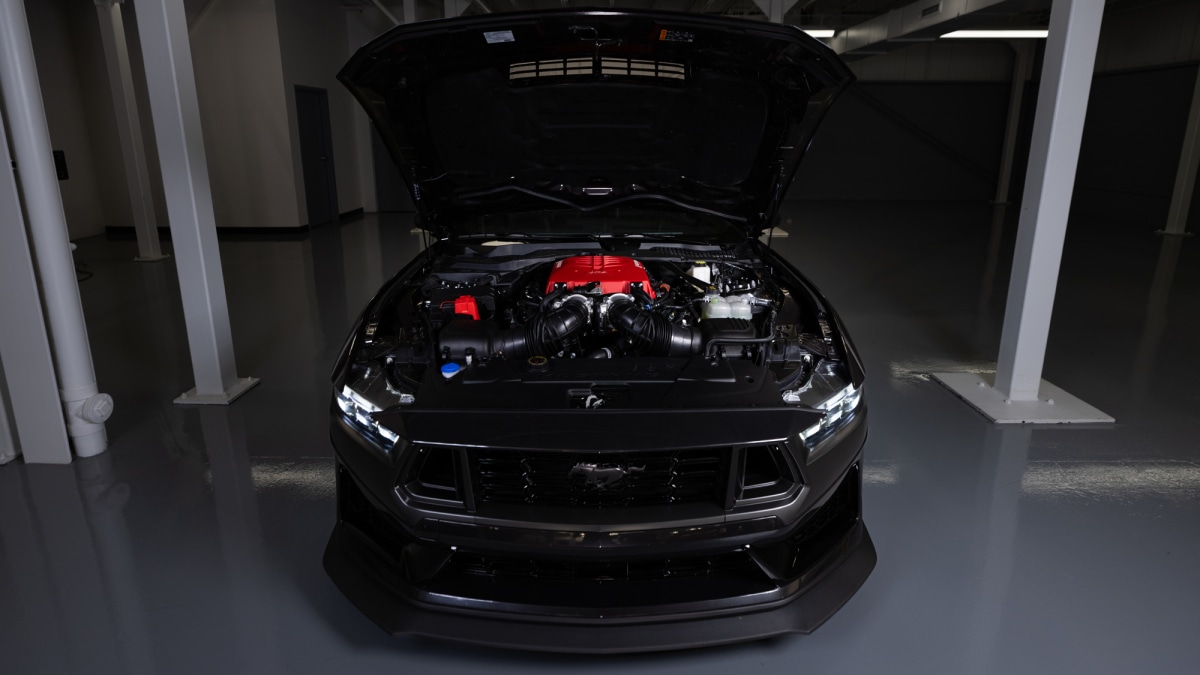
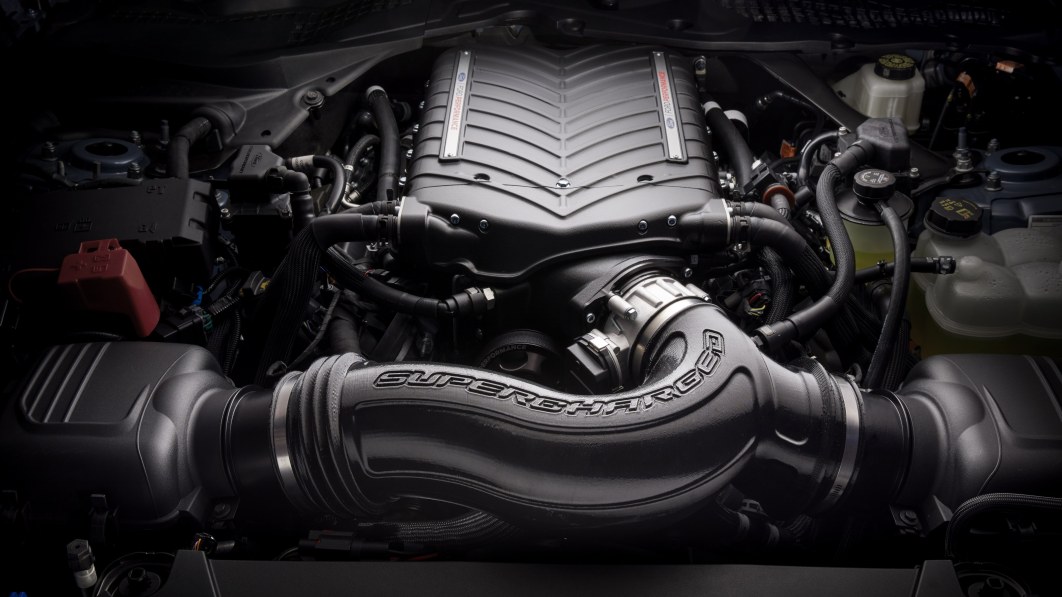
The superchargers and outputs have changed, too, which is what got us our ride-and-drive. The Roush ‘charger package had turned into a 700-hp ‘Stang for $42,995 in 2019. In 2020, BFP began offering a Mustang GT with 750 hp and 670 lb-ft priced at $44,994. Earlier this year, BFP jumped to Whipple. The reason: Ford Performance resumed its supercharged street truck game with the supercharged, 700-hp FP700 package for the F-150 pickup. At its heart, Whipple’s Gen 6 3.0-liter blower, representing a defection from Roush Performance and the 700-hp supercharger package Ford Performance announced for 2018.

When Ford Performance finally loosed the retail, 49-state-legal Whipple blower package, buyers could unlock up to 810 horses and 615 pound-feet from their 5.0-liter Coyote V8s for just $9,999, while being protected by a 3-year/36,000-mile warranty honored at any Ford dealer.

BFP still offers a Roush Phase 2 build with 750 hp and 670 lb-ft that costs $11,450 installed. BFP’s Ford Performance build with a Whipple adds 60 ponies but subtracts 55 torques and costs $12,600 installed. This kind of price/performance matrix strikes us as more about how you like your power delivered and where you want to spend your money. Nevertheless, Jeff Black, BFP’s point man guiding customers through their builds, indicated where the herd’s heading for now: “We are seeing a lot of excitement over the new Ford Performance/Whipple collaboration.”

One of Watson’s second-time buyers, a gent named Matt, was able to get one of the early Whipples. We drove up to Matt’s house for a quick spin in his 2024 Mustang GT convertible, meeting the kind of Mustang fan we’ve only read about.

“I’ve been a Mustang freak since I can remember,” he said. “I used to have posters of them up in my locker in grade school. I carried a picture from grade to grade for about four years, a ‘67 Mustang GTA. I had no idea what the GTA stood for, I just thought that car was cool. Then I moved to Fox bodies when I was able to drive. I started working when I was about 13 and saved up enough money to buy my first car, a ‘79 Cobra.”

The Cobra designation carried over from the Mustang II, but 1979 was the first year of the Fox Body. Buyers could either get a turbocharged 2.3-liter four-cylinder making 132 hp and 142 lb-ft. or a 5.0-liter V8 making 140 hp and 250 lb-ft. Matt got the five-oh and made a few mods to parts like the carb and rear gearing, establishing the template for the years ahead, which counted “13 or 14 Fox bodies” up to around 2008.

We asked why he cycled through cars. “It’s on to the next one, right? Or you’re driving down the road and you see one, and you’re like, ‘That’s cool.’ It’s a sickness.”

As fans of cars ourselves, we’d let him off the hook of “a sickness” and call it something like “an endless love.”

Eventually, life did what life does. “As I got older, the budget for those things kind of went by the wayside. I went a period of probably 10 or 12 years without one.”

The dry spell is surprising considering that Matt spent 25 years as a service department manager, 20 of those years at Ford dealerships. When he got back in the game, he bought his first Mustang from Watson, a 2019 GT hardtop with the Performance Package 2, a six-speed manual, and the standard Edelbrock blower package. He later upgraded to the Stage 2 kit that got him to 615 horses at the wheels. “But it was quiet,” he said. “I wanted to build a little bit of a sleeper, didn’t want to advertise that I had the supercharger. I just wanted it for some spirited driving and not to be embarrassed at a traffic light, in case the need ever came up. It was my favorite car I’ve ever owned.”

This time, the reason he let a Mustang go wasn’t to get into something newer, but something better.

“My brother had had an ’88 Fox body T-top since he was in high school — 32 years. One day, he called me and said, ‘If you still want to come get it.’ I did, and my family kind of looked at me, and they were like, ‘You’re putting a lot of money into Mustangs, right?’ I wanted to be a good steward, so I sold the ‘19 to put the money into the Fox body. I was going to do a Coyote swap, I had ordered the parts, I had big plans. And somebody stole that car from the repair shop. It’s never been recovered.”

He looked for another Fox Body, finding the used market the same minefield one encounters when looking for unmolested mid-1990s Japanese sports cars: “They were all junk. Everything out there was rusted out, or somebody turned it into a track car — put a cage in it, took all the gauges out, cut up the dash — and I didn’t want to go through that project.”


So he returned to the modern era. He checked out the S650 at an auto show last year, Watson had him in a 2024 GT convertible with the Performance Package in October. Issues that continue to vex the supply chain prevented completion of the first phase of this new build until a few weeks ago. That phase counts the Whipple unit, Steeda H-pipe resonator delete, Steeda progressive-rate one-inch lowering springs, and a brace of Steeda cosmetic products like that decklid spoiler. The droptop sits on custom RVRN wheels wearing Continental ExtremeContact Sport 02 tires. Changes ahead include driveshafts rated for 1,000 hp.

An afternoon spin on rural Ohio roads showed just how good the Mustang has become in the past decade. This writer was never a Mustang fan, the 2015 model with the independent rear suspension the first factory option I considered enjoyable on the roads I like. Ten years of chassis and suspension improvements have massaged the last pony car standing into a proper weapon to attack a rollicking stretch; we mean tarmac that gets as curvy as it is bumpy, narrow sweepers with granite slopes or ditches for shoulders, steep downhill esses, and those sharp blind crests that will divert any joyrider with a subpar suspension into a horse paddock. The kinds of roads tacked with a month’s worth of production of yellow warning signs.

Ford Performance knows what it’s doing (no surprise). Casual cruising mimics a stock GT’s character — there’d be no issue using this as a daily driver. The Whipple isn’t loud anyway, but the active exhaust and resonator delete keep the blower whine from getting much past the bulkhead no matter the speed.

When the Saturday morning blast beckons, a Dynojet run showed Matt’s car at 665 hp and 440 lb-ft at the wheel. Drop down to second or third gear around 45 mph, hit the throttle, the Whipple will tax the sticky Continentals just beyond their capability for a touch of sideways scoot, then the ‘Stang is down the road burning gas.

A huge shoutout to the Steeda springs, which soften the Magneride’s stiff tuning while letting the performance dampers do their job of disciplining body roll and maintaining the contact patch over ragged bits. The more pliant connection between wheel and body might also have eliminated the cowl shake our colleague experienced in the 2024 Mustang GT convertible on the First Drive. Or that previous tester might have been an early production outlier. Or the back-end trembles, like the supercharger whine, might also have been smothered by active exhaust. No matter the explanation, Matt’s setup is a win.


At $55,299 for an 810-hp Mustang that behaves like a pony around town and a Derby winner on-demand, there’s never been a better time to be in an endless love affair with the car. And Matt, having started his walk up Mustang Mountain with a 1979 Cobra, has every right to enjoy the view from this latest peak. His S650 is going to have competition eventually, though. He finally found a replacement Fox body, a 1988 with the telltale convertible mirrors denoting a late production build.

Asked about his plans for the old horse, he said, “It’s about 1,100 pounds lighter than [the 2024 Mustang], I want to be at about 500 wheel horsepower. So I’m not embarrassed at a traffic light, in case the need ever comes up.”

Categories
Auto

BMW X3 M Performance Parts bring distinctive flair to new SAV

If the tumescent front fascia on the fourth-generation BMW X3 didn’t convey its inspiration clearly, enough, look at the new crossover in profile: It’s a scaled-down XM, the SUV that still points to BMW’s future. The new X3’s interior? It’s a concept car interior headed for Munich streets, as shown by the 2014 BMW Vision Future Luxury Concept unveiled at that year’s Beijing Motor Show. The X3’s cabin is the closest thing we have to that show car, recalling the concept’s minimalism, boomerang motifs, gold accents and lack of buttons. Side note — and we ask this as big fans of the current 7 Series — why couldn’t BMW put that concept into production? It had a monumentally gorgeous spiritual successor to the classic E38 right there in its hands …

Back to the program. The new X3 wraps two kinds of future in a compact crossover package. To that, M Performance Parts would like to offer owners something timeless: The ability to tack extra bits onto a design that doesn’t look wholly at ease wearing them. The X3 already offers the factory options of an M Sport Package and an M Sport Package Pro, mind you. The collection of carbon fiber, CFRP and polyurethane exterior M Performance Parts is said to impart a “more elegant and sporty appearance.” As a wiser writer once said on these pages, “You’ve got eyes. You can decide for yourself.”

A front splitter can be had for the first time ever on an X3, this one a three-piece unit in high-gloss black. Behind that there are carbon fiber mirror caps and a carbon and aluminum fuel filler cap. The antenna cover comes in carbon fiber reinforced plastic so as not to interfere with signals. The M Performance rear diffuser below is either made of the same material, or buyers can choose a second version in polyurethane that would match the polyurethane spoiler hanging off the end of the roof. The spoiler comes in black as standard, but can be painted to match the X3’s factory color.

If those aren’t enough, one can complete the fashion show with M Performance side graphics, black model badging, carbon or aluminum door sills and, for the X3 M50 xDrive with the M Performance Package exclusively, CFRP tailpipe finishers with stainless steel inner rings. Interior fit ranges from M Performance floor mats to stainless steel pedal covers and an Alcantara and leather key fob cover.  

A quartet of 22-inch light alloy wheels come in Jet Black matte with polished elements, mounted on summer tires. M Performance tire bags with reinforced handles will make these easier to tote during the severe seasons. The other choice is a set of 20-inch wheels in plain Jet Black Matte on all-season tires.

Pricing isn’t out yet. But if these are for you, pricing probably doesn’t matter.

Categories
Auto

Aptly named Peace Vans ready to build the 2025 ID.Buzz you’re looking for

It’s been a long, strange trip to get the modern Volkswagen Bus back to the U.S. in the smooth electric form of the 2025 ID.Buzz. While that replaces the model, though, it doesn’t replace the old Bus culture. That’s where Seattle shop Peace Vans comes in, having spent six months working with the automaker behind-the-scenes to create camper packages customized for ID.Buzz owners. Quick background courtesy of The Autopian: An ex-Microsoft exec bought a VW repair shop, adding restoration and rentals to the business proposition, and over the last 11 years becoming the largest Bus repair and restoration concern in the U.S. Aside from that, with the rise of Mercedes vans as go-to bug-out vehicles, Peace Vans learned upfitting on modern cars with the German’s short-lived Metris and Metris Weekender, saying it’s done more than 1,000 Mercedes campers in six years. 

Back to the Buzz, there are three buildouts for three levels of getaway. The first two require removal of the third-row seats, the last requires getting rid of the second two rows.

The Buzz.Box slots into the rear to suit the “versatile weekend camper.” By “versatile,” it appears the company means, “Here’s a tidy little kitchen so you can feed yourselves, everything else is on you.” We’re not sure how everything fits into the enclosure, but the slideout does look slick, with a sink, single-burner stove, two cutting board areas, a Dometic 35-liter fridge, what appears to be a storage area, and, oddly, a bin to hold the vehicle charging cord. There’s also a trim bin with built-in slots for a Bluetooth speaker, wireless charging pad, and some sort of caddy. This one starts at $7,995.    

The Buzz.Box.Sleeper does what it says, adding a “nearly queen-size” bed to the rear area by making the top of the kitchen black and the folded-down rear seats a bed. It costs $10,995.

The Box and Box Sleeper can be ordered from Peace Vans and installed locally, which we’re told takes two people about a day to do.

Then there’s the Buzz.Camper, as close as one is going to get to a real Deadhead special for the moment, minus the acid trip graphics. This one stresses comfort at cost to the prep area. A mini kitchen comes with a sink, stove, refrigerator, but the layout stuffs this portion into an area between the two front seats and the L-shaped rear lounge that converts to a double bed. Note the sink right next to the single-burner stove, while cutting and prep will need to be done on the dining room table in the middle of the lounge. For nice camping spots where the bugs aren’t so bad, the Buzz.Camper does come with an folding outdoor workspace. On the comfort side, the overall layout transforms into four space types: Work, eat, chill, sleep.

Buying the Camper means getting one’s Buzz to Seattle for an install that takes up to three weeks, or buying a Buzz directly from Peace Vans, the so-called Peace Vans Plus option. We don’t have a price for this one yet, and hardcore Bus folks might want to hold out, anyway. The company says it’s working on U.S. Department of Transportation approval for a pop-up camper, expected to be ready in late 2025. That’ll be your Magic Bus. Or Magic Buzz. Perhaps both, depending on jurisdiction.

Order books are open now for all options, first deliveries of the Buzz.Box and Buzz.Box.Sleeper anticipated in November 2024, around the same time VW plans on having the ID.Buzz at U.S. dealers.

Categories
Auto

Ford offers power upgrades for 2022-2024 Bronco & Ranger Raptors

[Update: Ford let us know early Thursday morning that the 2022 model year Bronco Raptor had been inadvertently left out of the mix. The following copy has been updated to include it.]

Remember the days of inexpensive, factory-backed upgrades for domestic performance cars? Well, Ford does, and man have they got a whopper in store for Raptor owners: The company will offer customers factory-backed power packages for the 2022-2024 Bronco Raptor and 2024 Ranger Raptor that deliver as much as 50 horsepower and more than 100 pound-feet of torque, all for the low, low price of just $825. If you’re an owner whose heartbeat doesn’t quicken at least slightly at that prospect, we’d question whether you had one to begin with. 

The power and torque you get from the upgrade are both dependent on the platform. The 2022-2024 Bronco Raptor calibration increases the horsepower from 418 to 455 and dials up the torque output from 440 to 536 lb.-ft. Sure, that’s not quite 50 horsepower, but 116 lb-ft of torque is nothing to sneeze at. If you’re looking to upgrade a Ranger Raptor, you’ll see horsepower increase from 405 to 455 and a torque increase from 430 to 536. Yeah, you’re reading that correctly: 50 hp and 126 lb-ft of torque. For $825. That’s like monopoly money. And there’s even better news for those who use the Ford Pass Rewards program: The upgrades are eligible.  

Ford shared the above charts of the performance gains on both platforms, noting that its engineers compensated for the shift in powerband by altering the throttle and transmission shift logic as well, so it’s not just a baseline increase in output. Both are available for purchase online (Bronco Here, Ranger Here) to be installed by your dealer. If installed by an authorized dealer, it’s also covered by a three-year, 36,000-mile parts warranty. 

If you’re really a Raptor enthusiast, Ford’s Raptor Rally bundle offer is too good to pass up. Anyone who registers and attends the Rally in Fairfield, Utah, on Sept. 21, will get a coupon good for 20% off the calibration tool (and other factory accessories) at performanceparts.ford.com. The event costs $500, but think of it this way: For about $1,300, you can spend a day hooning your Raptor and then drive it home with another 50 horsepower under the hood. That’s a really good day, if you ask us. 

Categories
Auto

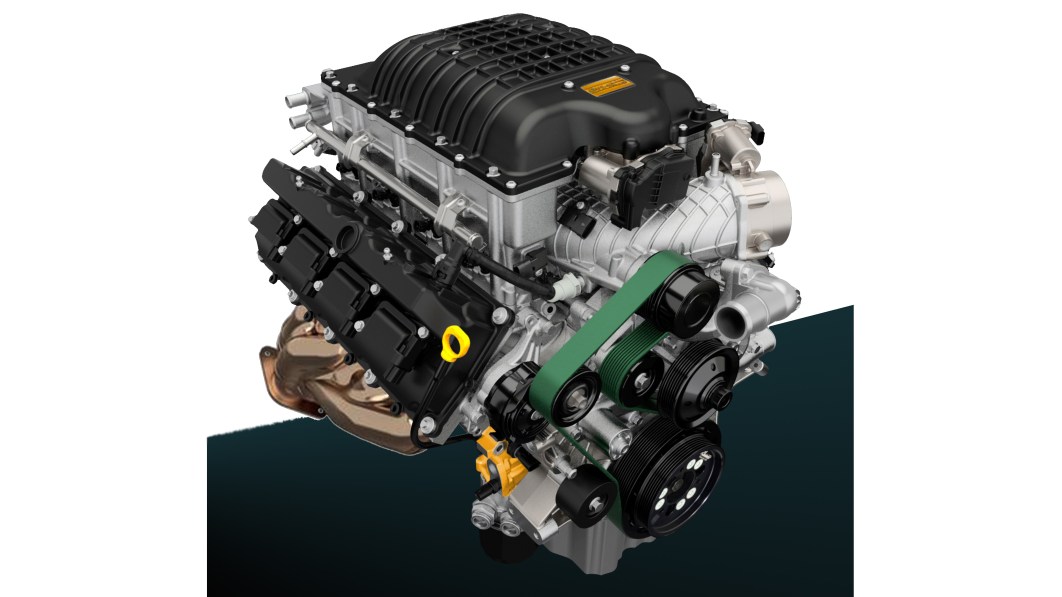
Dodge Hurricrate engines are finally here: Cat 3 has 550 hp and 531 lb-ft

The first thing to follow a crate engine announcement seems to be a long wait. Dodge announced a range of Hurricrate inline-six engines and four Hellephants in November 2022. The Hurricates are finally here. They start with the Cat 1 (as in hurricane category, ba-dum bump) making 420 horsepower and 468 pound-feet of torque with 22 psi of boost from its two turbos and a 10.4:1 compression ratio. There’s an aluminum block and twin-cam head, cast aluminum pistons, and liquid cooling working on the exhaust manifolds and intercooler. The Cat 3 Huuricrate upgrades to forged aluminum pistons and rings, plus low-friction coatings on the wristpins. There’s greater flow through the fuel injection system and additional cooling for the intercooler. A reduced 9.5:1 compression ratio and 26 psi of boost crank output to 550 horsepower and 531 pound-feet of torque.

The Cat 1 long block goes for $7,995, the full crate engine at $10,495. The Cat 3 long block wants $11,715, the crate engine, $13,745. If you order before November 8, the Cat 1 comes with a $200 Visa gift card, the Cat 3 comes with a $125 Visa gift card. 

Dodge said it would be releasing two transmissions to go with these engines, a DC1 and a DC2, those appear to still be in the works. We can’t find the DC1 or DC2 gearbox on the Direct Connection site. We’re also waiting on one more Hurricrate, the track-only Cat X that Dodge estimated to be capable of more than 1,000 hp.

News of three more Hellephant engines came with the Hurricrate announcement, turning one supercharged 426 cubic-inch (7.0L) V8 into a quartet of supercharged engines. The main difference is the block material, either aluminum like the Hellephant we already know or cast-iron. The cast-iron version has smaller displacement at 376 cubic inches (6.2L), making up for that with a smaller supercharger pulley on the 3.0-liter supercharger and a larger 105-mm (versus 92 mm) throttle body. And although the iron block shares displacement with the Hellcat, the iron Hellephant has a variety of improvements to the valvetrain, connecting rods, bearings and main bearing caps. 

Naming-wise, the aluminum engines start with “A,” the cast-iron ones with “C.” A number then denotes the appropriate fuel based on alcohol proof number; the limit for pump gas is E15, so 30 proof, and E85 is 170 proof. So you have the A30, A170, C30, and C170. The C30 tops out at 900 horsepower, the rest can get to 1,000 horsepower or more. 

Only the C170 is out and priced so far, the long block alone running $18,995, the crate engine asking $27,675. These are all going to need that DC2 transmission or other suitable gearbox as well. 

Categories
Auto

The Tuthill GT One is your roadgoing flat-six race car fantasy

If you’re the type with a Porsche 911 GT1 Strassenversion fetish, deep pockets and good connections, you may just be in luck. Boutique builder and restoration provider Tuthill Porsche is going to build 22 examples of this carbon-fiber GT One road car — emphasis on road, there. Of the various homologation cars that were produced to comply with GT1 series rules, Tuthill said all were compromised to be better platforms for their competitive aspirations. The GT One sets itself apart by being a street car first. 

Tuthill went out of the way to avoid using the “P” word in its announcement (Check there for more — albeit small — photos) but it’s quite evident that this car is both meant to embody the original 911 GT1 and powered by one of its descendants’ flat-sixes. You can get the 4.0-liter in both normally aspirated and boosted variants, making “more than” 500 and 600 horsepower, respectively. Both are mated to exhaust systems by Inconel and can be built with either a 7-speed dual-clutch or manual transmission. 

Under the custom carbon body, panels and door bars, there’s a double wishbone suspension setup both front and rear. You’ll also find a full FIA-style roll cage. That said, the GT One is not set up from the factory for time attack sessions. As noted above, the GT One carries on Tuthill’s legacy of building racy-looking cars with street comfort in mind. And while this 2,700-pound machine will certainly offer more than its fair share of performance, turbocharged or not, Tuthill is holding off on offering a track-geared aero package, saying only that one may be developed — implying that demand is not necessarily expected, but will be considered. 

And while the carbon ceramic brake package may again signal that track performance is a priority, consider Tuthill’s choice of standard tire: the Michelin Pilot Sport 4S. It’s one of our favorite summer performance tires, but one intended to be used primarily on the street. Accessible though it may appear, with fewer than 25 slated for production, chances are they’re already spoken for. Bummer. 

Categories
Auto

Singer expands the Reimagined 911 Turbo Study range with a 935 Flatnose

Another summer, another stanza in the composition of Singer Vehicle Designs’ Turbo Study. If you’ll remember, in 2022 Singer debuted the Turbo Study with a 964-derived (but heavily modified) 3.8-liter twin-turbo flat-six making either 450 or 510 horsepower and 442 pound-feet of torque, shifted through a six-speed manual gearbox. The original 964-series 911 Turbo, as all production Turbos before it, had come with a single snail, the 930 Turbo from the 1970s producing, at most, 325 horsepower from its boosted 3.3-liter flat-six. Later in 2022, Singer showed the Turbo Study in Cabriolet form with the option of rear-wheel or all-wheel drive. Last summer, the California builders wheeled out a new Dynamics & Lightweighting Study (DLS) in the shape of the turboed and whale-tailed racers from the 1970s and 1980s. And now, the UK’s Evo magazine enjoyed wheel time in a Turbo Study on the occasion of the original Turbo’s 50th anniversary, revealing two new body styles in the lineup: A Targa and the devilish Flatnose, also known as the 935.

The Targa is, naturally, beautiful. And while we enjoy driving one whenever handed the keys, we’re still not sure what compels buyers to stop at that middle step between coupe and convertible. Singer’s customers and their money keep the body style in the commission pool, a Classic Study Targa celebrated as the company’s 300th build in February of this year.  

The Flatnose is another gorgeous icon that gives us pause, but only because we lived through the 1980s to see them in their natural habitat. In the U.S., perhaps no car said so clearly and simultaneously, “I’m a CEO who just left a meeting to close a leveraged buyout” and “I’m heading to/fleeing felony charges” more clearly than the car we called the Slantnose. These drivers were the perps that Sonny Crockett arrested in “Miami Vice,” while Crockett played the good guy in a Ferrari Testarossa. Wild times. And comical to think that all of this was born of a massively successful racing vehicle that often had to be mimicked in road-legal form by aftermarket companies like Designer Plastics Automobilbau and Strosek because Porsche didn’t sell the 930 Turbo here from 1980 to 1985. 

Anyway, Singer’s is the most beautiful rendition we’ve seen outside of Porsche’s factory-created 935 “Moby Dick” redux from 2018. What the two have in common are enormous prices and limited availability. Porsche created its Exclusive department in 1986 because of demand for the car it called the Flachbau, hand-crafting fewer than 1,000 examples before shutting down the lines, followed by only 77 of the reborn 935/78. Over at Singer, buyers with at least $1 million for the build plus money for a donor car can put their names down for a Turbo Study in coupe, Cabriolet, and Targa forms, but Singer’s making just 25 of the Flatnose, and they’re gone.   

Categories
Auto

2023 Subaru WRX Long-Term Update: Our love-hate relationship with the STI exhaust

Associate Editor Byron Hurd introduced to you the official Subaru performance accessories that we had installed on our 2023 Subaru WRX. And of them, the one I was most excited for, and anticipated would change the experience the most, was the STI muffler. For as fun and feisty as the WRX is, the one thing I felt it needed more than anything was some growl. Or snarl. Or bark. It was just a little too quiet for its vivid paint job and huge hood scoop. So what did I think when I went to go pick up the WRX for the first time from Byron, post-op?

“Oh no, I think we might’ve ruined our WRX.”

Yeah, the first impression, with barely any miles on the exhaust, wasn’t great. The WRX has a relatively high-rpm cold start routine, and it ends up bringing out the worst of the muffler. It’s extremely boomy from the cabin, especially right in that rpm range from 1,000 to 2,000 rpm where the cold start sits. So your morning quiet is broken by resonant humming all through the car. And the boominess never completely goes away. It crops up at other points in the rev band, and especially on off-throttle deceleration. 

There is some good news on this front, though. After putting on several hundred miles, the overall volume did come down a bit, seemingly after the muffler had “broken in.” It never went away, but it did mellow.

Even more good news, there are genuine positives to this muffler. Aside from occasional boominess, the exhaust tone is fairly clean and deep. And once it settles into the warm idle, it has a little lumpiness like you’d hope from a boxer engine. The extra volume also is welcome for rev-matching, as Road Test Editor Zac Palmer noted, and generally is fun when driving the car hard.

There are two other important things that this muffler manages. First, it’s quite civilized on the highway. That boomy start-up had Hurd and me worried, but we discovered that it’s tuned just right to be quiet (just a little louder than stock) and drone-free at highway cruising speeds (60-80 mph). So you won’t go deaf after hours on the freeway. Second, it’s weirdly quiet from the outside. We don’t know how, but the exhaust almost sounds louder inside the car than outside. You can feel like a hooligan while driving, but without drawing the ire of your neighbors.

Oh, and the tips are sharp. The trapezoidal tips are unique and have crisp stamping, particularly the STI logos.

So yeah, in the end, the muffler is a slightly mixed bag. It gets pretty noisy inside, annoyingly so at times, but in some critical ways, it still manages to be livable. So we really can’t recommend racing out and buying it, nor can we say to stay away from it. Worth noting is that Subaru makes no claims to horsepower gains, which makes sense, since it’s just the resonator and tips, not any other parts of the exhaust, nor does it come with any revised engine tuning. And $1,139.95 is a decent chunk of change, even if it’s not going to void your warranty. Weigh our pros and cons against your priorities, listen to the video sample, and make your decision from there.

Categories
Auto

Mercedes-Benz seized over 1.6 million counterfeit parts in 2023

Mercedes-Benz’s rivalry against Audi and BMW looks almost friendly compared to the war that the firm is fighting against counterfeiters. It’s working with law enforcement to destroy knock-off parts, and it announced that authorities seized over 1.6 million counterfeits in 2023.

Whether we’re talking about Mercedes-Benz, Rolex, or Louis Vuitton, counterfeit products can cause a drop in revenue and damage the brand’s image. One significant difference is that a person walking down 57th Avenue in New York City with a fake belt isn’t putting another person’s life at risk; someone cruising on I-15 at 85 mph with counterfeit brake pads could rear-end a minivan loaded with a family and two dogs. The picture above was released by the company to illustrate how counterfeit brake pads can increase a car’s stopping distance.

Mercedes-Benz notes that the safety aspect is part of what triggered its war on counterfeit parts.

“The counterfeiting industry generates enormous margins and has the structures of organized crime. It endangers road safety, takes no account of the environment, and stands neither for fair wages nor for occupational safety. There are no quality controls,” said Mercedes-Benz board member Renata Jungo Brüngger. Tracking down shipments of counterfeit parts is a monumentally difficult task, however.

So-called brand protectors often spend months investigating suspected counterfeit operations. When they find one, they forward the details to the relevant authorities who decide whether to carry out a raid. Mercedes-Benz’s job isn’t done, though. Some counterfeit parts have become so accurate that it can be difficult to tell them apart from the real thing, and a special team within the company needs to verify their authenticity.

Mercedes-Benz noted that authorities conducted over 740 raids worldwide in 2023 — which represents an average of about two raids per day and an increase of 20% compared to 2022 — and seized more than 1.6 million parts. It notably intercepted shipments of counterfeit braking system parts, wheels, steering system parts, and body panels. These components are destroyed after they’ve been seized, and in some cases investigators were able to trace them directly to the factory that’s churning them out. The legal quagmire you’d find yourself in for manufacturing and selling fake Mercedes-Benz parts likely depends on your role in the operation and the country you’re doing it in.

There are a few simple steps customers can take to avoid ending up with counterfeit parts, according to the German brand. Take a close look at what you’re buying, especially if you’re ordering parts online. If something looks too good to be true, it probably is. “Lower prices, abnormalities in product quality, or sales via dubious online sources” are red flags when you’re shopping for parts, Mercedes-Benz notes.

Categories
Auto

This resto-modded G-Wagon will soon be available as an EV

Electrifying classic cars is one of the most polarizing topics in the automotive world right now, with some feeling that it’s a great way to keep older models on the road and others angered that people are ditching classic gas powertrains for electric power. British-based Arcade Cars is walking the fine line between those factions with the Sojourn, a resto-modded Mercedes-Benz GE 230 with both electric and modern gas propulsion options.

Arcade starts with a classic G-Class in the GE 230 (also called the 230 GE), which originally came with a 2.3-liter inline-four. The company retained that option for the most basic configuration, where it produces 125 horsepower and 141 pound-feet of torque. An uprated 2.8-liter gas engine is available with 149 horsepower and 175 pounds of torque.

Where things get interesting with the Sojourn is Arcade’s plan to electrify the off-roader. The firm is working with Everrati, a company known for sourcing and electrifying classic cars like the Porsche 911, Land Rover Defender, and (gasp) the Superformance GT40. We don’t know the specs for the electric Sojourn project yet, but it’s sure to ruffle some feathers.

Regardless of what’s powering it, the revived G-Wagon’s interior is far more luxurious than the original model’s utilitarian accommodations. Arcade offers Alcantara and a range of premium leathers, and buyers can customize nearly every other aspect of the cabin, including the steering wheel. The company also fits modern electronics, like the Apple CarPlay-enabled touchscreen and a variety of speaker and subwoofer options.

None of this extravagance comes cheap — Arcade set pricing to start at $130,000. Of course, this will pale in comparison to the prices of other vehicles at the company’s chosen debut venue, the Pebble Beach Concours. Deliveries start later this year, but Arcade has a few gas-powered models for sale on its site if you’re anxious to get behind the wheel.

Categories
Auto

RTR brings color-shifting Mystichrome paint back to the Ford Mustang

North Carolina-based tuner RTR Vehicles is re-releasing one of the Ford Mustang’s most striking paint colors: Mystichrome. Part of the company’s newly-announced Premium Paint Options palette, Mystichrome completely changes color depending on the light hitting it.

Mystichrome was called Mystic when it made its debut on the 1996 Mustang Cobra. It was short-lived, and it later appeared on the 2004 Mustang SVT Cobra as Mystichrome. Its color is difficult to pin down; it’s either blue, green, gold, purple, or brown depending on lighting conditions. It’s cool, but it was also seriously expensive. Ford charged $3,650 for this option in 2004, which represents around $6,100 in 2024. This partially explains why most historians agree that only about 1,010 units of the Mustang SVT Cobra were painted in Mystichrome.

Ford hasn’t offered it since, but RTR is bringing it back for 2024 on the new Mustang. Not much has changed in the past 20 years, and the color remains mind-bogglingly different depending on how you look at it. What has changed is the price: Mystichrome now costs $15,995.

Buyers who don’t want to settle for a factory paint color but also don’t want to pay nearly the price of a new Nissan Versa for Mystichrome have several other options to choose from. RTR’s new Extended Color Palette includes Leadfoot Gray, Azure Blue, Rosso Scuderia, NATO Olive, and Signal Green. These colors are priced at $8,995. Alternatively, the company can also apply a matte clearcoat to the factory color.

Paint-to-sample, a service that has become hugely popular in the upper echelons of the industry, is newly available as well. Put simply, RTR can create a one-of-a-kind paint color using a sample, which can be anything from the color of your 1965 Mustang, the color of your favorite sweatshirt, or the color of the cereal bowl you ate breakfast in as a kid. Selecting paint-to-sample adds $5,000 to the aforementioned sums.

RTR’s started taking orders for its new paint colors in July 2024.

Categories
Auto

Car seat manufacturer Recaro files for bankruptcy

Recaro, a German brand best known for supplying seats to sports car manufacturers and racing teams, has filed for bankruptcy.

The company declared bankruptcy in a German court on July 29, 2024, and officials appointed a Stuttgart-based lawyer named Holger Blümle to oversee the process. Note that not every company named Recaro is bankrupt; it’s just Recaro Automotive Seating, which makes car seats. Recaro Holding, which designs and manufactures airplane seats and gaming chairs, is not involved in the bankruptcy process.

Recaro’s car seat-making division has bounced from owner to owner over the past few years. It was purchased by Johnson Controls in 2011, according to The Drive, and sold to a Detroit-based private investment firm called Raven Acquisitions in January 2020. The statement released to announce the sale claimed that Recaro Automotive generated about $150 million in revenues during the 2019 fiscal year.

What this means for Recaro’s future isn’t clear. There’s no word on whether it will be sold, closed, or parted out. It’s also too early to tell what will happen to its 215 German employees. German magazine Auto Bild notes these men and women have “contributed to the economic stabilization of the company by waiving and postponing wages” for years, which suggests the firm’s financial problems are deeply rooted.

Alarmingly, most of these workers reportedly weren’t aware that their employer had filed for bankruptcy until the last minute, so they weren’t granted the luxury of planning their exit — and figuring out what’s next — ahead of time. IG Metall, the trade union that represents Recaro workers, has asked members of the management team and the court in charge of the company’s bankruptcy proceedings for transparency.

On a secondary level, the bankruptcy filing could affect what your next sports car looks like inside. Although founded as a coachbuilder in 1906, Recaro has specialized in sport seats since the 1960s. It has supplied seats for a long list of models including numerous new and old BMW and Porsche models, the Alfa Romeo Milano Verde, the Cadillac ATS-V, the Ford Fiesta ST, the Mazda MX-5 Miata, and the Audi R8.

Categories
Auto

Tesla Cybertruck owners can now get jumpseats and a tailgate protector

It’s easy to make fun of the Tesla Cybertruck’s looks and talk about its lack of utility, but some people actually do “truck stuff” with their funky electric pickups. The automaker recently began offering a pair of accessories to help those owners get the most out of their Cybertruck’s odd bed configuration, though it’s still one of the least useful ‘utes around.

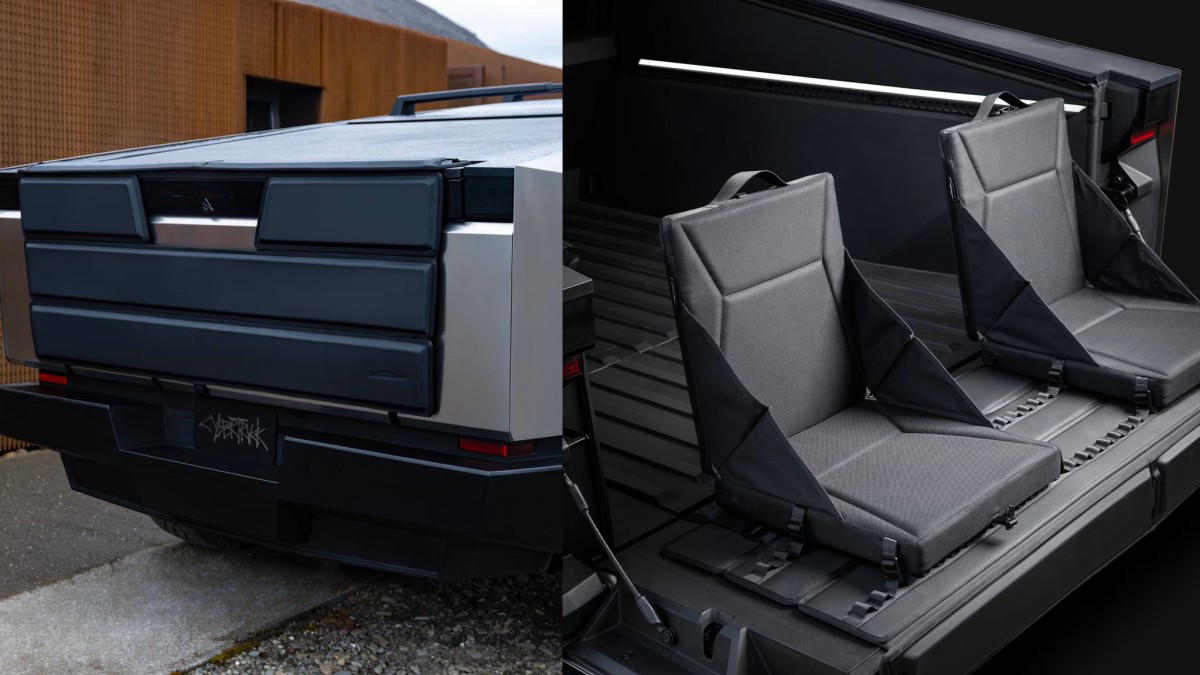
Tesla now offers a $300 tailgate shield that lets owners carry bikes over the gate without damaging the stainless steel underneath. The automaker’s description says, “Protect your tailgate while transporting your gear. The Cybertruck tailgate shield features a custom-designed pad that covers your tailgate when hauling equipment, like road or mountain bikes, over the top of the tailgate. The pad includes molle webbing on the interior side for easy fastening of equipment like the Cybertruck jumpseat, plus a combo carabiner to lock everything into place.”

Speaking of jumpseats, they’re Tesla’s second new Cybertruck accessory. Using the molle webbing on the tailgate shield, the seats are anchored to seat up to two people with their legs off the rear of the gate. They fold up for transport with the tailgate closed and feature handles for easier carrying. Tesla charges $100 per seat.

The automaker offers several other accessories for the pickup, including its much-talked-about Cybertent, a $3,000 folding tent that anchors to the bed and roof. Buyers can add a colored wrap for as much as $6,500 or a clear wrap for $5,000, and roof rack crossbars cost $800. There’s also a $55 window decal that replicates the window-smashing moment from the Cybertruck reveal event in 2019.

Though there are better electric trucks for people who want to get the most utility out of their vehicle, Tesla diehards love the Cybertruck despite the hate from a significant number of people. So, while they’re expensive and likely not as useful as they could be, accessories like these are an important part of making the vehicles as valuable to buyers as possible.


Categories
Auto

Roush supercharger kit gives the Ford Mustang GT 810 hp

The most powerful factory-built version of the seventh-generation Ford Mustang is the $300,000 GTD, which packs over 800 horsepower. Michigan-based tuner Roush announced a supercharger kit for the 5.0-liter V8 that unlocks GTD-like power for a comparatively low $10,000.

Developed jointly with Magnuson Superchargers, the kit includes dual intercoolers, an 84-millimeter pulley, and, of course, an inverted Eaton TVS R2650 supercharger. It was designed to work with the factory 80-millimeter throttle bodies. Roush claims that adding forced induction to the Coyote V8 delivers 810 horsepower and 630 pound-feet of torque, up from 486 and 418, respectively, for the stock 2024 Mustang GT.

Note that these figures correspond to the Launch Edition supercharger kit, which also benefits from Phase 2 tuning. The brand will release the standard Phase 1 and Phase 2 kits later in 2024, though what they include and how much power they bring hasn’t been announced yet. The good news for enthusiasts is that these kits will be compatible with both the six-speed manual transmission and the 10-speed automatic.

Achieving those figures requires more than just a big ol’ blower. Roush went to great lengths to lower the intake air’s temperature, notably by fitting a large heat exchanger and a Bosch intercooler pump. It also installed billet fuel rails, twin-cone fuel injectors, and Ford Performance spark plugs. Durability was taken into account as well: the supercharger belt runs close to the engine to reduce strain on the crankshaft.

Roush’s Launch Edition supercharger kit is on sale now for about $10,000 excluding installation, and it’s covered by a limited warranty. The Phase 1 kit due out later this year will cost less, and it will allow owners to retain the factory-backed powertrain warranty if it’s installed by an authorized Ford dealer or by an Automotive Service Excellence-certified technician. While the supercharger kit is SEMA-certified emissions compliant, it hasn’t been approved by CARB so it can’t be installed on a street-legal car in California and in states that follow CARB rules.

Categories
Auto

Ineos shows off V8-swapped, lifted and race-ready Grenadiers at Goodwood

In addition to its first special edition, Ineos brought a bunch of custom projects from itself and partner companies to Goodwood. They range from modified production cars to some very special-purpose vehicles, including a safari truck and a race SUV. Not only that, but with the right pocket book and contacts, you might be able to get some of these companies to build something for you.

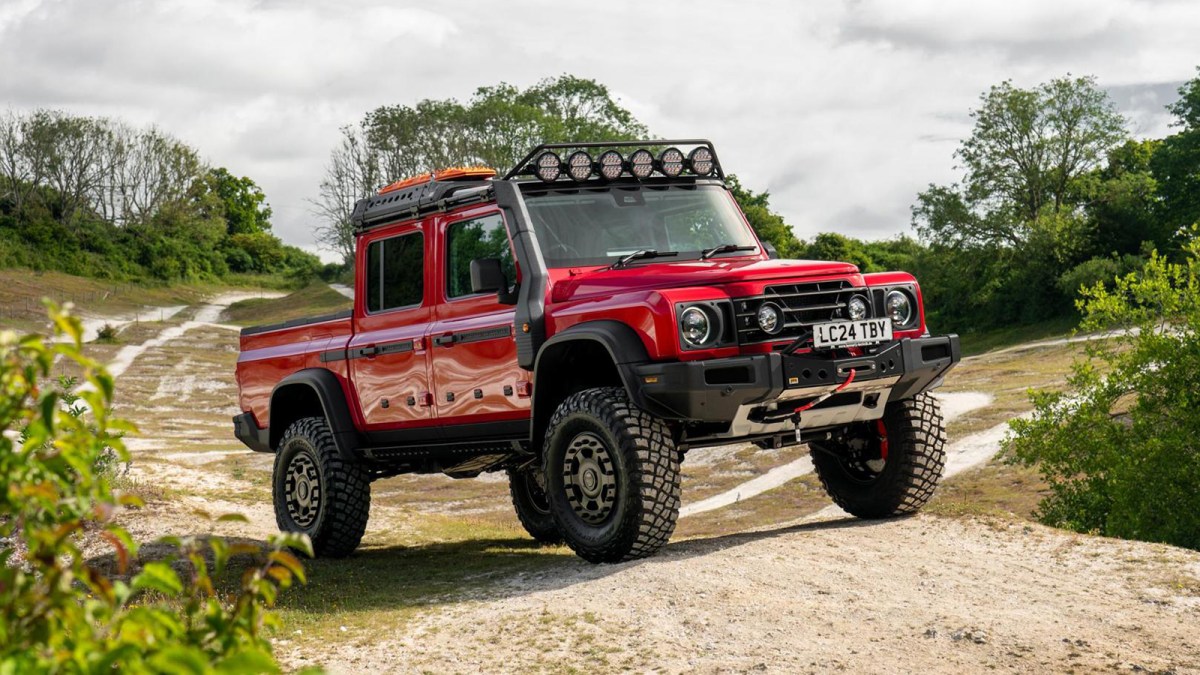
Lifting off-roaders is another pretty common modification, but German aftermarket company LeTech went to another level to do so. It took both a Grenadier Station Wagon and a Grenadier Quartermaster (pictured top), and fitted them with portal axles. If you’re not familiar, portal axles feature gears on the ends of the straight axles to bring the hubs lower and add clearance. Through the combination of the trick axles and the larger tires, these Grenadiers gained 10.4 inches of ground clearance for a total of 20.2. According to Ineos, LeTech has already sold a couple similarly modified examples to a German fire department, so they might be able to do the same for you.

Also common are GM V8 swaps, but with how new the Grenadiers are, this is a more unique situation. This one was built by apprentices from Magna, the company that manufactures Grenadier trucks and SUVs for the brand. All the BMW powertrain bits were removed in favor of a naturally aspirated 6.2-liter V8 from GM that makes 425 horsepower and 461 pound-feet of torque. That’s an increase of more than 120 horsepower and nearly 130 pound-feet of torque over the standard gas six-cylinder. And of course, it also adds some nice V8 growl.


Next up, we’ll look at the Grenadier Station Wagon from Buzz Special Vehicles. According to Ineos, this is the first Grenadier customized to be legal for FIA competition. Buzz built it specifically for next year’s World Rally Raid Championship. This includes upgraded suspension and brakes, plus more power from the BMW straight-six. It now makes 349 horsepower and 406 pound-feet of torque. The interior is stripped bare and now features racing bucket seats, a roll cage and carbon fiber interior panels. Presumably if you’re interested in getting a competition-ready Grenadier, Buzz could probably help you out.


Another significantly modified machine is an in-house creation. It’s called the “Shortermaster” because it’s a short pickup truck. Ironically, it’s not based on the actual Quartermaster pickup, but rather the Station Wagon SUV. Ineos moved the rear seats slightly forward, and cut open the rear section to create a very short truck bed. So depending on how you look at it, it’s either a more off-roadable truck, or less practical truck. It’s definitely interesting, though. But we have a suggestion for next year, Ineos: What about turning the Station Wagon into a regular cab truck with a longer bed? You can have that for free.

Our final Grenadier comes from Kavango Engineering, which is now part of Ineos. The company builds specialty vehicles for safari and conservation efforts. They’ve taken a Quartermaster pickup, and converted it to safari duty. It now has three rows of stadium seating to give riders the best possible views of wildlife. It also gets various bits of body protection.


Categories
Auto

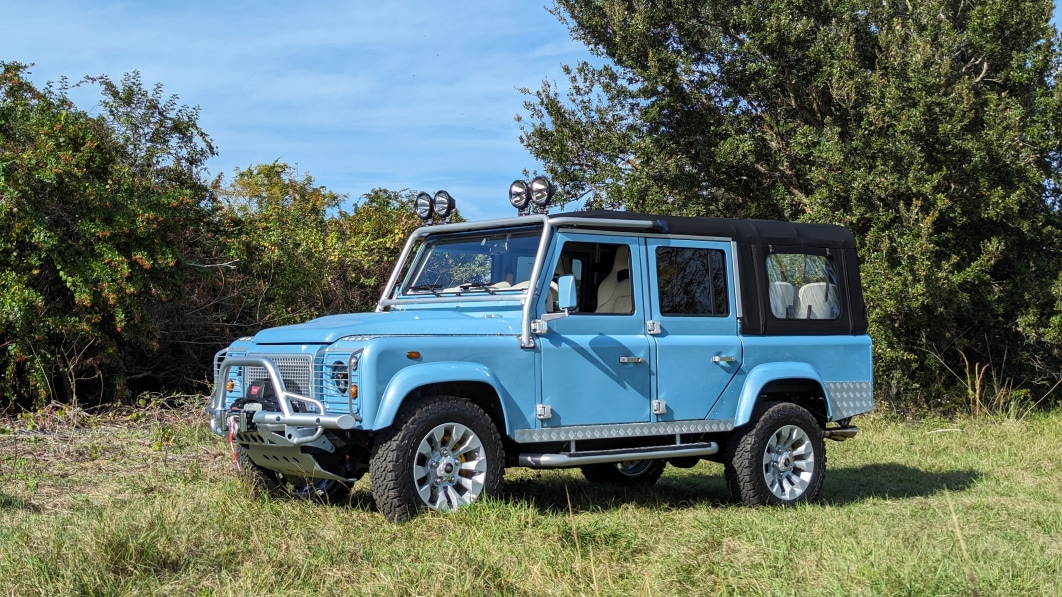
Dutch coachbuilder turns the Land Rover Defender into a pickup

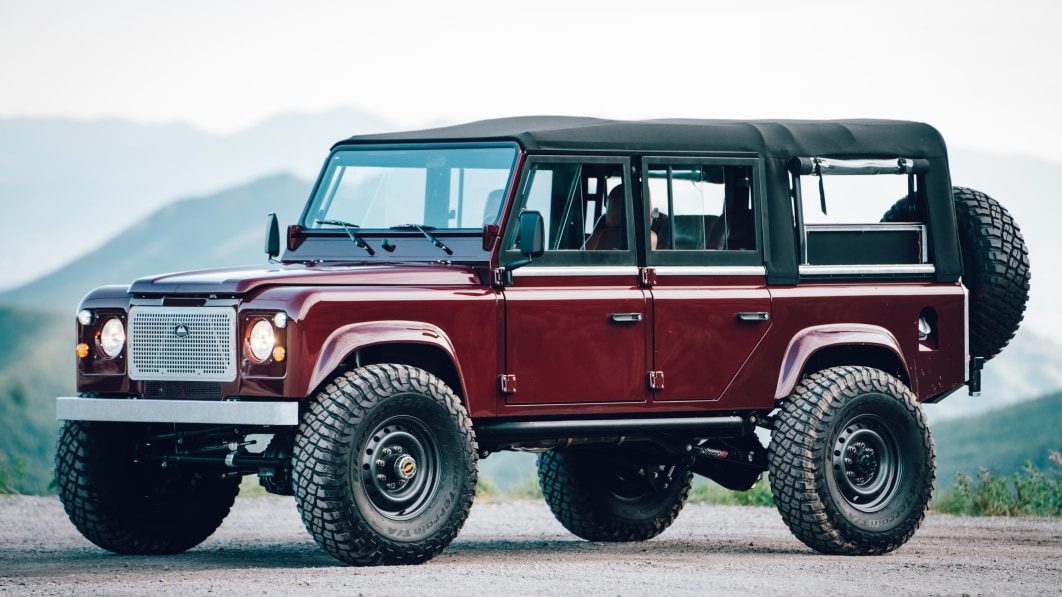
Land Rover offers three versions of the new Defender called 90, 110, and 130, respectively, but it doesn’t sound like the range will gain a pickup anytime soon. Dutch coachbuilder Heritage Customs has stepped in to fill the gap by giving the longest modern Defender a cargo box.

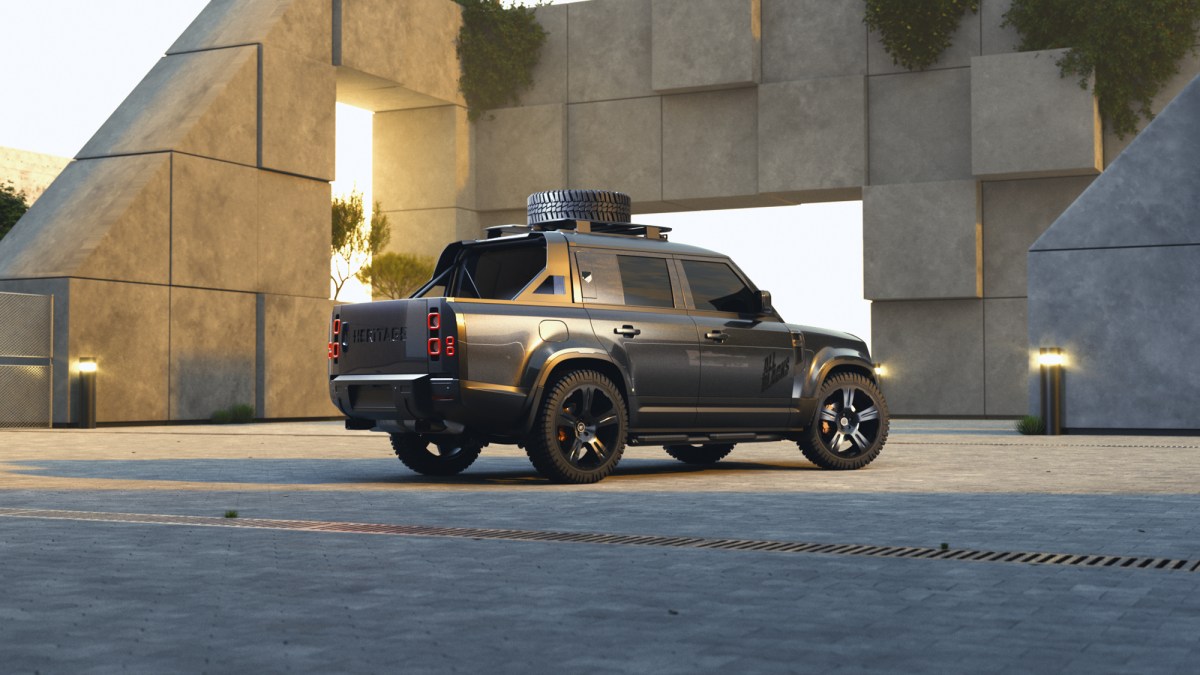
Chopping up any vehicle into a pickup is easier said than done, but this isn’t the first time Heritage Customs has made major modifications to the current-generation Defender. This is the same coachbuilder that builds a convertible Defender 90 with a power-folding soft top. Based on the Defender 130, the pickup features a usable bed, a sport bar, and a side-hinged tailgate with big “HERITAGE” lettering stamped into it. 

Buyers can customize just about every aspect of their truck including the paint, the upholstery, and the interior trim. Several exterior decal packs are available, while new-look wheel designs ranging from 20 to 22 inches in diameter add a finishing touch to the look. If that’s not custom enough, Heritage Customs offers a thick catalog of off-roading accessories such as LED light bars, roof racks, and side steps.

It doesn’t sound like Heritage Customs makes mechanical modifications during the transformation. Each build starts with the X Dynamic SE trim level, which is available with two engines in Europe. The standard offering is a 3.0-liter twin-turbocharged diesel straight-six rated at 350 horsepower, while a 5.0-liter V8 supercharged to 425 horsepower is available at an extra cost. All-wheel-drive of course comes standard. 

Pricing starts at €155,000 excluding tax, which represents approximately $166,000 at the current conversion rate — you might think twice about loading it up with a Home Depot trip’s worth of landscaping rocks. Heritage Customs notes that buyers need to send a €15,000 deposit (about $16,000) to secure a build slot and that production takes approximately three months because the work is entirely done by hand.

The idea of making a Defender pickup isn’t unprecedented; the original Defender was offered as a truck for decades. Rumors claimed the body style would make a comeback in the new Defender line-up, but it’s been a while since we’ve heard about a factory-built pickup.

Related Video

Categories
Auto

Toyota is building a rally-inspired, Corolla GR-powered GR86 for SEMA

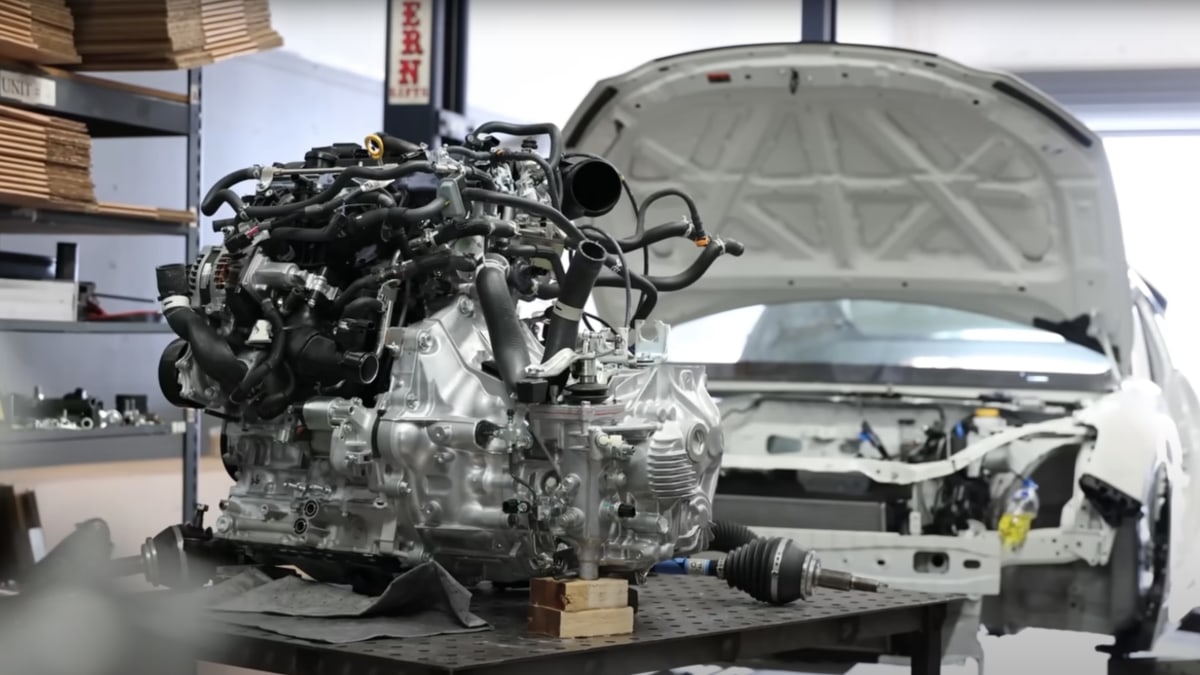
Toyota is finally building a turbocharged GR86, but it’s not following the Subaru-blazed path of blending forced induction with a flat-four. It’s instead turning the coupe into a one-off, rally-inspired concept that will debut at the 2024 SEMA show with the Corolla GR’s turbo-three.

While the Japanese brand hasn’t released official details about this project yet, photographer Larry Chen got a behind-the-scenes look at the build and filmed a video of it for his YouTube channel. The bulk of the work is being performed by a California-based shop called Evasive Motorsports that notably offers a thick catalog of aftermarket parts for the first- and second-generation versions of the coupe, including turbo and supercharger kits. The end result will be extensively modified, but it sounds like most of the parts are being pulled out of the Toyota bin.

On paper, the swap is simple: Evasive Motorsports is yanking the drivetrain out of a GR Corolla and bolting it into a GR86. In application, making it all work is considerably more difficult than it sounds. The puzzle pieces simply don’t come together: the GR Corolla uses a 1.5-liter turbocharged three-cylinder engine designed to be mounted transversally, a six-speed manual transmission, and a permanent all-wheel-drive system. The GR86 uses a 2.4-liter naturally-aspirated flat-four mounted longitudinally, a different six-speed manual transmission, and rear-wheel-drive. The project requires a great deal of fabrication work, but we’re willing to bet the effort required will be well worth it.

Chen learned that the idea is to build a tribute to some of Toyota’s historic rally icons, like the Celica GT-Four that won numerous WRC events in the 1990s, so we’re guessing a period-correct livery will add a finishing touch to the design. It’s also not too far-fetched to assume the concept will sit at least a little higher than a stock GR86, possibly on cool-looking rally-inspired wheels wrapped by meaty off-road tires. 

More details about the build will emerge in the coming months, and the coupe make its debut in the days leading up to the SEMA show, which opens its doors on November 5 in Las Vegas. There’s no word on whether the GR Corolla will get the GR86’s flat-four in exchange.

Categories
Auto

1988 Jeep Grand Wagoneer gets 807-hp Hellcat V8, supercar-like price

As the electric Jeep Wagoneer S was making its debut, Texas-based Vigilante was busy taking the nameplate in a completely different direction. It gave the original Grand Wagoneer the resto-mod treatment with a modern suspension, huge brakes, and an 807-horsepower V8.

The company started with a 1988 model and left the exterior largely stock. Finished in an eye-catching shade of red, the SUV wears the famous wood-look paneling, a hood ornament, and a generous serving of bright exterior trim. The wheels look factory but they’re not: They’re 17-inch units shaped just like the 15-inch alloys that Jeep made standard, and they’re wrapped by beefy BF Goodrich all-terrain tires.

You won’t find much that still carries a Jeep part number under the body: The Grand Wagoneer rides on an updated frame developed in-house by Vigilante. The brand then installed the same 6.2-liter supercharged V8 that Dodge put in the Challenger Hellcat Redeye. It makes 807 horsepower and 717 pound-feet of torque in this application, and it spins the four wheels via a four-speed automatic transmission. For context, a stock 1988 Grand Wagoneer uses a 5.9-liter V8 tuned to 144 horsepower and bolted to a three-speed automatic transmission.

Vigilante hasn’t published performance figures, but its Grand Wagoneer should be able to haul, well … just about anything. It should handle better than stock, too, thanks to a four-link Eibach coil suspension and Fox Racing shocks, while six-piston brakes keep the Hemi in check.

Accessed via hidden power-operated steps, the interior features modern vintage-looking gauges, an updated climate control system, and sound-deadening material. The seats were restored with new springs, foam, and padding and upholstered with a blend of Moores & Giles leather and corduroy fabric. Nearly every part of the cabin has been modified to some extent, yet it manages to look perfectly old-school.

Bringing a classic into the modern era is never cheap, and Vigilante is selling the Hellcat-powered Grand Wagoneer for $385,000. It’s also open to working with customers to design a resto-modded Grand Wagoneer from scratch. For that kind of money, you can buy a supercar — say, a Maserati MC20 Cielo — and have enough left over to build a garage to keep it in. But that’s not always the point, is it? Companies like Icon and Singer have proved time and again that there’s enough demand for an old-looking classic car to make a business case out of it.

Categories
Auto

Volkswagen ID. Buzz to offer custom graphic wraps that you can design

Volkswagen is stepping into the fun spirit of the Bus with the imminent launch of the ID. Buzz here in the U.S. As the second “International Bus Day” approaches on June 1, VW announced a new custom graphics program that will be available for the Buzz in collaboration with Wrapmate.

Future ID. Buzz owners will be able to design their own custom graphics or select from those dreamt up by Volkswagen and collaborating artists. VW promises to release special offerings over time, with the first of those being on display in the reveal photos at the top of this post. Dubbed “Love the Earth” by Bob Hieronimus, it’s a design that’s meant to celebrate VW’s shift to EVs and more sustainable practices. The wrap says “Love the Earth” in 25 different languages and serves as a call for global unity, VW says. And if you recall, Hieronimus was the artist who – also in working with VW – recreated the iconic “Light Bus” from Woodstock 1969.

As for the details of what customers can order, all of the Wrapmate wraps will be made of 3M vinyl. They can be installed at any of Wrapmate’s 2,000 certified wrap installers across the country. You’ll be able to design your own wrap via Wrapmate’s 3D configurator which launches on June 2 in beta mode. Following that, those who have designed their preferred wrap will be able to order it in fall 2024 through Wrapmate’s online portal or a participating Volkswagen dealership – we’re still waiting on pricing.

The ID. Buzz launches later this year as a 2025 model, and you can read all the latest U.S. specs and details in our breakdown here.

Related video:

Categories
Auto

The Exomod Ascent Blue Angel is a 1,000-horsepower monster

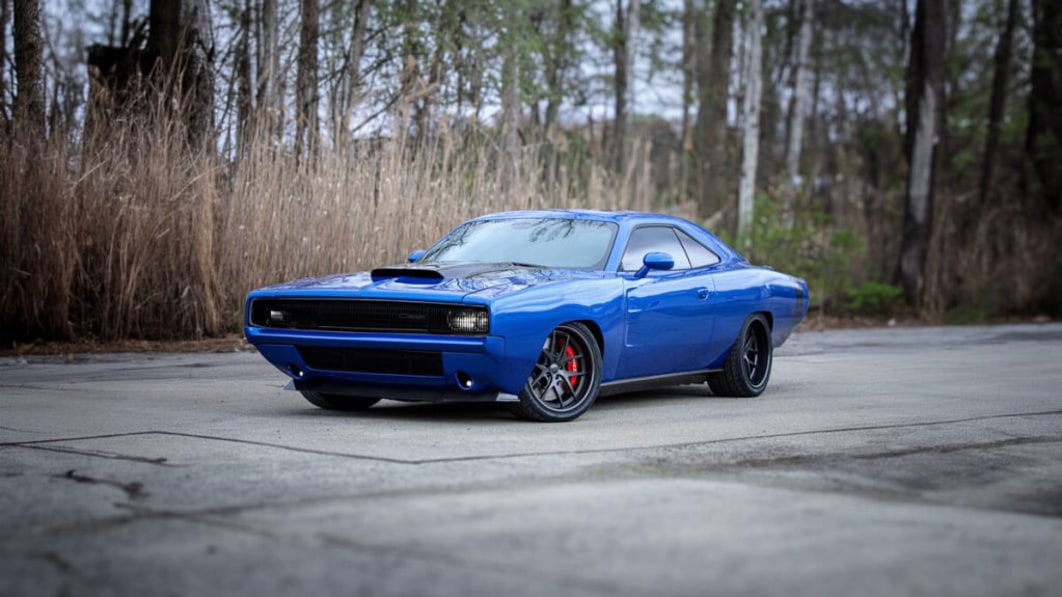
Exomod is no stranger to stretching vintage (looking) carbon fiber Dodge bodywork over modern Challenger Hellcat foundations. Its current catalog spans three variations, including a mean-looking Daytona, but the company recently announced a new car with a Hennessey-supercharged V8 under the hood.

The Ascent Blue Angel, named after a custom-built rescue helicopter from Ascent Helicopters in British Columbia, is a 2023 Dodge Challenger Hellcat Jailbreak with a sunroof underneath. It sports a full carbon body modeled after a 1968 Charger, with more carbon accenting its chin spoiler, door jambs, rockers, and rear diffuser. The car rides on Forgeline 20-inch wheels wrapped in Nitto tires, which reveal six-piston Brembo Brakes underneath.

Power comes from a wild Hennessey Performance supercharged 6.2-liter V8, making more than 1,000 horsepower. It’s paired with a TorqueFlite paddle-shift eight-speed automatic transmission and a custom active exhaust with carbon fiber finishers. SRT Competition Suspension helps keep that power on the ground.

The car sports Katzkin Havana Tobacco Leather upholstery and an 18-speaker Harman Kardon audio system with a trunk-mounted subwoofer. Elsewhere in the cabin, the car looks like a modern Challenger. It also retains modern safety and convenience features like cruise control, ABS, stability and traction control, a backup camera, and airbags, making it much more palatable as a muscle-bound daily driver.

Exomod said there was “no expense spared in the design and development of this custom carbon fiber body with bespoke exoskeleton modifications.” The builds take 1,500 hours to complete and cost $379,000, which aligns with that statement.

Fortunately, you won’t have to give up the factory warranty to get the look and power, as the car has a Dodge factory five-year/60,000-mile powertrain coverage. The modern powertrain and interior also mean relatively easy servicing at most Dodge dealerships. While some of Exomod’s wilder builds are one-offs, the company is offering the Ascent Blue Angel for configuration on its website, so grab your wallet or refinance your home and get started building.

Related Video

Categories
Auto

Vinyl car wraps: What you need to know before you wrap your vehicle

America’s favorite car colors skew toward the boring, with white, gray, and black holding the top three spots. That can be a real bummer if you’re shopping for a used car and want something spicier, but the good news is that you can easily get more color in your life with a vinyl wrap.

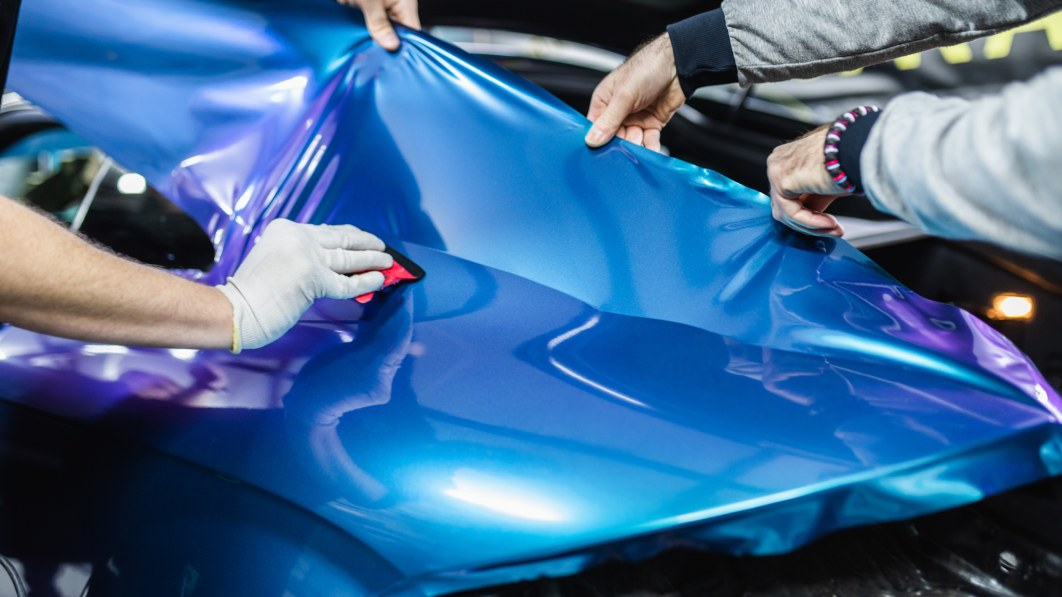
Wrapping a car involves using sheets of vinyl material with an adhesive to bond them to the paint. Modern wraps are less expensive than a paint job from a reputable shop, last for years, and won’t give you a hernia if you decide to change things up. They also come in wild colors not typically offered by mainstream automakers and can be customized with patterns or graphics if you use your vehicle for business purposes. However, like paint jobs, wraps come in a range of quality and cost options, so you’ll need to think about your needs and budget before diving in.

What does a wrap cost?

The cost of a wrap job depends on several factors, including the color, finish (matte, gloss, metallic), and the size of the vehicle. Small cars, such as a Volkswagen Golf GTI, cost around $3,000 to wrap, while a Ford Expedition could cost $4,000 or more. Opting for a color-shifting finish or a complex patterned wrap could double those costs for some vehicles, and you’ll pay more for a complete wrap job that includes the engine bay and door jambs.

Though they take more attention and care than traditional auto paint, wraps offer protection against the elements and can extend the life of a factory paint job, even if you’re really in it for the color. Just keep in mind that leaving it on longer than recommended might make it harder to remove and more likely to damage the paint underneath. A wrap can also be a great way to cover fading paint as a cheaper option than getting a new paint job, but consider that it’s only a temporary fix, and you’ll need to disclose the wrap and paint condition if you decide to sell the car.

How long does it take to wrap a car?

In general, expect a one- to two-day job if you take your vehicle to a professional shop for a wrap, though the work times could vary depending on the size of the vehicle and type of wrap. Doing the work on your own can take much longer, especially if you’re inexperienced or want to wrap out-of-the-way areas such as the door jambs and under-hood components. If a DIY job is in your future, make sure to give yourself time to make mistakes. While some parts are forgiving, wrapping is a finicky job that takes patience many of us lack. Wrinkles, bubbles, and misaligned panel pieces are all part of the job, so you’ll want to plan a little extra time to curse and figure things out.

How long do car wraps last?

High-quality wraps can last between five to seven years, though the type of wrap material and finish can affect that timeline. Home wrap jobs may fall a little short of that benchmark, as you might not have access to the same materials or adhesives, and home work environments tend not to be as clean (dust, open air, etc.), which can complicate the wrap job and affect durability. And keep in mind that keeping a wrap on the car longer than recommended can create problems when it comes time to remove it.

Which parts of a car get wrapped?

You have a few choices to make here, as you can opt for the simplest wrap job possible and omit the more hidden areas, such as door jambs. If you go this route, you’ll have to live with seeing the old color every time you open the doors, hood, or trunk. On the flip side, wrapping the harder-to-reach areas can cost more and take more time to complete, but you’ll have a more desirable and attractive end result if you go for the gusto. A simple wrap might be OK for a weekend racer or quick project-car paint cover-up, but you’ll want to spend the time or money to have a more complete job if you plan to keep the car or display it after the wrap.

Is it cheaper to paint or wrap a car?

You get what you pay for, but a super basic paint job can be had for as little as $500. Now, getting out for that cheap may make your aging paint look a little better, but you will likely only get a quick spray that won’t stand the test of time. Shops that offer these jobs do the bare minimum on the cheapest paint possible, so you might need another spray before you know it. Higher-quality paint jobs can cost $1,500 or more, depending on your vehicle, and getting anything that resembles some of today’s more elaborate wrap jobs will cost thousands.

Professional wrap jobs can cost about the same as a decent paint job, but you’re not committing to a color long-term. This would be a good option if your car’s paint isn’t in terrible shape or if you want a unique color or pattern. If you’re the DIY sort, you can come out spending a lot less money, but consider the quality and longevity of your work.

Finally, paying a shop to remove a wrap can cost $500 or more, so factor that into your budget if you want to go that route.

Downsides to vinyl wrapping your car

Wraps look great and can bring a quick pop of color or a unique pattern to your car, but they’re not always the best choice. You’ll need to consider the downsides of a vinyl wrap, which can be significant, depending on where you live and how you use your vehicle. Vinyl requires attention and care, and you can’t park for too long in direct sun or extremely hot areas.

You’ll need to clean the surface regularly, especially if you see bird droppings, bugs, or salt/sand — but automatic or touchless car washes are a big no-no, and you can’t use a harsh abrasive cleaner. While wraps look and feel like regular paint, you should treat them like a sticker, which they are. The hassle might outweigh any benefits you get.

Categories
Auto

South Carolina’s ‘Carolina Squat’ ban gets enforced May 10

Law enforcement officials in South Carolina will begin issuing tickets to vehicles with the so-called “Carolina Squat” modification on May 10. While the practice of lifting the front end of a vehicle has been illegal for months, the state has given out warnings since announcing the ban.

Broadly speaking, “squatting” a vehicle refers to lifting the front end without lifting the rear end. Officially, the South Carolina Department of Public Safety defines a “squatted” vehicle as one “with a front or rear fender raised four or more inches higher than the other.” While you can theoretically “squat” anything with two axles, this modifications is more commonly seen on pickups and SUVs than on, say, a minivan.

South Carolina lawmakers from both sides of the political aisle banned the Carolina Squat due to safety concerns. Dialing in far more ground clearance up front than out back gives the driver a compromised view of the road, they argued, so it’s easy to miss objects such as other cars, cyclists, and pedestrians. And, without the appropriate modifications the headlights risk blinding oncoming motorists. North Carolina and Virginia have already banned the modification, while Tennessee announced a ban on what’s locally known as the Tennessee Tilt in April 2024. Oddly, the petition to ban the trucks in The Volunteer State gathered far fewer signatures than the petition to prevent the ban.

The ban in South Carolina was announced on November 12, 2023, but law enforcement officials were instructed to issue warnings rather than tickets for six months to give drivers time to make their vehicle compliant. In theory, these modifications aren’t irreversible. Time’s up, however. Starting on May 10, first-time offenders will receive a $100 fine, second-time offenders will get a $200 fine, and third-time offenders will be fined $300. Folks caught driving a squatted vehicle for the third time will also lose their driver’s license for one year.

Categories
Auto

2024 Shelby Super Snake upgrades the Mustang with insane power and plenty of carbon fiber

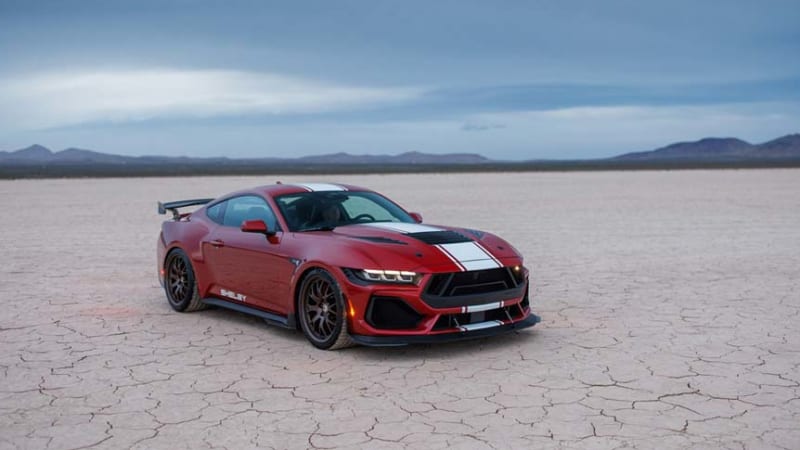
The latest S650 Ford Mustang made numerous improvements over the outgoing generation, including a revised powertrain and better tech. Now that it’s had time to marinate on the new car, Shelby American has given it the Super Snake treatment, taking the already capable Mustang to the next level with far more power and performance, a unique interior, and a wide body kit.

Shelby supercharged the Mustang’s 5.0-liter V8 with a 3.0-liter Whipple unit, bringing output to more than 830 horsepower and adding a beefier radiator and heat exchanger. All cars get performance half shafts, but manual models get a one-piece drive shaft and a short-throw shifter. A Shelby by Borla exhaust system finishes the package and gives the car a throaty sound.

Exterior upgrades include an aluminum Super Snake hood with pin locks, carbon fiber hood vents, wide body front fenders, and a wide body front fascia assembly. Shelby also installed a carbon fiber Super Snake rear wing and rear diffuser, along with plenty of company logos, to make sure everyone knows what you’ve got. The 20-inch forged magnesium wheels cut almost 37 pounds from the stock Mustang wheels, at just nine pounds per corner, giving the car better acceleration and shortening braking distances.

Inside, the car gets Super Snake door sill plates, a Shelby shifter for manual models, embroidered floor mats, and Cobra puddle lamps. Convertible variants add a light bar, and each car has plaques displaying its production number and engine.

The 2024 Shelby Super Snake is a one-year-only build, and the company said it’s limiting production to 250 units in the United States and limited availability in other markets. Pricing is yet to be announced, but it’s likely significantly more expensive than other Mustang upgrades Shelby offers, such as the GT500SE, which adds $29,995 to the car’s MSRP. The good news is that the company’s builds come with a three-year/36,000-mile warranty to replace the factory coverage.

Categories
Auto

Toyota seeks patent for chameleon color-changing paint

No one knows better than the folks who manufacture and market automobiles how crucial the choice of color is. Now, hoping to chase the concept of some of BMW’s technologies, Toyota is developing a method to modify their vehicles’ colors, chameleon-like, by using heat and light.

As initially spotted by USA Today, the technique has been in development for two years and Toyota last month filed for a patent with the U.S. Patent and Trademark Office.

The patent describes all cars with the paint leaving the factory with a single color, the color-changing material, in whatever default hue is chosen. Once at a dealer or other Toyota facility with the correct equipment, the color can be changed as desired. The method of which would include either large panels or even a movable panel that would heat the paint first, followed by applications of specific wavelengths of light. This whole process would allow the molecules in the paint to be shifted to reflect different wavelengths of light, creating different visible colors (similar to how “Structural Blue” on Lexus models achieves its color). Temperature sensors on the car would be employed in the process to help ensure the correct parameters are achieved for the right color.

Because these very specific conditions must be met for color changing, owners need not worry that if they drive their Camrys into Death Valley, they might shift from grey to hot pink.

At the Consumer Electronics Show in 2022, BMW showed a color-change concept known as E Ink on its iX electric SUV that was based on the electrophoretic technology used in e-readers. In that technology, the vehicle is wrapped, and an electric current causes pigments to pass through microcapsules, changing the exterior from white to gray to black, controlled by using an app on a mobile phone. Up to 32 colors could be displayed on 240 E Ink segments, each segment individually controlled.

Certainly, both these developments are conceptual now and not yet ready for prime time in a dealer’s showroom. But perhaps a hot pink Camry might not be bad.

Related Video:

Categories
Auto

Best Car Batteries Of 2024

Autoblog may receive a share from purchases made via links on this page. Pricing and availability are subject to change.

Buying new car batteries is about as exciting as watching paint dry, but choosing the right (or wrong) product can significantly affect how your car starts and drives. It’s essential to buy a battery designed for your climate, type of vehicle, and power accessories to make sure you can start your car whenever needed.

Before you buy just any old car battery, you’ll need to know exactly what size battery your vehicle is designed for. That means more than just the external dimensions — batteries get all kinds of ratings for power output, and larger engines and vehicles will need larger batteries. Most manufacturers have charts to help you find the right battery for your car, truck, or SUV, including recommended brands like Optima. If you’re still not sure what battery is right for your car, we suggest you check your owner’s manual.

In case you’re wondering, yes, your vehicle almost assuredly has a standard 12-volt battery, even if it’s a hybrid or electric model.

We’ve gathered a few of our favorite batteries, all currently available at Amazon, to get you started, so let’s get rolling. After a few recommendations for the best car batteries, we’ll cover some frequently asked questions.

From $244.99 at Advance Auto Parts

DieHard is a well-known battery brand with strong environmental chops. The Platinum AGM features a 94-percent recycled material composition, a reasonable price, and is available in nearly every size imaginable. The batteries are engineered to provide long life – up to two times the life of its rivals, and DieHard backs its batteries with a three-year warranty.

That said, AGM batteries (more on that in the FAQ section) are expensive and may be overkill for regular-duty applications. DieHard’s three-year warranty is generous but shorter than many of its competitors’ cheaper batteries.


From $279.99 at Amazon

The Deka Intimidator AGM battery offers two times the endurance in tough situations and two times the cycle life. It should be your go-to battery if you’ve got power equipment and accessories to run. The big downside here is the price, which for most Intimidator batteries, is far more expensive than similar batteries.

One thing to remember when shopping for a Deka battery is fit. Many people say that the promised fits in the sales listing were inaccurate. Most report stable output, excellent durability, and strong capability.


From $391.99 at Amazon

The Odyssey Extreme AGM could be your go-to battery if you live in an area where temperatures routinely crest 100 degrees in the summer. The Extreme battery provides cranking power in temperatures as low as -40 degrees Fahrenheit to as high as 176 degrees. Odyssey says its batteries are designed to resist vibration and deliver more power with up to 40 percent more reserve capacity.

That said, the people who report bad experiences with this battery tend to have notably bad experiences. Poor customer service and high prices are among the top complaints. However, the vast majority of reviews are positive, but it’s vital that you make sure the selected battery physically fits in your vehicle, as some say it’s too large for their battery mounts.


From $249.99 at Amazon

The Optima RedTop AGM battery offers excellent vibration resistance and toughness, making it suitable for various vehicle types and applications. It’s also fine to sit in storage for extended periods. The 31.7-pound battery provides great cold-cranking power and can handle a decent load. However, if you run extensive stereo equipment or powered vehicle modifications, you may need the Optima YellowTop or another higher-spec battery.

Optima covers its batteries with a one-year limited warranty, but you may not have the same protection, depending on where you buy the battery. It’s easy to find resellers online, but be wary of their return policies and how they describe the warranty coverage.


Store-brand options

One little-known fact is that just a couple of suppliers make a sizable percentage of all lead-acid car batteries you’re likely to find for sale in America. A large supplier called Johnson Controls manufactures batteries that are sold under several labels, including brands sold at Walmart, Costco, Autozone, and Advance Auto Parts. East Penn Manufacturing supplies similar batteries for O-Reilly and Napa. As you can see in the following video, some of these batteries offer solid performance for the amount of money they cost, though prices may vary widely. It may pay to look over all the stickers on any battery you find at a big-name retailer to find out what company actually made the battery. You could end up with a deal or a dud, so it pays to do some research before plunking down any cash.


Frequently Asked Questions

How do I know if I need a new battery?

Your car battery’s capacity and output degrade over time, and unfortunately, there’s not much warning when one is about to give up. If you’re noticing slow starts and dim or pulsing lights, that’s a good indication. One thing to remember is that the alternator could also be to blame, so it’s essential to have both checked by a pro.

How much is a car battery?

How much you spend will depend heavily on what you need as car battery price can vary. Vehicles with excessive power equipment or those that operate in extreme climates need more expensive batteries, up to $200 or more. Everyday passenger cars can get away with cheaper batteries that start around $50.

Can I replace the battery myself?

If you’re stuck on the side of the road, it’s best to get help or use a temporary battery charger, if you have one, to get to a safe location. If you’re working in your home garage, car battery installation isn’t very difficult, but be sure to follow safety and battery disposal precautions.

What does lead-acid mean?

Nearly all cars on the road today use lead-acid batteries. As their name suggests, they use lead electrodes and an electrolyte heavy in sulfuric acid. They are the oldest rechargeable batteries, invented in 1859 by French physicist Gaston Planté.

What does AGM stand for?

AGM stands for absorbent glass mat. Thin glass fibers are woven into a mat that’s then stuffed inside a casing and then soaked in an electrolyte solution. This arrangement offers advantages like greater resistance to self discharge and better resistance to temperature extremes.

How long does a car battery last?

According to Autozone, “the average car battery life is between three and five years.” This can, naturally, vary.

How do I change my car battery?

Watch the video below!

Categories
Auto

Ford Performance supercharger kit gets Mustang 810 hp with a warranty

After watching heaps of tuners, as well as dealers like Beechmont Ford Performance, supercharge their profits by supercharging Coyote engines, the factory is increasingly getting in on the deals. Last summer, Ford Performance created the FP700 package for the F-150 for dealer showrooms, bolting a 3.0-liter Whipple Supercharger to the 5.0-liter Coyote V8 to create a pickup with 700 horsepower and 599 pound-feet of torque along with a host of visual upgrades. Now, after unveiling an even more potent supercharger package at SEMA last year for the new Mustang GT and Dark Horse, the performance outpost is ready for retail sales. The sweetener is called the 2024 Mustang GT and Dark Horse Supercharger Kit, and it bestows 800 hp on a GT or Dark Horse without active exhaust, or an even sweeter 810 hp with the active exhaust. Torque climbs to 615 pound-feet, fancy pipes or no, making this compatible with the six-speed manual or the ten-speed automatic.

The figures demolish stock outputs, a 2024 Mustang GT on the showroom floor making 486 hp and 418 lb-ft. of torque, the Dark Horse upping that to 500 hp and 418 lb-ft.

This is the kind of inflation we like to see. As expected, the inflationary pressure comes from Whipple, a Gen 6 3.0-liter twin-screw supercharger working with a dual-pass intercooler. Ford Performance says the kit also includes a dual-air intake leading to a 92-mm throttle body, new, more robust spark plugs with a colder heat range than the stock plugs, port fuel injectors from the GT500, and a Tomahawk calibration tool to ensure the proper tune. The Mustang show car that Ford used for the reveal at SEMA also fitted ancillaries like a new fuel rail and new half shafts, two items that should definitely be in the budget when adding this much power.

The kit, part number M-6066-M8800, costs $9,995 before installation. If buyers get a Ford dealer or ASE certified technician to do the install, and register the build with the Ford Performance Tech-line, the setup comes with a factory three-year or 36,000-mile warranty. 

The small print? The kit is 49-state legal, a disclaimer at the top of the sale page explaining that while Ford has determined that the kit is road-legal and has no adverse effects on emissions, it isn’t approved for use in California. Also, buyers will need to fill up with 91-octane premium fuel to get the stated power figures.  

Since this is a Whipple charger, that company sells the same setup. Perhaps to entice buyers away from the factory option, Whipple’s Gen 6 Stage 1 supercharger at first appears to undercut the Ford option, selling for $9,295. However, Whipple’s powertrain warranty is a $700 option, making things almost equal. A Gen 2 version takes output to 855 hp with a 112-mm throttle body.

We write “almost” because Whipple says its power figures require 93 octane, and more importantly, the supercharger in either stage is “Currently not emissions legal.” 

And because tuning has always been about choice, if your blower preferences lean toward the Roush side, there’s always the Roush Phase 2 build at Beechmont Ford Performance that runs output to 750 hp and 670 lb-ft, costs $11,450 installed, and comes with the 3-year/36,000-mile warranty honored at any Ford dealer.

Related video:

Categories
Auto

Mercedes-Benz Sprinter gets starring role in Ghostbusters film

ECTO-1 looks pretty good for a 1959 Cadillac that has spent decades chasing ghosts, but the members of the Ghostbusters team wanted to add a more modern vehicle to their fleet before embarking on their next adventure. Like the #vanlife crowd and Amazon, they got a Mercedes-Benz Sprinter.

While the Caddy isn’t retiring, it will be joined by a purpose-built example of Mercedes-Benz’s biggest van in “Ghostbusters: Frozen Empire,” which is due out on March 22, 2024. At first glance, the Sprinter looks like, well… a Sprinter. Apart from a handful of exterior decals, it looks like the average 2500 model meandering across a big city to deliver parcels. However, it’s decked out with world-saving equipment inside.

Called ECTO-Z, the Sprinter is fitted with a pull-out rack that carries equipment such as ghost traps, proton packs used to capture ghosts, and the all-important muon scrubbers. ECTO-1 can haul this hardware as well, but it’s a lot less subtle: some of it needs to go on the massive roof rack. Choosing the panel version of the Sprinter with a high roof helps the Ghostbusters team keep a relatively low profile.

On a more serious note, Mercedes-Benz proudly points out that its Sprinter is only the second official Ghostbuster vehicle since ECTO-1 made its debut when the franchise launched in 1984. There’s a catch: while the ECTO-1 license plate first appeared on the aforementioned 1959 Cadillac, it also ended up on a 1982 Cadillac-based model in the Paul Feig-directed Ghostbusters reboot released in July 2016.

Mercedes-Benz hasn’t released technical details, but the Sprinter is exclusively offered with a 2.0-liter turbodiesel four-cylinder engine now that the 3.0-liter turbodiesel V6 is out of the picture. It makes 168 horsepower and 295 pound-feet of torque in its standard configuration, while the optional high-output version posts figures of 208 and 332, respectively. The more powerful four sounds perfect for chasing ghosts. The engine spins the rear wheels via a nine-speed automatic transmission; it doesn’t look like ECTO-Z is fitted with all-wheel-drive.

Related Video:

Categories
Auto

Ian Callum makes the Jaguar C-X75 concept street-legal

Unveiled at the 2010 Paris Motor Show, the Jaguar C-X75 could have been one of the British brand’s wildest and coolest models. It received the green light for production, got canned, and resurfaced in the 2015 James Bond movie Spectre before disappearing for good. However, not everyone has forgotten it: Callum, the design firm founded by former Jaguar design boss Ian Callum, has made a C-X75 street-legal.

Precisely how Callum’s customer ended up with a C-X75 remains a mystery. The example modified is one of the four surviving stunt cars built by Williams Advanced Engineering for Spectre, so it might be the one that auction house RM Sotheby’s offered at its Abu Dhabi sale in November 2019. The car was estimated to sell for anywhere between $800,000 and $1.2 million; it ended up not selling during the auction.

Regardless, Callum was the right person to take on the Herculean task of making an obscure, experimental supercar street-legal, as he led the team that designed the model. His company made hundreds of small but significant changes including replacing the glass, adding a quieter exhaust with catalytic converters, making tuning changes to the supercharged, 5.0-liter V8, and fitting additional switches inside. Interestingly, the stunt cars were built with foam door mirrors. These had to be replaced with real mirrors fitted with turn signal repeaters.

The team also took advantage of the tear-down to make visual improvements, such as reducing and aligning the panel gaps. The C-X75 received a new coat of paint, and engineers made changes to the suspension system — they notably adjusted the ride height. It helps that this version of the C-X75 uses an engine already approved for road use; the V8 has powered the Range Rover, among other cars.

Callum’s street-legal Jaguar C-X75 will make its public debut at the Bicester Heritage Scramble event held in England on April 21, 2024.

Related video:

Categories
Auto

Cyan Racing shows slightly tamer resto-modded Volvo P1800 GT

Cyan Racing, which was known as Polestar until Volvo purchased the rights to the name in 2015, has unveiled an evolution of its resto-modded P1800 that puts a bigger emphasis on comfort. Called GT, the coupe remains as attractive as its more track-focused sibling.

If you need a refresher course, Cyan Racing branched out into street-legal cars when it unveiled a P1800 with classic good looks and modern performance in 2020. That was arguably the worst year to launch anything, let alone an expensive reboot of a relatively obscure classic, but Cyan was on to something: it didn’t take long for the brand to receive its first orders. 

Viewed from the outside, the GT looks a lot like Cyan’s original P1800. It features two-piece bumpers, a front splitter, wheel arch flares and a racing-style fuel filler cap that pokes through the trunk lid. It’s inside that you’ll find some of the bigger changes: Cyan fitted more comfort-oriented front seats and installed a different roll cage, for example. The brand also notes that it installed more sound-deadening material.

Power still comes from a turbocharged, 2.0-liter four-cylinder engine, though it has been tuned with a focus on drivability rather than on flat-out performance. How much power varies from car to car. The output of Cyan’s previous P1800-based builds ranges from 350 to 420 horsepower. The turbo-four spins the rear wheels via a five-speed manual transmission, and the coupe weighs less than 2,200 pounds thanks in part to a carbon fiber body. The adjustable suspension system is specific to the GT and softer than the track-bound model’s, too.

Cyan notes that production of the P1800 GT will be limited, though it doesn’t have a specific number of units in mind. Every build starts with a donor P1800, and production takes place in Gothenburg, Sweden. The process requires between 12 and 15 months of work per car. As for pricing, it depends on how the car is configured. Cyan told Autoblog that the average price of the cars built so far hovers around $600,000.

That’s a lot, but customers keep coming: Cyan notes the second car from the production run has already been shipped to the United States.

Categories
Auto

Limited-edition Shelby Series 2 Coupe unveiled with fastback design

Shelby is celebrating 25 years of the Series 1, the first car designed from the ground up by company founder Carroll Shelby, by resurrecting it as a coupe. Buyers can choose between an aluminum and a carbon fiber body, but they’ll need to install an engine before going for a spin.

If you’re unfamiliar with the Series 1, here’s a quick overview: The roadster was unveiled at the 1997 Los Angeles auto show and developed as a then-modern interpretation of the famous Shelby Cobra. While the brand hoped to build 500 units, it ran into a number of problems (including federal safety standards-related hurdles) and stopped production after making 249 units. The Series 1’s planned successor, an updated model named Series 2, was presented in 2006 but shelved until 2018, when Shelby announced plans to build four units annually.

Back to the road: The 2024 version of the Series 2 is similar to the one unveiled in 2018, which was an evolution of the 2006 model that was itself an evolution of the Series 1, but it gains a fixed roof and a fastback-like roof line. Maryland-based Wingard Motorsports and Custom Coaches will handle production, and it notes that updated brakes, suspension changes, and chassis modifications allow the platform to handle more than 1,100 horsepower. How you get there is entirely up to you, as the Series 2 is being sold as a rolling, engine-less shell.


Shelby has three suggestions in mind. One is a 427-cubic-inch (7.0-liter) Windsor V8 built in-house. The second is Ford’s Godzilla crate engine, which is a 7.3-liter V8 originally designed for heavy-duty pickups. It makes 430 horsepower and 475 pound-feet of torque in its standard configuration. The third is an electric drivetrain that hasn’t been detailed yet. Either way, you’ll need to install it post-delivery.

Wingard Motorsports and Custom Coaches will build 10 units of the Series 2 coupe on behalf of Shelby. Pricing for the seven carbon fiber-bodied cars starts at $385,600 while the three aluminum-bodied examples are each priced at $498,200. Neither figure includes options, and it sounds like the sky is the limit; Shelby notes that every Series 2 coupe will be unique. The aforementioned engine options start at $83,500, plus the cost of having someone install it for you.

Here’s a gallery of photos of the Series 2 roadster: 

Categories
Auto

SpeedKore returns with carbon fiber 1970 Dodge Charger ‘Ghost’

If you’re into carbon-fiber rebodies of vintage muscle cars, SpeedKore is probably already on your radar; if not, you’re still probably familiar with their creations. SpeedKore was responsible for Kevin Hart’s “Hellraiser” and the Fast & Furious clone dubbed “Hellacious,” both of which made the rounds when they were completed. This time around, the car is called “Ghost,” but the formula should be familiar. 

While there are plenty of mechanical reasons for the upgrades found on Ghost, it’s as much a work of art as it is a piece of high-performance machinery. No horsepower figure was given, for example; SpeedKore says only that the “re-worked” 6.2-liter Hellcat V8 sends more than 700 horsepower to the rear wheels. Strictly speaking, that’s true of a normal Hellcat too. 

But we can’t really hold SpeedKore’s feet to the fire here because, well, a Hellcat is already a pretty ridiculous performance machine, and there are others building badass Mopar rebodies who are also content to leave the powertrain well enough alone. Inheriting that much power in SpeedKore’s lightweight custom chassis should make the Ghost plenty quick enough to do just about anything a driver and that fancy suspension might ask of it. 

“Ghost represents the evolution of its predecessors and builds on SpeedKore’s mission to fabricate the most advanced 1970 Dodge Charger in the world,” said Jim Kacmarcik, president and owner of SpeedKore. “Our goal is to meld timeless design, advanced composites and reliable performance to redefine what the American muscle car should be.”

There’s hardly an aftermarket supplier whose name can’t be found somewhere on Ghost’s build sheet. The wheels come from HRE; the brakes are Brembo; the suspension is put together from parts supplied by Penske, Detroit Speed and Woodward along with a pile of in-house parts produced by SpeedKore. The treatment inside is similarly meticulous, looking every bit the part of a movie hero car even in these photos. 

Related video:

Categories
Auto

Porsche 911 996-generation goes off-road thanks to Danish coachbuilder

There’s no shortage of companies that specialize in transforming the Porsche 911 into an off-roader, but most of these builds start with an older air-cooled model that costs a significant amount of money. Denmark-based coachbuilder KALMAR Automotive wants to make high-performance off-roading accessible to a wider audience, so it developed a kit that brings SUV-like updates to the newer 996-generation 911.

Known as the Rally Special-6 (RS-6), the build starts with a donor car that can be either a 911 Carrera, a 911 Carrera 4, or a 911 Turbo. KALMAR then installs a limited-slip differential and a redesigned suspension system that includes inverted front shock absorbers, specific springs, and new bushings. The changes also include a subframe kit that adjusts the car’s roll center, a strut brace, and beefier driveshafts.

Underbody protection plates and 16-inch wheels wrapped by spiked Michelin tires complete the build. KALMAR notes that the RS-6 offers about 8.2 inches of ground clearance. While that’s not quite Jeep Wrangler-like, it’s on par with the second-generation Cayenne launched in 2010. The coupe tips the scale at around 3,200 pounds in spite of the add-ons. That’s approximately 300 pounds more than a base 1999 911 equipped with a six-speed manual transmission and 200 pounds more than the same car fitted with the five-speed Tiptronic gearbox.

KALMAR explains it kept weight in check by gutting the interior. It removed parts it deemed non-essential, such as trim pieces and sound-deadening material, and replaced them with lighter components. Recaro front seats and a rear roll cage come standard. Buyers have several options to choose from such as different liveries and upholstery types, adaptive shock absorbers, hydraulic-lift shock absorbers that allow the driver to lower the ground clearance at the push of a button, and a roof rack designed to carry spare wheels as well as fuel cans.

The RS-6’s technical specifications vary from build to build. Customers can choose to leave the drivetrain stock (the 1999 911 Carrera came with a 3.6-liter flat-six rated at 296 horsepower and 258 pound-feet of torque, for example) or ask KALMAR for a tune that bumps the output over the 500-horsepower mark. Similarly, whether the RS-6 uses the six-speed manual or the automatic depends on what the buyer wants.

Pricing for the conversion starts at €45,000 (about $49,000) excluding the cost of the donor car. We suggest acting fast if you want one. The 996-generation 911 remains far more affordable than its air-cooled predecessors, but it’s becoming increasingly sought-after by collectors.

Related video:

Categories
Auto

Hennessey Performance plans 1,700 horsepower Dodge Demon

So let’s say you’re an owner of a Dodge Challenger Demon 170. You just bought the ultimate factory Challenger with upgraded supercharger, engine and driveline, and it makes more than 1,000 horsepower on E85 ethanol. But you want to go even faster, what do you do? Well, Hennessey Performance is planning to have a 1,700-horsepower solution, though it arguably won’t be a Demon anymore.

You see, while Hennessey sometimes upgrades factory powertrains, the company will be taking a different approach to the Demon 170. It will instead remove the engine, transmission and driveshaft, and substitute its own take on an upgraded V8 (details on the block, internals and more haven’t been revealed yet) and drivetrain. That V8 will also get a pair of Precision 7675 turbochargers. Hennessey expects to make 1,700 horsepower on E85 ethanol, and be able to do the quarter-mile in under 8 seconds at around 175 mph. That’s around a full second and 25 mph faster than the standard Demon 170.

What happens to the original drivetrain that Dodge gave the Demon? Well, the owner gets to keep it all, so it can be easily put back in if desired and/or to maintain the collector value. So you still sort of have an original Demon 170, but also a way faster one.

With that said, while the Demon 170 isn’t just the supercharged super Hemi – it does have styling and suspension changes to handle the power – it is kind of the heart and soul of that car. To an extent, if you want to do this level of modification, would it make more sense to start with a more common and basic Challenger?

But we don’t have the money to own a Demon 170, let alone Hennessey’s Demon 1700, so that’s not up to us. And surely there are a few people out there that like the idea of having even more powerful Demons. The company is counting on 12 buyers liking the idea, since that’s all they’ll be building. They’ll be handled by a new division at the company called Hennessey Special Operations that will build low-production special models (15 to 20), as opposed to the rest of Hennessey that apparently builds more than 500 vehicles a year.

The conversion will cost $200,000, and the owner must supply the car. Exact timing on deliveries hasn’t been given. Based on the announcement video, Hennessey only recently got its own Demon 170, so it’s likely still doing some development work. In fact, the photos in this post are of the as-yet unmodified vehicle. But interested buyers can contact Hennessey about ordering one right now.

Related video:

Categories
Auto

Best Car Air Fresheners of 2024

Autoblog may receive a share from purchases made via links on this page. Pricing and availability are subject to change.

There is a lot of disagreement in society these days, but one thing we can all still agree on is that there’s nothing quite like that “new car smell.” After a few weeks, months, or years of driving, though, your car will lose that initial aroma and become at best neutral and at worst, well, kind of stinky. Nobody wants a smelly car, so we recommend picking up an air freshener to keep things smelling clean. There are multiple different kinds of air fresheners available on the market right here and we’ve listed some of our favorites below. Don’t worry, these are going to be a lot more effect than the traditional “green pine tree” on the rearview mirror.

$10.97 at Amazon

“New car smell” air fresheners are hit or miss, but Chemical Guys seems to have nailed the formula. The brand’s air freshener spray has tens of thousands of mostly positive reviews, and the company says its enzymatic formulation eliminates odors instead of covering them up. Chemical Guys says the spray is concentrated and can be diluted, but many say it works best straight out of the bottle. That said, there’s a fine line between too much and too little here, as people sometimes say they’ve overdone it, and many say the aroma faded after just a couple of days.

$5.80 at Amazon

Sometimes, the best option available is the one that’s easy to get. You’ll find Scent Bomb air freshener sprays at all kinds of car parts stores, hardware stores, and gas stations all around the country. Scent Bomb offers more than just sprays, too, with scent cans, vent clips and little circles that hang from the rearview mirror. The brand also offers an odor eliminator product. Pretty much all of Scent Bomb’s fresheners get good reviews, and they offer a lot of different scents.

$11.54 at Amazon

Febreze built its house on eliminating odors, so it’s no surprise that its Vent Clip air fresheners are among the best products to freshen up your car. They’re available in various scents, last a long time, and stay out of the way thanks to the easy-to-use clip. People note that the scents aren’t overpowering, and most say that the scents are true to their names.

The company claims up to 40 days of use from the clips, but many reviewers state that they were able to get up to two months of scent before they ran out. If you’re a person that enjoys more subtle smells, the Febreze Vent Clips offer adjustable output settings that let you dial in the level of aroma.

$12.98 at Amazon

This isn’t a spray or a scented pine tree to hang on your mirror. This is a bamboo bag filled with charcoal. Seriously. The charcoal in these bags absorbs odors, moisture, and other particles in the air. Leave one under the seat of your car, and people say it’ll be odor-free within a week. There are no chemicals and no scents, so the only thing you should notice using these bags is less odor overall.

The company says the activated charcoal in each bag is potent enough to last for up to two years and recommends placing it in direct sunlight for a few hours each month to “rejuvenate the charcoal block’s filtration capabilities.” Many buyers say they replace their bags more frequently than the company recommends, but even if they only last a year, that’s a significant value upgrade over traditional air fresheners.


Things to consider

We’re not asking you to over-analyze your car air freshener purchase. We just want you to keep a few things in mind.

Scent

No matter what you’ve heard, no car air freshener can replicate the smell of a brand-new car interior. Automakers use many different materials, chemicals, and adhesives to build cars, and each brand is unique. Car companies also employ teams of engineers to focus on details like the interior scent, so it’s unlikely that an air freshener company could match the effort. Just pick a scent that smells good to you and don’t try to reclaim your car’s glory days.

Type of air freshener

Most air fresheners are small and easy to hide, but some have to be installed in air vents and other easily visible places in the cabin. Think about how the air freshener will look once you place it in the car, especially if it’s stuck in the air vent or hanging from the rearview mirror. 

This also impacts how well an air freshener works in your car. Sprays and other liquid products work well but don’t last as long as “hard” air fresheners. If your car has leather, suede/Alcantara, or other unique upholstery, you may not be able to use spray or liquid products because they can stain and discolor some materials.

Strength

The strength of an air freshener should be directly correlated with the size of the space it’s used in. For example, it takes far less air freshener in a Mazda Miata than it does in a Ford Expedition. If you want a super intense aroma and don’t mind that burning sensation in your eyes, feel free to go heavy on the scent. In most cases, though, it’s best to choose an air freshener that is just strong enough for the size of your car. 

Clean your interior

No amount of air freshener is going to cover up a giant mess in your car. Leaving food and drinks, dirty clothes, and other junk in your interior will make it stink, and an air freshener isn’t going to fix it. Instead of temporarily masking the odor or worse, creating a new good-bad-weird super-scent, clean out your car before you start spraying or hanging an air freshener. You might be surprised to learn that the smell goes away or is drastically reduced with a simple cleaning. 

Cover it up

Car seat covers and protective gear aren’t the most attractive interior upgrades, but they can be a big help with preventing odors and stains. If you frequently carry pets, kids, or messy cargo, investing in a seat cover or cargo tray can help prevent lingering smells inside your car. It’s a lot easier to take a seat cover out for washing than it is to try scrubbing a smell out of a car seat. 

Frequently asked questions

Do used car dealers use scents in their vehicles?

Many do, especially if there’s something off inside. A company called Original Factory Scent makes a product it claims helps sell more used cars by bringing back “that new car smell.”

Can I make my own car air freshener?

You can! There are dozens of “recipes” for car air fresheners online, many of which use everyday household products and ingredients you probably already have.

Do car air fresheners actually work?

They do! Even so, you’ll likely see the best results with an enzyme freshener like Febreze or Chemical Guys’ New Car Smell. Eliminating odors is better than covering them up with a strong scent.

Can I spray Febreze into my car?

Yes. It’s best to spray into the air, however. Don’t spray the freshener onto seats, leather, or other surfaces without first making sure it won’t stain or discolor the material.

More Top Picks

Categories
Auto

Ford F-150 Lightning Switchgear takes the electric pickup off-roading

The Ford F-150 Lightning Switchgear is what happens when you take the electric F-Series and turn it up to 11 on the off-road scale. In a way, it’s like an F-150 Lightning Raptor, which is now a truck that we want to see made.

However, the Lightning Switchgear is not a production-intent vehicle. Instead, Ford is calling it a “demonstrator vehicle” and comparing it to other outrageous builds like the SuperVan, F-100 Eluminator and Mustang Mach-E 1400. It’s a test bed of sorts for engineers – the truck was built in collaboration with RTR – to experiment and learn about EVs in hopes that said learnings will be applied to future projects meant for the road.

Unlike all the projects listed above, the Switchgear sticks with the powertrain it comes from the factory with. That’s hardly upsetting, though, as the Lightning produces 580 horsepower and 775 pound-feet of torque in its Extended Range battery pack trim. What’s new are all the bits underneath and the sheetmetal around it. The Switchgear sports a wider track, increased ground clearance and lots more suspension travel. It features a custom double-wishbone front suspension and multi-link independent suspension in the rear with coilover shocks. A unique stabillizer bar and custom control arms complete the job in back. 

As for those shocks, it uses Fox 3-inch diameter internal bypass shocks all around and specially designed front and rear bumpers for improved approach and departure angles. Its power is sent through 37-inch Nitto Ridge Grappler tires wrapping 18-inch wheels, and it’s fitted with a rack that can hold up to two spare wheels and tires. Ford says it features 11 inches of wheel travel in front and 13 inches in back.

The Switchgear’s appearance comes thanks to carbon composite front fenders, bed sides and rear bumper. It also gets steel rock rails, a steel front bumper and a steel front skid plate. Most of the interior is standard F-150 Lightning, but it upgrades to Recaro Sportster ORV seats (for all five passengers) and gets six-point harnesses, too.

There’s more to the Switchgear than just off-road performance, though, because Ford says it’s built a “street configuration” alongside the off-road version. This fits the Switchgear with Nitto NT420V street performance tires wrapping 20-inch wheels, a carbon composite front bumper with lower valence, carbon rocker skirts and a Ford Performance tonneau cover. The ride height is lowered significantly, but Ford isn’t saying anything more about this street-performance truck. You can see the differences in the two builds in side-by-side photos above, with the only photo provided of the street build on the left.

If you want to see the Switchgear in person, Ford says it will make a public debut at the King of the Hammers off-road racing event on January 25 in Johnson Valley, Calif. We can only hope that this inspires Ford to take the production Lightning pickup to even more extreme heights.

Related video:

Categories
Auto

Mitsubishi’s Tokyo Auto Salon lineup is all about roughing it

Japan’s carmakers continue to preview their modified wares for the 2024 Tokyo Auto Salon. The show gained popularity for its vast array of tuned sports cars, but Mitsubishi’s lineup is geared towards overlanding. 

Headlining the roster are a pair of Mitsubishi Triton pickups. The stock Yamabuki Orange example marks an important happening for the beleaguered Mitsubishi — previewing the Triton’s return to Japan this February after a 13-year absence from the market.

Of course, this being the Auto Salon there’s a heavily modified version of the truck that hasn’t even hit showrooms yet. A gray specimen with bigger Toyo tires, beefier bumpers and a snorkel is called the Triton Snow Shredder and is built for heading into the hills. 

A similarly themed four-wheel-drive Mitsubishi Delica D:5 provides an example on how to modify the latest generation of the “vanlife” favorite. The van is called the Delica D:5 Chamonix Snow Gear, referencing a special edition of the fourth-generation adventure minivan. 

It’s paired with the Delica Mini Chamonix Snow Gear, based on the Delica Mini kei car exclusive to the Japanese market. Equipped with a brush guard, roof rack and auxiliary lights, it’s about as rugged as a kei car can be. It also comes with AWD and plenty of clever packaging for maximized interior volume.

The only car on display that has an American-market relevance is the Mitsubishi Outlander PHEV Active Field. The one-off custom based on an SUV we also get has Yokohama Geolandar tires, a lifted suspension and lots of blacked out accents. 

It makes sense for Mitsubishi to focus on the overlanding and “vanlife” trends, as it lacks any sporting or racing cars in its portfolio. It’s not an entirely bad way to go, as there are limits to what one can do with an all truck and SUV lineup. Plus, off-roading and overlanding are wildly popular and profitable right now. The company’s sole car, the Mirage, is no longer sold in Japan. Last year saw Mitsubishi return to profitability, and the show cars hope to inject some pizzazz into the recovering brand. 

Related Video:

Categories
Auto

Wild Liberty Walk Lamborghini Countach revealed at Tokyo Auto Salon

Liberty Walk just loves to show up to the Tokyo Auto Salon in outrageous, heavily modified builds that stir up the hornet’s nest of opinions. For this rendition, the tuner just dropped a Liberty Walk build of the Lamborghini Countach.

It’s only apt that the Japanese car builder follows its F40 revealed last year with another jewel of an Italian supercar, and this one is a serious feast for the eyes. This build isn’t just meant to be a one-off either – you’ll be able to buy the parts from this Liberty Walk build to make one of your own. The tuner’s website lists availability for the front bumper, front diffuser, canards, side skirts, side diffusers, rear diffuser, rear wing and roof intake. No prices are made available as of today. Of course, there’s a whole lot more than that on this Liberty Walk build, but that’s a great off-the-shelf start to making your own.

Unfortunately, Liberty Walk doesn’t have much in the way of a description for performance modifications. There are plenty of obvious ones, though, such as a lowered suspension, the signature Liberty Walk widebody, unique wheels and tires to fill in said widebody kit and an epic quad exhaust poking out the rear. We can see some racing harnesses through the front windshield, and we wouldn’t be surprised to learn that the V12 engine is making more horsepower than it did from the factory.

The most Liberty Walk has to say about the build comes from the tuner’s social media posts where it simply states: “We are doing whatever we want.” 

That right there is the best description for how Liberty Walk goes about its builds. Thought-provoking and controversial cars are its bread and butter, and while the Countach is already a thought-provoking design from the factory, there’s no doubt that Liberty Walk has taken it to another level here.

Related video:

Categories
Auto

Hyundai reveals Ioniq 5 N performance parts at Tokyo Auto Salon

With 641 horsepower, aggressive bodywork, upgraded chassis, upgraded suspension and upgraded brakes, not many people were likely thinking the Hyundai Ioniq 5 N would need much else. But “not many people” is also not “all people.” So for that subset that just want something even more wild, Hyundai is going to release aftermarket parts for the high-performance EV, and it previewed them with the NPX1 concept at the Tokyo Auto Salon.

NPX1 stands for “N Performance eXperimental 1” and it really is just a showcase for the aftermarket parts Hyundai is prepping for the Ioniq 5 N. They’re obviously centered around beefing up the already beefy 5 N’s sheetmetal. They include a huge front splitter with tall endplates, deep side skirts with rear air intakes, and a massive rear diffuser. The rear wing looks like it came off a race car. The NPX1 also sits on wheels that are a hybrid of alloy spokes and carbon fiber rims.

There are upgrades under the skin, too. Hyundai says that even more aggressive brake pads and lowering springs will be among the parts that will be offered. And the NPX1 also gets Alcantara throughout the interior and some racey bucket seats.

The parts are apparently still undergoing some development, but Hyundai says they will be available sometime this year for the Ioniq 5 N. It will be the first model getting a variety of factory aftermarket parts, but it won’t be the only one, with parts in development for Hyundai’s entire N range. Hyundai further noted it’s hoping to also offer software upgrades that can affect the artificial motor noises and possibly even the calibration of the throttle and motors. That of course leads us to wonder if power upgrades will be available. We’ll also be curious to see if some parts become available to N Line models, too. Certainly the future of Hyundai performance looks interesting.


Categories
Auto

Goodyear shows off new, greener but longer-lasting EV tires at CES 2024

The Goodyear Tire & Rubber Co. is developing a product for electric vehicles that it says will help ease something that’s hampered their competitiveness against gas-powered vehicles: tire duration.

EVs weigh more than their internal combustion counterparts owing to their heavy battery packs, putting more wear and tear on tires. Goodyear sought to extend EVs’ tire mileage with its new ElectricDrive 2 product that it plans to reveal Tuesday at CES in Las Vegas. The first iteration of the tire came with a 60,000-mile warranty. The average EV tire typically needs to be replaced after 30,000 to 40,000 miles, according to Kelley Blue Book. 

Goodyear expects the tires to be commercially available in North America starting in May, joining two other EV-specific offerings, according to Chief Technology Officer Chris Helsel. (Goodyear also released the Urban Max BSA tire line last June, which is specifically designed for electric buses.) The ElectricDrive 2 series will be produced in 17 different sizes — the company’s largest line for EVs, Helsel said — that will serve vehicle models, including the Tesla Model Y, Ford Mustang Mach-E and Chevy Bolt. He declined to specify the cost of the ElectricDrive 2 line of tires and planned production quantities. 

The company’s new EV product is expected to feature materials including soybean oil used in the tire’s construction as well as sustainably sourced natural rubber as well as high-quality rice husk ash silica, which is a byproduct when rice is processed. Tire pollution is a growing concern for the industry, both at the end of their life and the pollution they leave on the road in the form of tiny particles that can include microplastics, volatile organic compounds and other chemicals that pose a risk to the environment. 


Categories
Auto

Recaro’s new seat tech adds track feel to the sim experience at CES

Remember when a heated car seat was a big deal? Or when seats were made to cool the driver? Or massage his or her tush on a particularly annoying commute?

Recaro has been there, done that, and this week is showing off a range of advanced seating options for sim racing and endurance racing at the Consumer Electronics Show in Las Vegas. The tech advances far beyond the heated seat.

First to debut, for professional racers and track-day drivers, was the Pro Supreme GT FPR seat, a product of a collaboration between Recaro Automotive and Ford Performance Racing, conceived specifically for the Ford Mustang GT3.

The seat offers a suite of features such as interchangeable pads in three sizes and tiered attachment point side mounts, providing maximum individual fitting flexibility. It carries the prestigious FIA certification, a testament to its adherence to stringent safety standards, Recaro says. It has been crash tested for 10 years of use in FIA-sanctioned races, underlining its reliability in high-stakes endurance racing environments.

Moving down the technology spectrum is Recaro FeelTech+, a set of seat insert pads that work with several different Recaro seats. It leverages what Recaro calls Metahaptics, offering immersive haptic and touch experiences for sim racing, e-sports and upscale video games.

As The Drive described the tech, if one climbs a “simulated” curb, the game’s sounds will translate to vibrations in the seats via 14 actuators in the seat padding, to make it feel as if you’re actually running over the obstacle.

The seats that can work with FeelTech+ are the Recaro Pro Sim Star, Recaro Profi SPG/SPG XL, the Recaro Pole Position, and the Recaro Sport C with haptics.

Recaro did not reveal pricing for its latest offerings.

“Recaro Automotive has a 60-year history of being the first in our industry with new product innovations,” said Emil Kreycik, president and COO, in a press statement. “Not only will visitors see firsthand the new Pro Supreme GT FPR ahead of the Ford Mustang’s return to global GT3 racing, they will experience the rich tactile responses available in our latest SIM seat, and, for the purists, see how Recaro Automotive has developed a seat structure with cross-functional purposes, answering our OEM partners desires for a seating platform that can work across vehicle lines.” 

Categories
Auto

Mansory takes to the skies with Empower flying car concept

If flying cars ever glide their way into the mainstream, Mansory is ready to tune them. Known for giving luxury cars a polarizing makeover, the German tuner published renderings of a coupe fitted with an aggressive-looking body kit, a pair of small wings, and retractable wheels.

Mansory stresses that its Empower concept isn’t an accurate preview of an upcoming production model. It acknowledges that “no one can say for sure” what the car of the future will look like, and that regardless of whether it flies, floats, or travels underground, buyers will always want customization options. With that said, the brand hasn’t released technical specifications about the design study. It takes the form of a coupe with the basic proportions of a car powered by a mid-mounted engine and a handful of vaguely Lotus- and Bugatti-like styling cues.

The rest is pure Mansory. The concept features a front splitter, vents integrated into the hood, a roof-mounted scoop that flows into a fin, and a two-piece rear spoiler. Several little wings presumably keep the Empower stable when it’s flying, and there’s a huge diffuser out back. Most of these add-ons are made with carbon fiber. If you get tired of flying, you can deploy the four wheels to drive the Empower on the ground.

Would you want billionaires flying over you in a Mansory? Stay tuned: The brand describes the Empower as “a distant view of a possible future,” though “distant” is the key word in this sentence as the flying cars that we’ve been promised for the past few decades still aren’t close to becoming a common sight in the skies. On a more realistic and slightly less Batman-ish note, Mansory announced some of the cars it will tune in 2024: the Rolls-Royce Spectre, the Lamborghini Revuelto, and the Ferrari Purosangue all appear on the company’s program.

Categories
Auto

Exomod’s crazy ‘Goldfinger’ is a Dodge Challenger Hellcat Redeye underneath

Dodge revived the Charger name in 2006 for use on a large sedan, and while it certainly got more power and performance over the years, it still never recaptured the magic of the original coupe. Exomod changed that with its cars, which feature a Dodge Challenger Hellcat base with a full-carbon 1968 Dodge Charger widebody. The company’s latest creation, “Goldfinger,” is a black and gold car sporting 807 horsepower and a hand-built exterior.

Exomod starts with a 2022 Challenger Hellcat Redeye and says that its work does not void the OEM five-year/60,000-mile warranty. The conversion involves more than 1,500 hours and involves stripping the original car down to its safety cage before the new body can be applied.

Beyond the striking widebody look, the company installs exposed carbon on the chin spoiler, door jambs, rockers, rear diffuser, and under the hood. Other cosmetics include sequential LED taillights, 20-inch Forgeline wheels, and a mahogany leather interior.

The standard Hellcat Redeye sports 797 horsepower from the factory, but Exomod’s not-really-a-restomod boosts output to 807 ponies. It gets an eight-speed automatic transmission, a 3.09 anti-spin rear differential, an SRT Power Chiller, SRT Competition Suspension, a custom exhaust, and Brembo brakes.

Of course, a 1,500-hour build in hand-shaped carbon fiber is going to be just slightly more expensive than the base car. While the standard Redeye starts in the low $80,000 range, Exomod’s car checks in at more than four times that amount: $349,000. Having said that, the Challenger and Charger were discontinued at the end of 2023, so prices of the standard cars could start climbing as people pine for that sweet, sweet, supercharged V8 sound.

Besides, some are paying deep into the six-figure range for the “Last Call” special edition Challenger Demon 170, and despite its cool upgrades, it looks just like an average Demon. Why not go all out and mortgage your house for something really unique?

Related video:

Categories
Auto

Refined Marques builds the G63 Cabriolet that Mercedes-AMG won’t make

Mercedes-Benz ended production of the G-Class Cabriolet in 2013, and with the exception of the Maybach-branded G650 Landaulet it hasn’t released another chopped-top G-Wagon since. Dubai-based Refined Marques has filled this void with a limited-edition convertible G63.

Company boss Ahmed Al Bakry tells Autoblog that the idea of turning the current-generation G-Class into a convertible came from his 5-year-old son. While his initial plan was to build one example, the G63 Cabriolet became a limited-edition model after some of his friends saw it and put down a deposit. Regardless of production figures, his goal was always to improve some of the old Cabriolet’s weak points.

He adds that one issue is access to the rear seats, which was tight at best in the factory-built SUV (shown in white in the gallery above). His solution was to add a pair of small rear doors for the back-seat passengers. He experimented with regular, front-hinged doors before flipping the hinges around. Fitting suicide doors improves access and comfort, Al Bakry notes, and repositioning the rear seats unlocks more space. Full-size adults can comfortably ride in the back even when there are relatively tall passengers sitting in the front, the CEO says.

Viewed from the outside, the Refined Marques-designed G63 Cabriolet features proportions similar to the Mercedes-Benz-designed model’s — it’s clean, congruous, and it could almost pass as a factory-developed version. Building it requires shortening the frame, but Al Bakry explains his company is well prepared to take on such a massive project because it routinely works on some of the world’s most luxurious cars. Refined Marques also made several small changes to the original design: The tailgate notably swings outward instead of down. 

Power comes from a stock, G63-sourced 4.0-liter V8 that’s twin-turbocharged to 577 horsepower and 627 pound-feet of torque. It spins the four wheels via a nine-speed automatic transmission, and the Cabriolet retains the standard G’s full-time four-wheel-drive system.

Refined Marques will build 20 units of the G63 Cabriolet, and 19 examples are already spoken for in spite of a base price pegged at about $1.3 million. Al Bakry tells me the 20th build slot will be filled fairly quickly. Put another way, you’re not getting one if your name isn’t already on the list. Refined Marques will work with each buyer to customize the SUV, and none of the 20 units planned will be exactly identical.


Categories
Auto

Legend Motor’s Signature Series 001 enters the Defender ring

Go anywhere in the world where the Land Rover Defender built its reputation, and you will find original Defenders still adding to that reputation. Since Land Rover ended production and wasn’t able to secure exclusive rights to the design, not only has one of the most famous basic utility vehicles gotten even more popular in even more places, there are more people making more versions of it. In 2017, Jim Ratcliffe raised the floodgates in launching Ineos Automotive and the Grenadier SUV and Quartermaster pickup. In 2019, Poland’s Land Serwis began stamping Series 1 Defenders with original tooling and modern builds. In 2021, Connecticut’s Black Bridge Motors announced its Function restomod that has become the Mark IV and Mark X, these being Defender bodies on a JK-series Jeep Wrangler frame, powered by GM’s LS3, LT1, or LT4 engines. And now, for buyers who prefer to do such shopping west of the Mississippi, Utah’s Legend Motor Company is also working the Defender-Jeep mashup. The company’s Signature Series 001 sits a re-engineered Defender body on JK Wrangler underpinnings.  

Whereas Black Bridge drapes the body-in-white with 3/8-inch aluminum panels, Legend hangs aluminum panels with custom Kevlar backing painted to match the exterior. The composite provides additional body protection, while Kevlar underbody panels lend protection to the vital bits. Engine choices are GM’s 6.2-liter LT4 V8 making 455 horsepower and 465 pound-feet of torque, or the 6.2-liter LT4 V8 making 650 hp and 650 lb-ft, fed by a 22.5-gallon polyethelene fuel tank. An aluminum four-row radiator and two brushless electric fans help keep temperatures in control during summer outings. Either engine shifts through a GM eight-speed transmission, sending output through an Atlas II transfer case with a 3.8:1 low gear. A Fox 2.5-inch adjustable shocks with remote reservoirs flexes Dana 60 HD axles with ARB air lockers front and rear. The footwear poking beyond the flared arches is 17-inch steelies wrapped in 37-inch BFG Mud-Terrains.

We’ve seen enough restomods and SEMA Show cars to be familiar with the interior treatment: Custom Legend Motor gauges; a billet steering column that tilts; hand-sewn aniline leather for the front- and second-row buckets, and cargo-area jump seats; modern HVAC and Bluetooth audio; leather-trimmed floor mats, and so on.

Standard fit slides on a fabric top, bolts on a full-sized spare in back, and offers five colors. Price starts at $250,000. The real question is whether you want your license plates issued in Connecticut or Utah. 

Related Video

Categories
Auto

Must Reads of 2023: News Editor Joel Stocksdale

Doing these roundups is always fun. Flipping through the pages of stories written in a year is kind of like going through a photo album. And this year was full of some wild memories driving amazing cars in astonishing places. I even ticked off a couple of bucket-list items, and was happy to bring you along for the ride. So for one more time this year, let’s play the hits.

Super Subarus in Sicily: Tracing the Targo Florio in the BRZ tS and WRX TR

Sliding in at the end of the year was a wild whirlwind of a trip on one of the most historic driving routes in the world. And it turns out that the BRZ and WRX are just about perfect for the job, or any sporty job.


Daikoku Parking Area in Tokyo is a must-visit for car fans

This was easily my favorite thing I did this year, and it came at the end of a really excellent week in Tokyo. For years I’ve wanted to visit Daikoku PA, as it’s a hot spot for car enthusiasts to meet and show off in the Tokyo area. It didn’t disappoint. Great cars and meeting a friend all made it a shoe-in for my highlight of the year.


We test Toyota’s manual EV prototype for the first time, and it’s freaky

Part of that fantastic week in Tokyo involved experiencing the wildest technological magic trick I’ve experienced. An EV, with a single speed, was drivable, and convincing, as a six-speed manual internal combustion car. I don’t know what practical use there is for it, but it was cool to experience.

Lexus UX 300e with simulated manual transmission


Toyota Neo Steer Prototype First Drive Review: Feet-free motoring is pretty groovy

Another fascinating prototype I drove from Toyota was one that was fully hand-controlled. It worked impressively well, and seems like a great option for people with limited use of their legs. It also was my first experience with fast-ratio steer-by-wire, and I came away quite liking it.

Toyota Neo Steer


Hot Wheels Unleashed 2 Review: One of the best arcade racers gets better

I’m bringing this up because this was my favorite racing game I played this year. Yes, I enjoyed it more than “Forza Motorsport.” You should give it a try.

Hot Wheels Unleashed 2: Turbocharged


Toyota EPU is a Maverick-sized electric pickup we really want

Toyota, I want this. You need to build it. That’s why it’s on my list. Build. It.

Toyota EPU concept


VW ID. GTI has lines that connect it to … an Oldsmobile

Did you know the ID. GTI (and past GTIs) have some interesting design inspirations? Now you will. And we’re glad to report this one is already confirmed for production.

Volkswagen ID. GTI Concept


Audi R8 Quattro Final Drive: A fast farewell

It was very brief (just two laps), but ripping an R8 around such a famous track as Laguna Seca (chasing a multiple Le Mans champion) was an unforgettable (and obviously fun) experience.

2023 Audi R8s


McPherson College’s first Pebble Beach entry wins second in class

I graduated from McPherson College, and I was glad to have been able to see the college bring home an award from Pebble Beach. A lot of work went into that car.

1953 Mercedes-Benz 300 S Cabriolet


1965 Apollo GT from ‘The Love Bug’ going to auction

Short of an actual (or really good replica) “Herbie,” the yellow Apollo GT or “Thorndyke Special” would be the car I’d want from one of my all-time favorite movies, “The Love Bug.” It was fun to dream a little, and to learn that one of the movie cars still exists.

1965 Apollo GT "Thorndyke Special"


2023 VW Jetta Review: Quality commuter for the cost-conscious

It feels like the number of really affordable cars is shrinking quickly, especially fun ones. So it was a wonderful surprise to discover that a basic Jetta with a manual transmission is a cheerful little budget machine, and one with enough refinement to feel like it’s not a budget machine.

VW Jetta SE


Hyundai reimagines pixel art with Ioniq 6 design details

Auto shows often give us a chance to get familiar with cars that might not have reached our driveways for testing. And that time allowed me to discover some of the more sneaky design details of the Hyundai Ioniq 6, as well as test some theories I had about all those little pixel squares everywhere. And then later, I learned that the 6 is one of my favorite E-GMP cars.

Categories
Auto

Japanese tuner adds 1980s rally flair to the Suzuki Jimny

Since its launch in 2018, the fourth-generation Suzuki Jimny has been modified by a long list of tuners from all over the world. We’ve seen it turned into a mini Ford Bronco, a Mercedes-Benz G-Class lookalike, a clone of the original Land Rover Defender, and a small pickup truck. The latest Jimny-based builds explore a completely different avenue by giving the off-roader a look inspired by rally cars from the 1980s.

Designed by Japanese tuner DAMD for the 2024 Tokyo Auto Salon, the builds are called Little 5 and Little Delta, respectively. The name says it all: the Little 5 is a tribute to Renault’s 5 Turbo and 5 Turbo 2 and the Little Delta draws inspiration from the Lancia Delta Integrale. While both models were hatchbacks, the retro look works surprisingly well thanks in part to the Jimny’s small footprint and boxy proportions.

Both builds receive the same basic body kit, which includes a deeper front bumper that looks much closer to the 5’s than to the Delta’s and flared wheel arches, and they ride on OZ Racing wheels. DAMD fitted the Little 5 with a redesigned front end that brings rectangular lights and Renault’s diamond-shaped logo, “NON-TURBO” decals on the doors for a touch of humor, and a roof-mounted spoiler. Blue paint adds a finishing touch to the look. Painted red, the Little Delta gets a specific grille with four round lights and bright trim as well as a specific spoiler.

DAMD hasn’t released interior photos. It looks like the Little 5 uses standard Jimny seats while the Little Delta receives front sport seats.

Technical specifications haven’t been released, either, but we have a decent idea of what’s under the hood. Suzuki offers the Jimny with two engines: a turbocharged, 658-cubic-centimeter three-cylinder fitted to base models in Japan and a naturally-aspirated, 1.5-liter four-cylinder offered in the rest of the world. The decals on the Little 5’s doors suggest power comes from the latter, which develops 102 horsepower.

We don’t know what’s next for either concept, but we wouldn’t be surprised to see both body kits join DAMD’s catalog in the coming months. 

Related Video

Categories
Auto

Driving the GMC Canyon, and pour one out for the Camaro | Autoblog Podcast #812

In this episode of the Autoblog Podcast, Editor-in-Chief Greg Migliore is joined by Road Test Editor Zac Palmer. They start by discussing the the cars they’ve been driving, including the 2023 GMC Canyon AT4, ECD Jaguar E-Type EV, ECD Land Rover Defender 110 and the Genesis GV60. Next, they hit the news starting with the Chevrolet Camaro production ending. Rumors about the Hyundai N Vision 74 are bandied about, and then the two discuss the latest McLaren iteration named the GTS, which is a refresh of the GT. Lastly, the pair discuss who they think were the most influential leaders in the automotive industry throughout 2023. 

Send us your questions for the Mailbag and Spend My Money at: [email protected].

Autoblog Podcast #812

Get The Podcast

  • Apple Podcasts – Subscribe to the Autoblog Podcast in iTunes
  • Spotify – Subscribe to the Autoblog Podcast on Spotify
  • RSS – Add the Autoblog Podcast feed to your RSS aggregator
  • MP3 – Download the MP3 directly

Rundown

Feedback

Autoblog is now live on your smart speakers and voice assistants with the audio Autoblog Daily Digest. Say “Hey Google, play the news from Autoblog” or “Alexa, open Autoblog” to get your favorite car website in audio form every day. A narrator will take you through the biggest stories or break down one of our comprehensive test drives.

Related video:

Categories
Auto

Slim Jim’s custom-built Nissan Z reported stolen in California

Meat snack company Slim Jim is asking motorists to keep an eye out for the modified Nissan Z it displays at promotional events across the nation. Highly distinctive thanks to a long list of aftermarket parts, the coupe (which is nicknamed Fast Meat) was stolen in Los Angeles.

Slim Jim explains that Fast Meat has been driving around the United States as part of a partnership with the World Wrestling Entertainment (WWE). It stopped in Chicago, and it then made its way to Los Angeles to star in a video. That’s where it was stolen in December 2023.

The Z was last seen in California, according to the brand. It’s difficult to miss: riding on aftermarket wheels, it features a Slim Jim wrapper-themed exterior wrap with the brand’s logo, deep-tinted windows, and orange LED underbody lighting. We don’t know the color of the paint underneath the wrap, and while photos of the interior haven’t been released we’re told it’s equipped with custom yellow leather upholstery.

Numerous interior details further set Fast Meat apart from a regular Z. There’s a Slim Jim holder, a one-of-a-kind Slim Jim dispenser in the glovebox, and a handful of “69,” “420,” and “Long Boi Gang” logos scattered across the interior. Clearly, this is not a run-of-the-mill Z.

Slim Jim is asking anyone with information about who stole the car or where it’s located to contact the Los Angeles Police Department.

Categories
Auto

ECD Auto Design Land Rover Defender 110 Review: When you give a Defender 650 horsepower

KISSIMMEE, Fla. — We went down to ECD Auto Design to drive its brand-new Jaguar E-Type restomod, but the folks there didn’t let us leave without enjoying another treat from its bread-and-butter business: a Land Rover Defender. “ECD” used to stand for East Coast Defender, but that’s been modified to ECD Auto Design since the company produces both Range Rover Classics and Jaguar E-Types. We’ve driven the various Defender and Range Rover builds before, but it’s been a few years, so it’s time for a refresher.

Specifically, we hopped into a Land Rover Defender 110 (four-door) Soft Top fitted with GM’s LT4 supercharged V8. For the uninitiated, that’s the same engine that’s under the hood of the Chevrolet Camaro ZL1, Cadillac CT5-V Blackwing, previous-gen Corvette Z06 and much more. To say that it’s a lot of horsepower for the original Defender, what was essentially a farm vehicle, is an understatement. If you manage to get the throttle all the way to the floor without crying uncle, that’s worthy of some commendation. For the less power-hungry, ECD will sell you Defenders with lots of other powertrains ranging from less powerful V8s to a diesel and even an all-electric version. The LT4-equipped version we drove is the most ridiculous of them all.

The sound of the supercharger and utterly rocking exhaust is otherworldly coming from this type of vehicle. In the same way that a Jeep Wrangler 392 feels like it shouldn’t exist, this Defender takes it even further. Its steering is slow and unreactive like you’d expect, but thanks to the four-wheel-drive system, it manages to put the power down without completely overwhelming the all-terrain tires. Its suspension is similarly well-equipped to handle all that extra power, as ECD uses air suspension paired with Fox shocks for the best possible ride. The compliance and comfort over poor roads is shockingly well sorted, to the point that you could drive around with the car regularly and not feel beat up.

The chassis, roof and some of its original (but restored) running gear is almost all that’s left over from what this Defender started out life as. ECD imports seven to eight Defenders from the United Kingdom every month before completely stripping them and turning them into absolute beasts. And while you might get a modern infotainment system with Apple CarPlay, Android Auto and other modern amenities, you still get the charm – or flaws – of the Defender. The steering wheel is not even remotely lined up with your natural seating position. Its pedals create an awkward leg arrangement, and when it comes to NVH … we’re afraid that department didn’t show up to work.

The price for such a build is nearly as extravagant as the E-Type, with the 110 Soft Top starting at $249,995. A two-door 90 is slightly cheaper, while the 130 pickup is more expensive. Of course, adding an LT4 and all the suspension and appearance bits you see in the pictures above only adds to the price.

We sat down with some folks from ECD to build a Defender of our own, and the ability to customize every last bit of the vehicle is truly astounding. Every single project is one-of-one, Wallace remarked on several occasions. One buyer even chose a specific herd of cattle in Italy they liked the color of for the upholstery in their Defender – ECD tells us it was a $70,000 add-on to the final price.

Even if someone wants to make a copy of someone else’s build, the company won’t let them because every single vehicle that rolls away is required to be unique. It’s an ethos that has served the company well through the Land Rover days and now into the Jaguar E-Type project. What comes next is still anyone’s guess, but Wallace tells us there’s more in the future than just old British cars, as he hints at Porsche, American muscle and more. We’ll just have to wait and see, but one thing’s for sure, the Defenders are never going away.

Related video:

Categories
Auto

ECD Auto Design Jaguar E-Type Electric First Drive: EV restomods have a bright future

KISSIMMEE, Fla. — If you’ve ever dipped a toe into the restomod world before, there’s a good chance you’ve heard of the Florida-based company ECD. Originally known as East Coast Defender for the company’s earliest efforts restomodding Land Rover Defenders, it’s now just “ECD Auto Design.” That’s because there’s a whole lot more than just Defenders being cranked out of the workshop these days.

And while we’ve already driven its Land Rover offerings in the Defender and Range Rover Classic, today it’s time to take the company’s latest creation for a spin: the ECD Jaguar E-Type. ECD announced its foray into the E-Type world about a year and a half ago, and by the time we showed up, it’d already produced seven restored and/or heavily modified E-Types.

Before we get too far into first impressions, though, some history. The E-Type, formally known as the XK-E here in the states, was produced between 1961 and 1974. It was a bombshell of a sports car when new, touting impressive performance for a solid price from both its inline-six and V12 engines. Jaguar went through three main iterations of the XK-E before wrapping up sales here: Series I, Series II and Series III. And while ECD has restored a Series I, it’s focusing on the more widely available (and more affordable) Series II cars for this project. The E-Type was available as a coupe or convertible, and while ECD is allowing you to stick with either of the original powertrains for restoration builds, it’s also offering some rather tempting swaps.

If there’s something you should know about ECD, it’s that this company loves a good American V8. You’ll find an LS- or LT-based General Motors V8 in most of its Defender builds, and that’s exactly what ECD is offering in the E-Type, too. GM’s 450-horsepower LT1 can be plopped under the long hood of the E-Type should you want to turn it into a tire-destroying muscle machine. On the other end of the spectrum is an electric conversion option, which is the E-Type variant we got to drive.

Before you scream “sacrilege!” we won’t bury the lede on this one: An all-electric E-Type is actually a hoot to drive. Admittedly, what makes it fun to drive is also what makes other modern-day sports cars fun to drive. It’s lightweight at just 2,940 pounds (that’s 60 pounds less than the V8-powered version), features a 51/49 weight balance, has a 305-horsepower motor doling out power solely to the rear wheels … and you can take the roof off! Today’s EVs, even the smaller ones, are considerably heavier than this one. Also, while Porsche is prepping its electric Boxster, you simply can’t go out and buy a new electric convertible sports car, because they don’t exist.

Of course, this EV is light and massively characterful to drive because it’s quite literally an E-Type from the 1970s that’s had its inline-six heart ripped out. There are no regulations or crash standards it needs to adhere to, so you’re left with what is essentially a “new” E-Type, but better. And we do mean better, too, because ECD will install an upgraded suspension and braking system for more modern (and safer) dynamics. The ride is a good bit stiffer than a regular E-Type, but the body control and roll resistance is much improved, lending greater confidence when driving it with vigor. You’ll still need to use a fair amount of lock from the delicate wooden steering wheel to get turning action, but this electric E-Type genuinely feels light on its feet and balanced when you swing it left or right. The brakes do a slightly worse job of masquerading as modern performance car brakes, but they’re still better than what stock brakes from the 1960s or 1970s will give you. Plus, you can turn the regenerative braking on or off depending on whether you want the car to automatically decelerate once you lift off the throttle – ECD says it’s working on a one-pedal drive mode for future builds, too.

Slamming the throttle brings the instant-on shove of a performance EV, and the corresponding electric whine you can hear with the roof off is entertaining. We’d guess the 0-60 mph time is right around 5 seconds as it stands with the 305-horsepower motor, but ECD says it’s working on developing a more powerful 450-horsepower electric motor for those who want even better acceleration. After driving the E-Type around at its current power level, though, we’re left wondering if more power would make the experience any better. The E-Type was used in racing many years ago, but as a road car, this amount of power with its corresponding suspension and braking capabilities feels perfectly in balance.

As for areas of improvement, ECD says it’s constantly working with its battery supplier Ampere EV to fine-tune the software and improve battery performance (we actually lost drive momentarily on our test route due to a software glitch, but a quick cycle of the key had us back up and running normally). The 42-kilowatt-hour battery pack itself – the only size option – fits snugly under the E-Type’s long clamshell hood, while the motor and running gear route their way back through the chassis. ECD claims its electric E-Type can do about 200 miles of city driving or 140 miles of highway driving.

You can recharge it at a DC fast charger with a CCS plug, and it charges at a maximum rate of 50 kW, allowing you to go from 0-100% in about 45 minutes. That’s very slow by modern EV standards, but perhaps acceptable for a restomod that seems unlikely to venture off on many lengthy road trips. ECD says that by the end of 2024, it’ll support Tesla’s NACS plug, but folks who take delivery of their E-Types between now and then will be given adapters, and eventually the company will install NACS ports in its cars.

The way ECD restores and builds its E-Types is a little different from its Defender production line, too. The Land Rovers essentially keep their frames and some key drivetrain components, but besides those bits, they’re entirely new vehicles with new parts. The E-Types are instead restorations, retaining as much of the original car as possible. ECD can buy new body panels directly from Jaguar, and it keeps the exterior looking about as faithful to its original form as can be. That’s where the originality of the appearance ends, though. The colors, upholstery, trim and pretty much anything to do with the appearance can be customized to your heart’s content. All of the cars are painted and put together on-site in Kissimmee, Fla., and then tested for several hundred miles before they’re ultimately delivered to customers around the country. In a word, the end products are beautiful. Then again, this is an E-Type. When has that ever not been the case?

Pricing for the E-Type restoration begins at $299,995 and only goes up from there depending on whatever luxury or powertrain options you may choose. The end product is essentially a brand-new E-Type with whatever form of motivation excites you. We can vouch for the electric version being great fun to drive, but an LT4 boomed by us while visiting the site, and it’s nearly as tempting.

And don’t worry, traditionalists. ECD is happy to restore (and even improve) the original inline-six or V12 that these E-Types came with from the factory. However, the company warns that you’re in for an entirely different maintenance experience over the lifetime of the vehicle should you pass up the modern powertrains.

No matter the choice, a brand-new E-Type built to these standards is some forbidden fruit that very few builders in the world can give you.

Related video:

Categories
Auto

Megazilla 7.3-liter V8 crate engine with 615-hp starts at $22,995

We have good news, we have expensive news, and we have more good news. First, the Ford Performance 7.3 Megazilla V8 crate engine has a price and will soon be available to order. Ford announced the motor three years ago, a hiccup called Covid preventing the automaker from taking the engine on tour until last last December’s Performance Racing Industry trade show. Megazilla’s official specs are 615 horsepower at 5,750 rpm, 638 pound-feet of torque at 4,650 rpm (two fewer torques than initially announced at 860 more rpm), 500 lb-ft available from 2,500 to 6,000 rpm when drinking premium gasoline. Ford hasn’t listed a weight yet; Godzilla crushes the scales with 580 pounds. You can’t order Megazilla at the time of writing, either, but if you sign up for an account at the site, you can add the engine to your wish list and Ford will let you know when your request will be granted.

The expensive news: Megazilla costs $22,995. That gets the engine, oil pan, and wiring harness. A control pack to run the engine with a manual transmission costs $2,650, a pack for an automatic transmission is $100 more. You’re going to want a starter, too — that’s $265. And since you’re in the accessories bin, the drive bits like an alternator and bracket, power steering pump, idler pulley, and belt cost are bundled in a front accessory drive kit that asks $765.

Megazilla is the bigger brother of Godzilla, the 7.3-liter V8 that debuted in the 2020 Ford Super Duty pickup. Godzilla tops out at 430 hp and 475 lb-ft of torque. Megazilla keeps the cast iron heart and aluminum heads, shading the former’s output numbers with the help of upgrades like Mahle forged pistons on Callies forged Ultra H-beam connecting rods, CNC-ported cylinder heads, and a low-profile intake manifold breathing through the 92-millimeter throttle body pulled from the Mustang Shelby GT500’s Predator V8 that replaces Godzilla’s 80-mm throttle body.

Ford spokespeople said the engine was designed “to be easier to drop into car applications rather than just trucks.” It’s narrower than the 5.0-liter Coyote V8 in the Mustang and comes with the specially designed intake that won’t interrupt the lines of a Mustang hood. As for how high Megazilla’s numbers can go, stock output figures for both engines represent Ford’s modesty. Brian Wolfe took an atmospheric Godzilla with similar internal upgrades, a 90-mm throttle body, and a 12.5:1 compression ratio to 789 hp and 558 lb-ft, an addition of 349 hp and 83 lb-ft.  Merkel Racing Engines created a custom twin-snail setup for Godzilla with twin intercoolers and bigger injectors, leading to a dyno graph showing 1,114 hp and 1,037 lb-ft. And Willis Performance Enterprises bolted up Whipple’s 3.0-liter supercharger plus some supplemental parts like new heads, cam and lifters, hitting 1,450 hp and 1,030 pound-feet. One would think Megazilla will be prepared for even more.

So what about that even more good news? When Ford took Megazilla to the Indy trade show last year, little brother Godzilla cost $9,175. Despite the economy, Godzilla now costs $8,500. It doesn’t come with the car-friendly low-profile intake, that adds another $1,125. But if you don’t need the svelte form and don’t want to go Mega, you can buy a Godzilla right now, and $14,500 can pay for a whole lot of power.

Categories
Auto

Hoonigan Electrikhana Two, last Ken Block video, released posthumously

Hoonigan has published the last video that Ken Block starred in before his death in January 2023. Shot in Mexico City in November 2022, the film is a follow-up to Gymkhana 11 called Electrikhana Two that shows a heavily-modified Audi S1 drifting and even popping wheelies.

Block’s team leveraged the lessons learned while filming Gymkhana 11, which was shot in Las Vegas, to make several improvements to the S1’s drivetrain. Hoonigan notably fitted what it calls a “simulated gears” feature that adds a digital gearbox to the drivetrain by programming several levels of wheel speed control into the electric motors. Block controlled this system using a pair of steering wheel-mounted paddles.

Hoonigan adds that the drivetrain’s massive amount of power made this transmission-like system necessary. It gave Block better control of the S1, especially when sliding, and it allowed him to accelerate more precisely. The drivetrain also packs some pretty neat features that are demonstrated in the film, including the ability to pull off a standing all-wheel-drive burn out, to switch from rear- to all-wheel drive, and to shift into reverse regardless of speed. Updated specifications haven’t been published, but Block’s original S1 made 2,212 pound-feet of torque.

Embedded above, the video takes viewers through a high-speed tour of some of the most emblematic sights in the Mexican capital. Block launches the S1 out of the Plaza de Toros, which is the largest bull-fighting ring in the world, turns the Benito Juárez International Airport into his personal playground, and meets up with a heavily-modified Volkswagen Beetle (known as the vocho to locals) while decimating set after set of tires. Beyond the car and the sights, Electrikhana Two features the high-quality filming we’ve come to expect from Block’s videos.

Block’s family members are picking up where the rally driver left off. Lucy Block, his wife, raced a Sierra Echo EV in the 2023 edition of the Pikes Peak Hill Climb. Lia Block, his daughter, competed in the same event with a custom-built, Porsche 911-like coupe called Hoonipigasus.

Related video:

Categories
Auto

Tesla Cybertruck gets off-road accessories from Unplugged Performance

Tesla began delivering the Cybertruck in November 2023, and the few customers who have already taken delivery of the pickup can already deck it out with aftermarket accessories. Unplugged Performance launched a range of off-roading parts including a bull bar and a lift kit.

Developed specifically for the Cybertruck, and grouped under the Up Invincible label, the parts give owners the ability to make fairly standard modifications in order to increase the model’s off-road capacity. There’s a 2.5-inch lift kit priced at $9,995, 30- or 50-millimeter wheel spacers that cost $155 a pair, and quick-disconnect end links for the front and rear sway bars that will set you back by $595. If you want stronger brakes, Unplugged Performance’s catalog includes high-performance rotors ($2,390) as well as high-performance brake pads ($790).

Owners can also add a heavy-duty front bumper, a bull bar, rock sliders, a heavy-duty rear bumper with an integrated hitch, and carbon fiber wheel arch flares. If you need something to tuck under the flares, the California-based brand has you covered: It offers two forged beadlock wheel designs called UP-03 and CYBRHEX, respectively. Customers can order the wheels on their own or add beefy tires to their order.

Some of the other parts in the Up Invincible catalog aim to increase the truck’s practicality, such as MOLLE panels mounted on the side of the pyramid-shaped truck, a bed storage slider system, and a heavy-duty roof rack. There’s even a cargo box mount for the Starlink router.

There’s no word yet on what effect these add-ons — which add weight and increase drag — have on the Cybertruck’s driving range.

Unplugged Performance will ship “limited quantities of select products” in December 2023. The full range will be available in early 2024. It’s the first aftermarket company to announce upgrades of the Cybertruck, but we’re guessing it won’t enjoy this monopoly for very long.


Categories
Auto

Ford Performance shows new Ranger, Bronco ORV Packages at SEMA

Ford is bringing what it describes as a pair of turn-key off-road performance builds to SEMA this year, one apiece built on the 2024 Ranger and 2024 Bronco. With Chevy, GMC and Jeep look elsewhere in the market for help elevating their off-road brands, Ford too is looking for ways to stand out in the ever-expanding 4×4 space. Hey, if it gets the job done, who are we to argue?

Ford Performance says its off-road Ranger package is catered to the overlanding enthusiast. Available on XLT and Lariat models with four-wheel-drive, it adds an ARB suspension kit and ARB front and rear bumpers with additional recovery points, an onboard air compressor, and SOLIS lights. An accessory refrigerator/freezer is also available.

Ford’s approach to the Bronco leans a bit more toward performance. This package includes a 2.0-inch lift care of a Bilstein suspension upgrade and 17-inch white wheels wearing 35-inch tires. Making things slightly more interesting, Ford says the Bronco package also includes “unique” software calibration for the 2.3-liter engine. Whether that results in any additional power or torque, Ford didn’t say, but the package also includes a Borla cat-back exhaust, so it’s possible some tuning was required just to make everything behave as close to stock as possible.  Additional accessories include an ARB jack and mount and an underhood air compressor. This package will be available on any Bronco Base, Big Bend, Black Diamond, or Outer Banks with the 2.3-liter EcoBoost engine (regardless of transmission).

Both packages will be available to order both through the Ford Performance Parts website or your local dealer’s parts department; pricing will be announced closer to retail availability, which is expected to coincide with arrival of 2024 models in showrooms. 

Related Video

Categories
Auto

Ford shows off new customization options for Mustang, SUVs at SEMA

While there are among us some who don’t believe in modifying our cars apart from performance enhancements, there are many, many more out there who do. As it turns out, Ford would like some more of their money. To that end, the company is releasing several new customization options at SEMA for buyers looking for a touch more personalization without having to trust the aftermarket to get it done. The following builds showcase these accessories — along with a few you’ll have to scrounge for yourself. 

This build is called the Bronco Blue Free Wheeling. Yes, it’s beach-themed; no, the surf board is not included, so when Ford said in its announcement that it comes with “everything” a customer needs for surf and sand, they may have been exaggerating a bit. What do you get? A Bilstein suspension upgrade with a 2.0-linch lift kicks things off, then you add the “retro-cool” (Ford’s words) graphics, a Bimini top, tubeframe doors and the painted wheel arches and grille from the Outer Banks trim.

Second verse, slightly different from the first. While this Bronco Sport Blue Free Wheeling shares a theme with its larger sibling above, the execution is quite different. There’s no suspension lift here; instead, the focus is on dress-up and custom colors — a theme we’ll continue below. 

If color is all that’s stopping you from buying a Ford, then you may be in luck. The Blue Oval will now offer a new collection of custom vinyl wrap options for the F-150, Mustang, Bronco, and Explorer. 60 colors and three finishes (gloss, matte or satin) will be available, and Ford even has a configurator in the works so you’ll be able to visualize your build online before forking over any cash. Look for that to launch early in 2024 when the new vinyls become available to customers. Michigan, Florida, Texas and California will be the first markets where it’s available; Ford says the program will expand “rapidly” from there. 

Related Video

Categories
Auto

Caravaggio Unica Series 1 makes a reshaped C8 Corvette a smooth(er) operator

It’s taken longer than planned and costs more than planned, but Carvaggio Corvettes is ready with its Unica Series 1 package for the C8 Chevrolet Corvette. The Ontario, Canada-based company, founded by John Caravaggio and in business since 1986, specializes in body kits and custom interior makeovers for the iconic sports car. In early 2022, the company announced the Unica Series 1 would be its first-ever numbered limited edition kit and go into production that year, smoothing out the Corvette’s sharp angles and bolting on a new set of wheels for the price of $110,000 plus the donor Corvette Stingray or Z06. It’s now $135,000, and operators are standing by to take orders.

Caravaggio calls its work a “Euro-styled carbon fiber body.” The switch to carbon cuts about 40 pounds from the car’s curb weight. The redesigned lines cut nearly every crease from the car’s body panels. The redrawn front fascia adds tight radii to the intake corners and the corner intakes are lined with carbon fiber extensions like we’d see on an AMG One. Lower down, carbon fiber splitters emerge at the edges to form an aero element running the length of the car.

The side vent makes the most difference to the look. Caravaggio’s version begins its swell at the front of the door, creating a sleeker run from front to rear as opposed to the standard Corvette’s pronounced swell toward the back. The intake’s been reshaped, too. The sharp V or Y profiles of the factory intake are carved into a crested arc. And at the back, every Unica Series 1 gets a wing, which emerges from the fender. 

We don’t have interior photos, but we’re told buyers get a full leather interior. Five customers will be able to spec their bodywork in exposed carbon fiber. For the rest, the list of paint choices and options is nearly unlimited, Caravaggio offering any legal alteration — from thumb grips on the steering wheel to superchargers — a customer might want.  

Limited to 30 hand-built examples, the first two cars have been built, making it effectively limited to 28 as of now.

Categories
Auto

Tesla owner riles the internet with custom-made physical buttons

For better or worse – mostly worse – many automakers have moved away from physical buttons and controls in favor of capacitive touch-based controls. Tesla was one of the first, offering the Model S with almost no physical controls and centering the vast majority of vehicle functions in the massive central touchscreen. That’s still the case for the automaker today, but one owner recently decided to “fix” the issue with a custom-made panel of physical buttons, and diehard Tesla fans are predictably up in arms about it.

X/Twitter user @ray4tesla posted a short video of the custom work, which he said was from a Chinese Tesla owner. Though it’s allegedly homemade, the panel and installation look legit, and the work appeared to have been done with just two screws and a plug to connect to the computer.

The video doesn’t explain how the car’s computer integrates with the physical buttons, at least not in English, and we don’t know how or if it messes with Tesla’s diagnostic software. The automaker’s over-the-air updates and connected services are more robust than most, so it’s hard to believe no one at Tesla knew about this before the video.

While many believe installing old-school physical controls is a step backward, that’s not entirely true. Touch controls often free up interior space and make the cabin look much cleaner and more modern, but they’re not as intuitive or as physically easy to use as tactile buttons.

Muscle memory plays a significant role in how we interact with our vehicles, and physical buttons can reduce distraction by allowing the driver to use their hand to locate the control rather than having to take their eyes off the road to look. Also, if you’ve ever tried changing a radio station on a touchscreen while driving on a bumpy road, you probably know the pain of having to precisely aim your finger at what can be a moving target.

Related Video

Categories
Auto

Jaguar E-Type with Supra’s 2JZ debuts at SEMA looking fly and fast

We hope you’re not bored of seeing Toyota 2JZ engine-swapped cars, because this one sure does capture our attention. The 1969 Jaguar XKE 2+2 you’re looking at here is unlike any E-Type you’ve seen before, and while it still has a straight-six under the hood, pretty much everything else about the coupe has fundamentally changed.

In a nod to just how beautiful the E-Type is to begin with, its design is only different in this Eneos build because it needs to be. Fender flares were designed and 3D-printed by Illumasthetic, and they were then strengthened with carbon fiber. Why did it need the flares? Well, that’s because the 2JZ-GTE 3.0-liter turbocharged inline-six from the Supra produces far more power than the E-Type ever did, requiring a lot more rubber to keep things straight.

Of course, the Supra engine isn’t stock, as it’s been modified with Deatschwerks injectors, a Nuke Performance fuel system, CP-Carillo pistons and rods, a Borg Warner EFR 8474 turbo, Vibrant Performance intercooler … the list goes on forever. Output is estimated at about 750 horsepower. The Frankenstein theme continues with the E60 generation 535i rear subframe suspension and differential out back. Meanwhile, it uses the five-speed manual transmission from an E36 generation M3. The front suspension is custom, and while BMW brakes are used in the rear, Eneos chose brakes off a 2003 Chevy Corvette up front.

The 17-inch Rotiform STL wheels are wrapped with Bridgestone Potenza RE-71 RS tires. Inside, this Jag-yota gets a full roll-cage, Tillett seats, an OMP steering wheel and a whole lot more. Eneos credits Faruk Kugay as the car’s builder – Kugay previously built some rather creative cars, like a 997 Porsche 911 GT3 with a Subaru Impreza STI EJ25 engine and an E30 BMW 3 Series with a Honda S2000’s 2.0L engine. This Jaguar takes the wild engine swaps and engineering to totally new heights, though, and we can’t help but simply love the way it’s been executed.

Related Video

Categories
Auto

2024 Toyota Tacoma factory accessory list leaked

The new 2024 Toyota Tacoma is offered in a dizzying number of configurations; buyers can notably choose from several cab styles and two suspension systems. Numerous factory-developed accessories will also be available, and a leak has revealed what some of them cost.

Posted on enthusiast forum Tacoma4G, the list of accessories includes dozens of parts developed to improve the truck’s off-road capacity. If you need skid plates, you can buy them directly through Toyota; there’s a front steel skid plate, a transmission skid plate and a rear differential skid plate, though none of these parts have been priced yet. If weight is a concern, TRD makes an aluminum front skid plate.

Rocker protectors ($470), an ARB-designed steel rear bumper, a roof rack ($1,575) and two types of tonneau covers are available as well. It doesn’t look like Toyota will initially make a lift kit available, but 18-inch TRD wheels ($1,325) and oval side steps ($600) suggest the truck is ready for one. The bed extender costs $485; alternatively, there’s a heavy-duty bed rack kit developed for your overlanding accessories.

Many of the other parts in the catalog change the Tacoma’s design. There’s a chrome exhaust tip priced at $120, and a black chrome-plated exhaust tip that costs $10 more. Gunmetal-colored emblem overlays will set you back by $110, and even the rugged Tacoma couldn’t escape the trend of backlit emblems. One will be available in April 2024, though its price hasn’t been set yet. Clear paint protection film for the hood, the fenders, the door mirror caps and the door cups costs $439 excluding installation, while a set of wheel locks is priced at $80.

Inside, spending $395 gets you a safe integrated into the center console while $75 adds an emergency assistance kit.

None of the accessories increase the Tacoma’s horsepower and torque outputs; the days of Toyota offering a factory-backed supercharger kit are over, though aftermarket companies may step in to fill this void. In the meantime, a TRD-designed performance exhaust is available.

On sale now, the 2024 Toyota Tacoma carries a base price of $32,995. That figure corresponds to a base SR model with rear-wheel-drive.

Related video:

Categories
Auto

Genesis GV70 Project Overland takes brand off-road for the first time

Hyundai-owned Genesis is going off-roading — in Europe, at least. The carmaker’s European division teamed up with a German off-road specialist named Delta 4×4 to develop a more rugged version of the GV70 that gains a lift kit and a roof rack with numerous accessories.

Presented at the Essen motor show, the GV70 Project Overland remains a concept; plans to put it in production haven’t been announced yet. Delta 4×4 started the project by lifting the crossover’s suspension system and widening its track. It then added 18-inch Classic B-Rugged wheels wrapped by Continental ATR tires, and it tacked black plastic flares onto the wheel arches to compensate for the extra width.

Up top, there’s a custom-designed roof rack to store equipment such as storage boxes and recovery boards. Extra lighting adds a finishing touch to the build: The front bumper gets four individual LED pods, while the roof receives a wide, dual-row LED light bar from PIAA.

Interior photos haven’t been released, but we’re guessing the Project Overland is standard GV70 fare in the cabin. We hope Delta 4×4 added rubber floor mats; we wouldn’t want to step into a luxurious interior that we praised as “a true delight” with a pair of muddy hiking boots.

Genesis didn’t make any major mechanical modifications to the GV70. Across the pond, the crossover’s base engine is a 2.2-liter turbodiesel four-cylinder rated at 201 horsepower and 325 pound-feet of torque. It spins the four wheels via an eight-speed automatic transmission. The other engine offered is a 2.5-liter turbocharged four-cylinder that develops 304 horses and 311 pound-feet of twist. All-wheel-drive and an eight-speed automatic transmission come standard as well. The 375-horsepower, 3.5-liter V6 offered on our shores isn’t available in Europe.

As for what’s next, your guess is as good as ours. Genesis claims it has entered into a partnership with Delta 4×4 so this may not be the last off-road-focused build we’ll see from the brand. Off-roaders remain sought-after, so we wouldn’t be surprised to see one in showrooms.

Categories
Auto

Ringbrothers 1969 Dodge Charger ‘TUSK’ gets a Hellephant at SEMA

Ringbrothers always shows up to SEMA with something special, and this year it’s a 1969 Dodge Charger that’s been meticulously built for both performance and style. It’s called “TUSK,” and the changes made versus an original 1969 Charger are nigh on endless.

The big one is this Charger’s powertrain, as it’s rocking one of the rare 1,000-horsepower Hellephant crate engines from Mopar. The 7.0-liter supercharged V8 sends 950 pound-feet of torque to the rear wheels via a Bowler Tremec T-56 Magnum six-speed manual. It uses a carbon fiber driveshaft and Strange Engineering Ford 9-inch rear end. A custom firewall was built such that the engine could be mounted 2.5 inches further back than normal for better weight distribution, and the extreme changes don’t end there.

The front wheels are brought forward two inches to extend the wheelbase and enhance handling. A custom chassis meets a state-of-the-art suspension with Fox RS SV coilovers at all four corners. Meanwhile, six-piston Baer Brakes Extreme brakes do the stopping. Michelin Pilot Sport 4S rubber wraps custom HRE wheels to make sure there’s enough traction to use that excessive amount of power.

We haven’t even touched the design yet, but the Ringbrothers modifications give it a beautifully menacing look. The front end is fitted with a one-piece carbon fiber grille surround. Its front valence and chin spoiler are one-off pieces designed by Ringbrothers, and both the front and rear bumpers have been tucked and narrowed. The windshield cowl vents have been removed; there are new door skins, and the rocker panels are extended and lowered. Keep your attention down low, and you’ll notice a unique rear valance, custom driveline tunnel and one-off belly pan. Everything comes together to create a 1969 Charger unlike one you’ve ever seen before.

Inside, TUSK has a full custom leather interior and carbon fiber console. The shifter is done in pistol grip style and made with carbon fiber. Plus, there’s an agreeable splattering of readouts with Dakota gauges, a real climate control system and a Gentex rearview mirror. Ringbrothers says this build took over 5,000 hours to come together, and a good, hard look through the photos has us thinking that it was all worth it.

Related Video

Categories
Auto

Ringbrothers’ ‘Paramount’ 1961 Rolls-Royce Silver Cloud II wafts into SEMA

Perennial SEMA show stars Mike and Jim Ring, known as Ringbrothers, brought three builds to Las Vegas this year. There’s “Tusk,” the Hellephant-powered 1969 Dodge Charger, and there’s “Uncaged,” a 1965 Ford Mustang that calls back to one of their builds from last year, a 1964.5 Mustang christened “Caged.” These two represent the kind of confections we’re familiar with from the Wisconsin-based brothers, American metal done up with marvelous lines and monstrous engines. The third build comes out of left field — or perhaps that’s right field, depending on your perspective of the map. Known as “Paramount,” it is a 1961 Rolls-Royce Silver Cloud II embodying the ideal balance of restraint and intervention. As we said of the Eneos 1969 Jaguar E-Type XKE 2+2 with the Toyota 2JZ engine, it’s the kind of Frankenstein build we love to see at SEMA.

The two Rings held themselves back from changing the sedan’s lines, a rare and, in this case, excellent show of standoffishness. There’s almost nothing to give the game away outside except the Ringbrothers badge on the trunk. An enthusiast would eventually notice the rolling stock, yet even the 18-inch EVOD Industries wheels in Falken rubber comply with the historic look and maintain proportions that respect the Paramount aura — finished here in BASF Glasurit’s White as Fluff paint. The wheels hide what would be a glaring tell, Baer Pro six-piston calipers clamping 15-inch rotors.

Likewise with the interior, where an oversized steering wheel with knurled spokes, ornate gauges and discrete billet switchgear, seats and picnic tables wrapped in blood red leather, and even the headliner with its 1,000 hand-sewn LEDS convey the appropriate depth of genuine Rolls-Royce veneer. And no one can spot the carbon fiber instrument panel and door cards behind the actual veneers. That headliner is a nod to modern Rolls, as are the gyroscopic center caps in the wheels that ensure the “RR” remains upright. We’ve never seen a Rolls-Royce with a custom rear armrest hiding two small bottles of Don Julio tequila, though.

Everything else? All the bits you can’t or rarely see? Gone. The original dual-carb 6.2-liter V8 that produced 185 horsepower and 339 pound-feet of torque retired to Cornwall, replaced by a Corvette’s supercharged 6.2-liter V8 making 640 horsepower and 635 pound-feet of torque. The new mill shifts through a Bowler Tru-Street ten-speed automatic transmission, output then sent to a QA1 carbon fiber driveshaft to a Ford 9-inch rear end from Strange Engineering 

The engine, and the rest of the car, bolt to a custom Roadster Shop RideLine Stage 3 chassis with custom, 10-gauge boxed steel rails. The custom floor pan expands interior room and dampens NVH. Fox RS SV six-inch coilovers thread custom control arms in front and the four-bar rear suspension, abetted by sway bars with C6 Corvette end links.

And the leather-and-carpet-lined trunk might be the nicest place to host a picnic or just watch the sun go down. Or, more likely in this case, scarf a ham sandwich and a to-go coffee while watching SEMA go by. Visitors to Vegas can check out Paramount in the BASF Glasurit booth. 

Related video:

Categories
Auto

Daikoku Parking Area in Tokyo is a must-visit for car fans

TOKYO — I’ve long been a fan of Japanese cars, particularly modded ones. And even before I had this job, that enthusiasm drove some of my travels. When I was 12, my family had an amazing opportunity to visit Japan for a couple of weeks, and at the top of my list of things to do was to visit the Mazda museum and factory in Hiroshima (and yes, I was already angling for a Miata or RX-7 hopefully as my first car in a few years). Then in college, I had some time and money that let me go to the Tokyo Auto Salon. There are still plenty of things to tick off my Japanese automotive bucket list. And thanks to the generosity of a friend in the area, I’ve made it to another key destination: Daikoku Parking Area, commonly shorted to Daikoku PA.

Daikoku PA is literally a highway rest stop. It’s nestled among spiraling ramps and not far from ports where all variety of goods are loaded onto ships (we saw lots full of Civic Type Rs waiting to take their voyages). Granted, it’s a little better appointed than a lot of American rest stops thanks to more food and shopping options. But over many years, it’s become a popular weekend location for car enthusiasts of all types to hang out and hold impromptu car shows. It’s much like weekend cruising on Woodward Avenue here in metro Detroit, even down to police occasionally chasing people off when things get too busy late at night. According to my friend and a few travel sites, Friday and Saturday nights, along with Sunday mornings, are the best times to visit, and usually when the weather is decent.

If you happen to be in Tokyo, and have the ability to visit, you absolutely should. It’s not easy to get there, as there’s no way to walk in from a train; you have to get there by car. So you’ll need to rent a ride, find a friend (as I did), or possibly take a taxi, though I’ve seen mentions that taxis and ride-shares don’t like going or picking up there. I have heard there are some people who offer “tours” to drive people out there. But if you can make it, you’ll find a wonderful mix of all sorts of cars including luxury minivans, classic Japanese sports cars, unique European machines, and even a handful of American cars and SUVs. It feels casual and relaxed, and it’s a great way to kill a couple of hours just watching vehicles come and go. Of course if you do go, please be respectful and wary; it’s a functioning rest area for cars and semis. I know that I’ll definitely try to get back sometime in the future. In the meantime, take a little virtual tour with the gallery above.

Related video:

Categories
Auto

2023 Shelby F-250 Super Baja unveiled as turbodiesel off-roader

Unveiled as a limited-edition model, the 2023 Shelby F-250 Super Baja blends monstrous torque from a turbodiesel V8 and a long list of off-road-oriented modifications. It’s equally at home in the desert and on a construction site, but its versatility comes with a steep price tag.

It doesn’t take a well-trained eye to tell the Super Baja apart from a standard F-250 in a parking lot. Beyond the Shelby-specific exterior details, which include a hood with a functional scoop, additional LED lighting, and a bed rack system capable of holding two spare wheels, the Super Baja sits much higher than the truck it’s based on. That’s thanks in part to a new suspension system developed jointly with Fox.

The changes include a lift kit, front coilovers, and adjustable shocks on both axles. Shelby also fitted 20-inch wheels wrapped by 37-inch tires to compete the look. We’re told that the modifications increase suspension travel and improve handling off the beaten path. These updates are similar to the ones Shelby made to the original Super Baja, but the 2023 model is based on the updated version of the truck.

Shelby didn’t make any major mechanical changes to the truck, so power comes from a 6.7-liter turbodiesel V8 rated at 475 horsepower and 1,050 pound-feet of torque. It spins the rear or the four wheels via a 10-speed automatic transmission and a two-speed transfer case. 

Production of the 2023 Shelby F-250 Super Baja is limited to 300 units for the American market. Pricing starts at $154,995 excluding options and destination, so this truck costs as much as a very nice sports car (or two, depending on your perspective). As a trade-off, it comes highly equipped with features like power-operated side steps, carbon fiber interior trim, and leather upholstery, and each build is covered by a three-year, 36,000-mile Shelby-backed warranty plan. The company notes that the Ford-backed powertrain warranty plan remains valid.

Related video:

Categories
Auto

Here are the 10 finalists in the 2023 Hot Wheels Legends Tour

The 2023 Hot Wheels Legends Tour is nearly over, and the brand has published the list of the 10 finalists that will compete for the chance to join its catalog of die-cast cars. This year, three of the finalists come from the United States while the rest are scattered across the globe.

We’re not surprised by the three American finalists: The list includes a heavily modified 1981 Chevrolet Camaro that looks like it’s already part of the Hot Wheels catalog, a lifted 1985 Mercedes-Benz 300D built by a high-school shop teacher and his students, and a matching pair of BMW Isetta bubble cars (Big Dill is powered by a Harley-Davidson-sourced V-twin engine; The Pickle Jar is a Chevrolet-powered tow truck).

The competition from overseas will be difficult to beat, however. Representing France, the Golgoth I is a hot rod built using an airplane fuel tank, a flathead V8 engine, and various parts from 1930s French cars that the builder had laying around. Across the Rhine, Germany’s winner is a lowered and widened 1974 BMW 2002 Touring turned into a drift car and powered by a late-model M5-sourced V8 engine.

England’s finalist is a Jaguar V6-powered MG B GT that took eight years to build. It reportedly reaches 60 mph from a stop in 4.2 seconds. Coming from Poland is a 1985 Daihatsu Hijet powered by a mid-mounted Yamaha motorcycle. You read that right; it’s not just the engine. Most of the bike is installed in the van, though the rear wheel has been removed. The engine spins the rear wheels via an extended chain. 

Playing a game of geographical hopscotch takes us to Indonesia, whose finalist is a 450-horsepower first-generation Nissan Juke fitted with a six-speed manual transmission. It was inspired by the Juke-based race cars built for the Japan Grand Touring Championship. Flying further south, the 1990 Mazda Miata nicknamed The Cyberpunk represents New Zealand with a wild-looking exterior design and 3D-printed parts.

Back in North America but south of the border, the 1980 Porsche 928S pickup is equipped with a roof rack, a 10,000-pound winch, off-road tires, and skid plates to protect the underbody. It’s a really cool take on the ever-popular concept of an off-road-ready classic Porsche.

One of these 10 cars will earn the honor of winning the 2023 Hot Wheels Legends Tour. The finale starts on November 11 at 9 a.m. PT, which is noon in New York City and 6 p.m. in Paris. The event will be streamed on the Hot Wheels Facebook and Instagram pages. The winner of the event will get immortalized into a die-cast model, so it could end up displayed on your desk or stashed in your kid’s toy box.

Categories
Auto

Icon launches Suburban Reformer Series with 1,000-horsepower 1970 model

California-based Icon has unveiled its first Chevrolet Sububan-based build. The first model in a new range of resto-modded classics called Suburban Reformer Series is a one-off 1970 model with an extensive list of modifications, supercar-like power, and a price tag to match.

“[The] client wanted us to stretch creatively, which resulted in more aggressive performance and styling than we typically opt for. All these beautiful design touches were integrated with astounding performance and all the modernity one could hope for in a luxury vehicle,” summed up Icon founder Jonathan Ward in a statement. It sounds like the anonymous customer is about to take delivery of one hell of a truck.

Icon started the project with a three-door Suburban that was unmodified down to the factory paint. Many would have driven it as-is, but Ward and his team saw it as a blank canvas for a one-of-a-kind project inspired by the less-is-more approach to design that characterizes the work of European designer Ludwig Mies van der Rohe. One of the first steps was adding a fourth door in the name of practicality. Icon then gave the exterior a subtle make-over that includes a one-piece grille machined from 6061 billet and HRE wheels wrapped by ZR-rated tires.

Nearly every part of the interior has been customized. The driver faces a three-spoke steering wheel and a modern instrument cluster while sitting on a custom-designed bench seat. Modern amenities include air conditioning, power-operated windows, and USB charging ports.

The modifications continue under the sheetmetal. Power comes from a Nelson Racing Engines-sourced 427-cubic-inch (7.0-liter) LS V8 that’s twin-turbocharged to deliver 1,000 horsepower and 900 pound-feet of torque. For context, that’s approximately the same amount of horsepower as the new Lamborghini Revuelto (which uses a plug-in hybrid drivetrain built around a V12) and a torque increase of about 100 pound-feet. The engine spins the rear wheels via a four-speed automatic transmission. Rather than drop a 1,000-horsepower engine on a stock Suburban frame, Icon built the truck on a one-off chassis built by Art Morrison with a four-wheel independent suspension system.

Brembo brakes keep the power in check, while power steering make parking a behemoth of a family hauler an easy task. The finishing touch is on the driver’s door handle: Icon machined the commissioning customer’s initials into the push button. Beyond adding an extra note of personalization, this cool detail is a tribute to the client’s relatives, who worked on Chevrolet assembly lines when the Suburban was built.

If you’re curious to see what an Icon-built, $1.1 million one-off 1970 Chevrolet Suburban looks like in the metal, head over to the Icons of Design event taking place on November 19 at the Hagerty Garage in Van Nuys, California, to check it out.

Categories
Auto

1990 Mazda MX-5 Miata is the 2023 Hot Wheels Legends Tour winner

After spending months traveling around the world, Hot Wheels has chosen the next custom-built car it will add to its catalog of scale models. The winner of the 2023 Hot Wheels Legends Tour is a 1990 Mazda MX-5 Miata nicknamed Chimera and built out of a shed in New Zealand.

Chris Watson, the Miata’s owner, drew inspiration from a diverse array of sources to design his dream car, including Japan’s Kaido Racer car culture and the Cyberpunk genre of science fiction. He added slim LED headlights, vents in the space carved out for the front turn signals, fender-mounted mirrors, and a wide-body kit, among other parts. There’s also a custom-designed hardtop with a fin and a rear light bar.

The nearly four-inch-wide flares aren’t there just for show; they cover massive wheels. Inside, there’s a pair of aftermarket seats, a three-spoke steering wheel, a digital display mounted in front of the factory instrument cluster, and a series of aftermarket gauges and switches.

We don’t know if the modifications extend to the engine bay. Stock, an American-market 1990 Miata uses a 1.6-liter four-cylinder engine rated at 116 horsepower and 100 pound-feet of torque. The engine spins the rear wheels via a five-speed manual transmission. What’s nearly certain is that this Miata should be louder than an unmodified model thanks to a Yoshimura muffler designed for motorcycle use.

Hot Wheels will add Watson’s Chimera to its collection of die-cast cars in the near future. The brand has already released several variants of the original Miata so its designers won’t be starting from scratch. Once released, the model will make its way to stores, toy boxes, and scale-model collections around the world. In the meantime, the Miata has been inducted into the Hot Wheels Garage of Legends, where it joins past winners such as a 1969 Volvo P1800 gasser powered by a Chevrolet-sourced V8 and an Autozam kei truck turned into a monster truck.

As for Watson, it looks like the Chimera may not be his final Legends Tour entry. Check out the R35-generation GT-R wagon (?!) in his shop.

Related video:

Categories
Auto

2024 Saleen 302 White Label Mustang is one sharp horse

In 1984, Steve Saleen put his first souped-up Ford Mustang on starting lines, a Fox Body coupe he called the S302 White Label. Race wins and a blue and white graphics package caught the attention of enough eyes and wallets to begin the tuner’s line. Forty years later, the evolution of the model in the 2024 Saleen 302 White Label Mustang sticks to the original principles. Steve Saleen quipped, “Much has been said about this model, and we addressed it. We are quite proud of the end result.” 

Aero enhancements have been proven in the wind tunnel, we’re told, starting with revisions to the front fascia. Upper and lower grilles jettison the factory garnish pieces, replacing the upper grille’s patterned design with horizontal strakes and the lower pattern with a very fine mesh. Below that, a new air dam and splitter are highlighted by a thin yellow accent line, a motif running throughout the car.

On the hood, a reshaped vent extracts more air. A thick wing puts more downforce on the rear. Between those extremes, a Gen 5 Racecraft suspension hunkers the body down on 20-inch wheels wearing Continental ExtremeContact Sport tires, Saleen-badged brakes clamping slotted rotors. 

Based on the 2024 Mustang GT, the 302’s 5.0-liter Coyote V8 enjoys a touch more power than the factory Mustang Dark Horse, 510 ponies compared to 500. Saleen didn’t detail how it achieved 30 more ponies than the GT and 10 more than the Dark Horse, but in the past, the White Label made much if not all of its gains with a performance exhaust. 

The gee-whiz change inside is a stitched leather binnacle covering the new Mustang’s LED screens, a small revision that alters the entire vibe. Elsewhere, Saleen logos appear on the stitched steering wheel and the shifter, there’s carbon fiber trim for the instrument panel and console, the seats have been redone in leather with yellow cross-stitching, and the passenger gets a grab handle mounted down low.

The 2024 Saleen White Label starts at $61,990, a bargain compared to most Mustang Dark Horses on dealer lots that have been slapped with thousands in markups. Those who want more can wait for the 745-hp Saleen Yellow Label that will run $79,900, or the 800-hp Saleen Black Label that will ask $87,900. 

Categories
Auto

Hearse based on Rolls-Royce Ghost called the Ghoster, may be too on-the-nose

If you want to roll in a Rolls-Royce even after the very end, an Italian company called Biemme Special Cars has turned the Ghost into one of the world’s most luxurious hearses. It keeps the sedan’s distinctive rear-hinged doors and luxurious cabin and adds a huge coffin compartment.

While it’s relatively difficult to make an elegant-looking hearse, the Ghost-based model — which is oddly known as the Ghoster — features a pretty sleek design. It’s almost identical to the regular-production Ghost from the tip of the front bumper to the upper part of the windshield. Beyond that, it features an upward-sloping roof panel painted in the same color as the hood, huge side windows with a bright frame, and a seriously long wheelbase. Biemme explains that it expanded the Ghost’s body using a tubular structure that’s covered with steel panels.

The passenger compartment looks like it’s standard Ghost fare, so what you get largely depends on the boxes you tick when you configure the car. Wood interior trim, leather upholstery, and other opulences comes standard, and Biemme notes that a 1,300-watt sound system is available … because you need that in a hearse? Maybe to play something by Ray Parker Jr.? The list of options also includes a built-in drink cooler, the Starlight headliner, internet connectivity, and LED interior lighting, while the rear doors can be ordered with curtains.

Biemme separated the passenger and coffin compartments with a shatter-proof divider. It then added a power-operated platform and LED lighting, while the same type of wood trim and leather upholstery used in the passenger compartment adds a finishing touch to the design.

There are no hearse-specific mechanical modifications. Power comes from a 6.7-liter V12 that’s twin-turbocharged to 563 horsepower and 627 pound-feet of torque, so the Ghoster should offer decent acceleration in spite of what we imagine is a not-inconsequential amount of weight added by the hearse conversion. 

Biemme hasn’t announced pricing for the Ghoster. For context, the standard Rolls-Royce Ghost starts at approximately $350,000.

Categories
Auto

Mitsuoka M55 Concept is a Honda Civic turned into a Dodge Challenger

As the current-generation Dodge Challenger prepares to retire, Japanese coachbuilder Mitsuoka has previewed how it could keep the big coupe alive — with a twist. It unveiled a concept called M55 that puts a Challenger-inspired body on the current-generation Honda Civic.

Mitsuoka’s latest creation hardly comes as a surprise. After all, we’re talking about the same folks that turned the Toyota Yaris hatchback into a Jaguar Mark 2 look-alike and gave the Toyota RAV4 a retro-styled design inspired by Chevrolet pickups and SUVs from the 1980s.

Developed to celebrate the brand’s 55th birthday, the M55 features a squared-off, muscle car-like front end with four round headlights, a throwback grille, and a strip of bright trim. Viewed from the side, the M55 is clearly an evolution of the Civic. The front and rear doors, the side window, and the roof line clearly come from the Japanese company’s perennially popular model. Out back, there are louvers on the hatch’s window, a spoiler, and oval headlights surrounded by a black panel. Specific alloy wheels add a finishing touch to the design.

Inside, it’s mostly Civic fare with the exception of a Mitsuoka-branded steering wheel, concept-specific trim on the dashboard, and blue upholstery with a muscle car-like stitching pattern. The switches, the buttons, and the touchscreen come straight from the Honda parts bin.

Power comes from a stock, Civic-sourced 1.5-liter four-cylinder engine. Turbocharged, it develops 180 horsepower and 177 pound-feet of torque, and it spins the front wheels via a six-speed manual transmission. This concept should be more show than go, then. For context, the least powerful variant of the 2023 Challenger packs a 3.6-liter Pentastar V6 engine rated at 303 horsepower and 268 pound-feet of torque.

Mitsuoka stresses that it built the M55 merely to celebrate its birthday, and it’s not planning on turning the concept into a production model. Even if the company changes its mind, nothing suggests the 1960s-inspired Civic will get clearance to turn a wheel on American pavement.

Related Video

Categories
Auto

Icon hosting Icons of Design event to highlight restomods and all kinds of other art

California-based Icon is bringing together artists and independent brands from all over the country for a one-day charity event called Icons of Design. Held in the Los Angeles area, the show will feature some of Icon’s resto-modded cars along with the work of numerous other artists.

The recently-unveiled 1,000-horsepower 1970 Chevrolet Suburban (pictured) will make its public debut at the event. It’s the first Suburban modified by Icon, and it cost over $1 million to build. Other brands from the automotive space will participate in the event, including a firm called Ruffian Cars that puts a modern spin on classic Ford models such as the Galaxie 500, Porsche builder Singer, and Meyers Manx.

Non-automotive brands will get the opportunity to showcase their take on art as well. Artists and artisans who specialize in clothing, shoes, watches, jewelry, and antiques will have a stand at the Icons of Design event. Some of the items displayed will be for sale, while others will simply showcase what each artist or company is capable of. Food trucks, live music, and cocktails are part of the program, too.

“As as serial craftsman who loves to explore different arts, I have a large network of creative friends who do a wide range of arts. To me, transportation design is a unique and extraverted convergence of so many different arts, materials, and skills. This is what originally drove me toward this career. So, I thought up this event as a great way to bring all of the different tribes together for a great cause,” Icon founder and CEO Jonathan Ward told Autoblog

Icon’s Icons of Design event will open its doors on Sunday, November 19 at 9 a.m. local time at the Hagerty Garage + Social in Van Nuys, California. Tickets cost $35, and Icon points out 100% of the net proceeds from the event will benefit vulnerable children around the world. And, you may need to make space in your garage before you go: Icon will auction off one of its Toyota FJ40-based builds during the show.

Categories
Auto

Hellephant C170 crate engine a $27,675 keepsake from the Demon 170

Now that the hubbub around the Dodge Challenger Demon 170 has died down, souvenir hunters with deep pockets can buy the next best thing: A Hellephant C170 crate engine matching the one in the ultimate modern American muscle car. Buyers get a 6.2-liter mill with a 3.0-liter IHI supercharger expected to make a Demon-equivalent 1,025 horsepower and 945 pound-feet of torque on the recommended 170-proof E85 gas if fitted with the same emissions equipment as the Demon. However, since these engines aren’t approved for road use for vehicles after 1975, the unrestricted versions dropped into various engine bays should put out a fair bit more. The price is $27,675 before shipping, which can be more than $1,000 depending on source and destination. Local pickup is free if your local Dodge dealer is kind enough. 

Three more variants give builders flexibility with weight and fuel. There’s a cast-iron block Hellephant C30 6.2-liter engine rated at about 900 horsepower on premium or a max ethanol blend of 30-proof E15, an aluminum-block Hellephant A170 7.0-liter that goes to about 1,100 hp on E85, and an aluminum-block Hellephant A30 7.0-liter that runs up to 1,000 hp on premium or E15. Not all of these are listed on the site yet, or available, Direct Connection noting availability as far out as Q2 2024. 

DIYers with more sophisticated build plans can potentially save money buying the Hellephant C170 long block. The long block includes the block and rotating assembly, cylinder head and valvetrain, valve covers and coil pack, camshaft, lifters, oil pump and pan, harmonic balancer and front timing cover. Omitting bits like the supercharger, intake and exhaust manifold, fuel system and belt drops the price to $18,995 before shipping. Nor does the long block come with a warranty, as opposed to the engine, which is covered for 24 months and unlimited miles.

The last time Dodge put its ultimate engine on sale in a crate, the 1,000-hp Hellephant cost $29,995 and sold out in 48 hours. In case the Hellephant sees this kind of run again, Dodge’s Direct Connection parts store has prepped a number of long blocks for delivery around the same time as the C170. At the top, there’s the $12,995 Hellcrate Redeye 6.2-liter V8 rated at 807 hp and 717 lb-ft, at the kiddy end of the pool, there’s the $6,495 Hurricrate Cat 1 twin-turbo inline-six rated for 420 hp and 468 lb-ft. 

Related video:

Categories
Auto

Best Thanksgiving car choices for every decade Thanksgiving has existed

It’s Thanksgiving week and with it comes the predictable sluggishness of the holiday news cycle and its corresponding boredom and restlessness. We’d had enough of it by Tuesday afternoon that Riswick turned (figuratively) to Hurd and said, “Hey, why don’t we throw some cars in a post and see what happens?” The creative process works in mysterious ways. Call it boredom, slot-filling or just old-fashioned strangeness, but Hurd managed to turn what would be a conventional “best family haulers” post into the historically confused mess you see before you with one simple idea: Let’s travel for Thanksgiving, but let’s do it while going back in time. No, not like in a DeLorean. But also, yeah, kind of. 

America has celebrated Thanksgiving since it was first declared in 1885, famously inspiring Karl Benz to build the first automobile a year later … in Germany. But in all seriousness, the official declaration of America’s thanksgiving did in fact coincide with the first automobiles scurrying about the compounds of oddball inventors and enterprising businessmen. So of course, we decided to pick our favorite (or most likely, or simply only) options for holiday travel over the past 140-ish years. Sound straightforward? Hardly. Hurd’s involved. And Riswick’s Canadian, so he’ll probably trot out some converted maple syrup hauler from the 1950s. Who knows? Grab some turkey and let’s dive in. It’s going to get weird. 

Today – The 2020s

Riswick: Toyota Sienna XSE

For this entire exercise, I’m going to be picking a new vehicle that can make my former annual Thanksgiving journey drive from Portland, Ore., to Simi Valley, Calif., about an hour outside Los Angeles. I’ll also be making the journey with my wife, 3-year-old son and two 20-pound dogs. We’ll be bringing lots of crap. As we’re just driving, without any need to venture off the beaten path or plug something into a trailer hitch, I’m going minivan all the way here. And since gas prices suck, I’m going with a hybrid. And since we’re talking about a 1,000-ish-mile journey, the plug-in-hybrid Pacifica isn’t as helpful. Ergo, Toyota Sienna XSE. It’s the sporty one, you know. The Super-Long-Slide second row is terrific for providing lots of space for my son to kick about in his chair without bothering us, as well as clearing away loads of floor space for my dogs’ giant dog bed. As it’s a Toyota from 2023, it also has adaptive cruise control (not the best one, to be fair) which is great for long highway journeys.
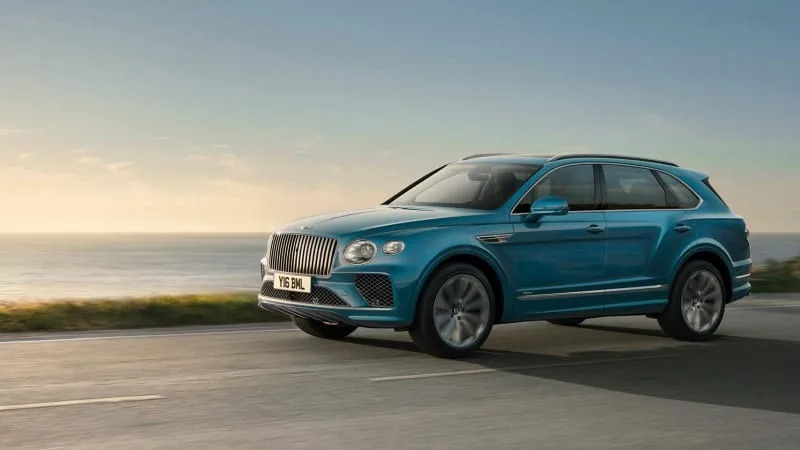
Hurd: Bentley Bentayga

My family and friends are bit more scattered than Riswick’s, so my choices are going to be a bit more … academic? While rules and structure are important, my reality (one partner, zero kids or traveling pets) allows me to slap “1990 Mazda Miata” into just about every challenge we do here. That may be fun for me in the real world, but it doesn’t contribute much to a discussion like this. So I’m going to play along … to a point. 

Since I don’t have any kids or dogs for my relatives to fawn over, I might as well roll up in something cool. The Bentley Bentayga has the awkward personality of a precocious teenager and costs about as much as middle-class college education, plus the little hole for electricity will surely get the family talking about the future of the automotive industry! Or at least get one or two crazy uncles going about how a 450-plus horsepower hybrid system is somehow proof that China has taken over America, even if Bentley is a British make owned by a German conglomerate.  

The 2010s
Riswick: Ford Flex EcoBoost

My favorite family vehicle of all time is the Ford Flex EcoBoost, so I’m going with that here. I took numerous road trips in a first-year version, including from L.A. to Vancouver, B.C., and loved it. And that didn’t have the 350-horsepower EcoBoost turbo-V6 that utterly obliterated the competition of the time … and actually today, as well. The Flex was a cool people mover that was also better to drive than contemporary large crossovers and usually more spacious than them as well.
Hurd: Cadillac CTS-V Wagon

Zero chance I’m passing up the opportunity to pick this beast, a Cadillac CTS-V Wagon. This is up there on the list of all-time coolest American cars — even among those who don’t own GM performance vehicles. And you folks who need a true family hauler can’t even get mad about this choice; it’s about as brood-friendly as my picks are going to get. Enjoy it while it lasts.  

2000s
Riswick: Range Rover

Good grief, why am I being so damned practical, here? We never said a word about budget, and yet here I am picking Sienna and Flexes while Byron’s rocking a Bentley and CTS-V Wagon. No more! Time to call up what is easily one of the best SUVs of all time, the 2000s-era Range Rover. It is perfection, at least until they needlessly futzed with the styling for the sake of futzing with the styling. No matter. Even then, it was a classic. I drove one once, resplendent in red with the supercharged post-BMW engine, from L.A. to Phoenix and it was divine. I think I’d want one of the earlier versions with the BMW V8, preferably in green.

Hurd: Mercedes-Benz R63 AMG

Hey, a Cadillac station wagon is immensely practical. Also, forget that Range Rover; can I have the house?

Anyway, I spent most of the ’10s road tripping in Ford Mustangs and Mazdaspeed3s, but in this alternate reality where I’m going over the proverbial river and through the woods, I’m going to try something Riswick might more readily approve of: a minivan. Just a casual Mercedes-Benz R63 AMG. In addition to AMG’s 510-horsepower, 6.2-liter V8, it was also available with in-car DVD entertainment, a reverse camera, iPod compatibility, navigation, panoramic sunroof, bi-xenon headlamps, and more. Not bad for nearly 20 years ago. 

1990s
Hurd: I’m keeping with my previous theme of practical German transportation. This time, a nice family sedan. Based on the video review I found above, it seems like an excellent candidate for long-distance cruising that is simultaneously capable of some light off-roading in a pinch. And it’ll shrug off mild traffic impacts to boot — perfect for the mean streets of the 1990s. Yep, I picked the Audi S8, but specifically this Audi S8:
Riswick: OK, so that made me LOL, Byron. As long as you pronounce it “Oddy” and request a nitrous system for reasons. Just don’t turn your back on that German guy.

Speaking of German guys, I too am sticking to Deutscheland, and will be returning to an old favorite: an E39 BMW 5 Series. Specifically, a 540i Touring wagon. Because it’s basically one of the best cars ever made. I probably could’ve just used one of these in each of the subsequent decades. Sure, the E39 came out towards the end of the ’90s, but it’s also the most obvious choice for awesome family transport.

1980s
Hurd: Lincoln Town Car

This one’s near and dear to my heart. My grandparents had a mid-80s Lincoln Town Car that was always our default loaner car whenever we visited, holidays or not. I can still recite the keypad code for virtually every combination the car allowed. Unlock the doors? Yep. Open the trunk? You betcha. Oh, and it had a 302 under the hood. It wasn’t fast, but it wasn’t slow either. Miss that car. 
Riswick: Audi 200 Avant Quattro

So I was fully prepared to choose some vast 1980s American wagon, but then I thought about the particulars of my once-annual-journey between Portland and Los Angeles and the fact I almost always ended up in some blizzard around Mt. Shasta and the state border. I don’t want to be driving a Country Squire in that. I suppose a Chrysler minivan would be vastly better due to its front-wheel-driveness, but that’s just not me. We’re going back to Germany, sorry. The Audi 200 Avant Quattro is super ’80s, super practical, and per the name, all-wheel drive. Not that I’d need it, but you could even get a third-row seat. A version of this was even driven by Timothy Dalton in “The Living Daylights,” so hey, James Bond car! 

1970s
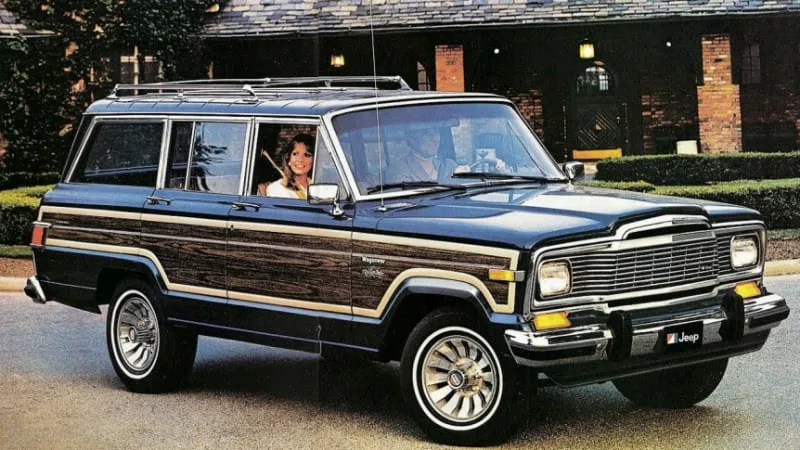
Hurd: Jeep Wagoneer

OK, I’m clearly swinging back toward the practical side of things here, but that’s OK. My family has always been into Jeeps, and this is probably the closest I’ll come to an opportunity to flex my fetish in a challenge like this one. It’s no Wrangler, but the Wagoneer was certainly a family-hauling staple for decades. I’ll take mine with wood. 
Riswick: Oldsmobile Custom Cruiser

Damn it, definitely wish I hadn’t suggested you start going first back in the ’90s. Wagoneer would’ve been perfect. I guess I could go with a Range Rover instead, but I’ve already picked one. I’ve also picked too much German stuff. Time to go Land Yacht, bring along some chains and pray for that annual blizzard to not happen. The 1974 Oldsmobile Custom Cruiser seems like an appropriate choice, and as the brochure would attest, if we need to stop along the way and let my son play in a giant hole, it’ll be perfect for that.

1960s
Hurd: Ford Bronco

It may seem greedy of me to claim this one, but like the Town Car above, this was actually one of my family’s driveway ornaments daily get-around cars for three decades. We no longer have it (a sad story; but it went to a good home) but my grandparents’ ’67 Bronco was an absolute stud — a Robin’s Egg Blue Ranger package automatic with the 302 and air conditioning. And it was a Texas car to boot; zero rust. I would have looked good bringing the turkey home in that thing.
Riswick: Oldsmobile Toronado

Screw it, we’re packing light. I want something that’s cool and also front-wheel-drive: I want a 1968 Oldsmobile Toronado. Yes, it’s another Oldsmobile, but they didn’t call this site Oldsmoblog for nothing back in the ’80s. Oldsmobile is always the right choice and I love me some original Toronado. And hey, with the front bench seat, it’s a six seater, so exactly the same as my Ford Flex up there!

1950s
Hurd: Chevrolet Corvette

Swinging back toward practicality for a bit. After all, what other domestic car had lightweight, fuel-efficient fiberglass panels worth showing off to your friends and family in the 1950s? This hypermiling hero would be right at home next to today’s frugal performance hopefuls. Now I just need help pronouncing it. It’s cor-veetee, right? Sounds Italian. 
Riswick: Edsel Villager

Uh oh, we’ve departed my knowledge base, so I really have no clue what I’m talking about. I mean, I’ve picked an Edsel, for Ford’s sake. Nevertheless, a 1958 Edsel Villager painted teal seems like the sort of contrarian, outside-the-box family vehicle choice I could get behind.

1940s

Hurd:Jeep J-0110

 It’s a Jeep thing; you wouldn’t understand. Except in this case, I think you would. This “All-Steel” Jeep Station Wagon (official designation J-0110) looks like an absolute treat. The hardtop will keep all my gear dry and since it’s a Jeep, I know it can be counted on should I wander off America’s more-established roads and onto the rutted byways that made up most of the nation’s prewar infrastructure. There’s a reason cars looked like this back in the day; roads weren’t really roads yet. (Image credit: Jeep)
Riswick: Packard Station Sedan

I really like the sound of “Hey honey, let’s take the Packard!” so I’m going with that. Despite the name, the Packard Station Sedan was actually a “pseudo luxury station wagon” as described by Wikipedia. That sounds right up my alley. More from Wikipedia, it “used a combination of steel framing and body parts along with structural wood panels made from northern birch to crate a ‘woody’ station wagon-like car due to the growing popularity of them after World War II.” Basically, it was like all those revival woodies in the ’70s and ’80s, but with real wood appliques instead of vinyl. Wacky! I love it.

1930s
Hurd: Dodge Eight

I’ve owned one 8-cylinder Dodge, but it was a 2013 Challenger with a six-speed manual and a 6.4-liter Hemi. This is an entirely different animal, but like the Jeep I picked for the 1940s, it’s a hard top with real cargo space — things that mattered back when mud was still an obstacle the average driver needed to worry about on a daily basis. Torque digs you out! After it gets you stuck, at least. Perfect for going over rivers that don’t have bridges yet. (Image credit: Dodge)

Riswick: Citroen Traction Avant

Oh right, I really have to remember that I’m driving from Portland to Los Angeles in the time period in question. That’s getting a lot harder to do. While Interstate 5 was preceded by US 99, I have to imagine it wasn’t the best-kept road, especially in the Cascades. As such, I’m going back to front-wheel-drive, and specifically the world’s first front-wheel-drive mass-produced car, the Citroen Traction Avant. I’m honestly not sure if they sold these in the United States, but we’re in the Depression, I’m sure I could pay someone enough to get it into the country. 

1920s
Hurd: Ford Model T

This one tickles my personal fancy. I’m a big fan of midwest architecture, and nothing symbolized the early days of motoring wealth like an overwrought Tudor Revival mansion. This Model T “Tudor” hits both my architectural and automotive history fetishes. More to the point, it’s exactly the sort of car that would have been in the garage of my 1928 Tudor Revival home, which was built by a man who moved here in 1911 to work for Ford Motor Company. (Image credit: Ford)
Riswick: Pierce-Arrow Model 81 7-Passenger Sedan

While Mr. Bentley up there suddenly gets frugal to match his house, I’m gettin’ all Gatsby. Purely on the strength of having the greatest hood ornament ever, I’m going with a 1928 Pierce-Arrow Model 81 7-Passenger Sedan. Clearly the definition of “sedan” used to be different judging by this and my Packard. Again, this sucker is teal. It also has a manual transmission, so right up my alley. Will me and my family almost certainly plummet to our deaths after sliding off the road somewhere north of Yreka? Probably! But we’ll do so in style.

1910s

Hurd: Stutz Bearcat

With family in the Southwest, where there was virtually no road infrastructure back in the ‘teens, I want something that I know will get me there. Take this Stutz Bearcat, for instance. It’s more robust than a horse, which was really the most important aspect of any car bought before Ford made the automobile affordable for most Americans. This one is being driven between Texas and Arizona. (Image credit: Detroit Public Library)
Riswick: Southern Pacific 2472

My destination in California, Simi Valley, wasn’t really a town in the 19-teens, so I’m not even sure why I’m driving there anymore. Land holdings? Am I farm baron? There was a train depot, though, so I guess it’s time to abandon the automobile … well crap, I’ve just discovered that the Southern Pacific Railroad didn’t start running from Portland to Los Angeles until 1924. Maybe that would’ve been a better idea than the Pierce-Arrow. Too late! Judging by an antique map I found, we could take a train, but we’d have to change trains. And the locomotive pulling it would look like that up there. What kind of locomotive is it? How the hell should I know? I’m an editor at AUTOblog. Googling “Southern Pacific locomotive 1920s” is the best I can do.

1900s
Hurd: Electric Streetcar

In the Year of Our Ford, 1901, most of us were still getting around by means other than the automobile. Streetcars were hopping on the electrification bandwagon, which made them far easier and more flexible to operate. Developers ran them from their subdivisions to work sites and, eventually, to fanciful attractions built to keep ridership high once everybody had populated their neighborhoods. We owe the 20th century notion of the amusement park to the proliferation of street-running electric railroads, but they could get us to grandma’s just fine too. (Image credit: Detroit Public Library)

Riswick: Whatever the hell that is up there

At least I’m not the only one who’s had to switch to rails. 

Googles “Southern Pacific locomotive 1902” 

1890s

Hurd: General Electric Class LE-1

Electrification was a thing in the 1890s too, as it turns out, but the things being electrified tended to have more than four wheels. Allow me to introduce you to the General Electric class LE-1, With tunneling becoming a critical infrastructure move for railroads in the late 19th century, dealing with air quality issues became priority #1 for passenger rail travel. Enter the electric railroad, which helpfully kept its particulate emissions far away from the location where the power was being used — a strategy we still employ to great effect all over the world today. The Baltimore & Ohio Railway claimed the title of first electric rail line in the USA when it opened in 1895. (Image credit: Wikipedia)

Riswick: One of those ships up there. The second one, sure

Those rail journeys sucked, let’s give Option B a whirl. I’m sure we’ll need to stop in San Francisco and who knows where else. And I’m sure sea conditions are just peachy along the Oregon Coast in November. What’s the worst that could happen?

1880s

Hurd: 4-4-0 American

Nominally, cars existed in the 1880s, but unless you were the 19th century equivalent of Doc Brown (or retracing his steps in “Back to the Future Part III”), you didn’t have one in your carriage house. In fact, most people didn’t even have carriage houses, even if they were fortunate enough to own carriages. If you needed to travel long distances to grandma’s house, you were going by horse or train. The 4-4-0 American was the locomotive of the 1800s; in fact, the one pictured above was one of the two present when the transcontinental railroad was completed in 1869. Over the continental divide and through the woods — that’s how that song goes, right? (Image credit: Union Pacific)

Riswick: Chinese Junk bound for Shanghai

Sadly, as this is 1885, the Portland riverfront is an atrocious place to be and while awaiting our 1880s passenger ship to San Francisco, I was shanghaied, forced into becoming a sailor and died of scurvy. My wife, son and dogs made the journey alone. 

So yeah, cars and roads are a good thing. Happy Thanksgiving.

Categories
Auto

PaxPower Power turns a Regular Cab F-150 XLT into a Raptor replica

The market for tuned vehicles is so large and varied that Texas-based PaxPower, at just five years old, is already a name in the pickup truck world here and abroad. One of its outlets, a Saudi Arabian Ford dealer, asked if the builder could do a regular cab version of the Ford F-150 Raptor R, which only comes as a four-door SuperCrew from the factory. When PaxPower said yes, the dealer requested two. The results aren’t Raptor clones minus two doors, but they’re as close as anyone’s going to get to the factory-spec F-150 desert runner in Regular Cab flavor. Frankly, the only thing missing is 0.2 liters of displacement under the hood. 
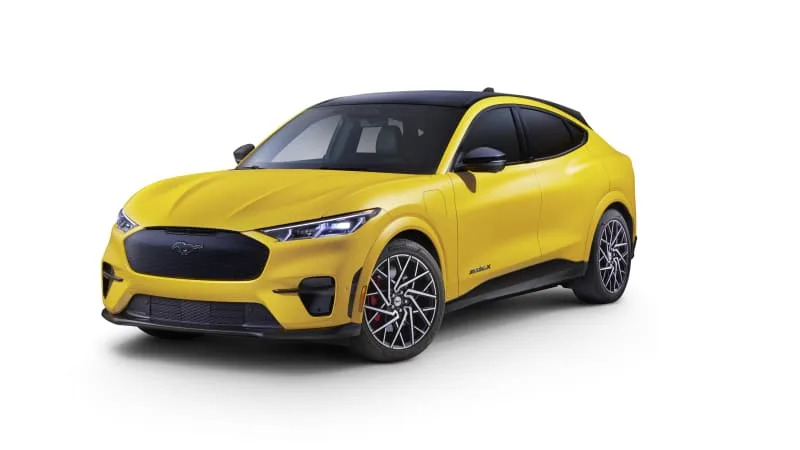
The Raptor V8 fits Ford’s supercharged 5.2-liter engine making 700 horsepower and 640 pound-feet of torque. PaxPower starts with an XLT with the naturally aspirated 5.0-liter Coyote V8 and four-wheel drive. Adding a 3.0-liter Whipple Stage 2 supercharger, more substantial cooling and fuel systems, and a cold-air intake takes output to 775 hp and an unknown amount of torque; Whipple itself rates the blower at 685 lb-ft. PaxPower claims the pickup will hit 60 miles per hour in 3.5 seconds.    

The body’s dressed in OEM Ford Raptor panels including the grille, hood, fenders, and bedsides, which need to be cut down to fit an overall length three feet shorter than the factory truck. An overhaul for the undercarriage sees Fox Live Valve internal bypass shocks flexing longer axles, control arms, and steering links. To keep up appearances inside, curious onlookers will find Raptor seat covers with additional bolstering, and a Raptor steering wheel with its paddle shifters and functions intact. The package rides on 17-inch Method Racing Wheels wrapped in 37-inch BFG K02 rubber. The custom steel bumper with integrated six-inch lights, racing stripes, body-colored bed cover, and Borla exhaust with black-painted tips are custom asks.

PaxPower says its truck weighs 1,700 pounds less than a stock Raptor V8, which would put the doppelganger at around 4,300 pounds — still stout, definitely more fleet.

The tuner didn’t put a price to the conversion. It did, however, make a third version to keep at home as a test vehicle in case locals are interested, so don’t be afraid to pick up the phone.