Categories
Legal Law

What should I do after experiencing Workplace harassment?

Experiencing Workplace harassment can be overwhelming, but taking prompt and informed action is essential to protect your rights and well-being. Harassment may involve bullying, discrimination, intimidation, offensive remarks, or other unwanted conduct that creates a hostile work environment. Human rights legislation gives employees significant legal protection against these behaviors and generally takes precedence over conflicting laws, except constitutional provisions. Acting early can help prevent further harm while preserving important evidence. For additional legal information, you can also explore resources available through htwlaw.ca.

Immediate Steps to Take After Workplace harassment

The first step after experiencing harassment is to document every incident as thoroughly as possible. Record the dates, times, locations, individuals involved, witnesses, and details of what occurred. Preserve emails, text messages, chat conversations, photographs, or other evidence that may support your complaint. Maintaining accurate records strengthens your position if an internal investigation or legal proceeding becomes necessary. When the misconduct includes inappropriate sexual behavior, consulting a Sexual harassment in the workplace lawyer Toronto can help you understand your legal rights and available options.

Report the Harassment Through the Proper Process

Once you have gathered relevant information, report Workplace harassment using your employer’s established complaint procedures. This may involve notifying a supervisor, human resources department, or another designated representative. If the complaint involves your direct manager, use the alternative reporting process outlined in workplace policies. Employers are expected to investigate complaints fairly, maintain confidentiality whenever possible, and take appropriate corrective action. Prompt reporting also demonstrates that you acted responsibly to address the situation before it escalated further.

Protect Yourself During the Investigation

While your complaint is being reviewed, continue documenting any additional incidents or communications related to the matter. Keep copies of correspondence with management and note any changes in workplace treatment following your report. Employees should also be protected from retaliation for raising legitimate concerns. If you believe the harassment involves discrimination or sexual misconduct, speaking with a Sexual harassment in the workplace lawyer Toronto can provide valuable guidance regarding your legal protections and the most appropriate next steps throughout the investigation.

Understand Your Legal Rights

Human rights protections recognize that every employee deserves a workplace free from discrimination, violence, and harassment. If your employer fails to investigate appropriately or the harassment continues despite reporting it, you may have additional legal remedies available. Depending on the circumstances, complaints may be pursued through human rights processes or other legal channels. Responding promptly to Workplace harassment not only protects your own interests but also helps create greater accountability within the organization and encourages a safer work environment for all employees.

Seek Professional Guidance When Necessary

Recovering from Workplace harassment often requires both practical and legal support. In addition to following internal complaint procedures, consider seeking professional advice if the situation remains unresolved or involves serious misconduct. A Sexual harassment in the workplace lawyer Toronto can review your circumstances, explain potential legal remedies, and help you make informed decisions about protecting your rights. Taking timely action, preserving evidence, and understanding the legal protections available can contribute to a fair resolution while promoting a respectful, inclusive, and legally compliant workplace.

Categories
Legal Law

What does a lawyer do for a federally regulated employee?

lawyer do for a federally regulated employee

A lawyer plays an important role in helping individuals understand and protect their workplace rights, especially in complex employment situations. For a federally regulated employee, legal support can be valuable when dealing with issues such as unjust dismissal, workplace harassment, discrimination, or disputes over wages and benefits. A lawyer provides guidance, representation, and strategic advice to ensure that the employee’s case is handled effectively and in accordance with the law.

One of the first things a lawyer does for a federally regulated employee is provide legal advice. This involves reviewing the employee’s situation, examining relevant documents, and explaining applicable laws and rights. Because federally regulated industries are governed by specific legislation, a lawyer can clarify how these rules apply and what options are available. This early advice helps the employee make informed decisions about how to proceed.

A lawyer also assists a federally regulated employee in gathering and organizing evidence. Strong evidence is essential in any workplace dispute, and a lawyer can identify what documents and information are most relevant. This may include employment contracts, emails, performance reviews, and witness statements. By ensuring that all evidence is properly collected and presented, a lawyer strengthens the employee’s case and improves the chances of a favorable outcome.

Another key responsibility of a lawyer is drafting legal documents on behalf of a federally regulated employee. This can include complaint filings, demand letters, and responses to employer allegations. Properly prepared documents are critical because they set the tone for the case and ensure that all necessary details are included. A lawyer’s expertise helps avoid errors or omissions that could weaken the employee’s position.

When disputes move into formal processes such as mediation or adjudication, a lawyer provides representation for a Federally regulated employee. During mediation, the lawyer negotiates with the employer or their representatives to reach a fair settlement. They advocate for the employee’s interests and ensure that any agreement reflects the employee’s rights and needs. If the matter proceeds to adjudication, the lawyer presents arguments, examines witnesses, and challenges the employer’s evidence in a structured setting.

A lawyer also helps a Inter-provincial transportation lawyer understand procedural requirements and deadlines. Employment-related claims often have strict timelines, and missing a deadline can result in the loss of the right to pursue a claim. A lawyer ensures that all filings are completed on time and in the correct format, reducing the risk of procedural issues that could negatively impact the case.

What does a lawyer do for a federally regulated employee?

In addition to handling disputes, a lawyer can provide preventative advice to a Aviation and air transport employment law. This includes reviewing employment contracts before they are signed, advising on workplace policies, and guiding the employee on how to handle potential conflicts. By addressing issues early, a lawyer can help prevent disputes from escalating into formal legal proceedings.

For a federally regulated employee who is facing termination, a lawyer can assess whether the dismissal was lawful and whether compensation or reinstatement may be available. The lawyer can negotiate severance packages, ensuring that the employee receives fair compensation based on their circumstances. This negotiation process often results in better outcomes than what an employee might achieve on their own.

Confidentiality is another important aspect of a lawyer’s role. A federally regulated employee can share sensitive information with their lawyer, knowing that it will be protected by legal privilege. This allows for open and honest communication, which is essential for building a strong case and receiving accurate advice.

A lawyer also provides emotional reassurance and professional support to a federally regulated employee during what can be a stressful process. Workplace disputes can be challenging, and having an experienced professional handle legal matters allows the employee to focus on their personal and professional well-being.

In conclusion, a lawyer performs a wide range of functions for a federally regulated employee, from offering legal advice and preparing documents to representing the employee in negotiations and formal proceedings. Their expertise helps ensure that the employee’s rights are protected and that the case is handled effectively at every stage.

Categories
Legal Law

What factors affect severance pay Ontario amounts?

When an employee’s job ends, one of the most important concerns is how much compensation they may receive. The amount of Severance pay Ontario employees obtain can vary widely because it depends on several legal and employment-related factors. While Ontario law establishes minimum standards, additional elements may increase or influence the final severance amount. Understanding these factors helps employees determine whether the compensation offered by their employer reflects their actual legal entitlement.

Many people assume severance pay is calculated using a simple formula. In reality, the process can involve multiple considerations beyond years of service. Both employment legislation and common law principles affect the final outcome. Because of this, Severance pay Ontario amounts often differ significantly from one employee to another, even within the same organization or industry.

Key Factors That Influence Severance Pay in Ontario

Length of employment

One of the most important factors affecting severance pay is the employee’s length of service. Workers who have spent many years with the same company are generally entitled to greater compensation than those who worked for a shorter period. Long-term employees may require more time to find new employment, which can increase their entitlement. As a result, Severance pay Ontario calculations often place significant emphasis on the duration of an employee’s service.

Age of the employee

Age can also play a major role in determining severance amounts. Courts recognize that older employees may face greater challenges when searching for comparable employment. Because of this, older workers may receive longer notice periods or additional compensation when their jobs end. This consideration can significantly affect Severance pay Ontario outcomes, particularly for individuals nearing retirement or working in specialized positions.

Position and level of responsibility

An employee’s job title and responsibilities can influence the severance package they receive. Senior executives or professionals in specialized roles may be entitled to more compensation because similar positions may be harder to secure after termination. This means Severance pay Ontario calculations may increase for individuals who held leadership roles, management positions, or highly technical jobs within their organizations.

Availability of similar employment

Another factor courts consider is the employee’s ability to find comparable work in the job market. If opportunities within the same industry or profession are limited, the employee may require additional time to secure a new position. In these circumstances, Severance pay Ontario compensation may increase to reflect the longer transition period needed before the employee can return to stable employment.

Employment contracts and company policies

Employment agreements can also affect severance calculations. Some contracts include clauses that attempt to limit severance to the minimum standards required by the Employment Standards Act. However, not all termination clauses are enforceable. If a clause is invalid or poorly written, employees may still be entitled to higher compensation under common law. Carefully reviewing contracts can therefore play an important role in determining Duty to mitigate damages amounts.

The importance of professional evaluation

Because severance calculations involve several legal considerations, employees often seek guidance before accepting a termination offer. Legal professionals examine employment records, contracts, and the circumstances of dismissal to determine whether the compensation is fair. Information available through resources such as htwlaw.ca shows how experienced lawyers analyze different legal strategies to help employees pursue the compensation they deserve.

Achieving a fair severance outcome

Lawyers who focus on employment law often review every aspect of a termination case to identify possible opportunities for improved compensation. Their approach involves exploring different legal pathways and ensuring that employees understand their rights before making decisions. By examining all relevant factors carefully, legal professionals help individuals resolve employment disputes and pursue financial outcomes that support their transition to new opportunities.

Final thoughts on severance factors

Understanding what influences Severance pay Ontario amounts can help employees make informed decisions after termination. Factors such as years of service, age, job position, and employment contracts all play an important role in determining compensation. By reviewing these elements carefully and seeking proper legal guidance when needed, workers can ensure they receive fair treatment and the financial support necessary to move forward confidently in their careers.

Categories
Legal Law

Are severance pay calculations audited by regulators?

severance pay calculations audited by regulators

The question, “Are severance pay calculations audited by regulators?” is a significant concern for both employers and employees in federally regulated workplaces. Severance pay is an important protection for employees who are involuntarily terminated, and ensuring that it is calculated correctly is critical for compliance with federal labor law. Under the Canada Labour Code severance pay provisions, employers are required to provide compensation based on factors such as length of service, wages, and other entitlements. However, questions often arise regarding how closely these calculations are monitored or audited by government regulators.

In general, the Canada Labour Code sets clear standards for the calculation of severance pay, but it does not involve automatic audits of every employer. Regulators typically do not review severance payments proactively unless a complaint is filed by an employee or an issue is flagged during routine inspections or investigations. Employees who believe their severance has been calculated incorrectly can file a claim with Employment and Social Development Canada (ESDC), which enforces the Canada Labour Code severance pay provisions. In such cases, the regulator can review the employer’s records, including payroll, contracts, and other documentation, to ensure compliance with statutory requirements.

Employers are expected to maintain accurate records of employee compensation, length of service, and termination details to support proper severance calculations. These records are essential in case a regulator decides to examine severance pay practices, either as part of an investigation or in response to a formal complaint. Audits or reviews are not routine, but they can occur, especially in sectors with high turnover, complaints from employees, or patterns of non-compliance. Ensuring proper documentation and calculation methods reduces the risk of disputes and potential penalties under the Canada Labour Code severance pay provisions.

Are severance pay calculations audited by regulators?

Another factor is that severance calculations can become complex, especially when additional compensation such as bonuses, overtime, or benefits must be included. Regulators rely on the documentation provided by employers to verify that all eligible components have been considered. Employees who suspect errors in their severance calculation should gather records of pay stubs, employment contracts, and any written communications regarding termination to support their claims. This evidence is critical if a regulator decides to audit or review the severance calculation.

Employers may sometimes offer lump-sum settlements or negotiated termination packages, which can also raise questions about compliance. Even when a settlement is reached, it is important to ensure that it meets or exceeds the minimum requirements under the Canada Labour Code severance pay rules. Regulators may review these agreements if a dispute arises to confirm that employees were not deprived of their statutory entitlements. Clear communication and proper record-keeping are essential to minimize the risk of audits or legal challenges.

In conclusion, the question “Are severance pay calculations audited by regulators?” is addressed primarily through reactive enforcement rather than routine oversight. While regulators do not automatically audit every employer, they have the authority to review severance pay calculations when complaints or concerns arise. Compliance with Canada Labour Code severance pay provisions requires accurate record-keeping, transparent calculation methods, and adherence to statutory requirements. Both employers and employees benefit from understanding these rules to ensure fair treatment and avoid potential disputes.

Categories
Legal Law

Is a workplace harassment lawyer confidential?

workplace harassment lawyer

When someone experiences harassment at work, one of the biggest concerns they have before seeking legal help is confidentiality. Many employees hesitate to speak up out of fear that their employer, colleagues, or even friends might find out about their situation. This leads to an important question: is a workplace harassment lawyer confidential? The answer is yes. A workplace harassment lawyer is bound by strict ethical and legal obligations to maintain complete confidentiality regarding your case. Everything you share with your attorney is protected by attorney-client privilege, ensuring that your personal information and case details remain private.

When you consult with a workplace harassment lawyer, the conversation is entirely confidential, even during the initial consultation. You can discuss sensitive details about your workplace environment, the individuals involved, and the nature of the harassment without fear that this information will be disclosed. This level of privacy allows clients to be open and honest about what happened, which is essential for the lawyer to provide accurate advice and build a strong legal strategy. Whether you decide to proceed with a formal complaint or not, your communication with your attorney remains protected by law.

The principle of attorney-client privilege means that a workplace harassment lawyer cannot share your information with anyone without your consent. This includes your employer, co-workers, or any outside parties. Even if your case goes to court, the lawyer will only disclose information that is relevant and necessary for your claim, and only with your approval. This confidentiality extends to all documents, emails, and communications related to your case. It provides peace of mind for victims who fear retaliation or embarrassment if their situation becomes public knowledge.

Is a workplace harassment lawyer confidential?

Confidentiality is especially important in workplace harassment cases because they often involve sensitive issues like sexual harassment, discrimination, or retaliation. A workplace harassment lawyer understands the emotional impact such cases can have and treats every client with respect and discretion. They create a safe and supportive environment where you can express your concerns freely, knowing that your story will not be shared without your permission. This trust is the foundation of a strong attorney-client relationship and allows the lawyer to advocate effectively on your behalf.

It’s also important to know that confidentiality applies even if you choose not to move forward with a legal claim. A workplace harassment lawyer will still protect the information you shared during consultations. Many individuals seek legal advice simply to understand their rights before taking any action, and the attorney is legally required to keep those discussions private. This ensures that you can explore your options safely without the risk of anyone at your workplace finding out.

In conclusion, the question is a workplace harassment lawyer confidential can be answered with complete certainty—yes, they are. Confidentiality is a fundamental part of the attorney-client relationship and is protected by law. A dedicated workplace harassment lawyer will always respect your privacy, safeguard your information, and act in your best interest. Seeking legal help should never feel intimidating, and with confidentiality guaranteed, you can take the first step toward justice and workplace safety with confidence and peace of mind.

Categories
Legal Law

KFF Health News' 'What the Health?': On Capitol Hill, RFK Defends Firings at CDC

The Host

Julie Rovner
KFF Health News


@jrovner


@julierovner.bsky.social

Read Julie’s stories.

Julie Rovner is chief Washington correspondent and host of KFF Health News’ weekly health policy news podcast, “What the Health?” A noted expert on health policy issues, Julie is the author of the critically praised reference book “Health Care Politics and Policy A to Z,” now in its third edition.

Just days after his firing of the brand-new director of the Centers for Disease Control and Prevention, a defiant Robert F. Kennedy Jr., the U.S. secretary of health and human services, defended that action and others before a sometimes skeptical Senate Finance Committee. Criticism of Kennedy’s increasingly anti-vaccine actions came not just from Democrats on the panel but from some Republicans who are also medical doctors.

Meanwhile, members of Congress have only a few weeks left to complete work on spending bills or risk a government shutdown, and time is also running out to head off the large increases in premiums for Affordable Care Act health plans likely to occur with additional Biden-era government subsidies set to expire.

This week’s panelists are Julie Rovner of KFF Health News, Jessie Hellmann of CQ Roll Call, Sarah Karlin-Smith of Pink Sheet, and Alice Miranda Ollstein of Politico.

Panelists

Jessie Hellmann
CQ Roll Call


@jessiehellmann


@jessiehellmann.bsky.social


Read Jessie’s stories.

Sarah Karlin-Smith
Pink Sheet


@SarahKarlin


@sarahkarlin-smith.bsky.social


Read Sarah’s stories.

Alice Miranda Ollstein
Politico


@AliceOllstein


@alicemiranda.bsky.social


Read Alice’s stories.

Among the takeaways from this week’s episode:

  • The FDA approved this year’s covid booster for people older than 65 and for younger people with serious illnesses. Previously, it had been recommended more broadly. All eyes will now turn to the CDC’s Advisory Committee on Immunization Practices, which is scheduled to meet Sept. 18. Usually this panel would endorse these recommendations and perhaps offer more guidance on the booster’s use for specific populations. But it is not clear whether it will do so — or whether it might even impose more limitations.
  • Kennedy’s firing of CDC Director Susan Monarez and the subsequent resignation of multiple senior scientists is raising questions about the agency’s future. Many staffers who were already on the fence about staying now are increasingly likely to leave. Many of these career scientists associate Kennedy’s history of harsh criticisms of public health workers with the recent CDC shooting in Atlanta. But since the shooting, Kennedy seems to have doubled down on his position.
  • At the hearing before the Senate Finance Committee, even those Republicans who were critical of Kennedy were careful not to criticize President Donald Trump. There’s some speculation that this duality is meant to drive a wedge between Kennedy and the White House, and to communicate that the HHS secretary could be politically damaging.
  • With vaccine policy in flux, red and blue states alike seem to be doing their own thing. Some, like California, Oregon, and Washington — which formed what they’re calling the West Coast Health Alliance — appear to be taking steps to protect access to vaccines. Red states could move in the other direction. For instance, this week, Florida Surgeon General Joseph Ladapo announced an effort to undo all statewide vaccine mandates, including those that require certain vaccines for children to attend school. If more states follow suit, it could lead to a geographic patchwork in which vaccine availability and requirements vary widely.
  • This month is lawmakers’ last chance to reup the federal ACA tax subsidies. If Congress doesn’t act to extend them, an estimated 24 million people — many of whom live in GOP-controlled states like Georgia and Florida — will see significant increases in their health insurance premium costs. There’s some talk that Congress could opt for a short-term or limited extension that would postpone the pocketbook impact until after the midterm elections. But insurers are already factoring in the uncertainty as they set rates for the upcoming plan year.
  • The Centers for Medicare & Medicaid Services announced a Medicare pilot program beginning next year that will use artificial intelligence to grant prior authorization decisions for certain procedures. There is irony here. United Healthcare and other private plans have already gotten into a lot of trouble for doing this, with AI systems often denying needed care.

Also this week, Rovner interviews KFF Health News’s Tony Leys, who discusses his “Bill of the Month” report about a woman’s unfortunate interaction with a bat — and her even more unfortunate interaction with the bill for her rabies prevention treatment.

Plus, for “extra credit” the panelists suggest health policy stories they read this week that they think you should read, too:

Julie Rovner: ProPublica’s “Gutted: How Deeply Trump Has Cut Federal Health Agencies,” by Brandon Roberts, Annie Waldman, and Pratheek Rebala.

Jessie Hellmann: KFF Health News’ “When Hospitals and Insurers Fight, Patients Get Caught in the Middle,” by Bram Sable-Smith.

Sarah Karlin-Smith: NPR’s “Leniency on Lice in Schools Meets Reality,” by Blake Farmer.

Alice Miranda Ollstein: Vox’s “Exclusive: RFK Jr. and the White House Buried a Major Study on Alcohol and Cancer. Here’s What It Shows,” by Dylan Scott.

Also mentioned in this week’s podcast:

Credits

Francis Ying
Audio producer

Stephanie Stapleton
Editor

To hear all our podcasts, click here.

And subscribe to KFF Health News’ “What the Health?” on SpotifyApple PodcastsPocket Casts, or wherever you listen to podcasts.

KFF Health News is a national newsroom that produces in-depth journalism about health issues and is one of the core operating programs at KFF—an independent source of health policy research, polling, and journalism. Learn more about KFF.

USE OUR CONTENT

This story can be republished for free (details).

Categories
Legal Law

Why Young Americans Dread Turning 26: Health Insurance Chaos

Amid the challenges of adulthood, one rite of passage is unique to the United States: the need to find your own health insurance by the time you turn 26.

That is the age at which the Affordable Care Act declares that young adults generally must get off their family’s plan and figure out their coverage themselves.

When the ACA was voted into law in 2010, what’s known as its dependent coverage expansion was immediately effective, guaranteeing health insurance to millions of young Americans up to age 26 who would otherwise not have had coverage.

But for years, Republicans have whittled away at the infrastructure of the original ACA. Long gone is the requirement to buy insurance. Plans sold in the ACA’s online insurance marketplaces have no stringent quality standards. Costs keep rising, and eligibility requirements and subsidies are moving targets.

The erosion of the law has now created an “insurance cliff” for Americans who are turning 26 and don’t have a job that provides medical coverage.

Some, scared off by the complexity of picking a policy and by the price tags, tumble over the edge and go without insurance in a health system where the rate for an emergency room visit can be thousands, if not tens of thousands, of dollars.

Today, an estimated 15% of 26-year-olds go uninsured, which, according to a KFF analysis, is the highest rate among Americans of any age.

If they qualify, young adults can sign up for Medicaid, the federal-state program for Americans with low incomes or disabilities, in most but not all states.

Otherwise, many buy cheap subpar insurance that leaves them with insurmountable debt following a medical crisis. Others choose plans with extremely limited networks, losing access to longtime doctors and medicines.

They often find those policies online, in what has become a dizzyingly complicated system of government-regulated insurance marketplaces created by the ACA.

The marketplaces vary in quality from state to state; some are far better than others. But they generally offer few easily identifiable, affordable, and workable choices.

“The good news is that the ACA gave young people more options,” said Karen Pollitz, who directed consumer information and insurance oversight at the Department of Health and Human Services during the Obama administration.

“The bad news is the good stuff is hidden in a minefield of really bad options that’ll leave you broke if you get sick.”

(Ethan Evans)

(Maxwell Frost)

Publicly funded counselors called “navigators” or “assisters” can help insurance seekers choose a plan. But those programs vary by state, and often customers don’t realize that the help is available. The Trump administration has cut funding to publicize and operate those navigator programs.

In addition, changes to Medicaid eligibility in the policy bill recently passed by Congress could mean that millions more ACA enrollees lose their insurance, according to the Congressional Budget Office.

Those changes threaten the very viability of the ACA marketplaces, which currently provide insurance to 24 million Americans.

In dozens of interviews, young adults described the unsettling and devastating consequences of having inadequate insurance, or no insurance at all.

Damian Phillips, 26, a reporter at a West Virginia newspaper, considered joining the Navy to get insurance as his 26th birthday approached. Instead, he felt he “didn’t make enough to justify having health insurance” and has reluctantly gone without it.

Ethan Evans, a 27-year-old aspiring actor in Chicago who works in retail, fell off his parents’ plan and temporarily signed up for Medicaid. But the diminished mental health coverage meant cutting back on visits to his longtime therapist.

Rep. Maxwell Frost, a Florida Democrat and the first Gen Z member of Congress, was able to quit his job and run for office at 25 only because he could stay on his mother’s plan until he turned 26, he said.

Now 28, he is insured through his federal job.

“The ACA was groundbreaking legislation, including the idea that every American needs health care,” he said. “But there are pitfalls, and one of them is that when young adults turn 26, they fall into this abyss.”

Why 26?

Back in 2010, the decision to make 26 the cutoff age for staying on a parent’s insurance was “kind of arbitrary,” recalled Nancy-Ann DeParle, deputy chief of staff for policy in the Obama White House.

“My kids were young , and I was trying to imagine when my child would be an adult.”

Before that time, children were often kicked off family plans at much younger ages, typically 18.

The Obama administration’s idea was that young adults were most likely settling into careers and jobs with insurance by 26. If they still didn’t have access to job-based insurance, Medicaid and the ACA marketplaces would offer alternatives, the thinking went.

But over the years, the courts, Congress, and the first Trump administration eviscerated provisions of the ACA. By 2022, a shopper on a federal government-run marketplace had more than 100 choices, many of which included expensive trade-offs, presented in a way that made comparisons difficult without spreadsheets.

Jack Galanty, 26, a freelance designer in Los Angeles, tried to plan for his 26th birthday by seeking coverage on the California insurance marketplace that would ensure treatment for his mild cerebral palsy and for HIV prevention.

“You’re scrolling for what feels like years, looking at 450 little slides, at the little bars, and trying to remember, ‘Was the one I liked No. 12 or 13?’” he recalled. “It feels like it’s nearly impossible to make a good choice in this scenario.”

(Elizabeth Mathis)

(Kayla Anderson)

Out-of-pocket expenses have soared. Complex plans in the lightly regulated marketplaces featured rising premiums, high deductibles, and requirements that patients pay a significant portion of the cost of care, often 20% — a charge known as coinsurance.

More than half of Americans ages 18 to 29 have incurred medical debt in the past five years, a KFF Health News data investigation found. Few have the reserves to pay it off.

The networks of doctors to choose from in these plans are often so limited that an insured person struggles to get timely appointments. It can even be hard to find the official websites amid an explosion of look-alikes operated by commercial brokers.

Sharing her contact information with one site that appeared legitimate left Lydia Herne, a social media producer in Brooklyn, “drowning” in texts and phone calls offering plans of uncertain and unregulated quality. “It never ends,” said Herne, 27.

Young Invincibles, an advocacy group representing young adults, runs its own “navigator” program to help young people choose health insurance plans.

“We hear the frustration,” said Martha Sanchez, the group’s former director of health policy and advocacy. “Twenty-six-year-olds have had negative experiences in a process that’s become really complex. Many throw up their hands.”

Elizabeth Mathis, 29, and Evan Pack, 30, a married couple in Salt Lake City, turned to the marketplaces two years ago, after Pack went uninsured for a “really scary” year after he turned 26.

“Every time he got in the car, I thought, ‘What if?’” Mathis said.

The couple pays more than $200 a month for a high-deductible health plan backed by a federal subsidy (the kind set to expire next year). It’s a significant expense, but they wanted to be sure they had access to contraception and an antidepressant.

But last year, Pack suffered serious eye problems and underwent an emergency appendectomy. Their plan left them $9,000 in debt, for medical care billed at over $20,000.

“Technically, we gambled in the right direction,” Mathis said. “But I don’t feel like we’ve won.”

The Affordability Problem

The ACA was supposed to help consumers find affordable, high-quality plans online. The legislation also tried to expand Medicaid programs, which are administered by states, to provide health insurance to low-income Americans.

But the Supreme Court ruled in 2012 that states could not be forced to expand Medicaid. Ten states, led mostly by Republicans, have not done so, leaving up to 1.5 million Americans, who could have qualified for coverage, without insurance.

Even where Medicaid is available to 26-year-olds, the transition has often proved precarious.

Madeline Nelkin of New Jersey, who was studying social work, applied for Medicaid coverage before her 26th birthday in April 2024 because her university’s insurance premiums were more than $5,000 annually.

But it was September before her Medicaid coverage kicked in, leaving her uninsured while she fought a chest infection over the summer.

“People tell you to think ahead, but I didn’t think that meant six months,” she said.

(Daisy Creager)

(Madeline Nelkin)

(Valeria Chávez)

When Megan Hughes, 27, of Hartland, Maine, hit the cliff, she went without. An aide for children with developmental delays, she has a thyroid condition and polycystic ovary syndrome.

She looked for a health care plan but found it hard to understand the marketplace. (She didn’t know there were navigators who could help.) Now she can’t afford her medicine or see her endocrinologist.

“I’m tired all the time,” Hughes said. “My cycles are not regular anymore at all. When I do get one, it’s debilitating.” She is hoping a new job will provide insurance later this year.

Traditionally, most Americans with private health insurance got it through their jobs. But the job market has changed dramatically since the ACA became law, particularly in the wake of the pandemic, with the rise of a gig economy.

Over 30% of people ages 18 to 29 said in recent surveys that they were working or have worked in short-term, part-time, or irregular jobs.

The ACA requires organizations with 50 or more employees to offer insurance to people working 30 hours per week. This has led to a growing number of contract employees who work up to, but not past, the hourly limit.

Many companies, which say they can’t afford the rising costs of traditional insurance, offer their employees only a modicum of help, perhaps around $200 per month toward buying a marketplace plan, or a bare-bones company plan.

Young people juggling part-time jobs and insurance options face bumpy, daunting transitions.

In Oklahoma, Daisy Creager, 29, has had three employers over the past three years. Insurance was important to her, not least because her former husband had Type 1 diabetes.

As she left the first of those jobs, her husband’s endocrinologist helped the couple stockpile less expensive insulin from Canada, since they would be uninsured.

After a few months, they bought a marketplace plan, but it was expensive and “didn’t cover a lot,” she said.

When she found a new job, she dropped that plan, only to discover that her new insurance coverage didn’t start until the end of her first month of employment. The couple would be uninsured for a few weeks.

A few days later, she came home to find her husband unconscious on the floor, in a diabetic coma. After hovering near death in an intensive care unit for four days, he woke up and began to recover.

“I think I’ve done everything right,” Creager said. “So why am I in a position where the health insurance available to me doesn’t cover what I need, or I can barely afford my premiums, or worse, at times I don’t even have it?”

Kathryn Russell, 27, developed excruciating back pain two months before her 26th birthday. After extensive testing, doctors determined she needed a complex surgery, which her surgeon couldn’t schedule until after she would be off her family’s insurance plan.

Forget the pain and the fear of the operation, she said, it was insurance that kept her up at night. “There’s this impending terror of, ‘What am I going to do?’” she recalled.

(One day before she turned 26, her father’s company agreed to keep her on his plan for six more months, if he paid higher premiums.)

The idea that the ACA would offer a variety of good options for people turning 26 has not worked as well as the legislation’s authors had hoped. The “job lock” tying insurance to employment has long plagued the United States workforce.

Young adults need guidance on their options beforehand, said Sanchez of Young Invincibles. None of those interviewed for this story, for example, knew there were navigators to help them find insurance on the online marketplaces.

Experts agree that the marketplaces need stronger regulation.

In 2023, the federal government defined clearer standards for what plans in each tier of insurance should offer, such as better prescription drug benefits, defined copays for X-rays, or coverage for emergency room visits.

Certain types of basic care, such as primary care, should require just a small copay for at least a small number of initial visits. Each insurer must offer at least one plan that complies with these new standards for every level, known as an “easy pricing” option or a “standard plan.”

Most plans on the marketplaces don’t meet these criteria. Federal and state regulators had long planned to cull such “noncompliant” plans, gradually — fearing that doing so too quickly would scare insurers away from participating.

But with the priorities of the new Trump administration now in focus, and a Republican majority in Congress, it’s far from clear what course President Donald Trump, who sought to repeal the ACA outright in his first term, will take.

There are hints: Subsidies to help Americans buy insurance, adopted during the Biden administration, are set to expire at the end of 2025 unless the Republican-led Congress extends them.

If the subsidies expire, premiums are likely to rise sharply for plans sold on the marketplaces, leaving insurance out of reach for many more young adults.

Categories
Legal Law

A Guide to Finding Insurance at 26‌

It was supposed to be easier than this.

When the Affordable Care Act was passed in March 2010, the goal was to help more Americans get health insurance. And, indeed, the establishment of online marketplaces and a broadening of the eligibility guidelines for Medicaid accomplished that.

Fifteen years later, however, that system is anything but user-friendly.

Young adults looking for health insurance will likely benefit from talking with so-called navigators who work for the online marketplaces. But if you want to go it alone, here are some tips about shopping for a plan, based on the advice of policy experts and people who have spent hundreds of hours helping others navigate this unwieldy set-up.

Buckle up.

Start Here

Begin your search at least two months before your 26th birthday. In some cases, you can sign up for a plan in advance so that it takes effect on your birthday.

First, find out if your family plan ends on your birthday or at the end of your birthday month. A few states allow young adults to stay on their family plan until they are 29, with certain conditions and, generally, higher costs. A navigator will know more.

You may have the option to stay, for a limited time, on your family’s plan under COBRA, a federal program that allows those with group health plans to extend their coverage past age 26. Odds that you will be approved for an extension are even higher if you can claim a disability.

Be aware, though, that this option will involve a considerable expense, since you will be required to pay the entire premium (the employer will no longer pay what is usually a substantial share). Those who claim a disability can often stay on the family plan after age 26, depending on the type of insurance the family holds.

If you’re undergoing medical treatment and can’t change hospitals or doctors, paying this premium may be your best course. You don’t have this option, however, if your family is insured through an Obamacare plan.

Before you start your search, make a list of the medicines and physicians you rely on, and highlight those you can’t do without. Rank them, even.

It’s quite likely that you will have fewer choices on the marketplace than you had on a parent’s plan. Be prepared to make some switches and trade-offs.

Find the Right Marketplace

Thirty-two states have adopted the federal marketplace as the place residents can go to compare and buy insurance policies. The rest run their own online marketplaces. You can find out here where to shop for insurance policies in your state.

Make sure you land at an official ACA website. There are many look-alikes run by private insurance brokers. The federal marketplace is found at healthcare.gov and nowhere else.

Note that official state marketplaces sometimes have unusual names. The New York State of Health, Kynect (Kentucky), Covered California, and CoverMe (Maine) are examples.

In states that use the federal marketplace, shoppers can find assistance here. On the state-based marketplaces, there is often a “find local help” button or a tab that directs you to a person who can help you find a good plan.

You will generally be asked to choose a broker, who is paid a commission if you sign up, or an “assister,” who provides the service at no cost. Assisters have received special training in the marketplace they serve, and, because they provide the service free, they have no financial incentive to steer you to a plan that pays a commission to the seller.

Assisters are often navigators who are funded by the marketplace, but in some cases they work for hospitals, health plans, or local nonprofits. You’ll have to ask.

While navigators are generally a surefire option for sound advice, they may become harder to find now that the Trump administration has cut funding for them in states that rely on the federal marketplace. (States that run their own marketplaces are unaffected.)

Many nonprofits and states run excellent programs that offer free assistance. And if, for example, you’re in the middle of cancer treatment, an assister affiliated with your hospital may offer better advice on picking a plan, since they will know which ones have contracts that may cover more of your expenses.

Ideally, these experts will walk you through the process and know which buttons to push to ensure you get the best coverage for your needs at the best rate for which you are eligible.

Sign Up

Once you’re on an official website that markets plans under the ACA, you will be asked to enter your personal information as well as an estimate of your income.

Forty states and the District of Columbia cover single young adults with no children under Medicaid if their income is low enough to qualify. If you’re eligible, you should be redirected to the Medicaid website to start the enrollment process, or you may enroll directly on the marketplace site.

But be aware that the Republicans’ recently passed domestic policy bill has increased the requirements and the paperwork required to get on, and stay on, Medicaid.

Medicaid, a joint federal and state program that provides health insurance to low-income Americans, does not charge its members a premium, and it covers medications at a nominal cost or free. The caveat is that those enrolled in the program have a smaller number of in-network doctors and hospitals to choose from.

If your income is above the threshold for Medicaid, you will need to shop on the marketplace for a policy.

On most sites, a search tool allows you to check whether your doctor or hospital is in a particular plan’s network. But beware: The directories on which this search relies are notoriously inaccurate, despite federal laws mandating otherwise.

So, before you select a plan, call the doctor or hospital to confirm they accept the insurance plan you’re considering purchasing.

Do the Math

When it comes to the math, it’s better to work on a computer than a phone. Generally, you can compare the costs of, and coverage offered by, only three plans at a time.

The following factors include premiums (taking account of any subsidy you get based on your income), as well as other expenses you’ll have to pay, called collective cost sharing:

  • The deductible — the amount you generally have to pay out-of-pocket before your insurance kicks in. (You may get a few “covered” visits with a primary care doctor; these won’t count against the deductible.)
  • Copayments — a fixed payment that you owe for any visit to a doctor or emergency room.
  • Coinsurance (this one can break the bank) — a percentage of the total bill, generally applied to hospital bills, that you have to pay. The plan may make it sound small, say, 10% to 30%. But if you have, for example, the common 80-20 split (in which the insurer pays 80% and you pay 20%), that can add up to a substantial sum. A single day in the hospital can cost tens or even hundreds of thousands of dollars, and 20% percent of that is a large amount.
  • The out-of-pocket maximum — the most you’ll have to pay out in a year, so long as you stay in network and pay the deductible.

Doing the math means looking at this holistically, balancing what you can pay in a premium against what you can afford for the above charges. If the deductible is over $3,000 and the out-of-pocket maximum allowed yearly is $9,200 — do you have that much money on hand?

Generally, the lower the monthly premium in a plan, the higher the share of costs you’ll have to pay should you need medical care. Note that an insurer may offer very different plans on the same marketplace, with different payment policies and networks.

People with incomes up to 2½ times the poverty level may gain some relief from cost-sharing charges, but only if they sign up for silver plans. Plans are typically labeled bronze, silver, gold, and platinum; each tier reflects the percentage of your medical expenses that your plan pays overall. Bronze plans offer the least amount of coverage.

Choose Wisely

Once you’ve narrowed your choices to a few plans, study each closely.

A plan with a low deductible might require a $1,000 daily copayment, or 50% coinsurance (you pay 50%) for hospital stays. A plan that lists your desired hospital system as in-network may include only some of its locations, and not necessarily the ones close to you or that offer the type of care you need.

When looking at a plan’s details, make sure to scroll down and read its “summary of benefits and coverage” for examples of the plan’s coverage of common medical needs. Pay close attention to which services require preauthorization and, for example, how many physical therapy visits they’ll cover each year. Preauthorization can be a long and cumbersome process.

Generally, the lower the premium, the more preauthorization will be required and the more limited the coverage will be. And check what drugs the plan covers (called the formulary) to see if yours are included, as well as its network of providers, to see whether your doctors are in it.

Marketplace plans tend to have limited offerings compared with job-based insurance; there aren’t as many doctors and hospitals to choose from. Click on the “provider directory” to see if an insurer’s network includes doctors and specialists you’re most likely to need, and hospitals that are acceptable and accessible to you.

Check to see if the policy offers any coverage for out-of-network providers. Some will pay, say, 60% or 70% of approved charges. It’s a useful perk if you need to see an out-of-network specialist, or if the wait for an in-network appointment is too long.

One study found that patients with marketplace plans have access to only 40% of doctors near their home, on average, and in some areas that figure was as low as 25%. It’s quite likely even lower for mental health providers.

A Backstop

If you’ve tried to choose a plan and you’re still confused, look for one of the “easy pricing” or standard plans. These conform to certain basic standards laid out by the federal Centers for Medicare & Medicaid Services, which oversees the marketplaces for the federal government. These plans offer some primary care appointments before you have to start paying the deductible.

The government says these plans must carry the label “easy pricing” on federal marketplace sites. But they may be identified differently on state-run marketplaces. In New York state, for example, they are simply marked with an ST (for standard).

Still, funding for premium subsidies is in place for this year at least, and free expert assistance is still out there, so don’t delay. There are good deals to be had, if only you put in the work.

Good luck.

Related Topics

Contact Us

Submit a Story Tip

Categories
Legal Law

Trump Voters Wanted Relief From Medical Bills. For Millions, the Bills Are About To Get Bigger.

President Donald Trump rode to reelection last fall on voter concerns about prices. But as his administration pares back federal rules and programs designed to protect patients from the high cost of health care, Trump risks pushing more Americans into debt, further straining family budgets already stressed by medical bills.

Millions of people are expected to lose health insurance in the coming years as a result of the tax cut legislation Trump signed this month, leaving them with fewer protections from large bills if they get sick or suffer an accident.

At the same time, significant increases in health plan premiums on state insurance marketplaces next year will likely push more Americans to either drop coverage or switch to higher-deductible plans that will require them to pay more out-of-pocket before their insurance kicks in.

Smaller changes to federal rules are poised to bump up patients’ bills, as well. New federal guidelines for covid-19 vaccines, for example, will allow health insurers to stop covering the shots for millions, so if patients want the protection, some may have to pay out-of-pocket.

The new tax cut legislation will also raise the cost of certain doctor visits, requiring copays of up to $35 for some Medicaid enrollees.

And for those who do end up in debt, there will be fewer protections. This month, the Trump administration secured permission from a federal court to roll back regulations that would have removed medical debt from consumer credit reports.

That puts Americans who cannot pay their medical bills at risk of lower credit scores, hindering their ability to get a loan or forcing them to pay higher interest rates.

“For tens of millions of Americans, balancing the budget is like walking a tightrope,” said Chi Chi Wu, a staff attorney at the National Consumer Law Center. “The Trump administration is just throwing them off.”

White House spokesperson Kush Desai did not respond to questions about how the administration’s health care policies will affect Americans’ medical bills.

The president and his Republican congressional allies have brushed off the health care cuts, including hundreds of billions of dollars in Medicaid retrenchment in the mammoth tax law. “You won’t even notice it,” Trump said at the White House after the bill signing July 4. “Just waste, fraud, and abuse.”

But consumer and patient advocates around the country warn that the erosion of federal health care protections since Trump took office in January threatens to significantly undermine Americans’ financial security.

“These changes will hit our communities hard,” said Arika Sánchez, who oversees health care policy at the nonprofit New Mexico Center on Law and Poverty.

Sánchez predicted many more people the center works with will end up with medical debt. “When families get stuck with medical debt, it hurts their credit scores, makes it harder to get a car, a home, or even a job,” she said. “Medical debt wrecks people’s lives.”

For Americans with serious illnesses such as cancer, weakened federal protections from medical debt pose yet one more risk, said Elizabeth Darnall, senior director of federal advocacy at the American Cancer Society’s Cancer Action Network. “People will not seek out the treatment they need,” she said.

Trump promised a rosier future while campaigning last year, pledging to “make America affordable again” and “expand access to new Affordable Healthcare.”

Polls suggest voters were looking for relief.

About 6 in 10 adults — Democrats and Republicans — say they are worried about being able to afford health care, according to one recent survey, outpacing concerns about the cost of food or housing. And medical debt remains a widespread problem: As many as 100 million adults in the U.S. are burdened by some kind of health care debt.

Despite this, key tools that have helped prevent even more Americans from sinking into debt are now on the chopping block.

Medicaid and other government health insurance programs, in particular, have proved to be a powerful economic backstop for low-income patients and their families, said Kyle Caswell, an economist at the Urban Institute, a think tank in Washington, D.C.

Caswell and other researchers found, for example, that Medicaid expansion made possible by the 2010 Affordable Care Act led to measurable declines in medical debt and improvements in consumers’ credit scores in states that implemented the expansion.

“We’ve seen that these programs have a meaningful impact on people’s financial well-being,” Caswell said.

Trump’s tax law — which will slash more than $1 trillion in federal health spending over the next decade, mostly through Medicaid cuts — is expected to leave 10 million more people without health coverage by 2034, according to the latest estimates from the nonpartisan Congressional Budget Office. The tax cuts, which primarily benefit wealthy Americans, will add $3.4 trillion to U.S. deficits over a decade, the office calculated.

The number of uninsured could spike further if Trump and his congressional allies don’t renew additional federal subsidies for low- and moderate-income Americans who buy health coverage on state insurance marketplaces.

This aid — enacted under former President Joe Biden — lowers insurance premiums and reduces medical bills enrollees face when they go to the doctor or the hospital. But unless congressional Republicans act, those subsidies will expire later this year, leaving many with bigger bills.

Federal debt regulations developed by the Consumer Financial Protection Bureau under the Biden administration would have protected these people and others if they couldn’t pay their medical bills.

The agency issued rules in January that would have removed medical debts from consumer credit reports. That would have helped an estimated 15 million people.

But the Trump administration chose not to defend the new regulations when they were challenged in court by debt collectors and the credit bureaus, who argued the federal agency had exceeded its authority in issuing the rules. A federal judge in Texas appointed by Trump ruled that the regulation should be scrapped.

Related Topics

Contact Us

Submit a Story Tip

Categories
Legal Law

Here Come the ACA Premium Hikes

The Host

Julie Rovner
KFF Health News


@jrovner


@julierovner.bsky.social

Read Julie’s stories.

Julie Rovner is chief Washington correspondent and host of KFF Health News’ weekly health policy news podcast, “What the Health?” A noted expert on health policy issues, Julie is the author of the critically praised reference book “Health Care Politics and Policy A to Z,” now in its third edition.

Much of the hubbub in health care this year has been focused on Medicaid, which faces dramatically reduced federal funding as the result of the huge budget bill signed by President Donald Trump earlier this month. But now the attention is turning to the Affordable Care Act, which is facing some big changes that could cost many consumers their health coverage as soon as 2026.

Meanwhile, changes to immigration policy under Trump could have an outsize impact on the nation’s health care system, both by exacerbating shortages of health workers and by eliminating insurance coverage that helps keep some hospitals and clinics afloat.

This week’s panelists are Julie Rovner of KFF Health News, Julie Appleby of KFF Health News, Jessie Hellmann of CQ Roll Call, and Alice Miranda Ollstein of Politico.

Panelists

Julie Appleby
KFF Health News


@julie_appleby

Read Julie’s stories.

Jessie Hellmann
CQ Roll Call


@jessiehellmann


@jessiehellmann.bsky.social


Read Jessie’s stories.

Alice Miranda Ollstein
Politico


@AliceOllstein


@alicemiranda.bsky.social


Read Alice’s stories.

Among the takeaways from this week’s episode:

  • Many Americans can expect their health insurance premiums to rise next year, but those rate hikes could be even bigger for the millions who rely on ACA health plans. To afford such plans, most consumers rely on enhanced federal government subsidies, which are set to expire — and GOP lawmakers seem loath to extend them, even though many of their constituents could lose their insurance as a result.
  • Congress included a $50 billion fund for rural health care in Trump’s new law, aiming to cushion the blow of Medicaid cuts. But the fund is expected to fall short, especially as many people lose their health insurance and clinics, hospitals, and health systems are left to cover their bills.
  • Abortion opponents continue to claim the abortion pill mifepristone is unsafe, more recently by citing a problematic analysis — and some lawmakers are using it to pressure federal officials to take another look at the drug’s approval. Meanwhile, many Planned Parenthood clinics are bracing for an end to federal funding, stripping money not only from busy clinics where abortion is legal but also from clinics that provide only contraception, testing for sexually transmitted infections, and other non-abortion care in states where the procedure is banned.
  • And as more states implement laws enabling doctors to opt out of treatments that violate their morals, a pregnant woman in Tennessee says her doctor refused to provide prenatal care, because she is unmarried.

Also this week, Rovner interviews Jonathan Oberlander, a Medicare historian and University of North Carolina health policy professor, to mark Medicare’s 60th anniversary later this month.

Plus, for “extra credit” the panelists suggest health policy stories they read this week that they think you should read, too: 

Julie Rovner: KFF Health News’ “Republicans Call Medicaid Rife with Fraudsters. This Man Sees No Choice but To Break the Rules,” by Katheryn Houghton.  

Julie Appleby: NPR’s “Many Beauty Products Have Toxic Ingredients. Newly Proposed Bills Could Change That,” by Rachel Treisman.  

Jessie Hellmann: Roll Call’s “Kennedy’s Mental Health Drug Skepticism Lands at FDA Panel,” by Ariel Cohen.  

Alice Miranda Ollstein: The Associated Press’ “RFK Jr. Promoted a Food Company He Says Will Make Americans Healthy. Their Meals Are Ultraprocessed,” by Amanda Seitz and Jonel Aleccia.  

Also mentioned in this week’s podcast:

Credits

Francis Ying
Audio producer

Emmarie Huetteman
Editor

To hear all our podcasts, click here.

And subscribe to KFF Health News’ “What the Health?” on SpotifyApple PodcastsPocket Casts, or wherever you listen to podcasts.

We encourage organizations to republish our content, free of charge. Here’s what we ask:

You must credit us as the original publisher, with a hyperlink to our kffhealthnews.org site. If possible, please include the original author(s) and KFF Health News” in the byline. Please preserve the hyperlinks in the story.

It’s important to note, not everything on kffhealthnews.org is available for republishing. If a story is labeled “All Rights Reserved,” we cannot grant permission to republish that item.

Have questions? Let us know at [email protected]

Categories
Legal Law

Insurers and Customers Brace for Double Whammy to Obamacare Premiums

Most of the 24 million people in Affordable Care Act health plans face a potential one-two punch next year — double-digit premium increases along with a sharp drop in the federal subsidies that most consumers depend on to buy the coverage, also known as Obamacare.

Insurers want higher premiums to cover the usual culprits — rising medical and labor costs and usage — but are tacking on extra percentage point increases in their 2026 rate proposals to cover effects of policy changes advanced by the Trump administration and the Republican-controlled Congress. One key factor built into their filings with state insurance departments: uncertainty over whether Congress allows more generous, covid-era ACA tax subsidies to expire at the end of December.

“The out-of-pocket change for individuals will be immense, and many won’t actually be able to make ends meet and pay premiums, so they will go uninsured,” said JoAnn Volk, co-director of the Center on Health Insurance Reforms at Georgetown University.

Especially if the higher subsidies expire, insurance premiums will be among the first financial pains felt by health care consumers after policy priorities put forward by President Donald Trump and the GOP. Many other changes — such as additional paperwork requirements and spending cuts to Medicaid — won’t occur for at least another year. But spiking ACA premiums, as the nation heads into key midterm elections, invites political pushback. Some on Capitol Hill are exploring ways to temper the subsidy reductions.

“I am hearing on both sides — more from Republicans, but from both the House and Senate” — that they are looking for levers they can pull, said Pennsylvania-based insurance broker Joshua Brooker, who follows legislative actions as part of his job and sits on several insurance advisory groups.

In initial filings, insurers nationally are seeking a median rate increase — meaning half of the proposed increases are lower and half higher — of 15%, according to an analysis for the Peterson-KFF Health System Tracker covering 19 states and the District of Columbia. KFF is a national health information nonprofit that includes KFF Health News.

That’s up sharply from the last few years. For the 2025 plan year, for example, KFF found that the median proposed increase was 7%.

Health insurers “are doing everything in their power to shield consumers from the rising costs of care and the uncertainty in the market driven by recent policy changes,” wrote Chris Bond, a spokesperson for AHIP, the industry’s lobbying group. The emailed response also called on lawmakers “to take action to extend the health care tax credits to prevent skyrocketing cost increases for millions of Americans in 2026.”

Neither the White House nor the Department of Health and Human Services responded to requests for comment.

These are initial numbers and insurance commissioners in some states may alter requests before approval.

Still, “it’s the biggest increase we’ve seen in over five years,” said analysis co-author Cynthia Cox, a KFF vice president and director of its Program on the ACA.

Premiums will vary based on where consumers live, the type of plan they choose, and their insurer.

For example, Maryland insurers have requested increases ranging from 8.1% to 18.7% for the upcoming plan year, according to an analysis of a smaller set of insurers by Georgetown University researchers. A much larger swing is seen in New York, where one carrier is asking for less than a 1% increase, while another wants 66%. Maryland rate filings indicated the average statewide increase would shrink to 7.9% from 17.1% — if the ACA’s enhanced tax credits are extended.

Most insurers are asking for 10% to 20% increases, the KFF report says, with several factors driving those increases. For instance, insurers say underlying medical costs — including the use of expensive obesity drugs — will add about 8% to premiums for next year. And most insurers are also adding 4% above what they would have charged had the enhanced tax credits been renewed.

But rising premiums are just part of the picture.

A bigger potential change for consumers’ pocketbooks hinges on whether Congress decides to extend more generous tax credits first put in place during President Joe Biden’s term as part of the American Rescue Plan Act in 2021, then extended through the Inflation Reduction Act in 2022.

Those laws raised the subsidy amounts people could receive based on their household income and local premium costs and removed a cap that had barred higher earners from even partial subsidy assistance. Higher earners could still qualify for some subsidy but first had to chip in 8.5% of their household income toward the premiums.

Across the board, but especially among lower-income policyholders, bigger subsidies helped fuel record enrollment in ACA plans.

But they’re also costly.

A permanent extension could cost $335 billion over the next decade, according to the Congressional Budget Office.

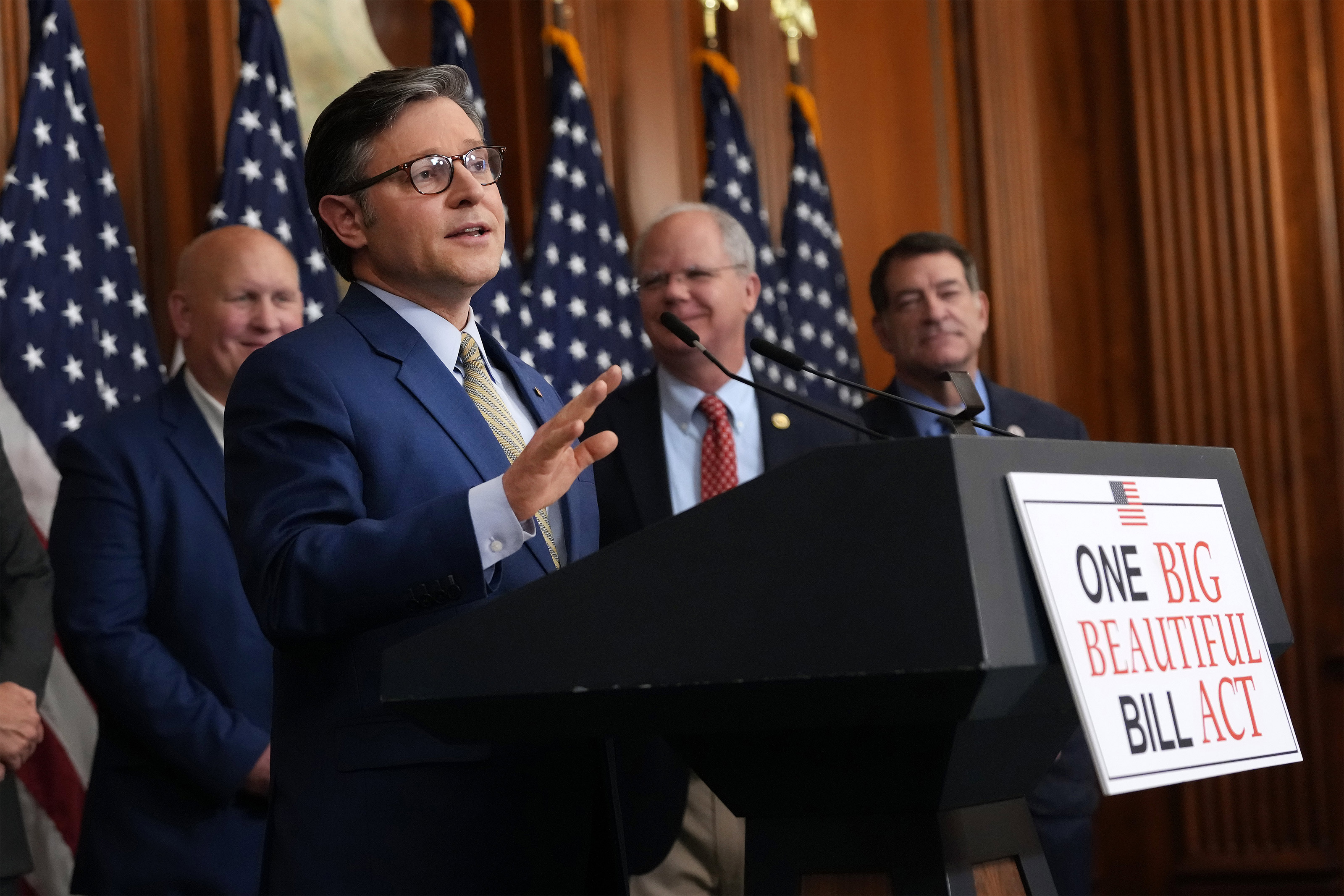
Such an extension was left out of the policy law Trump signed on July 4 that he called the “One Big Beautiful Bill.” Without action, the extra subsidies will expire at the end of this year, after which the tax credits will revert to less generous pre-pandemic levels.

That means two things: Most enrollees will be on the hook to pay a larger share of their premiums as assistance from federal tax credits declines. Secondly, people whose household income exceeds four times the federal poverty level — $84,600 for a couple or $128,600 for a family of four this year — won’t get any subsidies at all.

If the subsidies expire, policy experts estimate, the average amount people pay for coverage could rise by an average of more than 75%. In some states, ACA premiums could double.

“There will be sticker shock,” said Josh Schultz, strategic engagement manager at Softheon, a New York consulting firm that provides enrollment, billing, and other services to about 200 health insurers, many of which are bracing for enrollment losses.

And enrollment could fall sharply. The Wakely Consulting Group estimates that the combination of expiring tax credits, the Trump law’s new paperwork, and other requirements will result in ACA enrollment dropping by as much as 57%.

According to KFF, insurers added premium increases of around 4% just to cover the expiration of the enhanced tax credits, which they fear will lead to lower enrollment. That would further raise costs, insurers say, because people who are less healthy are more likely to grit their teeth and reenroll, leaving insurers with a smaller, but sicker, pool of members.

Less common in the filings submitted so far, but noticeable, are increases pegged to Trump administration tariffs, Cox said.

“What they are assuming is tariffs will drive drug costs up significantly, with some saying that can have around a 3-percentage-point increase” in premiums as a result, she said.

Consumers will learn their new premium prices only late in the fall, or when open enrollment for the ACA begins on Nov. 1 and they can start shopping around.

Congress could still act, and discussions are ongoing, said insurance broker Brooker.

Some lawmakers, he said, are consulting with the CBO about the fiscal and coverage effects of various scenarios that don’t extend the subsidies as they currently exist but may offer a middle ground. One possibility involves allowing subsidies for families earning as much as five or six times the poverty level, he said.

But any such effort will draw pushback.

Some conservative think tanks, such as the Paragon Health Institute, say the more generous subsides led people to fudge their incomes to qualify and led to other types of fraud, such as brokers signing people up for ACA plans without authorization.

But others note that many consumers — Democratic and Republican — have come to rely on the additional assistance. Not extending it could be risky politically. In 2024, 56% of ACA enrollees lived in Republican congressional districts, and 76% were in states won by Trump.

Allowing the enhanced subsidies to expire could also reshape the market.

Brooker said some people may drop coverage. Others will shift to plans with lower premiums but higher deductibles. One provision of Trump’s new tax law allows people enrolled in either “bronze” or “catastrophic”-level ACA plans, which are usually the cheapest, to qualify for health savings accounts, which allow people to set aside money, tax-free, to cover health care costs.

“Naturally, if rates do start going up the way we anticipate, there will be a migration to lower-cost options,” Brooker said.

Related Topics

Contact Us

Submit a Story Tip

Categories
Legal Law

The Senate Saves PEPFAR Funding — For Now

The Host

The Senate has passed — and sent back to the House — a bill that would allow the Trump administration to claw back some $9 billion in previously approved funding for foreign aid and public broadcasting. But first, senators removed from the bill a request to cut funding for the President’s Emergency Plan for AIDS Relief, President George W. Bush’s international AIDS/HIV program. The House has until Friday to approve the bill, or else the funding remains in place.

Meanwhile, a federal appeals court has ruled that West Virginia can ban the abortion pill mifepristone despite its approval by the Food and Drug Administration. If the ruling is upheld by the Supreme Court, it could allow states to limit access to other FDA-approved drugs.

This week’s panelists are Julie Rovner of KFF Health News, Joanne Kenen of the Johns Hopkins Bloomberg School of Public Health and Politico Magazine, Shefali Luthra of The 19th, and Sandhya Raman of CQ Roll Call.

Among the takeaways from this week’s episode:

  • The Senate approved the Trump administration’s cuts to foreign aid and public broadcasting, a remarkable yielding of congressional spending power to the president. Before the vote, Senate GOP leaders removed President Donald Trump’s request to cut PEPFAR, sparing the funding for that global health effort, which has support from both parties.
  • Next Congress will need to pass annual appropriations bills to keep the government funded, but that is expected to be a bigger challenge than the recent spending fights. Appropriations bills need 60 votes to pass in the Senate, meaning Republican leaders will have to make bipartisan compromises. House leaders are already delaying health spending bills until the fall, saying they need more time to work out deals — and those bills tend to attract culture-war issues that make it difficult to negotiate across the aisle.
  • The Trump administration is planning to destroy — rather than distribute — food, medical supplies, contraceptives, and other items intended for foreign aid. The plan follows the removal of workers and dismantling of aid infrastructure around the world, but the waste of needed goods the U.S. government has already purchased is expected to further erode global trust.
  • And soon after the passage of Trump’s tax and spending law, at least one Republican is proposing to reverse the cuts the party approved to health programs — specifically Medicaid. It’s hardly the first time lawmakers have tried to change course on their own policies, though time will tell whether it’s enough to mitigate any political (or actual) damage from the law.

Plus, for “extra credit” the panelists suggest health policy stories they read this week that they think you should read, too: 

Julie Rovner: The New York Times’ “UnitedHealth’s Campaign to Quiet Critics,” by David Enrich.

Joanne Kenen: The New Yorker’s “Can A.I. Find Cures for Untreatable Diseases — Using Drugs We Already Have?” by Dhruv Khullar.

Shefali Luthra: The New York Times’ “Trump Official Accused PEPFAR of Funding Abortions in Russia. It Wasn’t True,” by Apoorva Mandavilli.

Sandhya Raman: The Nation’s “‘We’re Creating Miscarriages With Medicine’: Abortion Lessons from Sweden,” by Cecilia Nowell.

Also mentioned in this week’s podcast:


To hear all our podcasts, click here.

And subscribe to KFF Health News’ “What the Health?” on SpotifyApple PodcastsPocket Casts, or wherever you listen to podcasts.

Related Topics

Contact Us

Submit a Story Tip

Categories
Legal Law

What documents should I show a wrongful dismissal lawyer Toronto?

show a wrongful dismissal lawyer Toronto

When facing the possibility of legal action for a wrongful termination, a common question arises: What documents should I show a wrongful dismissal lawyer Toronto? The answer is essential to building a strong case. Providing the right documentation helps your lawyer assess the strength of your claim and advise you on the best course of action. If you believe your dismissal was unjust, bringing comprehensive records to your initial consultation is crucial.

Start by collecting your employment contract. This document lays the foundation of your relationship with your employer, outlining your job duties, compensation, benefits, notice period, termination clause, and other important terms. A wrongful dismissal lawyer toronto will review your contract to determine whether your employer violated any agreed-upon terms during the termination process. The presence or absence of a valid termination clause is often a key factor in assessing wrongful dismissal claims.

Next, you should provide any termination-related documents. These include your termination letter, any severance offer, and any correspondence or communication from your employer related to your dismissal. Emails or text messages exchanged before, during, or after your termination could be relevant, especially if they contain information that contradicts the official reason for your dismissal or suggest retaliation or discrimination.

What documents should I show a wrongful dismissal lawyer Toronto?

Performance reviews are also important. If your employer cited poor performance as the reason for your termination, but you have consistently received positive evaluations, this can significantly strengthen your case. A wrongful dismissal lawyer Toronto will want to examine these documents to see whether there is a discrepancy between the reason given for your dismissal and your actual work history.

Pay stubs and records of benefits or bonuses should also be included. These help establish the total value of your compensation, which is essential when calculating an appropriate severance package or damages for wrongful dismissal. In cases where an employer failed to include all components of your earnings in a severance offer, such records become vital.

You should also provide any company policies, employee handbooks, or codes of conduct you received during your employment. These documents can help your lawyer determine whether your employer followed their own internal procedures during the termination process. For example, if a policy outlines progressive discipline but you were dismissed without any prior warnings, this could support your claim.

If you have notes from meetings, internal complaints, or witness statements that relate to the circumstances of your dismissal, include them as well. These may be especially important in cases involving workplace harassment, discrimination, or retaliation. A wrongful dismissal lawyer Toronto can use these to establish motive or improper conduct by the employer.

Ultimately, the more documentation you can provide, the better prepared your lawyer will be. So when asking yourself, what documents should I show a wrongful dismissal lawyer Toronto? — think broadly. Any paperwork or communications that relate to your employment and termination can be relevant. With the right documents in hand, your lawyer will be in a stronger position to advocate on your behalf, whether through negotiation or litigation.

Categories
Legal Law

States Brace for Reversal of Obamacare Coverage Gains Under Trump’s Budget Bill

Shorter enrollment periods. More paperwork. Higher premiums. The sweeping tax and spending bill pushed by President Donald Trump includes provisions that would not only reshape people’s experience with the Affordable Care Act but, according to some policy analysts, also sharply undermine the gains in health insurance coverage associated with it.

The moves affect consumers and have particular resonance for the 19 states (plus Washington, D.C.) that run their own ACA exchanges.

Many of those states fear that the additional red tape — especially requirements that would end automatic reenrollment — would have an outsize impact on their policyholders. That’s because a greater percentage of people in those states use those rollovers versus shopping around each year, which is more commonly done by people in states that use the federal healthcare.gov marketplace.

“The federal marketplace always had a message of, ‘Come back in and shop,’ while the state-based markets, on average, have a message of, ‘Hey, here’s what you’re going to have next year, here’s what it will cost; if you like it, you don’t have to do anything,’” said Ellen Montz, who oversaw the federal ACA marketplace under the Biden administration as deputy administrator and director at the Center for Consumer Information and Insurance Oversight. She is now a managing director with the Manatt Health consulting group.

Millions — perhaps up to half of enrollees in some states — may lose or drop coverage as a result of that and other changes in the legislation combined with a new rule from the Trump administration and the likely expiration at year’s end of enhanced premium subsidies put in place during the covid-19 pandemic. Without an extension of those subsidies, which have been an important driver of Obamacare enrollment in recent years, premiums are expected to rise 75% on average next year. That’s starting to happen already, based on some early state rate requests for next year, which are hitting double digits.

“We estimate a minimum 30% enrollment loss, and, in the worst-case scenario, a 50% loss,” said Devon Trolley, executive director of Pennie, the ACA marketplace in Pennsylvania, which had 496,661 enrollees this year, a record.

Drops of that magnitude nationally, coupled with the expected loss of Medicaid coverage for millions more people under the legislation Trump calls the “One Big Beautiful Bill,” could undo inroads made in the nation’s uninsured rate, which dropped by about half from the time most of the ACA’s provisions went into effect in 2014, when it hovered around 14% to 15% of the population, to just over 8%, according to the most recent data.

Premiums would rise along with the uninsured rate, because older or sicker policyholders are more likely to try to jump enrollment hurdles, while those who rarely use coverage — and are thus less expensive — would not.

After a dramatic all-night session, House Republicans passed the bill, meeting the president’s July 4 deadline. Trump is expected to sign the measure on Independence Day. It would increase the federal deficit by trillions of dollars and cut spending on a variety of programs, including Medicaid and nutrition assistance, to partly offset the cost of extending tax cuts put in place during the first Trump administration.

The administration and its supporters say the GOP-backed changes to the ACA are needed to combat fraud. Democrats and ACA supporters see this effort as the latest in a long history of Republican efforts to weaken or repeal Obamacare. Among other things, the legislation would end several changes put in place by the Biden administration that were credited with making it easier to sign up, such as lengthening the annual open enrollment period and launching a special program for very low-income people that essentially allows them to sign up year-round.

In addition, automatic reenrollment, used by more than 10 million people for 2025 ACA coverage, would end in the 2028 sign-up season. Instead, consumers would have to update their information, starting in August each year, before the close of open enrollment, which would end Dec. 15, a month earlier than currently.

That’s a key change to combat rising enrollment fraud, said Brian Blase, president of the conservative Paragon Health Institute, because it gets at what he calls the Biden era’s “lax verification requirements.”

He blames automatic reenrollment, coupled with the availability of zero-premium plans for people with lower incomes that qualify them for large subsidies, for a sharp uptick in complaints from insurers, consumers, and brokers about fraudulent enrollments in 2023 and 2024. Those complaints centered on consumers’ being enrolled in an ACA plan, or switched from one to another, without authorization, often by commission-seeking brokers.

In testimony to Congress on June 25, Blase wrote that “this simple step will close a massive loophole and significantly reduce improper enrollment and spending.”

States that run their own marketplaces, however, saw few, if any, such problems, which were confined mainly to the 31 states using the federal healthcare.gov.

The state-run marketplaces credit their additional security measures and tighter control over broker access than healthcare.gov for the relative lack of problems.

“If you look at California and the other states that have expanded their Medicaid programs, you don’t see that kind of fraud problem,” said Jessica Altman, executive director of Covered California, the state’s Obamacare marketplace. “I don’t have a single case of a consumer calling Covered California saying, ‘I was enrolled without consent.’”

Such rollovers are common with other forms of health insurance, such as job-based coverage.

“By requiring everyone to come back in and provide additional information, and the fact that they can’t get a tax credit until they take this step, it is essentially making marketplace coverage the most difficult coverage to enroll in,” said Trolley at Pennie, 65% of whose policyholders were automatically reenrolled this year, according to KFF data. KFF is a health information nonprofit that includes KFF Health News.

Federal data shows about 22% of federal sign-ups in 2024 were automatic-reenrollments, versus 58% in state-based plans. Besides Pennsylvania, the states that saw such sign-ups for more than 60% of enrollees include California, New York, Georgia, New Jersey, and Virginia, according to KFF.

States do check income and other eligibility information for all enrollees — including those being automatically renewed, those signing up for the first time, and those enrolling outside the normal open enrollment period because they’ve experienced a loss of coverage or other life event or meet the rules for the low-income enrollment period.

“We have access to many data sources on the back end that we ping, to make sure nothing has changed. Most people sail through and are able to stay covered without taking any proactive step,” Altman said.

If flagged for mismatched data, applicants are asked for additional information. Under current law, “we have 90 days for them to have a tax credit while they submit paperwork,” Altman said.

That would change under the tax and spending plan before Congress, ending presumptive eligibility while a person submits the information.

A white paper written for Capital Policy Analytics, a Washington-based consultancy that specializes in economic analysis, concluded there appears to be little upside to the changes.

While “tighter verification can curb improper enrollments,” the additional paperwork, along with the expiration of higher premiums from the enhanced tax subsidies, “would push four to six million eligible people out of Marketplace plans, trading limited fraud savings for a surge in uninsurance,” wrote free market economists Ike Brannon and Anthony LoSasso.

“Insurers would be left with a smaller, sicker risk pool and heightened pricing uncertainty, making further premium increases and selective market exits [by insurers] likely,” they wrote.

Related Topics

Contact Us

Submit a Story Tip

Categories
Legal Law

To Keep Medicaid, Mom Caring for Disabled Adult Son Faces Prospect of Proving She Works

Four years before Kimberly Gallagher enrolled in Medicaid herself, the public health insurance program’s rules prompted her to make an excruciating choice — to give up guardianship of her son so she could work as his caregiver.

Now, another proposed twist in the rules could mean that, even though Missouri pays her to do that work, she might still have to prove to the state that she’s not unemployed.

The Kansas City, Missouri, resident has cared for her disabled son, Daniel, for all 31 years of his life. A rare genetic condition called Prader-Willi syndrome, in addition to autism, left him with an intellectual disability; a constant, excessive hunger; and an inability to speak. His needs left Gallagher, an elementary school teacher by training, with little opportunity to work outside her home.

As congressional Republicans consider slashing about $1 trillion in federal Medicaid spending, Gallagher is among the 18.5 million Americans who could be required to prove that they work enough to keep their health insurance.

Budget bills in the House and Senate would require 80 hours of work or community service a month for adults who are insured through the Affordable Care Act’s Medicaid expansion program, which has allowed states to extend Medicaid coverage to more adults with low incomes. Forty states, plus Washington, D.C., have expanded their programs, additions that now cover about 20 million Americans, including Gallagher.

She enrolled in the coverage in December 2023, after she could no longer afford her private insurance. Before her husband died of cancer in 2019, the couple paid for private insurance and supported themselves on the income he earned as a master watchmaker. After his death, Gallagher was left to earn a living and find insurance on her own. At 59, she’s too young to collect her husband’s Social Security survivor benefit.

Kimberly and Daniel go for a walk near their Kansas City, Missouri, home. (Christopher Smith for KFF Health News)

The Medicaid program that pays for in-home care for Daniel and 8,000 other Missourians with disabilities allows family members to be compensated for caregiving, but only if they’re not the legal guardian of the person they care for. So, Gallagher went to court to give up her rights to make decisions for her son and transfer authority to her parents.

“I think it’s appalling that it’s required, but it was necessary,” she said. “There was no way I could work outside of taking care of Daniel.”

Republicans have touted Medicaid work requirements both as a way to reduce federal spending on the program and as a moral imperative for Americans.

“Go out there. Do entry-level jobs. Get into the workforce. Prove that you matter. Get agency into your own life,” Mehmet Oz, administrator of the Centers for Medicare & Medicaid Services, said in a recent interview on Fox Business.

Democrats, meanwhile, have cast the requirements as bureaucratic red tape that won’t meaningfully increase employment but will cause eligible people to lose their health insurance because of administrative hurdles.

Indeed, the vast majority of Americans enrolled in Medicaid expansion are already working, caregiving, attending school, or have a disability, according to an analysis by KFF, a health information nonprofit that includes KFF Health News.

And while the Congressional Budget Office estimates the work requirement included in the House bill would cause 4.8 million Americans to lose their insurance, only about 300,000 of those people are unemployed because of lack of interest in working, according to the Urban Institute, a nonprofit research group. Recent history in states that have tried work requirements suggests technical and paperwork problems have caused a substantial portion of coverage losses.

Still, the provisions are generally popular among Republican lawmakers and the public. Sen. Josh Hawley (R-Mo.), who has repeatedly cautioned against cutting people off from Medicaid, has signaled support for adding work requirements.

And 68% of Americans favor the requirement described in the House bill, according to a recent poll conducted by KFF. But support for work requirements dropped as low as 35% when respondents learned that most Medicaid recipients already work and could lose their coverage because of paperwork requirements.

That’s what happened in Arkansas, where 18,000 people lost their Medicaid coverage in 2018 after the state phased in a work requirement. Thousands more were on pace to lose coverage in 2019 before a federal judge halted the requirement, largely over concerns about coverage losses. In discussions with focus groups, KFF found that many Arkansas Medicaid participants did not fully understand the requirements, despite the state’s outreach efforts, and some people didn’t receive mailed notices. Others were confused because the work-reporting paperwork and separate forms to renew Medicaid coverage asked for similar information.

Many family caregivers would be exempt from the work requirements proposed in Congress, but Gallagher probably would not, since she had to relinquish guardianship of her son to be paid for the work. While the hours she already logs should be enough to satisfy the requirement, she’ll need to report them again — unless the state can identify her through its existing data. But Missouri has a history of procedural problems in the state agency that administers Medicaid.

A close-up portrait of a young man with brown hair wearing a blue shirt with palm trees on it stands outside.
Daniel has been under his mother’s care for all 31 years of his life. A rare genetic condition called Prader-Willi syndrome, in addition to autism, left him with an intellectual disability; a constant, excessive hunger; and an inability to speak.(Christopher Smith for KFF Health News)

In early 2022, for example, Missouri was taking more than 100 days on average to process applications for Medicaid expansion, a wait that prompted patients to put off needed care and was more than twice the processing time allowed by federal law.

And 79% of the more than 378,000 Missourians who lost Medicaid coverage when covid-era enrollment protections ended in 2023 did so because of procedural reasons.

The next year, a federal judge ruled that Missourians were illegally being denied food aid by the state, in part because insufficient staffing at call centers left eligible people without assistance.

“They’re historically understaffed,” Timothy McBride, a health economist at Washington University in St. Louis, said of the state agency that administers Medicaid and food assistance. “I think that’s really the underlying problem.”

McBride’s analysis of Missouri’s Medicaid recipients found that fewer than 45,000 of the people enrolled in expansion in 2023 were unemployed for reasons other than caregiving, disability, attending school, or retirement. But more than twice that many Missourians could lose their insurance if work requirements prompt disenrollment rates similar to Arkansas’ implementation, according to a study from the Center on Budget and Policy Priorities, a left-leaning think tank that analyzes government policies.

The estimate assumes many otherwise eligible people would still lose coverage as a result of falling through the cracks, McBride said.

Hawley, who backed the Senate bill, declined to comment for this article. The senator previously told reporters that “we can sort that out” when asked about eligible people inadvertently losing Medicaid because of work requirements.

A woman wearing an olive green shirt kisses the forehead of a young man wearing a dark blue shirt with small palm trees on it. The two are standing on a footbridge in a wooded area.
(Christopher Smith for KFF Health News)

Gallagher worries about her coverage, because she recently was diagnosed with Hashimoto’s disease, an autoimmune disorder that attacks the thyroid gland. She said she had to search for her Medicaid card to fill the prescription that followed, having barely used it in the year in a half she’s been covered.

She also worries about her son’s Medicaid. A nursing home is not a realistic option, considering his needs. His coverage doubles as Gallagher’s only source of income and also pays for other caregivers, when she can find them, who give her breaks to tend to her own health and to her aging parents.

But nearly all in-home services like those Daniel receives are optional programs that states are not required to include in their Medicaid programs. And the magnitude of the cuts being proposed have prompted fears that the optional programs could be chopped.

“It would destroy our lives,” Gallagher said. “The only income we would have would be Daniel’s Social Security.”

Related Topics

Contact Us

Submit a Story Tip

Categories
Legal Law

As Cannabis Users Age, Health Risks Appear To Grow

Benjamin Han, a geriatrician and addiction medicine specialist at the University of California-San Diego, tells his students a cautionary tale about a 76-year-old patient who, like many older people, struggled with insomnia.

“She had problems falling asleep, and she’d wake up in the middle of the night,” he said. “So her daughter brought her some sleep gummies” — edible cannabis candies.

“She tried a gummy after dinner and waited half an hour,” Han said.

Feeling no effects, she took another gummy, then one more — a total of four over several hours.

Han advises patients who are trying cannabis to “start low; go slow,” beginning with products that contain just 1 or 2.5 milligrams of tetrahydrocannabinol, or THC, the psychoactive ingredient that many cannabis products contain. Each of the four gummies this patient took, however, contained 10 milligrams.

The woman started experiencing intense anxiety and heart palpitations. A young person might have shrugged off such symptoms, but this patient had high blood pressure and atrial fibrillation, a heart arrhythmia. Frightened, she went to an emergency room.

Lab tests and a cardiac work-up determined the woman wasn’t having a heart attack, and the staff sent her home. Her only lingering symptom was embarrassment, Han said. But what if she’d grown dizzy or lightheaded and was hurt in a fall? He said he has had patients injured in falls or while driving after using cannabis. What if the cannabis had interacted with the prescription drugs she took?

“As a geriatrician, it gives me pause,” Han said. “Our brains are more sensitive to psychoactive substances as we age.”

Thirty-nine states and the District of Columbia now allow cannabis use for medical reasons, and in 24 of those states, as well as the district, recreational use is also legal. As older adults’ use climbs, “the benefits are still unclear,” Han said. “But we’re seeing more evidence of potential harms.”

A wave of recent research points to reasons for concern for older users, with cannabis-related emergency room visits and hospitalizations rising, and a Canadian study finding an association between such acute care and subsequent dementia. Older people are more apt than younger ones to try cannabis for therapeutic reasons: to relieve chronic pain, insomnia, or mental health issues, though evidence of its effectiveness in addressing those conditions remains thin, experts said.

In an analysis of national survey data published June 2 in the medical journal JAMA, Han and his colleagues reported that “current” cannabis use (defined as use within the previous month) had jumped among adults age 65 or older to 7% of respondents in 2023, from 4.8% in 2021. In 2005, he pointed out, fewer than 1% of older adults reported using cannabis in the previous year.

What’s driving the increase? Experts cite the steady march of state legalization — use by older people is highest in those states — while surveys show that the perceived risk of cannabis use has declined. One national survey found that a growing proportion of American adults — 44% in 2021 — erroneously thought it safer to smoke cannabis daily than cigarettes. The authors of the study, in JAMA Network Open, noted that “these views do not reflect the existing science on cannabis and tobacco smoke.”

The cannabis industry also markets its products to older adults. The Trulieve chain gives a 10% discount, both in stores and online, to those it calls “wisdom” customers, 55 or older. Rise Dispensaries ran a yearlong cannabis education and empowerment program for two senior centers in Paterson, New Jersey, including field trips to its dispensary.

The industry has many satisfied older customers. Liz Logan, 67, a freelance writer in Bronxville, New York, had grappled with sleep problems and anxiety for years, but the conditions grew particularly debilitating two years ago, as her husband was dying of Parkinson’s disease. “I’d frequently be awake until 5 or 6 in the morning,” she said. “It makes you crazy.”

Looking online for edible cannabis products, Logan found that gummies containing cannabidiol, known as CBD, alone didn’t help, but those with 10 milligrams of THC did the trick without noticeable side effects. “I don’t worry about sleep anymore,” she said. “I’ve solved a lifelong problem.”

But studies in the United States and Canada, which legalized nonmedical cannabis use for adults nationally in 2018, show climbing rates of cannabis-related health care use among older people, both in outpatient settings and in hospitals.

In California, for instance, cannabis-related emergency room visits by those 65 or older rose, to 395 per 100,000 visits in 2019 from about 21 in 2005. In Ontario, acute care (meaning emergency visits or hospital admissions) resulting from cannabis use increased fivefold in middle-aged adults from 2008 to 2021, and more than 26 times among those 65 and up.

“It’s not reflective of everyone who’s using cannabis,” cautioned Daniel Myran, an investigator at the Bruyère Health Research Institute in Ottawa and lead author of the Ontario study. “It’s capturing people with more severe patterns.”

But since other studies have shown increased cardiac risk among some cannabis users with heart disease or diabetes, “there’s a number of warning signals,” he said.

For example, a disturbing proportion of older veterans who currently use cannabis screen positive for cannabis use disorder, a recent JAMA Network Open study found.

As with other substance use disorders, such patients “can tolerate high amounts,” said the lead author, Vira Pravosud, a cannabis researcher at the Northern California Institute for Research and Education. “They continue using even if it interferes with their social or work or family obligations” and may experience withdrawal if they stop.

Among 4,500 older veterans (with an average age of 73) seeking care at Department of Veterans Affairs health facilities, researchers found that more than 10% had reported cannabis use within the previous 30 days. Of those, 36% fit the criteria for mild, moderate, or severe cannabis use disorder, as established in the Diagnostic and Statistical Manual of Mental Disorders.

VA patients differ from the general population, Pravosud noted. They are much more likely to report substance misuse and have “higher rates of chronic diseases and disabilities, and mental health conditions like PTSD” that could lead to self-medication, she said.

Current VA policies don’t require clinicians to ask patients about cannabis use. Pravosud thinks that they should.

Moreover, “there’s increasing evidence of a potential effect on memory and cognition,” said Myran, citing his team’s study of Ontario patients with cannabis-related conditions going to emergency departments or being admitted to hospitals.

Compared with others of the same age and sex who were seeking care for other reasons, research shows these patients (ages 45 to 105) had 1.5 times the risk of a dementia diagnosis within five years, and 3.9 times the risk of that for the general population.

Even after adjusting for chronic health conditions and sociodemographic factors, those seeking acute care resulting from cannabis use had a 23% higher dementia risk than patients with noncannabis-related ailments, and a 72% higher risk than the general population.

None of these studies were randomized clinical trials, the researchers pointed out; they were observational and could not ascertain causality. Some cannabis research doesn’t specify whether users are smoking, vaping, ingesting or rubbing topical cannabis on aching joints; other studies lack relevant demographic information.

“It’s very frustrating that we’re not able to provide more individual guidance on safer modes of consumption, and on amounts of use that seem lower-risk,” Myran said. “It just highlights that the rapid expansion of regular cannabis use in North America is outpacing our knowledge.”

Still, given the health vulnerabilities of older people, and the far greater potency of current cannabis products compared with the weed of their youth, he and other researchers urge caution.

“If you view cannabis as a medicine, you should be open to the idea that there are groups who probably shouldn’t use it and that there are potential adverse effects from it,” he said. “Because that is true of all medicines.”

The New Old Age is produced through a partnership with The New York Times.

Related Topics

Contact Us

Submit a Story Tip

Categories
Legal Law

Trump’s ‘One Big Beautiful Bill’ Lands in Senate. Our 400th Episode!

The Host

Julie Rovner
KFF Health News


@jrovner


@julierovner.bsky.social

Read Julie’s stories.

Julie Rovner is chief Washington correspondent and host of KFF Health News’ weekly health policy news podcast, “What the Health?” A noted expert on health policy issues, Julie is the author of the critically praised reference book “Health Care Politics and Policy A to Z,” now in its third edition.

After narrowly passing in the House in May, President Donald Trump’s “One Big Beautiful Bill” has now arrived in the Senate, where Republicans are struggling to decide whether to pass it, change it, or — as Elon Musk, who recently stepped back from advising Trump, is demanding — kill it. 

Adding fuel to the fire, the Congressional Budget Office estimates the bill as written would increase the number of Americans without health insurance by nearly 11 million over the next decade. That number would grow to approximately 16 million should Republicans also not extend additional subsidies for the Affordable Care Act, which expire at year’s end. 

This week’s panelists are Julie Rovner of KFF Health News, Jessie Hellmann of CQ Roll Call, Alice Miranda Ollstein of Politico, and Lauren Weber of The Washington Post.

Panelists

Jessie Hellmann
CQ Roll Call


@jessiehellmann


@jessiehellmann.bsky.social


Read Jessie’s stories.

Alice Miranda Ollstein
Politico


@AliceOllstein


@alicemiranda.bsky.social


Read Alice’s stories.

Lauren Weber
The Washington Post


@LaurenWeberHP


Read Lauren’s stories.

Among the takeaways from this week’s episode:

  • Even before the CBO released estimates of how many Americans stand to lose health coverage under the House-passed budget reconciliation bill, Republicans in Washington were casting doubt on the nonpartisan office’s findings — as they did during their 2017 Affordable Care Act repeal effort.
  • Responding to concerns about proposed Medicaid cuts, Iowa Sen. Joni Ernst, a Republican, this week stood behind her controversial rejoinder at a town hall that “we’re all going to die.” The remark and its public response illuminated the problematic politics Republicans face in reducing benefits on which their constituents rely — and may foreshadow campaign fights to come.
  • Journalists revealed that Health and Human Services Secretary Robert F. Kennedy Jr.’s report on children’s health may have been generated at least in part by artificial intelligence. The telltale signs in the report of what are called “AI hallucinations” included citations to scientific studies that don’t exist and a garbled interpretation of the findings of other research, raising further questions about the validity of the report’s recommendations.
  • And the Trump administration this week revoked Biden-era guidance on the Emergency Medical Treatment and Active Labor Act. Regardless, the underlying law instructing hospitals to care for those experiencing pregnancy emergencies still applies.

Also this week, Rovner interviews KFF Health News’ Arielle Zionts, who reported and wrote the latest “Bill of the Month” feature, about a Medicaid patient who had an emergency in another state and the big bill he got for his troubles. If you have an infuriating, outrageous, or baffling medical bill you’d like to share with us, you can do that here.

Plus, for “extra credit,” the panelists suggest health policy stories they read (or wrote) this week that they think you should read, too:

Julie Rovner: KFF Health News’ “Native Americans Hurt by Federal Health Cuts, Despite RFK Jr.’s Promises of Protection,” by Katheryn Houghton, Jazmin Orozco Rodriguez, and Arielle Zionts.

Alice Miranda Ollstein: Politico’s “‘They’re the Backbone’: Trump’s Targeting of Legal Immigrants Threatens Health Sector,” by Alice Miranda Ollstein.

Lauren Weber: The New York Times’ “Take the Quiz: Could You Manage as a Poor American?” by Emily Badger and Margot Sanger-Katz.

Jessie Hellmann: The New York Times’ “A DNA Technique Is Finding Women Who Left Their Babies for Dead,” by Isabelle Taft.

Also mentioned in this week’s podcast:

Credits

Francis Ying
Audio producer

Emmarie Huetteman
Editor

To hear all our podcasts, click here.

And subscribe to KFF Health News’ “What the Health?” on SpotifyApple PodcastsPocket Casts, or wherever you listen to podcasts.

We encourage organizations to republish our content, free of charge. Here’s what we ask:

You must credit us as the original publisher, with a hyperlink to our kffhealthnews.org site. If possible, please include the original author(s) and KFF Health News” in the byline. Please preserve the hyperlinks in the story.

It’s important to note, not everything on kffhealthnews.org is available for republishing. If a story is labeled “All Rights Reserved,” we cannot grant permission to republish that item.

Have questions? Let us know at [email protected]

Categories
Legal Law

Trump’s ‘One Big Beautiful Bill’ Continues Assault on Obamacare

Millions would lose Medicaid coverage. Millions would be left without health insurance. Signing up for health plans on the Affordable Care Act marketplaces would be harder and more expensive.

President Donald Trump’s domestic policy legislation, the One Big Beautiful Bill Act that cleared the House in May and now moves to the Senate, could also be called Obamacare Repeal Lite, its critics say. In addition to causing millions of Americans to lose their coverage under Medicaid, the health program for low-income and disabled people, the measure includes the most substantial rollback of the ACA since Trump’s Republican allies tried to pass legislation in 2017 that would have largely repealed President Barack Obama’s signature domestic accomplishment.

One difference today is that Republicans aren’t describing their legislation as a repeal of the ACA, after the 2017 effort cost them control of the House the following year. Instead, they say the bill would merely reduce “waste, fraud, and abuse” in Medicaid and other government health programs.

“In a way, this is their ACA repeal wish list without advertising it as Obamacare repeal,” said Philip Rocco, an associate professor of political science at Marquette University in Milwaukee and co-author of the book “Obamacare Wars: Federalism, State Politics, and the Affordable Care Act.”

The GOP, Rocco said, learned eight years ago that the “headline of Obamacare repeal is really bad politics.”

Democrats have tried to frame Trump’s One Big Beautiful Bill Act as an assault on Americans’ health care, just as they did with the 2017 legislation.

“They are essentially repealing parts of the Affordable Care Act,” Rep. Frank Pallone Jr. (D-N.J.) said as the House debated the measure in May. “This bill will destroy the health care system of this country.”

Nearly two-thirds of adults have a favorable view of the ACA, according to polling by KFF, a national health information nonprofit that includes KFF Health News.

In contrast, about half of people polled also say there are major problems with waste, fraud, and abuse in government health programs, including Medicaid, KFF found.

“We are not cutting Medicaid,” House Speaker Mike Johnson said May 25 on CNN’s “State of the Union,” describing the bill’s changes as affecting only immigrants living in the U.S. without authorization and “able-bodied workers” whom he claimed are on Medicaid but don’t work.

The program is “intended for the most vulnerable populations of Americans, which is pregnant women and young single mothers, the disabled, the elderly,” he said. “They are protected in what we’re doing because we’re preserving the resources for those who need it most.”

The 2025 legislation wouldn’t cut as deeply into health programs as the failed 2017 bill, which would have led to about 32 million Americans losing insurance coverage, the Congressional Budget Office estimated at the time. By contrast, the One Big Beautiful Bill Act, with provisions that affect Medicaid and ACA enrollees, would leave nearly 9 million more people without health insurance by 2034, according to the CBO.

That number rises to nearly 14 million if Congress doesn’t extend premium subsidies for Obamacare plans that were enhanced during the pandemic to help more people buy insurance on government marketplaces, the CBO says. Without congressional action, the more generous subsidies will expire at the end of the year and most ACA enrollees will see their premiums rise sharply.

The increased financial assistance led to a record 24 million people enrolled in ACA marketplace plans this year, and health insurance experts predict a large reduction without the enhanced subsidies.

Loss of those enhanced subsidies, coupled with other changes set in the House bill, will mean “the ACA will still be there, but it will be devastating for the program,” said Katie Keith, founding director of the Center for Health Policy and the Law at Georgetown University.   

Republicans argue that ACA subsidies are a separate issue from the One Big Beautiful Bill Act and accuse Democrats of conflating them.

The House-passed bill also makes a number of ACA changes, including shortening by a month the annual open enrollment period and eliminating policies from Joe Biden’s presidency that allowed many low-income people to sign up year-round.

New paperwork hurdles the House bill creates are also expected to result in people dropping or losing ACA coverage, according to the CBO.

For example, the bill would end most automatic reenrollment, which was used by more than 10 million people this year. Instead, most ACA enrollees would need to provide updated information, including on income and immigration status, to the federal and state ACA marketplaces every year, starting in August, well before open enrollment.

Studies show that additional administrative hurdles lead to people dropping coverage, said Sabrina Corlette, a research professor and co-director of the Center on Health Insurance Reforms at Georgetown University.

“Not only do people drop out of the process, but it tends to be healthier, younger, lower-income folks who drop out,” she said. “That’s dumb because they go uninsured. Also, it is bad for the insurance market.”

Supporters of the provision say it’s necessary to combat fraudulent enrollment by ensuring that ACA beneficiaries still want coverage every year or that they are not being enrolled without their permission by rogue sales agents. Most of the Medicaid coverage reductions in the bill, the CBO says, are due to new work requirements and directives for the 21 million adults added to the program since 2014 under an expansion authorized by the ACA.

One new requirement is that those beneficiaries prove their eligibility every six months, instead of once a year, the norm in most states.

That would add costs for states and probably lead to people who are still eligible falling off Medicaid, said Oregon Medicaid Director Emma Sandoe. Oregon has one of the most liberal continuous eligibility policies, allowing anyone age 6 or older to stay on for up to two years without reapplying.

Such policies help ensure people don’t fall off for paperwork reasons and reduce administrative burden for the state, Sandoe said. Requiring more frequent eligibility checks would “limit the ability of folks to get care and receive health services, and that is our primary goal,” Sandoe said.

The 2017 repeal effort was aimed at fulfilling Trump’s promises from his first presidential campaign. That’s not the case now. The health policy provisions of the House bill instead would help to offset the cost of extending about $4 trillion in tax cuts that skew toward wealthier Americans.

The Medicaid changes in the bill would reduce federal spending on the program by about $700 billion over 10 years. CBO has not yet issued an estimate of how much the ACA provisions would save.

Timothy McBride, a health economist at Washington University in St. Louis, said Republican efforts to make it harder for what they term “able-bodied” adults to get Medicaid is code for scaling back Obamacare.

The ACA’s Medicaid expansion has been adopted by 40 states and Washington, D.C. The House bill’s work requirement and added eligibility checks are intended to drive off Medicaid enrollees who Republicans believe never should have been on the program, McBride said. Congress approved the ACA in 2010 with no Republican votes.

Most adult Medicaid enrollees under 65 are already working, studies show. Imposing requirements that people prove they’re working, or that they’re exempt from having to work, to stay on Medicaid will lead to some people losing coverage simply because they don’t fill out paperwork, researchers say.

Manatt Health estimates that about 30% of people added to Medicaid through the ACA expansion would lose coverage, or about 7 million people, said Jocelyn Guyer, senior managing director of the consulting firm.

The bill also would make it harder for people enrolled under Medicaid expansions to get care, because it requires states to charge copayments of up to $35 for some specialist services for those with incomes above the federal poverty level, which is $15,650 for an individual in 2025.

Today, copayments are rare in Medicaid, and when states charge them, they’re typically nominal, usually under $10. Studies show cost sharing in Medicaid leads to worse access to care among beneficiaries.

Christopher Pope, a senior fellow with the conservative Manhattan Institute, acknowledged that some people will lose coverage but rejected the notion that the GOP bill amounts to a full-on assault on the ACA.

He questioned the coverage reductions forecast by the CBO, saying the agency often struggles to accurately predict how states will react to changes in law. He said that some states may make it easy for enrollees to satisfy new work requirements, reducing coverage losses.

By comparison, Pope said, the ACA repeal effort from Trump’s first term a decade ago would have ended the entire Medicaid expansion. “This bill does nothing to stop the top features of Obamacare,” Pope said.

But McBride said that while the number of people losing health insurance under the GOP bill is predicted to be less than the 2017 estimates, it would still eliminate about half the ACA’s coverage gains, which brought the U.S. uninsured rate to historical lows. “It would take us backwards,” he said.

Related Topics

Contact Us

Submit a Story Tip

Categories
Legal Law

Republicanos buscan castigar a estados que ofrecen seguro de salud a inmigrantes sin papeles

La emblemática legislación del presupuesto del presidente Donald Trump castigaría a 14 estados que ofrecen cobertura de salud a personas que viven en el país sin papeles.

Estos estados, la mayoría liderados por demócratas, dan seguro médico a algunos inmigrantes de bajos ingresos —a menudo niños—, independientemente de su estatus migratorio. Defensores argumentan que la política es humanitaria y que, en última instancia, ahora costos.

Sin embargo, la legislación federal, que los republicanos han denominado One Big Beautiful Bill (Un hermoso gran proyecto de ley), recortaría drásticamente los reembolsos federales de Medicaid a esos estados en miles de millones de dólares anuales en total, a menos que reduzcan esos beneficios.

El proyecto de ley fue aprobado por un estrecho margen en la Cámara de Representantes el jueves 22 de mayo, y ahora pasa al Senado.

Si bien avanza gran parte de la agenda nacional de Trump, incluyendo grandes recortes de impuestos que benefician principalmente a los estadounidenses más ricos, la legislación también realiza recortes sustanciales del gasto en Medicaid que, según los responsables del presupuesto del Congreso, dejará a millones de personas de bajos ingresos sin seguro médico.

De ser aprobados por el Senado, estos recortes representarían un complejo obstáculo político y económico para los estados y Washington, DC, que utilizan sus propios fondos para brindar seguro médico a algunas personas que viven en Estados Unidos sin autorización.

Estos estados verían reducidos en 10 puntos porcentuales los reembolsos federales para las personas cubiertas por la expansión de Medicaid que se realize bajo la Ley de Cuidado de Salud a Bajo Precio (ACA).

Estos recortes le costarían a California, el estado que más tiene que perder, hasta $3 mil millones al año, según un análisis de KFF, una organización sin fines de lucro dedicada a información de salud que incluye a KFF Health News.

En conjunto, los 15 lugares afectados (los 14 estados y DC) cubren a aproximadamente 1.9 millones de inmigrantes sin papeles, según KFF. La entidad indica que la sanción también podría aplicarse a otros estados que cubren a inmigrantes con residencia legal.

Dos de los estados, Illinois y Utah, tienen leyes de “activación” que exigen terminar con sus expansiones de Medicaid si el gobierno federal reduce su aporte de fondos. Esto significa que, a menos que esos estados deroguen sus leyes de activación o dejen de cubrir a las personas sin estatus migratorio legal, muchos más estadounidenses de bajos ingresos podrían quedarse sin seguro.

Si continúan cubriendo a personas sin papeles, a partir del año fiscal 2027, los estados restantes y Washington, DC, tendrían que aportar millones o miles de millones de dólares adicionales cada año, para compensar las reducciones en sus reembolsos federales de Medicaid.

Después de California, Nueva York podría perder la mayor parte de la financiación federal: cerca de 1.600 millones de dólares anuales, según KFF.

El senador estatal de California, Scott Wiener, demócrata y presidente del Comité de Presupuesto del Senado, afirmó que la legislación de Trump ha sembrado el caos mientras los legisladores estatales trabajan para aprobar su propio presupuesto antes del 15 de junio.

“Tenemos que mantenernos firmes”, declaró. “California ha decidido que queremos una atención médica universal y que vamos a garantizar que todos tengan acceso a la atención médica, y que no vamos a permitir que millones de personas indocumentadas reciban atención primaria en salas de emergencia”.

El gobernador de California, el demócrata Gavin Newsom, declaró en un comunicado que el proyecto de ley de Trump devastaría la atención médica en su estado.

“Millones de personas perderán cobertura, los hospitales cerrarán y las redes de seguridad social podrían colapsar bajo ese peso”, dijo Newsom.

En su propuesta de presupuesto del 14 de mayo, Newsom instó a los legisladores a recortar algunos beneficios para inmigrantes sin papeles, citando el aumento desmedido de los costos del programa estatal de Medicaid. Si el Congreso recorta los fondos para la expansión de Medicaid, el estado no estaría en condiciones de cubrir los gastos, afirmó el gobernador.

Newsom cuestionó si el Congreso tiene la autoridad para penalizar a los estados por cómo gastan su propio dinero, y afirmó que su estado consideraría impugnar la medida en los tribunales.

El representante estatal de Utah, Jim Dunnigan, republicano que ayudó a impulsar un proyecto de ley para cubrir a los niños en su estado independientemente de su estatus migratorio, afirmó que Utah necesita mantener la expansión de Medicaid que comenzó en 2020.

“No podemos permitirnos, ni monetaria ni políticamente, que se recorten nuestros fondos federales para la expansión”, declaró. Dunnigan no especificó si cree que el estado debería cancelar su cobertura para inmigrantes si la disposición republicana sobre sanciones se convierte en ley.

El programa de Utah cubre a unos 2.000 niños, el máximo permitido por su ley. Los inmigrantes adultos sin estatus legal no son elegibles. La expansión de Medicaid de Utah cubre a unos 75.000 adultos, quienes deben ser ciudadanos o inmigrantes con residencia legal.

Matt Slonaker, director ejecutivo del Utah Health Policy Project, una organización de defensa del consumidor, afirmó que el proyecto de ley de la Cámara federal deja al estado en una posición difícil.

“Políticamente, no hay grandes alternativas”, declaró. “Es el dilema del prisionero: cualquier movimiento en cualquier dirección no tiene mucho sentido”.

Slonaker apuntó que un escenario probable es que los legisladores estatales eliminen su ley de activación, y luego encuentren la manera de compensar la pérdida de fondos federales para la expansión.

Utah ha financiado su parte del costo de la expansión de Medicaid con impuestos sobre las ventas y los hospitales.

“El Congreso pondría al estado de Utah en posición de tener que tomar una decisión política muy difícil”, declaró Slonaker.

En Illinois, la sanción del Partido Republicano tendría incluso consecuencias más graves. Esto se debe a que podría llevar a que 770.000 adultos perdieran la cobertura médica que obtuvieron con la expansión estatal de Medicaid.

Stephanie Altman, directora de justicia sanitaria del Shriver Center on Poverty Law, un grupo de defensa con sede en Chicago, afirmó que es posible que su estado, liderado por demócratas, derogue su ley de activación antes de permitir que se dé por terminada la expansión de Medicaid.

Agregó que el estado también podría eludir la sanción solicitando a los condados que financien la cobertura para inmigrantes. “Obviamente, sería una situación difícil”, declaró.

Altman indicó que el proyecto de ley de la Cámara de Representantes parece redactado para penalizar a los estados controlados por demócratas, ya que estos suelen brindar cobertura a inmigrantes sin importar su estatus migratorio.

Agregó que la disposición demuestra la “hostilidad de los republicanos contra los inmigrantes” y que “no quieren que vengan aquí y reciban cobertura pública”.

Mike Johnson, el presidente de la Cámara de Representantes de Estados Unidos, declaró en mayo que los programas estatales que brindan cobertura pública a personas sin importar su estatus migratorio actúan como un “felpudo abierto”, invitando a más personas a cruzar la frontera sin autorización. Afirmó que los esfuerzos para eliminar estos programas cuentan con el apoyo de las encuestas públicas.

Una encuesta de Reuters-Ipsos realizada entre el 16 y el 18 de mayo reveló que el 47% de los estadounidenses aprueba las políticas migratorias de Trump y el 45% las desaprueba. La encuesta reveló que el índice de aprobación general de Trump ha caído 5 puntos porcentuales desde que regresó al cargo en enero, hasta el 42%, con un 52% de los estadounidenses desaprobando su gestión.

ACA, también conocida como Obamacare, impulsó a los estados a ampliar Medicaid a adultos con ingresos de hasta el 138% del nivel federal de pobreza, o $21.597 por persona este año. Cuarenta estados y Washington, DC, ampliaron su cobertura, lo que contribuyó a reducir la tasa nacional de personas sin seguro a un mínimo histórico.

El gobierno federal ahora cubre el 90% de los costos de las personas incluidas en Medicaid gracias a la ampliación del Obamacare.

En los estados que cubren la atención médica de inmigrantes sin autorización, el proyecto de ley republicano reduciría la contribución del gobierno federal del 90% al 80% del costo de la cobertura para cualquier persona que se incorpore a Medicaid bajo la expansión de ACA.

Por ley, los fondos federales de Medicaid no pueden utilizarse para cubrir a personas que se encuentran en el país papeles, excepto para servicios de embarazo y emergencias.

Los otros estados que utilizan sus propios fondos para cubrir a personas sin importar su estatus migratorio son: Colorado, Connecticut, Maine, Massachusetts, Minnesota, Nueva Jersey, Oregon, Rhode Island, Vermont y Washington, según KFF.

Ryan Long, director de relaciones con el Congreso del Paragon Health Institute, un influyente grupo político conservador, afirmó que incluso si utilizan sus propios fondos para la cobertura de inmigrantes, los estados aún dependen de los fondos federales para “apoyar sistemas que faciliten la inscripción de inmigrantes indocumentados”.

Long afirmó que la preocupación por que los estados con leyes de activación puedan ver finalizada la expansión de Medicaid es una “pista falsa”, ya que los estados tienen la opción de eliminar sus activadores, como hizo Michigan en 2023.

La sanción por ofrecer cobrtura de salud a personas en el país sin papeles es una de las distintas maneras en que el proyecto de ley de la Cámara de Representantes recorta el gasto federal en Medicaid.

La legislación también trasladaría más costos de Medicaid a los estados al exigirles que verifiquen si los adultos cubiertos por el programa trabajan. Los estados también tendrían que recertificar la elegibilidad de los beneficiarios de la expansión de Medicaid cada seis meses, en lugar de una vez al año o menos, como lo hacen actualmente la mayoría.

El proyecto de ley también congelaría la práctica de los estados de gravar con impuestos a hospitales, residencias de adultos mayores, planes de atención médica administrada y otras compañías de atención médica para financiar su parte de los costos de Medicaid.

En una estimación preliminar del 11 de mayo, la Oficina de Presupuesto del Congreso (CBO) indicó que, según el proyecto de ley aprobado por la Cámara de Representantes, alrededor de 8,6 millones de personas más perderían la cobertura médica en 2034.

Esa cifra aumentará a casi 14 millones, según la CBO, después que la administración Trump finalice las nuevas regulaciones de ACA y, si el Congreso, liderado por los republicanos, como se prevé, se niegue a extender los subsidios mejorados para ayudar a pagar las primas de los planes de salud comerciales vendidos a través de los mercados del Obamacare.

Los subsidios mejorados, una prioridad del ex presidente Joe Biden, eliminaron por completo las primas mensuales para algunas personas que adquirieran planes de Obamacare. Y expiran a fin de año.

Esta historia fue producida por Kaiser Health News, que publica California Healthline, un servicio editorialmente independiente de la California Health Care Foundation.

Categories
Legal Law

Bill With Billions in Health Program Cuts Passes House

The Host

Julie Rovner
KFF Health News


@jrovner


@julierovner.bsky.social

Read Julie’s stories.

Julie Rovner is chief Washington correspondent and host of KFF Health News’ weekly health policy news podcast, “What the Health?” A noted expert on health policy issues, Julie is the author of the critically praised reference book “Health Care Politics and Policy A to Z,” now in its third edition.

With only a single vote to spare, the House passed a controversial budget bill that includes billions of dollars in tax cuts for the wealthy, along with billions of dollars of cuts to Medicaid, the Affordable Care Act, and the food stamp program — most of which will affect those at the lower end of the income scale. But the bill faces an uncertain future in the Senate.

Meanwhile, Health and Human Services Secretary Robert F. Kennedy Jr. released a report from his commission to “Make America Healthy Again” that described threats to the health of the American public — but notably included nothing on threats from tobacco, gun violence, or a lack of health insurance.

This week’s panelists are Julie Rovner of KFF Health News, Anna Edney of Bloomberg News, Sarah Karlin-Smith of the Pink Sheet, and Alice Miranda Ollstein of Politico.

Panelists

Anna Edney
Bloomberg News


@annaedney


@annaedney.bsky.social


Read Anna’s stories.

Sarah Karlin-Smith
Pink Sheet


@SarahKarlin


@sarahkarlin-smith.bsky.social


Read Sarah’s stories.

Alice Miranda Ollstein
Politico


@AliceOllstein


@alicemiranda.bsky.social


Read Alice’s stories.

Among the takeaways from this week’s episode:

  • House Republicans passed their “big, beautiful” bill 215-214 this week, with one Republican critic voting present. But the Senate may have its own “big, beautiful” rewrite. Some conservative senators who worry about federal debt are concerned that the bill is not fully paid for and would add to the budget deficit. Others, including some red-state Republicans, say the bill’s cuts to Medicaid and food assistance go too far and would hurt low-income Americans. The bill’s cuts would represent the biggest reductions to Medicaid in the program’s 60-year history.
  • Many of the bill’s Medicaid cuts would come from adding work requirements. Most people receiving Medicaid already work, but such requirements in Arkansas and Georgia showed that people often lose coverage under these rules because they have trouble documenting their work hours, including because of technological problems. The nonpartisan Congressional Budget Office estimated an earlier version of the bill would reduce the number of people with Medicaid by at least 8.6 million over a decade. The requirements also could add a burden for employers. The bill’s work requirements are relatively broad and would affect people who are 19 to 64 years old. 
  • People whose Medicaid coverage is canceled also would no longer qualify for ACA subsidies for marketplace plans. Medicare also would be affected, because the bill would be expected to trigger an across-the-board sequestration cut.
  • The bill also would impact abortion by effectively banning it in ACA marketplace plans, which would disrupt a compromise struck in the 2010 law. And the bill would block funding for Planned Parenthood in Medicaid, although that federal money is used for other care such as cancer screenings, not abortions. In the past, the Senate parliamentarian has said that kind of provision is not allowed under budget rules, but some Republicans want to take the unusual step of overruling the parliamentarian.
  • This week, FDA leaders released covid-19 vaccine recommendations in a medical journal. They plan to limit future access to the vaccines to people 65 and older and others who are at high risk of serious illness if infected, and they want to require manufacturers to do further clinical trials to show whether the vaccines benefit healthy younger people. There are questions about whether this is legal, which products would be affected, when this would take effect, and whether it’s ethical to require these studies. 
  • HHS released a report on chronic disease starting in childhood. The report doesn’t include many new findings but is noteworthy in part because of what it doesn’t discuss — gun violence, the leading cause of death for children and teens in the United States; tobacco; the lack of health insurance coverage; and socioeconomic factors that affect access to healthy food.

Also this week, Rovner interviews University of California-Davis School of Law professor and abortion historian Mary Ziegler about her new book on the past and future of the “personhood” movement aimed at granting legal rights to fetuses and embryos.

Plus, for “extra credit,” the panelists suggest health policy stories they read this week they think you should read, too:

Julie Rovner: The Washington Post’s “White House Officials Wanted To Put Federal Workers ‘in Trauma.’ It’s Working,” by William Wan and Hannah Natanson.

Alice Miranda Ollstein: NPR’s “Diseases Are Spreading. The CDC Isn’t Warning the Public Like It Was Months Ago,” by Chiara Eisner.

Anna Edney: Bloomberg News’ “The Potential Cancer, Health Risks Lurking in One Popular OTC Drug,” by Anna Edney.

Sarah Karlin-Smith: The Farmingdale Observer’s “Scientists Have Been Studying Remote Work for Four Years and Have Reached a Very Clear Conclusion: ‘Working From Home Makes Us Happier,’” by Bob Rubila.

Also mentioned in this week’s podcast:

Credits

Francis Ying
Audio producer

Rebecca Adams
Editor

To hear all our podcasts, click here.

And subscribe to KFF Health News’ “What the Health?” on SpotifyApple PodcastsPocket Casts, or wherever you listen to podcasts.

KFF Health News is a national newsroom that produces in-depth journalism about health issues and is one of the core operating programs at KFF—an independent source of health policy research, polling, and journalism. Learn more about KFF.

USE OUR CONTENT

This story can be republished for free (details).

We encourage organizations to republish our content, free of charge. Here’s what we ask:

You must credit us as the original publisher, with a hyperlink to our kffhealthnews.org site. If possible, please include the original author(s) and KFF Health News” in the byline. Please preserve the hyperlinks in the story.

It’s important to note, not everything on kffhealthnews.org is available for republishing. If a story is labeled “All Rights Reserved,” we cannot grant permission to republish that item.

Have questions? Let us know at [email protected]

Categories
Legal Law

GOP Poised To Cut Billions in Health Benefits

The Host

Julie Rovner
KFF Health News


@jrovner


@julierovner.bsky.social

Read Julie’s stories.

Julie Rovner is chief Washington correspondent and host of KFF Health News’ weekly health policy news podcast, “What the Health?” A noted expert on health policy issues, Julie is the author of the critically praised reference book “Health Care Politics and Policy A to Z,” now in its third edition.

After all-night markups, two key House committees approved GOP budget legislation that would cut hundreds of billions of dollars from federal health programs over the next decade, mostly from the Medicaid program for people with low incomes or disabilities. The legislation is far from a done deal, though, with at least one Republican senator voicing opposition to Medicaid cuts.

Meanwhile, Health and Human Services Secretary Robert F. Kennedy Jr. testified before Congress for the first time since taking office. In sometimes surprisingly combative exchanges with lawmakers in the House and Senate, Kennedy denied cutting programs despite evidence to the contrary and said at one point that he doesn’t think Americans “should be taking medical advice from me.”

This week’s panelists are Julie Rovner of KFF Health News, Julie Appleby of KFF Health News, Joanne Kenen of the Johns Hopkins University Bloomberg School of Public Health and Politico Magazine, and Alice Miranda Ollstein of Politico.

Panelists

Julie Appleby
KFF Health News


@Julie_appleby

Read Julie’s stories.

Joanne Kenen
Johns Hopkins University and Politico


@JoanneKenen


@joannekenen.bsky.social


Read Joanne’s bio.

Alice Miranda Ollstein
Politico


@AliceOllstein


@alicemiranda.bsky.social


Read Alice’s stories.

Among the takeaways from this week’s episode:

  • House Republicans this week released — then quickly ushered through committee — major legislation that would make deep cuts to federal spending while funding President Donald Trump’s domestic priorities, including renewing tax cuts and boosting border security. A preliminary estimate by the Congressional Budget Office found the bill would cut at least $715 billion from federal health spending over 10 years — with most of that money coming from the Medicaid program.
  • Overall, the House GOP’s proposal would make it harder to enroll, and stay enrolled, in Medicaid and Affordable Care Act coverage. Among other changes, the bill would impose a requirement that nondisabled adults (with some exceptions) work, volunteer, or study at least 80 hours per month to be eligible for coverage. But Democrats and patient advocates point to evidence that, rather than encouraging employment, such a mandate results in more people losing or dropping coverage under burdensome paperwork requirements.
  • Republicans also declined to extend the enhanced tax credits introduced during the covid-19 pandemic that help many people afford ACA marketplace coverage. Those tax credits expire at the end of the year, and premiums are expected to balloon, which could prompt many people not to renew their coverage.
  • And Kennedy’s appearances on Capitol Hill this week provided Congress the first opportunity to question the health secretary since he assumed his post. He was grilled by Democrats about vaccines, congressionally appropriated funds, agency firings, and much more.

Plus, for “extra credit,” the panelists suggest health policy stories they read this week that they think you should read, too: 

Julie Rovner: The New York Times’ “Elizabeth Holmes’s Partner Has a New Blood-Testing Start-Up,” by Rob Copeland.  

Alice Miranda Ollstein: ProPublica’s “He Became the Face of Georgia’s Medicaid Work Requirement. Now He’s Fed Up With It.” by Margaret Coker, The Current.

Julie Appleby: Scientific American’s “How Trump’s National Weather Service Cuts Could Cost Lives,” by Andrea Thompson.  

Joanne Kenen: The Atlantic’s “Now Is Not the Time To Eat Bagged Lettuce,” by Nicholas Florko.

Also mentioned in this week’s podcast:

Credits

Francis Ying
Audio producer

Emmarie Huetteman
Editor

To hear all our podcasts, click here.

And subscribe to KFF Health News’ “What the Health?” on SpotifyApple PodcastsPocket Casts, or wherever you listen to podcasts.

We encourage organizations to republish our content, free of charge. Here’s what we ask:

You must credit us as the original publisher, with a hyperlink to our kffhealthnews.org site. If possible, please include the original author(s) and KFF Health News” in the byline. Please preserve the hyperlinks in the story.

It’s important to note, not everything on kffhealthnews.org is available for republishing. If a story is labeled “All Rights Reserved,” we cannot grant permission to republish that item.

Have questions? Let us know at [email protected]

Categories
Legal Law

Cutting Medicaid Is Hard — Even for the GOP

The Host

Julie Rovner
KFF Health News


@jrovner


@julierovner.bsky.social

Read Julie’s stories.

Julie Rovner is chief Washington correspondent and host of KFF Health News’ weekly health policy news podcast, “What the Health?” A noted expert on health policy issues, Julie is the author of the critically praised reference book “Health Care Politics and Policy A to Z,” now in its third edition.

After narrowly passing a budget resolution this spring foreshadowing major Medicaid cuts, Republicans in Congress are having trouble agreeing on specific ways to save billions of dollars from a pool of funding that pays for the program without cutting benefits on which millions of Americans rely. Moderates resist changes they say would harm their constituents, while fiscal conservatives say they won’t vote for smaller cuts than those called for in the budget resolution. The fate of President Donald Trump’s “one big, beautiful bill” containing renewed tax cuts and boosted immigration enforcement could hang on a Medicaid deal.

Meanwhile, the Trump administration surprised those on both sides of the abortion debate by agreeing with the Biden administration that a Texas case challenging the FDA’s approval of the abortion pill mifepristone should be dropped. It’s clear the administration’s request is purely technical, though, and has no bearing on whether officials plan to protect the abortion pill’s availability.

This week’s panelists are Julie Rovner of KFF Health News, Anna Edney of Bloomberg News, Maya Goldman of Axios, and Sandhya Raman of CQ Roll Call.

Panelists

Anna Edney
Bloomberg News


@annaedney


@annaedney.bsky.social


Read Anna’s stories.

Maya Goldman
Axios


@mayagoldman_


@maya-goldman.bsky.social


Read Maya’s stories

Sandhya Raman
CQ Roll Call


@SandhyaWrites


@SandhyaWrites.bsky.social


Read Sandhya’s stories.

Among the takeaways from this week’s episode:

  • Congressional Republicans are making halting progress on negotiations over government spending cuts. As hard-line House conservatives push for deeper cuts to the Medicaid program, their GOP colleagues representing districts that heavily depend on Medicaid coverage are pushing back. House Republican leaders are eying a Memorial Day deadline, and key committees are scheduled to review the legislation next week — but first, Republicans need to agree on what that legislation says.
  • Trump withdrew his nomination of Janette Nesheiwat for U.S. surgeon general amid accusations she misrepresented her academic credentials and criticism from the far right. In her place, he nominated Casey Means, a physician who is an ally of HHS Secretary Robert F. Kennedy Jr.’s and a prominent advocate of the “Make America Healthy Again” movement.
  • The pharmaceutical industry is on alert as Trump prepares to sign an executive order directing agencies to look into “most-favored-nation” pricing, a policy that would set U.S. drug prices to the lowest level paid by similar countries. The president explored that policy during his first administration, and the drug industry sued to stop it. Drugmakers are already on edge over Trump’s plan to impose tariffs on drugs and their ingredients.
  • And Kennedy is scheduled to appear before the Senate’s Health, Education, Labor and Pensions Committee next week. The hearing would be the first time the secretary of Health and Human Services has appeared before the HELP Committee since his confirmation hearings — and all eyes are on the committee’s GOP chairman, Sen. Bill Cassidy of Louisiana, a physician who expressed deep concerns at the time, including about Kennedy’s stances on vaccines.

Also this week, Rovner interviews KFF Health News’ Lauren Sausser, who co-reported and co-wrote the latest KFF Health News’ “Bill of the Month” installment, about an unexpected bill for what seemed like preventive care. If you have an outrageous, baffling, or infuriating medical bill you’d like to share with us, you can do that here.

Plus, for “extra credit” the panelists suggest health policy stories they read this week that they think you should read, too: 

Julie Rovner: NPR’s “Fired, Rehired, and Fired Again: Some Federal Workers Find They’re Suddenly Uninsured,” by Andrea Hsu. 

Maya Goldman: STAT’s “Europe Unveils $565 Million Package To Retain Scientists, and Attract New Ones,” by Andrew Joseph. 

Anna Edney: Bloomberg News’ “A Former TV Writer Found a Health-Care Loophole That Threatens To Blow Up Obamacare,” by Zachary R. Mider and Zeke Faux. 

Sandhya Raman: The Louisiana Illuminator’s “In the Deep South, Health Care Fights Echo Civil Rights Battles,” by Anna Claire Vollers. 

Also mentioned in this week’s podcast:

Credits

Francis Ying
Audio producer

Emmarie Huetteman
Editor

To hear all our podcasts, click here.

And subscribe to KFF Health News’ “What the Health?” on SpotifyApple PodcastsPocket Casts, or wherever you listen to podcasts.
We encourage organizations to republish our content, free of charge. Here’s what we ask:

You must credit us as the original publisher, with a hyperlink to our kffhealthnews.org site. If possible, please include the original author(s) and KFF Health News” in the byline. Please preserve the hyperlinks in the story.

It’s important to note, not everything on kffhealthnews.org is available for republishing. If a story is labeled “All Rights Reserved,” we cannot grant permission to republish that item.

Have questions? Let us know at [email protected]

Categories
Legal Law

The Ranks of Obamacare ‘Fixers’ Axed in Trump’s Reduction of Health Agency Workforce

They’re the fixers, the ones who step in when Affordable Care Act enrollees have a problem with their coverage, like a newborn incorrectly left off a policy or discovering that a rogue broker had signed them up or switched their plan without consent.

Specially trained caseworkers help resolve such issues, which might otherwise cause consumers to rack up large doctors’ bills or prevent them or their family members from getting care. Now, though, the broad federal reduction in force set in motion by the Trump administration has cut the ranks of those caseworkers, slashing two out of six divisions of caseworkers, according to one affected worker and a former Centers for Medicare & Medicaid Services official familiar with the situation, Jeffrey Grant.

Currently, the number of ACA enrollees is at an all-time high of 24 million. The ACA — known as Obamacare — has long drawn disfavor from Republicans and Trump himself. The health law faces additional changes next year that, if adopted, could sow confusion and more problems. Consumers would face a new learning curve with extra paperwork and rules. And the caseworker cuts might extend the time needed to resolve any difficulties.

“It impacts not only our jobs, but all these people we serve,” said one New York City-based caseworker, who was let go in a Feb. 14 purge affecting federal employees in their probationary periods. “Usually, we would have on average 14 days to take care of a case that was very difficult, although the urgent cases would be solved within two to three business days. It will now be delayed so much more. Whole teams got wiped out completely.”

NPR and KFF Health News are not naming the two affected workers in this article because they fear professional or personal repercussions for speaking to the media.

The two teams of caseworkers were dismantled in a haphazard fashion that left some workers without an official notice but locked out of their computers.

The cuts have demoralized caseworkers, whose jobs demand a grasp of complex and arcane health insurance rules in a little-known government department that most consumers don’t interact with — CMS’ Exchange Customer Solutions Group — until they need help.

“The loss in staffing is going to reduce the ability for people to get through” to caseworkers after contacting the marketplace or other organizations for help, said Jackie Kiger, executive director of Pisgah Legal Services, a nonprofit that provides legal and ACA help for North Carolina consumers and is facing a budget reduction under a separate effort by the Trump administration to cut “navigator” funding by 90%. Navigators are government-funded nonprofits that help people enroll in the ACA or resolve problems with coverage.

The federal force reduction aims to decrease the number of employees at agencies within the Department of Health and Human Services from 82,000 to 62,000, including the Centers for Disease Control and Prevention, the Food and Drug Administration, the National Institutes of Health, and CMS.

CMS, which oversees the ACA and other government health programs, will lose about 300 workers, including about 30 caseworkers scattered nationwide. The cuts come amid thousands of other federal job losses, including front-line workers across an array of agencies, from Social Security field offices to the National Park Service.

In a press release, HHS estimated its reduction in force will save taxpayers $1.8 billion a year. No one from CMS responded to KFF Health News’ questions about the caseworker reductions.

What Will Be Affected?

When consumers have a problem with their ACA plan, their first step is usually to call the federal or state marketplace on which they purchased coverage.

Those call centers can handle basic questions about plans purchased on the federal exchange, which serves 31 states. (State marketplaces handle their own complex cases and don’t rely on federal caseworkers.)

When someone calls the federal marketplace 800 number with coverage problems, the inquiry probably winds up on a caseworker’s desk, said one affected caseworker. That employee received a reduction-in-force notice several days after losing access to their work computer on April 1.

Caseworkers usually don’t speak directly with consumers, the worker said. Using information sent over by the federal marketplace — including notes taken when consumers called in with problems, as well as ACA applications — they handle or oversee consumer requests, such as canceling a plan or adding a member.

One of the last problems handled by that caseworker involved a child born in November who was not added correctly to the family’s plan for 2024, meaning any care the child received during the last two months of the year was not covered and the family risked being stuck with the bills.

“This person did everything right, including calling the marketplace within 60 days to report the birth and add the newborn to their coverage,” said the worker, who was quickly able to resolve it because it was a marketplace error.

The worker, who is now soured on federal employment and will look for a new job in the private sector, said caseworkers handled an average of 30 issues a day, but that in recent months the number kept climbing, heading past 45, and grew even more intense after the Feb. 14 dismissal of probationary employees.

“It’s not an easy job,” the worker said, noting the challenge of constantly evolving rules and policies governing health plans.

Ferreting Out Fraud

In the past year, caseworkers have dealt with cases involving unauthorized enrollments or switching, a problem that ticked up in late 2023, according to KFF Health News investigations, and continued through much of last year, resulting in at least 274,000 complaints to CMS through August. The complaints centered on practices by rogue brokers who enrolled or switched coverage for consumers without their express knowledge. That could leave them without access to their health provider networks or drug coverage, or even facing a tax bill.

Though it is unclear how many such complaints fell to a federal caseworker, some improperly switched consumers want to be restored into plans they had originally chosen, while others want them canceled.

“I have seen people who were enrolled and every two or three months a broker would switch them to a different plan,” said the caseworker who was locked out in early April. “The more health plans they were enrolled in, the more difficult it was to handle on the back end.”

New hires spend months learning the ropes.

The New York-based worker let go in February during her probationary period said she had joined CMS in October and spent three months in training. Just about a month after completing that training, she was let go — a bitter irony, she said, because she had sought stability in a job with the federal government, having experienced a layoff during her private-sector career.

“I took a huge pay cut — over $40,000 — when I went from the private sector into the government,” said the mother of three whose husband serves in the military. Her federal salary was about $76,000, which is not high for an expensive market like the New York metropolitan area. “But I took it as an opportunity to get in the door and move up. Then, boom, I get hit with another layoff.”

“I can only imagine how hard it is for people with 10 to 15 years with the government who are banking on it for retirement,” she said.

Starting next year, the Trump administration has proposed several changes to the ACA, including ending year-round eligibility for very low-income applicants, requiring additional financial and eligibility documentation, and charging some people a monthly $5 fee when auto-reenrolled in coverage until they confirm their eligibility.

Such changes will “make things harder, so there you will have more things that go wrong,” said Grant, the former CMS official, who founded Schedule F Healthcare Strategies after leaving CMS. “You will then also have fewer caseworkers to handle the work.”

We’d like to speak with current and former personnel from the Department of Health and Human Services or its component agencies who believe the public should understand the impact of what’s happening within the federal health bureaucracy. Please message KFF Health News on Signal at (415) 519-8778 or get in touch here.

Related Topics

Contact Us

Submit a Story Tip

Categories
Legal Law

Are free consultations available after work hours?

consultations available after work hours

When dealing with employment-related issues, one of the first steps many people take is to reach out for legal advice. An employment lawyer can help you understand your rights and provide guidance on how to proceed with your case. For individuals who work full-time or have busy schedules, finding time during regular office hours to meet with a lawyer can be challenging. This raises the common question: “Are free consultations available after work hours?” The good news is that many employment lawyers in Toronto offer flexible consultation options, including after-hours availability.

In Toronto, many law firms understand the demands of modern work schedules and the importance of accessibility for their clients. For this reason, some employment lawyers offer free consultations during evening hours or on weekends. An employment lawyer Toronto free consultation typically takes place during business hours, but it’s becoming more common for firms to provide options outside of traditional office hours to accommodate clients who cannot take time off from work.

These after-hours consultations are designed to be convenient for clients who are unable to meet during the day. Employment lawyers in Toronto who offer these types of services recognize that clients are often dealing with urgent legal matters, such as wrongful dismissal, harassment, or workplace discrimination, and need timely advice. As a result, many lawyers are willing to schedule consultations outside regular office hours to ensure that clients get the help they need as quickly as possible.

The availability of after-hours consultations varies depending on the lawyer or law firm. Some firms offer extended hours on certain weekdays, while others may provide weekend availability. It’s not uncommon to find that a law office is open until 7 or 8 p.m. on weekdays to give clients more flexibility. Additionally, some lawyers might be open to meeting with clients via phone or video call after business hours, providing even more convenience. This is especially beneficial for people who are unable to meet in person due to location constraints or personal preferences.

Are free consultations available after work hours?

If you are looking for a free consultation with an employment lawyer in Toronto, it’s a good idea to inquire about after-work hours when you first contact the firm. Many law offices have an easy-to-navigate online booking system where you can see available appointment times and select one that fits your schedule. For those who prefer to speak directly with a representative, calling the office and asking about after-hours availability can provide you with more specific options.

While employment lawyer toronto free consultation services are often available during normal business hours, lawyers who offer evening or weekend appointments do so to cater to clients who need assistance outside traditional office times. Keep in mind that not every lawyer may offer these extended hours, but many are willing to accommodate their clients’ schedules as part of their commitment to providing accessible legal support.

In some cases, if you are unable to find an available appointment that works with your schedule, you might also want to ask about virtual consultations. With the growth of technology, many lawyers now offer phone or video consultations, allowing you to discuss your case from the comfort of your own home, without the need to commute. This flexibility can make it even easier to arrange a consultation on your terms.

In conclusion, yes, free consultations with an employment lawyer in Toronto are available after work hours, but the availability will depend on the specific firm and lawyer you contact. With many lawyers offering evening or weekend consultations and remote options, you can typically find a time that fits into your busy schedule, ensuring you can get the legal guidance you need without disrupting your work commitments.

Categories
Legal Law

Is a non-compete agreement in Toronto necessary for all jobs?

non-compete agreement in Toronto necessary for all jobs

A non-compete agreement in Toronto is not necessary for all jobs, and in many cases, it may not even be enforceable. Employers use non-compete agreements to prevent employees from working for competitors or starting similar businesses after leaving their job. However, Ontario law has specific limitations on these agreements, particularly after changes to employment regulations in 2021. Because of the complexities surrounding non-compete clauses, both employees and employers often seek legal consultation for non-compete agreement disputes in Toronto to determine whether such agreements are required or enforceable.

Under Ontario’s current employment laws, non-compete agreements are prohibited for most employees, except for senior executives or individuals involved in selling a business. This means that for the majority of jobs, a non-compete clause is not only unnecessary but also legally unenforceable. However, some employers still include these clauses in employment contracts, either due to outdated policies or an attempt to discourage employees from working for competitors. When faced with such agreements, employees should seek Legal consultation for non-compete agreement disputes in Toronto to understand their rights and options.

For certain high-level positions, a non-compete agreement may be necessary to protect an employer’s business interests. Senior executives, for example, may have access to confidential company information, strategic plans, or trade secrets that could be valuable to a competitor. In these cases, employers may justify the need for a non-compete clause to prevent the misuse of sensitive information. However, even in these situations, the agreement must be reasonable in terms of duration, geographic scope, and the type of work restricted. Employers who require such clauses should seek legal consultation for non-compete agreement disputes in Toronto to ensure their contracts comply with Ontario law.

Is a non-compete agreement in Toronto necessary for all jobs?

For most other jobs, alternative legal protections such as non-disclosure agreements (NDAs) or non-solicitation clauses may be sufficient to safeguard an employer’s interests without imposing unfair restrictions on employees. NDAs can prevent employees from sharing confidential information with competitors, while non-solicitation clauses can prohibit former employees from poaching clients or staff. These alternatives are often more enforceable than non-compete agreements, making legal consultation for non-compete agreement disputes in Toronto crucial for employers who want to protect their business without violating employment laws.

Employees who are presented with a non-compete agreement should carefully review its terms before signing. If the agreement seems overly restrictive or unnecessary for the job role, it may not be legally binding. Employees who are unsure about their rights should seek legal consultation for non-compete agreement disputes in Toronto to determine whether they should challenge the agreement or negotiate its terms with their employer.

Ultimately, a non-compete agreement in Toronto is not necessary for all jobs, and in most cases, it is not enforceable under Ontario law. Both employers and employees must understand the legal limitations of these agreements to avoid unnecessary disputes. Whether drafting, enforcing, or challenging a non-compete clause, obtaining legal consultation for non-compete agreement disputes in Toronto is essential for ensuring compliance with employment laws and protecting the rights of all parties involved.

Categories
Legal Law

What are the legal options for workplace harassment in Canada?

legal options for workplace harassment in Canada

Workplace harassment is a serious issue in Canada, and those who face harassment have legal options to address the situation. If you are experiencing harassment at work, understanding the legal avenues available to you is crucial. A workplace harassment lawyer Canada can help you navigate these options, ensuring that you are informed of your rights and the best course of action for your situation. The legal process can be complex, but with the right legal guidance, you can take steps to protect yourself and hold the responsible parties accountable.

One of the first legal options for addressing workplace harassment is filing a complaint with your employer or Human Resources (HR) department. Under Canadian law, employers have a responsibility to create a safe work environment free from harassment. If you have been subjected to harassment, you can bring the matter to your employer’s attention and request an investigation. Many employers have established procedures for handling harassment complaints, and they are legally obligated to investigate any claims of harassment in a fair and timely manner. A workplace harassment lawyer Canada can help you understand how to formally report the harassment to your employer and ensure that your complaint is taken seriously.

If the issue is not resolved within your workplace or if you experience retaliation after making a complaint, the next step may be to file a complaint with a provincial or territorial human rights commission or tribunal. Canada has strong human rights laws that protect workers from harassment based on various grounds, such as gender, race, religion, disability, or sexual orientation. A workplace harassment lawyer Canada can assist you in filing a formal complaint with the appropriate human rights agency, ensuring that your claim is presented effectively and that all required documentation is submitted correctly. These agencies will investigate the complaint and may order remedies such as compensation, an apology, or corrective actions by the employer.

What are the legal options for workplace harassment in Canada?

Another legal option is pursuing a civil lawsuit for damages resulting from workplace harassment. If your employer fails to address the harassment or if the situation escalates, you may be entitled to compensation for emotional distress, lost wages, or any other harm caused by the harassment. A workplace harassment lawyer Canada can help you understand the possibility of filing a lawsuit against the harasser or your employer, depending on the circumstances. Civil lawsuits can be an effective way to hold the responsible party accountable and seek financial compensation for the impact the harassment has had on your life.

In some cases, if the harassment is severe, it may involve criminal conduct, such as assault or threats of violence. If this is the case, you may have the option to file criminal charges against the individual responsible for the harassment. A workplace harassment lawyer Canada can help you assess whether criminal charges are appropriate and guide you through the process of reporting the crime to law enforcement. Criminal cases are handled separately from civil or human rights complaints, and pursuing criminal charges may lead to penalties for the harasser, including fines or imprisonment.

Mediation is another potential legal option for resolving workplace harassment disputes in Canada. Many employers and employees choose to resolve harassment issues through mediation or alternative dispute resolution (ADR) processes. Mediation allows both parties to meet with a neutral third party to discuss the issue and come to an agreement without going through a lengthy court process. A workplace harassment lawyer Canada can represent you in mediation, ensuring that your interests are protected and that the outcome is fair and satisfactory.

In conclusion, there are several legal options available for individuals experiencing workplace harassment in Canada. These options include filing a complaint with your employer or HR, filing a human rights complaint with the appropriate agency, pursuing a civil lawsuit for damages, pursuing criminal charges, or engaging in mediation. Each of these legal options has its own process and requirements, and a workplace harassment lawyer Canada can provide expert guidance to help you determine the best course of action. By consulting with a lawyer, you can ensure that your rights are protected and that you have the support needed to seek justice and compensation for the harm caused by workplace harassment.

Categories
Legal Law

Is Severance Pay Offered in All Industries?

Severance Pay Offered in All Industries

A number of factors determine whether or not severance pay is offered and the amount of the package. This includes local laws, the terms of the employee’s contract or union agreement, and the company’s policies. In addition, some companies are required to offer severance packages for certain circumstances, such as when a business is closing or laying off a significant number of employees. While severance pay is not mandatory for any business, it can help protect company reputation and uphold ethical standards during difficult times.

Typically, severance pay calculator include one to two weeks of pay for each year of employment plus any additional benefits the company may offer. For example, some companies offer outplacement services to help displaced workers find new jobs. Others provide unused vacation pay or stock options.

Severance packages are typically negotiated between the company and employees, particularly those that have been with the business for a long time or earn a significant salary. However, there are some circumstances where a company may be required to provide severance pay for a specific group of employees such as those affected by the Worker Adjustment and Retraining Notification Act (WARN).

Is Severance Pay Offered in All Industries?

While severance packages can be valuable tools for businesses when it comes to staff transitions, it is important to be consistent in their application. This helps ensure that all departing employees are treated fairly and equitably. Inconsistency can also set a precedent and raise concerns about fairness and ethics.

How much Termination pay vs severance pay Ontario should be offered to an employee depends on a number of factors including the length of their employment with the company, their position and salary, and any other applicable requirements or regulations. For instance, a company may be required to provide a severance package for employees affected by a WARN notification or when they are part of a mass layoff.

It’s also important to consider the tax implications of severance pay. Depending on the size of the package and how it’s structured, an employee could potentially face significant taxes and other fees. For this reason, it’s important to consult with a tax and legal professional to understand the implications of a severance package before making any decisions.

A severance pay calculator is an invaluable tool for employees and employers alike, offering clarity and precision when determining the financial compensation owed to an employee upon the termination of their employment. Severance pay serves as a financial cushion for individuals who face job loss, often helping them bridge the gap until they secure new employment. Calculating severance pay can be a complex process, influenced by various factors such as length of service, job title, industry standards, and legal requirements. The severance pay calculator simplifies this process, providing a reliable estimate that aligns with the relevant regulations and contractual obligations.

While it’s not always possible or financially feasible to offer a severance package to every departing employee, many businesses do strive to provide their team members with the best benefits and support as they transition to new positions. This can be a critical factor in maintaining loyalty and trust with the company’s brand and helping to retain talent. For more information on the benefits of severance packages and how they can be calculated, reach out to a member of our team today.

Categories
Legal Law

What To Know About Trump’s Executive Orders on US Health Care 

Thank you for your interest in supporting Kaiser Health News (KHN), the nation’s leading nonprofit newsroom focused on health and health policy. We distribute our journalism for free and without advertising through media partners of all sizes and in communities large and small. We appreciate all forms of engagement from our readers and listeners, and welcome your support.

KHN is an editorially independent program of KFF (Kaiser Family Foundation). You can support KHN by making a contribution to KFF, a non-profit charitable organization that is not associated with Kaiser Permanente.

Click the button below to go to KFF’s donation page which will provide more information and FAQs. Thank you!

Categories
Legal Law

Are Direct Access Family Law Barristers More Affordable Than Solicitors?

Direct Access Family Law Barristers More Affordable

The legal landscape has changed and with it, the traditional route of instructing solicitors before engaging a barrister is being challenged. Those seeking cost-effective, efficient, and expert support for their family law cases are increasingly choosing direct access to barristers. Here are some of the key benefits. In addition, direct access barristers are able to offer a higher level of expertise than solicitors, and they can provide detailed legal opinions on points of law and the merits of your case.

Direct access family law barristers specialise in the complexities of family law and provide strategic advice that is tailored to the specifics of each case. They are adept at handling a range of cases including divorce or separation, child custody and access, financial settlements, and more. They are also able to handle cases without the need for a solicitor, which can be more cost effective as it eliminates the cost of paying a solicitor’s fees.

When you engage a direct access barrister, they can be available to discuss your case with you at any time, and their fee is agreed upfront, meaning there are no hidden costs. They are regulated and adhere to strict professional standards, giving you peace of mind that your case is in good hands. They are able to provide clear and practical legal advice, draft legal documents, and represent you in court. They can also assist with correspondence and drafting letters throughout your case, and help you with the administrative tasks such as gathering and organisation of documents.

Are Direct Access Family Law Barristers More Affordable Than Solicitors?

One of the biggest advantages of direct access is that it allows you to develop a closer relationship with your barrister. Unlike a solicitor, who can often have many different clients, your barrister will be able to provide a more personalised service, which can result in a much more positive outcome for your case. This is especially true if you are engaged on a direct access brief from the outset, as it will allow your barrister to become fully familiar with your case and the circumstances of your individual situation.

Jane and John were facing a complicated divorce. They sought a direct access family law barrister to guide them through the process and ensure they achieved a fair financial settlement for both parties. The barrister helped them to negotiate with their respective solicitors and provided expert advice on their legal rights and obligations. They assisted them with the drafting of legal documents, and they were able to represent them in court for a number of hearings. Their advice and representation helped them to achieve a favourable financial settlement in a timely manner, saving them both money and stress.

A direct access family law barrister is a specialist lawyer who can provide advice, draft documents, and represent clients in court without the involvement of a solicitor. The direct access system enables clients to bypass solicitors and go straight to a barrister, thus allowing for more direct, cost-effective legal representation. This system is available for individuals who can represent themselves in less complex cases or who prefer to handle some aspects of their legal matters without the intermediary of a solicitor.

Categories
Legal Law

What if I can’t afford a workplace harassment lawyer?

afford a workplace harassment lawyer

The workplace should be a safe place to work. However, some employees are subjected to unwelcome conduct that creates a hostile environment. Hostile work environments are illegal under federal and New York State law, and victims may be entitled to compensation. If you have been subjected to harassing behavior at work, speak to a New York City hostile work environment attorney immediately.

Whether you work remotely or in the office, all workers should be able to enjoy their jobs without fear of workplace harassment lawyer. Unfortunately, managers often abuse their power to harass and discriminate against their subordinates. If you have been a victim of manager harassment, consult a NYC hostile workplace attorney as soon as possible. A lawyer can help you determine the validity of your claims and build a strong case for legal action against your employer.

You should report any harassment you have suffered to your human resources department as soon as possible. HR departments are supposed to investigate complaints in good faith and take corrective measures when necessary. Unfortunately, some companies have notoriously bad HR departments, which is why it is vital that you seek the help of a harassment law firm.

What if I can’t afford a workplace harassment lawyer?

Your HR department should also be able to give you guidance on filing a discrimination complaint with the New York State Division of Human Rights (NYS DHR). There are time limits in place, so it is important that you act quickly to protect your rights. Moreover, if you are not satisfied with the results of your complaint to NYS DHR, you can file an EEOC charge as well.

A NYS DHR or EEOC complaint can lead to compensatory damages, including front pay, back pay, and reinstatement into your former position. You may also be eligible for punitive damages, which are intended to punish your employer for particularly egregious behavior. New York State law doesn’t limit punitive damages, while federal laws do set caps.

workplace harassment Ontario is defined as any unwanted behavior that is based on a protected characteristic. This includes behavior based on race, religion, sex (including pregnancy), national origin, age, and disability. Harassment can also be based on an employee’s sexual preference or gender identity.

To be considered harassment, the behavior must be severe or pervasive enough to interfere with your ability to do your job. It must also create an intimidating or offensive atmosphere, causing distress and interfering with your emotional well-being.

A New York City hostile work environment attorney can provide you with more information about what constitutes harassment and how to report it. They can also explain the process of filing a lawsuit against your employer.

When you choose an employment attorney that offers a no-win-no-fee guarantee, you can rest assured that you will be able to pursue your legal case without the risk of significant financial obligations. The lawyers at Joseph & Norinsberg LLC can review your case, discuss the best legal strategy, and advocate for your interests in court or before any governmental agency that reviews your claim.

Categories
Legal Law

Federal Judge Halts Dreamers’ Brand-New Access to ACA Enrollment in 19 States

A federal judge in North Dakota has ruled in favor of 19 states that challenged a Biden administration rule allowing — for the first time — enrollment in Affordable Care Act coverage by people brought to the U.S. as children without immigration paperwork, known as “Dreamers.”

The move effectively bars those who have qualified for the Deferred Action for Childhood Arrivals program in those 19 states from enrolling in or getting subsidies for ACA plans. It does not appear to affect enrollment or coverage in other states, lawyers following the case said Tuesday.

The Biden administration is likely to appeal, although a Centers for Medicare & Medicaid Services representative said in an email that the agency would not comment on the litigation.

While an appeal may be filed quickly, a final decision may not occur before the incoming Trump administration takes office. “They could take a different position on the litigation,” said Zachary Baron, a legal expert at Georgetown Law, who helps manage the O’Neill Institute Health Care Litigation Tracker.

In the meantime, it is not clear what will happen to Dreamer enrollees in the 19 states whose coverage has already started or begins early next year, although the judge’s ruling does not say it is retroactive, Baron noted.

The case was filed in August in U.S. District Court for the District of North Dakota.

Previously, the federal government estimated that about 100,000 uninsured people out of the half-million DACA recipients might sign up starting Nov. 1, the sign-up season start date in all states except Idaho.

The Biden administration rule, finalized in May, clarified that those who qualify for DACA would be considered “lawfully present” for the purposes of enrolling in plans under the ACA, which are open to American citizens and what are called “lawfully present” immigrants.

In granting a preliminary injunction and stay, U.S District Judge Daniel Traynor, who was appointed in 2019 by then-President Donald Trump, noted in his Monday ruling that the plaintiffs were likely to win on the merits of their argument.

States challenging the ACA rule say it will cause administrative and resource burdens as more people enroll, and that it will encourage additional people to remain in the U.S. when they don’t have permanent legal authorization. In addition to Kansas and North Dakota, the states that joined the lawsuit are Alabama, Arkansas, Florida, Idaho, Indiana, Iowa, Kentucky, Missouri, Montana, Nebraska, New Hampshire, Ohio, South Carolina, South Dakota, Tennessee, Texas, and Virginia.

“Judge Traynor’s ruling is both disappointing and wrong on the law,” said Nicholas Espíritu, a deputy legal director of the National Immigration Law Center, in an emailed statement. “While we study the court’s ruling to evaluate the next steps in this case, we will continue to fight on behalf of our clients and hundreds of thousands of DACA recipients who have been waiting over a decade to access life-sustaining care under the Affordable Care Act.”

DACA was established through executive action in June 2012 by President Barack Obama, protecting from deportation and providing work authorization to some unauthorized residents brought to the U.S. as children by their families. It had certain requirements, including that they arrived before June 2007 and had completed high school, were attending school, or were serving in the military.

Before the injunction, 19 other states and the District of Columbia filed a brief in support of the Biden administration rule. Led by New Jersey, those states include many in the East and West, including California, Colorado, Nevada, New Mexico, New York, Oregon, and Washington.

Categories
Legal Law

Juez bloquea en 19 estados la norma que permite a Dreamers inscribirse en planes de salud de ACA

Un juez federal en Dakota del Norte falló a favor de 19 estados que impugnaron una regla de la administración Biden que permite —por primera vez— que las personas traídas a Estados Unidos de niños, sin papeles, conocidas como Dreamers, se inscribieran para obtener cobertura de salud a través de los mercados establecidos por la Ley de Cuidado de Salud a Bajo Precio (ACA).

La decisión prohíbe a los beneficiarios del programa de Acción Diferida para los Llegados en la Infancia (DACA) en esos 19 estados inscribirse o recibir subsidios para pagar los planes de ACA.

Abogados que siguen el caso dijeron que este fallo no parece afectar la inscripción ni la cobertura en otros estados.

La administración Biden probablemente apelará, aunque un representante de los Centros de Servicios de Medicare y Medicaid (CMS,) la entidad federal que coordina estos mercados, dijo por correo electrónico que la agencia no comentará sobre el litigio.

Aunque se podría presentar una apelación rápidamente, una decisión final podría no ocurrir antes de que comience la próxima administración Trump. “Podrían tomar una posición diferente sobre el litigio”, dijo Zachary Baron, experto legal de Georgetown Law, quien ayuda a administrar el O’Neill Institute Health Care Litigation Tracker.

Mientras tanto, no está claro qué sucederá con los Dreamers inscritos en los 19 estados cuya cobertura ya comenzó o comienza a principios del próximo año, aunque la decisión del juez no menciona que sea retroactiva, señaló Baron.

El caso fue presentado en agosto en el Tribunal de Distrito de los EE.UU. para el Distrito de Dakota del Norte.

Anteriormente, el gobierno federal estimó que alrededor de 100.000 personas sin seguro, de medio millón de beneficiarios de DACA, podrían inscribirse a partir del 1 de noviembre, la fecha de inicio de la temporada de inscripción en todos los estados excepto Idaho.

La regla de la administración Biden, finalizada en mayo, aclaró que quienes califican para DACA serían considerados como “presentes legalmente” en el país a los propósitos de inscripción en planes de salud de ACA, que están disponibles para ciudadanos estadounidenses e inmigrantes denominados “presentes legalmente”.

Al otorgar una orden judicial preliminar y una suspensión, el juez federal Daniel Traynor, nombrado en 2019 por el entonces presidente Donald Trump, señaló en su fallo del lunes 9 de diciembre que es probable que los demandantes ganaran gracias a los méritos de su argumento.

Los estados que impugnan la regla de ACA argumentan que causará cargas administrativas y de recursos al aumentar el número de inscritos y que alentará a más personas a permanecer en el país sin documentos legales.

Además de Kansas y Dakota del Norte, los estados que se unieron a la demanda son Alabama, Arkansas, Florida, Idaho, Indiana, Iowa, Kentucky, Missouri, Montana, Nebraska, New Hampshire, Ohio, Carolina del Sur, Dakota del Sur, Tennessee, Texas y Virginia.

“El fallo del juez Traynor es tanto decepcionante como erróneo en cuanto a la ley”, dijo Nicholas Espíritu, subdirector legal del Centro Nacional de Leyes de Inmigración, en un comunicado por correo electrónico.

“Mientras estudiamos la decisión del tribunal para evaluar los próximos pasos en este caso, continuaremos luchando en nombre de nuestros clientes y cientos de miles de beneficiarios de DACA que han esperado más de una década para acceder a atención vital bajo la Ley de Cuidado de Salud a Bajo Precio”.

DACA fue establecido mediante acción ejecutiva en junio de 2012 por el presidente Barack Obama, protegiendo de la deportación y proporcionando permiso de trabajo a algunos residentes no autorizados traídos al país de niños. Debían cumplir con ciertos requisites para calificar: haber llegado antes de junio de 2007 y haber completado la escuela secundaria, estar asistiendo a la escuela o servir en el ejército.

Antes de la orden judicial, otros 19 estados y el Distrito de Columbia presentaron un informe en apoyo de la regla de la administración Biden. Liderados por Nueva Jersey, esos estados incluyen muchos en el Este y Oeste del país, como California, Colorado, Nevada, Nuevo México, Nueva York, Oregon y Washington.

Categories
Legal Law

Trump Doesn’t Need Congress To Make Abortion Effectively Unavailable

On the campaign trail, Donald Trump tried mightily to reassure abortion rights supporters, vowing he would not sign into law a nationwide abortion ban even if Congress sent him one.

But once he returns to the White House in January, Trump can make abortions difficult — or illegal —across the United States without Congress taking action at all.

The president-elect will have a variety of tools to restrict reproductive rights in general and abortion rights in particular, both directly from 1600 Pennsylvania Ave. and from the executive agencies he’ll oversee. They include strategies he used during his first term, but also new ones that emerged in the wake of the Supreme Court’s overturn of Roe v. Wade in 2022.

The Trump transition team did not respond to a request for comment on this topic.

By far the most sweeping thing Trump could do without Congress would be to order the Justice Department to enforce the Comstock Act, an 1873 anti-vice law that bars the mailing of “obscene matter and articles used to produce abortion.”

While Roe was in effect, the law was presumed unconstitutional, but many legal scholars say it could be resurrected. “And it is so broad that it would ban abortion nationwide from the beginning of a pregnancy without exception. Procedural abortion, pills, everything,” Greer Donley, an associate professor and abortion policy researcher at the University of Pittsburgh Law School, said on KFF Health News’ “What the Health?” podcast early this year.

Even if he does not turn to Comstock, Trump is expected to quickly reimpose restrictions embraced by every GOP president for the past four decades. When Trump took office in 2017, he reinstituted the “Mexico City Policy” (also known as the “global gag rule”), a Ronald Reagan-era rule that banned U.S. aid to international organizations that support abortion rights. He also pulled U.S. funding for the United Nations Population Fund. Both actions were undone when President Joe Biden took office in 2021.

Those aren’t the only policies Trump could resurrect. Others that Trump imposed and Biden overturned include:

  • Barring providers who perform abortions and entities that provide referrals for abortion (such as Planned Parenthood) from the federal family planning program, Title X. The Trump administration imposed the rules in 2019; Biden formally overturned them in 2021.
  • Banning the use of human fetal tissue in research funded by the National Institutes of Health. The Trump administration issued guidance barring the practice in 2019; the Biden administration overturned it in 2021.
  • Requiring health plans under the Affordable Care Act to collect separate premiums if they offer coverage for abortion. The 2019 Trump administration regulation was overturned by Biden officials in 2021.
  • Allowing health providers to refuse to offer any service that violates their conscience. The 2019 Trump administration regulation — a revision of one originally implemented by President George W. Bush — had already been blocked by several appeals courts before being rescinded and rewritten by the Biden administration. The new, narrower rule was issued in January.

Anti-abortion groups say those changes are the minimum they expect. “The commonsense policies of President Trump’s first term become the baseline for the second, along with reversing Biden-Harris administration’s unprecedented violation of longstanding federal laws,” Marjorie Dannenfelser, president of Susan B. Anthony Pro-Life America, said in a statement to KFF Health News.

Dannenfelser was referring to the expectation that Trump will overturn actions that Biden took toward protecting abortion rights after the Supreme Court’s decision. Some included:

Even easier than formal changes of policy, though, Trump could simply order the Justice Department to drop several cases being heard in federal court in which the federal government is effectively arguing to preserve abortion rights. Those cases include:

  • FDA v. The Alliance for Hippocratic Medicine. This case out of Texas challenges the FDA’s approval of the abortion pill mifepristone. The Supreme Court in June ruled that the original plaintiffs lacked standing to sue, but attorneys general in three states (Missouri, Idaho, and Kansas) have stepped in as plaintiffs. The case has been revived at the U.S. District Court for the Northern District of Texas.
  • Texas v. Becerra. In this case, the state of Texas is suing the Department of Health and Human Services, charging that the Biden administration’s interpretation of a law requiring emergency abortions to protect the health of the pregnant woman oversteps its authority. The Supreme Court denied a petition to hear the case in October, but that left the possibility that the court would have to step in later — depending on the outcome of a similar case from Idaho that the justices sent back to the Court of Appeals.

Whether Trump will take any or all of these actions is anyone’s guess. Whether he can take these actions, however, is unquestioned.

HealthBent, a regular feature of KFF Health News, offers insight into and analysis of policies and politics from KFF Health News chief Washington correspondent Julie Rovner, who has covered health care for more than 30 years.

Related Topics

Contact Us

Submit a Story Tip

Categories
Legal Law

Trump’s Nontraditional Health Picks – KFF Health News

The Host

Julie Rovner
KFF Health News


@jrovner

Read Julie’s stories.

Julie Rovner is chief Washington correspondent and host of KFF Health News’ weekly health policy news podcast, “What the Health?” A noted expert on health policy issues, Julie is the author of the critically praised reference book “Health Care Politics and Policy A to Z,” now in its third edition.

President-elect Donald Trump is continuing to staff his incoming administration, and his picks so far for key health policy positions are particularly polarizing. He said he’ll nominate prominent vaccine skeptic Robert F. Kennedy Jr. to head the Department of Health and Human Services and Mehmet Oz — a controversial heart surgeon, former Senate candidate, and TV host — to run the Centers for Medicare & Medicaid Services, which oversees coverage for more than 160 million Americans.

Meanwhile, on Capitol Hill, the lame-duck Congress has just weeks to finish its work for the year, including health priorities such as pandemic preparedness, while the incoming Congress starts to lay out plans for changes to Medicaid and the Affordable Care Act.

This week’s panelists are Julie Rovner of KFF Health News, Rachel Cohrs Zhang of Stat, Riley Griffin of Bloomberg News, and Sandhya Raman of CQ Roll Call.

Panelists

Rachel Cohrs Zhang
Stat News


@rachelcohrs


Read Rachel’s stories.

Riley Griffin
Bloomberg


@rileyraygriffin


Read Riley’s stories.

Sandhya Raman
CQ Roll Call


@SandhyaWrites


Read Sandhya’s stories.

Among the takeaways from this week’s episode:

  • Trump has named Kennedy as his choice for HHS secretary and Oz as head of CMS. Their appointments could create interesting tensions for Trump’s second administration. Kennedy’s crusade against ultra-processed foods could translate into more regulations in an otherwise regulation-averse administration, and Oz’s embrace of Medicare Advantage — a program that has drawn attention for costing more than traditional Medicare — could run afoul of efforts to slash government spending.
  • There’s another facet of the Kennedy pick that could cause hiccups for the confirmation process: He supports abortion rights and is set to lead an agency that many in the GOP hope could play a major role in restricting abortion access nationwide. Could that detail prove problematic for Republican senators considering his nomination? Time will tell.
  • With Trump transition officials vowing to clean house, especially among public health agencies, it is worth noting the broad authority granted to the HHS secretary. Congress regularly passes legislation that leaves the details to the agencies. The question, though, is how state health officials will interpret federal guidance — as considerable power on matters like vaccination policy is also left to the states.
  • In the halls of Congress, congressional committees are poised for a shake-up. Many members of key health committees, such as the Energy and Commerce Committee in the House of Representatives and the Finance Committee in the Senate, are not returning. That personnel drain has broader implications: Those departing lawmakers take with them a lot of health policy knowledge.

Also this week, Rovner interviews Sarah Varney, who has been covering a trial in Idaho challenging the lack of medical exceptions in that state’s abortion ban.

Plus, for “extra credit” the panelists suggest health policy stories they read this week that they think you should read, too:

Julie Rovner: ProPublica’s “How Lincare Became a Multibillion-Dollar Medicare Scofflaw,” by Peter Elkind.  

Sandhya Raman: ProPublica’s “How UnitedHealth’s Playbook for Limiting Mental Health Coverage Puts Countless Americans’ Treatment at Risk,” by Annie Waldman.  

Riley Griffin: The New York Times’ “A.I. Chatbots Defeated Doctors at Diagnosing Illness,” by Gina Kolata.  

Rachel Cohrs Zhang: CNBC’s “Dental Supply Stock Surges on RFK’s Anti-Fluoride Stance, Activist Involvement,” by Alex Harring.  

Also mentioned in this week’s podcast:

Credits

Lonnie Ro
Audio producer

Taylor Cook
Audio producer

Emmarie Huetteman
Editor

To hear all our podcasts, click here.

And subscribe to KFF Health News’ “What the Health?” on SpotifyApple PodcastsPocket Casts, or wherever you listen to podcasts.

KFF Health News is a national newsroom that produces in-depth journalism about health issues and is one of the core operating programs at KFF—an independent source of health policy research, polling, and journalism. Learn more about KFF.

USE OUR CONTENT

This story can be republished for free (details).

We encourage organizations to republish our content, free of charge. Here’s what we ask:

You must credit us as the original publisher, with a hyperlink to our kffhealthnews.org site. If possible, please include the original author(s) and KFF Health News” in the byline. Please preserve the hyperlinks in the story.

It’s important to note, not everything on kffhealthnews.org is available for republishing. If a story is labeled “All Rights Reserved,” we cannot grant permission to republish that item.

Have questions? Let us know at [email protected]

Categories
Legal Law

Can Federally Regulated Employee severance pay cover moving expenses?

Federally Regulated Employee severance pay cover moving expenses

When an employee leaves your company, the final paycheck needs to be on time and accurate. In addition, the last paycheck must be in accordance with any applicable wage and hour laws in your jurisdiction. Failure to comply with these laws can result in legal disputes, reputational damage and even financial penalties. Managing wage and hour compliance can be complex, but with the right guidance, you can minimize risk and ensure compliance.

Whether you’re an employer or employee, letting go of employees is part of the workplace landscape. While it’s not ideal to fire or lay off employees, it is a necessary part of running a business. The good news is that many employers offer severance packages to help ease the transition for affected employees. Severance pay is typically specified in an employment contract or company policy and may include one or two weeks of salary for each year of service, and additional benefits like unused vacation and sick days.

If you’re a Federally Regulated Employee severance pay, the amount of severance pay you receive depends on your position at your company and your length of service. In general, non-unionized Federally regulated employees are entitled to full severance packages when they lose their jobs, much like provincially regulated employees. In addition, you can file a claim for wrongful dismissal if you’re a non-unionized Federally regulated employee and your employer fired you without a valid reason, or otherwise treated you unfairly.

Can Federally Regulated Employee severance pay cover moving expenses?

The recent amendments to the Canada Labour Code (CLC) require all federally regulated employers to provide affected employees with graduated notice of termination or pay in lieu based on the length of their continuous service. These new provisions are in addition to existing minimum requirements in CLC and employment contracts, or common law in all provinces except Quebec or civil law in that province.

While these changes are a welcome update for employees, they are just the beginning. Employees should consult an experienced employment lawyer to ensure their severance package is fair and in line with what they deserve.

In addition to providing financial support during the transition to a new job, telecommunication employee severance pay can also be beneficial for the company by building trust and loyalty in the workplace. This positive relationship can increase productivity, enhance employee satisfaction and foster a more supportive work environment overall.

Another essential feature of severance pay in the telecom sector is outplacement services. Given the specialized skills and rapid technological changes in telecommunications, finding a new role can be challenging for displaced employees.

Another important consideration to make when considering severance pay is how it will be taxed. Unless specifically provided for in an employment agreement, any severance payments received are considered income and must be reported on your tax return. Depending on the size of your company, it may be more financially beneficial for you to provide severance pay as a lump sum instead of in installments over a period of time. This is because any severance payments you receive over the course of a year could potentially push your income into a higher tax bracket.

Categories
Legal Law

Readying for Republican Rule – KFF Health News

The Host

Julie Rovner
KFF Health News


@jrovner

Read Julie’s stories.

Julie Rovner is chief Washington correspondent and host of KFF Health News’ weekly health policy news podcast, “What the Health?” A noted expert on health policy issues, Julie is the author of the critically praised reference book “Health Care Politics and Policy A to Z,” now in its third edition.

Come January, Republicans will control the House of Representatives, Senate, and White House, regaining full power for the first time since 2018. That will give them significant clout to dramatically change health policy. But slim margins in Congress will leave little room for dissent.

Meanwhile, President-elect Donald Trump has vowed not to touch Medicare, though there are Medicare-related issues — including drug price negotiations and physician pay — that will soon demand attention.

This week’s panelists are Julie Rovner of KFF Health News, Anna Edney of Bloomberg News, Rachel Roubein of The Washington Post, and Lauren Weber of The Washington Post.

Panelists

Anna Edney
Bloomberg


@annaedney


Read Anna’s stories.

Rachel Roubein
The Washington Post


@rachel_roubein


Read Rachel’s stories.

Lauren Weber
The Washington Post


@LaurenWeberHP


Read Lauren’s stories.

Among the takeaways from this week’s episode:

  • Republicans will control the House and the Senate beginning next year, potentially offering Trump crucial votes in support of his nominees and agenda. However, the party will govern with only a narrow majority in both chambers, which could hamper its ability to make sweeping or controversial changes. Regardless, the GOP will steer legislative efforts, such as setting government spending levels and limits, and control committees that decide what to prioritize and oversee.
  • Trump this week named several people he intends to nominate to his Cabinet. Yet many of his picks lack relevant experience or have staked out controversial policy positions — or both — raising the question: Can they clear the Senate confirmation process? Trump has suggested using recess appointments to get around that, a method that would largely bypass the Senate and limit his Cabinet secretaries’ authority.
  • Meanwhile, among the issues on Robert F. Kennedy Jr.’s health agenda are some that resonate with Democrats, such as cracking down on ultra-processed foods and food dyes. Notably, those sorts of initiatives — which could tighten rules for businesses, for instance — have not been part of the traditional conservative playbook.
  • And, looking ahead, there’s a lot the Trump administration could do to further erode abortion rights, and the GOP is likely to see this as a moment for trying things.

Plus, for “extra credit,” the panelists suggest health policy stories they read this week that they think you should read, too:

Julie Rovner: KFF Health News’ “In Vermont, Where Almost Everyone Has Insurance, Many Can’t Find or Afford Care,” by Phil Galewitz.

Anna Edney: The Atlantic’s “Throw Out Your Black Plastic Spatula,” by Zoë Schlanger.

Rachel Roubein: Politico’s “‘Been a Long Time Since I Felt That Way’: Sexually Transmitted Infection Numbers Provide New Hope,” by Alice Miranda Ollstein.

Lauren Weber: JAMA Network Open’s “Medical Board Discipline of Physicians for Spreading Medical Misinformation,” by Richard S. Saver.

Also mentioned in this week’s podcast:

Credits

Taylor Cook
Audio producer

Lonnie Ro
Audio producer

Emmarie Huetteman
Editor

To hear all our podcasts, click here.

And subscribe to KFF Health News’ “What the Health?” on SpotifyApple PodcastsPocket Casts, or wherever you listen to podcasts.
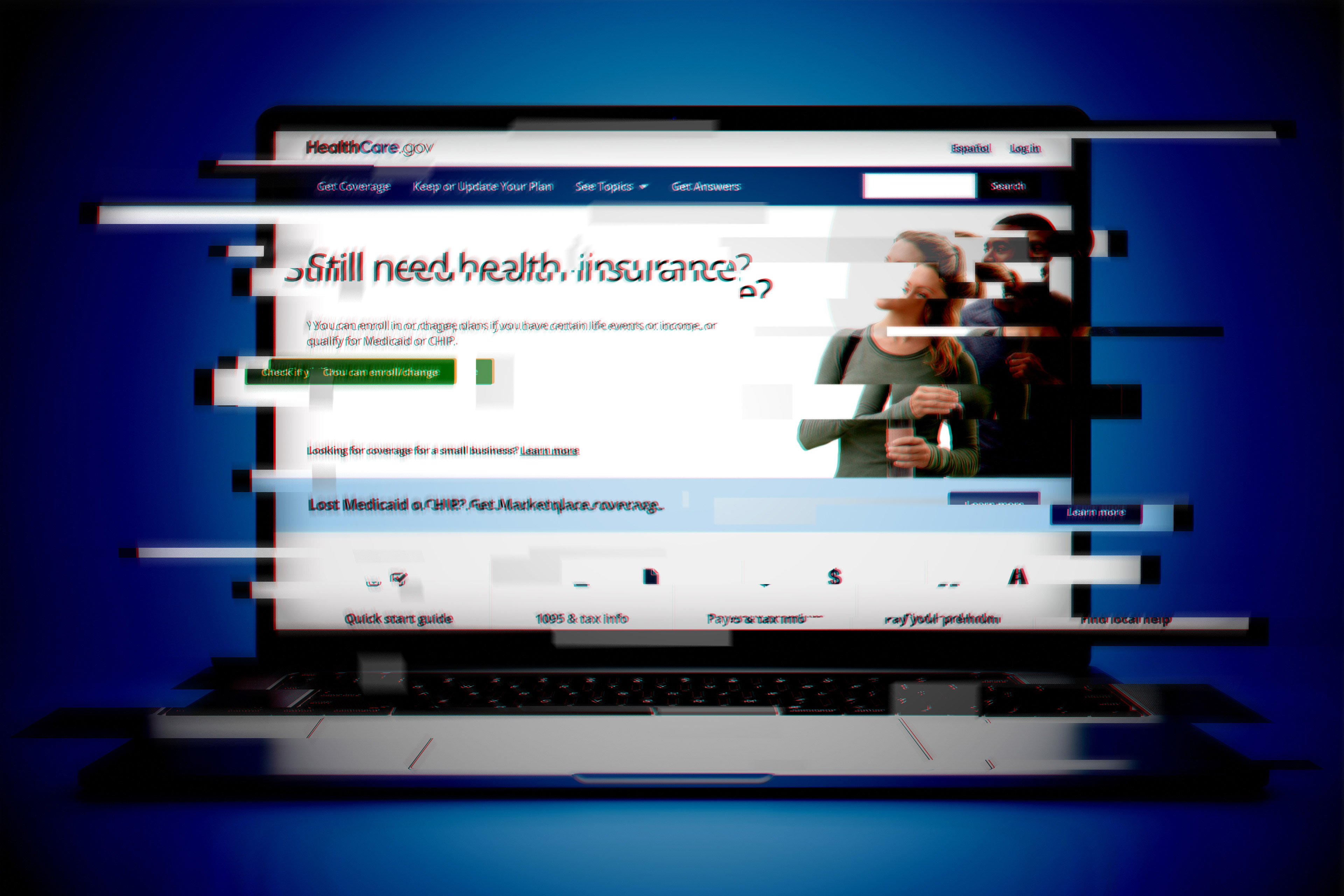
KFF Health News is a national newsroom that produces in-depth journalism about health issues and is one of the core operating programs at KFF—an independent source of health policy research, polling, and journalism. Learn more about KFF.

USE OUR CONTENT

This story can be republished for free (details).

We encourage organizations to republish our content, free of charge. Here’s what we ask:

You must credit us as the original publisher, with a hyperlink to our kffhealthnews.org site. If possible, please include the original author(s) and KFF Health News” in the byline. Please preserve the hyperlinks in the story.

It’s important to note, not everything on kffhealthnews.org is available for republishing. If a story is labeled “All Rights Reserved,” we cannot grant permission to republish that item.

Have questions? Let us know at [email protected]

Categories
Legal Law

Trump 2.0 – KFF Health News

The Host

Julie Rovner
KFF Health News


@jrovner

Read Julie’s stories.

Julie Rovner is chief Washington correspondent and host of KFF Health News’ weekly health policy news podcast, “What the Health?” A noted expert on health policy issues, Julie is the author of the critically praised reference book “Health Care Politics and Policy A to Z,” now in its third edition.

Health care might not have been the biggest issue in the campaign, but the return of Donald Trump to the presidency is likely to have a seismic impact on health policy over the next four years. 

Changes to the Affordable Care Act, Medicaid, and the nation’s public health infrastructure are likely on the agenda. But how far Trump goes will depend largely on who staffs key health policy roles and on whether Democrats take a majority in the U.S. House, where several races remain uncalled. 

This week’s panelists are Julie Rovner of KFF Health News, Rachel Cohrs Zhang of Stat, and Alice Miranda Ollstein of Politico.

Panelists

Rachel Cohrs Zhang
Stat News


@rachelcohrs


Read Rachel’s stories.

Alice Miranda Ollstein
Politico


@AliceOllstein


Read Alice’s stories.

Among the takeaways from this week’s episode:

  • As of Friday morning, it remained unclear which party will control the House next year. A Democratic-controlled House would offer a check against Republican policy changes and some control of key government oversight committees. A Republican House would give the party full control of Congress and the presidency. Either way, the party in control will have a slim majority.
  • Majorities of voters in eight states voted to protect abortion rights — though the ballot measures passed in only seven states. (More than half of voters in Florida voted for the abortion rights measure, but the state requires at least 60% support for ballot measures to pass.)
  • Robert F. Kennedy Jr. — now a key voice in the Trump transition team — is telegraphing big plans for health policy. Who ends up in Trump’s Cabinet will make a difference, as the president-elect is seemingly outsourcing much of his health policy planning in favor of focusing on issues such as the economy, immigration, and trade.
  • And conservative appointees throughout the judicial system are likely to remain friendly to Trump administration causes, which could open the door to more challenges to federal policies. Several important legal challenges are already winding through the courts.

Also this week, Rovner interviews KFF Health News’ Jackie Fortiér, who reported and wrote the latest KFF Health News-Washington Post “Bill of the Month” feature, about a 2-year old who had an expensive run-in with a rattlesnake. Do you have a medical bill that is exorbitant, baffling, infuriating, or all of the above? Tell us about it!

Plus, for “extra credit,” the panelists suggest health policy stories they read this week that they think you should read, too: 

Julie Rovner: KFF Health News’ “Dentists Are Pulling ‘Healthy’ and Treatable Teeth to Profit From Implants, Experts Warn,” by Brett Kelman and Anna Werner of CBS News. 

Alice Miranda Ollstein: Politico’s “The Election’s Stakes for Global Health,” by Carmen Paun. 

Rachel Cohrs Zhang: KFF Health News’ “As Nuns Disappear, Many Catholic Hospitals Look More Like Megacorporations,” by Samantha Liss. 

Also mentioned in this week’s podcast:

Credits

Zach Dyer
Audio producer

Emmarie Huetteman
Editor

To hear all our podcasts, click here.

And subscribe to KFF Health News’ “What the Health?” on SpotifyApple PodcastsPocket Casts, or wherever you listen to podcasts.

KFF Health News is a national newsroom that produces in-depth journalism about health issues and is one of the core operating programs at KFF—an independent source of health policy research, polling, and journalism. Learn more about KFF.

USE OUR CONTENT

This story can be republished for free (details).

We encourage organizations to republish our content, free of charge. Here’s what we ask:

You must credit us as the original publisher, with a hyperlink to our kffhealthnews.org site. If possible, please include the original author(s) and KFF Health News” in the byline. Please preserve the hyperlinks in the story.

It’s important to note, not everything on kffhealthnews.org is available for republishing. If a story is labeled “All Rights Reserved,” we cannot grant permission to republish that item.

Have questions? Let us know at [email protected]

Categories
Legal Law

What’s at Stake: A Pivotal Election for Six Big Health Issues

In the final days of the campaign, stark disagreements between Vice President Kamala Harris and former President Donald Trump over the future of American health care are on display — in particular, in sober warnings about abortion access, the specter of future cuts to the Affordable Care Act, and bold pronouncements about empowering activists eager to change course and clean house.

Trump and his campaign have been vague about plans on health care policies, though current and former Trump aides have published blueprints that go well beyond reversing programs in force under the Biden administration, to overhauling public health agencies and enabling Trump to quickly fire officials who disagree.

Harris, on the other hand, has staked out positions primarily preserving and protecting existing health care access — on abortion, transgender health care, insurance coverage, and more.

Here are some of the most consequential changes in health policies that could hinge on who wins the White House.

ACA Premiums

The election is likely to affect the cost of health insurance for millions who buy coverage on the Affordable Care Act marketplaces.

That’s because extra, pandemic-era subsidies that lower the cost of premiums will expire at the end of 2025 — unless Congress and the next president act.

Harris has pledged to make the enhanced subsidies permanent, while Trump has made no such commitment.

Letting them expire “would reduce fraud and waste,” said Brian Blase, a former Trump adviser who is president of the Paragon Health Institute, a conservative policy research firm.

About 19.7 million people with ACA coverage benefit from a subsidy — 92% of all enrollees. The expanded subsidies, started in 2021, helped increase ACA enrollment to a record high and reduce the uninsured rate to a record low.

They have also cut premium payments by an estimated 44%. Many pay no premiums at all.

Without congressional action, almost all ACA enrollees will experience steep increases in premium payments in 2026, according to KFF. The Urban Institute estimates 4 million people could wind up uninsured.

Letting the subsidies lapse could cause blowback for Republicans in 2026, said Jonathan Oberlander, a health policy expert at the University of North Carolina’s School of Medicine: “Is it worth the pain politically?”

— Phil Galewitz

Abortion

When he was president, Trump promised — and delivered — Supreme Court justices who would vote to overturn the constitutional right to an abortion. In the event of a second term, he has promised to leave abortion policy to the states — though he would have significant leeway to reduce access nationwide.

Harris has promised to restore the protections of Roe v. Wade, though doing so would require Congress’ help. At the very least, a Harris presidency would mostly preserve existing protections and prevent new federal restrictions.

Trump’s first actions would likely mirror those of many Republican presidents since the 1980s: defunding Planned Parenthood and the United Nations’ family planning agency, and, more recently, allowing employers with religious or moral objections to contraception to decline coverage through job-sponsored health plans.

But Trump could go considerably further, effectively banning abortion even in states where it is legal. For instance, the FDA could reduce availability of the abortion pill mifepristone or cancel its approval. This has been the subject of numerous lawsuits, including one before the Supreme Court that was recently revived.

Trump could also order the Justice Department to enforce the Comstock Act, an 1873 law that bans mailing “every article or thing designed, adapted, or intended for producing abortion, or for any indecent or immoral use.” That could apply not just to abortion pills, but also to supplies for abortion procedures.

— Julie Rovner

Drug Prices

Both campaigns say they are committed to lowering drug prices. Trump has offered few specifics, though the America First Policy Institute, a think tank led by close Trump allies, has put forward policies that are considerably less aggressive than Harris’ proposals.

Harris has said she would expand drug pricing negotiations and out-of-pocket drug spending caps enabled by the Inflation Reduction Act. She has also called for more transparency requirements for pharmacy benefit managers, or PBMs, the powerful drug-industry middlemen.

America First’s plan would cut costs by lowering reimbursements to doctors for some expensive infused drugs, using trade policy to force other developed countries to increase what they pay for drugs, and making more prescription medications available over the counter.

The plan makes no mention of bipartisan legislation under consideration in both chambers of Congress that seeks to achieve lower drug prices through new transparency requirements for PBMs.

— Arthur Allen

Trans People’s Health

The presidential election could determine whether transgender Americans hold on to broad protections ensuring access to gender-affirming medical care. Trump has said he would seek to ban hormone replacement therapy, gender reassignment surgery, and other treatments for minors — and make the services more difficult for adults to receive.

In the closing days of the campaign, Trump and his political action committees have leaned into divisive ads attacking Harris for past comments supporting access to care for transgender people who are incarcerated.

Backed by Republicans eager to stoke culture-war social issues, Trump has pledged to repeal Biden policies affecting transgender health care, including rules prohibiting federally funded providers and insurers from discriminating based on gender identity.

As some states passed legislation that opposed transgender rights, the Biden administration expanded coverage for gender-affirming care and increased research funding for the National Institutes of Health.

In a video on his campaign site, Trump vowed to order federal agencies to “cease all programs that promote the concept of sex and gender transition at any age” and bar government programs such as Medicare and Medicaid from paying for gender-affirming care.

Trump also said he would strip federal funding from hospitals that provide such care, create a right to sue doctors who perform gender-affirming procedures on children, and investigate whether the pharmaceutical industry and hospitals have “deliberately covered up horrific long-term side effects” of transition treatments.

Harris has been largely silent on the Trump campaign’s rhetoric targeting trans people. But she has said she would “follow the law” in providing transgender Americans the same right as others to access medically necessary care.

— Daniel Chang

Medicaid

Though the word “Medicaid” was barely uttered on the campaign trail this year, the election will determine future benefits for its 80 million primarily low-income and disabled enrollees.

“The stakes are very high,” said UNC’s Oberlander.

While Harris has described Medicaid as a key program to improve health, Trump has framed it as a broken welfare program in need of cuts.

Nearly half of Medicaid enrollees are children, and the program pays for about 40% of births nationwide.

The ACA expanded Medicaid coverage to nearly all adults with incomes up to 138% of the federal poverty level, or $20,783 this year. All but 10 states, which are GOP-led, have opted to expand their program.

The Biden administration has largely focused on efforts to protect and expand Medicaid to reduce the number of uninsured people.

The Trump administration, and GOP proposals since then, sought to reduce Medicaid spending by stiffening eligibility standards, such as adding work requirements, and by changing federal financing to a block grant, which would put more burden on states.

— Phil Galewitz

Shaking Up Biomedical Agencies

Trump said at an Oct. 27 rally in New York City that he would give anti-vaccine activist Robert F. Kennedy Jr. free rein to “go wild” on health and food policy in a second term.

Even a Republican-controlled Senate would be unlikely to confirm Kennedy for any top government position. Regardless of whether he had a specific role, RFK Jr.’s influence could be powerful, said Georges Benjamin, executive director of the American Public Health Association.

Kennedy said Trump promised to give him “control” of public health, including naming leaders of the NIH, FDA, and the Centers for Disease Control and Prevention. He has advocated for a doctor who made a name for herself as a right-wing health guru, Casey Means, to head the FDA. This week, in a discussion on CNN during which he put forward the debunked theory that vaccines cause autism, Trump transition team co-chair Howard Lutnick said Kennedy wanted data on vaccines “so he can say these things are unsafe,” at which point “the companies will yank the vaccines right off … the market.”

Numerous Trump allies have urged disempowering public health agencies — stripping the CDC of much of its research and promotional authority while streamlining NIH and adding congressional oversight over its grant-making.

Project 2025, the Heritage Foundation blueprint disavowed by Trump but whose authors include many former Trump officials, says the drug industry and other corporations have “captured” regulatory agencies: “We must shut and lock the revolving door” between agencies like the NIH, CDC, and FDA, and the industries they regulate, it states.

Kennedy recently posted on the social platform X that “FDA’s war on public health” — by which he meant restrictions on disproven therapies and cure-alls like raw milk and ivermectin — “was about to end.”

He warned FDA employees who are “part of the corrupt system” that they should “1. Preserve your records, and 2. Pack your bags.”

— Arthur Allen

Related Topics

Contact Us

Submit a Story Tip

Categories
Legal Law

The Campaign’s Final Days – KFF Health News

The Host

Emmarie Huetteman
KFF Health News

Emmarie Huetteman, senior editor, oversees a team of Washington reporters, as well as “Bill of the Month” and KFF Health News’ “What the Health?” She previously spent more than a decade reporting on the federal government, most recently covering surprise medical bills, drug pricing reform, and other health policy debates in Washington and on the campaign trail. 

With the 2024 election campaign in its final days, House Speaker Mike Johnson this week floated “massive” health care reform if former President Donald Trump wins — changes that are also dependent, of course, on whether Republicans control Congress next year.

Meanwhile, new reporting uncovers more maternal deaths under state abortion bans, plus at least one case in which a woman was jailed after a miscarriage. Plus, other investigations are shining a light on a reality of American health care, regardless of who wins on Tuesday: the consequences of health industry profiteering.

This week’s panelists are Emmarie Huetteman of KFF Health News, Lauren Weber of The Washington Post, Shefali Luthra of The 19th, and Jessie Hellmann of CQ Roll Call.

Panelists

Jessie Hellmann
CQ Roll Call


@jessiehellmann


Read Jessie’s stories.

Shefali Luthra
The 19th


@shefalil


Read Shefali’s stories.

Lauren Weber
The Washington Post


@LaurenWeberHP


Read Lauren’s stories.

Among the takeaways from this week’s episode:

  • Trump has called for reopening the fight over the Affordable Care Act, and given enough votes in Congress, Johnson suggested this week that he’s ready to back the former president’s play. To be sure, the expiration next year of enhanced ACA premium subsidies will put the health law back on the agenda — though given the law’s popularity, changes may be a hard sell even to some Republicans.
  • Trump also unveiled his own proposal to address the long-term care crisis: a tax credit for family caregivers. His plan follows Vice President Kamala Harris’ proposal weeks ago to create a new Medicare benefit that pays for home health care.
  • New reporting is out this week on women suffering miscarriages being denied reproductive health care — or even being charged with manslaughter and incarcerated. While many abortion opponents say they have no intention of harming or punishing women, the consequences of overturning Roe v. Wade are coming into clearer focus.

Also this week, KFF Health News’ Julie Rovner interviews Irving Washington, a senior vice president at KFF and the executive director of its Health Misinformation and Trust Initiative.

Plus, for “extra credit,” the panelists suggest health policy stories they read this week that they think you should read, too:

Emmarie Huetteman: KFF Health News’ “‘Dreamers’ Can Enroll in ACA Plans This Year — But a Court Challenge Could Get in the Way,” by Julie Appleby.

Lauren Weber: The New York Times’ “What Drugmakers Did Not Tell Volunteers in Alzheimer’s Trials,” by Walt Bogdanich and Carson Kessler.

Shefali Luthra: NBC News’ “They’re Middle Class and Insured. Childbirth Still Left Them With Crippling Debt,” by Aria Bendix.

Jessie Hellmann: ProPublica’s “‘Not Medically Necessary’: Inside the Company Helping America’s Biggest Health Insurers Deny Coverage for Care,” by T. Christian Miller, ProPublica; Patrick Rucker, The Capitol Forum; and David Armstrong, ProPublica.

Also mentioned on this week’s podcast:

Credits

Francis Ying
Audio producer

Stephanie Stapleton
Editor

To hear all our podcasts, click here.

And subscribe to KFF Health News’ “What the Health?” on SpotifyApple PodcastsPocket Casts, or wherever you listen to podcasts.
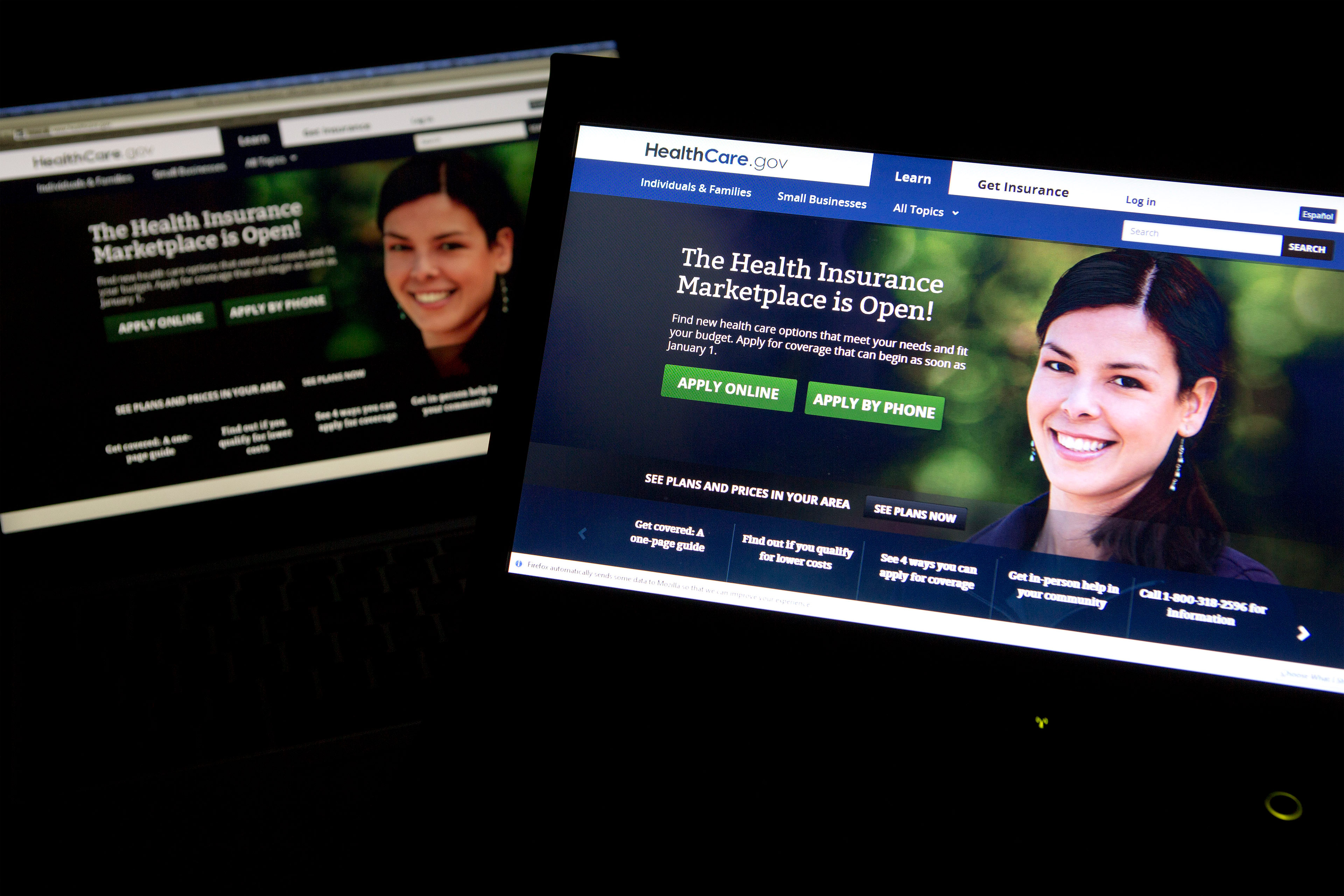
KFF Health News is a national newsroom that produces in-depth journalism about health issues and is one of the core operating programs at KFF—an independent source of health policy research, polling, and journalism. Learn more about KFF.

USE OUR CONTENT

This story can be republished for free (details).

We encourage organizations to republish our content, free of charge. Here’s what we ask:

You must credit us as the original publisher, with a hyperlink to our kffhealthnews.org site. If possible, please include the original author(s) and KFF Health News” in the byline. Please preserve the hyperlinks in the story.

It’s important to note, not everything on kffhealthnews.org is available for republishing. If a story is labeled “All Rights Reserved,” we cannot grant permission to republish that item.

Have questions? Let us know at [email protected]

Categories
Legal Law

In Montana, Conservative Groups See Chance To Kill Medicaid Expansion

Conservative groups are working to undermine support for Montana’s Medicaid expansion in hopes the state will abandon the program. The rollback would be the first in the decade since the Affordable Care Act began allowing states to cover more people with low incomes.

Montana’s expansion, which insures roughly 78,800 people, is set to expire next year unless the legislature and governor opt to renew it. Opponents see a rare opportunity to eliminate Medicaid expansion in one of the 40 states that have approved it.

The Foundation for Government Accountability and Paragon Health Institute, think tanks funded by conservative groups, told Montana lawmakers in September that the program’s enrollment and costs are bloated and that the overloaded system harms access to care for the most vulnerable.

Manatt, a consulting firm that has studied Montana’s Medicaid program for years, then presented legislators with the opposite take, stating that more people have access to critical treatment because of Medicaid expansion. Those who support the program say the conservative groups’ arguments are flawed.

State Rep. Bob Keenan, a Republican who chairs the Health and Human Services Interim Budget Committee, which heard the dueling arguments, said the decision to kill or continue Medicaid expansion “comes down to who believes what.”

The expansion program extends Medicaid coverage to adults with incomes up to 138% of the federal poverty level, or nearly $21,000 a year for a single person. Before, the program was largely reserved for children, people with disabilities, and pregnant women. The federal government covers 90% of the expansion cost while states pick up the rest.

National Medicaid researchers have said Montana is the only state considering shelving its expansion in 2025. Others could follow.

New Hampshire legislators in 2023 extended the state’s expansion for seven years and this year blocked legislation to make it permanent. Utah has provisions to scale back or end its Medicaid expansion program if federal contributions drop.

FGA and Paragon have long argued against Medicaid expansion. Tax records show their funders include some large organizations pushing conservative agendas. That includes the 85 Fund, which is backed by Leonard Leo, a conservative activist best known for his efforts to fill the courts with conservative judges.

The president of Paragon Health Institute is Brian Blase, who served as a special assistant to former President Donald Trump and is a visiting fellow at FGA, which quotes him as praising the organization for its “conservative policy wins” across states. He was also announced in 2019 as a visiting fellow at the Heritage Foundation, which was behind the Project 2025 presidential blueprint, which proposes restricting Medicaid eligibility and benefits.

Paragon spokesperson Anthony Wojtkowiak said its work isn’t directed by any political party or donor. He said Paragon is a nonpartisan nonprofit and responds to policymakers interested in learning more about its analyses.

“In the instance of Montana, Paragon does not have a role in the debate around Medicaid expansion, other than the testimony,” he said.

FGA declined an interview request. As early as last year, the organization began calling on Montana lawmakers to reject reauthorizing the program. It also released a video this year of Montana Republican Rep. Jane Gillette saying the state should allow its expansion to expire.

Gillette requested the FGA and Paragon presentations to state lawmakers, according to Keenan. He said Democratic lawmakers responded by requesting the Manatt presentation.

Manatt’s research was contracted by the Montana Healthcare Foundation, whose mission is to improve the health of Montanans. Its latest report also received support from the state’s hospital association.

The Montana Healthcare Foundation is a funder of KFF Health News, an independent national newsroom that is part of the health information nonprofit KFF.

Bryce Ward, a Montana health economist who studies Medicaid expansion, said some of the antiexpansion arguments don’t add up.

For example, Hayden Dublois, FGA’s data and analytics director, told Montana lawmakers that in 2022 72% of able-bodied adults on Montana’s Medicaid program weren’t working. If that data refers to adults without disabilities, that would come to 97,000 jobless Medicaid enrollees, Ward said. He said that’s just shy of the state’s total population who reported no income at the time, most of whom didn’t qualify for Medicaid.

“It’s simply not plausible,” Ward said.

A Manatt report, citing federal survey data, showed 66% of Montana adults on Medicaid have jobs and an additional 11% attend school.

FGA didn’t respond to a request for its data, which Dublois said in the committee hearing came through a state records request.

Jon Ebelt, a spokesperson for the Montana Department of Public Health and Human Services, also declined to comment. As of late October, a KFF Health News records request for the data the state provided FGA was pending.

In his presentation before Montana lawmakers, Blase said the most vulnerable people on Medicaid are worse off due to expansion as resources pool toward new enrollees.

“Some people got more medical care; some people got less medical care,” Blase said.

Reports released by the state show its standard monthly reimbursement per Medicaid enrollee remained relatively flat for seniors and adults who are blind or have disabilities.

Drew Gonshorowski, a researcher with Paragon, cited data from a federal Medicaid commission that shows that, overall, states spend more on adults who qualified through the expansion programs than they do on others on Medicaid. That data also shows states spend more on seniors and people with disabilities than on the broader adult population insured by Medicaid, which is also true in Montana.

Nationally, states with expansions spend more money on people enrolled in Medicaid across eligibility groups compared with nonexpansion states, according to a KFF report.

Zoe Barnard, a senior adviser for Manatt who worked for Montana’s health department for nearly 10 years, said not only has the state’s uninsured rate dropped by 30% since it expanded Medicaid, but also some specialty services have grown as more people access care.

FGA has long lobbied nonexpansion states, including Texas, Kansas, and Mississippi, to leave Medicaid expansion alone. In February, an FGA representative testified in support of an Idaho bill that included an expansion repeal trigger if the state couldn’t meet a set of rules, including instituting work requirements and capping enrollment. The bill failed.

Paragon produced an analysis titled “Resisting the Wave of Medicaid Expansion,” and Blase testified to Texas lawmakers this year on the value of continuing to keep expansion out of the Lone Star State.

On the federal level, Paragon recently proposed a Medicaid overhaul plan to phase out the federal 90% matching rate for expansion enrollees, among other changes to cut spending. The left-leaning Center on Budget and Policy Priorities has countered that such ideas would leave more people without care.

In Montana, Republicans are defending a supermajority they didn’t have when a bipartisan group passed the expansion in 2015 and renewed it in 2019. Also unlike before, there’s now a Republican in the governor’s office. Gov. Greg Gianforte is up for reelection and has said the safety net is important but shouldn’t get too big.

Keenan, the Republican lawmaker, predicted the expansion debate won’t be clear-cut when legislators convene in January.

“Medicaid expansion is not a yes or no. It’s going to be a negotiated decision,” he said.

Related Topics

Contact Us

Submit a Story Tip

Categories
Legal Law

Ahora los “Dreamers” pueden inscribirse en planes de salud de ACA. Pero una demanda podría acabar con el sueño

Cuando comience el período de inscripción abierta para adquirir cobertura médica en los mercados de seguros establecidos por la Ley de Cuidado de Salud a Bajo Precio, conocida como Obamacare, un grupo que antes no podía inscribirse será elegible por primera vez: los “Dreamers”. Ese es el nombre de los niños traídos a los Estados Unidos sin papeles que están bajo el programa de Acción Diferida para los Llegados en la Infancia (DACA).

Bajo una normativa de la administración Biden, que ha sido objeto de controversia en algunos estados, los beneficiarios de DACA podrán inscribirse para la cobertura del Obamacare y, si cumplen con los requisitos de ingresos, recibir subsidios para pagar sus primas.

Del medio millón de beneficiarios de DACA, el gobierno estima que alrededor de 100.000 que anteriormente no tenían seguro podrían inscribirse a partir del 1 de noviembre, fecha de inicio de la temporada de inscripción en todos los estados excepto Idaho.

Sin embargo, el destino de esta normativa sigue siendo incierto. Está siendo impugnada en un tribunal federal por Kansas y otros 18 estados, incluidos varios en el sur y el medio oeste, así como Montana, New Hampshire y Dakota del Norte.

Por otro lado, 19 estados y el Distrito de Columbia presentaron un escrito en apoyo a la normativa de la administración de Biden. Liderados por Nueva Jersey, estos estados incluyen a muchos en las costas este y oeste, como California, Colorado, Nevada, Nuevo México, Nueva York, Oregon y Washington.

La normativa, finalizada en mayo, aclara que aquellos que califican para DACA serán considerados como “presencia legal” para el propósito de inscribirse en lo planes médicos bao ACA, los cuales están abiertos a ciudadanos estadounidenses e inmigrantes con papeles.

“El cambio de normativa es muy importante, ya que corrige una exclusión errónea y de larga data de los beneficiarios de DACA para la cobertura de ACA,” dijo Nicholas Espíritu, director legal adjunto del National Immigration Law Center, que también ha presentado escritos en apoyo a este cambio.

El presidente Barack Obama estableció DACA en junio de 2012 mediante una acción ejecutiva para proteger de la deportación y proporcionar autorización de trabajo a algunos residentes sin documentos, que habían sido traídos al país de niños por sus familias. Esto si cumplían con ciertos requisitos, incluidos haber llegado antes de junio de 2007 y haber completado la escuela secundaria, estar asistiendo a la escuela o haber servido en las fuerzas armadas.

Los estados que impugnan la normativa de ACA dicen que causará cargas administrativas y de recursos a medida que más personas se inscriban, y que fomentará que más personas permanezcan en el país sin papeles. La demanda, presentada en agosto en el Tribunal de Distrito de EE.UU. para el Distrito de Dakota del Norte, busca posponer la fecha de entrada en vigencia de la normativa y anularla, argumentando que la expansión de la definición de “presencia legal” por parte de la administración Biden viola la ley.

El 15 de octubre, el juez de distrito de EE.UU., Daniel Traynor, nombrado en 2019 por el entonces presidente Donald Trump, escuchó los argumentos en el caso.

Los estados demandantes están presionando para que se actúe rápido, y es posible que se emita un fallo antes del inicio de la inscripción abierta a nivel nacional, dijo Zachary Baron, experto legal en la Facultad de Derecho de Georgetown, quien ayuda a administrar el O’Neill Institute Health Care Litigation Tracker.

Sin embargo, el panorama es complicado.

Para empezar, en una batalla legal como ésta, quienes presentan el caso deben demostrar el daño que se alega, como los costos adicionales que la normativa obligará a los estados a absorber. Solo hay alrededor de 128 beneficiarios de DACA en Dakota del Norte, donde se está llevando a cabo el caso, y no todos probablemente se inscribirán en el seguro de ACA.

Además, Dakota del Norte no se encuentra entre los estados que administran su propio mercado de inscripción. Depende del sitio federal cuidadodesalud.gov, lo que hace que sea más difícil cumplir con la carga legal.

“Aunque Dakota del Norte no gasta dinero para adquirir atención médica de ACA, aún están afirmando de alguna manera que están siendo perjudicados,” dijo Espíritu, del centro de leyes de inmigración, que representa a varios beneficiarios de DACA y a CASA, una organización sin fines de lucro de defensa de los inmigrantes, en oposición a los esfuerzos estatales por anular la normativa.

Durante la audiencia, Traynor se centró en este tema y señaló que un estado que administre su propio mercado podría ser un mejor lugar para un caso así. Ordenó a los demandados presentar más información antes del 29 de octubre, y a Dakota del Norte responder antes del 12 de noviembre.

El lunes 28 de octubre, el juez denegó una moción del gobierno federal que le solicitaba reconsiderar su orden de proporcionar al estado, bajo sello, los nombres de 128 beneficiarios de DACA que residen allí, con el fin de ayudar a calcular los costos financieros asociados con su presencia.

Además, es posible que el caso sea transferido a otro tribunal de distrito, lo que podría causar demoras en una decisión, según los abogados que siguen el caso.

El juez también podría tomar decidir en varias direcciones. Podría posponer la fecha de vigencia de la normativa, como se solicita en parte de la demanda, impidiendo que los beneficiarios de DACA se inscriban en Obamacare mientras se resuelve el caso. O podría dejar la fecha de vigencia tal como está mientras el caso avanza.

Con cualquiera de las opciones, el juez podría decidir aplicar el fallo a nivel nacional o limitarlo solo a los estados que impugnaron la normativa gubernamental, explicó Baron.

“El enfoque adoptado por diferentes jueces ha variado”, dijo Baron. “Ha habido una práctica de anular algunas disposiciones reglamentarias a nivel nacional, pero muchos jueces, incluidos jueces de la Corte Suprema, también han expresado preocupaciones sobre que jueces individuales puedan afectar la política de esta manera”.

A medida que el caso avanza, Espíritu dijo que su organización está alentando a los beneficiarios de DACA a inscribirse apenas comience el período de inscripción a nivel nacional.

“Es importante inscribirse lo antes posible”, dijo, agregando que organizaciones como la suya continuarán monitoreando el caso y dando actualizaciones si la situación cambia. “Sabemos que obtener acceso a atención médica buena y asequible puede transformar la vida de las personas”.

Este caso que impugna la normativa es completamente separado de otro caso, presentado por algunos de los mismos estados que se oponen a la normativa de ACA, que busca terminar por completo el programa DACA. Ese caso actualmente está en el proceso de apelación en un tribunal federal.

Categories
Legal Law

‘Dreamers’ Can Enroll in ACA Plans This Year — But a Court Challenge Could Get in the Way

When open enrollment for the Affordable Care Act, or Obamacare, starts nationwide this week, a group that had previously been barred from signing up will be eligible for the first time: The “Dreamers.” That’s the name given to children brought to the United States without immigration paperwork who have since qualified for the Deferred Action for Childhood Arrivals program.

Under a Biden administration rule that has become contentious in some states, DACA recipients will be able to enroll in — and, if their income qualifies, receive premium subsidies for — Obamacare coverage. The government estimates that about 100,000 previously uninsured people out of the half-million DACA recipients might sign up starting Nov. 1, which is the sign-up season start date in all states except Idaho.

Yet the fate of the rule remains uncertain. It is being challenged in federal court by Kansas and 18 other states, including several in the South and Midwest, as well as Montana, New Hampshire, and North Dakota.

Separately, 19 states and the District of Columbia filed a brief in support of the Biden administration rule. Led by New Jersey, those states include many on the East and West coasts, including California, Colorado, Nevada, New Mexico, New York, Oregon, and Washington.

The rule, finalized in May, clarifies that those who qualify for DACA will be considered “lawfully present” for the purpose of enrolling in plans under the ACA, which are open to American citizens and lawfully present immigrants.

“The rule change is super important as it corrects a long-standing and erroneous exclusion of DACA recipients from ACA coverage,” said Nicholas Espíritu, a deputy legal director for the National Immigration Law Center, which has also filed briefs in support of the government rule.

President Barack Obama established DACA in June 2012 by executive action to protect from deportation and provide work authorization to some unauthorized residents brought to the U.S. as children by their families if they met certain requirements, including that they arrived before June 2007 and had completed high school, were attending school, or were a veteran.

States challenging the ACA rule say it will cause administrative and resource burdens as more people enroll, and that it will encourage additional people to remain in the U.S. when they don’t have permanent legal authorization. The lawsuit, filed in August in U.S. District Court for the District of North Dakota, seeks to postpone the rule’s effective date and overturn it, saying the expansion of the “lawfully present” definition by the Biden administration violates the law.

On Oct. 15, U.S. District Judge Daniel Traynor, who was appointed in 2019 by then-President Donald Trump, heard arguments in the case.

Plaintiff states are pushing for fast action, and it is possible a ruling will come in the days before open enrollment begins nationwide in November, said Zachary Baron, a legal expert at Georgetown Law, who helps manage the O’Neill Institute Health Care Litigation Tracker.

But the outlook is complicated.

For starters, in a legal battle like this, those who file a case must demonstrate the harm being alleged, such as additional costs the rule will force the states to absorb. There are only about 128 DACA recipients in North Dakota, where the case is being heard, and not all of them are likely to enroll in ACA insurance.

Furthermore, North Dakota is not among the states that run their own enrollment marketplace. It relies on the federal healthcare.gov site, which makes the legal burden harder to meet.

“Even though North Dakota does not pay any money to purchase ACA health care, they are still claiming somehow that they are harmed,” said Espíritu, at the immigration law center, which is representing several DACA recipients and CASA, a nonprofit immigrant advocacy group, in opposing the state efforts to overturn the rule.

During the hearing, Traynor focused on this issue and noted that a state running its own marketplace might be a better venue for such a case. He ordered the defendants to present more information by Oct. 29 and for North Dakota to respond by Nov. 12.

On Monday, the judge denied a motion from the federal government asking him to reconsider his order requiring it to provide the state with the names of 128 DACA recipients who live there, under seal, for the purpose of helping calculate any financial costs associated with their presence.

In addition, it’s possible the case will be transferred to another district court, but that could lead to delays in a decision, attorneys following the case said.

The judge also could take a number of directions in his decision. He could postpone the rule’s effective date, as requested in part of the lawsuit, preventing DACA recipients from enrolling in Obamacare while the case is decided. Or he could leave the effective date as it stands while the case proceeds.

With any decision, the judge could decide to apply the ruling nationally or limit it to just the states that challenged the government rule, Baron said.

“The approach taken by different judges has varied,” Baron said. “There has been a practice to vacate some regulatory provisions nationwide, but a lot of judges, including justices on the Supreme Court, also have cited concerns about individual judges being able to affect policy this way.”

Even as the case moves along, Espíritu said his organization is encouraging DACA recipients to enroll once the sign-up period begins nationally in November.

“It’s important to enroll as soon as possible,” he said, adding that organizations such as his will continue to monitor the case and give updates if the situation changes. “We know that getting access to good affordable health care can be transformative to people’s lives.”

This case challenging the rule is wholly separate from another case, brought by some of the same states as those opposed to the ACA rule, seeking to entirely end the DACA program. That case is currently in the appeals process in federal court.

Related Topics

Contact Us

Submit a Story Tip

Categories
Legal Law

Presidential Election Puts Affordable Care Act Back in the Bull’s-Eye

Health care is suddenly front and center in the final sprint to the presidential election, and the outcome will shape the Affordable Care Act and the coverage it gives to more than 40 million people.

Besides reproductive rights, health care for most of the campaign has been an in-the-shadows issue. However, recent comments from former President Donald Trump and his running mate, Ohio Sen. JD Vance, about possible changes to the ACA have opened Republicans up to heavier scrutiny.

More than 1,500 doctors across the country recently released a letter calling on Trump to reveal details about how he would alter the ACA, saying the information is needed so voters can make an informed decision. The letter came from the Committee to Protect Health Care, a national advocacy group of physicians.

“It’s remarkable that a decade and a half after the ACA passed, we are still debating these fundamental issues,” said Larry Levitt, executive vice president for health policy at KFF, a health information nonprofit that includes KFF Health News. “Democrats want to protect people with preexisting conditions, which requires money and regulation. Republicans have looked to scale back federal regulation, and the byproduct is fewer protections.”

The two parties’ tickets hold starkly different goals for the ACA, a sweeping law passed under former President Barack Obama that set minimum benefit standards, made more people eligible for Medicaid, and ensured consumers with preexisting health conditions couldn’t be denied health coverage.

Vice President Kamala Harris, who previously backed a universal health care plan, wants to expand and strengthen the health law, popularly known as Obamacare. She supports making permanent temporary enhanced subsidies that lower the cost of premiums. And she’s expected to press Congress to extend Medicaid coverage to more people in the 10 states that have so far not expanded the program.

Trump, who repeatedly tried and failed to repeal the ACA, said in the September presidential debate that he has “concepts of a plan” to replace or change the legislation. Although that sound bite became a bit of a laugh line because Trump had promised an alternative health insurance plan many times during his administration and never delivered, Vance later provided more details.

He said the next Trump administration would deregulate insurance markets — a change that some health analysts say could provide more choice but erode protections for people with preexisting conditions. He seemed to adjust his position during the vice presidential debate, saying the ACA’s protections for preexisting conditions should be left in place.

Such health policy changes could be advanced as part of a large tax measure in 2025, Sen. Tom Cotton (R-Ark.) told NBC News. That could also open the door to changes in Medicaid. Conservatives have long sought to remake the health insurance program for low-income or disabled people from the current system, in which the federal government contributes a formula-based percentage of states’ total Medicaid costs, to one that caps federal outlays through block grants or per capita funding limits. ACA advocates say that would shift significant costs to states and force most or all states to drop the expansion of the program over time.

Democrats are trying to turn the comments into a political liability for Trump, with the Harris campaign running ads saying Trump doesn’t have a health plan to replace the ACA. Harris’ campaign also released a 43-page report, “The Trump-Vance ‘Concept’ on Health Care,” asserting that her opponents would “rip away coverage from people with preexisting conditions and raise costs for millions.”

Republicans were tripped up in the past when they sought unsuccessfully to repeal the ACA. Instead, the law became more popular, and the risk Republicans posed to preexisting condition protections helped Democrats retake control of the House in 2018.

In a KFF poll last winter, two-thirds of the public said it is very important to maintain the law’s ban on charging people with health problems more for health insurance or rejecting their coverage.

“People in this election are focused on issues that affect their family,” said Robert Blendon, a professor emeritus of health policy and political analysis at Harvard. “If people believe their own insurance will be affected by Trump, it could matter.”

Vance, in a Sept. 15 interview on NBC’s “Meet the Press,” tried to minimize this impact.

“You want to make sure that preexisting coverage — conditions — are covered, you want to make sure that people have access to the doctors that they need, and you also want to implement some deregulatory agenda so that people can choose a health care plan that fits them,” he said.

Vance went on to say that the best way to ensure everyone is covered is to promote more choice and not put everyone in the same insurance risk pool.

Risk pools are fundamental to insurance. They refer to a group of people who share the burdens of health costs.

Under the ACA, enrollees are generally in the same pool regardless of their health status or preexisting conditions. This is done to control premium costs for everyone by using the lower costs incurred by healthy participants to keep in check the higher costs incurred by unhealthy participants. Separating sicker people into their own pool can lead to higher costs for people with chronic health conditions, potentially putting coverage out of financial reach for them.

The Harris campaign has seized on the threat, saying in its recent report that “health insurers will go back to discriminating on the basis of how healthy or unhealthy you are.”

But some ACA critics think there are ways to separate risk pools without undermining coverage.

“Unsurprisingly, it’s been blown out of proportion for political purposes,” said Theo Merkel, a former Trump aide who now is a senior research fellow at the Paragon Health Institute, a right-leaning organization that produces health research and market-based policy proposals.

Adding short-term plans to coverage options won’t hurt the ACA marketplace and will give consumers more affordable options, said Merkel, who is also a senior fellow at the Manhattan Institute. The Trump administration increased the maximum duration of these plans, then Biden rolled it back to four months.

People eligible for subsidies would likely buy comprehensive ACA plans because — with the financial help — they would be affordable. Thus, the ACA market and its protections for preexisting conditions would continue to function, Merkel said. But offering short-term plans, too, would provide a more affordable option for people who don’t qualify for subsidies and who would be more likely to buy the noncompliant plans.

He also said that in states that allowed people to buy non-ACA-compliant plans outside the exchange, the exchanges performed better than in states that prohibited it. Another option, Merkel said, is a reinsurance program similar to one that operates in Alaska. Under the plan, the state pays insurers back for covering very expensive health claims, which helps keep premiums affordable.

But advocates of the ACA say separating sick and healthy people into different insurance risk pools will make health coverage unaffordable for people with chronic conditions, and that letting people purchase short-term health plans for longer durations will backfire.

“It uninsures people when they get sick,” said Leslie Dach, executive chair of Protect Our Care, which advocates for the health law. “There’s no reason to do this. It’s unconscionable and makes no economic sense. They will hide behind saying ‘we’re making it better,’ but it’s all untrue.”

Harris, meanwhile, wants to preserve the temporary expanded subsidies that have helped more people get lower-priced health coverage under the ACA. These expanded subsidies that help about 20 million people will expire at the end of 2025, setting the stage for a pitched battle in Congress between Republicans who want to let them run out and Democrats who say they should be made permanent.

Democrats in September introduced a bill to make them permanent. One challenge: The Congressional Budget Office estimated doing so would increase the federal deficit by more than $330 billion over 10 years.

In the end, the ability of either candidate to significantly grow or change the ACA rests with Congress. Polls suggest Republicans are in a good position to take control of the Senate, with the outcome in the House more up in the air. The margins, however, will likely be tight. In any case, many initiatives, such as expanding or restricting short-term health plans, also can be advanced with executive orders and regulations, as both Trump and Biden have done.

Related Topics

Contact Us

Submit a Story Tip

Categories
Legal Law

LIVE From KFF: Health Care and the 2024 Election

The Host

The 2024 campaign — particularly the one for president — has been notably vague on policy. But health issues, especially those surrounding abortion and other reproductive health care, have nonetheless played a key role. And while the Affordable Care Act has not been the focus of debate the way it was over the previous three presidential campaigns, who becomes the next president will have a major impact on the fate of the 2010 health law.

The panelists for this week’s special election preview, taped before a live audience at KFF’s offices in Washington, are Julie Rovner of KFF Health News, Tamara Keith of NPR, Alice Miranda Ollstein of Politico, and Cynthia Cox and Ashley Kirzinger of KFF.

Among the takeaways from this week’s episode:

  • As Election Day nears, who will emerge victorious from the presidential race is anyone’s guess. Enthusiasm among Democratic women has grown with the elevation of Vice President Kamala Harris to the top of the ticket, with more saying they are likely to turn out to vote. But broadly, polling reveals a margin-of-error race — too close to call.
  • Several states have abortion measures on the ballot. Proponents of abortion rights are striving to frame the issue as nonpartisan, acknowledging that recent measures have passed thanks in part to Republican support. For some voters, resisting government control of women’s health is a conservative value. Many are willing to split their votes, supporting both an abortion rights measure and also candidates who oppose abortion rights.
  • While policy debates have been noticeably lacking from this presidential election, the future of Medicaid and the Affordable Care Act hinges on its outcome. Republicans want to undermine the federal funding behind Medicaid expansion, and former President Donald Trump has a record of opposition to the ACA. Potentially on the chopping block are the federal subsidies expiring next year that have transformed the ACA by boosting enrollment and lowering premium costs.
  • And as misinformation and disinformation proliferate, one area of concern is the “malleable middle”: people who are uncertain of whom or what to trust and therefore especially susceptible to misleading or downright false information. Could a second Trump administration embed misinformation in federal policy? The push to soften or even eliminate school vaccination mandates shows the public health consequences of falsehood creep.

Also mentioned on this week’s podcast:


To hear all our podcasts, click here.

And subscribe to KFF Health News’ “What the Health?” on SpotifyApple PodcastsPocket Casts, or wherever you listen to podcasts.
Related Topics

Contact Us

Submit a Story Tip

Categories
Legal Law

Lo nuevo y lo que debes tener en cuenta en el próximo período de inscripción abierta de ACA

Estamos en esa época del año otra vez. En la mayoría de los estados, la temporada de inscripción abierta de la Ley de Cuidado de Salud a Bajo Precio (ACA) para los planes de salud comienza el 1 de noviembre y dura hasta el 15 de enero.

Los consumidores que no actualicen su información o seleccionen una alternativa serán automáticamente reinscriptos en su plan actual o, si ese plan ya no está disponible, en uno con cobertura similar.

El año pasado se registró un récord de inscripciones, con unas 21 millones de personas. Esta vez, los consumidores descubrirán que han cambiado algunas cosas.

No seas víctima de estafas publicitarias

Aunque algunos planes de salud ofrecen tarjetas de regalo de poco valor u otros incentivos para fomentar la participación en iniciativas de bienestar, nunca ofrecerían tarjetas en efectivo por valor de miles de dólares al mes para ayudar a pagar las compras, la gasolina o el alquiler. Aun así, las redes sociales y los sitios web están plagados de promesas de este tipo.

Según una demanda presentada en Florida, este tipo de anuncios es una de las vías supuestamente utilizadas por corredores sin escrúpulos que inscriben o cambian de plan sin el permiso expreso de los consumidores.

Además, hay que tener cuidado con los sitios de internet que utilizamos para buscar cobertura.

Si escribes “Obamacare” o “seguro médico barato” en un buscador, a menudo, lo que aparece en primer lugar son sitios web patrocinados por el sector privado no afiliados a los mercados federales o estatales oficiales para la cobertura de ACA.

Aunque intenten parecer oficiales, no lo son. Muchos de estos sitios ofrecen varias opciones, incluida cobertura que no es de ACA con beneficios limitados, según descubrió en 2023 un studio de “comprador secreto”. Con estas coberturas no se pueden obtener subsidios federales para ayudar a los consumidores a pagar las primas.

La letra chica de algunos sitios web dice que los consumidores que facilitan información personal consienten automáticamente que agentes de ventas se pongan en contacto con ellos a través de llamadas telefónicas, correos electrónicos, mensajes de texto o sistemas automatizados con mensajes pregrabados.

Cuando busques un plan, empieza siempre por el sitio web oficial del mercado federal, cuidadodesalud.gov (healthcare.gov).

Incluso si no vives en uno de los 29 estados en los que funciona el mercado federal, el sitio web proporciona el enlace a tu sitio oficial de inscripción cuando seleccionas tu estado, o el Distrito de Columbia, en una lista desplegable.

Los mercados estatales y el federal también tienen centros de llamadas y otras formas de obtener ayuda para la inscripción. Por ejemplo, el enlace “encuentre ayuda local” en cuidadodesaludgov, ofrece a los consumidores la posibilidad de encontrar asistentes o agentes de ventas cerca de sus domicilios.

¿Es un seguro real?

Otra preocupación: los reguladores han observado un aumento en las quejas de los consumidores sobre ofertas de coberturas de salud en las que se les exige que se afilien a una corporación de responsabilidad limitada o que den fe de que trabajan para una empresa concreta.

De hecho, al menos dos estados —Maryland y Maine—- han emitido advertencias, señalando que en lugar de una cobertura completa de ACA, a menudo se trata de productos que no pertenecen a ACA, y que equivalen a cosas como una mezcla de tarjetas de descuento o planes de indemnización limitada.

Este tipo de plan paga una cantidad fija —por ejemplo, $50 por una visita al médico o $1,000 por una hospitalización— y está pensado para reforzar una cobertura más completa, no para sustituirla.

“A diferencia de los planes medicos grandes, algunos de estos planes autofinanciados sólo cubren servicios preventivos, como un chequeo o un examen médico anual”, advierte la Oficina de Seguros de Maine.

Las primas podrían ser más altas… y otras novedades

Algunas aseguradoras reducirán las primas para 2025, pero muchas otras las aumentarán.

Aunque todavía no hay cifras oficiales, los expertos estiman un aumento promedio del 7% para las primas, según un análisis de KFF. La mayoría de las personas que compran cobertura médica en los mercados de seguros de ACA son elegibles para recibir subsidios para ayudar con las primas, lo que probablemente compensará gran parte del aumento, aunque el mayor costo significa que el gobierno pagará más por esos subsidios.

El aumento de los costos de salud —incluida la atención hospitalaria y la nueva clase de medicamentos para adelgazar— contribuye a este incremento.

Otros cambios en esta temporada:

—Las personas a menudo conocidas como “Dreamers” porque calificaron para la Acción Diferida para los Llegados en la Infancia (DACA) —un programa federal que ofrece cierta protección a los traídos al país cuando eran niños sin documentación migratoria adecuada— ahora pueden inscribirse en la cobertura de ACA y son elegibles para los subsidios.

—Los planes de corto plazo, que técnicamente no son parte de la cobertura de ACA y no están sujetos a sus normas de beneficios y protecciones de beneficios preexistentes, pueden ser emitidos por sólo cuatro meses de cobertura, como máximo, según lo dispuesto por la administración Biden, que entró en vigencia  con planes que empezaron el 1 de septiembre.  Esto ha revocado una norma de la administración Trump que flexibilizaba los requisitos para permitir a las aseguradoras ofrecer una cobertura de hasta 364 días, con la opción de renovar las pólizas hasta por dos años más. Los planes existentes y los emitidos antes del 1 de septiembre no caen bajo las nuevas reglas. Pero los consumidores que contaban con períodos más largos deben comprobar los detalles de sus planes y considerar la posibilidad de cambiar a un plan de ACA para evitar una situación en la que su plan a corto plazo expire antes de tiempo o a mediados de año, arriesgándose así a no poder obtener otra cobertura por el resto del año.

El proceso de inscripción también podría alargarse

Este año, los reguladores federales han tenido que hacer frente a un número creciente de quejas —200,000 sólo en los primeros seis meses— de consumidores que estaban siendo inscritos o transferidos a otros planes de ACA sin su permiso por agentes que pretendían obtener comisiones.

Para evitarlo, se han establecido nuevas normas.

¿Qué significa esto para la mayoría de los consumidores? Si trabajas con un nuevo agente —uno que no estaba ya en la lista en tu plan de ACA— es probable que tengas que ser parte de una llamada con dos representantes del mercado federal para confirmar que autorizas a ese agente para hacer cambios en tu plan para el próximo año. Esto te llevará más tiempo. Nadie sabe lo ocupadas que estarán las líneas telefónicas durante la inscripción abierta.

No es necesario recurrir a un intermediario para inscribirse. Pero la búsqueda entre las docenas de opciones del mercado es un reto, por lo que la mayoría de las personas busca ayuda. Los consumidores deben sopesar no sólo el costo mensual de la prima, sino también las variaciones en deducibles y copagos por cosas como visitas al médico, hospitalización y medicamentos.

Compara precios

Los expertos señalan que otra consideración a tener en cuenta al elegir un plan es comprobar si tu red incluye los médicos y hospitales a los que sueles acudir, y si se cubren tus medicamentos recetados y cuánto cobran por ellos.

Para facilitar las comparaciones, hace dos años entraron en vigencia unas normas que obligan a las aseguradoras a incluir como opciones algunos “planes estandarizados”, que deben tener los mismos deducibles y costos por conceptos como visitas al médico, atención en urgencias y otros gastos compartidos por el consumidor.

Aun así, muchas personas disponen de docenas de opciones, lo que puede resultar desalentador.

Pero hay un consejo que no cambia: tanto si te inscribes por primera vez, como si ya tienes un plan, vale la pena comparar precios. Aunque no cambies de plan, puedes asegurarte de que el que tienes sigue siendo tu mejor opción.

En la mayoría de los estados, los consumidores deben inscribirse antes del 15 de diciembre para obtener cobertura a partir del 1 de enero. Atención a Idaho, donde la inscripción abierta empieza antes, el 15 de octubre, pero también termina antes, el 15 de diciembre. En California, Nueva Jersey, Nueva York, Rhode Island y el Distrito de Columbia, los residentes pueden inscribirse hasta el 31 de enero.

Related Topics

Contact Us

Submit a Story Tip

Categories
Legal Law

Por qué se habla de discriminación racial al tomar el nivel de oxígeno

OAKLAND, California – El paciente tendría poco más de 60 años y era un hombre afroamericano con enfisema. El oxímetro colocado en la yema de su dedo registraba un nivel de saturación de oxígeno en sangre muy superior al 88%, el índice que indica un riesgo urgente de falla orgánica y muerte.

Sin embargo  su médica, Noha Aboelata, creyó que estaba más enfermo que lo que indicaba el aparato. Así que lo envió a hacerse unos análisis de laboratorio que confirmaron su sospecha: el hombre necesitaba oxígeno suplementario en casa.

Meses después, en diciembre de 2020, Aboelata volvió a pensar en su paciente mientras leía el New England Journal of Medicine. El artículo señalaba que los oxímetros de pulso tenían tres veces más probabilidades de no detectar niveles peligrosamente bajos de oxígeno en sangre en pacientes negros que en pacientes blancos.

En un momento en el que los estadounidenses de raza negra morían de covid a un ritmo elevado y los hospitales luchaban por encontrar camas y oxígeno para quienes los necesitaban, el hallazgo puso al descubierto uno de los ejemplos más flagrantes de racismo institucional en la atención médica estadounidense.

“Me pregunté si otros pacientes se me habrían pasado por alto”, reflexionó Aboelata, médica de familia y directora ejecutiva de Roots Community Health, con sede en Oakland.

Los colegas con quienes compartió el artículo tuvieron percepciones similares. “Sentimos mucha rabia y frustración porque teníamos todos los motivos para creer que podíamos confiar en este dispositivo pero nos dimos cuenta de que el oxímetro fallaba sistemáticamente en la población a la que atendíamos”, explicó.

Fiscales estatales y senadores de EE.UU. han presionado a la Administración de Drogas y Alimentos (FDA) para que tome medidas que ayuden a eliminar la desviación racial en los oxímetros de pulso.

Los funcionarios entienden que esto ha causado retrasos en los tratamientos y resultados desfavorables en la atención de salud. Más recientemente, esta falla del funcionamiento de los oxímetros de pulso también ha generado preocupación sobre la fiabilidad de las herramientas de Inteligencia Artificial en los hospitales, que dependen mucho de los datos que se obtienen de estos dispositivos.

La clínica de Aboelata ha demandado a los fabricantes y a los comercios que venden oxímetros, planteando la exigencia de que retiren estos dispositivos o por lo menos les agreguen advertencias de seguridad en las etiquetas. Muchos de sus pacientes dependen de la provisión de oxígeno domiciliario y para que el Medicare lo cubra es necesario brindar información precisa.

Sin embargo, eliminarlos no es una opción porque son fundamentales para el tratamiento de enfermedades cardíacas y pulmonares, la apnea del sueño y otras afecciones.

Desde la década de 1990, las cómodas pinzas en la yema de los dedos han sustituido en muchos usos a las lecturas de gases en sangre arterial, que son una referencia definitiva para determinar los niveles de oxígeno en sangre pero también son peligrosas si no se efectúan con cuidado.

Este año, los fabricantes de oxímetros de pulso venderán alrededor de $ 3.000 millones de estos pequeños aparatitos que se utilizan en casi todos los hospitales, clínicas y residencias para adultos mayores. Durante la pandemia, cientos de miles de estadounidenses los compraron para usarlos en su propio hogar.

Uno de ellos fue Walter Wilson, un empresario de 70 años que vive en San José, California. Wilson, que ha atravesado dos trasplantes de riñón desde el año 2000, contrajo covid en diciembre de 2023 pero retrasó la visita al médico porque los indicadores que veía en el oxímetro de pulso que utilizaba en su casa estaban en el rango normal.

“Soy un hombre negro, de piel oscura. Estaba muy enfermo. Si el oxímetro lo hubiera detectado, hubiera ido mucho antes al hospital”, explicó.

Wilson acabó de nuevo en diálisis tras varios años de estar con buena salud. Ahora quiere unirse a una demanda colectiva contra los fabricantes del dispositivo.

“Desde hace años saben que las personas con piel más oscura obtienen lecturas incorrectas”, dijo, “pero solo los probaron en personas blancas saludables”.

Después de dejar pasar el tiempo sin hacer mucho sobre este problema, en 2021 la FDA envió a los médicos un alerta de seguridad sobre los oxímetros de pulso. Por otra parte, financió investigaciones para mejorar los dispositivos y ha prometido publicar nuevas directrices sobre cómo fabricarlos.

Pero mientras la FDA trabajaba en un borrador de directrices, los médicos y los científicos no saben a qué atenerse. La agencia ha informado que recomendará a los fabricantes que prueben los nuevos oxímetros en más personas, y que incluyan un gran porcentaje de individuos con piel de pigmentación oscura.

Sin embargo, a causa de la resistencia que presentó la industria, los fabricantes de dispositivos no tendrán que probar los oxímetros en condiciones reales, según Michael Lipnick, anestesiólogo e investigador de la Universidad de California-San Francisco (UCSF).

Las personas hospitalizadas suelen estar deshidratadas y mostrar un flujo sanguíneo restringido en las extremidades. Esta situación, conocida como “baja perfusión” —es decir, mala circulación—, es especialmente habitual en las enfermedades cardiovasculares, que a la vez son más frecuentes entre los pacientes de raza negra.

La pigmentación y la mala perfusión “actúan conjuntamente para degradar el rendimiento de la pulsioximetría”, explicó Philip Bickler, director del Laboratorio de Investigación sobre la Hipoxia de la UCSF. “Durante la pandemia de covid, los pacientes negros llegaban al hospital en peores condiciones debido a todas las barreras a las que se enfrentan para acceder a la atención médica. Los recibíamos en un estado crítico y su perfusión era mucho menor”, añadió.

“No es probable que las directrices de la FDA obliguen a los fabricantes a medir el rendimiento de sus dispositivos en pacientes con mala perfusión. Por lo tanto, estos esfuerzos de la FDA podrían generar las condiciones para que los dispositivos funcionen correctamente en adultos sanos de piel oscura pero no creemos que logren solucionar el problema”, opinó Hugh Cassiere, que preside un panel del Comité Asesor de Dispositivos Médicos de la FDA, en una reunión del organismo en febrero.

Noha Aboelata, médica de familia y directora ejecutiva de Roots Community Health, con sede en Oakland, dijo que “había mucho enojo” entre sus colegas cuando se dieron cuenta de que los oxímetros de pulso en los que habían confiado “no funcionaban sistemáticamente” en pacientes negros. (Arthur Allen/KFF Health News)

Un historial de inacción

Aunque algunos estudios recientes que patrocinó la industria han demostrado que ciertos dispositivos funcionan correctamente en los distintos tonos de piel, investigaciones que se remontan a la década de 1980 han detectado discrepancias en la oximetría de pulso.

En 2005, Bickler y otros científicos del Laboratorio de Hipoxia publicaron pruebas de que tres de los principales dispositivos no detectaban de forma sistemática la hipoxemia (bajo nivel de oxígeno en sangre) en pacientes con pigmentación oscura, sobre todo en los que presentaban una grave falta de oxígeno. Tras señalar que estas lecturas podían ser cruciales para orientar el tratamiento, los autores pidieron que los oxímetros llevaran un alerta que advirtiera sobre esta dificultad.

La respuesta de la FDA fue poco significativa. La normativa que regula los oxímetros de pulso autoriza su venta siempre que demuestren una “equivalencia sustancial” con los dispositivos ya comercializados.

En un borrador de un documento orientativo de 2007, la FDA sugería que las pruebas de los nuevos oxímetros podían “incluir un número suficiente de sujetos con pigmentación oscura de la piel, por ejemplo, el 30%”. Sin embargo, la guía final, publicada en 2013, recomendó “al menos 2 sujetos con pigmentación oscura o el 15% de su grupo de personas, lo que sea mayor”. Los estudios debían tener solo 10 individuos. Y la agencia no definió “pigmentación oscura”.

Las pruebas de los dispositivos consisten en colocar a los pacientes máscaras que controlan los gases que respiran, al tiempo que se toman lecturas de oximetría de pulso y muestras de sangre arterial que se introducen en un dispositivo de medición de gran precisión, inventado por el difunto fundador del Laboratorio de Hipoxia, John Severinghaus.

Bickler, que cuando habla de las decenas de dispositivos que ha probado su laboratorio exhibe el irónico escepticismo de un avezado mecánico de automóviles, dijo que “no siempre se puede confiar en lo que dicen los fabricantes”.

Sus datos, aseguró, oscilan entre “completamente inexactos” y “obtenidos en condiciones absolutamente ideales, nada que ver con lo que sucede en el mundo real”.

Durante la pandemia, una organización médica benéfica se puso en contacto con el laboratorio para donar miles de oxímetros a países pobres. Los oxímetros que había elegido “no eran muy buenos”, explicaron. Después de eso, el laboratorio creó su propia página de calificaciones, una especie de Consumer Reports para oxímetros de pulso.

Según sus pruebas, algunos dispositivos costosos no funcionan con precisión; unos pocos aparatos de $35 son más eficaces que otros que cuestan $350. Según el sitio, más de un tercio de los dispositivos comercializados que ha probado el laboratorio no cumplen las normas actuales de la FDA.

Para investigar si las pruebas de los oxímetros en condiciones reales son viables, la FDA financió un estudio de la UCSF que ha reclutado a unos 200 pacientes en terapias intensivas. Los datos del estudio se están preparando para ser sometidos a una revisión de pares, con vistas a su publicación, según Bickler.

Bickler explicó que el laboratorio no calentó las manos de los pacientes antes de hacerles el estudio, una práctica habitual entre los fabricantes cuando prueban sus dispositivos. Dar calor a las manos asegura una mejor circulación en el dedo en donde se coloca el oxímetro.

“Afecta la relación señal/ruido”, afirma Bickler. “¿Recuerdas cuando las radios de los coches tenían emisoras AM y se oía mucha estática? Eso es lo que hace una perfusión deficiente: provoca ruido o estática que puede ocultar una señal clara del dispositivo”.

Los científicos del Laboratorio de Hipoxia —y los médicos que atienden en el mundo real— no calientan las manos de los pacientes. Pero “la gente de la industria no se pone de acuerdo sobre cómo manejarlo”, dijo.

Masimo, una empresa que dice tener los oxímetros de pulso más precisos del mercado cumpliría gustosamente cualquier directriz de la FDA, afirmó en una entrevista Daniel Cantillon, director médico de la compañía.

¿Cuánto cuesta solucionar el problema?

Los mejores dispositivos, según el Laboratorio de Hipoxia, cuestan $6.000 o más. Esto agrega otro problema.

Con oxímetros más precisos, “se va a reducir el acceso de los pacientes a los dispositivos porque una gran proporción de las personas simplemente no puede permitírselos”, dijo Lipnick.

Aunque la FDA no pueda complacer a todos, el requisito de incluir a más personas de piel oscura en las pruebas de oximetría “garantizará que haya una verdadera diversidad en el desarrollo y en las pruebas de esos dispositivos antes de que lleguen al mercado”, afirmó Lipnick. “Ese estándar ha sido demasiado bajo durante décadas”, agregó.

Es difícil evaluar el daño que puede causar en las personas las lecturas erróneas de los oxímetros, porque estos errores suelen ser un factor más en una cadena de incidentes. Pero estudios realizados en la Universidad Johns Hopkins y en otros centros indican que los pacientes a los que no se les detectó falta de oxígeno —posiblemente miles de personas— sufrieron demoras en el tratamiento y obtuvieron resultados más desfavorables.

Según Aboelata, algunos fabricantes, Zewa Medical Technology, Veridian Healthcare y Gurin Products, ya han respondido a la demanda de Roots Community Health incluyendo advertencias sobre las limitaciones de sus dispositivos.

No hay mucho que ella y otros médicos puedan hacer en la práctica diaria, dijo, aparte de establecer una lectura de referencia con cada nuevo paciente y estar atentos a consecuencias significativas.

Los hospitales tienen otras herramientas para medir los niveles de oxígeno, pero las lecturas correctas de los oxímetros son fundamentales para la atención ambulatoria, añadió.

En 2022, Connecticut promulgó una ley que prohíbe a las aseguradoras denegar la provisión de oxígeno a domicilio y otros servicios que se basan en las lecturas de la oximetría de pulso.

Pero “adaptarse a un dispositivo de mala calidad no es la solución”, aseguró Theodore Iwashyna, profesor de la Escuela de Salud Pública Bloomberg de Johns Hopkins y coautor del artículo del New England Journal of Medicine. “La solución es trabajar con un dispositivo menos inexacto”.

Related Topics

Contact Us

Submit a Story Tip

Categories
Legal Law

FDA’s Promised Rules on Pulse Oximeters Unlikely To End Decades of Racial Bias

OAKLAND, Calif. — The patient was in his 60s, an African American man with emphysema. The oximeter placed on his fingertip registered well above the 88% blood oxygen saturation level that signals an urgent risk of organ failure and death.

Yet his doctor, Noha Aboelata, believed the patient was sicker than the device showed. So she sent him for a lab test, which confirmed her suspicion that he needed supplemental oxygen at home.

Months later, in December 2020, Aboelata thought back to her patient as she read a New England Journal of Medicine article showing that pulse oximeters were three times as likely to miss dangerously low blood oxygen levels in Black patients as in white ones. At a time when Black Americans were dying of covid at high rates and hospitals struggled to find beds and oxygen for those needing them, the finding exposed one of the most blatant examples of institutional racism in American health care.

“I was like, ‘Were there other patients I missed?” said Aboelata, a family physician and the CEO of Oakland-based Roots Community Health. As she shared the article with colleagues, “there was so much anger and frustration because we had every reason to believe we could rely on this device, and it was systematically not working in the population that we served.”

State attorneys general and U.S. senators have pressed the FDA to take steps to eliminate pulse oximetry’s racial bias, which has caused delays in treatment and worse health outcomes, and more recently has raised concern about the reliability of hospital AI tools that draw on reams of data from the devices.

Aboelata’s clinic has sued producers and stores that sell oximeters, demanding they pull the devices or add safety warnings to the labels. Many of her patients rely on home oxygen, which requires accurate readings for Medicare to cover.

But getting rid of the devices, central to care for heart and lung diseases, sleep apnea, and other conditions, isn’t an option.

Since the 1990s, the convenient fingertip clamps have come to stand in for many uses of arterial blood gas readings, which are the gold standard for determining oxygen levels but dangerous if not done carefully. Makers of oximeters will sell around $3 billion of them this year because they are used in nearly every hospital, clinic, and long-term care facility. During the pandemic, hundreds of thousands of Americans bought them for home use.

One of them was Walter Wilson, a 70-year-old businessman in San Jose who has had two kidney transplants since 2000. Wilson contracted covid last December but delayed visiting a doctor because his home pulse oximetry readings were in the normal range.

“I’m a dark-complected Black guy. I was very sick. Had the oximeter picked that up I would have gotten to the hospital sooner,” he said.

Wilson ended up back on dialysis after several years of good health. Now he’s looking to join a class action lawsuit against the device manufacturers.

“They’ve known for years that people with darker skin get bad readings,” he said, “but they tested them on healthy white people.”

After years of little action on the issue, the FDA in 2021 sent a safety warning to doctors about oximeters. It has also funded research to improve the devices and promised to issue new guidelines for how to make them.

But as the FDA polishes draft guidelines it had hoped to publish by Oct. 1, clinicians and scientists are unsure what to expect. The agency has indicated it will recommend that manufacturers test new oximeters on more people, including a large percentage with dark-pigmented skin.

Because of industry pushback, however, the guidance isn’t expected to ask device makers to test oximeters under real-world conditions, said Michael Lipnick, a University of California-San Francisco anesthesiologist and researcher.

Hospitalized people are often dehydrated, with restricted blood flow to their extremities. This condition, known as low perfusion — essentially, poor circulation — is particularly common with cardiovascular disease, which is more prevalent in Black patients.

Pigmentation and poor perfusion “work together to degrade pulse oximetry performance,” said Philip Bickler, who directs the Hypoxia Research Lab at UCSF. “During covid, Black patients showed up sicker because of all the barriers those patients face in accessing health care. They’re showing up on death’s door, and their perfusion is lower.”

The FDA guidance isn’t expected to require manufacturers to measure how well their devices perform in patients with poor perfusion. All this means that the FDA’s efforts could lead to devices that work in healthy dark-skinned adults but do “not fix the problem,” said Hugh Cassiere, who chairs a panel for the FDA’s Medical Devices Advisory Committee, at its February meeting.

Noha Aboelata, a family physician and the CEO of Oakland-based Roots Community Health, said “there was so much anger” among her colleagues when they realized that the pulse oximeters they had relied on were “systematically not working” on Black patients.(Arthur Allen/KFF Health News)

A History of Inaction

Although some recent industry-sponsored studies have shown that certain devices work across skin tones, research dating to the 1980s has found discrepancies in pulse oximetry. In 2005, Bickler and other scientists at the Hypoxia Lab published evidence that three leading devices consistently failed to detect hypoxemia in darkly pigmented patients — especially those who were severely oxygen-depleted. Noting that these readings could be crucial to directing treatment, the authors called for oximeters to carry warnings.

The FDA’s response was modest. Its regulatory pathway for pulse oximeters clears them for sale as long as they show “substantial equivalence” to devices already on the market. In a 2007 draft guidance document, the FDA suggested that tests of new oximeters could “include a sufficient number of subjects with dark skin pigmentation, e.g., 30%.” However, the final guidance, issued in 2013, recommended “at least 2 darkly pigmented subjects or 15% of your subject pool, whichever is larger.” The studies were required to have only 10 subjects. And the agency did not define “dark-pigmented.”

Testing the devices involves fitting patients with masks that control the gases they breathe, while simultaneously taking pulse oximetry readings and samples of arterial blood that are fed into a highly accurate measuring device, invented by the Hypoxia Lab’s late founder, John Severinghaus.

Bickler, who evinces the bemused skepticism of a seasoned car mechanic when discussing the scores of devices his lab has tested, said “you can’t always trust what the manufacturers say.”

Their data, he said, ranges from “completely inaccurate” to “obtained under absolutely ideal conditions, nothing like a real-world performance.”

During the pandemic, a medical charity approached the lab about donating thousands of oximeters to poor countries. The oximeters it had chosen “weren’t very good,” he said. After that, the lab set up its own ratings page, a kind of Consumer Reports for pulse oximeters.

According to its tests, some expensive devices don’t work; a few of the $35 gadgets are more effective than competitors costing $350. Over a third of the marketed devices the lab has tested don’t meet current FDA standards, according to the site.

To investigate whether real-world tests of oximeters are feasible, the FDA funded a UCSF study that has recruited about 200 intensive care unit patients. The data from the study is being prepared to undergo peer review for publication, Bickler said.

He said the lab did not warm the hands of patients in the study, which is the customary practice of manufacturers when they test their devices. Warming assures better circulation in the finger the device is attached to.

“It affects the signal-to-noise ratio,” Bickler said. “Remember when car radios had AM stations, and you’d get a lot of static? That’s what poor perfusion does — it causes noise, or static that can obscure a clear signal from the device.”

Hypoxia Lab scientists — and doctors in the real world — don’t warm patients’ hands. But “the industry people can’t agree on how to handle it,” he said.

Masimo, a company that says it has the most accurate pulse oximeters on the market, would happily comply with any FDA guidance, Daniel Cantillon, Masimo’s chief medical officer, said in an interview.

How Much To Fix the Problem?

The very best devices, according to the Hypoxia Lab, cost $6,000 or more. That points to another problem.

With better accuracy, “you are going to reduce patient access to devices for a large proportion of the world that simply can’t afford them,” Lipnick said.

Even if the FDA can’t please everyone, its anticipated call for more people with darker skin in oximetry tests will “assure there’s real diversity in the development and testing of those devices before they come to market,” Lipnick said. “That bar has been too low for decades.”

It is difficult to assess harm to individuals from faulty oximeter readings, because these errors are often one factor in a chain of events. But studies at Johns Hopkins University and elsewhere indicated that patients whose oxygen depletion wasn’t noticed — possibly thousands of them — had delayed treatment and worse outcomes.

Already, Aboelata said, a few manufacturers — Zewa Medical Technology, Veridian Healthcare, and Gurin Products — have responded to the Roots Community Health lawsuit by including warnings about their devices’ limitations.

There’s not much she and other clinicians can do in daily practice, she said, other than establish a baseline reading with each new patient and be on the lookout for notable drops. Hospitals have other tools to check oxygen levels, but correct readings are critical for outpatient care, she said. In 2022, Connecticut enacted a law banning insurers from denying home oxygen or other services based solely on pulse oximetry readings.

But “adapting around the crappy device isn’t the solution,” said Theodore Iwashyna, the Johns Hopkins Bloomberg School of Public Health professor who co-authored the New England Journal of Medicine article. “A less crappy device is the solution.”

Related Topics

Contact Us

Submit a Story Tip

Categories
Legal Law

American Health Under Trump — Past, Present, and Future

The Host

Recent comments from former President Donald Trump and Republican lawmakers preview potential health policy pursuits under a second Trump administration. Trump is yet again eyeing changes to the Affordable Care Act, while key lawmakers want to repeal Medicare drug price negotiations.

Also, this week brought news of the first publicly reported death attributed to delayed care under a state abortion ban. Vice President Kamala Harris said the death shows the consequences of Trump’s actions to block abortion access.

This week’s panelists are Emmarie Huetteman of KFF Health News, Joanne Kenen of Politico and the Johns Hopkins University’s schools of nursing and public health, Tami Luhby of CNN, and Shefali Luthra of The 19th.

Among the takeaways from this week’s episode:

  • Sen. JD Vance (R-Ohio), Trump’s running mate, says Trump is interested in loosening ACA rules to make cheaper policies available. While the campaign has said little about what Trump would do or how it would work, the changes could include eliminating protections against higher premiums for those with preexisting conditions. Republicans would also likely let enhanced subsidies for ACA premiums expire.
  • Key Republican lawmakers said this week that they’re interested in repealing the Inflation Reduction Act’s provisions enabling Medicare drug pricing negotiations. Should Trump win, that stance could create intraparty tensions with the former president, who has vowed to “take on Big Pharma.”
  • A state review board in Georgia ruled that the death in 2022 of a 28-year-old mother, after her doctors delayed performing a dilatation and curettage procedure, was preventable. Harris tied the death to Trump’s efforts to overturn Roe v. Wade, which included appointing three Supreme Court justices who voted to eliminate the constitutional right to an abortion.
  • And in health tech news, the FDA has separately green-lighted two new Apple product functions: an Apple Watch feature that assesses the wearer’s risk of sleep apnea, and an AirPods feature that turns the earbuds into hearing aids.

Plus, for “extra credit,” the panelists suggest health policy stories they read this week that they think you should read, too: 

Emmarie Huetteman: The Washington Post’s “What Warning Labels Could Look Like on Your Favorite Foods,” by Lauren Weber and Rachel Roubein. 

Shefali Luthra: KFF Health News’ “At Catholic Hospitals, a Mission of Charity Runs Up Against High Care Costs for Patients,” by Rachana Pradhan. 

Tami Luhby: Politico Magazine’s “Doctors Are Leaving Conservative States To Learn To Perform Abortions. We Followed One,” by Alice Miranda Ollstein. 

Joanne Kenen: The New York Times’ “This Chatbot Pulls People Away From Conspiracy Theories,” by Teddy Rosenbluth, and The Atlantic’s “When Fact-Checks Backfire,” by Jerusalem Demsas. 

Also mentioned on this week’s podcast:

ProPublica’s “Abortion Bans Have Delayed Emergency Medical Care. In Georgia, Experts Say This Mother’s Death Was Preventable,” by Kavitha Surana.


To hear all our podcasts, click here.

And subscribe to KFF Health News’ “What the Health?” on SpotifyApple PodcastsPocket Casts, or wherever you listen to podcasts.

Related Topics

Contact Us

Submit a Story Tip

Categories
Legal Law

El secretario de Salud Xavier Becerra anunció protecciones contra el calor extremo; trabajadores agrícolas quieren más

CLARKSBURG, California. – En una soleada mañana de agosto, en este pueblo agrícola, antes que las temperaturas se dispararan hasta los 103 grados Fahrenheit, el secretario de Salud y Servicios Humanos (HHS) de Estados Unidos, Xavier Becerra, se paró frente a la pequeña biblioteca pública.

Becerra venía a hablar de los esfuerzos de la administración Biden para proteger a los trabajadores agrícolas del calor extremo y del humo de los incendios forestales, dos problemas de salud pública emergentes en primera línea de la crisis climática.

“Todavía no existen suficientes protecciones para los trabajadores que cosechan los alimentos que comemos”, dijo Becerra a un grupo de periodistas locales y funcionarios del gobierno, que superaban en número a los trabajadores agrícolas presentes en la audiencia.

Becerra, cuyo padre trabajó en el campo, venía de visitar a unas mujeres que recogen uvas y se protegen del sol vistiéndose con jerséis, pantalones largos y pañuelos que les cubren la nariz y la boca.

Los veranos son largos e intensos en Clarksburg, un pueblo de unos 300 habitantes a orillas del río Sacramento, que abastece a la industria vitivinícola de California con uvas petite sirah, sauvignon blanc y otras, cosechadas por cientos de trabajadores.

“Va a ser un día caluroso”, añadió Becerra. “Pero siguen vestidos como si fuera invierno”.

El máximo responsable de salud del país, que está barajando la posibilidad de postularse para gobernador, se ha convertido en una de las voces principales de la administración Biden sobre el cambio climático.

Becerra centra su atención en los trabajadores de bajos ingresos y en otros sectores vulnerables, que son los que sufren con mayor intensidad los efectos de las condiciones meteorológicas extremas.

La trabajadora agrícola Lizbeth Mastache dijo que ha tenido dolores de cabeza, fatiga y náuseas por el calor, y ha ido a la sala de emergencias después que el cielo lleno de humo disparara su asma.(Vanessa G. Sánchez/KFF Health News)

En marzo, el HHS publicó directrices de seguridad voluntarias y materiales educativos que los establecimientos agrícolas pueden usar para proteger a sus trabajadores del humo y del calor.

La presencia de Becerra ante los periodistas frente a la biblioteca fue breve y se programó con motivo del Día de Apreciación de los  Trabajadores Agrícolas, no lejos de su casa de Sacramento, donde su esposa, médica especializada en embarazos de alto riesgo, sigue trabajando.

El funcionario anunció que han publicado materiales educativos sobre los riesgos de las enfermedades relacionadas con el calor excesivo, que señalan cuándo las temperaturas pueden ser demasiado altas para trabajar. Pero admitió que el HHS tiene límites para poder intervenir porque los controles en los lugares de trabajo están bajo la supervisión del Departamento de Trabajo.

“En general, la jurisdicción de nuestra secretaría no abarca directamente a los trabajadores del campo”, reconoció Becerra tras reunirse con los recolectores de uva. “Sin embargo, les debemos a todas las personas que trabajan para poner los alimentos sobre nuestra mesa el mayor esfuerzo posible para que realicen sus tareas en las condiciones más seguras”, agregó.

Los asistentes de Becerra distribuyeron un comunicado de prensa en el que se enumeraba una serie de recursos disponibles, como inspecciones gratuitas sobre salud en el lugar de trabajo, por parte del Instituto Nacional de Seguridad y Salud Ocupacional de los Centros para el Control y Prevención de Enfermedades (CDC). También la capacitación sobre los peligros del calor y el humo que imparte el Programa de Capacitación para Trabajadores del Instituto Nacional de Ciencias de la Salud Medioambiental.

También que la Administración de Recursos y Servicios de Salud tiene previsto otorgar premios por valor de $50 millones a 77 proveedores de salud en áreas de alta necesidad.

El cambio climático está aumentando la frecuencia e intensidad del calor extremo, que ya es la primera causa de muerte por razones meteorológicas en el país, sin contar que la temperatura aviva los incendios forestales en todo el país.

Rows of grape trees in a vineyard
Un viñedo a lo largo del río Sacramento, en el norte de California. (Vanessa G. Sánchez/KFF Health News)

Four women stand side by side
El secretario Xavier Becerra se reunió con miembros de Líderes Campesinas, una organización estatal de defensa de las trabajadoras agrícolas, para conocer los riesgos que enfrentan estos trabajadores en California, a medida que las condiciones climáticas se vuelven más extremas. (Vanessa G. Sánchez/KFF Health News)

Si bien no existe un recuento oficial de las muertes de trabajadores agrícolas por causas vinculadas al clima, los fallecimientos relacionadas con el calor han aumentado en los últimos años, pasando de 1,722 en 2022 a cerca de 2,300 el año pasado.

En julio, el Departamento de Trabajo de Estados Unidos publicó una propuesta de reglamentación de seguridad contra el calor en los lugares de trabajo que exigiría que los empleadores proporcionen descansos, agua y sombra o aire acondicionado a los trabajadores que están expuestos al calor excesivo.

Sin embargo, es probable que la norma definitiva tarde años en aprobarse. Tampoco está claro si reemplazaría a las regulaciones estatales.

Cinco estados tienen protecciones de seguridad contra el calor para los trabajadores que trabajan al aire libre o en interiores. En California, por ejemplo, los empleadores deben brindar agua, áreas para refrescarse y descansos a los trabajadores cuando las temperaturas alcanzan los 82 grados Fahrenheit en interiores y 80 en exteriores.

Los otros estados son Colorado, Minnesota, Oregon y Washington, y se espera que este año Maryland apruebe una norma de seguridad similar.

Aunque Becerra mencionó que los estados pueden crear sus propias regulaciones, una norma de seguridad federal contra el calor ofrecería protecciones a nivel nacional.

Y obligaría a estados como Florida y Texas, cuyos gobernadores republicanos han aprobado leyes que prohíben las regulaciones de seguridad contra el calor, a cumplir con estándares mínimos.

Becerra espera que los estados se acojan a los programas que ofrece el HSS, aunque sean opcionales. Incluso en California, que tiene una de las normas de protección contra el calor más estrictas del país, los trabajadores podrían beneficiarse.

La trabajadora agrícola Lizbeth Mastache, que se reunió en privado con Becerra antes de la presentación, dijo que los días que pasa en los campos recogiendo uvas envuelta en el humo de los incendios forestales y el calor extremo no sólo son cada vez más frecuentes, sino que también la están enfermando.

Ha sufrido dolores de cabeza, fatiga y náuseas debido al calor, y tuvo que ir a la sala de emergencias después de que el cielo lleno de humo le provocara un ataque de asma. Ella y otros trabajadores agrícolas le dijeron a Becerra que necesitan tener licencia por enfermedad garantizada para cuidarse cuando el humo y el calor los enferman, además de un seguro médico accesible.

A woman in a green t-shirt with a hat, stands outside, leaning against a wall
La trabajadora comunitaria Virginia Moscoso dijo que algunas granjas no la dejaron entrar a sus propiedades para educar a los trabajadores sobre cómo prevenir las enfermedades causadas por el calor.(Vanessa G. Sánchez/KFF Health News)

“Tuve que trabajar recogiendo uvas durante los incendios forestales y no nos dieron máscaras”, dijo Mastache, que es trabajadora agrícola desde hace 14 años.

La mujer también dijo que algunas granjas no han permitido el ingreso de los agentes comunitarios que hacen tareas de prevención. Su propósito era informar a los trabajadores acerca de cómo prevenir las enfermedades causadas por el calor extremo.

Eso es un problema porque muchos trabajadores estacionales, que se desplazan por trabajo entre distintos estados, no saben que California exige a los empleadores que les proporcionen a sus empleados agua, descansos y formación.

Hace unos tres años, investigadores del Centro Comunitario y Laboral de la Universidad de California-Merced hallaron que el 15% de los trabajadores agrícolas de California no recibían los descansos mínimos, y más del 40% dijo que la empresa nunca le había brindado un plan de prevención de enfermedades causadas por el calor extremo.

Sin embargo, más de un tercio de los trabajadores agrícolas entrevistados dijeron que no presentarían una denuncia contra su empleador, la mayoría de ellos por temor a represalias.

El California Farm Bureau, que representa a unos 29.000 agricultores, ha refutado las conclusiones del Centro Comunitario y Laboral. Afirman que entre los trabajadores empleados por sus socios se produjeron pocos casos de enfermedades causadas por el calor excesivo.

Bryan Little, director de políticas de empleo del Bureau, afirmó que su organización ha capacitado a cientos de agricultores y ganaderos sobre cómo proteger a los trabajadores de las enfermedades causadas por el calor extremo, por ejemplo, garantizando la provisión de agua e instalando espacios portátiles con sombra en el campo, para que los empleados se refresquen.

“Están actuando todos los días para tratar de evitar que las personas se expongan a estos riesgos, en la medida de lo posible”, dijo Little.

Aunque defensores de los trabajadores agrícolas agradecen a Becerra que resalte los impactos dañinos y a veces fatales del calor y el humo que generan los incendios forestales, también les preocupa que los fondos federales no lleguen a los más necesitados.

Por ejemplo, no existen garantías de que gran parte de los $50 millones destinados a los proveedores de atención médica vayan a los centros de salud que atienden a los trabajadores agrícolas, dijo Amy Liebman, directora de programas de la Red de Médicos Clínicos Migrantes, que ha trabajado en la seguridad y la salud de los migrantes durante más de dos décadas.

“Necesitamos asegurarnos de que nuestros centros de salud y nuestros médicos estén preparados”, dijo Liebman. “Eso significa que tiene que haber un cambio no solo en el enfoque sino también en parte de la financiación destinada a ello”.

Cuando Becerra dejó la tarima, cubierto con el cartel “Proteger a las comunidades del calor extremo”, entró en la biblioteca y minutos después partió hacia Stockton para ocuparse del siguiente tema: que bajen los precios de los medicamentos recetados. Lo acompañaba el congresista demócrata Josh Harder, que representa a un competitivo distrito del Congreso del Valle Central.

Healthbeat es una redacción sin fines de lucro que cubre temas de salud pública, y que publica Civic News Company y KFF Health News. Suscríbete a sus boletines aquí.

Esta historia fue producida por KFF Health News, que publica California Healthline, un servicio editorialmente independiente de la California Health Care Foundation.

Related Topics

Contact Us

Submit a Story Tip

Categories
Legal Law

Health Secretary Becerra Touts Extreme Heat Protections. Farmworkers Want More.

CLARKSBURG, Calif. — On a sunny August morning in this agricultural town, before temperatures soared to 103 degrees, U.S. Health and Human Services Secretary Xavier Becerra stood outside the small public library.

He came to talk about the Biden administration’s efforts to protect farmworkers from extreme heat and wildfire smoke, two emerging public health issues at the forefront of the climate crisis.

“There are still not enough protections for workers that are picking the food that we eat,” Becerra told a group of local reporters and government officials, who outnumbered the farmworkers in the audience.

Becerra, whose father worked in the fields, had just come from visiting women picking grapes who protect themselves from the sun by dressing in sweaters, long pants, and kerchiefs that cover their noses and mouths. The summers are long and intense in Clarksburg, a town of about 300 people along the Sacramento River that supplies California’s wine industry with petite sirah, sauvignon blanc, and other grapes harvested by hundreds of farmhands.

“It’s going to be a hot day,” he added. “But they are still dressed as if it were winter.”

The nation’s top health officer, who is mulling a run for governor, has emerged as one of the Biden administration’s leading voices on climate change, focusing attention on low-income and other marginalized workers, who feel the impacts of extreme weather the most. In March, HHS released voluntary safety guidelines and educational materials that farms can use to protect their workers from smoke and heat.

Becerra’s appearance before reporters in front of the library was brief and scheduled to mark Farmworker Appreciation Day, not far from his home in Sacramento, where his wife, a doctor specializing in high-risk pregnancies, remains at work. He advertised the educational materials on the risks of heat illness and when temperatures might be too high to work. But he acknowledged that there is only so much he can do because workplace protections are overseen by the Department of Labor.

“Much of our jurisdiction doesn’t reach those workers directly,” Becerra acknowledged after meeting with grape pickers. “We owe everyone who is working to put food on our table the best effort to make sure that they are working under the safest conditions.”

His aides distributed a press release that listed a number of resources, including free workplace health investigations by the Centers for Disease Control and Prevention’s National Institute for Occupational Safety and Health; a training on the dangers of heat and smoke from the National Institute of Environmental Health Sciences Worker Training Program; and planned awards to 77 health care providers in high-need areas, totaling $50 million, from the Health Resources and Services Administration.

Farmworker Lizbeth Mastache said she has had headaches, fatigue, and nausea from the heat, and has gone to the emergency room after smoky skies triggered her asthma. (Vanessa G. Sánchez/KFF Health News)

Climate change is increasing the frequency and intensity of extreme heat, which is already the No. 1 weather-related killer in the U.S., as well as fueling wildfires across the nation. There’s no official count of farmworker deaths from weather, but heat-related deaths have increased in recent years, jumping from 1,722 in 2022 to about 2,300 last year.

The U.S. Department of Labor in July released a proposed workplace heat standard that would require employers to give rest breaks, water, and shade or air conditioning to workers exposed to excessive heat, but a final rule is likely years away. It’s unclear if it would supersede state regulations.

Five states have heat safety protections for workers in outdoor or indoor settings. In California, for instance, employers must provide water, cool-down areas, and breaks to workers when temperatures hit 82 degrees indoors and 80 degrees outdoors. The other states are Colorado, Minnesota, Oregon, and Washington, and Maryland is expected to finalize a heat standard this year.

While Becerra said states can create their own workplace safety regulations, a federal heat safety standard would offer protections nationwide, forcing states like Florida and Texas — whose Republican governors have signed laws banning heat safety protections — to comply with minimum standards.

Becerra is hoping states will tap into the programs his health department is offering even though they are optional. Even in California, which has one of the country’s toughest heat protection standards, workers could benefit.

Lizbeth Mastache, who met privately with Becerra beforehand, said the days she spends in the fields picking grapes shrouded in wildfire smoke and extreme heat are not only becoming more frequent, but they are also making her sick.

Rows of grape trees in a vineyard
A vineyard stretches along the Sacramento River in Northern California. (Vanessa G. Sánchez/KFF Health News)

Four women stand side by side
Secretary Xavier Becerra met with members of Líderes Campesinas, a statewide women’s farmworker advocacy organization, to hear about the risks California farmworkers face as weather conditions become more extreme. (Vanessa G. Sánchez/KFF Health News)

She has had headaches, fatigue, and nausea from the heat, and has gone to the emergency room after smoky skies triggered her asthma. She and other farmworkers told Becerra they need guaranteed sick leave — to care for themselves when the smoke and heat sickens them — and affordable health insurance.

“I had to work picking grapes during the wildfires and they didn’t give us masks,” said Mastache, a farmworker for the past 14 years.

She said some farms haven’t allowed outreach workers onto their property to educate workers about how to prevent heat illness.

That’s a problem when many seasonal workers, who move for work among different states, don’t know that California requires employers to provide water, breaks, and training.

About three years ago, researchers at the University of California-Merced’s Community and Labor Center found that 15% of California farmworkers did not receive minimum rest breaks, and over 40% said their employer never provided a heat illness prevention plan. More than a third of farmworkers said they would not file a report against their employer, most of them for fear of retaliation.

The California Farm Bureau, which represents about 29,000 farmers, disputes the center’s findings, saying there have been few cases of heat illness among its members’ workers. Bryan Little, director of employment policy at the bureau, said his organization has trained hundreds of farmers and ranchers on how to protect workers from heat illness, such as by providing water and portable shaded spaces in the field for employees to cool off.

“They’re doing things every day to try to make sure that we can avoid exposing human beings to these risks, to the greatest extent that we can,” Little said.

A woman in a green t-shirt with a hat, stands outside, leaning against a wall
Outreach worker Virginia Moscoso said some farms haven’t allowed her to come onto their property to educate workers about how to prevent heat illness. (Vanessa G. Sánchez/KFF Health News)

While farmworker advocates praise Becerra for drawing attention to the harmful and sometimes fatal impacts of heat and wildfire smoke, they worry federal dollars won’t reach the most vulnerable. For example, there’s no guarantee much of that $50 million earmarked for health care providers will go to health care centers that serve farmworkers, said Amy Liebman, a chief program officer at the Migrant Clinicians Network, who has worked in migrant safety and health for over two decades.

“We need to make sure that our health centers are prepared and our clinicians are prepared,” Liebman said. “So that means that there needs to be a shift in terms of not just this emphasis, but some of the funding for it.”

As Becerra left his podium, covered with the sign “Protecting Communities From Extreme Heat,” he disappeared into the library and minutes later departed for Stockton to champion the next issue — lower prescription drug prices — with Democratic Rep. Josh Harder, who represents a competitive Central Valley congressional district.

Healthbeat is a nonprofit newsroom covering public health published by Civic News Company and KFF Health News. Sign up for its newsletters here.

This article was produced by KFF Health News, which publishes California Healthline, an editorially independent service of the California Health Care Foundation. 

Related Topics

Contact Us

Submit a Story Tip

Categories
Legal Law

Can wrongful dismissal happen due to a breach of data privacy regulations?

wrongful dismissal happen due to a breach of data privacy regulations

If you’ve been fired from your job, it can be a very stressful time. This is particularly true if you were terminated for a reason that breaches your employment contract or some other public law. When this happens, you may be able to file a wrongful dismissal claim to get the compensation you deserve.

However, there are a few things that you need to know before you decide to pursue a wrongful termination claim. Firstly, you need to understand the difference between a layoff and a termination. The two are very different and have different implications for your rights and entitlements.

While a layoff is typically temporary and is usually a result of budget cuts or a closure, a termination can occur for a number of reasons, including poor performance, insubordination, and even a complaint made against the company. The consequences of a termination can be far-reaching and can impact not only your finances, but also your social and family life.

Can wrongful dismissal happen due to a breach of data privacy regulations?

As a general rule, employers can fire employees in Ontario as long as they first give them advance notice or payment instead (severance pay). However, an employer can be guilty of wrongful dismissal lawyer if they fail to follow the terms of their employee’s contract, if they discriminate against the employee, or if the termination is based on a breach of the Human Rights Code.

Wrongful dismissal is a complex issue and requires a lawyer with experience in this area of law to properly assess and advise their client. Moreover, an attorney can help with the investigation of any evidence, provide advice on whether a claim is valid and, if it is, to make a plan to proceed with a lawsuit against the employer.

When it comes to wrongful termination, the most common reasons are based on discrimination or retaliation. Discrimination can include a number of different factors, including age, gender, race, and religious preferences. This type of termination is a violation of the Ontario Human Rights Code and can lead to compensation claims.

Similarly, retaliation can be a basis for a wrongful termination claim and is defined as an act of retaliation that is done in reprisal for exercising an employee’s legal rights. This includes retaliation in the form of workplace harassment, threats of violence and obscene communications.

If you’re an employee who has been wrongfully terminated, a Toronto wrongful dismissal lawyer can assist with the process of seeking compensation for your losses. At Bune Law, our team of dedicated employment lawyers are familiar with the tactics that employers use to avoid or minimize their obligations to employees when it comes to terminations and severance agreements.

We work tirelessly to ensure that our clients receive the resolution and compensation they deserve. Contact our office today to learn more about how we can help you with your case. We offer a free consultation and can be reached by phone or online.

Categories
Legal Law

Watch: Where the Presidential and VP Candidates Stand on Health Policy

Thank you for your interest in supporting Kaiser Health News (KHN), the nation’s leading nonprofit newsroom focused on health and health policy. We distribute our journalism for free and without advertising through media partners of all sizes and in communities large and small. We appreciate all forms of engagement from our readers and listeners, and welcome your support.

KHN is an editorially independent program of KFF (Kaiser Family Foundation). You can support KHN by making a contribution to KFF, a non-profit charitable organization that is not associated with Kaiser Permanente.

Click the button below to go to KFF’s donation page which will provide more information and FAQs. Thank you!

Categories
Legal Law

What are the challenges in addressing disability discrimination?

challenges in addressing disability discrimination

People with disabilities face discrimination in many different situations and places. This includes the workplace, housing and public spaces. It can include direct discrimination, indirect discrimination and harassment. Direct discrimination happens when someone treats you less favourably than another person in a similar situation because of your disability. For example, if an employer refuses to hire you because of your multiple sclerosis, this is direct discrimination.

It can also be indirect disability discrimination when an employer fails to make reasonable accommodations for your disability, and this impacts your ability to do the job. For example, if you need an enlarged computer screen or a wheelchair ramp to get into your office, this is a reasonable accommodation under the Americans with Disabilities Act and New York State law. However, employers are not required to make these changes if it would cause substantial difficulty or expense for their business. This is called undue hardship.

Discrimination can also be based on the way you look or what your disability is. For example, some people use words like crippled or retarded when talking about disabled people and this can be considered discrimination. It is illegal to discriminate against a disabled person for this reason.

What are the challenges in addressing disability discrimination?

Another form of discrimination occurs when a person believes that your disability is temporary, but it has actually been long term. For example, if you have rheumatoid arthritis, this is classed as a long term disability under the Equality Act because it has had substantial adverse effects over 12 months and probably will continue to do so.

Many people with disabilities are part of other marginalised groups and this can have a compounding impact on their experiences. This is especially true if they are disabled and are also from a minority group, such as people of color or the LGBTQI+ community. This is often known as intersectional ableism and it can be difficult to address.

There is a lot of work to be done to address disability claim lawyer. We must change the attitudes that lead to these prejudices and the laws and policies that protect us. We must also address the barriers that keep disabled people from fully participating in society. There is a great deal of change happening, from wheelchair-accessible beach mats to low sensory quiet hours at the grocery store, but there is always more to be done.

If you believe that you have been subjected to any form of disability discrimination, contact a disability claim lawyer. Under federal and New York State law, you have 180 days to file a discrimination complaint with the Equal Employment Opportunity Commission (EEOC) or the Department of Fair Housing and Public Accommodations (DFHAC). This time period can be extended. In addition, if the illegal conduct was ongoing, you can still pursue your disability discrimination lawsuit even after this time has passed. Our New York disability lawyers can help you understand what your rights are and how to best proceed. Call our offices today to schedule a free case review.

Categories
Legal Law

The Walz Record – KFF Health News

The Host

Minnesota Gov. Tim Walz is Vice President Kamala Harris’ choice of running mate. Walz — also a former U.S. congressman, high school teacher, and member of the National Guard — has a folksy, Midwestern affect and a liberal record. He has signed bills expanding abortion rights and medical care for transgender people as governor and represented a swing district in the House of Representatives.

Meanwhile, the number of abortions taking place in the U.S. since the overturn of Roe v. Wade continued to rise into early this year, according to a new study. That is frustrating abortion opponents, who are seeking more ways to bring the numbers down, even if it means barring pregnant women from traveling to other states.

This week’s panelists are Julie Rovner of KFF Health News, Sandhya Raman of CQ Roll Call, and Shefali Luthra of The 19th.

Panelists

Among the takeaways from this week’s episode:

  • Walz has been active on health issues, including capping insulin prices, codifying access to abortion and gender-affirming care, and supporting veterans’ health, as well as challenging hospital consolidation efforts. In fact, the similarities between him and Harris highlight unity among Democrats on key health issues.
  • Meanwhile, the GOP vice presidential nominee, Sen. JD Vance of Ohio, said in an interview that reforming the Affordable Care Act would still be on the table if Trump were reelected, though he did not elaborate. The lack of specificity in the GOP’s plans leaves a lot unknown about what a second Trump administration would do with health policy.
  • A recent report shows the number of abortions continued to rise amid restrictions. How? Telehealth is a major reason for the trend. And a separate report shows hundreds of millions in taxpayer dollars have been funneled to crisis pregnancy centers since the overturn of Roe v. Wade, reflecting an effort in conservative state legislatures to steer funding to centers that discourage abortion.
  • And Congress has departed for its August recess without funding the federal government, again. Those eyeing other must-pass legislation, such as extended telehealth flexibilities and pharmacy benefit manager reform, are banking on the lame-duck session after the election.

Plus, for “extra credit,” the panelists suggest health policy stories they read this week that they think you should read, too:

Julie Rovner: JAMA Internal Medicine’s “Health, Access to Care, and Financial Barriers to Care Among People Incarcerated in US Prisons,” by Emily Lupton Lupez; Steffie Woolhandler; David U. Himmelstein; et al.

Shefali Luthra: KFF Health News’ “Inside Project 2025: Former Trump Official Outlines Hard Right Turn Against Abortion,” by Stephanie Armour.

Sandhya Raman: The War Horse’s “‘I Had a Body Part Repossessed’: Post-9/11 Amputee Vets Say VA Care Is Failing Them,” by Hope Hodge Seck.

Also mentioned on this week’s podcast:


To hear all our podcasts, click here.

And subscribe to KFF Health News’ “What the Health?” on SpotifyApple PodcastsPocket Casts, or wherever you listen to podcasts.

Related Topics

Contact Us

Submit a Story Tip

Categories
Legal Law

Oregon Senator Proposes Criminal Charges and Fines for Rogue Obamacare Agents

Health insurance agents who fraudulently enroll consumers in Affordable Care Act health plans could be subject to criminal charges — and civil penalties of $10,000 to $200,000 — under legislation introduced Wednesday by Sen. Ron Wyden (D-Ore.), chairman of the powerful Senate Finance Committee.

Wyden first promised the bill in May, when he called on federal regulators to do more to combat sketchy Obamacare enrollment schemes. Often, consumers who are targeted don’t know they’ve been enrolled or that their coverage has been switched to a new plan until they lose access to preferred doctors, learn they have different deductibles, or find they owe taxes for ACA insurance premium subsidies.

The schemes exploit the federal health insurance enrollment system, which requires only minimal proof of identity — a name, birth date, and state — for a broker to create or access an account. The lure is monthly commissions paid by insurance companies — amounts that are only about $25 per person but can add up when multiplied across transactions.

“It is critical for these bad actors to be held criminally responsible and implement common sense consumer protections so working families can confidently purchase quality, affordable health insurance that works for them through honest brokers,” Wyden said in a statement.

The Centers for Medicare & Medicaid Services said July 19 that more than 200,000 people have complained about unauthorized Obamacare enrollment or plan switches this year.

KFF Health News began reporting on Affordable Care Act enrollment schemes this spring.

CMS’ directive last week also detailed new rules aimed at thwarting the problem by blocking agents from making changes to consumers’ coverage unless they are already “associated” with that policyholder’s account, or take other steps to verify that they have consumers’ permission.

Wyden’s proposal, co-sponsored by Democratic Sens. Sherrod Brown of Ohio, Tammy Duckworth of Illinois, Patty Murray of Washington, Brian Schatz of Hawaii, and Chris Van Hollen of Maryland, would call on federal regulators to begin verifying that consumers have granted consent to brokers for ACA enrollment or plan switches, and to notify consumers whenever a change is made to their accounts or coverage.

The civil penalties would range from at least $10,000, in cases of straightforward negligence, to as much as $200,000 for agents who “knowingly and willfully” submit fraudulent information.

Wyden’s bill faces a seemingly impossible climb, landing in a very polarized Senate during an election year.

But next year, the ACA will be in the spotlight as Congress must decide whether to extend beyond 2025 enhanced subsidies that help people purchase coverage. Increased subsidies were instituted under the Biden administration at the height of the pandemic and are considered a key factor behind recent record ACA enrollment.

Some Republican lawmakers have demanded investigations of ACA enrollment-switching schemes, which they allege may be part of a larger problem of brokers or consumers misstating their incomes to garner insurance subsidies. Obamacare supporters say the complaint is a partisan effort to stop the enhanced subsidies from becoming permanent.

Sen. Chuck Grassley (R-Iowa) sent a letter July 8 to CMS questioning how federal regulators verify incomes for those who get subsidies and what enforcement efforts are underway related to potential ACA subsidy fraud.

Wyden’s office said his proposal is supported by some insurers and agent groups, including AHIP, the trade association for insurance companies; individual insurers like Centene Corp.; and several disease-specific patient advocacy groups, including the Leukemia & Lymphoma Society, the American Cancer Society Cancer Action Network, and the National Multiple Sclerosis Society.

Health Agents for America, a group that has sought solutions to the issue, supports criminal charges for agents found to be falsely enrolling or switching consumers but stopped short of endorsing Wyden’s bill. Ronnell Nolan, its president and CEO, said her organization would like to see more effort “to hold CMS responsible” for allowing what she views as security loopholes in private sector enrollment websites, and in enforcement actions against bad actors.

“The bottom line is to stop fraud and help the consumer,” she said.

In a July 19 letter to Wyden’s office, CMS Administrator Chiquita Brooks-LaSure outlined steps the agency has taken to increase “oversight of agents and brokers to protect consumers” — including suspending 200 agents in recent weeks from enrolling clients in Obamacare plans.

“The numbers being addressed are very low,” said Nolan, who suspects it isn’t just individual rogue agents seeking commissions by changing ACA enrollments, but a larger effort using automation to rapidly enroll or switch consumer policies.

Nolan and other agents say federal regulators should simply require private Obamacare enrollment sites to add layers of security before agents can access consumer accounts.

Eighteen states and the District of Columbia run their own ACA marketplaces and require additional security measures, including two-factor authentication, before consumer accounts can be accessed. Two-factor authentication, a common internet security feature, requires people to enter a code — usually sent to their phones — before accessing accounts at banks, social media platforms, and many other services.

The state-run enrollment sites report far fewer problems than the federal marketplace, Nolan and others say. If CMS simply added two-factor authentication to healthcare.gov, Nolan said, “all these other shenanigans would not happen.”

Related Topics

Contact Us

Submit a Story Tip

Categories
Legal Law

Journalists Discuss FTC and Supreme Court Actions — And What’s Up With the Bird Flu

Thank you for your interest in supporting Kaiser Health News (KHN), the nation’s leading nonprofit newsroom focused on health and health policy. We distribute our journalism for free and without advertising through media partners of all sizes and in communities large and small. We appreciate all forms of engagement from our readers and listeners, and welcome your support.

KHN is an editorially independent program of KFF (Kaiser Family Foundation). You can support KHN by making a contribution to KFF, a non-profit charitable organization that is not associated with Kaiser Permanente.

Click the button below to go to KFF’s donation page which will provide more information and FAQs. Thank you!

Categories
Legal Law

How Does Constructive Dismissal Affect Employee Retention Strategies?

Constructive Dismissal Affect Employee Retention Strategies

Employee retention strategies often focus on training, compensation and incentives for the employee. However, there is a dark side to employee retention: constructive dismissal. It’s a term used to describe an employee who resigns from their job after experiencing intolerable working conditions and feels that they can no longer tolerate their employer’s conduct or treatment. Identifying and preventing these situations can help you avoid costly claims for wrongful termination.

There are a number of reasons an employee may be able to make a claim for constructive dismissal, and it depends on the situation in which the claim arises. In order to prove a case for constructive dismissal, an employee must be able to show that their employer has created intolerable working conditions, forcing them to resign. This is a high standard and requires that employees have sufficient evidence to support their claim. This is why it’s important for employers to understand the signs of a constructive dismissal and what actions they can take to prevent them.

The first and most obvious reason for an employee to consider a constructive dismissal claim is that their employer has changed the terms of their contract with them unilaterally. This can include a reduction in pay, change of work location, changes to hours and duties, or other such drastic changes. This is a complex issue and every case will be judged on its own circumstances, but courts are generally wary of employers imposing significant change to an employee’s work environment.

How Does Constructive Dismissal Affect Employee Retention Strategies?

Another common ground for a constructive dismissal claim is when an employer breaches the implied term of trust and confidence. This is an agreed-upon term that was developed through case law and stipulates that an employer must act in a way that preserves the relationship between them and their employees. It’s not specifically written in an employee’s contract, but it’s generally understood to exist. This can be in the form of a single incident or a pattern of behaviour.

An example of this would be singling an employee out for constant criticism at team meetings, or demeaning them in front of their colleagues. This can destroy employee morale and create an environment that’s not conducive to good employee retention. It’s also illegal for employers to retaliate against an employee who brings up workplace concerns or issues. This can include being left out of team trips, demoted to the youth squad and reprimanded for speaking out.

In these situations, it’s best for employees to notify management or someone in a position of authority of the intolerable working conditions as soon as they notice them. This gives the employer a chance to remedy the situation and avoid a constructive dismissal lawyer near me, and it will also ensure that the employee doesn’t leave their job before the breach occurs and is unable to file a claim for wrongful termination. If the employee does decide to resign, it’s essential that they work their notice period. Otherwise, their local Jobs and Benefits office or JobCentre may be unable to process their Jobseeker’s Allowance claim.

Categories
Legal Law

Mississippi Lacks Black Doctors, Even as Lawmakers Increasingly Target Diversity Programs

JACKSON, Miss. — Jerrian Reedy was 9 when his father was admitted to the hospital in Hattiesburg, about two hours northeast of New Orleans, after sustaining three gunshot wounds. Reedy recalled visiting his dad in the intensive care unit that summer in 2009, even though children weren’t typically permitted in that part of the hospital.

“Just seeing him laid up in bed, in a hospital bed, it was traumatizing, to say the least,” Reedy said.

His father died within a week of being admitted, in the middle of a nine-month span when Reedy also lost an aunt and a grandmother. “They say death comes in threes,” he said.

That chain of events prompted him to pursue a career in medicine, one that might help him spare other children from losing loved ones too soon.

Fifteen years later, Reedy has completed his first year at the University of Mississippi School of Medicine — a remarkable feat, and not only because his career path was born of grief and trauma. Reedy is among a small share of Black medical school students in a state where nearly 4 in 10 people — but only 1 in 10 doctors — identify as Black or African American. Of the 660 medical school students enrolled in the same four-year program as Reedy, 82 students, or about 12%, are Black.

Medical schools around the country are trying to recruit Black, Hispanic, and Native American students, all of whom remain disproportionately underrepresented in the field of medicine. Research has shown that patients of color prefer seeing doctors of their own race — and some studies have shown health outcomes are better for Black patients seeing Black doctors.

But a recent swell of Republican opposition threatens to upend those efforts, school administrators say, and could exacerbate deep health disparities already experienced by people of color.

Since 2023 — the year the Supreme Court voted to outlaw affirmative action in higher education — more than two dozen states, including Alabama, Florida, Mississippi, North Carolina, and Texas, have introduced or passed laws to restrict or ban diversity, equity, and inclusion, or DEI, programs.

“I don’t expect this movement of anti-DEI legislation to slow down or stop at all,” said Anton Gunn, a health care consultant and former head of the Office of External Affairs at the U.S. Department of Health and Human Services. “And it likely will exacerbate if Donald Trump gets the opportunity to be president of the United States again.”

Diversity Programs Face Pushback

In 2023, Florida and Texas became the first states to pass laws that banned DEI efforts in higher education. Several other states, including Idaho, North Carolina, and Wyoming, passed laws targeting such programs this year.

In Mississippi, state Rep. Becky Currie and state Sen. Angela Burks Hill, both Republicans, introduced separate bills that would have restricted how colleges and universities could spend money on DEI initiatives. Both bills died in legislative committees and were not brought before the 2024 legislature for a vote.

In a statement, Hill said that Mississippi needs more doctors of all kinds, not just more Black doctors, and that she thinks money spent on DEI salaries and programs should be reallocated to initiatives benefiting all students.

“Qualifications should determine who gets into medical school not color or socioeconomic status,” she said. “Can’t we just be happy with more highly qualified doctors no matter their skin color? I thought a color blind society was the goal.”

Nationally, the movement to ban DEI programs has broad conservative support.

Jay Greene, a senior research fellow at the Heritage Foundation, a conservative think tank, said he believes diversity programs “fail for a hundred reasons.” He cited research he conducted with a conservative medical advocacy group called Do No Harm refuting the premise that access to Black doctors improves health outcomes among Black patients.

“That doesn’t mean there’s no potential benefits for having greater diversity in the doctor workforce,” Greene said. Having more Black doctors, for example, might encourage more Black children to consider a career in health care, he said. “But that benefit is not health outcomes.”

Meanwhile, school administrators are closely watching the progress of such laws.

In March, the University of Florida eliminated all DEI programs and terminated jobs related to those efforts. In Alabama, lawyers and school leaders are grappling with a bill signed the same month by Republican Gov. Kay Ivey that bans DEI programs in public schools, state agencies, and universities starting Oct. 1.

“We have to be very, very careful,” said Richard deShazo, who teaches at the University of Alabama’s Marnix E. Heersink School of Medicine in Birmingham and used to chair a committee that raised money for Black medical school students.

“You cannot raise money for Black kids. You have to raise money for medical students,” he said.

A Bitter History

A shortage of Black doctors isn’t unique to Mississippi. The same story could be told in many other places, especially across the South, where more than half of all Black Americans live and where health outcomes regularly rank among the worst in the United States.

But a look at Mississippi, one of the unhealthiest states in the country, shows how the roots of systemic racism continue to shape the nation’s health care workforce.

“A lot of the Black physicians in the state have a bitter taste in their mouth about our medical school,” said Demondes Haynes, associate dean of medical school admissions at the University of Mississippi Medical Center, where he graduated in 1999 as one of four Black students in his class.

Marlee Washington (left) and Jon Trayvious attend the African American Visit Day at the University of Mississippi School of Medicine. Trayvious, a recent graduate of Northside High School in Shelby, Mississippi, inspects a human lung in a classroom at the medical school. (Lauren Sausser/KFF Health News)

An estimated 1.1 million Black people live in Mississippi, where there are fewer than 600 Black doctors. Research suggests health outcomes would improve if there were more. One study published last year in the medical journal JAMA Network Open found that life expectancy was longer among Black patients in counties with higher ratios of Black primary care physicians.

In a study based in Oakland, California, that involved more than 1,300 Black men, those who were assigned a Black doctor were more likely to agree to screening tests for diabetes, cholesterol, and other health concerns, according to the findings published in 2018 by the National Bureau of Economic Research.

“We absolutely are not saying every Black patient has to have a Black doctor,” Haynes said. But because the patient population in Mississippi is diverse, “they should at least have the right to say, ‘This is what I want,’” he added.

However, most Black patients aren’t afforded that choice. Nearly two dozen of Mississippi’s 82 counties have no Black doctors, while four counties claim no doctors at all, according to a physician workforce report published by the state in 2019.

For more than a century, dating to its founding in the mid-1800s, the University of Mississippi didn’t admit Black students — and that policy applied to its medical school. In 1972, nearly 10 years after the Civil Rights Act of 1964 banned racial segregation in higher education, the first Black physician graduated from the medical school in Jackson. Even then, very few Black students were admitted to study medicine there each year.

Before the federal government banned the school from rejecting Black applicants because of their race, aspiring Black doctors who applied were diverted to one of the historically Black colleges and universities, or HBCUs, such as Meharry Medical College in Nashville, Haynes said.

Many older Black physicians in Mississippi still remember getting those rejection letters, he said, pointing out composite photographs of physician graduates that line the walls of the medical school building in Jackson. Many of the earliest composites, dating to the 1950s, showcase classes of all-white, and almost all-male, students.

“Mississippi history — everybody remembers it,” Haynes said. “And those people who experienced it, it’s hard for them.”

‘Shaping the Possibilities’

On a damp Saturday morning in mid-April, 17-year-old Dorothy Gray, a high school junior, stepped up to a hospital bed at the medical school in Jackson to intubate a mock patient in a simulation lab.

Gray was one of more than 100 high school and college students who attended the University of Mississippi School of Medicine’s annual African American Visit Day, established more than 10 years ago to foster interest among prospective Black students. The administrators, who also host special visiting days for Hispanic and Native American students, said anyone, regardless of race or ethnicity, may attend. They acknowledge that most attendees won’t become doctors, and their purpose isn’t to extend preferential treatment to minority applicants.

“This is about shaping the possibilities of what could be,” said Loretta Jackson-Williams, the school’s vice dean for medical education. “These kids are at that precipice where they can choose to do something that’s really hard for their future or they can choose an easier pathway. That choice doesn’t come about overnight.”

Besides African American Visit Day, medical school leaders in Mississippi also offer a test prep program for applicants from underrepresented backgrounds who have been rejected from medical school.

The school recently identified 16 applicants, 12 of whom are Black, who were not accepted to the medical school during the last admissions cycle because their MCAT scores were too low. This year, those applicants will receive a test prep course designed by The Princeton Review — free of charge — and will have a chance to meet with administrators to learn how their medical school applications might be strengthened.

“So many students have never had someone tell them, ‘You can do this. I believe you can do this,’” said Dan Coleman, the medical school’s outreach director.

For Jerrian Reedy, who wants to become an orthopedic surgeon, the path to medical school was years in the making. He took advantage of the University of Mississippi Medical Center’s PROMISE program — short for Promoting Recruitment Opportunities in Medicine with Individual Study Experiences — which assures acceptance to students from disadvantaged backgrounds who meet certain eligibility requirements, including a 3.0 GPA in their undergraduate science classes.

During his sophomore year as an undergraduate, Reedy saw an opportunity to learn more about medical school when Haynes, the assistant dean, visited the Ole Miss campus in Oxford to interview students.

“I saw some open slots, put my name down,” he said. “The rest is history.”

Related Topics

Contact Us

Submit a Story Tip

Categories
Legal Law

Journalists Break Down SCOTUS Decision on Purdue Pharma and California’s New Heat Rules

KFF Health News senior correspondent Aneri Pattani discussed the Supreme Court’s Purdue Pharma decision and the opioid settlement on WHYY’s “Studio 2” on June 27.

KFF Health News ethnic media editor Paula Andalo discussed California’s new heat rules on Radio Bilingüe’s “Línea Abierta” on June 22.

  • Click here to hear Andalo on “Línea Abierta”
  • Read Samantha Young’s “Heat Rules for California Workers Would Also Help Keep Schoolchildren Cool”
  • Leer Samantha Young’s “Leyes que protegen a trabajadores de California del calor extremo ayudarían a estudiantes”

KFF Health News contributor Andy Miller discussed the impact of social media use on young people’s mental health on WUGA’s “The Georgia Health Report” on June 21.

KFF Health News is a national newsroom that produces in-depth journalism about health issues and is one of the core operating programs at KFF—an independent source of health policy research, polling, and journalism. Learn more about KFF.

USE OUR CONTENT

This story can be republished for free (details).

Categories
Legal Law

Biden’s on Target About What Repealing ACA Would Mean for Preexisting Condition Protections

If the Affordable Care Act were terminated, “that would mean over a hundred million Americans will lose protections for preexisting conditions.”

President Joe Biden in a campaign advertisement, May 8

President Joe Biden’s reelection campaign wants voters to contrast his record on health care policy with his predecessor’s. In May, Biden’s campaign began airing a monthlong, $14 million ad campaign targeting swing-state voters and minority groups with spots on TV, digital, and radio.

In the ad, titled “Terminate,” Biden assails former President Donald Trump for his past promises to overturn the Affordable Care Act, also known as Obamacare. Biden also warns of the potential effect if Trump is returned to office and again pursues repeal.

“That would mean over a hundred million Americans will lose protections for preexisting conditions,” Biden said in the ad.

Less than six months from Election Day, polls show Trump narrowly leading Biden in a head-to-head race in most swing states. And voters trust Trump to better handle issues such as inflation, crime, and the economy by significant margins.

An ABC News/Ipsos poll of about 2,200 adults, released in early May, shows the only major policy issues on which Biden received higher marks than Trump were health care and abortion access. It’s no surprise, then, that the campaign is making those topics central to Biden’s pitch to voters.

As such, we dug into the facts surrounding Biden’s claim.

Preexisting Condition Calculations

The idea that 100 million Americans are living with one or more preexisting conditions is not new. It was the subject of a back-and-forth between then-candidate Biden and then-President Trump during their previous race, in 2020. After Biden cited that statistic in a presidential debate, Trump responded, “There aren’t a hundred million people with preexisting conditions.”

A KFF Health News/PolitiFact HealthCheck at the time rated Biden’s claim to be “mostly true,” finding a fairly large range of estimates — from 54 million to 135 million — of the number of Americans with preexisting conditions. Estimates on the lower end tend to consider “preexisting conditions” to be more severe chronic conditions such as cancer or cystic fibrosis. Estimates at the spectrum’s higher end include people with more common health problems such as asthma and obesity, and behavioral health disorders such as substance use disorder or depression.

Biden’s May ad focuses on how many people would be vulnerable if protections for people with preexisting conditions were lost. This is a matter of some debate. To understand it, we need to break down the protections put in place by the ACA, and those that exist separately.

Before and After

Before the ACA’s preexisting condition protections took effect in 2014, insurers in the individual market — people buying coverage for themselves or their families — could charge higher premiums to people with particular conditions, restrict coverage of specific procedures or medications, set annual and lifetime coverage limits on benefits, or deny people coverage.

“There were a number of practices used by insurance companies to essentially protect themselves from the costs associated with people who have preexisting conditions,” said Sabrina Corlette, a co-director of the Center on Health Insurance Reforms at Georgetown University and an expert on the health insurance marketplace.

Insurers providing coverage to large employers could impose long waiting periods before employees’ benefits kicked in. And though employer-sponsored plans couldn’t discriminate against individual employees based on their health conditions, small-group plans for businesses with fewer than 50 employees could raise costs across the board if large numbers of employees in a given company had such conditions. That could prompt some employers to stop offering coverage.

“The insurer would say, ‘Well, because you have three people with cancer, we are going to raise your premium dramatically,’ and therefore make it hard for the small employer to continue to offer coverage to its workers because the coverage is simply unaffordable,” recalled Edwin Park, a research professor at Georgetown University’s McCourt School of Public Policy who researches public health insurance markets.

As a result, many people with preexisting conditions experienced what some researchers dubbed “job lock.” People felt trapped in their jobs because they feared they wouldn’t be able to get health insurance anywhere else.

Some basic preexisting condition protections exist independent of the ACA. The 1996 Health Insurance Portability and Accountability Act, for example, restricted how insurers could limit coverage and mandated that employer-sponsored group plans can’t refuse to cover someone because of a health condition. Medicare and Medicaid similarly can’t deny coverage based on health background, though age and income-based eligibility requirements mean many Americans don’t qualify for that coverage.

Once the ACA’s preexisting condition protections kicked in, plans sold on the individual market had to provide a comprehensive package of benefits to all purchasers, no matter their health status.

Still, some conservatives say Biden’s claim overstates how many people are affected by Obamacare protections.

Even if you consider the broadest definition of the number of Americans living with such conditions, “there is zero way you could justify that 100 million people would lose coverage” without ACA protections, said Theo Merkel, who was a Trump administration health policy adviser and is now a senior research fellow with the Paragon Health Institute and a senior fellow at the Manhattan Institute for Policy Research, a conservative think tank.

Joseph Antos, a senior fellow at the American Enterprise Institute, a conservative think tank, called the ad’s preexisting conditions claim “the usual bluster.” To reach 100 million people affected, he said, “you have to assume that a large number of people would lose coverage.” And that’s unlikely to happen, he said.

That’s because most people — about 55% of Americans, according to the most recent government data — receive health insurance through their employers. As such, they’re protected by the Health Insurance Portability and Accountability Act rules, and their plans likely wouldn’t change, at least in the short term, if the ACA went away.

Antos said major insurance companies, which have operated under the ACA for more than a decade, would likely maintain the status quo even without such protections. “The negative publicity would be amazing,” he said.

People who lose their jobs, he said, would be vulnerable.

But Corlette argued that losing ACA protections could lead to Americans being priced out of their plans, as health insurers again begin medical underwriting in the individual market.

Park predicted that many businesses could also gradually find themselves priced out of their policies.

“For those firms with older, less healthy workers than other small employers, they would see their premiums rise,” he told KFF Health News.

Moreover, Park said, anytime people lost work or switched jobs, they’d risk losing their insurance, reverting to the old days of job lock.

“In any given year, the number [of people affected] will be much smaller than the 100 million, but all of those 100 million would be at risk of being discriminated against because of their preexisting condition,” Park said.

Our Ruling

We previously ruled Biden’s claim that 100 million Americans have preexisting conditions as in the ballpark, and nothing suggests that’s changed. Depending on the definition, the number could be smaller, but it also could be even greater and is likely to have increased since 2014.

Though Biden’s claim about the number of people who would be affected if those protections went away seems accurate, it is unclear how a return to the pre-ACA situation would manifest.

On the campaign trail this year, Trump has promised — as he did many times in the past — to replace the health law with something better. But he’s never produced a replacement plan. Biden’s claim shouldn’t be judged based on his lack of specificity.

We rate Biden’s claim Mostly True.

our sources

ABC News/Ipsos Poll, “Six Months Out, a Tight Presidential Race With a Battle Between Issues & Attributes,” May 5, 2024

Avalere, “Repeal of ACA’s Pre-Existing Condition Protections Could Affect Health Security of Over 100 Million People,” Oct. 23, 2018

Biden-Harris 2024 campaign email, “NEW AD: Biden-Harris 2024 Launches ‘Terminate’ Slamming Trump for Attacks on Health Care,” May 8, 2024

Center for American Progress, “Number of Americans With Preexisting Conditions by District for the 116th Congress,” Oct. 2, 2019

Census Bureau, “Health Insurance Coverage in the United States: 2022,” September 2023

CNN, “Trump Administration Gives States New Power to Weaken Obamacare,” Oct. 22, 2018

Department of Health and Human Services, “Health Insurance Coverage for Americans with Pre-Existing Conditions: The Impact of the Affordable Care Act,” Jan. 5, 2017

Department of Health and Human Services, “The Health Insurance Portability and Accountability Act (HIPAA) of 1996 Helpful Tips,” accessed May 15, 2024

Email exchanges with Biden-Harris 2024 campaign official, May 13-15, 2024

Email exchange with Karoline Leavitt, Trump 2024 campaign national press secretary, May 13, 2024

KFF, “KFF Health Tracking Poll: The Public’s Views on the ACA,” May 15, 2024

KFF, “Recent Trends in Mental Health and Substance Use Concerns Among Adolescents,” Feb. 6, 2024

KFF Health News, “Drowning in a ‘High-Risk Insurance Pool’ — At $18,000 a Year,” Feb. 27, 2017

KFF Health News and PolitiFact, “Biden’s in the Ballpark on How Many People Have Preexisting Conditions,” Oct. 1, 2020

The New York Times, “Trump Leads in 5 Key States, as Young and Nonwhite Voters Express Discontent With Biden,” May 13, 2024

Phone interview and email exchanges with Theo Merkel, a senior fellow at the Manhattan Institute and the director of the Private Health Reform Initiative at the Paragon Health Institute, May 14-15, 2024

Phone interview with Edwin Park, a research professor at Georgetown University’s McCourt School of Public Policy, May 22, 2024

Phone interview with Sabrina Corlette, a co-director of the Center on Health Insurance Reforms at Georgetown University, May 14, 2024

Truthsocial.com, post by @realDonaldTrump, Nov. 25, 2023

The Wall Street Journal, “Healthcare.gov to Shut Down During Parts of Enrollment Period for Maintenance,” Sept. 23, 2017

Work, Aging and Retirement, “Job Lock, Work, and Psychological Well-Being in the United States,” Feb. 19, 2016

YouTube.com/@CSPAN, “First 2020 Presidential Debate between Donald Trump and Joe Biden,” Sept. 29, 2020

YouTube.com/@JoeBiden, “Terminate” campaign advertisement, May 10, 2024

Phone interview with Joseph Antos, a senior fellow at the American Enterprise Institute, June 5, 2024

Health Affairs, What It Means To Cover Preexisting Conditions, Sept. 11, 2020

KFF, Pre-Existing Conditions and Medical Underwriting in the Individual Insurance Market Prior to the ACA, Dec. 12, 2016

PolitiFact, “Does Trump Want To Repeal the ACA, as Biden Says? Tracking His Changing Stance Over the Years,” June 3, 2024

Categories
Legal Law

Journalists Discuss Abortion Laws, Pollution, and Potential Changes to Obamacare Subsidies

KFF Health News senior fellow and editor-at-large for public health Céline Gounder discussed the consequences of restrictive and unclear abortion laws on CBS’ “CBS Mornings” on June 4. Gounder also discussed a recent report that found pollution is a greater health threat than war, terrorism, addiction, or disease on CBS News 24/7’s “The Daily Report” on June 3.

KFF Health News contributor Andy Miller discussed Affordable Care Act subsidy changes on WUGA’s “The Georgia Health Report” on May 31.

KFF Health News is a national newsroom that produces in-depth journalism about health issues and is one of the core operating programs at KFF—an independent source of health policy research, polling, and journalism. Learn more about KFF.

USE OUR CONTENT

This story can be republished for free (details).

Categories
Legal Law

Waiting for SCOTUS – KFF Health News

The Host

June means it’s time for the Supreme Court to render rulings on the biggest and most controversial cases of the term. This year, the court has two significant abortion-related cases: one involving the abortion pill mifepristone and the other regarding the conflict between a federal emergency care law and Idaho’s near-total abortion ban.

Also awaiting resolution is a case that could dramatically change how the federal government makes health care (and all other types of) policies by potentially limiting agencies’ authority in interpreting the details of laws through regulations. Rules stemming from the Affordable Care Act and other legislation could be affected.

In this special episode of “What the Health?”, Laurie Sobel, an associate director for women’s health policy at KFF, joins host Julie Rovner for a refresher on the cases, and a preview of how the justices might rule on them. 

The cases highlighted in this episode:

Previous “What the Health?” coverage of these cases:

Where to find Supreme Court opinions as they are announced:


To hear all our podcasts, click here.

And subscribe to KFF Health News’ “What the Health?” on SpotifyApple PodcastsPocket Casts, or wherever you listen to podcasts.

Related Topics

Contact Us

Submit a Story Tip

Categories
Legal Law

Exclusive: Senator Urges Biden Administration To Thwart Fraudulent Obamacare Enrollments

Stronger actions are needed immediately to thwart insurance brokers who fraudulently enroll or switch people in Affordable Care Act coverage, Sen. Ron Wyden, chairman of the powerful Senate Finance Committee, said Monday.

“We want the Centers for Medicare & Medicaid Services to hold these brokers criminally responsible for ripping people off this way,” he told KFF Health News.

In a sharply worded letter sent to CMS Administrator Chiquita Brooks-LaSure, the Oregon Democrat expressed “outrage” over the practice, which nets unscrupulous agents commission payments while leaving consumers with a potential host of problems, from losing access to their regular doctors or treatments to higher deductibles and even owing taxes.

Noting that tens of thousands of Americans have been victimized, Wyden called on regulators to step up enforcement and be more proactive in notifying potentially affected consumers. He vowed to introduce legislation that would make participating in such schemes subject to criminal penalties.

“CMS must do more and you must do it now,” he wrote in his letter.

Complaints about such unauthorized enrollment schemes have grown in recent months. KFF Health News has reported that unscrupulous brokers or agents can easily access policyholder information to change their coverage through private commercial platforms integrated with the federal Obamacare marketplace, healthcare.gov, which serves 32 states.

The challenge for federal regulators is to thwart the activity without reducing enrollment — a top priority for President Joe Biden’s administration.

CMS, which oversees the federal website, said it’s working on regulatory and technological fixes and can suspend or terminate problem agents’ access to healthcare.gov.

The agency will respond directly to Wyden, said Jeff Wu, acting director of CMS’ Center for Consumer Information & Insurance Oversight, in a written statement. He further noted that the agency is “consistently evaluating opportunities to identify and resolve issues sooner, including through outreach, technical assistance, and compliance actions.”

Ronnell Nolan, president and CEO of Health Agents for America, whose group has been outspoken about the need for regulators to do more, welcomed Wyden’s involvement and the potential for criminal penalties for perpetrators.

“It’s a crime when a person’s insurance is taken from them when they’re in the middle of cancer treatment or on a transplant list and they’re put in a predicament where they might lose their life because of the fraudulent activity,” she said.

After initially declining to quantify the problem, CMS this month issued a statement saying it had received more than 90,000 complaints in the first quarter of 2024 about unauthorized enrollments and plan switches. While the number of complaints represents a small percentage of the more than 16 million enrollments processed through healthcare.gov for this year’s coverage, it may understate the breadth of the problem, as complaints likely don’t reflect the magnitude of cases.

Although Wyden lauded CMS’ efforts to fix problems already encountered by consumers, he said in his letter that the agency needs to be more proactive about preventing them.

He urged regulators to contact potentially affected consumers instead of waiting to investigate only after a policyholder files a complaint, which sometimes doesn’t occur until weeks or months after a plan is switched.

It can be difficult for victims to recognize the changes. Rogue agents don’t obtain their consent, and many are signed up for plans that have no monthly premiums, so they don’t get a bill. Other consumers unknowingly enroll when they respond to misleading marketing promising gift cards, “government subsidies,” or other financial help.

Rather than wait for a consumer to complain, regulators could reach out directly when they see a policy submitted or changed by a broker or agency that has been found to be fraudulently enrolling others, Wyden wrote.

Wyden also said CMS should use its authority to impose civil penalties, up to $250,000, against “brokers who submit fraudulent enrollments.”

“I am disappointed these penalties have not yet been used to hold bad actors accountable,” he wrote.

Finally, he wants the agency to review private-sector platforms used by agents and brokers to enroll consumers in ACA plans. Those private companies are not used by 18 states and the District of Columbia, which run their own ACA marketplaces. The state-run marketplaces impose additional layers of identity-proofing and other security measures and have reported far fewer problems with unauthorized enrollment.

Dozens of private “enhanced direct enrollment” entities are certified by CMS to integrate with healthcare.gov. Their involvement was expanded during the Trump administration, which also sharply reduced funding for nonprofits to help with outreach and enrollment.

The platforms were designed to be simpler to use than healthcare.gov. But they have drawn criticism from agents, who say the private websites make it too easy for unscrupulous brokers or others to access policyholder information and make changes. Currently, more than half of federal marketplace enrollments are assisted by agents or brokers, and most act legitimately, regulators and others say.

Related Topics

Contact Us

Submit a Story Tip

Categories
Legal Law

Clean Needles Save Lives. In Some States, They Might Not Be Legal.

Kim Botteicher hardly thinks of herself as a criminal.

On the main floor of a former Catholic church in Bolivar, Pennsylvania, Botteicher runs a flower shop and cafe.

In the former church’s basement, she also operates a nonprofit organization focused on helping people caught up in the drug epidemic get back on their feet.

The nonprofit, FAVOR ~ Western PA, sits in a rural pocket of the Allegheny Mountains east of Pittsburgh. Her organization’s home county of Westmoreland has seen roughly 100 or more drug overdose deaths each year for the past several years, the majority involving fentanyl.

Thousands more residents in the region have been touched by the scourge of addiction, which is where Botteicher comes in.

She helps people find housing, jobs, and health care, and works with families by running support groups and explaining that substance use disorder is a disease, not a moral failing.

But she has also talked publicly about how she has made sterile syringes available to people who use drugs.

“When that person comes in the door,” she said, “if they are covered with abscesses because they have been using needles that are dirty, or they’ve been sharing needles — maybe they’ve got hep C — we see that as, ‘OK, this is our first step.’”

Studies have identified public health benefits associated with syringe exchange services. The Centers for Disease Control and Prevention says these programs reduce HIV and hepatitis C infections, and that new users of the programs are more likely to enter drug treatment and more likely to stop using drugs than nonparticipants.

This harm-reduction strategy is supported by leading health groups, such as the American Medical Association, the World Health Organization, and the International AIDS Society.

But providing clean syringes could put Botteicher in legal danger. Under Pennsylvania law, it’s a misdemeanor to distribute drug paraphernalia. The state’s definition includes hypodermic syringes, needles, and other objects used for injecting banned drugs. Pennsylvania is one of 12 states that do not implicitly or explicitly authorize syringe services programs through statute or regulation, according to a 2023 analysis. A few of those states, but not Pennsylvania, either don’t have a state drug paraphernalia law or don’t include syringes in it.

Those working on the front lines of the opioid epidemic, like Botteicher, say a reexamination of Pennsylvania’s law is long overdue.

There’s an urgency to the issue as well: Billions of dollars have begun flowing into Pennsylvania and other states from legal settlements with companies over their role in the opioid epidemic, and syringe services are among the eligible interventions that could be supported by that money.

The opioid settlements reached between drug companies and distributors and a coalition of state attorneys general included a list of recommendations for spending the money. Expanding syringe services is listed as one of the core strategies.

But in Pennsylvania, where 5,158 people died from a drug overdose in 2022, the state’s drug paraphernalia law stands in the way.

Supplies for a clean syringe kit are seen at FAVOR ~ Western PA, a nonprofit recovery center in Bolivar, Pennsylvania. (Nate Smallwood)

Concerns over Botteicher’s work with syringe services recently led Westmoreland County officials to cancel an allocation of $150,000 in opioid settlement funds they had previously approved for her organization. County Commissioner Douglas Chew defended the decision by saying the county “is very risk averse.”

Botteicher said her organization had planned to use the money to hire additional recovery specialists, not on syringes. Supporters of syringe services point to the cancellation of funding as evidence of the need to change state law, especially given the recommendations of settlement documents.

“It’s just a huge inconsistency,” said Zoe Soslow, who leads overdose prevention work in Pennsylvania for the public health organization Vital Strategies. “It’s causing a lot of confusion.”

Though sterile syringes can be purchased from pharmacies without a prescription, handing out free ones to make drug use safer is generally considered illegal — or at least in a legal gray area — in most of the state. In Pennsylvania’s two largest cities, Philadelphia and Pittsburgh, officials have used local health powers to provide legal protection to people who operate syringe services programs.

Even so, in Philadelphia, Mayor Cherelle Parker, who took office in January, has made it clear she opposes using opioid settlement money, or any city funds, to pay for the distribution of clean needles, The Philadelphia Inquirer has reported. Parker’s position signals a major shift in that city’s approach to the opioid epidemic.

On the other side of the state, opioid settlement funds have had a big effect for Prevention Point Pittsburgh, a harm reduction organization. Allegheny County reported spending or committing $325,000 in settlement money as of the end of last year to support the organization’s work with sterile syringes and other supplies for safer drug use.

“It was absolutely incredible to not have to fundraise every single dollar for the supplies that go out,” said Prevention Point’s executive director, Aaron Arnold. “It takes a lot of energy. It pulls away from actual delivery of services when you’re constantly having to find out, ‘Do we have enough money to even purchase the supplies that we want to distribute?’”

In parts of Pennsylvania that lack these legal protections, people sometimes operate underground syringe programs.

The Pennsylvania law banning drug paraphernalia was never intended to apply to syringe services, according to Scott Burris, director of the Center for Public Health Law Research at Temple University. But there have not been court cases in Pennsylvania to clarify the issue, and the failure of the legislature to act creates a chilling effect, he said.

Carla Sofronski, executive director of the Pennsylvania Harm Reduction Network, said she was not aware of anyone having faced criminal charges for operating syringe services in the state, but she noted the threat hangs over people who do and that they are taking a “great risk.”

In 2016, the CDC flagged three Pennsylvania counties — Cambria, Crawford, and Luzerne — among 220 counties nationwide in an assessment of communities potentially vulnerable to the rapid spread of HIV and to new or continuing high rates of hepatitis C infections among people who inject drugs.

Kate Favata, a resident of Luzerne County, said she started using heroin in her late teens and wouldn’t be alive today if it weren’t for the support and community she found at a syringe services program in Philadelphia.

“It kind of just made me feel like I was in a safe space. And I don’t really know if there was like a come-to-God moment or come-to-Jesus moment,” she said. “I just wanted better.”

Favata is now in long-term recovery and works for a medication-assisted treatment program.

A woman in a blue shirt with blonde hair sits in a basement office, speaking with another person outside of the frame
Kim Botteicher, executive director of FAVOR ~ Western PA, runs the nonprofit out of the basement of an old church building in Bolivar, Pennsylvania. In addition to providing addiction and recovery support services, Botteicher would like to hand out clean syringes to help prevent disease transmission — but that isn’t authorized under state law.(Nate Smallwood)

At clinics in Cambria and Somerset Counties, Highlands Health provides free or low-cost medical care. Despite the legal risk, the organization has operated a syringe program for several years, while also testing patients for infectious diseases, distributing overdose reversal medication, and offering recovery options.

Rosalie Danchanko, Highlands Health’s executive director, said she hopes opioid settlement money can eventually support her organization.

“Why shouldn’t that wealth be spread around for all organizations that are working with people affected by the opioid problem?” she asked.

In February, legislation to legalize syringe services in Pennsylvania was approved by a committee and has moved forward. The administration of Gov. Josh Shapiro, a Democrat, supports the legislation. But it faces an uncertain future in the full legislature, in which Democrats have a narrow majority in the House and Republicans control the Senate.

One of the bill’s lead sponsors, state Rep. Jim Struzzi, hasn’t always supported syringe services. But the Republican from western Pennsylvania said that since his brother died from a drug overdose in 2014, he has come to better understand the nature of addiction.

In the committee vote, nearly all of Struzzi’s Republican colleagues opposed the bill. State Rep. Paul Schemel said authorizing the “very instrumentality of abuse” crossed a line for him and “would be enabling an evil.”

After the vote, Struzzi said he wanted to build more bipartisan support. He noted that some of his own skepticism about the programs eased only after he visited Prevention Point Pittsburgh and saw how workers do more than just hand out syringes. These types of programs connect people to resources — overdose reversal medication, wound care, substance use treatment — that can save lives and lead to recovery.

“A lot of these people are … desperate. They’re alone. They’re afraid. And these programs bring them into someone who cares,” Struzzi said. “And that, to me, is a step in the right direction.”

At her nonprofit in western Pennsylvania, Botteicher is hoping lawmakers take action.

“If it’s something that’s going to help someone, then why is it illegal?” she said. “It just doesn’t make any sense to me.”

This story was co-reported by WESA Public Radio and Spotlight PA, an independent, nonpartisan, and nonprofit newsroom producing investigative and public-service journalism that holds power to account and drives positive change in Pennsylvania.

Related Topics

Contact Us

Submit a Story Tip

Categories
Legal Law

Can Employment Lawyers in Toronto Handle Retaliation Claims?

Employment Lawyers in Toronto Handle Retaliation Claims

A Toronto employment lawyer can help you with a variety of issues and disputes related to your work. They can handle cases involving constructive dismissal, wrongful termination, worker’s compensation claims, and much more. In fact, there are many different employment lawyers in Toronto that specialize in various aspects of employment law. For example, a constructive dismissal lawyer deals specifically with cases where an employer has changed an employee’s job role or conditions without their consent. A wrongful termination lawyer handles cases of unfair dismissal, which is similar to a normal firing.

Retaliation is illegal and can be a very serious issue in the workplace. The Ontario Human Rights Code prohibits employers from taking negative actions against employees in retaliation for engaging in protected activities. These activities include making a complaint of discrimination or harassment, participating in and/or offering testimony in an investigation of a claim of discrimination or harassment, seeking a reasonable accommodation for a disability, requesting leave due to pregnancy or family medical reasons, demanding payment of wages, overtime or the right to take breaks, filing a worker’s compensation claim, voting, being a union member, refusing to enter an unsafe workplace, and more.

If you believe that you have been the victim of workplace retaliation, it is important to seek legal assistance immediately. An experienced retaliation attorney can help you determine whether your employer violated the law and fight to get you the compensation you deserve.

Can Employment Lawyers in Toronto Handle Retaliation Claims?

When choosing an employment lawyer Toronto, it is vital to find one that specializes in the type of case you have. Look for an attorney with experience handling cases similar to yours and read reviews from previous clients. During your initial consultation, it is important to prepare a detailed account of the incidents that led up to your situation and to bring any evidence that supports your claim. This could include copies of offensive visuals or messages and the names and contact information for witnesses.

An effective employment lawyer has a wide range of skills, from in-depth legal knowledge to creative problem-solving. They should be able to communicate effectively with their clients and understand the unique challenges that each case brings. In addition, a good employment lawyer should be able to negotiate and mediate cases successfully, as well as be a strong advocate for their clients’ interests in the courtroom.

When looking for a good employment lawyer, it is also important to consider their fees and payment structures. Some lawyers charge hourly, while others may work on a contingency basis. It is important to discuss these fees and payments with your lawyer during your initial consultation so there are no surprises down the road. Regardless of how you choose to pay for an employment lawyer, it is important to find an attorney that you trust and who has a track record of success in workplace retaliation cases.

Categories
Legal Law

Lawsuit Alleges Obamacare Plan-Switching Scheme Targeted Low-Income Consumers

A wide-ranging lawsuit filed Friday outlines a moneymaking scheme by which large insurance sales agency call centers enrolled people into Affordable Care Act plans or switched their coverage, all without their permission.

According to the lawsuit, filed in U.S. District Court for the Southern District of Florida, two such call centers paid tens of thousands of dollars a day to buy names of people who responded to misleading advertisements touting free government “subsidies” and other rewards. In turn, sales agents used the information to either enroll them in ACA plans or switch their existing policies without their consent.

As a result, the lawsuit alleges, consumers lost access to their doctors or medications and faced financial costs, such as owing money toward medical care or having to repay tax credits that were paid toward the unauthorized coverage.

Some consumers were switched multiple times or had duplicative policies.

“We allege there was a plan that targeted the poorest of Americans into enrolling in health insurance through deceptive ads and unauthorized switching,” to gain compensation for the sign-ups or capture the commissions that would have been paid to legitimate insurance agents, said Jason Doss, one of two lawyers who filed the case following a four-month investigation.

Doss and Jason Kellogg, the other lawyer on the case, which was filed on behalf of several affected policyholders and agents, are seeking class action status.

KFF Health News has in recent weeks reported on similar concerns raised by consumers and insurance agents.

Named as defendants are TrueCoverage and Enhance Health, which operate insurance call centers in Florida and other states; Speridian Technologies, a New Mexico-based limited liability company that owns and controls TrueCoverage; and Number One Prospecting, doing business as Minerva Marketing, which is also a lead-generating company. The lawsuit also names two people: Brandon Bowsky, founder and CEO of Minerva; and Matthew Herman, CEO of Enhance Health. Attempts to reach the companies for comment were unsuccessful.

According to the lawsuit, the call centers had access to policyholder accounts through “enhanced direct enrollment” platforms, including one called Benefitalign, owned by Speridian.

Such private sector platforms, which must be approved by the Centers for Medicare & Medicaid Services, streamline enrollment by integrating with the federal ACA marketplace, called healthcare.gov. The ones included in this case were not open to the public, but only to those call center agencies granted permission by the platforms.

One of the plaintiffs, Texas resident Conswallo Turner, signed up for ACA coverage in December through an agent she knew, and expected it to go into effect on Jan. 1, according to the lawsuit. Not long after, Turner saw an ad on Facebook promising a monthly cash card to help with household expenses.

She called the number on the ad and provided her name, date of birth, and state, the lawsuit says. Armed with that information, sales agents then changed her ACA coverage and the agent listed on it five times in just a few weeks, dropping coverage of her son along with way, all without her consent.

She ended up with a higher-deductible plan along with medical bills for her now-uninsured son, the lawsuit alleges. Her actual agent also lost the commission.

The lawsuit contains similar stories from other plaintiffs.

The routine worked, it alleges, by collecting names of people responding to online and social media ads claiming to offer monthly subsidies to help with rent or groceries. Those calls were recorded, the suit alleges, and the callers’ information obtained by TrueCoverage and Enhance Health.

The companies knew people were calling on the promise “of cash benefits that do not exist,” the lawsuit said. Instead, call center agents were encouraged to be “vague” about the money mentioned in the ads, which was actually the subsidies paid by the government to insurers toward the ACA plans.

The effort targeted people with low enough incomes to qualify for large subsidies that fully offset the monthly cost of their premium, the lawsuit alleges. The push began after March 2022, when a special enrollment period for low-income people became available, opening up a year-round opportunity to enroll in an ACA plan.

The suit asserts that those involved did not meet the privacy and security rules required for participation in the ACA marketplace. The lawsuit also alleges violations of the federal Racketeer Influenced and Corrupt Organizations Act, known as RICO.

“Health insurance is important for people to have, but it’s also important to be sold properly,” said Doss, who said both consumers and legitimate agents can suffer when it’s not.

“It’s not a victimless crime to get zero-dollar health insurance if you don’t qualify for it and it ends up causing you tax or other problems down the road,” he said. “Unfortunately, there’s so much fraud that legitimate agents who are really trying to help people are also being pushed out.”

Related Topics

Contact Us

Submit a Story Tip

Categories
Legal Law

What Are the Legal Requirements For Providing Severance Pay?

Legal Requirements For Providing Severance Pay

If you are being terminated by your company, you might be entitled to a severance package or retiring allowance. Severance pay is typically based on how long you have worked at the company and the position you held, as well as other factors, such as salary and benefits. Severance packages can vary widely, and are negotiated between an employer and an employee. However, there are some legal requirements employers must meet when providing severance packages.

Some states have laws requiring companies to provide severance packages to certain employees when they are laid off or fired for reasons such as a plant closing or mass layoffs. These state laws often apply to employees in the public sector. Other employers may be required to give severance packages when they are laying off large numbers of employees because of financial difficulties or economic reasons.

Other federal employment laws also affect how much severance pay packages are. For example, the Older Workers Benefit Protection Act and the Age Discrimination in Employment Act require companies to treat older employees fairly when offering severance packages or retirement incentives. These laws establish minimum standards that are enforceable by the Equal Employment Opportunity Commission (EEOC).

What Are the Legal Requirements For Providing Severance Pay?

The law requires companies to treat all of their employees in similar circumstances with the same amount of respect and fairness, and avoid discrimination. This includes situations in which a company gives one type of employee severance pay retiring allowance and another employee a different package, as well as when a company fires an employee for what the EEOC considers to be a bad reason.

Despite the law, most employers don’t offer severance packages to every terminated employee, and some employers only give severance packages to employees who are being laid off for reasons such as a plant closing or a mass layoff of a significant number of employees. Even in these cases, however, the company must comply with state laws and regulations such as the Worker Adjustment and Retraining Notification Act (WARN), which requires employers to notify employees of a plant closure or mass layoff before severance payments can be given.

Employers must be consistent in their approach to severance packages, and they should keep track of which employees receive what amounts for future reference. This is because even the smallest differences can create legal issues. For example, if an employer provides more money to a single employee in a situation outside the company’s usual cadence of severance packages, it could set a precedent that would be unfair and open the door to lawsuits.

Some states require that companies include unused vacation time as part of the severance package. Many companies do this, but you should always check to see if your severance agreement reflects the actual number of days of vacation time owed. You will be taxed on the severance or retiring allowance you receive, so make sure to consult your accountant. If you are being paid stock options, you will need to decide how and when you will exercise them, as there is a limited window to do so.

Categories
Legal Law

Florida Limits Abortion — For Now

The Host

Florida this week became a major focus for advocates on both main sides of the abortion debate. The Florida Supreme Court simultaneously ruled that the state’s 15-week ban, passed in 2022, can take effect immediately before a more sweeping, six-week ban replaces it in May and that voters can decide in November whether to create a state right to abortion.

Meanwhile, President Joe Biden, gearing up for the general election campaign, is highlighting his administration’s health accomplishments, including drug price negotiations for Medicare.

This week’s panelists are Julie Rovner of KFF Health News, Joanne Kenen of the Johns Hopkins University schools of nursing and public health, Tami Luhby of CNN, and Lauren Weber of The Washington Post.

Among the takeaways from this week’s episode:

  • The Florida Supreme Court’s decisions this week will affect abortion access not only in the state, but also throughout the region. Florida’s six-week ban, which takes effect on May 1, would leave North Carolina and Virginia as the only remaining Southern states offering the procedure beyond that point in pregnancy — and, in North Carolina, abortion is banned at 12 weeks after a woman’s last menstrual period.
  • Since the U.S. Supreme Court overturned the constitutional right to an abortion in 2022, six states have voted on their own constitutional amendments related to abortion access. In every case, the side favoring abortion rights has won. But Florida’s measure this fall will appear on the ballot with the presidential race. Could the two contests, waged side by side, boost turnout and influence the results?
  • Former President Donald Trump made many attempts during his term to undermine the Affordable Care Act, and this week the Biden administration reversed another one of those lingering attempts. Under a new regulation, the use of short-term insurance plans will be limited to four months — down from 36 months under Trump. The plans, which Biden officials call “junk plans” due to their limited benefits, will also be required to provide clearer explanations of coverage to consumers.
  • In other Biden administration news, March has come and gone without the release of an anticipated ban on menthol flavoring in tobacco, and anti-tobacco groups are suing to force administration officials to finish the job. Menthol cigarettes are particularly popular in the Black community, and — like Trump’s decision as president to punt a ban on vaping to avoid alienating voters in 2020 — the Biden administration may be loath to raise the issue this year. Activists say, however, that it may be at the expense of Black lives.
  • “This Week in Medical Misinformation” looks at an article from PolitiFact about the health misinformation that persists even with the pandemic mostly in the rearview mirror.

Also this week, Rovner interviews health care analyst Jeff Goldsmith about the growing size and influence of UnitedHealth Group in the wake of the Change Healthcare hack.

Plus, for “extra credit” the panelists suggest health policy stories they read this week that they think you should read, too: 

Julie Rovner: Politico’s “Republicans Are Rushing to Defend IVF. The Anti-Abortion Movement Hopes to Change Their Minds,” by Megan Messerly and Alice Miranda Ollstein.

Tami Luhby: The Washington Post’s “Biden Summons Bernie Sanders to Help Boost Drug-Price Campaign,” by Dan Diamond.

Lauren Weber: The Washington Post’s “Bird Flu Detected in Dairy Worker Who Had Contact With Infected Cattle in Texas,” by Lena H. Sun and Rachel Roubein.  

Joanne Kenen: The 19th’s “Survivors Sidelined: How Illinois’ Sexual Assault Survivor Law Allows Hospitals to Deny Care,” by Kate Martin, APM Reports.

Also mentioned on this week’s podcast:


To hear all our podcasts, click here.

And subscribe to KFF Health News’ “What the Health?” on SpotifyApple PodcastsPocket Casts, or wherever you listen to podcasts.

Related Topics

Contact Us

Submit a Story Tip

Categories
Legal Law

The Supreme Court and the Abortion Pill

The Host

In its first abortion case since the overturning of Roe v. Wade in 2022, the Supreme Court this week looked unlikely to uphold an appeals court ruling that would dramatically restrict the availability of the abortion pill mifepristone. But the court already has another abortion-related case teed up for April, and abortion opponents have several more challenges in mind to limit the procedure in states where it remains legal.

Meanwhile, Republicans, including former President Donald Trump, continue to take aim at popular health programs like Medicare, Medicaid, and the Affordable Care Act on the campaign trail — much to the delight of Democrats, who feel they have an advantage on the issue.

This week’s panelists are Julie Rovner of KFF Health News, Alice Miranda Ollstein of Politico, Sarah Karlin-Smith of the Pink Sheet, and Lauren Weber of The Washington Post.

Among the takeaways from this week’s episode:

  • At least two conservative Supreme Court justices joined the three more progressive members of the bench during Tuesday’s oral arguments in expressing skepticism about the challenge to the abortion drug mifepristone. Their questions focused primarily on whether the doctors challenging the drug had proven they were harmed by its availability — as well as whether the best remedy was to broadly restrict access to the drug for everyone else.
  • A ruling in favor of the doctors challenging mifepristone would have the potential to reduce the drug’s safety and efficacy: In particular, one FDA decision subject to reversal adjusted dosing, and switching to using only the second drug in the current two-drug abortion pill regimen would also slightly increase the risk of complications.
  • Two conservative justices also raised the applicability of the Comstock Act, a long-dormant, 19th-century law that restricts mail distribution of abortion-related items. Their questions are notable as advisers to Trump explore reviving the unenforced law should he win this November.
  • Meanwhile, a Democrat in Alabama flipped a state House seat campaigning on abortion-related issues, as Trump again discusses implementing a national abortion ban. The issue is continuing to prove thorny for Republicans.
  • Even as Republicans try to avoid running on health care issues, the Heritage Foundation and a group of House Republicans have proposed plans that include changes to the health care system. Will the plans do more to rev up their base — or Democrats?
  • This Week in Medical Misinformation: TikTok’s algorithm is boosting misleading information about hormonal birth control — and in some cases resulting in more unintended pregnancies.

Also this week, Rovner interviews KFF Health News’ Tony Leys, who wrote a KFF Health News-NPR “Bill of the Month” feature about Medicare and a very expensive air-ambulance ride. If you have a baffling or outrageous medical bill you’d like to share with us, you can do that here.

Plus, for “extra credit,” the panelists suggest health policy stories they read this week they think you should read, too:

Julie Rovner: KFF Health News’ “Overdosing on Chemo: A Common Gene Test Could Save Hundreds of Lives Each Year,” by Arthur Allen.

Alice Miranda Ollstein: Stat’s “Fetal Tissue Research Gains in Importance as Roadblocks Multiply,” by Olivia Goldhill.

Sarah Karlin-Smith: The Washington Post’s “The Confusing, Stressful Ordeal of Flying With a Breast Pump,” by Hannah Sampson and Ben Brasch.

Lauren Weber: Stateline’s “Deadly Fires From Phone, Scooter Batteries Leave Lawmakers Playing Catch-Up on Safety,” by Robbie Sequeira.

Also mentioned on this week’s podcast:


To hear all our podcasts, click here.

And subscribe to KFF Health News’ “What the Health?” on SpotifyApple PodcastsPocket Casts, or wherever you listen to podcasts.

Related Topics

Contact Us

Submit a Story Tip

Categories
Legal Law

Can Constructive Dismissal Occur Due to a Failure to Provide Adequate Training?

Constructive Dismissal Occur

The answer depends on the circumstances. Constructive dismissal typically occurs when an employer makes a fundamental change to the terms of an employee’s employment contract. This can include a change to an express term such as the salary or hours of work, or an implied term such as mutual trust and confidence. Moreover, it can also occur when an employer creates intolerable working conditions. It is important to note that the fundamental change must be a significant enough change that a reasonable person would feel compelled to resign as a result of it.

For example, suppose your company recently underwent a corporate transition. As a result, you were assigned a different job description and new responsibilities. Your manager failed to provide adequate train on the changes, leading you to make many mistakes during high-pressure organizational periods. You subsequently felt so overwhelmed that you resigned from your job due to the intolerable workplace environment. This resignation could qualify as constructive dismissal.

As a general rule, an employer may not unilaterally change any term or condition of an employee’s employment without their consent. This is known as the at-will employment relationship. However, it is possible that your employer violates the at-will principle in some other way – for example, by reducing your salary significantly or changing your schedule without your knowledge and consent. In such cases, it is worth speaking with a lawyer to discuss whether or not you can bring a claim for constructive dismissal.

Can Constructive Dismissal Occur Due to a Failure to Provide Adequate Training?

Can Constructive Dismissal Occur Due to a Failure to Provide Adequate Training?
Depending on the circumstances, an employer’s failure to provide adequate training for a new role or job responsibilities could constitute constructive dismissal. This can be especially true when the change is made without explanation or justification, as was the case in our example above. In addition, the change must be significant and have a direct effect on your ability to perform your job in the manner you have done previously.

An important point to consider is that a refusal to give appropriate training or an inability to perform a task does not necessarily qualify as a fundamental change to the terms of your employment contract. However, the fact that your employer has a duty to provide you with adequate training is an important consideration in determining if you have a valid claim for constructive dismissal toronto.

In addition to considering the impact on your job performance, you should consider the effect of a constructive dismissal on your long-term career prospects. As we discussed in a previous post, a history of constructive dismissal can leave hiring managers with a negative view of your application and might raise questions about your ability to meet the job requirements.

Most constructive dismissal claims are resolved through settlement negotiations, which can require the assistance of an experienced lawyer. A lawyer can help you secure the compensation you deserve for your loss of earnings, and protect your rights throughout the process.

Categories
Legal Law

How does the termination of term contracts relate to wrongful dismissal?

contracts relate to wrongful dismissal

In Canada, there are specific laws that must be followed when firing employees. If an employer fails to comply with the law, they may be found guilty of wrongful dismissal. An employee who believes they have been wrongfully fired should contact a labour lawyer or employment lawyers in Toronto as soon as possible to determine if they are entitled to file a claim.

Many workers are employed on an at-will basis which means that their employment is not fixed or permanent. In this type of situation, an employer is generally free to end the employment relationship at any time. However, this does not eliminate the need to give the employee notice of their last day at work and a severance package in the event of termination.

When an employee is terminated, it can have a severe impact on their finances, mental health and well-being. It is important to ensure that all severance payments are accounted for and paid in accordance with the applicable law.

How does the termination of term contracts relate to wrongful dismissal?

One of the most important aspects of a severance package is that it includes what are known as “liquidated damages.” These damages are calculated based on the loss of future earnings and a percentage of salary that is determined by length of service and the age of the individual at the time of termination. In addition to these liquidated damages, employees are also entitled to statutory awards for wrongful dismissal.

It is crucial that employers create clear policies and procedures that clarify the termination process. This will help to ensure that all of the relevant matters are taken into account and that any potential wrongful dismissal toronto do not arise. This will include not only the payment of severance packages but also other matters such as pension entitlements, insurance coverage, and benefits (including vacation leave and holiday pay).

A key aspect of a wrongful dismissal claim is that the employer must provide the terminated employee with reasonable notice prior to the end of their contract. The purpose of this is to allow them to find alternative work and soften the blow of sudden unemployment. The Canadian Labour Code requires this to be “reasonable” notice which does not necessarily mean a few days or weeks, but rather more than one week.

If an employer terminates a worker before the expiration of their contract without a cause, or without giving the appropriate notice, they could be guilty of wrongful dismissal. This is because the employee is entitled to payment for the remainder of their contract under the terms of the written agreement.

An employer can be held liable for mental distress damages in these cases where they have shown bad faith conduct. These damages have also been awarded in cases of alleged wrongful dismissal in which the employer was found to have breached the duty to treat the worker with dignity and respect. In these exceptional cases, punitive damages may be awarded to express society’s repugnance at the conduct and to deter similar behaviour by others.

Categories
Legal Law

The Colonoscopies Were Free. But the ‘Surgical Trays’ Came With $600 Price Tags.

Chantal Panozzo and her husband followed their primary care doctors’ orders last year after they both turned 45, now the recommended age to start screening for colorectal cancer. They scheduled their first routine colonoscopies a few months apart.

Panozzo said she was excited to get a colonoscopy, of all things, because it meant free care. The couple run a business out of their suburban home near Chicago and purchase coverage costing more than $1,400 each month for their family of four on the exchange, which was created by the Affordable Care Act.

By law, preventive services — including routine colonoscopies — are available at zero cost to patients. So Panozzo said she expected their screenings would be fully covered.

“This was our chance to get our free preventative care,” she said.

Their results came back normal, she said.

Then the bills came.

The Patients: Chantal Panozzo, who uses her maiden name professionally, now 46, and Brian Opyd, 45, are covered by Blue Cross and Blue Shield of Illinois.

Medical Services: Two routine colonoscopies (one for him, one for her), as recommended by the U.S. Preventive Services Task Force for patients beginning at age 45.

Service Provider: Illinois Gastroenterology Group in Hinsdale. The practice is part of the private equity-backed GI Alliance, which has more than 800 gastroenterologists working in 15 states, including Florida, Missouri, and Texas.

Total Bill: For each colonoscopy, the gastroenterology group charged $2,034 before any insurance discounts or reductions. After discounts, Blue Cross and Blue Shield of Illinois said it was responsible for paying $395.18 for Brian’s screening and $389.24 for Chantal’s.

But apart from the screening costs, the total included a $600 charge for each patient — though insurance documents did not identify what the charge was for. This left Chantal and Brian each with a $250 bill, the amount allowed by BCBS of Illinois, which was applied to their deductibles.

What Gives: Panozzo and her husband’s experience exposes a loophole in the law meant to guarantee zero-cost preventive services: Health care providers may bill how they choose as long as they abide by their contracts with insurance — including for whatever goods or services they choose to list, and in ways that could leave patients with unexpected bills for “free” care.

After their screenings, Panozzo said she and her husband each saw the same strange $600 charge from the Illinois Gastroenterology Group on their insurance explanation of benefits statements. Bills from the gastroenterology group explained these charges were for “surgical supplies.” Her insurer eventually told her the codes were for “surgical trays.”

At first, she was confused, Panozzo said: Why were they receiving any bills at all?

The Affordable Care Act requires preventive care services to be fully covered without any cost sharing imposed on patients — procedures such as colonoscopies, mammograms, and cervical cancer checks.

Policymakers included this hallmark protection because, for many patients, cost can deter them from seeking care. A KFF poll in 2022 found that roughly 4 in 10 adults skipped or postponed care they needed due to cost concerns.

Under the law, though, it is the insurer’s responsibility to make preventive care available at zero-cost to patients. Providers may exploit this loophole, said Sabrina Corlette, a research professor and co-director of the Center on Health Insurance Reforms at Georgetown University.

“The insurance company is supposed to pay the full claim, but there is no requirement on the provider to code the claim correctly,” Corlette said.

In this case, BCBS of Illinois covered the full cost of the screenings the couple received, according to its own documents. But those documents also showed that each patient was on the hook for a portion of their separate, $600 charges.

Panozzo thought a phone call with her insurer, BCBS of Illinois, would quickly fix the mistake. But she said she spent most of her time on hold and could not get an answer as to why the colonoscopy came with a separate charge for supplies. She said she learned in later communications with her insurer that the $600 was specifically for “surgical trays.”

BCBS of Illinois declined to comment despite receiving a waiver authorizing the insurer to discuss the case.

Panozzo said that she called the gastroenterology practice and was told by a billing representative that the extra charge was part of an arrangement the practice has with BCBS: She recalled being told that the practice was accustomed to keying in a billing code for “surgical trays” in lieu of a separate fee, which was described to Panozzo as a “use cost” for the doctor’s office.

“I was getting a different story from any person I talked to,” Panozzo said.

She said she was stuck in “no man’s land,” with each side telling her the other was responsible for removing the charge.

Stuck in “no man’s land,” Chantal Panozzo says the physician group and insurance company each told her the other was responsible for a strange charge on her and her husband’s medical bills. “I was getting a different story from any person I talked to,” she says. (Taylor Glascock for KFF Health News)

The Resolution: Panozzo went wide with her objections, contesting the total $500 they owed by filing appeals with her insurer; lodging a complaint with the Illinois Department of Insurance; and writing to her elected officials, warning that Illinois consumers were being “taken advantage of” and “ripped off.”

Ultimately, BCBS approved both appeals, saying neither Panozzo nor her husband was expected to pay the charges.

An administrative employee reached by phone at the Illinois Gastroenterology Group location where the couple was treated said they could not comment and directed KFF Health News to contact an executive with GI Alliance, the national group that manages the practice. Neither the executive nor media relations representatives responded to multiple requests for comment.

Panozzo said that, in the past, she would have paid the bill to avoid wasting time haggling with the doctor, insurer, or both. But getting hit with the same bill twice? That was too much for her to accept, she said.

“If change is ever going to happen, I need to stop accepting some of these bills that I knew were potentially incorrect,” Panozzo said.

The Takeaway: Medical providers have broad leeway to determine how they bill for care, including by deciding how to identify what goods or services are provided. This means patients may get stuck with charges for unfamiliar or downright bizarre things.

And because the law doesn’t address how providers bill patients for preventive services, odd charges can crop up even for care that should be fully covered.

Research also shows private equity ownership, which has been increasing in specialties like gastroenterology, can lead to higher costs for patients, as well as lower quality care.

For patients, “under federal law, there is no recourse,” Corlette said. State regulatory bodies may go after these providers for billing patients for covered services, but that can be a mixed bag, Corlette said.

Insurers should crack down on this kind of practice with the providers participating in their networks, Corlette said. Otherwise, patients are stuck in the middle, left to contest what should be “free” care — and at the mercy of the insurance appeals process.

Health plans may not catch billing oddities — after all, for a major insurer, a charge of $600 may not be worth investigating. That leaves patients ultimately responsible for keeping track of what they’re being asked to pay — and speaking up if something seems suspicious.

Panozzo said the experience left her feeling defeated, exhausted, and distrustful of America’s health care system.

Having lived abroad with her family for almost 10 years, she said, “I could function in a health care system in German better than I could here in English.”

KFF Health News senior producer Zach Dyer reported the audio story.

Bill of the Month is a crowdsourced investigation by KFF Health News and NPR that dissects and explains medical bills. Do you have an interesting medical bill you want to share with us? Tell us about it!

Related Topics

Contact Us

Submit a Story Tip

Categories
Legal Law

Health Enters the Presidential Race

The Host

Based on the results of the first-in-the-nation primary in New Hampshire, it appears more likely than ever before that the 2024 presidential election will be a rerun of 2020: Joe Biden versus Donald Trump. And health is shaping up to be a key issue.

Trump is vowing — again — to repeal the Affordable Care Act, which is even more popular than it was when Republicans failed to muster the congressional votes to kill it in 2017. Biden is doubling down on support for contraception and abortion rights.

And both are expected to highlight efforts to rein in the cost of prescription drugs.

This week’s panelists are Julie Rovner of KFF Health News, Alice Miranda Ollstein of Politico, Anna Edney of Bloomberg News, and Jessie Hellmann of CQ Roll Call.

Among the takeaways from this week’s episode:

  • Trump had a strong showing in the New Hampshire GOP primary. But Biden may be gathering momentum himself from an unexpected source: Drug industry lawsuits challenging his administration’s Medicare price negotiation plan could draw attention to Biden’s efforts to combat rising prescription drug prices, a major pocketbook issue for many voters.
  • Biden’s drug pricing efforts also include using the government’s so-called march-in rights on pharmaceuticals, which could allow the government to lower prices on certain drugs — it’s unclear which ones. Meanwhile, Sen. Bernie Sanders of Vermont is calling on his committee to subpoena the CEOS of two drugmakers in the latest example of lawmakers summoning Big Pharma executives to the Hill to answer for high prices.
  • More than a year after the Supreme Court overturned the constitutional right to an abortion, abortion opponents gathered in Washington, D.C., for the March for Life rally, looking now to continue to advance their priorities under a future conservative presidency.
  • One avenue that abortion opponents are eying is the 19th-century Comstock Act, which could not only prohibit the mailing of abortion pills to patients, but also prevent them from being mailed to clinics and medical facilities. Considering the abortion pill is now used in more than half of abortions nationwide, it would amount to a fairly sweeping ban.
  • And state legislators continue to push more restrictive abortion laws, targeting care for minors and rape exceptions in particular. The ongoing quest to winnow access to the procedure amid public reservations reflected in polling and ballot initiatives highlights that, for at least some abortion opponents, fetuses are framed as an oppressed minority whose rights should not be subject to a majority vote.

Also this week, Rovner interviews Sarah Somers, legal director of the National Health Law Program, about the potential effects on federal health programs if the Supreme Court overturns a 40-year-old precedent established in the case Chevron USA v. Natural Resources Defense Council.

Plus, for “extra credit,” the panelists suggest health policy stories they read this week that they think you should read, too:

Julie Rovner: Health Affairs’ “‘Housing First’ Increased Psychiatric Care Office Visits and Prescriptions While Reducing Emergency Visits,” by Devlin Hanson and Sarah Gillespie.

Alice Miranda Ollstein: Stat’s “The White House Has a Pharmacy — And It Was a Mess, a New Investigation Found,” by Brittany Trang.

Anna Edney: The New Yorker’s “What Would It Mean for Scientists to Listen to Patients?” by Rachael Bedard.

Jessie Hellmann: North Carolina Health News’ “Congenital Syphilis — An Ancient Scourge — Claimed the Lives of Eight NC Babies Last Year,” by Jennifer Fernandez.

Also mentioned on this week’s podcast:

Stat’s “Pharma’s Attack on Medicare Drug Price Negotiation Might Benefit Biden,” by John Wilkerson.


To hear all our podcasts, click here.

And subscribe to KFF Health News’ “What the Health?” on SpotifyApple PodcastsPocket Casts, or wherever you listen to podcasts.

Related Topics

Contact Us

Submit a Story Tip

Categories
Legal Law

Mary Lou Retton’s Explanation of Health Insurance Takes Some Somersaults

Former Olympic gymnast Mary Lou Retton spoke out last week on the NBC “Today” show about what she said was a rare pneumonia that almost killed her and resulted in an expensive, monthlong hospital stay.

It was a shocking reveal. One key comment jumped out for those who follow health policy: Retton said she was uninsured, blaming that lack of coverage on 30 orthopedic surgeries that count as “preexisting conditions,” a divorce, and her poor finances.

“I just couldn’t afford it,” Retton told host Hoda Kotb, who did not challenge the assertion.

Retton, who after winning the gold medal in 1984 became a well-known figure — “America’s sweetheart,” appearing on Wheaties boxes and claiming a variety of other endorsements — did not provide details of her income, the illness, the hospital where she was treated, or the type of insurance she was seeking, so it’s hard to nail down specifics.

Nonetheless, her situation can be informative because the reasons she cited for not buying coverage — preexisting conditions and cost — are among the things the Affordable Care Act directly addresses.

Under the law, which has offered coverage through state and federal marketplaces since 2014, insurers are barred from rejecting people with preexisting conditions and cannot charge higher premiums for them, either. This is one of the law’s most popular provisions, according to opinion surveys.

The ACA also includes subsidies that offset all or part of the premium costs for the majority of low- to moderate-income people who seek to buy their own insurance. An estimated “four out of five people can find a plan for $10 or less a month after subsidies on HealthCare.gov,” Health and Human Services Secretary Xavier Becerra said in a written statement when kicking off the annual open enrollment period in November.

Subsidies are set on a sliding scale based on household income with a sizable portion going to those who make less than twice the federal poverty level, which this year is $29,160 for an individual, or $60,000 for a family of four. Premium costs for consumers are capped at 8.5% of household income.

Still, “we know from surveys and other data that, even 10 years on, a lot of people are unaware there are premium subsidies available through ACA marketplaces,” said Sabrina Corlette, co-director of the Center on Health Insurance Reform at Georgetown University.

Those subsidies are one of the reasons cited for record enrollment in 2024 plans, with more than 20 million people signing up so far.

To be sure, there are also many Americans whose share of the premium cost is still a stretch, especially those who might be higher on the sliding subsidy scale. Looking at the KFF subsidy calculator, a 60-year-old with a $100,000 income, for example, would get a $300 monthly subsidy but still have to pay $708 a month toward their premium, on average, nationally. Without a subsidy, the monthly cost would be $1,013.

And even with insurance, many U.S. residents struggle to afford the deductibles, copayments, or out-of-network fees included in some ACA or job-based insurance plans. The ACA does offer subsidies to offset deductible costs for people on the lower end of the income scale. For those with very low incomes, the law expanded eligibility for Medicaid, which is a state-federal program. However, 10 states, including Texas, where Retton lives, have chosen not to expand coverage, meaning some people in this category cannot get either Medicaid or ACA subsidies.

“If her income was below poverty, she could have been caught in the coverage gap,” said Larry Levitt, executive vice president for health policy at KFF. 

Attempts to reach a representative for Retton were not immediately successful.

One last point — ACA enrollment generally must occur during the annual open enrollment, which for 2024 plans opened Nov. 1 and runs until Jan. 16 in most states. But Retton provided no details on what kind of health insurance she shopped for, or when. And there are types of plans and coverage, for example, that fall outside of the ACA rules.

Those include short-term plans, which offer temporary coverage for people between jobs, for example. There are also coverage efforts dubbed “health care sharing ministries,” in which people pool money and pay one another’s medical bills. Neither is considered comprehensive insurance because they generally offer limited benefits, and both can exclude people with preexisting conditions.

If she was considering insurance during a time of year that wasn’t during the open enrollment period, Retton might have still been able to sign up for an ACA plan if she met requirements for a “special enrollment.” Qualifying reasons include a residential move, loss of other coverage, marriage, divorce, and other specific situations.

Retton excelled in landing difficult moves as a gymnast, but she may have missed the bar when it came to buying insurance coverage.

“You can be a very successful person in your other life and not understand American health care and get into a situation that maybe you could have prevented,” said Joseph Antos, a senior fellow at the American Enterprise Institute.

Related Topics

Contact Us

Submit a Story Tip

Categories
Legal Law

Biden Wants States to Ensure Obamacare Plans Cover Enough Doctors and Hospitals

The Biden administration plans to push states to boost oversight of the number of doctors, hospitals, and other health providers insurers cover in Obamacare plans, under rules proposed in November.

The annual regulatory proposal, known as the payment parameters rule, also seeks to expand access to adult dental coverage in Affordable Care Act marketplaces and would require states to hold open enrollment periods for Obamacare plans at the same time of year. It’s likely one of the last major ACA policy efforts of President Joe Biden’s first term — and, if he loses reelection, could represent his final touches on the landmark health program created when he was vice president.

Biden has been a staunch supporter of Obamacare and has taken steps during his own first term in the White House to expand the program through rules and legislation, including measures that increased premium subsidies. In part because of those subsidies, enrollment has increased steadily and hit records under his watch.

The proposal for 2025 would continue administration efforts to expand coverage, making it easier for states to offer plans that include adult dental care. The rules also set additional guardrails on the growing number of states that have chosen to run their own ACA marketplaces.

The rules need to be finalized in the spring and would affect plans starting in January 2025, not long before Inauguration Day.

So expect some controversy.

Already, the ACA has entered the political debate, with the current GOP front-runner, former President Donald Trump, taking to his Truth Social site on Thanksgiving weekend to call the failure of the GOP to repeal the ACA “a low point for the Republican Party.”

Trump also said he was “seriously” considering alternatives, which harked back to his presidency when he frequently promised an Obamacare replacement was soon to be revealed. It never was.

Biden quickly seized on Trump’s comments, saying on Nov. 27 that “my predecessor has once again — God love him — called for cuts that could rip away health insurance for tens of millions of Americans.”

Many of the changes made during Biden’s term, especially to rules that spell out how the law is to be implemented, could be altered if a Republican wins the White House — just as occurred in the transition from the Obama administration to the Trump term and, again, when Biden took office.

When Trump came into office, for example, he made a number of moves to roll back ACA rules set by the program’s namesake, President Barack Obama, including sharply reducing funding for enrollment assistance, shortening the annual sign-up period, and allowing less expensive but less protective short-term plans to cover longer periods of time. Biden’s team, in turn, expanded funding for enrollment, added special enrollment periods, and has a proposal awaiting final approval that would restore restrictions on short-term plans, which don’t cover many of the benefits included in ACA plans and are often called “junk insurance” by critics.

“If the past is any guide, and the next administration is different, the first thing they will do is roll things back,” said Sabrina Corlette, a research professor and co-director of the Center on Health Insurance Reforms at Georgetown University.

Politics may be one reason the administration’s latest proposal doesn’t include larger changes to the ACA. Doing anything more aggressive in an election year “might disrupt a program that Biden fully supports,” said Joseph Antos, senior fellow at the American Enterprise Institute, a right-leaning think tank.

But the proposal from the Department of Health and Human Services does respond to concerns about “network adequacy,” or whether insurers’ doctor and hospital networks are large enough to meet demand. The rules would require states to set numerical standards, such as a maximum “time and distance” that patients must travel to access in-network care, that are at least as rigorous as federal limits that kicked in this year.

The proposal would affect the 18 states, plus the District of Columbia, that run their own ACA marketplaces.

While many of them already set some network parameters, the standards vary. The administration’s latest proposal notes that 25% of existing state rules fail to set any quantitative requirements, such as how long or far a patient might have to drive to find a participating provider, or the acceptable ratio of the number of enrollees in a plan to the number of covered medical providers.

Requiring standards at least as tough as federal exchange rules across all states “would enhance consumer access to quality, affordable care,” the document says.

Some states “may not be doing enough to ensure compliance,” said Corlette. “States will have to step up their game.”

States would also have to review insurer networks to see if they meet the standards before giving the go-ahead to sell their plans. While the federal marketplace will, beginning in 2025, require insurers to meet new rules aimed at limiting patients’ wait times for appointments, especially for primary care and behavioral health, state marketplaces won’t yet have to impose similar standards.

More prescriptive state requirements for ACA insurers might draw some pushback during the public comment period for the rules, which runs through Jan. 8. They could also be a target for change if the GOP wins the White House, said Chris Condeluci, a health law attorney who worked as counsel to the Senate Finance Committee when the ACA was drafted.

“On the one hand, it makes sense to have standardized rules so everyone is working off the same song sheet,” said Condeluci. But he said there’s support for the idea that state marketplaces were not “to be nationally run or overly prescriptive from a federal government regulatory perspective.”

The HHS proposal also seeks to expand access to routine adult dental coverage by eliminating a prohibition against states including the care as an “essential health benefit” in their benchmark plans. The rules would also standardize open enrollment periods across all states, requiring them to begin Nov. 1 and run through at least Jan. 15. Most states already do that, although Idaho’s period currently begins Oct. 15 and ends Dec. 15, and New York’s begins Nov. 16 and ends Jan. 31.

The payment parameter notices, though dryly named, are a big deal not only for insurers, who plan their benefits and set their rates based in part on such rules, but also for consumers.

The ACA marketplaces “cover millions of people and it’s very important to make sure they are working and people understand what they are buying,” said Bethany Lilly, executive director of public policy at the Leukemia & Lymphoma Society.

Related Topics

Contact Us

Submit a Story Tip

Categories
Legal Law

FTC Chief Gears Up for a Showdown With Private Equity

A recent Federal Trade Commission civil lawsuit accusing one of the nation’s largest anesthesiology groups of monopolistic practices that sharply drove up prices is a warning to private equity investors that could temper their big push to snap up physician groups.

Over the past three years, FTC and Department of Justice officials have signaled they would apply more scrutiny to private equity acquisitions in health care, including roll-up deals in which larger provider groups buy smaller groups in a local market.

Nothing happened until September, when the FTC sued U.S. Anesthesia Partners and the private equity firm Welsh, Carson, Anderson & Stowe in federal court in Houston, alleging they had rolled up nearly all large anesthesiology practices in Texas. In the first FTC legal challenge against a private equity purchase of medical practices, the federal agency targeted one of the most aggressive private equity firms involved in building large, market-dominating medical groups.

In an interview, FTC Chair Lina Khan confirmed that her agency wants to send a message with this suit. Welsh Carson and USAP “bought up the largest anesthesiology practices, then jacked up prices and entered into price-setting and market-allocation schemes,” said Khan, who was appointed by President Joe Biden in 2021 to head the antitrust enforcement agency, with a mandate to combat health care consolidation. “This action puts the market on notice that we will scrutinize roll-up schemes.”

The large and growing volume of private equity acquisitions of physician groups in recent years has raised mounting concerns about the impact on health costs, quality of care, and providers’ clinical autonomy. A JAMA Internal Medicine study published last year found that prices charged by anesthesiology groups increased 26% after they were acquired by private equity firms.

“Now we’re seeing that scrutiny with this suit,” said Ambar La Forgia, an assistant professor of business management at the University of California-Berkeley, who co-authored the JAMA article. “This suit will cause companies to be more careful not to create too much local market power.”

The FTC’s lawsuit alleges that USAP and Welsh Carson engaged in an anti-competitive scheme to gain market power and drive up prices for hospital anesthesiology services. The FTC also accuses USAP and Welsh Carson — which established the medical group in 2012 and has expanded it to eight states — of cutting deals with competing anesthesiology groups to raise prices and stay out of one another’s markets.

USAP now controls 60% of Texas’ hospital anesthesia market, and its prices are double the median rates of other anesthesia providers in the state, according to the lawsuit. Learning that USAP would boost rates following one acquisition, a USAP executive wrote, “Awesome! Cha-ching,” the civil complaint said.

In a written statement, Welsh Carson, which also holds sizable ownership shares in radiology, orthopedic, and primary care groups, called the FTC lawsuit “without merit in fact or law.” It said USAP’s commercial rates “have not exceeded the rate of medical cost inflation for close to 10 years.”

The New York firm also said its investment in USAP “has allowed independent anesthesiologists to deliver superior clinical outcomes to underserved populations” and that the FTC’s action will harm clinicians and patients. Welsh Carson declined a request for interviews with its executives.

“This is a pretty common roll-up strategy, and some of the big private equity companies must be wondering if more FTC complaints are coming,” said Loren Adler, associate director of the Brookings Schaeffer Initiative on Health Policy. “If the FTC is successful in court, it will have a chilling effect.”

Since the FTC filed the USAP lawsuit, Khan said, the agency has received information from people in other health fields about roll-ups it should scrutinize. “We have limited resources, but it’s an area we are interested in,” she said. “We want to focus on where we see the most significant harm.”

In physician acquisition deals, PE firms typically use mostly borrowed money to acquire a controlling interest in a large medical group, pay the physician owners a substantial upfront sum in exchange for sharply cutting their future compensation, and install a management team. Then they seek to acquire smaller groups in the same geographic market and bolt them onto the original medical group for more bargaining clout and operating efficiencies.

The PE firm’s goal is to garner at least 20% dividends a year and then sell the group to another investor for at least three times the purchase price in three to seven years. Critics say this short-term investment model spurs the investors and medical groups to boost prices and cut staffing to generate large profits as fast as possible.

“Private equity is trying to extract value quickly and sell the company for a profit, so there’s a lot more incentive to increase prices quickly and extract higher revenue,” La Forgia said.

In the two years after a sale, PE-owned practices in dermatology, gastroenterology, and ophthalmology charged insurers 20% more per claim on average than did practices not owned by private equity, according to a JAMA study published last year.

There are similar concerns about hospital systems acquiring physician practices, which also have raised prices. “The evidence shows that both private equity and hospital acquisitions of physician practices are bad for consumers, and scrutiny should be applied to all acquirers,” Adler said.

Critics warn that private equity roll-ups of medical groups can jeopardize quality of care, too. Chris Strouse, a Denver anesthesiologist who served on USAP’s national board of directors but left the company’s Colorado group out of disapproval in 2020, cited patient safety issues arising from short staffing and mismanagement. He said USAP would schedule shifts so that three or four providers would hand off to each other a single surgical procedure, which he said is risky. In addition, USAP frequently asked anesthesiologists to work the day after working a 24-hour on-call shift, he said. “The literature shows that’s outside the safety range,” he said. As a result, many providers have left USAP, he added.

The FTC has long been lax in monitoring roll-ups of physician groups, in part because federal law does not require public reporting of these deals unless they exceed $111.4 million in value, a threshold adjusted over time. Lowering the threshold would require congressional action. As a result, regulators may be unaware of many deals that lead to gradual market concentration, which allows providers to demand higher prices from insurers and employer health plans.

Recognizing that problem, the FTC proposed in June to beef up its reporting requirements for companies planning mergers, in hopes of spotting previous acquisitions of smaller groups that could lead to excessive market power and higher prices. In addition, in a draft of their merger review guidelines, issued in July, the FTC and the Department of Justice said they would consider the cumulative effect of a series of smaller acquisitions.

“The ways PE firms are making serial acquisitions, each individual acquisition is under the radar, but in aggregate they roll up the whole market,” Khan said. “Between the merger reporting form and the new merger guidelines, we want to be able to better catch unlawful roll-up schemes. … This would enable us to stop roll-ups earlier.”

But Brian Concklin, a lawyer with the law firm Clifford Chance, whose clients include private equity firms, said the FTC’s proposed reporting requirements would hamper many legitimate mergers. “The notion that they need all that information to catch deals that lessen competition seems overblown and false, given that the vast majority of these deals do not lessen competition,” he said. “It will be a substantial burden on most if not all clients to comply.”

Researchers and employer groups, however, were encouraged by the FTC’s action, though they fear it’s too little, too late, because consolidation already has reduced competition sharply. Some even say the market has failed and price regulation is needed.

“Providers have been able to extort higher prices on services with no improvement in quality or value or access,” said Mike Thompson, CEO of the National Alliance of Healthcare Purchaser Coalitions. “The FTC stepping up its game is a good thing. But this horse is out of the barn. If we don’t have better enforcement, we won’t have a marketplace.”

Related Topics

Contact Us

Submit a Story Tip

Categories
Legal Law

In Wisconsin, Women’s Health Care Is Constricted by an 1849 Law. These Doctors Are Aghast.

GREEN BAY, Wis. — The three women sitting around a table at a busy lunch spot share a grim camaraderie. It’s been more than a year since an 1849 law came back into force to criminalize abortion in Wisconsin. Now these two OB-GYNs and a certified midwife find their medical training, skill, and acumen constrained by state politics.

“We didn’t even know germs caused disease back then,” said Kristin Lyerly, an obstetrician-gynecologist who lives in Green Bay.

Like undertakers and garbage haulers, obstetricians see the nitty-gritty of human existence that can be ghastly and grotesque. A fetus with organs growing outside its body. A woman forced to birth a baby with no skull to push open her cervix.

OB-GYN Anna Igler regularly performed abortions for medically indicated reasons before the Supreme Court overturned the right to abortion last year. She is beyond fed up.

“I’m at a different level with it now,” she said. “Part of me is so upset at people for sticking their head in the sand.” With her world inside a Green Bay hospital in turmoil, she said, she cannot fathom that people might be oblivious to the government’s incursion into their medical care. “So many people I’ve talked to have no idea what our laws are in our state.”

Even now, a year later, Igler said, expectant parents come into her office with the assumption that if their fetus has a lethal genetic disorder, like anencephaly or trisomy 13 or 18, they can end the pregnancy safely.

“They are shocked when I tell them they can’t,” Igler said, “and they are shocked when I tell them we are following the law from 1849.”

She was referring to the state’s original abortion law, which was passed before the Civil War, when women could not vote or own property. The law makes it a felony to perform an abortion at any stage of pregnancy, unless it would prevent the death of the pregnant person.

It had been some time since these women were together, and they were eager to compare notes. The certified midwife spoke on the condition of anonymity because she’s not authorized to talk to the media and is concerned about losing her job at a local health system. “My biggest issue right now is getting medication to end a pregnancy that has already passed,” she said. “I’m finding locally that pharmacists just won’t dispense the medication.”

She offered a rundown: One pharmacist told her patient that misoprostol, a drug that causes cramping to expel the pregnancy tissue, had expired. Another, at a Walgreens, simply canceled the order. A third said he needed preauthorization, noting, “It’s a $3 pill, and we’re not going to get preauthorization on a weekend.”

The midwife said she and physician colleagues in her practice have half-joked that they’d send a gift basket to one pharmacist in town she’d found who will fill their prescriptions for abortion pills.

Now, when a patient miscarries, the midwife said, “we warn patients that this might happen, and they are like, ‘But my baby is dead,’ and I tell them, ‘I’m sorry. I don’t know why, but a lot of pharmacists in Green Bay think it’s their job to police this.’”

A year into this new era of compulsory birth for most women with pregnancies, the dismay and disorientation of those first few months have settled into, if not acceptance or resignation, a kind of chronic fear. Obstetricians and gynecologists are fearful of practicing medicine as they were trained.

A recent survey by KFF pollsters of OB-GYNS in states with abortion bans found 40% felt constrained in treating patients for miscarriages or other pregnancy-related medical emergencies since the Supreme Court’s Dobbs v. Jackson Women’s Health Organization decision last summer. Nearly half of them said their ability to practice standard medical care has become worse.

The specter of felony charges and losing a medical license has led to futile exercises.

Eliza Bennett (left) and Abigail Cutler, OB-GYNs at the University of Wisconsin-Madison, refer patients needing abortion care out of state rather than risk criminal prosecution, fines, or losing their licenses. “It’s distressing to just not be able to take care of patients myself,” Cutler says.(Sarah Varney/KFF Health News)

Under the Wisconsin abortion ban — and bans in at least 13 other states — physicians who cannot detect fetal cardiac activity should, in theory, not face criminal charges for prescribing pills for a medication abortion or performing abortions. But physicians here in Green Bay, and others interviewed in Madison, said they — and the litigation-averse hospitals they work for — are requiring patients whose pregnancies are no longer viable, or who have gestational sacs that do not contain an embryo, to return for multiple ultrasounds, forcing them to carry nonviable pregnancies for weeks.

Before Wisconsin’s abortion ban, Igler would typically use the ultrasound machine in her office to detect when a patient’s pregnancy had ceased. She would break the news to expectant parents there. In some cases, a patient wanted further ultrasounds and she would refer them to the fetal-imaging department. It might help with their grieving, and “I was happy to do that for them,” Igler said.

But her bedside ultrasound can’t record and save the images that Igler would now need to prove that her medical judgment was reasonable during a criminal prosecution, so she is compelled to send all her patients for additional imaging.

“It seems cruel to show a woman her nonviable, dead baby and then say, ‘Well, now I have to bring you over to fetal imaging so we can record a picture and you have to see it again,’” she said.

In March, Rep. Ron Tusler, a Republican who represents a rural swath of Wisconsin south of Green Bay, posted on Facebook, “Thank God for the Dobbs decision!” In response, a local resident asked, “If my non-verbal, non-ambulatory 14-year-old daughter is assaulted, should she be forced to carry?”

The exchange escalated into a confrontation. “Is her health jeopardized?” Tusler asked. “Is she unable to leave the state? Can she provide consent?”

In the torrent of vitriol, certain moments stand out. Igler was incensed at the callous response and jumped in, writing: “Are you a monster, Ron Tusler? Do you know what compassion is? Come the next election, you will feel the backlash of your inhumane and outdated views. Get your hands off women’s bodies and out of the exam room. I’m an obstetrician. I’m the expert, not you.”

Tusler shot back that Igler was “angry she can’t kill babies until and occasionally after birth” and asked whether “I’m a monster for stopping her.” He wrote, “Honestly, how many babies have you aborted? How much money have you made from it? Did your hospital harvest the bodies for stem cells?”

The lunchtime rush at the restaurant in Green Bay had eased, and the women stared at the Facebook post on Igler’s phone.

She shook her head in baffled amusement. “This doesn’t even make sense,” she said. “It’s a conspiracy theory. I make so much more money if people actually have their babies. And if I don’t give out birth control, I would make a lot more money.”

Those sitting at the table laughed at the absurdity.

The salad bowls were empty. Everyone had told their own abortion stories. Igler was forced to travel to Colorado after her baby, at 25 weeks, was ravaged by a viral infection; Lyerly had lost a pregnancy at 17 weeks and did not want to endure the trauma of a vaginal birth.

Some 22 million women living today have had an abortion. It doesn’t take much effort to find a few of them.

Igler has found a community of women to grieve with, in a Facebook group called “Ending a Wanted Pregnancy.” There are an untold number of other online groups.

“Politicians would like to believe we live in a perfect world where these things don’t happen,” she said.

The Wisconsin Legislature is one of the most gerrymandered in the country, according to Princeton University’s Gerrymandering Project. Republicans hold a majority in the state Senate and Assembly, and last month Senate Republicans voted unanimously to keep the 1849 abortion ban.

But a judicial alternative to restoring abortion rights has begun to unfold. In April, Janet Protasiewicz, an abortion rights supporter promoted by Democrats, won a seat on the Wisconsin Supreme Court, giving liberal justices a narrow majority and opening a path for a ruling on the legitimacy of the 1849 law. On July 7, a Circuit Court judge in Dane County, Diane Schlipper, appeared to doubt the validity of the pre-Civil War-era ban, allowing a lawsuit by Attorney General Josh Kaul, a Democrat, to proceed.

For now, Lyerly is driving across the border to work in rural Minnesota. “I want to practice medicine here,” she said, “but first we have to get rid of this law.”

Related Topics

Contact Us

Submit a Story Tip

Categories
Legal Law

‘Conscience’ Bills Let Medical Providers Opt Out of Providing a Wide Range of Care

A new Montana law will provide sweeping legal protections to health care practitioners who refuse to prescribe marijuana or participate in procedures and treatments such as abortion, medically assisted death, gender-affirming care, or others that run afoul of their ethical, moral, or religious beliefs or principles.

The law, which goes into effect in October, will gut patients’ ability to take legal action if they believe they didn’t receive proper care due to a conscientious objection by a provider or an institution, such as a hospital.

So-called medical conscience objection laws have existed at the state and federal levels for years, with most protecting providers who refuse to perform an abortion or sterilization procedure. But the new Montana law, and others like it that have passed or been introduced in statehouses across the U.S., goes further, to the point of undermining patient care and threatening the right of people to receive lifesaving and essential care, according to critics.

“I tend to call them ‘medical refusal bills,’” said Liz Reiner Platt, the director of Columbia Law School’s Law, Rights, and Religion Project. “Patients are being denied the standard of care, being denied adequate medical care, because objections to certain routine medical practices are being prioritized over patient health.”

This year, 21 bills instituting or expanding conscience clauses have been introduced in statehouses, and two have become law, according to the nonprofit Guttmacher Institute. Florida lawmakers passed legislation that allows providers and insurers to refuse any health service that violates ethical beliefs. Montana’s law goes further, prohibiting the assignment of health workers to provide, facilitate, or refer patients for abortions unless the providers have consented in writing. South Carolina, Ohio, and Arkansas previously passed bills.

Supporters of the Montana law, called the Implement Medical Ethics and Diversity Act, say it fills gaps in federal law, empowering more medical professionals to practice medicine based on their conscience in circumstances beyond abortion and sterilization.

The bill applies to a wide range of practitioners, institutions, and insurers, encompassing just about any type of health care and anyone who could be providing it. The exception is emergency rooms, where the federal Emergency Medical Treatment and Labor Act takes precedence.

“We have technology that is pushing the limits of what is maybe ethical, and that is different in everybody’s minds,” said Republican state Rep. Amy Regier, who sponsored the Montana bill. “Having extra protections for people to practice according to their conscience as we continue down that path of innovation is important.”

Claims the bill discriminates against patients frustrate Regier, who said it’s about protecting health care providers. “Because someone has a conscientious objection to a specific service, they should be able to practice that way,” she said.

In 1973, federal regulations known as the Church Amendments were implemented after the Supreme Court’s Roe v. Wade decision made abortion legal nationwide. Under the Church Amendments, any institution that receives funding from the federal Department of Health and Human Services may not require health care providers to perform abortion or sterilization procedures if doing so would violate their religious or moral principles. Additionally, providers who refuse to perform these services may not be discriminated against for their decision.

Since then, at least 45 states have enacted their own abortion conscience clauses, according to the Guttmacher Institute. Of those, only 17 mandate that patients be notified of the refusal or limit the clause’s use in the case of miscarriage or emergency.

A March 2020 article in the American Medical Association’s Journal of Ethics said, “Clinicians who object to providing care on the basis of ‘conscience’ have never been more robustly protected than today.” Legal remedies for patients who receive inadequate care as a result have shrunk significantly, the article said.

But the wave of medical conscience bills introduced in statehouses since that article was published go beyond abortion to include contraception, sterilization, gender-affirming care, and other services. Opponents such as the American Civil Liberties Union, Planned Parenthood, and the Human Rights Campaign have been vocal opponents of this trend, criticizing it as a backdoor way to restrict the rights of women, LGBTQ+ community members, and other individuals.

Still, lawmakers across the country insist the right of doctors, nurses, pharmacists, and other medical providers to practice medicine in alignment with their beliefs is being infringed.

Some health care practitioners would “just be done” practicing medicine if forced to perform certain procedures such as abortion, Regier said. “That, to me, is what limits patient care.”

Many of the most sweeping bills are backed by organizations that have made it their business to promote this “conscience” agenda nationwide, such as the Christian Medical Association, Catholic Medical Association, and National Association of Pro-Life Nurses. Other groups launched a joint effort in 2020 with the explicit purpose of advancing state legislation that makes it easier for health care providers to refuse to perform a wide range of procedures, including abortion and types of gender-affirming care.

The organizations that started the initiative are the Religious Freedom Institute in Washington D.C., an Arizona-based nonprofit called the Alliance Defending Freedom, and the Christ Medicus Foundation in Michigan. According to its website, the coalition bolsters efforts to pass more sweeping medical conscience legislation, using methods including print and digital media campaign strategy, grassroots organizing, and advocacy. After successes in Arkansas, Ohio, and South Carolina in 2021 and 2022, it turned to Montana and Florida. Regier said there are a “number of different organizations” pushing this type of legislation, including the Alliance Defending Freedom.

Most of these conscience laws are part of an “arsenal” to further social conservatism, and they are often religiously motivated, said Lori Freedman, a researcher and associate professor at the Bixby Center for Global Reproductive Health at the University of California-San Francisco.

Although federal law is meant to ensure people receive lifesaving care in an emergency, Freedman said, there are cases in which patients don’t receive the care they should simply because they don’t clear the bar of what a facility considers emergent.

While experts warn of the potential patient health consequences of these medical conscience bills, academics say placing a provider’s choice over their patient’s rights is itself a threat.

“These bills do not protect religious liberty because they make it impossible for people to follow their own religious and moral values in making major decisions,” Reiner Platt said.

About 1 in 6 patients in the U.S. are treated in Catholic health care facilities, according to Freedman. Many of those venues strictly regulate or prohibit certain procedures, such as abortion, but do not necessarily disclose that to patients. As of 2016, more than 25% of hospital beds in Montana were in such facilities, according to the ACLU. Freedman determined through her research that about one-third of people whose primary hospital was Catholic didn’t know of its religious affiliation and therefore were unaware of those limitations on their care.

The problem can extend to secular medical institutions, too. According to the AMA Journal of Ethics article, there are no rules requiring a patient be informed a provider is practicing conscientious objection, which means the patient might “unknowingly receive substandard care” and “even be harmed by” the provider’s refusals.

“As much as we like to think about these providers and their opinions, so much is determined at a larger, structural level,” Freedman said. “Abortion has been stigmatized, marginalized, and constrained,” and plenty of hospitals and physician groups have made great efforts to “make a very safe service somehow illegal to provide within their context.”

Categories
Legal Law

Look Up Your Hospital: Is It Being Penalized by Medicare?


Categories
Legal Law

Health Care Is Front and Center as DeSantis and Newsom Go Mano a Mano

Florida

Gov. Ron DeSantisAge: 45Florida population: 22.2 million

California

Gov. Gavin NewsomAge: 56California population: 39 million

Republican presidential candidate Ron DeSantis and Democratic Gov. Gavin Newsom — political rivals from opposite coasts and proxies for red and blue America — are set to square off for a first-of-its-kind debate Nov. 30 in Georgia.

Newsom, a liberal firebrand in his second term as governor of California, isn’t running for president in 2024. But he goaded DeSantis, in his second term as governor of Florida, to go mano a mano. “I’ll bring my hair gel. You bring your hairspray,” he taunted on social media.

The matchup promises to be a heated brawl between rising political stars who lead two of the nation’s most populous and diverse states. And it will mark the first time the politicians meet in person even as they have very publicly traded barbs and insults, in recent weeks attacking each other in fundraising videos and campaign ads.

Front and center will be homelessness and health care, top priorities for voters — and issues that have largely defined the governors’ policies and leadership styles. From abortion to covid-19 vaccines, Newsom and DeSantis could not be further apart.

Earlier this year, DeSantis blasted California for being too generous with public benefit programs, such as Medicaid, which the Golden State has expanded to all eligible residents regardless of immigration status. That sweeping policy takes effect in January and goes well beyond the optional expansion of Medicaid that the Affordable Care Act offered states. In Florida, one of 10 states that have refused to expand Medicaid under Obamacare, DeSantis wears the state’s 11% rate of uninsured residents as a badge of honor.

“We’re not going to be like California and have massive numbers of people on government programs without work requirements,” DeSantis said at a presidential primary debate in Southern California earlier this year.

DeSantis has led his state to restrict abortion and gender-affirming care and to ban covid-related mask and vaccine mandates.

Newsom, a slick and brash surrogate for Democratic President Joe Biden, has slammed DeSantis for putting Floridians in danger and stripping them of their rights.

“Join us in California, where we still believe in freedom,” Newsom said in a political ad earlier this year.

Newsom has earned the moniker of “health care governor” by catapulting the issue to the top of his policy priorities. He made California an abortion sanctuary and is dramatically expanding health care benefits. He had promised to bring single-payer health care to the nation’s most populous state while campaigning for his first term, but that idea hit stiff political opposition early in his tenure. And now Newsom boasts about bringing the state’s uninsured rate to an all-time low of 6.5% by expanding coverage in other ways.

These issues are expected to take center stage during the nationally televised 90-minute debate on Fox News, which could have major reverberations for the presidential contest next year and could even help shape the 2028 field of White House contenders.

In advance of the showdown, KFF Health News analyzed 10 of the governors’ top health care positions and how their policies have improved — or hindered — the health of the residents they represent.

Obamacare

Florida

DeSantis has refused to expand Medicaid eligibility to more people under the Affordable Care Act. Partly as a result, more than 3 million Floridians had coverage through the federal Obamacare exchange as of February, more than any other state. Florida does not have a state-based exchange or offer state-sponsored subsidies.

California

The state has enthusiastically embraced the Affordable Care Act, expanding Medicaid while setting up its own insurance exchange, Covered California. Under Newsom, it has also gone well beyond the provisions of Obamacare and created a state requirement for Californians to have health insurance after the federal mandate was eliminated.

Abortion

Florida

DeSantis approved legislation in April banning abortions after six weeks of pregnancy. However, the Florida Supreme Court has taken up a challenge to the 15-week ban introduced in 2022, which will determine if the six-week ban can take effect.

California

Newsom spearheaded the effort in 2022 to amend the state constitution to enshrine the right to abortion and birth control. He also approved $60 million to help uninsured patients and people from out of state pay for abortions in California, and signed reproductive health care laws, including one protecting doctors who mail abortion pills to other states.

Transgender Care

Florida

Under DeSantis, Florida passed a law this year banning gender-affirming health care for trans minors and mandating that adult patients sign informed consent forms before starting or continuing hormone treatment. The law also restricts who can order hormone therapy to physicians and prohibits the use of telehealth for new prescriptions. A federal lawsuit challenging the law is set to go to trial in mid-December.

California

Newsom and other state leaders have amended state law to ensure all California adults and children are entitled to gender-affirming health care services. And insurance companies doing business in California must include information on in-network providers for gender-affirming services by 2025. State health care agencies are designing “enforceable quality standards” to ensure trans patients have access to comprehensive care.

Homelessness

Florida

DeSantis has not declared homelessness a priority. In a video filmed on the streets of San Francisco and posted to social media in June, DeSantis used the topic as a campaign cudgel to criticize what he called “leftist policies” in California. Florida is experimenting with using Medicaid funds to address homelessness, but the program is limited. Nearly 26,000 people are homeless in Florida, or 12 of every 10,000 residents.

California

Newsom has plowed more than $20 billion into the homelessness crisis, with billions more for health and social services. For example, some homeless Californians can get social services through the state’s Medicaid program, such as money for rental security deposits, utility payments, and first and last month’s rent. Newsom also led a new state initiative that could force some homeless people into mental health or addiction treatment. More than 171,000 people are homeless in California, or 44 of every 10,000 residents.

Mental Health

Florida

DeSantis has kept his pledge to advocate for mental health treatment programs as governor, although Florida still ranks 43rd nationally in access to mental health care and has the fourth-highest rate of adults with mental illness who are uninsured, according to the Miami Center for Mental Health and Recovery. Under DeSantis, Florida has increased state funding for mental health programs in schools and peer-to-peer mental health services for first responders, and directed funding to suicide prevention.

California

Newsom in 2020 signed one of the nation’s strongest mental health parity laws, which requires insurance companies to cover mental health and substance use disorders just as they would physical health conditions. He is funding a $4.7 billion initiative to provide mental health treatment in schools. Newsom is also leading the campaign for a statewide, $6.4 billion bond measure in 2024 to revamp and expand community-based behavioral health programs, including thousands of new treatment beds.

Addiction

Florida

Florida’s drug overdose death rate was 37.5 per 100,000 people in 2021. In August, DeSantis announced a new statewide addiction recovery program billed as a “first of its kind” in the United States, using peer counselors, medication-assisted treatment, and a coordinated network of support services. DeSantis also authorized Florida counties to adopt needle exchange programs in 2019 to reduce the spread of blood-borne diseases and encourage addiction treatment.

California

California’s drug overdose rate was 26.6 per 100,000 people in 2021. Newsom is sending the state Highway Patrol and National Guard into San Francisco to combat the open-air fentanyl trade and is boosting addiction recovery programs statewide. But he vetoed legislation last year that would have allowed Los Angeles, San Francisco, and Oakland to establish safe injection sites.

Prescription Drugs

Florida

A DeSantis proposal submitted to the FDA in 2020 includes allowing imported medications from Canada. A new state law also sets price limits for pharmacy benefit managers — intermediaries between insurers, pharmacies, and manufacturers — and creates new rules for them around pricing transparency. The law also requires pharmaceutical companies to disclose significant price hikes.

California

Newsom is spearheading a $100 million, first-in-the-nation initiative that puts California in the generic drugmaking business, beginning with insulin and the opioid reversal drug naloxone. California already had a pricing transparency law when Newsom took office. This year, he signed a law that tightens state regulations for pharmacy benefit managers.

Health Care Affordability

Florida

In 2019, DeSantis signed the Patient Savings Act, which allows health insurers to share cost savings with enrollees who shop for health care services, such as imaging and diagnostic tests. Under his leadership, Florida lawmakers have also allowed short-term health plans lasting less than a year and direct health care agreements between a patient and a health care provider that are not considered insurance and are not subject to Florida’s insurance code.

California

One of Newsom’s first health care initiatives was to fund state-financed health insurance subsidies for low- and middle-income residents who purchase insurance through Covered California. Newsom this year also agreed to lower copays and get rid of some deductibles for plans sold through the exchange. California’s newly created Office of Health Care Affordability is capping industry cost increases and could potentially regulate health industry consolidation. California bans short-term health plans.

Public Health

Florida

DeSantis signed legislation in 2021 banning government, schools, and private employers from requiring covid vaccinations. In 2023, he pushed legislators to adopt laws prohibiting certain vaccine and mask requirements. He also formed a Public Health Integrity Committee led by his hand-picked surgeon general, Joseph Ladapo, whose official guidance on covid vaccines contradicts the CDC’s recommendations. The Sunshine State’s covid-19 vaccine booster rate for residents age 5 and older is 12.4%.

California

Newsom became the first U.S. governor to issue a statewide stay-at-home order at the start of the covid-19 pandemic. He pushed strong vaccination and mask mandates and accused DeSantis of being weak on public health. Newsom has also signed laws strengthening childhood vaccination mandates, including a measure that cracks down on bogus medical exemptions granted by doctors. The Golden State’s covid-19 vaccine booster rate for residents ages 5 and older is 21.9%.

Immigrant Health Care

Florida

With DeSantis making immigration a priority, legislators passed a state law requiring all Florida hospitals to ask on their admission forms whether a patient is a U.S. citizen or lawfully present in the country. Doctors, nurses, and health policy experts say the law targets marginalized people who already have difficulty navigating the health care system and will further deter them from seeking care.

California

Beginning in January, all immigrants who meet income qualifications will be eligible for the state’s Medicaid program. Before Newsom took office, California had already expanded eligibility to immigrant children through age 18 living in the state without authorization. Newsom then signed laws expanding the program to young adults up to age 26, adults 50 and older, and, later, immigrants of any age who otherwise meet eligibility requirements.

This article was produced by KFF Health News, which publishes California Healthline, an editorially independent service of the California Health Care Foundation. 

Categories
Legal Law

La atención de salud, en el centro del debate entre DeSantis y Newsom

Florida

Gobernador Ron DeSantisEdad: 45Población de Florida: 22.2 million

California

Gobernador Gavin NewsomEdad: 56Población de California: 39 million

El candidato presidencial republicano Ron DeSantis y el gobernador demócrata Gavin Newsom —rivales políticos y representantes de la América roja y azul— se enfrentarán en un debate sin precedentes el 30 de noviembre en Georgia.

Newsom, un agitador liberal en su segundo mandato como gobernador de California, no se presenta a las elecciones presidenciales de 2024. Pero incitó a DeSantis, en su segundo mandato como gobernador de Florida, a un cara a cara. “Yo llevaré mi gomina. Tú trae tu laca”, bromeó en las redes sociales.

El enfrentamiento promete ser una acalorada pelea entre estrellas políticas en ascenso que lideran dos de los estados más poblados y diversos del país. Y será la primera vez que los políticos se vean las caras, a pesar de que en las últimas semanas han intercambiado insultos en videos para recaudar fondos y anuncios de campaña.

Los temas principales serán la falta de vivienda y la salud, prioridades de los votantes y cuestiones que han definido, en gran medida, las políticas y los estilos de liderazgo de los gobernadores. Desde el aborto hasta las vacunas contra covid-19, Newsom y DeSantis no podrían ser más opuestos.

A principios de este año, DeSantis criticó a California por ser demasiado generosa con los programas públicos como Medicaid, que el Estado Dorado ha ampliado a todos los residentes elegibles, independientemente de su estatus migratorio. Esa política de gran alcance entra en vigencia en enero y va mucho más allá de la expansión opcional de Medicaid que la Ley de Cuidado de Salud a Bajo Precio (ACA) ofreció a los estados. En Florida, uno de los 10 estados que se ha negado a ampliar Medicaid bajo ACA o Obamacare, DeSantis alardea de la tasa de residentes del estado sin seguro de salud, que es del 11%, como si fuera una medalla de honor.

“No vamos a ser como California y tener un número masivo de personas en programas gubernamentales sin requisitos de trabajo”, dijo DeSantis en un debate de primarias presidenciales en el sur de California a principios de este año.

DeSantis ha llevado a su estado a restringir el aborto y la atención médica de afirmación de género, y a prohibir las máscaras relacionadas con covid y los mandatos de vacunación.

Newsom, un hábil e impetuoso sustituto del presidente demócrata Joe Biden, ha arremetido contra DeSantis por poner a los floridanos en peligro y despojarlos de sus derechos.

“Únete a nosotros en California, donde todavía creemos en la libertad”, expresó Newsom en un anuncio político a principios de este año.

Newsom se ha ganado el apodo de “gobernador de la atención de salud” al catapultar este asunto a lo más alto de sus prioridades políticas. Ha hecho de California un santuario del aborto y está ampliando drásticamente las prestaciones de salud. Durante su primera campaña, prometió estabecer el sistema de salud de pagador único al estado más poblado del país, pero esa idea encontró una dura oposición política al principio de su mandato. Y ahora Newsom se jacta de haber conseguido que la tasa de personas sin seguro en el estado haya alcanzado un mínimo histórico del 6,5% al ampliar la cobertura de otras maneras.

Se espera que estas cuestiones sean el centro del debate de 90 minutos televisado a todo el país por Fox News. Un debate que podría tener importantes repercusiones en la contienda presidencial del próximo año, e incluso ayudar a conformar el grupo de aspirantes a la Casa Blanca en 2028.

Con miras al debate, KFF Health News analizó 10 de las principales posiciones de los gobernadores en materia de salud y cómo sus políticas han mejorado —o perjudicado— la salud de los residentes a los que representan.

Obamacare

Florida

DeSantis se ha negado a ampliar la elegibilidad de Medicaid a más personas bajo la Ley de Cuidado de Salud a Bajo Precio (ACA). Una de las consecuencias es que, hacia febrero, más de 3 millones de floridanos tenían cobertura a través del mercado de seguros federal del Obamacare, más que cualquier otro estado. Florida no cuenta con un mercado estatal, ni ofrece subsidios patrocinados por el estado.

California

El estado ha adoptado con entusiasmo la Ley de Cuidado de Salud a Bajo Precio (ACA), ampliando Medicaid y creando su propio mercado de seguros, Covered California. Con Newsom, se ha ido mucho más allá de las disposiciones del Obamacare y se ha creado un requisito estatal que obliga a los californianos a tener un seguro de salud, después de que se eliminara el mandato federal.

Aborto

Florida

DeSantis aprobó en abril una ley que prohíbe los abortos después de las seis semanas de embarazo. Sin embargo, la Corte Suprema de Florida ha tomado un recurso de apelación sobre la prohibición de las 15 semanas introducida en 2022, lo que determinará si la prohibición de las seis semanas puede entrar en vigencia.

California

Newsom encabezó en 2022 la iniciativa de enmendar la constitución estatal para consagrar el derecho al aborto y al control de la natalidad. También aprobó $60 millones para ayudar a pacientes sin seguro y a personas de fuera del estado a pagar abortos en California, y firmó leyes de atención a la salud reproductiva, incluida una que protege a los médicos que envían píldoras abortivas por correo a otros estados.

Atención transgénero

Florida

Bajo DeSantis, Florida aprobó este año una ley que prohíbe la atención médica de afirmación de género para menores trans y obliga a los pacientes adultos a firmar formularios de consentimiento informado antes de iniciar o continuar un tratamiento hormonal. La ley también limita la capacidad de los médicos para ordenar la terapia hormonal y prohíbe el uso de la telesalud para nuevas recetas. Está previsto que a mediados de diciembre se celebre un juicio por una demanda federal contra esta ley.

California

Newsom y otros líderes estatales han modificado la ley estatal para garantizar que todos los adultos y niños de California tengan derecho a servicios de atención médica de afirmación de género. Y las compañías de seguros que operan en California deben incluir información sobre los proveedores de la red de servicios de afirmación de género para 2025. Las agencias de salud estatales diseñan “normas de calidad aplicables” para garantizar que los pacientes trans tengan acceso a una atención integral.

Vivienda

Florida

DeSantis no ha declarado que la falta de vivienda sea una prioridad. En un video grabado en las calles de San Francisco, y publicado en redes sociales en junio, utilizó el tema como un arma de campaña para criticar lo que llamó “políticas de izquierda” en California. Florida experimenta con el uso de fondos de Medicaid para hacer frente a la falta de vivienda, pero el programa es limitado. Casi 26,000 personas carecen de hogar en Florida, es decir, 12 de cada 10,000 residentes.

California

Newsom ha destinado más de $20,000 millones a la crisis de los sin techo, y miles de millones más a servicios sociales y de salud. Por ejemplo, algunos californianos sin hogar pueden obtener servicios sociales a través del programa estatal de Medicaid, como dinero para depósitos de alquileres, pagos para servicios públicos, y para el primer y último mes de alquiler. Newsom también lideró una nueva iniciativa estatal que podría obligar a algunas personas sin hogar a someterse a tratamientos de salud mental o de adicciones. En California hay más de 171,000 personas sin hogar, es decir, 44 de cada 10,000 residentes.

Salud mental

Florida

DeSantis ha reiterado su promesa de abogar por programas de tratamiento de salud mental como gobernador, aunque Florida todavía ocupa el puesto 43 a nivel nacional en el acceso a la atención de salud mental y tiene la cuarta tasa más alta de adultos con enfermedades mentales sin seguro, según el Miami Center for Mental Health and Recovery. Con DeSantis, Florida ha aumentado la financiación estatal para programas de salud mental en las escuelas y servicios de salud mental entre pares para personal de primeros auxilios, y ha canalizado fondos para la prevención del suicidio.

California

Newsom firmó en 2020 una de las leyes de paridad en salud mental más estrictas del país, que obliga a las compañías de seguros a cubrir los trastornos mentales y las adicciones de la misma forma que lo harían con las afecciones físicas. Financia una iniciativa de $4,700 millones para proporcionar tratamiento de salud mental en las escuelas. Newsom también lidera en 2024 la campaña a favor de una medida de bonos estatales de $6,400 millones para renovar y ampliar los programas comunitarios de salud mental, incluidas miles de nuevas camas para tratamientos.

Addicciones

Florida

La tasa de muertes por sobredosis de drogas en Florida fue de 37,5 por cada 100,000 personas en 2021. En agosto, DeSantis anunció un nuevo programa estatal para recuperarse de las adicciones, calificado como “el primero de su tipo” en Estados Unidos, que utiliza consejeros pares, tratamiento asistido con medicamentos y una red coordinada de servicios de apoyo. DeSantis también autorizó a los condados de Florida a adoptar programas de intercambio de agujas en 2019 para reducir la propagación de enfermedades por transmisión sanguínea y fomentar el tratamiento de adicciones.

California

La tasa de muertes por sobredosis de drogas en California fue de 26,6 por cada 100, 000 habitantes en 2021. Newsom ha enviado a la Patrulla de Carreteras del estado y a la Guardia Nacional a San Francisco para combatir el comercio de fentanilo al aire libre e impulsa programas de recuperación de adicciones en todo el estado. Pero el año pasado vetó una ley que habría permitido a Los Angeles, San Francisco y Oakland establecer sitios seguros para inyectarse.

Medicamentos recetados

Florida

Una propuesta de DeSantis, presentada a la FDA en 2020, incluye permitir la importación de medicamentos de Canadá. Una nueva ley estatal también establece límites de precios para los administradores de beneficios farmacéuticos —intermediarios entre aseguradoras, farmacias y fabricantes— y crea nuevas normas para ellos en torno a la transparencia de precios. La ley también obliga a las farmacéuticas a revelar aumentos de precios significativos.

California

Newsom encabeza una iniciativa de $100 millones, la primera en el país, que sitúa a California en el negocio de la fabricación de medicamentos genéricos, empezando por la insulina y la naloxona, un fármaco para revertir el efecto de los opioides. California ya contaba con una ley de transparencia de precios cuando Newsom asumió el cargo. Este año, firmó una ley que endurece la normativa estatal para los administradores de beneficios farmacéuticos.

Cuidado de salud asequible

Florida

En 2019, DeSantis firmó la Ley de Ahorro del Paciente, que permite a las aseguradoras de salud compartir los ahorros de costos con los afiliados que compran servicios de atención médica, como imágenes y pruebas de diagnóstico. Bajo su liderazgo, los legisladores de Florida también han permitido planes de salud a corto plazo, que duran menos de un año, y acuerdos de atención médica directa entre un paciente y un proveedor de salud que no se consideran seguros, y no están sujetos al código de seguros de Florida.

California

Una de las primeras iniciativas de Newsom en materia de salud consistió en financiar subvenciones estatales al seguro médico para residentes ingresos bajos y medios que contraten un seguro a través de Covered California. También acordó este año reducir los copagos y eliminar algunos deducibles de los planes vendidos a través del mercado. La recién creada Office of Health Care Affordability de California limita los aumentos de costos del sector y podría regular la consolidación de la industria de la salud. California prohíbe los planes de salud a corto plazo.

Salud Pública

Florida

DeSantis firmó una ley en 2021 que prohíbe al gobierno, las escuelas y los empleadores privados exigir la vacunación contra covid. En 2023, presionó a los legisladores para que aprobaran leyes que prohibieran ciertos requisitos de vacunas y uso de máscaras. También estableció un Comité de Integridad de Salud Pública dirigido por su cirujano general elegido a dedo, Joseph Ladapo, cuya orientación oficial sobre las vacunas de covid contradice las recomendaciones de los CDC. La tasa de vacunación de refuerzo contra covid-19 en el Estado del Sol para los residentes de 5 años en adelante es del 12,4%.

California

Newsom fue el primer gobernador de Estados Unidos en emitir una orden para permanecer en casa en todo el estado al comienzo de la pandemia de covid-19. Impulsó fuertes mandatos de vacunación y máscaras, y acusó a DeSantis de ser débil en materia de salud pública. Newsom también ha firmado leyes que refuerzan los mandatos de vacunación infantil, incluida una severa medida contra las falsas exenciones médicas concedidas por los doctores. La tasa de vacunación de refuerzo contra covid-19 en el Estado Dorado para los residentes de 5 años en adelante es del 21,9%.

Atención de salud del inmigrante

Florida

Al tener DeSantis la inmigración como una prioridad, los legisladores aprobaron una ley estatal que obliga a todos los hospitales de Florida a preguntar en sus formularios de admisión si un paciente es ciudadano estadounidense o se encuentra legalmente en el país. Médicos, enfermeras y expertos en políticas de salud afirman que la ley afecta a personas marginadas, que ya tienen dificultades para desenvolverse en el sistema de salud, y que los disuadirá aún más de buscar atención médica.

California

A partir de enero, todos los inmigrantes que cumplan los requisitos de ingresos podrán acogerse al programa estatal de Medicaid. Antes que Newsom asumiera el cargo, California ya había ampliado la elegibilidad a los niños inmigrantes indocumentados hasta los 18 años. Newsom firmó luego leyes que ampliaron el programa a adultos jóvenes hasta los 26 años, a adultos mayores de 50 años y, más tarde, a los inmigrantes de cualquier edad que cumplieran con los requisitos de elegibilidad.

Esta historia fue producida por KFF Health News, que publica California Healthline, un servicio editorialmente independiente de la California Health Care Foundation. 

Categories
Legal Law

A Not-So-Health-y GOP Debate – KFF Health News

The Host

Julie Rovner
KFF Health News


@jrovner

Read Julie’s stories.

Julie Rovner is chief Washington correspondent and host of KFF Health News’ weekly health policy news podcast, “What the Health?” A noted expert on health policy issues, Julie is the author of the critically praised reference book “Health Care Politics and Policy A to Z,” now in its third edition.

For the first time since 2004, it appears health insurance coverage will not be a central issue in the presidential campaign, at least judging from the first GOP candidate debate in Milwaukee Wednesday night. The eight candidates who shared the stage (not including absent front-runner Donald Trump) had major disagreements over how far to extend abortion restrictions, but there was not even a mention of the Affordable Care Act, which Republicans have tried unsuccessfully to repeal since it was passed in 2010.

Meanwhile, a new poll from KFF finds that health misinformation is not only rampant but that significant minorities of the public believe things that are false, such as that more people have died from the covid vaccine than from the covid-19 virus.

This week’s panelists are Julie Rovner of KFF Health News, Joanne Kenen of the Johns Hopkins Bloomberg School of Public Health and Politico, Victoria Knight of Axios, and Margot Sanger-Katz of The New York Times.

Panelists

Joanne Kenen
Johns Hopkins Bloomberg School of Public Health and Politico


@JoanneKenen


Read Joanne’s stories

Victoria Knight
Axios


@victoriaregisk


Read Victoria’s stories

Margot Sanger-Katz
The New York Times


@sangerkatz


Read Margot’s stories

Among the takeaways from this week’s episode:

  • The first Republican presidential debate of the 2024 cycle included a spirited back-and-forth about abortion, but little else about health care — and that wasn’t a surprise. During the primary, Republican presidential candidates don’t really want to talk about health insurance and health care. It’s not a high priority for their base.
  • The candidates were badly split on abortion between those who feel decisions should be left to the states and those who support a national ban of some sort. Former Vice President Mike Pence took a strong position favoring a national ban. The rest revealed some public disagreement over leaving the question completely to states to decide or advancing a uniform national policy.
  • Earlier this summer, Stanford University’s Hoover Institute unveiled a new, conservative, free-market health care proposal. It is the latest sign that Republicans have moved past the idea of repealing and replacing Obamacare and have shifted to trying to calibrate and adjust it to make health insurance a more market-based system. The fact that such plans are more incremental makes them seem more possible. Republicans would still like to see things like association health plans and other “consumer-directed” insurance options. Focusing on health care cost transparency could also offer an opportunity for a bipartisan moment.
  • In a lawsuit filed this week in U.S. District Court in Jacksonville, two Florida families allege their Medicaid coverage was terminated by the state without proper notice or opportunity to appeal. It seems to be the first such legal case to emerge since the Medicaid “unwinding” began in April. During covid, Medicaid beneficiaries did not have to go through any kind of renewal process. That protection has now ended. So far, the result is that an estimated 5 million people have lost their coverage, many because of paperwork issues, as states reassess the eligibility of everyone on their rolls. It seems likely that more pushback like this is to come.
  • A new survey released by KFF this week on medical misinformation found that the pandemic seems to have accelerated the trend of people not trusting public health and other institutions. It’s not just health care. It’s a distrust of expertise. In addition, it showed that though there are people on both ends — the extremes — there is also a muddled middle.
  • Legislation in Texas that was recently signed into law by Republican Gov. Greg Abbott hasn’t gotten a lot of notice. But maybe it should, because it softens some of the state’s anti-abortion restrictions. Its focus is on care for pregnant patients; it gives doctors some leeway to provide abortion when a patient’s water breaks too early and for ectopic pregnancies; and it was drafted without including the word “abortion.” It bears notice because it may offer a path for other states that have adopted strict bans and abortion limits to follow.

Plus, for “extra credit,” the panelists suggest health policy stories they read this week they think you should read, too:

Julie Rovner: KFF Health News’ “Doctors and Patients Try to Shame Insurers Online to Reverse Prior Authorization Denials,” by Lauren Sausser.

Margot Sanger-Katz: KFF Health News’ “Life in a Rural ‘Ambulance Desert’ Means Sometimes Help Isn’t on the Way,” by Taylor Sisk.

Joanne Kenen: The Atlantic’s “A Simple Marketing Technique Could Make America Healthier,” by Lola Butcher.

Victoria Knight: The New York Times’ “The Next Frontier for Corporate Benefits: Menopause,” by Alisha Haridasani Gupta.

Also mentioned in this week’s episode:

Click to open the transcript

Transcript: A Not-So-Health-y GOP Debate

[Editor’s note: This transcript, generated using transcription software, has been edited for style and clarity.]

Julie Rovner: Hello and welcome back to “What the Health?” I’m Julie Rovner, chief Washington correspondent for KFF Health News. And I’m joined by some of the best and smartest health reporters in Washington. We’re taping this week on Thursday, Aug. 24, at 10 a.m. As always, news happens fast, and things might have changed by the time you hear this. So, here we go. We are joined today via video conference by Margot Sanger-Katz of The New York Times.

Margot Sanger-Katz: Good morning.

Rovner: Joanne Kenen of the Johns Hopkins Bloomberg School of Public Health and Politico.

Joanne Kenen: Hi, everybody.

Rovner: And Victoria Knight of Axios News.

Victoria Knight: Hello, everyone.

Rovner: No interview this week, but we’ll have an entire interview episode next week. More on that later. First, we will get to this week’s news. Well, Wednesday night saw the first Republican presidential debate of the 2024 cycle, minus front-runner Donald Trump, in what could only be called a melee, on Fox News Channel. And while there was a spirited debate about abortion, which we’ll get to in a minute, I didn’t hear a single word about anything else health-related — not Medicare or Medicaid, nor any mention of the Affordable Care Act. Was anybody surprised by that? For the record, I wasn’t. I wasn’t really expecting anything except abortion.

Kenen: Well, somebody, I think it was [former New Jersey Gov. Chris] Christie actually pointed out that nobody was talking about it.

Knight: Mike Pence. It was [former Vice President] Mike Pence, actually.

Kenen: Oh, Pence. OK. “Nobody’s talking about Medicare and Social Security.” And then he didn’t talk about it, and nobody mentioned the ACA.

Rovner: Is the ACA really gone as a Republican issue, for this cycle, do we think?

Kenen: Well, I think it’s become, like, a guerrilla warfare. Like, they’re still trying to undermine it. They’re not trying to repeal it, but they’re looking at its sort of soft underbelly, so to speak, and trying to figure out where they can put more market forces on, which we can sort of come back to later. But they spent 10 years trying to repeal it, and they just figured out what they’ve got to do now is pretend it’s not there. Right now, abortion is their topic.

Rovner: Well, let us turn to that.

Sanger-Katz: Yeah, I was just going to say that we’ve been seeing this happen a little bit over the last couple of cycles. In the 2020 race — I went through the transcripts of all of the speakers during the Republican National Convention and was really staggered by how few mentions of Obamacare there were relative to the way that the issue had been discussed in the past. But I think — just a note, that this is the Republican debate. Republicans don’t really want to be talking about health insurance and health care, because they don’t really have affirmative plans to put forward and because I think that they see that there are some real political liabilities in staking out a strong position on these issues. But in a general election, I think it will be impossible for them to avoid it, because, I think, Joe Biden has a lot of things that he wants to say. I think he is very committed to, in particular, broadcasting that he wants to protect Medicare. I think he’s quite proud of the expansions that he’s made of the Affordable Care Act. And so, this is a little bit of a weird moment in the race because, you know, we really only have one party that’s having a primary, and its leading candidate is not participating in the debates. And so, I think these candidates are trying to focus elsewhere. But it is — I will say, as someone who’s covered a couple of these now — it is a weird experience to have health care and health policy feel like a second-tier issue, because it was so central — Obamacare, in particular — was just so central to so many of these election cycles and such an animating and unifying issue among Republican voters, that this kind of post-failure-of “repeal and replace” era feels very different.

Kenen: One really quick thing is, they’re going to hit Biden on inflation. Economically, it’s his most vulnerable point, and health care costs are a burden. And I was a little surprised, without going into Obamacare and repeal and all that stuff, they mentioned the price of food, the price of gas, they mentioned interest rates and housing. It would have been really easy, and I expect that at some point they will start doing it, to talk about the cost of health care, because Biden’s done a huge amount on coverage and making insurance more affordable and accessible. But the cost of health care, as we all know, is still high in America.

Rovner: And at very least, the cost of prescription drugs, which has been a bipartisan issue going back many, many years. All right. Well, the one health issue that, not surprisingly, did get a lot of attention last night was abortion. With the exception of Mike Pence, who has been an anti-abortion absolutist for his entire tenure in Congress, as governor of Indiana, and as vice president, everyone else looked pretty uncomfortable trying to walk the line between the very anti-abortion base of the party and the recognition that anti-abortion absolutism has been a losing electoral strategy since the Supreme Court overturned Roe last year. What does this portend for the rest of the presidential race and for the rest of the down-ballot next year? Rather than trying to bury the fact that they all disagree, they all just publicly disagreed?

Knight: And I think they also, like, if you listened, [former U.S. ambassador to the United Nations] Nikki Haley kind of skirted around how she would address it. She talked about some other things, like contraception and saying that there just weren’t enough votes in the Senate to pass any kind of national abortion ban. [Florida Gov.] Ron DeSantis also, similarly, said he was proud of his six-week bill but didn’t quite want to answer about a national abortion ban. There were the few that did say, like, Hey, we’re into that. And some said, You know, it needs to go back to the states. So there definitely was kind of this slew of reactions on the stage, which I think just shows that the Republican Party is figuring out what message, and they don’t have a unified one on abortion, for sure.

Rovner: I do want to talk about Nikki Haley for a second, because this is what she’s been saying for a long time that she thinks that there’s a middle ground on abortion. And, you know, bless her heart. I’ve been covering this for almost 40 years and there has never been a middle ground. And she says, well, everybody should be for contraception. Well, guess what? There’s a lot of anti-abortion stalwarts who think that many forms of contraception are abortion. So there isn’t even a consensus on contraception. Might she be able to convince people that there could be a middle ground here?

Sanger-Katz: Oh, what I found sort of interesting about her answers: I think on their face they were kind of evasive. They were like, I don’t need to answer this question because there’s not a political consensus to do these things. But I do think it was sort of revealing of where the political consensus is and isn’t that I think she’s right. Like, realistically, there aren’t the votes to totally ban abortion; there aren’t the votes to renew the Roe standard. And I think she was in some ways very honestly articulating the bind that Republicans find themselves in, where they, and I think a lot of their voters, have these very strong pro-life values. At the same time, they recognize that getting into discussions about total abortion bans gives no favors politically and also isn’t going to happen in the near future. So, I felt like, as a journalist, you know, thinking about how I would feel having asked her that question, I felt very dissatisfied by her answer, because she really didn’t answer what she would like to do. But I do think she channeled the internal debate that all these candidates are facing, which is, like, is it worth it to go all the way out there with a policy that I know will alienate a lot of American voters when I know that it cannot be achieved?

Rovner: I was actually glad that she said that because I’ve been saying the opposite is true also — everybody says, well, why didn’t, you know, Congress enshrine abortion rights when they could have? The fact is, they never could have. There have never been 60 votes in the Senate for either side of this debate. That’s why they tried early after Roe to do national bans and then a constitutional amendment. They could never get enough votes. And they tried to do the Freedom of Choice Act and other abortion rights bills, and they couldn’t get those through either. And this is where I get to remind everybody, for the 11,000th time, the family planning law, the Title X, the federal Family Planning [Services and Public Research] Act, hasn’t been reauthorized since 1984 because neither side has been able to muster the votes even to do that. Sorry, Joanne, you wanted to say something.

Kenen: No, I thought Haley’s response on abortion was actually really pretty interesting on two points, right? She didn’t technically answer the question, but she also said this question is a fantasy — you know, face it. And, you know, she said that, and then she mentioned the word contraception. She did not dwell on it. She sort of said it sort of quickly. She missed an opportunity, maybe, just for one or two more sentences. You know, she said we need to make sure that contraception … she’s the only woman on that stage. She’s a mother; she’s got two kids. And, you know, there is uncertainty. After Dobbs there were advocacy groups saying, you know, they’re going to ban contraception tomorrow, and that didn’t happen. And we still don’t know how that fight will play out and what types of contraception will be debated. But I noticed that she said that on a stage full of Republicans, and I noticed that nobody else — all men — didn’t pick up on it.

Rovner: The big divide seemed to be, do you want to leave it completely to the states or do you want to have some kind of national floor of a ban? And they seemed, yeah —

Kenen: Yeah, and the moderators didn’t pick up on that. I mean, there was such a huge brouhaha on the stage. You know, the moderators had a lot of trouble moderating last night. It wouldn’t have been easy for them to get off of abortion and follow up on contraception. But I thought it was just sort of an interesting thing that she noted it.

Sanger-Katz: I will say also, and I agree with Julie: With the possible exception of Mike Pence, even the candidates that were endorsing some kind of national abortion policy, we’re talking about a 15-week gestational limit. There really wasn’t anyone who was coming out and saying, “Let’s ban all abortions. Let’s even go to six weeks,” which many of the states, including Florida, have done. So I do think, again, like, even the candidates that were more willing to take an aggressive stand on whether the federal government should get involved in this issue were moderating the position that you might have expected for them before Dobbs.

Kenen: But even 15 weeks shows how the parameters of this conversation have changed, because what the Republicans had been doing pre-Dobbs was 20 weeks, with their so-called fetal-pain bills. So 15 weeks, which would have sounded extremely radical two years ago — compared to six weeks, 15 sounds like, oh, you know, this huge opportunity for the pro-choice people. And it is another sign of how this space has shrunk.

Sanger-Katz: Yeah, no, I don’t mean that it’s a huge opportunity for the pro-choice people, but I think it reflects that even the candidates who were willing to go the most out on the limb in wanting to enforce a national abortion restriction understand the politics do not permit them to openly advocate going all the way towards a full ban.

Rovner: While we are on the subject of Republicans and health, there actually is a new Republican plan to overhaul the health system. Sort of. It’s from the Hoover Institution at Stanford, from which a lot of conservative policy proposals emanate. And it’s premised on the concept that consumers should have better control of the money spent on their health care and a better idea of what things cost. Now, this has basically been the theme of Republican health plans for as long as I can remember. And the lead author of this plan is Lanhee Chen, who worked for Republicans in the Senate and then led presidential candidate Mitt Romney’s policy shop, and whose name has been on a lot of conservative proposals. But I find this one notable more for its timing. Republicans, as we mentioned, appear to have internalized the idea that the only thing they can agree on when it comes to health care is that they don’t like the Affordable Care Act. Is that changing or is this just sort of hope from the Republican side of the policy wonk shop?

Sanger-Katz: I think this is connected to the discussion that we had about the debate, but it feels to me like we are in a bit of a post Obamacare era where the fights about “Are we going to continue to have Obamacare or not?” have sort of faded from the mainstream of the discussion. But there’s still plenty of discussion to be had about the details. The Democrats clearly want to expand Obamacare in various ways. Some of those they have done in a temporary fashion. Others are still on the wish list. And I think this feels very much like the kind of calibration adjustment, you know, small changes, tinkers on the Republican side to try to make the health insurance market a little bit more market-based. But this is not a big overhaul kind of plan. This is not a repeal-and-replace plan. This is not a plan that is changing the basic architecture of how most Americans get their insurance and how it is paid for. This is a plan that is making small changes to the regulation of insurance and to the way that the federal government finances certain types of insurance. That said, I think the fact that it’s more incremental makes it feel like these are things that are more likely to potentially happen because they feel like there are things that you could do without having a huge disruptive effect and a big political backlash and that you could maybe develop some political consensus around.

Rovner: It does, although I do feel like, you know, this is a very 2005 plan. This is the kind of thing that we would have seen 15 years ago. But as Democrats have gotten the Affordable Care Act and discovered that the details make it difficult, Republicans have actually gotten a lot on the transparency side and, you know, helping people understand what things cost. And that hasn’t worked very well either. So there’s a long way to go, I think, on both sides to actually make some of these things work. Victoria, did you want to add something?

Knight: Yeah, I’ve been talking to Republicans a lot, trying to figure out like what is their next go-to going to be. And I think they’re pretty understanding that ACA is set in place, but they still don’t want to give up that there are alternative types of health insurance that they want to put out there. And I think that seems that’s kind of what they realize they can accomplish if they get another Republican president and they’re going to try to do association health plans again. They’re going to try to expand some of these what they call health reimbursement arrangements, things like that, to just like kind of try to add some other types of health insurance options, because I think they know that ACA is just too entrenched and that there’s not much else they can do outside of that. And then, yeah, I think focus a little more on the transparency and cost because they know that’s a winning message and that is the one thing in Congress right now on the health care end that seems to have bipartisan momentum for the most part.

Rovner: Yeah, I think you’re absolutely right. Well, another issue that could have come up in last night’s debate but didn’t was the unwinding of Medicaid coverage from the pandemic. The news this week is that the first lawsuit has been filed accusing a state of mistreating Medicaid beneficiaries. The suit filed against Florida by the National Health Law Program and other groups is on behalf of two kids, one with a disability, and a mom who recently gave birth. All would seem to still be eligible, and the mom says she was never told how to contest the eligibility determination that she was no longer eligible, and that she was cut off when she tried to call and complain. State officials say their materials have been approved by the Centers for Medicare & Medicaid Services, which they have, and that Florida, in fact, has a lower procedural disenrollment rate than the average state, which is also true. But with 5 million people already having been dropped from Medicaid, I imagine we’re going to start to see a little more pushback from advocacy groups about people who are, in all likelihood, still eligible and have been wrongly dropped. I’m actually a little surprised that it took this long.

Kenen: Many of the people who have been dropped, if they’re still eligible, they can get recertified. I mean, there’s no open enrollment season for Medicaid. If you’re Medicaid-eligible, you’re Medicaid-eligible. The issue is, obviously, she didn’t understand this. It’s not being communicated well. If you show up at the hospital, they can enroll you. But people who are afraid that they aren’t covered anymore may be afraid of going to the hospital even if they need to. So there’s all sorts of bad things that happen. In some of these cases, there are simple solutions if the person walks in the door and asks for help. But there are barriers to walking in the door and asking for help.

Rovner: I was going to say one of the plaintiffs in this lawsuit is a child with a disease …

Kenen: Cystic fibrosis.

Rovner: Right. That needs expensive drugs and had not been able to get her drugs because she had been cut off of Medicaid. So there’s clearly stuff going on here. It’s probably true that Florida is better than the average state, which means that the average state is probably not doing that well at a lot of these things. And I think we’re just starting to see, you know, it’s sort of mind-numbing to say, oh, 5 million people have been separated from their health insurance. And again, we have no idea how many of those have gotten other health insurance, how many of those don’t even know and won’t know until they show up to get health care and find out they’re no longer covered. And how many people have been told they’re no longer covered but can’t figure out how to complain and get back on?

Sanger-Katz: And it’s this very extreme thing that’s happening right now. But it is, in many ways, the normal system on steroids. You know, if you’ve been covering Medicaid for any period of time, as all of us have, like, people get disenrolled all of the time from Medicaid for these administrative reasons, because of some weird hiccup in the system, they move, their income didn’t match in some database. This is a problem that a lot of states face because they have financial incentives often to drop people off of Medicaid because they have to pay a portion of the cost of providing health care. And a lot of them have rickety systems, and they’re dealing with a population that often has unstable housing or complicated lives that make it hard for them to do a lot of paperwork and respond to letters in a timely way. And so part of the way that I’ve been thinking about this unwinding is that there’s a particular thing that’s happening now, and I think there’s a lot of scrutiny on it, appropriately. And I think that there should be to make sure that the states are not cutting any corners. But I also think in some ways it’s sort of like a way of pressure-testing the normal system and reminding us of all of the people who slip through the cracks in normal times and will continue to do so after this unwinding is over. And these stories in Florida, to me, do not feel that dissimilar from the kinds of stories that I have heard from patients and advocates in states long before this happened.

Rovner: Yeah, I think you’re right. It’s just shining a light on what happens. I mean, it was the oddity that they were … states were not allowed to redetermine eligibility during the pandemic because normally states are required to redetermine eligibility at least once a year. And I think some do it twice a year. So it’s, you know, these redeterminations happen. They just don’t happen all in a huge pile the way they’re happening now. And I think that’s the concern.

Sanger-Katz: And it also, I think, really shines a light on the way that Medicaid is structured, where the Affordable Care Act simplified it quite a lot because, [for example], you’re in an expansion state and you earn less than a certain amount of money, then you can get Medicaid. But there are all of these categories of eligibility where, you know, you have to be pregnant, you have to be the parent of a child of a certain age. You have to demonstrate that you have a certain disability. And I think [it] is a reminder that this is a pretty complicated safety net, Medicaid. You know, there’s lots of things that beneficiaries have to prove to states in order to stay eligible. And there’s lots of things, honestly, you know, if states really want to make sure that they are reserving resources for the people who need them, that they do need to be checking on. And so I think we’re all just sort of seeing that this is a messy, complicated process. And I think we’re also seeing that there are these gaps and holes in who Medicaid covers. And it’s not the case that we have a perfect and seamless system of universal coverage in this country. We have this patchwork and people do fall between the cracks.

Kenen: And this is one of the most vulnerable populations, obviously. Some of the elderly are also very vulnerable, but these are people who may not speak either English or Spanish. They don’t have access to computers necessarily. I mean, we’re giving the least assistance to the population that needs the most assistance. And, you know, I mean, I think if Biden wanted to be really savvy about fixing it, he’d come out with some slogan about “Instead of Medicare unwinding, it’s time to have Medicare rewinding,” or something like that, because they’re going to have to figure … I mean, they have taken some steps, but it’s a huge mess, and the uninsurance rate is going to go up, and hospitals are going to have patients that are no longer covered, and it’s not going to be good for either the health care system or certainly the people who rely on Medicaid.

Rovner: I think it’s noteworthy how much the administration has been trying not to politicize this, that apparently, you know, we keep hearing that they won’t even tell us which states, although you can … people can sort of start to figure it out. But, you know, states that are having a more difficult time keeping eligible people on the rolls, shall we say, when the administration could have … I mean, they could be trumpeting, you know, which states are doing badly and trying to shame them. And they are rather very purposely not doing that. So I do think that there’s at least an attempt to keep this as collegial, if you will, as possible in a presidential election year. So my colleagues here at KFF have a depressing, but I guess not all that surprising, poll out this week about medical misinformation and how much of the public believes things that simply aren’t true — like that more people died from the covid vaccine than covid itself, or that ivermectin is a useful treatment for the virus. It’s not. It’s for parasites. And the survey didn’t just ask about covid. People have been exposed to, and a significant percentage believe, things like that it’s harder to get pregnant if you’ve been on birth control and stop. It isn’t. Or that people who keep guns in their house are less likely to be killed by a gun than those who don’t. They’re not. But what’s really depressing is the fact that the pandemic seems to have accelerated an already spiraling trend in distrust of public institutions in general: government, local and national media, and social media. Are we ever going to be able to start to get that back? I mean, you know, we talk about the woes with public health, but this goes a lot deeper than that, doesn’t it?

Kenen: And it’s not just health care. When you look at historical metrics about trust — which I’ve had to for a course I teach — we were never a very trusting society, it turns out. We’ve had large sectors of the population haven’t been trusting of many institutions and sectors of society for decades. We’re just not too huggy in this country. It’s gotten way worse. And what you said is right, but it’s broad. It’s not just doctors. It’s not just vaccines, it’s expertise. This distrust is really corrosive. But of all the things in that survey, one that really blew me away was we’re like, what, 13 years since Obamacare was passed? Only 7% or 8% — “only,” I should say only in quotes, you know — only 7% or 8% still thought there were death panels, but something like 70% wasn’t sure if there were death panels. Like, has anyone known anyone who went before a death panel? Since 2010? And yet 70% — I mean, I may be a little off, I didn’t write it down — but it’s something like 70% weren’t sure. And that is a mind-blowing number. It just says, you know, they weren’t ready to come out and say, yes, there are death panels. But that meant that a lot of Democrats also weren’t sure if there were death panels There are no death panels.

Knight: I was just gonna say, I also thought it was interesting that it showed people do use social media to get a lot of their information, but then they also don’t trust the information that they get on there. So it’s kind of like, yeah …

Rovner: And they’re right not to!

Knight: Yeah, they’re absolutely right not to. But then it’s also like, well, they’re then just not getting health information at all, or if they’re getting it, they just don’t trust it. So just showcasing how difficult it is to fill that void of health information, like, people just aren’t getting it or don’t trust it.

Rovner: I feel like some of this is social literacy. I mean, you know, we talk about health literacy and things that people can understand, but, you know, people don’t understand the way journalism works, the difference between the national news and what you see on Facebook. And I think that’s, Joanne, going back to your point about people not trusting expertise, it’s also not being able to figure out what expertise is and who has expertise. I mean, that’s really sort of the bottom line of all this, isn’t it?

Kenen: Well, I mean, I was doing some research — I can’t remember the exact details, this was something I read several months ago — but there was one survey maybe a couple of years ago where the majority of people said they don’t trust the news they read, but they’re still getting their news from something that they don’t trust. So it sounds sort of funny, but it’s actually not. I mean, it’s really a crisis of people don’t know what to believe. The uncertainty is corrosive, and it’s health care and politics, this widening chasm of people with alternative sets of facts — or alternative worldviews, anyway. So it’s not good. I mean, it was a really good survey, it was a really interesting survey, but some of it wasn’t so surprising. I mean, that there’s still people who, like, the fertility issues and the vaccines. You can sort of understand why those have lingered in the environment we’re in. I had actually had a conversation the other day with a political scientist who had studied the death panel rumors 10 years ago. And I said, what about now? And, you know, he was sort of … he hadn’t looked at it and he was sort of saying, well, you know, there aren’t any. And people have probably figured that out by now. Well, no. I have to email him the study, right?

Sanger-Katz: Anytime that I read a study like this, I am also reminded — and I think it is useful for all of us to be reminded of this and probably most people who are listening to the podcast — that the average American is just not as tuned in on the news and on the Washington debate and on the minutia of public policy, as all of us are. So, you know, and I think that that is part of the reason why you see so many people not sure about these things. It’s clearly the case that they are being exposed to bad information and that is contributing to their uncertainty. And I think the rise of misinformation about both health policy and about actual, you know, health care, in the case of covid, is a bad and relatively newer phenomenon. But I also think a lot of people just aren’t paying that close attention, you know, and it’s good to be reminded of that.

Kenen: The book I just read that I referred to — it’s by an MIT political scientist named Adam Berinsky, and it’s called “Political Rumors.” And it just came out, and he was talking about exactly that, that we’re all exposed to misinformation. We can’t avoid it. It’s everywhere. And that for people who aren’t as engaged with day-to-day politics, they end up uncertain. That’s this messy middle, which they also use in the KFF survey. They came up with a very similar conclusion about the “muddled middle,” I think was the phrase they used. And what this political scientist said to me the other day was that, you know, pollsters tend to not look at the “I don’t know, I’m uncertain, no opinion.” They sort of shunt them aside and they look at the “yes” or “no” people. And he was saying, no, no, no, you know, this is the population we really need to pay attention to, the “Uncertains” because they’re probably the ones you can reach more. And in the real world, we saw that with vaccination, right? I mean, in the primary series — I mean, booster takeup was low — but in the primary when there was a lot of uncertainty about the vaccines, the people who said “no way I am ever going to get the vaccine” — I mean, KFF was surveying this every month — most of them didn’t. You know, a few on the margins did, but most of them who were really militantly against the vaccine didn’t take it. The ones who were “I don’t know” and “I’m a little scared” and “I’m waiting and seeing” … a lot of them did take it. They were reached. And that’s sort of an important lesson to shift the focus as we deal with distrust, as we deal with disinformation and we deal with messaging, which is good, and truth-building and confidence-building, it is that muddled middle that’s going to have to be more of a target than we have traditionally thought.

Rovner: Well, in the interest of actually giving good information, we have a couple of updates on the reproductive health front. For those of you keeping score, abortion bans took effect this week in South Carolina and Indiana after long drawn-out court battles. Meanwhile, in Texas, an update to our continuing discussion of women with pregnancy complications who’ve been unable to get care because doctors fear running afoul of that state’s ban, a couple of weeks ago, reports Selena Simmons-Duffin at NPR, Texas Gov. Greg Abbott very quietly signed a law that created a couple of exceptions to the ban for ectopic pregnancies and premature rupture of membranes, both of which are life-threatening to the pregnant woman, but just not necessarily immediately life-threatening. I had not heard a word about this change in the law until I saw Selena’s story. Had any of you?

Kenen: In fact, it should have come up because of this court case in Texas about, you know, a broader health exception — it’s not even “health,” it’s life-threatening. It’s like, at what point do you get sick enough that your life is in danger as opposed to, you know, should you be treating that woman before … you see what direction it’s going, and you don’t let them go to the brink of death? I mean, that was the court case and Abbott fought that. But yeah, it was interesting.

Rovner: It was a really interesting story that was also, you know, pushed by a state legislator who was trying very hard not to … never to say the word abortion and to just make sure that, you know, this was about health care and not abortion. It’s an interesting story, we will link to it.

Sanger-Katz: I wonder if other states will do this as well. It seems like, as we’ve discussed, you know, abortion bans are not as popular as I think many Republican politicians thought they would [be]. And I do think that these cases of women who face really terrible health crises and are unable to get treated are contributing to the public’s dislike of these policies. And on the one hand, I think that there is a strong dislike of exceptions among people who support abortion bans because they don’t want the loopholes to get so big that the actual policy becomes meaningless. On the other hand, it seems like there is a real incentive for them in trying to fix these obvious problems, because I think it contributes to bad outcomes for women and children. And I think it also contributes to political distaste for the abortion ban itself.

Kenen: But it’s very hard to legislate every possible medical problem …  I mean, what Texas did in this case was they legislated two particular medical problems. And some states … they have the ectopic — I mean, ectopic is not … there’s no stretch of the imagination that that’s viable. Right? The only thing that happens with an ectopic pregnancy is it either disintegrates or it hemorrhages. I mean, the woman is going to have a problem, but making a list of “you get this condition, you can have a medical emergency abortion, but if you have that condition and your state legislator didn’t happen to think about it, then you can’t.” I mean, the larger issue is: How do you balance the legal restrictions and medical judgments? And that’s … I don’t think any state that has a ban has completely figured that out.

Rovner: Right. And we’re back to legislators practicing medicine, which is something that I think the public does seem to find distasteful.

Sanger-Katz: I mean, I don’t think that this solves the problem at all, but I think it does show a surprising responsiveness to the particular bad outcomes that are getting the most publicity and a sort of new flexibility among the legislators who support these abortion bans. So it’s interesting.

Rovner: All right. Meanwhile, another shocking story about pregnant women being treated badly. The Centers for Disease Control and Prevention reported this week that a survey conducted this April found that 1 in 5 women reported being mistreated by medical professionals during pregnancy or delivery. For women of color, the rate was even higher: more than 1 in 4. Mistreatment included things like getting no response to calls for help, being yelled at or scolded, and feeling coerced into accepting or rejecting certain types of treatment. We know a lot of cases where women in labor or after birth reported problems that went ignored. Among the most notable, of course, was tennis legend Serena Williams, who gave birth to her second child this week after almost not surviving the birth of her first. We’re hearing so much about the high maternal mortality rate in the U.S. What is it going to take to change this? This isn’t something that can be solved by throwing more money at it. This has got to be sort of a change in culture, doesn’t it?

Kenen: No. I mean, it’s … if someone who’s just given birth, particularly if it’s the first time and you don’t know what’s normal and what’s not and what’s dangerous and what’s not dangerous, and, you know, it’s a trauma to your body. I mean, you know, I had a very much-wanted child, but labor is tough, right? I always say that evolution should have given us a zipper. But the philosophy should be, if someone who’s just been through this physical and emotional ordeal, has discomfort or a question or a fear, that you respect it and that you calm it down, you don’t dismiss it or yell at somebody. When you’re pregnant, you read all these books and you go to Lamaze workshops and you learn all this stuff about labor and delivery. You learn nothing about what happens right after. And it’s actually quite uncomfortable. And no one had ever told me what to expect. And I didn’t know. And I always, like, when younger women are having babies, I let them know that, you know, talk to your doctor or learn about this or be prepared for this, because that is a really vulnerable point. And that this survey — and it’s more Black and poor women, and Latina women in this survey, it’s not that … it’s disproportionate like everything else in health care — they’re being disrespected and not listened to. And some of them are going to have bad medical outcomes because of that.

Rovner: As we are seeing. All right. Well, that is this week’s news now. We will take a quick break. Then we will come back and do our extra credit.

Hey, “What the Health?” listeners: You already know that few things in health care are ever simple. So if you like our show, I recommend you also listen to “Tradeoffs,” a podcast that goes even deeper into our costly, complicated, and often counterintuitive health care system. Hosted by longtime health journalist and my friend Dan Gorenstein, “Tradeoffs” digs into the evidence and research data behind health care policies and tells the stories of real people impacted by decisions made in C-suites, doctors’ offices, and even Congress. Subscribe wherever you get your podcasts.

OK, we’re back. It’s time for our extra-credit segment. That’s when we each recommend a story we read this week we think you should read too. As always, don’t worry, if you missed it; we will post the links on the podcast page at KFFHealthNews.org and in our show notes on your phone or other mobile device. Victoria, why don’t you go first this week?

Knight: So my extra credit is from The New York Times, and the story is called “The Next Frontier for Corporate Benefits: Menopause.” It basically details how a lot of companies are realizing that, you know, as more women get into leadership positions, high-level leadership, executive positions, they’re in their 40s, late 40s, early 50s, that’s when menopause or perimenopause starts happening. And that’s something that can last for a while. I didn’t realize the stories, that it can last almost 10 years sometimes. And so it was talking about how, you know, it affects women for a long period of time. It can also affect their productivity in the workplace and their comfort and being able to accomplish things. And so they were realizing, you know, we kind of need to do something to help these women stay in these positions. And there was actually an interesting tidbit at the very end where it was talking about some companies may even be, like, legally compelled to make accommodations. And that’s due to the new Pregnant Workers Fairness Act, which says that employers have to provide accommodations for people experiencing pregnancy but also related medical conditions. They’re saying menopause could be included in that. And just some of the benefits some of these companies were offering were access to virtual specialists, but they were talking about, like, if they need to do other things like cooling rooms and stuff like that. So I thought it was kind of interesting. And another employer benefit that maybe some employers are thinking about adding.

Kenen: I think all offices should have, like, little nap cubicles and man-woman, pregnant-not pregnant. And, you know, just like “life is rough.” [laughter]

Knight: I agree.

Kenen: Just a little corner!

Rovner: Joanne, why don’t you go next?

Kenen: Mine is from The Atlantic. It’s by Lola Butcher. And it is “A Simple Marketing Technique Could Make America Healthier.” And it’s basically talking about how some medical practices are doing what we in the news business and the tech industry knows of as “A-B testing.” You know, a tech company may try a big button or a little button and see which one consumers like. Newsrooms change headlines— headline A, headline B and see which one draws more readers — and that hospitals and medical practices have been trying to do. In some cases, it’s text messaging two different kinds of reminders to figure out, you know … one example was the message with something like 78 characters got women to book a mammogram, but a message with 155 characters did not. Two text messages were better than one for booking children’s vaccines. So some people are very excited about this. It’s getting people to do preventive care and routine care. And some people think this is just not the problem with health care, that it’s way deeper and more systemic and that this isn’t really going to move the needle. But it was an interesting piece.

Rovner: Any little thing helps.

Kenen: Right. This was an interesting piece.

Rovner: Margot.

Sanger-Katz: I wanted to talk about an article in KFF Health News from Taylor Sisk. The headline is “Life in a Rural ‘Ambulance Desert’ Means Sometimes Help Isn’t on the Way,” and it’s a really interesting exploration of some of the challenges of ambulance care in rural areas, which is a topic that is near and dear to my heart. Because when I was a reporter in New Hampshire covering rural health care delivery, I spent the better part of a year writing about ambulance services and the challenges there. And I think this story is highlighting a real challenge for people in these communities. And I think it’s also really a reminder that the ambulance system is this weird, off-to-the-side part of our health care system that I think is often not well integrated and not well thought of. It tends to be regulated as transportation, not as health care. It tends to be provided by local governments or by contractors hired by local governments as opposed to health care institutions. It tends to have a lot of difficulty with billing a very high degree of surprise billing for its patients, and also just a real lack of health services research about best practices for how fast ambulances should arrive, what level of care they should provide to people, and on and on. And I just think that it’s good that she’s highlighted this issue. And also, I think it is a reminder to me that ambulances are probably worth a little bit more attention from reporters overall.

Rovner: Well, my story is also something that’s near and dear to my heart because I’ve been covering it for a long time. It’s from my KFF Health News colleague Lauren Sausser. It’s called “Doctors and Patients Try to Shame Insurers Online to Reverse Prior Authorization Denials.” And it is a wonderful 2023 update to a fight that Joanne and I have been covering since, what, the late 1990s. It even includes comments from Dr. Linda Peeno, who testified about inappropriate insurance company care denials to Congress in 1996. I was actually at that hearing. The twist, of course, now is that while people who were wrongly denied care at the turn of the century needed to catch the attention of a journalist or picket in front of the insurance company’s headquarters. Today, an outrage post on Instagram or TikTok or X can often get things turned around much faster. On the other hand, it’s depressing that after more than a quarter of a century, patients are still being caught in the middle of appropriateness fights between doctors and insurance companies. Maybe prior authorization will be the next surprise medical bill fight in Congress. We shall see. All right. That is our show for the week. As always, if you enjoy the podcast, you can subscribe wherever you get your podcasts. We’d appreciate it if you left us a review; that helps other people find us, too. Special thanks, as always, to our amazing engineer, Francis Ying. Also, as always, you can email us your comments or questions. We’re at [email protected]. Or you can tweet me or X me or whatever. I’m @jrovner, also on Bluesky and Threads. Joanne?

Kenen: I am also on Twitter, @JoanneKenen; and I’m on Threads, @joannekenen1; and Bluesky, JoanneKenen.

Rovner: Margot.

Sanger-Katz: I’m @sangerkatz.

Rovner: Victoria.

Knight: I’m @victoriaregisk on X and Threads.

Rovner: Well, we’re going to take a week off from the news next week, but watch your feed for a special episode. We will be back with our panel after Labor Day. Until then, be healthy.

Credits

Francis Ying
Audio producer

Stephanie Stapleton
Editor

To hear all our podcasts, click here.

And subscribe to KFF Health News’ ‘What the Health?’ on SpotifyApple PodcastsPocket Casts, or wherever you listen to podcasts.
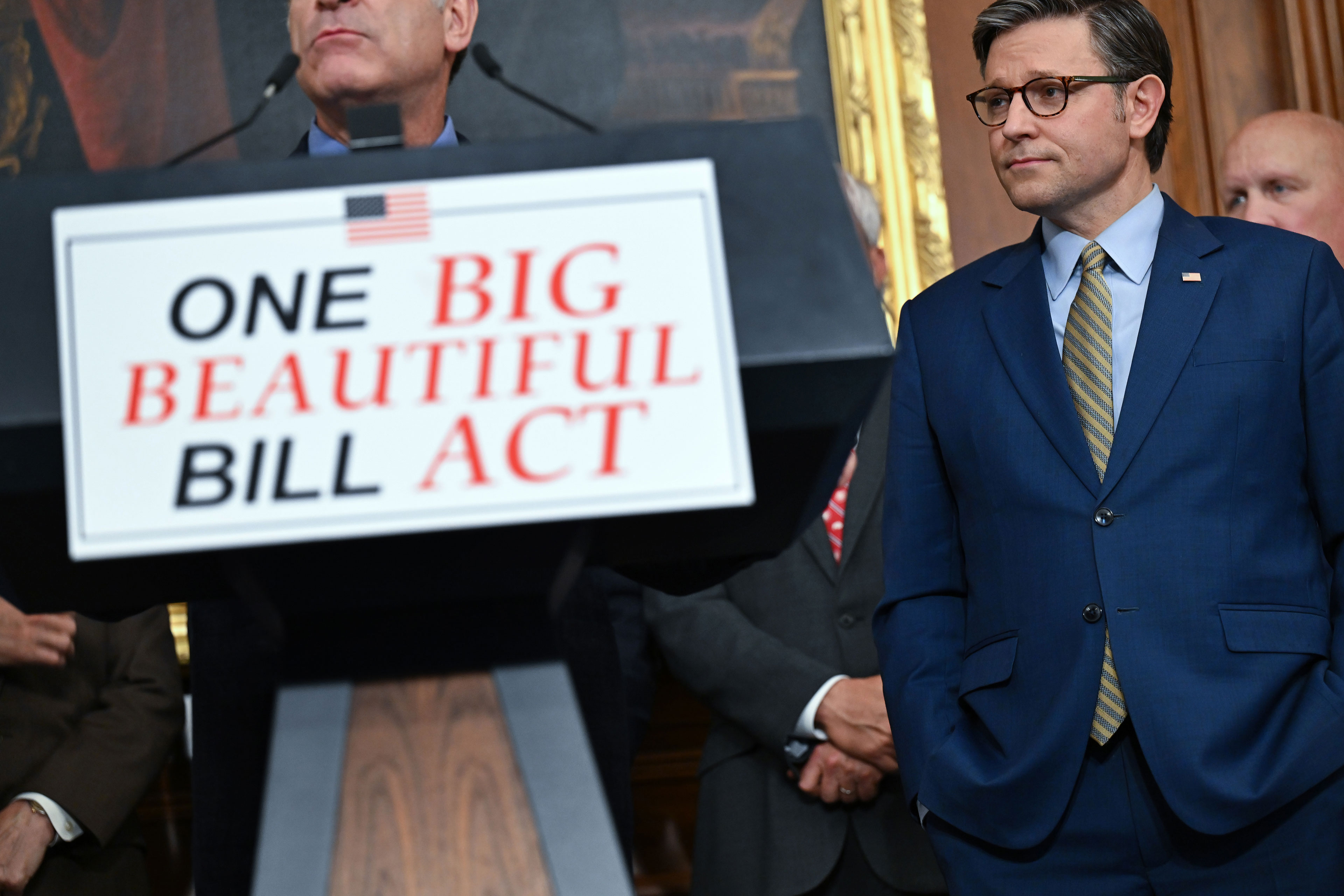
Categories
Legal Law

Start Shopping: Enrollment Begins Nov. 1 for Most Obamacare Insurance Plans

For millions of Americans who buy their own health insurance through the Affordable Care Act marketplace, the end of the year brings a day of reckoning: It’s time to compare benefits and prices and change to a new plan or enroll for the first time.

Open enrollment starts Nov. 1 for the ACA’s federal and state exchanges. Consumers can go online, call, or seek help from a broker or other assister to learn their 2024 coverage options, calculate their potential subsidies, or change plans.

In most states, open enrollment lasts through Jan. 15, although some states have different time periods. California’s, for example, is longer, open until Jan. 31, but Idaho’s runs from Oct. 15 to Dec. 15. In most states enrollment must occur by Dec. 15 to get coverage that begins Jan. 1.

Health policy experts and brokers recommend all ACA policyholders at least look at next year’s options, because prices — and the doctors and hospitals in plans’ networks — may have changed.

It Could Be Another Record Year

ACA plans are now well entrenched — an estimated 16.3 million people signed up during open enrollment last year. This year may see even larger numbers. Enhanced subsidies first approved during the height of the covid pandemic remain available, and some states have boosted financial help in other ways.

In addition, millions of people nationwide are losing Medicaid coverage as states reassess their eligibility for the first time since early in the pandemic. Many of those ousted could be eligible for an ACA plan. They can sign up as soon as they know they’re losing Medicaid coverage — even outside of the open enrollment season.

Another important caution: Don’t wait until the last minute, especially if you are seeking help from a broker. Consumers this year will be asked to certify that they voluntarily agreed to brokers’ assistance and that their income and other information provided by brokers is accurate.

It’s a good protection for both parties, said broker Joshua Brooker, founder of PA Health Advocates in Pennsylvania. But brokers are concerned the requirement could cause delays, especially if clients wait until right before the end of open enrollment to apply.

“Brokers will need to stop what they are doing right at the end before they click ‘submit’ and wait for the consumer to sign a statement saying they reviewed the policy,” Brooker said.

Premiums Are Changing

While some health plans are lowering premiums for next year, many are increasing them, often by 2% to 10%, according to a Peterson-KFF Health System Tracker initial review of rate requests. The median increase, based on a weighted average across its plans for each insurer, was 6%. 
Premiums, and whether they go up or down, vary widely by region and insurer. 

Experts say that’s a big reason to log on to the federal website, healthcare.gov, in the 32 states that use it, or on to the insurance marketplace for one of the 18 states and the District of Columbia that run their own. Changing insurers might mean a lower premium.

“It’s very localized,” said Sabrina Corlette, research professor and co-director of the Center on Health Insurance Reforms at Georgetown University. “People should shop to maximize their premium tax credit, although that might require not only changing to a new insurance plan, but potentially also a new network of providers.”

Most people buying their own coverage qualify for the tax credit, which is a subsidy to offset some, or even all, of their monthly premium. Subsidies are based partly on the premium of the second-lowest-priced silver-level plan in a region. When those go up or down, possibly from a new insurer entering the market with low initial rates, it affects the subsidy amount.

Household income is also a factor. Subsidies are on a sliding scale based on income.

Subsidies were enhanced during the pandemic, both to increase the amount enrollees could receive and to allow more families to qualify. Those enhancements were extended through 2025 by President Joe Biden’s Inflation Reduction Act, passed last year.

Online calculators, including one at healthcare.gov, can provide subsidy estimates.

You May Qualify for Lower Deductibles and Copays

In addition to the premium subsidies, most ACA enrollees qualify for reduced deductibles, copayments, and other types of cost sharing if their income is no more than 2.5 times the federal poverty level, or about $75,000 for a family of four or $36,450 for a single-person household.

ACA plans are grouped into colored tiers — bronze, silver, gold, and platinum — based largely on how much cost sharing they require. Bronze plans offer the lowest premiums but usually the highest copayments and deductibles. Platinum plans carry the highest premiums but the lowest out-of-pocket expenses for care.

Cost-sharing reductions are available only in silver-level plans and are more generous for those on the lower end of the income scale. New this year: To help more people qualify, the federal marketplace will automatically switch eligible people to a silver plan for next year if they are currently enrolled in a bronze plan, as long as the enrollee has not made an adjustment in coverage themselves.

There are safeguards built in, said insurance expert and broker Louise Norris, so that people are auto-enrolled in a plan with the same network of medical providers and a similar or lower premium. Additionally, nine of the states that run their own marketplaces — California, Colorado, Connecticut, Maryland, Massachusetts, New Jersey, New Mexico, Vermont, and Washington — have enhanced their cost-sharing reduction programs by extending eligibility or increasing benefits.
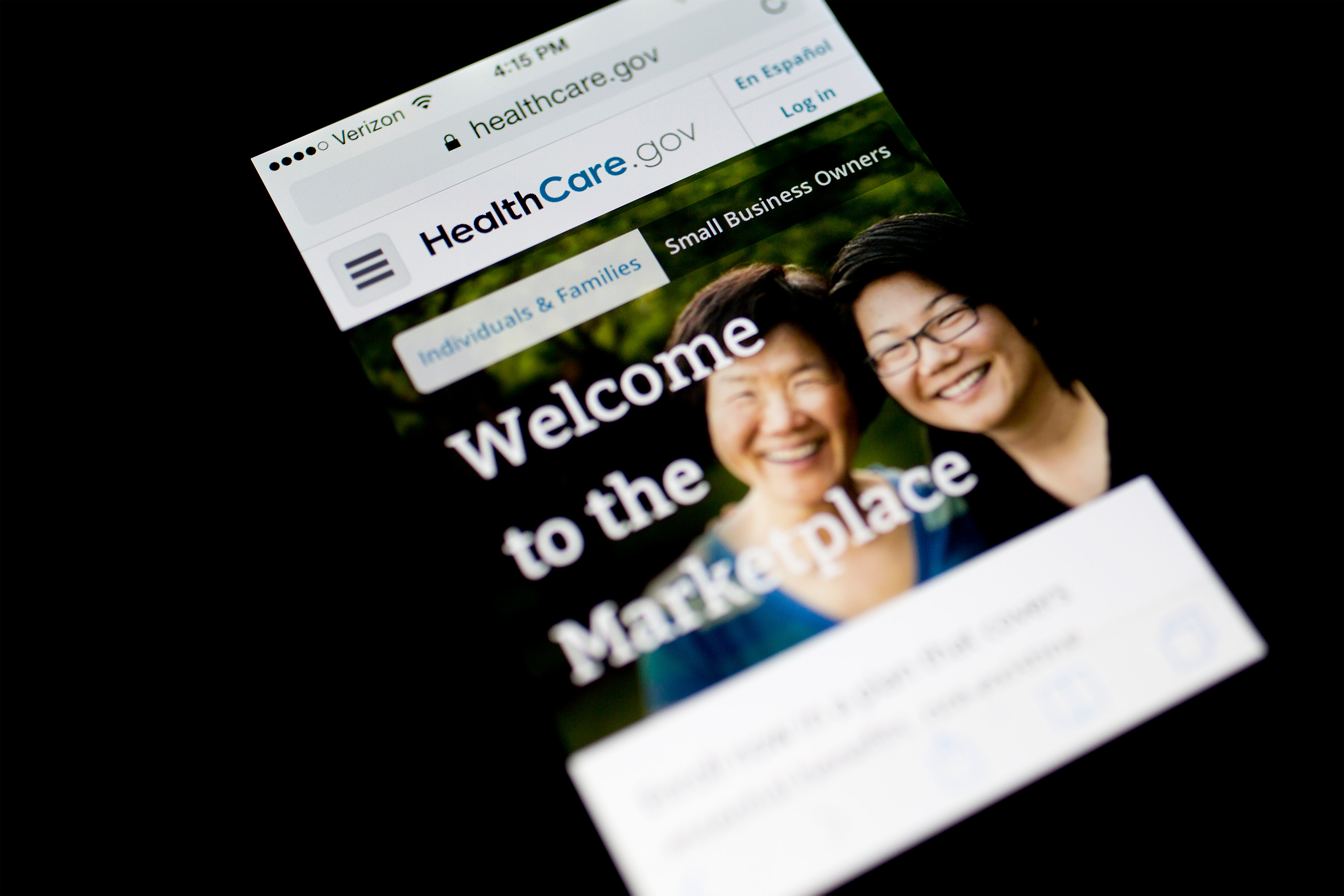
Some 26-Year-Olds Will Get to Stay on Parents’ Plans Longer

Happy birthday! Existing federal marketplace rules allowing adult children to stay on their parents’ plans though the calendar year in which they turn 26, rather than lose coverage on their 26th birthday, were codified into regulation.

States that run their own markets can set similar rules, and some already allow for longer periods on a parent’s plan.

Networks May Still Be Small

Insurance plans often try to reduce premiums by partnering with a limited set of doctors, hospitals, and other providers. Those can change year to year, which is why insurance experts like Norris say enrollees should always check their plans during open enrollment to ensure their preferred physicians and medical centers are included in the network.


It’s also a good idea, Norris said, to look closely for changes in prescription drug coverage or copayments.

“The general message is, don’t assume anything and make sure you check to see who is in the network,” Norris said.

Last year, the Biden administration set rules requiring health plans to have enough in-network providers to meet specific driving time and distance standards. A proposal to limit how long patients wait for a routine appointment has been delayed until 2025.

What We Still Don’t Know

A few things remain uncertain as the end of the year approaches. For example, the Biden administration proposed this summer to reverse a Trump-era rule that allowed short-term insurance plans to be sold for coverage periods of up to a year.

Short-term plans are not ACA-compliant, and many have fewer benefits and can set restrictions on coverage, including barring people with health conditions from purchasing them. As a result, they are far less expensive than ACA plans. The Biden proposal would restrict them to coverage periods of four months, but the rule isn’t final.

Also pending: a final rule that would allow people to sign up for ACA coverage if they were brought to the U.S. as children by parents lacking permanent legal status — a group known as “Dreamers.”

Categories
Legal Law

Comienza la inscripción para los seguros de salud del Obamacare

Para millones de personas que compran su propio seguro de salud a través del mercado establecido por la Ley de Cuidado de Salud a Bajo Precio (ACA, popularmente conocida como Obamacare), el final del año trae un ajuste de cuentas: es el momento de comparar beneficios y precios, cambiar a un nuevo plan o inscribirse por primera vez.

La inscripción abierta comienza el 1 de noviembre para el mercado federal, cuidadodesalud.gov, y los mercados estatales. Los consumidores pueden ir en línea, llamar o buscar ayuda de un corredor, o un navegador, para conocer sus opciones de cobertura para 2024, calcular sus posibles subsidios o cambiar de plan.

En la mayoría de los estados, la inscripción abierta dura hasta el 15 de enero, aunque algunos tienen períodos diferentes. El de California, por ejemplo, es más largo, hasta el 31 de enero, pero el de Idaho va desde el 15 de octubre hasta el 15 de diciembre.

En general, la inscripción debe realizarse antes del 15 de diciembre para obtener cobertura que comience el 1 de enero. Si el plan se adquiere en enero, entrará en vigencia el 1 de febrero.

Expertos en política de salud y corredores recomiendan que todos los titulares de pólizas de ACA al menos revisen las opciones del próximo año, porque los precios, y los médicos y hospitales en las redes de los planes, pueden haber cambiado.

Podría ser otro año récord. Ahora estos planes están bien establecidos: se estima que más de 16.3 millones de personas se inscribieron el año pasado. Y este año podrían ser aún más. Se mejoró la ayuda disponible, cambios que se aprobaron en el apogeo de la pandemia de COVID-19 que siguen vigentes, y algunos estados han aumentado la ayuda financiera de otras maneras.

Además, millones de personas en todo el país están perdiendo la cobertura de Medicaid a medida que los estados reevalúan la elegibilidad de los afiliados por primera vez desde el inicio de la pandemia.

Muchas de las personas excluidas podrían ser elegibles para un plan de ACA. Pueden inscribirse tan pronto como sepan que están perdiendo la cobertura de Medicaid, incluso fuera de la temporada de inscripción abierta.

Una advertencia importante: no esperes hasta el último minuto, especialmente si estás buscando ayuda de un corredor. Este año, se les pedirá a los consumidores que certifiquen que acordaron voluntariamente la ayuda de los corredores y que la información sobre sus ingresos y otros datos proporcionada por los corredores es precisa.

“Es una buena protección para ambas partes”, dijo el corredor Joshua Brooker, fundador de PA Health Advocates en Pennsylvania. Pero los corredores están preocupados de que este requisito pueda causar demoras, especialmente si los clientes esperan hasta último momento para buscar un plan médico.

Las primas están cambiando. Mientras que algunos planes de salud están reduciendo las primas (el pago mensual por la cobertura) para el próximo año, muchos las están aumentando, generalmente entre un 2% y un 10%, según una revisión inicial de las solicitudes de tarifas de Peterson-KFF Health System Tracker. El aumento medio es del 6%.

Las primas, ya sea que suban o bajen, varían ampliamente por región y por aseguradora.

Expertos dicen que esa es una gran razón para iniciar una sesión en el sitio web federal, cuidadodesalud.gov, en los 32 estados que lo utilizan, o en el mercado de seguros para uno de los 18 estados y el Distrito de Columbia que administran sus propias plataformas. Cambiar de aseguradora podría significar una prima más baja.

“Todo es muy localizado”, dijo Sabrina Corlette, profesora de investigación y co-directora del Centro de Reformas de Seguros de Salud en la Universidad de Georgetown. “La gente debería comprar para maximizar su subsidio, aunque eso podría requerir no solo cambiar a un nuevo plan, sino también a una nueva red de proveedores”.

La mayoría de las personas que compran su propia cobertura califican para créditos fiscales, que es un subsidio para compensar parte o incluso la totalidad de la prima mensual.

Los subsidios se basan en parte en la prima del segundo plan de nivel de Plata de precio más bajo en una región. Cuando estas primas suben o bajan, posiblemente porque una nueva aseguradora entra en el mercado con tarifas iniciales bajas, afecta la cantidad del subsidio.

Los ingresos del hogar también son un factor. Los subsidios se calculan en una escala móvil basada en los ingresos.

Los subsidios aumentaron durante la pandemia, para que más inscriptos pudieran recibirlos y para permitir que más familias calificaran. Esas mejoras se extendieron hasta 2025 por la Ley de Reducción de la Inflación del presidente Joe Biden, aprobada el año pasado.

Las calculadoras en línea, incluida una en cuidadodesalud.gov, pueden proporcionar estimaciones de subsidios.

Es posible que califiques para deducibles y copagos más bajos. Además de los subsidios para las primas, la mayoría de los inscritos en estos planes califican para deducibles reducidos, copagos y otros tipos de costos compartidos si sus ingresos no superan 2.5 veces el nivel federal de pobreza, o alrededor de $75,000 para una familia de cuatro personas.

Los planes de ACA se agrupan en niveles de colores: Bronce, Plata, Oro y Platino, en gran parte según cuánto requieran de costos compartidos. Los planes de Bronce ofrecen las primas más bajas, pero generalmente los copagos y deducibles más altos. Los planes de Platino tienen las primas más altas, pero gastos de bolsillo más bajos para la atención médica

Las reducciones en los costos compartidos solo están disponibles en planes de nivel de Plata y son más generosas para aquellos en el extremo inferior de la escala de ingresos. Una novedad de este año: para ayudar a más personas a calificar, el mercado federal cambiará automáticamente a las personas elegibles a un plan de Plata para el próximo año si actualmente están inscritas en un plan de Bronce, siempre y cuando el inscrito no haya hecho un ajuste en la cobertura por sí mismo.

Hay salvaguardias incorporadas, dijo Louise Norris, experta en seguros y corredora, para que las personas sean inscritas automáticamente en un plan con la misma red de proveedores médicos y una prima similar o más baja. Además, nueve de los estados que administran sus propios mercados, California, Colorado, Connecticut, Maryland, Massachusetts, Nueva Jersey, Nuevo México, Vermont y Washington, han mejorado sus programas de reducción de costos compartidos al extender la elegibilidad o aumentar los beneficios.

Algunos jóvenes de 26 años podrán permanecer en los planes de sus padres por más tiempo. Algunos que tienen cobertura a través de sus padres podrán permanecer en ella hasta el final del año calendario en el que cumplen 26 años, en lugar de perder la cobertura el mismo día de su cumpleaños 26. Esto se ha convertido en regulación.

Los estados que administran sus propios mercados pueden establecer reglas similares, y algunos ya permiten períodos más largos en el plan de los padres.

Las redes pueden seguir siendo pequeñas. A menudo, los planes de salud intentan reducir las primas asociándose con un conjunto limitado de médicos, hospitales y otros proveedores. Esos pueden cambiar de un año a otro, por lo que expertos en seguros como Norris dicen que los inscritos siempre deben verificar sus planes durante la inscripción abierta para asegurarse de que sus médicos y hospitales preferidos estén incluidos en la red. También es una buena idea observar detenidamente los cambios en la cobertura de medicamentos recetados o en los copagos, agregó.

“El mensaje general es no asumir nada y asegurarse de verificar quién está en la red”, enfatizó Norris.

El año pasado, la administración Biden estableció reglas que requerían que los planes de salud tuvieran suficientes proveedores en la red para cumplir con estándares específicos de tiempo de viaje y distancia. Una propuesta para limitar cuánto tiempo esperan los pacientes para una cita de rutina se ha retrasado hasta 2025.

Lo que todavía no sabemos. Hay algunas cosas inciertas a medida que se acerca el final del año. Por ejemplo, la administración Biden propuso este verano revertir una regla de la era Trump que permitía la venta de planes de corto plazo para períodos de cobertura de hasta un año.

Los planes de corto plazo no cumplen con los requisitos de ACA, y muchos tienen menos beneficios y pueden establecer restricciones en la cobertura, incluido no permitir que los adquieran personas con afecciones preexistentes como diabetes o colesterol alto. Como resultado, son mucho menos costosos que los planes del mercado. La propuesta de Biden los limitaría a períodos de cobertura de cuatro meses, pero la regla aún no es definitiva.

También está pendiente una regla final que permitiría a las personas inscribirse en la cobertura de ACA si fueron traídas a Estados Unidos por sus padres cuando eran pequeños, sin estatus legal permanente, el grupo conocido como “Dreamers”.

Related Topics

Contact Us

Submit a Story Tip

Categories
Legal Law

US Military Says National Security Depends on ‘Forever Chemicals’

The Department of Defense relies on hundreds, if not thousands, of weapons and products such as uniforms, batteries, and microelectronics that contain PFAS, a family of chemicals linked to serious health conditions.

Now, as regulators propose restrictions on their use or manufacturing, Pentagon officials have told Congress that eliminating the chemicals would undermine military readiness.

PFAS, known as “forever chemicals” because they don’t break down in the environment and can build up in the human body, have been associated with such health problems as cancer. In July, a new federal study showed a direct link between testicular cancer and PFOS, a PFAS chemical that has been found in the blood of thousands of military personnel.

Congress has pressured the Defense Department to clean up U.S. military sites and take health concerns more seriously. Under the fiscal 2023 James M. Inhofe National Defense Authorization Act, the Pentagon was required to assess the ubiquity of per- and polyfluoroalkyl substances, or PFAS, in products and equipment used by the military.

In a report delivered to Congress in August, Defense Department officials pushed back against health concerns raised by environmental groups and regulators. “DoD is reliant on the critically important chemical and physical properties of PFAS to provide required performance for the technologies and consumable items and articles which enable military readiness and sustainment,” the authors said.

Further, they wrote: “Losing access to PFAS due to overly broad regulations or severe market contractions would greatly impact national security and DoD’s ability to fulfill its mission.”

According to the report, most major weapons systems, their components, microelectronic chips, lithium-ion batteries, and other products contain PFAS chemicals. These include helicopters, airplanes, submarines, missiles, torpedoes, tanks, and assault vehicles; munitions; semiconductors and microelectronics; and metalworking, cooling, and fire suppression systems — the latter especially aboard Navy ships.

PFAS are also present in textiles such as uniforms, footwear, tents, and duffel bags, for which the chemicals help repel water and oil and increase durability, as well as nuclear, chemical, and biological warfare protective gear, the report says.

The Pentagon’s report to Congress was released last month by the American Chemistry Council.

Defending a Tradition of Defense

Military officials’ defense of PFAS use comes as concerns mount over the health risks associated with the chemicals. Beyond cancer, some types of PFAS have been linked to low birth weight, developmental delays in children, thyroid dysfunction, and reduced response to immunizations. Health concerns grew with the release of the study definitively linking testicular cancer in military firefighters to a foam retardant containing PFAS.

But that wasn’t the first time U.S. military officials were warned about the potential health threat. In the 1970s, Air Force researchers found that firefighting foam containing PFAS was poisonous to fish and, by the 1980s, to mice.

In 1991, the U.S. Army Corps of Engineers told Fort Carson, Colorado, to stop using firefighting retardants containing PFAS because they were “considered hazardous material in a number of states.”

The Environmental Protection Agency has struggled to determine whether there are acceptable levels of PFAS in drinking water supplies, given the existence of hundreds of varieties of these chemicals. But in March, the EPA did propose federal limits on the levels of PFAS in drinking water supplies.

The regulation would dramatically reduce limits on six types of the chemicals, with caps on the most common compounds, known as PFOA and PFOS, at 4 parts per trillion. Currently, the Defense Department’s threshold for drinking water is 70 parts per trillion based on a 2016 EPA advisory. As part of a widespread testing program, if levels are found on installations or in communities above that amount, the military furnishes alternative drinking water supplies.

The Defense Department has used PFAS-laced firefighting foam along with other products containing the chemicals for more than a half-century, leading to the contamination of at least 359 military sites or nearby communities, with an additional 248 under investigation, according to the department.

In its report, however, the Department of Defense did not address the health concerns and noted that there is “no consensus definition of PFAS as a chemical class.” Further, it said that the broad term, which addresses thousands of man-made chemical chains, “does not inform whether a compound is harmful or not.”

Researchers with the Environmental Working Group, an advocacy group that focuses on PFAS contamination nationwide, said the report lacked acknowledgment of the health risks or concerns posed by PFAS and ignored the availability of PFAS-free replacements for material, tents, and duffel bags.

The military report also did not address possible solutions or research on non-PFAS alternatives or address replacement costs, noted EWG’s Jared Hayes, a senior policy analyst, and David Andrews, a senior scientist.

“It’s kind of like that report you turn in at school,” Andrews said, “when you get a comment back that you did the minimum amount possible.”

Andrews added that the report fell short in effort and scope.

The Defense Department announced this year it would stop buying firefighting foam containing PFAS by year’s end and phase it out altogether in 2024. It stopped using the foam for training in 2020, by order of Congress.

The report noted, however, that while new Navy ships are being designed with alternative fire suppression systems such as water mists, “limited use of [PFAS-containing systems] remains for those spaces where the alternatives are not appropriate,” such as existing ships where there is no alternative foam that could be swapped into current systems.

According to the report, “the safety and survivability of naval ships and crew” from fires on ships depends on current PFAS-based firefighting foams and their use will continue until a capable alternative is found.

Pervasive Yet Elusive

Commercially, PFAS chemicals are used in food packaging, nonstick cookware, stain repellents, cosmetics, and other consumer products.

The fiscal 2023 National Defense Authorization Act also required the Defense Department to identify consumer products containing PFAS and stop purchasing them, including nonstick cookware and utensils in dining facilities and ship galleys as well as stain-repellent upholstered furniture, carpeting, and rugs.

But in a briefing to Congress in August accompanying the report on essential uses, Pentagon officials said they couldn’t comply with the law’s deadline of April 1, 2023, because manufacturers don’t usually disclose the levels of PFAS in their products and no federal laws require them to do so.

Come Jan. 1, however, makers of these chemicals and products containing them will be required to identify these chemicals and notify “downstream” manufacturers of other products of the levels of PFAS contained in such products and ingredients, even in low concentrations, according to a federal rule published Oct. 31 by the EPA.

This would include household items like shampoo, dental floss, and food containers.

Officials reiterated that the Defense Department is committed to phasing out nonessential and noncritical products containing PFAS, including those named above as well as food packaging and personal protective firefighting equipment.

And it is “developing an approach” to remove items containing PFAS from military stores, known as exchanges, also required by the fiscal 2023 NDAA.

Risk-Benefit Assessments

In terms of “mission critical PFAS uses,” however, the Pentagon said the chemicals provide “significant benefits to the framework of U.S. critical infrastructure and national and economic security.”

Andrews of EWG noted that the industry is stepping up production of the chemicals due to market demand and added that the federal government has not proposed banning PFAS chemicals, as the Defense Department alluded to when it emphasized the critical role these substances play in national security and warned against “overly broad regulations.”

“The statements are completely unsubstantiated, and it’s almost a fear-mongering statement,” Andrews said. “I think the statement is really going beyond anything that’s even being considered in the regulatory space.”

“There haven’t been realistic proposals policy-wise of a complete ban on PFAS,” his colleague Hayes added. “What people have been pushing for and talking about are certain categories of products where there are viable alternatives, where there is a PFAS-free option. But to ban it outright? I haven’t really seen that as a realistic policy proposal.”

Kevin Fay, executive director of the Sustainable PFAS Action Network, a coalition of corporations, industry advocates, and researchers who support the use and management of PFAS compounds, said the Defense Department has a point and it is up to federal regulators to “responsibly manage” these chemicals and their use to strike a balance among environmental, health, and industrial needs.

“The U.S. Department of Defense’s report on critical PFAS uses is crystal clear: regulating PFAS through a one-size fits all approach will gravely harm national security and economic competitiveness,” Fay wrote in an email to KFF Health News.

Adding that not all PFAS compounds are the same and arguing that not all are harmful to human health, Fay said risk-based categorization and control is vital to the continued use of the chemicals.

But, he added, in locations where the chemicals pose a risk to human health, the government should act.

“The federal government should implement plans to identify and remediate contaminated sites, properly identify risk profiles of the many types of PFAS compounds, and encourage innovation by clearing the regulatory path for viable alternatives to specific dangerous compounds,” Fay wrote.

Assessments are completed or underway at 714 active and former military installations, National Guard facilities, and other former defense sites to determine the extent of contamination in groundwater, soil, and the water supply to these locations and nearby communities.

Last year, the Pentagon issued a temporary moratorium on burning materials containing PFAS. Studies have shown that the practice can release toxic gases. But on July 11, the Defense Department lifted the moratorium on incineration, along with interim guidance on PFAS disposal.

Military personnel who were exposed to PFAS — including through firefighting foam — say they live in fear that they or their family members will develop cancer as a result of their service.

“I’ve got more of some of those materials in my system than 90-plus percent of those on the planet. This is bad. It doesn’t go away,” said Christian Jacobs, who served in the Army for four years and worked as a civilian Defense Department firefighter for nearly three decades. “It keeps me up at night.”

KFF Health News visual reporter Hannah Norman contributed to this report.

Related Topics

Contact Us

Submit a Story Tip

Categories
Legal Law

Backlash to Affirmative Action Hits Pioneering Maternal Health Program for Black Women

For Briana Jones, a young Black mother in San Francisco, a city program called the Abundant Birth Project has been a godsend.

Designed to counter the “obstetric racism” that researchers say leads a disproportionate number of African American mothers to die from childbirth, the project has provided 150 pregnant Black and Pacific Islander San Franciscans a $1,000 monthly stipend.

The money enabled Jones, 20, to pay for gas to drive to prenatal clinics, buy fresh fruits and vegetables for her toddler son and herself, and remain healthy as she prepared for the birth of her second child last year.

But the future of the Abundant Birth Project is clouded by a lawsuit alleging that the program, the first of its kind in the nation, illegally discriminates by giving the stipend only to people of a specific race. The lawsuit also targets San Francisco guaranteed-income programs serving artists, transgender people, and Black young adults.

The litigation is part of a growing national effort by conservative groups to eliminate racial preferences in a wide range of institutions following a U.S. Supreme Court ruling that found race-conscious admissions to colleges and universities to be unconstitutional.

In health care, legal actions threaten efforts to provide scholarships to minority medical school students and other initiatives to create a physician workforce that looks more like the nation.

The lawsuits also endanger other measures designed to reduce well-documented racial disparities. Black women are three to four times more likely than white women to die in labor or from related complications in the U.S., and Black infants are twice as likely as white infants to be born prematurely and to die before their first birthdays. Racial and ethnic minorities also are more likely to die from diabetes, high blood pressure, asthma, and heart disease than their white counterparts, according to the Centers for Disease Control and Prevention.

A handful of activist nonprofit groups and law firms are leading the charge. Do No Harm, a nonprofit formed in 2022, has sued health commissions, pharmaceutical companies, and public health journals to try to stop them from choosing applicants based on race. Do No Harm claims more than 6,000 members worldwide and partners with nonprofit legal organizations, most notably the Pacific Legal Foundation, which garnered national attention when it defended California’s same-sex marriage ban.

Another nonprofit, the Californians for Equal Rights Foundation, together with a Dallas-based law firm called the American Civil Rights Project, filed the lawsuit against the city of San Francisco and the state of California over the Abundant Birth Project, alleging the program violates the equal protection clause of the Constitution’s 14th Amendment by granting money exclusively to Black and Pacific Islander women. The 14th Amendment was passed after the Civil War to give rights to formerly enslaved Black people.

The lawsuit calls public money used for the project and the three other guaranteed-income programs “discriminatory giveaways” that are “illegal, wasteful, and injurious.”

“The city and county of San Francisco crafted the Abundant Birth Project with the express intention of picking beneficiaries based on race,” Dan Morenoff, executive director of the American Civil Rights Project, said in a phone interview. “It’s unconstitutional. They can’t legally do it, and we are optimistic that the courts will not allow them to continue to do it.”

San Francisco and state officials declined to discuss the case because of the pending litigation, but the city defended the program in its initial response to the lawsuit. The Abundant Birth Project started in June 2021 and plans to make a second round of grants to pregnant mothers this fall, the response says.

The project strives to improve maternal and infant health outcomes by easing the economic stress on pregnant Black and Pacific Islander San Franciscans. People in those groups face some of the worst outcomes in the U.S., where more women die as a result of pregnancy and childbirth than in other high-income nations. The state of California last year awarded $5 million to expand the program to include Black mothers in four other counties.

But Khiara Bridges, a Berkeley law professor and anthropologist who has talked to beneficiaries of the Abundant Birth Project but is not directly involved with it, said the Supreme Court ruling on college affirmative action could actually support the argument that the program is legal.

The court struck down affirmative action in part because the majority said Harvard and the University of North Carolina failed to show measurable outcomes justifying race consciousness in college admissions. While statistics on potential benefits from the Abundant Birth Project are not publicly available, Bridges and others familiar with the program expect researchers to demonstrate it saves and improves lives by comparing the health outcomes of families who received the stipend with those of families who did not. The outcomes could justify employing race to choose program participants, Bridges said.

Bridges also drew another distinction between the role of race in college admissions and the role of race in health disparities.

“If you don’t get into Harvard, there’s always Princeton or Columbia or Cornell,” she said. “Maternal death — the stakes are a little bit higher.”

When Briana Jones was pregnant with her second son, Adonis, a San Francisco program called the Abundant Birth Project enabled her to pay for gas for prenatal appointments, find housing, feed her toddler son, and remain healthy as she prepared to welcome her second child. The program has provided 150 pregnant Black and Pacific Islander San Franciscans a $1,000 monthly stipend. (Briana Jones)

While Briana Jones was pregnant with the younger of her two sons, she qualified through San Francisco’s Abundant Birth Project as one of nearly 150 women to receive a $1,000-a-month stipend during her pregnancy and for six months postpartum. (Briana Jones)

In California, a voter initiative, Proposition 209, has prohibited race-based selection in public education and employment since 1996. California Assembly member Mia Bonta (D-Oakland) has co-authored a pending bill that would amend the proposition to allow municipalities to grant benefits to specific groups of vulnerable people if they use research-based measures that can reduce health and other disparities.

Bonta, a law school graduate, told KFF Health News that the litigation against the Abundant Birth Project is the result of “conservative groups who want to exist in a world that doesn’t exist, where communities of color have not had to suffer the generational harm that comes from structural racism.”

Bonta has more than once been a victim of medical racism herself.

When she went to the hospital with a serious back injury, she was interrogated by a doctor who appeared to believe she was faking pain so she could obtain drugs.

“But for the intervention of my husband, who happened to be there and moved into health advocacy mode, I, as a Black Latina woman, would not have received the care that I needed,” she said. Bonta’s husband, Rob Bonta, is also a lawyer and is now California’s attorney general.

Briana Jones experiences racism every day, she said.

She was 15 when she gave birth to her first child in a San Francisco hospital. Terrified and in agonizing pain, she did what laboring mothers have always done and screamed.

A nurse ordered her to “shut up.”

In the U.S., Black women are far more likely than white women to report that health care providers scolded, threatened, or shouted at them during childbirth, research shows. They also face other forms of obstetric racism, including barriers to quality care and cumulative stress from lifelong discrimination.

Growing up Black in predominantly white and Asian San Francisco has been a struggle for Jones. But, while carrying her second baby last year, she learned from her mother of the Abundant Birth Project, and within a month, her race and address in Bayview Hunters Point, where some of the city’s poorest residents live, qualified her as one of nearly 150 women to receive the $1,000 a month during her pregnancy and for six months postpartum.

“I really did feel like it was God helping me,” she said.

For Morenoff, though, it’s just another form of discrimination, and he says the city must either open the Abundant Birth Project to all pregnant women or close it down. “The whole point of the 14th Amendment is to require America to treat all Americans as Americans with the same equal rights,” he said.

Jones had high blood pressure, leading to swollen ankles and dizziness, during both her pregnancies. In her more recent one, the birth project stipend helped enable her to quit couch surfing and move into an apartment, and she gave birth to a healthy boy named Adonis.

“It’s known that people of color struggle way harder than other races,” Jones said. “Where I live, it’s nothing but struggle here, people trying to make ends meet.”

“For them to try to take this program away from us,” she said, “it’s wrong.”

This article was produced by KFF Health News, which publishes California Healthline, an editorially independent service of the California Health Care Foundation. 

Related Topics

Contact Us

Submit a Story Tip