Categories
Digital Marketing

구글 검색 누락 내부링크 부족한가요?

구글 검색 누락 내부링크

웹사이트를 운영하다 보면 열심히 작성한 글이 검색 결과에 보이지 않거나, 기대했던 만큼 유입이 발생하지 않는 상황을 자주 경험하게 됩니다. 이럴 때 많은 운영자는 콘텐츠 품질이나 키워드 경쟁만 먼저 생각하지만, 실제 원인은 사이트 구조에 숨어 있는 경우도 많습니다. 그중 대표적인 요소가 내부링크입니다. 그래서 “구글 검색 누락 내부링크 부족한가요?”라는 질문은 매우 현실적인 점검 포인트입니다. 구글 검색 누락 현상이 지속된다면 내부링크 구조부터 살펴볼 필요가 있습니다.

내부링크란 같은 사이트 안에서 페이지와 페이지를 연결하는 링크를 말합니다. 메인 페이지에서 카테고리로 이동하거나, 관련 글을 연결하거나, 본문 안에서 다른 콘텐츠를 소개하는 모든 링크가 내부링크에 해당합니다. 검색엔진은 이러한 연결 구조를 따라 사이트를 탐색하고 새로운 페이지를 발견합니다. 따라서 내부링크가 부족하면 구글은 특정 페이지의 존재를 늦게 인식하거나 중요도가 낮다고 판단할 수 있습니다. 결국 이런 구조적인 문제는 구글 검색 누락으로 이어질 가능성이 높습니다.

특히 새롭게 작성한 글이 사이트 어딘가에 고립되어 있으면 문제가 커집니다. 예를 들어 새 글을 발행했지만 메인 페이지, 카테고리 페이지, 관련 글 목록 어디에서도 연결되지 않는다면 검색엔진이 해당 페이지를 발견하는 데 시간이 오래 걸릴 수 있습니다. 사용자는 글을 공개했으니 곧바로 검색될 것이라 기대하지만, 실제로는 연결 신호가 부족해 크롤링 우선순위에서 밀릴 수 있습니다. 이런 상황에서 구글 검색 누락 현상이 자주 발생합니다.

오래된 사이트일수록 내부링크 관리가 더 중요합니다. 수백 개 이상의 게시물이 쌓이면 최신 글만 노출되고 예전 글은 점점 깊숙한 구조로 밀려납니다. 몇 번의 클릭을 거쳐야 도달하는 페이지는 검색엔진에게도 상대적으로 덜 중요한 페이지처럼 보일 수 있습니다. 또한 오래된 글에 새로운 글 링크가 전혀 없다면 콘텐츠 간 연관성도 약해집니다. 이런 누적된 구조 문제는 시간이 지나면서 구글 검색 누락 원인이 될 수 있습니다.

내부링크는 단순히 숫자를 늘리는 것이 아니라 자연스럽고 관련성 있게 배치해야 합니다. 예를 들어 SEO에 관한 글이라면 색인, 사이트맵, 크롤링 관련 글을 연결하는 방식이 좋습니다. 사용자가 실제로 도움이 되는 흐름이어야 하며, 무의미하게 모든 글을 서로 연결하는 방식은 효과가 낮습니다. 검색엔진도 맥락 있는 링크를 더 긍정적으로 해석합니다. 따라서 구글 검색 누락 문제를 해결하려면 양보다 질 높은 내부링크가 중요합니다.

구글 검색 누락 내부링크 부족한가요?

앵커 텍스트도 신경 써야 합니다. “여기 클릭”, “자세히 보기” 같은 모호한 표현보다 연결된 페이지 주제를 설명하는 문구가 좋습니다. 예를 들어 “사이트맵 제출 방법”, “색인 요청 절차”처럼 구체적인 문구는 검색엔진이 대상 페이지의 내용을 이해하는 데 도움이 됩니다. 이런 세밀한 최적화가 쌓이면 구글 검색 누락 개선에도 긍정적인 영향을 줄 수 있습니다.

카테고리 구조 역시 중요한 내부링크 자산입니다. 글이 적절한 카테고리에 배치되어 있고, 카테고리 페이지가 정리되어 있다면 검색엔진은 사이트 전체 주제를 더 쉽게 파악합니다. 반대로 카테고리가 지나치게 많거나 빈 카테고리가 많으면 구조가 복잡해져 탐색 효율이 떨어질 수 있습니다. 이런 혼란은 간접적으로 구글 검색 누락 문제를 키울 수 있습니다. 단순하고 명확한 구조가 가장 좋습니다.

내부링크 상태를 점검하려면 직접 사이트를 둘러보며 새 글이 어디에서 연결되는지 확인해야 합니다. 서치 콘솔이나 크롤링 도구를 활용하면 링크가 거의 없는 고립 페이지도 찾을 수 있습니다. 중요한 페이지인데 내부링크가 부족하다면 메인 페이지, 인기 글, 관련 글 섹션 등을 활용해 연결을 늘려야 합니다. 이런 작업은 기술적으로 어렵지 않지만 구글 검색 누락 해결에 매우 실질적인 효과를 줍니다.

결론적으로 “구글 검색 누락 내부링크 부족한가요?”라는 질문은 단순한 추측이 아니라 검색 최적화의 핵심을 짚는 말입니다. 콘텐츠가 좋아도 사이트 안에서 연결되지 않으면 제대로 평가받기 어렵습니다. 구글 검색 누락 현상이 계속된다면 새 글 작성만 반복하지 말고 기존 콘텐츠를 서로 연결하는 구조부터 개선해 보세요. 작은 링크 하나가 큰 검색 노출 차이를 만들 수 있습니다.

Categories
Digital Marketing

Toying with identity: The Labubu mania

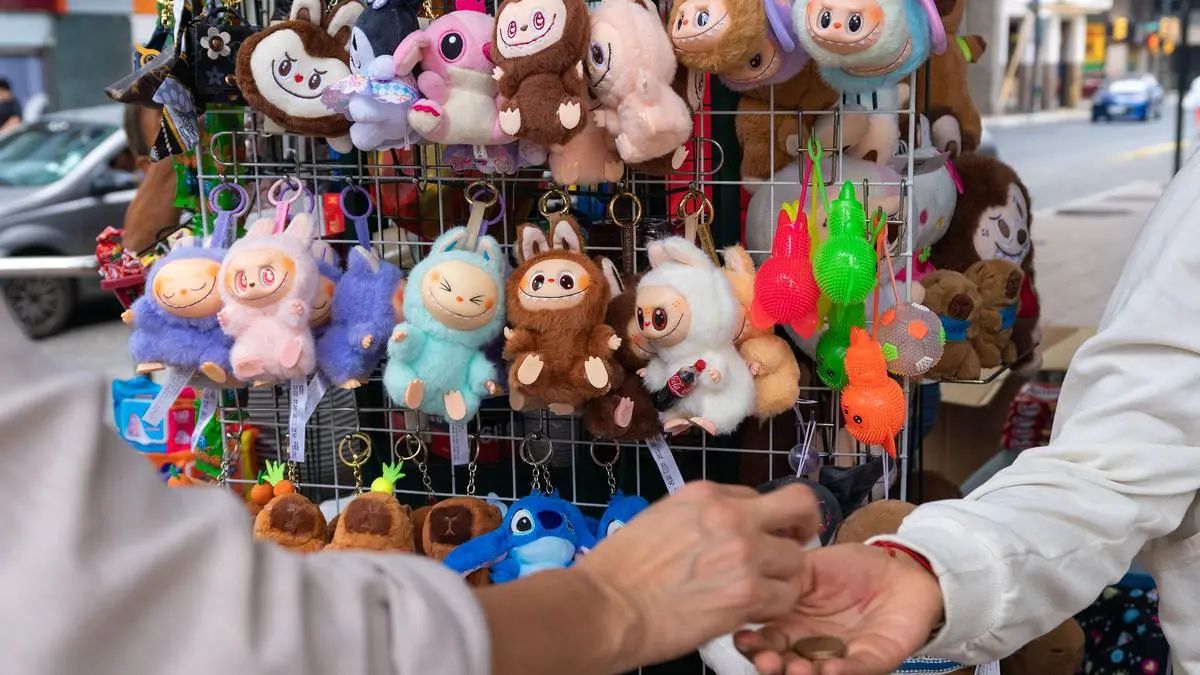
Actor Liam Neeson recently confessed in a podcast that he had absolutely no idea what a Labubu was — despite the tiny monster dolls having become a global cultural phenomenon worth billions. His puzzlement must be mirrored by brand strategists who probably cannot wrap their heads around the way brand ecosystems have emerged championed by Gen Z and Alpha consumers around products they’ve barely encountered.

This disconnect becomes particularly stark when examining India’s rapidly evolving toys and games market, where established international players like Hamleys, Mattel, and Hasbro dominate shelves even as a new generation of consumers develops intense, if fleeting, emotional connections with brands that seem to emerge from nowhere and disappear just as quickly. 

Untapped potential

India’s toys and games market, projected to generate $1.8 billion in 2025 with 4.69 per cent annual growth, significantly outpaces the global 2.42 per cent average. Yet per capita spending is just $1.24 versus the global $17.01, revealing massive untapped potential as India’s growing middle-class drives demand for educational toys and board games.

Reliance’s 2019 buyout of British toy retailer Hamleys for $88.5 million marked India’s first overseas retail brand purchase, and demonstrated the potential for international toy brands in the country through local partnerships.

India’s fragmented industry of 800 manufacturers and 4,000 MSMEs features traditional players like Funskool alongside global giants. Government initiatives — including 60 per cent import duties, quality certification requirements, and the Prime Minister’s call for start-ups to create toys reflecting Indian values — signal strong policy support for indigenous innovation.

The challenge lies not in market potential, but in understanding how to capture the imagination of consumers who have fundamentally different relationships with brands than previous generations.

Just can’t ‘LEGO’

LEGO from Denmark has achieved something remarkable in creating what psychologists call “nostalgic brand attachment” — users don’t just buy LEGO sets, they’re purchasing pieces of their childhood while creating new memories. This taps into the endowment effect, a tendency to overvalue things we already own.

Over the past two decades, LEGO’s revenue has grown ten-fold, reaching $9.7 billion dollars in 2023, making it the world’s largest toymaker. The secret lies in their approach to adult fans of LEGO (AFOLs), who now account for one-fifth of sales. The company produces more than 140 elaborate sets specifically for adults, some containing thousands of pieces, while maintaining appeal for children through digital partnerships like their collaboration with video-game maker Epic Games for experiences in the game Fortnite.

Over the past two decades, LEGO’s revenue has grown ten-fold, reaching $9.7 billion dollars in 2023, making it the world’s largest toymaker
| Photo Credit: Getty Images

For Indian toy manufacturers, LEGO’s success demonstrates that lasting brand love requires both stability and surprise — familiar enough to feel secure, novel enough to remain engaging across life stages.

Plushie phenomenon

Global trends reveal fascinating insights about contemporary toy consumption. The soft toy category has witnessed explosive growth, with videos tagged #Plushies accumulating over 8 billion views on TikTok. What’s remarkable is that “kidults” aged 12 and above now account for over a quarter of toy sales, surpassing pre-schoolers for the first time. This trend, which began during the pandemic as young adults sought comfort in cute playthings, has created a new consumer category that brands are scrambling to understand.

The phenomenon extends beyond simple nostalgia. Adults now spend significantly more on toys for themselves than for pre-schoolers, sometimes thousands of dollars within months. The appeal stems from anticipation rewards — the mystery and surprise elements of blind box toys (where the consumer does not know which toy is inside) that generate dopamine-driven excitement and collection satisfaction.

Psychologists note that plushie collecting represents a form of comfort consumption and nostalgia-driven purchasing, while public figures across entertainment and sports have normalised adult toy collecting through social media visibility. This adult adoption of traditionally child-focused products reflects deeper cultural shifts that Indian toy brands must navigate carefully.

Understanding the Labubu generation

The emergence of phenomena like Labubu dolls — those grinning, elfin creatures with fuzzy outfits — reveals crucial insights about contemporary brand relationships. These consumers don’t simply purchase products; they curate identities through carefully selected brand assemblages. Each purchase signals values, aesthetics, and group identity. 

In India, this manifests in the rise of anime and manga-influenced fashion and lifestyle products. Brands like Uniqlo have collaborated with manga series like Dragon Ball Z, while luxury houses like Gucci have featured characters like Doraemon in collections. The prominence of anime culture in fashion landscapes reflects GenZ’s comfort with global-local hybrid identities.

The performative aspect cannot be ignored. Social media has created consumers who thoughtfully design their aesthetic choices to reflect personal values and social connections. This involves strategic selection across categories — from accessories and beverages to entertainment and collectibles — building cohesive identity narratives. The key insight for brands is that consumption has become a form of identity performance, not just utility satisfaction. 

Loyalty rewards

Brand love in the toy sector operates differently from other categories. It transforms brand-loyal customers into advocates and influencers, forging emotional connections that inspire what marketers call “loyalty beyond reason”. Research suggests brand love can precede or follow loyalty — sometimes right before a purchase. 

For toy brands targeting Indian consumers, this emotional connection must navigate cultural nuances carefully. Young Indians exist at the intersection of global digital culture and deeply rooted local traditions. They might collect international character merchandise while celebrating traditional festivals, or embrace global gaming culture while maintaining strong family connections. 

There are clues to the evolution of this cultural phenomenon. In the 1990s, the Japanese animated adaptation of Ramayana became a beloved television staple, broadcast annually on Doordarshan during Diwali and later on Cartoon Network, creating a generation comfortable with cross-cultural mythological storytelling. The recent success of ‘Mahavatar Narsimha’, which became India’s highest-grossing animated film, demonstrates how this cultural openness has now fully matured into a sophisticated market dynamic.

Effective engagement requires glocalisation — adapting global phenomena to local contexts that feel familiar yet aspirational. This cultural dexterity becomes particularly important in a market where nine out of ten GenZ consumers express pride in buying Indian brands, according to surveys.

Experience economy

Young consumers have elevated activities into hyper-personalised experiences. In the toy context, this translates to elaborate unboxing videos, themed collection displays, and community-building around shared interests. The excitement lies not just in ownership but in the ritual of discovery and the social sharing of that moment. Indian toy brands can leverage this by creating products that generate shareable moments. This might involve innovative packaging that becomes part of the play experience, limited edition releases or toys that evolve over time (remember Tamagotchi’s digital pets?) providing ongoing content opportunities.

Strategic implications 

Toy brands seeking to capture Indian consumers’ imagination and spending power need to embrace cultural code-switching. Successful brands must adapt messaging for festivals, regional preferences, and local contexts while maintaining global appeal. This requires vernacular fluency that recognises English-first doesn’t mean English-only, and community building that honours both global trends and local traditions.

Second, a consumer’s relationship with a toy evolves from childhood through adolescence to adulthood. Brands must layer engagement — trends for newcomers, deeper experiences for loyalists — while building communities that accommodate changing interests and life stages.

Third, leverage the exposure effect as people develop preferences for things they encounter frequently. However, familiarity must be balanced with novelty to avoid staleness. Successful brands maintain consistent core identities while continuously refreshing their offerings. Also, embrace consumer fickleness as the norm — brand love today is like a playlist, constantly updated and refreshed, and smart brands adapt to that rhythm instead of resisting it.

The future of toy brands in India isn’t just about predicting the next Labubu or creating the next LEGO. It’s about building a brand context that can sustain connections with consumers who see consumption as both entertainment and identity expression. This requires investment in real-time cultural listening and rapid response capabilities, creating brand experiences that reward both discovery and loyalty. 

(Manoshij Banerjee is an independent consultant on digital culture and behaviour; Mohammed Shahid Abdulla is a faculty member, IIM Kozhikode)

Published on September 8, 2025

Categories
Digital Marketing

On the campaign trail – The Hindu BusinessLine

Mahabali reimagined in Deconstruct’s Onam 2025 campaign titled “Kuda Mathram Mathiyavilla” 

The festive beats continued as brands marked their presence at Ganesha Chaturthi pandals and Onam celebrations and started whipping up early Durga Pujo fervour. Meanwhile, purposeful messaging by some brands caught the eye.

Mahabali’s sun protector

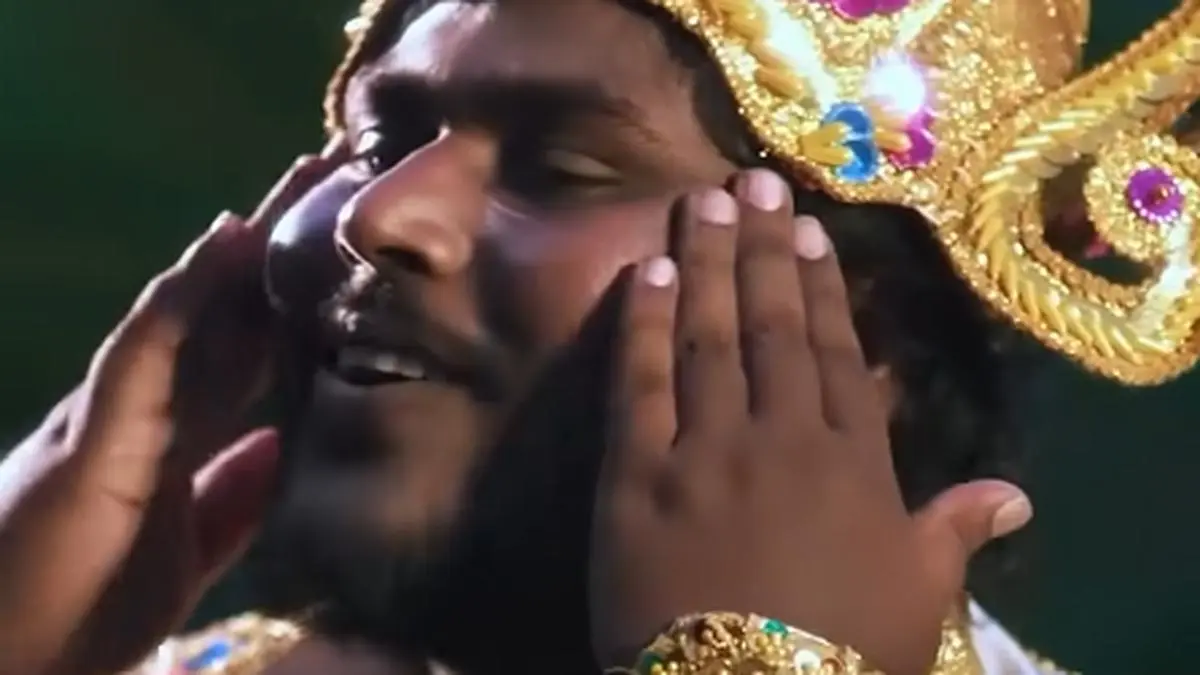
Skincare brand Deconstruct’s Onam 2025 campaign titled “Kuda Mathram Mathiyavilla” (Umbrella alone is not enough) introduces sunscreens as a festival essential accessory. In the brand film, Mahabali reimagined for today’s Kerala accepts sunscreen alongside his umbrella, embracing it as a thoughtful gesture of modern care while staying rooted in culture. The 25-second digital brand film is accompanied by GIFs on Meta and other digital platforms, influencer collaborations with Malayalee lifestyle and entertainment creators,and meme marketing through popular Kerala meme pages. 

Grains and Ganesha

The campaign unveiled the image of Lord Ganesha engraved on a single grain of pure wheat

The campaign unveiled the image of Lord Ganesha engraved on a single grain of pure wheat

ITC’s Aashirvaad Atta’s festive initiative at one of Mumbai’s most iconic Ganesh pandals – Andheri Cha Raja – grabbed attention. Accompanied by the slogan “Gehu, gehu hai vishesh, har gehu mein hai Ganesh” (Every grain has a Ganesha), the campaign unveiled the image of Lord Ganesha engraved on a single grain of pure wheat. The centrepiece of the campaign was the Ganesha Creation Zone – where devotees were invited to create their own vision of Lord Ganesha, with each artwork magnified onto a majestic golden wheat grain installation and personalised with their name.

A time for self-expression

Actor Trina Shah presents a variety of looks for different days of Durga Puja

Actor Trina Shah presents a variety of looks for different days of Durga Puja

Tata CLiQ Fashion has launched its Durga Puja campaign, ‘Amar Pujo, Amar CLiQ’ (My Pujo, My CLiQ), highlighting festive collections available on the platform, and playing up the House of Utsav. The campaign frames Pujo as a time for self-expression. It highlights the different ways people participate in the festival — from Mahalaya morning and planning outfits with friends to visiting pandals, dancing on Nabami night, and taking part in Sindoor Khela. In an instagram collaboration, Bengali television and film actor Trina Shah presents a variety of looks for different days of the festival, sourced from the Durga Pujo curation at the House of Utsav.

Dreams, big and small

A still from the ad

A still from the ad

Urban Company’s fifth film under its Dignity of Labour series, titled Chhote Sapne created by Talented and Superfly Films, takes on cultural perceptions. The film highlights the entrepreneurial spirit of Urban Company Service Professionals, who are micro-entrepreneurs building their own businesses with skill and hustle, yet rarely recognised as such. It shows a customer subconsciously looking down upon an Urban Company beauty professional’s work – chiding her on how long she will lug this small box around. The response – comparing the UC Pro’s small box, carrying skills, survival, and her big dreams with the white-collar laptop bag of her customer, opens up the biases and urges audiences to reconsider how they view those whose unseen work sustains their lives. A moving film.

Modern man’s jewellery

Jim Sarbh in the ad campaign

Jim Sarbh in the ad campaign

Male jewellery seems to be the next big trend. We saw Mohanlal winning the internet in the campaign for Vinsmera Jewels. Now it is the turn of Jim Sarbh to wow as he models necklaces for Tyanni Jewellery by Karan Johar with great panache. The campaign Forces of Tyaani, spotlights the fast-growing men’s jewellery segment and also reflects a cultural shift towards inclusivity, authenticity, and personal storytelling. In the film, Jim Sarbh breaks away from the expected style codes such as belts, watches, cufflinks and adorns himself with glorious long necklaces and rings.

Powering Mumbai

It’s not often that you see utility providers do big brand campaigns. Which is why Mahanagar Gas Ltd. (MGL)’s first-ever brand campaign ‘Mumbai chalta hai MGL par!’ catches the eye. The campaign brings alive real Mumbai moments but anchors them in numbers that show how the MGL fuels the city’s rhythm – be it the way it powers more than 28 lakh households with Piped Natural Gas (PNG) and fuels over 11 lakh vehicles with Compressed Natural Gas (CNG). Taking the message to the streets, this multimedia campaign runs across print, outdoor, radio and digital platforms. The print-cum-outdoor campaign is also MX’s first AI-generated campaign.

Published on September 8, 2025

Categories
Digital Marketing

Game over: Saving lives or killing an industry?

India’s recent ban on money-based online gaming has set off a storm in a teacup – a very large teacup worth ₹20,000 crore, as claimed.

The government argues it is protecting the poor and gullible. The industry warns of lost jobs, capital flight, and a missed digital opportunity. Both claims carry weight, depending on which side of the bed you got off.

From bustling cyber cafés in the early 2000s to mobile-first gaming empires in the 2020s, India’s online gaming history is the story of technology meeting greed – and colliding with poverty, regulation, and politics.

Around 2023, online gaming in India had crossed ₹16,000 crore in revenues. Fantasy sports attracted 180 million users; e-sports was building a new youth culture, and start-ups like MPL and Dream11 became household names. Cheap smartphones and cheap Jio data turned gaming into a mass phenomenon.

But beneath the glossy numbers came darker stories. For a ponytailed professional in Bengaluru, losing ₹1,000 on an app might be an irritation. For a rickshaw driver in Begusarai, it could mean a week without groceries.

Mental health experts at Lucknow’s King George’s Medical University warned that fantasy gaming apps could hijack the brain’s reward circuits – fuelling addiction even in users from impoverished backgrounds, who lose small amounts like ₹10.

Union Minister Ashwini Vaishnaw underscored some tragedies, saying online gaming had become a “bigger issue than drugs”.

These games, designed with dopamine-triggering mechanics – daily rewards, loot boxes, near-miss spins – were engineered to hook, and the poor were doubly vulnerable because their stakes were not leisure but survival.

With social safety nets already fragile, the government argued it had a paternal duty to shield the weakest.

The pushback

The counter-argument was equally sharp as reports of job losses (MPL) came in and cricket lost its sponsorship (Dream11). 

Courts have previously upheld that fantasy sports and rummy are games of skill, not gambling – nuances the ban sweeps aside. And critics rightly warn that prohibition rarely works: it drives activity underground, into offshore apps that are even more predatory.

For millions of young Indians, gaming is more than play. It is identity, streaming, e-sports, and even a path to income. Cutting it off entirely, they argue, is to signal mistrust in youth agency.

Global lessons

India is not alone. Other countries with poorer populations faced the same dilemma, and here’s how they dealt with it.

China imposed some of the world’s harshest restrictions: minors may game only three hours a week, enforced by real-name IDs. The State cast gaming as a moral hazard.

Brazil regulated instead: loot boxes had to disclose odds, games were age-rated, and consumer rights were enforced. At the same time, e-sports was encouraged as a youth industry.

Kenya revoked licenses of giants like SportPesa in 2019, citing tax evasion and addiction. Betting ads were banned for targeting the young, though illegal apps mushroomed.

Indonesia banned online gambling outright on moral grounds, but syndicates flourished underground.

The US left it to the States: New Jersey and Nevada turned online casinos into revenue generators under strict licensing, while Utah and Hawaii maintained blanket bans.

The deeper question

For the affluent, gaming is entertainment; for the poor, it can be a financial quicksand. Does the digital economy extract most from those who can afford it the least? For the State, then, the dilemma is sharp: should it shield the vulnerable at the cost of stifling opportunity, or trust citizens and risk exploitation?

This debate echoes older struggles – alcohol prohibition in the US, lotteries in India, even early resistance to stock markets. In each case, what looked like moral panic was also about who bore the risks and who reaped the rewards.

A smarter balance

I spoke to some gamers from different backgrounds (a corporate and a rickshaw driver were included) and this is what they suggested:

1. Enforce age and spending caps through Aadhaar verification.

2. Mandate algorithmic transparency and fair prize pools.

3. Demand industry self-regulation of advertising and responsible play.

4. Promote e-sports and educational gaming as safe avenues for youth.

5. Target offshore predators, not domestic innovators.

Gaming is not really about games. It is about power, capital, and protection in a society still scarred by poverty.

I think the State is right to worry about the gullible. The industry is right to demand room to grow. The real test is whether India can build a digital economy that does not extract from the weakest to entertain the strongest.

That, more than any app or ban, will decide India’s digital destiny.

(Shubho Sengupta is a digital marketer with an analogue past)

Published on September 8, 2025

Categories
Digital Marketing

Dentsu at crossroads – The Hindu BusinessLine

Is Japan’s Dentsu group contemplating selling its international business? Media reports suggested a sale, describing how the group had signed up M&A partners to find potential buyers. But then a few days ago Hiroshi Igarashi, president and global CEO of the group issued a statement that no decisions have been made. However, he did say that Dentsu is rebuilding the foundation of its international business and re-evaluating underperforming businesses. It may be recalled that Dentsu had earlier announced a layoff of 8 per cent of its international workforce (about 3,400 employees).

The struggles that every network is facing is real, and consolidation is happening – witness the Omnicom group buyout of IPG as well as dramatic changes at WPP, with Mark Read stepping down and a rank outsider Cindy Rose taking over, ostensibly to step up on AI adoption. On September 1, Rose took over and her first messages have been one of transformation. Since her takeover, there was also a significant global leadership rejig announcement with Ogilvy chief Devika Bulchandani appointed as WPP global COO and Laurent Ezekiel as Ogilvy global CEO. Everyone is shaking up things. 

Published on September 8, 2025

Categories
Digital Marketing

Premium, ‘no nasties’ products fly with rise in conscious parenting 

From skincare to infant formula, parents want the best 
| Photo Credit:
iStock

Indian parents are willing to shell out big bucks when it comes to their babies, going out of their way to shop for products with no harmful substances – or “no nasties” as it is called. According to the latest data released by Worldpanel by Numerator (formerly known as Kantar), parents in the country are on an average spending ₹6,800 annually on baby care products in urban regions. There has been a 12 per cent rise in spends in the category over the last year despite inflationary pressures.

Noting that nearly 62 per cent of consumers in urban regions are opting for top quality products, the research and insights firm said that the premium segment in infant formula, baby soaps and skincare products has seen a growth in strong double digits.

Conscious parenting

K Ramakrishnan, MD – South Asia, Worldpanel by Numerator told businessline, “The baby care market has seen quite a lot of themes of growth over the last few years. For instance, in 2017 and 2018 the theme was personal care categories. In 2019, just before the pandemic hit, it was the adoption of convenience; in 2020, the baby care market saw a boom as families stocked up on necessities for the most vulnerable. In 2025, if we have to put a theme, it would be ‘beyond the ordinary’.

“Mothers are preferring products that have ‘no nasties’ for their babies,” he says. About two-thirds (67 per cent) stick with products marketed as no nasties until the baby turns two years old. Close to 62 per cent of the mothers also stick to premium products till their babies turn two. “This first two-year period is a closely watched age, and a majority of mothers seem to see this as a tipping point to introduce more broad-based products such as adult soaps, or adult foods for their toddlers,” he explained. This means products that are free from pesticides, GMO, preservatives, gluten or artificial colours are finding their way to parents’’ shopping lists.

Moving online

Quick commerce and e-commerce segments are benefitting from the premiumisation wave. In the 12 months period that ended June 2021, only about 9 per cent of urban households were shopping online. It has now grown to 25 per cent in the 12 months period that ended June 2025.

“Nearly 25 per cent of baby FMCG shoppers now shop online, and this channel generates 18 per cent of the total baby FMCG volume. Online shopping helps parents with peer recommendations of products and experiment with various products,” Ramakrishnan added.

What kind of products are parents buying online for their babies? About 19-20 per cent of baby FMCG shoppers are buying diapers and baby wipes. Nearly 8-10 per cent of urban households are turning online to buy skincare, hairwash, soaps, body wash and powder for their babies depending on the categories. The baby panel data looked at purchases done for 75,000 babies of 0-36 months across 11 FMCG categories (NCCS ABC All India Urban).

Cashing in

Brands are gearing up to cash in on the boom in baby care, especially in the online channel. Take Honasa Consumer, which has identified the baby care segment as one of its “focus categories” and said that its brand Mamaearth aims to establish itself among the top three players nationally. In its FY25 annual report, the company noted, “Baby care, a ₹1,200-1,500 crore category (covering creams, lotions, and other liquid-based products) is expected to grow over 7 per cent (based on industry GMV estimates), and remains a key focus area for Honasa through Mamaearth.”

Branded baby care is no longer content with baby steps but taking giant leaps. 

Published on September 8, 2025

Categories
Digital Marketing

Kerala Tourism’s meme-led-makeover to woo gen next

Kerala Tourism UK F-35B advertisement; memes on popular shows and films

When a British F-35B stealth fighter jet made an emergency landing at Kerala’s Thiruvananthapuram International Airport and then found itself unable to take off, it instantly got internet’s humorists going. Meme after meme flowed. But the moment marketing honours belonged to Kerala Tourism, it posted an AI image of the grounded warplane and showed it giving a five-star rating on its stay in Kerala. The text read: “UK F-35B – Kerala is such an amazing place. I don’t want to leave. Definitely recommend.” Followed by five golden stars. 

It had the internet in whoops, and got global media coverage. Astonishing isn’t it that a State government handle could be so irreverent and witty?

“We give our social media agency a free hand,” a smiling Sikha Surendran, Director, Kerala Tourism, said describing how the tourism body won the Gold Award for ‘Most Engaging Social Media Campaign’ at the Pacific Asia Travel Association (PATA) meet for its meme-led makeover series.

Riffing away

The entire series was a case study in perfect moment marketing riding on global entertainment trends. For instance, when the new Squid Game series released, Kerala Tourism dropped a pink soldier into the serene chaos of Munnar’s misty hills. To ride the wave of Superman’s latest release, the handle posted the superhero taking a break in the tranquil backwaters of Kerala. “The idea was that even heroes need a houseboat holiday,” quips Shelton Pinheiro, Executive Creative Director at Stark Communications – the ad agency which has handled the Kerala brand for over 20 years, and has been doing the social media duties.

“Even superheroes need a houseboat holiday,” quips Shelton Pinheiro on an ad showing Superman taking a break in the tranquil backwaters of Kerala.

“Even superheroes need a houseboat holiday,” quips Shelton Pinheiro on an ad showing Superman taking a break in the tranquil backwaters of Kerala.

As an April Fools’ Day twist, Kerala Tourism claimed that the Black Panther statue from Wakanda Forever was inspired by Simhapara at Kolukkumalai. 

Totally au courant and on top of anything trending, the social media handle would come up with witty riffs that would spark a lot of discussion and lead traffic on to Kerala Tourism’s pages. For instance, inspired by Maurizio Cattelan’s duct-taped banana that rocked the art world as it sold for millions of dollars, Kerala Tourism came up with its own arty banana post, playing up all the offerings in the State.

Changing the discourse

So, how did this communication style evolve? Pinheiro says it all started post Covid. Till then they had been very nuanced and careful, keeping brand sensitivities in mind. “But Post Covid we were forced to communicate through digital platforms a lot. Perhaps the first lighthearted take was with the ‘Change of Air’ campaign that Kerala Tourism did, which was initially a take on Covid but later also on the Delhi air pollution issue.

 “The client was fine with that, We thought that humorous takes on current events were working for us. So we started working on witty takes and developed memes as a tool,” says Pinheiro.

Crossover element

Pinheiro points out how there is always a “crossover” element in the Kerala Tourism campaigns, which is deliberate. “Our markets were international. And Malayalis were present globally. So we responded to entertainment events around the world.” The overall reach of the meme makeover series was 1.2 million while engagement was 89.7k. 

Breaking Pappadam!

Breaking Pappadam!

Last year, for its Onam Fest State of Harmony campaigns, it blended global fandoms with festive flair, launching a meme-driven series riding on Breaking Bad, Homelander and Thor. For instance, there was a picture of an Onam sadya with pappadams atop with the title ‘Breaking Pappadam’. 

Beyond memes, Pinheiro says, the agency also used music in a big way. For instance, Kerala Tourism collaborated with the band When Chai Met Toast for a music video campaign for its Honeymoon Holidays promotion. The song ‘Yellow Paper Daisy’ was filmed in picturesque locations like Munroe Island, and highlighted the State’s unique romantic attractions.

There was also a memorable football rap and a hip hop “Kerala saar” that rode on the internet trend “100 per cent literacy Sir”.

And, now that Kerala is positioning itself as a big destination for weddings, Stark is keeping the crossover element going in its communication. It collaborated with Indian-American singer Vidya Vox for a romantic video song “Shubha Mangalyam” featuring lyrics in English, Hindi and Malayalam, and showcasing the natural beauty of Kerala. The video was a viral hit. 

What has been the impact in terms of tourist arrivals? Says Pinheiro, “The purpose was audience engagement, crossover engagement and to talk to the next set of travelers through these memes and culture. Somehow, it has resonated and youngsters now feel that Kerala is their kind of place.”

Published on August 25, 2025

Categories
Digital Marketing

Grains of Hope – The Hindu BusinessLine

This year’s campaign stressed: true freedom is only realised when no child goes to bed hungry. 

This Independence Day, KRBL Limited, which owns the India Gate Basmati Rice, launched the latest edition of its annual Grains of Hope campaign, a movement dedicated to raising awareness and action against childhood hunger. This year’s campaign stressed: true freedom is only realised when no child goes to bed hungry. The centrepiece of this year’s initiative was an experiential fine-dining event in a high-end restaurant, where invited guests, including renowned food critics, influencers, CEOs, and industry leaders, were served “Hungerware Collection Plates” designed with missing portions that reflected real hunger statistics in India. Each plate featured a scannable QR code that unlocked a video message, moving guests from awareness to action. The campaign was amplified across social media by celebrities like Gautam Gambhir, Remo D’Souza, Mandira Bedi, PR Sreejesh, Amrita Raichand, and Jasleen Royal . 

Published on August 25, 2025

Categories
Digital Marketing

The enduring magic of Sholay

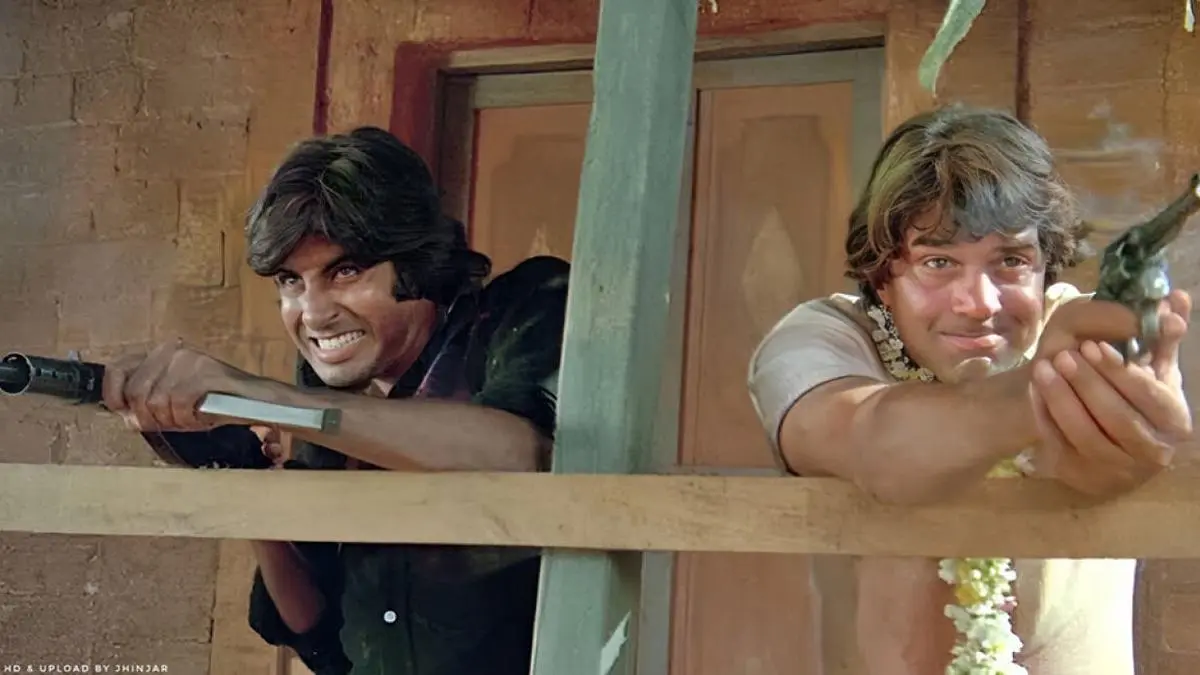
Actors Amitabh Bachchan and Dharmendra in a still from ‘Sholay’

Exactly fifty years ago, in 1975, I watched Sholay for the first time. I was a young school boy in Kollam in Kerala, where Hindi movies generally played second fiddle to Malayalam cinema. But the movie hall showing Sholay was packed to the brim for weeks together. At school, its dialogues became common currency. I fell under the spell of Gabbar Singh, Veeru, Jai and Basanti.

College days and ads

A few years later, I watched the movie again during my college days, at BITS Pilani. The story and the dialogues were as fresh and appealing as ever. Students banged chairs in the auditorium at the end of the show, to signal their great appreciation of this cult movie.

Then, again, when I joined Tata Tea as a young marketing manager, I discovered with pleasure that the launch advertising film for Tata Tea starred none other than Amjad Khan, who had played the role of the villain Gabbar Singh in Sholay. It was already the mid-1980s by now, but Gabbar Singh was as popular as ever. That advertisement was an amazing success.

Over the years, so many other brands have leveraged scenes, conversations and characters from Sholay for their television commercials, print advertisements, radio jingles and billboards. I distinctly recall Britannia using Gabbar Singh to promote its Glucose-D biscuits. Other brands that have hopped onto the Sholay bandwagon include ‘Amul’, ‘Mirinda’, ‘Tetley Tea’, ‘Whirlpool’, ‘McDonalds’, ‘Red Bull’, ‘Reliance’, ‘Orbit’ chewing gum and Swift pesticides.

Deep in our collective memory

In addition, the music from this movie keeps surfacing year after year, without fail. I have never seen a single Holi function where the song Holi ke din dil khil jaate hain, is not played. Mehbooba, Mehbooba was quite the anthem of my college days. Yeh Dosti, both the happy and the sad version, has kept cropping up quite regularly in my life, including at farewell events.

Somehow, Sholay has never really gone away from our collective memory. It has morphed from being just an iconic movie to becoming part of our lives. It has been described as a cultural milestone and a national allegory. How and why did this happen?

Storyline or characters?

Is it because of the powerful storyline, the battle between the greater good and pure evil, that lies at the core of this film? Is it because of multiple elements – revenge and violence, morality and criminality, humanity and emotion – that weave their way so seamlessly through the story?

Or is it because of the strong and diverse set of characters that walk through Sholay? The characters of Thakur Baldev Singh, Gabbar Singh, Veeru, Jai and Basanti are developed so well and so sharply that each of them gets embedded forever in our minds. Even Sambha, Gabbar Singh’s sidekick, is so memorable in his ever-so-brief appearances. Very few movies or works of literature bring to the fore so many appealing and likeable characters, so well fleshed out.

Star studded cast or dialogues?

Or could it be because the movie brought together a star-studded cast which included some of the best known names of Bollywood, including Sanjeev Kumar, Dharmendra, Hema Malini, Amitabh Bachchan, Jaya Bachchan and Amjad Khan?

Or, perhaps, was it the many, many memorable dialogues that made this film a cultural sensation? How can we forget lines such as – Tera kya hoga, Kaaliya? or Kitne aadmi the? or Tumhara naam kya hai, Basanti? or Arre oh Sambhaa! Kitna inaam rakha hai sarkar ne hum par?, all of which continue to live on in our hearts? So many of these lines continue to be used until today, which is truly amazing.

Or could it be the fact that this was the first Indian film to have a stereophonic soundtrack and to use the 70mm widescreen format, which made the movie so much larger than life? The title of the film itself was written so big and bold using cinemascope typography, making this point.

Impossible to say. Happy birthday!

As a marketer, I often take great pride in being able to pinpoint why a brand has succeeded or failed. But when I try to analyse the success of Sholay, I must admit defeat. There are so many elements that have gone into making this film successful, that it is virtually impossible to isolate one or two factors which have made this film such a roaring and lasting success. All I can say is that the combination of all these factors made magic happen, and it is impossible to analyse magic.

Sometimes, this is also true of the greatest of brands. They contain many thoughtfully designed and some accidental ingredients. But it is in the overall combination that the magic happens. Happy 50th birthday, Sholay !

Harish Bhat is an avid marketer and bestselling author. He was previously the Brand Custodian at Tata Sons.

Published on August 25, 2025

Categories
Digital Marketing

Anti-Hangover Chips! – The Hindu BusinessLine

The crisps are laced with natural ingredients like turmeric, ginger, black pepper and green tea antioxidants found in hangover-prevention supplements.

Morning after mixes and drinks are common enough to combat hangovers. But now snacking brand Too Yumm! has just dropped something called – Party Harder Chips, which it claims is the world’s first-ever anti-hangover chips inspired by Livitup, the trusted anti-hangover supplement from Dr. Vaidya’s. The crisps are laced with natural ingredients like turmeric, ginger, black pepper and green tea antioxidants found in hangover-prevention supplements. To announce the product, the brand has put together a high energy video starring Varun Dhawan who delivers iconic blockbuster dialogues in a playful manner, even as he drives home the message of saying goodbye to hangovers.

Published on August 25, 2025

Categories
Digital Marketing

Unpacking India’s orders – The Hindu BusinessLine

Four packets of Maggi noodles were ordered every minute throughout the year.
| Photo Credit:
iStockphoto

Flipkart Minutes which launched just a year ago and is now in 19 cities, has put out its annual report ‘Minutes that Move India’. The report decodes what, when and why India orders in the moment. Among the snapshots are that consumers ordered enough milk via Flipkart Minutes to fill six Olympic-sized swimming pools and sold bananas, enough to power an army of minions. Notably, indulgences weren’t forgotten consumers also ordered a staggering 12 million scoops of ice cream, while Maggi noodles continued to comfort Indian consumers with a steady average of four packets ordered every minute throughout the year. There were several strange combinations of orders but the most bizarre belonged to a customer who shopped for aloo bhujia, two gold coins and a mouth freshener.

Personalisation emerged as a key trend, with categories like greeting cards growing by over 60X, wallet-and-belt combos by more than 7.5X, and wall photo frames by nearly 28X across topical occasions such as Father’s Day, Mother’s Day, and so on.

Published on August 25, 2025

Categories
Digital Marketing

Smiling eyes – The Hindu BusinessLine

Actor Kalyani Priyadarshan in the ad.

When your eyes smile, the whole face smiles, declares actor Kalyani Priyadarshan, as she lines her eyes with Himalaya Wellness’s Kajal. A quick montage of shots of eyes – from a Kathakali artist’s eye movement to Kalyani’s own sparkling ones then shows how eyes become a canvas of emotions. The clever Onam television campaign is clutter breaking as it spotlights the Kajal which is an integral part of a woman’s festive attire Through this campaign, Himalaya invites you to give your eyes a reason to ‘Sm-eye-le’.

Published on August 25, 2025

Categories
Digital Marketing

Come home call – The Hindu BusinessLine

South Indian Bank’s Onam film makes a heartfelt call to every Malayali, wherever they are, to come home for Onam. The joyous film, which shows a girl somehow making it to her family home in Kerala in the nick of time for the festival, in the wee hours of night, and then the fun preparations for the sadya with cousins, aunts, uncles all chipping in has a simple premise: “Best returns come from the relationships we invest in”.  “When it comes to relationships, Onam is Malayali’s biggest fixed deposit. We looked into our own lives and families and thus was born this endearing musical punctuated by real conversations as ambient sounds, “ explains Paul Philip, Business Head, Human Stories. The film was written and produced by Aiswarya Suresh and directed by Brijith Bkv of First Picture Show Company.

Published on August 25, 2025

Categories
Digital Marketing

Be the family to someone

Sujata Appliances Onam campaign is also about homecoming. But it’s completely different – it’s about people in an old age home awaiting their loved ones, living abroad, to visit them on the festive day. The shelter is full of bustle, readying an Onam feast and collecting guest lists from its residents. One lady has no visitor – her children have not visited her in two years and this year too they are not coming. But, instead of moping she invites kids from a local orphanage as her guests. The film ends on the hopeful note that you can create a family.

Published on August 25, 2025

Categories
Digital Marketing

Weaving in tradition

Weaving in tradition

Categories
Digital Marketing

 Fans not Owners – The Hindu BusinessLine

It’s 25 years of Škoda Auto in India and the auto brand’s new campaign pays homage to the affection and loyalty it has earned from its fans. At the heart of this integrated campaign is a film that celebrates the pure, irrational love a young fan has for her Škoda, which she pronounces as ‘Doda’. The campaign created in partnership with Team Drive from Publicis Groupe India spotlights Škoda owners, who are fans of the brand, and encourages countless admirers, currently non-owners, to take the leap to buy one. Creatively led by BBH India, ‘Team Drive’ is Publicis Groupe India’s bespoke ‘Power of One’ unit created especially for Škoda Auto India.

Published on August 25, 2025

Categories
Digital Marketing

Decoding Digital – The Hindu BusinessLine

(from left) Rajiv Kumar, Vice Chairman, DS Group, and Prasanth Kumar, CEO, WPP Media, South Asia

FMCG conglomerate Dharampal Satyapal Group (DS Group) in collaboration with WPP Media, has launched DCODE – The Guide to Digital Marketing, a comprehensive playbook for new age marketers.

The playbook blends academic frameworks with practical application, delivering actionable systems, processes, and templates. It outlines best practices across all critical facets of digital marketing, including paid media, social media, influencer marketing, search engine optimisation (SEO), online reputation management (ORM), and more.

The playbook assumes importance as India’s media and advertising landscape is experiencing rapid growth, poised to expand by 7 per cent in 2025 to reach ₹1,64,137 crore. Within this, digital is expected to grow at 11.5 per cent, capturing 60 per cent of the market share.

Published on August 25, 2025

Categories
Digital Marketing

Colloquially speaking

Colloquially speaking

Categories
Digital Marketing

How we snack

New report on snacking challenges assumptions driving marketing investments

Categories
Digital Marketing

AI in advertising: Dumb gets dumber… and smart, smarter

A few months back, I wrote about AI adoption in Indian advertising, close on the heels of the WPP CEO stepping down — allegedly for not making WPP agencies AI-friendly.

The s***’s hit the ceiling now. Brands have cottoned on to nifty GenAI tools that can write strategy, create media plans and content, including videos at almost zero cost, and give regular reports on what’s working and what’s not.

ChatGPT is passé — even 21-year-old interns with milk teeth are talking about AI agents. Sounds James Bond-ish? It is.

But let’s rewind. When I joined advertising in the mid-1990s, an ad agency was a cool, pony-tailed, smoke-filled affair with writers, designers, media planners, account managers and even a couple of sinister-looking, hard-drinking gents who looked straight out of Mad Men.

There were multiple touchpoints between the client’s business need and the final product — the ad that the consumer saw on TV or in a newspaper or billboard.

A simple ad could take weeks, if not months, in being researched, re-re-re-written, scores of media plans evaluated, and so on.

Fast-forward to 2025. No second sentence can roll past without an AI inserted somewhere. AI is being hyped as the ultimate game changer, promising to reinvent everything from healthcare to content creation.

Already, AI is replicating or replacing core agency functions.

Copywriting and content generation are handled by platforms like ChatGPT, Jasper and Copy.ai — these AI tools can write headlines, social posts, SEO content and even long-form articles.

Videos can be created on Veo 3, InVideo or Synthesia in the blink of an eye.

For visual design, tools like Midjourney, DALL·E and Adobe Firefly are generating high-quality images in minutes.

On the media side, planning and optimisation tools that can segment audiences, optimise bidding strategies and iterate creatives at scale haven’t really taken off. It’s still Excel mostly.

Even influencer discovery, previously a labour-intensive task, is being automated by platforms like Influencity and Affable,which use AI to match brand goals with relevant creators across demographics and geographies.

While industry veterans are cautiously optimistic, snarky young marketers are embracing the shift with boldness. As one marketing consultant recently posted on LinkedIn: “The marketing agencies you’re paying thousands to will be replaced by AI before your own job will be replaced.”

The sentiment is provocative but not entirely off the mark. With the right tool stack, a dude can now run a mid-sized agency — handling content, design, performance marketing and reporting.

Solo operators and boutique agencies are already leveraging tools to reduce manpower costs, deliver faster turnaround and test multiple iterations of creatives. Generative AI also democratises access — smaller clients now have access to visual and copy quality that was once only available at premium pricing.

Productivity gains are staggering: PwC reports that 70 per cent of Indian CEOs expect GenAI to transform marketing within three years, and EY data show a 41-45 per cent increase in output across marketing functions using AI automation.

But hang on. Operational scalability is not the same as strategic depth. AI is not going to hide mediocre thinking. Especially when everyone has the same AI models. AI often regurgitates clichés, fails at tonal nuance and lacks the cultural sensitivity required for Indian audiences. Algorithms cannot yet replace lived experience.

What does the agency of the future look like then? It is not necessarily smaller — it is reconfigured, more fluid, with a core of creative strategists and AI specialists, supported by plug-and-play experts.

New roles will emerge. Traditional account managers may give way to customer experience leads who oversee AI and human interactions. Subscription-based micro-agencies may proliferate, offering fixed monthly retainers to execute a full range of services using automation.

My last word: AI will make smart marketers smarter, dumb marketers dumber.

(Shubho Sengupta is a digital marketer with an analogue past)

More Like This

Published on August 11, 2025

Categories
Digital Marketing

Welcome to film marketing 3.0

In an audacious move, Christopher Nolan’s film The Odyssey opened for ticket sales a full year before its scheduled release on July 17, 2026. And yet, there was mad fan hysteria reported in early bookings, from Sydney to Seattle. It’s not implausible that they may have a billion dollars in ticket sales even before the first show is screened. A movie that is still under production is being sold like a concert of a long-returning singer.

If the sole purpose of movie marketing is selling tickets, then Nolan has surely nailed it.

Movies of this decade have what those in the past never had — an audience of millions of global digital natives who crave excitement, authenticity, and connection. Their short attention spans seek constant dopamine, and any event that can catch their imagination, like The Odyssey’s advance ticket sales, is sure to create a box office impact.

The new key

If Marketing 1.0 was the use of traditional media to find audiences, 2.0 was the added experiential route with meet-and-greets, and event and media integrations. Post the pandemic, in the age of infinite content and clutter, it’s getting tougher to draw the disengaged generation to the theatre. It requires the curation of sharply targeted messages with virality — a new Marketing 3.0 playbook.

As video and voice overtake text and print as the primary forms of content consumption, the daily diet for the time-starved GenZ comprises infinite wake-up scrolls and bedtime reels, making it possible to reach them digitally with a good bait. Creating exciting, shareable content to get the film into conversations is the new key to box office glory.

Movies that use Instagram to create excitement by sharing stunning shoot visuals, Facebook for advertising, YouTube for trailers, and TikTok for behind-the-scenes clips have seen it translate to ticket sales.

Here are some breakthrough marketing ideas movies have used to get audiences to the theatres. 

Influence, not influencers

The producer of Saiyaara, YRF Films, got some not-so-trained actors to shed elephant tears and act out emotional outbursts after seeing the film. These unfiltered, amateur videos of girls crying in lifts, car parks, and on footpaths after watching the movie spread word on social media like wildfire and created a rush at the ticket office. No hired influencer could have matched the power of #saiyaaracrying, which propelled the movie past the ₹300-crore mark in collections — a first for a movie with newcomers.

In 2012, the makers of the horror film series Paranormal Activity had done something similar — recording jump-scare reactions of terrified audience members using night vision cameras at special previews of the film. That film, made with just $200,000 (₹1.7 crore) grossed over $200 million (₹1,700 crore) at the box office and became a cult classic.

Mystery, surprise

The poster for the film Jawaan raised tremendous curiosity about the new look of SRK, re-positioning him as an action hero. There was no pre-release marketing other than this poster, adding to the suspense. Using the same playbook, YRF didn’t have any pre-release marketing for Saiyaara. No one knew anything about the lead pair, Ahaan Panday and Aneet Panda, so when they first appeared on the screen, they were fresh and exceeded audience expectations.

The horror comedy Munjya put an ugly, unexplained graphic on billboards, fuelling curiosity among fans of the genre. This created so much social virality that it had every teenager wanting to catch the film, eventually helping it cross ₹125 crore in revenue. 

Barbie used blank, pink outdoor hoardings with only the release date on it — there was neither the name of the film, nor even an image of the lead, Margot Robbie, or a doll. The thematic colour of the marketing campaign reminded the target group, which had grown up since its Barbie days, that this movie was for them, and the word spread rapidly within and beyond the fan base. Enough for them to flock in with nostalgia, piling up $1.5 billion (₹13,500 crore) in box office collections for this Greta Gerwig wonder.

Building curiosity 

Aamir Khan’s rugged, bald-headed with a scar look for the movie Ghajini became the hook for the film’s marketing. The promotion focused not on the film’s content but the haircut and scar. Aamir went into salons and gave haircuts to volunteers and theatre staff, creating a virality not heard before and making India’s first ₹100 crore film at the box office.

Given that the movie came after Taare Zameen Par, where he plays a simple teacher in a school for differently abled people, his muscular, gritty look sparked tremendous curiosity and the marketing leveraged on that brilliantly.

Marathi film Bai Pan Bhari Deva (Women can be tough too!) not only had a cool title but also intriguing posters of the cast — relatively unknown female actors wearing shiny, bright traditional Nauvari sarees and Ray-Ban aviator glasses. No one knew what the film was about, but the poster and special women-only screenings before release gave it a stupendous start and over ₹100 crore at the Marathi box office — a great return on a shoestring budget.

Know your core

Gully Boy, a film about street rappers in Mumbai, used grassroots marketing to get to the hip-hop community. A mix of live rap battles and street performances created awareness of this underground music movement and drove a string of new audiences to the box office. The love story with a beat inspired people to begin writing rap as a form of expression and participate in open mike sessions, as the film attained cult status.

The first instalment of the Telugu film Pushpa had stormed the box office with an unprecedented ₹100 crore in collections for its Hindi version, pushing the producers to target the northern market actively when they returned with Pushpa2. Allu Arjun launched the trailer in Patna, at stadiums filled with people eager to watch him in flesh and blood. The Hindi version of the sequel raked in over ₹700 crore at the box office, opening a completely new market for Telugu feature films.

Manjummel Boys, with a dozen young boys and no heroine, pitched the film as a tragic survival story and went on to become the first Malayalam film to collect over 50 per cent of its box office earnings from markets outside Kerala.

Stunts and shows

Mission Impossible is a movie franchise built on a strong reputation for realistic stunts performed by Tom Cruise himself. This commitment to authenticity is an important selling point, and the movie used the photograph and video of him seated atop the spire of the Burj Khalifa in Dubai, generating for the film a lot of buzz online and nearly half a billion dollars (₹4,300 crore) at the box office.

The James Bond film Skyfall had Daniel Craig parachuting down with the Queen from a helicopter for the opening ceremony of the London Olympics. Though they used body doubles for the stunt, the 2012 Olympic opening ceremony was forever shaken, if not stirred. That widely televised marketing gimmick perhaps made Skyfall the only Bond movie to gross a billion dollars (₹8,500 crore) at the box office.

For Barbie, Warner Bros created a TV show called Dreamhouse Challenge on its channel HGTV, where the actual Barbie house from the movie was recreated and audiences would participate and live the Barbie Life.

The big question

Kattapa ne Bahubali ko kyon maara? (Why did Katappa kill Bahubali?) remains one of Indian cinema’s most iconic questions, driving people to seek the answer by watching the sequel of the wildly popular Telugu film Bahubali. While part 1 clocked nearly ₹650 crore earnings, the sequel raked in a cool ₹2,000 crore. The series captured the nation’s imagination with incredible storytelling and performances.

Collaboration pays

In a remarkable departure from convention, Warner Bros and Universal Pictures, the producers of the widely different but simultaneously releasing films Barbie (by Greta Gerwig) and Oppenheimer (by Christopher Nolan), respectively, marketed them as a double bill of sorts with the tagline #Barbenheimer. The ploy worked as audiences took the bait and watched both films, which exceeded box-office expectations to gross over $2.5 billion and wing eight Academy awards between them.

Can we imagine War from Yash Raj and Coolie starring Rajinikanth, both of which release on August 15, be jointly promoted as #CoolieWar? 

 Now, that could be a blockbuster marketing hack!

(Naveen Chandra runs 91 Film Studios, which produces and distributes regional language feature films)

More Like This

Published on August 11, 2025

Categories
Digital Marketing

The forgotten friend – The Hindu BusinessLine

Friendship Day gets a fresh twist this year with Bingo!’s new campaign, ‘From BFF to FF — Forgotten Friend’, conceptualised and executed by Tonic Worldwide. What happens when your best friend starts seeing someone — you get badly sidelined. Through a series of digital films, social media activations and influencer collabs, the campaign hilariously captures the experience of forgotten friends. When Cupid strikes your bestie — plans get rescheduled, replies are slow and you no longer seem to exist.

Sisters take legal action

Rakshabandhan campaigns are sure getting creative. Salty, a young fashion accessories brand, pulled off a wild activation that was absurd, dramatic and fun. It created a microsite where sisters could send printed legal notices to their brothers for forgetting their Rakhi gift. Within 48 hours, 1,500+ legal notices were sent. From Arunachal Pradesh to Ahmedabad, brothers were legally reminded to send a Rakhi gift to their salty sisters. The campaign ‘Salty’s Got a Legal Notice’ attracted nearly 0.2 million visits to the brand’s page in less than 30 hours and raked up half a million impressions on LinkedIn. And most importantly, says the brand, many of the brothers actually bought gifts out of guilt.

Furry siblings

Rakshabandhan is not just about human siblings. Tech-enabled pet care start-up Supertails spotlighted pets in its Rakshabandhan campaign ‘Ghar ke Rakshak’, which championed the idea that our furry companions need to be part of every ritual and tradition as they are as much family. The video shows a Rakshabandhan box specially curated for pet parents as a gift to their furry babies. It was sold on the Supertails website and app, with ₹50 from each sale directed toward the vaccination of street dogs.

A lifelong bond

Tanishq’s heart-warming Rakshabandhan campaign ‘Brothers Written by Sisters’ builds on its Father’s Day film ‘Fathers Written by Daughters’, which captured how daughters influence and reshape fathers’ beliefs. In this film, Tanishq spotlights the sibling relationship, showing how empathy, emotional growth and values are exchanged in the lifelong bond between a brother and sister. It cleverly begins with the same scene as in the Father’s Day film — a nameplate outside the house — and the ending ties in beautifully. Clever script, executed well.

Rainy prompts

Fortune Soyabean Oil is tickling taste buds this monsoon with a unique outdoor campaign that transforms a regular spell of rain into a celebration of pakoda cravings. At the heart of this initiative is a rain-sensing billboard, designed and executed by Laqshya Media Group, which integrates a live weather ticker displaying real-time rainfall updates. The minute it starts raining, the billboard brings up visuals of clouds parting to reveal a freshly plated serving of hot, crispy pakodas, accompanied by chutney and chai, instantly evoking the joy of “baarish ke saath pakode”. Installed at strategic high-traffic zones in Delhi, Jaipur and Lucknow, the innovation bridges technology and tradition in a deeply relatable way.

From reel action to real stunts

Bajaj Auto’s latest campaign for Pulsar has a bold message for youth — ‘Duniya Dekhti Hai. Tu Dikha’. The commercial shows young people in a canteen immersed in their mobile phones, watching reels . Until two young men take out their bikes and perform startling stunts. The campaign urges viewers to break out of the spectator mindset, get out of unreal reels and bring back the real rush. The lines may be good but the campaign has a tired trope feeling — why do bike ads need to rely on dangerous stunts?

More Like This

Published on August 11, 2025

Categories
Digital Marketing

Hollywood movie F1 boosts brand search & walk-ins for Tommy Hilfiger: Arvind Fashions

F1 is a 2025 American sports drama film directed by Joseph Kosinski and stars Brad Pitt as Formula One racing driver Sonny Hayes
| Photo Credit:
Ritaja Roy _12104@Delhi

Marketing investments into “F1”, the hollywood movie starring Brad Pitt, has provided strong brand visibility to Tommy Hilfiger, a designer lifestyle brand under Arvind Fashions Ltd, said company officials. The brand’s association has led to a spurt in brand search and walk-ins

“We felt that this is the right time to invest very aggressively behind marketing. We saw an opening in the market to fuel growth of marquee brands like US Polo Association and Tommy Hilfiger etc to gain market share and grow aggressively,” Shailesh Chaturvedi, MD and CEO of the Ahmedabad-based company said recently. US Polo Association, Tommy Hilfiger, Arrow, Calvin Klein, Flying Machine are the five core brands of Arvind Fashions Ltd and cater to the urban, upwardly mobile consumers seeking global fashion.

“A lot of this marketing investments have gone into online visibility for recruiting new consumers, including younger consumers and consumers in small towns through our wide online reach. Our brands are market leaders across channels and this marketing investment will further strengthen our leadership position. One very happy example of this marketing investment has been the investment of Tommy Hilfiger into F1 movie that got released recently. You can see very strong brand visibility and brand association with Tommy Hilfiger in this movie. We saw an immediate spurt in brand search and increase in walk-ins with the association with the film. the special F1 capsule of garments with Tommy Hilfiger also got sold super quickly,” Chaturvedi added while addressing his last investors’ call a few days ago. Amisha Jain will be taking over as the new MD & CEO of the company for a five-year term from August 13. 

On September 7, 2011, the company had entered into a License Agreement with Tommy Hilfiger Europe BV and obtained an exclusive and assignable license to use the Trademark Tommy Hilfiger, in connection with the manufacture, import, distribution, promotion, advertising and sale of Tommy Hilfiger products in India for a consideration of ₹37.80 crore, according to the company’s annual report. Under the aforesaid agreement, company must achieve a certain minimum sales level with respect to the licensed products and pay royalty on higher of the actual and minimum sales value of license products.

“We have taken a stance to very aggressively invest behind advertising. Last year also we steadily increased our advertising spends as our big brands are becoming bigger. It is a conscious strategy to increase the advertising (spends) and remain top of the mind and gain market share. This strategy will continue on FY 26,” he added. The company has targeted to open 150 new retail stores in FY 2026 and in the first quarter of the current fiscal it has opened 40000 square feet of additional retail space. Tommy Hilfiger and Calvin Klein business have grown double digits, delivering exceptional margin profile,” Chaturvedi said, adding that the company aspires to achieve a 12-15 percent growth in revenues during the year.
 

More Like This

File picture: US President Donald Trump
Clothing a million: Kitex produces 6.5 lakh pieces of garments per day

Published on August 5, 2025

Categories
Digital Marketing

ZOFF’s sweet spot in the spice market

If there is one thing in the kitchen that Indians are very particular about, it’s the spices they use. And the choice of spice brand is most often dictated by regional preferences, with each State having its entrenched local leader.

There are only a handful of national brands, and it has taken decades for an Everest or MDH or Catch to become one. The nearly ₹87,000 crore spices market has over 1,460 registered companies (Traxcn data) and thousands of unorganised players.

Video Credit: Businessline

Most consumers are fiercely loyal to the spice brand they use. The category has seen 54 acquisitions, 17 IPOs, and attracted venture capital and private equity funding of over $6.4 billion.

And yet, here comes a young D2C player from the steel belt of Raipur, set up by two brothers, Akash and Ashish Agrawalla, with a burning ambition of becoming a big national spice brand. “In five years’ time, our goal is that at least one of our products should be in every Indian kitchen,” declares Akash, co-founder, ZOFF. The name ZOFF is an acronym for Zone of Fresh Foods.

Already the brothers have discovered the sweet spot in the spice segment. That is in ‘khada masala’ or whole spices. Most brands, they say, play in the powders and blended spices space, where the margins are higher.

“We saw the big gap in the market in whole spices. We don’t want to compete with Everest or MDH in their niche, instead we want to be identified as the best brand for whole spices,” Akash says.

To strengthen that positioning, ZOFF has launched a series of rib-tickling campaigns, starring Shilpa Shetty, that end with the tag line “Khadey masala matlab ZOFF”.

Aroma of opportunity

Ashish says that once ZOFF gets its foot in the door of an Indian home through whole spices, the bet is the customer will try out their other products too. And with that eventuality in mind, ZOFF has spread itself wide through the category. Spices are of four types — powders (turmeric, coriander, cumin, chilli being the most essential), blended (garam masala, pav bhaji masala, sabzi masala, et al), whole spices and seasoning (oregano, parsley, among others), explains Akash. “We are in all four.”

Within blends, the brothers say, there is no limit, and this is where regional brands score — you might choose a northern brand for rajma masala, a southern one for sambar masala, and region-specific ones like vangi bhaat masala, rasam powder, and so on.

A tour of ZOFF’s sprawling factory shows the use of modern technology such as cool grinding processes to retain more oils in the spices, fascinating product extensions, and packaging innovation. For instance, there is ‘haldamrit’, a turmeric powder with spices to be mixed with warm milk — a traditional remedy for cold and cough.

Disruptive ziplock pouches have been introduced, so there is no need to transfer the spices to bottles. But most interesting of all are the tiny sachets for some products. The brothers have also ventured into the dry fruits, nuts, seeds, marinades and ready-to-cook mix segments.

Set up in 2018, and gathering pace around 2021, ZOFF is already touching a revenue of ₹200 crore and eyeing a turnover of ₹300 crore by next year — the robust 100 per cent growth coming through more products, big distribution ramp-up and marketing.

Calculated entry

The Agrawalla brothers’ entry into the spices segment was well-calculated. Hailing from a well-off family that was in a steel-related business and agri trading, the brothers did their MBA in Australia and were clear they wanted to do something else. According to Ashish, what tempted them into spices was the margins, the gap they spotted, and the fact that there were very few big national brands.

Born online — Flipkart Grocery was their first distribution channel — today over 80 per cent of ZOFF’s turnover is from digital platforms. “While we got huge learnings from Flipkart Grocery, it was CRED store that helped us achieve entry into 5 lakh homes,” says Ashish. The brand is present on all six quick commerce platforms. But now, it is ramping up its offline play. Partnerships with D-Mart and Reliance Smart Bazaar have been sewn.

Why operate from Raipur, which has no connection with spices? The brothers insist that Raipur actually works wonderfully to their advantage. The cost of setting up the office and factory (with a lot of space and capacity to expand) was much lower. Moreover, being in central India, in a well-connected industrial town, the transportation — both for sourcing and despatch — was much cheaper and more efficient. Their dad, incidentally, does all the sourcing of spices, having experience in agri trading.

The brothers, who came into the limelight after a Shark Tank appearance that won them some funding from boAt’s Aman Gupta, are very marketing savvy. So far the major spends have been on performance marketing, with the brand-building journey beginning only now. It has got Series A funding from JM Financials and is using that to scale up.

Since spice was a completely new business for them, did they have any mentors? “Time has been the biggest mentor,” responds Akash, describing how the Covid years were spent in learning and strategising.

(The writer was in Raipur at the invitation of ZOFF)

More Like This

Published on July 28, 2025

Categories
Digital Marketing

Not policing but protection, says self-regulatory body

DOS AND DON’TS: Sahil Chopra, Chairman, Indian Influencer Governing Council

For many brands, influencers have become a core pillar of marketing. For consumers, an influencer’s endorsement now carries more weight than traditional advertising. The creators themselves are facing challenges — what with the AI wave, on one hand, and a rising call for authenticity and accountability on the other.

So it’s pretty timely that a self-regulatory body — the Indian Influencer Governing Council — has been set up by industry stakeholders.

Launched in February, the council has been busy. It opened three chapters — Gurugram, Mumbai and Bengaluru. It also released a ‘code of standards’ for influencers and brands to ensure authenticity in collaborations and responsible content creation. But here is the interesting twist — the IIGC has also launched standards for consumers. “As digital influence shapes purchasing decisions, it is essential for consumers to differentiate between genuine recommendations and paid promotions, recognise manipulative marketing tactics, and engage ethically in online interactions,” the standards document states.

A supportive voice

Interestingly, IIGC is more focused on protecting the rights of influencers — the idea being to bring back trust in the overall influencer marketing ecosystem.

Sahil Chopra, IIGC Chairman, who is the Co-founder and CEO of adtech platform iCubesWire, says the council comes at a time when trust in influencer marketing is getting eroded, brands are getting away scot-free with questionable partnerships, and influencers are left unprotected while consumers are sometimes misled. “Our intent is to work with stakeholders across four key pillars — creators, platforms, brands and consumers — to moderate, add value to the ecosystem and standardise practices,” he adds

He stresses that the body does not aim to police the creator ecosystem.

“We have millions of creators in the country. Many influencers do not even know the dos and don’ts. We have creators taken to task for swearwords and facing legal action. Look at the level of mental strain they undergo. In fact, that is why we have launched IIGC Protect. We have collaborated with partners — Trilegal and United We Care — to offer legal and mental health support to creators,” Chopra adds.

IIGC is also focusing on contractual relationships between brands and creators. It offers templates and best practices to ensure all partnerships are governed by clear, fair, and transparent contracts. “This aims to address one of the most common sources of disputes in the space — informal, undocumented agreements that leave both parties vulnerable,” says the standards document.

Dispute resolution

An IIGC taskforce has also been set up to help brands navigate online reputation risks proactively through real-time digital listening, sentiment analysis, and crisis mitigation. Its mediation service offers a neutral and confidential space to resolve disputes related to content, reputational concerns, and contractual issues.

The priority for IIGC now is to ensure that the codes of standards are widely implemented, and to roll out memberships to get more stakeholders on board. Also on the cards is a training and certification initiative. “It will be like an academy, not just for creators but also brands. Influencers can become IIGC certified. They will be trained on what’s wrong and right, how to sign contracts with brands to protect their rights. It will also give brands great exposure to understand which influencers they should partner with, among other aspects,” Chopra explains.

In recent times, creators as well as celebrities are under scrutiny for non-disclosure of paid partnerships. “That’s just 1 per cent of the challenges in the influencer marketing ecosystem. There has been too much bashing and negativity around this issue. The more we keep diving into the non-disclosure part, the more we are missing the bigger challenges. Let’s not overplay and exaggerate the non-disclosure issue,” Chopra insists.

IIGC has also declared December 2 as ‘World Influencer Day’. “Creators are not just content generators, but also powerful voices shaping culture, commerce, and community. We need to acknowledge the role they are playing,” sums up Chopra.

More Like This

Published on July 28, 2025

Categories
Digital Marketing

Raj Nayak’s big new idea

Former Viacom18 COO launches House of IPs

Categories
Digital Marketing

Redefining masculinity – The Hindu BusinessLine

Vinsmera Jewels’ sparkling ad campaign, which is breaking the internet, opens on a film set where the crew is arranging props for a jewellery shoot, even as Malayalam superstar Mohanlal hangs around. He looks covetously at the jewellery and then quietly vanishes. The scene changes. Everyone is frantically searching for the jewellery. Meanwhile, Mohanlal in his vanity van is seen trying them on, smiling at his reflection. As the director catches him in the act, the actor laughs with pure joy, breaking an uncomfortable moment. Mohanlal aces this tender, nuanced ad, directed by Prakash Varma of Nirvana films, that recasts masculinity.

Peeling the layers

Prime Video’s new campaign charmingly brings into focus the diversity of its catalogue, spanning themes, genres, languages, and storytelling formats. In the Hindi campaign, Manoj Bajpayee addresses the ‘what to watch’ dilemma humorously, cleverly weaving in the names of shows. Samantha’s Tamil version is even better. Meanwhile, an emotion sensing layer, developed by WPP OpenDoor and Wootag, allows viewers to interact with ads and instantly get a curated list of series or movies to suit the mood.

Grains of unity

On Instagram, a fascinating ‘passing the dabba’ relay is playing out. First we saw actor Soha Ali Khan, who comes from a multicultural background, unveiling the diversity of traditions and dishes in India as she rustles up a biryani made with India Gate basmati rice. Then we see chef Kunal Kapur make a fragrant chana pulao that reminds him of his mother, and which he packs off in dabbas. The dabbas are opened by other food influencers who, in turn, make their favourite rice dish flavoured with a memory. A delicious campaign served with a fun competition and prizes.

Sweet or sour?

The new campaign of confectionary brand Chupa Chups, from the house of Perfetti Van Melle, builds on the idea of how the fusion of sweet and sour can flip the ordinary into a chaos of pure fun. The TVC opens in a casual setting with a group of friends playing carrom with a packet of the tasting jellies beside them. The moment they bite into Chupa Chups Belts, the familiar game spirals into hilarious unpredictability with new rules, and tools. As the tagline goes, “Samajh Ke Bahar Hai, Jaise Chupa Chups Sweet Hai ya Sour Hai.” The campaign is crafted by Ogilvy.

More Like This

Published on July 28, 2025

Categories
Digital Marketing

Why marketers should ditch the car and take a metro (or bus)

GREAT UNIFIER: Commuters of all hues ride the metro
| Photo Credit:
SUDHAKARA JAIN

When I visit Mumbai, I often take the local train from Churchgate station to Borivali. The main objective is to observe the people on the train. In my home-town of Bengaluru, as well, I have begun travelling by metro quite often, but mostly because the metro takes me to my destination far quicker than an Uber cab can — particularly given the many choked roads of this otherwise lovely garden city. But having got onto the metro, here too I keep looking at people.

In the past two months, these occasional travels by local train and metro have thrown up several interesting insights. I have jotted down over 25 observations during this period. Here are five of them.

90 per cent of the people are on their mobiles constantly — a vast majority are watching videos on social media.

60 per cent of the people wear wrist watches, primarily metal analogue watches. I see far fewer wearables on wrists now, compared with two years ago.

Many more young and middle-aged men are wearing colourful shirts, compared to earlier years (including me).

On my last local train ride in Mumbai, virtually no one was smiling, perhaps after a long and tiring day at work. On the metro in Bengaluru, on the other hand, I inevitably see many more smiles.

Lots of people in Mumbai local trains were carrying lunchboxes, but very few did in Bengaluru.

Each of these ‘public transport’ observations can potentially lead to good marketing insights. For instance, probing why fewer people are wearing wearables now, and what this tells us about changing attitudes to digital health and wellness. Or why middle-aged men are suddenly wearing floral shirts, and what this tells us about ageing and urban masculinity.

Living laboratory

This leads me to an interesting point. Public transport — whether local train, metro or bus — is one of the best platforms for observing consumers and their real-time, in-situ behaviour. Yet, many marketers who choose to travel exclusively by private vehicles or Uber cabs or auto-rickshaws miss out on this living laboratory that pulses with consumer trends every single day.

If you are a marketer or a student of the consumer universe, here are a few reasons why you should ditch your private vehicle and consider travelling by public transport at least occasionally.

Local trains, metros and buses bring together many different segments of society. Affluent office-goers, young students, retail employees, working women, middle-class families — people from virtually every large consumer segment use local transport, particularly in large cities. This helps you break away from the ivory tower of your office or apartment complex, where you are likely to interact primarily with people from your own demographic segment.

With little effort, you can observe what people are wearing or viewing, and often also overhear snatches of conversation. You can see which shopping bags they are carrying, what snacks they are munching on, and what hairstyle or jewellery they are sporting. Sometimes, just the expression on their face speaks volumes. These and other observations can create trend lines in your mind, or stoke your curiosity to find out more.

If you are a little more adventurous, you can strike up engaging and relevant conversations with co-travellers. I do this quite often, and I find that many people (though not all) are happy to chat. For instance, during one metro ride in Bengaluru, I overheard two young people speaking about garments they recently bought at Zudio and Max stores. I spoke to them about why they shopped at each of these stores and the comparative benefits. I came away with a couple of nice insights.

While it is important not to generalise or reach firm conclusions from these assorted observations or conversations, what I have realised is that they can spark new thoughts, questions or hypotheses, which can, in turn, lead to meaningful and actionable ideas.

For all these reasons, I would urge marketers to hop onto metros or buses every now and then. This is one of the best and easiest ways of keeping consumers in your sight.

(Harish Bhat is an avid marketer and bestselling author. He was earlier the Brand Custodian at Tata Sons)

More Like This

Published on July 28, 2025

Categories
Digital Marketing

How about a relatable risk metric?

Processed foods typically mention saturated and transfat per serving. But how will you know whether, say, 20 gram of saturated fat per 100 gram serving is too much? You could face a similar situation with investment products. In this article, we discuss whether asset management companies (AMCs) can disclose risk associated with their mutual funds as a relatable metric.

Relatable risk

What if we are informed that burning fat from consuming ice cream would require us to walk, say, five kilometers at a speed of six kilometers per hour? That way, we can relate to the effort needed to keep good health and yet enjoy such food.

Can we apply a similar argument to investment products?

There are several issues to consider. For one, individuals have different life goals and different time horizons for the same goal. For another, the impact of a shortfall in a portfolio at the end of the time horizon may be different for everyone. Therefore, presenting a standardised set of information could be challenging when you are investing to achieve a life goal.

Consider large-cap active funds. The riskometer categorises such funds as high risk. But what does that mean when you are investing to finance your child’s college education or making down payment for a house? Note that being conservative and not taking risk could also lead to failure of life goals, unless you significantly increase your savings. It will be easier if AMCs disclose a standardised metric in relation to your goal. Suppose you assume that a fund must give 12 per cent annual return (referred to as minimum acceptable return or MAR) to help you achieve your goal. The riskometer could show the frequency during the last 5, 7, 10 years and since inception when the fund gave a return lower than 12 per cent.

That could give a perspective of how risky the fund is in relation to the goal you want to achieve. Note risk is defined as the possibility of earning returns lower than MAR in any year, as that may lead to goal failure. A fund can assume a standardised return regardless of your goals; for MAR is the expected return on equity as an asset class.

Conclusion

AMCs should disclose risk metric in a way we can relate to the information provided. The metric must be standardised for comparison among peer funds. The above argument applies to equity funds with track record, not to new fund offers.

(The author offers training programmes for individuals to manage their personal investments)

Published on July 28, 2025

Categories
Digital Marketing

India bond yields may inch higher as US yields move up

A likely drop to a record low in July is prompting calls for at least one more rate cut this year
| Photo Credit:
John Kevin

Indian government bond yields may rise in early deals on Wednesday, tracking a spike in U.S. Treasury yields as elevated inflation suggests that the Federal Reserve will remain cautious towards monetary policy easing.

The yield on the benchmark 10-year bond is expected to trade between 6.29% and 6.33%, a trader at a private bank said, after closing at 6.3090% on Tuesday. The five-year 6.75% 2029 bond ended at 5.9980%.

“There could be some upward move in the opening trades, but again we are not forecasting any large swings and overall trend will continue to be sideways for today and tomorrow,” the trader said.

U.S. yields jumped, with the 10-year yield nearly hitting the crucial 4.50% mark, while the 30-year yield rose above 5.00%.

Data showed the retail inflation increased 0.3% last month after edging up 0.1% in May, the largest monthly rise since January. In the 12 months through June, the inflation climbed 2.7% after rising 2.4% in May.

A Reuters poll had forecast retail inflation would climb 0.3% and 2.6% on monthly and annual basis, respectively.

The odds of a rate cut from the Fed are nearly zero for July and have reduced to 55%, down from 65% a week ago.

“Higher tariffs (are) still in the pipeline from here… markets could be rightly pricing out the near-term chance of Fed Funds rate cuts,” MUFG said in a note.

Back home, India’s retail inflation slowed to a more than six-year low of 2.10% in June, down from 2.82% in May.

A likely drop to a record low in July is prompting calls for at least one more rate cut this year. RATES India’s overnight index swap rates (OIS) are expected to see paying pressure tracking elevated Treasury yields.

The one-year OIS rate ended at 5.53% and the two-year OIS rate at 5.50%. The liquid five-year finished at 5.73%. KEY INDICATORS: ** Benchmark Brent crude futures rose 0.2% to $68.90 per barrel after easing 0.7% in the previous session ** Ten-year U.S. Treasury yield was at 4.4753%; two-year yield at 3.9440% ** The RBI will auction treasury bills worth 200 billion rupees ($2.33 billion) ($1 = 85.9560 Indian rupees) (Reporting by Dharamraj Dhutia; Editing by Rashmi Aich)

Published on July 16, 2025

Categories
Digital Marketing

Trackable luggage – The Hindu BusinessLine

Luggage brand Safari and wearable tech company boAt have come together to help you keep your bags safe. With the campaign ‘Your Safari Got Safer’, launched on Amazon during Prime Day, Safari and boAt unveil a trackable luggage solution that starts at ₹4,499. The campaign introduces Safari Trackr, a Bluetooth-enabled luggage collection that can be tracked in real time, whether in transit, at baggage claim, or halfway across the world. Told through two digital films, the campaign balances relatable humour with tech-driven confidence.

Look good, feel good

Raymond has joined hands with Goonj to launch the 2025 edition of its annual garment exchange initiative ‘Look Good Feel Good’. Actor and philanthropist Sonu Sood has been onboarded to amplify the core message: Clothing, when thoughtfully passed on, can restore dignity to someone else’s life. While the clothes are routed through Goonj’s Circularity Centres, the video creates awareness about the programme, wherein each customer can receive up to 15 stitching vouchers for exchanged garments.

A snack anthem

Bingo! Tedhe Medhe’s latest campaign, #SabkaJawaabTedhe- Medhe, transformed a viral reel into a catchy snack anthem, showing how brands can engage with internet culture. It all started with a spontaneous reel by creator Deepankar Koshta, where he uttered the now-iconic phrase “Tedhe Medhe bhi acche lagte hain”. Bingo! Tedhe Medhe sent Deepankar a Tedhe Medhe hamper and letter. It then partnered with music producer Anshuman Sharma to turn Deepankar’s line into a quirky, upbeat, hummable anthem.

Woktastic party

Chinese Wok, India’s largest home-grown Desi Chinese fast food company is celebrating its tenth anniversary with a rocking wok party. To mark the occasion, the company has launched a special 10-year emblem, which will be seen across stores, packaging, and digital platforms throughout the anniversary campaign. And to celebrate its 10-year milestone, Chinese Wok has launched a series of 10 high energy, consumer-driven activations from limited-edition offers and exclusive food films to social media contests and lively in-store celebrations all united under the bold and playful theme, “Celebrating 10 Woktastic Years”.

More Like This

Published on July 14, 2025

Categories
Digital Marketing

Meet the modern Indian family — filled with pets, friends, Alexa, et al

FURRY RELATIVE: India’s pet population is set to touch 40 million
| Photo Credit:
Dimple Bhati

Think ‘family’ and what comes to mind? A small cosy unit with a husband, wife and two kids? Or a larger unit made up of grandparents, parents and children? Think again. Families are no longer forged by blood ties alone. The family of today could comprise a single woman, her pet dogs and/or cats, a live-in house help who has motherly opinions, and Siri and Alexa!

Drawing on its NeedScope research framework, which leverages consumer emotions, Kantar’s report ‘The Urban Indian Family 2025’ has delved deep into how modern Indian households are evolving. Old classifications are passé. No longer can households be structured as joint or nuclear units. “It is not a monarchy. It is not even a democracy. It is a coalition government with no clear majority, where policies are made on the fly, alliances shift overnight, and everyone claims to be in charge,” the report quips.

The report has deep implications for brands, which need to understand the nuances of the blurring lines between blood ties and bonds forged on friendships and emotional needs. Between ordering on Blinkit to recreate grandma’s recipes and seeking help from ChatGpt to craft weight-loss plans and embracing festivals with fervour, urban Indian households are juggling modern lifestyles with long-standing traditions. WhatsApp groups are the new living rooms and rituals are up for a reboot.

Full house again

There has been a nearly 50 per cent jump in the proportion of unmarried 15- to 34-year-olds living with parents over the last five years, indicating a shift towards interdependence — “the return to full house”.

This also means that the definition of ‘family’ has expanded. “Families are no longer defined by bloodlines but by those who show up. There are both visible and invisible entrants in the Indian families. So the emotional anchors in the families are changing,” says Macneil Chowdhury, Director-Qualitative (West) Insights Division, Kantar.

With India’s pet population expected to increase to 40 million by 2026, this means golden retrievers, Labradors and Persian cats are not just featuring in Insta Reels but are also emotional mainstays. Household help, drivers and nannies are increasingly playing the role of “the third parent”. Alexa, smartwatches and WhatsApp groups are playing a critical role in families, not just for logistics but also emotional support.

“Brands will need to start recognising and celebrating chosen families and bonds based on empathy and reliability, not just lineage… they should not attempt to portray the ideal Indian family as typically consisting of one girl child, one boy child, mom, dad and grandmom. This inauthentic portrayal will not help the brand make an emotional entry point in the lives of consumers,” he adds.

Democratic decisions

At the same time, parents are increasingly operating as start-up founders, as children have more voice, making it a collaborative unit rather than authoritarian. Brands also need to stop trying to reach out to only one key stakeholder or decision maker. “Decisions are now being made by members across generations in a family. Brand messaging must reflect this collaboration, not a top-down hierarchy. If you are a brand that wants to be embraced by a family, you need to construct the brand language in a manner that you can reach multiple stakeholders of the modern Indian urban household,” Chowdhury says.

While brands are increasingly trying to shape the gender narrative by urging the Indian man to share the load, the study reveals that domestic participation from men still remains a symbolic gesture rather than a full sharing of responsibilities.

“Technology sustains emotional closeness in physically dispersed families. WhatsApp groups, Zoom pujas, and digital rituals have become the new glue. Brands must find ways to enter these spaces with relevance and respect,” the study points out.

Mental health issues are a new reality in Indian homes, as stress levels soar across generations. Loneliness and emotional distance are rising, especially among the elderly and the middle-aged. Therefore, campaigns must show emotional texture and not just idealised harmony, and not ignore the imperfections, the report recommends.

At a time when wearable tech and AI are the talk of the town, what can brands in these spaces do to find loyal consumers? “Functionality must come with emotional resonance. Products that tap into nostalgia and memory gain deeper household presence. Comfort, whether emotional or sensory, is key. Brands that can provide relief and reassurance will build long-term affinity,” advises Chowdhury.

More Like This

Published on July 14, 2025

Categories
Digital Marketing

Online likes and lies: The 2025 influencer marketing playbook

Fifteen years ago, the Great Indian Influencer was a perfectly coiffured, English-medium-type blogger (WordPress, usually) from south Delhi, coyly promoting a fashion or skincare product on Twitter or Facebook, in low-res lighting.

The word ‘influencer’ was relatively unknown, of course.

Fast-forward to 2025, and India has become one of the largest and most dynamic influencer economies in the world, outpacing traditional media in engagement and trust.

A recent news report says Hindustan Unilever (HUL) is significantly expanding its influencer marketing efforts, partnering with over 12,000 creators across 50-plus brands.

The explosion

The catalyst, around 2015, was a unique cocktail of Jio’s data revolution, rising vernacular content creators, and the explosive growth of direct-to-consumer (D2C) brands hungry for ROI aka return on investment.

Mamaearth, boAt, Sugar, and The Man Company were all launched around that time, and started using influencers.

Then came the pandemic-era screen-time spikes — and a nation that checks out, shops and trolls, based on what influencers/creators said. Well, somewhat.

Influencers are no longer just brand amplifiers; they are product designers, community builders, data mines, and, often, entrepreneurs. From YouTube teachers in Patna to farmers on Instagram Reels, influence now comes in every language, price range, and pin code.

Who is an ‘influencer’?

Anyone who takes money from a brand to promote a product is an ‘influencer’. And a ‘creator’ is someone who produces original content (such as short videos, known as Reels, on Instagram — the most popular platform among influencers) for brands. There isn’t much of a difference these days — it’s so easy to create a Reel. Of course, there are apples and there are oranges.

How do they make money? So, in India, influencers earn through flat fees, performance-based deals, affiliate commissions, or monthly retainers. Early-stage D2C brands often offer barter collaborations, while some creators now even take equity in startups. A 2025 trend is platform-led creator subscriptions, letting influencers monetise directly from fans.

Also, creator payouts vary by follower count and platform — nano creators may earn a few thousand, while top-tier influencers rake in lakhs per post or video. YouTube pays more than Instagram, and affiliate income can scale up fast, especially in finance. Sectors matter: fin-fluencers often out-earn lifestyle creators, due to higher conversions.

Here are a few trends.

The age of the infotainer

In 2025, the most impactful creators aren’t just promoting — they’re explaining, storytelling, provoking a sale. Brands chasing relevance and retention now value content that educates while it engages, and then sells — edutainment has officially become ROI’s favourite acronym.

The nano revolution

When it comes to return on ad spend (ROAS) and/or ROI, nano and micro-influencers (1,000 to 100,000 followers) are outperforming celebrities. Mamaearth famously scaled up its brand using everyday mom bloggers in Tier 2 cities — achieving deeper engagement than IPL prime-time slots. Nano means narrow, but also deeply trusted — and that trust converts faster than fame.

Influencing gets quantified

Brands today want more than reach — they want retention, installs, and purchases. Many, especially in e-commerce, now structure influencer deals tied to metrics like downloads, orders, lifetime value (LTV), customer acquisition cost (CAC), and so on. Influencing has entered the Excel spreadsheet era — perform or perish.

WhatsApp and Telegram: The quiet influence engine

In small-town and rural India, influence flows not through Instagram, but WhatsApp and Telegram. Yes, Telegram groups are HOT! Brands are waking up to the power of private groups, broadcast lists, and vernacular reels.

Content as remix culture

In 2025, brands don’t just want posts — they want participation. Netflix India’s influencer collabs are often re-cut, meme-ified, and remixed into entirely new formats. What was once called UGC (user-generated content) has evolved into UGR or user-generated remix. Meme-ability is the new metric.

Strategic influencer intelligence

Creators are now being used as informal R&D labs. One major beauty brand shelved a product after Tier 2 influencers flagged that the shades didn’t suit brown skin. Insights from influencers are helping brands course-correct before launch day. Their value isn’t just in amplifying — but also in alerting.

Purpose-driven creators

The Good Glamm Group’s campaign on menstruation taboos (May 2024) used regional influencers to blend content with commerce — social impact as a storytelling vehicle. Brands are realising that creators can unlock cause-based engagement far more effectively than vanilla CSR reports. The influencer isn’t just a megaphone, but also a mission carrier.

Rise of synthetic influencers

Virtual influencers have entered Indian marketing, led by AI-generated Kyra, who’s bagged collabs with boAt and Amazon, among others. In India, brands are testing synthetic influencers — but consumers still prefer emotional over artificial authenticity.

The rawfluencer rises

Over-filtered, over-curated perfection is out. After global backlash against scripted “day-in-the-life” videos, creators are leaning into imperfection. In India, creators like Kusha Kapila and Dolly Singh are openly discussing burnout, rejection, and reality. The future belongs to the rawfluencer — unfiltered, vulnerable, and real.

Finally. The influencer/ creator economy has disrupted traditional marketing, turned it on its head. It’s also been a boon to young people, and that’s a good thing. However, you — as a brand owner or manager — need to get your priorities right and tick the boxes, starting with quality. And keep an eye on the bean counter. Good luck.

(Shubho Sengupta is a digital marketer with an analogue past)

More Like This

Published on July 14, 2025

Categories
Digital Marketing

Big tech’s new AI ad tools could disrupt the agency model

For the last few months, Swiggy, India’s hyperlocal food delivery platform, had been involved in the beta testing of Google’s advertising-focused AI solutions to boost its reach to audiences. One of these solutions was an improved version of Performance Max, which allows e-commerce users to re-engage with existing customers who are inactive.

“We’ve seen Performance Max help new user growth, creating an additional impact within the range of 15 per cent to 25 per cent. The bigger part is bringing down our costs. For different hyperlocals, we’ve seen the costs vary anywhere between 25 per cent and 40 per cent,” said Arjun Choudhary, Vice President of Revenue and Growth at Swiggy, during the launch event of Google’s new tools in July.

Incidentally, Swiggy reported an improvement in EBIT margins and attributed this to momentum in food delivery and the expansion of its quick commerce vertical last month.

At the Google event, not only did the tech major launch several tools such as AI Max Research Campaigns and Demand Chat but it also said it would soon roll out agentic AI capabilities across Google Ads and Google Analytics globally. With these AI assistants, advertisers could set up campaigns that drive higher performance, from onboarding and campaign creation to reporting and troubleshooting.

It’s not just Google. Meta has been rolling out solutions to automate ad creation as well as buy and deploy ads. Traditional advertising agencies that play a huge role in the $963 billion ad market have a reason to be nervous. The new AI solutions being rolled out by the tech majors are so disruptive they could well kill the agency model.

Industry observers are already commenting on how big a change is happening. Take BoFA Securities, the corporate and investment banking division of Bank of America, which noted that Meta’s AI assistant is an “underappreciated opportunity” with the potential to become a central interface for content discovery, commerce, and productivity.

Sanchit Vir Gogia, CEO and Chief Analyst at Greyhound Research, said Meta’s end-to-end advertising vision marks a “structural rupture” in how advertising is executed.

“This shift erodes the agency’s historical domain of media planning and creative scale. However, this is a forced reinvention moment for agencies. The long-term value of creative strategy, brand stewardship, and ethical guardrails remains beyond the reach of today’s AI,” said Gogia, advising agencies to deliver value where AI falls short. These areas include cultural intelligence, creative originality, and campaign governance.

What’s changing

With big tech doubling down on the advertising market, analysts have been debating the future of the creative and marketing agencies.

According to Jay Pattisall, VP, Principal Analyst, Forrester, agencies will bifurcate into enterprise and SMB (small and medium-sized business) providers. Large agency networks have built AI technologies that are comparable to Meta and Google’s tools in some respects and superior in others, he said, giving the example of agency tools that are better at brand governance and cross-platform optimisation. “SMB providers will be more focused on executing for clients using Meta, Google and Amazon’s tools. Since big ad tech’s AI tools will likely produce creatives that lack differentiation, SMB agencies will be charged with building the brand into the campaigns that run on social platforms and through their DSPs (demand-side platforms),” said Pattisall.

Similarly, Manish Solanki, COO and Co-founder, TheSmallBigIdea, said the world is moving in a direction where media buying becomes faster and more automated. This means that resources handling performance marketing might evolve into a more analytical role where the real win will be in creativity and cultural relevance.

“We have to ensure that we move up the value chain — we double down on what AI or platforms can’t do, strong brand thinking and smart creatives. Be the advisor, don’t just execute. Be the brand’s unbiased partner, help them pick the right mix, not just one platform. Work with AI, not against it. If you know how to tell a story, you will stay relevant,” said Solanki, pointing out that AI learns from what’s available in the market while an agency will always be relevant when it comes to originality.

Solanki also estimated that running ads will get cheaper, but breaking through the noise will be tougher. Regional content will grow finally, and there will be scale for Indian languages; but data privacy will be a big issue. Most people here aren’t ready for what’s coming, he opines.

The human touch

Kartik Mehta, Head of Asia and CBO at Channel Factory ad-tech platform, said the maximisation of ad exposure is still in the hands of humans. “It’s just going to enhance and expedite the time that it takes for campaigns to launch or campaigns to be optimised or produce the results that they need on these larger platforms. I would say [AI integration] would be a catalyst to expedite certain areas of work,” said Mehta.

In fact, even Dan Taylor, Vice President, Global Ads, Google, said that advertising agencies will continue to have a huge role to play, despite the advent of AI, due to their understanding of clients. He said agencies will also play a significant part in the data that points AI in the right direction towards achieving a marketer’s outcome.

“AI can generate options based on patterns, but the ‘why’ behind a campaign, the core strategic insight, the emotional resonance that truly connects with an audience, the ethical considerations, the final curatorial judgment, that remains fundamentally human,” said Taylor.

So, for the moment at least, ad agencies are not dying. But they do need to re-invent fast.

More Like This

Published on July 11, 2025

Categories
Digital Marketing

Take a big, bold idea and back it consistently

SHOT AT FAME: Apple’s award-winning ‘shot on iPhone’ campaign has driven brand affinity for nearly a decade

Many a powerful marketing trend came to the fore at the Cannes Lions Festival of Creativity 2025. The topic of artificial intelligence and how best it can be used by marketers cropped up virtually everywhere. The rise of influencer-creators as an unstoppable force came across loud and clear. The use and misuse of purpose by brands was hotly discussed.

But the one overarching theme I carried away from the event is that consistency in backing a big brand idea always scores over doing many little things. David Lubars, who won this year’s Lion of St Mark award for his lifetime of achievements in advertising, was asked whether big ideas matter more than little ones in today’s world. His answer: Big ideas build brands. What we need is lots of little executions of a big idea, to carry across all touchpoints.

Time and repetition

In another insightful session, Marc Pritchard, the Chief Brand Officer at Procter & Gamble, put forward five lessons in brand building. One of these was the need to build memory with advertising. “It takes time and repetition to build memory,” he said. “Have the discipline and courage to be consistent with your advertising.”

This is wise advice, particularly in today’s world of fragmented media and AI, with a perennial temptation to engage in “performance marketing” through short-term tactical campaigns that target consumers with a wide range of offers, deals and clever creatives. WARC, a global authority on marketing effectiveness, has re-emphasised this by highlighting how consistency delivers more brand profits.

Sticking to a strong creative platform, and refreshing it over time with multiple creative approaches, embeds the brand deeply in the minds and hearts of consumers.

Two benchmark examples from Cannes Lions 2025 illustrate the benefits of such consistency in marketing. The brilliant “shot on iPhone” campaign from Apple and the endearing ‘Real Beauty’ platform created by Dove. Both these long-running campaigns received the coveted Grand Prix awards this year.

The “shot on iPhone” idea was launched way back in 2015, primarily as an out-of-home (OOH) campaign. It was remarkably simple — billboards featuring real photographs shot on iPhones by real users. The photographs, techniques and iPhone models used have since changed many times, but the campaign has remained consistent in showcasing the powerful iPhone camera.

Dove’s ‘Real Beauty’ campaign has, since 2004, showcased radically different depictions of beauty

Dove’s ‘Real Beauty’ campaign has, since 2004, showcased radically different depictions of beauty

In sharp contrast to competitors who focused on megapixels and lenses, this campaign showed us what iPhone cameras could actually do. It has driven over 20 billion OOH impressions. In 2025 alone, it drove over 40 million visits to the iPhone product page. This single campaign, with all its local adaptations, has contributed significantly to building affinity and purchase consideration for the iPhone, leading to its spectacular growth over the past decade.

Enduring theme

Similarly, the ‘Real Beauty’ platform from Dove was launched in 2004, based on a finding that only 2 per cent of all women described themselves as beautiful. The brand, therefore, developed its creative objective — to help more women feel more beautiful every day. To do this, the brand developed a platform that showcased radically different depictions of beauty, and spoke about what real beauty meant.

The campaign decided to never use models in its advertising. Instead, women are shown as their true selves.

‘Real Beauty’ has seen many different creative executions over the past 20 years, but the core theme remains the same.

Dove, which had been an ageing brand before the launch of this campaign, is today purchased by 37 per cent of the world’s population, according to Kantar. The brand estimates that the ‘Real Beauty’ campaign has driven an incremental revenue of $28 billion. Truly amazing.

In India, too, we have seen some iconic brands develop consistent marketing and advertising platforms, though these have been few and far between. Tata Tea’s iconic ‘Jaago Re’ campaign was launched 15 years ago, and the brand has since remained consistent with this unique platform.

This powerful campaign, which has seen multiple executions, urges us to develop our sense of civic responsibilities, even as we enjoy our favourite cup of tea.

Amul’s topical advertising, which presents the brand’s interesting take on current events, is yet another example of consistency in advertising. Other Indian brands that have exhibited such consistency include Asian Paints and Fevicol.

Consistency is not easy to pursue in today’s world of fragmented media and short-term pressures. But these examples show us that the ongoing power of a strong creative idea, refreshed imaginatively over time, is perhaps the best bet for building a strong brand.

(Harish Bhat is an avid marketer and bestselling author. He was previously the Brand Custodian at Tata Sons)

More Like This

Published on June 29, 2025

Categories
Digital Marketing

Burger Singh’s saucy new twist in the franchise development model

PUNJABI PATTY: Burger Singh is high on desi flavours

Yashveer Yadav is enjoying his new role as a retail entrepreneur. A few years ago, Yadav, who is in his 40s, quit his banking job to become a franchisee of fast food chain Burger Singh. He started with a food court model at Ambience Mall in Gurugram in 2022, and then a dining-plus-takeaway model in Rajouri Garden in West Delhi last year. He is currently scouting locations for a third outlet. But this time, there is a difference. He needs to invest only about 50 per cent in setting up the new store, with Burger Singh investing the rest.

After 11 years in the business of selling burgers, and several pivots, Burger Singh, founded by Kabir Singh, is now experimenting with a new co-investment model of franchise development; Yadav is a thrilled beneficiary. The new model, says Singh, has been inspired by insights gleaned from the performance of its stores.

But first, a bit of background. When Singh, who had been with The Pint Room, a pioneering beer cafe, started the quaintly named Burger Singh in 2014, which offered very desi flavoured burgers, he went in for a company-owned, company-operated structure with small-format stores focused on delivery — a la Domino’s. But the growth of delivery platforms like Zomato and Swiggy necessitated a change in the model.

In 2019 or so, the retail-focused pivot happened with a franchise model, but Singh describes how it was strongly differentiated from the big American burger brands, which required large store formats (over 3,000 sq ft) and imported equipment, leading to a steep cost of setting up (₹2.5-4 crore).

Burger Singh opted for smaller, 800 sq ft store formats, and used locally manufactured equipment, which meant a franchisee only needed to invest around ₹50 lakh. This economical model allowed Burger Singh to rapidly expand into tier-2, -3 and -4 cities. The chain also pivoted from a premium pricing strategy to mass pricing.

And now comes the interesting new refinement in the franchisee model. Singh describes how they found that some franchisees were more profitable than others. “From our side we were providing the same fit-outs, training, skills, help with marketing, and support, as well as help with finding the right location… so this was curious.”

When they looked deeper, Singh says, “The key difference was that in stores where the owners spent a few hours, the customer experience was better, and there were repeat footfalls. So we started profiling the owners.”

Singh says they discovered that there were two types of franchises. One an investor owner, who delegated everything, and another an owner-manager. “In the latter, the outcomes were better, the hygiene was better, the experience was better.”

So, this led to the new initiative last month, targeting owner-managers, where Burger Singh invests ₹20 lakh and the franchisee invests ₹24 lakh, with the pre-condition that he or she would be present at the store for 90 hours a month. The initiative will start with 50 stores at first.

According to Singh, the chain receives around 800 franchisee requests monthly, but only 7-10 are onboarded. Burger Singh currently has around 185 live stores and another 75 in the fit-out stage. A royalty fee of 4 per cent is collected from franchisees, which are also required to spend 4 per cent on local marketing.

As a category, Singh says, burgers may be growing faster than pizzas. A 2023 report does show that burgers and sandwiches enjoy a growth rate of 19-22 per cent while pizzas clocked 13-18 per cent. Singh feels that the new 10-minute services like Swiggy’s Bolt could be well suited for chains like his. “Our internal target for burger preparation is four minutes,” he says.

For now, though, he is banking on his new entrepreneur class of 2025 to help the chain take a bigger bite of the burger business.

More Like This

Published on June 29, 2025

Categories
Digital Marketing

When K-drama met Bollywood – The Hindu BusinessLine

Casual footwear company Crocs served us a playful K-drama-Bollywood crossover that totally stole our heart. Tapping into pop culture from both countries and sprinkling loads of monsoon magic into it, the Croc ad features South Korean and Indian heartthrobs Chae Soobin and Siddhant Chaturvedi, with a cute ‘enemies to lovers’ storyline that fuses elements from both cultures wonderfully — the rain-drenched sequences with an umbrella, stolen glances and exchange of charms — with the Crocs a common point of connection. Yann Le Bozec, Head of Crocs International Marketing, said: “This campaign is a bold step in cultural storytelling, blending the rising influence of K-dramas with the timeless appeal of Bollywood through a pairing that’s unexpected yet perfectly in sync.” Conceptualised and produced by Kulfi Collective, the campaign is live across digital and social platforms in seven Asian markets. In India, Crocs introduces the monsoon-specific Jibbitz charms that are featured in the ad.

Calculating dreams

2025 marks a significant milestone for Casio as it celebrates 60 years since the debut of its first electronic desktop calculator. To commemorate the 60-year milestone, Casio India has rolled out a multi-touchpoint campaign, ‘The calculator India trusts’, across YouTube, Instagram and Facebook, as well as promotional collaterals in retail stores, especially across tier-2 and tier-3 towns, where brand trust plays a critical role in purchase decisions. Rooted in the belief that every calculation shapes the future, the campaign pays tribute to the countless moments that Casio calculators have supported Indians across classrooms, businesses and homes. In the emotionally charged film, created by Backlot Films and featuring a retailer, a student and a working woman using the calculator, the Casio device is portrayed as a symbol of perseverance, ambition and everyday triumphs.

Not straight

To mark Pride month, Bengaluru-based D2C home décor brand Sleepyhead has done a few unusual things. For starters, the brand, which is declaring ‘Straight isn’t the default’, has tilted its entire website experience — literally. Every element, from product images to navigation, will appear slightly askew, embracing the idea that life (and comfort) isn’t meant to be lived in straight lines. It has also launched a limited edition Sleepyhead Pride Sofa — a piece of furniture built for those who live unapologetically, love loudly and express without filter — even as it is celebrating the curved, the cozy, the colourful and the gloriously non-linear.

Extending the campaign beyond digital, Sleepyhead is also making a bold statement on the streets with a striking out-of-home (OOH) campaign. The Pride Sofa will be showcased through immersive bus shelter installations across key locations in Bengaluru — Koramangala, Marathahalli and Banaswadi.

Getting inclusive

Biscuit companies Britannia and Parle decided to showcase their inclusivity this Pride Month. Britannia’s Good Day brand set the ball rolling with a print ad titled Flavours of Equality — featuring a Good Day pack flaunting all the colours of the rainbow — and with one empty slot. It invited rival Parle Monaco to co-create a multi-biscuit ‘Pride’ pack. Parle did not crumble but made a crunchy comeback on Instagram with a similar biscuit pack arrangement featuring not just Monaco but also Hide&Seek, Krackjack and so on, with the message “Happy to help you with this initiative. We at Parle have been proudly serving India’s diversity not just for one month, but every month, every day.”

In-a-jiffy delivery

Myntra’s latest campaign for M-Now, its expedited delivery offering for fashion and beauty fixes, rides on humour. Conceptualised by DDB Mudra, the two ad films feature actor Vihaan Samat, actor and comedian Sumukhi Suresh, and influencers Sakshi Shivdasani and Ayesha Kanga. Set against everyday, yet extraordinary backdrops, the campaign unfolds through a sharply humorous narrative where chaos, urgency and style collide. Set in a courtroom, Vihaan and Sumukhi are called in as key witnesses, but the situation takes a comic turn when they show up in pyjamas and furry slippers. With moments to spare before stepping into the spotlight, they quickly turn to M-Now to pull off a stylish transformation. The second film sees Sakshi and Ayesha facing a beauty emergency before their mugshots at a police station. Panicking, they urgently turn to M-Now for beauty essentials like lipstick, mascara and eyeliner.

Live the footloose life

Mobile phone brand Oppo’s latest campaign stars Ranbir Kapoor and cleverly uses his star legacy by getting him to imagine the iconic “Aawara Hoon” spirit of his grandfather. The film opens in a black-and-white setting, evoking an old-world charm. Ranbir steps into the frame in a classic Aawara-inspired look, as the scene shifts from monochrome to colour. Shifting into an interview format, Ranbir gives his take on the ‘Aawara Life’ and how the Reno14 Series brings those experiences to life.

More Like This

Published on June 29, 2025

Categories
Digital Marketing

Creativity gets democratic and diverse at Cannes Lions

Adieu, Cannes! India returned from the 2025 Cannes Lions International Festival of Creativity with 32 medals, including a Grand Prix, nine gold, nine silver and 13 bronze. This is not India’s best showing, though — it got 42 medals in 2022. Among the agencies, FCB India had a good outing, securing nine Lions, including a Grand Prix. Havas, Leo Burnett and Ogilvy each picked up a Gold Lion, and BBDO a silver.

Omnicom’s DDB Worldwide was named Cannes Lions Network of the year. Last year’s winner Ogilvy placed second in the special award category.

What was noteworthy this year was that the awards showed more global reach and diversity, with Brazil stealing the show.

The US secured the highest number of medals — 203 Lions, followed by Brazil with 99. Brazil was also honoured with the Creative Country of the Year award. The UK got 80, France 63 and India 32, rounding out the top five. While Japan (13) and Singapore (12) did well among Asian nations, there were first-time grand prix wins for Puerto Rico and the Czech Republic, and a first-time Lion for Uruguay.

The $1 trillion digital opportunity

E-commerce, content play and consumer discernment will continue to fuel the rise of a $1 trillion digital opportunity, says a new report by the India practice of Bessemer Venture Partners, titled ‘Click, Watch, Shop: The consumer opportunity in India’.

Commerce will become quicker, better and more aspirational across channels, it says, pointing out how, starting from a base of $30 billion in 2020, it is expected to get to $300 billion by the end of the decade in 2030, contributing to a $1 trillion digital opportunity.

Not only is quick commerce growing fast, but now there is also a trend of verticalised q-commerce emerging, with startups like Snabbit, Swish and Slikk catering to niche needs.

Content is growing with equal velocity. Over the past five years, short-form video platforms in India have witnessed a 3.6x growth in daily active users, competing with mainstream digital platforms.

Thanks to UPI-enabled micro-transactions, companies are able to experiment with diverse monetisation models beyond ads. Virtual tipping, UPI autopay and other micro-transactions are expected to reach $1.5 billion by 2029.

Indians are also spending heavily on categories that till some years ago were considered non-essential, such as physical and mental health, financial wellness and pet care.

There is now also increased spending on organic food, protein, fitness gadgets, preventive healthcare and wellness services.

Samsung’s bespoke AI appliance line-up

Korean chaebol Samsung has unveiled its 2025 Bespoke AI home appliance line-up, which includes air-conditioners that talk to fans, a laundry combo (washing machine-plus-dryer), and refrigerators that can recognise 37 types of fresh food and 50 types of packaged food and do a host of other smart things.

A consumer can onboard the devices and control them through the SmartThings app on their phone. Showcasing a connected living scenario in a smart home, the Samsung spokesperson said the four key values of the bespoke AI line-up are that they are easy (you could literally give voice commands through Bixby or use your phone as remote to control them), save energy, handle care (the AI in the appliance recognises maintenance issues and sends alerts) and are secure.

Interestingly, among the four values, the ones that appeal to Indians the most are the ‘saving energy’ and ‘care’ functionalities. The fact that SmartThings notifies users of any motion, smoke, or leaks, and that there is no need to search for warranty cards and so on, as alerts are sent to the care centre as well.

While the AI appliances are here, and the smart home ecosystem is getting into place, market research surveys have shown that cost and compatibility issues are inhibiting larger adoption. A question asked at the launch event, for instance, on how the AC could talk to the fan if the fan was an old model, elicited the answer that you would need a smart plug to make the fan connected.

More Like This

Published on June 29, 2025

Categories
Digital Marketing

Creative environment: Biophilia is a branding imperative

ORGANIC APPEAL: Greenery at Bengaluru airport
| Photo Credit:
Shivendu Jauhari

Is it possible that the humble fruit in Apple’s logo is part of what makes its customers among the most loyal in the world? Could the lush gardens and open green spaces at the new Bengaluru airport be doing more than beautifying the terminal — perhaps easing stress and making flyers feel relaxed long before takeoff? Could Jaguar’s new identity with nature-inspired forms, to signal an all-electric brand, instead of the controversial minimalist design have led to more positive online buzz? As surprising as it may sound, the answers lie in the human instinct to connect with nature — an instinct brands are increasingly tapping, knowingly or otherwise. As sustainability gains centre stage and consumers seek deeper, more meaningful experiences, a larger question for marketers and CMOs alike is: Can connecting with nature be a strategic advantage for brands?

Why nature works

Our research over the years, spanning service environments (servicescapes) and visual brand identities, finds that nature-based design elements enhance brand experiences and positive customer perceptions.

Brands are no longer built only through products or advertising. They are sculpted through immersive experiences and visual cues. In our work published in the Journal of Services Marketing and Journal of Brand Management, we have explored how servicescapes and visual identities can infuse biophilic principles to elevate consumer engagement and brand image. Our arguments are grounded in attention recovery and mood restoration theories, supported by empirical evidence in a series of experiments. This body of work suggests that biophilic designs function as a cognitive and emotional catalyst that can elevate brand image and experience.

Biophilia in action

Take Amazon, for example. Its Seattle headquarters, the Spheres, is filled with over 40,000 plants that serve as more than just an architectural marvel. It creates a work environment that reduces employee burnout and fosters creativity. Google, too, has embraced biophilic design across its global offices with natural lighting, green walls, and water features, contributing to employee satisfaction and productivity.

Retail brands like IKEA and hospitality brands have long invested in natural textures, indoor greenery, and organic layout flows that feel intuitive and calming. Such choices are strategic tools that build customer pull and stickiness.

Apple’s logo — a minimalist, organic shape of a bitten apple — stands in contrast to the more geometric or abstract logos of its rivals

Apple’s logo — a minimalist, organic shape of a bitten apple — stands in contrast to the more geometric or abstract logos of its rivals
| Photo Credit: PhillDanze

Airports around the world have begun to understand this. Singapore’s Changi airport — consistently ranked among the world’s best — offers verdant indoor gardens, waterfalls, and butterfly sanctuaries. The new Terminal 2 at Bengaluru’s Kempegowda International Airport follows suit with expansive indoor gardens, natural lighting and open spaces.

These environments do more than entertain; they calm, delight, and imprint a positive brand association with the airport, and even the country it represents. For service marketers, the implication is clear: biophilic servicescapes are no longer a luxury but a lever for customer preference.

Biomorphism

Visual identity is another domain where biophilic design plays a subtle but powerful role. Apple’s logo — a minimalist, organic shape of a bitten apple — stands in contrast to the more geometric or abstract logos of Samsung or Google. Our research suggests that such biomorphic forms — mimicking shapes and patterns of nature — can evoke familiarity and warmth, aiding memorability and emotional connection. Indian brands are beginning to recognise this. Companies like Fabindia, Forest Essentials, and Nicobar incorporate natural motifs and plant-based narratives into their branding, aligning tradition with modern sustainability.

Biomorphism — not the same as biophilia — draws on the subconscious preference for curved lines, natural symmetry, and forms reminiscent of leaves, waves, or living beings. Even when actual nature is absent, mimicking its essence can shape a powerful brand experience.

Biophilic design

In a world saturated with screens and stress, nature is quietly making a comeback. As we immerse ourselves in the convenience and experiential benefits of the digital world, technostress and anxiety have emerged as significant concerns. Ironically, as people become increasingly disconnected from nature, companies like Amazon, Apple, and Facebook — which partially fuelled this disconnect — are adopting more natural elements in their brand marketing.

For CMOs, brand managers, and experience designers, the implication is clear: biophilia is not merely an architectural or design choice — it is a branding imperative. Our research indicates that brands that root themselves in nature can grow stronger emotional bonds, enhance memorability, and deliver more humane experiences.

(The writers are faculty members at The Indian Institute of Management, Kozhikode)

More Like This

Published on June 15, 2025

Categories
Digital Marketing

Go long-form Ad. You have our attention!

RAPT FACTOR: Krafton India’s 24-minute ‘DoomTroopers’ campaign

Seen the Sleepy Cat “slap facial” ad that is trending and has attracted rapturous posts by marketers? It’s outlandish, hilarious, quirky… and quite long. At two minutes and 34 seconds, it breaks the norms of 30- or 60-second commercials and yet engages you fully in this “attention-deficit economy”. It also delivers the key message the brand wants to convey.

The Sleepy Cat ad is not alone. A host of recent campaigns have broken the unspoken time barrier in advertising, and yet managed to make the viewer stay till the end.

Take the Mother’s Day campaign for Ashok Leyland that The Small Big Idea did. Harikrishnan Pillai, CEO and co-founder of the agency, says, “Attention isn’t dead. Long-format ads work if they have a gravitas to capture peoples’ attention. If it is just a boring, long ad masquerading as a piece of work, you will be disappointed. Long ads build the story, the environment, and the context.”

Dheeraj Sinha, who leads FCB India, agrees. “People only lack attention when content is poor quality. In my view, people have patience for good content, otherwise how do they binge-watch 10 episodes of an OTT series? Length does not matter. The debate is not over duration — it is over how interesting or relevant an ad is,” he says.

Sleepy Cat’s ‘slap facial’ ad runs for two minutes and 34 seconds

Sleepy Cat’s ‘slap facial’ ad runs for two minutes and 34 seconds

Tushar Khakhar, First Executive, Agency09, which made an emotionally charged, over three-minute-long ad film for Siyaram’s last month, says that today’s audiences are endlessly scrolling. “This has led to users developing a ‘goldfish memory’. Here, short ads help with top-of-mind recall. However, if brands are seeking to convey a core message, they must engage audiences with long-form content. Longer ads make space for emotional connections and help leave a stronger brand recall,” he says, stressing that storytelling needs room to breathe.

What has been the response to their long-form ads? “We have seen all generations respond well to long-form content, particularly millennials and Gen X. Having grown up with YouTube, Gen Z, too, has a great appetite for long-form content, when done right,” says Khakhar.

Beyond 20 minutes

Okay, agreed, a two-minute ad, even a five-minute ad may hold attention. But what about an ad that is over 20 minutes long?

Meet Krafton India, whose ‘DoomTroopers’ campaign for Battlegrounds Mobile India (BGMI) last Diwali was about 24 minutes long and did thunderously well. It told the story of a squad and the concern when one among them went missing, and the frantic search that ensued.

Says Srinjoy Das, Associate Director-marketing at Krafton, “It went ballistically viral. The peak moment for us came when a YouTuber who plays a lot of BGMI was watching this with friends — a watch party — and began crying as it reminded him of his days of forming a squad.”

“If you want to tell your story well, you need to build your characters very well. You can’t just do a character introduction and straight jump into it. So we’ve given tremendous amounts of freedom to our agencies,” says Das.

Das says Krafton has been doing long-form since 2023. “We really started this revolution almost three years back, not sticking to 15, 30 or 60 seconds; and for us it was born out of data and insights. We also do a tremendous amount of testing before putting out an ad,” he says.

He adds that when they tracked the average viewing duration of their long-form campaign films, it was close to 75 per cent. “That gave us real confidence,” he says.

Several advertisers point out that they got shackled into the 15-, 30-seconders either because of prohibitive media costs on television or reasons like YouTube’s ‘skip ad’ options after a few seconds. The brand message had to come in the first three seconds. But now they are breaking out of those shackles.

Filmmaker Ram Madhvani argues that long-form ads can actually break through clutter. “Remember the Mere Dad ki Maruti Yash Raj film, with the brand at the centre of it. That’s where advertising needs to go. Maybe the time has come to make a 22-minute or even a 45-minute film,” he says.

More Like This

Published on June 16, 2025

Categories
Digital Marketing

Hurry up, ad folk! The time to use AI is now

Recently, Mark Read stepped down as advertising behemoth WPP’s global CEO, and a not-so-secret reason murmured in industry circles was the network’s inability to truly embrace AI in its marketing and creative DNA.

And if the world’s largest agency network is feeling the AI heat, where does that leave Indian marketers and agencies?

Well, if you go by the noise at advertising conferences, everyone and his aunt is using AI to revolutionise the way we work — dig a little deeper, and you will see it’s mostly to do what low-paid or unpaid interns did anyway. Look for synonyms of ‘immersive’, for example, on ChatGPT. Or get 50 logo options.

There is part-excitement, part-denial, and a whole lot of “work in progress”.

Here’s my take on what’s happening in advertising in the last year — the AI hype, the hope and the real work.

Hesitation at the top

Indian advertising has wasted no time putting (free) AI to work where it’s easiest: writing basic code, routine data analysis, crafting ad copy, editing short videos, generating basic visuals, segmenting audiences, and running performance campaigns.

But when it comes to fundamentally rethinking strategy, brand-building, or CX through AI, the enthusiasm thins out. Many leaders love to showcase their team’s AI experiments at conferences, but few have embedded AI deep into their brand vision or marketing playbook.

Maybe it’s an age thing — there is major FOMO, but the leaders are not ready yet — until someone else demonstrates revenue first.

Playing catch-up

The big legacy networks — WPP India, Publicis, Dentsu, and McCann — are setting up AI labs and partnerships. Yet, much of this feels reactive, designed to tick the box rather than drive innovation.

In contrast, smaller, nimbler, digital-first agencies like Schbang, Influns, CyberMedia and Interactive Avenues are already using AI for dynamic creative optimisation, video personalisation, and rapid content production. Setting up longer-term supply chains, that is.

Legacy agencies have the client rosters and scale, but lack the agility and AI-native mindset these younger players bring.

Resistance

In many agencies, AI adoption is happening in silos. Media and tech teams embrace it, while traditional creative leadership remains suspicious or disengaged — the Piyushes and the Prasoons and the Balkis, that is. I’ve read so many funny articles mocking AI on LinkedIn — all by 50-plus creative directors… it’s not funny.

Many creative directors still view AI as a threat to craftsmanship — or, worse, job security. This resistance ensures that AI is often used tactically, but not strategically. Until agency leadership bridges this cultural gap, expect more fragmented progress.

Success story

One bright spot is AI-driven language marketing. Indian brands are using AI for voice cloning, dynamic translation, and synthetic video generation in multiple languages, enabling scale that was unimaginable just a few years ago.

For once, Indian marketers aren’t just copying Western trends — they’re solving a uniquely Indian problem with AI, and doing it well. (Though only 80 per cent accurate for now.)

Roadblocks

It’s also about how much data brands want to share with the agency. There is a trust deficit.

AI thrives on clean, structured data — and that’s precisely where many Indian marketers struggle. CRM systems are often riddled with inconsistencies, and customer data sits in disconnected silos. Add growing privacy concerns under the Digital Personal Data Protection (DPDP) Act, and brands are understandably cautious about going all-in on AI-driven personalisation. This is not a technology issue; it’s a data governance and readiness issue.

Leadership gap

In most Indian agencies and marketing teams, AI ownership is scattered across tech, data, media, and digital functions. Very few organisations have an AI-first leader driving vision and integration. Without this clarity, AI risks becoming a string of isolated pilots rather than a transformative force.

Obviously the CEO should drive this, but it is missing. Maybe ad agencies should get an AI Officer? Brands like Mondelez India (‘Not Just a Cadbury Ad’ with SRK), HUL (precision marketing at scale), Titan, and Airtel are showing what’s possible. Some progressive digital agencies like Schbang and Interactive Avenues are also leading the charge.

Legacy creative agencies are still on the edge of the AI pool, with one toe dipped in. Banking, financial services, and insurance (BFSI) brands excel at backend AI but rarely apply it to customer experience. And government/ public sector unit marketers have yet to leverage AI for localisation and citizen engagement in any meaningful way — though Bhashini (the multilingual translation engine) is one of the big successes.

‘Active Experiment’ mode

To be fair, Indian marketers aren’t ignoring AI. But many are stuck in an “actively experimenting” mode while global players build AI-first marketing engines.

The opportunity is huge — India’s mobile-first, multilingual market is perfectly suited for AI-driven creativity and personalisation.

What’s needed is vision, leadership, and the courage to go beyond the safety of pilots and labs. As the WPP shake-up reminds us, the real risk today isn’t in using AI. It’s in failing to use it boldly enough.

Hurry up, please — it’s time.

(Shubho Sengupta is a digital marketer with an analogue past)

More Like This

Published on June 15, 2025

Categories
Digital Marketing

Bonjour, Cannes!

What’s cooking at the ‘Olympics of creativity’

Categories
Digital Marketing

Daring to disrupt with bold, brave ideas

BREAKING THE CLUTTER: Yourri Guerassimov, CEO and CCO , Marcel

“Creativity in agencies should really be linked to the business gain of our clients. Our main job is to make the brand succeed. It’s a matter of responsibility for the talent of the agency to bring the creative idea to exactly the place where it’s supposed to work for clients,” declares Yourri Guerassimov, CEO and CCO of French agency Marcel, when asked about the trend of ad agencies making campaigns with an eye on awards.

Guerassimov, incidentally, is one of the most awarded creative directors in the business, with several Cannes Lions, D&AD Black Pencils and a host of other coveted ‘metals’. But his awarded campaigns have not only been unique and disruptive but also on point. Take the 2023 ‘WoMen’s Football’ campaign for French mobile network Orange, which not only wowed juries but also drove audiences to appreciate the women’s game.

Ideas that sell

Relaxed, after a stirring presentation at the Goafest stage on the need for creativity to be bold, courageous and take a stand, Guerassimov is happy to share his thoughts on the concerns plaguing the industry, prime among them the low-funnel work that agencies are getting. “Let’s be honest, our industry is struggling. Why? Because our clients are struggling. Because of the inflation, because of what is happening in the US — all of these things create an uncomfortable situation for everyone,” he says. “But we are advertisers. We are strategists. We know how to come up with ideas that help products sell more, so we should just do that.”

On clients pushing performance marketing over brand-building work, he says, “I’m totally comfortable with clients saying what they want. But we can’t do just that, because then people will probably be less interested in the brand and we need to think in the long term.”

Fire-and-water team

Queried about creative people in agencies now having a new challenger — no, not AI, but influencers — Guerassimov thinks they are cool. “Influencers, for me, now are part of the industry, because they are also doing kind of advertising, but the best way to deal is to collaborate together. It’s a cool way to be in contact with people and show a product — all those unboxing videos. But there’s no consistency. This is why it’s very important for us to be really involved,” he says.

Asked about his long-standing creative partnership with Gaëtan du Peloux, president and CCO at Marcel, a smile springs to Guerassimov’s lips. He describes how he started working with Gaetan over two decades ago, when both were very junior, and how they evolved and progressed together. “I love working with him as a team because together, I think, it’s not 1 + 1 equal 2, but three,” he says. “We are really, really different — he’s the fire and I’m the water. We are both passionate, we love creativity, we love advertising, we love great ideas, and we respectfully listen to each other.”

Exiting comfort zones

Earlier, in his session on stage, Guerassimov made a strong case for creative teams to be bold in order to cut through the noise. “There are over 6,000 ads a day,” he pointed out. He also mentioned an Accenture study that found that 66 per cent of consumers would switch brands if a company remained silent on core values.

To illustrate bold ads, Guerassimov pulled out Nike’s Colin Kaepernick campaign, which fearlessly chose the highly polarising NFL player as the face of the brand. Another daring ad, made by Burger King, showed mould and fungus in the burger — just to tell the consumer that the brand used no preservatives.

Guerassimov’s own WoMen’s Football campaign for Orange challenged the norm as it tricked fans to overcome prejudice. The film showed a compilation of top plays by French football heroes like Mbappe, Giroud and then revealed that the video was actually a compilation of women’s technical moves. Using VFX, it faked the first part — the second part shows the same actions with the correct faces.

But his favourite is the ‘Inglorious Fruits and Vegetables’ work for supermarket Intermarché. The brief was to take action against food waste and change consumer perception about imperfect looking fruit and vegetables. The supermarket bought from growers the products they usually throw away, and sold them at 30 per cent discount, even as lovely creatives celebrate the beauty of the “Ridiculous Potato”, the “Hideous Orange” and the “Failed Lemon”. Intermarché’s store traffic increased by 24 per cent and its sale of fruits and vegetables by 10 per cent.

“It was an extremely effective campaign. The supermarket got complimentary letters and the director came to us and said, ‘normally we only get complaints here’,” says Guerassimov, with a grin.

He also speaks fondly of the work Marcel has done for Oasis, a popular soft drink in France. The campaign ‘Be Fruit’ using playful, animated fruity characters that party and have fun was a super-hit. “We do some crazy things for the brand, because it’s an entertaining brand and we always have to write funny jokes with these little fruits. It’s funny for the kids. It’s funny for the adults,” he says, describing how they have used Mangas, hip-hop, and a whole lot of topics to appeal to different generations. The creative juices have been overflowing on that one!

More Like This

Published on June 1, 2025

Categories
Digital Marketing

An Ohriginal venture – The Hindu BusinessLine

Rohit Ohri, Founder, Ohriginal
| Photo Credit:

Advertising veteran Rohit Ohri, who retired from FCB last September, has launched a culture consultancy, cleverly named Ohriginal. The 62-year-old adman says he wanted to do something he was passionate about and make a difference to an organisation in a new way. “When I looked back at what had contributed to the success in the organisations that I had been part of, whether it was JWT, Dentsu or FCB, it was the culture of the organisation,” he says.

His new venture will help organisations codify the culture and embed it in themselves. “Often times you postulate a culture but you do not live it within an organisation,” he says. Drawing on his own lived leadership and creative experiences, Ohriginal will help organisations decode , define and live their culture. And, yes, he says, he will draw upon his theatre experience. “I want to build this as a storytelling piece. Theatre is a very vivid way of bringing alive what an organisation’s culture can be,” he says.

What’s in a brand name

In these times of heightened sentiments, the choice of a brand name can spark outrage and even force a company to change it. Liquor major Radico Khaitan landed in a storm when it launched a premium whiskey brand called Trikal. The label graphic on the whiskey bottle featured a meditative face with a circular mark on the forehead, sparking outrage among religious groups that took umbrage at the naming of an alcohol product after a divine concept . Radico Khaitan then issued a statement saying, “The name ‘Trikal’ comes from Sanskrit and means ‘three times’, referring to the past, present, and future. It reflects our deep-rooted belief in honouring India’s rich heritage while embracing progress and innovation.” But the company said it understood the concerns raised and, “as a responsible and sensitive organization, post internal review we have decided to withdraw the brand”. Brand experts said the lesson here is the need for pre-launch tests among focus groups on cultural sensitivity.

More Like This

Published on June 1, 2025

Categories
Digital Marketing

PUMA roars on the ‘RCB Shotline’ for fans

PUMA India’s new Instagram campaign, ‘RCB Shotline’, which features Virat Kohli, Usain Bolt, PV Sindhu, Jack Grealish, Rajat Patidar, Gurpreet Singh Sandhu, and Krunal Pandya, is fun, quirky and hooks you with its playful banter between the sporting stars. RCB players Kohli, Patidar, and Pandya operate the PUMA “Shotline”, fielding calls from fans — who, in fact, turn out to be legends from other sports. Smashing questions and cheeky repartees mark the conversation between Kohli and Bolt, Sindhu and Grealish. The campaign’s aim is to highlight PUMA’s mix of sports and lifestyle, and it does that engagingly.

Ice cream in a ball

Havmor Ice Cream’s new campaign tries to cash in on the thrill of cricket and Gujarat Titans with the launch of a limited-edition Choco Vanilla Cricket Ball Ice Cream. The cricket ball-shaped packaging doubles as a toy ball. In the ‘Enjoy it, Play it’ digital film, a precocious young fan challenges Gujarat Titan players Shubman Gill, Sai Sudarshan and Washington Sundar to play bat tapping. There follows a cheeky exchange between the kid and the players. Though the script is good, and the idea great, sadly it all looks a bit contrived.

Period piece

The big bold campaign of the fortnight is Tata Trust’s attempt to reframe how India understands menstruation. Using a catchy jingle, “Maheena Aa Gaya” , it encourages people to see menstruation simply as a natural, biological process — not a cause for shame or secrecy. The campaign is anchored in a combination of social and behaviour change communication across seven states, a series of films and development interventions on the ground among communities. The cleverly worded jingle — maheena (month) refers to periods in popular vocabulary — tries to shift the narrative from menstruation being a symbol of fertility to one of health and nothing more, and which can be talked about openly.

A joyous air

Air India’s new campaign, ‘There is an Air About India’ is a breezy tribute to new India. The campaign, which includes an out-of-home segment, print ads and a stunning digital film, captures the essence of a nation on the rise that Air India is proud to carry around the world. Created by McCann, the digital film’s centrepiece is the rap-style soundtrack composed by Sneha Khanwalkar, with vocals by emerging rap artist Aarya Jadhao. The film blends rhythmic storytelling, sharp transitions and stunning visuals — capturing the soul of India, from bustling metros to remote heartlands.

Feed a streetie

Pet-care startup Supertails is celebrating its fourth birthday on the streets. It has launched a street-wide birthday party to feed stray dogs, collaborating with community feeders — the result is an endearing video. Capturing real moments from the streets, a fun gully rap, ‘Cake katega, sabme batega’ , the pooches and the acts of kindness by the feeders, the film wins your heart.

More Like This

Published on June 1, 2025

Categories
Digital Marketing

The many expected and unexpected delights of long-haul flights

IT’S A STRETCH! Luxury sleeping pod for business-class nomads
| Photo Credit:
Chesky_W

Last month, I undertook a long journey from India to the US and back. The flying time from Bengaluru to Chicago was around 15 hours, and there was a brief transit at Frankfurt airport. On one of these flight sectors, I watched a superb movie, Conclave, which I had long been waiting to see. On another sector, I read a lovely book — A Walk in the Woods, by Bill Bryson — in one sitting. On a third sector, I slept for over eight hours at a stretch.

In short, I did many things on these flights that I could never have done in such a short period at home. This was possible because my mobile phone was shut and silent during the flights, and there was none of the interruptions and distractions that constantly punctuate our day-to-day lives.

This led me to reflect on the delights of flying. While flying comes with its own set of potential problems — such as frustratingly long waits at airports, lost baggage and jet lag — what I also discovered is that long flights cater to many of our needs and desires high up in the sky. Here are some of these expected and unexpected needs that lengthy flights fulfil.

Cocoon for the mind

Once you step on a long flight, you are entering a cocoon of your own. You don’t receive phone calls or messages that interrupt your flow of thought. This may, of course, change if flights begin offering free Wi-Fi. There are no visitors dropping in to meet you or discuss urgent issues, and no Zoom calls to attend. You have your own beautiful space for several hours at a stretch, which helps you disconnect from the cacophony of the world, relax, reflect, read or work. This helps rejuvenate the mind greatly.

Palaces in the sky

Many airlines today offer very good food, wine and other beverages on long international flights. While passengers travelling in first class or business class cabins are pampered with haute cuisine, those in economy class, too, are offered a fairly good choice by some airlines. In addition, you can generally eat at leisure, without feeling guilty about taking a long time out for lunch. Most airlines also offer excellent entertainment options, including new movies as well as award-winning classics that you couldn’t catch before.

Serendipitous trysts

Sometimes, long flights can present opportunities to meet and engage in great conversations with interesting people. On my recent flight to Chicago, I ran into the famous Indian flautist Pandit Rakesh Chaurasia, who was travelling to the US for concerts. He shared lovely insights about flutes and music concerts, as also beautiful stories about his uncle Pandit Hariprasad Chaurasia.

On the flight, I also met a long-standing business associate whom I knew from my time at Titan 15 years ago. We had a wonderful, long conversation. Serendipitous encounters are an integral part of long journeys, particularly if we look out for them!

Sleeping pods

Sometimes, caught in the hectic pace of modern life, all we want is several hours of deep sleep. Long flights are the perfect places to catch up on sleep. Particularly when I am privileged to travel business class on international flights to Europe or the US, I target at least eight hours or more of uninterrupted sleep on a seat that turns into a flat bed.

When very tired, I have slept equally well on economy cabin seats too — what helps me here is a firm neck pillow. Sophisticated looking sleeping pods have become fashionable in many places, but long flights are perhaps the default sleeping pods for business nomads who have to fly around the world on work.

It is important to note that not all passengers have all the four needs described above. There may also be other needs that I have not covered. It would be useful for airline marketers to segment their consumers based on their primary needs, and then target these segments with the right set of product benefits. Such a consumer study can lead to many interesting innovations.

(Harish Bhat is an avid marketer and bestselling author. He was previously the Brand Custodian at Tata Sons)

More Like This

Published on June 1, 2025

Categories
Digital Marketing

Of pacing it, self-love, and code Gen Z

Takeaways from Goafest2025, where the ad and marketing community aired its worries about the future

Categories
Digital Marketing

So, who won the social media war over Operation Sindoor?

MESSAGING MATTERS: Col Sofiya Qureshi (left), Foreign Secretary Vikram Misri, and Wing Commander Vyomika Singh at a media briefing on ‘Operation Sindoor’
| Photo Credit:
SHIV KUMAR PUSHPAKAR

I woke up on the morning of May 7 to see X on fire. Claims were flying — India had lost the war, all our drones and jets had been shot down, air bases bombed into the ground, and, apparently, Pakistan had won.

Such dry humour before breakfast was a blast — pun intended — and it didn’t take long to realise this was the handiwork of low-effort troll farms, possibly paid, probably from across the border.

Ever since the Indian armed forces launched ‘Operation Sindoor’, targeting terror infrastructure in Pakistan and PoK — launchpads for anti-India operations — social media has been the second battlefield.

Pakistani trolls got a head start but their Defence Minister Khawaja Asif stole the show when, in a CNN interview, he claimed five Indian jets were downed — “proof all over social media,” he added. Cue laughter and meme mayhem. Let’s not forget, this is the same gentleman who earlier admitted Pakistan’s support for terrorism on behalf of the West.

Fuelled by his bold confidence, Pakistani netizens went into overdrive, recycling video game footage — especially from ArmA 3 — and slapping on dramatic captions with spelling and grammar that defied all known rules.

Meanwhile, Indians on X launched their counteroffensive. Hashtags like #IndiaStrikesBack, #OperationSindoor, #KashmirIsOurs and #NoSafeHaven were trending within hours. Influencers, ex-servicemen (of every stripe) and political figures from across the spectrum pitched in. Liberals criticised the government, yes — but the armed forces got near-universal backing. Among Opposition leaders, Shashi Tharoor and Asaduddin Owaisi both posted in support.

Bollywood and cricket stars weren’t far behind. Some joined in with patriotic posts, others were blasted for saying nothing. Ranveer Allahabadia once again pulled his ‘Now Live, Now Delete’ act.

Desi media, not to be outdone, went into hyperdrive. From the night of May 8, channels aired sirens, CGI explosions and breaking news tickers claiming India had bombed Karachi, captured Lahore, surrounded Islamabad and sparked a coup against PM Shehbaz Sharif.

The metrics

X post volume: Indian users fired 3.5 million posts. Pakistanis managed around 2.1 million.

Engagement: Indian posts saw much higher interaction — many crossed 1 million likes/reposts. Few Pakistani posts got past 200K.

My top-three trends

AI-powered fakes: Deep-fakes and doctored clips flew fast and furious, mostly on WhatsApp and X, misleading both sides.

Cyber-offensive: Hacktivists and media arms alike went hard on narrative control, spurring nationalism.

Celebrity pressure: Stars and influencers were scrutinised. Lara Raj, a K-pop artist, faced backlash for being silent.

So, who won?

Tricky to say for sure. But by most indicators — reach, coordination and engagement — India came on top. The mix of meme warfare, emotional storytelling, official updates and grassroots solidarity worked.

Pakistan’s digital offensive, while noisy, faltered on credibility. Game footage, overblown claims and a lack of cohesion hurt their case. Even friendly media outlets couldn’t patch the credibility gap.

Crucially, both diasporas went full throttle, influencing global chatter around the conflict.

And then came the image that united nearly everyone in India: two uniformed women officers — one Hindu, one Muslim, side by side. A quiet, but powerful reminder of what secular India stands for. That was the real viral win.

This was more than a battle of missiles — it was a modern war of memes, misinformation and morale. And India held the digital high ground.

(Shubho Sengupta is a digital marketer with an analogue past)

More Like This

Published on May 18, 2025
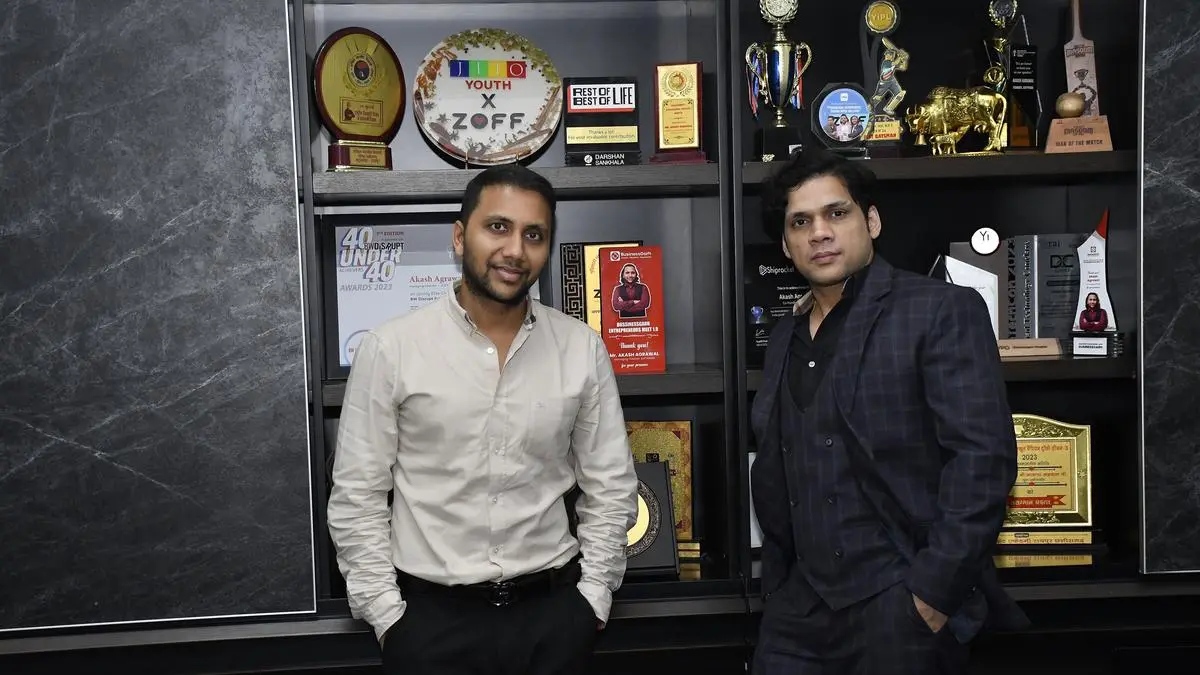
Categories
Digital Marketing

Making cross-cultural waves in the orange economy

Mayo Murasaki, a Hindi-speaking Japanese YouTuber

At the inaugural World Audio Visual & Entertainment Summit (Waves), cine stars Shah Rukh Khan, Rajinikanth, Mohanlal, et al, created a buzz, as expected. But the non-glamorous show stealers at the summit, which saw rousing words on the orange economy by Prime Minister Narendra Modi, were creators such as Akash Jadhav and Mayo Murasaki, who demonstrated how platforms like YouTube have made it possible for anybody to become a star.

Indeed, YouTube CEO Neal Mohan, who dubbed India as the ‘Creator Nation’ of the world, stated that Indian content racked up 45 billion hours of watch-time outside the country, and the platform had paid ₹21,000 crore to Indian creators, artists and media companies in the last three years. He announced an over ₹850 crore investment towards building the orange economy further, much to the excitement of content creators.

Akash Jadhav of the hugely popular agricultural channel Indian Farmer

Akash Jadhav of the hugely popular agricultural channel Indian Farmer

At the event, businessline caught up with Akash Jadhav, who, along with his brother Santosh, runs Indian Farmer, an agricultural channel with a huge following, and Murasaki, a Hindi-speaking Japanese who posts videos on India and Japan, to gauge the impact of the content economy, brand play, monetisation and the advent of AI.

Reaping a rich harvest

Indian Farmer’s YouTube channel, which tackles real-world farming problems, has nearly 5 million subscribers. Jadhav describes how the two brothers from rural Maharashtra started out in 2018 with a vision to “make farming more sustainable, profitable and residue-free”. “My primary motivation is to get clean food on my table,” he says.

Today, across YouTube, Facebook and Instagram, Indian Farmer has a following of about 10 million farmers globally; only 15-20 per cent are from India, even though the content is in Hindi. As Jadhav says, “Food is something everyone is interested in. It resonates with everyone the world over.”

The huge following has allowed the brothers to monetise their passion project. However, this did not come about easily, says Jadhav, as the two had no one to guide them in their attempt. Over time, they realised that brand collaborations gave the best returns, despite their lack of affiliation with any agency. Jadhav estimates that about 80 per cent of their revenue comes from collaborations with agricultural brands, manufacturing brands, companies working on digital farming, irrigation and, at times, even the government.

“At Indian Farmer, we created a proper commercial deck with fixed pricing, clear deliverables and workflows. This helped us build structure and credibility with brands,” he says.

The rest of the revenue comes from ads like YouTube AdSense and Facebook monetisation. Jadhav, however, foresees a dip in this form of revenue since Facebook has paused its monetisation option.

“Our Facebook page was ‘demonetised’ over two years ago and, despite multiple attempts, we’ve received no resolution from Meta. The bulk of our ad revenue now comes from YouTube, and that has not been much. Structured agri courses were a turning point. A reel may go viral, but a paid course builds depth and predictable revenue,” says Jadhav, adding that the use of AI by platforms like Meta has done little to help his business.

For Murasaki — who came to India as a student and majored in Hindi because her father, a Himalayan climber, loved the country — pushing content on YouTube started as a passion. “I started the channel about India and Japan so that I wouldn’t forget Hindi. I never thought of becoming a big YouTuber. I just followed my passion,” she says.

She is anxious over the advent of AI. “My strength has always been me speaking English and Hindi. Now, with AI, the language barrier will be very low… my advantage may be weakened. I have to be more creative and unique when it comes to content creation. I guess AI could be an advantage and disadvantage at the same time for me,” she says.

Asked whether content creation will offer a viable means of earning in the AI era, both creators are cautiously optimistic. Murasaki says, “Yes, I think it can be a viable job. Of course, a YouTuber is usually not considered a stable job. But I’m learning language and marketing while making content. So I plan to do this as long as I can, maybe not just in YouTube video format.”

Jadhav warns that content creation is a risky business. “You can lose your business overnight, as happened with our Facebook platform. Also, monetisation doesn’t begin with followers but with clarity on value. The real shift for content creators will happen when they think like entrepreneurs, building systems around their content.”

More Like This

Published on May 18, 2025

Categories
Digital Marketing

Diving down memory lane for branding cues

HERITAGE INC: Godrej Enterprises Archives records the nation’s history through the evolution of the company’s product portfolio

For marketers, old can be the proverbial gold if leveraged well. Recently, IIM-Ahmedabad started an unusual executive education programme called ‘Strategic Legacy Management’. The course teaches participants to use history to create business value, employ it for impactful storytelling, branding and communication, as well as navigate the present and future.

“Your history is the best proof point for the promises you keep today,” declares Anders Sjöman, EVP Client Projects at the Centre for Business History, Stockholm, and author of History Marketing, a book that talks about using history as a corporate strategic asset.

Sjöman and Vrunda Pathare, head, Godrej Enterprises Archives, are teaching this corporate heritage course at IIM-A, along with the B-school’s faculty member Dr Chinmay Tumbe

If Godrej has one of the most remarkable business archives in the country, which gives you a sweeping view of the nation’s history through its product evolution story, then the Swedish Centre for Business History is a one-of-a-kind repository of corporate heritage. Stored here are the business archives of thousands of Swedish companies, both living and dead, with information, trivia and pictures lovingly collated by talking to the “squirrels” in the organisation.

Anders Sjöman, EVP Client Projects, Centre for Business History, Stockholm

Anders Sjöman, EVP Client Projects, Centre for Business History, Stockholm
| Photo Credit: Linus Sundahl-Djerf

“We were founded in 1974 as a non-profit to document the history of dead companies in Stockholm — there were shipyards, ad agencies, mechanical workshops that had gone defunct through bankruptcies or had stopped existing for some other reason, but had been important to the city,” says Sjöman. The oldest document at the centre is from the 1400s, from a sawmill in north Sweden. “After some time, living companies started contacting us to archive their history — so we had paying customers,” he says.

Stories from the past

From Ericsson to Electrolux, IKEA, H&M, Swedish companies have used their history in compelling ways to engage with customers or redefine their products, Sjöman says.

Different companies have different strategies for using their history. For instance, he describes how IKEA has a fantastic museum open to all (for a fee) that is centred around living rooms down the decades. “So there is IKEA furniture from the 1950s and 1960s, and if you walk through the living rooms you get a picture of how your grandmother lived or what it looked like when you were growing up. So it becomes a larger storytelling exercise.”

Volvo has a similar set-up in Sweden for its cars, adds Sjöman.

While IKEA and Volvo have used their history beautifully to engage with their customers, he describes how H&M, which is 78 years old, draws on its archives while crafting new products. “All the H&M annual special collections are archived at the centre and, often, their designers come here to see what has been done before… and look for inspiration,” he says.

Vrunda Pathare, head of Godrej Enterprises Archives

Vrunda Pathare, head of Godrej Enterprises Archives

Sjöman recalls how Australian film director Baz Luhrmann, who was shooting an ad for H&M, popped into the archives as he wanted to understand the company better.

War and warts

“There’s also a big HR perspective to building your heritage. People love to know the history of the place they come to work in,” says Sjöman.

Apart from Sweden, is there any other country where companies have invested in preserving their heritage? “I think German companies do it well, and they have had to do it for a very tragic reason,” responds Sjöman. “Today’s German companies had to own up to what they did during the Second World War and the Holocaust. And the driver for that was the fall of the (Berlin) Wall in 1989, when East Germany’s archives opened up. So the side effect was that Germany has a very active set of business historians. German companies have a good grasp of their history — the good and the bad,” he says.

He says there’s always the risk that companies may just want to talk about the good stuff. But companies need to talk about the good and the bad, he urges.

Pathare says in India, too, business archiving is picking up. “At least 15 companies are considering archives,” she says.

Start early

How old should a company be to begin history marketing?

“There’s the wish from us. And then there’s the reality,” exclaims Sjöman. “The wish is that they start from day one. In reality, somewhere around the time a company turns 20, the founding people will probably start leaving the company. So there’s some sort of generational shift that normally prompts people to start thinking about their history,” he says.

But in the digital age, he says, that’s changing and a lot of young companies are capturing moments and preserving stuff from day one.

Asked why, if history marketing can boost brand value, companies like Coca-Cola and Mercedes-Benz are being edged out of the top 10 brand valuation rankings by tech firms like Apple, Google and Microsoft, he responds that anecdotally one can note that all these firms have built interesting stories around their creation and founders. “Look at how well Apple has built the Steve Jobs creation story.”

“One way of using heritage is to tie it to a person — the founder figure.”

More Like This

Published on May 18, 2025

Categories
Digital Marketing

Myntra’s ‘It’s a maa thing’ – The Hindu BusinessLine

Actor Neena Gupta and her daughter Masaba bring a smile to your lips in Myntra’s Mother’s Day campaign. Neena asks Masaba what she will gift her for Mother’s Day and there follows some hilarious scenes as Masaba’s wild suggestions meet with scathing takedowns from her mom, until an exasperated Neena says all she wants is an outfit. The mom-daughter duo happily scroll through Myntra’s pages and, of course, there are witty last words when Neena flaunts her outfit.

Spotless action

A test of popularity of campaigns these days is how viral they go on WhatsApp. By that yardstick, Safed Detergent scores a big hit with its Mother’s Day campaign, which shows a mother rushing to a school and into the principal’s office with a girl student. She complains to the principal about a boy who is harassing the girl, urging him to take action. The twist in the tale is that she turns out to be the mother of the boy! A well-crafted film.

Zara’s fashionable fifty

Fast-fashion brand Zara turned 50 and celebrated the milestone with a spectacular short film created by fashion photographer Steven Meisel, featuring 50 supermodels — including iconic names like Naomi Campbell, Cindy Crawford, Linda Evangelista and Christy Turlington. Styled by Karl Templer, the models wear pieces from Zara centred around monochrome classicism of tuxedo dressing. The models sing and dance to the tune of Donna Summer’s I Feel Love — coming together at the end in a beautiful group photo. It’s a lovely tribute to a brand that has created an undeniable impact in the fashion world.

More Like This

Published on May 18, 2025

Categories
Digital Marketing

Grey moves to Ogilvy – The Hindu BusinessLine

In yet another structural shift, WPP has moved creative agency Grey from the AKQA group to Ogilvy. Grey’s global chief Laura Maness will now report directly to Devika Bulchandani, the global CEO of Ogilvy. An internal memo circulating in the media quotes Bulchandani as saying, “This is not a consolidation, but rather a realignment to better reflect how our agencies operate in practice.”

Although the memo says Grey will remain a standalone agency brand, observers expressed concern at the shifting of yet another storied agency brand, and wondered if it would go the J Walter Thompson route. Also, veterans wondered if bloated creative companies could really compete against nimble boutique agencies. Grey Global Group was founded in 1917 by Lawrence Valenstein and Arthur C Feinn, and the name reflected the colour of its walls. It was acquired by WPP in 2005.

Apple is most valuable brand, TCS shines: Kantar BrandZ

For the fourth year, Apple took top position with a brand value of $1.3 trillion, up 28 per cent on the previous year, in the 20th edition of Kantar BrandZ Most Valuable Global Brands rankings. Google, Microsoft, Amazon and NVIDIA took the next four spots — notably the latter had a huge 152 per cent year-on-year growth. Among Indian brands, TCS shone, grabbing 45th spot at a brand value of $57.3 billion and an accelerated 28 per cent year-on-year growth.

Significantly, US brands now comprise 82 per cent of the total value of the global top 100, up from 63 per cent in 2006; however, a rise among Chinese brands and the volatility caused by escalating tariffs could threaten this order, the Kantar report noted. Chinese brands now account for 6 per cent of the overall value of the global top 100 and these shifts have come at the expense of European brands. ChatGPT premiers in 60th place, the highest newcomer since NVIDIA in 2021.

Outside the US, significant gains have been seen for Sweden’s Spotify, re-entering the global top 100 at 76; India’s Airtel, the fastest growing telecom brand in the world; Argentinian retailer Mercado Libre, the only Latin American brand in the global top 100; Spanish retailer Zara, which rose five places to 65th; and Canada’s RBC, which saw the biggest y-o-y brand value growth (43 per cent) among financial services brand outside the US.

More Like This

Published on May 18, 2025

Categories
Digital Marketing

Why are pizzas so popular everywhere?

PIE CHART: A delivery platform sent out 5.84 crore pizzas in 2024
| Photo Credit:
jimkruger

Last month, I visited the US for six days. Within this brief period, I ate pizza three times. In Chicago, I feasted on Sicilian pizza for dinner. The toppings included anchovies and shrimp, and it was exquisite. The very next day, I ate a slice of the city’s famous deep-dish pizza, which was delicious. Two days later, in Rochester, Minnesota, my sister and brother-in-law took me out to their local pizza place, where I indulged on a wood-fired cauliflower crust pizza.

I could see pizza everywhere during my visit. And this is equally true of India, too — with a wide range of popular pizza brands such as Dominos, Pizza Hut and Smokin’ Joe’s. On food delivery platform Zomato, pizza featured second only to biryani last year, with more than 5.84 crore deliveries.

What has led to the overwhelming popularity of this food, which took birth way back in the 16th century in the Italian town of Naples as a food for poor people? Here are nine underlying factors:

1. Incredible taste: There is science behind this — specifically, something called the Maillard reaction. When pizza is baked, its components — the sugars in the crust, the cheese and the toppings — react chemically with amino acids, creating hundreds of lovely flavours that fire up our tastebuds. In addition, the soft dough, molten cheese and crispy crust create a beautiful contrast of textures.

2. High on convenience: Pizzas can be eaten easily virtually everywhere, particularly since they are a dry food. They can be devoured hot or cold, by hand or by fork, in a fine dining restaurant or in front of your home television.

3. Instant comfort: The high fat content of a pizza, as well as its umami flavour make it a lovely comfort food. The cheese and the meat toppings provide the fat. Tomatoes, which are used on most pizzas, are high on umami, a flavour that activates specific regions of our brain that are associated with pleasurable comfort. No wonder we feel so comfortably happy after eating pizza.

4. Reasonably affordable: Pizzas make for a fine meal, but are relatively affordable. In India, for instance, Dominos offers pizzas starting at ₹99 each, and there are several options available at price points below ₹200. This is quite reasonable, in comparison to other foods. For instance, a rava masala dosa at a good hotel in Mumbai now costs upwards of ₹150.

5. High on nutrition: Unlike many other fast foods, pizzas are quite high on nutritional content. A single slice of chicken pizza contains 15-18 grams of protein. This is not to say that pizza is the healthiest food. But it has a good balance between nutrition and taste.

6. Portion control: Because pizzas come in slices and are even measured in inches, you can control your intake of portions quite easily — though this requires some self-control, for sure. I normally eat two slices of a 14-inch pizza, and then do my best to stop. It is difficult for me to exercise similar portion control with equal ease for other foods such as biryani or paneer makhani.

7. High on customisation: With such a wide range of toppings, pizzas are amongst the most customisable foods on earth. From grilled panneer to Sicilian seafood to Chettinad chicken to banana curry, you can have the toppings of your choice. I asked Perplexity.AI this question, and it promptly told me that over 500 types of pizza toppings have been documented across the world. Such extensive customisation may be difficult to achieve with idli, pancake or poha.

8. Food to share: Friends can gather around a large pizza and share it from a single plate. Sharing is always an emotionally appealing and uplifting way to eat with people whom you know well. On the other hand, burgers or dosas are typically eaten in individual portions.

9. Party food: Over the years, pizza has become linked to social events and parties. Often, kids’ birthday parties are viewed as incomplete if pizza is not served. This mental association of pizzas with exciting parties has added to its appeal. If foods can have EQ (excitement quotient), then the EQ of pizzas would be very high!

Would you like to add a tenth factor, to round off this list? With so many fundamental drivers of consumption, it is now quite easy to see why pizzas are today amongst the most popular foods on earth.

(Harish Bhat is an avid marketer and a bestselling author. He was previously the Brand Custodian at Tata Sons)

More Like This

Published on May 4, 2025

Categories
Digital Marketing

The new mantra now is to create desire at scale: Prem Narayan

Advertising as we know it seems nearly dead. Brands are seen making more Instagram reels than 30-second commercials. The planning and strategy function in ad agencies must obviously keep step. As Prem Narayan, chief strategy officer at Ogilvy India, explains,“Fundamentally, from a world of one big idea, we are now moving to many pieces of content and smaller manifestations of that big idea or different ideas on different platforms. ”Narayan was among the first cohort of planners at Ogilvy India, which he joined in 2004, and was mentored by Madhukar Sabnavis. The planning team had just three or four people then. Today it numbers over a 100!

Narayan — who grew up in Tamil Nadu, did his schooling largely in Madurai, his engineering course in Kerala, and MBA in Pune — uses a football analogy to describe the planning function. “The creative people are the forwards because they are the ones who deliver the output that the world sees. Planners are the midfielders. We hope to give a good pass. Also, our job is to make life easy for the defender, which is our account management team.” Edited excerpts from an interaction with Narayan on the evolving agency model:

As clients today seek more reels than ads, how is the strategy function at agencies shifting?

The overall advertising market in India is around ₹1.6 lakh crore, of which about 50 per cent is digital. For many of our clients, anywhere between 25 per cent and 70 per cent of ad spend is now digital. For D2C clients it may be more. So certainly the media has changed. Hence the client expectation from agencies has also significantly changed.

From the good old days of one piece of content we are now moving to 50 to 100 pieces of content of all kinds — content that brands put out, influencers put out, and so on. Yet the brand still needs to speak as one voice. How will that occur? What I hear more and more from our clients is: ‘Can you guys at least, from a strategy level, bring all of this content together, so that we speak as one brand and it doesn’t look like disparate pieces of work done by different people’. So the strategic role of the agency has increased to hold the brand voice and brand narrative together. It has also become a lot more complex, so clients need somebody to simplify stuff. And who better than us to do that.

Somebody has called the role of agencies today as imaginative repetitiveness — spinning one idea through different stories to a multitude of people. So that has necessitated a change in how agencies think.

A lot of advertising work now seems related to customer experience and other stuff where the consulting firms are edging in. How do you deal with that?

There are two parts to that. I am bucketing advertising and content as one stream, and this will be led by either one agency or a combination of many agencies, depending on how the client chooses to play it. And there, I think, we have a strong role.

What’s also happening is that a lot of clients are using an idea to engage with consumers interactively. And that also leads to generation of a lot of first-party data. For example, the birthday song campaign we did for Cadbury, which created unique songs for each user. We cracked the idea, we enabled it on the packaging — people were able to scan it, input details, and create their unique video. Of course, there is tech involved, but the idea is still at the centre of it. Similarly, the ‘joke in a bottle’ campaign, which we did for Sprite.

But the other parts are also becoming significant. Performance marketing has become very big because it’s like the sales door today. There are the Accentures and the Deloittes who are doing it, and then there are performance marketing specialist agencies — we ourselves have an agency called Verticurl, which has now become part of Ogilvy One, specialising in that territory.

A lot of that work drives the bottom funnel or the click-to-sale part of the game.

But you can feed the bottom of the funnel only if you get the customer hooked to the brand. As the saying goes, a customer does not buy an Audi at 30… he actually “buys” it at age six. You have to create desire and intent on the brand to win. The job of brands and advertising is to get more people into the funnel — only then will the performance marketing work at the bottom of the funnel.

As the Unilever chairman recently said, the job of brands is to create desire at scale. That’s a phrase you will hear more, and will be the new mantra for agencies.

What are the new market opportunities for ad agencies?

Content will be a big play, and tailoring content specific to platforms like Meta and Google is becoming quite important. Ad agencies have to understand how people behave on platforms and then deliver to those behaviours. Our revenue will shift towards a more ‘advertising-plus-content’ kind of world.

Also, strategy will become important to guide clients on developing structures and briefs, so that influencers talk in a way that’s in congruence with the brand. So those are territories where, I think, a lot of our focus will lie.

Also creating experiences and engagement on ground is becoming a big thing with clients. I see a very strong role for agencies in activation. You will see a lot of stuff we did at the Maha Kumbh this year, with clients like Amazon and Fevicol, gaining ground. Those are opportunities for future revenue streams that would unlock as we move forward, because today nothing is siloed — so activation-meets-technology-meets-creativity.

I think we will move to a world where there will be lots of IPs (intellectual properties) like Coke Studio, because you want to build something consistent year on year. Agencies can partner brands in creating those IPs and in executing them. We are already there on the execution in some, but that’s something we will have to strengthen.

I also think there is a role for agencies in consulting, because only when you work with the client, understand them, define the brand, and look at how the whole funnel works, can you seed the idea and take it to execution.

So how far has Ogilvy reached in unlocking these opportunities?

On both tech and content, we have a strong force. We have over a 100-strong content team and 10 to 12 technologists working internally at Ogilvy.

One of the revenue streams that is really opening up is our tech team sitting here and working for clients globally — both with Coke and Mondelez, we have been able to do that.

We are now building Ogilvy One in India. Ogilvy One is a global entity that basically focuses on customer experience and engagement. And we have Verticurl, based in Coimbatore, catering largely to international clients.

Ogilvy One is something that we hope to build quite strongly in the next two to three years. Consulting is also something we want to start and, hopefully, we should do that in 2026.

Will the Trump tariffs impact Indian advertising?

It’s going to be a tough year. There is no running away from it. Though tariffs may not affect all our clients directly, there is an impact overall at a macroeconomic level. When that happens, and the overall climate is tough, how do clients still grow? Should they focus more on rural markets? Are there more opportunities at the really top end, premium end of the market? Do we need to pivot in some categories? All of those conversations are on with many of our clients. We all have to double down this year and work harder, which is where I think the long-term relationships that we have with our clients matter. We have had clients who have been with us for 20, 30 and even 50 years.

Categories
Digital Marketing

AI tools drive conversions with sharper targeting

BUY WORD: E-commerce drives 21 per cent of India’s digital ad market
| Photo Credit:
filadendron

With digital advertising, marketers gained amazing reach. Now, with AI tools, we are at a stage where businesses can be marketed across geographies, age groups, cultures and regional languages within seconds.

AI is fundamentally transforming digital advertising with smart tools that aid sharper targeting, real-time optimisation and measurable outcomes at scale. Global platforms like Google and Meta are using AI to enhance ad relevance, reduce wastage and improve campaign performance. Digital adtech tools have accelerated pace, as hyperlocalisation and unique-to-target ad solutions help businesses unleash potential and expand customer reach. AI-powered programmatic advertising has led to 20 per cent increase in conversion rates and 30 per cent boost in return on ad spend.

In CY24, digital advertising formed 77.7 per cent of total ad expenditure (more than $300 billion) in the US and 80 per cent in China. While India’s digital ad penetration was only 50 per cent, it is fast growing.

Key drivers

The strong shift towards digital is driven by two key megatrends: the rapid adoption of 4G data services post 2016 and the accelerated digital migration during the Covid-19 period. This transition is now further supported by evolving consumption patterns, including a surge in 4G users to 640 million at a compound annual growth rate (CAGR) of 15.2 per cent from CY17 to CY24, a healthy 21.6 per cent CAGR in online shoppers to 248 million (CY19-24), and 20 per cent CAGR in social media users at 462 million.

In CY24, digital media surpassed television, capturing 32 per cent of India’s media revenues at ₹80,200 crore (16 per cent in CY19), mainly catalysed by digital advertising (₹70,000 crore). Key growth engines included e-commerce advertising (plus-65 per cent year-on-year to ₹14,700 crore) and rising viewership for regional OTT content.

Social and search media

In India’s digital advertising landscape, the combined share of social and search media (Meta and Google) has declined from 75 per cent in CY19 to 68 per cent in CY24. This is mainly due to the fragmentation of the video advertising space with the rise of OTT platforms and a pivot to e-commerce-led advertising. Going forward, social and search may continue to underperform as newer segments outpace them. A meaningful revival in search advertising is likely only through AI-led innovations that enhance conversion outcomes.

E-commerce ads

E-commerce currently accounts for 21 per cent of India’s digital advertising market, with a robust CAGR of 44.9 per cent over the past two years. This growth is expected to accelerate with the proliferation of quick-commerce platforms. India’s quick-commerce advertising market is estimated over ₹2,500 crore, accounting for 20–23 per cent of e-commerce advertising, and poised for exponential growth with the rising spread to non-metro markets.

Amazon and Flipkart currently dominate with 75 per cent share of e-commerce advertising. But this could be challenged as quick-commerce platforms capture a bigger share — particularly in categories such as grocery, beauty and personal care, as also accessories. Our estimates suggest quick commerce’s total addressable market (TAM) could be 45–50 per cent of India’s e-commerce market.

Video ads

The video advertising market has surged over the past five years, thanks to OTT fragmentation and a growing appetite for online content. The growth was further accelerated by free streaming of IPL on JioCinema. YouTube dominates the video ad space with 70 per cent share, followed by JioCinema at 15 per cent. The ecosystem includes broadcasters, global platforms and regional apps. With giants like Amazon entering the space and Netflix exploring ad-supported models, competition is set to intensify, potentially squeezing smaller platforms.

Programmatic ads

India’s programmatic advertising is 42 per cent of digital advertising and continues to outperform with a CAGR of 27 per cent (CY21-24), fuelled by e-commerce growth, mobile-first consumption and AI-led targeting. Rising OTT viewership, regional content adoption and local adtech players like InMobi and Affle are expanding reach. As brands chase return on investment and scale, programmatic is emerging as the core of digital strategy.

(The writer is Senior Vice-President, Elara Capital)

More Like This

Published on May 4, 2025

Categories
Digital Marketing

A ‘crea-tea-ive’ symphony

Sunscreen wars spilled over into some opportunistic campaigns, but it was the tech-fuelled melodic ode to the ‘cup that cheers’ that wowed

Categories
Digital Marketing

A wave of announcements – The Hindu BusinessLine

Bollywood actor Shah Rukh Khan speaks during a session titled ‘The Journey: From Outsider to Ruler’ at the World Audio Visual and Entertainment Summit (WAVES) 2025, in Mumbai
| Photo Credit:
–

The first edition of the World Audio Visual and Entertainment Summit (WAVES) 2025 in Mumbai pulled in top politicians, businessmen, cine stars and content creators. But chaos marked the opening day with long lines at the entrance as the organisers made a mess of entry passes. However, the event, inaugurated by Prime Minister Narendra Modi, who gave a clarion call for ‘create in India’, attracted a wave of announcements, notably an Indian Institute of Creative Technology to be set up by the Ministry of I&B, along with FICCI and CII. Adobe announced it was setting up an AI-powered Creative Experience Studio with TCS. On Friday, the government said Waves Bazaar had clocked deals worth ₹250 crore, and it expected to close the event with transactions of over ₹400 crore.

The protein push

Amul’s recent ad for its protein kulfi set off not just a meme fest but also a debate on whether brands are pushing the biomolecules too much. All sorts of protein products are now in the market, and marketers and nutritionists are weighing in on whether it is excessive and out of hand. Meanwhile, it was a whey protein product that sparked an important judgment in the Delhi High Court, which ruled that social media influencers can make public statements against consumer brands, including naming the brand, provided they are backed by scientific evidence. The case in question was the one between San Nutrition and influencer Arpit Mangal.

More Like This

Published on May 4, 2025

Categories
Digital Marketing

GRT Jewellers launches a special campaign for Akshaya Tritiya

GRT Jewellers has launched a special sales campaign Akshaya Tritiya, titled ‘Akshaya Tritiya Celebration’. In Tamil Nadu and Pondicherry, the campaign will be called ‘Akshaya Tritiyai Kondattam’. In Andhra Pradesh and Telangana, the campaign would be called ‘Akshaya Tritiya Vedukalu’ and ‘Akshaya Tritiya Sambrama’ in Karnataka.

As part of the campaign, GRT is offering ₹250 off per gram on gold jewellery purchases, ₹75 extra per gram on old gold jewellery exchange and ₹12,500 off per carat on diamond value.

Additionally, GRT offers 10 per cent off on uncut diamond value, 25 per cent off on making charges for silver articles and anklets, and 10 per cent off on silver jewellery.

Founded in 1964, GRT Jewellers sells jewels made of gold, diamonds, platinum, silver, and gemstones. GRT has 63 branches, of which 62 are in South India and one in Singapore. 

Published on April 29, 2025

Categories
Digital Marketing

How founders’ public personas impact their businesses

Recently, Nikhil Kamath of Zerodha publicly offered to intern — without pay — at Aravind Srinivas’s company Perplexity, to learn about the AI industry. Kamath had interviewed Srinivas on his YouTube channel, which has about 1.5 million subscribers.

Several Indian startup founders maintain active social media profiles. Bhavish Aggarwal of Ola, Aman Gupta of Boat, Ashneer Grover (formerly of BharatPe), Vineeta Singh of Sugar Cosmetics, and Namita Thapar of Emcure Pharmaceuticals have substantial social media following. Platforms like business reality TV series Shark Tank India have made many founders household names — their personalities often overshadowing their companies or products in public discourse.

Among other effects, building a personal brand helps founders cultivate a loyal following across ventures, product stages, and platforms — creating a ready base for future launches and initiatives.

Interplay of factors

The personality-brand interplay, however, begs a relook. Tesla’s shares have plummeted in recent months owing to Elon Musk’s politically loaded, provocative, and in-your-face mannerisms on X. In April 2024, the Bombay Shaving Company (and Shantanu Deshpande, its owner) suffered backlash due to the poor landing of an advertisement, prompting calls for “better brand advisors”.

The relationship between a founder’s public persona and his or her company’s brand is a complex dynamic with three distinct outcomes — mutual benefit, mutual harm, or negligible effect. They depend on how the founder’s personal communications, values, and actions align with, contradict, or remain independent of his or her business’s core brand promise.

Conflicting factors

When founders’ views and/or behaviours contradict their businesses’ core values, market positioning, or customer expectations, the dissonance can significantly damage brand equity. For instance, while Tesla’s positioning is that of an environmentally conscious, forward-thinking automotive and energy company, Musk’s social media activity has periodically created a dissonance with this brand identity.

His unpredictable posts on X, including politically divisive statements and personal feuds, have at times alienated Tesla’s core environmentally conscious customer base. Even before Donald Trump’s second term, a 2023 survey showed that 32 per cent of potential electric vehicle buyers cited Musk’s public persona for not considering Tesla.

In late 2022, Tesla’s stock dropped about 65 per cent from its peak, with analysts largely blaming “Musk risk” for it — namely the volatility generated by his conduct at a time when he wasn’t publicly supporting Trump’s 2024 campaign for US presidency. The ensuing polarising stance further intensified scrutiny.

More recently, in March, Tesla’s stock fell by over 5 per cent amid broader tech sell-offs and renewed concerns over Musk’s leadership.

Brand reinforcement

When founders authentically embody the values, mission, and ethos of their businesses, their personal brands can amplify their company’s market position. The founder’s visibility and the company’s brand equity mutually reinforce each other, creating a compounding effect that drives customer loyalty and sharpens market differentiation.

An example of this is the Swedish entrepreneur Matilda Djerf and her company Djerf Avenue. Starting off as a social media influencer known for her distinctive style and values of authenticity and sustainability, Djerf leveraged her personal following to launch the fashion brand in 2019. Her personal brand — characterised by transparency, body positivity, and sustainable fashion choices — reinforces her company’s core values. In less than five years, she turned it into a $35-million brand with a marketing budget below 5 per cent of revenue.

By maintaining consistent messaging across personal and corporate channels, Djerf has shown how personal brand can powerfully amplify business success when values align.

But the brand suffered when, in December 2024, an investigation by Swedish news outlet Aftonbladet led to allegations by 11 current and former employees of a “toxic work culture” at Djerf Avenue, including instances of belittlement and body-shaming. The public backlash saw customers expressing disappointment and some vowing to withdraw their support. Djerf responded by expressing deep regret and committing to improving the workplace environment.

Brand independence

Sometimes a founder’s public persona neither significantly enhances nor detracts from the company’s brand equity, as typically happens in industries where product functionality substantially outweighs brand considerations or when founders deliberately maintain a low profile despite business success. This neutral equilibrium can provide stability in certain market contexts.

NR Narayana Murthy, Co-founder, Infosys
| Photo Credit: BIJOY GHOSH

This dynamic is more common in business-to-business (B2B) firms, where the founder’s persona often has limited public-facing impact. For instance, Narayana Murthy, co-founder of Infosys, suggested that young Indians should work 70 hours a week to boost the nation’s productivity. While this remark sparked widespread debate and criticism, Infosys’s brand remained largely unaffected. This resilience can be attributed to Infosys’s focus on delivering consistent services to its corporate clients, where the emphasis is on functionality and reliability rather than the personal opinions of its leadership.

Similarly, in other countries, founders of B2B companies have made controversial statements without significantly impacting their company’s brand. For example, in the US, Larry Ellison, co-founder of Oracle Corporation, has been known for his outspoken and sometimes contentious remarks. Despite this, Oracle’s reputation as a leading provider of database software and technology has remained intact.

Strategic implications

Understanding the personality-brand game offers valuable guidance for entrepreneurs navigating public visibility. Research indicates that UK unicorns with founders who have the largest number of LinkedIn followers raised over 20 per cent more funding — nearly £763 million — on average, compared to other unicorns in the country. Additionally, a Forbes article notes that 77 per cent of consumers are more likely to buy from a company when its CEO uses social media, and 82 per cent trust companies more when their senior executives are active online.

However, this advantage comes with significant responsibility. For Indian entrepreneurs building their social media presence, several principles emerge:

First, strategic alignment between personal and corporate messaging is crucial — inconsistencies are quickly spotted and penalised in today’s transparent media environment.

Second, authenticity remains paramount, as audiences are increasingly sophisticated at detecting manufactured personas.

Finally, recognising when to separate personal opinions from corporate messaging strategically can prevent unnecessary brand damage.

Playing the game

As more Indian founders leverage social media, mastering the personality-brand dynamic becomes essential. The challenge isn’t in choosing between visibility and anonymity, but in strategically managing how personal brand amplifies — rather than undermines — business objectives.

Successful founders recognise that while personality and brand are distinct, they exist in continuous dialogue. Regular brand alignment audits, establishing clear boundaries on public commentary, developing crisis management protocols, practising strategic authenticity in communications, and distributing visibility by elevating multiple team members as brand ambassadors are some ways to manage this.

As the Indian startup ecosystem matures and global competition intensifies, founders who master this balance between personal visibility and brand alignment will separate market leaders from competitors. The most valuable founder brands aren’t the loudest but the ones that convert personal influence into enduring business advantage.

(Manoshij Banerjee is an independent consultant on digital culture and behaviour, and Mohammed Shahid Abdulla is a faculty member at IIM-Kozhikode)

More Like This

Published on April 20, 2025

Categories
Digital Marketing

Challenging the platform monopoly model

The sheen is wearing off traditional ecommerce. For all their size and scale, platforms like Amazon, Flipkart, Zomato, and Swiggy are grappling with user fatigue, seller disillusionment, and a workforce walking a tightrope.

Customers now routinely question whether “guaranteed delivery” means “next day” or “next neighbour”. Sellers feel increasingly like contestants in a game show where rules change without warning — navigating shifting commission structures, opaque algorithms, and arbitrary suspensions. And platform workers? They’re often treated like code — easily replaced, endlessly scalable, yet largely invisible.

Even ultra-fast delivery — once a novelty — is starting to feel unsustainable. Blinkit, the 10-minute grocery darling now backed by Zomato, is shifting expectations for speed across the sector. But with that acceleration comes questions: Who bears the cost? What happens to small stores when the demand for instant gratification overrides considerations of locality, price transparency, and worker welfare?

This is the tension at the heart of today’s ecommerce: Convenience versus control, speed versus sustainability, and platform power versus participatory access.

Experiments galore

Enter the idea of open networks. Around the world, experiments are quietly taking place that challenge the platform monopoly model. In Nairobi, Wasoko (short for “people of the market”) connects over 50,000 informal retailers with manufacturers across six African countries, offering real-time order fulfilment and credit access to small vendors traditionally left out of digital systems.

In Europe, PrestaShop — an open-source ecommerce builder — powers over 300,000 shops. Merchants own their storefronts and data, while a thriving developer ecosystem helps businesses customise everything from UX to inventory flow. It’s a modular toolkit.

In Indonesia, platforms like Warung Pintar digitise mom-and-pop stores, equipping them with point-of-sale tech and helping them join larger distribution networks without being absorbed by them.

In Latin America, Tiendanube (Nuvemshop) enables more than 100,000 small businesses to set up customised online shops. It connects them with local logistics and payment providers in Brazil, Mexico, and Argentina — without locking them into a single app or interface.

Opening the pipes

The most influential open network model, though, may be UPI (Unified Payments Interface) from India. With over 13 billion monthly transactions, UPI has redefined payments — not by centralising them, but by opening the pipes. Any bank, any app, any user — plug and play. UPI proved that when infrastructure is open, innovation blooms. You need a system that lets everyone build.

That’s the promise of the next wave of digital commerce: interoperability, data portability, and network fairness.

Tim Berners-Lee, the inventor of the World Wide Web, has launched Solid — a project that lets users store their personal data in decentralised “pods”. Apps must request access; users decide what to share. Your Amazon cart, Flipkart returns, and Myntra wishlists could all live with you, not inside a server farm owned by a trillion-dollar firm. Sellers can control their inventory and pricing without fear of deplatforming. And buyers can shop across apps.

Built to decentralise

India’s ONDC (Open Network for Digital Commerce) is a digital public infrastructure, built to decentralise. It aims to ensure that anyone can build an ecommerce platform.

DigiHaat is a buyer app built on ONDC rails. A handloom artisan in Varanasi, for instance, can use DigiHaat to list products, store their catalogue in a shareable format, and reach buyers using any ONDC-compatible app.

Rahul Vij, COO of DigiHaat, says, “This is about giving every seller a digital voice, without asking them to speak someone else’s language.”

In a world of walls, open networks are offering bridges — one interoperable connection at a time.

(The writer is an independent consultant at Nirmit Bharat, ONDC)

More Like This

Published on April 20, 2025

Categories
Digital Marketing

For Royal Canin, vet education is key to growing its business

Satinder Singh, GM India, Royal Canin

“The entire market has transformed from when we first arrived in India,” declares Satinder Singh, GM India of pet nutrition company Royal Canin, which has just launched a global campaign to tackle pet obesity. Misinformation and lack of awareness are at the heart of this weighty issue among pets, says the French brand, owned by American multinational Mars Petcare. The brand arrived in India in 2007.

Despite its acquisition by Mars in 2002, Royal Canin has always remained a separate entity, says Singh, because it has a different philosophy and model. While Mars operates like an FMCG company, Royal Canin has a specialised approach and portfolio, driven by veterinary recommendations. As Singh explains, Royal Canin was started by a vet to treat a pet suffering from a specific condition, using specialised food. “There are so many vulnerable moments in the life of a pet, and our portfolio is available to support the nutrition required in every critical health moment.”

The big changes

Singh describes how, when Royal Canin first arrived in India, it was predominantly a dogs market, but now cats too have a huge share. “Overall, the pet food market is about $550 million in India,” he says, adding that from 5 per cent earlier, the share of cat food is 25-30 per cent today.

Another trend he flags is the shift in preference from large to smaller breeds, and, in terms of pet food, from cheap economy brands to premium brands. And yet, when it comes to what and how much to feed a pet, lack of awareness is rampant, as also overfeeding and constant treats of human food, the company’s survey on obesity shows.

The veterinary business in India has its share of unique challenges. For starters, there is a huge shortage of vets. “We produce about 3,500 veterinarians every year. But only 5 per cent join small animal practice,” he says. The rest opt for either large animal practice, higher studies, corporate jobs, academia, or move out of India, he adds.

“Even among those who specialise in small animals, the focus on nutrition is very limited,” he says. Royal Canin is investing in further developing the veterinary industry in India, he says. “We invite highly qualified vets from developed countries to interact with the vet community here. Second, we are providing 500 veterinarians with an AI-powered tool, which they can use to obtain a second opinion. This is through a collaboration with vet-tech firm Gekkovet. Third, we take hand-picked vets from India to France to interact with the academia and practitioners there,” he says.

“Our biggest investment is in education, and this forms the foundation of our strategy. Building social capital is key for us,” says Singh, pointing to how parent company Mars recently invested in Crown Veterinary Services, a vet clinic chain in India.

Growing presence

While Royal Canin does not manufacture in India — unlike Mars, which has a factory in Hyderabad — last year it invested close to ₹100 crore to set up a packing centre at Bhiwandi in Maharashtra. “Indian consumers don’t buy in bulk — 94 per cent of the bags sold in the Indian market in the pet food industry are less than 1-2 kg each. So the global portfolio, which we were importing, was not able to address local needs. This packing centre has helped us solve that,” he explains.

Globally, Royal Canin has about 500 recipes, translating into about 1,250 stock-keeping units (SKUs). “In India we have, as of now, about 250 SKUs,” says Singh.

But India is a fast growing market, he says, pointing to how, post Covid, there has been a huge spike in pet ownership. The pet food market is seeing 15 per cent compound annual growth rate. “We are growing marginally higher than the category,” he says.

More Like This

Published on April 20, 2025

Categories
Digital Marketing

Brands cook up a storm with cricketers

Cricket is a passion for most Indians. So is food. Imagine marrying the two — the brand engagement can go up 10X. This IPL season has seen two such combos from brands that are captivating fans. Kolkata Knight Riders (KKR) has started Knight Bite, an exciting new long-term initiative that brings fans closer to their favourite players through food. KKR has partnered with kitchen appliances brand TTK Prestige for a five-episode digital series #Let’sGetCooking with Knight Bite. Hosted by celebrity chef Kunal Kapur, the show offers fans a behind-the-scenes look at KKR players as they cook, chat, and take on fun kitchen challenges. The first episode offers us tantalising flavours of Kolkata Biryani and Rinku Singh’s journey, even as Gurbaz and Moeen Ali spice things up.

Meanwhile, AWL Agri Business’ brand Fortune Soya Chunks has hit upon the same recipe. The 45-minute video sees cricket icon Sourav Ganguly pick up a pan under the direction of chef Sanjyot Keer and answer his queries on which IPL team would do well.

Fan moment

Speaking of cooking videos, Farah Khan’s food show and her banter with her cook Dilip have been charming the internet. Polycab India has used the duo to great effect in a fun and quirky digital campaign that introduces its all-new Super ROI fan. Dilip surprises Farah by saying “his fans have arrived”, only to reveal the real stars — the high-performance Polycab Super ROI fans.

Life’s great investments

Publicis India’s new film for HDFC Asset Management, ‘Hum Sab Investors Hain’, draws parallels between financial investments and the everyday risks and choices we face in life. The story follows the journey of a baby girl, from the day her parents bring her home from the hospital. As she grows up, her family invests in her future — nurturing her, guiding her, and supporting her dreams. Over time, their timely investments and consistent steps lead to significant rewards. The film, with its emotional story, simplifies the idea of financial concepts.

A hard case

First there was an intriguing tweet exchange between cricketer Jaspreet Bumrah and wife Sanjana Ganesan, leaving fans guessing. Turned out it was setting the stage for luggage brand Uppercase’s brand film, which features a skirmish between the couple. She throws his suitcase from a high floor and nothing happens to it, as Bumrah gloats. So who has the last punchline? Worth a watch.

More Like This

Published on April 20, 2025

Categories
Digital Marketing

Brand recall of IPL ads

IPL season is hotting up and the ad breaks are as interesting as the match play. But guess which ads are scoring? Men seem to recall auto ads while women seem to have higher recall of food and snack brands. The ongoing eDART-IPL25 study by CrispInsight and Kadence International reveals a striking demographic divide in brand recall, based on insights from over 20,000 viewers across 60+ cities. Nearly, 17 per cent of women recalled food and snack brands. Among men, 21 per cent recalled automobile brands, and 48 per cent fantasy sports. Younger audiences (15–19 years) are more responsive to fantasy sports and beverage brands, while older viewers (45-plus) show stronger recall for banking, liquor, and e-commerce.

Gearing up for Goafest

At the heart of Goafest (May 21-23 this year), the Indian ad industry’s biggest event, is the ABBY awards powered by OneShow. Björn Ståhl, Chief Creative Officer, Uncommon Creative Studio, Stockholm, and Youri Guerassimov,CCO, Marcel Paris, will be the international jury chairs. There are three new categories under the Media ABBYs — small budget, big impact; sports marketing; and micro marketing. The Creative ABBYs will feature 23 categories. Ashwini Deshpande, co-founder-Director, Elephant; Ashish Chakravarty, Executive Director and India Head of Creative, McCann Worldgroup; Raj Kamble, founder and CCO, Famous Innovations; and Ashish Khazanchi, Managing Partner and CCO, Enormous Brands will be jury chairs.

Ghadi gets on track 

Brands always aspire to be where the crowds are. Well, Ghadi Detergent is managing to do just that, having secured exclusive naming rights for platforms 1, 6, 7, 8, 9 at New Delhi Railway Station, one of India’s busiest rail transport hubs. The tenure of the rights is for one year. The platforms will be branded as ‘Ghadi Platform 1, 6, 7, 8, 9. As part of the partnership, Ghadi Detergent will have its branding prominently displayed across these platforms, including panels, billboards, vinyl wrapping, and more.

With the station getting a daily footfall of over 10 lakh passengers, Ghadi gets to be a key consumer touchpoint.

More Like This

Published on April 20, 2025

Categories
Digital Marketing

To market marketing is the coolest job: Lara Balazs

To be at the company that actually markets marketing is incredible, says Lara Balazs, the new CMO of Adobe, the San Jose-based tech company that sells digital marketing solutions and posted revenues of $21.51 billion in fiscal 2024.

The go-getting marketer who has worked with Visa, Gap, Nike, Amazon, and Intuit, and is on Forbes’ list of most influential CMOs, says Adobe CEO Shantanu Narayen offered her the job, saying, “how could you not come to a company that has creativity and marketing, and now AI — making it the coolest job for a chief marketing officer to have”. Excerpts from a freewheeling interaction with Balazs on the sidelines of the recent Adobe Summit in Las Vegas.

A lot of tech companies are suddenly facing challenges with the advent of AI. New products are emerging just too fast. As a tech company’s marketer, your take?

Well, the fact that we market marketing and have teams that are the best bar none in the world ensures that not only our bottom-of-the-funnel is fine-tuned, but so is our growth marketing, our performance marketing, our mid-funnel marketing and our top-of-the-funnel marketing. Then, we’re doing the PLG (product-driven motions) and GTM (marketing-driven motions) and using all of the signals. And we have all the tools, so any shift we see — say, for instance, changes in search (Gen AI is taking over the search process) — we’re able to react to that, and then we can share it with our clients too. Also we partner with so many tech companies worldwide — Microsoft, Google… the list goes on — that they’ll come to us to test some new things. We will do the same with them.

For a customer who’s just bought some product from you, and then there’s a shift in tech, it would necessitate a reinvestment. How do you sell that?

Well, one of the beauties of being in the cloud, and the great thing about SaaS business is our customers have been able to make that shift in real time.

And we’ve helped them make that shift as we can make real-time optimisation happen. We also have our partners that work directly with the clients, so they’re able to adapt. We’re good at making sure that, as things shift, we ourselves are innovating and then pushing code to update.

But what about the costs? There is a feeling that Adobe products are expensive.

We’re really importantly looking at value. I think we spend a lot of time to make sure that any pricing is equated to the value that we’re offering.

Adobe has so many different kinds of clouds — the experience cloud for digital marketing, the creative cloud, the document cloud. Which is the fastest growing for you?

So, we’re making sure that, where appropriate, all of our cloud products can be used together. As an example, you have Adobe Express (part of the creative cloud) and Acrobat (part of document cloud) that increasingly can be used together. So the clouds are coming together because the customer, at the end of the day, ranges from individuals, students, educators, consumers, creators… So when you have that breadth of customer range, you realise these things actually support, in one way or another, all of the customer audiences, and you can market these things as one.

And you know, now it’s creativity-plus-marketing-plus-AI, so all of this is more easily connected because AI is driving all of it.

A few years ago, there was this big debate about CTOs versus CMOs. At the summit, we heard something about befriending the CFO. Is there a battle at the table?

I’ve been doing marketing for a long time and one of the things that I have seen is, no matter the industry you are in, you want to make your chief technology officer your best friend. You also want to make your chief financial officer your best friend. And when you do that, you work collectively to do what’s best for the company, costs savings wise, and what’s best for the company to drive the top line. We call it the triumvirate actually — chief technology officer, chief financial officer, chief marketing officer. You have got to be tied at the hip. As for me, I also have the chief executive officer, who is in this, as well. And Shantanu was the CMO for some years, so he has great understanding and admiration for the craft because, as I said, we market marketing.

With AI, is there more complexity now in the marketing function? Or do you see your tasks easing?

I think everywhere you have change management when any big sea-change technology happens. What we’re seeing, though, is that, as people adopt it and get used to it, there is an incredible respect for how it makes their jobs better; and what comes with it is productivity and efficiency, because the time to do a task has dropped now with Gen AI. We’re, again, really lucky because we have Adobe Firefly, which is this AI-generated generative AI. The creatives it generates are beautiful and breakthrough. And when you see that, you say, gosh, this will make our job easy and fun.

Adobe itself is a Customer Zero for its own products, so that must help?

Customer Zero is also called Adobe on Adobe and also, what I like to call, dog fooding your products. Or sipping your own champagne. But we are able to give real-time feedback to our engineers and product partners on what’s working and what’s not, and it is a great advantage. We can go through Gen Studio (a generative AI app to streamline content), which allows you to create creative assets, and activate them. You have the digital assets and then you see how they perform and then you optimise. And that entire process has steps and engineering behind it. We make it seamless for the customer, but anything that we do to go to market, we use our own tools, so whether it’s our Adobe journey optimiser or whether it is CDP, we have used them all.

What do you feel about Coca-Cola chief James Quincey’s “two sides of the spectrum” view on technology that allows targeted push by marketers, but can anger customers?

We have to be really thoughtful as marketers. I like to say we need to be customer-obsessed and put ourselves in our customers’ shoes — whether it’s our B2B clients or our consumers. And we need to know what it’s like when you are online and an ad follows you. We are respectful that we need to show up in the best way possible. Part of the reason we are very smart about applying data-driven optimisation is that we want to make sure we’re not doing anything in your personal space that you might see as creepy… and we’re lucky we have the tools.

Categories
Digital Marketing

Have you looked at your handbag or shirt for more than 10 minutes?

LAYERS OF MEANING: ‘Marilyn Diptych’ by Andy Warhol

Whenever I am in London, I make it a point to visit the Tate Modern because its collection of art is amazing. During my recent visit, I did one more thing that this lovely museum now encourages visitors to do — slow looking.

Art of slow looking

What is slow looking? It is all about spending at least 10 minutes at a stretch, in front of an artwork or painting. In a world where the average human attention span is estimated at eight seconds, 10 minutes is eternity. But this extended time provides you an uninterrupted opportunity to appreciate the painting in its rich detail — you can take in its texture, observe how light and colour create drama, look at how the juxtaposition of figures has created emotion, and revel in the story behind the painting. All this is stimulating, leads to a better appreciation of the artwork, and helps elevate our minds.

I engaged in some slow looking, standing opposite the silkscreen painting called ‘Marilyn Diptych’, created by the iconic American pop artist Andy Warhol. The painting depicts the famous actress Marilyn Monroe. Interestingly, it has fifty images of the actress — half of them in vibrant colour, and the other half in black and white.

Much in a painting

In the first few seconds, I saw Marilyn Monroe as we all know her — a glamorous sex goddess. But as the seconds ticked away, I observed the small details of her face and blonde hair, as well as the sultriness of her pout and smile. I enjoyed the aesthetics and moods. I read the interesting story of how this painting was created.

Thereafter, the stark difference between the clean coloured images and the smudged black-and-white pictures struck me. As I kept looking, it struck me that this contrast evokes the uncomfortable relationship between Marilyn’s glamorous public self and her sad, even tragic private life. And then, towards the end of my 15 long minutes in front of the painting, I concluded that it is not only about Marilyn Monroe, but also about so many of us who have our happy public images on social media, alongside the darkness we often face in our private lives.

Thus, the painting revealed itself to me because I “slow looked” it. I will never forget this beautiful experience.

And I also came away with a much better appreciation of Andy Warhol’s art.

Marketers, look slow

This set me thinking. Should marketers not encourage their consumers to engage in slow looking at their products? We buy so many different products that are designed and crafted with great care. Yet we often do not take the time to observe them closely in all their glory.

Just like Tate Modern encourages its visitors to do slow looking at paintings, a lifestyle brand can also encourage consumers to slow look at its product — be it a handbag, wristwatch, shirt or car. This will enhance the consumer’s appreciation of the design and artistry that has gone into the product, the materials used, and the functional features too. This appreciation will, in turn, make the consumer value the product even more.

In many cases, slow looking can help the consumer make the right purchase decision — for instance, slow looking at a beautifully crafted shirt, taking in its lovely patterns, stitching, collar and buttons can make the consumer fall in love with the garment and buy it. Slow looking can also lead to far greater consumer engagement with the brand, as consumers learn more about the product and its story. And this inevitably leads to more brand loyalty.

How can marketers encourage consumers to engage in slow looking at their products? Here are a few thought starters on this subject.

Advertisements can romance the product using stunning images, and also use simple technology such as QR codes to draw consumers deeper into engaging stories. Sales staff in stores can be trained to tell the story of the products evocatively, while highlighting product features, including the finer design-related points, to consumers. In-store visuals or digital kiosks can highlight interesting features that are often missed at first glance. Brands can consider fun incentives for customers for slow looking at their shelves closely for 15 minutes or more. Stores can organise special exhibitions of their hero products, calling in their existing and potential customers.

Slow looking provides a much needed respite from the hectic pace of our lives and, therefore, I think many consumers will be happy to engage if marketers find interesting ways to draw them in.

(Harish Bhat is an avid marketer and bestselling author. He was previously the Brand Custodian at Tata Sons)

More Like This

Published on April 6, 2025

Categories
Digital Marketing

Making God’s own toothpowder & more

KP Bhavadasan, Managing Director of KP Namboodiri’s

KP Namboodiri’s — the toothpowder company in Kerala famous for offering its flagship Dantadhavanachoornam product to Lord Krishna in Guruvayoor — turned 100 this year. But the company, established by Kolathappally Pothayan Namboodiri in 1925, is certainly not long in the tooth — rather, with the new branding and design adopted a few years ago, it is looking rather youthful. And it is chewing on more things increasingly.

KP Bhavadasan, the third-generation Managing Director of KP Namboodiri’s, who was instrumental in diversifying the company’s product range into haircare and skincare when he took over the reins in 2000, says that in its centenary year, the company is focusing on further expanding its footprint in the personal care segment.

He says the entry into the personal care segment has helped the company achieve double-digit growth amidst stiff competition from MNCs.

“The growth has been possible thanks to rising consumer acceptance for herbal care products, which has necessitated us to go for new production lines. We are in the process of setting up a new ₹40-crore manufacturing facility in Thrissur, which will be operational this year,” says Bhavadasan. This adds to the four production units the company already has — three in Thrissur and one in Palakkad.

“Higher consumer acceptance for herbal care products, especially after Covid, augurs well for regional players like us to remain competitive in the market,” stresses Bhavadasan. The brand’s ‘back to nature’ positioning and its rejigged visual identity, with dashes of green added at the base of the red name logo and a leaf-shaped apostrophe emphasising natural ingredients, seem to be working.

KP Namboodiri’s has in its kitty 27 products across various segments of haircare, skincare and oral care

KP Namboodiri’s has in its kitty 27 products across various segments of haircare, skincare and oral care

Bhavadasan expects the growth trend to continue as the brand is now combining its strength in traditional markets, where it commands loyal consumers, with a big push into modern trade and online sales platforms to attract newer consumers. It has its own online store and is also venturing deeper into rural markets.

Today, the company has in its kitty 27 products across various segments of haircare, skincare and oral care. The entry into the soaps category has also received encouraging market response, he says.

Besides Kerala, the company has a presence in Tamil Nadu, Andhra Pradesh, Karnataka, Telangana and Maharashtra, and also caters to buyers in the GCC, Singapore, the US, Russia and Europe.

Quoting an AC Nielsen study, Bhavadasan says KP Namboodiri’s is the leader in Kerala in herbal ayurvedic toothpaste sales, clocking the highest share of an estimated ₹460-crore market. The usage of its own R&D for manufacturing also helped create a brand, he says.

Legacy associations

Meanwhile, Bhavadasan continues the tradition, started by his grandfather, of visiting Guruvayoor on the first Wednesday and Thursday of each Malayalam month to offer the deity Lord Krishna one pack of toothpowder for every 10 kg produced daily. “The monthly offer has gone up manifold in the current production scenario,” he says, adding that the offerings on these two days of each Malayalam month is associated with the story of Sri Krishna and Sudama, and considered auspicious for creating wealth for future generations.

Such legacy associations form the strength that regional brands like KP Namboodiri’s can leverage. As brand consultant Giraj Sharma says, “Earlier, regional brands built themselves up purely on delivery and credibility. Now, in an era of individualism, and where one’s roots are viewed with more respect — regional brands have added their legacy, and with it a sense of pride, to their brand identity. KP Namboodiri’s is a shining example of this phenomenon.”

More Like This

Published on April 6, 2025

Categories
Digital Marketing

Double whammy

Trump’s tariffs have heightened uncertainty among brands and advertisers

Categories
Digital Marketing

The sound of silence

On the campaign trail

Categories
Digital Marketing

Smart stoves and hobs for the YouTube cooking era

If you look at your living room, the TV has evolved from the old cathode-ray tube model to LED and a smart TV with a voice remote. But if you look at your kitchen, not much has changed, says Eshwar K Vikas, co-founder of Mukunda Foods, the company that had, 10 years ago, engineered the automated Dosamatic machine used by many restaurants today to roll out dosas.

That thought led him to start another company, Beyond Appliances, in 2024, together with Rakesh Patil, a former Hindustan Aeronautics engineer and colleague at Mukunda Foods. “We are trying to remagine Indian kitchens,” declares Vikas, who is himself an avowed foodie. While Mukunda Foods continues to build automated machines for the restaurant industry — it also manufactures the Wokie for cooking Chinese food, and a sandwich maker — Vikas wants to focus on products for the Indian home.

The kitchen tech company received $2 million in November last year in a seed funding round led by Fireside Venture Investment III, with participation from Dharana Capital and angel investors like Chandru Kalro, former CEO, TTK Prestige; Shezan Bhojani, founder, Design Cafe; and Saurabh Jain and Ramakant Sharma, co-founders, Livspace.

Its products include stoves with whistle counters and chimneys with display screens to play videos and livestream OTT shows.

Cook in AV mode

Vikas says they discovered that a lot of people now follow video recipes on social media, cooking while watching them on their phones. “But the experience is broken as you keep pausing the video,” he says. The Orion Android chimney comes with a 7-inch touchscreen and thousands of video recipes loaded into it. The best part, says Vikas, is that the video pauses and restarts on its own after each step in the cooking process, thanks to an inbuilt timer.

The Elara smart chimney, launched this March, comes with AI capabilities. With Bluetooth connectivity and built-in FM radio, cooking can be livened up by playing one’s favourite music.

Safety features

Beyond Appliances has also tinkered with cooking hobs to solve another common pain point in Indian kitchens — failure to switch off pressure cookers on time. The company now offers a hob with a whistle counter and digital timer that turns off the pressure cooker at the stipulated time. “The microwave and airfryer come with timers, so why not the stove — a commonly used kitchen appli ance,” Vikas says.

Additionally, all the burners come with a flame failure detection feature. “Often milk boils over and extinguishes the burner, but the gas continues to get consumed,” he points out. With the flame failure detection feature, the stove will automatically turn off if such a mishap occurs. A timer-controlled cooking feature also prevents overcooking.

The chimney and hobs with these added features are priced marginally higher than other existing products. The company uses digital-first retailing on Amazon, Flipkart, and its own website. For installation, Beyond Appliances has tied up with Urban Company. The company is certainly cooking up change in the kitchen.

Categories
Digital Marketing

Confluence of creativity, marketing and AI

It was AI that dominated conversations at the just concluded Adobe Summit in Las Vegas, which saw over 12,000 attendees, largely from the marketing community. The 23rd edition of the glitzy conference, which is all about digital experiences, saw Adobe talking about its vision and approach to agentic AI, and launching a whole new bunch of product offerings for an AI-first world. These included 10 purpose-built AI agents to cater to business needs ranging from content production to product discovery, and a ‘brand concierge’ to manage AI agents that engage with consumers, leading to purchase decisions. Adobe also announced expansions to its generative AI model Firefly and its Adobe GenStudio to help marketers tackle the skyrocketing content demand.

This time around, Adobe’s pitch was ‘Creativity + marketing + AI’. As Shantanu Narayen, Adobe’s CEO, said in his opening keynote, “With all this explosive growth of content, there is a greater focus on bringing creativity and marketing closer together. Our goal is to help you create personalised content at scale across channels for mobile apps, social media, e-mail, as well as advertising.”

He said every student, professional, and big and small businesses are looking for quick and easy AI-first applications. “Adobe’s differentiated approach to AI,” he said, “is rooted in the belief that creativity is a uniquely human trait. That AI has the power to assist and amplify human creativity and get ready to enhance productivity.”

Exploding use cases

We also got to hear a whole bunch of high-profile Adobe customers and partners, including the likes of Coca-Cola, JP Morgan Chase, Marriott Hotels, ServiceNow and Air India, revealing their AI strategy.

Adobe announced expansions to its generative AI model Firefly and Adobe GenStudio to help marketers tackle the skyrocketing content demand

Jamie Dimon, the charismatic CEO of JP Morgan Chase, described how the company already has over 2,000 AI specialists and data scientists working on applications in the areas of risk, fraud detection, customer engagement and marketing. And the number of use cases of AI is growing day by day at the firm. “I would say it is nearly 700. Some are huge — how we do ads, how we run programmes… we have an LLM (large language model) inside the company now.”

Dimon stressed that AI now has to be a part of everyone’s DNA. “It is hard. A lot of people don’t want to do it. They think it is the job of tech. It’s not the job of tech, it’s the job of management,” he said.

Air India takes wing

One of the most stirring sessions was by Air India, which saw its chief digital and technology officer Satya Ramaswamy describing how the airline developed a generative AI chatbot called AI.g, which is transforming customer experiences as it helps the airline understand its passengers better. From not having any martech (marketing tech), to deploying an AI chatbot is huge progress. “We are the original AI,” he joked, tongue firmly in cheek, even as he said it was the first airline in the world to craft a generative AI chatbot.

The 18-month-long digital transformation exercise undertaken by the airline, with the help of Adobe tools, as also the AI chatbot introduction have resulted in a sizeable increase in orders for Air India, said Ramaswamy. Website visits have increased to 11 million per month. “Seventy per cent of our customers are coming through mobile, generating data for targeted marketing,” he said. Air India now makes 40 per cent more revenue per seat, post its takeover by Tata. “The goal is to take this to 50 per cent,” he said, describing an easy booking feature enabled by AI that allows passengers to key in a specific requirement (say, a window seat on a Delhi-New York flight) and get the best purchase option within seconds. “Booking a flight is now easier than a quick search,” he said.

Similarly, Hillary Cook, VP-global marketing operations, Marriott International, in her keynote address took attendees through the hotel chain’s AI-driven customer journey. Using data insights, AI identified business travellers with a high likelihood of extending their stay and then nudged them to do so with incentives like loyalty points and discounts. Cook described how this led to increased customer engagement and higher booking extensions.

B2B is not boring

At this year’s summit, a noticeable change was the increased focus on business-to-business (B2B) marketing, with Adobe putting its B2B customers up on the stage.

Adobe Summit platformed B2B prominently

Adobe Summit platformed B2B prominently

ServiceNow’s global CMO Colin Fleming strode up on stage and declared that B2B is not boring. He said 70 per cent of America’s GDP is powered by B2B. He described how ServiceNow has moved from being AI-curious to being AI-powered by AI agents, and how that has improved engagement.

Amit Ahuja, SVP of product management, product marketing and strategy for digital experience business at Adobe, described how B2B capabilities have been ramped up. “B2B is an area we have continued to invest very heavily in,” he said.

What the Adobe Summit showcased was how martech is speeding along. As ServiceNow’s Fleming put it, driving a race car at 230 miles an hour and marketing an organisation are not too different today. But as Marriot’s Cook queried, “Are we as marketers ready to take advantage of the tech available?”

(The writer was in Las Vegas at the invitation of Adobe)

Categories
Digital Marketing

Is it going to be IPL or ‘Indian Digital League’?

Steve Jobs famously said, “You can’t connect the dots looking forward; you can only connect them looking backwards.”

The same is true with technology — you never really know what’s happening; you only get to know in hindsight, in retrospect.

I think that’s what’s happening with digital technology and the IPL — the Super Bowl of India — with only a two-month runtime and a fan base that dwarfs most other global sporting leagues. But 2025 isn’t just another season; it’s the year where AI, personalisation and performance marketing have truly taken over, redefining how the IPL is consumed, marketed and monetised.

Ladies and gentlemen, I think we have truly turned the corner, and digital history is being made.

So what’s new, pussycat?

Frankly not everything is new — in 2024, we saw influencer marketing hit new peaks, regional content surge and gamification deepen fan engagement.

Here’s what’s making the big splash this year:

AI-powered personalised viewing

Gone are the days when everyone watched the same match feed. JioCinema and Star Sports have rolled out AI-driven interactive features, offering personalised commentary, real-time match predictions and immersive 3D replays. The AI dynamically adjusts content based on your watching habits — whether you’re a hardcore stats nerd, a casual fan or just there for the post-match memes.

Shoppable livestreaming — buy as you watch

E-commerce meets cricket, and it’s beautiful. JioCinema’s integration with Flipkart and Reliance Retail allows fans to purchase jerseys, snacks, and even limited-edition merchandise straight from the livestream. Brands are offering time-sensitive discounts triggered by in-game moments — miss a six by Kohli, and you’ve got 10 minutes to grab his jersey at 30 per cent off.

AI-powered meme marketing in real time

Social media and IPL go together like butter chicken and naan. But now, brands aren’t just reacting to big moments — they’re predicting them. AI-powered content generators are churning out memes, GIFs and short clips within seconds of match-changing moments. The result? Social feeds flooded with IPL content at lightning speed, making it almost impossible to escape the cricket frenzy.

Second-screen engagement: The fans call the shots

Fans are no longer just watching — they’re influencing the action. This year, IPL has introduced real-time voting for in-stadium experiences — like choosing which song plays after a six or deciding a team’s post-match celebration. It’s participation marketing on steroids, turning IPL into a truly interactive, community-driven event.

AI-powered fantasy cricket and betting insights

Fantasy leagues and betting apps are now using AI to provide real-time insights on player form, weather impact and probability-based predictions. Chatbots on WhatsApp and Telegram deliver personalised recommendations. I’m not sure how legal the betting is, though.

The rise of IPL metaverse and AR fan experiences

Forget boring team apps. Franchises like Mumbai Indians and Chennai Super Kings have launched metaverse stadiums, where fans can create avatars, interact and experience exclusive digital content. Augmented reality (AR) is also bringing virtual player holograms into retail stores and stadiums, letting fans pose with their favourite cricketers in real time.

Performance marketing dominates ad spends

Brands are done playing the reach game. IPL 2025 is seeing a huge shift towards performance marketing, with AI-driven ad placements for better conversion rates. Connected TV (CTV) ads, dynamic creative optimisation and real-time bidding are making advertising less about visibility and more about measurable impact.

Go regional or die

With a 92 per cent spike in vernacular content consumption, IPL marketing is deeply personalised at the linguistic level. We’re seeing more Bhojpuri-, Punjabi-, Malayalam-, and Tamil-first campaigns than ever before. Add to that dark social marketing (WhatsApp, Telegram groups) and, suddenly, the IPL experience isn’t just mass-market — it’s hyper-niche, yet scalable.

Mano ya na mano, microinfluencers are now building brands

Brands are investing heavily — an estimated ₹550 crore — on influencer partnerships during IPL 2025. This approach leverages influencers’ authenticity and reach to engage with fans effectively.

Last year, we saw 3.15 lakh influencer posts, generating over 320 crore engagements in just three months. I think, Reliance Campa Cola will be a big influencer-driven exercise this year.

It’s not (just) cricket

IPL 2025 is a case study in AI-led engagement, interactive marketing, and digital commerce at scale. It’s not just about watching the game, it’s about living it, interacting with it and even profiting from it in real time.

Welcome to the future of marketing — IPL 2025 is the perfect blueprint.

(Shubho Sengupta is a digital marketer with an analogue past)

Categories
Digital Marketing

Aamir tricks Ranbir – The Hindu BusinessLine

It’s the season of Holi, and IPL is not far behind. While the premier T20 tournament kicked off on March 22, brands are scrambling to use cricketers in their campaigns to leverage the two-month-long cricket extravaganza. Brands have used cricketers in multifarious ways.

The second Dream 11 ad takes off from the first, which saw a confrontation between Aamir Khan and Ranbir Kapoor, after the former mistakenly calls the latter Ranbir Singh. The ad featured several top cricketers, from Rohit Sharma to Hardik Pandya, Jasprit Bumrah, Rishabh Pant and R Ashwin, apart from another actor Jackie Shroff. It definitely made for a blockbuster ad with so many stars in it. The sequel has Aamir putting Ranbir through a rapid-fire question round, where all the answers have a ‘Singh’ in them: Dara Singh, Milkha Singh, et al; when Aamir pops the trick question, Ranbir muffs up and gives out his own name as ‘Ranbir Singh’! Of course, he’s a Kapoor, and whines about how he’s been tricked. The Khan-Singh capers will spice up the cricket season for sure.

Electric ad: Dhoni returns

Here’s another ad for a brand in which a cricketer has invested and also models for it. EMotorad, an electric bicycle brand in which former captain MS Dhoni is an investor, has unveiled a new ad film featuring the cricket icon and film-maker Sandeep Reddy Vanga in his first-ever on-screen appearance. Written and produced by creative agency One Hand Clap, the campaign builds on last year’s viral success, where Dhoni captivated audiences with his rendition of the song ‘Bole jo koyal’. Combining Dhoni’s star power with Vanga’s intensity, EMotorad’s witty ad blends action and light humour. The duo’s dynamic chemistry keeps viewers engaged while subtly showcasing the brand’s electric bicycles. Will the ad sizzle for the electric bicycle too?

Twists and turns

It’s Dhoni yet again! This time in Eurogrip Tyres’ new campaign ahead of the IPL, bringing together Dhoni’s passion for riding and Eurogrip’s tyre technology. The campaign theme — ‘enjoy every turn’ — is derived from the insight that, in the journey of life, every turn is full of possibilities, so take them on with confidence. The brand film is woven around a question that’s on top of every cricket lover’s mind: “What’s next for Dhoni?” The narrative takes viewers along on a scenic journey, showing Dhoni enjoying all the turns that the road… and life… throws at him. Dhoni is shown astride a powerful bike, riding through sylvan Goa, taking unexpected turns, going where he wills, waving to kids, giving lifts to people, passing through a parade, enjoying his biking. And, an endorsement of Eurogrip’s superbike tyres as well.

Tangy colours of Holi

PepsiCo’s Mirinda rolled out a vibrant new campaign film for Holi. The ad sought to highlight how Mirinda transforms everyday moments, infusing them with laughter, and a refreshing twist of fun. The film captures a light-hearted exchange between a son and his mother, where Mirinda sparks an unexpected shift in mood. What starts as a seemingly serious moment quickly transforms into one filled with laughter. Situations where spiteful things are said with a ‘black tongue’ can easily become sweet with a swig of Mirinda — that’s the essence of the film. Orange tongue moments, anyone?

Hitting a sweet spot between Hindi and Tamil

At a time when the Tamil Nadu government and the Centre have been locking horns over “language imposition”, Cadbury Dairy Milk has come up with a ‘sweet’ ad campaign that takes the sting out of the slugfest. A Mrs Iyer from Chennai is introduced to a group of women chattering away in Hindi on charpoys on a cold winter day somewhere in north India. She admits she knows only a bit of Hindi. Another lady makes an attempt to talk in English so Mrs Iyer can understand, saying her English is ‘thoda thoda’ while handing her a slab of Dairy Milk. Mrs Iyer, in turn, breaks off a piece and gives it to her with the words, ‘thoda thoda, but very sweet’… The ice is broken and all the women collapse in a giggling heap! Now, if only real-life situations can be defused so easily.

Categories
Digital Marketing

Flipping the coin just right

Reshma Budhia, CEO of Toss the Coin (TTC), joked with co-founder and Managing Director Jayan Narayanan that their 12-year-old marketing consultancy should work so well that it should make money even as they sleep. In the event, that’s what happened!

From December 10 to 12, 2024, when Reshma was in the US for client meetings, TTC’s ₹9.17-crore IPO opened with a bang, was oversubscribed 1,025 times, and made history as the third most subscribed IPO on the BSE SME platform. On December 17 it was listed on the BSE at ₹345 against the issue price of ₹182, and quotes at around ₹380 at present. “It was surreal,” says Reshma.

Going to market

There aren’t many full-suite marketing consultancies that have chosen the IPO route to raise funds. Founded in 2012 as a partnership between Jayan and Reshma, primarily as a B2B tech consultancy for marketing strategy, TTC’s services grew to include strategy and consulting, branding, content development, and digital campaigns. “Led by design thinking, our approach to strategy starts from deconstructing the buyer persona and building content relevant to their sales cycle,” says Reshma.

Clocking ₹4.8 crore revenue in FY 23-24, the company looks to scale up its business with the IPO proceeds. It anticipates FY25 revenue of around $1 million (around ₹8.74 crore). As Jayan explains, the company needs to hire talented people from the IT industry and they are expensive. Also, as TTC expands, it’s looking to set up offices outside Chennai; it already has small teams operating in Bengaluru and Gurugram. “That’s a huge capex we would need. And the third plan is to scale up operations in the US, as that’s our largest market. We also plan to develop our own apps,” he says.

From a partnership it became a private limited company, and now a public company with marquee clients.

How it began

Jayan and Reshma were colleagues in IT firm CSS Corp in the early part of last decade. Jayan quit as he became bored with his corporate marketing job while Reshma, who was into content writing, quit a few months later to have a baby. Jayan connected with some of his old bosses to take up work ranging from client pitches to corporate overviews and graphic design. The early focus was on a B2B business model involving tech. In early 2013, Reshma teamed up with him.

As for the company name, Jayan insists the proverbial penny didn’t drop when he was tossing a coin, but rather he was looking for something with good recall. “The name has been one of the best decisions he made, for the recall it has, besides calling me into the business,” says Reshma with a laugh.

TTC’s business initially grew purely through references.

One of the bigger corporate gigs for the fledgling company was with the Murugappa group, involving internal branding for its HR. “It was a great exposure to corporate life and we realised that marketers who understand technology as well as users’ journey is a rare combination. And we always valued what we brought to the table. We said we will not negotiate because it is our intellectual property. And that really created our brand, with people saying, ‘Toss the Coin doesn’t negotiate but then they deliver beyond expectations’,” says Reshma.

Artisanal approach

Ram Sellaratnam, Group CEO and MD, iBUS Networks, says his company found TTC through reference. “Ironically, TTC is itself a marketing and branding company and should have been visible through media. We were pleasantly surprised to learn that TTC’s growth is mainly through endorsements of customers. Its approach to executing projects is almost artisan-like. No pre-conceived templates or models. iBUS is a beneficiary of this curatory approach. Jayan and Reshma were incredibly patient even as we struggled to verbalise our vision and positioning of iBUS. TTC combines hard work, a humble approach and astute creativity,” Sellaratnam elaborates.

From 2018-19, TTC became more ‘corporatised’, hiring more people and moving offices while its varied client list expanded. It got its first funding from venture capitalist Gunavanth Kumar Vaid.

Its clients include iBUS Global (rebranding and serving as CMO office for marketing strategy and content); 3i Infotech (crafting brand and visual language for sub-brand NuRe); overseas start-ups like Gigasolv, Medyaan, Oasis Global (working on brand narrative, positioning, and go-to-market); Brakes India and L&T Valves (strategic presentation enhancement); Aspire Systems (as an extended CMO office for five years now, creating campaigns, events strategy, videos, and new product strategy); and Anko, GCC of Kmart (for hiring, employee engagement and culture integration services).

Mervous apps

TTC is working on a bunch of apps, which it has dubbed as Mervous, as Jayan explains, to service the ‘nervous’ system of marketing. “These apps will come together to accelerate marketing in any organisation,” he adds.

TTC, Reshma says, has beaten some top marketers overseas to contracts. “Some of them tell me they can’t believe that an Indian marketing company could have actually won the contract. Our style has been not to show off and be humble. I’m hoping that with this confidence and the IPO platform, we can go all out and tell people that if you’re looking at B2B tech marketing, you must consider us eventually,” says an upbeat Reshma.

Categories
Digital Marketing

Her choice – The Hindu BusinessLine

It has become de rigeur for brands to put out some strong positive messaging around women’s empowerment in the first week of March, and this year too there is the usual outpouring. A couple of companies have tried interesting social experiments to break through the clutter.

Jewellery retail brand Tanishq, which was one of the early players to spark meaningful conversations around women’s aspirations, has launched ‘Her Choice’ — a film that challenges conventional notions of empowerment. At a time when phrases like ‘independent’, ‘strong’ are becoming clichéd, trust Tanishq to invert the expectations of a woman! Conceptualised by Autumn Grey, the film opens with shots of a woman dressing with intent. It looks as though she is getting ready for work. Yet, in a twist, it is her husband who steps out for work, while she stays behind, embracing the role of a homemaker. The campaign shifts the perspective on empowerment, honouring individuality and her right to choose.

Park the bias

Ahead of Women’s Day, CARS24 launched a social experiment to check trust levels when women handle cars. At a busy parking area, two valet attendants — a man and a woman — were assigned the job of parking vehicles. Shockingly, 97 per cent of car owners chose the male valet. When the researchers tried to shake things up by assigning a lazy, inattentive male valet or a bent, elderly male, the car owners still preferred to hand over the keys to the male valet. The film powerfully exposes the bias against women drivers.

Role models

Shemaroo Entertainment’s women’s day campaign, #HarRoleIsHerRole, exposes the preconceived notions we have about job profiles. In a social experiment, it invited 10 artists and asked them to paint portraits of professionals — a chef, cricketer, scientist, army officer, wrestler, tailor, doctor, pilot, and firefighter. The result? Every artist unconsciously painted only men, revealing how gender biases are deeply rooted in our minds. Deciding that action is needed to change this, Shemaroo is distributing new occupation charts across schools and NGOs, which feature women as soldiers, pilots, engineers, et al.

She for she

Godrej Industries Group IWD campaign focuses on shared experiences across generations, identities, and professions. It features women exchanging letters, sharing their challenges, experiences, and achievements while recognising each other’s journeys. Beautifully filmed, the deeply poetic lines are a call to see, hear, and champion each other.

Journey of dreams

Adani Group’s narrative-driven film, created by Ogilvy India, which shows how its port helps small business owners dream big, is heartwarming. The film opens with a man and his daughter watching a ship sail into the horizon, with the daughter asking her dad, “Ships carry big things, right?” The father responds, “Ships also transport big dreams.” As the plot unfolds we see how the father, a craftsman, gets a big order from international shores for his handcrafted Namda toys, a traditional wool-felting craft product from the Kutch region of Gujarat.

Fashionable self-expression

Myntra’s Women’s Day campaign ‘Fashion ki Adalat’ is lighthearted, while packing a powerful message woven around self-expression through fashion. The ad featuring actor Archana Puran Singh as a sassy judge in a face-off with digital creators Sakshi Sindwani, Ruhee Dosani and Meghna Kaur, humorously highlights the unfair scrutiny women face for their fashion and beauty choices.

Every day, women face unsolicited judgements on what they wear — too bold, too plain, too much, too little. Society’s expectations often dictate how they dress. Myntra’s ad film, executed as a courtroom spoof, shows each influencer facing trial for a ‘fashion crime’ — from flaunting curves to bold make-up, and wearing oversized gender-neutral clothes. After hearing their rebuttals, the judge delivers her verdict. “Tumhe kya pehnna hai, yeh sirf TUM decide karogi!” (You will decide what you wear).

Categories
Digital Marketing

A foretaste of new flavours in global F&B

Fairs offer a fun way to gauge what’s trending. A walkthrough at Aahar 2025 in Delhi’s Bharat Mandapam gave one a whiff of what’s cooking and brewing in food and beverage companies around the world. With 80 participants from 22 countries, there was lots to absorb — there were the Australians pushing their macadamia nuts and lamb hard, the Italians their olive oil and fruit, while in the Indian pavilions it was interesting to see a sea of exotic syrups aimed at cocktail mixes. This time, the beverages were more interesting than the foods. At the Tata Consumer Products stall, for instance, the Tetley Kombucha in multiple flavours caught the eye. Unlike at Gulfoods held in Dubai recently, from where one saw posts on “Unbread” and lab-grown foods and an Indian startup, Cup-ji, winning a packaging innovation award, at Aahar there was nothing startlingly new, except for an interesting Australian product for those with difficulty swallowing. Some trends:

1) Private labels taking off: A huge number of small and medium enterprises (SMEs) were showcasing condiments, sauces, marinades, honey, oils — and scouting for retailers or brands to act as private labels. Take Ludhiana-based Beehive farms, which had everything from honey to nuts to fox nuts and displayed up front its appetite to be a private labeller. On the other hand, one saw several retailers approaching the SMEs with enquiries. According to a recent Deloitte-FICCI report, private labels represent just 4 per cent of total retail sales in India, and, of this, 70 per cent are food categories. Retail experts feel we are going to see an explosion in private labels.

Bhindi and carrot chips from Fruit Treat by Karanth’s foods from Sringeri, Karnataka

2) Fusion pops: Yes, tandoori mayo and peri peri nuts are old hat, but at Aahar 2025, one saw fusion taken to extremes, especially by small businesses. If you can have heeng peanuts, why not heeng badam or blueberry-flavoured cashews? Ditto candied fruit in every conceivable flavour. Some worked, some did not. Fruit Treat, by Karanth’s foods from Sringeri, Karnataka, is going to be a player to watch — with its crispy bhindi treats, and sweet potato and carrot chips.

3) Rise of plant-based foods: At each new edition of Aahar, the number of plant-based food offerings seems to be growing, and it was no different this time too. Australia brought its OMG (Oat Milk Goodness) brand here. According to Sonal, founder of White Cub, a D2C Vegan brand that makes dairy-free butter, ice-cream and curd, already “many coffee chains in India make 22-32 per cent of their beverages with vegan milks these days”. She says the growth in plant-based food in India is interestingly coming from the “flexitarians”.

OMG oat milk brand

OMG oat milk brand

4) Frozen foods heat up: The frozen corner, which was static for ages, is warming up. The Amul stall had quite a few frozen snacks and sweets. According to a few manufacturers, two factors have put the zing in this category — more air-fryers entering homes and quick commerce.

5) New niches: At the Australian pavilion, an unusual offering was Wholesome Blends founded by Sarah Thomas, mother to a tube-fed child, whose own need led her to create a convenient healthy packaged product for enteral feeding, as an alternative to commercial formulas. She said, after Australia and New Zealand, India was the third market she was looking at for her product, meant for those who cannot swallow due to medical conditions. “India is going to be the start of our exports. I am learning about the landscape here. I am aware it is a premium product but there is definitely a need. Perhaps we could get some of it made here as well. Success for me is getting to as many needy people as possible,” she said.

Categories
Digital Marketing

She-commerce: Why women-led brands are different

Does gender play a role in entrepreneurship? Women have faced challenges of gender bias — both conscious and unconscious — for centuries. And they continue to build, facing these challenges. And that’s where I see the difference between men and women entrepreneurs.

Among start-ups, women-led are at a low 4 per cent! Another 20 per cent have a mix of male and female co-founders. This leaves a huge chunk of 76 per cent to male founders, according to a report by Kalaari Capital.

Rising against odds

But before I delve further, I would like to clarify that not all entrepreneurs are start-up founders. Many run small businesses or trade, and women are in larger numbers here, especially home-preneurs — running a business from home. The challenges here are different too.

Recently, chatting with women entrepreneurs for a retail pop-up hosted by us at the Bhartiya Mall of Bengaluru, in the run-up to Women’s Day, I got a first-hand view of the challenges they face.

Take Rashi from Kashi (as she likes to call herself), who has been running a Banarasi saree business for over 20 years. Her initial hurdle was responding to family members who questioned, “Are you a banjaran (gypsy) that you run from one city to another with a suitcase of clothes?”

Or Bhoomika, an introvert, who was conditioned to believe she could not run a business. But one retail pop-up, where she earned a net profit of ₹10,000, left her with oodles of confidence to continue with her candle-making business.

The start-up world isn’t any different.

Full of purpose

In my conversations with entrepreneurs, men and women, I notice a distinct trend — men are looking for gaps in the market that remain unfulfilled. Perfora is one such brand, which saw that the oral care industry had not innovated for decades and legacy brands ruled the market. Same with Bombay Shaving Company, which entered an almost monopolistic category as a challenger brand.

Anshita Mehrotra, founder, Fix My Curls

On the other hand, many women-led start-ups arise from a need to solve their own problems and, in the process, cater to more women like them. That’s when a brand takes seed.

In the personal care category, a majority of the new-age D2C brands are founded by women — Mama Earth, Deconstruct, Foxtale, Moxie, Fix my Curls, and more. They set out to find answers to a personal challenge — whether skin, hair or other problems that no big FMCG brand was able to address.

The curly-hair care category is a great example. Men with curly hair manage by keeping it short. But curly-haired women like me struggle with unruly, unmanageable hair, which the world tells us isn’t fit to crown our heads. From Asha Barak, who started AshBa, to Ashrita Mehrotra, who spun her need to “Fix My Curls” into a brand, there are at least half a dozen brands today — including Moxie, Manetain, and Curl Co — launched by curly-haired women. Today data shows that, surprisingly, more than 50 per cent of women need these products. (I could think of only one male-founded brand in this category, Arata, which again seemingly set out to fill a market gap rather than meet a personal need.)

Look at the kids’ categories. Young mothers looking for healthier or traditional food options for their children have ended up launching brands like Slurrp Farm. Founders Shauravi Malik and Meghana Narayan have co-created a range of millet-based pancakes, food mixes and more, as these were not readily available in cities.

In baby care, Riddhi Sharma looked for chemical-free traditional products beyond soaps and shampoos, leading her to launch Baby Organo, an ayurveda-anchored baby-care brand with products such as a hing-based roll-on to ease colic.

Making a better world

What do these examples prove? Women, as caregivers, use this conditioned gene to improve the world. For themselves. For other women like them.

In the coming decade we will see many more such purpose-driven brands from women entrepreneurs. Homepreneurs, too, will continue to thrive as they build their identity within their micro-communities. Some even spread beyond the micro-community with family support. Much like Rashi, who is no longer looked down upon as a travelling “gypsy”, but an entrepreneur with sought-after products.

(Jermina Menon is Brand & Marketing Strategist, Bhartiya Urban Pvt Ltd)

Categories
Digital Marketing

myTrident homes in on luxury furnishings for growth

It’s the opening day of Bharat Tex — the mega textile trade fair at Bharat Mandapam, in New Delhi. The attractively designed Trident pavilion is buzzing with visitors. The ₹6,808 crore home textile, yarn, paper and chemicals company’s founder Rajinder Gupta, his son Abhishek, and daughter Neha Gupta Bector are busy in meetings with buyers. Amidst the range of bed linen and towels, the upscale LuxeHome section by myTrident, the domestic arm of the Ludhiana-headquartered textile exporter, catches the eye. myTrident is weaving an ambitious growth strategy around the new super-luxury line that was launched at the fair.

NextGen is clearly making its presence felt. While Abhishek is entrenched in the export-focused Trident group, myTrident, which is a separate entity, is Neha Bector’s responsibility. 

The 34-year-old is married into the Bector family, known for its Cremica and English Oven brands, and has spent several years working in the FMCG set-up. “I learnt a lot about the differences in outlets, how a customer is being serviced, the dynamism of the product, competitive pricing, brand building, the narrative of the brand,” she says.

“After Bombay Dyeing, there’s been no other home textile brand that is as big a household name.” She aims to fill that space. 

Segmented strategy

Bector says the Indian consumer is becoming more aware about aspects such as thread counts and so on. myTrident is taking heed. “We have an opening price point brand called Everyday, where we do a 400 GSM (grams per square metre) towel and a 144 thread count bedsheet; and we have another brand called Home Essential, where we do a 450 GSM towel.” At a more premium level is the Classic brand, which has 550 GSM towels and 210 thread count bedsheets. “The Classic bath towel is, I think, the best selling in the country today.” 

myTrident’s Shivan & Narresh collection

The brand has two luxury ranges — Indulgence and NectarSoft — which offer 300-400 thread count bedsheets and towels of 600-700 GSM. “Now we’ve launched a super-luxury range called LuxeHome, because some retailers told us that Indian consumers are ready for any price point product, as long as it is the best in the world.” 

This includes Turkish towels, bamboo cotton towels, Egyptian lyocell bedsheets and 600-plus thread count bedsheets.

The designer range

Prominently displayed at the Trident pavilion are designer duo Shivan-Narresh’s creations. The designers, famous for their holiday and resort wear, are explaining the inspiration to visitors. “The idea is to push the boundary in home textiles,” says Narresh, pointing to a cheery holiday print inspired from a trip to Finland. “If we can transport people on a holiday right in their bedrooms, then, as a holiday wear brand, we have been successful.”

Bector says the company has its own team of over 40 talented designers but decided to attempt something radically different. “To break the clutter, we experimented with Shivan-Narresh last year,” she explains. “They were bright, vibrant bedsheets and they flew. So much so, there was nothing left to put in my house,” she rues.

The brand aims to onboard one new big name this year, she says, with myTrident also looking at ethnic craft traditions and freelance designers to break “our design mould and get a fresh perspective”.

Luxe and ecomm push

On the brand’s bet on luxury, Bector says, “Luxury for us, the year before last, was about 12 per cent of the portfolio. Last year it went up to 16-17 per cent. I hope this year we touch about 20 per cent.” She says the company is seeing more growth in the premium segment rather than the mass segment. 

“The consumption, overall, has been a little low and, after Diwali, there was a significant lull, but premium has retained its share. The end of quarter three and quarter four had been quiet. But what compensated was ecommerce and quick commerce,” says Bector.

“We are selling about 15,000 bedsheets and towels overall on quick commerce platforms. We are among the top ten sellers of bedsheets on Amazon, Myntra and Ajio,” she says. Ecommerce contributes 15 per cent of myTrident’s turnover. 

Amping up brand presence

“We are large spenders on digital. We have a great D2C website, so a lot of the call-to-action takes the consumer directly to the product on the website,” says Bector. myTrident also invests in massive outdoor campaigns. “We were in (reality TV show) Big Boss last year. The main bed on the show was done by us.”

“It takes years to create a brand,” admits Bector, “and every year we are doing a bit more.”

Categories
Digital Marketing

India bets big on zero-waste fashion 

India’s formidable array of craft traditions got full play at the just concluded Bharat Tex 2025, the mega textile trade show in New Delhi that showcased the best of Indian weaves to the world. But if there was one theme that dominated this year’s textile extravaganza, aimed at generating more exports, it was the focus on zero-waste fashions and upcycling. Everywhere the eye could see were standees and gigantic posters pushing the message of conscious consumption and sustainability — be it regenerative cotton, innovative models of textile waste collection, or eco-friendly fibres.

Taking centre stage at one of the halls at Bharat Mandapam, the venue, was a section that showcased age-old traditional arts like rafugari (creative darning or artistic mending), patchwork quilts and toys, and chindi durries (the art of weaving rugs and carpets with waste).

Juxtaposed against these ethnic ways of upcycling waste were the modern works of startups that rose to the textile ministry’s grand innovation challenge to work with discarded materials. From microbial dyes that are non-polluting to flowing fashionable lehengas created out of textile waste, the startups showed that a lot can be done in this area. The ministry had challenges in three more segments — jute, silk and wool.

Some takeaways from a walk-through of the textile trade show:

Closing the loop

The fashion and textile industry generates enormous waste. How to cut down on this was a subject of much deliberation and showcases. There were a lot of good ideas on display, showing that a fair amount of work has been done with fibres (bamboo, banana, flax), as well as creativity and ingenuity in weaves and finished garments. 

As Devangshu Dutta, Chief Executive of the consultancy Third Eyesight, points out, due credit must be given for the good work going into generating solutions that will reduce waste, be it textiles that are reprocessed and reused as yarn, or refashioned garments or reloved apparel. But, as he adds, on the other hand we have brands that are constantly looking to grow their business and there is a race to the bottom in terms of price. The relaunch of fast fashion retailer Shein in India is sending conflicting signals. “The basic engine is pumping out more and more products, and that has to be tackled,” he says, pointing to the competing forces at work.

The source of hope, he says, is the fact that the young are a bit more conservative about how they consume and what they consume.

Sandip Ghose, CEO of MP Birla Group, which has one of the oldest jute companies in India, was among the visitors at Bharat Tex. “As an industry insider, what I found good at Bharat Tex was that quite a bit of research seems to be on, both for finished fabric and for weaving. There was a lot of work on making jute look aesthetic. There were some vanity projects like tea leaves packed in jute bags. But the challenge is in two areas — commercialisation, and scaling up of these ideas,” he says.

He rues that the jute sector has not taken advantage of the production-linked incentive scheme at a time when the world is looking for eco-friendly and biodegradable textiles. “A tripartite partnership between the Centre (Niti Aayog and textile ministry), State government, and industry would address the issue of industry’s dependence on subsidies, labour issues and exports,” he says, adding that if India is looking at textiles as a major export area, jute is an option that has been missed.

Spinning into luxury

A clear trend evident from a tour of some of the apparel and home textile pavilions is the move towards premiumisation, similar to what is visible in other sectors, noticeably FMCG. 

Talking to the manufacturers, especially those focused on the domestic market, the story one heard was that consumption had slowed in the mass segment, but was reassuringly strong in the premium segment. 

Several players were also moving into the luxury and uber luxury segments. Both myTrident and Welspun had striking luxury collections. 

Another trend visible in the home textiles section was the use of celebrity designers — myTrident’s eye-catching collection by resort-wear designers Shivan-Narresh; and Welspun’s beautiful sets from Kate Shand and Payal Singhal.

“When the economy suffers, it is the poor and middle class who cut down. There is no pressure to reduce consumption at the upper levels, and companies will try to tap into demand that is recession-proof,” says Dutta, explaining the push towards luxury by textile manufacturers.

New trade routes?

Export houses seemed reasonably happy with the buyer interest. Some mentioned that it was interesting to see buyers from Russia at the fair. However, for those supplying to US entities and Western Europe, the buyer interest from Russia may not translate into deals, given the risk of sanctions they could face.

To sum up, it was a fairly good showcase of India’s textile prowess to the world, but whether it will ring in more export orders is debatable as many of the problems and challenges the sector faces were swept under the carpet.

Categories
Digital Marketing

How the Beer Biceps controversy impacted influencer marketing

Charles Dickens sums up the Ranbeer Allahabadia episode quite well: “It was the best of times, it was the worst of times.”

Both go hand in hand these days. Free speech and hate speech are the co-founders of the latest digital content startup, and it’s doing rather well. Frankly, worse has been said online — head over to X, or watch clips of any political debate on national TV.

My intention is not to sit in judgement — of course, the social media influencer known as Beer Biceps crossed the line — but to map the fallout of the episode on brands, and on marketing.

In the digital era, content creators and influencers are brands in themselves. Every podcast, video, or post they share contributes to their brand image and perception.

The Allahabadia episode is a case study in reputation management, brand crisis response, and the fine balance between free speech and responsible branding.

To expand, how do brands navigate the freedom of online speech while protecting their credibility?

Not safe for work

Here’s Abhijit Astana, aka Gabbar Singh, the original Twitter influencer, on the episode: Influencer marketing is still nascent, where the ROI is still debated in “marketing boardrooms. Considering this, a brand can be blindsided when one of their endorsers changes genres, and suddenly becomes nsfw (not safe for work). Ranveer was supposed to be a clean, spiritual, motivational guru kind of a figure, and suddenly flipped in a show. Brands will be wary now, and tread cautiously”.

I remember American podcaster Joe Rogan also faced heat during Covid for promoting vax doubters — there were celebrities who pulled out of Spotify in protest.

From a branding and marketing standpoint, the impact can be analysed in three areas:

Brand trust and credibility — Influencers rely on audience goodwill. When a public figure engages in behaviour perceived as abusive, it creates a trust deficit… negative media coverage, viral backlash erode an influencer’s brand authority.

Sponsorships and business partnerships — Influencers and podcasters monetise their content through brand collaborations, sponsorships, and partnerships with premium advertisers. Controversies make brands hesitant to associate with an influencer.

Audience and market positioning — Brand positioning should be intentional, not accidental. A content creator must be clear about their audience and brand voice.

According to Hari Krishnan, adman and founding member of India Influencer Governing Council, “The issue here is not ‘what’ was said but ‘who’ said it — Ranveer had transcended the line from digital influencer to youth celebrity. And with that comes a great deal of responsibility, since more stakeholders (parents, government, institutions) in society are now getting to watch his content amplified through mass media.

“Advertisers will tread with caution and stay away, citing risk to brand safety.”

Infamous by design

But wait. Decades ago, Mick Jagger, the legendary frontman of the Rolling Stones, said, “I don’t care what they write about me on Page 37, as long as my picture is on the cover.”

So, is negative publicity good? Actually yes, in some rare cases. Kanye West has repeatedly made provocative statements, sometimes leading to backlash, but also keeping him in the media cycle, boosting streaming numbers and product sales — though major brands like Adidas cut ties, costing him billions.

Former kickboxer and influencer Andrew Tate was deplatformed for misogynistic comments, but this only increased his visibility, with his followers spreading his content across social media.

Seriously, I don’t think Indian brands will touch West or Tate with a bargepole.

I’ll let Samriddhi Katiyal of INFLUNS, an AI-driven influencer marketing platform, have the last word: “This controversy is a wake-up call for brands investing in influencer marketing… brands must prioritise authenticity, values alignment, and risk mitigation. The future of influencer marketing lies in transparency, data-driven credibility, and ensuring that partnerships reflect the ethical expectations of modern consumers. The right voices can build trust — while the wrong ones can erode it overnight.”

(Shubho Sengupta is a digital marketer with an analogue past)

Categories
Digital Marketing

Rest & restore, Amazon style, at Maha Kumbh

This must be the busiest February for brands, who have been showering Valentine’s Day love, pulling out new activations at Mahakumbh, celebrating Shivaji’s birthday and then padded up for the Super Sunday India-Pak cricket clash unveiling contests galore.

A lot has been said about Amazon cartons — from cute posts by cat parents who share how their fur babies enjoy the boxes to irate posts by eco- conscious consumers who crib about the wasteful packaging. But at the Maha Kumbh, Amazon has earned grateful thanks from tired pilgrims. The ecommerce giant has upcycled its cardboard packaging boxes into comfortable beds, which have been placed in key areas across the festival grounds. The video campaign that shows how the Amazon carton became so much more than just a box at the Maha Kumbh is endearing.

Check-in vibe

Travel booking app Cleartrip’s latest campaign takes a fresh approach to hotel booking — matching vibes. To do the vibe check, it brings together two unexpected personalities — cricket’s Captain Cool MS Dhoni and YouTuber and rapper CarryMinati. In the film, CarryMinati, known for his unfiltered persona, attempts to match Dhoni’s legendary composure — only to realise that not every setting is meant for him. He walks off in a huff. Whether or not #DhoniMinati vibe together, Cleartrip “ensures that every traveller finds a stay that fits their mood effortlessly”, goes the closing tag line.

‘Assal Marathi’ tribute

Pickle brand Nilon’s created a culturally resonant campaign on Chhatrapati Shivaji Maharaj’s birthday that not only paid tribute to the legendary king but also showcased the brand’s bold ethos in a unique and memorable way. The campaign centred around creating a monumental 10,000 sq ft portrait of Chhatrapati Shivaji using 51,000 bottles of Nilon’s Assal Marathi Pickles. The project was completed in just five days, with the bottles meticulously placed. The campaign video garnered 1.5 million views, reports the brand.

Dancing eyebrows

After the lungi dance, will eyebrow dance be a thing? SW Network’s innovative eyebrow dance challenge for Samsung F06 5G launch on Flipkart has gone pretty viral. The film features Bollywood star Ayushmann Khurrana, whose eyebrow dance challenge kicks off a social media movement with influencers, dance communities and everyday users embracing it. The agency also conceptualised attention-grabbing digital billboard campaigns across cities. “Our goal was to create something beyond traditional advertising. Something people would genuinely want to participate in,” says Raghav Bagai, co-founder of SW Network. Well, it certainly had people raising their eyebrows funnily!

The greatest rivalry

We had our own Superbowl moment this Sunday with the India–Pakistan match, when brands padded out in full strength, unleashing one bouncy ad after another. But Star Sports’ promo film for cricket’s ‘Greatest Rivalry’ scored! It had none other than MS Dhoni teaching a bunch of fans how to cheerlead India. Sitting in a yoga studio, he turns the serene atmosphere into a raucous, passion-filled setting with crazy chants. “Apna number agla hai, 2017 ka lena badla hai,” shout the fans in training. A pleased Dhoni turns to the camera, saying, “Ab aayi na feel India-Pak waali.”

Categories
Digital Marketing

‘Our intent is to be one of the largest FMCG cos straddling categories’

Ketan Mody, the COO of Reliance Consumer Products Ltd, the FMCG arm and a wholly-owned subsidiary of Reliance Retail Ventures Ltd, was in Chennai recently to announce the acquisition of the Velvette brand, which had kicked off the shampoo sachet revolution. In a conversation, Mody, a CA, talks about the plans for RCPL and how the ₹8,000 crore company in the span of 18 months has scaled up rapidly.

Plans are afoot to expand into various categories of consumer goods and offer a whole portfolio of brands. Mody has over two decades of experience spanning various industries such as FMCG, retail & telecom, fashion & lifestyle and in treasure, finance and strategy roles. Excerpts:

Ketan Mody, COO, Reliance Consumer Products Ltd

Reliance has taken over the Velvette brand which has been dormant; how do you intend to leverage it? 

Velvette, for various reasons, has not done much since Covid. But the brand has to its credit creating the sachet revolution in India. Our research showed that the recall of this brand is pretty high, specifically in the Southern states. The brand has a lot of potential, as the name resonates in personal care. There is unaided recall for the brand. What we have acquired is the brand and the entire usage of whatever formulations they have. 

So, initially we’ll start with shampoos but we’ve got rights for all personal care products and we’re going to make it a complete personal care range – from shampoos, handwashes and soaps – and we’ve started working on the products. It won’t be restricted to Tamil Nadu. We’ll start over here because the legacy is strong in TN but we will take the brand pan-India. 

How much of your own manufacturing capacity do you have?  

RCPL is actually into multiple categories. Some of the facilities are our own and we operate through third party facilities also. Our thought is to provide global quality products at affordable pricing. We work actively with facilities we control and in many cases we have third party facilities also. Going forward, we will not shy away from putting up our own facilities for our brands if we get the right technology. 

We have brands like Get Real for skin and hair care and detergent brand All in One which we are developing in our facilities. 

What are the plans for the portfolio of Reliance Consumer brands?  

Our intent is to become one of the largest FMCG companies straddling categories. Some of the categories have already got traction. In beverages also, the intent is to be across all sectors, not only just carbonated soft drinks. We are into stills, source water and even in functional drinks. We have the entire range of staples as well as in processed foods. And in practically every category of home and personal care we will be present.  

Are these brands being distributed pan-India?

It is getting to be pan-India and we are channel agnostic. Some of our brands have bigger traction outside (of Reliance Retail outlets). We have a very significant distribution, which we set up over the last 18 months. We are already available at over eight lakh outlets approximately and in certain categories where we have started getting traction, for example, in beverages, we have double digit market share in two or three states. 

We have very good share in Uttar Pradesh, in West Bengal; we are not in double digits, but very near to that in Karnataka, Bihar. So we are progressing in a lot of states. Our supply chain keeps improving. This year when our supply chain gets bigger, we will start becoming pan-India, we recently opened in Maharashtra and Gujarat. We have a limited presence; we have a couple of facilities lined up and just opened the distribution. 

Other categories also we have been piloting at various places. The idea is to get the thought process right. In staples, Independence is a very big brand for us, which is going pan-India. We have our own edible oil refinery which is based in Maharashtra and we have a facility there quite close to the port. In all other categories also, we do have significant pilots.

What about your snacking range? From cookies to chips and salted snacks?  

For biscuits, we have a part of it under Independence, but a majority of the offerings we have a tie up with Sri Lankan brand Maliban. We have introduced unique products. For example, we have introduced a glucose biscuit with 11 per cent protein at the same price what is currently available from the competition. Then we have a tea biscuit which doesn’t get soggy when you dip it. In our snacks, we have a brand called Masti Oye and a brand called Snactac. We also have a tie-up with Chennai’s famous Grand Sweets, who are manufacturing a part of our South Indian snacks under the Masti Oye brand.  

What about competition? In different categories you will have different players from HUL to ITC’s brands competing with yours?  

Competition is actually helpful in a way to develop ourselves. But our focus is the consumer. If we gain consumer acceptance we know we are getting the product right. Consumer acceptability is what will give us the success. Our platform is providing global quality products at an affordable price point.

Categories
Digital Marketing

What can brands learn from the Delhi elections?

Brands and political parties are about right positioning. Brand position is what you stand for and political position is the ideology you espouse. It is important to understand what defines localness and what defines nationalness. Brands and parties are not spending enough time doing this right now.

  1. Local brands must outperform and out serve their consumer base before thinking of going regional or national. Local brands make the mistake of spreading themselves too thin by geography expansion. This stretches resources and managerial capability is stretched to breaking point. A strong local brand has a role to play. It is in many cases better to be the king of a pond rather than a pauper of a sea. Ego doesn’t let the brand manager come to a rational conclusion. A good example is a ride sharing brand that went to a few countries and closed, the same is true for a watch brand that went global, failed and rightly came back to focus on India.
  2. Local context matters. You must play to your strengths. Imitating a national brand and going head on rarely wins you the day. Staying local for local is the only strategy for a strong local brand. A national brand will play a national game when it matters and a regional game when needed. As an example, Campbell soup was the first brand in the world to have a national brand with regional blends. The Tea brands in India – Red Label, Taaza – had similar strategies. National parties will play the blends game, local parties can play only one game – Focus. Focus is not a bad game to play, since you cannot be all things to all people. When a local brand loses focus, it becomes diffused, since it thinks it’s a national brand and must talk a national game.
  3. Performance and perception matter equally for brands and political parties. Longevity doesn’t matter if perception is dented despite decent performance. Perception works as an added layer when performance is of an acceptable level. Today, we see negative perception, where you throw mud hoping something will stick. Brands constantly upgrade themselves in packaging, in product etc. every two years. Political parties should do the same and have a 2.0 version, a 3.0 version of message, capabilities and execution needed. Living on past glory does not help when citizens want to know how the future will shape up. Brands and political parties go through the ‘incumbency effect’ when they don’t change with the times.
  4. Choosing whom you will target and whom you will partner with is important. When you open the fight on too many fronts/brands, you dissipate energy and come across as confused. Staying focused on one brand is more important, else you will be a bits and pieces brand, and the national market leader will eat you for breakfast. This is a mistake made by all brands in the No 2 to 6 positions in every category. They hope to nibble a little from each other to make some share. Finally, they end up fighting with each other, losing credibility and using up scarce resources.
  5. A local brand must play ‘guerilla’. But a guerilla game needs speed and being merciless on the leader’s weakness. A guerilla game is not about trading blows for blows, a trading blows strategy always helps the market leader brand, since the market leader has more ammunition and resources. A great brand example is the deodorant from Gujarat – Fogg.
  6. What happens to brands that fall below a threshold on appeal? They must embrace technology, ride the next wave of innovation, appeal to a newer set of incoming consumers and be a step ahead of everyone else in their appeal. Appealing to the same consumers who are targeted by the market leader and the local brand does not help. An insignificant brand has no chance if it ends up doing what the others are doing and imagining that it matters.

All the brand managers of the various political brands need to regroup with their teams and rethink their brand strategy. Attack is not the best form of defense now, retreat to rethink is the wiser option.

(Shiv Shivakumar is Operating Partner, Advent International and former chief of Pepsico India and Nokia India)

Categories
Digital Marketing

The king of rock’n’roll lives on in Bad Nauheim

Bad Nauheim is a small town in Germany, with a population of just 33,000. It is a health resort noted for its salt springs. I visited this town recently, and was intrigued to see that health is not the only reason why tens of thousands of tourists visit Bad Nauheim. Another segment of people come here looking for a close encounter with the king of rock-and-roll, Elvis Presley!

Slice of history

How did this little rural town become such a magnet for Elvis fans? The answer is a fascinating story of how a town has marketed a small slice of its history so well.

Elvis Presley was not just a famous American singer and actor, he was also a cultural icon. His energetic performances, rockabilly pompadour hairstyle, sparkly glamorous jumpsuits and sexually provocative singing set the music and fashion world on fire during the 1950s and ’60s. Little wonder then that even today, nearly 50 years after his passing in 1977, he has a cult following across the world.

This is the Elvis mania that Bad Nauheim has leveraged brilliantly. In 1958, Elvis arrived in this town to do his mandatory military service. Thereafter, he lived here for two years before returning home to the US. This made Bad Nauheim the only place outside America Elvis ever lived in.

Showcasing touchpoints

Bad Nauheim has converted this brief historical sojourn into a tourist gold mine by meticulously showcasing every spot in the town that Elvis touched. His fans rush in to see, touch and feel these places.

There is the Hotel Villa Grunewald, where he stayed soon after arriving in town. The room he occupied (No. 10) has been kept in its original state. Tourists can book to stay in this room. I had the unique experience of sitting in the very same chair that Elvis had once used.

There is the house at Goethestrasse 14 where Elvis lived from 1959 to 1960. This is the home where he met Priscilla and fell in love with her.

There are a number of other Elvis spots too, including Café Bienenkorb, which had baked a cake for his 24th birthday and still sells “Elvis” cakes with the same flavour; and, interestingly, Hairdresser Hemer, who gave Elvis his haircuts.

Memorial and a photo-op

If you wish to pay a tribute to Elvis, there is the Elvis Presley Plaza, where a small memorial has been created. Fans can lay flowers here or light candles or even leave gifts for their God of music. 

Not far from this memorial stands a very interesting monument. A life-sized bronze statue of Elvis in army uniform, leaning casually against the railings of the USA bridge. 

This is a recreation of a famous historical photograph that every serious Elvis fan would be aware of. It also presents a wonderful photo opportunity, which no fan would like to miss. 

European Elvis festival

Every August, around the death anniversary of the singer, Bad Nauheim organises the European Elvis Festival. Elvis fans from across the world descend on this small town to celebrate their idol. There’s an Elvis party, fan market, classic car parade, live concerts, a music contest, even meetings with Elvis’ musical companions and other celebrities. 

What more can die-hard pilgrims wish for? 

‘Elvis’ traffic lights

One of the most interesting sights I saw in Bad Nauheim was the traffic lights dedicated to Elvis Presley. 

Elvis appears in the red light, singing at a microphone. He appears in the green light, swinging his hips and dancing. In either pose, he is unmissable, and this adds a unique element to the charm of this Elvis town.

Elvis Presley may have stayed in Bad Nauheim only for two years, but because of the brilliant marketing programme the town has created, he continues to live on here forever, attracting a continuous stream of tourists, which hugely benefits the local economy. 

Think about it, there is a marketing lesson here for all of us.

(Harish Bhat is an avid marketer and bestselling author. He was previously the Brand Custodian at Tata Sons)

Categories
Digital Marketing

The new beauty playbook — science-backed skincare

Meghana Sundaresan, 24, a microbiology researcher, is extremely conscious of what she puts on her face, hair and body. Aware that she is acne prone, she peruses labels and looks at pH values and active ingredients before choosing soaps, shampoos, face creams and sunscreens. 

Meghana is not alone. More and more consumers — especially the young — are gravitating towards science-backed skincare products, with many actually visiting skin specialists and investing in dermatology-based products, expensive though they may be. 

In this light, HUL’s acquisition of D2C beauty brand Minimalist, at a whopping ₹2,995 crore valuation, makes sense. 

Minimalist products use science-backed formulas to address specific skin concerns, and the brand’s ‘Hide Nothing’ tag, along with the strategy of playing up the role of active ingredients like silymarin and hyaluronic acid, has struck a chord with consumers, who google everything before using.

Growing portfolio

HUL is actually late to the party. Arch rival L’Oréal launched its L’Oréal Dermatological Beauty division in India in August 2023 and introduced CeraVe, its first dermatological brand, in the Indian market. Says Rami Itany, Director, L’Oréal Dermatological Beauty, “Today, dermatological skincare is one of the fastest growing categories in Indian beauty, with consumers seeking health, wellness, and science-backed products.”

ITC had arrived even earlier on the scene, launching its Dermafique brand in 2018 with products developed in association with skin specialists and cellular biologists.

Another player to spot the trend early was Honasa Consumer Ltd, the parent company of Mama Earth, which launched The Derma Co as far back as 2020. 

Anuja Mishra, EVP and Chief Marketing Officer, Honasa Consumer Ltd, says, “The demand for science-backed, dermatologist-designed skincare is rising rapidly, driven by growing consumer awareness. At The Derma Co, we recognised this trend early on and focused on product innovation and building a strong product portfolio with active ingredients.

In just over four years, says Mishra, “we surpassed an annual revenue run rate of ₹500 crore. We expect to attain ₹1,000 crore revenue within three to five years. Categories like face wash, sunscreen, serum, and moisturiser have emerged as consumer favourites in dermatologist formulations.”

New formulations

As Itany says, “Consumers are much more aware of the ingredients and are demanding formulations that are developed and recommended by dermatologists. One in three consumers claims to have sensitive skin and consumers are becoming discerning, seeking transparency in the products they purchase.”

“Of particular interest,” says Itany, “we see a surge in online searches for ‘ceramides’. When given in the right dosage and formulation, ceramides repair the skin’s natural barrier and provide long-lasting hydration.”

Nitin Passi, chairman and managing director, Lotus Herbals, which acquired 32 per cent stake in dermaceuticals maker FixDerma, besides launching its own DermaBotanics range with scientifically optimised actives, says, “Our decision to include power-packed actives like hyaluronic acid, peptides and ceramides reflects the ‘skin-intellect fusion’ ethos trending globally. These ingredients dominate the beauty playbook because they combine targeted efficacy with results.”

He adds, “The modern beauty consumer is no longer satisfied with generic skincare — they demand ‘efficacy-engineered beauty’, where every ingredient is clinically validated, and the results are measurable. This has given rise to ‘performative skincare’, a category defined by targeted dermaceutical formulations that deliver quantifiable improvements in skin health.”

Finding validation

As for the investment in FixDerma, Passi says, “We are witnessing a strong double-digit growth trajectory, reinforcing the market’s confidence in scientifically advanced formulations. 

“As this category continues to expand, we are scaling up our R&D investments, product innovation, and dermatological collaborations to shape the future of performance skincare — where efficacy is not just promised but clinically validated.”

Honasa Consumer’s The Derma Co is banking on omnichannel
to offer an immersive shopping experience

Honasa’s Mishra says the company is doubling down on building an omnichannel presence for The Derma Co and is also opening exclusive brand outlets to provide a more immersive and personalised experience.

A gungho Mishra concludes, “The active ingredient skincare market is only set to grow further, and we are positioned to lead that growth in India and build products that align with the evolving skincare needs of Indian consumers.”

Categories
Digital Marketing

Art and BMW — from rolling sculptures to cultural partnerships

As you enter the India Art Fair grounds, a monstrous cement truck that has been repurposed into a piece of outdoor art, with bits and pieces of metal scrap, catches your eye. Inside, the hall is a visual feast and explosion of colours and creativity, with 78 art galleries from around the world showing a selection of amazing contemporary works. You could call the event the Maha Kumbh of art in Delhi — one that art lovers treat as a pilgrimage.

For the ninth year in a row, luxury car maker BMW is partnering with the India Art Fair, and it’s no mere sponsor. Thomas Girst, Global Head-Cultural Engagement of the BMW Group, is almost offended by the term. “We don’t consider ourselves a sponsor, which is just a monetary transfer. We’re looking at interactions and long-term commitment, which means a partnership,” he says.

A cultured brand

“The BMW Group has been active in the arts for over 50 years, with hundreds of engagements worldwide. We consider ourselves a cultured brand,” stresses Girst, pointing out that the art market globally is valued at around $60 billion. “Of course, we want to be there, supporting the arts. We’re luxury, after all,” he says. Girst says association with art enhances the brand’s visibility and reputation.

Certainly, the brand is a highly visible partner at the Art Fair, with the who’s who of Delhi milling around the BMW collector’s lounge, sipping champagne and nibbling canapés. This year the BMW pavilion at the fair features an exciting work by Dennis Peter and Yash Chandak, who won ‘The Future is Born of Art’ commission, designed to platform a young Indian artist on a global stage. The competition theme was ‘Ecocentrism’ and the brief was to put forward a worldview in which ecological and technological thinking coexist. It’s a future that the automaker is also driving towards with its vehicles.

Peter and Chandak’s winning work — a surreal multimedia experience called Biolume — is hard to describe. As you move inside the darkened hall, which appears like an abstracted glowing oceanic world, sensors pick up your foot movement and that is interpreted on interactive screens in electrifying lights that change shapes. 

The young artists tell you that the experience is inspired by bioluminescent organisms and integrates generative design and biomimicry. This is nature’s sci-fi that the two artists, who are well versed in digital design, bring to you. Of course, two BMW cars are part of the scenery too. 

Serious patronage

Girst describes how, in the earlier years, the brand brought to India the fabled BMW art cars painted by Andy Warhol. Incidentally, it is 50 years of the BMW art cars — it was in 1975 that the first BMW art car was designed by artist Alexander Calder for French racing driver and art lover Hervé Poulain. Since then, many artists have designed BMW art cars, fondly called “rolling sculptures”.

“The art cars get people who are into arts and design and technology really excited. But we thought that it’s actually better to support artists in India,” says Girst. Thus was born ‘The Future is Born of Art’ commission, now in its fourth year. 

Girst says the India Art Fair is not the only cultural engagement the brand has in the country. It is a patron and partner of the Kochi Muziris Biennale as well. 

For brand BMW, its outing with art began in 1971 when it commissioned artist Gerhard Richter to create three large paintings. Since then the group has taken its patronage of arts as a serious social responsibility. As Girst says, “People look at companies from the outside and wonder what do we return to the society that we do successful business in. Of course, clients and customers are important, but the corporate citizenship approach is just as important.”

Categories
Digital Marketing

Valentine’s Day and the ‘Uncle’ weapon

Come February and brands begin smelling of roses and romance. Even as Valentine’s Day fever is peaking with brands playing Cupid, Cadbury as usual gets the eyeball for taking a very different tack. Globally, all eyes are on the Superbowl which brings out ad land’s creative best.

The mush can sometimes get too much. For several years now, Cadbury 5 Star, with the tagline “Eat 5 Star, Do Nothing” has been showing support to people who dread Valentine’s Day. This year, the brand is back with an audacious plan to subvert Valentine’s Day with a secret weapon: Uncles. Conceived by Ogilvy, the hilarious campaign features a data scientist who explains that several youth trends in the recent past — from skinny jeans to social media platforms — have died when older audiences adopt them. Cadbury 5 Star proposes that if uncles ambush Valentine’s Day, youth will quickly lose interest. To test this theory, the brand is paying older couples to go on dates and will also promote mushy Valentine’s Day videos made by older couples on social media platforms. Full marks to the brand for its counter-culture play!

Penguin love

While 5 Star may oppose Valentine’s Day, Cadbury pays homage to the day of love with its Dairy Milk Silk in a beautiful way — an animated film featuring penguins. Conceptualised again by Ogilvy, the film captures the essence of love and perseverance as it follows a penguin on a quest to express its feelings to its mate. The penguin needs a nudge to take the first step. Even a die-hard cynic will be moved by the sweet film set in the penguin world.

Shoulder before wicket

Moonshot’s new campaign for Dr Agarwal’s Eye Hospital is not only a casting coup but also a laugh riot. The ad starts with a face-off between Aussie legend Glenn McGrath and Sachin Tendulkar, who are arguing over the old controversial dismissal of the master blaster. The way the argument is settled neatly, weaving in the need for an eye check-up, is a master stroke. The campaign is complete ’90s nostalgia for cricket lovers. Well played, Moonshot!

Intriguing teaser

Zepto’s recent ad showing a delivery boy striding into a Skoda showroom and saying he is there to pick up an order sparked a lot of buzz. Was the quick commerce platform now going to deliver cars? The campaign does show a Zepto delivery boy driving out in a big vehicle loaded with a Skoda car. The brand later clarified that a car delivery is not on the cards — instead the teaser was about the opportunity to book a test drive of the Skoda Kylaq through Zepto!

Superbowl Sunday

Artificial Intelligence has dominated headlines as the calendar turned to 2025. Not surprising that Superbowl ads too are AI flavoured . Meta’s ad plugs AI-powered glasses while Booking.com pushes its AI tools. Humour and celebrity cameos are the other big devices used by brands during their Superbowl outing. For instance, the Stella Artois ad, directed by Ben Affleck, has David Beckham bonding with Matt Damon.

Categories
Digital Marketing

Digital grabs ad spends – The Hindu BusinessLine

India’s advertising industry grew by 6.3 per cent in 2024 despite macroeconomic headwinds; and, within that, digital advertising surged by a whopping 21.1 per cent, says the 9th edition of Dentsu India’s digital advertising report. Themed ‘Looking Through the Kaleidoscope’, the ‘dentsu Digital Advertising Report 2025’ looks at the forces shaping India’s digital-first revolution. It says the three critical forces reshaping the advertising landscape are:

Retail media’s meteoric rise: E-commerce is no longer just transactional; it’s a full-funnel marketing ecosystem.

The hybrid marketing revolution: The traditional online-offline divide is vanishing. Integrated, omnichannel strategies are redefining consumer interactions, blending digital precision with physical-world impact.

AI-driven personalisation at scale: Brands that master AI-powered, real-time consumer engagement will dominate the next era of advertising.

Categories
Digital Marketing

Puma’s untamed creativity – The Hindu BusinessLine

The New Year seems to have put new energy into the ad world, which has given us lots of lovely work this past fortnight — from Absolut’s unlabel campaign, which encourages people to look beyond labels and stereotypes, to Naukri’s tongue-in-cheek billboard campaign during the Coldplay concert in Mumbai, addressing employees who may be reporting sick with a cold. Add to that the Republic Day fever, when several brands — especially retail — went into ‘tiranga’ mode, with patriotic promotions. But there were two campaigns that really stormed the internet — the FWD by Myntra ad featuring Vishwanathan Anand and D Gukesh, crafted by Braindad, which had the chess stars ad libbing playfully on generational gaps; and a Puma campaign introducing its new celebrity brand ambassador.

For a week Puma sported a new name — Pvma — changing many of its store signages, putting out ads with an altered logo, leading to conjectures about a rebranding or even typos. What was the brand up to? The suspense ended when Puma announced that PV Sindhu was being onboarded as a brand ambassador. In fact, when a post on X shared an image of a Puma store signage with the “wrong” spelling and wondered, “who did this”, the badminton star replied with a cheeky “I did”, ratcheting up the views and likes.

It turned out the brand was paying homage to Sindhu by adopting her initials in its name temporarily. It also signalled the brand’s entry into badminton gear.

What was brilliant about the activation was that it created curiosity, noise, amplification, and buzz without the brand having to spend too much on media. Typically new brand ambassador sign-ups are greeted with a yawn as it is a fairly routine affair. But Puma managed to memorably etch the association in the consumer mind.

Interestingly, the whole thing was conceptualised in-house by the Puma marketing team. We reached out to Puma India Managing Director Karthik Balagopalan to find out how the bold idea came about.

“One of Puma’s strengths is untamed creativity,” said Balagopalan, adding, “The activation was totally the Puma way. It’s a tone of voice that authentically belongs to us — it is very bold. It was conceptualised and ideated by our in-house marketing team, who are very well-rounded and high on energy.”

While celebrity endorsements can be a double-edged sword, Puma has been acing this consistently, cleverly using Virat Kohli and Anushka Sharma. For instance, the video where Anushka challenges Virat to a game of cricket with unconventional rules won hearts. Does the brand have a specific strategy?

“It is very important for us to have a marriage of minds when it comes to celebrity endorsements. There’s a commitment to shared values. We call it the Puma personality. The relevant elements of the asset, the ambassador, along with the cultural fitment for the brand is very critical for us to engage in a long-term, multi-year association,” says Balagopalan.

Does Puma choose the ambassador based on the sport, or the personality? “I think many athletes transcend their sport. They inspire people across categories. We look at people who are either in sport or at the intersection of sports and culture, because sport is today’s lifestyle. We work with people who are engaging and relatable to the local audience,” he says.

The athleisure category is growing — Puma was a late entrant but has had a surprisingly strong showing in India. How is the brand looking at the growing competition though? “We like to say that we were the last to enter India, but were the first to lead,” says Balagopalan. “Overall, I think we are still scratching the surface of the sports market in India. Though sneakerisation is growing. And premiumisation is increasing — both of which bode well for the industry. There’s space for everyone to play.”

Although Puma has a play in other product categories too, Balagopalan says footwear is pretty much where the brand anchors itself.

Any trends for 2025? “We see the low-profile silhouette in sneakers making a huge comeback. We have the Puma Speedcat, which is one of the hottest sneakers at the moment (also ranked by Lyst as top 3). It’s seen across the global fashion capitals and is touted to be the next ‘It’ sneaker,” says the Puma MD. The brand is on the prowl.

Categories
Digital Marketing

A confluence of brand creativity

A golden rule in marketing, says brand consultant Giraj Sharma, is to go where the people are, and the numbers will follow. With 400 million people attending the once-in-144-year spectacle of the Poorna Maha Kumbh, brands that have rushed to Prayagraj are reaping rich dividends.

Captive audience

As Sharma points out, the fact that no vehicular traffic is allowed after a certain point and people have to walk a good 2-3 km to the spot where one can take a holy dip means there are opportunities galore for brands to be visible. “The sentiment of people attending the Maha Kumbh is very receptive, which is humbling. They are in a benign frame of mind and, at that point, if a brand message is relayed, the chances of capturing their attention is high,” he says.

Mohit Malhotra, CEO, Dabur India, echoes this sentiment, “This year’s Kumbh Mela has provided us a unique platform to connect with a diverse audience. The vibrant atmosphere and the sheer scale of the Maha Kumbh Mela have allowed us to create memorable experiences for pilgrims and also a chance for them to touch, feel and experience our products, thereby building a deeper connect.”

ITC’s marketing initiative for Mangaldeep agarbattis and matches at the Kumbh Mela

Gaurav Tayal, divisional CEO of the agarbatti and matches division at ITC, is optimistic that the company’s initiatives will lead to a successful season for brand Mangaldeep at the Maha Kumbh. The initiatives include the distribution of 10,000 units of alum batti, which can immerse in water, and larger-than-life sambrani cups during the maha hawan.

“Additionally, our AR-immersive experience went live on January 23, enabling devotees to participate in rituals like shahi snaan, deep daan, and aarti virtually,” he says.

Creativity on display

People may be in a receptive mood, but the plethora of brands arriving at the mela need to be creative or really different to be noticeable. For brands that have high relevancy, like ITC Mangaldeep, which can immerse itself into the pujas with its agarbattis, or for soap and hair care brands from Dabur and HUL, which can dive into the bath rituals, it is relatively easy. But several brands have shown that relevancy does not matter.

As part of the Maidaan Saaf campaign, Coca-Cola India has created and distributed 21,500 jackets made from recycled PET for sanitation workers, boatmen, and waste management volunteers at the Maha Kumbh in Prayagraj

As part of the Maidaan Saaf campaign, Coca-Cola India has created and distributed 21,500 jackets made from recycled PET for sanitation workers, boatmen, and waste management volunteers at the Maha Kumbh in Prayagraj

Take DSP Mutual Fund, which has made an impact with its Garuda Rakshak initiative. Conceptualised by Dentsu Creative Webchutney and executed in association with Falco Robotics, the offline, drone-based search-and-rescue solution is aimed at reuniting lost children with their families. It uses low-frequency radio bands for long-range communication and precision satellite tracking.

Quick commerce brand Blinkit has also shown great responsiveness by creating a temporary store at the Maha Kumbh Mela to deliver a curated assortment of products like pooja samagri items, fruits and vegetables, chargers, power banks, towels, and so on to pilgrims who are camping at the venue — especially at the luxury tents.

Open Network for Digital Commerce (ONDC) has also entered the fray, making it possible for devotees across the country to receive prasad from the Maha Kumbh Mela without travelling to the holy sites. Through Waayu, a seller network participant, devotees can order prasad from Bade Hanuman Ji temple in Prayagraj.

Consumption driver

At a time of rising debate on consumption slowdown, there are easy pickings at the Maha Kumbh for smart brands that have augmented their supply chain and distribution channels at the venue. Industry chamber ASSOCHAM has said as much, pointing out that the world’s largest congregation would be a major driver of consumption demand, especially in sectors of specific interest to micro, small and medium enterprises. 

“While clear data is expected to be shared by State and central organisations at the conclusion of the grand spectacle, a visible impact is seen in sectors including transportation, hotels, restaurants, roadside eateries, and construction and maintenance of civic infrastructure, among others, in terms of brisk demand,’’ ASSOCHAM Secretary General Manish Singhal said.

Replication

With religious tourism growing at an immense pace, brands can replicate their Maha Kumbh strategy at other holy spots as well. A Kantar study showed that one in four Indians has travelled to religious destinations in the past year. ONDC’s prasad distribution service has been extended to Ayodhya temple as well. 

Brands just need to follow the Indian pilgrim’s progress and show up there.

Categories
Digital Marketing

Maha Kumbh 2025: Where faith meets technology

If Shehzad (the man accused of stabbing Bollywood actor Saif Ali Khan) had tried his stunt at the Maha Kumbh in Prayagraj, he’d have been identified, located, and apprehended faster than you can say 22436 Vande Bharat Express.

The AI engines would have predicted his next move, sending a drone to deliver a complimentary paratha before he could even think about using his UPI app. He wouldn’t have made it past the Blinkit stall before being caught, tagged, and probably turned into a cautionary hologram for other would-be troublemakers.

Let’s take a closer look at what’s happening at the Maha Kumbh. As crores of devotees gather for the grandest spiritual extravaganza on earth, they’re also being treated to digital innovations that would leave James Bond both shaken and stirred.

Here’s an overview of what’s happening.

AI army on patrol

It all starts with the super-smart cameras. There are 2,750 CCTV cameras across the mela, of which 328 are AI-enabled. These aren’t your typical “just recording” types. They’re constantly analysing crowd behaviour, spotting security issues, and helping manage the insane flow of 40 crore pilgrims. It’s like having a digital dadi who knows everything happening in every corner of the mela!

Flying chhatri: Drones

While devotees are taking dips and attending poojas, a whole asmaan bhar of drones are making sure everything is safe. Some drones are tethered to hover over the crowd, giving a bird’s-eye view, while others dive underwater at the Triveni Sangam, scanning the riverbed. Not to forget the anti-drone systems that are keeping out unwanted flying visitors.

Kumbh sah’AI’yak

Lost in the madness? Need to find a shortcut to the Ganga ghat, or figure out the timing for the next aarti? Just ask Kumbh Sah’AI’yak, the chatbot that’s fluent in 11 languages. It’s like having a super-smart local guide in your pocket. Honestly, this bot is so efficient it might even explain the ending of Inception without making your head spin.

QR Codes ‘FTW’

Gone are the days of long queues and paper passes. Everything’s digital now — QR codes are your ticket to the Kumbh. Whether it’s entry passes for you or vehicle permits, this system makes the entire experience smooth like butter. Think of it as a spiritual FastPass — your darshan just got a lot faster and fancier.

Smart lost-and-found

Siblings getting separated at the Kumbh Mela is a familiar plot in Indian movies. But worry not, because this time the AI-powered computerised centres are here to save the day. Whether it’s kids, grandparents, or even your wallet, these digital detectives work faster than you can finish an episode of C.I.D. They’ll match descriptions and reunite families in no time.

Maps ka jadoo

Thanks to geographic information systems (GIS), combined with Google Maps, the entire mela ground has been mapped into zones and sectors. Navigation is now as easy as finding your neighbourhood chaiwala. Whether it’s a laddoo stall or the exact spot for your holy dip, this digital mapping ensures you’ll never be lost — or hungry.

Virtual reality magic

Can’t physically make it to the Kumbh? No worries, bhaiyya. Step into one of the 360-degree VR booths and experience the rituals and events as if you’re right there — minus the bheed and the soggy clothes from the Ganges dip. It’s a true darshan experience for those stuck at home.

Tokenise your faith

Haan haan, you read that right. This year, the Kumbh is diving into the blockchain wave by offering non-fungible tokens (NFTs). These digital collectibles are for the crypto-savvy crowd who want a piece of their spiritual journey preserved in the metaverse. Imagine owning a digital prasad! Tradition meets technology, right?

Health-tech bliss

At the Kumbh, even your health is taken care of. AI-driven health systems are monitoring sanitation, keeping inventory in check, and offering quick medical assessments. Whether it’s a small ailment or just routine checks, pilgrims’ physical health is looked after as carefully as their spiritual journey.

The Maha Kumbh 2025 is more than just a religious event — it’s a showcase of India’s ability to blend the ancient with the ultra-modern. From drones keeping an eye on devotion to AI ensuring your safety, this Kumbh is taking us straight into the future, desi-style! It’s a place where technology and tradition are working hand in hand, proving that faith can move mountains — and maybe even gigabytes.

(Shubho Sengupta is a digital marketer with an analogue past)

Categories
Digital Marketing

Trends 2025: Get set for alternative reality, otherhood, and a curator economy

The year 2025 could well be one of contradictions, going by the 11th edition of VML’s ‘The Future 100’ report, which pinpoints business and cultural trends based on a survey across 14 markets globally. The study found conflicting desires of digital innovation versus analogue pursuits, fear for the future versus hope for society, and simpler living versus out-of-this-world experiences.

“‘The Future 100’ ushers in a year of possibilities, where new realities are in the making, human potential is being redefined, lifespans are extended, and a new creative economy is emerging thanks to technological advances,” says the report, authored by Emma Chiu and Marie Stafford, global intelligence directors at VML.

The report picks 100 trends across sectors. Here are a few that caught our eye:

New realities

Don’t like the world we live in? Then escape to an alternative one. The report says 67 per cent of Gen Z said they liked the idea of escaping to a different reality using technology, reflecting desire for optimism in a chaotic world. At the same time, more and more people are leaning into dark stories. Horror movies, as a genre, are getting bigger. That’s because recreational fear is a coping mechanism, says the report. 

Otherhood

Motherhood has long been seen central to female identity, but now a growing number of women and nonbinary people are redefining what it means to build a fulfilling life. By choosing “otherhood” — being childfree or opting out of the traditional nuclear family — they are signalling evolving priorities, societal changes, and a conscious rejection of outdated expectations.

Augmented humans

Solitude is now a purposeful form of leisure. Hospitality brands and travel providers are designing with solitude and aloneness in mind, crafting experiences that offer tranquility and space for reflection. But, contrarily enough, there is also a rise in social saunas and agrihood, which offer community experiences.

Shrinking agencies

If 2024 closed with the announcement of Omnicom and IPG merger, then 2025 has opened with the news of Leo Burnett and Publicis Worldwide becoming a single entity, which will be known only as Leo. Gone is the Burnett name, ending another chapter in advertising. Remember how WPP erased the legacy names of J Walter Thompson, Young & Rubicam and Wunderman when it created VML? At least the leonine part of iconic adman Leo Burnett, who created memorable ads and characters like the Marlboro Man and Pillsbury’s Doughboy, still remains in this fresh wave of consolidation. 

At Davos, the executive chairman of S4 Capital, Sir Martin Sorrell, spoke about the shake-up in advertising, forecasting that the Big Six could end up becoming the Big Three. Asset sales and consolidation are rampant across all segments of the industry — from creative to media to measurement. Witness how, just last week, Kantar Group (owned by Bain Capital and WPP, which have 60 and 40 per cent stake, respectively) announced the sale of its Kantar media unit to private equity firm HIG Capital for an estimated $1 billion. The field of marketing communications, too, saw some buyouts recently, including Stagwell acquiring ADK Global. Add to the consolidations the ongoing simplification efforts within networks, and it looks like the agency world is shrinking. 

Election ads fail to connect

As voting day nears, it’s raining election promises in Delhi. Outdoor campaigns seem to be the favourite media for political parties, but Instagram is also emerging as a big battleground, with both Aam Aadmi Party and BJP putting out reels. AAP is relying on a lot of AI generated reels using Bollywood content and pop culture, while BJP has launched a satirical animated series titled ‘Delhi’s got Latent’, poking fun at AAP leader Arvind Kejriwal.

But do these political ads have any impact on the electorate? In a survey by ad-tech platform iCubeWires, 87 per cent of respondents said the ads did not influence their opinions about any political party.

Apart from ineffectiveness, the political ads were not regarded as credible by a majority of the audience, the survey across a range of demographic groups showed.

In terms of reach, 88 per cent respondents had seen the political ads on social media, while posters were next with 10 per cent visibility.

As to whose campaign was most visible, there was a clear winner — the survey showed BJP ads had the highest visibility (45 per cent), followed by Congress (35 per cent) and AAP (24 per cent).

Categories
Digital Marketing

Unpretentious, earthy and comforting — brown is the new colour in town

The Pantone Color Institute has declared its colour of the new year 2025 — ‘mocha mousse’, an evocative soft-brown. When I first saw this lovely colour, it suggested cocoa, coffee and chocolate, and it also made me feel nice and cosy. The colour brown was already trending in some product categories for the past few months and now, with this announcement, it is likely to rock in the year ahead.

Pantone’s ‘colour of the year’ pick is based on its study of cultural trends, the prevailing mood and the desires bubbling up across the world. Here is what Laurie Pressman, Vice-President of Pantone Color Institute, says about mocha mousse: “For Pantone colour of the year 2025, we look to a mellow brown hue whose inherent richness and sensorial and comforting warmth extends further into our desire for comfort, and the indulgence of simple pleasures that we can gift and share with others.”

In essence, this colour taps into the collective human need for comfort and stability, which is a reaction and counterpoint to the chaos and conflict we see all around us — including two major wars and rising geopolitical conflicts day after day. Brown is, after all, the colour of the earth, which stands for solidity and stability. 

Not a brand favourite

Given all these positive connotations, it is surprising that not many brands in India actively use brown. How many major Indian brands of cars or household durables or foods or lifestyle accessories have you come across that use a brown logo or packaging or a signature shade of brown? There are a few exceptions but most appear to have shunned brown because they may have viewed it as non-aspirational — neither bright nor impactful. Now, with brown deemed colour of the year, marketers have yet another opportunity to use it across product, retail and online touchpoints.

You may ask why use brown just because it has been declared colour of the year? Here are a few good reasons.

First, brown conveys warmth and comfort, stability and solidity — highly desirable emotive states for most consumers, particularly in today’s VUCA (volatile, uncertain, complex, ambiguous) world.

Second, brown is the colour of the earth. It stands for sustainability and something that is natural. With the rising focus on the environment, this attribute will appeal to a large segment. However, it will work only if the underlying product is environment-friendly.

Third, brown is an unpretentious colour, unlike purple or red or silver or gold. This will resonate with people who wish to get back to simple, happy living after the hectic pace and deceptive charms of modern digital-powered life, which is alluring but exhausting.

Fourth, brown subliminally cues small affordable pleasures, perhaps because of its association with delicious daily products such as chocolate and coffee. Therefore, it may be a perfect choice if a marketer wishes to position his or her product in the “everyday indulgences” zone.

Fifth, brown is a hugely under-utilised colour; therefore, the arena is wide open. Beautiful brown products, brand logos or online interfaces — whether for refrigerators or motorcycles or garments or packaged goods or e-commerce sites — are likely to cut the clutter.

I began the new year determined to cut down on sugar, whether white or brown. But even as I have been writing this article, I have been wondering: Why not make an occasional exception for dark brown chocolate or delicious mocha mousse?

(Harish Bhat is an avid marketer and bestselling author. He was previously the Brand Custodian at Tata Sons)

Categories
Digital Marketing

Joker & Witch’s three Cs strategy to brand building

In a world filled with heavily funded start-ups that create noise by throwing money, how a small, cash-strapped jewellery and watch brand grew through frugal marketing makes for an interesting study. 

Joker & Witch, founded by the husband-wife team of Satish Singh and Maya Varma in 2015, has managed to carve out for itself a unique brand identity and persona. So has their second brand, Teejh. Both brands have found gaps in the market and quickly filled them.

Joker & Witch’s watch-and-bracelet combo design has done well for the company

As for the Joker & Witch brand name, Singh explains that he sees himself as the joker in the pack — a fun, problem-solving alter ego — while Maya is akin to “a mystical, powerful being — a witch to his joker persona”. J&W also stands for jewellery and watches — though they now also make accessories like sunglasses and clutches.

Initially targeting Gen Z and millennials, they spotted a gap in affordable well-designed watches that brands like Titan and Fossil could not fill, and began offering those as well as modern daily-wear jewellery. Starting out with aspirationally designed watches priced ₹800-₹1,500, they have now expanded the range to ₹700-₹3,000.

Teejh was set up in 2019 when Varma saw a white space in affordable jewellery for daily wear. The name Teejh was inspired by childhood memories of Indian festivals, and its identity and persona is quite a contrast to that of Joker & Witch. From oxidised jewellery, it has expanded into sarees — both focus on wearable, non-ostentatious pieces. 

Brand strategy

Singh, a MICA alumnus, believes that a brand is an extension of how founders think. Since both he and his wife are old-school and driven by conventional values, they decided their brand would not be measured by how much money it raised. “Hence we kept it bootstrapped,” he says. The other thinking that shaped their product offering was their refusal to chase trends. At the time they launched, smart watches were getting to be popular but they contrarily chose to go with analogue watches, positioning them as fashionable.

Antique-style silver jewellery from Teejh

Antique-style silver jewellery from Teejh

They launched their website in 2016, focusing on content creation. Singh says three Cs — content, community and commerce — have shaped their brand strategy. “Simple communication done consistently can reap dividends over a long period of time,” he says.

In addition, three Is have helped growth — Instagram, innovation and influencers. “Instagram has been one large, strong canvas for lifestyle and fashion brands. In fact, I would say, don’t do heavy investments on Facebook and YouTube,” he advises. 

Innovating smartly has also propelled the brand. For instance, Joker & Witch began pairing watches with bracelets and that worked. Then they started a triad with rings added. “Also the presentation of the product did wonders for us,” says Singh.

Coping with competition

So far so good. But the branded affordable artificial jewellery space is suddenly getting crowded. How do they plan to navigate that? 

“By staying true to our core,” responds Varma. “Even today, 50 per cent of our sales on Teejh come from our oxidised jewellery. So we will stay focused on that,” she says.

“In the lifecycle of a brand, if your products are good, your after-sales service is top-notch, a customer tends to like you. Over time, likeability becomes lovable, and then becomes an obsession,” says Singh. 

“I think we are in the ‘likeability’ stage. We will do our best to get to the place where customers are obsessed with us,” he says.

Categories
Digital Marketing

CES 2025 shows how AI will own the year

At the Consumer Electronics Show (CES), the influential tech event in Las Vegas that opens every calendar year and gives us a glimpse of trends to come, there was a flying car, a solar- and AI-powered helmet, an AI-powered radio, a robotic vacuum cleaner with arms, unusual wellness gadgets, and plenty of other exciting stuff. 

Products and news centred on artificial intelligence (AI) dominated the show but robotic tech enthralled too, as did futuristic mobility. There was much focus on wellness and sustainability, and age-tech made big strides. Nvidia was the company that created the maximum buzz but the Asian tigers Samsung, LG and Panasonic pulled in the crowds too. Interestingly, small brands had some of the most interesting tech.

For marketers and brands there was plenty to chew over. Here are some trends we spotted after attending the event virtually. All the highlights are on CES.tech.

Agentic AI

Till now we had been hearing a lot of noise about AI without really getting a grip on how it would change our lives. CES 2025 showed how it will change businesses and individuals substantively. Agentic AI is going to be big. Literally, every brand will have an AI agent. And it is quite possible that the AI agent will interact not with a consumer but the consumer’s AI agent. Individuals can create their own agents too.

Panasonic unveils Umi, an AI-powered wellness assistant

Many brands showed off their AI agents, which had a personality. LG, with its promise of ‘Affectionate Intelligence’, had a lovable agent, Furon. Panasonic introduced us to an AI-powered digital wellness assistant, Umi (with powers of reasoning and ability to converse), that would be a help to caregivers. Delta showcased Delta Concierge.

Gadgets get smarter

We already have smart gadgets. But CES 2025 showed us gadgets with an unimaginable level of intelligence. For instance, Samsung’s AI-powered fridge knows your consumption pattern and gives shopping recommendations. LG showcased an AI radio that resembles a speaker and can switch programmes to suit your taste and mood.

AI was prevalent in every category. From healthcare to cars to aircraft to refrigerators and TVs, to even helmets.

A solar-powered helmet offered by Exeger (a Swedish deep-tech company) and Cosonic had audio and safety enhancements aided by AI. Equipped with navigation tools, the helmet alerts riders to obstacles and traffic situations. Certainly a boon to the thousands of delivery agents out on the roads these days.

It was also evident that televisions are certainly not going out of our lives as CES 2025 showed an extraordinary line-up of smart screens with AI integration.

JH Han, CEO, Samsung Electronics

JH Han, CEO, Samsung Electronics

Chinese firm Xpeng Aeroht’s flying car created quite a stir. It’s not really a flying car, of course. Rather, the large car is an aircraft carrier, holding a drone-like flying vehicle inside. The flying vehicle can be detached. You get into the cockpit and take off using a joystick to manoeuvre. The cost: $3,00,000. And you would need a flying licence.

Age-tech comes of age

A heart-warming aspect of CES 2025 was the focus on inclusive tech, especially assistive technology for seniors. There was a dedicated arena for age-tech, showcasing gadgets like a robotic puppy to soothe dementia patients. Japanese firm Asahi Kasei displayed a detection system that can send alerts to caregivers if a senior under their watch has a fall.

Many of the home gadgets on display had useful features for seniors. Even beauty-tech players had solutions, such as applying lipstick and eyeliner without smudging, for seniors with shaking hands.

Wellness in focus

Healthcare and wellness features were integrated into offerings from nearly all consumer electronics firms. From sleep and fitness monitoring wearables, the product range has expanded to include glucose monitors and mental health and nutrition trackers.

Jensen Huang, co-founder and CEO of Nvidia Corp

Jensen Huang, co-founder and CEO of Nvidia Corp

As for sustainability, the focus intensified with many gadgets using renewable energy — especially solar power. There was a huge focus on battery and energy storage technologies. Some exciting developments were showcased, like a charging hub where your mobile could be fully charged in two seconds (through a change of battery).

Riding on partnerships

A noticeable trend at CES 2025 was the many companies collaborating together. We saw Sony pairing up with Honda for its EV Afeela, Nvidia announcing it was helping Toyota with its autonomous vehicle development, and Microsoft talking about its partnership with Volkswagen, GM and Ford to speed innovation, among many others.

The future lies in big brands collaborating.

Categories
Digital Marketing

Friendship and a filmi reprisal – The Hindu BusinessLine

Three guys in a convertible, off on a holiday. Reminds you of Dil Chahta Hai, perhaps? Or Zindagi Na Milegi Dobara? Phone maker Oppo’s new ad for its Reno13 smartphone series is more than a passing ode to the two films. With three upcoming actors — Vedang Raina, Ishaan Khatter and Siddhant Chaturvedi — playing the holidaying trio, the ad made by Famous Innovations captures the fun of friendship, with a trusted phone by the side.

Heart-touching inner beauty

Soap brand Godrej No.1’s latest television commercial carries forth the idea of Dil Se Khoobsurat (inner beauty). Conceptualised by Lightbox, GCPL’s in-house creative studio, the ad shows a few school kids hopping onto a bus. Among them is a visually challenged girl. A woman offers her the window seat, and the girl asks poignantly, “What can I really see from the window?” But as the woman begins describing each scene, the girl tells the woman she is truly beautiful — as she has a beautiful heart.

Wising up to digital frauds 

HDFC Bank’s latest campaign, ‘Yeh Aapke Sath Bhi Ho Sakta Hai’, created by FCB Kinnect shows Vigil Aunty (a recurring character who keeps track of digital scams) working to shatter the optimistic belief many have that they’re immune to scams. The campaign includes four films that show the tactics fraudsters use to manipulate their victims. One of these shows fraudsters posing as cops and swindling a customer out of his bank savings. The films end with the warning that it could happen to you too. A much-needed cautionary film.

Aspirational Bharat

Protean eGov Technologies Limited, which creates digital public infrastructure (DPI), has unveiled a powerful brand campaign — ‘Apni Kahaani ka Hero!’ Narrated by Pankaj Tripathi, the film — in three minutes and 50 seconds — takes the viewer through pivotal moments in the life of a common Indian, all enabled through Protean products. Some of the transformative products showcased are Protean Vidyasaarathi (scholarships), Protean PAN, eKYC, NPS, ONDC and ProteanLife. The film could have ended up being heavy but, thanks to Tripathi’s masterful storytelling, it holds your attention.

Categories
Digital Marketing

Digital privacy and marketing – The Hindu BusinessLine

The Digital Personal Data Protection (DRDP) rules have been put out by the Indian government for public consultation until February 18, 2025. They can impact the digital and influencer marketing strategies of brands since they call for consent before obtaining personal data and also stress upon deletion of customer data after three years of inactivity. Social media platforms relying on algorithms that use customer data to push content could find themselves hamstrung. For brands that rely on platforms, this is one more push towards attempting direct audience engagement.

Erasing net neutrality

Meanwhile, in the US, a federal appeals court has struck down net neutrality rules. These rules restrict telecom companies from speeding up access to certain websites while slowing down others. Why this is a big deal is that local startups could struggle to get users while big corporations have an advantage.

Categories
Digital Marketing

Inside Reddit’s rising popularity in India

Whether it’s the inside story on Zepto’s work culture, or a British tourist’s take on India’s infrastructure, or the latest ‘tea’ on Bollywood celebrities, many of these viral discussions on platforms like X (formerly Twitter) are increasingly spillovers from someplace else. That’s Reddit, which is slowly but steadily becoming the social media platform of choice for Indian users.

According to market intelligence firm Sensor Tower, the Reddit app averaged 3.8 million monthly active users (MAUs) and 1.3 million daily active users (DAUs) in India in 2024 (till December 17). This was an almost 20 per cent growth from 2023, when the app saw 3.2 million MAUs and 1.1 million DAUs. In comparison, X had roughly 25 million MAUs, as of April 2024. Reddit saw over 3.5 million downloads in India in 2024 and averaged top 3 ranking on the Apple App Store under the ‘news’ category.

Long popular with Americans, it is now catching the attention of Indians as a forum for in-depth discussions on various topics within dedicated communities (called subreddits). Internal data from January 1 to November 30, 2024, shared by Reddit with businessline, shows the platform’s usage in India was dominated by two favourite topics — Bollywood and cricket. 

So, alongside r/bollyblindsngossip and r/cricket, among the top subreddits in India during this period (based on screen views) was r/india (a community for all things uniquely India). The platform is also drawing more techies and the programming community with r/developersindia growing 53 per cent year-on-year. Reddit management noted in its recent earnings report that international DAUs grew 44 per cent year-on-year, led by 53 per cent growth in the “focus markets, most notably in France, India, and the Philippines”.

The backstory

Founded by Steve Huffman, Alexis Ohanian and Aaron Swartz in 2005, the social network’s feed consists of user-generated posts, photos, and videos in the form of discussion groups, and it is available as an app and on a website. Reddit was first acquired by Condé Nast Publications in 2006. In 2011, it became an independent subsidiary of Condé Nast’s parent company. Private funding from the likes of Sam Altman, Marc Andreessen, Peter Thiel, and Fidelity Investments followed. The platform stormed into global spotlight in 2021 when a community of small-time retail traders called r/WallStreetBets sent the stock price of gaming company GameStop soaring. Gaming enthusiasts had set out to take on the institutional investors and hedge funds that had shorted the stock. Reddit went public in Marchat $34 per share. As of December, it was trading at $168.6 per share. 

Community interaction is a key attraction for Indians, who typically love to get together and chat. Reddit also keeps user identity anonymous, which lowers the threat of trolling. Moreover, unlike in other networks that populate the feed with irrelevant information due to algorithms, here the discussion is focused.

Ramit Mehrotra, a media student in Pune, says Reddit is an escape from the “madness” of X and Instagram. “I wanted no unnecessary spat and noise on my feed. I wanted access to more memes and entertaining stuff, as these often go viral on, and from Reddit,” he says. “It’s as if Quora, Tumblr and Pinterest were mixed together.”

“You choose what you want to consume. There are no suggested posts,” he adds.

Brand presence

However, despite a similarity with Quora, Reddit has not been able to catch the eye of businesses yet, say experts. Unlike Instagram and X, it does not have a definite positioning among Indian users, they add.

“Instagram is more travel/food, X for news and venting, Quora for knowledge, YouTube for infotainment. Reddit needs to position itself more starkly if it wants its user base to explode in India,” says Nimesh Shah, head maven, Windchimes Communications. “Having said that, any brand that has a fan base and talk points (cars, bikes, photography, electronics like gaming laptops, and so on) should initiate presence on Reddit,” he adds.

Vikas Chawla, co-founder of digital marketing agency Social Beat, says his firm is testing the waters on Reddit for a few brands and that it has potential for lead generation, on the lines of Quora. “For now, brands can run ads or do marketing by integrating content, like how one would use Quora. But Reddit’s creator/influencer ecosystem is not very robust yet in India,” he adds.

The coming year will see Reddit hone its localisation strategy. The platform announced recently that it is rolling out machine-learning translation to 35 new countries. This is already live in France and will soon go live in Brazil and Spain.

Redditors are considered to be the most tech-savvy, curious and creative bunch among social media users. Also the most argumentative. Will their tribe grow in 2025? Stay tuned.

Categories
Digital Marketing

Branding 2.0: The art of seducing smart algorithms

I don’t know if it’s in 10 years, five, or sooner, but change is coming. And it won’t trickle in gently; it will sweep through like a wave, leaving behind an advertising industry stripped of everything it once held sacred.

We are heading towards a future where consumers, empowered by technology, will no longer need to be persuaded, influenced, or lured. 

Advertising, as we know it, will cease to exist. Because the consumer will finally have their own gatekeeper: an app, an AI tool, a personal algorithm. Call it whatever you want, but this intelligent, autonomous system will rewrite the rules of consumption.

The app takeover

Think of a day when you don’t have to browse, scroll, and certainly not sit through ads. You input your preferences — organic for groceries, linen for clothes, a price bracket for everything you buy — and the app does the rest. It curates, compares, verifies, and even orders. 

Your decisions are driven not by billboards, influencers, or celebrity endorsements, but by authenticated data and pure utility.

Brand loyalty will still exist, but it will be earned, not crafted. 

Advertising can no longer spin a mediocre product into a bestseller. Performance, value, and trust will decide who survives.

What does this mean for brands?

The role of creativity in advertising will shrink. Not disappear, but transform. Brands will no longer compete for attention — they will compete for algorithms. 

The consumer’s AI will sift through options, discarding fluff and retaining only the best. To make the cut, brands must get three things right:

* Quality — A product that lives up to every claim it makes.

* Trust — Authentic reviews, verified ratings, and zero tolerance for gimmicks.

* Relevance — A sharp understanding of consumer preferences, needs, and timing.

No amount of celebrity sparkle or influencer charm will make a difference if the product itself doesn’t deliver. So, is it the death of influence, or its reinvention?

An influencer won’t just promote a product — they’ll have to test it, and prove its worth. Reviews will become the hammer of influence.

Brand building

The smart algorithms of the future won’t take celebrities at face value. They’ll fact-check. A thousand likes won’t matter; a thousand verified purchases will.

For celebrities, no more scripted love for shampoos and watches; endorsements will need to be credible to count. A celebrity’s name will appear on the shortlist because the algorithm deemed it worthy — not because of brand budgets.

What about brand building?

You won’t build brands on emotion alone any more. You’ll build on experience — how they perform, how they serve, and how they’re remembered after the sale.

A brand’s story will matter, but it will have to be true. The flash, the jingles, the clever campaigns will take a backseat to something far more fundamental: reliability.

Brand building will become less about grabbing attention and more about earning trust — a return to basics in a way. 

A strong product, delivered well, will outlast the noisiest campaigns.

What will it mean for agencies?

The shift is seismic. The work we do — crafting messages, building campaigns, pushing creativity — will face a reckoning.

New role of agencies

The window for storytelling will shrink. Brands will no longer shout at consumers; they’ll whisper to algorithms. And the algorithms will whisper back to the consumer. 

But creativity won’t die — it will adapt. Agencies will perhaps need to focus on building deeper, experiential campaigns, and help brands cut through clutter with truth instead of persuasion.

We will be forced to strip away the excess, the gimmicks, the smoke and mirrors. 

The future is not bleak. It’s different. If this sounds like the death of advertising, it’s not. 

It’s the death of bad advertising — of wasteful, mindless noise.

The future belongs to brands that are worthy. To agencies that embrace simplicity, honesty, and relevance. To influencers who deliver proof, not platitudes. To consumers, who finally have the tools to take control.

This isn’t a loss. It’s a reset. And if we’re ready, it might just be the best thing that happens to advertising. Because, when the dust settles, one truth will remain: great ideas will always matter. Great products will always win.

And the consumer will finally, truly, be king.

(Prathap Suthan is Managing Partner and chief creative officer at Bang in the Middle)

Categories
Digital Marketing

Cashmere calling – The Hindu BusinessLine

Newly launched uber luxury fashion brand Riccaro Corduso has unveiled a bold, stylish campaign called ‘Rise Above’, shot in Ladakh. Featuring international models, the brand film promotes the cashmere fabric with the mighty Himalayas as the backdrop. It’s a visually stunning campaign and the narration in the form of a few questions is also out of the ordinary. The central message is to let go and rise above.

Path to a happier tomorrow

Toyota Kirloskar Motor’s corporate campaign ‘Happier Paths Together’ is a creatively shot, beautifully crafted ad that reflects the company’s goal of a greener, more inclusive tomorrow. What is especially eye-catching in the ad is how very traditional cultural scenes are juxtaposed with cars on the move. For instance, a piece of folk art in which a line is being painted, kohl applied on eyes, a rangoli drawn… all seamlessly transition into a path on which futuristic vehicles traverse. The campaign has been released just ahead of the Bharat Mobility Global Expo 2025 scheduled to take place in Delhi from January 17, where the company will showcase its journey.

Bearding the corporate lions

Marico’s grooming brand Beardo has unveiled a provocative new campaign featuring Hrithik Roshan, which has a quirky take on Darwin’s Theory of Evolution and pokes fun at corporate slaves. The campaign, titled ‘Evolution Ends with the Bearded Boss’, shows Hrithik striding through an art gallery that showcases a series of evolutionary images, beginning with apes. He stops at the last frame, depicting a hunched, lifeless corporate worker chained to his briefcase, and declares: “Peak of evolution? Wrong.” The last frame then shows a free-spirited bearded Hrithik.

Concrete game changer

Cement maker JK Super Cement’s new ad featuring its brand ambassador cricketer Jasprit Bumrah is compelling. Titled ‘Game Badal De’, it draws inspiration from Bumrah’s journey and shares an incident from his childhood, showing how he practised against a cement wall on which the three wickets were painted. The ad has also been launched to show JK Super Cement’s rebranded avatar, including its updated packaging and logo.

Categories
Digital Marketing

End-of-the-year reflections: Are we all just non-playable characters?

Luigi Mangione — a name that has sparked debates across the globe. The young man, hailing from a prominent real estate family in Baltimore, US, shocked the world when he was arrested for a tragic act of violence — the killing of UnitedHealthcare CEO Brian Thompson.

But beneath the sensational headlines lies a story that resonates with the times — a tale of alienation, disillusionment, and the overwhelming impact of technology.

Mangione, once an Ivy League student destined for a high-flying corporate career, began to withdraw from his social circles six months before his arrest. His journey took him to Hawaii and Japan, where his fascination with a peculiar term — NPC — took centre stage.

NPC, or non-playable characters, refers to those predictable extras in video games that follow pre-programmed routines.

But Mangione’s usage of NPC wasn’t limited to gaming — he applied it to describe real-life behaviour. In Japan, he reportedly criticised what he saw as an “NPC culture”, where people’s actions felt robotic, conformist, and devoid of individual thought.

The NPC factory

My moot point. Think about your last scroll through Instagram or Twitter or LinkedIn. How many posts were just rehashed trends, the same dance challenge, or identical opinions dressed up as “fresh takes”?

Social media thrives on conformity.

Algorithms reward sameness — they push what’s already popular, creating echo chambers where original thought goes to die. It’s easy, it’s efficient, and it’s mind-numbing. Welcome to the digital assembly line.

Here’s the kicker: this isn’t just about online behaviour. The more we conform digitally, the more this spills over into our real, offline lives. We become trapped in routines, seeking validation through ‘likes’ and ‘shares’ instead of meaningful interactions.

The result? We feel more disconnected than ever — alienated from others, and even from ourselves.

Examples abound. Young girls, for instance, often feel pressured to adhere to unrealistic beauty standards promoted by influencers and filters, leading to issues like body dysmorphia, eating disorders, and depression.

Young boys and men frequently get drawn into toxic trolling cultures or extremist online groups, lured by a sense of belonging that masks deeper insecurities.

Alienation on steroids

Enter AI, the super-steroid of the digital age. While AI can boost efficiency, it also reduces people to numbers on a spreadsheet. Many of us are now part of a gig economy that’s unstable and impersonal, with algorithms deciding our worth.

It’s the same old story of alienation, but on steroids — alienated kids glued to screens and ruled by algorithms that measure productivity in clicks, swipes, and sales.

Don’t be doomed to be NPCs. Take action. 

So, how do we break free? Here are five ways to reclaim your individuality and stop being an NPC:

* Limit social media use: Set boundaries on your screen time. Engage mindfully instead of passively scrolling through endless feeds.

* Cultivate critical thinking: Challenge popular opinions and trends. Seek diverse perspectives and question the status quo to develop your unique viewpoint.

* Pursue offline activities: Take up hobbies or other activities that inspire creativity and allow for genuine human connections, free from the influence of algorithms.

* Focus on self-expression: Embrace your quirks and interests. Share your thoughts and ideas without worrying about likes, shares, or validation from others.

* Disconnect to reconnect: Spend time in nature, practise mindfulness, or simply enjoy moments of solitude to reconnect with your authentic self.

Alienation isn’t new, but the way technology amplifies it is unprecedented. The good news? Awareness is the first step to change. Let’s make sure we’re the players in our own lives, not just NPCs in someone else’s game.

All the best!

(Shubho Sengupta is a digital marketer with an analogue past)

Categories
Digital Marketing

A very happy new year, delivered to you in 10 minutes flat 

As 2024 nears its end, many of you may be planning year-end parties to ring out the old and ring in the new. Or you may not have begun planning yet, because you like doing these things closer to the hour. It does not matter really, because you can now get virtually everything you need for a party in 10 minutes flat.

Quick commerce

Indeed, 10-minute delivery is the first big trend of 2024 that I would like to call out. This is the year when Blinkit, Zepto, Swiggy Instamart and Big Basket Now became household names in India. They were collectively labelled ‘quick commerce’ (QC), and their progress has been remarkable. A recent study indicates a clear and dramatic shift towards these platforms, with 46 per cent of all urban consumers surveyed reporting they have reduced spending at traditional kirana stores and begun experimenting with QC.

And it’s not just groceries. My editor (who generally does not act on impulse) tells me that, just last month, she ordered a large air purifier through a QC platform — because the price there was on par with other outlets, and she needed one as quickly as possible. And she could breathe easy, because it did arrive in exactly 10 minutes. There is a flywheel at work here — the easy availability and affordability of QC is making us more unplanned in our purchase habits, and this shift in behaviour will lead us towards even more 10-minute purchases.

Cautious consumption

Even as urban Indian consumers enjoy faster deliveries at home, they have also begun slowing down on their discretionary purchases — from soaps to biscuits to cars — particularly during the second half of 2024. Middle-class consumers are said to be spending less because of falling real wages and subdued income growth, as well as the pinch of inflation. 

Inflation, in turn, has been driven primarily by food prices (food comprises around half the consumer price basket in India).

In contrast, rural consumer demand has remained relatively robust. Also, affluent households across the country continue to spend on categories as diverse as durable goods, healthcare, out-of-home food and travel. Popular restaurants in my home town, Bengaluru, continue to be packed, and some consumer brands continue to report robust double-digit growth.

In this scenario, smart and thoughtful marketing needs to trigger consumer demand in the right segments. India is a large market, with immense opportunities for growth. Marketers have to leverage this to create demand, rather than whining about urban slowdown.

Premiumisation

One such area that marketers can focus on is the continued rise in Indian consumers’ aspirations — 2024 saw the continuation of this secular trend towards premiumisation, notwithstanding the urban slowdown. Just to be clear, premiumisation does not mean that millions of consumers are moving towards luxury products. On the other hand, they are seeking aspirational products and services in every price segment.

Whether it is garments or electronics or vehicles, Indians are buying products that are unique and expressive, and services that make them feel special. Catering to this slice of consumer demand may require marketers to focus on areas such as desirable product features, refined packaging, beautiful shopping experience, and the irresistible blend of aspiration and value.

Ubiquitous AI

The year 2024 is when artificial intelligence (AI) became the new normal for marketers for a range of use-cases — generating custom content at scale, automation of direct marketing, choice of media, and analysis of huge amounts of consumer and market data.

In particular, AI has begun revolutionising personalisation, by recognising patterns missed by human eye. Generative AI has also enabled marketers to test such content on a real-time basis, to give consumers the most appealing recommendations and offers.

On that note, I would like to wish all readers a very happy new year, made even happier by 10-minute deliveries we now have access to.

(Harish Bhat is an avid marketer and bestselling author. He was previously the Brand Custodian at Tata Sons)

Categories
Digital Marketing

How Wonderchef became a handy assistant to home cooks

If you follow food vloggers on Instagram, you cannot help noticing the Wonderchef brand in their cooking videos — be it the cookware, the gas lighter, the Nutri-Blend mixer, or the coffee maker. The brand’s influencer marketing seems on point. Tell that to Wonderchef CEO Ravi Saxena, and he laughs in a pleased way. He says that food lends itself to influencer marketing, but not so for appliances. And yet, Wonderchef has over 525,000 followers on Instagram, rivalling any cosmetic or beauty D2C brand — categories that do really well on social media.

But then, as Saxena points out, Wonderchef’s positioning is youthful — its products will appeal to the young at heart, who are fond of experimenting. 

It also helps that Saxena — who launched Sodexo in India, setting up its office cafeteria business, as well as the Gloria Jean’s coffee retail business and is invested in the Food Food channel — has a deep understanding of the consumer when it comes to cooking. He also understands hospitality, having roped in celebrity chef Sanjeev Kapoor to launch The Yellow Chili restaurants during his innings with the Landmark group. 

He has used all these insights to spot the gaps in the Indian kitchen and launch disruptive products.

Take the Wonderchef Nutri-Blend mixer, a sleek, compact product with tight fitted lids that was launched after talking to consumers. Saxena says he got three insights — kitchen spaces were getting crowded with more and more appliances, so a smaller mixer gadget would appeal; consumers didn’t want to stand with their hands on the mixer lid to keep it from flying off, as usually happens with the conventional mixer; and they wanted to see what was going on inside the mixer, which is why the product is transparent.

The Nutri-Blend is a hero product for Wonderchef, says Saxena. It is an over ₹100-crore brand on its own, and contributes almost 20 per cent to the company’s turnover. Not surprisingly, it has seen many innovations. “Last year we launched a smart version of the Nutri-Blend by incorporating three settings — for chutney, dry grinding, and smoothies. You just press the button and, when the job is done, the appliance will switch off by itself,” he says.

The on-the-go version of Nutri-Blend, targeted at gym- and office-goers, comes with a USB charger — fill it with fruit and make fresh smoothie wherever you are. The portable blender has been a big hit, says Saxena.

Cuppa inspiration

The coffee machines, which Saxena says are doing well, came about through his observations during the pandemic. “I was driving around Bandra and saw that many outlets, from fashion to lifestyle, had converted into coffee chains. It struck me that coffee drinking was becoming a big habit. At that time, only a few coffee machine brands were available for home use in India.” 

Wonderchef retails coffee machines and coffee beans

Wonderchef developed 12 kinds of coffee machines — from the simple French press (priced ₹700) to a fully automatic machine costing ₹89,000, which gives a choice of cappuccino, latte, Americano, macchiato. You just have to put in the coffee beans. In between is a ₹10,000 capsule maker for espresso shots. “It’s our highest seller because people love the idea that they can put in the powder, press the button and get a shot. We teach customers though YouTube videos and also do sessions for them,” says Saxena

With the coffee machines doing well, the next step was to sell beans too, for which Wonderchef has tied up with two plantations in Coorg. “What we have done very uniquely is that we have married each powder to a machine,” says Saxena, who knows the ins and outs of coffee thanks to his Gloria Jean’s days.

Saxena says Wonderchef was the first kitchen appliances firm to hop aboard quick commerce. “We now have about 50 products on quick commerce — blenders, pressure cookers, knives, gas lighter, brew machines, a whole lot of categories. We will do ₹50 crore this year just on quick commerce,” he says.

Overall, from ₹700 crore currently, Wonderchef targets the ₹1,000-crore mark in 2026. “What you call the GMV [gross merchandise value] and not net sales,” he clarifies.

Strategic innovation

What’s the next innovative product? “We still have a lot of work to do on our Chef Magic (robotic appliance priced ₹49,999 that chops, mixes, cooks on its own). We have barely scratched the surface,” he responds.

Cookware range from Wonderchef

Cookware range from Wonderchef

Last month, Chef Magic was introduced in the US market. “We are selling about three to four units a day… It’s a $1,000 product there… so not bad, to begin with. We are going to add about 300 international recipes, so that the product becomes relevant not only to Indian-Americans but Americans also.”

This year, Wonderchef turned 10, and there is a sense of stability. “We are expanding well, the daily hustle is not required, and we can focus on strategic steps,” says Saxena.

And, finally, how has the Sanjeev Kapoor association helped the Wonderchef brand? “People use celebrities quite often and they don’t always derive the right kind of value. So I was very clear we are going to sell equipment and Sanjeev would not just be an endorser but his recipes would be married to our equipment. With the Nutri-Blend we give out a thick book full of his recipes.”

“I would say that we are the hardware and Sanjeev’s recipes are the software,” concludes Saxena.

Categories
Digital Marketing

On the campaign trail – The Hindu BusinessLine

A seven-city roadshow, several high-decibel brand collaborations, scintillating trailers… Pushpa 2: The Ruleaced it not just at the box office but also on the marketing front. From Tata Tea to Uber to Beardo, brands rode on the Pushpa wave. iTel released a co-branded video with Pushpa 2 for its flagship A80 smartphone release, which went viral. Kalyan Jewellers launched a ‘Pushpa collection’, unveiled by Rashmika Mandanna. “Pushpa — naam chhota hai par sound bada hai,” goes a dialogue in the film. Indeed, the Allu Arjun starrer made a lot of noise with its brand partnerships.

Bhidu vs bae

Spotify’s year-end wrap ads tickled our funny bone. Conceptualised by Kulfi Collective, the teaser ads were witty, while the actual wrap ads had perfect comic timing. The entertaining film featuring Jackie Shroff and Ananya Pandey pitched them in two opposite camps — Team Bhidu and Team Bandhruh. The two actors mimicked each other to perfection with Ananya mouthing Jackie’s Bhidu dialogues, while he countered with Ananya’s viral soundbite — ‘I can touch my tongue to my nose’. The film closes with Jackie revealing his most streamed track of the year, which surprises Ananya totally.

Nostalgic spoof

YouTube India’s year-end ad film unleashes nostalgia — with a twist. The film brings together two iconic characters, Komolika and Prerna from the hit television series Kasautii zindagii ki. Urvashi Dholakia, who played Komolika, and Shweta Tiwari, who played Prerna, reprise their roles but minus their famous rivalry. Just when you expect a huge confrontation, Komolika turns to Prerna for styling advice, much to her surprise. The spoofy ad has slayed the Internet not just for its witty dialogues but also its sly commentary on television tropes.

Run, Khali, run

To mark the launch of CookieRun India, a specially crafted version of the game for Indians, Krafton India has launched a hilarious campaign created by agency tgthr. The ad film features wrestling legend The Great Khali, who announces that he is about to start running. The entire town goes into a frenzy hearing this news and people line up to watch him take off. But he just sits down and stares at his mobile phone. “Why are you not running,” he is asked. “But I am,” says Khali, pointing to Cookie Run.

Categories
Digital Marketing

Omnicom-IPG merger: How it will change the Indian ad landscape

Back in 2013, ad networks Omnicom and Publicis tried to merge citing technological threats. The feeling was that by combining their armoury, they could manage the digital wave sweeping the world better. That merger did not happen, and British holding agency WPP, the lead ad network at that time, no doubt heaved a sigh of relief.

But a decade later, the ad world threatens to be shaken up as Omnicom has announced it is acquiring Interpublic Group (IPG). If the deal goes through, the all-stock takeover will create a global advertising behemoth with more than 100,000 people, annual revenues of $30 billion and a glittering array of high profile clients.

The deal is expected to close in the second half of 2025, and the merged entity would bear the Omnicom name. Omnicom shareholders would get about 60 per cent of the combined company and Interpublic shareholders 40 per cent.

Significantly the impetus for the merger this time around is cost savings – to the tune of $750 million annually. It’s a pointer to how everybody is feeling the pinch as the global economy faces headwinds.

But at the same time, there is no denying that by combining strengths, the two networks can take on the increasing threats posed by big tech firms like Google, Meta and consulting companies like Accenture better. In a joint statement, Omnicom and IPG had indicated as much when it said that the new entity could be a powerful marketing and sales partner to clients in a rapidly changing world and especially talked about data-driven outcomes.

The blockbuster merger will rattle the other players who make up the Big Six – WPP, Publicis, Dentsu and Havas – for sure. Though there could be some client conflicts, spelling opportunities for them. It all depends on how Omnicom and IPG manage the client relationships.

So how will it impact the ad landscape in India?

Watch out for job cuts

Sandeep Goyal, MD, Rediffusion, does not mince words. “The merger’s main stated purpose is $750 million in savings … which is really a euphemism for reducing headcount and therefore cost. So, in 2025 adland may be faced with a lot of job exits in India. And cuts will be across levels,” he says bluntly.

How will it impact independents like Rediffusion? “To independents like us it really makes no difference. Client shake-outs will get managed for sure. And the employees that get shed will most likely be unemployable. Global networks are smart – they will manage the integration well from their point of view,” he responds.

Says Naresh Gupta, COO and Managing Partner of Bang in the Middle, another independent agency, “The muscle that the new entity may carry in India may prove to be a game changer. Both the creative might and media might will be massive and the other three major holding companies will face enhanced competition. The clients will now have to deal with changing equations and changes in account handling. I do expect brands across the globe to review their relationship and that will impact India.”

 Gupta says that reduced agency choices will mean that independent agencies will have a slightly greater headroom. “However, I do not see the independents gain significantly as most changes will be driven from global markets,” he adds. 

Feeling the competition

 There is an overwhelming feeling among ad industry insiders that at last WPP, which is the dominant leader here, could be shaken out of its complacency — at least on the media side. Omnicom and IPG have within their fold creative houses such as McCann, Lowe Lintas, FCB, DDB Mudra, and media brands Omnicom Media Group (OMG) and IPG Mediabrands. “Together Omnicom and IPG’s media businesses could take on GroupM,” says the insider.

He also points to how IPG Mediabrands had recently opened a global delivery centre in Pune. India could get more such centres, he opines.

Within the Omnicom and IPG fold, we could see some smaller mergers happening between agencies. 2025 has already gotten interesting.

Categories
Digital Marketing

On the campaign trail – The Hindu BusinessLine

Cosmetics brand Swiss Beauty’s campaign #SajDhajKe celebrates the new-age bride who confidently takes charge of her big day — from directing decorators, helping her friends with makeup and juggling professional calls, even as she steals moments of laughter with her family. But that ‘shaadi wali feeling’ is missing until the Swiss Beauty makeup is applied and she sees herself in the mirror as a glowing bride.

The India edit

Beauty brand The Body Shop’s new campaign celebrates its first-ever India-inspired collection. Anchored by the tagline ‘Only in India, for You’, the campaign is a visually captivating video that uses a lateral sliding frame structure to artfully bring ‘The India Edit’s’ four curated collections. The brand’s commitment to inclusivity shines through the cast, which features models from diverse backgrounds and identities.

Unlocking a new world

Godrej Enterprises Group has unveiled a refreshed brand identity aimed at unlocking new worlds for customers. The new brand film features children playing and starts with a call out to the first product of the group — the iconic springless lock. The refreshed brand identity introduces a striking purple while retaining the cursive logo, reminiscent of founder Pirojsha Godrej’s signature. The campaign celebrates the spirit of curiosity, creative problem solving, and a never-say-die attitude best demonstrated by children.

Be someone’s ‘we’

Telecom network Vi’s latest ‘Be Someone’s We’ campaign highlights the telco’s promise to deliver robust, high-speed connectivity from anywhere, bolstered by the addition of 100 towers every hour. The campaign shows how, in a bustling underground metro, a young girl orchestrates an impromptu birthday celebration for her sister over a video call. As fellow passengers join in to wish, the birthday girl feels cherished.

Artificial magic

Coca-Cola’s holiday season ad, which shows AI-generated Christmas scenes, has faced ridicule and backlash. Where’s the real magic, queried customers, frowning at the AI-simulated scenes.

Categories
Digital Marketing

OHM, Colgate chants, to push more usage

Colgate-Palmolive MD and CEO Prabha Narasimhan had put in place a four-pillar strategy that has been successfully driving growth for the company in the last few quarters. The first pillar is growing category consumption and the share of core brands within that; the second is to drive science-led premiumisation; third is building competitiveness of its toothbrushes and devices; and the last one is diversification. “It’s quite a simple strategy and one that we have executed quite well too,” she had said in an earlier interview. 

She had articulated the view that in urban areas the challenge was to get people to brush twice a day (only 20 per cent do), while in rural areas the challenge was to get people to brush daily — only 45 per cent do! After much planning, Colgate has rolled out an activity which, it hopes, will eventually push forward the first pillar of its strategy of growing category consumption. 

Colgate has rolled out an AI-powered app to put dental awareness and dental scanning in the hands of consumers. Users have to take a picture of their teeth and mouth through this app and they get an AI-generated report for cavities, gum diseases, staining. Colgate has gone a step further to ensure that once users get a report they can do something about it. The app will connect them to dentists in their area, based on their PIN code, for a first checkup paid for by Colgate. “Access to dentists is still limited as there are only around 1.4 lakh dentists in the country. Through our partnership with the Indian Dental Association, we’ve tied up with 50,000 dentists, with whom people can assess their oral health,” says Narasimhan. “As we get more awareness, we expect that the category will grow,” she adds. 

The oral health movement (OHM), as Colgate has called it, is its single biggest campaign in a while. Earlier in November, it put QR codes on 800 million Colgate toothpaste packs (it produces over two billion packs a year), which users can scan for the oral checkup. Information on OHM will also be available across 500 stores, so Colgate expects to get good traction for its programme. 

Colgate Oral Health Movement chatbot

Tiered strategy

But, as Colgate’s CEO points out, it’s a long-term objective to move the needle on growing consumption. “What we’re learning is that you can’t do one thing and expect to move. So, we have a kind of tiered strategy with multiple programmes, like our school contact, which this year will reach 10 million more children and touch 180 million children in total. Then there is ‘above the line’ communication, and we have also been working with governments to participate in the education curriculum. Now, we have tied up with the UP and Goa governments to add to what we already had with the AP government,” she explains. 

Meanwhile, Colgate-Palmolive has been among the fastest growing FMCG companies this past year with its core brands doing well. “Almost our entire portfolio now has new product formulations, and it has been revamped as far as packaging is concerned. So, in the second part of that first pillar of our strategy, which is about building our core brands and driving superiority, we’ve done a very good job,” says Narasimhan. 

Colgate, says its MD, has done a good job on advertising, as “90 per cent of our advertising tracks above FMCG norms. Our assortment continues to increase, by about 15 per cent this year. So, all the pillars of driving our core brands look reasonably healthy. The second pillar of premiumisation, while I’m happy, we can do better. “ 

The premium brands, she says, have grown three times as fast as Colgate’s overall business this year. “So, it’s a start, but the headroom opportunity is really good,” she adds. In super-premium toothbrushes, where Colgate was not on top, it has achieved leadership. “Now we are leaders in pretty much every sub-segment of toothbrushes,” says Narasimhan. And, as for the second part of the company name, Palmolive, its hand and body washes, she says, are growing at about 3X of overall business, albeit on a smaller base. In the months to come, Colgate will chant OHM to drive core category consumption.

Categories
Digital Marketing

Marico’s well-oiled digital play  

Consumer goods major Marico Ltd made a strong play in digital a few years ago with a string of acquisitions. This has emerged as a strong pillar of growth for the group, complementing its core portfolio of Saffola and Parachute oils. It has parlayed the Saffola brand into foods, as well, and expects this to be a big play in its portfolio soon. In this conversation, Saugata Gupta, MD and CEO of Marico, talks about the group’s digital brands and the strategies it has adopted. Excerpts:  

 What is Marico version 3 all about?  

 Sometime in 2020 we expressed ambitions of double-digit growth but realised that our core portfolio, which is highly penetrated, will not be able to deliver that growth. So, we started two things — one was digital. An interesting insight we got is that, in many countries, digital brands have been able to take a significant share of growth. They don’t take a share of the market initially, but they take a share of future growth from traditional incumbents. They are far more nimble and high-risk; you start small, scale up fast, and you do far more high-velocity innovation. The business model is completely different, and the same organisation cannot co-exist with two models. 

So, we dabbled in the digital business by taking a stake in men’s grooming company Beardo. We usually take a stake, work with the founders for three years or so, learn the business, and then the founders have an earn-out model. Apart from Beardo, we have Just Herbs, True Elements, and Plix. We keep them on a separate business model. The only four things we control are portfolio, capital, quality, and compliance; but they are run independently. They have different operating models, processes, different talent and compensation systems, and we allowed them to thrive. 
The other Marico 3.0 is about food. So, in 2020, we diversified into foods… from six per cent, today it’s 21 per cent and, in another five years, it will be 30 per cent. 

 What about the Saffola brand? That, too, you have transitioned to foods, right? 

Saffola would make a great case study of how one has expanded the total addressable market. There were hardly any foods under Saffola;, it was just some masala oats in 2020. Today, 30 per cent of the Saffola franchise is food, 70 per cent is cooking oil. I believe, in the next 5-7 years, it will be the reverse: 70 per cent will be foods and 30 per cent will be cooking oil. 
In India, packaged food penetration is still in single digits and the runway is huge. Having said that, we don’t want to get into staples because they don’t make money and, therefore, we want to get into value-added food. Staples are nothing but a commodity, and in India today, more than premium personal care, food has far higher scalable potential for the long term.  

 You had mentioned in an earlier interview that you want to be in intermediate foods, where some amount of cooking is involved. Are you in that space now? 

No, we are very clear. We are in the breakfast space; in-between meals snacking; immunity-giving foods; and plant protein. We also have a brand called Plix, in which we have a majority stake, and it is about plant-based skin ‘food’, hair ‘food’ and nutraceuticals, and apple cider vinegar. The brand is growing well, and we believe Plix will be the first digital brand to hit ₹500 crore revenue in the next three years. Beardo is another brand which should hit that. There is a great opportunity in the nutraceutical space, as penetration in India is low; but after Covid, we have seen a shift in the kind of adoption for nutraceuticals.  

 You have three growth pillars: the core business of traditional brands Saffola,  Parachute; digital brands; and the international business. So, in the overall Marico consolidated group, how much will each of these contribute to your revenues? 

International business contributes 27 per cent now and the diversified portfolio of food, digital and premium personal care contributes 21 per cent. So, technically, the core is quite less. We have done a reasonable dramatic kind of transformation. Having said that, even internationally we are diversifying our portfolio, entering far more premium personal care, focusing on new countries for growth. We are very bullish about the Middle East and North Africa, where we are growing well. We have our Southeast Asia business out of Vietnam; we have a South Asia business out of Bangladesh. We also cover Sri Lanka, Nepal, Bhutan and we now have a South African business… we are looking at East Africa. We are expanding in the US, as well.  

Virgin coconut oil is in very high demand; it’s considered a super-food there. So, our international business today makes significant profits. We are focused on far more organic-driven growth rather than inorganic — it’s capital-efficient.  Yes, there are risks in international business, currency and political-economic risk, but our ability to handle adversity and our resilience is pretty good.  So, we are not particularly perturbed about some of the black swan events that happened in some parts of the international business.  

In international business, are you looking at both organic growth and acquisition? You have acquired brands in the past. 

We have acquired brands, but we are now doing much more tuck-in rather than entering new countries. Yes, we did acquire a couple of years ago in Vietnam and South Africa. Most of the acquisition in recent times has been in digital business in India. We may continue to be hungry for digital businesses. We believe that we are a strategic partner of choice. We are extremely focused on becoming one of the most successful, skilled, profitable digital business in India; and, maybe, globally it will be one of the few cases where an incumbent company in consumer goods has been able to transform itself into a consumer digital company and co-exist with the core.  Another interesting thing is, as recent as September, we started selling Kaya, which was earlier sold in clinics (100-plus) mostly. So, now Marico has a franchise arrangement to sell Kaya beyond clinics, and we believe that itself is a huge opportunity for growth. We started selling Kaya in the digital space and in modern trade. Tomorrow, we might get into beauty outlets. We believe that’s a huge opportunity because it’s an under-leveraged brand again.  

 What else are you doing with the Saffola and Parachute brands?  

For Saffola there is enough opportunity in snacking and breakfast. We started the journey from plain to masala oats and now we have millets upma, masala millets and other things. The Saffola brand has transitioned from ‘heart health’ to ‘better for you’. It is about a healthy alternative, ‘Roz ka healthy step’ is what the Saffola brand stands for. 

 How are you leveraging your digital brands in foods? 

True Elements, in which we have a majority stake, is a founder-driven brand in a slightly more premium food space. So, between the two (with Saffola) we have enough opportunities to grow. I don’t see either entering majorly into new categories or launching a new brand. Having said that, if we believe food is one of the drivers of growth, we’d be open to acquisition in foods also. But food has to be scaled up… as a niche it doesn’t work.  

What are the learnings for traditional Marico from the digital brands you’ve acquired? What is the reverse learning?  

Speed, agility, high-velocity innovation, risk-taking, working with different sets of talent, overall digital capability, because today these brands do 100 per cent of their spend in digital. Digital is only 26 per cent of Marico’s revenues, but it’s growing. There is a lot of capability transfer. The last one, which we have not harvested so far, is first-party data. We have a unique set of first-party data because of the D2C businesses.  About reverse learning, it’s still a journey and we have much to do. The two business models are completely different. Sometimes we have done talent migration. One or two have worked brilliantly but some have not. While it’s aspirational to work in digital brands, the operating model is completely different. So, a large company’s talent sometimes struggles.  

To give you an example, the Beardo CEO, when we took over the brand in 2020, was a management trainee of ours working with large brands. I think he has marvellously transformed himself and adapted and done this Beardo journey. Today we are a ₹250-crore brand, and we should be in double-digit EBITDA. So, we have made an amazing transformation of the brand with the so-called traditional talent. 

Over the long term, sustainable, profitable growth can happen if incumbent companies can run digital successfully, provided they run a different model. If I had ‘Mariconised’ Marico Digital completely, they may have struggled. 

All these acquired brands — Beardo, Plix — are they profitable today? 

So, Beardo is profitable. Plix is turning profitable. But the burn is very low. I think one of the things is we know how to run them commercially and there are enough synergies by being a part of the Marico system. So, compared to any founder-driven standalone digital brands, we should be one of the leading examples in the consumer digital space getting scale and profitability. I don’t see many companies that are able to do that. 

And how are you attracting a younger audience to your brands, and also to work for you?  

This entire diversification of our brands has been very interesting. As for Next Gen, it’s not just about attracting them to the brands, it’s very important to attract them in terms of a talent value proposition. And one of the interesting things we realised is that today’s generation wants to work in a company that believes in sustainability, believes in brands with a purpose. And we are a very empowered kind of culture; it’s a very young workforce compared to some of the other traditional companies, and we are consciously investing behind that. 

Also, you say you strongly believe in the philosophy of ‘start quick, fail fast and withdraw the brand, if needed’? Perhaps you can’t do this in brand extensions of Saffola or Parachute?  

It’s basically ‘think big, start small, scale-up fast or drop it’. And that’s the philosophy we are using in our digital realms. And you are absolutely right. See, if I look at the average cycle time for an innovation in our traditional core business, it can be eight to 12 months. In the digital ecosystem, it’s 30 days or 60 days, where you do 5,000 pieces. If it sells, you scale up; if it doesn’t you stop. So, it’s a completely different model and that’s why I said that we realised early on there are two different skills and competencies, and don’t try to mix them. If we had integrated the digital business into a Marico, they wouldn’t have been as successful.

Published on November 29, 2024

Categories
Digital Marketing

Our competitive advantage is that we are from the East: Takeshi Sano

Takeshi Sano, who took over as CEO of Dentsu Japan in January this year and will soon assume an additional role as deputy global COO of the network, was in India recently. The go-getting Sano has exchanged business cards with 2,900 people in the last 11 months, he says. During his India visit, Sano met over a 100 people at an event for the agency’s clients. Excerpts from a conversation in which Harsha Razdan, CEO, Dentsu South Asia, and Yuichi Toyoda, global practice president of business transformation, also joined in: 

Is there any significance to your India visit?

India is becoming an increasingly important strategic market for our Japanese clients. Naturally, markets that are important to our clients are also important to us. Also, many more Japanese clients are planning to soon enter India, which is one of the fastest growing economies. During my visit, we held an event for our Japanese clients — around 100 — to show them our collective capability from Dentsu India as well as Dentsu Japan. We wanted to assure them that we will find a way to support them from Japan as well.

We also wanted to tell the clients that Dentsu Japan is not just an advertising company but also a business transformation (BX) and customer experience (CX) partner.

We launched Dentsu BX in India last August. By integrating marketing, technology and consulting, we develop innovative strategies and solutions that address the complex challenges that clients face.

Additionally, we are opening Dentsu Labs, our R&D lab, in Mumbai and Bengaluru next year. Dentsu Labs was founded in 2014 in Japan, and this year has started to expand globally, starting from the EMEA (Europe, the Middle East and Africa) region. It will accelerate the creation of innovations for consumers, businesses and society. 

How many Japanese clients do you have in India?

We have some 30 active Japanese clients.

So you anticipate the number will go up now?

Yes, and of course the existing Japanese clients will also increase their business. We are committed to assisting their growth. 

Dentsu Japan has been one of the best performers for your network globally. What are you doing right that other markets can learn from?

I would say Dentsu India is good. But Dentsu Japan has done slightly better than other markets in the integration of our AX (advertising transformation), BX, CX, DX (digital transformation) practices.

From the client side, actually, they don’t care for our definitions of AX, BX, CX, DX… they’re focusing on growth. These are internal definitions for us. We function as the integrated growth partner for our clients. In India, we have an ‘integrated client lead’, who talks to our clients about these practices. In Japan this post was called ‘eigyo’, a Japanese term that means one person who owns everything.

How much of your business is coming from the BX practice?

Around 5 per cent. But it is really important as it gets us other businesses. We get a detailed idea of the clients’ business, challenges and agenda, and pitch other services. For instance, sometimes we may be working with clients on a culture transformation project. We can then do advertising of this culture transformation. From BX to AX, we get new business. Sometimes, during execution, we could help clients with a new B2C consumer model.

To give another example, we may do HR consulting for a company as part of our BX solution. Then, in the implementation phase, we get to do DX.

Most advertising networks have embarked on simplification. How is Dentsu, which has acquired a lot of companies, simplifying?

We have a One Dentsu operating model now (launched in 2023) which has simplified things.

On the client front, there is an ‘integrated client lead’ selling different practices. So, at least in Japan, we have well integrated the One Dentsu model and that’s why our numbers are good.

In Dentsu India, Harsha is leading that simplification.

Razdan: I have no shame in copying from Japan. And I think what Japan is doing is pretty much commonsensical. 

Is non-advertising business 50:50 yet for Dentsu?

Globally around 30 per cent of our business is non-advertising. In Japan it is higher, at 40 per cent. In India it is about 10 per cent.

You are now competing with consulting businesses head on. What uniqueness do you bring to the table?

One big difference is that we can move people’s hearts. Consultancies tend to be clinical and just analyse, that’s all. Whereas we will do, and make it happen. We in advertising are in the profession of moving people’s hearts, not just consumers but employees, so we can command action.

Toyoda: So there are two major different approaches we bring and three unique things in the way we do consulting. 

Our mission is marketing and advertising. We design transformation through a marketing lens. That’s where growth happens. Also, we execute transformation strategy keeping that goal.

Second difference is that we provide bespoke solutions. If there are 100 clients, they have a 100 different challenges, and we provide unique solutions to each client rather than a management model.

Uniqueness is that we have the communication edge. We have an expertise in moving people’s hearts and making a behavioural change. Second is, our creativity in the entire process of transformation; in identifying business challenges; in creating regional strategy that is unique to that client; and also creativity in the implementation phase of that strategy.

Lastly, we execute a strategy and implement. We don’t present 100 pages of strategy and leave, but we execute.

You have been talking about an East-meets-East strategy. How important is India?

India is the most important. There was a 30 per cent growth in investment from Japan into India in 2023 from the previous year. 

In the APAC region, China, Taiwan and Thailand are also important. The APAC region has the highest percentage of Japanese clients — hence the East-meets-East strategy.

It doesn’t mean that America and Europe are not important for Dentsu Japan. Our competitive advantage as a network over there is because we are from the East. In my new role as global COO, I will be working to enhance the Japanese client growth in international markets. And I will come to India again in that role.

You have talked about the BX side. On the content side, which has been exploding, what is your strategy?

In Dentsu Japan, we have three business areas. First is marketing, second is transformation, and third is sports and entertainment. So we have been working with content in sports entertainment for a long time. We bring sponsorship to content. After that we invest in the content, and hold some rights, and we also help grow that content. For example, we have announced we are the growth partner of the basketball league in Japan.

In India, will you develop such properties?

Yes. So we have a lot of methodology in Japan, in the sports and entertainment area, and we will support the Indian market to grow those areas.

Razdan: That’s my next year’s business plan and strategy. Yes, we will bring it in with Dentsu Japan’s help!

The Koreans have rather stolen a march in selling their culture to India. What is Japan doing?

At the end of September, Dentsu helped organise the first authentic Japanese anime event in Delhi, officially endorsed by the Japanese government. It was called Mela Mela! The event attracted 47,000 attendees, far exceeding our target of 20,000. It was a big hit, and more than 40 Japanese companies supported the event.

Anime continues to have a significant impact as a gateway to interest in Japanese culture. For example, anime and manga often spark interest in Japanese food and sweets, anime songs lead to an appreciation of Japanese music and fashion.

Published on November 30, 2024

Categories
Digital Marketing

Leopard prints and the animal instinct

I have been in three big cities over the past month — Mumbai, Bengaluru, and Madrid. In all three, I have observed the resurgence of a timeless fashion trend — women attired in leopard and other animal prints. Then I saw a data point highlighted by Alexandra Van Houtte, founder of the fashion search engine Tagwalk — leopard prints in the fall collection is up by an astounding 944 per cent from a year ago.

Bollywood styles 

In my memory, animal prints are eternally conjoined with the 1990s’ Bollywood song Churake dil mera, with Shilpa Shetty draped in these patterns in a dance number with Akshay Kumar that went wildly viral. In the past few years, I have seen other Hindi film actors sporting these prints, including Janhvi Kapoor, Bobby Deol, Priyanka Chopra and Malaika Arora. And now, suddenly, the trend is back on the prowl.

The designer I most associate with animal prints is, however, not from Bollywood. From the fashion ramps of Paris and Milan, Roberto Cavalli, who passed away earlier this year, made these prints hot, desirable and glamorous. His flashy python prints and black-white-tan leopard print dresses were seen on some of the most beautiful women worldwide. On his obsession with animal prints, he famously said: “I started to understand that God is the best designer, so I started to copy God.”

Origins of animal prints

This brings me to the central point of this discussion: Why do human beings love wearing animal prints?

Perhaps there is a primal element at play here. Our early ancestors, who lived in caves in jungles, used to hunt animals for food. Having eaten these animals, they would turn their skins into clothing. This was, therefore, one of the original dress codes of human beings, and it has stayed in our sub-consciousness for millennia.

But we must go deeper beyond this mere historical fact. The cavemen hunters were in awe of the mighty beasts of the jungle and their specific traits — for instance, the power of the lion or the speed of the cheetah. It is likely they believed that wearing these skins would transfer to them some of the power of these animals. Hence, the wearing of animal skins took on a new meaning for them.

Thereafter, for a long period of time, animal skins were reserved for use by royalty, as a symbolic display of the power they wielded over their dominions. For instance, in ancient Egypt, the leopard skin marked out the king and his progeny as the legitimate rulers. It was usually worn by the eldest son of the king as the successor to the throne.

Over time, animal prints and power have become closely interlinked.

Sexy, playful, decadent

In modern times, animal prints (in particular, leopard prints) have become associated with sultry feline, powerful looks. 

Joe Weldon, who has authored the excellent book Fierce, which chronicles the history of the leopard print, talks about how animal designs are viewed as “sexy, playful, decadent and vibrant”. Since these are all desirable attributes for social events or a night on the town, the prints have become a mainstay of fashion.

Most importantly, fashionable garments with animal prints make the wearer stand out. There is a large segment of people who want to be seen and admired, and do not wish to merge into the anonymous crowd.

Here, animal prints are amongst the best designs at our command, because they make many other designs look somewhat tame and ordinary. Wearing these prints also signals confidence, the chutzpah to carry off the wild look, and the adventurous side of your personality.

With so many ingrained positives, no wonder animal prints are back in fashion every few years. This is a treasure trove for marketers, who can consider taking this trend into a number of products that spell out the consumer’s individuality — not just shirts, handbags and shoes, but also watches, jewellery, cars, motorcycles and electronic gadgets. Particularly in some categories not usually associated with fashion, this requires some of the courage we associate with the big cats.

(Harish Bhat is an avid marketer and bestselling author. He was previously brand custodian at Tata Sons)

Categories
Digital Marketing

Quick commerce’s disruptive digital distribution

Quick commerce is highly disruptive and, with multiple triggers for strong growth over the medium to long term, it’s all set to impact India’s FMCG and retail ecosystem in a big way.

In FY24, India’s quick commerce market was pegged at $5 billion with a potential total addressable market (TAM) of $59 billion (50 per cent of India’s e-commerce market). It is expected to grow at 60 per cent, nearly three times the growth in the e-commerce segment (18 per cent). 

QC growth will be led by greater adoption in non-metro markets and store additions.

Quick commerce is currently about 0.5 per cent of India’s retail industry ($1,021 billion) and 4.1 per cent of its e-commerce market. 

Here are the ways in which it will impact retail trends:

Speedier deliveries by e-comm companies: Quick commerce puts e-commerce companies under pressure as the latter take two to three days for delivery. Quick commerce has added appeal in select verticals such as food and grocery, non-apparel categories, personal care and wellness; this, in turn, may force e-commerce platforms to invest more in fulfilment to reduce delivery time, which could hit profitability

FMCG companies will feel the pinch: The FMCG/staples vertical accounts for 70 per cent of India’s quick commerce market; this dominance will continue as these are high-frequency purchases. The advent of quick commerce has led to the emergence of many direct-to-consumer (D2C) players and higher offtake of newer brands, which, in turn, has had a mildly negative impact on the growth of select verticals within larger FMCG companies. The adoption of quick commerce could also dilute the margins for FMCG companies over the long term as they may charge higher take rates (transaction fee).

Heavy discounting: Quick commerce companies will face intense competition over the near term as many e-commerce companies like Amazon, Flipkart, and JioMart are jumping on the bandwagon. This may lead to heavy discounting in various categories like beauty, personal care, and FMCG, which will hurt profitability for vertical-based e-commerce platforms.

Modern trade and kiranas will be hit: Quick commerce is currently limited to metro cities; modern trade companies like DMart, Star Baazar, and Reliance Retail drive only 45-50 per cent of revenue from urban markets. However, quick commerce adoption in non-metros could pose a bigger risk for the modern trade and kirana segments. Quick commerce currently commands a tiny share of the consumer wallet in terms of staples and grocery shopping. As per our assessment in urban markets, only 10-12 per cent of groceries today are purchased via quick commerce, which may double to 25-30 per cent, due to the convenience factor. When quick commerce players scale up beyond metro cities, there could be a sharper negative impact on the growth rates of modern trade companies.

Further, the kirana store proposition is about impulse and top-up buying in certain cases; however, quick commerce platforms are offering the same products at a lower price and delivering within 20 minutes, threatening to hurt the growth prospects of the kirana outlets.

Scale-led higher bargaining power of platforms: With a potential adoption in non-metro markets, quick commerce may achieve a large scale on a pan-India basis. This will lead to higher negotiating power with a wide range of brands and premium take rates, resulting in higher margins and overall profitability of quick commerce players.

(Karan Taurani is SVP–Research Analyst — media, internet and consumer discretionary, Elara Capital)

Categories
Digital Marketing

Myntra’s mantra for wooing Gen Z

A year ago Myntra launched FWD — short for ‘Forward’ — its dedicated Gen Z offering. Three months ago it launched The Ultimate Glam Clan, a creator programme on the Myntra app, which already has one-plus lakh sign-ups, it says. And to further drive the creator programme it has an offline event, Creator Fest, which was held recently in Mumbai. Excerpts from a conversation with Myntra’s chief marketing officer Sunder Balasubramanian

What was the idea behind FWD?

We launched FWD, fully recognising the opportunity for Gen Z. Most people talk about Gen Z as the next big generation from a consumption perspective. We realised on Myntra, at least from a fashion and lifestyle perspective, that Gen Z are already purchasing. So it’s really that which inspired us to build a dedicated platform for Gen Z.

Who are the biggest shoppers on Myntra?

The millennials are the biggest. Gen Z are the upcoming ones. The statistics on Gen Z is quite interesting. There are more than 200 million of them in urban India, and we know from reports that over 60 million of them are purchasing something online. So we are genuinely excited about what this cohort offers us as a brand, and as a business, over the next few years. That’s kind of why we doubled down and created a property for Gen Z, because they are very clear and distinct in what they seek, and that’s different from millennials. FWD is an app-in-app, and it’s differentiated versus Myntra on a few counts. 

One is that it is ‘trend first’. Myntra, for example, will have a lot of brands — global brands, national brands, D2C brands. But everything on FWD is trend first, because that’s what matters to Gen Z.

Second is that Gen Z is at the life stage where the average order value tends to be about 30 per cent less than what it is for millennials. So that’s another piece we have curated. For example, in western women’s wear the average article price on Myntra would be between ₹800 and ₹900. On FWD, it would be closer to ₹500.

The third thing is how Gen Z shops. They are far more visual. They look for influencer content. They look for videos. So it’s a very immersive shopping experience, where FWD is distinctly different from the rest of Myntra.

Last year, we had about 8 million customers on FWD. That’s doubled to 16 million customers today. And we’re looking to add another 20-25 million customers in the next couple of years. 

So, how are you upping the influencer content?

Influencers and creators tend to be the points of reference for Gen Z, and that’s where trends are discovered and scaled. It’s also a domain where Myntra has consistently been focused on. One part of how we do that is the Creator Fest held in Mumbai. It is an annual event. For example, a lot of Gen Z trends of 2025 are shared at the fest.

What are the trends you are seeing?

One key interesting trend that keeps coming up is “back to the future”, or nostalgia, or what is called ’80s to ’90s fashion.

Another one, which we’ve seen in other parts of the world and not as much here, is the ‘alpha feminine’, which pushes the boundary of gender roles.

If you look at the fashion world, they are used to spring, summer, autumn, winter. But Gen Z does not care about that. For Gen Z, it is every month… what is new, what is relevant. It’s much more real-time.

Since you talked about gender roles, what is the ratio of women-to-men creators on your platform?

I’m going to guess it’s almost an equal mix of men and women, and that comes across not just in fashion, but even beauty.

And what about user-generated content?

Through the Ultimate Glam Clan programme, as long as you have 500 followers, all it requires is that you send in your review. Today it’s an image, tomorrow it will be a video. We will make sure that it is seen on the platform by anyone who’s interested in something similar, and you will get payouts if someone buys off it. In the first month, we’ve had people earning up to ₹20,000. So it’s quite interesting how that can play out.

Published on November 16, 2024

Categories
Digital Marketing

‘The South is a vibrant market for WPP’

The WPP group, which comprises a host of agenciessuch as VML, Ogilvy, Group M, and Burson — spanning creative, media, PR, and digital, among other segments — recently opened its third campus in Chennai. The campus will house WPP’s enterprise IT team to service its global network, as also its largest content production hub. In this interview, CVL Srinivas, Country Manager, WPP, says the South, which contributes 20-24 per cent of total adex in India, is an important market for the group, which will leverage the strengths in these markets. Soon, it will have similar campuses in Bengaluru and Coimbatore. Excerpts:

Why did you set up a Chennai campus?

Chennai is the third WPP campus in India after Mumbai and Gurgaon, and is home to our global enterprise IT team, which is being scaled up. Chennai is also home to our largest content production hub. And the city has been home to our agencies. We felt it was a good opportunity to create a campus there. And, of course, given the potential Chennai offers us, in terms of being a talent hub, especially tech and creative talent, we feel it’s a good time to invest in that market.

When you say enterprise technology, can you expand on that?

The enterprise IT team is located in a centre of excellence for IT and IT support for WPP’s global operations. We have a massive global footprint, with over one lakh employees, so the enterprise IT team in this new campus is really the backbone of global IT support and it will be scaled up.

What about other areas like creative and planning, will that also be in focus in this campus?

To start with, the campus will be occupied by the enterprise IT team. The other part, which is still in the works and set to open sometime next year when we scale up our presence in Chennai, will see other disciplines as well.

Given the way the industry has evolved and with the amount of technology that’s come in, and given the need for skill sets in data today, there are centres like Chennai, Coimbatore, and, of course, Bengaluru and Hyderabad, that are proving to be good destinations for companies like ours to invest in.

So when will the Coimbatore and Bengaluru centres come up?

I would say in one to two years.

Does the Chennai campus have a name, like the Mumbai one called Bay 99?

No. It will be called WPP campus only… globally it is so.

How strong is the South as a market for you?

The South is obviously a very strong part of the overall mix and will continue to be so. You have start-ups as well as the more traditional advertisers and, in fact, a lot of them are also extending their brands or getting into new lines of business. And, the South is also a thriving market for cinema, music, entertainment, sports, which are all kind of adjacent to our business, because we overlap in those areas. The other shift in our industry is that earlier you would have teams close to clients… the biggest spenders were in Bombay and Delhi NCR, and we had large teams there… Today, we live in a very different era where most of it is digital and it doesn’t really matter where our teams sit.

What are the key insights driving the South markets for you? Will they grow to be as big as the western and northern markets?

Firstly, if you look at all four states, whether in terms of infrastructure, spends, consumption across different categories and services, it’s always pretty much ahead of the national average. So, to that extent, I would say it’s a very fertile kind of territory for any business… and for the advertising industry as well.

On the one hand, we have the extremely well-established traditional businesses, including some of the large family-owned businesses, which have continued to thrive over decades. The younger generation is coming into senior management positions, diversifying, getting into newer areas and so forth. It combines the best of both worlds, the traditional and a robust way of building a business. And then you have the other end of the spectrum — a very vibrant startup ecosystem in Bengaluru, Hyderabad, Chennai. You also have extremely strong retail clients… it includes local regional brands as well, all of whom are kind of leaders in their own territory.

The South is also very interesting for us because of the way the content, movies and the music ecosystem has evolved and the kind of talent that is available there. Coke Studio — one of our largest clients in India… and the kind of talent we have from the South and the kind of songs we’ve been able to create — is an example of how we’re able to leverage the ecosystem, the talent.

How have the Mumbai and Gurgaon campuses panned out as an experiment in co-location?

It’s a global strategy of WPP for the last 6-7 years to get our people and agencies to co-locate in campuses and, today, a majority of the WPP global workforce works out of campuses. I would say it’s worked extremely well because, first and foremost, just getting all our agencies under one roof drives so much more collaboration.

It drives us to stitch together more solutions for our clients because everyone’s sitting together. We have ensured that in all our campuses there’s a lot of collaboration space, where people from different disciplines work jointly for clients. And the other fact is the kind of amenities and other things we have in our campuses, it ensures very good employee engagement. There are all these benefits we have by being in campuses, which is why our plan is to expand into other cities as well. And if you look at our total employee base of around 11,000 in India, roughly 50 per cent work in agencies, servicing clients in India, and 50 per cent work in these CoEs (centres of excellence) and hubs that either service global clients or the global organisation.

How has India grown in revenue terms for WPP?

India continued to be the fastest growing market for WPP for the last several years. In fact, we were not even in the top 10 markets for WPP 7-8 years ago. Today we are firmly in the top five in revenue terms and, the rate at which we are growing, we should, in the not-so-distant future, be in the top three markets for WPP. We’ve had decent growth rates, of course. The US, UK, China, India and Germany would be the top five markets for WPP.

The reason for this is we have an extremely strong roster of clients and some of these client relationships in India go back many decades; and we’ve been able to go deeper and offer many more services and continue to be their lead partner.

Published on November 16, 2024

Categories
Digital Marketing

For Dentsu Creative, the big focus is on digital-plus-plus

“Every day sees a new trend,” declares Amit Wadhwa, CEO, South Asia, Dentsu Creative, a self-declared “impatient soul” who craves constant action. Well, the creative industry, which has been transforming hugely, is certainly yielding enough action. Dentsu Creative itself has been re-organising itself. In this conversation with Brandline, Wadhwa explains why. Excerpts:

How is this festival season going for the ad industry and Dentsu personally? Is it a good year or not?

It’s a mixed bag. There are certain categories which are spending quite a good amount. There are certain categories, possibly not as much. I would assume that it is going better than last year.

But last year the festival season coincided with IPL, so there was confusion between cricket and festival budgets. This year festive is on its own. So has it still pulled in more money?

Yeah. Also this year we had IPL, the T20 Cricket World Cup and elections — lots more moments during the year for brands to leverage and spend on. Considering that, I would say it’s not been bad. Is it path-breaking? No, not really. There have been challenges globally and India cannot be isolated.

Yet, I feel we’re doing well. We have a list of top 20 growth accounts, for example, and in the first nine months we’ve seen growth there. If you look at the new business part, we’ve won some 52-odd new businesses, small and big included.

These 20 top-growth brands of yours, are these old traditional brands, or do they include start-ups?

It’s a mix there. Since Harsha (Razdan — the CEO of Dentsu) has come in, we’ve figured out a way of operating with a cluster of brands together and focusing on those brands. The growth is not just creative growth now, but we are looking at an integrated growth.

If they need media, if they need CX, if they need creative, if they need creative tech or PR, we have everything together and now we truly are behaving like an integrated agency.

These 52 new accounts that you won, which areas are they in?

Some are projects, some would be retainers — it’s a mixed bag. There are quite a few PR.

You recently reorganised the agency — separating Webchutney and Isobar, after first integrating them within the Dentsu fold some years ago. Why was that?

We had created Dentsu Creative then, at an overall level, for a specific reason that we had seven different agencies and we could not, at that point in time, leverage them. There was an innovation lab in one, there was creative tech sitting in one, there was ORM (online reputation management) capabilities sitting somewhere.

The seven agencies were not talking to each other. So, we created this one single group because then we had everything under one roof and the capabilities could be used, wherever, whenever a brand would require them. That was the whole intention of making Dentsu Creative. It is still the parent brand — now we’ve created three brands, which are Webchutney Dentsu, Isobar, and Dentsu Creative PR.

Isobar and Webchutney are both creative-first brands. The difference is that while Webchutney is out-and-out creative, online as well as offline, when it comes to Isobar, it is the creative unit with a huge focus on digital-plus-plus.

So how much is this “digital-plus-plus” contributing in terms of work and revenue?

Digital would be 40-50 per cent of our revenue. It’s actually that side of the business that would be growing over 20 per cent for us. And the growth itself is quite enticing, because that is the side which will see us being much more relevant in the future.

You said recently somewhere that Dentsu is betting big on the South.

We never really disinvested from the South, unlike most other agencies, we’ve always kept our presence. We are there in Bengaluru, Chennai, Kochi, Hyderabad. And we’ve kept growing in the South, year on year.

But Bengaluru has seen a lot of hot advertising action from all agencies.

Even Bangalore is squeezing, if you look. Many offices of many of the brands are either becoming smaller or shutting down. But for us it’s a significant market and a growing market. And it is not just for southern brands. The beauty is that even the national brands want specific communication for the South.

Can you give me some examples of work for a national brand that you have done in the South?

Very recently, the Nescafe Sunrise Campaign, which celebrated coffee farmers. There are multiple examples of brands trying to connect in the South the most authentic way.

In terms of work, how are you expanding?

There are two aspects to it. I don’t think the erstwhile creative is good enough now to operate alone in. The world’s changing very fast and so should creative agencies, because the team of art and copy is no longer enough. You need a videographer, a graphic designer, a creative tech person as a part of the creative team. So the creative team itself has expanded. I think the good part with Dentsu on the creative side was that we already had a lot of digital-first agencies. We kept moving with time and made sure that everything that we’re doing is digital-plus-plus. The creative tech is an integral part, and that tech sits within Dentsu. It’s not outsourced.

At Dentsu Creative, we are very clear that we will keep evolving with time. Every three months, we look at ourselves and ask what we are missing, and what else we need.

So what’s the latest thing that you’ve added?

We’ve made creative tech very strong internally. There are newer technologies that we are adding. We are making our influencer team stronger. We’re making sure all new recruits that we hire have that X factor. We’re looking at tech institutes for hiring. We have never looked at that earlier.

There’s also one school of thought frowning at the non-creative work that ad agencies are taking on, at the cost of the older core brand strategy work.

My take is simple. You cannot just be a creative agency and expect to be a partner. There are different challenges the brands are facing. If you partner them on all challenges, only then are you the true growth partner.

The whole integration people need to start walking the talk and actually integrating with media and with the CX side of things. I’m not saying we are absolutely 100 per cent doing it, but I think we’re doing it much, much better than most others.

Published on November 3, 2024

Categories
Digital Marketing

Rejuvenating the millet market in rural India

B Dayakar, CEO of the ICAR-Indian Institute of Millets Research’s Nutrihub, insists it’s a misconception that millet consumption is low in rural areas. Traditional grains have not lost their appeal at all, recent research by the institute shows. “Rural consumers are consuming millets on par with urban peers,” he asserts at the recent international conference on millets in Hyderabad.

While rising incomes and changing dietary preferences have contributed to an increase in urban millet consumption, rural India has steadfastly held onto its millet traditions, growing and consuming certain millet varieties and cuisines that are unique to those areas.

What does this mean for companies and start-ups that produce millet-based products? A lot, say experts in the ecosystem. 

S Sivakumar, who heads ITC’s agri business segment, argues that millet consumption has continued in rural India over decades. “While it is significantly lower than what it used to be, it is still much larger than the consumption in urban India. It is part of their regular diet, primarily in the form of centre-of-plate staples,” he says. States with sizeable millet production such as Rajasthan, Uttar Pradesh, Maharashtra and Karnataka consume it in varying proportions as food, fodder and for industrial use.

Recalibrating strategies

To expand the opportunity in rural markets, millet players could look at all consumption occasions and formats, similar to the approach in urban areas, besides raising awareness about their nutritional value. 

Stakeholders in the millet industry call for recalibrated policies and strategies to tap new opportunities. They, however, cannot bombard the rural market with the same products they sell in urban areas. 

“You have to have a different pricing strategy for rural markets. It should be affordable. Think of price points at ₹5, or a maximum of ₹10,” Raju Bhupati, serial entrepreneur and CEO of Troo Good, says.

From nowhere, Troo Good has become the largest chikki maker in the country. The Hyderabad-based company sells millet chikkis at ₹5 a piece. Is that viable? “Yes, of course,” he responds, contending that pricing millet products at ₹25 won’t work in rural markets.

While affordability is crucial, it’s not the only factor driving millet consumption in rural areas. The success of Troo Good underscores the importance of aligning pricing strategies with the economic realities of rural consumers. By offering millet products at accessible price points, companies can tap into a vast and largely unexplored market.

KS Narayanan, or KS as he’s known in the food industry, suggests that encouraging rural consumers to continue with their traditional millet consumption practices is key. This involves supporting local entrepreneurs who are developing millet-based products that resonate with local palates.

“Historically, millet consumption was prevalent in rural areas, especially with homemade recipes. This is still continuing in those areas. However, with the green revolution and the rise of wheat and rice, millet consumption declined, even in rural areas,” he explains. He suggests introducing ready-to-cook and ready-to-eat millet products in smaller, affordable packs for rural markets. Like Bhupati, Narayanan suggests different price points for rural areas in order to succeed. 

Vishala Vuyyala, Founder-CEO of Millet Bank, too insists that millet products for rural markets should be price-sensitive. She says that despite the noise around millet production and consumption, several knotty issues need to be solved. “Supply chains connecting growers to markets are missing by and large. We can leverage technology to connect farmers and consumers, facilitating direct sales and promoting local produce,” she says.

She cites the example of Millet Farmers Hub, a Facebook page she started to connect millet farmers and FPOs (farmer producer organisations) with millet companies and end-consumers. 

Government initiatives

ITC’s Sivakumar says it is essential to understand the country’s millet consumption scenario in totality. Some consumers shifted to millets, appreciating their nutritional value. Farmers growing millets have consumed them over generations. There is a significant consumption of millets through various government initiatives as well. “Each has its own context,” he points out. 

Part of the demand for millets is driven by various Central and State government initiatives. Vuyyala highlights the success of initiatives by the public distribution system (PDS) in states like Odisha and Karnataka, where millets are procured and distributed at subsidised rates.

“Odisha is even procuring millets from other states for distribution through its PDS,” she points out.

She, however, expresses concern that such large-scale interventions could make millets unavailable to start-ups and local processing units. “We must ensure they get a fair share of stocks,” she says.

Balancing the needs of various stakeholders is crucial for the sustainable growth of the millet industry. By ensuring adequate production and procurement, governments can support both the PDS and private enterprises, fostering a thriving millet ecosystem.

The future of millets in rural India is promising, with renewed awareness of their nutritional benefits and a focus on sustainable agriculture. However, companies and start-ups must navigate the unique challenges and opportunities of the rural market. By offering affordable, locally relevant products, empowering local entrepreneurs, and collaborating with government initiatives, businesses can tap into this burgeoning market and contribute to the revitalisation of millet consumption in rural India.

As Dayakar aptly sums it up, “Understanding these consumption patterns is crucial for developing targeted strategies to promote millet consumption and support sustainable agricultural practices tailored to each region’s needs.” He says FPOs and self-help groups can play a vital role in driving awareness and consumption in rural areas.

The millet revolution is under way, and rural India stands at the forefront of this transformative movement.

Categories
Digital Marketing

Diwali ads: Breaking the tradition of festive tropes and formulaic scripts

Diwali ads are generally high in sugar. As in, 95 per cent range from bad to very bad. The basic formula is to weave some soppy, sugary narrative around the USP; these days there are several USPs packed into a product, as the average brand manager wants to play safe.

The narrative is usually about families coming together, friends coming together, enemies coming together, social classes coming together — if the Beatles were still around, they would have sung ‘Come Together – Part 2’. 

This formulaic approach boils down to the need for mass appeal — narratives that resonate universally but don’t always innovate. 

Digital ads — made with a young audience in mind, that is — sometimes break from tradition, but the fear of alienating audiences often curbs experimentation. Even when brands use modern technology, such as AI in personalised ads, the underlying message often remains familiar.

Here are some video ads (they used to be called TVCs) that raised the bar in the not-too-distant past, followed by Diwali ads from 2024 — the best of the best, IMHO. Let me know what you think. 

Diwali Pre-2024

The Cadbury Dairy Milk “Shubh Aarambh — Kuch Meetha Ho Jaye” campaign has become one of India’s iconic taglines. Launched in early 2000s, it tapped into the tradition of eating something sweet during any auspicious beginning. The tagline evolved into an emotional connection between Cadbury and Indian celebrations.

The “Iss Diwali, Thodi si Jagah Bana lo” campaign by HP India encouraged viewers to create space for kindness and compassion (for small businesses) during Diwali — cleverly pushing its own products.

The Saregama Carvaan Diwali ad with the tagline #ShorYaSangeet creatively addressed the issue of noise pollution during Diwali. A pet owner, conscious of the stress loud firecrackers bring to his dog, opts for a quieter celebration filled with nostalgic music — playing on Saregama Carvaan, of course.

My favourite. The Mankind Pharma Diwali 2020 ad, titled #SpreadingKindness and featuring actor and poet Piyush Mishra. With the Covid pandemic in the background, Mishra narrated a heartfelt poetic monologue about the significance of kindness, especially at such challenging times. 

The Cadbury Celebrations “Not Just a Cadbury Ad” is probably the most innovative use of digital in a Diwali ad. Launched in 2020, it used AI to spotlight local businesses and encourage shopping locally during the festive season. Bollywood superstar Shah Rukh Khan’s presence helped, of course. 

Diwali 2024

Xiaomi India turned a viral rangoli post featuring letters from its logo (M and I) into a brand collaboration. Xiaomi was quick to turn the fan effort into a promotional opportunity, like Coca-Cola has done often before. 

The ‘Diwali Shopping With Dadi’ Google Shopping ad features a heartwarming storyline of a grandmother accompanying her precocious granddaughter on a virtual shopping spree — it’s, in fact, a UX masterclass posing as a Diwali story. 

Zomato ad takes a dig at the desi love for the “India on Diwali image from space”

Zomato had perhaps the funniest Diwali ad ever — helping NASA shoot an “India on Diwali image from space”, with a box of mithai. The playful jab at India’s love for hyperbole (“certified by UNESCO”) is at cult level — it needs guts and imagination to pull off something like this. 

OPPO’s ‘go regional’ campaign takes the viewer on a captivating journey of Diwali celebrations across India, from Himachal to Goa and Rajasthan. 

The 2024 Diwali ads mentioned here seem to be going into a truly original, authentic direction.

(Shubho Sengupta is a digital marketer with an analogue past)

Categories
Digital Marketing

What’s new in pop culture

Culture collective Kommune’s insights vertical, Stumble, has released its first culture report, ‘Consumed: A Deep Dive Into Consumer Culture In India’. The report aims to help brands, students, collectives, academics, organisations, and pretty much everyone understand the cultural trends shaping our present and future. Among the trends it identifies are:

The rise of neo-creators blurs the line between content makers and consumers, and fosters parasocial relationships (one-sided relationships) with their audience. 

With on-demand content and digital streaming on the rise, consumers are seeking curated content while dealing with FOMO on what’s beyond. 

There is an uptick in people wanting to unplug, seeking IRL (in real life) extensions of their URL personas, giving rise to phygital communities like Cubbon Reads, Zomato’s District, and Nike Run Club. 

People are seeking offline experiences to escape screen fatigue. While the idea of “buying experiences, not things” was popular, we often treat experiences as disposable objects; in fact, we hardly see things and experiences as different at all.

The digital divide is widening. This creates a two-tiered world: those who are digitally connected and those who are not. 

People are increasingly using credit to buy things they can’t afford, leading to a debt crisis. While financial literacy is improving, the credit boom is a major concern. 

Social media has changed our friendships, where we now microdose our friendships through soft check-ins and passive interactions — such as sending memes to each other and reacting to them without actually having a conscious interaction.

The rise of social commerce

VML Intelligence’s report on social commerce finds that 67 per cent of global shoppers it surveyed had bought through social media platforms in the last 12 months. In the 16-24 year old age band, 83 per cent had bought on social media with Instagram (30 per cent) and Facebook (19 Per cent) the most preferred channels.

But it’s not just the young, says the report. In the 45-54 age band, 54 per cent said they had purchased an item through social media this year.

Deals and discounts are big pull factors for shopping on social media platforms. And more than influencers, family and friends’ recommendations carried weight.

Thailand and Colombia had the biggest number of social commerce shoppers followed by China. In India, 88 per cent had bought through social platforms.

Categories
Digital Marketing

On the campaign trail – The Hindu BusinessLine

Ethnic clothing brand Sabhyata, which produced a lovely festive campaign in 2022 featuring Sheeba Chadha, is back this Diwali with another heartwarming ad — this time celebrating motherhood. The advertisement features a young mother returning to the workplace and struggling to find a private space in the office where she can pump breast milk for her baby. She is also forced to skip a meeting. What happens next is a beautiful surprise. The film made by agency P se Picture is grippingly told and conveys the message wonderfully.

More than goods

Mahindra Logistics’ Diwali campaign ‘Some Packages Carry More Than Just Goods’ celebrates the stories behind each package being delivered. A young woman who is away from home finds a fun way to surprise and delight her mother with help from her sibling, so that she can be part of the festivities virtually. Of course, the part played by the logistics firm comes through loud and clear. The campaign created by marketing solutions firm Asymmetrique is watchable but not memorable.

Family in the skies

It’s 100 years of British Airways in India and it coincides with Diwali, so no surprises the airline’s country campaign — the first after 2016 — is full of familial vibes. It features a young girl headed to the airport, with her whole extended family travelling with her to see her off only to meet with a van breakdown. In true filmi fashion, BA staff come to the rescue. What’s unusual about the campaign is that the advert developed by UK-based agency Uncommon Creative Studio, alongside its network of Uncommon Minds based in India, features 25 BA staffers. It is also supported by an ‘out-of home’ campaign featuring 78 BA employees.

Doom Troopers squad journey

Krafton India’s campaign for Battlegrounds Mobile India (BGMI) is a 24-minute digital film — perhaps the longest piece of content created in Indian ad history. The movie-like ad film follows a group of young players from different parts of the country who come together as a squad in BGMI. Suddenly one of them proves untraceable, and the others set out to find him. Set against the backdrop of Diwali, the campaign brings out how in-game relationships transcend the screens.

Categories
Digital Marketing

The secret sauce behind ITC’s enduring restaurant brands

This October, ITC Maurya gave a taste of its seven-year-old progressive South Indian gastronomy brand Avartana to Delhi-ites as it opened the restaurant in its flagship hotel. 

At the preview, the playful and magical food and cocktails blew away one’s mind. For instance, the dessert — a raw mango pudding, served with an edible candle made with ghee, over which you crack a papadam — is culinary artistry at its finest. The Delhi launch made it the fifth Avartana, which was launched in ITC Chola, Chennai, and subsequently opened in the hotel chain’s Mumbai (ITC Maratha), Kolkata (ITC Royal Bengal) and Colombo (ITC Ratnadipa) properties.

Earlier this year, ITC Maurya had grand celebrations for 45 years of Bukhara, the iconic restaurant that has been wowing the global food world with its minimalistic one-page menu, rustic setting, generous portions and no-cutlery (you are provided only if you ask) eccentricity.

It’s also celebrating 35 years of Dum Pukht, the Awadhi cuisine brand with such lip-smacking fare that it has many industry leaders checking into the hotel simply to savour the slow-roasted, flavourful delicacies.

Flavourful portfolio

ITC Maurya is perhaps the only five-star property in India that continues to operate the two signature restaurants it launched way back in 1978 and 1988, the iconic Bukhara and Dum Pukht, respectively. Both these signature restaurants have been listed in Patricia Schultz’s 1,000 Places To See Before You Die.

So, what’s the secret behind creating such long-staying, winning restaurant brands, especially at a time when other hotels keep chopping and changing their fine-dining outlets? And also at a time when Indian consumers are growing experimental and their palates crave new tastes, and they flit from one new eatery to another? What’s more, it’s not just one or two brands, but a flavourful portfolio of many that ITC has in its stable — ranging from Peshawri, Dakshin to Ottimo.

Avartana at ITC Maurya

The answer is surprisingly simple. Since the time of opening, none of ITC’s iconic restaurant brands have changed their menu. And even when they have taken the brands to different cities, they have resisted the temptation to customise the menu for that particular city. For instance, although there is only one Bukhara, making it the most special of ITC’s restaurant brands, there are 10 Peshawris today, five Dum Pukhts, five Dakshins, five Ottimos, and six Kebabs and Kurries with the experience the same everywhere.

Legacy brands

Pointing to the resounding success of its longest-running brands, Bukhara and Dum Pukht, Anil Chadha, the affable Chief Executive of ITC Hotels, says, “Their success lies in the kid-glove attention to detail, uniform level of service, the excellence of their cuisine, and the fact that the master chefs connected with the restaurants have adopted them as their own. The fact that the menu has not been changed in the 45 and 35 years, respectively, since opening, has also made it possible for chefs to become real specialists in their craft.” 

He adds that the hotel chain’s R&D in cuisine is extremely strong, and is a factor too.

That same ‘honed to perfection’ formula has been applied to Avartana, which promises to be a big winner. You taste the food at Avartana in Chennai or Delhi, there will be absolutely no difference, promises Chef Nikhil Nagpal, one of the culinary architects behind the magical fare — so rigidly uncompromising have they been in matching quality, taste, presentation. Lessons here for FMCG marketers?

Categories
Digital Marketing

Brand expertise and heritage bubbling in a moka pot

When I visited Spain last month, my wife and daughter had only one ask of me. “Bring back a Bialetti moka pot.” I searched for it in Madrid and finally found it at El Corte Ingles, the iconic Spanish department store located on the edge of the busy and picturesque public square Puerta del Sol.

In the store’s kitchenware section I found a wide range of Bialetti coffee makers. There was the original moka pot made of aluminium, but also coffee makers for use on induction cooktops. I could also see colourful moka pots designed by Bialetti in collaboration with Dolce & Gabbana, and others that had transparent glass, rather than aluminium, for the upper chamber, so that you can see the fresh coffee bubbling up.

The sales assistant who took me around this area was emphatic in her support of Bialetti. “These moka pots will work beautifully for years and years,” she told me. When I asked about competing brands, she reiterated that Bialetti was the best and worth the price. Bialetti was priced at a significant premium to other brands. Yet it occupied the largest shelf space. As I bought two moka pots, the question that struck me was: What makes this brand so sought after?

The special pot

I dug a little and discovered that Alfonso Bialetti, the company founder, was born in 1919 in the small hamlet of Omegna in Italy. In 1933, he came up with the brilliant idea of the moka pot.

Ever since then, the company has stayed remarkably focused on the business of creating coffee makers. Over the years, it added to its range the moka induction pots and espresso machines. But throughout its history, it has stayed true to its core business, emphasising excellent quality and classic design over everything else. As a result, Bialetti is now seen as a category expert, and consumers are happy to pay a premium to buy into this expertise.

Lea shaving brushes

After having successfully bought the Bialetti moka pots, I quickly filed a report home and launched into my next search — a good shaving brush made of natural bristles. I love shaving the old-fashioned way, and have found that a brush that contains natural bristles made of boar hair or horse hair provides me a luxurious close shave. These bristles create rich lather with shaving cream, and they are also very durable.

I found the right brush fairly quickly, because this particular brand was displayed so prominently in the shaving section. The packaging said ‘Lea Natural Hair shave brush’, but what attracted my attention immediately was the year 1823 mentioned under the brand name. I thought to myself that a brand that has been around for 200 years is likely to offer very good products. Otherwise, it could not have survived so long.

Reading up on the brand, I found that Lea is one of Spain’s oldest companies and has been making shaving creams, soaps, and brushes for over a century now. While Lea has constantly brought new technology to the shaving party, it has also stayed true to its heritage, retaining its classic shaving products in its portfolio. Most importantly, it has focused on making products of the highest quality. Just like Bialetti moka pots, Lea shaving brushes are also priced at a premium.

What can we learn?

Both these European brands — Bialetti and Lea — can teach marketers a few simple but powerful lessons.

First, developing deep category expertise helps build sustained success for a brand. When a brand is perceived as an expert in its category, discerning consumers naturally begin respecting it and seeking its products.

Second, brands can gain significantly from staying true to their heritage, even as they launch contemporary ranges of products.

Third, a combination of heritage, expertise and high quality is unbeatable — and consumers will happily pay a premium.

I am now back home from Spain, feeling happy and reassured that I will be drinking very good coffee every day and following this through with luxurious shaves as well. What more can a man ask for?

(Harish Bhat is an avid marketer and bestselling author. He was previously the Brand Custodian at Tata Sons)

Categories
Digital Marketing

Ads ooze Diwali fervour – The Hindu BusinessLine

Home Centre’s Diwali campaign is centred around gifting items that elevate the beauty of a home. The digital-first campaign ‘Speaking Gifts by Home Centre’ shows highly aspirational home products, even as the storyline plays on how gifting is all about meaningful gestures and strong connections. It shows the delight on the face of the receiver — a lovely chair for a mom, tableware for a house-proud wife, and so on. The campaign cleverly weaves in a stunning range of products for gifting, hosting, cooking, and decorating.

The Sunlight ambush

Durga Pujo is a time of wardrobe refresh for Bengalis. Crowds pour into malls and retail stores, buying new clothes. Unilever’s detergent brand Sunlight ambushed Pujo shoppers rather cleverly — hacking unbranded shopping bags, umbrellas and gift boxes with the message: Notun jama kinun praan bhore, Sunlight rong rakhbe dhore (Shop for new clothes to your heart’s content, Sunlight will keep their colours as good as new). Not just that — local hawker stalls were hacked with loudspeakers driving home the brand’s message. To top it all, Sunlight’s hoardings were placed right next to posters selling Pujo clothes.

Swiggying into Sundarbans

This October, Swiggy took the spirit of Kolkata’s Durga Pujo celebrations to the remote islands of the Sundarbans through the launch of ‘Bhog Elo Boney’ — a floating pandal. Over five days, the floating pandal navigated different ghats, delivering traditional bhog — khichudi, sabzi, and laddoo — to remote homes. Over 1,000 villagers joined the celebrations, including the ‘Tiger widows’ (bagh bidhobas), who are often excluded from many activities. The pandal was built by local artisans in the Sundarbans and the Durga idol was made by Probhas Mondal, an artisan from Bali island. The campaign was conceptualised by Havas Play.

Business class on the road

Cheil X’s new campaign for MG Windsor, titled ‘Live Business Class’, plays up the luxury and comfort of travelling in the car. Juxtaposing with airline business-class air shots, the campaign film drives home the message that travelling by MG Windsor is as smooth as flying. The campaign has a series of eight films featuring a family of four — a mother, father, their little daughter, and a grandfather — who embark on enriching journeys enhanced by the vehicle’s innovative features, including the infinity view glass roof, aero-lounge seats with 135-degree recline, and a 15.6-inch GrandView infotainment screen.

Categories
Digital Marketing

Taking desi flavours to the US – The Hindu BusinessLine

Customers in the US can look forward to more Indian flavours on store shelves. Ahead of Diwali, Walmart is making available popular Indian food and snack products in that country. It is taking products from Britannia, Bikano, VAHDAM, Coimbatore-based Jayanti Spices, and Gujarat-based frozen foods brand HyFun, among others, to the US market. Offerings include premium tea, traditional snacks, and festival packs. “As part of our goal to increase exports from India to $10 billion per year by 2027, we’re excited to bring a taste of India’s rich culture and traditions to our customers in the US during the holiday season and beyond,” said Andrea Albright, Executive Vice President, Sourcing, at Walmart.

Festival tipping on the go

Electric mobility ride-hailing service Blu-Smart has launched a new tipping feature on the app, allowing riders to spread the joy this festival season. With the launch of the festival campaign #RideToCelebrate, BluSmart will match every tip given by riders, doubling the amount that gets credited to the driver partner’s weekly payout. Riders will also receive a notification informing them that BluSmart has matched their tip. Encouraging riders to utilise this new tipping feature, Anirudh Arun, Co-founder and CEO, BluSmart Fleet, said, “At BluSmart, every ride is a chance to make someone’s day better.”

Categories
Digital Marketing

New venture Zerofifty from ad veterans wants to simplify the agency model

When three advertising veterans with a distinguished body of work band together to start a new venture, you sit up and take note. Former Lintas and Tilt Brand Solutions executives T Gangadhar, Shriram Iyer and Rajiv Chatterjee’s new venture, ZeroFifty Mediaworks, has just launched with the promise of simplifying the agency model.

Bandra vibes

The name ZeroFifty comes from the pincode of Bandra — 400050 — in Mumbai, where the agency has set up office. As Gangadhar explains, “We believe advertising could do with some of the vibes that the lanes of Bandra are synonymous with — eclectic, lively, quirky, creative, and, most importantly, fun!”

Given that all three were part of Quotient Ventures (home to Tilt Brand Solutions), which is doing some outstanding work, including the unforgettable Dream11 creatives, what was the white space they saw that made them leave the firm and start a new agency?

Responds Gangadhar, “It’s probably less about a white space than about us wanting to explore a different way of doing business.” Explaining this, he says that advertising agency work these days has got bogged down into a lot of daily drudge work. “I am not undermining that work, but, broadly speaking, there are three parts to what an agency does — you have brand strategy, you have creative and campaign development, and the third bucket is the really intense long tail of the daily grind, at which agencies throw a lot of resources.”

“What we are trying to do,” he says, “is to focus on the top two without having to do the third part.” Given his background in media, will the agency do media planning? “We won’t do media, but we will develop assets for different media touch points. Our primary focus is brand strategy, and creative and campaign development,” he replies.

Adds Chatterjee, “Our ambition is to build a firm that works on a limited number of clients, but solves for deeper and more fundamental challenges. At this stage of our lives, the source of joy will come not from a larger number of clients we plan to service, but the nature of the issues we address. It’s more depth than width.” 

Chimes in Gangadhar, “While becoming large is a metric of success, it comes with a downside as well. I think distance between you and the work increases. So we believe there is a sweet spot that operates at the intersection of the number of clients that you can take on and the degree of attention you can give them.”

Ask him if ZeroFifty will be digital-first, and he rears up. He says, in his book, digital-first is a bit of a cliché. “Today TV is just a device and not a media platform. You happen to see a video on a TV device or on a digital channel. We are a video-first country.”

Creative development

Gangadhar, who had a hand in the media planning strategy of cricket extravaganza IPL’s first ever edition when he was with Sony, says that in media agencies there has been huge evolution and innovation. The same level of change has not been seen in creative agencies, and things are sort of ripe for a shake-up. 

“I was lucky to have seen first-hand the dramatic transformation of the media business — from a sort of backroom boys to being right up front, having their fingers in many pies, beyond crafting entertaining content and properties for sports. I think media agencies spotted opportunities that creative agencies looked away from,” he says.

Agrees Iyer, “We believe that the return to creativity is a return to the core and is long overdue in this business. In fact, we owe it to the craft. The opportunity to deep-dive personally keeps us alive, and starting out again has allowed us that experience.”

“I think there’s a stillness in advertising that needs to be shaken up. There’s this trend of stunts masquerading as great ideas. An obsession with the latest shiny toy — a trend fuelled by ambitious CMOs (chief marketing officers),” says Gangadhar.

Talent and pay

Gangadhar says the crop of people entering media agencies now crackle and sparkle. On the other hand, on the creative side “we don’t have the talent. I think, to be very candid, salaries, especially in the lower rungs, are an issue”, he says.

The ZeroFifty founders say they want to change the agency model when it comes to costing and salaries. Most agencies build costs on the back of the daily grind they do. And there is a lot of undercutting and discounting, which results in poor salaries for the fresh entrant. “We have to make sure that we are paying people a fair salary. And that is something that we at ZeroFifty are definitely committed to. We want to be in the top percentile when it comes to salaries,” asserts Gangadhar.

Categories
Digital Marketing

Get rich or die trying: A marketer’s guide to day trading

What keeps housewives, college students and corporate leaders glued to screens from 9.15 am to 3.30 pm on days the stock market is open? And what lessons are there in this for marketers?

Middle-class India is in the grip of a pandemic, and it’s called intraday trading, or day trading — buying and selling financial instruments such as stocks or commodities, within the same trading day, with the aim of profiting from short-term price movements. It’s a high-risk, high-reward activity that requires knowledge, discipline, and access to real-time market data.

I first got to know about it from my cousins on a ride back from a family memorial. One of the cousins had retired, done a course in stock market trading and was consistently trading since. He said the idea was to earn the same as his monthly salary once fetched him. I was impressed enough to open a Zerodha account the next day.

My cousin isn’t the only one. Students are dropping out of college, housewives are locking themselves in bedrooms, and corporates are taking leave to stare at screens half the day.

And most fail badly, losing their savings: statistically, 80 per cent of day traders quit within two years, and nearly 40 per cent quit within a month. The average individual investor underperforms the market by 1.5 per cent annually, while active day traders underperform by 6.5 per cent annually.

The government, meanwhile, is increasingly jittery at the prospect of this new class of micro retail traders plunging their lifetime savings into speculative, short-term instruments. SEBI, the capital market regulator, has brought in new rules governing futures and options (F&O) trading to curb the risks faced by retail traders. (Day trading, however, is different from F&O, which is relatively longer term.)

So, why this foolishness?

Here’s why. At $5.7 trillion, India’s market capitalisation is the fourth highest in the world. Benchmark indices Nifty 50 and Sensex are trading near all-time highs. Companies large and small are going public like never before. It’s a great time for storytelling, and narrative-building — of the 3 per cent who make it in day trading.

Also, compared to long-term investing, day trading can be started with smaller amounts of capital. And with advanced trading platforms like Zerodha, Upstox, and others, day traders have access to real-time data, charts, and tools to help make informed decisions.

Indian markets are also very volatile, influenced by both domestic and global news, and creates opportunities for day traders to exploit short-term price movements. Add to that mythical stories of college students and housewives who became crorepatis overnight.

So why not? You can start with as little as ₹1,000 at a trading website, after all.

Prepared plunge

But before you jump in, some strategy lessons from the marketer’s playbook, which frowns upon short-term plans and quick gains as these tend to be ephemeral. Unless backed by top-notch market research, emotional maturity, pilot testing, and platform knowledge, they can pivot quickly. Here’s a ready reckoner, so you don’t end up with an empty wallet: 

Do a course. I would recommend an offline, not online course. Online simply doesn’t get the nuances of something new. Also, the power of networking — your peers, your teachers. It’s not cheap, though; do your homework and get something that suits your best aspirations within your budget.

Says Arvind Wable, a Chennai college student dabbling in retail trading, “When I first started, I relied heavily on free resources online, but the offline trading course I took really helped me understand market psychology and risk management better. The in-person interaction with experienced traders gave me insights that books and videos couldn’t. It wasn’t just about the technical stuff, but also how to control emotions during volatile sessions.” 

Do market research. Take subscriptions to the best business papers, go after both hard news and soft news. Hard on cash? The newsletters then… they’re free. Watch YouTube videos and podcasts on everything, including podcasts of top management. Do ₹199 DIY courses on Zoom… lots around. Always be in learning mode.

Mukta Dhamankar, a homemaker from Mumbai who’s a successful trader, says it took at least a year or two to gather a full synopsis of the stock market.

Do Zerodha, Upstox, Groww, whatever. Look around, understand the technology behind the dashboard, and what data it gathers from where. Play around with small sums of money — it’s been recommended that a newbie shouldn’t even start day trading before a year, and should stick to mutual funds initially. 

Do set limits. I’ve spoken to about a dozen successful day traders and all have told me it’s best to set ironclad limits for both profit and loss. This builds a disciplined investor mentality over a period of time, extremely valuable later. 

As the late big bull Rakesh Jhunjhunwala once said, “Do not get carried away by market euphoria. Have an exit strategy and stick to it.”

All the best.

(Shubho Sengupta is a digital marketer with an analogue past)

Categories
Digital Marketing

Why co-ord sets are still trending comfortably

In the post-pandemic world, all of us had crawled out of our work-from-home caves in pyjamas, and realised that we may not need to look so put together anymore. Comfort became top priority. Suddenly, those skinny jeans or well-fitted trousers seemed too restricting. Nothing — not even formal occasions — could discourage us from sinking into our favourite baggy clothes. We wanted to feel at home everywhere.

Somewhere in between all this, the loose silhouetted ‘co-ord set’ became popular. It was the perfect successor to loungewear and athleisure, and it was slightly more fashionable. 

Those who swear by it will list their reasons — comfort over style, a flattering fit for all body types, and no fuss over deciding what to wear with what. Besides, you can sit however you like — rolled up like a taco on your bed, feet folded up on your favourite office chair, or just posing fashionably on a picnic with your besties. While the co-ord set trend began in the West, its Indo-western versions with a slightly longer top captured India.

But there are plenty who despise it, too. This looks too much like a night suit, they say. So, is the co-ord set really just an upgraded loungewear? Or is there more to it than meets the eye? And why are people so divided over it?

Embracing imperfection

Let’s think back to the time baggy clothes burst into our lives. They weren’t simply asking for comfort. In a world grappling with disillusionment after Covid, they were expressing a call for all of us to be authentic, imperfect and comfortable in our own skin. This also drew on conversations happening on social media platforms. As netizens, we wanted to see vulnerable and imperfect images, as the body positivity movement gained traction. 

trueBrowns range of co-ord sets

We all wondered what lay behind the photoshopped and airbrushed images of our stars and influencers. The ‘Get unready with me’ trend, no-makeup selfies, and ‘unfiltered’ YouTube podcasts focused on authenticity, just like our baggy loungewear. 

Celebrities and influencers were now influencing people positively, by being real, imperfect, and honest. 

Real or constructed?

Over time, authenticity has become a mainstream norm. We want to seem effortlessly authentic and imperfect, so we intentionally construct it, rather than letting it happen organically. Think of how music production houses are releasing lo-fi versions of songs, which intentionally have low production quality, with background disturbances. You may have also seen the intentionally blurred images that celebrities and influencers now post for their glamorous looks, to underline how their pictures were taken in the moment. Many film stars now appear in almost no-glam looks on podcasts with Raj Shamani and Ranveer Allahabadia ahead of film releases. These podcasts are meant to glean unfiltered and behind-the-scenes insights from across professions and industries through informal conversations. 

How is this connected with our newfound darling, the co-ord set? Because it, too, constructs authenticity and imperfection. It intentionally mimics the loose silhouette and no-nonsense matching of the night suit, with the clear objective of being worn outside home. This is why sartorial experts keep telling us that there is a thin line between a night suit and a co-ord set. We need to style it correctly to protect us from looking ready for bed. So while the idea of the co-ord set is to showcase minimal effort and being comfortable and real, it does demand effort to look that “effortless” and “candid”. Just like the no-makeup makeup look.

Subliminal messaging

The co-ord set is a big reminder of our efforts to be real, comfortable and vulnerable, no matter how intentional they may be. If you’ve been out and about anywhere, you’ve seen the co-ord set on enough people to know that it’s here to stay. The signs are all there… an authentic, comfortable, international, on-trend constructed self is recognised by all. Smart brands and couturiers have even begun marketing loose salwar-kameezes or lovely kaftan-inspired drapes as co-ord sets. And, even the naysayers have succumbed.

(Hamsini Shivakumar is a Semiotician and founder of Leapfrog Strategy. Khushi Rolania is a senior research analyst at Leapfrog Strategy)

Categories
Digital Marketing

On the campaign trail – The Hindu BusinessLine

Festive season is here — the time when brands up their creativity and pull out sparkling ideas. It’s also the season of giving, and many of the campaigns are full of purpose and tug at the heart. Meanwhile, Mattel has taken India’s biggest festival global, launching a Barbie Diwali doll in collaboration with fashion designer Anita Dogre. The doll wears a choli and lehenga and sports golden earrings and a bindi, showing how Barbie is embracing diverse cultures. But amidst all the festive spirit, it was the coffee brands that stole the show as they swamped media channels on International Coffee Day with some brilliant work.

A sensory coffee experience

India literally woke up to the aroma of coffee as, in a brilliant advertising innovation, Tata Coffee put the scent of the brew into printing ink of newspapers, even as it splashed coffee across the page, promoting Tata Coffee Grand. And it didn’t stop the sensory experience there — adding a mesmerising auditory and visual extravaganza with the ‘Shik Shik Shik Paatu’. Composed by Santhosh Narayanan with Dhee’s captivating vocals, the groovy music video created by Lowe Lintas brings alive the sights and smells of Tamil Nadu’s mornings.

Nescafe Sunrise, too, took the musical route, with a lyrical ode to coffee farmers and agronomists. Set amidst the verdant plantations of Coorg, the catchy video by Dentsu Creative Webchutney shines a spotlight on the lives of coffee farmers.

Flip the math

Ecommerce major Flipkart’s campaign ahead of its massive Big Billion Days sale is an over-the-top way of showing how massive the savings are during the period. The film introduces a family of three squabbling over the time the son spends purchasing online. The son ropes in his father’s maths professor to make him aware of the benefits of shopping during Big Billion Days. The hilarious campaign conceptualised by DDB Mudra shows how Indians love maximising value through best deals.

Furry theme

OnePlus has come out with an early Diwali campaign that revolves around small acts of kindness — but the twist in the tale is that the films feature furry companions. Conceptualised in-house by the OnePlus marketing team and directed by Kameron, the first film captures the festive spirit of Diwali through the story of a family and their pet dog exchanging gifts. Nudged by the pet dog, the family extends generosity to stray dogs as well. 

The second film features a young couple who unknowingly gift each other the OnePlus Nord 4 in the presence of their cat, who eyes the device avariciously.

A sense of security

Of late, spam and scam calls are on the rise. Airtel has taken an early lead, launching a campaign in partnership with indie agency Fundamental to create awareness about voice phishing. The ad shows many common scam calls — a lucky draw win, a courier tracking link and so on. It shows how isolated the victim feels when an attack happens. It ends by showing what Airtel is doing to tackle the issue.

Swiggy’s dandiya moves 

In the run-up to Navaratri, Swiggy Instamart launched a clever campaign featuring singer Falguni Pathak, whose songs are popular during dandiya nights. The campaign features an invisible person in various situations — in the lift, in the car, giving a dandiya tutorial — implying that Pathak is only visible during Navaratri. And then it introduces the Falguni collection on Instamart — must-have items for the festival, like the dandiya sticks, ethnic wear, sweets and puja items.

Categories
Digital Marketing

Dharams and the Kandee Factory

It was a pitch fest of the Keiretsu Forum Chennai in late 2018, and Anusha and Mahesh Dharam were understandably nervous as two of their earlier pitches for venture funding hadn’t met their mark. They had brought two cartons of candy and lollipops made at their venture, Kandee Factory, for the roomful of sharp investors to taste. Keiretsu Forum, among the largest angel investor networks in the world, favoured funding tech start-ups and the Dharams’ venture was anything but that.

Rajan Srikanth, then president of Keiretsu Forum, remembers popping a lollipop into his mouth. “It was bursting with taste; all the ingredients, they said, were natural. I was hooked,” he says. Kandee Factory also made all-vegetarian gummy drops and candy canes. But it was a product still in the works that truly intrigued Srikanth and the other investors. The couple was developing a vegetarian marshmallow, made not with gelatin but seaweed extract and soy proteins. “Given the variety of ways marshmallows are used, from chocolates to ice creams, their vegetarian offering made Kandee an investible proposition,” says Srikanth. 

There was one hitch, though. Kandee Factory was a proprietorship, and Keiretsu invested only in private limited companies. But since Anusha and Mahesh needed funds immediately, the investors handed out a ₹25-lakh soft loan and set them on their journey. 

Switching lanes

One would expect a couple in financial services — Mahesh was with an insurance company while Anusha worked with ICICI Bank and, later, Spark Capital — to venture into an allied area. So, why candy, instead?

Mahesh says there were a few ‘light bulb’ moments. One was on a trip to Europe, where he saw the popularity of candy, gummies, marshmallows. Another was on a trip to Goa, where his young son demanded buying him an enormous lollipop from a store. An imported product, its price was highly marked up. “It was in all kinds of colours; I didn’t know how safe or food-grade the lollipop was. It had a green-dot marking, but I was sure it contained beef-based gelatin,” he recalls. 

Mahesh was familiar with business as his dad ran a signboard company. In his late teens, he tried his hand at various businesses before getting into financial services. Quitting his job in 2013, he took a serious plunge into candy making by enrolling in a sugar confectionery course, while Anusha held on to her job. 

Confectionery is an estimated ₹40,000-crore a year business. However, the market is fragmented, with only 20 per cent in the organised sector. While Kandee competes with small and big players, its ready-to-eat vegetarian marshmallows command a white space as nobody else makes it.

Early struggles

The couple’s home kitchen became Mahesh’s laboratory while he experimented with recipes. “I would come home from office and find the kitchen in such a mess,” recalls Anusha, laughing. Mahesh requested vendors to develop machinery for a small-scale business, as existing ones were designed for large-scale units. Kandee’s first product was candy cane, which was displayed at a mall and sold quite well, Anusha recalls. The repeat order saw them making candy canes well until 3 am! 

Converting a bedroom into a production unit and hiring a couple of people, they expanded their product portfolio. They supplied candy and lollipops to local chains like Nuts & Spices; the first big deal involved supply to Nature’s Basket. As demand grew, Mahesh took up a small space for manufacturing. “But it was still bootstrapped on borrowed money and a big expansion was beyond my capacity. I was advised that it was an investible business, but I needed to make a mental shift to bring in investors. I took a year to learn how to even make a pitch deck,” he recalls. Then the Keiretsu Forum happened. 

Today, the Dharams are in a happier space. Over a four-year period, a bunch of investors — Keiretsu Forum, ah!Ventures, Polaris family office, Nice Angel Network, and Aprameya Radhakrishnan’s family office — have put in around ₹4 crore. 

Now way bigger, Kandee Factory is looking for institutional investors to raise around ₹8.5 crore for marketing, branding, and hiring more people. It can scale up from 150-200 kg of products a day to 500 kg. “The biggest challenge for Kandee now is having enough working capital to grow, though it’s a good problem to have,” Keiretsu’s Srikanth quips. 

Pushing their products on social media and other online marketplaces, the Dharams make over 150 stock keeping units, or SKUs, in five broad categories: lollipops, marshmallows, gummies, choco-mallows and hard candy. Its brands such as Oriley candy, Ville Nour choco-mallows, Marshmelts, Toon Pops et al are available in big chains such as Reliance Retail, Spar Hypermart, Nature’s Basket, Ikea food counters. Walmart appears interested, too. At Reliance Retail outlets in Chennai, Kandee is putting up an ‘experience centre’ where kids can experiment with candy making. “What impressed us is how quickly they learnt the ropes and came up with great packaging and messaging,” says Srikanth. 

The Dharams say Kandee Factory has certifications from FDA, FSSAI and more. They wrapped up FY23-24 with revenues of ₹2.2 crore and expect double the following year. The quarter gone by was its first profitable one as investments were heavy so far. Meanwhile, the Odisha government has invited Kandee to put up a factory in that State. Cliched though it may sound, this success is indeed sweet all the way.

Categories
Digital Marketing

Are books better gifts than chocolates?

The Puja and Diwali festive season is just ahead. This is the time of the year when many of us will think about gifting. We love receiving and giving gifts, because they are symbols of affection and respect. Gifts also make us very happy.

In India, it is conventional to gift mithais or chocolates during this season. However, a recent conversation made me think differently about gifting. I met a person a few days ago, and he told me that he always chooses to give books as gifts.

I asked him why. “Books are powerful gifts”, he said, “because a single idea in a book can transform a person’s life. Also, books can become spontaneous conversation starters with business associates and customers.”

This led to an interesting question in my mind. Are books better festive gifts than chocolates?

The books advantage

There are many reasons why books are the better gift.

First, when you are gifting a book, you are gifting so many useful or inspiring ideas that it contains.

Second, books can last forever, whereas a gift of sweets is very temporary.

Third, books are far healthier than mithais, which are generally loaded with sugar.

Fourth, books can be a great personalized gift, particularly if you know what types of books the receiver likes to read. Such personalization shows the receiver that you really care about them.

Fifth, books encourage thoughtful conversations about the topics that they contain. Such discussions in turn help strengthen relationships.

Sixth, because books are an unconventional festive gift, they are likely to stand out in a sea of sugary sameness.

The rationale for chocolates

Sweets have their own strong festive gifting logic as well.

First, there is an implicit expectation that a gift during the Dusshera and Diwali period will contain something sweet. Will be a gift without sweets be considered incomplete?

Second, not everyone reads books, but most people eat sweets, atleast occasionally. Some health conscious people do avoid sweets completely these days, but that segment is still in a small minority.

Third, despite all the talk about the adverse health impact of excessive sugar consumption, so many of us love our chocolates and sweets. They are delectable, they satisfy our cravings, and therefore they are very popular.

Fourth, if you really wish to gift healthy in this space, you could go the extra distance by choosing options such as low-sugar chocolates or sugar-free mithais made of dry fruits, which are now available in most premium outlets, though somewhat pricey.

Different strokes for different folks

As you can see from this brief analysis, both books and chocolates as gifts have their own pros and cons, and they serve very different consumer needs. So how do you eventually decide?

This is where a fundamental aspect of good marketing and gifting comes in – the art of segmentation. You need to understand which segment the person to whom you are planning to give a gift belongs to. Is she or he an avid reader, a person constantly seeking self-improvement, a healthy guy, a diabetic patient, or a health obsessed middle-aged person? An ideal gift should be aligned with the receiver’s top priorities and needs.

There is little point in gifting a book to someone who does not read at all, or, conversely, gifting chocolates to a diabetic person who is trying to stay away from sweets completely. While we have focused here only on books and chocolates, similar pros, cons and segments can also be identified for other product categories.

Sometimes, you may not know the receiver of your gift well enough. In such cases, it may be prudent to stick to safe gifting choices which are universally acceptable – eg. dry fruits, or a broad based gift card.

You may also wish to layer your understanding of the receiver’s needs with your own gifting philosophy. For instance, some people like gifting products made by not-for-profit social organisations, to express support for specific causes.

Marketers can use many of these insights in their gifting campaigns. They need to highlight the specific advantages offered by their brands, as well as the target segments which would most appreciate their products. Such approaches would be far more effective than the generic marketing campaigns which we tend to see during most festive seasons. Happy gifting !

(Harish Bhat is an avid marketer and bestselling author. He was previously the Brand Custodian at Tata Sons. These are his personal views.)

Categories
Digital Marketing

How The Baker’s Dozen is flouring India with its sourdough offerings

The breakfast bread that India consumes is evolving — from the unhealthy white and brown loaves, there has been a shift to multigrain, atta and now millet bread. But a small chunk of India — and not just the upper crust, but also the health conscious — have embraced artisanal, handcrafted, hearty breads being served up by a host of D2C start-ups. Quick commerce has made it possible for consumers to get sourdough breads in a jiffy, but there is a variation pincode to pincode as these are often from small localised bakeries. However, The Baker’s Dozen, started by Aditi Handa and Sneh Jain over a decade ago, is the rare D2C brand that’s scaled big enough to serve sourdough loaves across 33 cities daily. How did they achieve this feat? Excerpts from an interview:

The Baker’s Dozen

How have you managed to change the category? And why are big brands still not able to offer sourdough and other artisanal breads?

When we started in 2012, our aim was simple — to ensure that good bread should be available in India. The bread you and I grew up eating was just this square bread — kabhi white, kabhi brown. But that’s not what authentic bread is supposed to be. We wanted to make an honest product. Some local bakeries were doing it but they could only supply to their neighbourhoods. So we decided to make good bread and if it costs more, we will pass on the cost to the consumer, hoping they will pay the premium. As to why bigger brands are not able to do the same thing, that is where a reality check comes in. At the end of the day, we are still a poor nation, and most consumers will opt for the cheaper bread.

How big is the universe of consumers willing to pay a premium?

It’s extremely tiny. Even to say half a percent of India’s population is stretching it. However, The Baker’s Dozen has been really lucky that we have been able to do small-scale neighbourhood quality bread and achieve national scale-delivery. We did this because we made certain pivotal changes in our production and packaging.

In 2019, we moved our manufacturing from Bombay to Ahmedabad, and adopted a special thermoforming packaging. This allowed us to extend the shelf life of our bread to about 7-10 days without adding any preservatives. We started making everything in Ahmedabad and sending it in an overnight truck, or a 36-hour truck to Bengaluru, Delhi and other cities. Then Covid hit. Fortunately, we were in a green zone, so we were able to produce a ridiculous amount of quantity. Because we were available everywhere, consumers in Delhi, Mumbai and Bengaluru started buying our bread as local bakeries were shut. When other bakeries eventually opened up, we still retained these consumers.

Did the sourdough craze during Covid also help you?

Yes, the marketing money that we might have had to put in to explain what sourdough is, to a big extent that was saved. Initially we put up dark stores, about 50-60 of them, pan India. Customers could order through Swiggy or Zomato – the restaurant delivery app. That was working very well. Then came quick-commerce. We got very easily listed on these platforms. Now whether you’re sitting in Delhi or Hyderabad or Bangalore, you could get the same loaf of artisanal bread.

Aditi Handa and Sneh Jain, Founders, The Bakers Dozen

Aditi Handa and Sneh Jain, Founders, The Bakers Dozen

What is the revenue mix, how much do breads contribute and how much do cakes?

Ballpark figures are — 40 per cent is bread, 40 per cent is cake, 10 per cent is cookies and 10 per cent is snacks like butter garlic toast.

And growth is coming from…

Our cakes are doing really well. We are in a sweet spot because the cakes customers find in the market are made with essences. However, we use actual cocoa powder, real bananas and freshly grated carrots in our cakes. Making these cakes easily available through quick-commerce platforms has helped. At night, if someone has a sweet craving, they can easily order our cakes online.

Is the consumer base expanding?

100% yes, because since we’re now able to supply to the market better, we get new consumers trying our breads. If a consumer is trying our product three or four times, they will convert to this product. We have teamed up with platforms to offer discounts to consumers trying the TBD product for the first time. Our conversions on these samplings are very high.

How many units are you producing?

Currently, the Ahmedabad factory produces 7 lakh units per month. As a company, we produce 15 lakh units per month by outsourcing manufacturing.

The Baker's Dozen_Four Grain

The Baker’s Dozen_Four Grain
| Photo Credit: Fram_Petit

Categories
Digital Marketing

‘Building a strong personal brand is about showcasing your authentic self with humbition,’ says Landor’s Lulu Raghavan

Brand and design evangelist Lulu Raghavan has just released her book Go Further, Faster, which is about professional growth and the importance of personal branding. The articulate and charming Raghavan who lives by the philosophy of “play every day” — fully immersing and enjoying every activity she engages in — has recently been elevated as the President of Asia Pacific (APAC) at Landor, a global brand and design consultancy, whose India office she set up in 2007. Excerpts from a conversation.

First up, congrats on the promotion. What does the new role entail? Will you continue to be based in Mumbai or move? How important is the APAC region for Landor?

Thank you so much. I’m very excited to be leading Landor’s growth in APAC along with our market leaders in the five key markets we operate in: India, Greater China, Japan, Southeast Asia and Australia. In my role as President, I am responsible for execution of the global strategy across the region and working in partnership with key functional leaders for driving new business, organic client growth, strategic and creative excellence and technology/innovation growth.

And no, I am not moving anywhere. Everyone asks me are you moving to Singapore – and I reply, the world is changing. Who says you cannot lead from India? Mumbai is the new HQ.

APAC represents an important part of Landor’s future growth. Our region is incredibly diverse, a hotbed of innovation and home to some of the world’s most dynamic brands. Our focus is to help companies harness the power of brand and design to unlock their full potential to drive business growth.

You have been with Landor for nearly 24 years. Do share the big highlights. Especially some of the impactful work for a brand that you cherish.

In 2007, my husband and I were moving back to India. At that point, we didn’t have Landor in India. Our CEO saw great potential in India, and since I had spent seven years working for the company in San Francisco, London, etc., they gave me a carte blanche to set up an office here. It was like an entrepreneurial journey with the backing of Landor and WPP. I was representing Landor for the Taj Group, HCC and Lavasa. Then slowly on the back of those client relationships, I built the business. Café Coffee Day was an early new client, as were the Mahindras, and the Delhi airport. That was phase one with just five to 10 people.

The second phase was quite interesting. We grew the team to 15 people, started doing much broader based projects including for consumer brands. Then came the next phase when we integrated with Fitch, a retail design agency – we became Landor & Fitch. I was honoured to be MD of the combined operations. Later there was a global rebranding to just Landor and simplifying the business. Now we have three broad areas, consulting, experience and design. It enabled us to establish strong relationships with conglomerates. We have worked with CPG companies like Nestle and P&G for whom design is a differentiator. Then there is a long tail in many industries where we create a new brand or refresh a brand. We have 200 plus people now. We also set up a design studio to service our own network.

Picking one project that stands out is extremely difficult but if I had to then it’s definitely Landor’s involvement in the brand architecture strategy and rollout for Indian Hotels (the Taj Group). This involved the creation of three new brands (Vivanta, Gateway and Ginger) to ensure the Taj brand remained rooted in luxury and was not stretched across multiple segments. The company has undergone several changes in the brand architecture strategy since then but the fundamental principles that were set in place with our recommendations remain. The impact of the brand strategy on the business has been tremendous and that is very rewarding to see.

As a brand specialist, what are your thoughts on brand building in today’s era of Shark Tank and IPL. Has it got easier for a digital startup to become a beloved brand in next to no time? Look at Zepto. Or CRED.

The landscape has definitely changed dramatically. Digital platforms offer incredible speed and reach, enabling startups to connect with consumers faster than ever. Zepto and CRED are great examples of brands that leveraged this effectively. However, while building awareness might be faster, building true brand love still requires the fundamentals: a great product or service that solves a real need, authentic storytelling, and a consistent customer experience. To position a brand for enduring competitive advantage, you have to have relevant differentiation and build meaningful emotional connections with consumers.

Are Sanskrit words suddenly being used more by brand builders? We are seeing more brand names derived from Sanskrit, including work from your agency…

There’s definitely a trend towards using Sanskrit in branding, particularly in India. It evokes a sense of heritage, authenticity, and often a deeper meaning. Such names may also have higher probability of trademark clearance. English is being used by all countries whereas Sanskrit is quite unique and such a rich language. It’s crucial to use Sanskrit words thoughtfully, ensuring they align with the brand’s values and resonate with the target audience. A great example is Vistara. On a side note, I’m truly sad the brand is being retired. It was one of the finest brands that have been created in India.

Another example of the use of Sanskrit was when we rebranded CLP India to Apraava Energy. They were moving from just coal to many other renewable sources. So we developed the name Apraava from Agni (fire), Prithvi (earth), Vayu (wind) and Ambu (water).

Coming to your book, you really evangelise the need for everyone to build their personal brands. Elsewhere, in the book though you talk about ‘Humbition’. The need to stay grounded and humble even as you nurture your ambitions. Aren’t the two thoughts contrary?

Actually it’s not about choosing one over the other, but rather striking a balance. ‘Humbition’ is about pursuing your goals with passion and drive, while remaining grounded, approachable, and open to learning. Building a strong personal brand doesn’t mean being self-aggrandizing, but rather showcasing your authentic self, your expertise, and your values. I believe that ultimately, people connect with genuineness and humility, regardless of your achievements.

Published on September 23, 2024

Categories
Digital Marketing

Farmery introduces cow and buffalo ghee for new generation

Farmery, a direct to consumer (D2C) disruptor redefining the consumer experience with fresh, organic food through its farm-to-fork ethos, has launched cow and buffalo ghee. These offerings, set to be available this month, embody the brand’s commitment to sustainability, transparency, and quality while bringing the rich heritage of traditional ghee-making into modern kitchens.

Farmery cow ghee is crafted using age-old methods that preserve the authentic desi flavour familiar to many households across India. This ghee is more than just a cooking medium; it’s a return to the trusted taste of tradition. Made from high-quality milk sourced from reliable local dairy farms, the ghee is produced through a meticulous clarification process, ensuring a product that is both lactose and gluten-free. With its high smoke point, it is perfect for versatile cooking, whether it’s sauteing, stir-frying, or deep-frying. Its rich, flavorful profile adds depth to any dish, making it a staple in everyday cooking. It is a budget-friendly choice, allowing families to enjoy the benefits of ghee without compromising on quality.

Sourced from Murrah buffaloes

For those seeking a unique culinary experience, Farmery has come up with buffalo ghee, made from milk sourced from local Murrah buffaloes. Murrah buffalo milk lends the ghee a distinct nutty flavour with a hint of caramelised nuttiness. This ghee is ideal for high-heat cooking, boasting a high smoke point that makes it suitable for a wide range of cuisines.  It is rich in butyric acid, which supports gut health and immunity, making it a functional addition to any diet.

A company statement said the cow and buffalo ghee undergo rigorous quality control processes to ensure they meet the brand’s high standards.  

Kamakshi Nagar, Founder of Farmery, said: “Our journey with Farmery began with a quest for quality food that could transform lives and improve health. With the introduction of our cow and buffalo ghee, we are proud to continue this mission by offering the finest, organic ingredients that honour traditional methods while catering to modern, health-conscious lifestyles.”

Categories
Digital Marketing

QSQT: Quick se quicker tak

“Jack be nimble, Jack be quick

Jack jump over the candlestick”

Who would have imagined this early 19th century nursery rhyme was actually about the Indian quick commerce (q-commerce) scenario in 2024?

Just joking, of course. But it isn’t hard to see the connection. If the ‘candlestick’ is e-commerce, with its “Thank you, your item is shipped and scheduled to arrive on blah blah” promise, quick commerce is the ‘right here, right now’ Jumping Jackflash (apologies to the Rolling Stones).

Speaking of e-commerce, the mighty Amazon did a series of cool promotional videos making fun of q-commerce just a few months back. The Bollywood actor Manoj Bajpayee, playing a middle-class Ghanshyam, demonstrated how silly the idea of q-comm was.

Not any more. Now news articles about Amazon have surfaced, claiming the giant is planning to enter the space, currently dominated by BlinkIt and Zepto, in early 2025. They’ve even got a homegrown CEO to lead the effort.

Take a look at the numbers.

Global brokerages estimate India’s quick commerce market to be worth $6 billion by 2025, up from near-zero level about three years ago. In fact, almost 40 per cent of online grocery sales now come from quick commerce.

India’s e-commerce market grew 18-20 per cent by value in the first six months of 2024, with grocery sales surging over 38 per cent, driven largely by a sharp uptick in q-commerce, according to estimates by Lattice and Datum Intelligence.

You don’t need an IQ in three digits to predict the world’s going q-commerce. Tomorrow, even a car could be sold on Swiggy, to be home delivered in 10 minutes.

Do also note, while India is a major market, quick commerce is gaining significant traction internationally across regions like North America, Europe and Asia-Pacific, driven by changing consumer preferences for convenience and on-demand delivery.

The global quick commerce market size was estimated at $68.82 billion in 2022 and is projected to grow at a CAGR of 22.2 per cent between 2023 and 2030. The Asia-Pacific region is the largest market for quick commerce, accounting for over 50 per cent of the global market share in 2023. North America held the highest market share of more than 28.5 per cent in 2022.

For me, the penny dropped when I saw, er, sex toys being sold with toothpaste and eggs on Blinkit a few weeks ago. As someone who came of age in the rather repressed 80s, with exaggerated and highly imaginary tales of these toys, the visuals were a bit of a shock. Speaking of sex toys, about 20 years ago, pornography was supposed to be the great driver of technology on the Internet. Is it q-commerce today?

My interest in q-comm is the innovation that’s happening on almost daily basis. It’s not q-commerce per se, getting a shaving cream in eight minutes or eight seconds does not interest me. What interests me is — will urgent medical care reach us within eight minutes someday? And so on.

I’ve tried to put together a list of top innovations in this space in the last few months. They are probably not unique, but were the first movers AFAIK (that’s As Far As I Know — my daughter uses it frequently to give me vague answers). Note: Not all of these are strictly q-commerce, but come close.

Blinkit’s dynamic pricing: Blinkit employs AI algorithms to adjust prices based on real-time demand and competitor pricing, ensuring competitive rates for consumers. Blinkit got into this game as early as 2022, with the company charging anywhere between ₹20-50 as surge price to its customers. I’m sure everyone does it now.

Swiggy Instamart’s dynamic widget: Swiggy’s server-driven UI rendering engine can deliver UI changes within Swiggy’s mobile apps without requiring a new app release. Sounds technical? Traditionally image-based creatives took a lot of time to get deployed, and changing their design was a tedious technical process that required lots of coding. With DW’s ability to reuse and dynamically update widgets, that’s history.

Zepto’s demand forecasting: Zepto (took off during Covid, founded by probably the youngest Stanford dropouts) utilises machine learning models to predict customer demand accurately, allowing for efficient inventory management and reducing stockouts. Zepto is reputed to be one of the best q-commerce companies to use tech, and uses AI to enhance the effectiveness of its delivery network by taking into account variables like weather, traffic patterns, population, geography and the availability of last-mile supplies.

Dunzo’s smart logistics: Dunzo was founded in 2015 by ex-Housing.com guys, so they know their technology. I could write a separate article on their innovations, but just a few trail-blazing innovations are as follows: AI-powered demand prediction, dynamic pricing engine, automated dispatch system, GPS enabled tracking, fraud detection systems and so on.

BigBasket’s automated billing: Bigbasket killed the time-consuming, error-prone manual billing through AI to enable a seamless self-billing and self-checkout experience. BB used a deep learning model to detect unpacked/packed/loose items in fruits, vegetables and FMCG categories at the time of billing, across its stores. That’s 7 million images used for training the deep learning models!

So that’s what stands out for me. I think the tech innovations/learnings from quick commerce can be applied anywhere, in any category — including the government. Desh badal raha hain, after all! Do tell us what innovations you have noticed.

P.S. By the way, I love the EV two-wheelers everyone’s using for delivery!

(Shubho Sengupta is a digital marketer with an analogue ad agency past. He can be found @shubhos on X)

Categories
Digital Marketing

JK Tyres ‘Levitas Extreme’ powers speed demons on the race circuit

One advertisement tagline that has stuck on for years is JK Tyres’ ‘Total Control’. Over the weekend, tyres developed by the Singhanias-owned tyre major powered speed demons as they roared across the 3.5km long Chennai street circuit.

This is the city which witnessed motorsports and racing first in Sholavaram over three decades ago. At that time, there was nothing like structured racing and the men behind the wheels of cars like Fiat and Ambassador and some with access to imported cars raced for sheer thrill.

Much has changed in Indian racing since then and JK Tyres has been a part of the journey. Rarely would one find a tyre manufacturer involved in promoting motorsports, as such. If one talks of high-octane Formula One, in the good old days, there used to be a rivalry between the international tyre kings like Michelin, Pirelli and Bridgestone. Now, for all teams, it is just one brand – Pirelli, till 2027.

When it comes to motorsports in India, Chennai and Coimbatore are the two major bases with proper racing circuits on the outskirts of Sriperumbudur and Chettipalayam respectively. Even as youngsters today have access to karting and Formula racing at home, it is thanks to the JK Tyres’ motorsports division that India was able to put two drivers — Narain Karthikeyan and Karun Chandhok — on the F1 grid.  At the same time, JK Tyres pushed someone like rally driver Gaurav Gill hard and he went on to win laurels and eventually the prestigious Arjuna Award.

New Wheels

Narain has been part of motorsports for over 35 years. He has raced at all levels and has now decided to give back to the sports. And it is his hard work behind the wheels that has resulted in JK Tyres engineering and developing a new tyre called the ‘Levitas Extreme’. JK Tyre has a legacy of producing race spec tyres ever since it got involved in motorsports. From producing rally tyres to Formula BMW tyres, Indian Formula LGB 4 tyres, and even tyres for truck racing, the tyre manufacturer has always showcased its technology prowess.

The Levitas Xtreme tyre was developed from design concept to final product within four months, after extensive analysis and simulations at the company’s R&D centre at Mysuru to create new designs with the usage of special materials like Kevlar, special alloys steel belts and tread compounds. The prototype was then produced at the company’s state-of-the-art plant in Banmore (Madhya Pradesh).

And technical inputs that Narain gave for developing this tyre was invaluable. Dating back to the mid 90s, Narain has been supported by JK Tyres. And even his first stint at the wheels of a Jaguar F1 car in 2001 (test drive) in Britain was supported by them. Beyond his active racing career, Narain has been associated with JK Tyres as their brand ambassador since 2021.  To feature in advertisements and commercials is just one part, the work he does behind the scenes for the sport is invaluable.

At 47, he doesn’t have to be pushing so hard at the wheels of the cars on which this tyre was subject to stringent testing this summer. “We benchmarked the new Levitas Xtreme race tyre with other race tyres globally and after putting it to extreme tests, I can safely say that these tyres are consistent, durable and probably the best single-seater race tyres,” Narain Karthikeyan told brandline.

Karthikeyan is now involved deeply in developing a circuit of his own near Coimbatore amidst a bucolic setting. Karting and racing, both will happen soon there.

Back to the Indian Racing League and the the street circuit. Hyderabad had seen it in the past in Formula E but the Formula 4 cars are a different game altogether. If anything, motorsports in India needs a bigger push, what with so many engine manufacturers now in the fray. It is not like the time when Narain began racing and saw a Maruti 800 engine being developed as a single seater to get a pulse of racing.

How and why JK Tyres are involved with motorsports is no mystery. It is the passion and vision of business tycoon Raghupati Singhania. From Chennai to Coimbatore and the Buddh International Circuit (BIC) in Greater Noida, the JK Tyres National Racing Championship has offered motorsports fans plenty of thrill and spill. The finale of the 2019 JK racing season was held at the BIC where racing, stunts and plenty of fan experiences saw over 50,000 spectators turn up on a Super Sunday. Sadly, the BIC is shut since February 2024.

But now there is the Indian Racing Festival.

Talking about what all JK Tyres have done over the years, Sanjay Sharma, Head of Motorsports at the company says, “When we entered motorsport, our goal was clear: to leverage it as a platform for R&D alongside branding. Over three decades later, our efforts have borne fruit. The robust foundation built for motorsport in India has transformed it into a testing ground for major automobile brands and has attracted new promoters, who are bringing advanced technologies and international race machines, creating opportunities for Indian talent on their home ground.”

“Through racing, we have tested our products in the most demanding conditions. Our association with motorsport and such high-octane events has been instrumental in further strengthening our brand image,” says Sharma.

(The writer is a veteran sports journalist)

Categories
Digital Marketing

The business of ‘going-out’ has options galore

“This generation is an experience-seeker,” says brand consultant Sanjay Sarma, describing how, for the average 20-something in Delhi, a routine evening out means catching a gig at a place like SOCIAL or a musical performance at Pianoman or Depot 42. They scroll through platforms like Book My Show, Paytm Insider or Townscript to see what’s on in town. Meanwhile, their friends in Bengaluru would be living it up at the Phoenix Mall of Asia, at laughter fests or hip hop nights.

But these are small-ticket affairs planned impromptu. Millennials and Gen Z also think nothing of booking big concerts and shows well in advance, even travelling to another city for it. Sarma describes how his kids have already booked tickets for Peter Cat Recording Co’s event in December and Cigarettes after Sex’s India tour in January.

The live events space and the ‘going-out’ business is booming and how. It’s not at all surprising that Zomato has picked up Paytm’s entertainment business for ₹20 billion. Post Covid, people are going out with a vengeance, seeking varied experiences. The events industry is obligingly dishing out culinary fests and masterclasses, mega music extravaganza, sporting spectacles, comedy shows, literary festivals and more. All of which are ticketed.

According to FICCI, the market size of India’s organised live event space in 2023 was ₹88 billion. Industry estimates suggest it is growing at nearly 20 per cent per annum. So, the two major ticketing platforms — BookMyShow and Paytm Insider (which will transition to Zomato’s new District app) are sitting on a goldmine. According to Ellara Capital, the online ticketing market for live events (sports and concerts), valued at ₹99 billion, has been growing at 50 per cent CAGR in the past two years.

@ Antisocial-24

@ Antisocial-24

The platforms themselves are doing all they can to speed up growth by organising unique events. Take Lollapalooza, the tentpole event created by BookMyShow, which introduced many innovations to make it accessible to more people.

As Anil Makhija, COO, Live Entertainment and Venues, BookMyShow explains, “For events like Lollapalooza India, we’ve introduced flexible payment options, including ‘Buy Now, Pay Later,’ alongside early bird ticket sales — all designed to make the experience as accessible, smooth, compelling and enjoyable as possible.”

He says the mix and variety of events is growing and that events are happening in all sizes, big and small.

Variety and Volume

In a way, it’s the small gigs happening every single day, rather than the big shows, that are transforming the entertainment landscape. These events provide huge opportunities for new talent and offer plenty of optionns for audiences as well, beyond the clichéd movie night out. They have also helped the F&B industry grow revenues, as footfalls go up at restaurants that hosts these gigs.

Take SOCIAL, the disruptive hang out place of the young with the high energy evenings, which is celebrating its 10th anniversary. Divya Aggarwal, Chief Growth Officer, Impresario Entertainment & Hospitality Ltd, which runs SOCIAL, says the demand for entertainment has risen and, “antiSOCIAL, our dedicated venue for underground music and cultural events, often ramps up the frequency, hosting gigs and performances almost every night,” she says. “We’ve collaborated with partners to create unique events on specific days, such as “Dance Ok Please” for mid-week techno enthusiasts, “Garam Masala” for Bollywood fans, and “The Grind” for hip-hop lovers. Additionally, platforms like “Unplugged” and “Open Stage” offer a space for emerging artists to shine,” she says.

Grouch in dub @ Antisocial-24

Grouch in dub @ Antisocial-24

Indeed, the exploding demand for gigs has helped a whole new breed of artistes and performers monetize their talent. Trained singers with mellifluous voices, who in an earlier era would have just performed to appreciative family audiences, are finding paid gigs, so much so they can make their passion their full time occupation. Take young artiste Isha Maheshwari, whose ghazal and thumri performances are becoming greatly appreciated. “Many venues in Delhi now have theme based nights — gazal nights for instance,” she says, describing how this has enabled performers like her to move to a contract basis and get a stable income. Of course having a social media following helps.

While it has opened up a ray of opportunity for talented performers, brands are also seeing possibilities. Sarma points to how BMW has put together a dazzling car and music extravaganza called ‘Joyland’. The only thing lacking now are interesting venues, he says. The events industry is starved of good spaces. But it’s a matter of time before that too happens.

Categories
Digital Marketing

On the campaign trail. – The Hindu BusinessLine

This fortnight has been marked by two films with standout storytelling that tugs your heartstrings. Brands are also gearing up for festive times ahead with bold campaigns.

Pure nostalgia

Snacking brand Chitale Bandhu, known for its Bakarwadi, has released a brand film on its 75th anniversary that has scored a big hit. Tea, a beloved snack, and India’s favourite cricketer woven into a beautiful script makes for compelling watching. The film titled Chaha, Bakarwadi aani Toh (Tea, Bakarwadi and Him) made by Setu Advertising is utterly natural and the storyline crafted around the adoration of Sachin Tendulkar is superb use of a celebrity. The film starts with an elderly couple eagerly waiting for a visitor — a former student of the hostel where the old gentleman used to be warden. Aditya takes the couple on a visit to ostensibly his office, but there lies the twist. He has arranged a meeting with the Little Master no less, remembering how his old warden was such a big fan. There follows an endearing meeting over tea and bakarwadi leaving the viewer with a fond smile.

The modern bride

Tanishq’s ad films have always shone bright, taking a bold and unconventional stand in challenging societal norms. The latest film for Rivaah by Tanishq made by Lowe Lintas is another delightful campaign as it celebrates the modern bride who charts her own narrative. The three-minute long film is multilingual, seamlessly moving from Tamil, Bengali, Marathi and Hindi as it shows four brides about to start their new journey and the doubts they have in their mind of the changes the big step will entail. And then comes the beautiful twist — it’s not the bride changing her lifestyle post marriage but the groom. The film features an ensemble cast including Tanishq’s brand ambassadors, Nayanthara for the Southern region and Mimi Chakraborty for Bengal and veteran actor Shobha Khote.

Easy peasy

Digit Insurance’s ad campaign opens with a humorous and relatable scenario: Virat Kohli, seen in the avatar of a chachu (uncle) who along with the young bhatiji (niece) face an unexpected challenge — their beloved bike is vandalised by a mischievous monkey. The two worry if the insurance firm would believe their story. They call up Digit Insurance Customer Happiness team to file their claim. A friendly customer service representative assures them that they need to simply upload a video of the damage. Kohli and his niece exclaim, “That’s It!” in unison with the customer representative replying “That’s Digit!” Made by Supari Studios (Part of Kulfi Collective), it’s a simple and an effective ad.

Celebrating craftsmanship

Indriya, part of the Aditya Birla Group, celebrates craftsmanship and endless love for fine jewellery in its newly released campaign video. Conceptualised by Ogilvy, the visually stunning film with sparkling prose highlights beautiful creations such as the Swarna Varya necklace, which merges gold with intricate “wire kundan” and “chapai” scrollwork. The words and the gems hold your attention.

The wires behind the walls

Wire and cable manufacturer R R Kabel has launched a TV campaign #FireSeJyaadaJaanleva, starring Bollywood icon Akshay Kumar. It delivers a powerful message: the wires behind the walls of our homes are as crucial as the walls themselves. Featuring the company’s Low Smoke Zero Halogen wires, the campaign highlights the often-overlooked dangers of toxic smoke emitted by regular PVC wires during a fire. The #FireSeJyaadaJaanleva campaign is aligned with RR Kabel’s brand proposition, ‘Akalmand Bano Sahi Chuno’ (Be Wise, Choose Right), encouraging consumers to make informed decisions when it comes to the safety of their homes. What’s interesting is that categories like wires are now making ads.

Categories
Digital Marketing

Dark patterns and digitally conscious products

A recent report released by the Advertising Standards Council of India (ASCI), in collaboration with Parallel, a product design studio, highlights the use of deceptive patterns by many leading Indian apps. This study is a limited body of research that aims to serve as a starting point on this important issue. It has analysed 12,000 screens across 53 leading Indian apps in nine different industries, and highlighted the use of one or more of 12 deceptive patterns in most of these apps.

What are deceptive or dark patterns? ASCI’s guidelines on this subject, issued in June 2023, contain this definition – “Dark commercial patterns are business practices employing elements of digital choice architecture, in particular in online user interfaces, that subvert or impair consumer autonomy, decision making or choice.”

Interface Interference

For instance, an app may highlight certain parts of the screen by using contrasting colours, whereas it may hide other parts of the screen by using colours that merge into each other. This could potentially result in many users being subliminally directed towards the choice contained in the highlighted section, even though this choice may not be their preferred option. Such a deceptive pattern is called “Interface Interference”, and the ASCI study found that over 45 per cent of all leading Indian apps have instances of such interference.

Yet another example of deceptive patterns is “Confirm shaming”, which is all about using guilt or social pressure to manipulate users into confirming an action on the app. To quote an interesting example mentioned in the report, an app that markets a software product could offer two choices to the user – the first choice being “Upgrade now” and the second choice being – “I don’t want a smarter software”. Clearly, there is an intention here to make the user feel guilty whenever they go with the second choice.

A third illustration of deceptive patterns is “Basket sneaking”, where an unwanted item is added to a consumer’s online shopping cart without their explicit consent. For instance, a donation to a charity or cause may be added by the app to the user’s basket by default, and the user would then have to take the effort to remove this if he or she does not wish to make such a contribution.

Tricks and traps

The report highlights a total of 12 deceptive patterns which were studied, including the three mentioned above. Some other deceptive patterns which many online users will easily recognise are Privacy Deception (getting users to unknowingly share more personal data than they really intend to), Drip Pricing (revealing additional fees gradually throughout the purchase process, thus making the final fees much higher than originally quoted) and the Subscription Trap (leading users into subscribing to a recurring service without fully grasping all details of the ongoing commitment that they are making).

This is an important study, because it helps sensitise marketers to the deceptive patterns that could, knowingly or unknowingly, find their way into their app interfaces. It would be worthwhile for every brand that has a digital interface to study the guidelines issued in this regard by ASCI and by the Department of Consumer Affairs of the Government of India. Also, as a first step, marketers could use available resources, such as the Conscious Patterns website highlighted in the report, to test their apps and obtain a “conscious score” for themselves.

On this website, marketers can also study examples of many apps that offer inspiration by having balanced business needs with protection of user interests. The digital world of apps is relatively new, and this is a subject that is not necessarily on top of every marketer’s mind. In addition, the actual app interfaces are created not by marketers but by specialist designers, hence both these constituencies need to be aware of how best to pursue ethical design.

I asked Manisha Kapoor, the CEO and Secretary General of ASCI, what was her most important takeout from this report. Her response was sharp and clear. “Every good marketer wants to make the online space a safe and trusted environment for consumers. The question on top of their minds is – how do we go about doing this? This report is a good starting point to answer this question,” she said.

Nothing is more important to the success of brands than the trust which they enjoy from all their stakeholders, and in particular from their customers. In today’s digital world, ethical online interface design is an important component in winning and retaining customer trust.

Harish Bhat is an avid marketer and bestselling author. He was previously the Brand Custodian at Tata Sons. These are his personal views.

Categories
Digital Marketing

D23 dazzles with tantalising reveals and Disney magic 

“Where else can you be 50-year old, wear Mouse ears or dress as your favourite Disney character and be free to be a child again, without being judged!” exclaims Corey Wylde, looking at-home, dressed as Donald Duck, at the Anaheim Convention Centre in California. Her 22-year old daughter looked pretty as a picture dressed as Belle, the Disney princess.

The Florida resident and her family were attending D23: The Ultimate Disney Fan Event for the fourth time. “We visit the Disney theme parks every other month. It’s our ‘Happy Place’. So coming to D23 is a non-brainer,” she says.

Wylde is part of a global community of Disney, Pixar, Star Wars and Marvels fans attending the glittering three day-event.

The biennial expo, which is full of razzmatazz, attracts Disney loyalists from far and near as the company brings all its properties — from Walt Disney Animation Studios, Marvel, Lucasfilm, Disney Parks to National Geographic — under one big roof. Fans and journalists get to hear big reveals, soak in immersive experiences, consumer products, presentations and panel discussions. The name “D23” pays homage to the journey that began in 1923 when Walt Disney opened his first studio in Hollywood. D23 is the official club for fans and this event has been organised since 2009.

Incoming!

At the 2024 edition of D23, key announcements included news about over 25 new movie and series titles besides expansion plans for Disney experiences including theme parks and cruises among others. From Moana 2 and Frozen-3 to Toy Story-5 to Avatar: Fire & Ash, the new titles included future projects across Walt Disney Animation Studios, Pixar Animation Studios, Lucasfilm, Marvel Studios, Searchlight Pictures and 20th Century Studios.

Among the announcements that created a big buzz among fans was when Disney unveiled the trailer of Mufasa: The Lion King, a 3D CGI film and Pixar’s flash about Incredibles 3, the next instalment in the beloved animated superhero franchise. The entertainment major also marked the announcement of the release of Frozen 3 in 2027, with the launch of the concept art, peeking fan’s interest.

The fan event was held close on the heels of the entertainment major delivering two blockbusters in the first half of the year with Inside Out 2 and Deadpool & Wolverine. It was also a full display of the strength of its brands, which resonates with consumers across age-groups and interests.

Bob Iger, CEO, the Walt Disney Company, who came to the D23 for the first time in five years, stressed during his address that the company’s focus has been to tell stories in the “the most modern, relevant, compelling ways” that appeal to both “young and the young at heart”.

“Our deep bond with fans, forged over a century of storytelling, is stronger today than ever before, driven by the unmatched strength of our creative studios, the wide appeal of our brands and franchises, and innovative ways that we bring our stories to life in our theme parks and experiences,” he said.

He added, “The world needs to be entertained, maybe even more so now than ever before, and we take that responsibility seriously.”

What makes a hit

At the Studio Creative panel, the top honchos of various studios including the likes of Alan Bergman, Co-Chairman, Disney Entertainment; Pete Doctor, Chief Creative Officer, Pixar; Jennifer Lee, Chief Creative Officer, Walt Disney Animation Studios; Kevin Feige, President, Marvel Studios; and Kathleen Kennedy, President of Lucasfilm were present. Bergman talked about how every Monday morning, the team gets together to talk and discuss how the box office is performing and how the titles are doing.

Asked how early on it becomes clear that a movie or a series is a hit, Bergman said, “We obviously try to put together a great script and great director and great talent, but it’s very hard. Sometimes I know right away when we have it, not to say that it’s perfect, but needs some tweaking and other times I know it’s in there and we’re going to get there. And this team never gives up. They work to the very end. And sometimes, we’d make it the best we can and we can’t quite get there, but that’s part of the business.”

Fans of all ages express their creativity through costumes celebrating their favorite characters and films at the D23
| Photo Credit: The Walt Disney Company

Besides the big reveals, announcements and insightful discussions, fans had an array of immersive experiences to engage with at the event at various booths. For instance, fans could recreate the famous Homer Simpson disappearing backward into the hedge gif or talk to Rocket Racoon live through TVA time door at the Marvel booth, experience Pandora and the Bear restaurant inspired by FX’s The Bear.

There is quite nothing like showbiz and The Walt Disney Company which turned 100 last October shows that a century later the magic and its fan following is just as strong.

(The writer was in Anaheim at the invitation of Disney Studios)

Categories
Digital Marketing

On the Campaign Trail. – The Hindu BusinessLine

The monsoon is still active across India, and equally it has rained campaigns. After a brief dry spell, brands have found their muse in Independence Day, finding different ways to pay ode to the country. For others, the festive spirit has inspired a creative burst, with brands showing different facets of sibling love in their Raksha Bandhan campaigns.

Restless but responsible

The government’s HarGharTiranga campaign has got the nation buying flags on Independence Day — but then the flag gets discarded and thrown carelessly. Enter denim brand Spykar’s I-day campaign, which urges Indians to uphold the dignity of the national flag. Conceptualised and produced by Brandmovers Interactive India, it is a call to action as it shows youth in their trendy cargoes picking up discarded flags and pocketing them. Spykar has also launched a Raksha Bandhan campaign called Threads of Love that cleverly puns on the threads that go into the making of denim and the threads of love that tie siblings.

The homecoming

MakeMyTrip’s Independence campaign, made in collaboration with the Ministry of Tourism, is aimed at NRIs, inviting them to come and see their homeland’s transformation. In the words and voice of Gulzar Saab, “kitna hua hai inn dino badlav toh dekho, tum apne ghar mein laut kar aao toh dekho,” exhorts the film, as it shows progress through flyovers, bridges and the natural beauty of the country with every modern amenity on tap.

Sanskrit for security

Axis Bank’s Independence Day campaign is totally out of the box. It promotes Sanskrit and suggests using words from the language as passwords thereby showing how modern problems can have ancient solutions. Blending tradition with technology, through a Sanskrit professor we get to hear the beauty of the language and how in an era of growing cyber crimes, it can protect us. The bank has created a website www.sanskritpassword.com, where you can translate an English word into Sanskrit.

A sweet AI twist

Cadbury has made festival campaigns an art. Its Raksha Bandhan campaign is a bit too saccharine but comes with an interesting and useful AI creative twist. Cadbury Celebrations’ #CreatingMemoriesNeverClicked campaign calls siblings to turn uncaptured moments into cherished keepsakes. The brand has rolled out a user-friendly microsite, where individuals can transform precious, undocumented moments from their memory into realistic photos. On the campaign website-www.cadburycreatingmemories.com, siblings can share their cherished memories that best define their bond, along with accompanying photographs. Using cutting-edge technology, including AI, a personalised image of the memory is then recreated. Developed by Ogilvy India, the site features facial restoration, out-painting and de-aging to ensure a high-quality and enjoyable experience.

Rakhi rap

Two brands go the rap route in their Raksha Bandhan campaigns. Zepto and The Man Company both use rap-based ad films to bring to you the complicated sibling relationship of rivalry and fights galore but affection at the core. The Man Company’s rap video features an all-female cast, and is voiced by Mumbai-based rapper Krantinaari. It is catchy and has you smiling as it offers a playful, authentic take on the brother-sister duo. Directed by Nikhil Mehrotra and conceptualised by Gurugram-based creative agency Hashtag Orange, the video captures the essence of modern sibling bonds — equal parts love, rivalry and unwavering support, and at the same time weaves in the brand’s core proposition of challenging conventional masculine narratives. Zepto’s “Rakhi Aapki, Lifafa Humara” campaign is a twist on the shagun ka lifafa and also through a rap film shows the teasing nature of sibling relationships.

Categories
Digital Marketing

Ad Club launches The TAC Academy

The Advertising Club has forged a deal with the Institute of Practitioners in Advertising (IPA) to offer global courses at special prices to its members under the aegis of The TAC Academy. The Ad Club is an industry body representing the interests of professionals in the marketing, advertising and media world. There will be early bird and bulk discounts available on the courses.

Among the certifications available are the Foundation Certificate, which will teach newcomers to advertising and marketing communications how to write strategies that sell, the roles of different media, how to use data and how to measure the success of your work, and Digital Performance Essentials Certificate – which allows you to master the basics in digital performance marketing. In addition there are other certifications such as on Media Research and Communications Planning.

Categories
Digital Marketing

Stitching up big growth – The Hindu BusinessLine

India’s $130 billion lifestyle market, with fashion accounting for nearly 80 per cent and the rest beauty and personal care segment, is expected to grow at 10-12 per cent CAGR, to reach $210 billion over the next five years, largely led by the organised segment. India’s e-lifestyle market is poised to grow from $16-$17 billion in 2023 to $40-$45 billion in 2028. These are some of the findings of a study by Bain & Company and Myntra titled ‘E-Styling India: Decoding India’s Online Fashion and Lifestyle Shopping Trends’.

The report says that the growth in e-lifestyle will be enabled by the easing of short-term inflationary pressures, combined with structural and favourable demand shifts, such as rise in income, growth of fashion forward, digital native Gen-Z shopper base, as well as an increase in demand for organised/branded products.

In 2023, more than 175 million customers across India shopped for lifestyle online, transacting 6–7 times annually on average. For 40 –45 per cent first-time e-commerce shoppers, lifestyle is their first purchase, thus becoming a key gateway category for e-retail, says the report.

Categories
Digital Marketing

A ‘Hearty’ addition to the exploding pet food market

Furry companions never had it so good. Till a few years ago, you could count the number of pet food brands on one paw, with Pedigrees and Whiskas from Mars International having a big share of the market. Now, the pet care shelves are suddenly crowded with not only several global biggies bringing their brands but also a host of Indian start-up brands such as Drools, Kennel Kitchen, Goofy Tails and Henlo, cooking change in the category with some gourmet offerings.

This June saw the introduction of yet another pet nutrition brand — Hearty, from Heads Up For Tails (HUFT), which runs a chain of pet product stores, and is one of the most funded start-ups in the category. While Hearty, which is dry food for dogs, is its kitchen line, it also has a fresh food line — Sara’s Wholesome.

Excerpts from an interview with Samarth Narang, CEO of HUFT.

The pet food market has suddenly exploded. Is there space for so many brands?

I see this a little bit differently, for two reasons. One is that there are very few people who are making the product which is right for the pet. A lot of them are making the product which is right for their P&L. And hence, there is absolutely no consistency in quality. Whereas for us, this has been in the making for several years, so much so that we have set up our own facilities before even selling an ounce of food, to be able to cater and build the right product.

We are sourcing chicken from farms, which are a few kilometres away from the factory, using the finest cut and going through the baking process. We run this facility every day and produce only enough for one to two weeks at a time so that it’s absolutely fresh. The second thing is, today, for anybody to go and scale a business, you need a distribution network. And we have a fairly widespread distribution network of 93 stores, so we can actually influence the parents and showcase to them what we’re doing. In fact, 52 per cent of the products that we sell are Heads Up For Tails branded, and that’s important to us.

Will you also offer a cat food line?

We already do cat treats. We are also launching our own cat food in January next year, for which tasting and trials are underway. We want to give it three or four months to see how cats react to our food before we launch it in the market.

Branded pet food tends to be prohibitively costly. How are you pricing it?

I agree with you that the biggest inhibitor today on explosive growth in India is cost.

We are 30 per cent cheaper than their (foreign brands) price. As we scale up, our next endeavour would be to bring this price down further, to 40 per cent lower than their price. And then possibly build another brand in the economy range. We have already started that with fresh food. It’s a brand called NutriWag.

What is the opportunity size of the market in India?

The realistic number of the pet care market is close to ₹7,500 – ₹8,000 crore. I have extrapolated this by speaking to a lot of people and looking at the revenue numbers of various players. Pet food is the largest share of it. It’s about 60 per cent of that.

What is the rate of growth?

The rate of growth during Covid was crazy, it grew 40-42 per cent in that one year, but on a normal sustained basis it’s close to about 17 per cent.

One reads that, in China, the pet care market has seen an explosive growth. Will India follow that route?

China is a very interesting market, because 10 years ago, it didn’t exist. And then it just exploded where it’s a $30 billion market now.

But, in China, the affordability is a lot more than India. So I think we still have to wait a few more years before we see an explosion like that here. But we are ready. It may take two years. It may take four years. But it’ll come.

How are you promoting your products?

We work with a lot of influencers. In fact, we work with about 70-80 influencers every month. And this year we would have reached out and worked with north of 600 or 700. That’s the only way we see how to promote not just our product, but also the idea of pet ownership, responsible pet parenting and so on.

Any other innovative marketing?

We do seminars. We do pet adoptions at our stores. So digital marketing is 75 per cent of our marketing budget and offline marketing is 25 per cent.

You mentioned the distribution advantage. How much business is through your stores?

70 per cent of our business is through our own stores. We have 93 stores and we’re adding 12 in the next month and a half. We are currently present in 14 cities and in two months from now will be in 16. We’re only three months old in quick commerce, but we’ve seen it grow 100 per cent year-on-year.

What are the challenges in the pet food business?

The shelf life is a big challenge, but because we produce here and our time to market is literally 24 hours, we don’t waste time. So if you think about a typical pet food company coming from foreign shores, four months of that shelf life is lost in transit. In our case, that is a huge advantage.

Published on August 18, 2024

Categories
Digital Marketing

ITC Grand Chola to host award-winning chefs for an evening of pan-Asian culinary delights

When two award-winning chefs get together it’s bound to be an unforgettable evening of gastronomic delight. ITC Hotels is bringing Chef Pam Pichaya Soontornyanakij of Bangkok’s Potong Restaurant, which boasts a Michelin star, in collaboration with Chef Manisha Bhasin, Executive Corporate Chef of ITC Hotels, to Chennai for a culinary showcase.

Chef Pam has made history as the first and youngest Thai female chef to receive both a Michelin Star and the “Opening of the Year” award from the Michelin Guide in the same year for the opening of her Potong restaurant.

Chef Pam

Chef Manisha has been voted as the Best Sustainable Chef of the Year and is renowned for her sustainable sourcing and practices, and in keeping with that ethos, she brings to the table a symphony of flavours and ingredients from the North East in reimagined modern avatars.

Chef Manisha

Chef Manisha

“The concept of this pop-up is aligned with our ethos of presenting the destination and culture through a culinary interpretation,” said ITC Hotels.

A savoury and succulent spread of six courses paired with premium beverages showcasing progressive Thai-Chinese cuisine by Chef Pam, and North-Eastern cuisine by Chef Manisha, will be the spotlight of the evening.

The pop-up menu includes black chicken tartlet (Potong) Naga mushroom with roasted tomato and chillies (NE) Sikkimese kauri (NE), noodles with Morel sauce (Potong).

The pop-up dinner will be at the ITC Maurya in Delhi on August 18, ITC Grand Chola in Chennai on August 19 and at ITC Maratha in Mumbai on August 20.

Categories
Digital Marketing

Z for Zari: Threads of aspiration

(A-Z: This series of light hearted explorations on familiar objects from everyday life dear to the urban Indian middle class looks at how they shape our wants & desires and ultimately make us who we are as a people. This is the concluding article in the series.)

The concept of clothes as a marker of status and occasion is not new. If what you are wearing is exclusive and rare, it tells everyone that you belong to the affluent section of society. The more elaborate the craftsmanship, the more expensive it is, and therefore, the wealthier you are.

India, as a whole, has been bombarded with images of elaborate wedding outfits from the Ambani wedding for the past few months. Fashion influencers have told us how much these outfits possibly cost, the number of craftsmen and man hours involved in the making and the expensive materials used. Out of the lakhs of outfits, it was Anant Ambani’s bandhgala that stood out for us. It was made with real gold Zari, which means that the cloth was woven with gold threads. The man was literally wearing gold. Zari was the star of the show at the wealthiest wedding of the decade. However, if you disregard the Ambanis, what does Zari mean for the Indian middle- class?

You might be surprised to know that using real gold Zari isn’t a novel idea (sorry, Anant). Real gold zari was a common practice earlier which has now been replaced with copper or other synthetic versions that shine as bright. Outfits with minimal zari work were popular among our older aspirational middle class. Every saree or suit (called punjabi in some states) was cherished and carefully passed on through generations. Zari was an extension of jewellery itself. It was bought after carefully saving money and kept aside for special occasions.

Like jewellery, Zari has close associations with displays of wealth and social prestige. At events such as weddings across classes, flexing the muscle of wealth is normative. Everyone from the happy couple to the wedding guests wants to project their wealth to everyone else. It is obvious that Zari becomes their first choice. Gold is also closely linked to divinity and auspiciousness, which further emphasises wearing Zari on religious occasions. “After all, why should Ambanis have all the fun?,” asked the middle-class.

As a big fan of middle class thrift, we would also like to point out how old zari clothes were sustainably used and cherished. After being passed on or reused, if some Zari was beyond repair, it was even taken to jewellers to melt and get gold or silver coins from them. “Nothing ever goes to waste,” the middle-class said.

But this was a long time ago, wasn’t it? Now it is only few like Anant who don the “real” zari. What changed, exactly? And should you be sad, happy or indifferent about it? It is no secret that modern consumer culture and social media together have altered our middle class consumer’s habits. Repeating outfits is no longer an option, when every moment has to be recorded and photographed. Why buy just one gold Zari outfit a year when you could wear ten at the same time? The middle class believes that every festival must be celebrated with the same enthusiasm and grandeur. And like I said, Zari is always the star of the show.

(Hamsini Shivakumar is a Semiotician and founder of Leapfrog Strategy. Khushi Rolania is a senior research analyst at Leapfrog Strategy.)

Categories
Digital Marketing

ITC Grand Chola’s brand new ‘Cholatail’ menu piques the palate

The Chola dynasty and its nearly 1,500 year rule over southern Indian and southeast Asia is legendary. There was an outpouring of nostalgia when the movie Ponniyin Selvan, depicting the early life of Chola prince Arunmozhi Varman, was screened to critical acclaim. The nostalgia could well continue. In Chennai, ITC’s mammoth hotel, the 522 room Grand Chola, stands as a tribute to the history, architecture and culture of the mighty Cholas. In an innovative initiative, the hotel unveiled recently a beverage book bristling with unique menus called ‘Cholatails: Beverage Recipes from the Tamarind Town’, cocktails which are served up at its Cheroot Malt & Cigar Lounge.

The emperors of the dynasty were connoisseurs of culture, art, food and all forms of beverages that evolved during the time, says this little book of menus which has vignettes of the iconic sights of old Madras. “This book is a modern day ‘rooted to the soil’ representation of little nuggets of flavours, interesting ingredients, techniques and anecdotes about the dynasty and the Madras we know today,” says Shaariq Akhtar, General Manager of ITC Grand Chola, who has spearheaded this unique initiative over the past six months.

Blend of cocktails and mocktails

So on a muggy Chennai evening one heads to the cool confines of the Cheroot lounge to sample the new offerings. There are 14 different Cholatails and mocktails on the menu, with names that piques one’s interest. There’s Pippali, with vodka, chenin blanc wine, guava, long pepper; Puli, with Tequila, tamarind (puli in Tamil), jaggery, green chilli, black salt; an intriguingly named Thalaivar Martini, with gin, aromatized wine, olives, vettiver (a medicinal root); an interesting variant of Chukku Kaapi, which is usually a hot tea with ginger, but this one is chill, served with cognac, filter coffee, dry ginger, green cardamom tincture. The menu describes it as reimagined household remedy of black kaapi with dry ginger! And, to give it a complete Madras flavour, it’s served in a dabra along with a ‘murukku’; can’t get more local than that!

Chola Chukku Kaapi

Chola Royal Tea

Chola Royal Tea

Chola Thalaivar Martini

Chola Thalaivar Martini

Then there’s a mocktail called 1958 which uses Bovonto, a regional aerated soft drink which was launched that year. With a strong grape flavour and heady sweetness, Bovonto was the local alternative to the Thums Up, Coke and Pepsis of the world. It’s blended with chaat masala, black salt, lime and sparkling water. ‘Your Chennai visit isn’t complete without this cult grape cola..’ declares the beverage book. Some of the flavours in the cocktails that one tries are delicate on the palate while some are like the Chukku Kaapi where the flavours are strong and heady.

Cholatails has been curated in partnership with Ajit Balgi, a beverage expert, and founder of The Happy High bartending academy in Mumbai, who has also trained team members at various ITC Hotels. As Balgi explains, ideation with the Grand Chola team, threw up some fantastic thoughts. “From that we culled out a list of ingredients that could possibly give us some good flavour combinations. And, the emphasis was that all ingredients should be local and easily available,” he says.

Cognac and cigars

The Cheroot’s most expensive drink Xoxo is served up, which has Cognac XO, peated malt, nannari (a local herb with a cooling medicinal property) and saffron. This is served with a chocolate cigar and is had with a bite of chocolate washed down with Xoxo which enhances the smoky taste of the drink. Ask Balgi why this drink is so expensive and he explains, “Cognac XO and saffron exude luxury and are rare commodities in the world. They come together in the Xoxo, along with nannari and a peated malt to make for a smooth and luxurious experience. The drink has been loved by everyone who has tried it and we pair it with a dark chocolate cigar for the complete night cap.”

The Cheroot isn’t the only restaurant at the Grand Chola which is serving up a special cocktail menu. Each of its restaurants have developed their own cocktail menus. As GM Akhtar explains, “ ‘Seven Venues, Seven Menus’ at Grand Chola has been curated to elevate every guest’s experience with a fusion of in-house creativity and craftsmanship. The books together feature over 100 recipes, including intriguing concoctions and cult favourites.

Over the past few months, seven unique beverage books has been curated by a dedicated team of beverage enthusiasts at the hotel which has been ideating, researching, and experimenting with blending innovative recipes inspired by the hotel’s diverse food & beverage venues. The result is five conceptual beverage books, apart from Cholatails. The others are Asico – The Pan Asian Cocktail Affair, *Sip Happens! – Ottimo, Afterhours – Mercara Cocktails, and Tamba & Pital Cocktail Book.

As Balgi explains, “We have launched seven cocktail books at the hotel covering over 110 recipes and have about 100 more that we didn’t launch in edition one of the books. So, we have a huge reservoir of recipes and flavours that we will use in years to come.” Cheers to that.

Categories
Digital Marketing

How SUGAR is spicing up the cosmetics market

The festive season is around the corner, with Raksha Bandhan, Janmasthami, Onam starting it all off. So is the beauty season. It’s the time when Indian women start to deck up in festive finery and glam up with make-up. Excitedly geared up for this peak season for the beauty industry are Vineeta Singh and Kaushik Mukherjee, the husband and wife co-founders of SUGAR Cosmetics, the colour cosmetics D2C power brand.

Singh explains how the key consumption season kickstarts in August with Raksha Bandhan, and continues through Durga Puja, Karvachauth, Diwali lasting till Women’s Day in March. With the key wedding season thrown in, this is the time when beauty players can rake in the moolah if they play their cards right.

Ready with the gloss

The founders of the nine-year old brand are confident they hold the aces. SUGAR Cosmetics is among the early D2C brands that made a big bet on the beauty industry backed by the consumer insight that Indian woman consumers are stepping up spends on colour cosmetics and buying them more frequently. Women in India who were earlier content to apply just a kohl or bindi have started lapping up eyeshadows, bold lipsticks, foundation and more. Today, we actually have days like Nykaa’s National Lipstick Day that celebrate cosmetics, as e-commerce feeds the ever growing demand for beauty products. And brands like SUGAR are ready with products to ride the wave.

Singh points out that the beauty industry growth is being fuelled by the large population of young consumers in India, which has led categories like colour cosmetics to double to ₹12,000 crore in the past 5-6 years.

Nearly 70 per cent of the company’s sales come from the premium segment which is the ₹700-1,200 range. The founders state that the segment has been growing 50-100 per cent year-on-year and will continue to grow at over 50 per cent. The brand will also dip its toes in the luxury segment. “We have a sub brand called Mettle which is upto ₹1,400 price point and we plan to add a few products priced upto ₹2,000 price points,” says Singh.

Recently, SUGAR Cosmetics crossed the ₹500 crore-revenue mark. It has amped up its distribution to an extent where its product portfolio is sold across over 45,000 outlets, including 200 of its exclusive branded outlets.

Growing share

As Singh points out, the brand’s journey has run parallel to the evolving financial independence and aspirations of Indian women. “In 2015, when we started, less than 14 per cent of the online shoppers were women. Today that has grown to 47 per cent. We began with an idea of being a disruptive beauty brand that offers more inclusive products made for Indian skin tones unlike legacy brands. The explosion of the e-commerce channel further helped them discover our products across the country and that really changed the trajectory for us.”

Says Mukherjee, “We were fortunate to be at the right place at the right time as the D2C phenomenon had just begun.”

According to Singh, SUGAR is the third largest colour cosmetics brand in India with about 6.5 per cent market share. The ambition is to make SUGAR the largest colour cosmetic brand in the coming years. But the founders are clear that that this will be done with a sharp focus on the bottomline and not by just growing the topline. “The medium-term goal is to go public within the next three years. When we do file for a public listing, we should be close to the ₹1,000 crore-mark in revenues,” Mukherjee proclaims confidently.

“When you take the company public, you need to have a robust and defensible growth story to take forward. So we have been focusing on continuing to move towards a positive P&L and patiently executing,” says Mukherjee.

According to a report by Redseer and Peak XV released in September last year, the Indian beauty and personal care market (BPC) is projected to reach $30 billion by 2027. In terms of per capita spends, the US leads at $313 and China at $38, India lags at just $14. Online is a significant channel for BPC in India as it is projected to become a $10 billion market by 2027, accounting for roughly 33 per cent of the market then.

It also noted that the Indian pure-play BPC players’ combined revenues is growing at a rate twice as fast as that of the FMCG-led BPC brands.

Strategic moves

Singh points out that the beauty industry growth is being fuelled by the large population of young consumers in India, which has led categories like colour cosmetics to double to ₹12,000 crore in the past 5-6 years.

Of course the BPC space is now intensely competitive. Not only are there a whole host of new age D2C brands jostling for supremacy but the legacy FMCG led beauty brands are reinventing and coming back strongly. They are making higher digital spends and focusing on offering more need-based products just like the D2C players. But SUGAR Cosmetics, which is backed by marquee investors such as Elevation Capital, A91 Partners, India Quotient, Stride Ventures, and L Catterton, has been making strategic moves. In 2022, the brand’s parent company picked up a majority stake in the natural skin care and hair care brand ENN Beauty. It also formed a joint-venture with film star Kareena Kapoor, called Quench Botanics, to offer high-quality Korean beauty products and regimens suitable for Indians at accessible price points. Quench has scaled up 5-6 times in the last 7-8 months, says Singh.

The brand is bullish on the upcoming season even though there is a bit of consumption pressure that all colour cosmetics brands are facing. “But we have seen early signs of stronger consumption and we are bullish the momentum will start again,” says Singh.

Categories
Digital Marketing

Y is for Yoga mat: A supportive friend who has your back

Yoga, an ancient practice that originated in India over 5,000 years ago, was traditionally limited to yogis or individuals deeply immersed in spiritual pursuits. Yet, it was not until the West appropriated this practice and made it its own that the Indian youth and the populace at large started to appreciate the benefits of yoga and incorporate it in their daily lives.

It’s one of those curious cases of the Indian subcontinent that, more often than not, valorises West’s imports even if they first originated at home. We exported yoga and then imported it as a cool new practice sanctioned by the West.

In earlier days, yoga in Indian households was a minimalist affair. The few who practised it would simply use the hard ground or a makeshift mat, like a chatai as a substitute. It is ironic though that now the new generation which proclaims to push for sustainability by re-using as many products as they can, and rightly so, does not have any jugaads (workarounds) to find a replacement for the yoga mat.

The idea of specialised equipment like a yoga mat, was once considered a luxury. Today, post-liberalisation, the landscape has dramatically shifted, now there is a piece of equipment available for each and everything. Your gym clothes, yoga clothes and casual clothes have far too much variety. There is so much emphasis on having the right gear that some gyms don’t even allow you entry if you don’t have the proper attire for working out.

Fitness in India has now become a culture in itself. To the point you now see people carry their yoga mats everywhere. You’d see one in airports, trains and buses. Yoga mats are now omnipresent, like the almighty, always looking down on you from someone’s rucksack. But what happens if there’s no need for one? Despite its crucial role, this often modest piece of equipment is typically rolled up and tucked away when not in use. It doesn’t take up too much space and often has a carry bag along with it.

Now, let’s think about the colours of the Yoga mat. Which colour do you see the most? Blue is what came to your mind, didn’t it? Perhaps blue is used because it symbolises calmness and tranquillity, virtues that one hopes to achieve from practising Yoga.

The yoga mat is more than just a piece of equipment; it’s a part of the middle-class narrative, it has become a necessity for those pursuing fitness in the urban landscape yet it is still aspirational for many. Having a yoga mat signifies that you have enough disposable income to focus on your fitness.

Whether it is a beginner finding one’s balance in a downward dog, or a seasoned practitioner perfecting a challenging asana, the yoga mat provides the necessary grip and comfort, much like the supportive friend who always has your back. Unlike the unpredictable nature of life, the yoga mat provides a constant, steady surface, helping individuals maintain balance and focus. If only there were a yoga mat for life, offering stability and support through all of life’s twists and turns.

So, next time you unroll your yoga mat, take a moment to appreciate its role in your practice. It stands as a silent sentinel, ensuring that your journey towards mindfulness and inner peace continues smoothly and comfortably.

(Hamsini Shivakumar is a Semiotician and founder of Leapfrog Strategy Consulting. Prabhjot Singh Gambhir is Manager: Creative, Cultural Insights & Semiotics at Leapfrog)

Categories
Digital Marketing

Dilwale digital le jayenge – the smart future of online learning

Imagine swapping your morning commute (groan!) for a cozy spot at home with a cup of kadak chai, and voila — you’re ready for class. From the hustle of Mumbai to the tranquility of Kerala, students and professionals are diving into the ocean of online courses, armed with nothing but their smartphones, a good internet plan and a thirst for knowledge.

It’s like Netflix, but for learning — binge-worthy and infinitely rewarding. So, buckle up and allow me to take you through a smart past and smarter future, one online course at a time.

Why do folks learn online? Because they can. It’s democratic, often better than physical classes and always on. That fancy course at a fancier university you couldn’t take because you didn’t have the cash? It’s online now, and probably free.

Consider the following:

* The Indian online education market was valued at approximately $3 billion in 2022 and is projected to reach around $10 billion by 2025, according to Canadian online learning company LearnHub.

* The number of users engaged in online learning platforms has grown from 45 million in 2020 to over 90 million in 2023, according to Bengaluru-based research firm RedSeer.

* The most popular are online degrees and certifications in fields like data science, AI and digital marketing.

* Platforms have already started using AI and data analytics to provide personalised learning paths.

* There’s an ongoing expansion into regional languages, to reach a broader audience.

* Paid users are expected to increase from 1.2 per cent to 8.1 per cent in the next five years.

Let’s take a walk down memory lane, when a common personal computer had 32 MB of RAM to now, where a sasta mobile phone has 4GB RAM minimum (a flagship phone could have 24 GB RAM).

Let’s start with NIIT. They were probably the earliest to start the online shebang way back in the 1980s, with computer-based training for IT courses, setting the stage for a digital learning revolution. They were a little too early to the party though.

Technically, the National Programme on Technology Enhanced Learning (NPTEL), launched by seven IITs and IISc, introduced true online learning in 2003, with extensive — and free — online STEM course materials, making quality education accessible to a broader audience.

Around the 2010s, the advent of Massive Open Online Courses (MOOCs) like Coursera, edX and Udacity brought the big brands onto the scene. These platforms offered courses from top global universities, allowing Indian students to access world-class learning resources. No, they weren’t free — these were heavily funded startups out to make millions — and they did.

Indian edtech companies like Byju’s and Unacademy offered personalised and interactive learning experiences. (How many of these unicorns went belly up and why, is another story.)

Both Byju’s and Unacademy democratised access to quality education in India through great content, reaching students in remote areas and providing affordable learning solutions.

Their success and growth also spurred interest and investment in the ed-tech sector, contributing significantly to the rapid adoption of online learning in India.

The Government of India’s Digital India initiative, launched in 2015, to transform India into a digitally empowered society, boosted the infrastructure for online education. It was like a shot of steroids for the online learning industry.

Launched in 2017, SWAYAM (Study Webs of Active-Learning for Young Aspiring Minds) provided free online courses across diverse disciplines, developed by Indian institutions like IITs, IIMs, IISERs, etc.

With the Covid-19 pandemic came rapid innovation: Platforms like DIKSHA, an initiative by the Ministry of Education, provided teachers and students with digital learning resources, ensuring continuity in education.

The Karmayogi Bharat portal, iGOT, was launched to enhance digital-powered capacity building for government employees, aligning with the vision of a ‘Viksit Bharat’. As of today, iGOT has over 1,000 top-notch courses and more than 40 lakh learners who have completed 1 crore plus courses. (Disclaimer: The author is an advisor at Karmayogi Bharat.)

It’s been a long journey in a pretty short time frame. What will the future of online learning look like? Here’s where it’s going, in my humble opinion.

Artificial Intelligence: Obviously, AI and machine learning will play a major role in providing personalised and adaptive learning experiences.

B for Blended: Collaboration between online learning platforms and legacy institutes like IIM will increase, to offer courses that improve employability and skillsets

Regional Language: Efforts to make online educational content available in regional languages will increase accessibility. Regional or bust in short.

C for Context: Content will continue to remain king, but Context will be the Queen who will shape content.

Happy learning!

(Shubho Sengupta is a digital marketer with an analogue ad agency past. He can be found @shubhos on X)

Categories
Digital Marketing

A tale of two brands reviving our grandma’s pots and pans

At 35-year Lisha Vineeth’s home in Kochi, dishes like rasam, avial and kaalan simmer in traditional red earthen pots. She is all set for this Onam, with a range of brass urulis, chombus, and cook-and-serve claypots that hark back to another era. And no, these are not inherited heirlooms; she has bought them online, filled with nostalgia for the great-tasting curries her grandma ladled out from old claypots.

The Indian Kitchen is coming full circle. Remember those old clay and stoneware pots or the copper and brassware utensils in your ancestral homes. They are now entering modern apartments as customers seek out sustainable, eco-friendly traditional cookware and serveware.

Embracing nostalgia

India is not only getting conscious about what it eats, seeking out forgotten regional recipes, but also how it cooks. Teflon-coated non-stick pans, the favourite of the ’90s and the millennials, are going out of favour. If you follow food reels on Instagram or YouTube, you will see cast iron tawas, soapstone jars and earthen pots widely in use. A host of start-up brands like The Indus Valley, P-Tal and Green Heirloom are nudging the trend along, bringing back traditional cookware that champion local artisans, revives ancient crafts and promises health benefits.

Greenheirloom’s Cast Iron Appam Pan

Meet P-Tal (Punjab Thathera Art Legacy) — started by Aditya Agrawal, Kirti Goel and Gaurav Garg in 2019 to try and revive the dying craft of the Thatheras of Jandiala Guru near Amritsar — who manufacture brass and copper vessels. The start-up did well on Shark Tank, and its cookware, serveware and drinkware are gaining traction among consumers who advocate conscious living.

P-Tal’s recipe to attract consumers has been to tweak the traditional designs so that they fit the modern kitchens. It has a stunning portfolio of pateelas, degchis, karchis, decorative plates, cups and more.

P-Tal’s recipe to attract consumers has been to tweak the traditional designs so that they fit the modern kitchens. It has a stunning portfolio of pateelas, degchis, karchis, decorative plates, cups and more.

P-Tal’s recipe to attract consumers has been to tweak the traditional designs so that they fit the modern kitchens. It has a stunning portfolio of pateelas, degchis, karchis, decorative plates, cups and more. “Many of the utensils you see are modern adaptations of the huge utensils or bhaandes that we have seen in gurudwaras or even in our homes. We have changed the design to ensure that they go well with our modern kitchens while keeping the traditional value and aesthetic of the utensils alive,” says Agrawal. The designs may be inspired from Punjab but Agrawal says customers from the South are also really embracing the products.

At the other end of the country, Kochi-based Green Heirloom, set up by Kaviya Cherian in August 2020, has a portfolio of designs oriented to Kerala cuisine. It has also developed products such as a bronze casserole and sauté pan that can be used for all kinds of cooking. She says customers in north are also lapping up their products.

Greenheirloom’s Bronze Uniappam pan

Greenheirloom’s Bronze Uniappam pan

Move to sustainable

Cherian says Green Heirloom’s USP of reviving heritage has struck a strong chord with its users. “I feel the positioning of revival of heritage works very strongly for us because more and more of the young individuals who are staying in nuclear families want to get in touch with their heritage and feel closer to how their mothers and grandparents lived. These are small ways to make them feel closer even when they are living in apartments in metro cities,” she says.

Both P-Tal and Green Heirloom work closely with food influencers. P-Tal has also featured its artisans in a music video campaign and promises to cook up more innovative campaigns. The recipe for growth is clear — focus on the traditional and sustainable.

Categories
Digital Marketing

An adman and a philanthropist

It’s said that the good that people do lives on long after they are gone. In the case of advertising doyen and philanthropist Shambhu Venkatrao Sista — better known as Bobby Sista — the Laadli campaign that promotes gender equality, one of the initiatives of his organisation, Population First, has created a huge impact in the fight for gender equality. The nonagenarian adman passed away on 27 July in Mumbai.

Sista joined advertising inspired by his father Venkatrao Sista who founded Sista Sales and Publicity Services in the 1930s. When his father passed away in an air crash in 1951, Bobby Sista took over the agency. He had by then gained valuable experience, having launched and marketed Tinopal (which later became Ranipal) and as the first marketing manager of Reader’s Digest India. Under his watch, the ad agency was renamed Sista Advertising first and then AdArts, and produced some memorable campaigns like those for S Kumar’s and Hotshot, the aim and shoot camera. In 1998, the agency became a part of Saatchi & Saatchi.

Passionate about giving back to society, in 2002, Bobby Sista founded Population First, an organisation that addressed social issues. Its Laadli Awards have created quite a buzz. As industry veteran Ramesh Narayan explains, “The Laadli Awards focus attention on those who are doing their bit to amplify the importance of the right gender nuances in content creation and those who have written on gender related topics in the context of equality. This makes the awards not just unique but very important.”

Categories
Digital Marketing

On the campaign trail – The Hindu BusinessLine

Brands are chasing their own pot of gold at the Olympics, piggybacking on athletes and unleashing campaigns that highlight their grit and determination. But several brands without clear endorsement deals that tried moment marketing by congratulating the winners, especially Manu Bhaker, have received legal notices. Athletes have gotten smart.

Power partnership

Bata India’s campaign rooting for wrestler Nisha Dahiya’s Paris Olympics 2024 dream is simple but effective. Pushing the Power collection — the Power Acti-wear range — subtly, the brand showcases Dahiya’s journey of resilience and inner strength — the countless hours of training, ups and downs. Using its brand philosophy of ‘Stronger Inside’, it shows how champions aren’t made in a day.

Fold it like Neeraj

Samsung’s new campaign for its Galaxy Z Fold series, created by Cheil India, features its ambassador and super-user, Neeraj Chopra. The campaign titled ‘India Cheers Neeraj’ is a visual feast that depicts how an entire nation is rallying behind the javelin thrower’s Olympic odyssey. It shows his killer routine even as it shows how all of India’s hopes are riding on him, with dancers, musicians, farmers, youth, mimicking a javelin throw.

Clicking with AI

HP India’s new campaign plugs its AI PC for the future workforce. Conceptualised by Lowe Lintas, the ‘Be Unstoppable with HP AI PCs’ campaign is targeted at Gen-Zs. Featuring college interns and Randeep Hooda as boss, it shows how the youngsters overcome various challenges using the dedicated AI assistant and collaboration tools .

External noise

Lifestyle brand Noise’s new campaign, Made of Noise, featuring its brand ambassadors Virat Kohli and Taapsee Pannu highlights the importance of considering outside voices to positively influence personal journeys and success. It emphasises how external feedback, whether cheers or criticism, can help shape individuals, making them stronger and more resilient. The campaign conceptualised in house by the brand celebrates the idea that we are all made by the sounds that surround us — every voice, positive or negative, contributes to our development and drives us toward success.

The food connect

HSBC has unveiled a new campaign featuring global superstar Priyanka Chopra Jonas to reinforce a sense of belonging among Indian expats. The campaign ‘meal with a movie star’ aims to bridge the geographical gap that separates Indian expats from their roots through an unforgettable taste of home. The longish film shows a social experiment set in a Michelin-star restaurant, where three Indian expat couples are surprised by Chopra Jonas joining them for a meal. Over familiar flavours, they feel a sense of belonging.

Categories
Digital Marketing

Brands pack their bags for the Olympics

With the Paris Olympics 2024 set to kick-off on July 26, a contingent of 117 athletes will represent India at the Games, carrying the hopes and dreams of the entire nation on their shoulders. As India aims to surpass its previous medal tally and set new records, brands too are gearing up to piggyback on the athletes’ successes.

Sports marketing and talent management firms say there has been a shift in brand strategies over the past eight years with more of them backing non-cricket stars. This comes amidst a growing sporting culture in the country.

Beyond the field

Divyanshu Singh, Chief Operating Officer, JSW Sports, says, “There has been a growing realisation about the hardships that these athletes go through to qualify for the Olympics and how only ‘the best of the best’ will be winning the medals. This has led to a change in the perception among brands and is bringing a shift in sports marketing trends in India. The unique advantage that Olympic stars provide is that they help brands break through the clutter.”

On that front, Olympic Gold medallist Neeraj Chopra has been leading the charge. He is the only non-cricket sports star to feature among the top 25 most valued celebrities in 2023, according to a Kroll report released recently. He’s ranked at the 21st spot, with a brand valuation of $29.6 million. He endorses about 21 brands including national and global brands such as Samsung, Under Armour, Omega and Visa.

Chopra’s endorsement roster has also grown by leaps and bounds since the Tokyo Olympics “His endorsement fee has seen a 10x jump during this time span. He has arguably achieved the greatest sporting achievement for an Indian athlete. He’s humble, consistent and has inspired a change in the mindset of the Indian sporting ecosystem. Earlier, we were happy just making it to the Olympics, now there is a belief that we can compete and win,” Singh adds.

Ace shuttler and Olympic medallist PV Sindhu is also among the top non-cricketing sports icon. She endorses a variety of brands across categories such as Bank of Baroda, Optimum Nutrition, Visa, Centuary Mattresses, American Pistachio Growers, Flyboo and invested recently in Hoop.

A slew of leading brands have come onboard as official partners of the Indian Olympic Association. This includes Reliance, Amul, Adani Sportsline, JSW Group, Bharat Petroleum, Aditya Birla Capital, Puma, YES Bank, Herbalife, INOX Group, Borosil and Ebco, among others.

IOS Sports and Entertainment, the official commercial agency of the Indian Olympic Association, said that these sponsorship deals have been worth ₹50 crore and these brands are expected to put in marketing spends worth ₹150 crore. Some of these brands have already released their Olympics-themed campaigns featuring Indian athletes.

Talking about individual endorsement deals, Rahul Trehan, COO, IOS Sports & Entertainment says, “Since the Tokyo Olympics, the growth in sponsorships and brand deals has been significant, especially for Olympic medallists like Mirabai, Lovlina, Manpreet, Harmanpreet, and exceptional performers such as Manika Batra and Manu Bhaker.” These athletes have secured endorsement deals with sponsors across categories including Domino’s, Adidas, Nike, Puma, ASICS, RBL, OnePlus, Red Bull, Britannia, Royal Enfield, Evocus, Herbalife, Amrutanjan, Kajaria Tiles and Nutrabay among others.

From track to screen

“These deals vary from a six-digit cost for a short post or reel, to a seven-digit cost for an ad and sometimes more. Of course, there are various forms of involvement, ranging from product endorsements to short and long-term digital activations and kit sponsorship,” Trehan explains.

As per Group M ESP Report released in March, the total sports sponsorship spends in 2023 were pegged at ₹7,345 crore. Out of this, cricket takes a lion’s share of 75 per cent, while 25 per cent share was held by non-cricket or emerging sports. “While the share of emerging sports may have short-term fluctuations, it is expected to move up significantly with time. 2024 is the year of the Olympics, we can expect new winners, new stars and more success stories from the sporting nation,” the report noted.

Tuhin Mishra, Co-Founder & Managing Director, Baseline Ventures, says, “If we look at the past eight years post the Rio Olympics, brands are increasingly roping in non-cricket stars. This is a welcome change. Ahead of the Paris Olympics, we have seen brands coming forward with various kinds of deals including digital, social media deals and brand ambassador deals with the athletes that we represent.” Baseline Ventures represents sports stars PR Sreejesh, Prannoy HS, Deepika Kumari, Vinesh Phogat, Nikhat Zareen, Amit Panghal, Lakshya Sen and Sift Kaur Samra among others.

JSW Sports, which represents sporting talent across disciplines, including Chopra, has also closed a couple of endorsement deals for other sports stars including Avinash Sable and Antim Panghal.

However, Singh pointed out that athletes bag the key endorsement deals only after winning medals. “Otherwise the endorsement opportunities remain restricted to sports-related fields such as sports nutrition and sports apparel. But what is definitely bringing a change is digital-content marketing and purpose-driven marketing trends. Brands want to latch onto inspiring stories of athletes to grow salience among consumers,” Singh explains.

Mishra believes a lot more needs to be done and the strategy to back only medal winners need to change. “We need to recognise that at the Olympics athletes are competing against the world’s best. So even if someone is coming fourth or fifth, it is a huge achievement,” he added.

With all eyes on the Paris Olympics, the nation is hoping for a bigger medal haul and athletes for big sporting victories indeed. And, brands hope to get bang for their buck.

Categories
Digital Marketing

The Olympic torch can shine a light for marketers too

Later this month, the 2024 Olympic Games will open in Paris. For 19 days, millions of people across the world will be in front of their televisions, watching beautiful displays of the human body, mind and spirit. The core of the Olympics are the competitive games – a total of 329 events spanning 32 sports this year full of amazing achievements – enthralling us. But the magic of the Olympics is also greatly enhanced by its unique ceremonial rituals that hold lessons for marketers.

The Olympic Torch Relay

The Olympic Torch is an iconic part of the games. It is always lit at Olympia in Greece, the site of the ancient games. The fire that is used to light the torch is kindled by rays of the sun. An actress who plays the role of high priestess of the Temple of Hera hands over the torch to the first runner of the relay, normally an athlete from Greece. The relay crosses many lands carried by thousands of runners sequentially to eventually arrive at the venue of the Games.

The Torch relay beautifully highlights the heritage of the Olympics. It is a symbol of continuity between the ancient Olympics and the modern games. The flame lighting ceremony brings to our screens romance, history and beauty, which combine to create awe and magic in our minds. The relay also ensures that the Olympics register in our minds months before the games commence.

Lighting of the Olympic cauldron

The lighting of the cauldron during the opening ceremony marks the start of the Olympics. The flame continues to burn bright throughout the Games, until it is extinguished during the closing ceremony. In most cases, the Olympic cauldron is lit by one of the sporting icons of the host country.

Much like the lighting of a ceremonial lamp that marks the start of many events, this Olympic ritual brings to the games the auspicious presence of fire, considered sacred in most cultures. In addition, it has a great visual appeal. Also, a local sporting hero doing the lighting triggers a lot of positive nationalistic emotion.

The Olympic medal ceremony

At the conclusion of each Olympic event, a formal medal ceremony is conducted to honour the Gold, Silver and Bronze medal winners. After the medals are awarded, the flags of the countries of the three medalists are raised. Thereafter, the national anthem of the Gold Medal winner’s country is played.

This medals ritual represents an emotionally charged moment for the winning athletes – the smiles and tears on the prize winners’ faces are often very moving. The playing of the winning country’s national anthem at this event is a masterstroke – because it typically brings to the fore all our pride in our nation.

These are only three of the many interesting rituals that mark the Olympics. Each ritual adds meaning, grandeur or emotion to the Games. Other powerful rituals include the parade of nations, the release of doves during the opening ceremony, and the closing ceremony.

This reflection on the rituals of the Olympics evokes an interesting thought. How can marketers create special rituals that add to the appeal of their core products? These rituals can be designed to occur at any point in the brand journey – during the online pre-purchase search, purchase in store, post-purchase, usage or even disposal. Ideally, the ritual should evoke a powerful brand emotion in the consumer’s mind.

For instance, the unboxing ritual now associated with consumer products has already become quite popular. Brands have the opportunity to add their own unique layers to this generic ritual. Jewellery or designer garment brands can consider a special handing over ritual at the point of billing in the stores. Toothpaste brands can design a ritual around the first squeezing of a new tube. The possibilities are endless.

In the meanwhile, please do join me in wishing our Indian athletes all the best at the Paris Olympics 2024 !

(Harish Bhat is an avid marketer and bestselling author. He was previously the Brand Custodian at Tata Sons. These are his personal views.)

Categories
Digital Marketing

On the campaign trail. – The Hindu BusinessLine

A noticeable trend this fortnight was the growing number of brand campaigns created by independent agencies outside the networks or films created in-house by companies.

Fix it with AI

OPPO India’s new campaign,‘Your Everyday AI Companion’, starring Ranbir Kapoor and a life-sized CGI model, shows how the OPPO AI avatar can help when you face issues while using your smartphone. The campaign which consists of four short films, conceptualised by Famous Innovation, introduces the OPPO Reno12 Series and how the AI avatar helps Ranbir during his holiday travels. The films show various problems Ranbir faces — lovebirds in the background that mars his perfect beach selfie, a mix-up in a picture that ruins a great moment, an overwhelming shopping situation and getting separated from friends and losing network connection. The films show how various features resolve these issues. The crisply-made films show how integrating generative AI into smartphones enhances user experience.

Reviving whites

Reckitt India’s multilingual #PehnoPhirseWhite campaign film created by newly founded agency tgthr introduces viewers to the all-new Robin Fabric Whitener, a product designed to revive whites in wardrobes. This new product marks Robin’s re-entry into the bleach segment after decades. The insight that led to the product launch was that people avoid buying and wearing white as maintaining its brightness is a challenge. The TVC with a catchy tune shows a woman confidently wearing white clothes daily, surprising those around her.

Don’t let pain mar joy

Cipla Health’s new campaign for its Omnigel topical medication, ‘Aapki Khushi Ko Dard Ki Nazar Na Lage,’ takes a refreshingly authentic approach to pain care. Utilising relatable, slice-of-life moments, the film delves into the unexpected ways everyday aches and pains can disrupt life’s simple joys. Showing situations where during joyous moments — playing, horsing around — people face a twinge in their backs or knees, the film demonstrates how Omnigel’s quick action can restore smiles.

Neighbourhood hero

Real estate portal 99acres has teamed up with Tollywood titan Rana Daggubati to launch a gritty campaign in Telugu — #ManaLoManaMaata. The digital campaign seeks to transform the way people search for property. In a gripping video, Daggubati, a resident of Film Nagar, defends his locality against resident reviews, showcasing his deep connection to his neighbourhood. The campaign, conceptualised in-house by the portal, aims to promote 99 acres’ Ratings and Reviews and Price Trends features, where residents share insightful reviews of their societies and localities, providing potential home buyers with candid and comprehensive insights about the neighbourhood. Further, Price Trends help buyers understand present and historical property prices in the area. Daggubati’s powerful reactions to these insights as a resident himself, illustrate how they offer a complete picture of lifestyle, connectivity, environment, safety and price appreciation.

The court of carpets

Jaipur Rugs is back on the playfield. One of its beloved campaigns featured a village cricket team consisting of an all-female team of artisans who also batted strongly. Played on a pitch of layered antique carpets, the imagery bowled everyone over. Now, to celebrate Wimbledon 2024 and the opening of its London showroom, the brand has created a Centre Court of Carpets. After weeks of coaching in its weaving village of Manpura, four master artisans take on ace tennis player Rohan Bopanna. Who triumphs in this game of craft where saris replace shorts, and mangoes and cream are laid out instead of strawberries.

Driving the value proposition

JSW MG Motor India’s new campaign for MG Hector created by Cheil X is a set of two films that use humor to drive home the point that it is a genuine value for money car. The first film, through a banter between two neighbours, highlights how Hector comes with a low maintenance cost of just ₹500 per month, which is 10-20 per cent lesser than a hatchback. The second film is a conversation between two friends, and shows how Hector has an incredible resale value of up to 74 per cent after three years.

Categories
Digital Marketing

How brands that defy conventional wisdom come out tops

A surprise recent success in the energy drinks category in India is Pepsico’s Sting which has upstaged Red Bull, capturing 90 per cent of the market share within just six years of its launch. Sting’s success in India was thanks to introducing an energy drink at an unprecedented low price point and expanding the market beyond its traditional niche to include blue-collar workers and students.

Sting’s success begs close attention because, in consumer products, conventional wisdom often dictates that success hinges on creating a product that appeals to the masses through a carefully curated blend of features, price, and marketing.

This approach typically involves not deviating from the dominant outline or feature set of the product, as established by competitors. However, a closer examination of the market reveals a different story – one where some of the most unlikely products defy expectations and become industry leaders.

Boundary-pushing

One example is Red Bull. When it first hit the market, in the mid-1980s, the fizzy, taste-challenged beverage was met with skepticism. The unusual flavor profile and high price tag seemed at odds with what consumers typically sought in an energy drink.Yet, Red Bull defied conventional wisdom and became a global phenomenon, challenging the dominance of established players like Coca-Cola. Red Bull held a staggering 43 per cent share of the global energy drinks market in 2022, with sales exceeding $7.5 billion.

GoPro revolutionised the action camera market by catering to a niche segment of adventure enthusiasts and outdoor athletes. Launched in 2004, GoPro capitalised on the growing interest in capturing and sharing outdoor activities by offering compact, rugged cameras designed for extreme environments. Despite competition from established camera brands, GoPro’s innovative products and lifestyle branding resonated with its target audience. By 2015, GoPro had captured an impressive 73 per cent share of the action camera market in the US.

GoPro faced challenges in subsequent years as the action camera market became saturated, and competition from smartphone cameras increased. Nevertheless, the company has remained a dominant player in the action camera segment, with a 21 per cent market share globally as of 2022 and an annual revenue of around $1.1 billion.

Another example is the Dyson vacuum cleaner. Instead of following the dominant thinking of making vacuums cheaper and more disposable and bag-based, Dyson took the opposite approach in 1995 by creating a premium, high-performance product with a distinctive design and advanced cyclonic technology priced at about 2.5 to 5 times that of traditional canister vacuums from brands like Hoover and Electrolux. This unconventional approach disrupted the vacuum cleaner industry and established Dyson as a leader in innovative household appliances. Today, Dyson’s vacuum cleaners hold a 50 per cent market share in the UK and are the best-selling vacuum cleaners in the US.

The Mahindra Thar is an unconventional success story in India’s SUV market dominated by car-derived utility vehicles focused on urban lifestyles. Launched in 2010, the Thar was an unapologetic, no-frills, off-road vehicle harking back to the Jeep heritage. With its rugged body-on-frame construction and four-wheel drive, it appealed to enthusiasts seeking a capable off-roader rather than the typical family buyer. Mahindra doubled down on the Thar’s niche appeal in subsequent generations, even as competitors moved towards monocoque crossover SUVs. Despite its niche positioning, the Thar garnered an impressive 20 per cent market share in India’s SUV segment by 2020. The latest generation Thar’s success has continued with Mahindra selling over 47,000 units in 2023 making it one of the highest-selling off-road SUVs in India.

Challenging assumptions

In his book Alchemy, Rory Sutherland argues that conventional logic often leads brands to the same predictable outcomes, limiting their ability to stand out and truly resonate with consumers. Outlier brands have recognised that human decision-making is not solely driven by rational factors like features, price, and marketing, but also by emotional connections, cultural resonance, and the pursuit of novel experiences. For this, Rory recommends “psycho-logic” – a term he’s coined to describe the integration of psychology, human behaviour, and creative thinking in business decision-making. He suggests that agencies should aim for psychological “moonshots” – achieving manifold and much cheaper improvements in perception through insights into human psychology, rather than incremental technological advances. Though valuable, clients typically shy away from pursuing such discoveries because they “do not have budgets for solving problems they have not noticed.” Arguably, these budgets get created as disposable income accrues due to rising living standards or the life journey of customers.

Another way to look at it is via statistician Nicholas Taleb’s concept of black swans. An event or a brand or its unique product is a black swan if it’s an outlier and highly impactful, and its success is understood only in retrospect. To be able to crack black swan ideas, businesses have to stop depending totally on predictive models based on past data that are thought to be highly accurate and may even have a win rate. Taleb suggests that one must apply “anti-knowledge” — understanding the limits of what we know from data or history alone — to spot opportunities where counter-intuitive brands can germinate.

Prof. Roger Martin of the Rotman School of Management corroborates the pitfalls of over-reliance on data analysis to ideate solutions. Data analysis often oversimplifies complex business realities by making linear assumptions and ignoring non-linear, circular, or ambiguous causal relationships between variables. “The complexity of business frequently overwhelms the data analysis techniques that we employ — at our peril,” Martin notes. This makes it difficult for data analysis alone to predict or foresee truly novel and unprecedented brands deviating from past patterns. Organisations that have the experimentation budget for their products must therefore explore products that do not rely on data analysis or assumptions while continuing to exploit what works well for them.

Embracing fringes

Marketing maverick Seth Godin argues that the most innovative brands don’t just optimise for the average consumer, but instead create products and stories that appeal to the fringes — the overlooked outliers. In his book We Are All Weird, Godin posits that mass companies focus too much on the mythical “centre” of the herd when true growth lies in embracing the edges. Brands like Red Bull, GoPro, Dyson and Thar found success by zealously serving a niche, creating offerings that resonated deeply with their respective “weird” audiences rather than aiming for mass appeal.

Interestingly, what gets made for weird consumers also tends to market itself well, as it gets visibly used and advocated by the most extroverted or eccentric among them. This goes against the conventional product management advice of not incorporating features suggested by a brand’s most ardent fanboys, considered outlier users. However, for truly against-the-grain products, dispensing with such thumb rules may be necessary to connect with passionate niche audiences.

While data provides a crucial foundation, market researchers must recall David Ogilvy’s observation that “people don’t think what they feel, they don’t say what they think and they don’t do what they say.” Then, perhaps, experimentation with the open-mindedness to try, test, and accept a solution found even in an improbable corner is our best bet to unearth the true, underlying irrationalities that drive consumer behaviour.

(Manoshij Banerjee, is an independent consultant on digital behaviour and culture. Mohammed Shahid Abdulla, is faculty member in Information Systems, IIM Kozhikode)

Categories
Digital Marketing

W for Washing machines: Spinning change in homes

A-Z: This series of light hearted explorations on familiar objects from everyday life dear to the urban Indian middle class looks at how they shape our wants & desires and ultimately make us who we are as a people.

The “Whirlpool, Whirlpool” washing machine commercial is etched deeply in all our minds. That is where aspirations started — this magical device that spun and just ejected clean, fragrant clothes back to you. For the longest time, the routine of getting clothes washed by washerfolk was familiar. Sometimes, a house help came home to wash these clothes. There existed the whole procedure of soaking clothes in foamy detergent water, then scrubbing them clean furiously with a brush. The sounds of water falling as clothes were assigned from the bucket of sudsy water to that of clear water echoed throughout the home. Each piece of clothing was wrung by hand and then hung on the clothesline. If a homemaker washed these clothes on her own, it basically meant persistent backaches for her. If everyone washed their own clothes, it meant sporadic backaches for everyone.

Lo and behold came the magical washing machine — a promise of peace. No more the splish-splash of the running water, no more backaches. No house help can disturb the privacy of the home and bathroom when washing clothes. The floor will not be covered by tiny pools of water that wet clothes leave behind. All the homemaker has to do now is collect everyone’s clothes and give them to the washing machine. Set a timer and forget it — it will melodiously beep to inform you when its job is done. The device has reassured the homemaker that her time is precious too, and worthy of being saved.

Not only this, but the device has also democratised laundry duty. It’s now cool and acceptable to share the load with men. Countless commercials now show dads using the machine. The machine has brought both functional and ideological benefits in a woman’s life. She does not need to wash the family’s clothes all together. Family members can also wash their clothes separately when they feel like it. Need a uniform washed at the last minute? Concerned that your clothes will not dry in the humid monsoon or the freezing winter? Not to worry — the washing machine will spin-dry your clothes at a rapid pace. Laundry need not be planned weeks in advance.

To truly understand the value it holds, we only need to look at the laundry bin when there is an electricity cut or the machine needs repairs. Mountains of clothes reaching the height of an actual human being can be found. This is when true chaos reigns. Countless student hostels have reported students fighting for their turn to use the washing machine.

If anyone has watched foreign films, the concept of laundromats would be familiar. The rise of washing machines has given rise to these modern spaces in Indian metro cities as well. Compare this to the washerman’s grubby stall — the feeling it evoked was different. The convenience and speed that washing machines bring is unmatched. Laundromats have sleek and modern websites, promising express laundry and premium laundry — with state-of-the-art technology — through a washing machine. They have employees that greet with a “Hello ma’am, how can I help you?” because customer satisfaction and ratings matter to them. They promise doorstep delivery with no extra charges. Laundromats, through the aid of the washing machine, promise premiumness, aspiration, and modernity — all of which are important values of consumer culture.

The Indian middle-class, which values upward mobility, sees the washing machine as an aspirational object. Material objects become important signifiers of a family’s wealth, and especially during weddings, objects like the washing machine are important purchases. In both public and private sphere, the device has proven itself to be a homemaker’s companion.

(Hamsini Shivakumar is a Semiotician and founder of Leapfrog Strategy. Khushi Rolania is a senior research analyst at Leapfrog Strategy)

Categories
Digital Marketing

V for voltage stabilizer: The behind-the-scenes hero

In the bustling households of India, where every appliance tells a story of utility and aspiration, there lies an unsung hero — the voltage stabilizer. Imagine entering a lively middle-class home: the aroma of spices wafting through the air, children’s laughter echoing down the hall and the soft hum of electrical appliances working tirelessly to keep the household running smoothly. Amidst this vibrant scene, the voltage stabilizer, though often unnoticed, plays a crucial role, much like the behind-the-scenes hero of a blockbuster movie. This modest device ensures that life’s comforts are uninterrupted, making it a silent yet vital member of the family.

The voltage stabilizer is one device that stands as a common thread, an icon of support and protection for many appliances. It is quite aptly and succinctly named — for it is a device that stabilizes the input voltage supply of the house.

In India, where power supply was and has been still quite erratic, especially in tier 2 and tier 3 cities, the Voltage stabilizer acts as a watchful guardian to all. Whether it be a TV, a refrigerator, or most importantly, an air conditioner. The stabilizer protects and provides for these appliances, much like the father of a family.

The voltage stabilizer however is overlooked quite a lot, itself a modest box, typically perched on a shelf or mounted on a wall, with a few indicator lights and a switch. The stabilizers often come in dull colours — mostly grey, with a tinge of blue in it. Even though itself a dull-looking object, it always provides support to colourful and vibrant objects. That’s the nature of the stabilizer, it never takes the front stage, always the back seat to colourful objects like the coloured TV, the fancy fridge and the white AC. In fact, the stabilizer’s grey colour also symbolises stability as grey is a combination of black and white. Its colour palette also sits in the middle of both extremes. Most technological equipment is also grey as it symbolises durability.

The significance of the voltage stabilizer extends beyond its functional value. It is a symbol of the middle-class ethos of foresight, prudence and the relentless pursuit of security and stability. In an ever-changing world, the voltage stabilizer stands as a testament to the ingenuity and adaptability of the Indian middle class, ensuring that even in the face of uncertainty, life continues uninterrupted. For families who have saved diligently to afford home appliances, the voltage stabilizer is akin to an insurance policy, safeguarding these investments against potential electrical damage.

The voltage stabilizer is more than just an electrical device; it’s a part of the middle-class narrative, a small yet significant chapter in the story of everyday resilience. Unlike life’s ups and downs, the stabilizer manages to keep things at a constant optimal level. Wish we could have a stabilizer for life too, wouldn’t that have been fun?

In the end, the voltage stabilizer is more than just an electrical device; it embodies the drive for security for the middle class, a small yet significant chapter in the story of everyday resilience. From the days of frequent power cuts to today’s more stable electricity supply, the voltage stabilizer has been a silent guardian, embodying the spirit of perseverance and protection. It’s a steadfast symbol of the Indian middle-class journey, reminding us of the challenges faced and overcome and a beacon of reliability in the ever-evolving landscape of Indian homes.

So, next time you notice that unassuming box on the wall, give it a nod of appreciation, for it stands as a silent sentinel, ensuring the smooth symphony of your household continues without a hitch.

(Hamsini Shivakumar is a Semiotician and founder of Leapfrog Strategy Consulting. Prabhjot Singh Gambhir is Manager: Creative, Cultural Insights & Semiotics at Leapfrog)

Categories
Digital Marketing

On the campaign trail – The Hindu BusinessLine

It was a dull fortnight for ad commercials — perhaps due to the confusion created by the new self-declaration certification norms. Some works of new brands, however, caught the eye.

Timing it sweetly

Max Life Insurance scored a hit for its sweetly timed ad campaign showcased during Prime Minister Modi’s interaction with India’s T20 World Cup winning squad and the Victory Parade. Power couple Rohit Sharma and Ritika Sajdeh feature in the 15-second ad released in multiple languages in which they discuss emergencies. “What if I am not there tomorrow, what will you do,” asks Rohit. When Ritika looks shocked , he says, “I mean there is a match tomorrow.” The tagline “India ke Bharose Ka Number 99.65%” alludes to the ratio of life-insurance payments in 2023-24. The insurance giant also announced the extension of its association with Star Sports following India’s T20 win.

Stubborn success

Under Armour’s new campaign ‘Zidd for More’ features javelin champion Neeraj Chopra’s grit, resilience, determination and stubbornness. It dives deep into the Olympic and World Champion’s ziddi mindset to never give up on his goal of bringing greater glory to the nation. The grippingly shot campaign opens with the line ‘Har Taiyaari Se Badkar Hai Ziddari’, a personal belief that Chopra lives by and demonstrates — battling exhaustion, injuries and loneliness in foreign lands while relentlessly going about his gruelling regimen.

Tested by nature

Home-grown sustainable luggage brand uppercase has launched a campaign that celebrates the spirit of young travel enthusiasts. Its ‘Tested by Nature’ campaign shows the durability and lightness of uppercase’s luggage by pitting it against some of the toughest terrains in nature. It shows a bunch of young travellers lugging it across rocky terrains, being flung out of jeeps and so on. The campaign also highlights the use of recycled plastics in the product’s creation. The range of travel gear — from eco-friendly backpacks, trolley bags, duffles and shoulder bags to suitcases — are shown in the well shot ad.

Taste with a twist

Bisk Farm’s new TVC ‘Googly- Taste with a Twist’ revolves around a fun banter between a husband and wife with the added star quotient of film star Hrithik Roshan. The ad shows Hrithik ribbing his wife trying to make her jealous. When his wife tells him that their neighbour really loves his wife and does he love her as much, his tongue in cheek reply elicits laughs. The TVC has been launched in seven regional languages. Says Vijay Singh, MD, SAJ Food, “The campaign perfectly encapsulates the fun and unexpected twist that Googly biscuits bring to the table.”

Categories
Digital Marketing

Adrian Mendonza joins Rediffusion – The Hindu BusinessLine

Adrian Mendonza has joined Rediffusion as a senior national creative resource. He will oversee creatives for the agency’s North India operations. He will be based in Delhi.

Mendonza, who most recently led creative with RK Swamy BBDO and had worked on the Mercedes-Benz brand for five years, will now be responsible for the BMW India account. Earlier, he was National Creative Director with Dentsu Marcom. He has also worked extensively with Rediffusion, Mudra and Contract Advertising.

In his over thirty years career, he has worked with brands like Taj Group Of Hotels, Tata Motors, Phillips, Colgate, Airtel, Hindustan Petroleum, Citibank, Indian Oil, Maruti Suzuki, Daikin Air Conditioners, to name a few.

Welcoming him to the fold, Rediffusion Chairman Sandeep Goyal said, “Adrian is one of the best copywriters I have worked with — our association goes back almost 30 years now. He has the expertise of a master wordsmith. Plus strategic understanding that is deep and insightful.”

Categories
Digital Marketing

Cheil X’s new visual identity

Cheil X, part of Cheil SWA group, has adopted a new visual identity and philosophy which takes its muse from the agency’s Korean heritage. Cheil X is an independent full-service agency under the Cheil SWA group that manages the fast growing new client mandates in India. It has two full-fledged offices in Gurgaon and Mumbai. The Gurgaon team is helmed by Neeraj Bassi, Chief Growth officer, Cheil X-Gurgaon, while Anurag Tandon leads the charge of newly opened Mumbai office.

Categories
Digital Marketing

Can tech make you a better athlete? Yes, but…

With India’s triumphant T20 World Cup win, the ongoing UEFA European Football Championship and Tour de France, and the impending Paris Olympics, I had to do a ‘sports’ column this time. On how tech is making us fitter.

I’ve been a casual, hobby runner and cyclist for a long time, about 25 years or more, though I’ve also done pretty extreme things like cycling in Ladakh solo and unsupported, and run a few marathons — even an ultramarathon where I was attacked by a camel.

So when people ask me, what tech gadgets did you use in the early days, I stutter a bit. I remember a manual-winding HMT watch, paper, pen…

In the last few years of the last century and the first few of the next, I did a lot of reading of course, the Lonely Planet books, and downloaded a lot of printouts from the Internet. There was no GPS, no sports watches, no health trackers and no mobile phones which had ‘em all.

On my first Ladakh cycling trip. I remember pasting an elevation map of the region on a board tied to my cycle handlebars, covered by a sheet of polythene — that was fun indeed. I had a small camera, but did not know how to take selfies — thankfully.

Let me not get awash in nostalgia, and Fast forward to the present, whatever your sport is, tech can help you become better. Wearable tech can significantly enhance your performance even as a hobby sportsperson, by providing real-time data and personalised insights.

Most of you are familiar with fitness trackers, smartwatches and heart rate monitors that can track your physical activity, monitor your heart rate, and measure metrics such as speed, distance, and calories burned. And more.

There’s also GPS navigation, route mapping, and coaching, which can make activities like running, cycling, and hiking more engaging and productive. And then there are the ubiquitous Apps for everything. Here’s a quick shot at the best Apps for different sports that I and my friends use.

Running: Strava

Known for its solid and easy social features, Strava allows you to track your runs, analyse performance and connect with a community of runners. It offers detailed metrics, route mapping and the ability to compete in challenges. Option: Endomondo.

Long-distance Cycling: Komoot

Ideal for planning and navigating routes, Komoot offers detailed maps, turn-by-turn navigation, and route recommendations based on your riding preferences. It’s great for exploring new areas, beats Strava hollow. Option: TrainingPeaks.

Walking: MapMyWalk

While Strava’s still the de facto app for walkers, I see a lot of folks gravitating towards MapMyWalk, the walking-centric app developed by Under Armour. MapMyWalk offers GPS tracking, route mapping, and detailed statistics on your walks. It’s especially friendly for beginners. It also provides social features to connect with friends and join challenges. Option: Pacer.

Swimming: Garmin Connect

If you use a Garmin swim watch, Garmin Connect is an excellent companion app. It offers detailed swim tracking, analysis, and integration with other fitness activities. Garmin devices and apps are widely available in India, making this a convenient option. Option: MySwimPro

Yoga: Asana Rebel

This app blends yoga with fitness, offering workouts that focus on strength, flexibility, and overall fitness. It’s great for those who want to integrate yoga into a broader fitness routine. The app also includes lifestyle and nutrition tips. Option: Daily Yoga.

Gymming: Cure.fit

Cure.fit offers a comprehensive fitness experience with live and on-demand workout classes, including strength training, cardio, yoga, and more. It also provides personalised training plans, diet plans, and mental wellness content, making it a holistic fitness app. Option: GoQii.

Nutrition: Fooducate

Fooducate is fairly good at analysing the nutritional quality of foods. It includes a food grading system and suggests healthier alternatives, which is helpful for those looking to improve their diet quality. Option: HealthifyMe

Having said that, I am beginning to realise too much technology can take the fun out of workouts. I get intensely irritated with friends who need to share details of every ride, walk, run or swim on social media and unfollow them immediately.

For the last few weeks, I have been running, walking and cycling without any gadgets, even the mobile phone, and it’s heavenly. I have a tendency to listen to podcasts while walking, and it really ruins your mindfulness. I don’t need it at all.

To each his own!

(Shubho Sengupta is a digital marketer with an analogue ad agency past. He can be found @shubhos on X)

Categories
Digital Marketing

Cricket’s exciting global knock captained by ICC

In February 2011, when the ODI World Cup was on, a friend who heads the South Asian operations of a Dutch tech company had some visitors from the Netherlands at his office. Coincidently the Dutch cricket team was playing England at Nagpur on that day. My friend put on the TV thinking his visitors would like to catch the game. But they did not even glance at the TV. Curious, he asked them weren’t they interested. Their answer stumped him. “All the guys in Netherlands who are interested in cricket are on the ground playing!”

Cricket has come a long way since then. Aided by the spectator friendly T20 format it is rapidly gaining ground in new geographies. The sport’s governing body, the International Cricket Council (ICC) is wielding the willow expertly to market the sport globally and spread its reach beyond the Commonwealth nations. ICC has over 100 members and it has been aggressively creating digital platforms, pushing women’s cricket hard and is doing all it can to win the US market. The just concluded T20 World Cup — hosted jointly by the US and the West Indies — is just a precursor. Cricket’s entry in the Los Angeles Olympics in 2028 will be a bigger shot in the arm for the global spread of the game.

Winning new followers

It is true that at the T20 World Cup matches in the US, mostly immigrant communities of South Asian descent showed up at the stadia. But the home team’s superb performance, defeating a much-fancied Pakistan team, would have spiked the interest of the basketball, baseball and soccer loving Americans. Also, this T20 World Cup would have earned new followers for cricket in two other debutant countries — Uganda and Canada. Seeing images of massive crowds erupting on the streets of Kabul, Khost and Kandahar to celebrate the Afghanistan team’s entry into the semis, surely the game will grow there too.

Cricket is creating newer constituencies for itself through the crisp T20 format, which is finding stickiness with younger audiences world over. Last year saw the launch of US’ own version of a T20 league in the form of Major League Cricket. Of the six teams in that league, four have an IPL connection and one of them has Microsoft’s CEO Satya Nadella as a co-owner. Pat Cummins, Travis Head, Glenn Maxwell, Steve Smith, Rachin Ravindra, David Miller, Anrich Nortje are some of the big names who will show up in the league this year, and that is bound to attract more eye-balls. The IPL owners know a thing or two about building up communities of fans.

Focus on diversity

ICC’s big push to promote women’s cricket is another factor in the growth of the game. Currently there are ten T20 women’s cricket leagues being played across the world. Who would have imagined that Surya Kumar Yadav’s spectacular catch in the T20 finals would be compared to that of Harleen Deol’s over social media with the verdict being that Harleen’s catch was at par if not better. This shows that women’s cricket is making big strides and like that catch, it is in safe hands.

Brand researcher Marin Lindstrom says, “Go where the people are, numbers (money in this case) will follow”. Today all major cricket leagues have big money chasing them. Investment bank Houlihan Lokey recently valued the IPL at a whopping $16.4 billion. IPL figures in the top five sport leagues of the world and that’s commendable for a league that has just 10 teams. NBA has 32 teams and EPL has 20. IPL is only 17 years old whereas NBA started in 1946 and EPL in its current form came into being in 1992 though its roots go as far back as 1888. There is a mega auction in 2025 for IPL. Imagine players from Oman, the US, Papua New Guinea, Uganda, Namibia and Scotland making the cut along with players from Nepal, the Netherlands and Ireland. That will not just take the interest in the league a few notches up, it will also bring in more viewers across the globe.

Ever since ICC granted ‘international’ status for T20 matches to all its Associate Members as a part of its wider strategic aim to globalise the game, the number of T20 Internationals being played has gone up exponentially. There were 386 T20 Internationals played by women and 453 T20 Internationals played by men in 2023. As many as 89 countries are currently ranked on the basis of their performance in T20 men’s cricket and 74 countries are ranked in T20 women’s cricket and this indicates the global spread of the game. Yes, it may not be close to the 211 countries being ranked by FIFA but ICC seems to be moving in the right direction and with good speed. Will the incremental following of the sport be a boon or a headache for media planners? In this case, time will play the third umpire!

(Giraj Sharma is Founder Director of Behind the Moon brand consultants and runs ReverseFlick, a platform where sports stars chat about their experiences)

Categories
Digital Marketing

‘It is time we manufacture vertical TV sets’ says Ram Madhvani

Think Ram Madhvani and most people would instantly recollect Sushmita Sen’s Aarya or Neerja — the sensitive biopic on the brave flight purser. But for ad folks, Madhvani is synonymous with the sparkling Happydent ‘tera dil roshan’ commercial that won a Cannes Lion. Among the memorable body of advertising work of Equinox, the film production company that Madhvani runs, are the zesty Airtel ads.

With the tautly suspenseful Aarya playing in your mind, meet Madhvani, expecting an intense, serious film-maker and instead you find a smiling personality full of light-hearted quips and breezy charm. The man behind powerful female protagonist oriented films is expectedly a strong supporter of gender equality — on a Goafest panel he gets claps from the audience for saying that the first thing he wants to change on film sets is to put in loos for women. Excerpts from an interview:

Between the first ad film you made and your most recent work — the Airtel Xtreme ad, what are the changes you see in the way commercials are made?

The first ad film that I made was for Baygon Spray. I took a photocopy of the cheque that I got as advance — it was for ₹5 lakh, a huge sum those days — and I still have it. It was made for Trikaya Grey and was called ‘No entry for pests’. It was a huge campaign. And my wife Amita, who is my co-producer now, was also involved.

The change between then and now is that we are more and more at the receiving end of viewer distraction. There is so much competition for viewers’ attention that we are really battling for eyeballs all the time. Apart from attention, we are also battling for opinion. Very rarely do we battle for feeling or mood.

But one does see a lot of heart tugging films full of feelings, especially during Diwali or Rakshabandhan…

We are in the business of feelings. However, over time, the duration required to evoke these feelings has reduced. Altering a viewer’s mood or feelings takes more time now.

So, do you find the 30-second format too short? After all, you have directed a long web series now.

I love the 30-second format. Now, because of cricket, you sometimes need to keep it even shorter as that’s all the time you get from the media channel. I respect that time. I don’t do Director’s Cuts or showreel cuts. If I’m given 30 seconds, I ensure that I don’t waste any of it.

This is not out of any indulgence or vanity. I am doing it for a reason — to sell the product. I am not making the film for myself. My bigger responsibility is that I get return purchase for the ad. That ad, which is selling something, is also an ad for me and my work.

But you must be working to a script written by an ad agency. How much leeway do you get as a filmmaker?

It is always a discussion and a choice. It’s up to you whether you want to make it or not. Eventually it builds into a relationship. With Airtel, it has been a long relationship. There is an understanding of the brand voice. Airtel is one of the few brands that has consistently maintained a distinctive look and feel in all its ad films, which is very rare. It is thanks to Gopal (Vittal), Agnello (Dias of Taproot) and Pallavi (Chakravarti of Fundamental) now.

Using a celebrity in ads, your thoughts on that? There seems to be a feeling that it’s a waste of money.

I have done many ads with celebrities. I have done ads with Shahrukh. We have to give clients some credit. They won’t spend that kind of money on celebrities if it won’t work. Obviously it is working.

In cricket we are seeing experiments with vertical video format. What about advertising?

I love vertical formats. We are now in the transition phase, shooting twice in both formats. As the composition changes, the set also changes. Eventually, when you are composing for the vertical, you have to keep in mind how does the landscape of the human face change? That’s what hopefully is not changing. I am looking forward to the day when we have vertical television sets. This current format of television exists because it followed the aspect ratio of cinema. But aspect ratios have now changed and television has not kept up. It’s time we start manufacturing vertical sets.

Are you excited about AI?

I am. But you must make sure that you are using AI and the AI is not using you. It’s a great visualisation, brainstorming tool. I am working on some simulated stuff with AI. We have not broadcasted anything yet. We are using AI for a lot of the pitch work, storyboarding and scratch films. It is very liberating.

Any messages you want to give the ad community.

I am too young to be giving messages! Please give me messages (laughs). Jokes apart, it’s just struggle and experience. Do better work and good work. Also stay relevant.

How do you personally stay relevant?

Out of fear of work stopping! (laughs). I do a lot of reading. Currently I am reading a book on the civil war in America and what led to the abolishing of slavery. I read 4-5 books at a time. I read a lot of crime.

I recently read a book by Ramchandra Guha. A book called Cooking of Books. It’s a literary memoir between him and his editor Rukun Advani. It’s worth reading.

Published on July 6, 2024

Categories
Digital Marketing

At 75, Cycle Agarbathi has fragrant ambitions to be India’s complete puja room companion

“India has been praying for years with Cycle brand agarbathies, and now the brand aims to be the country’s puja room brand,” declares Arjun M Ranga, Managing Director of N Ranga Rao & Sons, owners of Cycle Pure Agarbathi, India’s leading agarbathi manufacturer that produces about 12 billion agarbathi sticks a year.

The Mysuru-headquartered Cycle brand Agarbathi, recently celebrated its 75th anniversary in Chennai — a significant milestone in the journey of a spiritual man and his family’s dedication to the incense business. The sacrifices of three generations have sustained a challenging business and established a popular spiritual brand, says Ranga. It’s now a ₹1,000 crore plus business.

Arjun’s grandfather N Ranga Rao started the business. Hailing from Vathirairuppu village in Virudhunagar district, Rao’s family were primarily teachers and pujaris. Rao lost his father at eight, married early and after a brief stint at the Aravankadu Cordite factory moved to Coorg to work in a coffee plantation. He began his agarbathi company in 1948 when his wife pawned her jewellery to provide the initial capital, making the company one of the early start-ups in post-Independence India.

Recognising the importance of fragrance creation, Rao imported books on perfumery from France in 1949. It took nearly 10 months for the books to arrive, but he diligently studied them, leading to in-house fragrance creation — a key factor in Cycle agarbathi’s success. In 1950, he coined the name ‘Cycle’ for its simplicity and universal appeal, symbolising hope and accessibility, much like prayer. When his sons joined the business, the business scaled and ‘Cycle’ became a recognised brand.

In the mid-2000s, the company diversified into personal and air care lifestyle products, and now offers a wide range of fragrance products like reed diffusers, fragrance vaporizers, potpourri, fragrance gifts, pillow misters, fragrant sachets, fragrant stones and aromatic candles. Recently, it entered the puja room consumables market, including kumkum, turmeric, camphor, oil, diyas and sambrani. Within the Agarbathi domain, the company created the cup sambrani, branded as Naivedya, 10 years ago, now a leading product.

The company operates factories across Tamil Nadu, Karnataka, Maharashtra and Odisha. It employs about 8,000 people and indirectly supports the livelihoods of about 25,000 women .

 Arjun M Ranga, Managing Director of N Ranga Rao & Sons, owners of Cycle Pure Agarbathi that employs supports the livelihoods of about 25,000 women

Headroom for growth

The agarbathi category in India has achieved about 85 per cent penetration. The company anticipates growth to come from the existing 85 per cent market, driven by the premiumisation trend. Increased value in consumption due to premiumisation and the nuclear family trend is a demand driver.

Research and consumer insights reveal that over the past 10 years, families have increasingly passed down traditions — including prayer types and pujas — to the next generation. “Here, agarbathi provides an immediate connection in families. Also, people are increasingly feeling that prayer is good,” says Ranga.

The company’s product expansion and diversification have gathered a significant pace post-Covid “as people have started praying more,” says Ranga. “We have seen an aggressive increase in the consumption of prayer and puja essentials, and focused on quality. For example, our Cycle Om Shanti kumkum is the only one with a cosmetics licence and is safe on the skin,” he states.

According to estimates, the addressable puja room market opportunity is about ₹20,000 crore, with agarbathi accounting for about ₹8,000 crore. The company aims to carve a niche in this puja room business.

Ranga says the company is expanding into services and distribution at multiple levels. It has launched at least six portals for different products and services as part of its D2C (direct-to-consumer) strategy. “Do digital and online first, see consumer insights, and then take it offline. It’s working out better,” he says.

Expanding services

For puja services, the company launched a web site called pureprayer.com, where one can do digital pujas and sthala pujas of certain temples. Soon, this will integrate with astrology services, which have seen strong traction on digital platforms.

It also has a web site called pujaroom.com, where it sells puja accessories like mantapam, deepams, idols and incense holders. Other portals include karpure.in, pujayu.in, and gavi.com (for cow-based products).

In addition to traditional distribution, modern trade outlets such as Reliance, DMart stores and online marketplaces like Amazon and Flipkart are their key focus areas. Partnerships with B2B commerce and quick commerce are also being strengthened.

“Quick commerce is growing rapidly, though its contribution to our business is small now. I think it is a significant opportunity as convenience has become paramount,” Ranga says.

The company is also expanding offline-online integration with cycle.in, which will be integrated with offline stores. It has 25 stores across several states and plans to increase the number to 150 by next year.

Currently, Cycle Pure Agarbathi has around 5,000 distributors and 2,000 company sales representatives. It reaches about 8,00,000 retail outlets directly and 1.5 million indirectly across India. This strategic move, initiated in the late ’70s and ’80s, has positioned the company among the top 20 non-food FMCG companies in India. It is also a major exporter of agarbathis, shipping its products to about 75 countries globally.

Personalisation is another major focus. The company has created a custom incense page within cycle.in, offering one million combinations of fragrances. Customers can create signature fragrances for events like weddings, with the fragrance delivered in various forms like diffusers and candles. “So, growth avenues have increased for us,” he said.

“I intend to create a house of brands of D2C. It may be an expensive proposition, but I hope it will be beneficial in the long term,” states Ranga.

Categories
Digital Marketing

Coimbatore’s South Indian food sambar, dosas and filter coffee

My wife and I were in Coimbatore recently. While in this city, there is a place that I will never miss visiting. The legendary Annapoorna Hotel. This time, I ate at three of their outlets — the original restaurant in the RS Puram area, which is now more than 50 years old, a newer outlet on Avinashi Road and at their airport counter.

Gustatory Happiness

I feasted on a rava onion dosa, accompanied by their famous sambar. My wife ate a plate of paniyaram, a less known South Indian dish, made by steaming batter in a semi-spherical mould. Then, we ordered their filter coffee, which is not to be missed. Overall, the experience was heavenly.

Their restaurants were teeming with people busily eating and drinking their way to gustatory happiness. Here is a brand that has earned the hearts and stomachs of the people of Coimbatore. In addition, its fame has also spread beyond the city — it is now regarded as an epitome of South Indian food.

What has made Annapoorna click so well, sustain and flourish for over half a century? There are some simple but powerful lessons here.

Delicious paniyarams from Annapoorna
| Photo Credit: Special Arrangement

Quality and taste

For discerning consumers of food, quality and taste are essential drivers of choice. I call these the points of parity that any food brand has to achieve. Annapoorna has performed remarkably well in both these areas, keeping the quality of its food consistently high and emphasising the authentic taste of each of the South Indian foods served on its menu.

To achieve such no-compromise quality, the prices on its menu are at a premium to other restaurants. For instance, the rava onion dosa which I ate was priced at ₹115, whereas other restaurants offer the same dish at far less. Yet there is a large segment of consumers (including me!) who are willing to pay this price for excellent quality.

A simple lesson here — when a brand succeeds in imprinting its excellence on the points of parity of its category into consumers’ minds, it is perceived as a trusted expert, and consumers firmly repose their faith in it.

Signature dishes – points of difference

What are Annapoorna’s unique offerings that have made it stand apart? Any great brand needs to build specific points of difference, in addition to mastering the points of parity.

In the case of Annapoorna, there is, firstly, their signature sambar, which is quite literally their secret sauce. Their sambar has a unique taste that has always lingered on my taste buds. If you check online, you will find many recipes for “Annapoorna style sambar”, which shows how popular it is.

Then, there is their very long family dosa, which is arguably the longest dosa that is served on an everyday basis in any hotel. This dosa is a metre long, perfect for feeding an entire family. I saw at least two families feasting on this unique dish.

Third, there is Annapoorna’s legendary filter coffee, which is made with their own proprietary blend of 100 per cent arabica coffee, carefully dark roasted to perfection. Unlike in some other hotels, no chicory is used in this blend, to ensure the taste of pure coffee. People come here just for a taste of this filter coffee. My wife, who is a fierce coffee critic, simply loved it.

There may be other points of difference too, I have only listed the top three which I have observed.

Nostalgia and Pride

While points of parity and difference are tangible features of any thoughtfully crafted brand, the truly iconic brands also revel in intangible points of love. For the residents of Coimbatore, Annapoorna is a symbol of pride. It represents one of the finest facets of their city, and this triggers love.

For lakhs of people, Annapoorna also evokes deep nostalgia which is yet another route to love. I still fondly recall visiting Annapoorna to eat their dosas when I was a young schoolboy living in Coimbatore. This draws me to the restaurant until today. Of course, a prerequisite for nostalgia is rich history, which Annapoorna has built over its fifty years.

So here is my concluding question to every marketer.Have you built the required points of parity, difference and love for your brand?

(Harish Bhat is an avid marketer and bestselling author. He was previously the Brand Custodian at Tata Sons. These are his personal views.)

Categories
Digital Marketing

The beautiful future of creativity 

In a world where creativity is facing an imminent threat from AI, data and technology, Cannes Lions 2024 has been a celebration of creativity powered by these very seeming threats. AI, data and technology have become powerful allies for ad folks. The creative business has seamlessly embraced the power of technology to solve for large business and human problems.

A larger canvas

One of our own campaigns for HDFC Bank titled — Lulumelon End of Season Sale — does this beautifully. The campaign, designed to prevent frauds, demonstrates through clever use of AI and technology how deep fakes can fool us. The palette of the creative business today is indeed very rich. Earlier, creativity was only about text, images and video — today it is about using data, using technology and using AI to solve for problems and amplify opportunities. This larger canvas is what makes this business so exciting.

Coca Cola’s ‘recycle me’ campaign aimed at recyclable cans

The Cannes Lions awards themselves have started focusing a lot on the impact of the work being awarded and not just the creativity around it. This has led to greater client participation as work on big brands which have had real impact on people has got awarded. Some notable work in this space is the Coca Cola work on recyclable cans (a stirring campaign called ‘Recycle Me’), Unilever work for Magnum ice cream, Spotify work titled Spreadbeats (an animated colourful music video coded into Spotify’s media plan spreadsheet) amongst many others. This also helps prove the power of creativity in being able to move the needle on business, be able to create a real impact.

The audacity of belief

One of the interesting talks that I attended was the interview with Elon Musk on stage. What struck me was the audacity of his vision, the desire to extend human life beyond earth, to solve for neurological health problems through neuralink and give the world a platform for free speech. In a candid moment, while responding to his somewhat meteoric outbursts on the platform X or to the media, he spoke about showing up with authenticity, and living without a filter. My biggest takeaway was that creativity is not just about imagination, it is about audacity of belief and execution.

Elon Musk’s interview at Cannes Lions 2024

Elon Musk’s interview at Cannes Lions 2024

For me, personally, the Cannes Lions this year has been about discussing the future of our business and the future of our company with our India leadership team. In the background of great creative work and conversations on mega trends, these conversations have helped build tremendous energy for our vision to be the best creative company in the world. Moreover, it has given us some clear actionables in terms of how to get there. One of the less talked about aspects of Cannes Lions is the opportunity for connections and networking that it provides. Beyond the speakers at Palais and the award shows, it has been a fabulous week of meeting partners, global leaders of our network and clients. Last night as I sat and watched the winners of the film category, I couldn’t help but reflect to myself, how beautiful this business is, when done right!

(Dheeraj Sinha is Group CEO, FCB Group India & South Asia)

Categories
Digital Marketing

Vignettes from the French Riviera

As ad folk networked alongside the azure blue Mediterranean sea, sunny beaches and glamorous yachts, the talk that dominated the festival of creativity this year was all about AI, Olympics and the role of humour in ads. One of the highpoints for the guests networking over rosé bottles was when the Olympic torch cut through the event. Noticeably, this year there was a big presence of digital creators too.  

India disappoints

It was an underwhelming show from Indian ad agencies in the French Riviera. At the 71st edition of the Cannes Lions International Festival of creativity, Indian agencies finished with a total of 18 metals – far less than its 2022 and 2023 haul. In 2022 India had roared with an impressive haul of 47, including two Titanium Lions. In 2023, India bagged 25 Lions.

This edition has seen the lowest pickings for India since 2019.

The winning agencies from India were Leo Burnett (5), Ogilvy (4), McCann Worldwide (3), VML (2), Early Man Films/Kundarkur Studio (2), FCB Kinnect (1), Tgthr (1)

Other than the disappointment, a controversy over credit marred one of the wins – the Jindal Steel – Steel for India campaign that bagged a Silver and a Bronze Lion in the Film Craft category. Created by Early Man Films, there has been a dispute over creative ideation with Wieden+Kennedy India raising the issue.

Trends ahead

Two trends that emerged from Cannes Lions 2024 are that humour and sports will be seen more in advertising. The powers that be have added a humour category in the Cultural and Contexts section to celebrate comedy in branded communications. This should give an impetus to brands to lighten up and spread more laughter.

Sports and advertising have always had a big connect but at Cannes with the buzz of the Olympics in Paris ahead and soccer body FIFA making its presence felt with its beach build out, the sense is that it is going to become bigger.

Categories
Digital Marketing

On the campaign trail – The Hindu BusinessLine

Day marketing dominated the ads of last fortnight with Father’s Day eliciting a rush of campaigns. Pride Month and World Music Day came in for brand love too.

Ode to those who do more

TVS Jupiter’s Father’s Day heartwarming campaign won the internet for showing a man learning how to drape a saree so he could dress up his little daughter in it for her school function. The spot starts with the mother asking anxiously if he could manage the task and then shows the man looks through a spate of video tutorials before taking his daughter to the function. It ends with them driving back on the scooter, an award tucked in her hands.

Puntastic Dad-ication

Swiggy’s Father’s Day campaign is a light hearted take on mothers cornering most of the glory in parenting. Taking a sneaky view, Swiggy notices it in food too. And points out dishes like UpMa, RajMa, and MOMos, where mothers figure. So Swiggy introduced a BAAP menu, Dad-icated to fathers playing up APPAm , KeBAAP , PAAvBhaji , PAPAroni Pizza, Chicken LolliPOP and Soan PAPAdi. The BAAP menu was celebrated through a digital film. Truly creative, while sticking to its core constituency.

When dads learn from daughters

Tanishq’s father’s day ad is a tribute to a strong daughter and a feminist dad. It captures the journey of a daughter from a young child who poses questions whenever she notices a difference in how a man and woman are treated (relegating mothers to homemaker roles and so on) to a strong woman who confidently tells her dad that she is going on a date. The messaging that fathers who raise strong daughters are, in turn, shaped by them shines through beautifully in this heartwarming ad from the agency Talented.

An anthem of self identity
Senco Pride Campaign

Senco Pride Campaign

To support LGBTQ+ community for Pride Month, Senco Gold and Diamonds has collaborated with Indian drag queen, singer, and actor Sushant Divgikar to launch a powerful anthem ‘Pehchaan’. The song is a deep rumination into the singer’s world and personality. The two-and-a-half-minute video shows Sushant’s declaration of self-identity and the unapologetic acceptance of oneself. The lyrics further give homage to the inner fire that drives and pushes one out of the shadows to stand tall.

Categories
Digital Marketing

U is for Uniform: The great leveller

The moment you think of a uniform, the first image to enter your mind would be a school uniform. You immediately see rows of children standing for morning assembly, with their teachers reprimanding them if their shoes aren’t polished properly, hair isn’t braided or shirt isn’t tucked in. Children with the whitest shoes, tidiest hair and the best-ironed shirts are pushed to the front of the line, becoming model students for the rest of the class. Some students who are declared prefects or house captains have the power of the badge, giving them the authority to correct their peers.

What does the uniform really symbolise? It is obvious that for a country with citizens with disparities in income, class, region and caste, a uniform is important. Wearing a uniform erases such differentiating factors, and also promotes the fact that everyone must be treated equally. This is why any personalisation in it, by adding accessories or changing the dimensions of the clothes, by shortening the trousers or skirts is frowned upon, because those will deviate from how everyone else’s uniform looks. No matter who you are, and where you come from, you will be treated equally in the eyes of the teachers and the administration is what it echoes and reinforces.

In most schools, some days of the week are reserved for the house uniform in the colours of blue, green, yellow and red. Before you joined the school, you didn’t care if Nilgiri House won the Inter-house spelling bee competition. Now, with your blue house T-shirt, you suddenly do. Why? That’s because the shared attire creates a sense of belonging for all its wearers, whether they know each other personally or not. This belongingness is almost always connected to prestige or pride through narratives. For instance, students on a field visit are always told, “Students, please behave properly. What will people think of our school, otherwise?”

Demands Discipline

The uniform holds a revered place in the Indian middle-class culture. Through its association with education, it is a ticket to a better life. Elders of middle-class families often bless children by saying, “Mehnat se padhai karo, aur aage badho” (Study hard and progress in life.) Proud of its values, the Indian middle-class upholds hard work and discipline as a means to progress. They know that the uniform demands and reinforces notions of discipline by itself — when students polish their shoes, iron their shirts and go to school. Meant to be only worn during specific times and settings, the uniform is highly attached to the function of education. When it is worn, it signals overshadowing other dimensions of a child’s life — underlining how important true and genuine learning is.

At a more practical level too, the uniform’s promise of equal opportunity and meritocracy is appealing. The middle-class’ values or even its bank balance do not permit it to make donations for securing college admissions or jobs. Armed with the uniform at its side, the middle-class is assured that there is a world out there which values its commitment to hard work and discipline.

(Hamsini Shivakumar is a Semiotician and founder of Leapfrog Strategy. Khushi Rolania is a senior research analyst at Leapfrog Strategy.)

Categories
Digital Marketing

Disney+ Hotstar: Launches pause ad feature for Connected TV feed

Disney+ Hotstar has launched an advertising feature for pausing ads exclusively for its Connected TV (CTV) feed, making it the first platform in the country to introduce this cutting-edge format. .

On average, users pause content 4-5 times a day, with over 90 per cent of these pauses lasting less than 10 seconds. Pause ads offer a seamless, non-intrusive ad experience by integrating advertisements into these natural user-initiated breaks, the platform stated.

  • Also read: Disney+ Hotstar to continue free mobile viewing strategy for T20 World Cup 2024

Dhruv Dhawan, Head of Ads at Disney+ Hotstar, said, “The response to our CTV ads has been overwhelmingly positive. The launch of pause ads has generated significant excitement among our clients in the CPG, FMCG, F&B, and Auto sectors. Marico, Mondelez and ITC have been amongst the early adopters. We will continue to innovate and bring best-in-class solutions to our advertisers.”

Anjali Madan, Director-Consumer experience at Mondelez India added, “ Leveraging innovative format of CTV ‘Pause Ads’ has enabled us to reach our consumers seamlessly and convey our messaging in a more non-intrusive and effective manner, thus fostering a more positive and memorable brand interaction. We look forward to continuing this successful collaboration and leveraging such new marketing technologies for our future campaigns.”

In addition to pause ads, Disney+ Hotstar offers advertisers a diverse suite of CTV ad formats including auto-expanding CTV billboards, prerolls & midroll ads, and click-to-WhatsApp integrations. “These options are designed to enhance brand equity and maximize engagement with CTV audiences, who are among the most premium and attentive viewers, providing advertisers with an exclusive opportunity to connect with them during their most engaged moments,” the statement added.

Categories
Digital Marketing

Retailers report sluggish demand in May

Retailers witnessed sluggish demand in May amidst elections, but are betting on a better second half. May sales were mostly led by essentials and consumer durables, including a strong demand for cooling products.  

According to the latest Retail Business Survey released by the  Retailers Association of India (RAI), sales growth in May 2024 was 3 per cent compared to a year ago. 

Kumar Rajagopalan, CEO of RAI, said, ”While consumer spending on non-essential items remains cautious, categories such as food, grocery, and consumer durables have shown a positive growth trajectory. Retailers are looking forward to business post election season. Budget in July will hopefully provide much-needed incentives to bolster consumer confidence and support further growth in the retail sector.”

Retail businesses in South India saw the highest increase in sales at 4 per cent, followed by East and West India at 3 per cent each, and North India at 2 per cent. 

In terms of categories, food and grocery and consumer durables/electronics reported growth of 6 per cent each. The quick service restaurant segment witnessed 5 per cent growth.

Beauty and wellness, furniture and furnishings, and footwear segments saw sales growth of 3 per cent each in May year-on-year.

But apparel and clothing, jewellery and sporting goods was nearly flat at 1 per cent each , the RAI survey indicated.

Categories
Digital Marketing

T is for TV: The tale of the idiot box

If there’s one object that has revolutionised the Indian middle-class living room, it’s the television — also known as the “idiot box”. More than just an appliance, the TV became a window to the world for countless Indian households, providing entertainment, information and a unique shared experience.

Contrary to the belief that smartphones have taken over, television still holds a significant place in the family living room. It remains the go-to medium for shared experiences, whether it’s watching a cricket match, a family drama, or the evening news. Even in the age of personal screens, the television brings people together, offering a communal space for collective viewing and discussion.

Before the rise of cinema halls and multiplexes, television was the primary source of entertainment for entire neighbourhoods. Evening TV shows and weekend movies would draw families together, sometimes even neighbours, creating a communal viewing experience that transcended the walls of individual homes. Iconic shows like “Ramayan” and “Mahabharat” brought streets to a standstill as people gathered around TVs to watch the latest episode.

However, owning a television set in the past came with its own set of challenges. Adjusting the antenna to get a clear picture was a routine affair, often requiring a delicate balance between patience and ingenuity. It wasn’t uncommon to see someone perched precariously on a chair, twisting and turning the antenna while someone else shouted directions from the living room. And if all else failed, a good thump on the side of the TV set was the go-to solution to get it working again.

Television sets have come a long way since those early days. From bulky, boxy black-and-white sets to sleek, ultra-thin LED screens, the transformation has been remarkable. Today’s televisions offer high-definition picture quality, smart connectivity and a plethora of channels catering to every conceivable interest. Despite these advancements, the essence of television remains unchanged — it continues to be a central feature of family life, providing a shared space for relaxation, information and entertainment.

Not at all idiotic

One must not forget that this so-called ‘idiot box’ has proven to be anything but idiotic. The TV brings with it an incredible amount of power. Marshall McLuhan, a prominent Canadian scholar of mass media, famously said, “Television brought the brutality of war into the comfort of the living room. Vietnam was lost in the living rooms of America — not on the battlefields of Vietnam.” This quote underscores the profound impact television has had on society, shaping public opinion and bringing global events into the intimate spaces of our homes.

In the India context, the Asian Games of 1982 brought with it the colour television, which in turn brought the whole nation together in rooting for the country. Further, the assassination of Prime Minister Indira Gandhi and the subsequent coverage brought the nation together in a shared moment of grief, reflection and turmoil.

Yes, you could argue that the death of India’s first Prime Minister, Jawaharlal Nehru brought about a similar reaction in the masses of India. However, that announcement was made through the radio — TV’s elder cousin. Radio, even though still quite pervasive in rural India, will never be able to match the impact that vivid visual images do.

Now we live in an era where individual screens dominate, and yet television still stands as a testament to the power of collective experiences. So, the next time you find yourself gathered around the TV with your family, remember that you’re part of a long tradition — one that has seen countless moments of joy, sorrow and everything in between, all framed by the comforting glow of the television screen.

Television, the humble “idiot box,” remains a beloved and integral part of Indian middle-class life. As we continue to navigate an increasingly digital world, the television stands as a reminder of the joy and connection found in communal viewing.

(Hamsini Shivakumar is a Semiotician and founder of Leapfrog Strategy Consulting. Prabhjot Singh Gambhir is Manager: Creative, Cultural Insights & Semiotics at Leapfrog)

Categories
Digital Marketing

Goafest 2024: Rise of joyful surrealism, adaptability and de-influencing

Is the ad and media community adapting to disruptive changes fast enough? The onslaught of technology, new consumer behaviours, changing equations with clients who increasingly treat them more like vendors than old partners, the growing influence of influencers, the need for inclusivity — many of these have posed challenges to the industry

  • Also read: T is for TV: The tale of the idiot box

Well, Goafest 2024, with the theme of adaptability, did try to address some of these issues. The festival, that for the previous 16 editions had been held in sunny Goa, moved to Mumbai, when it was impossible to hold it in the beach town due to elections. Yes, people laughed at the thought of a festival named Goafest being held elsewhere, but many of the oldtimers felt the spirit of the festival was still captured in Mumbai — with the scenic Powai lake substituting the sand and sea, and mesmerising music from Sufi ki Sultana Harshdeep Kaur and Sukhwinder who got the attendees singing Jai Ho.

Perhaps, because it was hosted in the city of dreams and there was too much Bollywood (Zeenat Aman, Manoj Bajpayee, Vikrant Massey, Neha Dhupia, Medha Shankar et al were in attendance). Perhaps, there could have been more focus on the perils of Outdoors advertising, than just a panel discussion on the hoardings tragedy. Perhaps, cricketer Sourav Ganguly, who delivered a superb session on taking on life’s challenges, could also have been asked to give his take on the Fortune ad episode. And perhaps, the Abby Awards need to be streamlined — running into many categories, it is irritating to see the same campaign getting awarded multiple times.

But these quibbles apart, overall there was lots to takeaway.

How to use trends

This edition saw a lot of focus on learning. To get those creative juices flowing, the festival organisers tied up with London-based D&AD — which gives away the acclaimed Pencil awards — to curate masterclasses. In his session, Paul Drake, COO and Foundation Director, D&AD, told the attendees how to use trends in their advertising. For instance, one of the big trends for 2023, Drake says, was “Joyful Surrealism”. Post-pandemic, people have been bogged down with grim news and reality. “We saw brands trying to move things around and give people some joy. We are seeing it as a way of standing out from the crowd and giving back something to customers,” says Drake.

An example he cites is chips brand Doritos’ work on noise cancelling. The sound of someone crunching on crisps can be annoying. So they created Doritos Silent, a crunch cancellation software.

As an industry, says Drake, very few have been brave enough to step into humour. But joyful activations such as these can really work. He also cited the work of water brand Liquid Death with its punchy lines like “Murder Your Thirst.”

More than pointing out what the trends are, Drake’s session focussed on how to use these trends. Often, brands and advertisers don’t instantly latch on to a trend as they are unsure if it is a crest of a wave or is it going to last. But brands should not be afraid, stresses Drake. Duolingo does this very well in its social media, he says — it sees a fad and it is on it. “We tell brands and advertising folk to be curious and not to be wrapped in a bubble. Keep your eyes and ears open always.”

Drake’s workshop tied in very well with former HUL India chief Sanjiv Mehta’s keynote where-in he highlighted the leadership attribute of “Sensemaking” . Mehta explained this as piecing together disparate information to foresee and navigate new trends and complexity.

De-influencing Trend

An interesting session was on influencers and the trust factor. During the conversation, the panelists — Amit Doshi, Chief Marketing Officer at Britannia; Falguni Vasavada, Professor at MICA and Digital Creator; Paras Sharma, Director of Global Partnerships at Meta and Manisha Kapoor, CEO and Secretary General of ASCI brought up the trend of de-influencers. How are brands looking at de-influencers?

Later, speaking to brandline, Vasavada answered the question of whether de-influencers like Revant Himatsingka (FoodPharmer) can pose a threat to brands. “No brand will solely depend on influencers to make a mark. Authenticity and brand purpose has to shine through all the channels,” she said. However, she felt that de-influencing can be taken positively by brands. There is no harm in learning and unlearning. If a brand is being called out for excessive sugars, it needs to work on it. “Let us involve the people and genuinely work on it,” said Vasavada.

Categories
Digital Marketing

Transcom thinks its CX centres are gold mines for brands

At any given point if you log into social media platforms, you will see people ranting about the customer service of some brand or the other.

It is the biggest pain point for organisations and one that they spend a lot on. Consider this: the global customer experience business process outsourcing (BPO) market size was an estimated $92.4 billion in 2023.

  • Also read: We can maximise the opportunity with our different brands, says Tanishq CEO Ajoy Chawla

Swedish firm Transcom — which provides digitally enhanced customer experience (CX) services to some of the world’s fastest scaling brands — recently entered India through an acquisition. Aptly enough, it was on Valentine’s Day this year that it sealed the deal to buy VCosmos, a young CX start-up based in Gurgaon and Jaipur, set up by Amandeep Singh Arora, a veteran in BPO services.

Both Travis Coates, COO of Transcom — which was born out of Sweden’s disruptive telco Tele2 in 1995 — and Arora, who is now leading the charge for Transcom India, are gungho about the CX opportunity out of India. Transcom, which closed 2023 with revenues of €738 million believes in smart shoring, with a large part of its talent based in the Philippines. But Coates feels India’s talent and skill pool over time will make it another important hub for them.

Ask Arora, if India has climbed the value chain from plain vanilla customer service to more value-added customer experience which can even help close the sales funnel and he says: “From our perspective, it’s still very much a BPO industry. But we’re helping brands and clients solve different friction points within their customer journey and helping them to get through not only the simple transactions, but also more difficult transactions and help them iterate their products and experiences.”

He adds, “It’s much more CX, and more social because the transactions are on digital. There’s always going to be voice and text and chat. But the channels are also becoming more and more omni-channel.”

When asked about the advent of Gen AI and its potential to automate experiences, Coates says, “Gen AI is just one more channel, one more way that we can help clients solve customer challenges. Gen-AI is helping to solve those simpler transactions in a more contextual way than perhaps it was able to be done in the past. But that only provides more opportunity for us to leverage that data and leverage the more complex work within the actual contact centre.”

Data Rich

The CX centres we operate are gold mines for brands, says Coates. Elaborating on this, he says that solving many friction points as they do, they are sitting on such rich data that can now solve issues proactively instead of reactively. They can predict where a typical customer will face an issue, anticipate it and avert it.

To illustrate, Arora gives an example of a cell phone purchase and the subsequent calls that a call centre receives. “Pretty much the first thing the buyer calls up the helpline is to find out how to set up their email on the device. Since I have got hundreds of such calls, I can proactively put a paper in the box with instructions on how to do that. So, I solved that problem before it even became a problem.”

Another example he says where they can be proactive is when someone buys a product and it is out for delivery, and the customer is viewing the tracking status. At this point the company gets to know that there was a strike in the area or there’s rain and the product will not be delivered at the time shown. “Can we build that plug-in where the agent knows that the product will not be delivered today. Can we make that proactive call to the customer and tell them, ‘hey, sorry, because of the outage in your area or because of the strike in your area, the product will not be delivered today’. Or you get an SMS or email saying your packet is delayed today. It is bound to delight the customer.

“We feel we are experts on that,” says Coates. For a brand, the duo say, the value that CX centres like theirs bring to the table from a consulting standpoint, from a data understanding standpoint, is how you can solve problems in a larger way.

Compared to the Philippines, Arora says that India is a market which has the capability to provide more service versus just providing service only on the English side. “Early on we were able to support a client when they were moving their business into several European markets. We could provide support out of India, because 2,00,000 people do a German certification, about 2,00,000 people do a French certification from India each year. So, this additional language helped us win a client. Today Transcom handles German, French, Spanish, Italian, Turkish, Polish, Dutch and of course English.”

Categories
Digital Marketing

Zomato’s healthier options: Now what?

Food delivery app Zomato recently introduced a new feature that suggests “healthier options” when customers select food items. For instance it will suggest roti, instead of naan, and if you are hovering over a dessert, it would suggest low calorie options. Considering that Zomato has long been providing options for healthy eating, be it salads, desserts, or vegan food, the new step is not surprising. At the same time, this new feature raises some questions because the question of healthy and unhealthy food choices is not an easy one, for a customer or for the platform. Consider the following:

– Healthy for me = healthy for you? What is healthy for person A is not necessarily healthy for person B. For someone in a sedentary job vs. another whose job entails physical movement, the choices are likely to be different. A person allergic to an ingredient would consider a whole host of items unsuitable.

– The battle of healthy vs unhealthy foods. A common assumption these days is that a certain class of foods is healthy, whereas most other food is unhealthy. However, traditional wisdom and our own intuition suggests that while there are certain foods or ingredients that are most likely unhealthy (say, MSG), there are many others which are healthy or unhealthy depending on the time of day, other food items in the meal, and so on.

– That’s healthy. But how much? Seemingly healthy choices often hide the myth that quantity does not matter. Research by Peggy Liu (University of Pittsburgh) and colleagues shows that, when making healthy choices, people generally focus on the type of food and give less importance to quantity. Worse, knowing that one is making a healthy choice sometimes unwittingly leads to overcompensation through excess quantity.

– Give me health, then give me guilt. Showing a healthy option when somebody chooses an “unhealthy” dessert loads on the guilt factor at the time of ordering, eating, and even later, for someone who wants to eat the tasty but unhealthy dessert. The fun in the experience goes down, even when at times we do want that guilt-free indulgence.

– Tell me it’s healthy, again. Tell someone that a food item is unhealthy, and chances are they will assume it is tasty, as research by Raj Raghunathan (University of Texas at Austin) and colleagues show. By that token, would healthy imply not tasty?

To actively suggest a replacement as the customer chooses an item implies that Zomato knows what is healthy and what is not, or at least what is healthier. There are other options for what Zomato has attempted, options which could have a stronger factual basis.

Just as for restaurants, one option is to inform customers of calorie count, but a vast body of research on this topic indicates mixed results that are highly context dependent. Another option is to label each dish with a healthiness rating based on specific ingredients, which is quite complicated. A third option is to seek customer ratings of the healthiness of items ordered, but crowdsourcing has its disadvantages.

Focusing on customers’ health is important because healthy eating is a growing trend, especially among the rich and the educated. A platform that doesn’t have healthy options could easily be beaten by a new platform that is positioned as health-focused. After all, you can have the healthy version of any food these days, even healthy mysore pak and kaju katli. For now, Zomato seems to be testing the waters. It’s quite rational to expect that the data amassed in the coming days will enable the platform to optimize this feature.

(The author teaches at the Indian Institute of Management, Kozhikode)

Categories
Digital Marketing

ITC Grand Chola to feature curated heirloom rice cuisine

ITC Grand Chola has organised a gastronomic celebration at Madras Pavilion to commemorate World Environment Day. The event will feature a curated selection of heirloom rice cultivated through time-honoured farming techniques.

The team of chefs of Madras Pavilion has crafted a menu that showcases the diverse flavours and textures of heirloom rice. — from Oozy Rice Spheres to Noori popovers (Thengapoo Champa).

“We are delighted to host this event on World Environment Day, celebrating the rich diversity and cultural significance of heirloom rice. These varieties are not only a testament to our culinary heritage but also a crucial element in promoting sustainable farming practices. Through this initiative, we hope to raise awareness about the importance of preserving biodiversity and encourage a return to traditional agricultural practices that are both environmentally friendly and economically viable. By incorporating these ancient grains into our menu, we are contributing to the preservation of traditional farming practices and celebrating the unique flavours they bring to our dishes,” remarked Mayank Kulshreshtha, Area Executive Chef – South, ITC Hotels.

“We are thrilled to collaborate with ITC Grand Chola on this initiative to celebrate heirloom rice varieties. These grains represent not only our agricultural heritage but also a sustainable future. By promoting traditional rice cultivation, we are nurturing biodiversity and supporting farmers who are the custodians of these precious crops. Heritage rice offers a complete experience, from its beautiful, evocative name to its provenance, history, and the human genius that has preserved it over centuries, allowing us to participate in this beautiful, nature-enhancing process,” added Smt. Sheela Balaji, Founder of Spirit of The Earth.

Heirloom Rice Varieties
  • Kumbersale (Karnataka origin)
  • Moijong Phou (Manipur origin)
  • Mapillai Champa (Tamil Nadu origin)
  • Karela Sundari (West Bengal origin)
  • Chak Hao Amubi (Manipur origin)
  • Thengapoo Champa (Tamil Nadu origin)
  • Jeerakashala (Kerala origin)
  • Bora (Assam origin)
  • Sidda Sanna (Karnataka origin)
Rice menu at Madras Pavilion
  • Steamed rice dumpling (Kumbersale polished)

Morels, carrot, edamame, truffle oil

Coriander shrimps and shallots

Served with chili ponzu sauce

  • Grilled sticky rice cake (Moijong Phou)

Avocado muddle, sticky pepper jam, balsamic caviar, soy, wasabi and gari

Cilantro chili crab, salmon roe, soy, wasabi and gari

  • Sorghum, rice crisps and corn (Mapillai Champa)

Rice crisp topped with corn fluff, millet and relishes, crisp lentils, pomegranate kernels

  • Oozy rice spheres (Karela Sundari)

Yakhni encased rice spheres served with lotus stem and sweet potato ensemble

Gassi encased rice spheres served with fried anchovies

  • Neer dosa (Chak Hao Amubi)

Tempered pumpkin and charcoal

Chicken ghee roast and charcoal

Accompanied with Sambol – Chili garlic sambol, straw potato, moilee gravy

  • Noori popovers (Thengapoo Champa)

Asparagus and Inari, soy, gari, wasabi

Salmon, salmon roe, soy, gari, wasabi

  • Baked to perfection (Jeeraga Shala)

Corn and curry leaf mousse served on Yam keema

Smoked pea and parsley mousse, served on pounded Chettinaad lamb

Daan subz seekh

Bhaat gosht seekh

Accompanied with coriander blitz

  • Madras potlam (Chak Hao Amubi)

Jack fruit ensemble

Lamb and quail egg ensemble

Accompanied with set tempered yoghurt

Chak hao ambui kheer (Chak Hao Amubi)

Sidda sanna with mango and coconut milk (Sidda Sanna)

Categories
Digital Marketing

Brands and billboards: Will marketers rethink outdoor advertising?

The Mumbai billboard crash has shaken up the advertising industry. Will brands be reluctant to spend on the outdoor medium now? Even as the Brihanmumbai Municipal Corporation (BMC) seeks structural audits on hoardings, most marketers and agencies feel that the tragedy won’t impact the out-of-home ad business.

Says Abhijit Sengupta, CEO, OAP Mediatech, a specialist outdoor advertising agency, “As BMC takes down hoardings in certain regions, it will not necessarily affect advertisers because in cities like Mumbai, there is a demand-supply mismatch, with demand being substantially lower than the supply. Around 15-20 per cent of the hoardings coming down won’t materially change our circumstances.” He adds that outdoor advertising agencies and brands are also becoming more conscious of ensuring that the hoardings they advertise on fulfil safety guidelines.

Most of the industry folk that businessline spoke to believe that billboards and ambient ads are an integral part of the urban marketing playbook. While increased scrutiny in the short term is to be expected after the collapse of the billboard in Mumbai during the May 13 storm, that scrutiny will not necessarily translate to brands stopping billboard advertising.

Explains Ajimon Francis, Managing Director at Brand Finance, “Most of the public scrutiny is directed towards civic bodies and not the brands itself. To assuage public concern, municipal corporations might relook guidelines. Brand image in and of itself will be largely unaffected.”

Experts also believe that civic bodies are unlikely to eliminate these hoardings altogether, especially as they are usually owned by people with powerful connections. Moreover they also contribute significant revenue to local governments. According to reports, Mumbai has 1,025 licensed hoardings that contribute ₹100 crore a year to the BMC exchequer.

As Francis says, “In a city with high density urbanisation like Mumbai, hoardings are integral for advertising. People are always on the move in the city and thus exposed to them. Companies use them to announce IPOs, movie releases, opening of new storefronts and many more things. Billboards are even more integral for marketing in tier 2 and tier 3 towns, where infrastructure companies, jewellery stores, use these hoardings.”

But there are people like D Ramakrishna (Ramki), founder and creative director of Cartwheel ad agency, who express reservations about the medium. He says, “At a point the industry has to have a conscience which is less commercial. As creative people we will find a way to advertise even without the hoardings. It has been done before in cities like Chennai, where hoardings were banned and we found a way to create interesting campaigns.”

According to the FICCI-EY Media report released in March 2024, the out-of-home media segment grew by 13 per cent in CY2023, valued at ₹46.6 billion and is expected to reach ₹54.3 billion by the end of 2026.

Karan Taurani of Elara Capital adds however, “The banner advertising has been struggling to grow in the post-Covid era. In light of the poor infrastructure and increased scrutiny by the government, it will have a negative impact on this segment.”

Categories
Digital Marketing

Masterclasses at Goafest – The Hindu BusinessLine

The 2024 edition of the ad and media festival Goafest will see a lot of focus on skilling and training. Goafest has entered into a strategic partnership with D&AD, an organization representing global creative, design and ad communities, to curate skill development masterclasses at the festival’s 17th edition, in Mumbai.

Crafted around the central theme of ‘The Age of Adaptability’, the Masterclasses are designed to equip participants with actionable strategies and transformative ideas. The first Masterclass, ‘Trend Immersion Workshop’ will help attendees identify emerging trends and differentiate them from fads. Titled ‘Unlock Award Winning Ideas’, the second workshop unpacks insights on the making of inspiring and impactful award-winning work and campaigns. The third Masterclass, ‘Unpacking Brand Iconicity’ is an interactive session that explores ways brands are using the iconic elements of their identity and provides tips for getting to the heart of a brand.

Fly into space with Oreo

Cookie brand Oreo is giving Indian consumers an opportunity to go to space by simply buying and scanning an Oreo Space Dunk cookie pack. This limited edition pack is available in the Indian market between May and June this year, and is an extension of a global campaign. The special edition ‘Space Dunk’ packs with space themed cookies come with a QR code which, upon scanning, will redirect the consumer to a microsite — www.oreospacedunk.in — and give them a chance to be the first person to Twist, Lick, Dunk in space. The brand is partnering with Space Perspective to offer the chance to visit the edge of space in Space Perspective’s Spaceship Neptune — a pressurised capsule propelled gently by a space balloon. 

Categories
Digital Marketing

On the Campaign Trail – The Hindu BusinessLine

This fortnight a print ad overshadowed all the TVCs, becoming the talk of the town. As IPL draws to a close, cricket continued to be a big theme.

Clever bites

Interiors Platform Homelane put out an eyecatching set of print ads with striking visuals and creative copy. The national ad shows a man’s head as slices of cake being eaten away with the headline screaming “Expert ways to eat a new homeowner’s head” . Each bite is captioned wittily — for instance, “Third Bite — Time is money, take more of both.” The tagline at bottom says Save your head, visit Homelane. The ad effectively and punchily conveys the message of the hassles involved in hiring contractors, with the neat suggestion to opt for Homelane. Agency Talented which did the ad follows it up with the same idea executed regionally with the correct colloquial nuance. For instance, the Chennai ad shows a harassed lady with many hats on her head (placed in a cake shape) with the line “How to Thoppi potu-fy (fool) a new homeowner”. Good to see such creativity in print.

Stepping into a new crease

Mountain Dew’s latest ad continues its “Darr ke aage jeet hai (winning over fear)” messaging. But there are no scary stunts here. This ad honours the bravery and perseverance of debutant talent on the cricket field. The campaign shows a new cricketer gearing up to step onto the field. As he buckles up, doubt begins to creep in, but he fights through them, grabs his bat and walks out with his head held high, overcoming his fear with a resolute look on his face. This transformation from apprehension to courage is celebrated by the film.

Connecting roads

JK Tyre’s new ad campaign is a visual and sonic feast taking you on a journey through Indian roads on many terrains. Anchored in an anthemic song sung by Mohit Chauhan with lyrics penned by Amit Gujral, CMO, JK Tyre, the ad pushes through the message that roads are a force of connection across India even as it showcases the strength and diversity of the tyres. “Our insight about JK tyres enabling human connections was strong. So staying true to the brand’s ‘Desh ka tyre’ positioning, we decided to make a grand film which evokes a sense of pride in every Indian,” says Amit Nandwani, National Creative Director, Cheil India.

Filling the learning gaps

P&G’s new campaign for its CSR initiative P&G Shiksha #StandUpForLearningGap featuring the standup comedian Rahul Dua, spotlights the issue of learning gaps in children. Conceptualised by Leo Burnett, the film shows two memes popping up at Dua’s standup comedy show as someone asks a simple math question to children and they answer incorrectly. As the audience bursts out laughing, Dua poses a question to them: “Would you laugh if it were your child in the video?” Through humour, the campaign conveys the message tellingly.

Categories
Digital Marketing

As right as rain – monsoon inspired marketing ideas

My wife and I were travelling in Meghalaya a few weeks ago. We visited Shillong and then we went to Cherrapunji in the East Khasi hills. These were mesmerising locations, with stunning caves, waterfalls and lakes. I recalled Cherrapunji from my school geography books, where it had been showcased as the wettest place on earth. This town draws over a million visitors who come to see the rain.

Cherrapunji Gin

Later that evening, we were wandering around the Police Bazaar area of Shillong, and dropped into a liquor store. Amongst all the well known brands, we noticed something very new and different. A very colourful metal bottle, with interesting graphics that appeared to be inspired by the forests of Meghalaya. The bottle said – “Cherrapunji Gin”.

As I read the label, what struck me as unique was the list of ingredients that go into this gin — the most prominent of these being rainwater from Cherrapunji. Rainwater is harvested in Mawsynram, the sister town of Cherrapunji, using stainless steel tanks. It is then filtered twice and used to produce the gin, blended with a number of local botanicals such as the Khasi mandarin and the sohmarit wild peppers that give it wonderful spicy, citrus notes.

Cherrapunji Gin

In essence, this gin brings to consumers the flavours of Meghalaya, and, very importantly, the experience of drinking in the rains of the wettest place on earth. I was informed that the initial response to Cherrapunji gin has been very positive. We also took two bottles back to our home in Bangalore!

Bottled rain

This encounter prompted a new curiosity in my mind. Has rainwater been actively used by other marketers and brands?

The answer is yes, and there is a lot of headroom for even more use. For instance, in some countries, bottled rainwater is now marketed as a cost-effective and natural alternative to conventional purified water. Brands such as Oregon Rain (in the US) and Cloud Rain (in Tasmania) have entered the marketplace. Rainwater harvested in unpolluted areas has none of the after-taste of other waters, primarily because it is nitrate free and has low mineral content. It is also filtered before bottling, to ensure complete purity. Perhaps it is only a matter of time before Indian brands of bottled water introduce their own rainwater variants.

Mitti Attar and Perfumes

Yet another category where rainwater has inspired brands is perfumes. The town of Kannauj in Uttar Pradesh is famous for “Mitti Attar”, a perfume that captures the distinct smell of the first rain mixed with soil. This smell, also called Petrichor, is generated by using a centuries old technique that uses both rainwater and soil. A slow and complex distillation process is used to make the highly valued “Mitti Attar” that has received a GI (geographical indication) status.

Leading brands of perfumes across the world have tried to capture the scent of rain. For instance, Marc Jacobs markets a perfume that is simply called “Rain”, which brings its users the smell of fresh summer rain tinged with freshly cut grass. The perfume has watery notes which celebrate tropical rain. Other rainwater themed brands include “In the Rain” by Floraiku of Paris, and Demeter Petrichor which is full of the earthy scent of soil drenched in rain.

Emotions of rain

Why do consumers choose these rainwater inspired products? Perhaps the most fundamental reason is that most of us have a very positive lifelong relationship with rain. We have beautiful memories of rain from our childhood days, including getting wet in the monsoons. We have equally fond snapshots in our mind, either real or imagined, of romance in the rains. We love sipping a hot cup of masala chai on our balconies, watching the rain come down. We know that rain fills our rivers and lakes, and nurtures our land. We experience many of these positive emotions when we use any product that explicitly contains rain water.

This is fertile ground for marketers. For instance, can we think of soaps and shampoos that contain rain water, or gourmet restaurant dishes prepared using filtered rain? In a completely different space, could jewellery or garment or accessory brands celebrate rain through designs inspired by rainfall, raindrops or moisture laden clouds? This is just the start of a long wet list. Marketers in many categories will benefit by saying – Rain, rain, come again.

(Harish Bhat is an avid marketer and bestselling author. He was previously the Brand Custodian at Tata Sons. These are his personal views.)

Categories
Digital Marketing

We can maximise the opportunity with our different brands, says Tanishq CEO Ajoy Chawla

It’s a rainy morning in Chennai, unusual during the peak heat of May. Ajoy Chawla, the CEO of Tanishq, is on a quick trip for a market visit to the city. In this interview, Chawla talks about the different brands that Tanishq has, the growth and opportunities and the impact of the rising gold prices on jewellery sales. Edited excerpts:  

There are different tag lines and endorsements for each of your brands. You have Tanishq — A Tata product; Mia — by Tanishq; then CaratLane — A Tanishq Partnership and Zoya, a separate brand. Is there room for brand dissonance?

Mia was born as a sub-brand of Tanishq and remains so; you will have Mia in Tanishq stores and in some Mia stores you will have a complementary offering of Tanishq. The customer sees Mia as a younger arm of Tanishq, not as an independent brand, targeting Gen Z, for their everyday needs. It’s much more about fashion and style, a lot more 14 carat jewellery; so, what started off as a product line has evolved as a sub-brand and customers see it as such and not as an independent one. In a Tanishq store we may not be able to showcase the full offerings of Mia, maybe just 50 per cent. Mia is largely a sub-₹75,000 offering.

Mia has no tag line of ‘from Tatas’?

The fact that it’s a Tanishq brand is good enough. The Mia customer is not necessarily looking for trust and assurance from Tatas, whereas the Tanishq customer is.

What about Zoya? There is no Tanishq or Tata badging?

Zoya is an independent brand. A handful of large Tanishq stores will have a Zoya gallery; which is a shop-in-shop, it will have a separate ambience to it. The product language and customer profile are certainly different; the brand idea is different. It has not been conceived as a sub-brand. In a Zoya store we won’t have a Tanishq. Zoya’s competitive set is different, designs are vastly different and it doesn’t target the mainstream customer. It’s catering to a more internationally exposed customer. Zoya designs compares itself to a Bulgari or a Cartier; the mindset is like that. It may draw inspiration from Indian stories, but it’s a little more about Western sensibilities; It’s got an Indian origin, Indian inclusiveness, but the design stories and themes are more eclectic and spread between Western and Indian themes just like many Western brands are also drawing inspiration from Indian stories as do Cartier and Bulgari. Zoya has got design inspirations from Banaras as well as Italian architecture. It’s more global in its outlook.

How many stores does Zoya have?

Zoya has ten stores up and running, in Mumbai and Delhi, the Chennai one is getting ready inside the Taj Coromandel. There’s one in Hyderabad and one coming up soon in Kolkata. Overseas not yet. Zoya is present in a couple of international stores as a gallery — in Dallas and Chicago. And a small presence in New Jersey.

How do you view the rising trend in gold prices?

Prices have been volatile and gone up significantly, in fact, they doubled in the last five years. With so many geopolitical uncertainties in the world, central banks have been buying up gold. My outlook is that gold prices are unlikely to come down; there may be marginal corrections. It may go up or remain range bound. This is the new normal.

And how has this impacted jewellery sales?

Gold prices, when they go up suddenly, or come down, customers tend to hold back. Fence sitting happens. Once there is a sign of some stability, the customer comes back. If gold prices are rising steadily, customers will buy as an investment, which is what we see.

In the current regime, price increase has been continuous. Compared to last April, this year has seen a 19 per cent jump. Virtually every quarter saw a 15 per cent jump. During pre-Akshaya Tritya there was a correction and a lot of people came and bought (gold during that time). Now it has stabilised. Between March and May, with the election fever at a high, there have been restrictions on movement of cash and gold, so there’s a discretionary deferment which happens. During May-June, in northern markets, there are no wedding dates, so this quarter we will end on a sombre note, though certain markets like South will see continued traction. A mix of gold prices, elections, summer heat and absence of wedding dates will impact the quarter. The second half of this year will be much better than H1. Our sense is that, beyond June there will be better sentiment.

Any new brand offering in the works?

We don’t have any such plans; each brand has scope and headroom to grow. The opportunities for growth are high, including for the main brand Tanishq which is already at a high but scope for organic growth is still high. Whether it’s stores, segments or in products.

Isn’t there an overlap in the offerings between Mia and CaratLane?

The offering does not have an overlap, but there are some overlap in customer segments — Mia focuses on Gen Z and Gen Y while CaratLane could be for Gen Y as well as it appeals to a broader audience, though both are for everyday adornment. Both brands are strong on gifting. Tanishq also caters to a large segment of the sub-₹1 lakh price band. There will be some overlaps, but this segment where we recruit in the sub-₹50 K range is an important segment and those customers could become higher value customers in the future. As a portfolio we can dominate the market; each brand is profitable and successful. Many players around the world have brands that overlap and they address different mindsets. Maximising the opportunity is the thought process.

How many stores are you at for different brands?

Tanishq has 475 stores and we are in 276 towns. Opportunities are not a constraint, it’s in our ability to execute and run them. We’re okay if it’s 40-50 stores opening a year. We are also renovating our existing stores. In the last couple of years, we have transformed 89 stores of our existing stores, added space, or moved locations and that’s adding to the retail capacity. Adding separate wedding jewellery floors, high value studded jewellery floors; there’s a lot of work that has gone into the retail transformation itself, not just size, even the look and feel of the store, customer experience, all of that is helping build a platform and capacity for future growth. Zoya in the next six months will be at 14-15 stores while Mia can target 70 stores in the current year. By end of next year, it can be a 250 stores chain. CaratLane can also add stores and cross 300 stores. Opportunities are huge for all brands.

What about competition; you have different ones in each region, right?

There are national chains, regional and independent ones and new age players as well. Even the independents may have several stores in a city. Altogether there are at least 50 players that we actively track. That’s the nature of the industry and many of the players have access to capital, some of them are listed. All of them are expanding rapidly, penetrating higher-level towns and raising the action in them. Competitive intensity has an impact on how much discounting happens. We are very strong in the north and east, West Bengal we are not number one, but are a close number two. In Gujarat, each city has a different player who’s strong. In Mumbai, we are number one, but there are strong local players. In TN, a local jeweller is number one while in Kerala we are not number one or two while in Bengaluru we are between one and two. Each market has a different leader.

Published on May 25, 2024

Categories
Digital Marketing

S is for Suitcase: Revolutionising middle-class travel 

With its adjustable handle, trolley wheels and lightweight exterior, the suitcase evokes style, and more importantly, the dream of a destination. With it by your side, you could be visiting a relaxing beach to sip pina coladas on a hammock or you could be moving to a new city to start an exciting chapter in life. Possibilities seem endless with this wonderful invention, which promises to uplift your status and lighten your load.

The suitcase initially began quite literally as a case for suits, shirts and hats in the Western world in the late 19th century. It was only when leisurely travelling became available to the masses that the suitcase really caught on as luggage and spread to the rest of the world.

In India, luggage has come a long way from weighty iron trunks and boxes, the petis and baksas. Decades ago, travel wasn’t as accessible and simply meant yearly pilgrimages and long trips to the village. Together, members of the joint family lugged their heavy petis in buses and trains. If you could afford it, you could request a coolie to come to your aid. When the trip was over, the peti could be upholstered with a bedsheet and cushions to create a makeshift settee in the living room. Paisa vasool, indeed.

Indian luggage is incomplete without the mention of the humble VIP attaché. It symbolised a slight break from tradition and plodded on with the Indian nuclear family. The grey attaché mirrored their shared bonds. Everyone’s clothes were folded and stacked into it. The father, carrying it, led the family as they marched along to the train station.

The duffle bag also entered the luggage world soon after and put a foot in the door for individuality. It also signalled the beginning of travelling for leisure, in the form of a few family trips. Sometimes, you could have a duffle bag entirely to yourself and sometimes you shared it with your family. You could team up with your sibling and hold it by a strap each to share the weighty load. Interestingly, the duffle bag and its predecessor, the attaché, were popular not only among travellers, but also criminals and gangsters due to the mobility they afforded. This is evident from several crime films in the 1950s which featured luggage full of stolen money.

The duffle soon passed the baton to the trolley suitcase. Lo and behold, everything changed. The suitcase swept its way into the middle class family as they took their first plane journeys. Every member of the family now owned a suitcase, from the tiny toddler to the aged matriarch.

Trolley suitcases are also unisex, because they are easy to carry. In parts of the world where patriarchy remains fairly unchallenged, even owning a suitcase can become a radical metaphor for women. It can mean mobility and freedom to choose for oneself. Funnily enough, men who belittle women’s capabilities have reported an increase in women telling them, “Thanks for the help, but I can handle my own suitcase.”

The suitcase has brought winds of change to herald aspiration, independence and personalisation. If you’re zipping away for a quick business meeting, let the tiny cabin suitcase help you. If you’re getting married, how about those matching sets of suitcases? And if you’re a tech-lover, there is a motorised suitcase with built-in USB port. Your suitcase could be waterproof, anti-breakage, anti-theft, ultra-light in any colour you like.

To put it simply, no destination is too far and no possibility is far-fetched, so long as you have the right suitcase zipping along.

(Hamsini Shivakumar is a Semiotician and founder of Leapfrog Strategy. Khushi Rolania is a senior research analyst at Leapfrog Strategy.)

Categories
Digital Marketing

Lux: A hundred-year-old secret – The Hindu BusinessLine

How to manage the marketing communication strategies for a brand that is sold all over the world? I do a session titled ‘Adopt, Adapt, Create’ at B Schools and it stimulates some healthy discussion on how MNC brand advertising should be or should not be handled. I was introduced to this concept two decades or more ago by Zain Raj who was then at FCB managing the global campaigns of SC Johnson, which has brands like Raid, Glade, andMr Muscle.

What is the ‘Adopt-Adapt-Create’ template?

In simple terms if the same campaign can be rolled out with the bare minimum change (language dubbing / language super), then it falls in the ‘Adopt’ bucket . Think of Apple and its outdoor campaign. But if the campaign needs some local talent, and small changes in communication then it falls in the ‘Adapt’ bucket. Finally, if the campaign idea, the consumer insight driving it, is irrelevant to the audience of a country, you may have to go back to the drawing board to ‘Create’ a new campaign based on a fresh consumer insight.

In all my B School sessions one brand always features. Students debate if it is ‘Adopt’ or ‘Adapt’. That is Unilever’s Lux soap.

Lux celebrates its 100th birth anniversary this year and its long running campaign ‘Beauty Secret of Film Stars’ is probably a little less than 100 years old. Lever Bros, or Unilever understood the need to find a powerful insight and then take it across the world with minimum change. The powerful insight: every woman wants to be as beautiful as a film star. The brand connect: the fragrance of the soap, the creaminess of the soap pampers you and makes your skin smooth and beautiful.

Lux has used film stars (and TV stars) for its campaigns that run around the world. But it doesn’t ‘Adopt’. It almost always ‘Adapts’ the campaign to the local taste. In my book ‘Nawabs Nudes Noodles – India through 50 years of advertising’, I have recounted the fact that when Lux entered the Indian market in 1940s, it decided to ‘Adapt’ its global campaign and roped in Leela Chitnis to be its first Indian star model. The campaign for Lux in the US, circa 1927, went ‘Nine out of ten screen stars use Lux toilet soap for their priceless smooth skin’.

Star power: Leela Chitnis, India’s first Lux model

What Leela Chitnis started was a trend that was followed by almost all the big actresses of India. In the 1950s, ‘60s and ‘70s it was a sought after assignment. Film stars believed that featuring in the Lux ad was the sign that they had arrived. Remember those were the days before TV and internet. The only exposure a film star got was in the big screen. Seeing their faces plastered over outdoor sites and magazines was a great bonus that Lux offered. HLL [as Hindustan Lever was called those days in India] did not pay its star endorsers big amounts for the modelling contract. But there was no paucity of takers: Waheeda Rehman, Rekha, Hema Malini, Sridevi and more. In the south it had Padmini, Savitri, Sharada, Jayanthi and more. In 2005 , Lux even roped in Shah Rukh Khan to feature in its ad with former and current endorsers, Hema Malini, Sridevi, Juhi Chawla and Kareena Kapoor. In its 100th year, Shah Rukh’s daughter Suhana is the face of the brand.

What was once unique to Lux is today common place for all beauty, skin care and hair care brands. And I don’t think film stars reduce their rates for Lux endorsements anymore. I suppose Lux advertising is no longer as distinctive as it used to be when it was one of the few brands that could use a film star for endorsement.

While Lux stayed true to the ‘Beauty Secret to Film Stars’ promise, the Lux ad films have become bigger and glossier. The films are often produced in exotic locales abroad. The brand attempts to provide escapist entertainment to its consumers by taking them on a vicarious trip around the world. Lux has also expanded into facewash and bodywash, both of which have not done too well. The brand’s attempt at moving up the ladder to more premium offerings like Lux Supreme or Lux International, have not panned out too well. But that said, the brand continues to be one of the top soap brands in India, a brand that has weathered attacks from numerous Indian and International brands like Cinthol, Camay, Nivea and Fa.

Full disclosure: I have worked on the advertising campaigns of Santoor soap for almost two decades and I cheered when Santoor overtook Lux in total sales to become the second largest selling soap brand in India (behind HUL’s Lifebuoy) a few years ago.

(Ambi Parameswaran is a veteran ad man and author of 11 best- selling books on branding and marketing. )

Categories
Digital Marketing

The changing tone and language of job ads

Meet anyone in the recruiting industry and the constant lament is how finding the right-fit candidate is very tough.

Could it be the fault of the job ads they are putting out? The style of how we work has changed. Employees have changed. What they look for in jobs now is very different from what they sought a few years ago. But have job ads changed?

At the SHRM India Tech conference, one of the largest gatherings of HR professionals, that concluded on Friday in Hyderabad, Shiv Shivakumar, Operating Partner at Advent International, in his opening session dissected recruitment ads through the ages.

‘Choose Your Destiny’

He showed how back in 1917, when the US Army was recruiting soldiers, it used a war poster showing a stern-faced, bushy eye-browed Uncle Sam pointing a bony finger at the viewer and saying “I want you for the US Army”. The look and tone is rather intimidating. But the poster which was printed 5 million times was effective at that time and many enlisted.

Contrast it to the Ukrainian army’s recruitment poster in 2024. It took a mindful, subtle approach, asking people to join, rather than commanding them. The emphasis in the ads is that people can choose and control their future in the army. “We will discuss with you,” says a line. The recruitment videos of the Da Vinci Wolves battalion (of the Ukrainian Ground Forces) show the work of sappers and say “We Will Train you”. One of the posters says, “Choose your adventure,” while yet another asks you to “Choose your unit”.

“In how many organisations can you choose your own seat?” queries Shivakumar humorously. Flexibility has become the birthright of employees today. And that should be the defining language in attracting talent, says Shivakumar.

The 4Ts of talent

His advice to recruiters when they are putting out job ads is to be mindful that the workforce of today is led by 4Ts — technology, temporariness of commitment, transactional nature and thrill. So there is no point painting a career growth in job ads. Rather it’s better to paint fun experiences at work.

Ask recruiters for their take on the job ads they put out and Dony Kuriakose, Director, Edge Executive Search, says, “Advertising messaging has to be honest, direct and empathetic.”

Kuriakose who has crafted many advertisements for job roles says the holy grail when creating a job ad is that “instead of casting a wide net, it should appeal to that one person who will be a perfect fit”.

This is why the tendency of tech companies to scout for talent using words like “looking for a ninja” and “Rockstars wanted” in their ads, raises the hackles of many. The ads have been called out for being inauthentic, patronising and not giving a clear description of the role. If you want an engineer or coder you need to say so.

Narrow the net

Take the way, Apple did its job ad — very simply and with a beautiful dash of humour. On a blank page, it showed the apple logo, badly chewed up and disfigured. Just a small line at the bottom said, “Hungry Designers wanted. Email info…” The ad created by Tonic communications, Dubai has been much feted.

While most job ads tend to be in print — and now of course are in social media platforms — there have been outstanding video commercials.

An all-time classic in India is the Naukri ad which shows a terribly unpleasant boss named Hari Sadu and a bunch of subjugated employees. The ad made by FCB Ulka was born out of the insight that most people move jobs because of bad bosses. The message that Naukri wanted to convey was that treat your employees well, otherwise Naukri is on the prowl.

Categories
Digital Marketing

S is for Scooter: A ride back to the future

If there’s one object that symbolises the Indian middle-class pre-liberalisation, it is the scooter for sure. Scooter was not just a typical two-wheeler for the middle class, it gave wings to the middle-class dream.

Ironically, the family had to scoot over enough to make ample space on to the scooter. Somehow, the scooter always managed to make enough space for the family, it was like the mini version of the already compact Maruti 800.

It was scary how spacious the scooter could sometimes be. It was not unusual to see a family of four or five people travelling on the scooter, with barely one person wearing a helmet, as if that one helmet could protect everyone.

One of the most popular scooters of the 80s and the 90s was the Bajaj Chetak. Nothing symbolised middle-classness as much as owning a Chetak did. The Chetak was like a loyal friend to the middle class, navigating middle-class life by absorbing one pothole at a time.

But make no mistake, we haven’t lost the scooter as of yet; it has just transformed like an Autobot into a new shape and form — the Scooty.

People say that the difference between a scooter and a scooty is that the scooty has automatic gear control. While in the scooter, you had to press the clutch to put it in gear and do the tedious task of ‘em all — kickstarting the scooter. There is no such need now. You can start a scooty with the simple click of a button. Perhaps that is the reason why back in the day, the scooter was considered a primarily masculine object. It took a lot of strength to kick the scooter to start, especially if you were underweight. One could see skinny men stand on the lever to put their entire weight upon it to ratchet the damn thing.

Kickstarting a scooter was especially difficult in the winters, one had to pull the choke so that the airflow was restricted in the air-fuel mixture, making it easier to start the engine when it’s cold.

It was amazing how well-balanced the Chetak was though; Activa and Pep+ have got nothing on it. Even the comfort of a car could not compare to the adventurous rides of the Chetak. The Chetak even made sure its presence was heard well enough. The kickstart of the scooter had a peculiar sound. It was more soothing than the sound of a Royal Enfield Bullet, but it was not as quiet as the modern scooties either.

Now, we have the modern iteration of the scooter – the Vespa. Have you seen that shiny object strolling down the streets in unique pastel colours? It is definitely a treat to the eyes. The Vespa has also made an appearance in films like Sriram Raghavan’s Andhadhun and David Dhawan’s Chashme Badoor. The Vespa, unlike the Chetak, is considered a unisex object. Clearly, times have changed – now we see the male protagonists of the film ride the pillion behind the lead actress in films. Who knew that the scooter could one day stand as a symbol of feminism!

However, the Vespa or any other scooter still does not compare to one distinct feature of the Chetak scooter — it was wide enough to easily keep vegetables on to it. Fathers usually used to go for market runs and get bundles of vegetables that they easily kept on the trusted scooter. Today, the scooter gets your Swiggy or Zomato delivery in next to no time. It’s the trusted steed of delivery partners.

Even as the wheels of time turn, the scooter will remain a steadfast symbol of resilience and adaptability, a testament to its enduring legacy in the fabric of Indian middle-class identity.

From the crowded streets of yesteryears to the sleek avenues of today, the scooter journey transcends transportation — it’s a ride back to the future, where memories merge with modernity.

(Hamsini Shivakumar is a Semiotician and founder of Leapfrog Strategy Consulting. Prabhjot Singh Gambhir is Manager: Creative, Cultural Insights & Semiotics at Leapfrog)

Categories
Digital Marketing

On the campaign trail – The Hindu BusinessLine

Advertisers love mothers — after all they wield undue influence in the shopping decision. Millions of ads have been made portraying mothers recommending everything from tea to detergent. So it’s hardly surprising that on Mother’s Day, advertisers are scripting beautiful campaigns effusively celebrating the day.

The maternal instinct

For dairy brand Mother Dairy — which has mother in its name — it was but natural to do a Mother’s Day campaign. But there is a twist. The play is on the protective maternal instinct which can strike anyone, children, colleagues, and friends. The lyrical campaign features a lovely brand anthem penned by Gulzar titled “Mamta Jaisi Shudh, Maa Jaisi Mamta, Mother Dairy, Maa Jaisi” that explores instances where maternal virtues are demonstrated outside traditional mother-child relationships. For instance, a little child lovingly giving an elderly lady ice-cream, a colleague packing a roll for a team-mate who has to rush out for a meeting without lunch. The new campaign, which comes as the brand is celebrating its 50 years, has been created by Ogilvy.

Sibling rivalry

Food delivery platform Swiggy has perfected the art of humorous campaigns. And true to form, its Mother’s Day commercial is a fun campaign featuring a brother and sister who are trying to outdo each other in impressing their mom with gifts . From photo cakes to cupcakes forming the word ‘MOM’, the ad shows the siblings’ efforts to outdo each other in making their mother feel loved. Of course, there is a twist. Suddenly, there is a pizza delivery at the door — which the practical mom has ordered, much to the chagrin of the kids. The film ends with everyone digging into the scrumptious fare laughing heartily.

Rosy-hued

For Mother’s Day, The Body Shop has launched a video campaign with Diana Penty featuring its British Rose range as the perfect way to pamper and honour the most important woman in our lives. It begins with Diana Penty finding inspiration to craft a textured art piece, evoking memories of her mother delicately shaping a rose through her own artistic expression. As she works through the clay between her hands, memories of her mom’s warm embrace and nurturing touch comes flooding back. Roses are for moms, she claims, cherishing the warmth, softness and bliss that can only resonate from a mother. The film then segues to talk about how the British Rose range, known for its nature-inspired floral touch, can provide a luxurious experience for daughters and mothers alike. It’s an elegantly made film — rosy-hued and pleasingly sentimental.

Gift of time

Titan World’s Mother’s Day campaign is also in a similar sentimental vein. Its theme is the gift of time and the film captures the essence of spending time with the most important woman in your life — your mother. The campaign shows the bond between a son and his mother, with shots of them playing Jenga, among other things, finally culminating in a celebratory surprise at a Titan World Store, where she is gifted a watch. The brand also carries forward the campaign offline offering to create a customised experience for customers wanting to surprise their moms at its shops that are adorned with decorations, cakes and flowers for a vibrant celebration.

A good night’s sleep

Mattress brand Sleepwell has created a special ode to moms who lose their sleep in the pursuit of raising their child, yet do it selflessly. The campaign #SleeplessMoms captures the way mothers sacrifice their sleep while doing stuff for their children. The campaign idea came from the findings of a survey where it was revealed that on average, Indian mothers get 1-2 hours less sleep per night compared to their non-parent counterparts.

Categories
Digital Marketing

The rise and rise of deepfakes in India 

A few days back, an AI-generated video featuring Mamata Banerjee made waves on social media, prompting the killjoy Kolkata Police to send a warning to the creator — which made it even more popular.

Later, the PM, never to miss an opportunity, retweeted a similar video of him, showing his dancing, with a funny line. Guess who won that round.

Across the oceans, a video message from Arizona Secretary of State Adrian Fontes welcomed election workers to a seminar on deepfakes — without letting on the video was a deepfake to start with.

Watch out: From Prime Minister Modi to cricketer Dhoni, deepfakes are used to impersonate individuals, leveraging advanced AI technologies

Am sure you have seen similar videos of Dhoni belting out Kishore hits, Imran Khan giving a ‘victory speech’ from jail, or even an article on Ambani Junior giving a fake interview which led to a crypto link (that was very authentic, fooled Facebook too, and I think it’s still up).

Even the CPI (M), the original anti-computers party, used a deepfake of the former Bengal CM Buddhadev Bhattacharya, in the ongoing Lok Sabha campaign.

Feel like creating some deepfake videos? Creating deepfake videos involves sophisticated AI technology but there are many types of software that can help. If you’re interested in learning about this technology purely for educational purposes or for ethical creative projects, here you go:

Data collection: Gather a large dataset of images and/or videos of the person you want to mimic. The quality and variety of this dataset significantly affect the realism of the resulting deep fake. The richer the dataset, the better your deep fake. Ever wonder why Modi deep fakes are better? Because there are more images of the PM online.

Choose the right software: Tools and platforms like DeepFaceLab, Faceswap or Zao are commonly used for creating deepfakes. Each tool has its own set of requirements and learning curves.

Training the model: Use a machine learning algorithm, typically a type of GAN (Generative Adversarial Network), to train your model. This process involves teaching the algorithm to understand and replicate the facial features and expressions of the target from your dataset.

Now these deepfakes of politicians don’t really harm anyone except politicians — temporarily. (Though deepfakes promoting religious hatred are extremely dangerous of course, and I don’t see Meta or X winning the war.)

Deepfakes have expanded into various other areas, leveraging advanced AI technologies. There’s news that China is going to interfere in the ongoing general elections through AI-generated deep fakes.

Here’s a brief take of how deepfake technology is being applied beyond just videos:

Medicine and finance are going to be badly hit. Nirav Modi is going to look like a kindergarten kid.

Creating fake medical records: AI can be used to generate realistic medical records that are entirely fictitious. These fake records could be used to make fake insurance claims, obtain prescription medications improperly, or support false disability claims.

Altering existing medical records: AI technologies, especially those that excel in pattern recognition and image manipulation, could be used to alter existing, genuine medical records. For example, medical images like X-rays or MRIs could be digitally modified to fake a condition that isn’t present or even wipe out evidence of an existing condition. This could be done to manipulate outcomes in legal cases, insurance claims, or to defraud patients and insurers.

Identity theft: Deepfakes can be used to impersonate individuals in videos or audio recordings, tricking banks and financial institutions into granting access to sensitive financial information or accounts.

Fake KYCs: When identity verification is compromised by deep fakes, financial institutions might face challenges in complying with Know Your Customer (KYC) and Anti-Money Laundering (AML) regulations.

I’ll end with some tips on how to avoid AI-generated deep fake scams. Because rest assured, tomorrow you or your company or organisation will be the victim of one.

Look for irregularities in facial features:

Eye movement: In many deep fakes, the eyes might not blink naturally or may seem off in some way.

Facial expressions: Observe if facial expressions look mismatched or if they don’t synchronise well with the emotional tone of the speech.

Audio-visual mismatch:

Lip-sync: Pay attention to the lips. If the movement doesn’t perfectly match the spoken words, it might be a deep fake.

Voice quality: Sometimes, the voice might not sound quite right — the tone might be a bit off.

Check the video quality and consistency:

Video resolution: Deepfakes may often have varying qualities within the same video. For example, the face might be in high res while the surroundings or background could be of lower quality.

A poor quality deepfake video of tech billionaire Elon Musk dancing

A poor quality deepfake video of tech billionaire Elon Musk dancing

Contextual clues:

Background details: Sometimes the focus is so much on getting the face right that the background might be neglected.

Behavioural cues: Consider whether the person is acting in a way that is consistent with their known behaviour.

Source verification:

Consider the source: Check where the video came from.

Cross-verification: Look for the same video or similar announcements from official or multiple reliable sources.

The government has got cracking on the issue of deepfakes or morphed videos on the internet and has instructed social media companies such as Instagram, X and Facebook to remove such content from their platforms within 24 hours of receiving a complaint.

You could of course reach out to the police and report the cyber crime.

Do follow the Twitter handle @Cyberdost for the latest information on cyber crimes in India.

(Shubho Sengupta is a digital marketer with an analogue ad agency past. He can be found @shubhos on X)

Categories
Digital Marketing

Brands keep time in so many interesting ways

I recently began using a Mont Blanc Meisterstück fountain pen. It is a pleasure to write with, and its overall look and feel is so beautiful. Whenever I write with this pen, I feel that the hectic pace of my life slows down, and time comes to a standstill. That is perhaps the exact emotion that Mont Blanc wants its users to feel – an escape from the mad pace of our modern lives.

Watch that airline

This experience led me to think about the relationship between brands and the concept of time. Are there brands which have leveraged time, and, if so, how? There are some direct relationships. For instance, all reputed brands of watches, including Rolex, Seiko and Titan assure their users that they tell the time accurately. Tracking time is why watches were created in the first place, though they have now also become accessories of health and personal style. Having said that, no one will want to buy a watch that loses track of time.

Similarly, airlines have inescapable links with time. Most of us choose airlines based on the time of departure or arrival that is most convenient to us. In addition, timeliness is one of the key factors based on which we decide which airline to fly. Once we are seated within an aircraft, we are somehow more conscious of time, perhaps because we are being constantly told why there has been a delay in the time of take-off or what is the time left to land. However, this may not be the case with long international flights, where we may lose track of time because we are pampered with food, drink and movies, and also because we cross multiple time zones. Airline brands can leverage each of these timelinks in their marketing.

Ten, twenty, thirty

Some categories which do not have natural links with punctuality or timekeeping have also built a defining relationship with the concept of time. Consider Domino’s pizza and its iconic “thirty minutes or less promise” – if the pizza was not delivered within this time, the customer would get it free. This soon became a defining idea of the brand, and helped it gain huge marketshare. Domino’s consumer insight was sharp and one that I fully resonate with – when people are hungry, they hate waiting. Domino’s has since moved away from this promise in many locations worldwide. Interestingly, however, they announced the launch of 20-minute delivery in 14 cities across India, just a couple of years ago.

Then there are brands which have reset consumers’ expectations of what duration of time is really quick. Brands such as Zepto, Blinkit and BB Now promise delivery of grocery within ten to twenty minutes. Before these brands came into our time obsessed world, many of us were happy to wait for at least a few hours to get our groceries home.

Two minutes of heaven

If there is one brand of food which has made time its constant companion in India, it is Maggi. The first thing we learnt about this brand when it was launched in our country in 1982 is that these delicious noodles could be cooked within just two minutes. In those early days of Maggi, this was a dramatic redefinition of convenience, though we now take “2-minute instant noodles” for granted. Many other brands of ready-to-cook and ready-to-eat foods offer similar time linked propositions today.

Slow is beautiful

In contrast to all these products and services that offer us ever shorter times for completion of various activities, there are brands and categories which do just the opposite. Brands of scotch whiskies proudly speak about the number of years they have been aged for. A16 or 18 year old single malt is positioned as distinctly superior to a 12 year old. Similarly, if you are craving for the finest dal with your meal, then you should know that Dal Bukhara cannot be prepared within a few minutes. The lentils have to be simmered on a slow flame for several hours at a stretch, to create the rich smoky taste of this delicious dal. Indeed, this is one of the unique selling points of this iconic brand.

Generally speaking, luxury goods have tended to emphasise that slow is beautiful, while many mass market products have been happy to highlight that fast is convenient. However, what is clear is that when time is used insightfully by brands, this works very well, because time is one of the most important variables that govern our lives. Marketers should take the time to think about this for their own products and services.

(Harish Bhat is an avid marketer and bestselling author. He was formerly Brand Custodian at Tata Sons. These are his personal views.)

Categories
Digital Marketing

Goafest is back — with a new theme and location!

Goafest, the premier event of the advertising and marketing community is back — but this time in Mumbai.

The Advertising Agencies Association of India (AAAI) and The Advertising Club have chosen the theme — ‘The Age of Adaptability’ for Goafest 2024. It’s a fitting change, as the event in its 17th edition will have to adapt to a change of location for the first time, though of course the theme is appropriate given the momentous challenges the industry is facing.

Scheduled to take place from May 29-31 at Westin Powai, Mumbai, the event aims to highlight the resilience and innovative spirit of the advertising and marketing industries in an era defined by rapid change.

“The theme for Goafest 2024, ‘The Age Of Adaptability’, was chosen to reflect the current ethos of our industry. Adaptability is at the core of what we do — from adjusting to new media platforms to adopting innovative marketing strategies,” said Jaideep Gandhi, Chairperson of the Goafest Organising Committee. “This festival will not only celebrate creativity but also the ability to pivot and thrive amidst challenges.”

Describing how Goafest2024 will have a chameleon as a mascot, Rohit Ohri, Chairperson, Goafest Content committee said, “The chameleon is a creature known for its remarkable adaptive prowess. Like the chameleon, which adjusts its colours to match its environment, our industry too must continuously evolve its strategies and creative approaches to thrive in changing landscapes.”

The ‘Age Of Adaptability’ concept has been created and designed by a young team at Abnormal Design Studios.

Like always, there will be a series of keynotes, panel discussions, and workshops and the Abby Awards, recognising excellence and innovation in advertising.

The Goafest organisers are expecting a significant increase in participation thanks to the event being hosted in Mumbai. Registrations are now open and early bird rates are available until May 15th.

Categories
Digital Marketing

Rethinking sizes – The Hindu BusinessLine

When the shoe does not fit, it’s time to rethink size measures! And that’s what is happening in India. There may soon be a new sizing system called ‘Bha’ to measure footwear for Indians. Currently Indians use Europeans standards to gauge sizes. The need for a local system for shoe sizes has arisen given the differences in the Indian population’s foot shape and size.

Indian feet are flatter and wider. This was uncovered by a study conducted by The Council of Scientific and Industrial Research (CSIR) and the Central Leather Research Institute (CLRI) that surveyed over a lakh of people in 79 locations on the size, structure and dimension of an average Indian Foot. The survey found that most Indians wear a size larger since European footwear measures are narrower. The proposed ‘Bha’ system — that is likely to be out by 2025 — is being spearheaded by the Department of Promotion of Industry and Internal Trade (DPIIT) and the Bureau of Indian Standards (BIS). The expectation is that Indians will get better fitting footwear with the ‘Bha’ sizing.

Categories
Digital Marketing

R is for remote: The clash for control in the middle-class melodrama

In a world where convenience reigns supreme, the evolution of technology has led us down a path where every aspect of our lives is meticulously controlled by a single, omnipotent device: the remote. The evolution of remote controls is a fascinating story in itself.

In the late 1800s and early 1900s, Nikola Tesla experimented with remote control devices, including a patent for a “method of and apparatus for controlling mechanism of moving vessels or vehicles.” However, these early concepts were more focused on industrial and military applications.

From the TV to the car to the AC and the gaming device we have remotes for a gamut of things. Now, we’ve come so far that we’ve even done away with the physical remote. The remote is now in our phones; we can change channels, control the ambient lights of our room and the AC temperature using the device’s Bluetooth or Wi-fi, without even needing another gadget, relaxing on our beds like we are Royalty.

It is a point of wonderment, however, if we control the remote or the remote controls us. Picture this: you’re lounging on your sofa, bingeing on your favourite show, when suddenly your sibling decides to walk in the room and change the channel. That’s when the real fight for control begins, and the remote actually controls the mood of the house by instigating fights.

Sometimes instead of your sibling, you need to fight with the remote itself. You know, when your remote refuses to work and hitting it becomes a legitimate troubleshooting technique. The drill is to give it a few well-placed taps on the back, a shake or two for good measure, and miraculously, it springs back to life. It’s like nudging a stubborn engine into action on a chilly morning, except here, you get a ticket to ride to the oasis of entertainment.

And let’s not forget the ritual of changing the position of the batteries. It’s like a secret dance passed down through generations of frustrated remote users. You swap them around, cross your fingers, and voila! The remote responds as if to say, “I was just testing you.”

Previous generations didn’t have it this easy. Only a few could afford TV sets in India, and even those lucky ones didn’t have an oasis of entertainment, all they had was a small pond of TV channels (Doordarshan being the most prominent one) from which they could consume all their content. There was no multiplicity of options for them, their day-to-day programming was dictated by the government. But that’s not even the worst part. The worst part was that you needed to get up from your seat to change the TV channel. The arduous journey from one’s comfortable seat to the TV set was marked by a sense of purpose and enthusiasm in the said change-maker. You could see from the gleam in their eyes that they were about to actually make a change.

The remote perhaps stands as the most symbolic of all objects for today’s generation of armchair activists, epitomising our yearning for change while exerting minimal physical effort to attain it. We crave the semblance of impact without the commitment to substantial action. Whether it’s airing grievances on social media about trivial matters like Starbucks misspelling our names or engaging in surface-level activism without actually going out in the field to make a change, such actions offer a fleeting sense of significance.

Yet the remote, in all its humble glory, symbolises a lot of positive attributes too – it reminds us of our ability to adapt, to find solutions to mundane fights, and to wrestle back control, one battery change at a time. So, the next time you find yourself locked in a battle with your remote, remember: it’s not just a device, it’s a symbol of comfort, convenience, and our eternal human desire to change things up while conveniently wanting to sit back in our places.

(Hamsini Shivakumar is a Semiotician and founder of Leapfrog Strategy Consulting. Prabhjot Singh Gambhir is Manager: Creative, Cultural Insights & Semiotics at Leapfrog)

Categories
Digital Marketing

On the campaign trail. – The Hindu BusinessLine

The advent of summer has seen brands at their light-hearted best. Quirky scenarios and humorous dialogues are being used to deliver summer laughs and the brand message. 

The cool Waah moment

Ice cream brand Vadilal’s summer campaign consists of three films that depict the significance of celebrations and the need for its presence. Each of the films shows a momentous occasion, which largely goes unnoticed, until Vadilal ice cream makes its entrance. Be it the birth of a child, a reunion with a long-lost son or a space achievement, people are going about their business, not reacting. They only whoop with joy when along with the news Vadilal ice cream is served, with the tagline “Har moment ko banaye Kamaal! WAAH Vadilal!” The TVCs are crafted by Moonshot Digital creative agency with the scripts written by Tanmay Bhat, Devaiah Bopanna, Puneet Chadha and Deep Joshi.

First-timers

Moonshot has conceived online travel company MakeMyTrip’s entertaining new brand films featuring its brand ambassadors, Alia Bhatt and Ranveer Singh. These films showcase the simplicity and convenience of booking flights and hotels for international travel with MakeMyTrip for first-time international travellers. The films pick up unlikely scenarios — a wedding night for instance — to deliver the message. In the wedding night film, the conversation between bride and groom veers towards both sharing their apprehensions about their “first-time”. As the film unfolds, viewers find out that the ‘first-time’ in question is in fact their first time travelling internationally.

Take it lightly

Alia Bhatt is seen in yet another playful campaign in Cadbury Perk’s new ad, which encourages consumers to embrace life’s challenges with a light-hearted attitude. The film is set in a basketball court where a coach is scolding a player for missing a shot. He summons Alia, who is a substitute player and she thinks jubilantly that she is being asked to enter the play, only to find otherwise. She has been called for just a small errand. Returning dispiritedly to her seat, she bites into a Perk and feels her disappointment ease and optimism return.

Pay safe

Visa has come out with a series of bite-sized 30-second films featuring brand ambassador Vicky Kaushal to emphasise the safety features on its card. The film trails Kaushal and his friends as they navigate everyday scenarios — from a midnight snack run to grocery shopping, to buying a birthday present for their boss. By choosing Visa’s secure payment option in each situation, the films highlight the trust in using Visa in everyday situations. The films have been conceptualised by Leo Burnett and are being shown during the IPL matches.

Mission zero malaria

Imagine an installation of a few pesky mosquitoes gracing a busy roundabout of a city! Bareilly now has a Macchar (mosquito) chowk thanks to brand Mortein. On World Malaria Day (on 25 April), Mortein, in collaboration with NGO Prayatna, announced the launch of a school malaria curriculum and a unique mosquito sculpture public installation in Bareilly as part of its ‘Mission Zero Malaria’ programme. It has roped in artist Dr Bibhuti Adhikary to create a striking public installation dedicated to raising awareness about mosquito-borne diseases, particularly malaria. Why Bareilly? Because the district accounts for a high percentage of UP’s malaria cases, underscoring urgent need for targeted interventions.

The mosquito installation at the Machhar Chowk of Bareilly, akin to the iconic Polio Chowk in Moradabad aims to spark conversations and sensitise schools, communities, organisations and healthcare professionals, on the importance of malaria prevention and control. The artwork features an 18-foot-tall structure adorned with three pillars and three mosquitoes, and will have lights that will change colours based on the pattern of mosquito infestation in the city — Green for when there is no need to fear malaria/mosquito infestations; Orange when there is an outbreak of cases of malaria in the city; and Red when the cases are increasing, and people need to protect themselves.

Categories
Digital Marketing

How the blended model is working for DDB Tribal

It’s been ten years since the DDB Group bought out 22feet, a fast growing independent digital agency (named interestingly after the size of our small intestine to denote its gutsiness) and merged it into its existing digital unit, Tribal Worldwide to create 22feet Tribal. Three years earlier, in 2011, Omnicom had acquired Mudra and merged it with DDB Worldwide, leading to the formation of the DDB Mudra Group in India. A lot of restructuring has happened in the Omnicom network in India since then, in an attempt to harness the best out of all its agencies.

For the DDB Mudra Group, DDB Tribal has been one of its key bets in building the “agency of the future”. It was born in 2019, by amalgamating the services of DDB Mudra and 22feet Tribal Worldwide. Modelled as an agency which brings together digital-first thinking and classic big-idea advertising, it is the fully integrated arm of DDB Mudra Group. The bet seems to be paying off. DDB Tribal has doubled its revenues over the past five years, which included the challenging Covid years.

Integrated approach

Ashutosh Sawhney, President, DDB Tribal, says that the adoption of a “blended agency model” has been “most exciting”. Right at the outset, two diverse cultures — the pure play digital and technology geeks at 22feet Tribal and the classic advertising agency folks at DDB Mudra in Delhi — had to fuse to form DDB Tribal. It was a leadership challenge, he says, recalling those days. “We knew the lines didn’t need to get blurred; they needed to vanish. Under the “blended teams” model, there are no separate digital teams or a separate mainline team,” Sawhney adds.

Sawhney recalls how in 2019 he and his boss, Aditya Kanthy (now Omnicom India CEO), began talking about the need to harness the strong legacy of Brand Mudra in the Delhi market. “We realised that Mudra Delhi was no longer at the peak that it was in the ’90s and early 2000s. This discussion in 2019 was happening at a time when integrated or digital advertising was beginning to gain traction. But the science of digital advertising was still nascent and the digital advertising playfield was also fairly immature. We also realised that many clients wanted stakeholders to come together to service the brand,” he says. Since the clients didn’t seem to want a fragmented approach, DDB Tribal began the experiment of integration. The pandemic brought its set of challenges but also expedited the shift towards digitalisation on all fronts.

“We were able to withstand the revenue pressures during the Covid years of 2020 and 2021. We managed to stay afloat during these challenging times, thanks to our long-standing clients and onboarding of a lot of digital-first clients. Over the past five and a half years, we have been able to double our revenues. On an average, we are growing at 25 per cent year-on-year,” Sawhney adds.

DDB Tribal’s roster of clients includes Royal Enfield, McDonald’s North and East and Mars Wrigley India, among others. It has also onboarded Indian National Congress (INC) in the ongoing General Elections — a challenging mandate.

INTEGRATED DUTIES: From being only a digital client, DDB tribal is now doing everything for Mars Wrigley India; A recent ad.

Emphasising that the integrated model is the “obvious way forward”, Iraj Fraz, Creative Head, DDB Tribal says, “It’s beginning to show results. We are seeing a virtuous cycle. For some of our clients, who were only digital clients — like Mars Wrigley — we are now doing everything for them. Similarly for some clients like McDonald’s N&E, we began with above-the-line communication. They began seeing merit in our strategic thinking and eventually also gave us their digital business,” he adds.

The agency has seen success in bagging integrated business of not just the established brands but also the new-age brands. Take for instance: Blusmart, which has emerged as a key player in the ride-hailing sector. The agency played a key role during its launch.

Fraz believes that it’s still a “work-in-progress” company. “Why I say that is because I think the Delhi region has the highest amount of talent but also has the highest attrition rate in agencies. The agencies that are able to build a culture of “zero politics” and purely professional ethics produce great work. You can produce good work only when you enjoy it. I believe building that culture is our only task. Over the years, we have begun seeing a pattern. Last year, we saw some of the people who had quit, have come back and have become an even stronger part of the team. We are not perfect but we keep ironing out the glitches,” he explains.

The other key aspect has been focus on building a culture of “reverse learning” as more experienced members in the classic advertising field collaborate with their more digital-savvy younger team members.

The big shift

“When we started this business, the contribution of integrated business was not more than 20 per cent in the overall scheme of things. Today, its contribution has grown to be 70 per cent. This indicates the real success of the DDB Tribal experiment,” Sawhney adds.

Going forward, brands are expected to put in more spends in digital. “This year, IPL rates are the same for TV and digital. And IPL is considered to be the marker of Indian advertising. Also, look at the political advertising this election season, there’s a phenomenal digital focus and spends. It indicates that for the brands that are still not going digital-heavy, it’s only a matter of time,” adds Fraz.

Categories
Digital Marketing

Lok Sabha elections 2024: Young turks on social media

With just a few days to go for the first phase of #GeneralElections2024 to begin, every politician worth his salt or her sugar is out campaigning. Physically and virtually.

In this column, I’ll explore how some first-time Lok Sabha aspirants are using social media/digital platforms to campaign and steal an early march over their rivals. And what are the dos and don’ts. (This is not a comprehensive survey. Readers are free – and encouraged – to update this conversation with their choices. Especially from the remote corners of this vast country.) 

Typically, political candidates use social media for reach and nothing else — frequently, there is little effort to even create original content. This sometimes works when the politician is already a well-known celebrity, but probably doesn’t when it’s a first timer with not much of a fan following.

The savvier politicians engage with constituents, share their political positions and campaign promises and mobilise supporters. Platforms like X/Twitter, Facebook, Instagram, YouTube and WhatsApp (above all), besides allowing candidates to reach a wide audience quickly, also lets them respond directly to voter concerns, participate in public discourse and manage their public image. I think the last is far more important than the others. The candidate is usually too busy to engage, in the classic digital sense. In India, image, or rather perception, is everything.

Here are a few Lok Sabha aspirants that I’ve been following and think are doing a pretty good job of using social media/technology.

Kangana Ranaut (BJP candidate, Mandi): She is one of the few candidates who was (in)famous much before the 2024 elections were a blip on the horizon. Not surprisingly, Kangana is way ahead in the game when it comes to Instagram videos. Every reel looks like a blockbuster trailer — very engaging. Her team tries hard to create narratives, not just press release type clips. Having a subject that can emote at the drop of a hat helps. Incidentally, she called Instagram dumb, once — the same Insta she’s rocking, with 9.7 million followers.

Saira Shah Halim (CPI(M) candidate for South Kolkata): She is pitted against heavyweight candidates from Trinamool and BJP, Mala Roy and Debasree Chaudhuri respectively. This is a David and Goliath situation — two Goliaths in fact — and she’s already stolen a march over her rivals by two things: One, she has been a prominent face on national TV panel discussions for many years, so is already a known face; and two, most of her campaigning is door-to-door, street-by-street — this live content is immediately snapped up by the ‘comrade army’ to create on-the-fly, DIY videos for targeted social media audiences — even local TV channels. Neat!

Madhavi Latha (BJP candidate from Hyderabad): She aims to do a giant killer act on AIMIM’s Asaduddin Owaisi. A cursory glance at her social media handles will tell you she’s doing more than random posts of rallies. Her team is using her handles to drive fans to her live events, recruit volunteers through Google forms, cross post podcasts and interviews from YouTube (including the Aap ki Adalat episode which the PM praised) and more. She’s a killer at vertical videos it seems. Owaisi is far ahead in the numbers game though. He has millions of followers compared to Madhavi’s relatively low figures.

Ravindra Singh Bhati (Independent, Sheo constituency, Barmer): He is a bit of an oddball, outside the BJP-Congress binary in Rajasthan. Bhati has a huge social media presence (2.2M on Insta) and is often referred to as the “Modi of Marwar”. Frankly, his content is terrible but somehow works — look at the kind of adulation he gets from students on social media. A post with a cut-out of a crude newspaper clipping gets 3,20,000 Likes. He breaks all the rules but has a die-hard fan following. Crazy.

Yusuf Pathan (Trinamool candidate from Behrampore): He is a good example of how NOT to do social media. His team treats social media as a college bulletin board, posting pics of his social engagements. He hasn’t gotten off the cricket cloud — IPL, not Lok Sabha, seems to be the priority. Whether he wins or loses, it will have nothing to do with social media. Some of you might say, his constituency is not on social media — but that’s not true, digital penetration in Murshidabad is quite good.

I’ll sign off with a word of unsolicited advice to candidates who might be reading this. You are an aspiring brand, so tell stories. In the end, people connect with human stories, not (just) snapshots of rallies.

(Shubho Sengupta is a digital marketer with an analogue ad agency past. He can be found @shubhos on X)

Categories
Digital Marketing

In its 125th year, McDowell’s joins the single malt party with a wine-forward batch

There was homage to history. There was homage to grapes and wine and misty hills. There was homage to Indian capability. Last week, when the world’s largest selling whisky brand, McDowell’s, launched a single malt, the colour purple — in all its hues, from pale lavender to deep burgundy — dominated the room. An apt colour to denote that the origin of the McDowell’s & Co Distiller’s Batch Indian Single Malt (yes, that’s what it is called) was from a distillery in the wine capital Nashik.

  • Also read: Indri becomes the only single malt whisky to sell over 1 lakh cases in its second year

In its 125th year, McDowell’s has joined the ‘Made-in-India’ single malt party. Actually it did make one attempt earlier some 27 years ago, but at that time single malts had not yet found favour with the Indian palate. Now, as Ruchira Jaitley, the CMO of Diageo, which got the McDowell’s brand post its acquisition of USL, points out, the time and context is right. “We are in the 125th year of McDowell’s, a brand created for India by a Scottish gentleman (Angus McDowell) who wanted to get the best liquids into India. Fast forward to around 70 years ago, when McDowell’s began manufacturing in India. Today, we are unlocking the case to those beautiful archives,” she says.

Wine-Forward

Describing the creation of the single malt, Chief Innovation Officer Vikram Damodaran says he was clear about one thing. It had to have a distinctive new character. “A lot of people romance the hills, but we didn’t want that,” he says. So, instead, this single malt romances the grape and the terroir of the Nashik distillery, one of its largest units, with a capacity of 6,000 litres per day. “The malt distillation plant at Nashik is huge and the mastery of the craft of distillation there is perfect,” says Damodaran.

The packaging is an ode to the terroir of the wine region with deep purple tones, a golden map and veiled peaks that denote it has risen from the mists of the Sahyadri. “Being wine country, we have access to the best wine casks and marry them into the single malt to give a mellow finish. It is a wine-forward whisky,” he says. The distilled drink is first matured in bourbon and virgin Oak casks and then in Cabernet Sauvignon and Shiraz casks unique to the Sahyadri terrain. “I would call it the ideal transition whisky — for those moving from blended to single malts,” said Hemanth Rao, founder of the Single Malt Amateur Club, who was roped in to co-create the spirit.

The positioning is super premium. “Exceptional liquid has to be super premium,” says Jaitley. Only 6,000 bottles are available in this batch. Pricing is in line with Godawan, the other Made-in-India single malt from the Diageo portfolio.

Why such a limited edition? “This is only the beginning,” promises Damodaran, harking back to the story of McDowell’s first ever distillery in India, which was in Kerala in Cherthala on the banks of the Vembanad Lake. There are more stories of heritage and romance waiting to be written.

Categories
Digital Marketing

On the campaign trail. – The Hindu BusinessLine

The start of the financial year has seen brands get off to a great start with several good campaigns flooding the screens. Some of these, like Ariel, are annual iterations — a nice touch, for it shows continuity of thought and messaging.

The real star

Online travel firm MakeMyTrip’s latest campaign uses star power rather differently. The stars never show their face. The campaign has four films starring Bollywood’s Bhidu – Jackie Shroff, the God of Dance – Prabhu Deva and the ‘Breathless’ Grammy-winning singer-composer Shankar Mahadevan and two cricketing legends. Each of these personalities are so distinct in their style, voice and attitude that anyone familiar with their work will recognise them even without seeing their face. MakeMyTrip plays on this insight to showcase the platform as the ‘Asli Star’ (real hero) of the campaign, highlighting the benefits of booking hotels and homestays on the platform. Peppered into the ad films are inside jokes for the delight of true fans. Wonderfully quirky and clutter breaking. The campaign has been conceptualised by the creative agency Talented.

Singing Dhoni

Another ad with an inside joke that stands out is EMotorad’s new campaign featuring cricketer MS Dhoni singing ‘Bole Jo Koyal’ while riding an e-cycle. The video is an ode to the meme that went viral in 2019 and featured a Mahi look-alike grooving to Bole jo Koyal. The brand wanted to bring the same meme to life, by getting Dhoni to sing the song while educating customers about their e-cycles. In the ad, Dhoni is seen riding a T-rex Air EMotorad e-cycle even as two animated koyals admire his ride. The ad scores as it captures a new facet of Thala Dhoni!

Handwash rap

How do you get kids to inculcate the habit of handwashing? Throw in some hip hop and rap and make it a fun activity. Savlon’s new campaign for the Swasth India Mission promoting the habit of handwashing is endearing and appealing. Created by Ogilvy India, it has brought together the children of The Dharavi Dream Project, an NGO, and rap artist Emiway Bantai who has penned a handwash anthem ‘Haath Dhona Cool Hai’ to encourage hand hygiene. Bantai, popularly knows as King of the Streets, has used the cultural nuances of hip hop to compose the handwash anthem that has kids grooving to its beat. This is hacking culture to spread an important message in a fun way.

A strong home team

This is the ninth year in a row Ariel India has come out with a campaign that urges more men to #ShareTheLoad. In Ariel’s latest film, ‘HomeTeams #ShareTheLoad,’ the focus is on reiterating household chores as a collective responsibility through the story of Aisha, a professional balancing her career and home responsibilities. Aisha’s apprehension about leaving for a work trip in Singapore reflects a common dilemma for women, who often worry about their partners’ ability to handle household chores. The dilemma gets resolved when her husband overhears a conversation between Aisha and her boss on the phone and steps up.

Free stays

Cricket season is upon us, and OYO has a contest for fans, the reward being 6,000 free stays across its premium properties. OYO’s Free Stays League campaign invites cricket fans to participate in a daily prediction challenge. Participants who correctly predict the winner of each match in the ongoing T20 tournament will be entered into a daily draw. As a part of this campaign, OYO has launched an ad film which playfully addresses those who might try to leverage personal connections for a free stay. The light-hearted ad features characters boasting about their (fictitious) connections with OYO founder and CEO Ritesh Agarwal. Well played.

Devilish idea

Trust Onida to come up with a devilish idea to push its air conditioners. Its summer campaign Thande Dimaag ki Soch, conceptualised by Onads Communications, shows an underdog cricket team facing a formidable opponent. However, the home team’s coach vanquishes the opponent by making them dream of rushing back to the cool confines of the dressing room and thus getting out quickly. Good to see the iconic Onida Devil from the 1980s revitalised again.

Uniform opportunity

Fabric stain removal brand Vanish has launched a new campaign #VanishTheDifference for its new fabric whitener, Vanish Crystal White. The campaign tells the story of a young boy who is displaced from the front of a line and pushed back as his shirt is no longer white and lacks brightness. A dull uniform can become a cause for discrimination. With this campaign, Vanish focuses on spreading the message that uniforms should never become a reason for loss of opportunity for any child, by making uniforms, uniform again. It has been conceptualised by Havas Worldwide India.

Glitz and glam

Bharti Airtel’s ‘Xstream Fiber’ is glitzy and entertaining in keeping with the showy content it is promoting. Directed by filmmaker Ram Madhvani and Equinox Films, the campaign made in collaboration with ad agency Fundamental brings to life the abundance of entertainment choices available through Airtel Xstream Fiber. Characters from beloved shows across various OTT platforms, including Netflix, Prime Video, and more, burst onto the scene, accompanied by a captivating soundtrack showcasing the seamless integration of OTT platforms and TV channels. Though watchable, it does not touch the exalted heights of Madhvani’s Har Ek Friend film for Airtel.

Categories
Digital Marketing

Aligning people, purpose, passions and profit

It’s just over a month since Babita Baruah took charge as the CEO of VML India. For Baruah, who was leading WPP’s Ford business for several international markets and serving as executive director of VMLY&R, Thailand, out of Bangkok, the return to Mumbai has been a homecoming of sorts. She has seen all the avatars of VML — having joined HTA in 1996 and seen it through the JWT, Wunderman Thompson phases, and grown and thrived in the WPP ecosystem.

A champion of gender diversity and inclusivity, Baruah has a warm, approachable and pleasing presence on social media where she showcases her Assamese heritage proudly in a stunning selection of sarees. She says the first 30 days have been a mix of observation, learning and some action. Excerpts from an interview with brandline:

How did your advertising journey start and what have been the key highlights?

I was fresh out of business school in Assam and I wanted to step out of my home State. I had done my MBA in marketing and finance and went to a leading bank in Kolkata for a job. The CMO of the bank told me that I would do very well in advertising, and asked me to talk to HTA and he gave me the lead. And so that was how my journey started. When I told my mom that I had joined advertising, she said, but that is modelling, are you sure? In those days advertising was equal to what you see in magazines or television. I could not explain to her what my job was!

I would call my journey — “a long way home”. It started off with four cities – with Kolkata, then Mumbai, on to Gurgaon and then I moved to Bangkok. Every city brought in some learnings for me, adding to the experience. Whether it was to be innovative or learning to have patience and resilience or to have a never say never attitude. The right amount of assertiveness versus aggression; and as a woman leader, how to be heard. Finally, the multicultural role in WPP when I was in Thailand. I look at the journey as one of experience and learnings and that will help me in the role I have to play here.

You have been with the agency throughout — from its HTA days to JWT to Wunderman Thompson to now VML, which is rare in advertising, where hopping is the norm.

I have always been with the agency but I have moved within the same group, have moved cities and worked on different categories. For me there has always been change, but it has been within the larger ecosystem and largely same agency. Very few people move cities like I have done. It was a mix of professional and personal. But I have gained from it.

I have been lucky that opportunities have come my way. Having set up integrated units to bring in the best of WPP for clients and business, it has now become table stakes because today the world is all about collaboration and integration. But because I have that experience in three cities out of four (Kolkata I was too young) of drawing out the best of what WPP partners have to offer as solutions, while being with one OpCo (operating company), it’s been valuable.

When VML was created, the release said it was to make the agency business simpler. But people — even clients — have expressed a sense of sadness at the Thompson name dropping off. How are you going to address all this?

I look at it as an opportunity when clients and the market have a lot of affinity and equity for one of our OpCos. When it comes to the unification of Wunderman and VMLY&R, that unification is not to kill anything but to take the strength of two OpCos and bring them back as a simplified, seamless, end-to-end journey — which is the need for today.

Therefore, if you look at VML, what is our core proposition? We are bringing in what we call a three pronged strategy — BX (brand experience), CX (customer experience) and commerce.

In today’s world, it is all about brand, it is about customer experience and commerce. The unification has brought together all the strengths of all the OpCoS. Earlier when you walk into a client office, the journey had to stop at a point and move on to someone else, either within WPP or beyond. Now when you walk into a client office as VML, the entire journey stays with us.

The second is seamless experience between brand and creativity with technology. Technology brings solutions, efficiency, connectivity and scale. We are actively bringing all these to the table.

Third is how we walk the talk. These are all propositions. But we have to walk the talk. Along with other VML leaders, it is about how we tailor-make solutions with BX, CX and commerce for the business needs of clients.

What have the first 30 days in VML India been like?

The advertising girl in me (though we are no longer called advertising agencies but growth partners ) thinks in slogans. And the one that comes to mind is — Aligning people, purpose and passions.

The first month has been a mix of observation, learning and also some action. The action has been about integration — How can we align teams, people, purpose and passions. Because, at the end of the day, we are about people. If we are to have one shared vision — #WeAreVML — how do we do that? That first month has been about this vision and it has been exciting.

It has led me to a lot of introspection as well, on how soon can we get the plan of action going. The ambition is to make VML the preferred agency for our clients and talent in India, and that is what I am working towards.

It’s interesting that you refer to advertising as a growth partner business. Advertising has seen so many shifts. How are you addressing competition coming from new companies now ?

If you look at who is really eating into what we were about — smaller agencies and tech companies — then we do need to do a reset, a mindset reset. Sometimes we are used to doing things — strategy, creativity — a certain way, which worked for a while. But we are clear that at VML it is about growth partnerships. All our solutions have to have an outcome. That outcome is about business. Do we love brand buzz? Of course we do. But it has to create a shift in the needle for businesses.

When it comes to technology, VML has been an industry leader in the space of generative AI. From creative output to augmenting workforce, to ideation and accelerating, technology is fundamental to our business now. It is no longer creativity in isolation. I see a differentiation we have, that should put us right up there.

You have championed gender diversity a lot — I remember your She Hour initiative at JWT. Have you seen a shift in how the industry treats women now?

Yes, even at WPP, we have got a lot of women leaders. Not just VML, but Grey, Ogilvy. Things have changed. Not just from the industry or market. But from women themselves who have not dropped off and earned these roles. It’s about merit, who is experienced enough and who has earned it.

She Hour is something that I had started when I was with JWT India. It was just one hour every month. Then it became more frequent as people did not want to wait four weeks. It was one hour when we dropped our designations and connected as women. We spoke about opportunities. We spoke about Network, and having each other’s back. We extended it to other OpCos too. Today, we are part of many other initiatives.

One is Women’s ERG (Employee Resource Group). It’s a collective of people who identify as women, non binary, allies. It is a support system, a forum for mentorship and impacting policy. It’s much more systematised and organised.

Then we have WPP Stella women’s network in India, I am one of the super mentors. It’s a strong mentorship initiative for current and future leaders. I am very happy to be part of these initiatives that help more women to complete the career journey.

In your own journey was the balance difficult?

I have stopped looking for balance. Becauseevery day is an imbalance and those imbalances collectively becomes a perfect balance. There are times when personal issues take priority, in others work does. If you look for that balance always, you will get disillusioned. For me, all the imbalances add up to perfect balance.

Published on April 13, 2024

Categories
Digital Marketing

P is for Pressure cooker: The quintessential icon of the great Indian kitchen

As symphonic as the ‘tring-tring’ of the telephone, and the ‘ding dong’ of the doorbell, is the whistle (Seeti) from a pressure cooker in an Indian home. The trademark sound accompanied by the noise of gushing steam tempted Sandeep to check the scene in the kitchen. He found his Paati (Grandmother) very carefully stirring the ladle inside a heavily ionised cooker and then jabbing a fork in another to examine the texture of the idli to check if it was done.

Ah, poovu pola irrukku (Ah it’s soft as a flower), she exclaimed with sheer joy! “The idlis are ready to perfection”. Now for the chutney, sambhar and podi to accompany them. As his Paati moved forward to get going with all of the idli accompaniments, Sandeep decided to tease his Paati about the gadgets in the kitchen.

Sandeep is a gadget buff and loved ordering stuff online. His latest attraction was the air fryer. He was eyeing the Phillips Air Fryer and trying to figure out if it was worth it. “Paati, don’t you think Air fryers and no oil cooking methods do the job better these days?,” he asked. “What if the days for your traditional pressure cookers are numbered? These days, people seem to want specialised gadgets and a whole set of them, one for each task. “

Well, said Paati, if people have that much money to buy multiple gadgets for the kitchen and the space to keep all of them handy for use, they are going to have a lot of money, that’s for sure. But what about all the millions of middle-class home makers? They have learnt and honed their cooking skills with the pressure cooker.

And for very good reason, said Paati.

They love the versatility of the cooker — it can be used for cooking almost anything; rice, paruppu (dal), korma, a number of non-vegetarian dishes and baking cakes even. They can buy it in a wide range of sizes, from the mini to the maxi, to cook for 2 people or 25 people. It saves them a lot of time spent in hot kitchens. Cooking dals especially, in the cooker does the job in a jiffy. Saves time, effort and cooking gas. For women keeping a sharp eye on their budget, that matters a lot too.

Safeguarding her precious constant, Paati continued her defence, “Ah well, times have changed and so have the cooking methods, they could be modern and advanced for sure but not simple and convenient as a pressure cooker”. In Paati’s opinion, people who were well versed in technology could make optimal use of the new-age cooking devices with their digital dashboards, whereas pressure cookers served the Indian masses. Her unshakable faith developed from the practice of cooking with a pressure cooker for ages, instilled in her a firm belief that the cooker is dear to all. It has secured its firm spot everywhere, from the kitchen of every Indian housewife to trekkers up on the hill whipping up quick meals at higher altitudes.

Knowing that her engineer grandson appreciated ‘scientific’ explanations for everything, Paati said, “Cooking daals and curries in the pressure cooker preserves all the vital minerals and nutrition of the food. Moreover, the ease with which the dishes get done in no time, that too with less oil, is healthy plus value for money too”. She rounded off her message to her grandson with, “Do you know that the OPOS (one pot, one shot) cooking method has been developed only for the pressure cooker as the primary cooking gadget?”

Sandeep became very impressed with his Paati’s up-do-date knowledge, not just her firm common sense approach which he was very familiar with. He was forced to concede the good sense in her arguments and accept that the Pressure Cooker would continue to hold its prime place in every middle class Indian kitchen as the housewife’s trusted, go-to, kitchen device.

The gas stove, pressure cooker and mixie form the trio that hold pride of place, for much the same reasons — time and effort saving efficiency, versatility, money saving, enabling home makers to enjoy cooking while freeing them from the tyranny of the kitchen.

(The A-Z Series: This series of short articles explores how familiar objects from everyday life embody concepts and values dear to the urban Indian middle class. It takes a light-hearted and humorous look at how objects shape our wants & desires, lives, and lifestyles, ultimately making us who we are as a people.)

(Hamsini Shivakumar is a Semiotician and founder of Leapfrog Strategy. Naheed Akhtar is Associate Director, Cultural Insights and Semiotics at Leapfrog)

Categories
Digital Marketing

Broken glass, expensive bananas and moment marketing

My favourite marketing moment of the recently concluded Tata Women’s Premier League (WPL) came when Ellyse Perry, playing for team RCB, hit a huge shot that broke the window glass of the Tata Punch.ev car displayed near the boundary of the stadium. By doing this she shattered yet another glass ceiling, in the midst of a tournament which is proving to be an inflection point for women’s sports in India.

Perry Powerful Punch

The Tata Punch.ev team promptly capitalised on this totally unplanned moment. They immortalised the event by taking the same broken window glass, adding a bolt to it to represent the electric spirit of the game, and gifting the framed broken glass to Ellyse Perry. Below the frame, they added the lovely phrase — “#Perry Powerful Punch”.

This was a smart marketing move that took the internet by storm. In fact, it got this electric vehicle the kind of positive attention that no paid advertising campaign could have delivered.

Bananas and Butter

This reminded me of an interesting tactical marketing campaign that the food delivery platform Zomato had implemented four years ago. The actor Rahul Bose, who was staying at a five-star hotel, had ordered a couple of bananas to eat. The hotel provided him two bananas, and charged him ₹442 for these humble fruits. He promptly wrote about his experience on Twitter.

The marketing team at Zomato seized this moment to quickly run their own campaign. One of their tongue-in-cheek posts said — “You could get a banana milkshake and banana split (on Zomato) in less than the amount the 52-year old actor paid for his bananas”.

The big daddy of moment marketing in India is Amul. Amul’s topical hoardings are legendary, and have played a key role in creating the cool, fun image of this milk and butter brand. They cover subjects from sports to politics to moon landings, and they often appear within a few hours of the event having occurred. Amul has been brilliantly capitalising on moments of national interest for over fifty years now, ever since the first hoarding showcasing the Amul girl appeared in 1967.

Why moment marketing works

These examples bring into focus the power of moment marketing. Moment marketing works so well because it leverages a subject which is already on top of the consumer’s mind. When a brand brings a novel perspective to this very same subject — sometimes witty or humorous, at other times a gracious tribute — people love it.

When a brand leverages a trending event in refreshing new ways, there is a significantly higher probability that its communication will break through the clutter and connect with viewers. In addition, if this communication also integrates key elements of the core value proposition of the brand, then there is a positive rub-off on the brand’s appeal.

In today’s era of social media, moment marketing is perhaps also one of the most cost-effective methods of mass marketing. This is because a social media campaign that capitalises on a trending topic in a very interesting manner can spread like wildfire at no cost. In fact, if it catches the imagination, there is the possibility of users generating their own related content which can amplify the core campaign.

Preparing for the moment

Moment marketing is often a spontaneous response to an unanticipated occurrence. At other times, it could leverage a festival or an event that is pre-planned. Either way, if marketing teams wish to make moment marketing a way of life, then some preparation would be important.

First, the team has to keep its ears close to the ground, to quickly identify moments which can be seized by the brand. It would be useful for the team to proactively list out the kind of opportunities which are a best fit for their particular brand, so that their listening can then focus on specific channels.

Second, teams may wish to brainstorm possible wild-card scenarios, and what their brand’s response would be, in each such situation. While these scenarios may never actually come about, the brainstorming exercise is likely to sensitise team members to the possibilities and the range of responses.

Third, moment marketing requires brands to empower their frontline social media teams and communication agencies, particularly because such campaigns have to be executed very quickly before the moment goes stale. Such an empowered approach also requires a proper set of guardrails to be defined, to ensure that sensitive topics are handled appropriately.

Finally, successful moment marketing requires a constant stream of new, interesting and appealing topical ideas. A marketing team (including partner agencies) with a high creative quotient and a penchant for offbeat ideas is the most important ingredient in making this happen.

(Harish Bhat is an avid marketer and bestselling author. He was formerly Brand Custodian at Tata Sons. These are his personal views.)

Categories
Digital Marketing

The magic formula of celeb-owned brands

Guess who is hitting the jackpot on India’s start-up street? Their films might be hit or miss, but Bollywood celebrities are finding huge success with the brands they are co-creating.

Take Katrina Kaif, who teamed up with beauty and lifestyle retailer, Nykaa, to launch Kay Beauty in 2019. Nearly 1.5 million consumers have bought the products of this brand so far. Earlier this month, Falguni Nayar, Executive Chairperson, Founder and CEO of Nykaa, pointed out that Kay Beauty was the “third-most searched” direct-to-consumer brand on the platform and also among “the top three brands at Nykaa’s stores”. She said, “Kay Beauty is expected to grow at the rate of 62 per cent after a robust year of expansion into new doors (retail stores).”

Nayar said that the brand was created by Katrina Kaif and Nykaa, to “bridge the gap between high glamour and care.” With a 1.4 million-strong Instagram community, the brand’s lip oils were sold out in one day demonstrating its prowess in bringing international trends to the forefront, she added.

Winning partnerships

Equally sweet has been the brand outing of Kareena Kapoor Khan. Last year, she formed a strategic partnership with SUGAR Cosmetics founders Vineeta Singh & Kaushik Mukherjee to launch a premium Korean skincare brand, Quench Botanics.

Kaushik Mukherjee, Director, Quench Botanics told brandline, “When the superstar and beauty icon Kareena Kapoor Khan loved the Quench products, she came on board as a co-owner and investor, affirming faith in the brand. Sales have more than doubled for quarter-on-quarter. A substantial increase in the follower base was also observed on our Instagram platform. Associating with her has helped step up the brand’s awareness and reach significantly amongst consumers.”

Mukherjee pointed out that Quench Botanics’ proposition of accessible Korean skincare tailored for Indian skin and weather conditions resonated well with consumers.

According to Sukhleen Aneja, CEO, Good Brands Co, Good Glamm Group, celeb-led brands are thriving in today’s beauty market as they gain instant recognition and recall. “We partnered with Manish Malhotra in 2018 to create and launch Manish Malhotra Beauty by MyGlamm, which has become one of the largest luxury makeup brands of India. These kinds of partnerships enable us to tap into diverse consumer segments and engage with them in innovative ways gaining access to their loyal fan bases,” she says.

Besides co-creating a brand, the beauty major has also come up with celeb-anchored limited-edition collections and exclusive launches. “Our most recent launch of the MyGlamm POUT collection in partnership with Karan Johar in December 2023 was a huge success and has gone on to be the No 1 best-selling lipstick for MyGlamm on platforms like Amazon,” she added.

For film stars, feted for their looks, it’s natural to segue into the booming beauty industry and the associations with new age start-ups is paying off.

Nayar said as India’s per capita income rises from $2,500 today to $5,500 by 2030, it is projected that the BPC (beauty and personal care ) per capita spend will go from $15 today to $50 by 2030 in India.

Business acumen

None of these are vanity projects; they are raking in the moolah, backed by large communities of loyal fans. In fact some of these ventures are backed by VCs and angel investors. Take for instance, Deepika Padukone’s “self-care” brand 82°E, which raised $7.5 million in seed funding in early 2022. DSG Consumer Partners and IDEO Ventures along with other angel investors participated in the round. And just last month, the brand — which has a presence in the body care and women skincare segment — expanded into the men’s skincare category.

But celebs aren’t restricting themselves to the beauty segment alone. They are monetising their popularity with business ventures in a wide array of segments. Shipa Shetty Kundra, who has several business interests, has invested in many ventures. Her early bet as an investor on Mamaearth-owner Honasa Consumer yielded her massive returns when it got listed at the bourses.

Her latest foray is in the kids-wear space with a brand called Zip Zap Zoop, launched in partnership with Ashmika Sadh. “Shilpa Shetty is a household name. Her expertise as a mother and a fashion icon combined with my manufacturing background led to this collaboration,” said Sadh. She added that the online brand now wants to focus on offline expansion besides setting up stores in tier-2 and tier-3 cities.

Last year, actor Sanjay Dutt forayed into the alcohol business with the launch of his scotch whiskey brand, The Glenwalk. This was launched on the back of his investment in Mumbai-based alcobev start-up Cartel & Bros. Jittin S Merani, Co-Founder, Cartel Bros, said, “In the competitive landscape of the Indian alcohol beverage industry, The Glenwalk has swiftly risen to prominence, thanks to a strategic partnership with Bollywood superstar Sanjay Dutt.”

Globally celebs have had a great track record of creating winning brands thanks to their OG influencer status. Notable examples are Rihanna’s Fenty Beauty, Kylie Jenner’s Kylie Cosmetics and Ariana Grande’s REM Beauty. In fact, some of the celeb-owned or co-owned brands have been sold at hefty valuations. Actor Ryan Reynolds successfully sold a stake in Aviation American Gin and few other brands to Diageo at over $600 million valuation. It wouldn’t be a surprise if we see a celeb-owned brand emerging as a unicorn soon in India.

Categories
Digital Marketing

Aman Mannan and Shitu Pail join as NCDs at Publicis

Publicis India is ramping up its creative leadership. It has appointed Aman Mannan and Shitu Patil as joint National Creative Directors (NCDs). The duo will lead the creative vision for all brands at Publicis India, and report to Managing Director, Oindrila Roy. Mannan has nearly 25 years of experience across leading agencies such as Interface Communication, McCann Erickson, DDB Mudra Group and Leo Burnett India. Patil has 23 years of advertising and branding experience and has worked with Lowe Lintas, FCB and Publicis Ambience. She also successfully ran her own design agency, Plus One.

Categories
Digital Marketing

YKONE buys Barcode – The Hindu BusinessLine

International influencer marketing agency YKONE has announced it is acquiring 70 per cent stake in Indian content and influencer marketing agency Barcode. For the Paris headquartered YKONE, founded in 2008 which has a turnover of close to $100 million, the acquisition is strategic, especially as it has a big play in luxury segment. Given that India’s luxury market is expected to be one of the fastest-growing markets in the world and could reach $200 billion, YKONE sees opportunity in the country. Olivier Billon, Founder and CEO of YKONE, stated: “The acquisition of Barcode Agency is a significant step for YKONE and its international expansion. YKONE already had a presence in India with an office in Bangalore since 2017. With the addition of Barcode’s operations in India, YKONE’s reach in the country and the broader Asia-Pacific region expands even further.”