When hiring professional cleaners, many homeowners want to know whether House Cleaning Services perform background checks on their employees. Since cleaners work inside private homes and around valuable belongings, trust plays an essential role in the decision-making process. Reputable cleaning companies understand these concerns and often implement screening procedures before hiring staff members. Background checks, reference verification, and employee training help companies maintain professionalism and build customer confidence. Reliable cleaning providers recognize that safety and trust are just as important as delivering high-quality cleaning results.
Background Checks Help Build Customer Confidence
Many established House Cleaning Services conduct background screenings to ensure their employees meet company standards for professionalism and reliability. These checks may include criminal record reviews, identity verification, and employment history evaluations. Homeowners often feel more comfortable allowing cleaners into their homes when they know the company has carefully screened its staff. Professional cleaning businesses understand that trust is earned through responsible hiring practices and consistent service quality. This focus on security helps create stronger long-term relationships between cleaning providers and their clients.
Family-Owned Companies Often Prioritize Trust
Cleaning businesses that grow through strong customer relationships often place significant importance on employee reliability and customer satisfaction. A company created by a dedicated husband-and-wife team with experience in customer care and business operations may naturally emphasize trust and accountability from the beginning. As the company expands from a small operation into a full-service cleaning provider, maintaining customer confidence remains a top priority. This commitment encourages many House Cleaning Services to invest in hiring practices that support both safety and service quality for homeowners.
Professional Training Supports Better Service
In addition to background checks, many cleaning companies provide extensive employee training programs. Professional cleaners are often trained in proper sanitation methods, respectful customer interaction, and safe handling of household items. These training procedures help reduce risks while improving service consistency. Reliable companies understand that professional behavior inside a client’s home is essential for maintaining a positive reputation. Information about hiring standards and company values can sometimes be explored through websites such as mrscleanmol.ca, giving customers greater confidence before scheduling cleaning appointments.
Licensed and Insured Companies Offer Extra Protection
Homeowners searching for trustworthy House Cleaning Services should also look for companies that are licensed and insured. Insurance coverage protects both the customer and the cleaning team in case of accidental damage or workplace injuries. Licensed companies are often more likely to follow professional hiring standards and employee screening procedures. This added level of accountability helps customers feel safer when inviting cleaning professionals into their homes. Reputable providers understand that combining security measures with excellent customer service creates stronger and more lasting client relationships.
Communication and Transparency Matter
Professional cleaning companies that value transparency are usually open about their hiring and screening procedures. Many businesses explain their employee standards directly on their websites or during consultations with potential clients. Homeowners should feel comfortable asking questions about background checks, staff training, and insurance policies before booking services. Clear communication helps eliminate uncertainty and demonstrates professionalism. Experienced House Cleaning Services know that honest communication builds customer trust and encourages repeat business from homeowners seeking dependable and secure cleaning support.
Trustworthy Cleaning Services Focus on Safety
Overall, many House Cleaning Services do perform background checks as part of their hiring process, especially companies focused on professionalism and long-term customer relationships. Screening procedures, employee training, and insurance coverage all contribute to creating safer and more reliable cleaning experiences for homeowners. Family-operated businesses that value customer trust often place extra emphasis on hiring dependable team members who reflect the company’s standards. Choosing a reputable cleaning provider allows homeowners to enjoy cleaner living spaces while feeling confident about the people working inside their homes.
Industrial environments place extreme demands on flooring, requiring surfaces that can withstand constant use, heavy machinery, and exposure to chemicals. Many traditional flooring options fail to deliver the durability and safety that industrial spaces need, which is why HPS epoxy flooring has become such a trusted solution. Although originally designed with firehouses and rescue facilities in mind, the benefits of this system make it an excellent choice for industrial settings as well. With its combination of strength, safety, and low maintenance, HPS epoxy flooring provides the reliable foundation that busy industries depend on every day.
One of the main reasons HPS epoxy flooring is suitable for industrial environments is its exceptional durability. Industrial facilities often involve constant movement of forklifts, trucks, and equipment that can quickly wear down standard flooring materials. The epoxy system used by High Performance Systems is engineered to resist cracking, abrasion, and surface damage, even under heavy loads. This ensures that flooring can last for years without the need for frequent repairs or replacements, saving businesses both time and money while maintaining productivity.
In addition to strength, HPS epoxy flooring offers outstanding chemical resistance, which is crucial for industrial spaces. Many facilities deal with oils, fuels, cleaning agents, and other chemicals that can cause traditional flooring to stain, corrode, or weaken. Epoxy flooring is specifically designed to withstand exposure to these substances, making cleanup simple and preventing long-term damage. For industries where spills are common, having a chemical-resistant surface not only protects the flooring but also contributes to a safer and more efficient work environment.
Is HPS epoxy flooring suitable for industrial environments?
Safety is always a top priority in industrial facilities, and flooring plays a key role in reducing workplace accidents. HPS epoxy flooring includes slip-resistant properties that help prevent falls, even in areas where liquids are present. Its seamless installation also removes cracks and joints where debris could accumulate, further reducing hazards. By providing a safe and stable surface, epoxy flooring supports the well-being of employees and helps companies maintain compliance with safety standards. This makes it an invaluable investment for industrial operations where worker protection is essential.
Another benefit that makes HPS epoxy flooring ideal for industrial use is its low-maintenance nature. Industrial environments demand flooring that is easy to clean and maintain without interrupting operations. Thanks to its smooth, non-porous surface, epoxy flooring resists dirt and grime buildup, allowing quick cleaning with minimal effort. This efficiency keeps facilities looking professional while reducing downtime and labor costs associated with maintenance. For industries that operate around the clock, this ease of upkeep is a significant advantage.
High Performance Systems not only provides high-quality epoxy flooring but also ensures expert installation tailored to the specific needs of each facility. Their team manages every stage of the process to minimize downtime and ensure optimal results. While originally developed for firehouse flooring, the same qualities that make it effective in rescue facilities—durability, safety, and low maintenance—translate seamlessly into industrial environments. By choosing HPS epoxy flooring, industries gain a long-lasting solution that enhances safety, reduces costs, and supports productivity in even the most demanding conditions.
Fans of rocky road ice cream can rejoice because the flavor — chocolate ice cream swirled with nuts and marshmallows — will be available in Girl Scout cookie form next year.
2026 New Girl Scout Exploremores Cookie; Photo Credit Girl Scouts of Greater Los Angeles
(Girl Scouts of Greater Los Angel)
Girl Scouts of the USA announced Tuesday that “Exploremores,” a sandwich cookie inspired by the popular ice cream variety, will join the organization’s cookie lineup for the 2026 selling season, which typically runs from January to April.
The cookie will be filled with “delicious flavors of chocolate, marshmallow and toasted almond–flavored crème,” the organization said in a news release.
But the upcoming cookie season overall will have fewer offerings than were available this year, with that Girl Scouts having previously announced that two flavors — S’mores and Toast-Yay! cookies — would be retired.
The S’mores cookies, graham cracker sandwich cookies with chocolate and marshmallow filling, were introduced during the 2017 Girl Scout cookie season. The Toast-Yay! cookies, French toast flavor and dipped in icing, debuted in 2021.
The youth organization has its members sell the cookies to learn people skills and how to manage money. Proceeds help to fund philanthropic causes and programs such as field trips and camp visits. Initially, the cookies sold were homemade, but the Girl Scouts turned to commercial bakers by the 1930s.
Two commercial bakers supply the millions of boxes sold every Girl Scout cookie season: ABC Bakers, headquartered in Richmond, Va., and Little Brownie Bakers, owned by Ferrero U.S.A. and headquartered in Louisville, Ky.
Did you see the purple loaves of sourdough that were all over social media a few years ago? I missed them. In fact, I’m five years late to trying Karlo Evaristo’s heirloom blue corn masa sourdough bread, and I only discovered it by accident. Now, I can think of little else.
During a recent dinner at Le Hut Dinette, a new restaurant located in a Quonset hut in Santa Ana, my dinner companions ordered the sourdough bread. We wanted something to help sop up the peach vinegar and jalapeño oil in executive chef Ryan Garlitos’ excellent tomato salad.
What arrived at the table were slices of bread in a deep shade of violet. It was toasted on both sides, with umber splotches interrupting the purple, the entire surface shiny and shellacked with clarified butter.
I sniffed the bread in amazement, getting butter on my nose. It had the distinct aroma of blue corn tortillas cooking on a comal.
The blue corn masa sourdough bread with a side of beef tallow butter at Le Hut Dinette restaurant in Santa Ana. The bread is made by 61 Hundred Bread.
(Jenn Harris / Los Angeles Times)
The crust cracked at the slightest provocation, and the middle was as fluffy and tender as a milk bread bun.
It was unlike any bread I’d tried, with the deep earthy flavor of blue corn balanced with a wonderfully sour tang.
Garlitos serves the bread with a side of compound butter made with beef tallow from sister restaurant Heritage Barbecue’s briskets, confit garlic and lemon. It’s the sort of thing that could hold its own on a cheese board. It’s stellar on the bread, but we found ourselves eating it plain, marveling at the blue corn flavor.
Share via
“I knew that after tasting it, we had to use it in some way,” says Garlitos.
When researching breads for the restaurant’s sandwiches, he wanted to source from a local baker. He was familiar with Evaristo’s breads, having tried them shortly after the baker started making breads out of a cottage bakery in his home in 2020. And when Le Hut Dinette opened earlier this year in Diesel Commons, the Quonset next door was already occupied by Evaristo’s bakery, 61 Hundred Bread.
“It’s become a staple, and I don’t think it’s something that will ever leave the menu unless Karl stops selling it to me,” says Garlitos. “Our guests love it. Every table gets an order.”
It’s the same bread three-Michelin star restaurant Somni uses in West Hollywood. It’s been featured in dozens of videos on TikTok and Instagram.
“I never expected it to be like this,” says Evaristo of his bakery’s success. 61 Hundred Bread, named for the ZIP Code of Bacolod, his hometown in the Philippines, draws daily lines and often sells out of his breads, croissants and cruffins by midday.
The former fine dining chef only started baking bread during the pandemic. He grew up in his parents’ restaurants on Negros Island in the Philippines, but never wanted to cook himself. After a nudge from his father, he attended culinary school in both the Philippines and Napa, Calif. He eventually landed in Orange County, cooking at the Montage hotel.
A couple of years before the pandemic, he quit his restaurant job and started hosting elaborate, 20-course pop-up dinners. It was during his time hosting dinners at Melody in Virgil Village that he was introduced to both the sourdough bread from Bub and Grandma’s Bakery, and the blue corn tortillas from Metztli Taqueria.
“It was the first time I’d ever tried really good sourdough bread before,” he says. “I was like, ‘I need to make this.’”
It was October 2019, months before the sourdough craze that accompanied the start of the pandemic. Evaristo taught himself how to make sourdough and started baking loaves out of his home. In March 2020, when everything shutdown, he already had a baking operation set up in his kitchen.
“I had no job, no source of income and bread was automatically what I was going to do,” he says. “I’ll make sourdough and see if anyone wants to buy it.”
A slice of blue corn masa sourdough from 61 Hundred Bread in Santa Ana.
(Karlo Evaristo)
He started with one to two loaves a day, posting on Craigslist, the Neighborhood app and Instagram. Restaurant critic Brad Johnson featured the bread in the OC Register, and soon, there was a two-week wait list for the sourdough boules.
Evaristo moved all of his dining room furniture into his living room, and replaced it with a prep table and a 50-quart mixer. He scaled up to 120 loaves per day. But with everyone making sourdough, he needed a way to set himself apart.
“The first thing I thought of was how good those blue corn tortillas were and I wondered how it would be in a sourdough,” he says.
It took Evaristo two years to develop the corn masa loaves, first experimenting with dried blue corn. He milled the corn and created a porridge, introducing butterfly pea flower tea to achieve a deeper blue color. But it wasn’t quite right. He thought about the nixtamalized corn in those blue corn tortillas and started incorporating blue corn masa into the dough.
“It was mind-blowing,” he says. “The corn flavor is so much more and it smells like a tortilla.”
I was equally floored when I tried it, and made a plan to visit the bakery to buy a boule of my own to take home.
There was a line when I arrived early on a Sunday morning, but it moved quickly. The loaves of bread are the first thing you notice when you open the door, the numbers 6100 written in flour on the surface. You can just see the violet peeking through the top of the loaf, where the bread is scored before baking.
The aroma of blue corn tortillas filled the car during the 51-minute trip back home.
I suggest you have a meal at Le Hut Dinette, and order the bread and butter. And visit the bakery to buy a loaf to take home. If you want that same crispy crust and super fluffy middle, both Garlitos and Evaristo suggest slathering a slice with butter and toasting it in a pan. However many slices you end up eating in one sitting, is up to you.
Where to find 61 Hundred Bread’s heirloom blue corn masa sourdough
Cook, stirring often, until the farro has absorbed the liquid. Continue cooking the farro, adding the stock a ladle- or cupful at a time and allowing the grains to absorb the stock each time before adding more, until the farrotto is creamy and the grains are tender and have burst open, 45 minutes to 1 hour.
Add ½ ladleful of stock and cook for a few minutes, until the farrotto is a loose and spoonable consistency, like porridge, not so runny that you couldn’t eat it with a fork. If the farrotto gets too dry, add more stock or water.
Japan’s prolific sushi restaurateur known as the “Tuna King” has debuted his first restaurant in the United States, bringing his signature focus on tuna to the heart of L.A.’s Koreatown.
Kiyoshi Kimura is a legendary and record-breaking figure at Tsukiji Fish Market — he paid 333.6 million yen, or roughly $3.1 million at point of sale, for a 612-pound tuna in 2019. The former pilot launched his restaurant empire in 2001 with Sushizanmai Honten at the Tsukiji Outer Market, where he still offers affordable sushi and prepared small plates 24 hours a day. He now has some 50 restaurants in Tokyo and throughout the world.
The new Koreatown outpost of his Japanese chain Sushi Zanmai, which opened last month along an edge of Chapman Plaza, serves lunch and late-night hand rolls, nigiri, donburi, tempura and beyond.
Sushi chefs prepare orders behind the counter at “Tuna King” Kiyoshi Kimura’s new Koreatown restaurant, Sushi Zanmai.
(Stephanie Breijo / Los Angeles Times)
Much like his restaurants in Japan, Kimura’s Los Angeles sushi bar specializes in tuna, or maguro, sourced via his “Sustainable and Reserve” system: capturing grown tuna from around the world when and where they are not in danger of decline, then transporting them to his quasi-natural preserve where they swim until they are ready for harvest.
At L.A.’s Sushi Zanmai, guests are greeted by a plastic statue of Kimura, arms outstretched, then order via tablets at each table and the sushi bar. Diners quickly receive dedicated tuna sushi sets, plus six tuna varieties available via a la carte nigiri and sashimi, a range of tuna donburi, tuna hand rolls and crispy rice, and cooked tuna toban, as well as non-tuna sushi, tempura, bento, karaage, chawanmushi, mochi and more.
Sushi Zanmai is open daily from 11 a.m. to 3 p.m., and 5 p.m. to midnight.3465 W. 6th St., Los Angeles, (213) 529-4008, sushizanmai-usa.com
El Muelle 8
Restaurant El Muelle 8 returns as an East L.A. food truck still specializing in Sinaloan mariscos.
(Stephanie Breijo / Los Angeles Times)
One of L.A.’s best new mariscos restaurants closed abruptly last year. Now it’s back in a new neighborhood and with a new format.
Restaurant El Muelle 8 returns as an East L.A. food truck still specializing in Sinaloan mariscos.
(Stephanie Breijo / Los Angeles Times)
Sinaloan seafood specialist El Muelle 8 opened in a Downey strip mall in 2023, but the first U.S. branch of the Culiacán restaurant of the same name closed quietly the following year. During its initial run, the mariscos destination garnered praise from L.A. Times Food columnist Jenn Harris as well as taco authority Bill Esparza. Chef-partner Abel Martínez served a vibrant array of classic ceviches and cooked seafood dishes alongside his own creative spins, such as his piquant, signature take on tuna sashimi and his version of camarones roca, with breaded and fried shrimp tossed in a sweet-spicy sauce and served over lettuce and a fried wonton wrapper.
Unrelated to the restaurant’s closure, Martínez died in 2024, but his business partner and cousin, Jay Orozco, sought to revive the restaurant — this time as a more pared-down operation with an abbreviated menu.
Now El Muelle 8 can be found operating as a food truck in East L.A. with its own tent and tables, and Martínez immortalized on the truck. The team serves the former chef’s signature recipes, including shrimp zarandeados, tostadas, tacos and ceviches.
El Muelle 8 is open Thursday to Tuesday from 11 a.m. to 6 p.m. 5221 E. Olympic Blvd., Los Angeles, (323) 797- 0423, instagram.com/muelle8ela
Little Tokyo Farmers’ Market
A new weekly farmers market is bringing dozens of vendors to the heart of Little Tokyo, with a focus on Japanese purveyors and artists. Each Saturday find produce vendors such as Tamai Farms, Osorio Farms, Yamabushi Farms and G Farms with fresh fruits and vegetables, and many goods available via food-assistance programs such as SNAP, EBT and SUN Bucks.
The Little Tokyo Farmers’ Market, which launched Aug. 30, also features prepared-foods stalls such as Kenchan Ramen, Pupusas Delmy’s, Mister Riceball and Antipasti LA, plus a rotation of botanical skincare products, ceramics and other artisanal goods.
The new farmers market is located in Isamu Noguchi Plaza, at the Japanese American Cultural & Community Center, and is a collaboration between nonprofit Food Access LA and the JACCC.
Curried cauliflower, left, with vegan “char siu” monkey buns at plant-based Chinese restaurant Men & Beasts in Echo Park.
(Stephanie Breijo / Los Angeles Times)
With seasonal L.A. produce and an entirely plant-based menu, Echo Park’s Men & Beasts is reimagining dim sum. Husband-and-wife team Alex Falco and Minty Zhu honed a number of their vegan recipes at their previous restaurant, the pan-Asian Minty Z in Miami, but at their first L.A. restaurant, which opened this summer, they’re keeping the focus centered on flavors reminiscent of Zhu’s upbringing in China.
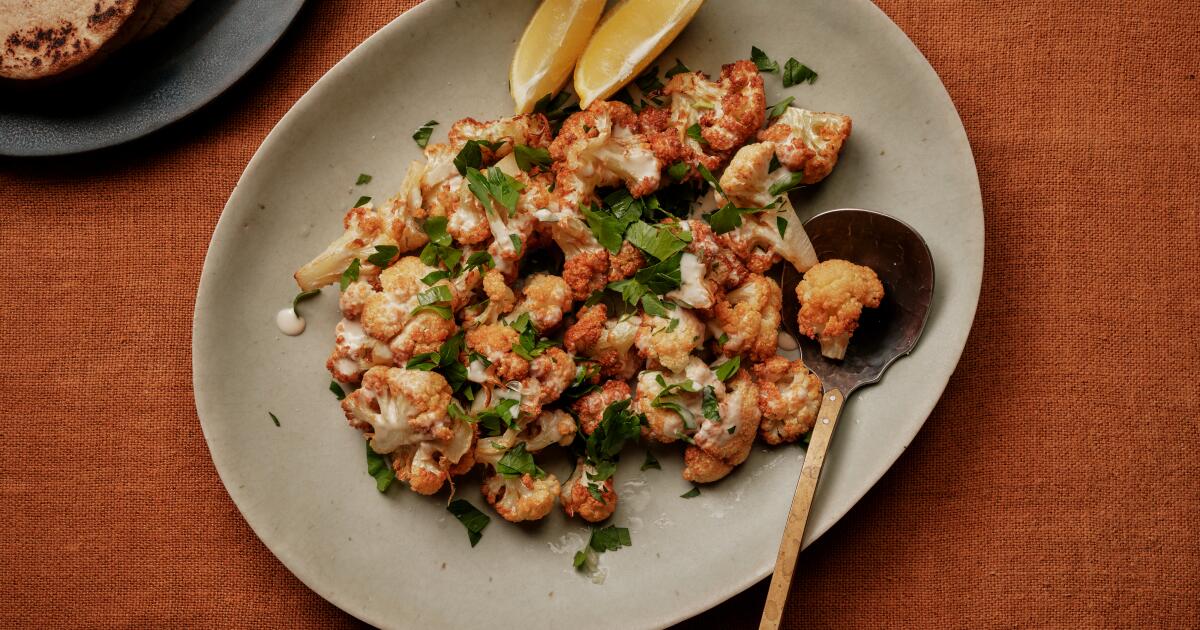
Handmade dumplings get stuffed with pork alternative, steamed monkey buns feature a molten center of “char siu” seitan and whole vegetables take center stage in larger plates such as cauliflower curry and sweet-and-sour mushrooms. Other prominent L.A. flavors weave in, such as in taro puffs inspired by elote. At brunch, try vegan dishes like bao beignets with black-sesame caramel, soufflé pancakes and breakfast sandwiches, with the option to add real egg.
The interior dining room of Men & Beasts in Echo Park. The restaurant also features a tea counter and side patio.
(Stephanie Breijo / Los Angeles Times)
Falco, who serves as executive chef, makes the restaurant’s proteins, dim sum, doughs and ice creams — in flavors such as miso corn and carrot calamansi — all onsite, while Zhu heads up the tea program and leads weekly Gongfu-style tea ceremonies.
Men & Beasts is open Wednesday to Friday from 5 to 10 p.m., Saturday and Sunday from 11 a.m. to 4 p.m. and 5 to 10 p.m.2100 W. Sunset Blvd., Los Angeles, (213) 262-1781, menandbeasts.com
Seogwan by Yellowcow Kbbq
The original Pyongyang naengmyeon at Seogwan by Yellowcow Kbbq in Koreatown.
(Stephanie Breijo / Los Angeles Times)
A popular Korean barbecue restaurant in Gardena recently teamed up with a naengmyeon specialist in Korea for a new best-of-both-worlds restaurant in L.A.’s Koreatown.
Mung bean pancakes filled with ground pork and vegetables at Seogwan by Yellowcow Kbbq.
(Stephanie Breijo / Los Angeles Times)
Yellowcow owner Monica Kim partnered with Pyeongyang’s long-running Seogwanmyeonok to create Seogwan by Yellowcow, where the signature items include Kim’s tabletop-grilled meats and Seogwanmyeonok’s signature chilled buckwheat noodles in a cool, refreshing broth.
The sturdy, springy noodles are made onsite daily with 100% buckwheat, and can be enjoyed in a classic secret-recipe, long-simmered cold meat broth, or augmented with perilla oil, spice or extra meat, and splashed with house-made vinegar. Also on offer are Yellowcow’s grilled meats such as galbi, beef tongue, spicy pork bulgogi and brisket, plus specialty items like sausage stew, crispy mung bean pancakes, soft tofu and bulgogi ramen.
Seogwan by Yellowcow Kbbq is open Wednesday to Monday 11 a.m. to 9 p.m. 3460 W. 8th St., Los Angeles, (213) 277-1281, instagram.com/seogwan_by_yellowcow
Joshua Gil wants to return to Los Angeles
Amid his debilitating fight against cancer, numerous restaurateurs, food photographers and other members of the industry are rallying around Joshua Gil: a pioneering Alta California chef whose projects have included Three Flames in Westchester, Mírame in Beverly Hills and underground dining club the Supper Liberation Front. Gil has been battling cancer since 2022; in August, Gil and his family learned the cancer has spread to his brain, and are seeking help in funding his travel from Florida to California in order to resume treatment in Los Angeles.
Put the corn cobs in a soup pot and any of the optional additions in a stockpot and add 3 quarts water. Bring the water to a boil over high heat. Reduce the heat to maintain a simmer and cook the cobs for about 1 hour, until the liquid has reduced by half and the stock is golden and flavorful. Turn off the heat. Remove the corn cobs from the stock. For a clearer stock, strain it through a fine mesh strainer.
Use immediately or, when cooled, keep covered in the refrigerator for up to 1 week or in the freezer for up to several months.
It’s Week 1 of the NFL season — meaning many of us have already started grazing for the winter.
Fans of losing football teams have been found to devour 16% more saturated fat the day after a big game than their normal daily amount. Fans of winning teams consume 9% less than usual … as if the victory were not enough.
Dig a little further into the data behind our football eating habits, and you’ll find that as a nation, we consume more calories on Super Bowl Sunday than we do on Christmas Day or Easter. Food and football are so synonymous in America that we consume more calories on Thanksgiving than on any other national holiday — not just because it’s a harvest feast, but also because there are three NFL games that day.
Face it, Week 1 tailgating may look innocuous, my friends, but usually it is our first step toward Gluttonyville.
I say usually because the rising use of GLP-1 drugs is leading some of us in a new direction.
Cornell University and the market research firm Numerator recently found that within six months of usage, new GLP-1 users reduce their overall grocery spending by 6%. They’re also exchanging ultra-processed snacks and sugary beverages for healthier options. We’re talking hamburgers, hot dogs, chips … you know, some of ultra-processed foods’ biggest hits.
The decline in interest in traditional tailgating favorites is so measurable that “retailers are adapting their strategies accordingly to be more forward-thinking,” according to Amanda Mosseri Oren, vice president of Industry Strategy for Relex Solutions. Her 20-year-old firm specializes in supply chain logistics for retailers around the globe. She said grocers are “reformulating ready-meal offerings to include higher protein content and more vegetables, recognizing that traditional convenience foods no longer match consumer needs.”
It’s still football season in a country with a 40% obesity rate, so end caps at grocery stores are still going to be dominated by salty snacks promotions and cases of soda. However, celery sticks and hummus are likely to become easier to find as the habits of the expanding community of GLP-1 users continue to reshape industry purchase orders.
For the retailers that already specialize in healthy foods, this trend potentially widens a customer base that has more disposable income. There is a quirk though: While changing eating and spending habits may be a triumph for science — and ideally wallets and waistlines — Oren noted the research “also revealed that higher-income households cut shopping by nearly 9% and that “trend has been consistent since 2024 and continues strengthening.”
So, the top 10% are getting thinner and saving money. Great news for the rich — except those wealthy folks who make their money selling junk foods. This trend is a conundrum for them.
As for the rest of us, the monthly cost for drugs such as Wegovy or Ozempic prevents a large-scale shift in consumer behavior without subsidies, greater insurance coverage or a more competitive free market to drive prices down significantly.
And then there’s this wrinkle: GLP-1 users still crave ultra-processed snacks.
Brandon McFadden, a professor at the University of Arkansas (and Tyson endowed chair in food policy economics), told me that GLP-1 users still want junk food, they just don’t want to pig out anymore.
“It’s all still fairly new,” he said. “For sure, there seems to be research evidence showing … stomach size is decreasing.” McFadden said “number of calories overall is obviously decreasing,” but not “uniformly across categories.”
Even as we’re getting a handle on the effects of the drugs being adopted widely now, new ones are in development. He pointed to clinical trial data on a new drug that reduced weight as much as 24% in 36 weeks — “really wow stuff,” as he put it.
Speaking of “wow stuff,” I was stunned when Sally Lyons Wyatt, global executive vice president and chief advisor for consumer goods and food service insights at Circana, told me 60% of U.S. consumers now report reading the labels on food.
“I can guarantee you that was not the case five years ago, not even close,” she jokingly said. “How did we get here? It’s a culmination of things. Obviously it started during COVID, where people started to learn what they needed to do to stay well. … More people are looking at what they’re putting into their body.”
With all that said, Wyatt was also clear on this: Indulgence is human nature. It won’t go away, but we might see more moderation.
So even if your team finishes 0-17, and all of that losing has you eating more chips and salsa than usual, as long as you’re monitoring what you eat the other days of the week, there’s a slim chance you may be able to watch the playoffs still able to fit in your favorite jersey.
There are countless reasons to dine and drink in the Valley. After canvassing the region for months, the Food team released guides with 65 of our favorite places to eat and 24 of the best bars and coffee shops, plus a spotlight on a neighborhood deli that’s fed generations of Italian residents and a sushi chef turned social media star who’s drawing fans from all over the world. We even asked some local celebrities and chefs to weigh in with their favorites.
But there’s still so much more to discover.
Our favorite places to eat and drink in the 818. From high-end sushi to burger shacks, tiki bars, dives and more.
To dig even deeper into the Valley, we asked Times subscribers to share their stalwarts. Some of their choices overlap with ours — long-running Casa Vega, cozy Augustine Wine Bar, Sri Lankan specialist Apey Kade — but they also named more than a few standouts that we can’t wait to try. Here are their picks:
“It is about time you cover food in the Valley,” writes Joe Hassan, whose favorite places include Cavaretta’s Deli in Woodland Hills, Barone’s in Sherman Oaks and Carnival in Sherman Oaks. “I have memories of Cavaretta’s subs and Barone’s pizza since I was a little kid in the ‘60s,” Hassan says, adding that, “Carnival’s hummus is the best.”
Times subscriber Danielle L.‘s favorite bakeries are in the San Fernando Valley, including House Roots Bakery in Chatsworth, Lodge Bread in Woodland Hills and La Princière in Westlake Village.
“Casa Vega is for the entertainment industry, La Fogata is for the people,” writes Alex Mokover. He calls it “An institution for half a century of families going to [Van Nuys Sherman Oaks Recreation Center].”
Mokover says that “some of the best birria in the city” can be found at Birrieria San Marcos and that Mercado Buenos Aires is “the center of the Argentine community.” He recommends Aroma Cafe as “the perfect first-date spot.”
As far as regional hidden gems, Mokover says he’s “been going to Pa Kua on Laurel Canyon for like 15 years now for martial arts and Chinese archery, and the competing central Asian food trucks at the Jon’s on Laurel Canyon and Magnolia are the perfect place to refuel.”
Matt Larsen lists, “The Snug, OG Smash Burger, Ozzy’s Apizza and Residuals,” as his favorite places to eat and drink in the Valley.
Jeremy Ziskind‘s favorite Valley spots overlap with the Food team’s list, including Salsa & Beer #1 in Lake Balboa, Lum Ka Naad in Encino, Apey Kade Restaurant in Tarzana and Borekas Sephardic Pastries in Woodland Hills.
Ziskind also lists Hummus Bar and Grill in Tarzana, Black Heart Coffee Company in Lake Balboa and Baja Subs Market and Deli in Northridge, as well as Tarzana Armenian Deli and Baklava Factory as his go-to hidden gem.
Larry Cohen recommends Arias Machane Yehuda for “unique Middle Eastern food in Tarzana” and names Casa De Papi Mexican Grill in Canoga Park as his favorite low-key spot.
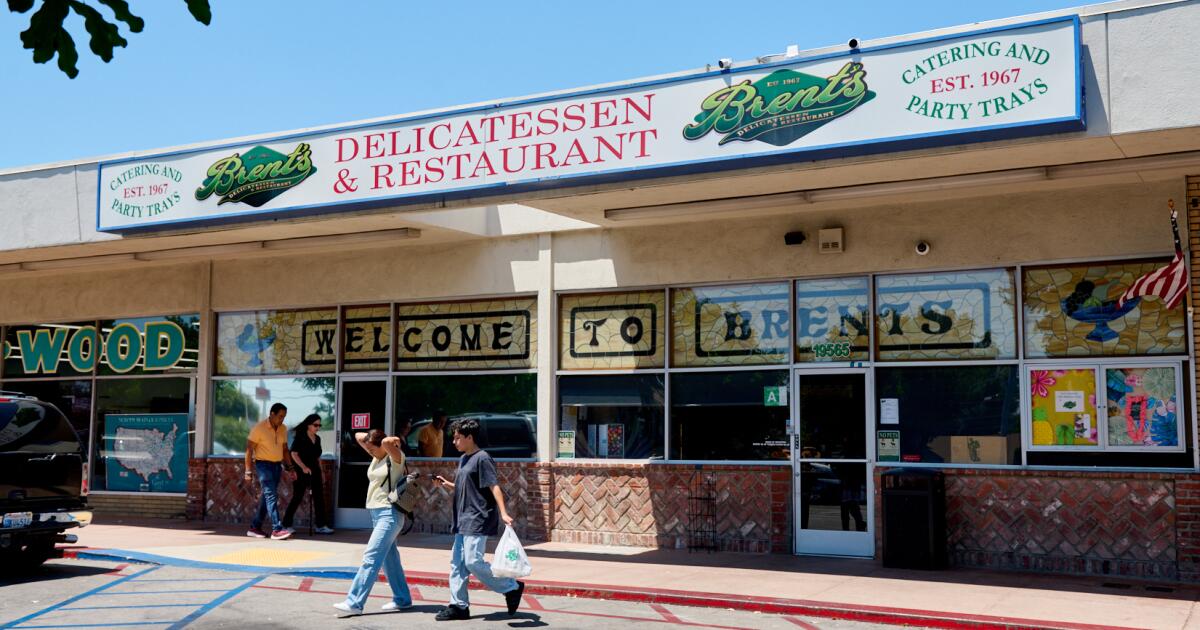
“Papa’s Meat & Seafood [has] pastrami to rival Brent’s,” writes Elliott Weber, who also recommends Humble Bird, Black Market Liquor, L.A. Ramadita for a “killer torta ahogada,” Laotian restaurant Kop Jai Lai, and 786 Degrees, which he calls “criminally overlooked.”
Weber names Horseless Carriage as his favorite little-known spot in the Valley, describing it as a “great greasy spoon hidden in a car dealership.”
“Shik Do Rak in Northridge; Daglas Drive-In in Winnetka; Yunomi Handroll in Toluca Lake; El Rey del Mar amd Mis Raices in Reseda; and San Carlos Deli in Chatsworth,” are some of Julio Avila‘s favorites.
If you’re looking for a place to drink in the Valley, subscriber Maria Sklar recommends the happy hour at Odyssey, which she says has a “great view,” as well as Norwood Bar and Lounge, which she describes as “old school” and says the “back room is very cool.” Sklar’s favorite hidden gem is the Green Cottage in Encino.
“Baja Subs Market & Deli [is the] best meal I’ve had in Los Angeles in years [and the] best Sri Lankan food I’ve had … ever. With its warm and friendly staff, I cannot wait to go back!” – Bradley Novicoff
Subscriber Courteney Stallings’ favorite Valley hangs overlap with the Food team’s guide, including the Smokehouse in Burbank and Idle Hour and Hy Mart Sandwiches in North Hollywood, plus Don Cuco’s in Burbank, the Front Yard in Studio City and Le French Rooster in Burbank.
“I love old school places, like the Smokehouse,” writes Debra Blanchard Knight. “Their happy hour is bomb, and we love the bartenders. Poquito Mas is our favorite fast food-style Mexican place — we like the one in Burbank best. We like Augustine Wine Bar and Mirabelle Wine Bar for a nice evening drink. For a quick and delicious Vietnamese lunch, we head to Few, which is a tiny place in a strip mall on Ventura Boulevard in Studio City. They have really great small bites, pho and sandwiches [and] never disappoint.
“Laurel Tavern, also on Ventura in Studio City, has a great happy hour and a fun patio to hang with friends. We often see celebs there, and it’s such a casual environment that we all just chat and cheers each other without drama or selfies! For brunch we like Vivian’s, also on Ventura in Studio City. They have amazing breakfast options, and good coffee. Parking can be tough, but worth the effort for sure.”
As far as hidden gems, Knight writes that, “Hands down I love, love, love the New Deal in Burbank. The food is amazing, and the owner and staff are so warm and welcoming. It’s a cozy little place that serves an interesting menu, including some nice vegetarian options, and has a good wine list. We sit at the small bar to eat, drink wine, chat with the staff and watch TCM movies on the TV. Fabulous for a date night, too! The owner of this restaurant also owns my favorite coffee shop, which is a few doors down, Romancing the Bean. It has a very Parisian environment, and is a nice place to land when you’re on Magnolia Boulevard doing some vintage shopping. Both spots have a great vibe with good food and drinks, and [are] often overlooked.”
“Joselito’s original location in Sunland-Tujunga is the very best OG Mexican food in L.A.,” claims JC Wendel. He also recommends family-owned ToriYen Sushi, with what he says is the “best and freshest tuna in L.A.”
Subscriber Bettie Blumer has a long list of Valley favorites including Country Deli in Chatsworth; Casa de Tacos with “late hours” and “always good, fresh food” in Canoga Park; Daglas in Winnetka for its burgers and fries; Johnny Pacific in Winnetka for what she calls the “best empanadas”; and Follow Your Heart Market & Cafe for great vegetarian food in Canoga Park.
Matthew McLean writes that El Big Burrito in Canoga Park serves “the best al pastor burrito I’ve ever had.”
Cheryl Leff recommends, “MacLeod Brewery for casual evening where we can bring in our own meal. We often bring delicious tortas sandwiches from Cemitas Don Adrian just around the corner.”
Leff’s favorite hidden gem is “Didar Kitchen, a new addition to the many excellent Middle Eastern restaurants along Ventura Boulevard [with] large portions of Persian food [and] friendly service. There is seating for maybe 10 or 12 inside, but they do a huge takeout business. On our first visit, I ran into a Persian friend I hadn’t seen in years. She told me they order Didar takeout at least weekly, and described it as the best Persian food in the Valley.”
Cook the black-eyed peas: Strain the beans, discarding the soaking water, and put them in a large pot. Add enough water so that it covers the beans; the water should be 2 inches above the bean line.
Bring the beans to a boil. Cook them at a hard boil for 15 minutes.
Reduce the heat to medium-low and bring to a simmer. Add the bouquet garni, black lime, onion, turmeric, pepper and fenugreek. Continue to cook at a simmer until the beans are tender, about 1 to 2 hours, depending on the age of your beans.
Shira Yevin was on her way to grab lunch from the Studio City Trader Joe’s, when she caught sight of a new restaurant on the block called Local Kitchens.
“I was like, ‘That sounds good, sounds healthy,’” she said. “‘Let me see what it is.’”
Excited at the prospect of not eating preprepared grocery store food, she was initially deflated when she saw that the restaurant served Vietnamese food, a cuisine she doesn’t normally eat. Then she noticed that the restaurant also served some of her favorite Mediterranean dishes.
After she placed her order, she started reading the colorful signs on the walls, one of which mentioned an Oklahoma onion burger.
“I’m like, ‘Oh, a burger? What is this place?’” Yevin wondered.
Signage highlighting the five chef-partners at the Local Kitchens in Studio City.
(Emil Ravelo / For The Times)
Local Kitchens is a fast-casual restaurant with five distinct menus from five different chefs. The catch is that there aren’t five kitchens operating separately. Rather, the five partnering chefs — a mix of restaurateurs, cookbook authors and chef-influencers — worked with Local Kitchens’ in-house culinary team to design the menus. The food is prepared from scratch by a single team of on-site cooks, ghost-kitchen-style.
But unlike many ghost kitchens, customers can eat on site. Diners are greeted by screens where they can scroll the five menus, then mix and match items as they build their order. When ready, servers deliver the food to the table all at once — not in disposable containers but on white ceramic plates. It’s a touch of restaurant-style service combined with the choice of a food hall and fast-casual convenience.
“It’s a valuable proposition,” said cookbook author and content creator Rick Martínez, who for his first restaurant venture has partnered with Local Kitchens to offer a Sonoran-style Mexican menu. “A lot of my friends are either vegan or pescatarian, or have some kind of allergy. It’s like no one can agree on any one place, right?”
A Jalapeño Ranch Wedge Salad from Chef Rick Martinez’s Mexican menu offerings at Local Kitchen surrounded by other dishes.Chef Rick Martinez’s book “Salsa Daddy.”(Emil Ravelo / For The Times)
Local Kitchens and similar ventures, such as Neighborly at the Promenade at Westlake in Thousand Oaks, are part of a new field of fast-casual dining descended from the online ordering boom of the pandemic when convenience and choice became paramount for diners and ghost kitchens, such as takeout titan Wonder on the East Coast, proliferated.
While still rooted in the ease of screen technology, Local Kitchens and Neighborly are betting on customers’ renewed desire for social connection, while also recognizing their demand for high-quality food. Diners get convenience and variety; chefs get the financial backing to scale with minimal risk.
From ghost kitchen to social gathering space
Local Kitchens, launched in 2020 by former DoorDash co-founders Jon Goldsmith and Andrew Munday, along with Jordan Bramble, began as a ghost kitchen servicing Bay Area favorites such as Boba Guys and Humphry Slocombe. By 2021, Local Kitchens had begun offering diners the chance to eat on site.
With time, however, there was a growing awareness, said Chief Executive Jay Gentile, that Local Kitchens was expanding other companies’ brands without cementing its own. Some locations, including the company’s first Southern California outpost in Huntington Beach, have shuttered.
Local Kitchens CEO Jay Gentile at the company’s Studio City location.
(Emil Ravelo / For The Times)
“How do we move away from being this tech platform that does food, and become a restaurant brand that partners with great chefs, that creates menus, that scratch-cooks in our own kitchen, and delivers at a really high level at a fast-casual pace, at a price point that makes sense for people?” posed Gentile, who stepped into the CEO position in March as the company approached its five-year anniversary.
For Gentile, a large part of the answer is teaming up with individual chefs instead of established restaurant brands. On Local Kitchens’ initial chef-partner lineup are Eggslut and Amboy founder Alvin Cailan, who devised the aforementioned Oklahoma onion burger; Einat Admony, the chef-owner of New York’s Israeli restaurant Balaboosta; Ari Feingold, chef and co-founder of San Francisco’s Proposition Chicken; Tuệ Nguyễn, better known among Gen Z audiences as @twaydabae on social media and partner in the currently closed Vietnamese restaurant DiDi in West Hollywood, and Martínez, who took some of the company’s employees to Sonora, Mexico, to help them nail his menu.
Inside Local Kitchens in Studio City.
(Emil Ravelo / For The Times)
While delivery and takeout still comprise a healthy amount of the company’s revenue, the restaurant is dedicated more than ever to a dine-in experience, with front-of-house staff available to guide customers through the touch screen menu or to take their order directly and the addition of ceramic dishware in Studio City and soon in other locations. Think Tender Greens but with a variety of cuisines.
Getting Neighborly
Inside Neighborly, a curated food hall in Westlake Village.
(Emil Ravelo / For The Times)
Over at Neighborly, the latest project from DOM Food Group, which previously worked with Gwyneth Paltrow to scale Goop Kitchen, customers at the Promenade at Westlake also order from a screen or they can speak to a front-of-house staff member to build a meal across six menus. As at Local Kitchens, one kitchen prepares the food, which is delivered as a single meal.
Questlove’s “Breakfast-ish” product display.
(Emil Ravelo / For The Times)
But Neighborly largely works with established restaurants and personality-driven businesses. Customers can choose Armenian cooking from Glendale’s Mini Kabob; chicken sandwiches and no-beef burgers from Questlove’s Mixtape; pizza and pasta from the Cheese Store of Beverly Hills; California-inspired salads, bowls and sandwiches from chef-influencer Gaby Dalkin; cookies from Amirah Kassem‘s Flour Shop and the pan-Asian-focused Social Monk, started in 2019 by the Cheesecake Factory in the same Westlake space that now houses Neighborly.
Going a step further, Neighborly’s physical space doubles as a superette, where customers can pick up spreads from Jessica Koslow’s Sqirl, frozen meals from Burritos La Palma and Katie’s Pizza, or any number of clean pantry essentials labeled “woman-owned,” “kid-friendly,” “better for you snacks” or “bespoke local merch.”
Taking its inspiration from Erewhon, founding partner Mario del Pero, known for co-founding Mendocino Farms with his wife, Ellen Chen, said Neighborly’s core customer is the “time poor” suburban mom, who wants to have a nice meal with friends and also grab prepared meals to take home.
Mario del Pero, co-founder of Mendocino Farms, is one of the founders of DOM Food Group, the company behind Neighborly.
(Emil Ravelo / For The Times)
“If we’re best in class in every genre then we’re gonna win the pizza person, we’re gonna win the bowl person, we’re gonna win the Mediterranean person,” said Del Pero, from Neighborly’s ocean-blue patio, bustling with customers.
A lifeline for chefs
For chefs, Local Kitchens and Neighborly offer a place to incubate menus and spread their brands without the risks associated with scaling a small business on their own.
This opportunity is particularly exciting for those who have never dabbled in the restaurant space, yet have sizable online presences, such as Dalkin and Martínez.
But the same can be said for established restaurateurs.
Take Cailan for example, who is largely uninvolved in the international expansion of Eggslut but still personally operates Amboy and says that facing rent in Studio City would have been “100%” impossible.
“Having the yin and yang of having a business like Amboy and being a part of a business like Local Kitchens makes everything work,” said Cailan. “I could still be chef Alvin Cailan smiling and shaking hands with my customers every single day, and also really trying to be a business-forward innovator in the restaurant world with Local Kitchens.”
Similarly, Mini Kabob’s Armen Martirosyan had long been interested in scaling the family business. But facing $20,000 to $30,000 a month in rent for a new location, he said, was “almost a dream.”
That’s when the Neighborly team reached out.
“I explained to my parents, like, ‘Look, we can cook but we’ve never scaled a business,’” he said. “‘You’re tired. I’m tired. Let’s put that creativity back into Neighborly’s hands, and let’s grow with them.’”
Inside Neighborly, a curated food hall in Westlake Village.
(Emil Ravelo / For The Times)
Mini Kabob’s has tried expanding before — at the Westfield Topanga shopping center’s Topanga Social food hall. Martirosyan calls the still-operating venture “the bane of my existence.”
“There was no chef coming in and training with us. We literally had to go to Topanga and train 18-year-old kids to make our proprietary recipes,” he said. “Immediately we knew this was bad, and it was either A, we would go everyday to try to save the face of our company and make sure that the quality doesn’t get killed, or B, we just take a step back.”
Local Kitchens and Neighborly, however, are explicitly pitching a higher level of fast-casual food and work with the chefs to ensure quality.
Inside Neighborly, a curated food hall in Westlake Village.
(Emil Ravelo / For The Times)
Local Kitchens, for instance, has implemented safeguards such as requiring each store to submit a picture of a specific recipe each day, said culinary head Ashley Torrijos, who got her start in Michelin-starred kitchens Melisse and Providence before working in research and development at the Cheesecake Factory.
And unlike a traditional food hall where small businesses pay rent to the operator, the partnering businesses at Local Kitchens and Neighborly receive a share of revenue. This will continue as both companies look to expand — in West L.A. and beyond.
“We’re getting our brand marketed, and we’re actually getting paid back by tasting all these different products and trying all these new things and having access to a research and development team at zero cost to us,” said Dominick DiBartolomeo, owner of the Cheese Store of Beverly Hills and Domenico’s Foods.
“If I would have tried to come up with this plan on my own, of course we would have done it. But you know how much time and money that would have taken? It’s exactly what you call a win-win.”
The Southern California grocery brand that has become synonymous with luxury and wellness is taking its first steps into New York City.
Erewhon said it plans to open a tonic bar within an exclusive West Village members’ club later this fall.
The tonic bar will serve members at Kith Ivy, a lifestyle and fitness club from Ronnie Fieg, chief executive of the popular streetwear brand Kith.
Kith Ivy will open to an “extremely limited” number of members this fall, the Kith website said.
The miniature Erewhon will be tucked away near cold plunge pools and a sauna at 120 Leroy Street in New York City, according to blue prints Fieg posted on Instagram.
The members’ club, which will also feature rooftop padel courts and dining from Cafe Mogador, reportedly comes with a hefty initiation fee of $36,000 and an annual fee of $7,000.
The price and exclusivity of Kith Ivy aligns with Erewhon’s own high-end reputation. In Los Angeles, the grocer is known for expensive specialty goods and celebrity-inspired drinks, like the $20 Hailey Bieber strawberry smoothie.
“Erewhon is going after those really premium customers,” said Jeff Wells, lead editor of the trade publication Grocery Dive. “If you’re succeeding in Southern California, New York would be the next logical place to go.”
Erewhon’s new tonic bar will offer a limited selection of drinks and smoothies, a company spokesperson said Wednesday. Only Kith Ivy members will be able to order in-person, but other New Yorkers within a select radius of the club can order drinks for delivery through Postmates and Uber Eats.
Erewhon has a loyal following in the Los Angeles area, where the company operates 11 locations and plans to open three more in West Hollywood, Glendale and Thousand Oaks. The company got its start in the 1960s as a health foods store in Boston before relocating to the West Coast.
The grocer’s foray into New York comes as other supermarket chains have cut back on costs. Kroger, the parent company of Ralph’s and Food 4 Less, is in the midst of closing locations and recently laid off nearly 1,000 corporate employees.
Unlike Ralphs, Erewhon has established itself as a luxury destination that caters largely to wealthy customers.
“Erewhon is all about being at the cutting edge of food and beverage, for a premium price,” Wells said. “Your average middle-class shopper can’t afford to shop there.”
Guinness bread was the beginning of Café Cecilia. In a strange way, without it there wouldn’t be a café and I would have never learned how to cook. At a time when I was desperate to recover from depression, I decided I needed some time out from the music management company where I was working. My mother Odette showed me her recipe for Guinness bread, and I found that the meditation of mixing the bread really helped with the pressure and intensity of what I was going through.
My mum is from Ireland and the bread recipe is very traditionally Irish. Every meal at Café Cecilia begins and ends with a nod to this bread. From the bread plate when you first sit down to the Guinness bread ice cream for dessert, it always features. It’s slightly sweet, with notes of treacle along with the buttermilk, and I find it brings something unique to the café’s menu, as it’s hard to find good freshly baked Irish soda bread in London. Our menu changes daily, but the soda bread is always here.
In Max Rocha’s London restaurant, Café Cecilia, he blends the concept of fish stew with the ubiquity of smothered toast, resulting in one of his most popular dishes: crusty sourdough that’s slicked with garlicky aioli, cider-braised mussels and sweet roasted tomatoes. In his debut cookbook, “Café Cecilia,” Rocha shares his recipe for mussels and datterini tomatoes on toast, which can be found on most tables at the restaurant. It serves two, but Rocha also recommends making larger batches to serve at parties or for groups of friends, as the preparation of making aioli, roasting tomatoes and braising the mussels can come together in preparation before everyone arrives, then assembled just before serving.
Against all odds, Tyler Wells’ Altadena restaurant remains standing. Like roughly 10,000 homes and structures in the area, many of the surrounding businesses burned in January’s Eaton fire, changing the mountain town’s community and landscape forever.
After the neighborhood’s destruction Wells thought his restaurant would never reopen, but on Saturday, Betsy — formerly called Bernee — will serve its rustic, seasonal cuisine once again. It will usher in customers for the return of its hearth-fired menu in what Wells hopes will be a beacon of light and a gathering place for Altadena after so much pain.
Betsy — near the corner of Lake Avenue and Mariposa Street — is flanked by remnants of the fire’s destruction: to the west, a hollowed-out brick structure that once held the local hardware store, its metal light fixtures still wilted from the heat; to the south, a leveled lot that was once a Spanish-language school; and north, there’s what’s left of a pottery studio and neighborhood stalwarts Café de Leche and Rancho Bar.
“Fire’s an incredible thing, and also will decimate an entire city and ruin people’s lives,” Wells said. “The allure of it for me is to not control it — and this is getting spiritual — but to find that harmony. Maybe we can do our tiniest little part to restore some of that balance.”
Betsy chefs man the wood-fired hearth in the Altadena restaurant.
(Stephanie Breijo / Los Angeles Times)
Bernee debuted Dec. 7, 2024. In its one month of service before the fire, guests dined on steaks, cast-iron potatoes and rich, fluffy burnt cheesecakes in the glow of its wood-fired hearth. The oven, overseen by lead chef Paul Downer, burned through almond wood and red oak, required near-’round-the-clock staff, and functioned as a baking oven by day and a blazing grill and roasting oven for meat, fish, beans and charred vegetables by night.
Wells had poured himself into the space, building his own tables, shelves and sleek wooden walls. Through personal duress, including the dissolution of his marriage and of his partnership in popular Los Feliz restaurant All Time, he found hope and focus in his new Altadena restaurant.
On Jan. 2 he moved to a new home, nearer to what is now Betsy, which is named for his late mother. On the day of the Eaton fire he told his therapist, “I don’t know, man, I could see myself being happy here. There’s a little crack with light being shown in.” He had a morning of revelation and optimism. That night, located practically along the Eaton Canyon trail, his new house was directly in the fire’s path.
Owner Tyler Wells chats with guests in the dining room of his restaurant, Betsy, in Altadena on Aug. 24.
(Stephanie Breijo / Los Angeles Times)
Wells never imagined the fire would reach the city. On Jan. 7 he worked the restaurant til close, and helped his staff leave early and chart safer routes back to their homes.
“I was like, ‘The restaurant’s fine, you guys get home safe,’” he said. “Like, this restaurant is so far from the mountain, a fire can’t burn through all of this. Little did I know about these grapefruit-sized embers getting blasted down the mountain.”
That night he evacuated a few of his own belongings. Then he woke up to roughly 150 text messages, many simply sharing statements like, “It’s all gone.”
“I was just like, ‘OK, the restaurant’s gone. My house is gone. I’m separated. I just had this moment: ‘I’m out. I’m leaving now,’” he said. “I was just like, ‘I’m not coming back to L.A. This is it.’”
He began to envision starting over anew, maybe in another state, maybe in Mexico. Not two hours later, Paola Guasp — owner of Amara Kitchen, which also burned — reached out: Wells’ restaurant was, somehow, still standing.
He drove to Mariposa Street to check on Bernee and happened to meet one of his staff, who’d also decided to visit the restaurant at that moment. They embraced, then Wells grabbed two cases of the most expensive wine in the building and drove north without a destination.
Wells had befriended potter Victoria Morris and her husband, Morgan Bateman, occasionally dropping by the ceramics studio housed in the building behind Bernee. It burned in January. So did their home.
As Wells drove north he called an Ojai hotel and booked a few nights there, then called Morris and Bateman, who have a home in Ojai. Morris told him to cancel his hotel. “I was like, ‘What? What do you mean?’” he asked. “And there was a long pause, and she’s like, ‘Tyler, f— you. You live with us now.’”
For eight weeks they processed the fire and their losses and grief. Those meals and months with them, he said, are moments he’ll cherish for the rest of his life.
Bone-in rib-eye with grilled Romano beans and tallow-roasted potatoes at Betsy.
(Stephanie Breijo / Los Angeles Times)
He then traveled to Mexico City to visit friends, and his return to California, he vowed, would only be a temporary one.
A call from the Ecology Center, a sprawling farm and market stand in San Juan Capistrano, changed his course. Could he help reshape the onsite cafe, molding its menus and programming closer to the farm’s bounty? No, he thought, he wasn’t ready. Wells traveled to Colorado, but he couldn’t get the Ecology Center out of his mind; he cut his trip short and headed back, throwing himself into work on the farm, its cafe and ticketed dinners and events. Then he called in Bernee reinforcements.
Cast-iron focaccia with tomatoes, burrata, basil, olive oil and West Virginia salt at Betsy.
(Stephanie Breijo / Los Angeles Times)
Joey Messina, a cook at Betsy, agreed to temporarily relocate to the farm. Wells vacated the Airstream trailer on the property for him, and took up new residency on the property’s yurt. When they needed waitstaff help they called Tom Oakes, also currently at Betsy; he trekked down to join them and Wells relocated again, this time pitching a tent between two orange trees. He remained there for eight weeks. More staff followed.
They called it “dirtbag summer camp,” working 18 hours a day, then cooking luxurious meals with produce pulled right from the ground. These dinners convinced him to stay.
“L.A.’s got some challenges that are really hard for me as a business owner, but these are my people,” he said. “These are the greatest friends I’ve ever known in my life. … It’s hot and it’s expensive and it’s a pain in the ass to do business here, but the greatest people in the world are here.”
After its closure, most of Bernee’s staff found work in other restaurants. Some, like server Courtney Johnson — the new curator of Betsy’s wine list — told The Times that they were ready to leave the industry entirely, unless Wells reopened his restaurant.
“They made the decision that the restaurant’s reopening,” Wells said. “I had to just pull a few levers here and there, like, ‘Here’s your restaurant back.’ I can’t believe it.”
Guests in the dining room of Betsy in Altadena.
(Stephanie Breijo / Los Angeles Times)
The timing, he said, also began to feel right. The first months were horrifying, filled with trauma and smoke. In spring when construction crews began clearing the lots, he felt slightly optimistic. Through the summer, grass began to grow. The air felt cleaner. He saw signs of life returning to the community.
“I just realized: We’re right at the bottom of this climb, and it’s a hell of a climb, and I want to be a part of it,” he said. “This is where I fit in.”
What kind of a member of this community would he be, he thought, if he only returned once all the damage had cleared?
He renamed the restaurant and tweaked the menu for seasonality, but nearly everything remains as it did during Bernee’s single month of service. He’s gotten that wood-fired hearth back up and running. He deep-cleaned the air ducts and filters and restocked its kitchen.
On Aug. 3 he threw his first dinner at Betsy, cooking for friends, family, neighbors, and guests who’d cut their dinner short on the night the fire began in January. Wells gave the staff a pre-opening speech that was so unexpectedly emotional it brought him to tears in front of them all.
Inside the lighting is dim and the fire roars in the hearth grill, but outside the seating at Betsy is calm, sunny and relaxed.
(Stephanie Breijo / Los Angeles Times)
“I was just like, ‘This restaurant is not a restaurant,’” he said. “That’s a silly thing, but what it represents is something so much bigger and deeper, and what it means for people in the community.”
On Aug. 24, during another practice run of dinner service, a customer approached Wells in the dining room and tapped him gently on the shoulder from behind.
He didn’t know her, she said softly over the din of the guests, but she lives in the neighborhood. She said she needed to tell him that the return of the restaurant felt like the start of something new for Altadena, and she was so glad it came back.
“I think people do see it as a beacon, just to let a little bit of light in,” Wells said later. “It’s not going to be just us, obviously — I think we need another 1,000 examples of that — but it’s so meaningful to me. That’s what restaurants have always been for me, but to be able to do it in this kind of time and place is really powerful. It feels like a calling for all of us.”
Betsy is at 875 E. Mariposa St. in Altadena, open daily from 5 p.m. until close.
SEOUL — In many parts of the world, convenience stores are the shops of last resort: cigarettes, sodas and laundry detergent. But in South Korea, you might find single malt whiskies, $800 French wines, 24K gold bars, shampoo and conditioner refill stations, televisions or a dine-in instant noodle bar with more than 200 varieties of ramyon.
A customer might be able to pick up a package, wash and dry their clothes, or sign up for a new debit card.
The stores are best known for their numerous feats of “instant-izing” food, a process in which nearly every conceivable dish is turned into a packaged meal: spaghetti, Japanese udon, fried rice that you squeeze out of a tube. These have turned convenience stores into a $25-billion industry in South Korea and those food products are churned out at a staggering pace: up to 70 new food items hit the shelves each week, effectively offering a live feed of South Korean tastes.
“In South Korea’s food retail market, you go extinct if you’re not quick to change,” says Chae Da-in, who says her obsession with convenience stores is decades old. “It’s all about being diverse and fast.”
Known in the national media and on social media as a “convenience store critic,” Chae is the author of three books on the world of convenience store foods, which has led to TV appearances and newspaper interviews.
Every Friday, she tours a handful of convenience stores near her home to keep up with what’s new. Over the last two decades, she estimates she has consumed at least 800 varieties of convenience store samgak gimbap — rice wrapped in dried seaweed and a grab-and-go staple.
Lee Hee Chul, 21, from Incheon, South Korea, cools down his ramyon in a DIY cone made from the ramyon bowl cover at a CU convenience store in a popular tourist area in Myeongdong.
Shoppers prepare their dinner at one of the self-serve machines in the dining area at a CU ramyon convenience store.
In recent years, Chae has watched her obsession go global. Much like South Korean movies, TV shows and music, South Korean convenience stores have become a cultural sensation.
Specific locations, such as the store that appeared in Netflix’s hit series “Squid Game,” have made the news. On TikTok and YouTube, mukbang — videos of people eating — of South Korean convenience store foods have gathered millions of views.
“Giant cheese sausage,” announces one reviewer in a TikTok video series titled “ONLY Eating Food from a Korean Convenience Store.” The meal also includes blue lemonade that comes in a plastic pouch, a “3XL” spicy tuna mayo samgak gimbap and a carbonara-flavored Buldak (“fire chicken”) noodle cup.
South Korean convenience stores are now expanding into nearby countries such as Mongolia or Malaysia. CU, one of the country’s leading operators with more than 600 stores in Asia, is set to open its first U.S. location in Hawaii later this year.
“The percentage of the Asian population in Hawaii is six times that of the mainland U.S., making it a place where there is a high level of familiarity and positive attitudes toward Korean culture,” said Lim Hyung-geun, the head of overseas operations at BGF Retail, CU’s parent company.
“On top of that, we’re seeing the sustained popularity of Korean culture, such as a Korean food boom among American teenagers and young people in their 20s and 30s, which we believe will be a big boost for CU’s future expansion.”
Lim calls CU’s overseas locations “‘miniature South Koreas’ where people can experience the products that have become popular with the K-wave.
“But as is the case here, K-convenience stores aren’t just a place to experience South Korean culture,” he said. “They are also restaurants, cafes and a general amenity.”
In other words, everything stores that are everywhere and open all the time.
***
The GS25 convenience store is collaborating with FC Seoul, a South Korean football club, in the Hongdae neighborhood.
Like many things South Korea has embraced and spun off into something novel, convenience stores are an import to the country. The first such store was American — the Southland Ice Co., which was founded in Texas in 1927 and changed its name to 7-Eleven in 1946. The first of the 7-Elevens opened for business in Seoul in the 1980s.
Today, South Korea is the convenience store capital of the world. Like the bodegas of New York, they have become part of the fabric of contemporary urban life, multifunctional spaces that can be restaurants or coffee shops or bars with microwaves and outdoor seating. Chae calls them the “oasis of the streets.”
“People hang out in convenience stores,” she said. “They’ve become a social place.”
Part of what makes them such a force in the country is their sheer numbers.
There are around 55,000 convenience stores in South Korea — a country the size of Indiana — amounting to one convenience store for every 940 people. In Seoul, where their numbers have quadrupled in the last 15 years, it sometimes feels like there’s one on every corner.
Much of this has to do with the fact that roughly one in every four workers in South Korea is self-employed, a high number relative to other developed countries. For those in this mom-and-pop economy, which includes older workers pushed into early retirement or others who have been boxed out of the traditional labor market, convenience stores offer the most accessible form of entrepreneurship.
“Compared to the hundreds of thousands it would cost to open another business, the main draw of convenience stores is that you can open one with starting capital as little as 20 million won [$14,000],” said Oh Sang-bong, the head of social policy research at the Korean Labor Institute. “Of course it’s not easy. There are a lot of cautionary tales. But there are success stories, too.”
***
Images of the boy band Tomorrow X Together decorate the windows of the Nice to CU music library convenience store in the Hongdae neighborhood of Seoul.
This profusion has made the convenience store business one of the most fast-paced and competitive in the country — one that moves in lockstep with boom-and-bust social media attention spans.
Hit products generate the kind of buzz you might see only for a limited-edition sneaker or the latest iPhone, necessitating preorders or, when inventories inevitably dry up, leading to scalping.
But the lows are abrupt. When it was first released last year, CU’s “Dubai-style chocolate” — an in-house take on the global TikTok food trend — commanded lines outside of stores and sold out in a day. Four months later, sales had dropped to a sixth of what they were.
“The lifespan of products is now incredibly short because social media fads come and go so quickly,” said Kim, a merchandiser for a leading convenience store franchise who asked to be identified only by his surname because he is not authorized to speak to the media.
“In the past when the market wasn’t so saturated, revenue would naturally rise as everyone opened more stores. But now there are so many stores, and then you’re competing not just with other convenience stores but with e-commerce platforms, coffee shops, restaurants — everybody who’s following the same trend.”
Most of Kim’s job involves scrolling through social media platforms such as TikTok, looking for the next hot-ticket item, such as a distant food trend that shows signs of making landfall.
“It’s brutal. It’s like trying to find the eye of a needle over and over again,“ he said. “If you miss something big and a competitor releases it first? Then you’re getting chewed out by your boss.”
Kwon Sung-jun is a chef who specializes in Italian cuisine and the winner of “Culinary Class Wars,” a hit reality cooking competition released by Netflix last year. He has a ritual of stopping by a convenience store every night after work — even if he doesn’t have anything to buy.
“It’s very useful for staying abreast of any trends in the culinary world,” he said, and his routine proved to be pivotal in winning the $223,000 prize for “Culinary Class Wars.”
In one stage of the competition, contestants were tasked with cooking a dish using ingredients sourced from a true-to-life replica of a convenience store on set. Kwon, 30, handily won with a chestnut tiramisu whipped together from chestnuts, milk, coffee and a package of biscuits.
“I came up with the idea in 30 seconds,” he said. “Because I had a mental list of what convenience stores have, I also planned substitute options for each of the key ingredients like chestnut, cream and so on.”
Since winning the competition, he has avoided convenience stores; just two weeks after that episode aired, CU released a mass-produced version of his tiramisu, with Kwon’s face on the packaging.
“It’s a little embarrassing to see those photos of myself,” he said.
***
“Most of the tourists come looking for products related to Korean movies or TV shows like dalgona[a traditional Korean candy] because they saw it on ‘Squid Game,’” says Kim Hye-ryeon, the owner of a GS25 in the Hongdae district of Seoul.
All of this makes running a convenience store no easy feat, says Kim Hye-ryeon, the 52-year-old owner of a GS25 in Seoul’s Hongdae district.
Because franchisees are responsible for picking out their own inventory from the company catalog, which is updated three times a week, running a successful convenience store is less about the labor of stocking shelves and cashing out customers than keeping up with the frenetic cycle of food trends.
“Whenever there’s a popular item, the owners who are a step ahead buy up all the stock so sometimes I can’t get any for my store,” she said. “You have to know what’s popular with young people at all times.”
In recent years, as South Korea’s cultural footprint has expanded, the assignment has gotten even more complicated. Streets that were once quiet are now popular thoroughfares for tourists staying in the guesthouses and Airbnbs that have opened in the area. Global tastes must be accounted for, too.
A customer heads for the exit at a GS25 convenience store.
“There’s been a noticeable increase since the pandemic,” she said. “Before, it was mostly Chinese or Japanese tourists, but now it’s from all over, especially Americans and Europeans.”
From behind the counter, she has been keeping mental notes of what this international consumer base is buying, noting, for example, how her Muslim customers carefully study the labels to check whether the item is halal.
“Most of the tourists come looking for products related to Korean movies or TV shows like dalgona [a traditional Korean candy] because they saw it on ‘Squid Game,’” she said. “They also really like ice creams, especially bingsu [Korean shaved ice].”
A young man wearing a bucket hat and a denim tuxedo monogrammed with the letters LV across every inch of fabric leans in to talk to his dinner date. Another couple takes selfies between bites of a California roll, both using forks to stab at the maki. Four women, their faces buoyant with Botox, clink glasses of elderflower and lychee martinis. It’s just another Friday night at Nobu on La Cienega Boulevard.
The Los Angeles Nobu is not as flashy as the one in Malibu, where the waves of the Pacific Ocean create a backdrop for the restaurant and Jennifer Aniston and Courteney Cox were just spotted on a double date. This Nobu, which opened in 2008, several years after its more famous Malibu cousin, is somewhat of a hidden gem on a stretch of La Cienega Boulevard, where black cars once swarmed its valet stand and reservations were elusive. Now, it’s more of a hotbed of furniture and home decor stores. And weeknight dinner reservations are procured with ease.
A view of the sushi bar from the main dining room at Nobu Los Angeles. Recently, the decor has felt more outdated than retro.
(Catherine Dzilenski / For The Times)
The main dining room that houses the sushi bar still vibrates with a current of money, celebrity and those who seek it. But, once revered as one of the most stylish rooms in Los Angeles, it now suffers from the aesthetic malaise of an “Asian-themed” chain restaurant in the mid-2000s, its patterned fabric banquettes feeling more dated than retro. The menu, for the most part, is similarly past its prime even if everyone (this writer included) still loves the black cod with miso.
When I learned that this specific location of Nobu was getting a new executive chef, I was intrigued. Sean Tan, originally from Malaysia, has cooked at Nobu Melbourne, Nobu Chicago and overseen Nobu experiences at events like the BNP Paribas Open at Indian Wells. Would he be introducing new dishes that are only available in Los Angeles? Updating old favorites?
Nobu Matsuhisa popularized broiled black cod with sweet miso, now found at sushi restaurants around the country. Pictured is the black cod miso from Nobu in Los Angeles.
(Catherine Dzilenski / For The Times)
There was nothing noticeably different about the menu during a recent visit, but my server said that the chef had tweaked the Chilean sea bass with jalapeño, a dish that’s been exclusive to the Los Angeles location for about a decade.
The broiled sea bass was topped with a small heap of micro cilantro and a salsa of chopped red and green jalapeño, onion, lemon and olive oil that resembled pico de gallo. Marinated in “jalapeño miso,” it was nearly indistinguishable from the restaurant’s black cod miso, one of the signature dishes that helped catapult founder Nobuyuki Matsuhisa‘s career as the most recognizable sushi chef on the planet. But the sea bass was cooked far past firm, and the marinade, despite the salsa garnish, far too sweet.
While Tan may be running the day-to-day operations, it is only ever Matsuhisa’s name associated with any of the dozens of Nobu restaurants around the world.
The Nobu phenomenon can be traced to the opening of Matsuhisa restaurant in Beverly Hills in 1987. In 1994, actor Robert De Niro famously partnered with the chef to open the first Nobu in New York, and a restaurant empire and hotel brand — with more than 50 locations from Dallas to Dubai — was born.
Matsuhisa’s influence reverberates through every strip mall sushi restaurant in Los Angeles. He is the reason 99.2% of the sushi restaurants across the country have versions of tiradito and all variety of broiled white fish marinated in sweet miso on the menu. With sprigs of cilantro, dots of chile paste and lines of miso powder, the chef recalibrated the way people think about sushi.
“He made sushi chic and he made it the thing everybody wanted to eat,” says Ruth Reichl in the new documentary “Nobu.” Director Matt Tyrnauer’s film is a comprehensive look at Matsuhisa’s humble beginnings and his journey to becoming the face of sushi in America.
The lychee and elderflower martini is one of the signature drinks at Nobu Los Angeles.
(Catherine Dzilenski / For The Times)
It was Matsuhisa who merged Peruvian flavors with classic Japanese technique, and introduced a new style of sushi to the masses.
His black cod with miso and pinwheels of chile-decorated yellowtail continue to be staples at every Nobu. Only now, you might find the versions across the street, down the street and all over town, better.
At Nobu Los Angeles, tiles of saba, hotate and toro all have a uniform flabby texture and a distinct, heady aroma of disinfectant and raw fish. The shari underneath is cold and soft enough to mash with a chopstick.
The tiny fried wonton taco shells are bubbly and crisp but overshadow the diced lobster and Wagyu cradled in the middle.
Umami chicken is bloated with salt, like something you might find in an airline lounge, sliced and splayed over a handful of mushy green beans.
The seaweed hugging my handroll is so tough and chewy, the spicy scallops and rice in the center shoot out the back with every bite. There’s a single piece of baran draped over the top of the handrolls, the same faux clump of grass you might find separating your plastic-clad sushi at a grocery store.
A selection of nigiri from Nobu Los Angeles.
(Catherine Dzilenski / For The Times)
My mind flashes to a scene in the “Nobu” documentary where Matsuhisa is addressing the staff at the Nobu Los Cabos. He repeatedly sends back a dish, unhappy with the inconsistency of the plating. The garnish needs to be uniform. It’s too fine and clumped together. Make it more separate. Overlap the fish.
It is difficult to reconcile the precision demanded by the Matsuhisa on the screen and the plates before me. Maybe the film should be required viewing for anyone contemplating a first-time meal at Nobu. I found myself frustrated on his behalf, the blow of spending an exorbitant amount of money on a less-than-stellar dinner a little less severe. Is it fair to expect a certain level of consistency from a restaurant group that has a presence on five continents in more than two dozen countries?
During meals at Nobu Malibu, Matsuhisa’s famed miso cod has been more supple, evenly cooked and the marinade less cloying. The service more attentive and sharp, and the shari properly seasoned. If you inform your server of a penchant for silver-skinned fish, he might recommend the off-menu kohada.
And at the original Matsuhisa, now nearly 40 years old, I’ve always found the nigiri to be an exemplary version of the genre. And here, the miso cod is nonnegotiable.
Hearts of palm salad with jalapeño dressing.Crispy rice with spicy tuna.(Catherine Dzilenski / For The Times)
Perhaps Tan needs more time to establish himself in the Nobu Los Angeles kitchen, though there are still glimpses of the brilliance Matsuhisa inspired decades ago. The hearts of palm salad with jalapeño dressing is exhilarating the first time you try it, revolutionary in its simplicity and clarity of flavors. The vegetable is shaved into a mountain of tender ribbons over a pale green vinaigrette that hums with chile and citrus.
The restaurant’s interpretation of spicy tuna with crispy rice is a playful, interactive dish that requires diners to dunk squares of crispy rice into a ramekin of spicy tuna. Though the amount of fish is hardly sufficient, the nuggets of rice are at once crunchy and chewy, the perfect vessel for the cool, smooth tuna.
Halved okra are lightly dredged and fried until crisp as potato chips. Los Angeles could be a brighter, better place if there were more plates of fried okra and a little less Brussels sprouts.
Tai sweet shiso with crispy shiitake mushrooms from Nobu Los Angeles.
(Catherine Dzilenski / For The Times)
While Matsuhisa is widely credited as the progenitor of yellowtail sashimi with ponzu and chile, the tai with shiso and fried shiitake mushrooms is the sashimi plate that should grace every table. The slices of tai are fanned out, surrounded by a sharp citrus sauce that gently tightens the flesh. It’s crowded with chopped shiso, like a sweet, minty chimichurri you’ll want to spoon over anything else on the table. And the curls of fried mushrooms over the top have the same smoky, meaty complexity as a pile of bacon.
During my third dinner, I looked around the room to see a family fresh from a graduation wearing orchid leis around their necks, their heads on swivels, scanning the dining room for celebrities. I was reminded that Nobu isn’t just a sushi restaurant. It’s a brand like Louis Vuitton or Mercedes, with the sort of name recognition any company would spend endless amounts of money and maybe commit corporate espionage to achieve. If you stay at a Nobu hotel or dine at Nobu on a cruise ship, it can also be a lifestyle for those who hover comfortably in a certain wealth bracket.
There is no doubt in my mind that Nobu will continue to thrive on vibes, the allure of the name and a handful of dishes Matsuhisa is most known for. Like the Birkin bag and the Chanel 2.55, the Nobu in Los Angeles, Malibu, or wherever else you happen to be in the world, will never go out of style. It also won’t be, and probably shouldn’t be, your favorite sushi restaurant.
Details: Open daily from 5:30 to 10 p.m. Full bar. Valet and street parking.
Recommended dishes: Crispy okra with garlic ponzu, crispy rice with spicy tuna, hearts of palm salad with jalapeño dressing and tai sweet shiso with crispy shiitake.
The American beverage firm Keurig Dr. Pepper plans to buy JDE Peet’s, the European parent company of California’s gourmet coffee trailblazer, Peet’s Coffee, in an all-cash transaction worth about $18 billion.
Keurig Dr. Pepper will be split into two independent companies, one of which will focus on coffee, according to a Monday release.
The new coffee company will be called Global Coffee Co. and will be publicly traded in the U.S., as will the beverage company, which will be called Beverage Co. Global Coffee Co. will have approximately $16 billion in combined annual sales and Beverage Co. will have more than $11 billion in annual net sales, the release said.
“Today’s announcement marks a transformational moment in the beverage industry,” said Keurig Dr. Pepper Chief Executive Tim Cofer in a statement. “Through the complementary combination of Keurig and JDE Peet’s, we are seizing an exceptional opportunity to create a global coffee giant.”
Under the terms of the deal, Keurig Dr. Pepper will pay JDE Peet’s shareholders 31.85 euros per share in cash, equivalent to about $37 per share. The value is a 33% premium to JDE Peet’s 90-day volume-weighted average stock price.
After the deal was announced, JDE Peet’s shares climbed more than 15%. Keurig Dr. Pepper shares fell more than 10%.
According to JDE Peet’s half-year report released in July, sales for the company grew more than 19% over the past year.
Along with Peet’s Coffee, JDE Peet’s owns popular brands including Stumptown Coffee Roasters and German coffee name Jacobs. Peet’s Coffee has made a name for itself as a San Francisco-based destination that helped bring dark, gourmet coffee to American consumers.
After working at his father’s small coffee company in the Netherlands, Alfred Peet moved to the U.S. and in 1966 opened the first Peet’s Coffee shop in the Bay Area, near UC Berkeley.
“I came to the richest country in the world, so why are they drinking the lousiest coffee?” Peet used to say, according to the Peet’s Coffee website.
By 1971, Peet was training three young entrepreneurs and provided them with the roasted beans to open their new venture, Starbucks. There are now more than 220 Peet’s Coffee shops in California and more than 40 in other states.
After the acquisition closes, Global Coffee Co. will have the world’s most expansive coffee portfolio, the release said, including $1-billion-plus revenue brands Keurig, Jacobs, L’OR and Peet’s. The acquisition and split into two companies will unwind the merger between Keurig and Dr. Pepper that closed in 2018.
“We are excited to join forces with Keurig to chart the future of global coffee by leveraging our combined portfolio of the world’s most beloved coffee brands,” said JDE Peet’s Chief Executive Rafa Oliveira in a statement.
A suero is a “water cocktail,” consisting of lime juice, ice and sparkling mineral water, all served in a tall glass with a salted rim. The same word is used for an IV of fluids in Mexico, and the two serve the same purpose: to keep you healthy and hydrated. Use whatever mineral water you like. Agua de Piedra is my favorite.
Casey Elsass shares a recipe from his cookbook “What Can I Bring?” It’s bright, tangy and the perfect addition to any spread of starters. Here’s Elsass on his salt and vinegar salsa verde:
Let me just get out in front of this before it becomes a scandal: This is not a salt-and-vinegar-flavored salsa, although that sounds incredible. This is a very easy and classic blend of the usual suspects — tomatillo, lime, onion and cilantro, plus one special ingredient to make sure the salsa is as verde as possible. But back to the recipe title: It’s because I refuse to eat it with anything other than salt-and-vinegar chips. I know, tortilla chips are already perfect with salsa, and you’re right to say that. Just trust me — a salt-and-vin chip is an even more perfect partner for the natural acidity of the tomatillos. They really make this salsa sparkle with a huge pop of flavor!
Note: Whenever you need a blended sauce to stay vibrant, drop in an ice cube! The ice crystals shock the cilantro and keep this salsa looking bright and fresh.
The food scene in the Valley is massive — spread out across 260 square miles and sustaining roughly half the population of the city of Los Angeles. Eight Times Food writers spent weeks traversing its trafficked highways, long boulevards and hidden side streets in search of greatness.
Our search yielded 65 dining destinations and 24 drinking establishments — barely scratching the surface of all the culinary abundance the region is home to.
Now we want to hear from you: Where are your favorite places to eat and drink in the San Fernando Valley? What’s a hidden gem that you wish more people knew about?
“I’ll have what she’s having.” A memorable punch line, but not much of a menu strategy — unless you believe that best-selling qualifies as a cuisine.
And yet I keep seeing the same dishes over and over, often on menus whose identities are defined mostly by popularity: goat cheese salad, a riff on Buffalo chicken wings, Caesar salad, avocado toast, mac and cheese reboots and their upscale cousin, cacio e pepe. Chili crisp on top of everything but dessert.
Chef David Chang single-handedly transformed Brussels sprouts from a sad fall-season also-ran to a year-round star when he opened Momufuku in 2004 in New York City — the addition of bacon and kimchee will do that — and to this day variations on that amped up little cabbage are a menu staple far beyond Chang’s empire. We’ve graduated from a quest for the unique to menus crowded with versions of familiar favorites, as more and more of us seem content with less and less, choice-wise.
I will not call out a single restaurant by name because they’re in enough trouble as it is, between an uptick in operating costs and a downturn in the number of diners who’ll get off the couch at mealtime. Tariffs could knock avocado toast off the popularity list unless Mexico gets an unlikely exemption, and profitable wine lists will shrink. Restaurants are understandably more risk averse than ever, so I wish them profits and survival even as I turn away from the ones that ride the culinary slipstream.
Homogeneity is an awfully polite euphemism for the national agenda right now, as the federal government ushers people of color out of the U.S. and encourages people whose color is white to come on in. Nothing is immune to the exclusionary mindset, not the arts, sports, medical research and healthcare; not even daily life, where sameness takes hold in more subtle ways.
The mash-up hit parade menu is a pendulum swing away from where we were just a few years ago, when a hard-core definition of authenticity ruled, and a clear link between a chef’s background and the menu was as essential as knife skills. No more. Anyone cooks anything, as long as it has a proven track record: In a single night a chef might be a pizzaiolo, a New England lobsterman, a wings- or guac-master.
I’m not recommending cultural food purity — it would limit me pretty much to my grandmother’s brisket and kugel, if I were a chef — but there has to be a sweet spot between that attitude and lowest common denominator food. A dish’s origin story should involve something more interesting than the number of units sold.
I often turn for refuge to ethnic spots, long a traditional portal for immigrants who build their families’ future on dishes they grew up with, places where I’m unlikely to encounter generic options. And yes, I am aware of the sad irony: Authenticity, in this case, only adds to these restaurants’ precarious state because owners, workers and diners who weren’t born here are vulnerable to ICE showing up without a reservation.
The threat is everywhere, but announcing one’s roots on a menu, right now, feels riskier still.
There’s an ever-expanding row of food stalls on a busy street near where I live, and at first I saw them as incubators for ambitious cooks serving an array of international dishes. The food truck Evil Cooks is now a brick-and-mortar operation whose owners were 2025 James Beard semifinalists for best chef, California region, their second time on the list. It’s a nice dream; it could happen again.
But lately I walk by even if I have other dinner plans, just to see that everyone is still there — the taco operation, the shawarma guys, the Korean stand, the new Peruvian stall. The visibility that was these eateries’ best asset now seems like their biggest drawback.
I rely on old standbys, too, places that figured out who they were years ago and have stuck with it. There’s a nice logic when they introduce dishes; the new stuff plays well with others rather than making me scratch my head at the disconnect.
I imagine that a proponent of the greatest-hits menu will say it’s diversity on a plate, but I don’t buy it. To me, it’s constraint masquerading as diversity. We pull back and pretend otherwise, and the narrower our field of vision becomes, the larger the terrain we define as not us, not ours.
I appreciate that sometimes we’re after comfort food when we go out to eat, that what we crave is an experience that dredges up happy memories of the same dish we’re staring it, which is one reason classics keep selling.
I’m as happy as anyone to stand in line for a bagel sandwich here, there or everywhere, if I so choose. Or to take my pick of any of the four blister-crust pizzas within five minutes of my front door. I just don’t want a Top 10 mentality to be the default. I don’t always want to have what she’s having.
Karen Stabiner’s most recent book is “Generation Chef: Risking It All for a New American Dream.”
When I want to feel closer to my late grandmother — and to my great-aunt, aunts and cousins — I drive to Burbank. I head directly to the cookie case at Monte Carlo Italian Deli, passing beneath the wooden puppets that line the walls, and scan the rows of sweets for pignoli. I wander the aisles, still dumbstruck after all these decades: the countless jars of giardiniera, every twist and shape of dried pasta on offer, the familiar buzz of customers around the deli case all waiting for their number to be called.
Our favorite places to eat and drink in the 818. From high-end sushi to burger shacks, tiki bars, dives and more.
By my count at least four generations of the Petrucelli line, by blood or by marriage, have loved shopping here, where retro neon signage welcomes you to a cornucopia of Italian excellence. On one side of the building is Monte Carlo, a well-stocked market and importer, and on the other, Pinocchio’s: what feels like the last vestige of 1960s red-sauce, cafeteria-style dining.
It’s a relic and a palace, built of sausage links, frozen manicotti, gasoline-like canisters of olive oil and a confounding Pinocchio theme. It should be made a local landmark and protected for as long as Los Angeles remains standing.
Shoppers peruse the shelves and the deli case at Monte Carlo Italian Deli.
(Stephanie Breijo / Los Angeles Times)
Informed by her New Jersey-born mother-in-law, in the ’90s my own mother would cart me along to the deli, where the staff would gift me and every child a long, spindly breadstick, as is still their tradition. In adolescence I would line up at Pinocchio’s and pick out affordably priced wedges of lasagna and eggplant parmesan or the house-made Italian sausages with wilted green peppers over pasta, always served on muted pink cafeteria trays, and always with my favorite side dish: the tart marinated mushrooms, boiled in vinegar then coated in oil and flecked with spices.
Now in adulthood, it’s where I find solace and connection to my family. Sometimes I’ll meet my cousin Victoria, sipping sub-$5 glasses of wine and sliding into well-worn leather booths in one of the brick- or wood-accented dining rooms. Now expecting her own child — who’ll undoubtedly become the fifth generation of our family to fall in love with this magical market — she asks me to send photos of the heaps of garlic bread when unable to muster the strength for her own visit. She doesn’t know it yet, but I’ll be stopping by for that garlic bread on the way to her baby shower in a few weeks.
The second and third dining rooms at Pinocchio’s features Pinocchio-inspired art.
(Stephanie Breijo / Los Angeles Times)
The legacy of shopping at Monte Carlo isn’t limited to the Petrucellis. According to co-owner Tony Scuticchio, many of the customers here are multigenerational; he’s seen children grow up and begin their own lineage.
He estimates 80% of his patrons live in the San Fernando Valley, but some make the pilgrimage from Las Vegas to shop four or five times a year, while others come from Palm Springs whenever they’re in town.
“The customers make it so pleasant,” he says. “They’re so appreciative and they love it. We have a lot of Italians that come in here, old-school Italians, and they even go back to, ‘When I was in Italy, we did this,’ ‘When I was in Italy, I did that.’”
It’s been a family affair since 1969, when Croatia-born Mark Brankovich Sr. purchased the 1950s-founded Monte Carlo deli. Though not himself Italian, “He always felt that he was more Italian than the Italians were,” Scuticchio says with a laugh. Brankovich spoke Italian, and lived in Italy during World War II; at one point, the family lore goes, he was arrested by Mussolini’s troops, then released after his uncle called in a favor. After moving to the U.S., he never returned. But he did buy an Italian deli along Magnolia Boulevard.
In 1971 he also purchased the adjacent liquor store, flipping that into Pinocchio’s, and eventually bought the next-door bar to expand his dining room. When he died in 2001, his daughter, Laura, took the reins, and not long after that, she fell in love with Scuticchio, who operates the business.
Gelati at Monte Carlo Italian Deli in Burbank.
(Stephanie Breijo / Los Angeles Times)
Scuticchio had owned his own grocery stores in Los Angeles and his own father — born in Italy — operated restaurants at the Santa Monica Pier in the 1960s. Sliding in to take over the deli was, he felt, right in line with his own work experience and heritage. Now he and Laura have a 19-year-old daughter who has helped scoop the gelato through the years.
Their kitchen whips up 2,500 meatballs and between 3,000 and 4,000 sausages every week, plus 80 gallons of meat sauce and 30 gallons of the marinara each day. Preparation begins at 7 a.m. daily. The bread is made freshly for the deli around the corner, by a bakery that the deli used to also own.
But no time is as busy as the holidays, when the deli hums from morning to night.
Monte Carlo Italian Deli’s restaurant, Pinocchio’s, serves old-school Italian American cuisine such as lobster ravioli in “pink sauce.”
(Stephanie Breijo / Los Angeles Times)
“Christmastime is so busy because everybody gets back to their roots,” Scuticchio says. “You have people that say, ‘My grandmother used to make lasagna,’ or ‘My grandmother used to make these raviolis,’ ‘My grandmother used to make manicotti.’ Everybody just gets back to what their family has done. So I think that’s really unique.”
Some form of stuffed pasta in red sauce can be found on my own family’s table, be it Christmas, Thanksgiving or Easter. A few years ago I placed a call to my Aunt Carol, who was organizing the holiday feast; I was heading to Burbank anyway, and would she like me to pick up anything from Monte Carlo for the dinner?
No need, she told me. She’d already made the trip for frozen ravioli the day before.
Vanessa Anderson is the Grocery Goblin, on a mission to explore neighborhood grocery stores throughout Southern California.
It hits me like a wall as the glass doors slide open: an unidentifiable scent — toasted, warm and slightly sweet. At international markets, smell, inextricably linked to our memories and emotions, is often a one-way plane ticket home. Imported laundry detergent, tightly sealed jars of hard-to-find spices, fragrant incense and loose teas are all olfactory postcards.
At Q Market & Produce in Lake Balboa, this is no different. Its scent, while unrecognizable to me, is a reminder to others of life in Iran. And for some, one of the only tangible links for the Iranian community in the San Fernando Valley.
“I would love to go to Iran,” manager Bobby Nosrati tells me. “I want to go get that feeling of home. Obviously it feels like home here, but I want to go feel it. I want to smell it. I want to show my kids where I was born.”
Nosrati’s family moved from Tehran to the Valley in 1991 when he was just 5 years old. When asked what he remembers most from that time, he simply says, “I remember my parents’ red couch.”
Nosrati’s father, Farzin, worked long hours on a farm in Camarillo before making the decision to become a retailer; he wanted to build something for fellow Persian immigrants. Q Market opened in 1993 and has remained at the original Vanowen Street location ever since. While Nosrati has made adjustments here and there to keep up with customer requests (most recently appeasing the throngs of teenage Dubai chocolate fanatics by stocking pistachio cream), the market has, for the most part, stayed the same.
Head to the spice aisle at Q Market to find a 20-gallon black plastic bucket filled to the brim with dried limes.
Strings of plump, young dates sit tangled together near the cash register, their wrinkled elders side-eyeing them from across the aisle “back in my day”-style. Next to the dates, a library of lavashak, the puckery fruit leather, like ancient scrolls written in pomegranate and apricot, lay unfurled and stacked to the sky.
At the deli, massive hunks of feta soak in tubs against a backdrop of pale pink butcher paper. Tubes of mortadella overflow from the cold case, pressing into the glass as if they yearn to escape.
Two butchers sit on either side of the building, one halal, the other glatt kosher. At the end of the spice aisle, like a period at the end of a sentence, a 20-gallon black plastic bucket filled to the brim with dried lime.
Although Nosrati has few memories of Iran beyond the big red couch, he recognizes the importance of importing ingredients straight from the source. Easier said than done, given the contentious trade relationship between the U.S. and Iran. But by employing distributors in Canada and Turkey, Q Market, like Persian markets nationwide, has made do.
He walks me through the aisle of products from Iran, touching skinny bottles of sour cherry syrup best enjoyed in bubbly water or over ice cream, rows of Istak, a nonalcoholic malt beverage, and large sacks of Iranian rice.
Q Market’s selection of lavashak, the puckery fruit leather — sheaves of it “stacked like ancient scrolls written in pomegranate and apricot”; mortadella and other meats crammed in a deli display case; and blocks of feta.
“The smell is why a lot of people end up buying it. It fills up the room. You could probably smell it from here.” Nosrati says of the rice. “To me, it smells like heaven.”
The rice boasts a hefty price tag based on its weight, quality and scarcity (a 10-pound bag starts at $57.99), a price that has only risen given the recent tariffs, now at the highest rates since the Great Depression.
“The tariffs are affecting us and we’re trying our best not to pass that onto the consumer,” Nosrati says. “Obviously, I can’t sell things for less than we’re buying them, but we’re not keeping the same margins anymore; we’ll cut the margin in half to help the consumer with that tariff.”
When asked about the importance of keeping these ingredients stocked, he speaks of the gravity of consistency and tradition.
Large sacks of Iranian rice that “smell like heaven” can boast a hefty price tag, which has only risen because of tariffs.
“Maybe you’re making that dish once a month or once a week for your family, but if you don’t have that one ingredient, you can’t make it. … We didn’t have [Iranian rice] for six months. A lot of containers just sat there in customs for months on end. Some of this stuff isn’t shelf stable and that time affects the integrity of the product; a lot of companies told me they had to throw their stuff away.”
I begin to inquire about the Iranian brand of Cheetos (called Chee.Toz) when Nosrati politely asks me to hold that thought, and pops over to the dairy aisle to ask about a customer’s recent doctor’s visit. There are plenty of moments like this during our chat, moments in which Nosrati reminds me of a grocery’s role as community center.
It can be seen in the aisle with crystal clear bottles of water of every flavor and function: rose, orange blossom, fenugreek, cinnamon, peppermint, anise. A sign hung at the endcap in English and Farsi explains which flavor one should drink for a stomachache, joint pain or kidney health. Near the front entrance, a CD shop sells albums with covers of women in blue eyeshadow next to a bead curtain, and concert tickets for old-school Iranian artists.
Restocking fresh greens in the produce section; necklaces sold inside a small shop at the back of the market; and a sign at the end of the the oil and vinegar aisle shows which distilled water is best for which ailment.
“When I first started working here about 12 years ago, people would call and say, ‘Hey, what will the weather be like tomorrow?’ or ‘When’s daylight savings time?’ I went to my dad and told him, ‘People are nuts! Why are they asking me these questions, this is a grocery store!’ He told me, ‘You need to understand, we’re their pillar for a lot of things. Some of these customers are older, so they don’t understand how to use technology.’”
Perhaps Q is more than a community center; perhaps it’s an embassy. And for second and third generations, an embassy to a place they’ve never visited, or hardly remember or hope to see soon, but can’t imagine when.
An Iranian flag is displayed inside a small shop located inside the market. Fresh tomatoes and other produce arrive at Q Market.
Earlier this summer, the U.S. struck three Iranian nuclear facilities, an attack ordered without congressional approval and against the recommendation of the administration’s intelligence. Shortly before, Israel, with the financial support of the U.S., bombed six Iranian airports, along with several residential and military areas of the city, prompting a 12-day conflict that displaced nearly 9 million from the country’s capital, and escalating a decades-long history of tension in the area. Based on this alone, one would assume, if one was Iranian, that the U.S. has no vested interest in the commemoration or understanding of Persian culture. One would assume that the fragrant smell of Persian rice, or the big red couch, relics of immense personal significance, are as expendable as a military dollar. Q Market, by way of existing, challenges this assumption, and Angelenos, by way of visiting, echo it loudly.
In the back office next to a large wooden abacus, a framed photo of Mt. Damavand, a volcanic mountain in the northern part of Iran, watches out over the Nosratis’ operation. We never get back around to discussing Iranian Cheetos; it feels somewhat trivial now. Instead I ask Bobby about extended family in Iran, most of whom have relocated overseas. His cousin, an actor, still lives in Tehran, and the two keep up on Instagram and WhatsApp. I ask if he’d ever want to come out and do some acting in L.A.
“Oh, he would love to! He would thrive. He’s really good too. Navid Nosrati, that’s his name.”
A photograph of Mt. Damavand from market owner Farzin Nosrati’s hometown hangs in his office.
“Hey, 1.8 million people can’t be wrong, right?” This is how Evan Lovett, the social-media pop historian of all things L.A., said we should frame our thinking about the dining culture of the San Fernando Valley, where he lives.
And yep, he’s right. If half the population of Los Angeles is here, they must be eating well. Could it be that the other half of us in city limits south of the ridges just might be … missing out?
Take a look at the stories below and we all might end up agreeing. Use our guides and the map pins inside to eat and drink your way through a core engine of Southern California culture: the San Fernando Valley, proud, historic and ready for its culinary close-up. — Daniel Hernandez
This simple starter of fried plantains quickly became the star of the menu at Adrian Forte’s modern Caribbean restaurant Lucia, which opened on Fairfax Avenue in the spring. The caramelized, crispy plantains are heightened with a pickled Scotch bonnet aioli that’s based on a recipe from Forte’s “Yawd” cookbook and served on the side.
Forte calls the pickled Scotch bonnet aioli his “utility paste” and always has some on hand to add to chili, lasagna, rice, a marinade, dressing or any number of dishes. Think of it as a condiment like sambal oelek; you can use it everywhere.
Note that pickling Scotch bonnets reduces the heat. The longer they are pickled, the less heat they have, but watch out — the heat that leaves the peppers is absorbed by the vinegar so the longer they stay in there, the hotter the vinegar liquid gets.
On June 30 Justin Pichetrungsi posted news on his restaurant’s Instagram account that drew thousands of responses in shock, dismay and support: He would be closing his generational family business, Anajak Thai Cuisine, for nearly two months.
What followed was a complete renovation that uncovered family relics and reimagined the space that helped raise Pichetrungsi, and catapulted the chef and his Sherman Oaks restaurant to international fame.
“In order to preserve something,” he posted, “you have to change it.”
The neighborhood Thai restaurant, founded 44 years ago by husband-and-wife team Ricky and Rattikorn Pichetrungsi, served the Sherman Oaks community for decades. But when their son, Justin, took over the restaurant several years ago, his own vision began to take hold: new dishes, new formats for enjoying them, an expanded wine program and a new energy. Its generational blend of old and new helped it garner accolades including being named the L.A. Times Restaurant of the Year in 2022. That same year, Justin Pichetrungsi received the title of best chef in California from the James Beard Foundation.
If all goes as planned and Anajak reopens on Friday it will feature entirely new equipment — except, that is, for his father’s original three-hole wok station, which has been refurbished. His mother, still a fixture in the restaurant, will finally have her own workstation dedicated to her famous mango sticky rice. Guests will find an additional dining room, an entirely new and more open kitchen, an overhaul of the original dining space, his grandfather’s art, a repaving of the alfresco area (the venue for its popular Thai Taco Tuesdays) and more.
Anajak chef-owner Justin Pichetrungsi in the restaurant’s alleyway for Thai Taco Tuesday in 2021.
(Mariah Tauger / Los Angeles Times)
It all started with the dish pit. Anajak ran through a lot of plates, flatware and wine glasses by hosting 250 guests a night. Washing them all in one three-compartment sink located alongside the cook line, wok station and grill finally proved untenable.
Pichetrungsi first asked where he might be able to move the sink, and it all unraveled from there: He’d have to place it where the bathrooms were. To offer guests new bathrooms, he would have to renovate and open the adjacent wine storage room. And if a wall would have to come down in order to renovate, he might as well redo it all.
“The hardest part of the business is the organization part of it, not the innovation,” he told The Times. “Innovation is so fun: You dream of new dishes, new ways to talk to your customers and things like that. But with all the behind-the-scenes stuff, people never saw how broken it was in order to make the show go on.”
In January the staff began in small phases, such as moving the contents of the wine storage room to the office and storage space in the alley. Then on July 1, construction began in earnest.
Diners in the Anajak Thai Cuisine alleyway, pre-renovations, left, with a view of the restaurant’s main dining room during construction in July.
(Mariah Tauger and Stephanie Breijo / Los Angeles Times)
On the first day, the staff passed a sledgehammer between themselves, each taking a swing at a wall, including Ricky Pichetrungsi, who attacked it from his wheelchair.
“Everyone on the team has a hand in breaking that wall down, which was a beautiful moment,” Justin Pichetrungsi said.
As they renovated, they uncovered Anajak relics: a box of old celebrity photos and headshots of those who’ve visited through the years, the original, grease-coated cash register, old menus, branded matchbooks and an entire mirror his father built walls around during his own renovations 30 years ago.
“I was hoping to find money, but unfortunately… ,” Pichetrungsi laughed.
Pichetrungsi, a trained artist who formerly worked at Disney Imagineering, wanted to make changes for a long time — longer than he’d known he wanted to become a chef or take over the family restaurant.
Anajak Thai Cuisine chef-owner Justin Pichetrungsi shares pages of his sketchbook detailing the restaurant’s 2025 renovation.
(Stephanie Breijo / Los Angeles Times)
While revisiting his sketchbooks from years prior, Pichetrungsi found a list. He was flipping through a book he hadn’t used in a decade and saw various notes of changes he would make to Anajak.
“I realized that a lot of my decision making in the last couple of years has really been about how to get to this specific point,” he said. “A point where I can have a kitchen that I was happy to work in — not that I wasn’t happy to work in my father’s kitchen, but it was very uncomfortable — and it wasn’t about my uncomfortability. It is and it was about developing a space that would feel in line with who we wanted to be.”
Anajak Thai Cuisine owners Ricky, Rattikorn and Justin Pichetrungsi at the Los Angeles Times 101 List event on Dec. 3, 2024.
(Stephanie Breijo / Los Angeles Times)
Pichetrungsi was still drawing and teaching when he began helping his parents keep their restaurant afloat after the 2008 economic crisis. But in 2019, after his father suffered a stroke, he left Disney and took over Anajak full-time, working alongside his mother, his aunt and occasionally his father. In a bid to once again keep the family business alive, he pivoted during the pandemic, flipping the vacant alley space to host Thai Taco Tuesdays, a wildly popular weekly event with lines around the block. Then, he pushed its boundaries even further with a constantly evolving Thai tasting menu.
When Pichetrungsi began cooking at the restaurant there were eight staff members, including himself and his relatives. Now there are nearly 60.
Near the center of the restaurant, Ricky Pichetrungsi’s former office — which once served as a de facto daycare center but became storage for pots and pans — will be home to a new climate-controlled wine cellar overseen by wine director Ian Krupp.
The construction team works six days a week, beginning at 5 a.m., with multiple crews overlapping. They’ve installed a new oven hood, a floating kitchen pass, new plumbing, new electrical systems and new banquettes in the dining room.
The new dining room, which the staff calls the East Wing, will offer two dozen seats and a hallway to the new bathrooms. Oil paintings and watercolors by Pichetrungsi’s late grandfather were flown in from Thailand. The old, now-gone carpet, as well as a tarnished “butt print” section of the wall where for years guests and staff leaned while waiting for the restrooms, are also being framed.
“It’s gross, but it’s art made by millions of people,” Pichetrungsi said.
He alerted the restaurant’s staff throughout the last year, giving time to make plans or find temporary employment for the month and a half of closed business. Many took vacation. Some staged at other restaurants. Some are working through construction, writing the restaurant’s first official training manuals.
Pichetrungsi declined to share the cost of Anajak’s overhaul but said, “It’ll be a lot of pad Thais.”
Exterior of Anajak Thai Cuisine in 2023. The new iteration of the restaurant features hand-painted window signage.
(Mariah Tauger / Los Angeles Times)
Pichetrungsi’s parents raised concerns about the renovations: Think of the cost. Did it all really need to be done? But they’ve come to appreciate the changes.
“They’re not as nostalgic about it as I am,” Justin Pichetrungsi said. “They’ve seen it so much, they’re okay letting it go. But I wasn’t able to. I was here during the demo day, and it was a hard time for me.”
As different as the restaurant will look, much of it will remain the same. The Kobe basketball jersey will still be hanging over the dining room. Thai Taco Tuesday is set to resume immediately, and the restaurant’s omakase will return as well, albeit at a later date.
With so much more kitchen space, new dishes might crop up at Anajak, too.
Today, Pichetrungsi’s notebooks are filled with sketches of floor plans, the views from various tables, the new server station and dishes he might like to execute in the new kitchen: The addition of a second deep fryer could one day mean whole fried fish. There could be enough space at the pass to shuck oysters and build seafood towers. Or maybe, he joked, these are the changes guests will see in another decade, when he decides to shake things up all over again.
Everyone has a Valley standby, a place they go when they want to feel at home, with little fuss, a reliable menu and friendly faces. For me it’s Tiki No, a neon-lighted bar that serves up flaming Scorpion bowls in North Hollywood. We reached out to some of our favorite Valley residents, from local chefs and cookbook authors to actors, a senator, record shop owner and podcast host. Some were born and raised in the area, while others are newer residents.
(Brandon Ly / Los Angeles Times)
Alex Padilla, California senator: “The San Fernando Valley food scene includes quality, authentic cuisine from around the world, but my comfort food favorites are still Mexican restaurants in the northeast end of the Valley. The handmade tortillas at Lenchita’s in Pacoima that my dad introduced me to years ago are as good as ever. El Tarasco in Sylmar is under new ownership, but they’ve maintained the same high-quality ingredients — many regulars think that some of the dishes and salsas are even better than before. But what I’m most excited about right now is being able to order El Mero Mero (Pacoima) on DoorDash. You can’t go wrong with any of the tacos, burritos, sopes or specialty quesadillas. Just make sure to ask for extra salsa — both green and red — because your mind and your taste buds will be blown.”
Tiffani Thiessen, actor and cookbook author: “Bill’s Burgers [is] our [favorite] burger in the Valley. Super casual setting for a quick bite with the best legendary old school burger. Oy Bar [is] one of our favorite date night spots [and the] food is always on point. Casa Vega [is a] nostalgic Mexican joint that has been a staple in the Valley for many years and [I] hope it continues.”
Valerie Bertinelli, actor and host: “I love Mistral, I’ve been going there since the ‘80s, and of course, Casa Vega, we had [Wolfgang] and Andraia‘s rehearsal dinner there and there’s little plaques in the booths for me and [Wolfgang] and [Eddie Van Halen]. And of course I was so happy when Petit Trois came to the Valley, perfect little French bistro.”
Eric Warheim: comedian, winery owner and cookbook author: “A premium Valley experience is a margarita at Casa Vega then over to Bill’s Burgers: two of the realest, most L.A. spots you can find. Then Asanebo for some toro and then Anajak for some Emrich-Schönleber!”
Evan Lovett, “L.A. In a Minute” podcast host: ”I love Casa Vega because it’s an institution and for what it means to the Valley. When you go in there, it’s fun, it’s comfortable, they have good drinks. Christy Vega cares so deeply about the legacy of her dad and going back to her grandfather, who opened Cafe Caliente on Olvera Street. Listen, in the Valley, 70 years is forever. … When my wife and I go out to date night, we go to ‘Sushi Row’ on Ventura Boulevard. Our little place is Studio Sushi, right near Radford Studios. But we start at Oy Bar. It’s super dark, been around since the 1970s, when it was called Oyster House, and was updated. It’s kind of a Japanese-Jewish menu, but [Jeff Strauss] does a killer job.”
JaimeRay Newman, actor and producer: “My husband and I can’t live without Red Window Coffee. It used to literally be a small coffee stand where you’d get your fix through a red window, but they got so popular over the years they opened their own storefront. Owned by Aussies, they make the best oat cortado in the Valley. And they have a DJ to set the mood. Lovely baristas, their vibe is very cool, laid-back, and their beans and presentation are excellent. Ticks all our coffee snob needs. Also a shout-out to Coffee Commissary in Burbank. Love their coffee too, but their vegan chocolate chip cookies are the best in L.A.!”
(Brandon Ly / Los Angeles Times)
Justin Pichetrungsi, Anajak Thai Cuisine chef-owner: “Me and my folks love going to Brothers [Sushi, in Woodland Hills], but actually what we love more is to do the temaki takeout and bring it back home. It’s a little bit more economical, and it’s very generous and it’s lovely.”
Philip Frankland Lee and Margarita Kallas-Lee, co-owners of Sushi by Scratch and Pasta Bar: “[Machu Picchu in Van Nuys] is a hole-in-the-wall Peruvian spot. Peru is our favorite country to travel to and we’ve spent quite a bit of time in Lima, and it’s exactly like the stuff in Peru except with better product. The anticuchos are done really well. And their ceviche is the best we’ve had in Los Angeles. You’ll tend to see a grandma in the kitchen and her grandkids playing with coloring books.
Sergio Amalfitano, owner of the Midnight Hour Records: “I happen to be vegan. At Leonor’s Mexican Vegetarian in North Hollywood off Lankershim, I like the ‘chicken’ and cheese empanadas. Tender Grill Cafe for the falafel wrap, or the falafel plate dinner with hummus and fries. Good China in North Hollywood is a little hole-in-the-wall Chinese spot that has six or eight vegan options — honey walnut shrimp, Mongolian beef, chow mein. You would not assume it has vegan options, but it does. I just ordered Veggietize Me’s vegan Western burger. They have vegan Big Mac-style and Tommy’s-style burgers. Lotus Vegan, a Thai restaurant on Lankershim — awesome mom-and-pop shop. I don’t drink, but I like Tony’s Darts Away because they have trivia and half the menu is vegan.”
Our favorite places to eat and drink in the 818. From high-end sushi to burger shacks, tiki bars, dives and more.
Allen Yelent, Goldburger owner: “The Valley is rich and dense and there’s lots of people here, and it is one of the most beautiful parts of L.A. if you actually love and care and think about L.A. The Valley has everything. I mean, sometimes you don’t even know the names of the places! There’s a regular kabob spot that my dad and I always get takeout from [Malek’s Grill & Kabob], on Winnetka and Vanowen. There’s so many great neighborhood mom-and-pop strip mall spots doing really, really amazing food.”
Danny Gordon, Heavy Handed co-owner: “I keep talking about these sushi joints down the stretch of Ventura Boulevard. I think they’re the best in L.A. and for me, as someone who’s been to Japan, these Valley dive sushi spots have this sort of no-frills casualness to them that felt like one of those joints in Japan where you walk in and the guy has five or six seats and he just serves you what he wants. There’s no gold leaf or caviar. It’s just really good, solid fish and a couple of cooked hot items. The list goes on: Sushi Spot [in Tarzana], Niko Sushi [in Tarzana], Restaurant Tatsuki Woodland Hills, Sushi Iki [in Tarzana], Chiba in North Hollywood. There’s just so many like that.”
Max Miller, Heavy Handed co-owner: “I know Danny [Gordon] and I both grew up on this, but Dan’s Super Subs. They just absolutely crank out sandwich after sandwich after sandwich. And that was a staple after games: Your parents would take you and a couple kids as well, and be able to get these huge sub sandwiches.”
HelloFresh agreed to pay $7.5 million to settle a consumer protection lawsuit brought by Santa Clara County.
The lawsuit, filed in Santa Clara County Superior Court, alleged the meal-kit company had misled customers and made it difficult for them to cancel their subscriptions.
As part of the settlement, which was approved last week, HelloFresh will pay $6.38 million in civil penalties, $120,000 in investigative costs, and $1 million in restitution to California consumers.
“Misleading automatic renewal subscriptions and false advertising practices don’t sell products — they sell deception,” said Santa Clara County Dist. Atty. Jeff Rosen in a Monday news release about the settlement. “Stop means stop.”
California consumers eligible for the pay out must have been enrolled in HelloFresh’s automatic renewal product subscription between Jan. 1, 2019, and Aug. 18, 2025, and charged for the first shipment without their knowledge. They also must have canceled their subscription after that shipment and failed to receive a refund from HelloFresh.
HelloFresh denied wrongdoing.
“We take our commitment to customer transparency very seriously, and our subscription model and cancellation policies have been consistently clear to customers throughout the whole customer journey,” said HelloFresh spokesperson Abby Dreher in an email. “While we deny any wrongdoing, we have cooperated fully with the coalition of California District Attorneys and have entered into a settlement agreement with them to resolve the matter amicably.”
The Santa Clara County district attorney’s office led the case alongside the Los Angeles County district attorney’s office, as well as other members of the state’s “Automatic Renewal Task Force,” which also includes the district attorney’s offices of San Diego, Santa Barbara, and Santa Cruz counties, as well as Santa Monica’s city attorney.
The company enrolled customers in subscriptions with automatic renewal but did not clearly disclose those terms or offer a simple way to cancel the subscription, the Santa Clara County District Attorney’s office said.
The Santa Clara County District Attorney’s office also said the company had failed to provide terms and conditions of free meal perks, bonus gifts and offers for free shipping — actions that are violations of the state laws governing automatic renewal and false advertising.
Millions of consumers pay for services or goods without their consent, and regulators at the federal level have sought to establish rules that prevent this practice — but with little success.
Although the Federal Trade Commission last year finalized a “click to cancel” rule requiring that it be as easy to cancel a recurrent subscription as to sign up for one, an appeals court of Republican-appointed judges threw out the rule last month after business groups brought a legal challenge. The failure in court came less than a week before the law was to take effect and after years of regulatory work to hash out the specifics.
On a recent Sunday afternoon, Tetsuya Nakao — the affable, upbeat 62-year-old Asanebo sushi chef with slicked silver hair — is filming one of his soon-to-be viral videos. Cheeky, occasionally unhinged and released nearly every day, they’ve garnered the Studio City legend a new fandom that’s changed Nakao’s life and his business, possibly forever.
Nakao is flanked by cameras at a makeshift cooking station at the center of his restaurant. He seamlessly bounces between Japanese and English as he speaks to his staff while topping his crispy-rice “pizza” with Wagyu slices, caviar, uni and gold dust. The dish won’t be served at his restaurant, but it could be shared by millions of fans.
Our favorite places to eat and drink in the 818. From high-end sushi to burger shacks, tiki bars, dives and more.
He dusts so much edible gold over the top it looks like the “pizza” passed through the glitter aisle at a craft store, a dish truly made for the eye of the algorithm. A cameraman readies the boom mic to catch the crunching sounds from his first bite.
They throw out line suggestions: “Better than Pizza Hut,” “Better than Domino’s,” “I’m the real Papa John.” (They settle on the last one, after deciding they probably won’t get sued.)
Nakao presents the ingredients for his sushi “pizza” cooking video.
(Stephanie Breijo / Los Angeles Times)
In one video he deep-fries a Labubu. In another, he plays Jenga with raw Wagyu. Playful and regularly ending with the signature phrase “Asanebo style,” Nakao’s videos have captured a social media audience that’s turned the stalwart sushi spot into an international destination.
“We’ve had customers flying from all over the world,” says general manager Kunio Kaji, an employee of roughly 16 years and a driving force behind Asanebo’s videos. “We have people who came on a private jet from Japan just to see him. … It’s to a point where he’s known. It’s not like back in the day, when he was just in the back peeling onions. He’s a star.”
They started the restaurant’s Instagram account with 4,000 followers. Now they’ve amassed more than 1.1 million fans on that platform, and more than 950,000 on TikTok.
Nakao reluctantly agreed to appear online. In the wake of a pandemic, entertainment industry strikes, rising operating costs and wildfires, they needed a new way to advertise the business. It also introduced him — a chef who preferred to work behind the scenes — to the world.
“The whole point was me trying to get him out of his shell that he was in,” says Kaji, who also appears in the videos. “I told him I had this vision, and if this really works, I think it not only will draw more people to come in, but everyone’s going to recognize him for who he is and what he has accomplished for 34 years.”
Nakao’s sons, 19 and 22, watch the videos religiously. His wife, he says, never mentions them.
The team films on Wednesday and Sunday afternoons before dinner service, anywhere from three to seven videos each day. Today they’re shooting a cooking ASMR — the most popular but also time consuming — as well as two “relatables”: silly, trend-inspired sketches that often involve Kaji and the chefs.
Between shoots it feels a little like a green room before a play. Staff change into costumes. One dons a long, blond wig. They quickly run through the sketches, the blocking and their lines.
Two members of Nakao’s team say that while there are many food videos vying for attention in the world, there is only one Nakao, and he’s the secret to their success.
Asanebo staff, with general manager and co-producer Kunio Kaji in foreground, ready to shoot another take of their social media video.
(Stephanie Breijo / Los Angeles Times)
Now he’s approached for photos at the grocery store or at dinner with his family. They ask, “Excuse me, are you Asanebo?”
“I never expected it,” Nakao says of his newfound stardom. “I started the Instagram at 61; I didn’t know what Instagram is! Like, you know, TikTok? ‘What is the TikTok?’”
“He thought it was a Tic Tac,” Kaji laughs. “I said, ‘It’s an app.’ He said, ‘App? What’s an app?’”
It’s a far cry from the pastoral cowboy life Nakao imagined he’d lead.
When the rugged appeal of the Marlboro Man caught his eye, Tokyo-born-and-raised Nakao flew to San Luis Obispo in 1982 to work on a family friend’s ranch. (“I thought, ‘Wow’ — that’s a man! I want to be like this.”) Unable to wake up early enough to work the land and tend the cattle, he was fired after only a month and a half. Nearly a decade later it would inspire the name of his own restaurant, “Asanebo,” which translates to “sleepyhead” or “late riser.”
Chef-owner Tetsuya Nakao behind the counter at Asanebo in Studio City.
(Stephanie Breijo / Los Angeles Times)
He moved to Los Angeles to find a new career and, only able to say “yes,” “no” and “thank you” in English, trawled the local Japanese newspapers to find a job. He started as a dishwasher at a restaurant in Marina del Rey, and soon after was transferred to the sushi station. It was there, at O-Sho, that he met Nobu Matsuhisa.
Before he became one of the world’s most famous sushi masters and founded upscale chain Nobu, Matsuhisa took Nakao under his wing, as well as Nakao’s younger brother, Shunji Japanese Cuisine chef-owner Shunji Nakao. The three worked together at O-Sho, and then at Matsuhisa in Beverly Hills, before the Nakao brothers left to begin Asanebo.
Shin departed in 2000, while Tetsuya remained. The popularity grew steadily over the decades, especially with locals and celebrities; today, Bruno Mars is waiting patiently outside for the doors to open.
But the largest jump in sales, Kaji says, came from Nakao’s new online stardom. They estimate business has increased 20% to 30%.
More tradition-minded nigiri is actually served at Asanebo.
(Stephanie Breijo / Los Angeles Times)
When the initiative began last April, Nakao never wanted to touch the ornate and outrageous dishes that garner the most views, likes and follows. For nearly all of his career the man wouldn’t offer rolls made with now-ubiquitous mayonnaise or sriracha. He never imagined he’d make sushi inspired by the video game “Minecraft.”
But after a few attempts, Nakao realized he could do both: serve the classics at the restaurant, and the over-the-top online. It’s helped him become more flexible as a chef: Now he does serve mayonnaise-laced hand rolls and spicy tuna, though he still refuses to make sushi rolls featuring rice on the exterior; it wouldn’t do his imported Japanese seaweed justice.
His exacting parameters haven’t stopped legions of fans from requesting his video items at Asanebo, which the team politely declines to make.
And Nakao’s popularity hasn’t stopped blowback from sushi purists.
“There were comments and direct messages saying, ‘What are you doing? You’re a sushi chef, you’re not supposed to be doing this,’” Kaji said. “People are commenting, ‘You’ve gone mad.’”
They hurt the chef’s feelings on a deeply personal level. He grew to understand that this is par for the course when existing on the internet. Now, Nakao says, he simply never reads the comments.
Nakao fries the crispy rice “crust” of his social-media sushi “pizza” at the center of his restaurant.
(Stephanie Breijo / Los Angeles Times)
Back at the center of the intimate, wood-accented sushi bar, before Nakao takes a bite of his “pizza,” a camera operator reminds him to flash his signature thumbs-up and say the tagline heard ’round the world: “Asanebo style!” They breeze through two more videos before wrapping up the day’s social media shoots.
Maybe next time, they say, Nakao should riff on skincare, rubbing uni and other ingredients on his face as if part of a nighttime routine? Or maybe they should make another video with jumbo clams? They decide to table the decision for another day, turning their attention to dinner service. After all, they’re still running one of the city’s favorite sushi restaurants and Bruno Mars is waiting.
In his new cookbook “What Can I Bring?” Casey Elsass shares a recipe for fried halloumi caprese. Here’s Elsass on his salad: I’m going to ask, but not demand, that you wait for peak tomatoes. This salad is especially bare bones, so everything needs to be on point for it to sing. But when it’s right, it’s right. I love halloumi in a caprese because (and this is not mozzarella slander) it has a sharper, saltier, tangy flavor and fries up so nicely for a slightly crispy outside. Flash frying fresh oregano not only crisps up the leaves but also gives you a super fragrant oil to drizzle over the final salad.
Casey Elsass grew up in New England and frequented a farm in rural New Hampshire for hayrides and what he calls the best apple cake he’s ever had. He shares a recipe for his easy apple cake in his new cookbook, “What Can I Bring?”
“The batter is what you’d expect, with diced apples, sour cream and cinnamon, plus a crunchy topping of chopped walnuts and brown sugar,” writes Elsass. “But the curveball here is apple cider vinegar, which not only adds a ton of great apple flavor, but also gives the cake a lofty, fluffy lift.”
Note: Leftover cake can be covered and left at room temperature for up to 3 days or refrigerated for up to 5 days.
Dan Tana, the restaurateur whose eponymous Santa Monica Boulevard eatery has for decades been a Hollywood hotspot — one with dishes named for celebrities who are liable to be there on any given night — died in Belgrade, Serbia, on Saturday. He was 90.
Tana, born Dobrivoje Tanasijević, was a professional soccer player before opening the clubby red-sauce Italian restaurant in 1964, running it until he sold it in 2009. By then, its reputation as a favorite of A-listers had been cemented by the regular presence of devotees including Elizabeth Taylor and Kirk Douglas.
The details of Tana’s death were confirmed by L.A. historian Alison Martino, a friend of the restaurant’s current owner, Sonja Perencevic, who purchased it from its founder. Martino, who runs the eatery’s Facebook page — where a message posted Saturday announced Tana’s death — said that Perencevic was close with the former proprietor and had been with him in Belgrade on Friday. Martino said she did not know the cause of death.
“Dan lived a wonderful life, and we will keep Dan Tana’s in his memory forever,” Perencevic said in a statement relayed by Martino, who was at the restaurant on Saturday night.
Born near Belgrade, Tana played professional soccer in Canada before immigrating to the United States, where he studied acting. He debuted in the 1957 war film “The Enemy Below,” according to Variety. While seeking acting jobs, the trade publication reported, Tana started as a dishwasher at the Villa Capri restaurant in Hollywood, before eventually becoming the maitre d’ at La Scala in Beverly Hills. That lined him up for a career in food.
Before long, he was opening Dan Tana’s in West Hollywood, near the eastern edge of Beverly Hills. He told the Hollywood Reporter in 2014 that he’d wanted to create an establishment where stars could dine late into the night.
“There was not a decent restaurant serving until 1 a.m. You had to go to a coffee shop,” he told the Reporter.
But Dan Tana’s was not an immediate hit.
Dan Tana’s in West Hollywood.
(Gary Coronado/Los Angeles Times)
It eventually gained a following after actor Richard Burton, a seven-time Academy Award nominee who married Taylor the year the restaurant opened, became a regular presence. It received a jolt in the 1970s, when the Troubadour, a neighboring music venue, began booking big acts such as Elton John, drawing large crowds to the area.
The restaurant, with its red-and-white-checkered tablecloths, and green neon sign, soon became a local institution. It has long been known for the discreet way it caters to the movie stars and moguls who slide across its channeled red booths. George Clooney, former Lakers owner Jerry Buss and heiress Nicky Hilton are among the eclectic bunch of notables with menu items named for them, and the routine presence of celebrities has only burnished the eatery’s aura — especially among tourists hoping for a table.
But guests aren’t necessarily coming for four-star food. The menu eschews the sort of regional Italian cooking that has for years been a staple of the Los Angeles dining scene. Instead, Dan Tana’s offers comfort-food fare such as fettuccine Alfredo and chicken Parmesan.
In 2016, Times restaurant critic Jonathan Gold penned a memorable review of Dan Tana’s, relating the time he took a high school crush there on a date, only to embarrass himself: “The waiter laughed when I tried to order wine, and then served us Sprite in wine glasses. The bill came to $20 more than I had in my wallet. She groaned and pulled out the credit card her parents had given her for emergencies.”
As for the food, Gold called some of it “ordinary,” but noted, “Weirdly enough, I don’t care,” noting the restaurant’s place in L.A.’s culinary firmament. He went on to highlight dishes including the chicken parm, and instructed readers, “Dan Tana’s is not about denying yourself things.”
Dan Tana’s on Santa Monica Boulevard is known for dishes including chicken Parmesan.
(Stephen Osman / Los Angeles Times)
In the years since Tana sold his restaurant and retired to Belgrade, several landmark L.A. haunts have shuttered, Greenblatt’s Deli, the Original Pantry Cafe and Papa Cristo’s Greek Grill & Market among them. Dan Tana’s has endured, Martino said, in part because it can still deliver a charming, old-world experience.
“When … you walk in, the world stops,” she said. “That’s what I love about it — the history and the food. The staff has been the same: you could leave L.A., come back after five years and come in and they will remember your favorite drink.”
Martino sent The Times a video of an impromptu toast she made in Tana’s honor at the restaurant on Saturday night. Flanked by tuxedoed servers and the maître d’, she announced the founder’s death, mostly silencing the crowded dining room.
“We do not need to be sad,” Martino said. “Mr. Tana would want us to be happy.”
Guests raised their glasses. And the din of a busy restaurant soon returned.
If you can’t find Jeff Strauss in his Highland Park deli, Jeff’s Table, or inside his Studio City bar-restaurant, Oy Bar, you should probably check the parking lot of the latter.
The ex-television writer — now chef and restaurateur — is channeling more of his creative energy into a new, weekend-only bar and tasting menu called Vey, Oy Bar’s new alfresco space built in the back parking lot.
“I wanted to do something that had as much delight and surprise without being the same experience,” Strauss said. “We’re sitting in a parking lot in Studio City, in the Valley in the summer. It was 92 degrees back here today! So I said, ‘How do we celebrate that space, the night sky?’… The other idea, since we’re on effectively asphalt, we’re on the street, is to pay tribute to street food both here and all over the world.”
Oy Bar chef-owner Jeff Strauss, left, with sous chef Esteban Palacios at Vey, the new, tandem outdoor bar and restaurant.
(Stephanie Breijo / Los Angeles Times)
He fashioned new walls from his storage unit behind Oy Bar, while artist Nick “Sick” Fisher painted them as a kind of home interior in surreal, almost cartoon-like fashion.
Spicy albacore with binchotan-grilled onigiri, a negroni and grilled scallops at Vey.
(Stephanie Breijo / Los Angeles Times)
At one corner, Strauss and sous chef Esteban Palacios grill crisp-edged onigiri, yakitori-style chicken liver with egg and hot honey, and scallops dripping with gochujang butter over binchotan charcoal, while a pizza oven warms whole heads of mushroom in soy and butter in cast-iron skillets. Sometimes they offer small plates, other times, like this weekend, a reservation-only, six-course tasting menu for what Strauss likens to “a casual, rolling omakase.”
On Friday and Saturday nights, guests fill the tandem concept while waiting for indoor tables, or use Vey as their meal and cocktail destination for the evening. The experience, like Vey’s culinary inspirations, is meant to be flexible and fluid.
“People have taken to that very nicely,” Strauss said. “It feels fun to me. I hope it feels fun to them.”
Vey is accessed through the back of Oy Bar, and is open Friday and Saturday beginning at 6:30 p.m., with variable hours. Strauss hopes to expand its days of operation in the future.
Marinated blue prawns atop brandy wine tomato sauce on the patio of Baby Bistro.
(Stephanie Breijo / Los Angeles Times)
Baby Bistro
They call it a California bistro, but really, chef Miles Thompson said, it’s “an Angeleno bistro.” The new 36-seat restaurant from Thompson and his sommelier business partner, Andy Schwartz, debuted earlier this year in Victor Heights with hyper-local sourcing and a wide-ranging menu that draws on Japanese, Korean, Italian, Mexican, French and more flavors.
“I think the food is really defined by the cultures of Los Angeles,” Thompson said. “If you already eat at any of the regional or international restaurants in this city, you’ll find inspiring foods that go into this menu.”
It began as a pop-up, which debuted at the base of Koreatown’s Hotel Normandie in June 2023. Thompson, a former Michael’s and Konbi chef, teamed up with Schwartz, formerly of Lolo Wine Bar, to serve a tight menu of seasonal dishes by candlelight. Now in its permanent home, the duo are leaning into their creativity and finding their footing.
A dining room of Baby Bistro, which is housed in a former residential bungalow.
(Stephanie Breijo / Los Angeles Times)
Thompson ages wild-caught squid for five days before slicing it and tossing it in a cucumber and yuzu kosho salad. His ginger-marinated prawns come plancha-seared and served over a puttanesca-leaning sauce, then garnished with Hot Cheetos-inspired fried enoki mushrooms. He drapes burnt eggplant over house-made chicken sausage with fish sauce, Hungarian wax peppers and chile de arbol. Even Thompson’s signature planks of lightly fermented, fluffy house bread update with local produce. The dough is packed with sweet caramelized onions; in one iteration it’s topped with Liptauer cheese and more marinated onions, and in another, it’s Franklin’s Teleme cheese and marinated squash.
The three compact rooms in a converted bungalow — part of the reimagined courtyard that also houses Perilla, Bakers Bench and Cassell’s — offer the soft glow of candlelight with a view of the open kitchen. On the patio, take in the small grove of century-old banana trees.
Baby Bistro’s à la carte menu is designed to share between two people, and many customers order it all.
“If you’re looking to really experience the beating heart of the restaurant,” Schwartz said, “it’s in the menu.”
Daily specials might involve items more flexible to the whims of the farmers market, either in small plates or a larger meat dish.
The intimate new setting also allows for Schwartz to rotate his wine offerings frequently.
Baby Bistro chef and co-owner Miles Thompson, center, with co-owner Andy Schwartz, left, in their Victor Heights restaurant.
(Stephanie Breijo / Los Angeles Times)
His list spotlights natural wines, often small producers making esoteric flavors or blends. He’s enjoying creating pairings for Thompson’s cuisine, which he characterizes as “classically challenging to pair with”: unique concentrations of flavors, attention paid largely to acidity. The challenge is part of the fun.
“That speaks to the connection between the wines that I like, and the ones that we serve at the restaurant, which can taste different every day,” Schwartz said. “That’s sort of the nature of real cooking and real wine.”
Baby Bistro is open Tuesday to Saturday from 5:30 p.m., with its last seating at 9:30 p.m.
A banana roll in tiger-stripe cake with cream at Hi Bake in Beverly Hills.
(Stephanie Breijo / Los Angeles Times)
Hi Bake
With laminated egg tarts, whimsical pastries, lines out the door and plenty of cute puppies, a prolific China bakery chain has touched down in Beverly Hills. Hi Bake, founded in Hong Kong, has expanded to more than 60 shops in China over the last 12 years, and thanks to a new partnership with Chubby Group (Niku X, Chubby Cattle), it just landed in the U.S.
Its first American location takes over the former home of Sur Le Vert and Bouchon, and offers a number of the signature items found overseas: Tokyo banana rolls, thousand-layer cakes, meat floss rolls and egg tarts. Loaded toasts, flattened croissants, Dubai-chocolate tarts and fluffy matcha rolls all line the pastry case, while a separate pickup counter for cream-top matchas, pistachio lattes and other caffeinated beverages can be found next door. Hi Bake is extremely pet-friendly, hosting adoption events for cats and dogs around the world; the bakery’s own emblem is a drawing of Dà Mài, the founder’s own rescue dog. In Beverly Hills, expect house-made pet treats in the near future. Hi Bake is open Monday and Wednesday to Friday from 9 a.m. to 5 p.m., and Saturday and Sunday from 10 a.m. to 5 p.m.
Stuffed, fried squash blossoms and the Morso Di Vita cocktail at Bar Avoja, Mother Wolf’s hidden cocktail lounge.
(Stephanie Breijo / Los Angeles Times)
Bar Avoja
It’s not every day that Evan Funke opens a new concept, let alone a dedicated cocktail bar, but the celebrated pasta-focused chef recently launched Bar Avoja, a new semi-hidden cocktail lounge inside his Hollywood restaurant, Mother Wolf. Much like the restaurant, Bar Avoja is a partnership with co-owner Giancarlo Pagani, and it’s accessed only by walking through the lounge area of Mother Wolf.
It fills the former Mars bar space (which was also owned by Pagani), and features separate food and cocktail menus in a setting inspired by a Roman villa: jewel-tone curtains and pillows meant for lounging, while a disco ball reflects off the walls and gold-gilded mirrors. On Thursdays, find vinyl DJ sets, but every night of service find spuntini informed by Roman street food, including an oxtail-meatball sandwich on pizza dough; fried carbonara bites; flatbreads piled with salad, salmon or sugo; and grilled octopus skewers. Bar Avoja — slang for “hell yeah” — is open Thursday to Saturday from 6 to 11 p.m.
Boichik Bagels’ second L.A. outpost can be found downtown at the base of the Bradbury Building.
(Stephanie Breijo / Los Angeles Times)
This popular Bay Area bagel outfit made its L.A. debut earlier this year, and it’s already expanding. Boichik Bagels, from former engineer Emily Winston, serves the New York-style bagels she enjoyed throughout her childhood in the Northeast. Now it serves them at the base of one of L.A.’s most iconic buildings, downtown’s Bradbury Building.
The new bagel shop offers the same range of bagels found in the Los Feliz location — including bagel sandwiches, more than a dozen bagel flavors, and schmear in options like hatch chile, chive or lox — with its own unique menu of daily specials. Look for whitefish-salad sandwiches, kippered salmon, frozen take-home bagels, coffee and more. Boichik Bagels is open downtown daily from 7:30 a.m. to 2 p.m.
Tokyo Fried Chicken has closed its doors in downtown. And a buzzy Mexican rooftop lounge along with a legacy L.A. brewery in the area said they would do the same, the latest in a string of businesses abandoning the city’s core.
Founded in 2013 in a Monterey Park shopping center before moving to a location in downtown L.A. in 2023, Tokyo Fried Chicken is known for its fried chicken and sides that borrow inspiration from Southern and Japanese cuisines. The fast-casual diner, which marinates its chicken in soy sauce, ginger and garlic, has been ranked on The Times annual 101 Best Restaurants in L.A. guide two years running.
The company announced its last day of service, Aug. 10, in an Instagram post with less than a week’s notice. When the day came, an hours-long line wrapped outside the building, with another hour wait for the piping hot chicken to arrive to the table once seated.
“It was so amazing to see the turnout and all the love people have for the brand and for the food,” said Elaine Yamanashi, who co-owns the business with her husband and chef, Kouji Yamanashi. “That is what has kept us going every day.”
Elaine Yamanashi emphasized that the original plan was for the Olive Street location to be an expansion from the Monterey Park location, where she said many customers made the fried chicken joint part of their weekly routine.
Ultimately, with construction and permitting delays downtown — they signed a lease mere months before the pandemic started — coupled with staffing shortages in Monterey Park, the couple decided to go all in on launching the downtown location before resuming service in Monterey Park.
“Could we even run both at the same time? We didn’t think we could,” Yamanashi said.
The downtown location had its perks: the Yamanashis’ ultra-crispy chicken found a broader clientele, and a larger kitchen allowed for increased service hours. But the pandemic had also changed customer eating habits.
“We built our place for people to sit down and dine, but the majority of our food was being taken out,” said Yamanashi. A lack of parking and outdoor dining patio also led to decreased visibility in that location.
Tokyo Fried Chicken is also a victim of broader industry challenges, including a downturn in business following the writers’ and actors strikes, the Palisades and Eaton fires and most recently, immigration raids and protests that scared diners away from downtown.
“By last October, people were starting to come out again and it was better,” Yamanashi said. “Then most of this year has been filled with very challenging issues along with increased costs along with slim margins.”
“The things that were happening in the larger economy made us feel like, ‘Oh man, we should scale back so we don’t have to break ourselves to make it,’” she added.
Fans of the restaurant are in mourning, with many on Instagram saying they’ve followed the restaurant since its days in the San Gabriel Valley. But Yamanashi isn’t saying the concept is gone forever.
“We’re taking this time, not off, but to reflect,” she said. “If we come back, we intend to come back intentionally and strategically to be able to survive long term in whatever location we find.”
LA Cha Cha Chá is known for its cocktails and mariscos-packed menu, including a tuna tostada.
(Christina House / Los Angeles Times)
LA Cha Cha Chá
The sister restaurant to Mexico City-based Grupo Palmares’ open-air hit Terraza Cha Cha Chá, LA Cha Cha Chá is known for its tacos, strong margaritas and stylish rooftop in the Arts District designed by architect Lena Kohl. The lush two-story space weathered the pandemic, writers’ strike and January fires, but co-owner Alejandro Marín blames recent ICE raids and ensuing protests in downtown L.A. for a significant drop in customers.
“After June, it seemed like everyone was avoiding downtown, and we don’t see tourists anymore,” Marín told Eater LA, adding his team expected to remain open for “a couple of months, maybe three” before closing permanently.
The group is also behind L.A. restaurants Loreto and Za Za Zá in Frogtown and Santa Canela in Highland Park.
LA Cha Cha Chá, 812 E. Third St., Los Angeles, CA, 90013.
The exterior at Angel City Brewing.
(Sam Samders)
Angel City Brewery
Angel City Brewery recently announced it is slated to close at the termination of its lease in April 2026, according to a statement from its parent company Boston Beer Co., best known for its Samuel Adams brand. Its on-site sister taproom Truly LA, which serves the brand’s hard seltzer, will only provide Friday and Saturday service by the end of the year, with the area converting to overflow and rental space.
“Our coworkers are our top priority, and we’re making this move gradually to give our people the opportunity to do what’s best for them,” said the statement. “The goal is to absorb as many Truly LA coworkers as possible into our Angel City Brewery team for the duration of the lease and avoid a significant impact to coworker shifts.”
Angel City Brewery was founded in 1997 by Michael Bowe in Culver City before moving to its current location, a three-story 1913 John A. Roebling building on the corner of Alameda Street and Traction Avenue, in 2011. Boston Beer acquired the company in 2012 and completely overhauled the menu during a boom in L.A.’s craft beer industry.
Now, the company says, “the brand no longer lines up with our long-term growth strategy,” adding that its focus is “growing our core, national brands.” However, the company notes that the brewery has been “doing well” and is earnestly looking for a buyer.
“We believe there is potential for this brand to succeed outside of Boston Beer as a strong local offering, and we’ll be putting significant efforts behind selling Angel City so the brand can continue to live on,” said the statement.
The company confirmed it has no plans to close its other taprooms.
Angel City Brewery, 216 S. Alameda St., Los Angeles, CA 90012, (213) 622-1261
Yue Wa is one of the last remaining markets in Chinatown, a place where the neighborhood’s most vulnerable residents could find affordable groceries. For the past 18 years, customers chatted while they hand-picked their produce in front of the store, the small market providing a dwindling sense of community.
By next month, Yue Wa will be gone, the business proving unsustainable in a fast-changing neighborhood that has historically been a crucial hub for Chinese and other Asian immigrants.
But after a slew of burglaries, the ongoing effects of the COVID-19 pandemic, the recent ICE raids and the shifting demographics of the neighborhood, owner Amy Tran is making the difficult decision to close the store in September.
Amy Tran, owner of Yue Wa Market in Chinatown, hands a plastic bag to a customer.
(Emil Ravelo / For The Times)
On Tuesday afternoon, Tran stood in the shade of the store’s entrance, helping a customer put some garlic bulbs in a plastic bag.
Every day at 1 p.m., Tran arrives at the narrow storefront near the corner of North Broadway and Ord Street. She spends her mornings scouring the produce warehouses in nearby downtown for the oranges, mangoes, mushrooms, yams, garlic and greens her customers rely on to meet their daily grocery needs.
“I don’t feel ready to let go of the store, but there’s not much I can do to bring more people in,” she said. “Business was booming and a lot of people used to come around, but now there is no foot traffic and a lot of people have moved away from Chinatown.”
Tran has watched the neighborhood change from a bustling historic enclave where many Asian immigrants live and work, to what is starting to feel like “a ghost town.” Chinatown is where she settled after immigrating from Vietnam in the ’90s. Her son was born at the pink hospital on Hill Street. With no formal education, she worked in restaurants in the area before taking over the an herbal supplement and tea shop in 2007.
“She noticed that a lot of locals were always asking her for ingredients like sweet potatoes and taro, so she started selling fruits and expanded to vegetables,” said Derek Luu, Tran’s son. Luu went to school in the area and spent many childhood afternoons in the back of the market. “She realized all of her customers were looking for fresh stuff, so she started going to the produce warehouse district to get produce for them.”
What started as a small row of groceries in front of the store quickly grew to include snacking fruits like apples, oranges and berries, and anything the primarily Asian clientele might need for cooking. There was always a steady supply of bitter melon, eggplant, gai lan and bok choy.
The interior of Yue Wa Market, an 18-year-old shop owned by Amy Tran. The store sells fresh produce and dry goods to mostly elderly Asian and Latino clientele.
(Emil Ravelo / For The Times)
“Most of the old folks didn’t want to walk all the way into the store, so she found that most of her business was happening on the sidewalk,” Luu said. “She sort of started the trend in Chinatown of putting the produce out on the street.”
The need for fresh produce and other market goods grew over the years as the existing stores in the area started to close, and Chinatown was left without a real nexus for its Asian ethnic communities. Ai Hoa and G&G, two long-standing full-service grocery stores, closed in 2019. Other shops in the area attempted to fill the void, with the bookstore next to Yue Wa selling a selection of produce and Banh Mi My Dung, a sandwich shop around the corner, following suit.
When she’s not at the market, Luu said his mom spends the majority of her time hunting for deals for her customers at the produce warehouses in downtown Los Angeles.
“Because the population that I serve is mainly elderly and low-income, the pricing, if I ever raise, they won’t be able to afford it,” Tran said. “So I want to be one of the stores in Chinatown to be able to provide fresh fruit and produce for the elderly.”
“We’ve been getting hit from all sides.”
— Derek Luu
With nearly 30% of Chinatown’s residents living below the poverty line, many without the means to travel outside the area to a grocery store, the need for fresh, affordable food is as dire as ever.
At Yue Wa, Tran displays her produce in the boxes they arrive in, with no prices listed for the various goods. She hands her customers, mostly the neighborhood’s elderly Asian and Latino residents, a plastic bag, then a discourse ensues regarding the prices.
“The grandmas and aunties ask how much,” Luu said. “Can I get a discount?”
Yue Wa Market owner Amy Tran discusses the price of vegetables with a customer at the store.
(Emil Ravelo / For The Times)
It’s a way of doing business that’s quickly disappearing, with younger shoppers used to mainstream stores and clearly labeled prices.
“There is a culture of bargaining that’s baked into Chinatown, but the younger people don’t do it because it’s too awkward,” Luu said. “I recognize that my mom’s store is a bit old-school.”
The shop experienced a decade of sustainable profits before starting to feel the effects of the changing demographics of the neighborhood.
“Even with the low prices, business was good until around 2016, when I started seeing all the art galleries and trendier restaurants coming to the neighborhood,” Luu said. “We started noticing our community members leaving.”
Tran also contemplated leaving and setting up shop somewhere in the San Gabriel Valley, but the ties to her Chinatown community were too strong. And her decision to close the shop goes far beyond the gentrification of Chinatown and the surrounding areas.
“We’ve been getting hit from all sides,” Luu said.
Luu left UCLA during the pandemic in 2020 to help his mom at the store. He was worried about the rise in Asian hate he was seeing all over the country. His mom complained of the people who came by to repeatedly harass her at the market.
The family was struggling to break even and Tran’s husband, Hugh Luu, needed to look for work outside the store. He found a job at one of produce warehouses downtown, working shifts that started at 3 a.m.
Some of the herbal supplements and teas available at Yue Wa Market in Chinatown. Everything at the store is selected by owner Amy Tran.
(Emil Ravelo / For The Times)
“I didn’t want to hear a story of my mom getting punched,” Derek said. “But even when I was there, it didn’t stop people from taking our stuff and throwing it onto the street and calling out racial slurs.”
Most recently, the family credits the ICE raids with stoking fear into an already diminished immigrant community in Chinatown.
“When my mom goes to buy produce, she’s noticing half the workers are gone or the shops are closed,” Derek said. “These raids are kind of mysterious to the Chinatown community and people here don’t want to risk being arrested or abducted, so a lot of the foot traffic has died down.”
But it was a series of robberies at both the store and later at the family’s home in the San Gabriel Valley that prompted Tran to make the difficult decision to close.
Yue Wa Market owner Amy Tran holds some of the fresh produce available at her store.
(Emil Ravelo / For The Times)
Derek recently posted a video about the store’s impending closure on social media, including video footage of a robber assaulting his mother and stealing her purse from the back of the store.
He estimates that the family has lost more than $100,000 over the last decade or so, with people repeatedly stealing products and both small and large amounts of cash from the store. Derek and Tran have filed multiple police reports, but robberies continue.
“The burglaries happen throughout Chinatown all the time, but they are very underreported,” Derek said. “We are not the only business this is happening to. I don’t know if it’s a mistrust of the police or the Asian mentality of not wanting to be known as the person who gets robbed.”
“I also don’t know about making a police report when someone steals $5 or $10,” Tran said. “It just feels helpless.”
The family took increased safety measures at the store and installed window reinforcements and a new security system with cameras at home. There was a break-in at their home in September and another earlier this summer. On June 11, Derek’s sister Tiffany was assaulted during a robbery at the family’s home.
Tran’s medical bills from an ongoing battle with diabetes and cataracts and the costs of the increased security measures were the last straw for the family and the market. Derek set up a GoFundMe page to help cover some of the bills, but the shop is scheduled to close by the end of September.
“A lot of times when people see businesses go, it’s sort of seen as this thing is just gone,” Derek said. “The fact that this was here is a testament to something. My mom put in a really good 18 years keeping this community fed and in touch with their heritage. That’s something.”
Where to find Yue Wa Market
Yue Wa Market, 658 N. Broadway, Los Angeles, (213) 680-4229.
Uncle Ollie’s Penthouse, the new maximalist downtown L.A. bar that opened in April between Little Tokyo and Skid Row (a region some have dubbed “Skid Rokyo”), captures the visceral, dopamine-driven alchemy of the best kind of house party every Wednesday to Sunday night. It has wild, color-saturated decor, potent cocktails served in red Solo cups and a killer soundtrack that inspires stomping the floor with pals or singing along with strangers.
But can this multisensory home away from home help revive L.A.’s fading nightlife landscape?
Beckoning from the second floor of owner Brian Traynam’s downstairs restaurant and club, the Escondite — known for its crispy wings, punk-rock bands and DJs — the immersive “penthouse” was a decade in the making.
“Every time I’ve had fun, I’ve had a red cup in my hand,” said Uncle Ollie’s owner Brian Traynam.
“I have an uncle named Ollie and this is his penthouse,” says Traynam of the narrative he conceived for his eye-popping space. “He had to leave town so he gave me the keys and said three things: I know you’re going to have a party here so if anything gets stolen or broken, I break you; if you tell your mother about any of this, we’re both finished. Have a good time, kid!”
Traynam, whose first dive, Bar 107, closed in 2015, says he always wanted to open what he calls “Bar 107 2.0” in the vacant space above the Escondite. But nightlife has changed a lot since then and people don’t hang out in one downtown bar all night the way they used to.
The concept of a neighborhood dive, where the same people come in nightly, build a tab and stay for hours, is practically a pre-pandemic thing of the past. But Traynam hopes to change that and entice a new generation by filling a void with more experiential elements than any other bar in L.A.
“Customer acquisition is more challenging now because we used to get a lot of people walking to the Arts District from the Old Bank District or Little Tokyo,” notes the bar owner. “No one walks anymore. So we are now a destination.”
At the main bar, decorated in ‘70s-living-room style, an interactive shot called the Influencer offers a swig of Herradura tequila “and a selfie with the bartender.”
‘It’s a total vibe’
Walk up an austere flight of white stairs and a hostess greets you at the (keyhole-shaped) entry with party cups, nametag stickers and Sharpie pens to label them with, encouraging intros and interaction with others even before you enter. Once inside, there’s a dizzying array of amusements to absorb.
“It’s the best of both worlds,” says local musician Taleen Kali, who just celebrated her birthday at Uncle Ollie’s, as she had done at Bar 107 a decade earlier. “You can grab a bite and catch a DIY show at the Escondite downstairs and now, come up to the afterparty…. I’ve seen so many familiar faces and met cool new people here.”
At the crimson-hued, ’70s-living-room-style main bar surrounded by kitschy collectibles, vintage nude paintings and neon, Kali snaps photos with a giant lion sculpture before she and her friends take over the retro arcade full of rare ’70s and ’80s consoles, pinball machines and clown art. Later, she’ll dance in another room to DJs under a shimmering disco ball and freshen up in the cartoony Hello Kitty-themed bathroom.
The beer menu hangs on a wall at Uncle Ollie’s; patrons playing pinball; and the Hello Kitty-themed women’s restroom.
”I can’t remember the last time I felt so connected to my hometown as an L.A. native,” Kali says. “I also love that you get to keep your own party cup all night — it’s a total vibe, plus it’s less wasteful and more sustainable.”
Traynam says that “every time I’ve had fun, I’ve had a red cup in my hand.” Here they’re filled with cheap and cheeky drinks like the Shaft (Gordon’s vodka, Bailey’s Irish Cream and cold brew, served on the rocks with a straw), Grandpa’s Ol’ Cough Medicine (Woodinville bourbon and root beer) and You’re My Boy Blue (Ketel One vodka, Sprite, blueberry syrup), all running $9 to $13.
An interactive shot called the Influencer offers a swig of Herradura tequila “and a selfie with the bartender,” but this funhouse full of knickknacks and playground-like structures begs for photos and videos, regardless. It’ll also feel familiar to Angelenos who frequented 107 in its heyday.
Known for its chaotic interior and wild energy, Bar 107 closed when Traynam and his former partner, Vee Delgadillo, failed to reach a lease agreement with the building’s landlord.
Dramatic decor: A lion sculpture dominates the room at Uncle Ollie’s, located above the Escondite downtown.
The Spirit of Bar 107
Traynam and Delgadillo made local news when they decided not to leave without a fight, promoting the hashtag #Occupy107 on social media and announcing plans to defy eviction. They protested against what they saw as a soulless “swankification” of the area at the time. Fancy hotspots also brought higher rents and bars like 107 couldn’t keep up, nor did they want to.
“I knew what downtown was going to become — super-expensive and not inclusive, just like Baltimore, New York and Chicago, where the rich displace the artists and the students,” Traynam says.
Though the “occupation” didn’t last long, it solidified the bar owner’s vision for unpretentious and budget-friendly hospitality. Before he was a businessman he was a hard-partying comedian who threw legendary DIY shindigs at his Hollywood apartment and, later, a house in Echo Park.
The full circle house-party vibes live on at Uncle Ollie’s via the oddball entertainment that became legendary at 107, including its popular “Gong Show Karaoke” on Wednesdays, which attracts a wacky group of singers and “D-list celebrities” to judge them. Other nights offer retro dancing and live bands.
Burlesque performer Trauma Boner on a recent night at Uncle Ollie’s.
Irreverent new burlesque nights feature renowned dancers from venues like Jumbo’s Clown Room and El Cid. Performer and promoter Vanessa Burgundy has been tasked with putting a new spin on the art of striptease here, and so far her monthly residency, called That Time of the Month, has more than delivered.
“Brian’s original idea for my night was kind of like a Beacher’s Madhouse style setup, you know, just kind of mayhem,” Burgundy recalls. “But ultimately his only guidance for me has been, ‘make it weird.’”
Burgundy’s unstructured gatherings, featuring original Bar 107 DJ Morgan Higby Knight, have boasted plenty of rock ‘n’ roll-fueled debauchery — from an eclectic Easter show featuring male and female dancers disrobing bunny suits and nun garb, respectively, to a spectacle dedicated to the music and mayhem of recently departed icon Ozzy Osbourne and his band Black Sabbath (the venue was dubbed “Uncle Ozzy’s Penthouse” for the night).
A show was dedicated to the late rock icon Ozzy Osbourne and his band Black Sabbath (the venue was dubbed “Uncle Ozzy’s Penthouse” for the night).
There’s no shortage of promoters who want the figurative “keys” to the penthouse, but getting patrons in has had some hurdles Traynam didn’t expect. The bar was open for just two months when Mayor Karen Bass implemented curfews downtown because of ICE raids and protests, which he says hurt its momentum. He also notes that businesses are still navigating nightlife shifts post-pandemic as well.
“Everyone has curtailed their spending habits after COVID,” he says. “Also FOMO [fear of missing out] no longer exists. Now people are used to being at home, watching Netflix, ordering GrubHub and just chilling out. They don’t care as much about going out.
“L.A. really needs to have fun again,” Traynam said. “So we’re banking on a reset. We’re banking that in these times, people need to get out of their own heads and get out of their apartments. That’s why we’re offering cheap drinks, a photo booth, dance floor and no cover most nights…. Uncle Ollie’s is a blast from the past, but it’s also about the future, where the party is about you and your friends, not the people behind the bar.”
Evan Funke’s eponymous Beverly Hills restaurant, where delicate handmade pastas are rolled out and shaped in front of guests, is temporarily closed following a Tuesday evening fire.
According to a representative for the City of Beverly Hills, the small fire was contained primarily within the ventilation duct system, and the restaurant sustained minimal damage. In an email statement to The Times, Funke said that the cause of the fire is unknown. The Beverly Hills Fire Department confirmed that the source of the fire is under investigation.
Guests and staff evacuated the building, and no one was hurt.
Funke is currently ranked 25th on the L.A. Times 101 list of best restaruants. It opened in May 2023, the third project from the celebrity chef who also operates Mother Wolf in Hollywood and Felix Trattoria in Venice. The restaurant is a partnership with real estate investor Kurt Rappaport, and quickly garnered local and national praise for its hyper-regional focus. On its menu, each pasta dish details the region in Italy where Funke first tried it, and the name of the woman who taught him how to make it.
The Sfincione Palermitano at Funke.
(Mariah Tauger / Los Angeles Times)
At the center of the restaurant, a glass room allows for guests to view fresh pastas being made by hand, while a semi-open kitchen provides a view into Funke’s pizzas, grilled meats, signature fried squash blossoms and beyond. Funke also turned heads with its pastry and bread program headed by Shannon Swindle.
“This sfincione, which means sponge, is the closest I’ve come to the best pizza I’ve ever tasted,” L.A. Times Food columnist Jenn Harris wrote of the tomato-topped focaccia.
According to Funke, guests with reservations already on the books for this week will be contacted by members of his team, who will offer alternative reservations at his other local restaurants.
Chef Evan Funke rolls tagliatelle pasta at Felix Trattoria in 2021.
(Jay L. Clendenin / Los Angeles Times)
“We’re relieved to share that all building safety systems functioned exactly as designed,” Funke wrote in his statement. “Thanks to the calm cooperation of everyone present, our staff and guests were evacuated swiftly and safely. Our deepest gratitude to the Beverly Hills Fire Department for their rapid response and expert handling of the situation. … We’re truly grateful for your patience and understanding as we work diligently to repair and restore the affected areas. We can’t wait to host you all very soon. All love and pasta.”
According to a representative for the Beverly Hills Fire Department, firefighters received the alarm at 6:31 p.m., arrived on the scene one minute later and remained until 10:30 p.m., ensuring the fire was thoroughly extinguished.
Funke could not be reached for further comment, and a representative for Funke declined to share a projected reopening date.
Funke is located at 9388 S. Santa Monica Blvd. in Beverly Hills.
A vibrant social scene has burgeoned on Saturday nights along Route 66 in Glendora — a sleepy suburb in the foothills of the San Gabriel Mountains — at Glendora Continental, a nostalgic time capsule of the local Basque community for nearly half a century.
But now the 45-year-old, family-run restaurant might be nearing its end.
Glendora Continental, which opened in 1980, is up for sale.
Earlier this year, the second- and third-generation owners put it up for sale, and are now considering offers from potential operators and developers. A cornerstone of the community, it’s a reminder of fading connections to the Basque diaspora in California.
In the last decade several Basque restaurants — tied to a culture centered around sheepherding and preserving traditions through social clubs and festivals — have closed. Cafe Basque in downtown L.A., Santa Monica’s Bar Pinxtos and Pasadena’s Ración have all shuttered. In Bakersfield, where once the Basque community included many vibrant restaurants, just a handful are standing, like Wool Growers Restaurant and Pyrenees Cafe.
Now, the people who most love Glendora Continental — its owners, employees and regulars — are making lasting memories at the restaurant in its final days.
Diners at Glendora Continental are making the most of what could be the final days of the Basque-owned restaurant.
Local band Left on Cypress performs on a recent weekend at Glendora Continental, a neighborhood hub that stays open until 2 a.m. and has annual celebrations for Halloween and New Year’s Eve.
A lunch and dinner spot with early-bird specials, Glendora Continental offers a mix of Basque, French and American food. It stays open until 2 a.m. every day of the year except Christmas.
On a recent evening, every seat was filled. A five-piece cover band called the Subs performed hits from the Kinks’ “You Really Got Me” to Bill Withers’ “Ain’t No Sunshine” on a small stage. Several birthday celebrations took place, and guests, donning cowboy hats and baseball caps, drank beer and feasted on lamb shank and prime rib.
“The restaurant is a place where everybody eventually gets to know each other,” said general manager and co-owner Bernadette Sabarots, 55. “Everybody looks out for everyone here.”
Bernadette Sabarots is general manager and co-owner of Glendora Continental, and one of the daughters of the original owners, Jean and Elisabeth. “Everybody looks out for everyone here.”
An immigrant story
The paraphernalia on the walls near the entrance of Glendora Continental paint a Basque immigrant story. Black-and-white photos include a 1966 wedding snapshot of the late owners, Elisabeth and Jean-Baptiste Sabarots. A painting of the Basque coat of arms, called Zazpiak Bat, symbolizes the seven provinces that make up one of Europe’s oldest ethnic groups, straddling France and Spain in the western Pyrenees Mountains. A decorated wood carving depicts a man playing jai alai, the Basque handball game using a curved basket.
“The whole style — including that old-school diner look — was really my parents,” said co-owner Antoinette Sabarots, 56, of the nearly 7,000-square-foot Glendora Continental.
A wedding photo of Jean and Elisabeth Sabarots hangs in the restaurant. “The whole style — including that old-school diner look — was really my parents,” said co-owner Antoinette Sabarots.
Her father, Jean, who hailed from the French town of Osses, came to California in 1955 and worked as a sheepherder, like many other Basques who migrated to the United States. He eventually landed a bartending job at the now-closed Can Can Club in Covina in 1962. It seemed like a better fit for him. “We never liked to camp with him because he hated being outside,” said Antoinette. “I can only imagine he herded sheep as minimally as he could.”
On a trip back home in 1964, Jean met Elisabeth Larralde, who had worked at the Hotel Arcé in Saint-Étienne-de-Baïgorry for over a decade, starting at 12. “She cultivated and developed a sense of taste and grace and how to cook like a chef there,” said Antoinette.
In 1966, Jean and Elisabeth traveled to the U.S. and got married in Chino. Next door to the Can Can Club, they worked at the Little Inn Lounge and Smorgasbord in Covina before eventually owning it. When they saved enough money, they opened Glendora Continental in 1980 and simultaneously ran both restaurants, until Little Inn closed in 1989.
A family-run restaurant
At Glendora Continental, Jean was in charge of the bar and Elisabeth hosted and managed the kitchen. She crafted French Basque dishes like slow-braised lamb in a Burgundy demi-glace, bouchée à la reine, pickled tongue and escargots à la bourguignonne — items that remain on the menu as an homage to the family’s culture.
“These are dishes that are more popular with French Basque people, not so much the general public,” said Antoinette, who noted that over time her family incorporated more American dishes like crab cakes, grilled steaks and salads. “I would say it’s Basque with a sprinkle of American, or vice versa.”
“The Basque Set Up” at Glendora Continental is a multicourse dinner that includes: cup of soup du jour, pickled tongue, ham, bouchées à la reine, grilled half rack of lamb, potatoes or rice, cheese and baguette, and your choice of flan or mousse, for $46.
The bar displays its Basque influences: French and Californian wines, apéritifs from Ricard to Dubonnet, and classic cocktails, including a traditional Basque drink called Picon Punch.
Elisabeth and Jean’s three daughters — Antoinette, Bernadette and Marguerite Sabarots (who died last November from brain cancer at 57) — grew up working at the restaurant, cleaning dishes, whipping up chocolate mousse and folding napkins. When they left for college, they would come back to help their parents cater events.
The sisters forged their own paths. But when Elisabeth died in 2005 from colon cancer, and Jean, who had his own health issues — he had become a double-amputee years earlier — was alone managing the restaurant, Bernadtte stepped in to help. She moved back to Glendora and worked alongside her father until he passed away in 2012.
“I wasn’t planning on working at the restaurant, but we didn’t realize my parents were going to pass away so early,” said Bernadette. “Obviously, things change as you get older.”
Glendora Continental chef Milenca Wong Noriega, left, with Bernadette Sabarots.A grilled half rack of lamb with potatoes, part of “The Basque Set Up.”
Bernadette has found family among her longstanding employees. Lunchtime chef Marcelino Espinoza, 63, trained under Elisabeth and has been at the restaurant since it first opened; Kathy Gutierrez, 64, has been a bartender for 15 years; and Victor Hernandez, 50, a dishwasher and busboy for 12 years. Marguerite Jaureguy, 78, was Jean’s girlfriend in the last years of his life and continues to come in once a week to do administrative and bookkeeping work.
“It’s our second home,” said Hernandez.
Jan and Paul Collett, 77 and 81, have been regulars for decades at Glendora Continental. “We’ve got several friends that we meet down there all the time, so it’s just like home.”
Customers have similar sentiments. For 25 years, Paul and Jan Collett, 81 and 77, have dined at Glendora Continental nearly every day. “It has really good food,” said Jan. “We’ve got several friends that we meet down there all the time, so it’s just like home.”
Kirk and Elloise Warner, 75 and 74, have been frequenting Glendora Continental since the 1990s. They have a tradition to stop by the bar for shots whenever UCLA wins a game. “We’re not Basque, but we’re kind of related,” said Kirk. “Both of our families raised sheep for years.”
Multigenerational families have been among the most loyal customers. Stella Arambel’s Basque parents were friends with Elisabeth and Jean, and Glendora Continental catered her family’s birthdays, anniversaries and most recently, her daughter’s bridal shower in June. “It has this vintage charm … and the food is great and it’s at an affordable price,” said Arambel, 56. “It holds a special place in my heart and I’ll be sad to see it go.”
Families are among the loyal guests at Glendora Continental.
An influx of Basque immigrants arrived in California around the Gold Rush in the mid-1800s, when sheepherding became a growing industry as demand for its meat and wool rose.
Nancy Zubiri, author of the book “A Travel Guide to Basque America,” has long studied local Basque history and changing demographics. In the late 1800s, Basques populated downtown L.A. before moving east to Chino, where there were ranches and dairy farms.
“There were Basque hotels, but they were actually boarding houses where the men would have a room and the owners would cook meals for them,” said Zubiri. “They would all eat in the dining room together and that eventually developed into the Basque restaurant business.”
Chocolate mousse is one of the dessert options included in “The Basque Set Up.”
However, Basque immigration to the U.S. slowed in the 1960s as France’s and Spain’s economies improved, Zubiri said. Eventually, the Basque community in Chino also changed.
“A lot of Basques used to live in Chino until the land got bought up and people started building — and then a lot of the dairy farms moved to Bakersfield,” said Bernadette. “We don’t see as many Basques anymore … they’re just not around.”
Even the culture in Bakersfield, 150 miles north in the southern Central Valley, is shifting as many locals there are also descendants of an aging immigrant generation and fewer folks are emigrating from the Basque Country.
As for the dwindling number of Basque restaurants in Southern California, a lot of it has to do with a generational divide. “Most of the restaurants were started by the immigrant generation and they were so willing to work hard and spend all day in the restaurant and give up their life to that,” said Zubiri. “The younger generation are not as interested in it.”
Happy customers at Glendora Continental. (Catherine Dzilenski / For The Times/Catherine Dzilenski)
Saying goodbye
“I think we all sort of knew it was a matter of time,” said Antoinette. “My family doesn’t live close by, and we never really imagined our kids would like to take it over.”
Decisions about the restaurant’s future are being made through its board, which includes Antoinette, Bernadette and Marguerite’s children.
Bernadette had originally wanted to keep the restaurant going, but has recently agreed with the board to put it on the market. “I’m not getting any younger,” said Bernadette. “I realized, ‘You know what? Life is too short. I’m not going to continue to fight the fight.’ ”
As for the remaining Basque restaurants in Southern California, diners can still visit Centro Basco in Chino, Costa Brava in San Diego and Top of the V in Anaheim. Others are Basque adjacent: While Xuntos in Santa Monica primarily focuses on Northern Spanish tapas, some of its dishes are influenced by the Basque Country, and Taylor’s Cafe in Chino offers Basque sausage on its Mexican and American breakfast menu.
While Glendora Continental is drawing to an end, Jaureguy is reminded of Jean in his influence on his children. “He used to say in Basque, ‘Goatzen aitzina,’ which means ‘Let’s move forward’ — and now Bernie says the same thing,” said Jaureguy. “She talks the same way as her dad.”
Figuring out what should go into your curbside waste bins is hardly straightforward.
Consider your single-use coffee cup — the one holding the latte you’re going to drink as you drive to work.
It’s paper, right? So it can be recycled?
Los Angeles knows how to weather a crisis — or two or three. Angelenos are tapping into that resilience, striving to build a city for everyone.
Wrong. It has a plastic lining that paper recyclers won’t touch.
Or what about the compostable produce bag you used to hold the few broccoli heads you purchased from the bulk bin at your local grocery store?
Composters don’t want it. The plastic — even when made from non-fossil fuel sources such as kelp, corn or sugar cane — often contains additives that composters say can contaminate the soil. And they say it doesn’t decompose completely.
Teresa Leong takes her food and paper waste to Cottonwood Urban Farm in Panorama City for composting. Some of it is brought back in a bucket, right, which she uses to grow several native plants on a weed-covered strip of land near the Los Angeles River in Studio City.
(Myung J. Chun / Los Angeles Times)
The waste landscape is a confusing nightmare that even folks well-versed in waste management struggle with — especially when you consider that each city, county and municipality in California has its own rules about what goes where.
It’s why many people are hoping the reuse movement will grow — a movement that asks people, restaurants and stores to create food-ware items that can be returned, washed and reused.
It’s estimated that 50 billion paper coffee cups are thrown away in the United States alone. And in California, only 9% of single-use plastics is recycled.
In small, geographically contained settings — such as stadiums, arenas and conference centers — re-usable food ware items have been used with success. In Los Angeles, Crypto.com arena and the Peacock Theater have participated in reusable food ware programs, with the company r.World, since 2024.
In an attempt to see if such programs could be implemented at a broader scale, a consortium promoted and financed by such unlikely sponsors as Starbucks, PepsiCo, McDonald’s and Coca-Cola, launched a 12-week reuse pilot program in the Northern California city of Petaluma, last summer.
According to a report issued by the consortium, called Closed Loop Partners, the program got buy-in from 30 stores, including Dunkin, Habit Burger and Peets coffee. The food establishments offered consumers a reusable purple plastic beverage cup — with no deposit or added charge — that could be dropped off at purple collection bins around the city after the item was used. The cups were then washed, inspected and delivered back to participating stores.
The organizers claim the project was a success. More than 50% of the cups were returned, which organizers say surpasses the “environmental break-even point” — meaning they were better for the environment than single-use cups. That’s even when you include the water and energy costs required to transport the cups, clean them and transport them again.
And, they say, 24,000 cups that were not returned to the purple bins were recovered by the local recycling company.
“We learned that the biggest driver of returns was being part of a community-wide solution,” said Carolina Lobel, senior director at Closed Loop Partners’ Center for the Circular Economy. “Instead of working with the traditional monetary incentive, we focused on building up pride and empowering everyone to do the right thing. And they did because it’s what their neighbors and their entire community was doing.”
She also said the organizers were surprised at how quickly people embraced the new behavior, and saw return rates accelerate week to week.
The group will soon be launching another program in a larger California city — this time in Southern California.
Mid East Eats — a popular falafel pop-up turned private dinner service — is now open as a fast-casual destination for homestyle Palestinian cuisine with an L.A. edge. It’s also the first legally permitted home kitchen in Watts.
Sumer and Andrew Durkee’s nearly 700-square-foot home on Grape Street has a white banner stretched across the front gate, with blown-up photos of pita wraps, rice bowls, tacos and nachos topped with falafel. Enter the front yard, outfitted with a few tables, and maybe one of the home cooks will greet you, if they’re not busy wrapping burritos or throwing meat on a grill. Business has kicked up since the Durkees relaunched Mid East Eats three weeks ago.
The restaurant initially began as a private dinner service in February, when Sumer and Andrew offered Palestinian feasts in a decorated tent on their front lawn. For the July 12 opening, the pair added halal chicken and beef shawarma to their largely vegan menu — think fast-casual food like Shawacos (corn tortillas filled with shawarma, cilantro-lime hummus and feta) alongside dishes like the El Jifnawi falafel wrap, named after Sumer’s father’s Palestinian village, and the West Bank burrito, with fresh fries like the wraps served by street vendors in Ramallah and Jerusalem.
From the ages of 9 to 12, Sumer and her family lived in Jifna — a village outside the West Bank city of Ramallah, where she and her brother went to school. The Maryland native recalls living through the Second Intifada, a Palestinian uprising against Israeli military occupation, which began in 2000.
Mid East Eats co-owner Sumer Durkee lived in the West Bank from age 9 to 12.
(Luke Johnson / Los Angeles Times)
“My brother and I saw a lot of terrible things just by crossing the checkpoint to get to school in the city,” Durkee said. “When they would close the checkpoints, we’d have to travel over the hills. … We’ve been shot at.”
For Durkee, being able to serve Palestinian food in L.A., sometimes to local Palestinians, is bittersweet. As an entire generation of Palestinian children suffer irreversible damage from starvation and malnutrition, Durkee grapples with her role and platform as an owner-operator of a Palestinian restaurant. A week after reopening Mid East Eats, she announced that she would stop posting pictures of her restaurant’s food on Instagram until Israel ended its blockade of food aid into Gaza.
“It feels insensitive to hold a grand opening during these times, but the time has come to open consistent business hours. Mid East Eats is our only source of income,” read an Instagram post from the restaurant. “Our grand opening is dedicated to all oppressed communities. We need each other more than ever now.”
Before it opened as a microenterpise home kitchen operation (MEHKO) in Feburary, Mid East Eats got its start as a pop-up last summer. The Durkees served dishes like falafel tacos at events across L.A., sometimes up to five per week. It’s the same food they now serve in Watts, where many residents live more than half a mile from the closest supermarket, according to the U.S. Department of Agriculture’s Food Access Research Atlas.
Mid East Eats is the first legally permitted home kitchen in Watts.
(Luke Johnson / Los Angeles Times)
“I wanted to make food more accessible to our neighborhood — Watts is a bit of a food desert,” said Sumer, whose bubbly personality and warm hospitality has helped the restaurant maintain a flow of customers. “There’s a lot of fast food … there’s no Mediterranean, Middle Eastern or Palestinian food.”
Mid East Eats is one of the greater L.A. area’s roughly 150 MEHKOs, thanks to a state program that was passed in 2018 and was implemented in L.A. County last November. It allows residents to cook and sell food out of their homes and plans to subsidize 1,000 home businesses through June 2026. MEHKOs are limited to serving up to 30 meals per day and 90 meals per week, with no more than $100,000 annual gross sales.
Since its pop-up days, a common thread throughout the Durkees’ business has been advocacy for Gaza. Many of the pop-ups Mid East Eats attended were fundraisers for families in Gaza, along with other causes such as local wildfire relief. The restaurant’s reopening, which featured a few local vendors, raised money for two local community organizations and $100 for a family in Gaza. On the last weekend of July, Mid East Eats fundraised with sales of its West Bank burrito, donating $400 to two other families in Gaza.
“We [donate] direct to families that are unable or too far away from aid distribution,” Sumer said. “Unfortunately, they have to buy food at inflated prices, so that’s why I try to focus on rotating families.”
Sumer Durkee of Mid East Eats smashes fresh falafel into a pita.
(Luke Johnson / Los Angeles Times)
Mid East Eats is best known for its herbaceous falafel, which Sumer stuffs with mint, cilantro and parsley. While she doesn’t use an exact family recipe, Sumer said that it “comes from my soul,” and tastes like the falafel her aunt would make. She and Andrew also take pride in cooking with olive oil made by a Palestinian family in Garden Grove.
Vanessa Guerra, a loyal customer who discovered Mid East Eats through a fundraising falafel-making class the Durkees held last year, has no problem driving from her home in Northridge to Watts for falafel.
“They’re amazing people — if someone needs help, they’re there to help you,” said Guerra, whose great-grandfather is Palestinian, of the Durkees. “I’m not just paying for the food. I’m paying for the service, everything. … It’s very home-like. It’s like going to your mom’s house.”
Open the Durkees’ front gate to find tomato plants growing along the fence. To the left is another table accompanied by fig and lime trees. Next to the house, a young watermelon plant, and in front of it, the colorful tent where the couple formerly held private dinners for $95 per person.
“I really wanted to do the Palestinian experience — I wanted people to come over, feel like they’re at home, come sit on the ground,” Sumer said. “Back in the village, we would sit on the floor and eat. Most modern-day Palestinians don’t do that anymore, but we did … I wanted to have that vibe, and I wanted to cook traditional food.”
The front yard dining area at Mid East Eats.
(Luke Johnson / Los Angeles Times)
Though the Durkees have paused the private dinners until mid-August to focus on their fast-casual service, it remains a core aspect of Mid East Eats, according to Sumer. Now, for $195 per person, diners will sit inside the tent on colorful cushions around a circular wooden table, feasting on a selection of mezze and mint lemonade followed by Sumer’s maqlubeh, or fragrant rice flipped upside down, revealing a layer of eggplant, cauliflower and tomatoes.
“When we do the private dinners, what I really focus on is the foods that we really eat back home — the stuffed grape leaves, stuffed cabbage, stuffed zucchini,” Sumer said. “It’s important to me to preserve my culture through food.”
The Durkees continue to support both families in Gaza and their Watts neighbors however they can — which, after the reopening, most often manifests as falafel wraps and forearm-length shawarma burritos bursting with garlic toum, tahini and Andrew’s homemade jalapeño sauce.
“Of course I’m gonna fight for Palestinian liberation. These are my people,” Sumer said. “I want to bring people here, and I want them to come and experience that Palestinian hospitality, and that is important to me — to show people that we are humans.”
Mid East Eats is open in Watts on Thursday through Sunday from noon to 9 p.m.
If you were dining out in Venice late last decade, you knew this place — in the thick of Abbot Kinney Boulevard’s luxury-cool retail density. MTN (pronounced “Mountain”) closed five years ago and, with a few pivotal modifications, has now returned as RVR (yes, pronounced “River”). Being at RVR doesn’t feel like experiencing déjà vu so much as streaming the surprise new season of a show we all thought had been canceled forever.
Its second life turns out to be shockingly good, thanks especially to the kitchen’s brilliance with vegetables.
We knew MTN as an experimental izakaya that opened in 2017, dripping in hipness. It was the passion project of Travis Lett, the culinary architect behind Gjelina and hybrid food-hall Gjusta whose obsessions with relentless seasonality, global flavor combinations and a brand of casual, photogenic perfection gave Millennials an up-to-date definition of California cuisine.
Seasonal vegetable dishes at RVR including grilled costata romanesco zucchini; nectarine and purple daikon; and peeled tomatoes with purple sweet potato vinegar and sake.
(Ron De Angelis / For The Times)
MTN’s interpretation of Japanese cuisine closed a circle for Lett, a blond with surfer-model good looks who grew up in New Jersey. His father had spent time in Japan during his military career, and his parents had embraced the macrobiotic diet philosophy that surged through the United States in the 1970s. Scene-wise, MTN was apace with that top-of-the-world L.A. era: a magnet for the setters and chasers of trends, servers who threw attitude in the melee and could get away with it, the music from a turntable often inaudible in the deafening clamor.
The cooking could pierce the noise. I remember teetering on a window seat, absorbed in Japanese sweet potatoes glossed with miso butter and covered with snipped scallions and bonito flakes swaying in the heat. Clam broth for one ramen variation arrived so sea-sweet it could fool you into thinking ocean water was quaffable.
Two years into the restaurant’s run, Lett separated from his Gjelina Group business partners, and MTN closed early into the pandemic. Gjelina and Gjusta carry on of course, still beacons your friends just off a plane want to race first for their California vibe check.
But then last spring, the big announcement: Lett, with different investors, had reclaimed the MTN space for a second coming of his izakaya.
Pan-fried gyoza with lacy edges serviced with soy sauce and yuzu kosho.
(Ron De Angelis / For The Times)
RVR opened in October, recalibrated for a new decade. From across the street the building looks the same: Asymmetric, modernist exterior walls with a finish that resembles grainy wood. In another incarnation it could house a niche textile museum.
Inside, the restaurant’s walls have been lightened. A retractable roof has been replaced with panels that let in soft, filtered sunshine; the dining room fades to candlelight-dim when night falls. The tone of the hospitality is notably warmer. Overall, the whole operation comes off as more grounded, and ultimately more appealing. MTN walked so RVR could run.
To eat in Los Angeles is to know the ways both classicists and individualists claim the word “izakaya.” Show up to RVR itching to parse the traditionalism of its dishes and you’re probably not going to have a great time. It’s Venice. It’s Lett. Small plates of chicken thigh karaage drizzled with chile honey, shrimp dumplings beautifully rounded in the gold-ingot wonton fold, roasted black cod and grilled kanpachi collar start at $15 to $20 and go from there. A meal adds up quickly.
The value is in how the ingredients sing. This is where centering the region’s finest produce comes into play.
Lett brought in Ian Robinson as RVR’s partner and executive chef. Robinson previously ran a Toronto restaurant called Skippa that specialized in regional dishes of Kyushu island in southern Japan. They’re joined by chefs who previously worked with Lett for years, including Cean Hayashi Geronimo and, as of June, chef de cuisine Pedro Aquino, who co-led the Gjelina Group’s short-lived Oaxacan restaurant Valle in the same space after MTN closed.
RVR chef-owner Travis Lett, left, with executive chef Ian Robinson. Robinson previously ran a Toronto restaurant called Skippa that specialized in regional dishes of Kyushu island in southern Japan.
(Ron De Angelis / For The Times)
The team’s cohesion is important: There’s some ur-Gjelina alchemy at work here in the plant realms. Even early in RVR’s run the crew was teasing the Technicolor out of winter: They’d layer, for example, ripe, honeyed Fuyu persimmons in pinwheel patterns under rounds of lilac-purple daikon, their earthy-sweet differences further contrasted by crunchy furikake and torn shreds of dark-green shiso.
Now, in the holy season of summer? Floral apricots step in for the usual cucumber in a take on sunomono, stung with tosazu (vinegar-based dressing smoky with katsuobushi) and aromatic accents of pickled Fresno chiles, ginger and crushed Marcona almonds. Tiny tomatoes rupture on the tongue, sharpened with myoga and blood-red sweet potato vinegar from the Kyoto prefecture and needing nothing else than salt and peppery olive oil. Costata Romanesco zucchini lands on the grill, its signature ribbing still visible under char and hacked on the diagonal; rubbed with a blend of spices that nod to Japanese curry; smeared with playful, mysteriously citrusy curry leaf aioli; and covered in a punchy furikake made with of crushed pine nuts, shallots and nori.
Peeled tomatoes with purple sweet potato vinegar, olive oil and myoga.
(Ron De Angelis / For The Times)
For all the Southern California mythologizing around seasonality, few menus in Los Angeles cast produce in feature roles year-round. With technical command and on-their-feet imagination, the RVR chefs are pulling off the city’s most inspired plant-centered cooking.
Vegetables comprise the menu’s largest and most compelling section, but there’s plenty more that entices.
Hand rolls like kanpachi wrapped with avocado, slivered cucumber, spicy-green yuzu kosho and shiso, or rock cod in tempura slicked with tartar sauce and piqued with daikon radish sprouts, delight with their very Californian cleverness.
I keep coming back for duck meatball tsukune, at once fluffy and dense and served with head-clearing hot mustard; smoky-sweet Monterey bay squid, matched with a revolving mix of herbs and acidic punctuations that always coalesce; and pan-fried pork and cabbage gyoza crowned with a crackling, lacy dumpling “skirt.” Among several ramen options, right now I’m favoring the springy noodles with Dungeness crab and corn. The viscous broth gently builds flavors, prominently echoing the two lead elements.
The juicy duck tsukune is a favorite from the yakitori menu at RVR, served with Japanese mustard.
(Ron De Angelis / For The Times)
However the idea of an izakaya may be translated, the drinking component is crucial. Among cocktails: fresh-fruit shochu highballs, plum-accented negronis and freezer martinis. Suntory premium malt runs on draught. Six styles of sake number among options by the glass, as do plenty of hot or iced Japanese teas and a fun, smooth cherry-vanilla soda made by the bar staff.
More than not, though, I’m drinking off-dry Rieslings or rich, slightly oxidized whites from more obscure corners of France because wine director Maggie Glasheen is in the house. She’s one of those enthusiasts who, if you show interest, gathers several bottles of wine in her arms and brings them tableside to discuss. Each sound like a mini-adventure, and Glasheen always swings back around to make sure you’re happy with the one you chose.
A bowl of the crab ramen and all its accoutrements, including fresh corn, scallions and mitsuba.(Ron De Angelis / For The Times)
Nearly 10 months in for RVR, prime-time dinner reservations remain maddeningly competitive. A few months ago, the restaurant began serving weekend brunch as well. Before word spread, one could stroll in at 12:30 p.m. on a Sunday and savor a silky rolled omelet and one large, chewy-crisp black sesame pancake alongside the moment’s sugar snap peas glossed with sour-sweet ume.
Now brunch too is catching on, so it’s safer to book a week or so out, particularly if you want to request a place on the breezy rooftop patio that launched when the weather warmed.
It could — no, it should — be the new first-stop meal your vibe-seeking friends demand as soon as they’re out of LAX.
Prices: handrolls $8 to $25, dumplings $15 to $20, vegetable dishes $15 to $22, most other meat and seafood dishes $9 to $35.
Details: Dinner Monday to Saturday 5 to 11 p.m., Sunday 5 to 10 p.m. Brunch Saturday and Sunday 11 a.m. to 2 p.m. Full bar, including a great wine list, plus a smart selection of teas and other non-alcoholic drinks. Street parking.
Recommended dishes: The constantly changing vegetable dishes is where the chefs show off their skills and imagination. Ask about what’s super seasonal. Also: wild kanpachi hand roll, pork gyoza, duck meatball tsukune and crab ramen.
It has been a brutal stretch for L.A. restaurants. Since 2023, hundreds of notable spots have shuttered amid escalating costs for food and labor, and a weakening economy.
More recently, the local scene has also been roiled by the January wildfires, which torched several restaurants, caused some to temporarily close and displaced workers. Then, this summer, federal immigration enforcement raids led many undocumented workers to leave their posts over fear of detainment.
It’s a dicey environment in which to launch a restaurant industry career. But Los Angeles Trade-Technical College’s culinary program tells a different story — enrollment grew by 13% last academic year, and it is up nearly 30% since 2019.
Jerry Vachon, chair of L.A. Trade-Tech’s culinary program, examines grapes at the school’s garden.
(Carlin Stiehl / Los Angeles Times)
The program’s growth comes as culinary schools have also been closing over the last decade: Le Cordon Bleu shut down its colleges across the country, including a Pasadena branch, in 2017; and a handful of other notable ones closed in 2020 amid the COVID-19 pandemic.
Recent Trade-Tech culinary graduates — and the instructors who taught them — said that they are not surprised by the school’s success, explaining that the program has appeal, in part, because it teaches useful, real-world skills in a new, modern building.
“Going to school is super important — I tell that to the young cooks we have,” said Trade-Tech culinary graduate Katya Shastova, the chef-partner of Vin Folk, a well-reviewed Hermosa Beach restaurant that opened last year. “Some people think you can learn in the kitchen. Yes, you can. But when you come into a kitchen with techniques that are already embedded in you … it puts you on a different level.”
Robert Wemischner is a longtime instructor at L.A. Trade-Tech’s culinary school.
(Carlin Stiehl / Los Angeles Times)
Longtime instructor Robert Wemischner said the program emphasizes giving “students a real-life view of the work that they will be doing in the field.”
“Even at a point when the landscape is bleak, or rather uncertain … the students wish to find a career, pursue a passion,” he said. “And they find teachers who fuel that.”
There are other factors, too. Department Chair Jerry Vachon said the program may be benefiting from a post-COVID-19 bump, as people rethink their careers. The Los Angeles College Promise initiative, launched about a decade ago by the Los Angeles Unified School District and the L.A. Community College District, has also helped. It provides two years of tuition for select graduating high school students at the college district’s nine schools, Trade-Tech among them.
Vachon projects future growth for the culinary school, which offers certificates and associate’s degrees, through the creation of new topics of study. Trade-Tech will begin awarding a certificate in plant-based cuisine starting this fall. The program is also aiming to provide certificates in food trucks and mobile vending by 2026. Both increasingly popular areas have lower barriers of entry than restaurants.
Why students enroll
The roughly $50-million Culinary Arts Building, which opened in summer 2021, is a showcase facility that transformed the program, Vachon said. On a recent tour, he showed off a garden used by a new class in green technology, and a cavernous room that included 12 mini-kitchens and was stocked with gleaming stainless steel appliances.
Many students, he said, “really haven’t experienced” using the sort of high-end equipment that the school provides.
The building’s large main kitchen accommodates multiple classes, among them production baking and butchery. Vachon, who long taught a class on charcuterie — “we do pâtés, terrines,” he said — was particularly proud of the dry-aging refrigerators, where salami hung. It is near the campus coffee bar, whose offerings are prepared and sold by students.
Raul Gonzalez pivoted from mathematics to L.A. Trade-Tech’s culinary program three years ago. He received his associate’s degree in culinary arts this spring.
(Carlin Stiehl / Los Angeles Times)
Students who recently completed the program said the facilities had wowed them. Raul Gonzalez, 26, said he was studying mathematics at Trade-Tech, but left after an epiphany during a calculus exam: “I don’t want to do this for the rest of my life.” He pivoted to the culinary school three years ago, and received his associate’s degree in culinary arts this spring.
“I always had passion for cooking. It finally clicked for me,” said Gonzalez, who is now working toward his associate’s degrees in baking and restaurant management, and works at the school’s coffee shop during the summer. He hopes to open a restaurant in Guatemala, where his parents are from.
Sandy Hernandez, 19, said that baking had been a hobby in high school — but she wanted to develop her skills. She enrolled in the school’s baking program in 2023. Hernandez, who earned her certificate this spring, has already found a job preparing custards and other items for a cafe and caterer.
For many students, it’s helpful that the program is relatively affordable: Vachon said that students can get their certificate or degree for roughly $3,500 to $5,000, depending on the route they choose. By comparison, it costs $22,105 a semester to attend the Culinary Institute of America’s outpost in St. Helena, Calif.
What the graduates say
Graduates of Trade-Tech’s culinary program said it prepared them well for their careers.
Ricardo Mora, 34, left a job in sales about a decade ago and enrolled at Trade-Tech with the goal of becoming a pastry chef. He earned certificates from the baking and culinary programs in 2017 and 2018, and worked for about three years as a pastry cook, with a stint at SLS Hotel in Beverly Hills.
Sandy Hernandez is a recent graduate of Trade-Tech’s culinary school. She has already found a job preparing custards and other items for a cafe and caterer.
(Carlin Stiehl / Los Angeles Times)
Eventually, though, he tired of it, and pivoted to food photography in 2020. What he learned at Trade-Tech has helped him in this new venture.
“I spent years working hands-on with food, knowing how food should be presented to people,” said Mora, who is from South Gate. “I can help [clients] make sure the food looks perfect for a photo.”
Another graduate, Eric Warren, 72, also used his Trade-Tech experience to launch a culinary career in his late 50s. After graduating in 2011, he debuted the Ooo-We! sauce, a “sweet, spicy, saucy glaze” that he said pairs well with everything from eggs to pork tenderloin. His path has been unique, but he believes that the culinary program turns out versatile graduates.
“You may start flipping hamburgers, but you may end up being a specialist in caviar,” Warren said. “Everybody’s gotta eat.”
Jerry Vachon, chair of L.A. Trade-Tech’s culinary program, also teaches there.
(Carlin Stiehl / Los Angeles Times)
Shastova, 34, the chef at Vin Folk, which The Times said last month was “the most exciting restaurant to open in the South Bay in recent memory,” is among that program’s most visible recent graduates.
A Russian immigrant, Shastova came to the U.S. in 2011 and settled in New York before eventually relocating to Los Angeles. Pondering her next move, she thought about her mother’s bakery back home.
“I figured I already knew how to do that,” she said with a laugh. “Then I found Trade-Tech.”
She graduated with a certificate in culinary studies in 2017.
In a further testament to the value of a Trade-Tech culinary education, two other graduates with whom Shastova attended the school found jobs at a well-reputed L.A. area restaurant.
Not since Ori Menashe and Genevieve Gergis introduced Angelenos to the lamb neck shawarma at Bavel have I heard this much of a buzz around a single lamb dish. My Chinese grandma is curious. My Orange County friends want to know. Have you had the lamb at M Joy? Is it the lamb equivalent of Hainanese chicken rice?
There is a single protein on the menu at the new M Joy restaurant in San Gabriel. Unlike many of the restaurants operating under the umbrella of Chinese cuisine in the San Gabriel Valley, there are no variations on American suburban dishes. The opposite concept of say the Cheesecake Factory, where there is, in theory, something for everyone. At M Joy, there is lamb, more lamb, and only lamb.
The shank and rib plate from M Joy restaurant in San Gabriel. The restaurant specializes in Xinjiang-style lamb rice.
(Jenn Harris / Los Angeles Times)
It’s the second U.S. location of a chain from Hangzhou, China. Like the first in Anaheim, M Joy in San Gabriel is a petite operation with a handful of tables. There will likely be a small crowd hovering near the entrance, waiting for a table. Inside, the dining room may have the lowest decibel reading in the city. The quiet has nothing to do with its size and everything to do with the focus of its patrons. You’re there to eat lamb, and it’s an endeavor worthy of your full attention.
The restaurant specialty is Xinjiang-style lamb rice, a dish hailing from the northwestern Chinese province. The gargantuan area borders Kyrgyzstan and Tajikistan and was a main thoroughfare along the Silk Road, connecting the Middle East and China.
The lamb is served as a single lamb rib ($15.99), double lamb rib ($20.99), lamb shank ($20.99) or rib and shank ($24.99) over rice studded with bits of carrot. If you choose the shank, prepare for a hulking mass of gray meat that glistens in the harsh light of the dining room. It’s chopstick-tender and falls from the bone at the slightest provocation.
The grilled lamb ribs from M Joy restaurant in San Gabriel.
(Jenn Harris / Los Angeles Times)
The rib is a flaccid, boneless slab in the same shade of gray, draped over the mound of rice. With both the shank and the rib, there are no prized caramelized edges or crispy bits. Instead, the meat is cooked until it almost melts, each morsel a rush of beef, fat and juice.
The slow braising and stewing of the lamb curbs any harsh gaminess or funk, leaving you with the milder tempered cousin of the churlish mutton you know but may not love.
The rice underneath is seductively simple, each grain slippery with lamb fat and crowded with sweet, buttery carrots. The overwhelming flavor is that of the lamb, mild but unctuous and unmistakable.
It’s a dish that might feel overwhelmingly heavy if it weren’t for the triptych of condiments. A ruddy chile oil offers a wallop of heat and toasted chile flavor. Raw carrot salad is cool and crunchy. Pickled red onions are sharp with vinegar. Then there’s the accompanying bowl of warm lamb broth, as clear and comforting as mom’s chicken soup.
M Joy is more of a one-protein than a one-dish restaurant, with two other preparations of lamb. The grilled ribs ($12.99) are fatty, Flintstones-looking things with the prized crispy edges you might miss with the lamb rice. The spice blend rubbed across the surface is smoky, hot and sweet, with dried chiles, sesame and cumin seeds.
The lamb skewers from M Joy in San Gabriel.
(Jenn Harris / Los Angeles Times)
The lamb skewers ($12.99) feature the same spice blend but moistened into a gritty paste that gets painted over every inch of the meat. Both plates of skewers and ribs include small piles of the ground spices you can sprinkle over the top, dip or simply admire.
During a recent 38-minute lunch, the door swung open every few minutes with food delivery drivers collecting armfuls of orders. The thought of eating my lamb rice at home, free from the prying eyes of the people waiting for my table, was tempting. But if you brave the crowd and the harsh lighting, you’re rewarded with unlimited refills of chile sauce, carrot salad and pickled onions.
If we’re being technical, there are two things on the menu that aren’t lamb, if you count the bowl of coleslaw ($4.99) and homemade yogurt ($5.99). The latter is cool, tangy and, as the restaurant advertises, good for digestion. But make no mistake, M Joy is a place of joy for lamb lovers.
The place for lamb rice
M Joy, 301 W. Valley Blvd., Suite 109, San Gabriel, (626) 830-2007, mjoyus.com
In the late 1990s, Paula Deen was an independent restaurateur whose family-operated restaurant had just received a glowing review from USA Today. Her life and career were permanently changed.
Now, over 25 years later, the Georgia native has announced the closing of the Lady and Sons — the iconic restaurant that made her a star of Southern cuisine and a household name in the cooking world.
Opened in downtown Savannah, Ga., in 1996, the Lady and Sons boasted a menu of local classics like fried green tomatoes, banana pudding and hoecakes. The signature dish, Southern fried chicken, was enough to draw lines wrapping around the block — and the restaurant came to be viewed as an embodiment of the indulgent and buttery flavors that characterize Southern cooking.
“There in Savannah, Paula Deen’s homestyle Southern menu at the Lady and Sons turned me into a ravenous beast, unmindful of manners, cholesterol, North-South diplomacy and the dropped jaws of my companions,” USA Today, then the nation’s most-read daily newspaper, wrote on Dec. 17, 1999.
Earlier that year, the popularity of the Lady and Sons caught the attention of Food Network journalist Gordon Elliott. Deen appeared on Elliott’s short-lived show “Door Knock Dinners” that led to her own Daytime Emmy-winning Food Network program, “Paula’s Home Cooking.”
On her website and social media accounts, Deen bid farewell to the Lady and Sons and its longtime fans. Also closing is her newer restaurant, the Chicken Box, which opened in 2023.
“Hey, y’all, my sons and I made the heartfelt decision that Thursday, July 31st, was the last day of service for The Lady & Sons and The Chicken Box,” Deen said in the statement. “We will now focus our attention on the four Paula Deen’s Family Kitchen locations across the country.”
The announcement came without warning, especially as the restaurant continued to draw tours and lines of customers. Three weeks prior to the announcement, the Lady and Sons posted on Instagram that it was hiring for all positions.
Over the years, some of Deen’s other restaurants have also closed suddenly. In 2014, employees at Uncle Bubba’s Seafood and Oyster House — a Savannah eatery she co-owned with her brother, Earl W. “Bubba” Hiers Jr. — reportedly arrived to work to find the doors locked and the appliances removed. A sign on the door said, “Thank you for 10 great years. Uncle Bubba’s is now closed.”
The Panama City, Fla., location of Paula Deen’s Family Kitchen also closed abruptly in 2019, laying off 30 employees without advance notice. Several former employees told local news channel WJHG that they were left without their main source of income following the closure.
Uncle Bubba’s closure came a year after controversy began to surround Deen after a former manager at the restaurant sued Hiers, alleging sexual and racial discrimination.
Food Network canceled “Paula’s Home Cooking” after Deen admitted to using a racial slur during a deposition for the 2013 lawsuit. Lawyers asked Deen if she had ever used the N-word, to which Deen replied, “Yes, of course,” later adding, “It’s been a very long time.”
Since then, the 78-year-old has focused on her restaurants.
The Lady and Sons, as her core establishment, was the result of a litany of personal struggles and ambition. Both of her parents passed away when she was in her early 20s and Deen, then a young mother, struggled with depression and agoraphobia, or fear of going outside.
With only $200 left, Deen founded a catering company out of her kitchen called the Bag Lady. Her handmade bag lunches were delivered by her sons Jamie and Bobby and earned Deen a local reputation for her homestyle cooking. After one attempt at a restaurant, the Lady in 1991, the follow-up, the Lady and Sons, co-owned with Jamie and Bobby, would be her success.
Turning the corner on 6th and Main Streets, an hours-long line of potential customers has been waiting to get a final dip and drink at Cole’s French Dip. It’s been this way since July 7, when owner Cedd Moses and his Pouring With Heart company announced the imminent closure of the historic restaurant and saloon.
“It’s back to the old days temporarily, when we were packed all the time before the pandemic,” Moses said Thursday.
The last day of service for the landmark restaurant, which claims to have invented the French dip, was meant to be Aug. 2. Now, due to the outpouring of support from the community as well as advocacy from local organizations including DTLA Residents Association, Independent Hospitality Coalition, Historic Core BID, Central City Association and the DTLA Alliance, Moses has struck a deal with the space’s landlord to extend service for 45 days.
“Diners and imbibers have been visiting from all across Southern California to say their goodbyes, for which we couldn’t be more grateful,” read a statement announcing the extension. “Though it’s likely not going to be forever, it is still a gift to keep the ovens on, the drinks flowing and our family of staff employed for a little bit longer.”
Moses declined to detail the terms with the landlord but said sales have jumped dramatically since the closure announcement. Notably, the restaurant, which in the recent past has sold more drinks than food, is now selling as many dips as drinks, he said. As of last weekend, the restaurant is opening at noon on Saturdays and Sundays to accommodate the crowds.
Locals fill the Cole’s French Dip landmark restaurant to taste their signature dishes for the last time.
(Gina Ferazzi / Los Angeles Times)
“When places are closing, it’s always such a celebration and a cast off,” said Eddie Navarrette, the executive director of the Independent Hospitality Coalition. “People want to get in there and get emotional and have some of that nostalgic memory with a cocktail.
“It’s the experience of being in the room one last time.”
Moses, who also sits on the board of the Independent Hospitality Coalition, said he is grateful for the surge in business. But he said it’s unlikely Cole’s will remain open indefinitely.
“We understand people are coming in now to say goodbye, and we can’t count on that business being sustainable,” he said, adding that the restaurant business in L.A. remains a “broken model.”
In addition to the lack of demand since the pandemic, Moses said increasing costs, particularly of labor, have been a major drag on the business.
“Coming out of the pandemic, we just assumed business would come roaring back,” he added. “But unfortunately we never saw that surge of business that we expected until just this couple of weeks, ironically after we announced our closing.”
In the interim, Moses is actively looking for a new buyer of the business — one that will respect the historic value of Cole’s, the oldest restaurant in the city.
“We have a lot of love for Cole’s, so we don’t want to sell it to just anybody,” he said. “We want someone that’s going to continue to take care of it in the future.”
Reflected in the restaurant windows, locals flock to Cole’s French Dip.
William “Bill” Elwell, the humorous and occasionally ornery owner of a legendary burger shack in the San Fernando Valley, has died at 98, prompting an outpouring of admiration and memories from burger aficionados and restaurateurs who were inspired by him.
Elwell, who founded the Van Nuys burger stand Bill’s Burgers in 1965 and worked there continuously for 60 years, died on July 21. Over the course of decades he became as much of a draw as the burgers themselves.
Elwell seasoned and seared beef patties on his stand’s original griddle, which he believed dated back to the 1920s. Characterized as “gruff,” “cranky” and “grumpy,” he proudly ran the 10-by-20-foot stand with strict rules (cash only, no substitutions), and he could often be found ribbing his customers.
“Is McDonald’s closed today?” he’d regularly yell. “Why is everyone here? Go down the street!”
Another signature phrase sits at both the top and bottom of the menu: “You can’t have it your way, this is not Burger King.”
Allen Yelent, owner of local burger chain Goldburger and a Bill’s customer since childhood, said Elwell embodied the best entrepreneurial spirit of the Valley.
“Bill’s, for me, represents what I love about small business and what makes small business really beautiful in L.A.: the same person cooking the burgers literally every single day,” Yelent said. “Everyone can say they got a burger from Bill.”
Elwell working the grill at Bill’s Burgers in 2014.
(Barbara Davidson / Los Angeles Times)
Sandwiched among tire shops, lighting stores and factories, Elwell’s shack fed the Valley’s industrial workers just as readily as food lovers who’d make a visit to Bill’s a burger pilgrimage. Yelent, a San Fernando Valley native and resident, said Elwell epitomized the “absolute worker mentality, worker ethic of the Valley that I grew up in.”
William Clement Elwell was born in Ventura on Nov. 23, 1926. He served in World War II and worked in a variety of trades, including as a cab driver and at a linen company. He purchased the Van Nuys stand for $2,500 in 1965, before the block’s sidewalks were even paved and only a dirt path led to the building.
Elwell and Bill’s Burgers saw innumerable changes through the decades. At one point the stand was called Bill & Hiroko’s, named for Elwell and his then-partner, Hiroko Wilcox, whom he’d met while bowling. She worked the burger shack with him alongside one of his five ex-wives, Sharon Elwell. Bill Elwell told The Times in 2014 that one of his exes quipped: “We get along fine. It’s him we can’t stand.”
According to an obituary written by his family, which was published in the Ventura County Star, the burger icon is survived by his son, James Elwell, and his daughter, Charlene Morris, along with eight grandchildren, 12 great-grandchildren, three great-great grandchildren and multiple nieces and nephews.
On Tuesday morning, the first full day of business since the news of Elwell’s passing spread widely over social media, Henry McComas was the first customer in line. The filmmaker moved nearby six years ago and visits the restaurant at least once a week, he said, often on his walks through the neighborhood.
A double cheeseburger at Bill’s Burgers, pictured in 2019.
(Mariah Tauger / Los Angeles Times)
“The first time I met Bill, he was very busy over the grill, and such a professional and so focused that you didn’t know if you could talk to him,” McComas said. “He came up to me and started a conversation, telling me how great his burgers were, but he took a raw patty and some of the beef and ate it in front of me and said, ‘This is how good the meat is.’
“And I was hooked ever since.”
On Sunday, when McComas heard of Elwell’s death, he made a point of visiting Tuesday morning right as the restaurant opened, thanking the staff for their continuation of the business. He wants Bill’s Burgers to continue for years to come.
“Bill’s legacy means so much to the Valley,” McCormas said. “It really is a staple. My hope is if the family wants to continue the business that they do, because we’ll be here for their burgers.”
The legendary burger man occasionally threatened retirement or selling the business, as he told The Times he’d considered in 2020 during the pandemic. But Elwell said he hoped that even if he did, Bill’s Burgers would continue without him. One staff member told The Times that they would like to personally continue the restaurant in Elwell’s honor.
Yelent of Goldburger previously ran an Instagram account dedicated to posting burgers he’d enjoyed. The very first picture was of Bill’s. Dated Aug. 12, 2014, he captioned it, “Bill and Hiroko are inspirations.”
They remained an inspiration as Yelent grew his empire from a pop-up to multiple stands.
Elwell, then 93, takes an order from a customer at his hamburger stand in 2020.
(Genaro Molina / Los Angeles Times)
“They worked super hard,” he said of the duo. “They touched their product every single day. They were always completely and utterly devoted to what they were doing, and the city responded well. I want to have even a small fraction of the legacy that Bill’s created in L.A.”
Yelent, who grew up in Chatsworth, found himself at Bill’s Burgers multiple times during childhood, especially through the stretch of years his father operated a TV repair shop nearby. In adulthood, he rediscovered it and found Bill’s to be even more inspiring than his earliest memories of it.
More recently he’d found one of Elwell’s grandsons working at the burger stand, taking orders at the window while Elwell still manned the flat-top grill.
Heavy Handed owners Max Miller and Danny Gordon also grew up in the San Fernando Valley and frequented Bill’s Burgers. As they began their own burger business, they turned to some of the restaurants that shaped not only their own tastes but the region that raised them. Bill’s, they said, represented “frozen-in-time Valley spots” and “a taste of what the San Fernando Valley was” before they were born.
“He was really one of the last to do food in his own unapologetic way and stick to his guns when it comes to how he serves, how he runs his business and how he operates personally within the space,” said Miller.
Miller, who attended high school in Van Nuys, would often vie for one of the coveted counter seats overlooking the grill.
A pair of customers leave with their order from Bill’s Burgers in 2020.
(Genaro Molina / Los Angeles Times)
Both have tried to emulate Elwell’s “quiet showmanship,” most often seen through him slapping American cheese onto the patties, as if casually but accurately flinging a playing card from a deck of them.
“To me, it’s sort of the West Coast version of Di Fara Pizza in Brooklyn: the old man going at his own pace, not really giving you the time,” said Gordon. “He was just doing his thing, and you’re there for that experience. It’s a kind of restaurant that you don’t see many of anymore. It’s definitely a bummer to lose [Elwell]; he was a legend.”
Like Yelent, Colin Fahrner also ran a burger Instagram account before launching his own restaurant, but he never posted a photo of Bill’s — probably, he said, because his visit predated the social media account entirely.
It was, Fahrner said, the kind of old-school L.A. burger operation that inspired him to launch his restaurant, Yellow Paper Burger, though Bill’s perfectly griddled burgers come wrapped in white.
“There’s other places that do it, but I feel like he really stuck to it for the long haul,” he said of Elwell. “I think it’s also a reminder: All these legacy places are closing. Don’t wait to go to these spots, because they can close any day or the owner can pass away, or whatever might happen … Now is the time. These places are not going to be here forever.”
A local startup is using artificial intelligence and robotics in an unlikely way: making sashimi and other fish dishes taste better, last longer and more humane.
El Segundo-based Shinkei Systems wants to bring a traditional Japanese method of handling fish to fine dining in America, using technology to replace the labor-intensive process historically handled by practitioners on board ships. Investors have just bet millions that it will succeed.
The company’s AI-driven robot — called Poseidon — has been designed to do a traditional form of fish handling called ikejime in Japanese. It is a method of killing fish that enthusiasts say enhances flavor, texture and shelf life.
Two people handle fish that were put through a Poseidon, Shinkei Systems’ fish processing robot.
(Mikey Santillan / For The Times)
Although fish processed in this way is found in some of the best restaurants in Japan, it hasn’t been promoted in the U.S. because it is generally too expensive. Automating the process will make it more readily available to Americans, said Saif Khawaja, the company’s chief executive.
“My end goal is that you’re walking into your local grocery store and can buy fish that lasts three times as long, tastes better and is handled humanely,” he said.
The company raised $22 million in a funding round last month, co-led by Founders Fund and Interlagos, bringing total funding to $30 million since its inception. It has four Poseidons working on ships in the Pacific and Atlantic and hopes to have 10 more working in the coming year.
The ikejime process involves taking live fish that has just been caught and quickly putting them out of their misery by killing them with a spike through the brain and cutting their gills. This stops the stress hormone and lactic acid buildup that can hurt flavor and texture when fish are left to asphyxiate.
Although traditional practitioners sometimes add a step in which the spinal cord is destroyed, Poseidon just does the first steps of the ikejime technique.
Reed Ginsberg feeds a fish into a Poseidon.
(Mikey Santillan / For The Times)
The method has remained largely artisanal even in Japan, where only some fishermen will make the effort to process batches of fish in this way to sell to specific sushi chefs who are obsessed with having the highest-quality ingredients.
Even in Japan, the method, “is still too labor-intensive to replicate at a high speed without damaging the fish,” Khawaja said, adding that, “It’s impractical and unsustainable for fishermen to adopt methods that require significant hands-on work,” in the U.S.
Shinkei says it also has a higher calling than just better-tasting fish. Khawaja said one of the motivations for developing the technology was to try to find a kinder, gentler way to kill fish than letting them die gasping for air.
During childhood fishing trips with his father in the Red Sea, he remembers it being “very hard to watch” fish suffocating after they were caught.
(Clockwise from the left) The spike hole and gill cuts that Poseidon makes to humanely kill fish.Black Cod sit in ice after being put through Poseidon.Black cod that were spiked and gilled by Poseidon.(Mikey Santillan / For The Times)
While he was in graduate school at the University of Pennsylvania, Khawaja was moved by an essay that argued that fish suffer inhumane deaths because they cannot vocalize pain. He even once considered developing sensors to make fish’s pain audible.
Shinkei provides Poseidon machines to fishermen, who then sell fish processed through the machines back to Shinkei at a premium. Shinkei in turn sells the fish to restaurants and other retailers underits fish company Seremoni.
Poseidon is roughly refrigerator-sized and sits on fishing boat decks. It processes fish within seconds of being caught. The fish is fed through an opening in the machine and into a small vinyl cavity. The machine then uses AI to identify what kind of fish it is and where exactly its brain and gills are.
Fish emerge with a hole in the head and incisions near the gills before being placed in an ice slurry for blood drainage.
Quickly killing the fish, bleeding it and chilling it without freezing leads to fish that is noticeably better, Khawaja said.
“There’s going to be a flavor profile difference and there’s going to be texture profile difference,” he said.
A Poseidon-processed fish fillet, left, sits next to a regular fish fillet.
(Mikey Santillan / For The Times)
The company chose Los Angeles for its headquarters and production because it has the right mix of potential employees as well as customers. It has the mechanical engineering talent as well as a major fishing fleet and lots of high-end restaurants.
“The best mechanical engineering talent in the world, in my opinion, is in Southern California,” said Seremoni co-founder Reed Ginsberg.
The city is also a major health and consumer products hub as well as a trend setter for cutting-edge food fads.
Chef Michael Cimarusti, co-owner of the Michelin starred Providence restaurant in Los Angeles, says he tries to buy local ikejime fish when he can because it preserves the quality and color. The fish preserved using ikejime look as if they “were just pulled from the water minutes ago,” he said in an interview posted on YouTube by the American Fishing Tackle Co.
Shinkei currently processes thousands of pounds weekly across operations in Washington, Central California and Massachusetts, with expansion to Alaska and the Gulf of Mexico planned this year. After feedback from fishermen that the bots took up too much deck space, the company developed “Block 2” robots that have roughly half the footprint while processing fish twice as fast.
Seremoni Black Cod are ready for shipping after being put through a Poseidon.
(Mikey Santillan / For The Times)
Currently, black cod and black sea bass processed through Poseidon are sold under Shinkei’s brand Seremoni at retailers such as Happier Grocery and served at upscale restaurants including Atomix and Sushi Zo. This summer, the company plans to add salmon and red snapper to its offerings.
Carlos Salgado wowed the world of Mexican food the moment he opened Taco María in 2013.
His marriage of high-end with homestyle — sturgeon tacos, Flamin’ Hot chicharrones, handmade blue corn tortillas from kernels he imported from Mexico and milled himself — seemed better suited to Los Angeles or Mexico City than a hipster food hall in Costa Mesa.
The accolades came quickly: L.A Times restaurant of the year in 2018. Four straight Michelin stars. One of Esquire’s most important U.S. restaurants of the 2010s. Salgado was a Best Chef in California finalist for the James Beard Awards — the Oscars of the restaurant industry — in June 2023.
A month later, Salgado shocked his fans by closing Taco María.
As his good friend, I have the exclusive on what’s next. It’s … Wisconsin?
A few months after the restaurant closed, Salgado relocated to Door County — the childhood home of his wife, Emilie Coulson Salgado — in a move that left Southern California’s food scene befuddled, if people knew at all.
If anyone deserved to go all “Walden,” it was the thoughtful Salgado. He had worked nonstop for a decade, weathering the pandemic and an Orange County audience that usually got mad when he explained why his space didn’t serve chips and salsa or had “Black Lives Matter” stenciled on the patio window. Taco María’s lease was up, the location was never the best fit and Carlos and Emilie wanted to spend more time with their two young children and her parents while they recharged and decided what was next.
Now, after some time off, they’re in the restaurant business again, opening La Sirena this month in Ephraim, population 345, about an hour and a half away from the nearest big city, Green Bay.
Expect everything that made Taco María so incredible — a prix fixe menu, a focus on local produce and meat, those fabulous blue corn tortillas that taste like a time portal to Tenochtitlan — except on the shores of Lake Michigan instead of off the 405 freeway.
Nothing against the Badger State, but the idea of a Mexican chef of Salgado’s caliber setting up on a peninsula jutting into a Great Lake is like Shohei Ohtani announcing he’s leaving the Dodgers to join a Sunday beer league. Gustavo Dudamel deciding his next gig isn’t the New York Philharmonic but the Whittier Regional Symphony. Gov. Gavin Newsom forsaking his office to run the Friends of the Sacramento Public Library.
About 8% of Wisconsin’s population is Latino, and Door County is 96% white. The Mexican food scene outside Milwaukee and maybe Racine is still mostly combo plates washed down with massive margaritas, or cartoonishly big burritos in the Chipotle model. Wisconsin is … Wisconsin, land of cheese curds and brats and brandy Old Fashioneds.
“I would push back that [Mexican food] is out of place anywhere in the United States,” Salgado told me by phone last week. “We are the foundation of the restaurant and hospitality industry, farming and construction — I don’t need to say all the ways we’re embedded.”
He sure shut me up there! Besides, I’m proud that his and Emilie’s next step is in an isolated spot in a state that went for Donald Trump in two of the past three elections. California needs all the ambassadors we can get, especially in places that don’t look like us — and we can’t get better ambassadors than them.
Carlos Salgado, former chef and co-owner of Taco Maria, on an outdoor adventure in Door County, Wisconsin, with his two children in an undated photo. Salgado and his wife, Emilie Coulson Salgado, are opening La Sirena, a high-end Mexican restaurant, in Ephraim, Wisconsin.
(Courtesy of the Salgado family)
“In parts of the Midwest, you mention you’re from California, there’s inevitably haters who want to believe that we left California because it’s a failed state, and they try to commiserate with us about how California is uninhabitable,” the 45-year-old Salgado said. “Of course, I don’t believe that. I have pangs of longing for my home state every day, especially fruits!”
“I actually thought we’d live in California forever, and I still consider us California people,” Coulson Salgado, 41, said in a separate interview. “But this experiment to be here [Wisconsin] turned out to be really good for us and our children.”
The two met in San Francisco in 2008, when Coulson Salgado was working for a literacy nonprofit and Salgado was a pastry chef at a high-end restaurant. He moved back to his native Orange County in 2011 aiming to help with his immigrant family’s Cal-Mex restaurant in Orange.
Instead, he capitalized on the era’s food truck craze and opened Taco María. Coulson moved down in 2013 to help transition the luxe lonchera to a brick-and-mortar, eventually becoming the restaurant’s general manager and beverage director, roles she will also assume at La Sirena.
Taco María was a daily miracle, especially given its Orange County location. Salgado got nationwide media coverage and forced Angelenos to do the unimaginable: travel to O.C. for Mexican food. His exhortations for people to value Mexican cuisine and the people who make it was essential in an era where too many Americans love the former and loathe the latter.
But the grind of running a restaurant — which I know too well, through my wife — wore on the couple. They didn’t want to be rushed into opening a new Taco María, so they decided a sojourn to Door County would be fun and also right.
“Emilie put in 15 years with me in California,” Salgado said, and moving to Wisconsin “was something we felt we deserved as a family.”
He unwound from the restaurant rush by hiking through Door County’s forests and fishing in its waterways while continuing Taco María’s successful salsa macha mail-order business; Emilie moonlighted as a grant writer. The plan was to return to California sometime in 2024 and hop back on the restaurant hamster wheel.
But the more they experienced Door County’s slower pace of life, the more they realized it would be nearly impossible to replicate that in Southern California.
“We started Taco María without kids,” Salgado said. “This trial gave us the opportunity to imagine the kind of balance that we wanted, and we realized that we stood a very good chance of creating it here.”
I asked if he meant the cost of living or the sclerotic traffic or the lack of affordable housing or any of the other reasons California quitters give when they leave and whine about their move.
“We’re certainly not California quitters,” Salgado deadpanned. “People talk all the time about making career changes to spend more time with their families, and this is really it for now.”
Coulson Salgado said it’s been “wonderful” to return to where she grew up “with the eyes of an adult.” Door County has seen newcomers from California in recent years, mostly young families drawn by its immaculate landscapes. She does miss the multiculturalism of Southern California — “My son will say, ‘Let’s get pho!’ and I have to remind him we’re not in Orange County anymore,” she said with a laugh.
Chef Carlos Salgado scoops cooked organic blue maze corn into a wet mill to grind for tortillas at Taco Maria in Costa Mesa on Tuesday, February 16, 2016.
(Christina House / Los Angeles Times)
She doesn’t frame the opening of La Sirena in the rural Midwest in the age of Trump as a political act. But she brought up the “terrible” deportation deluge that has hit Southern California this summer (Wisconsin has so far been spared, “but we’re on high alert for it”) as a reason why their presence matters.
“It’s not like we’re in some alternate universe out here,” she said, “but you could be if you weren’t paying attention, and that’s what’s scary … But that’s why it’s more important than ever to create more pockets of joy.”
Her husband vowed that California “hasn’t seen the last of us yet,” while giving no timeline for a return.
In an ideal world, he and Emilie would run both La Sirena and a restaurant back in O.C.
“I’m proudly Mexican American,” Salgado said. “And I’m not going to shy away from taking up space and perform brown excellence in anywhere that I am.”
My dog Rufus’ wellness journey started with what I now consider an oxymoron: healthy kibble.
Just weeks after I adopted him, Rufus stayed the weekend with his first babysitters, my friend Jamie and her then-partner, a famous country singer. When I came to retrieve my handful-sized little guy, said singer informed me that the so-called healthy dog food I’d proudly left them with (the most expensive one I could find at a grocery store) listed corn and wheat as the first two ingredients. Both were potential allergens for dogs, she said. You have to read the label and make sure meat was the first (and second and third) ingredient on the list.
Los Angeles is a dog town, no bones about it. In this weeklong series, we dig into the obsession.
Or better yet, make his food, like they did.
I had once visited their house and was overwhelmed by the smell of meat — and they’re vegetarians! It turned out to be a boiling cauldron of lamb bones. “For the dogs,” they said.
This was 2008. And it was not uncommon for even the most loving, well-meaning pet owner to feed their dog inexpensive, store-bought dog food. Making your own food for your dog would have been considered exotic. Maybe even a little, errr … overboard, an undertaking reserved for people who said things like, “My dog is my child,” or, as my then-neighbor said before she gave birth to two humans, “I feel like I gave birth to Jackson.” Jackson was, of course, her dog.
(Anne Fishbein / For The Times)
Today, human-grade dog food (food that contains ingredients suitable for humans and is processed to the same standards as human food) makes up 30% of the $44-billion-a-year pet food market in the U.S. But back in the aughts, none of the big brands offering this quality of food — Ollie, JustFoodForDogs nor the Farmer’s Dog — even existed. By and large, dogs ate kibble. And by and large, that kibble was made of grains.
During the same couple of decades the wellness industry — as in human wellness — exploded, to almost $2 trillion nationally. A number too large to contemplate, but suffice to say that 82% of consumers consider wellness a top priority. According to a survey conducted by Pew Research Center, 97% of dog owners consider their dogs part of the family, and 57% of women (43% of men) say their dogs are just as much a member as the human members. That these same humans are projecting their wellness priorities onto their furry family should come as no surprise.
‘I’m gonna love you forever’
When I got Rufus, I was not really a Dog Person. (Which begs the question: Why did you get Rufus? Another story for another time!) But a few days in, I was madly in love with him. He was, as they say in Mexico, my perr-hijo, or “dogchild,” and in no time, the idea of Rufus’ inevitable death was the thing that terrified me most in life. Of course, there are humans whose deaths I can’t bear to imagine, but the difference between a human loved one’s impending demise and that of our canine companions is, in a word: denial.
Humans have long enough lifespans, coupled with anti-aging illusions (Botox and hair dye!) that allow us to put off thoughts of the inescapable — until we can’t. But with the average life of a dog between 10 and 13 years — a span that by the time you’ve reached middle age feels like a season — you could start worrying about the end as early as the beginning. I know I did.
Writer Carolynn Carreño with her dog Rufus.
(Courtesy of Carolynn Carreño)
Dog food companies play into that fear in their advertising. The Farmer’s Dog commercial titled “Forever,” which launched during the Super Bowl in 2023, chronicles the life of a chocolate Labrador puppy and a little girl that ends with the girl as a woman and a mother, staring into the soulful eyes of her now white-muzzled dog while the R&B song “Forever” (“I’m gonna looooove … youuuu … forever …”) plays and the words “Nothing matters more than more years together” flash on the screen. (If you don’t tear up watching that ad, I’m guessing you’ve never loved a dog.)
Another Farmer’s Dog ad features a voice-over that says: “The average dog only lives to be 10. At the Farmer’s Dog, we don’t think that’s long enough.” The ad goes on to say, in essence, feed your dog our healthy, pre-portioned food and he’ll live longer.
Rufus came into the world 15 years before this manipulative marketing campaign. And besides, I didn’t need an advertisement to remind me that my days with Rufus were numbered. Simple math told me that it was highly likely that one day, I would be alive in a world with no Rufus in it, and this thought struck me with a cold terror.
What Rufus ate
In the meantime, I felt it was my responsibility that Rufus lived as long as caninely possible, and to make sure that Rufus’ every day on Earth was as good as I could make it. ( I’m thankful he was the kind of kid who could entertain himself with an empty plastic water bottle.) I wanted Rufus to feel good, to have maximum energy, minimal brain fog (ha ha, I know), chase as many sticks and squeak as many toys as possible, feel as loved as a being could feel, and enjoy the yummiest, healthiest food a dog could eat.
(Anne Fishbein / For The Times)
After learning about the pitfalls of grains and the limitations of kibble, which is often cooked at such a high temperature as to be stripped of all nutrients, I started making Rufus’ food myself. I am a regular shopper at Huntington Meats, and one day when I was buying marrow bones for Rufus, Jim Cascone, the owner, told me about an off-menu item: pet food! (Today there is a banner promoting their pet food.) He brought a bag of Rubik’s cube-size blocks of frozen meat, a blend of liver, kidney, spleen and hearts. From then on, as long as we were in Los Angeles, that — along with some custom additions — is what Rufus ate.
At first, I mixed the meat with a freeze-dried vegetable mix for dogs. Like astronaut or camping food, it came in a pouch — and it didn’t smell or look like any vegetable I’d want to eat! So I looked at the ingredients, and since sweet potatoes were first, I added those, steamed or baked, to the meat. I also added fresh broccoli because it’s my favorite vegetable, and it so happened to be one of Rufus’ favorite foods too. And I added ground beef to the mix, because it seemed luxurious; and bone meal after a veterinarian told me, “Even though dogs have been domesticated, their G.I. tracts haven’t changed.” They need to eat bones.
I made a big batch of this mixture and froze it in pint-size containers labeled Rufus Hash. Rufus loved it, and perhaps just as important: Every time I fed him I felt like I was giving him the best shot at a great and long life.
Despite my best efforts, Rufus died. He left this world after 14 years and five months on a glorious March day during peak jacaranda season, in 2021 in Mexico City, where we were living and loving life at the time.
And that’s the thing. No matter what we do, regardless of what we feed them or the integrative medicine (including, in Rufus’ case, reiki, homeopathy, electromagnetic therapy and acupuncture), despite the walks and the talks and the love that we give, they leave us. But first, they love us. And they live with us happy and healthy, and along the way, we show them that they are as important to us, oftentimes more important, than any two-leggeds in our midst. We treat them like the precious beings and the members of the family that they are. And that, tragically, is the most we can do.
Adiós, my little Rufino. May there be pigs’ ears and calves’ liver wherever you are. And may Rufus Hash be your legacy.
My most vivid food memories involve overcooked spaghetti in a wooden bowl, and my grandmother Phyllis.
For decades, my grandmother’s wooden bowls sat stacked in the cabinet next to the refrigerator in her old, two-story home in Gardena. They followed her to her retirement home in Palm Desert, which she lovingly referred to as “toe-tag city.” She was part of the volunteer wellness-check committee that called other residents to make sure they were still breathing.
The bowls were lopsided and smooth, burnished and misshapen by countless years of scraping Lipton onion dip and spaghetti off the sides.
When she died on July 17 at the age of 91, the first memories that came to mind involved spaghetti in those wooden bowls, and all the meals and laughs we shared together.
They were not the expensive cherry wood, olive wood or acacia you might find at Crate & Barrel. The wood was thin, pressed and woven — the chicken nugget equivalent of a piece of dinnerware.
My grandmother bought them at a restaurant supply store in Los Angeles almost 40 years ago. An internet search for “cheap wooden bowls” produces images of something similar.
During my childhood summers, I spent most of my days lounging on a fraying towel on a patch of lumpy grass in my grandparents’ backyard, eating out of one of those wooden bowls.
My too-long hair was always damp from the aboveground pool where my late grandfather, Warner, taught me how to swim. “You’re my favorite,” he would say. He said that to all the grandkids.
Phyllis Harris at Sullivan’s Steakhouse, her favorite restaurant in Palm Desert. The Harris family frequented the restaurant.
(Jenn Harris / Los Angeles Times)
Phyllis and Warner were Jewish but never kept kosher. She used to boast that her grandfather opened the first kosher butcher shop on Pico Boulevard, though she could never remember the name or the year.
There was always bacon in the house. She used a plastic tray to microwave the bacon until it was crisp and perfect. And her most famous dishes involved both meat and cheese in those wooden bowls.
The sound and sensation of my bent fork against the wood is palpable even now. My grandmother’s spaghetti was always cooked two minutes past al dente. I squeezed the noodles between my tongue and front teeth and counted how many I could eat without chewing. The sensation was simply exquisite.
The meat sauce, slightly salty and grainy, was always seasoned with Lawry’s spaghetti mix from a paper pouch. The ground beef was pulverized until it became one with the canned crushed tomatoes. My grandmother slid the emerald green cylinder of Parmesan across the table and never questioned the Everest-sized mountain I managed to shake into the bowl.
Phyllis Harris with two granddaughters at a dim sum restaurant in Los Angeles.
(Jenn Harris / Los Angeles Times )
I used to study the grooves and nicks in the bowls and wondered what would happen if I accidentally ate wood. Is there a tiny tree growing in my stomach right now?
Armed with a head full of dreams, a slender grasp on reality and the high of a new Hello Kitty backpack for the fast-approaching fall, I happily slurped my noodles, unburdened by the anxiety of the 1/8th-life crisis that so often crept into my thoughts and threatened to ruin a good meal. But never this meal.
The bowls were a promise, that at least for the time it took to eat whatever filled them, things would be just fine. I have my grandmother to thank for this, and for so many of my fondest memories, food quirks and preferences.
It’s thanks to Phyllis Harris that I prefer the Lipton onion soup mix dip to anything whipped up in a restaurant kitchen. And that I know how to host everything from a small gathering to a proper rager. She’s the reason my friends ask me to make latkes for every Hanukkah party. Her holiday gatherings were legendary, with a full spread of golden latkes, brisket, bagels, lox and white fish. And there was always a bowl of pitted black olives. My cousins and I used to slide an olive onto each finger and pop them into our mouths while we ran around the house.
A portion of a recent schmutz platter by Phyllis Harris. This was the name her grandchildren gave her lunch spreads of cold cuts and various salads.
(Jenn Harris / Los Angeles Times)
My grandmother was the master of something called the schmutz platter. I can’t recall which one of us came up with the name, but I suspect it was me. It was more of a table-wide spread than an actual platter, comprising various deli cold cuts, leaves of romaine lettuce, dill pickle chips, black olives, sliced cheese (always havarti and usually provolone), a wooden bowl of tuna salad, another of potato salad, sliced rye bread and challah, ramekins of mayonnaise and mustard. While grandma made her own tuna salad and potato salad, both studded with bits of hardboiled egg, the coleslaw was only ever from Kentucky Fried Chicken.
“KFC or bust,” she would say. And she meant it.
I brought countless acquaintances out to the desert to visit, and each time, a schmutz platter would be waiting on the dining room table when we arrived. But even when it was just me, the platter was there.
After living in Los Angeles for most of her life, grandma was used to the depth and breadth of cuisines in the city. Her move to Palm Desert 20 years ago was accompanied by a bit of culinary shock, when she realized there were no Asian markets nearby and the local dim sum restaurant wasn’t exactly local or actual dim sum. Each trip to visit came with a request to bring her a loaf of double-baked rye bread from Langer’s Deli and an order or two of siu mai.
The desert being the desert, we used to brave the 30-second walk to her car in the 110-degree heat to drive to the Rite Aid down the street for ice cream. She used to call the pharmacy waiting area an “ice cream cafe,” and we sat in the blood pressure chairs while we licked our cones. I was only ever able to convince her to order the Chocolate Malted Krunch (the best flavor) once. Grandma only had eyes for rainbow sherbet.
Columnist Jenn Harris and her late grandmother, Phyllis Harris, during one of their many trips to Rite Aid pharmacy to get ice cream. Phyllis called the seating area in the pharmacy area an “ice cream cafe.”
(Jenn Harris / Los Angeles Times )
While we sat in the ice cream cafe, she asked about work and my love life, but never in a prying way. She listened intently and never judged, though I gave her plenty to question. By the time I made it to the bottom of my cone, I felt like there was at least one person in the world who understood me.
As much as grandma loved to host company, with her weekly card games and mahjong, she lived for a night out. She had her hair done regularly into a golden coiffed pouf. Her nails were always painted. I don’t think I ever saw her leave the house, let alone her bedroom, without lipstick. There were dresses for the grocery store, dresses for the mall, lunch with the girls and dinner out. We often staged mini fashion shows to compare outfits.
Sullivan’s, a lively chain steakhouse on the second floor of the El Paseo shopping center in Palm Desert, was our favorite place. She went so often that she had a regular table. She always enjoyed a glass of red wine. I sipped a martini. And we both ordered the crispy Shanghai calamari. This was the height of luxury and culinary achievement for grandma. A plate of battered and fried squid from Point Judith, R.I., coated in a sweet chili glaze with cherry peppers, scallions and sesame seeds.
The crispy Shanghai Calamari from Sullivan’s Steakhouse in Palm Desert.
(Sullivan’s Steakhouse Palm Desert)
The rounds of squid were always tender, dredged in a light, crisp, shaggy coating. The orange, chile-flecked sauce was sticky and sweet, similar to the condiment typically served with Thai barbecue chicken. I can see her licking the sauce from her fingers as I type this.
One of the last great meals we shared was at Alice B., Mary Sue Milliken and Susan Feniger’s restaurant at the Living Out LGBTQ+ community in Palm Springs. Feniger was there that evening and graciously took us on a small tour of the property before steering us toward an order of executive chef Lance Velasquez’s excellent biscuits. My grandmother, who was a fan of Feniger’s for years, was elated at meeting the chef. If the TV was on at grandma’s house, it was tuned to the Food Network.
We marveled at the texture of the biscuits, equal parts crunch and fluff. We finished every drop of the honey and butter. Grandma and I shared a love of fried chicken and discussed the restaurant’s chicken cutlet for much of the drive home.
Columnist Jenn Harris (center) with her sister Jessica Harris and late grandmother Phyllis Harris at Alice B., Mary Sue Milliken and Susan Feniger’s restaurant in Palm Springs.
(Jenn Harris / Los Angeles Times)
She grew teary-eyed as we finished dinner. Grandma was someone who treated each meal, whether it was out or a schmutz platter at home, like it was something to be savored and appreciated, grateful for every moment we got to spend together.
I know that with time, this pang in my chest will dull, but I’m confident that these memories will stay vivid. I can summon the smell of her kitchen. The warmth of her embrace. The sound of her laughter and the way it filled a room. I can taste her spaghetti and feel the grooves of the wooden bowls. Thank you, Grandma, for showing me just how delicious this life can be.
Chef Sang Yoon opened an all-day bakery cafe in the historic Helms Bakery complex in Culver City. Yoon’s Helms Bakery is 14,000 square feet of baked goods (pies by the slice, cakes, cookies, sourdough loaves and more), snacks, coffee, soft drinks, packaged takeout items, a hot-dish lunch menu and sandwiches. This one — a recipe for his take on the egg salad sandwich — is inspired by the kind of sandos you find at convenience stores in Japan, as well as the Jewish deli version.
Get out two pots for boiling eggs. One pot is for 10-minute eggs, and the other is for 8-minute eggs. The softer-boiled eggs and their jammy yolks are featured split open in the middle of the sandwich, served on slices of fluffy milk bread with their crusts cut off.
Yoon has a couple of flavor-producing tricks, including onion powder, chicken bouillon powder and, yes, MSG, for extra tasty egg salad.
Beef ribs, says Andrew Muñoz, co-founder with wife Michelle Muñoz of Moo’s Craft Barbecue, are a Saturday special at their Lincoln Heights restaurant. “We can’t make enough of them,” he says. Those ribs are cooked in a smoker customized for the Moo’s team over California white oak. But the couple has developed this home-cook recipe that, as they demonstrated in the Times Test Kitchen, produces beautifully burnished ribs in an ordinary kitchen oven. “We realize not everyone has a smoker,” says Michelle Muñoz, “but everyone has an oven.” And, yes, Andrew Muñoz adds, you can get bark — that layer with earthy smoky notes — on these beef ribs in the oven.”
These ribs are terrific sliced (across the grain) right off the bone and served with traditional barbecue sides, but Michelle and Andrew Muñoz often like to let the ribs cook a little longer and then shred the meat for tacos. Michelle makes fire-roasted salsa with tomatillos, serranos and chile de árbol, but you can use any salsa you like.
Cut the noodles and assemble: When the mung bean jelly mixture is set, remove it from its container by placing a large plate or cutting board over the container and carefully flip. Grate noodles from the set jelly by using a noodle scraper or the largest holes of a box grater. Alternatively, you can cut thin strips with a knife.
Put a handful (about 1 cup) of noodles on each plate. For each serving, pour over a few tablespoons of the vinaigrette and garnish with cilantro leaves, blossoms (if using), peanuts, cucumbers, chile threads and scallions.
Here is the challenge we set out for the chefs of some of our favorite restaurants: Come up with a recipe that demonstrates chef skills and creativity but is still simple enough for an average home cook to make.
That’s not necessarily easy for chefs with regular access to specialty ingredients, a team of prep cooks and dishwashers to do the chopping and cleanup, plus years of training that enable them to handle complex kitchen tasks with ease. But with a little persistence we were able to get some of L.A.’s best chefs plus a few others to answer the call. You can watch the results in our ongoing “Chef That!” video series — as in chef that grilled cheese sandwich or date night pasta or ice cream sundae.
Collected here are some of the best summertime recipes from our “Chef That!” series along with tips we learned when the chefs cooked for us in The Times Test Kitchen. Sang Yoon of Helms Bakery and Father’s Office, for instance, shows us the best way to peel a jammy egg. Andrew and Michelle Muñoz of Moo’s Craft Barbecue show us how to make ribs with outdoor smoker flavor in a home oven. Vespertine and Meteora chef Jordan Kahn gives us advice on brining meat. Dave Beran, chef of Seline and Pasjoli, shows us the best way to caramelize onions. And Anajak Thai’s Justin Pichetrungsi shares the secret ingredient that makes his fried food so good.
We also gain insights into how chefs bring restaurant touches to classic recipes. Kismet chefs Sara Kramer and Sarah Hymanson use pickles to add a pop of acidity to a cheesy dip. For macaroni and cheese pie, Bridgetown Roti’s Rashida Holmes changes up the noodles, cheeses and spices. 88 Club’s Mei Lin uses not only cilantro leaves but the blossoms and stems in her cold mung bean noodles. And chefs Brian Bornemann of Crudo e Nudo and Brian Dunsmoor make the case that shrimp stock should be a home cook staple.
These recipes — for ceviche, sandwiches, noodles, ribs and luscious desserts — will not only make your summer entertaining easier, they show off the best of restaurant and home cooking.
—Laurie Ochoa
Cook-along chef demos
Watch this space for more chef and cookbook author video demos this summer from Andrew and Michelle Muñoz of Moo’s Craft Barbecue, Sang Yoon from Father’s Office and Helm’s Bakery, 88 Club’s Mei Lin and more.
The recipes
Time20 minutes plus several hours unattended resting and cooking times
YieldsServes 4 to 6
Time1 hour 30 minutes plus overnight curing time
YieldsMakes 1 rack of ribs
Time1 hour 15 minutes
YieldsServes 10 to 12
Time30 minutes plus several hours chilling time
YieldsServes 8
Time35 minutes
YieldsMakes 4 sandwiches
Time1 hour 20 minutes
YieldsMakes 2 sandwiches
Time2 hours 25 minutes
YieldsMakes 2 (7-inch) sandwiches
Time50 minutes
YieldsServes 4
Time30 minutes
YieldsServes 2
Time2 hours 30 minutes
YieldsServes 6 to 8
Time2 hours 25 minutes plus brining time
YieldsMakes 4 large sandwiches
Time15 minutes
YieldsMakes 3 or 4 milkshakes
Time25 minutes
YieldsServes 4
Time1 hour 10 minutes
YieldsMakes 8 rolls
Time1 hour 10 minutes
YieldsMakes 8 rolls
Time1 hour plus chilling time
YieldsMakes about 1 1/2 cups
Time1 hour
YieldsMakes 4 burgers
Time2 hours (includes 90 minutes curing)
YieldsServes 4
Time1 hour 45 minutes
YieldsMakes 2 toasts
Time25 minutes plus 1 hour curing time
YieldsServes 2
Time20 minutes
YieldsServes 4
Time30 minutes
YieldsServes 4 to 6
Time1 hour
YieldsServes 4 to 6
Time1 hour 30 minutes plus up to overnight chilling time
A Silver Lake poke destination is back after five years away. Ohana Superette, the casual, daytime-only poke shop from husband-and-wife team Eric and Miriam Park, recently returned with its own space and thoughtful, traditional poke.
“I always try to do my version but not mess with it too much,” chef and co-owner Eric Park said, “and with the poke I just want to keep it super authentic.”
Spam and shiso musubi are made fresh daily at Ohana Superette.
(Stephanie Breijo / Los Angeles Times)
Scoops of ginger-and-soy-marinated tuna, garlicky poached shrimp, macaroni salad and ponzu glass noodles rest on short-grain Koshihikari rice or seaweed salad. The musubi features Spam that’s slow-cooked in brown sugar for an almost brûléed crust. Sides of kimchi are made fresh throughout the day to retain crunch. Each customizable bowl features a rainbow of texture and flavor.
Ohana Superette’s first iteration launched in 2015, inspired by the Parks’ frequent family visits to Hawaii, and the operation ran as half of a dual concept out of their former sandwich shop, Black Hogg. They closed both restaurants in 2020 when the pandemic began, and though they later opened popular cafe Bodega Park in the space, Eric Park said he always wanted to reprise Ohana Superette in its own form.
Ohana Superette and Bodega Park chef and co-owner Eric Park.
(Stephanie Breijo / Los Angeles Times)
“Almost every week there were people like, ‘When’s Ohana coming back?’” he said. “And then one month Miriam’s like, ‘Let’s just open Ohana if a space opens up.’”
When the hair salon next door closed and its space became available, the couple jumped at the opportunity. It took two years to permit and flip the salon into a restaurant, even with a pared-down kitchen that doesn’t allow for much cooking. They added wood paneling and marble accents. This time around, Park said, he streamlined the menu with fewer add-ons and toppings in an attempt to keep things more traditional — though a few less-traditional specials might sneak in occasionally. Ohana Superette is open Tuesday to Saturday from 11 a.m. to 4 p.m.
Lasita’s weekend-only Kapé pop-up serves breakfast sandwiches such as longanisa with egg, mojo aioli and American cheese.
(Stephanie Breijo / Los Angeles Times)
Lasita Kapé
Chinatown’s modern Filipino restaurant is drawing even more crowds to Far East Plaza and filling the courtyard with a new weekend series, Kapé. Lasita owners Nico de Leon and Chase and Steff Valencia recently launched a daytime-only Filipino cafe that riffs on meryenda culture, or as Chase Valencia says, “the art of taking a snack break, social pause, recharge and gossip.”
Ensaymada meets mamon in this cake slice topped with gouda at Lasita’s Kapé
(Stephanie Breijo / Los Angeles Times)
At Kapé, they’re serving fresh pastries such as pandan olive oil loaf iced with coconut, mango royal reimagined as rolled cake, Gouda-topped slices of ensaymadas combined with mamon, and the classic date-and-walnut “food for the gods” bars done instead as cookies.
Fluffy-egged breakfast sandwiches arrive with cheese and smoky eggplant, longanisa, tocino ham or corned beef on freshly baked pan de leche, while specialty coffee offerings include the likes of affogato with miso condensed-milk ice cream, cappuccino with jackfruit purée and espresso with ube milk. The Valencias and De Leon plan to run Kapé on weekends for the foreseeable future, though an expansion of operations is possible. Kapé is open Saturday and Sunday from 10 a.m. to 2 p.m.
727 N. Broadway, Los Angeles, (213) 443-6163 , lasita-la.com
Black cod with soy, lemon, ginger, sake and cucumber at Sogo Roll Bar in Highland Park.
(Stephanie Breijo / Los Angeles Times)
Sogo Roll Bar Highland Park
One of L.A.’s best hand-roll bars recently expanded with a second location.
Temaki restaurant Sogo Roll Bar’s new location in Highland Park.
(Stephanie Breijo / Los Angeles Times)
Sogo Roll Bar debuted in 2020 at the edge of East Hollywood and Los Feliz with a 14-seat sushi bar almost solely dedicated to the art of temaki.
In the years since, the menu expanded with donburi and new appetizers. Now the collaborative venture between Sushi Note’s Kiminobu Saito and David Gibbs, and Bar Covell and L&E Oyster Bar’s Dustin Lancaster and Sarah Dietz, expanded with a second outpost, this time in Highland Park. Sogo Roll Bar’s newest outpost offers an identical food menu to the original, and also serves beer, wine and sake. It takes over the former home of Holcomb wine bar, also from Lancaster, and is open Sunday to Thursday from noon to 9 p.m., and Friday to Saturday from noon to 10 p.m.
5535 York Blvd., Los Angeles, (323) 561-3100, sogorollbar.com
Customers sit around the new counter bar at Bread Head in Manhattan Beach.
(Stephanie Breijo / Los Angeles Times)
Bread Head Manhattan Beach
Last year, L.A. Times Food critic Bill Addison called Bread Head “L.A.’s next great sandwich shop.” This summer, it expanded with a location in Manhattan Beach, bringing those fresh focaccia sandwiches practically to the edge of the pier.
A turkey pesto sandwich at Bread Head in Manhattan Beach.
(Stephanie Breijo / Los Angeles Times)
Founders and longtime friends Jordan Snyder and Alex Williams — both alums of Trois Mec — began popping up through Los Angeles with stacked sandwiches on crusty-edged bread, then partnered with Joolies founder Greg Willsey and Michael Pasternak (formerly of Night + Market) to launch their first restaurant, in Santa Monica.
Their new location in Manhattan Beach features indoor and outdoor seating, plus a seven-seat bar; that bar, ownership told The Times, will hopefully serve beer and wine eventually. Beachy art and pop culture — such as an autographed still from “Point Break” — line the walls in a nod to the new surroundings, while TVs mean a new place for the neighborhood to watch sports (a feature not found in the original Santa Monica restaurant). A larger kitchen also means a probable expanded hot-foods menu, which could include breakfast and a range of hot sandwiches. Bread Head is open in Manhattan Beach Wednesday to Sunday from 11 a.m. to 7 p.m.
1129 Manhattan Ave., Manhattan Beach, (310) 209-8071, breadheadla.com
Marea in Beverly Hills is one of DineL.A.’s newer participants in 2025.
(Stephanie Breijo / Los Angeles Times)
DineL.A.
L.A. County’s sprawling two-week event dedicated to dining and special menus returns today, with nearly 450 restaurants participating. This summer‘s iteration of dineL.A. sees the largest number of restaurants offering special items and limited-run prix-fixe menus since the initiative launched in 2008, and 80 of them are entirely new to the program.
For the next 15 days find dineL.A.-exclusive meals at stalwarts such as Mélisse, Bar Amá and Wally’s, along with newer spots such as Marea, Soban, Luke’s Lobster and Saijo.
When I rescued Tatty Jane from the Pasadena Humane Society, she was a super skinny, long-legged little thing with the black and gray coloring and sweetness of a poodle and the long, spindly legs and energy of an Italian greyhound.
Los Angeles is a dog town, no bones about it. In this weeklong series, we dig into the obsession.
At 16 pounds, she had sparse curly hair with a hilarious white tuft that hovered atop her head like a plume of smoke. She was soulful, elegant, loving and clearly puppyish, but her teeth were all brown — so discolored, in fact, that the staff technicians put her age at 4 years old. After examining her, my vet said she was probably only 1 year old — and her brown teeth were most likely the result of a bad diet.
So Tatty Jane had her teeth cleaned, and I determined that she would never again suffer from a bad diet. Of course, I wondered what she was fed to make her teeth so brown with plaque at such a tender age — after all, I have seen lean scavenger dogs in developing countries with beautiful white teeth. Starch and sugars, I learned, are the main causes of plaque, which could mean that little Tatty Jane was fed a steady diet of sugar-laden kibble — or doughnuts.
I did a deep dive into researching homemade dog foods. Who knew that cranberries, in small doses, are good for dogs? They’re full of fiber and antioxidants and help to keep a dog’s urinary tract healthy. I was also delighted to learn that I could bake and grind our chickens’ organic eggshells into calcium powder, needed for a dog’s bone health.
However, I soon concluded that, short of accumulating a whole pharmacy of supplements, I couldn’t guarantee that Tatty Jane could get all recommended trace vitamins and minerals. So I’ve compromised. I make her a well-balanced homemade dog food and serve it with a topping of vet-approved kibble.
So far, so good. Tatty Jane at 7 years old is frisky, at a perfect weight, with a bright white smile.
Michelle Huneven is a Los Angeles-based novelist and food writer.
Warning: Your dog will not live forever. To try to maximize their health and happiness while you are fortunate to have them prancing along by your side, I share with you one of Rufus’ favorite recipes as a jumping-off point. You’ll land on what your dog likes, and what works for you. I prepare — or used to prepare — this in a big batch (you can freeze some of it), then scoop out a cupful for each meal. Stir in some boiling bone broth or water, to take off the chill, because that’s what I would have wanted for myself.
Note: You can use 5 pounds of pet food grind with organ meats instead of 3 pounds of ground meat and 2 pounds of chopped organ meat.
Beloved Food Network star Anne Burrell died by suicide, according to the New York City Office of Chief Medical Examiner.
On Thursday morning, the chief medical examiner listed the cause of death as “acute intoxication due to the combined effects of diphenhydramine, ethanol, cetirizine, and amphetamine.”
The celebrity chef and host of “Worst Cooks in America” died June 17 at her home in New York. She was 55.
The Food Network honored Burrell’s legacy with a night of curated episodes of “Worst Cooks” on June 25. Her final season on “Worst Cooks,” co-hosted with Gabe Bertaccini, is scheduled to premiere July 28.
Following the news of Burrell’s sudden death, her co-stars and colleagues paid tribute on social media.
“A very special person who shared her love of cooking with a generation,” Tyler Florence, Burrell’s longtime “Worst Cooks” co-host, wrote on Instagram following her death. “I was lucky to have a front row seat to watch her gift. She was an incredible Chef and I learned a lot from her, as we all do with one another.”
Burrell “owned New York City” and could often be found at Rangers games, Florence continued. While filming “Worst Cooks,” Burrell would join Florence’s family for dinner once a week and the two would stay out late drinking red wine if they didn’t have work the next day.
“Anne had a collage of star tattoos on her left arm. I asked her what they meant and she said she loved the night sky. And, how lucky she felt to be a star,” Florence wrote. “She was one of the brightest. There’s a new star in the sky tonight. I see you Anne. With all your sparkle, looking down.”
Fellow Food Network star Bobby Flay, who co-hosted “Worst Cooks” for four seasons, posted on his Instagram story a photo of Burrell holding two Maine Coon cats, noting that the chef was the one who introduced him to the breed. Flay’s late cat Nacho is a Maine Coon and the inspiration behind his cat food brand “Made by Nacho.”
“Worst Cooks in America was the funnest show on TV,” Flay wrote. “All of your co-hosts (me included) were just along for the Anne Burrell ride.”
Model Gigi Hadid, who appeared alongside Burrell on an episode of “Beat Bobby Flay” in 2020, also took to Instagram to express her grief.
“As a longtime fan, getting to share this day with her was a dream come true,” Hadid wrote in a story. “I wish we could have done it again. She was awesome. Rest in Peace Legend.”
Other Food Network regulars who honored Burrell include chefs Alex Guarnaschelli, Giada De Laurentiis and Maneet Chauhan; “Worst Cooks” co-hosts Beau MacMillan, Robert Irvine and Carla Hall; “The Next Food Network Star” winner Aarti Sequeira; and “Cake Boss” star Buddy Valastro.
“Anne, your passion, energy, and love for food lit up every kitchen,” Valastro wrote on Instagram. “You were a true force and a beautiful soul. Rest in peace, Chef.”
Add the toasted sesame seeds to a blender. Blend on high until blended into a powder, about 30 seconds, stopping and scraping down the sides and bottom corners to get any stuck seeds.
Add the soy sauce, orange juice, garlic, water, sesame oil, rice vinegar, orange zest and pickle juice to the blender with the sesame powder. Blend until incorporated, about 30 seconds.
On Monday, Cybertrucks and Teslas filed into the parking lot and lined around the block for the opening of the Tesla Diner: a two-story, retro-modern, steel-covered restaurant with two towering movie screens for customers to watch as they “supercharge” their cars.
It marks the popular but controversial car company’s first foray into the restaurant industry. Should it prove successful, owner Elon Musk posted to his social media platform X, the L.A. Tesla Diner will be the first of many.
The contentious new Hollywood diner will be open 24 hours a day, seven days a week. The chef and co-operator Eric Greenspan posted a video of the diner set to Guns N’ Roses’ “Welcome to the Jungle” to his personal Instagram account with the caption, “Tesla Diner now open. 24/7 from now until forever.”
The roughly 9,300-square-foot Tesla Diner drew at least a thousand customers, according to co-operator Bill Chait, and at least one protester, on its first day. Some traveled for hours and arrived early in the morning to wait in line until the doors opened with little warning, and in memelord Musk fashion, at 4:20 p.m.
Across the bar at the Tesla Diner reads a Tesla mission statement: “Accelerating the world’s transition to sustainable energy.”
(Lauren Ng / Los Angeles Times)
The opening day scene was a parade of Tesla owners, Musk fans and curious Angelenos who flocked to Santa Monica Boulevard to find parking lots outfitted with 80 superchargers compatible with any electric car, according to Chait.
Some of the vehicles outside were covered with custom decals, at least one done up in purple glitter, another with sparkly polka dots and one plastered with the face of the Musk-beloved crypto-meme dog, Doge.
The tuna melt at Tesla Diner comes served in a paper Cybertruck.
(Stephanie Breijo / Los Angeles Times)
Inside, the diner boasts the smell of an In-N-Out in a space that looks as if it were plucked from Disney’s Tomorrowland. From behind the pass in the kitchen, Greenspan shouted customer orders: “Epic Bacon,” tuna melt, grilled cheese, egg sandwich add avocado — most of which come served in paper boxes shaped like Tesla Cybertrucks. Some customers wore them as hats.
The diner is also fully electric, from the fryers to the griddles (no gas stoves).
“If our retro-futuristic diner turns out well, which I think it will, @Tesla will establish these in major cities around the world, as well as at Supercharger sites on long distance routes,” Musk, a former President Trump senior advisor, wrote on X. “An island of good food, good vibes & entertainment, all while Supercharging!”
At the center of the diner are two industry veterans: restaurateur Chait, whose credits include Tartine, Mian, Paloma and Firstborn, among others, and Greenspan, a former Foundry and Patina chef, the creator of New School American Cheese and the culinary lead on MrBeast Burger.
The company gave Chait and Greenspan “more or less carte blanche to operate the diner within the Tesla brand,” Chait said.
Tesla began planning the diner in 2018. Franz von Holzhausen, a lead automotive designer at Tesla, oversaw much of the restaurant’s design and consulted with Chait and Greenspan to bring Musk’s vision to life.
Chait characterizes Musk — who has been lambasted by critics for his work in the Trump administration as well as a recent alleged Nazi salute, which he denied — as “a big thinker.” Longtime Tesla fan, investor and cinematographer James Miller, who arrived at the diner at 6:30 a.m. Monday, likened him to Michelangelo or “Steve Jobs on steroids.”
As smooth as the diner’s opening has proved for the operating duo, sometimes the restaurateurs learn news of it just like the rest of the world: from social media outbursts by its polarizing tech billionaire.
“We hear it before he posts it, usually, but there is stuff that he posts, you know, in the middle of the night: out come proclamations,” Chait said.
Chait said he submitted a proposal for the diner years ago; Tesla chose another operating team, then parted ways, and Chait reentered the picture. When it came to tapping a chef, the restaurateur said he knew who to call. He and Greenspan were already in development of a modern Jewish deli, called Mish, which is planned to open Oct. 3 on La Brea.
Tesla Diner chef and co-operator Eric Greenspan in the kitchen of the restaurant.
(Stephanie Breijo / Los Angeles Times)
“He’s an American chef, he knows this food really well, he understands the system,” Chait said.
Greenspan envisioned a pseudo-retro diner. “Charged sodas” on draft are meant to evoke phosphates, and breakfast is served all day long. There are hot dogs, club sandwiches, biscuits with gravy, tallow French fries, cinnamon buns and slices of apple pie served with vanilla ice cream.
Tesla’s branding — and occasionally Musk’s meme-leaning humor — seep into the food. Waffles come stamped with Tesla’s lightning bolt, while a white paper carton holds four maple-glazed strips of “Epic Bacon.” Tesla’s engineers devised their own smashburger press, which produces crispy edges and a juicy center for the burger topped with caramelized onions, shredded lettuce, pickles, a punchy “Electric Sauce” and Greenspan’s brand of American cheese.
Even the electric vehicles’ range influenced the restaurant: Greenspan and Chait wanted to build a menu using purveyors found within a Tesla’s mileage from a single charge. Burbank’s RC Provisions makes the diner’s wagyu chili. Colton’s Chino Valley Ranchers provides the eggs, while Buena Park’s Brandt Beef supplies the burger patties. Tartine, with a location two blocks away, delivers the bread.
A Tesla smashburger, tallow fries, wagyu-chili hot dog and hash brown bites prepared in the all-electric kitchen of the Tesla Diner.
(Stephanie Breijo / Los Angeles Times)
The diner does not allow tipping the staff; instead, Chait said, Tesla covers a 20% tip pool, which is distributed to both front- and back-of-house employees.
“Being in food service myself, it’s always great to see innovation,” said Nathan Hoover, a Tesla owner who drove from San Diego at 4 a.m. that morning. “I was impressed. It was worth the wait.”
Chait said he finds the integration of food and technology “outrageous.” Orders can be placed up to 24 hours in advance, while a new “geofence” system tracks when a Tesla enters a set perimeter, alerting the kitchen to ready its order 15 to 20 minutes from arrival.
Guests can select their preference of dining in or utilizing carhop-inspired delivery. Movies projected onto two large screens in the parking lot can also be viewed within the vehicle. “Easter eggs” are hidden in the menu; Chait said some may or may not pertain to how long certain buttons are held while ordering.
On opening day, rumors ran rampant. Does the diner take crypto as a form of payment? No, Chait said, at least not currently. Will robots deliver the food? No, but one was serving popcorn.
A Tesla Optimus robot hands out popcorn to customers on the rooftop of the Tesla Diner.
(Lauren Ng / Los Angeles Times)
The restaurant’s 360-degree rooftop — accessible by an all-white winding staircase with museum-like displays of Tesla’s humanoid Optimus robots in glass cases — offers ample seating and prime views of the movie screens. At the bar is the Diner Shop, where customers clamored for $40 Tesla Diner T-shirts and $175 levitating Cybertruck models. Adjacent sat a popcorn stand operated by none other than an Optimus itself. Fans giggled as the robot slowly filled paper boxes with popcorn, handed them to customers and gave a wave and peace sign.
Not everyone was there to plug in and dine.
Outside the entrance on Santa Monica Boulevard, a man strode the block carrying a sign that read “Workers should have power not the billionaires!”
It was, he promised, the first of many Tesla Diner protests to come.
Neighborhood resident Charles Happold protests the Tesla Diner on its opening day.
(Stephanie Breijo / Los Angeles Times)
“I’m putting word out to Action Network and a variety of other Tesla takedown organizations, so we will be here in vast numbers from now on,” said Charles Happold, who lives in the neighborhood. “We will do everything in our power to get him to sell this place and get out of here.”
The activist said he regularly protests Tesla dealerships on weekends, and considers Musk to be a threat to democracy alongside President Trump. Happold also pointed to Musk’s estrangement from his trans daughter as proof of poor character.
Happold paced the sidewalk, occasionally garnering honks of support from passing cars. As guests exited the restaurant, he stopped them to ask why they supported Musk; many responded that they were unaware of the billionaire’s involvement.
“They’re playing dumb,” he said.
Los Angeles, Happold said, is not a city receptive to Musk. But Teslas queued down the block to enter the diner’s parking lot.
“I wanted to make sure there was sound presence here today at this secret grand opening that will make people understand that this is not something we will tolerate in Los Angeles,” Happold said. “We do not want this restaurant here unless he sells it: It’s a unique place and that would be fine, but we don’t want Musk involved at all.”
For more than 75 years, In-N-Out Burger has been a pillar of California fast-food culture, its Double-Doubles and palm tree logos becoming fixtures of the West Coast landscape. But now, the family-owned chain is making a pivot eastward, with billionaire owner and Chief Executive Lynsi Snyder announcing her own departure from the Golden State.
“There’s a lot of great things about California, but raising a family is not easy here. Doing business is not easy here,” Snyder said during a recent appearance on the “Relatable” podcast, hosted by conservative commentator Allie Beth Stuckey.
The move to Tennessee represents a seismic shift for the leader of the brand. Currently operating more than 400 locations across eight states — California, Nevada, Arizona, Utah, Oregon, Colorado, Texas and Idaho — In-N-Out has long thrived on being the burger chain you couldn’t find everywhere.
“I like that we’re sought after when someone’s coming into town. I like that we’re unique. that we’re not on every corner,” Snyder told Forbes in 2018. “You put us in every state, and it takes away some of its luster.”
But times, and Snyder’s position, have changed. The company announced plans in January 2023 to establish a corporate office in Franklin, Tenn., by 2026. In California, the company is consolidating its corporate operations to Baldwin Park, the chain’s birthplace.
The migration reflects a broader corporate exodus from California, with businesses and some billionaires leaving. Tesla, Charles Schwab and Chevron are among the companies that have moved, citing regulatory challenges, operational costs and policy disagreements.
During the podcast, Snyder discussed elements of California policy that make the state hard to operate in, specifically referencing pandemic-era restrictions as particularly challenging.
In-N-Out started in 1948 when Harry and Esther Snyder opened their first location on a small piece of land in Baldwin Park. With little money, they created what would become the first drive-through burger chain.
From those humble beginnings, the chain grew into a part of Southern California mythology, attracting devoted fans from Michelin-starred chefs to celebrities such as Julia Child, who kept a map of all In-N-Out locations in her purse.
Harry and Esther Snyder’s granddaughter Lynsi became president in 2010 at age 27, making her one of America’s youngest billionaires. Under her leadership, she has largely followed the path set down by her grandparents, maintaining the company’s founding principles and her grandfather’s own motto: “Keep it simple, do one thing and do it the best you can.”
Although at one point Snyder said the company wouldn’t expand further east than Texas, her views have changed. She told Stuckey that “the bulk of our stores are still going to be here in California.” The relocation of both corporate operations and the CEO signals a fundamental change in the company’s center of gravity.
“It will be wonderful having an office out there, growing out there, and being able to have the family and other people’s families out there,” Snyder said, though she maintains limits on expansion.
“Florida has begged us, and we’re still saying no,” she said on the podcast. “The East Coast states, we’re still saying no.”
In-N-Out did not respond to a request for comment.
The Cortez family piled out of their car and stretched their legs. Finally, after an hour and a half drive from their Long Beach home, they had made it to Little Tokyo — specifically, to One Piece Cafe.
“I was just sitting in the car like, ‘I’m going to be at the One Piece Cafe,’” said Cammy Cortez, who was introduced to the popular manga and anime franchise by her older brother and now runs a “One Piece” fan account on X. “It’s going to be a good day.”
Timed to the Los Angeles Anime Convention, the largest exposition dedicated to Japanese pop culture in North America, the new permanent restaurant is the second official location of One Piece Cafe, in collaboration with Toei Animation, from Andy Nguyen, a serial entrepreneur behind several themed restaurants. The first One Piece Cafe opened in Las Vegas in May 2024.
“One Piece” follows the adventures of protagonist Monkey D. Luffy, who dreams of becoming the Pirate King, and his band of Straw Hat Pirates as they seek the “One Piece” treasure. Fans of the anime have flocked to the Little Tokyo storefront, eager to try Japanese dishes inspired by “One Piece” characters like Sanji’s “Diable Jambe” Chicken Katsu Sando, with 24-hour brined chicken served on sweet honey milk bread, and Zoro’s Onigiri, in honor of the character’s love of rice and a nod to his precision as a swordsman.
1
2
1.Sanji’s “Diable Jambe” Chicken Katsu Sando with Robin’s Flower-Flower Power Refresher, left, and Dragon Fruit Strawberry Punch.2.Mighty Meats Pirate Platter of orange sauce chicken pops, Korean BBQ-style ribs, Kurobuta sausage and L.A.-style galbi with a side of rice.(Myung J. Chun / Los Angeles Times)
The interior dons a nautical theme, with walls that mimic the wooden deck of a pirate ship and characters depicted inside portholes. Branded merchandise includes Luffy’s signature straw hat, themed key chains and even a “Wanted” license plate. Drinks, ranging from slushies to matcha horchata, come in collectible cups.
“It’s not [like] just they slapped the name ‘One Piece’ onto a random restaurant,” said customer Imelda Cardenas. “They really did it justice with the interior and the menu, and the merch they sell inside is really great too.”
Initially premiering in 1999, the “One Piece” anime has 1,136 episodes and counting, with ardent fans deeply immersed in the lore. The manga, by creator Eiichiro Oda, is the bestselling manga of all time. New audiences were also introduced to the franchise in 2023, when Netflix released a massively successful live-action rendition of the anime.
“If you’re a fan of ‘One Piece,’ then you think it’s the best anime of all time,” explained Karime Benmbarek, who came with his older brother Yassine from Northridge to experience the Little Tokyo restaurant. “Even if you’re just a chill fan, you still feel the love through the community.”
Jose Cruz and grandson Noah Cruz visit One Piece Cafe. Jose’s daughter Lulu Villalpando, left, is a One Piece fan.
(Myung J. Chun / Los Angeles Times)
Restaurants themed around Japanese pop culture have recently gained footholds in L.A., with Gudetama Cafe and Hello Kitty and Friends Cafe — both within the Sanrio universe — opening in 2024. Local excitement for “One Piece,” however, seems to be approaching the mainstream. In June, the Los Angeles Dodgers hosted a One Piece Night, featuring a limited edition “One Piece” card drawn by Oda. The Los Angeles Lakers collaborated with “One Piece” for their February matchup against the Clippers; exclusive merch from the match now resells for up to $250.
“‘One Piece’ has a pretty big community, and especially with the Lakers and Dodgers collaborating with One Piece, L.A. is bringing anime into their culture as well,” said Yassine, who immediately alerted his younger brother after seeing a TikTok about the restaurant opening. The brothers bond over watching the show and, lured by the chicken katsu sandwich in particular, quickly made a plan to visit in person.
Karime, who tried the chicken katsu sandwich and curry, said, “I’d definitely come back — if my brother can take me.”
A queue forms at One Piece Cafe in Little Tokyo.
(Myung J. Chun / Los Angeles Times)
As anime, manga and other elements of Japanese pop culture have become mainstream, the understanding of Little Tokyo as a place where people can engage in those interests has also skyrocketed, said Kristin Fukushima, the executive director of Little Tokyo Community Council. This interest in Japanese subcultures — evidenced in the virality of One Piece Cafe — can have a positive impact on other small businesses in Little Tokyo.
After the Benmbarek brothers finished their meal, they planned to make a day of wandering through Little Tokyo. Another group of friends planned to hunt down a collectible in the nearby shops after visiting the restaurant.
“If you become more into anime and manga, that means you’re seeing depictions of not just culture, but also food,” Fukushima said. “So you have more people knowing what real ramen is versus the Maruchan instant ramen, or people who want real sushi and not just California rolls that they can buy in Ralphs.”
“I think it’s just a growing familiarity with what Little Tokyo has to offer,” she said. “Like, how do I further participate in this?”
The timing of One Piece Cafe’s opening comes as Little Tokyo is emerging from June’s ICE protests. Located minutes from City Hall and the Metropolitan Detention Center, Fukushima said many small business owners found themselves in a “lose-lose situation,” with images from the local news keeping people away from downtown out of fear.
A lunch crowd at One Piece Cafe in Little Tokyo.
(Myung J. Chun / Los Angeles Times)
Fans of “One Piece,” with its themes of friendship and freedom, are primed to be attuned to these tensions.
“I really like how ‘One Piece’ has a lot of nuanced messages about government powers and how oppressed people can come together,” said Daniel Orozco, who first learned about the restaurant at Anime Expo. “It’s really cool and especially relevant right now with everything going on politically.”
Cardenas started watching “One Piece” during the pandemic and quickly caught up by watching 12 episodes a day. Describing that time, she said, “Everything was really scary and uncertain, and people just wanted answers and a distraction.”
“There’s a message of hope in ‘One Piece’ because the protagonist Luffy wants to be the Pirate King, but underneath it all he’s just fighting for justice,” she said. “There’s a lot of symbolism that can be taken into the real world.”
One Piece Cafe is located at 241 S. San Pedro Street and open 11 a.m. to 10 p.m. daily.
This recipe is my version of a stew or caldo from my dad’s home state of Durango, Mexico. My dad would make a modified version of this at our house where he substituted chile pasado with roasted chile poblano. This was something he would cook up after work for us, at home after my mom passed away. Whenever I cook that or make that or eat that, it reminds me of that time so vividly.
Here I’ve kept it very simple. It’s excellent with flour tortillas and also makes killer burritos.
This is probably my mom’s favorite dish, and it was our favorite dish for her to make when my brother, my sister and I were kids. She passed away 30 years ago, in 1995, so it just just was calling to me. My mom was born in Lincoln Heights, but her dad is from Texas and my grandma was native, Concho Indian, so it’s very much not traditional, but kind of traditional in that 1960s kind of cooking.
And then that avocado sauce is so good. If you grew up here in the ’80s, in the ’90s, it’s like the avocado sauce that people would serve at Tex-Mex places. It kind of tastes like that, but better.
For the taquitos you can use beef stewing meat: shoulder clod, oxtail, beef plate, any braising meat. I use stewing meat that has nice marbling without a ton of cap fat to mimic the old-school canned meat my mom used to use, Hereford canned beef. It makes this recipe even easier if you can find it!
I serve this beef rolled in fresh, still-warm corn tortillas from La Princesita in East Los Angeles. If you don’t have a local Mexican market with daily warm fresh tortillas, don’t trip. You can use standard corn tortillas, which you can warm on a hot plate or comal; a quick hack is nuking them in a microwave in a damp towel for 30 to 45 seconds, about 10 at a time, so they are easily rollable before frying.
I use lard to sear and fry, but you could easily use rice bran oil or peanut oil. I used stewing meat lard in this version, because that’s how my mom would fry them. She would make a version of guacamole sauce both with and without jalapeño; in this version I use jalapeño. She would also serve them with Mexican rice. Here I serve them a la carte and topped with queso fresco, because why not?
The primary draw at Tun Lahmajo, a restaurant in Burbank lined with grainy woods to resemble a summer cabin, is right there in the name. A mottled, golden-edged lahmajo lands on nearly every table — or maybe three or four of them, for every person in a group.
In Levantine Arabic, the dish is known as lahm bi ajeen: literally, “meat with dough.” Armenians shortened the phrase and adapted the flatbread as their own. Cooks at Tun Lahmajo stretch their floury palette nearly as thin as a water cracker, though the flavor has far more char and tang. Cooks smear on a silky-rough mixture of seasoned beef and tomato paste right to the brim, which often handsomely buckles in the heat of baking.
They might arrive oval, or rounder, or somewhere oblong and in between. Their unpredictable beauty is a reminder that an actual human someone is in the kitchen shaping them. Always, a server rushes them straight from the oven, when they’re at once crisp and bendy, on plates where the crusty circumference hangs just over the rim. A squarish wedge of lemon has been dropped on the lahmajo’s center. Spritzing juice over the surface cuts the concentrated meatiness. Plenty of customers request extra citrus.
I could stop here, and it would suffice as a recommendation. The signature at Tun Lahmajo, consistent and excellent, has already been embraced by the Armenian community of Los Angeles, the largest diaspora population outside of Armenia. They’re keeping the place busy.
In the months since the restaurant opened last summer, though, the menu has kept expanding, to the point that it can be approached two ways: as a roster of comfort foods, and as a doorway into one cuisine’s long and intricate history.
Lahmajo goes into the oven.Fresh baked lahmajo and Megrelakan khachapuri.(Ron De Angelis / For The Times)
To stick with the bready theme a little longer: A single variation of lahmajo is available, shellacked with cheese. But hedonistically cheesy khachapuris — specialties of the Republic of Georgia, bordering Armenia to the north — yank my attention away.
Adjarian khachapuri, the version tapered on the ends to resemble a canoe, will be remembered by food obsessives for its moment at the end of last decade. Cheese fills its hull; after baking, the cook cracks over an egg or two with pats of butter to exaggerate the richness. Combine it all with a spoon and voila: molten dip in a bread bowl.
To make the puffed Megrelakan (sometimes called Megrelian) khachapuri, eggs and butter are folded into stretchy, grated sulguni cheese before cooking. This one is the jewel. Servers carry it wobbling through the dining room, deflating like a souffle, and then they carve it into sixths at the table using a pizza wheel. Hot and irresistible, the texture is billowy, offset by the crisp, blistered fringes. As the speckled pie cools and its ingredients settle and condense, an appealing salty-sharpness becomes more overt.
Fish Khashlama sits at the center of a spread of dishes.
(Ron De Angelis / For The Times)
Savory breads have been the focus from the beginning, when Eduard Janibekyan and his family opened the first Tun Lahmajo in Yerevan, the capital of Armenia, in 2008. (The restaurant space had originally been their ground-floor apartment. “Tun” is Armenian for “home.”) As the business found its rhythms, the Janibekyans had the bandwidth to add broader categories of homestyle dishes: cold salads, roasted meats, a range of soups and herbed stews. They mirrored the process, sped up, at their Burbank location.
L.A.’s best Armenian restaurants tend to excel at one forte: the exquisite marinated and charcoal-grilled meats at Mini Kabob; the mulchy pleasures of the greens-filled flatbread at namesake Zhengyalov Hatz; the cured beef, stingingly spiced, packed into sandwiches at Sahag’s Basturma. That, or they serve Lebanese-Armenian menus that trace back to the longstanding diaspora community in Beirut. Currently, the finest among our Lebanese-Armenian institutions is the Hollywood outpost of Carousel.
Mary Janibekyan and Arsen Sardaryan with their son Vahagn, part of the family behind Tun Lahmajo.
(Ron De Angelis / For The Times)
Very few local places delve into the regionally specific Armenian repertoire — what Janibekyan’s son Vladislav defined in an interview as “Caucasian cuisine,” referring to the geographic area located between the Black and Caspian seas broadly defined as the Caucasus.
Sorting the roots of Armenian food must take into account the aftermath of the genocidal killing of more than 1 million Armenians starting in 1915, and the nearly 70 years under the Soviet regime that closely followed and ended in 1991. The landlocked country, bordering Turkey and Iran to the west, has been a fought-over juncture for millenniums.
“Cultural and gastronomic exchange has been part and parcel of this region for ages … Armenians do not have a national cuisine in the same sense as nationalities that possessed a long history of statehood and well-defined frontiers,” wrote Irina Petrosian and David Underwood in their 2006 book, “Armenian Food: Fact, Fiction & Folklore.” For the example of lahmajo, the authors pointed to repatriated Armenians in the 1960s returning from the Syrian city of Aleppo as the ones who introduced the dish to Yerevan.
How does all this complex history inform a meal in Burbank?
1
2
1.Tun Lahmajo has already been embraced by the Armenian community of Los Angeles, the largest diaspora population outside of Armenia.(Ron De Angelis / For The Times)
Order a starter of strained yogurt, its density somewhere between mascarpone and cream cheese, to dollop over ripped hunks of lahmajo and bring silkiness to meats like lamb ribs roasted in the oven. I love the way qrchick, a ruddy soup jolted with pickled cabbage, slashes the richness of the khachapuris.
A dish of mildly spiced, sautéed beef and potatoes, both cut into strips, has been made by Armenian cooks for so long that no one can quite pinpoint the origin of its nickname. It’s called “ker u sus,” which colloquially translates as “shut up and eat.” If the combination doesn’t directly stoke your nostalgia, your inquisitive palate may be more stirred by ostri, garlicky spiced beef infused with dried red chiles and fenugreek. Avelouk, a tangle of wild sorrel served cool and garnished with crushed walnuts, brings a welcome infusion of green to the mix.
Khashlama is a category of brothy stews. An elemental variation made with lamb teeters on bland, but the generously sized fish khashlama is a summery joy, brought out in a pot with hunks of trout (watch for bones), peeled potatoes and whole peppers, and heaped with dill, parsley and other feathery herbs.
Avelouk is served cool with a tangle of wild sorrel served cool and garnished with crushed walnuts.
(Ron De Angelis / For The Times)
If you can pace your lunch or dinner with leisure, ask for the traditional and endearingly universal chmur: Russets roasted in the oven for 40 minutes and then smooshed tableside, along with plenty of butter, by a server wielding a wooden masher.
I could race you down other rabbit holes, including the Levantine shades of kebabs, shawarma, ishli (known elsewhere as kibbeh) and a bulghur-heavy riff on tabbouleh, or borscht and oil-glossed, Uzbekistani-style pilaf to swerve into Soviet-era holdovers. The menu is daunting, and against the many other highlights these choices each rate as fine enough.
Probably there will be little room for dessert, but I must point out the gata, a round pastry-cake hybrid served warm that hides an almost custardy layer just under the top crust. One could debate empires and authenticity over a spread at Tun Lahmajo, or take its soulful cooking at face value, but in the end a standout meal concludes as it should begin: with a bronzed thing of beauty pulled hot from the oven.
Slice the fish and assemble the crudo: Remove hamachi from refrigerator and rinse thoroughly under cold running water. Pat dry. Just before serving, cut the fish evenly into 1/4-inch slices.
Place each of the fish slices onto a work surface and zest a lime with a rasp grater over each slice of fish.
Spoon a shallow pool of chilled jalapeño broth onto (preferably chilled) plates or a rimmed platter. Arrange the hamachi slices attractively; fold once and stand the slices on their sides for height. Place the cherry halves, cut side up, around the fish slices. Drizzle lightly with extra-virgin olive oil and scatter torn Thai basil leaves on the plate. Finish with a pinch of Maldon sea salt for garnish if desired. Serve immediately.
Josh Kim and Sam Hong had successful careers in tech — but in 2022, they decided to start making burgers, bought a few portable griddles and did their first pop-up at Thank You Coffee in Chinatown. About a year and a half later, the pair earned a vendor spot at Smorgasburg, where they served 450 burgers on their first day of service inspired by their Korean American childhoods — think pork belly sandwiches with sesame mayo and kimchi jam, and a smashburger patty topped with a tempura-fried enoki mushroom, yuzu mayonnaise and pickled red onions.
Kim and Hong soft opened their bricks-and-mortar location of Softies Burger in the USC Village on July 6, where they formerly worked at Cafe Dulce. Owner James Choi put in a good word for them to the landlord who, after going to Smorgasburg to try their food, offered them a spot at the campus-adjacent shopping center.
“I say it’s like exploring cultural confusion,” Kim said of Softies’ menu. “Sam and I are both Korean American, so we grew up at home eating Korean dishes. But whenever we’re out, we wanted to eat burgers and pizza and whatnot. So it’s kind of trying to figure out what that looks like.”
The newly-opened burger joint has a few new items on the menu, including a classic New York-style chopped cheese sandwich, a chicken Caesar salad with spicy panko breadcrumbs and shrimp paste and a selection of sodas, along with drip coffee and cold brew. Desserts pull from childhood nostalgia, including a diner-inspired lime pie with yuzu and a miso-caramel banoffee pie.
Leading up to the opening, Kim and Hong started a GoFundMe that raised over $18,000 for restaurant equipment, furniture and other inventory. Neither of the pair are chefs, though Kim sees his time working in tech for OpenTable and DoorDash as “data gathering” for what he didn’t realize at the time would become his own restaurant.
The three burgers on the menu hail from Kim and Hong’s Smorgasburg days: the Cali, their take on a classic In-N-Out burger, doctored up with roasted garlic and caramelized onions (a nod to Korean barbecue toppings); the Japanese Peruvian-inspired Aji burger, a smashburger patty topped with pickled jalapenos and a cilantro, garlic and lime mayonnaise; and a rotating third option, which is currently the Crispy Shroom burger.
“We are very specific about the fact that we’re not chefs,” Kim said. “The kind of restaurant we want to build, it’s not too stuffy … We just want this space, especially for the USC students, to feel like their restaurant.”
Kim and Hong designed the 2,600-square-foot space to look like an old-school diner with modern Korean and Japanese influences, pairing retro barstools with spherical chandeliers, sleek white tables and wooden booths and chairs.
Softies Burger is currently open seven days a week from 11 a.m. to 8 p.m.
“The Bear” deli from Chicago at Uncle Paulie’s Deli
The hit FX series “The Bear” has given the iconic Chicago beef sandwich renewed time under the national spotlight. On the heels of the show’s fourth season, the dish, which features tender slices of roast beef dripping with au jus on a crusty roll, is back at the forefront of diners’ minds — and Angelenos are about to get a taste.
The Beverly Grove location of Uncle Paulie’s Deli will host Mr. Beef — the Chicago deli that inspired the Berzatto family’s restaurant on the award-winning drama-comedy — for a pop-up on July 19 and 20.
“Last year was such a success we had to run it back,” Uncle Paulie’s wrote in an Instagram post of its former collaboration with Mr. Beef.
Mr. Beef’s signature Italian beef sandwich, topped with giardiniera and dipped in au jus, will be offered at Uncle Paulie’s on Saturday and Sunday from 11 a.m. to 3 p.m.
Chicken tenders with salad in anchovy vinaigrette at Joshua Skenes’ Happies Handmade.
(Stephanie Breijo / Los Angeles Times)
Happies Hand Made
A new destination for fried chicken has arrived in the Arts District. Chef Joshua Skenes, who formerly led the two Michelin-starred Saison in San Francisco and now-closed, one Michelin-starred Angler in the Beverly Center, opened Happies Hand Made on June 6. Skenes throws his fried chicken on the grill before serving it a la carte, in sandwiches or on top of a crispy waffle alongside tallow fries.
The concept is centered around high-quality comfort food, with limited drops and an evolving menu. Happies Hand Made also offers soft serve, with flavors such as wild strawberry, passion fruit and butterscotch, alongside cold brew, tea drinks and house-made sodas, including the Yuzu-Up and Kumquat Cream Top.
Happies Hand Made is open on Wednesday through Sunday from 12 to 8 p.m.
Brisket sliders from Smokey Chance BBQ at Citizen Public Market.
(Athena Riley)
Smokey Chance BBQ and Jikoni at Citizen Public Market
After wowing customers with its 14-hour-smoked brisket at Culver City’s Citizen Public Market for the last nine months, Smokey Chance BBQ will begin a permanent residence at the food hall beginning July 17.
“Before, we literally took over a corner, which was a seating area at the market,” said chef Derrell Smith. “Now we’ll have the opportunity to actually have a full, built-out kitchen [where] we can expand our menu and be able to experiment how we wanted to before.”
Smith, pitmaster Jeff Chen and Darren Wong, who Smith described as the “brain” of Smokey Chance, will serve sliders and other new dishes next week, alongside mainstays that include a brisket Cuban sandwich, brisket cheesesteak, and cornbread made with beef tallow and topped with Calabrian chile honey butter.
“Our barbecue sauce is made with gochujang and jerk — Jeff and Darren are both Taiwanese and Chinese, and my grandma taught me to cook, and she was from North Carolina,” Smith said. “[We’re] taking all of these regional ingredients and turning them into something that’s just fun and whimsical.”
Jikoni, a summer pop-up from “AfriCali” cookbook author Kiano Moju, has been extended at Citizen Public Market for the rest of the summer. Moju puts a California twist on the Kenyan and Nigerian food she grew up eating in Oakland, offering a rotating menu with dishes like Swahili biriyani and saucy coconut butter beans with chapati, along with mishkaki, skewers popular in Tanzania and Kenya.
“When I was on the book tour, people kept asking, ‘Where can I try food like this?’ … I thought it could be fun to do a pop-up where we bring the book to life with some of the recipes,” Moju said.
After a successful pop-up at Melody wine bar this spring, Moju said that Smith told her about a temporary spot opening up at Citizen Public. Her initial two-week residency was extended to a month and just last week, the food hall announced that the Jikoni pop-up would remain through August.
“It’s really fun, but it’s also still incredibly crazy because I thought I’d just be writing recipes and telling people how to cook, and here I am running a restaurant,” Moju said.
Smokey Chance BBQ is open Friday and Saturday from 12 to 8 p.m. and Sunday from 12 to 7 p.m, and will begin Thursday service on July 17. Jikoni is open on Wednesday through Saturday from 12 to 9 p.m. and Sunday from 12 to 8 p.m.
It started in an East Hollywood parking lot: one small fryer, no permits, a few heat lamps and a tent constantly battered by wind.
A trio of friends — all from L.A.’s Armenian community, and all high school dropouts — scraped together $900 in 2017 because they believed that their Nashville-style fried chicken stand was the future.
Now Dave’s Hot Chicken is worth $1 billion.
This year the modern specialist in the decades-old spicy fried chicken style that originated in Nashville became one of L.A.’s most astounding small-business success stories. The chain currently operates about 320 storefronts, with 800 more planned. Dave’s Hot Chicken has opened as many as five new locations in a day. (“Oh, we’ve done that multiple times,” co-founder Arman Oganesyan said casually.)
The spiced, craggly, neon-red chicken tenders and sandwiches can now be found in London and Dubai just as easily as in Hollywood and Ladera Heights.
Dave’s Hot Chicken founders work the line in their parking lot pop-up in 2017.
(Dave’s Hot Chicken)
And those are now valuable globetrotting chicken tenders. In June private-equity firm Roark Capital acquired the homespun chain, which began with a five-month renegade stint, valuing Dave’s at $1 billion.
“Ever since Dave’s started it changed my life, but this [deal] gives me a little bit of security,” Oganesyan said. According to Oganesyan, who declined to share the figure of his new net worth, the payout was “a lot.”
“Let’s just say it’s starting to look like a phone number,” he said of his bank account.
The 33-year-old entrepreneur, born in Armenia, moved to Los Angeles when he was 2 years old and met another Dave’s founder, Tommy Rubenyan, in kindergarten. In middle school Dave Kopushyan became another fast friend, and eventually the chef, co-founder and namesake of their company.
Until 2017 the thought of owning a restaurant empire — let alone a single restaurant — never crossed Oganesyan’s mind. But that year the aspiring actor and standup comedian noticed Nashville hot chicken starting to trend, primarily given the success of Chinatown’s Howlin’ Ray’s, a West Coast beacon of the dish.
The fried chicken is typically coated in a mixture of cayenne and paprika that singes the tongue. It was invented by Thornton Prince III, of Nashville’s Prince’s Hot Chicken. His descendant Kim Prince brought her family’s legacy to L.A. in 2017 with her Baldwin Hills-Crenshaw restaurant, Hotville Chicken, but closed it in 2022. She now serves her famous Hotville fried chicken via Dulanville Food Truck, which she runs in collaboration with restaurateur Gregory Dulan.
Prince’s sparked hot chicken restaurants throughout the country, but it reached a fever pitch in Los Angeles with Howlin’ Ray’s.
Oganesyan knew Kopushyan, a former Bouchon line cook, had the culinary skills to test the waters, but it took a little convincing to get him on board. But after a taste — and witnessing the popularity — Kopushyan had to try to create a recipe of his own.
“Arman brought me to Howlin’ Ray’s and it blew my mind,” Kopushyan previously told The Times. “We saw the lines at Howlin’ Ray’s and we knew it was going to be a good business.”
Erica Yang (right), who is visiting from Chicago, experiences Dave’s Hot Chicken for the first time with her friends XiXi Yamg and Will Puetz.
(Jason Armond / Los Angeles Times)
‘It’s not called Dave’s Mild Chicken’
When not working shifts at Echo Park vegetarian restaurant Elf Cafe, Kopushyan toiled in his home kitchen with spice blends for four and a half months, obsessively tinkering with breading, seasoning and frying.
The three friends ate it every day, tasting and discussing each batch in Kopushyan’s Hollywood apartment. He wanted to steer the pop-up in a cheffier direction, incorporating their own house-made bread and pickles, while Oganesyan wanted something more tailored to his own “simple palate.” Eventually they found compromise.
The recipes, however, remain secret.
They scraped together about $900: $315 Oganesyan had saved, $300 from Kopushyan’s most recent Elf Cafe paycheck, and another $300 from Rubenyan.
When the trio deemed their product ready, Rubenyan’s parents spotted an opportunity: Across the street from their East Hollywood flower shop sat a vacant lot. They knew the landlords, who gave the trio their blessing to use the space. The plan was simple: Pop up for roughly a year, then spring for a food truck and slowly grow the operation into a bricks-and-mortar.
Things moved at a much faster pace than any of them imagined.
Dave’s Hot Chicken debuted in May 2017 running Monday to Saturday, informally, in the parking lot.
“If we got shut down, we got shut down, back to square one,” Oganesyan said of the business plan. Fortunately for them, it never happened.
As word of mouth spread curious customers lined up for meals that included two tenders with fries, slaw and slices of white bread, nearly identical to what the chain offers today. A few weeks later the team added sandwiches.
Eventually they would expand the spice-level offerings from the simple choice of mild or hot to today’s seven options ranging from no spice to reaper. “We always tell people to get hot, because it’s not called Dave’s Mild Chicken,” Oganesyan said.
The chicken — sourced from Wayne Farms — has been halal from day one, not due to religious preferences but to quality, a choice that multiple members involved said contributed to the seamless expansion into the United Arab Emirates.
The early days were “hectic,” according to its owners, who said they were “working against the elements” with far too many customers than they were prepared for.
An early article from Eater LA multiplied the lines overnight, with 60 to 90 guests waiting for at least an hour. Instagram and TikTok fueled the demand, creating more buzz and a flurry of parking-lot imitators across the city. Within a few months, the trio realized they’d need to ride the hot-chicken wave and expand earlier than planned.
Rubenyan’s brother, Gary, became a partner, allowing them to launch their first restaurant, a corner space in a strip mall on Western Avenue. They invited their friends to scrawl spray-painted phrases and sketches across the walls, an aesthetic now seen in Dave’s locations around the world.
A view of Dave’s Hot Chicken in London, a location that debuted in December 2024.
(Mark Dines / Dave’s Hot Chicken)
Flying the L.A. coop
Soon after launching their first storefront, investors John Davis and Bill Phelps entered the picture.
Davis, a prolific movie and TV producer, had his hand in a number of fast-casual restaurants. He’d helped incubate and grow businesses such as Blaze Pizza and Wetzel’s Pretzels with his business partner, Phelps.
In 2018 the Dave’s founders sold half of the company to Davis and Phelps, and tapped the latter as chief executive; the company launched the second Dave’s in 2019, quickly followed by a half-dozen more. Franchises spread into San Diego and Orange County, then Canada, across the U.S. and into the United Arab Emirates and London. Lines at openings still routinely wrap around the block, eight years into business.
“I’ve been doing the restaurant industry since I was 15 years old — I’m 51 years old now, and I’ve never seen anything like Dave’s or the fandom around it,” said Jim Bitticks, Dave’s president and chief operating officer.
Bitticks joined Dave’s after the company’s fourth restaurant, and had worked with Phelps and Davis at Blaze Pizza. The companies’ franchise and expansion plans, he said, are similar: Roughly 99% of the restaurants should be franchise-owned-and-operated, with a few company-helmed restaurants to staff training teams, which then help open franchise locations around the world.
The four founders still own and operate seven locations, including the first restaurant and three others in L.A., plus three in Las Vegas. They see themselves as a kind of In-N-Out for Nashville hot chicken — but with a globe-spanning reach.
The original bricks-and-mortar location of Dave’s Hot Chicken in East Hollywood.
(Stephanie Breijo / Los Angeles Times)
Within two years of Dave’s partnership with Phelps and Davis numerous celebrities signed on as investors, including Drake, Samuel L. Jackson and Maria Shriver.
“It was great, but I emphasized to everybody that celebrities are not going to make or break your brand,” Oganesyan said. “If your food can’t stand on its own two feet, then it doesn’t matter if the pope endorses you, nobody’s gonna care.”
Customers order at the Northridge location of Dave’s Hot Chicken in June.
(Jason Armond / Los Angeles Times)
‘They’re going to sell out’
Then in 2025, a breaded-and-fried bombshell: Multi-billion-dollar private equity firm Roark Capital would acquire 70% of the chain’s business, a deal valued at $1 billion.
The behemoth, Atlanta-based firm currently owns five dozen companies, nearly half of them food-based, including Subway, Arby’s, Buffalo Wild Wings, Baskin Robbins, Dunkin’ Cinnabon and Jimmy John’s.
Its courtship with Dave’s was a long one. Representatives attended the opening of the chain’s 15th storefront in 2021, and ever since, they kept in touch. In late 2024 the Dave’s founders decided to expand into even more countries and “nontraditional” spaces such as airports and food courts.
After years of interest from Roark Capital they decided, in early 2025, to agree to a deal.
Bitticks said that a stipulation of the acquisition was that all executives keep 50% of their equity, keeping them engaged in the future of Dave’s Hot Chicken.
“None of us are leaving,” he said.
“We have gotten people saying, ‘Oh, they sold, they’re going to sell out,’” Bittick said. “We’re really focused on not allowing that to happen. Even though there was a sale and some of the equity changed hands, the whole point is that Roark Capital doesn’t want to screw it up, either.”
Eventually, Oganesyan said, he might like to start a new company. For now his focus is on Dave’s and how far they can build the brand.
“I feel like the sky’s the limit right now,” he said.
Customers order a meal beneath the signature yellow chicken at Dave’s in Northridge.
(Jason Armond / Los Angeles Times)
Nearly everything — at least so far — has remained the same at the company. The same management team remains in place. Oganesyan will remain the branding officer, and Kopushyan the chief culinary officer.
The founders’ hope is that Roark Capital allows for an international expansion with minimal intervention in the existing chain of command. There’s also the increase in access. With a network of global food suppliers, the Dave’s team aims to secure better vendor pricing and similar scaling perks under the Roark umbrella — though the chicken’s sourcing will remain the same.
According to Dave’s owners the food will not change, and if any new items are added to the menu, they will be closely related to the original dishes. Oganesyan said all employees will be retained.
“For the most part,” Oganesyan said, “I think we’ll continue to run the company the way it is.”
After the acquisition, shareholders contributed roughly $60 million of their own profits to start a bonus pool for Dave’s employees, including some store managers whom they felt had helped the business grow over the years.
The chicken road ahead
Before Dave’s, Olivia Mendoza had never tasted Nashville-style hot chicken. The closest she’d come, she said, was Popeye’s — not very close at all. But the spicy hot chicken would change her life, turning her into a first-time business owner in less than one year with the company.
Along with Bitticks and three others, Mendoza owns and operates Dave’s locations in Ontario, Fontana and Chino Hills, and a fourth is set to debut in Claremont this month, with more planned for next year.
Chicken tenders at the original location of Dave’s Hot Chicken.
(Stephanie Breijo / Los Angeles Times)
Could the excitement over Nashville-style hot chicken eventually fizzle out?
“Obviously, there’s always things that come and go — a trend — and they die in a few years,” Mendoza said. “But I feel like this is something that’s going to stay because it’s not just another brand. I think because of all it has behind it, and all the support that is there, that it will keep us going and growing as well.”
The company hopes to bring its neon-red chicken strips farther into the UAE, U.K. and Europe. But to Oganesyan, no matter where Dave’s opens and how far his hot chicken empire spreads, Los Angeles will always be the chain’s home base.
“We’re just so known out here,” he said. “It’s our hometown. It’s like a home court advantage out here.”
Renowned for its elegant izakaya-style dishes and tasting menu served counterside, Shibumi earned its first Michelin star in 2019. Now, nine years since the restaurant’s opening, it will close on July 19, chef-owner David Schlosser wrote in an Instagram post last week.
“We embarked on a journey fueled by an outpouring of love, passion and curiosity from an extraordinary community,” Schlosser wrote. “We dared to be different, reviving ancient recipes and time-honored techniques that carried the weight of centuries.”
When Shibumi opened in 2015, Schlosser aimed to bring both Japanese classics and upscale tasting menus, sometimes with centuries-old recipes, to downtown L.A. Now, as business dwindles for many restaurants and other establishments and citywide crises such as homelessness pervade, even award-winning restaurants like Shibumi are struggling to keep doors open.
“In the end of 2023 to 2024, things really flattened out — the staff is the same, the recipes were the same. The only thing that wasn’t the same was people just weren’t coming in,” Schlosser said. “Any business owner invests in a community. And when you see that same destruction and graffiti 10 years later, it’s sad.”
Shibumi joins a growing crowd of recent restaurant closures in L.A., including the 117-year-old Cole’s French Dip downtown, soul food bistro My 2 Cents on West Pico Boulevard and natural wine bar Melody in Virgil Village.
“Shibumi, a modest, season-dependent izakaya on a lonely block downtown, feels like a Tokyo restaurant in important ways, which is probably kind of the point,” Jonathan Gold wrote in 2016. “Schlosser’s smack of pure obsession may be precisely what downtown needs.”
Shibumi is open Wednesday through Sunday from 6 to 9 p.m.
815 S. Hill St., Los Angeles, (323) 484-8915, shibumidtla.com
Cabra
Cabra’s rooftop bar and dining space at the Hoxton hotel downtown.
(Cabra)
Cabra, opened in 2022 by Girl & the Goat chef and “Top Chef” winner Stephanie Izard, will close on July 31. The Peruvian restaurant and bar is located on the rooftop of the Hoxton hotel in downtown L.A., which is finding new leadership for its two restaurants — Cabra and Moonlark’s Dinette, the latter of which will remain open during the transition.
“We’re incredibly proud of what we built together at the Hoxton, Downtown L.A.,” said Kevin Boehm and Rob Katz, co-founders of Boka Restaurant Group, which operates Cabra, in a statement to The Times. “It’s been a privilege to be part of this community, and we’re excited to keep doing what we love at Girl & the Goat, just around the corner.”
The Peruvian-inspired restaurant, known for its array of ceviches, skewers and tropical cocktails, is open Sunday through Thursday from 5 to 10 p.m., Friday and Saturday from 5 to 11 p.m. and for Sunday brunch from 10:30 a.m. to 3 p.m.
The outdoor bar of Mother Tongue, the restaurant inside Heimat.
(Heimat / Purple PR)
Chef Michael Mina’s health-minded and globally-influenced Mother Tongue, located on the rooftop of a members-only fitness club in Hollywood, closed in late June. The rooftop restaurant opened in 2022 with the aim of highlighting non-processed, whole ingredients on its menu, which offered a variety of Mediterranean-inspired dips, appetizers and mains, along with veggie-forward pastas and sides.
“It’s really about how you take the best dishes and prioritize a health and wellness component from start to finish, from the products to the techniques,” Mina, chef and owner of Orla in Santa Monica and Bourbon Steak in Glendale, told The Times before Mother Tongue opened.
Verve Coffee (Spring Street)
Verve Coffee Roasters’ downtown L.A. location closed on June 1.
(Verve Coffee Roasters)
When Verve Coffee Roasters first arrived in L.A. in 2015, the third-wave coffee shop became known for its roasted beans and a juice bar inside its modern industrial cafe on Spring Street. Over the next ten years — during which the Santa Cruz-based chain opened four more cafes in L.A., one of which contains a roastery, along with several shops in Japan, and more recently launched its own line of matcha — Verve earned a reputation as one of the city’s most reliable coffee spots, adapting to customers’ changing preferences with more unique teas and coffees on the menu.
On June 1, Verve closed its Spring Street coffee shop, its first in Southern California, citing downtown L.A.’s “evolving landscape” as the reason for closure in an Instagram post.
“Like many businesses in downtown L.A., we saw lasting changes in foot traffic patterns that deeply affected day-to-day operations,” a Verve spokesperson told The Times in an email. “While we worked hard to adapt — through programming and optimizing operations — the level of consistent foot traffic simply didn’t support what is needed to sustain the cafe in a high-overhead environment like downtown.”
Verve Coffee Roasters will continue to operate at its other L.A. locations in Manhattan Beach, West Hollywood and the Arts District.
The average wedding registry is filled with blenders, dishware and sets of fancy glasses and knives. Bride-to-be Liv Dansky didn’t need any more kitchen equipment.
As a seasoned recipe developer, food writer and kitchen gear reviewer, her collection of appliances rivaled the most well-stocked test kitchens in the country. When it came time to marry her longtime boyfriend, she knew they didn’t want, or need, a traditional wedding registry.
She and Jeffrey Rosenthal met at Washington University in St. Louis. He was from Manhattan Beach. She was from Denver. Their relationship blossomed as the two ate around their new city, trying as many restaurants as they could on a college kid’s budget.
Jeffrey Rosenthal and Liv Dansky post for engagement photos. The couple requested restaurant gift certificates from guests at the wedding shower.
(Morgan Hunt)
“Exploring restaurants and food are my love language,” says Dansky. “I love trying new restaurants, and so does he.”
With her heart set on a career in food, Dansky spent a year abroad at Le Cordon Bleu in London. Rosenthal continued his medical studies, and Dansky eventually landed a job in the test kitchen of Food & Wine and Southern Living magazines in Birmingham, Ala. She spent her days shopping for groceries, assisting with food styling on shoots and testing and developing recipes.
When the two decided to marry and move to Los Angeles, they knew how they wanted to discover their new home together.
“Food has just been my entire life,” says Dansky. “I decided that it would be fun to get gift cards to restaurants in Los Angeles because it’s a really great way to get to know a city,” she says.
Her Los Angeles bridal shower took place in a back room at Mercado La Paloma with food from Gilberto Cetina’s Holbox on the tables. And the invitation included a special request for guests in the form of a poem:
As you may know, Liv and Jeff love to eat Exploring food in L.A. will be such a treat From Salt & Straw to Sugarfish Even In-N-Out is so delish So instead of gifting them a new Crock-Pot Perhaps a gift card to a restaurant that’s hot! Although a registry is the typical deal I bet they would love to try your favorite meal.
The guests delivered. Dansky and Rosenthal received dozens of gift cards to restaurants all over the city. There were classics like Dan Tana’s and Musso & Frank, award-winning restaurants like République and Bavel. The selection ranged from Pink’s Hot Dogs to the crisp, white-tablecloth-covered tables at Nancy Silverton’s Osteria Mozza.
“It was so fun,” says Dansky. “Jeff’s aunt really took it to heart and she got us a ton of gift cards to places we probably would have never gone to like Dan Tana’s and Philippe’s.”
Rosenthal’s aunt arranged the gift cards in a binder with specific instructions for the newlyweds. They could use the the cards for a date night at least once a month. And for each meal, she included two blank note cards.
The couple received a gift certificate to a handful of Los Angeles institutions, including Pink’s Hot Dogs.
(Carolyn Cole / Los Angeles Times)
“How about writing about the food and your favorite dish,” she wrote. “Possibly write about another restaurant that you want to try that has the same chef.”
She told the couple to keep the note cards a secret and share the memories with each other the following year.
Dansky and Rosenthal found themselves all over Los Angeles. They obsessed over Margarita Manzke’s baguette at République, ordered with both butter and pan drippings. Though Rosenthal has spent a fair amount of time in the South, she couldn’t get enough of the shrimp and grits at Keith Corbin’s Alta Adams in West Adams and the cornbread at Hatchet Hall in Culver City. She’s still dreaming about an orange meringue dessert from Funke in Beverly Hills and a plate of crispy rice with squid ink she ordered as a special at Crudo e Nudo in Santa Monica. They spent the day in Pasadena after a meal at Union, an excellent Italian restaurant in Old Pasadena.
“I had never been to Pasadena, so it was fun to get to explore new parts of the city,” Dansky says. “I mostly just want to eat out, and we don’t really do a lot of other things. I would have spent all this money eating at these restaurants, so it saved us quite a bit.”
Chickens cook in a wood-burning oven at République in Los Angeles. The juices from the chickens will end up in the drippings served alongside the baguette.
(Shelby Moore / For The Los Angeles Times)
With restaurants and food vendors across the city still struggling to recover from the Hollywood strikes, January fires and the immigration raids and demonstrations, the gift cards were also a way to help Los Angeles restaurants. Gift certificates offer immediate revenue and often lead to repeat customers and diners spending more than the total value of the cards.
Dansky says she and Rosenthal have already returned to some of the restaurants they discovered through the certificates multiple times. They’re now budding regulars at Hatchet Hall.
After a year and a half of eating their way through the city, they still have a few gift cards left. Lobster rolls at Brooke Williamson’s Playa Provisions, French dips at Philippe the Original and sandwiches at Johnnie’s Pastrami in Culver City will all be future date nights.
“I lived in a lot of cool places, but in L.A., anything you want is accessible,” Dansky says. “On the weekends, we can spend the entire day running around, eating and exploring new neighborhoods. It’s the best way to get to know a city.”
Sun Nong Dan is a specialist in sullungtang, a gentle broth made by boiling beef bones for hours, even days, until the liquid turns a shimmering, pearlescent white that is pretty much the opposite of what French chefs are taught in cooking school. The soup is fatless and softly fragrant, not quite as rich as the soup at fellow specialist Han Bat, but with a sturdy mineral spine and a sensation that you are getting healthier with each sip.
When you first sip sullungtang, you may recoil at its blandness until somebody remembers to tell you that you are supposed to add sea salt and chopped scallions from canisters on the table. A sullungtang restaurant will always have vivid radish pickles on the table; I think it may be a law. If you are so inclined you can dribble some of the tart, spicy brining liquid into the broth, although I never quite think the lovely, beefy version at Sun Nong Dan quite needs it.
Classic stories from the Los Angeles Times’ 143-year archive
You can supplement the dish with sliced brisket, the chewy boiled cartilage from ox knees or soft chunks of beef-cheek meat. You can also get a clear, milder broth or order the meats on a separate, nicely arranged platter. Sullungtang has a reputation as a soothing morning-after restorative, perfect both after an evening of hard drinking and as an early-morning palliative. It is not an accident that the restaurant, whose name derives from a historic name for sullungtang, is open 24 hours each day.
But the throng in that Koreatown strip mall — it’s not there for the ox bone soup. Ox bone soup is not why you stand patiently outside while the excellent noodle shops, stew merchants and seafood parlors that surround it are half-empty. (The hosts seem to take special glee in crossing out the names of supplicants who are not present when their parties are called.) It is not ox-bone soup that New York chef David Chang posts to the zillion followers of his Instagram feed or has been known to eat twice a day when he’s in town.
When you finally straggle into the cramped dining room, possibly 90 minutes after you first scrawled your name on a clipboard, it is not ox bone soup that you see on every table, not ox bone soup at the center of awkward first dates and not ox bone soup that causes everyone to whip out their phones when the food comes.
Detail of galbi jiim at Sun Nong Dan in Los Angeles in 2016.
(Allen J. Schaben / Los Angeles Times)
The waiter will stand patiently at the table while you try to decipher the menu printed on your paper place mat, trying to figure out if a place that offers a choice between boiled ox knee and boiled cow head was really what you had in mind. Because he knows that you are going to settle on the same short rib stew that everybody else in the restaurant is eating, at least everybody under the age of 50. Sullungtang has a definite place in the ecosystem, and you should definitely order a pot to kill time until the main dish comes, but that short rib stew, galbi jjim, is just killer.
So you nibble on the side dishes, which include that turnip kimchi, a rather wonderful plate of bristly Korean chives with chile, and an extremely pungent traditional cabbage kimchi. You will be asked if you’d like white or brown rice: Go for the latter, which is steamed with purple beans.
The one listed appetizer is steamed dumplings, which aren’t bad when the kitchen hasn’t run out of them. The sullungtang is light and nourishing; I suggest the one with brisket unless you really like the chaw of kneecap. A bit of time elapses — the restaurant is temporarily without an alcohol license, although the walls are decorated with ads for beer and soju.
And then the galbi jjim hits the table, hissing and sputtering in a heavy stone pot nearly the size and heft of your emergency spare, a mountain of meat and vegetables rising out of a violently red lagoon of broth, enveloped in its own small universe of steam.
Galbi jjim is one of the standards of refined Korean cuisine, a favorite in the old royal courts and often served on Chuseok, which is more or less the Korean equivalent of Thanksgiving. If your grandmother loves you, she might prepare galbi jjim on a Sunday afternoon, and the house will smell wonderful, of meat, soy and sweetness. Galbi jjim is a symbol of prosperity — the cut of beef is not inexpensive, and the dish takes several hours to prepare. I am quite fond of the traditional versions in Koreatown restaurants like Soban and Seongbukdong. Well-made galbi jjim is robust yet delicate, fragile but spoon-tender, flavored with pine nuts and jujube dates.
The galbi jjim at Sun Nong Dan is Hendrix shredding a Bob Dylan song or David Choe slapping paint onto a wall, all the sensations of the dish run through a distortion pedal and cranked up to 10. You’ll be getting the dish extra-spicy (although the waiter will try to talk you out of it), and the amount of garlic that will seep out of your pores afterward is almost surreal. The pot that it comes in is hot enough and thick enough to crisp the cylinders of rice noodles, tteok, put a light char on the meat and keep the scarlet braising sauce bubbling long enough to reduce to a thick, insanely flavorful sludge that both coats and saturates the turned carrots and potatoes.
If you have ordered it with cheese — you have to order it with cheese — a waiter scoops a big handful of white gratings over the top and bazookas it with a torch, creating several small fireballs along the way for effect until the mass breaks down into oozing, char-flecked rivulets that stretch from your chopsticks like pizza goo.
From afar, it looks unassuming: rows of multicolored tents bustling with customers. But up close, it’s a cherished yet common scene that dominates summer dining in L.A. — street vendors slice juicy al pastor off a rotating spit, dicing it with a long knife and tossing the meat into a freshly pressed tortilla topped with a pile of chopped white onion and cilantro. Families crowd around the stand, some recording the spectacle with their phones, colorful aguas frescas in hand.
Families are frequent customers at El Gato Night Market, where they drink aguas frescas and eat street tacos.
(Luke Johnson / Los Angeles Times)
On the border of Westlake and Pico-Union sits El Gato Night Market, a destination for diverse Latino cuisines and communities that takes over an empty parking lot every Thursday through Sunday. On a typical night, roughly 70 to 80 vendors, many of them immigrants, fill the air with a joyous mix of reggaeton music and carne asada smoke that wafts from their grills.
But on June 28, El Gato was down to just 45 vendors. Two days before, there were around 25. After shutting down for two weeks in early June when Immigration and Customs Enforcement raids began to spread through L.A., the market is slowly regaining its footing.
The night market reopened on June 20, in a much smaller lot across the street from its usual home — the same lot where it first opened back in July 2022, when it only had a handful of booths, according to vendor Geofrey Mejia.
“It seems like [ICE agents] are just picking up anybody,” said Geofrey Mejia, who sells ice cream at El Gato Night Market.
(Luke Johnson / Los Angeles Times)
“Hopefully by next week we’re back to normal, slowly but surely,” said Mejia, the owner of Nieves Artesanales, his family’s ice cream cart that sells classic Mexican flavors like nuez, or walnut. “Everybody’s struggling right now. A lot of these vendors actually just live off of this, they don’t do anything else.”
Street vendors’ high degree of visibility, especially at night markets, is part of what makes them such an integral aspect of the L.A. food scene — immigrants find tastes of home at markets like El Gato. They also play a large role in keeping the L.A. food scene accessible — but the simple act of coming to work and setting up their carts on city sidewalks puts them at risk of being arrested by ICE.
“It seems like [ICE agents] are just picking up anybody,” Mejia said. “You feel more like they’re profiling at that point.”
Some street vendors have been directly involved in anti-ICE protest efforts, like the trio behind an aguas frescas stand who poured milk onto the faces of tear-gassed protesters as a salve. But as El Gato and other food businesses in L.A. face a dwindling customer base due to the presence of ICE, vendors are forced to choose between their safety and primary source of income.
Favian Salas serves street tacos at Tacos El Champ, an El Gato Night Market stand.
(Luke Johnson / Los Angeles Times)
“People have been afraid to buy, and that really affects vendors like us,” said Favian Salas of Tacos El Champ at El Gato. “If we don’t sell, there is no economy … and it’s affecting everyone.”
Now, the scene at El Gato Night Market is somewhat of a balancing act: Vendors, many of whom worry for their safety and the future of their businesses, show up for work out of necessity — but also to provide comfort and familiarity for customers, most of whom are Latino and often bring their young children.
Knowing that many vendors rely heavily on El Gato for income, Cristian Bautista, one of the night market’s organizers, was reluctant to temporarily close the market last month. Vendor safety has long been a priority for Bautista, who intentionally chose an enclosed private parking lot as the location for El Gato and hires a security guard during the night market’s operating hours. Bautista is also the owner of Pastas Mr. Cat, a stall at the entrance of the night market where he greets customers with steaming pans of fettuccine alfredo and seafood spaghetti.
“The community feels like a family,” Bautista said of the vendors, primarily Latino but also East Asian. “In various places, usually there are only tacos and Mexican food … [At El Gato] there are many people of different countries. … That’s why it’s popular.”
Inside, the night market feels isolated from the city around it, as vendors hand out free samples of pan dulce and carnitas wrapped in soft tortillas and families fill standing tables with smoked ribs, hibachi fried rice and rolled ice cream.
One of El Gato’s first vendors, Mejia has watched the market grow from less than 10 vendors into a late-night destination. The dozens of vendors can draw anywhere from 800 to 1,000 customers on a given night, according to Bautista — a number that has shrunk significantly since El Gato reopened on June 20.
Mejia estimates that about 30% to 40% of the night market’s customers are tourists. Savanna Deyro, a visitor from Las Vegas, came to El Gato on June 26 with her boyfriend and infant son after the couple saw a video of the night market on TikTok.
“We always like to support local businesses and help out the community as much as we can,” Deyro said after buying pupusas from Vicky’s Pupusas, a Salvadoran food stand. “We know that they’re struggling and we want to support them in any way possible, even if we don’t know them.”
Located at the center of El Gato Night Market’s first aisle, Tacos El Champ is one of the market’s most popular vendors, serving Tijuana-style tacos.
(Luke Johnson / Los Angeles Times)
As Jocelyn Arevalo, who has been vending with Vicky’s Pupusas at El Gato for about four months, shaped masa for pupusas and threw them onto a flat-top grill, she said that the last few weeks have brought financial uncertainty for vendors.
“We are afraid that something might happen,” Arevalo said. “Customers are a little [scared] too.”
Located just outside downtown L.A., El Gato also serves a number of neighborhood locals. Jonothan Vasquez has been grabbing dinner at the night market, which is down the street from where he lives, every week for more than a year. On June 26, in between bites of a taco from Tacos El Champ, he said that the night market had noticeably fewer customers since it reopened.
“I love to support because it means the difference,” said Vasquez, who added that the good food and customer service is what keeps bringing him back. “This whole country is built on immigrants. … A lot of people don’t realize the impact.”
One of El Gato’s most popular vendors, Tacos El Champ typically draws large crowds as Salas dices carne asada and another employee uses a tortilla press to flatten fresh masa. On June 26, Salas seemed disheartened by the lack of customers. But two days later, as a bustling crowd filled the night market’s aisles, vendors seemed to match the energy — the music was louder and the displays of food and drinks on their front tables were larger. It wasn’t as busy as it was before June 6, but it was a first step nonetheless, said Salas, who takes pride in his Tijuana-style tacos.
Tacos El Champ taquero Favian Salas finishes a taco with salsa at El Gato Night Market.
(Luke Johnson / Los Angeles Times)
“When people try [our tacos], they practically feel like they’re in Mexico,” Salas said. “We hope [the night market] fills up like before.”
Like many businesses around L.A., the vendors of El Gato implore customers to support them as they navigate the night market’s reopening with uncertainty about its future.
“People should come since we have food from all countries, from Honduras, El Salvador, Guatemala, Mexico,” said Arevalo, flipping fresh pupusas and portioning out tangy curtido topped with fresh salsa roja. “They should support us. It’s the only source of income we have at the moment.”
On a Friday morning, Maria Sanchez stands next to a construction site. Steel beams are being hoisted into the dusty pink sky behind her. The trunk of her Hyundai Sonata is open. Inside is precious cargo — dozens of carne asada burritos, hand-wrapped in tinfoil. A construction manager approaches her. If he doesn’t like the burritos, she has to leave, he jokes. After a satisfied bite, the manager buys 15 burritos for all of his workers.
“I sell out in 30 minutes — less than an hour, and I’m already gone,” she says. A recent Instagram post says: “Crazy how I first started selling only 10 burritos a day to now selling up to 60 to 75 burritos a day.”
Sanchez’s career as a beloved burrito vendor started last year in a Home Depot parking lot, but she now sells at work sites.
“Maria la de los Burritos” is a Honduran American home cook who’s found social media fame selling burritos out of the trunk of her car. Growing up in a Honduran immigrant household, Sanchez always admired her mother’s cooking. As a mother, Sanchez began cooking for her Mexican husband and their two sons. While battling a bout of depression, she got the idea — why not bring her cooking to the workers on the streets of L.A. and, as it turned out, to millions on TikTok?
As ICE raids have gripped the city and sparked a culture of fear across multiple immigrant communities in Southern California, taqueros have vanished from the streets. The Home Depot parking lot, which was once bustling with day laborers, is empty, Sanchez notes. “A lot of vendors that I usually see around that area weren’t there either,” says Sanchez.
Maria Sanchez makes and sells dozens of burritos, wrapped in gold foil and sporting pink labels.
In Inglewood, the Honduran immigrant community is struggling to stay afloat, with their businesses in peril. “A lot of people are affected by it,” says Sanchez. “My mom has a friend who has a business where she cuts hair. It’s been so slow. Nobody wants to come out of their houses.”
Sanchez’s mother urges her to be cautious when selling food, as legal citizens have been targeted in ICE raids as well. During the ongoing raids, Sanchez was nervous about selling burritos but decided to after fervent encouragement on social media. In the morning, she arrived to a line of hungry construction workers.
“Sometimes, eight people are right there already waiting in line for me to come. I get nervous when I see a lot of people. I’m like, ‘Oh my God, I’m doing all this on my own,’” she says. “I always tell people: As Latinos, we make it happen.”
Sanchez adds another element of appeal to her work — long eyelashes, French-tipped acrylic nails, maroon lips and curve-hugging denim. The aesthetic resembles a popular Mexican style of dress called buchona, characterized by flashy accessories and cinched waists.
“I’ve always liked dressing like that,” Sanchez says, laughing. At 3 a.m., before assembling burritos, Sanchez carefully applies her makeup, resembling the timeless beauty of Selena Quintanilla. She loves presentation, she explains.
One of Maria Sanchez’s bean and steak burritos.And a pink to-go bag for an order of burritos.
“People will say, ‘You get your makeup and hair done. You still manage to get ready and still do burritos. They’ll always be in shock,” she says.
Her immigrant parents encouraged her to dress modestly in her childhood. When she moved out, she began experimenting with fashion. “I never got the chance to dress the way I wanted,” she says. “I moved out of the house and moved in with my boyfriend. I started doing what I wanted to do and how I wanted to dress.”
Sanchez’s career as a beloved, now internet-famous burrito vendor began in the Inglewood Home Depot parking lot in October 2024.
“People tell me they never see people selling burritos. I see tamales and empanadas, never just a pure standard burrito. I got the idea — let me try selling burritos,” says Sanchez.
Like most children of Los Angeles, Sanchez has had a lifelong romance with Mexican food. “I do cook some of my culture’s food, but I cook more Mexican food because my husband is Mexican,” Sanchez explains. Growing up in South-Central, she developed a deep affection for Mexican cuisine, visiting La Luz Del Día restaurant downtown most weekends.
Her burritos were an immediate success. She sold out each time, sometimes in just an hour, with her no-frills, crowd-pleasing classics like carne asada, pollo and breakfast burritos, priced at $5 each.
Sanchez began posting videos of her cooking on TikTok and Instagram, which, to her surprise, went viral. She gained over 27,500 followers on Instagram with cooking videos that amassed millions of views.
At Home Depot, selling burritos as an attractive 26-year-old woman came with hazards. Occasionally, Sanchez was subjected to men filming her, whistling and harassment. It can be vulnerable, she explains. “I don’t see young girls my age dressed up the way I am, selling food alone,” she explains. At the construction site, Sanchez has befriended many of the workers who eat her burritos, which deters harassment. “I’m super talkative with all my customers,” she says.
Weeks passed, and the mood shifted to uneasiness among the customers as threats of an ICE raid loomed, Sanchez noted. “In that last week in Home Depot, I wasn’t getting as much clientele because a lot of people are scared to go out,” she explains.
In January, Home Depot management was forced to ask Sanchez to leave. Her burritos were becoming too popular and creating a traffic hazard.
In the coming weeks, Sanchez began wandering Inglewood, scouting construction sites for potential customers. By then, Sanchez’s business had already exploded. She began posting videos of her cooking on TikTok and Instagram, which, to Sanchez’s surprise, went viral. She gained over 27,500 followers on Instagram with cooking videos that amassed millions of views.
Sanchez was bewildered by her newfound fame: “That’s what motivates me to keep going because people are watching.”
Sanchez’s business has only swelled since leaving Home Depot. The workers were delighted with her home-cooked and affordable Mexican food, which was a delicious and cost-effective alternative to fast food. “I’ve never had a single complaint to this day,” she says proudly.
Sanchez starts cooking each day at 4 a.m. “Nothing is made the night before, besides the beans, which take three to four hours to cook,” she says. “I want everything freshly made in the morning. That’s the point for me. “
If Los Angeles is crowded with amazing Mexican food, what makes Sanchez’s burrito rival the rest? Her breakfast burritos are filled with fluffy eggs and sausage — each hearty bite packs a punch of flavor, evenly distributed throughout the burrito. The carne asada is accompanied by tangy, vibrant homemade sauces that Sanchez makes by hand. For a construction worker, a burrito offers a generous, portable meal — a missile of nutrition.
She starts cooking each day at 4 a.m. “Nothing is made the night before, besides the beans, which take three to four hours to cook,” she says. “I want everything freshly made in the morning. That’s the point for me. “
Sanchez credits her business savvy to her mother. As a child, to instill independence in Sanchez, her mother would send her to downtown L.A. to sell gum on the sidewalks. “She always put into my head: You can get what you want on your own. You can do it.,” Sanchez says. “She’s always by my side.”
Sanchez hopes that her burrito business inspires other young women to start loncheras, or mobile food businesses. Occasionally, she creates tutorial videos about selling burritos and reassures women looking to start their own ventures. “A lot of young girls tell me, ‘I want to do this. I’m only 22 years old, but you’re inspiring me to do it,” she says. “I want to show girls that even though you’re young, you could make it happen.”
Sanchez dreams of one day owning a truck — a proper lonchera. “I want to do it all pinked out,” she says, smiling. “I’m trying to save as much money as I can for that.”
Melody, the Virgil Village bungalow that constantly thrummed with diners who settled into its open-air living room and patio to try burgeoning food pop-ups, swill natural wine and jam to owner Eric Tucker’s genre-spanning DJ sets, is set to close permanently on July 12. Open for nearly a decade, Tucker wants Melody to be remembered not for its status as a trendy bar, but for its inclusive environment that thrived on the curiosity of its diners.
“We were that cultural [and] gender safe space where you could be whoever you wanted to be,” Tucker said, “exposing people to foods that they maybe never had before and giving chefs those chances to shine.”
According to Tucker, Melody began to see a decline in business during the Hollywood strikes in 2023. Combined with the compounding effects of the January wildfires, a tense political climate and L.A.’s high cost of living, the bar-restaurant “just couldn’t do it anymore.”
“I don’t see how places survive anymore,” Tucker said. “I’ve never done this before, closing a business. But I think one of the most special things for me is, how do I get out of this thing without losing it all?”
Prior to Melody, Tucker ran an Italian restaurant and bar in New York City. He opened Melody with his ex-wife Paloma Rabinov in 2017, and at first, the wine bar followed a typical dinner service format with a California- and French-inspired menu. But less than a year later, Melody’s financial struggles prompted him and Rabinov to shift to a rotating pop-up format. They began hosting different chefs for days and weeks at a time — Mexican-Jewish pop-up Malli even earned a two-year residency — with a short house menu offering cheese, charcuterie and other bar snacks.
Malli chefs Elizabeth Heitner and Nestor Silva had an extended pop-up residency at Melody, serving pastrami tacos and other items that blended Jewish and Mexican culinary traditions.
(Mariah Tauger / Los Angeles Times)
Within the first few years of opening, Tucker began growing Melody’s wine list, which consists entirely of natural, low-intervention wines sourced from all over the world, with bottles available for retail purchase and many priced under $80. Tucker described that time as Melody’s “golden years.” Customers drank bottles of wine in the parking lot while waiting for hours to get in, where it was a “party every night.” The goal was to offer diners something new, and to give rising chefs, many of whom had yet to open their own restaurants, a space to experiment — all complemented, of course, by great wine.
“We weren’t a restaurant. We weren’t a bar,“ read Melody’s Instagram post announcing the closure. “Thanks to each of you who entered our little bungalow … a unique experience-experiment that was always a best kept secret.”
Tucker hopes to preserve Melody’s carefree, communal spirit when he temporarily reopens the space on July 16 while awaiting a buyer for the bungalow.
“Each night is essentially a ‘rent party,’” a Monday Instagram post from Melody read. “Very few rules with cheap prices may encourage you to stick with me 6 nights a week.”
The dining room at Melody welcomed customers into a bungalow home.
(Eric Tucker)
Along with “maybe only one” other employee, Tucker will be the sole staff at Melody when it reopens. He will be making and serving pizzas as his pop-up alter ego Ugly Pie, which has made previous appearances at Melody — though some customers weren’t aware that the pop-up was run by Tucker himself. He said that he is prepared to operate the restaurant this way — making the food himself with few to no other employees — “if I have to,” whether it lasts for two weeks or two years.
“Melody was a really formative place for me to get my feet wet in terms of tasting a bunch of different wines, “ said Princie Kim, a longtime Melody customer who also works in the local wine industry. “There’s no air of pretension in there … Most nights of the week, I want to feel taken care of, but in a very relaxed and very human, raw way — and Melody gives me that in all ways.”
For its final days of regular service, Melody will serve Ugly Pie on Wednesday and Thursday, followed by burgers and fried chicken pop-up Little Piggy on Friday and Hancock Park butcher shop Standing’s Butchery on Saturday. While Tucker is unsure how long Melody’s temporary reopening will last, he plans to leave Los Angeles afterwards and possibly return to New York.
“It was always really rewarding to look across the room and just see all different types of people in here together,” Tucker said. “We weren’t perfect, but it wasn’t supposed to be.”
When the oil is ready, add the cauliflower and cook, turning the florets as needed to color evenly and adjusting the heat if necessary to maintain the oil at 365 degrees, until the cauliflower is tender and deep golden-brown, 4 to 5 minutes. Using a wire skimmer, transfer to the towel-lined sheet pan to drain and immediately season with salt.
Serve the warm cauliflower with the tahini sauce for dipping and lemon wedges on the side.
My 2 Cents, a soul food bistro that anchors a section of West Pico Boulevard that’s home to multiple Black-owned restaurants, is set to close permanently on July 31. Opened by chef Alisa Reynolds in 2013, the restaurant became a neighborhood favorite thanks to a Southern comfort menu that’s informed by Reynolds’ L.A. upbringing, including turkey meatloaf, grit fries and BLT sandwiches with fried green tomatoes.
“It’s something that I’ve been thinking about for the last few years,” Reynolds said of the restaurant’s closure. “For me, I think the best thing to do is to be able to feed people in their homes, do pop-ups, do collabs, and make the city excited again. I can do more as chef Alisa than I can do at My 2 Cents.”
Moving forward, Reynolds, who was a private chef for the Dodgers and rapper-actor Common before opening My 2 Cents, will focus on expanding the restaurant’s catering arm, in addition to collaborations and pop-ups with local chefs and restaurants. She is also developing a product line.
“I want to inspire the world through my food,” she said. “Sometimes you have to make such decisions, especially during times when everything is changing.”
1
2
3
1.Shrimp and corn grits and oxtail tacos from My 2 Cents.(Silvia Razgova / For The Times)2.Tyrene Mills, sous chef at My Two Cents, prepares a turkey meatloaf sandwich.(Silvia Razgova / For The Times)3.Fried green tomatoes with a side salad and remoulade from My Two Cents.(Silvia Razgova / For The Times)
Listed on The Times’ guide to the 101 Best Restaurants in L.A. for two years running, My 2 Cents joins a growing list of notable restaurant closures this year, including fellow 101 awardee Here’s Looking at You in Koreatown last month.
Reynolds cited a host of reasons for the closure, including significant financial loss following the COVID pandemic, Hollywood industry strikes, January wildfires and, most recently, ongoing raids from Immigration and Customs Enforcement.
“I just kept going. I was like, ‘Nothing’s going to stop us. We have to,’” said Reynolds, who called the decision to close My 2 Cents one of the hardest she’s ever had to make. “I had so many great customers and clients that believed in this restaurant. Because I think that it was more than a restaurant. It was like a little movement of love.”
Chef-owner Alisa Reynolds peers out the window of her restaurant on Pico Boulevard.
(Genaro Molina / Los Angeles Times)
This is not the first time My 2 Cents has been under threat of closure. In 2017, Reynolds launched a crowdfunding campaign to settle a lawsuit brought by former backers of the restaurant. Multi-hyphenate entrepreneur Issa Rae joined forces with musicians Solange and Earl Sweatshirt on a fundraising dinner that helped keep its doors open.
When pandemic shutdowns forced the restaurant‘s closure in 2020, Reynolds launched Tacos Negros, a takeout and delivery menu featuring tacos that took inspiration from pan-African foodways, including a six-hour-braised oxtail taco that the Food team listed on its guide to the 101 Best Tacos in L.A. The tacos became so popular that after restaurants reopened for dine-in, she added the most-ordered options to the permanent menu.
My 2 Cents is located in a shopping plaza that belongs to a single landlord, who Reynolds says is under immense pressure from developers.
“That’s the hardest part because I love the neighborhood so much,” Reynolds said. “But I don’t want to invest any more money there because it could be gone any day.”
Just a couple doors down from My 2 Cents sits Stevie’s Creole Cafe, a long-standing storefront that serves what late restaurant critic Jonathan Gold once called “the best bowl of gumbo this side of New Orleans.” A few blocks east of that is Sky’s Gourmet Tacos, a Black-owned taco shop that popularized a distinctly soulful approach to tacos that has since proliferated across the city.
“I just wonder if we’re going to recognize Pico in 10 years,” Reynolds said.
When it first opened in 2013, My 2 Cents helped lay the foundation for an L.A.-inspired take on Southern comfort food to flourish across the city. Host of the Daytime Emmy Award-winning “Searching for Soul Food” series on Hulu, Reynolds says the restaurant was one of the first in L.A. to put shrimp and grits on its brunch menu.
“My goal in opening [My 2 Cents] was, and the name is, my perspective on soul food,” said Reynolds, who’s set her menu apart with scratch-made sauces, local produce and plenty of vegan and gluten-free options, including a six-cheese mac and cheese with brown rice penne. “I thought that it would be my love letter to Los Angeles as a French-trained chef and yet, a Black girl who also remembers her mom made pork chops on Thursday.” At My 2 Cents, Reynolds coats her grilled pork chops in a sweet agave jerk sauce, an homage to the origins of Jamaican jerk seasoning, which was first used on wild boars.
1
2
3
1.A server delivers lunch to customers at My 2 Cents. (Silvia Razgova/For The Times)2.The interior of My Two Cents is an homage to Black food culture with cookbooks, seasonings and vibrant art.(Silvia Razgova/For The Times)3.A pair of diners enjoy a meal at My 2 Cents.(Carter Hiyama/For the Times)
In the homey dining room, vibrant art hangs on the walls and seasoning blends popular in Black households — Old Bay, Slap Ya Mama — balance on shelves next to cookbooks, with an array of eye-catching desserts, all of them baked by Reynolds’ sister Theresa Fountain, arranged on the counter behind them.
Diners have plenty of opportunities to make memories at My 2 Cents before the restaurant closes its doors for good. Every Wednesday beginning this week, the restaurant will host a wine tasting alongside a Southern-inspired tapas buffet. A two-drink minimum grants customers access to the bottomless spread and the menu changes weekly based on Reynolds’ whims, with past bites including jerk chicken sliders on pretzel bread and goat cheese with hot honey on naan. My 2 Cents will also continue to host its popular ‘90s brunch on Sundays, with a live DJ and guests encouraged to dress on theme.
Though the restaurant will close its doors at the end of this month, its final celebration will take place in the shopping plaza’s parking lot on Aug. 1, complete with food, drinks and a live DJ. As for the future, Reynolds says fans of My 2 Cents can stay updated about events and pop-ups on Instagram.
“It’s been a 12-year run,” Reynolds said. “It’s going to be a wild ride, but we are not going anywhere and that food is still going to be here forever.”
Susanna MacManus was teaching Spanish at Occidental College in 1997 when the family business came calling.
She had grown up helping out at Cielito Lindo, sometimes falling asleep in the booths of the tiny restaurant while her mother, Ana Natalia Guerrero Robertson, and grandmother, founder Aurora Guerrero, prepped for another day at the Olvera Street classic.
MacManus initially embraced her mother’s admonition that education was the way to get ahead and didn’t make a career out of Cielito Lindo.
She earned a master’s degree in medieval Spanish at UCLA before landing at Occidental, where generations of students enjoyed her classes as much for her humor as for the works of Latin American literary greats such as Borges, García Márquez and Fuentes.
But when her mother retired and the future of Cielito Lindo seemed in doubt, MacManus and her sisters took over.
“She understood the legacy — we all did — but she was the one capable of preserving it,” said her niece, Jacquie Goodman. “She was always the leader of the family, the fearless one. I grew up with my aunt being the one you’re supposed to emulate.”
MacManus died June 25 of cardiac arrest in Pasadena. She was 82.
The vivacious MacManus became Cielito Lindo’s co-manager and public face even as she continued to lecture at Occidental. Blessed with a palate that could catch even the slightest tweak, she made sure that the restaurant’s hallmark meal — beef taquitos in a small paper boat or plate, two to an order and floating in steaming, piquant avocado sauce — always came out crunchy yet supple. She brought the restaurant into the 21st century by participating in food festivals and panels that introduced Cielito Lindo to a new generation of eaters.
MacManus liked to greet customers as they stood in lines that regularly stretched out to the sidewalk of Cesar E. Chavez Avenue. Tourists took selfies; regulars hugged her. People treated their grandchildren to a Cielito Lindo lunch the way their own grandparents once did for them. Newcomers usually offered immediate praise, among them Anthony Bourdain. In a 2017 episode of his CNN show “Parts Unknown,” Bourdain proclaimed that he was “loving the sauce already” within his first bite of a taquito.
“She felt it was such an iconic L.A. institution,” said Viviana MacManus, Susanna’s daughter and chair of Occidental’s Critical Theory and Social Justice department. “It wasn’t just part of the tapestry of our family, but the tapestry of L.A. and the nation.”
In 2020, Susanna MacManus told L.A. Taco that Cielito Lindo was “a symbol of immigrants’ contribution to this vibrant city.”
“It’s the magic of simplicity,” she said. “There’s nothing artificial. No preservatives. Even the corn is non-GMO. Just simple, fresh and produced daily.”
Beef taquitos in avocado sauce at Cielito Lindo on Olvera Street.
(Myung J. Chun / Los Angeles Times)
MacManus was born and raised in Lincoln Heights, on a street filled with relatives and family friends — mostly women — from Zacatecas. Her grandmother had brought them over to work at her businesses, which included a warehouse where the taquitos were prepped and Las Anitas, a sit-down restaurant across the way from Cielito Lindo. Both remain in the family.
“We were always reminded as children, ‘No, we weren’t just pull-yourself-up-by-your-bootstraps,’” said Viviana, who remembered her mother asking her and her brother to wrap gifts for immigrant children every Christmas. “These women were their support system that made our family’s success possible. They all struggled. My mom remembered that. So she taught us you always have to give back — always, always, always.”
MacManus met her husband of 51 years, Carlos MacManus, soon after he migrated to the U.S. from Mexico in the 1970s with aspirations to make easy money.
“She brought me down from my cloud fast and said, ‘Well, you’re going to have to continue your education if you want that,’” he said. They were driving by Los Angeles City College when “she slowed down and said, ‘That’s your next school.’”
At Occidental, where she worked for 34 years before retiring in 2011, Spanish professor Salvador Perez described MacManus as the “anchor” of their department. She especially loved to teach Spanish classes tailored to native speakers, seeding her lessons with stories from the Chicano movement that she had witnessed in real time.
“Her love was really food and storytelling, but behind the love was a genuine intellectual person,” said Perez, who said that when his wife was pregnant with their first child, the food she craved above all was Cielito Lindo’s avocado sauce. “Susanna inculcated the value of tradition and heritage to everyone she knew.”
Even before she and her sisters took over for their mother, MacManus helped out whenever possible. One year, she noticed that a nightclub up the street from Cielito Lindo was always busy on weekends. She volunteered to stay open late and beckon the crowd for a late-night snack, bringing in more revenue in a few hours than they had earned the whole rest of the day.
“She felt a great responsibility to her family, but also to the city at large and what it meant to everyone,” said her son, Carlos Eduardo MacManus, an attorney.
In her spare time, MacManus liked to travel with family and raise funds for Sacred Heart High School in Lincoln Heights, the all-girls academy she attended. Though a proud torchbearer for what her mother and grandmother had created, MacManus didn’t allow tradition to weigh down Cielito Lindo, as did too many of its Cal-Mex contemporaries.
She “was more hip to new restaurants and cafes than we were,” Viviana said, always checking out trends around town to see if they might fit her family’s stall.
Carlos Eduardo remembers chuckling when his mother introduced soyrizo to appeal to vegetarians — it’s still available in Cielito Lindo’s burritos. When Viviana was finishing grad school at UC San Diego, her parents took her to a local Mexican restaurant, trying carne asada fries for the first time.
“She said, ‘What is this abomination-slash-delicious thing?’” Viviana said. “And she put it on the menu.”
MacManus is survived by her husband, Carlos MacManus; children Carlos Eduardo MacManus and Viviana MacManus; one grandchild; and sisters Gloria Calderon Goodman and Mariana Robertson.
Cole’s French Dip, the oldest restaurant and saloon in Los Angeles, is slated to close its doors Aug. 3. The last day of service for the landmark restaurant, which claims to have invented the French dip, will be Aug. 2.
“The litany of reasons for closing are not unique to Cole’s alone; they are affecting most independent restaurants in Los Angeles,” said owner Cedd Moses in a press release announcing the restaurant’s closure. “The global pandemic, the actors and writers strikes, overall crime, as well as the consistently rising costs of labor and goods, unsustainably high rents and mounting bureaucracy and legal exposure have all led to this unfortunate outcome.”
Founded by Henry Cole in 1908, Cole’s French Dip opened as Cole’s Pacific Electric Buffet, named after the Pacific Electric Building in which it’s housed. Lore has it that the eponymous dish originated when a customer with a bad case of sore gums asked for his sandwich to be lowered into the jus because the French roll was too crunchy for him. (In Chinatown, Philippe the Original also claims to have created the dish.)
The 21st century iteration of Cole’s French dip sandwich comes with a choice of roast beef, braised pork or lamb, or pastrami, served on a crusty roll lined with melted cheese (Swiss, cheddar, American or goat), a pickle spear and a cup of au jus for dipping. It’s still one of the most popular items on the menu.
“We have cherished our time serving the Downtown community, and will continue to craft great drinks and our renowned French dip sandwiches until we shutter,” the press release stated. “We care deeply about our family of staff and are immensely grateful for our amazing guests who have supported Cole’s over the years. We invite you to come in to see us this month before our departure, to laugh, to cry, to raise glasses, to eat, and to say your goodbyes right alongside us.”
Despite its long-standing ties to the local food scene, Brian Lenzo, the senior vice president of operations for Pouring With Heart, the ownership group which took over the restaurant in 2008, said the “writing was on the wall for a long time.”
In addition to rising costs of labor and rent, the historic core of downtown has increasingly deteriorated, he said; nearly every other day Cole’s employees have to clean human feces from the storefront.
Lenzo said he hopes the fate of Cole’s — like other historic L.A. restaurants that have recently shuttered permanently — will serve as a “catalyst” for the community to rally behind local businesses.
“By the time the Olympics get here, all these mom and pops will be gone,” he said. “Hopefully it’s a wake up call for the right people to step up and figure out a plan.”
As news of the impending closure spread on social media, patrons began sharing their favorite memories at the iconic diner. But the announcement has rocked the downtown L.A. community in particular.
DTLA Insider was also one of the first to announce the closure on Instagram on Sunday. Media Moussavy, who runs the popular account, said, “You have to improve the environment before anyone wants to open up a business here. “
“This [restaurant] has lasted the Great Depression, World Wars, every economic downturn, and it’s sad to see that this is the final straw that brings it down,” he added.
Cole’s has seen such a surge in business since the closing announcement that it had to pull in bartenders from sister establishments, said Lenzo. The restaurant also plans to invite past bartenders to come serve the community for a final time.
“We’ve seen a lot of outreach, people in L.A. love L.A., they have pride in L.A.,” said Lenzo. “To have to say goodbye, it’s something that scars the city a little bit.”
At this time, there are no plans to save Cole’s — though Moses, who has been a fan of the restaurant since childhood, said he is feeling “hopeful that someone will buy Cole’s and can carry on the tradition.”
I will never understand the allure of the fat French fry. Steak fries are contemptible. Wedges of bland starch with no crunch, like a mouthful of molded mashed potatoes. There is no amount of ketchup, ranch or aioli that can save thick fries from the lower depths of tuber hell. Just order a baked potato and be done with it.
Curly fries, when done correctly, are crisp through each coil. I’m never mad at a waffle fry.
The truffle Parmesan fries from Chateau Marmont — previously believed by this author to be the greatest French fries in all the land.
(Jenn Harris / Los Angeles Times)
The skinny fry has the potential to be a spud revelation. It’s texturally superior to a wedge, with a more even ratio of crunch to fluff. Three skinny fries clumped together and dunked into your favorite condiment will always hit. A single fat fry could never.
For a long time, I held the firm belief that Chateau Marmont was home to the greatest French fries in all the land. They’re served in a decorative silver cylinder meant to elevate, at least via the presentation, the humblest of hamburger sidekicks. The mountain of fries exudes an air of luxury, threatening to spill from the top, showered in Parmesan cheese and smelling vaguely of truffles. Truffle Parmesan fries ($17) in the sceniest of sceney Los Angeles hotels? I can feel you seething as I type this. I can hear the guffaw of annoyance that just escaped your mouth. I know — people feel strongly about French fries.
After years of pawing through orders of fries at Heavy Handed, République and a handful of other places around town, I no longer believe they are the best fries in Los Angeles, but they continue to hover near the top, made even more enjoyable with an ice-cold martini. They are worth enduring the slight chill from the two hosts posted as gatekeepers to the bar and restaurant. I don’t hold a SAG card, and my social media follower count is far lower than what is acceptable, but please permit me to pass, sit and overpay for your very good French fries.
Also vying for the title of best French fries are the tallow fries from the new Happies Hand Made in the Arts District, named for the beef tallow the fries bathe in. They’re long, golden sticks that resemble fine fingers — the sort of fries that appear to have a surface sheathed in an extra layer of speckled coating that provides a satisfying crunch with each bite. They’re seasoned well with salt and pepper, well enough to skip the ketchup. But as our deputy Food editor Betty Hallock likes to say: It’s not a French fry if you can’t dip it in ketchup. Once again, people feel strongly about French fries and their condiments.
I recently stumbled on what could be the best French fry I’ve ever tasted at an Italian restaurant in the Arts District. It was like the world shifted into another universe where the thick fry crawled out of the depths of tuber hell and emerged triumphant.
The tallow fries from Happies Hand Made might seem like the best French fries in L.A. — until you visit Rossoblu.
(Jenn Harris / Los Angeles Times )
If you never noticed fries on the Rossoblu menu, you’d be forgiven. Steve and Dina Samson’s restaurant is known best for Steve’s regional Italian cooking, built on his family’s traditional Bolognese dishes, including stellar pasta. But if you read through to the bottom of the menu, you’ll find the fries under the “contorni” or sides section, listed as “Apennine fries, triple-cooked, herbs, balsamic” ($14).
They’re named for the fries Steve remembers eating as a kid in a small mountain village in the Apennines in southern Bologna.
“One time we just went to some outdoor restaurant and I had fries with balsamic vinegar, and it was like, ‘Phew, this is mind blowing,’” he says. “I was probably like 10 years old, but it stuck in my mind and I always wanted to do that.”
Steve’s fries are shy of wedge territory, though I label anything wider than a quarter inch (about the width of a McDonald’s fry) a fat fry. They’re served in a heap in a bowl, the logs of potato annealed, shiny and splotched with balsamic vinegar. The surface of each fry resembles the rugged terrain of good fried chicken, jagged and almost shaggy in parts. Bits of fried rosemary and sage litter the top.
They’re hot and crunchier than I expect for a fry with sizable girth, the exterior layer of potato as delicate and crisp as a chip. But it isn’t just that outer layer that’s crunchy. It’s like the potatoes are fried from the inside out, with a crunch that permeates 90% of the fry’s nearly hollow body and eventually relents to a fluffy core. There is no need to rummage around for a good one. They are all the good one.
Chef Steve Samson prepares an order of French fries at his downtown restaurant Rossoblu.
(Jenn Harris / Los Angeles Times)
Before you have time to process how mind-bogglingly excellent the fries are, you get a bite tinged with vinegar and your mouth is flooded with the sweet and sharp tang of balsamic.
With two bites, I became a fat fry believer. Or at the very least an Apennine fry believer.
After trying multiple varieties of potatoes, Steve settled on Kennebec potatoes, and only Kennebec potatoes, to make his fries.
“They haven’t been consistently on our menu because it’s been hard to keep them consistent,” Steve says. “Sometimes our produce guy says it can be hard to get Kennebecs because In-N-Out uses so many of them. And then the way potatoes are farmed, it depends on the time of year and how long the potatoes have been stored.”
And even if Steve secures the Kennebecs, he won’t know a batch is good until he’s gone through the three-cook process to make them.
The potatoes are cut, rinsed and soaked overnight. They’re laid flat on racks, then steamed in the oven. The fries rest in the walk-in cooler and dry out, then take their first dip in the fryer. Once the fries are cooked through, they go back on a rack and into the freezer. The potatoes are flash-fried at 375 degrees to order.
The Apennine fries from Rossoblu in downtown Los Angeles.
(Jenn Harris / Los Angeles Times)
“I’ve heard that there are ways to see if they float or see if they are going to be good potatoes,” he says. “If you can figure out a way to tell before you go through all the work. But we haven’t figured out a way to know before the third cook whether they are good or not. There have been times during service where we have a new batch, and it’s like, uh-oh, we can’t serve these.”
Sometimes the potatoes absorb too much oil. Other times they fall apart in the fryer.
“Whenever we get a good batch of potatoes, it’s such a good feeling,” he says. “You feel like you’ve won something.”
With the recent relaunch of the restaurant’s menu and a steady supply of Kennebecs, the fries are on again at Rossoblu.
“Things like fries are the hardest to do well because there are a lot of variables and everybody knows what a good fry is,” he says. “You can’t fake your way around a good fry.”
Though Steve intends to have the fries available whenever you visit, there are no guarantees. You may want to call ahead for the good fries.
For the good fries, go here
Rossoblu, 1124 San Julian St., Los Angeles, (213) 749-1099, www.rossoblula.com
“We are freaking out,” says Billie Sayavong. He and his wife, Nokmaniphone, operate Nok’s Kitchen, one of the few restaurants in Southern California devoted to cuisine from Laos. The Westminster restaurant has been featured repeatedly on this paper’s 101 Best Restaurants List.
In just the last week, shortly after President Trump announced new tariffs, Billie watched the restaurant’s meat and seafood invoice increase by 30%.
Nok’s Kitchen relies heavily on goods imported from all over Southeast Asia to make its signature grilled sausages, fiery larb and crispy rice salad. Even with the president’s 90-day pause on tariffs, the Sayavongs are no more confident in their ability to continue to operate the restaurant in an unsteady economic climate.
“There is a lot of back-and-forth and the president will make a decision and switch, and our vendors are not taking chances,” he says. “They are automatically increasing prices right away.”
The BBQ mix combo and papaya salad from Nok’s Kitchen in Westminster.
(Mariah Tauger / Los Angeles Times)
It’s a reality faced by restaurant owners across the city, who continue to struggle with the aftermath of the writers’ strike and the recent fire disasters. Dozens of businesses have already closed since the start of the year, with more closures announced in recent weeks.
Tariffs are affecting restaurants serving cuisines that rely on goods from countries with the highest tariffs set, including South and Southeast Asia, where the proposed hikes range from 17% to 49%.
But the tariffs aren’t just putting these businesses in jeopardy. They’re threatening the diversity of the culinary landscape of Southern California, and the very heart of what makes Los Angeles one of the greatest dining cities in the world.
The taxes are part of President Trump’s America First trade policy, meant to “benefit American workers manufacturers, farmers, ranchers, entrepreneurs, and businesses.”
The greatest restaurants in America, and a large percentage of the most successful restaurants in Los Angeles, were built on the diversity of our immigrant communities. About one in 10 restaurants in the country serves Mexican food and 12% of all restaurants in America serve Asian food, with the majority being Chinese, Japanese or Thai.
So what does “America First” mean when applied to the restaurant industry? What cuisines are considered American and who gets to decide?
“I just want the trade war to be over so we can survive,” says Shaheen Ghazaly. The chef and owner of Kurrypinch in Los Feliz has been in a perpetual state of uncertainty since the new tariffs were announced. His restaurant relies heavily on ingredients from Sri Lanka, a country with a proposed 44% tariff.
Sri Lankan cinnamon sticks are used in at least 80% of the dishes on the menu. It’s what gives Ghazaly’s seeni sambol, the caramelized onion relish, a distinct, subtle, almost citrusy cinnamon flavor.
During the second week of April, shortly after the tariffs were announced, Ghazaly saw the cost of his weekly grocery order jump from $1,800 to $2,600.
The price for two pounds of Sri Lankan cinnamon rose from $37 to $49. Cardamon and clove, two other ingredients crucial to the spice mixes for his curries, were more expensive. The four cases of coconut milk he goes through each week from Thailand, a country with a proposed 36% tariff, rose from $28 a case to $42.
The tomatoes he buys from Mexico went from $15 to $29 per 25 pounds.
“This is really going to hurt us,” says Ghazaly. “In the restaurant world, the margins are already very thin. And I’m pretty sure people will be hesitant to come in if I have to increase $5 to $6 per dish.”
The thought of losing one of the city’s few Sri Lankan restaurants is unsettling, as is having to experience the food through a more Americanized lens.
Restaurant owners and chefs now are faced with a new dilemma: Pass the increased cost of goods onto diners with higher prices, or cut costs by reworking recipes and substituting with cheaper ingredients. For many of these restaurants, there isn’t a cheaper, local alternative.
“Making substitutions or making certain ingredients ourselves is not an option,” Billie says. “Our tamarind sauce we make using a certain fermented fish from Thailand. We don’t have the bandwidth to go fish and let it ferment for years. There might be alternatives, but it’s not the same. We have a consistent menu, and one little change can change the entire dish.”
It’s a sentiment shared by Southern California restaurants that rely on ingredients from the Asian countries set to face some of the highest tariffs. Changing ingredients threatens the integrity of the entirety of the restaurant and its signature dishes, many stemming from family recipes that have been developed over decades.
A variety of dishes at Thai Nakorn in Stanton, including whole grilled fish, curries and crispy rice salad.
(Jenn Harris / Los Angeles Times)
Thai Nakorn restaurant in Stanton relies on a specific coconut cream from Thailand to make its curries, as well as Thai Jasmine rice and a long list of herbs. There’s a unique Thai crab fat, fermented Thai crabs and Thai shrimp paste in the crab papaya salad.
“We have done this for over 40 years,” says Linda Sreewarom, whose aunt opened the original Thai Nakorn in Orange County in 1984. “To change the recipes completely and try to find different brands of all these things made in the U.S. is impossible.”
Facing a 125% tariff on goods from China, Bistro Na’s team in Temple City is having to reevaluate nearly every dish on its menu. The restaurant specializes in Beijing cuisine, with ingredients imported by local suppliers from all over China. There’s the hawthorn used to lacquer the signature crispy shrimp in a sweet glaze, the sea cucumber and abalone, Jinhua ham, 10-year-aged Xinhui tangerine peel, black fungus and a variety of spices.
Hawthorn imported from China is used to make the signature crispy shrimp at Bistro Na’s.
(Myung J. Chun / Los Angeles Times)
“We are indeed exploring options to replace certain imported ingredients with those more readily available from suppliers. However, some ingredients are essential to preserving the authentic flavors of our dishes and cannot be substituted,” says Carol Lin, general manager at the restaurant. “Our costs have already gone up and it’s become more difficult to operate the business.”
The kitchen is in the process of developing dishes that use more locally grown, organic produce such as the new deep-fried eggplant with pine nuts, garlic and sesame. But the dish’s addictive, hot and sweet balance comes from a mixture of dried chili pepper from Mexico and hawthorn from China.
Uyên Lê, chef and owner of Bé Ù, a small, takeout-only Vietnamese restaurant in Echo Park, has spent the last week attempting to balance the cost of the perishable items she needs now with the nonperishable goods she might be able to stock up on before any anticipated price increase or shortage.
In mid-March, after four years in business, Lê made the difficult decision to increase menu prices due to a host of factors putting a strain on the financial health of the business, including rent, supplies, staffing, insurance and maintenance and replacement for equipment. The restaurant also provides 30 to 80 meals a day to unhoused neighbors in the community.
Bé Ù chef-owner Uyên Lê, center, and her team prepare free meals for fire evacuees and first responders.
(Stephanie Breijo / Los Angeles Times)
“I just raised my prices before these tariffs so I’m in a holding pattern to figure out how much of my products are going to go up,” she says. “For a lot of small businesses, we end up just eating a lot of the cost. I’m kind of a brand-specific person because there is a lot out there, and over time I’ve curated brands that I like and that I feel are consistent with my food.”
Lê’s inventory comes from a mix of online vendors and what she buys directly from Vietnamese markets in Los Angeles and Orange County. During the height of the pandemic, Lê put around 150 miles a day on her car, driving around to find the lowest price on goods for the restaurant.
Then there’s the issue of sustainability. Buying American, or even locally, may not always be the most sustainable option. Depending on the product, how something is produced can have more of an environmental impact than how far it travels. It’s a concept Lê’, who in a former life lobbied for support of green initiatives and green jobs for an electricians union, is keenly aware of.
“For our perishables it’s kind of weird, because to a certain extent you’re trying to be environmentally conscious,” she says. “I prefer to buy California avocados because of the shorter time it takes to get to me and I’m supporting local farmers. But they use so much more water to grow avocados in California than they do in Mexico, where it’s an avocado-growing region.”
Sophy’s Cambodia Town owner Sophy Khut breaks apart a piece of her famous beef jerky. The dish gets its hot black pepper flavor from peppercorns sourced from the Kampot region of Cambodia.
(Ron De Angelis / For The Times)
Sourcing peppercorns exclusively from the Kampot region of Cambodia helps make Sophy’s Cambodia Town a culinary destination in Long Beach. Owner Sophy Khut marinates slabs of beef jerky in a garlicky sauce heavy with the peppercorns, prized for their singular strength and aroma. It’s a dish worth traveling for, and one that’s helped keep the restaurant in business for the past two decades.
Khut’s cost to purchase the peppercorns is $18 per pound, not including shipping or taxes.
“It’s really hitting me,” she says. “I’m worrying a lot and I feel like I’m having an anxiety attack.”
Like all the restaurateurs I spoke with, Khut says she’ll exhaust every available resource before raising prices, even by a fraction. But altering ingredients like her prized Kampot peppercorns, will never be an option.
I can think of hundreds of similar examples, dishes and entire immigrant cuisines dependent on ingredients not readily available in the United States or too costly to produce locally. With the threat of tariffs still looming, and restaurants and diners already feeling the squeeze, we should all be asking ourselves the same question. Without immigrant food culture, what is American food?
Pies piled with cloud-like whipped cream, cookies chewy and buttery, loaf cakes and cheesecakes bursting with ripe seasonal fruit: Walking into Fat + Flour is like entering a dessert dream world.
It hasn’t always been a dream world for founder Nicole Rucker: Her lauded bakery and cafe started as a means of survival after she closed her previous restaurant and, for a while, she fell out of love with baking.
But she found new ways to work, helping her to reembrace her trade and build Fat + Flour into the bakery powerhouse that it is today, with a cafe in Culver City and a stall within Grand Central Market. Her approach serves as the throughline in a just-published cookbook that includes some of her most popular recipes, along with entirely fresh ones.
With an eye toward streamlining ingredients and techniques, “Fat + Flour: The Art of a Simple Bake” is designed to share some of Rucker’s simplification journey, especially when it comes to her now-signature “Cold Butter Method,” or “CBM.” Butter doesn’t need to be tempered or creamed; save that time, Rucker says, to focus on other thoughts and tasks, and make life easier for yourself.
A sliver of the pie case at Fat + Flour in Culver City, with fillings such as banana cream, lemon meringue and cherry.
(Catherine Dzilenski / For The Times)
“It is really about not fighting against the fact that the world is different and we’ve got to do hard things,” Rucker says, “but we shouldn’t have to do so many hard things to enjoy something like a treat.”
While her 2019 cookbook, “Dappled,” focused on letting seasonality sing in fruit desserts, her latest dives into comforting classics done simply. Rucker reached back decades to pull inspiration for her latest book, including instant-pudding recipes of the 20th century. The instant dessert might have a “trashy” rap, she says, but in “Fat + Flour,” it forms the base of white chocolate banana cream pie, pistachio ambrosia pie, chocolate silk pie and more, and proves a money- and time-saving decision in an era of rising egg costs.
Some recipes call for the “cold oven” technique, a lesser-used method that doesn’t require preheating at all. It bakes sweets evenly — albeit longer — and allows for one less factor to track while cooking.
A few years ago, simplification became necessary for Rucker.
Toward the start of the pandemic she became disillusioned with what she calls “the daily chores of baking.” The Gjusta alum had recently closed her short-lived but acclaimed Fairfax restaurant and bakery, Fiona, and just as she debuted Fat + Flour, COVID-19 struck.
Nicole Rucker makes cookies at Fat + Flour inside Grand Central Market in 2020. Cookie recipes in her new cookbook include classic soft chocolate chip cookies, vegan lemon lavender, and espresso with white chocolate.
(Mariah Tauger / Los Angeles Times)
“The things that I found meaning in weren’t really giving me any meaning anymore, you know?” she asked. “It just felt like, ‘What’s the point of doing all of this?’”
In May 2020, with social distancing and other regulations, Rucker realized she and her team could no longer work together as closely as they had. Fortunately she was able to repossess a sheeter for rolling out dough that she’d originally purchased for Fiona, expediting workflow and cutting down on the number of people in the kitchen (who no longer had to prepare pie dough by hand).
Then an egg shortage, coupled with the price of butter quadrupling overnight, caused her to rework multiple recipes and flip a number of her cookies to plant-based — which are now some of Fat + Flour’s most popular items.
Reinvention saved Fat + Flour during the pandemic.
“I started to find baking processes that made me think, ‘OK, maybe this is a potential silver lining: Because everything’s changing, everything can actually change,’” Rucker said.
“We don’t have to hold on to these old-fashioned techniques that were things that brought us a false sense of pride, like doing everything by hand and struggling. Why the hell are we struggling? Why is struggling such a badge of pride? I just became very disinterested in the struggle mentality. And I was like, ‘I need things to be f—ing easy right now for me.’”
That’s not to say Rucker doesn’t still see the beauty and ritual in some of cooking’s more painstaking processes — hand-rolling dough for a single pie, hand-shaping fresh pasta — but when it came to building a sustainable business model, at scale, she needed to streamline.
Vegan lemon lavender cookies are a signature hit at Fat + Flour, and the recipe doesn’t require eggs.
(Catherine Dzilenski / For The Times)
Relying on some machinery, as opposed to an entirely handmade process, doesn’t lessen the final product, she says, despite years of being told it does. If bakers are intentional and maintain a high level of ingredient quality, their cookies, pies and cakes should taste just as delicious.
Rucker took note of older cake recipes that mention reverse creaming, essentially what she now calls the “Cold Butter Method.” In cakes it helps to produce a level bake, sans dome. Eventually she watched a YouTube video from London bakery Crumbs & Doilies, which tried to reverse-engineer the famous Levain cookies; the key technique was to avoid the full creaming of butter and sugar, leaving the butter still cold and forming a sort of sand-like dough base.
She reached out to friend and longtime D.C.-area baker and chef Pichet Ong, who confirmed the technique for cookies. She needed to try it. At a commercial level, to sell thousands of cookies each week, scraping mixing bowls of 10 to 15 pounds of butter and ensuring the even dispersal of sugar was time-consuming — and physically demanding.
The Fat + Flour cafe in Culver City opened in late 2023, serving an extended selection of pastries and desserts.
(Catherine Dzilenski / For The Times)
After Rucker streamlined Fat + Flour’s cookies, she realized CBM could potentially work in her famous pie dough as well. Not only did it expedite the process but it made training her staff easier. Hands and wrists received a much-needed rest, especially during holiday pie orders, which require months of preparation for the bakery.
A more foolproof method, she said, also can help home bakers to feel less self-conscious about diving in, even when tackling mercurial pie dough.
“You’re taking out the part that everyone is the most nervous about, which is their body: Don’t touch it too much, and make sure you don’t have hot hands, and make sure you’re not scared, and, you know, make sure you don’t look at it the wrong way,” Rucker said. “And that is like, the lore of making pie dough that everyone has in the back of their minds. It’s this rhetoric, and it’s just so silly.”
Nicole Rucker will be cooking from “Fat + Flour: The Art of a Simple Bake” with a live demo at the L.A. Times Festival of Books on Sunday, April 27, from 2 to 3 p.m. on the Cooking Stage.
The spacious kitchen of a rented house just off Melrose Avenue in Beverly Grove is in full 420 mode. The stovetop is dotted with Le Creuset cookware. A peppercorn-studded prime rib rests on the counter next to an apothecary jar full of weed. And two videographers and a boom mic operator capture the action as three chefs plate hamachi crudo topped with a Szechuan mala sauce infused with Sonoma Hills Farm’s cherry cheesecake cultivar and top cannabis cocktails with crunchy bites of spiced fried eggplant glazed with fish sauce.
Share via
Out of the stoveside scrum steps a 30-something giving Audrey Hepburn vibes in a red shirt dress, pot-leaf print apron and a relaxed updo held in place with a white plastic clip. “We invited Chef Wendy [Zeng] and Chef Doug [Rankin] to come and cook for us,” Vanessa Lavorato tells a table of 10 dinner guests. “And we’ve got something to celebrate!”
Lavorato is the L.A.-based founder of Marigold Sweets (a line of sea-salt-flecked, THC-infused toffee caramels sold in local dispensaries), creator of “The Edibles Club” online cannabis cooking show and a recipe developer/brand ambassador for the Everclear alcohol brand. (Although the Everclear gig isn’t cannabis-related, there’s some synergy since the high-proof hooch has long been the go-to spirit for making infused tinctures.)
She’s feeling celebratory because this dinner party is being filmed as the pilot for a potential Vice Munchies reboot of “Bong Appétit,” the James Beard Award-nominated cannabis cooking show she co-hosted for three seasons.
Thoroughly blend equal parts hard science and kitchen skill. Add a responsible amount of weed and sprinkle enthusiastically with real-life experience. The result is a guide to cooking with the devil’s lettuce that’s flavorful, fun and fear-free.
(Julia Stotz)
Along with that, she has something else worthy of celebrating: Tuesday’s publication of her cookbook “How to Eat Weed and Have a Good Time: A Cannabis Cookbook” (Simon Element), the 256-page, lavishly illustrated culmination of a decade and a half of efforts to make cooking with — and consuming — the devil’s lettuce equal parts flavorful, fun and fear-free.
The “fear-free” part of that might not make a lot of sense unless you’ve accidentally overdone it on cannabis edibles or been responsible for someone else’s bumpy ride. As Lavorato memorably recounts in the book, she has done both: inadvertently doing herself in by way of an infused apple pie on one occasion and on another, an ex-boyfriend courtesy of a cross-contaminated paring knife.
“I started [cooking with cannabis] in 2010 [the year she founded Marigold Sweets], so that’s 15 years of dosing myself and dosing other people,” she said. “So I’ve seen a lot.”
That’s why whether she’s hosting a “Bong Appétit” dinner party, interacting with her more than 103,000 social media followers (97,400 on Instagram and another 5,600 on YouTube) or hosting a twice-weekly livestream sesh for her canna-cooking-curious Edibles Club, she makes sure those about to munch on infused foodstuffs from meatballs to Bloody Marys and cookies to queso know just how much psychoactive THC they’re about to ingest.
Cookbookwise, that means before presenting an assortment of easy-to-make toothsome recipes, there’s some science about the plant to learn. This includes how to prepare it for use in the kitchen (raw cannabis flower needs to be heated to a certain temperature — a process called decarboxylation — to make it psychoactive) and how to prepare what she calls the “mother infusions”: cannabis-infused butters, oils, alcohols and milks.
In a cooking demonstration video, Lavorato whips up a corndog batter using an oregano tincture made with Everclear. She explained that adding high-proof alcohol to the frying batter helps prevent grease from seeping in and results in a crispier texture.
(Myung J. Chun / Los Angeles Times)
As Lavorato acknowledges, one of the biggest challenges when it comes to cooking with the plant is knowing how much of the high-making magic one is consuming. To help establish reliable dosages of THC in her recipes, she worked with two local testing labs, Pasadena-based Encore Labs and Caligreen Laboratory in North Hollywood, conducting more than 200 tests along the way.
All of the recipes in the chapters that follow are built on those mother infusions and are organized by type: beverages, hors d’oeuvres, sauces and dips, drinks, snacks and the like. The final chapters focus on pulling it all together, suggesting ideas for entertaining and gifting based on this newly learned cornucopia of comestible cannabis knowledge.
Making the infusions requires very little beyond what’s already in your kitchen (you’ll find having an accurate digital scale, some cheesecloth and a roll of parchment paper helpful), and most of the recipes can easily be dispatched by anyone who knows their way around the kitchen.
In addition to the recipes themselves, you’ll find some eye-catching, color-popping images styled by Casey Dobbins and photographed by Julia Stotz (think floating meatballs, thrice-baked potatoes lounging on a tiny couch and pot-leaf-shaped shadows). The book also includes Lavorato’s own story, a brief history of the magical plant and a primer on why bongs and brownies hit differently.
The end result is a “Joy of Cooking” for the kitchen cannathusiast that’s the perfect launchpad for all kinds of herbal adventuring.
In advance of the book’s publication, I recently caught up with Lavorato (whom I first met almost a decade ago after falling in love with her infused confections) to talk about those 200 lab tests, her concept of ethical dosing, L.A. inspiration and rookie mistakes. Here are some excerpts from that conversation.
You launched the Edibles Club out of your Echo Park kitchen in 2020 — the same year you started this book project. Are the two related in any way? The Edibles Club has about 600 members now. They really helped me figure out what I wanted to say and what recipes really clicked. It was a way for me to to understand who my audience is. A lot of the questions they asked are answered in the book. That’s why I dedicated it to the Edibles Club — and to everyone who enjoys eating weed.
Was there anyone in the cooking or entertaining space who inspired the way you approached this book? The idea of putting together the various recipes and then putting together a party using those recipes came directly from Martha Stewart’s first book, “Entertaining.” I have a lot of respect for what she does and how her books are put together. They’re so in-depth and specific; she’s really trying to solve problems for people at home. And that’s exactly the [approach] I was going for with this book. I kept asking myself: “What would Martha do?”
When it comes to cooking with weed, what’s the biggest rookie mistake people make? It’s dumping too much weed into the butter. People think, “Oh, I can smoke an eighth [of an ounce] a day,” so that’s what they’ll use. But what they don’t know is that we waste a lot of THC when we smoke. And also that 11-hydroxy-THC [which is a result of metabolization through the liver] feels a lot stronger than Delta 9 [THC].
The cookbook author, maker of THC-infused chocolates and (non-weed-infused) recipe developer for Everclear gives a cheesy corn dog a taste while shooting a cooking demonstration video in the backyard of an Elysian Park home recently.
(Myung J. Chun / Los Angeles Times)
Which brings me to the concept of “ethical dosing” that you mention in the book. What exactly does that term mean? The main issue with a lot of food is the serving size. When you get a bag of chips and it says on the bag that there are five servings and each serving is three chips, who is eating three chips? Nobody. And that’s how you have to think about edibles. You need to dose them [low enough] so people can eat with grace. You have to think, “How much of this is someone going to eat?” I want to be able to socialize with my friends, still be able to talk to them. That’s why I try to have [recipes with] micro doses. … I’m really adamant about everyone knowing exactly what they’re getting. You want to avoid anyone becoming what I call a “cookie casualty.”
You point out in the book that you conducted over 200 lab tests while working on these recipes. What were those tests trying to accomplish? When someone says, “It takes this long to infuse butter,” my first question is: “Well, how do we know that?” I really wanted to know. So I worked with a lab to figure it out. And that’s how we ended up doing over 200 tests.
[Cannabis] is an ingredient, and I wanted to educate people [about] how to use it responsibly. What exactly are you trying to accomplish when you’re infusing butter? The answer is you’re trying to wash off the trichomes [on the surface of the plant material]. You’re just trying to wash it off. That’s it. You’re not trying to pull all the green out of the plant. Once people know what they’re actually doing and what they are trying to accomplish, it takes the mystery out of the process. It’s not that complicated.
Since you’ve lived in Los Angeles for 13 years, I’m curious if there’s any specific L.A. influence that made its way into the book? Yes! My [infused] salsa verde is inspired by the one at Taco Zone. It’s a little taco truck right by the Vons [grocery store] on Alvarado [Street] in Echo Park.
Now that your five-year-long project of working on “How to Eat Weed and Have a Good Time” is done, what’s next on the horizon? I’m already thinking about some ideas. I’m a cannabis chef. I could do an Italian cookbook or a chocolate cookbook. I have more to say about cooking with cannabis. There are more science experiments to be done. Maybe for my next book I’d look at it through the lens of health and day-to-day lifestyle.
Vanessa Lavorato will be signing copies of “How to Eat Weed and Have a Good Time: A Cannabis Cookbook” on Sunday, April 27, at 2 p.m. at the L.A. Times Food x Now Serving booth at the Los Angeles Times Festival of Books.
After 30 minutes, place the balls of dough on the two parchment-lined sheet pans, six well-spaced cookies on each sheet. Bake them for 10 minutes on the two center racks of your oven, rotate the pans, and bake for an additional 5 to 6 minutes, until the cookies are lightly browned at the edges and set but damp-looking in the center. Remove the cookies from the oven and let them cool for a few minutes before eating them.
Store any uneaten cookies in a sealed container in the fridge. For the best results, warm them for 15 seconds in the microwave to refresh them before eating.
These brownies are made with white chocolate — an uncommon move in brownie recipes, and I’m not sure why, because, wow, are they delicious.
This recipe yields a cake that bakes into a variety of textures in one pan: chewy edge, extremely chewy corner, fudgelike center. The brownie is the only cake that’s allowed to have so much textural variety in one pan.
This bar is flavored with Earl Grey tea — steeped in the melting butter — along with vanilla and the creamy dairy flavor of white chocolate in place of traditional dark chocolate. The result of these elements commingling is a “brownie” that’s aromatic and elegant, and very delicious. If your first question is “Can I use a different tea?” or “Can I leave the tea out?” Yes, of course.
Winning the Masters means choosing the menu for the champions dinner the following year. Ben Hogan came up with the idea in 1952, but not until 1986 did champions begin honoring their heritage by choosing traditional dishes from their home countries or regions.
Bernhard Langer, a West German in a green jacket, thought hard and chose … Wiener schnitzel! (the breaded and fried veal cutlet, not the fast food hot dog).
Rory McIlroy is the first player from Northern Ireland or the Republic of Ireland to win the Masters, having edged Justin Rose in a playoff Sunday to become the sixth player to complete the Grand Slam by winning all four major PGA tournaments. Could the traditional green jacket look better on anyone not from the Emerald Isle?
Now McIlroy must conjure the cuisine — rest assured it won’t be the Original Grand Slam off the Denny’s menu — that will reflect his Northern Ireland coastal hometown of Holywood, near Belfast. Many residents of Northern Ireland identify as British, but McIlroy has represented Ireland in the Olympics and other international tournaments. The cuisine all over Ireland is similar.
Would he dare go as authentic as Sandy Lyle, the son of a Scottish club pro who in 1989 requested haggis, a traditional Scottish dish that combines sheep’s heart, lungs and liver with oatmeal, onions and gobs of black pepper and is simmered for hours in a string-bound sheep’s stomach?
Yes, Jack Nicklaus, Gary Player and Arnold Palmer tucked in a bib and tucked into the haggis, accompanied by neeps and tatties, cute Scottish names for turnips and potatoes, mashed and buttered. Lyle enjoyed the proceedings while wearing a kilt.
“That seemed to make quite a statement,” Lyle told the Augusta Chronicle. “The older guys like Nicklaus had been to Scotland and knew what haggis was. But the newer ones … they weren’t too sure about it.”
Northern Ireland isn’t known for haute cuisine, or even for soulful peasant dishes like haggis. It’s known for soda bread. And a potato mashup called champ. And, of course, a properly poured Guinness stout.
That leaves a lot of leeway for a menu, the ability — as Masters winners from Scottie Scheffler to Tiger Woods did — to default to bone-in ribeye or porterhouse steaks.
Yet the British-based betting outfit William Hill already has published odds on what McIlroy will choose. The favorite at 2-1 is Irish stew, that hearty concoction of lamb, potatoes and vegetable. Checking in at 3-1 are soda bread, fish and chips, and Bushmills whiskey.
Champ, Irish-style chicken curry, and a dessert confection called Yellowman are listed at 5-1. Ardglass potted herring and a dessert called Fifteens are longer shots at 8-1.
Yet a self-proclaimed insider says McIlroy favors seafood. Michael Deane, the chef at a Belfast restaurant often frequented by McIlroy, gave the Belfast Telegraph details.
“I’ve looked after Rory for a long time,” Deane said. “I’ve done a lot of private stuff for him at the restaurant. He would be very into shellfish like prawns, scallops and crab. I would say he’ll have seafood platters to go around the table for all the golfers. Maybe with some different types of dressings. He likes oysters too, that would be the starter.”
This year’s menu was created by last year’s winner, Scheffler, a Texan since age 6, and included meaty chili with jalapenos and a wood-fired cowboy ribeye. All but three of the 35 living Masters winners attended.
More exotic are the menus from international golfers. Spaniard Jon Rahm in 2024 started with a half a dozen tapas, including one from his grandmother’s recipes. Hideki Matsuyama, the first champion from Japan, in 2022 splurged with sashimi, nigiri sushi and Wagyu beef.
Angel Cabrera in 2010 introduced an Argentine asado, well-salted cuts of meat including short ribs, blood sausage and sweetbreads cooked over an open flame. South Africans Trevor Immelman in 2009 and Charl Schwartzel in 2012 went with a spiced minced meat pie topped with an egg custard called a bobotie, a chilled seafood bar and a lamb-centric barbecue called a braai.
Canadian Mike Weir in 2004 featured elk, wild boar and Arctic char. And Vijay Singh in 2001 went with a Thai menu that included tom kha gai soup, chicken panang curry, garlic sea scallops and Chilean sea bass with a three-flavor chili sauce.
The least inventive? Perhaps Bubba Watson, whose menu in 2013 was panned by fellow champions.
“What was the worst one? Oh, it was Bubba, wasn’t it?,” Nick Faldo said. “When we had Chuck E. Cheese. When we had a little hamburger and a little corn and a little ice cream. I think we had a milkshake as well.”
Irish stew isn’t offered at Chuck E. Cheese. McIlroy can piece together an authentic and satisfying menu by mixing traditional dishes with a couple widely enjoyed standards. Watson, of all champions, can’t wait.
“Congratulations @McIlroyRory on a hard fought win to earn the green jacket — well deserved,” Watson wrote on X. “Masters champion and career grand slam… not sure it gets any better!! Is it too early to ask what’s on the menu for the next champions dinner?”
By the time McIlroy is the featured guest a year from now, he might be holding his head higher as William Hill has made McIlroy the clear favorite at 8-13 to win the 2025 BBC Sports personality of the year award, known as SPOTY, easily overtaking early pacesetter Luke Littler, an 18-year-old English darts champion.
And look who is handicapped at 3-1 to receive a knighthood before the 2026 Masters: McIlroy. Coupled with his record $4.2-million purse Sunday, such a title certainly would make other Masters champions sit up straight at dinner.
“He might not need to win anything else to land the SPOTY award,” William Hill executive Lee Phelps said. “Come next year’s Masters, we make it 3-1 that he heads to Augusta as Sir Rory McIlroy.”
While attempting to catch a breeze in Isabel and Helen’s “Take Flight” art installation with interconnected windmills during the first (scorching) weekend of Coachella, a mysterious purple structure caught my eye. As I approached it, I noticed the yellow Takis logo in the corner. Figuring that the enclosed space was at the very least shaded and at best air-conditioned, I quickly got in line.
The neon-lighted activation features interactive walls guests can “graffiti” using special pens and plenty of photo ops, but I was most interested in free samples of the rolled tortilla chips, including the new Blue Heat flavor that tastes like Cool Ranch Doritos but crunchier and with more heat.
This was the first freebie I nabbed in the festival that’s become as much a showcase for elaborate headliner stage sets as it is for dynamic (and often pricy) food options. If you’re heading to the Empire Polo Club for Weekend 2, here are my vetted recommendations for where to eat and drink.
In the same area as the Takis, find Korean spice brand Buldak along with Hi-Chew gummies, and don’t miss Travis Scott’s “Mad Max”-reminiscent activation. The headlining rapper was in charge of “designing the desert” this year (though his influence isn’t felt much beyond this pop-up) and partnered with Erewhon to give out free ginger shots.
Eating and drinking your way through various brand freebies is a hack for anyone who’s trying to save money at the three-day festival that costs upward of $600 for general admission tickets. If you need something heavier than a snack (and you will), there are still plenty of affordable options scattered throughout the grounds.
At Indio Central Market, Italian deli All’Antico Vinaio is offering its signature focaccia sandwiches, including the festival-exclusive La Coachella with prosciutto, stracciatella, sun-dried tomato and basil. At $14, it’s the most expensive item on the menu. The rest of the sandwiches are $12 each.
Share via
Dallas-based Sandoitchi is just a few stalls down with a menu of Japanese sandwiches on fluffy white bread, including strawberry with chantilly cream, Spam and eggs, egg salad and chicken katsu. Most items are between $20 and $25, but if you’ve got money to burn, there’s an A5 Wagyu katsu and caviar sando for $250.
For a cool treat, stop by McConnell’s Ice Cream or Happy Ice, tucked on opposite corners of the food hall. You can also grab a fresh young coconut from Farmhouse Kitchen for $12 — get your money’s worth by scraping out the meat after you’ve finished the hydrating drink.
Near the Sonora Tent, Smorgasburg L.A. vendor Mano Po is bringing Filipino flavors to the festival, including longganisa lumpia that come six to an order for $14 (a veggie option is also available), a longganisa burger for $15 and garlic shrimp with rice for $22.
Butter garlic shrimp and rice from Mano Po, available near the Sonora Tent at Coachella.
(Danielle Dorsey / Los Angeles Times )
In the same area, College Boy Cheesesteaks is an L.A.-based pop-up from former Philadelphians who got sick of traveling back east to satisfy their craving for Philly cheesesteaks. The squishy Amoroso’s roll is packed with finely shaved Black Angus beef, fried onions and melted American cheese — though mushrooms and halal chicken are also available as fillings. I followed the advice of the person who took my order and added sautéed mushrooms and pepperoncini to my sandwich, bringing my total to $25. Without those additions, the cheesesteak is $18 on its own or $25 with fries.
Across from the Gobi Tent, the Aperol Piazza is an excuse to soak in aperitivo culture. Lounge under the umbrellas, take photos in the marigold-tinted space and learn how to make the perfect Aperol spritz.
Behind the piazza, you’ll find Postmates’Pizza Remix, featuring Prince Street Pizza’s signature Sicilian-style square slices topped with ingredients from local restaurants. I’m campaigning for them to add the slice from Bridgetown Roti, with honey-jerk chicken and mango chutney, to the permanent menu.
If Weekend 2 temperatures are similarly assaulting as they were at Weekend 1, you’ll want to seek out the tiki bar oasis in 12 Peaks VIP Area near Menotti’s coffee stand. Upon entry, you’ll find yourself under a cover of leaning palm trees, with a pond that laps up against a palapa bar serving tropical, fruity cocktails to a reggaeton-pop soundtrack that bounces between Sean Paul and Calvin Harris.
Share via
A breeze flows through the windows, and shaded benches border the pond-lake. It’s tempting to wait out the afternoon heat in this clandestine watering hole, evidenced by the long line of festivalgoers waiting for more people to leave so they can finally make their way in. Visit early to beat the crowds.
This year, two dining experiences competed as the most luxurious at the festival. Outstanding in the Field returned to the VIP Rose Garden with a multicourse family-style dinner served every evening at sunset. Held at a long communal table, the dinner includes wine pairings and a welcome cocktail from Gray Whale Gin, plus all-day access to the rose garden for those who purchased the dinner but don’t have VIP wristbands.
On Saturday, chef Diego Argoti of the Estrano pop-up and former executive chef of now-shuttered Poltergeist, brought a sense of chaotic whimsy to the feast with platters of battered frog legs drizzled with Sichuan pepper buffalo sauce, grilled beef tongue with strawberry puttanesca and refried lentils, plus a pandan butter mochi cake with rum raisin boba that glowed green thanks to a dusting of lime leaf sour patch.
Battered frog legs with a side of blue-cheese labneh at chef Diego Argoti’s Outstanding in the Field dinner.
(Danielle Dorsey / Los Angeles Times)
Weekend 2 dinners will be prepared by Eric Greenspan, the newly appointed chef for Hollywood’s forthcoming Tesla diner; Wolfgang Puck’s son and protégé Byron Lazaroff-Puck; and Danielle and Alessandro Zecca of Highland Park’s Mexican-Italian restaurant Amiga Amore.
Coachella’s other opulent dining experience comes courtesy of global Nikkei restaurant chain Nobu, in partnership with Red Bull energy drink. Together, the brands have erected Red Bull Mirage, a multilevel playground across from the EDM-focused Quasar Stage. There are open-air booths facing the stage where guests can order bottle service with a la carte options from Nobu, while the interior features a chef’s counter with omakase service.
Those who have experienced the upscale restaurant might find the $350 tasting menu lacking — the fish is still fresh and high-quality, with popular items like rock shrimp tempura and yellowtail jalapeño, but not the signature black cod with miso.
For the second year in a row, 12 Peaks VIP Area was home to my favorite bites. Something Good was my first full meal at the festival, but the potato flautas proved memorable, with three, crispy king-size corn tortillas wrapped around garlic mashed potato and dressed with queso fresco, crema, cabbage, pickled red onion, cilantro and your choice of red or green salsa (I had mine doused with both).
Chubby Club comes courtesy of Chubby Group, behind Chubby Cattle BBQ in Little Tokyo, with a host of Wagyu and uni-filled options, including a savory uni ice cream with uni, sushi rice, soy sauce, wasabi and seaweed flakes piled into an ice cream cone. But it was the fried Wagyu and pork dumplings that stood out most to me. The chewy morsels come sopping in soy sauce and flecked with chile flakes, with a rich and juicy meat filling.
After attempting to order caviar-topped chicken nuggets at Camphor (they were sold out of nuggets), I found my caviar fix at Sumo Dog, a Japanese-inspired hot dog chain with multiple California locations. At $45, the wasabi and caviar tots are considerably cheaper than the $100 caviar nuggets served at Camphor.
The tots were crispy and well seasoned, topped with togarashi crème fraîche that carried a faint citrus taste with subtle heat. The wasabi sauce was sinus-clearing, with a generous portion of the black pearls gleaming on top. I found a grassy spot facing the Coachella Stage and waited for Megan Thee Stallion to begin her set, ready for some “real hot girl s—.”
Perched along the Pacific Coast Highway with an oceanfront view, Gladstones Malibu has long served as a pit stop for residents and road trippers looking to refuel over mai tais and clam chowder. Now, following nearly six months of closure due to damage sustained in the Palisades fire, the iconic restaurant will reopen its outdoor deck for dining on July 4.
“We just wanted to have something where the community could gather and have a place to visit while they’re visiting their place of residence … and feel a bit of normalcy after such a devastating event,” said Jim Harris, the restaurant manager and chief executive of Gladstones Legacy Group.
Restaurant manager Jim Harris wanted Gladstones to be a place where residents could “feel a bit of normalcy” after the Palisades fire.
(Juliana Yamada / Los Angeles Times)
The Palisades fire led to at least 12 deaths and the loss of more than 5,400 homes. At least six Gladstones staff members lost their homes in the fire, according to associate general manager Alex Peniston. Gladstones itself was saved in large part due to the heroic efforts of Engine 238, said Harris — though the back of the main building was burned, leaving toxic smoke damage throughout the main dining room and “soccer ball-sized ashes” that damaged furniture on the deck.
A staple on PCH since 1981, community members mourned the temporary closing of the restaurant on social media and raised nearly $30,000 on GoFundMe to support staff in the aftermath of the blaze.
1
2
3
1.Construction and renovations continue at Gladstones.2.The back of Gladstones was damaged in the Palisades fire.3.Damage from the Palisades fire included previously stored freezers and ice machines.(Juliana Yamada / Los Angeles Times)
“Gladstones is as iconic as any restaurant in Los Angeles and definitely a place where people can relive the good old days,” said Peniston, who said regulars constantly texted him wondering when the business was going to reopen. “Luckily, Gladstones has been through a lot of openings or proposed closings and reopenings, so we’ve got some practice doing it.”
Gladstones received the green light from the Los Angeles County Department of Public Health to open its auxiliary kitchen and outdoor public deck in early June, said Harris. Since then, it’s been a sprint to reopen the public deck for the summer season, with construction ongoing right up until the launch. Harris hopes the main dining building — which has to undergo more extensive repairs — can reopen by next spring.
Harris confirmed the restaurant’s famous deck will offer a truncated menu — and no brunch service — but that visitors can still expect classics like calamari, burgers and Bloody Marys.
For the month of July, the restaurant is offering 50% off food and drinks to Malibu and Palisades residents as well as first responders.
Harris and partners also said the reopening represents the resilient spirit of the Pacific Palisades.
Gladstones has been a staple on PCH since 1981. “We wanted to become a community center for people who lost their homes,” said architect Stephen Francis Jones.
(Juliana Yamada / Los Angeles Times)
“The idea was that we wanted to become a community center for people who lost their homes,” said architect Stephen Francis Jones, who is leading the redesign of the deck and surrounding outdoor areas, which seat 250 people, as well as the auxiliary kitchen and the main dining building.
The new deck design will have a “warm feeling with accents of white,” said Jones, who swapped the old graying deck for new wood flooring and teak furniture. A raised platform will offer a more elevated experience with lights strung between lofty palm trees.
But the highlight of the new design is what Jones calls the “community circle,” a sectioned-off area near the patio’s entrance where people can lounge with drinks from the walk-up bar if they don’t care to dine in. The alcove features a fire pit surrounded by four eight-foot-tall walls, which local artist Jonas Never brought to life with murals depicting the neighborhoods that intersect at Gladstones — Malibu, the Pacific Palisades and Santa Monica.
“We always envisioned that that might be the place where people that haven’t seen each other in a long time want to catch up with what’s going on,” Jones said.
The northern wall depicts a 1953 Corvette coming down PCH from Malibu — the driver and passenger “obscured by the glare of the sunset in order to make the view anyone’s California dream,” said Never. The southern wall, to be completed later this summer, will depict the Santa Monica Pier at sunset. The eastern wall spells out “Gladstones,” the block letters filled in with depictions of beach life. And the final wall depicts local places and businesses lost in the fire, including Reel Inn, Malibu Feed Bin, the Business Block Building, Wylie’s Bait and Tackle, Moonshadows, Rosenthal Wine Bar, Topanga Ranch Motel, Cholada Thai Cuisine and Tahitian Terrace.
“I drove past almost all of them for so much of my life that I feel some sort of connection to each one of them,” said Never, who described the mural as a “memorial wall” that can offer residents a place to grieve and keep memories alive.
Local artist Jonas Never brought the restaurant’s walls to life with murals depicting the neighborhoods that intersect at Gladstones — Malibu, the Pacific Palisades and Santa Monica.
(Juliana Yamada / Los Angeles Times)
“They were landmarks … and it makes the survival of Gladstones that much more special,” he said. “It’s the perfect place to honor the memories of the places lost in the fire.”
When the main building reopens next year, Harris said the vision is to transform the dining room’s open floor plan into a space with distinct pockets that speak to different eras of the restaurant’s history. A mural originally commissioned by its most recent owner and former Los Angeles Mayor Richard Riordan will still display in the restaurant’s overflow room.
The back room, which was once original owner Bob Morris’ office, will be transformed into a speakeasy. A room upstairs will become a bridal suite and green room for private events.
The distant future remains unclear, as a forthcoming restaurant from celebrity chef Wolfgang Puck and famed architect Frank Gehry was meant to take over the location following Riordan’s death in April 2023 — though development has stalled. Gladstones Legacy Group, formed by longtime staff, was brought on by L.A. County as the restaurant’s operator to ensure the location did not fall into disrepair in the interim. The group is currently working towards extending its concession agreement with the county until the current Coastal Development Permit expires in 2029, according to a county representative.
“Gladstones is expected to continue operating until the developer of the replacement facility is ready to begin construction,” said chief deputy director Amy Caves of the Los Angeles County Department of Beaches and Harbors. “Unfortunately, when that will happen is hard to predict, but the development process is ongoing, and the California Coastal Commission is tentatively scheduled to hold a hearing on the project later this year.”
Puck’s business partner, developer Tom Tellefsen, told The Times that his team is “anticipating commencing construction in early to mid 2026.”
In the meantime, Harris said his team is “planning on being here as long as the county needs us to hold the place.”
“We’re looking forward to just having a great summer and again, being a place for people to gather,” he said.
There is always more to discover in California. When restaurant critic Bill Addison took on the challenge of writing a guide to the 101 best restaurants across the state, his intention was to compile the places that told the richest, broadest story of here right now. It’s an answer that’s meant to evolve.
Expect more regional guides from Addison soon, but in the meantime, we’ve asked The Times readers where our critic should venture to next — maybe a remote town in Santa Ynez wine country or the forested north near the Oregon border. Here are some of their suggestions:
“Chi Chi’s in Saugus or Simi Valley,” writes Zena Torres, who says she prefers those locations over others in Canyon Country and Northridge. “The fresh made whole wheat rigatoni with meat sauce is my favorite. I am convinced that no one and no place on earth can make a better antipasto salad with the house vinaigrette. It’s addicting and they’ve ruined me, I can’t order antipasto salad anyplace else, because they’re always lousy by comparison.”
Beyond that, Torres recommends Addison visit cities like Sunland and Tujunga in the east San Fernando Valley, as well as Santa Paula, Fillmore, Ventura and Oxnard.
Bonny Ahern suggests, “Truffle Bistro on Tustin Street in the city of Orange.”
“Check out Lil’ Vegerie in Redondo Beach,” writes Leah Felton. “Amazing and delicious, even carnivores love the food!”
“Chi’s has the best Chinese food in the area, and is always packed,” writes Susan Parker, who suggests more exploration in the northwest San Fernando Valley, including Chatsworth, Northridge and Granada Hills.
Parker, who says she lived in New York City for a number of years, is also a fan of Brent’s Deli, which was added to The Times’ list of Hall of Fame restaurants in 2022.
The “Elote Lovin” waffle at The Hidden Kitchen, which has locations in Cayucos and Cambria.
(Bill Addison / Los Angeles Times)
Tracy Dauterman shares Addison’s appreciation for the Hidden Kitchen which is named on Addison’s statewide dining guide, but recommends diving deeper into California’s Central Coast.
The Alchemists’ Garden, Parchetto, Il Cortile, the Hatch, Della’s and in bloom are some of Dauterman’s favorite restaurants in Paso Robles, along with Brydge in Cambria.
Edmund Brewer recommends visiting the region north of Sacramento to the Oregon border, and to use Cafe Maddalena and Cornerstone Cafe in Dunsmuir, as well as Farwood Bar and Grill in Orland, as starting points.
In Ventura County, Billy Koskoff recommends a visit to Hozy’s in Santa Paula.
Kasey Crettol Noordmans suggests Addison check out Annex Kitchen in Fresno, as well as the broader Central Valley region.
Closer to home, David Parker suggests Redbird in downtown L.A., Boneyard Bistro in Sherman Oaks and Girl and the Goat in the Arts District. Parker suggests Addison visit Santa Ynez next.
In San Diego, Michael Bradford recommends the fish tacos at local chain Oscars Mexican Seafood. Nearby, Therese Conlin is a fan of Wildland in Carlsbad.
I love pickles. Dill pickles, kosher dill pickles, cornichons, full-sour pickles, half-sour pickles, quarter-sour pickles, quick pickles, gherkins, German senfgurken. Not bread and butter pickles. Those are not pickles. The flaccid, round slices with their fluorescent yellow tint and sickeningly sweet flavor are a disgrace to the pickle name.
I’m the person sitting next to you, asking impatiently if you’re going to eat your pickle. I order sandwiches just to get the pickle on the side. I volunteer at marathons, handing out pickle juice to runners: one for them, two for me. Sometimes (all the time) I drink pickle juice straight from the jar.
I also love kombucha, but unlike pickles, which I have been consuming with delight since I sprouted teeth, kombucha and I had a rocky start. About 10 years ago, I decided to care about my gut biome because someone in my office said that I should. He recommended kombucha because of its probiotics. I didn’t know what a gut biome was, but I imagined it at the bottom of my stomach, like a shallow wading pool with a fountain. Instead of pennies for good luck, I would toss in “live and active cultures.”
My co-worker, who made his own kombucha, brought the “mother” to the office to share with me, so I, too, could make my own at home. If you haven’t met “mother” (also known as SCOBY: Symbiotic Culture of Bacteria and Yeast), it is a gelatinous, snotty, slimy disk that resembles something an alien might’ve barfed up or recently given birth to. Or both. We don’t know how aliens give birth.
“Mother” is also quite temperamental. One wrong move and it grows fuzzy gray mold that could possibly kill you. I did not trust myself to keep “mother” happy, so I headed to the store to buy some uncontaminated kombucha. My first sip was followed by a theatrical spit take. Convinced that I got unlucky with an expired batch, I tried it again a few days later with the same results. Then it dawned on me that it was supposed to taste like fruit rotting in your mouth, with some weak fizz to distract you.
Being a Taurus, I’m nothing if not persistent, so I kept drinking kombucha until disgust turned into tolerance and eventually an obsession. I couldn’t get enough of those live and active cultures.
This brings us to last week at Whole Foods, where I discovered the holy union of my two loves in 365 Organic Pickle Kombucha. Together at last — a dream I never knew I had. Some may find the beverage’s pale green hue with dark green sediment unappetizing, but pickle juice lovers will be pleased with its resemblance to an unclean ocean.
I grabbed the bottle and immediately twisted open the cap. I was rewarded with a satisfying hiss. I stuck my nose in it and sniffed, like a proper kombucha connoisseur, getting a faint whiff of dill but not a lot of pickle. I took a sip, excited for the puckering acidity of pickle juice with the stinky rotten undertones typical of kombucha, but I got neither. My mouth was confused.
The 365 Organic Pickle Kombucha has pickle tendencies, but it tastes like I had (poorly) described pickles to someone who had never eaten a pickle nor seen a cucumber, and then they reverse-engineered it into a perfume, and sprayed that perfume directly into my mouth.
I walked home in a green cloud of disillusionment with a chemical dill aftertaste lingering on my tongue. But perhaps I rushed my judgment, and it needed to sit for a bit; after all, my love for kombucha wasn’t instant. It took me a solid five years to be able to choke it down without throwing up a little.
A few days later, I opened the bottle again, this time with subdued expectations. The kombucha was less enthusiastic as well. The swampy sediment settled to the bottom; the fizz had lost its exuberance. I took a tentative sip. The dill travesty violated my taste buds. This was not a holy union. This dream was a nightmare. There was only one thing I could do.
I grabbed an emergency pickle jar from my pantry and downed its brine in one sitting. Then I chased it with a growler of pineapple jalapeño kombucha. Now that hit the spot.
Viktoria Shulevich, a Boston-based writer of humor, essays and children’s fiction, has written for the New Yorker, McSweeney’s and WBUR’s Cognoscenti.
Sustainability is an incredibly complicated topic. Yet seafood sustainability is the surprisingly rare exception in which a really complex problem can be addressed with uniquely simple options — and it’s in the hands of the consumer.
To put it plainly, there are three things you can do to help change our ocean’s food systems: Diversify the seafood that you eat and cook. Eat more scallops, oysters, mussels and seaweed. Buy seafood that was farmed or caught in the United States.
In researching this topic for “How to Cook the Finest Things in the Sea,” the cookbook I co-authored with chef Ari Kolender (of Found Oyster and Queen St. Raw Bar & Grill), I read peer-reviewed studies and talked to seaweed farming experts, a shellfish growing association, government agencies, award-winning authors, conservationists, journalists and chefs. Intelligent people disagreed on a great many topics, but the one thing they all agreed on was that we, as a country, are way too focused on eating the same few fish, over and over again.
“Americans have a very kind of brutalist approach to the foods they allow on their plates,” said Paul Greenberg, author of “Four Fish: The Future of the Last Wild Food.” “The idea came to me after repeatedly looking at menus and seeing this leitmotif of these same four fish. You’re always going to have something that’s pink and succulent — that’s your salmon. You’re always going to have something steak-y, or maybe sushi, that’s gonna be your tuna. You’ll have something white and flaky that’s usually called cod but could be swapped in with a tilapia. Then there’s always gonna be some kind of whole fish, for the adventuresome, and that’s often called bass.
“You have [restaurants like] the Providences of the world that present interesting fish, but in the main world, and especially in fast-casual, it’s almost always just salmon.”
The top three kinds of seafood in the U.S. are almost invariably, in some order: salmon, shrimp and canned tuna. Embracing diversity could change our foodways.
(Judd Braun)
The top three seafoods that we eat in this country are almost invariably, in some order: salmon, shrimp and canned tuna. When the vast majority of seafood consumption in our country is driven toward the same three sea creatures, businesses will find a way to meet demand, come hell or high water. Enough people diversifying the seafood they eat, and being open to “plenty more fish in the sea,” would change our foodways.
Eat a lot more of these
While seafood experts often disagree about finned fish farming, many agree that vertical ocean farming is a great way to grow sustainable food that is not only nutritious but also cleans our ocean water at the same time.
James Beard Award-winning author of “Eat Like a Fish” and Greenwave co-founder Bren Smith has written and spoken extensively on this subject, championing the symbiotic relationship of scallops, oysters, mussels and seaweed, grown together to maximize efficiency.
Many experts say vertical ocean farming — such as for some shellfish and seaweed — is a great way to grow sustainable food that also helps clean the environment. Pictured, scallop crudo, served in its shell, at Bestia restaurant in downtown Los Angeles.
(Jay L. Clendenin / Los Angeles Times)
“The ocean is unique as an agricultural space,” Smith said. “If we choose the right crops — kelp, scallops, mussels, oysters — we can farm without feed, fertilizers or fresh water, making it the most sustainable food on the plate. All we need is sunlight and ocean nutrients.”
If we can increase demand for these products, it does more than just grow a more sustainable seafood option. “This is our chance to build an aquaculture sector that is regenerative out of the gate,” he continued, “can help feed the nation, reduce pressures on wild fish stocks and create good, blue jobs.”
If the demand for these products goes up, then so too does the demand for the sustainable ocean farmers to grow it. Also? They are all delicious.
Buy American
It can be really difficult to stay up to date on what seafood is sustainable at any given moment. I have been caught standing at a seafood counter trying to navigate the Monterey Bay Aquarium app, failing to figure out what kind of Atlantic halibut I’m looking at. Luckily, there is a much easier way.
The United States is the best country in the world at regulating its seafood supply and managing its fisheries, according to a 2016 peer-reviewed study, published by the National Academy of Sciences. We are, however, not nearly as diligent about the seafood that we import … and we import about 80% of the seafood we eat in this country.
What not to buy? The U.S. imports a majority of its seafood. But buying local is the better option.
(Silvia Razgova / For The Times)
If you read the work of people like author and investigative reporter Ian Urbina in the New Yorker, you find out that a lot of the seafood that we import comes cheaper thanks to horrifying working conditions and human rights violations, not to mention massive over-fishing and negative environmental impact. That’s why, if you look at your options at the grocery store, you will frequently find that U.S.-caught and -farmed seafood is more expensive than the alternatives.
But if you just buy American, you are most of the way there when it comes to being sustainable. So if you go to the grocery store and see shrimp from Thailand, Mexico and the U.S. — just buy the American one.
Meanwhile, take a look at those cans of tuna you wanted to buy and try to find ones caught in the United States. Not processed in the United States but caught. It is a lot more difficult to find, and more expensive, than you are probably expecting. That’s because for a can of tuna to cost 84 cents, some horrible things have to be happening to a lot of people before that can shows up at the grocery store.
‘But I like salmon and tuna and shrimp’
Get over it. It’s a huge ocean with lots of seafood. If we want to make real change in our oceanic food system, we have to change the way we eat and shop. But also, if you are only shopping American, it means looking at perhaps fewer but frequently also different options when purchasing fish filets in particular. This leads to one of the many great lessons from working with Kolender on “How to Cook the Finest Things in the Sea.” Rather than give recipes that require a certain type of fish, we focused on breaking them down into three categories: steak-y; mild and flaky; and skin-on. Once you realize that you can put pretty much any type of fish filet into at least one of those three categories, you can cook any filet that you find.
Options abound when it comes to fish, whether skin-on filets like Arctic char or halibut for pan-frying, or steak-y fillets like tuna or swordfish for searing or grilling. Flaky filets, like black cod, above, are great in soups and rice dishes.
(Mariah Tauger / Los Angeles Times)
Skin-on filets like Arctic char, halibut, ocean trout, rockfish, salmon and vermillion are all wonderful to cook in a pan for a crispy skin. Meanwhile steak-y filets like albacore, swordfish, tuna and wahoo are all great hard-seared in a pan or cooked on a grill. Mild and flaky filets like flounder, halibut, perch, any snappers and turbot are great in stews, soups, rice dishes, or even battered or breaded and fried.
Once you start thinking of things in these categories, it makes your shopping so much easier. It is often much better, as Kolender told me, to think about how you want to cook before you decide on what you want to cook.
Where to shop
Los Angeles has great seafood markets, such as Santa Monica Seafood and Fish King in Glendale, all of which would be more than happy to direct you to the best type of U.S.-caught fish for the type of cooking you’re looking to do. But like any seafood market (and even many seafood stalls at farmers markets), they will sell whatever sells. That means it’s up to you to vote with your dollars.
My favorite way to buy seafood in L.A. is to visit Wild Local Seafood Co., which shows up at farmers markets in Santa Monica, Santa Barbara, Hollywood, Mar Vista and Long Beach. Owner Ben Hyman cares a lot about sustainable fishing practices, and catches most of its seafood off the coast of Santa Barbara. The market stand usually has a relatively small list of options, but you can rest easy knowing that the quality and sustainability practices will be of the highest order. You will probably even learn about a delicious fish you didn’t know about.
I know how easy it is to get caught in a cooking rut, focusing on the familiar. But whether we like it or not, I firmly believe that aquaculture will become a massive part of our foodway system in the coming years and decades. Companies are raising hundreds of millions of dollars to invest in the future of ocean farming, and if we want to have a say in that future, we have to become a part of that discussion now, before the decisions are made for us. The surest way to have a say in that is to put your money where your mouth is.
Noma’s Rene Redzepi and his international team of chefs, servers, foragers, fermentation geeks, programmers and more are coming to Los Angeles next year for a months-long residency — the restaurant’s first in the U.S.
“We were supposed to be in L.A. this coming fall,” Redzepi said during a brief interview inside one of the greenhouses next to his Copenhagen restaurant not long before the official announcement. “But with the fires, we thought it was all canceled. Then it wasn’t canceled and we moved it to March.”
Like a troupe of culinary troubadours, Redzepi’s team has packed up their knives and garums several times since the restaurant first opened in 2004 and was named the World’s Best Restaurant five times. In 2016, they traveled to Sydney; in 2017, they were on Mexico’s Yucatán Peninsula; in 2018, Noma was in Tokyo; and they’ve been to Kyoto twice, in 2023 and 2024. But Los Angeles has long been on Redzepi’s radar.
“We’ve been working on L.A. for a while,” he said. “In fact, we’ve been working on America for a while, never really finding that perfect location. I wasn’t really knowing America well enough to properly make a decision. People would say, ‘Oh, you should be in New York.’ Only when I went with my whole family to L.A. some years back, that’s when we fell in love with Los Angeles. Yeah, I truly fell in love with Los Angeles.”
The other times he’d come to Los Angeles had been for work. “It was sporadic, very hectic,” he said. “In and out.”
This extended trip was different for Redzepi, his children and wife Nadine Levy Redzepi, author of the cookbook “Downtime: Deliciousness at Home.”
“We stayed in Manhattan Beach,” he said. “We had days of just strolling around, meeting people, going to all the farmers markets and realizing how many people I know in Los Angeles. It was great having them take us to their favorite places — with Roy Choi in Koreatown and the guys from Night + Market [Kris and Sarah Yenbamroong] taking us around eating Thai food.”
Chef René Redzepi at his Copenhagen restaurant Noma in a scene from the documentary series “Omnivore” on Apple TV+.
(Per Arnesen/Courtesy of Apple TV+)
At the recently revived Mad Symposium, a gathering of chefs, farmers and other food professionals, as well as artists and thinkers, one of the speakers was Los Angeles chef Justin Pichetrungsi of Anajak Thai. His talk: “How to Take Over Your Parent’s Restaurant in Five Easy Steps.”
“He’s an extraordinary guy. I really, really like Justin,” Redzepi said. “To tell the truth, when I went [to his Thai Taco Tuesday] for the first time, that’s when I felt, okay, this has to be the place, Los Angeles.
“Because I was like, this can only happen in Los Angeles. There’s something going on — that sort of daringness where you just do things. There’s a creative energy I find in Los Angeles that is based on sort of this grassroots experience, not on money that made you be creative.
“It’s actually more rare than you think in food these days, because most food, you know, it’s big budgets, it’s big projects.”
“Another thing I love about L.A.?” he said. “Tacos. Not just tacos. Noodles. Sushi. Ahhh! … You can find every single ingredient in Los Angeles, and they all taste extraordinary.
“When you come from Denmark, a homogeneous place, it’s exciting to arrive in L.A. It’s like the world came to live in one place.”
Redzepi, of course, is known for staffing his restaurant with chefs and servers from all over the world.
“Our team is from everywhere,” he said. “Mexicans, Chinese, Italians, which is lovely.” His current head chef is Pablo Soto, who is from Mexico City.
“The only thing that can stop us,” Redzepi acknowledges, “is if we don’t get visas. I just got my visa a few days ago.”
Redzepi is hoping that even with the fraught political environment, his team can contribute something good to the city.
“We’re gonna come to L.A. wearing the biggest positivity hat you can imagine. We’re just gonna give it all we have, and we’re gonna cook, and we’re going to be with people, and we’re going to hike in the mountains, and we’re going to have coffee shops. We’re going to have pop-ups with other people. It will be five or six months of energy and trying to meet all the creative people of Los Angeles, and learn from them and be inspired by them.”
Members of thNoma team have already made three trips to L.A. for research without Redzepi. “We were worried that if I went on these trips people would sniff out the project and the news would get out. But he plans to arrive for the long term in late fall.
“If everything goes well, I’ll be there in November. I can’t wait.”
More than 115 million people watched a video of French pastry chef Cédric Grolet make fruit pies that resemble giant blueberries, peaches, oranges and raspberries. A peach dessert molded and spray-painted to look like a real peach drew 63.6 million views. Caramelized banana and peanut butter logs clumped together to mimic a bunch of bananas captivated nearly 33 million people.
Grolet is known for his trompe-l’œil desserts, elaborate creations constructed from various fruit, nut brittles, mousse, cake, creams, custards and chocolates. He’s created desserts that look like oversize peanuts, Buddha’s hands and just about every other nut, stone fruit and berry. I have spent hours on TikTok, mesmerized by these edible works of art.
“These types of desserts have been around for a while, but Cedric would be the one who started the trend and brought these kinds of desserts into popularity,” says Catherine Zhang, chef and partner at Tu Cha boba and dessert shop in Koreatown.
Thanks to Zhang, and a handful of other chefs in Los Angeles, the trompe-l’œil fruit and nut-shaped desserts have made their way west.
Tu Cha
Zhang and her partners opened Tu Cha in March with a short menu of fruit-shaped desserts and what she calls “dream cakes.” The most popular is the My Man Go ($14.50), made with fresh mango encased in crème fraîche mango mousse with hazelnut praline in a tropical chocolate shell made to look like a real mango. When you crack into the chocolate, the mousse is smooth and almost jellylike with a center that tastes like you’re biting into a ripe mango.
The Berry3 ($14.50), pronounced “berry cube,” is presented like a cube-shaped raspberry. It’s a striking red dessert covered in crimson velvet spray that gives the surface the textured, almost hairy look of a real raspberry. Inside, there’s a core of pistachio praline with both raspberry mousse and strawberry coulis.
A mango dessert from Tu Cha in Koreatown.
(Jenn Harris / Los Angeles Times )
“It’s pretty crazy how popular these desserts have been with the help of social media,” Zhang says. “We have food creators who have made it a trend to eat these desserts in your car. Those videos get millions of views and people come from that.”
A small team of chefs works around the clock to produce about 1,000 desserts a day, but it’s never enough. Tu Cha sells out of every cake, every day.
“I don’t think people understand the complexity behind the desserts and how long it takes to create each one,” Zhang says. “We are capped at the number we can produce each day because of our freezer space and the number of molds.”
Each dessert takes three days to make. The various components are all made by hand, layered, chilled, molded, chilled again, dipped and sprayed.
Then there’s the Dubai Pistachio ($22). It’s a heart-shaped cake embedded in a black tin, layered with matcha sponge cake, pistachio knafeh, matcha mousse and matcha white chocolate. You use a spoon to crack the matcha white chocolate, then navigate through the many layers to the bottom of the tin. The matcha flavor is intense, bitter and grassy, tempered by the sweet chocolate and crunchy, nutty knafeh.
“After we launched, these desserts have become massive,” she says. “I feel like it’s everywhere now. Everyone has picked it up. Every dessert shop is trying its own version.”
Altadena Bakery
The Grigoryan family has been making a wide array of Armenian pastries at their Burbank bakery since 2014. Owner Art Grigoryan started experimenting with fruit-shaped mousse desserts. Now, the bakery produces half a dozen varieties that resemble pears, red and green apples, oranges, raspberries and mangoes.
The core of each dessert is a fruit filling, with fresh diced mangoes in juice that oozes from the center and a wallop of sweet and bitter citrus in the orange.
The apple filling conjures images of cinnamon-spiked apple pie. All the fillings are sheathed in silky mousse with an outer layer of Belgian chocolate.
“We’re planning on bringing back pistachio, coconut, avocado and lemon soon,” says Art’s son David Grigoryan.
At $10 each, they are the most affordable of all the trompe-l’œil desserts we tried.
Aurora
Desserts being prepared at Aurora in Los Angeles.
(Mr. Mirco Magliocca)
When Kay Kara opened Aurora on South La Brea Avenue in the fall of 2023, the glass case that lines the store was filled with classic French desserts and chocolates. His executive pastry chef and master chocolatier, Nour Ramlawi, was trained in Switzerland and spent years as a pastry chef in Dubai.
Kara and Ramlawi first introduced a lemon-shaped confection in March 2024, and it quickly became one of the shop’s top sellers.
“We are pretty much following an international trend that started in France, and we thought we could do something similar for L.A.,” Kara says. “The city was being underserved and the choices were not as novel as what was going on in Europe.”
Kara tasked Ramlawi with transforming an existing mango dessert into a mango-shaped creation called Mango Madness ($15). It’s a sunset-colored orb with a crunchy white chocolate shell, mousse and a fresh mango center.
A selection of fruit desserts from Aurora in Fairfax.
(Jenn Harris / Los Angeles Times )
“When we saw the trend of the fruit-shaped desserts was catching, we thought maybe we should follow the theme and we changed the shape,” Kara says. “I needed to have something that was Instagrammable, and eventually people caught up with what we were doing and it became viral,” he says. “It’s been going viral for over a year now.”
Ramlawi introduces a new fruit dessert every couple of months. Recently, there was a Meyer lemon-filled Lemon County ($12) and a banana-shaped Musa ($15) built with layers of double chocolate and Speculoos, banana coulis, caramel and chocolate fondant spongecake.
The Orangiumum ($25) and Rose Razzleberry ($25) are massive approximations of the fruits they are meant to resemble. A cross-section of the orange boasts eight different preparations of orange and multiple days of assembly. There’s orange cake, a crispy crepe, orange rind, mousse and coulis. Near the center is a round of rice pudding and the entire thing is dipped in white chocolate that’s decorated to look like a sun-kissed orange. An actual leaf (I learned this the hard way) protrudes from the top.
The Rose Razzleberry is just as elaborate, with a base of chocolate cake, Pop Rocks candy, Champagne mousse, chocolate mousse and raspberry coulis.
“I think it’s time for L.A. to evolve beyond the doughnut and the cupcake,” Kara says. “The city deserves more.”
Cool Bites Pâtisserie
Anita Aykazyan says the La Pistache is “the best dessert” in the pastry case at the Glendale shop. The dessert mirrors an unshelled pistachio, with beautiful striations of green and brown and an uneven surface covered in realistic grooves.
“This is actually his,” she says. “I took classes with Grolet and was inspired by his work.”
A pistachio dessert from Cool Bites Pâtisserie in Glendale.
(Jenn Harris / Los Angeles Times)
The La Pistache ($18) is a three-day process that involves a pistachio cream crunchy with pistachio praline, pistachio ganache and white chocolate. Each one is molded and decorated by hand.
Before La Pistache, there was the Raspberry Petit Gateau, a dessert originally offered when the shop opened in April 2024. It underwent a series of transformations, including a heart-shaped design, before Aykazyan found a raspberry mold.
“When we started a year and a half ago with the raspberry dessert, there were not a lot of places doing them,” she says. “Some places were making lemon or orange but no raspberries.”
Aykazyan only offers the raspberry during the summer, and makes an effort to keep her dessert case as seasonal as possible. The petite gateau may be the most lifelike of them all, with a deep red color and a furry velvet exterior. Inside is a light, luscious mousse she learned to make while studying under Ksenia Penkina, a Russian baker based in Vancouver, Canada. And in the very center, a whole raspberry.
“We’re a little behind Europe, but right now, this is a trend in L.A. because they look realistic,” Aykazyan says. “I also think it’s because they are fun and really yummy.”
To see our favorites, watch a full taste test of all the desserts mentioned above in our video here, or on YouTube.
Where to find Trompe-l’œil desserts in Los Angeles
Tu Cha, 2968 W. 7th St., Los Angeles, (213) 232-3838, www.tu-cha.com Cool Bites Pâtisserie, 932 N. Brand Blvd., Glendale, (424) 877-2233, coolbitescatering.com Aurora, 211 S. La Brea Ave., Los Angeles, (323) 747-1333, aurora-la.com/aurora-la Altadena Bakery, 2801 N. Glenoaks Blvd., Burbank, (818) 588-3078, altadenabakery.com
Celia and Joe Ward-Wallace, owners of South LA Cafe, built a rapid response network in case a raid were to occur.
(Irfan Khan / Los Angeles Times)
As restaurants navigate what they can do in times of crisis, part of the frustration stems from reports of illegal tactics employed by ICE. Many videos on social media show agents snatching vendors and workers without presenting a warrant, or detaining and arresting American citizens.
“I think that’s the scariest part that everyone is grappling with,” said Celia. “We can literally be following our side of action to the letter of the law, and you can basically violate our constitutional rights, and there’s no accountability for that.”
Restaurants have also had to navigate the stress of not knowing “who is who,” said Hernandez, as videos on social media have depicted off-duty ICE agents out of uniform and dining at L.A. restaurants.
On June 12, agents dined at the Silver Lake location of local smashburger chain the Win-Dow. The Win-Dow team members confirmed this interaction, and one employee who declined to give his name called the resulting dynamic — ICE agents eating at local restaurants where kitchen staff is primarily Latino and living in fear — “demeaning.”
“It kind of makes you feel like, man, what are you truly doing, you know?” the employee said. “Like, you’re coming to do raids, but you’re gonna come and eat the food we prepare for you. We give you this hospitality, but you come in here and try to be hostile in our city.”
News of ICE agents dining at the Win-Dow spread on social media, with Instagram users leaving comments criticizing the restaurant for not turning the agents away. The Win-Dow has so far not addressed any of the comments or posted a statement on social media, but employees told The Times they achieved the best-case scenario given the risks.
“What would you do?” said Paul Hibler, founder of American Gonzo Food Corp., which owns the Win-Dow in addition to local chains Pitfire Pizza, Superba and American Beauty. “Do you want to refuse service to somebody that would draw attention to you?”
“This is where we are right now in America,” he added. “We’re trying to figure out what we’re supposed to do.”
Out of the confusion, defiant solutions have emerged. Now, when the Win-Dow employees exit the kitchen to the Sunset Triangle Plaza, they immediately swivel around and lock the door tight. Managers in the area have started a group chat to keep each other informed about ICE movements, according to several working on Sunset Boulevard.
And when Lasita did reopen — on June 17, the day after the workshop — it was with new enforcements:
“STOP, This is a Private Space for Employees Only, No Public Entry,” read signs posted in the back of house. Hosts and servers were given prompts to read in case ICE attempted to raid the restaurant. And the owners are working on an official emergency protocol to give to staff, whom Chase said feel more confident now that there is an open dialogue about safety protocol.
“A lot of people open their businesses because it was a dream of theirs to have these spaces, but there is a sense of responsibility that we owe our team,” Hernandez said. “Our industry doesn’t exist without immigrants, and it is morally wrong to not be there for those that have created the opportunities that we are able to realize at this point.”
“They’ve had our backs,” she added. “It’s time to have theirs.”
In this perfect party appetizer, the sweet funk of scallops is complemented by the savoriness of the corn tostada and the sour, spicy punch from the yuzu-apple vinaigrette. I love the texture of this dish — the dressing just barely saturates the tostada as you pour it over, and you bite into varying levels of softness and crunch at once.
Note: Don’t throw away any cilantro stems. They are super flavorful and have an awesome crunch. They go treat minced as a garnish on this tostada or folded into a salad dressing or even a mignonette.
Ari Kolender, chef and co-owner of two of L.A.’s most popular seafood restaurants, didn’t grow up in a household that cooked a lot of fish or shellfish because his grandfather kept kosher. But in high school he crabbed from friends’ dinghies and worked at a storied restaurant called Hyman’s on Market Street in Charleston, S.C., just blocks from the estuary-harbor where the city’s three rivers converge — and where his love of seafood began.
He watched the deliveries arrive at 7 in the morning and the owner of the restaurant hop on the back of the truck and sort through fish to decide which to buy. “Seeing the whole process from being on the water and people catching fish to the finished product, I just loved the level of care being taken, the idea of that,” he says.
By the time he opened Found Oyster in L.A. in 2019, he’d shucked countless bivalves; worked at seafood temple Providence in Hollywood; and helped open Leon’s Oyster Shop and run the raw bar at the Ordinary in Charleston, a brasserie celebrating the bounty of the coastal Carolinas.
Mackerel tartare and Ritz crackers served on a platter with Crowes Pasture, Cape Cod and Mere Point oysters; clams; and anchovy on a stick at Queen Street Raw Bar & Grill.
In tiny Found Oyster, with a closet-size kitchen, Kolender created the consummate L.A. clam shack: Chill cross-coastal vibes meet platters of pitch-perfect seafood, all rigorously sourced. He estimates that in the five years since Found debuted, the restaurant has sold nearly 1 million oysters, several thousand a week. (“We’ve gotta throw a party,” he notes.)
When it comes to cooking seafood, Kolender’s motto is: “Messing with it messes with it.” Do less — less handling, less fussing, less worrying about how delicate or weird or finicky seafood might or might not be.
That’s the thrust of his just-published cookbook, “How to Cook the Finest Things in the Sea,” co-written with Noah Galuten. “The thing I hope people will take away from this,” Kolender says, “is to leave their assumptions [about] cooking seafood behind and trust that you can do it; you have the ability, you have everything in front of you that you need.”
They take just a few minutes to make: diver scallops broiled with Espelette butter at Queen St.Framed photos and illustrations line one of the walls at the restaurant, a nod to the Carolina coast, where seafood abounds.
“Seafood tastes best when it is handled very little,” he writes in the book’s introduction. “I don’t mean that in terms of adding flavor, but literally putting your hands on the product. … The less you touch it, the more beautiful it’s going to be and the more put-together it’s going to look.”
You can make broiled scallops with Espelette butter in less time than it takes to answer an email. A tangy tartare folded with crème fraîche and herbs is one of the most delicious (and easiest) ways to use mackerel (or yellowtail or Arctic char or ocean trout, if you like).
Bottles of Crystal hot sauce line a counter at Queen St.Recipes from the book, clockwise from top: swordfish cavatappi; mackerel tartare; and broiled scallops with espelette butter.
Kolender’s expertise is pristine seafood served in an unpretentious way with references to the Lowcountry — specifically the marshy, riverine Ashepoo-Combahee-Edisto (or ACE) Basin rich with oysters and mussels — along with flavors creatively his own.
People line up in front of Found (which now takes reservations), waiting for oysters and chicken-fried yellowtail collars, crab and trout dips, grilled head-on prawns and raw-scallop-yuzu tostadas. The horseshoe-shaped bar at his second restaurant, Queen St. Raw Bar & Grill in Eagle Rock, is one of L.A.’s best spots for languid oyster-eating (and vermouth-sipping) too.
Kolender’s standing behind the Queen St. bar on a recent Tuesday, mixing cubed Spanish mackerel, line-caught off the coast of North Carolina, with diced cucumbers, cornichons, capers and herbs — a small sloping mound of tartare. He says the sweetness and “funkiness” (and by funky he means umami) and fattiness of the fish stand up to the fresh and pickled vegetables and the lactic acid of crème fraîche (his is spiked with wasabi oil) and citric acid of lemon juice. “They interact on the palate in a way which is just creating flavors,” he says.
Big flavors — capers, pickles, cucumbers, horseradish, crème fraîche, lemon, dill and parsley — amp up this mackerel tartare.
And then he showers the tartare with more herbs — a handful of dill, parsley and chives. “It’s something I’m really big on, it’s the use of herbs in general. I usually tell people, especially people we’ve just hired who aren’t really used to how we cook, ‘It doesn’t matter if you’re out here making crudo or in the kitchen making pasta, you can’t use too much.’”
At Queen St., named after a historic utopia-planned road that runs through the French Quarter in Charleston, the mackerel tartare is a mainstay on the menu, which is a study in the diversity of fish: oysters, anchovies, yellowfin tuna, shrimp, Jonah crab, brook trout from a farmer in Maine who catches them with his bare hands.
Kolender opens the door to the walk-in refrigerator, where shelves are stacked with tubs of the day’s Mere Point oysters. A 25-pound halibut procured from fisherwoman and uni diver Stephanie Mutz in Santa Barbara will become a fish-and-chips special; fish baked in paper with fennel, leeks and olives; and crudo with ginger and blood orange.
In the kitchen, Kolender arranges smooth, chubby scallops, each smaller than a golf ball (“schmedium” he calls them), on an eighth-sheet pan lined with special fish-drying paper. “I like the amount of time it takes to cook these in the pan,” he says. “It’s the right ratio of exterior sear to the middle being medium rare.
“The easy principle to remember is starting with something dry, not having a wet surface. The other trick is not seasoning them until you’re just about to put them in the pan. The second you add salt to the scallop it’s going to start releasing its water.”
Less is more. “Messing with it messes with it,” says Kolender of cooking seafood. The less handling, the better: “The less you touch it, the more beautiful it’s going to be and the more put-together it’s going to look.”
The scallops sizzle in a hot carbon-steel skillet on the stove, and Kolender transfers the pan to the high-heat broiler. After a minute he adds Espelette butter and returns it to the broiler. Thirty seconds later, as soon as the butter is frothy, it’s done. The whole process takes less than four minutes.
“The recipe is the pan,” he says. “You could dump this onto a platter or you could eat it directly out of the pan.” Tear hunks from a crusty loaf of bread and dunk them into the chile-tinged butter.
Summer will bring bay scallops still in their shells, along with soft-shell crabs. “It’s a very special thing. Back home soft-shell crabs are literally on the roadside at shacks that sell seafood. I just really love it.
“Things that I love is where I start, and hopefully people like it too.”
Ari Kolender will be signing copies of “How to Cook the Finest Things in the Sea” at the L.A. Times Food x Now Serving booth at the Festival of Books on Saturday, April 26, 11 a.m. to noon.
This turkey sandwich is a bit spicy, pleasantly crunchy and bound together with a delicious cilantro variation of [my] roasted garlic sunflower seed dip: a dairy-less dip! Soaked sunflower seeds blend into the creamiest, smoothest dip, with a texture similar to a hummus but without the chickpeas or tahini. (Substitute agave for the honey, and it’s vegan.)
The [sandwich’s] heat comes from lightly pickled jalapeños, which have a great vinegary tang while still remaining crisp and vibrant green. Thinly sliced cucumber and onions bring a fresh crunchiness that I find essential to a great sandwich. I use aged white cheddar here, but mild provolone or creamy havarti would be equally delicious. It’s a perfectly fresh and light sub for any occasion, but it’s especially lovely wrapped up and enjoyed at the beach. To make this come together even quicker, you can skip making the sunflower dip and substitute with an 8-ounce tub of roasted garlic hummus. It’s not an exact swap, but it’s definitely a suitable one!
Watch Hailee Catalano make the Mean, Green Turkey Sandwich.
Wednesday night’s Michelin Guide announcement was a historic one for Los Angeles: For the first time in the guide’s history, the global dining compendium awarded three stars — the highest rating possible — to an L.A. restaurant. In fact, it awarded three stars to two L.A. restaurants.
Michelin’s California Guide is published each year, highlighting the state’s best restaurants according to the company’s team of anonymous inspectors. Michelin stars, awarded on a scale from one to three, are widely regarded as one of the highest accolades a restaurant can garner.
One star signifies “high-quality cooking, worth a stop,” two stars recognize “excellent cuisine, worth a detour,” and three stars translate to “exceptional cuisine, worth a special journey.”
Multiple restaurants in Los Angeles have been awarded two stars, but this year previous star holders Providence and Somni crossed the threshold into three-star status — the only two restaurants in California to newly earn the accolade in 2025.
Los Angeles chef Ki Kim of Little Tokyo’s Restaurant Ki won the Michelin Young Chef Award, in addition to his restaurant earning a single star. Kim battled mental health difficulties during the closure of his first restaurant, Kinn, but returned with a new modern Korean tasting menu. At the ceremony, held in Sacramento at the SAFE Credit Union Performing Arts Center, Kim was praised for his “exhibited leadership and dedication to the craft.”
Kim pictured in 2021.
(Mariah Tauger / Los Angeles Times)
The 2025 statewide guide also recognized 123 restaurants with its “bib gourmand” awards, indicating “good food at a moderate price.” It also awarded green stars, denoting sustainability practices.
Providence owners Michael Cimarusti and Donato Poto appeared stunned as they headed to the stage to accept their award, hugging the puffy white mascot Michelin Man. Somni chef Aitor Zabala removed his suit jacket onstage, immediately changing into chef’s whites. He promptly hugged every three-star chef standing on stage, then posed for a photo revealing his shirt: “Immigrants feed America.”
According to the Michelin website, restaurants are rated by “quality of the ingredients used, mastery of flavor and cooking techniques, the personality of the chef in the cuisine, harmony of flavors, and consistency between visits.”
Providence chef and co-owner Michael Cimarusti photographed in the restaurant’s dining room in 2022.
(Christina House / Los Angeles Times)
Providence, in Hollywood, has a long history in the Michelin Guide. The restaurant — a destination for sustainable seafood by way of an artful tasting menu — turned 20 this month. In its third year in operation, it earned one Michelin star. The following year, it gained a second. Michelin Guide would leave L.A. for a decade, but when it returned in 2019, Providence again earned two stars.
Notwithstanding Michelin Guide’s 2020 pause in ratings due to the pandemic and wildfires, Providence held two stars every year since the guide’s return to L.A. In 2023 the restaurant also earned the green star, commending its sustainability practices.
“Providence is a wonderful example of consistency and evolution,” Michelin Guide’s anonymous chief inspector of North America told The Times via email.
Cimarusti “is very passionate, serious and focused as he has been doing wonderful work over the years, recently reaching an inflection point which was made evident in our meals this year,” they continued. “When you get to the three stars level, it’s about a distinct personality and level of technical expertise that makes it one of the best restaurants in the world.”
Somni also previously held Michelin stars; but the original restaurant — a collaboration between chefs José Andrés and Aitor Zabala — closed in 2020 after two years inside the SLS Hotel in Beverly Grove. It earned two stars in 2019.
Then, in late November, Zabala — with Andrés’ blessing but not his business partnership — reopened Somni in a new West Hollywood home. The new tasting menu includes new dishes, 14 seats overlooking a chefs counter, and a progressive, multi-structure experience that involves a patio reception.
Somni chef-owner Aitor Zabala, right, plates a dessert course at Somni in West Hollywood in November 2024.
(Stephanie Breijo / Los Angeles Times)
“We’ve had plenty of experience at Somni in its first iteration and were sad to see that it closed,” the anonymous chief inspector of North America told The Times. “We’re very excited that it has re-emerged in such an impressive state. Chef Zabala has a singular vision and has guided his team to produce a culinary experience that is hands down stunning. The new restaurant iteration is an even more impactful representation of the original.”
There are now eight three-star restaurants in the state of California: Providence, Somni, San Diego’s Addison, and Northern California’s Atelier Crenn, the French Laundry, Benu, Quince and Single Thread.
Two restaurants freshly earned two stars in the 2025 guide — San Francisco’s Kiln and Sonoma’s Enclos — while five restaurants newly earned one-star ratings, including two in Los Angeles.
Ki Kim’s modern Korean tasting menu in Little Tokyo, Ki, now holds a star, as does Nozomi Mori’s Sawtelle sushi omakase, Mori Nozomi, which is helmed by an all-female staff. Other new one-star awardees are Carlsbad’s Lilo, Santa Barbara’s Silvers Omakase and Oakland’s Sun Moon Studio.
Other new L.A.-area accolades include most of the year’s new bib gourmand additions: Komal in Historic South-Central, Rasarumah in Historic Filipinotown and Vin Folk in Hermosa Beach.
“This is huge for us,” Komal chef and co-founder Fátima Juárez told The Times last month when she learned her restaurant would be included in the California guide in some manner, though she was not sure what its recognition would be.
“I’m grateful,” she said in May. “I never say, ‘Oh, I’m cooking for [awards] or I’m cooking for this.’ You know, I’m cooking because I love cooking, and I love my kitchen.”
Hayato, Mélisse and Vespertine maintained their two-star ratings from 2024.
L.A.-area one-star awardees who retained their 2024 rating include 715, Camphor, Citrin, Gucci Osteria da Massimo Bottura, Gwen, Heritage, Holbox, Kali, Kato, Meteora, Morihiro, n/naka, Nozawa Bar, Orsa & Winston, Osteria Mozza, Pasta Bar, Rebel Omakase, Shibumi, Shin Sushi, Sushi I-naba, Sushi Kaneyoshi and Uka.
Near Los Angeles, so did Bell’s in Los Alamos, Caruso’s in Montecito, Valle in Oceanside, Knife Pleat in Costa Mesa, Jeune et Jolie in Carlsbad and Soichi in San Diego. Hanare Sushi in Costa Mesa did not retain its star.
Michelin’s full list of 2025 California Guide awardees can be found here.
Make the filling: Combine the sugar with 2 tablespoons water in a medium saucepan (preferably with a light-colored bottom so you can see when the sugar colors) and stir with your finger to make a sandy mixture. Cook over medium heat, swirling the pan so the sugar cooks evenly and using a wet pastry brush to remove any granules of sugar from the sides of the pan (otherwise they’ll burn and make your sugar bitter), until the sugar syrup is a light caramel color, about 5 minutes.
Add the blackberries. When you do this, the sugar will immediately harden. Don’t be alarmed! Just keep cooking until the sugar melts, stirring as it becomes feasible to stir, until the blackberries begin to lose their shape and all the solid bits of sugar have melted, about 5 minutes. Turn off the heat.
Remove about ¼ cup of the syrup from the blackberries and put it in a small bowl. Add the cornstarch, lemon juice, vanilla and cinnamon and stir to dissolve any lumps. Add this mixture to the pot with the berries. Stir to combine and cook over medium-low heat for 2 to 3 minutes, until the liquid starts to thicken. Turn off the heat.
Combine the remaining berries in a large bowl. (If the strawberries are enormous, cut them in half or quarters.) Add the cooked blackberries, making sure to get all the syrupy goop out of the saucepan. Fold the raw berries into the goopy blackberries and refrigerate for about 1 hour (or as long as overnight) to chill. (You can put this in the freezer to speed up the process, but make sure to set a timer so you don’t forget the fruit there.)
At one of the city’s most anticipated new restaurants, diners feast on Wagyu-stuffed Jamaican patties and saltfish-and-fig croquettes while seated in sculptural, shell-like booths. A showstopping flower-like art installation crowns the bar at the center of the modern Afro-Caribbean restaurant. Jerk-spiced tomahawk steaks and sorrel-dusted plantains make their way out to the tables while a DJ spins music late into the night. Lucia wants to take island flavors — and Fairfax— to new heights.
“I knew how diverse and how flavorful and how impactful this cuisine could be if executed in this modern way that Adrian [Forte] has taken it to,” said owner Sam Jordan. “It came from a love of the food and an opportunity to do something different in L.A.”
In chef Forte’s Guyanese-style oxtail pepper pot — a dish that takes three days to make — the meat is coated in a house-ground spice blend and smoked over Jamaican pimento wood, then braised and served with a sauce reduced with cassareep. The tender fried chicken is brined in coconut milk and dabbed with fermented chili aioli. Pepper shrimp toast, a nod to Jamaica’s cultural melting pot, blends the ubiquitous fermented-pepper shrimp street food with the fried Chinese classic.
A showstopping flower-like art installation crowns the bar at the center of the modern Afro-Caribbean restaurant.
(Stephanie Breijo / Los Angeles Times)
“I truly believe that our culture needs something like this,” Forte said. “Other cultures have all these different restaurants that are doing [their cuisines] at a high level and teaching cooks how to make this food. But we don’t have that in our culture, so that was very important for me, and very purposeful.”
A large reason for this, he said, is value perception. Why might some diners pay $40 or $50 for a bowl of pasta but not the oxtails that take three days to make? Caribbean cuisine, he said, can and should exist across a range of price points.
“I was very adamant about wanting to do this project … mainly just for the culture so they can see that it’s possible, and they could see the perceived value, and we could stop undervaluing ourselves and our food,” he said.
Saltfish croquettes with huancaina and salsa criolla at Lucia.
(Stephanie Breijo / Los Angeles Times)
Another reason Forte believes Caribbean cuisine isn’t often attempted in fine dining is accessibility of ingredients.
Multiple chefs of L.A. Caribbean restaurants told Forte they couldn’t find the fresh leafy greens required to make callaloo, and thus ordered it canned. But Forte noticed that many Southern California farmers use sweet potato and taro leaves as compost or as feed for livestock; now he buys it fresh from the farmers and serves it as creamed callaloo with grilled snapper and a coconut butter sauce.
When hunting for sorrel, he heads to Latin markets for hibiscus. When looking for boniato, or Caribbean sweet potato, he easily finds Japanese sweet potato. He purchases plantains from a Vietnamese grocer.
“I’m not necessarily missing any specific ingredients,” Forte said, “because of the interconnectedness of what we do as a whole. The diaspora is so vast, and we have all these synergies with different cultures that people don’t even realize.”
Late-night service focuses on his small bites and the drinks overseen by beverage director Melina Meza (formerly of Level8, Boujis Group), which include an okra martini, a tamarind Collins and an oxtail old-fashioned. But Forte is also planning a new, Caribbean-inspired raw bar program, which he also expects to serve late into the evening.
The Jamaica-born chef has deep culinary roots; his parents met at their own parents’ shared restaurant. Forte spent years of his childhood and adolescence in their kitchens, and when his father immigrated to Canada, Forte spent years traveling between, dining and cooking in both countries. He participated in season eight of “Top Chef Canada” — as the series’ first Black contestant — and helped launch multiple restaurants there.
When he met Jordan, Forte was working as a private chef in Jamaica. But Jordan’s vision for Lucia lured the chef and “Yawd” cookbook author to Los Angeles.
Coconut fried chicken with fermented chili aioli, coconut milk powder and house pickles at Lucia. An earlier version of this dish can be found in Forte’s 2022 cookbook, “Yawd: Modern Afro-Caribbean Recipes.”
(Stephanie Breijo / Los Angeles Times)
After years spent investing in other people’s restaurants in L.A. and the Bay Area, California-born Jordan wanted to build a business of his own and drew on his travels in the Caribbean to do it.
When Jordan moved to L.A. in 2016 he found a bustling Fairfax filled with art, street style and tastemakers. The pandemic closed multiple storefronts along the iconic stretch, but the restaurateur hopes that Lucia — which opened in the former Black Star Burger space — can help spur revitalization on the street.
He and design firm Preen pulled from the Caribbean’s flora and fauna for the interior, calling on artist Guerin Swing to hand-cast the rows of “shell booths” and the towering, flower-like bar sculpture from concrete.
“The whole place is like a show,” Jordan said. “When you look around you see the big flowers in the center, you see the shell booths; the back dining room area is beautiful with the mirrors, everything. A big part of the food and the cultures that inspire our restaurant is the idea that we’re not we’re not trying to rush anyone out. We want people to get comfortable, to order food, order drinks, hang out, listen to the music. It’s really like a whole immersive experience.”
Lucia is open Wednesday to Sunday from 6 p.m. to midnight at 351 N. Fairfax Ave., Los Angeles, (213) 800-0048, luciala.com
Despite being an obsessive baker since I was a little kid, until I was 31 I had never baked a pie from scratch. Meaning: I had never made pie dough. And pie dough scared me.
Cutting butter into flour? What did that mean anyway? A tender (as opposed to tough) crust? Aren’t “tender” and “tough” personality traits? And what was up with the ice water? I wasn’t sure I wanted to know.
At the time, I was writing primarily for women’s magazines and taking odd jobs to make ends meet. My criterion for these jobs was that it was something that interested me and wouldn’t interfere with my dream of being a writer. Fun, creative, dead-end jobs were my wheelhouse.
So when my editor at Seventeen told me about a job opportunity as a summer pie baker in the most beautiful shop she’d ever seen, in a fishing-village-turned-billionaire-community in the Hamptons, I borrowed a friend’s beaten-up Volvo and drove two hours east, to a whitewashed shack nestled in farm fields, and interviewed the German matriarch who owned and ran the place with her daughter. “You seem like a bright girl,” she said. “You’ll learn.”
The blackberries are pre-cooked in a sugar syrup so that they meld into a mixed-berry filling. The whole pie gets topped with a cookie-like crumble (you can make this ahead of time and store it in the freezer).
If you don’t have a German grandmother to teach you how to make pie dough, you should seriously consider finding one. By the end of my first week, I was practically a pro. And by the end of that summer, I knew all of the tricks. I learned that when it comes to pie crust, butter isn’t necessarily king. That flour can give a filling that cloudy look. That a white, raw bottom crust was pie 911. And, as Anna says, the way a person crimped the edges of their pie dough was like their signature; no two are the same. I learned that a big ol’ sprinkling of sugar on top before baking the pie covered up any imperfections in the crust and that perfection wasn’t what we were going for anyway. We were going for homemade with — I hate to sound cliché here — love. And that, for even the novice pie baker, is an attainable goal.
The mother’s name was Anna, pronounced “AHHH-na” not “Anne-Uh.” On my first day, Anna stood by my elbow and taught me the ins and outs of pie dough. The ingredient list is simple: all-purpose flour, some kind of solid fat (butter, margarine, Crisco, lard or a combination), salt and ice water, which she taught me was to keep the fat cold. By keeping the fat — let’s say butter — cold, the butter melts in the oven during the baking process, creating tiny steam pockets, which result in the layers that make the crust flaky.
The writer Carolynn Carreño with her crumble-topped pie. Note the juices from the berry filling spilling from the pie dish (a sign of deliciousness).
In baking terms, tough is the opposite of tender. A tough crust — and you’ve had them — is hard, crunchy and dense. A tender crust, by contrast, is flaky and light. A tender crust is the goal.
To achieve the tender holy grail of crusts, the most important factor is not to overwork the dough. You work it exactly as much as necessary to transform it from a shaggy mess into a homogeneous mass. Working the dough develops the gluten in flour, which makes for a tough pie crust. Resting the dough before rolling it out (also key) relaxes the gluten.
‘You have light hands’
I made 27 pies my first day, and I wasn’t any more proud walking across the stage as a graduate at UC Berkeley a decade earlier.
“Why only 27?” Anna asked.
She told me that moving forward, I should aim for 60 pies a day. By day three or four, I was able to make 60, and soon I was hitting that goal with hours to spare, to bake whatever I wanted.
“You have light hands,” Anna said one day, looking over my shoulder. “You’re a good baker.” Some 30 years later, I still feel a big blueberry-colored heart swelling in my chest as I hear those words. (Anna died in 2015 at the age of 81, sadly hit and killed by a car while crossing the street.)
We made the dough in two-pie batches, which is essential to a tender crust (because it’s too easy to overmix a larger batch of dough). After making enough dough for 60 pies, which is 120 rounds (top and bottom), or 30 batches of dough, I put those in the walk-in (refrigerator) to chill and rest. Then I moved onto forming the shells from dough that had been resting already. I did those 10 at a time. After I got the pie shells in the fridge, one of the prep cooks would have a bowl as big as half a beach ball full of the correct amount of fruit for filling up to 10 pies.
The first thing you need when making fruit pie is a good crust recipe. There’s cold butter and a little cream in this one for the extra fat and flavor, and plenty of salt. Chill and rest your dough before rolling it out.
Sometimes the fruit was fresh, purchased from Pike Farms, which has a stand next to the shop. But very often it was IQF fruit, an industry term for “individually quick frozen.” This process of rapid-freezing the fruit preserves the flavor and prevents ice crystals from forming and the fruit from sticking together. Many, but not all, commercial frozen fruit is IQF. Premium frozen fruit, picked and frozen at peak ripeness, is often better than fresh fruit.
I carried that giant bowl to my station, mixed it with granulated sugar, cornstarch for thickening (flour can make the filling cloudy), lemon juice to brighten the flavor, and one spice (cinnamon, nutmeg or clove, depending on the fruit), and proceeded to fill and cover my pies with either a second crust or crumble topping kept in a giant vat in the freezer. I made six different types of fruit pies a day, each one identifiable by a different cookie-cutter opening in the center. We froze the pies and pulled them out, brushed the crusts (not the crumble) with cream, sprinkled sugar over the cream and baked them off as needed, so there was always a selection of freshly baked fruit pies.
A pie is made in stages
That’s a lot of information, I know, if you don’t plan on opening a bakery in the heart of a summer community where you might find yourself in need of 20 to 40 fruit pies to sell in a single day. But I might have taught you a few things in the telling:
A pie is made in stages, so that the process is more manageable.
It’s OK, sometimes even better, to use quality frozen fruit.
Yup, you can freeze a premade pie.
And, yes, you can bake a pie straight from the freezer. (You’ll need to bake it longer; rely on the color and the temperature of the fruit for doneness.)
The first thing you need when making fruit pie is a good recipe for crust. There are many. The formula we used at that shop was 4 cups of flour to 3 sticks (1½ cups) of whatever fat one might want to use.
This might have been at the time (maybe still!) the most expensive prepared food store on the planet. The pie was the secret “deal.” It was half the price of a French tart. But the big difference between the two, I soon learned, was that the French tart (which I also made, once I got good) was made with butter and the pie was made with — get ready for it — margarine! “It makes for a flakier crust,” Anna said, dismissing me when I asked her why, and walked away.
I’ve used that formula in different combinations until recently. Now I use butter. Per Martha Stewart’s ratio of flour and butter, I add a bit more and also the smallest amount of sugar. Per Nancy Silverton’s pie dough recipe, I add some cream, which she does to add fat, flavor and color to the dough, along with the ice water, and double up on the salt. It’s a good flaky dough, and easy to work with.
The filling for fruit pies can be any ripe (or frozen!) spring or summer fruit, including strawberry rhubarb (yes, I know rhubarb is a vegetable), blueberry, mixed berry, sour cherry, peach, nectarines and plums (Italian prune plums are the best if you can find them), or a combination of any of the above. Anna wasn’t big on mixing fruits, except when it came to berries, and I have followed her lead out of respect. But don’t let that stop you.
The key to this fruit filling is to pre-cook the blackberries, which are then added to fresh blueberries, raspberries and strawberries in equal amounts.
Square or round?
Here are two options for a mixed berry pie: a traditional round pie with a crunchy crumble top, and a slab pie, which is a relatively new invention, made in a sheet pan. It’s easy to carry, has less filling for the amount of crust, and you can eat it with your hands. Think of it as a giant Pop-Tart. And who doesn’t want to think about a giant Pop-Tart.
For the filling, I cook the sugar first to make a caramel, which adds some depth of flavor, and then add the blackberries; I found that even after over an hour of baking, they didn’t break down, and everyone I shared the pie with left whole blackberries on their plate. I add the cornstarch here too, as insurance to make certain the fruit filling sets.
Make a double-crust rectangular slab pie in a baking sheet, and eat it like a traditional pie topped with ice cream or whipped cream, or eat a square with your hands.
For both pies, I bake them on the lowest rack of the oven on a preheated baking sheet to ensure a browned, crisp bottom crust.
Whatever shape your pie, whatever fruit you use and whether or not your fruit sets perfectly, pie is just good, wholesome deliciousness. Yes, making dough requires a bit of skill (everything you need to know is in these recipes), but the worst thing that can happen, really, is a messy pie that you end up eating from a bowl. And seriously, how bad would that be?
This mixed-berry slab pie is made using a baking sheet rather than a traditional pie pan. It’s like a giant Pop-Tart. You can eat it like a traditional pie, on a plate with ice cream or whipped cream, or you can pick it up and eat it with your hands.
A popular and groundbreaking wine bar from two of L.A.’s most celebrated restaurateurs is set to close this summer. On Saturday the Lucques Group’s Suzanne Goin and Caroline Styne announced they will shutter the Brentwood location of A.O.C. on Aug. 1, ending their run of 16 years in the space.
Like many other restaurateurs of late, Goin and Styne cited a range of factors in their decision to close the Brentwood location, including sustained financial damages from the 2025 fires, the 2024 entertainment industry strikes, the pandemic and high rent.
Za’atar lamb chops with Swiss chard and cherry tomato salad at A.O.C. in Brentwood.
(Myung J. Chun / Los Angeles Times)
“At this point, with this confluence of circumstances, continuing felt untenable,” Goin and Styne told The Times in an email. “We are heartbroken that our Brentwood era has come to an end — we are so grateful to the 16 years’ worth of staff, customers, farmers, vendors, winemakers and others who fueled our experience and made it a true joy.”
A.O.C. in West Hollywood will remain open. The lauded California-cuisine restaurant and wine bar has helped proliferate elegant but casual, produce-driven small plates since its founding in 2002. Goin and Styne operated Tavern, another of their restaurants, in the Brentwood space until 2021 and opened a new, larger location of A.O.C. in that location the same year.
“If the two A.O.C.s share little in common physically, they are identical twins philosophically,” L.A. Times Food critic Bill Addison wrote in a 2021 review. “The menu redoubles the communal, small-plates ethos that Goin and Styne led the charge to codify in Los Angeles. The bounty is Californian; the oomph of flavors draws on cuisines distinct to the many cultures that exist around the continents-spanning Mediterranean Sea.”
A.O.C. is open in Brentwood Monday and Tuesday from 5 to 9 p.m., Wednesday and Thursday from 11:30 a.m. to 9 p.m., Friday from 11:30 a.m. to 10 p.m., Saturday from 10 a.m. to 10 p.m. and Sunday from 10 a.m. to 9 p.m.
11648 San Vicente Blvd., Los Angeles, (310) 806-6464, aocwinebar.com
Laing dip of stewed taro leaves, coconut milk and shrimp paste with focaccia at Manila Inasal.
(Stephanie Breijo / Los Angeles Times)
Manila Inasal
What started as a homespun operation and catering service is now a buzzing dining room and a growing center of Filipino culture in Silver Lake.
Manila Inasal began humbly in chef Natalia Moran’s San Juan home kitchen, where she cooked to feed front-line workers during the pandemic. After reconnecting with her longtime family friends — Elzar Dodjie Simon, his wife and children — they became business partners and formed an L.A. ghost kitchen and catering service for Filipino rice bowls and heaped trays full of lumpia, adobo and ube mochi brownies.
Fans became so ravenous that multiple guests drove hours for a taste, sometimes visiting from other states, only to find no physical space for dining. It was then, the Simon family told The Times, that they realized they needed to open a full restaurant.
Manila Inasal’s tuna sinimak crudo with coconut milk, spiced vinegar and guava granita.
(Stephanie Breijo / Los Angeles Times)
At the team’s brick-and-mortar space, located in a strip mall bordering Virgil Village, Moran and the Simons are serving even more modern spins on Filipino cuisine with an expanded menu and options such as salted duck egg Caesar salad, laing reimagined as dip with focaccia, inasal-marinated milkfish, crab tortang talong, pork belly lechon sisig, a deconstructed kare kare made with oxtail and macadamia nuts, and jackfruit-and-tofu adobo.
The dishes are portioned and served family style, a nod to the Filipino community-focused culture. Moran is also developing a high-tea menu, as well as new specials.
“We wanted to bring Filipino ingenuity and modernity,” said operating chief Elisha Paul Simon, adding, “We’re just so proud of Filipino culture in a world where it’s so diverse.”
“We want to be part of the diversity,” said Moran. “There’s lots of Thai restaurants and Japanese and Korean ones. We want to make sure Filipino food is somewhere there too.”
Elzar Dodjie Simon, a songwriter and music producer, also built a small stage into the dining room, where guests can hear Filipino artists’ live music on weekends. Manila Inasal is open Tuesday to Saturday from 11 a.m. to 10 p.m. and Sunday from 11 a.m. to 8 p.m.
Grilled vermillion snapper with tarragon salmoriglio at Beethoven Market in Mar Vista.
(Stephanie Breijo / Los Angeles Times)
Beethoven Market
One of the Westside’s most popular new restaurants is serving rotisserie chickens, fresh pastas, a rainbow of seasonal vegetables and fruit-laced salads, budget-conscious cocktails and house-made gelati in a former Mar Vista market and corner store. Hospitality vet and L.A. native Jeremy Adler (who worked at Cobi’s and Resy) wanted to reimagine the 1949-built Beethoven Market into a neighborhood restaurant where families and dates can comingle on a tree-dotted, bulb-lit patio or in the dim, constantly humming dining room that overlooks a semi-open kitchen.
To head that kitchen, Adler tapped executive chef Michael Leonard (formerly of Rustic Canyon, Bucato and Mother Wolf), who leans heavily on the Santa Monica Farmers Market to inform his menu. Leonard’s dishes trend Italian with a California-produce bent, such as seared prawns with fresh salsa verde; pizzas that come topped with clams, heirloom-pork sausage, zucchini, Meyer lemon and beyond; salads bright with citrus or stone fruit; and pork collar with cherries and roasted cabbage. Cocktails, priced around $13, involve strawberry shrubs, thyme-infused aperitifs, vodka infused with olive oil and more.
A view of the patio at Beethoven Market in Mar Vista.
(Stephanie Breijo / Los Angeles Times)
It’s Adler’s first standalone restaurant and one he hopes will be a boon to the neighborhood. The restaurateur lives nearby and wants to build more community through services like a possible early reservation system for locals. Beethoven Market is open Sunday to Wednesday from 5 to 9 p.m. and Thursday to Saturday from 5 to 10 p.m., with brunch service to follow.
Westlake Village’s buzzy new food hall is already home to some of L.A.’s biggest names, including Mini Kabob and a pizza offshoot from the Cheese Store of Beverly Hills.
Questlove’s restaurant Mixtape offers antibiotic- and hormone-free chicken tenders and chicken sandwiches in Westlake Village.
(Mixtape)
Now, one of the world’s most famous musicians is joining the quick-service food lineup. Grammy Award-winning artist Questlove — born Ahmir Thompson — is perhaps best known for his work as a producer and as the Roots’ drummer and co-frontman, but he’s also a cookbook author and food aficionado.
Now he’s launched Mixtape, a new chicken shack that specializes in tenders, ground-chicken burgers and fried chicken sandwiches, plus offering vegetarian options and sides such as black-eyed peas slaw and waffle fries. Guests order Mixtape items from a touch screen within Neighborly food hall, which allows for mixing and matching dishes across the food hall’s stands. Mixtape is open Sunday to Thursday from 11 a.m. to 9 p.m. and Friday and Saturday from 11 a.m. to 9:30 p.m.
A candy steak pita with brisket, onions, mustard and pickles at Miznon in Grand Central Market.
(Stephanie Breijo / Los Angeles Times)
Miznon
Prolific chef Eyal Shani recently touched down in Los Angeles with the first of what he hopes will be multiple West Coast restaurants. With a menu involving fresh stuffed pita, blistered peppers and a signature whole baby cauliflower, Shani’s quick-and-casual Middle Eastern restaurant Miznon can now be found in Grand Central Market in the former Sari Sari Store stall.
Shani founded his pita shop in Tel Aviv in 2011, then expanded the operation globally with outposts that include Tokyo, Paris, London, New York City and Las Vegas — where it’s one of the best restaurants on or off the Strip. Shani, now with more than 40 restaurants under his hospitality group, riffs on his Moroccan and Iraqi Jewish heritage and modern classics with Miznon dishes such as lamb kebab pita with spicy green peppers and grilled tomato; chicken schnitzel with matbucha; mesabaha lima beans with hard-boiled egg and tomato seeds; steel-seared “candy” brisket; cheeseburger pita sandwiches; and a fish-and-chips pita made with branzino, potatoes and vinegar. Miznon is open daily in Grand Central Market from 11 a.m to 9 p.m.
This is a visually stunning and delicious dish, and if you’ve got some Espelette butter in the fridge, the whole recipe takes less than 10 minutes to prepare.
Note: Scallops cook quickly in a carbon steel or stainless steel skillet. If you want to use cast iron instead, preheat the skillet for a good 10 minutes before adding the scallops.
The Espelette butter also works really well as a cooking or finishing butter for shrimp (try it with shrimp and grits), slathered on some grilled corn or to finish a simple seafood pasta. The butter also could be melted down into a delicious dip for crab legs or boiled lobster.
The powerful flavors in this tartare — often an appetizer at Queen St. Bar & Grill — come together in something like an exercise in restrained extremism. Mackerel is sometimes considered a “fishy” fish, but here it is balanced with equally loud flavors like horseradish, capers and dill. Even people who typically don’t like mackerel usually love this dish. This tartare goes great with a rye cracker or Ritz. You would not be upset if you paired this with aquavit or horseradish vodka.
Spanish mackerel is ideal because its buttery flavor and slightly funky nature balance against the other flavors, but you can also use Japanese mackerel, king mackerel, yellowtail, snapper, salmon or ocean trout.
Spring’s parade of cookbooks are bringing a lot of joy into our kitchens. We read, cooked and baked our way through dozens of them, finding respite in some newfound culinary wisdom. Ace L.A. baker Nicole Rucker of Fat + Flour gave us recipes from her new book for London Fog brownies and her signature vegan lemon lavender cookies, using simplified methods that turned her baking world around. Ari Kolender, the chef whose East Hollywood raw bar Found Oyster won us over with pristine seafood and clam shack charm, wrote “How to Cook the Finest Things in the Sea” and helped us feel comfortable cooking all kinds of fish and shellfish. And along with chefs and other food lovers, we explored our own lived-in libraries, highlighting the cookbooks that have meant the most to us, the ones we most cherish, each for our own reasons. Here’s what we’re dog-earing right now.
Fat + Flour: The Art of a Simple Bake
In her new cookbook, Nicole Rucker of Fat + Flour shares insights that helped turn her baking world around.
THE RECIPES
Time1 hour 10 minutes
YieldsMakes 12 cookies
TimeAbout 35 minutes, plus optional cooling time
YieldsMakes one 9-by-13-inch tray of brownies
How to Cook the Finest Things in the Sea
Chef Ari Kolender’s L.A. restaurants Found Oyster and Queen St. combine the charm of Charleston and the cult of seafood with chill cross-coastal vibes. His first cookbook is out: “How to Cook the Finest Things in the Sea.”
THE RECIPES
Time40 minutes
YieldsServes 4 to 6
Time20 minutes
YieldsServes 4 to 6
Time20 minutes
YieldsServes 2 to 4
Eating seafood sustainably is simpler than you think. Eat less salmon, tuna and shrimp and more of other kinds of fish and shellfish, for starters.
Best New Cookbooks
The best cookbooks of the 2025 spring season help cooks get comfortable in the kitchen.
From ‘The French Laundry Cookbook’ to ‘The Joy of Cooking,’ these are the cookbooks every kitchen needs, according to chefs and food writers.
New cookbooks are a bright spot in spring, and this year’s crop is a bumper one.
One emerging theme is: Go easy on yourself. Among this season’s favorite books, Los Angeles writers and chefs especially — including Nicole Rucker of Fat + Flour, Ari Kolender of Found Oyster and Queen St. Raw Bar & Grill, Kogi’s Roy Choi and Becca Millstein of tinned fish company Fishwife — set out to make things a little simpler, boosting our kitchen confidence along the way.
Get comfortable in the kitchen and out in the world. You could make a sandwich and go to the beach, as author Hailee Catalano recommends. Read a juicy memoir (thanks to Laurie Woolever). Take a culinary road trip with the chef who opened a luncheonette in a historic train caboose on the Pacific Coast Highway. Or explore the flavors of Korea, Nigeria, Pakistan, Palestine, St. Lucia, Ghana, Hong Kong or Bahrain.
These are the 21 new cookbooks we’re diving into this season.
If you purchase a book from a link, the L.A. Times may receive a commission.
Hailee Catalano first caught my eye with her intuitive beach-picnic sandwich tutorials, and I’d wager that’s the case for at least a few hundred thousand of her millions of followers spread across Instagram and TikTok. But with her debut cookbook, “By Heart,” the professionally trained chef who blossomed on social media dives into so much more than sandwiches. Catalano’s from-the-heart recipes pull from her Midwestern upbringing, her years in professional kitchens and a childhood spent cooking with her Sicilian grandmother, resulting in the likes of celery root-and-potato pierogi; mint-topped lamb-stuffed shells with smoked mozzarella; bar-style pizzas; dips, spreads and pickles galore; and plenty of breads to form the base of your sandwiches (recipes also included) — which, yes, are still perfect for a picnic on the beach. — Stephanie Breijo
This isn’t a cookbook, but we loved it too much to exclude it from our seasonal list. The world sees plenty of food-related memoirs sticking to details of meals and tiptoeing around the most squeamish, least flattering moments of their authors’ lives. Laurie Woolever takes the opposite tack. Her words tug you along for jet-lagged, hungover embarrassments at an Australian food festival; trips in and out of beds with chefs of questionable hygiene; and glimpses into infuriating exchanges with a cruel man with whom she cheats on her husband. It’s a lot, and it’s a tribute to her gifts as a storyteller that the pages fly by. In essence this is a story of a careerist navigating the ugly realities of restaurant culture and food media in the last 20 years. If you’ve heard about Woolever, you likely know she was an assistant to Mario Batali and also to Anthony Bourdain, about whom she previously wrote “Bourdain: The Definitive Oral Biography.” If either of those names bring you to the book, well enough. You’ll finish it understanding this is a writer who has far more to give to literature than her adjacency to famous men. — Bill Addison
Roy Choi’s “The Choi of Cooking” is a collection of recipes for life, little and big bits of wisdom he wants to share. It’s deeply personal, with stories of Choi’s mental and physical struggles written in his engaging and casual voice. But it’s far from preachy, with an “I’ll meet you where you are” sort of mentality about eating healthier and being kind to yourself. The largest section of the book is devoted to vegetables, in the form of towering sandwiches, salads and even pancakes. If you’re looking for the cooking you’re used to on the Kogi trucks, the big flavors are there; the ingredients are just a little lighter. — Jenn Harris
“Chop chop,” in Nigerian and West African pidgin, translates to a food lover — and it’s hard not to love Nigerian food. It’s a cuisine celebrated for bold long-simmered stews, sweet-sticky pounded yams, bright spiced jollof and vibrant sauces, among other hallmarks. Food writer Ozoz Sokoh began sharing and documenting Nigerian food in 2009 when she launched the blog Kitchen Butterfly, chronicling recipes, foodways and her Warri upbringing. In her debut cookbook, Sokoh explores what she’s long called “the new Nigerian kitchen” along with traditional recipes, covering Nigeria’s vast regionality from angles both old and new. Pages devoted to plantains, grilled meats, leaf wraps, steamed puddings and Nigerian breakfasts are interspersed with historical and cultural context for deeper understanding beyond a delicious meal. With how-to’s for suya, soups, swallows, stews and salads, you’ll be biting into chops of all sorts. — S.B.
The verve and the flavors of Dad’s Luncheonette — a restaurant serving roadside “classics” from a train caboose on the side of Cabrillo Highway in Half Moon Bay — leap from the pages of “Coastal.” Scott Clark worked at Benu and Saison in San Francisco and faced chef’s burnout before embracing his own journey by opening Dad’s. He amps up mac ’n’ cheese with puffed rice seasoned with nutritional yeast, bolsters fudgy brownies with rhubarb jam, and smokes mussels foraged from Martins Beach, incorporating them into a savory custard. Some recipes are involved, but then the payoff is outsize. The book is its own road trip: In between recipes, you’re driving down PCH along California’s Central Coast, stopping at fishing spots, a goat farm, a winery and tide pools, among many other places depicted in photographs that honor the beauty of the state. — Betty Hallock
There’s more than science and math to baking, but the precise chemical reactions required to make a brownie chewy, cakey or fudgy, or the kinds of cause and effect that determine whether a dough rises or falls, can sometimes feel daunting. That’s why Benjamin Delwiche — a.k.a. “Benjamin the Baker” on social media — and his debut cookbook want to explain the science and quell the fears. In the extremely thorough “Dessert Course,” the math teacher and near-lifelong baker breaks down the basics but also dives deep into methodology and how small tweaks can yield major results depending on flavor and texture preferences. Delwiche offers plenty of recipe variations for classics like chocolate chip cookies, pie crusts, brownies, icings, biscuits and beyond, with diagrams and photos to build understanding and, ideally, your dream dessert that’s tailored just to your liking. — S.B.
A lot has changed since Nicole Rucker’s 2019 cookbook, “Dappled.” For one, when it comes to the baking basics, one of her pillars of methodology shifted. Her new ethos — called “Cold Butter Method,” or “CBM” — works cold butter into a recipe’s dry ingredients, saving time and resulting in a kind of crumbly dough for cookies, pies, cakes and beyond. She embarked on this more streamlined approach for home bakers and in both locations of Fat + Flour, one of the 101 best restaurants in L.A. In the Culver City cafe and the stall in downtown’s Grand Central Market, wedges of fruit and cream pies and stacks of cookies never fail to catch the eye. With her new cookbook, some of the bakery’s signature items — and some new desserts — can be made at home and, sure enough, fairly simply. “Dappled” focused on spotlighting the best seasonal fruit, and there’s still plenty of that in “Fat + Flour.” There are sour-cherry pies with bourbon; sesame-crumble apple pies; and pies laced with rhubarb, raspberry and blood orange. But there are also comforting classics like ginger molasses cookies, polvorones and sour cream chocolate bundt cakes. This is a tome for all of us who’ve become Fat + Flour disciples over the years. — S.B.
Everything about this book — the bright cover, picnic ideas, foil-wrapped dinners, a chapter dedicated to cozy tinned-fish season — says fun. Many of the recipes are beginner-level easy, but they’re interesting enough to entice advanced tinned-fish lovers. Appealing for single cooks (see the chapter “A Meal for One”) and party planners alike, the book also presents innovative ways to use tinned fish, whether you love smoked salmon, sardines packed in tomatoes or anchovies from the Cantabrian Sea. Anyone who has a tower of tinned fish cans in their pantry will appreciate new ideas for using them. Make chowder, Bolognese sauce, congee, tacos, udon or anchovy-laced potato casserole. It’s all in here. — B.H.
Ari Kolender opened his always-crowded clam shack, Found Oyster, in 2019 in a tiny 28-seat space on Fountain Avenue across the street from “Big Blue,” as the Scientology command center is casually known. More than five years (and a million oysters) later, Kolender and co-writer Noah Galuten have penned an essential book on cooking seafood at home. Smartly organized by technique, it lends itself to the ways we want to cook all kinds of fish and shellfish. The point is to help readers feel confident about cooking a diversity of seafood. Perfectly broil scallops; or make a bright mackerel tartare folded with crème fraîche and showered with herbs (the way they do at Kolender’s restaurant Queen Street). Plus: the primer that opens the book is a handy guide to shopping for, preparing and storing fish and shellfish. — B.H.
“Ghana to the World” shares author Eric Adjepong’s sankofa cooking style — one that speaks to honoring where you came from while also looking forward. Traditional recipes passed down from his family join modern interpretations of West African dishes that bridge the chef’s perspective as a Ghanaian American who grew up in Yonkers, N.Y., with his experience cooking in professional kitchens. Recipes like eggs Benedict with scallops and piri piri hollandaise or crab fried rice with benne miso and scallions point out the synchronicities between Ghanaian and American cuisines. Others, like fufu (made with boiled cassava and plantains, as opposed to yam or cassava alone), are specific to Adjepong’s lineage. Personal stories include a loving tribute to his mother, Abena Agyeman, and a retelling of his appearance on “Top Chef: Kentucky.” Photos of Ghana’s palm-tree-shaded beaches, bustling food markets and baroque buildings make this a cookbook that serves as a display on your coffee table when you’re not leafing through it for recipes. — Danielle Dorsey
Nina Compton and Osayi Endolyn’s new book is a total immersion into the world of Kwéyòl and a celebration of African heritage. It’s a journey that takes you from St. Lucia, where Compton is from, to Jamaica, where she continued her culinary career, on to Miami and finally to New Orleans, where Compton’s three restaurants are located. The book invites readers to reconsider the meaning of home as not just the place you’re from but something you bring along with you. Compton’s history and the stories behind the ingredients and recipes in this book are as vibrant as the dishes themselves, exploring an entire spectrum of Caribbean cooking. — J.H.
Lugma, Arabic for “bite” or “mouthful,” is the first solo cookbook from Ottolenghi recipe developer Noor Murad — an ode to where she was born: the island country Bahrain in the Persian Gulf. I fell hard for the book as soon as she explained the word used for rice in Bahrain — aish, which translates to “living.” “There is no table setting without rice because, well, rice is living,” writes Murad, who is based in London and co-wrote the cookbook “Ottolenghi Test Kitchen.” The beautiful cover dish layers saffron rice with tomatoes and potatoes. Spiced with cardamom, cloves and bay, it’s as gloriously delicious as any of the Gulf countries’ elaborate rice dishes. The mezze are vibrant; the vegetables, luscious; and every dish sounds like something I want to make on repeat. I made the roasted cauliflower mutabal (traditionally made with eggplant) and ate it entirely by myself. And now my new go-to easy dessert is dates with tahini, chile and salt. — B.H.
My preference for mezcal- and tequila-based cocktails is well-documented. The margarita is no doubt the most widely known drink in that category, and author Caroline Pardilla offers 60 riffs from all manner of spirit experts, including local legends like Max Reis of Mirate, Ivan Vasquez of Madre Restaurant and Mezcaleria and Bricia Lopez of Guelaguetza. Pardilla honors the mutable margarita with recipes for every occasion, from the San Francisco-born Tommy’s Margarita that subverts the original recipe by substituting orange liqueur with agave nectar to an entire section of “blended renditions.” Providence bar director Kim Stodel’s Mano de Chango balances lime, grapefruit and guava. Travel to Mexico City with Licorería Limantour co-founder Benjamin Padrón’s Margarita al Pastor, a savory version that replicates the flavors of the city’s most popular taco. And for party hosts who don’t want to play bartender all night, Pardilla offers recommendations for the best premade mixes. — D.D.
There’s a lot of mythos surrounding the Italian nonna — or grandmother — in cooking, but the attention usually ends at the romanticization of them. Lucinda Scala Quinn looks beyond it with “Mother Sauce,” which pays tribute to the hardships and the struggles of the Italian American immigrants, especially women, who made their way to America between 1880 and 1924. As she shares recipes for lasagna with mini meatballs; stromboli; stuffed squid in tomato sauce; chicken cacciatore; espresso granita; ricotta pie and beyond, she traces today’s Italian American cuisine to its roots in peasant cooking, or cucina povera, and the women who — often silently — helped evolve and popularize it. “Mother Sauce” is just as much an ode to her own Italian American family, sharing generational recipes culled from memory and even handwritten notes from the 1930s. — S.B.
Some culinary evolutions are far more thoroughly documented in the English language than others, a sticking point that propelled Maryam Jillani to research and write her debut cookbook. Moving to the U.S. in the late 2000s from Islamabad, the capital of Pakistan, she struggled to find recipes, in print or online, that reflected the regionality of her home country — or that recognized the way traditions had shifted from Indian culture since the violent Partition in 1948. It led Jillani to begin a website, Pakistan Eats, in 2016, and then to travel across her homeland, documenting dishes cooked in kitchens of every kind, personal and professional. “Pakistani cuisine is colorful, global and breaks the rules,” she asserts in her introduction. Recipes span chile-sparked spinach with handmade whole wheat noodles (a vestige of Chinese traders who traveled along the Silk Road through the northern Hunza Valley), fish simmered in fenugreek-scented yogurt and gingery, saucy chicken karahi. Essays illuminating the country’s regions and gorgeous location photography by Waleed Anwar and Insiya Syed complete Jillani’s eye-opening achievement. — B.A.
Chef Calvin Eng’s modern take on Chinese food is squarely Cantonese American, the kind of food he serves at his Brooklyn restaurant: taro root hash browns with sweet-and-spicy ketchup; tinned dace turned into a dip with cream cheese and sour cream; long beans in a glaze of fermented bean curd garlic butter. The restaurant is Bonnie’s, the American name that his aunt chose for his mom when they moved to New York from Hong Kong. Many recipes highlight classic Cantonese techniques — some of which he learned from his mother — but expand on flavors and ingredients, what he calls “a true mishmash of identities.” They glow with deliciousness and nostalgia. — B.H.
Alix Traeger’s bubbly, infectious and often self-deprecating personality shines through on every page of her debut cookbook, “Scratch That.” The book is organized into categories that reflect how Traeger likes to cook and eat, with Weekend Breakfasts; her quintessential lunch foods presented as Salads, Soups & Sandy’s; Dips, Snacks & Apps you can turn into a meal; Dinner, Mains & Sweet Treats (bananas foster cinnamon rolls!). She gleefully shares the mistakes she’s made so you can avoid doing the same, or not. By the time you reach the dessert chapter, you’ll think of Traeger as a friend, and you’ll be inspired to make a little mess and have a lot of fun in the kitchen. — J.H.
I’m not the only food obsessive whose first taste of home-style, technique-driven Palestinian cooking was at Tanoreen, the restaurant that Rawia Bishara opened in the Bay Ridge neighborhood of Brooklyn in 1998. Her menu has always been a mix of the mezze dishes (hummus, tabbouleh, fattoush) common across the region, punctuated with recipes like maqluba (spiced chicken and rice flipped upside-down from the pot) specific to her family’s heritage. “Tanoreen” is an update of Bishara’s cookbook “Olives, Lemon & Za’atar” originally published in 2014. Every aspect feels brighter, with more colorful photography and more personal anecdotes about her upbringing and favorite dishes. She mingles specific, detailed dishes like hossi, a unique chile paste rounded with marjoram and allspice made to flavor kibbeh, with creations such as a seafood soup for her son warmed with cumin and fragrant with fresh basil, cilantro and dill. — B.A.
For pizza fanatics, this book is a long time coming. Scarr Pimentel’s famous New York pizzeria, now nearly a decade old, draws legions. Now the pizzaiolo’s first cookbook brings his New York- and grandma-style pies to everyone’s house. It’s a trip through Pimentel’s story: growing up rough but surrounded by family in New York City, working his way through pizzerias and eventually launching his own. All recipes are written for a home oven with a pizza steel, though pizza stones, sheet pans or an upside-down cast-iron pan also could do the trick. The book delves into the breakdown of wheat grain and how to mill (and store) your own flour at home, landing the right flour and cheese blends, hydrations and temperatures and how to check them, nailing the sauce-to-cheese ratio, and the best way to reheat pizza. And while the Scarr’s cookbook outlines home pizza in its various forms (including vegan and, of course, the signature Scarr’s Hotboi), there’s so much more, including fried meatballs, handmade chicken sausage, calzones, cocktails and vegan garlic knots. — S.B.
What’s embedded in the pages of “Umma,” by Sarah Ahn and her mother, Nam Soon Ahn, is the singular love shared by a mother and daughter, and the myriad ways to demonstrate that love in the kitchen. It’s also an extensive primer on cooking Korean food, with tips on how to build a pantry, useful kitchen tutorials and a section on how Nam Soon chooses produce. There are recipes for everything from gimbap to kimchi grilled cheese, but what really makes this book special are the stories that accompany some of the recipes and the notes that read like handwritten tips meant just for me. — J.H.
Muhammad Abdul-Hadi understands firsthand how incarceration can derail someone’s life. Just as he was preparing to open his mission-driven pizzeria in North Philadelphia, he was hit with a federal indictment that put him on house arrest. That incident strengthened his resolve to use his pizza shop as a tool to reduce recidivism rates, employing only formerly incarcerated people. “We the Pizza” doubles down on this ethos with stories about Down North Pizza and its staff, recipes plucked from its maximalist, Philly-style menu and history about the U.S. carceral system. Pizzas are named after rap and soul songs by Philadelphia artists, with a QR code to a playlist. “Summertime” is studded with pan-roasted tomatoes, basil pesto and roasted red peppers, and “My Part of Town” reinterprets the classic Philly cheesesteak as a pizza. There’s an entire section dedicated to vegetarian and vegan pies, and a chapter with collaboration recipes from chefs like Shenarri Freeman and Marcus Samuelsson. Hadi includes resources for how to help. To start, any net proceeds from the sale of the book will be donated to his Down North Foundation. — D.D.
One of L.A.’s most groundbreaking Korean restaurants is closing in the Arts District, but it isn’t the intended end of Yangban.
The celebrated restaurant — currently ranked No. 35 on the L.A. Times 101 Best Restaurants list — temporarily shut its doors in December for renovations, with the plan to reopen in spring. On Wednesday afternoon chef-owners and husband-and-wife team Katianna and John Hong said in an email sent to The Times that they were “exploring new possibilities.” A representative for the restaurant told The Times that the Hongs plan to relaunch Yangban elsewhere and are currently searching for a new location in Los Angeles.
An array of Yangban banchan.
(Mariah Tauger / Los Angeles Times)
“While this moment marks a shift, it’s also the beginning of something new,” the Hongs wrote in a joint public statement. “After more than five years in Los Angeles, we’ve had the chance to really live in this city — to explore, connect, and be inspired by the people and places around us. We’ve also had the opportunity to step away, to travel, and to reflect on how we want to grow creatively. We’re in the midst of exploring new possibilities — fresh ideas, new spaces, and thoughtful ways to continue sharing our food and stories.”
Katianna and John Hong could not be reached for comment.
A representative for Yangban said that while temporarily closed, the Hongs had planned to build a new bar in the 5,000-square-foot space; early in the year they decided to hit pause on the project and reassess their future there.
Yangban has already lived multiple lives and iterations, an evolving restaurant that’s been critically well-received at each phase.
The restaurant debuted at the start of 2022 as Yangban Society, which illustrated the owners’ Korean American heritages through playful, inventive dishes ordered in a casual counter-service setting.
“It’s about being proud, and educating myself even deeper [about Korean culture], and finding some closure within that,” John Hong told The Times in 2022.
The first iteration of Yangban included deli cases brimming with modern salads and spreads.
(Mariah Tauger / Los Angeles Times)
Yangban Society — and later, simply Yangban — helped herald a new, exciting era of Korean cuisine in Los Angeles alongside the rebirth of Baroo, Perilla L.A., Kinn (and now Restaurant Ki) from chef Ki Kim, and Danbi.
The Hongs named their restaurant Yangban Society after the long-running Joseon Dynasty’s Korean aristocratic ruling class, and used the space to not only explore their heritage through cooking, but feature Korean makers and photographers.
Upstairs, a small market and retail area offered tea highballs canned in-house alongside snacks like Korean chips and candy, plus home goods and beauty items from Korean-owned brands.
The ground floor’s deli cases featured rotations of smoked trout “schmear,” cold acorn noodles, banchan, coal-roasted-cabbage slaw and other chilled items, while the hot-food menu included the Hongs’ now-signature sweet-sticky fried chicken wings, overflowing cups of abalone congee pot pie, and crunchy-exteriored biscuits drowning in curry gravy.
“These talented chefs have a lock on the cooking: So much of it lands in the sweet spot of intelligent, surprising combinations and abject pleasure,” L.A. Times Food critic Bill Addison wrote in his 2022 review. “The biggest challenge for Yangban Society will be its space.”
Wagyu-stuffed perilla leaf with vermicelli, beef fat tare and cotija from a later iteration of Yangban.
(Mariah Tauger / Los Angeles Times)
In 2023 the Hongs renamed their restaurant Yangban, added table service and did away with the deli case. The evolution of the format and menu better showcased the fine-dining backgrounds of the Hongs, who met while cooking at Mélisse. (They both went on to cook at Napa’s famed Restaurant at Meadowood before returning to Los Angeles.)
Later in 2023 they closed Yangban to renovate the dining room, redecorating with installations from Asian American artists. In early 2024 they launched Yangban Style, a weekly tasting menu that further explored Korean American heritage.
Days and hours of operations shifted. Katianna Hong left to compete in “Top Chef: Destination Canada” alongside another L.A. chef, Highly Likely’s Kat Turner. The season is currently airing on Bravo and Peacock.
In response to the public statement posted to Instagram on Wednesday, hundreds of comments rolled in almost immediately: some hoping for further information, others bemoaning the loss of those signature chicken wings. For many the closure represents an end — even if a temporary one — to a number of the Hongs’ instantly recognizable dishes.
“When we opened Yangban in the heart of the Arts District, it was never just about a restaurant — it was a reflection of our heritage and our journey,” the Hongs’ statement read.
“Yangban gave us the space to share a new narrative of Korean American identity, and we’re deeply grateful to everyone who came through with curiosity and open hearts. Our time in this space was filled with meaningful moments, creative growth, and the unwavering support of our community.”
Late last week, before the U.S. strikes on Iranian nuclear targets, Shaheen Samadi sat inside the minimalist dining room of Azizam restaurant in Silver Lake, sipping ceylon tea with cardamom, a drink that reminds him of the tea he grew up drinking.
Born in Connecticut to parents who immigrated to the United States after the Iranian Revolution in 1979, Samadi moved to L.A. in hopes of connecting with its Persian diaspora community — the largest in the world outside Iran. Samadi, who describes himself as “your friendly neighborhood Persian rapper,” has long criticized the Iranian regime in his music. All last week, he has felt terrified and angry as Israel and Iran traded deadly attacks.
“Right now, the entire Iranian diaspora community is in this weird phase of fight or flight and crippling anxiety,” said Samadi, sitting near the Azizam counter as servers walked back and forth with plates of barbari bread and khoresht. “We like to see [the Iranian regime] getting killed. What we do not like is the casualties that come with it.”
Azizam — which Times restaurant critic Bill Addison recently named one of the 101 best restaurants in California — began hosting complimentary tea and backgammon on its cozy Sunset Boulevard-facing patio in hopes of providing Iranians with a safe space to relax and come together. As Samadi explained, “most people, their bodies are filled with blood — with us Persians, it’s tea.”
“Whether you are full, half or a fraction, you are still Iranian,” read the restaurant’s Instagram post Wednesday. “Azizam was born to celebrate that and our doors are open to all.”
Local Iranians all week have been finding solace in restaurants like Azizam and neighborhoods such as L.A.’s Tehrangeles, which are providing much-needed spaces to commune with their culture. While many of them fear for their families and friends in Iran, they also have hope that, as Iranian Americans, they can bridge a decades-long divide.
Sal Mousavi, who visited Azizam for the first time Thursday, said that many of the menu items “remind me of home” and that the event helped him “focus on something else other than what’s going on.”
Dice is rolled during a game of backgammon at Azizam.
Aubtin Heydari said family members were visiting Iran last week and drove 48 hours to safety in Armenia. (Alex Golshani/For The Times)
Like many Iranian Americans in L.A., Samadi doesn’t condone the leadership of Iran, which his parents fled the country to escape. But he said that Persians in the United States still remain divided over the escalating conflict between Iran and Israel, and now the United States.
“I hate to say it, but it doesn’t feel like a community,” Samadi said of the Persian diaspora in L.A. “We’re not united. We all have very strong opinions about things.”
Since June 13, Israel has launched airstrikes on Iran that have killed at least 657 people. Iran immediately retaliated with airstrikes that have killed at least 24 people in Israel, including one that hit a hospital in southern Israel on Thursday.
The United States entered the conflict Saturday with strikes on Iranian nuclear facilities, authorized by President Trump.
“Many Iranians, especially those who are living here in L.A. and are living in diaspora, are deeply dissatisfied with the current regime,” said Peyman Malaz, chief operating officer of the PARS Equality Center in Sherman Oaks, a nonprofit that supports Persian immigrants. “But of course, war is war … So what we are hearing from the community is feelings of fear and anxiety, and also uncertainty.”
“Just seeing the names of all the neighborhoods that I grew up in … being bombed. It’s just so surreal. It feels like a dream — more like a nightmare.”
— Adrian, a visitor at Azizam
Adrian, who declined to give his last name, immigrated to L.A. from Tehran in 2011. He came to Azizam, which he described as a restaurant that serves the “Persian dishes that only your mom makes at home,” for backgammon and an albaloo or sour cherry spritz.
“In times like these, I want less intellectual debates and more connection with my community,” said Laila Massoudnia.
Tea and backgammon at Azizam. (Alex Golshani/For The Times)
“My mind is very preoccupied, I can barely sleep at night,” said Adrian, who has family living in Tehran. “Just seeing the names of all the neighborhoods that I grew up in … all these places, they’re being bombed. It’s just so surreal. It feels like a dream — more like a nightmare.”
Meanwhile in Tehrangeles — the Persian neighborhood in Westwood that became a hub in the ’80s for immigrants fleeing the Iranian Revolution — shop owners report feelings of fear among their Persian customers.
“They are very worried right now,” said Ali Perkdas, the owner of Super Sun Market, a Persian grocery store that opened its doors more than 20 years ago. “[The Iranian government] cut the internet, so they cannot reach their family or friends.”
Laila Massoudnia, who recently moved to L.A. from the Bay Area, said that she was struck by the welcoming, supportive communities she found.
“If anything, with all the events that have happened in the past week, I’ve seen so much of a united front here, regardless of whatever background we come with,” Massoudnia said. “I didn’t grow up in a community with a lot of Iranians in America, and so just to have that means the world. It doesn’t make me feel alone. And I know a lot of Iranians, internally and externally, are feeling very, very isolated and alone.”
“Whether you are full, half or a fraction, you are still Iranian,” Azizam said in an Instagram post.
(Alex Golshani/For The Times)
Many Iranian Americans are hoping for a peaceful resolution abroad. Massoudnia emphasized that Iranians — a group of people she described as “all about love” — have the same concerns as practically any other American, even in times of war.
“No one wants to be born in the pathway of missiles and bombs,” Massoudnia said. “These are people with aspirations, with dreams, with hopes, who wake up every day, go to work every day … want their kids to go to university and become educated … They have the same exact struggles as every single thought that’s ever passed any American or any other person’s mind.”
No one really knows exactly what they want when they walk into a cheese shop. But this never deterred visitors from Say Cheese, a gourmet shop in Silver Lake where customers have come to expect high-quality samples of cheeses like Vacherin Fribourgeois and Roquefort Papillon from the hands of charming owner Glenn Harrell.
The days of stumbling into the cozy neighborhood shop and being guided to your perfect block of fromage will soon end as Say Cheese — which also sells gourmet sandwiches and goods — is set to close permanently after nearly 53 years of business. Wednesday, April 23, will be its last day open to the public.
“I’ve had the privilege of seeing your children grow up, graduate, marry, and start families of their own,” Harrell wrote in a letter that he taped to the shop’s front window. “I have witnessed the power of community and how food — whether cheese, wine, or something simple — can bring people together in the most meaningful ways.”
Harrell, who purchased the shop in 1999, has been on a month-to-month lease since 2021, when new landlords approached him with the first right of refusal on a rent increase to $9,000 per month, plus operating expenses, amounting to about $12,000 a month. At the time, his monthly rent was $3,950.
“I know the numbers,” said Harrell. “Say Cheese can’t support that rent. It’s beyond impossible.”
In February, the landlords, Talia Kaloostian and her husband, Paul, informed Harrell that they found a new tenant, a bread company. Say Cheese’s lease will officially terminate on April 30.
The Kaloostians did not respond to requests for comment.
Say Cheese was opened in 1972 by Jack and Esther Goldstyn, who ran a deli at the nearby Hub market. After 17 years, the Goldstyns sold Say Cheese to Julie Noyes and her partner Jerri Woods in 1989. Under Noyes, the shop’s footprint expanded to include a cafe.
Harrell’s first day working at Say Cheese was Oct. 17, 1996. Previously, he had been in senior restaurant management at Nordstrom, but after traveling for three months across Europe, he found a new love in cheese. Upon returning to Silver Lake — Harrell has lived in the neighborhood nearly his entire life — he immediately visited Say Cheese, wearing a pressed suit and with a resume in hand.
The owners initially found Harrell overqualified, but agreed to hire him after he promised to stay on through the holiday season — the shop’s busiest time of year. Three years later, Noyes retired and sold the business to Harrell, who has further refined Say Cheese’s offerings and service over the past 26 years. During the holiday season, Harrell had a tradition of giving away Champagne and caviar samples.
In addition to offering an array of cheeses, Say Cheese also boasts a cafe menu with salads and sandwiches.
(Jessica Miller / For The Times)
“There’s something special about his store and what he offers,” said Erika Kaiser, a longtime Silver Lake resident and “customer-friend,” as Harrell calls his regulars. “He’s the kind of guy who can show you new flavors and open your world. It’s not like going to Trader Joe’s.”
“He gets to know all of his customers,” said Meg Williamson, Harrell’s wine vendor turned close friend. “Especially in L.A., things are so in-and-out, and he’s just a people person.”
In some ways, Harrell says the closure comes at a good time, as President Trump’s proposed tariffs would have undoubtedly affected Say Cheese as a buyer of European goods. Harrell’s 15-year employee and friend, Garvin Dunn, also died unexpectedly in February, and Harrell has had to continue business while managing his grief.
Despite the recent hurdles, and the shop’s general decline in business — when Harrell first took over, he said he had as many as 12 employees and 17 during the holiday season; 26 years later, he has two, including himself — Harrell sees the increased rent as the primary reason for the cheese shop’s closure.
Harrell said he had a wonderful relationship with his previous landlord, but the building went through conservatorship, and around five-and-a-half years ago, was listed for auction. Harrell was outbid by the Kaloostians for ownership.
A treasure trove of cheeses are displayed in the case at Say Cheese.
(Jessica Miller / For The Times)
Harrell experienced a wave of emotions when the 30-day notice to vacate arrived on Feb. 28 — the same day as Dunn’s wake.
“How do you say goodbye to people in 30 days?” he said. “You can’t.”
It wasn’t until sharing the news with a close friend that Harrell learned that he was owed more than 30 days to vacate. Gov. Gavin Newsom signed legislation last September that went into effect on Jan. 1, 2025, that widens protections for commercial tenants. In Harrell’s case, he should have received a minimum of 60 days to vacate. Harrell said his landlords did not immediately respond to his appeal for 60 days, but ultimately granted the mandated extension. “Needless to say, I had a few sleepless nights,” Harrell said.
Locals are mourning the loss of Harrell as much as the shop itself.
“Glenn is a proprietor in the sense that he would sit down and chat with people much in the way the European owners do,” said Sarah Pia Anderson, another “customer-friend” who has known Harrell since 2002. “I looked forward to those conversations that we had at his cafe table because they were as meaningful and as deep as any friendship I’ve ever had.”
“He’s one of those people where he’s always there,” said Kaiser. “It’s not just his store.”
Ivanhoe Elementary Girl Scouts wrote thank-you notes to owner Glenn Harrell after he let them sell cookies in front of Say Cheese.
(From Alex Fernie)
Glenn Harrell poses with a framed thank-you canvas gifted by the Ivanhoe Elementary Girl Scouts.
(From Erika Kaiser)
Kaiser has a daughter who attends nearby Ivanhoe Elementary and is the Girl Scout troop leader of the school’s Daisies. Recently, Harrell let the troop sell cookies in front of his store; the girls wrote thank-you cards that Harrell quickly laminated and hung up in the window.
“There isn’t much I want to take physically from this business, but I feel like when I get older those will mean a lot to me,” said Harrell, starting to tear up while glancing at the door.
“Say Cheese is the cheese,” one note read. “You are the best in the [world] Glenn,” another said.
Locals see Say Cheese as an example of the mom-and-pop stores that make Silver Lake special.
“You’re drawn to Silver Lake because you like the uniqueness of it,” Kaiser said. “But now even when you drive down Sunset, you’re like, ‘Oh, that’s another chain.’”
Moving forward, Harrell said he is looking forward to spending time with his ailing parents and grandmother.
“I have always been taken care of and I know I will be taken care of,” he said of his future.
On the shop’s last day, Harrell will host an open house from 6 to 8 p.m. for close friends and customers to come say farewell.
“[Say Cheese] has a wonderful history and he can be proud he carried it for so long,” said Noyes.
“What I have learned is community,” said Harrell. “Ultimately, in a word: community.”
With a bird-flu-induced egg shortage that has caused prices to skyrocket — and consumers, for lack of a better word, to scramble — the term “egg hunting” takes on new meaning this Easter. But will the dearth really have an impact on the pastel-hued spring holiday? According to the internet, where baskets of dyed Yukon Gold potatoes abound, the answer is yes.
“I think I’m going to ask my guests to bring [their own] eggs this year,” says Molly Page of South Pasadena, who hosts a yearly Ukrainian egg-dyeing party for her friends and children.
Many parents are giving up on dyeing real eggs entirely, and some have taken to TikTok, posting videos of their kids coloring potatoes to the tune of “It’s the Hard-Knock Life” while others open up egg cartons to reveal a dozen decorated marshmallows, golf balls and other egg alternatives.
Jet-Puffed marshmallow brand launched “Dip and Decorate” Easter marshmallow dyeing kits. For $1.99 at Walmart, the kits include a 24-ounce bag of jumbo marshmallows, six dye colors, two flavored drizzles, tongs and three food-safe markers in a pink egg crate labeled “Farm Fresh Marshmallows.”
Massachusetts-based company Jaju Pierogi posted a video of its pierogies submerged in Easter dye, proof that no one is immune to jumping on the bandwagon.
Though potato decorating seems the most widespread, there’s little consistency to the trend. Potato varieties range from peewee to large russet to Yukon Gold or even red-skinned ones. Some recommend peeling them first. It’s unclear if they should be boiled.
Others are dyeing them with the skin on, while some are using paint, cutting the potatoes in half and carving out one of their sides in stripes, polka dots, flowers or zigzags to be painted in pastel colors and stamped, resulting in Easter egg-looking art. The results are sometimes pleasing.
Despite President Trump’s claims at a recent news conference in the Oval Office that egg prices “went down 92%,” nationwide the price of a dozen eggs hit a record high retail price of $6.23 last month, according to the U.S. Bureau of Labor Statistics.
Here in Los Angeles the price has reached over $12 per dozen in some stores. That’s if they are even in stock. For the same price you can buy 50 colorful plastic eggs or, for slightly more, 30 very realistic-looking white plastic eggs. The president’s claims may have been in reference to a drop in the wholesale price of eggs, but that has yet to be reflected in their grocery store price tags.
Terranea resort in Palos Verdes will be using the latter for its annual Easter egg-decorating event held for a guests-only kids’ club. They have used real eggs every year prior, though a resort representative said the process of using real eggs was “time-consuming and the children were most excited to head outside for the spoon races and other festive activities.”
Egg decorating isn’t the only Easter conundrum for which potatoes have come to the rescue. Eggs are also usually at the center of the holiday’s brunch table, poached, fried, hard-boiled or, the best way, deviled.
Thankfully the internet is delivering on that front as well, with plenty of deviled potato recipes circulating. The most popular of these comes from “PlantYou” cookbook author Carleigh Bodrug, who says in an Instagram video, “No eggs!? No problem!” before boiling mini potatoes, scooping out the middle of each one; mashing it with vegan mayonnaise, mustard and chives; and piping it back in. Bodrug, who has over 10 million followers across her social-media platforms, was excited to use the egg shortage as an opportunity to encourage her audience to swap in a vegan recipe.
“People are very concerned about the price of eggs, so it’s a great catalyst to get people to try a plant-based recipe,” says Bodrug. “If you look at a deviled-egg recipe, you need so many eggs for it. Who can afford to buy several dozen eggs at this time? It’s a perfect affordable replacement.”
Bodrug, who got into plant-based cooking for health reasons, is also an advocate for sustainability with her second cookbook, “PlantYou: Scrappy Cooking,” which promotes a plant-based, zero-waste approach. This concept is relevant, as the rapidness with which the avian flu has spread, is in part due to factory farming, which has led us here to an eggless, potato-filled Easter.
“Factory farming, in and of itself, is such a major driver of climate change,” says Bodrug. “So whenever we can make a shift to a more sustainable crop, like making a shift from eggs to potatoes, we’re not only doing a great thing, likely for our health but for the planet as well, and then the chickens, if you’re going to look at it from an animal advocacy perspective.”
As a vegan, Bodrug didn’t previously have an egg-dyeing tradition. But as she is expecting her first child, she’s already contemplating her future Easter projects and suggests, “You could paint rocks!”
Last weekend, a trio of restaurateurs and a small army of volunteers took over the patio of Boyle Heights’ X’tiosu, packing bags brimming with corn, squash, celery, potatoes, jalapeños, oranges, radishes and sopita ingredients such as boxes of dried pasta.
The Oaxacan-Mediterranean restaurant’s staff churned out trays of salads, falafel, burritos, tabbouleh and Oaxacan hummus, in one of many community efforts in Los Angeles to feed and deliver groceries to immigrants and other residents sheltering at home as Immigration and Customs Enforcement (ICE) raids intensify across Southern California.
X’tiosu’s owners assumed they would hand out food until closing hours. But in less than three hours, all 150 bags of groceries were gone.
“We understand the feelings that are happening in our community right now, even if we are legal,” said Xochitl Flores-Marcial, a partner in the restaurant. “Even if we have documents, that doesn’t exempt us from the danger that so many people are facing right now and in our culture.”
Flores-Marcial helps operate the restaurant with its chef-founders, Felipe and Ignacio Santiago, the latter of whom is also her husband. The trio had noticed that the street vendors who typically pass by their restaurant, and particularly the elderly vendors, vanished over the course of the last two weeks. The elotero, the woman selling churros, the paleteros and the fruteros — former fixtures in their corner of Boyle Heights — were nowhere to be seen.
The restaurateurs could understand why: Taqueros and all types of street vendors across Los Angeles are currently in hiding.
How could these vendors feed themselves if they couldn’t sell their wares? The X’tiosu team wanted to help, but with their own restaurant struggling, couldn’t donate all of their food and supplies. They turned to the community to help.
X’tiosu co-owners and brothers Ignacio Santiago, left, and Felipe Santiago outside their restaurant in 2020.
(Mariah Tauger / Los Angeles Times)
The three restaurateurs are Oaxacan and Zapotecan, and their ancestry has informed how they respond to crises, Flores-Marcial said. In times of strife, they tend to band together as a community, turning to the concept of guelaguetza, or reciprocal aid.
On June 11, the trio posted a call to action on the X’tiosu Instagram page, calling for donations to provide free meals for those in need. Some donated as little as $2, while one customer donated $500. They raised just over $3,000, all of which paid for produce and supplies.
“We want to know that people are not just eating, but eating foods that are comforting and that are giving us some sense of peace, whether that’s sopita de fideos or calabacitas, or something that we would make on any given day but that currently has an extra meaning,” Flores-Marcial said.
Volunteers, primarily Oaxacan youth from the neighborhood, helped deliver the bags of food by knocking on doors or delivering them to specific addresses. Some in need sent their children to pick up bags, some came to pick them up by bike. A small team of about 10 people bagged the groceries, while others distributed.
One couple that came to the restaurant for lunch saw the effort unfolding around them, then also volunteered to help. They stayed to bag groceries until the end of the event.
The fundraiser also allowed X’tiosu to support local farms and other produce vendors, whose businesses have also seen steep downturns and dwindling customers.
“We understand that this moment is hurting us all,” she said, adding that their restaurant is barely surviving due to slowed business. “I don’t know how much longer we can do that … but other people are facing even more difficulty than we are, because they are more exposed.”
Groceries being prepared for delivery and pickup at X’tiosu on June 14.
(Luis Quintanilla)
X’tiosu’s restaurateurs had never spearheaded a community action on this scale but said that they could host one again in the future. In the meantime, they are contributing to food distribution efforts organized by other businesses.
Other grassroots efforts are sprouting up through Los Angeles, such as the L.A.- and Orange County-based Aquí Para la Comunidad. The new initiative is soliciting donations for groceries, then coordinating purchases and discreet donations for those staying home to avoid ICE.
Select grocery store chains are attempting to make shopping less dangerous for immigrants by waiving curbside delivery fees, as is the case with Northgate Markets, or offering discounted or no fees across delivery apps, as Vallarta Supermarkets is doing.
Longstanding aid organizations are also feeding the community. World Harvest Food Bank, a nonprofit based in Arlington Heights, regularly feeds Angelenos in need and offers mental health and behavioral services.
Through its Cart With a Heart program, each $50 donation fills a shopping cart with fresh meat, pantry items and produce. While World Harvest is not directly coordinating pickups and deliveries to immigrants remaining at home, the nonprofit is “calling on all advocates, neighbors and community members — if you know someone who can’t leave home, come pick up a cart.”
The Los Angeles chapter of the YMCA is delivering prepared meals, grocery items and other necessities as an extension of its FeedLA program; the organization regularly delivers food and other necessities to seniors and other residents during heat waves and beyond.
“If you’re avoiding public spaces, we will come to you,” a public announcement from the YMCA LA read on Instagram.
“As the Center for Community Well-Being, we will be here to do all we can to ensure our LA region feels safe and supported now and always,” another post said.
YMCA locations across the region are assembling meals and supply packages, including in Koreatown, Van Nuys, Boyle Heights and Pacoima.
Representatives for YMCA LA declined to comment on its delivery initiative.
Throughout L.A., restaurants, bakeries, cafes and food organizations are banding together to raise funds for immigrants through food sales. A collaborative dessert box with sweets from some of the city’s most celebrated bakeries — including Modu Cafe, Just What I Kneaded, Flouring and Delicias — sold out within hours of its announcement on Thursday. The proceeds from each $40 box will be donated to the Coalition for Humane Immigrant Rights.
On Sunday, a swarm of L.A. chefs and restaurants will take over a stretch of the Venice Beach Boardwalk selling pizza, suya and kebabs to benefit the Coalition for Humane Immigrant Rights and Gather for Good.
“Everyone is just so uncomfortable right now, and there’s nothing better in Los Angeles than when we can immediately provide comfort to people,” said organizer and community activist David Turkell. “Either a home-cooked meal or just some mac and cheese, or pizza or something else that really brings people back together.”
When multiple wildfires ripped through Los Angeles in January, Turkell helped form the fundraising L.A. Pizza Alliance. Now, he’s co-organizing Sunday’s event.
Chefs and restaurants have reached out to Turkell to participate in the fundraiser. The former political organizer said multiple undocumented chefs have also reached out to him, uncertain of their own futures.
“A lot of businesses are not happening right now because they’re scared to be outside,” Turkell said. “So I think we want to continue the sense of radical hospitality that existed during the pandemic and during the fires, and just keep that going.
“People are scared, and we want to make sure that people are comfortable in our community no matter who they are, no matter where they’re from, because that’s what this city is all about.”
Several Saturdays ago, my mom and I walked into our local L.A. cheese shop, which we visit weekly. This store, Say Cheese, in Silver Lake, is owned by Glenn Harrell. Glenn and I have been friends for a long time. His shop is where I get my favorite Cabot cheddar, and Glenn has introduced me to a whole host of other cheeses, including a red cheddar called Red Storm and a truffle brie that goes down as my most favorite ever.
Glenn always has time for me. One day, I was wondering about a cheese in a fantasy book I was reading, “The Inquisitor’s Tale,” and he helped me find that exact cheese, Époisses, in his shop. A stinky cheese for sure, but delicious.
There are no shortage of samples when it comes to Glenn. You can leave his store filled up after trying numerous cheeses on top of crispy crackers.
So you can imagine my sadness when we walked into his shop on this particular Saturday, and Glenn told my mom and me that he had to close his shop by the end of April, due to a rent increase. It turns out Say Cheese faces about a 300% rent increase that Glenn says he simply can’t pay. Rumor has it that in Say Cheese’s place a baked goods and sandwich shop will appear.
“I was waiting for the shoe to drop” is how Glenn explained it to my mom and me. “I knew four and half years ago that the landlord was looking for a new tenant [who could pay more rent].”
This is not the first time one of my favorite shops will have closed because of rising rents. A couple of years ago, Jasmine’s Garden, a flower shop in Los Feliz, disappeared. In its place, you guessed it: another coffee shop. My favorite Silver Lake Italian restaurant, Alimento, closed last year, partly because the cost of running it became too much. I worry that in a couple of years, all the places that make these neighborhoods special will be replaced.
Glenn has been a huge part of Silver Lake and the owner of Say Cheese for 26 years. He is a former member of Silver Lake’s Neighborhood Council. The shop has always been a meeting ground, a place where strangers start spontaneous conversations with each other, where people connect. During my last visit I met a nice woman who chatted with me for a long time about the almost-closing of our local gelateria, Pazzo Gelato. A lot of people know Glenn by name — our next-door neighbor, for example. She was shocked when we told her Say Cheese was closing.
Los Angeles is a city of almost 4 million people, most of whom we’ll never know. But local, longtime businesses like Say Cheese create a community in the middle of this big city that many of us depend on, that make us proud to live where we live. And yet these defining businesses are at risk. As Glenn said, “I think this is happening all over the city of Los Angeles.”
And there’s this problem too: If shops like Glenn’s keep closing, why would anyone choose to live in Silver Lake over any other neighborhood? Unique businesses are one reason property values — and now rents — have increased in Silver Lake in the first place.
The truth is, it’s the little things that matter most in a community. Every neighborhood has a coffee shop (or 20). We don’t want chain businesses replacing the uncommon shops that give neighborhoods their personality. When those small businesses close, we lose what Silver Lake (and Los Angeles) really is.
Ezra Halkett is a 10-year-old who lives in the Silver Lake neighborhood of Los Angeles.
Vanessa Anderson is the Grocery Goblin, on a mission to explore neighborhood grocery stores throughout Southern California.
I cannot shake the sense that Los Angeles is a city of supreme spiritual significance. Perhaps I feel that way because of what I see out of my car window. The estimated 15,953 religious organizations in the greater metro area take up quite a bit of real estate, after all. Or maybe it’s that once this thought took hold, I noticed divinity showing up time after time in the aisles of grocery stores.
At India Sweets and Spices, I’d pick up a bag of powdered tulsi leaves, only to learn that the tropical herb goes by another name: holy basil, considered a powerful Ayurvedic medicinal plant and a frequent sacred offering. At now–shuttered Papa Cristo’s, I’d cock my head at a bag of buckwheat, unable to recall a Greek recipe that uses it, then discover koliva — sweetened wheat ornamentally adorned with dried fruit and nuts, prepared to honor the passing of a loved one.
So imagine my simultaneous surprise and lack thereof when I learned the lore of Thai strawberry Fanta, known as Fanta nam daeng, or “Fanta red water,” found at spirit houses. The small shrines — constructed outside of Thai restaurants, cafes, shops, homes and parks — honor spirits’ claim to the land and provide them with a place to dwell.
My resounding “Why?” is, I suppose, a fitting question considering the higher powers at play. The answer is, as it always seems to be, all but simple.
A Thai deity at the spirit house at Silom Supermarket (left) and a selection of red Fanta in cans and bottles for an offering.(Emil Ravelo / For The Times)
In Thai culture, ghosts, broadly referred to as phi (ผี) are commonly believed in and tended to. The list of spirits is long, each with their own physical attributes, epic folklore and methods of appeasement.
Much like those on this earthly plane, the way to a spirit’s heart is through his or her stomach. The list of snack and drink offerings found at spirit houses is almost as long as the list of spirits themselves. At the spirit house outside of Silom Supermarket on Hollywood Boulevard, coconut water, rice, fruit, the fermented milk drink Yakult and desserts sprout up daily as if grown from the pavement below. But red Fanta is the most perennial of these offerings.
Pip Paganelli, a cashier at Thai dessert shop Banh Kanom Thai, gives me an explanation. “In the past when we would do offerings to ghosts, it would be an offering of blood,” he says. The bubbly strawberry nectar has since replaced animal sacrifice.
Ubiquitous red Fanta is frequently replenished at spirit houses across L.A. Strawberry Fanta, known as Fanta nam daeng, or “Fanta red water,” is appreciated for its vibrant symbolic color.
(Emil Ravelo / For The Times)
He also posits that red Fanta toes the line of sickly sweetness and is beloved by ghosts because of just that. Most spirits have a sweet tooth, and will gladly gobble up fruits, sticky rice and coconut cakes.
Some have other theories. “Red soda specifically is for when you pray to the kid ghost,” Kira S., another Banh Kanom Thai employee (who preferred to provide only her first name), tells me.
“It’s the spirit of a boy who’s passed away. If you give him offerings like toys or red soda, you can ask for things.”
She’s speaking of Kuman Thong, a common household deity who can be of assistance when it comes to the protection of the home, help at school or, “say I wanted a new phone from my mom, I’d pray for that.”
The beverage selection at Silom Supermarket in Thai Town includes Fanta in flavors such as strawberry and “green cream,” among other drinks and snacks.
(Emil Ravelo / For The Times)
An answer to the pressing question of “Why Fanta?” is a bit fuzzier and most likely has to do with the giant soda brand’s longtime presence in the Thai region. Coca-Cola, the beverage behemoth that sells its products, including Fanta, in more than 200 countries, did not respond to requests for comment.
“It can be any red drink, but the red Fanta is the most common,” Paganelli says. “There are some gods where you’d offer any black drink, like Coca-Cola. It’s a Thai Hindu belief that when there’s an eclipse, the god that we believe slowly swallowed the moon has dark skin. So you’d offer any black drink, food or items.”
Paganelli is referring to Phra Rahu, frequently depicted as a giant black creature, jaws eagerly wrapped around a glowing planet.
Although Buddhism is the leading religion in Thailand, and by proxy Thai Town, the cultivation of spirit houses and the offerings that go along with them actually originates from animism mixed with Brahmanism (an early form of Hinduism), which subsequently made its way into Buddhist beliefs. Spirits can offer protection to homes and businesses, ensure a fruitful year or safeguard the health of friends and loved ones — a sip of the Champagne of fruit sodas lubricating these prayers of course.
1
2
1.LOS ANGELES, JUNE 17, 025 – Red Fanta presented as an offering at the spirit houses at Silom Supermarket in Thai Town on Tuesday, June 17, 2025. (Emil Ravelo / For The Times)2.(Emil Ravelo / For The Times)
I encountered cases of the stuff at LAX-C, known to many as Thai Costco; saw it elegantly stacked at Bangluck Market; and at Silom it stood post next to the regional Thai flavor of Fanta “green cream,” which tastes of bananas and citrus.
However at Wat Thai, the massive Thai Bhuddist temple located in North Hollywood, I paced the lush red carpet puzzled to find a lack of soda with the same hue. It was then that I was pointed to the weekend food court, where a corner stall mixes up icy cups of Hale’s Blue Boy with milk or sparkling water. Hales, a Thai concentrated syrup, comes in several flavors, including red-toned salak, or snake fruit. This, I’m told, does the trick.
Belief system or sugar threshold aside, trips to L.A.’s Thai groceries should not be complete without a stop by their respective spirit houses, a welcome moment for reflection. Take a look at the daily offerings; in Los Angeles, the ingredients for pious pie grow abundantly, and they might just be right in front of you.
It sounded like the alarm for a severe weather warning. At 8:19 p.m. on Monday evening, my phone blared with a public safety alert that a curfew was in place from 10 p.m. to 6 am. in downtown Los Angeles. It came just as I crested the hill on the south 110 Freeway that offers a sweeping view of the city below.
I was on my way to meet a friend for dinner at Kinjiro, a snug izakaya in the heart of Little Tokyo.
The area is one of the downtown neighborhoods most gravely affected by the aftermath of the recent demonstrations protesting President Trump’s immigration policies and the ensuing raids.
Many of the storefronts in Little Tokyo were boarded up during the demonstrations that took place in the area following the ICE immigration raids.
(Jason Armond / Los Angeles Times)
Mayor Karen Bass’ curfew, enacted a week prior in an effort to quell any chaos associated with the demonstrations, meant the streets were empty. It was the latest hurdle in an ever-expanding list of challenges for Los Angeles restaurants, which in the last five years have faced drastic drops in business from a pandemic, Hollywood writers’ strikes and fires.
All along 2nd Street, the windows and doors were hidden behind plywood. Graffiti featuring choice words for the police and Immigration and Customs Enforcement covered nearly every surface.
The frequently bustling Japanese Village Plaza, where shoppers dine at a revolving sushi bar and stop for cheese-filled corn dogs, was desolate. When I made it to the izakaya, it was clear that they were closed. The windows had been boarded up and a security gate was pulled across the entrance.
We drove over to Bavel in the Arts District, curious to see if one of the city’s most consistently booked restaurants was feeling the effects of the curfew, which covered the area of downtown between the 5 and 10 freeways and from the 10 to where the 110 and 5 freeways merge.
You can probably measure the state of dining in Los Angeles by the fullness of the dining room at Ori Menashe and Genevieve Gergis’ Levant-leaning restaurant. A last-minute prime table at 8 p.m. on any other night? No chance. When we arrived as walk-ins, we found a patio that was mostly empty, sparse patrons at the bar and a dining room that felt devoid of the usual Bavel energy. A quick scroll through the week’s upcoming reservations on OpenTable showed multiple openings each night.
I drove home past curfew, expecting to see a checkpoint of sorts or maybe even an increased police presence. There wasn’t a single police car or protester. All the streets were open.
The 8 p.m. curfew, first issued on June 10, was changed to a 10 p.m. curfew on Monday. On Tuesday, the curfew was lifted altogether, but many downtown restaurants are still struggling to fill their dining rooms.
A portrait of chef Jon Yao of Kato restaurant. The Arts District restaurant saw a significant drop in reservations following the recent curfew and demonstrations in downtown.
(Mariah Tauger / Los Angeles Times)
Just last week, Kato restaurant lost 80% of its reservations. Jon Yao, Ryan Bailey and Nikki Reginaldo’s Arts District tasting menu restaurant celebrates Yao’s upbringing in the San Gabriel Valley. It was named the No. 1 restaurant on the L.A. Times 101 List three times. Earlier this week, Yao won the James Beard Award for best chef in California. If there’s a destination restaurant in downtown Los Angeles, this is it.
On Tuesday, in light of the lifted curfew, the restaurant was still looking at a 70% drop in reservations for the upcoming week.
“The direct impact of the media’s portrayal of DTLA being unsafe, which it is not, has impacted Kato immediately, and we were forced to close two nights,” Bailey says.
On Friday, around 20 of the reservations canceled were for dinners booked weeks and months in the future.
“I had two specific instances where the guest called to say they were canceling their upcoming trip to L.A. based on not feeling safe in L.A. anymore,” Bailey says.
Kaminari Gyoza Bar posts “we are open” signs to let visitors know the business is open in Little Tokyo. The area was the epicenter of the recent immigration protests.
(Jason Armond/Los Angeles Times)
“The optimist in me hopes that the curfew, especially given the lifting now, does not cause long-term damage to downtown,” says Cassy Horton, co-founder of the DTLA Residents Assn. The organization works to create a thriving urban community in downtown that supports new and existing residents in the area.
“This is why we have been advocating so strongly to make sure our small businesses can open up,” says Horton. “We need our neighbors across the region to really rally behind downtown right now because we need their support.”
Hours after the curfew was lifted Tuesday, downtown started to show signs of coming to life again.
Julia M. Leonard and Kevin Uyeda from Echo Park wait for a table at Daikokuya in Little Tokyo.
(Jason Armond / Los Angeles Times)
Just before 7 p.m., a line began to form at Daikokuya in Little Tokyo. The small ramen shop is known as much for the perpetual wait as it is for its steaming bowls of tonkotsu ramen. It was a hopeful sight during a week of uncertainty, in an area that was the epicenter of the demonstrations.
“We checked with our friends who live right here and we were really mindful about coming tonight,” says Kevin Uyeda. He stood in line for ramen with fellow Echo Park resident Julie M. Leonard, both eager to make the short trip to Little Tokyo for dinner.
“I think there has been a lot of misinformation about the protests and the levels of everything,” says Leonard. “I don’t think the curfew was necessary. Most of the protests were peaceful.”
Diners enjoy a meal at Jincook Korean restaurant in Little Tokyo. The staff saw double the number of patrons after the recent downtown curfew was lifted.
(Jason Armond / Los Angeles Times)
A few doors down, at Korean restaurant Jincook, the staff removed the boards covering the windows that afternoon.
“It’s safe to come here,” says Jincook server Hendrik Su. “We want people to know that we are open.”
At the Japanese Village Plaza, strollers rolled through the winding walkway with patrons sipping boba. Arts District residents Renee Sogueco and Chris Ciszek carried bags of leftovers from recent stops at Daikokuya and Fugetsu-Do, the more than a 100-year-old mochi and mango confectionery on 1st Street.
“Once we heard the curfew was lifted we wanted to come out,” says Sogueco. “We’ve been feeling really bad about it with all the immigrant-owned businesses being affected. Daikokuya was fairly busy, but not as busy as we’ve seen it.”
Arts District residents Chris Ciszek, left, and Renee Sogueco enjoy a night out in the Japanese Village Plaza of Little Tokyo hours after the city’s curfew was lifted.
(Jason Armond / Los Angeles Times)
Ciszek’s parents decided to make the trip out from Virginia to visit, despite friends back home questioning the decision.
“People are seeing a lot of very curated images online,” says Ciszek. “They don’t reflect what’s been happening downtown. From what we’ve seen, the protesters have been happy, dancing, playing music, not violently disruptive.”
I took a short drive west to the South Broadway block that houses Grand Central Market and found people eating tacos on the tables that line the sidewalk. A few locals sipped glasses of wine at nearby Kippered, the wine and tinned fish bar from Lydia Clarke and Reed Herrick.
“With everything boarded up, it doesn’t feel inviting for tourists or people to come,” says Clarke. “We still need people from outside the neighborhood, so people don’t forget how great downtown is, how easy it is to come and pop around to a couple of places.”
Kippered co-owner Lydia Clarke chats with patrons at her tinned fish and wine bar in downtown Los Angeles. The neighborhood showed signs of life after the city lifted a curfew meant to stop unrest following the ongoing immigration raids.
(Jason Armond / Los Angeles Times)
With the curfew being lifted, many restaurants that closed, temporarily opened for lunch or moved to entirely new locations outside of downtown Los Angeles, started to announce that they would return to regular business operations.
Lasita, the Filipino rotisserie and wine bar in Chinatown, reopened for dinner. Steve and Dina Samson’s Italian restaurant Rossoblu, which operated as a pop-up in Playa Vista over the weekend, returned to dinner service at its Fashion District location recently.
“I know we deal with so much in downtown, but when things get harder, our hearts get bigger,” says Clarke. “I’m feeling really hopeful again.”
Make the cookie dough: Chop the dark chocolate into irregular ¼-inch to ½-inch chunks and set aside.
To the cooled butter, add the brown sugar, granulated sugar, egg and vanilla extract. Whisk vigorously until well combined and thickened, about 1 minute.
Add 1 cup (120 grams) all-purpose flour, 1 teaspoon kosher salt and ½ teaspoon baking soda, and stir well with a spatula or wooden spoon until combined into a sticky dough.
Add half of the chopped chocolate along with the halva, pinching it lightly with your fingers as you add it to help it combine. Cover the top of the dough with plastic wrap and refrigerate for at least 3 hours and up to 2 days (the longer you chill the dough, the more complex the flavor of the cookies will be, so, if you can, chill it overnight).
“Hi, I’m chef Jude. I’ll be taking care of you this evening.”
A young man in pristine chef whites greets our table at Vin Folk, a petite, bucolic restaurant on the northern edge of downtown Hermosa Beach. He has an earring in each ear and a grin that reaches his eyes.
I wonder if he may have lost his way to the kitchen.
“We’re a chef-driven restaurant,” he says. “You’ll see that most of us are wearing chef coats.”
Table spread of dishes at Vin Folk including a Half Jidori Chicken, Koko Crunch, Chili Crab, Mussels Tart and Beef Tongue.
(Ron De Angelis / For The Times)
He launches into a speech about how the restaurant is attempting to do away with the traditional “front of the house and back of the house” system. It’s an explanation that takes at least a minute. Then he asks if he can take our drink order.
I inquire about a bottle of white Nebbiolo.
“Oh, I don’t drink yet,” says Jude, confirming he’s not yet old enough to legally consume alcohol. “But I’ll get a staff member more familiar with the wine list.”
The future of L.A. dining might indeed be found in this teensy dining room.
Located just a block from the strand, it’s a bright spot in an area dense with acai bowls, coffee shops and sports bars. Half the diners on any given evening are couples dressed for a night out. The other half are seated on the patio, with dog leashes wrapped around their wrists, Hokas and flip-flops on their feet and the look of someone who may have spontaneously wandered over from their oceanfront home.
Inside Vin Folk.
(Ron De Angelis / For The Times)
The dining room crackles with the hopeful, earnest energy of a start-up company, ripe with possibility. And with food that has all the technique and precision of a tasting menu restaurant with less of the fuss, it is without a doubt the most exciting place to eat in the South Bay in recent memory.
The menu is a jaunt through chef-owner Kevin de los Santos and chef-partner Katya Shastova’s backgrounds and travels, each dish attached to one or more specific “memories” that your chef will share throughout the evening.
The mussels tart ($25) is both precious and picturesque, the kind of plate you feel compelled to pull out your phone for and photograph, even if you don’t normally do that sort of thing. Inspired by a summer trip to Europe before opening the restaurant, the two remember traveling through Portugal, dining on tins of fish, bread and wine.
Mussels Tart with Puff Pastry, Shallot & Leek Cream and Escabeche.
(Ron De Angelis / For The Times)
The dish is a love child of mussels in escabeche and pot pie, with a diamond of puff pastry that acts as a golden, high-walled bed of crust on the plate. Nestled in the center is a smoked fennel cream studded with bits of crunchy fennel and smoked clams. Arranged in a neat row over the top are mussels in escabeche — plump, tart and tangy. A curled nub of pastry is playfully arranged at one corner of the diamond like the lip of a steel tin.
You shatter the flaky crust, sending shards of pastry into the cream and mussels, the combination at once rich, acidic and balanced.
The bivalves may be painstakingly placed with multiple pairs of tweezers. And throughout the evening, the staff will yell a taut, loud, “Oui!” to confirm tickets in the kitchen. But this is not a place that takes itself too seriously.
Chef Kevin de los Santos and Chef Katya Shastova.
(Ron De Angelis / For The Times)
De los Santos and Shastova are making an effort to mentor the staff with a style of service they learned while working at Somni, Aitor Zabala’s fine dining restaurant now located in West Hollywood. At Vin Folk, which opened in November, staff are trained in multiple positions, both in and out of the kitchen. Everyone helps with prep, then De los Santos and Shastova play a game of chess with the staff, placing members in positions where they may be strongest.
“We are teaching them,” says Shastova. “You go through everything because we believe it’s important to learn every single detail of the restaurant if you want to have your own one day.”
It’s a system that breeds an enthusiastic crop of chefs who beam with pride at the presentation of each dish, all hands having contributed to its creation. It also makes for a cozy, often crowded dining room, with the back of the restaurant occupied by chefs clustered together in the open kitchen, hovering over plates of food.
The headcheese toast ($15) is a loose interpretation of the patty melt at Langer’s Deli in Westlake. It’s a slice of head cheese made from slow braised pork head and shoulder over a piece of Hokkaido milk bread with a spoonful of sauerkraut and a piece of New School American cheese. On the side is a smidgen of mustard so hot it makes your nose tingle.
The melted, almost waxy cheese catapults the toast into another dimension of richness. A modicum of mustard yanks the flavors back to earth.
A bowl of pritto ($20), according to the chef who served the dish, is the restaurant’s take on Taiwanese popcorn chicken. Chunks of zucchini and nuggets of Jidori chicken thighs are coated in potato starch and whipped egg whites for a delicate coating with a fleeting crunch. There’s a dusting of togarashi powder hot with the numbing sensation of Sichuan peppercorns. It’s the dish that everyone at the table keeps coming back to, nibbled on absentmindedly while you contemplate a second glass of wine.
Partner and beverage director Christina Montoya put together a short list of lesser-known, small producers. Wine inquiries are usually met by sommelier-in-training Idean Hashemian, who floats around the room, quick to offer a taste of Brooks Amycas white wine or the Trail Marker Wine Co. Chardonnay, depending on your order. He’s patient and personable, demonstrating the same eagerness as the chefs, every pour accompanied by a tidbit about the winemaker.
Chef Katya Shastova and Chef Kevin de los Santos plating in the kitchen.
(Ron De Angelis / For The Times)
Without a full liquor license, the cocktails are either low or no alcohol. The Lower Negroni has the same bitter citrus bite as the classic Italian aperitif cocktail with the addition of warm chocolate bitters. The Zen-Cha Spritz with tea, cava and mint tastes like it’s made to sip with an ocean breeze.
The strongest dishes tend to be anchored by the chefs’ most vivid memories. Beef tongue ($23) is an homage to Shastova’s childhood in rural southern Russia. It’s prepared the same way her mother made it: simmered for hours, then rested overnight in a pool of its own juices. The tongue is painted with a dehydrated tomato skin glaze that turns sweet on the charcoal grill, then splayed over a bed of grated tomato spiked with horseradish.
Beef Tongue with Hrenovina, Tatsoi & Tomato.
(Ron De Angelis / For The Times)
It’s fatty and exceptionally tender, with a rich, focused beefy flavor free of any offal tang.
The roast chicken ($60), one of the few large-format dishes at the restaurant, is nearly upstaged by the black-eyed pea cassoulet beneath it. The beans are creamy and luxurious, saturated with a mixture of emulsified butter and chicken drippings.
Pastry chef Lei Elmann and De los Santos turned their childhood breakfast memories of eating Koko Krunch cereal in the Philippines into the restaurant’s most striking dessert ($20). It’s composed of squares of milk chocolate crémeux that melt on the tongue, a “soil” of chocolate crumbles, grated chocolate infused with guajillo and jagged hunks of cocoa crackers like fragments of puffed chocolate rice cereal. A smooth chocolate Amaro sauce is poured over the top, and off to the side is a small cup of warm milk. The dish is finished by grating asin tibuok over the plate, a bulbous mass of Filipino sea salt that looks like a fractured dinosaur egg.
Koko Crunch (Chocolate Six Ways) at Vin Folk.
(Ron De Angelis / For The Times)
Swipe a piece of the cracker through the Amaro sauce. Pop a chocolate square into your mouth. Build a spoonful of chocolate soil. The intensity of the chocolate builds to a crescendo of cocoa, then subsides with a sip of milk.
At times, not everything clicks, with some dishes feeling overly complicated or disjointed. A beef tartare ($22) meant to mimic the flavors of Chinese char siu involves a grocery list of ingredients including flax seed and beet root pulp crackers. The beets overpower the beef and muddle any nuance in the tartare. The garganelli ($30) feel tough and out of place in a sauce nantua that eats more like a thick paste than the classic crayfish butter cream sauce.
And sometimes, the “memories” shared when serving a dish can be a little distracting. During one visit, I was told the chili crab ($42) was inspired by the classic Singaporean chili crab, something De los Santos often ate in the Philippines and Singapore. It’s a crab with global recognition, served throughout Southeast Asia drowning in a sweet chili sauce laced with shrimp paste and marbled with egg. Then, I was also told that it’s an homage to the Santa Barbara crabbing boat that Shastova worked on for five months during the COVID-19 pandemic. Those two disparate memories become a bowl of Venetian-style risotto with a small mound of rock crab meat sourced from that same crabbing boat and a fried egg espuma in the middle.
Chili Crab with Arborio Rice, Rock Crab and Egg.
(Ron De Angelis / For The Times)
During the near-minute-long explanation, we inevitably lost the plot of the dish. I dug in a spoon and tried to conjure the taste of Singaporean chili crab, the funk of the shrimp paste, ginger and chili. The risotto was impeccably cooked, each grain a plump oval glutted with crab stock and a compound butter infused with ginger, shallot Thai chile and tomato.
There’s a token resemblance to Singaporean chili crab, if any. But with a bowl of risotto this excellent, there’s really no explanation needed. The food itself is the most compelling story, and with a dining room full of chefs this ambitious, I’m anticipating a happy ending.
On Monday evening some of the country’s most celebrated chefs, beverage professionals, restaurateurs and bakers filled Chicago’s Lyric Opera House for the 35th annual James Beard Foundation Restaurant and Chef Awards. The awards are considered some of the highest honors in hospitality, and this year, amid nationwide deportations and a mounting culture of fear, winners throughout the night honored immigrants: often the unsung staff working in restaurant kitchens.
“We tell stories,” said Kato chef-partner Jon Yao, “stories of immigrants, diaspora, endurance and perseverance.”
Yao, center, with Kato business partners Nikki Reginaldo and Ryan Bailey in 2022.
(Mariah Tauger / Los Angeles Times)
Yao won the 2025 category of best chef in California. At his fine-dining restaurant in the Arts District — No. 1 on the L.A. Times 101 List for the last two years in a row — he serves a pioneering tasting menu evocative of his Taiwanese heritage seen through an L.A. lens.
Yao’s win marks the third year in a row that a Los Angeles nominee took the title of best chef in the state. In 2023 Justin Pichetrungsi of Anajak Thai won the category, while last year the honor went to Kuya Lord chef-owner Lord Maynard Llera.
Yao is the only Los Angeles or Orange County nominee to win an award at this year’s Restaurant and Chef Awards ceremony.
The Kato chef was a semifinalist or nominee in the rising star category in 2018, 2019 and 2020.
Yao, a child of Taiwanese immigrants who grew up in the San Gabriel Valley, thanked everyone on Kato’s team, both past and present. He underscored the importance of immigrant cuisine not only for Kato but also Los Angeles.
Yao’s tuna with coriander and chile at Kato in 2024.
(Myung J. Chun / Los Angeles Times)
“L.A. is a city built by the toils of immigrant communities, and right now, those same communities are being ripped apart,” Yao said in his acceptance speech. “As the children of immigrants, I’m sure many here can imagine a scenario where we couldn’t be here to celebrate this all together. But we all deserve the freedom to pursue our dreams, to determine our own futures and to be treated with equal dignity and respect. And everyone in this room tonight has the ability and voice to amplify that message through their own stories in their own communities, and I urge all of us to please use that voice and platform.”
The culinary contributions of immigrants could be heard in acceptance speeches through the night, across a range of cultures. Chefs, restaurateurs and food media regularly praised America’s diversity of flavor, widely crediting immigrants.
“All food is immigrant, and immigrants make America great,” Miami chef Nando Chang said when he won best chef for the South.
“We’re gathering at a time of challenge and fear,” Clare Reichenbach, chief executive officer of the James Beard Foundation, said in the ceremony’s opening speech.“That’s why it is so important to remember the agency we possess, that hope and empathy are an active choice we can make, and that we’re connecting tonight in our shared humanity and in the celebration of food and its unique power to unite. … America’s food scene has never been more dynamic, more diverse and exciting — and in large part, we owe that dynamism, that vibrancy, to the immigrant communities that lead and underpin this industry in every way. We get to taste the world because of them.”
Washington, D.C., chef Carlos Delgado of Causa and Amazonia accepted the award of best chef in the Mid-Atlantic and voiced his support of immigrants while his colleague proudly carried a Peruvian flag to the stage.
San Juan’s Identidad won Best New Bar, and its owners carried a Puerto Rican flag for their acceptance speech. “I want this to serve as an inspiration to all Puerto Ricans — and Latinos — that it can be done,” co-owner Stephen Alonso said.
Best chef in the Great Lakes winner Noah Sandoval of Chicago’s Oriole, couldn’t attend the evening’s ceremony, so a friend read a statement in his stead: “Thank you, and deepest respect to all the nominees and winners tonight. Also, f— ICE.”
When Kumiko owner Julia Momosé accepted the award for Outstanding Bar, she underscored the importance of immigrants not only to her own Chicago establishment, but also the industry. “Every day we are a team of immigrants,” she said. “We are children of immigrants … your perspective is your strength.”
Food writer Toni Tipton Martin photographed in 2019.
(Mariah Tauger / Los Angeles Times)
Los Angeles native, former L.A. Times food writer and community activist Toni Tipton-Martin received the lifetime achievement award, celebrating her decades of contribution to food journalism by raising African American culinary voices and platforming young writers.
Last year Ruth Reichl, another Los Angeles Times Food vet, received the lifetime achievement award. Tipton-Martin thanked Reichl in her own acceptance speech for helping to guide her culinary voice early in her career.
Though most of Southern California’s nominees did not win this year, their contributions to the county’s culinary fabric were still recognized.
Heritage Barbecue chef and co-owner Daniel Castillo in his new Santa Ana restaurant, Le Hut Dinette.
(Stephanie Breijo / Los Angeles Times)
“You are not just an incredible pitmaster, but you’re incredibly creative, and you’re sort of creating a style of barbecue that you call Southern California barbecue,” food journalist and red carpet host Francis Lam told Daniel Castillo before the ceremony. “It’s not Texas barbecue, it’s not Carolina barbecue, but Southern California barbecue.”
Castillo co-owns San Juan Capistrano’s Heritage Barbecue and Santa Ana’s Le Hut Dinette, and was nominated for best chef in California, which Yao won. San Diego’s Tara Monsod, of Animae and Le Coq, was also a nominee in the category.
Gusto Bread, the Long Beach artisanal panadería from owners Arturo Enciso and Ana Belén Salatino, was nominated in the category of outstanding bakery as it also was in 2024. The lauded bakery did not win this year; that award went to JinJu Patisserie in Portland, Ore.
Tropical drink the Taro Colada with lumpia and garlic shrimp at Strong Water in Anaheim.
(Stephanie Breijo / Los Angeles Times)
Anaheim’s Strong Water is widely celebrated for its spins on classic tiki drinks as well as its ambitious nonalcoholic program. Like Gusto it was nominated in 2024, but this year’s award for outstanding wine and other beverages went to Charleston in Baltimore, Maryland.
Redbird bar director Tobin Shea was nominated in the category of outstanding professional in cocktail service, which went to Ignacio Jimenez of New York City’s Superbueno. Whether he was going to win or lose, Shea previously told The Times that he would be celebrating: This year’s awards fell on the week of his 50th birthday. “It’s going to be a great week,” he said.
On Saturday night the foundation held its annual media awards, which celebrate the year’s top culinary books, articles, television, radio and more. Los Angeles Times restaurant critic Bill Addison, columnist Jenn Harris and Food senior editor Danielle Dorsey all saw nominations this year.
Andrea Freeman — a professor at L.A.’s Southwestern Law School — took the award in the category for food issues and advocacy with her book “Ruin Their Crops on the Ground: The Politics of Food in the United States, from the Trail of Tears to School Lunch.”
L.A.-based journalist Jeff Gordinier, along with artist and designer George McCalman, won the M.F.K. Fisher Distinguished Writing Award for Food & Wine article “The City That Rice Built.”
Another Los Angeles-based author, Gastropod podcast co-host Nicola Twilley, also won an award. Her book “Frostbite: How Refrigeration Changed Our Food, Our Planet, and Ourselves” led the category of literary writing.
The full list of the 2025 James Beard Media Award winners can be found here.
As the crucial summer harvest season gets underway in California’s vast agricultural regions, farmers and their workers say they feel whiplashed by a series of contradictory signals about how the Trump administration’s crackdown on illegal immigration might affect them.
California grows more than one-third of the country’s vegetables and more than three-quarters of the nation’s fruits and nuts in the fertile expanses of the Central Valley, Central Coast and other farming regions. The industry produced nearly $60 billion in goods in 2023, according to state figures — an output that depends heavily on the skilled labor of a workforce that is at least 50% undocumented, according to University of California studies.
Without workers, the juicy beefsteak tomatoes that are ripening and must be hand-harvested will rot on the vines. The yellow peaches just reaching that delicate blend of sweet and tart will fall to the ground, unpicked. Same with the melons, grapes and cherries.
That’s why, when federal immigration agents rolled into the berry fields of Oxnard last week and detained 40 farmworkers, growers up and down the state grew worried along with their workers.
Farm laborers, many of whom have lived and worked in their communities for decades, were terrified of being rounded up and deported, separated from their families and livelihoods. Farmers worried that their workforce would vanish — either locked up in detention centers or forced into the shadows for fear of arrest — just as their labor was needed most. Everyone wanted to know whether the raids in Oxnard were the beginning of a broader statewide crackdown that would radically disrupt the harvest season — which is also the period when most farmworkers earn the most money — or just a one-off enforcement action.
In the ensuing days, the answers have become no clearer, according to farmers, worker advocates and elected officials.
“We, as the California agricultural community, are trying to figure out what’s going on,” said Ryan Jacobsen, chief executive of the Fresno County Farm Bureau and a farmer of almonds and grapes. He added that “time is of the essence,” because farms and orchards are “coming right into our busiest time.”
After the raids in Ventura County last week, growers across the country began urgently lobbying the Trump administration, arguing that enforcement action on farm operations could hamper food production. They pointed to the fields around Oxnard post-raid, where, according to the Ventura County Farm Bureau, as many as 45% of the workers stayed home in subsequent days.
President Trump appeared to get the message. On Thursday, he posted on Truth Social that “our great farmers,” along with leaders in the hospitality industry, had complained that his immigration policies were “taking very good, long time workers away from them, with those jobs being almost impossible to replace.”
He added that it was “not good” and “changes are coming!”
The same day, according to a New York Times report, a senior official with U.S. Immigration and Customs Enforcement wrote regional ICE directors telling them to lay off farms, along with restaurants and hotels.
“Effective today, please hold on all work site enforcement investigations/operations on agriculture (including aquaculture and meat packing plants), restaurants and operating hotels,” the official wrote.
Many in California agriculture took heart.
Then on Monday came news that the directive to stay off farms, hotels and restaurants had been reversed.
“There will be no safe spaces for industries who harbor violent criminals or purposely try to undermine ICE’s efforts,” Tricia McLaughlin, an assistant secretary for the Department of Homeland Security, said, according to the Washington Post. “Worksite enforcement remains a cornerstone of our efforts to safeguard public safety, national security and economic stability.”
In California’s heartland, Jacobsen of the Fresno County Farm Bureau spoke for many farmers when he said: “We don’t have a clue right now.”
Asked Tuesday to clarify the administration’s policy on immigration raids in farmland, White House spokeswoman Abigail Jackson said the Trump administration is committed to “enforcing federal immigration law.”
“While the President is focused on immediately removing dangerous criminal illegal aliens from the country,” Jackson said, “anyone who is here illegally is liable to be deported.”
Still, Jacobsen and others noted, aside from the upheaval in Ventura County last week, agricultural operations in other parts of the state have largely been spared from mass immigration sweeps.
Workers, meanwhile, have continued to show up for work, and most have even returned to the fields in Ventura County.
There has been one notable outcome of last week’s raids, according to several people interviewed: Employers are reaching out to workers’ rights organizations, seeking guidance on how to keep their workers safe.
“Some employers are trying to take steps to protect their employees, as best they can,” said Armando Elenes, secretary treasurer of the United Farm Workers.
He said his organization and others have been training employers on how to respond if immigration agents show up at their farms or packinghouses. A core message, he said: Don’t allow agents on the property if they don’t have a signed warrant.
Indeed, many of the growers whose properties were raided in Ventura County appear to have understood that; advocates reported that federal agents were turned away from a number of farms because they did not have a warrant.
In Ventura County, Lucas Zucker, co-executive director of the Central Coast Alliance United for a Sustainable Economy, a group that has often been at odds with growers over issues such as worker pay and protections, underscored the unusual alliance that has forged between farmers and worker advocates.
Two days after the raids, Zucker read a statement condemning the immigration sweeps on behalf of Maureen McGuire, chief executive of the Ventura County Farm Bureau, an organization that represents growers.
“Farmers care deeply about their workers, not as abstract labor, but as human beings and valued community members who deserve dignity, safety and respect,” McGuire said in the statement. “Ventura County agriculture depends on them. California’s economy depends on them. America’s food system depends on them.”
Before reading the statement, Zucker evoked light laughter when he told the crowd: “For those of you familiar [with] Ventura County, you might be surprised to see CAUSE reading a statement from the farm bureau. We clash on many issues, but this is something where we’re united and where we’re literally speaking with one voice.”
“The agriculture industry and farmworkers are both under attack, with federal agencies showing up at the door,” Zucker said later. “Nothing brings people together like a common enemy.”
This article is part of The Times’ equity reporting initiative,funded by the James Irvine Foundation, exploring the challenges facing low-income workers and the efforts being made to addressCalifornia’s economic divide.
Evelin Gomez works at the juice bar inside a Vallarta Supermarket in Carson, a place where Mexican culture functions as the business’s beating heart. In the last week, Gomez said, her customers and co-workers have been rattled by ICE immigration raids, while life at the same time continues inside: shoppers browsing dried chiles and pushing shopping carts filled with freshly made tortillas and carne asada.
“I’m very glad that I’m able to interact with people that are really going through things that are really tough right now,” said Gomez, while serving aguas frescas to customers. “I’ve even had customers come in and tell me, ‘The American dream doesn’t exist anymore.’ ”
Vallarta, Northgate Gonzalez Markets and others are among prominent immigrant success stories in the food industry of Southern California. Owned and operated by immigrant families, the chains are among the largest Mexican supermarket brands in the country and also stock key ingredients for other Latin American cuisines.
Over the last week and a half, the stores, alongside many local restaurants, have spoken up for their neighbors amid ICE raids and protests, and they have also found new ways to support customers looking for a safe way to get their groceries.
“We believe everyone deserves to feel safe, welcomed and valued,” read an Instagram post from Vallarta Supermarkets on Thursday. “Our doors remain open to all and we remain committed to fostering a warm, respectful space where people can come together — regardless of background or circumstance.”
In an Instagram post, Northgate said reports of raids at its stores were unsubstantiated. “We are also working closely with trusted community organizations to understand how we can best offer support. Rest assured, we will help in any way we can,” the post said.
Employees of the Vallarta Supermarket in Carson serve aguas frescas and ice cream to customers on Friday.
(Lauren Ng / Los Angeles Times)
The first Northgate Market was opened in Anaheim by Don Miguel González Jiménez, a Mexican immigrant, in 1980. Five years later, Mexican immigrant Enrique Gonzalez opened Carnicería Vallarta in Van Nuys, the first iteration of Vallarta Supermarkets. Today, both chains are still owned by their founding families, including more than 45 family members representing the second and third generations working at Northgate.
Like many local stores and restaurants, some Vallarta locations are reporting slower business as more customers are choosing to stay at home while ICE raids spread across the county.
“The way we meet our community’s needs is by staying open — food is essential, and oftentimes it brings happiness, joy,” said Alexandra Bolanos, a third-generation owner and member of the Gonzalez family and Northgate’s director of brand marketing.
Unlike many businesses across L.A., who have been forced to limit operating hours to comply with the downtown curfew or are closing early for the safety of their employees and customers, Northgate and Vallarta are operating at full hours across their locations, from 7 a.m. to 10 p.m., in an effort to provide customers with a sense of normalcy amid a climate of uncertainty and fear, the companies said.
“If you get a late-night craving, you want some tacos at 9:30 p.m., our doors are open,” said Lizette Gomez, Vallarta’s director of marketing.
Vallarta supermarkets are also offering free or discounted food delivery on UberEats, Instacart and DoorDash, while Northgate Markets is waiving its curbside delivery fee and plans to match $50,000 worth of customer donations to fundraise for local education and faith-based organizations.
These supermarket chains are just some of the dozens, possibly hundreds, of L.A.- and Southern California-based food businesses that have used social media to express support for the area’s immigrant communities in the last week and a half — voicing many of the same sentiments shared by anti-ICE protesters.
Christy Vega, owner of Casa Vega in Sherman Oaks, has spoken out strongly in support of immigrants since the ICE raids began.
(Mariah Tauger / Los Angeles Times)
“We will never let the evil will of a sad, malignant despot dictate how we treat one another,” said the Greyhound Bar & Grill in Highland Park.
“The immigrant experience in this country is too often met with hostility rather than gratitude,” said Moo’s Craft Barbecue in Lincoln Heights.
Christy Vega, owner of celebrity-favorite Mexican restaurant Casa Vega in Sherman Oaks, has been an outspoken critic of ICE since the recent raids began and posted on social media showing herself attending a “No Kings” protest on Saturday.
“I protested in honor of my Mexican immigrant father, Rafael Evaristo Vega, and the very people Casa Vega was built on since 1956,” Vega wrote on Instagram on Sunday. “I will always remember my roots and ALWAYS fight for the voiceless immigrant community.”
Other prominent local food industry leaders, like Valerie Gordon, chef and owner of Valerie Confections in Glendale, have used their platforms to help fellow business owners understand their rights during an ICE encounter.
Gordon encouraged others to “label private areas of your business,” train staff “not to speak with ICE” and give Red Cards to “the most vulnerable members of your staff” in an Instagram post Friday.
Many food businesses are also organizing fundraising events, donation systems and other tactics to support immigrant neighbors, customers and even fellow businesses. Santa Ana’s Alta Baja Market has begun selling the fruit cups of Mr. Diablito, a longtime, city-approved fruit vendor that has stopped serving following the wave of recent raids and protests.
Petitgrain Boulangerie in Santa Monica will give free drip coffee to customers who show that “they donate to the ACLU or any other legal rights organizations,” said co-founder Clémence de Lutz in a Friday Instagram Reel. Michelada mix brand held a “No Ice” event of live music and food on Friday night, with all proceeds going to the Immigrant Defenders Law Center. Mexican restaurant Cha Cha Chá in the Arts District recently debuted a “pay what you can” policy for its full food menu.
“We’re really afraid of what’s happening, and just being able to at least give [customers] a smile,” Gomez said back at the Vallarta in Carson. “As long as we’re there to at least give them some sort of hope — that it’s really dark right now, but it’ll hopefully be good at the end.”
At 88 Club, planks of artful shrimp toast, piles of chewy mung bean jelly noodles and clay pots of mapo tofu spin on well-lighted marble lazy Susans. This is Mei Lin’s take on Chinese banquet dining, and it marks a big return for the “Top Chef” and “Tournament of Champions” winner.
After closing their lauded contemporary Chinese restaurant Nightshade, and focusing on Sichuan-spiced fried chicken sandwich shop Daybird, Lin and business partner Francis Miranda are returning with a more formal, full-service restaurant for the first time in five years.
Mung bean jelly noodles with chile oil and aged black vinegar at 88 Club in Beverly Hills.
(Stephanie Breijo / Los Angeles Times)
For the record:
10:35 a.m. April 21, 2025This story originally stated that Theía will reopen with a new location in the Original Farmers Market. It will instead reopen at 7661 Melrose Ave. and source ingredients from the Original Farmers Market.
“Having Daybird and doing the fast-casual thing was fun, but being in a kitchen and creating food for [88 Club’s] type of setting is even more fun, and it gives me a lot of creative juices to do a little bit more,” Lin said.
At 88 Club, Lin is serving the kind of food she grew up eating and cooking but preparing and plating it with a bit more refinement — and in a sleek, low-lighted, marble-adorned setting in Beverly Hills. In comparison to the fine–dining cuisine of Nightshade, where mapo tofu took the form of lasagna and tom yum spice dusted her take on the bloomin’ onion, Lin said her approach to 88 Club is more broadly familiar and more straightforward.
“It’s very unapologetic and it’s straight to the point, and that’s the whole approach to the entire menu,” she said, adding, “It’s a lot of the flavors that you know, just turned on [their] head a little bit. It’s nothing that you haven’t seen before, but it’s done to perfection.”
Lin and her culinary team, which includes chef de cuisine and La Dolce Vita vet Nick Russo, cook glossy cha siu made from Iberico pork, rotating through cuts and serving it with a dollop of hot mustard. There’s fried whole sweet and sour fish, its sauce poured tableside. Plump wontons practically burst with prawns and bamboo shoots, all swimming in a fragrant chicken stock. For dessert, Lin whips up almond tofu with seasonal farmers-market produce; jasmine milk tea custard buns; a creamy mango coconut sago with tart pops of pomelo; and a light ginger ice cream topped with a chewy almond cookie.
Bar seating at 88 Club in Beverly Hills.
(Stephanie Breijo / Los Angeles Times)
The bar area, which includes five seats and lounge tables, offers a pared-down menu of the dining room’s full offerings. (Maybe, Miranda hints, Daybird could pop up in the space one day to bring the Westside a taste of Lin’s numbing-spice fried chicken.)
In the background of running Daybird, Lin and Miranda began planning the restaurant over the last two years. Leading up to the launch, they scoured flea markets for Chinese antiques, art and plateware. “We kind of always have the idea in the back of our heads of doing some classic Chinese flavors,” said Miranda, who is also an owner of Trophies Burger Club.
Diana Lee curated the wine program, which includes rieslings to pair with the aromatic Chinese food, while Kevin Nguyen headed up cocktails and nonalcoholic concoctions that re-create classics with a Chinese tinge: The Long Island iced tea riffs on a Hong Kong-style lemon iced tea, and the dirty martini uses house-fermented mustard greens and their brine.
88 Club is open Tuesday to Thursday from 5:30 to 10:30 p.m., and Friday and Saturday from 5:30 to 11 p.m. 9737 S. Santa Monica Blvd., Beverly Hills, (310) 968-9955, 88clubbh.com
Grilled kielbasa and handmade pierogi at Stara Pierogi & Sausage inside the Original Farmers Market.
(Stephanie Breijo / Los Angeles Times)
New vendors at the Original Farmers Market
A string of new restaurants recently opened inside the Original Farmers Market, adding to the color and variety of the historic 91-year-old destination. For Kamila Zymanczyk, who immigrated from Poland five years ago, it was love at first sight. She and her family knew they wanted to open Stara Pierogi & Sausage there.
“We were looking for some Polish Eastern European cuisine [in L.A.], and we couldn’t find many,” she said. “We thought there should be something else, another place, and we went to the [Original] Farmers Market. We fell in love with this place.”
Zymanczyk grew up cooking at home with her great-grandmother, her grandmother and her mother; most of the dishes served at her casual food stall are made with their traditional recipes. She and her children handmake pierogi stuffed with a range of fillings; fresh paczki, or doughnuts; nalesniki, or crepes; schnitzel; and griddled imported kielbasa sausages with onions.
Wood-fired pizza at Savta in the Original Farmers Market.
(Stephanie Breijo / Los Angeles Times)
Nearby, the full-service Savta — which originated in New York City — serves California cuisine with a European bent. Founder Vincent Benoliel offers wood-fired pizzas; crispy artichokes with panko and lemon cream; linguine vongole with bottarga; steak frites with green peppercorn sauce; chicken with honey and hummus; clams au gratin and more.
Upstairs, Benoliel’s new hand-roll concept, Sora Temaki Bar, serves classic sushi hand rolls and sashimi in addition to specialty temaki that include panko-fried oysters with ginger tartar sauce; toro with caviar and Santa Barbara-caught uni; plus seared Japanese Wagyu with garlic chips and tare.
Stara Pierogi & Sausage is open daily from 9 a.m. to 9 p.m; Savta is open Sunday to Thursday from 11 a.m. to 9 p.m. and Friday and Saturday from 11 a.m. to 10 p.m.; Sora Temaki Bar is open Sunday to Thursday from noon to 9 p.m. and Friday and Saturday from noon to 10 p.m.6333 W. 3rd St., Los Angeles, farmersmarketla.com
Coconut milk risotto with baked mahi mahi, fried onions and tomato gravy at Kurrypinch in East Hollywood.
(Stephanie Breijo / Los Angeles Times)
Kurrypinch
After bringing his vibrant Sri Lankan cuisine to Van Nuys and Tarzana, and then closing both locations, Kurrypinch chef-owner Shaheen Ghazaly is giving Hollywood a taste. Longtime fan and business partner Dr. Nimesh Rajakumar teamed up with Ghazaly to reopen Kurrypinch, this time in a larger and more central location. The Sri Lankan-raised, Pakistan-born Ghazaly meticulously grinds his own chile pastes each morning and painstakingly makes his own roti, all in the name of spreading the allure and awareness of Sri Lankan cuisine.
He and his team serve kiribath-inspired coconut milk risotto with mahi mahi, Ghazaly’s signature ghee mashed potatoes, avocado juice, weekend-only biryani and more. The East Hollywood restaurant features a six-seat chef’s table overlooking the grill, plus roughly 50 seats in the dining room.
Kurrypinch is open Tuesday to Friday from 5 to 10 p.m., and Saturday and Sunday from noon to 4 p.m., then 5 to 10 p.m. 5051 Hollywood Blvd., Los Angeles, (323) 407-6176, kurrypinch.com
A hurricane and a mint julep (right) at the Evangeline Swamp Room, the Chinatown bar from the Little Jewel of New Orleans.
(Stephanie Breijo / Los Angeles Times)
The Evangeline Swamp Room
After more than a decade of waiting, the team behind Chinatown staple the Little Jewel of New Orleans opened its adjacent cocktail bar for mint juleps, grasshoppers, hurricane cocktails and more.
Charbroiled oysters at the Evangeline Swamp Room.
(Stephanie Breijo / Los Angeles Times)
Since Little Jewel’s launch in 2014, owners and husband-and-wife team Marcus Christiana-Beniger and Eunah Kang-Beniger focused primarily on the operations of their New Orleans-ode restaurant, which is famed for its po’boys, debris fries, gator sausages and other specialties. But all the while they dreamed of opening the Evangeline Swamp Room next door, waiting to begin construction.
Now, after years of readying the space and replicating the scene of a French Quarter watering hole, Christiana-Beniger and Kang-Beniger — along with business partner Evan Mack — serve classics and regional specialties such as the Ramos gin fizz, the vieux carré and the sazerac, alongside frosty, strong libations and a pared-down food menu from the restaurant next door. Look for charbroiled oysters, po’boys, skillet crawfish mac and cheese, fried frogs legs and fried okra, plus special events, including live music and crawfish boils.
The Evangeline Swamp Room is open Sunday, Wednesday and Thursday from 5 p.m. to midnight, and Friday and Saturday from 5 p.m. to 1 a.m. 701 N. Spring St., Los Angeles, (213) 620-0461, swamproom.la
Angel’s Tijuana Tacos bricks-and-mortar
Guests line up in Anaheim for the first bricks-and-mortar location of Angel’s Tijuana Tacos.
(Stephanie Breijo / Los Angeles Times)
After seven years of street vending and pop-ups, some of the best tacos in Los Angeles now have a permanent storefront. Angel’s Tijuana Tacos operates more than a dozen stalls spread across Los Angeles, Orange County and the Inland Empire, filling freshly hand-pressed corn tortillas with trompo-singed al pastor and other specialties dolloped with generous scoops of guacamole. Its first bricks-and-mortar location, in Anaheim, features indoor seating and hand-painted murals, and offers all of the signatures found at the street stands, such as tacos, quesadillas, vampiros, burritos and meat-piled baked potatoes.
There are also a few notable additions: Micheladas can be found only at the bricks-and-mortar, along with French fries that come loaded with cheese, guacamole and your choice of meat — an occasional special at limited stalls.
Angel’s Tijuana Tacos restaurant is open in Anaheim Sunday to Thursday from 10 a.m. to midnight, and Friday and Saturday from 10 a.m. to 1 a.m.3436 W. Lincoln Ave., Anaheim, instagram.com/angelstijuanatacos
Heavy Handed Silver Lake
Heavy Handed in Silver Lake.
(Stephanie Breijo / Los Angeles Times)
Heavy Handed’s short rib double cheeseburger with fries in Silver Lake.
(Stephanie Breijo / Los Angeles Times)
Last year, one of L.A.’s most popular smashburger operations expanded from Santa Monica to Studio City, its bright orange-and-red building a beacon for short rib smash burgers, dipped soft-serve cones and tallow fries. Now it’s launched a third outpost, and this time it’s even farther east. Heavy Handed’s signatures can now be found in Silver Lake, taking over the former All Day Baby space with new retail items from owners Max Miller and Danny Gordon as well. In Silver Lake, the wine list skews more natural, funky and experimental, tailored to the neighborhood; the location also features multiple TVs broadcasting a range of live sports, and seats roughly 55. The late-March opening marked the debut of Heavy Handed’s take-home buckets of bread-and-butter pickles and squeeze bottles of “heavy” sauce, which can also be found in Santa Monica and Studio City.
Heavy Handed is open daily in Silver Lake from 11:30 a.m. to 10 p.m. 3200 W. Sunset Blvd., Los Angeles, heavyhanded.la
Egusi is a type of melon that is commonly used in West African cuisine. The seeds are edible and are often ground into a paste or powder and used as a base for soups, stews and sauces. They have a similar flavor profile to pumpkin seeds and develop a rich and nutty taste when roasted. That flavor carries through this granola, which is made slightly sweet and fruity with the addition of coconut nectar. It’s great for gifting, snacking or even topping your favorite dessert or salad.
Egusi seeds can be found online or at African markets, and you can buy them whole or ground into a powder. My favorite brand is Jeb Foods.
What was intended to be a rallying event for the USC Peace Garden turned into a day of quiet mourning as student employees and the surrounding community came to accept that the beloved green space would be forced to close.
Founded in 2022 by Camille Dieterle, a professor at the USC Chan Division of Occupational Science and Occupational Therapy, the USC Peace Garden sits at 3015 Shrine Place — a roughly 10,000-square-foot lot with an abandoned house and shed. For the last few years, the front and backyard of the lot have grown into a flourishing ecosystem of native plants, tall fruit trees and garden beds filled with vegetables, where student employees offer gardening workshops and other activities.
But on May 28, Dieterle told the garden’s three employees that USC’s Real Estate and Asset Management team had made plans to relocate the Peace Garden and sell its current land, and that they had until June 30 to cease their operations.
Share via
“The university has made clear it is committed to relocating in a thoughtful and inclusive manner,” read a letter sent to garden employees on June 6, addressed by Grace Baranek, the associate dean and chair of USC Chan, and Mick Dalrymple, USC’s chief sustainability officer. “On Monday [June 9], the university will be assessing a number of possible locations to determine which ones would be feasible as a new garden.”
Garden employees announced the news in an Instagram post, saying that the land was slated to be sold and that they would be “working tirelessly to save the Peace Garden right where it is.”
On June 7, about 15 students and community members gathered at the Peace Garden to hear updates and celebrate the space, which garners a couple hundred visitors every academic year. Attendees were encouraged to harvest as many plants as possible and spent the afternoon putting flowers into pots, picking lemongrass for tea and even uprooting a tall California poppy tree for one neighbor to take home.
“The fact that the Peace Garden is only a short walk away from campus is what allows it to be so accessible to people and for classes to happen here,” said Diāna Lūcifera, a USC undergraduate and garden employee. “The original values of the Peace Garden were to uphold environmental justice, to uphold community, to prioritize our South Central neighbors.”
One truck from the USC Department of Public Safety arrived outside of the Peace Garden shortly before the event started on Saturday at noon, while another truck arrived at around 12:15 p.m. Students walking to and from the garden reported that Public Safety officers asked them how long the event would last. According to Lūcifera, this was the first time Public Safety appeared at a Peace Garden event.
Lūcifera, along with graduate students Sophia Leon and Diana Amaya-Chicas, are the only employees of the Peace Garden. All three resigned from their roles at the event on Saturday.
“That’s what makes it even more hurtful,” said Leon to the small crowd. “Not just the threat [of] taking this garden, but that they’ve made us feel like our voices don’t matter — but they do.”
USC did not share the details of who made the decision, the reasoning behind it or the name of the buyer with the Peace Garden’s employees and supervisor, according to Lūcifera, who also said that a university administrator did not show up to their scheduled meeting last week. A USC spokesperson told The Times that the lot where the garden sits is zoned as residential, and that it will remain as such after being sold.
“It was something that we weren’t immediately expecting to do, but we did know there was possibility,” Julie McLaughlin Gray, an associate chair of USC Chan, said in an interview. “We’re excited to be able to work with the university on a new location.”
McLaughlin Gray also said that the university will prioritize choosing a location accessible to both USC and non-USC community members, and that she hopes students will continue to work at the garden.
“It’s pretty impractical to move all of those trees to another location, if not impossible,” Lūcifera said.
The Peace Garden currently sits just northeast of the main USC campus, surrounded by student apartments and low-income housing. According to the U.S. Department of Agriculture’s Food Access Research Atlas, the garden borders a low-income neighborhood where a “significant number” of residents live more than 0.5-miles from the closest supermarket.
One of these residents, Lucy Sanchez-Estrella, has not only found a welcoming community at the Peace Garden, but also uses it as a regular source of fresh produce.
“I come Friday, Saturday and Sunday — three times a week,” said Sanchez-Estrella, who also volunteers at the garden. “It is very sad to me that this garden is going to close because here I have found peace, tranquility, I have made new friends, new companions.”
Sanchez-Estrella and her husband have been regulars at the Peace Garden for the last year. She enjoys using the garden’s herbs to make tea, which she shares with students.
The Peace Garden’s student employees “have introduced [to] me how to plant, how to harvest what I myself have put into the earth,” Sanchez-Estrella said. “I’ve connected with them a lot in this garden. They’re like family to me.”
The garden has roughly a dozen volunteers and is also home to several cats that community members plan to help get adopted. One, Sunshine, has become the garden’s de facto mascot.
The loss of the USC Peace Garden isn’t an isolated incident — green spaces across L.A. have struggled to survive amid gentrification and cutbacks on water supply during times of drought. Last November, L.A. County launched its first Office of Food Equity, which has named community gardens as one area it aims to support.
“There’s a kind of growing recognition of the importance of community gardens from a resilience standpoint,” said Omar Brownson, executive director of the Los Angeles Community Garden Council. “They might not necessarily always be large in scale, but they really create these important breaks and spaces for people and nature and health to all come together.”
USC has seen a number of sustainability initiatives during the six-year term of President Carol Folt, who announced in November that she would retire from her position on July 1. As employees of the Peace Garden, Lūcifera, Amaya-Chicas and Leon were part of the USC President’s Sustainability Internship Program. Now, some students question the university’s commitment to sustainability.
“I’ve learned in my environmental classes just how important green spaces are, not only for mental health, but just for general well-being of the city and for climate change,” said USC graduate student Val Katritch, who lives in an apartment near the Peace Garden. “The fact that USC has made this decision has completely made me distrust the sustainability programs.”
Some students are still committed to keeping the Peace Garden in its existing location. During Saturday’s event, recent USC graduate Sophia Hammerle created a GroupMe for community members to stay in touch. While the students have not made efforts to buy the land themselves, they have begun collecting community testimonials and information surrounding the sale of the land in hopes of keeping the garden in its current location.
“Any sort of organizing that happens will be in the name of not going down without a fight,” Hammerle said.
This effortless dessert brings the good vibes. Any dessert you set on fire is impressive. And its components remind me of my Black life — not a monolith. The origins of cherries jubilee go back to Queen Victoria’s Golden Jubilee in the late 1800s, for which Auguste Escoffier, a famous French chef, prepared this dessert. If you are fortunate enough to shop in a place with an abundance of cherry varieties, do find Bing, sour or Rainier cherries; they all work for this dessert. Hands down, they have the most distinctive and complex flavors.
For me, it’s got to be Holbox, the best restaurant in the state of California as far as I’m concerned. For our restaurant critic, it’s these 101.
In his most ambitious project to date, critic Bill Addison spent over a year traversing the state in search of the 101 restaurants that exemplify the best of California dining right now. Those travels led him to familiar favorites in his old San Francisco stomping grounds, reliable stalwarts that define our wide-ranging regions, and a spate of new openings quickly earning nationwide accolades.
If your favorites didn’t make the list, tell us below. Share why you love it and which regions our critic should travel to next.
Back in the 1980s, the norm-busting adman Jay Chiat liked to pose the question, “How big can we get before we get bad?” as his Los Angeles-based boutique agency attracted clients like Apple and Nike.
It is all too easy, he figured, to do more and accomplish less.
He might as well have been talking about restaurants. For a long time, the industry has embraced replication as the holy grail: If we build it, and then we build a lot more of it, they will come, and we will make lots of money.
But big is no guarantee. Sometimes it fails for reasons that have less to do with the food than with exponential reality — impatient investors, ego battles between the money people and the chef, and the challenge of managing employees owners have never met in cities they rarely visit. Or if all that works just fine, maybe the chef gets cautious about the menu to protect success, and jaded restaurant-chasers move on.
Restaurants are not financial institutions. There’s no such thing as too big to fail.
Lately, a new generation of restaurateurs has embraced a more modest model, one that harks back to the era before social media and competitive food TV: the old-school one and done; maybe two, but not 10, and not a nationwide restaurant empire.
These independent owner-operators want a career defined by a ZIP Code rather than by cloned outlets and corporate memos, one where they’re on a first-name basis with their customers, their employees and their suppliers. Their notion of success sounds suspiciously, and delightfully, like what it was before a marquee sensibility inflated everyone’s dreams. Owners get real-time gratification. We get just what we need right now — good food with side orders of comfort and connection.
L.A.’s Café Telegrama and Ètra were early arrivals in what’s about to become a colony of little independent restaurants near the intersection of Melrose and Western avenues. Jyan Isaac Bread and its sibling, Ghisallo, have helped turn a block in Santa Monica’s Ocean Park neighborhood into what one regular happily calls “carb alley.” And De La Nonna combines a pizza joint, take-out slice window and a disco bar called the Let’s Go! at the intersection of Little Tokyo, Skid Row and the Arts District. Look around your neighborhood and I expect you’ll find examples of your own.
To improve their odds, these restaurateurs avoid spaces with destination-dining rents, run multiple operations out of a shared space to decrease downtime and work the room in person. “We gravitated toward small,” said Andrew Lawson, an owner of Café Telegrama and Ètra. “The chef and the partners are on the floor five nights a week, we touch the tables, we know what the regulars like.”
These doubled-up operations improve the odds of what Lawson calls the “crossover customers” who show up for morning coffee, check out the more expensive dinner menu and are inclined to give it a try because they already like the cafe. Jyan Isaac Bread spreads the word with a wholesale operation, generating profits from outlets someone else operates, and De La Nonna has opened an outpost in Big Bear. That’s as big as small gets.
Let’s not kid ourselves; there’s no magic survival formula. The National Restaurant Assn. reports “pent-up demand” across all dining sectors but notes that millennials and Gen Xers prefer to get their food to-go, which puts a crimp in profitable alcohol sales and tips. Here in L.A., restaurants barely caught their breath post-pandemic before fires and the entertainment industry exodus wiped them out, along with their customer base; now the threat of tariffs and higher food costs looms. Business is off from 30% to “empty” in many parts of the city, depending on whom you ask.
And that sorry appraisal predates the arrival this week of ICE and federal troops, which means employees and customers may not be showing up at restaurants at all.
If it seems frivolous to worry about the restaurant business amid everything else that’s going on, think again, because their reach extends far beyond their front doors: Fewer customers means fewer employee shifts, fewer orders for farmers and suppliers, fewer places for you to unwind at the end of a tough day.
That kind of reality check rarely stops someone who’s passionate about feeding people, though. Instead, owners downsize, partner up, work the room, sell their wares wholesale. Small may be the only dream that makes any kind of sense right now.
As for the flip side, I recently conducted an utterly limited and personal investigation on a trip to New York, where the excellent cappuccino at my first stop had morphed into watery coffee topped by something like Styrofoam, and the lunchtime salmon bowl at the second location involved a tired slab of fish retrieved from a warming drawer. And yet both places are so popular they’re opening outlets nationwide — which might be where the focus has shifted to, rather than the food.
Give me little and local anytime.
My first morning back in Santa Monica, I went straight to Jyan Isaac Bread, although I could’ve made coffee at home. Yes, I missed the food; there’s a reason the owner is referred to as the Dough Whisperer. But I also missed the experience: employees who are not cogs in a wheel but individuals with personalities, interests, questions about where I’d been — and answers about what they’d been up to during our communications gap.
When the equivalent experience comes to a vacant storefront near you, count yourself lucky. The big thing now is small: upstart indies that are strategizing to reclaim what a restaurant is supposed to be.
Karen Stabiner’s most recent book is “Generation Chef: Risking It All for a New American Dream.”
Most weekdays the foot traffic and the din of business are constant in Grand Central Market, a food hall and staple of downtown’s historic core since 1917. In a way, the market, with its oldest stalls ranging from Mexican to Chinese to Salvadoran cuisines, is an embodiment of the immigrant experience in Los Angeles.
But this week, even at what are typically its peak hours, tables sat empty. The legendary market, like so many other restaurants and businesses across downtown, is losing business due to Immigration and Customs Enforcement raids and the neighborhood’s anti-ICE protests.
On Thursday afternoon, Martha Luna stood helping scant guests from beneath the iconic red neon signage at China Cafe, where she’s been a server for more than 40 years. Founded in 1959, it is one of the oldest legacy vendors in Grand Central Market.
Longtime China Cafe server Martha Luna helps a lone customer on Thursday.
(Stephanie Breijo / Los Angeles Times)
“The last few days, it’s been crazy,” she said from behind the red counter. “Everybody’s afraid, you know? When they come, they’re just talking about [how] they’re afraid to go out. Even if they go to the market or eat, they’re so afraid, even my boss.”
Throughout the last week, she said, she’s seen one to three of her regulars each day, with only one or two guests seated at the counter at any given time.
In the daytime, downtown office workers line the squat wraparound counter. In the evenings, Luna said, the clientele are mostly tourists. Since 1959, they’ve come for Chinese American classics such as sweet and sour chicken, barbecued pork chow mein, egg rolls, chop suey and shrimp fried rice.
Some of the newer, flashier vendors also noted a dramatic drop in business.
Share via
“We are typically one of the vendors that stays very, very busy throughout the entire week and day,” said Amy Recinos at Villa’s Tacos. It’s not uncommon to see lines of customers stretching the length of the counter as they wait for charred meats on a layer of crispy cheese and fresh blue corn tortillas.
Typically the taqueria — one of the L.A. Times’ 101 Best Restaurants in Los Angeles — sees a “huge” lunch rush at the market from noon to 2 p.m. But this week Villa’s is closing early due to lack of business.
Recinos spoke with some of the restaurant’s regulars, most of whom work in the neighborhood and told her they’re working from home “to avoid the riots and to avoid the protests.”
On Sunday, the stand found most of its customers to be protesters, and Recinos expects that to be the case this weekend.
“To all of my Hispanic immigrants: I’m here for you, we see you,” she said. “I’m very lucky and blessed to be born here, but we support you, and hopefully this does calm down because it’s not easy to know or predict what’s gonna happen for families and kids. Just stay safe out there, and we’re here for you if you guys need a meal.”
Bella Aguirre sat on a stool at Sticky Rice’s counter, finishing her meal of pad kra pow. The aspiring costume designer came to the market with an out-of-town friend despite her father’s warning against the neighborhood’s dangers given the protests.
She said that on Thursday afternoon, she found it to be “pretty peaceful” — and that she’s looking forward to returning this weekend.
“I think it’s within our rights to protest,” she said. “And I’m looking forward to going to the Saturday protests because I think it’s going to be a bigger outpouring of people. I think I feel safe going.”
Grand Central Market, she said, seemed slow in comparison with her previous visits.
Nearby, at the stall of lauded smashburger spot For the Win, a yellow, hand-written sign read, “Due to current events, we will be closing early.”
Sitting on the patio with a laptop and a cup of green juice, Sonya Mendoza noted the dearth of customers she regularly sees at the market. From noon to 3 p.m., she said, there’s always a lunch rush. On Thursday, only a handful of customers passed by or filled the nearby tables.
Mendoza’s work centers her in downtown and Echo Park on weekdays, and she lives less than one mile from the landmark food hall. She’s found the desolation isn’t limited to Grand Central Market.
“There’s not a street vendor in sight,” Mendoza said. “I haven’t seen any street vendors in the past three days, which is mind boggling to me because I live in Echo Park and they’re everywhere there usually.”
In a corner seat at Lucky Bird’s counter, Froi Cruz sat enjoying his break from managing the fried chicken stall. He’s worked at the restaurant for five years and said that business is depleted now.
Customers have gradually decreased throughout the week. Due to the curfew and the slowing of business, Lucky Bird has been closing around 5 p.m., two hours earlier than unusal on weekdays. This weekend it might not make it to its usual hours of 9 p.m., either.
Much of Lucky Bird’s clientele are office workers who place orders for fried chicken sandwiches, tenders, wings and sides like cheddar jalapeño biscuits. That business trickled to a fraction of its former volume this week.
“I feel like people are just scared to come out,” Cruz said.
Across the aisle, Jose Marroquin at Shiku echoed these sentiments. “It’s very slow,” he said. “No people, nothing.”
At the end of the block, a decadelong vendor of Grand Central Market found its own brick-and-mortar location and is, like its former food-hall brethren, greatly affected by the week’s loss of business.
Lydia Clarke, one of the owners of DTLA Cheese Superette.
(Jennelle Fong)
DTLA Cheese Superette relies heavily on nearby offices for lunch orders of sandwiches, salads and charcuterie boards. Co-owner and cheesemonger Lydia Clarke said that all of their catering orders were canceled this week, which is difficult to offset. On Sunday, Clarke and her partner, chef Reed Herrick, served a number of protesters. On Monday, they noted “an immediate halt” to business.
She called the lack of customers “brutal” and wondered how DTLA Cheese Superette or its adjacent bar, Kippered, will weather the curfews and the neighborhood’s remote work due to the anti-ICE protests.
As a longtime resident of downtown herself, Clarke sees aiding protesters as serving her community — and hopes to continue to do so as long as she can.
“We feed a lot of people that have been walking the pavement, and it’s great to hear the story and feel supported in that way: to serve a nourishing meal of support [for] our community and the causes,” Clarke said, tearing up. “With this cause it just feels so personal to so many [in the] industry, of our food sources, of our workforce. I don’t have the fear of being taken, so I feel heartbroken for these families. It is an honor to be able to still stand here and have our doors open and have a place for people to come.”
Times staff writers Lauren Ng and Karla Marie Sanford contributed to this report.
Prince changed his name to an unpronounceable symbol. Snoop Dogg went by Snoop Lion for a time, and briefly Snoopzilla.
Shifting your brand as an artist can be a welcome, and sometimes predictable, step in a career that spans a lifetime. But what happens when a well-established, award-winning restaurant decides to rebrand itself as a casual neighborhood bistro? And attempts to do it in just two weeks? It’s a challenge Dave Beran and his staff at Pasjoli restaurant just attempted — and completed — in time to reopen tonight.
Here’s a behind-the-scenes look at how they did it, step by step.
24 days before reopening
Dave Beran is balancing a baby in one arm and a laptop in the other. His toddler is asking for cereal.
The chef is on a Zoom call to discuss the future of Pasjoli, the Santa Monica French restaurant best known for Beran’s reimagined French classics, and most notably, his whole pressed duck. Ann Hsing, chief executive and chief operating officer of Beran’s restaurants, and investor Michael Simkin, a film and TV producer, are also on the call.
“I’m astonished that people set things on fire at our bar, but apparently they do,” says Beran.
The team is discussing menu placement on the table. Should they put a candle on the table to illuminate the menu? Maybe they can use a wire hanger to leave the menu hanging? Should servers bring over a small menu board?
Pasjoli chef-owner Dave Beran prepares a grilled cheese sandwich in the L.A. Times Kitchen.
(Stephanie Breijo / Los Angeles Times)
The specifics of a menu presentation may seem like a trivial detail when considering the overall experience at a restaurant. But for Beran and his team, it’s a first impression, and the first step in recalibrating diners’ assumptions about what Pasjoli is, and what the new Pasjoli could be.
Beran, the former executive chef at Next in Chicago, established himself as a fine-dining chef in Los Angeles with the 2017 opening of Dialogue, a thrilling, 18-seat tasting menu restaurant. In 2019, he followed with Pasjoli, a destination-worthy French restaurant that offered a showstopping tableside pressed duck presentation, thon et tomate and a shower of truffles over foie de poulet à la Strasbourgeoise.
When he reviewed the restaurant in late 2019, critic Bill Addison called Pasjoli “a return to grand French dining in L.A.”
Then the pandemic happened, and the restaurant underwent a series of changes, shifting to takeout, then to in-person dining again. Dialogue closed. Pasjoli started offering more casual bistro fare and an expanded bar menu. Most recently there was a prix fixe menu.
But somehow, despite adjustments, the restaurant couldn’t quite shake its original “grand” identity.
“Dave is Dave,” says Hsing. “He comes from a very high-caliber restaurant resume. When we opened, to us, it was a version of casual. Meanwhile, the rest of L.A. was saying this is one of the fanciest restaurants in L.A.”
In December, Beran opened Seline, a $295 per person tasting menu restaurant down the street, further solidifying himself as a fine-dining chef. Though the restaurant recently introduced a limited eight-course, $165 tasting menu. And Beran is determined to bring an air of fun to Pasjoli.
“Start the night at the bar with a few people and just saber a bottle of Champagne,” he suggests as an opening image.
Chef Dave Beran prepares his pressed duck at a table at Pasjoli in 2019.
(Mariah Tauger / Los Angeles Times)
Yes, he’s talking about the celebratory practice of opening a bottle of Champagne by striking the seam of the bottle with a sword.
Or maybe batch cocktails? Frozen martinis? It would cut down on labor, the drinks will come out faster, allowing them to lower the cost of each drink by around $2 and provide a more consistent experience for guests.
“We had this idea, whether it’s tableside or at the bar, having some sort of punch-esque scenario, partially for cost but also, it’s aesthetically interesting,“ Beran says. “We’re looking into absinthe towers.”
19 days to reopening
Beran and chef Jack Joyce are in the kitchen at Pasjoli, inspecting a tomato salad.
“It looks too fancy,” Hsing declares.
“It’s literally chunks of tomato and arugula and radish,” Beran counters.
Pasjoli chef de cuisine Jack Joyce plates a tomato dish during menu testing before the reopening of the restaurant.
(Catherine Dzilenski / For The Times)
The bowl in question is a bowl of frill lettuce, a cross between iceberg lettuce and curly endive that lives up to its name. Over the top are hunks of tomato covered in delicate shaved radish. The bowl has a scalloped edge with a rim of gold.
The staff are deep into the research and development phase of the menu, with Joyce and Beran preparing a handful of dishes for feedback from Hsing, general manager Hayley Sedlock and head of people (yes, that is her title) Keely Obbards.
Joyce emerges from the kitchen carrying a whole, fried maitake mushroom. “It’s a Bloomin’ maitake mushroom,” he says. “With ranch.”
Next up is a caramelized leek tart over a smear of hollandaise sauce. The tart is painted in a white wine reduction and finished with a smattering of smoked trout roe.
“I want more leeks,” offers Hsing.
“Hollandaise makes me think of brunch,” says Obbards.
Chief executive and chief operating officer Ann Hsing cuts through a leek tart under development at the new Pasjoli.
(Catherine Dzilenski / For The Times)
Joyce looks mildly miffed but determined, and heads back into the kitchen.
Hsing attempts to break down the pricing. While the check average at Pasjoli may not be as high as some of the other restaurants in town, there is a perception, however misguided, that French is synonymous with fancy. A few lower-priced items on the menu could go a long way in changing that perception.
“For me, there are two large buckets of cost to control, it’s food and labor,” she says. “Say you have this item like a tomato that is on the cheaper side, but it takes three different people over the course of a week to do something with it to produce the final product, then it’s a much more expensive item on the menu than the food cost is reflecting. Our stocks and sauces here take three to four days.”
There’s a range of prices Hsing is aiming to hit, with a group of courses in the $10 to $20 range, another in the $20 to $35 area and plates viewed as entrees in the $40 range. A few larger-format dishes or things designed to be shared by the entire table will be priced at $150 or higher. And the desserts, with the exception of the chocolate soufflé, will be under $20.
From left, head of people Keely Obbards, chief executive and chief operating officer Ann Hsing, chef de cuisine Jack Joyce and general manager Hayley Sedlock discuss new dishes for the reopening of Pasjoli.
(Catherine Dzilenski / For The Times)
“I know people think we are really expensive. We want to make sure you feel like the amount of money you pay when you’re done feels like it was worth it, whether that be from a food side or service side or the overall experience,” Hsing says.
The dining room is starting to show signs of a facelift, with lush plants punctuating the room. The art on the walls is being reconsidered. The front will be repainted.
Beran returns from the kitchen with two small white porcelain bowls of soup, each with a cap of melted cheese. The French onion souplettes are miniature bowls of the classic soup, made with Provolone for a top layer that browns and bubbles, Gruyère for flavor and mozzarella for the cheese pull texture.
“It’s literally a French onion soup but super small,” he says. He digs a spoon into each soup. “Already it looks like the bread absorbed all the liquid. Should I put more fat? Butter cubes? Traditionally it’s veal stock. Do you care that they are vegetarian?”
A test version of the French onion souplette on the new menu at Pasjoli.
(Catherine Dzilenski / For The Times)
“For L.A., it’s probably better that it’s vegetarian,” says Sedlock.
The bar program is another sticking point for Beran, who wants the bar area to become a place where people can casually stop in for a drink after work. He’s doing away with the restaurant’s opening rule of exclusively carrying French spirits. And he’s building a small bar top up against the front window of the restaurant, creating an area where people can sip a drink and people-watch on Main Street.
Bar manager Tom Sullivan brings a few cocktails over to the table of managers. One is a gin drink with a tiny, yellow ice cube in the shape of a ducky sitting in the glass. The other is what Beran likes to call a “fluffy” drink, made by swapping in meringue for simple syrup, creating a layer of fluff atop the cocktail.
14 days from reopening
We’re back to discussing the table menu. And the place setting. The team has decided to present guests with narrow menus that fit neatly into a square gold placeholder Beran previously used to serve chips at Dialogue. Tables will be pre-set, with a stack of plates and roll ups, the term for napkins rolled around a set of silverware. Approachable. Easy.
Hsing brings up a copy of the working menu to discuss with the team. Every detail, from the name of a dish to where it is listed to the description, is debated.
The new interior of Pasjoli, and the new table settings.
(Catherine Dzilenski / For The Times)
Do they want to rename the chicken liver? Call it a mousse so people don’t expect a plate of sautéed chicken livers?
What should the beef tartare come with? Chips are too much labor. Maybe a chunk of baguette. Do they need to explain the French onion souplette? Should the mussels come with fries or should people order the fries separately? Which one feels more approachable? More like an entree?
The pressed duck will return to its original tableside presentation. Most recently, it was relegated to one an evening, at a table in front of the kitchen. When the restaurant reopens, the duck will be available with updated accouterments in limited quantities, with a deposit required for the reservation.
Hsing grabs a stack of cards from the office printer and presents them to Beran and the other managers. The team is testing prototypes for a cocktail card that will allow guests to customize a cocktail.
“We know the food is awesome, but what can we do to make it fun and interactive?” she says. “This could totally bomb. We’ll find out.”
6 days from opening. First night of friends and family.
Beran and Hsing prep a plate of deviled eggs in the kitchen before friends and family service.
(Catherine Dzilenski / For The Times)
It’s three hours before the doors open for friends and family, the first night of practice service for the staff. The team has invited investors and other guests for a dress rehearsal of sorts, with the restaurant serving guests a free dinner while they work out any kinks in the dining room or kitchen.
Pasjoli already feels like a different space, with four new seats along the front window. Two additional seats were added to the main bar. The big table that sat at the front of the open kitchen is gone, leaving no barrier between diners and the chefs. The chandeliers are gone.
In the kitchen, Joyce and the team are stuffing half-chickens into bags to poach with pats of butter. Later, they will be seared and then roasted to order. Another chef is prepping Fresno chiles for a hot sauce. Tomatoes are being sliced. Shallots brunoised.
The bar area at the recently remodelled Pasjoli in Santa Monica.
(Catherine Dzilenski / For The Times)
In total, the kitchen will prepare 28 orders of roast chicken, 40 French onion souplettes, 30 orders of Cordon bleu chicken wings, 20 cheeseburgers, 30 plates of halibut crudo (made by breaking down a 10-pound fish) and two rock fish for the evening.
Beran has decided to promote Joyce to chef de cuisine. “Jack really stepped up and the goal is for me to play editor,” he says.
At 3:30 p.m. sharp, the staff sit down for family meal. Big bags of hot chicken from Main Chick are emptied and transformed into a buffet table for the staff.
At 4:15 p.m. Sedlock gathers the servers for a pre-shift meeting. “How are we feeling?”
She’s met with an enthusiastic “Wooooo.”
Sedlock instructs the servers to let people order, then make suggestions based on the amount of food. The goal is to see how people naturally respond to the menu, and to pick up on any patterns or feedback.
The Pasjoli team prepares for a night of friends and family service before the official reopening of the restaurant.
(Catherine Dzilenski / For The Times)
Wine will be poured at the table. To practice pouring five-ounce glasses, servers will weigh the bottle at a station, pour the glass, then re-weigh the bottle to see how they did. By the end of the evening, the five ounce pour should be a matter of muscle memory.
“Really utilize the information you get tonight. Pay attention to how people order,” Sedlock says.
The clean plates, or remnants left of a dish, will be a clue to the kitchen for what dishes worked, and which might need tweaking. It can also offer insight into portion size and how much people should order.
Then Sedlock turns to Beran and asks if he has anything final to add.
“We are rebuilding our identity, and the only way to do that is start at zero and go,” he says. “You make a mistake, start over. Let’s just do it. We’ll do it right.”
A few moments later, a host moves to unlock the door.
The crop of servers watching her yell together — “Doors!” — and with that, the first customers shuffle in.
4 days from reopening. Last time to practice.
The new exterior of Pasjoli restaurant. The facade is part of the restaurant’s revamp and rebrand after a temporary closure.
(Catherine Dzilenski / For The Times)
The facade of Pasjoli looks bright in the late afternoon sun, the moody dark blue now replaced by a cheery turquoise called Deep Lagoon.
The dining room is full at 5:45 p.m., with patrons elbow to elbow at the bar. The word bustling comes to mind, a feeling not easily achieved with the constraints of the restaurant’s former layout. Now, every corner of the room feels alive, brimming people chatting and sipping cocktails.
The menu is shorter, and yes, more approachable than the original, with deviled eggs ($12), the French onion souplette ($14), and the Paris Baguette ($19), described simply as a ham and cheese sandwich. For the final version of the maitake mushroom ($19), Joyce ditched the ranch idea and decided on an allium aioli and a potion bottle of malt vinegar on the side.
There’s an option to use a cocktail card to choose your own libation adventure ($24). Miniature martinis the restaurant calls “mar-tinys” and “snack-quiris” are listed for $14.
A guest sits down to dinner during the restaurant’s friends and family service at Pasjoli.
(Catherine Dzilenski / For The Times)
The French souplettes are a joy to eat, with croutons you dunk into a soup crowded with melted cheese and sweet onions. The chicken liver mousse comes in a petite glass ramekin with a tart cherry aspic lining the top. The burger is an upgraded version of the one Beran served at the bar, with black pepper-crusted grilled onions and a bone marrow aioli. The bun is now made at the restaurant, a cross between a brioche and a potato roll.
At 2 a.m. the previous morning, Hsing rebuilt the website and added the words “French is fun” to the homepage. The mantra also shows up on the new receipts.
By the time the evening ends, Beran and Joyce have changed the construction of the souplette, filling them to order. The maitake mushroom is no longer dredged in flour. Instead, it’s battered like tempura and cut into two pieces. More surface area of crunch. More to dip.
The tweaks, shifts and slight alternations will continue through Thursday, tonight, when the restaurant officially reopens to the public.
Until the moment the staff yells “Doors” in unison and welcomes the first customers to the new, casual Pasjoli. With a new facade, new art on the walls and an entirely new menu, it’s the Pasjoli you remember, with a little less fuss, and if Beran is successful, a lot more fun.
Where to find the new Pasjoli
Pasjoli, 2732 Main St. Santa Monica, (424) 330-0020, www.pasjoli.com
Francisco has been working as a taquero for over a year, but he’s never felt as worried as he does now, in the shadow of a week of ongoing sweeps in Los Angeles by U.S. Immigration and Customs Enforcement.
“We can’t go out to work as much on the streets now,” the 23-year-old said in Spanish. “We’ve heard from some colleagues who work in other positions, and they’ve even arrested a couple of them. We go to work afraid they might arrest us.”
To stay safe, Francisco — who provided only his first name out of fear for his safety because he is undocumented — said he has limited his movement, turning to Uber Delivery for necessities like groceries and medicine. But he continues to come to work.
“If we don’t go out to work, how do we cover our expenses?” he said.
The risk of being arrested and deported versus the need for economic security is plaguing undocumented vendors throughout Los Angeles, said Elba Serrano, the associate vice president of East L.A. Community Corp. ELACC is a member of the Los Angeles Street Vending Campaign coalition and assists vendors with securing permits. Around 80% of their clients are undocumented, Serrano said.
“Vendors don’t want to be seen as ‘illegal,’ ” she said. “They always have been wanting to be part of the economy, and our goal was for them to be seen as a legitimate small business.”
The problem now, Serrano explained, is that to secure permits, vendors must file an I-10 form, which categorizes filers by their citizenship status.
“One of the things that we’ve always understood is that the IRS is only there to collect taxes — they’re not checking for, you know, anybody’s status,” she said. “But now, this new administration is seeking to get a list of potential people who are undocumented, and the easiest way to find somebody who’s undocumented is by looking through I-10s.”
Since the onset of ICE’s raids last weekend, Serrano said several vendors have canceled their appointments with the agency. With the rampant ICE presence in the city, whether undocumented vendors seek to file taxes or go into work has become a “personal risk assessment.”
For many vendors, the risk is not worth it. At the Hollywood location of Leo’s Tacos Truck, a popular taco truck chain, only five guys were working the late night rush. Typically, the night shift is staffed by 10 people.
“We’ve been dealing with this problem of missing people for two weeks,” said security guard Ricardo Rodriguez.
Notably, however, the decision to leave the house affects not only vendors, but also their customers. On a typical night, Rodriguez said the truck receives around 950 customers. The line snakes throughout the parking lot. Now that number has dropped to 500 and features few Latino faces.
“It’s a little customer. A little employees,” he said. “People feel a little intimidated by the protest.”
Los Angeles can feel like a microcosm of the whole world, particularly when it comes to dining. At some point, though, the road will call. Maybe it’s a two-hour drive into the desert, or a short flight to the Bay Area, or a quiet coastal stretch where the marine layer doesn’t burn off until early afternoon. There are reasons to go — and eat — everywhere in California.
Mexican, Chinese, Japanese, Korean, French, Ethiopian, Syrian, Italian: As you’ll find in this guide to the 101 Best Restaurants in California, these cuisines embody who we are, and they’re only the jumping-off point. Many entries on the list include additional recommendations, and the Times has previously published deeper dives (based on my ongoing statewide reporting) into San Francisco, San Diego and Palm Springs. More will be coming.
The Mermaid hasn’t turned a profit since Saturday.
The aquatic-themed Little Tokyo bar is typically open daily and a hub for regulars, community events and off-duty workers of the hospitality industry, all bathed in soft blue lighting meant to replicate the ocean’s waves. But the Mermaid is closing. Many restaurants and bars in downtown’s hot zones for anti-ICE protests who are coping with an 8 p.m. curfew are closing or pivoting to other business models, or trying new hours of operation to weather the fallout from ongoing unrest spurred by widespread immigration raids.
“It’s devastating,” said co-owner Arlene Roldan. “It’s ultimately going to impact us dramatically. With all the work that we’ve already put into this, it’s like a whole new bar at this point, and a whole new marketing strategy that we’re going to have to come up with.”
Share via
Little Tokyo, she said, is often the epicenter of community activism and marches. After seeing how many protesters were gathering downtown on Sunday, she and her business partner, Katie Kildow, decided not to open that evening.
They tried to reopen their bar on Monday but only made it an hour before the protests pushed almost to their door, which is located three blocks from the Metropolitan Detention Center. LAPD then closed nearby streets, and no one could access the cocktail bar. On Tuesday night Roldan heard a rumor that Mayor Karen Bass could issue a curfew, and told her staff to stay home until further notice. About an hour later, the order came. The Mermaid remained closed.
The Mermaid in Little Tokyo specializes in tropical drinks serves in an aquatic-themed setting.
(Stephanie Breijo / Los Angeles Times)
On Wednesday, the team tried something different: Reopen at noon, and close at 7 p.m. in accordance with the curfew. Now they’re trying to reach an entirely new demographic of those able to stop by for a drink during the daytime, while also communicating to regulars that the bar will only be open through 7 p.m. until the curfew lifts.
Roldan said that as an owner-operator, she feels fortunate to be in a position to make business decisions that can help staff and keep the doors open, even if it means taking on bartending shifts herself. It’s been consolation during a trying week.
“Little Tokyo was definitely hit very hard on Monday with opportunists that were looting,” Roldan said. “Some of this graffiti is a little daunting, and here people today are now boarding up their businesses. So it’s just becoming a little bit more and more bleak each day.”
Roldan is still standing with the protests, personally participating in marches during the day and offering drinks to customers who might need an escape from the disarray beyond the Mermaid’s doors.
“It seems like we’re always part of the path [of protests], so we’re offering water and a place for people to recharge and to revive,” she said. “We’re also offering a welcome drink to anyone who just needs to calm their nerves as well, because it is a very intense environment out here.”
Sampa, a nearby restaurant in the Arts District, is also toying with new daytime hours to offset business losses from the evening curfew.
Since Friday, its owners saw reservations canceled first in a trickle, then by roughly 20%. On Sunday, the modern Filipino restaurant lost at least 50% of its business, with reservations canceled. Brunch walk-ins slowed to a halt.
“I think most of our diners travel to us and they get spooked,” said co-owner Jenny Valles. “They get really scared like, ‘Well, I don’t know if I’m going to get caught up in the protests or the street closures, so we’re just going to stay away.’ While 99% of L.A. is doing fine and living their lives, people don’t realize that 1% is greatly affected by this. We are one square mile where the curfew is, and it’s really difficult.”
On Tuesday evening when Valles and her business partners — husband Peter Rosenberg and chef Josh Espinosa — learned of downtown’s 8 p.m. curfew, they canceled most of the night’s reservations and closed early to allow staff to return home safely. Now they’re pivoting their business hours, hoping that running the weekend brunch menu on weekdays and starting dinner at 3 p.m. can help them sustain.
“We’re a small business, we can’t afford to close,” Valles said. “Our strategy is just: stay open, make money where we can, make sure we keep our lights on, make sure we keep our staff on.”
Espinosa estimates that the restaurant makes 80% of its revenue between the hours of 6 and 10 p.m.; with a multi-day curfew in place, they’re concerned that they cannot afford to close for even one hour between brunch and dinner service.
“We’re dealt cards and it’s on us to make the most of it and make the best of it,” Espinosa said.
Valles said that restaurateurs she knows also carry “emotional stress” concerning the well-being of immigrant staff.
“It’s really emotionally difficult,” she said. “They are the ones that wash the dishes, they are the ones that cook, they are the ones that put food on our plates across L.A.”
Nearer to City Hall, Indian mainstay Badmaash closed due to street closures, the curfew and fallout from protests.
“We’re taking it day by day,” co-owner Nakul Mahendro said in an email. “Our main concern is the safety and well being of our staff.”
“No one wants to come downtown,” he added. “We don’t have any reservations…The business impact is tough, especially after all we’ve been through, but we’re encouraging guests to visit our Fairfax location instead.”
Koji-roasted chicken and dungeness crab on purple blini at Camélia in the Arts District. The restaurant will reopen tomorrow with new daytime hours and happy hour specials.
(Ron De Angelis / For The Times)
Camélia, one of the L.A. Times’ 101 best restaurants in Los Angeles, is closed tonight.
It barely began its dinner service on Tuesday before receiving word of the curfew, whose square-mile zone also included the French-Japanese bistro’s corner of the Arts District.
“It was a huge scramble and very stressful for the staff to try to figure out what to do in the moment,” said co-owner Courney Kaplan. “We decided today, let’s just take a day, regroup and get a sense of what our next steps are going to be.”
Via a large group text between the restaurant’s owners, chefs and managers, the team solidified their game plan. They will pivot to a new lunch service and happy hour while under curfew, operating from 12:30 to 6:30 p.m. and offering a streamlined menu of some of their most popular items: a croque Madame, the dry-aged burger, salads and beyond, with nightly happy hour specials that could include oysters and sparkling drinks.
They toyed with the idea of selling bottled cocktails or flipping part of the space to a wine shop. To Kaplan and her business partner, chef-owner Charles Namba — who also own and operate Echo Park restaurants Tsubaki and Ototo — these pivots are all too familiar.
“I’m having kind of intense flashbacks to March 2020, where we just need to try it and be flexible,” Kaplan said, “and if we need to then pivot to something else, making sure that we’re able to do that as well.”
Kaplan and Namba began to see business drop off at Camélia as soon as the protests began, with guests canceling reservations and calling with questions about how to access the restaurant with road closures.
Over the weekend, Kaplan estimates that Camélia lost roughly 40% of its revenue. As the week began the figure jumped to as much as 60%.
After facing years of financial and operational setbacks marked by slow pandemic recovery, the city’s economic fallout from entertainment-industry strikes, inflation and increases to minimum wage, the restaurant industry is seeing an onslaught of closures. In early 2025, the Altadena and Palisades fires wrought more fiscal trouble to restaurants throughout the city.
“The amount of stress that’s brought on all of our coworkers and everybody on the team is almost unprecedented,” Kaplan said, adding, “[The industry] has just taken such a beating over the past few years that I really do hope people will come back and support small businesses,” she said. “I’m just hoping for the best for our city and our community right now.”
This hibiscus margarita in Carolina Pardilla’s “Margarita Time” cookbook is from winner of the Tales of the Cocktail Pioneer Award, and author of “Tiki: Modern Tropical Cocktails,” bartender Shannon Mustipher, who wanted to create a hibiscus cocktail as a nod to her hometown of Charleston, S.C.
There, the flowers grow along the coast and are traditionally used to make a red drink or tea, similar to West African bissap and Caribbean sorrel. Since jamaica (hibiscus) is enjoyed as an agua fresca in Mexico, mixing it with the agave spirit was logical. Now this hibiscus margarita with its tangy, cranberry-like flavors, is her go-to riff on the classic cocktail.
This is my go-to salad for any dinner party, not only because it’s refreshing, but also because it utilizes an important ingredient. Sorghum is a cereal grain that is crucial to food security in Ghana because it’s a versatile crop that can withstand different climates and harsh weather conditions, like drought or a dry season. Primarily grown in the northern region, sorghum is used to make porridge, fermented drinks, popular dishes like waakye and so much more. Sweet sorghum syrup, made from the juice of the sorghum plant, is a thick, dark syrup that is similar in taste to molasses and is the base for the vinaigrette used in this salad. Goat cheese, pickled onions and egusi and coconut granola add creamy, sharp and nutty flavors.
When Cinthia Soriao, Edgar Hernandez and Sesarin Hernandez set up their aguas frescas stand with an extra gallon of milk on Sunday morning, they never imagined they’d be using it to quell the burn of tear gas hours later.
The trio sells hot dogs and aguas frescas off the historic LA Plaza de Cultura y Artes, next to the Church of Our Lady the Queen of the Angels. Most weekends their customers consist of churchgoers after service or a baptism. On Sunday they were protesters locked in a dramatic clash with the Los Angeles Police Department and the National Guard over a series of Immigration and Customs Enforcement sweeps occurring across L.A. And in the process of serving them, Soriao and the Hernandez brothers ducked fireworks, hid beneath their food stand and poured surplus milk into the eyes of protesters who had inhaled tear gas.
Like multiple street vendors, this trio helped nourish the city during a fraught weekend that saw more than 70 arrests, widespread vandalism and cars set ablaze. Some vendors sold hot dogs on the 110 Freeway as protesters and law enforcement took to the stretch of highway on foot. Others set up fruit carts near City Hall. Community-aid group Food Not Bombs DTLA distributed free plant-based meals from a bike trailer, its hand-painted sign emblazoned with a raised fist clutching a carrot.
While serving water, juice and pepper-topped hot dogs during the fray, Soriao and the Hernandezes found themselves at the center of the action Sunday — the third day of protests — nearly being fired upon by the police.
Cinthia Soriao grills hot dogs at her stand next to the Church of Our Lady Queen of the Angels in Los Angeles on Monday.
(Stephanie Breijo / Los Angeles Times)
“We were in the middle of everything going on,” Edgar Hernandez said Monday afternoon. “The cops were shooting tear gas and there was a point where the barrier was right here, and they were about to shoot us. We ducked under the table and a cop said, ‘Oh, they’re just selling.’ We got lucky.”
Hernandez operates the stand with his girlfriend, Soriao, and his brother. Normally, he said, they would close their cart in late afternoon, but business was so lucrative that they stayed until 9 p.m. They outlasted all other vendors on the stretch, with one even abandoning a hand-written sign for tacos and tamales as they fled.
From behind their rainbow umbrellas and a row of colorful drinks, the aguas trio witnessed rubber bullets, explosions, tear gas, tagging and screaming for hours. Across the plaza, multiple driverless Waymo taxis were set ablaze.
“We didn’t know they were gonna end up here,” Soriao said. “We thought everybody was gonna stay at the freeway, and then they came this way with fireworks. It was like, ‘Oh my God, that’s scary.’”
Many of their usual customers stayed home, afraid to attend church Sunday. But the vendors found purpose serving their new clientele, and when the protesters said they had only limited means, Soriao and the Hernandezes gave them discounts.
Many, they said, were thirsty after a full day of marching and activism. Some approached with red eyes, and the vendors poured their surplus milk onto their faces to ease the effects of tear gas. Many, Edgar Hernandez said, rejoined the protests as soon as their eyes had been treated.
“We hopefully make it in the history books as the only vendors here who stayed,” he said.
Stefany Gonzalez grills bacon-wrapped hot dogs in Grand Park during a protest for the release of union leader David Huerta on Monday.
(Stephanie Breijo / Los Angeles Times)
On the other side of the 101 Freeway, Stefany Gonzalez sold her bacon-wrapped hot dogs downtown for three hours on Sunday — until her mom told her to come home because the protests seemed too dangerous. By late Monday morning, she was back at it.
Gonzalez operates her food business with her mother, who moved to Los Angeles from El Salvador and taught Gonzalez how to cook. Typically the young vendor sets up her cart near the Dorothy Chandler Pavilion, often serving downtown office workers on their lunch breaks. Over the weekend she found her clientele to be primarily protesters and felt she had to leave when she saw people throwing objects on Sunday afternoon.
She tried again because “it is important to support the community,” Gonzalez said.
When she returned the next day she found a different kind of protest downtown and made her way to the center of it.
On Monday afternoon Gonzalez sold bacon-wrapped hot dogs and seared serrano peppers on a path in Grand Park, where a peaceful rally called for the release of activist and union President David Huerta. Later that day, Huerta was released from custody after his arrest related to the ICE raids.
Former state Assembly candidate Justine Gonzalez came to Grand Park to attend the rally for Huerta but couldn’t find a nearby restaurant or coffee shop. Thankfully, she said, there were street vendors.
Juan Lux parked his cart selling fruit and hot dogs outside Grand Park in downtown Los Angeles.
(Stephanie Breijo / Los Angeles Times)
“I was so worried, everything’s closed,” she said. “I came today to support the protest and join it, but also I need to drink water so I was really happy to find a vendor. I was worried how far I’d have to travel.”
She’d found the frutero Juan Lux, who typically sells near the Federal Building but set up his hot-dog cart and fruit stand at the corner of Grand Park, next to the Stanley Mosk Courthouse, for the rally.
“It’s important to help out the protesters,” Lux said. Behind him, in the park, the crowd hoisted “Resist Fascism” banners and “ICE OUT” signs. “I’ve done it before with other protests, and I’m just happy to be out here, helping out.”
“This is not a restaurant,” says Daniele Uditi, addressing a crowd of 32 diners in a spacious warehouse in West Adams on a recent Sunday evening. “It might look like it, but it’s not.”
Uditi wants to set the record straight, as soon as you sit down for a meal at Le Le Dinner Club. The warehouse is outfitted with tables facing a kitchen that looks like the set of a daytime talk show. It’s meant to be a stand-in for Uditi’s home. Steam billows from big silver pots on the stove and the fire from three Gozney ovens warms the room.
Daniele Uditi addresses the diners at Le Le Dinner Club, a new supper club that takes place in a warehouse in West Adams.
(Red Gaskell / For The Times)
“When you go to a restaurant, you never meet the chef, never understand the story behind the food,” he says. “I want to be close to you and explain dish by dish and, hopefully, make you very full.”
In a city full of chefs making Italian food, Uditi is a rarity. He cooks like a grandma, with his most important culinary training having taken place at his family’s restaurant in Naples and his aunt’s bakery in Caserta. At Le Le, he’s shedding and shunning the notions of a Los Angeles Italian restaurant, where Italian is often a monolith of red sauce, pizza and pasta.
Uditi introduced Angelenos to his unique style of Neapolitan pizza at Pizzana. He’s to credit for the cacio e pepe wave that swept the nation, with restaurants everywhere copying and riffing on his cacio e pepe pizza. His small Brentwood pizzeria is now a verifiable chain, with locations throughout Los Angeles and Texas.
At Le Le, Uditi is cooking food that reflects the regionality of his family home in Campania, and he’s doing it in a setting that’s the antithesis of a chain restaurant. What started as a recurring dinner party at his home in Simi Valley is now a two- to four-times-a-month supper club with 6,000 people on the waitlist. Dinner is $250 per person and includes wine pairings.
Sommelier Ferdinando Mucerino pours wine pairings during the Le Le Dinner Club.
(Red Gaskell / For The Times)
“I love pizza, but I wanted to expand the menu to truly Neapolitan dishes,” he says. “I wanted to tell a story of where I come from, which is the Campania region, which is not really highlighted in L.A. There is a lot of Tuscany, a lot of Northern Italian, but nobody really has the southern home-cooked feeling.”
In sommelier Ferdinando Mucerino, Uditi found a fellow Neapolitan with a desire to share the riches of the region and a business partner for his new venture. The two guide diners through a 2 ½-hour party with wine pairings, designed to feel more like a meal at a friend’s house than L.A.’s next great restaurant.
“Here, you can do whatever you want,” Mucerino says, demonstrably nonchalant with a glass of red wine in hand. “Come up and talk to us. Come to Daniele and ask about the recipes, come to me and have some more pours. Really enjoy yourself, make yourself at home, because you are home.”
At my table is the friend I invited, and on the other side, a recent graduate of UCLA, who heard about the dinner through someone they follow on Instagram.
“In my family restaurant, you come and sit wherever there is space,” Uditi says. “I wanted to re-create that feeling where people who don’t know each other put the phone away and spend some time talking to one another.”
Daniele Uditi prepares the first bread course at his new Le Le Dinner Club.
(Red Gaskell / For The Times)
Le Le begins with three courses of bread. The first is the pomodoro, a thick, fluffy pan-pizza smeared with sugo di pomodoro, a rich red sauce with a deep tomato flavor that tastes like it’s been reducing for hours. Each slice gets a dollop of milky buffalo mozzarella and a generous drizzle of olive oil. It’s the bread Uditi used to sell by the kilo at the counter of his aunt’s bakery.
Next is a pillowy focaccia coated in a whipped prosciutto lardo made with the often-discarded fat trimmings. The meat butter melts into the warm bread under spoonfuls of sweet fig jam and shavings of Conciato Romano, widely referred to as the oldest variety of cheese in the world. The cheese is aged with wine and herbs, giving the sheep’s milk cheese its unique, fierce aroma. Like Parmesan’s older, more pungent cousin.
The last focaccia is an homage to the sandwiches Uditi used to help his uncle sell under a bridge in Naples as a kid.
Diners are invited into the kitchen to take video and photos and also help prepare one of the courses.
(Red Gaskell / For The Times)
“It was my Sunday gig,” he says. “We dipped the bread in fried lard leftover drippings, then smattered it with rapini and pecorino, wrapped it in foil and sold it like a burrito.”
Uditi cooks Neapolitan rapini with Calabrian chiles, garlic and pecorino to create a mess of creamy, bitter greens he spoons over the hot focaccia.
Mucerino’s wine pairings are just as hyper-regional and the pours are generous. I was remiss to waste the remnants of my glass of Cantine di Marzo Greco di Tufo, a dry, citrusy white wine from Campania that was served alongside a salad of endive, sugar snap peas and tonnato meant to mimic Caesar dressing. Unless you’re quick with your sips, leftover wine in your glass is dumped to make room for the next pairing, with each piece of focaccia and individual item on the menu receiving its own wine.
The pasta portion of the meal begins with Uditi inviting diners to join him in the kitchen to break mezzanelli.
“In Italy, they say Italians don’t break pasta, or when an Italian breaks pasta, an Italian goes to heaven or gets mad,” says Uditi. “So guess what?”
Daniele Uditi prepares the lardiata, a dish made with mezzanelli pasta in a tomato sauce fortified with lardo.
(Red Gaskell / For The Times)
He takes a footlong piece of pasta and breaks it into four pieces.
“We are committing sins tonight!”
With phones trained on the kitchen, guests put on pairs of black gloves and film themselves breaking the long tubes of pasta for the next course, a lardiata Uditi’s family used to make for Sunday dinners. Lardo di colonnata gives the tomato sauce a meaty backbone and a velvety texture that clings to each broken piece of noodle.
“In this space, you appreciate Neapolitan cuisine with no compromises” Uditi says. “The goal is to make people understand my culture.”
Le Le is named for the nickname his mother and younger brother gave him as a child.
Uditi’s crowning glory is pasta e fagioli, a universally popular Italian dish that’s part of the canon of cucina povera. It’s a lumpy mass of broken fusilli, linguini, spaghetti, mafalda and ziti pasta, fused together with Peruano beans cooked until the starches leech and create a paste-like sauce. It’s a dish Uditi made once a week at his family’s Naples restaurant. For Le Le, the pasta e fagioli is served tableside from a colossal terracotta pot that is wheeled through the dining room. Each person receives a healthy portion with a drizzle of agile sofrito, or what Uditi likes to call Italian chili crisp.
The texture switches from chewy to soft, creamy to crisp in every spoonful. It’s a dish that delivers a warming sensation that envelops your entire body.
While guests visit the kitchen frequently throughout the evening, there’s a mad dash to capture the sizzle of rib-eye steaks emerging from the ovens. Uditi dresses the steaks in a demi-glace made from all the meat juice and trimmings and a little bit of Aglianico wine. It’s an unabashed moment of pure carnal bliss unmatched by anything I’ve experienced at an actual steakhouse in the last year.
Bowls of pasta e fagioli are served tableside and finished with a garlic chili crisp.
(Red Gaskell / For The Times)
Mucerino pairs the steak with his most prized wine of the evening, a bottle of Taurasi wrapped in a cloudy white webbing of marine life and debris.
“This bottle was aged under the water in the Adriatic Sea for nine years,” he says. “The water speeds the aging process, the natural darkness, natural cold temperatures and the small vibration of the water changes the molecular structure of the wine.”
The Taurasi is big and earthy enough for the steak, with enough acidity to help cut through the richness of the meat. Maybe it was my mind playing tricks on me, but I tasted a salinity in the wine that I like to imagine came from the sea.
Rib-eye steak with a rich demi-glace served at the new Le Le Dinner Club.
(Red Gaskell / For The Times)
For dessert, Uditi invites Ishnoelle Richardson into the kitchen. Richardson is the baker behind Baking With Ish, a small pastry counter at the Blossom Market food hall in San Gabriel. He’s known for his pastries infused with Filipino flavors.
Richardson’s pistachio dessert is like a luxurious cake and a nut tart in a single, petite round pastry. The crust is fashioned from 80% Sonora wheat from the Tehachapi Grain Project and 20% almond flour. It’s on the thicker side, at least half an inch, to form a sturdy base for the cake inside. The spongecake is soaked in Limoncello and surrounded by a white chocolate ganache with Italian pistachio paste with almonds, giving the cake a slight amaretto flavor. A dollop of whipped ricotta helps catch any stray bits of nut or crumble.
By the time dessert arrives, my capacity for another bite is waning, but the tart disappears in a matter of minutes.
Uditi makes his way around the dining room, checking in with each table and pausing to take photos. He sips from a glass of wine and sneaks a bite of pistachio tart.
Ishnoelle Richardon of Baking With Ish serves a pistachio tart to finish the meal.
(Red Gaskell / For The Times)
“I don’t want barriers, it’s about conviviality and making memories,” he says.
Dates for upcoming dinners are announced every two weeks, and Uditi plans to turn Le Le into a club of sorts, where people can sign up to be members. He also has his sights on opening a focacceria. Until then, your best bet at a reservation is to sign up for the waitlist.
I consumed six burgers in the last seven days. One was wrapped in yellow paper on a restaurant patio in Eagle Rock that felt like a friend’s backyard. Two were smash burgers with crunchy, lacy edges in a coffee shop in downtown El Segundo. I drove to Compton for double chili cheeseburgers. West to Santa Monica for a thick patty and east to South Pasadena.
In total, I clocked 204 miles on my Prius in pursuit of an excellent burger.
This is not something meant to elicit praise, surprise, disgust or a call from my gastroenterologist. It’s what happens when I eat something spectacular, then fixate on it for days. Most of the time, that something spectacular becomes the subject of this column.
Cannonball
The burger at Cannonball is simply adorned with medium Tillamook cheddar cheese and dijonnaise.
(Jenn Harris / Los Angeles Times)
The accidental burger quest began in the patio of Cannonball in South Pasadena, with a cool breeze on my cheeks and the sound of the A Line train whizzing by, its tracks just beyond the restaurant’s perimeter. The burger was familiar, a compact concoction of meat, cheese and bun that chef Matt Molina first introduced at Everson Royce Bar a decade prior.
At Cannonball, Molina’s new restaurant with partner Joe Capella, the two built the sprawling two-story restaurant around the burger.
“We thought this restaurant should be anchored by a burger that you can eat and not feel self-conscious about while you’re sitting at a bar,” Molina says. “Simple and compact. We’ll do the burger, and the rest we’ll figure out.”
It’s a burger resplendent in its simplicity, with every component precise. The four-inch patty, four-inch bun, 3-millimeter-thick slice of Tillamook medium cheddar and spoonful of Dijonnaise are four individual triumphs. The prime chuck patty is pressed into a ring mold, seasoned with just salt and pepper and cooked on the hot griddle. Light pressure is applied to create a discernible crust. On top is a slice of cheese, cut at the restaurant to ensure the proper melt and ideal meat-to-cheese ratio.
The inside of the egg brioche is toasted in canola oil, releasing the butter in the bread and forming a crisp, French-toast-like layer on the bun. Just the bottom half is smeared with Dijonnaise. There is no lettuce, tomato or onion; nothing to interfere with the glorious sensation of an aggressively fatty and salty homogeneous bite.
In its fourth week of operation, there is already so much to fixate on at Cannonball. Molina’s biscuits, flaky, tender and impeccable, also make an appearance on the menu. But the burger ($23), accompanied by a cylinder of uncomplicated French fries, is a great place to start.
Birdie G’s
The Birdie Burger at Birdie G’s in Santa Monica.
(Jenn Harris / Los Angeles Times )
The thick patty reigns at Jeremy Fox’s Santa Monica restaurant Birdie G’s, with a heft that will require the full extension of your jaw. It’s satisfyingly heavy in the hand, a burger that commands the attention of a full meal.
“I wanted it to be as special as possible, so we tested out a bunch of different cuts of beef,” Fox says. “We do a lot of quality control and taste testing every day.”
The Birdie Burger that appears on the menu is the 19th iteration.
Fox landed on a blend of prime brisket and chuck, coarsely ground in house and formed into eight-ounce patties with a fat percentage that hovers around 25%. He seasons the meat with salt and the restaurant’s own Montreal steak rub, with plenty of dried onion and garlic. It’s a patty with the depth and marbling of a nice rib-eye, cooked over a blend of almond wood and charcoal.
A slice of melted havarti envelops the meat in a creamy layer of mild, buttery cheese that hangs over the edges of the burger. Fox makes a condiment he dubs Al’s steak sauce, named for his grandfather, who was fond of A1. With tamarind, Worcestershire and plenty of onions, the sauce helps coax out the wood smoke in the meat. A caramelized onion jam cooked down with Manischewitz wine is the right amount of sweet. Thinly sliced raw white onion and dill pickles bring the flavors into focus, ensuring nothing feels too heavy.
It’s a meat and cheese tower book-ended by a butter-toasted milk bread bun, made specifically for the restaurant by Petitgrain Boulangerie.
“Birdie G’s was always the place that should have had a burger, we just never got around to it,” Fox says. “It’s our number-one seller. We really put a lot of love into it.”
The burger is available on both the happy hour ($23) and dinner menus ($32 with fries), and also on the new brunch menu, that launches June 21.
Mama’s Snack Shack
The burgers at Addy Pool’s tiny walk-up counter in Compton are designed to taste like they came from her home kitchen. It’s the way she learned how to make burgers when she started working at the now-closed Three Bears Burgers in Vermont Vista as an eager 19-year-old in the early ‘90s.
The double chili and cheese burger from Mama’s Snack Shack in Compton.
(Jenn Harris / Los Angeles Times )
Later, she perfected her technique at the Original Snack Shack in Central-Alameda, where she worked for more than two decades until the restaurant shuttered.
Last summer, she opened Mama’s Snack Shack in the former Bludso’s Bar & Cue space in Compton. The name is a nod to the nickname she earned from her customers at the Original Snack Shack.
“Everyone calls me mama,” Pool says. “It’s a sign of respect for being so many years in the community. And the respect I give to everybody.”
Pool offers a short menu of beef burgers, turkey burgers, hot dogs and fries. There’s the option to add bacon, a hot link or pastrami to any sandwich, but to appreciate what Pool does best, order the cheeseburger.
Her burger patties are just over a quarter pound of chuck meat, seasoned with a blend she grinds and mixes herself. She forms the patties by hand, each one with its own shape and character. The cheese is American, the bun fresh and appropriately bready. Think soft rather than squishy.
“My bun goes straight on the grill, with no butter or anything,” she says. “You have to be able to taste the seasoning in my meat.”
Rather than a variation on Thousand Island, what’s become the go-to spread for burgers across the city, Pool adds a dollop of hot pepper relish to her burgers. It’s a condiment that adorned the burgers at both the Original Snack Shack and Three Bears Burgers. She’s tweaked the recipe over the years, with the current version having a smidgen more heat. It’s sweet but not overpowering, with both dill and sweet relish and a kick from crushed pepper flakes and chile paste.
The double cheeseburger requires a commitment, prompting a likely nap shortly after. Thoughtfully and smartly constructed, she layers the first patty cheese side down on the bun, then a middle layer of lettuce, diced onion and relish (tomato if you ask, but I have feelings about tomato on a burger and didn’t) in the middle, then the second patty, cheese side up.
The double cheeseburger from Mama’s Snack Shack in Compton.
(Jenn Harris / Los Angeles Times )
The construction guarantees even bites, with no spillage out the back.
The double chili cheeseburger ($9.35) is less refined, the backyard burger of your dreams drowned in a savory chili seasoned with lots of black pepper, garlic and Pool’s secret blend of spices.
“We make the chili and everything else every single day,” she says. “We make the fries to order. Every product I have is fresh. I tell my customers that the only old thing in the kitchen is me.”
Depending on the hour of day, you’ll find a small group of Pool’s family at the restaurant. During my last visit, two grandchildren were playing in the parking lot while her daughter and niece were in the kitchen. She also employs her son and nephew.
“In order to keep the prices down and keep the doors open, all my family have jobs and come help me,” she says. “ I want to make sure that everybody is able to buy a burger from me and not say it’s too expensive.”
The cheeseburgers at Mama’s Snack shack are $5.50 for a single and $8.60 for a double.
“I love making burgers, it’s my passion,” she says. “It’s the person I am. That, and my faith in my customers keep my doors open.”
A little faith, and the cheeseburgers.
Where to find your new favorite burger
Cannonball, 1010 Mission St., South Pasadena, (310) 954-9279, www.cannonballla.com Birdie G’s, 2421 Michigan Ave., Santa Monica, (310) 310-3616, birdiegsla.com Mama’s Snack Shack, 811 S. Long Beach Blvd., Compton, (323) 637-2667
This carrot cake contains all the usual ingredients that make carrot cake distinct — carrots, cinnamon, walnuts — but with a bit (or more than a bit) more of everything!
The cream cheese frosting is mostly cream cheese with just enough butter to make it fluffy. I add orange zest and juice, because my mom added orange to hers (in her case a spoonful of frozen orange juice from concentrate; it was the 1970s, after all), a trick she learned from a recipe she clipped from our local newspaper. So we’ve gone full circle. Carrot and orange is a natural pairing, so I’m not sure why orange isn’t always a part of the frosting. It should be.
One of the great, mysterious miracles in baking is that carrot cake gets even more moist with time. Once the cake cools in the pan, you can wrap the pan, or take it out of the pan and wrap the cake in plastic wrap. Leave it at room temperature or refrigerate it for up to 2 days before frosting it.
My mom remarried when I was in my 30s. Already on my path as a food professional, I decided to make her wedding cake. Or wedding cakes.
I didn’t want to risk a tiered extravaganza caving in on itself or looking like a leaning tower. So I decided to bake half a dozen 9-inch round cakes and dress them with bougainvillea blooms loosely arranged like flowing floral halos over and around each one. There was never any question about what kind of cakes to make: carrot cake with orange cream cheese frosting.
Carrot cake is an oil-based, one-bowl quick bread of a cake moistened with grated carrots, redolent of sweet spices and always slathered with cream cheese frosting — the only question is, how much?
Recipes from the 1970s generally called for roughly one cup of grated carrots per cup of flour. Over the decades, the amount of carrots in many recipes has crept up to two cups per cup of flour and most recently as much as three cups. Oddly, no matter how many carrots you add, carrot cake tastes nothing like carrots but has a flavor profile all its own.
What the extra carrots do accomplish is to make the cake more moist, darker and earthier. For me, there’s nothing more disappointing in a carrot cake than one that is light-colored and airy like, well, cake with flecks of carrots in it. Carrot cake should be moist but not oily. Dense but not fudgy. Loaded with nuts. (I prefer walnuts over pecans, but you do your thing. Just make sure to toast them before adding them to the batter.)
Cream cheese frosting gets the citrus-y treatment with a little bit of fresh-squeezed orange juice and finely grated orange zest. Add toasted nuts if you like.
(Rebecca Peloquin / For The Times)
I also go big on spices — cinnamon, clove, allspice (nutmeg, if you’re so inclined) and vanilla. And I add grated fresh ginger, because a good carrot cake has a gingerbread quality to it. (I don’t care for raisins in my carrot cake, but carrot cake is forgiving; if you want to add raisins, it’s a free world.)
Where, when or by whom carrot cake was invented is unknown. We take the idea of carrots in a cake for granted, but think about it: Somewhere in the world (I like to think it was Berkeley), in some place in time (evidence suggests it was the 1970s), there was a human being who decided to put grated carrots in cake batter!
People — cooks and chefs and bakers even — have achieved icon status for less. Jean-Georges Vongerichten underbaked chocolate cake, giving birth to molten chocolate (“lava”) cake. Wolfgang Puck put smoked salmon on pizza (because he reportedly ran out of bread for Joan Collins, who wanted smoked salmon).
Writer Carolynn Carreño whips up her cream cheese frosting, made with fresh orange juice and orange zest, in the Los Angeles Times Test Kitchen.(Rebecca Peloquin / For The Times)
But carrots, raw carrots, in cake. Why this person didn’t get their due seems unjust, but maybe it’s because they were an anonymous health-nut hippie, in which case they wouldn’t care about such a worldly thing as fame. Whoever invented it, the health craze of the 1970s put carrot cake on the national menu, and that is certainly how it came to play such a prominent role in my life.
My mom was too glamorous in her flared jeans and silk shirts to be considered a hippie — though she did drive a van with a mural painted on the outside and carpeting and furniture inside. But she was a self-proclaimed “health nut.” The only bread we were allowed to eat was Oroweat Honey Wheat Berry, because it was brown and contained visible seeds and grains. And the only cereals permitted were All-Bran and Quaker 100% Natural, a.k.a. “granola.” Except for decorated sheet cakes from the local bakery she ordered for our birthdays, the only cake she ever baked was, you guessed it, carrot cake.
My mom’s version, the recipe for which she clipped from a newspaper that was so oil-soaked it became transparent, was a burnished shade of brown that evoked something substantial, mysterious, and maybe even healthy, with frosting made of cream cheese whipped up with powdered sugar and a hint of orange juice — no butter involved. A true California cake if ever there was one.
I made that carrot cake throughout my childhood. I baked them, frosted them and served them from a 9-by-11-inch Pyrex dish. (I had no idea how to turn a cake out of a pan, or that I was even supposed to.) For holidays, I made a mess of cream cheese frosting dyed with too much food coloring to decorate the tops with a holiday motif. My American flag for the Fourth of July was so smeared and sloppy that my attempt at patriotism could have been a felony.
(Rebecca Peloquin / For The Times)
This year, inspired by the beautiful carrots at the farmers market, springtime and my mom, whose 87th birthday is April 21 (Happy Birthday, Mom!), I decided to revisit carrot cake.
I referenced my mom’s old recipe, long ago transferred to grease-stained index cards; two of Nancy Silverton’s (I co-wrote her five most recent books); and two more — one from Sally’s Baking Addiction and another from King Arthur Flour’s website. And I made cakes. That’s when I realized all these cakes had very similar proportions of one cup of flour, one cup of sugar and two eggs for each layer of a cake. The carrots, as I mentioned, have increased three-fold. I tweaked and blended and brought several versions along with a selection of cream cheese frostings to my morning coffee klatch to get feedback, until I landed on my ideal.
Share via
“They’re all very Moosewood,” my friend Allen said, after sampling his seventh square of carrot cake at the klatch. (If there’s one thing I’ve learned in this job, it’s that people love to be asked their opinion as much as they love free cake for breakfast.)
By Moosewood, Allen was referring to “The Moosewood Cookbook,” a groundbreaking vegetarian cookbook that came out of the Moosewood worker-owned collective in Ithaca, N.Y., in the 1970s and evokes a certain back-to-the-land, communal-living vibe. By “very Moosewood,” we both understood that he meant the cake was unrefined, perhaps even aspiring to be healthy.
“Carrot cake is supposed to be Moosewood,” I said. “For all we know, Moosewood invented carrot cake.”
Unfortunately, we likely will never know who invented carrot cake. But no matter, because carrot cake continues to be reinvented. It is the people’s cake. A peaceful warrior. Its tolerance for self-expression is part of the appeal of carrot cake.
Switch up the nuts. Add a big handful of dried fruit. Go ahead, add canned pineapple or a cupful of applesauce if you must. (I never do.) Throw in some desiccated coconut or a few gratings of lemon or orange zest. Use whole wheat flour in place of white flour, or olive oil in place of vegetable oil, and nothing bad is going to happen. (I barely notice a difference with either one.) Some bakers these days even replace the carrots with parsnips, butternut squash, rutabaga or sweet potatoes.
Far out, I know.
Get the recipe
Time1 hour 20 minutes (including baking time)
YieldsMakes 1 (8-inch square or 9-inch round) cake
What priceless items would you grab when fleeing disaster? It’s a sobering question that thousands of Angelenos were forced to answer when wildfires erupted across the region in January.
That experience made us curious about our own emotional attachment to cookbooks and the titles that have had the most impact on our cooking. Our Food writers — and a handful of local chefs and culinary figures — recently rounded up 62 cookbooks that we can’t live without, spanning memoirs, out-of-print pamphlets, collector’s items and forthcoming releases.
We also invited L.A. Times readers to share the cookbooks they cherish most, including the recipes that they can’t get enough of. Here are some of their responses:
“I also lost my cookbook collection in the Palisades fire. My daughters posted a picture of my cookbooks on their Instagram and cookbooks started arriving from all over the country,” wrote Amy Lebenzon.
Lebenzon names “Plenty” and “Plenty More” by Yotam Ottolenghi as two favorites, and in particular Ottolenghi’s Chickpea and Tomato Bread Soup, Barley and Pomegranate salad and Cabbage and Kohlrabi Salad recipes.
Barbara Thompson’s top five cookbooks and recipes include: Blueberry Lemon Verbena Galette from “Pie School” by Kate Lebo; Croissant Bread Pudding from “Barefoot Contessa” by Ina Garten; general recipe instructions in “How to Cook Everything” by Mark Bittman; Creamed Corn and Magic Carrots from “The Los Angeles Times California Cookbook” by Betsy Balsley; and “Nordstrom Entertaining at Home Cookbook” by John Clem.
“All my cookbooks burned in the Palisades fire,” wrote Janet Davis. “I’ve replaced my two (1976 and 1998) copies of ‘Joy of Cooking,’ a couple of Sunset magazine cookbooks and ‘The Vegetarian Epicure Book 2’ by Anna Thomas.”
Davis adds that, “My entire Thanksgiving dinner is bookmarked in the 1998 edition of ‘Joy of Cooking’: Cranberry Sauce, Yams with Apples, Creamed Onions, Spinach Salad, Gravy. The 1976 edition has the better split pea soup recipe; my family is waiting for a batch.”
“When my house burned down,” wrote Kim Janssen, senior director of content strategy here at The Times, “the one personal possession I saved — beyond a small overnight bag of clothes — was a cookbook my mum handmade for me when my wife and I bought our first place in Chicago a decade ago. When she died last year, I scanned it and made a bunch of copies to give to folks at her funeral. I keep it in the kitchen and cook from it often. I love that she made a handwritten index and included oven temps inside the cover.”
Amateur baker Jim Potter, who lost his house in the Eaton fire, told us about his five essential bread books: “The Perfect Loaf: The Craft and Science of Sourdough Breads, Sweets, and More” by Maurizio Leo, “a home baker who left his job as a software engineer to devote himself to bread. Leo maintained the Perfect Loaf website for many years before producing this indispensable book. The pictures, clear instructions, a smattering of scientific explanation and helpful recipe timelines showcase Leo’s exacting analytical mind and his life’s passion for baking.
“Trained as a chemical engineer, Melissa Weller changed careers after baking every recipe in Nancy Silverton’s foundational ‘Breads From the La Brea Bakery.’ Her subsequent training, and her experience as head baker, not least at Per Se, shows in the precision of her recipes in ‘A Good Bake.’ She has the last challah recipe you’ll need and the best morning glory buns you could ask for.
“My first bread book was ‘Tartine’ by Chad Robertson. And here is the great irony: The recipes in this book and its sequels are deeply unclear and practically impossible to follow. Yet somehow ‘Tartine’ taught me and countless others how to make beautiful bread — and to fall in love with baking. I will be forever grateful.
“Jeffrey Hamelman, the chief baker at King Arthur, approaches his job with reverence. In ‘Bread,’ he writes, ‘I believe that, in the lives of many bakers, an immense inner dignity develops from the daily immersion in the labor of the bake.’ This is the first book I turn to when I want a recipe for a particular bread such as one made with spelt or einkorn. Hamelman always has it and with useful tips. Someday I will succeed with one of his three-state rye breads.
“Apollonia Poilâne has the best origin story of any bread book author — who can compete with her running the best bakery in Paris while a freshman at Harvard? Along with Peter Reinhart and Éric Kayser, Poilâne validates using sourdough and commercial yeast together. In ‘Poilâne: The Secrets of the World-Famous Bread Bakery,’ she has a recipe for rye and currant bread, which I make as rolls (90 to 100 grams each). Crusty on the outside, soft, studded with currants within, nourishing and just sweet enough, they’re my most requested bread. After the fire, those rolls, as much as anything, assured us life would resume, even without the house we loved so much.”
The cookbooks and recipes that Katie Lipsitt can’t live without are: Minestrone Soup, Tomato Sauce and Meatballs from “Essentials of Classic Italian Cooking“ by Marcella Hazan; Buttermilk Chicken from “Salt Fat Acid Heat by Samin Nosrat; “all the pizzas” from “The River Cafe Cookbook” by Rose Gray and Ruth Rogers; vegetable and salad dishes from “Nothing Fancy” by Alison Roman; and Turkey Zucchini Meatballs with Yogurt from “Jerusalem” by Yotam Ottolenghi.
“I have my grandmother‘s copy of ‘The Settlement Cook Book’ and my mother‘s ‘Joy of Cooking,’ which I treasure. (The notes written inside are wonderful.) My favorite cookbook is ‘San Francisco à La Carte,’ which was published by the Junior League in the 1970s. And just to be a little silly, I have my original ‘Betty Crocker Cookbook for Boys and Girls.’ I used that cookbook to teach myself how to cook when I was a child in the 1950s,” wrote Margot Tobias.
Heidi Haaland calls these five cookbooks “Mandatory rereading, particularly during times of stress”: “Christmas Memories Cookbook” by editors Connie Colom, Lynn Anderson and Lois Klee with illustrator Lynn Anderson and a roster of ’80s chefs and writers; “The Country Kitchen Cook Book” by Edward Harris Heth; “Pure & Simple: An InCircle Cookbook,” published by Nieman Marcus; “Holiday Gifts From a Country Kitchen” by Mary Reynolds Smith; and “A Child’s Christmas Cookbook” by the Denver Museum of Art.
“When I was 18, I went to France to care for four children as an au pair. The family lived in Alsace. The mother was an American woman named Carol and married to a French man. She had a copy of ‘Mastering the Art of French Cooking’ and taught me to cook from it. I still have my original copy that I purchased once I was back home in California. It’s been my cooking bible for over 40 years. While I was in Alsace I picked up a book I still use, ‘Petit Recueil de la Gastronomie Alsacienne’ by Jeanne Hertzog. Carol and I often prepared Alsatian dishes like Choucroute Garnie. This little book allowed me to make many of these dishes once I was back in the States. Another book I treasure is ‘Laurel’s Kitchen: A Handbook for Vegetarian Cookery and Nutrition,’” wrote Charles Thompson.
DeeAnn Wong refers most often to “Burma” by Naomi Duguid for its Japanese Pickled Cucumbers, Tomato and Spinach Salad, Eggplant Salad and Egg Curry recipes; and “Jerusalem” by Yotam Ottolenghi for Roasted chicken with Ouzo and Clementines.
According to Beth Glazener, “I use a ton of recipes that come from various magazines, cookbooks and the recipe repository on America’s Test Kitchen, Cook’s Country and Cook’s Illustrated websites. I happen to use a bunch from ‘Baking Illustrated,’ like Banana Bread, Sugar Cookies, American Sandwich Bread, Whole Wheat Bread, Buttermilk Biscuits, Thick and Chewy Gingerbread Cookies, Yellow Layer Cake, Rich Chocolate Cream Frosting, Ham and Asparagus Quiche, Molasses Spice Cookies, Maple Syrup Pecan Pie and Brown Sugar and Bourbon Whipped Cream (it’s to die for on top of the pecan pie).”
Barbara Felsinger’s go-to title is “The Moosewood Cookbook” by Mollie Katzen. The Pea Soup, Spinach Ricotta Pie, Rebaked Stuffed Potatoes and Gazpacho are her favorite recipes.
Anne Whitacre wrote that, “I cooked my way through a 1973 edition of ‘The Seasonal Kitchen: A Return to Fresh Foods’ by Perla Meyers in my 20s and 30s and still return to it for recipes that are ranked easy, medium or hard and in three ranges of cost, especially Coquilles Saint-Jacques Printanier, Blueberries in Lemon Mousse; Salmon Steaks Suedoise and, of course, Spaghettini Primavera.”
The most loved titles from The Times’ former cartoonist for restaurant reviews, Donna Barstow, include, “An early edition of ‘Joy of Cooking’ from my grandmother that’s falling apart. The original chocolate mousse recipe is written as if it’s perfectly normal to crave such a decadent dish, with no guilt implied. And ‘The Cake Bible’ by Rose Levy Beranbaum, because in the preface, she explains that she fell in love with her husband when he said he weighed science ingredients the same way she did with cake recipes! Can’t resist a good love story! Plus, she invented a new way to combine ingredients: flour with butter versus sugar with butter makes a richer cake.”
“My journey into appreciating the literary qualities of cookbooks came from my own work as an author. When I finished a draft of my first book, I had spent hours and hours in libraries doing research and, as some relief, wanted to start a project that involved more physicality. We had just welcomed our second son into our family, so I also wanted a project to do at home. Thus, I cooked up the idea of working my way through an entire cookbook and landed on Alice Waters’ ‘Chez Panisse Menu Cookbook.’ I did it over the course of several years. This project pushed me into some complex lessons that remain with me to this day, namely, to think simply about the ingredients and build a meal up from their purity. That exemplified her approach, even if her first cookbook sometimes deviated from that mission. Journeying on to more of her cookbooks, and some of those by her collegial chefs, led me to understand her original vision,” wrote Tom Kemper.
What happens when one of the country’s rising-star barbecue chefs launches a diner? At Santa Ana’s new Le Hut Dinette, the latest project from San Juan Capistrano’s Heritage Barbecue, seven-day pastrami slides into gooey melty sandwiches and brisket goes into piles of chili cheese fries.
“I’ve always been a really big fan of the diners, and they’re kind of dying off,” says Heritage’s pitmaster and co-owner Daniel Castillo. “You’re starting to see a resurgence, but we lose more than we gain right now.”
Castillo, who is a nominee for best chef: California in this year’s James Beard Foundation Awards, operates his restaurants with his wife, Brenda. When approached about opening their own diner inside a vintage Quonset hut, they jumped at the opportunity and tapped Taco María alum Ryan Garlitos as the executive chef.
Heritage Barbecue owners Daniel and Brenda Castillo in their new Santa Ana restaurant, Le Hut Dinette.
(Stephanie Breijo / Los Angeles Times)
They’ve devised a sunny, rotating menu that includes pastrami sandwiches, smoked-turkey clubs and a Cubano made with coppa ham, which, like the pastrami, is cured and smoked at Heritage. Chickens also smoked in San Juan Capistrano get shredded and added to Le Hut’s Caesar salads, which are spiked with an anchovy crumble and slices of bright cara cara oranges.
For a caffeine fix — a necessity at any diner — there are mugs of $1 Cafe du Monde chicory coffee.
On weekend evenings, the menu flips to a more elevated diner that pays homage to the past with more modern techniques. You might find steak Diane with mushroom cream dripping over a 10-ounce New York strip, or a hearty smoked beef rib with a mushroom demi-glace, oregano rice and binchotan-grilled vegetables. Garlitos weaves his Filipino heritage into this menu, as well as other culinary influences such as Japanese or Mexican, a nod to his time at Taco María.
Weekend brunch will kick off on Mother’s Day weekend. The menu is evolving, but will likely include pancakes and brisket with eggs.
While Heritage Barbecue focuses on craft beer, Le Hut Dinette spotlights wine, especially natural wine, with most pours produced in California and Texas. There are also ciders and co-ferments; beer options include the standards one might find at a diner, like Miller Lite.
In contrast to what the Castillos describe as the no-frills masculine setting at Heritage Barbecue, the couple wanted to create a more fun, feminine space for the diner: pink terrazzo floors and what Daniel Castillo calls a Wes Anderson color palette. They salvaged booths, formica tables and chairs from shuttered diners in the region and sourced mismatched plates from thrift stores. They scoured eBay for vintage napkin holders. They wanted a cozy and authentic, lived-in feel to their restaurant.
Caesar salad with shallot-and-anchovy crumble, cara cara oranges and smoked-chicken salad at Le Hut Dinette.
(Stephanie Breijo / Los Angeles Times)
“All this stuff is true to it,” Castillo says.
They hope to use the space to host collaborative dinners with other chefs, and already offer items from their next-door neighbor, 61 Hundred Bread (see below). Next year, they plan to expand Le Hut Dinette with an adjacent deli and bodega, selling sandwiches as well as smoked meats by the pound.
It’s been a busy time for Castillo. In addition to being in the running for the James Beard Foundation Award, earlier this year he quietly exited his business partnership in Oceanside brewhouse Heritage Beer Co., which recently closed and will reopen under a new name sans the Castillos. On May 3, the husband-and-wife duo will launch yet another concept: a casual restaurant at Bolsa Chica State Beach. SeaSalt Smokehouse will offer handheld items such as tri-tip sandwiches and nachos. It is, he admits, a lot happening at once.
“I feel like I’m in the right mind to be able to accomplish these things now, and my wife, of course, is amazing,” says Castillo, who struggled last year with depression and anxiety. “If it wasn’t for her I would not be able to do this, 100%.”
Under the pressure to maintain a successful restaurant that garnered national praise, Castillo sought help from his family and took steps that included therapy and quitting drinking.
“I know there are a lot of chefs out there that know exactly what that feels like,” he says. Castillo hopes to use more of his time — and his new diner — to help chefs who might also be struggling with mental health issues. He’s hoping to platform and host organizations, such as the Southern Smoke Foundation, which provides resources for members of the restaurant community in need.
He’s also made mentoring his own chefs more of a priority. “These guys are the future,” he says. “I want them to know what I went through and that we should be able to talk about these things.”
SeaSalt Smokehouse by Heritage Barbecue at Bolsa Chica State Beach, 18751 Pacific Coast Hwy., Huntington Beach, opens May 3. Le Hut Dinette is open Sunday and Thursday from 11 a.m. to 3 p.m., and Friday and Saturday from 11 a.m. to 3 p.m. and 5 to 9 p.m. 730 N. Poinsettia St., Santa Ana, instagram.com/lehutdinette
61 Hundred Bread
Pain au chocolate at 61 Hundred Bread bakery in Santa Ana.
(Stephanie Breijo / Los Angeles Times)
The pastries and loaves of bread are some of the Southland’s most creative, with ube cream and blue corn masa peeking through laminated croissant dough and crusty loaves of sourdough.
61 Hundred Bread’s chef-founder Karlo Evaristo was raised in the Philippines and named his business in honor of his old zip code. He weaves his heritage through the Santa Ana bakery’s offerings with ube cruffins and fresh, fluffy pan de sal. But he also riffs on other cultures’ touchstones with large loaves of panettone; pillowy sourdough shokupan; croissants filled with Oaxacan cheese, chile and garlic; sourdough chocolate babka; and Evaristo’s signature item, the viral blue corn masa sourdough loaf.
Blue corn masa sourdough, a signature item at 61 Hundred Bread bakery in Santa Ana.
(Stephanie Breijo / Los Angeles Times)
Evaristo says he “went a little crazy during the pandemic” in his obsession with sourdough, and it’s what launched 61 Hundred Bread as a cottage business. That quickly ballooned into one of Orange County’s most popular pastry go-tos. (Prior to that, he cooked at Studio in Laguna Beach and cropped up in L.A. as one half of pop-up Adia.) In November he opened his first bricks-and-mortar, which draws lines out the door for fresh pastries and ube cream-top lattes.
61 Hundred Bread is open Thursday to Sunday from 8 a.m. to 1 p.m., or until it sells out. 728 N. Poinsettia St., Santa Ana, (714) 884-4323, 61hundredbread.com
AttaGirl
One of the South Bay’s most famous chefs — whose restaurants include Fishing with Dynamite, Manhattan Beach Post, the Arthur J and RYLA — recently debuted a long-awaited restaurant in Hermosa Beach.
Spaghetti with clams, pickled shallots and anchovy breadcrumbs at AttaGirl.
(Stephanie Breijo / Los Angeles Times)
David LeFevre tapped Fishing with Dynamite chef Alice Mai to collaborate on AttaGirl, a Mediterranean-leaning restaurant and bar with live-fire cooking and fresh pastas.
The chef-partners serve a menu that connects the similar climates of Los Angeles and the Mediterranean Coast. There’s fresh pita with a range of mezze, house-extruded pastas (with clams and anchovy breadcrumbs, or lamb bolognese), farmers market vegetables, show-stopping plates of skewers, and large-format dishes such as chicken tagine and a spiral of spinach feta pie that receives a tableside pour of lemon béchamel. The wines are sourced primarily from the Mediterranean and California, echoing the dinner menu, while cocktails feature ingredients such as limoncello, saffron, hazelnut orgeat and clarified pineapple.
AttaGirl is open Sunday to Wednesday from 5 to 10 p.m., and Thursday to Saturday from 5 to 10:30 p.m., with brunch service planned for the future. 1238 Hermosa Ave., Hermosa Beach, (424) 600-2882, attagirlla.com
Villa’s Tacos #3
Villa’s Tacos #3, located in Highland Park.
(Stephanie Breijo / Los Angeles Times)
One of the city’s top taquerías recently expanded with a new location — and an entirely new menu. Villa’s Taco’s, one of the 101 best restaurants in L.A., unveiled the third bricks-and-mortar restaurant in its expanding chain, but unlike the other Highland Park outpost and the stall in Grand Central Market, Villa’s Tacos #3 is all about seafood.
The new Highland Park spot takes over the former La Estrella Tacos stand, adding fresh color to the walk-up taqueria with murals dedicated to the Dodgers and Highland Park. The freshly made blue corn tortillas and maximalist ethos found in the first two Villa’s restaurants can also be found at #3, though it diverts from char-grilled meats with a seafood-centric menu.
A Baja-inspired beer-battered shrimp taco with mango pico de gallo.
(Stephanie Breijo / Los Angeles Times)
There are beer-battered, rice-bran-coated fried fish and shrimp tacos with mango pico de gallo and cabbage in a nod to Baja’s taco style, the main inspiration owner-founder Victor Villa turned to when opening this location. There are plates of shrimp with rice, as well as a few vegetarian options and what Villa calls “fine dining tacos in the hood, with hood prices”: Spanish octopus with potato purée and roasted tomatoes ($6), wild-caught mahi mahi with black beans and salsa macha ($5) and a market-price take on surf-and-turf that sport Japanese Wagyu, mahi mahi, bone marrow butter and carrot purée. The salsas are bold, the fish is fried to order and the lines — like the other Villa’s — can wrap around the block but still feels like a party.
Villa’s #3 is open Thursday to Sunday from noon to 9 p.m. 6103 N. Figueroa St., Los Angeles, villastacos.com
Santa Canela
Ellen Ramos pulls a tray of conchas filled with burnt-vanilla chantilly cream.
(Stephanie Breijo / Los Angeles Times)
A pint-size panadería is reimagining classic Mexican pastries with new spins and techniques in Highland Park with fresh conchas, cafecito specials and more.
Santa Canela is the latest operation from the team behind Loreto and LA Cha Cha Chá, and is fronted by the aforementioned restaurants’ pastry chef. Patina vet Ellen Ramos, who was raised in nearby El Sereno, is now piping conchas with burnt-vanilla chantilly cream; frying to-order custardy-centered churros into the shape of “L.A.”; and filling fluffy doughnuts with strawberry jam laced with morita chiles for a lingering burn that balances the sweetness.
The “L.A.” churro from Santa Canela in Highland Park.
(Stephanie Breijo / Los Angeles Times)
Savory items make an appearance too, with a soyrizo-and-potato croissant; a cecina focaccia sandwich with kale chimichurri; and a chicken tinga tart that’s inspired by Ramos’ mother’s home recipe. The pastries rotate at this 720-square-foot bakery, with more specials available on weekends. To drink, look for burnt-cinnamon lattes and cafe de olla.
Santa Canela is open Tuesday to Sunday from 9 a.m. to 2 p.m. 5601 N. Figueroa St., Unit 120, Los Angeles, santacanela.com
Sama
Chirashi at Sama in the Arts District.
(Stephanie Breijo / Los Angeles Times)
There’s a new hand roll bar in the Arts District, and while Sama specializes in temaki, the robata is constantly firing with kushiyaki: miso cod, skewers of chicken hearts, pork belly with spicy mustard, beef tongue with yuzu kosho and more fly out from the semi-open kitchen. Other hot plates include tempura, unagi curry and lobster dashi pasta, but a large focus from chef-founder and SBE Group alum Lester Lai is sushi.
Sama offers a range of classic hand and cut rolls such as blue crab, yellowtail and salmon, as well as a few signatures, including the Sama, which tops toro and truffled uni with shaved, salted egg yolk. Roll add-ons include caviar, uni and tempura flakes, among others, while sashimi features bluefin tuna with ikura and burrata; salmon carpaccio with yuzu vin; and seared toro with cured egg yolk.
Sama is open Tuesday to Saturday from 11:30 a.m. to 2 p.m. and 5 to 10 p.m., and Sunday from 11:30 a.m. to 2 p.m. and 5 to 9 p.m. 897 Traction Ave., Los Angeles, (213) 265-7047, samahandroll.la
We’ve got an exciting lineup of cookbook authors, memoirists and food personalities appearing at this year’s Los Angeles Times Festival of Books on the campus of the University of Southern California April 26 and 27. Join us for live interviews, cooking demos and guest appearances at the L.A. Times Food x Now Serving booth. Here’s what we have cooking:
Panels and interviews
“Top Chef” host Kristen Kish, center, during a Season 21 panel with head judge Tom Colicchio to her right and permanent judge Gail Simmons, far right. From far left, guest chef judges Adam Siegel and Paul Bartolotta.
(David Moir / Bravo)
Saturday, April 26
3 p.m. The Terroir Memoir: Cooking, Culture and Place: Sarah Ahn (“Umma: A Korean Mom’s Kitchen Wisdom”); Michelle T. King (“Chop Fry Watch Learn: Fu Pei-mei and the Making of Modern Chinese Food”) and Steve Hoffman (“A Season for That: Lost and Found in Southern France”) in conversation with L.A. Times senior food editor Danielle Dorsey. Albert and Dana Broccoli Theatre. Ticket required.
4:30 p.m. Food Fight: “Top Chef” and the Reality Cooking Show Phenomenon. Tom Colicchio and Kristen Kish in conversation with L.A. Times general manager Laurie Ochoa. Bovard Auditorium. Ticket required.
12:45 p.m. Comida & Community. A discussion with chef Wes Avila, author Jocelyn Ramirez, author Karla Tatiana Vasquez and L.A. Food Policy Council’s Alba Velasquez. De Los Stage.
L.A. Times Cooking Stage demos
Saturday, April 26
Brooke Williamson at Chase Sapphire on Main during the Sundance Film Festival in 2020.
(Evan Agostini / Invision For Chase Sapphire)
11 a.m. Chef Brooke Williamson, author of “Sun-Kissed Cooking.”
Kogi founder and author Roy Choi prepares al pastor at his street stand Tacos por Vida in Palms.
(Stephanie Breijo / Los Angeles Times)
12:30 p.m. Chef Roy Choi, author of “The Choi of Cooking.”
Milk Bar founder and pastry chef Christina Tosi bakes cinnamon buns with brown sugar “goo” from her “Bake Club” cookbook in the L.A. Times Test Kitchen.
(Stephanie Breijo / Los Angeles Times)
2 p.m. Chef Christina Tosi, author of “Bake Club.”
3:30 p.m. Creator Alix Traeger, author of “Scratch That.”
Sunday, April 27
Nicole Rucker, baker and co-owner of Fat + Flour.
(Alan Gastelum / Knopf)
11 a.m. Comedian and podcaster Mamrie Hart, author of “All l Think About Is Food.”
12:30 p.m. Daughter and mother Sarah Ahn and Nam Soon Ahn, authors of “UMMA: A Korean Mom’s Kitchen Wisdom and 100 Family Recipes.”
2 p.m. Chef Nicole Rucker, author of “Fat + Flour.”
Cookbook author and culinary producer Kiano Moju prepares her pumpkin chapati in the Los Angeles Times test kitchen for an episode of “Chef That!” The recipe is from her cookbook “AfriCali.”
(Robert Hanashiro / For The Times)
3:30 p.m. Producer and video host Kiano Moju, author of “AfriCali.”
L.A. Times Food x Now Serving book signings
Saturday, April 26
Chef Ari Kolender in the kitchen at Queen Street Raw Bar & Grill in Eagle Rock.
(Yasara Gunawardena / For The Times)
10 a.m. Author Laurie Woolever (“Care and Feeding: A Memoir”).
11 a.m. Found Oyster chef Ari Kolender (“How to Cook the Finest Things in the Sea”).
Noon. Authors Sarah Ahn and Nam Soon Ahn (“Umma: A Korean Mom’s Kitchen Wisdom”).
2 p.m. Author Zaynab Issa (“Third Culture Cooking: Classic Recipes for a New Generation”).
Luscious, fluffy and often garnished with cocoa powder or a few carefully placed coffee beans, the cream top has become L.A.’s favorite coffee add-on.
Sometimes called sweet cream or just whipped cream, the topping has become a staple in third wave L.A. coffee culture and beyond, with local shops taking cues from global companies like Starbucks that have capitalized on customizable drinks for decades.
But in the last month, two of L.A.’s best coffee shops have called it quits on sweet cream add-ons.
In April, Korean coffee roaster Maru Coffee, likely the first to bring cream top coffee to L.A.’s artisanal coffee scene, put up small countertop signs announcing that it would no longer offer the garnish starting in May.
Chinese coffee shop Mandarin Coffee Stand made a similar announcement on Instagram last week and took optional cream top add-ons off the menu on Sunday.
“Over time, we realized that cream tops — though fun and indulgent — often overpower the very ingredients we and our partners all worked so hard to source, roast, and brew with care,” the Instagram post from Mandarin Coffee Stand read. “When we serve you a drink, we want it to be something we’re genuinely proud of … Not something masked in sugar and cream.”
Pasadena native Karla Menendez, a frequent Mandarin Coffee Stand customer, came to the shop on Monday for a cream top drink and was disappointed to learn that the add-on was no longer available.
“When I was in line, I was hoping to get [the cream top], but then I checked the Instagram and I was like, ‘Oh it’s gone,’” Menendez said. “I like it with the cream top more, but I understand why they’re doing it.”
This isn’t the first time cream top drinks have graced local cafe menus. Taiwanese chain 85°C Bakery Cafe, a well-known international franchise, has been serving sea salt whipped cream on tea and coffee since 2008, when its first U.S. location opened in Irvine. Little Fluffy Head Cafe, which closed in 2023, was among the first to sell drinks with cheese foam in L.A. when it opened downtown in 2017. The globally popular Heytea, a Chinese chain known for its teas topped with cheese foam — a mix of cream cheese and either milk or cream — opened its first West Coast location in Beverly Hills last year.
“In general, people here in America prefer sweeter drinks,” said Sherry Gao, owner of Mandarin Coffee Stand. “I think the cream top is just a perfect option for them to have something creamy and sweet at the same time.”
One of Mandarin’s signature drinks is the Vienna Latte, or an espresso topped with sweet cream. The shop began offering cream tops as a $1 add-on for any drink last year.
“We started offering it as an act of hospitality because we wanted to satisfy [customers],” Gao said. “It just went a little bit out of control.”
Known more commonly as the Einspänner, a new take on the Viennese drink gained widespread popularity around 2016 in South Korea, where cafes began replacing espresso with coffee that already contained milk or cream. Around the same time, Maru co-founder Jacob Park began serving a cream top drink at his newly opened coffee shop in Los Feliz.
Maru’s signature Creamtop, a long black topped with sweet cream, helped launch a citywide obsession — so much so that the coffee shop even made sweatshirts emblazoned with the term. While Maru will continue to offer its Creamtop coffee, the recent discontinuation of the $3 add-on came as a surprise, with many customers heading to TikTok to weigh in on the change.
One user posted a sentimental goodbye to their standard matcha latte cream top order at Maru. Others were harsher in TikTok comment sections, questioning the shop’s motives and vowing to never return.
Gao, who said that Maru’s decision to discontinue cream top add-ons inspired her team to follow suit, finds that the preparation, which entails whipping and sweetening cream, is a relatively easy task — one she doesn’t mind giving up in order to redirect the spotlight back on the people and processes involved in each stage of coffee production.
“We make efforts to go to the farms directly, building a relationship with the farmers in Mexico, Guatemala and just recently Japan,” said Maru co-founder Joonmo Kim. “In some sense, you’re not doing justice to the hard work and the process that goes into it when you overpower [it].”
The cream tops on both Mandarin and Maru’s Einspänner-inspired coffees were designed for specific drinks — not to be added on to other types of coffee, or matcha or chai.
“There are some shops that do cream top really well, and I feel like they put a lot of intention into their cream tops,” Gao said. “But since we don’t really have the time to invest into creating more cream tops that accompany the drink well, we only have that one cream top that we use for the Vienna Latte.”
Time will tell whether Angelenos adapt simpler (and less sweet) coffee habits — but for now, these coffee shops remain firm in their decision to keep cream top add-ons off their menus.
“I don’t know if it’s gonna be a movement,” Gao said. “But I’m just hoping more coffee shops can stay true to what they’re doing.”
If you’re a breakfast burrito fan, there’s no better pocket of Los Angeles to reside in than Pasadena.
There are formidable breakfast burritos to be devoured all over Greater Los Angeles and Orange County. Your favorite will always be the best, and I will contradict myself in about eight minutes when I tell you to head to Sawtelle for another a.m.-altering breakfast burrito. But with two Lucky Boy Burgers, a location of Wake and Late, two Dog Haus restaurants and the new BBAD, I’m drawn to the 626 area code when the need for a tortilla-wrapped potato, egg and cheese torpedo beckons. And it beckons often.
What makes a great breakfast burrito great, of course, is the insides, the way the melted cheese fuses with the crispy potatoes on a cushion of fluffy eggs. And the construction accounts for half of the burrito’s appeal. A good flour tortilla will make up for a litany of sins, including mushy potatoes. The ingredients should be properly distributed, a homogeneous blend without dry or empty pockets. And acid and moisture are key, often supplied by a pickled onion, jalapeño or dipping sauce.
For the uninitiated, Lucky Boy Burgers is a decades-old Pasadena institution known for its monster breakfast burritos. It’s a restaurant that comes up during any serious conversation regarding the genre. The burritos are filled with home fries-ish bits of potato, cheddar cheese, three eggs cooked on the griddle, sausage or fried bacon. It’s nothing fancy, but it’s consistent and the ratio of protein to potato and egg to cheese make for a first-rate burrito.
A breakfast burrito with bacon and avocado at Lucky Boy Burgers.
(Christina House / Los Angeles Times)
Wake and Late perfected the breakfast burrito formula, then spread quickly, with a large commissary kitchen and cafe in Pasadena and locations all over the city. They’re compact, tightly bound bundles filled with soft scrambled eggs, tater tots, the protein of your choice, cheese and avocado. The cilantro cream, chipotle aioli and hot sauce have been imitated by what seems like every breakfast burrito operation that followed.
BBAD
My current favorite is BBAD, a breakfast burrito-centric restaurant that opened out of a tiny storefront off the lobby of the Pasadena Hotel and Pool.
The burritos are often lumpy, with big boulders that stretch the tortilla to its limits. Those bulges protruding like alien offspring are potato, dozens of layers stacked and compressed into golden squares with crisp edges. Even nestled into a tortilla with hot eggs, cheese and steam, the potatoes retain their crunch on the drive home. They are what sets the burritos apart, and make them so incredibly labor-intensive.
When chef-owner Jason Hobbs was conceptualizing his burrito, he wanted a form of potato that wouldn’t taste like everyone else‘s. He grew up eating breakfast burritos daily in his hometown of Salinas, a major agricultural hub in central California. Every day, on the way to elementary school, he would visit a friend’s house where a family member was preparing breakfast burritos.
The chile verde burrito from BBAD in Pasadena.
(Jon Demorest Photography)
Instead of tots, hash browns or home fries, Hobbs makes what he calls the punk rock potato pavé. He takes gossamer slices of potato and dunks them into ice water, vinegar and salt for a 15-minute pickle. Then he lays them out in three to four dozen overlapping layers before squeezing out any excess moisture. The potatoes are cooked low and slow in the oven, then compressed overnight. They’re cubed and deep-fried to order.
“It’s the hardest thing I’ve ever done,” says Hobbs, who for decades worked in the music industry. “We do about 100 pounds on Monday and that kind of gets us ahead. 100 pounds Tuesday and then about 50 pounds a day from there.”
Hobbs moved to San Diego, where breakfast burrito culture was just as prevalent, then on to West Hollywood.
“Twenty years ago, I’d go to brunch in WeHo and for whatever reason, the breakfast burritos stopped at like 10 a.m.,” he says. “That’s when I told a friend that there really needs to be a breakfast burrito spot that serves past 11 a.m. So this idea has been in my head for like 20 years.”
For the past 15 years, he’s been looking for a space to make breakfast burritos all day. In 2016, he started selling burritos at a farmers market in West Hollywood, and in August 2024, he opened BBAD, which stands for breakfast burritos all day.
Hobbs’ burritos are meticulously crafted. The bacon is crumbled, preventing any big, stringy bits from spilling out. The base of his hot sauce starts with 50 pounds of caramelized onion, caramelized garlic and dried New Mexico chiles. There’s an order to how the burritos are built, with potatoes first, then eggs, cheese, bacon and “sauce, sauce, sauce.”
“You don’t go out of order and have cold eggs,” he says. “I know this is insane.”
To make his chile verde, Hobbs slow-roasts both pork shoulder and belly for close to six hours. He uses the broth to cook his tomatillos, then builds on that tart, citrusy flavor with caramelized onion, cilantro and a whisper of heat from serrano peppers. The burrito, $17, has the depth and heft of a full breakfast plate, with the pork from the chile verde melting into the sauce, the potatoes like a crunchy prize in each bite and the eggs soft and supple.
It’s the sort of breakfast burrito you could crave all day.
Dog Haus
The bacon and sausage chimichanga from Dog Haus restaurant. The deep-fried breakfast burrito will be available through June 3.
(Dog Haus)
Are you familiar with Josh Elkin? I’ve been following him on Instagram for years. He’s a content creator who takes two or three seemingly unrelated, incompatible foods, ideas or genres and mashes them together into a single Frankenstein creation. Just last week, I watched him make a jerk chicken taco on a Jamaican patty shell.
Elkin partnered with the Dog Haus restaurant chain in January to come up with limited menu items. The most recent is the bacon and sausage breakfast chimichanga, $14.49, available now through June 3.
Before someone jumps into the comments, fingers flying across the keyboard to argue that a chimichanga isn’t a breakfast burrito, I’d argue that it is. It’s a breakfast burrito that takes a dip in the deep fryer. A completely unnecessary but welcome modification.
The staff at the original Pasadena Dog Haus location wrap the burritos like giant pieces of hard candy, tucked into white paper with the two ends twisted shut.
Elkin’s chimichanga is stuffed with three scrambled eggs, chopped cheese and sausage along with bacon crumbles, tater tots and miso-infused ranch. It’s wrapped in a flour tortilla that transforms into a golden, flaky pastry in the deep fryer. The insides are nearly molten. The miso ranch seeps into the egg, only recognizable as a slight tang that’s detectable in select bites. The chimichanga comes with a side of maple Sriracha sauce for dipping. Get an extra cup of the miso ranch too. In the spirit of Elkin’s anything-goes approach to food, go nuts.
Sobuneh
The Signature burrito from Söbuneh includes eggs, cheddar cheese, avocado, tater tots, Oaxacan black beans, chorizo, honey chipotle aioli and cilantro lime aioli.
(Ethan Banayan)
The breakfast burritos from this Sawtelle ghost kitchen are reminiscent of the Wake and Late burritos, only heftier. And the signature chipotle honey sauce was inspired by the sweet-and-spicy condiment from Gracias Señor Taqueria, the food truck that for years set up shop in front of the Ralphs in Pacific Palisades.
The breakfast burrito was Ethan Banayan’s preferred meal after a basketball game or workout. During the pandemic, he started cooking his own, making each of the components from scratch and posting the results on Instagram. In May 2023, he quit his job in commercial real estate and partnered with friends Omeed Minoofar and Ryan Elyahouzadeh to start making breakfast burritos full-time. By September of that year, the three were hosting breakfast burrito pop-ups in Elyahouzadeh’s backyard. And in early 2024, they started selling their burritos out of the Colony commercial kitchen space in Sawtelle.
The Signature, $18, is the first burrito Banayan made. He’s still tweaking, attempting to reach breakfast burrito nirvana with each new iteration of chorizo and black beans, egg and cheese.
He cooks his black beans with avocado leaves and butter. They act as a spread that sort of glues all the components together.
The chorizo is a mix of ground beef and turkey, seasoned with fruity guajillos and smoky chile de árbol, lime and fresh jalapeños. There’s half an avocado in each burrito, with hunks of the creamy fruit giving the middle a uniform luxurious texture. The Signature gets a drizzle of both honey chipotle sauce and cilantro lime aioli, but I’d suggest ordering an extra side of each for dipping.
“The one question that everyone asks us is why it’s called Sobuneh,” Banayan says. “It means breakfast in Farsi. It’s Sundays around the table, hanging around, a sacred time to spend with family and the people you care about most.”
Where to get your next favorite burrito
BBAD, 928 E. Colorado Blvd., #101 Pasadena, (626)214-5731, bbad.la
Dog Haus, 105 N. Hill Ave., Suite 104, Pasadena, (626) 577-4287, pasadena.doghaus.com
Sobuneh, 11419 Santa Monica Blvd., Los Angeles, (310) 824-3799, sobuneh.com
One of L.A.’s — and Korea’s — most popular Korean barbecue chains just returned to Koreatown after a year and a half of closure. Now Baekjeong is back in a new location, its tabletop grills charring galbi, thinly sliced brisket, beef belly, tripe, pork jowl and beyond, every inch of table space filled with banchan, dumplings or stews in a dining room meant to replicate the vibrant, neon-lit streets of Seoul.
Baekjeong’s Korean barbecue and array of banchan return with a more colorful Koreatown location.
(Stephanie Breijo / Los Angeles Times)
“It’s designed to make you feel like you’re sitting outside having barbecue,” said Samuel Kim, the senior director of operations. “In Korea there’s a lot of little neighborhoods where the restaurants will set up grills and people will just be eating and drinking all night outside in the street.”
In addition to its more colorful design, the return to Koreatown also involves plans for an in-house dry-aging program for its range of meats, and an expansion that takes over the entire building with two private dining rooms, lounge seating for a waiting area, and a new cocktail bar specializing in Korean spirits.
TV personality and former wrestler Kang Ho Dong founded the chain in Korea in 2003, and it eventually spread through the U.S. — landing in Los Angeles in 2012. At the start of 2024, when Baekjeong closed in Chapman Plaza after more than a decade in operation, the owners hoped to return to Koreatown eventually. The end of that space also marked the end of its run as a franchise; the chain’s parent company, Kijung Hospitality Group, now owns it outright.
“We would have loved to have been able to stay in Chapman Plaza, because that turned into a little bit of the heart of K-town, but unfortunately we couldn’t hold on to that spot,” said Kim. “So when we were looking for a new spot, we just wanted something that would allow us to expand what we were offering, a spot that was bigger and had ample parking because parking is always an issue in Koreatown.”
On 8th Street they found ample space for a dining room that seats roughly 150 (comparable to its former Chapman Plaza home), plus a parking lot where they now offer valet service below $5.
Fresh handmade, fried dumplings at Baekjeong’s new Koreatown location.
(Stephanie Breijo / Los Angeles Times)
Construction is underway on the remainder of the building, and the bar is expected to open by mid-summer, which Kim said will feature Korean-made spirits and organic and non-GMO ingredients such as fruit, with no corn syrups or artificial sweeteners. Perhaps, he added, there will even be a menu of bar bites for those who aren’t looking for a full grill meal.
The team is also launching a new lunch menu that offers a la carte Korean dishes such as one-pound pork cutlets and one-pound tri-tip steaks with garlic fried rice and banchan, all priced under $20. There’s also a new focus on house-made desserts, which recently rolled out in Baekjeong’s other locations but were made specifically with the Koreatown relaunch in mind.
Baekjeong is open in Koreatown Monday to Friday from 11:30 a.m. to midnight, and Saturday and Sunday from 11 a.m. to midnight.
Cento Raw Bar features an all-white textured interior.
(Stephanie Breijo / Los Angeles Times)
Cento Raw Bar
One of the city’s pasta authorities recently expanded his West Adams restaurant with a dreamy, immersive raw bar and cocktail den next door. Cento Raw Bar is chef Avner Levi’s new followup to Cento Pasta Bar, where the Bestia and Sotto alum gave his Mignon pasta pop-up its own location and a broader menu.
A three-tier seafood tower at Cento Raw Bar in West Adams.
(Stephanie Breijo / Los Angeles Times)
In Levi’s new 2,000-square-foot seafood-centric concept, diners are noshing on aesthetically composed seafood towers, fruit-laced crudos and other small plates inside what feels like a mermaid’s den.
Creative director Brandon Miradi (who has worked with Vespertine and LACMA) oversaw Cento Raw Bar’s design, which includes an all-white interior, fresh flowers resting atop ice at the bar, candlesticks, colorful custom plateware, and flower vases made by Miradi. The cocktails — served in glasses sourced from the Museum of Modern Art — include piña coladas, classic martinis, jalapeño margaritas, a Sunny Delight spin on the screwdriver, nonalcoholic concoctions and more.
Levi’s food menu involves rotating small plates such as raw oysters; ikura-topped smoked fish dip; hamachi crudo with cherries and jalapeño; chilled uni pasta with crab; lobster-melt sliders; two- and three-level seafood towers sporting lobster claws, citrus-topped scallops, prawns and beyond; and non-seafood dishes like deviled eggs piped with caramelized onions. Cento Raw Bar is walk-in only, and is open Wednesday to Sunday from 5 to 11 p.m.
Deviled eggs, crudités with fried-pickle dip and cocktails at Bar Benjamin.
(Stephanie Breijo / Los Angeles Times)
Bar Benjamin
A new cocktail-forward sibling spot to one of L.A.’s best bars is now open, pouring inventive concoctions involving the likes of mole oil, miso-washed rye, nori mist, clarified pineapple and strawberry daiquiri ice cubes.
The Benjamin — recently dubbed by the L.A. Times as one of the city’s best places to grab a drink — serves classic minded cocktails, an array of martinis, caviar-topped baked potatoes, one of the buzziest burgers in the city and other upscale Americana at the corner of Melrose and Formosa avenues. In May owners Ben Shenassafar (alias: Ben Hundreds, of streetwear brand the Hundreds), Kate Burr and Jared Meisler unveiled Bar Benjamin, an upstairs bar filling the former home of Meisler’s the Moon Room.
The Inherent Vice cocktail at Bar Benjamin is a piña colada variant made with aged rum, clarified pineapple, coconut, allspice and a strawberry-daiquiri ice cube.
(Stephanie Breijo / Los Angeles Times)
While the setting of Bar Benjamin feels tandem to its older sibling, its beverage program is entirely separate. Jason Lee (formerly of n/soto and Baroo) and Chad Austin (formerly of the Mulholland and Bootlegger Tiki) built a new and ambitious cocktail program with drinks separated into categories of rich, savory, unexpected, bright and boozy, with only two holdovers from the Benjamin: the “dirtier” martini, and Shenassafar’s martini.
Some cocktails lean wholly original while others veer off from classics, such as the everything-bagel-infused Gibson, the margarita made with Sichuan-washed mezcal, or the negroni made with tomato gin and rhubarb-infused vermouth. The Tommy Boy tops coconut rum, red curry and fermented mushroom green tea with coconut foam, while the Paddington — a nod to the world’s favorite England-by-way-of-Peru bear — utilizes gin, pisco, orange marmalade and a burnt-toast cordial.
To eat, look for shrimp rolls, deviled eggs, crudités with fried-pickle dip and more. Bar Benjamin is open Tuesday and Wednesday from 6 p.m. to midnight, and Thursday to Saturday from 6 p.m. to 1 a.m.
7174 Melrose Ave., Los Angeles, (323) 500-1122, barbenjamin.com
The wraparound sushi bar at Saijo.
(Stephanie Breijo / Los Angeles Times)
Saijo Hand Roll Bar
A new hand roll bar from the founder of the ramen chain Jinya is serving temaki and kushiyaki at a 24-seat sushi bar in Culver City.
Shrimp and beef kushiyaki at Saijo in Culver City.
(Stephanie Breijo / Los Angeles Times)
Tomo Takahashi’s Saijo Hand Roll Bar specializes in hand rolls — which come a la carte; in two-, three- or four-piece sets; or as lunch specials — filled with the likes of toro, lobster, grilled sea bass, unagi, salmon, and wagyu. Seaweed is toasted to order, and the restaurant’s signature hand roll comes stuffed with blue crab, shrimp, salmon belly and cucumber.
In a nod to the influence of his family’s robatayaki restaurant in Ehime, Japan, Takahashi’s new hand roll bar also serves a range of grilled skewers, including pork belly chasu, tsukune, ginkgo nuts, vegetables, and shrimp with garlic butter. Sake, beer and wine are also available. Saijo Hand Roll Bar is open Sunday and Tuesday to Thursday from noon to 2:30 p.m. and 5 to 9:30 p.m., and Friday and Saturday from noon to 2:30 p.m. and 5 to 10 p.m.
12473 Washington Blvd., Los Angeles, 424-479-7977, saijohandroll.com
The signature item at Marathon Burger is a double Wagyu smash burger topped with cheese, house-made pickles, grilled onions and pickled Fresno peppers.
(Stephanie Breijo / Los Angeles Times)
Marathon Burger Venice
Nipsey Hussle’s marathon continues in Venice with the launch of a Marathon Burger outpost right on the boardwalk.
The culinary offshoot of the late rapper’s lifestyle brand, Marathon, debuted earlier this year along Melrose with Hussle’s brother and business partner — Samiel “Blacc Sam” Asghedom — leading the charge. Now Asghedom and the Marathon team are serving a pared-down Marathon Burger menu that includes the signature Wagyu smash burgers and hot wings, breakfast sandwiches, fries and drinks at a walk-up window across from Muscle Beach.
Marathon Burger is open in Venice daily from 7 a.m. to 10 p.m., with late-night delivery available from 10 p.m. to 3 a.m.
Starbucks and thousands of its baristas are locked in a labor standoff.
More than two years after negotiations began, the union representing workers at more than 550 stores has yet to reach a contract with Starbucks.
Starbucks Workers United announced last week that worker delegates had voted to reject the coffee chain’s latest proposal that guaranteed annual raises of at least 2%.
Out of some 490 baristas who voted on behalf of the company’s more than 550 unionized U.S. stores, 81% voted against the proposal, the union said.
The proposal did not offer immediate pay raises or increases to healthcare benefits, and did not establish a minimum number of scheduled work hours, according to the union.
“The reality is the company is just not offering anything that would really provide economic justice to its workers, that will keep up with the cost of living in Los Angeles,” said Cassie Pritchard, 35, a barista who represents workers at a Starbucks near Little Ethiopia in Los Angeles. She voted against the proposal.
“We are eager and willing to negotiate a proposal that actually meets the needs of baristas,” Pritchard said.
Starbucks contends that it already offers competitive pay and benefits, with the average hourly pay for its retail workers higher than $19.
In a statement posted to the Starbucks website, the company criticized the union for putting to a vote what it said was as an “incomplete framework” rather than a full proposal.
“The union’s actions, unfortunately, only cause further delay in reaching a mutual agreement on the path forward,” the company said. “Starbucks is the industry leader in terms of total pay and benefits which far exceed retail industry norms.”
Hopes that the two sides would be able to hammer out a deal had been high since early last year, when Starbucks — which had previously been accused by federal regulators of unlawfully firing workers — pledged publicly to work with the union.
The parties made headway on noneconomic proposals, including attendance policies, dress code, “just cause” protections and health and safety measures, the union said.
But talks broke down in a dispute over wages. The union filed some 90 unfair labor practice complaints against Starbucks with the National Labor Relations Board and launched a five-day strike leading up to Christmas Day in major cities, including several stores in Los Angeles. Starbucks accused the union of prematurely ending bargaining and making unreasonable wage increase demands.
In February, federal mediators were brought in to resolve the dispute.
About a month later, one of two federal mediators assigned to the Starbucks talks was terminated by the Trump administration as part of sweeping cost-cutting actions that have raised concerns among unions and employers that rely on mediation to fend off strikes and settle labor disputes.
The Starbucks mediation sessions have continued with one mediator, the union said.
Brian Niccol, who was named Starbucks’ new chief executive last August, recommitted to working “constructively and in good faith” with the union.
But union members remain critical of how bargaining has been conducted under Niccol’s tenure and have questioned his $96-million compensation package.
One of L.A.’s most iconic Chinese American restaurants will close next month, ending nearly a half-century of Chinese chicken salads, dumplings and pan-fried noodles in West Hollywood’s Sunset Plaza.
The first location of Chin Chin — a decades-long celebrity haunt — will close on the Sunset Strip on July 27. Other locations will remain open.
The West Hollywood originator helped proliferate Chinese American cuisine in Los Angeles since it debuted in 1983, when founder Bob Mandler introduced many Angelenos to dim sum and Cantonese specialties.
A representative for the restaurant told the L.A. Times that while nearing the end of negotiations for that location’s five-year lease, the building’s landlord chose not to continue the arrangement. Chin Chin’s owners hope to reopen elsewhere.
“At the last minute I think the landlord had a change in vision for the place, and as much as we wanted to be part of that, Chin Chin just wasn’t part of their vision,” said David Choi, a partner in the restaurant. “It was just a very sudden change, and so we were kind of left scrambling.”
When reached by phone, a representative for Sunset Plaza said, “Absolutely no comment.”
It’s the latest in a stretch of West Hollywood restaurants to close this year. The Den on Sunset, Rock & Reilly’s and Le Petit Four — the latter of which also resided in Sunset Plaza — all shuttered in 2025.
Choi said that First to Market Hospitality, which has operated Chin Chin for roughly a decade, is grateful for its years in Sunset Plaza. The local chain’s remaining locations — in Studio City, Brentwood and Las Vegas — remain in operation.
Through the years the casual-dining restaurant chain amassed a legion of notable fans, including Britney Spears, the Kardashians and Sean Hayes. The fandom is so fierce, Choi said, that when the restaurants temporarily switched ginger purveyors due to a supply shortage two years ago, customers instantly noticed a change in the signature Chinese chicken salad and cried out.
Sweet-crunchy, crispy-wonton-laced Chinese chicken salad was most likely created by Madame Sylvia Wu at her Santa Monica restaurant Madame Wu’s Garden, but a large share of the dish’s popularity across L.A. in the 1980s and ’90s can be credited to Chin Chin.
“Owner and founder Bob Mandler is the man responsible for making Chinese chicken salad a household name in Los Angeles County, the man who elevated the fine art of Chinese grazing to undreamed-of plateaus,” former L.A. Times restaurant critic Max Jacobson wrote in 1992.
Dessert spring rolls — emblazoned with “Chin Chin” — photographed in 1999.
(Al Schaben / Los Angeles Times)
During the pandemic First to Market Hospitality tapped new culinary talent, including Rockey Dominguez and Maketto chef-owner Erik Bruner-Yang, who helped introduce new dishes and retool some of its older recipes — but some, including the most iconic, remain the same.
The hospitality group plans to relocate some of West Hollywood’s staff to its other restaurants, and launched a GoFundMe campaign for those who will need financial help after July’s closure. But the Brentwood location has seen impacted sales due to the recent Palisades fire, Choi said, while Studio City’s Chin Chin has suffered from the entertainment-industry strikes and continued production downturn. A sizable amount of Chin Chin’s business comes from delivery orders, Choi said, but third-party apps take commissions of 20% to 30%; ordering directly from the restaurant, he said, would help their survival.
Given the restaurant industry’s financial precarity, Choi said the prospect of investing capital into a new Chin Chin outpost might not be prudent unless his team can find “a sweetheart deal or a great location.”
At the Sunset Plaza location, many guests are already trickling in to pay their respects since the closure announcement posted to Instagram on Friday.
“We’ve been around for [nearly] 45 years and that’s been incredible, and we couldn’t have done it without our customers,” Choi said. “It’s been a very pleasant surprise that we’ve had so many people that felt so strongly and had so many memories with us.”
Chin Chin is located in Sunset Plaza at 8618 W. Sunset Blvd. in West Hollywood, and is open daily from 11 a.m. to 9 p.m.
Carl Kheir Doumani, a mid-century Los Angeles developer-turned-wine-country icon, died April 22 in his sleep at his home in the Napa Valley, according to his family. The former owner of Stags’ Leap Winery, once at the center of a wine-country legal battle called the Apostrophe War, was 92.
Doumani moved to the Napa Valley in the late 1960s, founded three wineries, sold two of them, and lived the life of a bon vivant and raconteur that amounts to a fading breed in the Valley.
Winemaker Stu Smith said he knew Doumani was slowing down when he’d missed a couple of lunch dates with his pals, a standing monthly commitment that he and 11 other friends had kept since the late 1970s. In his later years Doumani showed signs of dementia, a reminder that all of them were getting old. “There weren’t a lot of us left,” says Smith, who with his brother founded Smith-Madrone winery in 1971.
Doumani was born in Los Angeles to Lebanese parents and raised in the Mid-Wilshire neighborhood, according to his daughter, Kayne. She says that her father’s uncle homesteaded property in Palm Springs, and as a youth Doumani was hired to build “dingbats,” rapid-construction apartment dwellings that soon filled with California newcomers.
He began attending college at UCLA, but early in his studies was offered the chance to purchase a bar and restaurant in Westwood Village called Dudes — despite being a few years shy of legal age. So began a lifetime of development, property management and entrepreneurship. Eventually this took him to the Napa Valley in 1969.
“I think he was looking to buy about five acres,” says Aaron Pott, a longtime friend who made wines for Doumani for decades, “but the broker was offering about 400.” Those acres were in the heart of the Stags Leap District, one of Napa’s most esteemed grape-growing regions.
Carl Doumani, legendary owner of Stags’ Leap Winery, with his first wife, Joanne, at Ciro’s in Los Angeles in the 1950s.
(Photograph from Kayne Doumani.)
He pulled together investors and struck a deal, intending to build a hotel and restaurant. But in 1971 he revitalized Stags’ Leap Winery, founded in 1893, making wine from the property’s existing mature vineyards. The name immediately earned him the ire of Warren Winiarski, the founder and proprietor of Stag’s Leap Wine Cellars. Winiarski sued over the name, and Doumani did not back down.
The matter wasn’t resolved until 1986, when the California Supreme Court affirmed Doumani could use the name Stags’ with an apostrophe after the “s,” thus ending what came to be known as the Apostrophe War. (The two resolved their differences sufficiently to bottle a joint effort, called Accord, after the settlement.)
Doumani’s general obstreperousness — he would routinely clash with the Valley’s vintner’s association and conservation organizations or anyone who told him what he could and could not do with his land — attracted like-minded winery owners who took it upon themselves to vent at monthly lunches. The group of 12 came to be known as the GONADS, or, the Gastronomical Order for Nonsensical and Dissipatory [sic] Society. The GONADS met monthly at one another’s wineries for over 50 years, sharing bottles, cigars and endless stories.
“We were all quite strong in our opinions,” says Smith, “and Doumani was no shrinking violet.” Lunches routinely ran into the dinner hour; the only forbidden topic was politics and, needless to say, the wine flowed freely — so freely that Doumani eventually bought an Airporter-style van so that all of the ‘NADS could get home safely.
Winemaker Stu Smith, left, who founded Smith-Madrone in 1971, at lunch with Carl Doumani. “We were all quite strong in our opinions,” says Smith, “and Doumani was no shrinking violet.”
(Photograph from Pat Kuleto)
Doumani sold Stags’ Leap Winery to Beringer Vineyards, then California’s longest continually operating vineyard, in 1997. Soon after he founded a winery called Quixote, named for another character prone to tilting at windmills. An avid, lifelong art collector, Doumani persuaded the renowned Austrian artist and architect Friedensreich Hundertwasser to design the winery, which is one of the most fanciful and unique structures in Napa Valley.
Doumani himself was never a winemaker; in 2008, he hired Pott to make the Quixote wines. “He made me a deal,” says Pott. “He said, ‘You can make your wine here, and I’ll give you fruit from one-and-a-half acres.’” As monthly payment, Pott received a piece of art from Doumani’s collection. Pott has artworks from Robert Motherwell, Cartier Bresson, Calder and Cocteau, which speaks not only to Doumani’s largesse, but to the depth of his collection.
Pott also lunched with Doumani weekly for more than a decade and heard stories of a well-lived life. In the mid-1970s family commitments obliged Doumani to take over the management of the Tropicana Hotel in Las Vegas, decades before that city’s family-oriented, G-rated years. “This was the height of the mob era,” says Pott. “He had stories that could have been right out of Scorsese’s ‘Casino.’” Doumani sold Quixote in 2014, and he started a third winery, ¿Como No?, which ceased production in 2018, as he was approaching the age of 90.
I got to know Doumani because of his love of Petite Sirah (on his labels he always spelled it Petite Syrah), a gruff, age-worthy red grape variety well-represented among the older plantings on his original property. My book about Rhône varieties on American soil titled “American Rhône” included an entire chapter on Petite Sirah for which I interviewed Doumani, the grape’s fiercest advocate. He always took the contrarian position that Petite Syrah was better suited to the Napa Valley than Cabernet Sauvignon, especially when it had some bottle age — and in this he may be right. “He never understood why others didn’t love it like he did,” says Pott. “If you get to try an old wine, from the ’70s, you’d know.”
Doumani is survived by three children, Lissa, Kayne and Jared. With her husband, Hiro Sone, Lissa ran Terra restaurant in St. Helena, which hosted many a Carl Doumani dinner until it closed in 2018. He also is survived by two brothers, Michael and Peter; two grandchildren, Gianna Lussier and Imogen Doumani; and his sister-in-law, Carol.
This is a basic b— “recipe” that I did not innovate by any means, but I wanted to include it [in my cookbook “Fry Day”]. It’s easy, it’s delicious, it’s user friendly and adaptable. If you’re unable to find Greek feta, endeavor to use sheep’s milk or sheep-and-goat-milk feta. Typically sesame-crusted feta is paired with honey, but I’ve included a few different sweet options as well as a savory variation if you’re in the mood to riff: You can serve immediately with a drizzle of honey, jam, simple syrup or spoon sweets, or if you prefer something savory, with oregano, chile flakes and a little fresh olive oil. You can have these as an app, on top of salads or in a sandwich, or as dessert.
“To do duck you have to be really disciplined, like cut out your social life,” says Chartchai Vongsanikul. “Period.”
Vongsanikul, who goes by Chef Bob, is calling me on his semi-day off to talk about duck. He’s the chef at Roasted Duck by Pa Ord, a tiny restaurant in a strip mall in Thai Town that specializes in taut, shiny-skinned roast duck. His is the face you see peeking between the row of hanging ducks behind the counter at the restaurant. He lives and breathes duck, spending his days brining, drying, roasting and chopping it, even contemplating duck when he’s not in the kitchen.
Hanging ducks at Roasted Duck by Pa Ord in Hollywood.
(Jenn Harris / Los Angeles Times)
“Today is my day off, but I have to go in and prepare the ducks,” he says. “So I don’t really have a day off. If you’re going to do duck, you should think twice.”
About 15 years ago, during a trip back to Thailand from Los Angeles, Vongsanikul’s father asked him to take over the duck restaurant he’d opened in Bangkok. The restaurant served a Kunming-style roast duck, a variation of Peking duck from China. Vongsanikul ended up spending years preparing ducks for the restaurant, tweaking the preparation and presentation to something he believed would appeal to Thai palates.
“There was a lot of trial and error of getting the taste to something for Thai people,” he says.
In early 2024, he had a meeting in Bangkok with Lawan Bhanduram, the woman behind nearly a dozen Los Angeles restaurants, including Pa Ord Noodle. He had actually worked for her for a short time years prior, purchasing goods for her restaurants.
“She was semi-retired at the time,” he says. “I said, come on, let’s do this. I got the duck, you got your name and your brand.”
The pair returned to Los Angeles and opened Roasted Duck by Pa Ord shortly after.
Vongsanikul dry-brines his ducks for a couple of hours, then dips them in hot water to tighten the skin. He paints the ducks with honey, then lets them air dry for 24 hours. The ducks roast, a dozen at a time, at what he calls “just the right temperature” for one hour.
The duck meat glistens on the plate, arranged in a small heap of skin-clad tiles. The skin is a deep-golden brown, with the thinnest layer of fat underneath. It clings to the duck, delicate and wrinkly, with a fleeting crunch that melts mere seconds after it hits your tongue. The meat is succulent and tender, saturated in its own juices and fat.
The roast duck special for one at Roasted Duck by Pa Ord in Thai Town. The set comes with your choice of rice or jade noodles and two sauces.
(Jenn Harris / Los Angeles Times)
Vongsanikul suggests trying the duck on its own first, before sampling the two accompanying sauces. One is a dark soy sauce spiked with vinegar and sliced jalapeños. The other is a gravy fortified with star anise, cinnamon, soy sauce and sugar. It’s warm and just a tad sweet.
You can order the duck bobbing in Bhanduram’s signature soup ($17), the ruddy broth heady with the flavors of the duck. Or swimming in curry ($17) or on top of a salad ($17). But for duck to the tenth power, there’s the roasted duck special, for one ($25) or two ($35), served with the sliced meat and rice or jade noodles.
Cut Beverly Hills
The whole duck presentation from Cut Beverly Hills comes with a unique take on shepherd’s pie.
(Glee Digital Media)
At Cut Beverly Hills, Drew Rosenberg is just as fanatical about his duck.
“It’s like my baby,” he says.
The chef started serving a whole duck preparation ($135) at the restaurant about six months ago, hoping to entice diners with offerings outside of the stellar steak program.
“Everyone loves duck, everyone does duck,” Rosenberg says. “I wanted to be a little different with how we are presenting it.”
Rosenberg sources his ducks from Mary’s farm in California and dry-ages the birds for 14 days. He lacquers the breasts with honey and a spice mixture that includes coriander, black pepper, plum powder and grains of paradise. It’s served sliced, the skin so crisp it crackles, each piece its own source of dissolute pleasure. They swim in a seasonal jus rich with duck drippings, brown butter and whatever produce is in season. Earlier this year, there was a luxurious huckleberry jus with Cassis liqueur and fresh mountain huckleberry puree. It was the sort of sauce you scrape from the plate. Now there’s a market cherry jus with Murray Family Farms cherries.
On the side is a play on shepherd’s pie, made by curing the legs overnight, confiting the meat and folding it into a reduced sherry wine cream that delivers the same lavish oomph as a slab of foie gras. Piped over the top are mashed Yukon gold and Japanese purple potatoes. The first is light and creamy, the latter like whipped velvet.
The whole duck presented with a unique take on shepherd’s pie at Cut Beverly Hills.
(Glee Digital Media)
Rosenberg is also making bao buns with the rendered duck fat.
“I just wanted to kind of take the stuffiness out of the dish and make it fun to eat,” he says.
It may be the most compelling whole duck presentation in the city, but Rosenberg says it’s been a hard sell. That’s understandable with the other heavyweight proteins on the menu vying for diners’ attentions.
“I thought about taking it off the menu because it’s not easy to sell,” he says. “Though we did have a celebrity come in with his wife recently, and they each ordered their own ducks five days in a row. It made me really happy.”
Rosenberg typically makes just eight ducks a week, and pre-ordering is encouraged. Avoid duck disappointment. Call ahead.
Olle Korean Cuisine
When you walk into Olle, the restaurant at the base of the Oxford Palace Hotel in Koreatown, plumes of smoke billow from the tables. The aroma dangling in the air is woody and sweet, like the treatment room at a five-star spa.
What you’re smelling isn’t marinated short ribs or pork belly caramelizing on a grill. It’s smoked duck, steaming in beautiful, pale, hinoki wooden boxes.
The smoked duck at Olle Korean Cuisine in Koreatown is served in a hinoki wood box.
(Lily Kim)
“I imported 20 hinoki box sets from Korea,” says owner Eugene Chun. “It cost me $10,000.”
For Chun, it was a reasonable price to pay for the restaurant’s signature dish, a half smoked duck presented like treasure.
During a trip to Seoul last year, Chun fell in love with the smoked duck found at restaurants all over the Gangnam District. Then he sought out a duck farm in Pyeongtaek, a city about 45 miles south of Seoul.
“I discovered this duck farm where they marinate and smoke the ducks for six hours with some applewood and herbs,” he says. “Around the same time, I learned about hinoki wood, and that’s why I started this business.”
Chun, who was running a noodle restaurant in Koreatown called Wonsan Myunok at the time, sold the restaurant and shifted his focus to smoked duck. He opened Olle, named for the narrow paths found all over Jeju Island in Korea, in January.
The ducks arrive whole and smoked from the farm. They’re sliced to order, about a half a duck in each set ($89), the pieces fanned out in one of the hinoki boxes. A server places a small burner on the table, topped with a metal tray of hot water. The box is placed over the top and you’re instructed to wait a few minutes while the duck steams.
The short wait is quickened by a tray of banchan every bit as grand as the duck itself. Chun’s wife, Kristy, prepares 15 to 18 dishes each morning, changing the selections almost daily. Recently, there were four varieties of kimchi, including baby bok choy; pickled radish; chunky potato salad; marinated perilla leaves; bean sprouts; kelp noodles; fried zucchini rounds; a vegetable pancake; and marinated seaweed.
The smoked duck in hinoki wood from Olle Korean Cuisine in Koreatown.
(Lily Kim)
Once the duck steams for two to three minutes, the server makes a show of removing the lid, and the smoke envelops the table in delicate, curling wisps.
Each piece is ribboned with fat and the thinnest layer of skin. Instead of crunch, there’s an intense smoke flavor that’s just shy of overpowering, and a denseness similar to ham. The meat tastes of hickory and applewood, with notes of citrus and pine from the hinoki. The mound of rice in the middle picks up that same sweet, smoky flavor, and you build alternating bites of duck, rice and the various banchan to cut the richness.
“The hinoki aroma makes it taste better,” says Chun. “And it makes people more comfortable and relaxed.”
I can’t say that the hours following that day’s duck were more relaxed, but I was content, and I smelled like I’d been to the spa, and a barbecue.
Where to celebrate with duck
Roasted Duck by Pa Ord, 5136 Hollywood Blvd., Los Angeles, (323) 599-6511 Cut Beverly Hills, 9500 Wilshire Blvd., Beverly Hills, (310) 276-8500, wolfgangpuck.com Olle Korean Cuisine, 745 S. Oxford Ave., Los Angeles, (213) 315-5054, www.ollelosangeles.com
As many of my close friends in Athens know, I have a borderline obsession with gigantes.
My favorite taverna in Athens makes gigantes that I can only describe as “pillows of perfection,” which I usually eat within my first 48 hours of arriving. The beans are amazingly tender, and the sauce is warming and heavy enough to feel like comfort food but vegetable-centric enough that it feels like a healthy indulgence.
A year or two ago I finally made headway in becoming a regular at the taverna when I befriended one of the servers who, among the male-dominated staff, is young, female and English-speaking. In my broken Greek she helped me coax a verbally dictated, very nontechnical recipe-ish sort of description from the owner. When I returned to California, obviously having packed a giant bag of white beans in my luggage, I immediately got to work testing the tips that I was given through what felt like a sacred passing of bean oral history.
With practice, this recipe is what became of that interaction. Enjoy these with a dollop of whole-milk Greek yogurt and a side of crusty bread.
The cooking time depends on how well your oven regulates heat and freshness of the dried beans. If the beans are older, they will take longer. You’re looking for tender, soft, buttery beans that hold their shape and are not falling apart, plus a thick sauce, and some of the beans on the top layer ending up a bit “burnt” or extra baked from direct heat exposure. After the initial uncovered baking period, check periodically in 10-minute increments to test the beans’ texture as needed.
This is an excellent recipe for meal prep: This can be made ahead and keeps for at least three to four days. It also freezes and reheats very well.
Los Angeles is nearly four months removed from the wildfires that destroyed more than 18,000 homes and structures in January, but much of the damage remains — both emotional and material. One L.A. shop is hoping to provide comfort to those who’ve lost their homes, even if it provides only a semblance of normalcy, by restoring cookbooks.
On Thursday, cookbook store Now Serving announced a new initiative called Friends of the Shop. It’s a call to action that will allow anyone to purchase specific cookbooks requested by those who’ve lost their collections in the fires.
“[It’s] hearing the stories of how they’re attached to [a cookbook] or what it means to them, and just being able to give them a little piece of something that feels familiar,” says Michelle Mungcal, who operates the Chinatown shop with her husband, Ken Concepcion. “We’ll never be able to replace whatever edition of ‘The Joy of Cooking’ your dad gave you, but if you can see that on your shelf and it makes you think of that, it means something.”
In the months since the fires, Mungcal says that Now Serving has seen multiple customers shopping to replace lost cookbook collections; this upcoming series of fundraisers and donation drives might help survivors “build a sense of home” no matter what their current home might look like.
The cookbook shop is joining other members of L.A.’s culinary community in helping those affected by the fires. Authors, chefs and food writers such as Molly Baz, Natasha Feldman Bauch and Jess Damuck have hosted community events and giveaways for kitchen appliances, pantry items and more in an effort to help those who’ve lost their homes rebuild their lives — even as some of them have themselves lost their homes.
The initiative, Mungcal says, has been in the works since they finished processing the experience of the fires themselves. Mungcal, Concepcion and their daughter live in Pasadena, three blocks from the closest burn zone. Friends lost their homes, colleagues lost their homes, their daughter’s teacher lost their home.
“It definitely has impacted the community we live in, personally,” Mungcal says, “so once we settled into our footing a little bit, we knew that we wanted to be able to help in some way.”
The first phase of the project is now live: a questionnaire on the Now Serving website where those who’ve lost their homes and cookbook collections can enter up to 10 book titles they hope to receive, as well as their preference of a new book, a used book or any condition.
Now Serving in Chinatown.
(Solomon O. Smith / For The Times)
The Now Serving team has also begun listing the titles requested, which can then be purchased by those who’d like to help. The process was in part inspired by another local small business, apron company Hedley & Bennett, whose “wake up and fight” initiative helped keep it afloat during the pandemic. For every mask purchased, Hedley & Bennett donated a mask to first responders and other essential workers.
“The reality is that as a small bookstore we can’t give away books, unfortunately,” Mungcal says. “It helps us to sell some books at a time that’s very hard for small businesses, and then also be able to pay it forward a little bit.”
Mungcal also plans to reach out to publishers and authors to inquire about donating specific cookbook titles that have been requested by those in need.
The team also has a plan for cookbooks that might be more expensive to replace, such as rare or out-of-print editions: Merchandise featuring art by Nathaniel Russell — who also designed the announcement poster for Friends of the Shop — will help fundraise, as will raffles, which will be ongoing. These raffles could include Substack subscriptions or cooking classes by more cookbook authors, content creators and others in the food industry. Dorie Greenspan, David Lebovitz, Ruth Reichl, Nik Sharma, Hetty McKinnon and Liz Prueitt are some of the authors who have already stepped up.
Questions of how people can donate their own cookbook collections to the cause are already pouring in; Now Serving hopes to organize donation drives in the future, perhaps for an event in July, six months from the fires’ havoc. They envision a free pickup day of cookbooks and possibly donations from brands of new kitchen items for fire survivors, similar to the Stock That Pantry event that cookbook author Baz hosted in February.
The road to recovery — and even to recovering these cookbooks — will be a long one, Mungcal says; she wants people to know that there will be weeks and months ahead with chances to donate and help L.A.’s cookbook-loving community.
For raffle, event and donation announcements, follow Now Serving on Instagram at @nowservingla. Now Serving is located in Chinatown’s Far East Plaza at 727 N. Broadway, Unit 133.
A new pizzeria from entertainment multihyphenate Issa Rae and her business partners is set to debut this weekend, bringing funk-inspired pizza to their popular cafe. By day, the downtown space will continue as Hilltop Coffee + Kitchen. At night, starting May 3, it flips to Downtown Dough, a pizza joint that specializes in a kind of California-meets-Neapolitan style, the crust leopard-spotted from a wood-fired brick oven.
“The daytime is really for the drip, and the nighttime is for the dough,” said co-owner Ajay Relan.
Relan and business partner Yonnie Hagos launched Hilltop via their hospitality group, GVO, and quickly partnered with the “Insecure” actor and producer, whose mission of creating inclusive spaces aligned with theirs. In the years since, the trio launched another four Hilltop locations, downtown rooftop bar Lost and a sleek restaurant, bar and jazz club called Somerville.
“We could not think of a better partner and ambassador for our mission,” said Relan, who added that Rae is “very involved” in the restaurants’ operations and menu planning.
At Downtown Dough, the menu calls for almond wood sourced from Northern California, which is used at the wood-fired grill — for dishes such as chicken, branzino and steak — as well as in the pizza oven. Chef Geter Atienza (previously of Broken Spanish, Bouchon Bistro, the Fig) brushes his crust with garlic oil and sprinkles it with Parmesan and tops the pizzas with pepperoni, local honey and Fresno chiles; truffled fondue and farmers market cauliflower; bacon, Manila clams and caramelized onions; and more. There are pastas, Black Angus meatballs, salads and crispy calamari.
Funk can be found in the restaurant’s flavor — and in the air and on the walls.
Downtown Dough serves wood-fired pizzas along with pastas, wood-grilled steaks and more.
(Jakob N. Layman / Downtown Dough)
“All of GVO’s venues have a very music-first vibe curation, but funk is a genre that we had always enjoyed the most,” Relan said. “It was just always the most fun, and [we’re] marrying our love for pizza with the free and forward era of the ’70s and the music that came along with it.”
Artwork, color schemes and, of course, the playlist will all take their inspiration from funk. Expect to hear James Brown, Bootsy Collins, the Womacks, Sly and the Family Stone and other classics, plus newer acts inspired by those bands. Steen Bojsen Moller (also of Lost and Somerville) oversees the full bar, which focuses on spritzes — some of which are named for funk musicians, their albums and the movements they started.
This particular Hilltop, which debuted in 2023, was intended to serve as a pop-up, but due to its popularity it became permanent. The 6,000-square-foot location accommodates nearly 200, including a 22-seat private dining room. In the evenings the trio previously used the open kitchen and ample space for catering and events but knew they wanted to open a full restaurant eventually.
Rae, Hagos and Relan hope to serve the downtown community with a series of experiences: coffee by day at Hilltop, pizza and spritzes by evening at Downtown Dough, a nightcap and a taco at Lost’s nearby rooftop — and more projects for Rae and GVO are already in the works.
Downtown Dough launches May 3, and will open Wednesday to Sunday from 6 to 11 p.m. 718 S. Hill St., Los Angeles, instagram.com/downtowndoughco
Carrots four ways (roasted, puréed, pickled and crisped) at Buvons Wine Bar + Restaurant in Long Beach.
(Stephanie Breijo / Los Angeles Times)
Buvons Wine Bar + Restaurant
One of the best wine shops in Long Beach recently expanded next door with a restaurant and wine bar. Last year, Alicia Kemper closed her cafe, Mangette, which she co-owned and sat next to her popular natural-wine shop, Buvons. Now, she’s reimagining the Mangette space as an evening-only restaurant and wine bar that works in tandem with the bottle shop.
Smoked-eel carbonara at Buvons Wine Bar + Restaurant.
(Stephanie Breijo / Los Angeles Times)
Buvons Wine Bar + Restaurant offers a more extensive food menu than what was found at Mangette and in Buvons (which offers by-the-glass pours and snacks). It draws on weekly farmers market bounty and plays off the bottle shop’s lengthy wine offerings. Both the food and wine menus rotate each month. Guests might find smoked-eel carbonara with dashi and a confit egg; duck confit with leek chutney; or house-made terrine. Sometimes the kitchen will be helmed by a guest chef; May features a menu by Côme Richard, who is visiting from Paris.
Plates such as charcuterie and cheese boards can still be found in the bottle shop alongside wines by the glass, but more prepared dishes can only be found in the new wine bar and restaurant. The new wine bar and restaurant also features more seating areas than were available in Mangette, and hosts classes and events such as a monthly pasta workshop.
Buvons Wine Bar is open Wednesday to Sunday from 5 to 11 p.m., while the adjacent bottle shop’s hours are now Wednesday to Sunday from noon to 7 p.m. 1145 and 1147 Loma Ave., Long Beach, (562) 342-6557, buvonswine.com
Jaime Taqueria
A “Top Chef” contestant with a range of Italian restaurants is branching out with his first taqueria.
Uchepos, or Michoacán-style sweet corn tamales, at Jaime Taqueria in El Segundo.
(Stephanie Breijo / Los Angeles Times)
Via his hospitality group Memento Mori, chef Jackson Kalb operates Ospi in Venice and Brentwood, Jemma in Hollywood, Jame Enoteca and John Thomas Bar in El Segundo and the temporarily closed Jemma Pizzeria in the Palisades. He launched Jaime Taqueria, his newest restaurant and first foray into tacos, to bring some new flavor close to home.
“This isn’t supposed to be inspired by any one regionality,” Kalb said, telling The Times that he lives in the area and wanted to open a cantina for the neighborhood. He tapped executive chef Marco Arreguin (Puesto, MXO) to lead the kitchen, and together they’re serving large-format plates such as al pastor-inspired pork shank under pineapple glaze; starters such as guacamole topped with scallion and black garlic chile crunch; sides like brown-butter esquites; and tacos piled with beef cheek quesabirria, filet mignon, citrus-achiote chicken and mojo shrimp gobernador. Wash it down with margaritas, mezcal old-fashioneds, tequila flights, mocktails and more.
Jaime Taqueria is open Sunday to Thursday from 11 a.m. to 9 p.m., and Friday and Saturday from 11 a.m. to 10 p.m., with brunch slated for the future. 450 Main St., El Segundo, (310) 648-8231, jaimetaqueria.com
Jaime Taqueria’s citrus-achiote chicken taco (front) and filet mignon taco.
(Stephanie Breijo / Los Angeles Times)
Voodoo Doughnut
One of the country’s most famous doughnut chains just launched a bright-pink outpost at the corner of Melrose and La Brea. Voodoo Doughnuts — which also operates a smaller location in Studio City’s Universal CityWalk — can now be found slinging its signature bacon-topped maple bars along with classics, an array of vegan options, and seasonal specials such as cherry cola. The new Fairfax-neighborhood Voodoo Doughnut is open nearly 24 hours a day and features a larger menu than the shop in CityWalk. It also offers merch such as shirts, crewnecks, pink mugs and bags of coffee. A beachy location just under the famous Venice sign is also in the works. Melrose Avenue’s Voodoo Doughnut is open daily from 6 a.m. to 3 a.m.
The shopping centers of the San Gabriel Valley often act as points of reference that are more reliable than specific cross streets or even addresses. If someone mentions the strip mall with the Wushiland boba shop, the 99 Ranch Market and the dumpling restaurant with two names upstairs, for many, an image of the San Gabriel Square immediately comes to mind.
I grew up in the shopping centers of the San Gabriel Valley, their bright lights and maze-like parking lots serving as the colorful backdrop of my Chinese American childhood.
My mother once chased an unruly grocery cart that held me in its front basket as it rolled through the parking lot of the Victorian-looking strip mall at the corner of Valley Boulevard and New Avenue. I remember racing my younger sister up and down the stairs of the Atlantic Place Shopping Center while we waited for a table at my grandmother’s favorite dim sum restaurant.
There were countless days spent as a child under the care of my uncle and grandmother, who brought us along to three, sometimes four strip malls in a day to find the various ingredients needed for that evening’s dinner, beauty products, the Hello Kitty pencil box I desperately needed and egg tarts.
It was the same story for countless Asian Americans growing up in the San Gabriel Valley, where 13 of the 14 Asian-majority suburbs in Los Angeles County are located. These strip malls were a way for residents to create a stronghold in their communities, with restaurants, markets and other businesses that catered to an Asian clientele. Each center tells its own story, a gleaming display of resilience that often functions as its own ecosystem.
Diners dig in to a spread of salted egg crab and sautéed cabbage with skewers at Tang Dynasty, a restaurant on the third floor of the Hilton Plaza in San Gabriel.
(Jennelle Fong / For The Times)
My current favorite, though, has to be the Hilton Plaza, a multistory strip mall adjacent to the Hilton Hotel on Valley Boulevard in San Gabriel. Built in 2003, the mall boasts a grand facade, with marble columns, a wooden trellis that lines the second and third floors of the complex and a fountain in three of the four corners of the center. The parking lot upstairs is a war zone I tend to avoid because of its sharp turns and car horns. Downstairs in the parking garage, the spaces are larger and the tempers milder.
The Hilton Plaza is a one-stop destination for soup dumplings, congee, chicken burgers, tea, potato noodles, hot pot, roast fish, nightlife and an outpost of one of L.A.’s most celebrated ramen restaurants.
Macho Burger
The spicy chicken burger from Macho Burger in San Gabriel.
(Jenn Harris / Los Angeles Times)
If you’re curious about the wave of chicken burger restaurants that have opened in the San Gabriel Valley over the last few years, Macho Burger is a good place to start. It’s a chain with multiple locations in California, with a chicken-centric menu of chicken burgers, extra-large fried chicken cutlets, chicken wings, fried fish sandwiches and beef wraps that look a little like a Taco Bell Crunchwrap Supreme.
Its red and yellow color scheme is reminiscent of the most recognizable American fast food chains, only the mascot is a cartoon character with buff arms and a sesame seed bun on top of its baseball cap. There is no ground chicken patty involved in the sandwich. Instead, a fried chicken thigh with a circumference consistently greater than its bun serves as the burger. The bun is a soft potato roll and the chicken has a thick, craggy crust heavily seasoned with black pepper. A few bites in and the chicken burger craze starts to make sense.
Huo Zhou Wang Porridge
Fish congee from Huo Zhou Wang in the Hilton Plaza.
(Jennelle Fong / For The Times)
It’s difficult to find congee that competes with the stuff my grandma Tina makes. Never one to embrace modesty, she’ll tell you this herself. But the porridge at Huo Zhou Wang may be in a category all its own. Each grain of rice remains intact, suspended in a rich, thick soup fragrant with ginger. You can order the porridge studded with dried scallops, prawns and clams. Or splurge on a bowl crowned with abalone.
The sole fish fillet is a favorite, with the soft, silky nuggets of fish nestled into the rice. There is no shortage of deep-fried delights to dip into your porridge, with fried rolls like mini coconut-scented doughnuts and red bean-filled sesame balls. And don’t overlook the complimentary side dishes, with a trio of roasted peanuts, kimchi and spicy, marinated radish that arrives mere seconds after you reach the table.
Liu’s Roast Fish
Grilled fish with two flavors from Liu Roast Fish at Hilton Plaza in San Gabriel.
(Jenn Harris / Los Angeles Times)
The dish in front of every party is a raised platter of fish, its head and tail hanging over the sides, its body submerged in a bubbling liquid that sputters all over the table. Faces are momentarily obscured behind extravagantly scented walls of steam. The fish on my table is typically black cod, with one fillet trembling in a “golden soup garlic,” and the other in “Lius homestyle.” The golden soup is savory and pungent with an astonishing amount of garlic. The homestyle is rust red, not nearly as fierce as it appears, humming with the flavor of mellow toasted chiles. You scoop spoonfuls of the fish and sauce over white rice, careful to avoid the bones. And before the fish, there are skewers, with cumin-rubbed mutton and spiced quail eggs you may want to eat by the dozen.
Shanghai Dumpling House
The soup dumplings from Shanghai Dumpling Houseles.
(Jean Trinh)
Some of the dumplings are made in a corner of the dining room, mere feet from the tables. It’s mesmerizing to watch the chefs stretch and pinch the dough around nubs of ground pork, their movements fluid and constant. The dumpling wrappers are on the thicker side, so engorged with filling that it’s possible to spy the soup and pork inside if you hold it up to the light. The restaurant is known for its salted egg yolk and pork dumplings, seemingly standard xiao long bao that, upon closer inspection, feature a sunshine yellow hue just below the wrapper. The pork filling is infused with the salty, buttery, almost cheesy flavor of salted egg, making them about five times more satiating than your average dumpling.
Potato Powder Love Noodle
A bowl of noodle soup from Potato Powder Love Noodle in the Hilton Plaza in San Gabriel.
(Jenn Harris / Los Angeles Times )
Each order of noodle soup arrives in its own pot, its contents still roiling. The potato noodles that bob across the top are pale and round, almost too slippery to catch between your chopsticks. Depending on your order, the noodles may be tangled with ribbons of beef and bok choy alongside a handful of cilantro. There are knife-cut wheat noodles, and they are excellent. But you came for the potato noodles. It’s in the name for a reason. The noodles themselves are unlike any other, with a singular texture that’s at once chewy and bouncy, then seems to disappear on your tongue. There are fried mushroom skewers to round out the meal, and each order of soup or rice bowl comes with a free beverage.
Tsujita Artisan Noodle
A bowl of tsukemen from Tsujita LA Artisan Noodle inside Hilton Plaza in San Gabriel.
(Jenn Harris / Los Angeles Times)
There is a perpetual wait at the Sawtelle locations, with no limit to how long people are willing to linger for a bowl of noodles. The San Gabriel restaurant is far quieter, and I’ve yet to wait more than a few minutes for a table, even during peak meal times. The tsukemen is the same, the noodles remarkably thick and chewy and the broth intense, milky and rich with maximal pork. The char siu splayed over the top of the noodles are luscious slabs of pork belly that melt. The soft egg contains a glob of orange goo in the middle. It is the Tsujita you know, love and are willing to wait for, without the crowd.
Tan-Cha
This is a tea shop where the most popular drink on the menu is a concoction called the Tiramisu milk tea. It’s a robust black tea mixed with milk and topped with something called tiramisu puff cream, a thick, sweet foam that floats atop the drink. Without a bakery in the plaza, this is the place to go for a brown sugar latte with boba after lunch, or for a cocoa drink with cheese foam and crushed Oreos after dinner.
Tang Dynasty
The salted egg crab, sautéed cabbage and skewers from Tang Dynasty, one of the many restaurants at the Hilton Plaza in San Gabriel.
(Jennelle Fong / For The Times)
I don’t know that I crave a single dish in Los Angeles more often than the stir-fried cabbage at Tang Dynasty. It’s an odd dish to obsess over, but I find its simplicity ever alluring. The cabbage is wok-charred, its edges curled, caramelized, a little smoky and sweet. It’s seasoned with just the right amount of what could be black vinegar, a slight tang permeating each wilted leaf. You can eat it alone or over rice, as the main attraction or as a side dish intended to offset the meat skewers that are likely to accumulate on the table.
Tang Dynasty is a restaurant that feels like a peaceful respite during the day and a roaring party when the sun goes down, with dishes and elaborately presented beverages that are meant to be shared. You can order a kaleidoscope of shots, the glass containers filled with pink peach wine, osmanthus rice wine and whatever other flavored low A.B.V. alcohol your heart desires. The skewers range from garlic vermicelli scallops to Taiwanese sausage. And the salted egg yolk crab is a must order, with the fried crab enveloped in a buttery salted egg sauce you can suck from every crevice.
Nice 2 Meet U hot pot
Hot pot from Nice 2 Meet U inside the Hilton Plaza in San Gabriel.
(Jenn Harris / Los Angeles Times)
Tucked into the northwest corner of the first floor of the plaza, this hot pot restaurant can be a little disorienting. Are the platters of sesame balls, watermelon and sugar-dusted sweet potato fries on display just inside the front door part of the experience? What are those refrigerators at the back of the restaurant for? Nice 2 Meet U is an all-you-can-eat hot pot restaurant that’s part order-at-the-table and part serve-yourself. You choose one or two soup bases for your group, maybe the spicy beef tallow or the mushroom soup. They bubble side by side in a cauldron that sits atop the table.
Then head to the refrigerators to grab plates of noodles and vegetables and wooden skewers of meat and seafood. You cook the various proteins and vegetables in the boiling soup and build your own dipping sauce at the condiment bar from a selection of soy, vinegar, sesame, chile, garlic and onions. The dishes on display near the front of the restaurant are included, and you can partake in as many bowls of cucumber salad as you wish. Diners are charged for the soup base and then for each skewer and plate from the refrigerator with prices that range depending on the color of the dishware. It’s a stellar way to spend an evening with friends, plucking skewers of duck tongue and fish cakes from a steaming vat in the center of the table.
Guess who suddenly has a “TACO” allergy? President Yuge Taco Salad himself.
In the annals of four-letter words and acronyms Donald Trump has long hitched his political fortunes on, the word “taco” may be easy to overlook.
There’s MAGA, most famously. DOGE, courtesy of Elon Musk. Huge (pronounced yuge, of course). Wall, as in the one he continues to build on the U.S.-Mexico border. “Love” for himself, “hate” against all who stand in his way.
There’s a four-letter term, however, that best sums up Trump’s shambolic presidency, one no one would’ve ever associated with him when he announced his first successful presidential campaign a decade ago.
Taco.
His first use of the most quintessential of Mexican meals happened on Cinco de Mayo 2016, when Trump posted a portrait of himself grinning in front of a giant taco salad while proclaiming “I Love Hispanics!” Latino leaders immediately ridiculed his Hispandering, with UnidosUS president Janet Murguia telling the New York Times that it was “clueless, offensive and self-promoting” while also complaining, “I don’t know that any self-respecting Latino would even acknowledge that a taco bowl is part of our culture.”
I might’ve been the only Trump critic in the country to defend his decision to promote taco salads. After all, it’s a dish invented by a Mexican American family at the old Casa de Fritos stand in Disneyland. But also because the meal can be a beautiful, crunchy thing in the right hands. Besides, I realized what Trump was doing: getting his name in the news, trolling opponents, and having a hell of a good time doing it while welcoming Latinos into his basket of deplorables as he strove for the presidency. Hey, you couldn’t blame the guy for trying.
Guess what happened?
Despite consistently trashing Latinos, Trump increased his share of that electorate in each of his presidential runs and leaned on them last year to capture swing states like Arizona and Nevada. Latino Republican politicians made historic gains across the country in his wake — especially in California, where the number of Latino GOP legislators jumped from four in 2022 to a record nine.
The Trump taco salad tweet allowed his campaign to present their billionaire boss to Latinos as just any other Jose Schmo ready to chow down on Mexican food. It used the ridicule thrown at him as proof to other supporters that elites hated people like them. Trump must have at least felt confident the taco salad gambit from yesteryear worked because he reposted the image on social media this Cinco de Mayo, adding the line “This was so wonderful, 9 years ago today!”
It’s not exactly live by the taco, die by the taco. (Come on, why would such a tasty force of good want to hurt anyone)? But Trump is suddenly perturbed by the mere mention of TACO.
Doritos Locos Tacos at the Taco Bell Laguna Beach location.
(Don Leach/Daily Pilot)
That’s an acronym mentioned in a Financial Times newsletter earlier this month that means Trump Always Chickens Out. The insult is in reference to the growing belief in Wall Street that people who invest in stocks should keep in mind that the president talks tough on tariffs but never follows through because he folds under pressure like the Clippers. Or a taco, come to think of it.
Trump raged when CNBC reporter Megan Cassella asked him about TACO at a White House press conference this week.
“Don’t ever say what you said,” the commander in chief snarled before boasting about how he wasn’t a chicken and was actually a tough guy. “That’s a nasty question.”
No other reporter followed up with TACO questions, because the rest of the internet did. Images of Trump in everything from taco suits to taco crowns to carnivorous tacos swallowing Trump whole have bloomed ever since. News outlets are spreading Trump’s out-of-proportion response to something he could’ve just laughed off, while “Jimmy Kimmel Live!” just aired a parody song to the tune of “Macho Man” titled — what else? — “Taco Man.”
The TACO coinage is perfect: snappy, easily understandable, truthful and seems Trump-proof. The master of appropriating insults just can’t do anything to make TACO his — Trump Always Cares Outstandingly just doesn’t have the same ring. It’s also a reminder that Trump’s anti-Latino agenda so far in his administration makes a predictable mockery of his taco salad boast and related Hispandering.
In just over four months, Trump and his lackeys have tried to deport as many Latino immigrants — legal and illegal — as possible and has threatened Mexico — one of this country’s vital trading partners — with a 25% tariff. He has signed executive orders declaring English the official language of the United States and seeking to bring back penalties against truck drivers who supposedly don’t speak English well enough at a time when immigrants make up about 18% of the troquero force and Latinos are a big chunk of it.
Meanwhile, the economy — the main reason why so many Latinos went for Trump in 2024 in the first place — hasn’t improved since the Biden administration and always seems one Trump speech away from getting even wobblier.
As for Latinos, there are some signs Trump’s early presidency has done him no great favors with them. An April survey by the Pew Research Center — considered the proverbial gold standard when it comes to objectively gauging how Latinos feel about issues — found 27% of them approve of how he’s doing as president, down from 36% back in February.
President Trump gives a thumbs up to the cheering crowd after a Latinos for Trump Coalition roundtable in Phoenix in 2020.
(Ross D. Franklin / Associated Press)
Trump was always an imperfect champion of the taco’s winning potential, and not because the fish tacos at his Trump Grill come with French fries (labeled “Idaho” on the menu) and the taco salad currently costs a ghastly $25. He never really understood that a successful taco must appeal to everyone, never shatter or rip apart under pressure and can never take itself seriously like a burrito or a snooty mole.
The president needs to move on from his taco dalliance and pay attention to another four-letter word, one more and more Americans utter after every pendejo move Trump and his flunkies commit:
VALLEY CENTER, Calif. — Norman Kachuck stood on a loamy ridge overlooking his inheritance.
Avocado trees blanketed the hillsides of ACA Groves in three directions, just a portion of a 372-acre spread studded with 16,000 specimens, many of them dense with branches weighed down by that quintessential California fruit.
The serene San Diego County property felt far from the chaotic epicenter of the global avocado industry in Mexico.
“Mexican avocado imports are tainted conflict fruit,” said Kachuck, 70, a former neurologist who heads his family’s business. “The Mexican avocado industry is corrupt and ungoverned — and the American consumer is being deceived.”
A deluge of inexpensive avocados from Mexico has imperiled the livelihoods of California growers, Kachuck among them.
A quirky and voluble man, Kachuck is on a quest to save the California avocado, taking political and legal action against entrenched interests he sees as an impediment to farmers like him. He calls himself a “Neuroavocado Warrior.”
ACA Groves’ Norman Kachuck, shown in May 2024, is fighting for the survival of the California avocado.
“You’ve got to be an activist, you’ve got to be proactive and you have to defend your strengths and buttress your weaknesses in everything you do,” said Kachuck, a married father of three adult children. “Everything has adversarial components to it. But the operative part is making peace.”
As recently as the 1990s, the U.S. did not import Mexican avocados. But 1994’s North American Free Trade Agreement opened the floodgates: now roughly 90% of the avocados consumed here are imported. And the bulk of that fruit — again, roughly 90% — comes from Mexico, according to the U.S. Department of Agriculture.
At the same time, Southern California farmers must survive in a drought-prone state, and extreme weather brought on by climate change has meant irregular crop yields, among other challenges. Dylan Marschall, a real estate broker who specializes in avocado properties, said the market dynamics are brutally simple: “Yeah, California has better-quality avocados, but retailers are in the business to make money. And if they can get [better] prices from Mexico, they aren’t going to pay for California fruit.”
Amid the tumult, Kachuck has battled with the California Avocado Commission, accusing it of insufficiently aiding growers. Now he is bracing for President Trump’s trade policies, unsure what they might do to his business.
A worker picks avocados at ACA Groves.
Kachuck said he would welcome a tariff, but pointed out that another major Trump initiative — deporting millions of immigrants in the U.S. illegally — could seriously deplete his and other farmers’ labor forces.
Change can’t come soon enough. Kachuck’s line of credit is tapped out and he’s had to draw hundreds of thousands of dollars from his retirement account to keep the business afloat.
Amid the avalanche of foreign fruit, the seasons spanning 2019 through 2023 were “just awful,” Kachuck said. The COVID-19 pandemic amplified the problems. But he presses on.
“Yeah, I’m taking chances. And I’m stupid enough to not know when quitting is correct,” he said. “I just have this general sense of optimism — or hubris — that I can figure it out.”
The quintessence of California
Kachuck took over his family’s business in 2010, making the long drive to San Diego County from his home in Valley Village. He had just walked away from a career in medicine — he’d practiced as a neurologist at USC for 20 years — to aid his ailing father.
Israel Kachuck, a onetime astronautics engineer and general contractor, bought more than 450 acres of mostly barren land in the 1960s and began planting avocado trees.
“He had been a restless soul for as long as I was aware,” Kachuck said. “lt was part and parcel with what he was doing: moving things around in his brain to accommodate problem solving that was interesting and remunerative.”
The son had a similar wandering spirit.
“My avocado did not fall too far from the tree,” Kachuck acknowledged.
He studied music composition and briefly played keyboard — three days in 1976 — with the Pointer Sisters. He then moved to New York to compose music for a girlfriend’s dance company until his curiosity about how the brain works led him to neurology. Next came medical school, graduating from USC in 1987.
An ACA Groves worker fills a satchel with avocados.
When he got involved in ACA Groves about 15 years ago, his dad was grateful. “For the first time in his life, he was finally sharing the business with somebody,” Kachuck said.
Before long, though, Israel was diagnosed with Alzheimer’s disease. He died in 2021 at 92. Though he’d been addled by the ailment, he understood that his son had managed to preserve the family business.
“The saving of the family legacy was a very important obligation I felt,” said Kachuck, who added, with a laugh, that he had also hoped the business would ensure his children “had more than just a neurologist’s income to support their lifestyles.”
Kachuck immersed himself in a wide-ranging education in avocados, from their agronomy to the unlikely backstory of their California triumph.
Share via
Once known as the alligator pear, the avocado traces its history to southern Mexico, where the fruit, according to some experts, was first cultivated about 5,000 years ago. (In Nahuatl, avocado is ahuacatl, sometimes defined as “testicle.”)
Though it is not native to California, the avocado is arguably as tied to the state’s identity as the orange once was. This is thanks to the venerable Hass variety, discovered in the 1920s by a Pasadena mail carrier-turned-grower, Rudolph Hass. His namesake variety accounts for 95% of avocados consumed in the U.S.
The proliferation of Mexican and other Latin cuisines cemented the avocado’s position as an American staple — largely via guacamole. But the fruit hit some speed bumps on its path to ubiquity. Amid an obsession with low-fat diets in the 1980s, avocados were spurned by many — even though their fats are mostly unsaturated.
Enter: the California Avocado Commission, which is overseen by the California Department of Food and Agriculture and whose main responsibility is to market and promote the state’s fruit. In the 1990s, the commission — which is funded by an assessment of the gross dollar value of California avocados sold — invested in research to establish the fruit’s health efficacy, said avocado farmer Duane Urquhart, a commission board member at the time.
An ACA Groves worker prepares to climb a ladder to pick avocados.
Once the avocado’s nutritiousness was established, Urquhart said, the commission launched a marketing and education campaign to teach consumers how to use them, even working with cooking schools to develop recipes. “That,” he said, “was when we really created the U.S. market for California avocados.”
Now praised as a superfood, avocados are at turns revered and vilified. Consider the endless disparaging of millennials over their avocado toast. But that hasn’t stopped anyone from eating them.
The avocado’s rise had an unintended consequence: Business interests in Mexico took notice.
Board machinations
As inexpensive Mexican avocados flooded the state, many California growers looked to the avocado commission for help. But Kachuck felt its board of directors made major missteps.
In late 2020, an agricultural trade attorney advised the commission’s board that it could petition the United States International Trade Commission for import relief, which can include tariffs.
Such a complaint, the attorney said, could prompt an investigation and have a “chilling effect on foreign competitors,” recalled avocado farmer John Cornell, then a board member.
But the avocado commission never took action.
Manuel Aquino totes a satchel full of avocados at ACA Groves.
Writing in the commission’s “From the Grove” publication in 2023, the board’s then-chairman, Rob Grether, derided what he termed “fanciful fixes for foreign fruit flow.” The California avocado industry’s retail and food-service partners would oppose such efforts, he wrote.
Kachuck was incredulous: “There was so much information about malfeasance in the Mexican avocado industry.”
Complicating matters were competing interests.
Though many California growers complained about Mexican imports, some of their peers had avocado groves or related businesses in Mexico too. Other issues pitted farmers in the north — Santa Barbara, San Luis Obispo and Ventura counties — against those south in San Diego and Riverside.
This all came to a head when Growing Coachella Valley, a nonprofit advocacy group, asked the commission in 2021 to support California legislation that sought to hold imported agriculture to state health and environmental standards.
But the commission’s board never even voted on whether to support the legislation. According to minutes from a board meeting, a staff member said he and legal counsel determined that AB 710 was not in the commission’s “best interest” in part because it would put the group in “a precarious position” with important retailers.
Kachuck fumed. In February 2024, he called out the commission’s board of directors at its meeting in Oxnard: “You betrayed my trust, that of our avocado growing community, and as well that of the American consumer.”
A worker at ACA Groves chops fallen branches.
The California Avocado Commission did not respond to multiple interview requests; instead, a staff member referred The Times to minutes from its board meetings.
Kachuck’s comments at the Oxnard meeting galvanized a loose coalition of other unhappy growers, most of them in the San Diego area. They decided to fight the issue through the 2024 board election, with six seats up for grabs on a body composed of 20 members and alternates.
‘Borrowed money’ and ballot failures
Kachuck believed the election presented a realistic opportunity to shake up the commission.
He sent out mailers and posted a get-out-the-vote appeal on the website of American Avocado Farmers, a group he and other growers formed last year.
But only 14% of eligible voters cast ballots, Kachuck said, and just one of the candidates he and a handful of like-minded farmers had backed was elected. “It’s awful,” he said. “I’m spending money I don’t have — it’s borrowed money. At this point I am 80% through my retirement account.”
Avocados are harvested at ACA Groves.
Kachuck’s failure at the ballot box may stem in part from the geographical divide. In addition to comparatively plentiful and inexpensive water, northern farmers enjoy another advantage: a later summer harvest, which means their fruit is picked after the Mexican crop has inundated the market. The Southern California avocado harvest roughly coincides with that flood.
Some farmers wonder if the gulf between the northern and southern poles of the industry is so wide that each region might be better served by having its own commission.
Others are gearing up for a different vote: Every five years, the state’s food and agriculture department holds a referendum that allows growers to decide whether the commission should continue to serve them. The next one will be held in spring 2026, a department spokesman said.
And then there is the big elephant in the boardroom: President Trump’s on-again, off-again tariffs.
Kachuck pivoted to a new strategy in the meantime: In February, he and three other farmers sued Fresh Del Monte Produce, Calavo Growers and Mission Produce in federal court, alleging they violated the California Business and Professions Code by falsely marketing their avocados as “sustainably and responsibly sourced” when they actually come from Mexican orchards planted on deforested land.
Jennifer Church, attorney for the plaintiffs, said that the case “is really about the American public being misled to the detriment of our local farmers.”
Fresh Del Monte, Calavo and Mission did not respond to requests for comment. But this month the companies filed a joint motion to dismiss the growers’ lawsuit, arguing in part that the challenged statements are typical “corporate puffery,” a legal term for exaggerated marketing claims that may not be objectively factual but are generally permissible.
A better avocado
The fight over California’s avocado industry has become Kachuck’s focus — to the detriment of other pursuits. There are things he wishes he could work on, like cultivating the Reed avocado, a little-known variety that’s about the size and shape of a grapefruit.
“It’s the most luscious, creamy, large and delicious avocado I’ve ever tasted,” he said.
He maintains 50 Reed trees, but doesn’t sell the fruit, instead giving it away to friends and family. The Reed, Kachuck said, spoils quickly after being picked, but could be made hardier via genetic intervention, such as cross-breeding.
Kachuck sits in the shade of a Reed avocado tree; he has 50 on his farm in San Diego County.
Kachuck was in his element showing off the Reed trees during a visit to ACA Groves, taking obvious pleasure in the ranch’s pastoral tableau. He crunched across alluvial soil in scuffed sneakers. A gust of wind turned an avocado tree into a viridescent blur.
“I would love to concentrate on making a better avocado for us,” Kachuck said.
He noted that Reed avocados have something unique going for them: They are not commercially grown in Mexico.
There’s no shortage of delicious things to eat in East Hollywood: herbaceous lamb kebabs at Saffy’s; garlicky prawns at Kuya Lord; the entire spicy-sweet-salty pantheon of Thai Town. But until recently, there was nowhere to try kottu roti, lamprais or string hoppers. That is, until Kurrypinch came along.
Located in the former home of a vegan pizza joint on Hollywood Boulevard, Kurrypinch is one of just a handful of Sri Lankan restaurants scattered across the Southland and the only one in Central L.A. (Most of the others are in the Valley, and there’s an outlier in Westwood.) Chef-owner Shaheen Ghazaly has big plans to introduce the cuisine — and his own personalized take on it — to as many Angelenos as possible.
Kurrypinch chef-owner Shaheen Ghazaly creates and fine-tunes his own spice blends and custom curry mixes.
But first, he’s trying to define his version of the rich, spicy Sri Lankan food that bears some resemblance to its South Indian neighbors but is very much its own thing. “I’m still trying to figure that out myself,” he says. Ghazaly walks me through the vast lineup of herbs and spices in his open kitchen: finely chopped ginger and garlic, mustard seeds (“Those three ingredients go into basically every dish,” he notes), chile flakes, paprika, turmeric, fried curry leaves, two different types of his own custom curry powders.
There are tubs of brick-hued chile sauce and garlic oil, both made in-house, and a sheet tray overflowing with burnished tangles of fried onions, awaiting their role as garnish. Coconut is everywhere too, in fresh, shredded and milk form; Ghazaly uses it as the base for many of his curries. (Rice and curry, he explains, is a staple of Sri Lankan cuisine: “Without it, we are nothing,” he says solemnly.)
Wrapped in banana leaves: The lamprais at Kurrypinch is a traditional dish of basmati rice, eggplant and potato curry, seeni sambol (sweet-spicy caramelized onions), sautéed shrimp, fried hard-boiled egg and mackerel croquette.
Hoppers and rotis on the griddle
An entire subgenre of “deviled” dishes is heavily spiced with chile and garlic, and fried snacks like fish fritters and spiced chickpeas make great drinking food. And, of course, hoppers (rice flour pancakes), string hoppers (rice noodles) and rotis underpin many meals — the latter two Ghazaly cooks on the griddle, spatulas clanging in a rhythmic blur.
Ghazaly makes his own curry blends and chile oil; eschews the use of soy sauce, black pepper and MSG; and doesn’t use any dairy as a thickener. All of his produce is fresh, including curry leaves gifted from a customer’s tree. “This is how I grew up cooking,” he says.
Ghazaly with his coconut roti made with grated coconut and his coconut chickpea curry served with lime rice.
With a majority Sinhalese population that’s mostly Buddhist, a smaller Tamil contingent who are primarily Hindu and a smattering of Muslims and Christians too, it’s impossible to neatly define the cuisine of the island nation — which also bears the influence of Dutch, Portuguese and British colonialists. But if there’s a through line, it’s that most Sri Lankan food is boldly, brightly flavored with a riot of contrasting tastes and textures that makes it nothing short of thrilling to eat.
The L.A. metropolitan area has the second-largest Sri Lankan population in the country (behind New York) with an estimated 7,000 people, many concentrated in the San Fernando Valley near Reseda and Tarzana.
“I’ve had this talent since I was very young where I can taste something, recognize its ingredients and mimic it,” says Ghazaly, whose father introduced him to cooking.
In 1952, the Immigration and Nationality Act repealed certain measures aimed at excluding Asian immigrants, and the following year the first Sri Lankan immigrant to the U.S. under said act, 19-year-old Rajah Rutnam, arrived in L.A.
Rutnam’s brother, Jayam, the co-founder of the Sri Lanka America Assn. of Southern California says that chain migration and later a lottery system encouraged more Sri Lankans — often fluent in English due to the British schooling system — to arrive in subsequent decades.
The first Sri Lankan restaurant in California
“In the ’60s, ours was one of the few families here, and the only reason we came was to visit my brother,” Rutnam says. “But we got here and we immediately liked everything about California.” It’s worth noting that Rajah Rutnam, who died in 2010, founded the first Sri Lankan restaurant in California, dubbed Rajah’s Elephant Walk, in Hollywood.
Ghazaly, 49, took a slightly different path. Born in Karachi, Pakistan, he moved to Sri Lanka at 8. As a child, Ghazaly took an active interest in the kitchen, and his single father encouraged his son to become familiar with different spices and ingredients. “I’ve had this talent since I was very young where I can taste something, recognize its ingredients and mimic it,” he says. As a young adult, he joined his father’s merchant shipping line and spent a dozen years crisscrossing the globe on cargo carriers, docking across Asia, Africa and Europe, exploring the local cuisines in each port.
Ghazaly adds chickpeas to his curry in the Kurrypinch kitchen.Then, a creamy drizzle of coconut milk.
He moved to Los Angeles in 2006 to pursue a career in IT, while spending his off-hours cooking elaborate Sri Lankan dishes to woo the family of his now-wife, a childhood friend who had immigrated a few years before. Friends and family who tasted Ghazaly’s home cooking encouraged him to go pro, and in 2018, he opened a small storefront in Van Nuys, doing a brisk takeout business.
Sri Lankans from across Los Angeles county sought him out, and in 2022, he moved his operation, dubbed Kurrypinch, to a larger location in Tarzana, just down the street from longstanding Sri Lankan destination Apey Kade.
With COVID-19’s impact on businesses and a landlord considering demolishing the building, Ghazaly closed the Tarzana location in February of last year. He considered taking a break from restaurants entirely, but when one of his former customers, Dr. Nimesh Rajakumar, offered to invest in a space in East Hollywood, Ghazaly knew it was an opportunity too good to pass up.
“I didn’t want to call it ‘authentic’”
The new Kurrypinch, designed by Jennifer Nielsen, trades the strip-mall coziness of some other Sri Lankan spots in exchange for a more modern, streamlined aesthetic, with cool concrete floors and rustic flourishes throughout. There are 26 seats, including a six-seat chef’s counter with a partial view of the kitchen, where Ghazaly holds court, experimenting with new dishes for the most adventurous diners.
The menu is a mixture of more traditional “Sri Lankan Signatures” — like kottu roti (chopped roti stir-fried with an aromatic blend of eggs, meat and vegetables) or string hopper (served in pilau form with curry leaves and spices) — and the “Chef’s Signatures,” where Ghazaly’s creativity shines, with what he describes as riffs inspired by global dishes — a coconut milk risotto with mahi-mahi inspired by shrimp and grits, or seared salmon atop a creamy curried kabocha squash puree.
Fried papadum with Ghazaly’s seeni sambol, spicy-sweet caramelized onions.
Ghazaly is attempting to strike a balance between satisfying the Sri Lankan customers who come in seeking the highly spiced flavors they grew up with, and the majority non-Sri Lankan guests who may be trying the cuisine for the first time. “That’s one of the reasons I didn’t want to call it an ‘authentic’ Sri Lankan restaurant, because everything has a different kind of spice blend and a different way of cooking,” he explains. So far, however, feedback from all parties has been positive (even if the Sri Lankans sometimes ask for extra chiles or more gravy on the side).
Kurrypinch opened at the end of February and is still fine-tuning operations. Ghazaly is currently focused on getting the restaurant open for lunch service and outdoor dining, and expanding his wine list with specific pairing options. It’s all part of his overarching goal to introduce people to the complexities of his cuisine.
“Whenever people ask me, ‘Hey, is Sri Lankan food like Indian food? Is it like Chinese food?’ I say, sure, we’re similar — but Sri Lankan is better,” he says, laughing.
In their soul, everyone has a historic restaurant they miss dearly in Los Angeles.
Some fell victim to the mounting challenges that restaurants face in L.A.: gentrification, rising retail rental costs, and a prolonged financial fallout following pandemic closures, Hollywood industry strikes and the devastating January wildfires.
Despite their untimely end, the city’s most iconic restaurants have not faded from our collective memory. In the following list, Food writers reflect on some of L.A.’s bygone restaurants and what they meant to us. Whether it was the food, atmosphere or reliably warm service, these are the places that can never be replicated, and that we’d reopen if we could.
Just recently, we’ve lost stalwarts including the century-old Original Pantry Cafe in downtown L.A. and Papa Cristo’s, a bustling Greek market and restaurant in Pico-Union for 77 years.
Which restaurants would you reopen if you could? Scroll down to the response form at the bottom to share your memories of our city’s hallowed haunts.
— Danielle Dorsey
Pacific Dining Car
The final demise of Pacific Dining Car — the iconic steakhouse inside of a railway car on 6th Street — was a heartbreaker for Los Angeles. How many times did I slide into one of its green upholstered booths at a white-cloth table at any hour of the day or night (since it was open round the clock)? We ordered baseball steaks on Fridays to kick off the weekend, gathered for brunch to celebrate graduations, and ended up there for middle-of-the-night burgers or chocolate soufflés after shows or my sister’s late shift as a waitress downtown, or when we’d exhausted all other options at 2 a.m. We were unruly but were always welcomed by the veteran waiters and received the same polished, patient service every time. The Pacific Dining Car, as well as its satellite site in Santa Monica, never reopened after the 2020 pandemic shutdowns. Two fires since 2024 finally led to the Westlake original’s demolition in March. — Betty Hallock
Overland Cafe
Shortly after moving to L.A. in the 2000s, I was running around with a group that included a bank teller, a stylist, a Diesel jeans person and two hairdressers, where the only thing that unified us was deep house and party clothes. One weekend morning that began with red wine before breakfast found us tumbling westward with no destination from Echo Park, till someone told us to meet them at the Overland Cafe in Palms. By the time we got there, the room was popping with ebullient singles energy, transmitted upon plates of eggs benedict, pancakes and so, so many mimosas. It was a riotous morning. We charmed the server to the point that she doubled up the Champagne, several times, and if memory serves, she actually agreed to hang out with us after her shift. And did! Palms wasn’t “cool” at the time, but the Overland Cafe was; there for the good old times, or an awkward first business meeting, reliable. In 2023, the Overland Cafe closed after 50 years in operation. How many sloppy mimosa brunches did you have there? Teardrop. — Daniel Hernandez
The Pico location of Roscoe’s Chicken and Waffles closed in 2023.
(Astrid Kayembe / Los Angeles Times)
Roscoe’s House of Chicken ’n Waffles on West Pico
Before I moved to L.A., friends and I would drive up from Riverside on weekends to attend concerts at the Knitting Factory and House of Blues, only to end up at Roscoe’s on West Pico Boulevard afterward. The parking lot doubled as an after-party, with groups crowded on the hoods of cars that vibrated with the bass of hip-hop tracks as they waited for their parties to be sat. There was nothing better than rehashing the night over the Carol C. Special (one chicken breast and one waffle) paired with Lisa’s Delight, a pucker-sweet iced tea lemonade, before we braved the freeway back home. The legendary location closed in 2023 after 32 years, making way for a larger outpost at the corner of Washington and La Brea. An honorable mention goes to the Pasadena location of Roscoe’s that my family frequented after Sunday church and dance recitals when I was growing up. It closed last year. — D.D.
Yujean Kang’s
When Yujean Kang’s opened in 1991, it helped transform sleepy Pasadena into a culinary destination, introducing diners to Kang’s distinctly haute takes on regional Chinese cuisines. I still dream of his miniature pork wontons swimming in an addictively tangy chile and vinegar sauce; the crispy beef in a sweet and spicy glaze and the tea-smoked duck, nestled into delicate crepes with perfect plum sauce. — Jenn Harris
A scene at Greenblatt’s Deli on its closing night.
(Stephanie Brejio / Los Angeles Times)
Greenblatt’s Deli
No Jewish-deli closure rocked the city so hard as Greenblatt’s, which shuttered with little warning in 2021 after 95 years of pastrami and smoked-fish salads. Los Angeles has lost so many over the years, namely stalwart chain Jerry’s Famous Deli (a childhood favorite of mine due to its stacked sandwiches) and Fairfax’s Diamond Bakery. A two-story West Hollywood behemoth bedecked in stained glass, brass and dark wood, Greenblatt’s doubled as a bottle shop but more importantly served as a gathering place for so many generations of Angelenos. It counted Marilyn Monroe, Marlon Brando and Janis Joplin as customers. It’s where one of my best friends asked me to be her bridesmaid over a shared pastrami on rye and bowl of matzo ball soup. I sped over to the Sunset Strip on its last night of service to survey the scene and chat with its decades of fans who’d dropped by for a farewell bite — the gravity of the closure seemed to weigh on everyone there. We knew what we were losing, and it still stings. — Stephanie Breijo
Sawtelle Kitchen
My first solo apartment as a student attending UCLA was in an alley behind Masayuki Ishikawa’s unconventional French-Japanese restaurant Sawtelle Kitchen. I got to know Ishikawa (he parked his car in the spot next to mine) well enough that I could walk downstairs to Sawtelle Kitchen’s back door and order coffee jelly (despite the fact that there was no takeout) and return the empty parfait glass after I’d finished the dessert. But I also loved eating inside the tiny, wooden house of a restaurant and ordering my favorite pasta: spaghetti with butter, shiso and ume, or pickled plum. I ate it so many times that I can still make a fairly close approximation. — B.H.
Legendary courtroom journalist Linda Deutsch, in blue, along with fellow members of the Oy Luck Club, gathering one last time at Off Vine restaurant.
(Mariah Tauger / Los Angeles Times)
Off Vine
It’s true, the food wasn’t exactly exceptional. But, open between 1989 and 2023 in a century-old bungalow off Vine Street in Hollywood, Off Vine for many occupied that ideal station: a California “comfort” restaurant that gave you a fuzzy feeling for simply existing. By the time word of its permanent closure got around two years ago, old-timey locals of every stripe poured out their goodbyes. One of these was Associated Press reporter Linda Deutsch, the undeniable legend of ace courtroom journalism. Well into retirement but still somehow always reporting, Deutsch (whose star rose covering the O.J. Simpson trial) approached our desk with the news tip and offered to write the Off Vine obituary herself. She penned a stirring, diligently reported opus to the place, her veritable second home. “It’s not just a restaurant,” the last co-owner, Richard Falzone, told her. “It’s a home where there’s love, good food and good cheer.” Deutsch worked hard on the piece, hustling as if she were a cub reporter all over again, the sign of a real one. And it would be her last byline. Deutsch died a year later at 80. — D.H.
Brite Spot
Many of the Silver Lake and Echo Park standbys that I’d cycle between in my early 20s have closed. Spaceland, Silver Lake Coffee, Pizza Buona. Brite Spot was a diner friends and I would land at after bouncing between Gold Room, Short Stop and the Echo, or because everything else was closed and we sought a florescent-lighted, vinyl-upholstered haven for pre-dawn yapping. The food was always mediocre, but the atmosphere, people-watching and round-the-clock hours made it a retro-hued oasis for neighborhood night owls. — D.D.
Taste of Bangkok
My first introduction to Thai food was in the Pasadena dining room of Taste of Bangkok restaurant in the early 1990s. My family feasted on Sue and Phil Balderama’s stir-fried noodles, curries and mango with sticky rice weekly. After more than two decades in business, the restaurant was forced to close to make room for a hotel restoration project. I’ll always remember Sue’s food, and how she made us feel like family. — J.H.
Dive!
Dive! pictured at the Century City Mall in 1994.
(Luis Sinco / Los Angeles Times)
For a few brief years one of the world’s most famous film directors answered the question, “What if you could eat submarine sandwiches inside of a submarine?” From 1994 to 1999, a bright yellow faux sub protruded from a corner of the Century City Mall (now the Westfield), where every 45 minutes a simulated “dive” would occur — blaring sirens, flashing lights and bubbling porthole windows included. To a child of around 8 or 9 years, Dive! — from entertainment impresarios Steven Spielberg, Jeffrey Katzenberg and Steve Wynn — was a wonderland. This wasn’t just lunch, it was adventure. Kitsch. Insanity even in an era of Planet Hollywood and the Rainforest Cafe.
I have never forgotten Dive! In fact, for Halloween in 2023, I dressed as Spielberg promoting the restaurant, sourcing vintage Dive! merch off EBay. I can’t remember much of the food there, but I’ll never forget the experience of sitting inside this singular, aquatic-themed, 11,000-square-foot extremely ’90s restaurant with my dad, red lights blasting around us. — S.B.
One of L.A.’s most iconic sandwich shops closed last week after health inspectors cited a vermin infestation among other infractions, but representatives for Bay Cities Italian Deli & Bakery — home of the famed Godmother sandwich — say that no rodents were found, contrary to multiple reports.
A representative for the Los Angeles County Department of Health confirmed to The Times that the permit suspension was due to a cockroach infestation. “Vermin closures are consistently the number one reason for a permit suspension,” they said in an email.
Bay Cities celebrated its 100th anniversary this year, long a destination for Italian specialty goods and its sandwiches of imported and domestic deli meats and cheeses stacked on bread baked fresh each day. But on May 21 the Santa Monica culinary landmark was forced to shut down, and remains temporarily closed. The routine inspection from the Los Angeles County Department of Public Health found a major violation related to the presence of “rodents, insects, birds or animals.”
The organization lists this violation as a “critical risk factor” in its online guidance for restaurants.
Between Bay Cities’ imports operation and its deli, the health department reported 14 violations. The inspections also cited infractions pertaining to its floors, walls, ceilings, food surfaces, food storage, unsanitary equipment and “proper hot and cold holding temperatures” (another major violation).
Representatives for the sandwich shop and market could not be reached for comment but released a public statement on Tuesday that addresses both the closure and what they say is disinformation regarding the inspection’s findings.
“We are actively working with the Health Department and third-party professionals to address all issues and make meaningful improvements to our operations,” reads the statement, which was posted to the Bay Cities Instagram account. “We also feel it’s important to address some misinformation that has circulated online and in select media outlets. Specifically, some reports have claimed that rodents were found on-site, this is false and not included in the official Health Department report. While we fully acknowledge the legitimate violations cited, we also believe in transparency and want to ensure our community receives accurate information.”
The health department’s inspection criteria group rodents with insects, animals and birds; a representative for the health department told The Times that “vermin infestations are defined as an imminent health hazard.”
The deli remains indefinitely closed until its reinspection. “We are doing the work to come back better,” the restaurant’s public statement said.
A hearing held Wednesday will determine whether Bay Cities’ permit will be revoked — and not just suspended — because the facility’s permit has been suspended twice in one year. A September 2024 inspection found major violations of rules for clean and properly washed hands, proper glove use, and clean and sanitized food contact services. A notice of the hearing’s decision will be issued within five days.
Closures due to health inspection findings are common. According to public documents, in May nearly 60 restaurants, markets and other food and beverage operations were shut down by the L.A. County Health Department. Nearly 50 of these — including Bay Cities — list “vermin infestation” as the reason.
In Sri Lanka, this everyday quick bread is usually laced with thinly sliced curry leaves, fresh green chiles and red onions, but Ghazaly’s milder, kid-friendly version drops the chile from the mix. Enjoy this roti alongside the Coconut Chickpea Curry, or with spicy onion sambal, coconut sambal and/or dal (lentil) curry for an authentic Sri Lankan experience. Or, do as Ghazaly’s son does, and simply slather the warm roti with butter and eat as-is.
Note: Find frozen grated coconut at many Asian markets.
In November, chef Joshua Gil nearly died. In February, he opened his new restaurant.
“I’m a very stubborn a—,” Gil quipped recently. “I like telling people, ‘I’m Mexican. I don’t know how to give up.’”
The prolific chef started pioneering pop-up dinner series Supper Liberation Front in 2009, and went on to open and close celebrated restaurants including Tacos Punta Cabras in Santa Monica and Mírame in Beverly Hills. As the founding chef of Mírate in Los Feliz he cemented himself as a local leader of Alta California cooking.
Now he’s serving another menu of Mexican cuisine — alongside Mongolian barbecue — from a Westchester strip mall, while also battling Stage IV cancer.
Gil and his team of chef-partners recently flipped a neighborhood spot on Manchester Avenue known to locals for some 50 years as Three Flames Mongolian BBQ. The new Three Flames kept the flattop and will will serve Mongolian BBQ, reimagined, along with Baja-inspired fried seafood tacos, burgers, loaded fries and some of the city’s most creative new tostadas and specials.
A trio of Baja-inspired, tempura-battered tacos from Three Flames in Westchester. From left: scallop, local rock cod and mushroom with cauliflower and wakame.
(Stephanie Breijo / Los Angeles Times)
Despite years of health hardships, Gil won’t stop cooking.
He received his Stage II cancer diagnosis in 2022. The following year he helped open the lauded Mírate in Los Feliz, then two restaurants in downtown’s maze-like Level 8, a sprawl of restaurants and bars within the Moxy Hotel. Then, he quietly launched an Italian restaurant in Rancho Cucamonga.
Why open restaurants in the midst of Stage IV colorectal cancer?
“I love providing for people,” Gil said. “What we do, we do it from our heart and soul. It’s just love, and that’s what I want to share.”
Facing challenges
In late 2024 and into 2025, Gil underwent months of antibiotic treatments for an infection while also completing rounds of chemotherapy. The toll it took on his body nearly killed him, he said.
Simultaneously, he mounted a legal case. In November, Gil filed arbitration in an equity dispute with his former Mírame and Mírate business partner Matthew Egan, alleging contract fraud; the complaint is pending in Los Angeles County Superior Court. “Mr. Egan categorically denies Mr. Gil’s claims, including those of contractual fraud,” Todd Whitman, a legal representative for Egan, wrote in an email to the L.A. Times.
The last six months have been eventful for the chef. “There were people [who were] super surprised that I was even functioning,” Gil said.
But he did not want his medical or legal strife to delay his latest project, which debuted in February. Gil tapped Anthony Rodriguez, with whom he’d cooked at both Mírame and Mírate, to head up the kitchen as Gil continues to battle cancer — and contemplate life, mortality and spirituality.
Gil said spirituality has long played an important role in his life. He practices shamanic healings and feels some of his most fulfilling moments come when his skills overlap: cooking for people during these ceremonies and providing people “with the nourishment to be grounded.” Someday he’d like to open a spiritual retreat, where food would play a role.
For now he’s focused on reprising some of his past achievements in a new light at Three Flames.
The albacore tostada with sea beans and sesame salsa at Three Flames.
(Stephanie Breijo / Los Angeles Times)
One of Three Flames’ most popular items is a new albacore tostada inspired by Gil’s Sonora-raised grandmother, whose uncle was a Chinese chef. Family lore included a recipe for chicken with sesame salsa; Gil created his own version, which now tops vegetables tossed in Key lime juice and burnt-habanero salsa, buttery albacore and chicharrón furikake.
The restaurant’s made-to-order tortillas use fresh masa from the adjacent Maria’s Tortillas. The tacos are filled with gluten-free tempura-fried scallops, shrimp, rock cod or a blend of mushroom, seaweed and cauliflower.
“It might look like a little taco shop, but the recipes are legit,” Gil said. “There’s a lot of layers to everything. I want it to pop. I want people to feel it in their heart. I want you to feel the love that we’ve been putting into it.”
The casual dining room of Three Flames.
(Stephanie Breijo / Los Angeles Times)
Gil and his team brought new life to the original restaurant’s hibachi recipes too, tweaking the ingredients and drawing on techniques from Gil’s high-end teppanyaki restaurant, downtown’s Maison Kasai.
At Three Flames the team switched the previously used udon to fresh yakisoba noodles. They’ve added more vegetables to the Mongolian-barbecue mix, and new sauces. A new shrimp option riffs on shrimp toast, forming it into a patty and throwing it into the noodle mix (it’s also a burger).
Not everyone’s been thrilled with Gil’s new direction; multiple longtime Three Flames fans asked why they can no longer choose their stir-fry vegetables from a refrigerator, which Gil removed to make room for more seating.
The dual format of taqueria and Mongolian grill is also a frequent cause for confusion.
“People walk in and they’re like, ‘Wait, what?’” Gil said. “We still have the Mongolian grill because we want to pay homage to what’s been there, and what built the foundation of the spot.”
‘I can’t really do it all’
But with a strained immune system and a requirement for rest, Gil spends less time at the grill and more time mentoring. He helps steer the team and collaborates on specials such as butchering a whole tuna head for tuna machaca, or chopped clams with aguachile granita and Gil’s “Mexikosho,” a Mexican spin on yuzu kosho made with Meyer lemons, serrano chiles and Key lime.
“I can’t really do it all anymore, so I’m doing this with him [Rodriguez] and a couple of my other chefs,” Gil said. “They need to be owners.”
Three Flames’ grill in action.
(Stephanie Breijo / Los Angeles Times)
These days he sees Rodriguez as the chef, and himself as a cook who sometimes creates recipes.
“I’ve been sitting with our identities: who we are, our images of who we are,” he said. “I haven’t donned the [chef’s] whites in a long time, and yet I’m still referred to as ‘chef.’ We never lose that. It doesn’t matter how away from the kitchen you are. You’re constantly being called ‘chef’ by those that know you as such, and it’s [hard] holding on to that livelihood, that lifestyle.”
It is, he said, a little like the Sufistic belief in ego death: of “dying” before physical death by separating one’s self from the notions or titles of who he is.
Gil doesn’t know what comes next for his culinary career or his life as he continues to battle cancer.
But he knows that he wants Three Flames to serve as a tool in bringing more love into the community. He plans to reprise and host his long-running, cross-cultural underground supper club there, bringing the renegade, experimental Supper Liberation Front and its rotation of anonymous chefs to the small strip mall in Westchester — one taco, Mongolian stir-fry or mystery fine-dining course at a time.
Three Flames is located at 5608 W. Manchester Ave., Los Angeles, and is open daily from 11 a.m. to 8 p.m.
On June 13 one of the city’s most celebrated, eclectic restaurants will close after nearly a decade of accolades, frog legs and cocktails tinged with fresh fruits and vegetables. Here’s Looking at You, the genre-bending Koreatown restaurant from restaurateur Lien Ta and late chef Jonathan Whitener, is ending its run six months after the closure of its Silver Lake sibling restaurant, All Day Baby.
It currently holds the No. 15 spot on the Los Angeles Times 101 best restaurants list.
A number of factors contributed to the decision, Ta told The Times, but one loomed larger than the rest: the 2024 death of Whitener, at 36, which sent shock waves through L.A.’s culinary community.
“With chef’s passing, I couldn’t really see how we were going to continue,” Ta said.
Lien Ta and Jonathan Whitener photographed in Here’s Looking at You in 2023.
(Annie Noelker / For The Times)
The restaurateur also credits the loss of business post-pandemic, but says there was no concern of a rent increase, and that she could have found a replacement head chef or flipped the concept entirely.
The biggest factor in the decision was the loss of Whitener.
“The truth is that I created this restaurant with Jonathan, and he’s eternally my collaborator,” she said. “The remaining team are all in agreement that we want this to remain Jonathan’s restaurant. We are missing our leader. Signing on for another five-year lease doesn’t make sense when your leader is gone.”
Ta left a role in entertainment journalism to pursue hospitality full-time, and worked as a manager in the Jon & Vinny’s restaurant group when she met Whitener, then chef de cuisine of Animal.
Jonathan Gold characterized his cooking as “strong flavors, jolts of acidity and torn Asian herbs, and a tendency to stuff hints of umami almost everywhere it might conceivably belong.”
“Eating his food,” Ta said, “lifted my soul.”
Whitener, left, seen cooking through the kitchen window of Here’s Looking at You in 2016.
(Katie Falkenberg / Los Angeles Times)
She realized that he could be the chef she’d been looking for: someone to partner in a restaurant, the half of the operation that could oversee the kitchen and menu planning while she helmed the front of the house.
In 2016 they flipped a former Philly cheesesteak shop into a nouveau bistro where Whitener’s mackerel mingled with marigolds, baseball steak paired with curly fries and a few dishes — such as the just-charred rib-eye, the shishito peppers atop tonnato, and the frog legs with salsa negra — became modern L.A. classics.
It quickly drew national praise, landing on best-of lists from Food & Wine, Eater and more. Locally it became a fixture on the L.A. Times 101 List. It served as the centerpiece for Patric Kuh’s “Becoming a Restaurateur (Masters at Work),” a book on Whitener and Ta’s struggles and triumphs in building one of the country’s trendiest restaurants.
When the pandemic hit, Here’s Looking at You was still going strong. It shuttered for 17 months due to COVID-19, then reopened in 2022 to great acclaim, though Ta tells The Times that the restaurant has been “running slim in the kitchen,” limiting their staff because business never reached pre-pandemic success again. The following years brought additional difficulties.
“I think so many of us have had to contend with [closing] being a possibility or an outcome,” Ta said, “and it’s been slow at many L.A. businesses since the strikes.”
Business began to trickle in 2023 during the entertainment-industry strikes, which halted revenue for multiple local industries, including L.A. restaurants.
In 2024 the unthinkable happened. Whitener died, unexpectedly, in his home; his passing left Ta feeling unmoored. Local chefs rallied around the restaurant, including Ronan chef-owner Daniel Cutler, who served as resident chef for a time.
Catastrophe struck again in early 2025, when the Eaton and Palisades fires destroyed thousands of homes and other structures. With the city in turmoil, Ta said the restaurant also saw a significant dip in revenue. For the last two years Ta said she’s seen “this pendulum swing” of 30% to 40% of sales losses because of circumstances beyond her control, and would count herself lucky if even half the dining room was full.
She tried to pivot by changing Here’s Looking at You’s business hours, shifting from a Thursday-to-Monday operation to a Tuesday-to-Saturday model. The lack of business on Sunday and Monday nights could be especially depressing. Mondays, long considered an industry night for hospitality workers, were no longer lucrative because those in the restaurant and bar industry lack the disposable income they once had. She hoped that no longer competing with Sunday-evening television premieres and sports would help.
The dry-aged cheeseburger at Here’s Looking At You quickly became one of the top burgers in Los Angeles.
(Myung J. Chun / Los Angeles Times)
“I’d wake up with this horrible dread all the time, wondering if anyone was going to book a reservation or come in at all, and who we were going to cut [from service],” Ta said. “We were always running half the team, and that just doesn’t feel good.”
It wasn’t until she shuttered their Silver Lake restaurant, All Day Baby, in December that she was able to fully reflect on the future of Here’s Looking at You, and on her own personal needs.
In the months since, Ta says she’s been kinder to herself and taken care of needs as requisite as visiting a doctor. She’s begun to fully allow herself to grieve, not only Whitener, but also a father figure whom she lost months later.
“I was definitely buried in a lot of grief,” she said. “I’m still grieving, but sometimes I wasn’t really sure what to focus on this last year, to be honest … a lot of restaurant owners are sort of programmed to always find solutions, to get through the day or the week or whatever your metric is. I’ve been doing that for a long time.”
Faced with the termination of the lease and years of professional and emotional turbulence, she made the decision to close this year. Ta said making the Instagram announcement was “deeply emotional,” but that she felt relief in finally revealing the news; she’d alerted her staff in March.
As she entered work Tuesday night, the stress began to dissipate. The restaurant filled with fans coming to get final tastes. A troupe of Magic Castle performers even traveled across the city upon hearing the news, donning matching Here’s Looking at You shirts, then performed magic tricks for the other guests in the dining room (they’ll be performing a magic show Friday night elsewhere, fundraising for L.A. wildfire victims).
Reservations for the remainder of the restaurant’s run are nearly entirely booked, though Ta plans to reserve space for walk-ins beyond the seats at the bar.
The coming weeks will see new merchandise, as well as the return of pop-up Tiki Fever from bartenders Joanne Martinez and Jesse Sepulveda (an All Day Baby vet) on May 19. Other familiar faces will make an appearance, including a June 7 guest-bartending shift from bar alum and No Us Without You co-founder Damian Diaz.
After June 13, Ta isn’t sure what comes next. In the closure announcement she wrote that “this lease is ending, as is [her] era as a restaurateur.” She tells The Times that maybe someday she could reenter the restaurant world again but not for a long while; what she needs first is to rest and recover, and determine what she wants and needs beyond restaurant life.
Ta and Whitener outside the restaurant shortly after its reopening in 2022.
(Mariah Tauger / Los Angeles Times)
Operating a restaurant in normal circumstances is demanding and stressful. Operating two through a pandemic, industry-wide strikes that led to economic downturn, and citywide wildfires is anything but normal.
“The last five years have been completely unrelenting and unfriendly, and it’s unhealthy, frankly, and I’ve done the best that I can,” Ta said. “I’ve really, really pushed all limits.”
What she does know is that she will continue to champion small businesses through her volunteer work with the Independent Hospitality Coalition, where her partner, Eddie Navarrette, serves as executive director.
Sometimes she envisions herself moonlighting as a shift supervisor in a restaurant she really cares about, or mentoring younger restaurateurs in need of guidance and business know-how.
“But first thing’s first, I just need to close the [Here’s Looking at You] chapter in the way that I think it deserves,” Ta said. “I’m afraid of a lot of things, but in a weird way, I’m not necessarily afraid of what will happen to me.”
It was like a scene from a movie about an asteroid hurtling through the universe on a collision course with Earth. Many of the shelves at the Rite Aid in El Segundo were bare. Row after row empty. The air was thick with an eerie silence as I made my way to the ice cream counter near the registers.
A half-empty, three-gallon tub of strawberry ice cream sat next to another of butter pecan. There were a few dredges of blueberry yogurt cheesecake and maybe a scoop and a half of raspberry cheesecake left in the cartons. The four flavors were clustered together in the middle of the case, like the lone survivors of a panic-fueled ice cream rush on the store. Ice crystals clouded the inside of the glass, collecting in the corners like a long-abandoned artifact left at the Earth’s end.
I noticed a label for the Chocolate Malted Krunch flavor, but no tub behind it.
“We’re out,” the woman behind the counter said with a shrug of her shoulders. “Whatever you see is what we have. We’re not restocking anything. We’re closing in June.”
It’s the same story at dozens of Rite Aid drugstores across the country. The company filed for Chapter 11 bankruptcy protection and announced a slew of store closures, including more than 20 locations in California.
For a Southern California native who grew up visiting the Thrifty ice cream counters at Rite Aid stores all over Los Angeles, the news was a blow to the heart.
A photo of the Thrifty ice cream counter from the shuttered Rite Aid store in Glassell Park.
(Stephanie Breijo / Los Angeles Times)
While some might see Rite Aid (which acquired Thrifty Drug Stores in 1996) as a place to pick up a prescription or purchase cold medicine, for me, the drugstore has only ever meant ice cream. The scoop counter inside the Rite Aid in the Hastings Ranch neighborhood of Pasadena was where the Harris family purchased all of our ice cream. Sure, there was a Baskin-Robbins in the shopping center across the street, but I only ever had eyes for Thrifty.
Brothers Harry and Robert Borun and their brother-in-law Norman Levin opened the first Thrifty drugstore in downtown Los Angeles in 1929. They sold ice cream from various suppliers, but as demand for the product grew, the brothers decided to start producing the ice cream themselves. They opened the first Thrifty ice cream production plant in Hollywood in 1940. The plant relocated to a 55,000-square-foot facility in El Monte in 1976.
At the time, a scoop of Thrifty ice cream cost around a nickel.
What do the store closures mean for the future of Thrifty ice cream? It’s a question Evan Lovett, host of the podcast In A Minute, recently posed in one of his social videos. Known for his fun and informative slices of L.A. history, you can view Lovett’s video online. It sent me down a rabbit hole to find the answer. I reached out to Thrifty, who directed me to the Rite Aid corporation, who stonewalled me like they were protecting government secrets.
An employee at the Thrifty ice cream factory in El Monte oversees production in September 2019.
(Irfan Khan / Los Angeles Times)
What I could deduce is that Thrifty ice cream, like all of Rite Aid’s assets, will likely be sold. It nearly happened in 2018, when Albertsons Cos. was set to acquire Rite Aid, and with it, Thrifty ice cream and the El Monte plant. But the deal never happened.
There’s also the possibility of finding the ice cream at a local restaurant. Ball Park Pizza in San Clemente has been serving Thrifty ice cream since it opened in 2014.
And now that Thrifty sells its signature cylindrical ice cream scooper, you could buy a pint at one of the dozens of retailers who carry the ice cream in the freezer aisle, and scoop your own ice cream at home. But will it taste the same?
A cake cone with a scoop of Thrifty Chocolate Malted Krunch ice cream from a Rite Aid store in Los Angeles.
(Jenn Harris / Los Angeles Times)
I have always believed that the Thrifty ice cream cone served from the ice cream counter tastes better than the stuff you can buy in the freezer aisle. I can’t say that I’ve come to this conclusion by tasting every one of Thrifty’s ice cream flavors, but it does apply to the best flavor, Chocolate Malted Krunch.
The first thing to consider is atmosphere. It is a scientific fact that your ice cream cone will taste at least 38% better if it’s eaten while perusing the As Seen on TV aisle of your local Rite Aid. Five different devices that trim or remove hair from anywhere; a pot that’s nonstick and scratch-resistant or your money back; copper-infused socks that energize your feet. Endless fun while you lick and slurp your way to the bottom of your cone.
I decided to stage a taste test to challenge my own theory. After visiting two Rite Aid locations, I was able to find a store that carried the Chocolate Malted Krunch flavor in both the scoop shop and the freezer section. I purchased a scoop at the counter (around $30), then bought a box of Joy cake cones near the register and a 48-ounce carton of the same ice cream and headed to the parking lot. I used my Thrifty cylindrical scoop (of course I have one) to get the perfect scoop of ice cream and made my own cone. Then I proceeded to eat both in quick succession for an accurate comparison.
The pre-packaged stuff was airier, like ice cream foam that melted slower on the tongue. The malt balls felt sluggish, their crunch muted by the time spent in the freezer. The flecks of dark chocolate less abundant.
The cone from the scoop counter tasted both richer and creamier with a thicker consistency. There were crunchier malt balls in each bite. Even outside in the parking lot, beyond the comforts of the As Seen on TV aisle, it was noticeably better.
It could be due to the ice cream containers themselves, the size affecting the amount and distribution of mix-ins. A longer time in the freezer could also affect the taste and texture. The Rite Aid counters scoop from 3-gallon cartons, while in the freezer aisle, consumers can choose from pints or 48-ounce containers. Signs attached to the freezer doors at both the Rite Aid locations I visited advertised the availability of the larger 3-gallon cartons with advance notice and a price tag of $39.99.
With no word from Rite Aid, consumers will have to wait, and hope for the existence of Thrifty ice cream scoop counters elsewhere in the future. Until then, you can find me in the As Seen on TV aisle of a remaining Rite Aid, with a scoop of Chocolate Malted Krunch in one hand and a Pillow Pad in the other.
Langer’s Delicatessen may be the most consistent restaurant in Los Angeles.
It’s so consistent that my order hasn’t deviated in 35 years. The No. 1 with an extra side of Russian dressing for dipping.
“You used to suck on the pickles before your teeth came in,” says my father during a recent lunch. The tufted brown leather squeaks as we both shift in our seats. He’s been coming to the deli since before I was born. He’s there once a week, sometimes more. He often tells himself that this week, he will order the chef’s salad.
“But then I smell the pastrami, and, well,” he says with a shrug of his shoulders.
The most popular Langer’s sandwich is the No. 19, a tower of pastrami, Swiss cheese, coleslaw and Russian dressing served on double-baked rye bread. It was created by the late Al Langer, who opened the deli in 1947.
The No. 1, also my dad’s favorite, is almost identical, minus the Swiss cheese. It is the only time I will not invite cheese to a party. The Russian dressing, a thick, chunky Thousand Island, is rich enough.
It took a recent visit with a friend from Kentucky for me to stray from my usual order. Before our lunch, I told her that Langer’s was home to the best pastrami sandwich in the universe. But I never specified which of the dozen ways to order pastrami on bread at the restaurant. When it came time to order, she chose the pastrami French dip ($26).
The pastrami French dip from Langer’s comes with a cup of jus.
(Jenn Harris / Los Angeles Times)
The sandwich is served on a golden French roll made by Fred’s Bakery and Deli, the same Beverlywood bakery that has been making the restaurant’s rye bread for more than 45 years. It’s undressed, soft and airy with crust that’s crisp but yields on contact.
The mountain of pastrami in the middle is seven-slices high. It’s arranged in such a way that the meat covers every inch of bread, then just barely hangs over the edge in enticing fragments you can pluck out whenever the fancy strikes.
The pastrami is the same on all of the Langer’s sandwiches, made by RC Provisions in Burbank for more than 45 years. It’s a recipe from Al, whose son Norm Langer owns and runs the deli. The meat is brined, rubbed in a spice blend then smoked. It’s steamed at the restaurant for anywhere from 2½ to 5 hours, losing about 35% of its mass in the process. When it emerges from the steamer, quivering and glistening, it is so delicate, it barely survives the blade of the knife, collapsing into a heap of fat and smoke on the cutting board.
Each slice is crowned with a layer of bark, jet black-edged and hot with pepper. There’s a rim of fat (unless you order your pastrami lean) that melts into the reddish-pink beef beneath.
The cup of jus on the side is deep in color and flavor, salty but balanced enough to sip.
“This sandwich has been on the menu since before you were born,” Langer says. “It used to be more popular years ago.”
It is not a sexy sandwich. There are no striations of condiments. Just pink on beige with more brown for dipping.
“The pastrami dip in my place is not the big deal,” Langer says. “It’s great. It’s excellent, but people come to me [and] they want the No. 19. If you ask me how much do I sell in comparison to everything else, very little.”
But maybe it should be the big deal. Much in the same way that pastrami purists will order plain pastrami on rye, or even a pile of pastrami on a plate, I’d argue that the pastrami dip may be the purest sandwich of them all. Without the bite of rye seeds, the pastrami’s smoke is bolder, its black pepper hotter on the tongue. The roll is more sponge than vessel, soaking up just enough au jus to moisten the sandwich without capitulating to the broth completely. A squirt of hot brown mustard every third bite helps penetrate the richness and heightens the spice.
Its a sandwich resplendent in its restraint, the three ingredients each allowed to enrapture your senses.
The pastrami dip sandwich from Philippe the Original.
(Jenn Harris / Los Angeles Times)
“People have Philippe’s in mind when they hear French dip,” Langer says. “Or they think of the Hat. They don’t think Langer’s.”
But do people think Los Angeles when they think of the pastrami dip? The late, great Jonathan Gold once called the sandwich a saving grace for the city’s bad pastrami.
“Perhaps the ultimate Bad Pastrami experience in Los Angeles is the pastrami dip, which combines French dip form with Bad Pastrami function, pungent ethnic excess structured like a genteel downtown businessman’s lunch,” he wrote.
The pastrami dip is a creation deeply ingrained in Los Angeles sandwich culture, with no shortage of restaurants advertising their world-famous sandwiches.
Two downtown Los Angeles restaurants, Philippe the Original and Cole’s French Dip, claim to have created the French dip sandwich in the early 20th century. At Philippe the Original, the rolls are crusty and sturdy around a generous cluster of thinly sliced pastrami. On its own, the pastrami is tough and rubbery, with pockets of black pepper wherever there’s a bite with bark. It’s a sandwich ($15.50) that requires a double dip in the jus when ordering and an extra side of jus for dipping. The hot mustard helps. It will tingle your nostrils.
At Cole’s, the French rolls are a deeper gold, toasted on the insides, more substantial and chewier. The pastrami is a thicker cut, gristly, all smoke with no pepper. It’s less abundant in the sandwich, the architecture lacking with a few meatless corners. Like at Philippe’s, the sandwich ($23) requires a few dips in the cup of jus to hide a multitude of shortcomings.
The pastrami dip sandwich from Sandwiches by Connal, a.k.a. Connal’s in Pasadena.
(Jenn Harris / Los Angeles Times)
Sandwiches by Connal in Pasadena serves a pastrami dip sandwich ($13.99) with a dip so slight, the roll and meat are dry. The pastrami is sliced into rugged, uneven slabs that taste like smoked ham. With yellow mustard and pickles, it eats like the sort of sandwich you might make the morning after a holiday dinner.
The pastrami at the Hat locations around Los Angeles and Orange County fall into a different category, one that I associate with the pastrami you find at burger joints all over the city. It’s shaved into unruly ribbons, and half the contents spill from the sandwich. The Hat‘s “world-famous pastrami dip” ($12.60) is painted with yellow mustard and a smattering of pickles on the bottom half of the roll, while the top half is dipped into a vat of jus. The salt, fat and juice smother the pickles and mustard, snuffing out the vinegar and tang. A bombardment of pastrami on a roll.
The welcome theme of pastrami excess is echoed at Johnnie’s Pastrami. Brothers Eddie and Eli Passy opened the restaurant on Sepulveda Boulevard in Culver City in 1952. When they took over the space, the signage for the property read “Johnnies Pastrami.” It was too expensive to change, so despite there not being a Johnny involved in the operation, the name stuck. At the time, the pastrami dip sandwich was $0.70. Like the Hat, the Johnnie’s Pastrami dip ($19.25) is crammed with shaved pastrami, only the meat is even thinner, more tender and with a heavier smack of smoke and maybe a little garlic. A single dip of the top bun into the drippings will suffice, but if you dine in, you can ask for an extra cup on the side.
The pastrami French dip sandwich from Johnnie’s Pastrami in Culver City.
(Jenn Harris / Los Angeles Times)
Can any of these sandwiches compete with the pastrami dip at Langer’s? It was never a fair fight. While you could happily eat a plate of Langer’s pastrami bare, the same cannot be said for the others.
The pastrami dip sandwiches of Los Angeles are their own breed of sandwich, built upon the New York deli pastrami sandwiches that gradually made their way west in the 1930s and ’40s. The dips are wet, messy behemoths of meat, juice and bread. Grittier and humbler than their East Coast predecessors.
There will always be bickering when it comes to pastrami. Which style is best. The correct condiments. To dip or not to dip. Who makes the best. This column will no doubt stoke the fires. Dress the sandwich up or down however you like. But if your goal is to eat the best pastrami, to appreciate the hours of smoke and steam, make sure it’s from Langer’s.
Where to find your next pastrami dip sandwich
Langer’s Delicatessen, 704 S. Alvarado St., Los Angeles, (213) 483-8050, langersdeli.com
Philippe The Original, 1001 N. Alameda St., Los Angeles, (213) 628-3781, philippes.com
In Chinatown’s newest restaurant, mapo tofu inspires steak tartare, pillowy gnudi are made with tofu (not ricotta) and medallions of table-side-sauced lamb saddle evoke Sichuan’s cumin-spiced lamb skewers. Firstborn fills the long-empty former Pok Pok space in Mandarin Plaza with subtle Chinese touches, including jade-green tiles and a window to the kitchen reminiscent of what one might spot in a Beijing neighborhood hutong, or alley.
Chef-owner Anthony Wang — who cooked at restaurants such as Destroyer, Auburn and Ink — is exploring the identity of Chinese American cuisine in a manner both true to history and to his own story.
Firstborn’s cumin lamb saddle with Sichuan jus and shredded potato.
(Stephanie Breijo / Los Angles Times)
“I’ve always wanted to explore Chinese cuisine, but I didn’t realize how little I understood until I really started this project,” Wang said. “For the first time in my career I can take a deep dive and look at the expansiveness and the history and culture of not just Chinese food [of mainland China], but also Chinese food in this country and how it’s grown and developed over the past 100-plus years.”
One of the first cuisines he began toexplore was Sichuan, traveling to Chengdu in 2018 and tracing the origins of its famous chiles and spice — and then researching even further, to a time before the spice trade reached the region.
The dining room of Firstborn.
(Stephanie Breijo / Los Angles Times)
But Firstborn is just as much a reflection of Wang growing up first-generation in Georgia. His sweetbreads in pig trotter ragu evoke his memories of eating pork knuckle at his grandmother’s house. The house-made chile crisp that tops the chef’s signature fried chicken carries a smoky heat and fruity note via the secret ingredient of Morita chiles, marrying the fragrance of Sichuan and Mexican cuisines in a nod to L.A.
His parents emigrated from Beijing in 1989 due to the protests and violence in Tiananmen Square. The family landed in Miami, then a desert of Chinese food and ingredients. Wang’s mother began to get creative, substituting American items to whip up the modernized Chinese cuisine that Wang and his sister, Lulu, ate through their childhood: dishes like a kind of beef Bourguignon with Sichuan peppercorn and star anise.
The spring martini, right, which features celery oil and carrot eau de vie, and the osmanthus and fermented rice sour.
(Stephanie Breijo / Los Angles Times)
Wang thinks of it as “new Chinese American cooking,” which also makes its way to the bar. Beverage director Kenzo Han (Steep LA, the Varnish) built an “East meets West” menu that also lifts inspiration from the kitchen, with options such as an osmanthus and fermented rice sour, a sesame old-fashioned, a baiju-and-tea negroni, and a springy martini that involves house-made celery oil and carrot eau de vie. Nonalcoholic concoctions include hojicha orange milk punch and an adzuki swizzle.
For dessert, pastry chef Jaime Craten (formerly of Vespertine, Destroyer and Meteora) balances sweet and savory with lighter options like almond tofu with citrus, jujubee and osmanthus, or chamomile custard that’s topped with a refreshing apple-and-cucumber granita with a kinako shortbread cookie.
Wang calls it an honor to debut his restaurant in Chinatown — adding to the legacy of the area’s century of Chinese businesses — and to continue to explore what the cuisine means in the neighborhood, in the U.S. and in China.
“For me,” Wang said, “It’s a journey. This restaurant’s open now, but this is something that I think we’re just starting with, and it’s something that I really want to continue exploring not just throughout this restaurant but throughout my entire life.”
Firstborn is open Wednesday, Thursday and Sunday from 5 to 10 p.m., and Friday and Saturday from 5 to 10:30 p.m.
978 N. Broadway, Los Angeles, (213) 537-0142, firstborn.la
Matu Kai
Beverly Hills’ steak-centric Matu now has a westward sibling in Matu Kai, which follows up the 2021 restaurant with some of its greatest hits and a slew of new dishes. Like Matu, Brentwood’s new Matu Kai specializes in Wagyu: Plancha-cooked filets, wood-fired rib-eyes, picanhas, New York strips and more are prepared in the semi-open kitchen, sparks and flames often flying. These steaks can be ordered a la carte or in a set menu, though many of the newer items can be found a la carte. Look for fresh Uovo maltagliati in a rib-eye ragu, Wagyu meatballs in pomodoro, crying tiger Wagyu tenderloin satay and more. Like its sibling restaurant, Matu Kai also offers the popular Wagyu cheesesteak sandwich, which is available only at the bar. Matu Kai is open Monday to Thursday from 5:30 to 10 p.m. and Friday to Sunday from 5 to 10 p.m.
A Chicago sandwich shop rife with cultural and familial inspiration recently debuted at the base of the Platform complex in Culver City, with panini-pressed stacks that can include tabouleh, chile crunch, harissa mayonnaise and more.
A stack of sandwiches at Culver City’s All Too Well.
(Stephanie Breijo / Los Angeles Times)
Chef-owner Mitchell Jamra blends his Lebanese roots into some of the flavors of All Too Well, a quick-casual sandwich offshoot of his Mexican-Lebanese restaurant in Chicago, Evette’s. All Too Well, while named for the Taylor Swift song, is inspired not by the singer-songwriter but Jamra’s family and his long lineage of Chicago deli owners that traces back to the 1920s.
The chef’s first Los Angeles restaurant offers the Chicago location’s most popular items such as the Bombay Chulet, which layers turkey, prosciutto garlic mayo, arugula, stracciatella, fried onion, chile crunch and fig jam, as well as the L.A.-only secret-menu Tunaverse, which tops tuna salad with a red pepper spread that blends ajvar with muhammara. All Too Well debuted as a one-year pop-up within Platform, but Jamra tells The Times that he has plans to stay in Los Angeles far beyond that. “I’m bonded with the city now,” he said via email, ”and we are in for the long haul!” All Too Well is open Tuesday to Sunday from 11 a.m. to 3 p.m.
Kismet Rotisserie in Pasadena specializes in roast chicken that spins on a spit behind the counter.
(Stephanie Breijo / Los Angeles Times)
Kismet Rotisserie Pasadena
The popular chicken-focused offshoot of Los Feliz mainstay Kismet can now be found in Pasadena.
At the latest outpost of Kismet Rotisserie, which sits at the border of Altadena, the whole pasture-raised, non-GMO chickens spin slowly behind the counter, the seasonal vegetables come primarily sourced from local farmers markets, and everything is made in-house. Chef-owners Sarah Hymanson and Sara Kramer offer rotisserie-chicken plates with sides such as roasted vegetables in tahini; smashed cucumbers in caraway vinaigrette; schmaltzy roasted potatoes; and hummus with freshly baked pita, along with salads, fresh-squeezed juice, bone broth, kids’ meals, cookies and pudding cups.
Kismet Rotisserie’s Pasadena location offers fresh pita stuffed with roast chicken and farmers market vegetables.
(Stephanie Breijo / Los Angeles Times)
Unique to the Pasadena menu is a new, collaborative monthly sandwich special, where proceeds benefit the local chapter of education nonprofit Families Forward. This month find a spicy Niçoise pita sandwich made with Fishwife; in June look for an Italian sandwich from local chef and “The Bear” culinary producer Courtney Storer. Kismet Rotisserie’s newest outpost offers catering, a quick-and-casual format, and indoor and outdoor seating. Kismet Rotisserie is open in Pasadena daily from 11 a.m. to 9 p.m.
At Colossus Bread’s new San Pedro cafe, the bakery serves full dishes such as salad Lyonnaise, French-style omelets, sandwiches on fresh bread, and evening-only pizza.
(Stephanie Breijo / Los Angeles Times)
Colossus San Pedro
Kristin Colazas Rodriguez began Colossus out of her home in 2018. Now she operates four outposts spread across San Pedro and Long Beach, and the latest features a full cafe menu, a bakery case flush with croissants and pastries, and an evening-only pizza program just off the San Pedro harbor. The newest Colossus recently debuted at the base of the Vivo Apartments complex, serving morning items such as the signature croissant breakfast sandwich with house-made sweet potato hot sauce, lunch and lighter bites like salad Lyonnaise with fresh croutons, and dinner such as meatballs in gravy, sourdough gnocchi and a range of daily pizzas (in Long Beach, the pizzas are available on weekends only). Whole loaves of bread and pantry goods such as tinned fish, dried heirloom beans and jars of jam are also on offer, and beer and wine are in the works. Colossus is open off of the San Pedro harbor Monday to Friday from 7 a.m. to 8 p.m., and Saturday and Sunday from 8 a.m. to 8 p.m.
Coni’Seafood in Inglewood is one of more than 200 restaurants participating in Dine Latino Restaurant Week.
(Myung J. Chun / Los Angeles Times)
Dine Latino Restaurant Week
A weeklong celebration of Latin cuisine kicked off Tuesday with hundreds of participating restaurants — and many offering special items and set menus. Dine Latino Restaurant Week, an initiative spearheaded by the national Latino Restaurant Assn., runs through May 18 and includes more than 200 restaurants spread from Camarillo through L.A. County, as far east as San Bernardino and Riverside, and as far south as Costa Mesa; even a few San Diego restaurants are joining the event, as is one operation in San Jose. The event aims to support Latino-owned restaurants reflecting a range of nationalities and cuisines, including Mexican, Brazilian, Ecuadorian, Colombian, Salvadoran, Peruvian and beyond. Find a map of participating restaurants here, with more businesses to be added.
On Wednesday Michelin, the company behind the influential global dining guide, teased 13 new restaurants that will appear in the 2025 California Guide to the state’s top restaurants, with three of them in the L.A. area. According to a representative for the company, the full list will be unveiled June 25.
Each year teams of anonymous Michelin inspectors scour tasting menu restaurants, food stalls, neighborhood spots, wine bars and beyond for its compendium that can rate restaurants from one to three stars: accolades widely recognized as one of the highest achievements in the restaurant industry. But every guide also includes its picks of bib gourmand awards, which denote “good food at a moderate price,” as well as acknowledgment for environmental practices, while some inclusions are marked new and notable.
Komal co-owner Fátima Júarez works the line in the kitchen of her combination restaurant and molino.
(Stephanie Breijo / Los Angeles Times)
The restaurants announced today could garner any of these designations in the 2025 guide.
One new addition is one of the most exciting new restaurants to debut in L.A. last year.
Chef-founder Fátima Juárez and her husband, Conrado Rivera, operate artisanal molino and restaurant Komal from within Mercado la Paloma in Historic South-Central. The team behind the casual walk-up stand nixtamalizes heirloom corn and turns it into some of the city’s top tortillas, which results in some of L.A.’s favorite new tacos.
Tlacoyos, quesadillas, chuchitos, tacos and more all showcase the fresh masa made with painstaking care. This is the first year that Komal could be included in the Michelin Guide.
Juárez told The Times that she spent the day in shock; she never imagined her food stall would find a place in the Michelin Guide, but called it a win for her staff and all of their families.
“This is huge for us,” she said. “I’m grateful. I never say, ‘Oh, I’m cooking for [awards] or I’m cooking for this.’ You know, I’m cooking because I love cooking, and I love my kitchen.”
For another L.A. restaurant, Wednesday’s announcement signals a return.
At its former location, Somni, the lauded and playful fine-dining restaurant from chefs José Andrés and Aitor Zabala, previously held two Michelin stars. The Beverly Grove restaurant known for its modern, Spanish-tinged cuisine and whimsical presentations closed in 2020 amid the pandemic and a lawsuit with the SLS Hotel, where it was located. In 2022 Zabala announced his intention to reprise the acclaimed tasting menu, sans Andrés. In late 2024 it reopened with a new format in West Hollywood.
Now Zabala serves between 26 and 35 courses as part of a progressive dining experience that begins on the new patio and culminates in the warmly lit 14-seat dining room.
Chef-owner Aitor Zabala mans the chef’s counter at Somni in West Hollywood in 2024.
(Stephanie Breijo / Los Angeles Times)
“We are happy about it,” Zabala said of Michelin’s nod. “It’s been five years that we are sleeping. We don’t know what will be happening, but we’ll see. It’s a tricky and a magic thing, you know? We never know.”
Zabala says the inclusion is important to him because it gives his team pride. It’s hard work running a restaurant, he notes, especially now, when businesses all seem to be vying for customers.
Though the intimate setting puts Zabala and his team face-to-face with their guests — sometimes assembling dishes right in the dining room — the chef-owner told The Times that he was unaware the Michelin inspectors were ever there. “It’s always a nice joke to try to find [one], like catching the cat to the mouse,” he said.
Zabala notes that seemingly everyone has opinions on Michelin, even on the guide’s relevancy, but inclusion denotes a stamp of approval that can bring in new guests whether that business is a street vendor or a fine-dining restaurant. In his first months of reopening Somni, which means “dream” in Catalan, the chef saw primarily local guests from L.A., Pasadena and Orange County. Lately he’s seen an increase in diners traveling from other countries or planning a meal that coincides with a work trip in L.A., and many travelers, he said, use the Michelin Guide in planning their dining destinations.
A dessert course inspired by Randy’s Donuts at the new Somni in West Hollywood.
(Stephanie Breijo / Los Angeles Times)
In the next month or so, Zabala hopes to add a second seating at Somni, which will debut a tasting menu of abbreviated courses that is also more affordable.
“I think Michelin is adding a value standard to your restaurant,” he said, “and it doesn’t matter if this is fine dining with a $500 bill, or a $20 bill.”
Two alumni from the original Somni also saw recognition on Wednesday.
Chefs Kevin De Los Santos and Katya Shastova run one of the South Bay’s most highly praised new restaurants, where modern bistro dishes, paired with a diverse wine list, spotlight seasonal produce. Hermosa Beach’s Vin Folk opened in November and marks the first restaurant of their own for the chef-partners, who also operate the business with director of operations Christina Montoya.
The chef duo also worked at Vespertine and the now-shuttered Maude — both of which garnered Michelin stars — and in their own restaurant are serving a rotation of cross-cultural dishes that might see local chicories with winter berries and pine; chicken with black-eyed-pea cassoulet and eggplant jus; chile crab with egg and arborio rice; dorade with Turkish salad; and the signature mussels tart, which fills puff pastry with leek cream and escabeche.
South of Los Angeles, a handful of San Diego County restaurants received recognition. Oceanside’s Tanner’s Prime Burgers earned inclusion, with chef-owner Brandon Rodgers’ USDA prime burgers and the vanilla tallow ice cream sandwich receiving a shout. Contemporary Chinese restaurant 24 Suns, also in Oceanside — and from chef-owners Nic Webber and Jacob Jordan — will appear in the guide too.
In Carlsbad, Lilo, a new tasting-menu venture from chef-owner Eric Bost (previously of L.A.’s Auburn), is a new entrant. And Encinitas restaurant Atelier Manna, a global-meets-Californian restaurant from husband-and-wife team Andrew and Larah Bachelier is also in the guide.
Bay Area restaurants were also added to the state compendium: San Francisco Korean gukbap specialist Sungho, which simmers its broth for 24 hours; Menlo Park modern Indian restaurant Eylan, from chef Srijith Gopinathan; and Palo Alto’s Ethel’s Fancy, home to inventive California cuisine from Scott Nishiyama. Three Sacramento restaurants will also be found in the 2025 guide: Kin Thai from sisters Napis Lindley and Napak Kongsitthanakor; casual Vietnamese-cuisine destination Pho Momma; and husband-and-wife duo Alex Sherry and Chutharat Sae Tong’s pizza-centric Italian restaurant, Majka.
The full Michelin California Guide will be revealed June 25, at a location yet to be announced.
Picture-perfect and pink, Madonna Inn’s signature cocktail matches the famous San Luis Obispo hotel in every regard. The Pink Cloud is the most ordered drink at the inn’s Silver Bar, where patrons sit on swiveling wood and pink-leather stools or colorful high-backed chairs to sip this strawberries-and-cream concoction topped with pink sugar (available in the baking aisle of many grocery stores) and a neon-red cherry.
The motel turns 100. Explore the state’s best roadside havens — and the coolest stops along the way.
At the cocktail’s originator, legendary tiki chain Trader Vic’s, the Pink Cloud is considered an after-dinner drink and — at least initially — called for only four ingredients: ice, crème de cacao, crème de noyaux and evaporated milk, all shaken together. At the Madonna Inn the drink can be ordered as early as 10 a.m., and it involves a bit of extra flair.
The bar team amps up the pink hue with strawberry purée, and the fruity sweetness via flavored vodka, then blends it to a frosty, thick consistency. But the Madonna Inn also can make this “adult milkshake” nonalcoholic, and so can home mixologists: Just swap the strawberry vodka for white chocolate syrup, and powdered cocoa mix for the crème de cacao.
At bistro Pasjoli, chef Dave Beran crammed a duck carcass into a gleaming, bell-shaped, medieval-looking contraption, and table-side dining in Los Angeles was never the same.
When Beran opened the restaurant in Santa Monica in the fall of 2019, he ushered in a new wave of French dining in L.A. He reimagined French classics like the whole pressed duck, caramelized onion tart and foie de poulet à la Strasbourgeoise (brioche stuffed with chicken liver that mimics the velvety texture and offal funk of foie gras), sending food obsessives into a butter-fueled tizzy.
Then COVID-19 hit, and ever since, the restaurant has undergone a series of changes to its menu and format, ever striving to embody the spirit of the neighborhood French bistro in Beran’s mind.
“It was starting to become this thing that maybe wasn’t the restaurant that I was trying to shape it into,” he says. “In my head, I’d always had a vision for it. Over time, the neighborhood evolved one way, I evolved one way and the restaurant evolved one way. And the visions weren’t really aligned.”
Chef Dave Beran prepares a dish at Pasjoli in September 2019.
(Allison Zaucha / For The Times)
On May 31, Beran will close Pasjoli, with plans to reopen with a revamped dining room and an entirely new menu two weeks later.
“We’re essentially treating it as a reopening,” he says. “A new restaurant, but not a new restaurant.”
The reopening could be seen as the third iteration of Pasjoli. When Beran, the former executive chef at Next in Chicago, first moved to Los Angeles in 2016, he had planned to open Fleur Jolie, a dual restaurant that included a tasting-menu service on one side and a casual French bistro on the other. Instead, he opened Dialogue, an 18-seat, genre-bending, tasting menu restaurant in 2017. Pasjoli followed in 2019 with a name that playfully translated to “not pretty” in French.
There was the initial a la carte menu that included the table-side duck presentation. During the pandemic, there was takeout and decadent grilled cheese sandwiches. The dining room reopened, but without the table-side duck. New items like duck wings were added to an expanding bar menu. The restaurant switched to a prix-fixe model.
The grilled cheese at Pasjoli was a favorite on the restaurant’s takeout menu and a must-order item at the bar.
(Bill Addison / Los Angeles Times)
Like with countless restaurants across the city, Pasjoli’s financial health was a month-to-month roller coaster.
“Some months it loses, some months it makes a little bit,” he says. “I wouldn’t deem it as a failure, but definitely wouldn’t deem it as a success financially. We were bobbing away in the water.”
But Beran says the refresh is something expected for a restaurant that’s been operating for half a decade.
“After five or so years, restaurants need refreshes,” he says. “They look worn out, beat up. With all that, we sat down and said maybe it’s time to really rethink what this is for ourselves and for the neighborhood.”
That refresh will include lighting, plants, rearranging of furniture, paintings and artwork as well as a complete overhaul of the back patio.
The bar and lounge area, a focal point of the restaurant, will expand with seating in the front window that looks out onto Main Street. Beran is also looking at how he can rearrange labor.
“We want to make sure there are hints of the Pasjoli we know, but that it clearly looks like it has evolved in some way,” says Ann Hsing, chief executive and chief operating officer of Beran’s restaurants. “We don’t want it to go away completely.”
Beran’s Canard Rouennais a la Presse, prepared with an antique duck press and cart at Pasjoli.
(Allison Zaucha / For The Times)
Beran and his staff have already started reworking the menu, but plan to keep a few of Pasjoli’s signature dishes. The pressed duck will remain in limited quantities, with a return to the table-side presentation on rolling carts. Currently, the duck press presentation is relegated to one an evening, at a counter in front of the open kitchen.
The burger, the chicken cordon bleu wings and a version of the grilled cheese will be available, along with a broadened spirits and cocktail program. When Pasjoli opened, it exclusively featured French spirits.
“As we were looking at the food, there’s a difference between the really photogenic and thought-out, meticulous dish and that just kind of trashy, devious plate that you want to take a nap in,” says Beran. “We captured that with the grilled cheese, whereas I think some of our food, even though I think it’s cool and intelligent, I don’t think it’s as craveable.”
To hear Beran, the hyper-ambitious chef who just last winter opened another cerebral, high-end tasting-menu restaurant named Seline, talk of “trashy food” of any kind, is as jarring as it is exciting. For the new Pasjoli, he’s thinking about mini versions of French onion soup (“souplettes”) and French onion fondue, duck poutine and table-side cocktails.
The goal is to be more approachable, more interactive and a lot more fun. And at Seline, he can continue to flex his fine-dining muscles.
One of the newer bar menu items at Pasjoli, the dry-aged beef burger is topped with white cheddar, red onion “au poivre” and a marrow aioli on a brioche bun.
(Myung J. Chun / Los Angeles Times)
“I do wonder if personally, my own kind of drive to create kept pushing Pasjoli fancier than it was ever supposed to be,” he says. “I don’t really know, but it helps that I have the creative outlet at Seline as well.”
The new Pasjoli is slated to open June 12.
“There are a lot of ideas being thrown around,” he says. “Throw out a bunch of absurd ideas and one of them is bound to be good.”
Where to find the old, and new Pasjoli
Pasjoli, 2732 Main St. Santa Monica, (424) 330-0020, www.pasjoli.com
During the Gold Rush of the mid-1850s, Etienne Guittard, a French chocolatier, sailed to California like many others, hoping to strike it rich.
However, he soon realized his fortunes lay not in the mines but in selling the chocolates he brought with him from his uncle’s Tournus factory to trade for mining supplies.
In 1868, after a stint refining his skills back in France, he returned and started a small business, E. Guittard & Co., on San Francisco’s waterfront. In addition to making chocolate, he sold tea, coffee and spices.
The business became a fixture in the city as it grew into one of the country’s major metropolitan centers. Guittard became the chocolate maker of choice for top chefs like Thomas Keller and restaurants such as Chez Panisse, and supplier to iconic confectioner See’s Candies since the 1930s.
Over the last century, the family-owned business has survived numerous threats to its existence, including the 1906 San Francisco earthquake, the Great Depression, massive sugar price hikes in the 1970s and the unexpected deaths of the company’s president and successor in the late 1980s, not to mention competition from artisanal brands in the 2000s.
Now it is facing yet another crisis: the Trump administration’s global tariff war.
“It was like a jab after a good hard right,” said Gary Guittard, the fourth-generation president and chief executive of Guittard Chocolate Co.
Guittard had just absorbed the shock of last year’s 180% spike in cocoa prices (on top of the 61% increase the year before), the result of shortages because of climate impacts and drought, when President Trump announced in April that he was implementing global tariffs that would include cocoa beans, chocolate’s key ingredient.
While businesses from autos to toys are grappling with the effects of new global tariffs, the imposition of retaliatory levies on imports has injected new turmoil into the already turbulent chocolate market. For a small, slim-margin business like Guittard, tariffs have the potential to wreak havoc, as prices are expected to rise even more, creating fresh uncertainties for manufacturers that depend on materials from abroad.
“I didn’t understand the numbers until I started playing the numbers,” he said. With the price of cocoa beans nearly quadrupling in the last two years to $12,931 per metric ton from $3,261 in 2023, Guittard said he was now having to look at adding another 10% into the cost of doing business.
“I immediately thought, we have to raise our prices,” he said.
While other manufacturers may turn to alternatives to help soften the tariff blow, American chocolate makers are wholly reliant on imports. Cocoa beans, the raw unprocessed ingredient used to make chocolate, can only grow in tropical regions that are 20 degrees north and south of the equator.
The majority is produced in the West African nations of Ivory Coast and Ghana; it is also grown in parts of Central South America and Southeast Asia.
“We are really having a lot of discussions on how we want to approach the tariffs and whether we can afford to mitigate the effect on our customers by absorbing some of the effects on cost. But that, of course, will affect our bottom line as well,” he said.
The company, now based in Burlingame, Calif., south of San Francisco, sources beans from multiple locations including Ghana, Ivory Coast and South America. The blends have given Guittard chocolate unique flavor profiles, but have also served as a hedge against the vagaries of the market.
“We have a blend of beans, purely and precisely because of these kinds of events: political events or diseases or anything that can happen,” Guittard said.
Chocolate makers since 1868, Guittard began supplying See’s Candies in the 1930s. Here, Guittard Chocolate Co. Chief Executive Gary Guittard holds a chocolate bar at the company’s Burlingame, Calif., plant.
(Paul Kuroda / For The Times)
Trump’s tariffs have injected a new and complex variable into that calculation. While America’s trading partners were given a minimum baseline 10% duty, a number of the cocoa-producing nations, where Guittard purchases its beans, were slapped with higher tariffs. For instance, the Ivory Coast was given 21% and Madagascar a 45% duty.
“I think mathematically you can figure that out,” said Guittard, but noted that the picture becomes increasingly complicated when you try to determine prices when a particular product uses bean blends that have different tariffs. For instance, the company’s inventory currently has pre-tariffed beans and is expecting shipments to come in from South America that will be tariffed.
“There’s 10 different ways to look at it. So we’re just trying to figure out what’s the best way for us and our customers.”
Guittard says the company is leaning toward absorbing a portion of the cost. “We have to decide how much we can absorb and for how long. We certainly can’t absorb it all. We’re a small family company, not a large multinational conglomerate.”
Guittard, which employs about 240 people, is a small player in the nearly $30-billion U.S.-based chocolate market, generating roughly $100 million annually. The company did not disclose earnings but says it’s profitable.
Unlike the major U.S. manufacturers such as Hershey and Mars, Guittard, like most small businesses, doesn’t have the kind of resources or influence to get a carve out or cushion the coming financial blow.
Swiss chocolate conglomerate Lindt & Sprüngli, which acquired Ghirardelli in 1998, announced that it will sidestep the U.S. as a supplier in order to avoid tariffs.
“We are monitoring the situation very closely and have identified different ways to mitigate the effect of tariffs,” a Lindt spokesperson told Fox News Digital. “These include the possibility of supplying countries like Canada and Mexico from our European production facilities.”
The National Confectioners Assn., an advocacy trade organization for candy makers, is also seeing how to navigate the situation on behalf of its members. “We’re watching this closely,” said Christopher Gindlesperger, the NCA’s senior vice president of public affairs and communications.
“We’re trying to look at it through our customer’s eyes. We don’t want it to affect them,” said Guittard. “A lot of our customers are family businesses as well.”
Under the Trump administration’s new global tariff policy, these Madagascar cacao beans are subject to a 45% duty.
(Paul Kuroda / For The Times)
For now, Guittard says he will have to play the waiting game and see how it unfolds. A key factor, he says, is how consumers react and whether they will limit or stop buying candy bars and baking chocolate.
“This is a lot more complicated to implement than meets the eye, and we want to be transparent and honest about how we do it rather than using [tariffs] as an excuse to raise prices, which is not what I want to do,” he said.
The signage is pink, the rooms are pink, and the rose-patterned carpet is pink. But none are as quintessentially pink — or recognizable — as the long, hand-peeled ribbons of custom-dyed white chocolate atop the pink Champagne cake at the Madonna Inn.
The Central Coast’s quirkiest landmark is famous for its 110 candy-colored guest rooms themed to the likes of cavemen, carousels and pioneer America, but this maze-like, kaleidoscopic lair of chroma and whimsy is also home to some of the most iconic food on the Central Coast.
The motel turns 100. Explore the state’s best roadside havens — and the coolest stops along the way.
Husband-and-wife team Alex and Phyllis Madonna opened their white wooden hotel with only a dozen rooms on Christmas Eve in 1958. Through the years more rooms would debut, along with additional wings to meet the demand. In 1960 they began construction on the main structure, which now houses a steakhouse, a copper-and-wood-accented cafe, a bakery, a cocktail bar, a wine cellar, a food-focused gift shop and a dance floor, in addition to private-events spaces adorned with gold, stained glass and, of course, plenty of pink.
Hotel rooms at the Madonna Inn in San Luis Obispo, Calif., attact visitors from around the world.
(Nic Coury / For The Times)
“Our inn may not suit everyone’s taste, but from the number of pleased guests we’ve had from practically every country in the world … we feel that we have contributed to the joy of traveling,” the late Alex Madonna once wrote to The Times.
At the Madonna Inn nearly everything is made on-site, and what isn’t is often sourced from nearby specialists. San Luis Obispo’s long-running Cattaneo Bros. makes the linguica sausage that’s served as an appetizer at Alex Madonna’s Gold Rush Steak House and a filling for the Copper Cafe’s omelet. Some of the fish is caught from the nearby coast. Castoro Cellars’ local San Miguel facility makes the hotel’s house-brand wines.
At the Silver Bar guests swivel on pink-and-wood stools to sip vacation-perfect cocktails such as the signature Pink Cloud, which comes topped with whipped cream and the motel’s ubiquitous house-dyed pink sugar. Monstrously thick wedges of cake make their way from the bakery to nearly every table at every restaurant, while whole cakes rest in bright pink cardboard boxes, lids only half-closed at an angle and taped to the sides — a testament to the size of these famous baked goods.
And no cake is as famous here as the pink Champagne cake.
Behind the scenes at the bakery
It’s a bit of a misnomer; there’s no pink Champagne in the cake at all. Bakery manager Margie Peau says it was served during the hotel’s “Champagne hour” and the name stuck. Since its inception roughly 50 years ago, the recipe remains nearly identical and closely guarded. Layers of springy, fluffy white cake are surrounded by a butter-yellow Bavarian cream and whipped cream, all frosted and coated in shards and ribbons of custom-dyed pink chocolate and a dusting of confectioner’s sugar, a textural, creamy delight.
Last year musician Kacey Musgraves swooned over “the layers and ruffles of [her] favorite pink Champagne cake” in her song “Dinner With Friends.” Dozens of copycat recipes are spread around TikTok, Instagram, personal blogs and publications such as America’s Test Kitchen. Everyone wants a taste, with some guests driving hours for the treat.
Pink Champagne cake at the Madonna Inn. It’s a bit of a misnomer; there’s no pink Champagne in the cake at all. Bakery manager Margie Peau says it was served during the hotel’s “Champagne hour” and the name stuck.
(Nic Coury / For The Times)
“I think it’s just so unique,” Peau says. “We have a lot of people who came as children, and now they come back as adults and they’re just kind of in awe of it. Nothing has changed; it’s like going back in time. They’re getting the same cake that they got when they were little kids, and now they’re bringing their grandkids and they’re getting the same cake.”
They come in all shapes, sizes and colors: full sheet cakes, half-size cakes, round cakes and wedding cakes, single layers, double layers and more. Peau once weighed a 12-inch German chocolate cake, which rang in at 25 pounds.
Eleven people comprise the bakery team, and they make hundreds of cakes throughout the week for slices — 80 on weekdays, 100 on weekends. They churn out as many as 65 cake orders each day for weekend pickup, plus additional cakes for events held on-site.
“We always have an extra stash of cakes that we can sell whole when people are like, ‘Oh shoot, I forgot to reserve my cake for my kid’s birthday’ or something like that,” Peau says. (But to be safe, place your whole-cake order online at least 48 hours in advance, or three weeks out during the summertime peak.)
The work begins at 4 a.m. when the first shift arrives at the pint-size bakery, with most working around a small center table.
Bakers put the finishing touches on pink Champagne cakes.
(Nic Coury / For The Times)
“It’s tiny!” Peau says. “It was for a couple people; it was definitely not for this volume back then. We are always in each other’s space for sure, but we like each other a lot back there.”
During the holidays the bakery can feel even more cramped as it cranks out seasonal additions, such as 1,600 mini cupcakes and muffins for Easter and Mother’s Day brunch and hundreds of additional pies for Thanksgiving and Christmas.
The bakery team whips up nine flavors of pie, plus danishes, eclairs, giant cinnamon rolls, cream puffs and cupcakes, all of which gleam from their wood-and-glass cases at a corner of the Copper Cafe. Once they sell out for the day, they’re done.
Its tandem restaurant, the Copper Cafe, is where locals often stop by for breakfast: copious corned beef hashes, cheesy linguica omelets, fruit-topped Belgian waffles and other Americana set to the clatter and clang of a busy diner. This one just happens to have a roaring fireplace at one end.
Crown-jewel steak
Just beyond the bakery and the Copper Cafe is the inn’s culinary crown jewel: the ornate Alex Madonna’s Gold Rush Steak House, a red-pink-gold dreamscape of a restaurant decorated with a 28-foot-tall golden faux tree at the center of its dining room, cherubs, candlestick lights and seasonal decor hanging from its sprawling branches.
Beto Zamacona started as a dishwasher at the Madonna Inn when he was barely 18 years old. After 25 years, he’s now the head chef at the steakhouse.
Beto Zamacona cooks steaks on the grill inside the restaurant at the Madonna Inn.
(Nic Coury / For The Times)
According to Zamacona, the inn’s popularity exploded over the last five years. Pre-pandemic busy nights were Friday to Sunday; now, he says, they’re busy Thursday to Monday, and sometimes serve 300 guests at the steakhouse alone. Fifteen years ago, he cooked for only 35 to 50 guests on weeknights.
“It’s getting insane,” he says.
Reservations often book up weeks in advance, especially for weekend dining; it’s not uncommon to spot guests feasting on the steak dinners with gold-jacketed baked potatoes at the nearby bar or cafe, which serve as overflow seating.
Zamacona grills hand-cut steaks Santa Maria-style over a red-oak live fire, from behind stained-glass rose window panels. Given its proximity to the Central Valley, the restaurant’s vegetables are almost always locally grown. He and his team cook rib-eyes, swordfish steaks, prime rib dinners, lamb chops, fried chicken, generous shrimp cocktails and more — most of which have been served there for decades — plus monthly specials that Zamacona creates under the guidance of the head chef of the entire property, Jacqui Burns.
The steakhouse also caters events, and Zamacona says he’s cooked up to 850 filets of steak for a single party. At Christmas and Thanksgiving, the steakhouse serves at least 1,400 people each day.
There’s attention to detail and kitsch in everything here. Decorating the dining room each season takes two to three weeks: bunnies and multicolored paper Easter eggs in spring, pastel pumpkins and cartoonish scarecrows in fall, Santas and twinkling lights and faux-snowy trees toward the end of the year.
“There’s something magical when you walk in there,” says server Jamie Jorgensen. “You look around and you’re just like, ‘Wow, who thought of this?’”
The dining room at the Madonna Inn.
(Nic Couryw / For The Times)
She began working at the steakhouse in 2013, where she met and fell in love with Zamacona. They married four years later, and still work in the restaurant together.
Jorgensen regularly serves a mix of locals and tourists, including repeat customers she recognizes from years past. Some come to dinner in dress that’s themed to their rooms, others in midcentury glamour. One couple, she says, travels from Oregon twice a year, dining in the steakhouse every night of their weeklong visits.
Like her husband, Jorgensen didn’t foresee working at the steakhouse for so long — but she certainly hoped she would. It is, she says, unlike anywhere else.
“It’s really difficult to walk in there and be in a bad mood,” she says. “I always tell people you have to stop at least one time and check it off your bucket list.… If you want to see some people dolled up on a weekend, come on over to Madonna because we have the glitter and the sparkle and the rhinestone.”
On a recent drizzly morning, Couplet Coffee owner Gefen Skolnick stepped into her rainbow-hued cafe at the edge of Echo Park and Westlake, stopping by tables to greet visitors who were sipping on drinks like bananas-and-cream matcha. Some of them had discovered the shop through social media posts, while others were passersby drawn in by the psychedelic colors. Most happened to be Gen Z, Couplet’s target customer base.
Before Couplet opened its flagship shop in January, the coffee bean brand had already cultivated a devout following that leaned into aesthetics, limited-edition product drops, community-building, storytelling and social media. Even the packaging — an eye-catching holographic bag emblazoned with cheery drawings and Skolnick’s couplet poems — stood out on the shelves of Erewhon and Mother’s Market.
And then last year during a six-month contract, Couplet’s beans caffeinated thousands of Snap employees at the tech company’s headquarters in Santa Monica. Skolnick had built such a name for herself as a Gen Z whisperer that other brands approached her, asking how to connect with younger audiences.
Gefen Skolnick, founder of Couplet Coffee, said she wanted a “fun and funky” space where she and her friends felt like they belonged.
Couplet was just a seed of an idea that popped into Skolnick’s mind five years ago when the Los Angeles native was a UCLA undergrad studying computer science. At the time, Skolnick — who describes herself on her website as a “proud queer woman and coffee lover” — felt the coffee market was pretentious and stale, and wanted a “fun and funky” space where she and her friends felt like they belonged.
“The whole concept of Couplet was that there needs to be great coffee made more approachable to people,” said Skolnick, 28.
As behemoth corporations like Starbucks are laying off employees to streamline operations, newer and smaller companies like Couplet may be ushering in the next wave of coffee drinkers who are looking for much more than just caffeine.
Couplet Coffee hosts local events such as community meet-ups, art workshops and speed dating at its Echo Park coffee shop.
Hype culture
“The hype and branding was built in before the coffee,” said Skolnick, who took an unconventional approach of selling Couplet merchandise long before she even had beans available.
Skolnick, a rising social-media star who worked in product management at Hulu and Tesla by the age of 23, built a supportive circle for herself on X, formerly Twitter, by tweeting about tech and venture capital investing. In 2020 when she began posting about a new coffee idea as a side project, Jen Rubio, the co-founder and CEO ofAway luggage (who would later become Couplet’s first investor), quickly took notice and encouraged Skolnick to do Couplet full time.
Rubio said Skolnick was quite knowledgeable about start-up companies and fundraising.
“I had assumed she was already a full-time founder, and as I got to know her more, I realized she wasn’t and that was crazy to me,” Rubio said. “Here’s someone with so much, not just passion or interest, but also a lot of knowledge and how this world works.”
It lit a fire under Skolnick.
To determine whether the brand could become a viable business, Skolnick tried to hype Couplet to the masses. In 2021, she partnered with artist Ludi Leiva to create her first product release: a drinking glass adorned with the Couplet logo and cutesy mushrooms and clouds artwork. It went viral on TikTok, selling hundreds within two days.
One of Couplet’s first product releases was a drinking glass created with artist Ludi Leiva, adorned cutesy mushrooms and clouds. It went viral on TikTok.
Every other month, Couplet launched a new viral product. There was the collaboration with the environmentally conscious Kawa Project selling vanilla latte candles made with upcycled coffee grounds. Skolnick then developed the extremely viral cow-printed Mooka Pot andred-hearted French press.
“My sauce is I like to creatively do something and put it out really fast,” said Skolnick. “Gen Z likes limited-edition drops and things that look and taste good.”
Some projects took a bit longer, though, like the seven months Skolnick spent getting all the details right with Couplet’s iconic opalescent coffee bag that was designed by Javier Garcia. Skolnick encouraged Garcia to keep experimenting with textured materials and find a way to have the consumer experience a journey through artwork and words on the packaging. This included adding Skolnick’s couplets, like one that reads, “Tangy, funky, and bright, Couplet’s Peruvian feels like a beam of light.”
It wasn’t until 2022 that Couplet sold actual coffee on its website.
Skolnick found her coffee bean supplier through her X network — a Nicaraguan farmer with “deep connections,” she says. He linked her with other co-op and family-run farms, resulting in Couplet’s offerings, which ranged from light single-origin Peruvian beans to a rich and sweet espresso blend of Brazilian, Nicaraguan and Peruvian coffee.
In January, Skolnick added a matcha from the coastal city of Ise in Japan to her Couplet portfolio, using it in her bricks-and-mortar shop and also selling it wholesale to other L.A. businesses like Café Tropical and Lemon Poppy Kitchen.
Besides Couplet’s coffee offerings, including single-origin Peruvian beans and an espresso blend of Brazilian, Nicaraguan and Peruvian coffee, Skolnick added a matcha from Ise, Japan, which Couplet also sells wholesale to other L.A. businesses.
The allure of a vibrant cafe
While there are other cafes that also attract a Gen Z audience (like Century City’s Chamberlain Coffee and Beverly Grove’s Community Goods, both of which draw long lines), Skolnick sees Couplet as a singular brand that has carved its own niche market.
At Couplet, the walls are lacquered in shades of pastel pink and sky blue, juxtaposing the black-and-white checkered floor. Paintings of swans, mushrooms and the sun cover the bar, emulating the look and feel of Couplet’s merchandise. In one corner, a dozen New Yorker magazines are fanned across a transparent acrylic table. The shelf attached to a fun-house mirror displays a Lana Del Rey CD and cassette tape, while other ledges are stocked with packaged goods from popular brands like Fly By Jing and Ghost Town Oats, giving the small space superette vibes. A glass case holds grab-and-go items from former All Day Baby pastry chef Sam Robinson, like an Instagram-worthy sunny-side-up egg bacon galette, and Gooey Center Bakery’s vegan cinnamon rolls.
On the menu at Couplet: signature whimsical coffee and matcha drinks.
Customers have taken notice. Emily Anne Fernandez, 29, a manager at the Arts District’s Concierge Coffee who buys Couplet’s matcha wholesale for her shop, spent her free time in Couplet’s patio producing music on her laptop.
“Personally, I noticed that a lot of shops are just white, so it’s nice to have a change in color,” Fernandez said. “I like the floor and tiles.”
Beyond design, Skolnick wanted to bridge the gap between specialty coffee heads and folks who want fun beverages. In addition to well-crafted lattes and espressos, the signature drinks — created by Skolnick and her staff — are whimsical, with options like a rosemary-and-passionfruit espresso tonic, and matcha punctuated with rose, cardamom and saffron.
Skolnick says she wanted to bridge the gap between specialty coffee heads and folks who want fun beverages. Signature drinks are create by Skolnick and her staff.
When Skolnick was building out the cafe, she went to TikTok and Instagram (which has about 28,000 followers combined) to document her process, asking followers for their input on what they wanted in a coffee shop. It resonated with her fan base, with folks now traveling long distances from the Westside and South Bay to the cafe on the weekends. Within the first month and a half of business, Couplet sold 10,000 cups.
Zoe Price, 20, who was back home in L.A. while on college spring break, visited Couplet with her mother for the first time. She had been a longtime follower of Couplet on TikTok and was excited to finally experience it in person.
“The online presence was so welcoming and inclusive, and seeing Couplet’s passion from the beans to opening the store, and seeing the vision come to life was really special and rewarding,” Price said.
Building community
Skolnick believes Gen Z is invested in brand ownership. “The main thing people care about is, Can I connect with this brand?” said Skolnick. “And then they start digging, asking, ‘Who’s running it? What’s the vibe that I get from them? Do I feel like I’m connected with their vision and mission?’ ”
Before Couplet opened, Skolnick built brand awareness through coffee pop-ups, from Pride to run-club events. She’s made a concerted effort to continue cultivating community through gatherings now held at her own shop, including meetups for Women In Visuals, the Bring Your Own Pen art group and Friend or Flame speed dating.
A recent Friend or Flame speed dating event at Couplet Coffee.
The collaborations haven’t stopped either. For Valentine’s Day, Couplet teamed up with Kaja Beauty (a Korean makeup brand that resonates with the Gen Z audience) to give out a free Cherry Cola lip oil with each purchase of a cherry vanilla cream top matcha and cold brew drink. Over 800 people lined up for it down the block over the span of a weekend.
“I definitely think it’s the experiential part [that’s important],” said Brittany Wu, 23, senior social media associate of Kaja Beauty’s parent company, Memebox. “With L.A. being such a niche community, a lot of people are looking for things to do on the weekends with their friends. Cafe-hopping culture has increased as well.”
Skolnick knows she has her pulse on the Gen Z market and dreams big.
“I would like to open more coffee shops in L.A. and other places in the country,” she said. “It would be great even internationally.”
When Tony Barragan worked at his family’s Echo Park Mexican restaurant in the 1970s, he regularly heard longtime customers tell newcomers about the story of his father.
How Ramon Barragan came to Los Angeles as a 16-year-old immigrant. How he went from dishwasher to head chef at a restaurant run by someone from his small hometown of Tecuala, Nayarit. How Barragan opened up a spot bearing his last name in 1961 at a former coffee shop that seated only 24. How he saved enough money to buy six storefronts next door and expanded Barragan’s so it grew into a sprawling palace that could seat 300 in its two bars, banquet room and patio.
“Customers would offer like a guided tour in a museum, because it wasn’t just a restaurant to them, it was a human phenomenon,” said Tony. “They would talk about how they loved the food, and then point at us. ‘Look, this is the son! That’s Ramon!’”
Barragan’s was part of a group of Mexican restaurants on Sunset Boulevard in Echo Park and Silver Lake run by immigrants from Nayarit that introduced traditional Mexican dishes like cocido and sopes to Angelenos in sit-down environments beyond the Eastside. Ramon and his children eventually opened Barragan’s in Burbank and Glendale, but it was the original one that became part of L.A.’s culinary landscape, that a 1983 Times review praised for offering “very, very good … Mexican dishes not commonly seen in restaurants rather than being confined to the usual taco-enchilada combinations.”
In its heyday in the 1970s and 1980s, the Echo Park Barragan’s attracted long lines, celebrity regulars like Jackson Browne and even a visit from England’s Prince Philip, who arrived one night with security to eat “lots of guacamole and shmooze [sic] with the waiter about green cards,” according to a 1984 LA Weekly story. Once the hype died down and crowds moved on to other styles of Mexican food, Barragan’s still attracted longtimers with its stiff margaritas and reliably delicious meals, all based on Ramon’s recipes that called for freshly made sauces and limited the “ingredients out of cans to tomatoes and maybe olives,” according to his daughter, Carmen.
Barragan’s in Glendale on Thursday, August 8, 2019.
(Tim Berger / Glendale News Press)
The Barragan’s patriarch died April 13 of natural causes at his home in Duarte, surrounded by family. He was 94.
He was born in 1930 to a father who was an itinerant salesman and a mother who ran a small store. Barragan inherited their entrepreneurial streak, hawking cheese in surrounding villages for a quesero when he was 12. But life in Tecuala was hard, and Ramon had aspirations of moving to the United States to work for Natalia Barraza, a friend of his parents who operated a successful Mexican restaurant in downtown L.A. called the Nayarit.
“He had that vision that this lady from Nayarit had come [to the U.S.] and built something,” said Tony. “He wanted to tap into that.”
Ramon helped Barraza open a second Nayarit in Echo Park in 1951 and eventually became the head chef. He also convinced a niece to start her own Mexican restaurant on Sunset, La Villa Taxco, which eventually became its own successful chain and beloved L.A. institution. Soon after, he opened Barragan’s just a few blocks down from the Nayarit with seed money from Barraza and borrowing against his home, which was a mile away.
Slender but tough, he slowly transitioned the menu from a mix of American and Mexican American classics in favor of guisados (stews) and soups that appealed to Echo Park’s growing Mexican and Chicano community. Working double shifts at a restaurant that was open six days a week in the early years from 7 in the morning to 10 at night, Tony and his siblings remember a father devoted to his restaurant and customers.
“When you watched him cook, he would watch the flame to make sure it was perfect,” he said. “There was a service mentality to my father. He was here to serve mankind, and it was to serve delicious hot food.”
“He wanted his waitresses to have their lipstick on and their shoes shined,” said Carmen. “He wanted perfection from his employees and his children.”
But she and her siblings also remember a tender side to their father, someone who enrolled them in Catholic schools for a better education, tried to treat them to donuts every morning or sneaked off on shopping trips “so we could own two pairs of shoes instead of one,” according to Carmen. Ramon also encouraged his workers to advance at Barragan’s or mentored them about how to branch out on their own.
The Barragan story was told by USC history professor Natalia Molina in her 2022 book “A Place at the Nayarit: How a Mexican Restaurant Nourished a Community.” The granddaughter of Natalia Barraza, Molina and her family frequented the original Barragan’s as a child. As an adult, Barragan’s was a favorite place for drinks before or after a game at Dodger Stadium, just a few blocks east. The MacArthur fellow had fond memories of the man she called Tío Ramon sitting at a stool between the kitchen and counter to “vigilar [keep watch],” just like her grandmother taught him.
“We take it for granted the cultural work that my grandma and Ramon did to have Mexican food have a seat at the table” in Los Angeles, Molina told The Times, referring to their spots in her book as “urban anchors” where immigrants were able to create and foster a community in their new country. She and others were heartbroken when the original Barragan’s closed in 2013, the last of the original Mexican restaurants on Sunset run by Nayarit alumni.
“If it was just about the food, you’d say, ‘OK, I can just go to another Barragan’s,’” Molina said. “But it represented, ‘We’re here, we’re seen.’ For that to go away it, felt like a real loss.”
The last Barragan’s remaining is in Burbank and run by Ramon’s son, Armando. In his later years, Ramon liked to stop by to chat with workers, many who had worked with his family for decades, and enjoy his birthdays with the meals that earned the Barragans their American dream.
“We have customers who ate at the original location 40 years ago and they taste the same food, and they’re just so happy,” Armando said. “And all credit goes to my dad insisting we never change any of his recipes.”
Ramon Barragan is survived by his second wife, Josie; his children Frank, Tony, Armando, Carmen, Grace Douglass and Rita Hiller; 17 grandchildren; and multiple great-grandchildren. Services were private.
Teahouses built for spending extended time in, open until the wee hours of the night, are popping up all over the city. Some are elusive, hidden in plain sight or only accessible via a mysterious membership. Others have gone viral on TikTok and have cover charges and waitlists to attend. Some reference East Asian tea ceremony culture, others lean California cool and bohemian.
Jai Tea Loft owner Salanya Angel Inm prepares tea at her recently opened social gathering space in Koreatown.
(Dante Velasquez Jr. / For The Times)
Why the surge in places to drink tea? It might be because young people are consuming less alcohol (a 2023 study from Gallup found the number of people under 35 who drink has dropped 10% over the last two decades). Or maybe it’s due to the fact that the city has lost a sizable chunk of restaurants open past 10 p.m. — LAist reports nearly 100 since 2019 — leaving fewer places to sit and chat that aren’t bars or clubs. At the same time, activities centered on wellness and reflection, like gratitude groups, journaling or even reading silently in public, are being embraced by people of all ages looking for third spaces and activities outside of the standard dinner-and-a-movie.
Salanya Angel Inm was inspired to open Jai in Koreatown after years of feeling that Los Angeles lacked late-night spaces not oriented around alcohol. She wanted to create an alternative for her community of creatives, a place they could spend long hours loosening up outside of a bar environment. Lydia Lin, co-founder of Steep in Chinatown, which does serve alcohol along with plenty of tea, wanted a place that was open late but was peaceful enough that she could hear her friends while having a conversation.
Enter the rise of the teahouse. Despite their design and menu differences — some have a dozen herbal blends, others opt for dealer’s choice with a rotating set of three bespoke infusions; some are places to debut a trendy outfit, a few ask visitors to remove their shoes — they each come from a desire to challenge a typical consumer experience. These are spaces meant for lingering long after tea has been purchased, or even finished.
Below are four teahouses in different neighborhoods of Los Angeles.
Jai
Scenes from a Saturday night in May at Jai Tea Loft.(Dante Velasquez Jr. / For The Times)
Located above Thai Angel, known for its DJ sets and late-night noodles, newly minted teahouse Jai offers a quieter, more intimate space to spend weekend nights. The spot is owned and operated by Thai Chinese American model and breathwork and reiki practitioner Salanya Angel Inm, who co-owns Thai Angel with her mom and brother. She began tinkering with the idea of opening a teahouse in May 2022. In January 2024, construction began, with a soft opening following in March 2025.
Jai is housed in a one-room attic on top of Thai Angel. It’s cozy, with space for two dozen people at most. The room glows in yellow-orange light from a neon art piece fixed to the ceiling and is lined with brightly colored custom floor cushions made of fabric from Thailand. On a Saturday night in March, seven guests removed their shoes and sat for a storytelling event, ticketed at $10. This was the second installment of the event; Inm had selected the theme “Lucky to be alive.” Some guests recited poetry, while others freestyled between sips of tea. The group exchanged stories and lounged until 3 a.m.
Guests socialize on a Saturday night at Jai Tea Loft in Koreatown.
(Dante Velasquez Jr. / For The Times)
Jordan Collins bought a ticket for storytelling at Jai after hearing about it on Inm’s social media. Upon arrival, he ordered a herbal elixir featuring Asian botanicals from the brand Melati. It’s one of three premade nonalcoholic tonics (the other two are “Awake” and “Calm” by California-based brand Dromme) that Jai serves room temperature for $9. A fan of art shows and experimental music performances, Collins described himself as always on the lookout for new community spaces. “I think that was the first time I pulled up to anything completely solo with no expectations, with the full intention to yap for however long to a room with complete strangers,” he said, likening his experience to a night spent chatting with friends into the morning.
The tea selection at Jai Tea Loft.
(Dante Velasquez Jr. / For The Times)
The current menu at Jai consists of hot tea, sold by the glass or pot, along with the herbal elixirs — one invigorating, one calming and one berry. Tea drinkers can choose between more than a dozen herbs, from butterfly pea to white chrysanthemum, to create a custom blend prepared by Inm, starting at $15 per 25-ounce pot or $6 for a single serving. Behind the tea bar, she offers customers guidance based on their mood and needs.
She may expand the menu going forward but plans to keep costs low. “I really don’t like the idea that people can only access things that are good for them if they have a large amount of money to invest in themselves. I want people to feel like, ‘Yeah, I can swing that for this experience’ and it not be this obstacle,” said Inm.
Koreatown 149 N. Western Ave., Los Angeles, CA (upstairs) Soft opening, see Instagram for hours
Tea at Shiloh
Patrons at Tea at Shiloh on a recent Saturday.(Yasara Gunawardena / For The Times)
Only 45 customers can enter Tea at Shiloh per evening, and those hoping to visit should plan ahead: Reservations, which are required, can be made through the website, and Tea at Shiloh fully books nearly every night.
As each attendee enters and takes off their shoes and adds them to the disorganized pile near the front of the door, a host asks them their intention for the evening. Patrons of the Arts District teahouse know what they’re getting into and answer the question with ease. The space attracts a metaphysically minded, wellness-oriented community. Some are there to journal, others to spend time with old friends. A few want to get out of their comfort zone; they come on dates, join with friends and arrive alone.
Guests socialize at Tea at Shiloh: A Teahouse.
(Yasara Gunawardena / For The Times)
The concept for Tea at Shiloh came to owner Shiloh Enoki (who goes by the mononym Shiloh) in 2019. Shiloh, who was born in Utah and is of South American descent, found herself unfulfilled working for a record label in Hollywood. She underwent a personal transformation that led to her quitting her job and legally changing her name. After a visit to a teahouse in San Francisco that closed in the afternoon, she couldn’t stop thinking how nice the experience would have been at night. She found herself looking for late-night teahouses back home in Los Angeles on Google Maps. To her surprise, she couldn’t find any. “I couldn’t believe that something that was in my brain didn’t exist on Google. I was like, ‘It has to be somewhere. It has to be somewhere in L.A.’ I live in one of the biggest cities in the world and nothing … I became obsessed,” she said. Shiloh began exploring herbalism and hosting friends and strangers at her home for tea, then decided to create a business that would provide what she’d been searching for. She opened the space in 2022.
Faith Bakar, Alexsys Hornsby and Rachel Angelica painting at Tea at Shiloh.
(Yasara Gunawardena / For The Times)
Tea at Shiloh is inside an industrial loft. Brick walls and exposed piping contrast with wooden furniture, white couches and floor cushions and the warm glow of Noguchi lampshades. Surfaces are covered in books, tarot cards, clay and other art supplies to make use of. From 10 a.m. to 3 p.m., laptops are welcome. For the evening shift, which goes from 7 to 10 or 11 p.m., the lights go down and laptops are banned (with an exception for Monday’s piano lounge events). Both time slots require prepaid reservations, which, day or night, start at $37 and include unlimited access to the only thing on the menu, a rotating selection of three custom tea blends by Shiloh’s herbalists.
On some nights, there’s live music; others feature workshops in journaling, ceramics and other mind-body activities and performances. “It’s not a singular experience. There’s something for everyone,” Enoki said. After discovering the space on TikTok, Cooper Andrews took his partner to “cosmic jazz” (an eclectic mix of saxophone, keys, and abstract vocal looping) night at Shiloh to celebrate her birthday. He was looking for something other than just another fancy dinner, and for him, the $47-per-person cover charge was well worth it. “I see the fee as a cover charge. It’s like going to a museum,” he said.
Arts District 2035 Bay St., Los Angeles, CA 90021 Reservation only
Steep LA
Steep LA in Chinatown.
(Solomon O. Smith / For The Times)
Friends Samuel Wang and Lydia Lin come from cultures that take tea seriously. Wang, an industrial designer, is Taiwanese, while Lin, a marketing MBA working in the legal field, is Cantonese. In 2019, they separately went on trips to Asia to visit their families and discovered how modernized traditional teahouses had become. “[In China] people our age were going to teahouses instead of bars or clubs. It was somewhere that wasn’t home to just hang out and be able to have a conversation,” said Lin. “Why didn’t this exist in L.A.?” the friends asked themselves.
Within six months, thanks to the help of their Chinatown community, Lin and Wang — who didn’t quit their day jobs — opened Steep in the fall of 2019. Opening night was the Chinese Mid-Autumn Festival, Lin remembers, an important and auspicious day.
The minimalist tea lounge hides in the back of a plaza in Chinatown. There’s space inside for a few dozen guests and a handful of outdoor tables for when weather permits. Inside, there’s a beautiful marble bar, wood tables, a cozy couch and long tables with tea leaves in jars to smell and discover.
By day, Steep serves 10 rotating teas, all sourced from China and Taiwan. Customers can order a glass of cold-brewed tea or fresh-brewed tea, but Lin encourages a tea ceremony, which comes with a pot and up to four cups. Baristas walk guests through the steps of brewing and pouring the tea, providing a timer for the perfect steep.
By night, Steep is the only business open in its plaza. Inside, soothing R&B plays. And, unlike the other teahouses that have popped up recently in Los Angeles, Steep serves alcohol. After 5 p.m., the space shifts from cozy teahouse to experimental mixology bar, serving boozy concoctions that all feature tea as an ingredient. Take the Yuanyang Martini, an espresso martini with black sesame and black tea or Red Robe, featuring cognac, bourbon, oolong tea and white miso. At 9 p.m. on a Thursday in March, nearly every seat was filled. Half of the guests enjoyed cocktails, while the rest shared pots of tea.
Chinatown 970 N. Broadway #112, Los Angeles, CA 90012 11 a.m.-11 p.m. daily; closed Tuesday
NEHIMA
There’s no information about NEHIMA online except for an email address. The invite-only, membership-based Japanese teahouse opened in Los Feliz in 2022. It’s more exclusive than any Soho House, San Vicente Bungalows or Bird Streets Club. So much so that its founders, Miho Ikeda and Richard Brewer, also co-owners of New High Mart, an equally exclusive Japanese home goods boutique, agreed only to speak about their latest venture via email.
“Serving tea to-go is to miss the entire point of tea. Tea is time. An excuse to enjoy a moment, a pause, a rest — either with oneself or the company of others,” said Brewer. The space has a strict no-technology policy. Even smartwatches are required to be checked in lockers along with phones.
At NEHIMA, all tea is served made-to-order, tableside, in pieces from the owner’s collection of Japanese ceramics. There are no matcha, lattes or novelty drinks on the menu, only loose-leaf tea sourced from Japan. NEHIMA is careful to distinguish that while the space and experience recall Japanese tradition, the club does not offer an official tea ceremony. “That term is thrown around too easily these days and should be reserved for describing the very specific event, ‘Cha-No-Yu,’” said Brewer.
The founders said the average visit is between three and six hours. Where most members clubs try to offer a luxurious experience for the wealthy through elevated design, upscale food and posh clientele, taking time to relax and enjoy a pot of tea is what NEHIMA sees as the ultimate luxury. “In this busy demanding world, time is the new flex, and real wealth is taking time to stare into a bowl of tea,” said Brewer.
Los Feliz 4650 Kingswell Ave., Los Angeles, CA 90027 Members only
After a three-day pause in operations due to a lack of permitting, a new barbecue venture from comedians Anthony Anderson and Cedric the Entertainer reopened Friday afternoon.
AC Barbeque is located in a corner of the Westfield Century City mall’s dining hall and held its grand opening May 7 but shut down on Tuesday. The Los Angeles County Department of Public Health ordered the celebrities’ restaurant to close, citing a lack of permitting.
AC Barbeque “opened without approval or permit,” a representative for the county health department told The Times in an email.
A representative for the restaurant told The Times that the city of Los Angeles had approved the restaurant before its opening date, but a county official who visited AC Barbeque during its opening week shut down the operation, noting that its permitting application was incomplete.
The AC Barbeque team resubmitted the permitting paperwork, reopening Friday with the return of honey-glazed pork ribs with gold sauce and smoked brisket with pickles and onions.
AC Barbeque on May 10, 2025.
(Stephanie Breijo / Los Angeles Times)
“We’re now fully open for business,” said operating partner Robert Earl. “At no time had there been any inference from officials of any issues on the food side, this was purely about permits. … We are delighted that our enthusiastic team is back to work serving up delicious, succulent barbecue.”
The new joint venture serves as the first bricks-and-mortar extension of longtime friends and barbecue enthusiasts’ TV show “Kings of BBQ.” The A&E series follows the pair as they visit pitmasters across the country and explore the history, flavors and cultural influence on and stemming from the cuisine.
Comedy veteran Cedric the Entertainer — whose birth name is Cedric Antonio Kyles — has appeared in “The Neighborhood,” the “Original Kings of Comedy” tour and “Barbershop,” among other shows and films, while Anderson’s decades of credits include “Blackish,” “Law & Order” and “We Are Family.” The duo hope to highlight Black culture in their new restaurant, as they do in their show, diving into the community’s contributions to barbecue. In the future, they hope to host specials from and appearances by guest pitmasters in Century City.
Last year, AC Barbeque debuted a “virtual dining” outpost within the campus kitchen of Mississippi’s Jackson State University, and earlier this year, the brand launched a food truck at Howard University in Washington, D.C.
In their Century City restaurant, they’re serving sandwiches stuffed with smoked chicken, brisket or pork; smoked-and-fried wings with barbecue ranch; a variety platter; half-racks of St. Louis-style pork ribs; brisket and pulled pork by the pound; banana pudding; sides such as cornbread, mac and cheese, brisket baked beans and more.
To help bring their vision to life, they tapped local pitmaster Burt Bakman of Slab and Trudy’s Underground Barbecue. “Hats off to our chef [Burt Bakman], the driving force behind every smoky bite that comes out of our AC Barbeque kitchen,” the restaurant posted to Instagram last week.
Before its temporary closure, AC Barbeque regularly sold out of items; a manager told The Times that even with their smokers firing 24 hours a day, it’s still hard to keep up with the demand for the low-and-slow-cooked barbecue.
On its first Saturday in business, guests filing in for a taste passed under a sign that says “Welcome to the cookout,” and TV screens displayed menu items as well as photos of Kyles and Anderson. Behind the counter, rows of the restaurateurs’ house spice rubs and bottles of barbecue sauces were available for those who want to bring a taste home.
AC Barbeque is located in the Westfield Century City’s Dining Terrace, on the second level of the shopping center, at 10250 Santa Monica Blvd., Los Angeles. The restaurant plans to reopen with daily hours of 10:30 a.m. to 9 p.m.
Are cookies and chips the new cigarettes? And soda, breakfast cereals and ice cream the new opioids?
In his new book, “Diet, Drugs, and Dopamine: The New Science of Achieving a Healthy Weight” (Flatiron Books), former FDA Commissioner David A. Kessler argues that ultraprocessed foods — meaning “irresistible, highly processed, highly palatable, energy-dense, high-glycemic foods,” as he describes them — have been purposefully engineered by Big Food to be addictive. He calls them “ultraformulated” instead of “ultraprocessed” so as to highlight the deliberate intent on the part of food manufacturers. As a result, 41.9% of adults in the U.S. struggle with obesity, he says. And by 2030, he projects about half of us will.
It’s a “health catastrophe,” Kessler says, “that has reached its apex on every level.”
Shelf Help is a wellness column where we interview researchers, thinkers and writers about their latest books — all with the aim of learning how to live a more complete life.
Toxic or visceral fat — meaning fat around our internal organs — has led to a rise in diseases and conditions such as Type 2 diabetes, arthritis, blood clots, hypertension, cardiovascular disease, dementia, stroke and certain cancers.
GLP-1 weight loss drugs, such as Wegovy and Zepbound, have helped millions of people shed weight and curb food cravings. But they create additional health problems, Kessler says, and there’s not enough scientific data accrued yet to speak to their efficacy or safety, long-term.
It’s a topic Kessler is intimately familiar with. He’s battled food addiction since childhood, growing up in New York, and his addiction ballooned in college and medical school when sub sandwiches and chicken wings were his rewards for studying hard. He’s since struggled with managing the side effects of GLP-1 drugs. To reverse the obesity crisis, says Kessler, we need to better understand addiction itself: how ultraprocessed foods take hold of our rational brain. We must also create a new paradigm for addiction, Kessler says, as the current one views addicts through the lens of weakness.
In his book, Kessler urges us to recognize that obesity is a chronic condition that needs to be treated as such.
The Times spoke with Kessler about healthy weight loss strategies for the long-term, guidelines for using GLP-1s safely, the body positivity movement and improving lifespan.
This interview has been condensed and edited for clarity.
Dr. David A. Kessler.
(Joy Asico Smith)
In the book, you talk about “the elephant in the room” when it comes to struggles around weight loss today. What is it?
We’ve failed to recognize how difficult it is to escape the pull of food addiction and overcome our brain’s built-in reward response to these ultraformulated foods that flood our food supply. I’m not talking about cocaine or amphetamines that excessively hijack the dopamine circuits. But the addictive circuits are part of all of us. We are all wired to focus on the most salient stimuli in our environment. And for many of us, that stimuli are these ultraformulated foods. Food is very, very powerful in changing how we feel. It’s not a question of willpower. Our bodies have experienced an insidious decline over the past half a century. And that’s been caused by this never-ending consumption of foods that can trigger the addictive circuits.
How can we “quiet the noise,” as you say, around food addiction?
It’s the interaction between the stimuli in our environment and our brains. Change our environment, and we can remarkably change what’s going on in our brains. [Environment] is everything outside our bodies that we interact with, from the moment we wake up to the moment we go to sleep. What you put on your TV, what fast food restaurants you pass by on the way to work, we are constantly being cued. So you try to eliminate the cues. Or change your environment. Many of us don’t have the opportunity to leave our environment. And the food industry isn’t prone to change their behavior any time soon. But we now have pharmaceutical aids to help tamp that down. The effect of these GLP-1 [weight loss] drugs on food noise, that’s the big discovery.
GLP-1 drugs can lead to serious medical conditions that concern you. What are they, and what should doctors and drug companies be doing differently?
The fact is that the only way you’re going to lose weight — whether it’s drugs or diet or surgery — is to have an energy deficit. [GLP-1s] are very effective at getting you to consume less. But some people are eating less than 1,000 calories a day. There are people eating 600, 800 calories. You have to be under medical care or you run the risk of malnutrition. Food stays in your gut longer and that delay in gastric entering [called gastroparesis] can cause its own set of symptoms as well as metabolic consequences such as hypoglycemia, low blood sugar and other metabolic states. They all result from malnutrition.
Many doctors who are prescribing this are not well-trained in obesity medicine or in nutrition. And it’s very important, if possible, that a team of healthcare professionals, including a dietitian, be available. There’s no doubt that [drug companies] need to do a better job of studying the real world data. How to use these drugs, how to safely get off these drugs, is a key issue. There needs to be better labeling surrounding gastroparesis and the risks associated with these drugs.
(Flatiron Books / Joy Asico Smith)
Most people aren’t going to be on GLP-1s for life because they’re expensive and have adverse effects, you say. Yet going off the drugs, most people gain back the weight. So what’s the solution, long-term?
The question is about intermittent use — can I use these drugs to get my weight off? Then can I use them, intermittently, over a lifetime? But we don’t have data yet to know [if] that’s safe. But you can use these drugs to condition yourself to learn how to eat differently. I eat very differently now — I don’t want to put large amounts of food in my stomach. I’ve conditioned myself not to do that. How long that will last, we’ll see. So you need a range of tools. That can range from nutrition therapy to behavioral therapy to physical activity — and they’re going to vary for the individual. There’s no one tool that’s gonna work for the duration. The pharmacological tools are only one tool, it’s the entire tool box that has to be available. But the most important thing is to recognize that this is a chronic condition that needs continuous care, even after you’ve lost the weight.
Achieving a healthy body weight starts with understanding addiction, you say, not necessarily the old advice to “eat less and move more.” Why is this so important?
The ultimate answer is ‘eat less and move more.’ But we can’t do that because of the physiological and addictive circuits — they stand in the way. We have to understand that addiction is not just about the weak and the downtrodden. It’s part of all of us, those circuits. We can’t overestimate the amount of stigma and shame and distress that many feel because they’ve been unable to control their weight. They feel it’s their fault, they don’t like themselves for it and society has created all these biases attached to it. The simple recognition [that] our brains are not fully under our control when it comes to these energy dense foods is a very important step.
There’s a delicate balance between the body positivity movement, which encourages people to accept their bodies as they are, and the health crisis that is obesity, which you say is a root cause of many diseases. How do you suggest we navigate that?
That movement did a lot of good — it took the shame out of it, it took the stigma out. But it was at a time when we didn’t have effective tools to reduce visceral fat. You can love your body, but also do things for your health. Those things are not diametrically opposite. And I’m not comfortable with the amount of morbidity and mortality associated with visceral fat and saying we shouldn’t do something about that.
(Maggie Chiang / For The Times)
As former commissioner of the FDA, what keeps you up at night these days?
The recognition that visceral fat is causal in an array of cardiometabolic diseases that increase real disability in one’s senior years. I think we’re not prepared to handle that. We’ve only woken up to the fact of how toxic this visceral fat is.
TAKEAWAYS
From “Diet, Drugs, and Dopamine”
[Also], Trump’s greatest achievement, in the first term, was Operation Warp Speed. And I was part of it beginning January 2021. The reason we were able to do what we did, and get those vaccines safely developed and produced and distributed, was because there existed institutions within our federal government: the [National Institutes of Health], the [U.S. Food and Drug Administration], the [Center for the Biomedical Advanced Research and Development Authority], the [Centers for Disease Control and Prevention]. Those institutions had enormous expertise and resources. And yes, we had to put it together; yes, we had to do things differently. But we were able to build on that infrastructure. Now they’re destroying that infrastructure. I don’t get it.
To end on a positive note: What amount of weight loss actually decreases future risk of disease?
What’s remarkable is that relatively small amounts can have significant effects. If you want to reverse certain conditions, that would require more weight loss. But almost any weight loss is going to add clinical benefits and be useful in reducing cardiometabolic risk.
If you want to find Curtis Stone, a winding, twisting drive through the Santa Monica Mountains should get you there.
The Melbourne-born celebrity chef and TV personality behind Gwen in Hollywood and the Pie Room by Curtis Stone (in the Beverly Hills space that was his now-shuttered fine dining restaurant Maude) might be filming a cooking demo or tending to his vineyard on his 55-acre farm in Agoura Hills. It’s the first farm that Stone has ever owned, and a purchase that’s offered new paths for his companies: his own wine label, a production studio he hopes to open to other chefs, an events space and, one day, a vegetable garden.
“I was constantly going, ‘We need something bigger,’” he says. “So when I got this, I’m like, ‘That’s it. About 60 acres. It can’t get bigger.’”
Pass through a wrought-iron gate, then dip through a small creek and the white, 1958 ranch-style farmhouse comes fully into view. Beyond it are acres of grapevines on a soft slope, lightly worn paths just visible up the curving hillsides.
Share via
The lawns are dotted with large oak and sycamore trees, some of them 400 years old. As the grand limbs fall, wood is chopped and repurposed for live-fire cooking at Gwen and for the grill at the farm, which sits at the east end of the yard and features a smoker, a brick oven and an adjustable, Santa Maria-style grill.
Stone and his family live somewhat nearby, in Brentwood, and all of them help to work the property. One of Stone’s sons also uses the grounds as a performance space: Each year they host “Kidchella,” where 150 guests file in to watch children’s bands play while Stone cooks up barbecue.
On a late-April day, Gareth Evans, one of Stone’s longtime staff and a former executive chef of Maude, is prepping ingredients and pulling props for Stone’s impending shoot for the Home Shopping Network. These happen monthly, a grueling filming marathon that begins at midnight and requires two hours of nonstop cooking demos and interviews, all broadcast live to promote Stone’s line of kitchenware sold through HSN.
The farmhouse at Four Stones Farm serves as a test kitchen, production studio and events space.
(Juliana Yamada / Los Angeles Times)
They shoot in two-hour blocks, rotating between the farmhouse’s various cooking stations, whose rolling islands are interchangeable. When the cameras cut away for a 30-second break, Stone and his team will reset or jump to another station, leaping into the next demo. A smaller kitchen — a bit more country-home in design — serves as another shooting locale as well as a prep kitchen. Sometimes these shoots extend to the outdoor patio, draped in hanging strings of wisteria, where its own grill awaits.
Inside a living-room-like staging area with a fireplace and a piano, Stone records podcasts and conducts interviews.
The farmhouse now serves as home base for his growing empire. Stone flies to Australia roughly every eight weeks, but otherwise he’s typically found in L.A. It was meeting his wife, Lindsay Price, that put down his roots here.
“I fell in love with this city for all the usual reasons: great weather, good surf and a lot of delicious food,” he says. “But I decided to stick around when I met Lindsay.”
According to property records, Stone purchased the farm for $4.7 million in 2021. He says it was a pandemic-spurred necessity. Prior to COVID-19, he and his team shot cooking demos in the HSN studios; when lockdown began and in-person production slowed to a halt, he began shooting these spots in his own test kitchen, located above Gwen, and quickly realized he needed more space.
Stone employs a small army, with an increasing number of operations running through the farm. He still maintains a test kitchen and offices above Gwen but is weighing relocating them to his sprawling new Mid-Wilshire bakery, a 6,000-square-foot facility that includes a viennoiserie for laminating croissant dough with butter, a chocolate room, a double-decker bread oven, a proofing station and multiple rotating ovens.
Stone’s business realm is vast, with some branches run in partnership with his brother, Luke, and longtime friend Chris Sheldon. For every cooking product Stone develops, he and his team write five to 20 recipes. For those strenuous midnight HSN shoots, he’ll staff 50 people on-site. His catering company operates here and in Australia, and feeds as many as 30,000 guests in a day. He helms the food operations at Melbourne’s Royal Botanic Gardens, maintains two restaurants in Los Angeles, an events space in Melbourne and a floating restaurant on a cruise ship. Between his restaurants, production company, catering, and product and recipe teams, he employs around 250 people, plus freelancers. He needed the space.
When Stone obtained the farmhouse property, he inherited an outdoor shipping-container wine bar built just off the farmhouse. He expanded that single metal rectangle and flipped it into what he now calls Shipping Container Village, which includes a walk-in fridge, a commercial kitchen, prop storage, an upgraded wine bar, laundry and offices.
And though winemaking was not a business he ever expected to enter, Stone also found himself with a vineyard when he bought the land.
A view of the vineyard from the farmhouse.
(Juliana Yamada / Los Angeles Times)
“The day that we got it, the owner was like, ‘All right, so here’s the keys, and here’s the keys for the tractor.’ And I’m like, ‘Tractor?’” Stone says. “She was like, ‘Now I don’t know if you want to harvest this year or not, but if you want to harvest you probably have to net the vines this week, and you’ll harvest in two or three weeks. Here’s the number of a guy.’”
He’s had to learn a lot about wine production, and quickly. (He’s also learned how to drive that tractor.)
The result is Four Stones, a wine label named for himself, his wife and their two sons, with grapes grown entirely on the property.
Previous owners planted the vines in 1997, and the roughly 12 acres of vineyard have produced Four Stones’ Sauvignon Blanc, Chardonnay, a Bordeaux blend, Cabernet Sauvignon, Moscato and a 50-50 blend of Syrah and Cabernet, with the grapes processed nearby in Westlake where they’re pressed, transferred to stainless steel vats and aged in oak barrels. It puts out 230 cases of wine, give or take, which is not large by any commercial standard, but large enough to sell at his restaurants.
Triunfo Canyon’s vacillating clime offers warm, direct sun on these south-facing-slope vines by day and cool breezes trapped from the coast by night. The Santa Monica Mountains are dotted with wineries, including Cielo Farms, Colcanyon Estate Wines and Rosenthal.
This spring, Stone’s vines are blossoming back to life from a dormant winter, sprouting fruit that will ripen in the summer sun and be ready for an early fall harvest. His sons help train the grapevines up onto wires, and when the time comes, pluck the grapes into buckets, usually eating the fruit as they go.
“If you want your name on the bottle,” Stone says, “you gotta work.”
But the new venture hasn’t been without disaster.
Last year the vines bore nothing — the mountains’ deer and white flies beat the family to the fruit.
“The vineyard is something that you spend money on all year, because you water it, there’s maintenance, and then you have to prune, and then you have to harvest,” Stone says. “If you lose your crop, all gone, that’s $150,000.”
Someday the chef would like to see sheep grazing between the vines, as they often do in Australia, to help control weed growth. He’d also like to add a menagerie of animals to the farm and plant a large vegetable garden. Local grower Logan Williams of Silver Lake’s Logan’s Gardens consulted on what might suit the land, and Stone is currently plotting where to begin.
There is near-constant maintenance on his 55 acres. On this April day, a team is not only clearing the brush from the vines but also, near his shed, cleaning what was once a pond, its future use to be determined. In the weeks prior, another tree fell, which will need to be processed for wood if possible.
From a vista near the property line, Stone surveys the vines and the rolling Santa Monica Mountains (a view that also includes a peek at “The Bachelor” mansion).
Curtis Stone poses for a portrait in the hills of Four Stones Farm.
(Juliana Yamada / Los Angeles Times)
“You sort of focus on one thing and you’re like, ‘Let’s get that under control,’ and then you turn around and you’re like, ‘Man, this other thing’s totally out of control,’” he says. “You know, it’s a full-time job, but I’m lucky. Look how beautiful this is.”
It’s a perfect setting for an outdoor wedding. In fact, he’s hosted a few on the property. But rather than using the farm as a dedicated events space, Stone prefers to use it for one-off events such as this month’s Great Australian Bite, held in collaboration with the Los Angeles Times.
The May 31 event will feature Stone’s cooking in an ode to his homeland, and feature guest chef and Staġuni restaurateur Clare Falzon. Across Stone’s farm, they’ll be referencing the nation’s cuisine through imported ingredients like Skull Island prawns and native mountain pepper, Margra lamb shanks with dates and pistachios, and grilled Wagyu strip loin from Blackmore, one of Australia’s forerunners in the breed.
Perhaps someday, Stone says, he’ll add an Airstream trailer or other accommodations to the grounds. But for now his focus is mostly on what occurs inside that 1,800-square-foot white farmhouse.
He hopes to create a one-stop shop for cooks and culinary creators, photographers and food stylists who are not only looking for a kitchen set to shoot videos and cooking demos as he does, but also a team of producers to help produce and polish the content for social media or other uses.
Stone’s team prepares food and props in the kitchen of Four Stones Farm, readying for a marathon weekend video shoot.
(Juliana Yamada / Los Angeles Times)
“The truth is, we’re cooks — we’re not social-media geniuses,” he says. “Some people do it way better than others, and some people outsource it to agencies, but it’s become an important part of business in general, especially for restaurants.”
After years in the kitchens of the Savoy and under the tutelage of legendary chef Marco Pierre White, Stone launched his TV career with “Take Home Chef” and went on to appear on “Master Chef,” “Iron Chef,” “Top Chef” and “Crime Scene Kitchen.” One of his latest programs, PBS’ “Field Trip With Curtis Stone,” is currently nominated for a James Beard Foundation Award.
He hopes to help other chefs hone on-camera skills as he’s done over the years. And afterward, maybe they’ll take a bottle of wine or a few logs of fallen oak to remember their time on the farm.
The Great Australian Bite with Curtis Stone and Clare Falzon takes place on Four Stones Farm in Agoura Hills on May 31. Entry includes a multicourse meal highlighting the bounty of Australian cuisine, as well as cocktails, wine, beer and nonalcoholic beverages. Tickets cost $289 and are on sale now.
The Mei Wei Jia salt-baked chicken seasoning packets can be found at 99 Ranch market.
A friend, Joe Zee, shared his grandmother’s simple ginger-scallion condiment, which can be served alongside the chicken. Combine 1/2 cup grated ginger with 1/2 cup chopped green onions, 1 1/2 teaspoons salt and 1/4 teaspoon white pepper in a heat-proof bowl. Heat 1/2 cup neutral oil in a small pot on the stovetop until hot. Pour the hot oil over the aromatics, stir and serve. It’s the perfect condiment for the chicken, a bowl of congee or any other rice-based dish you might cook up for the week.
Premium interior designers in Bangalore are known for their ability to create spaces that are not only visually stunning but also functional and personalized. What sets these designers apart from others in the industry is their unique approach to blending creativity, luxury, and practicality. They possess a deep understanding of design principles, trends, and materials, which allows them to transform any space into a masterpiece that meets the needs and preferences of the client.
One of the key factors that distinguish premium interior designers in Bangalore is their attention to detail. These designers don’t just focus on the overall aesthetic; they pay close attention to every element of the design, from the textures of the materials to the color palettes and furniture choices. Every detail is meticulously curated to ensure harmony in the design. Whether it’s the subtle integration of lighting or the choice of flooring, premium designers ensure that all elements work together cohesively, creating a seamless and luxurious experience. Their expertise ensures that no element is overlooked, making every space feel thoughtfully designed and well-executed.
Another important characteristic of premium interior designers in bangalore is their ability to offer bespoke solutions. Unlike standard design services, premium designers work closely with clients to understand their personal preferences, needs, and lifestyles. This collaboration allows them to create spaces that are not only beautiful but also tailored to the client’s requirements. Whether it’s a specific design style, custom-made furniture, or a particular color scheme, these designers focus on providing personalized, one-of-a-kind designs. Their ability to fuse the client’s vision with expert design knowledge is what makes their work stand out from the crowd.
What sets premium interior designers in Bangalore apart?
The use of high-quality materials is also a hallmark of premium interior designers in Bangalore. These designers have access to top-tier suppliers and are knowledgeable about the best materials available in the market. They prioritize longevity and durability, ensuring that the materials they use not only enhance the aesthetic appeal of the space but also stand the test of time. Whether it’s high-end fabrics, luxurious wood finishes, or exquisite marble flooring, premium designers ensure that every element reflects quality and sophistication. This focus on using the finest materials elevates the design, making it both luxurious and functional.
Premium interior designers in Bangalore are also highly skilled in creating spaces that are not only beautiful but also functional. They have a deep understanding of space planning and ensure that every square foot is used effectively. In the city, where many homes and offices have limited space, the ability to design with functionality in mind is a significant differentiator. These designers maximize storage, optimize layouts, and incorporate innovative design solutions that make spaces efficient without compromising on aesthetics. Their ability to combine beauty with practicality ensures that their designs enhance the user experience and lifestyle.
Additionally, premium interior designers in Bangalore are experts in staying ahead of design trends. They are continuously exploring new materials, technologies, and design concepts to keep their designs fresh and innovative. Whether it’s incorporating smart home technology, sustainability practices, or embracing new design aesthetics, these designers ensure that their work remains relevant and stylish. Their knowledge of the latest trends and their ability to integrate them seamlessly into their designs ensures that their work stays on the cutting edge.
In conclusion, what sets premium interior designers in Bangalore apart is their ability to create personalized, high-quality, and functional designs that exceed client expectations. Their attention to detail, use of luxurious materials, and ability to blend creativity with practicality are key characteristics that elevate their work. Whether designing a home, office, or commercial space, premium interior designers in Bangalore have the expertise and experience to transform any space into a sophisticated, functional masterpiece. Their commitment to quality and personalized service makes them the go-to choice for those seeking exceptional interior design.
mid-century styles in Dallas event furniture rentals
When planning a memorable event, having the right furniture is critical to create a comfortable space that will appeal to your audience. With a wide selection of stylish options, DFW Lounge Rental is the Dallas leader in event furniture rental.
The team of seasoned professionals has a deep understanding of the event industry, and can help you transform your venue with contemporary lounge seating, modern tables, and elegant accents. Whether you’re hosting a corporate event, wedding reception, photo booth, or trade show, their extensive inventory can help make your event stand out from the crowd.
As the event industry continues to evolve, keeping up with the latest trends is key for planners and hosts alike. This year, there are a few trends that are sure to elevate your next big event.
Are there mid-century styles in Dallas event furniture rentals?
Vintage and retro styles are making a comeback in 2024, with more and more events incorporating pieces from this era into their designs. Whether it’s art deco or 1970s-inspired, this trend adds a touch of nostalgia and unique character to any event.
Elevate your event with high-end materials that add a sense of elegance and exclusivity to your space. Using velvet, leather, and other luxurious fabrics elevates the look of your furniture and enhances the tactile experience for guests.
Providing tech-integrated Dallas event furniture rental is an excellent way to keep your guests connected and engaged with your event. This furniture trend allows you to add charging stations, LED lighting, and other technology to your event design.
Creating a modern space with classic lines and natural colors is a popular choice for many events. With a combination of organic shapes, bold color choices, and sleek finishes, this style is perfect for both casual and formal events.
For real estate agents, home stagers, and homeowners, renting furniture is a great way to add style and functionality to any room. CORT offers a variety of home staging furniture that can be rented to fit any space and budget. Whether you’re looking for accent pieces or full room sets, their selection can help you sell your home faster.
The Room on Main is a banquet hall and event venue in Dallas, Texas that can be rented for weddings, corporate events, community events, BBQs, tailgate parties, and retirement celebrations. Its amenities include photo booth, DJ services, lighting, valet parking, audio-visual equipment, and more.
When choosing an event rental company, it’s important to read reviews and testimonials from past clients. A high number of positive reviews and a professionally designed website that clearly defines their privacy policy are signs of a reputable event rental company. Having a clear policy is essential to ensure the safety of your guests and protect your brand reputation. A well-known event rental company will also have a dedicated account manager who can assist you with your event needs.