Categories
Cryptocurrency

Join the Elite: The Decentralized Masters Mastermind Experience

In the evolving world of decentralized finance (DeFi), staying ahead requires more than just curiosity—it demands structured guidance, real-world strategies, and a community of like-minded individuals. Enter decentralized masters, a revolutionary platform dedicated to transforming DeFi enthusiasts into confident, self-sufficient financial operators. Their exclusive Mastermind Experience is not just another course; it’s a gateway to mastering personal wealth management in the digital era.

The Vision Behind Decentralized Masters

Founded by visionary leaders Tan Gera and Salim Elhila, Decentralized Masters aims to democratize DeFi education. Unlike traditional financial systems that keep knowledge confined to select institutions, this platform empowers individuals with the skills to take control of their own assets. The philosophy is simple yet powerful: true financial independence comes from understanding the mechanics of DeFi and applying them with confidence.

According to a detailed Hackernoon feature, the founders envisioned a space where mentorship, strategy, and education converge to elevate DeFi learning. Their goal is to replace dependency on traditional fund managers with knowledge, enabling professionals to manage their assets directly and efficiently.

What the Mastermind Experience Offers

The Mastermind Experience is the crown jewel of Decentralized Masters. Designed for ambitious investors, this program combines practical training, personalized mentorship, and insider strategies usually reserved for institutional players. Participants gain access to:

  • Expert-Led Guidance: Mentors with deep DeFi and crypto expertise provide real-time insights into market trends, risk management, and investment strategies.

  • Interactive Workshops: Hands-on sessions ensure participants learn by doing, solidifying theoretical knowledge with practical application.

  • Advanced Research Tools: Members can leverage proprietary analytics to identify opportunities and make informed decisions.

  • Exclusive Community Access: Being part of the Mastermind Experience means joining a network of over 4,000 investors, sharing strategies, successes, and insights in a collaborative environment.

This holistic approach bridges the gap between knowledge and application, allowing members to act with the confidence of institutional investors while retaining full control over their assets.

Empowering Financial Sovereignty

One of the most remarkable aspects of Decentralized Masters is its emphasis on financial sovereignty. Traditional finance often relies on intermediaries, which can limit flexibility and erode returns. The Mastermind Experience teaches participants how to eliminate unnecessary middlemen and execute strategies directly within the DeFi ecosystem.

By mastering self-custody and decentralized investment approaches, participants are empowered to maximize returns while minimizing dependency on external advisors. This empowerment translates into real-world advantages, including faster decision-making, cost efficiency, and increased control over investment outcomes.

Proven Results and Credibility

Decentralized Masters has built an impressive track record of success. Its members have consistently reported positive outcomes and growth in portfolio management skills. The platform’s credibility is further reinforced through audits and media coverage, highlighting its transparent and systematic approach. For instance, a Bafin-supervised audit confirmed an 87.6% verified success rate in investment strategies—a testament to the efficacy of their methods.

Additionally, Trustpilot reviews and employee feedback on Glassdoor consistently praise the company for its supportive culture, educational depth, and results-driven philosophy. Participants often highlight how the Mastermind Experience helped them transition from passive investors to confident, self-directed professionals.

Learning From the Best

A unique feature of the Mastermind Experience is its focus on mentorship and practical education. Decentralized Masters doesn’t just teach theory; it immerses participants in real DeFi scenarios, providing insights into liquidity management, yield optimization, and risk mitigation. The platform also offers an online course through Udemy, enabling members to learn at their own pace while still benefiting from the guidance of industry veterans.

This commitment to education ensures that every member, regardless of experience, can grow into a sophisticated investor capable of navigating complex markets independently.

Community and Networking Opportunities

Another standout aspect of the Mastermind Experience is the exclusive community of elite investors. Members interact with peers, exchange insights, and collaborate on investment strategies. This environment fosters a network effect, where knowledge sharing amplifies the learning experience and accelerates financial growth.

Whether you’re a seasoned professional or a rising DeFi enthusiast, connecting with others in this community provides unmatched opportunities for mentorship, collaboration, and innovation.

The Future of Wealth Management

Decentralized Masters is more than an educational platform; it represents a paradigm shift in personal wealth management. By providing tools, mentorship, and community support, it enables participants to take charge of their financial futures with confidence and sophistication. The Mastermind Experience is a clear demonstration of how structured DeFi education can transform lives, creating a new generation of investors who are knowledgeable, independent, and proactive.

Conclusion

The Decentralized Masters Mastermind Experience stands as a beacon for anyone seeking to elevate their financial literacy, maximize investment potential, and achieve true sovereignty over their wealth. With its blend of expert mentorship, hands-on learning, and a supportive community, it provides participants with the skills, confidence, and network to thrive in the decentralized financial world.

For professionals ready to move beyond traditional investing and embrace the full potential of DeFi, the Mastermind Experience is not just an opportunity—it’s the gateway to joining the elite and reclaiming control over your financial destiny.

Categories
Cryptocurrency

Benchmark indices to open higher amid US trade talk hopes, rate cut bets

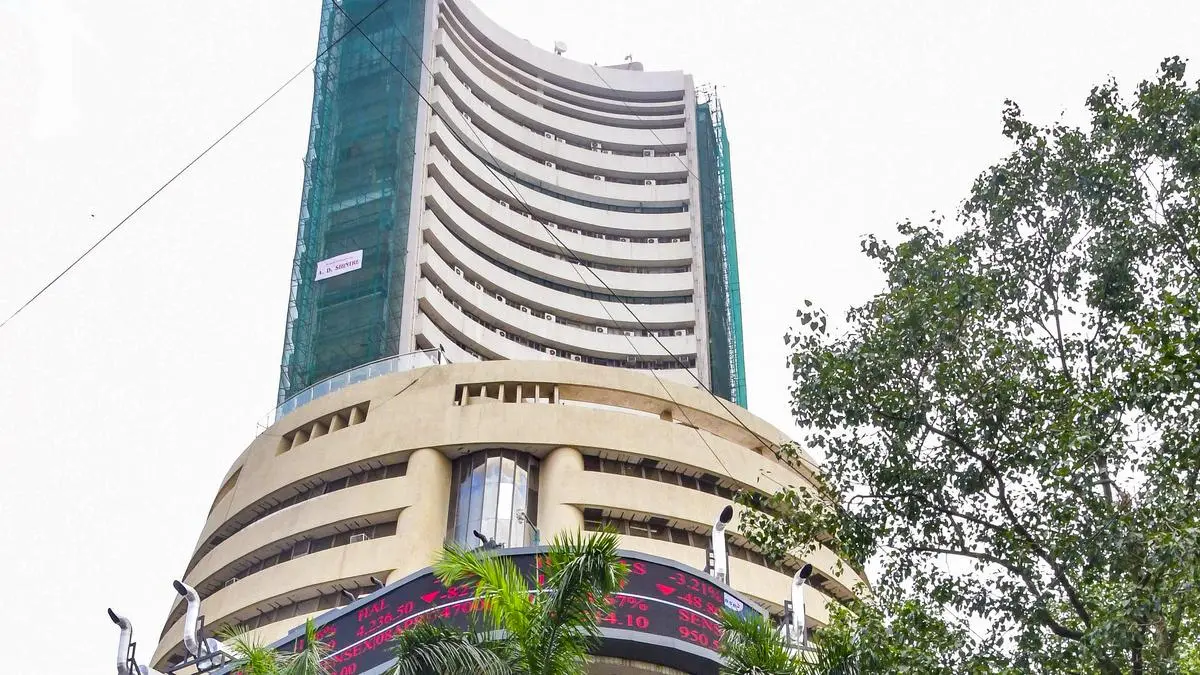
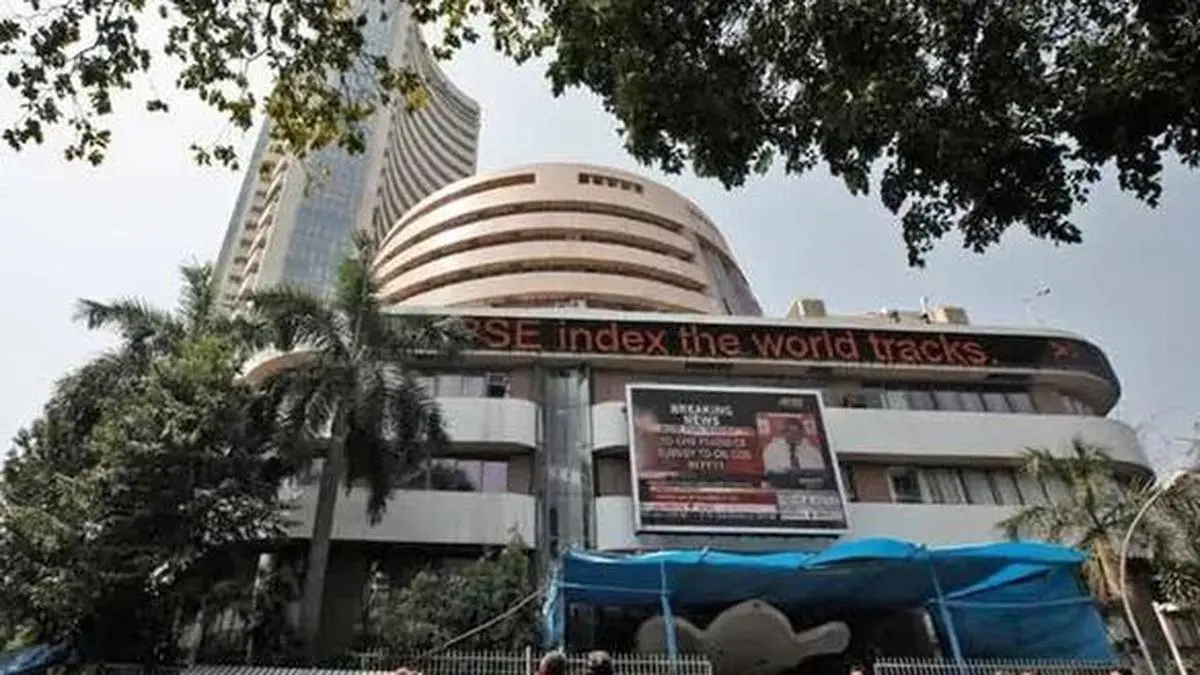
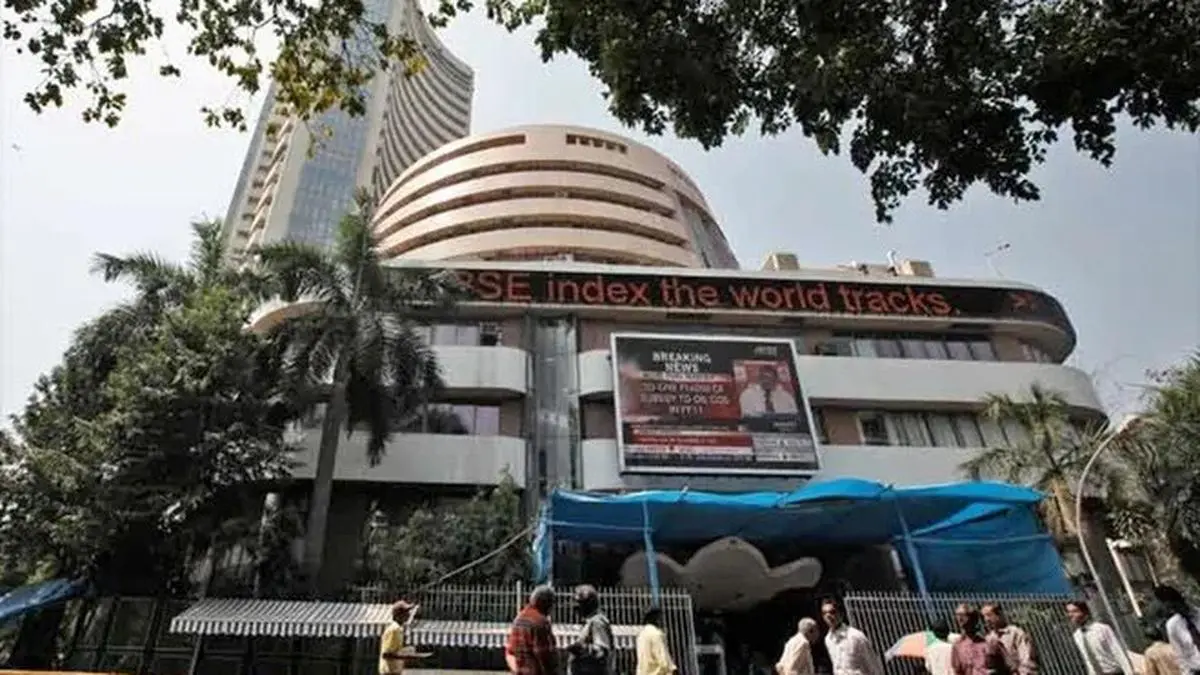
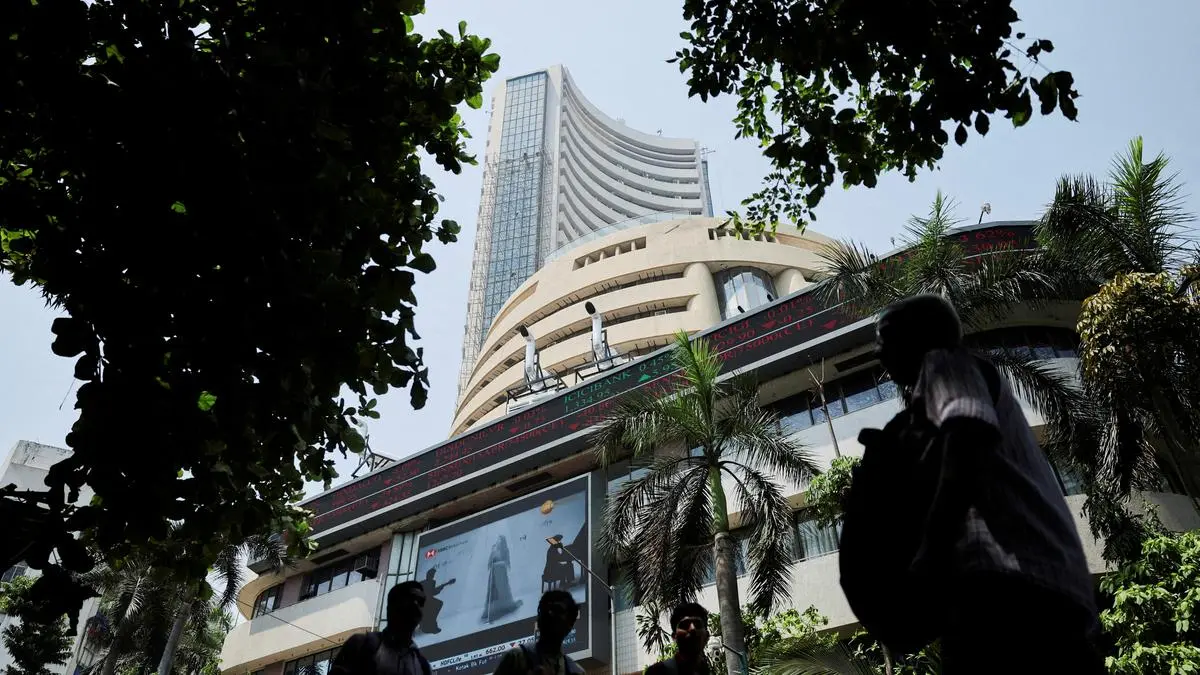
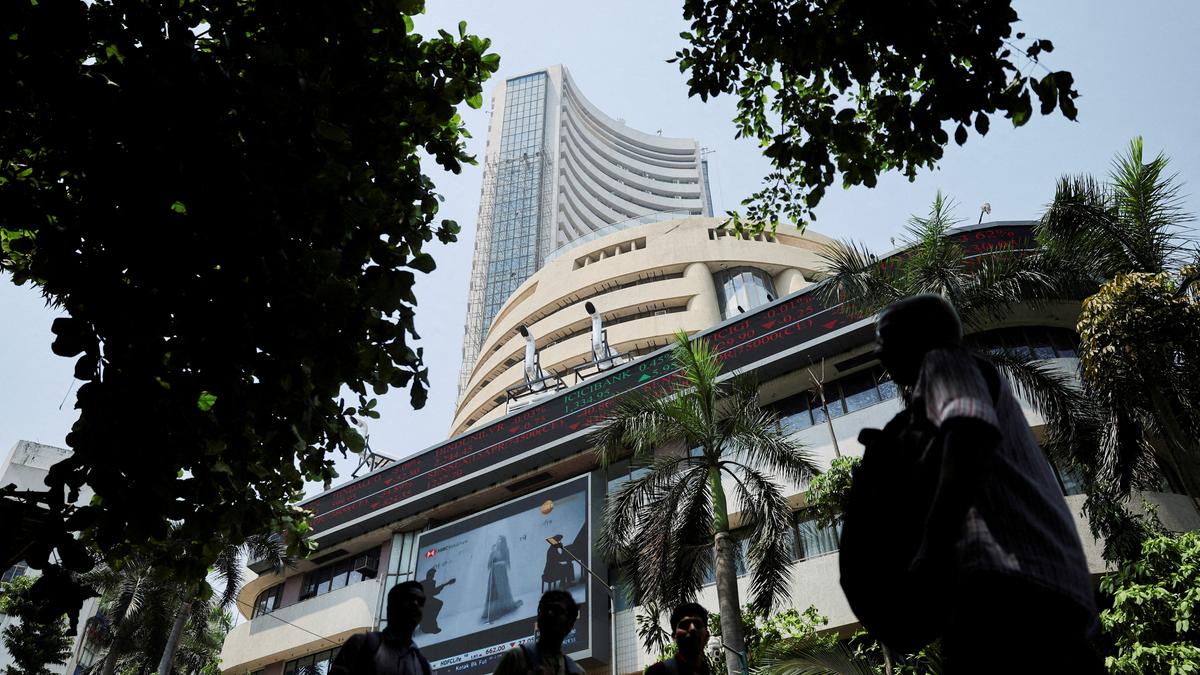
File picture: A woman at the Bombay Stock Exchange building, in Mumbai
| Photo Credit:

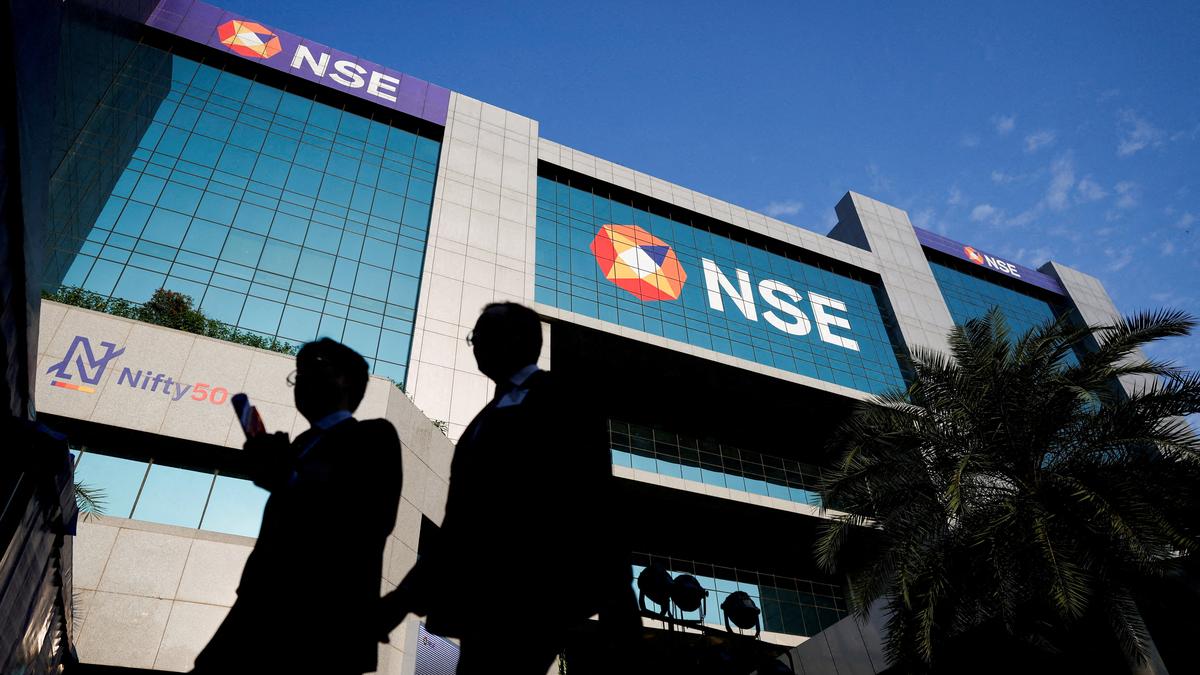
The equity benchmarks are set to open higher on Wednesday, extending their multi-session winning run fuelled by recent tax cuts, while rising bets for US rate cuts and hopes of progress in trade talks with Washington lifted sentiment.

Gift Nifty futures were trading at 25,027 points as of 08:07 a.m. IST, indicating that the benchmark Nifty 50 will open above Tuesday’s close of 24,868.6.

The index has gained about 1.2 per cent in the last five sessions, and is trading about 5.4 per cent below the record high hit on September 27, 2024.

Geopolitical risks, however, resurfaced after US President Donald Trump urged European Union officials to impose 100 per cent tariffs on China and India as part of a strategy to pressure Russia, according to a US official and an EU diplomat.

But, Trump also indicated that the US could boost trade with India, citing ongoing discussions to reduce barriers.

Prime Minister Narendra Modi said he is looking forward to speaking with Trump, and that the two countries were working to conclude trade negotiations at the earliest.

On the flows front, foreign portfolio investors turned buyers in India, with net inflows of ₹2,050 crore ($232.5 million) on Tuesday, according to provisional data.

Domestic institutional investors extended their buying streak to an 11th consecutive session.

IT stocks, where FPIs hold relatively larger stakes outside financials, rose 2.8 per cent on Tuesday, led by a 5 per cent jump in Infosys after the company said it would consider a share buyback on September 11.

STOCKS TO WATCH

** Sun Pharmaceutical Industries says the US Food and Drug Administration has determined its Halol plant not compliant with the regulator’s manufacturing rules

** Sumitomo Mitsui is likely to sell 1.65 per cent stake in Kotak Mahindra Bank for ₹6,000 crore, reports said.

** Cupid enters into a term sheet to acquire a strategic stake in Mansam, a Saudi Arabian fragrance brand, to expand its presence in the lifestyle and consumer space, leveraging opportunities in West Asia’s luxury market.

** Bajaj Auto says it will pass on the full GST reduction benefit to customers, while Eicher Motors says Royal Enfield brand will pass the full benefit of GST cuts across its motorcycle range, effective September 22. ($1 = 88.1670 Indian rupees)

Published on September 10, 2025

Categories
Cryptocurrency

SEBI clears two IPOs with a total size of ₹790 cr

Prozeal Green Energy plans to mop-up Rs ₹700 crore while Neilsoft will raise Rs ₹90 crore via fresh equity issuance and dilute 80 lakh shares of existing investors under ‘offer for sale’
| Photo Credit:
Ildo Frazao

Capital markets regulator SEBI has cleared two initial public offerings to cumulatively raise over ₹790 crore.

Prozeal Green Energy, the fourth largest solar EPC company, plans to mop-up ₹700 crore while Tokyo-based Fujita Corporation backed Neilsoft will raise ₹90 crore via fresh equity issuance and dilute 80 lakh shares of existing investors under ‘offer for sale’.

Prozeal Green Energy will issue fresh equity shares worth ₹350 crore and an offer for sale of another ₹350 crore by existing investors.

The company plans to use the proceeds from the IPO for repayment of debt, working capital and general corporate purposes.

Nuvama Wealth Management and SBI Capital Markets are the Lead Managers to the issue.

Prozeal Green Energy is focused on delivering end-to-end renewable energy solutions, including engineering, procurement, and construction of solar energy projects on a turnkey basis, with an emphasis on serving clients in the commercial and industrial sectors.

The company provides clients with customised solutions, including options for capex or opex models, land purchase or lease, and the selection of suitable technology.

Since its inception in 2013 through September 30, 2024, Prozeal Green Energy has successfully executed 182 solar power projects with a total installed capacity of 783.98 MWp across 17 States and one in Nepal for 125 clients.

As of September 2024, its order book was ₹2,220 crore, of which ₹2,209 crore was for ground-mounted solar power projects.

Neilsoft Ltd

The company will issue fresh equity of ₹90 crore and an offer-for-sale of 80 lakh shares by promoters and other selling shareholders.

Pune-based engineering services and solutions provider plans to use the net proceeds for capital expenditure and general corporate purposes.

Published on September 9, 2025

Categories
Cryptocurrency

Benchmark indices likely to open higher on US rate cut optimism

India’s equity benchmarks are likely to open higher on Tuesday, in line with their Asian peers, as rising expectations of a US rate cut this month lifted investor sentiment for risk assets.

Gift Nifty futures were trading at 24,950 points as of 07:40 a.m. IST, indicating that the Nifty 50 will open above Monday’s close of 24,773.15.

MSCI’s broadest index for Asia-Pacific stocks outside Japan rose 0.8 per cent, while Japan’s Nikkei jumped nearly 1 per cent, aided by a weaker yen and following the resignation of Prime Minister Shigeru Ishiba, a fiscal hawk.

Bets for a US rate cut at the Federal Reserve’s September 16-17 meeting rose after data showed fewer-than-expected job additions in the world’s largest economy in August.

Lower US interest rates make emerging markets such as India attractive for foreign portfolio investors (FPIs).

On Monday, FPIs sold shares worth ₹2,170 crore, per provisional data, marking their eighth consecutive session of selling due to concerns over the impact of steep US tariffs on Indian goods and relatively higher valuations.

STOCKS TO WATCH

** Infosys will consider a proposal for a buyback of equity shares on September 11.

** RailTel Corporation of India announces receipt of multiple orders on Monday, including a ₹262 crore contract from Bihar Education Project Council.

** TVS Motor Company says it will pass on the full benefits of GST rate reduction to customers starting September 22.

Published on September 9, 2025

Categories
Cryptocurrency

Galaxy Medicare IPO: ₹22 crore fundraising via NSE Emerge, price band ₹51-₹54

With over three decades of experience, 27 registered trademarks, and a diverse portfolio spanning flagship brands, institutional sales, exports, and contract manufacturing, Galaxy Medicare has built a strong reputation in domestic and international markets.

Galaxy Medicare, a manufacturer of medical devices and surgical dressings, plans to raise Rs 22 crore through an initial public offering on NSE Emerge.

The company will issue 41.32 lakh equity shares in the price band of ₹51 – ₹54 a share. The lot size is fixed at 2,000 equity shares. The issue will open on Wednesday.

The net proceeds from the IPO will be used for funding capital expenditure for the purchase of machinery, funding the working capital and general corporate purposes.

Affinity Global Capital Market will be the lead manager, while Cameo Corporate Services has been appointed as registrar.

Dillip Kumar Das, Managing Director, Galaxy Medicare, said the company has steadily grown its presence across multiple business verticals, including flagship brands, contract manufacturing, institutional sales, exports, and trading.

27 trademarks bolster brand presence 

With a well-diversified portfolio of medical devices, plaster of Paris bandages and surgical dressings marketed under 27 registered trademarks, the company has established a strong reputation in domestic and international markets.

The company intends to buy new medical machinery for the existing manufacturing facility at Bhubaneshwar, Odisha, to enhance production efficiency and product quality.

Working capital boost to meet rising demand

Additionally, it will support working capital requirements for meeting the growing demand and expand institutional and export business further.

Shruti Bhalotia, Director, Affinity Global Capital Market, said the company has demonstrated consistent growth over three decades, supported by a diversified business model that includes flagship brands, contract manufacturing, institutional sales, exports and trading.

Given the increasing demand for quality medical devices and surgical products driven by rising healthcare awareness and government initiatives, Galaxy Medicare is well-positioned to capitalise on market opportunities, she said.

Published on September 8, 2025

Categories
Cryptocurrency

Domestic markets to remain volatile due to US mood swings

Domestic markets are likely to remain volatile amid mixed signals from the US, despite global trends pointing to a positive opening.

Though the relatively conciliatory tone by the US President Donald Trump towards India and the positive response from the Prime Minister Narendra Modi may keep marketmen happy, the proposed HIRE Act against Indian IT companies may spoil sentiment. This two-step-backward, one-step forward in India-US relations will keep marksmen on tenterhooks. 

Gift Nifty at 24,916 against Nifty futures at 24,847.70 signals a positive opening for Nifty.

HIRE Act

HIRE Act, introduced by the Ohio Republican Senator Bernie Moreno, aims to slap a tax on US companies that outsource jobs overseas. 

The new Bill, if passed by policymakers, is set to disrupt the growth of India’s burgeoning services sector and threatens the cost arbitrage enjoyed by service providers here, especially in the tech sector. The HIRE Act proposes a 25 per cent tax on “outsourcing payments,” which is defined as any “premium, fee, royalty, service charge, or other payment made in the course of a trade or business [by any US person] to a foreign person, with respect to labour or services, the benefit of which is directed, directly or indirectly, at consumers located in the US.” The outsourcing payments will also not be deductible for tax purposes, it adds. 

GST reforms

Meanwhile, the GST 2.0 reform initiative will keep the market buoyant. 

Enkay Global Research said its monthly review of macro data suggests that a growth recovery is not yet visible, though some silver linings have emerged. “We remain confident, however, about an improved H2FY26, especially after the GST reform announced on 3 September 2025. Though the market response was weak, much of this was priced-in in the 2 per cent Nifty rally since the Prime Minister’s GST announcement on 15 August 2025. We remain positive on the markets and uphold our September 2026 Nifty target of 28,000, while we believe autos are the best way to play the GST reform,” it said.

Continuous selling by foreign portfolio investors in Indian equities haunts Indian investors. 

FPI selling

Dr. V.K. Vijayakumar, Chief Investment Strategist, Geojit Investments Ltd, said: FIIs continued their selling spree in the first week of September having sold equity for ₹5,666 crore in the cash market. This takes the total FPI selling in 2025 so far up to ₹1,76,606 crore. “Coming on the back of selling of ₹121210 crore in 2024, the FPI selling is, indeed, massive. Sustained massive DII buying is enabling FPIs to encash at high valuations and take the money to cheaper markets such as China, Hong Kong and South Korea. Even the optimism generated by the GST reforms didn’t restrain the FPIs, who have sold on every day of September so far. 

Apart from the high valuations, uncertainty related to the Trump tariff is also weighing on FIIs. The market is a bit concerned about what Trump might do next. There are some concerns that the unpredictable US president may even impose tariffs on IT services from India. The continuing uncertainty is impacting market sentiments,” it said.

Meanwhile, the F&O market signals a cautious outlook.

Ponmudi R, CEO, Enrich Money, said: “The options market reflects a cautious undertone, with total OI in Nifty options at 21.13 crore contracts. Puts (16.22 crore) significantly outnumber Calls (4.91 crore), indicating that traders are either preparing for a downside move or actively hedging their positions. The 25,000 strike holds a heavy Call OI of about 2 crore contracts, making it a strong resistance zone, while the highest Put OI at 24,500 signals firm support. This positioning suggests the Nifty is likely to remain range-bound between 24,500 and 25,000, unless a decisive breakout occurs.

Global stocks, led by Japan are up in early deals on Monday despite the resignation of Japan’s premier. Most Asia-Pacific stocks are up in the region of 0.25-1.5 per cent.

Published on September 8, 2025

Categories
Cryptocurrency

PhysicsWallah files updated draft papers with SEBI; eyes ₹3,820 cr via IPO

Both promoters, Alakh Pandey and Prateek Boob, will each offload shares worth ₹360 crore through the OFS.

Edtech unicorn PhysicsWallah has filed updated draft papers with markets regulator SEBI to raise ₹3,820 crore through an initial public offering (IPO) for expansion and growth initiatives.

The proposed IPO comprises a fresh issue of equity shares worth ₹3,100 crore and an offer for sale (OFS) of shares aggregating up to ₹720 crore by promoters, according to the updated draft red herring prospectus (UDRHP) filed on Saturday.

Both promoters, Alakh Pandey and Prateek Boob, will each offload shares worth ₹360 crore through the OFS. At present, both hold 40.35 per cent stake each in the company.
The Noida-based PhysicsWallah filed draft papers in March with SEBI for an IPO through a confidential pre-filing route and received the market regulator’s approval in July. Following this, the companies are required to file an updated DRHP before filing an RHP.

The company opted for the confidential pre-filing route, which allowed it to withhold public disclosure of IPO details until later stages.

Of the fresh issue proceeds, PhysicsWallah said ₹460.5 crore will go towards fit-outs of new offline and hybrid centres, and ₹548.3 crore will be used for lease payments of existing centres.

The company will invest ₹47.2 crore in its subsidiary Xylem Learning, including ₹31.6 crore for new centres and ₹15.5 crore for lease payments and hostels.

A further ₹33.7 crore will be directed to Utkarsh Classes & Edutech for lease payments of its centres. Additionally, ₹200.1 crore is earmarked for server and cloud infrastructure, ₹710 crore for marketing initiatives, and ₹26.5 crore for acquiring an additional stake in Utkarsh Classes.

PhysicsWallah offers test preparation courses for competitive exams focusing on JEE, NEET, GATE and UPSC, along with upskilling programmes, delivered through online platforms (YouTube, website, and apps), tech-enabled offline centres, and hybrid centres that combine online teaching with in-person support.

Its main YouTube channel, “Physics Wallah-Alakh Pandey”, had about 13.7 million subscribers as of July 15, 2025, while its overall YouTube network had 98.8 million subscribers by June 30, 2025, growing at a CAGR of 41.8 per cent between FY23 and FY25. Apart from its strong digital presence, PhysicsWallah has also built a significant offline footprint.

The company, which is backed by WestBridge Capital, Hornbill, and GSV Ventures, narrowed its losses to ₹243 crore in the year ended March 2025 from ₹1,131 crore in the preceding year. However, revenue rose to ₹2,887 crore, up from ₹1,941 crore in the same period.

Kotak Mahindra Capital Company, JP Morgan India, Goldman Sachs (India) Securities and Axis Capital have been roped in by the company to manage its public offering.

Published on September 7, 2025

Categories
Cryptocurrency

Broker’s call: SJS Enterprises (Buy)

Target: ₹1,573

CMP: ₹1,402.65

During Q1-FY26, SJS Enterprises reported 11.2/13.8/22.6 per cent y-o-y increase in Revenue/EBITDA/PAT to ₹209.7 crore/₹55.9 crore/₹34.6 crore, respectively. During Q1-FY26, the company witnessed 22.8 per cent y-o-y growth in the automotive business compared to 1.2 per cent y-o-y growth in the automotive industry (2W+PV) production volumes.

This performance was primarily driven by 32.7 per cent y-o-y growth in the two-wheeler (2W) segment and 13.8 per cent y-o-y growth in the passenger vehicle (PV) segment.

For FY26, we believe the company to continue its strong financial performance trajectory. We expect the company to outperform the underlying automotive (2W+PV) industry growth by over 2x on the back of premiumisation, exports, WPI acquisition and creating mega OEM accounts. The EBITDA margin is expected to be in the range of 25-26 per cent.

We believe, SJS is likely to deliver robust earnings growth led by healthy sales traction for WPI aided by cross-selling opportunity and robust order inflow, expand wallet share by winning new businesses from its key customers, relatively faster pace of growth over the automotive industry led by premiumisation and increased value per kit and new technology product categories like IML, IMD, digital dials, optical plastics/cover glass.

Published on September 5, 2025

Categories
Cryptocurrency

Maruti Suzuki shares in focus as GST cuts boost small car prospects 

Maruti Suzuki India Limited shares closed 1.64 per cent higher at ₹14,895 on Friday, September 5, driven by expectations of increased demand following the government’s GST rationalisation measures and the launch of its new SUV, Victoris.

The stock gained ₹233 from the previous close of ₹14,662, with trading volumes reaching 4.74 lakh shares worth ₹702.61 crore. The counter hit an intraday high of ₹14,957, near its 52-week peak of ₹15,240 touched on September 4.

GST 2.0 reforms announced recently will reduce tax rates on small cars and motorcycles under 350cc from 28 per cent to 18 per cent, effective September 22. This move directly benefits Maruti Suzuki as India’s largest small car manufacturer. Axis Securities upgraded the stock from ‘Hold’ to ‘Buy’ with a revised target price of ₹16,425, citing the GST cuts as a structural catalyst to bridge post-COVID affordability gaps.

On September 3, Maruti launched the Victoris SUV with bookings starting at ₹11,000. The vehicle features advanced technology, including Level 2 ADAS, strong hybrid powertrain options and segment-first underbody CNG tank design.

Analysts expect the GST rationalisation and festive season demand to significantly boost domestic passenger vehicle sales. Choice Institutional Equities noted that purchase deferrals in August, as customers awaited GST cuts, had temporarily impacted volumes but positioned the sector for strong recovery.

Published on September 6, 2025

Categories
Cryptocurrency

IT stocks tumble on tariff fears as markets end flat after volatile session

Markets closed nearly flat on Friday after a highly volatile trading session, with benchmark indices rebounding from early losses as auto stocks surged on GST reforms while information technology shares plunged on tariff concerns and weak global cues.

The Sensex settled at 80,710.76, down 7.25 points or 0.01 per cent, after touching a high of 81,036.56 during the session. The Nifty 50 closed marginally higher at 24,741, up 6.70 points or 0.03 per cent, recovering from intraday lows near the crucial 24,600 support level.

The IT sector bore the brunt of selling pressure, with the Nifty IT index declining 1.5 per cent amid swirling speculation about potential tariff implications. “Clients are holding back large AI spends given the rapid pace of change in the technology,” noted market participants, citing concerns following UK-listed competitor Endava’s disappointing results that saw its stock tank 30 per cent on revenue guidance of 5-6 per cent decline year-on-year.

Among IT losers, HCL Technologies led the decline, falling 1.61 per cent to ₹1,420.10, followed by Tata Consultancy Services which dropped 1.54 per cent to ₹3,048.00, and Tech Mahindra down 1.49 per cent to ₹1,478.00. The sector’s weakness was compounded by the rupee’s decline to fresh lows against the dollar.

In contrast, auto stocks emerged as the session’s standout performers following reduced GST rates for vehicles. Eicher Motors topped Nifty gainers with a surge of 2.41 per cent to ₹6,580.00, while Mahindra & Mahindra jumped 2.34 per cent to ₹3,562.90. Maruti Suzuki gained 1.64 per cent to ₹14,903.00, with the Nifty Auto index rising 1.25 per cent overall.

“Auto stocks outperformed, rising over 1 per cent on optimism following reduced GST rates for vehicles,” said Ajit Mishra, SVP Research at Religare Broking, highlighting how automobiles emerged as one of the biggest beneficiaries of GST 2.0 reforms.

Consumer goods stocks also faced pressure, with ITC declining 1.92 per cent to ₹407.90 and Cipla falling 1.69 per cent to ₹1,551.10. The Nifty FMCG index lost 1.4 per cent due to profit-taking after a five-day winning streak.

Market breadth remained neutral with 2,134 stocks advancing against 1,957 declines on BSE, while 135 stocks hit 52-week highs compared to 64 touching lows. The broader markets showed resilience with Nifty Midcap 100 gaining 0.20 per cent to 57,075.20 and Small Cap indices rising 0.19 per cent.

“Following heavy selling pressure in the early hours, the indices staged a gradual recovery during the second half, led by strength in heavyweight Reliance Industries,” observed Sudeep Shah, Head of Technical Research at SBI Securities, noting that post-GST Council meeting, investor sentiment remained mixed with profit-booking in select sectors.

The rupee continued its downward trajectory, weakening to 88.25 against the dollar, down 0.13 paise. “Persistent FII selling pressure for the past several months has continued to add to the rupee’s devaluation trend. With external headwinds dominating, rupee is expected to remain volatile in the range of 87.90 – 88.50,” said Jateen Trivedi, VP Research Analyst at LKP Securities.

Gold prices provided some respite for commodity investors, gaining ₹300 to ₹1,06,700 on MCX as markets positioned ahead of US employment data. “Investors remain focused on the Fed’s September meeting where rate cuts are anticipated, while ongoing tariff uncertainties are fueling safe-haven demand,” Trivedi added.

On the weekly front, sectoral rotation was evident with Nifty Metal emerging as the top performer with gains of 5.75 per cent, followed by Nifty Auto at 5.45 per cent. “On a weekly basis, Nifty Metal and Nifty Auto were the standout performers among the sectoral indices,” confirmed Shah.

Bank Nifty managed modest gains of 0.07 per cent to close at 54,114.55, while Nifty Financial Services rose 0.14 per cent to 25,889.30. The Nifty Next 50 declined 0.09 per cent to 67,089.80.

Technical analysts remained cautiously optimistic about near-term prospects. “From a technical perspective, the Nifty continues to remain range-bound, as reflected in momentum indicators, with the daily RSI currently at 49.39,” noted Shah, identifying support at 24,620 followed by 24,500, while resistance stands at 24,840 and 24,980.

Looking ahead, market participants expect continued consolidation with stock-specific action dominating sentiment. “In the coming week, Nifty is likely to consolidate in the range of 24,400-25,000 amid stock-specific actions,” predicted analysts at Bajaj Broking, while cautioning about persistent foreign institutional outflows and global trade uncertainties that could weigh on market sentiment in the near term.

Published on September 5, 2025

Categories
Cryptocurrency

Broker’s call: Karur Vysya Bank (Buy)

Target: ₹270

CMP: ₹206.20

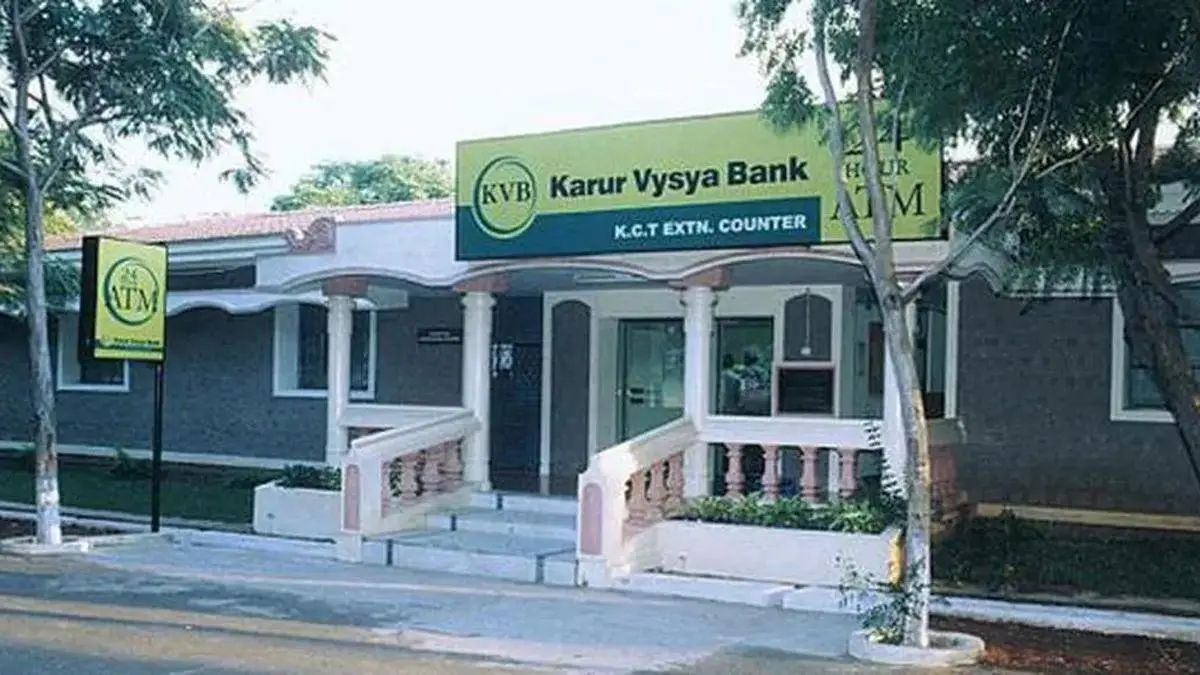
Emkay Global Research team met Karur Vysya Bank’s MD and CEO B Ramesh Babu, to seek the outlook on credit growth and, most importantly, on impact of US tariffs on the SME sector.

Key takeaways: KVB posted healthy gross credit growth of about 15 per cent y-o-y/6 per cent q-o-q, mainly led by strong traction in retail (20 per cent y-o-y) and SME (19 per cent y-o-y). KVB’s corporate book inched up 6 per cent q-o-q in Q1 after multiple quarters of decline, though the bank would continue focusing on a risk calibrated growth approach.

Within retail, high-yielding gold loans/LAP remain key growth drivers, together contributing 52 per cent of retail loans. KVB attempted to diversify its retail portfolio by venturing into MFI and BNPL (in a tie-up with Amazon), but has limited exposure, as credit risk has built up in both segments. Ahead, KVB expects to sustain credit growth at 2-3 per cent above the system’s in FY26E, while maintaining firm focus on balancing asset quality and profitability.

We finetune our estimates by 1-2 per cent for FY26-28, building in some moderation in growth and margin, though we expect KVB to deliver RoA/RoE of 1.5-1.7 per cent/15-17 per cent over the same period. We believe the recent stock-price correction offers a good entry point, with the stock trading at 1.2x Sep-27E ABV.

We retain Buy with TP of ₹270 (pre-bonus TP: ₹325) based on 1.5x Sep-27E ABV.

Published on September 5, 2025

Categories
Cryptocurrency

Zydus ties up with Synthon for US generic drug; Jagsonpal names new CEO; Biocon gets USFDA observations

Pharma counters may see heightened action in today’s trade, with Zydus Lifesciences announcing a US drug partnership, Jagsonpal Pharma naming a new CEO, and Biocon Biologics receiving a USFDA Form 483 after inspection.
| Photo Credit:

Zydus Lifesciences on Thursday said its subsidiary has joined hands with the Netherlands-based Synthon BV to introduce a generic drug for the treatment of multiple sclerosis in the US market. Zydus Lifesciences Global FZE has entered into an exclusive licensing and supply agreement with Synthon BV for Ozanimod capsules (a generic version of ZEPOSIA) for the US market, the company said in a regulatory filing. Synthon has a pending abbreviated new drug application in the United States, seeking approval for Ozanimod Capsules, indicated for relapsing forms of multiple sclerosis.

Jagsonpal Pharma appoints Amrut Medhekar as CEO

Jagsonpal Pharma has appointed Amrut Medhekar as its new Chief Executive Officer. Medhekar brings extensive pharmaceutical industry experience from his previous roles at Akums Drugs and Pharmaceuticals and Wockhardt. This strategic appointment is expected to leverage Medhekar’s diverse background to enhance Jagsonpal Pharma’s operational efficiency, market opportunities, product innovation, and industry partnerships.

USFDA issues 5 observations at Biocon Biologics

The USFDA has completed a routine cGMP inspection at Biocon Biologics’ Drug Substance facility at Biocon Campus in Bengaluru, India. The inspection was held between August 26, 2025, and September 3, 2025, covering drug substance manufacturing units, analytical QC laboratories, microbiology laboratories, and warehouses. At the conclusion of the inspection, the USFDA issued a Form 483 with five observations. These observations are procedural in nature and do not pertain to data integrity, systemic non-compliance, or quality oversight.

Published on September 5, 2025

Categories
Cryptocurrency

Broker’s call: Nazara Technologies (Buy)

Target: ₹1,400

CMP: ₹1,106.95

Nazara Technologies is well-positioned to benefit from the rapidly-expanding global and India gaming markets. India, despite being the second-largest (500Mn+) gamers’ base, remains under-monetised; In-App Purchases (IAP) conversion being less than 3 per cent and Average Revenue Per User (ARPU) of $8–9 as compared with $17–18 in China.

These offer significant upside as structural tailwinds (digital payments, 5G, Gen Z engagement) drive monetisation.

Nazara’s global pivot, through acquisitions, such as Fusebox and ZeptoLab IPs, enhances exposure to high-ARPU markets, while leveraging cost-efficient Indian development and hybrid monetisation models. With IAP mix expected to rise, from 19 per cent to about 35 per cent by FY28E, and freemium business registering double-digit growth, Nazara stands to scale up rapidly across casual, narrative and premium genres.

We initiate coverage on Nazara with a Buy rating and a 1-year forward SOTP-based TP of ₹1,400. We expect Revenue/ EBITDA to expand at a CAGR of 30.7/44.5 per cent over FY25-FY28E, driven by gaming-first focus and ramp-up of recent acquisitions.

Key risks: Regulatory headwinds in RMG, sub-scale presence beyond Nodwin and weak/ underperforming IPs impacting overall engagement and profitability

Published on September 4, 2025

Categories
Cryptocurrency

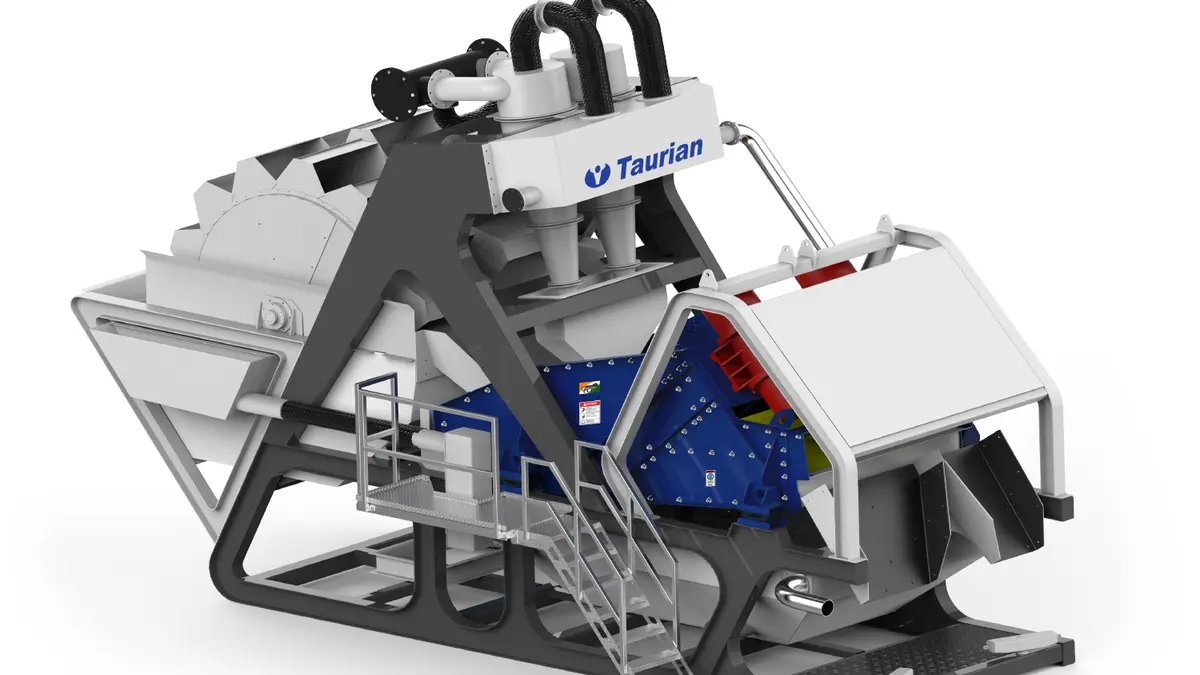
Taurian MPS to raise ₹43 cr via IPO

Taurian MPS, an engineering and manufacturing company with a focus on the construction and mining sectors, plans to raise ₹43 crore through initial public offering on NSE Emerge.

The company will issue 24.87 lakh equity shares in a price band of ₹162 – ₹171 per share.

The net proceeds from the IPO will be used for acquisition of machineries and equipment at existing production facility, invest in Research and Development to promote innovation, to meet working capital requirements and general corporate purpose.

The anchor portion will open on Thursday and IPO for other investors will be on Monday.

Gretex Corporate Services will be the lead manager and underwriter to the issue while Gretex Share Broking has been appointed as the market maker and underwriter to the issue. NNM Securities will be the additional market maker while Bigshare Services will be the registrar.

Yashvardhan Sumit Bajla, Managing Director, Taurian said the company has always focused on building innovative solutions for the mining and infrastructure industries.

Over the years, the company has introduced advanced crushing, screening, washing and conveying systems, including hybrid mobile crushers and the recently launched Taurian Nexus automation platform, he said.

Alok Harlalka, Director, Gretex Corporate Services said the company has established itself in the mining and infrastructure equipment space with a diverse portfolio of crushing, screening, washing and conveying systems.

The company is well-positioned to capture the steady growth in the mining and construction equipment industry through its innovation-driven approach and expanding presence in domestic and international markets, he added.

Published on September 3, 2025

Categories
Cryptocurrency

Arkade Developers signs MoU for ₹148 cr Bhandup land acquisition deal

Mumbai-based Arkade Developers Limited has entered into a memorandum of understanding (MoU) to acquire 100 per cent shareholding in Woollen and Textile Industries Ltd for ₹148 crore, the company announced. This marks the listed real estate developer’s second acquisition in Bhandup West.

The deal includes a 14,363.60 square meter land parcel located in Bhandup West. The acquisition forms part of Arkade’s expansion strategy in Mumbai’s central corridor, where it has been consolidating its presence through strategic land purchases.

“This proposed acquisition underlines Arkade Developers’ vision of creating value-driven developments at strategic locations,” said Amit Jain, Chairman and Managing Director of Arkade Developers. The company emphasized its focus on timely delivery and quality construction in unlocking the land’s potential.

The acquisition strengthens Arkade’s footprint in the Mumbai Metropolitan Region’s central corridor, adding to its existing portfolio that includes Arkade Earth in Kanjurmarg spanning 4 acres, Arkade Nest in Mulund covering 2 acres, and Arkade Rare in Bhandup spread across 3 acres. The company recently announced its entry into the Thane market with a 6.28-acre land acquisition.

Arkade Developers, listed on both BSE and NSE, has a 39-year legacy in Mumbai’s real estate sector. The company has completed 31 projects and developed over 5.5 million square feet of property, with an additional 2+ million square feet currently under construction.

The shares of Arkade Developers Limited were trading at ₹179.99 up by ₹ 3.76 or 2.13 per cent on the NSE today at 3.10 pm.

Published on September 3, 2025

Categories
Cryptocurrency

NCDEX ropes in Globe Capital, Kotak Life, Tower Research for ₹770-cr equity push

NCDEX has drawn up a roster of heavyweight investors, including Globe Capital Market, Kotak Mahindra Life Insurance, Tower Research Ventures, and Billionbrains Garage Ventures, proposing an over 2 per cent stake each for its ₹770-crore preferential share issue to fund its entry into the equity segment.

60 investors

In total, more than 60 investors are lined up for the allotment, including global players such as Citadel Securities Principal Investments, Acacia Banyan Partners joining domestic names such as Share India Securities, Jainam Broking, and Marwadi Chandarana Intermediaries.

Online broking firms Zerodha and Groww are also on the list for nearly a per cent stake, alongside marquee investors Radhakishan Damani, Ramesh Damani, and Madhusudan Kela.

Globe Capital is the single largest proposed investor, to subscribe 2.9 per cent of post-issue capital for ₹51 crore, followed by Billionbrains and Acacia Banyan Partners each in line for stakes exceeding 2.5 million shares for ₹50 crore.

The commodity exchange has already raised some part of the funds and will place a proposal to offer 3.9 crore shares at a premium of ₹187.34 per share of face value ₹10 before shareholders on September 25. The exchange received in-principle approval from the markets regulator in July to launch equity and equity derivatives trading.

Proceeds from the preferential issue will be used to build out its equity and equity derivatives platform, including technology infrastructure, risk management, and compliance systems. Remaining funds will be used for general corporate purposes and working capital.

The offer is likely to open on September 29 and remain valid for eight days, though NCDEX has the flexibility to close earlier once commitments are confirmed. The allotment must be completed within 60 days of receiving funds.

The National Stock Exchange, LIC, NABARD, ICICI Bank and IFFCO are already some of the large investors in NCDEX. It currently offers contracts in cereals, pulses, oilseeds, fibres, spices, guar complex and metals, and will now seek to leverage this deep rural base to expand into the equity space.

Published on September 2, 2025

Categories
Cryptocurrency

Honasa stock steady as annual report highlights sustainability drive

Honasa Consumer Ltd shares traded at ₹297.60, down 0.52 per cent from the previous close of ₹299.15, on Tuesday afternoon on the NSE. The stock opened at ₹299.50, hit an intraday high of ₹302.95 and a low of ₹296.55. Over 2.07 lakh shares changed hands, with a turnover of ₹6.21 crore, giving the company a market capitalisation of ₹9,677.46 crore.

The company, which operates brands such as Mamaearth and The Derma Co, released its annual report for FY25 earlier in the day. The report placed a strong emphasis on sustainability and circular economy practices, outlining efforts to integrate eco-friendly operations into its business strategy.

According to the report, Honasa is expanding the use of eco-friendly packaging and implementing waste-reduction initiatives across its operations.

The report also underscored its commitment to broader environmental and social responsibility measures, highlighting programmes around tree plantation, education, and community engagement as part of its ESG framework.

At current levels, the stock remains well below its 52-week high of ₹547, recorded on September 10, 2024, but above the 52-week low of ₹197.51 hit on February 12, 2025. The stock has maintained a price-to-earnings ratio above 50 for the last four trailing quarters, reflecting premium valuations in the sector.

As of 2.40 pm, buy quantity stood at 36,652 shares compared to a sell quantity of 1,16,619 shares. The volume-weighted average price (VWAP) stood at ₹299.62, while annualised volatility remained elevated at 54.64 per cent.

Published on September 2, 2025

Categories
Cryptocurrency

Broker’s call: SRF (Buy)

Emkay Global

Categories
Cryptocurrency

Amanta Healthcare IPO gets fully-subscribed within hours of opening for bidding

The initial public offer of Amanta Healthcare Ltd got fully-subscribed within hours of opening for bidding on Monday.

The ₹126-crore IPO received bids for 1,54,35,371 shares, as against 70,00,000 shares on offer, reflecting 2.21 times subscription, according to data available with the NSE till 13:03 hours.

Retail Individual Investors (RIIs) part got subscribed 3.39 times, while the quota for non-institutional investors garnered 2.39 times subscription.

The company’s initial public offering (IPO) has a fresh issue of up to 1 crore shares. Price range for the offer has been fixed at ₹120-126 per share. The IPO would conclude on Wednesday.

Beeline Capital Advisors is the book running lead manager to the offer.

Published on September 1, 2025

Categories
Cryptocurrency

Mcap of 8 of top 10 most valued firms erode by ₹2.24 lakh crore; Reliance, HDFC Bank biggest laggards

The combined market valuation of eight of the top 10 most valued firms eroded by ₹2,24,630.45 crore last week, with Reliance Industries and HDFC Bank taking the biggest hit, in-line with a bearish trend in equities.

Last week, the BSE benchmark dropped 1,497.2 points, or 1.84 per cent.

From the top-10 pack, Reliance Industries, HDFC Bank, Bharti Airtel, ICICI Bank, State Bank of India, Infosys, Bajaj Finance and Life Insurance Corporation of India (LIC) faced erosion from their market valuation, while Tata Consultancy Services (TCS) and Hindustan Unilever were the gainers.

The market capitalisation (mcap) of Reliance Industries tumbled ₹70,707.17 crore to ₹18,36,424.20 crore.

HDFC Bank’s valuation eroded ₹47,482.49 crore to ₹14,60,863.90 crore.

The mcap of ICICI Bank tanked ₹27,135.23 crore to ₹9,98,290.96 crore and that of Bharti Airtel dropped ₹24,946.71 crore to ₹10,77,213.23 crore.

The valuation of LIC fell ₹23,655.49 crore to ₹5,39,047.93 crore and that of State Bank of India dived ₹12,692.1 crore to ₹7,40,618.60 crore.

The mcap of Bajaj Finance declined ₹10,471.08 crore to ₹5,45,490.31 crore and that of Infosys edged lower by ₹7,540.18 crore to ₹6,10,463.94 crore.

However, the market valuation of TCS jumped ₹11,125.62 crore to ₹11,15,962.91 crore.

The mcap of Hindustan Unilever climbed ₹7,318.98 crore to ₹6,24,991.28 crore.

Reliance Industries remained the most valued firm followed by HDFC Bank, TCS, Bharti Airtel, ICICI Bank, State Bank of India, Hindustan Unilever, Infosys, Bajaj Finance and LIC.

Published on August 31, 2025

Categories
Cryptocurrency

FPIs withdraw ₹35,000 crore in August, biggest sell-off in 6 months

Foreign investors pulled out ₹34,993 crore (around $4 billion) from Indian equity markets in August, making it the sharpest sell-off in six months, weighed down by US tariffs on Indian exports and pricey domestic valuations.

The withdrawal was nearly double the ₹17,741 crore outflow recorded in July.

With this, the total outflow by Foreign Portfolio Investors (FPIs) in equities reached ₹1.3 lakh crore mark so far in 2025, data with the depositories showed.

Market experts believe that withdrawals were triggered by a combination of global and domestic factors.

The latest withdrawal was the sharpest since February, when FPIs dumped Indian equities worth ₹34,574 crore.

“The announcement of steep US tariffs of up to 50 per cent on Indian exports dented sentiment significantly, raising concerns over India’s trade competitiveness and growth outlook,” Himanshu Srivastava, Associate director – Manager Research, Morningstar Investment, said.

“At the same time, corporate earnings for the June quarter for a few key sectors fell short of expectations, further dampening investor appetite,” he added.

According to V K Vijayakumar, Chief Investment Strategist at Geojit Investments, the simple explanation for this massive selling by the FPIs is the relatively high valuations in India compared to valuations in other markets. This is making FPIs to move money to cheaper markets.

It is important to note that FPIs have been sustained buyers in the primary market for long. This year, despite massive selling through the exchanges, they bought equity for ₹40,305 through the primary market where valuations of the IPOs are fair, he added.

On the other hand, FPIs invested ₹6,766 crore in the debt general limit and withdrew ₹872 crore in the debt voluntary retention route during the period under review.

Published on August 31, 2025

Categories
Cryptocurrency

F&O Query: Analysis Of HPCL Futures

Shall I buy HPCL futures at the current price? What can be the target and stop-loss? – Palani Shanmugam

HPCL (₹375.90): The stock has been in a steady decline since early July. It fell off the resistance at ₹450. Currently at ₹376, it is trading within the support band of ₹370-380. However, the selling pressure is strong and the support may not hold well.

Even if there is a recovery on the back of the aforementioned base, the stock should decisively break out of ₹390 to change the short-term outlook positive. A breakout of ₹390 can lift the stock to ₹415.

With respect to September futures, it ought to break out of ₹395 before you can consider going long. In case the contract breaks out of ₹395, buy with a stop-loss at ₹385 for a target of ₹420.

On the other hand, you can consider short position if September futures slips below ₹372. Target and stop-loss can be ₹350 and ₹382 respectively.

Send your queries to [email protected]

Published on August 30, 2025

Categories
Cryptocurrency

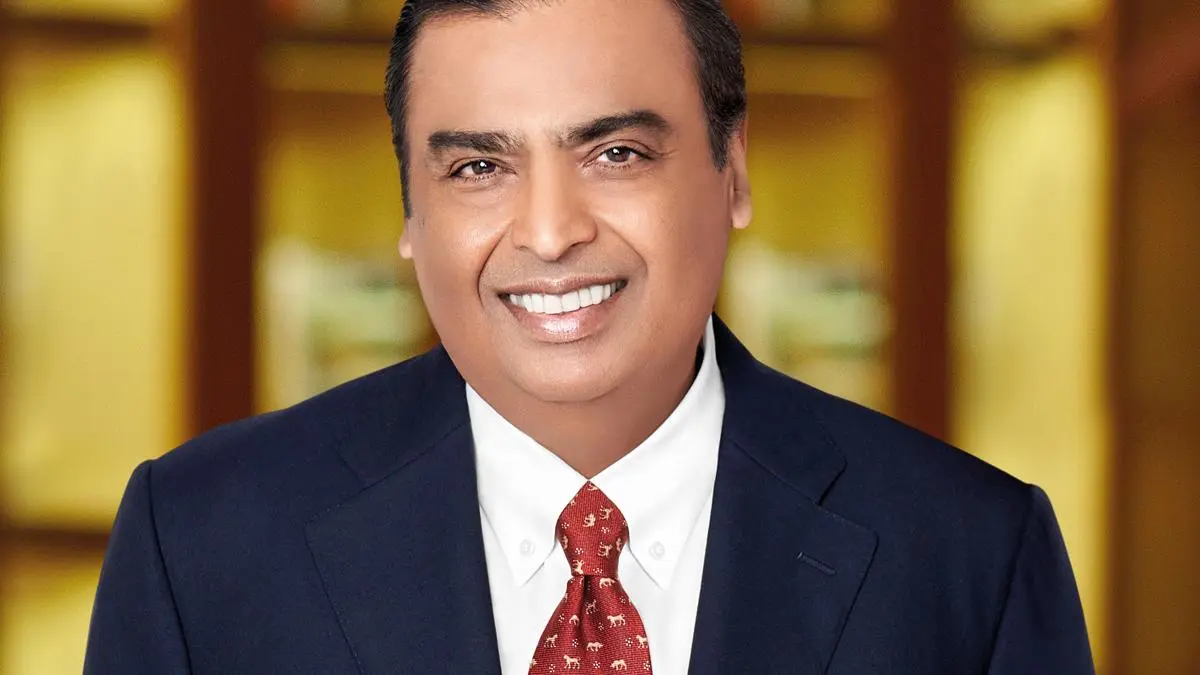
RJio to list in first half of 2026, says Mukesh Ambani

Reliance Industries Chairman Mukesh Ambani
| Photo Credit:
RIL

Reliance Industries Chairman Mukesh Ambani ended the suspense over the anticipated IPO of Reliance Jio, saying it would list in the first half of 2026, and preparations for it are underway.

“Jio is making all arrangements to file for its IPO. We are aiming to list Jio by the first half of 2026….. This will demonstrate that Jio is capable of creating the same quantum of value as our global counterparts,” said Ambani in RIL’s annual general meeting.

Calling artificial intelligence, the new Kamdhenu due to its “miraculous owers,” he also announced floating an AI subsidiary, Reliance Intelligence, an AI partnership with Google and an India-focused, ₹855-crore AI joint venture with Meta.

In terms of future plans, Jio will expand operations outside India.

Meta JV

The JV with Meta, in which RIL will hold a 70 per cent stake, will help provide enterprise-grade AI to Indian enterprises and small and medium businesses for a fraction of the cost, given Llama’s lower total cost of ownership. The partnership will allow greater flexibility to deploy cloud, on-premises, and across RIL’s infrastructure. The transaction is expected to close in the fourth quarter of 2025.

“Through this joint venture, we’re putting Llama models into real-world use, and I’m looking forward to expanding Meta’s footprint in the enterprise space,” said Mark Zuckerberg, Founder and CEO of Meta.

Jamnagar cloud

On furthering partnership with RIL, Sundar Pichai, CEO of Google, said in a video message that Google will provide AI services for RIL’s energy, retail, telecom and financial services.

“We are establishing a Jamnagar Cloud region, built for and dedicated to Reliance. It will bring world-class AI and compute from Google Cloud, powered by clean energy from Reliance, and connected [to key metros such as Mumbai and Delhi] by Jio’s advanced network,” said Pichai.

Google Cloud will deploy its AI hypercomputer and secure, fully-integrated, and optimised AI stack that offers generative AI models, a development platform, and AI-powered applications.

Reliance Intelligence

RIL’s proposed subsidiary Reliance Intelligence will build AI infrastructure and services in India, first focusing on building gigawatt-scale, AI-ready data centres, providing training and inference at a national scale.

“Work has already begun on the gigawatt-scale, AI-ready data centres in Jamnagar. These facilities will be delivered in phases aligned to India’s growing needs, powered by Reliance’s new-energy ecosystem, and custom-made for AI training and inference,” said Ambani.

The company will build AI services for consumers, small businesses, and enterprises, and solutions for sectors such as education, healthcare, and agriculture.

Robotics

RIL is also making a big thrust into robotics and Ambani said it will invest in Humanoid Robotics to become a leader in human-centric automation powered by AI, creating new types of industries and services, jobs.

“Intelligent automation will transform factories into adaptive production systems, warehouses into autonomous supply chains, and hospitals into centres of precision care,” he added.

Published on August 29, 2025

Categories
Cryptocurrency

Broker’s call: Eureka Forbes (Buy)

Target: ₹715

CMP: ₹565.60

FY25 was a stellar year for Eureka Forbes (EFL), visible from step-up in product business sales growth (+17 per cent ) with significant acceleration in electric water purifier sales (+18.1 per cent ), service business starting to see green shoots with efforts on AMC unit sales and improving customer experience yielding results, margin expansion, despite stepped-up brand investments (+25.5 per cent), led by better efficiencies/leverage benefit in staff cost, service charges, freight and IT expenses.

We like EFL’s growth story – execution so far has been impressive; a debt-free balance sheet, negative working capital and strong FCF generation provide comfort. With product business momentum sustaining, likely uptick in service business revenue over the next few quarters can lead to a further rerating.

Despite GM contracting by 80 bps (due to buyback, promotions), EBITDA margin expanded 182 bps y-o-y (+116 bps y-o-y exESOP) in FY25 through rigorous cost optimisation, even as the company stepped up brand investments to drive growth. Savings in service charges (down 150 bps as per cent to sales), staff costs (down 146 bps as per cent to sales), and productivity improvements provided headroom for higher A&P spends (+124 bps y-o-y as per cent to sales) while supporting overall margin expansion.

We believe benefits of digital-led efficiencies and disciplined cost control will enable EFL to sustain transformation journey with enhanced growth and profitability.

Published on August 29, 2025

Categories
Cryptocurrency

Abril Paper Tech to raise ₹13 cr via IPO

Abril Paper Tech, a leading manufacturer and supplier of sublimation heat transfer paper, plans to raise ₹13 crore through initial public offering on BSE SME exchange.

The company will issue fresh equity share of 22 lakh at fixed price of ₹61 per share. The lot size is 2,000 and retail investors have to bid for minimum 2 lots (4,000 shares) amounting to investment of ₹2.44 lakh.

The company will use ₹5 crore to set up additional two fully automatic sublimation paper coating and slitting machines, ₹5 crore for meeting working capital requirements and remaining ₹3 crore will be used for general corporate purposes and IPO expenses.

Interactive Financial Services is the lead manager to the issue.

Currently, Abril operates a manufacturing and warehousing facility in Surat with an installed capacity of 600 lakh meters per annum. Post-expansion, the capacity will increase to 1,450 lakh meters per annum, equipped with advanced technology for high-quality sublimation papers designed for digital printing solutions.

The company caters to diverse applications in printing, garments, textiles, hosiery, curtains and furniture industries. Further, Abril is planning forward integration by setting up facilities for manufacturing heat transfer paper, specialised frames and PP sheets, with a strong focus on export markets.

It has presence across 17 states, Abril plans to strengthen its B2C footprint through online and dealer networks, capitalising on high-margin opportunities in design printing for cakes, FMCG packaging and readymade garments.

Prince Lathiya, Non-Executive Director, Abril Paper Tech said the fresh funds to be raised will enable the company to expand capacity, upgrade technology and strengthen market presence.

Published on August 29, 2025

Categories
Cryptocurrency

Markets plunge on Trump’s 50% tariff hit; Sensex sheds 706 points 

Markets witnessed a sharp decline on Thursday as investors grappled with the impact of the United States imposing an additional 25 per cent tariff on Indian exports, taking the total levy to 50 per cent, which significantly dampened market sentiment across all major indices.

The Sensex plummeted 705.97 points or 0.87 per cent to close at 80,080.57, near its intraday low of 80,013.02, while the Nifty 50 fell 211.15 points or 0.85 per cent to settle at 24,500.90 after hitting a low of 24,481.60. The benchmark indices extended their losing streak on the monthly expiry day, with both closing deep in the red territory.

“Domestic equities ended lower as pessimism took hold following the implementation of tariffs on Indian goods, dampening investor sentiments,” said Vinod Nair, Head of Research at Geojit Investments Limited. “While the cotton import duty exemption briefly lifted hopes of policy support to counter tariff impacts, triggering a short-lived intraday recovery, investor mood remained fragile.”

Most sectors faced selling pressure, with Auto, IT, FMCG, and Metals ending in negative territory as investors turned to profit booking from recent gains. Consumer Durables emerged as the sole resilient sector, likely supported by expectations of GST rationalization and festive demand.

Among individual stocks, Titan Company led the gainers on Nifty 50, rising 1.06 per cent to ₹3,632, followed by Coal India which gained 0.68 per cent to ₹375. Hero MotoCorp advanced 0.65 per cent to ₹5,106.60, while Larsen & Toubro climbed 0.64 per cent to ₹3,564.10. Maruti Suzuki rounded up the top five gainers with a 0.57 per cent increase to ₹14,798.

On the losing side, Shriram Finance emerged as the biggest laggard, tumbling 3.94 per cent to ₹571.25, followed by HCL Technologies which declined 2.85 per cent to ₹1,450.20. Power Grid Corporation fell 2.04 per cent to ₹274.20, while Tata Consultancy Services dropped 1.88 per cent to ₹3,098. Tata Consumer Products completed the list of top five losers, declining 1.82 per cent to ₹1,060.20.

“The Indian equity market witnessed a volatile and mostly bearish expiry session on Thursday, as Donald Trump’s additional 25 per cent tariff on Indian exports and the overall levy to 50 per cent weighed heavily on sentiment,” said Hariprasad K, SEBI-registered Research Analyst and Founder of Livelong Wealth. “The Nifty has now given up all the gains for the August series, closing deep in the red with a clear bearish undertone.”

Market breadth remained weak throughout the session, with 2,651 stocks declining against 1,458 advances on the BSE, while 149 stocks remained unchanged. Out of 4,258 stocks traded, 102 hit their 52-week highs while 141 touched their 52-week lows. Nine stocks hit the upper circuit while six touched the lower circuit.

The broader market indices mirrored the weakness, with Nifty Next 50 declining 1.29 per cent to 65,940.30, while Nifty Financial Services fell 1.20 per cent to 25,640.30. Nifty Bank dropped 1.16 per cent to 53,820.35, and Nifty MidCap 100 slipped 1.27 per cent to 56,047.50.

“Markets extended their decline on monthly expiry day, losing nearly a percent and continuing the corrective trend,” noted Ajit Mishra, SVP Research at Religare Broking Ltd. “Sentiment remained under strain from the implementation of additional 25 per cent U.S. tariff, which, combined with weakness in heavyweights such as banks, is exerting steady pressure on the markets.”

The currency market also felt the heat of the trade tensions, with the rupee trading weak as selling pressure in capital markets deepened. “Rupee traded weak as selling pressure in capital markets deepened, with FII flows continuing to remain negative amid persistent concerns on India’s growth outlook and fiscal deficit,” said Jateen Trivedi, VP Research Analyst at LKP Securities. “The rupee is expected to remain under pressure with a near-term range of 87.25–88.25.”

Foreign Institutional Investors continued their selling spree, having offloaded ₹34,733 crore in August alone, adding to the market’s woes. “Adding to the pressure, Foreign Institutional Investors (FIIs) continued their selling spree, offloading ₹34,733 crore in August alone,” highlighted Hariprasad K.

In the commodities space, gold traded positively amid rupee weakness and rising international prices. “Gold traded positive amid weakness in the rupee and rising Comex prices as the Federal Reserve’s next meeting is seen leaning towards a rate cut,” said Jateen Trivedi. “Gold is expected to remain volatile but positive, with prices likely to trade in the range of ₹99,500–₹102,500.”

The steep tariffs are expected to hit India’s textiles & apparel, gems & jewellery, marine products, leather & footwear sectors the hardest, given their heavy reliance on the U.S. market. However, the government provided some relief by extending the import duty exemption on cotton until December, supporting the garment industry.

“The steep 50 per cent U.S. tariffs will hit India’s textiles & apparel, gems & jewellery, marine (shrimp), leather & footwear, the hardest, given their heavy reliance on the U.S. market,” noted Siddhartha Khemka, Head of Research at Motilal Oswal Financial Services Ltd.

Technical analysts pointed to weakening chart patterns. “Technically, the Nifty is showing strong signs of weakness. The index is now trading below its 20-day, 50-day and 100-day EMAs, all of which have started to edge lower,” said Sudeep Shah, Head of Technical Research at SBI Securities. “From a technical perspective, unless the Nifty reclaims its short-term moving averages with strong volume support, the bias is likely to remain negative in the near term.”

Looking ahead, market participants remain cautious about the near-term outlook. “Looking forward, the sentiment is expected to remain cautious with markets likely to remain rangebound as participants wait for more clarity on the India–US trade standoff and the global interest rate outlook,” said Vaibhav Vidwani, Research Analyst at Bonanza. Market watchers will closely monitor whether the government announces relief measures or initiates negotiations to safeguard export-dependent industries, while global developments continue to drive near-term market direction.

Published on August 28, 2025

Categories
Cryptocurrency

UAMCO Partners with Ramco Systems for aviation software implementation

The Ramco Aviation Software deployment will provide UAMCO with modules covering engineering, maintenance, supply chain, MRO sales, employee management, safety, quality, compliance and finance. 
| Photo Credit:
Lemon_tm

United Aerospace Maintenance Company (UAMCO) has selected Ramco Systems to implement its next-generation aviation software platform, the companies announced on Wednesday. The Cyprus-based aircraft maintenance, repair and overhaul provider will use Ramco’s integrated solution to streamline engine maintenance operations and materials management.

UAMCO, founded in 2022, specialises in MRO services for LEAP engines, including CFM International SA LEAP-1A and LEAP-1B models. The partnership positions the company to enhance its role in the global open MRO ecosystem through improved operational efficiency and workflow management.

The Ramco Aviation Software deployment will provide UAMCO with modules covering engineering, maintenance, supply chain, MRO sales, employee management, safety, quality, compliance and finance. The platform enables engine maintenance operations down to piece part levels while offering 360-degree visibility into costs and revenues.

To improve resource management

“Ramco Aviation Software emerged the clear choice, thanks to its comprehensive maintenance and materials management capabilities,” said John Savvides, CEO of UAMCO. The company expects the implementation to improve resource management and customer engagement while enabling paperless operations through mobile apps and integrated portals.

Chennai-based Ramco Systems serves over 800 customers globally with its cloud and mobile-based enterprise software. The aviation software platform currently manages 4,000+ aircraft for 90+ aviation organisations worldwide, including airlines, third-party MROs and defense organizations.

Business partner AiAppsData facilitated the engagement between the two companies.

The shares of Ramco Systems ended today on the NSE at ₹427.20 down by ₹2.80 or 0.65 per cent.

Published on August 28, 2025

Categories
Cryptocurrency

Future Consumer faces insolvency plea in NCLT over ₹558 crore debt defaults

Part of the Future Group’s 19 entities slated for transfer to Reliance Retail under the stalled ₹24,713 crore deal of 2020, FCL continues to face financial stress as lenders and investors push for resolution.
| Photo Credit:
designer491

Future Consumer Ltd, the FMCG company owned by debt-ridden Future Group, faces an insolvency plea filed before the National Company Law Tribunal (NCLT).

Resurgent India Special Situations Fund had moved the Mumbai bench of the NCLT, filing an application to initiate insolvency proceedings against Future Consumer, claiming defaults.

Confirming the development, Future Consumer in a regulatory filing earlier this week said: “The company would be making appropriate representation in the matter”.

According to details available on the NCLT portal, the insolvency plea was filed on August 20, 2025, and is yet to be listed before any bench for hearing.

Resurgent India Special Situations Fund was launched by Resurgent India, a Sebi-registered Category I merchant banker and investment bank.

Liquidity crunch and default

In the June quarter results, FCL had informed that it is facing a “significant liquidity crunch”, which has impacted the company’s operations.

Moreover, it had defaulted on payment of interest/repayment of principal amount on loans from banks, financial institutions, and unlisted debt securities.

As of June 2025, the total debt servicing obligations due, including interest, were Rs 558.73 crore.

It was part of the 19 group companies operating in retail, wholesale, logistics and warehousing segments, which were supposed to be transferred to Reliance Retail under a Rs 24,713 crore deal announced in August 2020.

Published on August 27, 2025

Categories
Cryptocurrency

Financial markets closed for holiday

Domestic equity, currency and debt markets will be closed on Wednesday, August 27, for a local holiday. Trading will resume on Thursday, August 28.

The benchmark BSE Sensex fell 1.04 per cent to 80,786.54, while the NSE Nifty 50 lost 1.02 per cent to 24,712.05 on Tuesday, both posting their worst session in three months after a US Homeland Security notification confirmed that Washington will impose an additional 25 per cent tariff on all Indian-origin goods from Wednesday.

The rupee dropped 0.1 per cent versus the US dollar to 87.68, continuing its losing streak for a fifth consecutive session ahead of the US tariffs effective from Wednesday.

The benchmark 10-year bond closed at 98.08 rupees, with the yield at 6.5997%, after higher-than-expected cut-offs for state debt.

Published on August 27, 2025

Categories
Cryptocurrency

IndiGo co-founder Rakesh Gangwal plans to sell 12.1 million shares in the airline

IndiGo co-founder Rakesh Gangwal plans to sell upto 12.1 million shares in the airline in block deals.

The stake sale which amounts to around 3.1 per equity of the airline could fetch Gangwal ₹7,027 crore as per the offer price of ₹5,808 per share.

The offer price is at a discount of 4 per cent to its last closing price of ₹6,050.

Morgan Stanley, Goldman Sachs and JP Morgan are managing the share sale.

Gangwal has been selling shares in the airline in tranches over the past couple of years – with the last transaction taking place in May.

While he continues to be classified as a promoter, he had earlier stepped down from the board following differences with co-founder Rakesh Bhatia on corporate governance issues, and also said that he would gradually reduce his equity stake in the airline over the next five years.

More Like This

Akasa now operates 30 destinations in total- 24 domestic and six international.

Published on August 26, 2025

Categories
Cryptocurrency

Sugs Lloyd IPO price band at ₹117-123/share; issue opens on Aug 29

Integrated EPC player Sugs Lloyd Ltd on Tuesday said it has fixed a price band of ₹117-123 per share for the initial public offer, which will open for public subscription on August 29.

The ₹85.6-crore initial public offering (IPO) will conclude on September 2, and the shares of Sugs Lloyd will be listed on the BSE’s SME platform, the company said in a statement.

The IPO is entirely a fresh issue of up to 69.64 lakh equity shares with a face value of ₹10 each. At the upper end of the price band, the company is expected to raise ₹85.66 crore.

Proceeds from the fresh issue to the tune of ₹64 crore will be utilised to meet working capital requirements, while the balance will go towards general corporate purposes and issue expenses, according to the red herring prospectus.

Incorporated in 2009, Sugs Lloyd is engaged in electrical transmission and distribution, solar and civil EPC projects.

Its services include development of transmission and distribution infrastructure, construction of substations and upgrading and modification of power systems. The company also offers outage management solutions to distribution companies.

In FY25, New Delhi-based Sugs Lloyd reported revenue from operations of ₹176.20 crore, a growth of over 171 per cent from ₹65.12 crore in FY24. Its net profit rose to ₹16.72 crore from ₹8.70 crore in the previous fiscal.

3Dimension Capital Services is the sole book-running lead manager, while Kfin Technologies is the registrar for the IPO.

Published on August 26, 2025

Categories
Cryptocurrency

Promoter stakes slip to two-decade low as retail, MFs tighten grip on India Inc

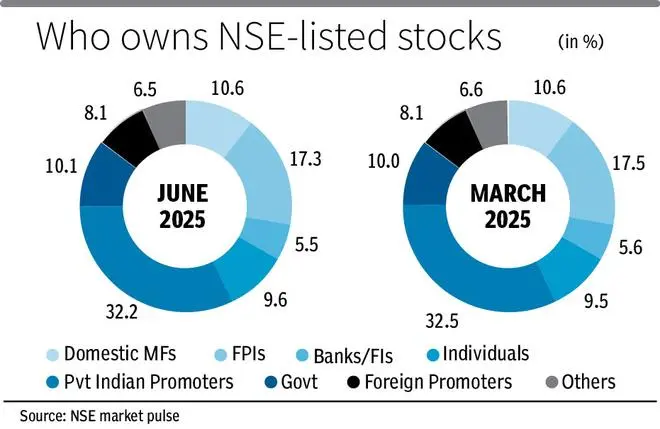
In sharp contrast, domestic mutual funds climbed to a fresh record share of 10.6 per cent in NSE-listed companies, and 13 per cent in the Nifty 50

The balance of power in India’s equity markets continues to tilt toward domestic investors, with the promoter ownership in listed companies sliding to fresh lows while retail and mutual fund participation continues to hit new peaks.

According to NSE’s latest Market Pulse report, promoter stakes across NSE-listed companies fell for the fourth straight quarter to 50.4 per cent in June 2025, the lowest in nine quarters. While that in Nifty 50 saw a sharper decline to a 23-year low of 40.2 percent— mainly due to a decline in private Indian and government promoters .

At the same time, the government’s share in listed companies showed a mixed trend — inching up modestly in the broader market to 10.1 per cent but slipping in the Nifty 50 to 6.7 per cent, its lowest level in six quarters. The uptick in the broader universe was aided by PSU banks’ strong performance, with the Nifty PSU Bank Index rising 15 per cent in the June quarter.

FPIs prefer Nifty

Foreign portfolio investors (FPIs) have continued to cut their overall stake due to global volatility, down to 17.3 per cent – the lowest in 13.5 years. Their portfolios became more concentrated in financials and communication services, while remaining cautious on staples, energy, materials, and staying bearish on industrials.

However, FPIs showed a clear preference for scale and resilience, lifting their ownership in the Nifty 50 to a six-quarter high of 24.5 per cent. Their holding in Nifty 500 stayed broadly steady at 18.5 percent.

MFs surge

In sharp contrast, domestic mutual funds (DMFs) climbed to a fresh record share of 10.6 per cent in NSE-listed companies, and 13 per cent in the Nifty 50. This was powered by strong retail participation through systematic investment plans (SIPs), which averaged ₹26,863 crore a month in Q1FY26 — up nearly 29 per cent from a year earlier.

Active funds expanded their share to 8.6 percent, while passive funds held steady at 1.9 per cent. DMFs have also realigned closer to benchmark indices: trimming overweight exposure to large financials, easing their underweight stance on consumer staples, and turning positive on materials and smaller consumer durables, even as they grew cautious on energy.

For the third consecutive quarter, domestic institutional ownership stayed ahead of FPIs, widening the lead to levels not seen since 2003.

Retail rise

Individual investors’ direct ownership ticked up to 9.6 per cent, led by continued preference for mid- and small-cap stocks. While they registered net outflows of ₹13,136 crore during the quarter, the rotation toward smaller companies kept their overall share intact.

When combined with mutual fund investments, retail investors now own a record 18.5 per cent of market capitalisation, surpassing FPIs for the third straight quarter. Just a decade ago, in March 2014, FPIs commanded an 11 percentage point lead over households— a gap that has not only closed but turned negative at -1.2 percentage points this June.

Published on August 25, 2025

Categories
Cryptocurrency

GlaxoSmithKline re-enters cancer drugs segment with 2 gynaecology drugs

GlaxoSmithKline Pharmaceuticals said it is bringing in Jemperli (dostarlimab) and Zejula (niraparib) to India, marking its re-entry into the cancer drugs segment in the country. The two oncology products would be brought at a “tiered pricing” for India, executives with the multinational company said.

GSK had a sizable asset in the past, said Bhushan Akshikar, Managing Director, GSK India, referring to its global $ 20 billion-plus asset-swap with Novartis (2014), that had also played out in India.

GSK’s oncology portfolio was swapped with Novartis vaccines portfolio, about a decade ago. In India, it was about ₹140 crore when divested, he said, adding that the focus now is on precision medicines, while rebuilding this portfolio. The first two oncology products would be imported, officials said, without divulging the price.

Pointing out that there was also a patient assistance programme (Phoenix). Akshikar, said, the product had been priced keeping the India patient at the core.  

Jemperli is a PD-1 immunotherapy indicated for the second-line treatment of advanced or recurrent endometrial cancer, in India, and it works by blocking the PD-1 pathway – a mechanism cancer cells use to evade immune detection, the company said.

Endometrial cancer is a malignancy arising out of the endometrium, the inner lining of the uterus, the company said, adding that about a fourth of endometrial cancer patients in India are at an advanced stage.  At this stage, chemotherapy remains a standard treatment, though associated with toxicity and poor long-term outcomes, it said.

Zejula is indicated in advanced ovarian cancer, in India. It offers a once-daily oral dose. Gynaecological cancers are among the most common cancers in women in India and are on the rise, the company said, pointing out that endometrial and ovarian cancers are among the top three gynecological cancers in India.

Dr Shalini Menon, Executive Vice President – Medical Affairs, GSK India, said gynaecological cancers represented a growing growing concern in women over 50 years, and with obesity and metabolic syndrome.

“Jemperli introduces immunotherapy into the treatment paradigm for advanced or recurrent endometrial cancer, offering a targeted option for patients with dMMR (mismatch repair-deficient) tumours. Zejula expands access to a convenient, first-line maintenance therapy in advanced ovarian cancer.”

Both molecules are supported by global clinical evidence and approvals from over 40 countries including the United States, United Kingdom and European Union, GSK said.

In India, GSK is participating in ongoing oncology clinical trials aimed to extend the indication of dostarlimab to other cancers including non-small cell lung, head and neck and colorectal, the company added.

Published on August 25, 2025

Categories
Cryptocurrency

Broker’s call: Samvardhana Motherson (Buy)

Target: ₹118

CMP: ₹95.17

Samvardhana Motherson International (SAMIL) is all set for another year of outperformance on the back of revenue diversification aimed at accelerating incremental growth from high volumes markets like India, Mexico, Japan and China (about 35 per cent of topline); successful integration of recent acquisitions, SOP for consumer electronics and Aerospace ramp up, Japanese supplier network breakthroughs beyond Honda (Yachio + Ichikoh + Atsumitec); and growing contribution from emerging verticals (lightings, aerospace and consumer electronics).

The strategy of 3CX10 achieved on customer while making progress underway on component and country. SAMIL aims to maintain a balanced global footprint with over 50 per cent of revenues from emerging markets achieved in FY25. Further, presence in high-growth areas like India, Mexico, and parts of Asia is deepening, and non-automotive businesses are also gaining traction

The ongoing tariff issue may trigger a near-term slowdown in a few key geographies but the same to be navigated through new programme launches. We build in revenue/EBITDA/PAT CAGR of 10-14 per cent. It currently trades at 25.5x/20.9x FY26E/FY27E consolidated EPS.

We reiterate a Buy with revised TP of ₹118, valuing the company at 24x Mar’27E EPS.

Published on August 22, 2025

Categories
Cryptocurrency

Markets end six-day rally as US tariff threat looms, Fed Chair’s Jackson Hole speech awaited

Markets snapped their six-session winning streak on Friday, with the Sensex plunging 693.86 points or 0.85 per cent to close at 81,306.85, while the Nifty 50 declined 213.65 points or 0.85 per cent to 24,870.10. The sharp selloff came as investors turned cautious ahead of US Federal Reserve Chair Jerome Powell’s crucial speech at the Jackson Hole symposium and growing concerns over potential US tariffs on Indian goods.

Market sentiment deteriorated throughout the session, with the Nifty hitting an intraday low of 81,291.77 before recovering marginally by close. The benchmark index closed below the psychologically important 25,000 level, signalling a pause in the recent rally that had been fueled by optimism over GST reforms and S&P’s sovereign rating upgrade.

“The Indian equity market closed in the red today, ending a six-session winning streak and erasing gains accumulated over the past three days. Investor sentiment turned cautious ahead of the US Fed Chair’s speech at the Jackson Hole symposium, which is expected to provide critical insights into the global liquidity outlook and future interest rate trajectory,” said Vinod Nair, Head of Research at Geojit Investments Limited.

The selloff was broad-based, with declining stocks outnumbering advancers 2,421 to 1,662 on the BSE, while 157 stocks remained unchanged. Out of 4,240 stocks traded, 151 hit their 52-week highs while 53 touched their 52-week lows. Six stocks hit the lower circuit, while none reached the upper circuit.

Banking stocks led the decline, with the Nifty Bank index falling 606.05 points or 1.09 per cent to 55,149.40. The Nifty Financial Services index dropped 256.30 points or 0.96 per cent to 26,317.05. HDFC Bank declined 1.34 per cent, Kotak Bank fell 1.55 per cent and Axis Bank dropped 0.74 per cent, indicating sectoral profit-taking after recent gains.

Among individual stocks, Mahindra & Mahindra emerged as the top Nifty gainer, rising 0.74 per cent to ₹3,400.10, followed by Maruti Suzuki, which gained 0.63 per cent to ₹14,370.00. Bharat Electronics Limited added 0.25 per cent to ₹375.15, while Bharti Airtel inched up 0.16 per cent to ₹1,933.00 and Titan gained a modest 0.07 per cent to ₹3,618.90.

On the losing side, Grasim Industries was the worst performer, tumbling 2.55 per cent to ₹2,807.80. Asian Paints declined 2.40 per cent to ₹2,505.00, while Adani Enterprises fell 2.28 per cent to ₹2,323.00. UltraTech Cement and Hero MotoCorp both dropped 2.06 per cent to ₹12,605.00 and ₹4,992.30 respectively.

“Concerns over impending 25 per cent US Tariffs, unsettled sentiment, with the White House Trade Advisor Peter Navarro warning that the secondary tariffs against Indian goods will kick in from August 27,” noted Sudeep Shah, Head – Technical Research and Derivatives at SBI Securities. “The US using trade tariffs on India as a strategic tool in its stance against Russia has raised near-term concerns among institutional investors.”

The broader market showed resilience compared to benchmark indices. The Nifty Midcap 100 declined marginally by 79.20 points or 0.14 per cent to 57,629.75, while the smallcap index also posted modest losses. The Nifty Next 50 fell 432.55 points or 0.64 per cent to 67,540.10.

Sectoral performance was mixed, with Nifty Media gaining 0.95 per cent and Pharma edging up 0.4 per cent. However, Metal, IT, FMCG, Oil & Gas, PSU Bank, Private Bank, and Realty indices slipped between 0.5 per cent and 1.25 per cent.

“The weakness was primarily driven by caution ahead of US Fed Chair Jerome Powell’s Jackson Hole address and renewed concerns around global trade and geopolitical tensions, which dampened risk appetite,” said Ajit Mishra, SVP Research at Religare Broking. “Domestic profit-booking after the recent rally and a pause in fresh FPI inflows further weighed on sentiment.”

Technical analysts pointed to the formation of an evening star candle pattern on the daily chart, considered a bearish reversal signal. “The benchmark Nifty index snapped its 6-day gaining streak on Friday and gave a lower close on the daily chart. The Index has formed an evening star candle pattern on the daily chart, which is considered to be a bearish reversal signal,” observed Sudeep Shah.

The Indian rupee weakened by 0.25 paise to settle at 87.50 against the dollar despite initial gains on GST reduction news. “The rupee weakened by 0.25, settling at 87.50 after initially gaining on the GST reduction news, but the momentum faded as persistent FII selling pressure weighed on sentiment,” said Jateen Trivedi, VP Research Analyst at LKP Securities.

Gold prices traded weak over the week, slipping nearly ₹800 as rupee appreciation and declining COMEX gold pressured domestic prices. “Gold prices traded range-bound to weak over the week, slipping by nearly ₹800 as rupee appreciation and a decline in COMEX gold from $3,400 last week pressured domestic prices,” Trivedi added.

Despite the weekly decline, the Nifty managed to gain approximately 1 per cent for the week, with the Sensex up around 700 points. “Global equity markets were mixed over the past one week, while the Indian equity markets outperformed most markets on a weekly basis. The Nifty 50 and the Sensex 30 indices inched ~1 per cent higher during the week,” noted Shrikant Chouhan, Head Equity Research at Kotak Securities.

The auto sector was a standout performer for the week, rallying 5 per cent amid government plans for GST rationalisation. However, the defense index shed over 1 per cent during the same period.

Looking ahead, market participants will closely watch Powell’s Jackson Hole speech for clues on the Federal Reserve’s monetary policy trajectory. “Market focus now shifts to Powell’s speech at Jackson Hole, which is expected to guide the dollar index and thereby influence rupee direction,” said Trivedi.

Technical support for the Nifty is placed at 24,800-24,850 levels. “After a steady run-up, Nifty paused on Friday, suggesting a brief consolidation before the next leg higher. On the downside, support lies at 24,800; staying above this level keeps the trend intact with scope for an advance towards 25,000–25,250,” said Rupak De, Senior Technical Analyst at LKP Securities.

As markets head into the monthly expiry week, investors will keenly await not only Powell’s address but also India’s GDP data and US growth and inflation numbers, which could provide crucial direction for the coming sessions.

Published on August 22, 2025

Categories
Cryptocurrency

Mirae Asset Investment Managers to sharpen focus on Chennai

Varun Goel, Senior Fund Manager, Mirae Asset Investment Managers (India)
| Photo Credit:
Special Arrangement

Mirae Asset Investment Managers, a mutual fund AMC, on Friday said that the Chennai market’s MF Assets under Management (AUM) have grown from ₹2.8 lakh crore in 2024 to ₹3.32 lakh crore in 2025, reflecting a year-on-year growth of over ₹52,000 crore. 

Overall investor participation in Chennai has also improved with folios increasing from 99 lakh in 2024 to 1.25 crore in 2025, a statement from the company said.

Meanwhile, at the national industry level, AUM expanded from ₹64.13 lakh crore in 2024 to ₹74.85 lakh crore in 2025 and industry folios grew by ₹3.74 crore in the past year, the AMC added.

The mutual fund firm said that the strong growth in both AUM and folios highlights “the immense potential” of the Chennai market, giving them confidence to strengthen and deepen existing engagement with investors in the region. 

“Over the last twenty years, the small cap segment has delivered strong earnings growth and market returns. Their relatively unestablished nature makes them more agile, allowing them to respond swiftly to industry shifts and market disruptions. This adaptability often translates into faster growth, which the stock market tends to reward,” Varun Goel, Senior Fund Manager, Mirae Asset Investment Managers (India) said.

Published on August 22, 2025

Categories
Cryptocurrency

SEBI proposes raising minimum order size for block deals

Block deals are large transactions executed through a single trade to avoid market disruption. The draft circular has sought public comments until September 15

The Securities and Exchange Board of India (SEBI) has proposed a review of the block deal framework, including widening the reference price range for non-F&O stocks and increasing the minimum order size.

Under the draft proposals, for stocks under the futures and options (F&O) segment, block deal orders must be within ±1 per cent of the reference price, while for non-F&O stocks the limit will be ±3 per cent. Currently, all orders are placed within ±1 per cent of the applicable reference price.

The minimum order size has also been suggested to be revised to ₹25 crore from the current ₹10 crore to keep up with the market growth. SEBI has clarified that such trades must result in compulsory delivery and cannot be squared off or reversed.

The morning block deal window will operate between 8.45 am and 9.00 a.m, with trades executed at the previous day’s closing price. A second afternoon window will run between 2.05 pm and 2.20 pm, based on the volume weighted average price (VWAP) of trades executed between 1.30 pm and 2.00 pm.

Block deals are large transactions executed through a single trade to avoid market disruption. The draft circular has sought public comments until September 15.

Exchanges, clearing corporations and depositories will also apply regular risk management and surveillance norms to these trades. The revised framework will take effect 30 days after the final circular is issued.

Published on August 22, 2025

Categories
Cryptocurrency

SEBI proposes revised closing auction session to set final stock prices

Under the revised plan, the closing auction is expected to be a 20-minute session from 3.15 to 3.35 pm, instead of the originally proposed 3.30 to 3.45 pm

The Securities and Exchange Board of India (SEBI) has proposed a revised framework for its Closing Auction Session (CAS) in the equity cash market, including the timing, structure and applicability.

SEBI had proposed the auction framework in December to determine stock closing prices, replacing the current Volume Weighted Average Price (VWAP) method, which does not allow trades at the exact closing price.

20-mte session

Under the revised plan, the closing auction is expected to be a 20-minute session from 3.15 to 3.35 pm, instead of the originally proposed 3.30 to 3.45 pm. This will see four sub-sessions for order entry, matching, and confirmation.

The price band during the order input and random closing session has also been suggested to be narrowed to ±3 per cent from the reference price instead of ±5 per cent proposed earlier.

With the change in timings of CAS, the time period for calculating the reference price based on VWAP has also been cut to 15 minutes from the current 30-minute window. Accordingly, the reference price is suggested to be based on the VWAP of the last 15 minutes from 3:00-3;15 pm of the continuous trading session (CTS).

Index rebalancing

With CAS, the regulator aims to reduce volatility, particularly during index rebalancing and derivatives expiry, and bring India’s closing price mechanism in line with global markets. SEBI has invited public feedback by September 12.

The consultation paper has also proposed permitting passive mutual funds to undertake overnight borrowing to meet the liquidity requirements arising out of any net negative cash balances on account of the trades undertaken in CAS.

The draft paper noted that passive investments through MFs and FPIs has seen significant growth with assets under management close to ₹30 lakh crore at the end of July.

For NAV stability

CAS provided a more stable and less volatile closing price compared to the volatility often observed under VWAP based closing price methodology, where large institutional trades executed towards the end of the VWAP calculation window, could create sharp intraday price swings as the market absorbed these flows in real time.

Under the revised proposal CAS would be applicable only to the stocks that are available for trading in derivative segment, and then based on the experience gained may be extended to all stocks at a later stage.

Published on August 22, 2025

Categories
Cryptocurrency

Globtier Infotech sets IPO price at ₹72 per share, ₹31 crore offer to open on Monday

Globtier Inforech on Friday fixed the price at ₹72 per share for its ₹31.02 crore initial public offering, which will open for subscription on August 25.

The IPO is a combination of a fresh issue of 38.11 lakh equity shares, including market maker portion of 2.24 lakh shares, and an offer for sale of 5 lakh equity shares, the company said in a statement.

The fixed price issue will be for subscription on the BSE SME platform on August 25 and closes on August 28, 2025.

The net proceeds from the issue are proposed to be utilised by the company for funding its working capital requirements, repayment of debt, and for general corporate purposes.

Globtier Infotech Limited is a Managed IT and SAP Support Service provider, empowering businesses with IT solutions.

The company’s total revenue was reported at ₹94.81 crore and net profit at ₹5.50 crore, whereas EBITDA was reported at ₹11.77 crore in FY 25.

Shannon Advisors Pvt Ltd is the sole book running lead manager of the offer. Shares will be listed on the BSE SME platform.

Published on August 22, 2025

Categories
Cryptocurrency

SEBI plans more steps to cool F&O markets, mulls longer-tenure equity derivatives

SEBI Chairman Tuhin Kanta Pandey at the 22nd Annual Capital Markets Conference, organised by FICCI, in Mumbai on Thursday
| Photo Credit:
ANI

The Securities and Exchange Board of India (SEBI) is exploring measures such as extending the tenure and maturity profile of equity derivatives contracts in a “calibrated” manner to check excessive speculation, reduce retail losses and volatility, Chairman Tuhin Kanta Pandey said on Thursday.

Speaking at the FICCI Capital Market Conference 2025, Pandey said, “We will consult with stakeholders on ways to improve in a calibrated manner the maturity of derivative products so that they better serve hedging and long-term investing,” he said.

However, the plan is still at a conceptual stage, Pandey said on the sidelines of the event. Shares of BSE and Angel One fell 5 per cent each on Thursday amid concerns that removal of weekly derivatives contracts could dent their revenues.

SEBI whole-time member Ananth Narayan said the industry would be given adequate time to adjust. “We are considering ways to improve the tenor and maturity profile of derivative products so that they better support sustained capital formation and foster all-around trust in the ecosystem,” he said.

SEBI Chairman Tuhin Kanta Pandey

SEBI Chairman Tuhin Kanta Pandey
| Photo Credit: SHASHANK PARADE

The regulator’s focus is also on deepening the cash equity market through possible incentives or margin relaxations. Average daily traded volumes in the cash segment have grown over 25 per cent annually in the past five years to more than ₹1 trillion, but short-term derivative volumes have risen even faster.

Framework on cards

SEBI is also examining a product suitability framework for the equity derivatives segment to ensure participation is informed, suitable, and appropriate for investors. “Here again, stakeholder engagement will be key–we are open to all constructive ideas,” Narayan said.

The regulator has also formed a special team inside the surveillance department, along with NSE, to study its surveillance following alleged derivatives manipulation by US-based firm Jane Street, said WTM Kamlesh Varshney.

Retail participation in derivatives has surged sharply in recent years, prompting SEBI to limit the number of weekly expiries, raise lot sizes, and introduce a slew of other curbs. A recent SEBI study showed that retail investors’ losses widened by 41 per cent to ₹1.06 lakh crore in FY25 in equity derivatives, with 91 per cent of individual traders continuing to incur losses.

Published on August 21, 2025

Categories
Cryptocurrency

Transteel bags ₹7.5 crore orders from major corporate clients

The orders involve providing end-to-end workspace solutions across offices in Bengaluru, Mumbai, Pune, and Chennai. (Representative image)

Workspace solutions provider Transteel has secured orders worth ₹7.5 crore from leading enterprises including Brookfield Properties, Oberoi Realty, Quess Corp, Saint Gobain Limited, and GE Healthcare. The Bengaluru-based company announced the new contracts on Wednesday.

The orders involve providing end-to-end workspace solutions across offices in Bengaluru, Mumbai, Pune, and Chennai. Services include interior design, construction, and supplying ergonomic furniture. Transteel expects to complete all projects within 60 to 90 days.

The fresh orders push Transteel’s total order book beyond ₹44 crore, demonstrating continued demand for its workspace design services. Managing Director Shiraz Ibrahim attributed the wins to client confidence in the company’s delivery capabilities and modern workspace solutions.

Transteel operates an asset-light business model that allows rapid scaling while maintaining cash flow efficiency. This approach enables the company to handle larger turnkey contracts without significant capital investment.

The company has positioned itself for aggressive expansion, targeting 49 per cent compound annual growth rate for its Design & Build Business vertical over the next five years. This represents a strategic shift from primarily furniture supply to comprehensive design and construction projects.

Founded over two decades ago, Transteel specializes in commercial workspace solutions, including customized design and build projects, modular workstations, and ergonomic seating systems for enterprises across India.

The shares of Transteel Seating Technologies Ltd were trading at ₹132.50 up by ₹0.45 or 0.34 per cent on the NSE today at 2.17 pm.

More Like This

Published on August 21, 2025

Categories
Cryptocurrency

Cube Highways InvIT raises ₹820 crore through NCD issue

ICRA Ltd and India Ratings C Research Private Ltd have assigned a rating of AAA/Stable to the Debt Securities

Cube Highways Trust (Cube InvIT), managed by Cube Highways Fund Advisors Pvt Ltd, has raised ₹820 crore through a bond issue. The board of Cube InvIT has approved allotment of 82,000 non-convertible debentures with a face value of ₹1 lakh each, aggregating to ₹820 crore on a private placement basis on Wednesday.

The 3.5-year NCDs with a maturity date of 20 February 2029 were issued at a coupon of 6.93 per cent while the 10-year NCDs with a maturity date of 20 August 2035 were issued at a coupon of 7.3015 per cent. The proceeds will be used to repay the existing indebtedness. Following this transaction, fixed rate borrowings will constitute 33.4 per cent of Cube InvIT’s obligations.

ICRA Ltd and India Ratings C Research Private Ltd have assigned a rating of AAA/Stable to the Debt Securities.

Published on August 20, 2025

Categories
Cryptocurrency

Sensex, Nifty gain momentum in midday trade as IT stocks lead rally 

Markets sustained their upward trajectory in Wednesday’s midday session, with the Sensex climbing 259.47 points to 81,903.86 and the Nifty advancing 79.70 points to 25,060.35, marking gains of 0.32 per cent each. The Nifty breached the key 25,000 resistance level that had capped gains in recent sessions.

Technology stocks emerged as the primary drivers of the rally, with Infosys leading the charge with a 3.26 per cent surge to ₹1,487.00. Other IT majors joined the upward move, as TCS rose 2.28 per cent to ₹3,085.00 and Wipro gained 1.98 per cent to ₹251.86. The sector’s outperformance came despite overnight weakness in US technology stocks.

Hindustan Unilever contributed significantly to the day’s gains, advancing 2.56 per cent to ₹2,671.50, while power sector heavyweight NTPC climbed 2.01 per cent to ₹341.80.

Financial services stocks weighed on the indices, with the Nifty Financial Services index declining 0.35 per cent to 26,496.50. Bajaj Finance dropped 1.49 per cent to ₹888.90, while Shriram Finance fell 1.44 per cent to ₹617.35. Bajaj Finserv also declined 0.81 per cent to ₹1,956.20.

Defense stock BEL emerged as the top loser, sliding 1.54 per cent to ₹374.20, followed by Tata Motors, which declined 1.29 per cent to ₹691.25.

Market breadth remained positive with 2,368 stocks advancing against 1,541 declining on the BSE. A total of 123 stocks hit 52-week highs compared to 44 touching 52-week lows. The session witnessed 222 stocks in the upper circuit and 134 in the lower circuit.

The Nifty Midcap 100 index outperformed benchmark indices, rising 0.57 per cent to 57,993.90, while the Nifty Next 50 gained 0.48 per cent to 68,235.60. However, the Nifty Bank index remained under pressure, declining 0.23 per cent to 55,738.75.

Trading volumes reflected active participation, with Infosys recording the highest value turnover of ₹85,915.46 lakhs among Nifty constituents, followed by TCS at ₹77,750.74 lakhs.

The market’s performance comes as investors remain cautious ahead of Federal Reserve Chair Jerome Powell’s speech at the Jackson Hole symposium, which is expected to provide clarity on the central bank’s monetary policy stance. Despite morning concerns over global sentiment and continued foreign institutional investor selling, domestic institutional investor support and sector-specific momentum helped sustain the rally through midday trade.

More Like This

Published on August 20, 2025

Categories
Cryptocurrency

Share India Securities to invest ₹28 crore in NCDEX

According to Share India Securities, the investment does not fall within the ambit of related party transaction and none of the promoter/promoter group/group companies have any interest in the above entity

The board of Share India Securities (SIS) on Tuesday approved an investment of up to ₹28 crore in National Commodity & Derivatives Exchange Ltd (NCDEX) by way of acquisition of 14,18,871 equity shares at ₹197.34 a share. The constitutes 1.582 per cent of the post-issue capital of NCDEX, the company said in a disclosure to the stock exchanges.

The investment shall be completed within a period of 60 working days from the date of this disclosure, the company said in a notice to the stock exchanges.

The acquisition is for investment purposes and aligns with the company’s strategic goal of strengthening its presence in the financial services and securities market ecosystem, it further said.

According to SIS, the investment does not fall within the ambit of related party transaction and none of the promoter/promoter group/group companies have any interest in the above entity.

NCDEX is a nation-level, technology-driven online Commodity Exchange with an independent Board of Directors and professional management.

Equity foray

Recently, NCDEX has received an in-principle approval from market regulator SEBI to launch equity and equity derivatives trading. The regulator had asked NCDEX to keep building its core commodity derivatives business even as it diversifies into equity. To finance platform build-out, compliance infrastructure, member onboarding and product innovation, the board of NCDEX recently approved a primary equity raise of ₹500-₹600 crore.

The stock of Share India Securities closed 0.39 per cent lower at ₹159.33.

Published on August 19, 2025

Categories
Cryptocurrency

Auto stocks drive Sensex past 81,600 as markets extend gains

Markets extended their morning gains in afternoon trading on Tuesday, with the Sensex climbing 395.91 points or 0.49 per cent to 81,669.66 and the Nifty 50 advancing 110.35 points or 0.44 per cent to 24,987.30 as of 1.30 PM.

Auto stocks emerged as the primary drivers of the rally, with Tata Motors leading the Nifty 50 gainers with a 3.50 per cent surge to 699.65. Bajaj Auto followed with a 2.72 per cent gain to 8,822.00, while Hero MotoCorp rose 2.34 per cent to 5,100.50. The auto sector’s strength contributed to the broader market’s positive momentum as investors continued to digest the morning’s optimistic tone around GST reform prospects.

Reliance Industries added to the gains with a 2.48 per cent increase to 1,416.00, maintaining its position among the top performers. Adani Ports completed the top five gainers, climbing 2.17 per cent to 1,356.00. The broad-based rally reflected sustained buying interest across multiple sectors.

On the downside, Dr Reddy’s Laboratories led the decliners, falling 1.21 per cent to ₹1,247.40. Grasim Industries dropped 1.10 per cent to ₹2,814.50, while Bajaj Finserv declined 1.09 per cent to ₹1,971.70. Hindalco shed 0.98 per cent to ₹707.15, and JSW Steel retreated 0.73 per cent to ₹1,071.90.

Market breadth remained positive across the BSE, with 2,472 stocks advancing against 1,485 declining stocks out of 4,128 traded securities. A total of 127 stocks hit 52-week highs compared to 56 reaching 52-week lows. Additionally, 216 stocks were locked in upper circuits while 168 hit lower circuits, indicating heightened volatility in individual names.

Sectoral performance showed mixed trends, with Nifty Next 50 gaining 280.30 points or 0.42 per cent to 67,676.60 and Nifty Midcap 100 advancing 325.80 points or 0.57 per cent to 57,435.65. Nifty Bank rose 135.40 points or 0.24 per cent to 55,870.90, while Nifty Financial Services remained nearly flat, declining 4.45 points or 0.02 per cent to 26,604.30.

The afternoon session maintained the positive momentum established during the morning, as markets continued to benefit from foreign institutional investor buying after four sessions of net selling. Trading volumes remained robust, with the Sensex opening at 81,319.11 from its previous close of 81,273.75, while the Nifty opened at 24,891.35 against its prior close of 24,876.95.

Published on August 19, 2025

Categories
Cryptocurrency

SEBI proposes to realign weights in Bank Nifty, BSE Bankex indices

The regulator, through a circular issued earlier in May, had capped the maximum weight of the top constituent at 20 per cent and the combined weight of the top three at 45 per cent
| Photo Credit:
FRANCIS MASCARENHAS

The Securities and Exchange Board of India (SEBI) has proposed to adjust constituent weights in existing non-benchmark indices such as NSE’s Nifty Bank and BSE’s Bankex with derivatives.

The regulator, through a circular issued earlier in May, had capped the maximum weight of the top constituent at 20 per cent and the combined weight of the top three at 45 per cent. It also mandated that such indices carry at least 14 constituents. The objective, SEBI said, was to ensure broad-based indices and curb concentration risk.

Both NSE and BSE have submitted their preferences for implementing the changes. BSE’s Bankex, with 10 constituents but no ETFs tracking it, may undergo one-time restructuring. NSE’s Nifty Bank and Nifty Financial Services, however, have substantial ETF assets under management — ₹34,251 crore and ₹511 crore, respectively.

Given the large flows involved, NSE has suggested a phased glide path of four tranches over four months for Nifty Bank to prevent market disruption.

Market participants, including mutual funds and the Association of Mutual Funds in India, have largely supported retaining existing indices while rebalancing them, citing the need to preserve liquidity, brand identity, and avoid investor confusion.

SEBI has sought stakeholder feedback by September 8.

Published on August 18, 2025

Categories
Cryptocurrency

Ashok Leyland shares surge 8.2% after record Q1 results, analysts maintain buy ratings 

Ashok Leyland shares jumped 8.2 per cent to ₹131.96 on Monday afternoon, hitting a new 52-week high of ₹132.80, after the commercial vehicle manufacturer reported record first-quarter results. The stock opened at ₹125.10 against the previous close of ₹121.96.

The Hinduja Group flagship announced its highest-ever Q1 revenue of ₹8,725 crore and record volumes of 44,238 units for the quarter ended June 2025. EBITDA improved to ₹970 crore with margins expanding 50 basis points year-on-year to 11.1 per cent, while profit after tax rose to ₹594 crore from ₹526 crore in the same period last year.

Leading brokerages maintained their bullish stance on the stock. Bank of America set a target price of ₹146, while Avendus Capital and Motilal Oswal pegged it at ₹140 and ₹141 respectively. Axis Securities maintained its buy rating with a target of ₹135, citing operational outperformance and market share gains.

The company’s medium and heavy commercial vehicle truck volumes grew 2 per cent year-on-year, with market share increasing from 28.9 per cent to 30.7 per cent. Light commercial vehicle volumes reached an all-time quarterly high of 15,566 units, while exports grew 29 per cent to 3,011 units.

Ashok Leyland maintained its cash-positive position with ₹821 crore at the quarter-end. The company expects mid-single-digit growth in the domestic commercial vehicle industry for FY26, supported by government infrastructure spending and improved freight rates.

Published on August 18, 2025

Categories
Cryptocurrency

JSW Cement shares debut at 4% premium despite strong IPO subscription

Mr. Sajjan Jindal, Chairman of JSW Group, and Mr. Parth Jindal, Managing Director of JSW Cement Ltd., at the bell-ringing ceremony of JSW Cement held at NSE, marking the successful IPO listing of the company on the Indian bourses

JSW Cement Limited made its stock market debut today, listing at ₹153.50 on NSE and ₹153.00 on BSE, marking approximately a 4 per cent premium to its IPO price of ₹147. However, the stock closed at ₹146.00 on NSE, down 4.89 per cent from its opening price and 0.68 per cent below the issue price.

The listing comes after the company’s ₹3,600 crore IPO received strong institutional demand, with overall subscription reaching 7.77 times. Qualified Institutional Buyers (QIBs) led the charge with 15.8 times subscription, while High Net Worth Individuals subscribed 10.97 times their allocated quota. Retail participation remained relatively subdued at 1.81 times subscription.

“JSW Cement made a steady market debut today… The modest yet positive opening reflects balanced investor sentiment, underpinned by the company’s robust fundamentals and the JSW Group’s strong brand positioning,” said Sourav Choudhary, MD, Raghunath Capital. He expects the stock to consolidate in the ₹145–₹160 range in the short term, with upside capped until performance triggers emerge.

However, market sentiment appears cautious post-listing. “The stock slipped below its issue price, indicating that the IPO may already be fully valued. While short-term gains appear limited, the company has established itself as one of India’s fastest-growing and most sustainability-focused cement producers,” noted Gaurav Garg from Lemonn Markets Desk.

At the listing ceremony, JSW Group Chairman Sajjan Jindal expressed confidence in the leadership team, stating: “I’m sure that under Parth’s leadership, JSW Cement will do very well. And we are going to see a great future for India. It’s one of the largest, fastest growing large economies in the world. India needs aggressive companies, for its growth. I hope that’s what JSW will do that. “

Managing Director Parth Jindal expressed readiness for future group IPOs, saying: “Now I’m fully trained, I’m fully ready, and geared up to take all of the other JSW companies public as well. So it’s been three months on the road, telling everyone the story about JSW Cement. We’ve just begun, and I hope that we can create value for all our minority shareholders and take this company to its rightful place and be a big part of the future growth story of the JSW Group. “

The IPO comprised a mix of fresh issue worth ₹1,600 crore and offer for sale of ₹2,000 crore. The fresh capital will fund a new integrated cement unit in Nagaur, Rajasthan (₹800 crore), debt repayment (₹520 crore), and general corporate purposes.

JSW Cement CEO Nilesh Narwekar emphasized the company’s commitment to stakeholders, stating: “Today, we go public with a very simple promise, to stay true to our values, deliver for our stakeholders, keep building a company that makes a difference.”

At current prices, JSW Cement commands a post-issue market cap of approximately ₹20,179 crore, translating to roughly 36.7x EV/EBITDA on FY25 annualized basis. The company has established itself among India’s top 10 cement producers and is the nation’s largest Ground Granulated Blast Furnace Slag (GGBS) producer.

“JSW Cement made its market debut at ₹153.50, about 4 per cent above its issue price, marking a flat listing,” observed Shivani Nyati, Head of Wealth at Swastika Investmart. She cautioned that being in a growth phase, “the company’s high valuation and current losses could lead to short-term volatility in returns.”

The trading session showed mixed investor sentiment with a traded volume of 932.94 lakh shares and traded value of ₹1,406.78 crore. The deliverable quantity stood at 54.13 per cent of total traded volume.

NSE Managing Director Ashish Kumar Chauhan welcomed JSW Cement as the exchange’s 2,812th listed company, highlighting NSE’s role in facilitating record IPO fundraising of ₹1.7 lakh crore in FY25.

For investors, analysts recommend different strategies based on investment horizon. Choudhary suggests “accumulating on dips towards ₹145–₹148 for a structural portfolio play,” while Nyati advises listing gain seekers to “maintain a stop loss at ₹138 and wait for potential upside.”

The cement sector outlook remains positive given India’s infrastructure development needs, though near-term performance will depend on capacity utilization and market conditions.

Published on August 14, 2025

Categories
Cryptocurrency

Mangal Electrical Industries’ ₹400-cr IPO to open on Aug 20

Transformer components manufacturer Mangal Electrical Industries on Thursday fixed a price band of ₹533 to ₹561 per share for its upcoming ₹400 crore Initial Public Offering (IPO).

The IPO — entirely a fresh issue of shares — will open for public subscription on August 20 and conclude on August 22, the company announced.

Proceeds from the fresh issue will be used to pay debt, expand the company’s facility situated in Rajasthan and support working capital requirements for general corporate purposes.

Mangal Electrical Industries is a processor of transformer components, transformer lamination, amorphous cores, coil assemblies and core assemblies, wound core, toroidal core and oil-immersed circuit breakers.

The company’s customers include government discoms and private companies such as Ajmer Vidyut Vitran Nigam Ltd, Jaipur Vidyut Vitran Nigam Ltd, Voltamp Transformers Ltd and Western Electrotrans. It has exported its transformer components to the Netherlands, United Arab Emirates, Oman, USA, Italy and Nepal.

Systematix Corporate Services is the sole book-running lead manager, and Bigshare Services is the registrar of the issue.

Published on August 14, 2025

Categories
Cryptocurrency

Genesys International Q1FY26: PAT up 32%, revenue ₹72.14 crore, shares close at ₹589

Chairman and Managing Director Sajid Malik attributed the growth to strong execution of urban digital twin projects and rising demand for automotive mapping solutions. 

The shares of Genesys International Corporation Limited traded on the NSE today at the closing bell at ₹589, down by 17.60 or 2.90 per cent.

Genesys International Corporation Limited reported a 32.29 per cent increase in profit after tax (PAT) to ₹7.12 crore for the first quarter ended June 30, 2025, compared to ₹5.38 crore in the same period last year.

The Mumbai-based mapping and geospatial services company also posted strong growth in revenue and EBITDA. Total revenue rose 26.20 per cent to ₹72.14 crore from ₹57.17 crore in Q1FY25, while EBITDA surged 42.65 per cent to ₹30.77 crore from ₹21.82 crore year-on-year.

Chairman and Managing Director Sajid Malik attributed the performance to the strong execution of urban digital twin projects and growing market reception for the company’s automotive mapping solutions. He said global partnerships in automotive mapping could gain traction during the current financial year.

Plans for AI products and Middle East expansion

Malik outlined plans to launch local intelligence products across multiple verticals and expand into Middle East markets in the coming quarters. The company also aims to leverage its data capabilities in artificial intelligence applications, positioning itself to capitalise on emerging disruptive technologies.

Genesys International employs over 2,000 professionals and operates a nationwide constellation of sensors for advanced mapping services. The company serves both enterprise and government markets with cutting-edge geospatial solutions.

The results reflect the company’s focus on diversifying offerings while maintaining its core expertise in mapping technology and geospatial services across India.

Published on August 14, 2025

Categories
Cryptocurrency

A trader’s guide to the Alaska talks between Trump and Putin

US President Donald Trump and Russia’s President Vladimir Putin
| Photo Credit:
JORGE SILVA

Traders are dusting off their geopolitical playbooks ahead of Friday’s meeting between Donald Trump and Vladimir Putin, looking for any signs as to how the outcome will shape the future direction of markets. 

In the run-up to the talks, investors have been piling into assets that could stand to benefit from either a ceasefire in Ukraine or an easing of sanctions on Russia. Ukrainian government bonds have rallied, alongside shares of companies that would benefit from the reconstruction of Ukraine and European banks that still have a presence in Russia. 

The meeting has also added fuel to a broader rally in European stocks, already an outperfomer this year as Germany’s fiscal spending boosts the economic growth prospects for the region.

“Whatever its ostensible outcome, the Alaska meeting marks the definitive start of the concluding phase of the Ukraine war,” said Christopher Granville, a managing director at research firm TS Lombard. “Regardless of its short-term market effects, any pacification will reinforce the fundamental European investment case.”

Here’s a look at various asset classes and how they’re likely to be impacted by a potential resolution:

Stocks

Central and Eastern European equities have outperformed most global peers this year as hopes of a resolution of the war in Ukraine improves the economic outlook for the region. Benchmark indexes in Slovenia, Hungary, Poland and the Czech Republic are among the top 10 performers among 92 gauges tracked by Bloomberg.

In Western Europe, investors are focusing on themes like infrastructure and companies with exposure to the conflict. A UBS Group AG basket of stocks that would benefit from the reconstruction of Ukraine, like Schneider Electric SE and Siemens Energy AG, has climbed 32 per cent this year to trade at a record high.

There’s also been a slight rotation out of defense stocks, which are up over 70 per cent this year as Europe, led by Germany, invests billions of euros to re-arm itself. A benchmark of defense companies has dropped as much as 6 per cent from an July peak as the Alaska summit nears. 

According to TS Lombard’s Granville, though, a potential ceasefire could also boost European defense assets as the bloc would then need to increase military spending to deter further Russian aggression.

Elsewhere, Rajeev De Mello, chief investment officer at Gama Asset Management, said Indian equities and the rupee could gain if there’s any sign that Trump will move away from secondary tariffs on Russia’s trading partners.

Bonds and currencies

Steven Barrow, head of G-10 strategy at Standard Bank, said a meaningful breakthrough in Alaska could trigger gains in the euro to levels not seen since before the Russian invasion in 2022.

“If there is any sense at all that a proper peace deal, or even just a temporary cessation of fighting, is possible, we could see the dollar slump and the euro, in particular, surge,” Barrow said. He sees the potential for the euro to trade between $1.20 to $1.25 for the first time since 2021, from around $1.16 currently.

Ukraine’s dollar bonds are also in focus. They handed investors returns of 10.6 per cent this quarter, the second-best performance among 69 developing nations tracked by the Bloomberg EM Sovereign Total Return Index. A positive outcome of the talks would also bolster bonds and the currencies from countries such as Poland and Hungary.

Commodities

Crude prices are trading near a two-month low going into the meeting. Citigroup Inc. warned this week that progress toward a deal to end the war could push Brent into the low $60s from about $66 now.

Meanwhile, gas prices have taken a pause in the run up to the meeting. While tangible progress on a ceasefire would be bearish for energy prices, it’s unlikely that US sanctions on Russian LNG projects would be lifted imminently.

The conflict has also been a key catalyst for gold’s long rally, with prices doubling from late-2022 to early this year. Any signs of a ceasefire could ease haven demand. Industrial metals like copper will be sensitive to any signs that Russia is on a path to returning to trading with Western countries.

What Bloomberg’s strategists say…

“European stocks, oil, the euro and the Indian rupee are where the verdict will most cleanly be seen. While extreme outcomes are unlikely, there’s enough dispersion in the consensus expectations to mean markets will react, no matter what transpires.”

— Mark Cudmore, Markets Live Executive Editor

More stories like this are available on bloomberg.com

Published on August 15, 2025

Categories
Cryptocurrency

Gold and silver surge as safe-haven bets; equities lag amid global uncertainty

 Gold prices on MCX surged 53% to ₹1,00,389 per 10 grams, while silver rose 41% to ₹1,13,342 per kg. In contrast, Sensex and Nifty gained only around 2%, and broader indices like BSE-500 and Nifty-500 saw marginal movements.
| Photo Credit:
iStockphoto

Thanks to global economic uncertainty, gold and silver have outshined returns from the equity markets since last year’s Independence Day and have once again established themselves as safe-haven bets during troubled times.

Gold prices on MCX rallied 53 per cent on Thursday to ₹1,00,389 per 10 grams, up from ₹70,152 logged on August 14, 2024, supported by a firm trend in international markets. Similarly, silver has jumped 41 per cent to ₹1,13,342 per kg.

Equities lag

In contrast, the bellwether Sensex in the same period was up 2 per cent at 80,597 points against Rs 79,106 points, while the broader BSE-500 was down at 35,604 points against 35,810 points logged on August 14, 2024.

Similarly, Nifty increased two per cent to 24,631 points against 24,144 points logged last year, while Nifty-500 was up marginally at 22,680 points (22,673 points).

Central bank buying

Gold has turned attractive not only for investors, but also for most central banks. According to the World Gold Council report, central banks across the globe have acquired 415 tonnes of gold in the first half of this year. Central banks’ gold purchases have exceeded 1,000 tonnes in the last three years, boosting gold prices substantially.

Besides the raging war between Russia-Ukraine and Israel-Iran, the tariff war triggered by the US has been pushing central banks to bet big on gold.

Silver prices has also seen a significant rally driven by a strong industrial demand, particularly from clean energy sectors and safe-haven buying amid geopolitical uncertainty.

Geopolitical impact

Ajay Kumar, Director, Kedia Commodities, said gold has been riding high on global uncertainty and needs a fresh trigger to rally from here on, as it has priced in all the current developments.

“We have reached the peak of uncertain times and things can only settle down as prolonged war or high tariff will impact the US as much as the exporting country. A US Fed rate cut of over 0.50 per cent can lead to gold strengthening further,” he said.

Equity markets are on a recovery path, driven by strong retail inflows through mutual funds, even as foreign investors remain concerned about valuations following weak corporate earnings.

Economic stimulus

However, government spending on infrastructure and income tax relief is expected to stimulate the economy.

Morgan Stanley, in a recent report, stated that India is on track to become the world’s most sought-after consumer market, driven by structural economic changes, a significant energy transition, and rising manufacturing activity.

The research highlights a combination of macroeconomic stability, fiscal discipline and policy reforms that could underpin sustained growth and investment inflows.

More Like This

S&P Global Ratings has upgraded the long-term issuer credit ratings of seven major Indian banks — including SBI, HDFC Bank, ICICI Bank, and Axis Bank — and three non-banking finance companies — Bajaj Finance, Tata Capital, and L&T Finance — from “BBB-/Positive/A-3” to “BBB/Stable/A-2.” 
India dealers offer up to $6/oz discounts this week.

Published on August 15, 2025

Categories
Cryptocurrency

Nifty 50 gains 12 points, Sensex up 58 amid S&P sovereign rating upgrade

Broader markets underperformed, with the Nifty Midcap 100 and SmallCap indices closing lower. Sectoral performance was mixed, with financials outperforming while metals and oil & gas lagged. 
| Photo Credit:

Benchmark indices snapped their six-week losing streak on Thursday, with the Nifty 50 gaining 11.95 points or 0.05 per cent to close at 24,631.30 and the Sensex rising 57.75 points or 0.07 per cent to end at 80,597.66, as markets drew strength from S&P Global’s historic sovereign rating upgrade amid cautious trading ahead of the Independence Day holiday.

S&P Global Ratings raised India’s long-term credit rating to ‘BBB’ from ‘BBB-’ with a stable outlook after nearly 19 years, citing robust economic growth, sustained fiscal consolidation, and policy stability. “S&P projected that India’s real GDP growth would average 6.8 per cent annually over the next three years, reinforcing the country’s economic resilience,” noted Vaibhav Vidwani, Research Analyst at Bonanza.

Technology stocks emerged as the standout performers, with the Nifty IT index surging 1.7 per cent. Wipro led the gainers on Nifty 50, jumping ₹4.85 or 2.01 per cent to ₹246.50, followed by Infosys, which rose ₹21.40 or 1.50 per cent to ₹1,448.00 after announcing plans to acquire a majority stake in an Australian IT firm for over $150 million. HDFC Life gained ₹11.40 or 1.47 per cent to ₹788.00, while Asian Paints added ₹29.80 or 1.19 per cent to ₹2,530.00.

On the losing side, Tata Steel declined ₹4.50 or 2.81 per cent to ₹155.68, leading the laggards. Adani Ports fell ₹18.20 or 1.38 per cent to ₹1,301.40, Hero MotoCorp dropped ₹60.70 or 1.27 per cent to ₹4,708.00, Tech Mahindra slipped ₹18.10 or 1.20 per cent to ₹1,488.20, and Tata Consumer Products declined ₹10.70 or 1.01 per cent to ₹1,045.40.

Broader markets underperform, midcap & smallcap down

Broader markets underperformed, with the Nifty Midcap 100 declining 0.31 per cent to 56,504.25, and the SmallCap indices also ending in negative territory. “Market breadth was decisively negative, with 306 stocks out of the Nifty 500 ending in the red,” observed Sudeep Shah, Head – Technical and Derivatives Research at SBI Securities.

Sectoral performance was mixed with Nifty Financial Services gaining 0.36 per cent and Bank Nifty rising 0.29 per cent, while Nifty Metal declined 0.9 per cent and Oil & Gas fell 0.7 per cent. “On the trade front, as concerns persist over elevated US tariffs on Indian goods, Indian government is set to have high-level engagements with China and Russia within a single week,” said Siddhartha Khemka from Motilal Oswal Financial Services.

Rupee and gold remain steady amid global caution

The rupee ended marginally lower at 87.54, down 0.10 paise, as it tracked the range-bound moves in the dollar index at 97.83. “Markets remain watchful ahead of Friday’s key meeting between US President Trump and Russian President Putin over possible peace talks on the Russia-Ukraine war. The rupee is expected to trade in the 87.25–88.00 range,” said Jateen Trivedi from LKP Securities.

Gold traded sideways near $3,355 on Comex and ₹1,00,280 on MCX as market participants awaited the crucial US–Russia meeting. “Overall, gold remains positive as long as $3,280 is held. Range for gold is seen between ₹99,000–₹1,01,500,” Trivedi added.

WPI shows disinflation; trade deficit widens

Wholesale price inflation data provided some relief, with July WPI falling to -0.58 per cent compared to -0.13 per cent in June, indicating continued disinflation trends. However, India’s merchandise trade deficit widened sharply to $27.35 billion from $18 billion in June.

FII selling continues; DII buying streak intact

Foreign institutional investors remained net sellers, offloading equities worth ₹3,644 crore on August 13, while domestic institutional investors maintained their buying streak, purchasing ₹5,624 crore worth of equities, marking their 28th consecutive session of buying.

Looking ahead, markets will remain closed on Friday for Independence Day, creating a long weekend. “Global cues will dictate the mood when markets open on Monday as key events are yet to unfold,” said Hariprasad K from Livelong Wealth, with particular focus on the outcome of the Trump-Putin meeting scheduled for Friday in Alaska.

Published on August 14, 2025

Categories
Cryptocurrency

Mufin Green Finance reports 41% jump in Q1 profit, raises ₹27 crore via debentures 

Mufin Green Finance Limited reported a standalone net profit of ₹410.55 lakh for the quarter ended June 30, 2025, marking a 41 per cent increase from ₹262.08 lakh in the same period last year. The company’s total income rose to ₹4,813.69 lakh from ₹3,738.41 lakh year-on-year.

Interest income, the company’s primary revenue source, grew to ₹4,722.77 lakh in Q1 FY26 from ₹3,661.41 lakh in Q1 FY25. Finance costs increased proportionally to ₹2,529.97 lakh from ₹2,029.66 lakh, reflecting the company’s expanded lending operations.

On a consolidated basis, the group recorded a net profit of ₹318.46 lakh compared to ₹438.17 lakh in the previous year, impacted by subsidiary losses. The consolidated revenue from operations reached ₹4,892.66 lakh, up from ₹3,697.87 lakh.

Acuité Ratings upgraded the company’s credit rating from ACUITE BBB+ (STABLE) to ACUITE A- (STABLE) during the quarter. Post-quarter end, Mufin Green raised ₹27.2 crore through three tranches of secured non-convertible debentures in July 2025.

The company also converted share warrants into 94.65 lakh equity shares at ₹55 per share during June 2025, raising additional capital. Earnings per share stood at ₹0.25 for the standalone entity.

The shares of Mufin Green Finance Limited ended flat today on the NSE at ₹92.88.

Published on August 14, 2025

Categories
Cryptocurrency

Mumbai-based education entity files DRHP for first equity IPO at GIFT IFSC in Gujarat

XED Executive Development Ltd offers executive education programmes targeting senior working professionals
| Photo Credit:
Ildo Frazao

The process of direct listing of equities has begun in GIFT IFSC, with Mumbai-based “global executive education” provider XED Executive Development Ltd filing the first Draft Red Herring Prospectus (DRHP) with both NSE-IX and INX — the two international stock exchanges operating out of GIFT City in Gujarat.

The company that has filed the DRHP was founded by John Kallelil John and has a registered office in Mumbai. Incorporated in 2018, the company in the draft prospectus describes itself as a “global leader in executive education” having operations in Singapore, the US, Abu Dhabi and Saudi Arabia. It offers executive education programmes targeting senior working professionals.

 “The company is targeting an IPO size of $12 million,” Kallelil told businessline. The offer is by way of a fresh issue of $9.6 million and an offer-for-sale of $2.4 million by the promoter selling shareholder. Of the total net IPO proceeds, $1.8 million is proposed to be used as technology capex, $2.4 million as working capital , $1.2 million as IPO cost and $4.4 million for general corporate purpose and “unidentified acquisition.”  

Meanwhile, NSE IX stated on a social media platform, “NSE-IX is pleased to note the receipt of the first DRHP filing from XED Executive Development Ltd. As the designated stock exchange, we remain committed to facilitating this process with the highest governance standards. We extend our congratulations to the issuer, marking what we hope will be the beginning of a new chapter in the GIFT-IFSC ecosystem under the aegis of IFSCA.”

In FY25, XED Executive Development Ltd’s revenue from operations stood at $4.59 million, an increase of about 15 per cent over the previous year. During the year, 54 per cent of the company’s revenues came from Singapore, 41 per cent from India, 3.4 per cent from Saudi Arabia and 2 per cent from the US. Revenue from operations is driven by a mix of public programmes (B2C) and custom programmes (B2C). Public programme revenue is generated through direct enrolments in executive education offerings, typically priced between $4,500 and $28,000. Revenue from custom programmes is earned from institutional clients through negotiated fees tailored to their learning objectives.

A significant portion of the revenue of the company is derived from programmes offered in collaboration with Cornell University where faculty from Cornell University lead the instruction, while the company oversees design and delivery. Government of Maharashtra, JSW, Bank of America and Kotak Mahindra Bank Ltd are among its top 10 B2B customers. The company designs and delivers programmes across multiple delivery formats, including in-person classroom sessions, live online modules, and hybrid models.

Published on August 14, 2025

Categories
Cryptocurrency

Stock Market Live Updates 14 August 2025:

Sensex, Nifty, Share Price LIVE:

Categories
Cryptocurrency

Suzlon shares down 4% despite Q1 profit rise 7% to ₹324.32 cr; CFO resigns

Shares of Suzlon Energy are in focus today following a 7.3 per cent rise in its consolidated net profit to ₹324.32 crore in the June quarter compared to ₹302.29 crore in the corresponding quarter last year, driven mainly by higher revenues.

The revenue from operations soared nearly 55 per cent to ₹3,117.33 crore during the quarter under review as against ₹2,015.98 crore in the year-ago period. The EBITDA rose to ₹599 crore in the quarter from ₹370 crore in the year-ago period.

The company received 1 GW of orders in the quarter, taking its total order book to 5.7 GW.

Girish Tanti, Vice Chairman, Suzlon Group, said, “The rising demand from C&I and PSU customers, along with a strong base of repeat orders, reflects the trust in Suzlon’s technology leadership and execution capabilities.”

Himanshu Mody, Chief Financial Officer, Suzlon Group, said, “The company recognised Deferred Tax Assets of ₹630 crore last quarter, which is now unwinding, resulting in a deferred tax charge of ₹134 crore in Q1 FY26. This is purely an accounting adjustment with no cash impact.”

The board approved appointment of Vinod R Tanti as the Chairman and Managing Director and Girish R Tanti as the Executive Director of the company for a further term of five years, i.e. from October 7, 2025, up to October 6, 2030.

Himanshu Mody has resigned as the Chief Financial Officer of the company with effect from the close of business hours of August 31, 2025.

Brokerages have broadly maintained favourable outlook on the stock. Nuvama Institutional Equities remain positive on Suzlon, but trimmed FY26 and FY27 EPS by 4 per cent and 1 per cent, respectively, to factor in softer realisation as the EPC mix remains low. The brokerage retained hold call at a revised target price from ₹68 to ₹67 per share.

Motilal Oswal has reiterated buy at a target price of ₹80 per share. The brokerage counted on Suzlon’s strong execution at 444MW, EPC share up 22 per cent of the order book, steady per MW realisations in the WTG segment and healthy EBITDA margins.

The stock declined 4.29 per cent to ₹60.41 at 12.39 pm on the BSE, moderating between intraday high and low of ₹63.82-₹60.10, against the previous close of ₹63.12

Published on August 13, 2025

Categories
Cryptocurrency

SEBI plans template-based IPO filings, regulatory clean-up in FY26

SEBI plans to allow a broader set of strategies under SIFs, which bridge the gap between mutual funds and portfolio management services
| Photo Credit:
HEMANSHI KAMANI

SEBI plans to overhaul key market regulations, including simplifying draft offer documents, easing compliance for foreign portfolio investors (FPIs) and expanding investment options under Specialised Investment Funds (SIFs) in this financial year.

The market regulator aims to introduce a template-based format for relevant sections of draft offer documents to cut down on repetitive disclosures and make filings easier to prepare and understand. The current framework under the Issue of Capital and Disclosure Requirements (ICDR) Regulations, introduced in 2018, has expanded over time, leading to bulky, complex documents.

For 2025-26, the regulator will also undertake a comprehensive clean-up of overlapping and redundant rules, simplify procedural requirements and use technology to reduce compliance costs. “Excessive or overlapping regulations can increase compliance costs and create operational rigidities,” Chairman Tuhin Kanta Pandey said in the 2024-25 annual report released on Tuesday.

SIF strategies

SEBI also plans to allow a broader set of strategies under SIFs, which bridge the gap between mutual funds and portfolio management services. SIFs currently offer limited strategies in equity, debt, and hybrid categories, with a minimum investment of ₹10 lakh. It would also be reviewing the existing framework and exploring alternatives to allow FPIs in non-cash settled non-agricultural commodity derivative contracts.

The regulator has identified ₹77,800 crore in ‘difficult to recover’ dues, up nearly 2 percent from last year. Over ₹61,200 crore relates to matters before court-appointed committees, while ₹12,300 crore is tied to parallel proceedings in various courts and tribunals.

Other regulatory reviews are underway, including the margin trading funding (MTF) framework — with the MTF book at ₹92,000 crore as of August 8 — and a committee review of Takeover Regulations to align them with global practices and judicial rulings.

Published on August 12, 2025

Categories
Cryptocurrency

Elever secures $1.1 million pre-series A funding, eyes ₹1,000 crore AUM target

SEBI-registered portfolio management services (PMS) firm Elever has raised $1.1 million in a pre-series A funding round, bringing its total funding to $4 million. The Bengaluru-based company targets reaching ₹1,000 crore in assets under management within two years.

The round was led by Brand Capital, the strategic investment arm of The Times of India Group, along with participation from global CXOs and existing investors. The capital will be used to scale Elever’s PMS business, strengthen brand presence, and enhance investor engagement.

Elever specialises in quantitative PMS strategies using rule-based and factor investing to deliver risk-adjusted returns. The platform combines data-driven insights with systematic investment processes, targeting individual investors and family offices with institutional-grade portfolio management.

“We see Elever as a frontrunner in the evolution of wealth-tech, leveraging automation and factor investing to deliver consistent, risk-adjusted outcomes,” said Srini Vudayagiri, President and Head of Brand Capital.

In July, Elever launched Factorcapro PMS, described as India’s first PMS strategy designed for monthly income and capital protection, primarily targeting retirees and conservative investors. The company plans to raise a Series-A round within 12 months.

Founded in 2020 by Anshul Sharan, Karan Aggarwal, Ram Subramaniam, and Santosh R, Elever operates in a growing market where India’s PMS AUM has nearly tripled since FY17, reaching approximately $445-450 billion by March 2025.

Published on August 12, 2025

Categories
Cryptocurrency

BSE tightens norms for SME migration, direct listings

The minimum number of public shareholders required has also been increased from 250 to 1,000
| Photo Credit:
FRANCIS MASCARENHAS

The BSE has strengthened its rules for small and medium enterprises (SMEs) moving to the mainboard and for companies listed on other exchanges seeking direct listing. The changes aim to improve transparency, disclosures and the overall quality of listings.

Under the new norms, companies must now report operating profits of at least ₹15 crore over the last three financial years, with a minimum of ₹10 crore in each year. This replaces the earlier rule that required a positive operating profit in at least two of the past three years.

The minimum number of public shareholders required has also been increased from 250 to 1,000.

To ensure sufficient market activity, companies must meet liquidity criteria over the past six months before listing. This includes trading in at least 5 per cent of the weighted average number of equity shares and being traded on at least 80 per cent of the trading days in that period.

Additionally, applicants must have net tangible assets of at least ₹3 crore in each of the last three years and a clean compliance track record for the same period.

This comes over three months after the National Stock Exchange (NSE) tightened its rules for migration to its mainboard.

BSE said the move is part of its role as a responsible market infrastructure institution to safeguard market integrity, boost investor confidence and support economic growth.

The current combined market cap of 405 companies trading on the BSE SME platform is ₹75,000 crore. Out of the 600 listed on BSE’s SME platform, around 200 companies have migrated to the mainboard.

Published on August 11, 2025

Categories
Cryptocurrency

Sensex, Nifty 50 off day’s low led by Adani Enterprises, SBI & Grasim Industries

Equity benchmark indices traded in positive territory in the mid-trading session after a muted opening, taking cues from foreign fund inflows and global market sentiment. However, market experts suggest that the volatility would continue amid Trump’s tariffs and trade war.

After a flat opening, Sensex zoomed 417.21 pts or 0.52 per cent to 80,275.00 as at 1.02 pm (close to intraday high of 80,294.40). Nifty 50 increased by 127.85 pts or 0.52 per cent to 24,491.15.

Midcap index outperformed smallcap index. On the sectoral front, PSU Bank rose over 1.5 per cent, defence index up 1.20 per cent, realty, healthcare and pharma also followed with marginal gains. On the other hand, consumer durables and oil & gas indexes dipped to trade in the negative territory.

Top gainers & losers intraday

Shares of Adani Enterprises, Tata Motors, SBI, Trent and Grasim led the gainers of Nifty 50, while ICICI Bank, Hero Motocorp, Bharat Electronics, Bajaj Auto, HDFC Life and ONGC slipped to trade among major losers.

A total of 2,933 stocks were traded on the National Stock Exchange at the time of writing, while 1,370 advanced and 1,480 declined. Fortis, Delhivery, eClerx Services, Indian Bank and Yatharth Hospital featured among 49 stocks that hit a 52-week high, while 99 stocks such as GRP, Quess Corp, Protean eGov and Capacit’e Infraprojects hit a 52-week low.

65 shares such as Yatra Online and Vipul were locked in the upper circuit, while 76 stocks, including Suven and Best Agro hit the lower cirucit.

Midcap & smallcap movers

Ashok Leyland, Supreme Industries, Policy Bazaar, Mazagon Dock and Bharat Forge surged 3-4 per cent under the midcap segment, while Voltas, Oil India, CONCOR, Biocon and PI Industries depreciated 1-6 per cent.

Among the smallcap index, Afcons, Data Patterns, BEML, KPIL and MCX soared 3-5 per cent, while Amber, ACE, IGIL, Welspun Living and ITI declined 3-7 per cent.

On the BSE, shares of HBL Engineering, DOMS Industries, TVS Supply Chains, Transformers and Rectifiers and Apollo Micro Systems zoomed 6-13 per cent. PGEL, Garware Hi-Tech, Amber, Indigo Paints and PTC Industries dragged the most.

Shares of SBI, Grasim, DOMS Indsutries, PGEL and TVS Supply Chain react to Q1 show. Bata, BEML, SJVN, Titagarh Rail and more to announce their results today. Follow live updates

Published on August 11, 2025

Categories
Cryptocurrency

Time to allow dual listing of stock exchanges, depositories

National Securities Depository Ltd (NSDL) listed its shares a few days ago on the BSE and since then it is making waves. As against the issue price of ₹800, the stock has risen to ₹1,337 in just three days of listing.

However, those who wished to buy the shares of NSDL on the National Stock Exchange (NSE) would not have found the stock. The stock of NSDL did not list on the NSE, as the latter is a promoter.

Likewise, Central Depository Services Ltd (CDSL) and the BSE trade exclusively on the NSE. The current Securities and Exchange Board of India (SEBI) regulations prohibit market infrastructure institutions such as exchanges, clearing corporations and depositories from self-listing to avoid any conflict of interest that might arise while discharging their duty as a front-line regulator for the securities markets.

MIIs regulation

Regulations on MIIs have been rehauled every now and then in the last two-and-half decades ever since they became corporates and demutualised their functioning. The then Finance Minister Jaswant Singh in his 2002-03 Budget announced Corporatisation (from not-for-profit organisation to for-profit organisation) and Demutualisation (to become public listed company) of stock exchanges, by which ownership and trading rights were separated from each other. To implement the initiatives of the then government, SEBI had constituted a committee under the Chairmanship of former Chief Justice of India, MH Kania. The panel submitted its report in August 2002 recommending steps for corporatisation and demutualisation on August 28, 2002.

Incidentally, BSE turned into a public limited company exactly 20 years ago — on August 8, 2005.

Bimal Jalan committee report

Subsequently, SEBI in 2010 constituted another committee under the chairmanship of former Reserve Bank of India (RBI) Governor Bimal Jalan to review the ownership and working of MIIs. The report, submitted in November 2010, raised the bar for existing institutions and prospective entrants. According to the report, these institutions are systemically important for the country’s financial development and serve as infrastructure necessary for the securities market.

Among the major recommendations were no listing (cross-listing) of stock exchanges, restricting anchor investors to Banks, PFIs and having an optimal number of exchanges in India with a cap on profits.

Rejecting many key proposals of the much-debated Bimal Jalan panel, SEBI in 2012 had allowed listing of stock exchanges with several conditions, including limits on ownership so that 51 per cent of the exchanges are always held by the public. It opened the door for cross-listing.

Listing of MIIs

While Multi Commodity Exchange of India was the first to be listed from the sector on March 9, 2012, the BSE got its shares listed on the NSE on February 3, 2017. Shares of CDSL were listed on June 29, 2017.

However, NSE had then opposed the idea of cross-listing — listing on a rival exchange, and wanted to list its shares only on its own platform. However, with the listing of NSDL on a rival platform, it appears NSE has now had a change of heart and is planning to list its shares on the BSE. It now awaits SEBI approval to file its draft red herring prospectus to launch its much-awaited initial public offering.

The time has now come for dual listing, including on its own exchange, as the market regulator has tightened disclosure/insider trading norms as well as general trading rules, making them uniform across exchanges. If allowed, this would also benefit traders and investors, giving them better pricing.

Published on August 8, 2025

Categories
Cryptocurrency

SEBI allows MF to pay transaction charges to distributors

SEBI allows transaction charges for distributors bringing minimum ₹10,000 subscription, effective immediately
| Photo Credit:
HEMANSHI KAMANI

Capital market regulator SEBI has allowed a transaction charges to distributors who bring in minimum subscription of ₹10,000.

The decision follows a public consultation on the subject matter carried out in May 2023 followed by an industry consultation in June, said SEBI in a circular on Friday.

Based on the feedback received from the industry and considering that distributors as an agents of AMCs are entitled to be remunerated by the AMCs, the charges or commission will be done away with, it said.

The circular will come into force with immediate effect, said SEBI.

Published on August 8, 2025

Categories
Cryptocurrency

FIIs post fourth consecutive week of outflows amid US trade tensions

Foreign Portfolio Investors (FPIs) continued their selling streak in Indian markets for the fourth consecutive week ending August 8, 2025, with net outflows of ₹1,334 crore, though this represented a marginal improvement from the previous week’s ₹2,000 crore outflow.

The week witnessed significant volatility in FPI flows, with the largest single-day outflow of ₹5,165 crore recorded on August 8, marking one of the heaviest selling sessions. Equity markets bore the brunt of foreign selling, with net outflows of ₹11,370 crore for the week, while debt investments provided some cushion with net inflows of ₹2,036 crore.

“Foreign Institutional Investors (FIIs) continued their significant withdrawal from Indian equity markets, marking the fourth consecutive week of outflows,” said Himanshu Srivastava, Associate Director – Manager Research, Morningstar Investment. “This week saw a total net outflow of approximately ₹1.34 billion, as against the net outflow of ₹2.0 billion in the previous week.”

The selling pattern showed increasing intensity towards the week’s end, with August 7 and 8 recording outflows of ₹4,103 crore and ₹5,165 crore, respectively, after a brief respite on August 6 when FPIs turned net buyers with inflows of ₹2,450 crore.

US-India trade tensions emerged as the primary catalyst for foreign investor retreat. “Factors such as escalating US-India trade tensions played a pivotal role in defining the direction of FII flows this week,” Srivastava noted. “The announcement of a 25 per cent tariff hike on Indian goods by the US government heightened investor concerns, leading to a decline in market sentiment.”

In the debt segment, FPIs showed mixed behavior across categories. General debt limit investments attracted ₹2,729 crore in net inflows, while Voluntary Retention Route (VRR) debt saw modest inflows of ₹117 crore. However, the Fully Accessible Route (FAR) category witnessed significant outflows of ₹2,060 crore, reflecting selective approach by foreign investors.

The rupee’s volatility added another layer of complexity for foreign investors. “The Indian rupee also saw volatility during the week, initially strengthening against the US dollar, before weakening again due to renewed dollar demand,” Srivastava explained. “While the Reserve Bank of India intervened to stabilise the currency, market sentiment remained cautious.”

Corporate earnings disappointment compounded the challenges. “Additionally, disappointing first-quarter corporate earnings and a weakening Indian rupee further exacerbated the selling pressure, as foreign investors reassessed their positions,” Srivastava added.

Vinod Nair, Head of Research at Geojit Investments Limited, highlighted the broader market context. “Since July, the Indian equity market has remained in a phase of consolidation, reflecting weakening investor sentiment due to trade-aligned challenges,” Nair said. “Concerns over steep US tariff rates and underwhelming quarterly earnings have dampened market confidence.”

The pharmaceutical sector, with significant US exposure, faced particular pressure. “Persistent selling by FIIs, particularly in pharma stocks with significant US exposure, underscores this cautious outlook,” Nair observed.

Looking ahead, market participants expect continued volatility. “Market volatility is expected to persist. While risks from US trade tensions and sustained FII outflows remain, potential support from DIIs could offer some relief,” Nair noted. “Upcoming inflation data from both India and the US will be critical in shaping investor expectations.”

The week’s FPI flows underscore the sensitivity of foreign capital to geopolitical developments and domestic fundamentals, with trade policy uncertainties likely to remain a key overhang on investor sentiment in the near term.

Published on August 9, 2025

Categories
Cryptocurrency

BlueStone Jewellery raises ₹693 crore from anchor investors ahead of IPO

BlueStone Jewellery and Lifestyle, which offers contemporary jewellery under its flagship brand ‘BlueStone’, on Friday raised over ₹693 crore from anchor investors days before its initial public offering (IPO) opening for subscription.

Institutional investors that participated in the anchor book included Amansa Holdings SBI Life Insurance Company, Nippon India Mutual Fund (MF), Goldman Sachs, Aditya Birla SunLife MF, HDFC Life Insurance Co Ltd, Societe Generale, DSP India MF, PGIM India MF, Axis MF and Motilal Oswal MF, according to a circular uploaded on BSE’s website.

As per the circular, the company allocated over 1.34 crore equity shares at ₹517 apiece to anchor investors aggregating the transaction size to ₹693.29 crore. The issue, with a price band of ₹492 to ₹517 per share will be open for subscription on August 11 and conclude on August 13.

The IPO involves a fresh issue of ₹820 crore and offer for sale (OFS) of 1,39,39,063 equity shares worth ₹720.65 crore, at the upper end of the price band. This aggregates the transaction size to ₹1,540.65 crore.

Those selling shares through the OFS include Kalaari Capital Partners II, LLC, Saama Capital II, Ltd., Sunil Kant Munjal (and other partners of Hero Enterprise Partner Ventures) and others.

Proceeds from the fresh issue will be used to fund its working capital requirements and general corporate purposes.

The Bengaluru-based company introduced its ‘BlueStone’ brand in 2011 and has since grown into a leading name among jewellery retailers in the country.

It has a network of 275 stores across 117 cities in 26 states and Union Territories, covering over 12,600 PIN codes across India as of March 31, 2025. The company operates three manufacturing facilities in Mumbai, Jaipur and Surat.

Axis Capital, IIFL Capital Services and Kotak Mahindra Capital Company are the book-running lead managers to the issue. The equity shares are proposed to be listed on the BSE and NSE.

Published on August 9, 2025

Categories
Cryptocurrency

NCDEX gets SEBI’s conditional nod to enter equity markets

NCDEX, which commands a dominant share of India’s agri-commodity trade, must also ensure sufficient investment in technology, operations, and risk frameworks before the launch.

The National Commodity & Derivatives Exchange (NCDEX) has received an in-principle approval from SEBI to launch equity and equity derivatives trading, but the final go-ahead will depend on meeting a set of regulatory directions.

The market regulator has asked the agri-focused bourse to continue strengthening its commodity derivatives franchise as it diversifies into equities. NCDEX, which commands a dominant share of India’s agri-commodity trade, must also ensure sufficient investment in technology, operations and risk frameworks before the launch.

Further, SEBI has advised the exchange to first build a strong, stable cash equity segment before scaling into equity derivatives. “The move into equity is a natural extension of our founding ethos: enabling price discovery, empowering producers and unlocking financial inclusion. The approval outlines a few directional expectations — each of which aligns well with our vision for a broader, inclusive market framework,” NCDEX MD and CEO, Arun Raste, told businessline.

Equity products

As part of its product strategy, NCDEX plans to introduce sector-linked offerings such as FPO-basket exchange-traded funds, which would give retail investors exposure to aggregated farmer performance. Subject to regulatory approval, it also envisions launching Agri Infra REITs to attract long-term capital into warehouses, cold storage and logistics infrastructure, aimed at reducing losses and increasing producer incomes.

“We envision a capital market where rural and semi-urban savers are encouraged to route their savings into productive investments, so that they are not just price takers but active capital market participants and can generate wealth for themselves,” Raste said.

The exchange’s board has approved raising ₹500-600 crore through a primary equity issuance to fund platform development, compliance infrastructure, member onboarding and product innovation. “We are engaging agri value chain stakeholders, institutional investors aligned with long-term infrastructure plays and global ecosystem players in AgriTech, rural fintech and inclusive capital markets,” Raste said, adding that fundraising discussions are progressing well.

Rural inclusion

Alongside products, the exchange is building an accessibility framework that includes skilling programmes for rural investors and brokers through the NCDEX Institute, dedicated on-boarding support for farmer producer organisations and small enterprises, and API integrations with rural fintech platforms for easier market access.

With a network of over 650 farmer-producer organisations across 16 States and a reputation for trust in rural India, Raste expects the exchange to become “India’s first equity exchange truly built for Bharat,” serving as a listing and investment platform for agri-tech companies, rural-focused fintechs, cooperatives and small enterprises.

NCDEX is backed by institutions including the National Stock Exchange, LIC, Nabard, ICICI Bank and IFFCO. It currently offers contracts in cereals, pulses, oilseeds, fibres, spices, guar complex and metals, and will now seek to leverage this deep rural base to expand into the equity space.

Published on August 8, 2025

Categories
Cryptocurrency

Paras Defence partners with German firm to develop satellite antenna technology 

The shares of Paras Defence & Space Technologies Ltd were trading at ₹630.05 down by ₹19.10 or 2.94 per cent on the NSE today at 12.48 pm.

Paras Defence & Space Technologies Ltd. signed a teaming agreement with Germany’s High Performance Space Structure Systems GmbH (HPS GmbH) on August 7, 2025, to co-develop deployable antenna reflector systems for satellites in the Indian market.

The partnership will focus on creating unfurlable antenna reflectors that fold during satellite launches and deploy automatically in orbit. The technology includes reflector assemblies, hold-down release mechanisms, deployment electronics, and thermal hardware components.

Under the exclusive arrangement for India, Paras Defence will serve as the primary customer interface while HPS GmbH provides design and manufacturing support from Germany. The German company may establish similar facilities in India through a potential joint venture.

The collaboration addresses India’s reliance on international suppliers for deployable reflector technology, marking what the companies describe as one of the first private sector initiatives to develop these capabilities domestically. The reflectors will support applications including satellite internet, Earth imaging, disaster response, and military communications.

Amit Mahajan, Director at Paras Defence, said the partnership addresses a strategic gap in India’s space manufacturing ecosystem and supports the country’s self-reliance goals.

Mumbai-based Paras Defence operates in optics and defence engineering with over 40 years in business, serving clients including DRDO, ISRO, and the Ministry of Defence. Munich-based HPS GmbH specializes in deployable antenna systems for European and international space programs.

Published on August 8, 2025

Categories
Cryptocurrency

Broker’s call: VA Tech Wabag (Buy)

Target: ₹1,950

CMP: ₹1,510.65

VA Tech Wabag is a leading Indian multinational focused exclusively on water technology, delivering solutions in municipal and industrial water treatment, including desalination, wastewater treatment, and water reuse.

FY25 marked a milestone year for VA Tech Wabag, with the company delivering its highest-ever order book, revenue, EBITDA, and PAT. Strong financial discipline led to ₹705 crore in net cash, ₹353 crore in free cash flow, 13% EBITDA margin, 9% PAT margin, and 15% return on equity. Its upgraded AA credit rating reflects the company’s robust execution and low-risk, cash-rich profile.

With an order book of ₹13,667 crore, which is 4.2 times its FY25 revenue, Wabag has strong visibility over the next 3–4 years, especially as it taps into India’s ₹35,800 crore water infrastructure opportunity. The company is also nurturing future growth through its Blue Seed Initiative, which supports innovation in water-tech by partnering with emerging startups. Company Outlook

We initiate a Buy rating on Va Tech Wabag with a target price of ₹1,950 based on 26.5x P/Ex assigned to its FY27E earnings.

Key risks include execution challenges in complex EPC projects, working capital pressures from delayed municipal payments, geopolitical uncertainties in international markets, margin sensitivity to project mix, and high dependence on government-funded orders.

Published on August 7, 2025

Categories
Cryptocurrency

Trent shares dip despite beat on profit; analysts cut targets on slower growth

Trent Limited shares traded 0.48 per cent lower at ₹5,331 on Wednesday afternoon after the Tata Group retailer reported its slowest revenue growth in two years, despite beating profit estimates for the June quarter.

The stock opened at ₹5,285 against the previous close of ₹5,356.50 and touched a high of ₹5,440 during the session. Trading volumes remained active with 14.74 lakh shares changing hands, generating a turnover of ₹789.74 crore by midday.

Market sentiment turned cautious as the company’s standalone revenue growth of 20 per cent year-on-year marked a significant deceleration from 57 per cent growth in the same quarter last year. While Trent beat profit estimates with a net income of ₹423 crore against poll expectations of ₹390 crore, revenue of ₹4,781 crore fell short of the estimated ₹5,061 crore.

Leading brokerages maintained their buy ratings but trimmed target prices following the results. Citi cut its target to ₹7,150 from ₹7,600 while maintaining a buy rating, citing slower revenue growth despite profitability beating expectations. MOSL reduced its target to ₹6,400 from ₹6,600, highlighting margin expansion surprises despite the growth slowdown.

Bernstein set an outperform rating with a ₹6,500 target but called the revenue growth a “significant disappointment.” The brokerage noted that despite adding 27 per cent more stores and 38 per cent additional square footage, revenue growth remained subdued. Like-for-like growth moderated to low single digits from mid-single digits in the previous quarter.

However, Avendus took a more bearish stance, downgrading the stock to ‘Reduce’ with a ₹5,000 target, down from ₹5,650. The brokerage cited stretched valuations at 65 times price-to-earnings and predicted FY26 may witness a consolidation phase with muted macro conditions potentially capping the market capitalization near ₹2 lakh crore.

The mixed analyst reactions reflect concerns over growth sustainability amid competitive pressures in the retail sector.

More Like This

istock.com

Published on August 7, 2025

Categories
Cryptocurrency

Prestige Estates Projects, Anand Rathi, Epack Prefab, SSF Plastics and Gujarat Kidney and Super Speciality get SEBI nod to launch IPOs

Five companies given go-ahead for IPO.

Market regulator Securities and Exchange Board of India (SEBI) on Wednesday cleared initial public offerings (IPOs) of four more companies. Prestige Hospitality Ventures, an arm of realty firm Prestige Estates Projects, Anand Rathi Share and Stock Brokers, Epack Prefab Technologies and Gujarat Kidney and Super Speciality have received final observation from SEBI to launch IPO.

Prestige Hospitality Ventures eyes ₹2,700 crore IPO that comprises a fresh issue of ₹1,700 crore and an offer-for-sale (OFS) worth ₹1,000 crore, according to its draft red herring prospectus (DRHP). Prestige Estates Projects will offoload shares in the OFS.

₹750-cr IPO from Anand Rathi

Anand Rathi Share and Stock Brokers is planning to launch ₹745 crore IPO, which is entirely a fresh issue. Anand Rathi Group’s brokerage arm, Anand Rathi Share and Stock Brokers, has refiled its DRHP with SEBI. Earlier, it had filed its DRHP in December 2024. Proceeds worth ₹550 crore will be used to fund the company’s long-term working capital requirements and general corporate purposes, it said in a DRHP.

Epack Prefab public issue

Epack Prefab Technologies’ IPO consists of fresh issues worth ₹300 crore and an offer-for-sale of up to one crore shares by promoter group and selling shareholders. The company will use the funds for setting up a new manufacturing facility at Ghiloth Industrial Area in Alwar, Rajasthan, expansion of the existing manufacturing facility at Mambattu in Andhra Pradesh, payment of debt and for general corporate purposes.

Gujarat Kidney IPO

Gujarat Kidney and Super Speciality’s offer is entirely a fresh issue of 2.2 crore shares. It provides integrated healthcare services, with a focus on secondary and tertiary care. Proceeds of the IPO will be used for proposed acquisition of Parekhs Hospital in Ahmedabad, part-payment of purchase consideration for the already acquired Ashwini Medical Centre, setting up a new hospital in Vadodara, and buying robotics equipment for the hospital in Vadodara. Besides, the company will also use fresh funds for debt repayment, funding inorganic growth through unidentified acquisitions and general corporate purposes.

Published on August 6, 2025

Categories
Cryptocurrency

Why NSDL shares did not list on the National Stock Exchange (NSE)

Shares of National Securities Depository Ltd (NSDL) did not list on the National Stock Exchange (NSE) as the latter is itself a promoter and one of the selling shareholders in NSDL’s IPO.

In addition, State Bank of India (SBI), HDFC Bank, IDBI Bank, Union Bank of India, and Administrator of Specified Undertaking of the Unit Trust of India (SUUTI) also sold shares.

According to SEBI regulations, market infrastructure institutions like NSDL must comply with a maximum ownership cap of 15 per cent held by any single promoter entity. NSE currently held more than this limit (around 24 per cent) before the IPO, and its participation in the Offer‑for‑Sale (OFS) required NSE to reduce its stake.

The ₹4,011-crore NSDL IPO, an offer for sale (OFS) component of 5.01 crore shares, was subscribed 41.01 times on the closing day of bidding. The price band was ₹760-800 per share. The company secured ₹1,201 crore from anchor investors.

NSDL stock debuted on the BSE at 10 per cent premium at ₹880 against the issue price of ₹800. At 10.12 am, it traded at ₹906 after hitting an early high of ₹920.

Shivani Nyati, Head of Wealth at Swastika Investmart, advised investors to book partial profits near the listing level and retain some shares, possibly with a stop‑loss around ₹850

Likewise, Central Depository Services Ltd (CDSL) trades exclusively on the National Stock Exchange (NSE) due to regulatory constraints and to avoid conflicts of interest, as the BSE is its promoter. CDSL debuted on the NSE on June 30, 2017.

Catch live updates on NSDL share price here

Published on August 6, 2025

Categories
Cryptocurrency

Broker’s call: Advanced Enzyme (Buy)

Target: ₹440

CMP: ₹321.20

Advanced Enzyme Technologies (ADVENZY) started FY26 on a good note wherein Q1-FY26 operating performance (Revenue/EBITDA up about 11/24 per cent q-o-q) has shown signs of improvement as indicated by the management earlier. Top-line growth was largely driven by Human Nutrition segment wherein the largest product Serratiopeptidase (Sera) grew by 49/38 per cent y-o-y/q-o-q led by conscious pricing decisions and strong contribution from IPCA. EBITDA margin improved by 308 bps q-o-q, mainly on account of operating leverage.

We expect FY26 to deliver a strong growth on the back of improved momentum in Sera where ADVENZY is the domestic market leader, improved trajectory of nutraceuticals business in overseas market, better visibility in animal nutrition portfolio and favourable base.

Capacity expansion in JC Biotech (for Sera) in FY25 and debottlenecking activity in SSPL coupled with new R&D lab should enable ADVEZNY to improve the growth trajectory in the medium-term, in our view. With current capacity utilisation being at 65 per cent, potential brownfield expansion could contribute to the revenue performance from FY28 onwards, provided the growth momentum continues.

We assign Buy rating to ADVENZY after valuing it at 25x PE on Sep’27E earnings. Consistency in core portfolio growth, meaningful acquisition(s) and/or strengthening of execution capabilities through agile leadership team could be re-rating triggers, in our view.

Published on August 5, 2025

Categories
Cryptocurrency

Sensex, Nifty trim losses as IndusInd Bank, Titan lead recovery 

Equities pared earlier losses by midday Tuesday, with the Sensex declining 272.88 points to 80,745.84 and the Nifty 50 down 77.40 points to 24,645.35 as of 12:38 pm. The markets had opened weak following US President Trump’s threat to substantially raise US tariffs on India over Russian oil imports.

The Sensex, which had fallen 436 points to 80,583 by 10 am, recovered from its morning lows as selective buying emerged in banking and consumer stocks. The index opened at 80,946.43 against its previous close of 81,018.72. The Nifty 50 opened at 24,720.25 compared to Monday’s close of 24,722.75.

IndusInd Bank led the Nifty 50 gainers with a 1.74 per cent rise to ₹818.05, followed by Titan Company which gained 1.36 per cent to ₹3,401.80. Maruti Suzuki advanced 1.33 per cent to ₹12,530.00, while Trent climbed 1.11 per cent to ₹5,307.50. Bharti Airtel added 0.85 per cent to ₹1,930.90.

On the downside, Dr Reddy’s Laboratories declined 1.46 per cent to ₹1,207.10, leading the losers. Asian Paints fell 1.33 per cent to ₹2,417.10, while Cipla dropped 1.19 per cent to ₹1,497.00. ICICI Bank and Infosys both declined 1.16 per cent to ₹1,446.30 and ₹1,463.40 respectively.

Market breadth remained weak with 2,056 stocks declining against 1,768 advances on the BSE, where 4,015 stocks were traded. A total of 111 stocks hit 52-week highs while 70 touched 52-week lows. Additionally, 202 stocks were in the upper circuit while 174 were in the lower circuit.

Sectoral indices mirrored the benchmark performance with Nifty Next 50 down 0.25 per cent to 66,753.05. Nifty Financial Services declined 0.37 per cent to 26,377.55, while Nifty Bank fell 0.30 per cent to 55,457.95. Nifty Midcap 100 dropped 0.33 per cent to 57,244.45.

The tariff concerns have sparked fears over trade ties, economic growth, and corporate earnings prospects. Foreign institutional investors continued their selling streak with outflows of ₹2,566 crore on Monday, though domestic institutional investors provided support with purchases of ₹4,386 crore.

Trading volumes remained elevated as investors assessed the impact of potential trade disruptions on Indian businesses, particularly those with exposure to international markets and commodity imports.

More Like This

Q1 Results Today Live: KPI Green Energy Q1 profit jumps 57%, Bharti Airtel, Adani Ports, Britannia, Exide, Wheels India, Berger Paints, Lupin, Torrent Power, Prestige Estates Q1 results today, Godfrey Phillips & Sanofi Consumer rally, Aurobindo Pharma, Marico, Akzo Nobel shares decline

Published on August 5, 2025

Categories
Cryptocurrency

SEBI proposes threshold-based framework for related party transactions

SEBI has suggested a simplified set of disclosures to be submitted to the audit committee

The Securities and Exchange Board of India (SEBI) on Monday proposed relaxations for related-party transactions (RPTs), including disclosure norms and a turnover-based framework to determine materiality.

For entities with turnover up to ₹20,000 crore, a transaction will be considered material if it exceeds 10 per cent of the annual consolidated turnover. In the case of entities with turnover between ₹20,001 crore and ₹40,000 crore, the threshold should be ₹2,000 crore plus 5 per cent of the turnover exceeding ₹20,000 crore.

“The approach of scale-based threshold would ensure that materiality threshold increases with the increase in the turnover of the company leading to an appropriate number of related party transactions being categorised as material thereby reducing the compliance burden of listed entities,” SEBI said in a draft paper, inviting comments by August 25.

For entities with turnover exceeding ₹40,000 crore, the threshold will be ₹3,000 crore plus 2.5 per cent of the turnover exceeding ₹40,000 crore, or ₹5,000 crore, whichever is lower.

The proposed threshold was back tested with RPT data for the FYs 24 and 25 of top 100 listed entities on NSE based on turnover. Based on the analysis, “it is observed that the number of material  RPTs requiring shareholders’ approval have considerably reduced by approximately 60 per cent, thereby facilitating ease for the listed entities,” SEBI  said.

Upper ceiling

In order to protect the interests of minority shareholders, an absolute threshold of ₹5,000 crore as an upper ceiling has been proposed for listed entities having turnover above ₹40,000 crore.

Under the current SEBI listing obligations and disclosure requirements norms, a listed entity is required to consider an RPT as material if the transaction, either individually or taken together with previous transactions during a financial year, exceeds ₹1,000 crore or 10 per cent of the entity’s annual consolidated turnover, whichever is lower, as per its last audited financial statements.

The proposal follows representations made by stakeholders about the challenges with the existing norms, such as requiring shareholder approval for RPTs exceeding ₹1,000 crore or 10 per cent of the consolidated turnover — which is onerous for listed entities with high turnover.

SEBI has also suggested a simplified set of disclosures to be submitted to the audit committee if the total value of RPTs with a related party in a financial year .

Further, SEBI has also proposed changes related to omnibus approvals for RPTs.

Published on August 4, 2025

Categories
Cryptocurrency

Top gainers, losers on NSE, BSE 4th Aug 2025: Sensex reclaims 81,000 level, metal & auto stocks lead; Delhivery, UPL, Epigral, Sarda Energy, Reliance Power among top movers

Equity benchmark indices gained in the mid-trading session on Monday as investor sentiment improved slightly amid mixed global cues. However, trade tensions persist as the US tariffs weigh on investors’ confidence.

Sensex climbed 426.41 pts or 0.53 per cent to 81,026.32 as at 12.41 pm after opening at 80,765.83 against the previous close of 80,599.91. Nifty 50 gained 139.90 pts or 0.57 per cent to 24,705.25.

The midcap index outperformed smallcap with 0.77 per cent and 0.67 per cent increase, respectively. Sector-wise, metal and automobile stocks led the gains (each up over 1 per cent), while FMCG and healthcare dipped. IT, banking, pharma and oil & gas indexes traded with marginal gains.

Top gainers & losers intraday

Shares of Tata Steel, Hero Motocorp, BEL, Eicher Motors and Hindalco led the gainers of Nifty 50, while Power Grid, ONGC, Tata Consumer Products, HDFC Bank and SBI traded as major laggards.

The market breadth was broadly positive as 1,697 stocks advanced and 1,188 stocks declined of all the 2,987 stocks that were traded on the National Stock Exchange at the time of writing.

Bosch, Delhivery, Cartrade Tech, HDFC AMC were among 43 stocks that hit a 52-week high, and AIA Engineering, Ease My Trip featured among 63 hit a 52-week low.

68 shares including Orchid Pharma, Vipul, Cosmo First and BGR Energy hit the upper circuit and 60 shares such as Sky Gold, V2 Retail, Reliance Power, hit the lower circuit.

Midcap & smallcap movers

Under the midcap segment, UPL, Aditya Birla Capital, SAIL, LIC Housing Finance and Tube Investments soared 4-6 per cent, while PI Industries, M&M Finance, Tata Communications, MRF and OIL declined by 1-2 per cent.

Delhivery, MCX and Data Patterns zoomed nearly 6 per cent among the smallcap segment. Aegis Logistics and Manappuram also increased by 4 per cent.

On the other side, NH, RPower, Aarti Industries, Indiamart and PNB Housing fell 3-6 per cent.

On the BSE, Sarda Energy led the gainers with 19 per cent rally. GMDC, Netweb, CGCL and NIIT soared 7-9 per cent.

Meanwhile, Advanced Enzyme Tech, Shakti Pumps, Epigral and GoColors plunged 7-8 per cent.

In addition to Delhivery, shares of UPL, Sarda Energy, ABB India, Federal Bank, Epigral, MCX  and more showed significant movements following Q1 results. DLF, Bosch, Siemens, Ather Energy and more to announce Q1 results today. Catch live updates here

More Like This

Q1 Results Live: Tata Investment Q1 profit up, DLF, Bosch, Siemens, Ather Energy, Aditya Birla Capital, Fortis Malar, Crizac, Esaar, Oswal Pumps Q1 results today, Delhivery, UPL, MCX shares gain post Q1 show, Federal Bank cracks 5%

Published on August 4, 2025

Categories
Cryptocurrency

Movers & Shakers: Stocks That Will See Action This Week

Bharti Hexacom (₹1,843.65)

Bulls gain strength

The stock of Bharti Hexacom, which gained 3.7 per cent last week, surpassed a resistance at ₹1,830. Notably, it bounced off the support at ₹1,730 last week. Overall, the price action shows that the bulls have been gaining strength. Until the support at ₹1,730 holds, the stock will retain the bullish bias.

In the near-term, we expect the price to rally to ₹2,000. Go long on Bharti Hexacom at ₹1,840 and buy more shares if the price dips to ₹1,800. Keep stop-loss at ₹1,710. When the price rises to ₹1,920, revise the stop-loss to ₹1,820. On a rally to ₹1,960, alter the stop-loss to ₹1,900. Exit at ₹2,000.

Emami (₹619.10)

Forms higher low

Powered by the rally in the last two sessions, the stock of Emami appreciated nearly 8 per cent last week. The price action on the chart shows that it has formed a higher low and the price has now crossed over both 21- and 50-day moving averages. While there might be a price correction, the broader trend is bullish, and we expect the stock to touch ₹820 over the next few months.

So, buy the stock of Emami at ₹615 and accumulate at ₹580. Place stop-loss at ₹540. When the stock runs up to ₹700, modify the stop-loss to ₹650. Raise the stop-loss to ₹720 when the price hits ₹760. Liquidate the longs at ₹820.

Varun Beverages (₹511.55)

Shift in trend

The stock of Varun Beverages posted gains in the two of the last three weeks. The price action hints that the bulls are gaining ground and there is a shift in the broader trend. That said, going ahead, we are likely to see its price moderate to ₹485. But then, the probability is high for the scrip to resume the uptrend.

Before the end of this year, there is a good chance for the stock to touch ₹620. Buy at ₹510 and ₹485. Keep a stop-loss at ₹440. When the price hits ₹550, alter the stop-loss to ₹500. Tighten the stop-loss further to ₹520 when the stock appreciates to ₹580. Book profits at ₹620.

Published on August 2, 2025

Categories
Cryptocurrency

F&O Strategy: Buy NTPC Call Option

The outlook for the stock of NTPC (₹330.90) is neutral. Immediate support levels are at ₹311 and ₹287. A close below the latter will change the outlook negative.

Nearest resistance levels are at ₹344 and ₹363. A close above the latter will change the outlook positive for NTPC. We expect the stock to move between ₹300 and ₹370 in the near term.

F&O pointers: NTPC August futures closed at ₹331.60 against the spot price of ₹330.90. The counter witnessed a rollover of nearly 95 per cent, which is higher than the three-month average. Rollovers are largely on the longer side. Option positioning indicates that NTPC could move in the ₹290-370 range.

Strategy: Consider buying 335-call on NTPC as the stock can move towards the upper end of the narrow band from the current level. The option premium is ₹5.25 and the market lot is 1,500 shares. So, the cost of this trade will be ₹7,875. This is the maximum loss and that will happen if NTPC fails to cross ₹335 on expiry. The break-even point is ₹340.25.

Target and stop-loss can be ₹7.50 and ₹2 respectively. Shift the stop-loss to ₹5 when the premium hits ₹5.75. Hold the position for a maximum of two weeks. But if the stock opens either on a strong note or considerably weak on Monday, avoid trading.

Follow-up: Traders can book profits as Asian Paints surged sharply as expected.

Note: The recommendations are based on technical analysis and F&O positions. There is a risk of loss in trading.

Published on August 2, 2025

Categories
Cryptocurrency

F&O Tracker: Fresh shorts arrive in index futures

Nifty 50 (24,565) was down 1.1 per cent and Nifty Bank (55,618) lost 1.6 per cent last week. The futures and options (F&O) data show a bearish bias. Here is an analysis:

Nifty 50

Nifty futures (Aug) (24,627) dropped 1.3 per cent last week and at the same time, there was an increase in the Open Interest (OI). The OI rose from 74 lakh contracts on July 25 to 169 lakh contracts on August 1. This shows fresh short build-up.

In line with this, the Put Call Ratio (PCR) of weekly options stood at nearly 0.60 on Friday. A ratio less than 1 is because of a greater number of call option selling when compared to puts. Traders sell calls when they hold bearish expectations.

However, the chart shows that the underlying Nifty 50 index has a strong base at 24,500. The equivalent level for Nifty futures (Aug) is at 24,600.

In case the support at 24,600 holds well, Nifty futures can establish a rally, possibly moving up to 25,200 in the near term. Resistance above 25,200 is at 25,370.

On the other hand, if the contract breaches the base at 24,600, it can fall to 24,200 and 24,000, which are potential support levels.

Strategy: Since there is an important support ahead, traders can hold on to Nifty futures (Aug) long initiated at 24,700. Maintain the stop-loss at 24,500. When the contract touches 25,000, revise the stop-loss at 24,800. Book profits at 25,200.

That said, if Nifty futures slip below the support at 24,600 and triggers the stop-loss of the long position suggested earlier, it would be an indication of further decline. In that case, traders can short Nifty futures below 24,500 with a stop-loss at 24,800 for a target of 24,000.

Instead of shorting futures, one can consider buying a put option at the prevailing price when Nifty futures drops to 24,500. We suggest 24,500-put of August monthly expiry. Target and stop-loss can be based on the Nifty futures’ levels as aforementioned.

Nifty Bank

Nifty Bank futures (Aug) (55,794) depreciated 1.7 per cent over the last week. As this happened, the OI of this contract increased from about 6 lakh contracts to a little over 21 lakh contracts. This indicates short build-up.

Supporting the bearish tilt, the PCR of August expiry options stood at 0.9 on Friday. A ratio less than 1 is considered bearish as more call options have been sold compared to the puts.

The chart of Nifty Bank futures, too, hints that the bears are having an upper hand over the bulls.

Although there might be an uptick in price from the current level, possibly to 56,200 or 56,500, the contract is likely to resume the decline and drop to 55,500, a support. A breach of this can open the door for a decline to 54,500. 

On the other hand, if the bulls can lift Nifty Bank futures above 56,500, it could lead to a tough fight against the bears. But to establish a sustainable rally, the barrier at 57,000 should be decisively breached. 

Notable resistance levels above 57,000 are at 57,500 and 58,000.

Strategy: For a better-risk reward ratio, instead of shorting Nifty Bank futures (Aug) now, wait for it to rise to 56,200 and then sell. Place initial stop-loss at 56,600.

After initiating the trade, if the contract slips to 55,700, trail the stop-loss to 56,100. Book profits at 55,500.

Alternatively, one can consider buying the 56,000-put option if its premium moderates to ₹600. Target and stop-loss can be ₹1,200 and ₹350 respectively.

Published on August 2, 2025

Categories
Cryptocurrency

Wall Street slumps as Trump tariffs and weak jobs report spark selloff

U.S. stocks plunged on Friday, with the S&P 500 logging its biggest daily drop since May after President Trump imposed new tariffs on major trade partners and a weak July jobs report raised concerns over economic momentum.
| Photo Credit:
JEENAH MOON/Reuters

U.S. stocks slumped on Friday, and the S&P suffered its biggest daily percentage decline in more than two months as new U.S. tariffs on dozens of trading partners and a surprisingly weak jobs report spurred selling pressure.

Also weighing on equities was an 8.3% tumble in Amazon.com shares after the company posted quarterly results but failed to meet lofty expectations for its Amazon Web Services cloud computing unit.

Just hours before the tariff deadline on Friday, President Donald Trump signed an executive order imposing duties on U.S. imports from countries, including Canada, Brazil, India and Taiwan, in his latest round of levies as countries attempted to seek ways to reach better deals.

Further denting confidence in the economic picture, data showed U.S. job growth slowed more than expected in July while the prior month’s report was revised sharply lower, indicating the labor market may be starting to crack.

Fed rate cut bets surge after hiring slowdown

The report significantly pushed up expectations the Federal Reserve will cut interest rates at its September meeting.

“There’s no way to pretty-up this report. Previous months were revised significantly lower where the labor market has been on stall-speed,” said Brian Jacobsen, Chief Economist at Annex Wealth Management in Menomonee Falls, Wisconsin.

“Last year the Fed messed up by not cutting in July so they did a catch-up cut at their next meeting. They’ll likely have to do the same thing this year.” Market expectations the Fed will cut rates by at least 25 basis points at its September meeting stood at 86.5%, according to CME’s FedWatch Tool, up from 37.7% in the prior session.

Indexes post steep losses; volatility spikes

The Dow Jones Industrial Average fell 542.40 points, or 1.23%, to 43,588.58, the S&P 500 lost 101.38 points, or 1.60%, to 6,238.01 and the Nasdaq Composite lost 472.32 points, or 2.24%, to 20,650.13.

The S&P 500 recorded its biggest single-day percentage decline since May 21 while the Nasdaq suffered its biggest daily percentage drop since April 21.

For the week, the S&P 500 fell 2.36%, the Nasdaq declined 2.17%, and the Dow fell 2.92%.

The CBOE Volatility Index, also known as Wall Street’s fear gauge, closed up 3.66 points at 20.38, its highest close since June 20.

Amazon was the biggest drag on the Dow, S&P 500 and Nasdaq and pushed the consumer discretionary index, down nearly 3.6% as the worst performing of the 11 major S&P 500 sectors.

Also reporting earnings was Apple, which lost 2.5% after it posted a current-quarter revenue forecast well above Wall Street estimates, but CEO Tim Cook warned U.S. tariffs would add $1.1 billion in costs over the period.

Trump targets Labour Data Chief; Kugler exits Fed

Stocks briefly extended declines after Trump said he ordered the commissioner of the U.S. Bureau of Labor Statistics, Erika L. McEntarfer, to be fired in the wake of the jobs data.

“(Trump) didn’t seem to be disappointed with the last five jobs reports,” said Art Hogan, Chief Market Strategist, B. Riley Wealth, Boston, saying that the firing stood out as irregular.

“I think this is clearly something that happens in dictatorships, not in democracies.”

The Federal Reserve said Governor Adriana Kugler is resigning early from her term and will exit the central bank on Aug. 8, enabling President Donald Trump to select a new governor as he has ramped up pressure against Chair Jerome Powell recently to cut interest rates.

Declining issues outnumbered advancers by a 2.17-to-1 ratio on the NYSE, and by a 2.69-to-1 ratio on the Nasdaq.

The S&P 500 posted eight new 52-week highs and 29 new lows, while the Nasdaq Composite recorded 29 new highs and 202 new lows.

Volume on U.S. exchanges was 19.51 billion shares, compared with the 18.44 billion average for the full session over the last 20 trading days.

Published on August 2, 2025

Categories
Cryptocurrency

NSE pays ₹40.35 crore to settle data-leak case with SEBI

The National Stock Exchange (NSE) has agreed to pay ₹40.35 crore to settle charges of indirectly sharing sensitive, unpublished information with external parties with SEBI.

The settlement, by neither “admitting nor denying the findings of facts and conclusions of law,” could help the country’s largest stock exchange move closer to reviving its long-pending IPO plans.

The case involves the sharing of confidential company announcements before they were made public. SEBI found that between February 2021 and March 2022, NSE allowed sensitive data to be passed on to a third-party vendor and its subsidiary, NSE Data & Analytics (NDAL), without a formal agreement in place. This subsidiary then disseminated the data to its clients, violating insider trading rules.

The settlement order said that the system architecture at NSE enabled NDAL clients to access price-sensitive announcements ahead of their public release on the exchange’s website. This breached multiple norms, including the Prohibition of Insider Trading Regulations, 2015.

Governance issues

SEBI also flagged other governance issues, such as a committee’s power to waive penalties without proper approvals, and lapses in overseeing client code modifications between unrelated institutional investors.

NSE filed a suo motu settlement application and proposed the ₹40.35-crore payment along with non-monetary terms such as a system audit and a compliance report. An internal review by the exchange attributed the lapses to broader organisational decisions and clarified that no individual was personally accountable.

While the settlement resolves this specific case, SEBI has retained the right to reopen it if any misrepresentation or future violations are found. NSE continues to face scrutiny in other ongoing and bigger matters, including cases related to co-location and dark fibre access. The stock exchange has filed separate settlement applications in those cases on June 20, and is awaiting the regulator’s decision.

Published on August 1, 2025

Categories
Cryptocurrency

Krystal Integrated Services stock dips despite strong Q1 results

Shares of Krystal Integrated Services Limited (KISL) traded 0.41 per cent lower at ₹655 on Friday afternoon despite the company reporting robust first-quarter earnings for FY26. The stock hit an intraday high of ₹672 before retreating, with trading volumes reaching 0.39 lakh shares worth ₹2.50 crore by mid-session.

The Mumbai-based facility management company posted a 25.6 per cent year-on-year revenue growth to ₹323.08 crore in Q1 FY26, up from ₹257.15 crore in the corresponding quarter last year. EBITDA surged 31.4 per cent to ₹21.35 crore, while the margin improved to 6.61 per cent from 6.32 per cent previously.

Net profit grew 7.4 per cent to ₹16.33 crore, though the PAT margin declined to 5.06 per cent from 5.91 per cent in Q1 FY25. The company attributed this to a conservative taxation approach aimed at reducing volatility throughout the year.

KISL secured several significant contracts during the quarter, including a ₹31.55 crore three-year deal with Maha Mumbai Metro Operation Corporation and a ₹20.26 crore facility services contract for Patna airport from the Airports Authority of India. Corporate client revenue on a standalone basis jumped to ₹55.66 crore from ₹18.21 crore year-on-year.

The company has expanded its service portfolio to include water treatment projects and continues to strengthen its presence across healthcare, education, city infrastructure, and manufacturing segments. KISL currently serves 461 customers across 3,209 locations nationwide.

More Like This

Q1 Results Live: ITC, Adani Power, Tata Power, Godrej Properties, UPL, Delhivery, MCX Q1 results today, Eicher Motors, HUL lead gainers, Hester Bio & Netweb rally, Sun Pharma, Niva Bupa, One MobiKwik, Swiggy shares drag post Q1 results

Published on August 1, 2025

Categories
Cryptocurrency

SEBI proposes cutting retail quota in large IPOs, expands anchor investor norms

SEBI also proposes expanding the anchor investor framework by increasing the number of anchor allottees for issues above ₹250 crore, enabling wider foreign fund participation. 
| Photo Credit:
HEMANSHI KAMANI/Reuters

The Securities and Exchange Board of India (SEBI) proposed changes to the allocation structure of large initial public offerings (IPOs) on Thursday, including increasing the share allocated to institutional buyers and reducing the share allocated to retail investors.

The regulator has proposed to cut retail investors’ share to 25 per cent from 35 per cent in a graded manner for large IPOs, while that for QIBs may be raised to 60 per cent from 50 per cent.

The regulator said that while the average size of IPOs has increased in recent years, “direct retail participation has remained flat over the past three years.” In large public issues, retail subscription levels have been particularly muted, SEBI said, inviting public comments by August 21.

Anchor investor pool to expand for larger IPOs

To encourage broader institutional participation, SEBI has also proposed expanding the anchor investor framework. For IPOs with anchor allocations above ₹250 crore, the number of permissible anchor investor allottees may be increased, a move aimed at facilitating participation by foreign portfolio investors managing multiple funds.

Further, SEBI recommended including insurance companies and pension funds in the reserved category of the anchor investor portion, alongside mutual funds. It suggested raising the reservation for life insurers, pension funds, and domestic mutual funds from 30 per cent to 40 per cent of the anchor book. One-third of this would remain earmarked for mutual funds, while 7 per cent would be carved out for insurers and pension funds.

Published on July 31, 2025

Categories
Cryptocurrency

Sensex, Nifty drop in opening trade on Trump’s 25% India tariff, penalty

The bearish sentiment extended across the broader market indices as well, with Nifty Midcap 100 falling more than 1 per cent and Nifty Smallcap 100 also down by 1.01 per cent during the opening session.
| Photo Credit:
iStockphoto

Indian stock markets opened sharply lower on Thursday, witnessing a major sell-off after US President Donald Trump announced a 25 per cent tariff on Indian goods, along with penalties on purchases of Russian crude and defence equipment.

The move has triggered widespread concern among investors and raised fears of a slowdown in exports and overall business sentiment.

At the opening bell, the Nifty 50 index dropped to 24,642.25, falling by 212.80 points or 0.86 per cent. The BSE Sensex also declined sharply, opening at 80,695.50 after losing 786.36 points or 0.97 per cent.

The bearish sentiment extended across the broader market indices as well, with Nifty Midcap 100 falling more than 1 per cent and Nifty Smallcap 100 also down by 1.01 per cent during the opening session.

According to market experts, while the impact of the US tariff announcement is expected to be short-term, India needs to take immediate steps to boost domestic consumption, as its exports will be hit. This could potentially impact business confidence and slow down the economy.

Ajay Bagga, a banking and market expert, told ANI, “The 25 per cent punitive tariffs on India with the threat of secondary tariffs due to buying Russian oil will have a short-term impact on Indian markets. India exports $87 billion of goods to the US while importing $45 billion of goods from the US.”

He further pointed out that sectors such as electronics, smartphones, textiles, gems and jewellery, leather goods, engineering goods, seafood and chemicals will be significantly impacted at these tariff levels.

“Hopes are high that this is yet another maximalist posturing by Trump, and like with the EU, Japan and Korea, the final tariffs will be nearer to 15 per cent,” Bagga added.

However, he also noted that India’s position is different from other countries due to its reluctance to open the agricultural and dairy sectors to US genetically modified exports.

Citing South Korea’s example, Bagga said that despite having a free trade agreement with the US since 2012, Korea was initially threatened with a 25 per cent tariff and finally settled for a 15 per cent tariff in return for 0 per cent tariff access for US goods.

He emphasised the need for urgent economic reforms, saying, “India will find it tough to get a lower tariff deal done. The urgent need is to massively deregulate, boost domestic consumption by GST cuts and stimulus, and to protect Indian exporters and their supply chains as they seek other markets or recalibrate to serve the domestic market.”

Bagga also warned about the possible rise in oil prices due to reduced availability of Russian oil in the global supply chain.

“The impact on India’s Balance of Trade and Current Account Deficit needs to be watched as potentially 18 per cent of India’s total goods exports are now covered by these tariffs. The sentiment weakening could translate into economic weakness, hence the urgent need for fiscal and monetary stimulus measures along with a 1991-style massive deregulation to unleash animal spirits in the Indian economy,” he said.

Among sectoral indices on the NSE, Nifty Oil and Gas witnessed the highest selling pressure, down 1.48 per cent, followed by Nifty Consumer Durables, which declined by 1.42 per cent. Nifty Auto and Nifty Pharma also dropped by more than 1 per cent, with all major sectors trading in the red at the time of reporting.

Vikram Kasat, Head – Advisory at PL Capital, said that the recent low of 24,598 on Nifty will act as a crucial support level. “Breaking below 24,598 can drag the Nifty index lower towards the 24,450-24,500 zone, which is a major support zone for the Nifty,” he said, adding that the IT sector could emerge as a possible indirect beneficiary of INR depreciation.

On the political front, Kasat remarked, “Politically, the relationship is in its toughest spot since the mid-1990s. Trust has diminished. President Trump’s messaging has damaged many years of careful, bipartisan nurturing of the US-India partnership in both capitals.”

Meanwhile, several major companies are scheduled to release their Q1 earnings results today, including Hindustan Unilever, Sun Pharmaceutical Industries, Maruti Suzuki India, Adani Enterprises, Coal India, Vedanta, Ambuja Cements, Eicher Motors, TVS Motor Company, Cholamandalam Investment and Finance Company, Mankind Pharma, Swiggy, Dabur India, JSW Energy and PB Fintech.

Asian markets were trading mixed on Thursday. Japan’s Nikkei 225 surged 0.7 per cent, while Singapore’s Straits Times index declined 0.66 per cent. Hong Kong’s Hang Seng index dropped 1.38 per cent, South Korea’s KOSPI index was down 0.39 per cent and Taiwan’s Weighted Index gained 0.34 per cent.

Published on July 31, 2025

Categories
Cryptocurrency

Broker’s call: NTPC (Buy) – The Hindu BusinessLine

| Photo Credit:
Anindito Mukherjee/Bloomberg

Target: ₹400

CMP: ₹338.90

NTPC’s PAT stood at ₹6,108 crore, up 11 per cent y-o-y but down 23 per cent q-o-q, beating our and consensus estimates by 13 per cent. PAT adjusted for regulatory deferral movement stood at ₹4,101 crore. However, the consolidated revenue and EBITDA missed our and consensus estimates, led by lower power generation.

The company has a capex plan of about ₹₹2.65 lakh crore at the group level over FY26-28 (₹87,661 crore at the standalone level). This will drive the growth in the regulated equity. Due to its strong vendor network and management, it expects lower execution risk in setting up thermal projects. The captive coal production target for FY26 is 45 MT, and it aims to produce 56 MT in FY27 and 60 MT by FY28.

We value NTPC using SoTP with the thermal business at 2.1x P/BV on FY27 consolidated regulated equity, RE business at CMP (NGEL) after accounting for the 90 per cent stake and considering a 25 per cent Holdco discount, PSP optionality at ₹23/share, CWIP and cash at 1x P/BV of FY25. We maintain Buy rating with unchanged target price of ₹400.

Key risks to our estimates and target price: Delays in commissioning of the thermal and RE capacity; financial position of Discom. NTPC’s trade receivables are dependent on the timely payment from state Discoms; and lower Thermal Power Plant PLF and PAF.

Published on July 30, 2025

Categories
Cryptocurrency

GNG Electronics trade at ₹340 level following 50% premium debut over ₹237-IPO price

GNG Eletronics Listing on NSE

Shares of GNG Electronics Ltd declined after a stellar listing at nearly 50 per cent premium over the IPO price of of ₹237 on Wednesday.

Market experts acknowledged the strong debut. According to Prashanth Tapse, Senior VP (Research), Mehta Equities Ltd, the listing was in line with expectations.

On the BSE, the stock listed at ₹350 and soared to a high of ₹364. At 11.48 am, it declined 2.79 per cent to ₹340.25.

It traded at ₹340.89 on the NSE, after listing at ₹355. It jumped to a high of ₹359.40. The mcap stood at ₹3,884.94 crore, as per NSE data

Tapse cautioned that post-listing valuations appear stretched and advised conservative investors to consider booking profits, while those with a long-term view and higher risk appetite could continue to hold, citing the company’s scalable business model and promising position in the SME tech space.

Meanwhile, Shivani Nyati, Head of Wealth at Swastika Investmart Ltd, recommended investos to secure partial profits and retain the remainder with a stop-loss set at 280.

IPO details

The ₹460.43 crore IPO was booked 146.90 times on the closing day, mirroring a strong participation from institutional buyers. It had a price band of Rs 225-237 per share.

It witnessed strong demand across categories, particularly from qualified institutional buyers (QIBs) and non-institutional investors (NIIs), underscoring confidence in the company’s growth story, Prashanth Tapse of Mehta Equities Ltd, said.

The IPO was a combination of a fresh issue of equity shares aggregating to ₹400 crore and an offer for sale (OFS) of 25.5 lakh equity shares by promoters worth ₹60.43 crore.

As per regulatory filing, the proceeds of the fresh issue will be utilised for debt payment, funding working capital requirements and for general corporate purposes.

Published on July 30, 2025

Categories
Cryptocurrency

NSE awaits SEBI nod for offer to settle two cases

NSE has offered a record amount of nearly ₹1,400 crore to settle legal matters
| Photo Credit:
FRANCIS MASCARENHAS

National Stock Exchange of India Ltd. is awaiting a response from the country’s market regulator on its offer to settle long pending cases that could clear the path for its much delayed initial public offering.

The operator of the country’s biggest stock exchange filed two applications with the Securities and Exchange Board of India on June 20, to settle the cases related to its co-location services and unauthorized installation of fiber optic lines, it said in notes to June quarter earnings statement. NSE did not give details of its offer.

The Mumbai-headquartered bourse, also the largest derivatives exchange globally by number of contracts traded, has offered a record amount of nearly ₹1,400 crore ($161 million) to settle legal matters. The move can potentially remove a key hurdle toward the bourse’s public listing, for which it had first filed papers in 2016.

NSE’s listing plans have been halted by the market regulator due to ongoing cases dating back to 2015 in which some high-frequency trading firms were alleged to have gained unfair access to its co-location servers. The investigation derailed the exchange’s IPO ambitions even though its unlisted shares continue to attract investor interest.

More stories like this are available on bloomberg.com

©2025 Bloomberg L.P.

Published on July 29, 2025

Categories
Cryptocurrency

Torrent Pharma shares hit 52-week high post Q1 results

Shares of Torrent Pharmaceuticals hit a 52-week high in early trade as brokerages cheered in-line Q1FY26 results. Its net profit increased 20 per cent y-o-y to ₹548 crore for the quarter under review.

Citi has maintained buy at an increased target price of ₹4,380 from ₹4,000 earlier. The brokerage expects margin expansion to continue due to operating leverage in branded segments and potential US recovery.

Nuvama Institutional Equities argued that the pharma’s India business would benefit over the medium term due to the addition of 1,200 medical representatives (MRs) over FY25 and FY26. JB Chemicals’ acquisition is a long-term growth or value driver. Nuvama remains optimistic on Torrent Pharma and retained buy at an increased target price from ₹3,920 earlier to ₹4,180.

Elara Capital upgraded the stock from reduce to accumulate rating at a target price raised from ₹3,382 to ₹4,048 per share. However, it flagged slowdown in domestic market as a key risk.

HDFC Securities believes Torrent Pharma is well-positioned for steady growth, driven by its strong branded franchise supported by new product launches, expanding consumer wellness portfolio, and continued momentum in Brazil and a gradual turnaround in the US generics. The analysts retained add rating at a revised target price of ₹3,780 per share.

InCred Equities — maintaining hold at new target price of ₹3,700 per share — observed that at the current valuation, the stock is priced to perfection, reflecting strong fundamentals, growth outlook and concerns regarding acquisition. The valuation is likely to remain buoyant, supported by healthy earnings growth and continued operational excellence, it added.

At 11 am, the stock surged 3.03 per cent to ₹3,734.45 on the BSE after hitting a 52-week high of ₹3,749 in early trade.

More Like This

Published on July 29, 2025

Categories
Cryptocurrency

Jane Street seeks extension from Sebi to respond to interim order

In its order Sebi barred it from trading in the securities market but subsequently lifted the ban after the trading firm deposited ₹4843.5 crore as directed by the regulator

US-based trading firm Jane Street has sought an extension from the Securities and Exchange Board of India to respond to its interim order issued on July 3 when the Indian markets regulator had said it had manipulated prices through the use of Indian index derivatives.

In a statement the firm said, “We are engaging constructively with SEBI and have sought an extension to respond to the interim order issued on July 3.” The regulator had given it 21 days to respond to the allegations in the interim order.

Jane Street said in the statement it was “committed to conduct that upholds the integrity of India’s capital markets and contributes to their continued development.”

In its order SEBI barred it from trading in the securities market but subsequently lifted the ban after the trading firm deposited ₹4843.5 crore as directed by the regulator. SEBI said the activities of Jane Street would be closely monitored by the exchanges.

‘Sinister scheme’

The quantitative trading firm was accused by SEBI of perpetrating a ‘sinister scheme’ and manipulating prices in its favour and led to small investors trading at ‘unfavourable and misleading prices.’

According to reports, the firm had said in an internal email to its employees that it would challenge the order and has also appointed lawyers to advise it.

SEBI’s investigations showed that the manipulative trading activity occurred on the Nifty Bank index. The regulator is understood to be investigating whether it manipulated prices on the BSE derivatives market as well.

Published on July 28, 2025

Categories
Cryptocurrency

IDFC First Bank shares dip despite revenue growth as credit costs weigh 

IDFC First Bank shares declined 0.34 per cent to ₹70.94 in Monday morning trade despite reporting mixed first-quarter results that showed strong business growth overshadowed by elevated credit costs. The stock traded in a range of ₹69.23-₹71.55 with heavy volumes of 233.44 lakh shares worth ₹164.71 crore by 11.50 AM.

The private sector lender reported net interest income of ₹49.5 billion for Q1FY26, up 5.3 per cent year-on-year but below analyst expectations of ₹53.2 billion.

Net profit stood at ₹4.64 billion, declining 28 per cent annually due to higher provisioning costs of ₹16.6 billion. The bank maintained robust loan growth of 20 per cent and deposit growth of 26 per cent year-on-year.

Asset quality concerns emerged as gross non-performing assets rose 10 basis points quarterly to 2.0 per cent, with gross slippages hitting a nine-quarter high of 4.19 per cent annualized. The microfinance segment contributed significantly to stress, though the bank reduced its MFI book by 37 per cent year-on-year to ₹8,354 crore.

Centrum Broking maintained its ‘Reduce’ rating with a revised target price of ₹63, citing margin compression and sustained credit cost pressure. Net interest margins fell 24 basis points quarterly to 5.71 per cent, with management expecting further pressure in Q2 due to rate transmission effects.

The bank’s cost-to-income ratio improved to 68.7 per cent from 73.6 per cent in the previous quarter, helped by controlled operating expense growth of 11.5 per cent year-on-year.

Published on July 28, 2025

Categories
Cryptocurrency

Q1 earnings, US Fed interest rate decision to steer market this week: Analysts

Businessman use tablet and smart phone for Stock Market istock photo for BL
| Photo Credit:
Orientfootage

Stock markets are in for an event-heavy week ahead with a raft of Q1 earnings from blue-chips, the US Fed interest rate decision and foreign investors trading activity driving investors’ sentiment, analysts said.

Macroeconomic data announcements, monthly auto sales numbers and global market trends would also guide movement in the domestic equities, they said.

Markets would also keep a track on developments related to the August 1 trade deal deadline and geopolitical tensions between Thailand and Cambodia.

August 1 marks the end of the suspension period of Trump tariffs imposed on dozens of countries, including India.

“The start of the new month will bring attention to key economic data, including Industrial Production (IIP) and HSBC Manufacturing PMI on August 1. Additionally, monthly auto sales figures will be closely monitored. The scheduled expiry of the July derivatives contracts may add further volatility to the markets,” Ajit Mishra – SVP, Research, Religare Broking Ltd, said.

Q1 earnings this week

As the earnings season progresses, results from heavyweights such as IndusInd Bank, Asian Paints, NTPC, Tata Steel, Hindustan Unilever, Mahindra & Mahindra, Maruti Suzuki, Sun Pharma, ITC and others will be tracked for insights on sectoral resilience and corporate performance, he said.

Globally, traders will focus on the US Fed’s interest rate decision and GDP growth numbers, along with updates on trade negotiations ahead of Trump’s August 1 tariff deadline, which could impact FII flows, Mishra added.

Movement of rupee against the dollar and crude oil prices will also be monitored by investors.

“Looking ahead, all eyes are now on the upcoming Q1 earnings reports from several key companies. Their performance will be crucial in determining whether markets can find support or continue to trend lower in the near term,” Pravesh Gour, Senior Technical Analyst, Swastika Investmart Ltd, said.

Investors will closely monitor foreign fund flows, and any meaningful development on the India–US trade front for further direction, he added.

Last week, the BSE benchmark gauge declined 294.64 points or 0.36 per cent, and the Nifty dipped 131.4 points or 0.52 per cent.

“The Indian stock market continued its downward trajectory for the fourth consecutive week, marking the longest losing streak for the Nifty since October 2024. Investor sentiment remained weak, primarily due to the absence of strong domestic triggers, tepid corporate earnings for the June quarter, and persistent selling by foreign institutional investors (FIIs),” Gour said.

Siddhartha Khemka, Head – Research, Wealth Management, Motilal Oswal Financial Services Ltd, said, we expect markets to remain in consolidation mode amid continued uncertainty around India-US trade deal, a mixed Q1 FY26 earnings season so far and intensifying FII outflows.

More Like This

HDFC Bank, Bharti Airtel, ICICI Bank and State Bank of India made gains in their valuation.

Published on July 27, 2025

Categories
Cryptocurrency

Mcap: 6 of top-10 most valued firms drops by ₹2.22 lakh cr; Reliance biggest laggard

HDFC Bank, Bharti Airtel, ICICI Bank and State Bank of India made gains in their valuation.
| Photo Credit:
champpixs

The combined market valuation of 6 of the top-10 most valued firms diminished by ₹2.22 lakh crore last week, with Reliance Industries taking the biggest hit, in-line with a bearish trend in equities.

Last week, the BSE benchmark gauge declined by 294.64 points or 0.36 per cent.

“Markets ended lower for the fourth straight week as caution prevailed amid mixed cues. The market’s direction was initially influenced by earnings announcements, with the banking sector showing strength due to positive results from HDFC Bank and ICICI Bank. However, a dip in stocks like Reliance capped the recovery.

“Furthermore, foreign fund outflows and uncertainty over trade deals ahead of the August 1 deadline kept volatility high,” Ajit Mishra – SVP, Research, Religare Broking Ltd, said.

From the top-10 pack, Reliance Industries, Tata Consultancy Services (TCS), Infosys, Bajaj Finance, Hindustan Unilever and Life Insurance Corporation of India (LIC) suffered a combined erosion of ₹2,22,193.17 crore from their market valuation.

HDFC Bank, Bharti Airtel, ICICI Bank and State Bank of India made gains in their valuation.

The valuation of Reliance Industries tumbled ₹1,14,687.7 crore to ₹18,83,855.52 crore, the most among the top-10 firms.

Infosys faced an erosion of ₹29,474.56 crore to ₹6,29,621.56 crore from its market capitalisation (mcap).

The valuation of LIC tanked ₹23,086.24 crore to ₹5,60,742.67 crore and that of TCS dropped by ₹20,080.39 crore to ₹11,34,035.26 crore.

The mcap of Bajaj Finance declined by ₹17,524.3 crore to ₹5,67,768.53 crore and that of Hindustan Unilever fell by ₹17,339.98 crore to ₹5,67,449.79 crore.

However, the market valuation of HDFC Bank jumped ₹37,161.53 crore to ₹15,38,078.95 crore.

ICICI Bank added ₹35,814.41 crore taking its valuation to ₹10,53,823.14 crore.

The mcap of Bharti Airtel climbed ₹20,841.2 crore to ₹11,04,839.93 crore and that of State Bank of India went up by ₹9,685.34 crore to ₹7,44,449.31 crore.

Reliance Industries remained the most valued domestic firm followed by HDFC Bank, TCS, Bharti Airtel, ICICI Bank, State Bank of India, Infosys, Bajaj Finance, Hindustan Unilever and LIC.

Published on July 27, 2025

Categories
Cryptocurrency

SaaS unicorn Amagi Media Labs files DRHP with SEBI

Amagi Media Labs Limited, a software-as-a-service (SaaS) company, has filed the draft red herring prospectus (DRHP) with capital markets regulator SEBI to raise funds through an initial public offering (IPO).

According to the DRHP, the proposed IPO combines a fresh issue of equity shares aggregating up to ₹1,020 crore with an offer for sale (OFS) of up to 3,41,88,542 equity shares (3.41 crore equity shares) by the selling shareholders.

Founded in 2008 by its promoters Baskar Subramanian, Managing Director & CEO, Srividhya Srinivasan, Chief Technology Officer; and Arunachalam Srinivasan Karapattu, President—Global Business, is backed by leading venture capital firms, including Accel, Avataar Ventures, Norwest Venture Partners, and Premji Invest. The company works with more than 45 per cent of the top 50 listed ‘media and entertainment’ companies by revenue.

As part of the OFS, the Investor Selling Shareholders – PI Opportunities Fund I, PI Opportunities Fund II, Norwest Venture Partners X – Mauritius, Accel India VI (Mauritius) Ltd., Accel Growth VI Holdings (Mauritius) Ltd., Trudy Holdings, AVP I Fund, and certain Individual Selling Shareholders will be offloading shares.

Amagi proposes to utilise the net proceeds of the fresh Issue towards investment in technology and cloud infrastructure (₹667 crore) and funding inorganic growth through unidentified acquisitions and general corporate purposes.

On the financial front, Amagi reported revenue from operations of ₹1,162 crore in FY25, recording a compound annual growth rate of 30.70 per cent from FY2023 to FY2025, driven by new customer acquisition and increased use of the platform by existing customers. Amagi’s adjusted EBITDA margin improved significantly to 2.02 per cent in FY25, compared to (17.69%) in FY24 and (20.62 per cent) in FY23.

The company, in consultation with the BRLMs, may consider a pre-IPO Placement aggregating up to ₹204 crore prior to filing of the Red Herring Prospectus with the ROC. If the pre- IPO Placement is undertaken, then the fresh issue will be reduced to the extent of such pre-IPO placement.

Kotak Mahindra Capital Company Limited, Citigroup Global Markets India Private Limited, Goldman Sachs (India) Securities Private Limited, IIFL Capital Services Limited, and Avendus Capital Private Limited are the Book Running Lead Managers to the issue.

The equity shares of the company are proposed to be listed on BSE and NSE.

Published on July 26, 2025

Categories
Cryptocurrency

Amagi Media Labs files IPO papers with SEBI; eyes ₹1,020 cr via fresh issue

Amagi Media Labs, which offers cloud-based software as a service (SaaS) solution for broadcast and video content, has filed preliminary papers with SEBI seeking its approval to raise funds through an initial public offering.

The proposed IPO of the Bengaluru-headquartered company combines a fresh issue of shares worth ₹1,020 crore along with an offer for sale (OFS) of 3.41 crore shares by the selling shareholders, according to the draft red herring prospectus (DRHP) filed on Friday.

As part of the OFS, investors — PI Opportunities Fund I, PI Opportunities Fund II, Norwest Venture Partners X, Mauritius, Accel India VI (Mauritius) Ltd, Accel Growth VI Holdings (Mauritius) Ltd, Trudy Holdings, AVP I Fund — and certain individual shareholders will be offloading shares.

Amagi may consider raising ₹204 crore through a pre-IPO placement. If such placement is undertaken, the fresh issue will be reduced to the extent of such pre-IPO placement.

The company proposes to utilise proceeds from the fresh issue worth ₹667 crore towards investment in technology and cloud infrastructure, a portion will be used for funding inorganic growth through unidentified acquisitions and general corporate purposes.

Founded in 2008, Amagi is backed by leading venture capital firms, including Accel, Avataar Ventures, Norwest Venture Partners and Premji Invest. The company works with more than 45 per cent of the top 50 listed ”media and entertainment”& companies by revenue.

Amagi is a SaaS firm that connects media companies to their audiences through cloud-native technology and helps content providers and distributors upload and deliver video over the internet (streaming) through smart televisions, smartphones and applications.

Its business is organised across three key divisions – cloud modernisation, streaming unification and monetisation and marketplace.

Amagi reported revenue from operations of ₹1,162 crore in FY25, recording a compound annual growth rate of 31 per cent from FY2023 to FY2025.

Kotak Mahindra Capital Company, Citigroup Global Markets India, Goldman Sachs (India) Securities Private Limited, IIFL Capital Services and Avendus Capital have been roped in to manage the company’s IPO.

The equity shares of the company are proposed to be listed on BSE and NSE.

Published on July 26, 2025

Categories
Cryptocurrency

GNG Electronics IPO subscribed 148 times; Indiqube offer gets over 12.4 times

Indiqube Spaces proposes to utilise the fresh capital of ₹462.6 crore towards funding capital expenditure for setting up new centres, ₹93 crore for repayment, and the remainder for general corporate purposes

The initial public offerings of GNG Electronics and Indiqube Spaces closed today on strong note especially the former generating a whopping subscription of nearly 148 times.

The GNG Electronics IPO came out with price band of ₹225-227 a share. The IPO comprised a fresh share sale of ₹400 crore and an offer-for-sale (OFS) of up to 25.50 lakh shares, worth ₹60.44 crore. The IPO received bids for nearly ₹50,000 crore against the IPO size of ₹460.44 crore

The IPO that opened on Wednesday saw a robust response from all category investors, with qualified institutional investors leading the bidding graph with 266.21 times followed by non-institutions 227.67 times. The quota reserved for retail investors was subscribed 46.84 times.

Proceeds from the fresh issue will be utilised for debt payment, funding working capital requirements, and for general corporate purposes.

As part of the IPO, the company had raised ₹138.13 crore from 14 anchor investors by allotting 58.28 lakh shares at ₹237 a share. Among them included Goldman Sachs, Mirae Asset MF, Motilal Oswal MF, Edelweiss MF, Buoyant Opportunities Strategy, and marquee investors like Ashish Kacholia’s Bengal Finance, Madhusudan Kela’s Founder Collective Fund and Mint Focused Growth Fund.

GNG Electronics is one of the leading refurbishers of laptops and desktops with significant presence across India, the US, Europe, Africa, and the UAE. The company operates under the brand “Electronics Bazaar,” with a presence across the full refurbishment value chain, from sourcing to refurbishment, sales, and after-sales services, as well as warranty provision

Meanwhile, the ₹700-crore IPO of the Bengaluru-based Indiqube Spaces was subscribed 12.41 times, as retail investors were the most aggressive. Their portion was subscribed 12.90 times.

While NIIs quota was subscribed 8.27 times, the window for QIB received bids for 14.352 times, while the employees’ portion was subscribed 6.83 times.

Indiqube IPO

Indiqube Spaces proposes to utilise the fresh capital of ₹462.6 crore towards funding capital expenditure for setting up new centres, ₹93 crore for repayment, and the remainder for general corporate purposes. Managed workplace solutions company, IndiQube Spaces Ltdimited, has raised over ₹314.32 crore from anchor investors.

The proceeds from this fresh issue of funds will be for funding capital expenditure towards establishment of new centres, repaying/pre-paying, in full or in part, certain borrowings availed by the company and general corporate purposes.

Published on July 25, 2025

Categories
Cryptocurrency

Bajaj Finance shares fall 6% on asset quality, credit costs & MSME stress, Bajaj Finserv declines 5% ahead of Q1 results

Shares of Bajaj Finance fell 6 per cent in early trade on Friday amid concerns over MSME stress, deteriorating asset quality and elevated credit costs.

The NBFC posted a consolidated net profit of ₹4,765.29 crore in the quarter ended June 2025, up 21.8 per cent y-o-y, compared to ₹3,911.98 crore in the corresponding quarter previous year.

Market experts believe that the growth in the MSME segment would remain subdued in FY26 due to ongoing macro headwinds.

Global brokerage JP Morgan downgraded the stock from overweight to neutral. Dometic brokerage Motilal Oswal also reiterated neutral rating at a target price of ₹1,000 per share. 

Motilal observed Bajaj Finance’s healthy performance for the quarter, driven by strong AUM growth. “While credit costs rose sequentially primarily due to stress in the MSME and Auto Loan segments, asset quality witnessed only a marginal deterioration,” it said.

The brokerage has maintained FY26/FY27 PAT estimates broadly unchanged, and believes that credit costs have now peaked and will remain below the upper end of the guided range.

Jefferies has maintained buy at a target price of ₹1,110.

JM Financial – retaining buy at revised target price of ₹1,000 from ₹985 earlier – continues to like Bajaj Finance given its ability to deliver sector leading growth/RoE on cross-cycle basis. However, near-term concerns around growth/asset quality and rich valuations might limit upside.

HDFC Securities maintained buy at ₹985, adding that the company is poised for 24 per cent AUM CAGR over FY26-FY27, with the scale-up of new products and simultaneously delivering strong profitability.

UBS has maintained sell call at ₹750 per share.

Bajaj Finance shares traded 4.32 per cent lower on the BSE at ₹917.60 as at 10.20 am, hitting a low of ₹897.65. The stock opened lower at ₹908 against the previous close of ₹959.

Bajaj Finserv, set to announce Q1 numbers today, also dragged nearly 5 per cent in today’s trade.

Published on July 25, 2025

Categories
Cryptocurrency

IT sector rout drags markets lower despite strong manufacturing data 

Markets witnessed sharp profit-booking on Thursday, with benchmark indices reversing early gains to close significantly lower as disappointing quarterly earnings from IT majors triggered a sector-wide selloff that overshadowed positive manufacturing PMI data and global cues.

The Sensex plunged 542.47 points or 0.66 per cent to close at 82,184.17, while the Nifty fell 157.80 points or 0.63 per cent to settle at 25,062.10. The decline came despite the indices opening on a strong note, with the Nifty touching a high of 25,246 in early trade before sliding to an intraday low of 25,018.

Sector slide

The IT sector bore the brunt of selling pressure, with the Nifty IT index tumbling over 2 per cent following lacklustre Q1 FY26 results from major technology companies. Among individual stocks, CϙForge crashed 9 per cent, Persistent Systems declined 8 per cent, while Infosys dropped 1 per cent, weighing heavily on the broader market sentiment.

“Indian equities fell sharply today, reversing previous gains despite positive global cues. Initial optimism around the India-UK free trade agreement gave way to caution as attention shifted firmly to earnings. The IT and FMCG sectors dragged down large-cap stocks due to subdued Q1 performance,” said Vinod Nair, Head of Research at Geojit Investments Ltd.

Sectoral performance remained mixed throughout the session. While PSU banks, healthcare, and pharma stocks outperformed with the PSU Bank index rallying over 1.40 per cent, sectors including construction, consumer goods, energy, and oil & gas lagged . The Nifty Realty index also came under pressure and closed among the top sectoral losers.

Market breadth was decidedly negative, with 2,467 stocks declining against 1,523 advances on the BSE. In the Nifty 500 universe, as many as 326 stocks ended in the red, reflecting broad-based weakness across segments. The broader indices also witnessed selling pressure, with the Nifty Midcap 100 declining 0.58 per cent and the Smallcap 100 underperforming significantly by tumbling 1.09 per cent.

“Today, the benchmark indices experienced profit booking at higher levels. Among sectors, the IT index lost the most, correcting 2.20 per cent, whereas despite weak market sentiment, the PSU Bank index rallied over 1.40 per cent,” noted Shrikant Chouhan, Head Equity Research at Kotak Securities.

Gainers and losers

Among individual Nifty 50 stocks, Eternal emerged as the top gainer, surging 3.44 per cent to close at ₹312.45, followed by Dr. Reddy’s Laboratories, which gained 1.72 per cent to ₹1,268.90. Tata Motors advanced 1.62 per cent to ₹701.30, while Tata Consumer Products rose 0.98 per cent to ₹1,073.00 and Cipla gained 0.87 per cent to ₹1,486.30.

On the losing side, Nestle India led the decline, plummeting 5.57 per cent to ₹2,316.00, while Trent fell 3.94 per cent to ₹5,148.00. Tech Mahindra dropped 3.26 per cent to ₹1,496.20, Shriram Finance declined 3.17 per cent to ₹633.30, and Reliance Industries slipped 1.53 per cent to ₹1,402.80.

The macroeconomic backdrop remained supportive with robust manufacturing activity data. “The latest data revealed robust manufacturing activity—the HSBC India Manufacturing PMI rose to 59.2 in July 2025 from 58.4 in June—while the Services PMI eased to 59.4 from 60.4, reflecting a modest deceleration in services growth,” according to Ashika Institutional Equities.

Rupee retreats

Currency markets saw mixed action as the rupee opened strongly with 0.30 per cent gains but gave up those gains during the session. “Rupee opened strongly with 0.30 per cent gains supported by a weaker dollar index near 97.30 in early trade. However, as the dollar index began to recover intraday, the rupee gave up its gains and settled near 86.40 from the day’s high of 86.25,” said Jateen Trivedi, VP Research Analyst at LKP Securities.

Gold prices declined amid reduced safe-haven demand following fresh trade deal announcements. “Gold traded weak as trade deals between the US and Japan, and potential agreements with the EU, weighed on safe-haven demand. Comex gold has declined by around $60 since yesterday, while MCX gold dropped nearly ₹1,500 to ₹98,600,” Trivedi added.

Technical analysts highlighted key resistance and support levels for the market. “The Nifty slipped lower as it faced stiff resistance around the 25,250–25,260 zone. On the downside, support remains intact at 24,900; a decisive break below this level could trigger a correction in the market,” said Rupak De, Senior Technical Analyst at LKP Securities.

“Though the Q1 earnings are broadly in line, it does not justify the premium valuation; India is trading at a 3-year high of 21x P/E,” Nair cautioned, highlighting valuation concerns amid the earnings season.

Looking ahead, market participants remain cautious with focus shifting to next week’s U.S. Federal Reserve policy decision and ongoing earnings announcements. “Market participants remain cautious ahead of next week’s U.S. Federal Reserve policy decision, which is expected to provide further direction,” Trivedi noted, suggesting continued volatility in the near term as global monetary policy cues and domestic earnings developments continue to drive market sentiment.

Published on July 24, 2025

Categories
Cryptocurrency

What are quote trade slippages?

quote trade slippages

Slippage is a common term in financial trading that refers to the difference between the expected price of a trade and the actual price at which it is executed. In the context of a quote trade, slippage can still occur, although the mechanisms and causes may differ slightly from those seen in traditional order book executions. Understanding quote trade slippages is important for both retail and institutional investors, especially when trading in volatile markets or with large order sizes.

A quote trade involves a trader requesting a price from a counterparty, usually a broker or market maker, and then deciding whether to accept or reject that quoted price. The intention behind this method is to lock in a fixed price for the trade, reducing uncertainty and potential slippage. However, slippage in a quote trade can occur when there is a delay between the time a quote is received and when it is acted upon. If market conditions change rapidly during that short interval, the counterparty might adjust the quote or withdraw it altogether, leading to a revised price that is less favorable than initially expected.

This type of slippage is often more psychological than mechanical. The trader sees an acceptable quote, but by the time a decision is made, the quote has expired or changed. Unlike automated order book executions where slippage results from price movements during order routing, quote trade slippages result from the delay in human or system response and the dynamic nature of markets. In highly volatile markets, quotes can become outdated within seconds, making timely decision-making essential to minimize slippage.

What are quote trade slippages?

Additionally, quote trade slippages may occur due to partial fills or renegotiations. For instance, in large trades where a single counterparty cannot fulfill the entire volume, multiple quotes might be required from different providers. Each of these quotes may come at slightly different prices, and by the time the trader aggregates them, the final execution price could differ from the originally expected average. This spread in pricing contributes to slippage, even if the trade technically follows the quote trade model.

Another contributing factor to quote trade slippages is the quality and responsiveness of the trading platform or broker. Electronic Request-for-Quote (RFQ) systems are designed to reduce latency and help traders act quickly on firm quotes. However, if the platform experiences lags or if the liquidity providers are slow to respond, the chances of executing at the desired price decrease, increasing the risk of slippage. The reliability of the trading infrastructure thus plays a crucial role in minimizing quote trade slippages.

To manage slippage in quote trade transactions, traders often use time-sensitive quotes with short expiration periods and maintain tight communication with liquidity providers. Institutions may also employ algorithms that automatically accept quotes within predefined tolerance limits, ensuring quick execution and minimizing human delay. Despite these efforts, slippage can never be entirely eliminated, especially in fast-moving markets.

In conclusion, while a quote trade is designed to offer price certainty and minimize slippage, it is not immune to it. Quote trade slippages can arise due to timing delays, volatile markets, partial fills, or platform inefficiencies. Traders must remain vigilant and use appropriate tools to mitigate these risks and ensure more consistent execution outcomes.

Categories
Cryptocurrency

Markets trade lower in early deals on profit-taking in blue-chip stocks, foreign fund outflows

Benchmark indices Sensex and Nifty declined in early trade on Thursday amid profit-taking in blue-chip stocks and continuous foreign fund outflows.

Despite a positive start, the 30-share BSE Sensex failed to carry forward the momentum and fell later in the trade. The benchmark declined 130.92 points to 82,595.72 in early trade. The 50-share NSE Nifty dipped 23 points to 25,196.90.

From the Sensex firms, Trent, Kotak Mahindra Bank, UltraTech Cement, Bajaj Finance, Tech Mahindra, Tata Consultancy Services, Infosys and Axis Bank were among the biggest laggards.

However, Tata Motors, Eternal, Sun Pharma and Tata Steel were among the gainers.

Infosys Ltd on Wednesday reported an 8.7 per cent rise in June quarter net profit and narrowed its full-year revenue forecast after stronger-than-expected earnings growth.

In Asian markets, South Korea’s Kospi, Japan’s Nikkei 225 index, Shanghai’s SSE Composite index and Hong Kong’s Hang Seng were trading in positive territory.

The US markets ended higher on Wednesday.

India and the UK will sign a free trade agreement on Thursday in London that will allow export of labour-intensive products such as leather, footwear and clothing at concessional rates, while making imports of whisky and cars from Britain cheaper.

The pact also helps double trade between the two economies to $120 billion by 2030.

“US striking trade deals with many countries is slowly removing concerns surrounding tariff wars. In the mother market US, good corporate earnings are providing the fundamental support to the market. Good Q1 numbers from Infosys can provide support to the weak IT index,” VK Vijayakumar, Chief Investment Strategist, Geojit Investments Limited, said.

Foreign Institutional Investors (FIIs) offloaded equities worth ₹4,209.11 crore on Wednesday, according to exchange data. However, Domestic Institutional Investors (DIIs) bought stocks worth ₹4,358.52 crore in the previous trade.

Global oil benchmark Brent crude climbed 0.31 per cent to $68.72 a barrel.

On Wednesday, the Sensex jumped 539.83 points or 0.66 per cent to settle at 82,726.64. The Nifty gained 159 points or 0.63 per cent to settle at 25,219.90.

Published on July 24, 2025

Categories
Cryptocurrency

Invesco exits Oberoi Realty, Lodha Developers via block deals

Blocks deals worth $371 million were seen in the stocks of two real estate companies — Oberoi Realty and Lodha Developers.

The seller in the two blocks was the same investor, Invesco Developing Markets Fund.

Exchange filing showed that Invesco sold around 1.1 crore shares of Oberoi Realty or 3 per cent of its equity at ₹1,754.26 per share for a total amount of ₹1,883.2 crore ($218 million). One of the buyers was SBI Mutual Fund that picked up 40.94 lakh shares at ₹1,754.10 each for ₹718 crore.

Invesco has exited its entire investment of 3 per cent stake in the company it held at June-end.

The names of the rest of the buyers were not disclosed.

In Lodha Developers, Invesco sold around 95.3 lakh shares or just about 1 per cent of its equity at ₹1,384.93 per share for a total amount of ₹1,319.8 crore ($152.8 million). Invesco has exited the company through this block.

The names of the buyers was not disclosed, but sources said that a number of domestic funds as well as overseas funds had been buyers in the shares of Lodha as well as Oberoi Realty.

Mixed performance

Shares of real estate companies have been mixed this year and while there have been spikes, there have also been steep falls.

A quick look at the charts show that Oberoi Realty shares have fallen from ₹2,300-levels at the start of the year to lower than ₹1,800 now.

Shares of Lodha are almost back at the levels they were at the beginning of 2025.

Published on July 23, 2025

Categories
Cryptocurrency

Dixon Technologies gain 3% on strong Q1, Motilal sees 37% upward potential

The company is pursuing a two-pronged strategy for growth: deepening relationships with existing clients through joint ventures (long-term) and focusing on tie-ups and partnerships with players across the component ecosystem to drive backward integration.
| Photo Credit:
PRIYANSHU SINGH

Shares of Dixon Technologies surged 3 per cent following 68.2 per cent y-o-y increase in consolidated net profit and a nearly 95 per cent jump in total income during the quarter ended June 2025.

Its consolidated net profit for the quarter under review stood at ₹224.97 crore as against ₹133.68 crore in the corresponding quarter previous year. The total income was recorded at ₹12,837.34 crore in June 2025 quarter as against ₹6,587.98 crore in the same quarter a year ago. 

Brokerages were optimistic due to strong Q1 results, driven by the mobile and EMS (Electronics Manufacturing Services) segment. They flagged key risks such as lower-than-expected growth in the addressable market, loss of relationships with key clients, rising competition and limited bargaining power with clients, which could impact margins and overall profitability.

Domestic brokerage Motilal Oswal maintained buy and hiked the target price from ₹20,500 to ₹22,100, citing 37 per cent upward potential. It has also raised FY27 estimates by 10 per cent to factor in higher mobile volumes.

The company is pursuing a two-pronged strategy for growth: deepening relationships with existing clients through joint ventures (long-term) and focusing on tie-ups and partnerships with players across the component ecosystem to drive backward integration. Motilal believes that the approach is expected to provide greater revenue visibility and support margin improvement in the coming years.

Motilal Oswal’s report highlights that a display facility with HKC, a camera module collaboration with Qtech, and precision component manufacturing with Chongqing Yuhai Precision will enable Dixon to address a larger share of the smartphone bill of materials (BoM). Additionally, the joint ventures with Longcheer and Vivo are likely to contribute sustainable incremental volumes for the company.

Nomura retained ‘buy’ at an increased target price of ₹21,154.

HDFC Securities observed that Dixon’s growth was tempered by sluggish performance in home appliances and declines in consumer electronics and lighting segment. The analysts maintained add call at a target price of ₹17,740.

Nuvama Institutional Equities noted that Dixon is building a vertically integrated, export-oriented EMS platform to sustain growth beyond the PLI regime. 

Nuvama maintains a hold rating on the stock due to its rich valuation (at a target price of ₹16,100). This cautious stance also reflects the uncertainty surrounding the approval timelines for its joint ventures, most of which are with Chinese partners.

As at 10.20 am, the stock traded 3.01 per cent positive at ₹16,597.50 (close to intraday high of 16,607.35).

More Like This

Q1 Results Live: Infosys, Tata Consumer Products, Dr Reddy, Bajaj Housing Finance, Force Motors, Persistent Systems Q1 results today, Zee, JSFB, Colgate, Cyient DLM declines post Q1 show, InfoBeans zoom

Published on July 23, 2025

Categories
Cryptocurrency

Top gainers, losers on NSE BSE today 22nd July: Sensex, Nifty flat amid cautious trade, Eternal lead gainers

The domestic market ended nearly flat, lacking clear direction amid mixed earnings announcements and muted global cues. Investors, staging cautious stance, seemed to have opted for profit booking.

After opening with a positive note, the market slipped into weakness in the early part of the session. It later shifted into a choppy movement with weak bias for better part of the session, Nagaraj Shetti, Senior Technical Research Analyst at HDFC Securities, said.

Sensex dipped by 13.53 pts or 0.02 per cent to close at 82,186.81 after positive opening at 82,527.43 against previous close of 82,200.34. Nifty 50 dropped 29.80 pts or 0.12 per cent to 25,060.90.

Vinod Nair, Head of Research, Geojit Investments Limited, highlighted thatmarket’s attention is on quarterly earnings, which slowed lately after some traction from banking stocks.

Positivity noticed on Friday and Monday tapered ahead the critical August 1, 2025, deadline of US trade agreement.

“Upside in Q1 earnings will be the critical point to sustain the current premium valuations. Continued profit booking by the FIIs exerts downward pressure, while steady inflows from DIIs could support a range-bound movement with a positive bias towards Q1 results and the trade deal.” Nair added.

According to Ajit Mishra – SVP, Research, Religare Broking Ltd, traders should adopt a hedged approach and focus on fundamentally strong counters.

The broader market also mirrored this bearish sentiment, with Nifty Midcap and Nifty Smallcap 100 indices closing in negative territory. The market breadth remained weak — in the Nifty 500 universe, 317 stocks ended lower, pushing the advance/decline ratio firmly in favour of the bears.

On the sectoral front, financials was the only index that ended flat, while all other indices ended in red with media topping the list with over 2 per cent loss. PSU Bank, pharma and realty also depreciated over 1 per cent.

Sudeep Shah, Head – Technical Research and Derivatives at SBI Securities, highlighted that India VIX, the fear gauge, dropped over 4 per cent and closed at its lowest level since the last week of April 2024, reflecting a decline in near-term volatility expectations despite the broad sell-off.

Top gainers & losers today

Shares of Eternal topped the list of Nifty 50 gainers (hitting a record high intraday). Grasim, Wipro, Jio Financial, Hindalco and Bharat Electronics were also among the gainers.

Infosys — among key companies to announce Q1 results tomorrow — has ended with marginal gains.

On the flip side, IndusInd, Dr Reddy’s Laboratories, Tech Mahindra, Sun Pharma, Maruti and Adani Ports featurede among major laggards.

HDFC Bank and ICICI Bank extended their post-earnings gain since Monday.

About 1,489 stocks advanced and 1,081 declined of all the 3,157 stocks that were traded on the National Stock Exchange. Choice International, Dalmia Bharat, Datamatics, Eternal and Force Motors featured among 74 stocks that hit 52-week high.

Among the Nifty PSU Bank index, Central Bank of India, Union Bank, Bank of Maharashtra, UCO Bank and PNB ended flat or with marginal gains, while IOB, Bank of India and PSB dipped.

On the BSE, shares of AGI Greenpac and Tilaknagar Industries rallied 12-15 per cent, while Kirloskar Pneumatic Company, 360 ONE WAM and Zee Entertainment tanked 6-11 per cent.

Asian markets staged mixed trends.

Wall Street ended mostly higher on Monday. FIIs offloaded equities worth ₹1,681.23 crore on Monday, and DIIs bought stocks worth ₹3,578.43 crore.

On Monday, the Sensex climbed 442.61 pts or 0.54 per cent to settle at 82,200.34 and Nifty 50 soared 122.30 pts or 0.49 per cent to 25,090.70.

Published on July 22, 2025

Categories
Cryptocurrency

Eternal shares rally 15% as Blinkit’s growth fuels brokerage upgrades

Shares of Eternal Ltd (Zomato’s parent) rallied 15 per cent in early trade on Tuesday on strong Q1FY26 revenue, beating Street estimates. The rally was further supported by a wave of brokerage upgrades and increased target prices.

Its revenue from operations surged 70 per cent to ₹7,167 crore. However, it posted a net profit of ₹25 crore in the June quarter, down 90 per cent y-o-y.

Analysts remain broadly optimistic, citing long-term growth potential of Blinkit’s quick commerce (q-comm) business and stable food delivery segment.

Upgrades

Jefferies upgraded the stock from hold to buy at a higher target price of ₹400 per share. Citi has maintained a buy and Bernstein has retained an outperform rating at an increased target price of ₹320 each.

Motilal Oswal highlighted that Eternal’s core food delivery business remains stable and sees Blinkit as a “generational opportunity” for Eternal to disrupt traditional industries such as grocery, retail and e-commerce. The domestic brokerage reiterated buy at an increased target price of ₹330, highlighting Eternal’s Q1 revenue was up 70 per cent, above its estimates of 62 per cent y-o-y.

Motilal lowered FY26 and FY27 estimates by 14 and 18 per cent, respectively, factoring in continued dark store expansion and FY26 losses from newer initiatives such as Bistro (10-minute food delivery) and Nugget.

Emkay Global pointed out operational transitions in the quick commerce model. Eternal is expected to shift from a marketplace model to an inventory-led approach over the next 2–3 quarters. This move is projected to expand margins by approximately 100 bps, though it would require working capital support of around 18 days. Emkay also noted that management sees potential to nearly double store count from 1,544 to 3,000 across cities, supporting long-term scalability.

It believes Blinkit is capitalising well on the q-comm growth opportunity but expects EBITDA breakeven to remain some time away, given the current “landgrab” phase. Emkay has retained a buy rating at a revised target price of ₹330 from ₹290 earlier.

Nuvama praised Blinkit for “shining out on growth and profitability. The brokerage sees margin improvement ahead, supported by a shift to an inventory-led model, operating leverage and maturing dark stores. It has maintained a buy call at a raised target price of ₹320.

Meanwhile, Macquarie retained underperform rating at ₹150 target price per share.

Eternal stock traded 9.24 per cent higher at ₹296.25 on the BSE as at 10.37 am, hitting an intraday high of ₹311.60 against previous close of ₹271.20.

Its rival Swiggy also traded in positive range, up 3.19 per cent at ₹408.10.

More Like This

Q1 Results Live: IRFC, Dixon Tech, JSW Infra, Colgate, Paytm, Dalmia, KEI, M&M Financial, Zee Q1 results today, Eternal, UltraTech, Havells, DCM Shriram, Oberoi shares in focus

Published on July 22, 2025

Categories
Cryptocurrency

SBI raises ₹25K cr via QIP at ₹817/share issue price

SBI’s Committee of Directors had approved ₹811.05 a equity share as the floor price for the QIP issue of fully paid-up equity shares of face value ₹1 each
| Photo Credit:
RUPAK DE CHOWDHURI

State Bank of India (SBI) has raised ₹25,000 crore via qualified institutions placement (QIP) of equity shares at an issue price of ₹817 per equity shares.

Life Insurance Corporation of India (LIC) invested ₹5,000 crore in the QIP issue.

The QIP issue of about 30.60 crore equity shares of ₹1 each (including a premium of ₹816.00 per equity share) opened on 16th July and closed on 21st July.

The Committee of Directors of India’s largest bank, on Monday approved and finalised the confirmation of allocation note to be sent to the eligible QIBs (qualified institutional buyers).

SBI’s Committee of Directors, at its meeting held on July 16, had approved ₹811.05 a share as the floor price for the QIP issue.

LIC, in its regulatory filing, said post-QIP issuance, its stake in the bank has gone up to 9.49 per cent (from 9.20 per cent).

SBI’s shares on Monday closed at ₹824.20 apiece, up 0.11 per cent over the previous close on BSE.

SBI intends to utilise the net proceeds of the QIP issue towards augmenting its Tier-I capital base to meet future capital requirements to support growth plans and enhance the business.

Basel III norms

In accordance with the Basel III norms, as of March 31, 2025, the bank’s Tier I and total capital adequacy ratios were at 12.11 per cent (11.93 per cent as of March 31, 2024) and 14.25 per cent (14.28 per cent) respectively.

The SBI Act mandates that the Government of India’s shareholding in the bank cannot fall below 51 per cent.

“This requirement could result in restrictions in our equity capital raising efforts as the GoI (Government of India) may not be able to fund any further investments that would allow it simultaneously to maintain its stake at a minimum of 51,” SBI said in the QIP document.

The bank emphasised that in order to meet and sustain increasing levels of growth in capital demand, it will need to accrete its capital base, whether through organic growth or capital market financing schemes.

“If we are unable to grow our capital base in step with demand, our business, financial prospects and profitability may be materially and adversely affected.

“Further, the approval issued by the Department of Financial Services, Ministry of Finance, Government of India to our bank dated June 20, 2025 in relation to the issue, requires us to raise capital in such a way that GoI’s shareholding does not fall below 52 per cent,” the bank said.

As of March 31, 2025, the Government and public shareholding in SBI stood at 57.43 per cent and 42.57 per cent respectively.

Published on July 21, 2025

Categories
Cryptocurrency

Jio Financial Services shares rise on Allianz reinsurance joint venture deal 

The binding agreement, announced on Friday, will see JFSL partner with Allianz Europe BV to establish a domestic reinsurance joint venture targeting India’s rapidly growing insurance market.
| Photo Credit:
FRANCIS MASCARENHAS

Jio Financial Services Limited (JFSL) shares traded higher at ₹317.40, up 0.17 per cent, following the announcement of a 50:50 reinsurance joint venture with German insurance giant Allianz Group. The stock opened at ₹318.20 and touched a high of ₹318.75 during Monday’s morning trading session.

The binding agreement, announced on Friday, will see JFSL partner with Allianz Europe BV to establish a domestic reinsurance joint venture targeting India’s rapidly growing insurance market. The venture aims to leverage JFSL’s local market expertise and digital infrastructure with Allianz’s global underwriting and reinsurance capabilities built over 25 years of operations in India.

The reinsurance JV will utilize Allianz’s existing Allianz Re and Allianz Commercial portfolios, providing Indian insurers with enhanced risk management capabilities and competitive capacity. Operations are expected to commence after receiving statutory and regulatory approvals.

Additionally, both companies signed a non-binding agreement to explore equally-owned joint ventures in general and life insurance businesses. The partnership aligns with India’s national vision of “Insurance for All by 2047” and targets the country’s expanding middle class and growing insurance demand.

JFSL, with a market capitalisation of ₹2,01,649 crores, operates through various subsidiaries including Jio Credit, Jio Insurance Broking, and Jio Payments Bank. The company has previously partnered with BlackRock for asset management services in India.

More Like This

Published on July 21, 2025

Categories
Cryptocurrency

IPO-bound Indiqube Spaces FY25 net loss at ₹140 cr, revenue rises 27% to ₹1,103 cr

Indiqube Spaces Ltd prepares for IPO, reports net loss of ₹139.61 crore, aims to raise ₹700 crore.
| Photo Credit:
istock

Coworking firm Indiqube Spaces Ltd, which will soon launch an initial public offering (IPO), has posted a net loss of ₹139.61 crore during the last fiscal on higher expenses.

The net loss of Indiqube Spaces, which provides managed office spaces to corporates, stood at ₹341.50 crore during the 2023-24 fiscal.

Its total income rose to ₹1,102.93 crore in 2024-25 from ₹867.66 crore in the preceding year, according to its red herring prospectus (RHP) filed with SEBI.

Indiqube Spaces said the company has incurred losses during the last three fiscal years.

Indiqube Spaces manages a portfolio of 115 centres across 15 cities, covering 8.40 million square feet of area under management with a total seating capacity of 1,86,719 as of March 31, 2025.

Bengaluru-based Indiqube Spaces will hit the capital market on July 23 to raise up to ₹700 crore through its IPO.

The company has fixed a price band of ₹225 to ₹237 per share for its IPO that closes on July 25.

The company is raising ₹650 crore through the issuance of fresh issue and promoters will offload shares worth ₹50 crore under the offer for sale (OFS).

Out of the total net proceeds of the IPO, Indiqube Spaces will utilise ₹462.6 crore towards funding capex for setting up new centres, ₹93 crore for repayment and the rest for general corporate purposes.

The company, which was incorporated in 2015, had raised ₹324 crore in two funding rounds during 2018 and 2022.

Amid the rising demand for flexible workspaces, co-working operators are looking to expand their business across major cities in India. They lease office spaces from landlords and then sub-lease the areas to corporates of all sizes.

To support their expansion plan, they are looking to raise funds through various routes, including an IPO.

Already, Awfis and Smartworks have listed their companies on stock exchanges, while WeWork India recently received SEBI nod to launch its IPO.

Gross leasing of office spaces across India’s top 8 cities is expected to cross 90 million square feet in 2025, beating last year’s record demand of around 89 million square feet, according to Cushman & Wakefield.

Published on July 20, 2025

Categories
Cryptocurrency

Mcap of 6 of top-10 most valued firms slumps ₹94,433 cr; TCS, Reliance biggest laggards

The combined market valuation of 6 of the top-10 most valued firms declined by ₹94,433.12 crore last week, with Tata Consultancy Services and Reliance Industries taking the biggest hit, in line with a bearish trend in equities.

Last week, the BSE benchmark tumbled 742.74 points or 0.90 per cent.

While Reliance Industries, HDFC Bank, Tata Consultancy Services (TCS), Bharti Airtel, Infosys and Hindustan Unilever suffered erosion from their market valuation last week, ICICI Bank, State Bank of India, Bajaj Finance and Life Insurance Corporation of India (LIC) emerged as gainers.

The valuation of TCS tumbled ₹27,334.65 crore to ₹11,54,115.65 crore, the most among the top-10 firms.

Reliance Industries suffered an erosion of ₹24,358.45 crore to ₹19,98,543.22 crore from its valuation.

The market capitalisation (mcap) of HDFC Bank tanked ₹20,051.59 crore to ₹15,00,917.42 crore.

Bharti Airtel’s mcap dropped by ₹11,888.89 crore to ₹10,83,998.73 crore, and that of Hindustan Unilever declined by ₹7,330.72 crore to ₹5,84,789.77 crore.

The mcap of Infosys dived ₹3,468.82 crore to ₹6,59,096.12 crore.

However, the valuation of the State Bank of India jumped ₹13,208.44 crore to ₹7,34,763.97 crore.

The mcap of Bajaj Finance surged ₹5,282.15 crore to ₹5,85,292.83 crore, while ICICI Bank added ₹3,095 crore, taking its valuation to ₹10,18,008.73 crore.

The market capitalisation of LIC climbed ₹506 crore to ₹5,83,828.91 crore.

Reliance Industries was leading the pack of the top-10 firms, followed by HDFC Bank, TCS, Bharti Airtel, ICICI Bank, State Bank of India, Infosys, Bajaj Finance, Hindustan Unilever and LIC.

Published on July 20, 2025

Categories
Cryptocurrency

Snapdeal parent AceVector confidentially files IPO draft with SEBI

AceVector’s IPO plans mark the latest in a string of major tech-enabled firms tapping Indian capital markets.
| Photo Credit:
iStockphoto

AceVector, parent company of e-commerce marketplace Snapdeal, has confidentially filed draft papers with markets regulator SEBI to raise funds through an initial public offering (IPO).

In a public announcement on Saturday, AceVector stated that it has submitted “the pre-filed draft red herring prospectus with SEBI and the stock exchanges …in relation to the proposed initial public offering of its equity shares on the main board of the stock exchanges”.

Apart from Snapdeal, the Gurugram-based AceVector also operates software-as-a-service (SaaS) platform Unicommerce, and consumer brand building firm Stellar Brands.

Of these, Unicommerce became a publicly listed company in 2024. The company’s IPO had received an overwhelming response, with the issue having been oversubscribed 168.32 times.

AceVector, which is founded by Kunal Bahl and Rohit Bansal, opted for the confidential pre-filing route, which allows it to withhold public disclosure of IPO details under the draft red herring prospectus (DRHP) until later stages. This route is gaining traction among Indian firms aiming for flexibility in their IPO plans.

In recent months, several companies, including INOX Clean Energy, logistics service provider Shadowfax Technologies, stock broking firm Groww, Gaja Alternative Asset Management, commerce enablement platform Shiprocket, Tata Capital, edtech unicorn PhysicsWallah and Imagine Marketing, the parent company of wearables brand boAt, chose confidential filings.

In 2024, food delivery giant Swiggy and retail chain Vishal Mega Mart floated their IPOs following similar filings.

Market experts note that the confidential pre-filing route offers companies greater flexibility and reduces the pressure to go public quickly. Unlike the traditional route, which requires companies to launch their IPOs within 12 months of receiving SEBI’s approval, the pre-filing route extends this window to 18 months from the receipt of final comments. Additionally, firms can modify the primary issue size by up to 50 per cent until the updated DRHP stage.

Published on July 19, 2025

Categories
Cryptocurrency

Spandana Sphoorty to raise ₹400 cr via rights issue at ₹230 per share

The issue will open on August 1, 2025, and the last date for on market renunciation of rights entitlement will be August 6, 2025


The Board of Directors of Spandana Sphoorty Financial approved a rights issue for up to ₹400 crore at a price of ₹230 per share including a face value of ₹10 and a premium of ₹220 per share.

The company will issue 1.74 crore shares for which the record date is July 24, 2025. The issue will open on August 1, 2025, and the last date for on market renunciation of rights entitlement will be August 6, 2025. 

Eligible shareholders should ensure that renunciation through off market transfer is completed in such a manner that the rights entitlements are credited to the demat accounts of the renouncees on or prior to the issue closing on August 11, 2025, the company informed BSE.

The payment will be structured in installments, with ₹115 payable on application, comprising ₹5 towards face value and ₹110 towards premium. 

The remaining amount will be collected through one or more subsequent calls, as determined by the Board or Capital Raising Committee, to be completed on or before March 31, 2027, unless extended.

Prior to the rights issue, the company has 7.13 crore equity shares. Post the rights issue, the number of equity shares will increase to 8.87 crore, assuming full subscription.

Published on July 18, 2025

Categories
Cryptocurrency

SEBI opens REITs, InvITs to MF equity, debt investors

Investors can express their view on SEBI consultation paper by August 8.
| Photo Credit:
HEMANSHI KAMANI

Capital markets regulator SEBI is planning to allow equity mutual fund schemes to diversify by investing a residual portion in other asset classes such as debt, gold, silver, REITs and InvITs.

Residual portion refers to the remaining part of the scheme’s assets that is not invested in the primary asset class as defined by the scheme’s category. For instance, large-cap funds have to invest a minimum of 80 per cent in large-cap, while fund managers can invest the residual portion of 20 per cent in other categories such as mid- and small-caps.

Flexibility Sought

In a consultation paper issued on Friday, SEBI has sought investors’ views on a proposal to provide flexibility to the fund manager to deploy the residual portion in other permissible asset classes, to manage liquidity and risk.

The MF industry has grown significantly both in terms of assets under management (AUM) and investor participation since the initial categorisation norms were announced in 2020, said SEBI.

The surge has been accompanied by evolving investor preferences, diversification of asset allocation strategies and the emergence of new investment avenues such as REITs/InvITs.

Based on representations received from the industry and AMFI, a need was felt to review the categorisation circular to allow flexibility for product innovation while maintaining investor protection and scheme clarity.

It was noted that in case of some schemes, there was a significant overlap of portfolios and need was felt necessary to introduce clear limits to the industry to avoid schemes with similar portfolios, it said.

Investors can express their view on SEBI consultation paper by August 8.

Debt category schemes will also be allowed to invest the residual portion in REITs and InvITs, except for the schemes with shorter duration, such as Overnight Fund, Liquid Fund, Ultra-Short Duration Fund, Low Duration Fund and Money Market Fund.

Broader access

Sunil Subramaniam, CEO of independent think-tank Sense and Simplicity, said SEBI’s move to allow equity and debt schemes to invest in REITs and InvITs will deepen the new asset class market.

The regulator’s decision to allow fund houses to launch new schemes in the same category if the existing fund achieves ₹50,000 crore AUM and completes 5 years of operations will provide fund managers to have a similar portfolio in the new scheme without testing the individual single stock cap fixed by SEBI, he said.

To safeguard investors’ interest, he added that SEBI has capped the TER of the new scheme to that of the old scheme and also stopped fresh fund flow into the old scheme.

However, Subramaniam said it has to be clarified whether the long-running SIP in the old scheme will still continue, as changing the bank mandate from the old scheme to the new one will be a big task for investors.

Published on July 18, 2025

Categories
Cryptocurrency

Polycab India shares rise 1.57% following record Q1 results

Polycab India Limited shares gained 1.57 per cent to ₹6,994 in early trading on July 18, 2025, following the company’s announcement of record-breaking first quarter results the previous day.

The electrical goods manufacturer reported its highest-ever first-quarter revenue of ₹5,906 crore for the quarter ended June 30, 2025, marking a 26 per cent year-on-year growth. Profit after tax surged 49 per cent to ₹599.7 crore, while EBITDA jumped 47 per cent to ₹857.6 crore.

The stock opened at ₹6,992 and touched an intraday high of ₹7,080 before settling at current levels. Trading volume remained robust at 7.74 lakh shares with a value of ₹544.13 crore.

The company’s Wires and Cables business drove the strong performance with 31 per cent growth, benefiting from sustained domestic demand and higher government expenditure. The domestic business grew 32 per cent while international operations expanded 24 per cent. The Fast-Moving Electrical Goods (FMEG) segment continued its recovery with 18 per cent growth, marking its second consecutive profitable quarter.

Chairman and Managing Director Inder T. Jaisinghani attributed the performance to sustained domestic demand and improving project execution. The company’s net cash position strengthened to ₹3,100 crore as of June 30, 2025, compared to ₹1,640 crore in the same quarter last year.

EBITDA margins improved 210 basis points to 14.5 per cent, supported by strategic pricing revisions and operational efficiency gains.

More Like This

Published on July 18, 2025

Categories
Cryptocurrency

Broker’s call: Fine Organic (Buy)

Target: ₹6,400

CMP: ₹5,420.80

Fine Organics Americas, a 100 per cent subsidiary of Fine Organic Industries, has acquired about 160 acres in South Carolina (the US) to set up a full-scale manufacturing facility. This expansion would strengthen its US presence, enhance service for existing clients and unlock new growth opportunities.

While volume growth is expected to remain muted until FY27, the company is well-positioned for a strong scale-up once the SEZ and US capacities come onstream. Although the management hasn’t disclosed the capex for the US facility, we expect it to be sizeable, given the land parcel is over 5x the total area of existing plants.

Development will likely be phased, but the scale adequately supports long-term growth potential. We retain our Buy rating and raise our target price to ₹6,400 (earlier ₹5,200) as we roll forward to September 2027, applying a higher multiple of 37x (vs. 33x FY27) on the back of improvement in growth visibility and resolution of recent growth concerns. Strong strategic initiatives, including SEZ and US expansions, offer meaningful earnings re-rating potential. 

Risks: Execution Risk in US Expansion; timely execution of JNPA SEZ plant; volatility in input prices.

Published on July 17, 2025

Categories
Cryptocurrency

ITC Hotels shares rises 3% in early trade on strong Q1 profit surges 53%

ITC Hotels stock fluctuated on Thursday after soaring 3 per cent in early trade. This followed a 53.4 per cent y-o-y increase in its consolidated net profit to ₹133.71 crore for the first quarter this fiscal and a 15.5 per cent y-o-y rise in revenue.

Brokerages have maintained a positive stance on ITC Hotels post its Q1 results, with both Jefferies and Macquarie raising their target prices citing strong performance. The street is optimistic on the company’s expansion plans, aiming to scale up to over 20,000 keys by 2030.

Jefferies retained a ‘buy’ rating and revised the target price upward to ₹270 from ₹240, highlighting a healthy all-round performance and robust growth in revenue per available room (RevPAR), boosted by the Sri Lanka project and higher other income. It also raised EBITDA estimates by around 4 per cent for FY26-28.

Macquarie echoed a similarly upbeat tone, maintaining an ‘outperform’ rating and hiking the target price to ₹270 from ₹250. It credited the hotel segment’s outperformance to stronger key performance indicators (KPIs) and ITC Ratnadipa’s contribution.

Shares were flat on the BSE at ₹238.35 as at 10.37 am, hitting an intraday high of ₹246 (also its 52-week high) against the previous close of ₹238.50.

More Like This

Published on July 17, 2025

Categories
Cryptocurrency

Angel One’ Q1 net profit down 60% on year to ₹114.5 crore on SEBI F&O curbs

Broking firm Angel One’s net profit for the June quarter fell over 60 per cent to ₹114.5 crore from ₹292.7 crore a year ago, as its revenue took a hit from SEBI’s curbs on excessive speculation in the equity derivatives market.

Total consolidated revenue fell to ₹1,141 crore (₹1,405 crore), down over 18 per cent. Sequentially, revenue rose 8 per cent from ₹1,056 crore, and net profit fell 34 per cent from ₹174.5 crore.

Since the market regulator’s six-step measures for the futures and options (F&O) market from November, the trading volumes and F&O turnover have slowed down. Consequently, brokers such as Angel One, who have a heavy reliance on the derivatives segment, have been affected.

Client funding book

However, the firm’s average client funding book increased 60 per cent on year to ₹4,206 crore for the quarter, while the number of orders rose 4.8 per cent to 343.11 million orders.

Angel One’s Average Daily Turnover (ADTO) based on premium turnover stood at ₹1 lakh crore in the June quarter, up 23 per cent sequentially and up 40 per cent year on year. The firm retained healthy market share across segments in Q1 FY26, with 19.7 per cent in option premium-based equity, 21 per cent in F&O, 18 per cent in cash, and 57 per cent in commodities.

“Angel One’s platform continues to deliver healthy performance in a dynamic business environment. This quarter, we added over 1.5 million clients and maintained a stable market share of 15.3 per cent in NSE active clients and 19.7 per cent in overall retail equity turnover, a testament to the resilience and scalability of our model,” said Ambarish Kenghe, Ggroup CEO at Angel One, in a press release.

Published on July 16, 2025

Categories
Cryptocurrency

Stock market today: Sensex, Nifty 50 slip marginally amid cautious trade, eyes on earnings & US trade talks

The domestic market staged volatility following a muted opening on Wednesday. Taking cues from the significant decline in June retail inflation, the benchmark indices ended in positive territory on Tuesday after a four-day losing streak. Market experts believe that investors would adopt a cautious wait-and-watch approach amid the volatility.

They await key corporate earnings and progress in trade talks with the US. A sustained rally in the market need earnings support, underlined Dr. VK Vijayakumar, Chief Investment Strategist, Geojit Investments Limited.

“There are no signs of a strong earnings support and earnings growth visibility. Two big segments of the market — IT services and consumption, particularly FMCG — are struggling with tepid earnings. There are green shoots of earnings recovery in FMCG but IT services continue to struggle. This means earnings growth for FY26 will be around 10 per cent only. This is the biggest challenge being faced by the market now,” Vijayakumar added.

He advised investors to focus on stocks where growth prospects and earnings visibility are bright.

“Booking partial profits on rallies and employing tight trailing stop-losses is recommended,” Aakash Shah, Technical Research Analyst – Research at Choice Equity Broking Private Limited, said. Shah added that fresh long positions can be considered only if Nifty sustains above the 25250 mark.

Overall, sentiment remains cautiously bullish, and traders should keep a close eye on key technical levels and evolving global cues.

Sensex declined 131.53 pts or 0.16 per cent to 82,439.38 as at 9.52 am after a muted opening at 82,534.66 against the previous close of 82,570.91. Nifty 50 dipped 45.20 pts or 0.18 per cent to 25,150.60.

On the technical front, Vaishali Parekh, Vice President – Technical Research, PL Capital, said, “Volatility shall continue for the month, and, on the upside, as mentioned earlier, only a decisive breach above the 25650 zone shall trigger a fresh upward trend in the coming days.”

Both midcap and smallcap indexes fluctuated.  Meanwhile, sectoral indices staged a mixed performance in early trade. Media and PSU Bank traded with marginal gains, while auto, metal and consumer durables depreciated the most.

BankNifty would have the daily range of 56600-57700 levels, Parekh added.

Top gainers & losers

Shares of HDFC Life, Trent, Tech Mahindra, Wipro, HDFC Bank, Adani Ports and Adani Enterprises traded with marginal gains among the Nifty 50 pack, while Shriram Finance, JSW Steel, Tata Steel, Tata Motors and M&M traded as major laggards. 

ICICI Prudential and HDB Financial shares traded in negative range following Q1 results, while ICICI Lombard and HDFC Life were in green. In addition, shares of Bank of Maharashtra, Just Dial and more will also be in focus. Tech Mahindra, LTTS, Reliance Industrial Infra and Kalpataru are among key companies set to announce Q1 results today. Catch live action

HDFC Bank shares traded in green. The board to consider bonus issue at its meeting on July 19.

On the BSE, Network 18, Coffee Day, Waaree Renewables, KRBL traded with a 5-10 per cent rally. While, Gabriel, Neuland, JP Power, Ola Electric and Elecon shares depreciated 3-8 per cent.

Commodities

Oil prices edged higher following a two-day decline, as traders evaluated signs of short-term market resilience ahead of the US inventory data. Gold slipped on Tuesday as investors were cautious ahead of potential tariff announcements, even as inflation figures confirmed a widely anticipated rise in US consumer prices last month.

On Tuesday, Dow Jones Industrial Average fell by 436 points, or 0.98 per cent as investor sentiment was dampened by persistent inflation concerns in the US and mixed earnings reports from leading banks.

Asian markets also traded in red.

Sensex ended 317.45 pts or 0.39 per cent higher on Tuesday at 82,570.91, and Nifty 50 rose 113.50 pts or 0.45 per cent to 25,195.80. FIIs bought equities worth ₹120.47 crore.

More Like This

Published on July 16, 2025

Categories
Cryptocurrency

Broker’s Call: Firstsource Solutions: (Reduce)

Target: ₹370

CMP: ₹360.55

Firstsource Solutions’ (FSOL) FY25 annual report provided insights into the progress made on the growth strategy encompassing the ‘One Firstsource’ framework, with focus on seven strategic levers, including organisational structure simplification and expanding multi-tower relationships with cross-selling/up-selling in potential growth accounts.

Consistent execution of this framework, coupled with initial traction in the UnBPO approach, instils confidence in the management to sustain revenue growth momentum. The management targets expanding the margin by 50-75 bps annually. FSOL has given FY26 revenue growth guidance of 12-15 per cent (including about 3 per cent inorganic contribution), and EBITM guidance of 11.25-12 per cent.

Other key takeaways from the report: net debt grew over 2x in FY25; OCF/EBITDA conversion weakened to 58 per cent; dividend payout stable at 47 per cent; steady progress across client buckets and added 43 new logos (BFSI: 18; Healthcare: 16; CMT: 8, Diverse: 1), including 12 strategic logos; won 14 large deals, including five from new logos; combined ACV of deal wins in FY25 was up 60 per cent year on year and the exit deal pipeline was 30 per cent higher; and launched relAI, a suite of GenAI-led offerings, solutions and platforms, to drive digital transformation of clients.

We retain Reduce, given the rich valuations, with TP of ₹370 at 25x June-27E EPS.

Published on July 15, 2025

Categories
Cryptocurrency

Q1 Result 2025 Live Updates: HDB Financial, HDFC Life, ICICI Lombard, BoM, AWL Agri & more to announce results today, HCL Tech shares down, Ola Electric & Tata Tech rise

Businessman and team analyzing financial statement Finance task. with smart phone and laptop and tablet. Wealth management concept at office istock photo for BL
| Photo Credit:
nuttapong punna

Q1 results 2025 today live updates July 15, 2025: Follow the Q1 results of 21 companies such as HDFC Life Insurance, ICICI Lombard General Insurance, ICICI Prudential Life Insurance, HDB Financial Services, Bank of Maharashtra, Network 18 Media, AWL Agri Business, Himadri Speciality Chemical, Just Dial, Swaraj Engines, Hathway Cable and Datacom, Geojit Financial Services, GM Breweries, Plastiblends India, Nureca, Kretto Syscon, Key Corporation, Kamadgiri Fashion, RR Financial Consultants, Vijay Textiles and Tokyo Finance.

In addition, HCL Tech,Ola Electric and Tata Tech shares are in focus on announcing Q1 results yesterday.

  • 09:59 | July 15, 2025

    Rallis India Q1 results, share price live: Shares rally  

    Rallis India stock zoomed 7.46% on the NSE to ₹380.40 as at 9.57 am. 

    Net profit for the quarter ended June 2025 stood at ₹95 crore as against ₹48 crore in the corresponding quarter last year. 

  • 09:52 | July 15, 2025

    Tata Tech Q1 results, share price live: Shares up 2%

    Tata Tech stock was up 1.75% on the NSE to 729.35 as at 9.51 am. On Monday, it reported 5 per cent increase in consolidated profit after tax at Rs 170.28 crore for the first quarter ended June 30, 2025 as compared to the same period last fiscal.

    (With inputs from PTI)

  • 09:33 | July 15, 2025

    Ola Electric Q1 results, share price live: Shares up

    Ola Electric shares continue gaining momentum on Tuesday.

    The firm ​said its revenue from operations for the April-June quarter rose 35.5 per cent to ₹828 crore.​

    As at 9.31 am, the stock traded 3.59% higher on the NSE a t₹48.76 (close to an intraday high of ₹48.88).

  • 09:25 | July 15, 2025

    HCL Tech Q1 results live: Shares down post Q1 results

    HCL Technologies shares were down nearly 3%, trading at ₹1,575.30 as at 9.23 am. The stock opened lower at ₹1,590 against the previous close of ₹1,619.80. ​On Monday, the company reported a 9.7 per cent year-on-year (y-o-y) decline​ in consolidated net profit at ₹3,843 crore for the first quarter (Q1) ended June.

Published on July 15, 2025

Categories
Cryptocurrency

Lack of short-selling distorts price discovery, says Nithin Kamath, Zerodha

Nithin Kamath, Founder and CEO, Zerodha

Zerodha founder and CEO Nithin Kamath has red-flagged distortion in stock market pricing mechanism due to lack of short-selling opportunities.

In an official X post, Kamath said the lack of short selling in Indian markets is causing potential market distortions and unless shorting of stock is made easy in the Indian markets, price discovery will be impaired.

“India has been a structurally long-only market with almost no shorting activity, because borrowing stock to short is really hard and is an offline process,” he said in the post on Monday.

Due to this long-only bias, there is probably very little short-selling talent as well, even if large funds want to start shorting, he said.

The only real way to short stocks until now was to use futures, or maybe options, but there are only 224 F&O stocks, which means you cannot short the vast majority of the problematic stocks, he added.

These contracts expire every month and the cost of rolling over these contracts is significant with liquidity only in the first month contracts, said Kamath on Monday.

Unless this changes, he said there will always be weird distortions in the prices of Indian markets. “Although they have a bad reputation, short sellers are massively under rated. Think of them as janitors; they clean up all the garbage in the markets and make them more efficient,” he said.

Securities lending and borrowing is still an offline process and most brokers do not offer an online option.

“Like everyone, we at Zerodha Online offer it, but you will have to call us to borrow or lend, and there is a process, which means it will never scale. Hopefully, we will have an online platform by the end of the year and stock lending and borrowing will become much simpler,” said Kamath.

The trading volumes in derivatives have declined 20 per cent ever since capital market regulator SEBI cracked down on US-based short seller Jane Street over market manipulation.

The average daily turnover in index options on NSE which dominates derivatives trading has fallen 17 per cent compared to last week.

SEBI disgorged ₹4,844 crore from Jane Street for alleged market manipulation which led to a profit of ₹36,500 crore.

An investigation by the regulator revealed that Jane Street entered into concurrent transactions across various market segments, including cash equity, stock futures, index futures and options in a calculated manner to influence market movements with high frequency trades.

Published on July 14, 2025

Categories
Cryptocurrency

Markets open weak amid US tariff fears and IT sector drag 

The markets opened on a cautious note Monday morning, with the Nifty 50 falling 24.20 points or 0.10 per cent to 25,125.65 and the Sensex declining 112.40 points or 0.14 per cent to 82,388.07 as concerns over potential US tariffs on India and weakness in technology stocks weighed on investor sentiment.

The weakness follows US President Donald Trump’s announcement of 30 per cent tariffs on the European Union and Mexico starting August 1, sparking fears of a potential 500 per cent tariff shock on India. “While an interim US-India trade deal may soften tariffs below 20 per cent, markets remain edgy amid talk of a potential 500 per cent tariff shock on India,” said Prashanth Tapse, Senior VP (Research) at Mehta Equities Ltd.

Foreign Institutional Investors continued their selling spree, offloading equities worth ₹5,104 crore on July 11, contributing to the market’s subdued performance. The cumulative FII selling in July has reached ₹10,062 crore, adding pressure to domestic indices. However, Domestic Institutional Investors provided some support by investing ₹3,558 crore.

The technology sector emerged as the primary drag on Monday’s trading, with IT stocks extending their recent weakness. HCL Tech declined 1.43 per cent to ₹1,614.80, while Infosys fell 1.10 per cent to ₹1,577.30 and Tech Mahindra dropped 1.08 per cent to ₹1,585.20. The sector’s underperformance comes ahead of quarterly earnings from major IT companies this week.

“Nifty has been exhibiting a weak trend, weighed mainly by the weakness in IT stocks. This weakness may persist particularly since the FIIs were big sellers in the cash market last Friday,” noted Dr. VK Vijayakumar, Chief Investment Strategist at Geojit Investments Ltd.

Financial services stocks bucked the broader market trend, with several banking and non-banking financial companies posting gains. IndusInd Bank rose 1.26 per cent to ₹869.70, while Bajaj Finance declined 1.74 per cent to ₹917.25, making it the top loser among Nifty 50 constituents.

The metals sector showed resilience with Grasim Industries leading the gainers list, rising 1.34 per cent to ₹2,798.90, followed by Hindalco, which gained 1.27 per cent to ₹679.50. The performance of these cyclical stocks suggests selective buying interest despite the broader market weakness.

Auto stocks faced pressure with Eicher Motors falling 0.99 per cent to ₹5,557.00, while Mahindra & Mahindra bucked the trend with a 0.86 per cent gain to ₹3,099.70. The mixed performance in the auto sector reflects varied investor sentiment toward different segments.

Technical analysts remain bearish on the near-term outlook. “The market has nearly slid 500 points within two weeks, suggesting room for more in the upcoming sessions,” said VLA Ambala, Co-Founder of Stock Market Today. She recommended a “sell on rise strategy” and advised avoiding dip buying until the index reaches 24,500 levels.

Key support levels for the Nifty are seen at 25,120 and 25,000, while resistance lies at 25,220 and 25,300. “A sustained move above 25,378 could pave the way for an upward rally toward 25,500,” observed Hardik Matalia, Derivative Analyst at Choice Equity Broking Private Limited.

The banking sector showed relative strength despite the overall market weakness. “It is important to note that banking and financials are outperforming even in this weak market. This trend may persist,” Vijayakumar added, suggesting that “dips in banking stocks will provide opportunities to buy.”

Market participants are now focused on the upcoming earnings season, with results expected from NELCO, RALLIS INDIA, TEJAS NETWORKS, TATA TECHNOLOGIES, and HCL TECH today. The earnings trajectory will be crucial in determining market direction amid the current uncertainty.

“Market is expecting a US-India trade deal soon, with a tariff rate of around 20 per cent for India. If this happens the market will get a sentimental boost. Any disappointment on this front can drag the market down further,” Vijayakumar noted, highlighting the importance of trade negotiations.

Gold prices continued their upward trajectory, approaching $3,400 per ounce globally, as investors sought safe-haven assets amid trade tensions. “The potential for a rapid escalation has kept risk assets under pressure, prompting investors to seek safety in haven assets like gold,” said Aksha Kamboj, Vice-President of the India Bullion and Jewellers’ Association.

Looking ahead, traders are advised to maintain caution and follow a “sell on rise” strategy given the current volatility. “Fresh long positions should only be considered if the Nifty sustains above the 25,378 level,” Matalia recommended, emphasizing the need for risk management in the current environment.

Published on July 14, 2025

Categories
Cryptocurrency

Oswal Pumps reports 88 per cent revenue jump to ₹1,432.9 crore in FY25 

The company’s profit after tax surged 187.3 per cent to ₹280.6 crore in FY25

Oswal Pumps Limited posted total income of ₹1,432.9 crore in FY25, marking an 88.2 per cent year-on-year increase from ₹761.2 crore in the previous fiscal year. The solar pump manufacturer announced its annual results on July 10, 2025.

The company’s profit after tax (PAT) surged 187.3 per cent to ₹280.6 crore in FY25, compared to ₹97.7 crore in FY24. PAT margin expanded to 19.6 per cent from 12.8 per cent in the previous year, representing a 675 basis point improvement.

EBITDA grew 176.5 per cent to ₹422.5 crore from ₹152.8 crore in FY24, with EBITDA margin reaching 29.5 per cent, up 941 basis points year-on-year. Earnings per share increased to ₹28.18 from ₹9.82 in the previous fiscal.

Margins lower

For the fourth quarter, total income rose 58.4 per cent to ₹365.6 crore, while PAT increased 123.5 per cent to ₹63.9 crore. However, Q4 margins were lower than the full-year average due to a shift in sales mix, with direct Kusum sales falling 11 per cent while external module sales increased 12 per cent.

The Karnal-based company has executed 48,915 turnkey solar pumping system orders under the PM Kusum Scheme as of June 30, 2025.

Chairman and Managing Director Vivek Gupta attributed the strong performance to the company’s integrated approach to solar pumping systems, which includes pumps, solar modules, mounting structures, and installation services.

The shares of Oswal Pumps Limited were trading at ₹690.10 down by ₹45.55 or 6.19 per cent on the National Stock Exchange (NSE) today at 3.29 pm.

Published on July 11, 2025

Categories
Cryptocurrency

Sensex, Nifty down nearly 1% on disappointing numbers from TCS, US tariff concerns

The markets closed sharply lower on Friday, with the Sensex tumbling 689.81 points or 0.83 per cent to 82,500.47 and the Nifty 50 declining 205.40 points or 0.81 per cent to 25,149.85, as disappointing earnings from IT major Tata Consultancy Services (TCS) and mounting concerns over US tariff policies dampened investor sentiment.

The session began on a negative note following TCS’s underwhelming quarterly results, which showed a quarter-on-quarter revenue decline, driven largely by the BSNL ramp-down and weakness in international business. The IT bellwether’s cautious commentary about global demand conditions triggered heavy selling across the technology sector, with the Nifty IT index plunging 1.8 per cent to emerge as the worst performer.

“The domestic market experienced a negative close due to a sober start to the Q1 earnings season and a ramp-up in the tariff threat by the US, which had imposed a 35 per cent tariff on Canada,” said Vinod Nair, Head of Research at Geojit Investments Ltd. “The IT index underperformed due to deferment in orders and new investments, which may impact FY26 earnings estimates.”

The sectoral performance was broadly negative, with auto stocks bearing the brunt of the selling pressure. The Nifty Auto index retreated 1.7 per cent, with major losers including Mahindra & Mahindra, which declined 2.92 per cent to ₹3,069.90, Hero MotoCorp falling 2.74 per cent to ₹4,203.00, and Bajaj Auto dropping 2.54 per cent to ₹8,074.50. Media stocks also faced significant pressure, with the Nifty Media index declining 1.6 per cent.

However, the defensive sectors provided some respite to the broader market decline. The Nifty Pharma index outperformed with gains of 0.7 per cent, while the Nifty FMCG index closed with gains of 0.5 per cent. Leading the gainers on the Nifty 50 was Hindustan Unilever, which surged 4.63 per cent to ₹2,520.00, followed by SBI Life Insurance gaining 1.37 per cent to ₹1,835.00, and Sun Pharma rising 0.71 per cent to ₹1,674.30.

Banking stocks showed resilience despite the broader market weakness, with IndusInd Bank gaining 0.64 per cent to 858.30 and Axis Bank advancing 0.63 per cent to 1,171.60. The Nifty Bank index declined a modest 0.35 per cent to 56,754.70, while the Nifty Financial Services index fell 0.49 per cent to 26,853.10.

“Markets traded under pressure on Friday and lost over half a per cent, dragged down by weak cues,” noted Ajit Mishra, SVP Research at Religare Broking Ltd. “The session began on a negative note following disappointing results from IT major TCS, which further worsened due to profit-taking in heavyweight stocks across other sectors.”

The broader market mirrored the weakness in benchmark indices, with the Nifty Midcap 100 slipping 0.88 per cent to 58,642.20, and the Nifty Next 50 declining 0.81 per cent to 67,965.55. The market breadth remained weak, with 2,453 stocks declining, against 1,551 advancing on the BSE, while 133 stocks hit 52-week highs, compared to 42 touching 52-week lows.

Currency markets also reflected the risk-off sentiment, with the rupee trading weak by 0.11 per cent at 85.73 against the dollar. “Rupee traded weak by 0.11 per cent at 85.73 as capital market weakness, along with higher gold and silver prices and weak global cues, weighed on sentiment,” said Jateen Trivedi, VP Research Analyst at LKP Securities. “The rise in tariffs from the US on Brazil and Canada has added uncertainty, and the markets will remain cautious until constructive trade talks emerge.”

Commodity markets showed strength amid the uncertainty, with gold prices gaining 0.70 per cent to ₹97,375 and silver surging to an all-time high of ₹1,11,000 per kg on MCX. “Gold prices stayed strong with gains of ₹700 at ₹97,375, rising 0.70 per cent as renewed trade tariff jitters supported bullion,” explained Trivedi. The precious metals rally was attributed to safe-haven demand following US President Donald Trump’s announcement of sweeping new tariffs, including a 35 per cent duty on Canadian imports.

“Silver prices surged to an all-time high of ₹1,11,000 per kg on MCX and surpassed $37.50 per ounce globally on Friday, marking the highest levels in more than 13 years,” said Rahul Kalantri, VP Commodities at Mehta Equities Ltd. “The rally was fuelled by intensifying safe-haven demand after US President Donald Trump announced sweeping new tariffs.”

Foreign portfolio investors (FPIs) continued their selling spree, with net outflows of ₹5,179.96 crore recorded in July so far. “FIIs continued to be net cash sellers to the tune of ₹5,179.96 crore to date in July 2025,” confirmed Shrikant Chouhan, Head, Equity Research at Kotak Securities. “Global equity markets were mixed, despite a number of tariff announcements made by the US on its partners.”

Technical indicators painted a bearish picture for the near term. “The Nifty continues to remain weak as the index slipped below the previous swing low on the hourly chart,” observed Rupak De, Senior Technical Analyst at LKP Securities. “Additionally, it has fallen below the 21 EMA on the daily timeframe. Momentum also remains weak in the short term, with the RSI in a negative crossover.”

The weekly performance was equally disappointing, with the Nifty ending 1.22 per cent lower and the Sensex declining by 925 points. “In the last week, the benchmark indices witnessed profit-booking at higher levels,” said Amol Athawale, VP-Technical Research at Kotak Securities. “During the week, the market witnessed range-bound activity, but on last Friday, it breached the important support level of 25,300/83000.”

Market participants expressed caution about the immediate outlook. “Sentiment remained subdued due to ongoing uncertainty around tariff-related issues and a weak start to the earnings season,” Mishra added. “As a result, the Nifty slipped below its first line of defence — the 20-day exponential moving average (20-DEMA) — disrupting the ongoing positive trend.”

Looking ahead, analysts expect continued volatility driven by earnings announcements and global trade developments. “We may now see a phase of consolidation in the index, with upcoming earnings keeping volatility high across sectors,” Mishra cautioned. “In this environment, traders should exercise greater caution, focus on risk management, and be selective while identifying trading opportunities.”

The coming week is expected to bring more corporate earnings announcements, with investors closely watching for signs of margin pressure and forward guidance from companies. “All eyes will be on the outcome of the trade negotiations with the US, markets could see increased volatility in the near term,” warned Prashanth Tapse, Senior VP Research at Mehta Equities Ltd.

Published on July 11, 2025

Categories
Cryptocurrency

Broker’s call: Tata Elxsi (Sell)

Target: ₹4,420

CMP: ₹6,067.30

Tata Elxsi (TELX) reported a disappointing print vs I-Sec’s already muted estimates. Q1-FY26 marks the fourth straight quarter of muted revenue performance. Large deal wins are taking longer to convert owing to the tough demand environment across verticals.

With poor revenue performance, EBIT margin was also down to 18.2 per cent (-823 bps y-o-y), similar to its print during Covid. Transportation underperformed with flattish growth q-o-q; not aligned with the optimistic commentary from Q4FY25. Management expects FY26 growth to be led by transportation business.

TELX is working on large deals across areas: digital design, medical devices, pharma and bio technology, agriculture manufacturing and specialised vehicles, mostly surrounding cost efficiency themes. Mercedes Benz deal is expected to ramp up in the next couple of quarters. The two deals signed in Q4FY25 are ramping up as expected. TELX is in discussion for strategic deal with two new logos from Japan in ADAS and connected vehicles. It has also bagged a multimillion-dollar deal with a US tech giant.

Commentary on healthcare business has deteriorated from Q4FY25. We expect continued drag from media and healthcare verticals. Maintain SELL with a one-year forward TP of ₹4,420 on an unchanged target PE of 30x. Reduce FY26E EPS by 13 per cent factoring in lower margins.

More Like This

US President Donald Trump

Published on July 11, 2025

Categories
Cryptocurrency

Jane Street India ban threatens 900% rally for SEBI

Asia’s oldest stock exchange was preparing to celebrate its 150th anniversary when a storm of bad news upended the festivities. 

On Monday, a report revealed deepening losses in equity derivatives among India’s retail traders, fueling concerns that the Securities and Exchange Board of India may impose tighter curbs. Just days earlier, the regulator barred Jane Street Group from dealing in local markets, alleging the trading giant manipulated prices to make billions of dollars at the expense of small investors — charges the US firm has denied. 

Buoyed by a boom in derivatives trading, BSE saw its revenue surge in recent years, even as the regulator began curbing the options frenzy late last year. Now, with mounting fears of even stricter oversight and larger rival National Stock Exchange of India Ltd. preparing for a public listing, BSE faces questions over whether the trading landscape that powered its rise is about to shift.

“This is the time for BSE to innovate and adapt,” said Deven Choksey, managing director at wealth management firm DRChoksey FinServ Pvt. “The exchange that can come up with differentiated products that solve the issue of individuals losing out to high-frequency traders will be able to corner volumes going ahead.”

The Jane Street fallout has already taken a toll on BSE, with the shares on July 4 suffering one of their steepest declines this year — extending a slide that had already begun. The stock, whose price ballooned more than 900 per cent over the past two years, is now down 21 per cent from its June peak. On Friday, it closed at its lowest price in almost two months.

According to Jefferies Financial Group Inc., reduced volatility and the curbs on Jane Street led to a 25 per cent week-on-week drop in index options premium turnover across both BSE and NSE on Thursday, the first major derivatives expiration day since the ban. That, the brokerage estimates, could shave 4 per cent off BSE’s earnings per share in the current fiscal year.

“Easy gains may be behind BSE,” said Sonam Srivastava, founder of Wright Research in Mumbai. Current valuations reflect hopes of structural change, and BSE will need to deliver on them, she added.

Founded in 1875 by cotton merchant Premchand Roychand, BSE began as the Native Share & Stock Brokers’ Association, where brokers met under a banyan tree near Mumbai’s Town Hall before it moved to its current location on Dalal Street — the equivalent of Wall Street. Over the decades, BSE introduced key innovations, including the benchmark BSE Sensex Index in 1986. It now hosts more than 5,000 listed firms. 

BSE’s journey hasn’t been without setbacks. A billion-dollar scandal shook India in 1992, when Mumbai broker Harshad Mehta illegally diverted bank funds into the stock market — an episode that prompted reforms and reshaped the nation’s investment landscape. SEBI was granted statutory powers, and the fully electronic NSE launched in 1994, quickly emerging as a formidable player and forcing its rival to adapt. BSE moved to electronic trading the following year.

More recently, as millions of new investors embraced stocks and derivatives, BSE ramped up spending in infrastructure to improve its trading platform and transparency, Chief Executive Officer Sundararaman Ramamurthy said by email. While the exchange’s share of India’s daily $14 billion cash equities trading — an area long dominated by the NSE — has stagnated at about 6 per cent, the launch of derivatives tied to the Sensex and BSE Bankex Index has helped, he said. 

BSE’s net income surged more than fourfold to 4.94 billion rupees ($58 million) in the quarter ended in March, with derivatives accounting for more than half of it. 

“Our efforts have paid off,” said Ramamurthy, who took over in 2023. “Sensex index derivatives are now the world’s fastest-growing derivatives contract.”

For Dubai-based Siddharth Balachandran, recent regulatory measures aimed at protecting retail investors offer more reassurance than concern. A shareholder since BSE was privately traded over a decade ago, Balachandran held a 3 per cent stake as of March 31, making him the largest shareholder after Life Insurance Corp. of India Ltd., the nation’s top insurer.

SEBI’s moves “only improve the foundation of credibility and relative safety that I base my decisions on,” he said.

Balachandran, who also owns NSE shares and plans to keep them for the long haul, said his investments are rooted in the belief that the shift in household savings to financial products will accelerate, providing a tailwind for exchanges.

BSE, he said, is a proxy for India’s growth story.

“My strategy is to align with institutions that can stand the test of time,” Balachandran said. “BSE was the obvious choice.”

More stories like this are available on bloomberg.com

Published on July 12, 2025

Categories
Cryptocurrency

BSE’s throttle fee hike seen pinching high-frequency traders, brokers

Exchanges enforce throttles or limits to prevent system overload and unfair advantage for ultra-fast traders
| Photo Credit:
FRANCIS MASCARENHAS

BSE’s new throttle charges have added to the troubles of algorithmic and high-frequency traders and stock brokers alike — tightening free usage limits, making order-heavy strategies costlier and increasing margin pressures, said industry experts.

Under the revised regime, trading members will be allowed only 40 messages per second (MPS) for free, as against the earlier 10,000 MPS. Members will be charged ₹50,000 for a block of 100 MPS, ₹1 lakh for 200 MPS, and ₹2 lakh for 400 MPS annually.

Similarly, members will be charged ₹5,00,000 annually for 1,000 MPS, which will be further hiked proportionally by ₹5,00,000 for every additional 1,000 MPS. Every time a broker or a computer programme sends an order, a modification, or even a cancellation to the exchange, it counts as a message. MPS is a measure of the number of such messages a trading member is allowed to send per second.

The revised system discontinues the earlier structure, which was introduced in October 2024, where members could avail of additional blocks of 1,000 MPS for ₹10,000 per 15-day cycle.

Throttle squeeze

“Mid to large brokers, algo players, and HFTs may incur substantial charges. Firms keen to scale order volumes will now have to budget MPS like infrastructure, making algorithmic trading more expensive,” said Ajay Kejriwal, executive director at Choice Equity Broking.

Further, exceeding MPS limits can cause order rejections, latency, or session drops — which impacts trading execution and client experience. Meanwhile, some small players may find a more level playing field as aggressive algo players face higher throttle costs, reducing unfair high-frequency traffic, Kejriwal said.

Atul Parakh, CEO of Bigul, also sees a larger impact on algo and HFTs due to the heavy volume of trades that they generate. They will have to adjust their systems and update technology to monitor their orders and limits.

The National Stock Exchange already has a tighter fee structure ranging from ₹2,50,000 for 100 MPS, doubling for 200 MPS and 400 MPS. Exchanges enforce throttles or limits to prevent system overload and unfair advantage by ultra-fast traders, who send thousands of orders every second.

Margin pressures

“NSE is still charging 5x as compared to BSE. So, the increased charges are still very competitive,” said Jashan Arora, Director at Master Trust Group. “It may impact smaller players for a very short term, but it will be absorbed in the longer run.”

These fresh charges are seen as an effect of SEBI’s true-to-label mandate for exchanges and brokers, aimed at leveling transaction fees and curbing volume-based rebates.

“This significant shift disproportionately impacts smaller discount brokers, who previously leveraged these rebates and low-cost models to attract clients,” said Ajay Garg, CEO, SMC Global Securities. “While larger, bank-backed brokers with diversified revenue streams and scale are better positioned to absorb these increased costs.”

While the slabs are defined annually, members can adjust MPS limits on a monthly basis if changes are made before the second last trading session of the month. Monitoring will be done by the exchange on an intraday and monthly-basis, and optimisations will be made according to utilisations, BSE said in its circular.

More Like This

FRANCIS MASCARENHAS
BSE’s MD and CEO Sundararaman Ramamurthy along with Swastika Investmart’s Chairman and MD Sunil Nyati and CEO Parth Nyati at the event.

Published on July 11, 2025

Categories
Cryptocurrency

TCS shares decline 2.51% post earnings announcement

The country’s largest IT services company TCS on Thursday reported a 6% growth in June quarter net profit at ₹12,760 crore, helped by a jump in non-core income even as revenues grew at a tepid pace.
| Photo Credit:
FRANCIS MASCARENHAS

Shares of Tata Consultancy Services (TCS) dropped 2.51 per cent on Friday morning trade after its June quarter earnings failed to enthuse investors.

The bellwether stock declined 2.43 per cent to ₹3,300 on the BSE.

At the NSE, it went lower by 2.51 per cent to ₹3,297.

Other IT stocks too faced selling pressure, with Infosys, Tech Mahindra, HCL Tech and Wipro quoting in the negative territory.

In the equity market, the 30-share BSE Sensex traded 352.91 points lower at 82,837.37, and the 50-share NSE Nifty quoted 91.45 points down at 25,263.30.

“TCS Q1 FY26 results beat street expectations with a 6 per cent profit rise, though demand contraction due to geopolitical uncertainties capped excitement,” Prashanth Tapse, Senior VP (Research), Mehta Equities Ltd, said.

The country’s largest IT services company TCS on Thursday reported a 6 per cent growth in June quarter net profit at ₹12,760 crore, helped by a jump in non-core income even as revenues grew at a tepid pace.

The rupee revenue grew 1.3 per cent to ₹63,437 crore during the quarter, but was down by over 3 per cent on a constant currency basis, as the company faced headwinds in its major markets amid a winding down of the BSNL deal which helped it in recent quarters.

The other income for the company, which is the first major player to report the April-June performance, jumped to ₹1,660 crore from ₹962 crore last year, courtesy an one-time write-back of income tax paid earlier, which helped the company’s bottomline.

Its managing director and chief executive K Krithivasan said it is experiencing a “demand contraction” due to the continuing uncertainties on the macroeconomic and geopolitical fronts, and added that he does not see a double-digit revenue growth in FY26.

“Q1 results of TCS indicate continuing struggle for IT companies, particularly large cap IT. However, midcap IT is likely to do well,” VK Vijayakumar, Chief Investment Strategist, Geojit Investments Ltd, said.

Published on July 11, 2025

Categories
Cryptocurrency

Broker’s call: Finolex Ind (Buy)

Target: ₹253

CMP: ₹204.90

Weaker realisations arising from volatility in PVC prices, coupled with subdued volume growth, have impacted revenue booking of Finolex’s PVC pipes and fittings business. Revenues slid to ₹1,168 crore in Q4-FY25 from ₹1,182 crore a year before. PVC resin volumes nosedived too: 56,018 tonnes vs 69,215 tonnes.

With poor volume offtake, margins took a hit too. EBIT of the PVC pipes and fittings business slid to ₹107.64 crore from ₹132.81 crore in the same quarter a year ago. As a consequence, EBIT margin softened by some 200 bps to 9.2% last quarter, implying per kg margin of ₹10.5 Vs ₹ 13.3.

The stock currently trades at 21.7x FY26e EPS of ₹9.48 and 18.8x FY27e EPS of ₹10.98. Enhanced pricing power, reduced volatility in PVC prices and improving spreads would catalyse earnings in the current fiscal, estimated to rise by 32 per cent. Yet with product replication not painstaking, Finolex’s competitive advantage rests on enhanced penetration of its wares, particularly non-agri pipes.

For scaling its PVC pipes business, Finolex need to resolutely “surf the wave” of the Centre’s enhanced focus on water and housing infrastructure. Yet the risk of competitive pressures fomenting again remains. Weighing odds, we assign a buy rating on the stock with a revised target of ₹253 (previous target: ₹212) based on 23x FY27earnings over of 9-12 months.

Published on July 10, 2025

Categories
Cryptocurrency

Markets trade lower in early trade ahead of TCS earnings

On Wednesday, the 30-share BSE Sensex fell by 176.43 points or 0.21 per cent to settle at 83,536.08. The Nifty declined 46.40 points or 0.18 per cent to end at 25,476.10. 
| Photo Credit:
iStockphoto

Benchmark indices Sensex and Nifty were trading lower in early trade on Thursday as investors stayed on the sidelines ahead of the start of earnings season, with IT major TCS scheduled to announce its Q1 numbers later in the day.

Tariff related uncertainty also led to caution in the market, analysts said.

The 30-share BSE Sensex declined 76.99 points to 83,461.90 in early trade. The 50-share NSE Nifty dipped 23.15 points to 25,452.95.

From the Sensex firms, Tata Motors, Infosys, Bharat Electronics, Bharti Airtel, HDFC Bank and Mahindra & Mahindra were among the laggards.

However, Tata Steel, Power Grid, Axis Bank and Bajaj Finance were among the gainers.

“Market is unlikely to break the narrow range in which it has been trading for more than a month now. Resilience of the global markets and sustained fund flows into Indian markets have the potential to support the market at the bottom end of the range. A clear break out of the upper range of Nifty 25,500 may happen on positive news of a trade deal between US and India. But this is partly discounted by the market and, therefore, will not be sufficient to sustain the rally well beyond Nifty 25,500,” VK Vijayakumar, Chief Investment Strategist, Geojit Investments Limited, said.

With the results season kicking in from today there will be lots of stock-specific action in response to results, he added.

India, which is negotiating a trade pact with the US, has not figured in the list of countries that have been issued tariff letters by the Trump administration on Wednesday so far.

In Asian markets, South Korea’s Kospi, Shanghai’s SSE Composite index and Hong Kong’s Hang Seng were trading higher while Japan’s Nikkei 225 index quoted lower.

The US markets ended in the positive territory on Wednesday.

Foreign Institutional Investors (FIIs) bought equities worth ₹77 crore on Wednesday, according to exchange data.

“Markets are driven by two key triggers: tariff threats and TCS kicking off Q1 earnings on July 10 post-market,” Prashanth Tapse, Senior VP (Research), Mehta Equities Ltd, said.

Global oil benchmark Brent crude dipped 0.06 per cent to $70.15 a barrel.

On Wednesday, the 30-share BSE Sensex fell by 176.43 points or 0.21 per cent to settle at 83,536.08. The Nifty declined 46.40 points or 0.18 per cent to end at 25,476.10.

Published on July 10, 2025

Categories
Cryptocurrency

SEBI, MIIs working on centralised FPI data portal

The idea is to provide everything an FPI may need to trade in India under one roof, instead of making them scan through multiple platforms, one of the sources said.
| Photo Credit:
HEMANSHI KAMANI

The Securities and Exchange Board of India (SEBI), along with market infrastructure institutions (MIIs), is developing a centralised online portal aimed at ease of doing business for foreign portfolio investors (FPIs), according to sources in the know.

The platform will consolidate various types of public data relevant to FPIs, such as registration procedures, settlement timelines, monitoring rules, taxation, and other operational guidelines—currently scattered across multiple market intermediary websites.

“The idea is to provide everything an FPI may need to trade in India under one roof, instead of making them scan through multiple platforms,” one of the sources said. “The discussions began in June with a push to launch the portal at the earliest.”

Centralised access

For now, the portal will only carry static and publicly available data from the websites of MIIs. This is a multi-agency effort with inputs already submitted by custodians, tax consultants, and the MIIs, which includes stock exchanges, clearing corporations, and depositories.

For instance, exchanges have submitted data on trading limits in different market segments, while clearing houses have provided information on settlement timelines and structures. Tax firms such as Deloitte have contributed details on applicable tax regimes and capital gains offsets, the source said.

Depositories have submitted simplified FPI registration processes, digital signature certificate norms, and additional disclosure thresholds. Meanwhile, the Custodian and Depository Standard Setting Forum (CDSSF) has provided standard operating procedures for client onboarding and documentation.

An email seeking comments from SEBI did not elicit a response.

Likely phase 2

Depending on feedback after the launch, another source said SEBI may add interactive functions for FPIs to view their holdings or compliance status through login credentials–as a second phase.

The vendor building the platform is now working on refining the interface to ensure ease of use and visual clarity. “The product is largely ready, and the final touches are being added to make it attractive for FPI users,” the source said. SEBI has been closely working along with the vendor and MIIs, and may launch the portal soon.

The move comes in response to long-standing complaints from FPIs about difficulty accessing consistent regulatory information. “It’s hard to find even basic documentation details…we often toggle through many sites and still come up short,” an FPI source said.

The initiative follows SEBI Chairman Tuhin Kanta Pandey’s recent visit to the US, where he and senior SEBI officials met with FPIs to address such concerns.

An email seeking comments from SEBI didn’t elicit a response.

Published on July 9, 2025

Categories
Cryptocurrency

Markets open flat amid Trump tariff threats and trade uncertainty

Markets opened marginally lower on Wednesday morning, with the benchmark Sensex down 26.13 points (0.03 per cent) to 83,686.38 and the Nifty declining 7.40 points (0.03 per cent) to 25,515.10 as investors remained cautious ahead of key events including FOMC minutes and TCS earnings.

The flat opening comes as markets continue to grapple with uncertainty around US trade policies, with President Trump threatening 10 per cent tariffs on BRICS nations and warning of 100 per cent tariffs if they back a currency rival to the US dollar. During a cabinet meeting, Trump called for up to 200 per cent tariffs on pharmaceuticals and 50 per cent tariffs on copper products, drawing sharp responses from global leaders.

“The markets are largely ignoring the noise from the tariff front and are waiting for clarity to emerge,” said Dr. VK Vijayakumar, Chief Investment Strategist at Geojit Investments Limited. “President Trump’s latest declarations… are all not taken seriously by the markets since Trump has a track record of chickening out and changing his announcements.”

Market participants are particularly focused on the upcoming FOMC minutes scheduled for release today and TCS earnings on July 10, which are expected to provide direction for the broader market. “With FOMC minutes (9 July) and TCS earnings (10 July) ahead, expect heightened volatility,” warned Prashanth Tapse, Senior VP (Research) at Mehta Equities Ltd.

Among sectoral movements, consumer goods stocks led the gainers with Asian Paints rising 1.45 per cent to ₹2,520.60 and Hindustan Unilever advancing 1.03 per cent to ₹2,417.40. Trent gained 0.83 per cent to ₹5,485.00, while Jio Financial Services climbed 0.73 per cent to ₹331.25 and Shriram Finance added 0.70 per cent to ₹673.65.

Technology stocks faced selling pressure, with HCL Technologies declining 1.29 per cent to ₹1,686.10 and Wipro falling 0.83 per cent to ₹267.40. Metal stocks also remained under pressure as Tata Steel dropped 1.07 per cent to ₹160.23 and Hindalco lost 0.66 per cent to ₹681.05. Banking heavyweight ICICI Bank declined 0.76 per cent to ₹1,431.10.

The broader market sentiment remains cautiously optimistic despite the mixed global cues. “The market is in an uptrend position, showing no signs of reversal, but volatility is expected as crude, gold, and dollar prices may deviate due to the outcome of the US’s trade deal,” noted VLA Ambala, Co-Founder of Stock Market Today.

Foreign Institutional Investors (FIIs) remained net sellers, offloading equities worth ₹26 crore on July 8, while Domestic Institutional Investors (DIIs) continued their buying spree, purchasing equities worth ₹1,366 crore on the same day. The India VIX, which measures market volatility, declined 2.91 per cent to 12.1950, indicating relatively stable market conditions.

From a technical perspective, the Nifty is expected to find support at 25,500, followed by 25,400 and 25,300. “On the higher side, 25,600 can be an immediate resistance, followed by 25,700 and 25,800,” said Hardik Matalia, Derivative Analyst at Choice Broking.

The derivatives market continues to face regulatory scrutiny, with SEBI highlighting that retail investors account for 91 per cent of total losses in the Equity Derivatives Segment. “The core issue remains the same as retail investors are often driven by greed rather than strategy,” commented Ajay Garg, CEO of SMC Global Securities.

Commodity markets showed mixed trends, with gold prices dropping below $3,300 as markets balanced US rate cut prospects with new trade risks. “Gold prices remain in a consolidation phase as U.S. President Donald Trump reaffirmed there would be no extension to the August 1 deadline for reciprocal tariffs,” said Aksha Kamboj, Vice President of India Bullion and Jewellers Association.

Crude oil prices extended gains to hit a 2-week high amid lower US crude oil production forecasts and fresh Houthi attacks in the Red Sea. “We expect crude oil prices to remain volatile in today’s session,” noted Rahul Kalantri, VP Commodities at Mehta Equities Ltd.

Banking stocks, which contribute nearly 24 per cent to the Nifty index, remain underperforming but could see potential upside in the upcoming weeks. The Bank Nifty is expected to find support at 57,200, followed by 57,000 and 56,800, with resistance at 57,400.

Looking ahead, market participants are adopting a cautious approach given the proximity to all-time highs and ongoing global uncertainties. “At this stage, traders should select their stocks carefully as the market is near an all-time high,” advised Ambala.

The cement sector is showing some green shoots, while midcaps are likely to continue with the earnings growth momentum from Q4 FY25. Banking names are expected to report better numbers in H2 FY26 rather than Q1, according to market analysts.

With the market trading in a narrow range, investors are looking for fresh triggers before the next significant move at the index level. The overall market structure remains constructive, with analysts recommending a ‘buy-on-dips’ approach as long as the index holds above the 25,300-25,000 level.

More Like This

Published on July 9, 2025

Categories
Cryptocurrency

Jane Street ban triggers dip in NSE F&O volumes

The National Stock Exchange (NSE) building in Mumbai with a statue of a bull and six human figures representing an Indian family
| Photo Credit:
SPECIAL ARRANGEMENT

The Securities and Exchange Board of India’s (SEBI) action against global trading firm Jane Street is beginning to cast a shadow on the derivatives market as NSE’s equity derivatives volume fell over 20 per cent on the next trading day, followed by a tepid expiry on BSE on Tuesday.

The daily turnover in the futures and options (F&O) segment of NSE fell to ₹ 1.15 lakh crore on Tuesday, down nearly 29 per cent from ₹1.61 lakh crore a day before the ban. This also marks a 7 per cent fall compared to last week’s Tuesday and a 45 per cent dip from the average of the previous 12 Tuesdays. On BSE, premium turnover fell by 5 per cent from last Tuesday, despite Sensex’s weekly expiry.

SEBI’s curbs

While some of this dip may reflect the impact of SEBI’s broader curbs on hyperactivity in the derivatives segment introduced last year, the immediate slump is being seen as a fallout from the Jane Street case – as both retail and algorithmic – treaded cautiously in the wake of the regulator’s action.

SEBI, in an interim order on Friday, alleged that Jane Street manipulated index levels on expiry days through large and aggressive positions in the cash and futures markets to engineer favourable outcomes. These were used to profit from significantly larger bets in the options market, misleading smaller traders in the process. The regulator has ordered the impounding of ₹4,844 crore in unlawful gains and barred the firm from markets.

“The revelation has made many retail traders nervous and cautious about participating in the derivatives market,” said Ajay Garg, CEO of SMC Global Securities. “Even the HFT proprietary traders are affected, as lower volumes in specific strikes make it harder for them to execute trades quickly and efficiently,” Garg said.

Jane Street was believed to contribute 25-50 per cent of daily index options volumes, brokers said, and along with other proprietary firms, accounts for nearly 60 per cent of the overall derivatives activity on NSE, particularly the options segment.

“The exit or restriction on a global proprietary firm like Jane Street may lead to a temporary dip in derivatives volumes, especially in index options where they were active liquidity providers,” said Ajay Kejriwal, Executive Director at Choice Equity Broking. “However, this development could pave the way for healthier market behavior, reducing aggressive arbitrage and potential price distortions.”

Optimistic

Still, market participants remain optimistic about the growing retail and institutional participation. “India’s market opportunity is structural, not cyclical and certainly not dependent on any one firm,” said Dinesh Thakkar, Founder and MD of Angel One.

Thakkar said that Indian equity derivatives have seen an influx of retail investors which fuels liquidity, volatility and opportunity. “Proprietary trading desks thrive in such environments, leveraging high-frequency and algorithmic strategies,” he said.

Analysts expect global prop players such as Citadel Securities, IMC Trading, Jump Trading, Optiver and Millennium — many of whom are investing heavily in Indian operations — to gradually step in, helping restore volumes and liquidity in the months ahead.

Published on July 8, 2025

Categories
Cryptocurrency

Titan share price falls 6% after Q1 update: Will you buy?

Tata Group’s Titan Company shares tanked nearly 6 per cent on Tuesday despite recording a 20 per cent y-o-y growth in consumer business during Q1FY26. However, majority of brokerages seemed to remain optimistic on the stock.

Citi has maintained a neutral call at ₹3,800 target price, while CLSA has maintained an outperform call at ₹4,236.

Domestic brokerage Motilal Oswal has maintained buy at a target price of ₹4,250. Like-for-like (LFL) domestic growth for Tanishq, Mia, and Zoya (TMZ) remained in low double digits, driven by ticket size growth across formats, the brokergae added.

Meanwhile, Morgan Stanley has an overweight rating at ₹3,876, citing that the June quarter was a big miss for the jewellery segment’s growth. 

Taking cues from global sentiments, gold prices have risen over the past two quarters. Jewellery domestic operations grew 18 per cent y-o-y (against the estimates of 22 per cent y-o-y) marked by gold price volatility impacting consumer sentiments, the company said.

The domestic watches business rose 23 per cent y-o-y, driven by strong analog performance in both volume and value. Sonata (with refreshed offerings) topped growth charts, followed by Titan.

EyeCare’s domestic business grew 12 per cent y-o-y, led by performances across retail and e-commerce.

In emerging businesses, fragrances increased 56 per cent y-o-y, the women’s bag segment zoomed 61 per cent and Taneria revenue rose 15 per cent.

The international business soared 49 pe cent y-o-y, led by near doubling of Tanishq’s US business.

Titan stock traded 5.20 per cent lower on the BSE at ₹3,476.30 as at 10.05 am, hitting an intraday low of ₹3,457.25 against the previous close of ₹3,666.85.

Published on July 8, 2025

Categories
Cryptocurrency

SEBI proposes to relax AMCs’ scope for advisory services

Even though foreign funds have joint venture with Indian AMCs, it cannot outsource its advisory service to the Indian arm due to SEBI regulations
| Photo Credit:
HEMANSHI KAMANI

Capital markets regulator SEBI plans to allow asset management companies to provide advisory services to pooled non-broad based funds to expand their business opportunities. This move will allow Indian AMCs to advise foreign funds interested in investing in India, according to a consultation paper released by the regulator on Monday.

Even though foreign funds have joint venture with Indian AMCs, it cannot outsource its advisory service to the Indian arm due to SEBI regulations. Currently, AMCs are restricted to manage funds of only ‘broad based’ entities with at least 20 investors and no single investor accounting for over 25 per cent of the corpus of the fund.

Level playing field

Additionally, the regulations restrict AMC to undertake certain other activities such as providing services to non-broad based funds. However, such services were provided through the portfolio management service license, distributing financial products and sharing of resources across various functions.

Over the years, several AMCs have highlighted that the broad basing requirement for managing funds has proven to be a barrier and does not provide level playing field to AMCs compared to other intermediaries engaged in providing advisory services to non-broad based funds.

While AMCs can provide portfolio management and advisory services through a separate unit, very few AMC have taken that route due to high cost of hiring a separate infrastructure and advisory team.

During discussions, the industry also highlighted that there are opportunities related to management and advisory of pooled assets where it has the domain expertise. However, restrictions due to the broad basing criteria do not permit AMCs to take up such mandates, said SEBI.

AMFI has also represented that AMCs may be facilitated to expand their business opportunities by relaxing the broad basing requirement.

Subsequently, SEBI has issued a consultation paper to review and consider relaxing the broad basing requirement and permitting AMCs to serve pooled non-broad based funds, subject to strong governance and regulatory controls to address concerns related to conflicts of interest situations.

Investors can share their views on the consultation paper by July 28, it said.

Safeguarding investors

To ensure the interest of MF investors, SEBI has proposed that AMCs may be required to ensure that the resources dedicated to pooled non-broad based funds should be proportionate to the fee earned by AMC from such funds and fees from investors in mutual fund schemes and that mutual fund investors are not made to bear the cost of servicing mandates for pooled non-broad based funds.

SEBI has also proposed to cap the fees charged to non-broad based funds and restrict the performance linked fees. AMCs should also disclose the performance of pooled non-broad based funds compared to mutual fund schemes on a half yearly basis to all investors.

The key personnel involved in investment decision-making, back office operations or fund management, including fund managers for pooled non-broad based funds need to be segregated, it said.

To address the issue of front running by pooled non-broad based funds, AMCs have to follow the current rules on the principle of fair and equitable treatment besides following the current norms on Prohibition of Insider Trading.

Additionally, SEBI said the information used for the advantage of pooled non-broad based fund should not put mutual fund investors at any disadvantage.

Published on July 7, 2025

Categories
Cryptocurrency

Markets decline in early trade amid caution ahead of tariff deadline, weak Asian peers

Benchmark indices Sensex and Nifty declined in early trade on Monday amid caution ahead of the July 9 US tariff deadline, weak trends in Asian markets and foreign fund outflows.

Volatile trends engulfed markets during the early trade amid concerns surrounding the US-India trade deal, experts said.

The 30-share BSE Sensex declined 170.66 points to 83,262.23 in early trade. The 50-share NSE Nifty dipped 53.75 points to 25,407.25.

July 9 marks the end of the 90-day suspension period of the Trump tariffs imposed on dozens of countries, including India. An additional import duty of 26 per cent was announced on Indian goods entering the US.

From the Sensex firms, Bharat Electronics Ltd, Tech Mahindra, HCL Technologies, Eternal, ICICI Bank, and Sun Pharma were among the laggards.

However, Trent, Asian Paints, Hindustan Unilever, Bajaj Finserv, and HDFC Bank were among the gainers.

In Asian markets, Japan’s Nikkei 225 index, Shanghai’s SSE Composite index Hong Kong’s Hang Seng quoted lower while South Korea’s Kospi traded higher.

The US markets ended in the positive territory on Friday.

“Concerns surrounding a US-India trade deal and the fallout of Sebi’s report on Jane Street will be influencing market movement today (Monday). There are reports of a possible interim trade deal between US and India before the July 9th tariff deadline. If that happens, that would be a positive,” V K Vijayakumar, Chief Investment Strategist, Geojit Investments Ltd, said.

Prashanth Tapse, Senior VP (Research), Mehta Equities Ltd, said, the looming July 9 tariff deadline could drive volatility.

Global oil benchmark Brent crude dropped 0.63 per cent to $67.87 a barrel.

Foreign Institutional Investors (FIIs) offloaded equities worth ₹760.11 crore on Friday, according to exchange data.

On Friday, the Sensex ended 193.42 points, or 0.23 per cent, higher at 83,432.89. The Nifty inched higher by 55.70 points, or 0.22 per cent, to 25,461.

More Like This

Published on July 7, 2025

Categories
Cryptocurrency

Jane Street ban could hit retail trading, warns Zerodha’s Nithin Kamath

 Zerodha founder and CEO Nithin Kamath

Zerodha founder and CEO Nithin Kamath has cautioned that retail trading activity could be impacted if proprietary trading firms like Jane Street, which contribute nearly 50 per cent of options trading volumes, scale back their participation in the market.

This development could have negative implications for both exchanges and brokers, he added.

“Prop trading firms like Jane Street account for nearly 50% of options trading volumes. If they pull back – which seems likely – retail activity (~35%) could take a hit too. So this could be bad news for both exchanges and brokers,” Kamath said on X.

“The next few days will be telling. F&O volumes might reveal just how reliant we are on these prop giants,” he added.

In an order released in the early hours of Friday, the market regulator found Jane Street (JS), a New York-based hedge fund, guilty of manipulating the indices by taking bets in the cash, and, futures and options markets simultaneously for making handsome gains.

It has barred the hedge fund from accessing the market and impounded over Rs 4,843 crore in gains. The probe has found that JS made a profit of Rs 36,671 crore on a net basis during the probe period from January 2023 – May 2025.

Kamath said that if the allegations against Jane Street are true, it’s “blatant market manipulation” and despite warnings from the exchange, it continued.

“The shocking part? They kept at it even after receiving warnings from the exchanges. Maybe this is what happens when you’re used to the lenient U.S. regulatory regime. Think about the structure of U.S. markets: dark pools, payment for order flow, and other loopholes that allow hedge funds to make billions off retail investors.

“None of these practices would be allowed in India, thanks to our regulators, You’ve got to hand it to Sebi for going after Jane Street,” he added.

Published on July 5, 2025

Categories
Cryptocurrency

Consumer Affairs Ministry calls for action against helmets sold without BIS certification

As of June 2025, there are 176 manufacturers across India holding valid BIS licenses for protective helmets.
| Photo Credit:
GOVARTHAN M

The Department of Consumer Affairs on Saturday urged consumers across the country to ensure they use only BIS-certified helmets. It has also called for strict enforcement and action against the manufacture or sale of helmets without BIS certification.

lt had earlier also written to District Collectors (DCs) and District Magistrates (DMs) to launch a nationwide campaign targeting manufacturers and retailers who sell non-compliant helmets for two-wheeler riders.

DoCA expressed concerns about many helmets especially on roadside being sold without BIS mark putting consumers at risk .

“With over 21 crore two-wheelers on Indian roads, rider safety is paramount. While wearing a helmet is mandatory under the Motor Vehicles Act, 1988, its effectiveness depends on quality. Sub-standard helmets compromise protection and defeat their purpose. To address this, a Quality Control Order has been in force since 2021, mandating ISI-marked helmets certified under BIS standards (IS 4151:2015) for all two-wheeler riders,” it said in a statement.

As of June 2025, there are 176 manufacturers across India holding valid BIS licenses for protective helmets.

“In the last financial year, over 500 helmet samples were tested and more than 30 search-and-seizure operations were carried out for misuse of the BIS Standard Mark. In one Delhi operation, over 2,500 non-compliant helmets were seized from nine manufacturers with expired or cancelled licences. Similar action at 17 retail and roadside locations led to the seizure of around 500 substandard helmets, with legal proceedings underway,” it added

BIS has also added a provision on the BIS Care App and BIS portal to enable consumers to check whether a helmet manufacturer is licensed or not, and also lodge a complaint.

Published on July 5, 2025

Categories
Cryptocurrency

Brightcom shares to resume trading on exchanges from July 14

Brightcom Group Limited, the ad-tech company which was under SEBI scanner for violation of accounting norms, has said that the BSE and NSE have revoked the suspension in trading of its shares.  Consequently, trading in the company’s shares will resume on July 14.

Brightcom Group has affirmed that it diligently complied with all necessary regulatory norms, particularly addressing previous non-compliances.

SEBI indicates serious concerns regarding Brightcom Group’s adherence to the financial reporting and disclosure standards that are mandatory for publicly listed entities.

SEBI has slammed the company for hiding information, failing to comply with regulations and violating norms. It issued a show-cause notice to top executives, including Chairman and Managing Director Suresh Reddy last year, citing under-statement of expenses and overstated profits between 2014-15 and 2019-20.

In its 77-page order last year, it felt that the scale of fraud was ‘indeed’ large. “The company attempted to camouflage accounting entries above ₹1,280 crore during 2018-19 and 2019-20 to give a distorted picture of its financial position,” it said.

The company’s former officials and an independent director have recently settled a case related to this by paying a total of ₹35.4 lakh for financial reporting irregularities from 2014 to 2020.

Published on July 5, 2025

Categories
Cryptocurrency

SEBI expands investigation into Jane Street over market manipulation allegations

India’s markets regulator has widened its probe into alleged market manipulation by U.S. securities trading firm Jane Street to include other exchanges and indices, according to a source, after barring it from trading in the Indian markets earlier on Friday.

The Securities and Exchange Board of India (SEBI) barred Jane Street from buying and selling securities in the Indian market and also seized $567 million of its funds.

SEBI and Jane Street did not immediately respond to Reuters’ requests for comment.

More Like This

SEBI’s action against Jane Street marks the first instance of the most stringent action ever taken by it against a foreign trading firm

Published on July 4, 2025

Categories
Cryptocurrency

Crizac IPO subscribed 60 times as QIBs, NIIs bid aggressively

The ₹860-crore IPO from the B2B education platform for agents and global institutions of higher education enters was entirely an offer-for-sale by promoters Pinky Agarwal and Manish Agarwa
| Photo Credit:
VENKATACHALAPATHY C

The public issue of Crizac was subscribed 59.82 times as all category of investors shown keen interest. The initial public offering of Crizac, with a price band of ₹233-245, received bids for 154.57 crore crore shares, against 2.58 crore shares on offer.

The ₹860-crore IPO from the B2B education platform for agents and global institutions of higher education enters was entirely an offer-for-sale by promoters Pinky Agarwal and Manish Agarwal. 

₹860-crore IPO

Both non-institution and qualified institutional buyers turned more aggressive, as their reserved quota saw subscription of 76.15 times and 134.35 times respectively. The portion reserved for retail investors was also subscribed 10.24 times.

As part of the IPO process, Crizac had garnered ₹258 crore from anchor investors by allocating 1,05,30,612 shares at ₹245 a share, ahead of the issue opening.

Some of the marquee Institutions that participated in the anchor include Societe Generale, Pinebridge Global Funds, Shamyak Investment Private Limited (Enam Group), Aryabhata India Fund (Abaccus Group), ICICI Prudential MF, Allianz Global Investors Fund, Carnelian Bharat Amritkaal Fund, 360 One Equity Opportunity Fund, Motilal Oswal MF, Bandhan MF, Axis Max Life Insurance and Kotak Mahindra Life Insurance.

Global institutions of higher education that Crizac has worked with include the University of Birmingham, University of Surrey, University of Sunderland, Nottingham Trent University, University of Greenwich, University of West London, University of Portsmouth, De Montfort University, Glasgow Caledonian University, Aston University, University of Dundee, Dundalk Institute of Technology, Coventry University and Swansea University.

Crizac is based in India with co-primary operations in London. In addition, it has consultants in multiple countries, including Cameroon, China, Ghana, and Kenya. As on March 31, 2025, it had a team of 368 employees and 12 consultants. 

Equirus Capital Pvt Ltd and Anand Rathi Advisors Ltd are the book-running lead managers, and MUFG Intime India Private Ltd is the registrar of the issue.

Published on July 4, 2025

Categories
Cryptocurrency

HDFC Bank & HDB Financial Services Share Price Live: HDB Financial trades in red, HDFC Bank shares in focus after Q1 business update

HDB Financial Services and HDFC Bank logos are seen in this illustration taken June 19, 2025. REUTERS/Dado Ruvic/Illustration
| Photo Credit:
Dado Ruvic

DFC Bank stocks today, HDB Financial Services Share Price Live Updates: Shares of HDFC Bank and its subsidiary HDB Financial Services are in focus today.

Why are these stocks in focus today?

HDFC Bank: The Bank’s average deposits were ₹ 26,580 billion for the June 2025 quarter, a growth of around 16.4% over ₹ 22,831 billion for the June 2024 quarter, advances grew by 8.3 percent YoY (Numbers seen inline with trend, however improved versus previous quarter as during Q4 advances grew by 14.1 percent while advances grew by 5.4%)

HDB Financial Services: Stock traded in negative territory after gaining momentum for two consecutive trading sessions after the premium listing. On Wednesday, HDFC Bank informed the exchange about the sale of 13.51 crore shares of face value of ₹10 each of HDB Financial Services in the IPO, post which the shareholding of the Bank in HDBFS has reduced to 74.19% of its total paid-up equity share capital.

  • 09:46 | July 4, 2025

    HDB Financial share price live: Shares in red

    HDB Financial stock traded 1.34% lower on the NSE at ₹852.40 as at 9.45 am. The stock, after opening at ₹869.70, moderated between ₹851.10-₹878.90.

    It ended at ₹864 on Thursday’s trade.

Published on July 4, 2025

Categories
Cryptocurrency

Broker’s call: Hindustan Zinc (Buy)

Target: ₹551

CMP: ₹445.45

We recently attended a field visit to Hindustan Zinc’s (HZL) Chanderiya smelting complex and the underground mining operations at Rampura Agucha in Rajasthan – two of the company’s flagship assets. The visit concluded with an engaging interaction with the CFO, Sandeep Modi, offering valuable insights into the company’s strategy and outlook. 

Refined metal production is expected to reach 1,180kt by FY27E, supported by ongoing debottlenecking initiatives aimed at achieving full utilization across HZL’s smelting complexes. HZL’s silver segment has emerged as a key earnings pillar and is expected to play an increasingly important role in driving profitability.

We maintain our positive stance on HZL, primarily driven by the strong earnings outlook from its high-margin silver segment. While silver volumes declined in FY25, we expect a rebound as the fumer plant ramps up, with production projected to reach about 750 tonnes by FY27E.

For FY26E, management has guided for 700–710 tonnes of silver output. In FY27E, we expect incremental gains of ~30tonnes as the fumer operates at optimal levels. This ramp up should significantly boost both topline and profitability, reinforcing silver’s role as a core growth engine.

We continue to value HZL at 11x FY27E EV/EBITDA multiple to arrive at our revised target price of ₹551/share

Published on July 3, 2025

Categories
Cryptocurrency

Equities cannot beat the bond market consistently for a long period of time: Mervyn Shanmugam, Sanlam Investments Group

Among emerging markets, the top three or four have very good balance sheets, like China, Taiwan, Brazil, Mexico, India, said Mervyn Shanmugam, Executive – Emerging Markets, Sanlam Investments Group, in a conversation with businessline.

“In our view, the best balance sheet, best macro-economic conditions are in India,” he said, adding that domestic consumption of the economy supports the growth, “which is very different from, for example, China, which also has a very high savings rate, but they don’t consume the manufacture.”

What is your take on passive versus active funds? Is there any difference in India in the concepts?

It’s difficult for active managers to outperform passive managers, because markets are just so efficient. From an equities point of view, passive business has doubled in the last five-six years.

Another reason why the passives business has doubled is because of access to international products. If you look at the growth of our passives business, most of it actually came from access to international products. Most of the flow of funds into these passive products has been coming into internationally-managed products, and at low cost.

In India, it’s a slightly different experience. Here, you have about 5,000 stocks. We’ve seen active managers outperform the benchmarks by a large margin. Compare more than 5,000 stocks here with South Africa, where we only have 324 stocks, 1/10 the size of your market. The flexibility that asset managers or investment managers have here, which allows them to take risk beyond the benchmark, should help them achieve those results.

I also see the trend of institutional investors, mostly because of cost, going towards passive products. Passive is the future; it is not an absence of active in the immediate future. It’s going to be a gradual process where you will have, as more investable money comes in, and people reset their expectations on returns, because we are still expecting returns, far higher than the long-term average. You can’t beat the bond debt market consistently for a long period of time. I think we are at a very early stage today.

You come from an Alternatives set-up. How is the market for alternatives evolving in India?

The regulator has done well with the framework for alternative managers to invest in and also provide access to the retail market. In most other places in the world, alternatives are only reserved for institutional investors like family offices. India is very fortunate to have regulations that allow investors to invest in alternatives so easily. 

As for the various asset classes, you have private equity, VC, infrastructure, real estate, private debt or credit — all growing well. The VC market is very active; funds are being raised. In India, they seem to be mostly like regional, but that’s probably because of relationships, and the way they work. 

And you also have REITs and InvITs — the listed REIT products look very attractive; India’s infrastructure programme for international investors sounds interesting — most of the big institutions in the world are here participating.

The private equity market is quite strong.

What I’m really encouraged about is the private credit market, which is new in India, but because of the regulatory arbitrage between what banks can do, what they can fund and what they cannot, it presents a massive opportunity for investors to come in and fund, like bankable transactions and earn some really good spreads.

How do you view the emerging markets?

A weak dollar is good for emerging markets. In the last six months, things have turned positive for emerging markets. But among emerging markets, the top three or four have very good balance sheets, like China, Taiwan, Brazil, Mexico, India. In our view, the best balance sheet, best macro-economic conditions are in India.

There’s always exogenous factors like the wars, and there will always be cycles. Cycles are becoming shorter and tighter.

Coming to the geopolitical situation, what’s your view on the current market scenario globally and India?

We had quite a few of them over the last couple of years; there will be an impact on markets, whether it just disrupts supply chains or impacts currencies. This latest round can be severely detrimental, it’s difficult to quantify what the impact will be. But the markets in India have not really shown much reaction till now.

If inflation is kept low, then you will see bond yields stable. And if bond yields are stable, then that underpins the entire economy. The domestic consumption of the economy supports the growth, which is very different from, for example, China, which also has a very high savings rate, but they don’t consume the manufacture. From that perspective, India should be better cushioned than the rest of the world.

Categories
Cryptocurrency

Shares of Dreamfolks fall over 5% post closure of some loyalty programmes

Shares of travel and lifestyle loyalty programmes operator Dreamfolks Services fell over 5.5 per cent on the NSE, after the company clarified in a filing that certain loyalty programmes it runs for Axis Bank and ICICI Bank had been closed with effect from July 1.

“While the Company is currently evaluating the exact potential impact of the aforesaid, it is likely to be material in nature,” it said, adding that its contracts with the banks were, however, still valid.

“Activation of new programmes, deactivation of existing programmes is part of our regular business operations,” it said. It clarified that it was committed to taking requisite actions to mitigate the impact of the closure of the programmes.

Earlier in the month it had refuted media reports that said a few clients had shifted from the company.

Contract negotiation is a part of the regular business process, which is carried on annually with the clients and its relationship with partners were strong and fully intact.

Dreamfolks, whose membership starts at an annual fee of ₹6,999 and goes up to ₹99,999, depending on the benefits, works with global companies such as Visa, Diners Club, MasterCard, Amex, as well as local banks, telecom operators and airlines.

In its exchange filing, the company said it worked with more than 50 clients and, as a practice, “we enter into MSAs (master service agreements) for five years with an annual price escalation.

In an interview with a business channel CEO and Chairperson, Liberatha Peter Kallat said the company was being subjected to pressure tactics by two large airport operators who had entered the same line of business and were forcing her company’s clients to sign up with them.

Published on July 2, 2025

Categories
Cryptocurrency

HDB Financial Services Share Price & IPO Listing Live Updates: Biggest NBFC issue of the year, debuts on NSE, BSE today, Will it list at a premium?

HDB Financial Services logo is seen in this illustration taken June 19, 2025. REUTERS/Dado Ruvic/Illustration
| Photo Credit:
Dado Ruvic

DFC Bank subsidiary HDB Financial Services IPO, HDB Financial Share Price & IPO Listing Live Updates: Shares of HDB Financial Services are set to debut on bourses on July 2, 2025. Will they likely debut at a premium? Stay tuned.

IPO subscription

The ₹12,500 crore IPO of HDB Financial Services Ltd, a subsidiary of HDFC Bank, got subscribed 16.69 times on the closing day of bidding on Friday, amid encouraging participation from institutional buyers.

Price band of the issue: ₹700-740 per share

Anchor portion

The NBFC mopped up ₹3,369 crore from anchor investors. 

Use of funds

The company proposes to utilise proceeds from the fresh issue to strengthen its Tier-I capital base. This will support future capital needs, including additional lending, to support business growth.

  • 09:13 | July 2, 2025

    HDB Financial Services share price live: All eyes on listing

    Shares of HDB Financial Services, the non-bank arm of HDFC Bank, will be listed at the bourses today. The IPO was subscribed 16.69 times, powered by institutional interest signalling renewed investor appetite for large public offerings. Following a successful IPO, the company has fixed the issue price at ₹740.

    Read more

    All eyes on listing of HDB Financial Services

    HDB Financial Services IPO listing today with strong institutional interest, poised for 8-10% listing gain, backed by HDFC Bank.

Published on July 2, 2025

Categories
Cryptocurrency

Broker’s call: Paytm (Neutral) – The Hindu BusinessLine

We estimate a 26 per cent CAGR in financial services revenue, with the segment’s share in total revenue expected to rise by more than 250bp to around 27 per cent by FY28E
| Photo Credit:
SAHIBA CHAWDHARY

Target: ₹1,000

CMP: ₹930

One97 Communications (Paytm) business metrics continue to see a gradual recovery, led by healthy momentum in merchant business, while disbursement volumes and GMV are also growing at a steady rate. Resumed customer onboarding, stabilisation in MTUs and continued recovery in financial services business will drive healthy growth in revenues. After a sharp decline in FY25, payment revenue is also estimated to grow by 17 per cent in FY26E.

The company plans to expand its merchant market share by leveraging deeper financial integration, robust device deployment and focus on high-GMV merchants alongside FLDG-backed monetisation opportunities.

Paytm’s GMV is thus expected to clock a 23 per cent CAGR over FY25-28E and its disbursement growth rate is estimated to accelerate to 35 per cent, led by a continued thrust on the merchant business and a recovery in consumer lending.

We estimate a 26 per cent CAGR in financial services revenue, with the segment’s share in total revenue expected to rise by more than 250bp to around 27 per cent by FY28E.

While structural levers are strong, the fast-evolving digital payment industry, a decline in UPI market share and regulatory risks (recent government disapproval of MDR on UPI transactions) keep us cautious. Maintain Neutral with a revised TP of ₹1,000

Published on July 1, 2025

Categories
Cryptocurrency

July welcomes listing of four new stocks on mainboard, 4 SME companies to make market debut today

July starts with a series of listing sof new shares on the bourses. Shares of Kalpataru, Ellenbarrie Industrial Gases, Globe Civil Projects and Raymond Realty will make market debut from Tuesday.

Last week saw three initial public offerings –  Kalpataru, Ellenbarrie Industrial Gases, Globe Civil Projects – closed on the main board with handsome subscription. 

Kalpataru

Kalpataru, the largest issue among them worth ₹1,590 crore, has fixed the IPO price at ₹414. Its IPO was subscribed 2.26 times. The offer received bids for 5.15 crore shares compared to 2.28 crore shares on offer, according to stock exchange data. The company has fixed the IPO price at ₹414. The Kalpataru IPO is entirely a fresh issue.

Ellenbarrie

The ₹852.53-crore IPO of Ellenbarrie Industrial Gases was subscribed 22.19 times. Ellenbarrie Industrial Gases IPO comprised an offer for sale of ₹452 crore and a fresh issue ₹400 crore and the company fixed the IPO price at ₹400. The issue received bids of 33.53 crore shares against the offer of 1.51 crore equity shares. The IPO came out with a price band of ₹380-400. QIB portion was subscribed 64.23 times, while NIIs by 15.21 times and the retail portion by 2.14 times.

Globe Civil Projects

However, the focus largely will be on the listing of Globe Civil Projects, as it hogged the limelight by substring 86 times. The ₹119-crore IPO was aggressive bidding from all categories of investors.

The IPO of Globe Civil Projects received bids for 100.94 crore shares against 1.17 crore shares on offer. The IPO hit the market with a price band of ₹67-71 and the issue price has been fixed at ₹71. Among them, NII was the most aggressive category as their quota saw a subscription of 143.15 times, while the retail investors portion was subscribed 53.72 times and QIBs by 99.76 times.

Raymond Realty

Meanwhile, shares of Raymond Realty , demerged from Raymond, will also make a market debut on Tuesday.  Raymond Realty got demerged from Raymond Limited on May 1, 2025, as demerger ratio is 1:1. According to estimates by SBI Securities, Raymond Realty shares listing price could be in the range of ₹897 to ₹1,430. Shri Hare-Krishna Sponge Iron Limited manufactures and sells Sponge Iron.

SME listings

Besides, four SME stocks including AJC Jewel Manufacturers Ltd (issue price ₹95) on BSE-SME platform and Shri Hare-Krishna Sponge Iron will make their debut on NSE-Emerge (issue price ₹59). AJC Jewel is engaged in the business of jewellery manufacturing specializing in crafting bracelets, bangles, rings, earrings, necklaces, and anklets for men, women, and children.

Icon Facilitators Limited will also make BSE-SME listing. The company, a facilities management company offering integrated technical services across India. has fixed IPO price at ₹91. Abram Food IPO price is ₹98 per share. is engaged in the manufacturing and trading of Chana Dal, Flour (Chakki Atta), Besan, Multi multi-grain atta, Maida, Sooji, Spices, Cattle Feed (khali), and edible oils..

Published on July 1, 2025

Categories
Cryptocurrency

Tenneco Clean Air files for ₹3,000-crore IPO

Tenneco Group generated $16,777 million in revenue in the year ended December 31, 2024

Tenneco Clean Air India, part of the US-headquartered automotive component supplier Tenneco Group, has filed a draft red herring prospectus for a ₹3000 crore initial public offering, the entire issue being an offer for sale by its promoter.

The promoter selling shareholder is Tenneco Mauritius Holdings, the other promoter entities being Tenneco (Mauritius) Ltd, Federal-Mogul Investments B.V., Federal-Mogul Pty LTD, and Tenneco LLC.

For visibility

Tenneco Clean Air  said in the draft filing that the object of the IPO was to enhance its visibility and brand image in the country as well as to provide liquidity and a public market for its shares.

Tenneco Group generated $16,777 million in revenue in the year ended December 31, 2024.

The first manufacturing plant in India was set up at Parwanoo in 1979. It currently has 12 manufacturing facilities across seven states and one union territory in India, comprising seven Clean Air & Powertrain Solutions facilities and five Advanced Ride Technology facilities. They are located in key automotive OEM hubs in India such as Maharashtra, Tamil Nadu and Gujarat.

Tenneco Clean Air manufactures and supplies critical, highly engineered and technology intensive clean air, powertrain and suspension solutions tailored for Indian OEMs and export markets.

It has a market share of 60 per cent in supply of clean air solutions to commercial trucks and a share of 42 per cent in supply to off-highway vehicles. In FY25, it served 119 customers, including all top seven passenger vehicle makers, according to the DRHP.

In addition to supplying OEMs, it also generates income from the aftermarket and exports, traditionally counter-cyclic revenue streams.

In FY25, the company reported net profit of ₹553.1 crore on revenue of ₹4,890.4 crore.

Published on June 30, 2025

Categories
Cryptocurrency

Why these 7 energy and power stocks to see market attention on Monday (June 30, 2025)

Russian oil giant PJSC Rosneft Oil Company is in early talks with Reliance Industries for the sale of its 49.13 per cent stake in Nayara Energy, which operates a 20-million-tonnes-a-year oil refinery and 6,750 petrol pumps in India, sources said. Reliance has held preliminary talks for the acquisition of Nayara, which will help it overtake state-owned Indian Oil Corporation (IOC) to become India’s No.1 oil refiner as well as give a meaningful presence in the fuel marketing space. But the talks are at preliminary stage and there is no guarantee that they may lead to a definite deal as valuation remains a sticky ground, three sources with direct knowledge of the matter said.

Waaree Solar Americas, a wholly owned subsidiary of Waaree Energies Limited has received an order on June 27 for supply of 540MW solar modules from a renowned customer who is a developer and owner-operator of utility scale solar and energy storage projects across the United States. The order involves supply of 270MW solar modules in 2025 & 270MW solar modules in 2027-2028.

Anil Ambani’s Reliance Power Ltd is planning to set up a 1,500-MW gas-based power project overseas and is actively participating in several international tenders for its development, according to sources. Reliance Power has submitted competitive bids for gas-based power projects in Kuwait, UAE and Malaysia as part of its selective global expansion strategy. The company has recently secured two mega power projects in Bhutan — a 500-MW solar project and a 770-MW hydropower project.

Gujarat Industries Power Company Limited has successfully commissioned 105 MW out of 600 MW Solar Power Project, located within the 2,375 MW Renewable Energy Park at Khavda, Great Rann of Kutch.

 NLC India Ltd has received a Letter of Award from NTPC Ltd for establishment of 450 MW Inter-State Transmission System (ISTS) Connected Wind-Solar Hybrid Power project in Rajasthan, the company said. According to the order secured from NTPC Ltd, NLC India would set up the 450 ISTS connected wind-solar power project, supply of hybrid power generated from the said project to NTPC Ltd for a period of 25 years under the Power Purchase Agreement (PPA).

State-owned power giant NTPC on Sunday said that its step down subsidiary NTPC Renewable Energy has fully commissioned 220-MW Shajapur Solar Project (Unit-II) after operationalising third and last part capacity of 120 MW. The NTPC Renewable Energy is an arm of NTPC Green Energy, which is a subsidiary of NTPC Ltd. 

Published on June 30, 2025

Categories
Cryptocurrency

Mcap of nine of top-10 most valued firms surges by ₹2.34 lakh crore; Reliance biggest gainer

Nine of the top-10 most valued firms together added ₹2,34,565.53 crore in market valuation last week, with Reliance Industries emerging as the biggest gainer, in-line with a buoyant trend in equities.

Last week, the BSE benchmark surged 1,650.73 points or 2 per cent.

From the top-10 pack, Infosys emerged as the only laggard, facing erosion from its valuation.

The market valuation of Reliance Industries jumped by ₹69,556.91 crore to ₹20,51,590.51 crore, the most among the top-10 firms.

Bharti Airtel’s valuation surged by ₹51,860.65 crore to ₹11,56,329.94 crore and that of HDFC Bank rallied by ₹37,342.73 crore to ₹15,44,624.52 crore.

The market capitalisation (mcap) of Bajaj Finance zoomed ₹26,037.88 crore to ₹5,88,213.55 crore and that of ICICI Bank edged higher by ₹24,649.73 crore to ₹10,43,037.49 crore.

The valuation of Life Insurance Corporation of India (LIC) climbed ₹13,250.87 crore to ₹6,05,523.65 crore and that of State Bank of India went up by ₹8,389.15 crore to ₹7,18,788.90 crore.

The mcap of Tata Consultancy Services (TCS) gained ₹3,183.91 crore to ₹12,45,761.80 crore and that of Hindustan Unilever climbed ₹293.7 crore to ₹5,41,850.99 crore.

In contrast, the mcap of Infosys declined by ₹5,494.8 crore to ₹6,68,256.29 crore.

In the ranking of top-10 firms, Reliance Industries retained the number one place followed by HDFC Bank, TCS, Bharti Airtel, ICICI Bank, State Bank of India, Infosys, LIC, Bajaj Finance and Hindustan Unilever Ltd.

Published on June 29, 2025

Categories
Cryptocurrency

Foodlink F&B Holdings files IPO draft papers with SEBI

Foodlink F&B Holdings (India), a catering and food retail chain company, has filed preliminary papers with capital markets regulator SEBI to raise funds through an initial public offering (IPO).

The IPO is a mix of fresh issue of equity shares of up to ₹160 crore and an offer for sale of over 1.19 crore shares by promoters and investor selling shareholders, according to the draft red herring prospectus (DRHP) filed on Friday.

As part of the OFS, promoters — Ankita Chugh, Trans Global Hotels LLP and Sanjay Manohar Vazirani — will be offloading their stakes in the company.

Arpit Khandelwal, V’Ocean Investments; Oaks Asset Management, Aarkay Investments; Welspun Group Master Trust through its trustee Balkrishan Goenka; Aarin Capital Partners through T V Mohandas Pai and Ranjan Ramdas Pai; and Bona Terra Greenhouses LLP were the other investors who will divest their holdings in the company.

Also, the company may undertake a pre-IPO placement round to raise around ₹32 crore. If such a placement is undertaken, then the size of the fresh issue will be reduced.

As per the DRHP, the company proposes to utilise the net proceeds from the fresh issue towards setting up two new centralised kitchens and investment in its material subsidiary Foodlink Global Restaurants & Catering Services for setting up four new casual dining restaurants.

Funds will also be used for repayment of debt and general corporate purposes. Mumbai-based Foodlink F&B Holdings (India) is a global luxury food services business focused on providing curated culinary experiences.

Its business model comprises events catering, casual dining restaurants & cloud kitchens, and banquets and integrated F&B services.

In the events catering business its clientele include Hardcastle Restaurant (master franchisee operator McDonald’s in western and southern India), Zee Entertainment and Greenply.

It operates 30 casual dining restaurants and cloud kitchens through its flagship brands such as India Bistro, Art of Dum, China Bistro and Glocal in India and the United Arab Emirates.

For the nine-month period ended December 31, 2024, the company reported a revenue from operations of ₹306.38 crore and profit after tax of ₹7.39 crore.

The company’s shares are proposed to be listed on the BSE and NSE.

Equirus Capital and JM Financial are the book running lead managers while MUFG Intime India is the registrar for the public issue.

Published on June 28, 2025

Categories
Cryptocurrency

From Peak to Trough to Recovery: India’s Equity Market Odyssey

Indian equity markets have staged a remarkable comeback, with major indices now trading just 1-5 per cent below their September 24, 2024, peaks, following a swift recovery from early-March 2025 lows. The correction phase between September 2024 and March 4, 2025, was severe — the Nifty 100 plunged 17 per cent, while Nifty Midcap 150 and Nifty Smallcap 250 tumbled 21 per cent and 26 per cent,respectively. However, March 2025 marked a turning point and there has been a strong recovery since.

As most broader indices have recouped their losses, let’s examine the standout winners and notable laggards during this tumultuous nine-month journey from September 24, 2024, to June 27, 2025. During the period, Nifty India Defence gained the most – 31 per cent, followed by Nifty Financial Services Ex-Bank (11 per cent) and Nifty Bank (7 per cent). The biggest losers were Nifty Energy (-16 per cent), Nifty EV and New Age Automotive (-15 per cent), and Nifty FMCG (-15 per cent).

The returns in the chart below are for the period from the date of the respective indices peak in September till now.

Large-cap segment (Nifty 100): Out of 100 large-cap stocks, only 28 managed to recover and post gains over the nine-month period. Defence and select financials led gains, while selective energy and auto stocks dragged the segment down significantly.

Mid-cap segment (Nifty Midcap 150): Roughly one-third of the 150 mid-cap stocks rebounded and ended in the green during the period. Mid-caps fared slightly better, with stronger recovery breadth. Select industrials and financial services helped lift returns, but the segment was weighed down by volatility in newer-age and consumption-linked sectors.

Small-cap segment (Nifty Smallcap 250): Among small-cap stocks, 85 out of 250 saw a rebound and closed higher by the end of the period. Strong recoveries were seen in manufacturing, and defence-related names drove performance in this segment. Select textiles, renewables and telecom equipment stocks witnessed the sharpest corrections.

Published on June 28, 2025

Categories
Cryptocurrency

AMFI classification: Large-, mid-cap stocks threshold to drop 8%

The threshold limit for large-cap stocks in the semi-annual AMFI classification list is expected to fall 8% to ₹91,600 crore from ₹1 lakh crore logged in December 
| Photo Credit:
iStockphoto

The threshold limit for large-cap stocks in the semi-annual AMFI classification list is expected to fall 8 per cent to ₹91,600 crore from ₹1 lakh crore logged in December, despite the markets holding steady amid inflows into equity mutual fund schemes.

Similarly, the mid-cap limit will dip 8 per cent to ₹30,700 crore from ₹33,200 crore, according to a Nuvama Research report.

The listing of new shares and corporate action by top companies have partially pulled down the market capitalisation.

Based on their market capitalisation in the last six months, the AMFI categorises stocks into large- (top-100 stocks), mid- (101-250) and small-cap (251 onwards) stocks, and prepares the list every six months. SEBI has directed MFs to rebalance the portfolio of their funds based on this classification. The categorisation will take effect from August 1.

The bellwether Sensex has gained 5,920 points or 8 per cent to 84,059 points as of Friday, against 78,139 logged on December 31.

Similarly, the broader Nifty was also up 8 per cent at 25,638 points, against 23,645 points in the same period.

Stocks that will enter the large-cap space include Indian Hotels, Solar Industries India, Mazagon Dock Shipbuilders, Max Healthcare Institute, Shree Cements, Mankind Pharma, Apollo Hospitals Enterprises, Union Bank of India, Lupin, Jindal Steel & Power and Siemens Energy (new entrant).

The stocks that will be downgraded from large to mid-cap include Rail Vikas Nigam, Hero Motocorp, Indian Overseas Bank, Cummins India, Swiggy, Polycab India, Bosch, ICICI Prudential Life Insurance, Dabur India, JSW Energy and NTPC Green.

Among the potential mid-cap entrants are Godfrey Phillips India, KPR Mill, Narayana Hrudayalaya, Laurus Labs, Cholamandalam Fin Holdings, Authum Investment & Infra, Radico Khaitan, Global Health, MCX, Hexaware Tech (new listing), and ITC Hotels (new entrant).

Stocks that will slip to small-cap from mid-cap are Ola Electric Mobility, Punjab & Sind Bank,Aditya Birla Fashion and Retail, Indraprashtha Gas, Deepak Nitrite, Inventurus Knowledge Solutions, Syngene International, The New India Assurance, Apar Industries, Endurance Technologies, Tata Technologies and IRB Infrastructure Developers.

Saurabh Jain, Head, Equity Research – Fundamentals, SMC Global Securities, said large-cap stocks have corrected more sharply than mid-caps due to higher foreign institutional ownership, index-linked selling and stretched valuations in sectors such as IT and FMCG.

FIIs have aggressively sold large-cap names amid global risk aversion, while mid-caps have remained relatively resilient, supported by strong domestic and retail flows, he said.

However, with stronger fundamentals, better balance sheets, and attractive valuations post-correction, they are likely to rebound faster once macro conditions stabilise, he said.

Swapnil Aggarwal, Director, VSRK Capital said large-cap stocks have taken a bigger hit than mid-caps because their valuations were higher compared to their earnings growth potential.

On the flip side, he said, reasonably priced medium and small company stocks, which had more room to grow, have caught investors’ eye when things were shaky.

Published on June 27, 2025

Categories
Cryptocurrency

Crizac fixes IPO price band at ₹233-245

Vikash Agarwal, CMD of Crizac Ltd is addressing the media at their IPO announcement in Mumbai

Crizac on Friday fixed the IPO price band at ₹233-245 a share for its upcoming initial public offering. The ₹860-crore IPO will open for public on July 2 and conclude on July 4. Investors can bid for a minimum of 61 equity shares and in multiples thereof, the company said in a statement.

The IPO is entirely an offer for sale (OFS) of equity shares by promoters Pinky Agarwal (₹723 crore) and Manish Agarwal (₹137 crore).

The company had earlier targeted ₹1,000 crore IPO in November last year, but now trimmed the issue size.

Crizac Ltd is a B2B education platform for agents and global institutions of higher education, offering international student recruitment solutions to global institutions of higher education in the United Kingdom, Canada, the Republic of Ireland, Australia and New Zealand (ANZ)

Over the last three years, Crizac facilitated enrolment applications from over 75 countries through its registered agents on its technology platform. It processed more than 7.11 lakh student applications and collaborated with over 173 global institutions of higher education.

The company reported a revenue from operations of ₹849.49 crore and a profit after tax of ₹152.93 crore for FY25.

The company’s shares will be listed on the BSE and NSE. Equirus Capital and Anand Rathi Advisors are the book-running lead managers, while MUFG Intime India is the registrar for the IPO.

Published on June 27, 2025

Categories
Cryptocurrency

Sambhv Steel Tubes IPO subscribed 1.76x; strong HNI, retail demand seen

Sambhv Steel Tubes’ ₹540 crore initial public offering closes for subscription today.  The steel pipe manufacturer’s issue, priced between ₹77 and ₹82 per share, attracted bids for 8.65 crore shares against a total offering of 4.92 crore shares, resulting in a subscription of 1.76 times. 

Sambhv Steel Tubes specified that 50% of the total offer has been allocated to qualified institutional buyers, 35% to retail investors, and the remaining 15% to non-institutional investors. Investors can bid at a lot size of 182 equity shares and its multiples thereafter.

Non-institutional investors led the subscription, with a 3.12 times uptake, followed by retail investors who subscribed 1.84 times their allocated portion. Qualified institutional buyers (QIBs) were subscribed 0.61 times, and employees (3.42 lakh shares) received bids 1.52 times. 

The Chhattisgarh-based company, which manufactures electric resistance welded (ERW) steel pipes and structural tubes, is raising funds through a combination of a fresh issue worth ₹440 crore and an offer for sale (OFS) of ₹100 crore. 

The fresh issue proceeds will primarily be used for prepayment of outstanding borrowings worth ₹390 crore, with the remainder allocated for general corporate purposes.

As part of the IPO exercise, it mobilised Rs 161.25 crore from 19 anchor investors as it allocated 1.96 crore shares at Rs 82 apiece. Astorne Capital VCC, Arven, Citigroup Global Markets Mauritius, Nomura Singapore, Societe Generale, WhiteOak Capital Mutual Fund (MF), Motilal Oswal MF, Nuvama Asset Management, and BNP Paribas Financial Markets participated in the anchor book.

For the nine months ended December 31, 2024, Sambhv Steel Tube reported a net profit of Rs 40.69 crore, with revenue of Rs 1,018.81 crore. The company recorded a net profit of Rs 82.44 crore, along with revenue of Rs 1,289.38 crore, for the financial year 2023-24. The company shall command a market capitalisation of more than Rs 2,400 crore.

Nuvama Wealth Management and Motilal Oswal Investment Advisors are the book-running lead managers of the Sambhv Steel Tubes IPO, while Kfin Technologies is the registrar for the issue. Shares of the company shall be listed on both BSE and NSE. 

Published on June 27, 2025

Categories
Cryptocurrency

Indogulf Cropsciences IPO opens today at Rs 105-111 price band

Indogulf Cropsciences’s Rs 200-crore initial public offering (IPO)  hits the primary market on June 26 at a price band of Rs 105-111 a share. The IPO is a mix of a fresh issue worth Rs 160 crore and an offer for sale of up to 36.03 lakh shares by promoters Om Prakash Aggarwal (HUF) and Sanjay Aggarwal (HUF).

The offer is being made through the book-building process, wherein not more than 50% of the net offer would be available for proportionate allocation to qualified institutional buyers, not less than 15% for allocation to non-institutional bidders, and not less than 35% to retail individual bidders. The market lot is 135 shares.

Indogulf Cropsciences on Wednesday raised over Rs 58 crore from anchor investors as part of the IPO process. Sunil Singhania-led Abakkus Asset Manager, Viney Growth Fund, Swyom India Alpha Fund, Sunrise Investment Trust—Sunrise Investment Opportunities Fund, and Rajasthan Global Securities were allotted shares in the anchor round. According to a circular uploaded on the BSE’s website, Indogulf Cropsciences allocated 52.43 lakh shares to five entities at Rs 111 per equity share, aggregating the deal value to Rs 58.20 crore.

The proceeds from the fresh issue, totalling Rs 65 crore, will be used to fund working capital requirements, Rs 34.12 crore for debt repayment, Rs 14 crore for capital expenditure, and general corporate purposes.

Indogulf Cropsciences, which began its operations in 1993, manufactures crop protection products, plant nutrients, and biologicals in India. It manufactures and markets an extensive range of products in all types of available formulations such as water-dispersible granules, suspension concentrate, capsule suspension, ultra-low volume, emulsion in water, soluble granule, flowable suspension, etc. which can be in powder, granules and liquid form and catering to a broad spectrum of crops, including cereals, pulses and oilseeds, fibre crops, plantations, and fruits and vegetables.

The company’s key customers include Krishi Rasayan Exports Private Limited, Delhi; Parijat Industries (India) Private Limited, Delhi; BR Agrotech Private Limited, Delhi; Crystal Crop Protection Limited, Delhi; and Asasiat of Development for Agric & Trade Co., UAE. It has also established long-term relationships with suppliers, namely Coromandel International Limited, GSP Crop Science Private Limited, Gujarat, Dagro Chemical (Changzhou) Co. Ltd., China, Hubei Benxing Supply Chain Management Co. Ltd, China, and MaxxGro Agrology Private Ltd, Delhi.

At present, it operates four manufacturing facilities in Samba, Jammu and Kashmir; Nathupur—I, Haryana; Nathupur—II, Haryana; and Barwasni, Haryana. It also has two Subsidiaries, Indogulf Cropsciences Australia Pty Ltd in Sydney, Australia, and Abhiprakash Globus Private Limited in Delhi, India. 

Published on June 26, 2025

Categories
Cryptocurrency

NSE eyes CfD, long-term electricity futures after monthly contract launch

The stock exchange will also explore contract for difference (CfD) as the next addition to enable renewable projects to achieve stable revenue over years
| Photo Credit:
FRANCIS MASCARENHAS

The National Stock Exchange (NSE) plans to launch quarterly and yearly electricity futures contracts within 3-6 months of the launch of cash-settled monthly contracts, which are expected to be announced in the next couple of weeks.

The stock exchange will also explore contract for difference (CfD) as the next addition to enable renewable projects to achieve stable revenue over years, Cfd is a financial contract that allows traders to speculate on the price movement of an asset without actually owning it.

SEBI’s nod for electricity derivatives

Earlier this month, the bourse received the Securities and Exchange Board of India’s (SEBI) approval to launch electricity derivatives, which are financial instruments whose value is derived from the price of electricity and helps producers, distributors, and traders to hedge or speculate in case of volatility.

In electricity futures, participants can lock in the price of electricity today for a specified future month. While no physical power is delivered, it can help discoms hedge peak season rates, generators to secure merchant revenue, and industries to fix input power costs, said Harish Ahuja, Head of sustainability, power/carbon, markets, listing at NSE.

The monthly contract will start on the first business day of every month and expire a day before the month ends as the future price of electricity is known a day before, said Ahuja at a media briefing on Wednesday.

The lot size of the monthly electricity futures contract will be 50 MWh, which is equivalent to 50,000 units of electricity. These contracts will be available up to four months ahead—the current month and three subsequent months—and trade from 9 am to 11.30 pm or 11:55 am.

The contracts are cash-settled based on the market index price — similar to most such global contracts. Buyers can benefit if the spot prices rise above their futures purchase price as it offsets the actual electricity cost. Trading will be conducted on the stock exchange and will be benchmarked against the volume weighted average of the Power Exchange India’s unconstrained market clearing price for the entire month.

Ahuja doesn’t expect the electricity derivatives market to turn into a speculative product as even globally the power derivative market is usually three times the spot market, unlike equity derivatives which is almost 100x the size of the cash market.

Published on June 25, 2025

Categories
Cryptocurrency

Ellenbarrie Industrial Gases IPO enters day 2

Established in 1973, Ellenbarrie is a leading supplier of industrial and medical gases, recording a strong performance in FY24 with significant revenue and profit growth.

Ellenbarrie Industrial Gases IPO enters day 2 on lacklustre note with the issue being subscribed 8 per cent or 0.08 time. 

The Rs 852.53 crore Ellenbarrie Industrial Gases IPO, which opened on Tuesday at the Rs 380-400 price band, will close on Thursday. The IPO is a mix of a fresh issue of up to Rs 400 crore and an offer for sale of up to 56,56,565 equity shares by Padam Kumar Agarwala and up to 56,56,565 equity shares by Varun Agarwal.

Investors can bid for a minimum of 37 equity shares and in multiples of 37 equity shares thereafter.

The offer is being made through the book-building process, wherein up to 50% of the net offer shall be available for allocation to qualified institutional buyers, 15 per cent to non-institutional investors, and not less than 35 per cent to retail individual bidders. While the QIB portion has not seen any bid so far, the quota reserved for NIIs and retail investors was subscribed 0.05 times and 0.13 times, respectively. 

Meanwhile, as part of the IPO process, Ellenbarrie Industrial Gases has garnered Rs 255.76 crore from anchor investors. The company has allocated 63,93,938 equity shares at Rs. 400 per share to anchor investors, including Nippon India Mutual Fund, HDFC Mutual Fund, Axis Mutual Fund, HDFC Life Insurance Company Limited, Tata Mutual Fund, WhiteOak etc.

Last week, Ellenbarrie issued 62.50 lakh shares to Motilal Oswal Mutual Fund through a secondary sale (pre-IPO placement) for Rs 400 per share (including a premium of Rs 398) in consultation with the lead bankers. The transaction, amounting to Rs 250 crore, represents 4.43% of the company’s pre-offer share capital.

Motilal Oswal Investment Advisors Limited, IIFL Capital Services Limited, and JM Financial Limited are the book-running lead managers, and KFin Technologies Limited is the issue’s registrar.

Ellenbarrie Industrial Gases Limited, established in 1973, is a leading Indian manufacturer and supplier of industrial, medical, and specialty gases. Its product range includes oxygen, carbon dioxide, acetylene, nitrogen, helium, hydrogen, argon, nitrous oxide, synthetic air, fire-fighting gases, dry ice, LPG, welding mixtures, and medical-grade gases.

EIGL provides project engineering services, including turnkey design, installation, and tonnage air separation units (ASUs) commissioning. The company also supports healthcare facilities with medical gas pipeline systems and offers medical equipment such as ventilators, anaesthesia workstations, sterilisers, monitors, and spirometers.

In FY24, the company posted a 31% YoY revenue growth to ₹269.4 crore and a 61% rise in net profit to ₹45 crore. The upcoming capacity expansion will enhance its merchant and onsite gas production capabilities. CRISIL has highlighted EIGL’s sound capital structure and strong coverage metrics.

Shares will be listed on the BSE and the National Stock Exchange.

Published on June 25, 2025

Categories
Cryptocurrency

NSDL’s new rule may delay off-market dealing in unlisted companies

The move, aimed at ensuring compliance with the Articles of Association and Companies Act, is being viewed as a double-edged sword — enhancing governance but likely causing delays and adding procedural burden. 
| Photo Credit:
SHAILESH ANDRADE

Off-market share transfers in private limited companies will now require prior written consent from the company, as per a new directive from NSDL. The move, aimed at ensuring compliance with the Articles of Association and Companies Act, is being viewed as a double-edged sword — enhancing governance but likely causing delays and adding procedural burden.

As per the new norms, off-market transfers of dematerialised shares in private companies will now require a “consent letter” from the company, signed by the company secretary, managing director, or an authorised official, stating that the transaction complies with the Articles of Association (AOA) and the Companies Act, 2013. This is in addition to the existing Delivery Instruction Slip (DIS) and applicable stamp duty.

While the move is aimed at ensuring transfers are not executed in violation of internal company rules, investors and companies are now grappling with the added compliance load and uncertainty around timelines, said experts.

Timeline uncertainty

“Without a legally defined timeline for companies to issue such letters, companies could unintentionally stall transfers which may result in delay in timelines for closing such transfers,” Pallavi Puri, Partner at DMD Advocates said.

The lack of a fixed turnaround time is a recurring concern. Ifrazunnisa Khan, counsel at Initium Legal Services, said, “Any procedural delays by the company may impact and hinder valid share transfers between shareholders.” She recommended that NSDL consider amending the rule to prescribe clear timelines for approval.

While the change is aligned with the fundamental principles of private limited company as per the Companies Act 2013, Rohit Jain, Managing Partner at Singhania & Co said, “this may also give opportunity to companies to block share transfers in case of conflicts.”

Higher compliance

Investors will have to adhere to increased diligence and governance as they must ensure the company has board approval and corporate compliance checks. Similarly, private companies face additional compliance requiring the company to provide approvals for a transaction between two private parties, experts said.

Though the process is now more tedious, it could reduce legal disputes post-transaction for investors. “This additional layer of compliance will only lead to transparency and strengthening of their transaction, coming at the cost of a delay in completion of the transfer,” said Mahaveer Singh Amaravat, an advocate at the Rajasthan High Court. “…the scope of nullifying the transfer by the company is brought to zero after securing a prior declaration.”

On the other hand, private companies might look at it as an additional compliance burden involving costs and man-power to manage the added documentation, Amaravat said.

This is also seen as a boost towards higher corporate governance both from an investor and company perspective, and will require companies to have in place a process for vetting and issuing confirmation letters, Puri said.

Published on June 24, 2025

Categories
Cryptocurrency

Globe Civil Projects IPO opens with price band of ₹66–71 per share

The Globe Civil Projects IPO, aiming to raise ₹119 crore, opens to the public today with a price band of ₹67 to ₹71 per share.

Globe Civil Projects IPO to raise ₹119.00 crore will open today for the public. Shares will be listed no the BSE and the NSE. The issue is entirely a fresh issue of 1.68 crore shares. Globe Civil Projects IPO price band is set at ₹67 to ₹71 per share.

The minimum lot size for an application is 211. 

Globe Civil Projects Limited raised ₹35.70 crore through its anchor book on June 23, 2025, with participation from six entities comprising AIFs and FPIs. Chanakya Opportunities Fund I, a Category II Alternative Investment Fund (AIF) managed by StepTrade Share Services, was allotted 21% of the anchor portion. Other investors include Malaysian investment bank Maybank, Benani Capital, Steptrade Capital, Lords Multigrowth Fund and Compact Structure Fund.

The company plans to utilise the proceeds to fund the capital expenditure requirements and purchase equipment and machinery. It will also allocate funds for general corporate purposes.

MEFCOM Capital Markets Limited is the book-running lead manager of the Globe Civil Projects IPO, while Kfin Technologies Limited is the registrar for the issue.

Published on June 24, 2025

Categories
Cryptocurrency

Larsen & Toubro lists India’s First ESG Bonds worth ₹500 crore on NSE

The NCDs with a three-year maturity period will mature on June 19, 2028, and the interest will be paid on an annual basis

Larsen & Toubro (L&T) has listed India’s first ESG bonds on the National Stock Exchange (NSE). The company stated that it successfully raised ₹500 crore through non-convertible debentures (NCD) at a coupon rate of 6.35 per cent under the Securities and Exchange Board of India’s (SEBI) newly introduced ESG and sustainability-linked bond framework.

The NCDs with a three-year maturity period will mature on June 19, 2028, and the interest will be paid on an annual basis. The company stated that with a partnership with HSBC, the transaction adheres strictly to SEBI’s regulatory guidelines introduced on June 5, 2025, aimed at enhancing transparency and accountability among bond issuers.

“We are proud to lead India’s transition to sustainable finance through this pioneering ESG bond listing. This initiative underlines our dedication to long-term sustainable development and positions us at the forefront of responsible corporate governance and environmental stewardship. This deal reinforces our commitment to driving L&T’s ESG goals and supporting the larger energy transition objective,” said R Shankar Raman, President, Whole-time Director & CFO, L&T.

The framework mandates key disclosures, including sustainability objectives, external evaluations such as second-party opinions (SPOs), and continuous post-issuance reporting, with clear key performance indicators (KPIs) to measure ESG impact.

“As part of the sustainability-linked bond agreement, L&T undertakes ambitious environmental commitments, targeting measurable reductions in freshwater withdrawal intensity and greenhouse gas emissions. These goals align with the company’s broader vision of achieving water neutrality by 2035 and carbon neutrality by 2040, supporting India’s national agenda for net-zero and climate-resilient growth,” the company mentioned in a statement.

Published on June 23, 2025

Categories
Cryptocurrency

Sensex, Nifty set for gap-down opening amid Iran tensions; RBI liquidity may limit fall

Indian benchmark indices, Sensex and Nifty, are expected to open lower on Monday, reacting to rising geopolitical tensions in West Asia following US and Israeli actions against Iran.
| Photo Credit:
NIHARIKA KULKARNI

Indian benchmark indices, Sensex and Nifty, are likely to see West Asia heat, at least in the opening session, as analysts weigh the consequences of US/Israe-Iran tension. Gift Nifty at 25,005 signals that Nifty could see a gap down opening of 100 points. However, analysts say the strength of the domestic economy and the RBI’s recent moves to enhance liquidity in the system will limit the downfall. According to experts, the market will remain in consolidation mode further before pursuing a rally.

Manoj Purohit, Partner & Leader, Financial Services Tax, Tax & Regulatory Services, BDO India, said: India’s economy continues to stand out as one of the world’s fastest growing and most resilient, backed by strong macroeconomic fundamentals and a vibrant policy landscape. The nation’s regulatory institutions, led by SEBI, have consistently pursued reforms aimed at deepening market participation, enhancing transparency, and simplifying compliance to attract global capital, he said.

After a big buy figure of Rs 19860 crores in May, FIIs became less confident in June, with bouts of selling and buying. The net FII activity from June till the 20th is a selling figure of Rs 4192 crore (NSDL). “Given the global uncertainty dominated by geopolitics, particularly the war in West Asia, FPI activity will be in response to the geopolitical developments,” cautionedDr VK Vijayakumar, Chief Investment Strategist, Geojit Investments Limited.

According to Madhavi Arora, Economist at Emkay Global Research, The June MPC meeting minutes clarified the triple surprise of frontloaded easing, CRR cut and stance reversion. Members were unanimous in citing the lower inflation forecast for opening the monetary policy space to act, while the argument for frontloading was underpinned by the need to support growth amid global uncertainty and hasten the transmission of easing. The stance reversion to ‘neutral’ was to avoid unnecessary market assumptions of further heavy easing while retaining the flexibility to act if macro dynamics evolve. Given the likely impending reset in domestic macro-dynamics, the RBI may ease rates once more by the end of end-CY25, she added.

Vipul Bhowar, Senior Director – Listed Investments, Waterfield Advisors, said: “The trend of Foreign Portfolio Investment (FPI) experienced a reversal in April and demonstrated considerable strengthening in May, characterised by positive inflows. The inflows recorded in May represented the highest level observed in eight months, signifying a resurgence of interest from foreign investors in the Indian markets. Nonetheless, geopolitical tensions, including the conflict between Israel and Iran, alongside global uncertainties, fostered a cautiously optimistic pattern in June. Enhancing domestic fundamentals and a favourable long-term growth outlook indicate that, should global conditions stabilise, India may experience more sustained and stable foreign portfolio investment inflows in the future.“

Meanwhile, Asian stocks are down in early deals on Monday due to escalation of tension in Iran.

According to derivative analysts, F&O data presents a mixed trend with a cautious outlook. The options data paints a constructive picture, with aggressive put writing near current price levels — a signal of confidence among traders. Simultaneously, call writing has picked up at higher strikes, hinting at a mildly cautious yet bullish bias, with some room for sideways consolidation, said Dhupesh Dhameja, Derivatives Research Analyst, SAMCO Securities

According to him, the Put-Call Ratio (PCR) has climbed from 0.95 to 1.18, reflecting a shift toward bullish positioning and confirming underlying demand at dips. 

Notwithstanding the Iran-Israel conflict, India VIX eased by 4.09%, settling at 13.67 — remaining comfortably below the critical 15 threshold despite global geopolitical headwinds. “The cooling in volatility suggests fading fear and growing investor confidence, which typically supports the continuation of an upward trend,” said Dhameja.

Published on June 23, 2025

Categories
Cryptocurrency

India Cements sells its entire stake in Industrial Chemicals and Monomers Ltd for ₹98 crore

India Cements is selling its entire equity investment held in Industrial Chemicals and Monomers Ltd (ICML) to Mirai Sensing Private Ltd for ₹98 crore, the company said in an announcement to the Bombay Stock Exchange.

Upon completion of the said sale, ICML would cease to be a subsidiary, the announcement adds.

The annual report 2024 of the Tirunelveli-registered ICML indicates that the company suspended operations owing to the business becoming unviable on the grounds highlighted in our previous reports. The company is evaluating various options for its revival, it adds.

Published on June 21, 2025

Categories
Cryptocurrency

Movers & Shakers: Stocks That Will See Action This Week

CG Power and Industrial Solutions (₹688.45)

Eyeing a breakout

The stock of CG Power and Industrial Solutions, currently trading at ₹688, faces a resistance at ₹705. While the scrip has been struggling to break out of this hurdle over the last month, we expect it to surpass this level soon. Supporting this, the price action shows good buying interest in the last few sessions and the stock remains above the key support of ₹660 even though there was some moderation.

Once the breakout of ₹705 occurs, it can rally to ₹850 soon. So, buy at ₹688 and accumulate if the price dips to ₹660. Stop-loss can be ₹630. When the price rises to ₹780, trail the stop-loss to ₹720. On a rally to ₹820, tighten the stop-loss to ₹790. Book profits at ₹850.

Mankind Pharma (₹2,289.05)

Hands out to the bears

By shedding 3.9 per cent last week, the stock of Mankind Pharma slipped below a notable support at ₹2,330. Thus, it has now formed a lower low. Adding to the weakness, the chart shows that the trend has been bearish since early 2025. So, the probability of further depreciation is high. The nearest notable support is the price band of ₹2,120-2,150.

The stock might drop to these levels in one swing. Or after an initial decline to ₹2,200, there might be a temporary sideways movement before an eventual fall to ₹2,120-2,150. Go short now at ₹2,289 with stop-loss at ₹2,350. Alter the stop-loss to ₹2,280 when the price dips to ₹2,200. Exit at ₹2,150.

SBI Cards and Payment Services (₹946.30)

Trend revival on the cards

The bulls pushed the stock of SBI Cards and Payment Services through the resistances at ₹930 and ₹970 in the first half of June. It hit a fresh 52-week high of ₹1,023.05 on June 10. Even though the price declined last week, the broader bull trend is intact. We expect the scrip to resume the uptrend from the current level of ₹946 or after extending the decline to ₹915.

Once it gets back to the upward trajectory it can hit ₹1,100 once before the end of 2025. Buy at ₹946 and ₹915. Place stop-loss at ₹860. When the stock jumps to ₹1,040, tighten the stop-loss to ₹980. Revise the stop-loss higher to ₹1,030 when the price rises to ₹1,075. Liquidate the longs at ₹1,100.

Published on June 21, 2025

Categories
Cryptocurrency

NTPC board approves raising ₹18,000 cr via bonds, NCDs

State-run power giant NTPC board on Saturday approved the proposal to raise up to ₹18,000 crore through the issuance of NCDs or bonds on private placement in the domestic market.

The board of directors of the company in its meeting on Saturday also considered and approved the draft notice of postal ballot in respect of seeking approval of shareholders of the company for issue of these non-convertible debentures (NCDs), as per a regulatory filing.

The company also fixed the cut-off date of Friday for the purpose of reckoning the names of members, who are entitled for receiving postal ballot notice and voting rights, it said.

According to the filing, the board approved the issue of non-convertible debentures up to ₹18,000 crore in one or more tranches/series not exceeding 12, through private placement in the domestic market during the period commencing from the date of passing of special resolution till completion of one year.

Published on June 21, 2025

Categories
Cryptocurrency

Nippon India MF, BlackRock, Societe Generale, others buy 10% stake in Sai Life for ₹1,505 cr

Nippon India Mutual Fund, BlackRock, Societe Generale, Morgan Stanley and others on Friday collectively bought a 10 per cent stake in Sai Life Sciences from US-based asset manager TPG for ₹1,505 crore through open market transactions.

Besides, Axis Mutual Fund (MF), Aditya Birla Sun Life MF, Invesco MF, Norway’s Government Pension Fund Global, German multinational Allianz’s arm Pimco, Axis Max Life Insurance, HDFC MF, Ghisallo Master Fund LP, UTI MF, DSP MF were among the buyers of Sai Life Sciences shares.

These entities picked up more than 2.08 crore equity shares or 10 per cent stake in Hyderabad-based Sai Life Sciences, as per the block deal data on the BSE.

The transaction, valued at around Rs 1,504.75 crore, was executed at an average price of Rs 722 apiece.

Meanwhile, Nippon India MF picked up 49.86 lakh shares or 2.39 per cent holding in Sai Life Sciences. After the stake buy, Nippon India MF’s stake in the company rose to 4.88 per cent from 2.48 per cent.

Meanwhile, global asset manager TPG through its affiliate TPG Asia VII SF offloaded the equal number of shares in 25 tranches at the same price.

Following the stake sale, TPG’s holding in Sai Life Sciences declined to 14.73 per cent from 24.73 per cent.

Shares of Sai Life Sciences rose 5.03 per cent to close at ₹765.85 apiece on the BSE.

In December last year, Sai Life Sciences raised ₹3,043 crore through its initial public offering and the shares of the company made a stellar debut on the bourses.

Sai Life Sciences provides end-to-end services across the drug discovery, development and manufacturing value chain for small molecule new chemical entities (NCE) to global pharmaceutical innovator companies and biotechnology firms.

Published on June 20, 2025

Categories
Cryptocurrency

First direct listing on NSE IX in GIFT City expected in next two quarters: Ashishkumar Chauhan

The regulations for direct list of stocks in GIFT City in Gujarat are currently being formulated and NSE IX — an international exchange at GIFT City in Gujarat — will be able to do the first listing in the next two quarters said Ashishkumar Chauhan, Managing Director, National Stock Exchange (NSE) during his visit to Ahmedabad on Friday.

“We are talking to many companies (for direct listing of stocks). Currently the regulations for the same are being made. Hopefully we will be able to do it in the next two quarters, at the first listing,” said Chauhan who was at Ahmedabad Management Association (AMA).

IPO plans

When asked which company is expected to get listed, he said, “We are talking to both Indian and international companies. Without investors we cannot have the IPO and so lots of Indian brokers have got their customers registered with NSE IX and similarly a lot of foreign customers have also now got registered. Now when we have IPO, it will get a good response. In February 2025, BSE’s international exchange in GIFT City — The India International Exchange Ltd (India INX) — had said that it was in talks with five Indian companies for direct listing of stocks.

Talking about the performance of NSE IX, Chauhan said that the international exchange is emerging as a large entity globally.

“Prime Minister Narendra Modi had on July 22, 2022 inaugurated a link between Singapore Exchange and NSE IX. We had started trading from July 1, 2023. Almost two years have passed and every month we are conducting trade worth $105-110 billion in NSE IX. There are days when the trading is worth $12-15 billion and there are days when the trade is $2-3 billion; but on an average $5 billion of trading happens daily. We have also listed $70-80 billion worth of bonds. Recently, we listed bonds belonging to a financial entity based in Colombo,” he added.

Asked about the status of NSE’s proposed IPO, Chauhan said that NSE is still awaiting a no-objection certificate from SEBI and no work on the DRHP has begun. “Actually the process of IPO is pretty long. We have not initiated even the first step in the process. We are regulated by a regulatory entity in our sector. We need to obtain a no-objection certificate. It is only after we receive NOC, would we be able to initiate the process of preparing a draft red herring prospectus and then whatever time it would take,” he said.

Published on June 20, 2025

Categories
Cryptocurrency

Stocks that will see action today: Sun TV, Keynes Tech, Diageo, TD Power, Sai Life, Privi Speciality Chef, Hindustan Power, Natco Pharma, Crisil, UFlex, Mastek, ITD Cementation, Krishna Phoschem, Choice International, Gallantt Spat, Ashoka Buildcon

The board of Nestle India will meet on June 26 to consider its first-ever bonus share issue

DMK MP Dayanidhi Maran has served a legal notice on his brother and Sun Network Executive Chairman Kalanithi Maran, alleging that the latter, along with seven others, was involved in unlawful share transfers concerning Sun TV Network Ltd and affiliated companies. In the legal notice dated June 10, 2025, the contents of which were seen by businessline , Dayanidhi Maran claims that his brother Kalanithi, in collusion with seven other associates (one of whom is Kalanithi’s wife), fraudulently acquired majority control of the media conglomerate Sun TV and other family-owned entities.

Diageo India (United Spirits Ltd) has informed the exchanges that it will acquire a majority controlling stake in NAO Spirits at an enterprise value of ₹130 crore. Subsequently, NAO Spirits will become a subsidiary of the company, Diageo India said in a statement. NAO Spirits is an emerging Indian craft spirits company, with brands such as ‘Greater Than’ and ‘Hapusa’. It was launched in 2017 by Anand Virmani. “The acquisition of NAO Spirits, a promising portfolio company within our Ventures arm, represents a pivotal step in exploring future growth opportunities in Indian craft spirits,” Diageo India MD and CEO, Praveen Someshwar, said.

TD Power Systems (TDPS) has secured an order worth ₹67 crore from a multinational corporation for supply of components for traction motors for exports. Deliveries under this order are scheduled to be completed during January 2026 to December 2027, the company said in a regulatory filing.

Hindustan Power has received a letter of intent for developing a 120 MWh Battery Energy Storage System in Bihar. The project, under tariff-based competitive bidding (TBCB), will be implemented on a BOOT (Build, Own, Operate, Transfer) basis, according to a company statement.

Natco Pharma on Thursday said the US health regulator has issued a Form 483 with seven observations, after inspecting its pharma division in Hyderabad. The US Food and Drug Administration (USFDA) had conducted an inspection at the company’s pharma division located in Kothur, Hyderabad, from June 9-19, 2025, Natco Pharma said in a regulatory filing. “On conclusion of the inspection, the company received seven observations in Form-483,” it said.

Crisil, the provider of ratings, data, research, analytics and solutions, has invested ₹33.25 crore to acquire a minority stake in Online PSB Loans Ltd (OPL). OPL is a digital credit infrastructure company that develops and integrates advanced technologies, transforming the credit ecosystem through end-to-end automation, Crisil said in a regulatory filing.

UFlex Ltd has introduced an FSSAI-compliant single-pellet solution for use of recycled PET for food and beverage packaging. The new product integrates recycled PET with virgin PET in a single pellet, doing away with the need for manufacturers to buy and mix different materials to make bottles, containers or packaging materials, especially for food and beverages.

Mastek has launched ADOPT.AI, a comprehensive suite of AI solutions and services aimed at accelerating AI innovation and driving enterprise-wide AI adoption. ADOPT.AI services are designed to deliver faster, smarter, and more reliable outcomes across three core dimensions: ADOPT.AI for Technology, ADOPT.AI for Business and ADOPT.AI for Data. 

ITD Cementation India has informed the exchanges that it has won two contracts worth around ₹960 crore (excluding GST) for construction of project works at Trivandrum International Airport in Kerala and construction of multi-storied commercial building in Kolkata, West Bengal.

The board of Krishana Phoschem has in-principally approved setting up a 500 TPD of DAP/ NPK fertilizer and a 300 TPD Sulphuric acid plant /any other manufacturing activity relating to fertiliser at Meghnagar, Jhabhua Madhya Pradesh to be funded through debt and internal accruals.

Choice International has entered into an agreement for acquisition of a further 50 per cent stake in its subsidiary — Choice Insurance Broking India (Choice Insurance) — by acquiring 6,60,000 equity shares of a face value of ₹10 each at a price of ₹947 per share) aggregating to ₹62.50 crore. The proposed transaction is subject to approval from the Insurance Regulatory and Development Authority of India (IRDAI) where Choice Insurance is a Member Broker, it said in a notice to the stock exchanges.

Gallantt Ispat will acquire a 33 per cent stake in Gallantt Lifespace Developers Pvt Ltd for around ₹73 crore, marking a diversification into real estate. The acquisition is expected to completed within one month.

Ashoka Buildcon has formally signed a $67.25 million (₹562 crore) contract with the Government of Guyana for the East Bank–East Coast Road Linkage Project (Phase 2). Execution is planned over 18 months, and the contract reflects Ashoka’s success in expanding into international markets. This win supports its geographic diversification and boosts order book visibility.

Published on June 20, 2025

Categories
Cryptocurrency

HDB Financial to launch ₹12,500 cr IPO on June 25; HDFC Bank to sell ₹10,000 cr stake

The IPO positions the company among the largest NBFCs to go public in recent years.

HDB Financial Services, the non-banking financial company subsidiary of HDFC Bank, will launch its ₹12,500 crore initial public offer on June 25, it said in an exchange filing. The company has filed its final Red Herring Prospectus with the Registrar of Companies.

The non-banking lender will be raising ₹2,500 crore thriough a fresh issue of shares, while promoter HDFC Bank, which holds a 94 per cent stake in it, will be selling shares worth ₹10,000 crore in the offer for sale portion.

The IPO will close for subscription on June 27, with the anchor investor bidding on June 24, it said.

The IPO filing comes as HDB Financial faces a regulatory deadline to list on stock exchanges by September 2025. The Reserve Bank of India classified the NBFC as an upper layer entity in 2022, mandating its public listing under existing regulations.

The company reported strong financial performance for the quarter ended March 31, 2025, posting a net profit of ₹530 crore and net revenue of ₹2,620 crore. Its total loan book stood at ₹1.1 lakh crore as of March-end.

HDBFS operates across consumer finance segments, including personal loans, business loans, and vehicle financing. The listing will make it one of the largest NBFCs to go public in recent years.

Published on June 19, 2025

Categories
Cryptocurrency

Why these 3 pharma stocks will be in focus

Abbott and MSD Pharmaceuticals have entered into a distribution agreement for MSD’s oral anti-diabetic medicine sitagliptin, its combination sitagliptin/ metformin and the extended-release version in India. Abbott will distribute the portfolio in the country. The products are marketed under brand names Januvia, Janumet and Janumet XR, the companies said in a joint statement. Sitagliptin is a Dipeptidyl Peptidase IV Inhibitor used for treatment of Type-2 diabetes. It was discovered and developed by MSD Pharmaceuticals and the first DPP4i was launched in India in 2008. The brands under this portfolio continue to be among the leaders in the category, even after loss of exclusivity, they said.

The US Food and Drug Administration (FDA) has issued two observations to the oncology injectable plant of Zydus in Ahmedabad. The observations were issued following a GMP follow-up inspection of the facility in SEZ 1, near Matoda from June 9-18. They were not related to data integrity. The company will closely work with the US FDA to address and respond to the observations in an expeditious manner, Zydus said on Wednesday.

Welcure Drugs & Pharmaceuticals on Wednesday said it has executed a definitive mandate for third-party sourcing and procurement services aggregating to ₹517 crore with Thailand-based Fortune Sagar Impex Company. Welcure Drugs & Pharmaceuticals Ltd will engage in sourcing and procurement of multiple finished-dosage SKUs, the company said in an exchange filing. Built on a fee-based model, the company will earn a fixed 5 per cent commission on the cost of goods, the filing stated.

Published on June 19, 2025

Categories
Cryptocurrency

SEBI approves PSU delisting, FPI bond relief, and IPO norm reforms

Markets regulator SEBI has approved a new voluntary delisting framework for PSUs where government holding exceeds 90 per cent 
| Photo Credit:
iStock

Markets regulator SEBI’s board on Wednesday cleared a host of proposals, including the introduction of a separate voluntary delisting framework for public sector undertakings (PSUs), where the government holds over 90 per cent stake.

Additionally, the board decided to ease compliance rules for foreign portfolio investors (FPIs), who invest only in Indian government bonds (IGBs).

Among others, the SEBI board cleared a proposal to allow startup founders, identified as promoters, to retain ESOPs granted one year before the company’s IPO plan and rationalisation of the content of the QIP placement document by listed entities.

Also, Sebi mandates select shareholders, including directors and key managerial personnel, to hold shares in demat form before filing an IPO document, according to a statement issued by the regulator after the conclusion of the board meeting.

This was the second board meeting under the chairmanship of Tuhin Kanta Pandey, who assumed office on March 1.

Published on June 18, 2025

Categories
Cryptocurrency

Stock Market Live Updates 18 June 2025: Stock to buy today: Zensar Technologies (₹876) – BUY

EMS: Company secures L1 status for Rs 183.81 crore UP Jal Nigam sewerage project. (Positive)

Polycab India: Company has entered into an agreement with BSNL for amended Bharatnet with total project value of Rs 64.5 billion. (Positive)

RailTel: Company gets letter of intent from Zoram Electronics Development Corporation for a project worth Rs 43.99 crore. (Positive)

Bharat Forge Ltd: Company and Turgis Gaillard have signed a memorandum of understanding to offer the AAROK UAV to the Indian Ministry of Defence. (Positive)

SRF Ltd: Company announced on June 17, 2025, that the Commissioner (Appeal), CGST & Central Excise (Appeal), Vadodara, set aside a demand and penalty of approximately Rs 85.23 Cr. (Positive)

Oil upstream stocks: Brent Crude near to $77/bbl, at highest level since 11 Feb 2025 (Positive)

DCX India: Company received Rs 28.59 crore export purchase order from overseas and domestic customers (Positive)

Vedanta: Company likely to sell Hindustan Zinc’s shares worth up to Rs 7,500 crore via block deals (Neutral) 

Neuland Laboratories: Company gets SEBI’s administrative warning for insider trading violation. (Neutral)

Punjab National Bank: Bank completes sale of its entire stake (20.90% equity) in associate company, ‘Mis India SME Asset Reconstruction Company’ for Rs 34 crore. (Neutral) 

Electrosteel Castings: Company to shut down its MBF production facility at Khardah Works Unit & Main Plant for 10-12 days from June 18 for maintenance work. (Neutral)

Delhivery: India antitrust agency, Approves acquisition of at least 99.44% stake in E com express by Company. (Neutral)

Mahindra and Mahindra: India antitrust agency approves proposed combination involving acquisition of SML Isuzu by Company. (Neutral) 

Heranba Industries: Rajkumar Bafna resigns as Chief Financial Officer of the company w.e.f. Jun 30, 2025. (Neutral) 

Technojet Consultants: Company announced the resignation of Director Mr. Sharma Raja, effective June 17, 2025 (Neutral) 

Ceat Ltd: CARE Ratings has reaffirmed the ‘CARE AA; Positive’ rating for long-term bank facilities, enhanced to Rs 1,469 Cr. (Neutral) 

JSW Energy: Fitch Ratings affirmed BB+ rating (Stable Outlook) for USD 707M Senior Secured Notes of JSW Hydro Energy, a subsidiary. (Neutral) 

International Travel House: Company appointed Mr. Ashish Gakhar as Head-Business Travel, effective June 25, 2025 (Neutral) 

GMR Airports: passenger traffic rises 0.8% YoY to over 1 crore in May 2025. (Neutral) 

Sammaan Capital: Company reappoints Naveen Uppal as Chief Risk Officer(CRO) of the company for 3 years w.e.f. June 17, 2025 (Neutral) 

BSE: NSE expiry changes to Tuesday, BSE Expiry changes to Thursday (Neutral) 

Ugro Capital: Company announced it will acquire SME lending company Profectus Capital for Rs 1,400 crore. (Neutral) 

DMart: Company opened a new store at Ratan Mall in Agra, and the total number of stores stands at 421 (Neutral) 

Awfis Space: QRG Investments and Holdings sold 4 lakh shares at Rs 685 per share. (Neutral) 

Stocks excluded in ST-ASM: Universal Cables. (Neutral)

Stocks included in ST-ASM: Subros. (Neutral)

Stocks included in LT-ASM: Shankara Building. (Neutral)

Price Band change from 10% to 5%: Cyber Media (Neutral)

Price Band change from 20% to 10%: Sterlite Tech (Neutral)

Price Band change from 5% to 10%: Scoda Tubes (Neutral)

Reliance Industrial Infrastructure Ltd: Ex-Date tomorrow, Dividend Rs 3.5/Sh (Neutral)

Panasonic Carbon: Ex-Date tomorrow, Dividend Rs 12/Sh (Neutral)

Tata Communications: Ex-Date tomorrow, Dividend Rs 25/Sh (Neutral)

Tejas Networks: Ex-Date tomorrow, Dividend Rs 2.5/Sh (Neutral)

eMudhra Ltd: Ex-Date today, Dividend Rs 1.25/Sh (Neutral)

Sarla Performance Fibers: Ex-Date today, Dividend Rs 3.0/Sh (Neutral)

Categories
Cryptocurrency

Broker’s call: DCB Bank (Buy)

Target: ₹175

CMP: ₹141.60

We met Praveen Kutty, MD & CEO of DCB Bank.

Key highlights are: Management is re-orienting DCB towards being customer-centric, as opposed to being product-centric earlier. Over the medium term, management believes this should ideally enable higher customer engagement, enrich depth of relationship, improve cross-selling, lower cost of acquisition and scale benefits and in whole, position the bank better vs competition.

Co-lending share has grown swiftly to about 13 per cent of overall loans – growth here is now likely to be similar to overall loans. Co-lending is slightly NIM dilutive, but has significantly higher RoE; Given the lead-lag on interest rate, NIM may experience pressure, but DCB expects fee/treasury gains and contained opex to cushion the impact; and While a large part of the rise in gross slippages (vs. pre-Covid-19) is related to gold loans (minimal impact on credit costs), the bank aims to further tighten its underwriting.

On balance, we maintain Buy with an unchanged TP of ₹175, valuing the stock at about 0.8x FY27E ABV.

Key risks: Slower-than-expected operating efficiencies; and higher-than-expected NIM pressure.

Published on June 17, 2025

Categories
Cryptocurrency

Why these 3 IT stocks will remain in focus

Mphasis has announced a strategic partnership with Sixfold, the US and UK-based AI underwriting company redefining how insurers assess risk. As an implementation partner, Mphasis will integrate Sixfold’s AI platform to help insurers accelerate their underwriting process — speeding up submission intake and equipping underwriters with the contextual risk insights they need to make faster, more confident decisions.

Tata Consultancy Services has partnered with the Council of Europe Development Bank (CEB), to modernise its operations and drive greater efficiency. As part of this collaboration, TCS will deploy TCS BaNCSTM for Reconciliations to help the bank streamline complex transactions and automate key reconciliation processes using artificial intelligence and automation.

HCL Technologies has announced a strategic partnership with E.ON, one of Europe’s largest energy companies, with a distribution network of 1.6 million km and around 47 million customers. This makes HCLTech a key partner for the continuous cloud journey of E.ON. Under the new multi-year agreement, HCLTech will establish a new private cloud and provide cloud and network management across the hyperscalers of E.ON globally.

Published on June 17, 2025

Categories
Cryptocurrency

IFC invests $60 m in ‘Business Excellence Fund’ of MO Alternates

The fund with a target size of $750 million, with an additional green-shoe option of $150 million

IFC, a member of the World Bank Group, has signed an agreement to invest $60 million (₹516 crore) in India Business Excellence Fund VG managed MO Alternates.

IFC’s investment in the fund will be along with an additional $60 million co-investment envelope that will allow IFC to selectively invest alongside the fund in future deals.

The fund with a target size of $750 million (with an additional green-shoe option of $150 million) will identify and support 12 to 16 mid-market companies with high growth potential, especially companies that can extend services beyond India’s major cities to low-income states.

In addition to providing capital, IFC will help the fund manager improve women’s participation in the workforce at investee companies through workshops and standard setting.

Growth capital

Vishal Tulsyan, MD and CEO, Motilal Oswal Alternates said the fund will provide growth capital to companies across India, including the distant tier-II and -III cities.

IFC’s investment will encourage other local fund managers to raise funds that include investments in underserved regions and attract greater commercial institutional investors into the segment, he added.

Mid-market companies play a crucial role in India’s economic development, but they often lack access to formal credit, especially during economic downturns.

Increasingly, private equity is helping address the funding gap by providing capital and management expertise to help the companies expand, create jobs, and strengthen financial sustainability.

Mohamed Gouled, Vice President of Industries, IFC, said the investment aims to leverage private capital and solutions to boost job creation, promote inclusive and sustainable growth, and support India’s transition to a higher middle-income country.

Equitable access

It is critical to provide capital to companies in this mid-market segment to help India maintain economic growth to absorb additional employment and equitable access to opportunities, he added.

This is IFC’s third fund engagement with Motilal, after investing $25 million in its second and $35 million in its fourth fund. IFC also co-invested $10 million alongside the fund manager in VVDN, an electronics manufacturing company.

To date, MO Alternates has invested $1.1 billion in 50 companies.

Published on June 16, 2025

Categories
Cryptocurrency

Why these 3 Adani group stocks will be in focus

Power-generating windmill turbines at a Adani Green Energy wind park on the Ahmedabad-Narayan Sarovar state highway in Gujarat
| Photo Credit:
AMIT DAVE

Adani Green Energy Ltd (AGEL) has been ranked first in the ESG (Environmental, Social, and Governance) ratings in the utilities/ power sector by NSE Sustainability Ratings & Analytics Ltd, an entity of the National Stock Exchange (NSE). Additionally, AGEL is among the top five entities in ESG ratings assessed from the top 100 listed companies by revenue across the NSE. NSE recently launched its ESG ratings for listed companies.

Haifa Port in Israel, majority of which is owned by Adani Ports, is not affected by the Iranian strikes, Adani Group has confirmed. Several social media users have been claiming since yesterday morning that Haifa Port was completely destroyed by Iranian missiles. Many social media users claimed that Iranian Ballistic Missiles have hit Israel’s Haifa port and Haifa Oil Refinery. But it has been confirmed by the company that the port continues to operate normally, and there was no missile attack on it. Responding to the above-mentioned post, Adani Group CFO Jugeshinder Robbie Singh said, “False”

Agneya Systems Ltd, a wholly owned step-down subsidiary of Adani Enterprises has incorporated a wWholly-owned subsidiary (WOS) namely ‘Astraan Defence Ltd’ in India It will manufacture primer, propellant, ignitors & explosives and ammunitions of various types/ calibres.

Published on June 16, 2025

Categories
Cryptocurrency

Broker’s call: Jubilant Ingrevia (Hold)

Target: ₹713

CMP: ₹793.15

Jubilant Ingrevia is one of the leading players in India supplying chemical intermediates to agrochemical innovators for almost 3 decades. The company is now transitioning to become a CDMO player and has already signed 2 contracts for agro CDMO, one of which is worth $300 million and will start contributing to revenue from Q4FY26. As highlighted in our previous report, 7 more molecules with pyridine chemistry are expected to go off-patent by 2028, thus making Jubilant a good fit to manufacture them.

However, unlike early stage patented molecules, these off-patent molecules face competition from generic manufacturers, leading to price erosion post patent expiry. Jubilant’s entry into CDMO will boost revenue. However, we remain apprehensive about the profitability and RoCE from the CDMO contracts.

The company has invested around ₹1,750 crore in the last 3 years with maximum focus on value added products. We expect revenue to increase here on, but RoCE may remain under pressure if a large part of growth comes from contract manufacturing of off patent products. The stock is trading at 34x FY27E EPS and 17x FY27 EV/EBITDA. Retain Hold rating with revised target price of ₹713.

Published on June 13, 2025

Categories
Cryptocurrency

Rayzon Solar to file draft papers for ₹1,500-cr IPO

Solar panel manufacturer Rayzon Solar Ltd is planning to file draft papers with markets regulator SEBI by the end of the month, as it prepares for a ₹1,500-crore initial public offering (IPO), people familiar with the plan said on Friday.

The Surat-based company has already roped in top investment banks to manage the public offering.

The company is looking to raise funds through fresh issuance of equity shares, and the proceeds are expected to be used for its expansion plans.

An email to Rayzon Solar seeking confirmation of the filing of draft papers and IPO details did not elicit a response.

The company is considering entering the public market at a time when the domestic solar manufacturing industry is gaining traction, driven by import curbs, and rising global interest in non-China supply chains.

Founded in 2017, Rayzon Solar has emerged as one of the fastest-growing solar PV module manufacturers in the country. As per its website, the company has grown from an initial installed module manufacturing capacity of just 40 MW to 6,000 MW, across two facilities in Karanj and Sava, Gujarat, and is likely to expand further.

In March, the company raised around ₹138 crore through private placement of equity shares.

Published on June 13, 2025

Categories
Cryptocurrency

NSE/BSE, Top Gainers & Top Losers Today 13 Jun 2025: Tech Mahindra, TCS, Adani Ports, Maruti

Tech Mahindra, TCS, Maruti Suzuki, and Sun Pharma gain as broader markets falter amid geopolitical tensions.

Shares of Tech Mahindra Ltd., Tata Consultancy Services Ltd. (TCS), Maruti Suzuki India Ltd., and Sun Pharmaceutical Industries Ltd. were the only gainers in Friday’s session, as broader markets came under pressure from renewed geopolitical tensions.

On the flip side, HDFC Bank Ltd., IndusInd Bank Ltd., State Bank of India (SBI), ITC Ltd., and Adani Ports and Special Economic Zone Ltd. led the laggards.

Benchmark indices extended their losing streak for the second straight session on Friday, rattled by a spike in crude oil prices following Israel’s military strikes on Iran, which escalated geopolitical tensions in the Middle East. The BSE Sensex tumbled 573.38 points or 0.70 per cent to 81,118.60, while the NSE Nifty 50 lost 169.60 points or 0.68 per cent to 24,718.60.

Top Gainers

Tech Mahindra held firm, rising 1.02 per cent to ₹1,660.50 on resilient demand for IT stocks amid market uncertainty.

TCS added 0.38 per cent to ₹3,447.10, while Maruti Suzuki edged up 0.16 per cent to ₹12,401.55.

Sun Pharma ended marginally higher at ₹1,688.70, up 0.10 per cent.

Top Losers

Adani Ports was the steepest loser, dropping 2.71 per cent to ₹1,405.25 amid fears of higher logistics costs from rising crude.

ITC fell 1.67 per cent to ₹413.90, while SBI declined 1.64 per cent to ₹792.40.

IndusInd Bank slipped 1.59 per cent to ₹816.55, and HDFC Bank was down 1.15 per cent at ₹1,919.60.

Although India’s May CPI inflation reading came in below the RBI’s comfort zone, offering some relief, the overall sentiment remained fragile as crude’s rally stirred fresh inflation and interest rate fears.

More Like This

iStockphoto

Published on June 13, 2025

Categories
Cryptocurrency

Gold soars, crude spikes, rupee dips, stocks fall as West Asia tensions tighten

The Sensex and Nifty posted weekly losses of 1.1-1.3 per cent.
| Photo Credit:
iStockphoto

Gold prices rose to record highs, crude spiked, rupee fell below 86 to the dollar and Indian government securities firmed up as escalating tensions between Iran and Israel kept investors jittery.

Israel’s overnight attacks on Iran, targeting its nuclear facilities, sent crude prices soaring over 14 per cent, the highest since January. Prices cooled off later, but were still up over 7 per cent, set for the biggest daily rise since March 2022.

Israel continued with a fresh wave of attacks even as US President Donald Trump urged Iran to agree to a deal with respect to its nuclear weapons programme. He warned of more brutal attacks by Israel.

Indian equities extended their losing streak for the second consecutive session on Friday, with the Sensex plunging 573.38 points or 0.70 per cent to close at 81,118.60, and the Nifty 50 dropped 169.60 points or 0.68 per cent to 24,718.60. Both the indices posted weekly losses of 1.1-1.3 per cent.

In the domestic spot market, gold prices rallied by ₹1,603 per 10 grams or two per cent on Friday to a new high of Rs 99,058, as investors turned to the traditional safe haven asset. On the Multi Commodity Exchange (MCX), gold for August delivery breached the ₹1 lakh per 10 gm mark to touch a fresh high of ₹1,00,403 per 10 grams. However, it ended the first session at ₹98,392 for August futures.

Globally, gold is trading within striking distance of the record $3,500.10 an ounce seen in April.

“The initial reaction was largely driven by a sharp rise in crude oil prices due to geopolitical tensions in the Middle East. However, a moderation in CPI inflation helped limit the downside,” said Ajit Mishra, Senior Vice-President Research at Religare Broking.

Rupee tumbles as crude oil prices spike up

The Rupee came under pressure, posting its biggest single day fall in more than month to close below 86 to the Dollar mark, as crude oil prices spiked in the wake of Israel launching a barrage of attacks on Iran’s nuclear and military facilities. Central bank intervention, however, pulled the Rupee up from the intraday low of 86.20 per Dollar.

Rising crude prices will make crude oil imports costly, which in turn will have a depreciating effect on the Rupee. India’s crude oil import dependency is to the tune of 90 per cent.

Yield on the new 10-year benchmark Government Security rose 2 basis points to close at 6.30 per cent from previous close of 6.28 per cent on concerns that spike in global crude oil prices could have an inflationary effect on the economy.

The Dow fell more than 495 points in early trades and the S&P declined around 1 per cent.

Israel attacked nuclear sites in Iran, its missile factories and also killed several commanders in its efforts to prevent Tehran from developing atomic weapons. Tehran has declared Israel’s strikes on its facilities as a declaration of war, while Israel’s Prime Minister Benjamin Netanyahu that the US was aware of the attacks.

According to report by Reuters, Iran told the United Nations Security Council in a letter that that it will respond decisively and proportionally to Israel’s “unlawful” and “cowardly” acts. The UNSC is due to meet later on Friday.

It also quoted Iran’s Nournews as saying that 78 people had been killed and 329 injured in Israeli attacks on residential areas in Tehran.

Published on June 13, 2025

Categories
Cryptocurrency

Broker’s Call: Repco Homes (Buy)

Target: ₹560

CMP: ₹423.80

We interacted with Repco Home Finance’s management to understand the drivers of loan growth acceleration, factors which will influence portfolio spread/NIM and actions taken to consistently reduce the overdue portfolio and NPLs.

The management was quite confident about achieving the guided disbursements of ₹40,000 crore in the current year and reaching 12 per cent loan book growth, managing spread decline within 15-20 bps, and improving GNPL ratio to 2.5 per cent by the year-end. Repco trades at an undemanding valuation of 6x P/E and 0.7x P/BV on FY27 estimates, and acceleration of loan growth and further improvement in asset quality should re-rate the stock. We have a BUY rating with a target price of ₹560.

Foundational levers for growth have been put in place by the management over the past 18-20 months. Business productivity has started yielding results — in strong disbursements numbers of Q4 FY25 (grew 28 per cent q-o-q). In the coming quarters, the execution run-rate should materially improve (on y-o-y basis).

The company’s focus has also increased on higher-ticket home loans but with traditionally targeted customer segment/credit profile. Repco’s board and the management is aligned on delivering an improved growth with strong credit quality. Repco has demonstrated a substantial improvement in GNPL level over the past three years without any meaningful write-offs. The overall Stage-2 portfolio of Repco has also seen a reduction from 13.6 per cent as of FY23 to 9.7 per cent as of FY25, and it targeted to decline to 7.5 per cent by FY26-end.

Published on June 13, 2025

Categories
Cryptocurrency

Watchout for these stocks: DCM Shriram, ICRA, Dixon Tech, JK Cement, NTPC, NBCC, Talbros Auto, Torrent Power

Torrent Power informed the exchanges Torrent Green Energy Pvt Ltd, subsidiary of the company, has emerged as a successful bidder for a 300 MW wind project. The project, with a tariff of ₹3.97 per unit, is to be commissioned within 24 months from the date of execution of the power purchase agreement (PPA), with an estimated investment of about ₹2,650 crore.

The board of DCM Shriram has approved a definitive agreement to acquire Hindusthan Specialty Chemicals Ltd (HSCL) for ₹375 crore, marking its strategic entry into the advanced materials segment. The acquisition of the unlisted subsidiary of Hindusthan Urban Infrastructure Ltd is subject to regulatory and customary approvals, DCM Shriram said in a statement.

Swedish luxury carmaker Volvo Cars has selected HCLTech as one of its strategic suppliers for engineering services. In a statement, HCLTech said it will cover end-to-end engineering solutions at scale, leveraging the company’s automotive Centre of Excellence in Gothenburg and its global offshore and nearshore delivery centres.

NHPC’s much-delayed 2,000 MW Subansiri hydro project along Assam-Arunachal Pradesh border has suffered “minor damages” during the recent monsoon rains though the main structure remained unaffected, the company said on Thursday. The commissioning of the Subansiri Lower Hydro Electric Project has been further delayed till May 2026 from the earlier announced 2023-24 fiscal end, which was already more than 10 years late from the original completion schedule of December 2012, the NHPC said.

Dixon Technologies (India) has executed a joint venture agreement with Signify to enable formation of a joint venture company in India to carry on the OEM business of lighting products and accessories, and is subject to completion of customary conditions precedent. The share capital of the joint venture company will be held in the proportion of 50:50 by the Company and Signify.

In a separate disclosures, Birla Cable, Vidhya Telelinks and Universal Cables said that they have received communication with respect to Implementing Regulation (EU) 2025/1135 issued by the European Commission imposing a definitive Countervailing Duty (CVD) of 5.40 per cent on imports of optical fibre cables originating in India and amending Implementing Regulation (EU) 2024/3014 imposing a definitive anti-dumping duty on imports of optical fibre cables originating in India. The anti-dumping duty which was earlier determined at 6.90 [per cemt of CIF Union border price on the exports of single mode optical fibre cables under TARIC additional code 89CF has now been reduced to 2.90 per cent based upon the representation and submissions made by them. Accordingly, the combined CVD and antidumping duty of 8.30 per cent shall be imposed on the exports of single mode optical fibre cables by the Company to European Union.

The National Company Law Tribunal, Jaipur Bench, has sanctioned the Composite Scheme of Amalgamation and Arrangement between Udaipur Cement Works Ltd, Hansdeep Industries & Trading Company Ltd and Hidrive Developers and Industries Ltd, (transferor companies) with JK Lakshmi Cement Ltd. (transferee company).

NTPC informed the exchanges that based on achievement of approved norms and due approvals, Unit-3 of 660 MW capacity of Barh Super Thermal Power Project, Stage-1 (3×660 MW) has successfully completed trial operation and consequently included in the installed capacity of the company.

ICRA has entered into a definitive agreement to acquire Fintellix for $26 million.. Fintellix, a Bengaluru based product-led company, specialising in risk, supervisory, and data analytics solutions on its proprietary data platform. Fintellix enables global financial sector entities to meet regulatory requirements while efficiently managing data and providing superior analytics.

NBCC (India) has been awarded the new work of Navodaya Vidyalaya Samiti in four states – Arunachal Pradesh, Assam, Manipur and Telengana – for ₹518.49 crore.

Eurogrip, a global two-wheeler tyre brand from TVS Srichakra Ltd, has announced its official integration into the after-sales service network of Honda Taiwan Co., Ltd. This collaboration has further strengthened EUROGRIP’s presence in Asia’s fast-evolving mobility market.

The Board of Directors of Valiant Organics has, subject to receipt of applicable statutory/regulatory permissions, approved the proposal for raising funds of upto ₹50 crore through rights Issue. The Board of Directors, by way of circular resolution dated June 12, 2025, have, considering the recent regulatory changes and other strategic business funding needs, deemed it appropriate to withdraw the Rights Issue process for the time being, to enable the Company to contemplate the most suitable and cost-efficient approach to meet its funding requirements.

Talbros Automotive Components along with its JV’s secures multi-year orders worth ₹580 crore including orders ₹160 crore for EV segment; and ₹150 crores for Exports.

Published on June 13, 2025

Categories
Cryptocurrency

National Securities Depository to likely launch ₹3,400 crore IPO in July

NSDL’s shares in the unlisted market have surged around 50 per cent to around ₹1,200 over in the past two months
| Photo Credit:
cueapi

The country’s largest depository, National Securities Depository (NSDL), is gearing up to launch its initial public offering (IPO) worth around ₹3,400 crore as early as July, according to people familiar with the matter.

“The top management has started roadshows and has been engaging with investors both within and outside of Mumbai to gauge sentiment before launching the IPO. NSDL plans to come out with the public offer by late July,” said one of the sources.

IPO buzz

NSDL’s shares in the unlisted market have surged around 50 per cent to around ₹1,200 over the past two months in anticipation of the much-awaited IPO, according to dealers.

Emailed queries to NSDL did not elicit a response.

The depository had filed its draft red herring prospectus with the Securities and Exchange Board of India (SEBI) in 2023 and received approval for the same in October 2024. Its rival depository, CDSL, has been listed on the bourses since 2017.

Offer revision

In May, NSDL cut its offer size to 50.15 million shares, compared to 57.26 million shares previously offered for sale in an updated draft prospectus filed with the markets regulator.

Six existing shareholders will dilute their stakes, including National Stock Exchange (NSE), IDBI Bank, and HDFC Bank. NSE will offer to sell 18 million shares, or 9 per cent of the 24 per cent stake it holds currently.

IDBI Bank will offload over 22 million shares, or 11 per cent stake, while State Bank of India, HDFC Bank, and Union Bank of India will cumulatively sell over 3 per cent stake in the company. Other selling shareholders will sell an aggregate 2 per cent stake. IDBI Bank and HDFC Bank currently hold 26 per cent and nearly 9 per cent stake, respectively.

The book-running lead managers for the IPO are ICICI Securities, Axis Capital, HSBC Securities and Capital Markets (India), IDBI Capital Markets & Securities, Motilal Oswal Investment Advisors, and SBI Capital Markets.

Published on June 12, 2025

Categories
Cryptocurrency

Watch out for these stocks: HG Infra, Hind Copper, Northern Arc, GRSE, Sterlite Tech, RailTel Corp, Kaynes, GMM Pfaudler, NIBE, Mahindra Lifespace

NIBE has informed the enchanges that it has received a purchase order from one of the leading infra and defence companies for supply of Armor Plate MIL12560 for a consideration of Rs 23.33 crore (inclusive of all taxes and duties). The order will be executed in tranches by May 31, 2026.

HG Infra Engineering has informed the exchanges that it has been declared as lowest bidder for transmission service provider to establish Inter State Transmission system for “Eastern Region Generation Scheme – I (ERGS-I)” through tariff based competitive bidding process in Odisha.

US-based investment firm OrbiMed has divested a 2.27 per cent stake in Marksans Pharma for Rs 257 crore in open markets. According to the block deal data available on the NSE, OrbiMed, through its arm OrbiMed Asia IV Mauritius FVCI, sold more than 1.02 crore equity shares at an average price of Rs 249.95. Meanwhile, Citigroup Global Markets Singapore, Societe Generale, Bandhan Mutual Fund, UTI Mutual Fund, Chennai-based Unifi Capital and Subhkam Ventures I were among the buyers of Marksans Pharma shares, as per the data on the National Stock Exchange (NSE).

Hindustan Copper has announced plans to invest approximately ₹2,000 crore over the next 5-6 years. The company aims to expand its mine capacity from the current four million tonnes per annum (MTPA) to 12.20 MTPA by FY31. As part of its growth roadmap, HCL is looking to acquire promising copper deposits both domestically and internationally by participating in upcoming mineral auctions.

Mirae Asset MF, BlackRock, and Goldman Sachs, among others, on Wednesday bought a 1.8 per cent stake in financial services company Aditya Birla Capital for Rs 1,136 crore through open market transactions. Motilal Oswal Mutual Fund (MF), Edelweiss MF, HSBC MF, LIC MF, New York State Teachers Retirement System, Dublin-based Mediolanum International Funds, Manulife Investment Management, Nordea Asset Management and Eaton Vance were among the buyers of Aditya Birla Capital’s shares, as per the block deal data on the BSE and NSE. Eaton Vance is part of the Morgan Stanley Investment Management (MSIM). It is an asset management division of US-based Morgan Stanley. hese entities purchased a total of 4.68 crore equity shares or 1.8 per cent stake in Mumbai-based Aditya Birla Capital at an average price of Rs 242.65 apiece on the BSE and the NSE. Meanwhile, private equity firm Advent International, through its special purpose vehicle Jomei Investments, offloaded 2.34 crore shares of Aditya Birla Capital each on both the BSE and NSE.

Northern Arc Capital receives RBI approval for undertaking factoring biz

Two former officials and an independent director of Brightcom group have paid Rs 35.4 lakh in settlement amount to Sebi to settle a case related to irregularities in the company’s financial statements from 2014-15 to 2019-20. The order came after K Anusha and V Sri Lakshmi (former compliance officers of BGL) and K Jayalakshmi Kumari, an independent director, filed settlement applications proposing to settle the matter without “admitting or denying the findings of fact”. The Securities and Exchange Board of India (Sebi) received complaints for the period October 2020 to March 2021 against Brightcom Group Ltd (BGL) alleging misstatements/ irregularities in the financial statements of BG.

Garden Reach Shipbuilders & Engineers has signed the Contract for Construction of two Coastal Research Vessels (CRVs) for the Geological Survey of India (GSI).  Each CRV will have a length of 64 meters with a width of 12 meters. The deadweight tonnage of each CRV will be about 450 Tons. The vessels will have an endurance of 15 days with a top speed of 10 knots. Each ship will have facilities for 35 personnel on board.

Shares of MCX will be in focus as the National Stock Exchange of India (NSE) has received the approval from markets regulator SEBI to launch monthly electricity futures contracts. The launch aims to provide market participants with effective hedging tools against electricity price volatility, enable more accurate price signals in the power sector and encourage capital investments across the electricity value chain — generation, transmission, distribution, and retail.

Sterlite Technologies Ltd, through its Global Services Business (the demerged business vertical), in consortium with Dilip Buildcon Limited, has entered into an Agreement with Bharat Sanchar Nigam Ltd (BSNL) on June 11. The Agreement pertains to the design, supply, construction, installation, upgradation, operation, and maintenance of the middle-mile network under BharatNet for the Jammu & Kashmir and Ladakh Telecom Circles – Package 13. The order is fo r Rs. 2631.14 crores (inclusive of GST) (Capex – INR 1620.50 crore. Opex for newly constructed network Rs 972.30 crore and Opex for Existing Network Rs 38.33 crore).

RailTel Corporation, a PSU under the Indian Railways, has landed a fresh work order from South Eastern Coalfields Limited (SECL), worth ₹119 crore (including taxes). In its stock exchange filing dated June 11, the company said the project is aimed at setting up managed bandwidth services across SECL’s mines in Madhya Pradesh and Chhattisgarh.

Home-grown AlchoBev firm Allied Blenders and Distillers Ltd (ABD) has acquired global rights for ‘Mansion House’ and ‘Savoy Club’ brands. The board of ABD, in a meeting held on Tuesday, approved the acquisition of 100 per cent of the equity share capital of the Singapore-based UTO Asia Pte Ltd (UTO Asia). A “binding transaction document” has been executed and the acquisition is concluded with immediate effect. UTO Asia, which has now become a wholly-owned subsidiary of ABD, is the owner of worldwide rights and title interest in the brands ‘Mansion House’ and ‘Savoy Club’.

Kaynes Technology has approved the further investment for an amount up to $1,030,000 towards acquisition of Equity Shares up to 10,19,802 of Kaynes Holding Pte. Ltd,, Wholly owned Subsidiary of the Company, at an issue price of $1.01 per share.

Zydus Lifesciences has received the Establishment Inspection Report (EIR) from the US Food and Drug Administration (FDA) for its active pharmaceutical ingredient (API) manufacturing facility located in Ankleshwar, Gujarat. The inspection, which was conducted from March 10 to 14, 2025, has been classified as ‘No Action Indicated’ (NAI), meaning the FDA found no objectionable conditions or practices during its review. With this classification, the inspection is considered closed by the regulator.

Nazara Technologies informed the exchanges that its Committee of Independent Directors has reviewed and recommended the ongoing open offer by Axana Estates LLP, Plutus Wealth Management LLP, and Junomoneta Finsol Pvt. Ltd. as “fair and reasonable.” The committee evaluated the offer price of ₹990 a share under SEBI’s Substantial Acquisition of Shares and Takeovers (SAST) Regulations and shared its findings through an exchange filing dated June 11, 2025.

NTPC has raised $750 million through External Commercial Borrowing (ECB) to fund its business expansion. Bank of Baroda acted as the lead arranger and underwriter of the syndicated term loan facility. The proceeds of the facility will be utilised towards the financing of NTPC’s capital expenditure for existing or new capacity addition programmes, a joint statement said.

GMM Pfaudler announced that its subsidiary, Pfaudler GmbH, has completed the acquisition of 51% stake in GMM Inox sp. z o.o. on June 10.

Mahindra Lifespace Developers announced that India Ratings and Research has rated the proposed commercial paper of Rs 250 crore at IND A1+.

Published on June 12, 2025

Categories
Cryptocurrency

Broker’s call: Senco Gold (Buy)

Target: ₹431

CMP: ₹359.30

Senco Gold posted strong growth across revenue/EBITDA/PAT of 21.1/44.8/94. per cent y-o-y respectively, led by healthy wedding sales.

Management has reiterated topline growth of 18-20 per cent in FY26 and grow PAT with focus on improving diamond sales. The company targets EBITDA margin of 6.8-7.2 per cent and a PAT margin of 3.5-3.7 per cent. In a high gold price environment, management will focus on lightweight jewellery while the wedding segment contribution will continue to remain around 35-40 per cent of the overall business.

It further expects 15-20 per cent volume growth in diamonds with shift in consumer preference towards lower-purity, lightweight and diamond studded jewellery. The company aims to add 18-20 stores in FY26 with high focus on adding more franchise stores (minimum 10 franchisees and 8-10 COCO stores) with strong focus on opening stores in East India and North India.

With increasing diamond sales, the company is confident of achieving 15 per cent stud ratio in next 3-4 years.

We have done minor changes in our FY26E/FY27E PAT estimates factoring in the latest guidance and outlook on the company. We value the company at 32x of its 1-yr rolling forward EPS and keep our target price unchanged at ₹431 for 12-18 months.

Published on June 11, 2025

Categories
Cryptocurrency

Watch out for these stocks: CreditAccess, Reliance infra, Maruti Suzuki, AU Small Finance, Bajaj Finserv, Vedanta Aluminium

CreditAccess Grameen Ltd has secured a USD 100 million multi-currency syndicated social loan facility, qualifying as an External Commercial Borrowing (ECB) under the automatic route of the Reserve Bank of India (RBI). This ECB facility is the first of its kind in India’s microfinance sector, comprising Japanese Yen (JPY) and United States Dollar (USD) currencies, predominantly raised from banks in South Asia and the far east, CreditAccess Grameen said in a statement.

The Bombay High Court has ordered the Mumbai Metropolitan Region Development Authority (MMRDA) to pay Rs. 1,169 crore to Mumbai Metro One Private Ltd (MMOPL), a subsidiary of Reliance Infrastructure Ltd, as part of an arbitration award. The court instructed MMRDA to deposit the full amount with its registry by July 15. Mumbai Metro One is a joint venture between Reliance Infrastructure (74 per cent) and the MMRDA (26 per cent). It operates Mumbai’s first metro corridor between Versova and Ghatkopar. The company will use the funds to reduce its outstanding debt. In a separate development,Reliance Infra’s Reliance Defence and Germany’s Diehl Defence said on Tuesday they are expanding their strategic partnership to supply precision-guided munitions to the Indian Armed Forces. The two companies will focus on the urgent delivery of the Vulcano 155mm precision-guided ammunition system, a next-generation long-range artillery shell designed for enhanced accuracy and effectiveness.

 Maruti Suzuki India is likely to be in focus on reports that it is recalibrating production of its upcoming model e VITARA due to the shortage of rare earth magnets. The auto major, which said on Monday it had not seen any impact yet from the supply crisis, now plans to make about 8,200 e-Vitaras between April and September, versus an original goal of 26,500, according to a company document seen by Reuters. It cited “supply constraints” in rare earth materials that are vital in making magnets and other components across a range of hi-tech industries.

Private equity firm TA Associates has exited AU Small Finance Bank by selling its entire 1.26 per cent stake in the company for Rs 714 crore through an open market transaction. According to the bulk deal data available on the BSE, US-based TA Associates through its arm TA FDI Investors sold 93.90 lakh shares, at an average price of Rs 760.07. Details of the buyers of AU SFB’s shares could not be ascertained on the BSE.

Morgan Stanley Asia (Singapore) sold 1.25 lakh shares of Bajaj Finserv for Rs 25 crore through an open market transaction. The shares were offloaded at an average price of Rs 1,983.8. These shares were acquired by Paris-based BNP Paribas through its affiliate BNP Paribas Financial Markets at the same price.

Vedanta Aluminium has signed a Memorandum of Understanding with Central Bank of India for offering collateral-free customer financing. The partnership will provide low-interest working capital through ‘BALCO’ and Vedanta Metal Bazaar, a release issued by the company said. .The initiative will enable original equipment manufacturers (OEMs), including MSMEs, to access loans with minimal documentation and at highly competitive interest rates, it said.

Domestic carrier IndiGo on Tuesday said it is set to enhance its international capacity to Central Asia with the launch of direct flights to three key destinations — Almaty (Kazakhstan), Tashkent (Uzbekistan), and Tbilisi (Georgia). The airline said it will commence operations from Mumbai to Almaty July 1, followed by flights to Tashkent from August 1, and to Tbilisi from August 2.

Fair trade regulator CCI on Tuesday cleared global asset manager Blackstone’s proposal to acquire a majority stake in Pune-based Kolte-Patil Developers. The US-based Blackstone through its affiliate BREP Asia III India Holding Co VII Pte Ltd is acquiring a stake in Kolte-Patil Developers. “The combination envisages acquisition of 40 per cent shareholding in Kolte-Patil Developers Ltd by BREP Asia III India Holding Co VII Pte Ltd through a combination of share subscription and share purchase,” the Competition Commission of India (CCI) said in a release. The transaction also envisages the acquisition of shares of the target under an open offer, it added.

Texmaco Rail & Engineering has secured an order worth Rs 44.04 crore from Mumbai Railway Vikas Corporation for supply, construction, installation, testing and commissioning of traction transformers, SPs & associated works. The order is to be executed within 18 months.

Shares such as Sula Vineyards, Tilaknagar Industries and others will remain in focus as, the Maharashtra government has unveiled a revamped liquor policy aimed at generating an additional ₹14,000 crore in annual revenue. The cabinet approved significant hikes in excise duties and introduced new regulatory measures, signalling a strategic push to strengthen state finances and streamline the liquor market.

According to market buzz, Jomei Investments, a special purpose vehicle owned by Advent International Corporation plans to sell 1.4 per cent stake in financial services firm Aditya Birla Capital Ltd, amounting to ₹856 crore. The floor price for the deal has been set at ₹237.80 per share.

Another company that is likely to witness block deal is Marksans Pharma. According to reports, Global healthcare investment firm, OrbiMed Asia IV Mauritius FVCI Ltd, launched a block deal to sell 2.27% of its stake in a pharmaceutical major, amounting to ₹256.8 crore. The indicative floor price has been set at ₹249.95 per share. 

Published on June 11, 2025

Categories
Cryptocurrency

Oswal Pumps IPO to open on Friday at ₹584-641 price band

Shares will be listed on the mainboards of BSE and the NSE

Oswal Pumps, a vertically integrated solar pump manufacturer, has fixed the price band of ₹584-614 for its upcoming initial public offering that will open on June 13. The IPO, a mix of fresh issue of ₹890 crore and an offer-for-sale of 81 lakh shares worth ₹497.34 crore by its promoter Vivek Gupta, will close on June 17.

Shares will be listed on the mainboards of BSE and the National Stock Exchange.

Investors can bid for a minimum of 24 equity shares. The offer is being made through the book-building process, wherein not more than 50 per cent of the net offer shall be available for allocation on a proportionate basis to qualified institutional buyers, not less than 15 per cent of the offer shall be available for allocation to non-institutional bidders, and not less than 35 per cent of the offer shall be available for allocation to retail individual bidders.

According to its DRHP, proceeds from its fresh issuance, to an extent of ₹89.86 crore will be utilised for funding certain capital expenditure of the company; ₹272.76 crore for investment in its wholly owned subsidiary, Oswal Solar, in the form of equity, for funding the setting up of new manufacturing units at Karnal, Haryana; ₹280 crore for pre-payment/re-payment, in part or full, of certain outstanding borrowings availed by the company; and ₹31 crore to meet outstanding borrowings availed by Oswal Solar; and general corporate purposes.

Oswal Pumps manufactures solar-powered and grid-connected submersible and monoblock pumps, electric motors comprising induction and submersible motors as well as solar modules, under ‘Oswal’ brand.

The 22-year-old company had executed orders for 38,132 turnkey solar pumping systems directly under the PM Kusum Scheme for several States such as Haryana, Rajasthan, Uttar Pradesh and Maharashtra. It also supplied pumps to certain vendors empanelled under the Mukhyamantri Saur Krushi Pump Yojana launched by the Maharashtra government in 2019.

The company manufacturing facility is located at Karnal, Haryana.

Oswal Pumps’ revenue from operations increased by 97.01 per cent from ₹385.04 crore in FY23 to ₹758.57 crore in FY24, primarily due to an increase in the revenue from total sale of products. Profit rose from ₹ 34.19 crore in FY23 compared to ₹ 97.66 crore in FY24.

For the nine months ended December 31, 2024, revenue from operations stood at ₹1,065.67 crore and Profit after tax stood at ₹216.71 crore.

IIFL Capital Services Ltd, Axis Capital, CLSA India Private Ltd, JM Financial Ltd and Nuvama Wealth Management Ltd are the book-running lead managers, and MUFG Intime India Private Ltd is the Registrar of the issue.

Published on June 10, 2025

Categories
Cryptocurrency

Stocks to Watch Today: Premier Energies, TIL, Eternal, ITD Cementation, Tata Power, Zee, Ola, IRB Infra

According to market buzz, South Asia Growth Fund II Holdings is likely to divest up to 2.5 crore shares of Premier Energies, representing approximately 5.5% of the company’s equity, through block deals. Solar cell and module manufacturer has fixed the floor price for the transaction at ₹1,051.50 per share, which represents up to a 1% discount to the current market price, the sources added

TIL has formed a dedicated Strategic Business Unit (SBU) called ‘TIL Defence’ to consolidate its expanding defence portfolio and accelerate indigenous production of critical military systems in the field of tri-services – Land Systems, Air Systems, and Naval Systems, leveraging nearly four decades of specialised defence manufacturing expertise. 

Eternal has introduced a new fee for restaurant partners on long-distance orders, as it looks to improve profitability as well as pay more to the delivery partners. According to an email sent by the company to restaurant partners, it will charge a long-distance fee on orders that are to be delivered beyond 4 km.

ITD Cementation India has secured contract worth around Rs 893 crore including GST for construction of Berth & Breakwater for the development of Greenfield Captive Jetty(s) in Odisha.

Mahindra EPC Irrigation has received contract from Water Resources Department for allied projects under Micro Irrigation Systems. Broad commercial consideration or size of the order is around Rs 4.32 crore and is to be completed within 5 months.

Mahindra & Mahindra (M&M) has increased its stake in Mahindra & Mahindra Financial Services (MMFSL), its listed non-banking finance subsidiary, following the allotment of equity shares under MMFSL’s rights issue.

Vishnu Prakash R Punglia’s (VPRPL) rating and outlook on short and long-term bank facilities were downgraded by CARE Ratings. In a disclosure to the exchanges, it said the rating agency has downgraded VPRPL’s long-term bank facilities worth Rs 200 crore to CARE BBB with a negative outlook from its earlier rating of CARE BBB+ with a stable outlook.

Tata Power on Monday said its manufacturing arm TP Solar has crossed 4 GW solar module output at its Tamil Nadu plant. The plant has cumulatively produced 4,049 MW of solar modules and 1,441 MW of solar cells till May 31, 2025, Tata Power said in a statement. “With a strategic focus on scaling up production, the company is targeting 3.7 GW of solar cell output and 3.725 GW of module production in FY26, further solidifying its commitment to supporting India’s clean energy transition,” it added.

Zee Entertainment Enterprises has entered into a strategic equity partnership with Bullet, a new-age content & tech start-up. Zee did not share much details on the transactions, but said “it will invest/acquire stake in Bullet”. Co-founded by entrepreneurs Azim Lalani and Saurabh Kushwah, Bullet has developed India’s first micro-drama application focused on fast-paced, creator-driven content through short duration vertical format episodes targeted towards the younger audiences.

Ola group’s AI firm Krutrim is likely to launch its own agentic AI assistant ‘Kruti’ later this week. An agentic AI assistant is an artificial intelligence system that not only responds to user prompts but also takes initiative, adapts to user needs, and acts proactively to fulfil tasks or objectives.

Two major companies, Dalmia Bharat Ltd and Birla Corporation, said that about Rs 430 crore in promised state incentives may now be at risk after the West Bengal government scrapped several industrial subsidy schemes in 2025. An official of Dalmia Cement (Bharat) Ltd (DCBL), a wholly owned subsidiary of Dalmia Bharat, stated that it was supposed to receive Rs 236.32 crore along with 8 per cent interest under the now-revoked ‘WB State Support for Industries Scheme 2013’. Dalmia Bharat operates a cement plant with a capacity of four million tonnes in Paschim Midnapore district.

 IRB Infrastructure on Monday posted a nearly 9 per cent year-on-year rise in its toll revenue to Rs 581 crore in May 2025. Revenues from the toll collection business stood at Rs 536 crore in the same month last year, IRB said in an exchange filing. Of its 17 tolls, the IRB MP Expressway in Maharashtra contributed the major share of Rs 159.5 crore to the total revenue collection in April, up from Rs 152.6 crore contribution in May 2024.

Jana Small Finance Bank has submitted its application to the Reserve Bank of India seeking approval for voluntary transition from a Small Finance Bank to a Universal Bank. This application has been made in accordance with the RBI Guidelines for ‘on tap’ Licensing of Small Finance Banks in the Private Sector dated 05th December 2019, read with the RBI circular on Voluntary Transition of Small Finance Banks to Universal Banks dated 26th April 2024.

The board of Capri Global Capital has approved the authorising the opening of qualifified institutional placement Issue and the floor price for the Issue as ₹153.93 a Share.

PVP Ventures has informed the exchanges that market regulator SEBI has sought clarifications and supporting documentation.

Published on June 10, 2025

Categories
Cryptocurrency

NSE, BSE Top movers today June 9: Sensex, Nifty 50 soar for 4th day, RBI’s policy support boost NBFCs & PSB stocks, Jio, Bajaj Finance, Kotak led gainers

Equity benchmark indices ended positive for the fourth day, investor sentiments boosted by Reserve Bank of India’s double bonanza of a larger-than-expected repo rate cut and reduction in the CRR. While main indices were range-bound during the day’s session, broader market indices reflected the overall optimism among market participants.

The Nifty50 ended at a eight-month high, led by bank stocks, with the Nifty Bank index hitting a new record high.

The Nifty 50 ended 0.40 per cent high at 25,103.20, its highest close since October 14, 2024. The BSE Sensex settled 0.3 per cent up at 82,445.21, after rising by 480 points intraday, led by banking and financial stocks.

The Nifty Bank breached the 57,000-mark for the first time with stocks of both private banks and state-owned banks surging during the session. “The dual gains in public sector and private banking stocks indicate investor expectations of improved credit growth, enhanced liquidity, and stronger earnings going forward,” according to an analyst at Bajaj Broking.

According to Vinod Nair, Head of Research, Geojit Investments, financial stocks extended their rally, driven by the RBI’s supportive monetory policies – repo rate and CRR cut. 

“These actions have boosted investor confidence and are expected to enhance liquidity in the near to medium term, especially in midcaps. The positive US jobs data and renewed optimism over US-China trade talks lifted global sentiment. Domestically, even large caps expressed renewed momentum, led by FII inflows,” Nair added. On Friday the RBI cut the key lending rate by 50 bps and reduced the CRR by 100 bps.

Midcap and smallcap indices extended their outperformance relative to the benchmark. The Nifty Midcap 100 advanced by 1.13 per cent, while the Nifty Smallcap 100 surged even stronger by 1.57 per cent.

On the sectoral front, all indexes, except Nifty Realty, ended in the green. Among them, financials, NBFCs, PSU banks, IT, and oil & gas witnessed strong buying interest.

Top movers

Among the Nifty 50 pack, Jio Financial Services, Kotak Mahindra Bank, Bajaj Finance, Trent, Axis Bank and Adani Enterprises emerged as major gainers, while Eternal and ICICI Bank were major laggards.

Shares of Titan, M&M, Adani Ports and Bharti Airtel slipped to end in negative territory.

NBFC stocks including Cholamandalam Investment, IIFL Finance, Manappuram Finance and Muthoot Finance rallied on RBI’s policy support.

Bandhan Bank, IREDA, Hindustan Zinc, OFSS and Muthoot Finance surged 4-7 per cent among midcap. Five-Star Business, IIFL, Manappuram Finance, MCX and MGL zoomed 7-9 per cent among smallcap.

The market is likely to continue its gradual up-move, according to Siddhartha Khemka, Head – Research, Wealth Management, Motilal Oswal Financial Services, on the back of strong domestic cues such as better-than-expected Q4 corporate earnings, RBI’s liquidity-boosting measures, an above average monsoon forecast and the likely US-India trade deal.

Asian markets settled in positive territory during the day ahead of the US-China trade talks in London.

Published on June 9, 2025

Categories
Cryptocurrency

Watch out these stocks: Suzlon Energy, HDFC Bank, Tata Steel, RInfra, LIC, Go Fashion, BEL, DEE Development, JK Cement, PNC Infratech, IndiGrid

Winds of rumour have it that promoters Suzlon Energy plans to sell stake in the company in open market via block deal window. Suzlon Energy’s promoters Tanti Family & Trust plan to sell 20 crore shares and the floor price has been fixed as f ₹64.75

HDFC Bank has denied Lilavati Trust’s allegation that the bank’s MD and CEO Sashidhar Jagdishan was involved in a series of financial frauds. The allegation levelled by Lilavati Kirtilal Mehta Medical Trust (LKMM Trust), its trustees and officials against the bank’s MD and CEO are baseless and malicious, an HDFC Bank’s spokesperson said. The Trust, which oversees Lilavati Hospital in Mumbai, had called upon the board of HDFC Bank, the RBI, SEBI and the Finance Ministry to suspend Jagdishan from all executive and board roles with immediate effect. An FIR…was registered under orders of the Bombay Magistrate Court after a seized cash diary revealed Rs 14.42 crore misappropriated by trustees, of which Rs 2.05 crore was received by Jagdishan, establishing his direct involvement,” the Trust had alleged.

In a major relief for Infosys, the Director General of GST Intelligence has closed pre-show cause notice proceedings against the company for financial years 2018-19 to 2021-22 involving a staggering Rs 32,403 crore in GST dues. The latest move effectively ends nearly a year-long GST saga for India’s second-largest IT services firm. Mid-last year, the goods and services tax (GST) authorities had slapped Rs 32,403 crore notice on Infosys for services availed by the company from its overseas branches for five years starting 2017. Infosys has opened a new development centre at Gujarat International Finance Tec-City (GIFT City), Gandhinagar, to develop solutions for global Banking, Financial Services, and Insurance (BFSI) clients.

Tata Steel is expecting to start the construction of its low-carbon EAF-based steel making project in the UK from July 2025 and commence operations by 2027, top company officials said. The company has received necessary approvals for its $ 1.5 billion project at Port Talbot, Tata Steel CEO & MD T V Narendran, and ED & CFO Koushik Chatterjee said in the company’s annual report for FY2024-25.

Reliance Infrastructure is looking to turbocharge its defence vertical with a focus on aircraft upgrade programmes, eyeing an opportunity of Rs 5,000 crore over the next 7-10 years, a PTI report quoting sources said. This strategic foray positions Reliance Infrastructure as India’s first private sector company to independently execute a comprehensive aircraft upgrade programme without being the original manufacturer — a domain traditionally dominated by public sector units and OEMs.

According to Reuters report, Aditya Birla Group’s Indian paints venture Birla Opus has filed an antitrust complaint against market leader Asian Paints to the Competition Commission of India for allegedly abusing its market position, three sources said, a case that could lead to a stand off between the two industry rivals. Asian Paints is India’s biggest player with a 52% market share, but it has lost some of its dominance after Birla Opus launched in February 2024 and grew rapidly to garner a near 7% market share by March this year, Elara Capital data shows.

Life Insurance Corporation of India (LIC) said Sat Pal Bhanoo has given additional charge of MD and CEO of the insurance company for three months following approval of the Department of Financial Services. Bhanoo is the seniormost among the four LIC MDs. The vacancy was created by the completion of the term of Siddhartha Mohanty as CEO and MD of LIC on June 7, 2025. Mohanty had joined the insurance giant as an apprentice officer in 1985.

Go Fashion (India) Ltd, which owns the popular women’s wear brand ‘Go Colors’, under its vision to expand its footprint globally, has inaugurated its first international store in Dubai, the company said on Saturday. The city-headquartered Go Fashion (India) under the ‘Go Colors’ brand has a presence of over 750 stores across the country. The first international store in Dubai has been established in association with retail conglomerate Apparel Group.

Bharat Electronics (BEL) has signed a memorandum of understanding (MoU) with Tata Electronics for the development of indigenous electronics and semiconductor solutions in line with the Government of India’s vision for self-reliance. This MoU marks a significant step forward for BEL and Tata Electronics in jointly exploring end-to-end solutions to meet domestic requirements.

DEE Development Engineers Ltd is planning to diversify into hydrogen production as it expects good business opportunities in the sector, said a PTI report. Its Chairman and Managing Director (CMD) Krishan Lalit Bansal said, “We have very recently put our foot in the production of some small gas/chemical plants. We have acquired a 70 per cent stake in a company called Maldives Design Ltd, which is specialised in the manufacturing of nitrogen and oxygen plants, hydrogen purification plants, and ammonia crackers These tplant hydrogen purification and ammonia cracker — are going to make significant contributions in the hydrogen sector,” he told PTI.

JK Cement has completed the acquisition of a majority 60 per cent stake in Jammu & Kashmir-based Saifco Cements for Rs 150 crore, formalising a joint venture with the company. This makes the JK Organisation group firm as the first major cement manufacturer to set up manufacturing operations in Srinagar, signalling a step towards regional economic empowerment, according to a joint statement.

PNC Infratech Ltd, on Saturday (June 7) announced the receipt of a Letter of Acceptance (LoA) from the Public Works Department (PWD), Rajasthan, for the construction of a flyover project in Bharatpur city. The project is for construction of a flyover from Heeradas Chouraha to Kumher Gate Chouraha under an Engineering, Procurement and Construction (EPC) contract. The contract value is ₹239.94 crore, and the project has to be completed within 24 months.

IndiGrid will acquire ReNew Solar Aayan, a 300 MW (AC) solar project, and Koppal Narendra Transmission in two separate transactions for about Rs 2,108 crore. Inclusive of the adjustments, the enterprise value will not exceed Rs 2,175 crore, a statement said. IndiGrid announced the execution of definitive agreements to acquire one solar and one transmission asset, aggregating to an enterprise value of approximately Rs 2,108 crore, excluding any net working capital and cash adjustments, it added.

SBI MF, Morgan Stanley and Goldman Sachs, among others, on Friday cumulatively bought a 1.8 per cent stake in Bajaj Finserv for Rs 5,506 crore from promoter entities. Besides, JP Morgan India, Citigroup Global, Societe Generale, SBI Life, BofA Securities and Barclays Merchant Bank (Singapore) were also among the buyers, as per block deal data on the NSE. These entities bought 2.86 crore shares or 1.8 per cent stake in Bajaj Finserv at an average price of Rs 1,925.20 apiece, taking the combined transaction value to Rs 5,506.07 crore, as per the data. Meanwhile, Bajaj Finserv’s promoters entities Bajaj Holdings and Investment and Jamnalal Sons offloaded an equal number of shares at the same price.

UPL has informed the exchanges that its associate company, Serra Bonita, plans to sell its entire assets for $125 million. Holding a 33% stake in Serra Bonita this sale will provide UPL with a substantial financial return.

Multi Commodity Exchange of India Ltd (MCX) has received approval from markets regulator SEBI to launch electricity derivatives. The electricity derivatives contracts to be introduced by MCX will help power distribution companies, and large consumers to hedge against price volatility and manage price risks more effectively, by enhancing efficiency in the power market, the commodity bourse said in a statement.

Nukleus Office Solutions has executed a Letter of Intent (LOI) with Prestige Estates Projects for leasing a new co-working centre located at Bengaluru, Karnataka. The gross leasable area is 20,246 square feet with premium commercial office space. The lease term will be 5 years from lease commencement date July 04, 2025. The commencement of rent is from November 04, 2025 (post 120 day rent free period).

RITES has signed a memorandum of understanding (MoU) with Hindustan Copper (HCL), a CPSE under the Ministry of Mines, to jointly develop a rapid, reliable, and sustainable supply chain of metals and minerals, including critical minerals in India and overseas. This strategic partnership aims to build an integrated, self-reliant mineral value chain that supports India’s critical mineral security, fosters sustainable growth, and strengthens the nation’s economic resilience.

GHV Infra Projects , earlier Sindu Valley Technologies Ltd, has received a work order worth ₹546 crore (excluding GST) from GHV (India) Pvt Ltd for strengthening and improving roads in Mumbai. The project, classified as domestic road construction work, is scheduled for completion within 24 months.

Published on June 9, 2025

Categories
Cryptocurrency

IndusInd Bank shares climb 2.5% as RBI says lender doing well now

RBI governor made it clear that the RBI will not shy away from taking any action against IndusInd Bank and the law will take its own course if there are any criminalities in the matter.
| Photo Credit:
ANUSHREE FADNAVIS

Shares of IndusInd Bank on Friday climbed 2.50 per cent after Reserve Bank of India Governor Sanjay Malhotra said the firm is “doing well” now, and added that the resignation of MD and CEO Sumant Kathpalia should be seen as a “good enough” step from an accountability perspective.

The stock advanced 2.50 per cent to settle at ₹823.20 on the BSE. During the day, it jumped 5.32 per cent to ₹845.85.

At the NSE, shares of the firm climbed 2.44 per cent to ₹822.85.

The RBI also said the bank has complied with all the regulatory asks over the turbulent period.

“The MD and CEO of the bank resigned, owning moral responsibilities. So, I thought that should be good enough. Do you expect that all the board members (should resign)… I think the MD and CEO, who is also a member of the board… has taken responsibility, that is at the board level itself,” Malhotra said.

The governor made it clear that the RBI will not shy away from taking any action against the bank and the law will take its own course if there are any criminalities in the matter.

IndusInd Bank has been witnessing challenges for the last few quarters, starting with its microloan exposures and then conceding accounting lapses. It recorded the worst quarterly performance in its history by posting a ₹2,329-crore loss in the March quarter, as it took the brunt of all the accounting lapses and oversights.

“I think the bank has taken enough number of steps to improve their accounting and other practices, and on the whole, I think it is doing well,” Malhotra told reporters at the RBI headquarters in Mumbai.

Published on June 6, 2025

Categories
Cryptocurrency

Movers & Shakers: Stocks That Will See Action This Week

Aditya Birla Fashion and Retail (₹77.79)

Tests a crucial base

The stock of Aditya Birla Fashion and Retail got hammered and it lost a little over 16 per cent over the past three weeks. However, there are important supports ahead, which can arrest the downtrend. The ₹73-77 is the nearest base followed by ₹68 and ₹62. Given this, the stock can establish an uptrend within the broad price region between ₹62 and ₹77.

On the upside, the scrip can rally to retest the resistance at ₹118. Note that the uptrend might slow temporarily at ₹96 and ₹105, potential hurdles. Buy the stock at ₹77 and accumulate at ₹68. Place stop-loss at ₹60. Raise the stop-loss to ₹85 and ₹96 when the price rises to ₹96 and ₹105 respectively. Book profits at ₹118.

IDFC First Bank (₹71.52)

Confirms bullish reversal

The stock of IDFC First Bank has been rallying since early April after it found support at ₹53. By mid-May, it broke out of a barrier at ₹66 and last week, it formed another higher high, confirming that the trend has turned bullish. While there might be a temporary fall, possibly to ₹68-69 price band, it will eventually resume the rally.

We expect it to touch ₹95 over the next few months. Therefore, traders can buy the stock of IDFC First Bank at ₹71 and accumulate if the price dips to ₹69. Place stop-loss at ₹62 at first. Shift this higher to ₹79 when the stock appreciates to ₹85. Tighten the stop-loss further to ₹85 when the price rises to ₹90. Liquidate the longs at ₹95.

Zydus Wellness (₹1,944.95)

Set to resume the rally

The stock of Zydus Wellness has been appreciating since early March. It began moving up after finding support at ₹1,550. In the recent sessions, the price action shows that the uptrend has slowed and the stock has been consolidating. However, the overall bull trend stays valid and we expect the rally to resume soon.

The stock can touch ₹2,350 before the end of this year. As it moves up, there could be consolidation at ₹2,100 and ₹2,200. Hence, go long on the stock at ₹1,940 and buy more shares at ₹1,850. Place stop-loss at ₹1,750. Alter the stop-loss to ₹1,950 when the stock touches ₹2,100. Revise the stop-loss to ₹2,100 when the price hits ₹2,200. Exit at ₹2,350.

Published on June 7, 2025

Categories
Cryptocurrency

G-Secs see volatile yield movement after MPC cuts repo rate and changes stance

Government bonds written in a note. Trading concept.
| Photo Credit:
designer491

The initial cheer about the larger-than-expected 50 basis points repo rate cut gave way to disappointment in the Government Securities (G-Secs) market on Friday, as the RBI’s rate-setting panel announced a change in monetary policy stance from “accommodative” to “neutral”.

Yield of the new 10-year benchmark G-Sec (6.33 per cent GS2035) hardened to close about 5 basis points higher at 6.2373 per cent, against the previous close of 6.19 per cent.

Opening at 6.1965 per cent yield against previous close of 6.19 per cent, the 10-year G-Sec tested an intraday low of 6.1060 per cent after the surprise 50 basis point repo rate cut announcement.

However, following the change in monetary policy stance, this security gave up gains, with the yield rising to an intraday high of 6.2405 per cent.

“With today’s actions, the Repo rate at 5.50 per cent has likely bottomed out. However, the presence of abundant liquidity means the Standing Deposit Facility will continue to act as the operative policy rate, guiding short-term money market behaviour.

“The stance change from “accommodative” to “neutral” is the biggest dampener, especially for long-end G-secs,” said V Rama Chandra Reddy, Head-Treasury, Karur Vysya Bank.

The 10-year benchmark bond yield is expected to trade in the range of 6.10 per cent to 6.25 per cent, factoring in the liquidity support and neutral stance, he added.

Avnish Jain, Head Fixed Income, Canara Robeco AMC, observed that the G-Sec market gyrated.

He observed that the RBI Governor further announced 100 bps CRR cut, which again led to partial recovery in markets.

However, going forward, market yields may be range bound, as liquidity continues to remain ample and post 50bps rate cut, overnight rate may hover around 5.20-5.3 per cent range (bottom end of the Liquidity Adjustment Facility corridor).

Global cues

Jain said markets may now be driven more by global cues with an eye on the US trade policy. In the short term, 10Y yield may hover between 6.20-6.35 per cent range.

Nuvama Wealth, in a report, observed that the 10-year (old) benchmark (6.79 GS 2034) opened little changed at 6.25 per cent ahead of the MPC meeting outcome. It closed at 6.29 per cent.

“Yields fell quickly after the RBI announced a repo rate cut by 50 bps (as against market expectations of a 25-bps easing).

“However, moves lower in yields did not sustain, and started to reverse after the MPC changed the policy stance from accommodative to neutral, indicating very limited room for further easing ahead,” per the report..

Referring to the 100 bps CRR cut in four equal tranches starting September fortnight, Nuvama officials said this allowed the near end of the curve to fall faster.

In the post policy conference, governor stressed upon better and faster transmission, while also hinting at an extended pause, they added.

Published on June 6, 2025

Categories
Cryptocurrency

Bajaj Finserv block deal: SBI MF, Goldman Sachs, others buy 1.8% stake for ₹5,506 cr

Shares of Bajaj Finserv rose 2.30% to close at ₹1,988.70 apiece on the NSE.
| Photo Credit:
iStockphoto

SBI MF, Morgan Stanley and Goldman Sachs, among others, on Friday cumulatively bought a 1.8 per cent stake in Bajaj Finserv for ₹5,506 crore from promoter entities.

Besides, JP Morgan India, Citigroup Global, Societe Generale, SBI Life, BofA Securities and Barclays Merchant Bank (Singapore) were also among the buyers, as per block deal data on the NSE.

These entities bought 2.86 crore shares or 1.8 per cent stake in Bajaj Finserv at an average price of ₹1,925.20 apiece, taking the combined transaction value to ₹5,506.07 crore, as per the data.

Meanwhile, Bajaj Finserv’s promoters entities Bajaj Holdings and Investment and Jamnalal Sons offloaded an equal number of shares at the same price.

After the stake sale, the promoters’ holding of Bajaj Finserv dipped to 58.84 per cent from 60.64 per cent earlier.

Shares of Bajaj Finserv rose 2.30 per cent to close at ₹1,988.70 apiece on the NSE.

In a separate block deal on the NSE, Wabco Asia Pvt Ltd, promoter of ZF Commercial Vehicle Control Systems India, divested a 3.16 per cent stake for ₹792 crore through an open market transaction.

Following the stake sale, Wabco Asia’s holding in ZF Commercial Vehicle Control Systems India declined to 60 per cent from 63.16 per cent.

As per the data, Wabco Asia sold a little over 6 lakh shares, representing a 3.16 per cent stake in the company.

The shares were disposed of at an average price of ₹13,191 per piece, taking the deal value to ₹791.63 crore.

Franklin Templeton MF, Aditya Birla Sunlife MF, HDFC Standard Life Insurance, Goldman Sachs (Singapore), Societe Generale, and Citigroup Global Markets Mauritius, among others, were the entities who picked shares of ZF Commercial Vehicle Control Systems India.

The scrip of ZF Commercial Vehicle Control Systems India jumped 4.46 per cent to settle at ₹13,917 per piece on the NSE.

More Like This

Government bonds written in a note. Trading concept.

Published on June 6, 2025

Categories
Cryptocurrency

Dealing with the deluge of thematic/sectoral funds

Mutual funds mobilised over ₹1 lakh crore through new offerings. 

Thematic and sectoral funds have recently gained popularity among both investors and fund houses. In FY25 alone, 52 such active schemes were launched — the highest number in any financial year so far. If one includes index and ETF funds based on sectoral themes like defence, banking, and energy, the total number of new schemes in FY25 rises to 101.

Pure thematic/sectoral funds accounted for nearly 25 per cent of all new fund offerings (NFOs) in FY25. This share increases to around 50 per cent when sector-based index funds and ETFs are included.

NFOs on the rise

The April edition of Market Pulse from the National Stock Exchange revealed that FY25 marked a significant rebound in new fund launches. Mutual funds mobilised over ₹1 lakh crore through these new offerings. This is the second-highest tally in the last decade, after FY19. The rise reflects growing investor interest in thematic and sectoral schemes, among others.

Thematic and sectoral mutual funds focus on specific industries, sectors, or broader investment themes. Unlike diversified equity funds that invest across sectors, these funds concentrate on companies within a chosen theme. They may invest in stocks across market capitalisations, which allows some level of internal diversification.

Sectoral funds typically invest in a single sector such as IT, defence, consumption, healthcare, banking, or energy. Thematic funds, in contrast, follow broader ideas like renewable energy, digital transformation, or urban development — and can invest across sectors that align with the theme.

By the end of FY25, there were 212 thematic/sectoral funds managing assets worth ₹4.44 lakh crore, a fourfold rise from ₹98,000 crore in FY21.

Regulatory boost

One reason for this explosion of thematic/sectoral funds is a gap in market regulator SEBI’s rules. It mandates that asset management companies (AMCs) can offer only one active fund per equity or debt category, for instance, one large-cap, one mid-cap, and one small-cap fund.

However, thematic/sectoral funds and passive index funds are exceptions to this rule. As long as the investment ideas are distinct, AMCs are allowed to offer multiple thematic/sectoral funds such as banking, IT, defence, or pharma funds.

Some of the thematic and sectoral funds launched in FY25 included: Active momentum fund, energy opportunities, Consumption, Financial Services, India Business Cycle, Innovation Opportunities, Railways PSU, Manufacturing, Nifty Bank, Nifty IT, Quant Fund, Conglomerate Fund, Healthcare Fund, Transportation & Logistics, Ethical fund, Nifty Capital Market, Digital India and defence funds, among others.

Major risks

Thematic and sectoral funds are inherently riskier because they are both volatile and cyclical in nature. With markets at elevated levels, the recent deluge of these NFOs raises concerns about sectoral concentration risk. While such funds may deliver strong returns in the short term, often driven by current market trends, they can also underperform sharply if the underlying sector turns unfavourable.

For instance, defence funds have seen a recent surge in performance amid heightened geopolitical tensions. However, predicting which sector will outperform in the short term remains a challenge.

Playing the complex thematic landscape requires a nuanced understanding of macroeconomic conditions and sector dynamics. Investors need to adopt a diversified approach and stay updated with industry trends.

These funds are best suited for investors who can interpret macro signals, read shifting sectoral trends, and stay invested for the long term. It will be interesting to observe how investors behave during a market downturn in such funds. There are already voices in the industry calling for tighter regulation of thematic NFOs

Published on June 6, 2025

Categories
Cryptocurrency

Share Market Today Live Updates 6 June 2025: Stock to buy today: UPL (₹646.70)

tock Market Today | Share Market Live Updates – Find here all the live updates related to Sensex, Nifty, BSE, NSE share prices and Indian stock markets for 6 June 2025.

  • 06:48 | June 6, 2025

    Stock market live updates today: Stock to buy today: UPL (₹646.70)

    The stock of UPL has been in an uptrend since early 2025. It established the bull run on the back of the support at ₹500. It rose to hit a fresh 52-week high of ₹698.85 on May 12. But after this, the stock witnessed a price correction.

Published on June 6, 2025

Categories
Cryptocurrency

NCDEX may sit out weekly expiry race

NCDEX decides to opt out of the current contest for expiry days.

The National Commodity & Derivatives Exchange Ltd (NCDEX) does not plan to apply for a weekly expiry day under SEBI’s recent directive requiring exchanges to choose between Tuesday or Thursday for contract expiries by June 15, according to sources.

“We do not plan to participate in the current deadline for choosing expiry days. Whenever we finalise launching a weekly expiry, we will separately apply to SEBI,” a source directly aware of the matter said.

The choice of expiry day will depend on the competitive setup at the time of the launch and the days chosen by other stock exchanges, the source said.

In a move aimed at reducing hyperactivity and concentration risk on expiry days, the market regulator recently mandated all equity derivatives contracts across stock exchanges to be restricted to just two days in a week — Tuesdays and Thursdays.

Exchanges have been asked to submit their proposals to SEBI by June 15, and will now need explicit approval from the regulator before launching or modifying any contract expiry or settlement schedule.

NCDEX’s decision to opt out of the current contest for expiry days comes even though its board had, at its 155th meeting in February, approved a plan to foray into the equity and equity derivatives market. The agri-commodity exchange is looking to diversify beyond agricultural contracts with an estimated investment of ₹400–₹600 crore.

An email sent to NCDEX did not elicit a response.

Earlier, the exchange along with the Metropolitan Stock Exchange of India (MSE) had made a case against the limitation of expiry days, and to instead allow a dedicated expiry day for each exchange. The two had sought a temporary exemption to pick a different expiry day from the ones already in use, to aid their initial growth and competitiveness, another source aware of the discussions said.

MSE and NCDEX had argued that if the two established exchanges adopt different expiry days, it could limit the flexibility available to a new entrant, creating an uneven playing field and posing challenges in attracting market participation.

Further, such structural rigidity may restrict the scope for product innovation by exchanges, potentially affecting their ability to tailor offerings based on market demand, they said. Prescribing fixed expiry days could reduce the ability of exchanges to adapt quickly to evolving global developments or shifts in trading patterns, risk management and flexibility in strategy, the exchanges had pitched.

Currently, NSE’s derivatives contracts expire on Thursdays, BSE’s contracts expire on Tuesdays, while those of MSE expire on Fridays. With NCDEX bowing out of the selection process, the three participating exchanges will now have to align with either Tuesday or Thursday for their equity derivative products.

Published on June 5, 2025

Categories
Cryptocurrency

Share Market Today Live Updates 5 June 2025: Stock to buy today: Tata Chemicals (₹914.30) – BUY

Newgen Software: Company received more than two and half million US Dollar international order (Positive) 

Escorts Kubota: Company announced the commercial launch of a new backhoe loader, ‘BLX 75. (Positive) 

Dynamic Services: Company received Rs 20 crore mechanized cleaning contract from the Ministry of Railways. (Positive) 

Osia Hyper Retail: India Ratings and Research Private Limited upgraded the company’s credit ratings. (Positive) 

Kothari Industrial: Company & UAE’s BEEAH Tandeef Form International Consortium for Waste Projects in Tamil Nadu. (Positive) 

Krystal Integrated: Company received a contract from Airports Authority of India, Vijayawada, for Facility Management Services at Vijayawada Airport. The 3-year contract, valued at approximately Rs 7.70 Cr (Positive) 

Welspun Corp: Company Receives PCOD for Aunta–Simaria Ganga Bridge Project in Bihar. (Positive) 

United Heat Transfer: Company has secured a purchase order from Burckhardt Compression (India) Private Limited for the manufacturing of heat exchangers. (Positive) 

Sansera Engineering: Company secured a long-term contract from Airbus Defence and Space S.A.U. (Positive) 

Force Motors: Total Sales Up 19.1% at 3,088 Units Vs 2,592 Units (YoY). (Positive)

Global Offshore Services: Company acquired a DP2, FIFI1 Anchor Handling Tug cum Supply Vessel (Positive)

Ajanta Soya: CRISIL has revised the outlook on Ajanta Soya Limited’s (ASL) long-term bank facilities to ‘Positive’ from ‘Stable’ while reaffirming the rating at ‘Crisil BBB-’. (Positive)

ITC Hotels: Company launches ‘Yura’, betting big on India’s growing dessert market. (Positive) 

Protean eGov: Company announced the appointment of Mr. Ranbheer Singh Dhariwal as Executive Vice President (Group Head – Social Security & Welfare), effective June 9, 2025. (Neutral) 

Diamond Power: Company announced an Offer for Sale (OFS) of its equity shares by promoters Monarch Infraparks Private Limited and GSEC Limited. (Neutral)

Deepak Builders: Company announced a final dividend of Rs 1 per share for FY24. (Neutral)

Mega Corporation: Company announced the appointment of Mr. Surendra Chhalani as Chief Financial Officer, effective June 4, 2025. (Neutral) 

HAL: Company Clarifies On Article Regarding GE 414 Tot Programme, Company Denies Reports Of Stalled Negotiations With General Electric. (Neutral) 

Veedol Corporation: Company announced the appointment of Shri Mandar Ghatnekar as Head (Marketing), a Senior Management Personnel, and effective June 4, 2025. (Neutral) 

Royale Manor Hotels: Company announced the resignation of CFO Mr. Devraj Singh Chauhan (Neutral) 

Clean Science: Company has invested Rs 33.00 Cr in its wholly-owned subsidiary, Clean Fino-Chem Limited (Neutral)

Suryoday Small Finance: Company announced the appointment of Mr. Upendra Chitre as Head-Customer Experience (Neutral)

Niva Bupa: Company announced the resignation of Mr. Padmesh Nair, a Senior Management Personnel (Neutral)

Yes Bank: Announced the resignation of Mr. Akshay Sapru, Country Head – Private Banking, Liabilities Products and Spectrum Banking (Neutral)

Waaree Energies: Company will sell up to 476495 equity shares of Indosolar Ltd (1.15% of its capital) to meet the minimum public shareholding requirement (Neutral)

Trident Texofab: Company announced the conversion of 481,907 warrants into equity shares at ₹70 each. (Neutral)

Adani Ent: India’s Adani airport unit secures $750 million from bank consortium. (Neutral)

Vedanta: Company said it has increased its renewable energy power capacity to 1.03 GW and is on track to achieve 2.5 GW of green energy by 2030. (Neutral)

Rallis: Ex-Date today, Dividend Rs 2.5/Sh (Neutral)

Jindal Saw: Ex-Date today, Dividend Rs 2.0/Sh (Neutral)

Bank of Baroda: Ex-Date tomorrow, Dividend Rs 8.35/Sh (Neutral) 

Container Corporation: Ex-Date tomorrow, Dividend Rs 2.0/Sh (Neutral)

HDFC AMC: Ex-Date tomorrow, Dividend Rs 90/Sh (Neutral)

ICICI Lombard:

Categories
Cryptocurrency

Broker’s call: SignatureGlobal (Buy) – The Hindu BusinessLine

Target: ₹1,330

CMP: ₹1,237.20

SignatureGlobal India is one of the largest real estate development companies in the NCR/Delhi regions in the affordable and mid-income segments. The company has now shifted its focus to mid and premium housing and has been successful in doing so. Its ongoing portfolio stands at 10.4 million square feet (MSF) and has a 24.6 MSF of forthcoming portfolio.

Signature Global clocked pre-sales of ₹1,620 crore for the quarter, down 42 per cent q-o-q. This decline was mainly impacted by delayed launches, which were caused by approval delays and are expected to spill over into H1FY26. Pre-sales for the year stood at ₹10,290 crore, beating its guidance for the year of ₹10,000 crore.

The company continues to focus on the mid-income premium housing along with a low-cost land bank strategy to consolidate its market share. Signature’s successful transition to premium housing has sustained its sales momentum and strong operating cash flow (OCF). Its strategy of focusing on key micro markets has proven to yield good results, aided by a strong realisation surge in the Gurugram markets.

Considering Gurugram’s growth story and Signature’s ability to gain market share in these markets, we remain positive on this stock.

Published on June 4, 2025

Categories
Cryptocurrency

Stock Market Live Updates 4 June 2025: Stock to buy today: Federal Bank (₹211.20) – BUY

CMP: INR 24 | Market Cap: INR 2,352 Mn

Forward Guidance

* For FY26, the company is looking at a topline run of 20% to 30% growth.

* The focus for FY26 is on the bottom line, which is expected to see a significant jump, largely due to the monetisation of byproducts.

* The expected margin for FY26 is in the range of 15% to 18% or possibly 15% to 20%. There is a contingency that margins could remain around 15-16% or even higher in FY27 if the global scenario remains stable.

* Annual savings from the cogen plant are expected to be about INR 40 Mn to INR 50 Mn per year.

* Current plant capacity utilisation at the existing facility is 60%. Post-capex, pigment capacity utilisation is expected to increase to 70% to 75%. Specifically, the capacity utilisation of existing products (CPC -> Alpha/Beta) is expected to go up from 60% to 75-80%, meaning around 750 tons will be used out of a total capacity of 1,000 tons.

* Expected monthly capacities after Q1, with new production, are 200 tons for Alpha (up from 150 tons) and 250 tons for Beta (up from 200 tons).

* The byproduct fertiliser plant is targeted to reach a capacity of 6,000 tons per annum once completely stabilised. The goal is to reach 80% of this capacity by Q2.

Forward Looking Statements

* The cogen plant is expected to be operational next month.

* Raw material for the new plant is expected to stabilise by the second quarter of this year.

* The power plant (cogen plant) is expected to start in the coming quarter.

* The capital expenditure (capex) has been done to efficiently utilise waste products, which the company is going to monetise in the near future.

* The entire capex run is aimed at efficiently managing costs and monetising byproducts. The capex is also intended to achieve production at the right cost for long-term consistency in production capacities.

* The new plant (likely referring to the cogen and byproduct/fertiliser projects) will enable the running of the plant more efficiently 24/7, addressing potential disruptions in water and electricity supply.

* The waste product monetisation plant (part of the capex) is planned to produce 6,000 tons of certain high-value fertilisers per annum once production is stabilised.

* The byproduct fertiliser plant is targeted to be absolutely stabilised by Q2. The ramp-up will start in Q1 and stabilisation will be by Q2.

* The company aims to achieve an integrated ecosystem, where increased Alpha and Beta production is supported by the monetisation of the generated waste, killing two birds with one stone.

* There are plans to reduce borrowings to negligible levels in the next one to one and a half years. The company aims to become a zero-debt company.

* No significant capex is expected for the next year beyond routine maintenance capex.

* Initial batches from the new plant have started and are promising, with commercialisation not seen as an issue as these products are relatively easier to commercialise compared to the CPC to downstream pigment transformation previously undertaken.

* Numbers from the new plant are targeted for Q2.

Key Financials

* This CWIP of INR 560 Mn includes INR 250 Mn for the boiler and cogen plant, and INR 200 Mn for ‘the’ (likely the byproduct/fertiliser plant mentioned later), with the rest for balancing equipment.

* Current monthly production capacities are approximately 600 tons for CPC, 150 tons for Alpha, and 200 tons for Beta. The total capacity is stated as 1,000 tons.

* The value (price) of products per kilogram in the market is around 300-350 rupees for CPC blue crude, 500-550 rupees for Alpha, and 400-420 rupees for Beta.

* The high-value fertilisers from waste monetisation are valued at anywhere between 80 rupees to 110 rupees per kilo. The input cost for producing this fertiliser is described as negligible, suggesting the topline from this product would largely flow to the bottom line.

* Long-term borrowing is about INR 400 Mn, used only for capex.

Others

* The company manufactures blue and green pigments which are used in end-user industries such as printing inks, paints, plastics, rubber master batches, and textiles.

* India has a monopoly in this specific chemistry globally, manufacturing about 80% of the pigment for the entire world, compared to China which does about 20%.

* Growth in all major sectors in India is about 4-5%, while world growth is about 1-1.5% for this chemistry.

* Raw materials are primarily oil downstream products, with almost 90% sourced in-house and mostly from India (e.g., phthalo anhydride, copper chloride).

* The enhancement in margins, increasing from 4-5% to 9%, is primarily due to the product mix change from being a CPC crude manufacturer to becoming a pigment manufacturer (downstream product), which has higher margins. This product change started being stabilised at current volumes from last year.

* The company is achieving an integrated ecosystem by manufacturing CPC blue, additants, and pigment in one facility. The waste generated is also monetised using the capex done.

* The integrated facility allows the company to give a better product, have more control over quality, and offer an aggressive pricing structure.

* The company’s market share in India is anywhere between 12% to 15%.

* Nearest competitors with similar capacity in India are Asahi and Make Money Organics. The top three or four players are stated to be among the largest, with capacities being similar or almost equal. These Indian competitors are unlisted.

* Pricing in India generally follows a cost-plus model due to the significant production volumes. Raw material fluctuations are passed on to customers via price with a lag time of about one and a half months.

* Customer contracts are typically monthly. The price is fixed in the monthly contract with no price escalation clause within the month.

* With the increased internal consumption of CPC blue crude for producing Alpha and Beta, the company will become the biggest customer of its own product, using about 75% internally.

* The company is the first player to use the byproducts generated in its process to create a fertiliser plant, utilising proprietary in-house technology. This waste monetisation is a competitive advantage, especially for Alpha production, where waste generation is a challenge for others.

* Kesar Petro is promoted by Shares & Securities. Shares & Securities previously operated in the blue segment but consolidated its business into Kesar Petro (which it bought in 2008) around 2014. Shares & Securities is also listed but is not currently doing revenue; Kesar Petro books the entire business.

* Almost 80% of the company’s product is exported, with about 20% to 25% being direct exports and the rest via merchant exporters.

Arihant Capital Markets Ltd

Categories
Cryptocurrency

Bulk and block deals surge to ₹91,645 cr in May as promoters cash out

Experts say promoters are cashing out at high valuations, either to diversify holdings or fund new ventures. While the surge raises short-term market liquidity concerns, many sellers are reportedly reinvesting in family offices and alternative assets for long-term wealth preservation.

The value of bulk and block deals on stock exchanges hit a new high for this year at ₹91,645 crore in May as promoters of leading companies trimmed their holdings, given the growing economic uncertainty.

The sell-side bulk deals increased more than five times last month to ₹62,230 crore against ₹11,338 crore logged in April, while on the buy-side, it was up 86 per cent to ₹18,113 crore (₹9,734 crore), according to exclusive data sourced from Prime Database. The number of bulk deals also jumped last month to 941 against 762 deals in April.

Similarly, sell-and-buy side block deals increased multifold to ₹5,647 crore (₹506 crore) last month while the number of deals were up at 26 (5) last month.

Block deals are private arrangements between a single seller and buyers. They are transacted in a separate window of the exchanges and have a minimum transaction size of ₹10 crore. On trading days, two block deal sessions of 15 minutes each are conducted in the morning and afternoon. Bulk deals involve transactions where at least 0.5 per cent of a company’s equity changes hands.

The large deals Bharti Airtel promoter Pastel selling shares worth ₹12,880 crore through bulk deal last month. Pastel directly holds 9.49 per cent stake in the telecom operator as of March-end.

Similarly, British multinational BAT Plc trimmed its ownership in conglomerate ITC by divesting a 2.5 per cent stake for ₹12,927 crore while InterGlobe Aviation promoter Rakesh Gangwal and his family trust sold a 5.7 per cent stake in the airline for about ₹11,385 crore through block deal.

Ajay Garg, CEO, SMC Global Securities said the increase in bulk and block deals were led by promoter selling the stake to lock in gains, fund new ventures or diversify their portfolios.

However, concentration of selling in certain segments could raise concerns about market liquidity and stability, particularly in smaller companies, though this does not necessarily reflect domestic economic weakness, he added.

Nikunj Saraf, VP, Choice Wealth said when promoters unload stakes at record volumes, it reflects that valuations have peaked and signals caution on future growth.

With rich market multiples, promoters are encouraged to monetize their holdings even at 3–8 per cent discounts on block deals as they opt to lock in gains rather than risk a potential fall in valuation, he said.

The rising global headwinds and muted March quarter earnings have cast doubt on near‐term earnings momentum, he added.

However, Saraf added many promoters reinvest proceeds into diversified portfolios—creating family offices, setting up alternate asset classes or estate‐planning vehicles to secure wealth across generations.

Published on June 3, 2025

Categories
Cryptocurrency

Stock Market Live Updates 3 June 2025: Stock to buy today: Campus Activewear (₹293.45) – BUY

tock Market today | Share Market Live Updates – Find here all the live updates related to Sensex, Nifty, BSE, NSE, share prices and Indian stock markets for 3 June 2025.

  • 06:51 | June 3, 2025

    Stock market live updates today: IIFL Deal Launch: Zinka Logistics Solutions Ltd (BLACKBUC IN) c. INR 6,474mn / US$ 75.8mn secondary sale

    Company: Zinka Logistics Solutions Ltd (the “Company”)

    ISIN: INE0UIZ01018

    Exchange Identifiers: NSE: BLACKBUCK / BSE: 544288 

    Bloomberg Ticker: BLACKBUC IN Equity

    Bookrunners / Placement Agents: IIFL Capital Services Ltd (formerly known as IIFL Securities Ltd) & other

    Type of Transaction: Vendor sale – By way of one or more share sales on the screen-based trading platform of Indian Stock Exchanges (“Sale”)

    Vendor / Seller: Quickroutes International Private Ltd

    Floor Price: INR 405.00 per Equity share

    (7.5% discount to INR 437.65 per share close on the NSE on 02 June 2025)

    Offer Size (# Shares): Up to 15,986,298 shares / c. 9.01% of existing TSO

    Offer Size (INR MM/ USD MM): Up to INR 6,474 Mn / US$ 75.8 Mn (calculated at floor price)

    Primary / Secondary: 100% secondary

    Brokerage Commission & Other Charges: 32 bps (all-inclusive except STT) + 10 bps STT +

    USD-INR Rate: 85.3862 (Source: Bloomberg as at 4:30 pm on 02 June 2025)

    Books Open Date: 02 June 2025 (T-1)

    Books Close Date: 03 June 2025 at 8:15 am IST (option to close earlier with 30 minutes notice)

    Expected Trade Date: 03 June 2025 (T)

    Expected Settlement Date: 04 June 2025 (T+1)

    Pricing Guidance: No guidance will be given on pricing until the shares are crossed on the Indian Stock Exchanges on 03 June 2025. Investors should indicate the demand sensitivities across the price range.

    Order Execution: All orders placed with the placement agents for the transaction are for the purposes of the transaction only and will not be considered as normal secondary market trading orders.

    Investors are required to issue instructions for execution of their orders addressed to any one or more of the Placement Agents. In the event multiple orders for this Transaction are received from an investor by one or more Placement Agents, the Placement Agents may, jointly or severally, seek clarification from such investor regarding such multiple orders, including if such orders shall be aggregated. In the absence of such clarification from the investor, the Placement Agents reserve the right to execute the orders placed by investors on this Transaction at their discretion.

    Allocation: There is no assurance that any order for shares will be met in part or full, principally due to the operational mechanics and the screen based trading mechanism of the Indian Stock Exchanges.

  • 06:50 | June 3, 2025

    Stock market live updates today: U.S S&P GLOBAL MANUFACTURING PMI (MAY) ACTUAL: 52.0 VS 52.3 PREVIOUS; EST 52.3 (DATA INLINE WITH ESTIMATES)

  • 06:50 | June 3, 2025

    Stock market live updates today: Fund Flow Activity:

    2nd June 2025

    Turnover: (NSE + BSE)

    Cash Volume: 107705.36 + 9293.56 Total: 116998.92

    F&O Volume: 10468348.19 + 10097158.11 Total: 20565506.3

    Provisional Cash

    FII/FPI: NET SELL: – 2,589.47

    (12,838.57 – 15,428.04) 

    DII: NET BUY: + 5,313.76

    (14,470.06 – 9,156.30)

  • 06:50 | June 3, 2025

    Stock market live updates today: Major U.S. listed stocks result calendar 03.06.2025

    Ferguson Enterprises Inc (Pre market) (Sector- Construction)

    Dollar General Corporation (Pre market) (Sector- Retail)

    CrowdStrike Holdings, Inc (Post market) (Sector- Technology)

    Hewlett Packard Enterprise Company (Post market) (Sector- Technology)

    Guidewire Software, Inc (Post market) (Sector- Technology)

  • 06:49 | June 3, 2025

    Stock market live updates today: Economic Calendar – 03.06.2025

    TENT JAPAN BOJ GOV Ueda Speaks

    14:30 EURO CPI Flash Estimate y/y (Expected: 2.0% versus Previous: 2.2%)

    19:30 U.S. JOLTS Job Openings (Expected: 7.05M versus Previous: 7.19M)

    22:15 U.S. FOMC Member Goolsbee Speaks

  • 06:42 | June 3, 2025

    Stock market live updates today: Stock to buy today: Campus Activewear (₹293.45) – BUY

    Campus Activewear share price has been in a strong uptrend since April this year. The rise in the last few days gives an early sign of a trend reversal. Moving average crossover on the daily chart also strengthens the bullish case.

    Stock to buy today: Campus Activewear (₹293.45) – BUY

    Campus Activewear stock price analysis with support, resistance levels, and trading recommendations for potential profit opportunities.

Published on June 3, 2025