Categories
Digital Marketing

On the Campaign Trail – The Hindu BusinessLine

It’s IPL season and the volume of ads has gone up. It also means CRED is back with its signature disruptive ads. It’s also poll season and there is fair buzz around political ads.

Different strokes

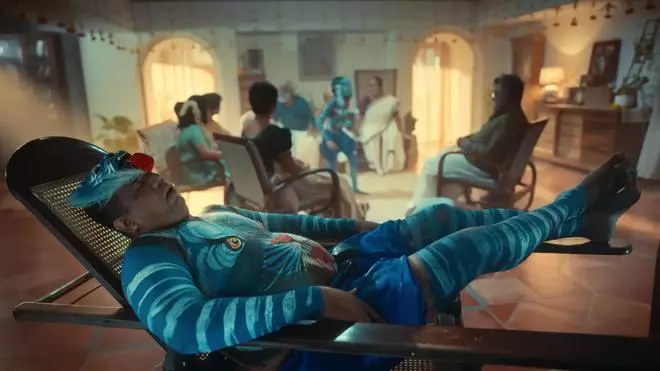
CRED has served up an ace of an ad this cricket season getting Leander Paes to show off his forehand, his backhand and solid serve in a hilarious setting. His opponents — pesky mosquitoes. The champion acted so well that none other than tennis legend Andre Agassi took to social media to praise it. A great coup for the brand pushing its new UPI features. It also served a second round of wit and whimsy with Ila Arun, who has to choose to become the side-eyed soundtrack to high-society gossip or upgrade the way she pays.

A sweet homage

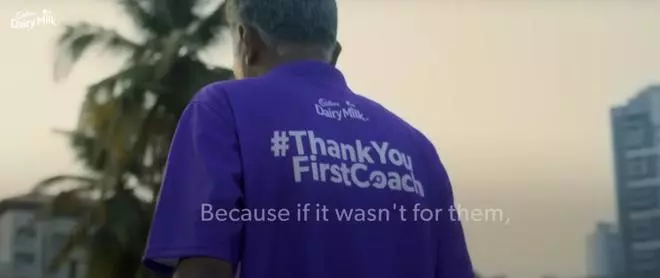
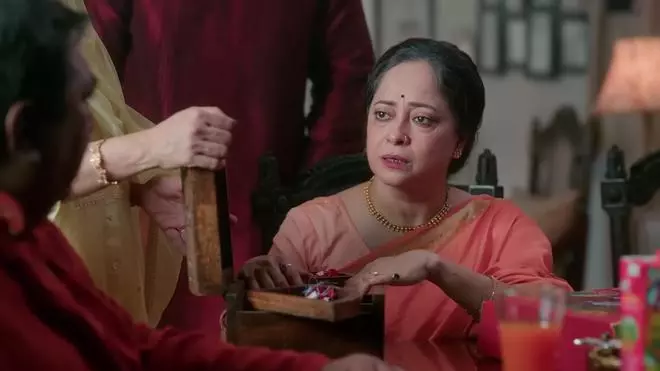
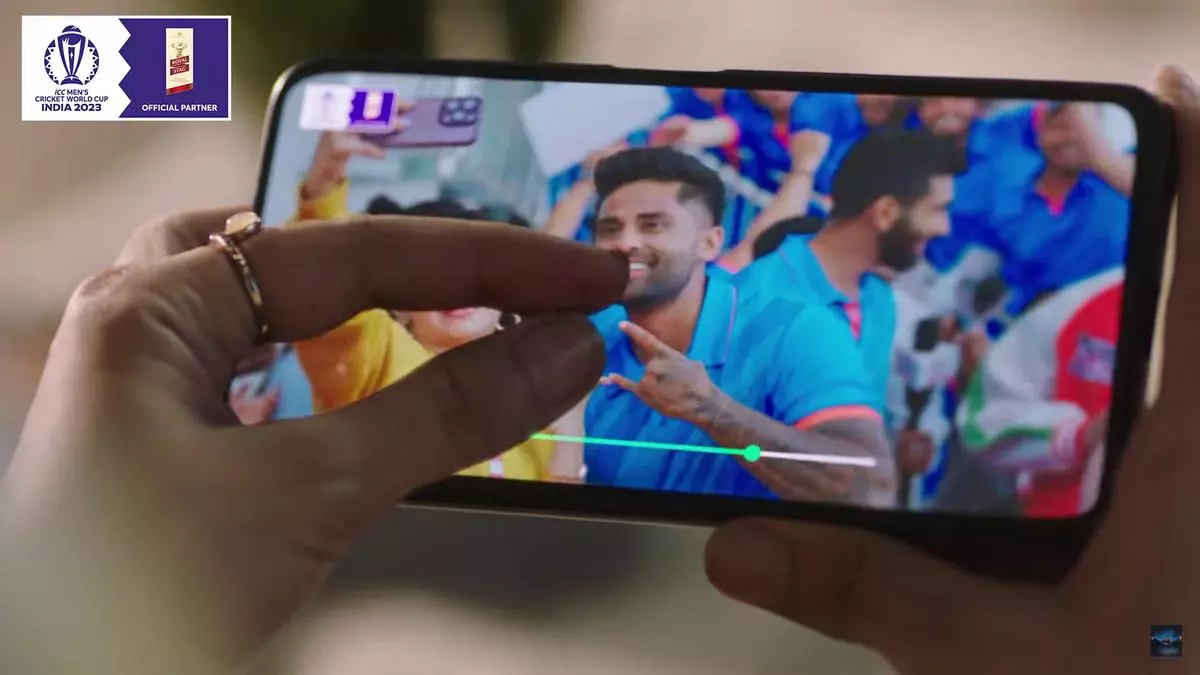
Cadbury Dairy Milk breaks through the cricket clutter by paying sweet homage to the unsung heroes behind the success of cricket stars. Its #ThankYouFirstCoach campaign shines a spotlight on the mentors of Surya Kumar of Mumbai Indians and KL Rahul of Lucknow SuperGiants, who played pivotal roles in shaping their careers. Created by Ogilvy, the films are highly emotive and the brand is following through offline by extending an exclusive invitation to the first coaches of every IPL player to join them in the family box during matches.

Tech for good

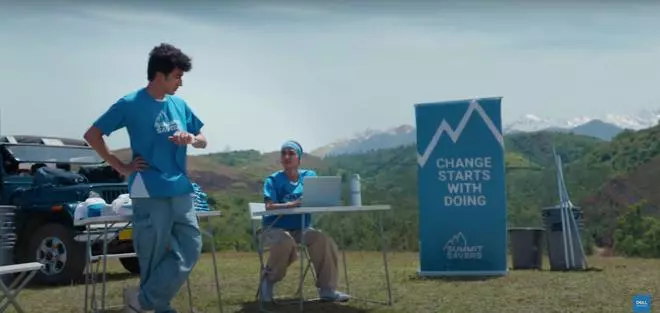
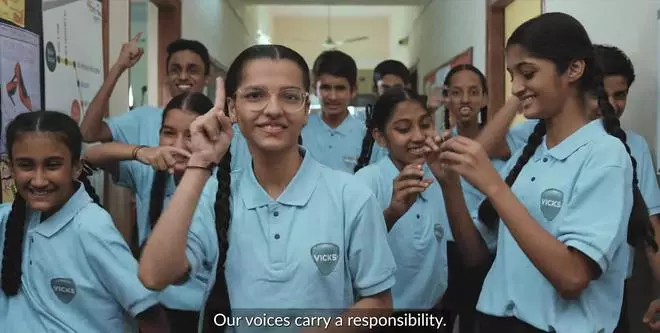
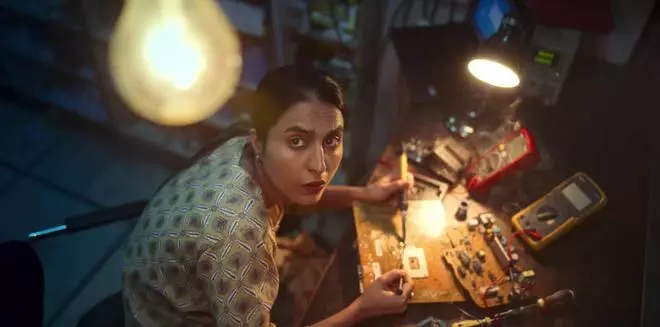
Dell’s new ‘Back to School and College’ campaign, highlights how the PC can be a transformative tool and help social change. The two brand films — “Lamps” and “Mountains” — tell the stories of three students who come up with novel solutions to pressing subjects. The first film shows how a young boy along with his friends helps children in rural communities get access to light. Using Dell’s G15 laptop, the boy creates a design for handmade solar lamps and presents the lamps to the children. The second film highlights a young girl who understands the power of teamwork to address the issue of piling up waste in the mountains. The films have been conceptualised and developed by VML.

Finding the groom

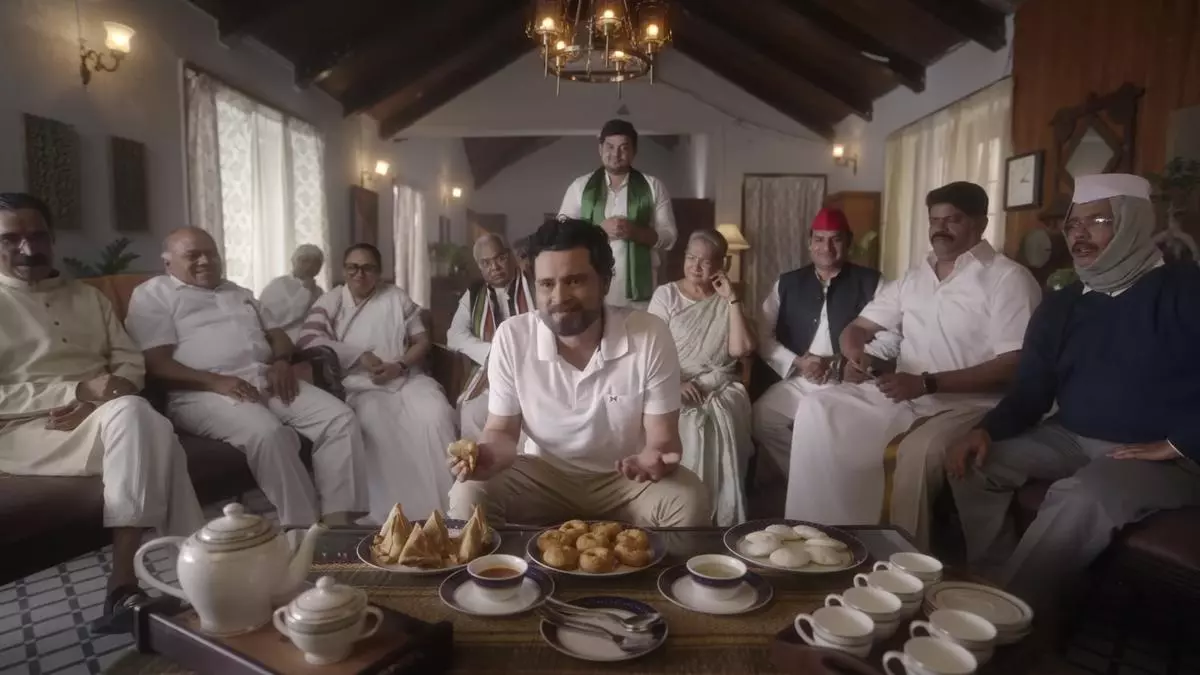
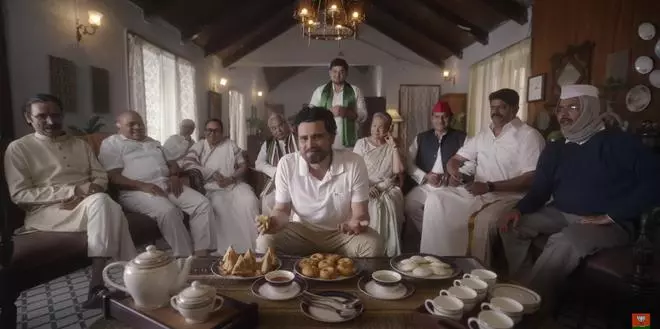
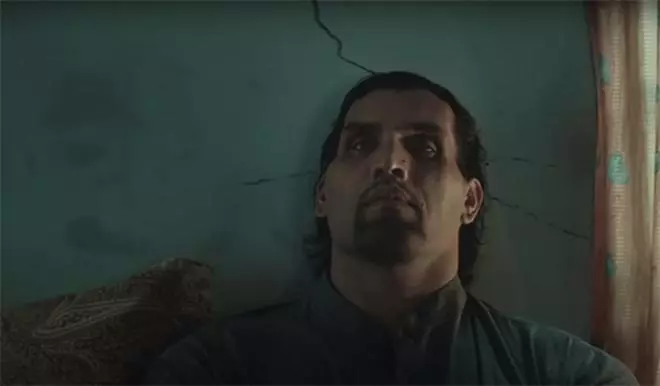
BJP has got first off the block when it comes to election campaign ads. Its Dulha Kaun Hai ad lampooning the INDIA alliance has gone viral. The video features lookalikes of key members of the opposition alliance and while it pokes fun, there is an entertainment quotient too in the film. It appears to be a strategy to appeal to the young voters. The BJP had chosen McCann World Group and Scarecrow M&C Saatchi as its creative agencies but reports suggest this film has been made by a different independent agency.

Categories
Digital Marketing

WFB Baird, stitching a growth story for linen

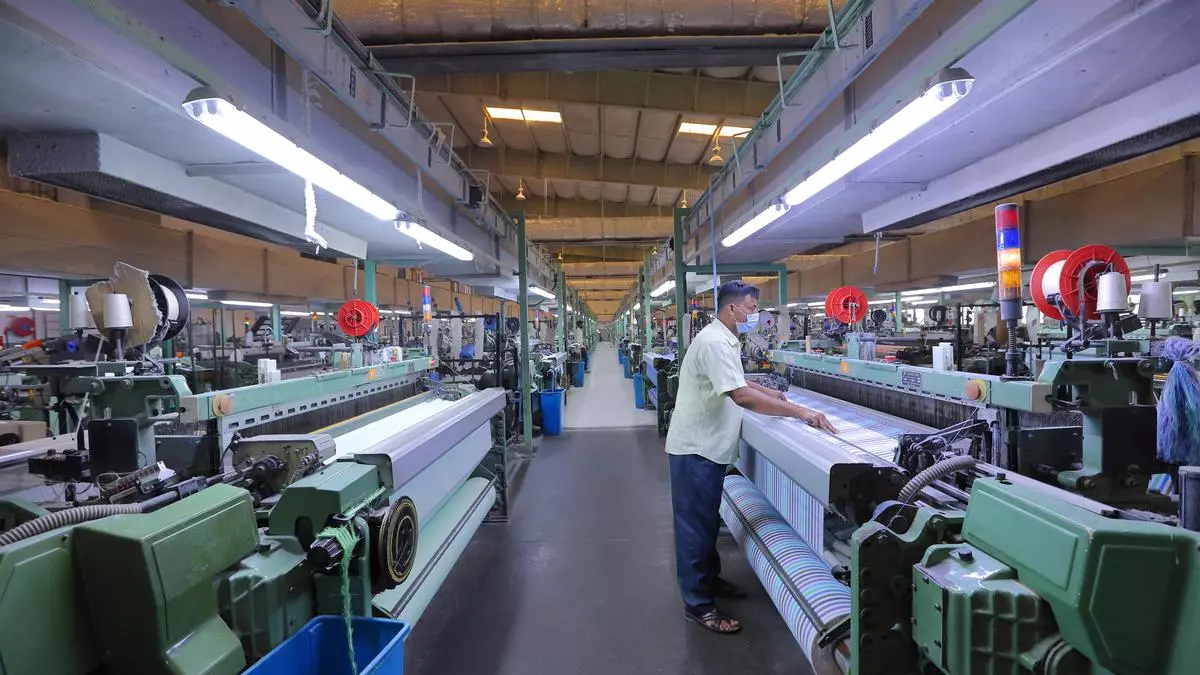
Bought a Ralph Lauren linen shirt? Or one from Tommy Hilfiger? Chances are the linen would have been made in Kerala by an Irish linen company WFB Baird and Co.

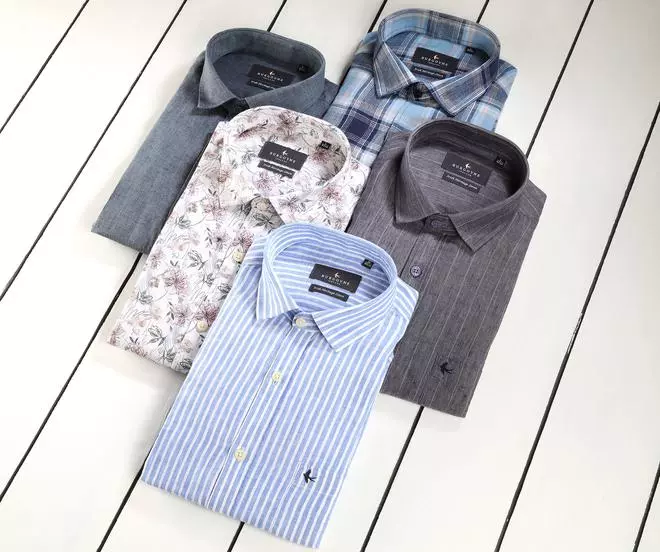
The Irish company that dates back to 1912 is one of the world’s oldest linen makers in the world and has been manufacturing in India since 2005, as an export oriented unit (EoU). Its three factories, spread across Kochi and Erode, supply to global brands and retailers. But now the largely B2B player is upping its domestic focus with its own brand Burgoyne.

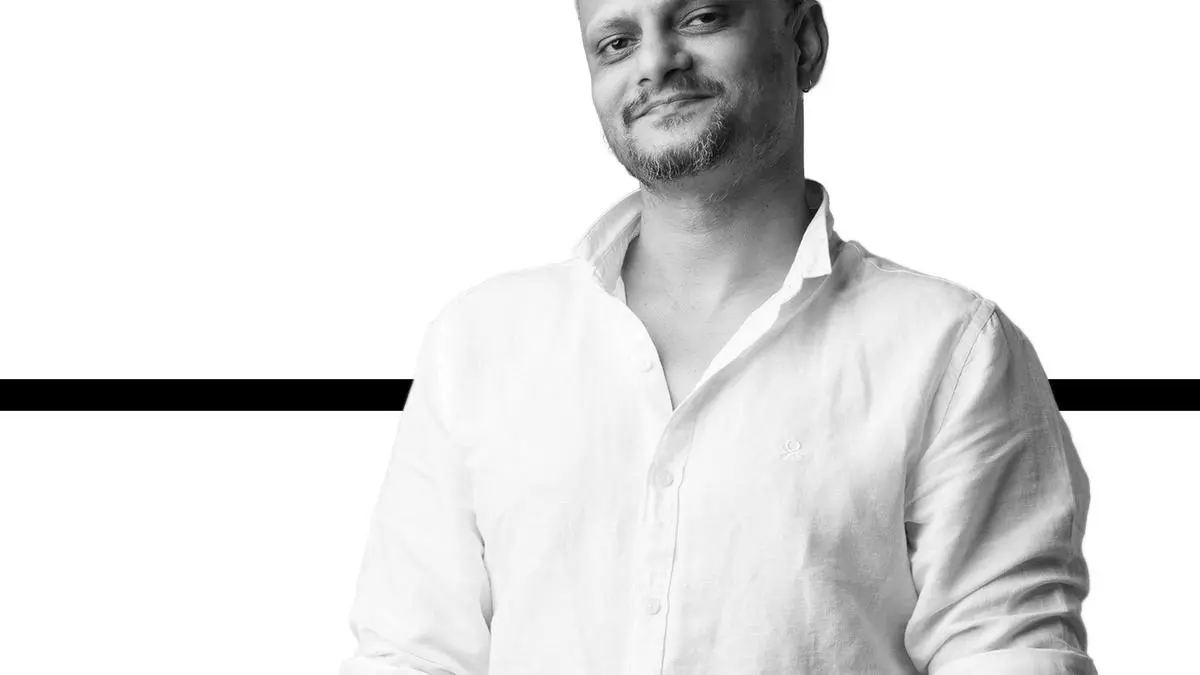
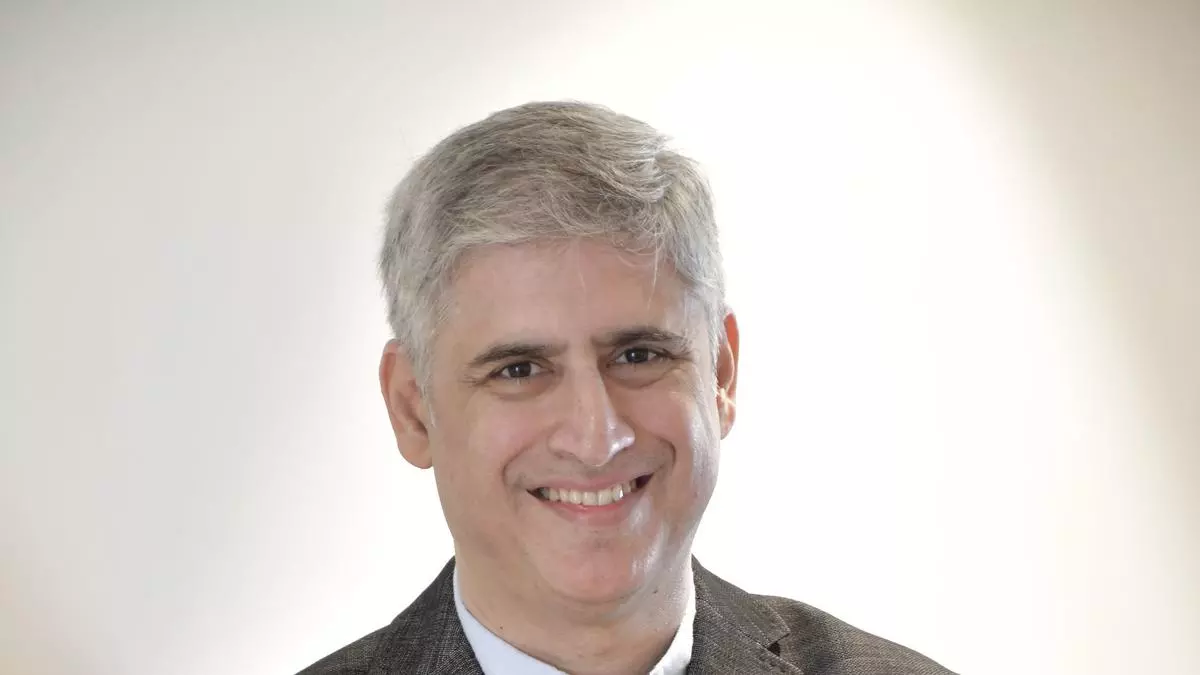
William James Burgoyne Baird, the fourth generation scion of the founder of the premium Irish linen brand and current chairman was recently in Kochi. He talked about the growing fascination for white linen shirts in the Indian market and how it spelt opportunity for manufacturers.

William James Burgoyne Baird

“We came to India in 2005 only to set up a 100 per cent EoU. Seeing India as a huge market for linen, we entered the domestic market around 10 years back and have been growing. We are now in the process of introducing an affordable fabric blended with linen and plan to sell the brand through e-commerce route. To increase the product visibility, the company will soon have its physical presence in all the metro cities,” said Baird.

Suchitra Menon, Director and CEO of the company said that Burgoyne is now present in at least 3,000 stores across the country. In the B2B business, the company supplies linen fabric globally to premium retailers like Ralph Lauren, Polo, Banana Republic, Levis, Uniqlo, Tommy Hilfiger, Calvin Klein and Marks & Spencer.

In India, it supplies to players like Madura, Arvind Brands, Blackberry, Benetton, Pepe, Reliance, Myntra and Rare Rabbit.

Burgoyne Shirts

Burgoyne Shirts

But why did the Irish brand choose India as a manufacturing location? It was late Captain Krishnan Nair of the Leela Group who was instrumental in bringing the company to God’s Own Country as his textile business had an arrangement with WFB Baird and Co, and helped set up its first plant in Cochin Special Economic Zone. “When we started off, the business was $10 million that too purely B2B. Later we ventured into domestic business with our own brand Burgoyne, and the group revenue is expected to touch $100 million by the end of the current fiscal,” reveals Baird.

He adds, “We are also looking at widening our customer base into new geographies including Australia, South America and the Far East as part of global expansion.”

The global linen market size is estimated to be worth $806.7 million in 2022 and forecast to reach $1525.3 million by 2028 according to industry reports. China is the leader in linen manufacturing. While Europe is traditionally the big linen consumption market, India is the fastest growing. Burgoyne is in the right place — if it can thread its way well.

Categories
Digital Marketing

O is for OTPs: Outrageously tedious pain-points

Ever felt like you’re drowning in a sea of one-time passwords while trying to make a simple online transaction? If you have, welcome to the club of those who believe OTPs should actually be dubbed OPTs — Overwhelmingly Persistent Texts. These little codes, meant to ensure security, often end up being the source of frustration and exasperation in our daily digital lives.

Picture this: you’re installing a food delivery app and what do you need to do? Enter an OTP, of course. Need to book a cab? Brace yourself for another round of OTP madness, even after the ride has concluded! What do they even need OTPs for after the trip has ended? To confirm that, yes, indeed, you have safely reached your destination. Perhaps cab drivers should receive separate tips just for the laborious task of inputting OTPs every single time — after all, sometimes it feels like a more complicated journey than the actual drive itself.

OTPs were supposed to make our lives easier, right? A transition from passwords and PINs to these supposedly foolproof codes was meant to streamline our online experiences. Of course, let’s not forget the CVV number on the back of our credit cards — the OG authentication method for online transactions. Back in the day, it was a simpler time. We’ve come quite far from those innocent days of typing in a three-digit code — now we’re drowning in a sea of six-digit madness, constantly poked by the stings of the SMS jellyfish.

The irony of it all lies in the name itself — One-time passwords. But let’s be real here. it’s never just one time! You receive multiple OTPs even if you have to make a single transaction. And if you’re a student making a bank transfer, the six digits of the OTP usually far exceed the amount being transferred, and sometimes, it is even more than the sum in your bank account.

And don’t even imagine the horror of living in a low-network area. Want to place an order on an e-commerce platform? Better step outside and make your phone reach for the stars for a strong signal because, without it, you’re out of luck. It’s like OTPs have become the gatekeepers of our digital desires, demanding tribute in the form of signal strength just to grant us access. Inevitably, in these circumstances, you have to click on the wretched ‘resend’ button on the screen to get another OTP. Now the real game starts — Guess the correct OTP — a game that is far more difficult than Jenga or UNO, as you eventually end up receiving many of them together in one go

Yes, the evolution from ATM PINs to CVV to OTPs has undoubtedly added an extra layer of security, but perhaps you don’t need it for everything. OTPs aren’t that widely used in Europe. The widespread usage of OTPs in India is emblematic of another problem — the deep mistrust in our culture when it comes to money. Our media promotes stories of scams that are widely consumed over WhatsApp and other channels, making us hypervigilant towards the ill-intent of others.

OTPs were meant to be our digital guardians, but instead, they’ve become that nagging, over-protective parent, constantly asking for confirmation on your digital whereabouts. So the next time you find yourself cursing at your phone screen while waiting for yet another OTP, just know that you’re not alone in this struggle against the tyranny of Overwhelmingly Persistent Texts.

(A-Z: This series of light hearted explorations on familiar objects from everyday life dear to the urban Indian middle class looks at how they shape our wants & desires and ultimately make us who we are as a people.)

(Hamsini Shivakumar is a Semiotician and founder of Leapfrog Strategy. Prabhjot Singh Gambhir is a senior research analyst at Leapfrog Strategy.)

Categories
Digital Marketing

The national creators awards: Padma 2.0!

Bhopal. Madhubani. Jai Khor. Ajmer. Sonipat. Prayagraj. Even Chamoli.

The recently-held National Creators Award was like the Padma Awards of social media — most nominees were from non-major metros. Even remote districts many hadn’t heard of.

There’s a refreshing wind of change blowing across the Indian heartland. Many awards, including the Padma, are increasingly honouring rural or small city gems — from farmers and artisans to local heroes — who’ve long been the backbone of India’s rich social tapestry.

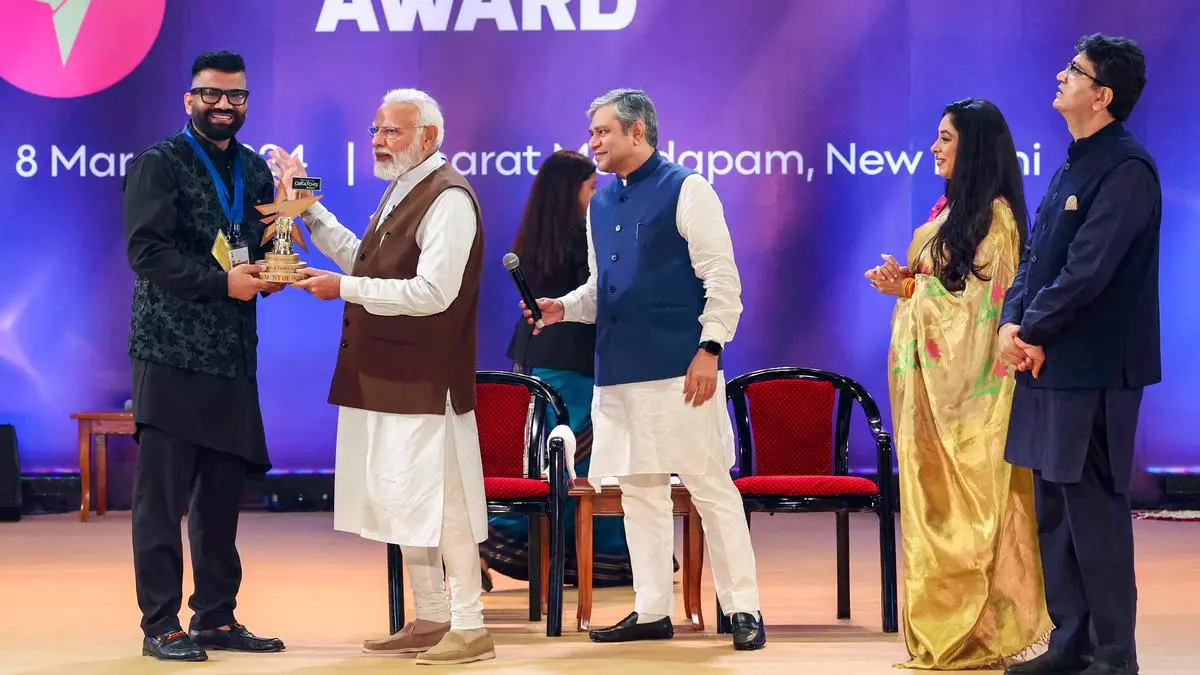
The National Creators Award 2024 was a first-time-ever initiative by the Indian government, to honour and recognise the contributions of digital content creators across various platforms.

This award ceremony, held at the Bharat Mandapam Convention Centre in Delhi, was graced by PM Narendra Modi — who is quite a content creator himself.

Here’s the ones I really liked. Includes a guy who makes videos for farmers and an ex-scientist from ISRO who promotes green living.

(To be honest, I didn’t like all the nominees and awardees. Some are pure formula, nothing new to say — they exist on big fan counts and little else. But anyway.)

Best storyteller: Keerthika Govindhasamy ‘’Wants To Tell The Real History Of India That The Education System Has Forgotten’’. That’s quite a mouthful, but I like her mojo of mixing storytelling with archaeology.

Disruptor of the year: Ranveer Allahbadia. Ranveer has his detractors but he’s the GOAT of Indian social media entrepreneurs. Inspired lakhs to take up YouTubing. Bit silly at times but keeps the cash registers ringing, much needed in this industry.

Green champion award: Pankti Pandey, an ex-scientist from ISRO. Love her waste audits of household trash.

Best creative for social change: Jaya Kishori aka Meera of modern times aka ‘Kathakaar’. Refreshing and engaging perspective on the epics.

Most impactful agri creator: Lakshya Dabas. Short videos on improving agricultural practices with the use of innovation and technology, natural farming.

Cultural ambassador of the year: Maithili Thakur performs original songs, covers and traditional folk music in multiple Indian languages. Am a big fan of both Maithili and her cute brothers.

Tech creator: ‘Technical Guruji’ aka Gaurav Chaudhary. Probably the top tech YouTuber, a pioneer who started creating ‘unboxing videos’ out of sheer boredom at his brother’s home.

Swachhata Ambassador Award: Malhar Kalambe has been leading clean-up drives since 2017 and is the founder of ‘Beach Please’ — interesting name.

Best Creative Creator (Female): ‘Aiyyo’ Shraddha, famous for her comedy sets that engage across generations.

Best Creative Creator (Male): Am not a big fan of RJ ‘Baua’ Raunaq but he has, painstakingly, over the years, built up a huge fan following based on ‘prank calls’. He’s also transitioned brilliantly from pure FM to a mix of radio and video — and is a huge influencer.

Best Creator in Food Category: Kabita Malhar aka Kabita’s Kitchen. Again, not a big fan of calorie-heavy North Indian food, but I love the way she makes cooking so DIY. Btw didn’t understand the repeated emphasis on the “ordinary housewife” tag Kabita kept getting at the award show. The point being?

Best Creator (Education): Naman Deshmukh educates lay audiences on tech-related subjects like AI and coding, educating people on online scams and besides technology, also covers gadgets, finance, social media marketing and more. In my view, Insta educators like him are the future of skills-based learning.

Best Gaming Creator: ‘Triggered Insaan’ Nischay a Delhi-based YouTuber, Live-streamer and gamer. Considering India has 421 million gamers, and over 80 per cent of Gen Z, he brings great value to the table. Nishchay has 2.5 billion views btw.

Best Micro Creator: Aridaman is from the new – and growing – breed of micro and nano creators with as little as 10,000 fans/followers. Aridaman says he simplifies Vedic astronomy, among other traditional knowledge systems.

Best Nano Creator Award: Piyush Purohi from Chamoli highlights little-known places, standout residents and regional festivals. I liked this winner the best, imagine a 1,000 Piyushs all over India, in the remotest districts!

To wrap up, the National Creators Award 2024 underlines the power of regional digital content creators in shaping new, transparent narratives, and inspiring millions across the nation. Our main narratives have been in the control of a select, self-appointed urban few for far too long.

Let the floodgates open!

(Shubho Sengupta is a digital marketer with an analogue ad agency past. He can be found @shubhos on X)

Categories
Digital Marketing

Unveiling Arcadia: The roll of bespoke luxury

You can see, but you can’t touch it! It was an exclusive ‘Coachbuild’ preview of the latest Roll-Royce Motor Cars model for just a few of us from around the world, before the magnificent piece of art was to be handed over to a multi-billionaire client in the evening.

At a private ceremony in the Flower Field Hall at Gardens by the Bay, Singapore, the Coachbuild masterpiece was kept under wraps until some detailing and presentation was to be made. And, the wait of a few minutes before it was unwrapped was worthwhile.

The company presented the ‘Arcadia’, the third Coachbuild Droptail commission — a uniquely pure reflection of Droptail’s principal design, featuring the most complex clock face in Rolls-Royce history. The assembly alone took five months, wood sections took 8,000 hours to create before the Arcadia emerged. Droptail is the first roadster body style in Rolls-Royce’s modern history, the company says.

“The Rolls-Royce Arcadia Droptail demonstrates the true nature of a Coachbuild proposition in completely transforming the character of a motor car. With Arcadia Droptail we witness daring in minimalism and subtlety, informed by the lifestyle of an individual who has a unique appreciation for British luxury,” Anders Warming, Design Director of the company said at the unveiling.

Tailoring cars

This coachbuild commission takes its name from the mythical realm of Arcadia, a place depicted in Ancient Greek mythology as ‘Heaven on Earth’ — a land renowned for its natural beauty and perfect harmony. Like the haven that inspires its name, Arcadia Droptail was envisioned by the client as a refuge from the complexities of their business life, said the company. The company has programmes called Bespoke and Coachbuild, wherein the designers, engineers and staff at Rolls-Royce work together with the client from day one, to build such models.

The UK-based company says that every Rolls-Royce that leaves the Home of Rolls-Royce at Goodwood includes some bespoke elements. These range from subtle but significant touches — an individual exterior colour that evokes childhood memories — to highly complex artworks requiring months or years of design and technical development.

“The significance of Rolls-Royce Arcadia Droptail lies in its subtlety. It is a projection of an individual who values clarity and precision in all areas of their life — from their passion for fine cuisine, their highly curated personal and professional spaces and affinity with contemporary design,” said Alex Innes, Head of Coachbuild Design, Rolls-Royce Motor Cars.

But, it is easier said than done as the engineers and designers of Rolls-Royce often have to tackle unique demands from clients.

Jonathan Simms, Head of Bespoke, Rolls-Royce, cites the example of a client who wanted some silk materials they had been using to be used in the car which they were buying. However, Rolls-Royce had to tell them the company had to run some tests before it could be fitted in the car as such materials should last as long as the car. “When I talk to them about our test standards, they sometimes say ‘are you crazy’. They tell us that it will be a ceremonial car and they will use it only on special occasions, so please to use the material,” he explains.

He said as a general rule, everything is tested, but there are occasions where the client will make specific requests and Rolls would need to match their requirement. And, that is why the company takes months and years to test those materials/ fabrics so that they last.

“It sounds like a cliche, but when we talk about relationships with our clients we really mean it. When we are into the Bespoke commissions, its very rare that we won’t have the client coming to Goodwood, meeting us or we meet them where they are and we really get to know much about them because if you know someone well, then you can be convinced… And then, our designers and our craftsmen will start work with the client,” Simms explains.

“When we start to make the car physically — the first parts — that’s when many of the clients love to come to Goodwood and actually see those parts being made and many of them get very emotional,” he said.

As the most exclusive division of Bespoke, Rolls-Royce Coachbuild is the marque’s equivalent of haute couture. It empowers clients to create completely unique Rolls-Royce motor cars beyond the brand’s product portfolio, participating in every stage of its development over a number of years.

Arcadia Droptail is one such product that took four-and-a-half years to be fully built and handed over to the client. The interesting part is that Rolls-Royce never shares the price of such a product (the Arcadia is estimated to cost around $25 million) and the identity of the customer.

(The writer was recently in Singapore at the invitation of Rolls-Royce Motor Cars)

Categories
Digital Marketing

‘Never follow a leader, be a disruptor’

In New Delhi’s Okhla business district is a swank, airy, modern building — Mankind Pharma’s corporate office. It’s a building that would look more at home in Gurgaon where the ritzy business towers are. But Rajeev Juneja, MD and Vice-Chairman of the ₹8,127 crore company says the company wanted to be in Delhi as at least 300 of its employees travel up and down everyday from Meerut — the small town where the company’s origins lie.

The home-grown company is today a highly visible pharma player — especially after its mega IPO last year. “In just 29 years, we have become the largest pharma company by prescriptions in India and the fourth largest company in India by sales,” says Juneja, saying a lot of it is due to the decision to enter the OTC space. The company began in 1995 and by 2000 was a ₹50 crore company. In 2006-07, it was at ₹500 crore. Yet, because it was in the affordable drugs space, the perception was that it was a small company. “We were hungry for respect and recognition,” says Juneja. “We entered OTC because that was the only way we could advertise on TV,” he says bluntly.

Advertising blitzkrieg

His elder brother Ramesh gave him the responsibility to launch into OTC and the first product was Kaloree 1, a sugar substitute tablet. “I went all the way to Pakistan to sign Wasim Akram (he is diabetic) to endorse the product,” recalls Juneja, describing the advertising blitzkrieg that followed. “We spent ₹10 crore on marketing and the sales were in the range of ₹50 lakh. My brother was furious,” he says.

“But that keeda was there. One defeat cannot deter you from your mission or philosophy. I somehow wanted Mankind to become a big name.”

Rajeev Juneja, Vice-Chairman and MD, Mankind Pharma

The next launch was Manforce condoms. “We initially tread the same route of everyone else in the category — signed a sexy model, launched dotted condoms.” Again it was a failure. That was when Juneja says he learnt an important marketing lesson for a challenger brand. “Never follow a leader.”

So then there was a brainstorming session on how to disrupt the category. “We found that everyone was pushing condoms from the male perspective, so thought let’s get the female perspective. When everyone was doing dotted condoms, we launched flavoured condoms. The first breakthrough came. The second breakthrough came when we signed Sunny Leone,” he says.

Today Manforce is a ₹300 crore brand and has a 35 per cent share of the category. OTC products as a whole contributes 8 per cent of Mankind Pharma’s revenues, with several big brands in its portfolio — Prega News is a ₹200 crore brand, Unwanted 72 is a ₹90 crore plus brand, Acne Star is around ₹70 crore or so.

Juneja says the lessons learned stuck in their head when they were launching antacid brand Gas-o-fast, seven years ago. “There was a Goliath in the market, in the shape of Eno,” he says. So true to its strategy of not following the leader, Mankind decided to go for natural Indian flavours — jeera and ajwain and price the antacid at a premium. Today, the brand is ₹80 crore or so he says.

“It takes any FMCG brand five to seven years to stabilise. Now we have recall and can make a dent. We foresee growth for the brand,” says Juneja.

Hard knocks and lessons

Having learnt in the school of hard knocks and mistakes (like everyone else, Mankind Pharma too impulsively jumped into making sanitisers and masks during Covid, and had to close those businesses), Juneja has a fund of marketing beliefs to share. For instance, he roots hard for celebrity endorsements. Almost all of Mankind’s OTC brands use celebrities. “The power of celebrities is that you get eyeballs.”

But is it worth the heavy investment? “Every brand spends 10 per cent of their ad budget on the making of the creative and 90 per cent on media. So what if we spend 15 per cent instead,” he retorts. But we ensure that there is compatibility in every use of celebrity he says, describing how for Prega News — the pregnancy detection kit — they used Anushka Sharma when she had announced her pregnancy. For Gas-o-fast, it had used actors with great comic timing — Brahmanandam, Paresh Rawal and Neena Gupta.

The impulsive decisions that led to earlier products is now replaced by matured thinking. “People are now very health conscious. They are now buying premium,” he says. That has led to the launch of HealthOk, a niche product that is aimed at vegetarians, who might face vitamin deficiencies. “Time has come now in marketing when you can be narrow focussed,” he says.

The next big thing, he bets, will be Ayurveda. Mankind has acquired D2C brand Upakarma Ayurveda, that has Shilajit, Kesar and Ashwagandha.

Over time, Juneja says, we learnt that we have to do those kind of karmas that give consumers great experiences. The karmas he refers to are look, feel, touch. “It should touch all the five senses,” he says.

Categories
Digital Marketing

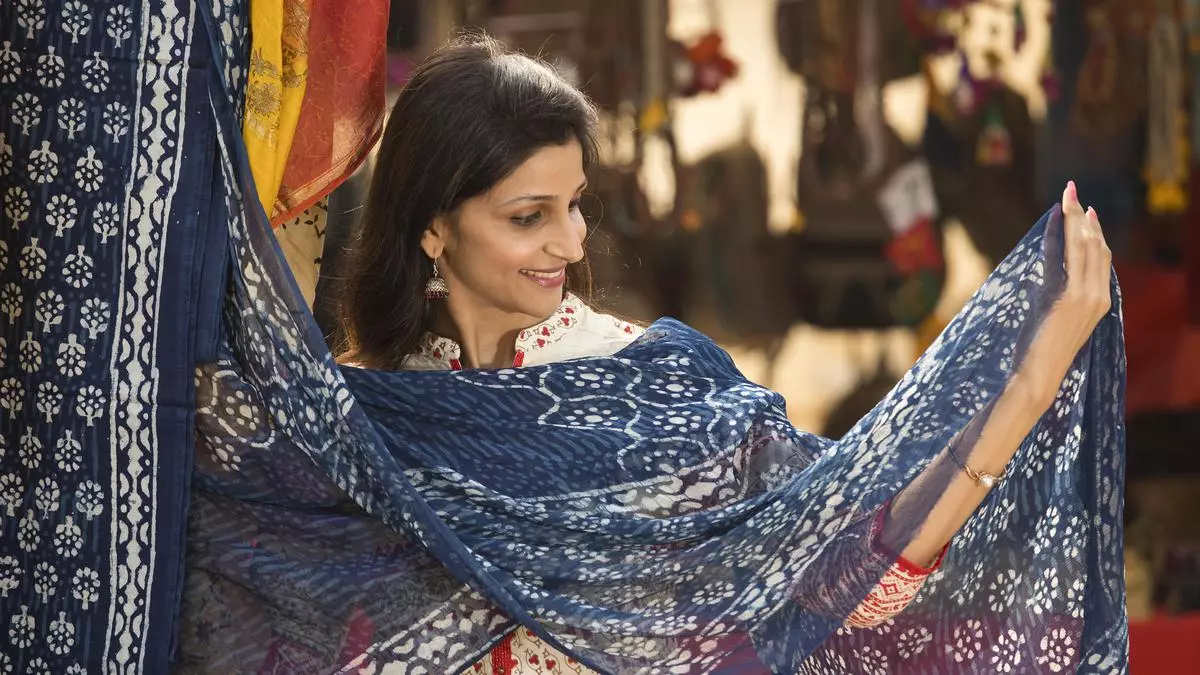
N for Nightie: Whispers under the Aala Maram

On a sunny afternoon, under the shadow of a mighty Aala Maram (Banyan tree), in the midst of Palakkad’s bustling streets, hung Srimati Saree, Madame Nightie, and Rani Salwar Kameez, chatting away like old friends, with Dear Dupatta by their side, swaying gently in the humid coastal breeze. Their voices mingled with the sounds of everyday life, adding a touch of gossip to the air.

Srimati Saree, with her elegant folds and intricate patterns, carried the weight of tradition on her delicate fabric. She spoke with an air of authority, her demeanour steeped in the values of cultural heritage, boasting of her importance in Jaya’s life, especially with her in-laws around. “Oh, Miss Nightie,” she sighed, “you may be modern, but nothing beats the grace of us sarees, especially when Jaya needs to impress her in-laws!”

Madame Nightie, with her airy fabric and tales of freedom, retorted, “Come on, Sareeji! I give Jaya the comfort she craves, I am the epitome of modernity blended with modesty. I enable Jaya to move freely, reclaiming public spaces without compromising on her dignity while she’s running errands during the day or sleeping like a baby at night.”

“Jaya now feels quite attached to me, you see. I am like one of her prized possessions that she has been holding onto since the day she realised how valuable I am in her life. In fact, she wouldn’t even miss out on packing me for a vacation. This way, I also feel the change of air and get to have my own travel diaries,” chuckled Madame Nightie as she spoke.

Rani Shalwar Kameez, vibrant and relaxed, chimed in, “Exactly! Madame Nightie, While we may differ in our styles, we all represent the struggle of Indian women to balance societal expectations with our desire for liberation.”

Dupatta Dear nodded along, acknowledging Madame Nightie’s practicality. “You’re right, Nightie dear,” she said. “No more fussing with drapes or layers. You make life so much easier for Jaya, I also go along with you when Jaya goes to the market or greets strangers at the door. I love getting paired with you, and you know this!”

Srimati Saree couldn’t help but defend her beauty. “But drapes are an art, ladies!” she exclaimed. “I’ve been enhancing femininity for ages, I make Jaya look graceful and sexy all at the same time!”

As they discussed, the comfort of Madame Nightie compared to the suffocating heat of traditional attire, Madame Nightie modestly admitted, “I may not be as grand as Srimati Sareeji or as colorful as Rani Salwar Kameezji, but I offer women a choice without sacrificing comfort.”

The conversation eventually turned to affordability, and Dupatta heartily praised Madame Nightie’s accessibility. Unlike lounge wear, which caters to the whims of the upper middle class, Madame Nightie is a value-for-money garment accessible to all. She is the everyday companion of the Indian middle class, offering them comfort and ease without breaking the bank. Stitched in multiple designs with varied fabric combinations, the most favourite one being cotton, gives women the privilege of making a choice of wearing what they feel is like their second skin.

In a country where modesty is treasured above all else, Madame Nightie emerged as a beacon of liberation for Indian women, embodying their innate ability to adapt Western fashion sensibilities to suit their own cultural norms. As Srimati Saree eloquently put it, “We may hang side by side on this clothesline, but it is Madame Nightie who truly encapsulates the essence of freedom and empowerment.”

As the sun set, casting a golden glow over the neighbourhood, they all agreed that Madame Nightie was a silent revolution for Indian women. They swung together in harmony, celebrating their shared triumphs as symbols of womanhood, while the Aala Maram watched on, its branches gently swaying in approval, as if applauding the silent revolution unfolding beneath its watchful gaze.

(The A-Z Series: This series of short articles explores how familiar objects from everyday life embody concepts and values dear to the urban Indian middle class. It takes a light-hearted and humorous look at how objects shape our wants & desires, lives, and lifestyles, ultimately making us who we are as a people.)

(Hamsini Shivakumar is a Semiotician and founder of Leapfrog Strategy. Naheed Akhtar is Associate Director, Cultural Insights and Semiotics at Leapfrog)

Categories
Digital Marketing

Never Follow the Leader, Try and Disrupt the Market: Rajeev Juneja

ankind Pharma entered the OTC products space as a challenger brand in categories like condoms and antacids and yet managed to grab consumer mind space. Vice chairman and MD, Rajeev Juneja shares some of the marketing strategies of the company, describing how they disrupted the market with new approaches. For instance, He shares how the company has kept pace with trends like premiumisation. Mankind Pharma also has been a heavy user of celebrities in its marketing but Juneja justifies it by pointing out how the company always looked for the right fit and compatibility. 

Categories
Digital Marketing

M for Mixer : The speedy revolution in women’s lives

Several members of Pulkit’s family had questioned his love for cooking, but he was convinced that it was the only thing he wanted to do. “The kitchen is not a man’s domain,” some of them had said. His parents supported him, so he has continued with his dreams.

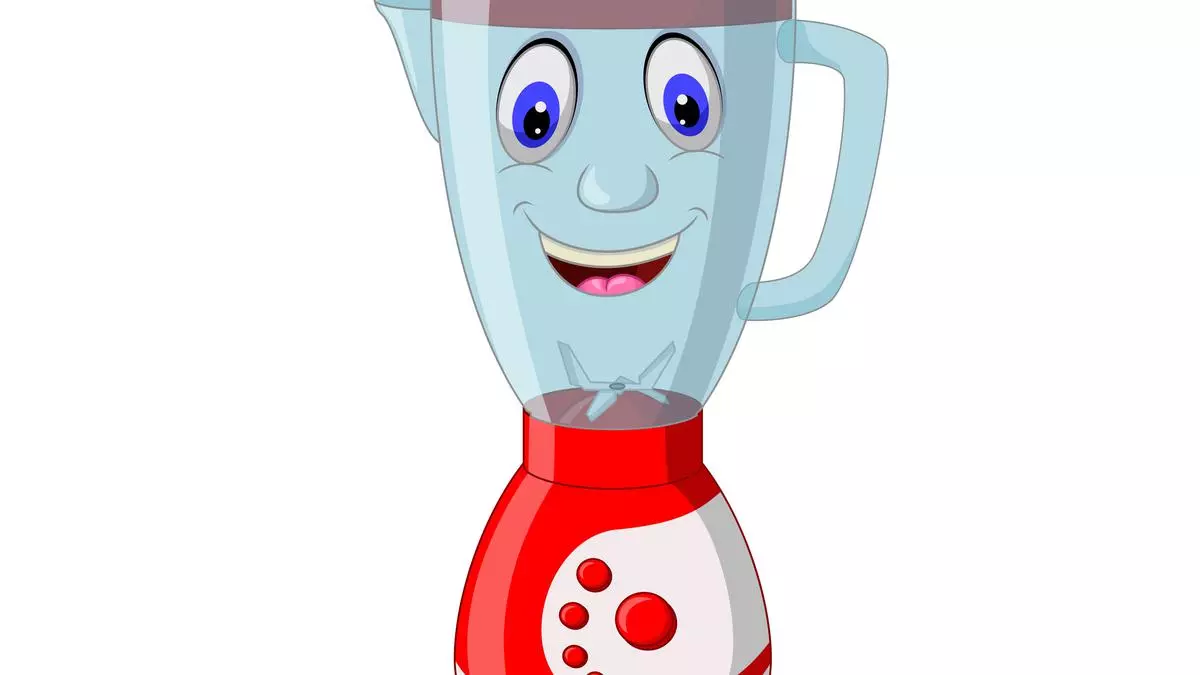
His nani’s (grandmother’s) cookbook diary is his most prized possession. Traditional Uttar Pradesh recipes of Nimona, Dum Aloo, Kaddu ki sabzi, Bedmi puri and Magdal and Petha sweets, among others, are written in his grandmother’s ancient handwriting. Some of these recipes involve physically grinding spices on a silbatta (a grinding stone), a process that is quite tedious. He still remembers how his nani’s aching joints finally convinced her to buy something expensive for herself — a mixer (or a “mixie,” as they all called it). It took a lot of coaxing from him and his mother, as no one else had really paid attention to the back-breaking effort it took to grind spices for countless preparations every day.

Having learned from her mother’s experience, Pulkit’s mother bought a “mixie” right after she got married. In hindsight, he realised, it was the time-saving and speedy inventions like “mixie” that freed his mother’s time to start a boutique business while managing household chores. Besides, his father was also supportive of her business and began taking on some household chores to help her out.

Pulkit had recently begun to follow YouTube videos by top chefs to level up his cooking skills. He wanted to gain admission into a good hotel management college and began experimenting with various regional and international cuisines and dishes. He, too, used the mixer grinder to make dry masalas, chutneys and gravy bases — from Thenga podi and Kavathyachi chutney to Boror Tenga gravy. Then came delectable desserts like peanut butter smoothies, chocolate mousse, pineapple jam, mango granita and many others, through the magical mixie.

A few years ago, his town didn’t have as many cafes and restaurants as it does now. But his mother, aided by her mixie set, whipped up cafe-like experiences at home on his father’s promotions and his result days. Mango milkshake, chocolate milkshake, chikoo milkshake, cold coffee — you name it, she made it all. These would always be accompanied by sandwiches served with a side of dhaniya or pudina chutney. Needless to say, this is how his culinary journey had begun — as his mother’s helper. Together, they used the mixer for everything possible — from dosa batter to fruit juice, chickpea flour (besan) and cake batter. Today, he pampers his parents with restaurant-style dishes.

Other specialised appliances like the chopper, hand blender, juicer and food processor are available in the market now, but, inspired by his mother, he loves using the humble mixie the most, which he thinks can be wonderfully purposed to meet almost every culinary need. Why waste money on other appliances? Like the scooter that can traverse every narrow street and navigate every traffic situation — the mixie too seems far from a compromise. For his nani and mother, the mixie is a tool of empowerment; for him, it is a gateway to cuisine across India and the world.

(The A-Z Series: This series of short articles explores how familiar objects from everyday life embody concepts and values dear to the urban Indian middle class. It takes a light-hearted and humorous look at how objects shape our wants & desires, lives, and lifestyles, ultimately making us who we are as a people.)

(Hamsini Shivakumar is a Semiotician and founder of Leapfrog Strategy. Khushi Rolania is a senior research analyst at Leapfrog Strategy.)

Categories
Digital Marketing

The many shades of aspiration — from the utilitarian to the romantic

As we head towards International Women’s Day later this week, I would like to pray tribute to a woman who has deeply influenced my thinking about Indian consumers. Rama Bijapurkar was my professor at business school four decades ago. There, she provoked us to think afresh about consumer insights. Many years later, when I was a manager in Titan, she was a Director of the company. She repeatedly challenged many of our assumptions about how and why women buy jewellery. Those were uncomfortable meetings, but they made us search for the truth and helped us make the right decisions. Thank you, Rama.

Liliput Land

Rama Bijapurkar’s latest book Liliput Land takes forward her passion for understanding Indian consumption. The book takes its title from the classic Gulliver’s Travels by Jonathan Swift, where Liliput, a land of small-sized people, overpowers the giant Gulliver, who is many times bigger than any of them. Rama says this is a perfect metaphor for India, and I agree. India’s consumption story is an aggregate tale of hundreds of millions of small consumers, spending small amounts individually, served by millions of small suppliers. Together, they have felled many large corporates who do not understand them well enough. That is reason enough to read this excellent book.

In Liliput Land, Rama covers many themes, including making sense of the structure of Indian markets, demand and supply, decoding consumer behaviour and understanding the huge mass market opportunity. One particular section which I have read and re-read pertains to the emerging aspirations of Indian consumers, a key driver of consumption trends.

Aspirational India

As Rama explains, there has been a tectonic shift amongst Indian consumers cutting across all segments, from acceptance (“I will manage within what I have”) to aspiration (“I want this and how do I go about getting it”).

For instance, many young people wanting to buy a car today aspire to buy a significantly higher priced SUV rather than settle for an entry level car. To do so, they are willing to wait for some time, explore loans from banks, request bridge funding from parents or even buy a pre-owned SUV at a lower price. However, they are unwilling to sacrifice their aspirations.

Alongside this aspiration comes a new-found comfort with borrowing for consumption. These consumers are confident that they would be able to manage their indebtedness well. This combination of aspiration and confidence are a key reason why sales of high-end smart phones are rising rapidly in India, and why EMI based sales are now the norm at durables stores.

Climbing the next rung

Rama points out that aspiration in India is also about climbing the next rung of the ladder of a good life – a better house, better education for children or even a better hairdresser to go to. Whichever demographic segment you belong to, the next rung is inevitably there.

For instance, a lower income household may aspire to send its child to a government school. A middle income household may aspire to get its child away from a government school into a private school. An upper-middle income household may aspire to get away from a normal private school to an elite private school. An affluent household may wish to admit their children into an international school, because this is a starting point to college education abroad.

The next rung exists in virtually every consumer and product segment. Marketers in India therefore have the fabulous opportunity of how to responsibly guide millions of consumers upwards towards their aspirations.

Basic needs, balancing act

Yet another fascinating insight from this book is that most of India views aspirational consumption primarily from a utilitarian lens, rather than from a romantic one. Therefore, as incomes increase, consumers ask themselves questions such as – what products can improve the quality of my life? What can make me more productive? Once in a while, though, these questions may give way to indulgences, both large and small, ranging from overseas travel to an ice-cream on the beach.

However, for most Indians, even these basic aspirations run ahead of their disposable incomes. Therefore, they engage in an ongoing balancing act across categories, based on what their most compelling needs are at that point in time. This determines whether the next upgrade is a new refrigerator, a high-speed broadband wifi, or ready-to-eat food.

Finally, in pursuing their aspirations, fewer Indians today are obsessed with global brands or fancy labels. “Made in India” is as good as made anywhere else in the world and in some categories even better — consider, for instance, how well Indian single malts are doing. Features, quality and emotive appeal drive aspiration, not foreign origin or hype alone.

(Harish Bhat is an avid marketer, author and poet. He was formerly the Brand Custodian at Tata Sons. These are his personal views.)

Categories
Digital Marketing

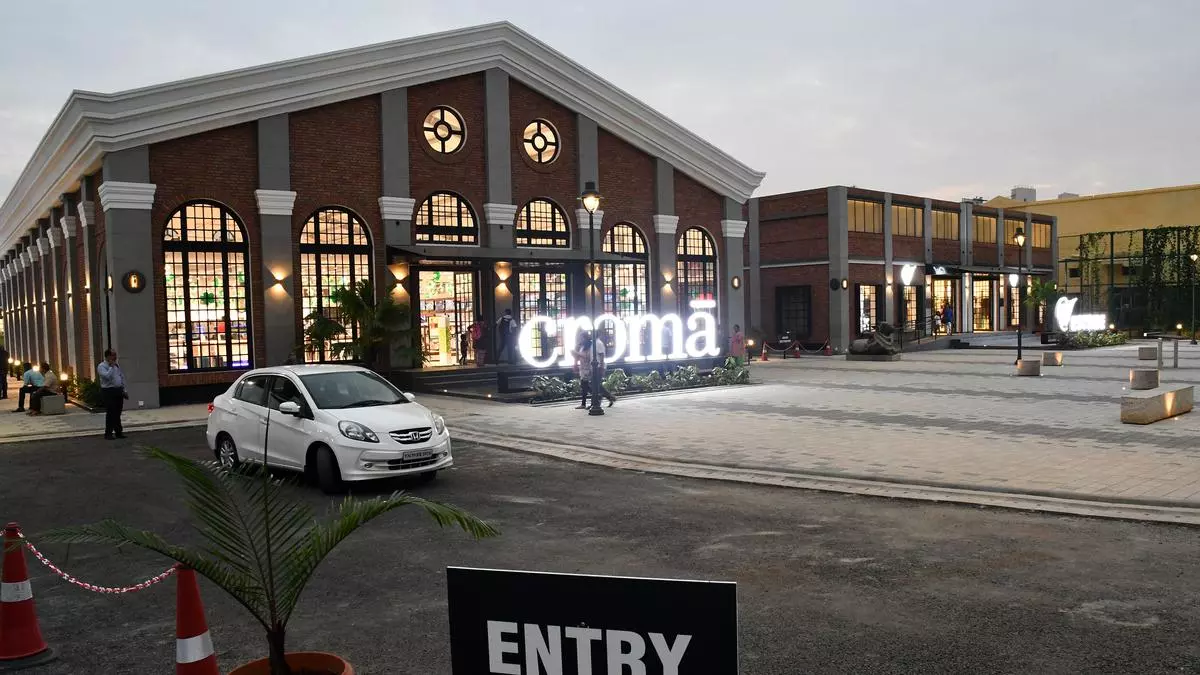
The mall makeover: Driving footfalls through promotions, pop ups and fests

I was surprised when I got a call from the manager of the local supermarket recently to tell me that they were running a discount sale over the next few days and as a valued customer to make sure not to miss it. In all the years that I have been doing my weekly shopping here, never had they called to announce their offers. This was a first!

As consumer preferences are shifting from buying products to buying services, retailers are becoming more proactive in approaching and bringing in customers. To drive footfalls, mall developers and retailers are collaborating to come up with unique experiences. Concerts, food fairs, free makeovers, book shows, events themed around cultural and religious festivals, artificial snow parks — it’s all happening.

Shifts in consumption

Consumption patterns have shifted over the past few years, especially after Covid. Sales data show that consumption is back in malls but what customers are spending on has changed. Earlier it was apparel and fashion that drove the sales. Now it is food, dining out, entertainment and experiences.

Malini, a communications professional, says that when her family decides to go out,they identify the Starbucks outlet, or a pizza place they want to go to and then pick the mall where it is located.

“The number of shopping bags coming out in the hands of customers of apparel, fashion and accessories have gone down,” says Abhishek Sharma, Director, Retail Agency, Knight Frank India. He points out that the share of food and beverage outlets has risen to 35-40 per cent from 20 per cent before.

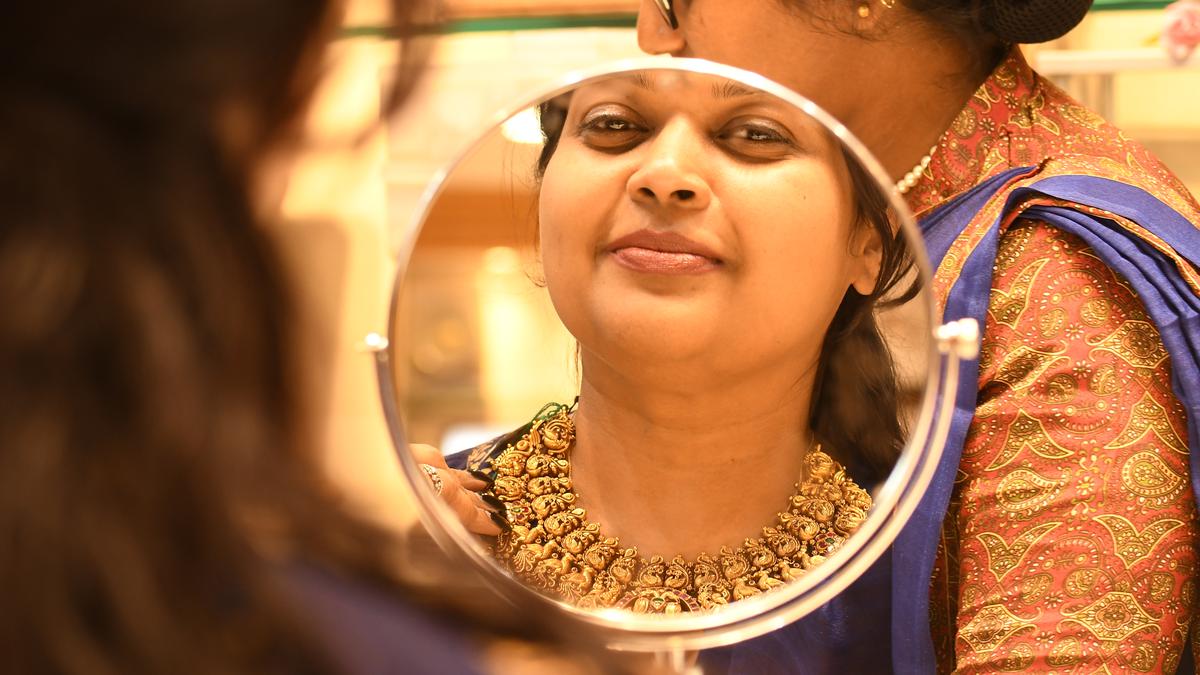
This is not just anecdotal evidence. The numbers bear out this trend. In the last quarter of 2023, fashion sales of listed offline retailers dipped 5 per cent, electronics fell 7 per cent and so did grocery, according to a report by BCG India. Quick service restaurants saw a 12 per cent dip in sales after decelerating growth over the last several quarters. Jewellery was the only category that bucked the trend and showed growth.

Historically, organised retail outperformed the underlying category growth by a significant margin. This was the case till 2022. In 2023, there was a sudden change in this trend and while the underlying category growth was more or less stable with a slight downward bias, listed retailers saw a steep dip in their sales.

Mall movements

Consumption patterns at malls mirror this trend. At Phoenix Mills — one of the largest mall operators in the country — it was jewellery, gourmet dining and hypermarket that drove growth in the first nine months of FY24. The top performing categories were family entertainment centres such as Time Zone and Game Luxe and multiplexes across its malls. Consumption growth has lagged rental growth at malls. But entertainment and experiences have become a big part of the consumption basket in malls.

With 65 per cent of the population under 35 years of age and about half of the population under 25, “you will see that there will be more consumption on the experience side,” says Anand Ramanathan, Partner and Consumer, Products and Retail sector Leader, Deloitte India. “Gen Z and millennials don’t save as much, and they go in for experiences. They travel more. Their buying preferences are a lot less product-centric and more services oriented.”

‘Lock the Box’ book festival at Infiniti Mall in Mumbai

Even when buying a product, they look at what experience they can get out of it, he adds.

Abheek Singhi, Managing Director and Senior Partner at BCG India, points out that shopping at malls was always about the experience, but now that has escalated. “The nature of the experience has changed and it has moved to different elements.” Mall owners and retailers are doing different things to target different customer segments.

At Infiniti Mall in Mumbai, experiences have become a key factor in drawing in customers. “Previously people were looking for options in terms of multiple products. Now it has shifted to getting not just the look and feel of the product, but also how it will give a different kind of experience to the person,” says Gaurav Balani, DGM-Marketing, at Infiniti Mall. The Souled Store, for instance, that sells casual apparel has taken experiential clothing to a whole new level with prints that feature superheroes, cartoons and comics and characters from Netflix shows such as Stranger Things.

Last year Infiniti Mall launched ‘Lock the Box’, a book festival where customers can take as many books as they like that can fit into a box and pay a flat rate. Customers also got to meet their favourite authors. Encouraged by the overwhelming response it received, Season 2 of the event will launch in April this year.

Over 80 per cent of brands are common to malls across the country, especially in the tier 1 cities. To provide a novelty factor, malls are giving space to pop-up stores. These are niche, home-grown brands, that lease space for a short period from six months to a year.

“It encourages local skills, local entrepreneurs while allowing them to bring in a new product or category into the mall,” says Susil S Dungarwal of Beyond Squarefeet, an advisory that specialises in mall development and management.

Sarath City mall in Hyderabad has 15 pop-up stores. In a Delhi mall’s food court, there is a kitchen that gets a new chef everyday as people are encouraged to try their cooking skills here.

Small towns

The mall culture is now spreading beyond tier-2 cities to tier-3 and -4 cities as well, where a certain category of consumers have the spending power to drive sales.

“People in metros don’t understand the splurging that is happening in tier-2, -3 and -4 cities,” says Dungarwal. He says he is building a mall in a small town with a population of 35,000 people. “You will be shocked. We have a 2 lakh sq ft mall coming up and it is completely occupied. That is the kind of money people have in these cities.” They are spending on all categories — fashion, jewellery, on holidays and on leisure.

He cites the example of Thanjavur city in Tamil Nadu that has a population of around 3.5 lakh, where rents at an upcoming mall have trebled in a short period of time. “Every brand wants to be there, but unfortunately, I have space for only 68 stores and they are all leased. The way people are spending and accepting new brands is amazing.” They are spending on all categories — fashion, jewellery, on holidays and on leisure.

According to Dungarwal, the reverse migration of techies from metros to small towns seen during Covid has resulted in many of them staying back to work from home and making money online.

In Maharashtra’s Vidarbha region, ‘Tapadia City Centre’ in Amravati has all the leading brands in the country. At the mall, food has become a focal point for many of the activities. Women bond in the food court at kitty parties and eating out is a popular pastime.

Mall developer Madhur Laddha says that while apparel buying is for occasions such as weddings, anniversaries and parties, people spend on food and entertainment all the year round.

Consumer is King and Queen

People are spending more and saving less, but they have also become discerning, says Dungarwal. Retailers have to sell what customers want and knowing the customer is important, not only for retailers but also for mall owners.

If brick-and-mortar malls are the body, then the retailers are the soul, and both have to think about what the customer wants and work jointly towards that. The onus is on both the mall developer and the retailer to not only bring in the customers with well-designed comfortable malls but also keep them engaged for the long term with the products, services and experiences.

Categories
Digital Marketing

Mind mapping the new Indian consumer

How is the Indian consumer changing? Well, she is showing more self love, taking great pride in all things Indian, showing a growing desire to retire young and sample the good things of life and is very aware and reading reviews and ratings before purchasing. These are just some of the findings that emerged from BrandXCel’s third annual conclave held on March 1.

The event saw lively discussions centred around deciphering the baffling and often paradoxical behaviours of the Indian Consumers. It also saw the release of the BrandXcel 2024 Consumer Brand Connect research report, which maps the nature of consumption in the Three Indias. It captures the pulse of the consumer based on economic segmentation — India One is the affluent set, India Two is the middle-class where incomes are moderate and India Three is the forgotten millions, the poorer set. While India 1 seeks luxury and exclusivity, and India 2 strives for comfort, stability and upward mobility, the people of India 3 are battling for basic necessities, says the report.

The sample for the study included 32,000 consumers across rural, semi urban and urban areas, aged between 18- 55.

There are lots of takeaways in the book, but some of the key findings are:

Indian-ness to the fore

In many different ways, the report points to the growing pride in Indianness and the unapologetic love consumers have for Made-in-India products. Analysing some of the reasons, business strategist and angel investor Lloyd Mathias feels the giant technological leap driven by the rapid growth of the internet and the robust digital India Stack are contributors. The development of e-commerce infrastructure supported by logistics and digital payments system has given consumers easy access to products and services and made discovery of digital first new Indian brands easy.

Individualism

Reading between the lines of the report, there is a rise in individualism versus collectivism. This has a role in consumption. As Ashwani Arora, Executive Director at MarketXcel explains, “Decision making is more democratic in a family nowadays with women and kids having a larger say.” You will find multiple brands of the same segment in a household — with each member of the family buying his or her preference. Notably, Arora says, what has changed is that women are increasingly deciding on many things in rural areas, unlike previous studies.

“As me and love for self is coming to the fore, personal care and cosmetic brands such as Pilgrim and Wow, have emerged with more nuanced offerings,” says Arora.

Move towards premium

The BrandXcel report corroborates the premiumisation trend that has been underway for some years now. “Aspirational brands are propelling consumers towards higher needs despite unmet basic ones,” says Arora. They could do this in multiple ways — sampling a higher quality premium product in a sachet-sized offering. While consumers are biting, they are also very clear and realistic about their aspirations.

The top brands

Amazon, Amul, Whatsapp, Samsung and Flipkart are the top five brands in Urban 1, while in Urban 2 Amazon, Amul, Tata, Whatsapp and Flipkart are the top five. Interestingly, the rural top five looks different with Jio on top, Tata second, Parle at third spot, Amul at fourth and Colgate fifth.

Categories
Digital Marketing

Generation Equality Ally – The Hindu BusinessLine

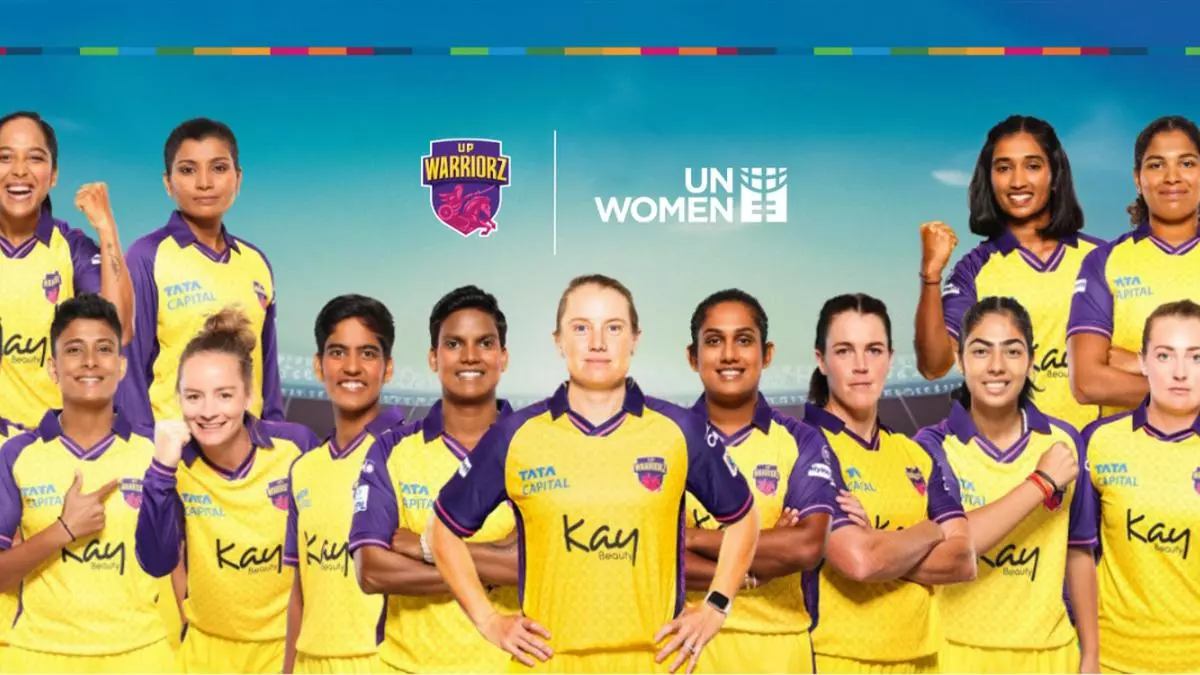
Women’s Premier League (WPL) team UP Warriorz owned by Capri Sports, has been recognised by UN Women as a ‘Generation Equality Ally’. The team will be the sole sporting entity to join other Generation Equality Allies, selected by UN Women to champion a gender-equal world.

UN Women’s partnership with the cricket team will be centred around advocating for equality in sports, including addressing stereotypes women athletes confront.

Leading up to International Women’s Day 2024, even as it battles it out on the cricket pitch in the WPL, off the field, as a Generation Equality Ally, UP Warriorz will advocate for closing the various gender gaps in sports through robust messaging via print, online and audio-visual mediums. The team was also part of UN Women’s 16 Days of Activism against Gender-based Violence campaign, #AbKoiBahanaNahi, which reached millions of social media users.

Life defining moments

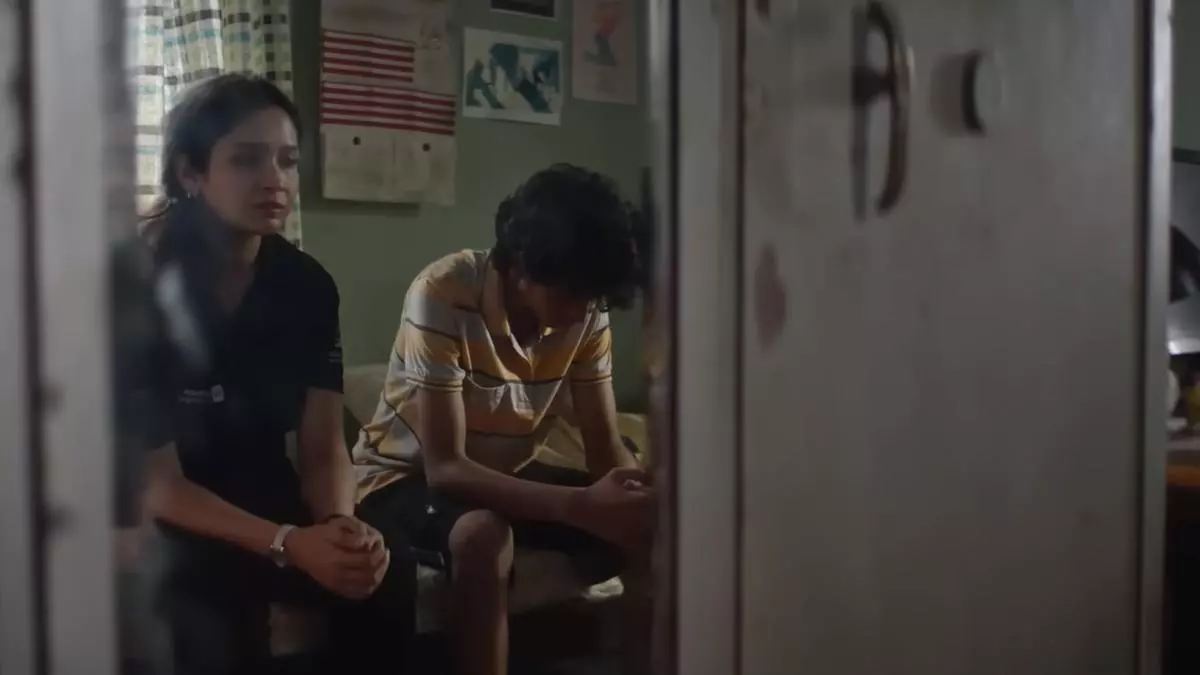
MTV Staying Alive Foundation, Paramount Global and the Bill & Melinda Gates Foundation, have announced the release of IN BLOOM, an anthology of five compelling short films spanning countries and cultures that delves into the complexities of gender issues.

The collection tells unheard stories addressing a range of crucial issues including period poverty, child marriage, gender-based violence, HIV self-stigma, family planning and women’s economic empowerment. Timed around the International Women’s Day, the anthology premiered on Paramount on March 1 across the US, the UK, Canada, Latin America, the Caribbean, Australia, Italy, France, Germany, Switzerland, Austria, Japan and South Korea. It will be available on YouTube in India and Africa.

Categories
Digital Marketing

On the campaign trail – The Hindu BusinessLine

Brands typically march into March with women’s day campaigns and we have already seen a few get off to an early start on the theme of “inspiring inclusion”.

Rising above narrow vision

Urban Company’s nearly four-minute long ad film on the story of a woman masseuse is a poignant depiction of how some jobs are perceived in society. The film shows her being subjected to difficult questions from her young brother on how she managed to buy a car and the perception of neighbours on her profession. But she wins him over with her poignant and powerful answer — “Everybody can see my new car, but nobody acknowledges the hard work that went into it. Every time a woman takes broad strides, society’s vision gets narrower. We can either move ahead with hard work or be pushed behind by the way society perceives us.” If the film is moving, the way successful women have responded to it on social media has amplified it further. Tennis star Sania Mirza praised the ad, describing how it resonated with her and how she had to rise above the unnecessary focus on her personal life.

Confident femininity

Jewellery brand Platinum Evara’s latest #IGotThis campaign featuring Jemimah Rodrigues carries forward the “Becoming Me” theme it had launched earlier with the cricket icon. It’s a beautiful integration with the Women’s Premier League and celebrates the journey of women in sports and their rising confidence. #IGotThis is a series of candid social media content pieces in which Jemimah bats away doubts using a cricketing metaphor.

On the spot

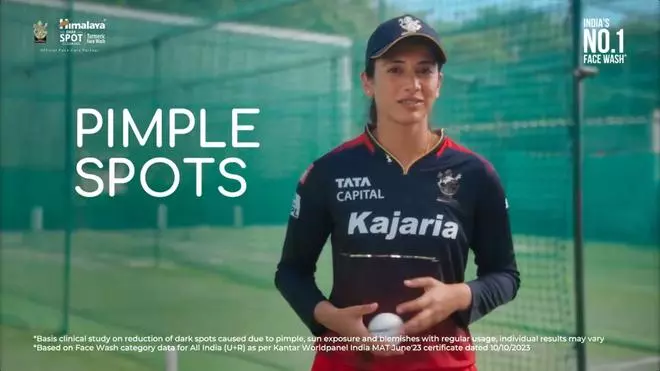
Himalaya Wellness’ new #TakeMySPOT ad campaign is all about clever wordplay to celebrate the success of women cricketers. The brand which was associated with Royal Challengers Bangalore during the inaugural edition of the Women’s T20 League has announced its continued partnership with the team for this season too. With a rather quirky campaign, Himalaya acknowledges that while no one can take the well deserved spots of cricketers Smriti Mandhana, Richa Ghosh, and Shreyanka Patil, for the unwanted spots on face, there’s Himalaya Dark Spot Clearing Turmeric Face Wash and Face Care Range. As an extension of the #TakeMySPOT campaign, Himalaya is also teaming up with the GoEqual Premier League, to celebrate women’s rightful spot in the realm of football.

Brewing empathy

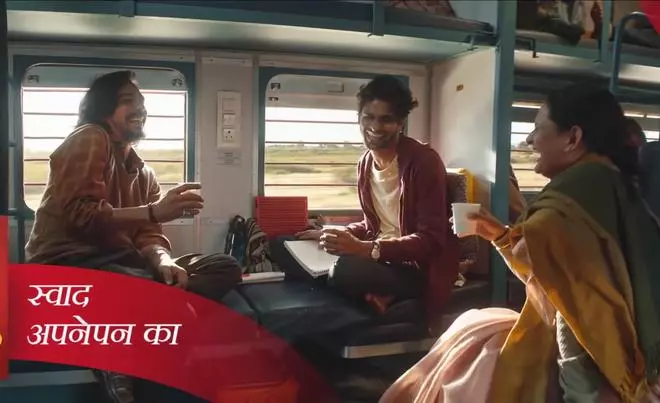
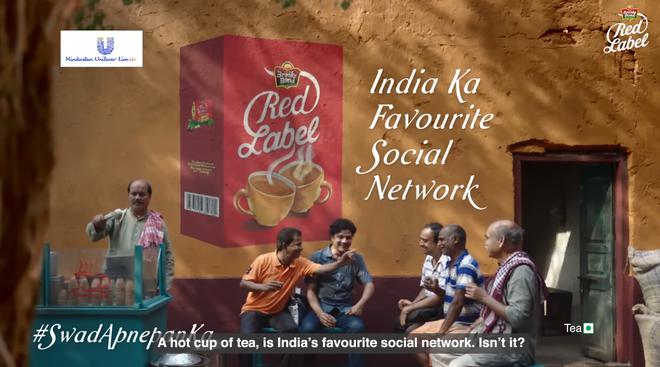
There is nothing like tea to bring unlikely sets of people together. Hindustan Unilever’s latest Brooke Bond Red Label campaign conceptualised by Ogilvy, shows three people in a train compartment — a woman, a blind man and a rather unprepossessing character, who tries to get friendly. He offers tea to the other two, the woman refuses, but the blind man takes a sniff of the aroma wafting across and accepts. The woman whispers to the blind man why he is trustingly accepting the tea from someone he doesn’t know. His answer bowls her over and the ad closes on all three of them drinking tea.

Categories
Digital Marketing

Health influencers: Sift chaff from whole wheat

Who hasn’t come across a chirpy Insta health influencer telling us what to eat, how to sleep, how to rest, how to make love, how to be mentally healthy, spiritually fulfilled, and so on?

Now, wait. Don’t get me wrong.

I think it’s fantastic that there’s far more awareness on health, including mental health, from even five years ago.

The problem is many seem to have little domain knowledge and seem better at talking the walk than walking the talk.

The basic formula is traditional Indian beliefs, packaged well to sound brand new. There’s an overdose of patriotism, of course: the West is bad, the East is good, and so on. Such visionaries, these health influencers show us the true meaning of living our best lives, one #Insta post at a time.

Over the last few years, I have negotiated my way around the Sly Stallones of the health and nutrition influencer world, and have shortlisted a few I have benefited from.

Here they are. Feel free to add yours.

Sandeep Mall: A first-gen entrepreneur running a Delhi-based engineering company, Mall is well known in the health community (especially on X, formerly Twitter) for his email newsletters that cover ‘deep health’ — a holistic approach to well-being that encompasses six broad dimensions: physical, emotional, mental, social, environmental and existential.

It’s one of the most forwarded health newsletters in the country.

Mall also mentors many young people and recently penned Finding the Oasis, a book on deep health based on his personal experience.

Krish Ashok: Is sugar that bad for you? Are plant-based protein supplements better than animal-based supplements? Is MSG bad for you? Why are fish from cold climes richer in Omega 3 compared to those from tropical regions? What does coffee do to your body? Is the Keto diet a fad? Why do health influencers rarely talk about genetics?

Ashok, a senior IT leader, explains the science of food in simple terms, debunks myths, and rubs a lot of people the wrong way. I plan to read his book Masala Lab: The Science of Indian Cooking someday.

Pradip Jamnadas: A Florida-based cardiologist and clinical assistant professor, Dr Jamnadas has more than 30 years’ experience in preventive health. He has performed thousands of interventional procedures and his educational videos on fasting and heart health have been viewed by hundreds of thousands on his YouTube channel.

Jamnadas is a big fan of fasting: “We are genetically designed to fast. People have been fasting since the beginning of time. Socrates, for example, fasted for mental clarity. We are provided with the tools necessary to fast,” he says.

Finally, I encourage all readers to explore health influencers — as you’ve figured out by now, most of them are not worth five seconds of Insta (Reel) time. But keep the radar up for people like Mall, Ashok and Jamnadas; ask questions — or rather, find new questions to ask (‘How can I lose weight?’ is so ’90s) — and start your deep health journey. It’s fun. By the way, the influencers I have mentioned may not work for you — everything isn’t for everyone.

Here’s a quick checklist for zeroing in on the right kind of health influencers.

1. They must have written a book or two at least. This demonstrates slow, critical thinking. It’s easy to copy-paste some Insta nonsense about mental wellness, difficult to write a paragraph about cod liver oil. Get it?

2. Look for influencers who are passionate about helping others live healthier lives, not just promoting products or services. For example, avoid self-styled yoginis who peddle big plastic buckets of protein powder.

3. Check out their creds. Are they registered dieticians or certified personal trainers? Do they have a degree in a related field? Do they have a science background, at least? A high school dropout is unlikely to understand gut health beyond a point.

4. Look for influencers who share their health journeys, not just their successes but also their struggles. Though this is tricky — avoid people who use their journeys like a crutch, to gain attention/pity.

5. Check out their content. Do they offer practical advice and tips, or are they just promoting the latest fad diet or workout trend? Is most of the content gym shots with flat stomachs and rippling muscles? Run away.

6. Look for influencers who are transparent about their partnerships and sponsorships. Watch out for the ones who’ve been paid by the food industry to promote unproven supplements and downplay the risks of highly processed foods.

7. Use influencer marketplaces like Ainfluencer or IZEA to find relevant influencers based on category, number of followers, engagement rate, location, and so on.

That’s it. All the best for your health. And watch out for mental health, the silent killer; more on this someday.

PS: The Department of Consumer Affairs recently said the government is putting out guidelines for influencers promoting health and wellness products and services. Such influencers would be required to display their qualifications to the department and audiences.

(Shubho Sengupta is a digital marketer with an analogue ad agency past. He can be found @shubhos on X)

Categories
Digital Marketing

Luna: Electric from Kinetic – The Hindu BusinessLine

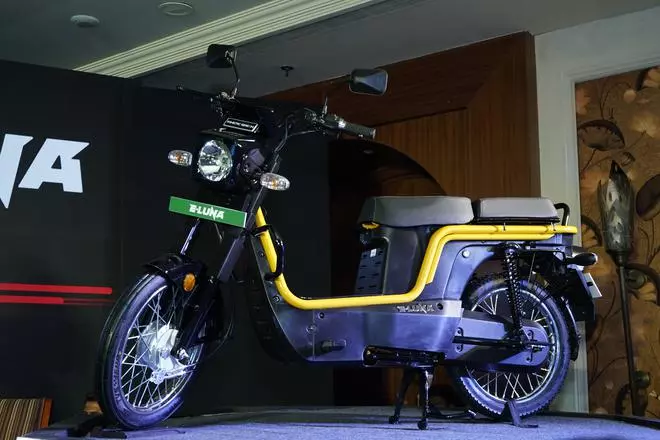
Nearly half a century ago, when the Kinetic Group Chairman Arun Firodia decided to develop and manufacture the Luna — the two-wheeler that became an iconic symbol of its time, complete with the catchy jingle ‘Chal meri Luna’ (let’s go, Luna) — he set down a few parameters: no foreign components; no overseas manufacturing equipment; designed in India for India; must weigh less than 50 kg (two-wheelers back then weighed 100-plus kg); and should reach even backward areas with an affordable pricing of ₹2,000 (when it was first launched).

A tough ask in all, but Kinetic delivered and the dimunitive Luna rode into the homes and hearts of thousands of Indians, serving as personal transport for everyone — from family patriarchs to college-going teenagers. Fast-forward to the present: daughter Sulajja Firodia Motwani has similar plans for the recently launched E-Luna. Motwani wants the indigenously designed and manufactured e-avatar to reach every nook and corner of the country, and find export markets too. Since its launch barely a week ago, the E-Luna has already received more than 40,000 enquiries, while in Maharashtra, where it had a pilot launch much earlier, it has sold more than 3,000 units over the last two months.

“When we told the market that we’re bringing back the Luna in electric format, the response was just phenomenal and I’m having people writing poems on my social media about Luna and all kinds of posts from enthusiasts. I think the love is just phenomenal. So I think the Kinetic brand remains very loved because of life-changing products like the Luna and the Kinetic Honda,” she tells brandline.

Legacy brands

Kinetic Honda, another iconic brand from the company, had been launched 20 years after the Luna and became a rage during the 1990s and early 2000s. “I don’t see anybody who doesn’t smile, you know, when they speak about a Luna or a Kinetic Honda. So I think the brand is very strong. The heritage is very strong and the timing is very good,” Motwani emphasises.

Given the immensely positive response to the electric variant, she’s excited and bullish about the future of the two-wheeler segment and Kinetic Green as a company, intending to forge ahead in this space, especially with the E-Luna platform.

Elaborating, she says, “So, the E-Luna will not be just a product, it will be a complete platform with multiple variants. It’s designed to be a ‘multi-utility electric vehicle’, as we’re calling it; like with cars, it’s pretty stylish now to say, ‘I have an SUV, I have an MUV’.”

Sulajja Firodia Motwani

On the distribution strategy for the Luna brand, she says that the existing network of 350 dealers would be expanded to 1,000 in the next two years, “so that every district/town and the last tehsils” will have a direct dealer.

“Beyond that we are creating a concept of multi-entrepreneurship, where we will be penetrating even the smaller towns or tehsils of the larger villages. We will have an ‘E-Luna Shoppe’ in each of these towns. We will identify entrepreneurs who can have a small showroom for the E-Luna sales and service, and who can promote and support E-Luna in their territory. We have also suggested that this clean/ small store should be run by a local entrepreneur,” she says.

Recall value

Her idea, Motwani stresses, is to build relationships and bonding with customers and society at large, while taking the E-Luna and the message of ‘e-mobility for all’ deeper into the hinterland.

Concurring with Motwani’s assertion about the E-Luna’s potential for mass appeal, Puneet Gupta, Director, S&P Global Mobility, says the product can serve as a perfect mobility option for personal and professional use. “E-Luna is in a sweet-spot segment as it has huge potential to touch masses. Moreover, the brand has an emotional appeal and may establish a strong connect right from the start,” he adds.

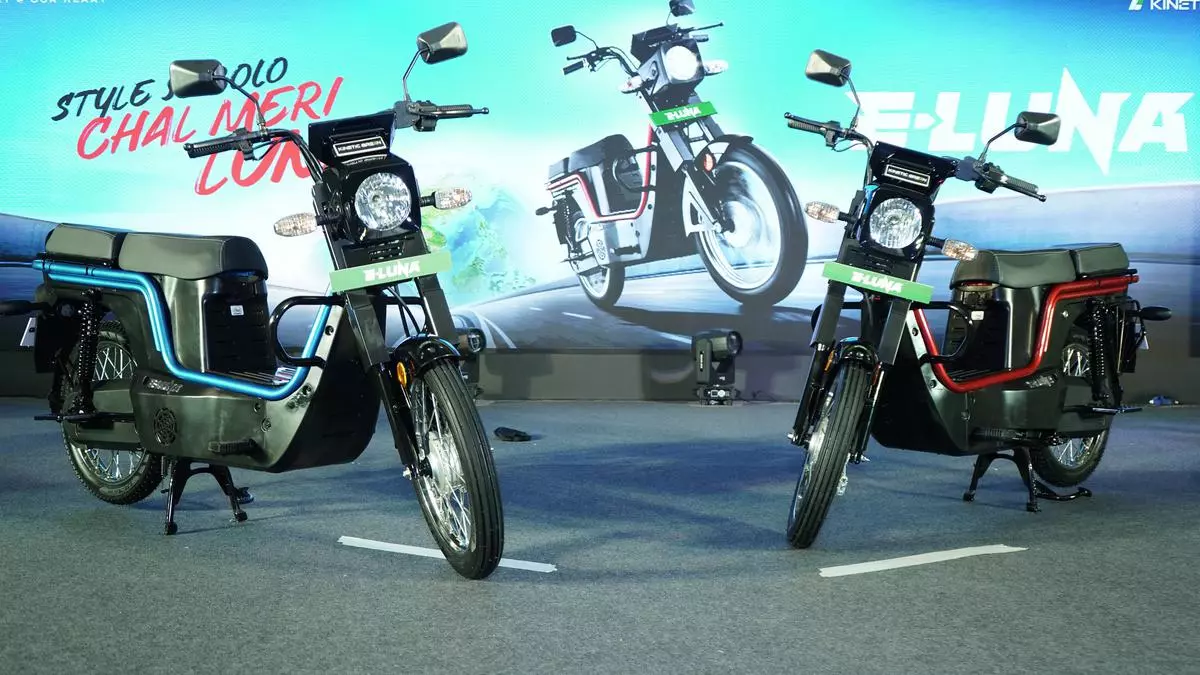
With a 2 kWh lithium-ion battery pack, which includes a swappable option, the E-Luna delivers a range of 110 km on a full charge, with takes three hours. It delivers a top-speed of 50 kmph.

Kinetic Green E-Luna

Kinetic Green E-Luna

“At an introductory ex-showroom price of ₹69,990, E-Luna is not only the most affordable high-speed electric two-wheeler but also the most easy-on-pocket with its 10 paisa per km running cost!” she adds.

Its nearest rivals are Chinese brands largely selling in unorganised markets. High-speed e-scooters such as Ola S1, TVS iQube or Ather cost above ₹1 lakh, while those priced around ₹80,000 have lower range of 70-80 km per charge.

Motwani is raring to showcase her bike to the world. She says a massive multimedia campaign will be launched, designed by Ogilvy’s Piyush Pandey, who had also designed the Luna’s hugely popular original campaign, ‘Chal meri Luna’. The intent, she says, is “to bring back this message of progress, growth, aspiration, inclusivity. So it will be both a pull and push in our marketing and distribution strategy”.

With a new campaign, ‘Phir se chal meri Luna’ (Let’s start over, Luna) and taglines such as ‘Heavy duty hai, Yahi toh beauty hai’ and ‘Style se bolo chal meri, Luna’, Motwani expects to make electric mobility a practical and affordable choice everywhere in India.

The E-Luna has a lot running on its slender frame.

Categories
Digital Marketing

Growing appetite for dining out

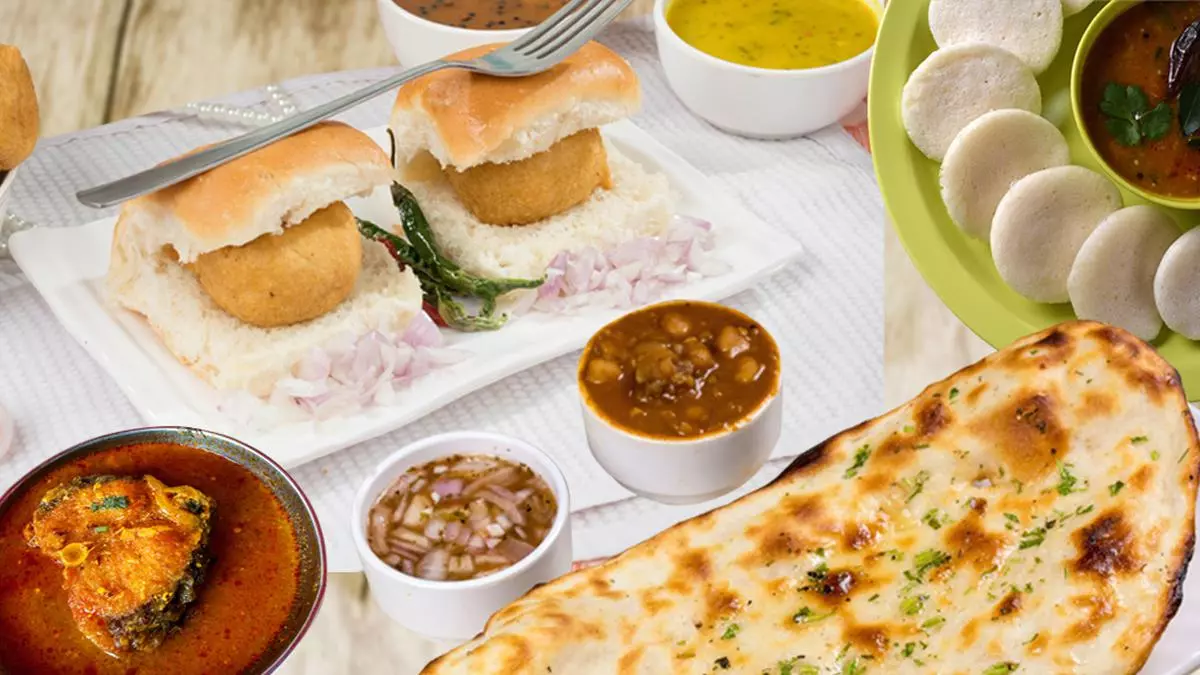
In its latest report titled ‘Winning recipe for food brands in India’, Redseer Strategy Consultants says there is a surge in eating out among diverse age groups in metro and Tier-1 cities. Food service revenue will cross $100-billion mark by 2028, with the organised sector growing thrice as fast as the unorganised segment.

The frequency of eating out has risen by 30 per cent and 20 per cent among students/young adults and mid-lifers, respectively, in metro towns and tier 1 cities compared to 2018. They look for variety and quality, so the organised food services market will surge from $30 billion to $60 billion by 2028, it says.

A single-brand strategy may limit growth for restaurateurs as the Indian palate is heterogeneous. Only a few companies have scaled beyond ₹100 crore. A ‘house of brands’ (HoBs) strategy — owning multiple brands across cuisines — fetches at least five times higher revenue than standalone brands, it says.

Categories
Digital Marketing

On the campaign trail – The Hindu BusinessLine

Superbowl season is when adland shows its creative best — so this fortnight we trained our lens on the commercials that wowed viewers on game nights in the US. Back home, the Valentine mush continued, though this time, smart brands came up with ‘Palentine’ (hanging out with friends) and Galentine (girl gang meetings) pitches. But there were also spots that stayed away from the love frenzy.

Superbowled over by celebs

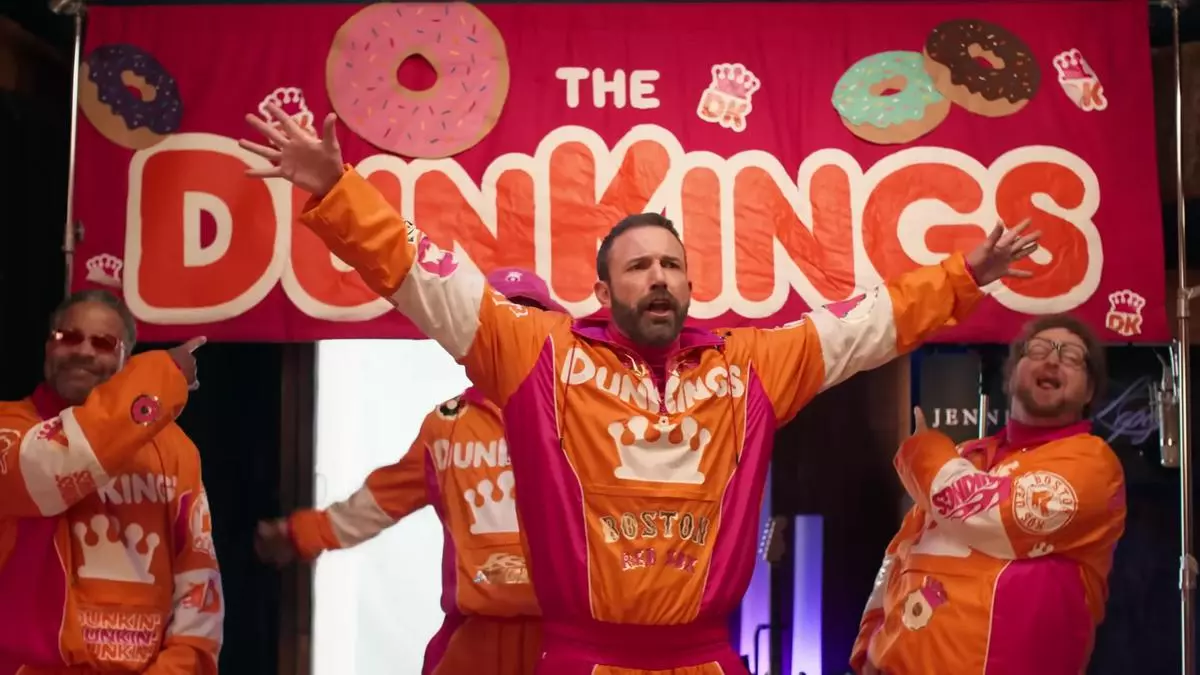
Superbowl ads were celebrity- and comedy-loaded. Great combination if the brand can pull it off. Dunkin’ Donuts managed to do so in a hilarious ad that featured Ben Affleck, Matt Damon, Tom Brady and Jennifer Lopez. In the spot, Affleck, Brady and Damon storm into Lopez’s recording studio, sporting Dunkin’ tracksuits and pitching their band called ‘DunKings’. Don’t know about the donuts but the Dunkin’ tracksuit merchandise did roaring business.

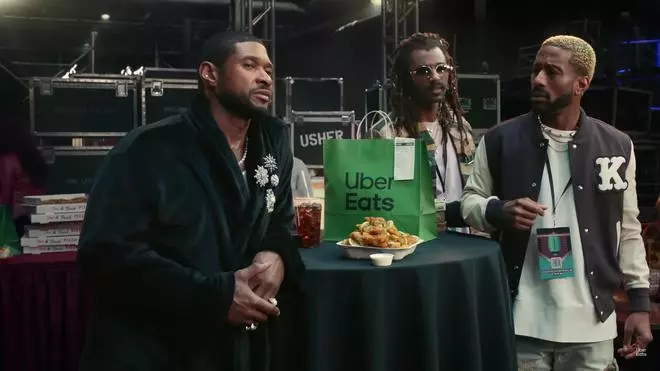
Uber Eats also put out a celebrity-filled ad featuring Jennifer Aniston, David Schwimmer, David and Victoria Beckham, and R&B star Usher. The ad showed instances of the celebs forgetting simple things, with the tag line popping up to say, “Whatever you forget, remember Uber Eats gets groceries”. Although clever, the ad got trolled for showing someone forgetting peanut allergy, and that bit had to be edited out — yet another reminder that brands cannot afford to ignore sensitivities.

Snapchat’s anti social media ad caught the eye. Its ‘Less likes, more love, less social media, more Snapchat’ ad referenced the Taylor Swift craze and unwittingly scored — for though the pop superstar didn’t perform at Superbowl 2024, against much speculation, she made a lot of football-adjacent news during the event. Especially as she was there to watch the Kansas City Chiefs win and cheer boyfriend Travis Kelce. CeraVe, Dove and Budweiser were the other ads that scored masterfully.

Scripting transitions

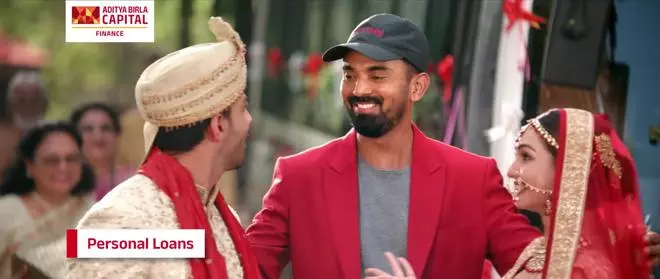
Back home, the new ad from Aditya Birla Finance Ltd (ABFL), featuring cricket star KL Rahul, worked well. Titled ‘Ab Kahani Badlegi’, the campaign, crafted by Dentsu Creative India, shows Rahul’s small-town origins and his evolution at various stages of life. The connect with ABFL is quite seamless as it plays on how everyone can change their life story with a little bit of help.

Polished humour

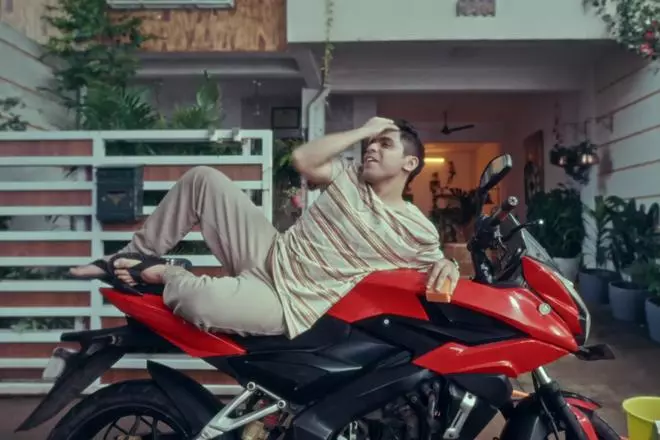
Pidilite Industries’ new digital campaign for Motomax Insta Shine is packed with quirky humour. The film kicks off with a relatable scenario. A boy sees a girl and realises dejectedly that he is unlikely to attract her attention. He decides to polish his bike with Motomax Insta Shine, telling himself, “Smart toh hu main; yeh kya, iska papa bhi aayenge”. Sure enough the girl does ask for a lift on his bike, but her dad wants one too, and asks to tag along.

Categories
Digital Marketing

General elections, IPL to drive Indian ad revenue growth in 2024

Ad revenue forecasts are out with GroupM India, dentsu and Madison World putting out reports. While figures vary, the trends are similar in all three. Digital is driving growth, powered by retail media.

  • Also read:BCCI Invites bids for IPL title sponsor rights

GroupM India’s This Year Next Year (TYNY) report projects overall ad revenue of ₹1,55,386 crore in 2024, up a tad by ₹14,423 crore from 2023. While global adex is projected to grow 5.3 per cent to reach $936 billion, India’s 10.2 per cent growth will be the fastest, says the report, as it retains the eighth spot in terms of ad spends. General elections will spike ad spends. Digital, at 13 per cent growth, will drive overall ad revenue with a 57 per cent share. All other media combined will grow at 6.8 per cent. Nearly 70 per cent of incremental ad revenue growth will go to digital. E-commerce is expected to grow by 5 per cent.

The report underlines trends that may impact the marketing and media landscape, including the growing influence of gen-alpha on marketing strategies with tech-powered engagement, and voice and video-based interactive communication. It says 21 per cent of television homes, namely 45 million viewers, will be addressable in 2024.

Digital dive

The ‘dentsu Digital Report 2024’ forecasts CAGR of 9.86 per cent for Indian ad industry, reaching ₹1,12,453 crore by 2025. “Digital media has emerged as the dominant medium, now constituting 44 per cent of the total advertising expenditure, surpassing television,” it says.

Social media, online video, and paid search are at the forefront of digital media spending, it says. E-retail platform advertising also commands a huge share of the digital media market. According to Harsha Razdan, CEO South Asia, dentsu, “India’s digital revolution is sweeping across our lives, our industries, and our society. Artificial intelligence is the driving force, enabling our e-commerce market to reach $200 billion by 2026.”

Ad consumption 
  • Also read:Cricket World Cup expected to bring ₹3,500 crore in ad revenues to Disney Star

Pitch Madison Advertising report 2024 says there was 10 per cent adex growth in 2023, falling short of the projected 16 per cent. Traditional adex grew by 7 per cent and digital adex by 15 per cent. Increase in raw material prices in the first half of the year, the continuing Russia-Ukraine and Israel-Hamas wars, inflation, and funding winter for start-ups were among the decelerating factors. Brazil and India are now the fastest growing adex markets, it says.

FMCG continued to dominate adex, with 33 per cent share of ad spends in 2023. E-commerce followed with 11 per cent. HUL, Reckitt and RIL were the top spenders.

Categories
Digital Marketing

Adding byte to digital marketing

Publicis Commerce India has launched a digital growth marketing playbook in conjunction with Amazon Ads. It identifies challenges such as rising competition, technological disruptions, uncertain demand, and rising costs, and suggests provides directions for growth marketing. It traces the digital advertising industry’s shift from customer engagement to customer experience, to factoring in both conversion and retention, the need to focus beyond return on advertising spends (ROAS), and the significance of customer lifetime value, share of branded searches and new-to-brand customers.

It pinpoints three levers for business growth: Reaching new audiences by leveraging key events; new launches and value-added customer experiences to improve revenue; building brand loyalty and retaining customers for sustainable growth.

Categories
Digital Marketing

 M is for Mosquito repellent: Bringing families closer  

Every evening, Neil’s mother would send him off to play only after she had applied mosquito repellent on his tiny hands and legs. The hint of neem in it confirmed the efficacy for her, but Neil didn’t like its smell. She knew that superheroes of any kind were his soft spot. “Neil, this lotion gives you superpowers and doesn’t let mosquitoes bite you,” his mother said, trying to persuade him to use it. He wasn’t entirely convinced, but sometimes you must agree with your parents to make them happy.

Recently, Neil had seen other children wear the mosquito patches, so he insisted that his mother buy some for him, too — he could start using them on his own now. They had his favourite superheroes printed on them. In fact, this was more likely to bestow superpowers on him than the neem repellent, he thought. His mother was not too keen on them, though. We may never know whether it was because she believed in the power of neem or that she was afraid of losing their evening ritual together.

Growing armoury

All family members had their preferences. Neil knew that his grandmother didn’t like any of the new mosquito repellents. For her, the repellent coil worked the best. So, every evening, when the adults sat down for tea, the coil sat in one corner, spewing a shield of smoke to keep away anything that might interrupt their precious family time. He would have loved to light the coil, but he was just a child, so he wasn’t allowed to set it up. Sometimes, his baba (grandfather) used the insect repellent incense sticks while they both sat on the balcony to read his favourite storybooks. They loved its citronella smell; it was truly luxurious.

When Neil was younger, he couldn’t understand why many of their daily rituals involved one mosquito repellent or the other. But age makes everyone wise. In time, he understood that if not repelled, the mosquitoes would come in the way of everything he loved — his TV time, his play time and, less importantly for him, his study time. Instead of being able to enjoy himself, he might end up scratching himself rather severely. Besides, he realised that he loved how the repellents brought so many rituals into his family that led them to spend more time together.

At night, getting ready for bed was an enormous affair. Sometimes, they used a vaporiser that created an invisible shield in the room, which he thought was cool. But they mostly used mosquito nets. The adults in the house loved the safety and security it provided in typical middle-class fashion. So, he and his father would set up mosquito nets for everyone’s beds every night. His dad would lift him up while he secured the net’s strings onto the hooks in the wall. This was when he would feel the most like a superhero. Not all superheroes wear capes, he thought. Some simply help protect their families. If the mosquitoes were his enemies, he knew they had all these gadgets to fight them.

(The A-Z Series: This series of short articles explores how familiar objects from everyday life embody concepts and values dear to the urban Indian middle class. It takes a light-hearted and humorous look at how objects shape our wants and desires, lives and lifestyles, ultimately making us who we are as a people.)

(Hamsini Shivakumar is a Semiotician and founder of Leapfrog Strategy. Khushi Rolania is a senior research analyst at Leapfrog Strategy.)

Categories
Digital Marketing

Driving customer loyalty and earning higher brand value

We’re all in awe of how well Netflix knows its end consumers – personalising homepages tailored to every viewer based on their viewing history, “Because you viewed YYYY, you may like XXXX.” Another excellent example of a consumer brand that knows its customers’ pulse is Amazon. The E-commerce giant has an exceptional recommendation engine that knows what a customer needs or will ever need based on past purchases, i.e., sections like “Deals For You” or “Buy Again in Health and Personal Care.”

It all comes down to data-driven algorithms that enable personalised recommendations to deliver contextual customer experiences.

The era of one-size-fits-all marketing strategies and generic customer interactions is undoubtedly over. In today’s fast-changing digital landscape, brands must communicate with their customers one-on-one to be at the top of their minds and acquire the top share of their wallets. To offer contextual and personalised journeys, they must pivot all engagement strategies around customers’ past buying behaviour, current needs, and evolving expectations.

Lack of Contextualisation

Brands cannot land on the loyalty page if they skip the personalisation filter. The path to meaningful customer engagement begins with investing in personalised experiences, which leads to repeat purchases and a surge in brand advocacy, ultimately culminating in customer loyalty.

Take the classic example of Apple’s exclusive selling proposition based on the principle of “Sell an experience, not a product.” The Apple ecosystem, which comes with a plethora of unique features, is so appealing to customers that once you’re an Apple customer, you’re always an Apple customer. The iconic brand sparked a new engagement approach to attain brand loyalty by turning its customers into endorsers. The masses resonated with the innovative marketing campaign that displayed pictures clicked by iPhone users on billboards and hoardings.

The product-market fit, coupled with engagement strategies based on personalised, positive customer experiences (as demonstrated by Apple), can change the game for consumer brands worldwide!

In a recent study conducted by MoEngage on the personalisation pulse of customers in India, respondents listed the top three criteria that brands should consider to enhance contextual experiences as follows:

  • Studying preferences and expectations of modern consumers regarding personalisation
  • Sensing the customers’ current pulse on what they are currently receiving from brands and whether that’s enough
  • Analysing the reasons for their dissatisfaction

The study shows that what frustrates customers the most is the absence of timely updates from a brand on customer service inquiries and purchase details. In addition to that, what irritates them is when a brand does not remember their preferences (based on previous purchases). The periodicity of a brand’s communication, either too frequent or rare, is also a no-no.

To no one’s surprise, the study also showed that customers look the other way when the content is generic, inconsistent, or doesn’t cater to their needs.

Contextualisation is Multi-dimensional

Effortlessly attuning to each customer’s needs in person and in real-time, in-store retailing excels at personalisation. However, extending the same level of contextualisation to the online world can prove to be a task. It involves brands sifting through a deluge of customer data, eliminating data silos, and filling the missing links.

To meet and satisfy current and evolving customer expectations, brands must analyse customer behaviour data, purchase history, wishlist, and preferred time/channel(s) for engagement. They can then use these actionable insights to strategise accordingly. Leveraging actionable insights based on such attributes to create contextual customer journeys can improve customer retention and conversions to enhance loyalty.

In line with the same, the aforementioned personalisation-pulse study notes that most customers want brands to build contextualised journeys based on their interest in the product/service, followed by journeys based on previous viewing or purchase history. Addressing customers by their name or location is at the bottom of their priority order, which barely scratched the surface.

Right Engagement Partner

The need of the hour is to peel back the layers of customer preferences using platforms that know what to do with actionable data. Customer engagement platforms come equipped with the ability to capture and unify customer data from multiple sources and create relevant customer journeys that offer individual context for every single customer at scale.

Such an engagement partner also helps brands identify and remove bottlenecks to optimise those journeys to offer higher customer retention, resulting in long-term relationships. It all boils down to comprehending the reasons behind a fragile customer engagement funnel prone to drop-offs and churn and going from there.

Creating contextual customer journeys communicates to the end consumer that the brand values building a solid relationship with them rather than merely chasing the next transaction. And that is the key to skyrocketing customer loyalty.

(The writer is CEO & Co-Founder, MoEngage, a customer engagement platform)

Categories
Digital Marketing

Heaven in a dumpling: call of the momos

During a recent visit to Kolkata, my wife insisted that I accompany her to a small Tibetan restaurant called ‘The Blue Poppy Thakali’. She said that the place would surprise me. And indeed, it did.

Momos by Doma Wang

The place was full of people eating joyously. I ordered a plate of steamed chicken momos. They were delivered steaming hot, in a bamboo basket. I bit into my first momo and as the juices ran into my mouth, I felt like a wow. The momos were incredibly soft and delicious, and the flavours were so perfectly balanced that my heart burst into song.

I learnt that this restaurant had been founded by Doma Wang, who is also famous as the “Momo Queen of Kolkata”. The momos she serves here are exactly what a Tibetan momo should be like — tender and juicy, with a thin delicate cover and incredibly fresh. In short, heaven in a dumpling.

Such a hot favourite

No wonder momos have become a hot favourite across India today. Zomato reported two years ago that more than one crore Indians had ordered momos on its platform in a single year. I was astonished to read recently that momos have ousted chole bhature to become one of the top three snacking dishes in Delhi. Imagine that!

Momo addiction appears to have spread far and wide across our country. The Indian market for momos is now estimated at around $3 billion per year. More than 90 per cent of the market is unorganised, with street-side momo stalls leading the charge. The organised sector is growing quickly too. The fast food chain ‘Wow! Momo’ now has more than 400 outlets in 30 cities.

A brand called ‘Prasuma’ has pioneered the concept of packaged frozen momos, which are fully cooked and ready to heat and serve. I tried their original chicken momos for breakfast and they were simply delicious. In addition, they were as fresh as freshly prepared momos. Clearly, this is a result of the superior ingredients and modern food technology that Prasuma uses to create its products. This is perhaps why Prasuma is already a big success.

Why are momos so popular?

What has led to this amazing popularity of momos in India? There appear to be many underlying reasons.

First, momos are very tasty, which is an essential factor for the popularity of any food. The combo of soft meat or vegetable filling, light dough covering and spicy chutney delivers a taste-high immediately. Second, momos are also generally viewed as a healthy food, particularly because their basic version is a steamed product. Third, they are viewed as nutritious, because they contain meat or paneer, which is a protein. This blend of being delicious and wholesome at the same time appeals hugely to most consumers.

Momos from Doma Wang’s The Blue Poppy Thakali

Fourth, momos are simple to make and affordably priced, which is the reason so many street stalls thrive. Hence, they are accessible to the large middle-class.

Fifth, momos are relatively small in size and have in-built portion control, because you can decide exactly how many pieces to eat — unlike in the case of biriyani or pasta, where it is difficult to exactly size your portion.

Sixth, and perhaps most importantly, momos are viewed as a soul food. They have come to be associated in our minds with comfort and warmth. This is perhaps because they are steamed, or because they have a soothing umami flavour.

Opportunities and challenges

With so many fundamental choice drivers in their favour, can momos become as ubiquitous as idlis or samosas across India? This will depend on how the category addresses the challenges and opportunities that lie ahead. Here are a few relevant areas for consideration.

While momos are very popular in the North and East of the country, smaller towns in southern states such as Kerala or Tamil Nadu are yet to embrace this food fully. In some of these towns, momos are indeed available, but their quality leaves a lot to be desired.

There may be a perception amongst a segment of vegetarian consumers that momos are primarily a non-vegetarian food, particularly because of their origins as meat dumplings. This is a perception barrier that will need working upon.

There is considerable scope for adapting momos to Indian tastes. For instance, chettinad chicken momos or pindi chole momos can infuse new cultural connect into the category.

Finally, the origin story of momos — their roots in the hills, the beautiful landscapes of Nepal and Tibet — is very romantic in its appeal but needs to be narrated far more powerfully.

So will you consider momos for dinner tonight?

(Harish Bhat is a marketer, author and poet. He has recently retired as Brand Custodian, Tata Sons. These are his personal views.)

Categories
Digital Marketing

Asus has the highest young gen consumers in India

Arnold Su, Vice President, Consumer and Gaming PC, System Business Group, Asus India, is preparing for a Triathlon in March and so these days he’s jogging, cycling and swimming intensely. The marketer who loves marathons says his most memorable run was in Bordeaux where every two kilometres or so there is a chateau. So in the 42 km race he found himself stopping to drink wine and running — of course, he hurriedly stopped drinking when he realised he would not be able to finish the race.

Asus, he says, is jogging along nicely in India and is the number two in consumer notebook segment and numero uno in the gaming PC segment.

CES is top of the mind right now. So, tell us what are the trends from there we are likely to see introduced in India?

The biggest thing for the PC industry this year is the AI-PC concept. India is one of the most important countries for Asus. So, whatever product we announce globally, it will also be available in India. For example, in CES, we launched the new Intel core Ultra processor laptop and simultaneously in India the pre-order has already started. To highlight some key products, the Zenbook 14 OLED is coming to India — and the pre-booking for this device has started. And, one of the key products announced at CES is the dual screen, an enhanced productivity device. We are also very proud of the new gaming laptops announced at CES. Those will also come to India in a short time.

What are the functionalities of an AI PC?

I’ll start with a very simple example, a few years back, Nvidia announced their RTX graphic cards. And from a hardware solution point of view, they brought technologies like Nvidia RTX, which is the ray tracing part of it and DLSS, which is deep learning, super sampling. It’s a core architecture based on AI, and what we have seen is that they’ve enhanced the gaming performance overall. The end customer may not feel that “Oh, I’ve done work on AI, and this is better”, they just get a better experience. And on the software side of things, Adobe is a very good example, they have put features like generative images, where you can add stuff to the images, or you can just remove stuff. That is just an example on the current state of technology. Once we bring AI chips within our ecosystem as a hardware, physically inside the machine, a lot of the workload which we were able to do on the cloud will partially come back to the system and you will be able to share that workload.

But if workload moves back to from the cloud to the system, will the storage be a problem? Won’t it require more memory?

You’re correct, but the thing is, the system is not gathering or storing data. It is just processing the data live. And intelligent systems are built in such a way that they will use a certain set of instructions you gave to the system; they will use, utilise and eat up all that instruction set, give out your solution and then erase that data completely from memory.

Is the refresh cycle of a PC coming down? How often do consumers change?

In every country, there is different pattern. India is more than five years, but depends on person to person, but average is around five years. And some countries such as in the US or in Europe, the PC for them is already kind of a commodity. So, in US the cycle is only around three years.

Has the smartphone cannibalised the PC market?

This is a question that everybody was talking about before Covid. Then the PC market looked stagnant and mobile market was growing. Before 2020, India’s PC market was less than 10 million units a year. And if we look at only the consumer segment till 2019, the market size in a year was around 3.7 million units. Between 2010 to 2019, the market size was 3.5 to 4million and quite stagnant. But in 2020 itself, it went up to 4.6 or about 4.7, and then in 2021 it was more than 5 million, and then 2022 it slightly declined but still was more than 5 million units. Last year it again declined to 4.8 million. But even then it is much higher than pre-Covid.

Simultaneously, the smartphone mobile phone market is declining. Coming to cannibalisation, the fundamental difference is that mobile phones are still used for content consumption. And PC is used for content creation. Content creation on smartphone is still not that easy. For the PC market, the new segment coming up very fast is the creator segment.

So how big would the creator segment be?

At this moment, it is very small occupying around two per cent of the total PC market. But it is very tricky to put a figure because within the 20 per cent gaming device segment — we feel 30-40 per cent of the users are not using the devices for gaming.

What is the gaming population in India?

In 2016, only 40,000 units of gaming PCs were sold, but last year the numbers reached almost one million units. So, from 40k to one million units, there has been 25 times growth.

On the consumer side, which segment is seeing growth in India?

If we look at consumption data of the past few years, 2021 was the peak for India market size. In 2021, India’s market size for consumer notebooks went up to 5.2 million units, and then in 2022, it dropped to 5 million units. In 2023, it dropped further to 4.8 million units. But at Asus, we have continued to grow from 6,70,000 to 8,30,000 and to 8,70,000. Our market share in India has risen from 13 per cent last year to more than 18 per cent this year. So, we are performing quite well, and we are increasing our share, because even when the market is declining, we are still growing.

What are the factors? Is it the price? How are you gaining market share?

There are a few different angles to it. First is the price. Most people, including myself, saw India as a price-sensitive market when I first came here. But, the entry-level segment is very small in India. The sub-₹30,000 laptop is less than 5 per cent in India, whereas if we look at a similar GDP country, say Indonesia, the entry-level market there is around 40 per cent. So, we found that Indian customers are ready to pay more to get a better laptop.

If we look at India’s market now, the mainstream segment is already around ₹50,000. And then if you take the premium segment (₹50k to ₹80k), which is around 30 per cent of the market, that is also quite big. Gaming is around 20 per cent of the Indian market already. In spite of the overall decline in consumer market, gaming segment continues to see an increase.

In terms of product segmentation, at Asus, we try to cover almost every segment. Our strategy is that, from a product point of view we aim to give the latest technology at affordable price points. For example, in the past two years, Asus is the first company to bring the OLED display to the sub-₹40,000 segment. This is why we are growing in this product.

Another reason is our product coverage. Our goal is to make our product easily available. So, initially we worked with online players, because it’s very easy for them to serve to all the pin codes across India. But then as a company our job is not just to sell. We also want to make our products accessible. Online is not going to be able to do that. In the stores, till you pay, you will never physically touch the machine. We feel this is wrong. So, right now we are insisting all our dealers to open that machine for the customer before they buy it. The customer should be able to touch, feel, play on it, and then make a decision to buy the device. This is a big difference.

What percentage of your sales is online now?

Around 30 per cent. The remaining will be offline, which is the key. We have more than 250 stores in India. We are also working with more than 3,500 dealers across India.

Coming to the brand perspective, you know, there’s rising nationalism, how do you see that?

We are manufacturing in India. We are already the No 2 brand in the consumer segment.

Another survey by GFK of the top five PC brands in India has shown Asus to have the highest number of young generation consumers. Fifty per cent of consumers in the age group of 16-24 are our consumers. So, our customers are very young, who are also the future of India.

Published on February 4, 2024

Categories
Digital Marketing

On the campaign trail – The Hindu BusinessLine

The month of love is here, so be prepared for a lot of mush; though chocolate maker Cadbury cleverly balances it by taking a different line with different products.

Zoya plays cupid for Silk

Cadbury Silk from Mondelez India is playing cupid this Valentine Day using customised AI video generation at scale. The brand is helping couples weave their significant moments of love into a heart-warming tale brought to life with cutting-edge generative AI. To add cinematic magic, Cadbury Silk has also joined forces with filmmaker Zoya Akhtar who will contextualise and breathe life into the special moments. Consumers can simply scan the QR code on the Cadbury Silk packs, which leads them to an exclusive website. Here, they will need to answer some questions that will help in curating their unique love stories with personalised avatars. The AI module will then craft a visually stunning and emotionally resonant animated movie. The best stories will feature as an anthology on Disney+Hotstar. 

Nambi Narayan takes the counter route for 5star

If Cadbury Silk is promoting love, then Cadbury 5Star is trying to erase Valentine’s Day. The brand that has consistently supported individuals who want to run away from mush, is introducing the first-ever ‘time travel vessel’ this year that will help delete 14th of February. Three volunteers will embark on a mission to fast forward the day from their timelines, with the entire world invited to witness the spectacle through an event which will be live streamed for all. For this, 5Star is partnering with space scientist Nambi Narayanan to introduce a ship named FNS Cringe Vinash. This ship will be sent to cross the International Date Line between American Samoa and Samoa at exactly 11:59 pm on February 13, 2024 (American Samoa Time), thereby crossing the 24-hour threshold and setting foot into February, 15 12:00am — the local time on the other side of the International Date Line. It sounds a bit extreme, but certainly a riveting clutter breaking proposition.

Motorola flips into the future

Smartphone brand Motorola has launched a surreal digital marketing campaign spotlighting the iconic Motorola razr 40 Ultra in the stylish Pantone’s colour of the year 2024 — Peach Fuzz. It blends hyper-realistic CGI advertising and influencer marketing using Instagram’s sequence feature. Conceptualised and executed by Barcode Entertainment, the ‘Flip into the Future’ campaign introduces three captivating CGI ad reels strategically placed in iconic Indian locations, where the razr40 Ultra elegantly unfolds, providing a glimpse into the possibilities of tomorrow. Certainly the way in which the phone perches itself on the Bandra Worli Sea Link is captivating.

Categories
Digital Marketing

L is for Lunchbox: The Great Uniter

Adil would go to school with his Milton lunchbox hung around the sleeve of his uniform. It was like an identity card for a school-going child. His friends could spot him in a crowd from a mile away just by looking at his orange-coloured lunchbox. For him, the lunchbox signified all things good – it was the embodiment of an idyllic childhood and personal fashion statement. His box not only contained delicious food cooked with his mother’s love but also showcased depictions of his favourite cartoon characters that made him stand out from the crowd.

Opening the box and unwrapping the foil gave him a sense of joy that was not found in other things, not even the games period that he would frantically look forward to. The lunchbox also had an immense power – once opened, its aroma drew all his classmates like ants to sugar.

All religious prejudices that might have been fostered in children by their friends or families were vanquished with the smell of the paranthas. The lunchbox united kids of all different castes and ethnicities, and food became their religion. It was funny how Adil got to know that a lunchbox can serve not just as a unifying but also as a divisive force when used with physical force.

One time, when Adil was sitting in his school bus, a bully sitting next to him grabbed his lunchbox and flung it across the street to hit their lanky classmate Jacob, whose only crime was that he happened to like the same girl as him. ‘Who knew containers of food could be weaponized as artillery?’ thought Adil. He was so shocked to see how wounded Jacob was from his lunchbox that he began to wonder if lunchboxes could actually serve as ammo in times of war. ‘What if the US dropped McDonald’s ‘Happy Meals’ instead of bombs on North Korea? Would that be considered as war or seen as a rescue mission?’ Much like the bully, his imagination had run amok.

While Adil was still recovering from the shock, the door of his school bus closed, and it started to move. His lunchbox was left lying on the other side of the road, like a wounded soldier covered in mud.

What ensued after he reached home was no less than war itself. His mother got furious as he’d come back without his Milton lunchbox. In a middle-class home, losing your lunchbox got you the same reprimand (perhaps even more) as failing a test did.

“Where’s your dabba?” Asked Adil’s mother.

“Well, you know, he was a gallant soldier.” Said Adil.

“Gallant soldier? What’s going on in your head? Are you light-headed?” Asked the mother.

“I don’t know, I guess I haven’t had food” replied Adil.

The angry look on his mother’s face suddenly changed to a look of concern.

“Come to the kitchen. I have your food ready. Dad will get you a new dabba, and this soldier better not be martyred anytime soon. Okay?”

Adil smiled as he knew he’d get his hands on a lunchbox with new cartoons to show off to his friends, and he’d be the coolest boy in his class.

When Adil went to school the next day, everyone was in awe of his lunchbox while Jacob stood in a corner holding his plain steel dabba, still recovering from yesterday’s fight. Adil called him in to share food, and once again, the lunchbox made everyone feel included.

(A-Z: This series of light hearted explorations on familiar objects from everyday life dear to the urban Indian middle class looks at how they shape our wants & desires and ultimately make us who we are as a people.)

(Hamsini Shivakumar is a Semiotician and founder of Leapfrog Strategy. Prabhjot Singh Gambhir is a senior research analyst at Leapfrog Strategy.)

Categories
Digital Marketing

New agency launch: Why not now?

Sharad Gupta, former Vice President and Lead-Corporate Communications at Escorts Kubota Ltd, has unveiled his new venture, WNN – WHY NOT NOW, a brand advisory firm dedicated to transforming the landscape of marketing and strategic brand development.

Gupta who has had a long corporate career spanning Escorts Kubota, Tata Infomedia, Xerox India, Wunderman, Solutions and 141 Worldwide as well as serving as the Ex Co-Chair of CII Regional Start-up Council has positioned the Gurgaon-based WNN to address the needs of start-ups, SMEs and Unicorns. Gupta says that strategic, cost-effective branding can empower these businesses.

On the health plank

Life insurance firm Bajaj Allianz Life is organising the fourth edition of its fitness initiative Plankathon 2024. The edition, themed as #PlankForAces seeks to express gratitude towards the Indian Space Research Organisation (ISRO) which propelled India to the moon and achieved success with the Solar Mission, Aditya L1. The initiative will culminate in an on-ground event in Bengaluru’s Sri Kanteerava Outdoor Stadium on February 11. As a countdown to the event, it encourages individuals to share their planking videos with the #PlankForAces, creating a collective gesture of gratitude for ISRO’s stellar contributions to space exploration.

Categories
Digital Marketing

How DNFT can create more buzz and revenues for the film industry

For the film industry, which witnessed a decline in the number of movie-goers post-Covid, decentralised non-fungible token (DNFT) has opened a new avenue for revenue. Introduced by UK-based Techbank Movies London the innovative technology offers production houses an opportunity to monetise their content. Big budget Malayalam movie Malaikotai Vaaliban, starring renowned actor Mohanlal and directed by Lijo Jose Pellissery, is the first film to tap this revenue source.

Owned by GPL Movies, Techbank Movies London has acquired DNFT rights of the promotional videos and stills of the movie for an undisclosed amount.

Malaikottai Vaaliban is an epic action drama directed by maverick filmmaker Lijo Jose Pellissery. The film, released on January 25 with mixed responses has been dubbed in Hindi, Kannada, Tamil and Telugu.

DNFT, a decentralised version of the traditional NFT, has been positioned as a viable alternative to NFT. According to the company, the proportion of revenue DNFT can generate depends on the digital rights that production houses want to wrap into it.

Currently, stills as well as exclusive videos, including behind the scenes videos of movies are distributed freely to everyone as part of the promotional activities of the film. “Even though OTT platforms like Netflix, Hotstar and Amazon purchase NFT rights of the movie along with it, NFT rights of the promotional videos and stills are not included in it. DNFT offers production houses an opportunity to sell the NFT rights of the same to generate additional revenue. There is a huge demand for copyrighted protected materials at the international level and DNFTs of such materials would definitely find buyers,” said Subhash Manuel, founder of Techbank Movies London.

He is confident that demand for DNFT will increase with the growth of web3 technology. In India, currently, there are around 120 million web3 wallet users which stores digital assets such as cryptocurrencies and NFTs.

“As a producer I am delighted that Malaikotai Vaaliban is the first film to explore the possibility of selling DNFT rights. I hope that more films will embrace the technology in future as it would help the producers generate some additional revenue,” said Shibu Baby John, producer of the movie.

Techbank Movies London, which has also acquired DNFT rights of 2018 — India’s official entry for this year’s Oscar Awards — has already subleased the same to several companies across the globe. The company is now in discussion with production houses in Tamil, Telugu, Bollywood and Hollywood to purchase DNFT rights of their movies.

“The film industry has been going through one of its difficult stages as very few films are commercially successful. In such a scenario, DNFT provides producers an opportunity to monetise promotional videos and stills by selling NFT rights,” said Venu Kunnappilly, producer of 2018.

Creating publicity

In addition to the revenue, the company said that DNFT could help create more publicity for the movies and enhance the international reach by reaching out to crypto currency users worldwide. “Through this initiative, we are aiming to build a community of international audiences beneficial to the whole movie industry. Though Indian language movies are at an international level, they are not marketed to an international audience. DNFT would help Indian language movies reach them and create excitement through the community,” adds Subhash Manuel.

For the owners, DNFT will give access to events and special shows hosted by the production houses. Each user would deduct a fixed amount from the DNFT’s current value and the deducted sum will be shared among other DNFT owners. If it works well, makers of the make-believe saga can earn some real revenues.

Analyst Kashyap Kompella, CEO RPA2AI, who has been tracking the NFT space says, “Fans should think of NFTs and DNFTs as digital merchandise. Of course, for marketers and artists, it’s another marketing channel to create buzz around their brands and creations. But don’t think of them as investments or collectibles that’ll increase in value just because they are attached to a blockchain.”

Categories
Digital Marketing

Brand Bopanna: Oldest Grand Slam winner is also an entrepreneur, has own coffee line

Rohan Bopanna’s Grand Slam win at the Australian Open soon after becoming the World No 1 in the ATP World Doubles Rankings, has triggered a buzz about age being no bar to realise dreams. From PM Modi to corporate honcho Anand Mahindra, citizens across the country took to social media to laud him for becoming the oldest Grand Slam Champion at 43.

Just this month, the tennis star has been named for the Padma Shri. His first Grand Slam win was the Mixed Doubles title at the French Open in 2017 and he was a Gold Medalist at the Asian Games held in 2023.

With an entrepreneurial spirit, Bopanna runs a tennis academy, is a certified Barista and has his coffee line (Rohan Bopanna Master Blend) with Maverick & Farmer, sourced from his estate in Coorg. He is also an investor in ventures such as sports tech platform Game Theory and Good Flippin’ Burgers.

Experts believe the recent accolades will boost Brand Bopanna and are expected to bring heightened interest from advertisers.

He is associated with brands such as ASICS and Aryan Pumps. The tennis star has been featured in campaigns for various other brands including Airbnb, Renault India, Enerzal, Lodha Group, Indian Oil and DreamSetGo among others.

  • Also read: Bopanna and Ebden overcome Italians to win Australian Open doubles title
Global impact

Angel Investor and Business Strategist Lloyd Mathias said, “It’s remarkable what he has achieved on the global stage at 43. It will boost his image and strengthen the brand Bopanna. Thankfully today in India there is space for other sports players besides cricket and will open up new opportunities, especially from the perspective of some of the mature brands.”

“Rohan’s achievement cannot be understated. He has not only reignited a renewed interest in a premium and seemingly inaccessible sport in the country but also built an aspiration for young players while epitomising the spirit of young India- to succeed against all odds. It’s his time now and we are positive that brands will see the value in associating with him,” said Namrata Parekh, Co-founder and Director, Meraki Sport and Entertainment, the sports marketing firm that represents Bopanna.

Another branding expert noted that the recent achievements will provide an immediate boost to the tennis star’s personal brand and are likely to open up opportunities, especially in nutrition, fitness and wellness space.

Brands have been increasingly warming up to veteran stars in recent times. “They bring a lot of iconic brand value and help brands in breaking the clutter. Also they have a lot of sway on the older and more affluent target audience that have a sizable economic clout. In this social media era, younger consumers are also well versed with the achievements of these veteran stars,” Mathias explained.

Categories
Digital Marketing

Destination Ayodhya: The city of the moment

India’s crowded pantheon of temple towns has got one more shrine city added to the mix. With the consecration of the Ram Mandir, being built at a cost of over ₹1,800 crore in the Nagara style, on the banks of the Sarayu river, all roads will lead to Ayodhya. There has been so much build up about the temple, infrastructural upgrades and the new attractions in the area that pilgrims, curious tourists, brands, retailers, small businesses all want to head to the city of Lord Rama. Architectural firm CP Kukreja Architects that was involved in the vision document and the redevelopment of the town — touted to cost ₹85,323 crore — has put the expected footfalls at 3 lakh visitors a day.

Spiritually speaking, the pull of Ayodhya is that it is the legendary birthplace of Lord Rama. But given the massive planned development taking place, what will the modern positioning and brand values of the holy town be?

The positioning

“The vision of the stakeholders including the chief minister of UP, the central powers and the commissioner during the planning stage,” says Dikshu C Kukreja, Managing Principal of CP Kukreja Architects, “was to create a global spiritual destination, an international tourism destination and a sustainable city. “

Dikshu C Kukreja

Above all, says Kukreja, whose firm worked with a consortium that included Lea Associates and L&T infrastructure, the attempt has also been to make a liveable city that will serve as a model to other cities. “How much does the city belong to the common man? Ram Rajya or Ram Nagari has to connect with the common man,” he stresses.

So the right of way on the roads is for pedestrians with much wider footpaths and lots of public spaces. Kukreja says to avoid overcrowding, they have developed plenty of attractions all over the city so that visitors spread out. He makes special mention of the water bodies, which will be the anchor of the city. Even as the Sarayu waterfront has been beautified, 108 kunds have been revived. There will be plenty of green spaces, gardens and spiritual forests but everything, he says, is rooted in the thought that it will be a city for the common folk. The Ramayana forest will showcase the life of Lord Rama during his period of exile. Several of the legends associated with the period of the Raghukul come alive in spots like Sugriv kila and Dashrath Mahal. Plenty of street furniture using vernacular architectural traditions — stone seats, chaupals et al — will allow weary travellers to rest.

The brand values

To create the modern day Ayodhya, Kukreja says that they did massive research on holy cities of the world ranging from The Vatican, Angkor Wat, Kathmandu (Pashupati Nath), Varanasi (Kashi Vishwanath). We studied the good and bad, all points, he says. From a colour lens too Kukreja says they looked at various cities be it the Pink city of Jaipur, Indigo city of Jodhpur, et-al. Finally, the city is wearing the colours of the Bansi Paharpur stone — a sort of dusky pink — used in the construction of the Mandir.

While Kukreja talks about Ayodhya being the city of celebrations, or a knowledge city, for brand strategist Ambi Parameswaran, if Agra is the city of love, Varanasi is the city of penance and Mukti, then Ayodhya can be the city of virtues. Though he hurriedly clarifies that from a branding perspective it is too early.

Dabur’s hoarding in the temple city

Dabur’s hoarding in the temple city

Indeed, a lot of the synonyms and sobriquets and colour and character of a city come up organically . For instance, Madurai has earned the name of the city that never sleeps or jasmine city, and Varanasi is the city of salvation.

On the brandwagon

Meanwhile, brands are making a temple run to Ayodhya. And contributing to the narratives building up around the town. From Dabur to ITC to Coca Cola to Parle and Adani Wilmar, companies are doing a lot of activations in the town. A lot of it is centred around food. Take Adani Wilmar’s Fortune cooking oil brand. Over seven days Fortune plans to distribute over 25,000 jalebis shaped in the form of its logo ‘Bloom, building on the myth that Lord Rama’s favourite sweet was the jalebi. In addition it is making a pakoda platter and also serving up a mega bhog for over 5,000 people on a chosen day.

Illuminating the Ram Mandir

Illuminating the Ram Mandir

Dabur, whose hoardings are prominent in the city, is setting up special stalls in an activity zone being created for pilgrims and visitors at the Tulsi Udyan. Here visitors can touch, feel and experience products like Dabur Amla hair oil and Dabur Vedic tea.

Lighting firms — Signify and Havells — have a hand in the illuminations of the Ram Mandir. Signify has illuminated the Ram Path – the main arterial path leading to the Ram mandir. It features a lighting fixture and a top bracket crafted to replicate Lord Ram’s iconic bow and arrow.

Given the sense of all round jubilation, perhaps the city of celebrations is an apt name for Ayodhya currently.

Categories
Digital Marketing

Hey, stupid! Get off WhatsApp!

Is WhatsApp damaging young people’s careers by stunting their intellectual growth?

Categories
Digital Marketing

Trends from CES 2024 – The Hindu BusinessLine
This year’s Consumer Electronics Show (CES) — the year beginning event in Las Vegas that showcases not only transformative technology, but also gives pointers on the future of marketing — predictably saw a lot of buzz around AI. The use of AI in cutting edge gadgets and gizmos was expected. But what was interesting was the applications in femtech (L’Oreal’s machine that can analyse people’s skins and IdentifyHer’s wearable sensor that tracks menopause symptoms and delivers a cooling effect during hot flashes, among other things). There was also a lot more focus on inclusive tech. Among the gadgets that caught the eye was a TV that disappears and becomes a living sculpture. This was the LG Signature OLED T with a transparent display panel and a contrast filter behind it that can be lowered or raised to turn it into a TV. CES 2024 was also more about mobility — technology transforming transportation.
Categories
Digital Marketing

McCann is ‘agency of the year’

McCann Worldgroup India was named Agency of the Year at the Advertising Club’s ‘EFFIE India Awards 2023’. Mondelez India was judged the EFFIE India Client of the Year, while the coveted Grand EFFIE was won by Enormous for Jaquar’s campaign ‘Unimaginable Brand Extensions.’

Announced at an event at Taj Lands’ End, Mumbai, the awards acknowledged the impactful work done by agencies and clients that set new benchmarks in effectiveness in marketing and advertising communication. EFFIE India garnered a record-breaking 1,276 entries this year, the highest in its 23-year history, with participation from 79 agencies.

Categories
Digital Marketing

K for Kapda: The art of holding on

The A-Z Series: This series of short articles explores how familiar objects from everyday life embody concepts and values dear to the urban Indian middle class. It takes a light-hearted and humorous look at how objects shape our wants & desires, lives, and lifestyles, ultimately making us who we are as a people.

I have been a part of this family for a long time. I had come here when Yamini’s parents got married 20 years ago. In my time here, I have seen clothes come and leave. I now rightly see myself as a keeper of memories.

Yamini often organises her clothes/kapde into four piles. No piece of clothing stays in the same pile forever. Sometimes, a thread or a button comes loose. Sometimes, a small tear becomes too noticeable over time. Clothes thus shift from one pile to the next rather than being thrown away.

The first group of clothes for Yamini is that of occasion wear. There are store-bought brand new clothes in this pile, but those do not feel too special to me. For a connoisseur of memories like me, one piece stands out: a beautiful purple lehenga that Yamini’s mother fashioned out of her old Banarasi wedding saree. It had a big stain from being kept inside boxes for too long. It did not feel right to throw it away, so her mother repurposed it.

The other pile is that of everyday college wear. A few pairs of jeans here originally belonged to Yamini’s cousin sisters, although she does not admit that to anyone for fear of being seen as uncool. Some of her own clothes are now in her younger sister’s almaari. Yamini often complains that the paisa vasool mentality is embarrassing. But it’s these layered memories that excite me, as clothes change hands.

There are home-wear clothes or ghar ke kapde, of course. These old clothes are no longer fit to wear outside. They are still lovingly kept to make the most of their value. Maybe their colours do not shine brightly anymore, maybe they have a slight tear that Yamini’s mother has mended. Sometimes, so many personal memories spill on a piece of clothing that it becomes impossible to wear it publicly. Like when Yamini’s father taught her to change car tires and her t-shirt carried the memory. She happily wears it at home now.

There is the last category, one which I have mixed feelings about. It comprises clothes that will be repurposed into pocchhe ka kapda or a dusting cloth. This is their final stage of life. They will still be used at home, but ultimately they will be thrown away forever. Yamini happily metes this treatment out to clothes gifted by men who broke her heart. Don’t get me wrong, I feel happy that she is happy. But when clothes become pocche ka kapda, they no longer have memories attached to them. They become this fabric of nothingness, with no personality in them. I often advise old kapde/clothes to hide under piles of new ones. It is difficult for me to let them go when they’ve been under my roof for so long. Perhaps the family could find a way to reuse them again?

I have heard that in Yamini’s village in Rajasthan, old clothes and scraps are often used to make a thin bedding mattress called gudra. In other small towns, there is a group of hawkers that collect old cotton clothes and give steel utensils in exchange for them. Don’t they call this sustainability and recycling these days? I think these are wonderful ways of keeping clothes and memories alive.

I’ve been worried for myself, too. My shelves seem small, my Godrej steel doors have been creaking more, and I have more scratches than I would like to admit. But I often tell myself that the Indian middle-class is good at postponing goodbyes. Almaaris like me can be refurbished too, I think to myself. Then, all feels well again.

(Hamsini Shivakumar is a Semiotician and founder of Leapfrog Strategy. Khushi Rolania is a senior research analyst at Leapfrog Strategy.)

Categories
Digital Marketing

On the Campaign trail – The Hindu BusinessLine

In the IPL season, brands and cricket are a great partnership. Sachin Tendulkar’s 50th birthday was another opportunity for brands to bat on the cricket pitch.

Apollo’s ode to 10dulkar

Apollo Tyres paid a memorable ode to Sachin Tendulkar on his 50th birthday through a multimedia campaign. Playing cleverly with the word ‘ten’ — since the cricketer wore the iconic No.10 jersey — the brand celebrated the “Perfect 10” moments of his career. The #Apol10 campaign, conceptualised by Wunderman Thompson India, is a simple brand name connect . The idea being that No.10 jerseys are worn by legends whose performance pushes you to dream big. By writing Apollo in such a manner that the last two letters resemble 10, it also is glorifying the performance of its tyres.

Uber’s auto connect

Uber’s new integrated brand campaign for its three wheeler mobility product — Uber Auto — attempts to drive awareness and recall for the category. The campaign scores as it uses the stories of some of India’s ‘resilient aspirers’ — rising cricket sensation Yashaswi Jaiswal, Indian international cricketer T Natarajan and the country’s first female bouncer Mehrunissa Shaukat Ali — to draw parallels with the users of its product category. The campaign connects the three stars, each of whom had a humble beginning in life, to Uber Auto, spotlighting how the challenges of everyday commute should not keep one away from chasing one’s dreams.

Gift of the Ganga

These days brand campaigns are not necessarily advertising films, but go larger and deeper. Lifebuoy’s ambitious virtual hygiene drive in the metaverse — Gift of the Ganga — is just that. It invites gamers to fish out plastic pollution from the mighty river recreated in the metaverse. In exchange, Lifebuoy will clear an equivalent and more amount from the actual river. In partnership with Swayambhu, a social enterprise and Centre’s Namami Gange Programme, Lifebuoy will roll out plastic waste collection and upcycling efforts in the Haridwar bend of the river. The plastic collected will be upcycled into a soap dispensing machine.

Sweet and tender

Parle’s new television commercial campaign for its premium sweet cookie brand, Hide & Seek, features two young protagonists who meet on a tennis court. Full of tender moments, the ad showcases how Hide & Seek cookies can be a catalyst for connecting with a special someone. Conceptualised by DDB Mudra, it is a direct and sweet film.

Categories
Digital Marketing

Celebrating young talent – The Hindu BusinessLine

With less than a month to go for Goa fest 2023, the Advertising Club which hosts the ABBY Awards during the event, has announced a new award category — ‘Young Maverick ABBY Award.’ Open to advertising professionals — individuals or teams, under the age of 30, entries for the new category will be judged on creativity, originality and impact for work created between March 1, 2022 and March 31, 2023 under the verticals of art, design, digital, film and craft. As Rana Barua, Group CEO, Havas Group India and Chairman, The ABBYs Award Governing Council said, “It is important that we turn the spotlight on emerging creative talent.” The winner will be announced during The ABBY Awards 2023, scheduled to be held at Goa fest 2023 between May 24-26 .

Social currency

It’s time to cash in on your social media following. Social currency payment card, WYLD has just been launched in Mumbai. Powered by Visa, the platform will allow social media users (with as little as 1K followers) to leverage their Instagram following to earn cash-backs on everyday spends. The platform is currently invite-only and open to the first 5,000 users on their wait list of 10,000 potential customers. Conceived in 2021, WYLD is a Fintech and Martech mobile app and payment card, riding on the idea that nano and micro social media users are the true disruptors of this market. The app lets anyone with over 1,000 followers on Instagram and a ‘WYLD score’ of over 100, to apply for the WYLD payment card. The WYLD Score is determined through an algorithm which analyses a user’s social media usage – their followers, reach, frequency of posts and stories, and the engagement on these posts by their followers.

Users have to make purchases using the WYLD card, post about their purchase on Instagram and can earn cash-backs, ranging from 30 -100 per cent of their transaction value, back into their card wallet.

Categories
Digital Marketing

Ladyfinger will find the gender balance in advertising: Tista Sen

Rediffusion Brand Solutions recently launched Ladyfinger, an agency for women by women, which aims to elevate women’s perspectives. It wants to break through the casual gender stereotyping that characterises so much of advertising. Tista Sen, former regional creative director of Wunderman Thompson, South Asia, is leading Ladyfinger as its CEO and CCO. Excerpts:

Ladyfinger is an unusual name. How did you come up with it?

I wanted the name to have attitude without it being an attitude word. I had come up with five names, but unanimously everyone chose Ladyfinger. Different people saw different things in the name — attitude, fun, a vibe. I am a very quick decision maker and closed on it.

What is the structure of Ladyfinger going to be like? You have put together a diverse panel of advisors like a Bollywood movie writer Juhi Chaturvedi, a journalist and so on.

Today advertising is not just ads. It could be entertainment, music fests, comedy. When I am thinking of a brand solve, it could be a music piece; not a jingle, but a proper music album. The idea behind the panel is that if tomorrow I want to do something on Bollywood, I have Juhi Chaturvedi to draw on. I also have a lawyer Sheetal Kumar, with whom I want to work on educating urban women about their legal rights. What we want to do is really listen to women, do things with them, and not talk down to them.

It’s true that the female perspective is often missing in advertising. But do you really need an agency exclusively staffed by women to solve that problem? Couldn’t it have been done within the existing agency structure?

The answer is a resounding no. You have to do it in depth with a clear focus. The idea we have is to deep dive and build a new paradigm for women — it could be policy, it could be part of getting women back to work. It is also about giving women within the industry a tone of voice. It is a far more holistic idea than just creating an advertising campaign. An all women team can lead to more breakthrough thinking and more nuances.

Can you share any agency work that captures today’s feminine perspective well. Also a campaign that you personally have done that you are proud of.

Well, I really liked the Swiggy ad which shows a mother busy pursuing her own interest, and her kid comes and interrupts asking what’s for lunch. She just thrusts her phone and says to order whatever you want. That’s what I meant by nuanced real work. The mother is shown as an individual.

As to my work, I liked the work I did for ITC on Engage. It was the first deo created for men and women. Him and Her. We decided to do equal communication about couples at a time when the whole category was talking about attraction. We shifted the narrative and talked about couples coming together.

Last year I did something for Lux for breast cancer awareness. The insight was that women do not do check-ups regularly.

We created a soap with a lump to remind women that when they are bathing they could check for lumps. That was a different kind of work.

Categories
Digital Marketing

Countdown to 2024 general elections, digitally speaking

By the time you read this the results of the Karnataka elections will be declared, and the celebrations will have begun. (The allegations and counter allegations too, we are sure.)

What role did digital technology — often mislabelled as social media — play in helping the winning party?

Since the 2009 General Elections when digital was first used by political parties at a national level, everyone’s been at it. The internet in 2009 was highly urban, by the way — and as we know, urban voters aren’t fond of voting.

2014 was a watershed, everyone came out blasting all the armoury they could muster and we saw a smart mix of content, platforms and distribution strategies. The role — and importance of — digital was established.

Digital tech and election campaigns
 
Digital tech and election campaigns
 

The Viral Polls

2019 was the content election. It was the ‘Viral Election’ and everyone and his aunt created short, frequently animated videos which also used WhatsApp as a distribution medium. My guess is the top five national parties created 1-3 lakh videos in the months before the election.

Closer to our times, readers in Bengaluru may have noticed the massive amount of short-form vertical videos in the recent campaign, especially those using humour. Incidentally, I read somewhere that at least four crore of the close to 5.2 crore voters in Karnataka have access to internet and use various social media platforms.

The 2024 elections are around the corner. In fact the countdown has started, from today. Compared to the last couple of elections, there’s better planning and an organised communications strategy by political parties. Technology is delivering a smoother, more seamless experience.
Here’s what I think will be hottest trends in General Elections 2024 — many are already in execution mode.
Influencers Deliver

Influencer marketing in India has been gaining popularity over the years with much criticism from traditional digital marketers who feel they are short-circuiting traditional marketing funnels (Awareness-Consideration-Purchase-Advocacy).

The writing on the wall is very clear though, as far as political marketing is concerned. Which political party wouldn’t want a Bhuvan Bam or Prajakta Koli with millions of followers who hang on to their every byte?

Of course, no national-level creator-influencer worth his salt will associate with a political party directly — they will cleverly amplify the latter’s values. Remember the Bollywood stars of yore who would go on road shows with politicians, claiming they were ‘good friends’? This will be similar.

AI is here to stay

Artificial Intelligence is being used to analyse vast amounts of data to identify trends and patterns in public opinion, sentiment and behaviour.

This data — gathered in the blink of an eye — will be used by the better marketing agencies working with political parties, to create targeted campaigns and personalised messaging that resonate with specific voter demographics and psychographics.

AI-powered chatbots can be used to engage with voters on WhatsApp, providing a quick, personalised interaction and fast responses.

I see issues on data privacy, bias and manipulation. There will be many breaches of ethical and legal guidelines while using AI. These will be difficult to prove however.

10-second videos rock

Elections 2024 will not only see the death of the 2-min plus video, once and for all, but also the rise and rise of the 10, 15 and 30 second videos. The reason is simple: speed and scale.
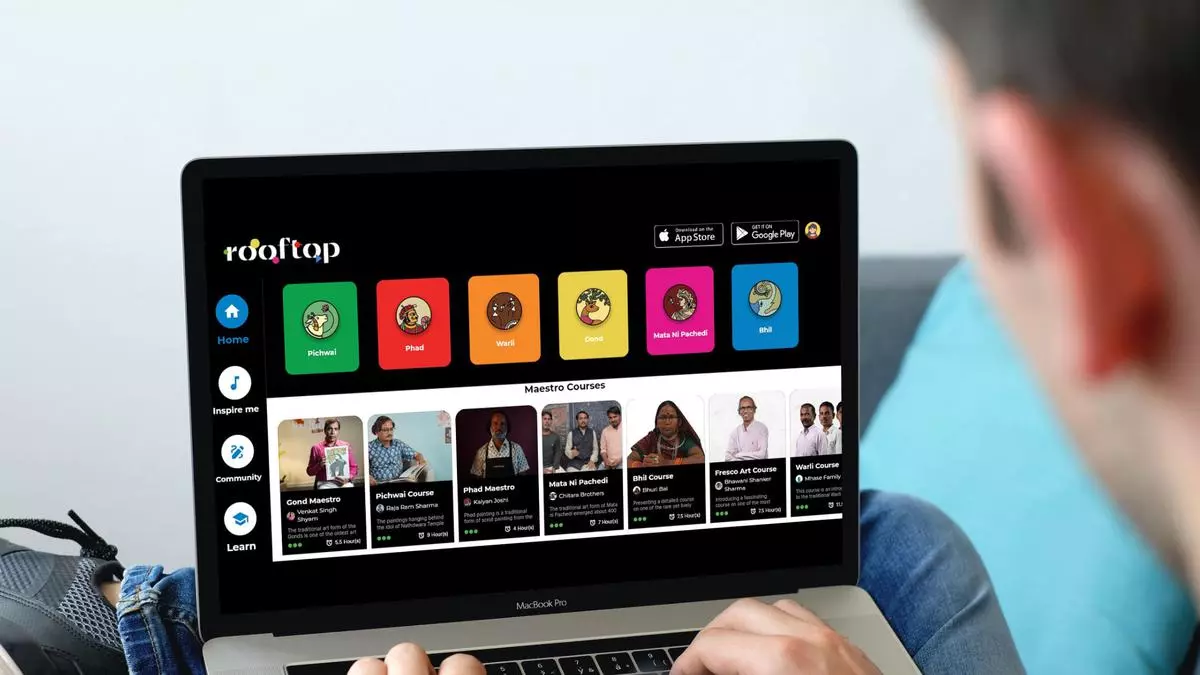
I also see a massive use of AI to create content, some of which will be fake.

Consider the following tweet I just read: With just a photograph and 60 seconds of audio, you can now create a deepfake of yourself in just a matter of minutes by combining a few cheap AI tools.

Finally, the money. I see a major increase of budgets, my prediction is at least 40 per cent increase across video production, influencer marketing and AI paid tools. And yes, Zuckerberg and Messrs. Brin and Page will grow richer.

(Shubho Sengupta is a digital marketer with an analogue ad agency past. He can be found @shubhos)

Categories
Digital Marketing

Why the restaurant industry is betting big on ONDC

The duopoly of the aggregators in the food delivery space is suddenly showing signs of being challenged. Post-pandemic, the restaurant industry had been trying to push customers into direct ordering.

More recently, social media has been abuzz with screenshots of users ordering food using the buyer-side apps such as Paytm and Phonepe’s Pincode on government-backed Open Network for Digital Commerce (ONDC) at cheaper prices than aggregators.

  • Also read: Orders soar for hyperlocal apps on ONDC

In recent times, with players like Zomato-backed Magicpin integrating with ONDC, thousands of restaurants have onboarded on to the new network. Some key food players such as Domino’s, McDonald’s, Biryani Blues, Wow! Momo, among others, have either already onboard or are in the process.

So why is the restaurant industry betting big on ONDC?

Dishing new options

Pranav Rungta, Head of Mumbai Chapter of National Restaurants Association of India (NRAI) and Director of Mint Hospitality, explains, “Aggregators currently control sellers, logistics and buyers in a captive ecosystem and charge whatever commissions they want. Our key battle has been against the high commissions charged by the aggregators. What ONDC does is unbundle this entire ecosystem. It decentralises the entire ecosystem with buyer-side, logistics-side and seller-side network partners.”

Currently, aggregators such as Zomato and Swiggy charge commissions that can go up to 25 per cent, for customer acquisition, logistics and enablement of orders. But the restaurant industry has long been batting for lower commissions for making their model viable.

  • Also read: Over 30,000 merchants have joined ONDC 

Sagar Daryani, CEO and Co-founder, Wow! Momo Foods said that ONDC provides a level playing field for the restaurant fraternity in their delivery business. “With 18-25 per cent commissions charged by aggregators, the current unit economics of the delivery business is not viable. On ONDC, commissions range between 2 and 5 per cent plus there is a delivery fee that the restaurant or platform pays to last mile service providers. So it ends up being cheaper than the huge commissions charged by aggregators,” he added.

One of the reasons why consumer orders are currently cheaper on ONDC is also because it is offering a discount scheme. T Koshy, CEO, ONDC, clarifies, “The discount offer ‘ONDC 50’ is for the short term and for a limited number of transactions. It is meant to give a jump start to the network.”

  • Also read: Nearly 400 farmer organisations in various stages of integration with ONDC: T Koshy
The full menu

However, Koshy says one needs to look at the bigger picture. “ONDC is a network with multiple seller and buyer platforms. This unbundled architecture will help take the leverage back to the endpoints (customer and sellers) from mid-points (aggregators),” says Koshy. He added, “In the long term, we believe, ONDC will make the value chain more innovation driven, cost-competitive and efficient from end-to-end.”

However, it may take some time before ONDC disrupts the dominance of aggregators. A recent report by Motilal Oswal stated, “We believe that the risks posed by ONDC (to Zomato/Swiggy duopoly), will only become significant once it scales up in multiple categories (Food, e-commerce, grocery), which would give it the scale to override the delivery scale of the existing players.”

  • Also read: Payment gateway Razorpay will join ONDC

Daryani believes that for ONDC to make a real difference, it will have to enable expansion of the digital ordering user base to a newer set of customers beyond the current 20-30 million active user base of current aggregators.

Others believe getting the customer experience right will be critical. After all, Indian consumers are so used to getting constant updates on their food orders, tracking their orders, being able to seek refunds or give feedback in a seamless manner.

Rungta believes that in the long-term even aggregators are expected to see benefits and may plug into the ONDC and come onboard as seller partners or logistics partners.

According to estimates, online food delivery in India is expected to grow at 35 per cent to about $18-b GMV (gross merchandise value) and contribute nearly 18 per cent of the total food services by FY25, led by growth in users from 20 million to 60 million.

Thrive gets going

Meanwhile, disruption is coming from another source -— emergence of food tech platforms that give restaurateurs more options. Take for instance: Hashtag Loyalty, which operates Thrive, and backed by the likes of Coca-Cola India and Jubilant FoodWorks, the operator of Domino’s restaurants in India. Thrive provides restaurants with ordering solutions by building microsites for individual restaurants, multi-outlets, and even larger F&B corporations, from which customers can place their orders directly, instead of opting for an aggregator platform.

  • Also read: Govt to stop online companies from building special platforms for ONDC, says Goyal

On its recent fundraise from Coca-Cola India, Dhruv Dewan, Co-founder, Thrive and Hashtag Loyalty said, “ With this partnership, Thrive will be able to accelerate its restaurant reach and acquire consumers through various Coca-Cola India assets. It’s always been restaurant-first for us at Thrive, and having Coca-Cola India’s backing will help us further our mission of having a positive impact on the online food delivery ecosystem on the whole.”

Thrive’s consumer app is now live in Mumbai. “We are looking to grow our platform on a market-by-market basis. We’re working on a lot of experiments across Mumbai to gauge consumer responses. From a launch perspective, it’s an iterative process and is constantly evolving. In the next 30-40 days consumers across the city will witness campaigns and content that will spread awareness about Thrive app,” he added.

Thrive founders are also in talks to onboard on ONDC. “Over the last year, we have been closely evaluating how ONDC will fit into our journey. We’re currently in deep conversation with the ONDC team on how we should participate,” he added.

The space is certainly getting exciting.

Categories
Digital Marketing

Godrej unlocks memories from the the almirah to share its biz history 

Imagine a fat book devoted to the art of sitting! From the Frugal to the Ornate, Stories of the Seat in India is a delightful chronicle of an everyday object that is indispensable in our lives. The book, put together by Sarita Sundar, a researcher, designer and writer, is brought out by Godrej Archives, and takes you on a journey of mats, moodahs, sofas, chairs and more through the ages. From the rural to the regal, the lounge chair to the office chair, it’s all documented there in loving detail. The company has been promoting the book through discussions and exhibits.

Why would Godrej Archives spend so much resource and time producing a voluminous tome on chairs? Jamshyd N Godrej, Chairman and Managing Director Godrej & Boyce explains in his note in the book, “With this book, we also reflect on Godrej’s vast contribution of almost a century to the modern furniture industry in India.”

Tracing the roots

In a most subtle way, the book conveys the brand values of Godrej products. And it also beautifully details the historical trends and patterns that shaped the brand’s products.

The aim and purpose of Godrej Archives, set up by Sohrab Godrej in 1997 when the company was celebrating its centenary was to document its business history but as Vrunda Pathare, Head of Godrej Archives, explains, “We also realised that it’s not just the story of Godrej, as companies don’t operate in a vacuum. It had to be closely connected with what was happening in the nation – the trends, the consumer patterns. It was a larger history that we were looking at and we were trying to position Godrej within that larger history.”

For instance, in the 1930s, when thanks to TISCO and IISCO steel production really climbed in the country, it influenced the move to steel furniture, and steel began defining the concept of modernity. Trends like those are captured.

Back to the future exhibition at Godrej Archives

Back to the future exhibition at Godrej Archives
| Photo Credit: Special Arrangement

As Pathare points out, several organisations — the Tatas, SBI , RBI — have painstakingly documented their business histories and increasingly more–like Wipro and Cipla are beginning to dive into their pasts. But where Godrej takes a different tack is in the width of its perspectives. As Pathare says, “Corporate past need not be just specific to the management practices or hardcore business history, but it can even be about the consumers’ history.”

This realisation actually came in, Pathare, says when they started interacting with people who had Godrej products and discovered the deep emotional connects they had with them. “You know — the steel cupboards, the refrigerator and so on, people had so many stories.”

That’s actually when the Archives unit began to think about inviting scholars. Just before the lockdown, it started a Scholar-in-Residence Program with Lakshmi Subramaniam, Visiting professor, BITS Pilani, Goa, becoming the first scholar. “She started looking at three products, which is the Godrej Storewel, the Godrej refrigerator and a chair. And completed a monograph.”

At Godrej archives

At Godrej archives
| Photo Credit: Special Arrangement

While the formal scholar in residence programme has started only recently, in 2009, when Godrej closed down its typewriter manufacturing, it realised that it was its responsibility as the last manufacturer of the product to tell the story of the typewriter. After all this was a product that had impacted many lives, and made many careers. That’s when the idea of publications really began.

Apart from the typewriter and the chair’s stories, the unit has also documented people stories. For instance, a few years ago, the Archives team captured the story of the Navganis, a migrant community that has worked as loaders in Godrej factories since 1940.

The outside world can enjoy the work of the archives by visiting the permanent exhibition at the Godrej campus. But more importantly, the work of the archives is closely integrated into many functions of the company itself — HR, corporate communications, brand building and so on. “Establishing the value of archives in the normal business processes is something that we always worked on,” says Pathare.

And it is not just the past the Archives team is diving into. It is constantly documenting the ever changing present as well for posterity.

Categories
Digital Marketing

On the campaign trail.

On the campaign trail.

Categories
Digital Marketing

Sleep well, sleep adequate: Virat Kohli

Ace cricketer Virat Kohli, who is a fitness enthusiast, has said that one should have quality sleep to do lead a health life.

Kohli, who has been appointed as a brand ambassador for sleep solutions provider Duroflex, said he understod the importance of sleep and recovery in maintaining peak physical and mental health.

“I strongly believe prioritising good quality sleep can lead to a healthier and more fulfilling life in your career as well as with your loved ones. It is not just about getting enough hours of rest, but also about the quality of sleep one gets,” he said, addressing a gathering after the announcement here on Monday.

“When we speak about fitness and health, it is having adequate sleep that helps the body respond better to the challenges,” he said.

“I ensure I get deep restorative sleep. Becoming the face of the brand was a natural decision for me as I believe in the brand’s mission. I am excited to bring a new dimension to the brand and drive its message of sleeping better for a long, healthy, and enhanced quality of life,” he said.

Duroflex said the move was aimed at promoting “conversation around quality sleep and its indispensable role in optimal health”.

“This collaboration will showcase our commitment to spreading awareness about the link between quality sleep and a healthier, more fulfilling life,” Mathew Chandy, Chairman and Managing Director of Duroflex, said.

Kohli also launched Duroflex’s new product Neuma, a firmness adjustable mattress.

Online business

“We sell through own stores, franchise stores and online. Even before Covid we began the online or direct-to-consumer business, which was initially just a fraction of our entire business. Now, it contributes over 30 per cent to our business,” Mohanraj J, CEO of Duroflex, said.

He said the company has a network of 60 stores. “We are planning to take the number of stores to 100 in the next one year,” he said.

The sleep solutions market, which stands at about ₹15,000 crore, is growing at 6-8 per cent.  

(eom)

Categories
Digital Marketing

The power of creativity is not in chat GPT but in solving problems: Dheeraj Sinha

At Goafest 2023, Leo Burnett India was crowned the Creative Agency of the Year at the Abby Oneshow Awards 2023. It was also named Branded Content & Entertainment Specialist Agency of the Year and Brand Activation & Promotions Specialist Agency of the Year. A jubilant Dheeraj Sinha, CEO Leo Burnett South Asia & Chairman BBH India spoke to businessline at the sidelines of the fest on creativity, consumption, growth and more. Excerpts:

The theme of this Goafest is ‘future of creativity’ and this discussion is happening in the backdrop of the AI threat. How do you think AI will impact creativity?

Firstly, I don’t think there is any threat from AI. We need to embrace this technological shift. If I can use generative AI to generate 100 social media posts for my clients or use graphics to shoot an ad film at half the cost instead of flying to a destination, then AI is making my work better, faster and most importantly it frees up my creative resources to focus on bigger things.

We need to understand our place in the value chain. We don’t have self-assurance as an industry. We start getting worried about AI eating our jobs or social media killing advertising. We have to understand that the power of creativity is not in chat GPT or AI, or social media execution but it is in solving problems and in leveraging opportunities for businesses and for humankind. And we need to focus on nurturing young talent and harnessing the power.

How was last year for your agency and what are the growth projections for this year?

We are growing in strong double-digits and meeting our commitments already. I think there’s a bit of a slowdown in tech. Due to the funding winter, even large funded players have tightened their purse strings. At the same time there are other funded players who’ve done well and are spending as they build a brand. But overall there’s a definite slowdown and it is likely to continue this year.

However, there has been an interesting upswing in consumption expenditure. The FMCG and CPG sectors are doing well. Also new categories are opening up with many established companies foraying into new areas. Electric Vehicles as a category is witnessing a lot of action.

Where else is growth coming from?

We are now beginning to cut the pie into many pieces. For instance, we have the regional offering, where we help brands crack their regional strategy because a lot of brands are now saying that if you win one State in India, it is like winning one country in Europe. Digital has been a strong growth driver. At the same time, we are also doing pure-strategy work. Some of these new services have grown over the last three years and now contribute about 15 per cent to our revenues.

Last year, there were unicorns going for IPOs and everyone was talking about their flashy ad budgets. What is the key theme this fiscal?

This fiscal is about the CPG and the FMCG story. Household goods and consumer durables are doing well. It will also be infrastructure-led growth, with cement, paints, and furniture doing well. With improvement in margins, FMCG companies are beginning to ramp up spending. So it is in some sense a return to the fundamentals.

In the start-up space, we will see that the players who fulfill a fundamental need-gap will still stay strong despite the funding winter.

How much does digital contribute to your revenues now?

Most of the mandates that we are signing now are integrated mandates. The teams are integrated, the work is integrated. In the last five years, we’ve turned our 600-people agency to think for the new-age. So now we think in terms of the consumer journey and not mainline or digital.

Categories
Digital Marketing

Is there coffee in your wrist watch?

Last week, the luxury brand Hublot announced a very special range of wrist watches, called the “Hublot Big Bang Unico Nespresso Origin”. What makes these products unique is that they are the first watches to be made of recycled Nespresso coffee grounds and capsules. The coffee grounds from used Nespresso capsules are transformed into the straps of this watch — a rubber version as well as a velcro-fabric version. In addition, the recycled Aluminium capsules of Nespresso are used to create the metal parts of the watch — the case, bezel and crown.

I was intrigued by this marriage of two very different products — coffee and wrist watches. Quite coincidentally, during my long career with the Tata group, I have worked in both the watches and coffee industries. Hence, this news held my attention with twice the intensity, much like a double espresso. But it was the insight behind the creation of this watch that fascinated me.

Not only is this a very novel product that triggers consumer attention, it represents a commitment to recycling material ranging from coffee grounds to aluminium. Therefore, it demonstrates that environmental responsibility and luxury can go hand in hand. This is very likely to have a positive impact on how two big Swiss brands — Hublot and Nespresso — are perceived. Such perception is particularly valuable in our times, when environmental consciousness is fast becoming a key driver of consumer choice.

Moon dust and hair

Yet another aspect that leapt out at me was the use of unconventional material like coffee grounds and Nespresso capsules to make a wrist watch. This provides the product with such an interesting and memorable story. My curiosity led me to study this subject further, and I soon discovered that many other wrist watches had used surprising materials in the past.

For instance, some years ago, Romaine Jerome, another brand of luxury watches, created the Moon Dust-DNA watch. These watches use real moon dust as well as rocket and spacesuit parts from Soyuz spacecraft and NASA’s Apollo 11 moon mission. The moon dust was in tiny craters on the face of the watch, and was certified as real and authentic. The strap of the watch was composed of fibres from a spacesuit worn during the International Space Station Mission. This was a limited edition of the 1969 watches, to reflect the year in which man first landed on the moon. The watches were highly priced, but they were also highly prized by connoisseurs who desired to own a piece of the moon. This also strengthened Romaine Jerome’s position as an innovative and exclusive brand.

Yet another example of unusual material in watches comes from the DeWitt brand, which launched watches that contained real strands of Emperor Napoleon’s hair. DeWitt had purchased Napoleon’s hair at an auction in France in 2014. Each watch in this limited edition line contained a small piece of this “precious” hair on the dial. The hair was varnished, to ensure its preservation.

Moving on from watches to other product categories, there are many interesting examples of unconventional material being used by brands. Ikea has begun replacing Styrofoam with mushroom-based packaging. The key driver here is clearly a move towards environment-friendly material. There are famous paan sellers in some cities of India who use gold foil and silver sheets in their premium paan offerings. These are exclusive after-meal products which signal prosperity, status and privilege. Despite their high price (₹750 and upwards), I am told that they command a loyal following. In 2016, Bajaj launched a new 150cc motorbike called Bajaj V, with the byline “Part motorbike, part war hero”. Each motorbike in this range contained metal sourced from India’s first aircraft carrier, INS Vikrant. Brand attributes such as solidity and invincibility got quickly transferred to this motorbike from our cherished memories of INS Vikrant.

The use of such unusual materials present wonderful opportunities for brands and marketers to make unique points about their products. Whether a brand wishes to emphasise sustainability or exclusivity or national pride or some other important attribute, there is new material waiting to be discovered. Watch this space !

(Harish Bhat is Brand Custodian, Tata Sons. These are his personal views. )

Categories
Digital Marketing

The Seven Principles of Creativity

“It is our responsibility to stop thinking about technology as anything other than a medium that makes us more creative and not less,” said Nick Law, Global Creative Chairperson, Accenture Song, during his session at GoaFest 2023.

Laying down his ‘Seven Principles of Creativity’, Law explained what he believes the advertising industry should get right over the next 10 years. The seven principles that Law discussed were – consistent principles and dynamic practices; singular vision; collaborative culture; designing yourself; loose with ideas, tight with execution; Technology being creative; Deep simplicity and Starting in the middle.

Law stressed that people should not panic over new technology but focus on mastering stuff like generative AI. “One cannot be creative without technology. I think about how I mastered generative AI. Creative people should think about how to master it and use generative AI more than non-creative people,” said Nick Law.

Here is a deep dive on his seven principles:

1. Consistent principles, dynamic practices

Every company should have dynamic practice with consistent principles. There are some things that you stand for that do not change like core principles. And then there are things that you need to respond to – different opportunities, different technology and context – that need to be changing consistently. Importantly, said Law, if you don’t have principles you will not be able to distinguish yourself. “Everytime when something new comes up there should be a way that you and only you can respond to that is why principles are so important,” he stressed

2. Singular vision collaborative culture

“I have never been a part of the great creative exercise that did not have a really focused vision. It could be for a product, a campaign, a company. The nature of creativity is collaborative if you can’t mix and match different ways of thinking,” said Law.

Explaining further the need for collaborations, he cited the example of films. “One of the great art forms of the 20 century in which India is really good at is film. At the end of every film you see a credit roll – the contributor of a film, the single vision in the head of a director. It is an argument against consensus against inputs. You got to be sharp at the top and connect at the bottom .”

Law said that you need to reverse engineer your organisation based on what you are delivering. “The medium keeps changing and you need to keep changing according to the medium. When the best storytelling was happening on the internet, we had to bring in story tellers. We kept changing based on that, everytime we changed we had to restructure our teams, rethink how things got made. It is important because our industry sometimes forgets that you have to be a dynamic organisation to make dynamic things.”

He went on to talk about compound connections. “I will give you an example, strategy is a form of compound connection with creativity. It could be data and Analytics, analytic and strategy, strategy and creative and technology. These things have a compound connection , one thing makes the other thing better.”

If a strategist gives your creative team one brief that is not enough and if the strategist gives a brief of 500 pages then that is too much. I think there is an amount of detail that a creative person can use that has enough detail but not too much.

3. First, design yourself

The most important connection is a person to person connection, stressed Law. “This is amazing creativity and I call it a synthetic connection. It is two people that have different skill sets that are making something that individually they could not make themselves. It is really important specially when they are not connected in physical space. “

If our companies were brain and we have two hemispheres of the brain. One that has design led and one that is story telling led and then we connect them in a synthetic connection as a part of the conversation not as a part of that hands off one to the another. What is interesting is that it actually reflects the conventional thinking that the left hand brain is rational and the right hand brain is creative. That is not true if I’m being creative both hemispheres of my brain are writing up. If you are not laterising your organization by connecting ways of thinking then you have a damaged brain in your organization.

4. Loose with ideas, tight with execution

If you come up with ideas and do not execute ideas then it is no good. If you go straight to execution without dreaming then that is not good either. It is really the way of looking at the classic T shape. Connecting when you’re dreaming and going deeper when you are executing.

5. Technology is creative

We have amazing technology and amazing engineers and technical thinkers . You cannot be actually creative without a technology to take the idea out of your head and put it out in the world. When creative folk are complaining about technology they are complaining about the technology that came after they mastered the older technology – broadcast. The mistake that the industry made was separating media and technology in the late ‘80s . It created a whole class of creatives that thought they are coming up with whole or prime ideas when they, in fact looked at just the last medium that they mastered which is broadcast.

The important thing about new technology as they emerge is that creatives should work closely with new technology soon as possible.

It is our responsibility to stop thinking about technology as anything other than a medium that makes us more creative and not less.

6. Deep simplicity

Simplicity is more important than ever because we live in a complex world, our media is complicated, new formats come on, others are replaced. These formats are competing among each other. So think that the world is already complicated and our actions need to be simple.

Deep simplicity is understanding the context and the complexity of the world we live in and translating it into something simple and human.

7. Start in the middle

I think for the advertising industry it is a very important one.

Where we get our information is getting difficult, researching is difficult, video information is difficult. People spend some time on the brand experience we create, but most of the time they are on Reddit, youtube.

The most valuable Brand in the world is built on trying to make people understand their product and not try to make them feel something with some metaphor and chasing something in the hope that they might actually click on your ad.

So this is how we began to reshape our industry. Craft, clarity and concept. At Apple I spent all my time at lifestyle marketing to feel like Apple.

We need to restructure our teams so they work together. How do you create this? It is at the intersection. Our biggest sin is when we start separating things from efficiency, separating things because we get too big and we don’t connect those pieces in the way I was talking about before.

Categories
Digital Marketing

Contemplating the future of creativity

Music vibrated at Goafest2023 — from Kanika Kapoor’s pulsating performance on day one to Papon’s effortless crooning on the final day, with McCann Worldwide Chief Prasoon Joshi’s impromptu renditions as well. Even cricketer Harbhajan Singh belted out a rousing number, bringing the house down. And for the first time ever, the ad industry showcased its in-house musical talent.

Even as a lot of delegates could be seen rushing to catch the IPL action on the big screen and cricket peppered conversations, this edition of the ad and media jamboree was firmly about a glorious contemplation of the future of creativity. From agency chiefs to creative professionals to media planners and movie industry personas, there were differing takes on where creativity is headed. Here is what we heard:

Creativity in the age of AI

How would creativity be disrupted in the age of AI? In a session on ‘The Future of Creativity’ moderated by Rohit Ohri, Chairman and CEO – FCB Ulka, panelists Anusha Shetty, Chairperson and Group CEO – Grey Group India, Josy Paul, Chairman and Group CCO – BBDO, T Gangadhar, Co-Founder and Group CEO – Quotient Ventures and Dheeraj Sinha, CEO and Chairman – Leo Burnett and BBH deliberated on this question. The unanimous view was that machine would aid man, and humans would continue to be at the centre of creativity.

Josy Paul put it beautifully when he said, “I have been through four generations of technology – the era of print, television, the internet and social media, and I have embraced all four of them. I think it’s because I didn’t fall in love with the medium. I fell in love with the people I have worked with.” He said, “While there is so much noise about AI, Emotional Intelligence is how agencies and brands will stand out. So when we talk about AI, I want to put EI on the table.”

Interestingly, on the last day, one got a live view of the use of AI in advertising as Leo Burnett executives showcased an ad they made for Airtel using deep fake technology to recreate the unrecorded 175 not-out scored by Kapil Dev in the 1983 World Cup match against Zimbabwe. Technology helped bring to life that remarkable match but as they pointed out, AI was only a multiplier — the starting point was human creativity.

Structure of Agencies

Both Rohit Ohri and Anusha Shetty were of the view that the structure of an organisation would need to be reframed to enable creativity in the age of technology. “The future structure for an advertising agency needs to be extremely fluid because if you knew what the future is going to look like you would not have a structure again. You need a fluid system and an open structure. I see a lean and horizontal structure. At this point the solution can only come from collaborations,” said Shetty.

As creativity evolves, talent too would also need to keep pace. As Paul pointed out, “Talent should be a combination of a visionary, missionary and an artist!”

Accenture Song’s creative chairperson Nick Law, in his talk said that in today’s age when time is of the essence, technology was imperative for creativity as it lent speed. He said that companies need to have consistent principles, possesses a collaborative personality, communicate with clarity, be adaptable to changes, work closely with technology, keep it simple and start in the middle — with ideas coming from the top deck as well as the lower pool.

Creativity and purpose

Many of the experts attending the event felt that creativity was linked to solving problems. As Aditi Mishra, CEO, Lodestar UM said, “Creativity just for the sake of creativity may no longer be enough but will need to be driven by purpose. When I’m saying purpose, it could be multifold — it could be about changing lives of people or solving environmental issues. And that shift will happen not just in the manner of say the content of the ad but it will also happen in ways that people consume, promote, engage with content. ” She also said authenticity of content would also matter. As Mishra summed up, the predefined norms of what creativity is will be challenged more and more.

Categories
Digital Marketing

Viacom18 ropes in 13 sponsors for India-Afghanistan T20 series

Viacom18 has roped in 13 sponsors for the India vs Afghanistan T20 series for both TV and digital. Tata Commercial Vehicles and HDFC Bank have come onboard as co-presenting sponsors.

Associate sponsors for the T20 series include Matrimony.com, Eureka Forbes,, Oppo, Kajaria Ceramics, Hero Electronix, and Farmley. Other sponsors as associates that have come on board include CREX, MPL, Komaki EV, and MP Birla.

This is the first T20 International series played by Team India in 2024. It is being broadcast on JioCinema, Sports 18 Network, and Colors Cineplex from January 11-17.

JioCinema streams the series in 11 languages, including English, Hindi, Marathi, Gujarati, Bengali, Bhojpuri, Punjabi, Tamil, Telugu, Kannada, and Malayalam. Colors Cineplex will present live action in Hindi, while viewers can opt between English, Tamil, Telugu, and Kannada on Sports18-1 SD + HD.

Categories
Digital Marketing

The six yard drape weaves a stunning growth story

The saree’s amazing comeback saga continued in 2023. In its year-end report Flip Trends 2023, online retailer FlipKart said that the most shopped lifestyle product in the year gone by was the saree. Other online retailers too reported a big uptick in saree sales. According to Meesho, it witnessed a 1.5X growth in saree orders during the 2023 festive season as compared to the year before. More interesting, it says the age barrier has dissolved as 60 per cent of the saree customers were under 30.

The ₹80,000 crore Indian saree market is booming. A whole bunch of reasons are behind the saree’s spectacular showing – but the most compelling one seems to be the way new age saree brands like Suta, Shobitam, Chidiyaa Online, Raw Mango, Byloom, Taneira and many more have made the six yards very cool through hassle-free drapes, exciting blouses and accessories, cool hashtags, and a whole new narrative that includes sustainability, support for artisans, and a big saree sisterhood. Also, new interesting brands are bursting through in this category, creating more excitement and niches, thereby growing the saree pie further. Today, if youngsters can talk knowledgeably about Dabu, Bagru, Ikat, Leheriya, Ajrakh, Uppada, Jamdani, Sanganeri, Bandhani it’s thanks to many of these brands. No longer does a saree mean a Benarasi , Kancheevaram, Patola, Kota or a Pochampally. The diversity of India’s handlooms and printing traditions are now suddenly at the doorstep of every customer.

Stylists like Dolly Jain are also playing a part, as are Bollywood celebrities who are now seen draped in Suta, Shobitam and other D2C brand creations. Ambuj Narayan, CEO, Taneira, says, “The entry of stylists in the fashion industry, has led to rise in popularity of ready-to-wear sarees, innovative draping techniques and inventive fashioning of the saree as a garment. This has elevated the perception of the saree amongst the newer generations and made it more versatile than ever before.”

Youthful styling

“It’s beautiful to see how sarees have come back. We have had a role to play,” proclaims Sujata Biswas, co founder of Suta, the brand that has sashayed into Gen Z ‘s imagination and heart with its cool weaves and funky content. “Sarees are no longer a wedding, and temple visit wear — we have made it cool for any occasion,” asserts Taniya Biswas. And, indeed, it’s no idle claim. The two sisters, who created a label from the first two letters of their names (Su and Ta) in 2016, have seen their digital first brand going places. The brand saw a big jump in festive season sales last year — it sold 1.1 lakh sarees between July and November 2023 as compared to 60,000 units in the same period in 2022. In 2023, Suta launched eight offline stores to add to the Bangalore store it opened in 2022. “We are going to open our ninth offline store in Pune,” says Taniya, pointing out how most of the stores are less than a year old but already contributing 15 per cent of Suta’s business. Suta has also made its customers bond more with its sarees by giving each of them a quirky name — for instance, there is a Bossy Caramel, a Laal Chumki, a Chandni ke Phool and so on.

The sisters say the biggest chunk of their saree customers are in the 25 to 35 age group while the second largest chunk is 18 to 25. A few years ago it would be unthinkable for anyone in this age cohort to wear sarees to casual lunches or date nights. But the starchy formality has now gone out of the garment. Messy drapes are regarded as hip. Wear it with a halter neck blouse, add a belt and style it with boots, or a short coat and you are ready to compete against the LBD at swank parties.

Taneira too is going all out to woo the young. “Our styling is focused on making the saree look conducive for the young. Today, a saree appeals to a young office goer as much as it is dear to our grey-haired grannies,” says Narayan.

Ramya Rao and Kavea Chavali have put the lustre back in the Andhra Uppada

Jermina Menon, a strategy consultant based in Bengaluru, and a saree evangelist, says that the garment has got a boost from two things — one, the blouses that range from styles that are backless to halter to crop tops and even shirts. Two, from different draping styles that have made sarees more contemporary and stylish. She also says that the handloom space has seen a big boost post pandemic. “I can vouch for a few weavers who went online and sold direct and I see them improve — whether it is in their communication, or websites or promotions (through influencers).”

Menon points one to Kalaneca, again being built by two sisters, twins Ramya Rao and Kavea R Chavali, that is resurrecting the Andhra Uppada. What started as a hobby for the sisters, who were working professionals and are Kuchipudi dancers, to help the weavers get more business, is now a full-fledged brand with a marketing strategy and a mission to get more consumers experience the weave. Rao has left her job to grow Kalaneca full time while Kavea, a corporate emcee flaunts the Uppada at every occasion she can. “It’s grand, yet so light and easy to wear,” extols Rao. The Rao sisters, who got interested in the Uppada thanks to their mother who would visit the weavers’ belt, are also building another brand Etram (derived from Arangetram) that would have a wider range and also do blouses.

Rao says Kalaneca has an international focus and this year they will also be trying to make one of a kind customised sarees. Through events like Sarees and Sangria — a get together of saree lovers over a drink they have done in Mumbai and Bengaluru — they have driven the conversation to the Uppada weaving traditions and created interest.

One stop shops

The growth of the saree is also because many of the pain points associated with wearing sarees – getting a matching blouse stitched (and a good fit is always a problem), arranging the falls and petticoat — have all vanished. “There was a perception that there was just too much kaam jham involved in a saree. For people to wear it instantly, we had to solve the problem,” says Taniya.

Just like other apparel, which you can wear straight off the rack, a shopper can now go to a store like Taneira or Suta and get the whole look, sarees, blouses, tailoring et al. And that has spawned a whole new profitable business for saree brands. Suta says earlier blouses were 20 per cent of its revenues , but now 35 to 40 per cent of its nearly ₹70 crore annual revenue comes from blouses.

Interestingly, many of the brands say this need came from global consumers — Indians living in the US, especially, who are big online saree consumers, who want everything taken care of. Shobitam, for instance, started by two sisters in Seattle, Aparna and Ambika, started with the promise of making Indian ethnic wear available globally.

Reviving a heritage

Reviving a heritage
| Photo Credit: Kalaneca

For Taneira too, from the house of Tatas, ready-to-wear blouses category is seeing good traction. “We are expanding our portfolio of blouses and have also introduced in-skirts, aiming to become a comprehensive one-stop solution for sarees. Additionally, blouses play a significant role in attracting consumers, as there’s a growing trend of mixing and matching outfits. They serve as a great complement to existing sarees, allowing for the creation of fresh, new looks,” says Narayan. Indeed, many saree wearers like Jermina Menon now say they probably have more blouses than sarees.

Taneira, which already has 50 stores across India as well as an online presence, is targeting a topline of ₹1,000 crore by 2027. It is also doing a fair bit to grow the saree pie further by getting in new users. For instance, Taneira has launched the JAM (Just-a-minute) collection, featuring pre-styled and pre-draped sarees starting at ₹8,000. “There’s a growing inclination towards fashion that offers both speed and comfort without compromising on style. The introduction of pre-draped and pre-stitched sarees intends to make wearing them more enjoyable, eliminating any stigma associated with not knowing how to drape a sari,” says Narayan.

The outlook for 2024 — “Sarees will become the next casual wear,” predict Sujata and Taniya.
Categories
Digital Marketing

If OTT in 2023 was about growth, in 2024 it will be about profitability
India’s OTT market, sized at $2.5 billion (this includes YouTube), went through a major disruption in 2023, as Jio Cinema offered the most premium content—Indian Premier League—free to users. This negatively impacted subscription revenue growth for peers and the industry at large and led to Disney Plus offering cricket World Cup free for mobile customers.

The OTT market in India is currently battling the dilemma between growth and profitability in a price-sensitive market. 2023 was a year of disruption for cricket content, as Jio Cinema used it to build a large customer base for itself. But expect some serious changes in the OTT landscape in 2024 as platforms now look to chase profitability.

Since the advent of affordable 4G service and video OTT in India in 2017, none of the video streaming platforms have been able to reach break-even point, which could lead to some structural changes in this market.

Economics

Content cost correction is the need of the hour, as most big OTT platforms are making hefty losses. According to our assessment, the Indian OTT industry’s revenue (excluding YouTube) is $1.3 billion. However, the content cost alone comes around $1.5-2 billion, which is approximately 65-70 per cent of the OTT platforms’ cost base (other costs include marketing, manpower and technology). Thus, one can expect some rationalisation in this area as platforms become selective in their approach towards new shows. There will be a sharp decline in experimentation within web series and a more selective approach when it comes to purchasing digital rights of films in 2024, which will help lower losses.

Consolidation is another big change for the OTT industry, with the Zee/Sony merger and potential talks of RIL/Disney coming together. A merger between these entities will provide much needed respite as these four platforms (Jio Cinema, Sony Liv, Hotstar and Zee5) together command a market share of more than 40 per cent in video advertising (including YouTube). This may shift the bargaining power aggressively in favour of platforms and arrest content costs across various types of content (movies, web series etc).

Pricing

A freemium pricing model is here to stay for video OTT platforms in India, as we don’t foresee the scale up of pure play video advertising models given that the digital advertising market is fragmented with presence of search, social and e-commerce giants.

Subscription revenue is a sticky revenue stream which will provide a predictable cash flow for OTT platforms and take care of their content budgets. Given the wide variety of audience in India across multiple languages, a freemium model with a mix of free and pay based content augurs well over the long term. OTT platforms may not be able raise prices extensively just as yet, and hence will find innovative means like 1) curbs on password sharing, 2) ad-supported content within pay-based video services, to drive better monetisation.

Censorship

Regulation is an overhang in a diverse market like India. However, don’t expect blanket censorship as that will stall the growth of digital consumption. Self regulation will continue to exist going ahead too; however, there could be a potential set up wherein content on OTT is constantly monitored and platforms making content hurting religious or minority sentiments may be penalised with hefty fines.

Viewership tracking

Video OTT has the best advantage of tracking consumption and viewership trends across markets. Netflix recently started sharing data, providing details of time spent on various shows globally.

Transparency from the OTT platforms will increase, as they start sharing selective data around viewership trends. This could benefit 1) advertisers for better ROI and 2) content creators to predict what kind of content actually does well.

All in all, things are poised well for the Indian OTT market, which seems set for strong growth coupled with profitability.

(Karan Taurani is Senior Vice President, Elara Capital, and closely tracks the media and entertainment sector)

Categories
Digital Marketing

Peaches and fitness—searching for new insights in the New Year

Welcome to 2024! This is the time when marketers are looking for new trends and insights that can power their brands during the new year. Several consulting and research firms have duly produced reports on the big consumer trends for the year ahead. However, there is a boring sameness to many of these reports. So, even while we scan these, where can we turn to for fresh consumer insights?

Here are some interesting places:

New Year’s resolutions

So many people make resolutions for the New Year. These resolutions also signal some of their most important needs for the year. For 2024, many surveys have thrown up “improve fitness” as a top resolution for over 40 per cent of all affluent and middle class consumers. This immediately throws us key opportunities for several diverse categories, ranging from food and beverage products to wearables to yoga garments. Similarly, resolutions such as “improve mental health”, “make more time for loved ones” and “lose weight” feature in the top 10 resolutions for the year.

Interestingly, something as specific as “prioritise time in nature” is emerging as a key new year’s resolution for many people this year. Each of these sharp needs can help marketers think of new products, prioritise existing ones, or even develop communication that emotionally vibes with these areas. For brands which have built their own first-party consumer databases, it may be worthwhile to check out the top new year’s resolutions of specific segments of these consumers. This could potentially lead to powerful and targeted marketing campaigns.

Peach Fuzz, colour of the year

At the start of each year, Pantone, the global company synonymous with colours, sets the mood by announcing the colour of the year. This is based on research carried out by the company. “Peach fuzz” has just been declared as the colour of 2024. This is a velvety gentle peach shade, which, according to Pantone, helps bring a “heartfelt feeling of kindness and tenderness, communicating a message of caring and sharing, community and collaboration”. Clearly, in a world that has been torn apart by wars, conflicts and sharp polarisation, the need for deep warmth and cocooned comfort has been a key factor in arriving at this choice. Marketers can leverage this beautiful insight in many interesting ways. For instance, brands can consider introducing peach fuzz colour options of existing cars, launching brand new peach fuzz inspired garments or bringing back the delicious peach melba flavour of ice creams. In addition, brands can also engage consumers with this mood of warmth, safety and comfort through many other touch points such as advertising, retail stores and digital websites.

Sports and elections

2024 is a huge year for sports. Apart from the usual much anticipated annual events such as IPL and the tennis grand slam tournaments, the Olympics will be hosted in Paris this year. The ICC T-20 cricket World Cup is scheduled in the US and West Indies. Copa America will be played in Argentina. Between athletics, cricket, football and more, marketers will be presented with a wide choice of how and where to associate their respective brands with sports. From sponsoring tournaments or individual sportspeople to smart guerilla marketing opportunities, there are many interesting directions that can be considered if marketers are proactive enough.

Quite coincidentally, this is also a big year for elections, with as many as 40 countries, including India, the US and the UK heading to the polls. This combination of sports and elections is likely to have a multiplier effect in generating strong feelings of patriotism and nationalistic pride. Also, both these events typically give rise to great passions, and marketers may wish to consider how best to constructively leverage these high emotions.

The big screen

Finally, I would urge marketers to take a look at the most anticipated movie releases of 2024, both in Bollywood and Hollywood. Successful blockbuster movies tend to spark off consumer trends quite spontaneously, and brands can proactively think of how best to ride the hype. 2024 has a promising line-up here too. From big bang films such as Kalki 2898 AD with a cast full of superstars to women-centric films including Do Patti and The Crew, there is much on offer in Bollywood this year. Similarly, big Hollywood releases are likely to include Dune: Part Two and perhaps even the next movie of the Spiderman franchise.

I conclude with a broader point for marketers. It pays to look for market and consumer insights in unconventional places. These should be a necessary supplement to formal market research studies.

Harish Bhat is a marketer, author and poet. He has recently retired as Brand Custodian, Tata Sons. These are his personal views.

Categories
Digital Marketing

J is for Jeans: unravelling the threads of freedom

I remember the first time I got a pair of jeans. I felt so happy that there was finally an alternative to my boring school shorts. They were the best that happened to me, I didn’t feel like a kid anymore and neither like a grown man who wore trousers. Jeans were different, they made me feel cool, like a young adult who had a driver’s licence but didn’t have to worry about buying the car himself. I could strut around in jeans all day long without a care in the world, it didn’t require to be washed daily and the material was so flexible that you could do cartwheels in it. Not that I ever did that, but one could.

Jeans, like a lot of material things in India, are an import from the West. They originated in the late 19th century in the US as an apparel for working-class men. The denim fabric used in jeans was known for its strength and resistance to wear and tear. Jeans were practical and durable, and thus were mostly used by miners. Who knew that one day they would become a fashionable item of clothing that would transcend its symbol of working-class clothing to something much more?

In my teenage years, I began to grasp the real significance of jeans in our culture. The freedom symbolised by a simple pair of jeans bore diverse meanings for different individuals. For me, it meant mobility and lessened laundry responsibilities but it signified much more to women.

When I was 13 years old, Mom and I would often go to the nearest market to indulge in her favourite activity — window shopping. That’s what being middle-class meant to us and to a certain extent still holds true for a large population of India. The middle-class aspires to buy good clothes, get fancy things but is constrained by its financial realities. During one of our strolls through the market, we saw a pair of jeans in the women’s section. The helpful salesperson asked Mom if she wanted to try it on. We looked at each other and both of us had a hint of excitement in our eyes. Mom asked me if she should try it on and I vehemently agreed.

Mom took the pair of jeans and went into the trial room. When she came out, I was shocked! I saw a traditional Indian woman wearing a Punjabi suit go into the trial room and out came a modern cosmopolitan lady. Mom had always been cosmopolitan, she was born and brought up in Delhi yet this was the first time I truly perceived her as a cosmopolitan woman. It made me realise how clothes signify a lot of our embedded biases towards people. They can change our perception of the same person.

However, mom couldn’t wear the jeans in front of her conservative in-laws. So we would actually sneak out of the house like we were committing some crime, whenever she wanted to wear jeans. The pair of jeans wasn’t revelatory in any way yet it was a big deal to wear it in the house. That’s when I realised that women needed to do a lot of cartwheels just to attain their autonomy because the society around them wasn’t as flexible as the denim fabric.

This is the story of most women in India, especially in rural areas, women wear jeans and kurtis as a way of signalling modernity and freedom. However, they face a lot of backlash for this minor act of rebellion. Comments about modesty are commonplace, and somehow in all of this, their ability to be good mothers also gets questioned. I remember two years ago when a sitting Chief Minister of a State made blasphemous comments in a similar vein about women wearing ripped jeans. It is ironic how his political career got shredded after a while. Hopefully, that would’ve sent a message to most politicians — tread lightly when it comes to jeans.

(A-Z: This series of light hearted explorations on familiar objects from everyday life dear to the urban Indian middle class looks at how they shape our wants & desires and ultimately make us who we are as a people.)

(Hamsini Shivakumar is a Semiotician and founder of Leapfrog Strategy. Prabhjot Singh Gambhir is a senior research analyst at Leapfrog Strategy.)

Categories
Digital Marketing

Social media sentiment analysis of IPL 2023

On ground, it may seem as though Chennai Super Kings enjoyed the maximum support in the Indian Premier League 2023 edition, yet on social media, the team with the most conversations was Royal Challengers Bangalore, followed by Mumbai Indians and CSK.

Ad tech platform iCubesWire, took a deep dive into Twitterverse to create a comprehensive sentiment analysis study on IPL 2023, monitoring conversations around the tournament. The study is based on various data points, including the total number of mentions and the breakdown of neutral, positive and negative sentiments for different categories. Some snapshots:

· Virat Kohli created the most buzz on Twitter. However, the analysis hinted at a love-hate relationship, with a considerable share of negative sentiment at 14.65 per cent.

· SuryaKumar Yadav, with 45.3 per cent positive reactions, was among the crowd’s favourites. Shubman Gill, despite having approximately 86 per cent less reach than Virat, stood out among batsmen along with Faf du Plessis, garnering positive sentiments reflecting their favourable public image.

· On the other side of the pitch, bowler Mohit Sharma became the most talked about bowler during the IPL 2023, with Rashid Khan and Mohammed Shami grabbing second and third spots.

· In the captain’s corner, MS Dhoni remained the favourite captain with the highest share of positive sentiments at 38.2 per cent. Rohit Sharma stood his ground as the second favourite captain. No surprises, KL Rahul’s captaincy received the largest share of negative sentiments among the captains at 27.4 per cent.

Categories
Digital Marketing

On the Campaign Trail. – The Hindu BusinessLine

IPL’s last fortnight saw some exciting brand collabs with franchises as the action hotted up on and off-field.

Ready Madi Adi

Matches featuring Chennai Super Kings always result in a sea of yellow in the stadium as fans turn up in the bright colour to cheer their favourite team. Celebrating the unbridled passion of the CSK fan base, Sunfeast Supermilk Biscuits from ITC Foods has released an electrifying fan anthem — ‘Ready Madi Adi’ (Get ready… fold your fingers… blow a whistle). Created with foot-tapping music, the anthem is a catchy and upbeat track that captures the essence of what it means to be a Chennai Super Kings fan. It has been sung and composed by Tenma while the lyrics were penned by creative agency Mind Your Language from Chennai. The anthem strengthens the brand’s partnership with CSK and the messaging of #StrongaaWhistlePodu. The anthem is being further amplified through CSK fans and influencers like Saravanan and drummer Sivamani.

Punjab ka naya favourite

Punjab Kings may have been washed away before the finals, but digital platforms are awash with a campaign by its official laundry partner Tide. The fun video featuring Shikhar Dhawan, Arshdeep Singh and rising star cricketer Shahrukh Khan showcases Tide’s partnership with Punjab Kings as well as the power of Tide Liquids. Designed and executed by Sociwash, the collaboration was introduced in a brief teaser film titled ‘Sadde Punjab ka Naya Favourite,’ which also marked the debut of Tide Liquids in India.

As strong as the Great Khali

It’s nostalgia time as Ambuja Cements has brought back an ad featuring wrestling superstar, the Great Khali, that was first aired in 2015. The humorous ad that shows the wrestler walking through walls and falling through roofs until he begins living in a home made by Ambuja cements, plays on the Great Khali’s impressive stature and strength, and the durability of the cement brand.

Skip to rewards

Radisson Hotel Group’s new loyalty campaign “Skip to Rewards” addresses the typical challenges which customers face with traditional loyalty schemes. From long wait times to other challenges, the global creative campaign tackles them all in a fun, relatable way. The campaign features four characters who experience different challenges with traditional loyalty programmes, which are subsequently solved by becoming a Radisson Rewards member.

Categories
Digital Marketing

Techno Paints ropes in Actor Mahesh Babu as brand ambassador

Paints manufacturer Techno Paints has roped in South Indian film actor Mahesh Babu as its brand ambassador for a period of two years.

“For the past 22 years, we have been offering quality paints and quality painting services to business to business (B2B) segment. We executed over 1,000 projects in Andhra Pradesh, Telangana, and in some other States,” Akuri Srinivas Reddy, Founder of Fortune Group which promotes Techno Paints brand, said.

The company is in the process of establishing its presence in the retail paints market. “Mahesh Babu’s image will help us in expanding our presence,” Reddy said in a statement on Wednesday.

“Our products will be available for sale at 5,000 touch points. We are already making 2,000 shades of paints,” he added .

The company has a 50,000-sq ft central warehousing facility at Patancheru, which is supported by 25 other depots in different places. “We have a manufacturing capacity of one lakh tonnes. Our new plants in Palnadu and Visakhapatnam in Andhra Pradesh and also in Odisha will start production next year. With this, our capacity will increase to 2.5 lakh metric tonnes,” Reddy said.

  • BL Interview: New entrants see paint business grow, offer decent margins: Berger Paints MD

Categories
Digital Marketing

Unravelling the mystique of Sabyasachi

It’s always the women who gift the inspirations. For Raj Kapoor it was the woman in white who would flit in and out of his mind and movies; for Christian Dior it was an aunt who imagined herself a princess as she wafted down the staircase in skirts billowing from under-fitted bodices. For Sabyasachi, it was his grandmothers, women of extremely opposite tastes and temperament. And then there was his mother, quite another person, altogether. And others.

In the opulent palace of a store in Mumbai that he has chosen as his flagship, small brass plaques nestle quietly, whispering these stories from the designer’s life. They add to the mystique he carries around him; a person accessible and yet impossible to reach, a smiling boy who won’t grow up and yet, a hard-nosed businessman who has turned his creations into a national craving.

From Two worlds

So, we meet here his two grandmothers. One a minimalist, the other a ‘maximalist.’ The former in austere white muslin saris… the saris we meet again, carrying his label, woven by humble weavers whom he adopts as his own. The latter, exuberant, well-travelled, rich in material wealth, and always accessorised with a ‘khadi batua lined with a pomegranate pink velvet’ from which emerged coins to treat him to ‘ice-lollies, turmeric laced popcorn’ and matinee movie shows. The khadi and the velvet memories of a ‘magic bag’ long gone, recast themselves in myriad ways, all uniquely his own, emerging as it does from memories refracted by time.

Mining the past to bring in a richer present becomes a Sabyasachi signature, as native to his roots as the tiger he has adopted as his symbol. Which incidentally, as a plaque states, he saw first as a tiger head with ruby eyes encrusted on a cane, carried by a sedate, simply- dressed distinguished gentleman sitting by himself through the flurry of a Bengali wedding.

And caught between these two women, the image of his mother, in a ‘turquoise blue Benarasi sari with gold motifs and coral silk thread accents, and a flirtatious baby pink fall.’ A sari hated by his grandmother, possibly the asture one, but which wrapped itself around the son’s mind, as he watched his mother wearing it, her favourite, till it went threadbare. The colour palate of bright contrasts would streak across his early creations, waking up a ‘matching-sari-to-blouse’ world.

Combined with her bobbed hair, an oversized scarlet bindi, delicious gold chandbalis and a turquoise sleeveless blouse’, he loved the scandalous-for-its-time look his mother assayed.

Well, a sleeveless blouse held no scandal in the late 1990s, but dark skinned models, women with sad faces in bridal wear, and bespectacled women carrying studious looks along with their books… could be the chosen attention grabber. And the chandbalis, in his hands, encrusted, dipping into permutations of shapes, joined his jewellery line!

Another story to hang inspiration: the neighbourhood girl who wore straight cut jeans and tucked-in shirts, and read Ayn Rand and Harper Lee. Her ‘more fascinating’ mother ‘wearing white saris with black blouses and men’s shoes, kajal’ who kept her salt-and-pepper waist length hair flowing down to her waist. The music she surrounded her visitor with was by Ella Fitagerald and scented with the paper from the books that lined the walls of her room.

Checkout Sabyasachi’s New York store, and scratch the surface of the collections. And it’s there, in his clothes, and in the design of his stores.

Calcutta: Streets lit by lamplight, camphor smoke mingling with mustard oil fumes; music and dance lessons, or the litany of maths tables floating out of windows; the sky turning a ‘dull rose pink’. It’s a fast disappearing ethos, but he holds it captive, in the ambience he creates in his stores, the clocks on the walls forcing you to travel back in time, the books and the furniture forcing memories to the fore.

Sabyasachi New Flagship Store in Mumbai Photography : Björn Wallander

Birth of the business man

Sabyasachi was, as his plaque reads, eight years old when he designed the look for a school play, crafting wigs out of jute, sourcing clothes from local dresswallas, shiny costumes that burst out of tin trunks as the actors leapt to plunder. He admits to stealing a ‘mid-length, bias-cut, white satin slip’ from his mother’s cupboard, because he’d desperately wanted Snow White to wear it.’ ‘Plaid shirts became aprons, socks became gloves,’ and the next morning the writer-designer-schoolboy ‘was a star.’ Sabyasachi the designer would continue to craft new out of old, adapt and modify, mingling nostalgia with adventure.

And not much later, the birth of the ‘businessman’ he claims he really is, giving the designer in him second place.

At nineteen, creating jewellery inspired by rock and roll, using beads and shells and shiny bric-a-brac he had found in an art shop, adding the ‘flavours of Bengal, gothic colours, chains, distressed mirrors, feathers’ and ‘carrying them in plastic boxes’ to sell. No one paid attention, except an old shop keeper who bought them on consignment. And the self-made jewellery designer struck gold when a lady, enchanted by their subversive charm, paid ₹45 and bought the whole lot.

Reinvestment followed. Bringing in ₹12,000 a month. And the route was obvious. Reject rejection, follow your dream and combine business with art, craft and soul — the Sabyasachi formula.

So carping trolls, and adulating clients matter little. As the Sabyasachi juggernaut rolls on, across continents, carrying nostalgia as its USP.

(The writer is the former editor of Femina, an author and a Consulting Editor with Penguin India)

Categories
Digital Marketing

Why Graphic Design Firms Should Hire In-House Designers

Graphic Design Firms Should Hire In-House Designers

Bringing design work in-house can save your business money in the long run. In-house designers are salaried, so you don’t have to pay a project-by-project fee. Additionally, hiring a designer that aligns with your company culture can reduce turnover that would come with bringing on new freelancers or agencies.

Hiring an in-house graphic designer can also improve collaboration and teamwork within your company. When an employee is working directly with your company, they’re able to quickly communicate and implement feedback on a project, and can avoid the back-and-forth that can cause frustration amongst teams that hire freelancers or agencies to work on projects.

In-house designers can also become invested in the company’s branding and goals. This can help them better understand your audience and create designs that resonate with your customers. While Graphic Design Firm will develop a similar understanding of your brand and goals, the process can take more time than if an in-house designer is familiar with your company’s processes and branding.

Why Graphic Design Firms Should Hire In-House Designers

One of the main reasons companies hire graphic design firms is because they offer a wide range of skills and expertise. Agencies often have teams of designers with different strengths and specialties, which enables them to tackle any design project that comes their way. They may also have access to additional industry professionals, such as printers, photographers, or illustrators, that individual graphic designers might not.

A good graphic design firm will also be familiar with the most common software used in the field, such as Adobe Illustrator and Photoshop. If you’re interviewing candidates, ask them about their experience with these programs. Also, be sure to specify which software you’re looking for in your job description so that you don’t receive applications from people who do not have the necessary skills.

As you look at graphic design portfolios, pay attention to the details of each design. Look at how well the fonts are chosen, the color palettes, and the visual hierarchy of each piece. This can give you a sense of the candidate’s attention to detail and ability to create clean, polished designs.

In addition, consider how the designer presents their design process. Ask them to walk you through the steps they go through when designing a logo, a website layout, or anything else. You’ll want to know if they follow an established, consistent workflow or whether their process is more experimental and iterative. Listen for information about how they research their designs, sketch their ideas, and perform revisions.

When you interview graphic designers, ask about the types of projects they enjoy the most and those that they find challenging. If they have a passion for certain styles, industries, or types of clients, you’ll likely see it reflected in their portfolios. For example, if you’re looking for a creative designer to work on branding and campaigns for a health care organization, look for a portfolio that includes previous projects for hospitals, medical practices, and other healthcare-related businesses.

ArtVersion is a Chicago-based creative agency specializing in visual storytelling and brand strategy. They provide a comprehensive suite of services including web design, graphic design, branding, and user experience (UX) and user interface (UI) design. Known for their collaborative approach, ArtVersion tailors their services to meet the unique needs of each client, ranging from startups to established corporations, emphasizing creativity, innovation, and effective communication in all their projects.

Categories
Digital Marketing

‘I’m not hanging up my boots, but changing socks’

Sanjiv Mehta has been with Unilever for 31 years, ten as the MD and CEO of Hindustan Unilever, taking over in 2013. Mehta leaves behind a rich legacy, with turnover up by 2.3x, operating margins up by three-and-a-half times, market cap up by a factor of six to ₹6.38-lakh crore. Mehta retires at the AGM on June 26, handing over the baton to Rohit Jawa.

Mehta says when people ask him what he’s going to do post-retirement, he laughs and says he’s changing socks, not hanging up his boots. He’s taken up two board appointments — Air-India, where he says there’s much to do to regain lost glory, and on the board of global dairy major, Danone, to keep in tune with global trends. “Right now, I’m in the process of listening to people who come up with various offers,” he says. Excerpts from an interview.

How do you look back on your decade as the HUL chief? What have been the highs and lows?

It has given me a good deal of satisfaction, and to run Hindustan Unilever is a big privilege and honour. I’m also thankful to Unilever for the manner in which they trained me for this job. I have been a CEO for 21 years now; I was a CEO for 11 years before I came into this job.

I first got a job to turn around business in Bangladesh. And then they gave me a highly competitive market, which was as the CEO and Chairman of the Philippines division. Then it was to run the business in North Africa and Middle East. So, whether it was serendipity or there was a very clear sense in the madness, they trained me beautifully before I came into this job. And, HUL has had iconic leaders in Dr Ganguly and Mr Thomas, so stepping into their shoes, it was a big moment. I was out of the country for 21 years but I always remained in touch with India.

So, I had great outside perspective and there were no holy cows for me. I could come and challenge everything. The first six months was fully devoted to understanding the business. And the first big move we did was when I realised that India is such a heterogeneous country. The 20 countries of Middle East-North Africa had more in common than the States of India. That is when we introduced the concept of winning in many Indias (WiMi) which proved to be a source of serious competitive advantage. That was the first big move.

But it was such a big move that one had to first do an experiment in the second half of 2014 in Chennai, where Prabha Narasimhan (now Colgate-Palmolive MD and CEO) was the regional manager. What we did was, we created different strategies for the different States in the South. And in six months time, it was apparent that this was the way to go.

But all this preceded the deep dive analytics that we have now. How did you do it?

When we decided to go down the route of winning in many Indias, it dawned upon us that a brand manager will have to work on 15 strategies instead of one. So, they will be overwhelmed. That’s when the first big digital data analytics project called Live Wire started (in 2015). It was about pulling together disparate information from different sources — retail audit consumer panels, primary and secondary data — and providing information to our employees at a keystroke with the ability to slice and dice. Today, Live Wire is a potent weapon. It has gone through different versions and has been rolled out across Unilever.

Also, with the entry of Jio, the cost of data was coming down. And I could clearly foresee that data and technology will become centre-stage. That’s when we started Reimagine HUL. Initially we started by not having my management committee members on the team. We started by bringing in managers who were tech-savvy, who were believers that digitisation is going to be all-encompassing. And we started random experiments. In a year or two, it reached a stage where we had 80-plus experiments running in the company. We then joined the dots and identified where and what in the value chain we need to do, and formalised the digital council. That was the beginning of the journey.

The HUL of today is significantly different from the HUL of the past. Look at our Shikar app. It has got 1.2 million retailers, the most adopted app in the country today. Our Dapada factory (in Dadra & Nagar Haveli) is the first Lighthouse factory for digital and sustainability accorded by the World Economic Forum and the first such factory in the country. Or you can look at our Chanakya which is our Google, which if you ask questions, Chanakya will tell you what actions you need to take.

And, here’s how winning in many India comes alive. If you take Brooke Bond tea, the same pack depending on where you stay, the blends will be different. If you take Surf Excel, depending on the hardness of the water, the formulation is different. If you take Lux, it will be the same pack, same price, same color but perfumes are different depending on the consumer preference in different parts of the country. We also craft different communication for different parts of the country. And, our strategies are distinct. In south of India, our thrust is on converting users, so our penetration of liquids (detergents) has gone up significantly. In other parts of India, it is about converting people from bars to powders. In some parts of India, it is about converting people from basic powders, too powders which are enzymatic.

Your premiumisation journey is an ongoing one across brands?

We have a very comprehensive market development programme, where we reach 100 million households every year. We go to consumer homes, educate them, make them experience the brands and then after a few months follow it up. Behaviour change is never easy. We have actual feet on the ground, thousands of people who visit homes. It’s a whole ecosystem. I always talk about that we are going to be a business with high tech and high touch both going together

The way it is when if I look at the formula for making a business high performance, first is the total axis of growth and in growth, the first important bit is a mindset. The belief is that you can grow and when the second is you need to have a portfolio which is future fit. So, both organically and inorganically we boosted the portfolio.

Today, there is this market development cell whose turnover is over ₹10,000 crore which didn’t exist 10 years ago and they are all future facing portfolios. Then we have acquired some fabulous brands such as Indulekha. Then we acquired Aditya milk, then we acquired Vwash and then, of course we had the big merger at GSK. Then last fiscal year we bought Oziva and Wellbeing nutrition. We have also ensured that the gaps that existed in our portfolio are plugged. The second dimension is how do you build distinctive capabilities, which are hard to replicate? Where WiMi and Reimagine HUL will be the vision of making HUL the most intelligent consumer goods enterprise.

The third important bit is what I call it the high-performance autonomy, which is ensuring strengthening our employer brand with Employer of Choice across sectors, our performance culture. That has to be extremely strong. Our fetish for execution has to get strengthened. The clarity on strategy across the product portfolio and across consumer clusters has been brought in. So I think across all the three axes, I would look back and applaud the team. They have done an amazing work.

What is happening to the consumption story? Is rural back on track?

With inflation across the board, there were quarters when the net inflation crossed 20 per cent. If you look at the total value growth for a year ending in March, it was eight per cent, while volume growth was on minus four. If you look at urban, it was about 11 per cent value growth, and volume growth was nearly flat. In rural, the value growth was four per cent, while volume growth was minus seven. The good bit, however, is that despite this high inflation, the headline growth was still there even in rural. This implies that even rural consumers spent four per cent more though they did not spend enough to consume the same level of quantity.

Till the March quarter the price growth is tapering off. By the end of the year, I believe, on an average, the price growth in our books will more or less disappear. The real bounce back on volumes will happen when we start reducing the prices, which we’ve started doing in some cases — like in detergent, bars and soaps. And when you start reducing, it’s not a linear equation, that if you reduce it by 10 per cent, your volume will go up by 10 per cent. So, it takes some time as pipeline stocks are also there. I think in another couple of quarters, we should start seeing the volumes moving up.

Are you concerned about the entry of Reliance into the FMCG space because they also have a strong digital footprint and they can mimic your strategy?

The way I look at it, India is not a zero-sum game. Our per capita consumption is $49. The runway to grow is massive here. And it really doesn’t mean that if someone is growing, I have to de-grow. The second, I believe, is that a good competitor always brings out the best in HUL, as we have seen over the years — be it Nirma or Patanjali. From a consumer point of view, competition is good, it gives them the freedom of choice. It helps propel more growth. So yes, they’ll be formidable competitors. But I think we have our own distinct place in the minds and hearts of consumers.

Published on June 11, 2023

Categories
Digital Marketing

Understanding Bharat – The Hindu BusinessLine

Rediffusion and the University of Lucknow have come together to launch ‘The Bharat Lab’ — a consumer insights think tank aimed at delivering cultural and consumer insights about the people of Bharat, which it defines as Tier 2 and Tier 3 towns of India.

The think tank aims to understand the hopes, dreams and aspirations of middle India; uncover its motivations, its challenges and its outlook by bringing its story into the mainstream of India’s culture, commerce and conversations. Understanding Bharat is important for marketers as 60 per cent of Indian online shoppers in 2030 will be from small cities.

Dabur is a waste warrior

On World Environment Day, Dabur India announced that it had become a ‘Plastic Waste Positive company’ , having collected, processed and recycled 35,000 mt of post-consumer plastic waste from all over India in the 2022-23 financial year.

“Today, Dabur collects, processes and recycles more plastic waste than it sells in its product packaging in a year, thereby becoming a ‘Plastic Waste Positive’ enterprise,” said Rahul Awasthi, head of operations of the company.

“We are also committed to promoting circularity in the value chain to reduce its carbon footprint and achieve Net Zero in the entire value chain by 2045,” Awasthi added.

Dabur has been running community-level projects to build awareness about waste segregation at source. In Delhi-NCR more than 150 housing societies are involved in the “My 10 kg Plastic” flagship community-led initiative. Dabur has till date collected a total of over 89,000 mt of plastic waste (recyclable and non-recyclable) direct from the end-users. The collected plastic waste is being sent to different recyclers, waste-to-energy plants and cement kilns.

Categories
Digital Marketing

On the Campaign Trail – The Hindu BusinessLine

Brands did a lot of moment-marketing around World Environment Day and Pride Month this time. But Zomato’s ‘kachra’ campaign featuring the character called Kachra from the movie ‘Lagaan’ backfired badly. Netizens took umbrage at what they perceived as caste discrimination forcing Zomato to take down the videos.

Sweet plan

Bajaj Allianz Life Insurance has launched a powerful 360-degree campaign to highlight the benefits of its exclusively designed term plan for diabetics — Bajaj Allianz Life Diabetic Term Plan Sub 8 HbA1c. The nation-wide campaign includes a TVC in Hindi and regional languages, print ads, outdoor campaigns in top 10 cities and digital outreach as well. The 45-second film showcases the efforts a diabetic man puts in to manage his lifestyle and food habits. To further encourage him to continue with these practices, the company’s term plan for diabetics comes in as a strong partner. A good campaign and a much-needed product in a country that hosts 17 per cent of the world’s diabetic population.

Opening account

HSBC India unveiled its latest advertising campaign featuring its new brand influencer, ace cricketer, Virat Kohli. The campaign highlights HSBC’s purpose of “Opening up a world of opportunity” as it works to support the goals of an aspirational India going global. The brand evokes nostalgia in this commercial, which begins with a shot of a cricket stadium and shows Virat’s name on a billboard beneath a prestigious list of batsmen before abruptly starting to fade away.

Virat tells viewers that every time he comes out to play, he forgets about all his accomplishments and instead concentrates on the new opportunities. He walks out of the dressing room into an energetic stadium. The symbolic open doors change into the HSBC logo with the powerful tagline “My Account Starts Today”.

Saving energy

Syska has launched a series of snappy digital films it produced for its BLDC fans. Featuring actor Rajkummar Rao, the films, created by agency By Design, highlight the ecological and financial benefits of the fans using the tagline “Save Kiya Kya?”

The first film features Rajkummar Rao in a nerdy avatar giving us a lesson on saving the planet and our money, as Syska BLDC fans are powerful yet save 60 per cent energy! The second film highlights the ease and convenience of using BLDC fans, which can be controlled via a remote. The third film shares a quick tip on how to escape the scorching heat with Syska BLDC fans as they yield high performance and gives low power bills.

Categories
Digital Marketing

Embracing m-commerce: The rise of a new frontier in retail

Smartphones, the core component of the new digital commerce growth, are shifting the field of action to m-commerce.

M-commerce, or online transactions using handheld devices, is taking over the e-commerce industry simply because they offer easy access to products/services. As physically the closest devices to potential shoppers, mobile phones are the driving force behind the m-commerce explosion hitting the Indian digital shopping arena.

A PayPal report says that seven out of 10 customers in India prefer to shop on their mobile devices. And four in five business respondents say they are already optimised to take mobile payments.

  • Also read:Chinese e-commerce giant Alibaba announces new CEO and chairman in major management reshuffle

Backed by the launch of 5G and even the tier-2 and -3 population lapping up the smartphone phenomenon, India is expected to have an estimated one billion smartphone users by 2026. Statistics are proof positive that the trend is already here in India, and there is no stopping it.

Brands are always in hot pursuit of prospective customers and their shopping behaviours. It follows suit that brands on mobile commerce apps on customers’ devices are offering easy-to-flip-and-browse catalogues and hassle-free checkout/ payment processes.

  • Also watch: Open, Unbundled and Interoperable | How ONDC is radically changing e-commerce

The key elements that go into making m-commerce such a champion trend include the convenience of scrolling through products and making purchases while on the move saving customers’ time and effort.

While it’s becoming the norm rather than the exception, it is more than just mobile shopping. M-commerce covers a wide variety of transactions like mobile banking, mobile payments, as well as, digital wallets.

That is why handy payment portals and bank apps have been released by banking and financial institutions that have hopped on board. Customers are increasingly making all of their daily transactions on their mobile devices and that’s where businesses also need to be!

  • Also listen: How ONDC is creating crowd-sourced growth in the e-commerce space
M-Commerce: Packed With Pros

While flexibility and convenience top the list of benefits for customers, businesses also enjoy better reach and visibility on mobile apps. There’s something in it for everyone!

M-commerce has the potential to transform customers’ lives and businesses with some major advantages, including:

  • Faster transactions, easier payment: No manoeuvring nasty traffic snarls, no waiting time at the checkout, or even the need to reach their desktops. If customers can buy their favourite brand of skincare products while they wait at the traffic signal, then the technology that allows them to do it makes immense sense. This positive experience is completed when the purchase is supported by competent payment apps that come with quick and convenient systems.
  • Seamless and omni-channel experience: A brand’s success is largely determined by how seamlessly it allows customers to move from one channel to another, wherever, whenever, and however they want to, thus making it easier for them to buy the things. Businesses that opt to provide an omni-channel experience using multiple channels in a cohesive manner are always going to ace the loyalty game. Mobile commerce opens the magical door to communicating with customers through the channel of their choice, whether it’s SMS, chatbots, or push notifications.
  • Increased product discovery: Every person who owns a mobile device is a prospective customer, and such a broad user base provides numerous chances for creating and nurturing sales opportunities. If all customers need to do is download your app from an app store, then accessing your offerings will be significantly simpler for them.
  • Better pool of data and insights: Gaining a deeper understanding of their consumers’ browsing trends, habits, and behaviour can be easily enabled using mobile analytics.

Therefore, consumer brands can benefit from these kinds of insights by offering their customers unique and personalised deals like segmented specials, and suggested items.

So, the richer the pool of insights, the more brands can positively influence the bottom-line numbers. Brands of all sizes, big conglomerates as well as the smaller ones, need to start keeping m-commerce at the centre of ways to enhance the customer experience.

  • Also read:Govt asks e-commerce firms to create a self-regulatory framework to end ‘dark patterns’

Utilising such channels effectively to engage with end consumers has the ability to supplement the retailer’s effort to drive not just conversions but also a resounding, positive sentiment toward the brand.

If not, the alternative isn’t very positive, where the risk of getting left behind in a sea of the outdated and outmoded is too large.

(The writer is CEO & Co-Founder, MoEngage)

Categories
Digital Marketing

Harish Bhat is ranked 10 on Forbes list of top 50 global CMOs

For the second consecutive year, Forbes has ranked Tata group’s brand custodian Harish Bhat as among the top ten most influential CMOs (chief marketing officers). Bhat is ranked 10th on the latest list. He was at the ninth position last year.

The 2023 list of the top 50 CMOs was announced in Cannes on Thursday at a special luncheon event held at the Carlton hotel.

Topping the Forbes list of most influential CMOs 2023 in order of ranking is William White, CMO, Walmart (who was second last year); Marcel Marcones, Global CMO, AB InBev; Conny Braams, Chief Digital & Commercial Officer, Unilever; Greg Joswiak, SVP Worldwide Marketing, Apple; Dirk-Jan van Hameren, CMO, Nike; Marian Lee, CMO, Netfliz; Asad Ayaz, Chief Brand Officer, The Walt Disney Co; Mathilde Delhoume-Debreu, Global Brand Officer, LVMH, and number nine is Tim Ellis, CMO, National Football League. At 21 is Indian origin Asmita Dubey, Chief Digital & Marketing Officer, L’Oreal.

Writing about Bhat, Forbes says, “The long-time Brand Custodian and de facto Chief Brand Officer for India’s largest conglomerate, Bhat leads brand strategy for the Tata brand, which is utilised by the parent company’s thirty-plus subsidiaries, including those in motors, consulting services, steel and coffee, to name a few. As brand custodian, Bhat plays a critical role in building and strengthening the Tata brand both within India, and globally. His deep understanding of the Indian consumer landscape and his years of building successful new brands like Titan and Tata Tea for the Group make him a highly influential figure in the marketing industry. As an author and columnist, Bhat is also committed to sharing his expertise to inspire the next generation of marketers.”

Writing about the role of CMOs, Forbes says, “Today’s chief-marketers are expected to separate signals from an unprecedented explosion in noise, to adapt to changing attitudes, behaviours and events in real-time, to react to the hijacking of their brand narratives in a moment by consumers, employees and, sometimes, their C-suite colleagues; to provide absolute certainty that every dollar invested will deliver a 1:1 return (also in real-time), when no such certainty exists but is still, often, the expectation of those for whom their understanding of marketing is (often) limited to the fact that they have been marketed to.”

Categories
Digital Marketing

How to make your brand unmissable

Cannes is a beautiful place to visit, particularly during summer. The sea is azure blue, the air smells sweet and there are more yachts anchored in the Cannes harbour than I have ever seen in my entire life. This is the French Riviera, playground of the rich and famous. Yet for an entire week, this town gives way to more than 10,000 marketers and advertising folk who visit here to attend the world’s greatest festival of creativity — the Cannes Lions.

I was at the Festival this year, and had the opportunity to listen to some amazing sessions delivered by brilliant minds — including marketers, advertising people, singers, film makers, influencers, CEOs, professors and restaurateurs. Here are five lessons I am carrying back with me.

Experiment with Gen AI

A key theme running across the festival was Generative Artificial Intelligence. Everyone was talking about AI this year. The clear advice from many speakers was to experiment rapidly with Generative AI, and, specifically, to take up tangible marketing problems for which the tools of AI can be thoughtfully applied.

I learnt from Pratik Thakar of the Coca-Cola company, who was part of an excellent panel discussion at the Microsoft beach pavilion, that he has just moved from handling the brand to being Head of Generative AI for the company. This is the first time I have heard of such a position being created by a large company, but it is a sign of our times. He also shared some wonderful examples of recent Generative AI applications at Coca-Cola.

Many senior people whom I met acknowledged that they had, in earlier years, overestimated the short-term impact of shiny new tech-things such as metaverse, NFTs and cryptocurrency. However, in the case of Generative AI, they have a clear view that this is not a fad which will fade away. On the other hand, it is a transformative mainstream development comparable to the start of the internet.

Search for big ideas

The best marketing campaigns I saw in Cannes, including the ones that walked away with the most prestigious Grand Prix and Gold Lions, were inevitably the product of simple, bold ideas that dovetailed beautifully into the core of the brand. Outstanding campaigns such as “My Japanese Railway” from Dentsu Japan, Adidas’ Runner 321 created by FCB Toronto, Dove’s #TurnYourBack created by Ogilvy London in partnership with David Madrid, and India’s own “Cadbury Celebrations Shah Rukh Khan – My ad” stood out for being novel, impactful and so beautifully crafted. All these four campaigns won the Grand Prix. Please do see them online whenever you can.

These and many other campaigns brought to mind my biggest single-line takeaway from this festival, which was from Alessandro Manfredi, Chief Marketing Officer for Dove at Unilever. He told us — “We need to make our brands unmissable.” That requires a constant search for big ideas.

Strategy = sacrifice

The best campaigns I saw were also based on narrow strategies that highlighted one and just one sharp point that the brand wishes to make. For instance, Apple’s advertisement film “The Greatest” is a longish two minute spot which showcases only the brand’s innovative accessibility features. It also uses an all physically challenged cast to make this point very powerfully. We know that Apple products have many interesting features, but this film is all about acknowledging the challenges that come with disability, and how the brand can help. It stays totally focused on this narrowly defined objective.

Tor Myhren, Apple’s Vice President of Marketing Communications, made this point very compellingly when he said that strategy is all about sacrifice, about giving up everything that is not of the essence for that particular marketing campaign. He went on to say, “The best strategies are very narrow. Make them so narrow that they can dance on the head of a pin.” That is sound advice for marketers who are tempted to say a little more every time their brand speaks.

Express emotions

What advice will I carry back to young Indian marketers from Cannes? I think the best I heard this year was from Scott Galloway, Professor of Marketing and bestselling author. He urged young marketers to immerse themselves totally in the specific area that they like. “Express interest,” he said, “express emotion. Take risks every day. Make friends. Take chances. Tell your parents that you love them.” I thought I saw him break down a little bit when he said this, particularly the last bit.

I totally endorse Prof Galloway’s sentiments. To be a very successful marketer, you have to know how to express emotion, because great brands are built on emotion. The best speakers in Cannes expressed emotion fearlessly, and it resonated with us. And yes, you have to take risks, because bold new ideas and moves inevitably entail risks.

Though I have bid goodbye to Cannes, I think I will remember my lessons from there for a long, long time.

(Harish Bhat is Brand Custodian, Tata Sons. Forbes listed him among the top 10 most influential marketers in the world this year which was announced in Cannes last week. These are his personal views.)

Categories
Digital Marketing

A winning knock for Airtel by Leo Burnett

“It took a lot of hard work to do this campaign. I think I aged a bit while de-aging Kapil Dev,” exclaims Dheeraj Sinha, CEO, Leo Burnett South Asia, ecstatic after winning the gold for Airtel 175 Replayed at Cannes Lions.

In the Brand Experience and Activation category at Cannes, four campaigns from India were shortlisted. Airtel 175 Replayed for Airtel by Leo Burnett, The Responsible Manhole for TVS Motors by Dentsu Creative, The Everything book for Vedantu by Dentsu Creative and Suraksha Teeka for Mortein by Dentsu Creative.

While EA Sports and Apple secured the Grand Prix in the category for putting the fictional AFC Richmond team from the TV show Ted Lasso into FIFA 2023 computer game, Indian entry Airtel 175 Replayed from Leo Burnett struck gold.

After the win, Dheeraj Sinha told businessline, “This is about giving India a part of its cultural (cricket) history that was lost. For the launch of future-led 5G services of Airtel, we used technology to recreate our past. We worked with Oscar-winning, post-production set up, DNEG, to de-age Kapil Dev. We recreated the stadium and the crowds of that time and mapped human data to recreate each of the shots that got played that day. By recreating Kapil Dev’s 175-run innings from 1983, we brought back our past to launch the future of technology. Because any technology is as useful as the human interaction it facilitates.”

Even the launch of the campaign was futuristic. As Sinha says, “This content was launched by Kapil Dev himself via his hologram for an audience of social personalities and influencers. What a way for people to get an experience of what future technology can enable.”

On the win, he says, “I am so glad that this project got massive recognition at the global stage such as Cannes Lions, a testimony that we are now creating world-class ideas for our brands from India.”

Categories
Digital Marketing

TVS Motor Company intervenes for a safe ride

At Cannes Lions 2023, TVS Motor Company’s campaign The Responsible Manhole, made by Dentsu Creative — an innovative initiative to prevent deaths due to submerged open manholes in the city of Mumbai — was shortlisted under the category – Brand Experience and Activation (culture and context).

businessline checked out how this intervention is faring. It all began when TVS Motor Company learnt that open manholes in cities like Mumbai claim a life every 12 hours. They pose a great risk to riders due to chronic waterlogging during the monsoons caused by poor drainage. Of the 3,60,000 manholes in the city — while some are left open by the locals for the rainwater to escape — many manhole covers are stolen. It’s a big challenge for the municipality to keep the manholes closed.

The two wheeler giant joined hands with the Mumbai Municipal Corporation to solve this problem. Leveraging technology and connectivity, an innovative, low-cost, easily scalable 3D-printed device, which costs $20 to produce, was developed along with an app.

When it rains and the manhole is dislodged, the device is pushed up by 5 feet. The LED blinker and the buzzer is triggered alerting the people to the danger in the form of audio and visual warnings. Apart from the device, an app was also developed to alert the civic authorities in real-time to fix the problem.

The responsible manhole app

“Our intent is to make a difference and save the lives of riders during the monsoon,” Aniruddha Haldar, Senior Vice President (Marketing) – Commuters and Corporate Brand and Dealer Transformation, TVS Motor Company told businessline.

Phase 2 in works

After the first phase of the initiative, when the device was deployed across the city, there was a significant decline in casualties. Phase 2 of the programme now moves to Bengaluru.

“We are in the process of initiating phase 2 of this initiative and 200 devices will be installed in Bengaluru. Furthermore, this technology is being made open-source to leading technology institutes in India so that further development can happen,” said Haldar.

The project’s success has also opened conversations with other municipalities including Chennai, Kolkata, Bhubaneswar and Guwahati. In December 2022, the Mumbai High Court ordered better surveillance of manhole covers in the city. The device’s blueprint has also been made available to civic bodies worldwide for any municipality to use.

Categories
Digital Marketing

On the Campaign Trail – The Hindu BusinessLine

The fortnight that went by was dominated by Father’s Day campaigns showing how much moment marketing drives ad content these days.

Recipes for the perfect dad

Godrej came out with a witty campaign — #PerfectForDadRecipe — that pays an ode to fathers across the world and bats for new age sans-bias parenting. It highlights a father’s invaluable contributions in the kitchen and challenges stereotypes associated with parenting roles.

With the integration of Godrej products, the campaign showcases an exclusive Father’s Day dish, ‘The Misunderstood DadPlatter’. Conceptualised and executed by the Godrej Group’s Corporate Brand and Communications team along with Creativeland Asia, the campaign shows a father dishing up some quick snacks, sharing the recipe of both the dish as well as breaking biases.

Providing inspiration

SBI Life’s Father’s Day digital campaign #PapaHaiNa salutes every father who strives to rise above challenges and serve as an inspiration to his children.

The digital film opens showcasing Ritika; a 15-year-old daughter, passionate about football, who suffers a knee injury during a match, undergoes surgery and rehabilitation. Despite her father Deepak’s concerns around the risks involved, she secretly resumes training. The protective father rails at her only to be stumped when she says she learnt about commitment and determination from him.

Made by Dentsu Creative, the film’s standout point is the use of AI in the flashback sequences.

A watch is enough

Cheil India’s new film for Samsung shows how consumers can leave behind their phone when wearing the Galaxy Watch with LTE.

The film captures the story of a young man who is intrigued by the ability of the Galaxy Watch to function independently of a phone in a lively office setting.

His curiosity leads to a series of scenarios where he tests the connectivity limit of the smartwatch. From teleporting across the office to receiving messages in a taxi and streaming a live match on a raft, he is awed by the unbelievable connectivity. While standing next to an elephant in a remote jungle, he livestreams music on his smartwatch. In a dark cave, the smartwatch surprises him with its navigation capabilities, and he receives a call even in an empty desert.

The film certainly meets the campaign brief of telling the world that no matter how far you go without your phone, the Samsung’s smartwatch – the Galaxy Watch with LTE — will keep you connected.

Categories
Digital Marketing

The Zuck vs Musk Shootout

Elon Musk recently challenged Mark Zuckerberg to a ‘çage fight’ — a fight in a cage I guess — and the result was declared on July 5th.

Zuck won hands down. He blew Musk — and his $44 billion social media toy, Twitter away. Last heard, Musk had sued Zuck for copying.

So, as most people probably know unless they’ve been living under a very large rock, the Instagram-fuelled Threads is where everyone is headed. It has disrupted social media, and how? Just when we were sharing memes on how Facebook had lost the plot, Zuck claims he got 10 million sign-ups in the first few hours, and he’s probably telling the truth. There were reports of 30 million users within two days.

Truth be told, when my boss asked me what I thought of Threads, I quickly replied “Boring. Seems like Twitter announcing something exciting and new in 2015.”

The big deal

Ad/Marketing/Comms folks often get the deeper motives wrong, miss the wood for the trees, and my reaction was classic evidence. Yes, it’s kind of boring, yes it’s very 2015, but — also yes — it sweeps the carpet from under Twitter’s feet. And that’s the real deal.

So here’s the dope, in my humble opinion; I am happy to be corrected as usual.

Elon Musk had taken a lot of wrong calls since he took over Twitter. These calls were erratic at best, the result being ad revenues on the platform are now down by 25 per cent, the Twitter Blue experiment backfired (every aunt and uncle can buy a Blue tick, obliterating perfectly good content), and Twitter lost 2/3rd of its value since Musk took over.

Zuck was in hot water too recently, if you remember. Metaverse is allegedly a major flop (those Pragati Maidan headsets were cool though), there were major privacy concerns — in fact Facebook had rebranded itself to Meta, to avoid some of the flack.

The perfect storm

It made perfect sense for Zuck to launch a full-frontal attack on Twitter. As my school football coach used to say, “Offence is the best defence.”

What also helped is Meta is allegedly good at copying: some claim they are good at cloning rival features, not unlike some Bollywood composers from the 90s. Insta Stories was allegedly influenced by Snapchat Stories, Reels was allegedly influenced by TikTok, and now it’s Threads/Twitter. Also, 87 per cent of Twitter is already on Insta, so that’s a brilliant headstart. Start-up CEOs throw parties when they reach 10,000 sign-ups, this is 10 million in a few hours. Cocaine on a silver spoon.

Oh and there’s also AI. This is money for jam for Meta, what with the online text data from Threads. Finally, here is why I think the advertising dollars will be flowing into Meta’s coffers:

Network: The integration with Instagram’s existing user base gives Threads a deep advantage by leveraging the massive user base and the network effect of Instagram.

Immersive: The visual nature of Instagram, combined with Threads’ focus on photos and videos, creates a more immersive and engaging messaging experience compared to Twitter.

Friends: The app’s focus on close friends and smaller groups allows for more intimate and private conversations, a delight for advertisers.

Will Twitter put up a fight? Funnily enough, they don’t need to. Twitter users (like me) are faithful. Only 4 per cent leave every year, so they are fine. And Insta users are as similar to Twitter users as chalk and cheese.

Elon could still have the last word.

(Shubho Sengupta is a digital marketer with an analogue ad agency past. He can be found @shubhos)

Categories
Digital Marketing

Sanchayeeta Verma is new CEO of Carat India

Carat India, the media agency from the house of dentsu, has announced the appointment of Sanchayeeta Verma as Chief Executive Officer (CEO). She will report to Anita Kotwani, CEO Media, South Asia, dentsu.

Verma will be based in Bangalore and will be responsible for boosting the agency’s growth trajectory through strategic leadership. Before joining dentsu, Verma held varied senior management positions at GroupM’s Mindshare & Wavemaker. She also did stints at Lintas Media Group, JWT and Kiwi TTK. During her 27-year career, Verma has worked across diverse categories including FMCG, durables, telecom, finance, retail, e-commerce, fashion and lifestyle, servicing renowned brands like ITC, Titan, Google, Tata Global Beverages, Myntra, Wipro Consumer Care, Nestle, GSK, Motorola, Kellogg’s, Ford, ICICI, Castrol, DTC, Nike, PepsiCo, to name a few.

Commenting on Verma’s appointment, Anita Kotwani, CEO Media, South Asia, dentsu said, “Sanchayeeta’s varied expertise in consumer research, business planning and client leadership has kept her abreast of the shifting media landscape. Carat has increased its scope over the recent year with notable wins such as Tata Neu, Tata Croma, Hero Vida, Times Pro and others. Sanchayeeta will accelerate expansion and propel the Carat brand to the forefront of the Indian market.”

Categories
Digital Marketing

How Rooftop created a new canvas for learning art 

Imagine a platform where you can match brushstrokes with the top exponents of Pichwai, Phad, Bhil and other folk art forms. Chartered accountant turned entrepreneur Kartik Gaggar’s online art learning start-up Rooftop allows you to do just that.

Through its live workshops and curated courses, Rooftop has organised over 2,000 art experiences, featuring the expertise of more than 2,100 master artists. It has a membership of 42,800+ participants hailing from over 20 countries worldwide and opened up a new canvas of learning for art enthusiasts.

A tour of art

How did a CA who articled with PwC get into the space of art? Gaggar says he harboured a profound passion for the arts from a young age. In the sea of online learning ventures, he spotted a gap in the realm of Indian arts and crafts education, and decided to bridge the gap between aspiring learners and the cultural custodians.

At first, he initiated a Facebook page where like-minded individuals could partake in immersive ‘art experiences’ — city walks and art tours that unveiled the hidden artistry thriving within localities. At one point, he held such walks in Jaipur, Jodhpur and Udaipur.

During the course of his research, Gaggar embarked on a transformative journey, engaging with artists and started documenting their creative processes. This odyssey eventually birthed the ‘Circle Community’ in 2020.

However, destiny had its own plans as the world faced the pandemic. Gaggar swiftly adapted to the circumstances. “I consider those periods as moments of growth,” he reflects.

Henceforth, his brainchild was christened ‘Rooftop’ — a place where families often congregate to learn, play, eat or chat. The platform’s original vision was to “establish an exclusive community that united local artisans, providing them with a platform to showcase their artistry.”

Rooftop app

Gaggar says that Rooftop app is owned by a bootstrapped company called Slo-Mo Experiences. The platform was launched with an investment of ₹2.5 crore and ever since its launch, it has witnessed a 5x year-on-year growth.

“In January 2022, Rooftop launched the updated version of its app. In the first six months of FY23-24, the app aims to have a turnover of ₹4-5 crore and then scale it further,” says a company statement.

Rooftop operates on a subscription and pay-as-you-go model for its art workshops. Gaggar elaborates on the revenue streams, stating, “Apart from collaborating with businesses for workshops, our primary source of income stems from course sales.” He highlights the prominence of ‘Maestro courses’ as one of their flagship offerings.

“These maestro courses, meticulously curated by award-winning veteran artists, boast over 10 hours of recorded content. By embarking on these courses, participants not only master traditional art forms but also immerse themselves in the rich tapestry of tradition and culture underlying them,” Gaggar reveals.

Moreover, Rooftop actively engages with corporate entities operating under a B2B model that centres around fostering employee engagement through art-related activities.

Unleashing potential

Since its inception, Rooftop has garnered interest not only from art enthusiasts but also from prominent governmental bodies such as the Tourism Department and the Ministry of Culture.

As part of the ‘Startup India Innovation Week 2022’, Gaggar presented policy recommendations in the Travel and Tourism sector on the theme ‘Local to Glocal’ in a virtual meeting with Prime Minister Narendra Modi.

Rooftop has even signed MoUs with Manipal University, Jaipur and collaborated with top institutes like Sir JJ School of Arts, Nottingham Trent University, UK, and Jamia Millia Islamia University, Delhi. “We even conducted workshops for Google and have collaborations with Genpact and Bain Capital,” Gaggar adds.

He envisions a platform that empowers art lovers to access immersive art workshops on-the-go while simultaneously enabling artisans to forge alternative sources of income. “Our future endeavours aim to establish art as an asset class model,” says Gaggar.

Categories
Digital Marketing

The Biggies vibe: Grilling ahead with ‘a new taste’

At the bustling Biggies Burger outlet in Chennai’s Nexus Vijaya Mall, burgers spiced with distinct flavours are flying off the grill. People seem to be particularly digging the Tandoori Chicken fillet burger, loaded with rich sauce and succulent grilled patties.

The founder of the chain, 34-year-old Biraja Prasad Rout, sits at one of the tables, and traces the origin of Biggies Burger back to 2011. What began as a small kiosk in Bengaluru has grown into a brand that aspires to a revenue of ₹100 crore this fiscal. It all started when Rout, a burger fan, used to commute 15 to 18 kilometres every time he craved an authentic one. Rout belongs to the camp that swears by grilled burgers rather than pan-fried or broiled. Tired of the ubiquitous fried patties, he set up his own kiosk for grilled burgers.

Also, in a space dominated by MNC giants that quickly adapted to the diverse palate of India, Biggies wanted to do something different: build a quintessentially Indian grilled burger QSR (quick service restaurant) instead of ‘Indianising’ its products to fit the market.

The right dressing

Emphasis on localisation, and offline, customer-centric branding were the two main factors in the brand’s growth, says Rout.

“From day one, we wanted to be a pan-India brand. Consumer behaviour changes across States, but we cannot localise the menu everywhere, as it would be difficult to scale up. The menu we have is designed to cater 80-90 per cent of the Indian population. It has to be standardised, while bringing diversification in the product segment,” he explains.

Biraja Prasad Rout, Founder, Biggies Burger

For Biggies, the goal is simple: to appeal equally to the taste buds of someone in, say, Chennai, Kolkata or Punjab. A central focus for the homegrown company is a crafted customer experience that it aims to achieve across its 130 outlets. Its target demographic is millennials and children, and those looking for nutritious, grilled burgers instead of the typically deep-fried burgers elsewhere.

The Biggies Vibe

All the Biggies outlets are defined by the bold white and yellow brand colours, centralised music and videos – it’s a uniform look at every store.

The chain’s strategy has been not to play around with pricing, but around product. Grilled patties are more a fine dine concept rather than QSR, stresses Rout.

On pricing, Rout believes that it is “a game of volume and right product pricing mapping.” As the company is trying to make specialty grilled burgers affordable for Indian consumers, the pricing is highly competitive in comparison to MNCs.

The tech savvy entrepreneur who has worked with IT major Infosys in the past also plans to integrate technologies such as the Internet of Things (IoT) in the outlets. From temperature-controlled counters to maintain the warmth of burgers, to auto-fryers that only need the cooking instructions fed via a touch screen, Biggie’s kitchens are all high on tech. Beyond saving staff time, these also ensure uniform temperature and taste for the products served.

Going forward, Rout wants to make convenience another big USP — plans are in place to build an in-house app and self-ordering kiosks.

In September 2022, Biggies, that started as a bootstrapped company, raised ₹5.5 crore in seed funding, which will be used to fuel expansion. For the short term, expansion in Tier-1 cities remains a prime goal.

Rout said, “We recently signed up a franchise in Singapore but for the next three years, we plan to concentrate on India. We expect Tier-1 cities to be a ₹400 crore market, so this will be a primary focus.”

Only one Biggies outlet is company-owned and company-operated. Fourteen are franchise-owned and franchise-operated outlets, and the rest are franchise-owned, company-operated outlets. According to Mithun Ponnusamy, Tamil Nadu Master Channel Partner for Biggies Burger, the response in Chennai, where the brand has four outlets, has been good, because customers are looking for a “new taste.”

Categories
Digital Marketing

UFO Moviez and Qube Cinema to join hands for cinema advertising

Digital cinema company UFO Moviez India Ltd and Qube Cinema Technologies Pvt Ltd have announced, subject to necessary approvals, their intention to forge a strategic alliance, proposing two 50:50 joint ventures aimed at bolstering recovery post-pandemic. One joint venture will be focused on commercial monetisation and marketing of the combined cinema advertising inventory on behalf of UFO and Qube in India, and the other is to oversee feature film mastering, localisation and content delivery within India and Nepal.

Cinema advertising is currently a fragmented and duplicated market. The proposed joint venture aims to consolidate advertising inventory from both partners for on-screen, off-screen and the mobile advertising of UFO’s Caravan Talkies vertical. The newly formed entity, once operational, will operate across approximately 6,500 screens, amplifying the visibility of in-cinema advertising as a key advertising medium.

The other joint venture is in the space of content delivery services and both UFO and Qube propose to jointly manage the business of mastering, localization as well as electronic and physical content delivery.

Categories
Digital Marketing

On the Campaign Trail – The Hindu BusinessLine

Brands continued to invest in moment marketing with odes to days like World Social Media Day and Doctor’s Day that has yielded some enchanting work.

Bonding over tea

On the occasion of World Social Media Day, Brooke Bond Red Label launched a lovely film called ‘Red Label- India’s favourite Social Network’. Created by Ogilvy, the film draws a parallel between social media lingo such as likes, shares, friend requests, reposts and trends with everyday moments across India, positioning a cup of Red Label tea as an enabler to bring people together. The insight — tea is the original social network as friends are made, friendships rekindled over a cup of tea.

A doctor’s gift

On the occasion of National Doctor’s Day, Sun Pharma unveiled an inspiring initiative, #SecondBirthDate, to celebrate and honour the incredible contributions made by doctors, who give our loved ones and us a second chance at life. As a part of this initiative, cricketer, Rishabh Pant and actor, Mahima Chaudhry took the lead and updated their social media handles with a #SecondBirthDate as a tribute to the doctors who saved their lives. Both celebrities shared their chance at a second life stories in movingly narrated films. Made by Ogilvy India, it captures the powerful sense of gratitude we feel towards doctors.

Fresh and bubbly

Using the waft of cool breath as a metaphor for starting something new, Doublemint has launched a fun new campaign. Created by DDB Tribal, the charming boy-meets-girl film captures the excitement and playfulness of connecting with someone new and getting to know them. The cool breath is used as a visual device to keep the movement and connection The peppy music further builds the positioning #StartSomethingFresh.

Chipping ahead with AI

Bingo! Tedhe Medhe, the snack brand from ITC, has launched an innovative AI campaign in India that should tingle the taste buds of chips lovers and create good engagement. Bingo! is inviting consumers to share their most memorable and quirkiest Tedhe Medhe hunger moments through its “Bingo! Tedhe Medhe Snack Attack” contest. Winning entries will stand a chance to have their moment transformed into personalised AI-generated images. These AI-generated posts will be featured on the brand’s social media handles and consumers with the most interesting situations will win exciting vouchers and hampers. Each week, Bingo! Tedhe Medhe will select 10 mega winners from the AI images shared on social media by tagging the brand. The campaign leverages the power of AI to recreate and personalise these moments, allowing participants to relive their quirky snacking memories like never before.

Categories
Digital Marketing

Angels invest ₹1.35 cr in reality show start-ups

Several angels have announced an investment of Rs 1.35 crore in the startup companies promoted by contestants appearing in the first week of the business reality show ‘Nenu Super Woman’ (I’m a Super Woman) on the OTT platform aha.

“To be streamed on aha on Fridays and Saturdays, beginning July 21, the show will capture aspiring women’s resilience, tenacity, and entrepreneurial spirit. It will provide them with a platform to turn their business dreams into reality,” an aha executive said.

The panel of angels include Rohit Chennamaneni (Co-founder of Darwinbox), Sridhar Gadhi (Founder and Executive Chairman of Quantela Inc), Renuka Bodla (Venture Partner of Silverneedle Ventures), Sudhakar Reddy (Founder and CEO of Abhi Bus), Dodla Deepa Reddy (Founder of Dodla Dairy), Karan Baja (Bajaj Electronics), and Sindhura Ponguru (Director of Narayana Colleges).

Categories
Digital Marketing

‘We are moving from reach to right reach’

Last week Adam Gerhart, Global CEO Mindshare, which won the Media network’s agency of the year at Cannes Lions, was in India. “One of the reasons I’m here is because the velocity, scale and the pace of change and development here is quickly eclipsing what we’re seeing in other parts of the world,” he told businessline. In terms of ad spends, Mindshare, a part of WPP’s Group M, is forecasting about 5.9 per cent global growth. “What’s interesting is that India is projected to be 2-3X of that at 12 per cent growth,” he added.

Where do you see India as a market for Mindshare globally?

Adam: It is certainly one of our top markets. And importantly, it is one of our fastest growing markets. We are watching India keenly because of the velocity of change and the enormity of the opportunity we’re seeing here. India is growing two to three times faster in terms of ad expenditure, paired with the fact that the country’s GDP is also growing equally fast, compared to the rest of the world. So we’re investing in India as a critical driver of our future success globally.

Some of the investments done by Mindshare in the US is in neuroscience and voice commerce. Are we seeing this in India as well?

Adam: There’s a constant drive of lifting our game through bespoke products like these.

Amin: We have launched mSampling in India. This is a very tech-oriented ability for our clients to drive trials for their new products. It leverages tech, data and also the entire e-commerce ecosystem. We’ve brought all of this together through our tech partnerships and we’re enabling that for our clients now. In addition to trials, clients are looking to us to help them with the launch of their new products and getting the first view of consumers’ response to these new products because the run rate of success among new product launches is very low. As they want a very fast turnaround to some of these conversations, we provide them with tons of live feedback within a week or 10-15 days. This helps them build on what is missing in the product or find out what could really work for them if they were to make slight changes.

The other piece that we’re developing in our bespoke line of products in India is our deep dive into consumer culture. We look at the way consumers are consuming content and we bring in the brand tension points across markets. For example, content consumption is very different for South India and even within South, say, between Tamil Nadu and Kerala, it is very different. Therefore, we look at how we can solve this brand tension point within the cultural context. This is something that is really helping us help our clients, to bring out newer ways to solve their marketing challenges.

Adam, looking at the way various markets are progressing in different platforms, is India moving in the same direction on digital and other channels as in mature markets?

Adam: The biggest thing we’re seeing in India is the role of social influencers. There are 400 million active social media users in India which is bigger than most countries to begin with. There are around 650 million mobile gamers in India. This is a staggering number. So I think the trends are similar, but what we’re seeing is a pace and a scale that is unlike anywhere else in the world. We’re seeing the likes of mobile leading in many ways and e-commerce exploding in a way that other markets are only catching up to. The infrastructure and the shape of the market in India provides for some of these trends taking hold faster or the scale is just outpacing anything that we’ve seen in other parts of the world.

Earlier this year Group M talked about helping brands to invest in responsible media. Given the plethora of toxic media and fake news sites, how is that panning out?

Adam: It is something that we’re taking incredibly seriously because, with the availability of content and how quickly content can be produced these days, the challenge of misinformation is very real and so one of our pillars of investment is supporting responsible journalism. We are using and building AI technologies to identify news outlets that might be toxic towards certain consumer groups. In markets like the US, we’ve launched an Impact Index, which scores the quality and the calibre of content on news sites.

Amin: From an Indian perspective, I think we’re seeing the same trend and we’re moving from reach to ‘right reach’. I think reaching the right audience is extremely important than to just get reach because our clients are increasingly pushing us to drive authenticity.

Last year WPP restructured and Mindshare merged with Neo and a few other integrations happened. What does it do to the talent?

Adam: What we’re trying to create is an ecosystem within WPP and Group M, which is far more open source where we can draw in the best talent, regardless of where they sit based on their specialism, their expertise to solve clients’ business problems.

In that sense, we want to evolve well beyond the media agency so that we are solving problems for our clients and in doing so it means that we need to open the aperture of how we think about talent.

So in some cases it might be an integrated team with a creative agency and another case it might be Choreograph, which is Group M and WPP’s data spine. And I think what we’re starting to see is far more integration of capabilities and services as a result of that. There may be duplication, but it is entirely built around the client’s objective and challenge that we are trying to solve.

And I think that is a big pivot for the industry as they try and grapple with how they transform to not just be silo-ed into the vertical area of expertise that they grew up in.

Every time a shiny new technology comes up, brands line up invest. But are brands ruing the investment on metaverse now that Generative AI is here?

Adam: Last year at Cannes, every conversation was focused on the metaverse. This year, I didn’t hear even one about the metaverse. It was all generative AI, and the role that AI will play in the ecosystem moving forward. So I think that’s pretty indicative.

Amin: Each of these technological innovations have their own place. So if you look at this year’s Cannes wins, the agency that won the Titanium was actually a metaverse initiative for an island which is sinking so that it could thrive digitally. So yes, right now AI is important, products are getting shaped up and there are use cases that are adding value. In my mind it is not one against the other, both will grow and have their own use cases.

Published on July 23, 2023

Categories
Digital Marketing

I is for Inverter: A reminder that nothing should be taken for granted in everyday life

The A-Z Series: This series of short articles explores how familiar objects from everyday life embody concepts and values dear to the urban Indian middle class. It takes a light-hearted and humorous look at how objects shape our wants & desires, lives, and lifestyles, ultimately making us who we are as a people.

As a young child, I spent some years in Meerut, where electricity cuts were very common. They came like uninvited guests, interrupting everything important to me — watching my favourite cartoon shows and working on school projects. Schools are often powered by diesel generators; so, evenings at home were the only time when I felt the power cuts’ cruel presence. Maa and I devised a strategy to deal with these. “Light chaligayi!” (there is a power cut!), I would mumble shakily, afraid of the ghosts which lay waiting for me. Armed with a torchlight, Maa would hold my tiny hand, and we would go to the balcony. Under starry nights and the glow of fireflies, we recited our favourite poems together, shared stories and did math quizzes. And magically, in no time, the electricity was restored.

A year or so later, the inverter came into our lives. We were no longer at the mercy of our fate or the electricity board. Most times we didn’t even realise if a power cut had happened. For a child who was seriously concerned about ghosts in the dark, this was a huge relief.

It’s strange what having an inverter can do to a child’s sense of social display. When a power cut happened during a friend’s 9th birthday party, I commented very loudly, “Well, this doesn’t happen at our place!” The embarrassed family got an inverter the very next day.

Life had a way of humbling me though. The inverter wasn’t connected to the television, so my one hour TV time was still severely affected during power cuts. “At least everything else is working, let’s be grateful for that”, Maa sternly told me. I sighed. Alas, she wouldn’t understand the tight schedule I was working on.

I also came to understand that if there were power cuts for hours on end, the magic of the inverter gave way. If you got too excited (like I did, as a young child), you could switch on too many lights and turn on too many devices. The inverter would instantly respond with an intense beep, which can be loosely translated to “I’ve had enough of this”. I would then frantically run across rooms to switch-off all the extra lights and fans till I had appeased the inverter.

If this wasn’t enough, the inverter had an expensive taste. We had to ensure that its batteries had enough distilled water, so that it would run smoothly over long periods of time. “Everything has a cost”, my young, middle-class mind determined.

“In our time, candles and emergency lights were the only backup options”, my nani once remarked. “You should be glad and conserve electricity. Don’t unnecessarily turn on fans and lights.” Needless to say, my dreams of using the inverter for unlimited power supply were quashed entirely after this.

As I’ve grown older and shifted around the country, the inverter has accompanied me everywhere. It has saved me from missing several online meetings, kept my fan alive on hot summer nights and hasn’t let me down when a power cut threatened to ruin parties and gatherings.

My brother recently expressed his disappointment about how the inverter doesn’t power the wifi and his gaming console. “At least everything else is working, let’s be grateful for that”, I muttered instantly, and realised that my moment of true middle-class-ness had arrived. I had truly grown up now. My brother sighed. Alas, I wouldn’t understand the tight schedule he was working on.

(Hamsini Shivakumar is a Semiotician and founder of Leapfrog Strategy. Khushi Rolania is a senior research analyst at Leapfrog Strategy.)

Categories
Digital Marketing

On the Campaign trail – The Hindu BusinessLine

For a year that started with inflation and recession worries and fears that it would impact ad volumes, brand spends on campaigns remained fairly healthy in 2023 — thanks to marquee events like the IPL in the first half of the year, and the cricket World Cup in the latter half, coinciding with the festive season.

According to Magna, ad spend in India grew by 9.6 per cent in the first half of 2023, but accelerated to 13.8 per cent in the second half. While a question mark still remain over the economy, next year events like the national elections will continue to power ad spends is the belief. In terms of where the money went, digital continued its relentless march, closing the gap rapidly with broadcast.

As far as ad content went, a lot of confused messaging and lazy communication happened in 2023 reflecting the chaos and churn that ad agencies are going through — case in point the end of the year Drink It Up campaign by Bisleri starring Deepika Padukone, which sees the star in a silver spangled suit gyrating to a modern take of Jhoom Jhoom Jhoom Baba. The connection with bottled water is not apparent.

But there was also plenty of clutter breaking work. Agencies and brands seemed to have perfected the art of moment marketing rising quickly to occasions like Chandrayaan. The way Ola quickly changed its drop location to the moon was innovative. It was also a year when AI made a powerful entry into the Indian ad world and computer generated imagery (CGI) lifted the Out-of-Home category into a funky space. Here’s a recap of some good work that caught the eye.

The humour route

Humour in advertising is a tough act as there is a thin line between slapstick, crude comedy and genuinely rib-tickling stuff. Several brands managed to put out sophisticated campaigns. Fevicol, which has been associated with quirky thinking, came up with another ace with its witty game of chairs campaign created by Ogilvy India. At a crowded rural sports event, how do you hold on to your chair — Fevicol’s jugaad filled solution to the fight for seats was a fun campaign.

Licious came up with several humorous campaigns including a delightful Pujo special where it played on the inter-community rivalry between ghotis and bangals. Incidentally, a lot of brands, including Coca-Cola, Cadbury, Asian Paints, PhonePe did regional focussed campaigns really well, bringing out cultural nuances deliciously.

Buzzing Billboards

The OOH (out-of-home) category has become exciting with the use of CGI that allows brands to bring larger than life experiences on to billboards, buses et al.

We saw several good campaigns using technology but the one that wowed the most was Taj Mahal tea’s Megh Santoor musical installation in Vijayawada. Inspired by rains, and activated by them, the musical instrument even entered the Guinness Book for being the largest environmentally interactive billboard. The instrument played only when it rains. For a brand that has always been associated with Hindustani Classical music, it was strengthening a known association while displaying sublime creativity. Wah Taj!

Emotional storytelling

There were several great campaigns in this space, especially during the festival period of Diwali. Brands conceived heart tugging stories even as they touched upon socially relevant themes. HP India’s Walk to the Light campaign that depicted the anxieties of an elderly couple running a store and how digital transformation eased their worries was a moving ad.

We also loved McDonald’s continuation of its 2020 Eatqual campaign that had seen the brand adding inclusive features for the physically handicapped. In its 2023 campaign, the brand addressed colour blindness. Brooke Bond Red Label’s brand campaign on World Social Media day titled India’s favourite social network made by Ogilvy also touched a chord. The real social network is bonding over a cup of tea as the emotion packed campaign shows.

Use of AI and technology

The prediction is that we are going to see more and more AI generated ad campaigns going forward. Chinese appliances brand Haier’s AI-created Diwali ad campaign that fused cricket with festivities caught the eye as did MG Motors interesting use of AI for its 100 years celebratory Driving Smiles campaign. It got cutting edge AI technology to come up with a rendition of its founder Cecil Kimber, who comes back to life to deliver a special message to India.

Celebrities in campaigns

For the most part, the use of celebrities in campaigns looked like lazy marketing, with poor fit and not much thought put into using the star well. Instead of leading to quick brand recall, using overexposed celebrities, especially cricketers during the World Cup looked more like a self goal. However there were some exceptions. CRED has managed to break through the clutter consistently and this year too it scored by getting Zeenat Aman to star in its anti-advertising campaign on linking RuPay credit cards with UPI. Witty, elegant and sassy, Zeenat Aman charmed us as she pondered on life’s purpose.

But the best use of celebrity was to our mind, by Subway which used chess champ Viswanathan Anand in a witty campaign. Entering a Subway outlet, Anand is shown sweating as there are too many choices of fillings — his chess brain kicks into action and he is shown rapidly calculating. The condiment checkmate has him bolting for the exit until he is offered the ready-made option. We loved it.

Categories
Digital Marketing

What’s been cooking—food flavours that took centre of the plate

What was on your plate in 2023? With millet mania sweeping the country, you must have added it to your meal plan. All major food brands as well as start-ups served up ragi, foxtail, barnyard and kodo millet in one form or the other — from dosa mixes to atta to breakfast cereals.

But other flavourful things happened in the food industry too. Korean ramyeon became a craze, protein popped, we went nuts over nuts, seeds and berries, rediscovered regional repasts and, of course, health and wellness boomed, even as indulgence showed innovation.

Here are the top trends this year, picked out by two seasoned food industry veterans — Rinka Banerjee, founder of Thinking Forks Consulting and KS Narayanan, former MD, McCain Foods, and ex-President, VKL Seasonings. Both have a Unilever background and both are currently helping brands in the food sector innovate and scale.

Healthy portions

Gone are the days when the healthier alternative in packaged foods was usually costlier, and had a niche audience. Covid made health and wellness a top priority and brands are putting it on the centre of the plate, targeting the masses. “Investors and brands are looking at the belly of the market,” says Banerjee. She says 70 to 80 per cent of the launches she has helped with recently are health and wellness oriented, either focussing on high fibre, high protein, or riding on Ayurveda.

Narayanan who has helped scale True Elements, a start-up brand that provides healthy breakfast and snacks and been acquired by Marico, agrees. “Earlier adding health in a food offering was more of a guilt assuaging act – you would see seeds being added on a croissant and so on. Now, I am seeing healthfulness getting into menus and foods in a bigger way,” he says. Pointing to the mainstreaming of millet, he cites the example of how even Amul has come up with a crispy millet cone for its ice-cream. Banerjee says that the health factor has fuelled a lot of interest in using Ayurveda ingredients in food products. For instance, Ashwagandha is now commonly seen. Kapiva is a D2C brand that has products based on Ayurveda. Going forward she says probiotics will be seen in a bigger way in this category.

Indulgence & Innovation

Even as India is putting healthier stuff on its plates, the indulgence category continues to boom and has become more interesting. Brands like 4700 BC which gave us gourmet popcorn in inventive flavours such as nutty chocolate and salted caramel, are really pushing the envelope on innovative new offerings. Bakeries and mithai shops are experimenting heavily on cakes and sweets even as a host of new entrants are re-imagining products. Take Manam Chocolates’ unique confections, for instance. We are also seeing stuff like rasmalai tiramisu, and cranberry flavoured kaju katli.

Indianness to the fore

A trend that Narayanan highlights is the way “Indianness” has become stronger across the food sector. “We are seeing a cross pollination of Indian cuisines – a wedding in Agra will have a Gujarati food counter, hotels in Delhi may have a Kerala cuisine pop up,” he says. Indeed, Indians have developed a taste for authentic regional delicacies – so much so that Zomato started “Intercity Legends’, flying in the best from every region, be it baked rasgullas from Kolkata, pyaaz kachori from Jaipur or biryani from Hyderabad.

Ethnic flavours are big, agrees Banerjee. She gives the example of how Tasty Tales, a start-up, picked up recipes of our grandmothers and made ready-to-cook pastes for millennials — from dilli wale chhole, nolen gur kheer to Bengali mustard prawns. Or take the way Pepsi launched Kurkure chaat fills this September, highlighting the flavours of Indian street food.

As Indian consumers open up to the diverse tastes within the country itself, food is bringing the country closer. At World Food India held in Delhi, for instance, it was interesting to see a big crowd around a Manipuri stall that was promoting its black rice-based crispy breakfast cereal brand, Chak-Hao Pops.

Korean craze

While there is huge interest in ethnic cuisine, consumers are also embracing more diverse international flavours in a big way. But it is Korean cuisine or K-Food that took the market by storm in 2023. Move over Maggi as the instant noodles that millennials were seen ordering a lot were Nongshim Shin Ramyun, Nongshim Neoguri Ramyeon , Paldo Dakgalbi and other Korean offerings. Quick commerce and grocery store shelves are now full of these packs and food bloggers are putting out K-food recipes on instagram.

“Consumers are becoming highly experimental. At the same time, a trend I see is the big narrowing of the gap between fresh food and packaged food,” says Banerjee. So, if Indians are developing a taste for, say, hummus or Korean spices, you will soon see those flavours being available in packaged form as well.

Proteins pop

At the start of the year, at a marketing conclave in Delhi, Amul chief, Jayen Mehta, in his presentation delved on the growth of protein as a category. He described how Amul had launched high-protein buttermilk. Both Banerjee and Narayanan agree that protein as a category is moving beyond fitness enthusiasts and has become the USP for products sold to kids, elderly, vegetarians et al. “We have done work for an ageing population that starts to lose muscle mass, patenting a particular product,” says Banerjee. She says that earlier India was mainly focussed on milk protein, but beyond dairy, you are now seeing development in proteins from mushrooms, from chickpeas and internationally from seaweed too.

Narayanan says that within proteins, he is seeing big growth in nuts, seeds, berries, with a lot of brands entering the market. “Peanut butter has become a big category now. There is also the introduction of Tempeh in the Indian market with local flavours and protein rich ice cream,” he says.

Energy drinks go mass

For Narayanan, a significant trend this year is the mainstreaming of energy drinks. Pepsi’s introduction of Sting in PET bottles, priced at an affordable ₹20, has been a game changer for the category. “Children, adults, construction workers, everyone has taken to the drink,” says Narayanan. While there is still a premium segment in cans, led by Red Bull, it’s the mass segment that has become interesting with the Tatas entering the space with the launch of its Say Never energy drink brand.

Valorising waste

The food sector has also done a lot of interesting work around packaging. Two trends have led to packaging innovation. One is what Narayanan terms as ‘Eatertainment’. “This trend of taking photos of everything you eat or drink has led to better packaging and superior food presentation,” he says.

Banerjee talks about sustainability driving packaging innovation. “We have done interesting work outside of India on valorising waste, working with banana peels,” she says. A good example is ID Foods serving grated coconut in a coconut shell. Well, there’s plenty to chew on as we head into 2024!

Categories
Digital Marketing

Cool creators and companies that use digital in smart, funky ways

So we’ve come to the last column of the year and before anything else, thanks for your support. For the last column this year, some of you wanted me to cover small companies/organisations/creators who use digital in a smart, unconventional way. How they bring together content, communities, collabs and so on. Here goes.

I met 145 EAST a month back, on a trip to Kolkata. Nestled in a quiet lane in Jodhpur Park, 145 is a ‘design collective’ which spotlights the humble gamcha, familiar to most East Indians as a sort of headgear/towel/wearable for the masses. Their aesthetic is very Kolkata-Western, and you could easily wear a 145 dress/skirt/shirt to a Cannes opening or a South Mumbai divorce. Who could have imagined the gamcha elevated to such fashionable creations — from trendy palazzos to sarees and reversible bustiers. I thought the prices were a little on the higher side, or at least the fashion-conscious metro buyer, though. OK for NRI bongs of course.

145 was founded to help local weavers and artisans and took off during Covid. I met the team at their office/studio, and I have rarely felt such positive, fun energy — what’s interesting is they create their own content, which is the best in India in their category. In a few other categories too — they could teach big content agencies a thing or two. It’s very cool, cultural and has kick-ass nuances I could instantly relate to. For instance, their take during Pujo on everything from cuisine to old homes leaves you with a sense of nostalgia and longing.

Purpleblue House are Delhi-based and India’s first Sci-art-driven Creative Lab. So what’s sci-art? And what do they do, are they yet another ad agency?

“Sci-art” is a term that combines science and art and is an interdisciplinary practice that merges scientific exploration and artistic expression. In sci-art, artists collaborate with scientists or draw inspiration from scientific concepts, data or methods to create works that engage with scientific ideas in a creative and often visually striking manner.

For example, for their work on a health food brand, PurpleBlue took a deep dive into the world of flora and fauna to understand the plant ecosystem, which brought alive the vibrancy of microgreens and ended up defining the colour palette.

What I find most interesting are their conversations with scientists, looking for possible connections. From discussing data computation in gastronomy with an IIT scientist, Dr Ganesh Bagler, to studying the implications of SciArt in sectors such as food and nutrition, agri-tech, architecture, renewable energy, they’re as good as a research hub as a communications agency.

How can I not mention Orry, the clown prince of Indian influencers? I think Orhan Awatramani killed it this year. The only thing that came close was the SRK blockbuster, Jawan or Pathan. Or both.

Orry represents the collective desire of a new, testosterone-fuelled young urban India that is impatient to become famous, even if it’s doing… nothing, really. But mark my words, Orry’s time is limited and the same moochers who gave him a free ride are the ones who’ll drop him once they find him no longer useful. He’s in dangerous territory, has not built any value.

Next, adult toys. I think 2023 was the year adult toys really cracked the online market. They were all over Insta with saucy, sarcy, in-your-face humour.

A few brands creating a lot of buzz online (pun unintended) are Lovetreats, IMbesharam, MyMuse and Kinkpin. All of them create fabulous online content — no idea how good or bad the products are though, you’ll have to ask around. I think the target audience are in their 20s mostly.

So that’s it. Great content is becoming easier to create; smart, evolved communities are mushrooming, and niche is blooming. And it’s going to get better next year. What more do you want?

Have a great 2024!

(Shubho Sengupta is a digital marketer with an analogue ad agency past. He can be found @shubhos on X)

Categories
Digital Marketing

Why marketers need to look at the colour green

My new book, Office Secrets, was launched recently. This book offers a selection of useful workplace learnings and is also a light and fun read. As the book was being developed, my publishers and I were searching for a cover design which would showcase its “unserious” flavour. Most business books tend to be packaged in boring,conventional colours.

We hit on an unusual shade of green for the cover of this book. We selected a light version of fern green, a colour inspired by the ornamental plants. It is a striking colour which conveys a sense of fun and informality, yet has a serious undertone to it. Also, because this colour has rarely been used by a business book in India, the cover stands out on bookshelves.

Ever since the launch of the book, many people have remarked to me that the beautiful cover has made them pick it up. Clearly, fern green has been a very good choice. My wife has even bought me a flowery green shirt from Fab India to match the cover, which I can use during book signing events.

Plantation fresh tea

This successful use of green brought two reflections to my mind. First, why do so few brands globally use green as their primary colour, and why should marketers give this colour a serious thought? Second, it reminded me of a story that goes back to my days as a young manager in Tata Tea back in the 1980s.

In those days, Tata Tea was a relatively small plantation company, aspiring to compete with a global giant like Unilever in the Indian branded tea market. The market leader brand at that time was Unilever’s Red Label tea, which was in a red carton pack, with the red signifying strength. Another major brand, Taj Mahal tea, was in a blue pack, with blue perhaps being a marker of premiumness.

At Tata Tea, we broke away completely from these category codes by launching our lead brand in a green polypack with a simple objective – to highlight the freshness of the tea. I recall that the colour chosen was inspired by the fresh green tea leaf, and was therefore authentic to the product. This colour worked brilliantly for Tata Tea, which went on to become a market leader. In fact, it inspired many more Indian tea brands to use the green colour. More than three decades later, Tata Tea continues to proudly sport the colour green.

Why go green ?

Both these stories illustrate why marketers should not stay with time-tested conventional colours but should be bold and imaginative in moving into untested territory. The use of green is a good starting point to consider for all the following reasons.

Nature is green. Therefore, if your brand would like to highlight its “natural” credentials, there can be no better colour than green. Tropicana, the world’s best known brand of natural fruit juices, does this very well. Because trees and leaves have a million different shades of green, marketers have a profusion of choice. Many shades of green such as atrovirens (a trendy deep green) and celadon (a minty green colour) have never been used by major brands. Brands can therefore appropriate these colours quite nicely.

Green is fresh. The first colour that comes up in our minds when we think of freshness is green. That’s why my favourite fast food brand, Subway, uses green so liberally at all its brand touchpoints, including its logo. This subliminally reinforces the fact that Subway uses freshly baked bread and fresh vegetables and meat, in contrast to many other fast food brands that used processed and refrigerated ingredients.

Green is the colour of sustainability. In a world where many consumers are making their choices based on their brands’ commitment to the planet and environment, green can help highlight your brand’s sustainability credentials. And, finally, green is so striking. Particularly because so few major brands globally use green, your brand can stand out through the use of this colour. A good example of this is the iconic Land Rover brand, which is quite unique in using a beautiful shade of green, in an otherwise largely non-green sea of automobiles.

So, think green. It may make all the difference.

(Harish Bhat is Brand Custodian, Tata Sons. These are his personal views. )

Categories
Digital Marketing

The swoosh and the squiggle: Is there a logic to logos?

Pepsi’s recent announcement of its new logo has put the spotlight on brand logos, those ubiquitous symbols that often convey much more about a brand than any textual description could.The redesign of Pepsi’s logo makes us wonder whether the design of the logo matters all that much. Put simply, if Nike had sported a squiggle instead of the iconic swoosh, would that still make us just do it and buy our Nikes?

Of course, it is easy to argue that the design matters. But, toss in a bit of psychology to the discussion and it becomes clear that the brand is much more than its logo. After all, the Nike swoosh is now wired into our brains not so much as a shape but in terms of the meanings and memories that the shape evokes. And that could explain why successful brands can have logos as intricate as that of WaghBakri or as simple as that of SBI.

To word or not to word

Prior to its redesign, the Pepsi brand name was placed outside the circular logo. Segregating the brand name and the logo is not in itself a big problem. Brands such as RedBull and Puma follow this pattern.For Pepsi, however, this design was not working well as the brand found out, when consumers were asked to draw the Pepsi logo from memory, and tended to recall the brand name as being placed inside the logo. And so, the Pepsi brand name sits smack in the centre of the new logo. In direct contrast to Starbucks, which took away the words surrounding the siren in the centre.

Of course, there are brands such as Nike and Apple for which just an image of the logo is sufficient to make consumers think of the brand. But Pepsi cannot do that. At the other extreme, there are brands whose logo is simply the brand name written in a stylized font. Coca-cola and IBM, for instance, use stylised writing and colour without a shape. Perhaps, having little material to play with has a role in keeping the Coca-Cola logo stable over the years.

A game of colour

It might be hard to believe today, but Apple once had a very colourful logo – the same shape of the apple with a bite taken off, but with rainbow colors. Today such a logo would be surmised as related to supporting LGBTQ+ rights. After all, several brands change their logo to rainbow colours during LGBT pride month, so much so that this gesture could lose its value. But the white logo of Apple is so omnipresent that the absence of colour glorifies the brand.

Does that mean all brands that seek to be perceived as premium need to go white? Not necessarily. Other colours can become iconic just as well, be it Coca-Cola red, Starbucks green, or Tiffany blue. And while the jury is out on which colours can really set a brand apart, Apple has once again upped the game with a highly colourful art-based logo on its Apple BKC store in Mumbai. Well, if Apple has decided to colour itself for India, maybe it’s time to rethink the plain = premium theory!

Controversy, copyright and more

Refreshing a logo is always dicey business. Even when a business school goes about redesigning its logo, as in the recent case of the Indian Institute of Management Ahmedabad logo makeover, various stakeholders held differing views on the new logo. A few years ago, apparel brand Gap decided to revert to the old logo after tremendous uproar from customers. Not surprisingly, customers have a natural tendency to feel possessive of logos, as many logos are worn on the body and many others are placed on containers for food and drink.

Other issues surround logos due to their shape. Adidas’s three stripes seemed distinctive enough though it was unsuccessful in its trademark infringement appeal cases when it spotted other similar designs. Twitter changed its logo, somewhat inexplicably, to a dog, but has reversed the change (possibly to avoid having to rename itself Bark). Toblerone is up for a redesign of its logo because the iconic Matterhorn mountain can no longer be shown after Toblerone shifted part of its production away from Switzerland. Only time will tell whether the new logo can win the hearts of chocolate lovers.

Overall, redesigning a logo entails some risks, mainly because very few general rules exist, and consumer sentiment can throw up surprises. There are perhaps only two “truths” when it comes to successful brand logos, and neither has to do with the design of the logo per se. First, what the marketing department builds on top of the logo through follow-on marketing campaigns will, over time, build the equity associated with the brand logo. Be it Pepsi or Air India’s new look that is expected to be unveiled soon. Second, a logo of a well-known and loved brand is like the face of a loved one – familiarity and love overpowers looks.

And so, surprisingly enough, a squiggle on your Nike shoes – if marketed appropriately from day one – would have worked just as well as a swoosh!

(The writer is an Assistant Professor at IIM Kozhikode)

Categories
Digital Marketing

On the campaign trail – The Hindu BusinessLine

The most awaited event this year is the cricket world cup (CWC) that kicks off in October. On Thursday, 77 days before the first match, the International Cricket Council released its first ad campaign for CWC 2023. The two minute long ad film, ‘It Takes One Day’ featuring Shah Rukh Khan and displaying the journey of raw emotions of players and fans, broke the internet. Produced in partnership with ICC’s global broadcast partner Disney Star, the film connects the nine emotions — anguish, bravery, glory, joy, passion, power, pride, respect and wonder, and how it takes one day to experience this rollercoaster.

The star studded film with Shahrukh’s powerful narration also features Shubman Gill, JP Duminy, Dinesh Karthik, Eoin Morgan, Muttiah Muralitharan, Jonty Rhodes and Jemimah Rodrigues.

The power of three in one

Mutal fund ads have become ubiquitous these days. Aditya Birla Sun Life Mutal Fund’s latest investor awareness campaign, however, catches the eye as it features cute kids and an interesting analogy to push the benefits of its multi asset allocation fund. The campaign, using three children who unite to get what they want, brings out the essence of the fund which offers exposure to three asset classes. Made by Dentsu Creative, it lives up to the brief of simplifying the message through a jingle, and children as characters.

Fuelling progress

Lubricant player Castrol’s new marketing campaign, #BadhteRahoAage developed in partnership with Ogilvy gets into the lives of truckers who navigate highways to deliver essential products. The first leg of the campaign is an engaging TVC featuring two contrasting characters: Sukhi, a young and progressive trucker who consistently chooses Castrol CRB TURBOMAX, and Dukhi, who regularly experiences engine failures and repairs due to inappropriate engine oil choices. Through a quirky narrative, the TVC emphasises how choosing the right engine oil can help truckers forge ahead.

Categories
Digital Marketing

Whatsapp on a watch – The Hindu BusinessLine

WhatsApp has launched its standalone app for smartwatches running on Wear OS. You can start new conversations, reply to messages and take calls — all from your wrist, and no longer need a phone to stay connected. Meta CEO Mark Zuckerberg has announced that WhatsApp will be available on even more devices in the future. The app that rolled out last week is compatible with smartwatches running on Google’s Wear OS3.

Shopper trends

Wunderman Intelligence’s new ‘The Future Shopper 2023’ report presents a global view of online shopping behaviour. It finds that 58 per cent of all consumer spending is now online compared to the 57 per cent last year. However, it forecasts that 64 per cent of spending will be online in 10 years’ time, according to consumer predictions. 68 per cent of global shoppers are now more comfortable with technology than last year.

Interestingly, 65 per cent of shoppers say they have discovered new brands and retailers as a consequence of work-from home.

Some interesting insights from the report are that “price might be king, but service is not far behind in importance”. The No 1 thing global consumers would change about online shopping is “faster delivery” with around 48 per cent of consumers wanting quicker delivery. The average amount of time global consumers expect to wait for their online orders to arrive is 2.15 days. Last year it was 2.36 days. What’s more, 23 per cent of consumers now expect delivery in less than 2 hours! Quick commerce players must be feeling quite justified!

Also, the report says one can’t underestimate the role marketplaces could play in the future. 51 per cent of global consumers are open to buying their energy, water and utilities from marketplaces like Amazon, Tmall and Mercado Libre. 42 per cent of global consumers are open to using a dating app provided by marketplaces like Amazon, Alibaba and Mercado Libre.

But the good news for physical retailers is that consumers identified physical stores as the number two channel for both inspiration and search.

Categories
Digital Marketing

How to build sustainable pricing power 

With the current economic instability, senior leadership teams are scrambling to protect margins. The best prepared companies are the ones that never waver on brand building. They reap the benefits of consistency. They have built sustainable pricing power over the years. And as a litmus test for a company’s marketing excellence, this economic landscape is the moment they have diligently prepared for.

For any company, even the unprepared or less inoculated ones, the first reaction to protect margins should be to check how far a brand can increase its prices without losing volume or share to the competition. In times of spiralling inflation, no proverbial money should be left on the table. We’d argue there is another often overlooked hidden turbo to pricing power that CMOs, CFOs, and CEOs should be aware of, visualised in the simple yet powerful concept of the value creation opportunity or value stick by Harvard Business School Professor Felix Oberholzer-Gee in his book Better Simpler Strategy.

Tune up your market price

Effective brand management is an eternal high-wire act: building long-term brand assets and intelligently monetising that asset value short-term. As the Americans say: “walk and chew gum at the same time”. 

Untapped equity reserves in the consumer or customer mind should get translated ASAP into real P&L added value by bringing real market prices as close as possible to their willingness to pay (WTP). But now look at the bottom of the value stick. Companies can also grow margins by lowering costs. Not just by rudimentary cutting costs, but by smartly leveraging pricing power to lower the willingness to sell (WTS).

Intuitively, one can see how, for a company with aspirational strong brands (i.e.,brands with sustainable pricing power), there are a number of hidden benefits that can put a turbo on the full margin, including (but not limited to) the below:

Employees: may join and stay longer at lower cost

Debt: banks may offer lower interest cost for lower risk

Equity: investors may pay more for your shares

Suppliers: may accept better payment terms to get you as a client

Customers: may accept you as a reference supplier at lower cost

Regulators: may accept lower risk mitigation cost (lower insurances, etc.)

The ethics of pricing power

The potential WTP is higher for a stakeholder-focused corporation, while its potential WTS can be significantly lower. Close your eyes and picture a cigarette company versus a purpose-driven company like Patagonia. It all goes back to the sustainability of your brand. Pricing power needs to be sustainable. Research has amply demonstrated that the best companies add value to all stakeholders in society, not just to shareholders. A first decent proxy for this today is the ESG ratings. What Professor Oberholzer-Gee’s research confirms is that it pays to be stakeholder-focused.

Mind you, the value stick is a concept. Nobody gets their margins handed to them just like that. It requires a focused organisation to translate potential into actual margin. Creating WTP or WTS is one thing, monetising it requires daily operational excellence.

A last point here is the ethics of pricing power. Just because you can increase prices or lower WTS doesn’t mean that you should. In 2022, Amazon Prime increased its yearly subscription by 17 per cent from $119 to $139, when the average inflation rate was 8 per cent in the US. The hike did cause Amazon Prime to lose some customers, but so far, its pricing power has held. Pundits are weighing in on whether Amazon Prime will raise prices again, and the question is, should they take the risk? Again, it is the stakeholder versus shareholder. But what about consumer empathy in tough times. How much does Amazon, a self-proclaimed (and proven) champion of customer experience, really feel the pain of its shoppers?

Purpose-led pricing power

Brands that stand out look for ways to creatively and ethically use pricing power that not only can positively impact customers and/or employees, but can also benefit shareholders.

Patagonia is a shining example of ethical pricing power. The top-tier outdoor and athletic clothing company has an annual revenue of around $1.5 billion, reflecting consumers’ willingness to pay for clothing that’s priced on the high end (its bestseller rain jacket sells for $179). That is in large part because consumers connect with Patagonia’s purpose. It has given away tens of millions of dollars to non-profit environmental firms via a global programme it launched in 2002 where 1 per cent of its yearly sales is donated. And Patagonia is known for prioritising employee well-being, resulting in a reported annual turnover rate of about 4 per cent, more than three times less than industry average in the US.

As you continue to explore the dynamic between WTP and WTS for your brand, remember to leverage the value stick. Think both long term and short term. And always focus on creating a sustainable brand that considers shareholders and stakeholders, and that’s all about operational excellence every day.

(Chris Burggraeve is the founder of Vicomte, former global CMO of AB InBev, and former president of the World Federation of Advertisers. Ranganathan Sundaram is the global head of marketing and ecosystems, TCS Interactive.)

Categories
Digital Marketing

Retailers clock lower than anticipated festival sales growth

Retailers witnessed lower than anticipated growth during the recently-concluded festival season.

As per the latest survey released by Retailers Association of India (RAI), retail players garnered an average growth of 7 per cent in October and November compared to the same period in 2022. The growth was led by high-value products while demand for low-value products was muted.

“Retailers had anticipated double-digit sales growth during the puja and Diwali season in October and November 2023; however, the sales growth has been muted for many retailers. Most retailers have indicated that footfalls were not even equal to 2022 though sales were just about the same as in the previous year. Many retailers, especially in the apparel category, only grew sales over last year because of new store openings and online sales. While like-for-like store business was negative for more than 50 per cent of the retailers surveyed,” said Kumar Rajagopalan, CEO, Retailers Association of India (RAI), said, 

Flattish sales

Sakshi Suneja, Vice-President & Sector Head – Corporate Ratings, ICRA Ltd, echoed a similar sentiment. “While there has been a sequential uptick in performance of the fashion retail sector in the last quarter of CY2023, led by festive and wedding season demand, ICRA’s channel check suggests that the same remained flattish vis-à-vis last year’s festive season sales,” she said in a statement.

“Retailers did witness a growth in high-value products. Jewellery business grew on the back of higher gold prices and the demand in the latter part of November thanks to the wedding season. However, business for low-value products saw a quantitative dip. Retailers are pinning their hopes on the wedding season, occasion-wear business and end-of-season sale in the coming two months,” Rajagopalan added.

Top regions

According to RAI’s survey findings, retailers in eastern India garnered a growth of 11 per cent during the two festival months compared to same period in 2022. Meanwhile, retail businesses clocked 7 per cent growth in South India, followed by 6 per cent and 5 per cent in North and West India, respectively.

In terms of categories, the growth was led by jewellery (13 per cent), sports goods (11 per cent) and footwear segments (10 per cent). Sales of consumers durables and IT products were up 9 per cent during the festival period over last year driven by higher consumer finance schemes, RAI noted. Furniture & furnishings and beauty & personal care segments also garnered 9 per cent growth each.

The quick-service restaurant segment clocked growth of 7 per cent, while apparel and clothing segment clocked a growth of just about 6 per cent during the festival months compared to last year. Food and grocery sales were pegged at 5 per cent higher.

Categories
Digital Marketing

A is for air conditioner: The ultimate symbol of comfort in a tropical country

Once considered a luxury and now an essential in every household, I am the #UpparwalaInDemand, especially in the summer.

To beat the outdoor heat, I overwork from 9 to… Oh, well, I don’t have a log-out time, I log out only when I conk off and stop working. I labour hard so that people working, especially in offices, can turn in their best output. Those old days of hot and sweaty offices with fans whirring slowly and people drowsy from the excess heat are long gone. Now it is all ‘cool’ comfort, efficiency and productivity.

I am at the mercy of my owner who also has a battle to fight, the battle of keeping me at a mutually agreed temperature. All that everyone wants is to take control of the air in the room through me! People who breathe my air have different opinions about me. The first type is the “Please switch off the AC; we don’t live in an igloo” kind. The second type challenges you to turn off the AC, as “they can’t withstand living in a desert-like environment.”

The third type claims that an “AC isn’t natural.” Lastly, the fourth type questions the need for extravagance and wonders who will foot the bill? No wonder, it’s a challenge to get everyone to agree to the right temperature.

When things get heated up inside and out, I am there to help people keep their cool. Everything’s cool until there’s a power cut. That’s when they realize my true value. Everyone looks up to me and notices my existence! As soon as the power is back and I start working, everyone then forgets about me! But when there’s a debate about keeping the earth clean and green, then sure, I’m the biggest culprit etched in everyone’s mind!

People who own me use me as a status symbol to show off to their peers… All they really want is to look at their friends and say, “Hey, I am so cool!” when I’m the one doing all the work! I’m the one who is cool! My failure to make the space cool, would make my owner look decidedly uncool.

It doesn’t stop here. My comparison is then with my subordinates – fans and coolers as we know them to be. People who aren’t able to get their hands on me think of my subordinates as my equivalent. Ah! such a competitive world for the ACs to be in, you see.

In the present era of insane competition and chaos, my job is also to keep my users a little disconnected from the world that lies beyond the door, all that heat and dust, and provide them with what humans always look for – comfort, convenience and calm. Any place I am in, is considered hygienic because my proper functioning requires the enclosure of space, preventing excessive dirt and dust from entering.

But once all their needs are met, they come up with new wants!!! They want superior comfort! And the power to control me through a remote!! Humans!! There is no satisfying them.

Oh, and the woes of maintenance! Neglected filters, ignored ducts, and the lack of regular upkeep not only impact my performance but also reduce my lifespan. I wish I could communicate with you, pleading for regular attention and care. Alas, I am often condemned to suffer silently until the day I am deemed to be too worn out to be of service. But I will not feel sad just yet, as I know very well that my consumption will grow in the coming days, not just because of the change in climate and the prevalence of heat waves. It’s also due to the change in lifestyles and mindsets of consumers.

Who doesn’t look forward to the most comfortable way of living, enveloped within advanced technologies?

(Hamsini Shivakumar is a Semiotician and brand consultant and founder of Leapfrog Strategy. Naheed Akhtar is senior research analyst at Leapfrog Strategy.)

Categories
Digital Marketing

Celebrities on social media — Is brand fatigue creeping in?

If we are to continue this relationship on Instagram, then I must lay bare my rules of engagement,” wrote Zeenat Aman recently, on her Instagram account.

The former actor — popularly called Zeenie baby — has been a hit on Insta since February, with her unique blend of honesty, authentic home truths and storytelling. As Karan Johar put it,‘Zeenat Aman is everything Instagram is not’. But I think she’s in a tricky territory and things are going to get worse. This is just the beginning of trolling by people who want to accept ‘celebrity influencers’ on their terms, and not the celeb’s. I think Zeenat is beginning to understand the nature of the beast called social media… just like Twinkle Khanna did a few years ago.

Does anyone remember Twinkle? She was all over the place in pre-Reels days, massive Twitter and Insta following, but now she’s almost gone off the radar (see Google Trends graph). She’s still got the numbers, but doesn’t translate into anything. Certainly not more sales for her books — though am told they are eminently readable.

So what I’m saying is this: Zeenat Aman creates great content, we love it, but it’s not connecting beyond nostalgia — for an older audience that is. I think Brand Zeenat is in trouble. Yes, there will be some advertising deals thanks to new age Insta-friendly brands (Cred has signed her on), but I see brand tiredness on the horizon.

Remember Rajiv Makhni? The Gadget Guru guy is still around and creating great videos as Tech Makhnified, but, sorry, I’d rather be one of the 23 million watching Technical Guruji — Gaurav Chaudhary.

Brand fatigue is also creeping up on Virat Kohli, Rahul Dravid and a bunch of superstars who were top draw just a couple of years back. Why? Here are some reasons why the sun sets on celebs on social media.

Rigid content: If a celebrity’s content is too rigid and fixed, not moving/reflecting current trends or interests of their followers, they are going downhill.

Too much ‘Me First’ content: When content is too lifestyle-ish, too show-offy, too self-indulgent, it’s a warning sign. You are alienating followers.

Controversies: Nobody likes controversies, never mind who’s in the right or wrong.

Over-saturation: Overexposure can sometimes lead to a saturation point. I think that’s what happened to Sachin — I don’t see his content being shared too much these days.

Power shift: The social media highway is littered with bodies of celebs who shifted careers, transited from X to Y and then to Z.

Platform changes: Twinkle Khanna never made it to Reels-land. Her witty asides have little place for newer audiences. Also, younger generations might not be as familiar with older celebrities like Zeenat.

Algorithm: Changes in social media algorithms can impact a celebrity’s visibility. It is a bit tricky, but good content may not align with algorithm’s preferences and posts might not appear in followers’ feeds.

I can’t sign off without mentioning Beer Biceps aka Ranveer Allahbadia. I think he’s got it just right, connecting with the aspirations of the new YouTube generation. He will get some flack on his recent political interviews, but he will survive and get even more popular.

(Shubho Sengupta is a digital marketer with an analogue ad agency past. He can be found @shubhos)

Categories
Digital Marketing

On the Campaign Trail – The Hindu BusinessLine

The start of August has seen a plethora of Friendship day ads — especially by young digital companies. Brand Indigo soared with some captivating work on its 17th birthday while Thums Up opened its innings for Cricket World Cup 2023 with a thundering campaign.

Indigo flies high

On its 17th anniversary, the airline that took off with some clever ‘Hello 6E’ wordplay, has come out with a lovely campaign that pays tribute to all the innovations it has brought to flying Indians everywhere — be it the cookie tins, the chicken junglee airwiches, the girl power or the step less boarding. Join the celebration, feel the liberation, get set go, goes the peppy song and dance number set on the tarmac. Made by ad wiz V Sunil, who created the original Indigo branding, it’s a true celebratory ad, cleverly weaving in the 500 new aircraft orders the company made recently.

Thundering in

Cola brand Thums Up, which is the official beverage partner of the ICC, opened its Cricket World Cup 2023 campaign with an exhilarating “Toofan Uthao, World Cup Jao” video that sees fans debating how good India’s chances are, especially as England is in such good form. Featuring Harsha Bhogle, and created by Ogilvy, it also ignites a contest where fans can scan and add to the debate on who will win the Cup and stand the chance to win some tickets for the matches.

Nudging movie lovers

Cinema exhibitor PVR INOX’s new campaign Fresh Dekho, Bada Dekho nudges movie lovers to go to cinema halls and enjoy films when they are fresh — rather than settle for stale on streaming platforms or television, by which time they lose spice. The campaign consists of five humorous videos ‘Kitty Party ka Scandal,’ ‘Captain ka Rahasya,’ ‘Boss ka Affair,’ ‘TuraikiSabzi,’ and ‘Repeat Telecast’ that drill home the message that big screen experience gives you a taste of freshness.

Fast food friends

Meat supplier Licious has come up with a delightful ‘Friendship Day’ film featuring three loved mascots of big fast food restaurant brands. It is after hours when a clown, a colonel and a king enter the Licious Kitchen and things look sticky with the three rivals eyeing each other. But the twist is that they bond over their #LoveForMeat and settle down to dig into juicy chicken wings.

Categories
Digital Marketing

Manzoor Alam joins Dentsu as Executive Creative Director

Dentsu Creative India has announced the appointment of Manzoor Alam as Executive Creative Director (ECD). Manzoor will spearhead teams working on brands like Honda Cars, Max Healthcare, Catch Spices, Royal Stag, 100 Pipers, Herbalife, Hamdard and Carlsberg, to name a few from the agency’s Gurgaon office. In his 20-year career, Manzoor has had stints at agencies such as McCann and Rediffusion. Most recently, he served at Lowe Lintas, where he worked on some of Google’s flagship products like Google Search, Google Photos, Google Assistant, Google My Business, and Google Voice. In addition, Manzoor also made significant contributions to other brands, including OLX, HP, Maruti Suzuki and GoDaddy.

Categories
Digital Marketing

Dipty Gurjar and Priyanka Magan join Rediffusion

Rediffusion has announced the appointment of Dipty Gurjar as Vice President and Client Servicing Head of Bombay 2. Dipty comes with a rich 15-plus years of experience across India and Australia; having worked on a mixed basket of brand categories and run creative campaigns for brands like HDFC Mutual Fund, Matter Motor Works, Irasva Jewelry, NCPA, Viacom18, Bank of India, Maruti Suzuki India Ltd., Nexa, Mahindra Finance, HPCL, Cisco, etc, Gloria Jeans coffee etc. Prior to Rediffusion, Dipty worked with agencies like The Womb, Leo Burnett, Havas Media (Earlier known as Euro RSCG). In India and agencies like Chameleon and Impact in Australia. She has also successfully run her own small boutique ad agency for about 10 years.

Another new face at the agency is Priyanka Magan, who has joined Next by Rediffusion as Vice President, Client Servicing and will be based in Delhi. In her last stint, Priyanka was Head, Client Services at Dentsu Creative, Mumbai, where she worked across varied categories: auto/jewellery retail/fintech/real estate on brands like: Royal Enfield, Malabar Gold and Diamonds, Uniqlo, Jet Airways, DFM Foods, DCB bank Ashiana Housing and ICICI Securities.

Categories
Digital Marketing

How to market museums and bring brands into the space

Think museums and most people would imagine stuffy, academic places where the past is recreated and presented, and where the young would go only unwillingly. But museums can become thriving, throbbing experiential hubs — and a great place for brands and businesses to create engaging touchpoints with customers.

At the Bihar Museum Biennale 2023, a four-month long event in Patna that launched this August, where museum directors, gallery owners and art lovers converged, there was a scintillating discussion on the creative business of museums. How can museums increase their footfalls? How can museums make their displays get into the current contemporary culture and sensibilities? How can museums attract children and young adults, and help them develop innovative minds?

The Creative Business of Museums

The venue of the Biennale — the Bihar Museum itself, a striking modern space built by Japanese architectural firm Maki & Associates, in association with, Mumbai-based Opolis Associates, on a sprawling 5.6 hectares site, proved to be an excellent example of a highly experiential cultural gallery. For instance, dancers and singers from Kilkari Bal Bhawan bring alive the artefacts in the museum through songs and performances. Interactive touchscreens with quizzes about various items on display — for instance the first currency in India, which incidentally came from Bihar — engage the visitors. A fine dining restaurant, the well known Pot Belly brand, a cafeteria and a large shop ensure the visitor stays longer at the museum and spends more.

But it was during the Biennale symposium where the likes of Professor Yannick Lintz, President of the Guimet National Museum, Paris, Dr Pheroza Godrej, founder of Cymroza Art Gallery, Mumbai, Stephen Inglis, former director general at the Canadian Museum of Civilizations and Michael Peter Edson, the former New Media strategist for the Smithsonian Institute, who is now setting up the museum of solutions in Mumbai funded by the JSW Foundation, spoke that ideas flew.

Here are some takeaways.

Past becomes contemporary

Norwegian ambassador to India, Hans Jacob Frydenlund, kicked off the discussions on the creative business of museums by talking about Norway’s most iconic painting — The Scream. He described how it has inspired a movie franchise and how the agonised face in the painting has also inspired an emoji. “All museums have a story to tell and all museums need a professional to tell the story,” said Frydenlund.

Norwegian ambassador to India, Hans Jacob Frydenlund on Norway’s most iconic painting — The Scream.

Interestingly, enough The Scream was also featured in Coca-Cola’s global campaign titled Masterpiece. The scintillating ad which uses AI and special effects shows a bored art student in a museum, until there is sudden action. A bottle of Coca-Cola jumps from canvas to canvas, starting with Andy Warhol’s 1962 Coca-Cola painting onto Turner’s The Shipwreck, Edvard Munch’s The Scream and several other masterpieces before it finally lands into Vermeer’s Girl with a Pearl Earring, whose subject opens the bottle and passes it to the bored student for inspiration.

Any object can become a museum piece

Dr Alka Pande, art historian and curator of the Bihar Museum Biennale showed a series of slides of off-beat museums around the world to show that any object can become a museum piece. For instance, in Japan, there is the Cup Noodles museum set up by Nissin. Later, chatting with this writer, Pande said that business houses in India that spend huge amounts on advertising could create great connect and resonance by setting up museums on everyday items. For instance, Amul could do a history of dairy museum or Haldiram could create a museum revolving around the history of street foods.

Cup Noodles Museum in Japan

Cup Noodles Museum in Japan

Involving the communities

Michael Edson talked about how the Museum of Solutions (MuSo) in Mumbai is going to be boldly child-led. “Young people have tremendous imagination and energy. But they don’t become magically mature,” he said, explaining the importance of spaces that would fuel curiosity and thinking, and spark innovation. The MuSo will have no collections, he promised. It would also involve the communities and take ideas from them.

Merchandise and more

Museums are slow to change, rued Edson. In India especially, this is true, said Alka Pande, describing how museums can do so much by creating exciting merchandise the way several museums abroad do. Roping in celebrities can help boost footfalls too. For instance, the Louvre in Paris broke all ticket-office records soon after Beyonce and Jay Z’s music video was shot there.

(This writer visited Patna at the invitation of the Bihar Museum Biennaleorganisers)

Categories
Digital Marketing

On the Campaign Trail – The Hindu BusinessLine

The screens were dominated by Independence Day ads over the last fortnight as brands gave creative expression to the idea of freedom. Hearteningly, the ads showed on-ground effort by the brands.

End dependence

Federal Bank’s Independence Day campaign was themed ‘End Dependence’ and promoted the idea of self reliance among its customers. The video begins with an elderly woman struggling to recharge her DTH service on her mobile. But, she manages to do so in the end. The joy of successfully doing it on her own is written all over her face as the camera pans to show that she is in a living room surrounded by her family. Not only is the campaign a nudge to get even those who are not digitally savvy to use mobile apps, but also promotes the Federal Skill Academy that runs free skilling programmes to empower economically disadvantaged youth and women.

In-dependence

Matchmaking platform Shaadi.com has made an unusual film that shows the other side of marriage. It creatively highlights through a school setting and a dialogue between a teacher and girl students how even after 76 years of independence, 76 per cent of Indian women continue to live “in-dependence”. The film is part of the CSR effort of the brand to further the cause of women’s financial independence. This Independence Day shaadi.com joined hands with Udayan Care, a women-focused NGO to up-skill up to 10,000 women over a period of five years.

Threads of the nation

Tata Tea Premium’s Independence Day effort was a tribute to India’s rich handloom legacy with its “Desh Ke Dhaage” campaign. Using gigantic 3D anamorphic outdoor activations, the brand showcased the vibrant stories of Indian handlooms through special edition packs of Tata Tea Premium at DLF CyberHub in Gurugram from August 13 to 17. Executed in collaboration with the Laqshya Media Group, the immersive experience took consumers on a colourful joyride through the artistry of some of India’s iconic handloom weaves — from the grandeur of Banarasi Silk to the intricate Chanderi, from the vibrant Phulkari of Punjab to the exquisite Pochampally from Telangana.

Sisters in the spotlight

Chocolate brand Cadbury is always ahead when it comes to festive marketing and it’s already out with its Rakshabandhan campaign that puts sisters in the spotlight. Its #BrothersWhoCare campaign points out how romantic relationships tend to take over our mindspace and push siblings in the background. Why can’t brothers take out their sisters for a movie or dinner and make her feel special is the central message of this lovely campaign conceived by Ogilvy.

Categories
Digital Marketing

B is for Backpack: A symbol of freedom & adventure for gen next

“Donkey! Gadha!” said an irate Briefcase. “Talking to me?” asked the Backpack in a perplexed tone. “Yes, you…you who have converted people into beasts of burden, carrying heavy weights on their back. I don’t understand how you young people want to carry a backpack instead of a briefcase.”

Look at me, said the briefcase. Look at my sharp edges, the polished brown leather exterior, the soft brown interior, the pockets and pouches, and the golden locks that click shut. My pouches can carry files and papers neatly, and there is a space to keep the Sheaffer or Cross pen for signing cheques. I can be locked, and all my contents can be kept safe, free from theft. What peace of mind I can offer!

I enable every office goer to signal his ambition to reach the top, become a boss, have the power to sign high-value cheques and know the power of structure, order, planning, and being organised in propelling people to the top. I have inspired countless previous generations of office-goers to do their best and to realize their ambitions. Now, you, Backpack, have spoiled this young generation of office-goers; I don’t know just how you have done it.

The perplexed Backpack now saw the light. He understood that the briefcase was both angry and sad at being displaced and replaced. It was his turn to speak and explain why the younger generation of office-goers were so attached to their backpacks.

Briefcase Sir, you know, this generation doesn’t like being stuck inside cubicles. Your sharp edges and rectangular shape remind them of cubicles and enclosed spaces, where they feel like they are being jailed. On a more practical level, it is impossible to carry a briefcase when driving a motorcycle or even a scooter. But it is so easy to hold papers, a water bottle, and all necessities in a backpack. Moreover, backpacks nowadays come in all forms, shapes, sizes, colours, and designs. There are hard backs and shells and soft backs. They have pouches for placing the laptop. There are black, nylon versions, and designer versions as well.

Carrying a briefcase in your hand weighs you down. Wearing a backpack on your back frees you up. Your hands are free. All you need is on your back, and you are free to set out to explore the world, seek adventure, and taste freedom. Get on your bike with your pack on your back, and the big, wide world beckons. What’s not to like about this? Every young person in the world dreams of flying away, out of the nest, and feeling free to see the world.

A visibly upset Briefcase interjected that freedom and adventure was all very well in college but not when you start working. Stability and assuming responsibility is important. Starting work life is a rite of passage that needs its own symbolism.

Backpack spoke up and said this generation of youth would like their work-life to be an adventure, a discovery, an exploration. Each workday should feel exciting and a source of learning something new, and not be burdened by responsibility, or repetitive.

Briefcase spoke up again and said, even if I agree with what you say, this is all true only for the elite class. They have all the money to free them from the burden of responsibility. Middle-class youth don’t have that luxury. They can’t think like that.

Backpack said, I am sorry to have to say this, Briefcase Sir. But today’s middle-class youth who are in the workforce do think like this. They drive around in two-wheelers, carry backpacks, come to work, and want to experience adventure, exploration, and discovery at work. They love their freedom and don’t want to clip their wings. I help them express and experience what they feel is important to them.

(Hamsini Shivakumar is a Semiotician and founder of Leapfrog Strategy. Naheed Akhtar is a senior research analyst at Leapfrog Strategy.)

Categories
Digital Marketing

A digital island and a sonic trophy

A few weeks ago, I had the opportunity to chair the jury for the Drum Marketing Awards for the Asia Pacific region. These prestigious awards attract hundreds of entries. For many young marketers, winning a Drum Award is a career defining moment. It was a pleasure interacting with my fellow jurors, most of them senior marketing experts from companies as diverse as Intel, Mars, AB InBev and the South China Morning Post.

Creativity at its best

As we discussed many shortlisted entries, one fact stood out. The most impactful marketing and advertising campaigns were all based on fresh creative ideas that broke through the clutter with a flourish. These were ideas that had been conjured up from a marketer’s hat. What marked out the best of the lot?

First, these winning ideas were stunning and appealing. Second, they were born from a sharp brand insight. Third, they were based on strong social or human truths. Most importantly, they did not walk the well-trodden path of sameness.

In this article, I will cover two winning ideas from the Drum Awards – one of them won the Grand Prix (which is the highest honour) and the other won the coveted Chair’s Award.

The first Digital Nation

Tuvalu, a low lying Pacific island nation, is facing an existential challenge. Because of global warming and the consequent rise in sea levels, the entire nation is likely to be submerged in a few decades. The nation faced a marketing challenge – how could it sensitise the world to this terrible truth, and appeal for even stronger action on climate change? And how can it do all this at little or no cost?

The marketing and advertising agency tasked with this exercise (The Monkeys, part of Accenture Song) came up with a brilliant solution. It started with a Minister of Tuvalu announcing at the global COP27 climate summit that the nation had a radical plan for survival, since it would soon be without land. The plan – Tuvalu would become the world’s first digital nation.

Brick by brick, road by road, Tuvalu would be re-created in the metaverse. By doing so, the nation could hope to preserve its topography, culture, records of flora and fauna, history and sovereignty, well after its real land had completely disappeared under the sea. Impactful creatives showcased this idea beautifully.

This imaginative project highlighted the risks to Tuvalu’s survival – a risk that would inevitably spread to many more nations. Most importantly, it put the focus on the dangers of climate change in a manner that had never been done before.

“The First Digital Nation” received immediate global media coverage.With a zero media budget, the launch of this project reached an amazing 2 billion people globally. It was covered by over 170 global publications. The campaign trended on TikTok and Twitter. Within a few days, COP27 announced a historic loss and damage fund for endangered nations like Tuvalu. Nine countries also agreed to recognise Tuvalu as a digital nation. A brilliant marketing campaign had successfully provoked global action.

The first Sonic Trophy

Mastercard, the global financial services company, faced a very different marketing challenge. It wanted to become far more relevant in New Zealand, and also establish emotive ties with the country. It chose to use the women’s Rugby World Cup 2021, which was being played in New Zealand, to pursue this objective.

However, rather than be yet another sports sponsor, Mastercard chose to play the game differently. It decided to design the world’s first sonic trophy, and built its entire marketing campaign around this astonishing and unusual creation. This trophy was awarded after each game to the “Player of the Match”.

The trophy was designed to contain live sounds of the match which could be activated at the touch of a button – excited voices of female spectators, frenzied energy of the entire stadium, and interesting pieces of commentary. There were 26 such trophies, one for every match, and each of them contained the sounds of that particular match. This was a “priceless” soundtrack for the proud winner of the trophy, thus dovetailing beautifully into Mastercard’s brand proposition of “priceless moments”.

Apart from technology to hold the soundtrack, the external design of the trophy was also unique – it was created with Maori fashion designer Nichola Te Kiri, and was inspired by ceremonial traditions of indigenous culture. Mastercard’s entire advertising campaign was then themed around this first ever Maori-inspired sonic trophy, thus helping the brand build a very good connect with consumers in New Zealand. The Sonic Trophy also garnered the largest share of voice during the tournament, including significant earned media.

Both these immensely successful marketing campaigns highlight a timeless marketing truth – that brilliant creative ideas are the lifeblood of great marketing.

(Harish Bhat is Brand Custodian, Tata Sons. These are his personal views.)

Categories
Digital Marketing

Shaving the logo – The Hindu BusinessLine

The Air India rebranding grabbed the limelight. But yet another company that rebranded in August was the young start-up Bombay Shaving Company, which started as a D2C brand seven years ago.

It has done a dramatic cut of the word ‘company’ by cleaving it diagonally.

The reasons for the rebranding were laid out in a LinkedIn post by its founder, Shantanu Deshpande, who said that the old razor + wings logo worked great on a mobile screen. It was sophisticated and minimal. “But today, we are in almost 70k stores. The brand had to have shelf throw in a competitive retail shelf. Had to be bigger, bolder, sharper,” he explained.

“Also, we’re challenging the market with a bold launch in razors — the Chakravyuh of Men’s Grooming. Our brand had to live up,” he wrote.

Although the name of the firm was Bombay Shaving Company, people only referred to it as Bombay Shaving. “People didn’t really say Company. But it was an important suffix. It made us complete. Shaving through it was a smart way to make the brand attractive,” says Deshpande.

Self mutilation is also another way of identifying with the young, who often go in for tattoos and piercings. “Our cut of the Company is our identity now. It defines who we are. It makes us, us,” concludes Deshpande.

Categories
Digital Marketing

Tourism Ministry launches campaign to promote weddings

The Ministry of Tourism has launched an ambitious wedding tourism campaign, with the aim of tapping into the immense potential of the country’s wedding industry.

The campaign is aligned with Prime Minister Narendra Modi’s vision of “Developing Tourism in Mission Mode” and seeks to position India as a top-tier wedding destination globally, the Ministry of Tourism said in a press statement.

The campaign was unveiled by G Kishan Reddy, Union Minister for Culture and Tourism, who emphasised that the campaign’s comprehensive approach will ensure that every step of a couple’s wedding journey, from the initial greeting to the final vows, reflects India’s warmth and cultural heritage.

360-degree strategy

The campaign is built on a 360-degree strategy that combines digital marketing, social media campaigns, partnerships with wedding planners, collaborations with influencers and both offline and online activations. By doing so, it aims to reshape the perception of India’s wedding offerings beyond just extravagant and royal ceremonies.

The thematic focus spans diverse wedding themes, from beach and nature weddings to royal and Himalayan weddings, allowing the couple to customise their dream celebration in captivating settings.

A significant highlight of the campaign is its collaborative approach, developed in consultation with industry experts, associations and experienced wedding planners. Their input has helped shape a narrative that highlights India’s allure as a wedding tourism destination, showcasing its cultural richness and diverse offerings.

Fusion of traditions

With an initial focus on 25 key destinations across the country, the campaign aims to weave together the tapestry of India’s ancient heritage and modern elegance. It emphasises the fusion of traditions, values and joy that India offers, creating an appealing narrative for couples worldwide.

Industry professionals like Samit Garg, President of EEMA (Event and Entertainment Management Association), expressed their appreciation for the initiative. The campaign’s strategy involves collaborations with these experts to bring Prime Minister Modi’s vision to life.

The “Incredible India” wedding tourism campaign is set to showcase the beauty and diversity of India as a prime wedding destination globally. By leveraging a comprehensive strategy and a thematic focus on various wedding types, India aims to attract couples from around the world, thereby boosting the growth of both the wedding industry and the overall tourism sector in the country. The campaign marks the beginning of a strategic effort to position India as a premier choice for couple seeking an exceptional wedding experience that combines tradition and modernity in the backdrop of India’s cultural riches.

Categories
Digital Marketing

IKEA to carry forward India success story with strong omnichannel presence

Hyderabad, August 28

IKEA, Swedish home furnishings retailer which celebrated five years of retail operations in India, is confident about carrying forward its India success story.

Susanne Pulverer, CEO and Chief Sustainability Officer, IKEA India, said, “India has given us an opportunity to deeply understand the diverse needs and aspirations of the consumers and we have used these learnings to develop our offerings to create a better everyday life at home not only in India but across the globe. As we enter the next phase of our omnichannel expansion in India, we lead by being more affordable, accessible and sustainable for people. All of this would not have been possible without our passionate co-workers, customers, and the authorities in making this journey significant one for us”.

IKEA is growing in India, it said, adding that “India is a prioritised market for the Ingka group for future growth. Our ambition is to reach many more people in India through a strong omnichannel presence. We are today online in Mumbai, Pune, Hyderabad, Gujarat, and Bengaluru.”

Three big format IKEA stores are operational in Hyderabad, Navi Mumbai, and Bengaluru and two city stores in Mumbai. IKEA remains invested and committed to India. IKEA has been sourcing from India for close to 40 years working with around 65 suppliers, 48,000 direct employees, and 500,000 people in the supply chain in India producing for IKEA stores worldwide.

Ingka Group has been underlining a strong and continued commitment to the Indian market. In the last 5 years, it has contributed to the growth of the organised home furnishings retail, increasing local sourcing, investing in new markets, creating employment, and learning from the Indian society to be locally relevant. With 5 physical stores and online presence in 6 cities, and investments from other entities like Ingka Centres, IKEA Foundation, Global Business Operations, Ingka Digital Hub and IKEA Supply, the commitment is even stronger with a ONE IKEA approach to create bigger impact., IKEA statement said

Categories
Digital Marketing

Mensa Brands forays into UAE market to launch Villain, Pebble and Folkulture on Amazon UAE and ecommerce platform noon

Tiger Global-backed Mensa Brands is foraying into the UAE’s e-commerce space. The company will launch brands including Villain, Pebble and Folkulture on Amazon UAE and ecommerce platform noon. It will also launch the peanut butter brand MyFitness, which falls under Mensa’s FMCG portfolio, on Talabat and noon Minutes.

“Expanding our footprint to the UAE is more than just a geographical move; it’s about sharing the essence of our brands with the world. Looking ahead, we’re setting our sights on introducing our fashion brands to the Kingdom of Saudi Arabia across all platforms, embracing new horizons and extending our connection with audiences in diverse markets,” said Ananth Narayanan, Founder and CEO of Mensa Brands.

Villain, known for its men’s lifestyle essentials, will offer a diverse collection of perfumes, personal care products, and lifestyle accessories to the UAE audience. Pebble will showcase avant-garde electronics and Folkulture for cultural heritage and craftsmanship. While, MyFitness peanut butter, recently launched on Talabat, provides nutritious offerings.

Founded in 2021, Mensa Brands is ‘house of brands’ and has acquired several direct-to-consumer brands. It has acquired 25 brands till date. The company also raised a ₹300 crore debt round from TradeCred in March 2023.

Ananth Narayanan had earlier told told businessline that the company is now looking to acquire bigger brands with revenues in the range of ₹50 crore to ₹200 crore.

Categories
Digital Marketing

A year when many fresh new brands made a big impact

As I look back at 2023, I would like to reflect on one key theme that marked the year — surprising new brands which have entered our active mindspace in India over the past twelve months.

For all of us in the marketing fraternity, achieving top of mind salience for any new brand is worth its weight in gold. In a world that lives on fragmented attention, this is increasingly challenging to achieve. Yet, during 2023, many new brands that we had never heard about earlier have achieved virtually universal awareness.

ChatGPT

Let’s begin with ChatGPT, which burst into public consciousness at the start of 2023. This ushered in the era of generative AI. ChatGPT is a large language model based chatbot. However, it quickly broke free from its technology moorings and assumed magical powers in our minds — because it could do so many things that were unimaginable earlier. Within five days, ChatGPT had attracted over one million users. Within a year now, it has over 180 million users. Companies and individuals began experimenting actively with ChatGPT in a number of areas. This astonishing rise also led to unending debates on multiple aspects of AI. ChatGPT’s tidal wave of popularity imprinted the brand name sharply in our minds. The company which created ChatGPT, Open AI, became a famous brand name too.

Tata WPL

Tata WPL burst into our lives during the first quarter of 2023 as a fresh new sports property that got everyone talking. It brought women’s cricket to centre-stage. Within three weeks, it had become the second most watched sports event in the country, next only to Tata IPL. The inaugural edition threw up star women cricketers who captured our imagination, including Smriti Mandhana, Meg Lanning and Harmanpreet Kaur. Stadiums went full and cumulative viewership of the tournament on television totalled up to an amazing 100 million people. The launch of Tata WPL is likely to be remembered as a transformative moment not just for cricket, but also for women’s sports in India. Kudos to BCCI for creating such a wonderful new brand that achieved brilliant salience so quickly.

From Twitter to X

I had never imagined that a single alphabet could make so much noise so fast. Yet “X” did precisely that, within a few days of Elon Musk re-naming Twitter. Sometime during July 2023, Musk revealed to the world that “X” would be the new name for the iconic brand Twitter. This name had been germinating in Musk’s fertile mind for some time. In 2022, he had already tweeted that this platform would be “an accelerant to creating X, the everything app.” Musk appears to have been fascinated with the alphabet “X” for several years. Regardless of what you think about this re-branding strategy, “X” was soon all over us, ubiquitous and unmissable.

G-20

G-20 is not a new brand name. It has existed as a name for an inter-governmental forum of several countries for the past two decades. However, during 2023, the name reached every part of our country and became a well-known brand in its own right. India assumed presidency of the G-20 in December 2022, and, under the leadership of Prime Minister Narendra Modi, it established a sharp, clear agenda for the year ahead. India also strengthened the brand name by adding to it the theme of “Vasudhaiva Kutumbakam” in Sanskrit — which broadly translates as “One Earth, Only Family, One Future”.

Following the summit’s success, G-20 and its lotus shaped brand logo soon became very familiar to all of us, not just in metro cities but across the length and breadth of India.

Oppenheimer

Before the Hollywood movie Oppenheimer was released, not many Indians would have heard of this scientist. Soon after it was released, everyone, from Chennai to Chandigarh, knew. This biopic had a blockbuster launch, far exceeding most Bollywood movies. Soon, millions of Indians were, quite amazingly, talking about an American theoretical physicist who had passed away over 50 years ago. Oppenheimer was no longer just a scientist, but a well known brand name that stood for so many attributes in our minds — brilliant, charismatic, complicated, enigmatic and compelling. Building such a vivid and sharp brand is a holy grail that marketers pursue all the time.

What learnings do you take away from these surprising new brands that made such an impact within a year? On that note, let me wish all of you a very happy new year.

(Harish Bhat works with the Tata group. These are his personal views. His first volume of poetry, “Restless Lives”, has just been published.)

Categories
Digital Marketing

Influence expands its reach in a big way

At the end of the year, the spotlight is back on influencers. If Jasmeen Kaur’s catchphrase — “So beautiful, so elegant, just looking like a wow” — is on the lips of everyone, making this Delhi boutique store owner with an ungrammatical hyperbolic way speech, an unconventional influencer, then Orry, the socialite who came from nowhere to hang out with A-listers, is another out-of-the-ordinary influencer.

Meanwhile, as State elections wound down, and the analysis began on the results, there was a bit of buzz about the role of some youtubers — who were supposed to be political influencers — used by a particular party that did not fare too well. X, erstwhile Twitter, was full of posts debating as to whether independent content creators can actually influence politics.

Whether they do or not, 2023 cemented the place of influencers as an important ally of marketers — the very fact that their orbit of influence has stretched from apparel, beauty, consumer products to stock picks and politics shows their growing clout. And 2024 is only expected to put ‘influence’ in a leading position in a brand’s marketing armoury.

Only 4 per cent of the booming ‘creator economy’ which is estimated to be worth $500 billion by 2027, has been tapped by brands, according to reports, which means big things are yet to come as marketers start harnessing the remaining 96 per cent.

A new report by Ogilvy on influencer marketing trends that will define 2024 says, “The future of influence is one where influencers are not just adjuncts to marketing campaigns, but an integral component of brand strategies. This evolution is challenging brands to think bigger and bolder; forging robust relationships with creators that transcend traditional collaboration models. Some key trends:

Virtual Influencers

2023 marked the growth of AI generated influencers — digital beings crafted by brands and creators. Actually, it was back in 2022 that India’s first AI generated influencer — Kyra — was born, created by Himanshu Goel; she did brand endorsements with boat, Amazon Prime Video et al. In 2023, we saw Naina, created by AVTR Meta Labs, a content driven Meta influencer company, shoot into superstardom with over 134K followers on Instagram.

Ogilvy too, in its report, highlights this trend. “AI will tighten its grip on influencer marketing as Meta rolls out its ‘AI Personas’ in the new year. Virtual twins of household names such as Kendall Jenner — named Billie — will shift influence from passive spectatorship to hyper-personalised interactions in ways fans once thought was impossible,” it says.

But Kalyan Kumar, Co-founder and CEO of KlugKlug, a global SaaS platform for influencer marketing, says it is not going to be easy to create AI figures with huge following. “Constructing an AI virtual influencer involves defining a persona, devising a content plan and targeting specific audiences, with success hinging on the ability to attract followers. Despite the potential for an overabundance of virtual influencers, due to advancing AI technology, the real challenge lies in crafting a successful one capable of endorsing brands and building a dedicated audience,” he says.

Sonic Influence

According to the Ogilvy report, which has been put together by Rahul Titus, Ogilvy’s Global Head of Influence, along with a group of global Influence experts, “the sound of influence is another core trend set to dominate”. It cites how Christina Aguilera and Latto’s viral hip-hopera duet for Just Eat received five times the mentions across the UK, Ireland and Australia that Katy Perry’s had last year. Meanwhile Garnier-owned hip-hop track Micellar Rewind used by influencers when showing the benefits of a make-up remover had 4.3 billion views. “Sonic and visual identity are not mutually exclusive, both will complement each other in the coming year to amplify profiles, gain cultural resonance and improve share of voice for brands,” says the report.

Sustainable Influence

Sustainability was a big topic in 2023 and it impacted influencer content in a big way too. “Brands’ ESG claims are under a magnifying glass from fans ready to call-out greenwashing. Couple this with the pressure on influencers to hold themselves accountable when making claims, 84 per cent of creators say they’re hesitant to post about climate change and the environment for fear of backlash,” says the Ogilvy report.

Other trends impacting the world of influence marketing are the rise of employee advocacy — the trend of brands using internal voices to drive external impact — and the growth of creators in newer spaces such as healthcare, agriculture and so on.

Categories
Digital Marketing

India’s e-retail segment to reach over $160 billion by 2028, growth rates expected to bounce back

India’s e-retail market is expected to reach over $160 billion by 2028 as more Indian households join the upper middle and upper income consumer cohorts. According to a report released by Bain & Company and Flipkart, the e-retail market is estimated to scale up to $57-$60 billion in 2023, up 17-20 per cent from 2022.

The report noted that this was slower than earlier growth rates due to inflationary pressures that impacted consumer sentiment and reduction in discretionary spending. Stating that overall online spending is still 5-6 per cent of the total retail market, the report titled, ‘How India Shops Online 2023’ noted that there is still massive headroom for growth especially as more Indian households join the upper middle and upper income cohorts. “India’s e-retail market is expected to bounce back to 23-25 per cent growth levels and reach over $160 billion by 2028,” the report added.

Factors such as increased digital access through cheaper data plans and affordability driven by lower logistics costs are also enabling the sector grow. Government initiatives such as the Open Network for Digital Commerce (ONDC) will further propel the growth of e-retail in India, the report noted.

Diverse markets

Meanwhile, India’s annual transacting e-retail shopper base is estimated to scale to 240–260 million people in 2023. The growing base of transacting shoppers has also led to the emergence of diverse consumer micro-segments.”Now 7 out of 10 online shoppers reside in Tier 2+ cities, and a third of online shoppers are part of Gen Z/Alpha (born in or after 1997). About a third of online shoppers come from low-income or low-middle-income cohorts,” the report added.

There is also a growing base of mature shoppers spending bigger bucks on online shopping. Shoppers that came onboard e-retail in 2019 have doubled their engagement, frequency of purchases and spending on digital platforms over the past three years, it added.

In the coming decade, the e-retail sector’s growth will be fuelled by the addition of new shoppers and higher online spends per shopper. The report added that e-retail platforms are investing as much in retention as they are in new shopper acquisition.

“India will need multiple models to build, scale and serve the needs of this diverse shopper base, which has varying price sensitivities, service and speed expectations and language requirements,” the report noted.

Categories
Digital Marketing

Peach for Peace – a neutral choice

At a time when the world is racked by conflicts and violence, Pantone’s colour for 2024 — a gentle shade of peachy orange — is non confrontational and neutral. The influential consultancy, regarded as the world’s biggest authority on colour, said it chose the hue, which it has termed as ‘Peach Fuzz’, because it is a nurturing and compassionate shade.

“At a time of turmoil in many aspects of our lives, our need for nurturing, empathy and compassion grows ever stronger as does our imaginings of a more peaceful future. We are reminded that a vital part of living a full life is having the good health, stamina and strength to enjoy it,” said Laurie Pressman, Vice President of Pantone Color Institute.

Colour of the year

Pantone’s colour of the year is eagerly awaited by designers, marketers and the creative industry at large as it shapes decisions in fashion, advertising, product packaging, interiors and a host of industries. The subtle and subdued peachy hue of 2024 could not be a greater contrast to the vibrant, vigorous magenta of 2023.

“In seeking a hue that echoes our innate yearning for closeness and connection, we chose a colour radiant with warmth and modern elegance. A shade that resonates with compassion, offers a tactile embrace and effortlessly bridges the youthful with the timeless,” explained Leatrice Eiseman, Pantone’s executive director, in a statement.

Mixed reactions

The colour has evoked mixed reactions. Marketers feel it could be a challenging shade to work with as it lacks attitude and will not stand out. On the other hand, the beauty and cosmetics industry has welcomed it, as the earthy notes and warm tones work well for them.

Advertising professionals are also a bit dubious. “By itself, it is not a strong colour for me personally. In isolation, it’s quiet, gentle and a bit too feminine. Soft and pillowy. Looks very good and warm on furry toys and cuddly things,” says Prathap Suthan, Managing Partner and Chief Creative Officer at Bang in the Middle.

According to graphic designers, it’s a soft attitude colour and may not work well in print, though will be good in fashion and interiors.

Categories
Digital Marketing

How GenZ will drive culture in 2024

The 2024 Instagram Trend Talk is out and it highlights how Gen Z will drive culture in 2024. The insights are derived from a survey carried out by the trend forecasting firm WGSN and Instagram, spanning the United States, UK, Brazil, India and South Korea.

On food, the report says Gen Z in India are experimental — from ayurvedic ingredients to vegan products, plant-based meats and adaptogens, they are excited to try diverse food and ingredients.

Contrary to perception that youngsters are not career focused, the survey says in 2024, Gen Z in India have ranked staying healthy, exploring career paths and travelling as their top priorities. Unlike other nations, Gen Z in India exhibit a stronger focus on their career pursuits.

The report says 44 per cent of Gen Z in India are interested in DIY (do-it-yourself) and wearing clothes in unexpected ways. A fourth of GenZ said their favourite beauty trend is getting a new hairstyle.

Virtually every Gen Z in India aligns with a specific fandom, ranging from music aficionados like the BTS army, Swifties, AR Rahman, Shreya Ghoshal and Anirudh, to gaming enthusiasts invested in Minecraft, Fortnite, Call of Duty and Roblox. Sports-wise, their affiliations span the Indian Cricket Team, Barcelona, Real Madrid, Royal Challengers Bangalore and Chennai Super Kings.

Nine out of 10 GenZ in India consider themselves part of a fandom.

India has the highest percentage of sports super-fans, as compared to Gen Z from other countries.

Categories
Digital Marketing

Ex-Dentsu CCO launches new agency

Aalap Desai — former Chief Creative Officer of Dentsu Creative West and Dentsu Creative Experience India — has announced the launch of TGTHR (Together), a new future-focussed, full-funnel ad agency. Desai introduces TGTHR as a place where happiness meets creativity to produce extraordinary results.

Desai who has in the past worked on popular brands like McDonald’s, Complan, Huggies, Nerolac, Videocon d2h, as well as youth-focused ones like Early Salary and MTV India, promises to produce different work. Speaking about the new agency, Desai says, “The idea behind TGTHR is to bring together expertise, talent and passion to deliver clients unparalleled quality, connectedness, and effectiveness. All the while ensuring that we love where we work.”

The agency boasts an impressive collective experience of 110+ years in advertising, 550+ International and National awards, and a track record of delivering over 12,000 campaigns. Headquartered in Mumbai, TGTHR also has branches in Delhi and Bengaluru.

Categories
Digital Marketing

Anti Black Friday campaigns – The Hindu BusinessLine

Black Friday sales are coming in for considerable attention. The uniquely American retail phenomenon that has now been adopted by marketers world over, saw some twists this year. Indian online retailer Nykaa stood out from the clutter by marketing the day as Pink Friday. Meanwhile, sustainability warriors and climate change activists are coming down heavily on the consumerist day. According to UK-based refuse company Waste Managed, Black Friday sales come at considerable cost to the planet. It says that last year’s Black Friday sales generated 4,29,000 metric tonnes of greenhouse gas emissions from product deliveries alone. And, also people buy unnecessary things that they live to regret later and dumps get lined with Black Friday’s poor purchases.

Some smart brands are now creating anti-Black Friday campaigns, taking an active stance against the consumerist day. They could well win in the long term.

Categories
Digital Marketing

On the Campaign Trail – The Hindu BusinessLine

Post Diwali, the tempo of ads has slowed down in India. But it picked up pace globally as brands scramble to put out their Christmas/Holiday season campaigns. The narratives mostly focus on heart-tugging stories.

Fuzzy feelings

Apple’s holiday ad, released quite early, titled Fuzzy Feelings is about the sentiment-change an animator undergoes, and the ad is already conquering hearts. The mini film focuses on an animator with a curmudgeonly boss who chastises her all the time, pulling her up for being late and so on. The animator takes out her ire by depicting him in unpleasant situations — being covered under snow, for instance. But then suddenly she sees another side of him, when he distributes thoughtful gifts to all employees. Her mean animated story of him also undergoes a change. It’s a sweetly told story bringing out the spirit of Christmas, and shot entirely on iPhone 15 Pro Max.

Perform big, silently

Haier India’s new Perform Big Silently campaign is a lovely tribute to women achievers. The digital video series gives a peek into the stories of women CXOs and entrepreneurs, who candidly share their unique perspectives, inspiring journeys, challenges and invaluable lessons learned through their careers. The campaign showcases their stories in parallel with Haier India’s washing machines, powered by the direct motion motor. The analogy of silent performers that the brand uses to mirror the story of women achievers with its products works beautifully.

Seeking blood

Pharma brand Abbot has launched a purpose filled campaign seeking to inspire Indian youth to donate blood. India requires an annual average of 14.6 million units of blood, but there is a shortfall of roughly one million units annually. To create awareness, Abbott has extended its worldwide donor recruitment campaign—BETHE1 and launched the a donor campaign song ‘Give Blood. Get Good Vibes’ in India. The vocals are by hip-hop artist, rapper and stage performer Tamojit Chatterjee, aka MC Headshot. In addition to the song and video, there is a campaign on social media where people are encouraged to share their stories of blood donation. 

A loving spread

Think Christmas and the image of baking and cakes come to mind. That’s the spirit that Nutella is harnessing as it invites viewers to craft new recipes using the spread. In the digital film, Ranveer is seen decorating his Christmas tree and explaining how the arrival of the festival is the time to do something special for their loved ones. He then reveals how he is set to ‘spread the love’ with Nutella muffins for his family and invites viewers to do the same by creating scrumptious recipes from Nutella.com and sharing it with their family and friends. Taking the Christmas celebrations up a notch, the brand is also holding a contest where fans could win a special Nutella Christmas jumper.

Categories
Digital Marketing

Dentsu spots five macro 2024 trends

Dentsu Creative’s 2024 Trends Report unveils five macro trends for 2024 and beyond, each with a number of sub trends to explore.

It starts with what it calls ‘ode to joy’, with advertising rediscovering the transformative power of humour. A second trend, the study see is, broadcasters embracing storytelling over factual content to help audiences digest the complexity of the times; with memes and reels emerging as a way of distilling complex ideas into bite-sized, shareable formats.

Third is an increased appreciation for goods and services closer to home that draw on local traditions and iconography. Fourthly, with ChatGPT emerging, one can see more practical and scaleable use cases designed to enhance the customer experience.

Lastly, an increase in inter-generational living is giving rise to an appreciation of the older generation, demonstrated through an increase in fashion brands engaging mature ambassadors and the enduring popularity of the #grandmillennial trend.

Categories
Digital Marketing

Colgate sinks its teeth into core biz 

It’s a rainy day in Mumbai as one battles the thick traffic in Powai to the Colgate-Palmolive India HQ. Calm follows after the tumult outside when one enters the enormous foyer of the imposing building; open upwards to the high ceiling, all the floors with workspaces are in tiers around. The atmosphere is festive with booths all round displaying Colgate’s multifarious and popular brands. It’s ‘Brand Days’ at the office, which offers an immersive experience and insight for media, analysts and select customers into what makes Colgate’s brands tick.

There are stalls displaying its most popular brand, Colgate Strong Teeth — its flagship and largest brand — relaunched last May; the oral care star, Total; Max Fresh; Colgate Whitening; toothbrushes, and many others, including for the unsung brand which contributes to the second half of its name, Palmolive, displaying a range of hand and body washes.

Scientists flashing wide smiles — Colgate, of course — in white coats from Colgate India’s R&D centre, are on hand at each display stall to take us through brand stories and efficacy. Total, for instance, they say is a complete oral care toothpaste — with 125 patents globally — which prevents cavities and sensitivity. The scientists use small white HAP (hydroxyapatite) discs to prove the efficacy of the Colgate brands — whether for bacterial removal or whitening, by dipping them in solutions. For the whitening toothpaste, the discs glow whiter as compared to a regular toothpaste.

Happy days

Brand Days is being held just a few days before Colgate’s MD and CEO, Prabha Narasimhan, completes a year in office on September 1. It was also cause for some celebration because the quarter ended June 30, 2023, saw a significant increase in revenue and net profit after a couple of sluggish quarters; the company’s revenue from operations saw a 10.8 per cent growth compared to the same quarter last year while net profits surged 30 per cent and the company saw a 12.3 per cent growth in domestic net sales (compared to 5.4 per cent growth in Q4 FY 22-23 and 2.7 per cent for the whole of last FY), driven by an approximate 8 per cent price increase. Gross margins have gone up to 68 per cent (highest ever in the past 10 years) with a moderation in inflation.

Ask Narasimhan what were the ingredients of a turnaround in this last quarter, she points to three factors. One of which is that it’s coming off a weak base. The macro environment is also picking up with green shoots sprouting in the rural economy. And, the quarter saw the relaunch of its blockbuster brand Colgate Strong Teeth (CST). “The relaunch was well supported and well distributed, that helped, as well as the continuing momentum on Max Fresh,” she adds. Two-thirds of Indian households use CST, says the toothpaste major, which works out to around a billion; CST is growing in double digits while the availability is at 90 per cent of category value stores.

Narasimhan explains that the company has identified few triggers for growing consumption. “We have some answers which you will see sooner than later; some of it is still work in progress. As we find this, we will do above-the-line (promotions) as well as drive behaviour change on the ground.”

Meanwhile, the challenge for Palmolive is different in the category of body and hand wash. “The category by itself is tiny with very low penetration. The way we operate in the category has to be fundamentally different to the way we operate in the oral care category,” she avers.

Growth levers

Colgate-Palmolive has other levers for growth as well. One, is the premiumisation plank it has embarked on with brands like Max Fresh and Colgate Whitening. On display during Brand Days were some examples of how the brand is responding to consumer needs. Apart from whitening paste, the brand has also launched a whitening pen which one can smear on teeth overnight to remove stains and whiten them.

And, as Narasimhan points out, the company is not averse to inorganic growth. “We have high intent on inorganic growth — you will notice from our balance sheet that we are a debt-free company; so the concern is finding the right target that fits with our strategic intent. We have a strategic intent that is larger than oral care,” she emphasises.

However, it’s hard to put a time frame for any acquisitions. “What’s in our control, you’ll see more of it — like our biggest brand relaunch; but it’s hard to put a time frame on what’s not in our control. The intent to diversify remains a very strong part of our strategic plan and therefore we will surely take the opportunities that presents itself,” she says.

Colgate-Palmolive India might also dip into its international portfolio to bring in more brands to the table here. “We will bring in the best of that range as suitable for this country. That’s an easy one. Apart from that, we also have other brands outside India that could be relevant here. Colgate-Palmolive globally plays in many more categories than we have here. So we are doing an assessment of our global portfolio to find what could be relevant for us in India . Globally we have hair, homecare, pet care. We have many of those categories and anything that Colgate does globally is certainly within the consideration set for India,” elaborates Narasimhan. Colgate’s cautious but aggressive intent is evident.

Categories
Digital Marketing

C is for Cake: The growing influence of the spongy slice

Hey, let’s talk cake! I mean, seriously, is there anything better than sinking your teeth into a perfectly moist slice of cake? But you know what’s even cooler? Cake has this whole symbolic thing going on in cultures all around the world. So, let’s dig into the semiotics of cake and how it has influenced Indian culture over time.

In India, these days, cake is a total rockstar at celebrations all over the country. But do you ever wonder how it all started? Well, it goes way back to the colonial era when the British brought their culinary traditions to the subcontinent. At first, cakes were mostly associated with Christian festivities, but over time, they managed to break free from religious boundaries and wiggle their way into various Indian festivals and events.

Just imagine it: a gorgeous cake with layers of soft sponge and luscious frosting. It’s more than just dessert; it’s a symbol of celebration, happiness, and togetherness. When you share a cake with your loved ones, it’s like this ritualistic gesture, marking those important milestones and special occasions. Think about it — the round shape of the cake represents unity and continuity. And let’s not forget the whole blowing out candles ritual. Light and darkness play a significant role in cultural celebrations and religious rituals worldwide. The act of lighting candles further signifies the importance and specialness of the person being celebrated, representing them as the ‘light’ within their family and social circle.

The ubiquity and normativeness of birthday celebrations marks the rise in importance of the individual within and to the family. With the nuclearisation of families and with families having few children — just one or two, the child is precious, all family members are precious. The birthday cake represents the idea that each and every individual in the world is special and worthy of being celebrated.

Cakes take centre stage on the table, while the birthday boy or girl stands behind it, basking in the spotlight. It’s their moment, where family and friends shine the spotlight on them with the ‘Happy Birthday’ song and the most memorable part — cutting and feeding each other the first bite of the cake! It’s all about spreading joy and goodwill among family and friends. Plus, who can resist those customised decorations like themed cake toppers or edible images?

The personalisation of the cake is a whole new level of creativity which traditional Indian sweets lack because they are made as single units and distributed socially. Cakes today are a canvas for creativity — birthday cakes with icing can make a model of animals, cars, musical instruments and almost anything else. They can be tiered and made taller. They can be made not just in circular and square shapes but in almost all shapes and forms.

But wait, there’s more! Cakes have infiltrated weddings and anniversaries too. In Indian engagement ceremonies and weddings nowadays, it’s become common to have an engagement or wedding cake. The moment when the couple cuts the cake symbolises their union, and that first bite they share is like sealing the deal, representing their commitment to each other. And let’s not forget anniversaries — they often come with a delicious cake that screams sweetness and longevity of the relationship.

Cakes are also slowly making their way into Indian festivals and other special occasions. Sure, traditional Indian sweets hold pride of place still but cakes seamlessly blend into the cultural tapestry, adding an extra layer of sweetness and joy to the celebrations.

So, the next time you devour a slice of cake, take a moment to appreciate its hidden meaning. Cake has become this integral part of Indian culture, symbolising celebration, unity, the recognition of life’s special people and special moments. It’s a tasty example of how culinary traditions can cross borders and bring people together. Now, who’s up for another slice?

(Hamsini Shivakumar is a Semiotician and founder of Leapfrog Strategy. Naheed Akhtar is a senior research analyst at Leapfrog Strategy.

Categories
Digital Marketing

There’s more to Generative AI than Chat GPT!

I was listening to a conversation in an ad agency about ChatGPT, which sounded like Generative AI — and vice versa. The conversation suggested that both were the same and that they were about cool fantasy visuals basically. That’s about 1 per cent of Generative AI, and I thought I should clear the air, so here goes.

To start with, Generative AI — Gen AI — encompasses any AI system that creates content, while ChatGPT is a specific implementation of generative AI tailored for text-based conversations. Gen AI has many applications, from marketing to gaming to architecture. Think machines conjuring up art, code, marketing strategies, fashion designs, traffic control plans and so on.

Here are some fun applications that are changing the world as we know it.

Fashion: The partnership between designers and Generative AI is all about leveraging AI’s ability to process massive datasets aligned to the designer’s imagination — or lack of it.

Marketing: Generative AI sifts through colossal datasets to predict emerging trends, empowering marketers to be trendsetters rather than followers. In media buying, Generative AI, with its blend of data-driven insights and creative sparks, ushers in a future where media campaigns are more targeted, engaging, and resonant than ever before.

Healthcare: Generative AI is ushering in a new era of virtual health assistants. These AI-powered avatars can answer medical queries, provide information about symptoms, and even offer guidance on self-care measures. They’re available 24/7, of course — on your phone.

Architecture: Generative AI can analyse site conditions, climate data, and even local cultural influences to generate designs that are tailor-made for their locations.

Policy: Generative AI offers a virtual playground to simulate policy scenarios, helping policymakers anticipate outcomes and make informed choices without waiting for real-world experimentation.

Political campaigns: By analysing vast amounts of data, Gen AI can identify key issues, sentiments, and trends that resonate with voters, enabling campaigns to tailor their messages for maximum impact.

Traffic Management: Generative AI doesn’t just analyse data; it anticipates traffic. By examining historical patterns, events, and even weather conditions, AI can predict congestion hotspots and offer alternative routes, saving commuters from traffic jams.

Marriage Brokers: Generative AI delves deep into the intricacies of individual preferences, personality traits, and values — by analysing colossal datasets, AI matches profiles that go beyond surface-level traits, promising compatibility and eternal compatibility — and perhaps love.

HR Recruitment: Generative AI goes beyond keywords; it understands context. By analysing resumes and cover letters, AI identifies transferable skills, experiences, and potential hidden gems that might be overlooked by traditional resume scanning. Even better, Generative AI offers an unbiased lens, focusing solely on qualifications and experiences, minimising the risk of discrimination and fostering diversity.

Gaming: Gen AI is crafting plots and landscapes, cooking up characters, and spinning narratives with more twists than a rollercoaster.

Mental Health: AI’s analytical prowess shines in psychiatric diagnosis. By analysing vast amounts of patient data, AI can identify patterns, behaviors, and risk factors, assisting psychiatrists in making more accurate and timely diagnoses.

Video Editing for Influencers: Video editing can be tricky and time-consuming. Generative AI offers many apps that offer automated video editing suggestions, simplifying the process while maintaining the influencer’s signature style.

Coding: Generative AI can write code, squash bugs, and optimise algorithms with a finesse that would make veteran developers nod in approval. Whether you need a snippet or an entire program, AI is here to turn your coding conundrums into elegant solutions.

Hospitality: Generative AI is reinventing pricing, by juggling historical data, local events, and demand patterns to optimise pricing strategies that attract guests while maximising revenue.

Climate Change: Generative AI is aiding climate scientists in creating complex climate models and analysing environmental data. It helps predict climate patterns, simulate environmental scenarios, and explore potential solutions for fighting extreme climate change.

Pollution: Generative AI can analyse vast amounts of data from air quality sensors, meteorological sources, and historical pollution levels to predict future air quality conditions. This information can be used for early warnings and real-time monitoring to guide pollution mitigation strategies.

In sum, Generative AI is not just a tool; it’s a catalyst for evolution. It’s reshaping our understanding of creativity, problem-solving, and the very nature of human-machine collaboration.

Just ask smarter questions, as Brad Smith of Microsoft said in New Delhi, recently.

(Shubho Sengupta is a digital marketer with an analogue ad agency past. He can be found @shubhos)

Categories
Digital Marketing

On the campaign trail – The Hindu BusinessLine

In the fortnight gone by, brands were in full festive mood putting out Onam and Raksha Bandhan campaigns —but it was food delivery platform Swiggy that broke the Internet with its joyous Kerala feast ad.

Swiggy’s sadhya

Pulsating music, zany lyrics, a lot of humour and improvisation — Swiggy’s digital film on Onam had it all. Created by Mind Your Language, the ad opens with a spirited game of tug-of-war until someone says the Sadhya is ready. Everyone ditches the game to rush indoors for the meal. The sparring teams then launch into a singing war warbling about the different items of food to the tune of AR Rahman hit Padakaali. At the end of the meal, someone complains that there were only three types of payasam. Instantly, a Swiggy order brings forth the fourth payasam. The film ends on a shot of the satiated feasters snoozing even as the brand pitches its Onam feast offer.

Federal Bank’s feast

The Onam sadhya features as a metaphor in Federal Bank’s festive campaign. The crisply narrated film shows different people contributing to the various items on the plantain leaf. From Neha’s upperi and sharkaravaratti, to Sureshettan’s inchipuli, Gopi uncle’s erisheri, to Tara’s beetroot pachady, the dishes keep adding to the diversity on the leaf. Everyone’s contribution and sense of ownership brings a special flavour to the feast — mirroring Federal Bank’s way of service with a personal touch.

Real’s Raksha bandhan

The danger with many of the Raksha Bandhan ads is that they tend to get syrupy. Dabur’s Real Juice Rakhi ad is delightfully refreshing as it begins with a fight. An upset sister — Sheeba Chadha playing the part with panache — is berating her brother for losing her rakhi. She is about to return the gift her brother gave her, when her sister-in-law brings her a box full of a collection of rakhis from over the years that her brother has kept safe.

Amazon delivers the love

Amazon’s Raksha Bandhan ad ticks many boxes — it weaves in the constant Amazon deliveries that happen in a home, what we can do with all those cartons and the joy of a handmade present that transcends material gifts. The film shows how a little boy has squirrelled away all the Amazon cardboard boxes and made a train out of it, which he gifts his sister on Raksha Bandhan. His little sister is ecstatic with the gift. A heart-warming film full of traditional values. 

Beauty and the beholder

Nykaa has released four digital films to promote its beauty retail. The Kya Khoob Lagte Ho series directed by Prasoon Pandey and conceptualised by The Script Room show loving real life exchanges that show that beauty is not only what the eye perceives but lies in the heart too.

Categories
Digital Marketing

To Sir with love, respect and awe

More than 40 years ago, I was a schoolboy in the temple town of Madurai, in Tamil Nadu. I completed my higher secondary education at the Vikaasa School, an excellent institution, originally promoted by Madura Coats. Our school principal was a firm but soft-spoken gentleman called MS Iyengar. He had a big influence on my life and indeed on the lives of so many of my school mates.

Way back in the 1970s and 1980s, he transformed the system of school education in Madurai through his progressive ideas. He introduced techniques that made teaching more practical. There were no examinations until middle school. Even for the senior grades, he brought in a unique system of examinations that tested knowledge rather than memory. He pioneered self-discipline for students rather than external control by teachers. He introduced accelerated learning lanes for exceptional students. Most importantly, he emphasised all-round development, with students being actively encouraged to participate in music, drama, carpentry, trekking and even early computers. He did all this in a relatively conservative small city.

Two years ago, we decided to publish a book in his honour. One of our school mates, Kumaran Sathasivam, took the lead in authoring this book and many of us contributed pieces to it. I wrote an emotional epilogue, entirely in verse. The book titled ‘Educationist, Progressivist, Humanist’ was released a few weeks ago in Bengaluru, where MS Iyengar now lives.

The book launch event was held in a large auditorium packed with people — students, teachers and staff — from over the years and their family members. MS Iyengar, now 91 years of age, was there as well. For over four hours, the tributes to him flowed like they would never stop. People narrated anecdotes that had impacted them, and conversations that had shaped their ways. The emotional content of this book launch event was far more than any other session I have attended in the recent past.

Later, as I reflected on this event, it came to me that the lifelong relationships we develop with some of our school and college teachers are some of the most durable and emotional bonds of our lives. Why then have marketers, who excel in using real-life emotion to build brands, not leveraged this Guru-Shishya relationship actively enough? There are instances of brands such as Raymonds and Titan occasionally coming up with beautiful television campaigns that celebrate teachers, but these have been few and far between. On the other hand, brands have focused on celebrating many other cherished relationships, such as those between wife and husband, father/mother and child, grandmother and grandchild.

Amul’s teacher’s day ad

Amul’s teacher’s day ad

In fact, this space becomes even more compelling for marketers once we realise that the teacher-student relationship covers not just one shade of emotion, but a diverse set of emotions. First and foremost, this relationship carries the emotion of respect because we generally tend to respect our teachers as elders and wise people. Then, there is the emotion of admiration for all the knowledge that they carry in their heads. We have all been in awe of our teachers, for how much they know about the subjects that they teach.

Then again, students love their teachers and particularly some teachers towards whom they have developed great fondness. Such love emanates from the selfless giving that excellent teachers are associated with. This is specifically true of teachers who have been generous with their time and knowledge.

Many teachers are also seen as benevolent protectors, who take great care of their students. With such teachers, there is also the emotion of safety and reassurance.

Finally, many of us have also been afraid of specific teachers in school and college. We have feared them for being strict disciplinarians. We have also feared their tough examination question papers and even wondered why they were out to get us.

Because the student-teacher relationship carries all these emotions, marketers have the choice to play in this space and leverage the specific shade of love or fear or awe or respect that dovetails naturally with their specific brand. In addition, celebrating teachers is a good deed that brands can usefully perform, because it positively showcases a noble profession that adds so much value to our lives.

Harish Bhat is Brand Custodian, Tata Sons. These are his personal views.

Categories
Digital Marketing

C is for Car — Safarnama of the Indian middle class

In the heart of the bustling Indian city, where the cacophony of life echoes through narrow lanes and crowded markets, there lies a symbol of aspiration for us, the middle class: the modest Alto or WagonR car. It is not merely a mode of transportation; it is a testament to our journey from the clutches of poverty and labour, proudly announcing to the world that we have arrived in the realm of the middle class.

In the land of contrasts, where we see luxury cars gliding through the streets, our Alto or WagonR stands out for its understated style. It is not a vehicle designed for opulent road trips, extravagant international holidays, or frequent dining out at high-end restaurants. Instead, it embodies the values that resonate deeply within the Indian middle class.

Thrift is a principle we hold close to our hearts. We are masters of the art of “paisa vasool,” ensuring that every hard-earned rupee is spent judiciously. The Alto or WagonR is not just a car; it is a financial decision, a wise investment that promises us economical travel without compromising on quality. Its frugality in terms of fuel consumption and maintenance aligns perfectly with our desire to be careful and planned with our money.

For daily errands like early morning school runs, commuting to work or a visit to the market for some grocery shopping, we use our scooters. When it comes to our car, however, we are too protective! We make sure to use it with utmost care, taking it out occasionally for scheduled celebrations.

Our Alto/WagonR car has witnessed our countless family sing-alongs during long drives and been there to comfort us during the monsoon downpours. It is one of us and the slightest scratch or wear and tear can elicit an “ouch moment!” After all, more than a car it’s a cherished member of our family. It has lived our laughter, heard us rant about the people we dislike and been a part of a few squabbles of who gets the window seat. Our car has seamlessly inserted itself into the heart of our family life—a vehicle of connection, a trunk of memories, and a dependable partner in our middle-class journey.

Security and stability are the pillars of our middle-class life. Owning a car is not a mere convenience; it is a declaration of our stability and a source of security. It signifies our membership in the middle class, a class that has escaped the vagaries of poverty. It is a marker that we have left behind the days of crowded buses and arduous commutes, and entered an era of comfortable journeys. Our Alto or WagonR may not turn heads but it offers something more profound—a sense of belonging, a confirmation that we are now part of a class that values hard work, thrift, and stability. It expresses our triumph over adversity and our ability to navigate life’s challenges with prudence and perseverance. In our words:

“Bus ki dhakkam-dhakki se azaad,

Cycle ke zamane se aage, Scooter ki raftaar se tez ,

Sadkon par aaj hai hamari ek nayi pehchaan,

Aaye hai hum tarakki kar apni gaadi par sawar.

(“Free from the jolts of the bus,

Ahead of the era of bicycles, faster than the scooter’s pace,

Today, on the roads, we own a new identity,

We’ve set out on progress, riding in our car.”)

(Hamsini Shivakumar is a Semiotician and founder of Leapfrog Strategy. Naheed Akhtar is a senior research analyst at Leapfrog Strategy.)

Categories
Digital Marketing

On the Campaign Trail.

It is Apple season and the iPhone maker commandeered the world’s attention as it unveiled its latest phone and climate initiatives ad campaign. Digital and BTL engagements by brands also caught our eye.

Categories
Digital Marketing

A taste of the future

Beverage giant Coca-Cola has uncorked a bubbly taste of the future using AI to develop a new flavour — Y3000 Zero Sugar. Artificial intelligence played a role in not only creating the flavour but also the design and packaging of the can. The flavour was formulated using feedback from consumers. Coca-Cola has been relentlessly pushing the boundaries by using AI in its marketing and advertising. In February it announced a partnership with Bain & Company and Open AI to harness the power of generative AI.

Malls are back

Digital commerce may be booming, but malls are cornering a lot of retail action too. The contribution of malls to organised retail sales is expected to rise to around 30 per cent by 2028 from the current level of 19 per cent, said Praveen Govindu, Partner, Deloitte at the MAPIC India conference in Mumbai last week. He estimated that India’s total retail sales would grow from $58 billion in 2023 to $136 billion by 2028. However, there is a need to accord industry status to shopping malls to overcome the challenges of taxation and availability of credit, he stressed. According to a Deloitte study on top reasons for visiting malls, 82 per cent said it was for shopping, 73 per cent for watching movies, 56 per cent for dining and 22 per cent for gaming.

Categories
Digital Marketing

South India presents an unique opportunity for us: Sanjeev Kumar Bijli

Sanjeev Kumar Bijli, Executive Director, PVR INOX Ltd, sees major recovery for the cinema chain in the post-pandemic environment. With the PVR-INOX merger nearing completion, in a sit down interview with businessline, Bijli said that the multiplex chain has set its eyes on South India, where organised cinema and retail have limited presence. Edited excerpts:

Insignia screens are PVR-Inox’s luxury cinema offering, where customers can have an opulent viewing experience at a premium price. As a consumer of Insignia myself, I often find these auditoriums empty. Are you encountering an issue with occupancy?

It is content driven. For instance, Killers of the Flower Moon did not do well worldwide. Something like this drives down occupancy for these screens. But let us see how a film like Animal will do. If a film is good, then there is a market for people to come and pay a premium on it.

In many cities we are getting a lot of feedback for a premium facility — both luxury and non-luxury. And these are always packed because every city has a clientele that is willing to pay ₹1,000 – ₹1,200 for the premium experience.

There will be an occupancy issue if the content is not good, because people will not come no matter what you charge them.

How much revenue is coming from your luxe offering? 

It is a very small percentage. And we don’t overload the number of screens. So today we have around 1,720 screens. I think I can count the number of Luxe screens on my fingers; it is not more than 25 screens. Mainstream screens are what makes up the majority for us. So the revenue from our luxe offerings are small, but as every city prospers, there will be a clientele which will want something more aspirational.

You have targeted to add 130-140 screens by the end of fiscal 2024. what is the outlook for FY25?

We have planned for around 150 to 200, but realistically we will add 150 screens in the next fiscal year. We have some exciting new projects and there will be a focus on South India, in particular. There will be more projects coming up in Mumbai and Delhi; there are still places in these tier 1 metros that are completely underserviced. 

So you are expanding in the South, which is a market that has a significantly higher presence of single screens compared to the North. Why do you think this is the right time to pursue the southern expansion?

South is one place where single screens co-exist with multiplexes. You don’t see many single screens in Mumbai anymore. We are seeing a lot of opportunities in the South. There are a lot of malls coming up in the South driven by developers like Prestige Group, LuLu Group, Brigade Group, etc. They are putting in a lot of money to build up the retail infrastructure in the South. It is like nothing we have seen in Delhi and Mumbai.

Wouldn’t that mean the death of single screen theaters, in the South? And will you be reducing ticket prices in these markets to match single screen prices?

Unfortunately, yes. Slowly, over time, single screen theaters are going to die out. Regarding ticket pricing, markets in the South are already regulating the ticket prices. Since Tamil Nadu and Andhra has a regulated ticket price, we will not be charging more than that.

We are also looking to expand in tier-2 cities in the South. We are looking to build cinemas in places such as Vellore, Armoor, Machilipatnam, etc. These are very exciting markets for us since they do not have any multiplexes.

You had roped in BCG to discover synergies with the merger, how is that going on? Is the merger complete?

We are on track and we had been given the guidance that the process would be completed in 12-18 months. We are in the seventh month right now, and we are tracking the numbers. By the end of 18 months, we will be able to complete it.

Regarding our integration with INOX, it is still ongoing. There is so much on the backend that is different. It will take up to March to complete all operations. We haven’t done layoffs as of now, but we are still looking at, but the good thing is that we are still expanding, we are also adding screens, so there will be an opportunity to absorb a lot of people in the growth of the firm. 

Q2 for FY24 was a historic quarter for PVR-Inox, but Q3 has been more muted. How do you expect the next fiscal year to fare?

This year, the number of admissions and box office numbers will be higher than the pre-pandemic levels, but it is too early to tell how the next fiscal is going to pan out. It will depend on the movie pipeline. It is going back to pre-pandemic levels in many ways, so not only are the mass blockbusters drawing people back to the theaters but sleeper hits — such as Dream Girl 2, Zara Hatke Zara Bachke, Fukrey 3 etc — have also started doing well since June.

Published on December 5, 2023

Categories
Digital Marketing

Fashioning growth with frills and flares 

It has been a tumultuous seven years for D2C start up FS Life, formerly Fable Street. After a good start in 2016 focussed on Western work wear for women with a USP of catering to all body types, a pivot was necessitated in the middle of its growth journey due to the pandemic, when people stopped going to work.

“It was very hard for us as we were completely focussed on work wear,” says founder Ayushi Gudwani. “We had to transition. We changed ourselves to service different needs of consumers, and that’s why we sustained and did well,” she says. So Fable Street, which was purely focussed on Western work wear, started offering occasion wear, day wear and so on, sewing up new products and experimenting a lot.

New Threads

Having tided over that crisis, FS Life, which now has an annualised run rate of ₹150 crore, and a year ago received a pre-series B round of ₹50 crore from Fireside Ventures, is stitching together an aggressive expansion plan. It’s going offline this month with three retail stores for the Fable Street brand in Pune and Mumbai. It has already threaded its way into two new segments — Indian wear and jewellery — with two new brands. While its first brand, Fable Street, will stay true to its USP of Western wear, Pinkfort is a modern spin on traditional Indian clothing — the kurta sets are re-imagined, there are dresses, co-ord sets and more. March offers sterling silver and semi precious jewellery.

“During the journey of building growth, we realised that accessorising is integral. Jewellery is a space with a lot of unmet needs as our customers were craving minimal and high quality pieces,” explains Gudwani.

The former Mckinsey executive, who traversed the familiar engineering-MBA route (she is an IIM-Calcutta silver medallist), ventured into entrepreneurship when she spotted the gap in women’s wear. She wasn’t able to find well-fitted Western wear for herself.

“Globally, in most countries, the share of women’s wear to overall apparel sales is higher than men’s wear. But in India it is men’s wear that contributes more. Women as a core TG (target group) is underserviced,” she says. A fact that is surprising to hear since the popular perception is that women are more dress and fashion focussed.

“The good part is that more and more brands centric to solving for women — and not just in apparel — have emerged in the last ten years,” says Gudwani, who is clear that in all its expansions, the company will stay firmly focussed on its core goal of solving problems for women, since there are several unmet needs and the opportunity is huge.

Eye on the needle

A recent Bain and Company report says that digital disruptor brands are projected to outpace India’s online fashion market growth with 35 per cent annual growth, to reach $10 billion by FY28 from its current size of $2.4 billion.

While that is encouraging news for D2C brands, the competition is intensifying. With two big players Aditya Birla Fashion and Retail and Reliance Retail Ventures in the fashion fray, gobbling up several brands big and small, how will FS Life hold up?

Gudwani seems unfazed by the competition, and the ongoing consolidation. “While there is a lot of clutter, especially as barriers to entry have come down, very few brands will be able to scale up,” she says.

“Being in the industry for seven years, and scaling to the growth we have achieved, we have clearly realised that brands are built only if there is clear coherence on servicing a customer need. As long as your product stays relevant from a consumer point of view, and the brand association is great, you will win in the long term,” says Gudwani.

She says that in her experience, women are very loyal customers if their needs are met . “Men will go and experiment here and there, but women are sticky,” she says.

All three FS Life brands are following a classic playbook. Building their own websites, driving sales through them with aggressive social media marketing on Instagram, Facebook and so on, and then moving on to marketplaces like Myntra. And, finally going offline. “An omni-channel approach is necessary,” says Gudwani. Mall activations, touchpoint marketing and use of digital to drive consumers to stores will all be done.

On digital, more than influencer marketing, Gudwani says the focus on self content creation has helped FS Life. “Self creation allows us to control the content, and the brand voice,” she says. Clearly Gudwani has it all sewed up.

Categories
Digital Marketing

Brands pad up for Cricket World Cup 2023

The big fat cricket event is here and brands are padding up enthusiastically for the ICC Men’s Cricket World Cup 2023 that starts on October 5. As it coincides with the festival season, marketers are expecting it to be a rip-roaring event that will spur discretionary spending and boost consumption.

Sandeep Goyal, Chairman, Rediffusion, says it is a double bonus that the Cup is being hosted in India as it will ensure a stronger reach. He is also delighted with the timing. As he says, “It is kick-starting ahead of Durga Puja and Diwali, so it is great timing both from the advertiser and media perspective. It will open up a host of opportunities for brands to leverage on the tournament through on-ground activations.”

He feels the bulk of the advertising spends will go to Disney Star, the official media rights holder of the World Cup. But at the same time, he points out how many brands, even those not officially associated with the Cup, have locked onto the cricket theme this year with festival campaigns to piggyback on the overpowering sentiment.

Scoring on sponsorships

Brands across segments have inked sponsorship deals with Disney Star for TV and digital platforms.

Coca-Cola India, Hindustan Unilever, PhonePe, Mahindra & Mahindra, Mondelez, IndusInd Bank and Emirates are among the brands that are shelling big bucks as key sponsors.

Some brands have picked up ad-inventory only for TV while others are combining both TV and digital to grab as many eyeballs as they can.

According to sources, after the successful staging of the Asia Cup, Disney Star has been witnessing significantly higher interest from advertisers for both TV and digital for the World Cup this year. For India and knockout matches, the going rate for spot buys on TV is speculated to be at ₹30-31 lakh per ten seconds. Disney Star is offering a variety of ad packages with various outlays, in a bid to widen its advertising base for the WC.

After months of cautious batting and stodgy spending, due to pressures on margins, brands are finally cutting loose and spending. As Shashi Sinha, CEO, IPG Mediabrands, says, “There is strong interest among our clients for the World Cup and some of them have picked up key sponsorship slots across TV and digital. With expectations of a positive consumer sentiment during the festival season, brands are looking forward to the sporting event to engage with consumers.”

Take Coca-Cola India, which stepped outside the crease pretty early with a thundering Thums Up campaign and contest for fans. Says Arnab Roy, Vice-President, Marketing, Coca-Cola India and Southwest Asia, “We believe that the ICC Cricket World Cup is the biggest sporting event for the country. Partnership with the ICC provides us with a great opportunity to bring together our customers, consumers, brands and cricket. Thums Up, the official beverage partner and Limca Sportz, the official sports drink for the ICC Men’s Cricket World Cup 2023, will engage consumers through innovative offline and online experiences.”

Mondelez expects sweet pickings too. Says Nitin Saini, Vice President- Marketing, Mondelez India, “We are delighted to be one of the sponsors on TV with Star and will also be activating two of our brands, Cadbury Dairy Milk and Oreo, around ICC Men’s Cricket World Cup 2023.”

Cadbury’s has got off to a good start with its #SitTogether campaign that celebrates cricket’s extraordinary power to connect hearts and transcend boundaries. “With Oreo,” says Saini, “we will once again introduce an innovative campaign that adds yet another spin to the nuances of cricket watching in India.”

Significantly, many of the campaigns are putting fans at the centre. Royal Stag’s immersive AI-led fan experience campaign — ‘A billion films for a billion fans’ — featuring Rohit Sharma, Jasprit Bumrah and Surya Kumar Yadav is targeted at young cricket fans, many of whom will be watching their first world cup in India as adults.

Plating up

Brands are scheduling meet and greet dinners with cricketing celebs for their clients, organising special screening of matches for their staff and grabbing corporate box seats.

Food and sporting events pair really well. As Karan Taurani, Senior Vice-President, Elara Capital, had pointed out in a report, sectors such as food and beverages, hospitality and alcobev are especially expected to see a consumption boost. Divya Aggarwal, Chief Growth Officer at Impresario Entertainment, said, “This year at Impresario, we’re delving into newer formats to provide engaging experiences for cricket fans, inside SOCIAL. We are launching a special Stad-Yum! Menu. To engage our guests in between the innings, we’re working on a VR cricket game activation across 12 SOCIAL outlets.”

Hotel prices and flight fares have already seen a surge in cities hosting the matches, with hotels in smaller cities already sold out. The country will be seeped in cricketing fervour for nearly 46 days (October 5-November 19) with 48 matches scheduled to be held across ten cities in the country. Clearly, it’s going to be a buzzing season.

(With inputs from Chitra Narayanan)

Categories
Digital Marketing

D is for Dining Table: A place to eat, share, study, play and bond

So, there we were, taking a leisurely stroll through a vibrant middle-class locality in one of the smaller towns, being nosy and peeping through windows. We were on a mission to see what was happening around dining tables. Turns out, there’s a whole world of change tucked away around those tables.

In the first window, we spot a family of four sitting cross legged around their dining table. The floor is their dining table. They’re all waiting to be served by the lady of the house, who bends down and serves steaming hot rice, with a spot of ghee onto those gleaming stainless steel thalis. Looks like it’s a South Indian family who still keep to their age-old traditions and ways of life. Everyone is waiting quietly and expectantly to be served, when their turn comes. Eating is a serious affair, not too much conversation, just a focus on the food.

Moving ahead and glancing through another window, what unfolds is heartwarming and inviting. A group of four friends are having a blast sitting on the bed as they please, chit chatting over garam-a-garam chai and some bhajjias placed on a Dastarkhwan. The bed is their dining table, looks like. The atmosphere is charged with the palpable energy of friendship, and the room is alive with the symphony of laughter. We can’t help but smile at the beauty of human connection unfolding here.

Next door, the bond between siblings shines brilliantly in the living space. They sit side-by-side on the sofa, their eyes glued to the television screen as they passionately cheer for Team India. As Kohli takes his stance, their collective hope hangs in the air like an electric charge. But it’s not just the cricket that has them captivated. On the sofa-table, a bucket overflowing with buttery popcorn and slices of piping hot pizza forms the centrepiece of all their excitement.

Things take a modern twist a few doors ahead. Through yet another window, we glimpse a dining area straight out of a lifestyle magazine. It’s all sleek glass tables with matching metal chairs, looks like they’ve imported Western dining rituals into their home. A little girl takes snaps of the delicacies on the table, while a man takes the prized spot at the head of the table, as the authority figure of the home. The family is passing dishes to each other, sharing food, helping themselves with the servings, and all the while, they are having a hearty conversation. They’re not just sharing a meal; they’re sharing their lives, their thoughts and their feelings. Amidst the aroma of food, they let each other into their worlds.

We thought we had reached the end of out walk, but then we saw some more uses of the dining table in the next home, showing the versatility of this piece of furniture. For members of the family, the dining table is one of their friends, as it has given each one of them a reason to get engaged with it. For kids, it is their homework table. For mothers, it is their command centre to sort out groceries and hold all the pickle and jam jars. Fathers are usually seen reading newspapers and siblings make it a battlefield for their ludo game.

From the floor to the bed to the sofa table to the dining table, it has been a long journey of change, of eating habits and mindsets. From women’s duty to serve food to their husbands and children, to everyone sharing and eating together. The dining table at home reminds us that food, family and bonding hold a special place even in our ever-changing world. It’s a story worth savouring, house by house, window by window.

Mahez Kursi-Maze ki hai nahi yeh dastaan,

Hai yeh kahani har ghar ki, badalti aadaton ki,

Zameen se Dining table tak ka safar,

Jidhar lagti hai hassi tha ha kehar pahar

(This is just not a tale about chairs and tables,

It’s the story of every home, of evolving habits,

From the traditional floor to the modern dining table,

A journey that warms the heart. Where laughter and joy find their way).

(Hamsini Shivakumar is a Semiotician and founder of Leapfrog Strategy. Naheed Akhtar is a senior research analyst at Leapfrog Strategy.)

Categories
Digital Marketing

‘The lady doth protest too much, methinks’: The HOB controversy

One wonders what Queen Gertrude in William Shakespeare’s Hamlet would have said about the ongoing Humans of Bombay controversy, but I suspect her original comment, in response to a character’s insincere overacting, wouldn’t be off the mark.

The background, in case you live under a rock: The Delhi High Court recently issued a summons to the storytelling platform, ‘People of India’ in a copyright infringement suit by its better-known rival ‘Humans of Bombay’ (HOB). The suit for copyright infringement gathered social media attention after the founder of Humans of New York (HONY), Brandon Stanton, jumped in.

Stanton flagged Karishma Mehta, founder and manager of the HOB website, in a post for suing “people for something I’ve forgiven you for” and claimed, “they’ve monetised far past anything I’d feel comfortable doing on HONY.”

Humans of Bombay hit back, accusing Stanton of launching a “cryptic assault” against their efforts to protect “their intellectual property.” At this point everyone and his aunt jumped in, and I have nothing to add. However… Humans Of Bombay has a very good chance of taking People Of India to the cleaners. The latter DID rip off original content, without permission.

HOB runs a legit content business of telling people stories and monetising the platform. They may have copied the name and the broad operating outlines, but so what? In India almost everyone copies everyone’s IDEA. We do not, as a culture, value originality; we only value successful outcomes. Almost all Indian start-ups are US clones. In some cases they’ve become bigger than the original. The HOB lady was a little holier than thou in her initial reaction, and may have overreacted — can blame that on immaturity. It’s a wake-up call for the content creation industry.

Does anyone remember the case where a Canadian Sikh-owned company called Aero Shoes launched Woodland in Delhi in the early ’90s? Many felt they were rather similar to Timberland shoes. So eyebrows went up when Aero sued the 100-year-old Timberland for copyright violation (the cheek!) — and won.

’80s kids may remember the David Bowie/Queen super-hit, Under Pressure. A rapper called Vanilla Ice ripped off the bass lines from Under Pressure, for his super-hit Ice Ice Baby. Queen took him to the cleaners and won.

Now, for the bizarre: A record label, Fantasy Records, once sued John Fogerty for sounding like the Creedence Clearwater Revival’s lead singer — which was John Fogerty himself, in a song he had written and performed decades earlier for CCR. The judge sided with Fogerty, saying, “you can’t plagiarise yourself”. The bigger issue with content companies is a fast erosion of brand identity.

Now for some gyaan.

Thanks to the overexposure on social media, there is a gradual weakening of what we call brand values.

The primary reason is market saturation: In crowded markets, where numerous brands offer similar products or services, it becomes challenging to maintain a distinct identity.

Next is complacency: There are too many content brands that have become complacent and stopped striving for excellence… and may lose their competitive edge and, consequently, their identity.

There are too many brand extensions: Expanding into unrelated product categories or making a mad dash for events can confuse consumers and dilute the brand’s identity. You can see that happening with content houses all the time.

By the way, I like the content of Humans of Bombay — it’s original. If they make money out of it, what’s the problem? Nothing unethical about making money from content. Finally, yes the lady doth protest too much. And the lady isn’t Karishma Mehta, it’s everyone in the content business.

(Shubho Sengupta is a digital marketer with an analogue ad agency past. He can be found @shubhos)

Categories
Digital Marketing

Restaurateurs plate up a big revival

Remember those days of social distancing when the world was just opening up post pandemic? Restaurant after restaurant downed shutters. The gloomy forecast was that dining out would be a casualty and consumers would opt for dine-in. Home chefs emerged and investments moved to cloud kitchens. The National Restaurant Association of India (NRAI) put out alarming statistics saying the restaurant industry had shrunk by 53 per cent in India, resulting in the permanent closure of more than 25 per cent of business operators and nearly 24 lakh job losses.

Cut to present — literally every other week there is a new restaurant opening, one more exciting than the other, in Delhi NCR, Bengaluru, Mumbai and Pune. Delhi NCR alone has so much new on the menu that it is hard to decide which culinary destination to head to. Investors are back in a big way, betting on both fine dining and casual outlets — though ‘gourmet casual’ is the new buzzword. At many of the new places, a star chef is the face of the F&B brand.

Dishing new options

Take Khi Khi, which sounds like a giggle, very appropriate when you consider its vibey fun feel and playful plates and drinks, that opened this May in the Priya Cinema Complex. Put together by chef entrepreneur Tarun Sibal, the gastro bar has fast become a favourite of Delhi’s denizens.

INJA

INJA

Or take Pincode, seeded by True Palate Café, a company founded three years ago that has invested in several new restaurant brands, whose menu has been created by Masterchef India’s effervescent judge, Chef Kunal Kapoor. Pincode, which promises to bring you timeless recipes in a contemporary avatar, has opened two branches — one in Civil Lines and one in Saket. “It is our sole yearning that every dish on the Pincode menu takes you back in time and kick in the effervescent nostalgia,” says Sumit Wahal, COO of True Café.

Chef Kunal Kapoor also had a hand in a new opening in Noida called Quarter Plate, which too banks on the pull of nostalgia and regional street fare like Ram laddoo chaat. In Noida, another internet star chef, Harpal Singh Sokhi, has opened his Karigari restaurant with much fanfare. Noida is seeing a lot of action. According to reports, 708 restaurant licences have been issued in Noida and Greater Noida in 2023, compared to 332 in 2019.

one8 Commune

one8 Commune

Meanwhile, True Palate Café, which is also the company pushing Neuma India and Virat Kohli’s world cuisine brand One8 Commune has aggressive plans for its restaurants. “As of now, we have established seven outlets across Delhi NCR, Mumbai, Pune and Kolkata with our latest project launching soon in Bengaluru,” says Wahal, talking about the journey of One8 Commune.

But one of the most disruptive launches in Delhi was Inja (which stands for India and Japan) in March, and Camillo’s in August at The Manor Hotel, the first a fine dining concept and the second a pizzeria. Inja, created by chef Adwait Anantwar has truly stretched the boundaries of imagination presenting familiar Indian flavours with Japanese aesthetics. So well received has it been that the restaurant that was open only in the evenings is now opening for lunch on weekends. “We definitely want to expand our operations across India in due course with interesting and exciting concepts,” says Panchali Mahendra, MD of Dubai-based Atelier Hospitality, which has its eyes on the Indian market.

In Delhi’s National Gallery of Modern Art, not one but three restaurants have sprung up. There is Amoda, serving Indian cuisine, and The Saddle House, which is continental and pan-Asian, while Cafe Green Lane is a quick-service restaurant.

Changing the recipe

Even as new brands are launching, many of the existing brands are suddenly scaling up and expanding. Diggin has been opening several new outlets. An experimental brand like Burma Burma that disrupted the Asian cuisine market in 2014 with its vegetarian Burmese fare is now expanding furiously. It now has nine restaurants and delivery kitchens across seven cities and the tenth going to open soon in Hyderabad.

Burma Burma_Cyber Hub_Gurgaon

Burma Burma_Cyber Hub_Gurgaon

Ask Ankit Gupta, Co-Founder of behind Burma Burma, what is leading to the frenzied footfalls in restaurants — is it because of new concepts or revenge dining? He responds, “The YOLO (You Only Live Once) sentiment is undeniably strong among younger consumers and high-net-worth individuals, particularly evident in their consumption patterns when it comes to expensive wines, spirits and visits to Michelin-starred restaurants. We’ve observed a subtle but notable up-tick in the Average Per Consumer (APC) as guests increasingly opt for beverages and desserts in addition to their main courses.” But he says, “It’s important to note that, in India, there hasn’t been any discernible recession, especially within the organised restaurant and bar sector. As we look ahead to the next decade, there’s a palpable sense of promise and optimism, with this sector poised for exceptional growth.”

According to an IMARC report, in 2023-2028, the Indian food service market is expected to grow at a CAGR of 12.58 per cent. While that is encouraging, the F&B brands have to keep evolving and changing the recipe to survive and grow.

Categories
Digital Marketing

E is for EMI: A tale of two generations

Born in 1997, I slid into the world during India’s vibrant post-liberalisation era. Fast forward to my teenage years in the late 2000s, and while the rest of the world’s fever about the new millennium had got a bit of a hangover, India still had her dancing shoes on, especially in the financial sector. I mean, markets were popping, foreign culture was as tempting as the latest Bollywood hit, and consumerism? It was like India’s newest pop sensation.

The middle class was having its moment, strutting around with new confidence. Everyone was flaunting the latest ‘must-haves’. Sure, the world has always had its VIPs and the ‘Still waiting for my invite’ groups. But it felt like the middle-class was finally getting a backstage pass to all the world’s good things.

Speaking of VIPs, my dad seemed to have a bit of a magic touch. As kids, whenever we had a wish (that didn’t include unicorns), it felt like dad had a make-a-wish hotline. And his secret weapon? The EMI (equated monthly instalment). A small hatchback, a scooter, a house, all our wishes were granted with ease.

Little did we know, while we imagined living in a fairy-tale castle, we were actually in a house of cards… of EMIs. I think dad himself forgot that he didn’t have the money that he was spending; a car, a house and other material objects gave him the illusion that he was also well-to-do. Post-2008, our cash registers sang crickets. And amidst all this, our family script took another twist: my parents’ divorce in 2012.

Like many Indian families that go through divorce, mom and I also took refuge at grandma’s home, which eventually turned out to be a life-changing experience. Think of it as a crash course in “Extreme Saving 101”. Toothpaste tubes? They weren’t done till they squeaked in protest. That thriftiness was a culture shock.

During one of our evening teas, my grandmother asked: “Do you know the difference between debt and debit? Just an I.” I was floored — since when did grandma start taking shots at dad and cracking puns? But as I grew older, I realised grandma wasn’t aiming for laughs by being snarky. She was dishing out a life lesson with a slice of humour. Her lesson was that you dictate your own fate; your finances are your responsibility.

My grandmother’s attitude towards EMIs was unique as well. For her, an EMI stood for — Eventual Monetary Insolvency. The difference in my grandmother’s attitude versus my father’s attitude to EMI was stark! It made me realise that while an EMI could stand as a symbol of empowering individuals to some, it also could stand as a symbol of financial irresponsibility to others.

People are heavily influenced by the culture around them — My grandma grew up in an era where she saw the birth of a new nation — India. This means, she also saw very hard times and thus understood the importance of savings. My dad, however, was in his 20s when he saw liberalisation. He saw markets open up, and he saw optimism around him, and thus, he made the decisions that he did. The culture around both of them shaped their perception of many things.

The culture of today’s India also encourages consumerism. And EMIs are an effective tool to enable that consumption. But when not used wisely, it can make you feel like a hamster on a wheel, trapped and pulled back by debts, always running behind to make payments.

My dad saw EMI as a helpful friend. My grandma never believed in taking money from her friends. I, on the other hand, consider EMI as an acquaintance — We meet when needed, but I’d like to keep my distance from it. If my finances do not instantly meet my aspirations, I may also feel like a hamster chasing behind a dream, but I’m okay with it as long as I’m not trapped by the EMI wheel.

(Hamsini Shivakumar is a Semiotician and founder of Leapfrog Strategy. Prabhjot Singh Gambhir is a senior research analyst at Leapfrog Strategy.)

Categories
Digital Marketing

What delivers outstanding creative communication?

How many advertisements in the recent past have moved you to say “wow” or resonated deeply? Many marketers I speak to bemoan the mediocrity and sameness of most marketing communication around us, even as they agree that creativity is one of the superpowers of marketing. Why is creativity in communications on the decline? What can marketers do about this?

A global survey carried out last year by the World Federation of Advertisers, in partnership with 34 national advertiser associations, Contagious and The Observatory International, throws up some interesting insights. To begin with, when respondents were asked about how they were performing in terms of marketing communication creativity, only 8 per cent of the 640 clients surveyed saw themselves as being iconic and a cultural talking point.This is an honest assessment, but not one to be proud of.

Barriers to creativity

The survey goes on to unearth some of the key barriers that stand in the way of becoming truly creative. The top barrier is well known – a risk averse culture, where brands wish to play safe. There is an inherent comfort in keeping to the status quo. But clearly, nothing pathbreaking is likely to come out of this approach. Outstanding creatives emerge from being brave, taking big bets and breaking the rules.

Other significant barriers to creativity include an extreme short-term focus, presence of too many decision makers in the creative process, poor measurement of the impact of creativity, lack of talent, budget cuts and over emphasis on efficiencies.

What interested me most, however, were the considerations that this report put forward, which could help marketers pursue path-breaking creativity in communication. Here are some of the key recommendations.

Leveraging consumer insight

Developing sharp consumer insight which can then be leveraged during the creative development process is perhaps the single most important driver of great communication. Creatives based on deep insight resonate with people, because such advertisements give voice to what lies in their innermost minds. Often, the finest advertisements emerge from a fresh new creative expression of a unique insight.

Art of superb briefing

The most important role a marketer can play in the process of creative development is the briefing of the agency she is working with. But this is becoming something of a dying art. Marketers expect their agencies to deliver great creatives, but their briefs are often mediocre lacking rigour. A good brief needs to set out the marketing and communication objectives clearly, but it also has to inspire the agency. It has to create the space for the agency to react with its heart, rather than with only its intellect. It has to be transparent and help build trust. Co-creating briefs with the agency may also be an excellent starting point.

Embrace discomfort

The WFA survey urges marketers to park prejudice and existing biases when they react to creatives. In fact, feeling uncomfortable when you first see a new creative approach is a good sign that it may contain the germ of a brilliant idea. The only things that should really matter are that the work should be true to the brief, that it should connect with consumers and have the potential of moving them to action. If these criteria are met, marketers should be ready to embrace any discomfort they may have with the creative, and move forward with it.

Diverse perspectives

Marketing teams which are high on diversity and inclusion also drive creativity and innovation. They help bring diverse perspectives throughout the creative development process, and lead to far richer (and also more lively!) discussions. Throughout my own experience, I have found that diversity in the team’s talent pool helps deliver the best creative communication, provided the leader has set a culture where disagreement and debate are encouraged.

Chase those big awards

There is sometimes a perception that marketing and communication awards are self-serving in nature and make no difference to effectiveness in the marketplace. This is incorrect. The WFA survey points out that highly awarded creatives outperform as a driver of growth. Awards are also motivational and spur the team to even higher creativity in the future. So set your eyes on the lions at Cannes or the Effies in India. They will goad your team towards great creatives.

Creativity is essential. It separates the truly great brands from the rest. It inspires consumers. It builds brands that withstand the test of time, and therefore it delivers sustainable growth.

(Harish Bhat is Brand Custodian, Tata Sons. These are his personal views. )

Categories
Digital Marketing

On the Campaign Trail – The Hindu BusinessLine

It’s raining ads. The festive season combined with world cup cricket have got brands scrambling to put out campaigns. This year, there are some heart-warming Pujo creatives.

Painting the town glitzy

Asian Paints once again joins Kolkata’s vibrant Durga Puja celebrations with its Sharad Shammam initiative. It has launched a special heritage-inspired festive pack for its luxury interior paint Royale Glitz and also done a magnificent transformation of Kolkata’s tram from Tollygunge to Ballygunge. The Royale Glitz festive pack has some stunning artwork and an AR-integration featuring the Royal Bengal Tiger, the Ilish fish, Bankura Horse and iconic Bengali things. But it’s the tram makeover that catches the eye — two bogies have been beautified with artworks honouring Kumartuli and showing Sindoor Khela and Dhunuchi dance. A lovely video — the Festival of Creativity — that goes behind the pandals and features people who make the Pujo memorable completes the loving tribute to the festival.

Pure happiness

Coca Cola’s The Real Magic of Pujo animated ad is catchy, effervescent and puts a smile on your face. The delightfully witty lyrics set to a folksy tune capture the spirit of pandal hopping, from eating rolls, cutlets, guarding your slippers, the non stop feasting and the thirst quenching with a chilled bottle of Coke. The film through its animated characters against artsy backdrops unlocks glorious memories.

The spirit of Durga

Tanishq’s Pujo campaign which carries forward its empowered women narrative seems a bit forced and preachy. The campaign is set on the premise of the strength of the Bengali woman in the land graced by Maa Durga and shows a woman teaching her little daughter how she can be strong by staying true to one’s beliefs. The little girl sees examples of progressive women around her and understands the true meaning of shakti.

Match madness

Godrej Interio’s new digital ad piggybacks on the cricket fever surrounding the World Cup. Short and sweet, it scores with a focused messaging. It shows how every home has two types of people: cricket lovers and those who don’t get what the fuss is about. And yet it shows how the whole family congregates to watch cricket — not necessarily for the love of the game but the comfort of Godrej Interio furniture.

A good catch

Pedigree India’s new ad rides on cricket and Bollywood smartly, though it is the pooch that steals the scene. It stars Varun Dhawan and shows him watching a game of cricket with a golden retriever. Even as someone takes a big catch on the pitch, the dog displays his great catching ability jumping to retrieve a ball thrown by Dhawan. What a star, compliments an awestruck Dhawan. The dog mentally quips — Bro, while you grab the footage, I eat Pedigree.

Categories
Digital Marketing

Ginger adds a dash of spice to offering 

Ginger, the midscale brand of the Indian Hotels Company Limited (IHCL), is getting bigger. One of the first to get into the branded budget segment, way back in 2004, Ginger had frittered away its pioneering advantage by being slow to scale up. But ever since its brand makeover in 2018, when it graded up to what it calls ‘lean luxe’, the number of Ginger properties and its revenue have increased.

It is also opening hotels with more rooms, signalling developer confidence and growing travel demand. The trend is evident both in established markets such as Mumbai, Bengaluru and Goa which are seeing hotels with over 300 keys, as well as in smaller towns.

Sizing up

“For Ginger, the average number of rooms per hotel used to be around 70 but it is increasing now. In our existing portfolio of 60 hotels, the average number of rooms per hotel is 83. This will increase to 115 in our 26 pipeline hotels. More the number of rooms, better is the efficiency of a hotel based on the demand in the market,” says Deepika Rao, IHCL’s Executive Vice President, Hotel Openings.

“In tier II and III cities, where we have entered, the existing non-branded hotels have a small inventory. Typically, the largest property in these towns would have about 80 rooms. But now developers are gaining confidence to build bigger hotels with more than 100 rooms. I see the change in most of the tier II and III cities except in the North-Eastern States where the room count per hotel is still around 70-80,” notes Suma Venkatesh, IHCL’s Executive Vice President, Real Estate and Development.

Currently, IHCL has 86 Ginger hotels, 60 in operations and 26 under development — these will come up in diverse markets such as Agra, Ahmedabad, Durgapur, Dehradun, Goa and Gangktok. 75 per cent of Ginger hotel’s portfolio is owned/leased and only 25 per cent is managed.

“Cities are growing, creating their own micro markets and business districts. We see a great opportunity in the mid-scale segment and feel that every district headquarters in the country can take a Ginger hotel,” says Venkatesh.

According to Hotelivate, around 23 per cent (38,000 rooms) of the current hotel inventory in the country can be classified as mid-scale segment. It is also among the fastest growing with 18,000 rooms under construction, accounting for 26 per cent of upcoming inventory. Ginger is playing in a crowded space with brands such as The Fern (Concept Hospitality), Fortune (ITC) , Lemon Tree, Royal Orchid and international brands like Ramada (Wyndham), Fairfield by Marriott, all having at least 2,000 keys each.

Many of the new Ginger properties are coming up in cities where the brand is already present. IHCL has been awarded a land lease to build a 300-room Ginger hotel at MOPA airport in Goa. It will be the third largest hotel under the Ginger brand. A 371-room property is opening near the Mumbai airport soon. A 325-room Ginger hotel, that is part of a twin project along with a 450-room Vivanta, will be coming up near Bengaluru airport in the next three years.

Brand makeover

The first Ginger hotel opened in the Whitefield area of Bengaluru in 2004. Modelled as a budget no-frills brand, it sold rooms for ₹999 a night in its initial years. A lacklustre performance and increasing competition in the budget space forced IHCL to change strategy and Ginger underwent a brand makeover in 2018. While the average room size of around 200 sq ft remained intact, interiors and aesthetics were changed to give a more vibrant look and feel. In-house food and beverage service in hotels were introduced instead of outsourcing. Around 60 per cent of the Ginger properties have been revamped as a part of the strategy.

Ginger brand’s enterprise revenue grew from ₹200 crore in FY18 to ₹360 crore in FY23. The pace of growth has grown 5x with aggressive signing of new deals. The hotel pipeline was just five in 2018 but has risen to 26 hotels now.

Ginger Goa Panaji

Ginger Goa Panaji

Analysing the change, Nandivardhan Jain, Founder and CEO of Noesis Capital Advisors, says, “In its earlier years, the Ginger brand faced challenges in resonating with Indian consumers due to its perceived lack of vibrancy and its positioning as a budget property, which did not align with the preferences of discerning customers. However, since 2018, the brand has undergone a remarkable transformation, shedding much of its previous baggage. The new Ginger properties have earned recognition for their elegance and efficiency, delivering higher returns to property owners and garnering significant attention from potential investors.”

The transformation of 60 per cent of its portfolio to the lean luxe positioning has paid dividends. Company records show that the brand has commanded a RevPAR premium of 34 per cent over the mid-scale economy segment in FY22-23.

According to Hotelivate, occupancy in the midscale segment in FY23 was 60-65 per cent and average room rates were around ₹4,600. Rates could go even higher depending on location and demand. A spiced up Ginger seems to be well placed.

Categories
Digital Marketing

The season for heartwarmingly soppy festival ads

Dissing festival ads on social media has become a national sport in the last few years, second only to cricket, and this month I’m going to explore this genre a bit. But let me kiss before I diss. Some campaigns I liked in recent years:

Coca-Cola’s #MilkeHiManegiDiwali campaign, which brought back the real magic of social connections, post-Covid. Coke’s Diwali campaign urged audiences to not just ‘greet’, but ‘meet’ their friends and family in the festive season.

Amazon’s Khushiyan, Apno Ki Aur Apni Bhiurged customers to prioritise themselves, embrace the ‘I’ within ‘us’… start a new tradition of gifting themselves something special every year.

Tanishq’s Ekatvam campaign for Diwali in 2020 received widespread acclaim for its message of unity and harmony. But it also attracted many trolls. I think it was finally taken down.

Surf Excel’s long running DaagAchhe Hain series of ads have consistently used Holi to tell heart-warming stories of helping others and spreading love. It has a great connect.

Cadbury’s Not Just A Cadbury Ad— where SRK and AI teamed up to give recognition to thousands of small businesses and store vendors that formed part of their distribution network. This was brilliant, probably the most socially meaningful campaign.

Parle-G’sYou Are My Parle-G Diwali campaign in 2019 touched soppy hearts with a tribute to significant but often overlooked relationships — a roommate missing his old room partner, a student realising the value of his teacher, an intern acknowledging his superior and so on.

Last year, laptop maker HP celebrated local artisans, by opening HP World stores to artisans during Diwali. It was very different!

Google India’s Ghar Ka Naam Google Hai Kya? Diwali campaign released in 2020 showcased the role of Google Search in helping people connect with their traditions and find solutions to various festive needs, integrating technology of course.

A few years back, in the sea of 30-seconders, a brilliant four-minute-long film by Mankind Pharma narrated the story of ‘Manohar Bhai’ of ‘Janta Hotel’, a heart-warming story of a small restaurant owner about to close down, and his unlikely benefactor. Featuring actor and writer Piyush Mishra, it shows the returns of spreading kindness.

2023, so far my favourite is the Zomato Durga Puja ad that connects with all Bongs who love pandal hopping — and gorging on various delicacies. Great short format story, it works anywhere. Every word, every scene is a delight.

The new Coke ad takes us pandal hopping with friends… lovely design-led execution, an animated film that unfolds on the surface of a table where an illustrated character comes to life as a chilled Coke is placed along with the sumptuous delights.

Incidentally, approximately 70 per cent Indians are ready to spend more this Diwali, resulting in a 35 per cent increase from last year, according to the Festive Pulse Survey conducted by Trade Desk.

And what’s the biggest category, as per Statista (September 2023)? Puja supplies — a whopping 35 per cent! Way ahead of mobile phones. Finally, social media ads stand out, drawing 34 per cent of consumers’ eyeballs. (Source: India Consumer Sentiment Index)

Happy Diwali! And let us know what ads you liked on social media!

(Shubho Sengupta is a digital marketer with an analogue ad agency past. He can be found @shubhos on X)

Categories
Digital Marketing

‘Individual agency brands will stay strong. We love them dearly’

Aditya Kanthy recently took charge as CEO of the newly formed Omnicom Advertising Services group in India. With this appointment, the leadership of the three creative agencies within the group — DDB, BBDO and TBWA — has been centralised. The idea being to deliver a wider breadth of capability and scale to clients.

Kanthy, who hails from Kerala but has grown up all over India being a fauji kid, is a Mudra veteran. A gold medallist (in economics) from St Stephens, Kanthy says he stumbled into advertising through MICA (Mudra Institute of Communications, Ahmedabad) which he joined post graduation because “it looked like an interesting school”. He has been with Mudra since 2003. He joined the agency as a strategic planner.

You have been with the group for over two decades? Can you trace its evolution through your own journey?

The journey with Mudra has seen lots of different chapters. When I joined , DDB was a minority partner in Mudra. But I was in many ways in the home of account planning as DDB, in its avatar in London as BMP (Boase Massimi Pollitt) had invented the discipline of account planning (Stanley Pollit introduced account planners). Besides working for a great local Indian independent agency — Mudra, I was also working for an incredible global agency in the form of DDB, both as a planner but also as a creative force with all of Bernbach’s incredible legacy.

And then as we started to grow out from a creative services business to a marketing services group, there was an interesting chapter that saw the opening of new media channels, new specialisations and capabilities. I worked very closely with Madhukar Kamath, who was running the agency to help shape the types of capabilities that we were able to give our clients within the Mudra group. And then of course, Omnicom acquired Mudra, a little over 10 years ago. Then came a host of interesting developments that mirrored and sometimes led the changes sweeping the overall industry.

The formation of Omnicom advertising services is another chapter and very much in line with the kind of growth orientation and future facing thinking we have had. It’s important to be very clear that our strategy is built around the independent identities and cultures of the agencies that Omnicom represents. We’ve always believed that Omnicom is as good as its component parts.

We recently saw the death of the Thompson brand when WPP merged Wunderman Thompson and VMLY&R to create VML. Hope the individual agencies in your network are keeping their identities.

Our approach is built around the strength of the individual creative networks. So the individual brands will stay strong. We love them dearly. We believe in them. We think they’re incredibly strong and you can see that if you look at the quality of work that has been produced out of these agency brands, both globally as well as in India — they’re absolutely top class. The agencies are in rude health. Our approach is to make them even stronger; to bring the best of Omnicom both globally and in India to these agencies and through them to the people, the talent that works there, and to our clients.

But aren’t all the agencies chasing the same business?

Holding groups having individual agency brands is a tried and tested model now for three decades or more. Our belief is that in markets that are growing, as ours is, there is more than enough business going for strong creative agency networks.

How much is digital contributing to your businesses, and how are you expanding your digital capability?

There’s no question that there is a huge transformation in the expectations of consumers and the businesses that serve them. We will win the present and the future by being in line with that. But at the same time we have to strike the right balance between the well established principles of how brands and creativity drive growth.

At Omnicom, we are well represented in terms of digital capability. Our business, in fact, is perhaps a little bit over-indexed towards digital than the category overall.

I think around 55-60 per cent of what we do as Omnicom would be digital in some form, including our staff strength and our capability. I mean this in the widest possible sense because every part of our business has been transformed by digital technology. Whether it’s the kind of brands that are coming into the agency — many of which have been built for the digital world (and operate and market almost entirely in the digital world), or the need for strategy and thinking for those brands on the creative side, the media buying, planning, strategising and implementation, or the experience piece — we are designing digital experiences in all of this.

But I think it’s really important that we balance it with the skill set of strong creative thinking, powerful brand building and consistency.

How is the agency looking at generative AI?

History suggests, and our understanding of how humans interact with each other and technology points to, an explosion in creativity rather than its demise. We must recognise this as an opportunity. It will be a new and exciting way to apply our talents to a brand’s business, society and culture. And as long as we stay committed to that principle and we work our socks off, I don’t see any reason why this will not be good for our business.

Can you share an example of something you have done with AI?

For MTV, we worked on an idea called ‘BotHard’ to take hip hop to the masses. This was actually before ChatGPT became as fashionable as it is now. BotHard was built on the GPT3 platform and could imitate the rhyme schemes and patterns used by rappers. It got great traction for MTV India.

Given the challenging times we are in, is there more friction in the relationship between clients and agencies? In the old days we heard about long-standing client agency relationships, but today in the era of startups, are there still those relationships?

Well, first I will say that we have at this very moment in this company more than a few clients who have worked with us for 10-15 and even 30 years. We have worked with Dhara now for well over 30 years. You must remember the iconic ‘My Daddy Strongest’ work for Dhara that Mudra did. We’ve worked with TTK Prestige for over two decades, with LIC for close to three decades. Our relationship with Royal Enfield spans over a decade. There are still lots of very good, healthy long standing agency client relationships and this is true for us and for other agencies in our market as well.

But every new chapter in the business environment, in the technological environment poses new problems and new challenges and new opportunities for clients and agencies alike. And it is no different now. It is quite logical that, as businesses become more competitive, as economies grow and as the demands on marketing become stiffer, we become partners to clients in more ways. We are up for that fight. There is more value rather than less in what we do today.

Published on October 29, 2023

Categories
Digital Marketing

F is for Fridge — Chilling chronicles of the coolest kitchen companion

Hello Hello! We’re the cool crew inside your trusty old fridge, and let us tell you, our world is a treasure trove of tales just waiting to be told. If we could chatter away, we’d regale you with stories of how this humble appliance has revolutionised the way your kitchen operates. Here is a sneak peek into our exciting fridge-bound lives.

First things first, let’s chat about time – that invaluable currency in every home. You see, your fridge is the ultimate time-saver. Take Shalini, for instance, the proud owner of this chilled wonder. She knows the secret sauce to a hassle-free life — buying us ingredients in bulk during her weekly sabzi mandi escapades. No more daily veggie hunts, no more haggling with the sabziwala, and definitely no more lugging bags stuffed with groceries. Thanks to the fridge, not only homemakers but every family member can say goodbye to the daily shopping grind and make time for more exciting pursuits.

But this is more than just a time-saving device; it’s a symbol of freedom. Remember the days when homemakers were tied to their daily chores, the mere thought of running out of veggies or milk causing a mini-crisis at home? Well, say farewell to those days. With the fridge on their side, there’s no need to rush to the market daily. Planning and stocking fresh food items are the new cool, and it means liberation from the kitchen’s eternal grasp. Now Shalini, my owner, stocks up, sorts everything, and then happily loses herself in the latest episode of her favourite daily soap, ‘Anupama.’ Not just that, she does her crochet and all other activities that give her some ‘me time’. You see, the fridge isn’t just a life-saver; it’s a life-changer.

Moreover, this fridge of ours embodies some classic middle-class values like thrift and the aversion to wastage. Food is pretty much sacred in Indian culture and your fridge ensures that every last morsel is cherished and put to good use. It’s not just about saving a few extra bucks; it’s about honouring the hard-earned resources that go into every meal. Leftovers? No problem. Leftover steamed rice is magically transformed into a scrumptious pulao the next day.

But wait, the fridge isn’t all about tradition. It’s like a passport to international living right in your kitchen. You’ll find not just the familiar desi veggies but also the exotic newcomers like baby corn, zucchinis and yes, chocolate syrup! Fruits from faraway lands grace our shelves, and there’s a world of dairy delights waiting for you — think ice creams, cheese cakes and an array of desserts. In the blistering summer heat, even Sharvari, Shalini’s little one, can’t resist the allure. She often silently tip toes as her mum frowns upon her when she is caught having cold delights. She swings by for a chilled mango lassi or a refreshing glass of iced water straight from the fridge, especially after a long day at school. It’s like her personal oasis in the kitchen.

Now, don’t get us started on the creativity that flows in here. The fridge is like a playground for culinary experimentation. Shalini loves to dabble in international recipes, whipping up scrumptious salads and desserts. And not just that, she even concocts her own fusion dishes within the realm of Indian cuisine. The fridge sparks her culinary imagination, and we’re more than happy to oblige her experiments.

So, the next time you open this fridge, remember it’s not just a cold box; it’s a gateway to freedom, thrift, global flavours and a canvas for culinary ingenuity. We, the ingredients, are here to help you unlock the delicious potential of this unassuming yet transformative appliance. Bon appétit!

(Hamsini Shivakumar is a Semiotician and founder of Leapfrog Strategy. Naheed Akhtar is a senior research analyst at Leapfrog Strategy.)

Categories
Digital Marketing

Death of a legacy agency

Restructuring of agencies has been an ongoing process in the advertising world. But last week’s announcement by WPP that it is combining two of its big creative agencies, Wunderman Thompson and VMLY&R, and calling the merged entity VML has shaken and stirred the industry in India. Both agencies were products of earlier mergers — VML with Young & Rubicam and Wunderman with J Walter Thompson (JWT). But what has upset and riled ad folk in India about this particular re-organisation is the demise of the storied Thompson brand, one of the oldest names in advertising.

Old timers recall how if HUL was called the CEO factory, then Hindustan Thompson Associates (HTA), the early avatar of JWT in India, was the University of Indian Advertising. In 2018, when JWT became Wunderman Thompson, there were murmurs about how one of the most iconic agencies in advertising, created way back in 1864, was losing its identity. But now absolutely nothing remains of the legacy brand name that created some of the most memorable campaigns. JWT was the oldest multinational agency in India, having set foot here in 1929. It was JWT that was behind the classic Air India Maharaj mascot and the Pepsico’s Yehi Hai Right Choice Baby disruptive ad. Change is inevitable and all good things have to end — but nobody could have foreseen that JWT would fade away like this.

Categories
Digital Marketing

On the Campaign Trail – The Hindu BusinessLine

Brands continued to capitalise on the World Cup fervour, with cricket and cricketers being a big theme in many campaigns last week.

The chips are up

What’s a match without potato chips on the menu? Pepsico India’s new campaign, which reintroduces MS Dhoni as the brand ambassador for its Lay’s brand, stresses this message. If there is ‘No Lay’s, No Game’ goes the tag line of the campaign which sees Dhoni knocking on different doors seeking to watch a match with ordinary householders. He is greeted with delightful reactions, ranging from astonishment to exhilaration to confusion when he declares he will see the game with them only if they have Lay’s. The fun campaign has been put together by Leo Burnett India.

A voice for the unheard

Vicks Cough Drops, the brand known for giving a khich khich-free voice, has launched a special Indian sign language version of the #VicksKholIndiaBol cheer anthem that eggs cricketers on. The P&G brand has done this in collaboration with ‘India Signing Hands’ — an organisation working for the deaf community in India. Earlier this month, Vicks Cough Drops had joined hands with cricket icon Yuvraj Singh to kick off the #VicksKholIndiaBol cheer anthem enabling 142 crore voice champions to cheer for their team. Now, 6.3 crore hearing-impaired cricket fans can add their cheers too, through their gestures.

Unrushed fulfillment

Watchmaker Timex is inverting the notion of investing time with its latest campaign that urges you to ‘Waste More Time’. Featuring Ananya Pandey, the ad talks about living time rather than telling time. The brand champions the idea that time wasted on finding the freedom to be yourself is time well spent, even if others deem it as a total waste. Ananya Panday in the campaign film is seen enjoying every moment of life be it twinning with her pet, playing with books or just talking to plants.

A new way to do business

Aditya Birla Finance Ltd and Dentsu Creative India have launched a new campaign for Udyog Plus — a one-stop digital platform that caters to the needs of micro, small and medium enterprises (MSMEs) in India. By investing emotion and storytelling, the integrated campaign, titled ‘Tareeka Badlo, Business Badlega’, shows in an easy and relatable way how Udyog Plus can help MSMEs avail working capital loans, merchant loans and business loans in just two minutes, without any paperwork. 

Categories
Digital Marketing

‘50 per cent of our business will come from CX by 2030’

It has been a roller coaster ride for Dentsu in India in the last decade. From 2014 to 2019, the Japanese agency network went on an aggressive acquisition spree, building tremendous digital strength and becoming a corpulent 23-brands agency. Then, it saw a sudden exodus of talent, lost some marquee clients and had a vacuum at the top for over a year. In May 2023, when Dentsu finally announced rank outsider, 49-year old Harsha Razdan as its CEO – South Asia, eyebrows were raised as he came from a consulting background (KPMG and Accenture). But there is a logic to the move. Razdan has a clear direction — by 2030, 50 per cent of Dentsu’s global business will come from the new area of CX or Customer Experience, the rest 50 per cent from traditional creative and media businesses.

Excerpts from a chat with the outsider in Indian advertising who has Kashmiri roots, an ancestral home in Ujjain, schooled for a bit in Lawrence School, Lovedale, did his engineering from IIT Kharagpur, and MBA from XLRI, Jamshedpur. The background may sound boringly corporate, but Razdan surprises you with his informality and sense of humour and as he says, he is no stranger to brand building.

This looks like an unexpected career shift?

I have done brand stints at the start of my career at Pepsi and Unilever. My first company was Pepsico where I used to manage Mountain Dew as a brand. But then moved on to consulting, doing a lot of digital and marketing transformation and then moved to the UK. At KPMG, my biggest role was to ensure that we listen to clients better to solve their challenges and problems. And that lead to Dentsu, which was always attractive. I knew the talent was there. When I look back, I think it’s like a full 360 degree has happened to me in my career — starting off from industry and brand roles, then going into consulting, looking at transformation from a tech perspective, now coming on the agency side. It completes the whole circle.

What are the tasks before you?

The first task was stability. Then getting back to client focus because somewhere in the last year-and-a-half we were distracted. And third is just soaking in the talent we have, because I’m looking to shape the new future of Dentsu. It can’t be without understanding where we stand. 

So what is the new future of Dentsu? What’s the vision?

We are operating in three business units now. Media, creative and CX — which comprises data, cloud, martech and ad tech. Dentsu’s global vision is that by 2030, 50 per cent of the business should come from CX and the remaining 50 per cent from creative and media.

While that is the defined vision globally, for India, I would say, it would be by year 2026. I believe we are moving at that pace.

Dentsu had acquired a whole lot of agencies – is there CX strength in those buys?

We acquired a lot of agencies, but most of them were not in the CX space, to be honest. A lot of them were in the creative space and in the media space. They were only a few in the CX space, like Fractal Ink and Sokrati – these were two big ones. But all of the companies have sort of survived and done well.

The massive acquisition spree from 2014 to 2019 helped us to get where we are now. But at the same time, the clients had given us feedback that it’s getting confusing to interact with Dentsu because when you’re 23 companies and have 23 CEOs and CMOS, every day you have a different person talking to the client. So we had to make it easy for the client and look at compressing it into one P&L.

Going forward, we will continue to grow more rapidly in CX. In our second phase of growth, it will be a mix of organic and calculated inorganic acquisitions in CX primarily. But if something in media and creative, which is really wow, comes up, we are not saying no. So we are very growth focused, but we’re not going to be a voracious tiger, eating up everything.

Why are you betting so much on CX? What’s the imperative?

Our Global President and CEO, Hiroshi Igarashi, calls us the company at the intersection of marketing and technology. Why marketing and tech? With so many tech interventions coming in now, life is changing a lot for the chief marketing officers. We believe that the new age platforms, whether it’s in adtech or martech, are totally different from what we have seen many years back. The competitor set is all the tech companies — such as IBM, TCS, Accenture — who are growing very rapidly in the space. When you talk to clients — and I have met 90-odd CEOs face to face — most of them are spending money rapidly in this space. But when I zoom back, whose space and money was this earlier? It is actually our space. I know the customers best. If I don’t take my fair share then it just doesn’t make sense.

What the difference will be is that most of the tech players are coming tech down into marketing. But we will be going marketing up into technology. We are a customer-centred transformation company.

Any example of a seminal work that you’ve done in this space?

We have done a lot of work in the data domain. A lot of work in creating websites, on customer Journeys, product engineering, Gen AI based Analytics, CRM value realisation, cloud optimisation and marketing channel orchestration. Five out of the top seven auto companies in India partner with us and four of the top 10 FMCG companies depend on our insights for their market growth.

You have been talking of an East meets East philosophy. What’s that?

My idea is very similar to what our global CEO and President also realised recently. When you talk about India, you think you can make it for India from some place — Japan makes for India or the US makes for India. But what he realised is, with the talent we have here, you can make from India for the world.

Why I call it East-meets-East is that Japan and India have become much closer in Dentsu. Till the beginning of this year, we used to have India reporting to APAC, then APAC to the London office and then to Japan. Now India reports to Singapore and Singapore to Japan directly. The second reason is that we have a single cluster P&L for India, Sri Lanka and Bangladesh; all our talent in the countries are movable across different entities.

We have a Dentsu Global Services set-up and we have a Dentsu India client set-up and we have Dentsu Sri Lanka set-up. The Dentsu employees in India typically can be of two types. One would be people serving India. But the people in the Dentsu Global Services set-up here could be working with clients in the US. That team is 7,000 plus while the India team is 3,000 people. We have a One Dentsu philosophy — one HR policy, one leave policy and what we’ve done is rather than saying they are separate teams, think it’s one team. It gives a lot more opportunities for people to move across and yet stay within the company.

What is disrupting the advertising world other than AI?

I would say in this space it’s a thin balance between managing cost and growing revenue. But there are three mantras that we work on. One is to be client obsessed. Second is — our culture and the way we collaborate. The third thing is work on stretch targets. I’m telling people it’s OK to fail fast.

Your growth targets are stretched, but at the same time, the climate is such that clients are spending less, cutting costs due to inflation slowdown. And most of the ad growth seems to come only during the festive season.

There has been a softening between H1 2023 and H2, probably H1 2024 may be a little better because of the IPL and elections. But, we are not only a creative or media agency, we are a full-fledged agency, offering services across the spectrum of marketing and tech and hence the whole balance of portfolio is critical. As you get into these new areas, they are not exactly bunched around these two festive months. So I think it just helps open many more horizons for our company.

Published on November 12, 2023

Categories
Digital Marketing

So many foodies on the travel trail

A few months ago, when my wife and I travelled to Mangaluru, Konkan seafood was on the top of our minds. My wife had ascertained in advance which restaurant we would first visit — it was appropriately named “Macchli”. As soon as we checked into our hotel, we walked hungrily to this hotel, waited patiently in queue and ate a marvellous lunch of fried kane (lady fish), spicy mackerel curry in a coconut-based gravy and boiled red rice. It was a brilliant start to our visit.

We do this all the time. Whenever we visit a place, we seek out local specialties in food and devour them. From the softest idlis in Chennai to the crustiest baguettes in Cannes, food and travel are inextricably linked in our minds.

Therefore, I was not surprised to read in a recent report published by booking.com (How India travels 2023) that 44 per cent of Indian travellers choose culinary experience as the top feature when planning leisure trips. Eighty per cent of all Indian travellers choose restaurant and room service as important features for an enjoyable stay. Indian travellers are foodies all the way.

However, what is even more fascinating is that Indian travellers seek out food in many different ways. There are distinct segments which marketers in the tourism and restaurant sectors should take into account, because they require very different product and communication offerings. Here are some of these segments.

Home comfort food

Many Indian travellers yearn for their home comfort food wherever they are travelling to. I have seen many South Indians searching for their daily idlis and dosas in Delhi, Hong Kong and Paris. They feel satisfied and almost jubilant when they find a place that offers them the right home food. The discovery of home in an alien land gives them an emotional high, apart from feeding their appetite.

Extreme authenticity

At the other end of the spectrum is the discerning traveller who believes that when you are in Rome, you must eat just like the resident Romans do. So she shuns the touristy restaurants and seeks out the “real” local favourites, the places that actually churn out the most authentic cuisine of that region. For her, the search is as important as the discovery — often, the smaller and less known the eatery, the happier she is. Many years ago, while visiting Milan, I discovered a small tavern in a deep alley that made hand tossed pizzas in their simplest original form. I talk about this experience until today.

Television inspired foodie

The booking.com report highlights that 53 per cent of Indian travellers wish to try food or cuisine that they saw on a show or movie. As many as 48 per cent of all travellers wish to go to a restaurant they have seen in a show or a movie. The influence of movies, food shows and stars is huge. Marketers can appeal to this segment merely by highlighting where these restaurants are located and making them part of the tour itinerary. Better still, marketers can make a conscious effort to get their hotels featured in movies, television or OTT shows, particularly given that these shows are seeking good content all the time. Also, it would be helpful to make everything in these restaurants as Instagram-friendly as possible.

Exclusivity seeker

Here is a segment of elite travellers who greatly value eating at the top-ranked restaurants of the world, which typically also have long waiting periods. They will plan a visit to Lima in Peru based on the date of the table booking they have obtained at Central or Maido, which are ranked amongst the top ten restaurants in the world. Geranium and Noma in Copenhagen, Atomix in New York or Wasabi at the Taj in Mumbai are other top-rated restaurants with similar appeal. Eating at these exclusive restaurants is not just a beautiful culinary experience, it is inevitably also a talking point for the next year.

Local food tourist

The local food tourist wishes to explore a range of local options in the places that he visits. He is not hung up on extreme authenticity or badge value, and neither is he very adventurous. He is looking for food that reflects local tastes and is available at accessible prices. In this segment, you will find people seeking good quality of chole and kulchas in Amritsar, Maccher Jhol in Kolkata or vada pav in Mumbai. This is a large segment of travellers, and every city can appeal to them in many interesting ways.

These are just five illustrative foodie traveller segments I have highlighted, based on my own observations. The larger point for marketers to think about is that a powerful way to appeal to many different types of travellers is through their unique stomachs.

(Harish Bhat is Brand Custodian, Tata Sons. These are his personal views.)

Categories
Digital Marketing

G is for Gold: Still shining bright

A-Z: This series of light hearted explorations on familiar objects from everyday life dear to the urban Indian middle class looks at how they shape our wants & desires and ultimately make us who we are as a people.

Shubh Deepawali — I know I am your golden boy today. Like the Gods who love me, I have many forms — mostly in jewellery. It was I who led Ram to find his way to Sita in Lanka — if it weren’t for my glitter in Sita’s jewellery, Ram would have found it difficult to trace her. This is just one of the reasons why Indians are in awe of me.

When Sita was leaving for Vanvaas (exile), everyone said that she should not take off her gold jewellery — it is considered amangal, inauspicious, they said. Good luck, fortune, and social standing — I can summon everything for you. I am Goddess Lakshmi’s pet. She is the Goddess of fortune, and she keeps me close to her.

Yesterday, I was invited by Lakshmi Ji to heaven on account of our annual blessing stock taking. Lakshmi ji wants the best for her devotees, and I am usually her star employee, unlike platinum, diamond, and silver.

This is how it went:

Lakshmi ji: Sona ji…(At this point, a blush crept up because a Goddess addressing you as ji is an honour) Undoubtedly, you are very popular among Indians. But there is a change that I am seeing in young people’s preferences. They want to wear lighter and less ornate jewellery. They find the traditional heavier pieces a little difficult to handle.

Sona Ji: Of course, yes, just yesterday I witnessed an argument between a young bride and her mother. Her mother wanted her to wear their family heirloom necklace, and she wanted a custom-made polki jewellery set.

Lakshmi ji: I suppose as young people’s choices around jewellery are changing, I should also vary my blessings slightly.

Sona ji: Of course, but please don’t listen to everything they say.

Lakshmi ji: Why?

Sona Ji: Well, I say this with great difficulty, Goddess. I overheard a young woman talking about how she wished her parents gifted her mutual fund SIPs and stocks instead of gold jewellery. I have never felt more hurt in my entire life.

Lakshmi Ji: Sona ji, I will always grant wishes for fortune and prosperity, no matter what form they are in. However, you don’t need to worry. Your importance was reiterated during the pandemic — so many appreciated your liquidity. People needed you during emergencies. And think about how businesses have been started because of you! People see you as an essential investment.

Sona Ji: You are right; this makes me feel better. The older generation, especially, gave their daughters gold jewellery as “stree-dhan”. In times of emergency, it was seen as the entire family’s safety fund.

Lakshmi ji: This reminds me, wedding season is around the corner. I’ve been thinking about how primarily women wear gold jewellery because they are seen as their “ghar ki lakshmi.” As a married woman, it is probably unimaginable to step out without any gold ornaments.

Sona ji: Yes, gold bangles are the bare minimum accessory for them.

Lakshmi ji: True, true. These days, young working women wear everyday light jewellery, and many of them buy it on their own as a gift of self-love.

Sona ji: Agreed, Goddess; I wish the men, too, were like them. They hardly wear jewellery. I miss Bappi Da; he valued me. To make matters worse, that Heera fellow is proving to be a big competition in the western wear department for me.

Lakshmi ji: Oh hush, prosperity is prosperity, Sona ji, whether it is you or Heera ji.

Sona ji: I suppose I should be happy that I have days dedicated to me, like Dhanteras and Akshaya Tritiya.

Lakshmi ji: You’re an inextricable part of their lives, Sona ji.

Sona ji: You’re right, Goddess. I am not just a piece of jewellery, I am much more than that. I am an emotion for crores of Indians. Whether it is through their great-grandmother’s ancient gold bangle, or a working woman’s pendant from her first salary — I am always a part of their lives.

Lakshmi ji: Ah, that’s the Sona ji I know. No wonder you’re my best employee.

(Hamsini Shivakumar is a Semiotician and founder of Leapfrog Strategy. Khushi Rolania is a senior research analyst at Leapfrog Strategy.)

Categories
Digital Marketing

On the Campaign Trail – The Hindu BusinessLine

Brand associations with cricket hit a crescendo as the World Cup drew to an end. But several brands which had booked prime space in print to put out congratulatory ads anticipating an India win were caught on the wrong foot and had to quickly come up with a different copy.

Dhoni and Oreo get it right

In hindsight, the brand with the best insight and most accurate tagline when it came to World Cup cricket was Oreo. Even as the tournament began, former India captain MS Dhoni, starring in the Oreo ad, kept telling fans and well-wishers of the Rohit Sharma-led Indian team to tone down the hype. Flaunting a new hairstyle, Dhoni is seen joining a news panel discussion in the ad. When asked about his thoughts on the World Cup chances, the former skipper has a simple message: “Don’t talk about India’s chances,” even as the hashtag #OreoBolaMatBolo (Oreo says don’t say anything) flashes on the screen. Conceptualised by Leo Burnett, the film taps into the Indian tradition of not speaking too soon to avoid jinxing wishes.

Swiggy delivers a six

It’s all about moment marketing these days. But moment marketing is all about agility and reflexes to capitalise on an event. Can you plan it? Swiggy has demonstrated how you can as it delivered a six during the crucial India vs New Zealand ICC Men’s Cricket World Cup 2023 semi-finals. Teaming up with Havas Media India, Swiggy pushed the boundaries with a moment-marketing innovation, strategically timed during Virat Kohli’s pursuit of his 50th Century. As Kohli achieved his historic milestone, Swiggy’s ad flashed across all news screens — “History has been delivered, shall we deliver the sweets?” This contextual ad was strategically placed on prominent news channels in key regions like Hindi-speaking markets, Maharashtra, Karnataka, Tamil Nadu, West Bengal, and more.

Tech and togetherness

This Diwali most brands have invested in emotional campaigns. OnePlus in its festive campaign uses tech to push the message of togetherness. Conceptualised and driven in-house by the OnePlus team, the campaign — produced by Supari Studios — has a couple of videos. The first showing a mother surprised by her children on the eve of Diwali as they reunite after a long time. The second shows a sister meeting her brother to be together transcending geographical barriers. And yes, there are selfie moments with the One Plus 11 and Nord 3.

Twin connect the AI way

Haier India’s festive campaign is unique in two ways — it is fully created by artificial intelligence and also connects Diwali and the World Cup. The visually stunning film that aims to strengthen the brand connection through excitement, emotional value and passion transports viewers to an exciting world where the magic of Diwali blends seamlessly with the thrill of a cricket tournament. From the enchanting glow of diyas to the exhilaration of fireworks, the AI-generated film scores a hit.

Categories
Digital Marketing

How quick commerce is rising to every occasion

This year on Karwa Chauth, Rekha Chanan, a rushed financial services professional, put together the Sargi gift set (a meal eaten before sunrise by women who fast on the occasion) for her daughter-in-law by ordering items on instant commerce app Blinkit.

On the climactic World Cup Cricket final day, cola flowed like water across homes in India, aided by instant commerce apps. Zepto delivered 1,00,000 Thums Up cans before the game started and by 5.30 pm it had climbed to 2,00,000 cans. A few days earlier, on Dhanteras, silver and gold coins flew from apps such as Blinkit and Swiggy Instamart. A gung-ho Albinder Dhindsa, Blinkit Founder and CEO, shared on X a photo of 100 silver coins going out on a single order.

When it first started, people dismissed quick commerce and 10-minute delivery services as gimmicky and a fad that wouldn’t last. But the quick commerce apps have displayed amazing agility and innovation, rising to every festive and sporting occasion to become an indispensable part of the lives of many Indians.

The World Cup effect

Take how these apps tweaked their offerings for the World Cup cricket, staying two steps ahead in anticipating consumer needs. Instamart had stocked up on everything from party essentials to the Indian jersey. During the finals, according to Swiggy Instamart, there was a peak of nine jersey orders per minute on the app.

Zepto saw its highest ever order volume on the final’s day with 4-5 lakh orders were delivered in a single day. Not only did the app see exponential growth for Thums Up, but Red Bull, Coke Zero and Schweppes too sold briskly as did munchies like such as Bingo, Pringles, Act II and Doritos. “World Cup is the event of the decade in India, even bigger than Diwali! The partnership with Thums Up has been a massive success in driving traffic — we hope to do more such partnerships that can be a win-win for us and our brand partners,” said Zepto Founder Aadit Paalicha on the World Cup final day sales.

BLINKIT

The ingenious way in which the instant delivery apps have kept tweaking their inventory with an eye on the festive calendar has helped them gain more customers. “Certain products tend to gain prominence during specific festivals. This dictates our inventory management strategy. For example, during Raksha Bandhan, Dhanteras and Diwali, we curated assortments like gold and silver coins, rakhis, gifting packs, pooja essentials like Ganga jal, cow dung cakes and more,” said a Blinkit spokesperson. “This has resulted in a bigger consumer base especially for small D2C brands which are now seeing a larger share of revenue coming from quick commerce platforms like ours,” he added.

In an investor presentationHonasa Consumer, known for brands such as Mamaearth, said quick-commerce is emerging as a strong channel with 100 per cent year-on-year growth.

Even for large FMCG firms, quick commerce has become a strong growth pillar. MTR India CEO, Sunay Bhasin, during a recent interaction, described how 65 per cent of its e-commerce now comes from quick commerce apps.

Nestle India Chairman and MD Suresh Narayanan in a recent earnings meet said, “Nearly 50 per cent of our e-commerce business today is quick commerce and growing faster. So Blinkit is becoming as important as Amazon. That’s the reality of the business,” he said.

Dabur India is equally excited. In an investor meet earlier this year, Dabur India CEO Mohit Malhotra pointed out, “Within the e-commerce space, quick commerce’s contribution is expected to be 25-30 per cent in two years. For instance, Zepto is growing at 200 per cent for us. All quick commerce platforms are doing exceedingly well for us,” Malhotra stated.

AI-based market research firm Humanify, which did a lot of listening-in on how people celebrated Diwali, found that several people used delivery apps such as Porter to send gifts rather than going personally. Add that to the way India is taking to the instant commerce apps, it’s clearly not just the age of convenience and comfort but also speed.

Categories
Digital Marketing

The madman of Indian ad film-making

Ad man Prahlad Kakar is a self-confessed mad man, so much so that it’s the title of his recently released autobiography published by Harper Collins. The back cover is typically, scandalously, Prahlad: he’s in the buff, with nothing but a hat (he’s also a big time hat collector) covering his unmentionables. It’s on a beach, and a dog is positioned right behind him, between his legs. People ask me if the dog was positioned there or if it’s a dummy dog, but it just happened to be there at the moment and the photographer clicked, says Kakar, chuckling, in an over hour-long Zoom interview on his book. Spontaneous moments like these are what makes for great ad films, he emphasises.

Kakar, who has made many memorable ad films, is a man of many parts: he has dabbled in restaurants and cigar making and even has a scuba diving school in Lakshadweep. But, all his interests were supported by his work in ad films, he says emphatically. His detailed book has lots of wacky and bizarre anecdotes from incidents that he and his team experienced during their film-making. Excerpts from the interview:

You have worked with several top brands — from Pepsi and Britannia to Jenson & Nicholson to Maggi. Which would you say were your most memorable and satisfying ad films?

It was satisfying to work with the Pepsi team — with Vibha Rishi (then marketing head) and her team. We were joint stakeholders and understood the brand very well. Pepsi was number two to Coke, so it cocked a snook at Coke while Coke studiously ignored them. The DNA of the brand was young, irreverent, anti-establishment and slightly rebellious with its ‘nothing official about it’ campaign. That echoed the whole DNA of the brand. In a country like ours there are more unofficial people than official. Inadvertently, we managed to hit a real sweet spot; as far as audiences were concerned, it appealed to the young and aspiring, and worked extremely well for the brand.

In the book you say making the Pepsi ad was a game-changer for your production company, Genesis?

Yes! Especially the one with Aishwarya and Aamir. So, we had a dilemma, we debated if we should do it (The ad was to be a copy of an international TVC featuring Michael J Fox). If we did it well, they will say copy cats and if we did it badly, they will say what a bunch of ***holes, they couldn’t even copy it properly. So, it wasn’t a win-win situation. It was a challenge to replicate a very American thought, but then we realised that Mumbai is much closer to NY than Delhi — in terms of attitude and style leadership. If it managed to hit the sweet spot in Mumbai, the rest of the country would take to it. We adapted the story line and Indianised it in our own way; the casting was to be very important.

And, you say you stood your ground to cast Aamir Khan over SRK in the TVC?

Yes, Aamir had just come out of the huge success of QSQT; he was riding high and a symbol of youth at that time. So, we hit a sweet spot and we took Bombay and the rest of the country by storm. And, Aishwarya Rai’s four seconds in the ad and her rise to fame and stardom was almost instantaneous. I got over 3,000 calls asking me, who is Sanju? She became an overnight sensation.

In my book you will find that some of the most successful campaigns just happened. My belief is spontaneity is the real reason for virality. You can’t plan for your ad to be viral, you have to have something in it, where you grab the moment at the moment and the campaign becomes history. Take the ‘nothing official about it’ line; it came from Anuja Chauhan of JWT, who was a trainee then, a junior member of the team. When she said, why are we so stricken by the fact that Pepsi is not an official sponsor (of the cricket World Cup, for which Coke was the official sponsor) everybody was stumped. But it was a piece of pure genius. Vibha intuitively put a finger on the pulse and said that the line has legs.

You are an inadvertent ad filmmaker, right?

I wanted to make feature films and that’s why I went to work with Shyam Benegal. I always thought — just like those outside the industry — that I could make better films than what we saw. So, I joined Shyam babu and worked on ad films with him and then went on to make a full-blown feature film, Ankur. (Ankur was Shyam Benegal’s first feature film and also the debut movie for Anant Nag and Shabana Azmi; the movie won three national film awards) And, the experience really humbled me. I couldn’t even imagine the effort it takes to make a full-length feature film; translating the excitement of a script on paper to get it on screen takes so much effort. A lot of films are made which never match the book. Take the Harry Potter movies. When I read the book, it was so visual and when I saw the film, I saw that the director had got it bang on; he had got the visual essence of the book perfectly.

You called yourself a slave to Shyam Benegal in your book. So, it was a hard grind working with him?

It was a great learning as what Shyam babu said was film-making is multi-faceted; if you restrict yourself and your role, then you are not learning. Today film-making is so clearly defined in terms of boundaries — as assistant directors, production managers et al that people say this is not my job! Shyam Benegal’s teaching method was that everything about film-making is your job, whether there’s pigeon shit on the set to if some earring has gone missing or the lunch hasn’t come on time or the leading lady has thrown a tantrum; everything is your job. The moment you say that it’s not your job you would get punished even more. Everything that happens on a set is your job, he would say.

How would you say the craft of advertising has changed?

We’ve really lost our way in terms of tech vs content, because tech has become so easy and so spectacular, there is no challenge as far as what you can do with visual content. Advertising has become so similar now as the tech has become freely available to all. There are one or two directors who can still grab you by the scruff of your neck in terms of content and story telling. If tech is used as a tool, then it becomes a part of your craft; it helps you tell your story but if it becomes overwhelming, then it becomes boring. That’s what advertising is going through.

Have you also as a filmmaker transitioned to using new tech?

I’m a dinosaur. Tech scares the daylights out of me. But I have enough young people around me and I can tell them what I need and this is how I want tech to be used to help my storytelling and they do it. It amazes me how easy things have become, some times at the press of a button. You can shoot two people in two different locations and make it look like they are talking to each other. In earlier times, we had to go to great lengths to get two people together. Today, you can shoot a film star in a different location and shoot the rest of the commercial around him. Tech should be used in a manner that makes the storytelling better and the tech is invisible; if the tech takes over the storytelling, then you’re dead.

Are you going to make your own feature film?

Well, I’ve written a script, but my fear of getting trapped in the film business is that everything has become very professional, except the finance. They give you the finance in dribs and drabs while the artist has written into their contract that if they don’t get their tranches in time they will not turn up for the shoot. Now, if they have given you a block of dates, they have allocated the next block of dates to some one else. So if the shoot is delayed for a week because of payments, then you lose a lot of time. I can’t keep chasing stars for their dates or getting them their money on time.

You’ve had many avatars, scuba diving school to restaurant owner…Which is the real Prahlad Kakar?

(Laughs heartily) If you are truly in love with what you do, then it resonates very well with people who have taken to professions against parental and friends’ advise and made a decent living. There were a lot of lifestyle and creative decisions I had to make, but film-making was at the heart of it all. It helped me start and subsidise my diving school till it became profitable. It helped me start all my hobbies, making wine, making cigars, starting restaurants — I did have a blast. We never took outside money, there was no pressure on us to return money, whatever we generated we invested in the different ventures.

Published on November 25, 2023

Categories
Digital Marketing

The Orryfication of Indian social media

“No. I am working on myself. I am going to the gym, I am doing a lot of self-reflection. Sometimes I am doing yoga, I get massages. You know! I am working.” That’s Orhan Awatramani, or Orry for you.

If Orry didn’t exist, we would have had to invent him.

The BFF of Bollywood bachchalog stars, Orry dropped out of nowhere and established himself as the must-have accoutrement for every Bollywood handbag, sorry, minor star, sometime earlier this year.

Orry reminds me of a sort of reverse Great Gatsby, the great host popularised by Scott Fitzgerald, who threw massive parties where he was a stranger — a bit like Orry’s proclivity for being the life of the party where he’s famous, but nobody really knows him.

It’s not important who Orry is or isn’t. He seems to be some rich kid from Chandigarh who burned daddy’s cash to go abroad a few times, met some Bollywood kids, leeched onto them back in India, and scored big time when an Ambani kid hired him to go to parties. Maybe I’m completely wrong. Doesn’t matter, as I said.

If you remember the noughties, you remember Paris Hilton, who cultivated a public image as a glamorous and wealthy socialite. Her appearances at high-profile events, fashion shows, and parties — thanks to her family’s status — helped.

Soon, Hilton — ‘famous for being famous’ — strategically aligned herself with various brands and products. She became a spokesperson for numerous fashion and lifestyle brands, including fragrances, clothing lines and accessories.

She was one of the earliest celebs to venture into and maintain a strong presence on platforms like Instagram and Twitter. She shared glimpses of her luxurious lifestyle, engaged with fans and continued to promote her various ventures, ensuring that she stayed relevant in the digital age.

So how do you do an Orry or Paris Hilton?

Step 1: Find Your ‘Je Ne Sais Quoi’

That’s French for ‘I don’t know what’, which is probably what people will say when they try to figure out why they’re following you. Maybe it’s your ability to make a latte look like a work of art, or your uncanny resemblance to a young Nicolas Cage. Whatever it is, it’s your ticket to the big leagues.

Step 2: Schmooze or Lose

Next, you need to network. And by network, I mean shamelessly insert yourself into the lives of the rich and famous. Get invited to their parties, photobomb their selfies, and if all else fails, hide in their bushes. Remember, in the world of social media, it’s not about who you know, it’s about who knows you.

Step 3: Conquer Social Media

Finally, you need to conquer social media. Post photos of your breakfast, your dog, your neighbour’s dog, basically anything that can get you likes. Respond to every comment, even the ones that say ‘who dis?’. And remember, there’s no such thing as oversharing on social media. So go ahead, post that video of you singing in the shower. The world is your stage!

Good luck!

(Shubho Sengupta is a digital marketer with an analogue ad agency past. He can be found @shubhos on X)