
explain the importance of solder mask in Rigid flex pcb
Solder mask, also known as solder resist, plays a critical role in the fabrication and assembly of rigid flex PCBs, offering several important benefits that contribute to the overall performance, reliability, and longevity of electronic devices. Understanding the importance of solder mask in rigid flex PCBs requires an appreciation of its functions and the challenges inherent in their unique construction.
One of the primary functions of solder mask in rigid flex pcb is to provide a protective barrier between the conductive traces, vias, and component pads on the PCB surface and external environmental factors. By covering these exposed areas with a thin layer of solder mask material, such as epoxy or polyimide, the solder mask prevents the risk of electrical short circuits, solder bridging, or corrosion caused by moisture, dust, or debris contamination. This is particularly important in applications where the PCB assembly is exposed to harsh operating conditions, such as high humidity, temperature extremes, or chemical exposure.
Moreover, solder mask helps improve the reliability and manufacturability of rigid flex PCBs by reducing the likelihood of solder defects during the assembly process. By providing a uniform surface for solder deposition and preventing solder from flowing onto unintended areas of the PCB, the solder mask ensures consistent solder joints with optimal electrical and mechanical properties. This is essential for achieving high yields and minimizing rework or repair costs in PCB manufacturing, especially in complex rigid flex assemblies with densely populated components and fine pitch components.
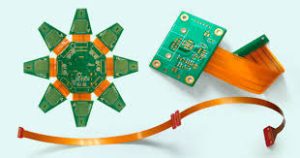
Can you explain the importance of solder mask in Rigid flex pcb?
Furthermore, solder mask enhances the durability and mechanical stability of rigid flex PCBs by protecting the underlying substrate materials from mechanical stress, abrasion, and handling damage. The solder mask acts as a protective coating that reinforces the structural integrity of the PCB assembly, preventing the risk of solder joint fractures, substrate delamination, or copper trace damage that can occur during assembly, handling, or operation. This is particularly advantageous in ruggedized electronic devices used in aerospace, automotive, and industrial applications, where reliability and durability are critical requirements.
Additionally, solder mask helps improve the visual aesthetics of rigid flex PCBs and facilitates easier inspection and troubleshooting of PCB assemblies. By covering the bare copper traces and component pads with a colored solder mask layer, such as green, blue, or black, the solder mask provides contrast and clarity to the PCB layout, making it easier for technicians to visually inspect the assembly for defects or anomalies. This is especially useful during quality control inspections, rework processes, or diagnostic procedures, where rapid identification of solder mask openings or solder defects is essential for ensuring the integrity of the PCB assembly.
Moreover, solder mask plays a crucial role in protecting the PCB assembly from soldering-related thermal stresses and preventing damage to sensitive components or substrates. During the soldering process, the solder mask acts as a thermal barrier that helps dissipate heat evenly across the PCB surface, reducing the risk of localized heating or thermal shock that can cause warping, delamination, or component damage. This is particularly important in rigid flex PCBs, where the combination of rigid and flexible substrates can create thermal gradients and mechanical stresses that may affect the reliability of solder joints and electrical connections.
In conclusion, solder mask plays a vital role in the fabrication, assembly, and performance of rigid flex PCBs, offering important benefits in terms of electrical insulation, solderability, durability, visual aesthetics, and thermal management. By providing a protective barrier between conductive traces and external environmental factors, solder mask helps ensure the reliability and longevity of electronic devices in a wide range of applications. As technology advances and the demand for more compact, reliable, and versatile electronic systems grows, the importance of solder mask in rigid flex PCBs is expected to continue to increase, driving innovation and advancements in solder mask materials and processes.