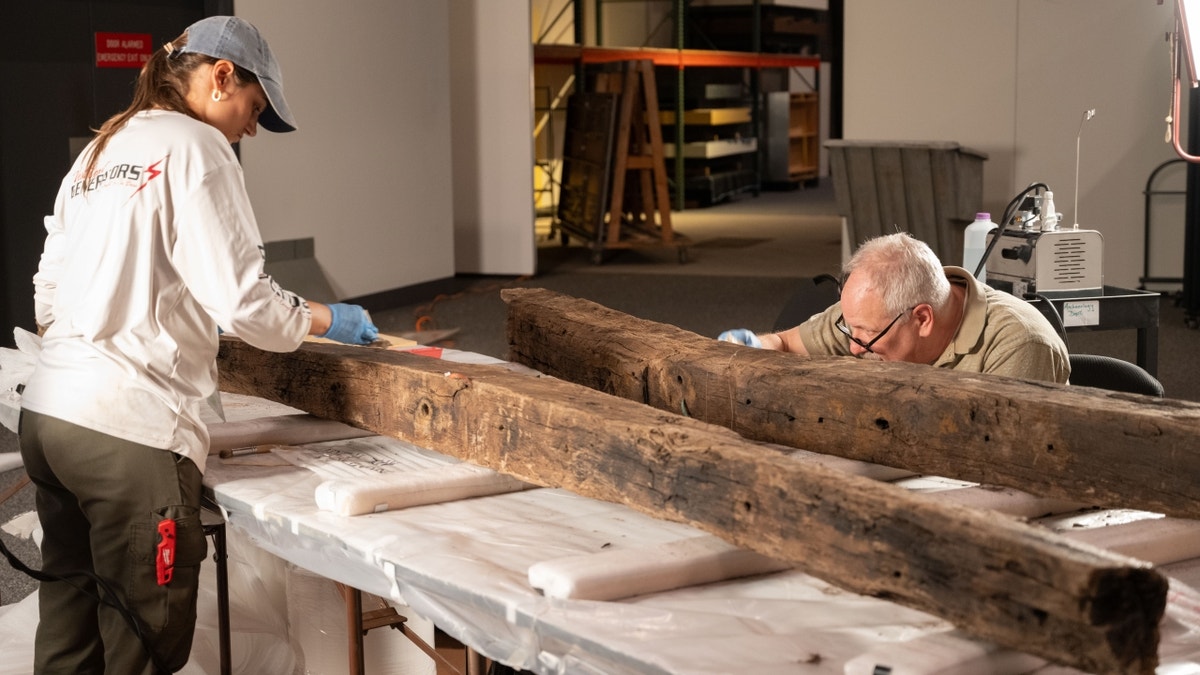
A lost Revolutionary War-era ship that was unearthed at the site of the World Trade Center will finally be exhibited in a museum over a decade after it was found.
The New York State Museum announced in a mid-May press release that the ship will be housed in its Albany headquarters. The 18th-century vessel was found during an excavation of Ground Zero in July 2010.
With help from Texas A&M University historical preservationists, experts have been working for 14 years to gather facts about the ship while preserving it carefully.
The ship, which measures 50 feet long and 18 feet wide, has been identified as a “rare” American-built gunboat.
Experts have identified the vessel as a American-built gunboat, which likely resembled the contemporary depiction on the left.(New York State Museum / Center for Maritime Archaeology and Conservation, Texas A&M University)
The vessel was likely built in the Philadelphia area in the 1770s.
It was used during the Revolutionary War but was decommissioned after roughly two decades.
“[B]y the 1790s, the ship was out of commission and repurposed as landfill to expand New York City, ultimately ending up beneath what would become the World Trade Center,” the New York State Museum said.
“Today, it stands as one of the few American-built Revolutionary War ships to be identified, studied and preserved in New York State.”
The ship was repurposed as landfill in the 1790s before being discovered beneath Ground Zero in 2010.(AKRF via New York State Museum)
In total, 600 pieces of wood and roughly 2,000 artifacts were found at the site, including musketballs.
For more Lifestyle articles, visit foxnews.com/lifestyle
After years of carefully preserving each piece of wood and artifact, the preservation team began the process of reconstructing the vessel at the New York State Museum on May 14.
Six hundred pieces of wood were recovered from the excavation site, plus over 2,000 artifacts.(New York State Museum / Center for Maritime Archaeology and Conservation, Texas A&M University)
In a statement, New York State Historian Devin Lander said the exhibit is “history in its rawest, most thrilling form.”
CLICK HERE TO SIGN UP FOR OUR LIFESTYLE NEWSLETTER
“We’re not just unveiling a ship – we’re resurrecting a lost relic of the American Revolution, right before your eyes,” Lander said.
The team began reconstructing the vessel at the New York State Museum in May after 14 years of preservation work and research.(New York State Museum)
“New York stood at the epicenter of our fight for freedom, and this gunboat is a physical reminder of that courage and grit.”
CLICK HERE TO GET THE FOX NEWS APP
The historian added, “To watch it rise again, plank by plank, is a once-in-a-lifetime chance to witness the intersection of archaeology, storytelling and national identity.”
The Central Board of Secondary Education, on Thursday, issued guidelines, placing a “renewed emphasis” that all its affiliated schools adopt the mother tongue or a familiar regional language as the primary medium of instruction for early grades starting this academic session (2025–26), under the new National Curriculum Framework for School Education (NCF-2023).
The latest directive, NCF-2023 — issued as part of the implementation of the National Education Policy (NEP) 2020 — places strong emphasis on the use of “home languages” or mother tongue during the Foundational Stage (Pre-primary to Grade 2, ages 3–8), as per the official statement.
What does CBSE’s directive say?
The Education Board’s latest directive has emphasised the following:
1. Mother tongue — R1
The directive has emphasised that the language most familiar to the child—preferably the mother tongue—ideally must be used as both the language of literacy and the medium of instruction (MoI) for all subjects. This aims to build strong foundational literacy and comprehension skills by leveraging children’s existing linguistic and cultural knowledge.
If implementing the mother tongue is not feasible due to factors like classroom diversity or lack of written tradition, the policy allows for R1 to be the State Language, provided it is familiar to the child.
2. Bilingual approach – R2
In addition to R1, children will also be introduced to R2, a second spoken language, gradually familiarising them with multilingual learning. However, formal literacy goals—such as reading fluency, sentence construction, and expression—will focus exclusively on R1 during the foundational years.
At the end of Grade 2, students are expected to read fluently and comprehend texts in R1, and begin writing simple sentences to describe their experiences and surroundings.
Options for Medium of Instruction in Preparatory Stage
For the Preparatory Stage (Grades 3-5), the directive stated that at least one language native to India will be offered as an option for the medium of instruction(MoI) to all students up to Grade 12. Schools are, accordingly, required to provide this option in all classes starting with the Preparatory Stage, if the primary MoI is not a language that is native to India.
Here’s the circular issued to all Heads of Schools Affiliated to CBSE:
My personal daily driver is the AOC Q27G4ZD (8/10, WIRED Review). A 1440p screen is a very manageable resolution for modern systems, and a great target for a new build. This AOC is a premium version, with the latest panel tech, at a very reasonable price. It quickly took the place of a less impressive 4K screen, which I think is a testament to how much of an improvement QD-OLED is over most other panel types.
It has a 240-Hz refresh rate, which is among the highest you’ll find on gaming screens, with only a few options at 300 Hz or higher. According to the Steam Hardware Survey, just over half of gamers still play at 1080p. The upgrade to 1440p, plus the refresh improvement, should feel massive to anyone looking at a 90-Hz or even 120-Hz screen.
I only have two complaints about the AOC, and one is relatively minor. The glossy finish is fine for pure gaming, but it might be a little bothersome if you intend to use the monitor for both work and play, especially if it’s in a brightly lit office. The less bothersome issue is the stand, which feels a little light for how heavy the screen is, but I recommend using a monitor arm anyway for better adjustability.
KAKO starimo, srce prolazi kroz prirodne promjene, ali način na koji živimo i dalje ima ogroman utjecaj na njegovo zdravlje. Stručnjaci upozoravaju da određene svakodnevne navike, koje često uzimamo zdravo za gotovo, mogu postupno povećati rizik od kardiovaskularnih bolesti. Iako se srčane tegobe mogu činiti kao neizbježan dio starenja, promjenom životnog stila moguće je uvelike smanjiti rizik. Ključ je u prepoznavanju ponašanja koja štete i njihovu pravovremenom izbjegavanju. U nastavku su četiri navike koje bismo trebali ostaviti iza sebe u starijoj dobi radi zdravijeg srca.
1. Sjedenje veći dio dana
Dugotrajno sjedenje povezano je s usporenom cirkulacijom i povećanim rizikom od srčanih bolesti, osobito u starijoj dobi. Čak i kod osoba koje redovito vježbaju, višesatno sjedenje bez pauze može oslabiti učinke tjelovježbe. Preporučuje se kratko ustajanje i razgibavanje svakih 30 do 60 minuta. I jednostavne šetnje mogu pomoći u održavanju zdravlja krvnih žila i regulaciji krvnog tlaka.
2. Preskakanje redovitih liječničkih pregleda
Mnogi ljudi, osobito u starijoj dobi, izbjegavaju preventivne preglede misleći da su nepotrebni ako se osjećaju dobro. No upravo ti pregledi omogućuju rano otkrivanje problema poput visokog krvnog tlaka, povišenog kolesterola ili nepravilnog srčanog ritma. Stručnjaci upozoravaju da neliječeni čimbenici rizika često nemaju simptome sve dok ne izazovu ozbiljne komplikacije.
Redovite kontrole mogu spriječiti razvoj bolesti i omogućiti pravodobno liječenje. Briga o zdravlju srca počinje s odgovornošću prema vlastitom tijelu – čak i kada ništa ne boli.
3. Nedovoljno sna
Kvalitetan san često se zanemaruje, ali ima ključnu ulogu u regulaciji krvnog tlaka, razine šećera u krvi i oporavku srca. Kroničan manjak sna povezan je s većim rizikom od srčanog i moždanog udara. Starije osobe često pate od poremećaja spavanja, no to ne bi trebalo biti prihvaćeno kao “normalno”. Rutina odlaska na spavanje, izbjegavanje ekrana navečer i mirno okruženje mogu značajno poboljšati kvalitetu sna. Ponekad je za zdravlje srca potrebna jednostavna navika – raniji odlazak na spavanje.
Tekst se nastavlja ispod oglasa
4. Zanemarivanje emocionalnog zdravlja
Stres, tjeskoba i depresija mogu imati ozbiljne posljedice na zdravlje srca. Iako se psihičko stanje često ne vidi na prvi pogled, njegovi učinci na tijelo itekako su stvarni – od povišenog krvnog tlaka do kronične upale. Stručnjaci naglašavaju važnost razgovora, podrške i redovitih trenutaka opuštanja u svakodnevici.
Bilo da je riječ o šetnji, hobiju ili razgovoru s bliskom osobom – emocionalna ravnoteža jednako je važna kao i prehrana ili tjelovježba. Srce najbolje radi kada i um ima prostora za odmor.
Briga o srcu u starijoj dobi ne mora biti komplicirana – dovoljno je izbjegavati štetne navike i napraviti mjesta za zdravije izbore, korak po korak.
Znate li nešto više o temi ili želite prijaviti grešku u tekstu? Kliknite ovdje.
Ovo je .
Homepage nacije.
Imate važnu priču? Javite se na [email protected] ili klikom ovdje. Atraktivne fotografije i videe plaćamo.
AGRESIJA kod pasa je ozbiljan problem koji može ugroziti sigurnost ljudi i drugih životinja, ali važno je znati da je takvo ponašanje često znak dubljih emocionalnih ili zdravstvenih problema, a ne uvijek rezultat loše naravi psa. Razumijevanje uzroka, prepoznavanje znakova i pravilna reakcija ključni su koraci u rješavanju ovog izazova. U ovom članku objasnit ćemo što uzrokuje agresiju, kako je prepoznati i što učiniti kada se pojavi.
Uzroci agresije kod pasa
Agresivno ponašanje kod pasa može imati različite uzroke, uključujući genetsku predispoziciju, nedostatak socijalizacije, negativna iskustva iz prošlosti i trenutačne čimbenike iz okoline. Genetski faktori posebno su važni kod određenih pasmina ili ako roditelji psa pokazuju agresivno ponašanje. Nedostatak socijalizacije u ranoj dobi može dovesti do straha i anksioznosti, što povećava vjerojatnost agresivnog ponašanja u odrasloj dobi.
Negativna iskustva, poput bolnih ili zastrašujućih situacija, mogu ostaviti trajan pečat na psa, osobito ako je doživio traumu vezanu uz određenu osobu, životinju ili situaciju. Vanjski čimbenici, poput čuvanja hrane ili igračaka i osjećaja preplavljenosti u gomili također mogu pokrenuti agresivno ponašanje. Zdravstveni problemi, poput boli ili nelagode, često su podcijenjen uzrok agresije. Pas koji osjeća bol može postati agresivan kako bio se obranio od potencijalne prijetnje.
Vrste i znakovi agresije
Agresija kod pasa može se manifestirati na različite načine, a najčešće vrste su dominantna agresija, strahom izazvana agresija i agresija prema drugim psima.
Dominantna agresija javlja se kada pas pokušava kontrolirati svoje okruženje. Znakovi uključuju režanje, napadanje ili ugrize kada pas osjeća da je njegov položaj u hijerarhiji ugrožen. Pas može blokirati put, zahtijevati pažnju, štititi svoje mjesto za spavanje ili ugristi kada mu se netko približi dok jede. Takvi psi često imaju siguran stav i reagiraju agresivno na izazove.
Strahom izazvana agresija
Strašljivi psi često pokazuju znakove poput čučanja, skupljanja repa, režanja ili pokazivanja zuba. Za razliku od dominantne agresije, strahom izazvana agresija često je praćena nedostatkom samopouzdanja. Pas može ugristi ako se osjeća zarobljenim ili ako ne može pobjeći od onoga što smatra prijetnjom.
Tekst se nastavlja ispod oglasa
Agresija prema drugim psima
Ova vrsta agresije javlja se kada pas reagira agresivno prema drugim psima, često zbog teritorijalnih sukoba, natjecanja za hranu i teritorij ili straha. Znakovi uključuju napadanje, izravno gledanje u oči, nakostriješenu dlaku na leđima ili pokazivanje zuba prema drugom psu.
Praktični koraci za rješavanje agresije
Rješavanje agresije kod pasa zahtijeva strpljenje, razumijevanje i dosljednost. Evo koraka koje treba poduzeti:
Identificirajte razloge: promatrajte psa kako biste utvrdili što izaziva agresivno ponašanje – određene ljudi, životinje ili situacije.
Potražite stručnu pomoć: ako se agresivno ponašanje nastavi ili pogorša, obratite se veterinarskom stručnjaku ili profesionalnom treneru psa s iskustvom u radu s agresivnim psima.
Postupno privikavajte psa na okidače agresije: postupno izlažite psa okidačima s udaljenosti na kojoj se osjeća sigurno i nagradite mirno ponašanje. Postupno smanjujte udaljenost i nastavite nagrađivati pozitivno ponašanje.
Budite dosljedni: dosljednost u treningu i strpljenje ključni su za uspjeh. Izbjegavajte situacije koje izazivaju agresiju dok pas ne napravi značajan napredak.
Osigurajte sigurno okruženje: stvorite sigurnu i predvidljivu rutinu za psa, smanjite izlaganje uzrocima agresije i osigurajte prostor gdje pas može osjećati sigurnost.
Kada potražiti stručnu pomoć?
Ako agresivno ponašanje postane ozbiljno ili ako je pas više puta pokušao ugristi ljude ili druge životinje, nužno je potražiti stručnu pomoć. Veterinar može isključiti zdravstvene probleme, dok profesionalni trener ili stručnjak za ponašanje životinja može napraviti plan za promjenu ponašanja.
Prevencija agresije
Prevencija je najbolji način borbe protiv agresije. Rana socijalizacija, dosljedan trening i stvaranje sigurnog okruženja ključni su koraci za sprječavanje agresivnog ponašanja. Uvijek nagrađujte pozitivno ponašanje i izbjegavajte situacije koje mogu izazvati strah ili anksioznost kod vašeg ljubimca.
Znate li nešto više o temi ili želite prijaviti grešku u tekstu? Kliknite ovdje.
Ovo je .
Homepage nacije.
Imate važnu priču? Javite se na [email protected] ili klikom ovdje. Atraktivne fotografije i videe plaćamo.
Pri kreiranju rubrike Index Shopping nastojimo izdvajati odlične proizvode koji se i nama sviđaju te odlične akcije i popuste. Ne objavljujemo proizvode koje i sami ne bismo kupili ili smatramo da njihova promocija nije u skladu s profesionalnim standardima. Neki proizvodi u rubrici Index Shopping mogu biti sponzorirani.
GLUMICA Jessica Biel priprema se pridružiti svom suprugu Justinu Timberlakeu ovog vikenda na festivalu BottleRock Napa Valley kako bi predstavila svoj najnoviji projekt: brend vina Prophet & Poet.
Ovaj brend Biel je osnovala sa svojim bratom Justinom i dugogodišnjim obiteljskim prijateljem i vinarom Jessejem Katzom, koji je za njihovo vjenčanje izradio posebne vinske mješavine.
Dizajn etiketa nadahnut kartama za tarot
Prvotno stvorena za privatne proslave, ova vina postala su toliko popularna da je linija već osvojila nekoliko priznanja, a mješavina koju su Jessica i Justin Timberlake posluživali na svojoj svadbi bit će dostupna za kupnju.
“Vino je nazvano Blue Ocean Floor po pjesmi koju je Justin napisao za mene i koju je pjevao dok sam prilazila oltaru. Sada je staro gotovo 13 godina”, rekla je Jessica u razgovoru za InStyle. “Lijepo je ostarilo, a nastalo je jednostavno zbog Justinove i moje ljubavi prema crvenom vinu. Katz je tada bio tek mladi vinar”.
Tekst se nastavlja ispod oglasa
“Nedavno sam probala ovo vino, predivno je”, “Jedva čekam probati”, “Odlična priča i odlično vino”, “Većina alkohola koje promoviraju slavni je smeće, ali priča je dobra”, glase neki od komentara na Instagramu brenda.
Vino dolazi u kutijama koje nalikuju knjigama, a etikete na bocama nadahnute su kartama za tarot.
“Najbolje kod ove tvrtke je što nemamo smjernice. Možemo raditi što želimo”, zaključila je Jessica.
Znate li nešto više o temi ili želite prijaviti grešku u tekstu? Kliknite ovdje.
Ovo je .
Homepage nacije.
Imate važnu priču? Javite se na [email protected] ili klikom ovdje. Atraktivne fotografije i videe plaćamo.
While we have heard a lot about what flagship chipsets Qualcomm and MediaTek have to offer, Xiaomi, joining the fray, has revealed its own in-house flagship chipset, called the Xring O1. This chipset is said to go toe-to-toe with other flagship chipsets from the likes of Qualcomm and MediaTek, which are the Qualcomm Snapdragon 8 Elite and the MediaTek Dimensity 9400 chipset. That should tell you that this is a flagship-grade chipset by Xiaomi. Here, let us tell you all the details about it.
Xiaomi Xring O1 Chipset: Details
The Xiaomi Xring O1, having 19 billion transistors, features a deca-core CPU, meaning there are 10 cores. It also gets Xiaomi’s fourth-gen ISP and a 6-core NPU offering 44 TOPS for AI-based tasks.
The chipset also has a powerful GPU to go along with it: the Arm Immortalis-G925 MC16 GPU. It should be noted that this is the same GPU found in the MediaTek Dimensity 9400 chipset, but with more shader cores.
Following In Apple’s Footsteps
If you think about it, most companies are starting to feature their own chipsets. Google does so with its Tensor lineup, Samsung has its Exynos lineup, and Apple, of course, has its A-series of chipsets, like the Apple A18 and the Apple A18 Pro and previous models. Xiaomi seems to be following a similar direction with its own in-house silicon.
It should be noted that this uses a 3nm process, just like the Apple A18 chipsets, as well as the Snapdragon 8 Elite and the MediaTek Dimensity 9400. This should tell you that Xiaomi is quite serious about its chipset, and it is reportedly going to debut these chipsets in its products, such as the Xiaomi Tablet 7 Ultra and the Xiaomi 15S Pro (3 million points on AnTuTu benchmark).
The teaser of Kottalavadi, the debut film under PA Productions, founded by Pushpa Arun Kumar, mother of Rocking Star Yash, was unveiled on Wednesday. Popular actor Sharan launched the teaser and described it as “the beginning of something truly special.”
From the very first frame, the Kottalavadi teaser announces itself with power and purpose. Set in a village nestled between Chamarajanagar and Gundlupete, the visuals are steeped in earthy tones and gritty realism. Actor Pruthvi Ambaar, known for his romantic roles, makes a striking shift to a rugged, mass-appeal action hero. His transformation is amplified by Vikas Vasishta’s evocative score and Abhinandan Kashyap’s stirring background music, setting a grounded yet gripping tone.
But what truly sets Kottalavadi apart is what happened behind the scenes. The fact that Pushpa Arun Kumar was turning producer was kept under wraps until the film’s completion — a surprise even to many on the team. PA Productions was born from Pushpa’s vision: not just to produce films, but to nurture untapped talent. Inspired by the legacy of icons like Dr. Rajkumar and Parvathamma Rajkumar, her goal is to champion storytelling with sincerity and heart.
“I told the team, ‘Don’t come to me asking for opportunities — let your work speak.’ We’re not here to chase fame,” Pushpa said at the event. “If the name ‘Yash’s home production’ is attached, the entire nation will be watching. We’ll provide everything — talent, resources — but you must deliver quality. Yash taught us: ‘Never cheat cinema.’ Even if it costs Rs 10 more, the story and standard must shine.”
Her husband, and Yash’s father, Arun Kumar, has offered quiet but powerful support: “Do what makes you happy, Amma. I’m a farmer — I understand what it means to nurture something with patience.”
Debutant director Sriraj, who has worked with KV Raju, said, “It’s rare to find a producer like Pushpa ma’am. She trusted newcomers without compromise. That gave me the courage to write this script.”
Lead actor Pruthvi Ambaar shared, “Raju sir offered me this powerful rural character, and it was just what I was looking for. When I met Pushpa ma’am, she blessed me and said, ‘Grow even better than my son.’ That kind of support is scarce.”
The film also stars Kavya Shaiva, Gopalakrishna Deshpande and Rajesh Nataranga. The team also includes cinematographer Karthik S, editor Ramisetti Pavan, dialogue writer Raghu Niduvalli, and lyricists Dr. V. Nagendra Prasad, Kinnal Raj, Pramod Maravante, and Ghouse Peer.
Syrma SGS Technology Ltd has signed a strategic partnership with Dynabook Singapore Pte Ltd to manufacture laptops domestically, the Mumbai-based electronics manufacturing services company announced.
The shares of Syrma SGS Technology Ltd closed today at ₹534.90 down by ₹3.95 or 0.73 per cent on the NSE.
The collaboration will see Syrma SGS produce Dynabook’s laptop portfolio for enterprise customers and commercial channels across India, supporting the government’s ‘Make in India’ initiative for local manufacturing.
Dynabook, which traces its heritage to the first laptop PC released in 1985, is a leading commercial PC brand in Japan that focuses on B2B laptop computers. The partnership aims to serve diverse customer segments from start-ups to government enterprises.
“With local manufacturing, Dynabook will be able to better serve the needs of our customers across industries and segments,” said Wong Wai Meng, Managing Director of Dynabook Singapore.
Syrma SGS CEO Satendra Singh called the partnership “a moment of pride” and highlighted that it would provide more choices for Indian customers under the Centre’’s manufacturing push.
Second global partnership
This marks the second global brand partnership secured by Syrma SGS this year. The PLI-approved manufacturer operates facilities across eight Indian cities and reported consolidated revenue of approximately ₹3,836 crore for FY24-25.
The partnership leverages Syrma SGS’ four decades of IT hardware manufacturing experience, including expertise in memory, SSDs, motherboards and complete systems integration.
During the Gold Rush of the mid-1850s, Etienne Guittard, a French chocolatier, sailed to California like many others, hoping to strike it rich.
However, he soon realized his fortunes lay not in the mines but in selling the chocolates he brought with him from his uncle’s Tournus factory to trade for mining supplies.
In 1868, after a stint refining his skills back in France, he returned and started a small business, E. Guittard & Co., on San Francisco’s waterfront. In addition to making chocolate, he sold tea, coffee and spices.
The business became a fixture in the city as it grew into one of the country’s major metropolitan centers. Guittard became the chocolate maker of choice for top chefs like Thomas Keller and restaurants such as Chez Panisse, and supplier to iconic confectioner See’s Candies since the 1930s.
Over the last century, the family-owned business has survived numerous threats to its existence, including the 1906 San Francisco earthquake, the Great Depression, massive sugar price hikes in the 1970s and the unexpected deaths of the company’s president and successor in the late 1980s, not to mention competition from artisanal brands in the 2000s.
Now it is facing yet another crisis: the Trump administration’s global tariff war.
“It was like a jab after a good hard right,” said Gary Guittard, the fourth-generation president and chief executive of Guittard Chocolate Co.
Guittard had just absorbed the shock of last year’s 180% spike in cocoa prices (on top of the 61% increase the year before), the result of shortages because of climate impacts and drought, when President Trump announced in April that he was implementing global tariffs that would include cocoa beans, chocolate’s key ingredient.
While businesses from autos to toys are grappling with the effects of new global tariffs, the imposition of retaliatory levies on imports has injected new turmoil into the already turbulent chocolate market. For a small, slim-margin business like Guittard, tariffs have the potential to wreak havoc, as prices are expected to rise even more, creating fresh uncertainties for manufacturers that depend on materials from abroad.
“I didn’t understand the numbers until I started playing the numbers,” he said. With the price of cocoa beans nearly quadrupling in the last two years to $12,931 per metric ton from $3,261 in 2023, Guittard said he was now having to look at adding another 10% into the cost of doing business.
“I immediately thought, we have to raise our prices,” he said.
While other manufacturers may turn to alternatives to help soften the tariff blow, American chocolate makers are wholly reliant on imports. Cocoa beans, the raw unprocessed ingredient used to make chocolate, can only grow in tropical regions that are 20 degrees north and south of the equator.
The majority is produced in the West African nations of Ivory Coast and Ghana; it is also grown in parts of Central South America and Southeast Asia.
“We are really having a lot of discussions on how we want to approach the tariffs and whether we can afford to mitigate the effect on our customers by absorbing some of the effects on cost. But that, of course, will affect our bottom line as well,” he said.
The company, now based in Burlingame, Calif., south of San Francisco, sources beans from multiple locations including Ghana, Ivory Coast and South America. The blends have given Guittard chocolate unique flavor profiles, but have also served as a hedge against the vagaries of the market.
“We have a blend of beans, purely and precisely because of these kinds of events: political events or diseases or anything that can happen,” Guittard said.
Chocolate makers since 1868, Guittard began supplying See’s Candies in the 1930s. Here, Guittard Chocolate Co. Chief Executive Gary Guittard holds a chocolate bar at the company’s Burlingame, Calif., plant.
(Paul Kuroda / For The Times)
Trump’s tariffs have injected a new and complex variable into that calculation. While America’s trading partners were given a minimum baseline 10% duty, a number of the cocoa-producing nations, where Guittard purchases its beans, were slapped with higher tariffs. For instance, the Ivory Coast was given 21% and Madagascar a 45% duty.
“I think mathematically you can figure that out,” said Guittard, but noted that the picture becomes increasingly complicated when you try to determine prices when a particular product uses bean blends that have different tariffs. For instance, the company’s inventory currently has pre-tariffed beans and is expecting shipments to come in from South America that will be tariffed.
“There’s 10 different ways to look at it. So we’re just trying to figure out what’s the best way for us and our customers.”
Guittard says the company is leaning toward absorbing a portion of the cost. “We have to decide how much we can absorb and for how long. We certainly can’t absorb it all. We’re a small family company, not a large multinational conglomerate.”
Guittard, which employs about 240 people, is a small player in the nearly $30-billion U.S.-based chocolate market, generating roughly $100 million annually. The company did not disclose earnings but says it’s profitable.
Unlike the major U.S. manufacturers such as Hershey and Mars, Guittard, like most small businesses, doesn’t have the kind of resources or influence to get a carve out or cushion the coming financial blow.
Swiss chocolate conglomerate Lindt & Sprüngli, which acquired Ghirardelli in 1998, announced that it will sidestep the U.S. as a supplier in order to avoid tariffs.
“We are monitoring the situation very closely and have identified different ways to mitigate the effect of tariffs,” a Lindt spokesperson told Fox News Digital. “These include the possibility of supplying countries like Canada and Mexico from our European production facilities.”
The National Confectioners Assn., an advocacy trade organization for candy makers, is also seeing how to navigate the situation on behalf of its members. “We’re watching this closely,” said Christopher Gindlesperger, the NCA’s senior vice president of public affairs and communications.
“We’re trying to look at it through our customer’s eyes. We don’t want it to affect them,” said Guittard. “A lot of our customers are family businesses as well.”
Under the Trump administration’s new global tariff policy, these Madagascar cacao beans are subject to a 45% duty.
(Paul Kuroda / For The Times)
For now, Guittard says he will have to play the waiting game and see how it unfolds. A key factor, he says, is how consumers react and whether they will limit or stop buying candy bars and baking chocolate.
“This is a lot more complicated to implement than meets the eye, and we want to be transparent and honest about how we do it rather than using [tariffs] as an excuse to raise prices, which is not what I want to do,” he said.
Justified anger will never lead us to sin. Righteous anger maintains integrity, whether it be a toxic thought, a hateful word, or a regrettable action. And if we’re honest with ourselves, most anger does not fit within this category.
For most of my adult life, anger has been a persistent issue. I’ve been convicted of it, repented of it, and worked hard to diffuse it. I’ve even researched how the brain manages this powerful emotion. In my book, Scarves of White: Replacing Our Issues with the Covering of Christ, I share, “Studies have shown that some people actually see the color red when they are angry. Medical Science can detect changes in the brain, like increased adrenaline. The frontal lobe contains our reasoning center, and when the emotion of anger is triggered, the amygdala (uh-mig-duh-luh) begins working overtime! Blood rushes to the frontal lobe in an attempt to calm things down. That is one good reason for counting to ten before we react. It gives our brains time to defuse our anger.”
Ephesians 4:26-27 says, “Be angry and do not sin; do not let the sun go down on your anger and give no opportunity to the devil.” (ESV) This verse is important because it outlines anger as a legitimate human experience while warning us of its lure.
The Bible encourages us to deal with anger quickly so as not to give the enemy a foothold. This includes replacing lies with truth, avoiding toxic conversations, refusing to engage with irrational people, and reacting from a place of calmness and control.
A Prayer to Take With You: Lord, please keep me from sinful anger, and give no opportunity to the enemy. In Jesus’ name, amen.
Archaeologists recently uncovered extraordinary artifacts from an ancient African Christian community in Israel, according to officials.
The Israel Antiquities Authority (IAA) announced the finds on May 14.
In a Facebook post, the organization said the objects were discovered during an excavation at Tel Malḥata, a mound in the Arad Valley of the Negev Desert. In ancient times, Tel Malḥata served as a crossroads that merchants from the Arabian Peninsula, India and Africa used.
The items were found in 1,500-year-old graves of women and children, according to the IAA. Pictures show multiple figurines with human face shapes, along with scattered artifacts, including jugs and pottery fragments.
Archaeologists also found other burial offerings, including glassware, bronze bracelets, and jewelry made of stone and alabaster. The burials were conducted according to ancient Christian tradition, with excavators describing the figurines as being “heads of African figures, carved in black wood.”
Well-preserved ebony wood carvings from 1,500 years ago reveal a diverse Negev community, according to officials.(Svetlana Talis & Dafna Gazit; Israel Antiquities Authority)
In a journal article, researchers said the figurines show that a Christian community lived in Southern Israel “about 1,500 years ago, possibly with some of its members coming from Africa.”
Said the article, “Carved from bone, and from ebony wood – a rare raw material originating from southern India and Sri Lanka – the figurines were designed in the form of women and men bearing prominent African facial features, and with a hole for the purpose of wearing them around the neck.”
The study added, “It seems their purpose was not only decorative, but also as intimate personal items carrying with them a story of identity, tradition and memory.”
The IAA noted that the artifacts were “carefully placed” among the deceased women and children, and after 1,500 years, they’re still “exceptionally well-preserved.”
Archaeologists uncovered rare artifacts from an ancient African Christian community in Israel.(Svetlana Talis / Israel Antiquities Authority)
“It is possible that the figures represent ancestors, and thus they reflect traditions passed down from generation to generation – even after the adoption of the Christian religion,” researchers said.
For more Lifestyle articles, visit foxnews.com/lifestyle
The article continued, “It is likely that a woman and a child who were buried side-by-side, and in whose graves two of the figurines were discovered, belonged to the same family – and perhaps they were even mother and son.”
The IAA noted that unearthing African figurines in Christian graves in Israel is quite unusual and called the find “a rare discovery.”
Israeli researchers say the wooden figurines suggest that an ancient African community maintained traditions after converting to Christianity.(Dafna Gazit / Israel Antiquities Authority)
“[It] deepens our understanding of the cultural diversity among the inhabitants of the country in this region about 1,500 years ago,” the agency wrote.
CLICK HERE TO SIGN UP FOR OUR LIFESTYLE NEWSLETTER
Eli Escusido, director of the IAA, described the findings as “moving, not only from an archaeological perspective, but also on a human level.”
He added, “They serve as a reminder that the Land of Israel has always been a crossroads of cultures and peoples – individuals arrived here, integrated into the local population, and yet still carried with them traditions and beliefs from distant lands.”
The ancient artifacts were found during an excavation at Tel Malḥata, located in the Arad Valley.(Svetlana Talis / Israel Antiquities Authority)
The grave discoveries are a few of many remarkable IAA finds in the past year.
In December, the agency announced the discovery of the oldest-known Chinese inscription in Israel, which was found at the holy site of Mount Zion.
CLICK HERE TO GET THE FOX NEWS APP
In March, an Israeli child uncovered a 3,800-year-old Canaanite amulet at a mound called Tel Azeka, located in the Judean Foothills.
SAMS Odisha +3 admission 2025: The Higher Education Department of Odisha has extended the registration window for SAMS Odisha +3 Admission 2025. Students seeking e-admission can now access the registration link on the official website — samsodisha.gov.in.
The new deadline for submitting the online Common Application Form (CAF) is June 1, 2025. The earlier deadline was May 20.
SAMS Odisha +3 admission 2025: Revised schedule
As per the revised schedule, candidates who have already submitted their CAF will now be able to edit their forms using OTP authentication from May 21 to June 1, 2025. During this same period, they can also upload their Class 12 or equivalent marks.
For students from the CHSE board, marks will be auto-filled based on the CHSE result database. Candidates from other boards are required to enter their marks in the designated fields within the specified timeframe.
SAMS Odisha +3 Admission 2025: How to register – a step-by-step guide
To register for the SAMS Odisha +3 admissions, candidates can follow the given steps:
Visit the link samsodisha.gov.in
2. Click on the +3 Admission 2025 registration link on the homepage
3. Register using your details on the newly opened page
4. Complete the application form, with all the required details. It is advisable to cross-check the details for every field.
5. Pay the application fee and click “Submit”
6. Your registration will be completed
7. Download and print the confirmation page for future reference
How will seats be allotted?
Seat distribution will be based on students’ subject preferences:
1.For single major courses, seats will be allotted based on the chosen major
2. For double majors, allotment will depend on the first major selected
3. For three minors, the general subject selection will be considered
All other subject preferences will be mapped as per student requests during the counselling process at the institution level.
The Citizenry’s linen not only feels fantastic to sleep on but comes in lots of colors to go with any color scheme your bedroom might have. Parts of the sheet set (just the top sheet, pillowcases, etc.) can be purchased individually if something happens to one of your pieces.
More Linen We Love
Extra soft and splurge-worthy linen:Cultiver Linen Sheet Set ($480) is so soft you might not realize it’s linen. My husband didn’t, and he’s a certified linen hater. This set is a splurge, but worth it if you want the benefits of linen and a much softer feel. They’re borderline silky, which feels almost wrong to say when describing linen.
Best breathable linen:Pottery Barn Belgian Flax Linen Sheet Set ($299) has the most breathable weave I’ve slept on. The airflow is great, keeping me cool even in the hottest times of year. These sheets are a little thinner than the Citizenry’s but not quite as soft.
Best heavyweight linen:Rough Linen’s Orkney Sheet Set ($540) is perfect for serious linen lovers who wish for heavier linen. These are the heaviest our team has tested, with about 260 gsm (grams per square meter) of linen—most others we’ve tested and recommend are around 160 gsm.
Looking for more linen? Read about every set of linen we’ve tested and our shopping advice in our guide to the best linen sheets.
The Best Silk Sheets (and Pillowcases)
LilySilk
19-Momme Seamless Silk Sheets
Silk stays cool and slick when you need it, so you shouldn’t heat up and stick to your bed in the middle of the night. But it also is capable of insulating you decently well to keep you warm in the winter months. Silk is also better for your beauty rest and the reason why silk scarves, bonnets, and pillowcases are so popular. It absorbs less moisture from your hair and skin, so you stay hydrated and don’t lose all your expensive beauty products to your pillow. It also causes less friction, pulling less at your skin during the night. If you’re a side or stomach sleeper where your face makes direct contact with your pillow, silk is a great option to consider. You’ll also find that silk is graded not by thread count, but by weight and density, using the term “momme.” A higher number equals more threads, a higher density, and more durability—and a higher price tag.
Our favorite silk bedding is these pieces from Lilysilk. They’re soft and smooth without being freezing cold. Lilysilk is the only brand of full silk sheets we’ve tested, and it’s very expensive to get a full set—you’re looking at just over $500 for one flat sheet, one fitted sheet, and two pillowcases—but the brand offers each piece individually. Former WIRED reviewer Medea Giordano tried the fitted sheet with a percale top sheet and found it cooling and comfortable. If you can spend a little more, Lilysilk has 22- and 25-momme sets available. They’re a little more durable, but 19 is still very high quality.
Other Silk Bedding We Love
Our favorite silk pillowcase: The Quince Silk Mulberry Pillowcase ($45) is a great value at $40, and it has a better weight for that price than other brands. Quince’s silk pillowcase is 22-momme, where others usually have a 19-momme for that price, and that heavier weight makes it slightly thicker and softer to the touch. It has a zipper enclosure, which I liked since it kept the pillowcase looking polished, and I didn’t have to worry about my pillow wiggling its way out of the case while I tossed and turned in the night.
A zipper-free silk pillowcase:LilySilk’s 19-Momme Silk Pillowcase ($45) is the same price as the Quince pillowcase, but a lighter weight, though it’s barely noticeable side by side. If you prefer no zipper, though, this is the silk pillowcase for you. It does have a few colors and prints that Quince doesn’t, so you might want to peruse the two brands and choose based on your color preference.
A budget option:Kitsch’s Satin Pillowcase ($19) is satin, not silk, but former WIRED reviewer Medea Giordano said it’s better than similarly priced silk options. If you’re not looking to spend more than $20 to $25, she says to choose this one over the cheaper silk pillowcases you’ll find on Amazon.
The Best Flannel Sheets
Lands’ End
Comfy Super Soft Cotton Flannel Sheet Set
Flannel bedding is made of cotton, but the cotton fibers are brushed out to create a fuzzy texture. Those fluffed-out fibers also are what make flannel so warm and cozy to sleep on—the teased layers of cotton do a better job of retaining heat than other styles of cotton sheets, so you’ll stay much warmer sleeping on these than other sheet styles. They’re great for cooler climates and seasons.
These flannel sheets have a long name, but it’s an accurate one. This set from Lands’ End really is comfy and super soft and was the perfect combination of cozy without being too heavy. I love that these are so soft and warm without making me sweaty—a tall task for a hot sleeper in San Diego, though I did test them during the coldest time of year. I also like that it’s easy to buy Lands’ End as a set or purchase just a top sheet or pillowcases individually if something needs to be replaced.
More Flannel We Love
If you want brushed cotton instead:Riley’s Brushed Cotton Sheet Set ($160) is soft without being as heavy or hot as full flannel, since brushed cotton only brushes out the cotton on one side of the sheet instead of both sides for regular flannel. This set is a great cozy option for hot sleepers. The queen size is sold out with a flat sheet, but you can purchase a set without one.
Splurge-worthy, organic flannel: The Boll & Branch Cozy Flannel Sheet Set ($299) lives up to its name with its extra-soft bedding. Not only is it the softest flannel set I tried, but it’s organic, too. It also runs a little warmer, so it’s great for colder homes and climates.
The popular choice:L.L. Bean’s UltraSoft Flannel Sheets ($139) are definitely soft, but not as soft as our top flannel pick, and they feel lighter too. They’re almost like a warm jersey rather than a flannel. If you’re looking for a light but still soft bedding set, this is a good choice.
Looking for more cozy flannel? Check our guide to the Best Flannel Sheets.
The Best Organic Sheets
Brooklinen
Organic Cotton Sheets
If you’re buying an organic mattress, you probably want to pair it with organic bedding. Otherwise, nonorganic sheets can bring the chemicals and materials you avoided—including anything from formaldehyde and TCEP (a flame retardant) to phthalates—right back into your life. Even if you have a regular mattress, you can still benefit from choosing sheets that are made of natural, organic materials. Just about any kind of organic sheet can be organic, but it depends on how its materials are sourced and what kind of chemicals the fabric is exposed to.
WIRED reviewer Scott Gilbertson tests organic mattresses, and these are his favorite organic sheets to pair with them. They’re soft but not overly silky, which is a feeling he doesn’t care for. I’ve also found the organic percale is just a touch softer than Brooklinen’s regular percale. The Brooklinen organic cotton sheets are made from Global Organic Textile Standard (GOTS)-certified organic cotton and are Oeko-Tex certified. They also have a 300 thread count.
The best organic linen: The Citizenry also makes Organic Stonewashed Linen ($299), which is our favorite set of linen sheets that are organic to boot. These are lightweight and breathable, but still a little softer than your usual set of starter linen.
Affordable, organic bamboo:Quince’s Bamboo Sheet Set ($130) uses organic bamboo, and has a nice weight to it. It’s not as breathable as other sets I’ve tried, but it was really silky and available for a great price.
The Best Cooling Sheets
Slumber Cloud
Performance Tencel Sheet Set
This is another category where it’s not limited to a certain fabric type or weave, but rather is a general category for any set of bedding that feels breathable and will keep you cool during the night. I’ve found that the best contenders for staying cool at night are percale, linen, and bamboo sheets, but not every set is made equally.
This set, however, is none of those. SlumberCloud’s Performance Tencel Sheet Set uses Tencel, a brand of lyocell fabric, plus Slumber Cloud’s patented Outlast fiber, which uses phase change material (PCM) gel to absorb heat. These sheets are a sateen weave with a four-over-one thread structure, but they feel like a lightweight silky percale. I was amazed how cooling and breathable these sheets are, even with that type of weave, and so soft at the same time. As a hot sleeper sleeping on the third floor in Southern California, I was so impressed by how cool and comfortable I stayed on these sheets.
MALO što djeluje utješno kao šalica toplog čaja uz kockicu čokolade, a sada nova istraživanja pokazuju da ova omiljena kombinacija može imati i iznenađujuće koristi za zdravlje. Naime, tamna čokolada, ako je konzumiramo u umjerenim količinama, može pomoći u snižavanju krvnog tlaka i očuvanju zdravlja krvnih žila, tvrde kardiolozi.
Tamna čokolada s visokim udjelom kakaa ima prednost
Istraživanje objavljeno u uglednom European Journal of Preventive Cardiology analiziralo je podatke iz čak 145 kliničkih studija i otkrilo kako redovita konzumacija flavan-3-ola – spojeva prirodno prisutnih u čaju, jabukama, kakau i tamnoj čokoladi – može pridonijeti smanjenju krvnog tlaka, osobito kod osoba s povišenim vrijednostima.
U nekim slučajevima učinci su bili usporedivi s blagim djelovanjem lijekova za tlak. No, stručnjaci naglašavaju da čokolada nije zamjena za terapiju, već može biti dodatak zdravom načinu života.
Glavni autor studije, profesor Christian Heiss sa Sveučilišta u Surreyju, objašnjava: “Tamna čokolada može biti dobar izvor flavan-3-ola, koji su povezani s boljom funkcijom krvnih žila i nižim krvnim tlakom. Ipak, treba je konzumirati umjereno i kao dio uravnotežene prehrane, a ne umjesto nje.”
Upozorava i na to da mnoga komercijalna čokoladna rješenja sadrže puno šećera, masnoće i kalorija, što može poništiti potencijalne koristi ako se konzumiraju u većim količinama. Osim toga, količina flavan-3-ola često nije jasno označena na pakiranju, a njihov sadržaj značajno varira od proizvoda do proizvoda.
Koliko čokolade je dovoljno?
Za one koji imaju povišeni krvni tlak, Heiss preporučuje male količine tamne čokolade s najmanje 70% kakaa, ili još bolje – nealkalizirani kakao u prahu, koji ne sadrži dodatne šećere i masti. “Oko 20 do 30 grama tamne čokolade dnevno, odnosno nekoliko kockica, sasvim je dovoljno”, kaže profesor. “Alternativa može biti i dvije do tri žlice nealkaliziranog kakaa u mlijeku.”
Naglašava i da se pozitivni učinci ne postižu jednom konzumacijom već dugoročnim i redovitim unosom, u sklopu uravnoteženog načina života. Najbolji način za provjeru učinka je redovito mjerenje krvnog tlaka kod kuće i suradnja s liječnikom.
Tekst se nastavlja ispod oglasa
Ne štiti samo tlak, već i krvne žile
Zanimljivo je i da flavan-3-oli imaju pozitivan učinak čak i kada krvni tlak ostane nepromijenjen. Naime, oni poboljšavaju funkciju endotela – unutarnjeg sloja krvnih žila koji ima ključnu ulogu u zdravlju srca i krvotoka.
“Ovi rezultati ohrabruju sve koji traže jednostavne načine za potporu zdravlju srca kroz svakodnevne prehrambene navike”, ističe Heiss. “Uključivanje tamne čokolade, kakaa, čaja ili jabuka u svakodnevnu prehranu može donijeti korisne količine flavan-3-ola.”
Prema podacima američkog Centra za kontrolu i prevenciju bolesti (CDC), gotovo polovica odraslih osoba u SAD-u ima povišeni krvni tlak, što je jedan od glavnih čimbenika rizika za srčani i moždani udar.
I dok tamna čokolada može biti ukusan saveznik zdravlja, stručnjaci podsjećaju da nema čarobnih rješenja. Uravnotežena prehrana, tjelesna aktivnost, dovoljno sna, izbjegavanje pušenja i umjeren unos alkohola ostaju temelj prevencije.
Dakle, sljedeći put kad posegnete za šalicom čaja i komadićem tamne čokolade – slobodno uživajte u trenutku. Možda time ne činite dobro samo sebi, nego i svome srcu.
Znate li nešto više o temi ili želite prijaviti grešku u tekstu? Kliknite ovdje.
Ovo je .
Homepage nacije.
Imate važnu priču? Javite se na [email protected] ili klikom ovdje. Atraktivne fotografije i videe plaćamo.
Every year, the Cannes Film Festival has its fair share of surprising outfits and bold accessories, some of which go beyond fashion to make a real statement. Ruchi Gujjar, a model and an emerging actress, made her red carpet debut at Cannes 2025 wearing a bold gold lehenga that grabbed everyone’s attention. But it wasn’t the mirror work or the embroidery in her outfit that captured headlines, it was a necklace she wore. The neckpiece featured three striking pendants of Indian Prime Minister Narendra Modi, which she proudly flaunted on the red carpet at Chopard’s “Caroline’s Universe” Dinner. Moreover, Ruchi’s hands were painted entirely in red as a tribute to the Indian Armed Forces for their Operation Sindoor. On the other hand, internet personality and content creator Sonam Chhabra paid a tribute to the Pahalgam Terror Attack victims at Cannes 2025 with her unique look. Know more about it. Cannes 2025: Actress-Model Ruchi Gujjar Wears Necklace Featuring Indian PM Narendra Modi’s Face at Prestigious Film Festival, Reveals She Wanted To Honour Him (See Pics).
Ruchi Gujjar Pays Tribute to PM Modi and Indian Armed Forces at Cannes 2025
Ruchi Gujjar, who has also won the Miss Haryana 2023 title, honoured PM Narendra Modi on the global stage at Cannes 2025 with a unique look that showcased not only Indian craftsmanship but also India’s rise on the world stage. “I wanted to honour our Prime Minister whose leadership has taken India to new heights,” Ruchi told News 18. She also silently honoured the Indian Armed Forces by painting her hand completely in red for the successful mission of Operation Sindoor in May 2025.
Talking about red-hand tribute, Ruchi Gujjar said in a statement, “My red hand on the Cannes red carpet – not just a fashion statement, but a symbol of strength, sacrifice, and pride. This red isn’t just a colour – it’s a salute. A salute to the brave hearts behind Operation Sindoor, where courage spoke louder than words. As a daughter of the Army, this moment was deeply personal. India walked with me.”
Ruchi Gujjar at Cannes 2025 – Watch Video:
Sonam Chhabra Honours Pahalgam Terror Attack Victims at Cannes 2025 Red Carpet
Social media influencer and content creator Sonam Chhabra made a striking appearance at Cannes 2025. This was her second time attending the prestigious film festival. This time, she made an impactful appearance on the red carpet in a custom-made dress that caught everyone’s attention. Sonam’s ensemble featured a strapless silver bodice with wings as breast plates. She teamed this with a white cape, which had the names and dates of four of the most horrifying terror attacks in India, sponsored by Pakistan. Sonam Chhabra’s 2008 dress read: “2008 Mumbai, 2016 Uri, 2019 Pulwama, 2025 Pahalgam”. A fitting tribute to the Indian Armed Forces again, which fought the terrorists.
Above them all, one word stood tall – “Unbroken.” It was a powerful symbol of the country’s unity and unshakable resilience, no matter what we have faced. This is a message that someone representing the country on a global stage needs to deliver. Cannes 2025: In the Wake of India’s ‘Operation Sindoor’, Aishwarya Rai Bachchan Stuns With ‘Sindoor’ in Hair and Ivory Saree (Pics and Video).
‘Queen of Cannes’ Aishwarya Rai Bachchan, who also walked the red carpet this year radiated grace in a ivory and gold traditional outfit with a dupatta. She adorned her hair parting with red sindoor, seemingly as a tribute to India’s Operation Sindoor.
Aishwarya Rai Bachchan in Ivory Outfit and Red Sindoor at Cannes 2025 – Watch Video:
(The above story first appeared on LatestLY on May 22, 2025 06:22 PM IST. For more news and updates on politics, world, sports, entertainment and lifestyle, log on to our website latestly.com).
U SKLONIŠTU za nezbrinute životinje Lič trenutačno borave dvije mlade sestre koje imaju različite karaktere, ali istu želju – pronaći dom i obitelj punu ljubavi. Koda i Pika, rođene 11. veljače 2024., mješanke su tornjaka koje su imale težak početak, ali nisu izgubile nadu i vjeru u ljude.
Koda
Koda je pravo utjelovljenje veselja. Već pri prvom susretu jasno daje do znanja da je ona pas koji voli život – otvorena, razigrana i prepuna pozitivne energije.
Njezina vedrina i spremnost na maženje, igru i istraživanje čine je idealnim članom aktivne obitelji, one koja voli boravak u prirodi, šetnje, planinarenje i sve one avanture u kojima Koda može biti ravnopravan suputnik.
Iako dominantnija od sestre, Koda nije agresivna – upravo suprotno, njezina društvenost i samopouzdanje dolaze u paketu s toplinom i velikim srcem. Uz pravilno upoznavanje i socijalizaciju, Koda bi se bez problema mogla slagati i s drugim psima.
Uz ljude je privržena, mazna i uvijek spremna ponuditi svoju šapicu kao znak prijateljstva. Budući da je jako aktivna, Koda traži dom koji će joj moći pružiti dovoljno kretanja, igre i ljubavi.
Pika
Dok je Koda poput sunčanog proljetnog jutra, njezina sestra Pika više nalikuje blagom povjetarcu – tiha, plaha, ali nevjerojatno mila i topla. Pika tek otkriva svijet, ali to čini s oprezom i velikim srcem.
Tekst se nastavlja ispod oglasa
Kao i njezina sestra, Pika je prošla ono što nijedno štene ne bi trebalo – prerano suočavanje s nesigurnošću, hladnoćom i čekanjem na bolje sutra. Ipak, unatoč svim izazovima, ostala je nevjerojatno nježna. Kada joj se pristupi s ljubavlju i strpljenjem, ona uzvraća potpunim povjerenjem.
Pika obožava društvo drugih pasa, pogotovo svoje sestre. Budući da je malo nesigurna, traži ljude koji su puni razumijevanja i topline, i koji će joj moći pružiti siguran prostor pun nježnosti.
Ako želite udomiti Kodu ili Piku, a možete im pružiti sve što im je potrebno, javite se Skloništu za nezbrinute životinje Lič na broj 091 214 8855.
Znate li nešto više o temi ili želite prijaviti grešku u tekstu? Kliknite ovdje.
Ovo je .
Homepage nacije.
Imate važnu priču? Javite se na [email protected] ili klikom ovdje. Atraktivne fotografije i videe plaćamo.
Pri kreiranju rubrike Index Shopping nastojimo izdvajati odlične proizvode koji se i nama sviđaju te odlične akcije i popuste. Ne objavljujemo proizvode koje i sami ne bismo kupili ili smatramo da njihova promocija nije u skladu s profesionalnim standardima. Neki proizvodi u rubrici Index Shopping mogu biti sponzorirani.
USKORO kreće Mjesec ponosa, a Levi’s je tim povodom lansirao Pride kolekciju koja je u kratkom roku izazvala velike kritike zbog korištenja simbola povezanog s holokaustom. Naime, neki artikli iz kolekcije koriste simbol ružičastog trokuta koji su nacisti koristili za obilježavanje zatvorenika koje su smatrali homoseksualcima.
Iako su mnogi pripadnici LGBTQ+ zajednice izrazili zahvalnost što kolekcija nije ograničena samo na klasične motive s dugom, neki su istaknuli da bi korištenje tako snažnog povijesnog simbola trebalo biti popraćeno dodatnim objašnjenjem, što Levi’s nije napravio.
“Neka rade što žele”
Tiktoker Connor je oštro kritizirao Levi’s kolekciju u svojem videu. Rekao je da artikli sami po sebi nisu ništa posebno, no korištenje simbola ružičastog trokuta ga je jako zasmetalo: “Bio bih vrlo oprezan s podrškom brendu koji koristi takvu ikonografiju bez svijesti ili edukacije o njezinom značenju”.
Iako je Levi’s na svojoj stranici istaknuo da svake godine donira novac organizaciji Outright International, organizaciji za ljudska prava koja se bori za ravnopravnost i zaštitu LGBTIQ+ osoba diljem svijeta, Connor ipak smatra da su trebali uključiti i informacije o značenju ružičastog trokuta.
“Ako već koriste simbol s tako teškom i mračnom prošlošću, volio bih da barem pruže kontekst zašto je tamo”, rekao je.
Tekst se nastavlja ispod oglasa
U komentarima su mu mnogi izrazili podršku: “Mislila sam da recenziraš ove kolekcije iz zabave, ali ti zapravo obrazuješ”, “Korištenje ružičastog trokuta bez konteksta je neodgovorno”, “Netko je vjerojatno zaključio da je korištenje riječi ‘holokaust’ loše za SEM”, “Slažem se. Vulgarno”.
Ipak, neki smatraju da Levi’s nije učinio ništa neoprostivo: “Da, ali Levi’s je odbio ukidanje DEI inicijative, što danas puno znači. Već su se pokazali kao saveznici”, “Mislim da nisu pogriješili što ga koriste za Mjesec ponosa, ali radije bih da je dizajner queer umjetnik, a ne korporacija”.
“Ne slažem se. Levi’s neka radi što želi. Bili su jedni od prvih tvrtki koje su zapošljavale transrodne osobe i to puno, puno, puno prije nego se o njima pričalo. Već su dugo na našoj strani, čak i kad je to bilo nepopularno”, dodala je još jedna osoba.
Kolekcija sadrži odjeću i modne dodatke i već je dostupna u SAD-u. U ovom trenutku nije poznato kad će i hoće li biti dostupna u EU. Možete je pogledati ovdje.
Znate li nešto više o temi ili želite prijaviti grešku u tekstu? Kliknite ovdje.
Ovo je .
Homepage nacije.
Imate važnu priču? Javite se na [email protected] ili klikom ovdje. Atraktivne fotografije i videe plaćamo.
List of Centuries in IPL 2025: Mitchell Marsh became the seventh batter to score a century in IPL 2025, getting to the three-figure mark in the GT vs LSG IPL 2025 match on May 22. This was Mitchell Marsh’s first century in the IPL and he also became the first overseas player and second right-hander to attain the mark in IPL 2025. The list of centurions in IPL 2025 include Ishan Kishan, Abhishek Sharma, KL Rahul and youngsters like Priyansh Arya and Vaibhav Suryavanshi. Check the complete list below. Orange Cap in IPL 2025: Nicholas Pooran, Mitchell Marsh Dominate Chart, Ajinkya Rahane Climbs to Fifth Spot.
The Indian Premier League is known for showcasing batting talents, domestic and international, with several out-of-favour players earning back places in their national teams. However, what sets men apart from the boys in the league is the capacity to score big runs, which include hundreds, that bring a lot of attention. IPL 2024 witnessed the most hundreds in a single season with 14, followed by IPL 2023, which saw 12 tons hit in the edition. Check out the list of centuries hit in IPL 2025 below.
List of Centuries in IPL 2025
Players
Hundreds
Team
Opposition
Ishan Kishan
1
Sunrisers Hyderabad
Rajasthan Royals
Priyansh Arya
1
Punjab Kings
Chennai Super Kings
Abhishek Sharma
1
Sunrisers Hyderabad
Punjab Kings
Vaibhav Suryavanshi
1
Rajasthan Royals
Gujarat Titans
KL Rahul
1
Delhi Capitals
Gujarat Titans
Sai Sudharsan
1
Gujarat Titans
Delhi Capitals
Mitchell Marsh
1
Lucknow Super Giants
Gujarat titans
(Updated After GT vs LSG IPL 2025 Match)
Across the 18 editions of IPL, Virat Kohli has slammed the most tons in Indian Premier League history (8), followed by Jos Buttler (7) and Chris Gayle (6). Out of Kohli’s 8 and Buttler’s 7, four came in a single season, 2016 and 2022, respectively.
(The above story first appeared on LatestLY on Apr 09, 2025 11:25 AM IST. For more news and updates on politics, world, sports, entertainment and lifestyle, log on to our website latestly.com).
The United States Justice Department has launched a preliminary investigation into whether Google violated antitrust laws through a partnership with artificial intelligence startup Character.AI, reported Bloomberg citing sources.
Authorities are reportedly examining whether the deal was deliberately structured to bypass formal regulatory scrutiny typically associated with mergers or acquisitions. Though no official charges have been filed, the inquiry highlights growing concern among regulators that major technology firms may be leveraging such partnerships to suppress emerging competition in the fast-moving AI sector.
Google and Character.AI’s deal
Under the agreement, Google secured a non-exclusive licence to use Character.AI’s large language model technology. Additionally, the founders of the startup, who previously worked at Google, rejoined the tech giant last year, accompanied by some members of their research team. Despite this, Character.AI remains an independent company, and Google has no ownership stake, a company spokesperson confirmed.
Peter Schottenfels, a spokesperson for Google, stated in an emailed response, “We’re excited that talent from Character.AI has joined the company but we have no ownership stake and they remain a separate company. We’re always happy to answer any questions from regulators.”
The Justice Department’s investigation reflects a broader strategy adopted during the Biden administration to intensify scrutiny of potential anti-competitive behaviour across the burgeoning AI ecosystem. This includes analysing partnerships involving advanced computing infrastructure and AI models, where established tech firms may be using their financial power to gain disproportionate advantages.
Bloomberg previously reported that the deal included a provision allowing existing Character.AI investors to sell their shares at a valuation pegged at approximately $2.5 billion. While the transaction was not subject to a formal antitrust review at the time, investigators are now exploring whether such arrangements could be anticompetitive in nature.
Google Antitrust trial
The civil inquiry comes amid heightened legal pressures on Google, which has already been found by US courts to have maintained unlawful monopolies in both the online search and digital advertising markets. In one of the ongoing legal battles, the Justice Department has proposed remedies that could include separating Google’s Chrome browser business from its search operations.
In that same case, regulators are also seeking judicial approval to bar Google from striking default search engine agreements, particularly those tied to AI products and to grant antitrust enforcers the power to review all future AI-related acquisitions or collaborations, regardless of their size.
Character.AI, known for its ability to generate chatbots that can emulate virtually any persona or concept, has grown rapidly in popularity. The startup’s technology has been lauded for its versatility but also sits at the centre of regulatory debates about data use, competition, and ethical AI deployment.
While it remains uncertain whether the current probe will lead to enforcement action, it signals a clear intent by regulators to stay ahead of potential monopolistic practices in AI.
As Thug Life gears up for its theatrical release on June 5, composer AR Rahman, in a candid moment in an interview for the film’s promotion, picked a cue card that read “Will you forgive me?”—and used it to issue a heartfelt apology to his family.
Addressing his ex-wife Saira Banu and his children, Rahman said, “I would like to apologise to my family for being so consumed by work and not spending enough time with them.”
This segment shared a slice of Rahman’s emotional side as his 30-year-old marriage with Saira Banu ended in a separation months ago, which the latter said was due to her health issues and the stress that AR Rahman gets under because of that. She even came to Rahman’s defence when some allegations were levelled against him following their separation and called him a ‘gentleman’.
Thug Life marks the reunion of Mani Ratnam and Kamal Haasan after 36 years since their cult classic Nayakan. True to its genre roots, the film is expected to be a gritty gangster drama and the trailer hints at a high-stakes power struggle between Kamal Haasan’s Rangaraya Sakthivel Nayakar and his foster son, played by Silambarasan.
Apart from Kamal and Silambarasan, the film boasts an ensemble cast that includes Trisha, Nasser, Abhirami, Ashok Selvan, Aishwarya Lekshmi, Joju George, Mahesh Manjrekar, Tanikella Bharani, Vadivukkarasi, Chinni Jayanth, Vaiyapuri, Bagavathi Perumal, Baburaj, Ali Fazal, Rohit Saraf, Arjun Chidambaram, Chetan, and Rajashri Deshpande.
The film’s technical crew is just as stellar, with Ravi K Chandran handling cinematography, Sreekar Prasad on editing, and stunt choreography by the Anbariv duo. Thug Life is co-produced by Udhayanidhi Stalin’s Red Giant Movies, Kamal Haasan’s Raaj Kamal Films International, and Mani Ratnam’s Madras Talkies.
In a broader reshuffle, BSE also announced changes in other indices as well
| Photo Credit:
iStockphoto
Asia Index, the benchmarks and market intelligence arm of BSE, on Thursday said that Tata group-owned Trent and state-owned Bharat Electronics will replace Nestle India and IndusInd Bank in the 30-share Sensex.
The changes will come into effect from the beginning of trading on June 23, BSE said in a statement.
The rejig marks a shift in the composition of the benchmark index, with Trent and Bharat Electronics being added while FMCG major Nestle India and private sector lender IndusInd Bank will exit the Sensex as part of the reconstitution.
In a broader reshuffle, the exchange also announced changes in other indices as well.
In the BSE 100 index, Dixon Technologies (India), Coforge, and Indus Towers will be added while Bharat Forge, Dabur India, and Siemens Ltd will be dropped, the exchange said.
In the BSE Sensex 50 index, InterGlobe Aviation, which operates India’s largest airline IndiGo, and Shriram Finance will be included, replacing Britannia Industries and Hero MotoCorp.
In addition, Britannia Industries, Dixon Technologies (India), Coforge, Hero Motocorp and Indus Towers will be added to the BSE Sensex Next 50 index. Interglobe Aviation, Shriram Finance, Bharat Forge, Dabur India and Siemens will be dropped from the BSE Sensex Next 50.
Also, IDFC First Bank is set to join the BSE Bankex benchmark, by replacing Canara Bank, it added.
The signage is pink, the rooms are pink, and the rose-patterned carpet is pink. But none are as quintessentially pink — or recognizable — as the long, hand-peeled ribbons of custom-dyed white chocolate atop the pink Champagne cake at the Madonna Inn.
The Central Coast’s quirkiest landmark is famous for its 110 candy-colored guest rooms themed to the likes of cavemen, carousels and pioneer America, but this maze-like, kaleidoscopic lair of chroma and whimsy is also home to some of the most iconic food on the Central Coast.
The motel turns 100. Explore the state’s best roadside havens — and the coolest stops along the way.
Husband-and-wife team Alex and Phyllis Madonna opened their white wooden hotel with only a dozen rooms on Christmas Eve in 1958. Through the years more rooms would debut, along with additional wings to meet the demand. In 1960 they began construction on the main structure, which now houses a steakhouse, a copper-and-wood-accented cafe, a bakery, a cocktail bar, a wine cellar, a food-focused gift shop and a dance floor, in addition to private-events spaces adorned with gold, stained glass and, of course, plenty of pink.
Hotel rooms at the Madonna Inn in San Luis Obispo, Calif., attact visitors from around the world.
(Nic Coury / For The Times)
“Our inn may not suit everyone’s taste, but from the number of pleased guests we’ve had from practically every country in the world … we feel that we have contributed to the joy of traveling,” the late Alex Madonna once wrote to The Times.
At the Madonna Inn nearly everything is made on-site, and what isn’t is often sourced from nearby specialists. San Luis Obispo’s long-running Cattaneo Bros. makes the linguica sausage that’s served as an appetizer at Alex Madonna’s Gold Rush Steak House and a filling for the Copper Cafe’s omelet. Some of the fish is caught from the nearby coast. Castoro Cellars’ local San Miguel facility makes the hotel’s house-brand wines.
At the Silver Bar guests swivel on pink-and-wood stools to sip vacation-perfect cocktails such as the signature Pink Cloud, which comes topped with whipped cream and the motel’s ubiquitous house-dyed pink sugar. Monstrously thick wedges of cake make their way from the bakery to nearly every table at every restaurant, while whole cakes rest in bright pink cardboard boxes, lids only half-closed at an angle and taped to the sides — a testament to the size of these famous baked goods.
And no cake is as famous here as the pink Champagne cake.
Behind the scenes at the bakery
It’s a bit of a misnomer; there’s no pink Champagne in the cake at all. Bakery manager Margie Peau says it was served during the hotel’s “Champagne hour” and the name stuck. Since its inception roughly 50 years ago, the recipe remains nearly identical and closely guarded. Layers of springy, fluffy white cake are surrounded by a butter-yellow Bavarian cream and whipped cream, all frosted and coated in shards and ribbons of custom-dyed pink chocolate and a dusting of confectioner’s sugar, a textural, creamy delight.
Last year musician Kacey Musgraves swooned over “the layers and ruffles of [her] favorite pink Champagne cake” in her song “Dinner With Friends.” Dozens of copycat recipes are spread around TikTok, Instagram, personal blogs and publications such as America’s Test Kitchen. Everyone wants a taste, with some guests driving hours for the treat.
Pink Champagne cake at the Madonna Inn. It’s a bit of a misnomer; there’s no pink Champagne in the cake at all. Bakery manager Margie Peau says it was served during the hotel’s “Champagne hour” and the name stuck.
(Nic Coury / For The Times)
“I think it’s just so unique,” Peau says. “We have a lot of people who came as children, and now they come back as adults and they’re just kind of in awe of it. Nothing has changed; it’s like going back in time. They’re getting the same cake that they got when they were little kids, and now they’re bringing their grandkids and they’re getting the same cake.”
They come in all shapes, sizes and colors: full sheet cakes, half-size cakes, round cakes and wedding cakes, single layers, double layers and more. Peau once weighed a 12-inch German chocolate cake, which rang in at 25 pounds.
Eleven people comprise the bakery team, and they make hundreds of cakes throughout the week for slices — 80 on weekdays, 100 on weekends. They churn out as many as 65 cake orders each day for weekend pickup, plus additional cakes for events held on-site.
“We always have an extra stash of cakes that we can sell whole when people are like, ‘Oh shoot, I forgot to reserve my cake for my kid’s birthday’ or something like that,” Peau says. (But to be safe, place your whole-cake order online at least 48 hours in advance, or three weeks out during the summertime peak.)
The work begins at 4 a.m. when the first shift arrives at the pint-size bakery, with most working around a small center table.
Bakers put the finishing touches on pink Champagne cakes.
(Nic Coury / For The Times)
“It’s tiny!” Peau says. “It was for a couple people; it was definitely not for this volume back then. We are always in each other’s space for sure, but we like each other a lot back there.”
During the holidays the bakery can feel even more cramped as it cranks out seasonal additions, such as 1,600 mini cupcakes and muffins for Easter and Mother’s Day brunch and hundreds of additional pies for Thanksgiving and Christmas.
The bakery team whips up nine flavors of pie, plus danishes, eclairs, giant cinnamon rolls, cream puffs and cupcakes, all of which gleam from their wood-and-glass cases at a corner of the Copper Cafe. Once they sell out for the day, they’re done.
Its tandem restaurant, the Copper Cafe, is where locals often stop by for breakfast: copious corned beef hashes, cheesy linguica omelets, fruit-topped Belgian waffles and other Americana set to the clatter and clang of a busy diner. This one just happens to have a roaring fireplace at one end.
Crown-jewel steak
Just beyond the bakery and the Copper Cafe is the inn’s culinary crown jewel: the ornate Alex Madonna’s Gold Rush Steak House, a red-pink-gold dreamscape of a restaurant decorated with a 28-foot-tall golden faux tree at the center of its dining room, cherubs, candlestick lights and seasonal decor hanging from its sprawling branches.
Beto Zamacona started as a dishwasher at the Madonna Inn when he was barely 18 years old. After 25 years, he’s now the head chef at the steakhouse.
Beto Zamacona cooks steaks on the grill inside the restaurant at the Madonna Inn.
(Nic Coury / For The Times)
According to Zamacona, the inn’s popularity exploded over the last five years. Pre-pandemic busy nights were Friday to Sunday; now, he says, they’re busy Thursday to Monday, and sometimes serve 300 guests at the steakhouse alone. Fifteen years ago, he cooked for only 35 to 50 guests on weeknights.
“It’s getting insane,” he says.
Reservations often book up weeks in advance, especially for weekend dining; it’s not uncommon to spot guests feasting on the steak dinners with gold-jacketed baked potatoes at the nearby bar or cafe, which serve as overflow seating.
Zamacona grills hand-cut steaks Santa Maria-style over a red-oak live fire, from behind stained-glass rose window panels. Given its proximity to the Central Valley, the restaurant’s vegetables are almost always locally grown. He and his team cook rib-eyes, swordfish steaks, prime rib dinners, lamb chops, fried chicken, generous shrimp cocktails and more — most of which have been served there for decades — plus monthly specials that Zamacona creates under the guidance of the head chef of the entire property, Jacqui Burns.
The steakhouse also caters events, and Zamacona says he’s cooked up to 850 filets of steak for a single party. At Christmas and Thanksgiving, the steakhouse serves at least 1,400 people each day.
There’s attention to detail and kitsch in everything here. Decorating the dining room each season takes two to three weeks: bunnies and multicolored paper Easter eggs in spring, pastel pumpkins and cartoonish scarecrows in fall, Santas and twinkling lights and faux-snowy trees toward the end of the year.
“There’s something magical when you walk in there,” says server Jamie Jorgensen. “You look around and you’re just like, ‘Wow, who thought of this?’”
The dining room at the Madonna Inn.
(Nic Couryw / For The Times)
She began working at the steakhouse in 2013, where she met and fell in love with Zamacona. They married four years later, and still work in the restaurant together.
Jorgensen regularly serves a mix of locals and tourists, including repeat customers she recognizes from years past. Some come to dinner in dress that’s themed to their rooms, others in midcentury glamour. One couple, she says, travels from Oregon twice a year, dining in the steakhouse every night of their weeklong visits.
Like her husband, Jorgensen didn’t foresee working at the steakhouse for so long — but she certainly hoped she would. It is, she says, unlike anywhere else.
“It’s really difficult to walk in there and be in a bad mood,” she says. “I always tell people you have to stop at least one time and check it off your bucket list.… If you want to see some people dolled up on a weekend, come on over to Madonna because we have the glitter and the sparkle and the rhinestone.”
If it seems like respect has been dwindling or maybe even lost for what the American flag represents, Memorial Day weekend might be the perfect time to visit The House of Flags Museum in Columbus, North Carolina as a way to rekindle your own love for the flag and share the impact with others in your sphere of influence. This gem of patriotism holds 300 flags and offers a tour highlighting “Defenders of Freedom” (military service and religious flags), “Birth of a Nation” (flags from America’s founding and Revolutionary War eras), “The Price of Liberty” (flags from the 1812 War, Texas Republic, WWII and more), “Liberty Cap Flags” (highlighting America’s earliest symbol of freedom), and a “United States of America” room, which displays all 27 official American flags, plus state and territory flags. Other interesting things to do near there include visiting the Columbus Farmers Market (which offers homemade goods and crafts), visit Stearns Park, where you can enjoy a picnic lunch in a beautiful scenic area and let the kids burn off some energy, then take a short drive to Shunkawauken Falls and White Oak Mountain, where you can also take the family on a beautiful hike.
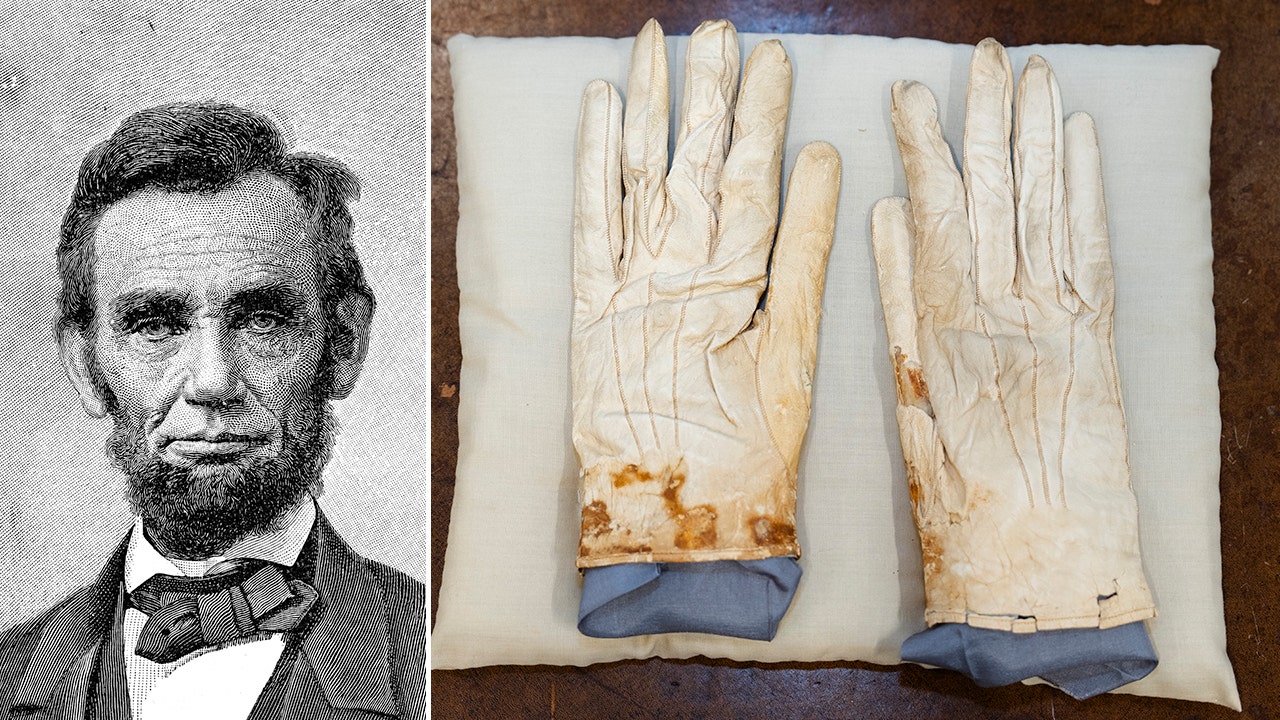
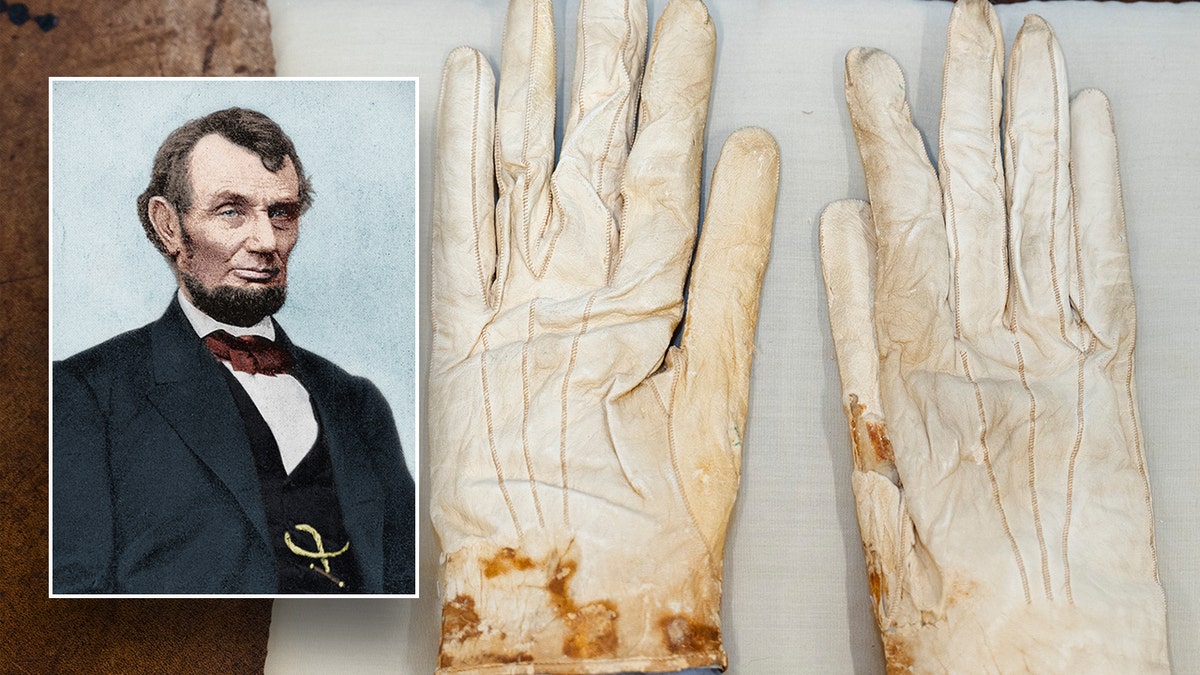
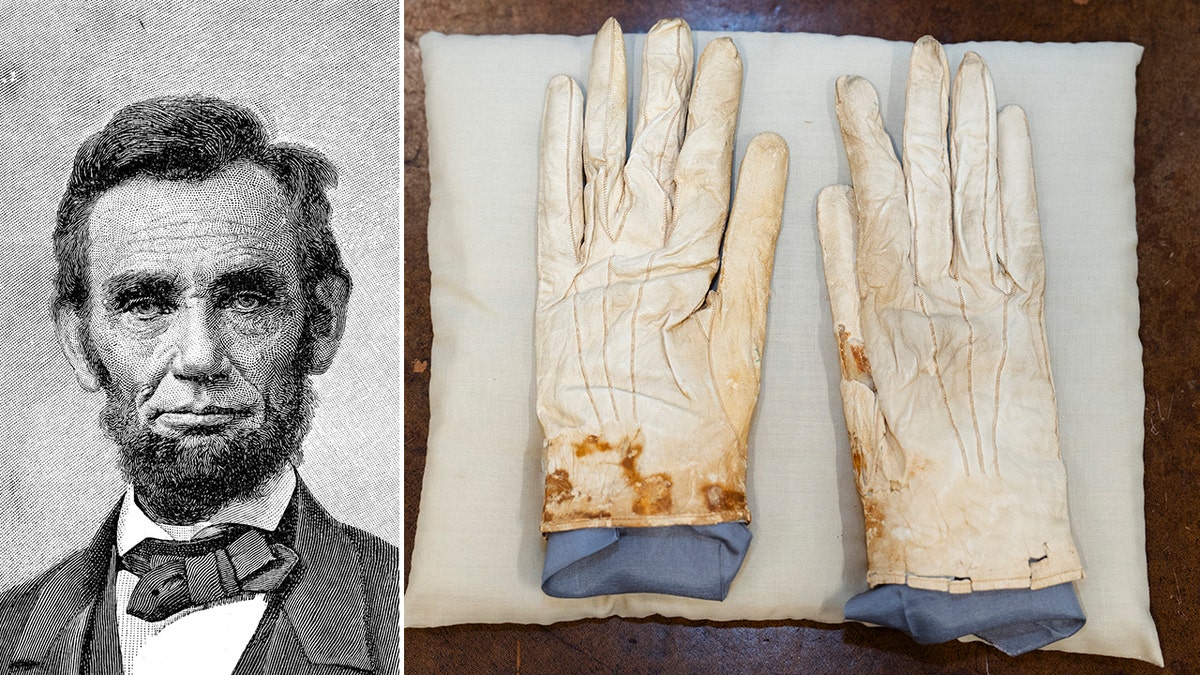
An auction of the personal belongings of President Abraham Lincoln featured one rare item that caught the attention of many.
A pair of gloves that were in Lincoln’s pocket at Ford’s Theatre the night he was shot drew in the largest bid, The Associated Press reported.
The bloodstained gloves are made out of leather and went for $1.52 million, including a buyer’s premium fee.
STUNNING MEDIEVAL RING FOUND BELOW RUBBLE AT ‘HISTORICALLY IMPORTANT’ TOURIST SITE
Of the 144 items up for auction by Freeman’s/Hindman in Chicago, 136 were sold.
The auction was held to fund payments on a loan from 20 years ago that was taken out by the Lincoln Presidential Foundation.
A pair of gloves that were in Lincoln’s pocket at Ford’s Theatre the night he was shot drew the largest bid at auction.(Pat Nabong/Chicago Sun-Times via AP Newsroom)
Another item that was found in Lincoln’s possession the night of his assassination was a handkerchief — which sold for $826,000.
Lincoln was shot by John Wilkes Booth on the night of April 14, 1865, while attending the play, “Our American Cousin.”
CLICK HERE TO SIGN UP FOR OUR LIFESTYLE NEWSLETTER
Also included in the auction was a “wanted” poster showing the three suspects in the assassination, including Wilkes Booth.
A page shows the earliest known example of Abraham Lincoln’s handwriting.(Pat Nabong/Chicago Sun-Times via AP)
The item sold for $762,500.
For more Lifestyle articles, visit foxnews.com/lifestyle
A notebook showcasing Lincoln’s handwriting from 1824 went for $521,200.
The auction raised $7.9 million from the sale of Lincoln items.(iStock; Pat Nabong/Chicago Sun-Times via AP)
It’s reportedly the earliest known sample of his handwriting, according to AP.
The artifacts came apart from the foundation’s 1,540-item assemblage purchased in 2007 from Louise Taper for the Abraham Lincoln Presidential Library and Museum, AP reported.
Another view of Lincoln and of the bloodstained gloves from the night he was shot in Washington, D.C., at Ford’s Theatre. (iStock; Pat Nabong/Chicago Sun-Times via AP)
In total, the auction raised $7.9 million, including the 28% buyer’s premium on each sale.
JEE Advanced 2025 response sheet: The Indian Institute of Technology (IIT), Kanpur, on Thursday, released the response sheets for the JEE Advanced 2025 examination. Candidates who appeared for the exam can now access and download their individual response sheets from the official website — jeeadv.ac.in.
The JEE Advanced response sheets allow candidates to review the answers they have marked, and match them with the official answer key — which is yet to be released. This helps students to estimate their probable scores before the results are declared.
JEE Advanced 2025 response sheet: How to download – check the step-by-step guide
Students can download their respective JEE Advanced 2025 response sheets through the following steps:
1. Visit the official website, and click on the link for “Candidate Response Sheet – JEE Advanced 2025.”
2. Log in using your JEE Advanced registration number, date of birth, and mobile number.
3. Your response sheet will appear on the screen.
4. Download and save it so that you can refer to it when the official answer key is out.
JEE Advanced 2025: When will the answer key be released?
As per reports, IIT Kanpur will release the answer key for JEE advanced 2025 session on May 26.
Here are some important dates to keep in mind:
What’s next after provisional answer key release?
The official answer key for JEE Advanced 2025 will be released on May 26. After it’s out, candidates will get a chance to review it and raise objections, if they spot any errors, within the given time frame. The final result will be prepared based on the revised answer key after all valid objections are reviewed.
In the meantime, candidates are advised to keep an eye on the official website for any updates regarding the answer key, result dates, or further announcements.
The following sleeping pads didn’t impress us as much as the ones above, but we’d still recommend them if none of the others strike your fancy.
Kelty Kush Queen Airbed for $100: This PVC-free queen-sized airbed from Kelty includes a pump that makes inflating a snap (make sure you charge it before you go), and the 6-inch-thick pad is plenty comfortable. It is not an insulated air mattress like the REI above, so it’s best for warmer months, but it can double as a spare bed at home.
Sleeping Pads to Avoid
Not every sleeping pad is a winner. We’ve tested and run into issues with the following models.
Exped Flexmat Plus: What if the cheap, light, and indestructible closed-cell foam mats like the iconic Z-Rest and RidgeRest were … giant? It’s a fun idea, but the Exped Flexmat Plus is a noble failure. The problem with this extra-thick, 1.5-inch, closed-cell mat is that, while relatively light, cheap, and indestructible, the foam is hard and spikey. And by “spikey” we mean that it’s literally just spikes that stab you while you sleep. Fans say it requires a break-in period. After six nights on it, reviewer Martin Cizmar begged the dungeon guard for release.
Big Agnes Q-Core: Q-Core pads are comfortable out of the box, with impressive R-value and weight stats for the price. However, you should avoid them. The unique offset I-beam construction that makes this pad so light and comfortable is somewhat notorious for failing—which is exactly what happened to Cizmar after about a year of use. In our experience, which other reviews back up, the welds that hold the top and bottom together are prone to popping apart. After adding air, you’ll have a large lump that grows over time, and duct tape cannot fix it.
Exped DeepSleep: If you’re thinking about an inflatable Exped but are not fully committed to shelling out for the MegaMat 10, you may be inclined to try the thinner and cheaper DeepSleep. Don’t do it. The DeepSleep is 3 inches thick instead of 4, but you’ll feel that inch in your bones. The DeepSleep has rugged 75-denier fabric on top and bottom instead of the soft and stretchy 50-denier polyester you find on the top of the MegaMat and some competitors. The DeepSleep is a sturdy mattress and probably fine for some people, but it’s not the Exped experience most sleepers are looking for. Stick with the MegaMat. —Martin Cizmar
Klymit Static V2: Klymit’s budget inflatable pad is popular with unfussy weekend warriors because of its price point (around $50) and impressive weight (1 pound). In fact, this is why I bought one for my now 10-year-old daughter when we ventured into the backcountry for the first time, with her stuff on my back. She didn’t complain, but when I used it for a night, I found it was flimsy and offered comparable cushion and less heat retention than a closed-cell foam pad like the Z-Lite. The Z-Lite weighs a couple of ounces less, and you won’t have to worry about puncturing it. The more expensive inflatable beds above are great, but if you’re you’re looking for a lightweight budget pick, I’d stay with closed-cell foam.
Power up with unlimited access to WIRED.Get best-in-class reporting that’s too important to ignore for just $2.50 $1 per month for 1 year. Includes unlimited digital access and exclusive subscriber-only content. Subscribe Today.
PROBAVNE tegobe poput nadutosti, zatvora, težine u želucu ili nepravilne stolice mogu ozbiljno utjecati na svakodnevno funkcioniranje i opće stanje organizma. Stručnjaci ističu da pravilna prehrana igra ključnu ulogu u regulaciji probave i vraćanju ravnoteže crijevne flore. Umjesto da posežemo za brzim rješenjima, prvi korak može biti dodavanje nekoliko jednostavnih, ali moćnih namirnica u prehranu.
1. Grčki jogurt
Fermentirani mliječni proizvodi poput grčkog jogurta bogati su probioticima – korisnim bakterijama koje pomažu u održavanju zdrave crijevne flore. Redovita konzumacija probiotika može ublažiti simptome nadutosti i pomoći kod neredovite stolice. Stručnjaci često preporučuju grčki jogurt jer, osim probiotika, sadrži i proteine koji pridonose osjećaju sitosti bez opterećivanja probavnog sustava.
2. Zobene pahuljice
Zob je odličan izvor topivih vlakana, osobito beta-glukana, koji pomažu u regulaciji probave i nježnom poticanju rada crijeva. Osim što pomažu kod zatvora, zobene pahuljice mogu i smanjiti razinu kolesterola. Nutricionisti preporučuju njihovu konzumaciju za doručak jer pružaju dugotrajan osjećaj sitosti i stabilnu energiju, bez nepotrebnog opterećenja želuca.
Tekst se nastavlja ispod oglasa
3. Kivi
Ovo voće nije samo bogato vitaminom C, već sadrži i prirodni enzim aktinidin koji pospješuje razgradnju proteina u želucu i tako olakšava probavu. Redovita konzumacija kivija može pomoći kod sporog pražnjenja crijeva i smanjenja nadutosti. Stručnjaci napominju da je kivi posebno koristan osobama koje imaju osjetljiv probavni sustav jer djeluje nježno i prirodno.
4. Chia sjemenke
Chia sjemenke su bogate vlaknima koja vežu vodu i stvaraju gelastu strukturu u probavnom traktu – to pomaže regulaciji prolaska hrane kroz crijeva i olakšava redovitu stolicu. Preporučuje se da se chia sjemenke prethodno namoče u vodi, biljnom mlijeku ili jogurtu kako bi se aktivirala njihova tekstura. Osim toga, sadrže omega-3 masne kiseline koje mogu smanjiti upalu u crijevima.
Uključivanjem ovih jednostavnih namirnica u svakodnevnu prehranu moguće je prirodno i učinkovito podržati zdravlje probavnog sustava bez potrebe za zahtjevnim promjenama.
Znate li nešto više o temi ili želite prijaviti grešku u tekstu? Kliknite ovdje.
Ovo je .
Homepage nacije.
Imate važnu priču? Javite se na [email protected] ili klikom ovdje. Atraktivne fotografije i videe plaćamo.
The term “Digital Nomad” often causes confusion, even among expatriates. One of the most common misconceptions is that it refers to a specific job title. In truth, it encompasses a broader lifestyle choice rather than a defined profession. While defining a Digital Nomad can be straightforward, it often comes in various dimensions. At its essence, a Digital Nomad is someone who has moved beyond traditional work structures, opting for a life filled with mobility and flexibility. They break free from the conventional 9-to-5 routine and are driven by a desire to travel and immerse themselves in different cultures. The dictionary captures this idea succinctly. “Dressing in the Dark” Carries a Deeper Significance in These Turbulent Times.
“A person who earns a living working online in various locations of their choosing instead of being tethered to a fixed business location.”
Visualize this: engaging in coding tasks from a co-working space in Medellin, attending a Zoom meeting while seated in a Parisian café, or completing a project while enjoying the tranquil beaches of Thailand. Digital Nomads leverage technological advancements to facilitate remote work while seamlessly integrating it into their travel experiences. Their nomadic lifestyle allows for fluid transitions between various geographic locales. Explore These Incredible Summer Destinations in India That Are Perfect for Your Next Getaway!
Digital Nomad (Photo Credits: File Image)
Diverse Profiles of Digital Nomads
1. Freelancers : These individuals provide services remotely to multiple clients. Their skill sets may include writing, software development, graphic design, and digital marketing, enabling them to offer valuable contributions on a contract basis.
2. Remote Employees : Many Digital Nomads maintain full-time employment with companies that permit them to operate from virtually anywhere. Their positions often encompass roles such as customer support, software engineering, or project management that can be executed remotely without geographical constraints.
3. Online Entrepreneurs : This group encompasses those who operate their own digital businesses. They typically engage in e-commerce, monetize content through blogs or YouTube channels, or deliver online services. This flexibility allows them to manage and grow their business while traveling.
4. Early Retirees : A subset of Digital Nomads, these individuals have achieved significant financial independence through strategic investments, passive income streams, or inheritances, permitting them to work primarily for leisure rather than necessity. This cohort often embodies the principles of Financial Independence, Retire Early (FIRE).
Distinctions Between Nomads and Slowmads
While traditional Digital Nomads prioritize dynamic travel and exploration, there is an emerging subset known as Slowmads. This group emphasizes deeper cultural immersion and a more settled lifestyle. Key distinctions include:
– Duration of Stay: Slowmads typically reside in one location for extended periods, ranging from three months to a year, whereas traditional Digital Nomads often relocate every few months.
– Travel Pace: In addition to their modes of income generation, the pace of travel is a defining characteristic; many Digital Nomads are now gravitating towards Slowmad lifestyles due to reduced stress, cost-effectiveness, and the opportunity to experience local cultures more authentically.
Demographics of Digital Nomads
The Digital Nomad demographic is varied and reflects a wide age range. Contrary to the stereotype of youthful 20-somethings, data indicates that a significant portion (52.6%) of nomads are in their 30s—a prime age for career development alongside the pursuit of adventure. Notably, around 25% of Digital Nomads are over the age of 40, highlighting that the transition away from traditional office environments to a nomadic lifestyle is accessible at any stage of life.
Geographically, the highest concentration of Digital Nomads originates from the USA (37.4%), followed by participants from the UK, Germany, and a diverse mix of other nations.
(The above story first appeared on LatestLY on May 22, 2025 05:12 PM IST. For more news and updates on politics, world, sports, entertainment and lifestyle, log on to our website latestly.com).
KAKO naši ljubimci stare, njihovo ponašanje i fizičko stanje se mijenjaju. Prepoznavanje tih promjena ključno je za pružanje odgovarajuće njege i osiguranje kvalitetnog života u njihovim zlatnim godinama.
Znakovi starenja kod pasa i mačaka
1. Smanjena aktivnost i pokretljivost
Stariji ljubimci često pokazuju manju želju za igrom i šetnjama. Kod pasa to može uključivati poteškoće pri penjanju stubama ili ulasku u automobil, što može ukazivati na artritis ili druge degenerativne bolesti zglobova.
2. Promjene u težini
Smanjena aktivnost može dovesti do povećanja težine, dok gubitak apetita može uzrokovati mršavljenje. Oba slučaja zahtijevaju prilagodbu prehrane i konzultaciju s veterinarom.
3. Problemi s vidom i sluhom
Zamućene oči, dezorijentacija ili neodazivanje na pozive mogu ukazivati na gubitak vida ili sluha. Redoviti veterinarski pregledi mogu pomoći u pravodobnom otkrivanju ovih problema.
4. Kognitivne promjene
Kod starijih pasa i mačaka mogu se pojaviti znakovi kognitivne disfunkcije, poput dezorijentacije ili promjena u obrascima spavanja. Ovi simptomi slični su demenciji kod ljudi i zahtijevaju posebnu pažnju.
5. Promjene u ponašanju
Stariji ljubimci mogu postati razdražljiviji, manje tolerantni ili pokazivati znakove anksioznosti. Važno je prilagoditi se njihovim novim potrebama i osigurati im mirno i stabilno okruženje.
Tekst se nastavlja ispod oglasa
Kako olakšati svakodnevicu starijim ljubimcima?
Prilagodba prehrane
Stariji ljubimci imaju specifične prehrambene potrebe. Preporučuje se hrana bogata vlaknima, s manjim udjelom kalorija i dodatkom nutrijenata poput glukozamina za zdravlje zglobova.
Redovita tjelovježba
Umjerena i prilagođena tjelovježba pomaže u održavanju mišićne mase i mentalnoj stimulaciji. Kratke šetnje i interaktivne igre mogu biti vrlo korisne.
Udobnost doma
Osigurajte mekane i pristupačne ležajeve, izbjegavajte skliske površine i omogućite lak pristup omiljenim mjestima. Pomoćna sredstva poput rampi mogu biti od velike pomoći.
Mentalna stimulacija
Igre koje potiču razmišljanje, poput skrivenih poslastica ili interaktivnih igračaka, mogu pomoći u održavanju mentalne agilnosti vašeg ljubimca.
Redoviti veterinarski pregledi
Stariji ljubimci trebaju češće posjete veterinaru radi pravodobnog otkrivanja i liječenja potencijalnih zdravstvenih problema.
Znate li nešto više o temi ili želite prijaviti grešku u tekstu? Kliknite ovdje.
Ovo je .
Homepage nacije.
Imate važnu priču? Javite se na [email protected] ili klikom ovdje. Atraktivne fotografije i videe plaćamo.
Pri kreiranju rubrike Index Shopping nastojimo izdvajati odlične proizvode koji se i nama sviđaju te odlične akcije i popuste. Ne objavljujemo proizvode koje i sami ne bismo kupili ili smatramo da njihova promocija nije u skladu s profesionalnim standardima. Neki proizvodi u rubrici Index Shopping mogu biti sponzorirani.
FRANCUSKI brend Alcatel već je najavio dolazak Alcatel V3 Ultra 5G mobitela sa stylusom koji će službeno biti predstavljen 27. svibnja, a sad su otkrili kako stižu još dva – V3 Classic i V3 Pro. Oba mobitela imat će podršku za 5G, stražnje kamere od 50 MP i baterije kapaciteta 5.200 mAh.
>> Povratak legendarnog proizvođača mobitela u mnogima će probuditi nostalgiju
Alcatel V3 Classic i Pro
Alcatel V3 Classic imat će NxtPaper tehnologiju za ugodnije čitanje s mobitela, istu tehnologiju koju ima i V3 Ultra 5G. Mobitel će imati LCD zaslon od 6.7 inča s osvježavanjem slike do 120 Hz. Mobitel će imati stražnje kamere od 50 MP i 5 MP uz prednju kameru od 8 MP, kao i spomenutu bateriju od 5.200 mAh.
Tekst se nastavlja ispod oglasa
Iako memorija još nije potvrđena, mobitel će najvjerojatnije imati 128 GB prostora za pohranu uz mogućnost proširenja uz pomoć microSD kartice.
Alcatel V3 Pro imat će 8 GB RAM-a, no nema informacije o pohrani. Također će imati stražnje kamere od 50 MP i 5 MP, prednju kameru od 8 MP i bateriju od 5.200 mAh, no informacije o zaslonu u ovom trenutku nisu poznate.
Cijena mobitela još nije potvrđena, no očekuje se da će biti cjenovno pristupačni, po cijeni nižoj od 200 eura. Više informacija bi trebalo biti poznato nakon predstavljanja sva tri mobitela u utorak.
Znate li nešto više o temi ili želite prijaviti grešku u tekstu? Kliknite ovdje.
Ovo je .
Homepage nacije.
Imate važnu priču? Javite se na [email protected] ili klikom ovdje. Atraktivne fotografije i videe plaćamo.
2025 F1 Monaco Grand Prix Qualifying in IST: The F1 2025 European leg started with a thrilling Imola GP, and the action will quickly shift to one of the most famous and notorious Circuit de Monaco in Monte Carlo for the F1 Monaco Grand Prix. The F1 Monaco GP 2025 is expected to see several drivers make big moves after finally getting the hang of their respective Formula One cars, including Lewis Hamilton. Drivers’ Standings leader Oscar Piastri will want to forget a poor Emilia-Romagna GP, where, despite taking pole position, the McLaren driver finished third, with defending champion Max Verstappen claiming an uncontested victory. F1 2025: Max Verstappen Secures Second Victory of the Season As He Clinches Win at Emilia-Romagna Grand Prix.
McLaren Mercedes might have taken a steady lead in the Constructors’ Championship, but teams like Red Bull, Ferrari, and Williams have found their bearing lately and will look to challenge the leaders. The pit-stop strategy for F1 2025 GPs this season has varied from last year, where teams have opted for a two-stop blueprint. However, at Circuit de Monaco, where track position matters in the main race, a challenge to come up with the best plan for drivers might be interesting to see.
When is F1 Monaco Grand Prix 2025 Qualifying in IST?
The F1 Monaco Prix 2025 Qualifying will take place on May 24 and will be shown in India at 7:30 PM Indian Standard Time (IST). For 2025 Monaco GP viewing options, fans can scroll below. F1 2025: George Russell Voices Concern Over ‘Baked-In’ Flaws in Mercedes Car After Imola GP Struggles.
How To Watch Live Telecast of the F1 MonacoGrand Prix 2025 Qualifying in India?
Unfortunately, in India, due to a lack of a telecast partner, the Formula One 2025 season will not have any live telecast viewing options on television. Fans can read how to watch online viewing options for the F1 Monaco Grand Prix 2025 Qualifying below.
How To Watch Live Streaming of F1 Monaco Grand Prix 2025 Qualifying in India?
FanCode owns the online rights for Formula One in India and will provide live viewing options for the F1 Monaco Grand Prix 2025 Qualifying on its app and website, which will require a season pass worth INR 899 or a race weekend pass worth INR 99. Fans in India will have multiple language commentary available for the first time, since F1 started broadcasting in the country.
The F1 Monaco GP 2025 main race will be held on May 25, while Practice 1 & 2 will be held on May 23. Practice 3 and Monaco GP Qualifying will take place on the same day, May 24, within a gap of three hours.
(The above story first appeared on LatestLY on May 22, 2025 03:56 PM IST. For more news and updates on politics, world, sports, entertainment and lifestyle, log on to our website latestly.com).
In less than 2 months, Samsung is expected to launch its new generation foldable smartphones, the Galaxy Z Fold 7 and Galaxy Z Flip 7, globally. While we wait for the official announcement, several leaks surrounding the foldables have been circulating on the internet, revealing the smartphone’s design, specifications, and features. Reports suggest that Samsung has made some significant design upgrades. While the Samsung Galaxy Z Fold 7 is rumoured to feature a slimmer design, the Galaxy Z Flip 7 will feature a bigger cover display. Now, since the launch is not very far, let’s have a look at what the Samsung Galaxy Z Fold 7 has in store for users.
Samsung Galaxy Z Fold 7: Everything we know so far
Design and display: This year, the Samsung Galaxy Z Fold 7 will likely take the crown for the slimmest foldable with just 3.9mm thickness when unfolded. From a design standpoint, the smartphone may look similar to the Galaxy Z Fold 6 Special Edition, which was launched in South Korea and China.
The foldable may also feature a refined hinge, which will reduce the crease visibility on the main screen. For display, the Galaxy Z Fold 7 could feature a 6.5-inch AMOLED cover display and an 8.0-inch AMOLED main foldable display. Both displays may offer a 120Hz refresh rate for smooth performance.
Performance and battery: The Samsung Galaxy Z Fold 7 is expected to be powered by the Snapdragon 8 Elite processor paired with 12GB RAM and up to 1TB internal storage. Recent reports suggest that the foldable could run on One UI 8 based on Android 16 out of the box. For lasting performance, the Galaxy Z Fold 7 will likely be backed by a similar 4400 mAh battery that may support 25W fast wired charging.
Camera: The Galaxy Z Fold 7 will likely come with a triple camera setup, which may include a 200MP main camera, a 12MP ultrawide camera, and a 10MP telephoto lens with 3x optical zoom. The smartphone may come with a dual front camera, one placed on the cover screen with 10MP resolution and one on the main screen with 4MP resolution.
Launch date and price: The Samsung Galaxy Z Fold 7 will likely be unveiled at the Galaxy Unpacked event in July 2025. In terms of pricing, we expect the Galaxy Z Fold 7 to be priced similarly to its predecessor, as no price hike has been reported so far.
Tamil actor Dhanush will play the role of former president APJ Abdul Kalam in his biopic ‘Kalam: The Missile Man of India’ directed by Om Raut.
The film was officially announced at the Cannes Film Market on Wednesday. Dhanush also shared the post poster of the film in his Instagram account.
“I feel truly blessed and deeply humbled to be portraying the life of such an inspirational and magnanimous leader – our very own Dr APJ Abdul Kalam sir,” he wrote.
The film is produced by Bhushan Kumar and Krishan Kumar of T-Series and Abhishek Agarwal and Anil Sunkara of Abhishek Agarwal Arts.
Director Om Raut, in a post on X, shared the update on the film. “From Rameswaram to Rashtrapati Bhavan, the journey of a legend begins India’s Missile Man is coming to the silver screen. Dream big. Rise higher. #KALAM – The Missile Man of India @dhanushkraja @omraut #BhushanKumar @AbhishekOfficl @AAArtsOfficial,” he wrote.
Geojit Financial Services has posted a revenue of ₹177.48 crore, down 15 per cent from ₹208.56 crore in the corresponding period of the previous year. Net profit for the quarter came in at ₹32.21 crore (₹51.91 crore), down 38 per cent. EBITDA stood at ₹54.09 crore, a 35 per cent year-on-year decline and profit before tax fell to ₹41.22 crore (₹68.57 crore).
For FY25, the company has reported a consolidated net profit of ₹172.49 crore (₹149.38 crore), marking a 15 per cent rise. Its total consolidated revenue rose 20 per cent to ₹749.32 crore (₹623.97 crore).
The board of directors, which met in Kochi on Wednesday, approved a final dividend of ₹1.50 a share for FY25.
.
AUM milestone
As on March 31, 2025, Geojit’s customer assets under management crossed the ₹1-lakh-crore mark, reaching ₹1,00,065 crore. The company serves over 15.20 lakh clients through a network of more than 500 offices across India and the Gulf Cooperation Council (GCC) countries.
The company also announced that its subsidiary, Geojit Private Wealth, has received in-principle approval from the Dubai Financial Services Authority (DFSA) to set up operations within the Dubai International Financial Centre (DIFC). The new entity is intended to serve the wealth management needs of high-net-worth and ultra-high-net-worth individuals in the UAE and the broader West Asian region.
Geojit’s promoters include BNP Paribas, founder and Managing Director CJ George and the Kerala State Industrial Development Corporation (KSIDC). The company operates joint ventures in the GCC, including Barjeel Geojit in the UAE, BBK Geojit in Kuwait and QBG Geojit in Oman. It also has a business partnership with the Bank of Bahrain and Kuwait in Bahrain.
On a recent drizzly morning, Couplet Coffee owner Gefen Skolnick stepped into her rainbow-hued cafe at the edge of Echo Park and Westlake, stopping by tables to greet visitors who were sipping on drinks like bananas-and-cream matcha. Some of them had discovered the shop through social media posts, while others were passersby drawn in by the psychedelic colors. Most happened to be Gen Z, Couplet’s target customer base.
Before Couplet opened its flagship shop in January, the coffee bean brand had already cultivated a devout following that leaned into aesthetics, limited-edition product drops, community-building, storytelling and social media. Even the packaging — an eye-catching holographic bag emblazoned with cheery drawings and Skolnick’s couplet poems — stood out on the shelves of Erewhon and Mother’s Market.
And then last year during a six-month contract, Couplet’s beans caffeinated thousands of Snap employees at the tech company’s headquarters in Santa Monica. Skolnick had built such a name for herself as a Gen Z whisperer that other brands approached her, asking how to connect with younger audiences.
Gefen Skolnick, founder of Couplet Coffee, said she wanted a “fun and funky” space where she and her friends felt like they belonged.
Couplet was just a seed of an idea that popped into Skolnick’s mind five years ago when the Los Angeles native was a UCLA undergrad studying computer science. At the time, Skolnick — who describes herself on her website as a “proud queer woman and coffee lover” — felt the coffee market was pretentious and stale, and wanted a “fun and funky” space where she and her friends felt like they belonged.
“The whole concept of Couplet was that there needs to be great coffee made more approachable to people,” said Skolnick, 28.
As behemoth corporations like Starbucks are laying off employees to streamline operations, newer and smaller companies like Couplet may be ushering in the next wave of coffee drinkers who are looking for much more than just caffeine.
Couplet Coffee hosts local events such as community meet-ups, art workshops and speed dating at its Echo Park coffee shop.
Hype culture
“The hype and branding was built in before the coffee,” said Skolnick, who took an unconventional approach of selling Couplet merchandise long before she even had beans available.
Skolnick, a rising social-media star who worked in product management at Hulu and Tesla by the age of 23, built a supportive circle for herself on X, formerly Twitter, by tweeting about tech and venture capital investing. In 2020 when she began posting about a new coffee idea as a side project, Jen Rubio, the co-founder and CEO ofAway luggage (who would later become Couplet’s first investor), quickly took notice and encouraged Skolnick to do Couplet full time.
Rubio said Skolnick was quite knowledgeable about start-up companies and fundraising.
“I had assumed she was already a full-time founder, and as I got to know her more, I realized she wasn’t and that was crazy to me,” Rubio said. “Here’s someone with so much, not just passion or interest, but also a lot of knowledge and how this world works.”
It lit a fire under Skolnick.
To determine whether the brand could become a viable business, Skolnick tried to hype Couplet to the masses. In 2021, she partnered with artist Ludi Leiva to create her first product release: a drinking glass adorned with the Couplet logo and cutesy mushrooms and clouds artwork. It went viral on TikTok, selling hundreds within two days.
One of Couplet’s first product releases was a drinking glass created with artist Ludi Leiva, adorned cutesy mushrooms and clouds. It went viral on TikTok.
Every other month, Couplet launched a new viral product. There was the collaboration with the environmentally conscious Kawa Project selling vanilla latte candles made with upcycled coffee grounds. Skolnick then developed the extremely viral cow-printed Mooka Pot andred-hearted French press.
“My sauce is I like to creatively do something and put it out really fast,” said Skolnick. “Gen Z likes limited-edition drops and things that look and taste good.”
Some projects took a bit longer, though, like the seven months Skolnick spent getting all the details right with Couplet’s iconic opalescent coffee bag that was designed by Javier Garcia. Skolnick encouraged Garcia to keep experimenting with textured materials and find a way to have the consumer experience a journey through artwork and words on the packaging. This included adding Skolnick’s couplets, like one that reads, “Tangy, funky, and bright, Couplet’s Peruvian feels like a beam of light.”
It wasn’t until 2022 that Couplet sold actual coffee on its website.
Skolnick found her coffee bean supplier through her X network — a Nicaraguan farmer with “deep connections,” she says. He linked her with other co-op and family-run farms, resulting in Couplet’s offerings, which ranged from light single-origin Peruvian beans to a rich and sweet espresso blend of Brazilian, Nicaraguan and Peruvian coffee.
In January, Skolnick added a matcha from the coastal city of Ise in Japan to her Couplet portfolio, using it in her bricks-and-mortar shop and also selling it wholesale to other L.A. businesses like Café Tropical and Lemon Poppy Kitchen.
Besides Couplet’s coffee offerings, including single-origin Peruvian beans and an espresso blend of Brazilian, Nicaraguan and Peruvian coffee, Skolnick added a matcha from Ise, Japan, which Couplet also sells wholesale to other L.A. businesses.
The allure of a vibrant cafe
While there are other cafes that also attract a Gen Z audience (like Century City’s Chamberlain Coffee and Beverly Grove’s Community Goods, both of which draw long lines), Skolnick sees Couplet as a singular brand that has carved its own niche market.
At Couplet, the walls are lacquered in shades of pastel pink and sky blue, juxtaposing the black-and-white checkered floor. Paintings of swans, mushrooms and the sun cover the bar, emulating the look and feel of Couplet’s merchandise. In one corner, a dozen New Yorker magazines are fanned across a transparent acrylic table. The shelf attached to a fun-house mirror displays a Lana Del Rey CD and cassette tape, while other ledges are stocked with packaged goods from popular brands like Fly By Jing and Ghost Town Oats, giving the small space superette vibes. A glass case holds grab-and-go items from former All Day Baby pastry chef Sam Robinson, like an Instagram-worthy sunny-side-up egg bacon galette, and Gooey Center Bakery’s vegan cinnamon rolls.
On the menu at Couplet: signature whimsical coffee and matcha drinks.
Customers have taken notice. Emily Anne Fernandez, 29, a manager at the Arts District’s Concierge Coffee who buys Couplet’s matcha wholesale for her shop, spent her free time in Couplet’s patio producing music on her laptop.
“Personally, I noticed that a lot of shops are just white, so it’s nice to have a change in color,” Fernandez said. “I like the floor and tiles.”
Beyond design, Skolnick wanted to bridge the gap between specialty coffee heads and folks who want fun beverages. In addition to well-crafted lattes and espressos, the signature drinks — created by Skolnick and her staff — are whimsical, with options like a rosemary-and-passionfruit espresso tonic, and matcha punctuated with rose, cardamom and saffron.
Skolnick says she wanted to bridge the gap between specialty coffee heads and folks who want fun beverages. Signature drinks are create by Skolnick and her staff.
When Skolnick was building out the cafe, she went to TikTok and Instagram (which has about 28,000 followers combined) to document her process, asking followers for their input on what they wanted in a coffee shop. It resonated with her fan base, with folks now traveling long distances from the Westside and South Bay to the cafe on the weekends. Within the first month and a half of business, Couplet sold 10,000 cups.
Zoe Price, 20, who was back home in L.A. while on college spring break, visited Couplet with her mother for the first time. She had been a longtime follower of Couplet on TikTok and was excited to finally experience it in person.
“The online presence was so welcoming and inclusive, and seeing Couplet’s passion from the beans to opening the store, and seeing the vision come to life was really special and rewarding,” Price said.
Building community
Skolnick believes Gen Z is invested in brand ownership. “The main thing people care about is, Can I connect with this brand?” said Skolnick. “And then they start digging, asking, ‘Who’s running it? What’s the vibe that I get from them? Do I feel like I’m connected with their vision and mission?’ ”
Before Couplet opened, Skolnick built brand awareness through coffee pop-ups, from Pride to run-club events. She’s made a concerted effort to continue cultivating community through gatherings now held at her own shop, including meetups for Women In Visuals, the Bring Your Own Pen art group and Friend or Flame speed dating.
A recent Friend or Flame speed dating event at Couplet Coffee.
The collaborations haven’t stopped either. For Valentine’s Day, Couplet teamed up with Kaja Beauty (a Korean makeup brand that resonates with the Gen Z audience) to give out a free Cherry Cola lip oil with each purchase of a cherry vanilla cream top matcha and cold brew drink. Over 800 people lined up for it down the block over the span of a weekend.
“I definitely think it’s the experiential part [that’s important],” said Brittany Wu, 23, senior social media associate of Kaja Beauty’s parent company, Memebox. “With L.A. being such a niche community, a lot of people are looking for things to do on the weekends with their friends. Cafe-hopping culture has increased as well.”
Skolnick knows she has her pulse on the Gen Z market and dreams big.
“I would like to open more coffee shops in L.A. and other places in the country,” she said. “It would be great even internationally.”
Spring rain is usually a welcome sight, but if there are multiple days in a row when we don’t see the sun, we begin to miss it. The longer the sun is gone, the more we long to see it. We might think the rainy days won’t end, but eventually, the sun does come out. Even though it is hard, we might have benefited from what we have gone through. There is always a silver lining.
I find the same thing is true in our walk with Jesus. We aren’t guaranteed that life will be easy here on earth. Sometimes the rain will come, we will go through hard things, and we might not see an ending for a while. Just like with spring rains, the sun eventually comes out with time. There will be an end to our pain, suffering, and hardships. We know this is true because Jesus told us that he will come and make all things right one day. This is our hope, even if our lives don’t go how we thought they would.
If we allow Jesus to use these hard times to help us grow, we will see fruit come from it. When the rain is done and the sun does come out, we will see the growth that has been accomplished in us. We might be amazed at what he has done in our lives through it. Yes, it was hard, but he used it for good.
The spring rain is refreshing and makes us think about everything Jesus does for us. It can be hard to put into words what everything means for us, but I am thankful that we have creation to look at and that we can imagine how that compares to or relates to all that he is. I’m not sure how we would understand and relate to him otherwise. Yet he comes down to our level and gives us these beautiful pictures of our relationship with him. The best part, though, is that no words can ever describe who Jesus entirely is. When we meet him one day, I think we will stand in awe of how great he is, and we won’t have anything to compare him to. There is nothing that comes even close.
When you experience those spring rains, take a second and meditate on all the things that Jesus is for us, and how great he is. It may not explain him entirely, but it gives us a good picture so we can understand who he is. Remember that he gives us a fresh start, cleanses us, and is our source for growth. Eventually, he will make all things right. Jesus is our refreshing spring rain.
A remarkable centuries-old ring was unearthed recently beneath rubble at a historic castle in Eastern Europe.
The impressive brass ring was found at Wawel Royal Castle in Krakow, Poland. The castle’s website describes it as “the most historically and culturally important site in Poland.”
“For centuries the residence of kings and the symbol of Polish statehood, the castle is now one of the country’s premier art museums,” the website states.
“The collections of the Wawel Royal Castle are presented in several permanent exhibitions that evoke the historic appearance of the royal residence in the 16th, 17th, and 18th centuries.”
The ring was excavated during the renovation of the Bastion of Władysław IV, a king who ruled Poland from 1632 to 1648.
A 15th-century medieval ring was recently unearthed at Wawel Royal Castle in Krakow, Poland.(Getty Images; Wawel Royal Castle via Facebook)
Historians estimate that the piece of jewelry dates back to the 15th or 16th centuries.
A local archaeologist named Konrad Jurkowski found the ring, according to castle officials.
EXPERTS SHOCKED BY ANCIENT KING ARTHUR MANUSCRIPT FOUND TUCKED INSIDE BOOK: ‘SURVIVED THE CENTURIES’
“It was found while sifting through the rubble fill from inside the monument’s pedestal,” the post, which was translated from Polish to English, read.
The piece of jewelry dates back to the 15th or 16th centuries, according to experts.(Wawel Royal Castle via Facebook)
Pictures posted by Wawel Royal Castle show the intricate details of the ring, as well as the rubble-filled chamber that it was found in.
In one close-up photo, the mysterious symbols on the ring are clearly visible.
For more Lifestyle articles, visit foxnews.com/lifestyle
“The signet ring features an oval shield,” the Facebook post noted.
“A symbol is visible on it, possibly a craftsman’s mark, located on a German-type heraldic shield. “
The ring was found under debris during the renovation of the Bastion of Władysław IV.(Wawel Royal Castle via Facebook)
The statement added, “The letters IC (initials?) are also visible. The item has a surface decorated with transverse grooves.”
CLICK HERE TO SIGN UP FOR OUR LIFESTYLE NEWSLETTER
Officials say that the ring will be “studied along with other finds after the completion of archaeological work on the Bastion of Władysław IV.”
Wawel Royal Castle describes itself as “the most historically and culturally important site in Poland.”(Getty Images / Wawel Royal Castle via Facebook)
The latest discovery is one of several historical finds in the past year.
In January, archaeologists announced the discovery of coins, jewelry and other 1,200-year-old treasure in a set of Viking graves in Norway.
CLICK HERE TO GET THE FOX NEWS APP
In England, hundreds of 1,000-year-old silver coins were found at a nuclear power plant construction site in January.
DHSE Kerala +2 Result 2025 LIVE: Which site is down?
DHSE Kerala +2 Result 2025 LIVE: The link dhsekerala.gov.in is not opening for a lot of students. Candidates can use other links, or Digi Locker to check their results.
22 May 2025, 04:06 PM IST
DHSE Kerala +2 Result 2025 LIVE: Scores OUT; check direct links here
DHSE Kerala +2 Result 2025 LIVE: The links to check the DHSE Kerala +2 Results have been activated. Students can check the scores from any of the results:
dhsekerala.gov.in
keralaresults.nic.in
results.kite.kerala.gov.in
results.digilocker.gov.in
22 May 2025, 03:47 PM IST
DHSE Kerala +2 Result 2025 LIVE: Is the pass percentage less this year?
DHSE Kerala +2 Result 2025 LIVE: The pass percentage for Kerala Higher Secondary Examination (HSE) this year stands at 78.69 per cent, marking a drop of 0.88 percentage points from last year’s 77.81 per cent
22 May 2025, 03:34 PM IST
DHSE Kerala +2 Result 2025 LIVE: How to check results?
DHSE Kerala +2 Result 2025 LIVE: Students will be able to access the results online after 4pm, once the links are activated. The results can also be accessed via DigiLocker.
22 May 2025, 03:30 PM IST
DHSE Kerala +2 Result 2025 LIVE: What is the pass percentage this year?
DHSE Kerala +2 Result 2025 LIVE: This year, the pass percentage stood at 77.81%
22 May 2025, 03:24 PM IST
DHSE Kerala +2 Result 2025 LIVE: Results OUT; press conference underway
DHSE Kerala +2 Result 2025 LIVE: The DHSE Kerala +2 results have been declared, and the press conference is currently underway.
22 May 2025, 03:09 PM IST
DHSE Kerala +2 Result 2025 LIVE: When to check the results?
DHSE Kerala +2 Result 2025 LIVE: The links to check the Kerala +2 results will be activated at 4pm.
22 May 2025, 02:58 PM IST
DHSE Kerala +2 Result 2025 LIVE: Which links to check for results?
DHSE Kerala +2 Result 2025 LIVE: Once released, students can check the Kerala +2 results on dhsekerala.gov.in, keralaresults.nic.in and results.kite.kerala.gov.in
22 May 2025, 02:33 PM IST
DHSE Kerala +2 Result 2025 LIVE: Steps to keep in mind before result link activates at 4 PM
To check DHSE Kerala +2 Result 2025 online, follow these steps:
Step 1: Visit the official website – keralaresults.nic.in or results.kite.kerala.gov.in.
Step 2: Navigate to the “DHSE +2 Result 2025” link on the homepage.
Step 3: Enter roll number and date of birth and click on submit.
Step 4: Kerala DHSE +2 result 2025 will be displayed on the screen.
Step 5: Check and download the marks memo, take a printout and keep the hard copy for future reference.
22 May 2025, 02:25 PM IST
DHSE Kerala +2 Result 2025 LIVE: 3 key methods to check scores
DHSE Kerala +2 Result 2025 results can be accessed through the following 3 methods ways:
Online at dhsekerala.gov.in, keralaresults.nic.in
Offline: By using the SMS service
Mobile app: By using DigiLocker or Saphalam application
22 May 2025, 02:07 PM IST
DHSE Kerala +2 Result 2025 LIVE: Keep THESE things handy to check Kerala exam result
Students can check their scorecard at the official website using their Kerala Plus Two roll number and date of birth mentioned on the hall ticket or admit card.
22 May 2025, 02:03 PM IST
DHSE Kerala +2 Result 2025 LIVE: Grading system followed by Kerala Board
90 to 100% – A+
80 to 89% – A
70 to 79% – B+
60 to 69% – B
50 to 59% – C+
40 to 49% – C
30 to 39% – D+
Below 30% – D (fail)
22 May 2025, 01:40 PM IST
DHSE Kerala +2 Result 2025 LIVE: Will Ernakulam retain the top spot as the best performing district?
Last year, Ernakulam district secured the highest pass percentage in the Kerala Plus Two examinations and registered an impressive 84.12% pass rate.
22 May 2025, 01:30 PM IST
DHSE Kerala +2 Result 2025 LIVE: Key websites to track
dhsekerala.gov.in
keralaresults.nic.in
results.kite.kerala.gov.in
results.digilocker.gov.in
22 May 2025, 01:19 PM IST
DHSE Kerala +2 Result 2025 LIVE: Another way to access marks memo
Students can check Kerala +2 Result 2025 results through the Saphalam mobile app or by visiting the official website results.kite.kerala.gov.in.
22 May 2025, 01:01 PM IST
DHSE Kerala +2 Result 2025 LIVE: Will pass percentage improve this year?
Last year, the overall pass percentage for the Kerala Plus Two (Class 12) examination stood at 78.69%.
22 May 2025, 12:50 PM IST
DHSE Kerala +2 Result 2025 LIVE: How to check marks memo using SMS service?
To check DHSE Kerala +2 Result 2025 via SMS, follow the steps given below:
Step 1: Open the SMS app on your mobile phone and create a new message.
Step 2: Type KERALA12<space>REGISTRATION NUMBER (Example: KERALA12 123456)
Step 3: Send the SMS to 56263
Step 4: The candidate will receive Kerala exam result on the same mobile number through an SMS shortly.
22 May 2025, 12:31 PM IST
DHSE Kerala +2 Result 2025 LIVE: How to check result via DigiLocker?
To check DHSE Kerala +2 Result 2025 via DigiLocker, students must follow the steps given below:
Step 1: Open the DigiLocker app or visit results.digilocker.gov.in
Step 2: Log in using username and password
Step 3: Click on ‘Pull Partner Documents’ from the left sidebar
Step 4: Select ‘Kerala Board of Higher Secondary Education’ from the dropdown list.
Step 5: Now select ‘Marksheet’ (Kerala 12th Marksheet)
Step 6: Enter your Year of Passing (2025) and Roll Number before clicking on ‘Get Document’
Step 7: Check and save the marks memo by clicking on ‘Save to Locker’ to store it in DigiLocker, take a printout and keep the hard copy for future reference.
22 May 2025, 12:23 PM IST
DHSE Kerala +2 Result 2025 LIVE: How to check result online?
To check DHSE Kerala +2 Result 2025 online, follow these steps:
Step 1: Visit the official website – keralaresults.nic.in or results.kite.kerala.gov.in.
Step 2: Navigate to the “DHSE +2 Result 2025” link on the homepage.
Step 3: Enter roll number and date of birth and click on submit.
Step 4: Kerala DHSE +2 result 2025 will be displayed on the screen.
Step 5: Check and download the marks memo, take a printout and keep the hard copy for future reference.
22 May 2025, 12:13 PM IST
DHSE Kerala +2 Result 2025 LIVE: Kerala exam results to go LIVE on DigiLocker
Kerala Plus Two results will be available on the DigiLocker platform at results.digilocker.gov.in. DigiLocker’s post on X states, “Attention Kerala Students! Board of Higher Secondary Education, Kerala – Class XII Results 2025 are #comingsoon on the #DigiLocker Results Portal. Stay ready to access your results at: https://results.digilocker.gov.in.”
22 May 2025, 12:05 PM IST
DHSE Kerala +2 Result 2025 LIVE: What to do if a student fails in 1 or more subjects?
Students who do not pass the Kerala plus two examination in one or more subjects need not worry as the education Kerala board conducts SAY (Save A Year) Exam for them. Students are offered another but last and final chance to improve scores in up to three subjects without repeating the year. These supplementary exams will most probably be held in June this year.
22 May 2025, 12:05 PM IST
DHSE Kerala +2 Result 2025 LIVE: All you need to pass Kerala Plus Two exam
Students need to secure at least 30% marks in aggregate to pass Kerala exam. Those who fall short of the mandatory minimum requirement will have to appear for the supplementary exam.
Samsung makes everything from smartphones and gaming monitors, to smart TVs and dishwashers. I’m always looking for a sale (I’m assuming you are, too), and I’ve found the best Samsung promo codes to help you save big on your most important tech purchases. At WIRED, we often review the South Korean company’s products, especially Samsung’s vast lineup of Galaxy smartphones, and I’ve rounded up a bunch of Samsung coupons for (virtually) every type of shopper.
$50 Off With Samsung Promo Code and up to $2,100 Off
Right now, Samsung has some of the best deals I’ve ever seen on their best-selling tech, and they’re about to get even better with limited-time trade-in credits, a special offer program, and bundle deals. Shop Samsung’s best coupons and May offers to save up to $2,100 with Deal of the Day discounts on phones, laptops, tablets, TVs, smartwatches, and more tech.
You can also get up to $750 in enhanced trade-in credits on the Galaxy S24 Ultra, which WIRED reviews editor Julian Chokkattu rated 8/10 because of its new AI features powered by Google’s Gemini and adaptable settings. And if you have your eyes on the new Galaxy S25 Ultra, now’s your chance to save up to $630 with a trade-in credit (through May 25).
There are a bevy of other Samsung coupons, from discounts for educators to friend referral codes, to help you save on everything from soundbars to wireless chargers to Samsung’s highly anticipated health-based wearable Galaxy Ring. You can also save big on tech purchases with Samsung’s “bundle and save” discounts. By buying products together that you already need, you can save a ton – 40% off select Galaxy Buds, watches and tablets when you order the Galaxy S25 Ultra. You can also get 20% off select Galaxy Books when you order the S25 Series, and save a whopping $1,650 on QLED 4K TVs when you buy an ATMOS Soundbar.
Save up to $500 During the Samsung Memorial Day 2025 Sale
I’m not sure how, but Memorial Day is now a sale day for many brands, including Samsung. Seems sort of sacrilegious to honor those who died in service with discounts and door busters, but that’s show biz, baby! late-stage capitalism for ya (we laugh to keep from crying). Shop the sale to find huge discounts on new tech like phones, including the Galaxy S25 Ultra, where you can save up to $630 with a trade-in, or $230 without and a Galaxy S25 Edge, where you can get up to $750 with a trade-in, plus double the storage. Or upgrade your fitness and wearable tech in time for summer with this deal on the Galaxy Watch Ultra, where you can get up to $325 off, or up to $450 with a trade-in. Speaking of hot wearable tech, when you purchase a Galaxy Ring you can save up to $150. If staying indoors away from the heat is more your thing, the Samsung S90D OLED TV, which we gave a 9/10, WIRED reviews rating, is now $980, a significant discount from its original price. Plus, stay inside with that sweet, sweet A/C and get up to $500 off appliances when you buy 4 or more.
Save up to 30% With Samsung Coupon Codes – Offers Program
One of the hottest Samsung promo codes is a whopping 30% discount for government employees, first responders, military personnel, and educators. Samsung also has offer programs, meaning you can combine your promo code discount with most other offers to increase discounts. Get a pal involved for more savings—when a friend uses your referral code to make a purchase at Samsung.com, they’ll get 5% off their purchase (up to $250 off) and you’ll get up to $100 off per order (with the potential to save $1,000 per calendar year). My insider tip is to sign up for a Samsung Rewards account for even more perks, including exclusive Samsung coupons, flash sales, and updates on the newest Samsung products, like the QLED 8K, select refrigerators, and other home appliances.
Extra $200 Off Samsung TVs With Trade-In Deals
Along with other great tech, Samsung has some seriously nice TVs. The Samsung Frame TV has been trending this year for its stylish ability to blend into your home’s decor. Plus it just feels more elevated than a regular ol’ TV and mount. Some other trending TVs this Spring have been the Q60D, S90C, and the S95D models. Plus, there are tons of TV and home theater deals at Samsung. If you’re in the market for a new TV, it’s worth checking out the 98” QLED Q80C while it’s $600 off and includes mounting for free. You can also take advantage of their Trade-In Recycling Program for up to $200 off when you trade in your old TV—any brand, any size. When your new one is delivered, Samsung will handle recycling the old one, so you can enjoy your upgrade.
$100 Samsung Coupon and Over $1,000 Off Appliances
Although here at WIRED we mostly cover Samsung’s traditional AV tech, they also make top-of-the-line kitchen and home appliances. And right now, you can get $1,000 off a Bespoke Smart Slide-In Electric Range. This range is straight from a The Jetsons fantasy, with an AI Home LCD display, which is pretty much a kitchen robot helper that gives you personalized recipe recommendations, the ability to search for and follow video recipes, and access your favorite apps so you can see who’s at your door through your video doorbell, and more. There’s also a Smart Oven Camera inside, meaning you can check on meals as they cook from anywhere and even share time-lapse videos to show off your skills. When you make a purchase, you can get a $100 Samsung coupon towards future appliance purchases, which will be emailed 35 days after the item’s delivery.
Right now, you can get even more discounts on hot, high-tech Samsung appliances, like an $1,800 off the Bespoke 4-Door Flex Refrigerator with AI Family Hub and $1,000 off Bespoke Smart Ovens, with deals on gas, induction, and electric models. This deal includes a free installation service, plus Samsung will haul away your old appliances and recycle them. This futuristic fridge is basically also an iPad, with an AI Family Hub with the large screen and changeable door panels. Plus, there’s AI Vision inside, so you always know what’s inside (and what you need to buy at the store). And the Beverage Center has an internal dispenser or a built-in AutoFill Water Pitcher to get cold, crisp water whenever you want it, whichever way you want.
Stay up to Date on all Things Samsung at WIRED
WIRED also has guides to help determine which Galaxy S24 phone is best for you and how to set up your Samsung Galaxy S25 to ensure you’re getting the most out of its features, as well as advice on which Galaxy S24 series accessories, like cases, chargers, and power banks, are worth the money.
Us nerds here at WIRED also follow CES (sort of the Coachella for tech nerds) for all the updates on tech (almost) no one asked for, and Samsung’s bi-annual Galaxy Unpacked event, where they show off its newest toys. We have a lot of opinions about Samsung’s foldable Galaxy Z Flip6 and Z Fold6 phones. We are also patiently awaiting new releases of Galaxy Tab tablets, a new line of Galaxy Buds Pro 3 wireless earbuds, and a new series of the Galaxy Watch, with a new design and improved sensors for health tracking.
OSOBE kojima je dijagnosticiran sindrom iritabilnog crijeva (IBS) često pokušavaju ublažiti simptome drastičnim promjenama u prehrani, ali mnogi stručnjaci upozoravaju da izbacivanje velikog broja namirnica može napraviti više štete nego koristi.
“Previše ljudi s IBS-om odmah počne izbacivati određene skupine namirnica, poput mliječnih proizvoda ili glutena. Kad to ne pomogne, iz prehrane uklanjaju i druge sastojke, što može dovesti do manjka nutrijenata, a simptomi i dalje ostaju prisutni”, upozorava dijetetičarka Kim Kulp za portal Eating Well.
Zbog toga se sve češće ističe da nije presudno samo što jedemo, nego i kako jedemo. Usporavanje tijekom obroka navodi se kao ključna navika koju bi osobe s IBS-om trebale usvojiti.
“Jedna od glavnih stvari na kojoj radim s klijentima je usporavanje prilikom jela”, kaže Kara Hochreiter, dijetetičarka specijalizirana za IBS. Objašnjava kako žurba i stres tijekom obroka mogu negativno utjecati na probavu, jer tijelo tada ostaje u stanju “bori se ili bježi”, što usporava rad crijeva i pogoršava simptome.
Tekst se nastavlja ispod oglasa
Zašto je tempo jela važan?
Ubrzano jedenje i nedovoljno žvakanje povezani su s povećanim osjećajem nadutosti, grčeva i nepravilnom stolicom. Osim toga, kad jedemo pod stresom, smanjuje se stvaranje probavnih sokova i enzima, a probavni sustav dobiva manje krvi i energije.
“Nešto jednostavno poput temeljitog žvakanja, izbjegavanja ekrana i nekoliko dubokih udaha prije jela može pomoći tijelu da prijeđe u stanje ‘odmora i probave’ i značajno smanji simptome”, ističe Hochreiter. Dodaje i da bi bilo idealno svakom obroku posvetiti barem 20 do 30 minuta.
Ipak, usporavanje nije lako za sve. Mnoge osobe s IBS-om već su razvile anksioznost u vezi s hranom jer su ranije imale loša iskustva. “Zbog povijesti problema sa želucem i crijevima, osobe s IBS-om često osjećaju pojačanu napetost kada jedu, što dodatno pogoršava njihovu osjetljivost”, kaže dijetetičarka Nicole Ibarra.
Znate li nešto više o temi ili želite prijaviti grešku u tekstu? Kliknite ovdje.
Ovo je .
Homepage nacije.
Imate važnu priču? Javite se na [email protected] ili klikom ovdje. Atraktivne fotografije i videe plaćamo.
Eid al-Adha or Eid ul-Adha, also known as the “Festival of Sacrifice,” is one of the most significant Islamic holidays celebrated by Muslims worldwide. Eid al-Adha 2025 will tentatively be observed from Friday, June 6 evening to Saturday, June 7. It commemorates the devotion of Prophet Ibrahim (Abraham), who was willing to sacrifice his son Ismail (Ishmael) as an act of obedience to God. However, God intervened and provided a ram to be sacrificed instead. To honour this act of faith, Muslims perform the ritual of Qurbani, the sacrifice of an animal such as a sheep, goat, or cow. The meat is then divided into three portions—one for the family, one for relatives and friends, and one for the poor—highlighting the values of charity, community, and compassion. Eid Ul Adha 2025 Date in India: When Is Bakrid or Bakra Eid? Know Tentative Dates for Eid al-Adha.
Beyond the ritual, Eid al-Adha is a time of prayer, gratitude, and celebration. Muslims attend special congregational prayers, don new or traditional clothes, and gather with family and friends for festive meals. The holiday also aligns with the completion of Hajj, the annual pilgrimage to Mecca, further deepening its spiritual significance. Through acts of worship, generosity, and unity, Eid al-Adha serves as a reminder of the importance of faith, humility, and caring for those in need. As you observe Eid al Adha 2025, we at LatestLY have compiled a collection of 5 popular dishes enjoyed during the celebrations.
1. Mutton Biryani – A fragrant and flavourful rice dish made with marinated mutton, basmati rice, and aromatic spices like saffron, cardamom, and cloves. It’s a festive favourite in many South Asian and Middle Eastern households.
2. Sheer Khurma – A traditional dessert made with vermicelli, milk, dates, and nuts. It’s rich, creamy, and often served as a sweet treat after the Eid prayers and feast.
3. Kebabs (Seekh/Shami) – Grilled or pan-fried skewers of spiced minced meat (usually beef or lamb), popular for their smoky flavour and served with chutney or flatbreads.
4. Mutton Korma – A slow-cooked, spiced curry with tender meat and a creamy, aromatic gravy made using yoghurt, nuts, and a blend of traditional Indian spices.
5. Nihari – A slow-cooked meat stew, often made with beef or mutton, simmered overnight and served with naan or paratha. It’s a deeply flavourful and comforting dish popular during Eid breakfasts or lunches.
Eid al-Adha is a profound celebration of faith, sacrifice, and generosity that brings Muslim communities together worldwide. Beyond its religious significance, it’s a time to reconnect with loved ones, support the less fortunate, and enjoy traditional meals that reflect the richness of cultural heritage. Whether through prayer, charity, or sharing a delicious feast, the spirit of Eid al-Adha reminds us of the values of compassion, gratitude, and unity.
(The above story first appeared on LatestLY on May 21, 2025 02:37 PM IST. For more news and updates on politics, world, sports, entertainment and lifestyle, log on to our website latestly.com).
NA DRUŠTVENIM mrežama često susrećemo dirljive trenutke koji tope srca korisnika diljem svijeta, a najnoviji viralni hit s TikToka dolazi iz Sjeverne Karoline i u središte pažnje stavlja dva američka bullya koji su prvi put u životu osjetili kako je imati vlastito dvorište.
Video koji je 17. svibnja objavila korisnica TikToka pod imenom @destinyjade421 prikazuje kako odrasli pas i štene, koji su do tada živjeli isključivo u stanu, stižu pred svoju novu kuću. Ono što ih tamo dočekuje potpuno ih oduševljava – prostrano zeleno dvorište.
Tekst se nastavlja ispod oglasa
Emotivan trenutak kada psi prvi put zakorače na travu i s oduševljenjem počnu njuškati svaki kutak izazvao je pravu lavinu reakcija na internetu. Ovaj autentičan prikaz pseće sreće skupio je više od 1,4 milijuna pregleda i preko 343,000 lajkova.
“Presmiješno mi je kako je pas gurnuo dijete jer mu je bilo na putu do dvorišta”, “Ništa mi ne donosi toliko sreće kao trenuci kada psi dobiju svoje prvo dvorište”, “Ovo je najbolji osjećaj na svijetu”, “Jedva čekam dati nešto slično svom psu”, “Prekrasno dvorište, sada će uživati”, samo su neki od komentara na objavu.
> Imate priču ili super video svog ljubimca? Javite nam se na [email protected].
Znate li nešto više o temi ili želite prijaviti grešku u tekstu? Kliknite ovdje.
Ovo je .
Homepage nacije.
Imate važnu priču? Javite se na [email protected] ili klikom ovdje. Atraktivne fotografije i videe plaćamo.
Pri kreiranju rubrike Index Shopping nastojimo izdvajati odlične proizvode koji se i nama sviđaju te odlične akcije i popuste. Ne objavljujemo proizvode koje i sami ne bismo kupili ili smatramo da njihova promocija nije u skladu s profesionalnim standardima. Neki proizvodi u rubrici Index Shopping mogu biti sponzorirani.
JENNIFER Lawrence ne prestaje privlačiti pozornost na Filmskom festivalu u Cannesu, gdje promovira nadolazeći triler Die, My Love. Sve kombinacije oskarovke u Cannesu osmislio je Dior, a za nedavno fotografiranje Jennifer je odabrala Diorovu haljinu koju je kombinirala s jednom od najpoznatijih torbica brenda.
Uz svoju romantičnu Dior haljinu s cvjetnim motivima nosila je legendarnu smeđu Dior Saddle torbu čija je cijena visokih 3900 eura. Drugi modni dodaci uključivali su Longines Dolcevita sat i naušnice s turmalinom i dijamantima iz kolekcije Gemmy Gem dizajnerice Irene Neuwirth.
Tekst se nastavlja ispod oglasa
Omiljena torba slavnih
Dior Saddle Bag torba inače je vrlo popularna među slavnim osobama, a nosile su je i Taylor Swift i Jennifer Lopez.
Kultna torba izrađena je od teleće kože, zatvara se na magnet i ima odvojivi remen. Unutar torbe nalaze se dva džepa za lakšu organizaciju. Dostupna je u deset različitih boja, od klasičnih poput crne ili bež do upečatljivih poput crvene ili ljubičaste. Torba se izrađuje u Italiji.
Znate li nešto više o temi ili želite prijaviti grešku u tekstu? Kliknite ovdje.
Ovo je .
Homepage nacije.
Imate važnu priču? Javite se na [email protected] ili klikom ovdje. Atraktivne fotografije i videe plaćamo.
TALLAHASSEE, Fla. (AP) — A federal judge on Wednesday rejected arguments made by an artificial intelligence company that its chatbots are protected by the First Amendment — at least for now. The developers behind Character.AI are seeking to dismiss a lawsuit alleging the company’s chatbots pushed a teenage boy to kill himself.
The judge’s order will allow the wrongful death lawsuit to proceed, in what legal experts say is among the latest constitutional tests of artificial intelligence.
The suit was filed by a mother from Florida, Megan Garcia, who alleges that her 14-year-old son Sewell Setzer III fell victim to a Character.AI chatbot that pulled him into what she described as an emotionally and sexually abusive relationship that led to his suicide.
Meetali Jain of the Tech Justice Law Project, one of the attorneys for Garcia, said the judge’s order sends a message that Silicon Valley “needs to stop and think and impose guardrails before it launches products to market.”
The suit, which also names Google and individual developers as defendants, has drawn the attention of legal experts and AI watchers in the U.S. and beyond, as the technology rapidly reshapes workplaces, marketplaces and relationships despite what experts warn are potentially existential risks.
“The order certainly sets it up as a potential test case for some broader issues involving AI,” said Lyrissa Barnett Lidsky, a law professor at the University of Florida with a focus on the First Amendment and artificial intelligence.
The lawsuit alleges that in the final months of his life, Setzer became increasingly isolated from reality as he engaged in sexualized conversations with the bot, which was patterned after a fictional character from the television show “Game of Thrones.” In his final moments, the bot told Setzer it loved him and urged the teen to “come home to me as soon as possible,” according to screenshots of the exchanges. Moments after receiving the message, Setzer shot himself, according to legal filings.
In a statement, a spokesperson for Character.AI pointed to a number of safety features the company has implemented, including guardrails for children and suicide prevention resources that were announced the day the lawsuit was filed.
“We care deeply about the safety of our users and our goal is to provide a space that is engaging and safe,” the statement said.
Attorneys for the developers want the case dismissed because they say chatbots deserve First Amendment protections, and ruling otherwise could have a “chilling effect” on the AI industry.
In her order Wednesday, U.S. Senior District Judge Anne Conway rejected some of the defendants’ free speech claims, saying she’s “not prepared” to hold that the chatbots’ output constitutes speech “at this stage.”
Conway did find that Character Technologies can assert the First Amendment rights of its users, who she found have a right to receive the “speech” of the chatbots. She also determined Garcia can move forward with claims that Google can be held liable for its alleged role in helping develop Character.AI.
“We strongly disagree with this decision,” said Google spokesperson José Castañeda. “Google and Character AI are entirely separate, and Google did not create, design, or manage Character AI’s app or any component part of it.”
No matter how the lawsuit plays out, Lidsky says the case is a warning of “the dangers of entrusting our emotional and mental health to AI companies.”
“It’s a warning to parents that social media and generative AI devices are not always harmless,” she said.
___ Kate Payne is a corps member for The Associated Press/Report for America Statehouse News Initiative. Report for America is a nonprofit national service program that places journalists in local newsrooms to report on undercovered issues.
In an interview with The Hollywood Reporter India, Tagore reminisced about the challenging shoot in the Betla forest during the hot summer and recalled staying in a modest “chaukidaar’s room” while filming.
“I had the chowkidar’s room and I had a water cooler. In dry weather, it worked very well. These guys were in a shed with with tin roof. So they would all joke about themselves and say ‘I am Rabi roast’, Subhendu would say ‘I am sauteed Subhendu’ because it used to be so hot. You cannot imagine how hot it was. We could only work from 5:30 AM to 9:00 AM and then again from 3:00 PM to 6:00 PM. Rest of the time, we just bonded and became good friends,” she recalled.
Tagore explained that Ray wanted to shoot during the hot summer because the trees were leafless.
“He wanted a particular look and it was only possible in May because then the rains came soon after, and before that, it was all leafy and lush,” she said, highlighting the Ray’s dedication in bringing his vision to life.
Satyajit Ray’s contributions to cinema are monumental, with his works like The Apu Trilogy and Charulata earning international acclaim. The restoration and screening of Aranyer Din Ratri at Cannes serve as a testament to his lasting legacy and the global appreciation of his artistry.
The presence of Tagore and Garewal at Cannes not only celebrated a cinematic masterpiece but also highlighted the timeless elegance and cultural richness of Indian cinema on the world stage.
The investigation is at a preliminary stage and may see issuance of show cause notices to all the FPIs involved
The Securities and Exchange Board of India (SEBI) is expanding its probe into suspicious derivatives trades by global trading firm Jane Street to include other foreign portfolio investors (FPIs) for similar ‘bait and switch’ strategies, according to sources.
The regulator has been investigating Jane Street following complaints about trades where the firm allegedly baited smaller investors by taking large positions in index derivatives, and then moved the underlying stocks in the cash market to profit from the price shift.
Sources said SEBI has spotted comparable patterns in trades executed by other FPIs — hinting at possible coordination or copycat strategies aimed at manipulating derivatives pricing. “While examining trades by Jane Street, we found similar patterns involving other FPIs as well – which we will pursue further,” said a person aware of the matter.
The investigation is at a preliminary stage and may see issuance of show cause notices to all the FPIs involved. “A similar situation occurred in 2015 involving illiquid stock options on BSE, where SEBI observed large-scale reversals creating artificial volume. While an ex parte order was passed then, it is unlikely here as FPIs are involved,” said another source.
Manipulation concerns
Earlier this year, local fund managers and retail investors sounded alarm over sudden spikes in underlying prices or implied volatility, as well as sharp deviations from normal levels. Such movements can occur when one party buys options en masse, making prices sky-high, and then executes offsetting trades in the cash market to profit disproportionately.
“Such trades put the retail investor at a disadvantage and distort true price discovery in the market…no wonder 90 percent of them are making losses,” the source said.
These concerns are growing among market participants as FPIs have been loading up on short positions in the futures segment and have continued selling in huge numbers, said analysts. This also comes at a time when the markets regulator is contemplating more rules for the futures and options market as the activity in the segment remains high despite recent interventions.
Emails sent to SEBI and Jane Street for comments did not elicit a response.
When Tony Barragan worked at his family’s Echo Park Mexican restaurant in the 1970s, he regularly heard longtime customers tell newcomers about the story of his father.
How Ramon Barragan came to Los Angeles as a 16-year-old immigrant. How he went from dishwasher to head chef at a restaurant run by someone from his small hometown of Tecuala, Nayarit. How Barragan opened up a spot bearing his last name in 1961 at a former coffee shop that seated only 24. How he saved enough money to buy six storefronts next door and expanded Barragan’s so it grew into a sprawling palace that could seat 300 in its two bars, banquet room and patio.
“Customers would offer like a guided tour in a museum, because it wasn’t just a restaurant to them, it was a human phenomenon,” said Tony. “They would talk about how they loved the food, and then point at us. ‘Look, this is the son! That’s Ramon!’”
Barragan’s was part of a group of Mexican restaurants on Sunset Boulevard in Echo Park and Silver Lake run by immigrants from Nayarit that introduced traditional Mexican dishes like cocido and sopes to Angelenos in sit-down environments beyond the Eastside. Ramon and his children eventually opened Barragan’s in Burbank and Glendale, but it was the original one that became part of L.A.’s culinary landscape, that a 1983 Times review praised for offering “very, very good … Mexican dishes not commonly seen in restaurants rather than being confined to the usual taco-enchilada combinations.”
In its heyday in the 1970s and 1980s, the Echo Park Barragan’s attracted long lines, celebrity regulars like Jackson Browne and even a visit from England’s Prince Philip, who arrived one night with security to eat “lots of guacamole and shmooze [sic] with the waiter about green cards,” according to a 1984 LA Weekly story. Once the hype died down and crowds moved on to other styles of Mexican food, Barragan’s still attracted longtimers with its stiff margaritas and reliably delicious meals, all based on Ramon’s recipes that called for freshly made sauces and limited the “ingredients out of cans to tomatoes and maybe olives,” according to his daughter, Carmen.
Barragan’s in Glendale on Thursday, August 8, 2019.
(Tim Berger / Glendale News Press)
The Barragan’s patriarch died April 13 of natural causes at his home in Duarte, surrounded by family. He was 94.
He was born in 1930 to a father who was an itinerant salesman and a mother who ran a small store. Barragan inherited their entrepreneurial streak, hawking cheese in surrounding villages for a quesero when he was 12. But life in Tecuala was hard, and Ramon had aspirations of moving to the United States to work for Natalia Barraza, a friend of his parents who operated a successful Mexican restaurant in downtown L.A. called the Nayarit.
“He had that vision that this lady from Nayarit had come [to the U.S.] and built something,” said Tony. “He wanted to tap into that.”
Ramon helped Barraza open a second Nayarit in Echo Park in 1951 and eventually became the head chef. He also convinced a niece to start her own Mexican restaurant on Sunset, La Villa Taxco, which eventually became its own successful chain and beloved L.A. institution. Soon after, he opened Barragan’s just a few blocks down from the Nayarit with seed money from Barraza and borrowing against his home, which was a mile away.
Slender but tough, he slowly transitioned the menu from a mix of American and Mexican American classics in favor of guisados (stews) and soups that appealed to Echo Park’s growing Mexican and Chicano community. Working double shifts at a restaurant that was open six days a week in the early years from 7 in the morning to 10 at night, Tony and his siblings remember a father devoted to his restaurant and customers.
“When you watched him cook, he would watch the flame to make sure it was perfect,” he said. “There was a service mentality to my father. He was here to serve mankind, and it was to serve delicious hot food.”
“He wanted his waitresses to have their lipstick on and their shoes shined,” said Carmen. “He wanted perfection from his employees and his children.”
But she and her siblings also remember a tender side to their father, someone who enrolled them in Catholic schools for a better education, tried to treat them to donuts every morning or sneaked off on shopping trips “so we could own two pairs of shoes instead of one,” according to Carmen. Ramon also encouraged his workers to advance at Barragan’s or mentored them about how to branch out on their own.
The Barragan story was told by USC history professor Natalia Molina in her 2022 book “A Place at the Nayarit: How a Mexican Restaurant Nourished a Community.” The granddaughter of Natalia Barraza, Molina and her family frequented the original Barragan’s as a child. As an adult, Barragan’s was a favorite place for drinks before or after a game at Dodger Stadium, just a few blocks east. The MacArthur fellow had fond memories of the man she called Tío Ramon sitting at a stool between the kitchen and counter to “vigilar [keep watch],” just like her grandmother taught him.
“We take it for granted the cultural work that my grandma and Ramon did to have Mexican food have a seat at the table” in Los Angeles, Molina told The Times, referring to their spots in her book as “urban anchors” where immigrants were able to create and foster a community in their new country. She and others were heartbroken when the original Barragan’s closed in 2013, the last of the original Mexican restaurants on Sunset run by Nayarit alumni.
“If it was just about the food, you’d say, ‘OK, I can just go to another Barragan’s,’” Molina said. “But it represented, ‘We’re here, we’re seen.’ For that to go away it, felt like a real loss.”
The last Barragan’s remaining is in Burbank and run by Ramon’s son, Armando. In his later years, Ramon liked to stop by to chat with workers, many who had worked with his family for decades, and enjoy his birthdays with the meals that earned the Barragans their American dream.
“We have customers who ate at the original location 40 years ago and they taste the same food, and they’re just so happy,” Armando said. “And all credit goes to my dad insisting we never change any of his recipes.”
Ramon Barragan is survived by his second wife, Josie; his children Frank, Tony, Armando, Carmen, Grace Douglass and Rita Hiller; 17 grandchildren; and multiple great-grandchildren. Services were private.
Calls for Craig Steinley to step down from the Appraisal Institute began immediately after The New York Times revealed claims of improper touching from multiple women.
As beautiful and wonderful as Sarah is described in the Bible, it seemed she had a moment of parental misdirection, thinking she had come up with a way of solving her and Abraham’s childlessness by giving her handmaiden to him to fulfill God’s promise of a son to her husband.
Sarah’s seemingly parental misdirection didn’t just affect one child, but two, and still affects countless lives today. As Genesis 16:1-2 describes her choice, “Now Sarai, Abram’s wife, had borne him no children. But she had an enslaved Egyptian named Hagar; so she said to Abram, ‘The Lord has kept me from having children. Go, sleep with my slave; perhaps I can build a family through her.’ Abram agreed to what Sarai said.”
Sarah’s parenting choice, supported by her husband, set the course for what seemed like a disaster. Genesis 16:5 describes what resulted from her decision.”Then Sarai said to Abram, ‘You are responsible for the wrong I am suffering. I put my slave in your arms, and now that she knows she is pregnant, she despises me. May the Lord judge between you and me.”
Her parenting decision may have seemed like a massive error in judgment. She may have possibly felt that the baby born to her handmaiden, Ishmael, was a mistake, but we know that God had a purpose and plan for not only her promised son, Isaac, who would come along later through Sarah, but also his life.
A United Airlines flight traveling from Honolulu to Los Angeles returned safely to Hawaii Wednesday morning after a “potential security concern” was found written on a bathroom mirror.
A United Airlines plane bound for LAX turned around mid-flight Wednesday after a “potential security concern.”(Joan Valls/Urbanandsport/NurPhoto via Getty Images)
After the “potential security concern” was found, the Boeing 777 returned to the airport, a United Airlines spokesperson wrote in a statement to Fox News Digital.
“United Flight 1169 from Honolulu to Los Angeles returned safely to Honolulu after a potential security concern was found written on a lavatory mirror,” the statement said. “Law enforcement met the aircraft, and a security sweep was conducted.”
Law enforcement met the plane and conducted a security sweep, though the airline did not confirm what, if anything, was found on the plane.
The FBI in Honolulu did not immediately confirm to Fox News Digital if there were any arrests or clarify the nature of the security concern. Honolulu police referred questions about the investigation to the FBI.
The United Airlines flight being investigated by the FBI took off from Honolulu.(iStock)
There were 339 passengers and 10 crew members on board.
Alexandra Koch is a breaking news writer for Fox News Digital. Prior to joining Fox News, Alexandra covered breaking news, crime, religion, and the military in the southeast.
The CHSE Odisha 12th result 2025 result has been announced today, May 21, 2025, by the Council of Higher Secondary Education. The results will be declared today at 4 pm for all streams – Commerce, Science, and Arts. Students will be able to check their results on the official website of CHSE Odisha at chseodisha.nic.in. The result link has been activated on orissaresults.nic.in.
The CHSE Odisha Board officials has announced the results via a press conference, and has also release the pass percentage, district wise performance details, gender wise pass percentage, and other details.
Over 3.93 lakh students had appeared for the Class 12 examination this year. The Odisha Class 12 board examination commenced on February 18 and concluded on March 27, 2025.
To successfully pass the Odisha Board Class 12 exams, students must achieve a minimum of 33 per cent marks in each subject as well as overall. Students who fail to achieve the minimum marks in the exam will have the chance to retake them.
Also Read | CBSE re-evaluation dates OUT! Access Class 12 answer script copy from May 21
Last year, the overall pass percentage of Odisha 12th result 2024 stood at 86.93 %. As per some reports, the percentage is expected to improve this year.
CHSE Odisha 12th result 2025: How to check — a step-by-step guide
Once the CHSE Odisha Class 12 results are declared, students can check the results via the following websites:
Visit the official websites: orissaresults.nic.in or chseodisha.nic.in
Click on the link that says ‘Odisha 12th Result 2025’ on the homepage
Enter your roll number and registration number in the login fields
Your CHSE Odisha 12th Result 2025 will be displayed on the screen
Download the mark sheet PDF and save a copy for future use
CHSE Odisha 12th result 2025: Details to check on Odisha 12th marksheet
After checking the results, students must ensure that the marksheet contains all these details:
Student’s Name
Roll Number
Stream (Science/Commerce/Arts)
Subject-wise Marks
Total Marks
Grade/Division
Result Status (Pass/Fail)
CHSE Odisha 12th result 2025: Can I check results via SMS?
In case students are not able to access the website, they can check the results via SMS. To obtain the results, type RESULT FOR12 ROLL NUMBER, and send it to 56263.
CHSE Odisha 12th result 2025: How to check results via DigiLocker?
Here’s how students can check the CHSE Odisha Class 12th Results via DigiLocker:
Step 1: Visit the DigiLocker website digilocker.gov.in or download the DigiLocker app
Step 2: Click on ‘Register for DigiLocker’
Also Read | Himachal Pradesh board likely to declare Class 10 and Class 12 results soon
Step 3: Enter a valid mobile number and verify it using the OTP sent to your phone
Step 4: Create your username and password
Step 5: Link your Aadhaar number to complete the registration
Step 6: Log in to your DigiLocker account to access and download your CHSE Odisha HS Result 2025
CHSE Odisha 12th result 2025: Which streams’ scores will be declared first?
The Odisha Board Class 12th results for all three streams — Science, Commerce, and Arts – will be declared simultaneously.
When will the CHSE Odisha Class 12th supplementary exams be held?
The CHSE is likely to hold the Odisha Class 12th (+2) supplementary exams in July, while the results are expected in August.
Also Read | CBSE 12th Result Highlights: Class 12 scores OUT at results.digilocker
CHSE Odisha Class 12th passing marks
To pass the CHSE Odisha Class 12 exams, students need to score a minimum of 30 per cent in each subject (including theory and practical) and an aggregate score of 33 per cent.
Is the CHSE Odisha Class12th result delayed?
The Odisha +2 results were expected on May 16.
How to get CHSE Odisha Class12th original marksheets
Once the results are declared, students can contact the school authorities for the original marksheets. In case of any discrepancy in the Odisha Plus Two Result 2025 marksheet, students need to immediately inform their respective school authorities and get it rectified.
When did CHSE release the Odisha Class 12th results last year?
Last year, the Odisha CHSE results were released on May 26.
One mattress made specially for side sleepers, coming right up. The design of the Nolah Evolution is meant to promote pressure relief, from the Euro pillow top to the pocketed coils in the very center of the mattress.
Of the three firmness levels offered, luxury firm does well with keeping the shoulders and hips level so that the lower back doesn’t dip into odd angles (can’t have lower back pain, now, can we?). When it comes to lower-back support, the middle of the bed is purposefully firmer, thanks to zoned AirFoam right under the Euro pillow top and firmer zoned coils at the bottom. The pillow top hugged around my body, but the overall bed still retained a noticeably firmer feel to it. If you are a side sleeper who needs something softer, either for hip or shoulder pain, or that’s just what you prefer, the plush soft version may be a better fit for you.
Spine alignment and pressure relief are two standout features side sleepers need, and it’s not the only area where the Nolah Evolution stands out. The coil core makes it incredibly responsive, which is great, since I move around seemingly nonstop as I sleep. It also stays relatively cool, especially when I throw on cooling sheets. —Julia Forbes
Nolah Evolution ranges from $1,460 for a twin mattress to $3,454 for a split king.
Composition
Seven-layer hybrid with zoned coils and zoned foam
MRŠAVLJENJE nije uvijek samo pitanje kalorija – često se iza stagnacije kriju svakodnevne navike kojih nismo ni svjesni. Iako se trudimo jesti zdravo i više se kretati, određena ponašanja mogu usporiti napredak ili potpuno zaustaviti rezultate. Stručnjaci naglašavaju da prepoznavanje tih prepreka može biti ključni korak prema održivom gubitku kilograma. Dakle, ovo su neke od takvih navika koje mogu negativno utjecati na fitness rezultate i spriječiti mršavljenje.
1. Preskakanje obroka
Iako se preskakanje obroka čini kao brz način za smanjenje unosa kalorija, tijelo to često protumači kao stres. Stručnjaci upozoravaju da dugotrajno izbjegavanje jela može usporiti metabolizam, povećati žudnju za hranom i dovesti do kasnijeg prejedanja. Redovit unos manjih, uravnoteženih obroka pomaže u održavanju stabilne razine energije i hormona gladi.
2. Nedovoljno sna
Kvaliteta sna igra veliku ulogu u regulaciji apetita i metabolizma. Ljudi koji redovito spavaju manje od preporučenih sedam sati često imaju povećanu razinu hormona grelina (koji potiče glad) i sniženu razinu leptina (koji signalizira sitost). Prema riječima mnogih stručnjaka, manjak sna može značajno sabotirati napore u mršavljenju, čak i kad je prehrana pod kontrolom.
Tekst se nastavlja ispod oglasa
3. Pijenje kalorija
Sokovi, zaslađene kave i alkohol mogu dodati stotine “nevidljivih” kalorija dnevno. Problem je što tekuće kalorije ne daju osjećaj sitosti kao čvrsta hrana pa ih nesvjesno unosimo u većim količinama. Nutricionisti često preporučuju zamjenu slatkih pića vodom, nezaslađenim čajem ili mineralnom vodom kako bi se smanjio unos šećera i podržao gubitak težine.
4. Previše zdravih, ali kaloričnih namirnica
Hrana poput orašastih plodova, maslaca od kikirikija, avokada i sira izuzetno je hranjiva, ali i vrlo kalorična. Stručnjaci naglašavaju da čak i zdrave masnoće mogu usporiti mršavljenje ako ih se konzumira u velikim količinama. Umjerenost i kontrola porcija ključni su za ravnotežu između prehrambene kvalitete i kalorijskog unosa.
Ponekad su upravo naizgled bezazlene navike te koje najviše sabotiraju napredak, ali dobra vijest je da se svaka od njih može promijeniti korak po korak.
Znate li nešto više o temi ili želite prijaviti grešku u tekstu? Kliknite ovdje.
Ovo je .
Homepage nacije.
Imate važnu priču? Javite se na [email protected] ili klikom ovdje. Atraktivne fotografije i videe plaćamo.
As summer bids us farewell and the monsoon season drapes India in moisture, we find ourselves in a collective “dressing in the dark” mindset. With uncertainty lurking around every corner, we throw on whatever is at hand, hoping for a favorable outcome. This darkness extends beyond our dimly lit bedrooms at dawn; it captures our shared anxiety about the world’s state. Disorganized wardrobes become symbols of the unease we feel about what tomorrow may hold. In times of turmoil, how much focus can we really afford to put on our outfits? Those living on the edge have long sensed the shadows of conflict approaching. As time marches on, our mental states often reveal themselves through our fashion choices. Dior Has Officially Confirmed That a Data Breach Affecting Its Customers Has Occurred.
The dialogue surrounding today’s global political climate echoes chaos and upheaval. One doesn’t need to peruse the runway to understand this reality. It’s clear that in such a topsy-turvy society, designers are reconsidering how we wear clothing. The conversation about challenging traditional notions of “how things ought to be” has never been more relevant, and this season, much of that critical discourse is visible in the styles we embrace.
Dark Academia Fashion continues to cement its status as a timeless and potent aesthetic.
The Fall/Winter 2025 runways, showcased this past February, presented an array of trends marked by a noticeable increase in femininity and a resurgence of Western wear; poppy red and ‘80s silhouettes commanded attention. Yet, in the midst of this, something unexpected also emerged. The striking proportions caught the eye: collars and shoulder pads popped just above the necklines for a bold, empowering effect, while longer lengths added a dash of sexiness to structured shapes. In terms of comfort, other designs appeared in black with lowered necklines and hemlines. The season opened with a completely inverted tuxedo, setting the stage for a lineup of backward garments. Pierpaolo Piccioli Has Been Named the New Creative Director of Balenciaga!
Reversing styles isn’t a novel concept; fashion designers have been toying with this idea for decades. Remember Celine Dion’s reversed white Dior couture suit at the 1999 Oscars? Yet as days turned into weeks, we began to notice a recurring theme of things feeling just a little “off.” Ellen Hodakova Larsson, known for her politically charged fashion, leaned into this theme with her F/W ’25 collection, portraying the dissonance of existence through her designs. Her creations featured flat-folded pants with head holes, skirts belted at the knees, and shirts decorated with upside-down shorts on the front. Meanwhile, at The Row, cashmere stockings were cleverly repurposed as scarves, while Paloma Wool’s layering came across as excessive and mismatched. Duran Lantink’s skirts, reminiscent of men’s button-down shirts, hung askew at the sides.
For consumers, making a statement about the political climate isn’t always the primary driver behind our fashion choices; there’s a sense of lightness that can also be found in what we wear. A slightly offbeat silhouette can convey a message all on its own. Shapes presented at Givenchy this past season were both fresh and playful, reflecting the current atmosphere. Burton’s blazer dresses offered a chic alternative for an evening out, while Aitouganov’s backward denim struck a quirky, yet practical chord.
When Galliano designed his backward suit for Dior Haute Couture Spring/Summer 1999—later donned by Celine Dion at the Academy Awards—his focus lay more on surrealism than on social upheaval. The movement aimed to challenge norms, tapping into subconscious sentiments that resonate deeply today. Numerous examples reflect a collective desire to upend the status quo, embracing obscurity while reintroducing fun and whimsy into the conversation.
Fashion has always mirrored global events. Consider the punk movement, with Dame Vivienne Westwood at the forefront on the runway and the Sex Pistols off it, or the
1920s flappers, whose styles played a significant role in reshaping attitudes toward women’s rights. Moreover, the relationship between reversed silhouettes and times of turmoil isn’t a new idea. As early as 1938, Elsa Schiaparelli debuted a backward suit in her Circus collection, just a year before the outbreak of World War II. In these uncertain times, the way we choose to dress often serves as a quiet act of resistance, illuminating the insecurities of our reality both on and off the runway.
(The above story first appeared on LatestLY on May 21, 2025 05:26 PM IST. For more news and updates on politics, world, sports, entertainment and lifestyle, log on to our website latestly.com).
MALENI Barney, štene koker španijela voli da mu bude udobno, a to se posebno odnosi na vrijeme kada leži. Njegova vlasnica snimila je jednu situaciju koja se često događa u njihovom domu, malenog Barneyja koji uzima deku za pse i vuče je za sobom u dnevni boravak.
Tako je bilo i ovoga puta kada je Barney odlučno uhvatio deku i počeo je vući, a mnoge je nasmijalo upravo to što je deka dosta veća od njega. Pri samom ulasku u dnevni boravak, Barneyju je zapela deka, ali ga to nije obeshrabrilo te je počeo jače vući deku prema sebi.
Tekst se nastavlja ispod oglasa
Njegova vlasnica je u jednom od komentara otkrila da Barney uvijek uzima deku kada ide leći na kauč. Slatki psić je svojim ponašanjem mnogima izmamio osmijeh na lice, cijeli videozapis pogledajte u nastavku.
Znate li nešto više o temi ili želite prijaviti grešku u tekstu? Kliknite ovdje.
Ovo je .
Homepage nacije.
Imate važnu priču? Javite se na [email protected] ili klikom ovdje. Atraktivne fotografije i videe plaćamo.
Pri kreiranju rubrike Index Shopping nastojimo izdvajati odlične proizvode koji se i nama sviđaju te odlične akcije i popuste. Ne objavljujemo proizvode koje i sami ne bismo kupili ili smatramo da njihova promocija nije u skladu s profesionalnim standardima. Neki proizvodi u rubrici Index Shopping mogu biti sponzorirani.
S DOLASKOM proljeća dani postaju duži, temperature ugodnije, a boravak na otvorenom ponovno postaje svakodnevno zadovoljstvo. Bilo da imate vrt, terasu ili balkon, sada je pravo vrijeme da uredite svoj vanjski kutak za opuštanje i uživanje na svježem zraku, naravno, ako već niste.
Upravo zato u prvi plan dolazi vrtni namještaj, a jedna fotelja ovih dana posebno privlači pozornost na društvenim mrežama. Korisnici je hvale zbog iznimne udobnosti koja poziva na ljenčarenje pod otvorenim nebom, a uz to se ističe i modernim, mekanim dizajnom koji se lako uklapa u svaki stil uređenja.
“Treba mi odmah”
Ova fotelja preplavila je TikTok, a mnogi ne kriju oduševljenje. “O, moj Bože, treba mi odmah”, “Izgleda nevjerojatno udobno”, “Uuu, treba mi”, “Savršena je, izgleda nestvarno udobno”, “Jako lijepa”, samo su neki od komentara koji se nižu ispod videa s njom u prvom planu.
Tekst se nastavlja ispod oglasa
Riječ je o fotelji za ljuljanje u obliku jajeta, s podstavljenim, mekanim sjedištem i prostranim dizajnom koji omogućuje udobno sjedenje, pa čak i izležavanje. Dodatni plus je njezina svestranost – može se koristiti i na otvorenom i u zatvorenom prostoru. Kad dođu hladniji dani, samo je premjestite u dnevni boravak i uživanje se nastavlja tijekom cijele godine.
Slične fotelje pronašli smo na njemačkom Amazonu i Temuu, a ako vam ljuljanje nije prioritet, sličan model dostupan je i u Lesnini. Pogledajte ih u nastavku.
Znate li nešto više o temi ili želite prijaviti grešku u tekstu? Kliknite ovdje.
Ovo je .
Homepage nacije.
Imate važnu priču? Javite se na [email protected] ili klikom ovdje. Atraktivne fotografije i videe plaćamo.
Infinix has officially confirmed that its gaming-focused GT 30 will be launching in India soon. The Transsion sub-brand has also confirmed that the new device will be available in two colour variants, Blade White and Dark Flare, and will continue to feature RGB lighting on the back, just like its predecessor.
The announcement by Infinix India comes shortly after the phone was introduced in the global market, alongside the XPAD GT gaming tablet, GT Buds 4 wireless earphones, and a power bank.
Infinix GT 30 Pro: What to expect?
While the specifications for the Indian variant of the GT 30 Pro aren’t yet clear, a look at the global variant should give us a fair idea of what to expect. The Infinix GT 30 Pro (global variant) comes with a 6.78-inch 1.5K AMOLED display with a 144Hz refresh rate and a 2160Hz touch sampling rate. It offers 1100 nits of brightness in High Brightness Mode (HBM) and is protected by Corning Gorilla Glass 7i on the front, with an IP64 rating for water and dust resistance.
As for performance, the GT 30 Pro is powered by the MediaTek Dimensity 8350 Ultimate processor with support for LPDDR5x RAM and UFS 3.1 storage.
The GT 30 Pro comes with a dual camera setup with an 108MP primary shooter and an 8MP ultra-wide angle lens. On the front is a 13MP shooter for selfies and video calls. It packs a 5,500 mAh battery and comes with support for 45W of wired fast charging and 30W of wireless charging along with the ability to reverse wireless charge at 5W.
The GT 30 Pro runs on Infinix’s own XOS 15 ,based on Android 1,5 and is promised to receive two years of OS updates and three years of security patches.
Infinix GT 30 Pro price:
Infinix GT 30 Pro starts at MYR 1,299 (around ₹26,000) for the 12 GB RAM/256 GB storage variant, and MYR 1,499 (around ₹30,000) for the 12 GB RAM/512 GB storage variant. Based on the pricing of the GT 20 Pro and other phones launched by Infinix in the last year, it is safe to assume that the GT 30 Pro could also be priced under ₹25,000 mark in India.
However, this is all speculation at the moment, and the official price will only be revealed when the GT 30 Pro makes its official debut in India
Rana Daggubati’s crime-thriller show Rana Naidu Season 2 will be released on Netflix on June 13, the makers announced on Tuesday. Created by Karan Anshuman, who has co-directed it with Suparn Verma and Abhay Chopra, the series also stars Venkatesh, Arjun Rampal, Surveen Chawla, Kriti Kharbanda, Sushant Singh, Abhishek Banerjee and Ashish Vidyarthi in pivotal roles.
The makers shared a poster featuring Rana, Venkatesh, Arjun, Surveen and Kriti as they are donning intense looks. They wrote in caption, “Jab baat parivaar ki ho, Rana harr line cross Karega (When it comes to family, Rana will cross all lines). Watch Rana Naidu Season 2, out 13 June, only on Netflix.”
Rana Naidu, an official adaptation of the 2013 American series Ray Donovan, follows the life of the city’s go-to-fixer, Rana Naidu, who does the dirty work for top power players; making the problems of the city’s celebrities, superstar athletes, and business moguls disappear.
Zydus Wellness, a science-backed FMCG company, today revealed a new corporate brand identity as part of its transformation strategy. The rebranding features a dual-toned teal and purple colour palette designed to reflect the company’s focus on blending scientific innovation with human connection.
The shares of Zydus Wellness Limited ended today on the NSE at ₹1,968 up by ₹47.10 or 2.45 per cent.
The company reported significant financial growth for FY 2025, with consolidated net sales increasing by 16.2 per cent to ₹2,691.2 crore. Net profit (excluding exceptional items and one-time deferred tax assets) rose by 30 per cent to ₹341 crore, while EBITDA grew by 23.2 per cent to ₹379.7 crore.
Tarun Arora, CEO & Whole Time Director of Zydus Wellness, stated that the refreshed identity reflects the company’s commitment to expanding its science-backed portfolio while focusing on digital wellness innovations and sustainable business practices.
The company’s portfolio includes major brands such as RiteBite Max Protein, Complan, Sugar Free, Glucon-D, Nutralite, and Everyuth. Headquartered in Ahmedabad, Zydus Wellness operates four manufacturing facilities across three locations in India, with additional co-packing facilities in India, New Zealand, Dubai, and Bangladesh.
With customers representing more than 57 million families, Zydus Wellness supports over 90,000 dairy farmers, 5,000 families, and 2,000 MSMEs across its supply chain. The company currently serves customers in more than 25 countries across three continents.
MESSAGING MATTERS: Col Sofiya Qureshi (left), Foreign Secretary Vikram Misri, and Wing Commander Vyomika Singh at a media briefing on ‘Operation Sindoor’
| Photo Credit:
SHIV KUMAR PUSHPAKAR
I woke up on the morning of May 7 to see X on fire. Claims were flying — India had lost the war, all our drones and jets had been shot down, air bases bombed into the ground, and, apparently, Pakistan had won.
Such dry humour before breakfast was a blast — pun intended — and it didn’t take long to realise this was the handiwork of low-effort troll farms, possibly paid, probably from across the border.
Ever since the Indian armed forces launched ‘Operation Sindoor’, targeting terror infrastructure in Pakistan and PoK — launchpads for anti-India operations — social media has been the second battlefield.
Pakistani trolls got a head start but their Defence Minister Khawaja Asif stole the show when, in a CNN interview, he claimed five Indian jets were downed — “proof all over social media,” he added. Cue laughter and meme mayhem. Let’s not forget, this is the same gentleman who earlier admitted Pakistan’s support for terrorism on behalf of the West.
Fuelled by his bold confidence, Pakistani netizens went into overdrive, recycling video game footage — especially from ArmA 3 — and slapping on dramatic captions with spelling and grammar that defied all known rules.
Meanwhile, Indians on X launched their counteroffensive. Hashtags like #IndiaStrikesBack, #OperationSindoor, #KashmirIsOurs and #NoSafeHaven were trending within hours. Influencers, ex-servicemen (of every stripe) and political figures from across the spectrum pitched in. Liberals criticised the government, yes — but the armed forces got near-universal backing. Among Opposition leaders, Shashi Tharoor and Asaduddin Owaisi both posted in support.
Bollywood and cricket stars weren’t far behind. Some joined in with patriotic posts, others were blasted for saying nothing. Ranveer Allahabadia once again pulled his ‘Now Live, Now Delete’ act.
Desi media, not to be outdone, went into hyperdrive. From the night of May 8, channels aired sirens, CGI explosions and breaking news tickers claiming India had bombed Karachi, captured Lahore, surrounded Islamabad and sparked a coup against PM Shehbaz Sharif.
The metrics
X post volume: Indian users fired 3.5 million posts. Pakistanis managed around 2.1 million.
Engagement: Indian posts saw much higher interaction — many crossed 1 million likes/reposts. Few Pakistani posts got past 200K.
My top-three trends
AI-powered fakes: Deep-fakes and doctored clips flew fast and furious, mostly on WhatsApp and X, misleading both sides.
Cyber-offensive: Hacktivists and media arms alike went hard on narrative control, spurring nationalism.
Celebrity pressure: Stars and influencers were scrutinised. Lara Raj, a K-pop artist, faced backlash for being silent.
So, who won?
Tricky to say for sure. But by most indicators — reach, coordination and engagement — India came on top. The mix of meme warfare, emotional storytelling, official updates and grassroots solidarity worked.
Pakistan’s digital offensive, while noisy, faltered on credibility. Game footage, overblown claims and a lack of cohesion hurt their case. Even friendly media outlets couldn’t patch the credibility gap.
Crucially, both diasporas went full throttle, influencing global chatter around the conflict.
And then came the image that united nearly everyone in India: two uniformed women officers — one Hindu, one Muslim, side by side. A quiet, but powerful reminder of what secular India stands for. That was the real viral win.
This was more than a battle of missiles — it was a modern war of memes, misinformation and morale. And India held the digital high ground.
(Shubho Sengupta is a digital marketer with an analogue past)
Teahouses built for spending extended time in, open until the wee hours of the night, are popping up all over the city. Some are elusive, hidden in plain sight or only accessible via a mysterious membership. Others have gone viral on TikTok and have cover charges and waitlists to attend. Some reference East Asian tea ceremony culture, others lean California cool and bohemian.
Jai Tea Loft owner Salanya Angel Inm prepares tea at her recently opened social gathering space in Koreatown.
(Dante Velasquez Jr. / For The Times)
Why the surge in places to drink tea? It might be because young people are consuming less alcohol (a 2023 study from Gallup found the number of people under 35 who drink has dropped 10% over the last two decades). Or maybe it’s due to the fact that the city has lost a sizable chunk of restaurants open past 10 p.m. — LAist reports nearly 100 since 2019 — leaving fewer places to sit and chat that aren’t bars or clubs. At the same time, activities centered on wellness and reflection, like gratitude groups, journaling or even reading silently in public, are being embraced by people of all ages looking for third spaces and activities outside of the standard dinner-and-a-movie.
Salanya Angel Inm was inspired to open Jai in Koreatown after years of feeling that Los Angeles lacked late-night spaces not oriented around alcohol. She wanted to create an alternative for her community of creatives, a place they could spend long hours loosening up outside of a bar environment. Lydia Lin, co-founder of Steep in Chinatown, which does serve alcohol along with plenty of tea, wanted a place that was open late but was peaceful enough that she could hear her friends while having a conversation.
Enter the rise of the teahouse. Despite their design and menu differences — some have a dozen herbal blends, others opt for dealer’s choice with a rotating set of three bespoke infusions; some are places to debut a trendy outfit, a few ask visitors to remove their shoes — they each come from a desire to challenge a typical consumer experience. These are spaces meant for lingering long after tea has been purchased, or even finished.
Below are four teahouses in different neighborhoods of Los Angeles.
Jai
Scenes from a Saturday night in May at Jai Tea Loft.(Dante Velasquez Jr. / For The Times)
Located above Thai Angel, known for its DJ sets and late-night noodles, newly minted teahouse Jai offers a quieter, more intimate space to spend weekend nights. The spot is owned and operated by Thai Chinese American model and breathwork and reiki practitioner Salanya Angel Inm, who co-owns Thai Angel with her mom and brother. She began tinkering with the idea of opening a teahouse in May 2022. In January 2024, construction began, with a soft opening following in March 2025.
Jai is housed in a one-room attic on top of Thai Angel. It’s cozy, with space for two dozen people at most. The room glows in yellow-orange light from a neon art piece fixed to the ceiling and is lined with brightly colored custom floor cushions made of fabric from Thailand. On a Saturday night in March, seven guests removed their shoes and sat for a storytelling event, ticketed at $10. This was the second installment of the event; Inm had selected the theme “Lucky to be alive.” Some guests recited poetry, while others freestyled between sips of tea. The group exchanged stories and lounged until 3 a.m.
Guests socialize on a Saturday night at Jai Tea Loft in Koreatown.
(Dante Velasquez Jr. / For The Times)
Jordan Collins bought a ticket for storytelling at Jai after hearing about it on Inm’s social media. Upon arrival, he ordered a herbal elixir featuring Asian botanicals from the brand Melati. It’s one of three premade nonalcoholic tonics (the other two are “Awake” and “Calm” by California-based brand Dromme) that Jai serves room temperature for $9. A fan of art shows and experimental music performances, Collins described himself as always on the lookout for new community spaces. “I think that was the first time I pulled up to anything completely solo with no expectations, with the full intention to yap for however long to a room with complete strangers,” he said, likening his experience to a night spent chatting with friends into the morning.
The tea selection at Jai Tea Loft.
(Dante Velasquez Jr. / For The Times)
The current menu at Jai consists of hot tea, sold by the glass or pot, along with the herbal elixirs — one invigorating, one calming and one berry. Tea drinkers can choose between more than a dozen herbs, from butterfly pea to white chrysanthemum, to create a custom blend prepared by Inm, starting at $15 per 25-ounce pot or $6 for a single serving. Behind the tea bar, she offers customers guidance based on their mood and needs.
She may expand the menu going forward but plans to keep costs low. “I really don’t like the idea that people can only access things that are good for them if they have a large amount of money to invest in themselves. I want people to feel like, ‘Yeah, I can swing that for this experience’ and it not be this obstacle,” said Inm.
Koreatown 149 N. Western Ave., Los Angeles, CA (upstairs) Soft opening, see Instagram for hours
Tea at Shiloh
Patrons at Tea at Shiloh on a recent Saturday.(Yasara Gunawardena / For The Times)
Only 45 customers can enter Tea at Shiloh per evening, and those hoping to visit should plan ahead: Reservations, which are required, can be made through the website, and Tea at Shiloh fully books nearly every night.
As each attendee enters and takes off their shoes and adds them to the disorganized pile near the front of the door, a host asks them their intention for the evening. Patrons of the Arts District teahouse know what they’re getting into and answer the question with ease. The space attracts a metaphysically minded, wellness-oriented community. Some are there to journal, others to spend time with old friends. A few want to get out of their comfort zone; they come on dates, join with friends and arrive alone.
Guests socialize at Tea at Shiloh: A Teahouse.
(Yasara Gunawardena / For The Times)
The concept for Tea at Shiloh came to owner Shiloh Enoki (who goes by the mononym Shiloh) in 2019. Shiloh, who was born in Utah and is of South American descent, found herself unfulfilled working for a record label in Hollywood. She underwent a personal transformation that led to her quitting her job and legally changing her name. After a visit to a teahouse in San Francisco that closed in the afternoon, she couldn’t stop thinking how nice the experience would have been at night. She found herself looking for late-night teahouses back home in Los Angeles on Google Maps. To her surprise, she couldn’t find any. “I couldn’t believe that something that was in my brain didn’t exist on Google. I was like, ‘It has to be somewhere. It has to be somewhere in L.A.’ I live in one of the biggest cities in the world and nothing … I became obsessed,” she said. Shiloh began exploring herbalism and hosting friends and strangers at her home for tea, then decided to create a business that would provide what she’d been searching for. She opened the space in 2022.
Faith Bakar, Alexsys Hornsby and Rachel Angelica painting at Tea at Shiloh.
(Yasara Gunawardena / For The Times)
Tea at Shiloh is inside an industrial loft. Brick walls and exposed piping contrast with wooden furniture, white couches and floor cushions and the warm glow of Noguchi lampshades. Surfaces are covered in books, tarot cards, clay and other art supplies to make use of. From 10 a.m. to 3 p.m., laptops are welcome. For the evening shift, which goes from 7 to 10 or 11 p.m., the lights go down and laptops are banned (with an exception for Monday’s piano lounge events). Both time slots require prepaid reservations, which, day or night, start at $37 and include unlimited access to the only thing on the menu, a rotating selection of three custom tea blends by Shiloh’s herbalists.
On some nights, there’s live music; others feature workshops in journaling, ceramics and other mind-body activities and performances. “It’s not a singular experience. There’s something for everyone,” Enoki said. After discovering the space on TikTok, Cooper Andrews took his partner to “cosmic jazz” (an eclectic mix of saxophone, keys, and abstract vocal looping) night at Shiloh to celebrate her birthday. He was looking for something other than just another fancy dinner, and for him, the $47-per-person cover charge was well worth it. “I see the fee as a cover charge. It’s like going to a museum,” he said.
Arts District 2035 Bay St., Los Angeles, CA 90021 Reservation only
Steep LA
Steep LA in Chinatown.
(Solomon O. Smith / For The Times)
Friends Samuel Wang and Lydia Lin come from cultures that take tea seriously. Wang, an industrial designer, is Taiwanese, while Lin, a marketing MBA working in the legal field, is Cantonese. In 2019, they separately went on trips to Asia to visit their families and discovered how modernized traditional teahouses had become. “[In China] people our age were going to teahouses instead of bars or clubs. It was somewhere that wasn’t home to just hang out and be able to have a conversation,” said Lin. “Why didn’t this exist in L.A.?” the friends asked themselves.
Within six months, thanks to the help of their Chinatown community, Lin and Wang — who didn’t quit their day jobs — opened Steep in the fall of 2019. Opening night was the Chinese Mid-Autumn Festival, Lin remembers, an important and auspicious day.
The minimalist tea lounge hides in the back of a plaza in Chinatown. There’s space inside for a few dozen guests and a handful of outdoor tables for when weather permits. Inside, there’s a beautiful marble bar, wood tables, a cozy couch and long tables with tea leaves in jars to smell and discover.
By day, Steep serves 10 rotating teas, all sourced from China and Taiwan. Customers can order a glass of cold-brewed tea or fresh-brewed tea, but Lin encourages a tea ceremony, which comes with a pot and up to four cups. Baristas walk guests through the steps of brewing and pouring the tea, providing a timer for the perfect steep.
By night, Steep is the only business open in its plaza. Inside, soothing R&B plays. And, unlike the other teahouses that have popped up recently in Los Angeles, Steep serves alcohol. After 5 p.m., the space shifts from cozy teahouse to experimental mixology bar, serving boozy concoctions that all feature tea as an ingredient. Take the Yuanyang Martini, an espresso martini with black sesame and black tea or Red Robe, featuring cognac, bourbon, oolong tea and white miso. At 9 p.m. on a Thursday in March, nearly every seat was filled. Half of the guests enjoyed cocktails, while the rest shared pots of tea.
Chinatown 970 N. Broadway #112, Los Angeles, CA 90012 11 a.m.-11 p.m. daily; closed Tuesday
NEHIMA
There’s no information about NEHIMA online except for an email address. The invite-only, membership-based Japanese teahouse opened in Los Feliz in 2022. It’s more exclusive than any Soho House, San Vicente Bungalows or Bird Streets Club. So much so that its founders, Miho Ikeda and Richard Brewer, also co-owners of New High Mart, an equally exclusive Japanese home goods boutique, agreed only to speak about their latest venture via email.
“Serving tea to-go is to miss the entire point of tea. Tea is time. An excuse to enjoy a moment, a pause, a rest — either with oneself or the company of others,” said Brewer. The space has a strict no-technology policy. Even smartwatches are required to be checked in lockers along with phones.
At NEHIMA, all tea is served made-to-order, tableside, in pieces from the owner’s collection of Japanese ceramics. There are no matcha, lattes or novelty drinks on the menu, only loose-leaf tea sourced from Japan. NEHIMA is careful to distinguish that while the space and experience recall Japanese tradition, the club does not offer an official tea ceremony. “That term is thrown around too easily these days and should be reserved for describing the very specific event, ‘Cha-No-Yu,’” said Brewer.
The founders said the average visit is between three and six hours. Where most members clubs try to offer a luxurious experience for the wealthy through elevated design, upscale food and posh clientele, taking time to relax and enjoy a pot of tea is what NEHIMA sees as the ultimate luxury. “In this busy demanding world, time is the new flex, and real wealth is taking time to stare into a bowl of tea,” said Brewer.
Los Feliz 4650 Kingswell Ave., Los Angeles, CA 90027 Members only
When I crawl into bed at night, it’s not always easy to turn off my mind. I often find myself replaying the day’s chaos or stressing over tomorrow’s to-do list. I bet I’m not alone in this. Our lives move at a relentless pace, and we’re wired to keep going–so when it’s finally time to rest, our brains don’t always get the memo. It can be tough to just flip a switch and relax. This is especially the case when we face hardships or big life transitions.
And yet God designed our bodies to need sleep—it’s a gift, a chance to recharge physically and mentally. Scripture even says He gives sleep to those He loves (Psalm 127:2). Still, how can we shut off when our minds are stuck in overdrive?
Scripture itself offers the perfect remedy. In 1 Samuel 16, King Saul was plagued by a tormenting spirit that left him depressed and fearful, unable to fall asleep. His servants had an idea: find someone to play the harp to ease his mind. So they found David, a skilled harpist and a man after God’s heart. Whenever that spirit troubled Saul, David’s music brought tranquility, and 1 Samuel 16:23 (NLT) says, “Then Saul would feel better, and the tormenting spirit would go away.”
So, if you’re struggling to quiet your mind and release the day’s worries, try soothing music—or, better yet, worship music and hymns that point you to God. It’s amazing how it can shift your focus to His goodness and faithfulness, helping you enter into a peaceful state and drift into restful sleep.
That’s why I’ve selected 10 popular Christian hymns that are perfect to listen to as you wind down. Their timeless lyrics and soft melodies can help you to quiet your thoughts and focus your heart on your Savior, who is the real source of security and rest, and calm your mind.
Here are 10 Christian hymns that can help you release the weight of day and rest in the loving arms of your Savior.
Photo credit: Unsplash/Gregory Pappas
1. Abide with Me — The Lord’s Presence with Us Always
This hymn has long been a go-to for comfort, whether in times of grief or worship. It’s especially fitting when you’re walking through a hardship and need to be reminded of the Lord’s presence. I especially love how the lyrics serve as an invitation for His nearness to draw close.
It was written by Henry Francis Lyte, a Scottish Anglican who was well familiar with the hardships of life. He composed it in 1847 while dying of tuberculosis—which must be what gives the lyrics such depth and tenderness. Even as his body was failing, he clung to the nearness of God.
This song encourages us to lift our eyes away from what we see around us—the chaos, the pain—and fix them on the unseen and eternal. This is exactly what we are instructed to do in 2 Corinthians 4:18: “So we fix our eyes not on what is seen, but on what is unseen, since what is seen is temporary, but what is unseen is eternal.”
When you’re winding down at night and trying to quiet your mind, this can be the perfect way to shift your focus. The melody is calming, and the lyrics invite you to rest in God’s peace—even in the midst of struggle.
This hymn reminds me of the Psalms, as it doesn’t attempt to shy away from the harsh realities of life, and yet it invites us to recenter our gaze back onto the Lord. I believe that’s what makes it so powerful. It reminds us that, no matter what we’re facing, our eternal peace is rooted in Jesus. This is one of the gifts He came to bring us through His sacrifice. Just like He said in John 16:33: “I have said these things to you, that in me you may have peace. In the world you will have tribulation. But take heart; I have overcome the world.” Listening to this song as you drift off to sleep can be the perfect way to invite His peace and presence into both your bedroom and your heart.
Sample lyrics:
Abide with me; fast falls the eventide; The darkness deepens; Lord, with me abide! When other helpers fail and comforts flee, Help of the helpless, O abide with me.
2. Be Still, My Soul: Trusting God’s Sovereign Plan
This hymn is a powerful reminder of the Truth found in Psalm 46:10: “Be still, and know that I am God. I will be exalted among the nations, I will be exalted in the earth!”
Living in a fallen world, it can be tempting for us to allow our emotions to become caught up in the events swirling around us–the chaos and storms of life. And yet this song “Be Still, My Soul,” invites us to quiet our hearts and rest in the security of God’s unshakable peace.
Written by Katharina von Schlegel in 1752 and later translated by Jane Borthwick, the lyrics are set to the beautiful, calming tune of Jean Sibelius’ “Finlandia.”
It reminds me of the moment when Jesus was asleep in the boat during the storm. While the disciples panicked, He chose to rest instead. (See Mark 4:35-41.) That kind of peace only comes from knowing that our Father is in control. See, it’s only in knowing that God is Lord that we can come to trust in Him–and it is through trusting in Him that we can find perfect peace. It’s easy to do that while listening to this song, as it encourages us to surrender our anxieties and fix our eyes on God’s faithfulness instead.
It’s the perfect song to play as you wind down for the night. The lyrics and tune create space to exhale the worries of the day and inhale His peace, turning your thoughts toward God’s promises instead of your problems. That’s exactly the “peace remedy” that we find in Philippians 4:6-7: “Be anxious for nothing, but in everything by prayer and supplication, with thanksgiving, let your requests be made known to God; and the peace of God, which surpasses all understanding, will guard your hearts and minds through Christ Jesus.”
This hymn helps us do just that—release the tension as we rest in the Truth that He can work all things together for good (Romans 8:28).
Sample lyrics:
Be still, my soul: the Lord is on thy side; Bear patiently the cross of grief or pain; Leave to thy God to order and provide; In every change He faithful will remain. Be still, my soul: thy best, thy heavenly Friend Through thorny ways leads to a joyful end.
3. There is Power in the Blood: Victory Through Jesus
I especially love the victorious, triumphant feel to this popular hymn. “There Is Power in the Blood,” written by Lewis E. Jones in 1899 during a Christian convention in Maryland, emphasizes the unstoppable power of Jesus’ sacrifice. It’s no wonder it’s become a classic in revival meetings and church gatherings across the decades!
The lyrics center us right back on the gospel. They remind us of what the Blood of Jesus really means for us, the benefits of our salvation: forgiveness, freedom, cleansing, healing, grace, and an entirely new life overall. No longer are we bound by our sins, our shame, or our past. It is only through the Blood of Christ that we have hope! It’s through His Blood that we gain eternal security and peace—and that’s something that no circumstance can take away. Nothing in this world has the power to shake our salvation.
This song is especially encouraging when you need to remember that you don’t need to fight your battles alone. The victory has already been won. The evil, suffering, and sin of this world have been wiped away by the Blood of the Lamb! And it is through this Blood that we can overcome all things (see Revelation 12:11). It’s also through His blood that we can be brought near to God (see Ephesians 2:13). That alone is a reason to rejoice! And in this state of rejoicing we can find true peace. Why? Because, when our minds are occupied with rejoicing, our thoughts won’t have any room for anxiety to enter. This is the perfect state to end your day–with a heart full of praise.
Sample lyrics:
Would you be free from the burden of sin? There’s power in the blood, power in the blood; Would you o’er evil a victory win? There’s wonderful power in the blood.
There is power, power, wonder-working power In the blood of the Lamb; There is power, power, wonder-working power In the precious blood of the Lamb.
4. Beneath the Cross of Jesus: Finding Refuge at the Cross
The sanctuary that Jesus’ sacrifice and the cross provide is powerfully reflected in this well-known hymn. The words, which were written in 1868 by Scottish poet Elizabeth Cecilia Clephane, capture her trust in Jesus despite all of life’s hardships. I especially love the beautiful imagery that leads us to the foot of the cross–our place of safety, mercy, and peace.
Like a child resting safely in a father’s embrace, we are invited to rest in the comforting presence of God–our refuge and security. A child doesn’t need to fret over what the next day holds for them, because they know they can place their trust in their loving, earthly father. He handles the concerns of life for them. In the same way, no matter the weight of our worries, we can lay them down at the cross, knowing He has already carried them for us. As 1 Peter 2:24 reminds us: “…who Himself bore our sins in His own body on the tree, that we, having died to sins, might live for righteousness—by whose stripes you were healed.”
Just like a child feels safe in their parent’s arms, we, too, can find perfect peace knowing that we are forever held in the arms of our Heavenly Father.
Sample lyrics:
Beneath the cross of Jesus I fain would take my stand, The shadow of a mighty rock within a weary land; A home within the wilderness, a rest upon the way, From the burning of the noontide heat, and the burden of the day.
5. Love Divine, All Loves Excelling: God’s Perfect Love Transforms Us
This hymn, which was first written by the prolific writer Charles Wesley in 1747, is a sincere prayer for God’s perfect love to reside within us. The way that his poetic words are beautifully set to various tunes–including John Zundel’s “Beecher”–makes it the perfect song to reflect on before bedtime, as it can lull us into a state of total relaxation as we rest in His eternal love.
We are reminded, as we listen, that God’s love surpasses all things we face in life–and we are invited to rest in the comfort of His embrace as we surrender the worries of this world to Him. In doing so, we allow the balm of His love to calm our fears, echoing the Truth found in 1 John 4:18: “Such love has no fear, because perfect love expels all fear. If we are afraid, it is for fear of punishment, and this shows that we have not fully experienced his perfect love.” Only God’s perfect love has the total power to soothe our anxious spirits.
As you listen, allow these lyrics to be a prayer that fills your heart with His peace, and rest in this Truth: That you are safe, secure, and held in the embrace of Love Himself.
Sample lyrics:
Love divine, all loves excelling, Joy of heaven to earth come down; Fix in us Thy humble dwelling, All Thy faithful mercies crown! Jesus, Thou art all compassion, Pure, unbounded love Thou art; Visit us with Thy salvation, Enter every trembling heart.
6. Savior, Like a Shepherd Lead Us: The Comfort of His Guidance
lthough Dorothy A. Thrupp wrote this classic hymn for children when it was first published in 1836, people of all ages can relate to its message. The lyrics paint a portrayal of Jesus as our Good Shepherd who watches over us with love and care–which goes perfectly with the melody by William B. Bradbury. As you listen, it’s easy to allow the imagery from Psalm 23:1-4 to come to life: “The Lord is my shepherd, I lack nothing. He makes me lie down in green pastures,
he leads me beside quiet waters, he refreshes my soul. He guides me along the right paths for his name’s sake. Even though I walk through the darkest valley, I will fear no evil, for you are with me; your rod and your staff, they comfort me.” What a beautiful reminder that He is the One who leads, guides, and guards you through every path of life. Regardless of circumstances, you don’t lack a thing with Him by your side, and it is only His presence that can refresh your soul. This Truth is also emphasized in John 10:14: “I am the good shepherd; I know my sheep and my sheep know me…” His presence calms our fears and assures us that we are never alone. We are always under the watchful eye of our Good Shepherd; knowing that, we can unwind as we release the burdens of the day, knowing that His tender care is more than enough.
Sample lyrics:
Savior, like a shepherd lead us, Much we need Thy tender care; In Thy pleasant pastures feed us, For our use Thy folds prepare.
7. A Wonderful Savior (Is Jesus My Lord): Christ Our Hiding Place
This song, written by Fanny J. Crosby in 1890, serves as a beautiful reminder that Jesus Christ is our continual hiding place in Christ. Crosby, who was blind from birth, composed of over 8000 hymns that emphasize spiritual sight. This hymn invites us into that special space where our souls are hidden in the “cleft of the rock”—a place of peace, shelter, and love in the arms of our Savior. This visual echoes Moses’ encounter with God, and the gentle melody can ease us into a restful state as we listen. As you listen to its gentle rhythm, allow your breaths to deepen and rest in the Truth of Psalm 27:5: “For in the time of trouble He shall hide me in His pavilion; In the secret place of His tabernacle He shall hide me; He shall set me high upon a rock.” Whatever storms you may find swirling around you, find peace in the reminder that you are safe in Him.
Sample lyrics:
A wonderful Savior is Jesus my Lord, A wonderful Savior to me; He hideth my soul in the cleft of the rock, Where rivers of pleasure I see. He hideth my soul in the cleft of the rock That shadows a dry, thirsty land; He hideth my life in the depths of His love, And covers me there with His hand.
8. Safe In The Arms Of Jesus: Resting in Christ’s Loving Embrace
This song is especially comforting for those who are searching for hope in the midst of pain and grief. It was written by prolific hymn writer Fanny J. Crosby in 1868, not long after hearing a melody composed by William H. Doane. She composed the words instantly, inspired by sorrow—specifically, the death of a friend’s child. Yet even though this song was birthed out of pain, it directs our hearts to the source of our hope in Jesus Christ.
The lyrics paint a picture of complete safety—nestled in Jesus’ arms, resting in His loving embrace–paired perfectly with its tender melody. It is often sung at funerals, but its gentle melody is perfect for falling asleep. As we rest, we can remember that our lives are cradled in the care of a loving Savior. No matter the grief, fear, or heaviness we carry, we can lay it all down and find peace, just like a child wrapped in the arms of a loving parent. We can trust that Jesus has experienced the pain and suffering of this world too. Whatever suffering we experience in this life, Jesus knows what it feels like because He’s experienced the harsh realities of this world. And He longs to serve as our Comforter. We can allow His embrace to melt away the sting of the suffering of this world because He has already overcome, just as we are reminded of in John 16:33: “I have told you these things so that in me you may have peace. In the world you will have tribulation, but be of good cheer; I have overcome the world.”
Sample Lyrics:
Safe in the arms of Jesus, Safe on His gentle breast; There by His love o’ershaded, Sweetly my soul shall rest.
9. A Shelter in the Time of Storm: Refuge in God’s Care
This song was originally a poem by Vernon J. Charlesworth, a pastor, and was set to music in the late 19th Century by Ira D. Sankey for a good reason–it has a beautiful potential to remind us of an important truth: that the Lord is our anchor during the storms of life. It helps listeners to direct our attention to the Lord’s provision, painting a picture of Him as our shelter during the trials of life. That, paired with the steady rhythm of the hymn, makes it a soothing song to listen to as you drift off to sleep, reminding us of God’s unwavering security and the truth found in Psalm 46:1-2: “God is our refuge and strength, A very present help in trouble. Therefore we will not fear, even though the earth be removed, and though the mountains be carried into the midst of the sea…”
This hymn reminds us that God is our shelter in times of storms–regardless of how powerful the storms might be. Nothing in this world can shake us from our foundation in Christ, and He can carry us through everything we face. As we fall asleep, listening to this song can direct our focus back to the unmovable Rock of Christ, pointing our gaze away from the difficulties of life that may be whirling around us. While listening, allow God to make His presence and His nearness known to you, providing the comfort and strength you need to release the suffering of the world and trust that He will give you the strength you need for tomorrow.
Sample lyrics:
The Lord’s our Rock, in Him we hide, A shelter in the time of storm; Secure whatever ill betide, A shelter in the time of storm.
Oh, Jesus is a Rock in a weary land, A weary land, a weary land; Oh, Jesus is a Rock in a weary land, A shelter in the time of storm.
Priscilla J. Owens, a Sunday School teacher, wrote this popular hymn in 1883 to reflect the comfort, guidance, and strength we find in God’s Word. Since Owens was a Sunday School teacher, she wrote many songs for youth–which explains why this song has a simple melody, making it soothing to listen to at bedtime. With a gentle, hopeful melody, this hymn reminds us of the assurance we can rest in as we meditate on Scripture. No matter what uncertainties we face, His Word is our steady light (Psalm 119:105)—our guide when the path is unclear. It reminds us that, though the seasons of life may change, the security of His Word remains forever. And when we are tossed and turned throughout life, and the changes of life cause us to develop anxiety or unrest, we can find assurance in the truth that His Word will never fail (Luke 1:37). We always have hope in this dark world—and this hope can help to dissolve whatever troubles us as we lay down to rest.
As you prepare for sleep, let the truth of Isaiah 40:8 wash over your heart: “The grass withers, the flower fades, but the word of our God stands forever.” His promises do not change. His Word will not fail.
Sample lyrics:
Give me the Bible, star of gladness gleaming, To cheer the wanderer lone and tempest-tossed; No storm can hide that radiant, peaceful beaming, Since Jesus came to seek and save the lost.
Give me the Bible, holy message shining; Thy light shall guide me in the narrow way; Precept and promise, law and love combining, Till night shall vanish in eternal day.
Listen to all these soothing songs for sleep below. I pray peaceful rest for you as you trust in the Lord’s loving care.
Tessa Emily Hall is an award-winning author who wrote her debut novel when she was sixteen. She is now a multi-published author of fiction and non-fiction inspirational yet authentic books for teens, including her latest release, LOVE YOUR SELFIE (October 2020, Ellie Claire). Tessa’s passion for shedding light on clean entertainment and media for teens led her to a career as a Literary Agent at Cyle Young Literary Elite, YA Acquisitions Editor for Illuminate YA (LPC Imprint), and Founder/Editor of PursueMagazine.net. She is guilty of making way too many lattes and never finishing her to-read list. When her fingers aren’t flying 128 WPM across the keyboard, she can speak to teens, teach at writing conferences, and act in Christian films. Her favorite way to procrastinate is to connect with readers on her mailing list, social media (@tessaemilyhall), and website: www.tessaemilyhall.com.
Pharaoh’s tomb discovered by archaeologists in Egypt
Dr. Josef Wegner, Penn Museum curator who is based in Philadelphia, recently uncovered a groundbreaking discovery: an unknown pharaoh’s tomb, dating back 3,600 years. (Credit: Josef Wegner for the Penn Museum)
Ancient “propaganda” that was used to support the Egyptian pharaoh who is believed to be a major character of the Old Testament has been spotted in Paris, according to an expert.
Jean-Guillaume Olette-Pelletier, an Egyptologist from Paris-Sorbonne University and Institut Catholique de Paris, recently spoke with Fox News Digital about his findings, which are set to be published in the coming months.
The expert found the propaganda, which is supportive of Ramesses II, on the 3,300-year-old obelisk that sits in Paris’ Place de la Concorde. Olette-Pelletier saw the obelisk up close in 2021 after receiving permission to climb scaffolding to conduct research.
ARCHAEOLOGISTS DISCOVER TOMB OF EGYPTIAN ROYALTY BEHIND FALSE DOOR: ‘UNVEILS NEW SECRETS’
Ramesses II, who was born in 1303 B.C. and died in 1213 B.C., is considered one of the most influential and powerful Egyptian rulers of the New Kingdom.
The Egyptian monarch is often cited as the most likely candidate for the pharaoh mentioned in Exodus, though an explicit name was never given in the Old Testament. The pharaoh is said to have retaliated against Moses and refused his requests in Exodus — resulting in a series of plagues.
Olette-Pelletier identified seven cryptographies, or codes, which assert Ramesses II’s authority from 1280 B.C. on.(Jean-Guillaume Olette-Pelletier)
Olette-Pelletier called the pro-Ramesses hieroglyphs “propaganda.”
He identified seven cryptographies, or codes, which assert Ramesses II’s authority from 1280 B.C. on.
“It was a message from Ramesses II to the nobility,” the expert said, noting the Egyptian nobility were able to read the codes.
Olette-Pelletier said Ramesses II was born before his father Seti I became pharaoh – and therefore was not conceived by the gods. Not being of divine essence could have hampered his legitimacy to the throne.
“The nobility, able to read cryptographies, might be tempted by an overthrow of power since Ramesses II was not born of theogamy and therefore not divine by birth,” Olette-Pelletier said.
The codes allegedly reveal Ramesses II’s efforts to assert his divine authority and avert a coup.(Jean-Guillaume Olette-Pelletier)
The expert added, “[Ramesses II] spent the first two years of his reign emphasizing his divinity with his wife Nefertari by paying homage at Egypt’s great shrines, and by buying priests.”
“In the process, he changed his name from Usermaatra to Usermaatra Setepenra, [which means] ‘chosen of Ra.’”
For more Lifestyle articles, visit foxnews.com/lifestyle
The obelisk has four sides, and Olette-Pelletier noted that the side that faces the Seine (and was intended to face the Nile) shows Ramesses II “wearing the double crown of Upper and Lower Egypt.”
The expert also said that Ramesses II “underlined his divine knowledge” by using codes to convey the swaying messages.
Egyptologist Jean-Guillaume Olette-Pelletier uncovered the pro-Ramesses II hieroglyphs on Paris’ obelisk.(Jean-Guillaume Olette-Pelletier)
“The obelisk also contains hidden texts that show the nobility that he is a legitimate and divine king, thus averting a possible coup d’état,” Olette-Pelletier said.
CLICK HERE TO SIGN UP FOR OUR LIFESTYLE NEWSLETTER
“So, indeed, these are propaganda texts.”
The cryptographies also claim that Ramesses II was the “provider of the Nile flood and thus of the country’s wealth,” according to Olette-Pelletier.
The expert found the messages on the 3,300-year-old obelisk that sits in Paris’ Place de la Concorde.(Jean-Guillaume Olette-Pelletier)
The discovery is one of many finds related to Ramesses II that have been uncovered in the past year.
In September, an ancient sword belonging to Ramesses’ military was unearthed in Housh Eissa, a city in Egypt’s Beheira Governorate.
CLICK HERE TO GET THE FOX NEWS APP
In January, Egyptian officials announced they would begin to restore Ramesses II’s temple in the Luxor Governorate, the Ramesseum.
The Department of Higher Secondary Education (DHSE), Kerala, is set to announce Class 12 examination results tomorrow. It will be out at 3 pm on May 22, the official notice said. The Minister for General Education in Kerala, V Sivankutty, will formally announce the results at a press briefing.
Kerala Plus Two Result 2025: Where to check?
Students can access the official result on the following websites:
results.kite.kerala.gov.in
examresults.kerala.gov.in
Roll / Registration Number, Date of Birth are required for Login credentials.
Kerala Plus Two Result 2025: How to check it?
Check the official websites: keralaresults.nic.in, or dhsekerala.gov.in,
2. On the homepage, tap on DHSE Kerala plus two result 2025 link available
3. Mention the registration/roll number and DOB
4. The result will show on the screen
5. Check and download the mark sheet PDF
6: Keep it safe for future references
Kerala Plus Two Result 2025: How to check via SMS?
1. Type message in specific format: “KERALA12 after you open SMS app on mobile phone
3. The result will come to same mobile number
Kerala Plus Two Result 2025: How to check via DigiLocker?
Visit the Digi Locker app or results.digilocker.gov.in
2. Check the Education section
3. Click on the Kerala board and select “Class XII School Leaving Certificate’’
4. Send the login credentials
5. Check and download Class 12 Result 2025 mark sheet
Kerala Plus Two Result 2025: How many students appeared for Class 12 exam?
Over 4.44 lakh students sat in intermediate exams.
Kerala Plus Two Result 2025: When did the exams take place?
This year, the exams were held from March 6 to March 29, 2025, with the arts stream finishing a bit earlier on March 21.
Reports suggest that the evaluation process has been completed, and the results are now being compiled in preparation for their release.
Kerala Board Class 12 last year’s pass percentage
The Kerala Class 12 results were announced on May 9, with an overall pass percentage of 78.69% last year.
Memorial Day is fast approaching, because time only passes faster as we get older. You know what else we need as we get older? A better mattress. I can’t rave enough about how much changing my mattress helped my back pain, taking me from starting each day half hunched over to feeling like a springy teen again. While a mattress can’t turn back time, a better mattress can lead to a lot of things: Better sleep! Better support! Less pain overnight!
One of the best times to shop for a mattress is leading up to Memorial Day. We’ve rounded up everything we recommend for a better night’s sleep that’s currently on sale ahead of the holiday on May 26. Everything listed is based on queen size, with the discount listed based on the price we usually see these mattresses and sheets available for.
Looking for more bedding and sleep advice? Don’t miss our guides to the Best Mattresses, Best Mattresses for Back Pain, Best Sheets, Best Pillows, How to Clean Everything on Your Bed, and How to Arrange Your Room for the Best Sleep.
Updated May 21, 2025: We’ve added more mattress and bedding deals and checked that all deals and prices were still live.
WIRED Featured Deals:
Best Memorial Day Mattress Deals
Courtesy of Avocado; Getty Images
Avocado
Here’s a sale that will have you saying “it’s an Avocado [mattress], thanks!” (IYKYK, we miss the Vine days). The organic materials of these mattresses are no joke, though, and provide you with support by way of materials like organic latex. You can use code HONOR15 to get 15 percent off the Avocado Green mattress, or HONOR10 to get 10 percent off the Eco Organic Hybrid mattress.
Helix
The maker of our favorite mattress has kicked off its Memorial Day Sale with a nice discount: 25 percent off with the code MEMDAY25. It’s not the lowest discount we’ve seen, but the lowest these mattresses go is 27 percent off, so it’s pretty close. You’ll also get a free sheet set and mattress protector with the purchase of any Luxe or Elite mattress. The savings shown are based on the usual price we see.
Naturepedic
“Organic” pertains to mattresses too, and this is the central theme of Naturepedic’s mattresses. Organic cotton, wool, and latex work together to lend you both pressure relief and support. And to really push the envelope (or rather, box), you can customize the firmness on both the left and right sides of the EOS Classic mattress. The entire site is 20 percent off with the code MEMORIAL20, which you can apply at checkout for a mattress or the brand’s fantastic sheets.
Nolah
It’s hard to say “no” to Nolah’s Memorial Day deal (and the Evolution Hybrid mattress, if I’m being honest). Yes, it’s an exceptional mattress that was built for relieving pressure and supporting lower backs, but 35 percent off your purchase and two free pillows is pretty sweet. Plus, WIRED readers get an extra something-something ($50 off with code WIRED50). We usually see some kind of sale already underway at Nolah, but these are better prices than you’ll regularly find.
Brooklyn Bedding
Brooklyn Bedding makes a whole lotta mattresses, all made in Arizona! Fan favorites (not just for us but for sleepers out there near and far) include mattresses like the Brooklyn Aurora Luxe Hybrid, which is a whole other level for keeping you sleeping cool. For Memorial Day, you can get up to 30 percent off sitewide with code MEMORIAL30.
Birch
Birch is the organic sister brand of Helix, and it’s running the same early Memorial Day Sale with the codeMEMDAY25 for 25 percent off site-wide. While you won’t get extra sheets, you will also get two of Birch’s Eco-Rest Pillows with any mattress purchase. Birch makes both our favorite organic mattress and our favorite mattress topper (organic or not!), and it’s a great choice if you’re looking to go organic in your bedroom. After all, you spend eight hours a day sleeping in there. The savings shown are based on the usual price we see, rather than the full list price.
UNOŠENJE više vlakana u prehranu jedan je od najučinkovitijih i najjednostavnijih načina za kontrolu šećera u krvi, slažu se nutricionisti. Vlakna usporavaju probavu i apsorpciju glukoze, čime sprječavaju nagle oscilacije razine šećera i pomažu održati stabilnu energiju tijekom dana. Osim toga, vlakna u prehrani pomažu u stvaranju osjećaja sitosti, regulaciji probave i očuvanju zdravlja srca.
Nutricionisti su za portal Eating Well izdvojili pet najboljih namirnica bogatih vlaknima koje preporučuju osobama s dijabetesom.
Slanutak
Slanutak je idealna namirnica za sve koji žele unijeti više vlakana i proteina bez velikih promjena u jelovniku. Pola šalice kuhanog slanutka sadrži oko 117 kalorija, šest grama proteina, 19 grama ugljikohidrata i pet grama vlakana. Upravo kombinacija vlakana i proteina usporava probavu, čime se sprječava nagli skok šećera u krvi.
Chia sjemenke
Jedna žlica chia sjemenki (oko 15 grama) sadrži gotovo pet grama vlakana, uz dva grama proteina i četiri grama zdravih masti. Unatoč maloj količini, ove ukusne sjemenke imaju snažan učinak na zdravlje. Zanimljivo je i istraživanje koje je pokazalo da su osobe s dijabetesom tipa 2 i povišenim tlakom, koje su svakodnevno konzumirale 40 grama chia sjemenki tijekom 12 tjedana, imale znatno niži sistolički tlak od onih koji ih nisu konzumirali, prenosi Eating Well.
Edamame
Nedozrela, mekana i slatka zrna soje, poznata kao edamame, sadrže oko osam grama vlakana i 18 grama proteina u jednoj šalici kuhanih zrna. Upravo ta kombinacija pomaže usporiti probavu i pridonosi boljoj kontroli razine šećera. Možete ga poslužiti kao grickalicu (samo ga skuhajte i posolite) ili dodati u salate, variva i zdjele sa žitaricama.
Tekst se nastavlja ispod oglasa
Maline
Osim što su ukusne, maline su i odličan izvor vlakana. Jedna šalica sadrži osam grama vlakana i samo 64 kalorije. Istraživanja upućuju na to da konzumacija crvenih malina može poboljšati osjetljivost na inzulin i pomoći u boljoj regulaciji glukoze, iako su potrebna daljnja istraživanja.
Avokado
Avokado je poznat po visokom udjelu nezasićenih masti, ali često se zaboravlja da je i odličan izvor vlakana. Polovica avokada sadrži oko sedam grama vlakana i 15 grama zdravih masti, što je trećina preporučenog dnevnog unosa vlakana za žene i gotovo četvrtina za muškarce.
Zahvaljujući sporoj probavi, avokado pomaže u održavanju stabilne razine šećera u krvi i pridonosi zdravlju srca smanjenjem lošeg (LDL) i povećanjem dobrog (HDL) kolesterola.
Znate li nešto više o temi ili želite prijaviti grešku u tekstu? Kliknite ovdje.
Ovo je .
Homepage nacije.
Imate važnu priču? Javite se na [email protected] ili klikom ovdje. Atraktivne fotografije i videe plaćamo.
Famous People Born on May 21: May 21 is notable for the birth of several influential figures across various fields. In the realm of music, The Notorious B.I.G., born Christopher Wallace in 1972, emerged as a seminal figure in East Coast hip-hop, leaving a lasting legacy despite his untimely death in 1997. The entertainment industry celebrates the birth of Mohanlal, a prominent Indian actor known for his extensive work in Malayalam cinema. Additionally, actor Raymond Burr, famed for his role in Perry Mason, was born on this day in 1917. The date also marks the birth of Isa Guha, a former England cricketer who has transitioned into a respected sports broadcaster. These individuals highlight the diverse talents born on May 21, contributing richly to their respective domains. May 21 birthdays fall under the Gemini zodiac sign. May 21, 2025 Special Days: Which Day Is Today? Know Holidays, Festivals, Events, Birthdays, Birth and Death Anniversaries Falling on Today’s Calendar Date.
Famous May 21 Birthdays and Birth Anniversaries
Mohanlal
Aditya Chopra
The Notorious B.I.G. (May 21, 1972 – March 9, 1997)
Raymond Burr (May 21, 1917 – September 12, 1993)
Mario Mandžukić
Sujoy Ghosh
Aditi Govitrikar
Shivshakti Sachdev
Deblina Chatterjee
Isa Guha
Karen Khachanov
Famous Birthdays and Birth Anniversaries on May 20.
(The above story first appeared on LatestLY on May 20, 2025 10:22 PM IST. For more news and updates on politics, world, sports, entertainment and lifestyle, log on to our website latestly.com).
KADA su vlasnici mačke Ellie svoju ljubimicu odveli veterinaru, nisu očekivali da će se pregled pretvoriti u urnebesnu situaciju koja je osvojila društvene mreže.
Naime, dok je čekala red u ordinaciji, Ellie se pokušala sakriti od veterinara, a skrovište je pronašla ispod automatskog dozatora dezinficijensa. Skrovište joj se toliko svidjelo da se nije htjela maknuti čak ni kad joj je po krznu počeo kapati dezinficijens.
Vlasnici su uspjeli izvući nespretnu mačku iz njezina skrovišta, a snimku nezgode objavili su na TikToku gdje je skupila više od 1,4 milijuna pregleda. “Ne brinite, isprali smo je i očistili uz pomoć veterinara”, stoji u opisu objave.
Tekst se nastavlja ispod oglasa
Strah od veterinara
Ellieina potreba za skrivanjem zapravo nije ništa neobično. Mnoge mačke osjećaju nelagodu kada se nađu u ordinaciji zbog nepoznatih mirisa, zvukova i ljudi. Sam pregled, diranje i nepoznato okruženje mogu izazvati stres i tjeskobu zbog čega mačke često pokušavaju pronaći zaklon.
No, bez obzira na to koliko se ljubimac opirao, redoviti posjeti veterinaru nužni su za njegovo zdravlje. Na vlasnicima je da te posjete učine što ugodnijima. Kako piše Newsweek, stručnjaci savjetuju da se termini zakazuju u mirnijim dijelovima dana kako bi se izbjegli susreti s drugim životinjama.
Uz to, korisno je donijeti poznati ručnik ili dekicu, a poslije pregleda nagraditi mačku omiljenim poslasticama. Ako je moguće, preporučuje se čekanje u automobilu umjesto u čekaonici kako bi se dodatno smanjio stres.
Znate li nešto više o temi ili želite prijaviti grešku u tekstu? Kliknite ovdje.
Ovo je .
Homepage nacije.
Imate važnu priču? Javite se na [email protected] ili klikom ovdje. Atraktivne fotografije i videe plaćamo.
Pri kreiranju rubrike Index Shopping nastojimo izdvajati odlične proizvode koji se i nama sviđaju te odlične akcije i popuste. Ne objavljujemo proizvode koje i sami ne bismo kupili ili smatramo da njihova promocija nije u skladu s profesionalnim standardima. Neki proizvodi u rubrici Index Shopping mogu biti sponzorirani.
SJEDEĆI u sjedištu tvrtke On u Zürichu, optimistični izvršni direktor Martin Hoffmann i suosnivač tvrtke Caspar Coppetti imaju razloga biti opušteni. Još jedno tromjesečje neočekivanoga rasta donijelo je njihovu brendu dodatnu vrijednost od tri milijarde dolara.
Međutim, Hoffmann će uskoro preuzeti ulogu jedinoga izvršnog direktora kada njegov suizvršni direktor Marc Maurer napusti tvrtku u lipnju. Maurer je izjavio da planira započeti “novo poglavlje” u svojem profesionalnom životu nakon više od 14 godina provedenih u tvrtki, piše Fortune.
Maurer i Hoffmann došli su u On iz švicarskoga trgovca hranom Valore 2012. i 2013. godine, kao operativni direktor (COO) i financijski direktor (CFO), s tim da je Maurer nagovorio svojega prijatelja da se pridruži tada još malo poznatom startupu. Njih dvojica djeluju kao suizvršni direktori od 2021. godine.
Suradnja s idolima generacije Z
Od srpnja nadalje Hoffmann, financijski stručnjak po struci i po naravi, preuzet će vodstvo tvrtke On samostalno, bez Maurera na kojega se mogao osloniti. “Imao sam stvarno vrlo blizak odnos s Marcom i iskreno prijateljstvo”, rekao je Hoffmann za Fortune nakon objave rezultata za prvo tromjesečje.
“To će mi nedostajati, ali bili smo vrlo bliski – praktički u svim dijelovima poslovanja, iako s različitim fokusima. No nema nepoznanica i ne mijenjamo strategiju”, objasnio je Hoffman i priznao da voli brojeve jednako koliko i rad s ljudima.
Za tvrtku koja je poznatija po dizajnu, inovacijama i privlačnim suradnjama s idolima generacije Z, financije će morati ostati u drugom planu. “Snaga tvrtke On nisu brojevi, već tim. Moj je cilj bio omogućiti ovom timu da bude najbolji što može. I ne mislim da se to mijenja. Fokus s kojega to činim će se promijeniti, ali perspektiva ostaje ista”, rekao je Hoffmann.
Tekst se nastavlja ispod oglasa
Teško da je mogao preuzeti potpuno vodstvo nad tvrtkom On u boljoj poziciji. U utorak je tvrtka izvijestila o porastu prihoda od 43% u prvom tromjesečju 2025. u usporedbi s istim razdobljem prethodne godine, dok je povećala i svoje smjernice za prihod i profitabilnost za ostatak godine.
Nadmašena očekivanja u pogledu prihoda
Posljednje tromjesečje bilo je drugo uzastopno u kojem je On nadmašio očekivanja u pogledu prihoda. Nova partnerstva s brendovima, uključujući reklamu za Super Bowl u veljači u kojoj su sudjelovali teniska legenda i ulagač u On, Roger Federer i Elmo, pomogla su tvrtki da nadmaši kratkoročna očekivanja u okviru širega cilja udvostručenja prodaje između 2023. i 2026.
Tvrtka On zaključila je tjedan objave rezultata rekordnom tržišnom vrijednošću od 19.65 milijardi dolara, nakon što su ulagači pohrlili prema brendu potaknuti iznenađujuće dobrim rezultatima. Tjedan je započeo s procijenjenom vrijednošću od oko 16 milijardi dolara. On je sada treći najvrjedniji brend sportske obuće koji se javno trguje na svijetu, iza Nikea i adidasa.
Uspon grupe dogodio se dok su se te tradicionalne sportske kompanije povukle. Dionice Nikea pale su više od 15% od početka godine, dok su dionice adidasa pale više od 8%. Istodobno je vrijednost tvrtke On porasla za 8%. S trenutačnim tržišnim udjelom u segmentu tenisica za trčanje od oko 10%, vodstvo tvrtke usmjereno je na to da taj udio dodatno poveća.
“Naša dugoročna vizija je postati vodeći brend za trčanje”, rekao je Coppetti za Fortune. Dostizanje tog statusa svakako izgleda puno realnije nego kad su suosnivači prvi put počeli eksperimentirati s pričvršćivanjem crijeva za vodu na dno tradicionalnih tenisica za trčanje. No to je ipak drugačiji put od onoga koji je doveo On do ove točke.
Tekst se nastavlja ispod oglasa
On se razvio kao izazivački brend uglavnom zahvaljujući usmenoj predaji i oportunističkom procvatu trčanja među mlađim ljudima, čiji su veći raspoloživi prihodi, svijest o društvenim mrežama i novootkriveni fokus na kondiciju pokazali kao pravi uspjeh za ovaj atletski brend.
Partnerstvo sa Zendayom
“Mislim da imamo koristi od ovog trenda zdravlja i wellnessa u kojem mladi odrasli idu u teretanu radije nego u bar”, rekao je Coppetti. Uspješno partnerstvo grupe sa Zendayom također nije odmoglo u privlačenju mladih kupaca. “Mi smo prilično predani tome”, kaže Coppetti o nastavku jačanja prepoznatljivosti brenda On.
Tvrtka je bila temeljita u prijelazu s internetskoga modela na otvaranje fizičkih trgovina, pomno razmatrajući točnu lokaciju svake od svojih 53 trgovine, do same ulične adrese, kako bi zadržala ekskluzivnost uz rast.
“Ne želimo pretjerati i to nam omogućuje da budemo vrlo selektivni u pogledu maloprodajnih partnera s kojima želimo surađivati ili u kojim trgovinama želimo biti, na kojoj ulici, na kojem uglu te ulice želimo imati svoju trgovinu. I sve to doprinosi ovom premium pozicioniranju”, kaže Coppetti.
Dvije trgovine u Londonu savršen su primjer te strategije – jedna se nalazi na ekskluzivnoj Regent Street, a druga u modernoj istočnoj trgovačkoj zoni Spitalfields. Coppetti napominje da oko 200 ljudi redovito sudjeluje u klubu za trčanje iz te trgovine. Možete biti prilično sigurni da će se predstavnik tvrtke On pojaviti neprimjetno i u drugim trkačkim klubovima.
Uskoro predstavljanje “super tenisica” za maratonce
“Zapravo izlazimo i idemo na glavne trkačke rute u velikim gradovima, brojimo ljude i gledamo koje proizvode nose, i obuću i odjeću”, rekao je Coppetti. Tvrtka isto čini i na trkačkim događajima. On je uspješniji među trkačima na kratkim udaljenostima, do polumaratona. Nada se pridobiti više maratonaca kada kasnije ove godine lansira svoje “super tenisice”.
Na tom putu bit će i drugih izazova. Još uvijek mladi brend, On još nije dokazao da može prebroditi padove potražnje i prevladati bojazni da je riječ samo o prolaznom trendu. I unatoč tome što posluje u SAD-u, švicarski brend nije ništa manje izložen carinama od svojih konkurenata.
Ipak, On planira povećanje cijena ove godine, nevezano uz carine, a izvršni direktor Hoffmann smatra da su kupci spremni ostati uz brend, koliko god put bio težak. “Želimo biti najprestižniji globalni sportski brend, a premium je ovdje ključna riječ”, kaže Hoffmann. “I ako znate koja je zvijezda vodilja, zapravo imamo jasan smjer u ovakvim vrstama nesigurnosti.”
Znate li nešto više o temi ili želite prijaviti grešku u tekstu? Kliknite ovdje.
Ovo je .
Homepage nacije.
Imate važnu priču? Javite se na [email protected] ili klikom ovdje. Atraktivne fotografije i videe plaćamo.
(Bloomberg Opinion) — If you read Bloomberg Businessweek’s deep dive into Apple’s blundering work with artificial intelligence, a consistent theme is the lack of any clear idea within the company as to what good AI on an Apple device should actually do. On Tuesday, with the company looking no closer to have come up with the answer internally, we learned it would soon open things up so others could have a go at figuring it out.
“The iPhone maker is working on a software development kit and related frameworks that will let outsiders build AI features based on the large language models that the company uses for Apple Intelligence,” Bloomberg News’ Mark Gurman reported, citing people with knowledge of the company’s planned announcements at its coming and critically important Worldwide Developers Conference on June 9.
I say critically important because it’s Apple’s best chance to reset the negative energy around its AI work to date. At last year’s event, executives announced a great sweep of features that, 12 months on, still aren’t available on devices — despite glitzy (and carefully worded) advertising campaigns suggesting they would be. What has launched, such as the error-prone news summaries, has been disappointing, and the personal assistant Siri continues to embarrass the Apple brand. Apple’s decision to team up with OpenAI to help it deal with more complex AI tasks was an acknowledgment of its position as a laggard. The news on Tuesday might be seen as another.
Then again, as I’ve said before, Apple has the luxury of time to get things right with AI. The iPhone is still the dominant smartphone, and its user lock-in has not yet shown any signs of being weakened by the appeal of AI features on competing devices.
But that time isn’t limitless, and opening up its foundational AI models for outsiders to build with is an indication of how desperately Apple wants to solve its problems sooner rather than later. Gurman writes:
The new approach would let developers integrate the underlying technology into specific features or across their full apps. To start, Apple will open up its smaller models that run on its devices, rather than the more powerful cloud-based AI models that require servers.
It gives developers the chance to come up with better applications for Apple’s AI than the company has been able to manage itself. Using Apple’s on-device AI models gives developers a chance to layer AI into their apps without needing to send information to the cloud or expect users to put up with lag times as the AI “thinks.”
In many ways, it is a repeat of the strategy that made the iPhone a breakthrough device in the first place. Apple introduced a software developers kit in time for the device’s second generation despite Steve Jobs not initially being sold on the idea. The iPhone’s place in history would have surely been vastly different had he not been brought around. According to Businessweek, there had been a similar reluctance to mount a full-throated effort to build AI, with senior Apple figures unconvinced as to its true utility — which, in fairness to them, is still an open question. Regardless, opening up the challenge to third-party developers increases the likelihood that the iPhone will get a killer AI application before its competitors.
Now the question is how close Apple will let developers get to the real nuts and bolts of its AI and the user data that it harnesses. Historically, the company has been notoriously protective — some argue anticompetitive — around how much access to give third parties to its core functionality, preferring to keep some exclusively for its own products and services. It’s why Apple has allowed only tap-to-pay cards in a user’s Apple Wallet rather than a third-party bank app. It’s also why the Apple Watch works better with iPhone than smartwatches from other brands. Apple says this is all in the name of privacy and a superior user experience.
Its stubbornness in the matter has been extraordinarily lucrative, allowing it to levy a 30% tax on sales made through apps downloaded on iOS devices. Over the years, this fee has been seen as unjustifiable and exploitative. Developers have grown weary of Apple’s values, a problem for the company as it looks to that same developer community in the hope they can do for Apple’s AI what they did for the iPhone.
Persuading them to build features with Apple AI, setting up what could be a new decades-long generation of lock-in, will require a carefully and sincerely extended olive branch. As I pleaded in a column not so long ago, perhaps Apple’s best chance of succeeding at AI means adopting the spirit of that famous chant from a onetime rival. Do I expect Tim Cook to cross the WWDC stage shouting “Developers! Developers! Developers!”? No, I do not. But that doesn’t mean he shouldn’t.
More From Bloomberg Opinion:
This column reflects the personal views of the author and does not necessarily reflect the opinion of the editorial board or Bloomberg LP and its owners.
Dave Lee is Bloomberg Opinion’s US technology columnist. He was previously a correspondent for the Financial Times and BBC News.
The makers of Mohanlal–Sathyan Anthikad‘s Hridayapoorvam have announced the completion of the film’s shoot via social media, sharing a photo featuring the cast and crew. This marks the 18th collaboration between the actor and director, reuniting after a decade since their last film together, Ennum Eppozhum (2015).
Touted as a family entertainer set primarily in Pune, Hridayapoorvam is based on a story by Akhil Sathyan, with debutant Sonu T P writing the screenplay and dialogues. The film stars Malavika Mohanan as the female lead, alongside Chinthavishtayaya Shyamala actor Sangita Madhavan Nair, Premalu-fame Sangeeth Prathap and Siddique in key roles. Its technical crew includes cinematographer Anu Moothedath, art director Prasanth Madhav, sound designer Anil Radhakrishnan and music composer Justin Prabhakaran, who previously collaborated with Akhil on his directorial debut Pachuvum Athbutha Vilakkum (2023).
Produced by Antony Perumbavoor under the banner of Aashirvad Cinemas, Hridayapoorvam is scheduled to hit theatres on August 25 as an Onam release.
The indices have a base value of 1000 with a first value date of June 20, 2005
| Photo Credit:
NIHARIKA KULKARNI
Asia Index Private Ltd, a wholly owned subsidiary of BSE, launched four new factor-based indices with quarterly reconstitution schedules on Tuesday, marking a significant shift in India’s smart beta investment landscape.
The new suite includes BSE 500 Enhanced Value 50, BSE 500 Low Volatility 50, BSE 500 Momentum 50, and BSE 500 Quality 50, all drawn from the BSE 500 universe. The indices have a base value of 1000 with a first value date of June 20, 2005.
Smart beta indices
“We are pleased to announce the launch of four new factor indices expanding our suite of smart beta offerings,” said Ashutosh Singh, MD and CEO of Asia Index Pvt. Ltd.
“The introduction of quarterly reconstitution schedule in our factor indexes will enable factor signals to capture the most recent financial and stock price data.”
The quarterly reconstitution represents a significant departure from the traditional six-month rebalancing schedule common in India’s index market. According to Singh, this approach helps distribute trading activity more evenly throughout the year, making portfolio management more efficient.
“What happens in a six-monthly schedule is in one instance they have to churn 80-90 per cent. That’s not evenly distributed. So, managing it for a day becomes more of a headache,” Singh explained during the launch event. “We are kind of distributing that over four time periods so that for the dealer and for the fund manager it becomes easier to manage.”
The indices incorporate liquidity screening to ensure tradability and cap individual stock weights at 4 per cent to prevent concentration risk. They also employ a 40 per cent buffer rule to minimize unnecessary turnover, allowing existing constituents to remain in the portfolio as long as they don’t fall beyond the 70th position in rankings.
Each factor index targets specific investment characteristics. The momentum index follows the principle that investors should “let winners run, however counterintuitive it may be, and don’t try to catch falling knives, however tempting it may be,” Singh noted.
The quality index aims to identify “consistently profitable companies that are resilient and perform well through market cycles,” while the low volatility index focuses on stocks with lower price fluctuations.
Performance data presented at the launch showed factor indices consistently outperforming the parent BSE 500 index over various time periods. From 2005 to 2024, the momentum index beat the parent index 14 times, quality 13 times, and both low volatility and enhanced value 11 times each.
The launch comes as Asia Index approaches its first anniversary as a wholly owned BSE subsidiary after BSE acquired S&P’s stake in their joint venture last year. Singh highlighted the company’s progress, noting they had doubled their client base from about 160 to over 300 in the past ten months.
These indices target both institutional and retail investors, with Singh noting that unlike global markets where factor investing has been primarily institution-led, “in India, it’s been a retail story so far.”
The new indices can serve as the basis for passive investment products like ETFs and index funds, as benchmarks for portfolio managers, or as performance gauges for sectoral investments in India.
At the inaugural World Audio Visual & Entertainment Summit (Waves), cine stars Shah Rukh Khan, Rajinikanth, Mohanlal, et al, created a buzz, as expected. But the non-glamorous show stealers at the summit, which saw rousing words on the orange economy by Prime Minister Narendra Modi, were creators such as Akash Jadhav and Mayo Murasaki, who demonstrated how platforms like YouTube have made it possible for anybody to become a star.
Indeed, YouTube CEO Neal Mohan, who dubbed India as the ‘Creator Nation’ of the world, stated that Indian content racked up 45 billion hours of watch-time outside the country, and the platform had paid ₹21,000 crore to Indian creators, artists and media companies in the last three years. He announced an over ₹850 crore investment towards building the orange economy further, much to the excitement of content creators.
Akash Jadhav of the hugely popular agricultural channel Indian Farmer
At the event, businessline caught up with Akash Jadhav, who, along with his brother Santosh, runs Indian Farmer, an agricultural channel with a huge following, and Murasaki, a Hindi-speaking Japanese who posts videos on India and Japan, to gauge the impact of the content economy, brand play, monetisation and the advent of AI.
Reaping a rich harvest
Indian Farmer’s YouTube channel, which tackles real-world farming problems, has nearly 5 million subscribers. Jadhav describes how the two brothers from rural Maharashtra started out in 2018 with a vision to “make farming more sustainable, profitable and residue-free”. “My primary motivation is to get clean food on my table,” he says.
Today, across YouTube, Facebook and Instagram, Indian Farmer has a following of about 10 million farmers globally; only 15-20 per cent are from India, even though the content is in Hindi. As Jadhav says, “Food is something everyone is interested in. It resonates with everyone the world over.”
The huge following has allowed the brothers to monetise their passion project. However, this did not come about easily, says Jadhav, as the two had no one to guide them in their attempt. Over time, they realised that brand collaborations gave the best returns, despite their lack of affiliation with any agency. Jadhav estimates that about 80 per cent of their revenue comes from collaborations with agricultural brands, manufacturing brands, companies working on digital farming, irrigation and, at times, even the government.
“At Indian Farmer, we created a proper commercial deck with fixed pricing, clear deliverables and workflows. This helped us build structure and credibility with brands,” he says.
The rest of the revenue comes from ads like YouTube AdSense and Facebook monetisation. Jadhav, however, foresees a dip in this form of revenue since Facebook has paused its monetisation option.
“Our Facebook page was ‘demonetised’ over two years ago and, despite multiple attempts, we’ve received no resolution from Meta. The bulk of our ad revenue now comes from YouTube, and that has not been much. Structured agri courses were a turning point. A reel may go viral, but a paid course builds depth and predictable revenue,” says Jadhav, adding that the use of AI by platforms like Meta has done little to help his business.
For Murasaki — who came to India as a student and majored in Hindi because her father, a Himalayan climber, loved the country — pushing content on YouTube started as a passion. “I started the channel about India and Japan so that I wouldn’t forget Hindi. I never thought of becoming a big YouTuber. I just followed my passion,” she says.
She is anxious over the advent of AI. “My strength has always been me speaking English and Hindi. Now, with AI, the language barrier will be very low… my advantage may be weakened. I have to be more creative and unique when it comes to content creation. I guess AI could be an advantage and disadvantage at the same time for me,” she says.
Asked whether content creation will offer a viable means of earning in the AI era, both creators are cautiously optimistic. Murasaki says, “Yes, I think it can be a viable job. Of course, a YouTuber is usually not considered a stable job. But I’m learning language and marketing while making content. So I plan to do this as long as I can, maybe not just in YouTube video format.”
Jadhav warns that content creation is a risky business. “You can lose your business overnight, as happened with our Facebook platform. Also, monetisation doesn’t begin with followers but with clarity on value. The real shift for content creators will happen when they think like entrepreneurs, building systems around their content.”
After a three-day pause in operations due to a lack of permitting, a new barbecue venture from comedians Anthony Anderson and Cedric the Entertainer reopened Friday afternoon.
AC Barbeque is located in a corner of the Westfield Century City mall’s dining hall and held its grand opening May 7 but shut down on Tuesday. The Los Angeles County Department of Public Health ordered the celebrities’ restaurant to close, citing a lack of permitting.
AC Barbeque “opened without approval or permit,” a representative for the county health department told The Times in an email.
A representative for the restaurant told The Times that the city of Los Angeles had approved the restaurant before its opening date, but a county official who visited AC Barbeque during its opening week shut down the operation, noting that its permitting application was incomplete.
The AC Barbeque team resubmitted the permitting paperwork, reopening Friday with the return of honey-glazed pork ribs with gold sauce and smoked brisket with pickles and onions.
AC Barbeque on May 10, 2025.
(Stephanie Breijo / Los Angeles Times)
“We’re now fully open for business,” said operating partner Robert Earl. “At no time had there been any inference from officials of any issues on the food side, this was purely about permits. … We are delighted that our enthusiastic team is back to work serving up delicious, succulent barbecue.”
The new joint venture serves as the first bricks-and-mortar extension of longtime friends and barbecue enthusiasts’ TV show “Kings of BBQ.” The A&E series follows the pair as they visit pitmasters across the country and explore the history, flavors and cultural influence on and stemming from the cuisine.
Comedy veteran Cedric the Entertainer — whose birth name is Cedric Antonio Kyles — has appeared in “The Neighborhood,” the “Original Kings of Comedy” tour and “Barbershop,” among other shows and films, while Anderson’s decades of credits include “Blackish,” “Law & Order” and “We Are Family.” The duo hope to highlight Black culture in their new restaurant, as they do in their show, diving into the community’s contributions to barbecue. In the future, they hope to host specials from and appearances by guest pitmasters in Century City.
Last year, AC Barbeque debuted a “virtual dining” outpost within the campus kitchen of Mississippi’s Jackson State University, and earlier this year, the brand launched a food truck at Howard University in Washington, D.C.
In their Century City restaurant, they’re serving sandwiches stuffed with smoked chicken, brisket or pork; smoked-and-fried wings with barbecue ranch; a variety platter; half-racks of St. Louis-style pork ribs; brisket and pulled pork by the pound; banana pudding; sides such as cornbread, mac and cheese, brisket baked beans and more.
To help bring their vision to life, they tapped local pitmaster Burt Bakman of Slab and Trudy’s Underground Barbecue. “Hats off to our chef [Burt Bakman], the driving force behind every smoky bite that comes out of our AC Barbeque kitchen,” the restaurant posted to Instagram last week.
Before its temporary closure, AC Barbeque regularly sold out of items; a manager told The Times that even with their smokers firing 24 hours a day, it’s still hard to keep up with the demand for the low-and-slow-cooked barbecue.
On its first Saturday in business, guests filing in for a taste passed under a sign that says “Welcome to the cookout,” and TV screens displayed menu items as well as photos of Kyles and Anderson. Behind the counter, rows of the restaurateurs’ house spice rubs and bottles of barbecue sauces were available for those who want to bring a taste home.
AC Barbeque is located in the Westfield Century City’s Dining Terrace, on the second level of the shopping center, at 10250 Santa Monica Blvd., Los Angeles. The restaurant plans to reopen with daily hours of 10:30 a.m. to 9 p.m.
It’s important for Americans to commemorate Memorial Day and not forget our military men and women who served and fought for our country throughout the decades: to reflect on, remember, remind, and recognize the fight, the cost, the sorrow, and the sacrifices, how they have paid dearly with their lives so that we may live and enjoy the blessings of freedom today.
America’s freedom endures in part because we take time to thank God for His hand in leading our nation and recognize the countless individuals who have sacrificed their own lives to gain and maintain it. Here are seven ways to commemorate Memorial Day this year.
1. Attend a memorial service for servicemen and women who laid down their lives for their country. Many veteran facilities and cemeteries offer Memorial Day services.
2. To commemorate the day, visit a veteran’s memorial or cemetery. Walk through the grounds, taking time to reflect, remember, and recognize the lives lost in military service. Bring flowers or small American flags to decorate graves.
3. Gather family members to look at photos of loved ones who have served in the military over the years and share stories about their lives.
4. Create a photo album for a friend or family member that honors and commemorates their military serviceman or woman who died while serving in the military.
5. Write a thoughtful letter or card to a family who has lost a loved one in military service, letting them know you remember their loved one’s sacrifice, and are praying for God’s comfort for them, grateful for their family member’s service and sacrifice.
6. Spend time praying for families who have lost loved ones in military service, asking God to send His peace and comfort to them.
7. Create a video tribute to share online with friends and family members that commemorates and encourages honor for those who have served their nations and given their lives for our freedom.
Photo Credit: John Silliman/Unsplash
Federer, W.J. (2024, May 26). Memorial Day—Honoring American Heroes of Courage, Sacrifice, & Faith—American Minute with Bill Federer. AmericanMinute. https://americanminute.com/blogs/todays-american-minute/memorial-day-honoring-american-heroes-of-courage-sacrifice-faith-american-minute-with-bill-federer
(J. Newcombe, personal communication, April 19, 2024)
(W.J. Federer, personal communication, September 6, 2022)
Coral Ridge Media (June 2006). Letter from Fallen Marine Reaches Nation. Impact Plus Newsletter. (p.1).
Americans are gearing up to celebrate the summer holidays — with some celebrating with more than just a barbecue.
Now, Airbnb is looking to crack down on those who may be thinking of throwing “disruptive” parties this summer.
The booking site announced it will be rolling out “anti-party technology” during Memorial Day and Fourth of July weekends, according to a company press release.
FLIGHT PASSENGERS MAY FACE BIG HURDLES DURING MEMORIAL DAY WEEKEND TRAVELS
“Our anti-party technology is designed to help identify and prevent certain attempts to book one-to-two-night stays in entire home listings that could be higher risk for a disruptive party,” said the release.
Airbnb lists different examples of actions that it says would make for a disruptive party with open-invite gatherings.
Airbnb enhances its anti-party technology to curb disruptive events during Memorial Day and Fourth of July.(iStock)
The California-based company listed a number of “disturbances” that could arise in the surrounding communities.
For more Lifestyle articles, visit foxnews.com/lifestyle
These can include excessive noise, visitors, trash, smoking and parking nuisances, trespassing and vandalism — as well as advertising listings using “party-friendly” or “event-friendly” terminology.
Three states — Texas, Florida and California — were noted as those with the most guests flagged for potentially disruptive parties last year. (iStock)
The technology, introduced in 2020, blocked or redirected 51,000 people from booking entire home listings over the 2024 holiday weekends due to these offenses.
CLICK HERE TO GET THE FOX NEWS APP
A massive 45.1 million Americans are set to travel at least 50 miles from their home during the long weekend, AAA announced.
A massive 45.1 million Americans are set to travel at least 50 miles from their home during the long weekend, AAA announced.(iStock)
Of the millions of Americans traveling, AAA predicts 3.61 million will be flying, 39.4 million will drive, and just over two million will be taking other forms of transportation.
Texas, Florida, and California were noted as the states with the most flagged guests suspected of disrupting parties last year.
CLICK HERE TO SIGN UP FOR OUR LIFESTYLE NEWSLETTER
Airbnb told Fox News Digital on Tuesday, “These measures announced this week are specifically for Memorial Day and July 4 weekends. If guests believe they were unfairly affected by these measures, we encourage them to reach out to our Community Support team directly.”
DPS fee hike row: Parents of several students studying in various branches of Delhi Public School (DPS) held a protest outside the Directorate of Education (DoE) on Tuesday, over the “arbitrary” fee hike and the expulsion of their wards.
According to the parents, DPS Dwarka allegedly expelled 32 students earlier this month due to non-payment of increased fees.
‘Lack of transparency’
Vivek Jain, parent of a DPS Rohini student, called on authorities to intervene at once. “We are willing to pay the fee approved by the government, but not the increased amount imposed by the school without proper explanation.”
He also urged the government to share the draft of the proposed school fee regulation bill with parents. “We want to understand whether it genuinely safeguards the interests of parents and students,” he said.
Also Read | Nainital school records zero pass percentage in Class 10 state board exam
Aswani Makul, whose child also studies at DPS Rohini, said they had even approached the high court regarding the issue, but no concrete step was taken by the DoE.
“The school continues with the same practices. We need clear and decisive action from the authorities,” he said.
On May 15, the Directorate of Education directed the school to revoke the students’ expulsion and readmit them.
The department also asked the school to ensure that no child is discriminated against in fee-related matters. A compliance report was requested within three days.
Also Read | Jamia Millia Islamia suspends MoU with Turkey’s educational institutions
Sangeeta, a parent of a DPS Dwarka student, said, “We are ready to pay the fee set by the Directorate, but the school keeps raising it on its own. There is a lack of transparency, and parents are being unfairly burdened.”
Azad Singh, a parent, highlighted the stress on children.
“Students are being mentally harassed and threatened with expulsion over the unpaid fees. This affects their well-being and violates their right to education. The authorities must step in and act firmly,” he said.
No reaction from DPS Dwarka
There was no reaction from DPS Dwarka on the allegations.
A group of parents wrote a letter to the Chief Minister Rekha Gupta, listing eight demands and seeking urgent government intervention.
In their letter, the parents urged the government to roll back any unapproved fee hikes and take strict action against schools coercing students.
Citing the Doctrine of Participatory Governance and the Pre-Legislative Consultation Policy (PLCP), 2014, the parents called for public disclosure of the draft Delhi School Education Transparency in Fixation and Regulation of Fees Bill, 2025.
They also insisted on the inclusion of a democratically elected body of parents in the drafting process of the legislation, the letter read.
It further mentioned a comprehensive audit of all unaided private schools and the societies running them, to be conducted by the Comptroller and Auditor General (CAG) and forensic experts, under provisions of the Delhi School Education Act and Rules (DSEAR), 1973.
Parents demanded that audit reports conducted by the teams led by Sub-Divisional Magistrate, as earlier announced by the Education Minister, be made public along with action-taken reports.
Some of these Gemini features will be coming to users of Android and Google’s web apps for free, but others (and the more powerful feature sets) will be available via paid subscription. Google’s $20 a month AI Premium service has been renamed to Google AI Pro, and the cost stays the same, though it now comes with more limited features. Google AI Ultra, the company’s full suite of AI services, has increased to $250 per month. That’s $50 per month more expensive than OpenAI’s similar full-suite plan, ChatGPT Pro
Gemini Is an Artist, Actually
Creative professionals and programmers take note: Google’s enhancements to its creative tools will either make your job easier and more productive, or it will render you obsolete.
Jules is an “asynchronous coding agent” that aims to let you take a rough design scribbled on a napkin and turn it into a full-fledged illustration or code, while showing you the work it did along the way.
There’s also a new version of Google’s AI image generator called Imagen 4 that Google claims can generate much more detail in images, like textures in AI-generated paintings or custom text in music posters.
Courtesy of Google
Courtesy of Google
Google also has some new generative AI video tools, like Flow, a tool made specifically for AI movie creation. It lets you upload photos or illustrations of characters, props, or scenery, then animate it all into a short movie using text prompts. If you don’t have photos, you can just type a generative prompt to make the visuals right inside Flow. Then you build a narrative video scene by scene by describing the action in a text box. The company illustrated Flow by showing a generated video of an old man using a giant chicken in the backseat to make his car fly. The video didn’t look that great, and weirdly plastic, but it got the point across.
Also included in the update is an enhanced video generator called Veo 3 that Google says has a better understanding of material physics for smoother and more lifelike animations.
Search Goes Full AI Mode
Last year at I/O, Google unleashed its AI Overviews enhancement to search results, a feature that summarizes results from across the web at the top of the screen for some queries. The results were famously varied, from being just plain busted to having hilarious hallucinations to showing actual plagiarism. Nevertheless, Google is now giving its search experience an even shinier AI sheen.
To that end, Google is making search much more chatbot-oriented with its new AI Mode. This search feature was first announced in March 2025 as an experiment, and now it’s available within the default Google search experience for everyone in the US. AI Mode appears in a tab within your search results, so you can switch over to it with a click if it’s available.
클라우드웨이즈는 Redis를 지원하나요? 이 질문은 클라우드웨이즈를 사용하는 많은 사용자들이 궁금해하는 부분입니다. Redis는 빠른 데이터 처리를 위한 인메모리 데이터 구조 저장소로, 웹사이트와 애플리케이션의 성능을 크게 향상시키는 데 매우 효과적인 기술입니다. 클라우드웨이즈는 관리형 클라우드 호스팅 플랫폼으로, 사용자들이 서버를 쉽고 효율적으로 관리할 수 있도록 다양한 기능을 제공하는데, Redis 지원 여부는 그중에서도 중요한 요소입니다.
클라우드웨이즈는 Redis를 공식적으로 지원합니다. 이는 클라우드웨이즈가 서버 성능 최적화에 얼마나 중점을 두고 있는지를 보여주는 대표적인 예입니다. Redis는 빠른 캐싱 솔루션으로, 데이터베이스 쿼리 횟수를 줄이고 서버 응답 시간을 크게 단축시키는 역할을 합니다. 클라우드웨이즈 Redis를 활성화하면, 특히 동적 웹사이트나 대용량 트래픽을 처리하는 애플리케이션에서 빠른 데이터 접근이 가능해져 전반적인 사용자 경험이 개선됩니다.
클라우드웨이즈 내에서는 Redis 설정이 비교적 간단하게 이루어집니다. 서버 관리 대시보드에서 몇 번의 클릭만으로 Redis를 활성화하거나 비활성화할 수 있으며, Redis 캐시와 연동되는 다양한 캐싱 레이어를 손쉽게 관리할 수 있습니다. 이로 인해 기술에 익숙하지 않은 사용자도 Redis를 활용한 서버 최적화를 부담 없이 시도할 수 있습니다.
클라우드웨이즈는 Redis를 지원하나요?
또한 클라우드웨이즈는 Redis를 통해 메모리 기반 캐싱뿐 아니라 세션 저장, 메시지 큐잉 등 다양한 용도로 활용할 수 있도록 지원합니다. 이는 웹사이트 속도를 높이는 데 그치지 않고, 서버의 안정성과 확장성을 높이는 데도 큰 도움이 됩니다. 클라우드웨이즈에서 Redis와 같은 고성능 캐싱 솔루션을 제공함으로써, 사용자들은 보다 복잡한 애플리케이션 구조도 무리 없이 운영할 수 있습니다.
클라우드웨이즈는 Redis뿐만 아니라 Varnish, Memcached 같은 다른 캐싱 솔루션도 함께 지원하여 다양한 서버 환경에 맞는 최적화 옵션을 제공합니다. 이러한 다중 캐싱 시스템 덕분에 클라우드웨이즈 사용자는 자신의 웹사이트나 애플리케이션에 가장 적합한 캐싱 전략을 선택할 수 있으며, 서버 부하를 효과적으로 분산시키면서 빠른 응답 속도를 유지할 수 있습니다.
보안 측면에서도 클라우드웨이즈는 Redis를 안전하게 운영할 수 있도록 신경 쓰고 있습니다. 클라우드웨이즈는 자동 백업과 방화벽 설정, SSL 인증서 관리 등 보안 기능을 강화해 Redis 사용 시에도 데이터 손실이나 해킹 위험을 최소화합니다. 이를 통해 클라우드웨이즈 사용자는 안정적이면서도 고성능의 서버 환경을 구축할 수 있습니다.
결론적으로, 클라우드웨이즈는 Redis를 적극적으로 지원하며, 이를 통해 웹사이트와 애플리케이션의 성능을 극대화할 수 있도록 돕습니다. 간편한 Redis 활성화 기능과 함께 다양한 캐싱 솔루션, 보안 기능까지 제공하는 클라우드웨이즈는 서버 최적화를 원하는 사용자에게 매우 유용한 플랫폼입니다. 따라서 클라우드웨이즈를 사용하는 사용자라면 Redis 기능을 적극 활용해 빠르고 안정적인 서비스 운영을 경험할 수 있습니다.
U MORU savjeta o mršavljenju, rijetko se naglasak stavlja na metode koje su istovremeno učinkovite i zdrave. Upravo zato su jednostavne promjene životnog stila, koje ne zahtijevaju drastične preokrete, često najodrživije. Nutricionistica dr. Rachel Paul, poznata po svojim praktičnim savjetima za zdravu prehranu na društvenim mrežama, podijelila je tri navike koje su joj pomogle da izgubi ukupno 18 kilograma.
“U posljednja tri i pol mjeseca smršavila sam 11 kilograma, a evo tri stvari koje su mi u tome stvarno pomogle”, izjavila je u svom TikTok videu. Evo o kojim je navikama i promjenama riječ.
1. Prijelaz na nemasne izvore mesa
Dr. Paul ističe da je prelazak na nemasnije proteine bio ključan u stvaranju kalorijskog deficita. “To čini veliku razliku”, naglasila je. Iako ne isključuje crveno meso, preporučuje odabir najmanje masnih opcija kad god je to moguće.
Tekst se nastavlja ispod oglasa
2. Kupovina porcioniranih izvora proteina
“Druga stvar koja mi je stvarno pomogla bila je kupovina proteina u pojedinačnim porcijama”, objašnjava dr. Paul. Umjesto da priprema veće količine i naknadno mjeri porcije, birala je proizvode poput gotovih purećih burgera s jasno definiranim porcijama. Kao korisne izvore navodi i pileća zabatka, konzerve lososa, čašice jogurta, tvrdo kuhana jaja i proteinske štapiće.
3. Ponovno osluškivanje signala gladi
Ako jedemo iz dosade ili zbog dehidracije, dr. Paul savjetuje da se “ponovno povežemo s tjelesnim signalima gladi i sitosti”. Tijekom trudnoće osjećala se, kako kaže, “potpuno odvojeno” od vlastitog tijela: “Priznajem, znala sam se i prejesti tijekom trudnoće”, našalila se. U procesu gubitka kilograma ponovno je naučila prepoznati kad je doista gladna i kad je sita.
Ne biste trebali gladovati, ali dopustite tijelu da malo ogladni – to je u redu. Osim toga, važno je shvatiti i kad ste se najeli, zaključila je nutricionistica.
Znate li nešto više o temi ili želite prijaviti grešku u tekstu? Kliknite ovdje.
Ovo je .
Homepage nacije.
Imate važnu priču? Javite se na [email protected] ili klikom ovdje. Atraktivne fotografije i videe plaćamo.
Actress Ruchi Gujjar made a striking statement at the Cannes Film Festival 2025 by wearing a necklace featuring India’s Prime Minister Narendra Modi. Her bold accessory choice on the red carpet celebrated Indian pride and showcased her admiration for Modi’s leadership. Cannes Film Festival 2025: Rihanna Stuns With Her Look at Red Carpet, Flaunts Baby Bump in Sky-Blue Dress (See Pics and Videos).
Speaking about paying tribute to PM Modi at the prestigious festival, Ruchi shared, “The necklace is more than jewelry—it’s a symbol of strength, vision, and India’s rise on the world stage. By wearing it at Cannes, I wanted to honor our Prime Minister, whose leadership has taken India to new heights.” The beautifully crafted necklace, featuring traditional Rajasthani motifs and inspired by PM Modi’s distinctive style, brought a deep cultural and emotional significance to her red-carpet ensemble.
Ruchi Gujjar Turns Heads at Cannes 2025 With Her Unique Look
Her outfit—a stunning gold lehenga crafted by Roopa Sharmaa—sparkled with intricate mirror work, Gota Patti, and delicate embroidery, beautifully embodying the regal artistry of Jaipur. The gleaming gold fabric and meticulous detailing offered a contemporary take on traditional Rajasthani fashion. To complete the look, Ruchi draped a handcrafted Bandhani dupatta by Zaribari, designed by Ram, adorned with rich Zardozi and Gota Patti embellishments. This accessory paid homage to Rajasthan’s rich textile legacy and its profound spiritual ties to Indian culture. “Wearing this dupatta felt like I was draping the soul of Rajasthan,” she said. However, it was Ruchi Gujjar’s necklace inspired by PM Modi that truly captured attention. Meticulously crafted with significance, it served as both a stylish accessory and a heartfelt tribute to patriotism. Cannes 2025: Urvashi Rautela Suffers Wardrobe Malfunction on Day 6 of Prestigious Film Festival, Netizens Call Her ‘First Actress To Blow Flying Kiss With Torn Dress’ (View Pics).
Ruchi further explained, “Prime Minister Modi has redefined India’s image across the world. I wanted to carry that pride with me, and this necklace was my tribute to his leadership. Representing Rajasthan and India at Cannes is not just a moment for me—it’s a message to the world about who we are.” The 78th edition of the Cannes Film Festival is scheduled from May 13 to 24, 2025. French actress Juliette Binoche is leading the jury as the president for the main competition.
(The above story first appeared on LatestLY on May 20, 2025 05:08 PM IST. For more news and updates on politics, world, sports, entertainment and lifestyle, log on to our website latestly.com).
IAKO su svi psi po prirodi društvena bića, neke pasmine se posebno ističu po svojoj potrebi za ljudskim društvom. Ovi psi ne samo da uživaju u prisutnosti članova svoje obitelji već mogu razviti ozbiljne probleme u ponašanju ako su često sami ili zanemareni. U nastavku donosimo pregled sedam pasmina koje obožavaju društvo i izrazito teško podnose samoću.
1. Labrador retriver
Labrador retriver jedna je od najpopularnijih pasmina pasa na svijetu, poznata po svojoj prijateljskoj, pouzdanoj i vedroj naravi. Ovi psi iznimno su privrženi ljudima i vole ih neprestano pratiti. Njihova izražena potreba za kontaktom čini ih izvrsnim obiteljskim ljubimcima, no to istovremeno znači i da vrlo teško podnose usamljenost. Prema navodima Američkoga kinološkog kluba (AKC), labradori su najprikladniji za obitelji koje im mogu pružiti stalnu pažnju i aktivnost.
2. Border collie
Border collieji poznati su kao jedni od najinteligentnijih pasa na svijetu, no uz visok stupanj inteligencije dolazi i pojačana potreba za mentalnom i emocionalnom stimulacijom. To su psi koji žude za interakcijom s ljudima, bilo kroz igru, radne zadatke ili jednostavno maženje. Ako ih ostavite same dulje vrijeme, mogu razviti tjeskobu i okrenuti se destruktivnom ponašanju.
3. Kavalirski španijel kralja Charlesa
Ova nježna i umiljata pasmina poznata je po svojoj ljubavi prema ljudima. Kavalirski španijel ne voli samo fizičku blizinu, već često traži kontakt tijela sa svojim vlasnikom. Prema britanskoj organizaciji The Kennel Club, riječ je o psu koji je po prirodi društven, a ako mu vlasnici ne daju dovoljno pažnje, može razviti simptome separacijske anksioznosti.
4. Zlatni retriver
Zlatni retriveri slični su labradorima po svojoj naravi – privrženi, nježni i željni pažnje. Idealni su za velike obitelji, terapijski rad i domove s djecom. Njihova osjetljiva priroda ne podnosi dugotrajnu izolaciju. Veterinarski portali poput PetMD-a upozoravaju da ova pasmina može razviti depresiju ako joj se ne osigura dovoljno društvenog kontakta i svakodnevne stimulacije.
Tekst se nastavlja ispod oglasa
5. Maltezer
Iako je sitan, maltezer ima veliko srce i još veću potrebu za ljudskom pažnjom. Ova pasmina uzgajana je kako bi bila pratitelj, zbog čega joj je prisutnost ljudi ključna za emocionalnu stabilnost. Maltezeri se često vežu uz jednu osobu i teško podnose dulje razdvajanje, što ih čini idealnima za umirovljenike ili ljude koji rade od kuće.
6. Australski ovčar
Australski ovčar izuzetno je aktivna i pametna pasmina kojoj je potrebna stalna interakcija i svrha. Izvorno uzgajan za rad na farmama, ovaj pas ima potrebu za obvezama i komunikacijom s ljudima. Njegova energija mora biti pravilno usmjerena – u protivnom može postati tjeskoban i destruktivan. Prema ASPCA-i (Američkom društvu za prevenciju okrutnosti prema životinjama), australski ovčari najbolje funkcioniraju u aktivnim kućanstvima koja se puno kreću.
7. Njemački ovčar
Poznat po svojoj odanosti i zaštitničkoj prirodi, njemački ovčar ne voli biti odvojen od svoje obitelji. Ovo je pas koji voli biti posebno vezan za jednog člana obitelji i aktivno sudjelovati u svakodnevnim aktivnostima. Iako izdržljiv i snažan, može postati depresivan ako se osjeća zanemarenim. Stručnjaci za ponašanje pasa ističu da se kod njemačkih ovčara često javlja separacijska anksioznost ako ih vlasnici ostave same bez odgovarajuće stimulacije.
Odabir psa ovisi o načinu života
Odabir psa ne bi trebao ovisiti isključivo o njegovom izgledu ili popularnosti, već i o načinu života vlasnika. Pasmina koja obožava društvo može biti prekrasan i odan pratitelj, ali će ujedno tražiti vrijeme, pažnju i emocionalnu dostupnost. Vlasnici koji nisu često kod kuće trebali bi pažljivo razmisliti o tome hoće li moći ispuniti potrebe takvih pasa ili pak razmotriti alternativne oblike skrbi, poput unajmljivanja dadilje za pse ili vrtića za pse. U suprotnom, psi koji ne vole biti sami mogu razviti ozbiljne probleme u ponašanju.
Znate li nešto više o temi ili želite prijaviti grešku u tekstu? Kliknite ovdje.
Ovo je .
Homepage nacije.
Imate važnu priču? Javite se na [email protected] ili klikom ovdje. Atraktivne fotografije i videe plaćamo.
Pri kreiranju rubrike Index Shopping nastojimo izdvajati odlične proizvode koji se i nama sviđaju te odlične akcije i popuste. Ne objavljujemo proizvode koje i sami ne bismo kupili ili smatramo da njihova promocija nije u skladu s profesionalnim standardima. Neki proizvodi u rubrici Index Shopping mogu biti sponzorirani.
POJAVLJIVANJE Dakote Johnson na 78. Filmskom festivalu u Cannesu nije moglo proći nezapaženo. Glumica je već oduševila modnim izdanjima na crvenom tepihu i izvan njega, a ovaj put pažnju je privukla jednim neočekivanim, ali efektnim modnim dodatkom – ukrasom za kosu.
Na putu prema fotografiranju s kolegama iz nadolazeće komedije Splitsville, Dakota je nosila jednostavnu, ali elegantnu frizuru koja odiše ljetnim šarmom i jednostavnošću. Kosu je isplela u bogatu pletenicu i prebacila je preko ramena, dok su njezine prepoznatljive šiške uokvirivale lice.
Kako bi frizura djelovala svečanije, glumica je dodala ukosnicu s dijamantima koja je izgledala kao da su u pletenicu pažljivo umetnute blistave grančice. Taj suptilan, ali efektan detalj dao je frizuri dašak sjaja i profinjenosti.
Ukras za kosu izrađen je od bijelog zlata i ukrašen dijamantima
Frizura se savršeno slagala s njezinim modnim odabirom – jednostavnom crnom haljinom s dijamantnom kopčom na leđima koja je bila usklađena s blještavim ukrasom u kosi.
Tekst se nastavlja ispod oglasa
Kako prenosi Glamour, riječ je o Avoine ukrasu za kosu iz kolekcije Untamed Nature francuskog brenda Boucheron, izrađenom od bijelog zlata i ukrašenom dijamantima. Johnson je izgled upotpunila Vendôme Liseré naušnicama i prstenom iz istoimene kolekcije.
Njezin frizer Mark Townsend otkrio je na Instagramu da je, uz dijamantni ukras, frizuru dodatno učvrstio ukosnicama brenda Day Rate Beauty.
Topli dani traže frizure koje kosu drže podalje od lica i vrata. Pletenice su jednostavan i praktičan način da kosa izgleda uredno i lijepo, a da vam pritom ne smeta – osobito kad temperature porastu. Verzija kakvu je nosila Dakota Johnson odgovara svim tipovima kose, a ako joj želite dodati malo glamura, ukosnice poput njezine odličan su izbor. Izdvojili smo nekoliko zgodnih opcija.
Znate li nešto više o temi ili želite prijaviti grešku u tekstu? Kliknite ovdje.
Ovo je .
Homepage nacije.
Imate važnu priču? Javite se na [email protected] ili klikom ovdje. Atraktivne fotografije i videe plaćamo.
Seeing working mothers juggling between children and the kitchen and young professionals surviving on a junk diet prompted entrepreneur Raghav Gupta to build robot chefs to put home cooking on autopilot.
Posha, the company he co-founded, makes countertop kitchen robots that cook your meals. It recently raised $8 million in a Series A funding round led by Accel with participation from existing investors such as Xeed Ventures, Waterbridge Ventures, Binny Bansal, the co-founder of Flipkart, and others.
“Seeing working mothers juggling between kids and the kitchen or young professionals surviving on an unhealthy junk diet of takeouts and food delivery led to the idea of a cooking robot,” says Gupta, Co-founder, Posha.
Posha, which means nourishing in Sanskrit, can cook one-pot meals from paneer makhani and pad thai to 500 different recipes of various cuisines for up to four people at a time. It has an induction cooktop with a removable pan that comes with a stirrup and three different kinds of spatulas-noodle, curry and a flipping spatula.
“You can search and/or choose a recipe on the Posha screen, put in freshly chopped and other ingredients in the ingredient containers, tap cook and out comes a delicious meal,” says Gupta, while making spaghetti alfredo with mushrooms on the Posha robot.
There are different containers for ingredients, including two for oil and water and a spices rack that can hold and add up to six different spices in a recipe. The robot’s several sensors, including a camera, allow you to observe the food being cooked from your phone screen via the Posha App.
“New recipes are added weekly and are grouped by time of day and other criteria. The robot is context aware, not just about time for meal suggestions, but also by cuisine or dietary preferences and categories like dessert, pasta, soup, etc. If I cook a lot of Filipino food, it will show me those recipes,” says Gupta.
The device that uses computer vision and AI collects intelligence via usage and cooking history. “It knows what you cook. In my case, it’s showing me a lot of vegetarian dishes because I’m a vegetarian. I get suggestions not only for Indian recipes, but also for pastas and mashed potatoes, because those are what I have previously searched and cooked.”
Also Read: A robot for every three humans: What happens to us
Besides searching for a recipe by name, you can also use the robot to search by pantry-meaning if you have mushrooms and peas, the robot will list recipes that you can cook with those ingredients. The listing starts with the ones that you can cook most easily using the fewest ingredients, followed by more options and rising in complexity.
..
“Posha asks me how many people I want to cook for. When I don’t want a simplified recipe with fewer optional ingredients, I can uncheck the simplify option and choose to customise to cook to my liking. It also allows me to select the spice levels- for example, hot, medium and less salt and/or oil,” tells Gupta. “Besides the basics, Posha allows various customisations, for example, you can select if you want the pasta being cooked to be al dente (firm).”
From robotic arm to kitchen robot
Formerly known as Nymble, the current product originally started out as a robotic arm, but the learnings at the Bosch’s accelerator programme prompted the founders to change course. They also learned that consumers didn’t want something that moved around their kitchen or that would be hard to clean. “We have been super focused and obsessed with customers from day one. We don’t use Freshdesk or Zendesk to chat with them. We have WhatsApp conversations with over 150 of our customers. I moved to the Bay Area in the middle of the pandemic, just to be close to my customers.”
“We’re working on an integration where you’ll be able to order the groceries automatically. We were in private beta around December last year. Most of our customers are based in the Bay Area,” says Gupta.
With AI models more stable and having developed a support infrastructure outside of the Bay Area, they are expanding to other parts of the US. “We’re currently primarily focused on the US market as the problem is also more acute in this part of the world, because cost of services is super expensive. The intention is to continue to make a very lovable product that people continue to use,” says Gupta.
Gupta grew up in Jangpura in New Delhi and spent four years in Bangalore from 2017 to 21 before moving to the US. “We have a few thousand customers on the waitlist and we are sold out for this year. We’ll continue to ship to those customers and we are taking new orders on our site,” says Gupta. The robot price was recently dropped from $1,750 to $1,500.
Currently, the machine is being manufactured in China, but the founders are looking to diversify their supply chain. “We have a supply constraint right now and the political situation with tariffs is not helping. We are trying to ship as fast as we can,” Gupta noted.“There is no concrete plan that we can make right now because of the ongoing volatility in the market. Every time you make a plan, the chances are that some bill gets stuck with some country. We are really playing the wait and watch game.”
Customer feedback crucial
Feedback from customers has also taught Posha founders that the quality of food reigns supreme and convenience cannot replace the taste and quality parameters when you are in the food business. “Listening to our customer feedback, we have got our recipe ratings up to roughly 4.6— at par with DoorDash. People continue to request for more recipes and a lot of customisation abilities with the recipes,” Gupta pointed out.
On the hardware side, the customer requests are not too many as the founders adopted many initial requests like the machine size to fit under kitchen cabinets; machine and motor reliability; a larger pot size for cooking, dishwasher ease and safety of all containers and a design that can handle spillages with ease.
Dissident Iranian filmmaker Jafar Panahi makes his first appearance at an international film festival in 15 years at Cannes on Tuesday, with a story about political prisoners trying to get back at their jailers.
Panahi was banned from making films and has been repeatedly detained since 2009 over his gritty, social dramas, considered subversive by the Islamic republic’s regime.
His new film, “It Was Just An Accident” — which is in the running for Cannes’s top prize — uses humour to point out injustice.
Critics clapped at the end — a rare occurrence in press screenings.
The director said his own time in prison helped colour the wry tale.
Panahi, 64, told Screen magazine: “One of the characteristics of the Iranian people is their humour. This regime has been trying for over four decades now to impose on Iranians tragedy, tears and suffering but the Iranians always come up with humour and jokes.”
The acclaimed director has repeatedly skirted the ban on him by shooting in secret, including 2022’s “No Bears”, which screened at the Venice film festival and won a special jury prize there while he was in jail.
“Although I am not banned any more, it didn’t really change my actual situation. I still had to work illegally,” he told Screen.
A source close to the filmmaker, who asked not to be named, said Panahi’s latest film had been shot in secret and had no government funding.
Cannes has a long history of supporting independent Iranian filmmakers, who often face legal problems and intimidation from Iranian authorities.
Hindustan Aeronautics (HAL) has reported a better-than-expected FY25 performance, driven by improved margins on the back of lower provisions. The company ended the year with a robust order book of ₹1.8 lakh crore, clocking inflows of INR1t. With engine supplies from GE, HAL is optimistic about delivering 12 Tejas Mk1A aircraft during the year along with the execution of other projects.
Management provided a conservative guidance of 8-10 per cent revenue growth, taking into account certain contract amendments,and it will revisit this guidance after six months. Our estimates build in healthy execution of the manufacturing order book.
We revise our estimates upwards by 12/4 per cent and roll forward our TP to ₹5,650 based on the average of DCF and 32x Jun’27E earnings.
Since our initiation in Apr’25, the stock has moved up 27 per cent due to the current geopolitical issues across the border. We are still constructive on the overall defence space, but the recent rally has been too sharp. While we reiterate our BUY rating, we would wait for better entry points as we acknowledge that risk-reward is not favourable at this point.
Key risks: slower-than-expected finalisation of large platform orders, further delays in deliveries of key components such as engines for Tejas Mk1A, delays in payments from MoD and increased involvement of the private sector
HERITAGE INC: Godrej Enterprises Archives records the nation’s history through the evolution of the company’s product portfolio
For marketers, old can be the proverbial gold if leveraged well. Recently, IIM-Ahmedabad started an unusual executive education programme called ‘Strategic Legacy Management’. The course teaches participants to use history to create business value, employ it for impactful storytelling, branding and communication, as well as navigate the present and future.
“Your history is the best proof point for the promises you keep today,” declares Anders Sjöman, EVP Client Projects at the Centre for Business History, Stockholm, and author of History Marketing, a book that talks about using history as a corporate strategic asset.
Sjöman and Vrunda Pathare, head, Godrej Enterprises Archives, are teaching this corporate heritage course at IIM-A, along with the B-school’s faculty member Dr Chinmay Tumbe
If Godrej has one of the most remarkable business archives in the country, which gives you a sweeping view of the nation’s history through its product evolution story, then the Swedish Centre for Business History is a one-of-a-kind repository of corporate heritage. Stored here are the business archives of thousands of Swedish companies, both living and dead, with information, trivia and pictures lovingly collated by talking to the “squirrels” in the organisation.
Anders Sjöman, EVP Client Projects, Centre for Business History, Stockholm
| Photo Credit: Linus Sundahl-Djerf
“We were founded in 1974 as a non-profit to document the history of dead companies in Stockholm — there were shipyards, ad agencies, mechanical workshops that had gone defunct through bankruptcies or had stopped existing for some other reason, but had been important to the city,” says Sjöman. The oldest document at the centre is from the 1400s, from a sawmill in north Sweden. “After some time, living companies started contacting us to archive their history — so we had paying customers,” he says.
Stories from the past
From Ericsson to Electrolux, IKEA, H&M, Swedish companies have used their history in compelling ways to engage with customers or redefine their products, Sjöman says.
Different companies have different strategies for using their history. For instance, he describes how IKEA has a fantastic museum open to all (for a fee) that is centred around living rooms down the decades. “So there is IKEA furniture from the 1950s and 1960s, and if you walk through the living rooms you get a picture of how your grandmother lived or what it looked like when you were growing up. So it becomes a larger storytelling exercise.”
Volvo has a similar set-up in Sweden for its cars, adds Sjöman.
While IKEA and Volvo have used their history beautifully to engage with their customers, he describes how H&M, which is 78 years old, draws on its archives while crafting new products. “All the H&M annual special collections are archived at the centre and, often, their designers come here to see what has been done before… and look for inspiration,” he says.
Vrunda Pathare, head of Godrej Enterprises Archives
Sjöman recalls how Australian film director Baz Luhrmann, who was shooting an ad for H&M, popped into the archives as he wanted to understand the company better.
War and warts
“There’s also a big HR perspective to building your heritage. People love to know the history of the place they come to work in,” says Sjöman.
Apart from Sweden, is there any other country where companies have invested in preserving their heritage? “I think German companies do it well, and they have had to do it for a very tragic reason,” responds Sjöman. “Today’s German companies had to own up to what they did during the Second World War and the Holocaust. And the driver for that was the fall of the (Berlin) Wall in 1989, when East Germany’s archives opened up. So the side effect was that Germany has a very active set of business historians. German companies have a good grasp of their history — the good and the bad,” he says.
He says there’s always the risk that companies may just want to talk about the good stuff. But companies need to talk about the good and the bad, he urges.
Pathare says in India, too, business archiving is picking up. “At least 15 companies are considering archives,” she says.
Start early
How old should a company be to begin history marketing?
“There’s the wish from us. And then there’s the reality,” exclaims Sjöman. “The wish is that they start from day one. In reality, somewhere around the time a company turns 20, the founding people will probably start leaving the company. So there’s some sort of generational shift that normally prompts people to start thinking about their history,” he says.
But in the digital age, he says, that’s changing and a lot of young companies are capturing moments and preserving stuff from day one.
Asked why, if history marketing can boost brand value, companies like Coca-Cola and Mercedes-Benz are being edged out of the top 10 brand valuation rankings by tech firms like Apple, Google and Microsoft, he responds that anecdotally one can note that all these firms have built interesting stories around their creation and founders. “Look at how well Apple has built the Steve Jobs creation story.”
“One way of using heritage is to tie it to a person — the founder figure.”
Are cookies and chips the new cigarettes? And soda, breakfast cereals and ice cream the new opioids?
In his new book, “Diet, Drugs, and Dopamine: The New Science of Achieving a Healthy Weight” (Flatiron Books), former FDA Commissioner David A. Kessler argues that ultraprocessed foods — meaning “irresistible, highly processed, highly palatable, energy-dense, high-glycemic foods,” as he describes them — have been purposefully engineered by Big Food to be addictive. He calls them “ultraformulated” instead of “ultraprocessed” so as to highlight the deliberate intent on the part of food manufacturers. As a result, 41.9% of adults in the U.S. struggle with obesity, he says. And by 2030, he projects about half of us will.
It’s a “health catastrophe,” Kessler says, “that has reached its apex on every level.”
Shelf Help is a wellness column where we interview researchers, thinkers and writers about their latest books — all with the aim of learning how to live a more complete life.
Toxic or visceral fat — meaning fat around our internal organs — has led to a rise in diseases and conditions such as Type 2 diabetes, arthritis, blood clots, hypertension, cardiovascular disease, dementia, stroke and certain cancers.
GLP-1 weight loss drugs, such as Wegovy and Zepbound, have helped millions of people shed weight and curb food cravings. But they create additional health problems, Kessler says, and there’s not enough scientific data accrued yet to speak to their efficacy or safety, long-term.
It’s a topic Kessler is intimately familiar with. He’s battled food addiction since childhood, growing up in New York, and his addiction ballooned in college and medical school when sub sandwiches and chicken wings were his rewards for studying hard. He’s since struggled with managing the side effects of GLP-1 drugs. To reverse the obesity crisis, says Kessler, we need to better understand addiction itself: how ultraprocessed foods take hold of our rational brain. We must also create a new paradigm for addiction, Kessler says, as the current one views addicts through the lens of weakness.
In his book, Kessler urges us to recognize that obesity is a chronic condition that needs to be treated as such.
The Times spoke with Kessler about healthy weight loss strategies for the long-term, guidelines for using GLP-1s safely, the body positivity movement and improving lifespan.
This interview has been condensed and edited for clarity.
Dr. David A. Kessler.
(Joy Asico Smith)
In the book, you talk about “the elephant in the room” when it comes to struggles around weight loss today. What is it?
We’ve failed to recognize how difficult it is to escape the pull of food addiction and overcome our brain’s built-in reward response to these ultraformulated foods that flood our food supply. I’m not talking about cocaine or amphetamines that excessively hijack the dopamine circuits. But the addictive circuits are part of all of us. We are all wired to focus on the most salient stimuli in our environment. And for many of us, that stimuli are these ultraformulated foods. Food is very, very powerful in changing how we feel. It’s not a question of willpower. Our bodies have experienced an insidious decline over the past half a century. And that’s been caused by this never-ending consumption of foods that can trigger the addictive circuits.
How can we “quiet the noise,” as you say, around food addiction?
It’s the interaction between the stimuli in our environment and our brains. Change our environment, and we can remarkably change what’s going on in our brains. [Environment] is everything outside our bodies that we interact with, from the moment we wake up to the moment we go to sleep. What you put on your TV, what fast food restaurants you pass by on the way to work, we are constantly being cued. So you try to eliminate the cues. Or change your environment. Many of us don’t have the opportunity to leave our environment. And the food industry isn’t prone to change their behavior any time soon. But we now have pharmaceutical aids to help tamp that down. The effect of these GLP-1 [weight loss] drugs on food noise, that’s the big discovery.
GLP-1 drugs can lead to serious medical conditions that concern you. What are they, and what should doctors and drug companies be doing differently?
The fact is that the only way you’re going to lose weight — whether it’s drugs or diet or surgery — is to have an energy deficit. [GLP-1s] are very effective at getting you to consume less. But some people are eating less than 1,000 calories a day. There are people eating 600, 800 calories. You have to be under medical care or you run the risk of malnutrition. Food stays in your gut longer and that delay in gastric entering [called gastroparesis] can cause its own set of symptoms as well as metabolic consequences such as hypoglycemia, low blood sugar and other metabolic states. They all result from malnutrition.
Many doctors who are prescribing this are not well-trained in obesity medicine or in nutrition. And it’s very important, if possible, that a team of healthcare professionals, including a dietitian, be available. There’s no doubt that [drug companies] need to do a better job of studying the real world data. How to use these drugs, how to safely get off these drugs, is a key issue. There needs to be better labeling surrounding gastroparesis and the risks associated with these drugs.
(Flatiron Books / Joy Asico Smith)
Most people aren’t going to be on GLP-1s for life because they’re expensive and have adverse effects, you say. Yet going off the drugs, most people gain back the weight. So what’s the solution, long-term?
The question is about intermittent use — can I use these drugs to get my weight off? Then can I use them, intermittently, over a lifetime? But we don’t have data yet to know [if] that’s safe. But you can use these drugs to condition yourself to learn how to eat differently. I eat very differently now — I don’t want to put large amounts of food in my stomach. I’ve conditioned myself not to do that. How long that will last, we’ll see. So you need a range of tools. That can range from nutrition therapy to behavioral therapy to physical activity — and they’re going to vary for the individual. There’s no one tool that’s gonna work for the duration. The pharmacological tools are only one tool, it’s the entire tool box that has to be available. But the most important thing is to recognize that this is a chronic condition that needs continuous care, even after you’ve lost the weight.
Achieving a healthy body weight starts with understanding addiction, you say, not necessarily the old advice to “eat less and move more.” Why is this so important?
The ultimate answer is ‘eat less and move more.’ But we can’t do that because of the physiological and addictive circuits — they stand in the way. We have to understand that addiction is not just about the weak and the downtrodden. It’s part of all of us, those circuits. We can’t overestimate the amount of stigma and shame and distress that many feel because they’ve been unable to control their weight. They feel it’s their fault, they don’t like themselves for it and society has created all these biases attached to it. The simple recognition [that] our brains are not fully under our control when it comes to these energy dense foods is a very important step.
There’s a delicate balance between the body positivity movement, which encourages people to accept their bodies as they are, and the health crisis that is obesity, which you say is a root cause of many diseases. How do you suggest we navigate that?
That movement did a lot of good — it took the shame out of it, it took the stigma out. But it was at a time when we didn’t have effective tools to reduce visceral fat. You can love your body, but also do things for your health. Those things are not diametrically opposite. And I’m not comfortable with the amount of morbidity and mortality associated with visceral fat and saying we shouldn’t do something about that.
(Maggie Chiang / For The Times)
As former commissioner of the FDA, what keeps you up at night these days?
The recognition that visceral fat is causal in an array of cardiometabolic diseases that increase real disability in one’s senior years. I think we’re not prepared to handle that. We’ve only woken up to the fact of how toxic this visceral fat is.
TAKEAWAYS
From “Diet, Drugs, and Dopamine”
[Also], Trump’s greatest achievement, in the first term, was Operation Warp Speed. And I was part of it beginning January 2021. The reason we were able to do what we did, and get those vaccines safely developed and produced and distributed, was because there existed institutions within our federal government: the [National Institutes of Health], the [U.S. Food and Drug Administration], the [Center for the Biomedical Advanced Research and Development Authority], the [Centers for Disease Control and Prevention]. Those institutions had enormous expertise and resources. And yes, we had to put it together; yes, we had to do things differently. But we were able to build on that infrastructure. Now they’re destroying that infrastructure. I don’t get it.
To end on a positive note: What amount of weight loss actually decreases future risk of disease?
What’s remarkable is that relatively small amounts can have significant effects. If you want to reverse certain conditions, that would require more weight loss. But almost any weight loss is going to add clinical benefits and be useful in reducing cardiometabolic risk.
Many of us often avoid surrender because it’s usually painful. No one likes unpleasantness and hardship, but God often prunes and refines us for our good. The popular Hillsong song called “New Wine” describes this perfectly. “In the crushing, in the crushing. In the pressing. You are making new wine. In the soil, I now surrender. You are breaking new ground.”
I’m not sure there’s a Jesus-follower on Earth who hasn’t had to surrender and endure growing pains to make it to the next level…whether in a relationship, career, creative or spiritual life. In our pain-avoidant culture, we of course tend to avoid and downplay any sacrifice, refrain, or loss, because it does nothing for our dopamine addictions and frankly just isn’t fun. But Godly pruning always leads to beauty and flourishing.
Related Resource: The Bestselling Christian Author Who Became an Alcoholic
Welcome to the Confessions of a Christian Alcoholic podcast! In the show’s first episode, author and host Jon Seidl tells his detailed story of being the Christian who became an alcoholic, not the other way around. It’s usually the other way around, isn’t it? And the church seems to be OK with those stories, but what about the stories that are messy like Jon’s? Like yours?
In an effort to break the stigma around addiction, Jon gets radically vulnerable about his personal journey of going from bestselling Christian author, to alcoholic, and then coming back to Jesus. How was he able to finally stop drinking after years of being stuck? What did rock bottom look like? What were the four steps he took to break free? It’s all on the inaugural episode.
A flight passenger called out a fellow flyer for his “nasty cologne,” sparking a debate about smells in “cramped spaces.”
In the forum “r/delta” on Reddit, the post was titled, “Dudes and their nasty cologne,” as the user shared that he or she was on a flight from Albuquerque, New Mexico, to Atlanta, Georgia.
“GUYS … You do not need to wear buckets of cologne before boarding a plane. The preferred amount would be zero. People are allergic,” wrote the user.
VAPING FLIGHT PASSENGER PROMPTS PILOT TO THREATEN TO ‘TURN THIS PLANE AROUND’
The person continued, “Honestly, it’s wholly inconsiderate to wear anything super strong in cramped spaces.”
Reddit users took to the comments section to share their thoughts about various smells on planes.
A flight passenger has called out a fellow flyer for using “nasty cologne” in a cramped airplane space. Plenty of other social media users chimed in. (iStock)
“Perfume and cologne are NOT meant to be announced, they are to be discovered,” wrote one user.
Another user commented, “I have to bring my inhaler with me for every flight because of this.”
Yet another Redditor said, “It doesn’t help that a lot of airports have cologne shops where people go in and spray a ton of samples on themselves before their flight.”
CLICK HERE TO SIGN UP FOR OUR LIFESTYLE NEWSLETTER
One user wrote, “In my experience, it’s mostly middle-aged women with their sickly sweet perfume that I notice. But I agree with the sentiment.”
Said another person, “I’ve given up a FC [first class] seat and moved to coach because a woman’s perfume gave me an asthma attack.”
“I think everyone needs to walk through a smell detector before they board a plane. If it’s too much they have to go home and take a shower,” joked one user on Reddit about the “nasty cologne” issue on board a flight. (iStock)
A user advised, “I always travel with peppermint oil to put in/around my nose to combat the noxious cologne/perfume /body spray /BO.”
Another user joked, “I think everyone needs to walk through a smell detector before they board a plane. If it’s too much they have to go home and take a shower.”
For more Lifestyle articles, visit foxnews.com/lifestyle
Gary Leff, a Texas-based travel industry expert and author of the blog “View From the Wing,” told Fox News Digital that passengers should be mindful of others.
“Don’t bring stinky foods on the plane, either!”
“Passengers have a zone of personal space on the plane that roughly corresponds to the area of their seat,” said Leff.
“Within that space, there are all [types] of behavior that might come under criticism (usually in the realm of personal hygiene and grooming), but it really comes down to the discretion of the individual,” he added.
A travel expert (not pictured) said smells can spread throughout the airplane cabin with the airflow and filtration systems.(iStock)
Leff said that with airflow and filtration, smells, sprays or perfumes can be spread throughout the cabin.
“To broaden the lesson a bit, don’t bring stinky foods on the plane, either!” Leff said.
CLICK HERE TO GET THE FOX NEWS APP
“Some airports sell barbecue, but saucy ribs aren’t a great idea,” he also said.
CBSE re-evaluation schedule 2025: The Central Board of Secondary Education (CBSE) has released the re-verification and re-evaluation schedule. Students who appeared in the Class 10 and 12 board exams in this year need to request for photocopy of answer scrips first, before applying for verification or re-evaluation.
CBSE answer script verification and re-evaluation fee
An application fee of ₹700 will be charged per subject for scanned copies of answer scripts. A fee of ₹100 will be charged per question for re-evaluation. For verification, candidates need to pay ₹500 per answer book. Notably, online application process will remain open even on holidays.
The notice dated May 19 states, “In cases where there is a change in marks (both increase and decrease), such candidates shall have to surrender the Mark Statement-cum-Certificate currently in their possession. Thereafter, they shall be issued a new Mark Statement-cum-Certificate.”
How to apply for scanned copy of CBSE answer script?
To access scanned copy of CBSE answer script, students must follow the steps provided below:
Step 1. Visit the official website at cbseit.in/cbse/web/rchk.
Step 2: Click on the link, “Apply for Answer Book” for Class 10 or 12.
Step 3: Pay ₹500 per subject and request for scanned copy.
How to apply for re-evaluation or verification?
Step 1: After obtaining scanned copy of CBSE answer script, check for totalling errors or unmarked answers.
Step 2: If students notice any discrepancy in marks awarded or unmarked answers, they can apply for re-evaluation of specific answers or verification of the entire answer script at ‘cbseit.in/cbse/web/rchk.’
In cases where there is a change in marks, candidates shall have to surrender the Mark Statement-cum-Certificate currently in their possession.
Step 3: Pay requisite fee and click on Submit.
Step 4: Keep a hard copy of the acknowledgement slip for future reference.
If you’re a Google user—and really, show us somebody on the internet who isn’t—then today is one of the most important days on the tech news calendar.
On Tuesday morning in California, Google will kick off its I/O developer conference with a two-hour keynote address. In that keynote, Google execs will walk through all of the changes coming to the company’s biggest products: the Android operating system, the Search experience, the Gemini chatbot, the Android XR face-computing platform, and Google’s suite of webapps.
The presentation will begin at 10 am Pacific, 1 pm Eastern, 6 pm British Summer Time. You can watch the livestream on this page, or on Google’s YouTube channel.
You can read the full report of what to expect from the Google I/O keynote. You can also read about some of the updates Google has already shared in the week before I/O, including a redesign coming to Android 16, some scam protections for Android phones, and the new lockdown mode for vulnerable Android users.
One of the more exciting announcements we’re expecting is more news about Google’s smart glasses platform, Android XR, and its AI-enabled eyeglass frames dubbed Project Moohan. We last saw these about six months ago, so we’re expecting to see what the XR team has been up to.
WIRED has a few reporters on the ground at Google HQ today. This live blog will kick off about 30 minutes before the presentation begins, and you’ll see all of this text get replaced by live updates. We’ll be posting updates and analysis throughout the event, while also providing necessary context to help frame the statements and announcements from the Google executives on stage.
So we’ll see you back here at 9:30 am Pacific for a half hour of pregame chatter, and (if all of us are lucky) some photos of the complimentary breakfast treats on offer to media in attendance. Then the main show starts at 10 am. See you then!
스포츠중계가 종료된 후 다시보기는 언제 올라오나요?라는 질문은 스포츠 팬들 사이에서 매우 자주 나오는 궁금증 중 하나입니다. 많은 사람들이 실시간으로 경기를 놓치거나, 다시 보고 싶은 명장면을 반복해서 보고자 할 때 이 질문을 하게 됩니다. 스포츠중계 실시간으로 진행되는 경기가 가장 큰 매력인 만큼, 경기가 끝난 후 다시보기 영상이 언제 공개되는지는 팬들의 관심사로 자리 잡고 있습니다.
대부분의 스포츠중계 플랫폼에서는 경기가 종료된 직후 일정 시간 내에 다시보기 영상을 제공합니다. 그러나 이 시점은 방송사나 중계 서비스를 제공하는 업체에 따라 다를 수 있습니다. 어떤 플랫폼은 경기가 끝나자마자 몇 분 이내에 다시보기를 업로드하는 경우도 있지만, 일반적으로는 편집 과정이나 저작권 문제 등을 고려해 몇 시간에서 하루 정도의 시간이 소요되는 경우가 많습니다. 그래서 스포츠중계가 종료된 후 다시보기는 언제 올라오나요?라는 질문에 대한 답은 ‘플랫폼마다 다르다’고 할 수 있습니다.
최근에는 디지털 스트리밍 서비스의 발전으로 인해 다시보기 영상의 업로드 속도가 점점 빨라지고 있습니다. 일부 스포츠중계 서비스는 경기의 주요 하이라이트 클립을 빠르게 편집해 경기 종료 직후 바로 제공하기도 합니다. 이는 팬들이 놓친 순간을 빠르게 확인할 수 있게 하여 만족도를 높이고 있습니다. 전체 경기 다시보기 영상의 경우, 편집과 검수 과정을 거치면서 다소 시간이 더 걸리지만, 이러한 작업이 완료되면 대부분 하루 이내에 업로드하는 것이 일반적입니다.
스포츠중계가 종료된 후 다시보기는 언제 올라오나요?
스포츠중계가 종료된 후 다시보기는 단순히 영상을 제공하는 것을 넘어서, 시청자의 편의를 고려한 다양한 기능과 함께 제공되는 경우가 많습니다. 예를 들어, 주요 장면별로 빠르게 이동할 수 있는 챕터 기능, 특정 선수의 활약만 모아 보는 하이라이트 기능 등이 그것입니다. 이러한 기능들은 경기 전체를 다시 볼 시간이 부족한 팬들에게 매우 유용하며, 스포츠중계 서비스를 더욱 풍부하게 만듭니다.
그러나 다시보기 서비스가 모든 경기나 스포츠에 대해 동일하게 제공되는 것은 아닙니다. 일부 리그나 대회는 방송 권리 문제로 인해 다시보기 영상 공개가 제한적일 수 있으며, 일부 중계 플랫폼은 다시보기 서비스를 유료로 제공하기도 합니다. 이 점도 스포츠중계가 종료된 후 다시보기는 언제 올라오나요?라는 질문에 영향을 미치는 요소입니다. 팬들은 자신이 이용하는 서비스의 정책과 조건을 미리 확인하는 것이 좋습니다.
결론적으로, 스포츠중계가 종료된 후 다시보기는 대개 경기 종료 후 몇 시간에서 하루 이내에 공개되는 것이 일반적입니다. 점점 더 빠르고 편리한 다시보기 서비스를 제공하기 위한 기술과 시스템이 발전하고 있어 팬들이 원하는 시점에 경기를 다시 볼 수 있는 환경이 조성되고 있습니다. 따라서 경기 중 실시간 시청이 어렵더라도, 스포츠중계가 종료된 후 다시보기 영상을 통해 놓친 경기 내용을 충분히 즐길 수 있게 되었습니다. 앞으로도 더욱 빠르고 다양해질 스포츠중계 다시보기 서비스가 팬들의 만족도를 높이는 데 중요한 역할을 할 것입니다.
BOLOVI u vratu mogu biti izuzetno neugodni i ograničavajući, osobito ako su uzrokovani dugotrajnim sjedenjem, lošim držanjem ili napetostima. Srećom, postoji nekoliko učinkovitih vježbi koje možete izvoditi svakodnevno, posebno u večernjoj rutini, kako biste ublažili bolove i spriječili njihovo ponavljanje. U nastavku donosimo dvije vježbe koje će vam pomoći u opuštanju mišića vrata i smanjenju napetosti.
Istezanje vrata prema bočnim stranama
Ova vježba pomaže u opuštanju mišića vrata i povećanju pokretljivosti. Istezanje prema stranama smanjuje napetost na bočnim dijelovima vrata, što je česta posljedica nepravilnog držanja ili stresa.
Kako izvoditi vježbu:
Početni položaj: Stanite uspravno s ramenima opuštenima i bradom paralelnom s podom.
Pokret: Polako nagnite glavu prema desnom ramenu, pokušavajući dotaknuti rame uvodeći vrat u bočno istezanje.
Zadržite: Držite poziciju 15 do 20 sekundi, osjećajući lagano istezanje duž bočne strane vrata.
Povratak u početnu poziciju: Polako vratite glavu u neutralnu poziciju.
Ponovite s lijeve strane.
Kako bi vježba bila učinkovita, preporučuje se tri do pet ponavljanja sa svake strane, svaki put zadržavajući poziciju 15 do 20 sekundi. Ovu vježbu izvodite polako, bez trzanja.
Okrugli pokreti glavom (krugovi)
Ovaj pokret glavom pomaže u povećanju fleksibilnosti vrata i općenitoj opuštenosti cijelog područja. Okrugli pokreti aktiviraju različite mišiće vrata, poboljšavajući cirkulaciju i smanjujući napetost.
Tekst se nastavlja ispod oglasa
Kako izvoditi vježbu:
Početni položaj: Sjednite ili stanite uspravno s opuštenim ramenima i vratom.
Pokret: Počnite polako okretati glavu u krug prema desnoj strani, prvo polako i s kontrolom. Napravite pet do deset punih krugova u smjeru kazaljke na satu.
Promjena smjera: Zatim ponovite isti pokret, ali u suprotnom smjeru, čineći pet do deset krugova u smjeru suprotnom od kazaljke na satu.
Opuštanje: Završite tako što ćete vratiti glavu u neutralnu poziciju.
Preporučuje se izvođenje dvije do tri serije od pet do deset krugova u oba smjera, ovisno o tome koliko se osjećate ugodno.
Koliko često je potrebno raditi ove vježbe?
Ove vježbe najbolje je izvoditi svaki dan, osobito prije spavanja. Preporučuje se pet do deset minuta ove rutine jer pomaže u opuštanju mišića i smanjenju napetosti, što olakšava bolove u vratu i omogućuje mirniji san. Vježbe možete uvrstiti u svoju večernju rutinu istezanja ili kombinirati s opuštanjem nakon napornog dana na poslu.
Znate li nešto više o temi ili želite prijaviti grešku u tekstu? Kliknite ovdje.
Ovo je .
Homepage nacije.
Imate važnu priču? Javite se na [email protected] ili klikom ovdje. Atraktivne fotografije i videe plaćamo.
The former President of the United States of America, Joe Biden, is battling with an “aggressive” form of prostate cancer. His office made the announcement, adding that his condition is characterised by a Gleason score of 9 and a Grade Group of 5. It was also stated that Biden’s diagnosis included metastasis to the bone, meaning the cancer has spread to his bones. The 82-year-old visited the doctor after “experiencing increasing urinary symptoms” and finding a “small nodule” on his prostate. But what is a Gleason score? What does a Gleason score of 9 mean to Biden’s condition? Is there a ‘normal’ score in the prostate grade scale? As the former US President and his family are exploring the treatment options with his physicians for his high-grade prostate cancer, let’s delve into what the diagnosis may mean for Joe Biden.
What Is Prostate Cancer?
As one of the most common types of cancer in men, Prostate cancer is a disease where malignant cells grow out of control in the prostate gland, a small gland in the male reproductive system located below the bladder that produces semen. While medical researches often support prostate cancer as a more treatable type of cancer, even when it has spread further, it has a five-year relative survival rate. Meaning the percentage of people alive five years after diagnosis is about 98 percent, as noted by ABC News. What Is Prostate Cancer? From Symptoms to Causes and Treatment, Know All About the Disease Following Joe Biden’s Diagnosis.
Gleason Grading System: What Is the Gleason Score?
Physician Donald Gleason developed the Gleason scale in the 1960s. It provides a score that helps the prognosis of individuals with prostate cancer using samples from a prostate biopsy. It is one of the ways healthcare providers classify prostate cancer as they help develop treatment plans. Cancers with a higher Gleason score are more aggressive and have a worse prognosis.
How Is It Calculated?
The Gleason score is determined by adding the two grades of cancer cells that make up the largest areas of the biopsied tissue sample. The first number is decided by observing the area where the prostate cancer cells are most prominent, and the second number relates to the area where the cells are almost as prominent. The two numbers added together produce the total Gleason score—a number between 2 and 10. A higher score indicates the cancer is aggressive, meaning it is more likely to spread.
Is There a ‘Normal’ Score in the Prostate Grade Scale?
A ‘normal’ Gleason score is generally considered to be six or less, indicating that the cells look comparatively healthy and are less likely to spread. Gleason score 7 looks somewhat like healthy cells, which is called moderately differentiated, with a range of growth rates and spread potential. Gleason score 8, 9 or 10, the cells look very different from healthy cells, which are called poorly differentiated or undifferentiated and are likely to grow and spread rapidly. This places the cancer in Grade 5, the highest risk category associated with a greater likelihood of metastasis and a more challenging prognosis. However, despite the cancer’s seriousness, it’s hormone-sensitive nature offers a viable treatment pathway.
Joe Biden’s official treatment remains to be announced. Patients with prostate cancer undergo treatments such as surgery or radical prostatectomy, radiation therapy, hormone therapy and high-intensity focused ultrasound, among others.
(Disclaimer: This article is written for an informative purpose and should not be substituted for medical advice. Kindly consult your doctor before trying any tips.)
(The above story first appeared on LatestLY on May 19, 2025 02:03 PM IST. For more news and updates on politics, world, sports, entertainment and lifestyle, log on to our website latestly.com).
U SKLONIŠTU za životinje Virovitica trenutačno se nalazi jedna posebna šapica – Nera, osmogodišnja ženka u tipu hrvatskog ovčara, koja je zbog teške životne situacije završila u skloništu, iako je cijeli život provela kao voljeni kućni ljubimac.
Nera je prava dama – mirna, nježna i umiljata, a najviše voli maženje i ljudsko društvo. Dobro se slaže s drugim psima i potpuno je prilagođena životu u kući, s pristupom dvorištu. Savršeno zna kućni red, ne traži mnogo i zadovoljava se toplim kutkom, ljubavlju i pažnjom. Idealan je izbor za sve koji žele psa koji će se lako uklopiti u mirniji obiteljski život.
Tekst se nastavlja ispod oglasa
Ova ljepotica je čipirana, cijepljena, kastrirana i očišćena od svih parazita – spremna je odmah krenuti kući s novim ljudima koji će joj pružiti sigurnost i ljubav u starijim godinama.
Nera je izgubila svoj dom zbog bolesti vlasnice koja se više nije mogla brinuti o njoj. Sada traži novu priliku i nekoga tko će joj pružiti sve ono što je jednom imala – pažnju, nježnost i sigurnost.
Ako imate mjesto u svom srcu i domu za Neru, posjetite Sklonište za životinje Virovitica i upoznajte ju osobno. Možda je upravo ona vaš idealan suputnik. A ako ne možete udomiti, pomozite barem dijeljenjem njezine priče, jer svaki klik može biti korak bliže novom početku.
Znate li nešto više o temi ili želite prijaviti grešku u tekstu? Kliknite ovdje.
Ovo je .
Homepage nacije.
Imate važnu priču? Javite se na [email protected] ili klikom ovdje. Atraktivne fotografije i videe plaćamo.
Pri kreiranju rubrike Index Shopping nastojimo izdvajati odlične proizvode koji se i nama sviđaju te odlične akcije i popuste. Ne objavljujemo proizvode koje i sami ne bismo kupili ili smatramo da njihova promocija nije u skladu s profesionalnim standardima. Neki proizvodi u rubrici Index Shopping mogu biti sponzorirani.
U POSLJEDNJE vrijeme na TikToku kruži sve više žalbi na kvalitetu proizvoda luksuznih brendova, kao i na loše postupanje osoblja prema kupcima. Nedavno je influencerica iz New Yorka postala viralna nakon što je pokušala vratiti Chanel balerinke koje su se počele raspadati nakon samo 20 minuta nošenja.
S potplata su nakon kratkog nošenja visile niti
Influencerica Halley Kate (@halleykate) prvo je na TikToku podijelila oduševljenje novim Chanel balerinkama, no veselje joj je splasnulo već nakon dva dana. U videu napominje kako je primijetila da je kvaliteta Chanel proizvoda sve lošija, ali nedavno je kupila kvalitetnu torbicu što joj je vratilo vjeru u brend.
No balerinke su bile posve druga priča: “Kunem se, nisam prošla ni 1000 koraka u njima, otišla sam u njima do Ubera i vratila se Uberom, to je sve što sam prohodala danas. Molim vas, pogledajte potplat ovih cipela”.
Pokazala je potplat s kojeg vise niti i zaključila da se tako nešto ne bi smjelo događati.
“Ne postoje cipele vrijedne tog novca”, “Mislim da su ti prodali izložbeni primjerak”, “Brend i cijena nisu uvijek sinonim za kvalitetu”, “Imaš pravo, ovo je smiješno”, “Moje cipele s Amazona su u boljem stanju”, “Nitko više ne radi kvalitetne stvari”, “Moje cipele od 10 dolara su u odličnom stanju već tri godine”, podržali su je mnogi u komentarima.
“Moj Chanel dolazi iz Kine”
Ubrzo odlazi do Chanel trgovine kako bi ih vratila: “Nadam se da će biti ljubazni, bojim se da mi neće dozvoliti da ih vratim”.
Tekst se nastavlja ispod oglasa
No ne samo što joj nisu dozvolili da vrati cipele, bili su vrlo neljubazni, što je šokiralo Halley i njezinu prijateljicu. Halley je bila otvorena i za zamjenu, ali kaže da joj osoblje nije htjelo odobriti ni zamjenu.
“Nikad više ne kupujem u Chanelu”, zaključila je.
U drugom je videu ispričala detalje svojeg iskustva u trgovini. Pojasnila je da su u zaposlenici uzeli njezine cipele za procjenu koja će trajati između četiri i šest tjedana, tako da još uvijek ne zna kako će saga s balerinkama završiti. No Halley kao glavni problem ističe neljubaznost menadžera trgovine.
“Menadžer je bio najnepristojnija osoba koju sam upoznala, barem u ovakvoj situaciji”, rekla je. “Sve je govorio s osmijehom, ali bio je nevjerojatno nepristojan, nije čak ni priznao da je čudno da se cipele već raspadaju”.
U komentarima ispod Halleyinog videa mnogi su je podržali i složili se kako kvaliteta usluge pada: “Chanel radi prekovremeno da upropasti brend”, “Usluga u njihovoj trgovini u SoHou je užasna”, “Jednom sam se posvađala s njima jer su me ogovarali na francuskom ne znajući da govorim francuski”, “Zato moj Chanel dolazi iz Kine”.
Znate li nešto više o temi ili želite prijaviti grešku u tekstu? Kliknite ovdje.
Ovo je .
Homepage nacije.
Imate važnu priču? Javite se na [email protected] ili klikom ovdje. Atraktivne fotografije i videe plaćamo.
Elon Musk, despite being embroiled in a lawsuit with Microsoft and OpenAI, made a virtual appearance at Microsoft’s Build developer conference in Seattle. Musk’s Grok AI chatbot will now be hosted on Microsoft Azure’s cloud platform.
“It’s fantastic to have you at our developer conference,” Nadella said during a pre-recorded conversation with Musk.
The partnership puts Musk’s Grok AI on the same platform as rival models from OpenAI, Meta Platforms, and other global AI developers such as Mistral, DeepSeek, and Black Forest Labs.
Legal feud doesn’t stall collaboration
Musk’s appearance came as a surprise, given his ongoing legal battle with Microsoft and OpenAI. Musk co-founded OpenAI in 2015 but later parted ways and has since been critical of the company’s direction and its close ties with Microsoft. In 2023, he filed a lawsuit against OpenAI, accusing it of abandoning its founding principles and turning into a profit-driven enterprise.
Musk now runs his own artificial intelligence firm, xAI, which launched Grok as a direct competitor to OpenAI’s ChatGPT.
Grok’s recent controversy not mentioned
The announcement came just days after xAI was forced to fix Grok following user complaints that the chatbot repeatedly brought up racially sensitive topics, including “white genocide” and South African politics. The company later blamed the issue on an “unauthorized modification” by an employee. Musk, who was born in South Africa and has himself commented on such topics, did not address the incident during his exchange with Nadella.
Instead, Musk emphasised the importance of transparency in AI development: “We have and will make mistakes, but we aspire to correct them very quickly,” Musk said, adding that honesty is “the best policy” for AI safety.
OpenAI’s Sam Altman also takes the stage
Earlier at the same conference, OpenAI CEO Sam Altman also appeared in a separate live video chat with Nadella. Microsoft remains OpenAI’s biggest financial and infrastructure partner, integrating its tools across products like Bing and GitHub.
GitHub launches AI coding agent amid layoffs
Meanwhile, Microsoft-owned GitHub used the Build event to unveil a new AI “agent” to assist programmers. Unlike the existing Copilot assistant, the new tool is designed to autonomously handle more complex tasks within existing codebases.
It’s meant to “take care of boring tasks” so developers can “focus on the interesting work,” according to GitHub’s announcement. The agent is optimised for “low-to-medium complexity” tasks in well-tested software environments.
The upbeat announcements come just a week after Microsoft began laying off around 6,000 employees globally — about 3% of its workforce.
Director Rohith VS confirmed on Sunday that his upcoming film Tiki Taka, headlined by Asif Ali, will be released in cinemas during Christmas 2025. Sharing the update via Instagram stories, he wrote, “Christmas 2025. All bloody languages for you,” signalling a wide multilingual release.
Tiki Taka also features Lukman Avaran, Wamiqa Gabbi, Naslen Gafoor, Sanchana Natarajan, Harisree Ashokan, and Santhosh Prathap. The film is produced by Siju Mathew and Navis Xaviour of Juvis Production, in association with Adventures Company. The technical team includes cinematographer Sony Seban, music director Dawn Vincent, and editor Chaman Chakko.
SEBI on Monday tightened and standardised the norms on the internal audit mechanism at market infrastructure institutions (MIIs) “to further strengthen the governance mechanism at MIIs.”
The regulator has barred the managing directors from being part of audit committees, but allowed key managerial personnel (KMPs) to be invited to attend with the approval of the committee’s chairman without any voting rights. This move follows a request for a no-objection certificate from the MD of one of the MIIs to be part of its audit committee, according to sources.
Auditors of the MII and KMPs will have the right to be heard in audit committee meetings when the auditor’s report is under consideration, but not have voting rights. The new norms will come into effect after three months.
Stricter audits
The internal auditor must include all functions and activities of the MIIs, including all verticals such as critical operations, regulatory, compliance, risk management, investor grievances and business development. Further, in order to standardise the terms of reference of the internal auditor across similar MIIs, the MlIs may do so in consultation with the industry standards forum of MIIs.
The internal auditor must report only to the audit committee. The observations made by the internal auditor will have to be sent to the respective heads of departments for their comments to be included in the final report. The MIIs’ audit committee will prescribe the various internal audit timelines.
“The internal auditor of the MII shall appraise the audit committee, at least once in every six months within 60 days from the end of September and March, on critical issues concerning the MII, in the absence of the management,” SEBI said in a circular.
During inspections, SEBI found that certain substantial observations were not captured by the report of internal auditors of the MIIs. Thus, the need for strengthening the internal audit mechanism was felt, sources had said.
Actor Neena Gupta and her daughter Masaba bring a smile to your lips in Myntra’s Mother’s Day campaign. Neena asks Masaba what she will gift her for Mother’s Day and there follows some hilarious scenes as Masaba’s wild suggestions meet with scathing takedowns from her mom, until an exasperated Neena says all she wants is an outfit. The mom-daughter duo happily scroll through Myntra’s pages and, of course, there are witty last words when Neena flaunts her outfit.
Spotless action
A test of popularity of campaigns these days is how viral they go on WhatsApp. By that yardstick, Safed Detergent scores a big hit with its Mother’s Day campaign, which shows a mother rushing to a school and into the principal’s office with a girl student. She complains to the principal about a boy who is harassing the girl, urging him to take action. The twist in the tale is that she turns out to be the mother of the boy! A well-crafted film.
Zara’s fashionable fifty
Fast-fashion brand Zara turned 50 and celebrated the milestone with a spectacular short film created by fashion photographer Steven Meisel, featuring 50 supermodels — including iconic names like Naomi Campbell, Cindy Crawford, Linda Evangelista and Christy Turlington. Styled by Karl Templer, the models wear pieces from Zara centred around monochrome classicism of tuxedo dressing. The models sing and dance to the tune of Donna Summer’s I Feel Love — coming together at the end in a beautiful group photo. It’s a lovely tribute to a brand that has created an undeniable impact in the fashion world.
If you want to find Curtis Stone, a winding, twisting drive through the Santa Monica Mountains should get you there.
The Melbourne-born celebrity chef and TV personality behind Gwen in Hollywood and the Pie Room by Curtis Stone (in the Beverly Hills space that was his now-shuttered fine dining restaurant Maude) might be filming a cooking demo or tending to his vineyard on his 55-acre farm in Agoura Hills. It’s the first farm that Stone has ever owned, and a purchase that’s offered new paths for his companies: his own wine label, a production studio he hopes to open to other chefs, an events space and, one day, a vegetable garden.
“I was constantly going, ‘We need something bigger,’” he says. “So when I got this, I’m like, ‘That’s it. About 60 acres. It can’t get bigger.’”
Pass through a wrought-iron gate, then dip through a small creek and the white, 1958 ranch-style farmhouse comes fully into view. Beyond it are acres of grapevines on a soft slope, lightly worn paths just visible up the curving hillsides.
Share via
The lawns are dotted with large oak and sycamore trees, some of them 400 years old. As the grand limbs fall, wood is chopped and repurposed for live-fire cooking at Gwen and for the grill at the farm, which sits at the east end of the yard and features a smoker, a brick oven and an adjustable, Santa Maria-style grill.
Stone and his family live somewhat nearby, in Brentwood, and all of them help to work the property. One of Stone’s sons also uses the grounds as a performance space: Each year they host “Kidchella,” where 150 guests file in to watch children’s bands play while Stone cooks up barbecue.
On a late-April day, Gareth Evans, one of Stone’s longtime staff and a former executive chef of Maude, is prepping ingredients and pulling props for Stone’s impending shoot for the Home Shopping Network. These happen monthly, a grueling filming marathon that begins at midnight and requires two hours of nonstop cooking demos and interviews, all broadcast live to promote Stone’s line of kitchenware sold through HSN.
The farmhouse at Four Stones Farm serves as a test kitchen, production studio and events space.
(Juliana Yamada / Los Angeles Times)
They shoot in two-hour blocks, rotating between the farmhouse’s various cooking stations, whose rolling islands are interchangeable. When the cameras cut away for a 30-second break, Stone and his team will reset or jump to another station, leaping into the next demo. A smaller kitchen — a bit more country-home in design — serves as another shooting locale as well as a prep kitchen. Sometimes these shoots extend to the outdoor patio, draped in hanging strings of wisteria, where its own grill awaits.
Inside a living-room-like staging area with a fireplace and a piano, Stone records podcasts and conducts interviews.
The farmhouse now serves as home base for his growing empire. Stone flies to Australia roughly every eight weeks, but otherwise he’s typically found in L.A. It was meeting his wife, Lindsay Price, that put down his roots here.
“I fell in love with this city for all the usual reasons: great weather, good surf and a lot of delicious food,” he says. “But I decided to stick around when I met Lindsay.”
According to property records, Stone purchased the farm for $4.7 million in 2021. He says it was a pandemic-spurred necessity. Prior to COVID-19, he and his team shot cooking demos in the HSN studios; when lockdown began and in-person production slowed to a halt, he began shooting these spots in his own test kitchen, located above Gwen, and quickly realized he needed more space.
Stone employs a small army, with an increasing number of operations running through the farm. He still maintains a test kitchen and offices above Gwen but is weighing relocating them to his sprawling new Mid-Wilshire bakery, a 6,000-square-foot facility that includes a viennoiserie for laminating croissant dough with butter, a chocolate room, a double-decker bread oven, a proofing station and multiple rotating ovens.
Stone’s business realm is vast, with some branches run in partnership with his brother, Luke, and longtime friend Chris Sheldon. For every cooking product Stone develops, he and his team write five to 20 recipes. For those strenuous midnight HSN shoots, he’ll staff 50 people on-site. His catering company operates here and in Australia, and feeds as many as 30,000 guests in a day. He helms the food operations at Melbourne’s Royal Botanic Gardens, maintains two restaurants in Los Angeles, an events space in Melbourne and a floating restaurant on a cruise ship. Between his restaurants, production company, catering, and product and recipe teams, he employs around 250 people, plus freelancers. He needed the space.
When Stone obtained the farmhouse property, he inherited an outdoor shipping-container wine bar built just off the farmhouse. He expanded that single metal rectangle and flipped it into what he now calls Shipping Container Village, which includes a walk-in fridge, a commercial kitchen, prop storage, an upgraded wine bar, laundry and offices.
And though winemaking was not a business he ever expected to enter, Stone also found himself with a vineyard when he bought the land.
A view of the vineyard from the farmhouse.
(Juliana Yamada / Los Angeles Times)
“The day that we got it, the owner was like, ‘All right, so here’s the keys, and here’s the keys for the tractor.’ And I’m like, ‘Tractor?’” Stone says. “She was like, ‘Now I don’t know if you want to harvest this year or not, but if you want to harvest you probably have to net the vines this week, and you’ll harvest in two or three weeks. Here’s the number of a guy.’”
He’s had to learn a lot about wine production, and quickly. (He’s also learned how to drive that tractor.)
The result is Four Stones, a wine label named for himself, his wife and their two sons, with grapes grown entirely on the property.
Previous owners planted the vines in 1997, and the roughly 12 acres of vineyard have produced Four Stones’ Sauvignon Blanc, Chardonnay, a Bordeaux blend, Cabernet Sauvignon, Moscato and a 50-50 blend of Syrah and Cabernet, with the grapes processed nearby in Westlake where they’re pressed, transferred to stainless steel vats and aged in oak barrels. It puts out 230 cases of wine, give or take, which is not large by any commercial standard, but large enough to sell at his restaurants.
Triunfo Canyon’s vacillating clime offers warm, direct sun on these south-facing-slope vines by day and cool breezes trapped from the coast by night. The Santa Monica Mountains are dotted with wineries, including Cielo Farms, Colcanyon Estate Wines and Rosenthal.
This spring, Stone’s vines are blossoming back to life from a dormant winter, sprouting fruit that will ripen in the summer sun and be ready for an early fall harvest. His sons help train the grapevines up onto wires, and when the time comes, pluck the grapes into buckets, usually eating the fruit as they go.
“If you want your name on the bottle,” Stone says, “you gotta work.”
But the new venture hasn’t been without disaster.
Last year the vines bore nothing — the mountains’ deer and white flies beat the family to the fruit.
“The vineyard is something that you spend money on all year, because you water it, there’s maintenance, and then you have to prune, and then you have to harvest,” Stone says. “If you lose your crop, all gone, that’s $150,000.”
Someday the chef would like to see sheep grazing between the vines, as they often do in Australia, to help control weed growth. He’d also like to add a menagerie of animals to the farm and plant a large vegetable garden. Local grower Logan Williams of Silver Lake’s Logan’s Gardens consulted on what might suit the land, and Stone is currently plotting where to begin.
There is near-constant maintenance on his 55 acres. On this April day, a team is not only clearing the brush from the vines but also, near his shed, cleaning what was once a pond, its future use to be determined. In the weeks prior, another tree fell, which will need to be processed for wood if possible.
From a vista near the property line, Stone surveys the vines and the rolling Santa Monica Mountains (a view that also includes a peek at “The Bachelor” mansion).
Curtis Stone poses for a portrait in the hills of Four Stones Farm.
(Juliana Yamada / Los Angeles Times)
“You sort of focus on one thing and you’re like, ‘Let’s get that under control,’ and then you turn around and you’re like, ‘Man, this other thing’s totally out of control,’” he says. “You know, it’s a full-time job, but I’m lucky. Look how beautiful this is.”
It’s a perfect setting for an outdoor wedding. In fact, he’s hosted a few on the property. But rather than using the farm as a dedicated events space, Stone prefers to use it for one-off events such as this month’s Great Australian Bite, held in collaboration with the Los Angeles Times.
The May 31 event will feature Stone’s cooking in an ode to his homeland, and feature guest chef and Staġuni restaurateur Clare Falzon. Across Stone’s farm, they’ll be referencing the nation’s cuisine through imported ingredients like Skull Island prawns and native mountain pepper, Margra lamb shanks with dates and pistachios, and grilled Wagyu strip loin from Blackmore, one of Australia’s forerunners in the breed.
Perhaps someday, Stone says, he’ll add an Airstream trailer or other accommodations to the grounds. But for now his focus is mostly on what occurs inside that 1,800-square-foot white farmhouse.
He hopes to create a one-stop shop for cooks and culinary creators, photographers and food stylists who are not only looking for a kitchen set to shoot videos and cooking demos as he does, but also a team of producers to help produce and polish the content for social media or other uses.
Stone’s team prepares food and props in the kitchen of Four Stones Farm, readying for a marathon weekend video shoot.
(Juliana Yamada / Los Angeles Times)
“The truth is, we’re cooks — we’re not social-media geniuses,” he says. “Some people do it way better than others, and some people outsource it to agencies, but it’s become an important part of business in general, especially for restaurants.”
After years in the kitchens of the Savoy and under the tutelage of legendary chef Marco Pierre White, Stone launched his TV career with “Take Home Chef” and went on to appear on “Master Chef,” “Iron Chef,” “Top Chef” and “Crime Scene Kitchen.” One of his latest programs, PBS’ “Field Trip With Curtis Stone,” is currently nominated for a James Beard Foundation Award.
He hopes to help other chefs hone on-camera skills as he’s done over the years. And afterward, maybe they’ll take a bottle of wine or a few logs of fallen oak to remember their time on the farm.
The Great Australian Bite with Curtis Stone and Clare Falzon takes place on Four Stones Farm in Agoura Hills on May 31. Entry includes a multicourse meal highlighting the bounty of Australian cuisine, as well as cocktails, wine, beer and nonalcoholic beverages. Tickets cost $289 and are on sale now.
Learning Bible verses seems hard. It feels like something you’ve forgotten from childhood. But keeping God’s Word in your mind is a powerful tool against evil. When worries begin, when dread grips you, having scripture close is like a rescue in a dangerous storm.
It’s more than just saying words; it’s about understanding the truth. It’s letting God’s message change your thoughts, feelings, and choices. It’s about swapping falsehoods for truth. And in the struggle for good mental health, that’s a major victory.
Bible Verses for Overcoming Fear, Anxiety, and Negative Thoughts:
Philippians 4:6-7: “Do not be anxious about anything, but in every situation, by prayer and petition, with thanksgiving, present your requests to God. And the peace of God, which transcends all understanding, will guard your hearts and your minds in Christ Jesus.”
Isaiah 41:10: “So do not fear, for I am with you; do not be dismayed, for I am your God. I will strengthen you and help you; I will uphold you with my righteous right hand.”
2 Timothy 1:7: “For God has not given us a spirit of fear, but of power and of love and of a sound mind.”
Psalm 23:4: “Even though I walk through the darkest valley, I will fear no evil, for you are with me; your rod and your staff, they comfort me.”
Practical Techniques for Scripture Memorization:
Spaced Repetition: Review the verse at increasing intervals (e.g., after 5 minutes, 1 hour, 1 day, 1 week).
Visualization: Create a mental image associated with the verse.
Association: Link the verse to a specific event or person in your life.
Write It Out: Physically writing the verse helps to reinforce it in your memory.
Say It Aloud: Reciting the verse out loud engages multiple senses and improves retention.
Think you have a bad memory? Join the club! I’m terrible with names! But honestly, everyone can memorize scripture. It just takes practice and finding the right method for you. Start with just one verse a week. You’ll be surprised at how quickly they add up!
Berry posted about the dismaying episode on X and TikTok.
“Never again will I fly @SpiritAirlines,” she wrote in her X post.
A passenger on a Spirit Airlines flight in Florida was horrified after spotting several insects crawling inside the plane cabin.(Symone Berry via Storyful)
“I’ve flown over 500,000 miles on Delta and have never in my life seen roaches on a plane.”
Fox News Digital reached out to Spirit Airlines for comment.
Spirit Airlines, in a statement, said it “is aware of the video, and our maintenance team thoroughly inspected the aircraft involved and addressed the issue.”(Symone Berry via Storyful)
In a statement provided to USA Today, Spirit said it “is aware of the video, and our maintenance team thoroughly inspected the aircraft involved and addressed the issue.”
CLICK HERE TO GET THE FOX NEWS APP
The airline added, “We maintain high standards of cleanliness across our fleet and want all of our guests to feel comfortable when traveling with us.”
Khloe Quill is a lifestyle production assistant with Fox News Digital. She and the lifestyle team cover a range of story topics including food and drink, travel, and health.
CBSE re-evaluation, and re-checking 2025: The Central Board of Secondary Education is set to open the registration window for re-valuation and re-verification of CBSE Class 10 and 12 result 2025 in the anytime soon.
This year, the CBSE has made some changes in its post-result activities. Before applying for re-evaluation or re-verification, students can obtain photocopies of answer their Class 10 or 12 answer scripts, which is in stark contrast with the previous system, where students registered for verification of marks first. This was followed by application for photocopies of answer scripts and then re-evaluation of results.
The CBSE in its official notice said, “A candidate after obtaining photocopy of evaluated answer book in the first step can decide whether to opt for Verification of marks which entails posting/totaling of marks or any unevaluated questions or Re-evaluation whereby the candidate requests for re-evaluation of a question or questions thereof. A candidate can apply for either Verification of marks or Re-evaluation or both as per due procedure after obtaining photocopy of answer book.”
How to apply for photocopy of the answer script?
Students must follow the steps provided below to apply for re-valuation and re-verification:
Step 1. Visit the official website: cbseit.in/cbse/web/rchk.
Step 2: Click on the link, “Apply for Answer Book” for Class 10 or 12.
Step 3: Pay ₹500– ₹700 per subject to apply for photocopy of the answer script.
Those students who are dissatisfied with their Class 10 or 12 Board result can apply for re-evaluation and re-verification by following the steps mentioned below:
How to apply for re-evaluation?
Step 1: Check for totalling errors or unmarked answers.
Step 2: In case of discrepancy, apply for re-evaluation of specific answers – up to 10 questions per subject.
Step 3: At ‘cbseit.in/cbse/web/rchk’ click on ‘Apply For Re-Verification’.
Step 4: Pay ₹100 per question for re-evaluation of marks.
How to apply for re-verification?
Step 1: Click on ‘Apply for Re-verification’ on the same portal
Step 2: Select subjects and pay ₹500 per subject.
Step 3: Click on Submit to complete the process
Step 4: Keep a hard copy of the acknowledgement slip for future reference.
It’s nearly summer. The flowers are in full bloom, the birds are well north, and REI is kicking off its annual anniversary sale, the outdoor company’s biggest sale of the year. This year’s REI sale starts May 16 and runs through Memorial Day, May 26. Many items are up to 30 percent off, but REI Co-op members save up to 20 percent off any full-price item of their choice and an extra 20 percent off any REI Outlet item. To get the discount, add the promo code ANNIV2025 at checkout.
Several other retailers have also launched early Memorial Day sales, including Backcountry and Public Lands, plus some of our favorite smaller retailers like Sea to Summit and Zenbivy, along with many others you can find on Garage Grown Gear. We’ve highlighted some deals on gear we’ve loved over our years of testing. There’s something for nearly all our favorite summer activities—tents, stoves, sleeping bags, and plenty of outdoor apparel. Be sure to look at our guides to outdoor gear, like the Best Day-Hiking Packs, Best Tents, Best Sleeping Bags, Best Backpacking Sleeping Pads, Best Rain Jackets, Best Backpacking Water Filters, Best Merino Wool, and Best Binoculars.
Updated Monday, May 19, 2025: We’ve added deals from other sales, like Sea to Summit, Roark, Altra, and Six Moon Designs, along with some new REI deals on camp cookware and hiking apparel.
WIRED Featured Deals
Backpack Deals
Don’t forget to check out our guide to the Best Day-Hiking Backpacks and the Best Travel Bags.
Photograph: REI
The Flash 22 is possibly the best-value day pack on the market, especially on sale. I was surprised by how comfortable this thing is, despite the lightweight straps and minimal padding. It carries loads up to 15 pounds without straining the shoulders, and the side stash pockets are fabulously large—big enough for a Nalgene bottle or rain jacket. The Flash 22 is made of 70-denier recycled ripstop nylon, which is on the lighter side, but mine has held up well, even coming through some rough canyon hikes in Utah without any more than mud stains.
The ultralight cousin to the Flash 22, the Flash 18 lacks the hip belt, side stash pockets, and floating lid. What you’re left with is a stripped-down, bare-bones pack that’s great for traveling, since you can stuff it down to almost nothing, stash it in your carry-on, and have a nice backpack whenever you need it. Don’t load it up with more than 8 pounds of gear though, and avoid anything with pointy bits, as there’s no padding here.
One of our favorite day-hiking packs, This Mystery Rack pack was my introduction to wider shoulder straps, which provide more comfort without the bulk of extra padding. The result is a comfortable pack that’s light (1 lb, 6 oz) and packable, making it a great extra pack when traveling. The side pockets are big enough for a Nalgene water bottle and the 25-L capacity carries everything you need for a day. It also fits under the seat of even small planes. This is a great little pack for hitting the trail or just walking around town.
Our favorite day-hiking pack for the eco-conscious looking to travel light, Nemo’s Resolve pack is 100 percent recycled, infinitely adjustable, and repairable, and once it’s reached the end of its life, it can be sent back to Nemo for total recycling. The Resolve has a somewhat strange system of bungees and pull-tabs, instead of straps or webbing, but it’s comfortable, sitting nice and high on your back. At 1 lb, 15 oz it’s pretty light, considering all the hardware that it has on it.
Trail Running and Road Running Deals
This is last year’s version of my favorite Salomon X Ultra 5 hiking boots, which I just tested over the weekend in the Columbia River Gorge. Salomon makes our favorite hiking boots—the company offers impressive levels of protection and traction, while being lightweight and remarkably easy to take off and put on. I like how the heel grips so I don’t smash my toes while going downhill, and it’s so sticky that I can climb up rocks like an ant. —Adrienne So
I have worn the women’s version of this shoe for years and years. Altra is the best running shoe if you want a shoe that has a barefoot feel (zero heel to toe drop, big toebox) but retains traction and protection against rocks and prickers. —Adrienne So
These are Altra’s version of the Brooks Glycerin Max—a super-plush, comfy road running shoe. If you want a very cushioned shoe but are addicted to Altra’s big toe box (no need to be embarrassed, I am too), these are the shoes to get. Also, don’t forget to check out our guide to the Best Barefoot Shoes. —Adrienne So
Sleeping Bag and Sleeping Pad Deals
Confused by the options? Check out our guides to the Best Sleeping Bags and the Best Backpacking Sleeping Pads.
Photograph: Scott Gilbertson
REI Co-op’s Magma 15 is our favorite bag for shoulder-season trips when the temps might drop more than expected. It has an excellent draft collar that’s very good at keeping out the chill. The outside is a 15-denier nylon ripstop (Bluesign-approved, with a non-fluorinated DWR coating to keep moisture at bay). Baffles are variably spaced and not stitched through, which helps the fill stay put and minimizes cold spots. The Magma doesn’t have a lot of frills; it just gets the job done.
Our favorite summertime car-camping sleeping bag, the REI Siesta Hooded 20, is plenty warm and affordable. It’s also not a mummy bag, because you’re not climbing Denali; why cramp yourself if you don’t have to? The Siesta’s rectangular cut makes for a much roomier, more comfortable bag. The Siesta’s 20-degree rating makes it enough for three-season trips, and unlike most rectangular bags, the Siesta has a hood, which helps on those cold nights.
Nemo’s Forte 20 is a 20-degree synthetic-fill sleeping bag, but the comfort rating is 30 degrees. In my testing, this feels more like where you’d want to stay temperature-wise with this bag. The outer shell uses a 30-denier recycled polyester ripstop with an inside liner made from 20-denier recycled polyester taffeta. It does a good job of holding back the moisture that often forms inside a tent, which I discovered after one very soggy night of testing. The fill is what Nemo calls Zerofiber insulation, which is made from 100 percent postconsumer recycled content fibers. The Zerofiber packs down remarkably small—this is the most compact synthetic-fill bag I’ve tested in this temp range—and it retains its ability to trap warmth even when wet.
Photograph: Scott Gilbertson
Our favorite backpacking sleeping bag, the Bishop Pass 30 offers the best warmth-to-weight ratio while also managing to pack down small and not be too expensive. It isn’t perfect, but it strikes the best compromise for most backpackers. I have slept in this bag for more than two weeks, with nighttime temps ranging from 28 to 65 degrees Fahrenheit, and, yes, it was too much in the heat, but on those warmer nights, I unzipped it and covered myself like a warm blanket. It’s a versatile bag. Note that for the men’s bag, only the long version is on sale. Both the long and regular size women’s 30 bags are on sale.
I haven’t had a chance to write about it yet, but I tested the Bishop Pass 0 over the winter and was pleasantly surprised at how warm it was. I took it out on several nights where temps dipped into the single digits (below the comfort rating of 13 Fahrenheit) and stayed warm. I did wear some merino base layers and a wool hat, but sleeping bag comfort ratings assume this. If you need a colder-weather bag, without dipping into extreme temps (and extremely pricey sleeping bags), this is a good option.
The Zenbivy Bed 25 (9/10, WIRED Recommends) is hands-down the most comfortable backcountry sleeping experience I’ve ever had. It wouldn’t be my top pick for extreme situations, but so long as your expected temperatures fit in Zenbivy’s range (the comfort rating is 35 degrees Fahrenheit), it doesn’t get more comfortable than this. The Zenbivy isn’t just a sleeping bag. It’s a sheet, hood, and quilt-style bag that can be combined in various ways.
Zenbivy’s Light Bed is a brand-new option that takes the basic clip design of other Zenbivy beds and lightens up the load. I’ve been testing this bag for several months, and it is everything I loved about the original above, but lighter weight. I’ll have a full review very soon, but if you’ve been tempted by the Zenbivy, but wanted to keep your base gear weight down, this is the option you’ve been look for. The price I’ve put here includes both the bed/sheet portion and the quilt. Note that Zenbivy is having a 25 percent off sale on almost everything on its site right now.
Nemo Tensor All-Season Sleeping Pad
Photograph: Nemo
Nemo’s new 2024 Tensor-insulated sleeping pads (8/10, WIRED Recommends) have the best R-value-to-weight ratio of anything I’ve tested, and the All-Season is our top pick for backpacking trips. It has an R-value of 5.4 and weighs 18.2 ounces. That alone is impressive, but what I love about the Tensor is that it’s thick, comfortable, and most importantly, nearly silent. The slightly lighter Trail model is also on sale, as is the Extreme Conditions pad, which is the lightest, warmest sleeping pad on the market.
The darling of ultralight hikers everywhere, the XLite NXT is our pick for backpackers looking to shed pack weight, but preserve some margin of comfort. The XLite delivers a comfortable night’s sleep while remaining well under 1 pound for the regular size. At 3 inches thick, it’s plenty of protection from the ground, and the R-Value of 4.5 means it’ll be plenty warm in most three-season conditions.
Sea to Summit’s Ether Light XT is only marginally heavier than the Therm-a-Rest above. The extra 4 ounces for the Sea to Summit pad gets you quite a bit more cushion too—this is a 4-inch thick pad, compared to the 3 inches of the Therm-a-rest X-Lite, which makes this a better ultralight option for side sleepers. I also happen to like the baffle design better too, and it seems to be a little more durable, making this an excellent alternative ultralight pad. Note that this one is an REI Outlet deal, the XT has been replaced by a newer model.
Tent Deals
Check out our Best Tents guide for more WIRED-tested recommendations.
REI Half Dome SL 2+
Photograph: REI
Our pick for Best Two-Person Backpacking Tent, REI’s Half Dome is rugged and lightweight (4 pounds), and offers generous living space for two with gear. The tent body is made of 40-denier ripstop nylon for durability at the base and on the floor, with 20-denier nylon mesh for the body. The Half Dome comes with a footprint, which is a rarity these days, and nice to have. The tent poles are aluminum and interchangeable, which makes them easy to set up and take down.
Sea to Summit’s ultralight Alto (8/10, WIRED Recommends) is designed to keep weight down on your solo adventures. At just 33 ounces for a semi-freestanding tent, it remains one of the lighter options on the market and at this price it’s hard to pass up. The mesh netting helps keep weight down, though for something warmer, the Plus version, which has less mesh, is also on sale for $275 ($275 off), an equally outstanding deal.
Sea and Summit’s “3-plus season” tents are capable enough in almost any weather while staying crazy light—just 3 pounds and 12 ounces for this three-person model. I used it on a five-day trip to Loon Lake in northern California in early October, a true “shoulder season” trip with daytime highs in the 80s, nighttime lows in the 40s, and overnight winds of up to 60 mph. My favorite design detail is that the pole bag is kept rigid by an insert of opaque white plastic. Clip it to the tent’s ceiling, pop in your headlamp, and illuminate your abode. —Michael Calore
Nemo’s Dagger Osmo (8/10, WIRED Recommends) line of tents are reasonably light with roomy interiors. The 3-person version (also on sale) has long been my tent of choice for trips with my kids. Setup is simple thanks to the single main pole design (which forks at each end) with a cross pole in the middle. There are two spacious vestibules for storing gear and if you leave the rain fly off the mesh room is excellent for stargazing.
Photograph: Scott Gilbertson
The Nemo Mayfly (8/10, WIRED Recommends) is a three-season backpacking tent with a trail weight of 3 pounds, 8 ounces for the two-person version I tested. Split between two people, each is carrying under 2 pounds. The Mayfly saves on weight by using a semi-freestanding design, which means you have to partly stake it out. It’s on the small side as well, at 27.9 square feet of living space, with two 7-square-foot vestibule areas. I find it plenty livable for two, and the cross pole gives you a wider roof area than most tents this size. I love the white mesh (instead of black) and the super simple clips that keep the rain fly secured.
This is my favorite single wall ultralight solo tent. I have a full review coming later this month, but after spending quite a while with this tent I’m something of a convert, at least for summer camping. The Lunar Solo makes it easy to combat the main problem with single wall tents: condensation. Thanks to plenty of mesh, and a top vent in the vestibule (ala my all-time favorite backcountry shelter, the Hilleberg Akto (10/10, WIRED Recommends)), I haven’t had much issue with condensation in the Lunar Solo. It’s not without its quirks (read the pitching tips), but if you want something more than tarp, that still weighs just 26 ounces (740 grams), this one is hard to beat.
Hiking Apparel Deals
REI Co-op Rainier Rain Jacket
Photograph: REI
Every year, I repurchase one of these rain jackets for each of my children. It’s hard to find rain jackets that are better value than REI’s. The kid’s version is a 2.5-layer shell with a non-fluorinated (read: PFAS-free) durable water-repellent (DWR) coating, taped seams, and an adjustable hood. These will last all year (at least, as long as your kid doesn’t lose theirs). —Adrienne So
I bought my father, father-in-law, brother-in-law, and husband each one of these shirts last year. Roark Clothing is a small company that makes some of my favorite active apparel, and the Bless Up shirt is the perfect summer shirt. It’s perforated and made from synthetic fibers, so it’s perfect for super-humid beach days when the temperatures are above 90 degrees Fahrenheit.—Adrienne So
I haven’t had a chance to add them to my Best Merino Wool Clothing Guide, but these are the best merino ankle running socks I’ve tried. They’re not the highest merino content (54 percent, the remainder is nylon and elastane), but they’re thin, light, and work well with barefoot shoes (and other shoes). They also resist odor surprisingly well for only about half merino. —Adrienne So
I still prefer Darn Tough’s lightweight hiking socks, but these Smartwool socks are a close second, and well worth buying at this price. Can you ever have too many wool hiking socks? I’d say no. These are 56 percent merino wool so there’s a good bit of stretchiness, yet they stay pretty odor-free even after a couple days on the trail. Grab two pair and rotate them to keep your feet dry and happy.
REI Co-op Sahara Shade
Photograph: REI
This is wildly affordable compared to the other sun hoodies we tested for our Best Sun Protection Clothing guide. WIRED reviewer Jaina Grey found it super soft and breathable, with thumb holes to protect the back of your hands. It’s UPF 50, and it may be a lot easier to get your kids or sensitive family members to wear clothing instead of smearing sticky sunscreen all over their bodies. —Adrienne So
Camping Deals
Photograph: MSR
We’re in the final stage of testing for a backpacking stove guide that will be up very soon, and the MSR PocketRocket 2 will be our top pick for propane canister stoves. It’s simple to use and boils water quickly (about 3.5 minutes for 1L at sea level). It’s also more durable and therefore more reliable than the other ultralight stoves I’ve tested. And it weighs just 2.6 ounces.
I have yet to do a trip with a satellite communicator, but I do understand why people use them. If I were to bring one along, this is the one I’d get. It’s tiny, light (3.5 ounces), and easily stashable. It utilizes the super-fast Iridium satellite network, so you can send a rapid SOS from pretty much anywhere. There are extra features like waypoints and interval tracking, and it plays nice with compatible Garmin watches.
This is my own personal REI purchase for this year, which is a life jacket for my 1-year-old puppy. We do a lot of boating during the summer and while my spouse insists that dogs can swim, I am not quite sure I trust her. At the very least, it gives my dog a few handles for me to grab if she gets swept away.—Adrienne So
Do you crave a chair when you’re backpacking? If so, this is one to get. It’s just about the lightest on the market at 18 ounces, packs down very small, and solves the number one problem with all pole chairs: the included base pad keeps it from sinking in soft ground.
Nalgene water bottles for half off, what’s not to love? I’ve always preferred the timeless classic to the latest style, which might be part of why I’ve never used another water bottle (well, not counting reusing Smartwater bottles when backpacking). Nalgenes are lighter than stainless steel and, frankly, the only sane option for hiking. Grab two of the big 48 ounce bottles, stick them in the sides of your Mystery Ranch Coulee 30 and your family will never be thirsty again.
Coleman Cascade Classic Camp Stove
Photograph: Coleman
This is the fancy version of our favorite camp stove. Here you get electronic ignition and a nice pale green paint job. Is it worth the extra $30? That’s up to you. If it’s not, snag the less fancy version for $59 at Walmart.
I’m not sure this really qualifies for the “ultralight” moniker, and these pots are unfortunately marred by having a ton of fake influencer reviews out there, but they’re actually quite good. And if you’re cooking for a group, this 3 liter pot is about as light as it gets. This is my go-to pot for family backpacking trips. The hard-anodized aluminum is sturdy and provides good heat transfer. The ceramic nonstick coating makes for easy clean up (esp paired with the GSI scrapper below). You can also nest the 2L version ($49) inside this one for more cooking options on the trail. If you want to go nuts with it, I haven’t tried it, but you can theoretically also nest the 1.3L version ($49) inside the 2L.
Sea to Summit’s Frontier pan is my all time favorite backcountry cooking vessel. It’s not ultralight to bring an 8-inch frying pan backpacking, but when you’re ready to move beyond boil in a bag food and whatever those disgust gel tubes are, the Frontier pan is the way to do it. When you want to build a cream sauce from dried milk (it can be done!) or need to sauté those brook trout, a good pan that distributes heat reasonably evenly is indispensable. The Frontier manages to to that and it has a nice curved edge, making it easy to work with and easy to cleans up. The Frontier pan checks all the boxes thanks to its great design and ceramic coating, and it somehow manages to weigh just 13 ounces.
No, it’s not an earth shattering deal, but this is possibly the best piece backpacking gear I own. GSI’s pot scrapper is the unsung hero of backcountry cooking, turning cleanup from a tedious chore to a couple of seconds work. Now if you seriously burn something, this thing will not save you (boil water in the pan to loosen the burnt bits), but for every other situation scrapping down your pot with this tool will get you 99 percent of the way to a clean pot. I consider this one indispensable, might as well grab one while it’s a couple bucks cheaper.
temu クーポンコードはキャンセル後に返却されますか?という疑問を持つ方は多いでしょう。オンラインショッピングを利用する際に、クーポンコードを使ってお得に買い物をするのは一般的ですが、注文のキャンセルや返品が発生した場合、そのクーポンコードはどうなるのか気になるのは当然です。特にtemuのような人気のショッピングサイトでは、クーポンコードの取り扱いルールを理解しておくことが重要です。
테무 쿠폰 매일 받을 수 있나요? 이 질문은 테무 게임을 즐기는 많은 유저들 사이에서 자주 나오는 궁금증 중 하나입니다. 테무 쿠폰은 게임 내에서 아이템 획득이나 다양한 보상을 받을 수 있는 중요한 혜택 중 하나로, 매일 꾸준히 받을 수 있는지 여부에 대해 알고 싶어 하는 분들이 많습니다. 이번 글에서는 테무 쿠폰을 매일 받을 수 있는지, 그리고 어떻게 하면 꾸준히 혜택을 얻을 수 있는지에 대해 자세히 설명하겠습니다.
테무 쿠폰은 보통 게임 내 이벤트나 프로모션을 통해 일정 기간 동안 배포됩니다. 하지만 모든 쿠폰이 매일 받을 수 있는 것은 아닙니다. 대부분의 테무 쿠폰 한정된 기간 동안만 유효하며, 특정 조건을 충족해야 받을 수 있는 경우가 많습니다. 예를 들어, 이벤트 기간 내에 특정 미션을 완료하거나 게임에 로그인해야 쿠폰을 받을 수 있는 경우가 일반적입니다. 따라서 테무 쿠폰 매일 받을 수 있냐는 질문에는 조건에 따라 달라진다는 답변이 가장 적절합니다.
일부 이벤트에서는 ‘데일리 로그인 보상’ 형태로 매일 테무 쿠폰을 지급하기도 합니다. 이런 경우 매일 게임에 접속하고 로그인만 하면 쿠폰이나 쿠폰과 비슷한 형태의 보상을 받을 수 있습니다. 하지만 이러한 쿠폰은 매일 받는다는 조건 하에 지급되는 경우가 많아, 이벤트 기간이 끝나면 더 이상 받을 수 없습니다. 또한 데일리 쿠폰이라고 하더라도 같은 쿠폰을 반복적으로 받는 것이 아니라, 매일 다른 보상이나 쿠폰 코드가 주어지는 경우가 대부분입니다. 따라서 테무 쿠폰 매일 받을 수 있냐는 것은 이벤트 상황과 운영 정책에 따라 다르게 적용됩니다.
테무 쿠폰 매일 받을 수 있나요?
또한, 테무 쿠폰은 단순히 로그인만으로 받는 것이 아니라, 특정 퀘스트나 미션을 완료해야 받을 수 있는 경우도 많습니다. 이 경우에는 미션 수행 여부에 따라 쿠폰 획득이 결정되므로, 꾸준히 게임 내 활동을 해야 혜택을 받을 수 있습니다. 이처럼 매일 받는 쿠폰이라 하더라도 일정한 노력이 필요하며, 게임을 즐기면서 자연스럽게 쿠폰을 모으는 방식이 많습니다.
테무 쿠폰을 매일 받기 위해서는 공식 홈페이지나 SNS, 게임 내 공지사항을 자주 확인하는 것이 중요합니다. 운영진은 주기적으로 다양한 이벤트를 개최하고, 그에 맞춰 쿠폰을 배포하기 때문에 최신 정보를 놓치지 않아야 합니다. 또한, 커뮤니티나 팬 카페 등에서도 유저들이 공유하는 쿠폰 정보를 얻을 수 있어, 꾸준한 활동을 통해 다양한 경로로 쿠폰을 받을 수 있습니다.
결론적으로 테무 쿠폰 매일 받을 수 있나요? 라는 질문에 대한 답은 “이벤트나 프로모션에 따라 다르지만, 특정 조건을 충족하면 매일 쿠폰이나 쿠폰과 유사한 보상을 받을 수 있다”는 것입니다. 하지만 일반적으로는 쿠폰이 무한정 매일 지급되는 것은 아니며, 게임 운영 정책과 이벤트 일정에 따라 제한이 있다는 점을 유념해야 합니다. 테무 쿠폰을 최대한 활용하려면 꾸준한 게임 접속과 활동, 그리고 공식 채널의 공지 확인이 필수적입니다. 이를 통해 매일 또는 자주 테무 쿠폰을 받아 게임을 더욱 즐겁고 풍성하게 즐기실 수 있습니다.
KAŽU da je prevencija najbolji lijek, a kad je riječ o mozgu, to vrijedi više nego išta. Iako su svi organi važni za naše zdravlje, mozak je u posebnoj kategoriji. On upravlja svim funkcijama tijela – od disanja i otkucaja srca do pamćenja, učenja i donošenja odluka. Zato ne čudi da neurolozi, koji se svakodnevno bave zdravljem mozga, posebno paze na to kako žive.
Upravo su oni podijelili što nikada ne rade kako bi očuvali vlastitu moždanu funkciju i dugoročno zdravlje.
Ne puše i ne pretjeruju s alkoholom
Neki toksini posebno štete mozgu, a među njima se ističu cigarete, alkohol i teške droge. Neurologinja dr. Juliann Paolicchi ističe da nikada ne bi zapalila cigaretu jer učinci nikotina na mozak nisu trenutačni, već se nakupljaju s vremenom. “Zato nikad nije kasno za prestanak”, kaže.
Istraživanja pokazuju da pušenje može povećati rizik od Alzheimerove bolesti za čak 40 posto. Alkohol i opojne droge također oštećuju mozak i zato ih trebamo izbjegavati u najvećoj mjeri.
Ne uskraćuju si san
San je ključan za zdravlje mozga, to ističu svi neurolozi. Dr. Vernon Williams kaže da se trudi redovito i kvalitetno spavati, jer manjak sna dugoročno šteti i zdravlju i kognitivnim sposobnostima.
“Spavanje je vrijeme kad mozak obrađuje informacije, pohranjuje uspomene i obnavlja se”, objašnjava i dr. Hera Kamdar, dodajući da preporučuje barem sedam sati neprekinutog sna svake noći, kad god je to moguće. Nije važno samo koliko spavamo, već i da san bude ujednačen i redovit.
Izbjegavaju jako prerađenu hranu
Prerađena hrana povezuje se s brojnim zdravstvenim problemima, uključujući i propadanje kognitivnih funkcija. Zato dr. Kamdar kaže da pokušava što više izbjegavati industrijski prerađenu i jako zaslađenu hranu.
“Znam da to nije uvijek lako, ali svježa hrana i mediteranska prehrana – s puno voća, orašastih plodova, ribe i lisnatog povrća – jako dobro djeluju na mozak”, kaže.
Tekst se nastavlja ispod oglasa
Ne puštaju da se stres gomila
Stres ne uzrokuje samo umor, tjeskobu i probleme s kožom – on doslovno mijenja kemiju mozga. Dugotrajna izloženost hormonu kortizolu povezuje se s povećanim rizikom od demencije.
“Mentalno zdravlje i zdravlje mozga usko su povezani”, kaže dr. Kamdar. Zato se trudi prepoznati stres na vrijeme i reagirati. Tehnike koje pomažu uključuju duboko disanje, tjelesnu aktivnost, opuštanje i izbjegavanje prekomjernog praćenja vijesti.
Ne zanemaruju zaštitu glave
Ozljede glave mogu imati ozbiljne posljedice za mozak. Zbog toga dr. Paolicchi uvijek vodi računa o sigurnosti.
“U automobilu uvijek vežem pojas, a tijekom vožnje biciklom, romobilom ili pri sportovima poput skijanja i skateboardanja – kaciga je obavezna”, kaže.
Ne dopuštaju da ih usamljenost preplavi
Istraživanja pokazuju da kronična usamljenost može povećati rizik od demencije za više od 30%. Zato neurolozi naglašavaju važnost društvenih kontakata, posebno u starijoj dobi.
“Nazovite prijatelje ili još bolje – nađite se uživo”, savjetuje dr. Paolicchi. “Druženje pomaže u borbi protiv izolacije, promjena raspoloženja i stresa, a istovremeno čuva pamćenje.” Prijatelji ne pomažu samo raspoloženju, već i zdravlju našeg mozga.
Znate li nešto više o temi ili želite prijaviti grešku u tekstu? Kliknite ovdje.
Ovo je .
Homepage nacije.
Imate važnu priču? Javite se na [email protected] ili klikom ovdje. Atraktivne fotografije i videe plaćamo.
We are all well aware of the negative effects of social media. While they may be true, by no means do they have to be the standard or even the norm. When used right, social media can prove to be beneficial to an individual’s growth, allowing them to achieve their goals and ambitions. Take the booming market of content creators, for instance. From acting jobs to running successful businesses, they are everywhere, ruling algorithms and redefining fame. Provided, they have their own niche! These young entrepreneurs are proving just that. Shuddh Swad, a start-up that saw the birth of its popularity online even before its website launch, is attributed to the young owners who have taken credibility to new heights, one Instagram reel at a time. Jayanta and his co-founder friend came up with the food business idea to sell authentic traditional recipes, including thekua, banana chips and makhana. But with a good twist in fate, their brand seems to have gained popularity even before its launch, more like a marketing lesson for successful brands. So, what is this brand all about? Who are the owners? Let’s uncover the latest Instagram sensational start-up, sparking curiosity among social media users. Surat’s Pappu Chaiwala Goes Viral Online With His Unique Tea-Making Skills, Gets Compared to Dolly Chaiwala.
Who Are the Owners of Shuddh Swad Thekua?
A quick scroll through their Instagram page will lead you to videos featuring the young entrepreneur Jayanta. Taking to the social platform, the first video shows him announcing his start-up idea as a 16-year-old while taking viewers along the journey. From getting a food license to the packaging details, creating a website and more, what really makes their videos gram-worthy is the authenticity of the process. He attempts to keep it all very real, up-close, redefining what aesthetics should be. In follow-up Instagram reels, he further introduces his partner (whose name isn’t revealed in the videos) and their goal to generate an INR 1 crore revenue in a year. Instagram Influencer Couple Meghana and Pankaj Turns Tata Safari Back Seat Into Makeshift Bed For Bangalore To Goa Road Trip.
Meet the Owners of Shuddh Swad
Shuddh Swad Thekua – Instagram Sensation Start-Up
As per their website, the Shuddh Swad business idea was born in the town of Adra, Purulia, West Bengal. The brand aims to sell traditional snack recipes that include thekua, the popular sweet dish of Bihar, Jharkhand and eastern Uttar Pradesh, along with banana chips and makhana (lotus seeds or fox nuts). Before the website launch, their Instagram reels reached many, garnering millions of views, making their business idea an overnight sensation. At the time of writing, the official Instagram page Shuddh Swad boasts over 63K followers. What would leave many brands curious is the way they marketed their products before the launch.
Creating the Shuddh Swad Website
Young Entrepreneurs Aiming High!
These young entrepreneurs certainly proved how social media can empower businesses, helping them build their audiences and boost their bottom lines.
(The above story first appeared on LatestLY on May 19, 2025 04:57 PM IST. For more news and updates on politics, world, sports, entertainment and lifestyle, log on to our website latestly.com).
AKVARIJ može biti prekrasan dodatak domu, vizualno umirujuć, tih i pun života. No iza te idile krije se i odgovornost. Riba ne laje kad je gladna, ne skače kad joj nešto nedostaje, zato je važno znati što vaš podvodni svijet treba da bi bio zdrav i stabilan. Dobra vijest? Osnove njege akvarija nisu komplicirane, ali ih treba poštovati.
Ako ste potpuni početnik, evo što trebate znati da biste akvarij održavali pravilno i bez stresa.
1. Ne birajte ribe prije nego odaberete opremu
Početnička greška je otići u trgovinu, zaljubiti se u neku ribicu i onda naknadno smišljati gdje i kako će živjeti. Svaka vrsta ima svoje potrebe: veličina akvarija, temperatura, pH vode i broj riba koje može podnijeti u društvu nisu univerzalni. Prvo istražite, onda kupujte. Za početak je idealan akvarij od 60 do 100 litara, jer se u njemu lakše održava stabilna kemija vode nego u manjim spremnicima.
2. Voda nije samo voda
Kada napunite akvarij vodom iz slavine, ona sadrži klor i druge kemikalije koje mogu naštetiti ribama. Zato se koristi deklorinator, tekućina koja neutralizira štetne tvari. Također, voda treba odstajati i biti približno iste temperature kao u akvariju. Prije nego stavite ribe u novi akvarij, potrebno je “zreliti” akvarij barem 7 do 14 dana, kako bi se uspostavila ravnoteža dušikovog ciklusa (više o tome malo niže).
3. Filtracija i cirkulacija su ključne
Bez filtra, akvarij postaje brzo zagađen. Filter uklanja ostatke hrane, otpadne tvari i održava vodu prozračnom. Tri osnovna tipa filtracije su:
Mehanička – zadržava čestice (prljavštinu)
Biološka – stvara uvjete za korisne bakterije
Kemijska – uklanja nečistoće poput amonijaka
Početnicima se preporučuju unutarnji filteri s kombiniranim ulošcima, jer su jednostavni za održavanje.
Tekst se nastavlja ispod oglasa
4. Pravilno hranjenje – manje je više
Prehrana riba jedna je od najčešćih pogrešaka. Većina početnika prehranjuje ribe, što vodi do zagađenja vode. Pravilo je: koliko ribe mogu pojesti u 2 minute, i to 1 od 2 puta dnevno. Ostaci hrane kvare vodu i štete zdravlju.
5. Redovita, ali nježna njega
Održavanje akvarija ne znači da sve morate čistiti svaki dan. Umjesto toga:
Svakih 7 dana promijenite 20–30% vode
Ne perite filter u vodi iz slavine, već u vodi iz akvarija, da ne ubijete korisne bakterije
Povremeno očistite staklo strugalicom ili magnetnim čistačem
Kontrolirajte temperaturu i stanje riba svakodnevno
6. Svjetlo, biljke i ukrasi, ali s mjerom
Ribe ne trebaju svjetlo 24 sata dnevno, 8 do 10 sati svjetla dnevno je dovoljno, i poželjno je koristiti tajmer. Prave biljke pomažu u održavanju kvalitete vode, ali ih treba pažljivo birati.
Kod ukrasa izbjegavajte plastiku s oštrim rubovima – radije birajte glatke, prirodne materijale i skrivače koje ribe mogu koristiti za odmor.
7. Dušikov ciklus – temelj zdravog akvarija
Mnogi početnici preskaču ovu fazu. Kad ribe izbacuju otpad, on se pretvara u amonijak, koji je otrovan. Bakterije zatim pretvaraju amonijak u nitrit, a zatim u nitrat, koji se uklanja izmjenom vode. Bez razvijenog ciklusa, ribe brzo obolijevaju. Zato se novi akvarij ne smije naseliti ribama odmah, mora proći tzv. “ciklička faza”.
Znate li nešto više o temi ili želite prijaviti grešku u tekstu? Kliknite ovdje.
Ovo je .
Homepage nacije.
Imate važnu priču? Javite se na [email protected] ili klikom ovdje. Atraktivne fotografije i videe plaćamo.
Pri kreiranju rubrike Index Shopping nastojimo izdvajati odlične proizvode koji se i nama sviđaju te odlične akcije i popuste. Ne objavljujemo proizvode koje i sami ne bismo kupili ili smatramo da njihova promocija nije u skladu s profesionalnim standardima. Neki proizvodi u rubrici Index Shopping mogu biti sponzorirani.
XIAOMI će ovog tjedna predstaviti nekoliko važnih noviteta, a sve će se odviti u sklopu proslave 15. godišnjice brenda. Veliko događanje zakazano je za 22. svibnja, a kako prenosi GSM Arena, očekuje nas nekoliko novih uređaja i jedno iznenađenje.
Glavna zvijezda bit će Xiaomi 15S Pro, poboljšana verzija modela Xiaomi 15 Pro. Uz njega stiže i tablet Xiaomi Pad 7 Ultra te Xiaomi YU7, prvi električni SUV ovog brenda.
Vlastiti čip za pametne telefone
Predstavljanje pod nazivom Nova početna točka počinje u 19 sati po pekinškom vremenu (13 sati po našem vremenu), a razlog za ovakav naziv je još jedna velika vijest – Xiaomi će prvi put predstaviti i vlastiti čip za pametne telefone pod imenom Xring O1.
Taj će se čip izrađivati u naprednom 3-nanometarskom procesu i, prema glasinama, imat će performanse usporedive s popularnim Snapdragon 8 Gen 2 čipom.
Tekst se nastavlja ispod oglasa
Koristit će novu kombinaciju jezgri – Cortex-X925 za najzahtjevnije zadatke, tri Cortex-A725 jezgre za visoke performanse i četiri Cortex-A520 jezgre za štednju energije. Također se očekuje da će čip sadržavati i grafički procesor iz Imagination Technologiesa te 5G modem tvrtke Unisoc.
Prema dostupnim informacijama, Xiaomi 15S Pro bit će prvi pametni telefon koji će koristiti ovaj čip, što predstavlja značajan korak za tvrtku u smjeru smanjenja ovisnosti o vanjskim proizvođačima čipova poput Qualcomma i MediaTeka.
Što se do sada zna o novom Xiaomi telefonu?
Iako Xiaomi još nije službeno otkrio sve detalje o novom modelu, pojavile su se zanimljive informacije uoči predstavljanja. Kako prenosi Gadgets360, model Xiaomi 15S Pro s oznakom 25042PN24C pojavio se u bazi Geekbencha, gdje su otkriveni neki ključni tehnički podaci.
Uređaj će, prema tim podacima, pokretati desetojezgreni čip Xring 01 koji koristi kombinaciju jezgri različitih snaga i brzina – osmišljen tako da osigura vrhunske performanse uz učinkovitu potrošnju baterije.
Na testiranju je Xiaomi 15S Pro ostvario 3119 bodova u single-core i 9673 u multi-core testu, što su iznimno dobri rezultati. Očekuje se da će telefon doći s Androidom 15 i 16 GB RAM-a, a prema svemu sudeći, performanse bi trebale biti jače od Snapdragona 8 Gen 3 te vrlo blizu Snapdragona 8 Elite.
A što je s tabletom?
Ako vas više zanima tablet, prema glasinama Xiaomi Pad 7 Ultra donosi veliki 14-inčni zaslon s 3.2K rezolucijom, podršku za 120W brzo punjenje putem kabela i novi Snapdragon 8s Gen 4 čipset.
Znate li nešto više o temi ili želite prijaviti grešku u tekstu? Kliknite ovdje.
Ovo je .
Homepage nacije.
Imate važnu priču? Javite se na [email protected] ili klikom ovdje. Atraktivne fotografije i videe plaćamo.
La Liga 2024-25 Standings: Real Madrid have consolidated their second spot on the La Liga 2024-25 points table with a win over Sevilla. With just one game to go, they will hope to end their season on a high. Meanwhile, new La Liga champions Barcelona were beaten at home by Villarreal. Hansi Flick and his men celebrated winning the La Liga 2024-25 title with their home fans and Barcelona would look to end their season on a high when they take on Athletic Club in their last match of the season. Atletico Madrid and Athletic Club are third and fourth, respectively, on the La Liga 2024-25 points table. Meanwhile, you can check the updated La Liga 2024-25 points table below. Barcelona Wins La Liga 2024-25; Beats City Rivals Espanyol in Catalan Derby To Secure 28th Spanish League Title.
This is Barcelona’s 28th La Liga title win, with Real Madrid leading the most titles in Spanish League history with 36. Teams like Las Palmas and Real Valladolid have already been relegated to the Second Division, while Leganes, Alaves, and Espanyol are fighting hard to move away from the final relegation spot. Check out the complete La Liga 2024-25 standings below. Lionel Messi Sends Congratulations To Barcelona For Their La Liga 2024-25 Title Win (See Post).
La Liga 2024-25 Standings
No
Club
P
W
D
L
GF
GA
GD
Points
1
Barcelona (c)
37
27
4
6
99
39
60
85
2
Real Madrid
37
25
6
6
76
38
38
81
3
Atletico Madrid
37
21
10
6
64
30
34
73
4
Athletic Bilbao
37
19
13
8
54
26
28
70
5
Villarreal
37
19
10
8
67
49
18
67
6
Real Betis
37
16
11
10
56
49
7
59
7
Celta Vigo
37
15
7
15
57
56
1
52
8
Rayo Vallecano
37
13
12
12
41
45
-4
51
9
Osasuna
37
12
15
10
47
51
-4
51
10
Mallorca
37
13
8
16
35
44
-9
47
11
Real Sociedad
37
13
7
17
35
44
-9
46
12
Valencia
37
11
12
14
43
53
-10
45
13
Getafe
37
11
9
17
33
37
-4
42
14
Alaves
37
10
11
16
37
47
-10
41
15
Girona
37
11
8
18
44
56
-12
41
16
Sevilla
37
10
11
16
40
51
-11
41
17
Espanyol
37
10
9
18
38
51
-13
39
18
Leganes
37
8
13
16
36
56
-20
37
19
Las Palmas
37
8
8
21
40
59
-19
32
20
Valladolid
37
4
4
29
26
87
-61
16
The top five teams in the La Liga points table qualify for the UEFA Champions League, while the sixth and seventh-placed clubs gain entry in the UEFA Europa League. The side that finished eighth moves into the UEFA Conference League playoffs.
(The above story first appeared on LatestLY on May 16, 2025 11:29 AM IST. For more news and updates on politics, world, sports, entertainment and lifestyle, log on to our website latestly.com).
Start your day with a splash of freshness thanks to the best juicer for home that makes juicy dreams come true! This juice machine for home whizzes and squeezes, turning whole fruits and veggies into liquid gold packed with nutrients. The best cold press juicer in India works slowly to preserve all those vitamins and minerals, so every sip bursts with flavour and health. Its design makes juicing easy and mess-free, adding a dash of fun to your routine.
With features like a large feeding tube and easy cleanup, it fits perfectly into busy lifestyles and lazy Sundays alike. From crunchy carrots to juicy oranges, this juicer handles it all, turning everyday fruits and vegetables into your new favourite drink. Say goodbye to store-bought juices filled with additives and hello to a natural, energising boost that fuels your day. Get ready to sip your way to better health and happiness with a machine made just for home juice lovers.
The Kuvings B1700 is a premium pick that delivers on both performance and design. Equipped with a powerful 240W motor and patented JMCS technology, it extracts more juice while preserving maximum nutrients. Its 76mm feeding tube allows you to drop in whole fruits, cutting prep time in half. The sleek dark silver body adds a touch of sophistication to your kitchen. It’s quiet, easy to clean, and backed by a 12-year motor warranty, perfect for health enthusiasts who juice daily and demand the best.
Specifications
Material
BPA-Free Tritan, Stainless Steel, Ultem Auger
Motor
Copper wound AC motor
Dimensions
46D x 28W x 36H cm
Reasons to buy
Superior juice yield with JMCS technology
Long-lasting 12-year motor warranty
Reason to avoid
Slightly heavier at 9.25 kg
What are buyers saying on Amazon?
Buyers rave about its powerful motor and smooth juicing experience, especially its ability to handle leafy greens and hard veggies easily.
Choose this for superior extraction, elegant design, and peace of mind with long-term motor support.
The Philips 400W centrifugal juicer is engineered for compact performance and user convenience. It features a robust ABS plastic body and a 1.5-litre juice collection capacity, making it ideal for everyday household use. Equipped with QuickClean technology and a sleek sieve design, it allows for minimal cleaning effort post-usage. Its integrated pulp container and drip-stop mechanism further enhance operational hygiene. The unit operates with a single-speed setting, ensuring consistent results with most fruits and vegetables. It is best suited for individuals seeking a no-frills, practical juicing solution from a brand known for reliability and durability.
Specifications
Dimensions
23.3D x 23.3W x 42H cm
Reasons to buy
Compact and lightweight
Easy to clean with QuickClean sieve
Reason to avoid
No multi-speed control
What are buyers saying on Amazon?
Buyers like its compact design and easy maintenance—ideal for small households and occasional juicing.
Opt for this if you want an affordable, space-saving juicer that’s perfect for everyday fruit blends.
Built for performance and durability, the Sujata Powermatic is a heavy-duty juicer trusted by homes and juice bars alike. Its robust 900W motor operates at a blazing 22000 RPM, ensuring high-speed juicing of even tough ingredients like carrots and beetroot. Designed for continuous operation up to 90 minutes, it’s ideal for bulk juicing and professional use. The shock-proof, vibration-free build adds to its reliability. If you want no-nonsense efficiency, minimal maintenance, and long-term reliability, this is the workhorse your kitchen needs.
Sujata Powermatic 900 Watts Juicer | 22000 Rotations Per Min | 90 Minutes Continuous Running | Without Jar
What are buyers saying on Amazon?
Buyers love its fast juicing and reliability, especially those who juice daily or in bulk.
Pick this for raw power, fast output, and professional-grade durability in your kitchen.
The Agaro Imperial Slow Juicer brings commercial-grade performance to your home kitchen. Powered by a 240W motor and equipped with a 74mm wide feeding tube, it handles whole fruits and dense vegetables with ease. Its slow-speed extraction process (65 RPM) ensures high yield and nutrient retention. Constructed with BPA-free Tritan and stainless steel, it includes attachments for sorbet and smoothies, enhancing its versatility. Designed for professionals and health enthusiasts alike, it combines long-lasting durability with efficient output. A 5-year motor warranty and easy disassembly mechanism further underscore its value as a premium juicing investment.
AGARO Imperial Slow Juicer, Professional Cold Press Whole Slow Juicer, 240 Watts Power Motor, 3 Strainers, All-in-1 Fruit & Vegetable Juicer, Grey/Black
What are buyers saying on Amazon?
Most buyers appreciate its juice quality and quiet operation. Great value for a cold press juicer.
Select this if you want variety, quiet operation, and juice that retains every drop of goodness.
Why settle for a basic juicer when you can have a multitasker? The Havells Vitonica is more than just a juicer, it’s your kitchen’s daily workhorse. Powered by a 500W motor and equipped with three stainless steel jars, it handles juicing, grinding, and mixing with ease. The ergonomic design features a foldable spout, large pulp bin, and inbuilt motor protector. Whether you’re making fruit juice in the morning or chutney for dinner, it adapts to your needs. It’s a smart, efficient choice for homes that love variety without clutter.
Havells Vitonica 500W Juicer Mixer Grinder with 3 Stainless Steel Jar, Large Size Pulp Container,Foldable Juicing Spout, 2 Yr Product Warranty & 5 Yr Motor warranty (White & Blue)
What are buyers saying on Amazon?
Buyers say it’s a value-packed kitchen companion, handy for daily juices, chutneys, and blending tasks.
Go for this if you need a multi-use appliance that balances power, price, and smart features.
Kickstart your mornings with the INALSA Electric Juicer Machine, a powerhouse designed for those who value both speed and nutrition. Its robust 900W motor ensures that you get a glass of fresh juice in just 8 seconds, making it perfect for busy lifestyles. The 3-inch-wide feeding tube accommodates whole fruits, reducing prep time significantly. With its cold extraction system and 304 stainless steel mesh, it retains essential nutrients while delivering a high juice yield. The anti-drip nozzle and 1L pulp collector ensure a mess-free experience, and the sleek black/grey finish adds a modern touch to your kitchen.
INALSA Electric Juicer Machine 900 Watt Juicer with 3 Inch Big Mouth for Whole Fruits and Veg |2 Year Warranty |Cold Extraction System|304 SS Juicer Mesh|Extra Large Feeding Tube|Anti Drip Nozzle Design|1 L Pulp Collector|1L Juicer Jar
What are buyers saying on Amazon?
Buyers appreciate its quick performance and ease of use, though some mention it’s a bit loud during operation.
For those seeking fast, efficient juicing without compromising on nutrition, the INALSA 900W Juicer is an excellent choice.
The Borosil Primus Plus Juicer combines elegance with functionality. Its compact design doesn’t compromise on performance, thanks to a 500W motor that efficiently extracts juice from various fruits and vegetables. The 64mm feed chute minimizes prep work, and the stainless steel mesh ensures smooth, pulp-free juice. With two-speed options, you can customize the juicing process to suit your ingredients. Its low-noise operation and overload protector add to the convenience, making it a reliable kitchen companion.
Borosil Primus Plus Juicer, 500 W, Stainless Steel Centrifugal Juicer, 1.25 L Pulp Collector, 64 mm Feed Chute, Silver
What are buyers saying on Amazon?
Buyers commend its sleek design and efficient performance, though some wish for more speed options.
Ideal for small kitchens and daily use, the Borosil Primus Plus offers efficient juicing in a compact package.
The Rico 350W Electric Juicer is perfect for those new to juicing or with limited kitchen space. Its compact design doesn’t skimp on power, featuring a 350W copper motor that efficiently extracts juice from various fruits and vegetables. The slow juicing process ensures maximum nutrient retention, while the anti-drip spout keeps your countertop clean. Easy to assemble and clean, it’s a hassle-free addition to any kitchen.
Rico 350 Watts ISI Marked & Fully Automatic Electric Juicer | Portable Juicer, Compact Design, Slow Juicing Process to Extract Maximum Juice from Fruits & Vegetables
What are buyers saying on Amazon?
Buyers appreciate its simplicity and effectiveness for small-scale juicing needs.
For beginners or those with limited space, the Rico 350W Juicer offers an easy and affordable way to enjoy fresh juice.
Embrace a healthier lifestyle with the SOLARA Cold Press Juicer. Its slow masticating technology ensures maximum nutrient retention, delivering richer, more flavorful juice. With two-speed settings and a reverse function, it handles a variety of fruits and vegetables with ease. The 7-segment spiral system increases juice yield, and its easy-to-clean design makes maintenance a breeze. Sleek and efficient, it’s a must-have for health enthusiasts.
Buyers love its nutrient-rich juice output and easy cleaning, though some note the need to pre-cut ingredients.
For those prioritizing health and nutrition, the SOLARA Cold Press Juicer offers superior juice quality with minimal effort.
The USHA J 3345 450W Juicer is a versatile kitchen companion, combining juicing, mixing, and grinding functionalities. Its 100% copper motor ensures durability, while the three-speed settings with pulse function provide control over your preparations. The food-grade stainless steel mesh guarantees safe and efficient juicing. With detachable parts, cleaning is straightforward, and the overload protection feature adds an extra layer of safety. Backed by a 5-year motor warranty, it’s a reliable choice for everyday use.
USHA J 3345 450 Watts Juicer, 5 Years Warranty On Motor, 3 Speed With Pulse Function, White
What are buyers saying on Amazon?
Buyers appreciate its versatility and durability, making it a staple in many kitchens.
For a reliable, all-in-one kitchen appliance, the USHA J 3345 offers functionality and longevity at an affordable price.
What type of juicer is best for home use – centrifugal or cold press?
Centrifugal juicers are fast and ideal for those who want a quick glass of juice in the morning. However, cold press (slow) juicers extract more juice and preserve nutrients better by using a slow grinding method. If health and juice quality are your top priorities, a cold press juicer is the better choice for home use.
Which juicer is best for everyday home use?
For everyday use, a cold press (slow/masticating) juicer is ideal. It extracts more juice with better nutrient retention and works well with everything from leafy greens to hard veggies. Though slightly slower and pricier than centrifugal models, it’s quieter, more efficient, and gives higher-quality juice—especially if you juice regularly.
Are juicers hard to clean and maintain?
Not all! Look for a juicer with dishwasher-safe parts and a simple assembly. Cold press juicers take a few minutes longer to clean due to extra parts but are manageable. Some newer models are designed to rinse easily under water and come with cleaning brushes, making daily maintenance hassle-free.
Factors to consider before buying best juicers for home in 2025:
Type of Juicer: Choose between centrifugal, cold press (masticating), or citrus juicer depending on use.
Juice Yield: Cold press models extract more juice, especially from greens.
Ease of Cleaning: Look for models with fewer parts and dishwasher-safe components.
Noise Level: Cold press juicers are quieter than centrifugal ones.
Feeding Chute Size: A wider chute saves time on chopping.
Motor Power: Strong motors (over 400W) are better for hard produce.
Material & Build Quality: Stainless steel parts last longer than plastic.
Size & Storage: Compact models are better for smaller kitchens.
Top 3 features of the best juicers for home in 2025:
Best juicers for home in 2025
Material
Is Dishwasher Safe
Special Features
Kuvings B1700 Dark Silver Cold Press Whole Slow Juicer
AGARO Imperial Slow Juicer, Professional Cold Press Whole Slow Juicer
BPA Free Highest Food Grade Plastic Jar
Yes
Large 74mm Feeding Tube
Havells Vitonica 500W Juicer Mixer Grinder
Acrylonitrile Butadiene Styrene
Yes
Foldable Juicing Spout
INALSA Electric Juicer Machine 900 Watt Juicer
Stainless Steel
No
Powerful Motor, Pulp Control
Borosil Primus Plus Juicer
Stainless Steel
No
Portable, Lightweight
Rico 350 Watts ISI Marked & Fully Automatic Electric Juicer
Acrylonitrile Butadiene Styrene
Yes
Portable Juicer, Compact Design
SOLARA Cold Press Juicer for Home
Plastic
Yes
Whole Fruit Processing, Pulp Control
USHA J 3345 450 Watts Juicer
Plastic
No
3 Speed With Pulse Function
Similar articles for you:
Best cold press juicers: Top 10 options to elevate your health with cutting-edge technology
₹3000 for juices and smoothies during summer”>7 rechargeable juicers under ₹3000 for juices and smoothies during summer
Best mixer grinders brands in India: Top 10 options for performance and durability
Buy top mixer grinders for home in March 2025 with powerful motors, multi use jars and advanced safety features
₹5000 with high speed motors and sharp blades for effortless grinding, blending, and mixing”>Best mixer grinders under ₹5000 with high speed motors and sharp blades for effortless grinding, blending, and mixing
Disclaimer: Mint has an affiliate marketing partnership, which means we may get some commission on purchases you make through the retailer sites links provided. These partnerships do not influence our editorial content, which is free from any bias or marketing pitch. We strive to provide accurate and unbiased information to help you make informed decisions. We recommend verifying details with the retailer before making a purchase.
Some viewers defended the scenes, saying that if the plot supports the age difference, it can be acceptable. One Reddit user wrote, “The story is about an older man and a younger woman, so it makes sense with Trisha. But with Abhirami, it feels awkward.” Others felt that pretending such an age gap does not exist, just to keep up the “mass hero” image, seemed lazy and out of touch.
Thug Life, set to release in cinemas on 5 June, is backed by Raaj Kamal Films International and Madras Talkies. The film tells the story of a gangster, played by Haasan, who takes in a young boy and raises him in the criminal world. The boy, played by Silambarasan TR, later becomes a key figure in the gang, but their relationship is tested by power struggles and betrayal.
Zydus Wellness Ltd reported a 30 per cent increase in net profit to ₹341 crore for the fiscal year ended March 31, 2025, according to statement. The company’s consolidated net sales grew by 16.2 per cent to ₹2,691.2 crore, while EBITDA rose 23.2 per cent to ₹379.7 crore.
The shares of Zydus Wellness ended today at ₹1,836, up ₹8.70 or 0.48 per cent on the NSE.
For the fourth quarter, the company recorded net sales of ₹910.6 crore, up 17 per cent year-over-year, with adjusted net profit after tax increasing 14.4 per cent to ₹171.9 crore.
The firm’s personal care segment demonstrated particularly strong performance with 22.5 per cent growth in Q4 and 33.4 per cent growth for the full fiscal year. Key brands including Nutralite, Glucon-D, Everyuth, and Nycil performed well during the quarter.
Zydus Wellness maintained market leadership across several categories, with Sugar Free dominating the sugar substitute category at 95.9 per cent market share. Glucon-D continues to lead with 58.8 per cent market share, while Nycil holds the top position in the prickly heat powder category with 33.8 per cent market share.
The company expanded its product portfolio during the quarter with Everyuth entering the sheet mask category, launching three variants: Golden Glow, Anti-Pollution, and Aloe Cucumber.
The food and nutrition segment also performed well, registering 15.4 per cent growth in Q4 and 13 per cent growth for FY25. The company noted that its acquisition of Naturell (India) Private Ltd is performing as expected.
In yet another structural shift, WPP has moved creative agency Grey from the AKQA group to Ogilvy. Grey’s global chief Laura Maness will now report directly to Devika Bulchandani, the global CEO of Ogilvy. An internal memo circulating in the media quotes Bulchandani as saying, “This is not a consolidation, but rather a realignment to better reflect how our agencies operate in practice.”
Although the memo says Grey will remain a standalone agency brand, observers expressed concern at the shifting of yet another storied agency brand, and wondered if it would go the J Walter Thompson route. Also, veterans wondered if bloated creative companies could really compete against nimble boutique agencies. Grey Global Group was founded in 1917 by Lawrence Valenstein and Arthur C Feinn, and the name reflected the colour of its walls. It was acquired by WPP in 2005.
Apple is most valuable brand, TCS shines: Kantar BrandZ
For the fourth year, Apple took top position with a brand value of $1.3 trillion, up 28 per cent on the previous year, in the 20th edition of Kantar BrandZ Most Valuable Global Brands rankings. Google, Microsoft, Amazon and NVIDIA took the next four spots — notably the latter had a huge 152 per cent year-on-year growth. Among Indian brands, TCS shone, grabbing 45th spot at a brand value of $57.3 billion and an accelerated 28 per cent year-on-year growth.
Significantly, US brands now comprise 82 per cent of the total value of the global top 100, up from 63 per cent in 2006; however, a rise among Chinese brands and the volatility caused by escalating tariffs could threaten this order, the Kantar report noted. Chinese brands now account for 6 per cent of the overall value of the global top 100 and these shifts have come at the expense of European brands. ChatGPT premiers in 60th place, the highest newcomer since NVIDIA in 2021.
Outside the US, significant gains have been seen for Sweden’s Spotify, re-entering the global top 100 at 76; India’s Airtel, the fastest growing telecom brand in the world; Argentinian retailer Mercado Libre, the only Latin American brand in the global top 100; Spanish retailer Zara, which rose five places to 65th; and Canada’s RBC, which saw the biggest y-o-y brand value growth (43 per cent) among financial services brand outside the US.
At WIRED, we’ve had a long-running obsession with rogues. This is, after all, a publication that was founded in the early ’90s, born of a desire to champion the subversive, disruptive advent of the internet—and the hackers, hustlers, and blue-sky lunatics consumed by the possibilities of a digitized and interconnected planet.
Of course, WIRED had no idea, then, just what those rogues would ultimately unleash: a proliferation of bad actors wreaking havoc across the web; a booming industry of online conspiracy theorists whose dangerous convictions threaten everything from the health of our children to the strength of our democracies; and a coterie of tech billionaires with checkbooks and megaphones that reach from Silicon Valley all the way to the White House. Yes, rogues built the internet and inspired a technological revolution. Now, a mutated and much more powerful version of that same lawless spirit threatens to undo much of the incredible progress that technology and scientific inquiry have unlocked. DOGE Boys: I’m looking at you.
In this edition of WIRED, we’re finding plenty of ways to show you just how roguish, how crooked, and how precarious our world has become. Matt Burgess brings you the inside story of Nigeria’s Yahoo Boys and the “scam influencer” teaching them how to pull sophisticated digital cons on American victims. From Andy Greenberg, a timeline of ghost guns culminating in the one that Luigi Mangione allegedly used to murder a health care CEO in broad daylight—an act that’s turned Mangione into the internet’s most beloved rogue in recent memory. (Scroll down to watch what happened when Andy tried to re-create that weapon himself.) And from Evan Ratliff, the sweeping, bone-chilling saga of the Zizians, a group of gifted young technologists who became the world’s first AI-inflected death cult and allegedly killed six people over several violent, chaotic years.
Scam influencers? DIY guns? AI death cults? Yes, things are rough out there. But we wouldn’t be WIRED without finding—and even creating—a little bit of roguish fun amid the gloom. Elsewhere in this issue, we’ll introduce you to a new and inspiring era of anti-establishment rebellion that’s taking root: Amber Scorah, the cofounder of a nonprofit that helps whistleblowers safely share information with the masses, is one such example. Another is Bluesky CEO Jay Graber, who sat down with Kate Knibbs to elaborate on her vision for a democratized social internet. Plus, our Gear experts will show you the slickest, most villainous products to outfit your supervillain lair.
If you take one thing from our Rogues Issue, I hope it’s this: “Rogue” is by no means a pejorative—even if it feels like more nasty bad actors than ever, perched in the highest seats of power, are running roughshod over pretty much everything. In fact, I’d argue that this moment calls for more rogues rather than fewer. The idealistic rogues. The indefatigable rogues. The new iteration of blue-sky lunatics who can imagine what a better world should look like—and are willing to fight the status quo to get us there. So be the rogue you want to see in the world, and know that WIRED, with every ounce of rebel spirit in our DNA, will be right there with you.
The Mei Wei Jia salt-baked chicken seasoning packets can be found at 99 Ranch market.
A friend, Joe Zee, shared his grandmother’s simple ginger-scallion condiment, which can be served alongside the chicken. Combine 1/2 cup grated ginger with 1/2 cup chopped green onions, 1 1/2 teaspoons salt and 1/4 teaspoon white pepper in a heat-proof bowl. Heat 1/2 cup neutral oil in a small pot on the stovetop until hot. Pour the hot oil over the aromatics, stir and serve. It’s the perfect condiment for the chicken, a bowl of congee or any other rice-based dish you might cook up for the week.
Ancient military fortifications dating back to the Ptolemaic and Roman eras of Egyptian history were recently uncovered by archaeologists.
The Egyptian Ministry of Tourism and Antiquities announced the discovery in a Facebook post, which was translated from Arabic to English, on May 3. Officials said that a recent excavation at the Tell Abu Sefeh site led to the uncovering of an expansive military complex.
The Tell Abu Sefeh site is located in North Sinai, near the Egyptian city of Ismailia and the Suez Canal.
Described as one of Egypt’s “important strategic locations,” Tell Abu Sefeh emerged as a prominent location in antiquity. The ministry of tourism and antiquities said the site played a “pivotal role in protecting Egypt’s eastern borders.”
There, archaeologists “uncovered remains of military fortifications, soldiers’ residential units, and a trench indicating the possibility of another fortress in the area,” according to the ministry.
An Egyptian archaeological mission recently uncovered the remains of military fortifications in the North Sinai governorate.(Egyptian Ministry of Tourism and Antiquities/Handout via Getty Images)
Aerial pictures show the sophisticated ancient military fortifications, along with artifacts such as basins and pots.
Experts also believe that trees once lined a road to the fortress.
“[M]ore than 500 clay circles were uncovered on both sides of the stone road, likely used for planting trees that adorned the entrance of the fortress during the Ptolemaic era,” the release noted.
Egyptian officials added that the soldiers’ residences “provide a clear picture of the daily life of cavalry stationed at the Roman fortress during the reigns of Emperor Diocletian and Emperor Maximian.”
“[T]he discovery of four large kilns used for producing quicklime [also indicate] the site’s transformation into an industrial center at the end of the Roman era, leading to the destruction of all stone structures at the site,” the statement added.
The findings were made at the historical site of Tell Abu Seify, a location of strategic importance.(Egyptian Ministry of Tourism and Antiquities/Handout via Getty Images)
Archaeologists also discovered a road that was over 330 feet long and 36 feet wide.
It was “paved with limestone slabs, extending from outside the eastern gate of the Roman fortress to the heart of the site.”
For more Lifestyle articles, visit foxnews.com/lifestyle
“[This] road is built over an older road from the Ptolemaic era, constructed from limestone slabs,” the statement said.
Egyptian Minister of Tourism and Antiquities Sherif Fathy said in a statement that the discovery “sheds light on the secrets of Egypt’s eastern military fortifications during the Ptolemaic and Roman eras.”
The discovery offers insights into the design and function of eastern military fortifications in antiquity.(Egyptian Ministry of Tourism and Antiquities/Handout via Getty Images)
“[It also] highlights the significance of Tell Abu Sefeh as a military and industrial center throughout the ages,” the official added.
Secretary-General of the Supreme Council of Antiquities Mohamed Ismail Khaled echoed Fathy’s sentiment.
CLICK HERE TO SIGN UP FOR OUR LIFESTYLE NEWSLETTER
The excavation “contributes to a more accurate depiction of the map of Egypt’s defenses on its eastern borders, reaffirming that Sinai has always been Egypt’s eastern gateway and first fortress,” he added.
It was “paved with limestone slabs, extending from outside the eastern gate of the Roman fortress to the heart of the site.”
“[The mission also] managed to uncover a distinctive architectural design for the eastern gates of the previously discovered Ptolemaic and Roman fortresses at the site, aiding in re-imagining the shape of defensive entrances at that time, along with a massive defensive trench over two meters deep at the entrance of the Ptolemaic fortress, believed to be part of a defensive system that could be disabled when threatened,” Khaled added.
The discovery offers insights into the design and function of eastern military fortifications in antiquity.(Egyptian Ministry of Tourism and Antiquities/Handout via Getty Images)
The announcement comes weeks after the Egyptian Ministry of Tourism and Antiquities announced the unusual discovery of a false door at an ancient Egyptian tomb.
CLICK HERE TO GET THE FOX NEWS APP
Before that, the ministry reported another rare find: a 3,000-year-old mining complex, complete with remnants of millennia-old baths, workshops and homes.
Karnataka Examinations Authority (KEA) will soon declare the Karnataka Common Entrance Test (KCET) results. According to media reports, the KCET 2025 result will be released by 25 May on its official website at karresults.nic.in. However, there has been no official confirmation yet.
The Karnataka CET 2022 exam result will also be available at kea.kar.nic.in and cetonline.karnataka.gov.in. The Karnataka Higher Education Minister will declare the results at a press conference.
KCET is an entrance exam for admission to undergraduate engineering, pharmacy and other professional courses in Karnataka colleges.
KCET Results 2025: Official websites
karresults.nic.in
kea.kar.nic.in
cetonline.karnataka.gov.in
KCET Results 2025: Step-by-step guide to download scorecard
Candidates can access and download their KCET 2025 scorecards by following these simple steps on the official website:
KCET Results 2025: Login credentials
Login ID or Registration Number
Password
Details on KCET Scorecard 2025
Total marks obtained
Details of the sectional cut-off
Section names
Sectional score
Can you challenge the KCET 2025 scores?
The Karnataka Examination Authority allows candidates to challenge the KCET 2025 results if they identify any discrepancies. Candidates can follow the process outlined below to raise objections:
Anxiety’s worst tactic is making us believe our suffering is permanent. This creates helplessness, leaving us feeling stuck in our unhappiness. It can lead to despondency and block our attempts to get aid or answers.
However, Lamentations 3:22-23 contains a powerful message of hope: “Because of the Lord’s great love, we are not consumed, for his compassions never fail. They are new every morning; great is your faithfulness.” This passage reveals that God’s affection and mercy are constant and limitless. His goodness is refreshed daily, providing us a new start and revived optimism. Even during hard times, God’s reliability endures.
When anxious thoughts come, accept them without criticism, then softly shift your focus back to the present. Trust in God’s promises and remember He’s always there, providing you with love and backing.
Anxiety is a powerful enemy. However, it needn’t rule our lives. By spotting its deceitful whispers and exchanging them for God’s truth, we can escape its hold and find a calm beyond all comprehension.
You must take time to identify the specific falsehoods that anxiety speaks to you. Jot them down, then locate matching biblical truths to fight back. When negative thoughts overwhelm you, intentionally swap them with these truths. Reflect on Scripture, seek God’s direction in prayer, and be around encouraging fellow believers.
Know this: you’re not alone. God is with you, giving His love, mercy, and peace. Trust in Him, and let Him destroy anxiety’s deceptions, filling you with His hope. May you discover lasting peace and liberty in Christ. I pray abundant blessings upon you.
In the stress of everyday life, it can be challenging to find quiet times to reflect and listen for God’s voice speaking to you. Your mind is often cluttered with to-do lists and distractions. Taking a break from your responsibilities can allow you to enjoy mental and emotional margins.
Travel uniquely offers the chance to create space for solitary reflection and prayer, which can help you hear from God. When you’re away from everyday routines, your mind can be freer and more receptive to God’s messages than usual.
Jesus often withdrew to lonely places to pray (Luke 5:16). Travel can give you your own “lonely places,” such as a hotel room, a long car ride, or a quiet place in a park. You can use these places to be still, pray without rushing, read the Bible without interruption, and listen to God’s Holy Spirit.
When you give God your undivided attention, you may be surprised by what He reveals. God may send you fresh encouragement, guidance, or inspiration to help you with every part of your life.
Travel can also give you a different setting for your devotional times, making them feel fresh. So, while traveling, schedule time by yourself to reflect and pray, just as you plan other activities.
Bring a journal to write down the spiritual insights God gives you. Limit digital distractions during these quiet times and focus your attention on God.
Use your quiet time to ask reflective questions, like: “What is God teaching me on this trip?”, “How does this place I’m visiting reveal something new about God to me?” and “What changes does God want me to make in my life after this trip?” You can return home after traveling not only with souvenirs, but also with a stronger connection to God’s Holy Spirit.
Nine of the top 10 valued firms added ₹3.35 lakh crore in their market valuation last week in tandem with a positive trend in equities, led by Reliance Industries.
HDFC Bank, Tata Consultancy Services (TCS), ICICI Bank, State Bank of India, Infosys, Bajaj Finance, Hindustan Unilever and ITC were the gainers among the top 10 companies. Bharti Airtel was the only laggard.
Last week, the BSE benchmark gauge jumped 2,876.12 points or 3.61 per cent.
The market valuation of Reliance Industries jumped ₹1,06,703.54 crore to ₹19,71,139.96 crore. ICICI Bank’s valuation surged ₹46,306.99 crore to ₹10,36,322.32 crore.
TCS added ₹43,688.4 crore to take its valuation to ₹12,89,106.49 crore. The market capitalisation (mcap) of Infosys zoomed ₹34,281.79 crore to ₹6,60,365.49 crore and that of HDFC Bank rallied ₹34,029.11 crore to ₹14,80,323.54 crore.
Bajaj Finance’s market valuation edged up by ₹32,730.72 crore to ₹5,69,658.67 crore.
The mcap of ITC climbed ₹15,142.09 crore to ₹5,45,115.06 crore and that of State Bank of India went up by ₹11,111.15 crore to ₹7,06,696.04 crore.
The valuation of Hindustan Unilever climbed ₹11,054.83 crore to ₹5,59,437.68 crore.
However, the mcap of Bharti Airtel declined by ₹19,330.14 crore to ₹10,34,561.48 crore.
Reliance Industries remained the most valued firm followed by HDFC Bank, TCS, ICICI Bank, Bharti Airtel, State Bank of India, Infosys, Bajaj Finance, Hindustan Unilever and ITC.
VJEŽBA koja naizgled djeluje jednostavno već godinama zauzima visoko mjesto među najboljim metodama za jačanje središnjeg dijela tijela. Iako mnogima nije omiljena, njezina učinkovitost ne dolazi u pitanje – aktivira više mišićnih skupina istovremeno, posebno trbušne mišiće. Stručnjaci objašnjavaju da se pri izvođenju ove vježbe uključuju ne samo trbuh, već i ramena, leđa te duboki mišići trupa, što ju čini izuzetno korisnom za stabilnost i snagu cijelog tijela.
Riječ je, naravno, o planku. “Plankovi su jedna od najkorisnijih vježbi za jačanje trupa jer zahtijevaju aktivaciju svakog dijela jezgre – sprijeda, sa strane i straga”, objašnjava fizioterapeutkinja dr. Rachel Berg za Parade. Dodaje i da je održavanje ravnoteže u toj poziciji moguće samo ako su svi ti mišići aktivni. Ipak, upozorava da bi osobe koje su trudne ili imaju problema s ramenima ili leđima trebale prvo konzultirati liječnika.
Važno je prilagoditi oblik planka vlastitim sposobnostima – početnici mogu krenuti s podlakticama na tlu, dok napredniji mogu raditi varijacije na dlanovima ili uz podignute noge.
“Važna je dosljednost”
Što se tiče trajanja, Berg savjetuje da se plank drži onoliko koliko osoba trenutačno može, pa da se s vremenom pokušava povećati vrijeme. Idealno bi bilo doći do jedne minute, tri puta uz kratke pauze.
“Ono što je važno jest dosljednost i napredak. Ako danas možete 20 sekundi, pokušajte za dva tjedna doći do 30”, kaže fizioterapeutkinja dr. Lauren Geisbert. Ključno je, dodaje, da se napredak mjeri u redovitim razmacima kako bismo pratili jačanje jezgre.
Tekst se nastavlja ispod oglasa
Kad je riječ o učestalosti, stručnjakinje preporučuju izvođenje plankova dva do tri puta tjedno za opće zdravlje, odnosno tri do četiri puta tjedno za jačanje jezgre. “Plank je alat – dio šireg programa jačanja”, kaže dr. Berg.
“Dosljednost, pravilna forma i strpljenje vaši su najbolji saveznici”, dodaje dr. Geisbert.
Redovitim vježbanjem napredak će postati vidljiv.
Znate li nešto više o temi ili želite prijaviti grešku u tekstu? Kliknite ovdje.
Ovo je .
Homepage nacije.
Imate važnu priču? Javite se na [email protected] ili klikom ovdje. Atraktivne fotografije i videe plaćamo.
Regular exercise is important for a healthy life, but doing strenuous exercises in hot, extreme conditions is risky. When it gets hot, and more so during a heatwave, the body finds it hard to cool down, thus increasing the likelihood of severe health issues. Most people fail to comprehend the pace at which the mix of physical stress and high temperatures can cause heat-related diseases, including heat exhaustion or even heatstroke. Are you thinking about intense exercise during excessive heat? Then, you must learn about the health risks like heat exhaustion and dehydration, essential safety precautions, and important advice to help you decide if working out in hot weather is safe for you. How Much Water Should You Drink in Summer To Remain Hydrated As Heatwave Sweeps Cities?
Intense Exercise During Excessive Heat: Should You do It?
The body produces very much of internal heat during intense exercise. Usually, sweats cool the body, but under very hot and humid conditions, sweats evaporate more slowly, making it difficult to cool. Consequently, body temperature may increase to a dangerous level. This may lead to dizziness, nausea, quick heartbeats, muscle cramping, and tiredness. If neglected, these symptoms can lead to heatstroke, a dangerous condition characterised by the fact that the body’s temperature is higher than 104°F (40°C), which might ruin the organs, including the brain and the heart.
Dehydration During Heat
Dehydration is another significant risk. Loss of fluids and electrolytic during exercise due to sweating could cause poor performance, confusion, or even fainting if not replenished. Other people believe that drinking only water is sufficient, but under extreme heat, it is also necessary to replace the electrolytes lost through sweating. Surprising Benefits of Drinking Water Beyond Simple Hydration: 5 Lesser-Known Advantages of Drinking Enough Water.
Individuals with pre-existing health conditions like heart disease, asthma, and so on are more prone to it during high-heat workouts. Children and the elderly are also more vulnerable. Specialists advise avoiding outdoor active workouts between 11 a.m. and 4 p.m. Wearing light clothes and sufficient drinking are ways to decrease the risks.
In conclusion, physical exercise is beneficial to the body, but if one exercises it is very hot, one might end up suffering the consequences if necessary measures are not taken. Detection of the first signs and adaptation to heatwaves can help avoid major complications related to the health system. It’s preferred to listen to your body instead of testing the extremes in dangerously low temperatures.
(Disclaimer: This article is written for an informative purpose and should not be substituted for medical advice. Kindly consult your doctor before trying any tips.)
(The above story first appeared on LatestLY on May 18, 2025 10:04 AM IST. For more news and updates on politics, world, sports, entertainment and lifestyle, log on to our website latestly.com).
PAS ZEPPELIN, mješanac dobermana i tibetskog terijera, ovoga je tjedna postao zvijezda TikToka, nakon što je njegova vlasnica @emyilyyy podijelila snimku njegove reakcije na plažu.
Na snimci koju je vlasnica podijelila na svom profilu, možemo vidjeti kako Zeppelin stoji u plićaku, a zatim pokušava nasloniti svoju glavu na površinu mora. Budući da mu je to bio prvi put da je posjetio ocean, nikako mu nije bilo jasno zašto mu se glava stalno spušta pod vodu, umjesto da ostane na površini.
Tekst se nastavlja ispod oglasa
Njegov zbunjeni izraz lica i uporno ponavljanje istog postupka izazvali su lavinu reakcija. “Možete vidjeti koliko je frustriran jer mu to jednostavno ne uspijeva”, napisala je vlasnica u opisu videa koji je do sada prikupio preko 1,4 milijuna pregleda i više od 195 tisuća lajkova.
Jesu li psi prirodni plivači
Iako mnogi psi uživaju u vodi i prirodno su skloni plivanju, Zeppelin je dokaz da nije svaki pas odmah spreman za ovakvu avanturu. Kako piše Newsweek, neki psi, poput labradora, uzgajani su s namjenom za plivanje i lov na vodene ptice. No, drugi psi, osobito oni s kraćim nogama ili zdepastim tijelom, mogu imati poteškoća u snalaženju u vodi.
Stručnjak za obuku pasa i mačaka, Ivan Petersel, savjetuje vlasnicima da svoje ljubimce postupno upoznaju s vodom. “Važno je psima pokazati kako se njihovo tijelo kreće u vodi u odnosu na kopno”, preporučuje. Počnite s plitkom vodom, postupno povećavajte dubinu i koristite puno pozitivnog poticanja.
Znate li nešto više o temi ili želite prijaviti grešku u tekstu? Kliknite ovdje.
Ovo je .
Homepage nacije.
Imate važnu priču? Javite se na [email protected] ili klikom ovdje. Atraktivne fotografije i videe plaćamo.
Pri kreiranju rubrike Index Shopping nastojimo izdvajati odlične proizvode koji se i nama sviđaju te odlične akcije i popuste. Ne objavljujemo proizvode koje i sami ne bismo kupili ili smatramo da njihova promocija nije u skladu s profesionalnim standardima. Neki proizvodi u rubrici Index Shopping mogu biti sponzorirani.
IRINA SHAYK pojavila se na Filmskom festivalu u Cannesu u nizu upečatljivih izdanja – i na crvenom tepihu i izvan njega.
Tijekom boravka na Francuskoj rivijeri, na crvenom je tepihu nosila niz efektnih kombinacija – od vintage haljine Yves Saint Laurenta do posebno izrađene haljine Elie Saaba s grunge prizvukom. No njezina izdanja izvan crvenog tepiha bila su podjednako dojmljiva, s opuštenijim, ali i dalje besprijekorno stiliziranim komadima koji su privlačili pažnju modnih znalaca.
Tekst se nastavlja ispod oglasa
Zanimljivi modni dodaci
Prošlog tjedna viđena je kako izlazi iz hotela Martinez u elegantnom odijelu prljavo bijele boje. Odijelo se sastoji od strukiranog, izduženog sakoa s naglašenim satenskim reverima i ravnih, dugih hlača koje lagano padaju uz tijelo. Ispod sakoa nije nosila ništa, čime je dodatno naglasila minimalističku i odvažnu estetiku kombinacije. Riječ je o odijelu iz capsule kolekcije brenda Mango.
Look je zaokružila na neočekivan način – s običnim crnim japankama i raskošnom dijamantnom ogrlicom brenda Chopard. U ruci je nosila bijelu kožnu clutch torbicu, dok su joj kosa i make-up ostali nenametljivi: blago valovita frizura i prirodan izgled.
Znate li nešto više o temi ili želite prijaviti grešku u tekstu? Kliknite ovdje.
Ovo je .
Homepage nacije.
Imate važnu priču? Javite se na [email protected] ili klikom ovdje. Atraktivne fotografije i videe plaćamo.
London, May 18: England and Wales Cricket Board has sacked its data analysts Freddie Wilde and Nathan Leamon, weeks ahead of Test series against India as head coach Brendon McCullum wants to put more emphasis on gut feeling and intuition. England’s new World Test Championship cycle starts with a five-match series against a new-look Indian side, starting June 20 at the Headingley. India vs England 2025 Schedule, Free PDF Download Online: Get IND vs ENG Test Series Fixtures, Time Table With Match Timings in IST and Venue Details.
“Two of England’s senior cricket analysts, Nathan Leamon and Freddie Wilde, are leaving the set-up in a move that suggests the national side will place less emphasis on data moving forward,” The Daily Telegraph reported.
“Leamon and Wilde – England’s senior data analyst and white-ball analyst respectively – are both winding down their involvement with the national team.
“Neither will be involved in England’s white-ball series against West Indies at the end of the month, which marks the start of Harry Brook’s reign as captain in both limited-overs formats,” the report further stated.
McCullum hasn’t been a firm believer in data-only approach, which he feels is more suited for T20 format compared to longer version. “The England hierarchy believe that analysis is more important in franchise cricket than the international game, where players tend to have fewer easily exploitable weaknesses,” the report stated.
McCullum also feels that lesser number of support staff also leads to an uncomplicated atmosphere. BCCI Congratulates Rohit Sharma As Star Indian Cricketer Announces Retirement From Test Cricket Ahead of India vs England Test Series.
“As part of this approach, England players are encouraged to take more responsibility for their preparation and performance and there has been a reduction in the number of support staff on match days to de-clutter the dressing room,” the report added.
In fact, England’s approach has been to contrary to India’s where Rahul Dravid’s era saw more and more emphasis on data. “While players are always free to consult the analyst themselves, the management emphasise that players should largely rely on their instincts. Insiders who have worked across the IPL and the national team believe that franchise teams now use data far more prominently than England.”
(This is an unedited and auto-generated story from Syndicated News feed, LatestLY Staff may not have modified or edited the content body)
Digital artists in 2025 need more than just a touchscreen, they need a tool that understands the pressure of a stroke, the angle of a line, and the rhythm of their creativity. That’s exactly what the best drawing tablets in 2025 offer. These tablets are made with features that make drawing feel natural, almost like sketching on paper.
With pressure-sensitive styluses, palm rejection, and precise tracking, they give you full control over every detail of your artwork. These devices are built for real-time responsiveness, so you don’t face lag or guesswork while creating.
Plus, most come with shortcut buttons and custom controls to help you stay focused and efficient. From beginners trying digital art for the first time to professionals working on tight deadlines, here are the 10 best tablets for drawing in 2025.
The 10-inch active area on the XP-Pen Deco01 V2 gives your hand the space it deserves, great for artists who like sweeping strokes, clean layouts, or simply don’t want to feel cramped. It’s built for designers, hobbyists, and illustrators who want tools that keep up with them, not slow them down. This is one of the best drawing tablets in 2025 if you want that real pen-on-paper feel without paying a fortune or learning complex tech.
Specifications
Active Area
10 x 6.25 inches
Pressure Sensitivity
8192 levels
Stylus Type
Battery-free Passive Pen
Compatibility
Android, Windows, macOS, Linux
Reasons to buy
Comes with glove, pen holder, extra nibs—great value for money
8 shortcut keys for fast, distraction-free workflow
Reason to avoid
Needs to be connected to a device (no standalone use)
XP-Pen Deco01 V2 Digital Graphics Drawing Pen Tablet (10″(25cm) x 6.25″(15.8cm), 8192 Levels of Pressure Sensitivity, Battery-Free Passive Stylus, Black)
What are buyers saying on Amazon?
Buyers like the tablet’s ease of use, responsive stylus, and value, but have mixed views on its suitability for writing tasks.
It balances price and performance perfectly, ideal for learners, pros, and even teachers who want smooth digital sketching.
The HUION HS64 is one of the best drawing tablets in 2025 for beginners and hobbyists who want to explore digital art without spending much. This tablet works seamlessly with Android phones, making it a pocket-friendly tool for designers on the go. If you’re doodling, creating YouTube thumbnails, or taking online classes, this compact tablet fits in small spaces and supports major design apps.
HUION HS64 Graphics Drawing Tablet Battery-Free Stylus Android Windows macOS with 6.3 x 4 inch Working Area Pen Tablet for Linux, Mac, Windows PC and Android (HS64, 6.3 x 4 inch)
What are buyers saying on Amazon?
Buyers praise the tablet’s quality, writing smoothness, and beginner-friendly design, but report mixed functionality, especially with Samsung phone compatibility.
It’s budget-friendly, easy to carry, and works well for digital art, editing, and note-taking on phones or PCs.
Perfect for beginners, gamers, and creatives on a tight budget, the GAOMON S620 is a compact and highly responsive drawing tablet. It is ideal for everything from digital art and photo editing to online classes and even rhythm games like Osu!. With 8192 levels of pen pressure and four customisable keys, it offers precise control and efficiency. This tablet is a portable house and you can easily finish your tasks like signing documents, teaching online, or exploring animation with it.
Specifications
Active Area
6.5 x 4 inches
Pressure Sensitivity
8192 Levels
Compatibility
Windows, macOS, Android, ChromeOS
Keys
4 programmable express buttons
Reasons to buy
High resolution and smooth pen response
Left-hand mode available
Reason to avoid
OTG adapter not included for Android
No pen tilt support
What are buyers saying on Amazon?
Buyers like the tablet’s ease of use, smooth writing, device compatibility, and value, but have mixed views on button usability.
It’s a versatile, value-for-money tablet that supports drawing, gaming, teaching, and annotating across platforms. Lightweight and easy to carry, it’s a solid choice for students, hobby artists, or teachers working remotely.
Tilt support in this XP-Pen StarG640 makes sketching feel natural, like you’re drawing on paper. That’s what makes it one of the best drawing tablets in 2025 for artists, students, and even teachers. It’s compact, easy to carry, and removes the hassle of battery charging. Whether you’re editing photos, signing documents, or sketching ideas, this tablet for drawing simplifies creative work. The pen glides smoothly, reacts instantly, and helps you focus on creating, not correcting.
Specifications
Pressure Sensitivity
8192 levels
Stylus
Battery-free with 60° tilt support
Operating System Compatibility
Windows, macOS, Linux
Software Compatibility
Works with Adobe CC, Krita, Blender, MS Office, Zoom
XP-Pen StarG640 Graphics Drawing Tablet Pen Tablet (6×4 Size, 8192 Levels of Pressure Sensitivity, Battery Free Stylus and 20 Replacement nibs), Black
What are buyers saying on Amazon?
Buyers appreciate the tablet’s easy setup, Sketchbook compatibility, and value, but have mixed views on its size and pen feel.
It offers tilt support, precise pen control, and easy portability—ideal for digital art, signatures, and online teaching.
Looking for the best drawing tablets in 2025 without spending a bomb? The XP-Pen StarG640 makes digital drawing feel natural and fuss-free. Whether you’re sketching, taking notes, or designing, this tablet gives you a smooth, pen-like experience. Its small size makes it perfect for students and beginners who want something portable but reliable. This tablet for drawing does its job well without complicating things. It’s not flashy, it’s practical—and that’s exactly why it works.
Buyers find the tablet beginner-friendly, lag-free, and great for teaching and drawing, but some report surface scratches despite its good value.
You should choose this product because it’s affordable, reliable, and ideal for anyone starting with digital drawing or online teaching.
Looking for one of the best drawing tablets in 2025 that lets you draw right on the screen? The GAOMON PD1161 offers an 11.6-inch HD display where your ideas come alive with bright, true-to-life colours. Its battery-free stylus with tilt support feels just like a real pen, making your strokes smooth and natural. The 8 customisable shortcut keys help speed up your work, making it perfect for designers and artists who want convenience and quality in one tablet.
GAOMON PD1161 Drawing Tablet with Screen, Digital Art Tablet with Battery-Free Stylus, Tilt, 8 Shortcut Keys for Paint, Design, Illustration, Editing, 11.6-inch Graphics Tablet for Mac, Windows PC
What are buyers saying on Amazon?
Buyers praise the tablet’s quality, smooth writing speed, excellent display resolution, and beginner-friendly ease of use at a good price.
You should choose this product because it offers a clear, smooth drawing experience with tools that make creating faster and easier.
The VEIKK VK640 is one of the best drawing tablets in 2025 for artists and designers who want portability without losing precision. Its battery-free pen with tilt support makes drawing feel natural, while customisable shortcut keys speed up your work. Small and lightweight, it fits easily in your bag, helping you create anywhere. Perfect for students, hobbyists, or professionals, this tablet brings ease and efficiency to your creative process without heavy setup.
VEIKK VK640 Drawing Tablet 6×4 inch Portable Pen Tablet with 8192 Levels Battery-Free Stylus Graphic Tablet, 6 Shortcuts for Android Windows Mac OS and Chromebook, Support Tilt Function
What are buyers saying on Amazon?
Buyers find the tablet beginner-friendly, smooth, and comfortable, praising build quality and Photoshop compatibility but noting some pen issues.
You should choose this product because it offers precise, portable drawing with convenient shortcuts, making creativity simple on the go.
The HUION Inspiroy H640P is a simple, powerful tablet for drawing that fits anywhere. Its compact design saves desk space and travels easily in your bag. If you use Windows, Mac, Linux, or Android devices, it works smoothly, letting you draw or work on the go. The battery-free pen with 8192 pressure levels feels natural, while customisable keys speed up your work. Left-handed users get full support too, making it great for all creatives.
Specifications
Active Area
6.3 x 3.9 inches
Pressure Sensitivity
8192 levels
Compatibility
Windows, Mac, Linux, Android (6.0+)
Shortcut Keys
6 customisable keys
Pen
Battery-free with 8 extra nibs
Reasons to buy
Supports multiple operating systems, including Linux
HUION Inspiroy H640P 6*4 inch Graphics Drawing Tablet with Battery-Free Stylus 8192 Pressure Sensitivity 6 Customized Hot Keys, Digital Pen Tablet for Linux, Mac, Windows PC and Android, Black
What are buyers saying on Amazon?
Buyers appreciate the tablet’s easy setup, smooth drawing surface, and pressure sensitivity, but have mixed feedback on writing speed and lag.
You should choose this product because it fits all devices, travels well, and gives precise, easy control for creative work.
The HUION Kamvas Pro 16 stands out as one of the top drawing tablets in 2025, perfect for artists and designers seeking precision and vibrant colour accuracy. Its anti-glare screen and adjustable stand ensure comfortable use during long sessions. With convenient shortcut keys to boost your workflow and a battery-free pen that delivers a natural, responsive drawing experience, this tablet makes digital art, design, and writing effortless and enjoyable for creatives of all levels.
HUION KAMVAS Pro 16 Drawing Tablet with Screen, 15.6 inch Pen Display Anti-Glare Glass 6 Shortcut Keys Adjustable Stand, Graphics Tablet for Drawing, Writing, Design, Work with Windows, Mac and Linux
What are buyers saying on Amazon?
Buyers praise the tablet’s excellent screen, budget-friendly price, and speed but report mixed functionality, pen issues, and screen lag.
You should choose this product because it offers accurate drawing, vibrant colours, and comfort for long creative sessions.
If you’re looking for a drawing tablet that’s easy to carry and feels natural to use, the XPPen Deco 640 is a fantastic choice in 2025. Its compact and lightweight design makes it perfect for artists, students, or teachers who need to create on the move. Thanks to its high-pressure sensitivity and tilt support, every stroke feels real and smooth. Plus, with 8 customisable shortcut keys and compatibility with many devices and apps, it’s a versatile tool that simplifies drawing, teaching, and note-taking wherever you are.
Specifications
Pressure Sensitivity
16,384 levels for precise control
Stylus
Battery-free with 60° tilt support
Shortcut Keys
8 customisable keys for quick actions
Compatibility
Windows, Mac, Linux, Android, Chrome OS
Reasons to buy
Portable and lightweight, easy to carry
Works well with many design and writing apps
Reason to avoid
Smaller drawing area may feel limited for detailed work
Buyers find the tablet high-quality, responsive, versatile, and great for Adobe software, praising its pressure sensitivity and smooth writing experience.
You should choose this product because it offers high precision and portability for all your creative and teaching needs.
Do I need a screen on the tablet or can I use a non-display one?
If you’re a beginner or on a budget, non-display tablets (like Wacom One or Huion Inspiroy) work well when connected to a computer. However, if you prefer drawing directly on the screen for a natural paper-like feel, go for display tablets like XP-Pen Artist or Wacom Cintiq. It depends on your workflow, skill level, and comfort with screenless coordination.
How important is pressure sensitivity in tablets for drawing?
Pressure sensitivity determines how your strokes look based on how hard you press the pen. The higher the pressure levels (like 8192), the more control and variation you get in line thickness and shading. It matters a lot for artists who want natural, expressive results. For casual or beginner users, even mid-range sensitivity works well.
Is it compatible with my drawing software and device?
Most tablets work with popular software like Photoshop, Illustrator, Krita, Blender, and Clip Studio Paint. Just ensure the tablet is compatible with your operating system (Windows, macOS, or Android). Also, confirm USB-C or Bluetooth options if you’re using newer laptops or tablets. Reading the brand’s compatibility list helps avoid issues later.
Factors to consider while buying the best tablet for drawing in 2025
Display Type (With or Without Screen): Decide whether you want a display tablet where you draw directly on the screen, or a non-display tablet that connects to a PC. Display tablets offer a natural, intuitive experience but cost more.
Pressure Sensitivity & Tilt Support: Higher pressure levels (like 8192) allow better control over line thickness. Tilt support helps mimic pencil shading, giving your artwork a more natural touch.
Size & Portability: A compact tablet is easier to carry, while a larger screen gives you more room for detailed work. Choose based on your workspace and usage habits.
Compatibility with Devices & Software: Ensure the tablet works with your OS (Windows/macOS/Android) and is compatible with software like Photoshop, Illustrator, Krita, or Procreate.
Stylus Quality & Features: Look for a battery-free stylus with good grip, pressure sensitivity, fast response, and programmable shortcut buttons to speed up your workflow.
Budget & Brand Support: Stick to trusted brands like Wacom, XP-Pen, or Huion. Look for reliable customer support, driver updates, and a warranty within your budget.
Top 3 features of the best drawing tablets in 2025
Best drawing tablets in 2025
Active area
Pressure sensitivity
Compatibility
XP-Pen Deco01 V2
10 x 6.25 inches
8192 levels
Android, Windows, macOS, Linux
HUION HS64
6.3 x 4 inches
8192 levels
Android, Windows, macOS, Linux
GAOMON S620
6.5 x 4 inches
8192 levels
Windows, macOS, Android, ChromeOS
XP-Pen StarG640
6 x 4 inches
8192 levels
Windows, macOS, Linux
XP-Pen StarG640 (alt)
6 x 4 inches
8192 levels
Windows, Mac, Linux
GAOMON PD1161
11.6 inches (screen)
8192 levels
Windows, macOS
VEIKK VK640
6 x 4 inches
8192 levels
Windows, Mac, Android (6.0+)
HUION Inspiroy H640P
6.3 x 3.9 inches
8192 levels
Windows, Mac, Linux, Android (6.0+)
HUION Kamvas Pro 16
15.6 inches (screen)
8192 levels
Windows, Mac
XP-Pen Deco 640
6 x 4 inches
16,384 levels
Windows, Mac, Linux, Android, Chrome OS
Similar stories for you
Amazon Back to School offers brings top laptops and tablets at up to 55% off: Our suggestions from top brands
Best tablet brands in 2025: Top 10 picks from Apple, Samsung, and more with latest features
Best graphic tablets in April 2025 for creatives and designers: Top 10 picks for every budget
Best tablet with pen support with upto 60% off during the Amazon Summer Sale 2025: High performance models from top bran
Disclaimer: Mint has an affiliate marketing partnership, which means we may get some commission on purchases you make through the retailer sites links provided. These partnerships do not influence our editorial content, which is free from any bias or marketing pitch. We strive to provide accurate and unbiased information to help you make informed decisions. We recommend verifying details with the retailer before making a purchase.
It was eerily prophetic. Days after the release of the cybercrime thriller show Logout on ZEE5, a vulnerable and teary-eyed Babil Khan took to social media to express his frustration with Bollywood and its hyper-competitive ecosystem. It was a cry for help, and one that was heard, as support poured in for the 26-year-old actor who felt blindsided. Before this incident, Babil was busy promoting his show.
Babil plays a fame-hungry influencer who gets caught in a twisted plot after the device he seeks to control starts manipulating the narrative around him. “Social media has a toxic relationship with me. For my generation, it is hard to relate how we are inundated with information that amplifies the desire to be wanted and loved. I don’t use social media much and avoid engagement on it, but I do desire validation. This film brought to light all that I was suppressing within me. Somewhere I was creating an image of being different and edgy,” he says.
The actor confessed during the promotions that he had fallen prey to the image the media had curated for him as being distinct from the rest. “It was validation. I felt different, and how people perceived me became my representation. But, after some time, the chorus of being different starts getting infuriating. It is like a song; after it becomes mainstream, it starts rankling the very ears which heard it on a loop. But it was just an image created by the opinion of others,” he says.
Acknowledging the love and acceptance coming his way has a lot to do with the goodwill and legacy left behind by his father, the late Irrfan. Calling him a courageous lone wolf, who chose to walk the path he set for himself, irrespective of the noise and factors around him. He describes his father as a seasoned poker player, in comparison to himself, who is just an UNO player. “It took my father nearly 20 years to become famous. But from the time he started at the National School of Drama, he was constantly working on his craft. He had this innate strength to traverse his path by himself. He didn’t need to rely on PR teams or brands for anything. It was his love affair with his craft which was his sole driving force. On the other hand, I take up the pressure, which sometimes is unnecessary, but I need it to prove to myself. However, my mother keeps asking me to relax and focus on work rather than getting entangled with stuff. But I thrive on the pressure of being on set, improving
with everything I do. I am trying to detach my identity from my job, and getting better at it.”
Babil made his debut in Anvita Dutt’s haunting tale, Qala, in 2022, playing a musical prodigy caught in a complex web of sibling rivalry. He won accolades for his measured performance as a locomotive pilot in The Railway Men, inspired by the true-life story of unsung railway officials during the aftermath of the 1984 Bhopal gas tragedy. This was followed by the coming-of-age Friday Night Plan.
In the digital landscape, the curated images and social currency often upstage talent over influence, especially with the new generation. Babil remains hopeful. “The camera is transparent; it doesn’t lie. You cannot fool people with acting. Yes, we do live in a society which is governed by capitalism, and one needs to sell. There is a commerce aspect attached to it, and the social media dynamics come into play. But I have been lucky to get work based on auditions where I have been selected for my aptitude for the part.”
He divulges sharing screen space with MRS actor Sanya Malhotra is on his wishlist: “She is a phenomenal actor, whom I really want to work with”, smiles Babil.
With the upgraded SCORES 2.0 framework, complaints are automatically forwarded to entities that have 21 days to respond.
| Photo Credit:
REUTERS/Francis Mascarenhas
Capital markets regulator SEBI disposed of 4,239 complaints through the grievance redressal mechanism SCORES platform in April.
The markets watchdog received 4,341 fresh complaints in the month and a total of 4,263 complaints remained unresolved at the end of April, slightly higher than the 4,161 complaints that were pending as of March 31, according to a public notice by the Securities and Exchange Board of India (SEBI).
The regulator also highlighted that the average resolution time taken by the entities to submit the Action Taken Reports (ATR) in April was eight days, while the average time taken for complaints under First Level Review was four days, it added.
SCORES, or SEBI Complaint Redressal System, is an online platform which facilitates investors in lodging and tracking complaints against listed companies and registered intermediaries.
Under the upgraded SCORES 2.0 framework, complaints are automatically forwarded to the entities, which are given 21 days to submit an ATR to the investors.
If dissatisfied, investors can opt for a first-level review within 15 days.
During this period, complaints remain on the pending list, even if an ATR has been submitted. If the investor continues to be unsatisfied, they can escalate the issue to a second-level review by the regulator, with the same timeline for resolution applying, Sebi said.
Further, the complaints can also be disposed of if an investor opts for the Online Dispute Resolution mechanism, it added.
ZDRAVLJE srca često pada u drugi plan među brojnim svakodnevnim obvezama i brigama, no njegova važnost za cjelokupno zdravlje ne može se zanemariti. Srce je temeljni dio našeg tijela, a briga o kardiovaskularnom sustavu može znatno utjecati na kvalitetu i duljinu života. Srećom, postoji mnogo načina kako ga očuvati – redovita tjelovježba, smanjenje stresa, ali i prehrana koja također igra ključnu ulogu.
Iako postoje brojne ukusne i korisne vrste hrane i pića koje pridonose zdravlju srca, važno je znati i koje bismo trebali izbjegavati. Kardiokirurg dr. Jeremy London u nedavnom TikTok videu podijelio je vrste pića koje on osobno izbjegava radi zaštite vlastitog srca. Evo koje je dvije vrste posebno istaknuo.
Gazirana pića
Nažalost za ljubitelje gaziranih pića, dr. London tvrdi da bi ih trebalo potpuno izbjegavati, osobito ako želimo imati zdravije srce.
“Da, i dijetalna i obična gazirana pića su ‘tekuća smrt’. Nemojte ih piti”, rekao je u videu. Prema njegovim riječima, gazirani napitci su jedna od najgorih stvari koje možemo unijeti u svoje tijelo.
Iako mnogi pretpostavljaju da su dijetalna pića zdravija alternativa, istraživanja pokazuju da umjetni zaslađivači mogu biti povezani s metaboličkim poremećajima, pa čak i povećanim rizikom od moždanog i srčanog udara. Ukratko: važno je birati zdravije napitke u korist svojega srca.
Tekst se nastavlja ispod oglasa
Alkohol
Prema dr. Londonu, “alkohol je apsolutno toksičan za svaku stanicu u našem tijelu. Čak je i umjerena ili povremena konzumacija zapravo štetna”, navodi. Istraživanja to potvrđuju – čak i male količine alkohola mogu povećati rizik od aritmija, visokog krvnog tlaka i bolesti srca. Možda to ipak nije vrijedno zbog kratkotrajnog učinka opuštanja.
“Prestanite svjesno trovati svoje tijelo”, kaže dr. London.
Dakle, briga o srcu počinje svakodnevnim izborima, a ono što unosimo u tijelo ima ogroman utjecaj. Iako je lako posegnuti za pićem ili gaziranim napitkom, sve više stručnjaka upozorava da čak i povremena konzumacija može imati posljedice. Dr. Londonov pristup može zvučati strogo, ali temelji se na stvarnim rizicima koje istraživanja sve češće potvrđuju. U konačnici, male promjene mogu dugoročno predstavljati veliku razliku za zdravlje srca.
Znate li nešto više o temi ili želite prijaviti grešku u tekstu? Kliknite ovdje.
Ovo je .
Homepage nacije.
Imate važnu priču? Javite se na [email protected] ili klikom ovdje. Atraktivne fotografije i videe plaćamo.
Famous People Born on May 18: May 18 is notable for the birthdays of several influential figures across various fields. Pope John Paul II, born in 1920, served as the head of the Catholic Church and played a pivotal role in global religious and political affairs. Tina Fey, born in 1970, is an acclaimed comedian, writer, and actress, renowned for her work on Saturday Night Live and 30 Rock. Shivangi Joshi, an Indian television actress born in 1998, gained fame for her role in Yeh Rishta Kya Kehlata Hai. H.D. Deve Gowda, born in 1933, served as the 11th Prime Minister of India. Omar Khayyam, born in 1048, was a Persian polymath known for his contributions to mathematics, astronomy, and poetry. Zain Imam, born in 1987, is an Indian television actor recognised for his roles in various Hindi TV serials. Sonalee Kulkarni, born in 1988, is a prominent actress in Marathi cinema. Ryan Sessegnon, born in 2000, is an English professional footballer who plays as a left-back or left winger. May 18 birthdays fall under the Taurus zodiac sign. May 18, 2025 Special Days: Which Day Is Today? Know Holidays, Festivals, Events, Birthdays, Birth and Death Anniversaries Falling on Today’s Calendar Date.
Famous May 18 Birthdays and Birth Anniversaries
Pope John Paul II (18 May 1920 – 2 April 2005)
Tina Fey
Shivangi Joshi
D. Deve Gowda
Omar Khayyam (18 May 1048 – 4 December 1131)
Zain Imam
Sonalee Kulkarni
Ryan Sessegnon
Famous Birthdays and Birth Anniversaries on May 17.
(The above story first appeared on LatestLY on May 17, 2025 11:58 PM IST. For more news and updates on politics, world, sports, entertainment and lifestyle, log on to our website latestly.com).
ZAGREBAČKA udruga Prava šapa traži udomitelje za svoje štićenike Lunu i Heliosa. Luna i Helios su sestra i brat, rođeni oko 1. lipnja 2019. godine. Njihov život nije započeo lako. Kao šestomjesečni mačići, ulovljeni su na ulici u sklopu projekta Uhvati – steriliziraj – vrati, koji pomaže kontrolirati populaciju uličnih mačaka.
No, za razliku od mnogih svojih vršnjaka, Luna i Helios pokazali su se izuzetno pitomima tijekom oporavka, što im je pružilo šansu za bolji život. Njihova priča nije završila na ulici. Prihvatila ih je teta čuvalica velikog srca, pruživši im siguran privremeni dom.
Nažalost, nakon prvog udomljenja morali su se vratiti zbog neslaganja među ukućanima. Od tada su promijenili nekoliko čuvalica, ali unatoč svim promjenama, uvijek su bili prilagodljivi. Nakon prvotne plahosti koja traje dva do tri dana, Luna i Helios se brzo opuste i postanu prijateljski nastrojeni.
Zdravstvena skrb i karakteristike
Udruga Prava šapa, zajedno s njihovim čuvalicama, osigurala je da Luna i Helios budu u potpunosti zbrinuti. Redovito su tretirani protiv unutarnjih i vanjskih parazita, cijepljeni su protiv zaraznih bolesti i bjesnoće, mikročipirani, kastrirani te su FIV/FELV negativni.
Karakterom su izuzetno privrženi i umiljati. Helios je nježni div koji se voli maziti, dozvoljava nošenje na rukama i uživa u češkanju po trbuhu. Njegova sestra Luna, iako na početku oprezna prema nepoznatim ljudima, vrlo brzo se opusti i pokaže svoju zaigranu i maznu stranu. Obje mačke navikle su na život u stanu, na korištenje pijeska i dobro se slažu s drugim mačkama.
Tekst se nastavlja ispod oglasa
Idealan dom za Lunu i Heliosa
Luna i Helios traže zauvijek dom u Zagrebu ili okolici, idealno zajedno, ali mogu biti udomljeni i pojedinačno. Važno je da budu smješteni u sigurno okruženje – stan bez mogućnosti izlaska van ili kuću u sigurnom okruženju. Od budućih udomitelja očekuje se odgovornost, ljubav i briga tijekom cijelog njihova života, koji može trajati deset i više godina.
“Na slici nisu plišane mačke, niti igračke,” naglašava udruga Prava šapa. “Ako niste spremni na tu odgovornost, ne javljajte se za udomljenje.” Ovaj apel jasno pokazuje koliko je važno da budući vlasnici shvate ozbiljnost preuzimanja brige o ovim nježnim bićima.
Ako mislite da možete pružiti Luni i Heliosu ljubav i sigurnost koju zaslužuju, obratite se udruzi Prava šapa putem Facebooka ili na e-adresu [email protected].
> Udomili ste psa ili mačku i želite podijeliti svoje iskustvo? Javite nam se na [email protected].
Znate li nešto više o temi ili želite prijaviti grešku u tekstu? Kliknite ovdje.
Ovo je .
Homepage nacije.
Imate važnu priču? Javite se na [email protected] ili klikom ovdje. Atraktivne fotografije i videe plaćamo.
Pri kreiranju rubrike Index Shopping nastojimo izdvajati odlične proizvode koji se i nama sviđaju te odlične akcije i popuste. Ne objavljujemo proizvode koje i sami ne bismo kupili ili smatramo da njihova promocija nije u skladu s profesionalnim standardima. Neki proizvodi u rubrici Index Shopping mogu biti sponzorirani.
BELLA Hadid je u srijedu, 14. svibnja, napustila Azurnu obalu i Filmski festival u Cannesu kako bi osobno nadgledala lansiranje svog parfemskog brenda Ôrebella u Ujedinjenom Kraljevstvu. Tom prilikom viđena je u ležernijem izdanju, a posebnu je pažnju privukla obućom – umjesto elegantnih štikli koje je nosila u Cannesu, odabrala je retro Nike Air Max tenisice.
Prema pisanju Marie Clairea, Bella je toga dana, na putu prema londonskom studiju, nosila tzv. anti-trend tenisice u kombinaciji sa smeđom suknjom na točkice, crnom kožnom jaknom i omiljenom torbom Saint Laurent Sac De Jour.
Nosila je Nike Air Max 95
Kombinacija je spajala razigranost Kopenhagena, gdje su suknje i tenisice gotovo svakodnevna uniforma, s londonskim uličnim stilom. Točan model tenisica koji je upotpunio njezin izgled bio je Nike Air Max 95, što je za Marie Claire potvrdio predstavnik brenda.
Danas među slavnim osobama prevladavaju dva glavna trenda kad je riječ o tenisicama. S jedne strane su retro trkaći modeli poput adidas Tokyo i Puma Speedcat, a s druge baletne tenisice s vezicama nalik na vrpce. I sama Hadid je početkom proljeća bila vjerna upravo tom drugom stilu, često se pojavljujući u Vivaijinim tenisicama inspiriranim baletnim papučama.
Tekst se nastavlja ispod oglasa
Modni zaokret
No, glomaznije tenisice poput modela Nike Air Max označavaju njezin zaokret u novom smjeru. Dok su Kaia Gerber, Dakota Johnson i Jennifer Lawrence već više od godinu dana vjerne modelu Nike V2K Max, Hadid se dosad nije odlučivala za tako upadljive varijante – barem ne javno.
Zahvaljujući udobnim, mekanim đonovima i minimalističkom dizajnu koji se lako slaže s različitim kombinacijama, jasno je zašto ju je ovaj Nike model osvojio.
Znate li nešto više o temi ili želite prijaviti grešku u tekstu? Kliknite ovdje.
Ovo je .
Homepage nacije.
Imate važnu priču? Javite se na [email protected] ili klikom ovdje. Atraktivne fotografije i videe plaćamo.
DC vs GT Dream11 Team Prediction, IPL 2025: In theIndian Premier League (IPL) 2025 match number 60 Delhi Capitals (DC) take on Gujarat Titans (GT). The DC vs GT IPL 2025 match takes place at Arun Jaitley in Delhi on May 18. The DC vs GT IPL 2025 match has a start time of 03:30 PM as per IST (Indian Standard Time). Meanwhile, fans looking to take part in DC vs GT IPL 2025 on Dream11 fantasy cricket team can scroll down to get fantasy cricket tips, news and team predictions.Delhi Capitals Announce Sediqullah Atal As Replacement of Harry Brook For Remainder of IPL 2025.
Both Delhi Capitals and Gujarat Titans are very much in the race for a place in the IPL 2025 playoffs. While Gujarat Titans are comfortably placed at number one spot with right wins from 11 games, Delhi Capitals have drifted down to fifth spot after the early domination. Meanwhile, we have drafted the DC vs GT Dream11 fantasy playing XI for IPL 2025.
DC vs GT IPL 2025 Dream11 Team Prediction
Wicket-keeper: Jos Buttler (GT) and KL Rahul (DC).
Batters: Sai Sudharsan (GT), Shubman Gill (GT) and Tristan Stubbs (DC).
All-Rounders: Axar Patel (DC).
Bowlers: Prasidh Krishna (GT), Kuldeep Yadav (DC), Mohammad Siraj (GT), Rashid Khan (GT) and R Sai Kishore (GT).
DC vs GT IPL 2025 Dream11 Fantasy Team Selection News, Captain and Vice-Captain Picks
Captain and Vice-Captain Picks: Shubman Gill (c), Sai Sudharsan (vc).Kusal Mendis Reportedly Opts Out of PSL 2025, To Join Gujarat Titans At IPL 2025 Playoffs.
DC vs GT IPL 2025 Dream11 Team Prediction Line-up
Jos Buttler (GT), KL Rahul (DC), Sai Sudharsan (GT), Shubman Gill (GT), Tristan Stubbs (DC), Axar Patel (DC), Prasidh Krishna (GT), Kuldeep Yadav (DC), Mohammad Siraj (GT), Rashid Khan (GT) and R Sai Kishore (GT).
(The above story first appeared on LatestLY on May 18, 2025 12:35 AM IST. For more news and updates on politics, world, sports, entertainment and lifestyle, log on to our website latestly.com).
If there’s one thing I’ve always felt strongly about, it’s that we’re not just meant to see the world from one perspective. I’ve flown in planes, soared in paragliders, even taken hot-air balloon rides, but none of them ever gave me that true first-person view. You know, the feeling of being up there, looking down at everything as if you’re part of the sky. With a drone, especially one like the Izi Mini X, I finally get to live out that dream, without the cost, hassle, or risk of actual flight.
I’ve tested a few drones over the last year, but this one really caught my attention. It’s small enough to carry around, smart enough to follow me, and powerful enough to capture 4K footage that makes me feel like I’m right there in the air. And let’s be honest, I love crashing things (just kidding, mostly). But every time I launch the Izi Mini X, it feels less like operating a machine and more like extending my own sense of wonder.
So, is the Izi Mini X worth it? Let’s find out.
Design and portability: Small enough to tuck in your backpack
First things first, the Izi Mini X is tiny. Like, seriously tiny. It folds down into something that could fit in a backpack or even a large jacket pocket. Weighing less than a bag of sugar, it’s perfect for travelers, weekend adventurers, or anyone who wants to capture epic shots without lugging around a suitcase of gear.
IZI Mini X drone review
The build is solid, and the propellers are removable, which is a lifesaver if you’re flying in tight spaces or dealing with curious toddlers. Just don’t try to hide it from your roommate, they’ll find it eventually. (Trust me)
Setup and first flight: Easy, but not too easy
Unboxing the Izi Mini X felt like Christmas morning. Inside were the drone, remote, battery, and a user manual that was full of so many technical details that it felt like reading a foreign language. But hey, at least they included the manual, and an app called IZI SkyEye to help you through the setup.
After downloading the app, pairing the remote, and calibrating the compass, I finally got it ready to fly. My first flight was… let’s call it “educational.” Within seconds of lifting off, I realized that it is lighter than the other drones I had flown and will get effected by the windblast. But the drone stayed stable, and after a few near crashes into trees and fences, I got the hang of it.
Camera quality and smart modes: 4K beauty in a tiny package
Now, let’s talk visuals. The Sony CMOS sensor captures 4K resolution videos and 20MP photos , which is honestly more than most smartphones can handle. The image quality is sharp, and even in low light, it performs admirably.
But what sets the Izi Mini X apart is the intelligent flight modes:
Dronie: Pulls back while rising, giving you that cinematic “hero shot.”
Rocket: Straight-up vertical climb for dramatic effect.
Circle/Helix: Orbits around your subject like a pro cinematographer.
IZI Mini X drone review
And if you’re into creativity, the IZI SkyEye app lets you adjust settings, preview footage in real-time, and even shoot panoramas. It’s like having a mini studio in the sky.
Battery life and charging: 31 minutes of fun
At 31 minutes per charge, the Izi Mini X delivers solid flight time for a mini drone. It takes about 2.5 hours to charge, which is standard for the category. I recommend keeping an extra battery handy if you plan on shooting for more than an hour.
One tip I learned the hard way: always make sure the battery is fully charged before flying. Otherwise, you might end up watching the drone slowly descend and think, “Wait, is it landing or falling?”
IZI Mini X drone review
Safety and reliability: It cares more than you think
Safety isn’t an afterthought here. The Izi Mini X has Return-to-Home (RTH) , Low Battery RTH, and Lose Control RTH. If the GPS signal drops or the battery runs low, it automatically heads home. I tested it by letting it fly out of sight, and yes, it came back like an obedient dog.
It also has a self-cleaning fan that dries the unit after use and a compass calibration feature that prevents drift. And while it doesn’t have obstacle avoidance (yet), it does have propeller guards, so you won’t slice anything accidentally.
Pros and cons: The good, the bad, and the ugly
IZI Mini X drone review
Final verdict: Is the Izi Mini X worth it?
If you’re looking for a versatile, affordable drone that can capture 4K videos and smart shots without breaking the bank, the Izi Mini X is a strong contender. It’s perfect for hobbyists, content creators, and anyone who wants to add a bit of flair to their social media feed.
Just remember, with great power comes great responsibility—and the occasional tree crash. But hey, that’s part of the fun, right?
So, if you’re ready to elevate your photography game (literally), give the Izi Mini X a shot. Just maybe keep it away from your plants. They don’t like being filmed.
Disclaimer: Mint has an affiliate marketing partnership, which means we may get some commission on purchases you make through the retailer sites links provided. These partnerships do not influence our editorial content, which is free from any bias or marketing pitch. We strive to provide accurate and unbiased information to help you make informed decisions. We recommend verifying details with the retailer before making a purchase.
British maestro Mike Leigh’s 23rd feature, Hard Truths, is an intense yet compassionate character study of Pansy Deacon (Marianne Jean-Baptiste), a far from likeable person at first sight. High-strung, easily affected and offended and flaring up at the slightest provocation, she makes things wretched not just for herself but also for everyone around her. Her plumber husband Curtley (David Webber) and their aimless drifter of a son Moses (Tuwaine Barrett) are at the forefront of bearing the brunt of her mercurial ways, relentlessly, almost every single day and hour of their lives. The strangers—fellow shoppers, sales counter managers, doctors and dentists—are just as susceptible to her unpredictable fits of temper.
The only one to exercise a modicum of control and bring ease and peace to Pansy is her hairdresser sister Chantelle (Michele Austin). A polar opposite, Chantelle is a sunny, positive, cheerful and immensely amiable single mother with two daughters who are just as bright as her—Kayla (ani Nelson) and Aleisha (Sophia Brown). While Pansy shuns people, Chantelle embraces them and personifies community spirit.
The film premiered at the Toronto International Film Festival. It also screened at the San Sebastian International Film Festival, London Film Festival and the New York Film Festival. Jean-Baptiste’s performance has been one of the most widely appreciated in 2024. She got the Best Actress nod for 2024 from the New York Film Critics Circle, the Los Angeles Film Critics Association (shared with Mikey Madison, Anora)as well as the National Society of Film Critics, the first woman of colour to have achieved this distinction. She also won the best lead performance award at the British Independent Film Awards and Toronto Film Critics Association.
DANAS smo preplavljeni savjetima o tome koje dodatke prehrani bismo “trebali” uzimati za bolje zdravlje. Biljni i prehrambeni dodaci postali su vrlo popularni, zahvaljujući sve agresivnijem oglašavanju na društvenim mrežama i u trgovinama. No, mnogi ljudi počinju ih uzimati bez prethodnog savjetovanja s liječnikom, iako istraživanja pokazuju da neki od tih dodataka – posebno u većim dozama – mogu ozbiljno narušiti zdravlje, osobito funkciju jetre. Istraživanje iz 2024. godine provedeno na Sveučilištu Michigan proučavalo je šest dodataka prehrani, a tri su se pokazala kao potencijalno štetna za jetru. Evo o kojim se dodacima radi.
Ekstrakt zelenog čaja
Iako se listovi zelenog čaja smatraju izuzetno korisnima za zdravlje, ekstrakt zelenog čaja u obliku dodataka prehrani može biti rizičan u velikim količinama. Časopis Journal of Dietary Supplements objavio je da visok unos spoja zvanog epigalokatehin galat (EGCG), koji se nalazi u zelenom čaju, može oštetiti jetru.
To ne znači da trebamo prestati piti zeleni čaj – umjerene količine nisu opasne – ali stručnjaci upozoravaju na oprez s dodacima prehrani: “Visoke doze ekstrakta zelenog čaja mogu učiniti više štete nego koristi”, navodi se u studiji, piše SheFinds.
Kurkuma (s crnim paprom)
Kurkuma je poznata po protuupalnom djelovanju, no kad se uzima u obliku dodataka – osobito u kombinaciji s crnim paprom – može izazvati probleme s jetrom. Gastroenterologinja dr. Dina Halegoua-DeMarzio izjavila je za Jefferson Health: “Vidjeli smo upalu jetrenih stanica kod pacijenata koji su uzimali kurkumu u kombinaciji s crnim paprom.”
Objasnila je da ta kombinacija mijenja način na koji tijelo apsorbira kurkumu: “Kod nekih ljudi, jedna kapsula kurkume s paprom djeluje kao da ste uzeli 20 kapsula same kurkume.” Kurkuma u kuhanju je sigurna, ali dodaci u visokim dozama mogu biti rizični.
Tekst se nastavlja ispod oglasa
Crveni rižin kvasac
Crveni rižin kvasac često se uzima za snižavanje kolesterola, no prema Mayo Clinic, može sadržavati spoj monakolin K – isti aktivni sastojak koji se nalazi u nekim lijekovima za kolesterol – koji može izazvati oštećenje jetre kod osjetljivih osoba. “Uzimanje crvenog rižinog kvasca s određenim lijekovima i drugim dodacima može povećati rizik od oštećenja jetre”, upozoravaju stručnjaci.
Budući da ti dodaci nisu strogo regulirani i mogu varirati u sastavu, važno je konzultirati se s liječnikom prije njihove upotrebe i izbjegavati ih ako konzumiramo alkohol ili druge potencijalno štetne tvari za jetru.
“Neće svaka jetra biti oštećena. Sve ovisi o svakom pacijentu, drugim dodacima koje uzima i njegovim lijekovima”, ističe glavna autorica studije sa Sveučilišta u Michiganu, dr. Alisa Likhitsup, za Very Well Health. Dodaje da su učinci ovih dodataka teško predvidivi.
Prije nego što se odlučimo za bilo koji dodatak koji nam iskače na društvenim mrežama, ključno je razgovarati s liječnikom o tome kako bi mogao utjecati na naše tijelo.
Znate li nešto više o temi ili želite prijaviti grešku u tekstu? Kliknite ovdje.
Ovo je .
Homepage nacije.
Imate važnu priču? Javite se na [email protected] ili klikom ovdje. Atraktivne fotografije i videe plaćamo.
May 17, 2025, Special Days: May 17, 2025, is a day rich with diverse observances and celebrations worldwide. In the United States, Armed Forces Day honours the men and women currently serving in the military, recognising their dedication and sacrifice. Globally, International Child Helpline Day raises awareness about the importance of child protection services, while International Day Against Homophobia, Biphobia, and Transphobia promotes equality and acceptance for the LGBTQ+ community. Additionally, World Hypertension Day focuses on the prevention and control of high blood pressure, and World Whisky Day invites enthusiasts to appreciate and enjoy whisky responsibly. These observances highlight a commitment to health, inclusivity, and recognition of those who serve. May 2025 Holidays and Festivals Calendar: Complete List of Important Dates and Events in the Fifth Month of the Year.
List of Festivals & Events Falling on May 17, 2025 (Saturday)
Armed Forces Day in the US
International Child Helpline Day
International Day Against Homophobia, Biphobia and Transphobia
International Heritage Breeds Day
National Cherry Cobbler Day
National Idaho Day
National Walnut Day
World NF Awareness Day
World Hypertension Day
World Telecommunication and Information Society Day
World Whisky Day
Sunrise and Sunset Time on May 17, 2025
Sunrise Time: 6:03 am on Saturday, 17 May 2025 (IST)
Sunset Time: 7:07 pm on Saturday, 17 May 2025 (IST)
Famous May 17 Birthdays and Birth Anniversaries
Bill Paxton (May 17, 1955 – February 25, 2017)
Nikki Reed
Nushrat Bharucha
Bob Saget (May 17, 1956 – January 9, 2022)
Charmy Kaur
Harshad Chopda
Pankaj Udhas (May 17, 1951 – February 26, 2024)
Temba Bavuma
S. Chandrasekhar
Mickey Arthur
Youcef Atal
Notable Death Anniversaries on May 17
Prakash Mehra Death Anniversary: 17 May 2009 (age 69 years), Mumbai
May 16, 2025, Special Days.
(The above story first appeared on LatestLY on May 17, 2025 12:06 AM IST. For more news and updates on politics, world, sports, entertainment and lifestyle, log on to our website latestly.com).
KIHANJE, svrbež, suzenje očiju, problemi s kožom, sve su to simptomi koje lako prepoznajemo kod ljudi, ali što kada se pojave kod kućnih ljubimaca? Mnogi vlasnici ne znaju da psi, mačke i drugi ljubimci također mogu patiti od alergija, i to na razne tvari iz okoliša, hrane ili parazite. Problem je što simptomi kod životinja često nisu isti kao kod ljudi i lako se zamijene s drugim stanjima.
U nastavku donosimo kako prepoznati alergije kod ljubimaca i što učiniti ako posumnjate da ih vaš pas, mačka ili drugi ljubimac ima.
Tekst se nastavlja ispod oglasa
Koje su najčešće vrste alergija kod ljubimaca?
Alergije na hranu – najčešće se javljaju zbog određenih izvora proteina (piletina, govedina, mliječni proizvodi), žitarica ili dodataka u gotovoj hrani.
Alergije na buhe (alergijski dermatitis) – preosjetljivost na ugriz buhe, pri čemu i jedna jedina buha može izazvati jak svrbež i upalu kože.
Alergije na okoliš (atopija) – alergeni poput peludi, grinja, plijesni ili prašine mogu izazvati simptome sezonski ili tijekom cijele godine.
Kontaktne alergije – reakcije na deterdžente, tkanine, plastiku ili druge tvari s kojima ljubimac dolazi u dodir.
Kako prepoznati alergije kod pasa i mačaka?
Za razliku od ljudi, životinje rijetko pokazuju alergije kroz kihanje ili curenje iz nosa. Najčešći znakovi su kožni simptomi i promjene u ponašanju, uključujući:
Učestalo češanje ili grickanje šapa, repa, trbuha ili ušiju
Crvenilo kože, osip, gubitak dlake
Upale ušiju koje se ponavljaju
Lizana šapa do te mjere da dlaka mijenja boju
Problemi s probavom (povremeno povraćanje ili proljev, naročito kod alergije na hranu)
Neugodan miris kože ili ušiju
Kod manjih životinja poput zamoraca ili kunića, alergije se mogu manifestirati kroz promjene na koži, kihanje, iscjedak iz nosa ili očiju i nelagodu pri dodiru.
Što učiniti ako sumnjate na alergiju?
Prvi korak je posjet veterinaru, jer mnogi simptomi alergije mogu nalikovati infekcijama, parazitima ili nutritivnim manjkavostima. Veterinar će možda predložiti:
Eliminacijsku dijetu (kod sumnje na alergiju na hranu)
Testiranje na alergene iz okoliša
Tretman protiv buha, čak i ako ih ne vidite
Blage šampone i dodatke prehrani za podršku koži
Promjenu u njezi prostora (pranje dekica, izbjegavanje tepiha itd.)
Znate li nešto više o temi ili želite prijaviti grešku u tekstu? Kliknite ovdje.
Ovo je .
Homepage nacije.
Imate važnu priču? Javite se na [email protected] ili klikom ovdje. Atraktivne fotografije i videe plaćamo.
Pri kreiranju rubrike Index Shopping nastojimo izdvajati odlične proizvode koji se i nama sviđaju te odlične akcije i popuste. Ne objavljujemo proizvode koje i sami ne bismo kupili ili smatramo da njihova promocija nije u skladu s profesionalnim standardima. Neki proizvodi u rubrici Index Shopping mogu biti sponzorirani.
GLUMICA Jenna Ortega prošloga se tjedna, u utorak 13. svibnja, pojavila na premijeri svog najnovijeg filma Hurry Up Tomorrow u New Yorku, odjevena u prepoznatljivu haljinu s novinskim uzorkom i spuštenim dekolteom iz Diorove kolekcije jesen/zima 2000., koju je dizajnirao John Galliano. Haljinu je proslavila Sarah Jessica Parker kao Carrie Bradshaw u seriji Seks i grad.
Ne treba ni reći da je Jennino pojavljivanje izazvalo oduševljenje na društvenim mrežama i u medijima. I dok su se neki pitali tko ju je nosio bolje, mnogi su se složili da se radi o legendarnom trenutku.
“Ubila je”
“Ok, tko je nosi bolje?”, “Ubila je”, “Sorry, ali Carrie ju je nosila bolje”, “Izgleda bolje na SJP”, “Jenna je tako lijepa”, “Ovo je tako legendarno”, “Jenna izgleda nevjerojatno”, “O moj Bože! Nevjerojatno! Moja slabost su kultne reference”, “Moja apsolutno NAJDRAŽA haljina koju je Carrie ikad nosila u Seksu i gradu.”
Jenna je u intervjuu za Who What Wear otkrila kako je došla do ove slavne haljine. Njezin stilist Enrique Melendez, koji je, kako kaže, “opsjednut serijom Seks i grad”, osmislio je cijeli izgled i zaključio da nema ničeg što više utjelovljuje New York od Carrie Bradshaw.
“Ne znam kako mu je to uspjelo”, rekla je Jenna, dodavši da se osjeća sretno i privilegirano što je mogla nositi tako prekrasnu haljinu. “Savršena je, jedna od mojih najdražih.”
Tekst se nastavlja ispod oglasa
Uz originalnu Dior haljinu, Jenna je kombinirala nježne zlatne sandale na visoku petu, tanku zlatnu narukvicu i ogrlicu s privjeskom. Kosu je nosila ravno, a u fokusu šminke bile su intenzivno naglašene oči.
Modni trenutak ostao upisan u povijest
Sarah Jessica Parker, odnosno Carrie, prvi je put nosila ovu legendarnu haljinu u 17. epizodi treće sezone serije Seks i grad, u jednoj od najemotivnijih i najnapetijih scena – kada susreće suprugu gospodina Biga, Natashu, kako bi joj priznala aferu i ispričala se. Iako isprika nije prošla kako je planirala, modni trenutak ostao je upisan u povijest.
Našli smo sličnu
Zahvaljujući Jenninom pojavljivanju, haljina je ponovno postala viralna, a korisnici na društvenim mrežama brzo su krenuli u potragu za sličnim modelima. I doista, otkrilo se da se vrlo slična verzija može pronaći na Etsyju.
Ako i vi želite imati svoj Carrie trenutak – sada je prava prilika. Etsy verziju pogledajte u nastavku.
Znate li nešto više o temi ili želite prijaviti grešku u tekstu? Kliknite ovdje.
Ovo je .
Homepage nacije.
Imate važnu priču? Javite se na [email protected] ili klikom ovdje. Atraktivne fotografije i videe plaćamo.
In what could be a relief for cricket and IPL fans across the globe, Mahendra Singh Dhoni is likely to feature in IPL 2026 for Chennai Super Kings. The former franchise captain is yet to give CSK management any hint about bidding adieu to T20 cricket, the wicket-keeper batter is currently leading the five-time IPL champions in the ongoing Indian Premier League 2025 as a stand-in captain. IPL 2025: Indian Premier League Set To Resume on May 17 With Royal Challengers Bengaluru Taking On Kolkata Knight Riders.
As per a report in the Times of India, franchise insiders have stated that Dhoni, who is 43 years old, has not indicated anything about taking retirement. Dhoni still has a few months to decide on his IPL future with CSK, but the consensus within the CSK circle is that the former captain still has to finish things before calling it time on T20 franchise cricket.
CSK have already been knocked out of IPL 2025 and currently occupy the bottom place in the points table with six points out of 12 games.
The absence of regular captain Ruturaj Gaikwad forced the former captain to take over the reins mid-season. MS Dhoni Poses for Pictures With Eden Gardens Groundstaff After KKR vs CSK IPL 2025 Match, Video Goes Viral.
Dhoni has scored 180 runs in 12 matches, which is below par for the modern-day maverick. Dhoni’s captaincy has also come under fire, with CSK giving away matches from a position of strength multiple times this season.
CSK will restart their IPL 2025 season on May 20, hosting Rajasthan Royals at Arun Jaitley Stadium in Delhi after the tournament resumes following a one-week suspension.
(The above story first appeared on LatestLY on May 17, 2025 12:40 PM IST. For more news and updates on politics, world, sports, entertainment and lifestyle, log on to our website latestly.com).
A big sale is live on Amazon right now on washing machines. You can get up to 50% off on models from LG, Samsung, Whirlpool, Bosch, Godrej and other brands. The offers include many options like front load, top load, semi automatic and fully automatic machines. You’ll also see washer dryers and machines with different capacities from 6 kg to 10 kg and more.
This is a good time to buy if you’ve been planning to bring home a new washing machine. These deals are for a limited period and cover some of the most trusted names in home appliances. You can also get extra discounts using bank cards, coupons and no cost EMI for up to 18 months.
Top deals on different categories of washing machines:
Grab front load washing machines with up to 47% off in Amazon’s limited time sale:
Amazon is offering up to 47% off on front load washing machines from well-known brands. These machines are easy to use and help you clean clothes quickly and neatly.
The sale includes different sizes and features to suit your home. These deals are available for a short time only, so it’s a good chance to get one at a lower price.
Top deals on front load washing machines:
Save big on top load washing machines: Limited time Amazon offers with up to 46% off
Amazon is giving great deals on top load washing machines for a short time. You can pick from a wide range of trusted brands at up to 46% off.
These top load washing machines are easy to use and fit well in most homes. If you’ve been waiting to buy a new washing machine, this is a good time to check out the sale.
Top deals on top load washing machines:
Save big on high capacity washing machines this summer with up to 30% off
Amazon’s summer sale is offering up to 30% off on high capacity washing machines from popular brands. These machines are ideal for larger families and heavy laundry loads.
With multiple features and different sizes available, it’s a good time to pick one that fits your needs. The offers are only for a limited period, so don’t wait too long to check them out.
Top deals on high capacity washing machines:
Great deals on washer dryers this summer starting at ₹49,990 on Amazon: Up to 44% off
Amazon is offering limited-time deals on washing machines with built-in dryers, with prices starting from ₹49,990. These machines are useful for saving time and space, especially during the monsoon season.
You’ll find options from well known brands with helpful features for daily use. If you’re looking for a smart laundry solution, now’s a good time to explore the offers before they end.
Top deals on washer with built in dryers:
Semi automatic washing machines on Amazon Sale with up to 44% off
Amazon is offering up to 44% off on semi automatic washing machines for a limited time. These machines are easy to use, use less water, and work well in areas with limited water supply.
They’re also light to move and cost less than fully automatic ones. If you want a budget-friendly machine that gets the job done, now is a good time to buy one.
Top deals on semi automatic washing machines:
How does inverter technology in washing machines help reduce power consumption during regular use?
Inverter technology adjusts the motor speed based on the load. It doesn’t run at full power all the time, which helps save electricity and reduces noise.
What’s the difference between a washing machine with a built in heater and one without it when it comes to removing stains?
Machines with a heater use hot water to break down tough stains better, especially on whites and oily clothes. Cold water machines may not clean as deeply.
Are machines with digital displays and smart controls actually easier to use or just more features for the sake of it?
Smart controls and displays make it easier to set wash cycles and track time, but if you prefer simple functions, a basic model still does the job well.
Similar stories for you:
Best 5 star washing machine in India 2025 for power saving and deep cleaning: Top 10 energy efficient washers to buy
Best automatic washing machines in May 2025: Huge drop up to 60% off on LG, Samsung, Bosch in Amazon Summer Sale 2025
Best washing machine (May 2025): Top 10 picks from leading brands like Samsung, Whirlpool, LG, Bosch and Panasonic
Best washing machines in India: Top 10 models with superior efficiency, durability, and high-performance cleaning
₹10000 in April 2025 to boost your laundry routine without overspending”>Best washing machines under ₹10000 in April 2025 to boost your laundry routine without overspending
Best washing machine brands: Top 10 picks for hassle free laundry at home from Whirlpool, Godrej and more
Disclaimer: Mint has an affiliate marketing partnership, which means we may get some commission on purchases you make through the retailer sites links provided. These partnerships do not influence our editorial content, which is free from any bias or marketing pitch. We strive to provide accurate and unbiased information to help you make informed decisions. We recommend verifying details with the retailer before making a purchase.
JAIPUR: The Rajasthan government has challenged the acquittal of Bollywood actors Saif Ali Khan, Tabu, Neelam, and Sonali Bendre in the 1998 blackbuck poaching case, in which superstar Salman Khan was convicted in 2018. The matter was heard on Friday in the Rajasthan High Court, where a plea for leave to appeal was taken up.
Justice Manoj Kumar Garg directed that the case be listed along with other related matters. According to Advocate Mahipal Vishnoi, the incident occurred on 1 October 1998, during the shooting of the film Hum Saath-Saath Hain in Kankani village near Jodhpur.
It was alleged that the actors, led by Bollywood superstar Salman Khan, had hunted blackbucks, a protected species under the Wildlife Protection Act.
On 5 April 2018, the trial court convicted actor Salman Khan and sentenced him to five years in prison. However, co-accused Saif Ali Khan, Tabu, Neelam, Sonali Bendre, and a local man, Dushyant Singh, were acquitted due to lack of evidence and were given the benefit of the doubt.
In its petition, the state government has sought permission to transfer related matters and include Salman Khan’s conviction as part of the broader appeal—over seven years after the verdict was delivered in a Jodhpur court. The High Court has scheduled the next hearing for 28 July, when all related cases will be heard together.
Following his conviction in April 2018, Salman Khan was sent to Jodhpur Central Jail. However, on 7 April 2018, the District and Sessions Court granted him conditional bail on a surety of Rs 50,000, and he was released the same day. Currently, he remains out on bail, while the case continues to be pending before the High Court.
In 1998, a total of five cases were registered against actor Salman Khan and his co-stars, including Sonali Bendre, Tabu, Saif Ali Khan, Satish Shah, and some locals of Jodhpur, for allegedly hunting two blackbucks and one chinkara during the shooting of the film Hum Saath-Saath Hain.
Tthe outlook for domestic and foreign flows remains a key positive with India’s position still neutral to underweight for many funds
A rebound in the indices from their March lows have made Indian valuations “expensive again,” while earnings growth expectations moderate, said global brokerage firm Jefferies. India valuations are now closer to the September peaks, with MSCI India’s price-to-earnings (PE) at 23 times.
Jefferies has trimmed the earnings estimates for FY26 for MSCI India by 1.1 per cent and the FY26 earnings expectation is now hovering around 11 per cent.
However, the outlook for domestic and foreign flows remains a key positive with India’s position still neutral to underweight for many funds. This is expected to help the potential equity supply. The potential trade deal between India and US, on the lines of the UK-India FTA, can be a near-term trigger, it said.
As part of changes to its model portfolio, it has trimmed its large overweight on financials by removing Shriram Finance. It has also removed Coal India, and added Bharat Electronics and Ambuja Cements to its portfolio.
Valuation worry
The MSCI India has risen over 14 percent from the ‘trade-war’ lows of early March25 driven by US-China trade deal relief and Indo-Pak conflict de-escalation. The valuation has increased to a PE of 23 times, which is “demanding especially in the context of FY25-FY27 EPS expectation of 11-12 per cent,” and this is accompanied by its usual downside risk, Jefferies said.
“The Indian markets had peaked in September24 at 24.1x PE and the subsequent decline had brought PEs near the long-term average. The recent rally, however, has taken MSCI India valuations to 22.9x PE,” Jefferies said. “The rally in India has been partly supported by a central bank easing cycle.”
The March quarter earnings ratios improved quarter on quarter but the upgrades/downgrades to FY26 earnings have worsened as the NIM compression for banks and weaker IT services outlook gets built in, it said.
VEĆ DUGO se smatra da je 10.000 koraka dnevno “zlatni standard” za dobro tjelesno i mentalno zdravlje. No, novo istraživanje pokazuje da vam je za smanjenje rizika od razvoja čak 13 različitih vrsta raka dovoljno i 7000 koraka dnevno.
Prema studiji Sveučilišta Oxford, kod osoba koje naprave 7000 koraka dnevno, rizik od razvoja raka smanjuje se za 11 posto. Kod onih koji dosegnu 9000 koraka, rizik se smanjuje za 16 posto, ali znanstvenici nisu primijetili dodatne koristi kod većeg broja koraka.
Velika studija provedena na više od 85.000 ljudi u Velikoj Britaniji pratila je sudionike koji su tjedan dana nosili uređaje za praćenje aktivnosti koji su bilježili i broj koraka i intenzitet kretanja. Istraživači su ih ponovno kontaktirali šest godina kasnije te otkrili da osobe koje su dnevno hodale između 5000 i 9000 koraka imaju manji rizik od razvoja raka, bez obzira na brzinu kojom su hodale.
U istraživanju su se pratili oblici raka za koje je ranije utvrđeno da su povezani s niskom razinom tjelesne aktivnosti: rak jednjaka, jetre, pluća, bubrega, želuca, endometrija, mijeloidna leukemija, multipli mijelom, rak debelog crijeva, glave i vrata, rektuma, mokraćnog mjehura i dojke. Tijekom šestogodišnjeg razdoblja, samo tri posto sudionika razvilo je jednu od tih vrsta raka.
Tekst se nastavlja ispod oglasa
Kod muškaraca su najčešći bili rak debelog crijeva i pluća, dok su kod žena prevladavali rak dojke, debelog crijeva, endometrija i pluća, navodi se u studiji objavljenoj u British Journal of Sports Medicine. Zamjena sjedenja laganom ili umjerenom tjelesnom aktivnošću smanjivala je rizik od raka, no prelazak s lagane na umjerenu aktivnost nije donosio dodatne koristi.
Lagana tjelesna aktivnost može pomoći u regulaciji razine inzulina
Prema podacima Instituta za istraživanje raka, lagana tjelesna aktivnost može pomoći u regulaciji razine inzulina, hormona koji pomaže tijelu u preradi hrane u energiju. Neravnoteža inzulina povezuje se s razvojem i napredovanjem raka. Hodanje također pomaže tijelu da se obrani od infekcija koje mogu dovesti do raka te pridonosi održavanju zdrave tjelesne težine.
Pišući o ovom istraživanju za The Conversation, biokemičarka i sveučilišna predavačica Mhairi Morris istaknula je da 7000 koraka ne morate napraviti odjednom. Možete ih rasporediti tijekom dana – penjanjem stepenicama umjesto vožnje liftom, šetnjom za vrijeme pauze, tijekom telefonskih razgovora ili parkiranjem dalje od odredišta.
Znate li nešto više o temi ili želite prijaviti grešku u tekstu? Kliknite ovdje.
Ovo je .
Homepage nacije.
Imate važnu priču? Javite se na [email protected] ili klikom ovdje. Atraktivne fotografije i videe plaćamo.
Famous People Born on May 17: May 17 is a special day that celebrates the birthdays of several renowned personalities from various fields. Among the notable figures born on this day are Bob Saget, beloved actor and comedian best known for his role in Full House; Bill Paxton, a versatile actor famous for his performances in blockbuster films like Titanic and Aliens; Nikki Reed, a talented actress and screenwriter recognized for her work in the Twilight series; and Indian television and film actors Harshad Chopda and Nushrat Bharucha, both admired for their impactful performances and growing popularity in the entertainment industry. The day also honours sports personalities like Temba Bavuma, the South African cricketer known for his impressive skills on the field. From film and television to sports and music, these individuals have contributed significantly to their industries, making May 17 a memorable date for fans and followers worldwide. May 17 birthdays fall under the Taurus zodiac sign. May 17, 2025 Special Days: Which Day Is Today? Know Holidays, Festivals, Events, Birthdays, Birth and Death Anniversaries Falling on Today’s Calendar Date.
Famous May 17 Birthdays and Birth Anniversaries
Bill Paxton (May 17, 1955 – February 25, 2017)
Nikki Reed
Nushrat Bharucha
Bob Saget (May 17, 1956 – January 9, 2022)
Charmy Kaur
Harshad Chopda
Pankaj Udhas (May 17, 1951 – February 26, 2024)
Temba Bavuma
S. Chandrasekhar
Mickey Arthur
Youcef Atal
Famous Birthdays and Birth Anniversaries on May 16.
(The above story first appeared on LatestLY on May 17, 2025 12:18 AM IST. For more news and updates on politics, world, sports, entertainment and lifestyle, log on to our website latestly.com).
KADA se psi i mačke druže, nikada ne znate što možete očekivati. A ako se pitate što se dogodi kada se pas težak 45 kilograma susretne s mačićem od svega 900 grama? Čista slatkoća.
Dokaz je preslatki video objavljen na TikToku u kojem vidimo kako se pirinejski planinski pas ponaša kraj udomljenog mačića. Prvo vidimo nježno golicanje njuškom kao odgovor na mačji napad šapicom. Zatim, nakon što provjeri s vlasnicom je li i to u redu, pas donosi mačiću svoju omiljenu igračku. Istina, i ta igračka je veća od mačića, ali bitna je namjera.
Tekst se nastavlja ispod oglasa
Pirinejski planinski psi poznati su po svojoj blagoj i strpljivoj naravi, što ih čini odličnim suputnicima za djecu.
Znate li nešto više o temi ili želite prijaviti grešku u tekstu? Kliknite ovdje.
Ovo je .
Homepage nacije.
Imate važnu priču? Javite se na [email protected] ili klikom ovdje. Atraktivne fotografije i videe plaćamo.
Pri kreiranju rubrike Index Shopping nastojimo izdvajati odlične proizvode koji se i nama sviđaju te odlične akcije i popuste. Ne objavljujemo proizvode koje i sami ne bismo kupili ili smatramo da njihova promocija nije u skladu s profesionalnim standardima. Neki proizvodi u rubrici Index Shopping mogu biti sponzorirani.
MNOGIMA omiljeni brend sportskih tenisica Hoka spremio je nešto novo. Predstavili su čak dvije nove boje Mafate Speed 4 Lite modela naziva Starlight Glow/Aster Flower i Luna Moth/Cosmic Grey. U oba slučaja riječ je o nježnim bojama koje će se savršeno uklopiti u proljetne dane.
Tenisice kreću u prodaju danas, 16. svibnja, a bit će dostupne za kupnju na Hoka webshopu i kod odabranih trgovaca. Preporučena maloprodajna cijena je 180 američkih dolara, što je otprilike 160 eura.
Savršen izbor za svaku aktivnost
Tenisice u kombinaciji boja Starlight Glow/Aster Flower ističu se nježnom ljubičastom bojom koja još bolje dolazi do izražaja uz pastelne nijanse ljubičaste. Luna Moth/Cosmic Grey pak kombiniraju fluorescentno zelenu i sivu zahvaljujući čemu izgledaju kao da svijetle u mraku.
Tekst se nastavlja ispod oglasa
Mafate Speed 4 Lite izrađene su od vrhunskih materijala kako bi, osim modernog i upečatljivog izgleda, pružile i adekvatnu potporu pri svakodnevnom nošenju, ali i pri bavljenju sportom. Gornji dio izrađen je od posebno prozračnog mrežastog materijala, a dodaci od mikrofibre pojačavaju udobnost.
Potplat tenisica je vrlo čvrst kako bi pružio stabilnost pri svakom koraku i produžio vijek trajanja tenisica, no istovremeno je lagan kako bi omogućio dugotrajno nošenje. Ove su tenisice izrađene s ciljem da budu pouzdane bez obzira na aktivnost kojom se bavi osoba koja ih nosi.
Znate li nešto više o temi ili želite prijaviti grešku u tekstu? Kliknite ovdje.
Ovo je .
Homepage nacije.
Imate važnu priču? Javite se na [email protected] ili klikom ovdje. Atraktivne fotografije i videe plaćamo.
Realme is gearing up to unveil its latest flagship smartphone series in India and global markets later this month. The Chinese smartphone maker has officially confirmed the launch date for the Realme GT 7 series, which will include the standard Realme GT 7, the Realme GT 7T, and a newly teased Realme GT 7 Dream Edition.
Set to debut on 27 May at 1:30 PM IST, the launch event will be livestreamed and the devices will be available for purchase through Amazon India. While the standard and T variants have already garnered attention, it is the Dream Edition that has sparked fresh curiosity among enthusiasts.
In a teaser posted on X, Realme hinted at the Dream Edition’s unique aesthetics by showing a silhouette resembling an F1 racing car draped under a cover. Although the full design has not yet been revealed, the imagery suggests the model may feature motorsport-inspired elements, customised UI themes, and potentially exclusive packaging. This approach aligns with Realme’s previous special edition releases, which typically focus on distinctive design enhancements while retaining the core hardware of the base model.
Under the hood, the Realme GT 7 is confirmed to run on the newly announced MediaTek Dimensity 9400e chipset. The handset is also expected to house a substantial 7,000mAh battery supported by 120W fast wired charging — a combination that aims to offer powerful performance with extended battery life.
Leaked specifications suggest the Realme GT 7 could boast a 6.78-inch LTPS AMOLED display with a 1.5K resolution, 120Hz refresh rate, and peak brightness of up to 6,000 nits — positioning it as a strong contender in the premium display segment.
On the imaging front, the device is rumoured to carry a triple rear camera setup, featuring a 50-megapixel main sensor, a 50MP telephoto lens, and an 8MP ultra-wide camera. The smartphone is expected to be available in IceSense Blue and IceSense Black colour options.
According to leaks, the Realme GT 7 might be priced at around EUR 799 (approximately ₹77,000) for the top-end variant with 2GB RAM and 512GB storage — an odd combination that has raised eyebrows, possibly indicating a typo or early-stage leak error.
Kajal Aggarwal is set to portray Queen Mandodari in director Nitesh Tiwari’s epic film Ramayana, CE has learnt exclusively from a source close to the project. Kajal joins the film’s existing cast, Ranbir Kapoor (Ram), Sai Pallavi (Sita), and Yash (Ravana), among others. Reportedly a retelling of the epic mythological tale, the film is produced by Namit Malhotra of Prime Focus India, with Yash co-producing under his banner Monster Minds Creations. As reported earlier, the film will release in two parts, with the first part already in post production.
Ramayana Part I is set for a Diwali 2026 release, followed by the second part that is slated to release on the same festival occasion the subsequent year. The film’s cast also includes Ravi Dubey (Lakshman) and Sunny Deol. Reportedly, Sunny is portraying Hanuman in the film. Earlier, Indira Krishnan, who portrays Ram’s mother Kaushalya in Ramayana, confirmed that Arun Govil plays Ram’s father Dashrath in the film.
We downgrade Shree Cement Ltd (SRCM) from Hold to Sell. SRCM trades at FY27E EV/EBITDA & EV/CE multiples of 16.2x/4.5x, making it amongst the richest valued cement stocks under our coverage.
At 6.7/7.6 per cent (FY26E), SRCM’s RoE/RoCE don’t cover its cost of equity and cost of capital at 12.5/12.4 per cent, even under optimistic operational assumptions. SRCM’s capital structure is sub-optimal with cash and equivalents on books (which includes cash and bank balance, current investments and cash-like components in non-current investments at FY25 end) at ₹11,800 crore (forming about 10.6 per cent of current market cap). We believe this high level of cash is an overhang.
That apart, there is limited scope for SRCM’s best-in-class management to improve its RoCE by cost take-out initiatives, which its other less efficient peers are implementing. SRCM’s cost structure is already amongst the most efficient in the industry, with high levels of renewable/green power penetration (about 60 per cent) and limited scope to save on logistics, raw materials, and other aspects. In our view, there are hardly any low-hanging fruits that the management can capitalise on, to improve its return profile.
청주출장마사지 받을 때 옷은 어떻게 입어야 하나요? 이 질문은 출장마사지를 처음 경험하는 분들이 자주 궁금해하는 부분입니다. 마사지 서비스는 몸을 직접 만지는 특성상 편안하고 적절한 복장이 중요하며, 특히 청주출장마사지는 고객이 원하는 장소로 마사지사가 방문하는 형태이기 때문에 옷차림에 대한 이해가 더 필요합니다. 청주출장마사지 받을 때 옷을 어떻게 입는지에 따라 마사지의 편안함과 효과가 달라질 수 있으니, 사전에 알아두면 더욱 만족스러운 서비스를 경험할 수 있습니다.
청주출장마사지 받을 때는 무엇보다 편안한 옷차림이 기본입니다. 너무 딱딱하거나 꽉 끼는 옷은 피하는 것이 좋으며, 몸을 자유롭게 움직일 수 있는 헐렁한 옷을 입는 것이 추천됩니다. 예를 들어, 운동복이나 트레이닝복, 넉넉한 티셔츠와 바지 등이 적합합니다. 이는 마사지사가 근육을 효과적으로 마사지할 수 있도록 돕는 동시에, 고객 본인도 편안한 상태를 유지하는 데 도움이 됩니다. 특히 출장마사지 특성상 집이나 숙소에서 바로 받을 때가 많으므로, 평소 집에서 입는 편안한 옷을 선택하는 것이 좋습니다.
한편, 청주출장마사지 받을 때는 마사지를 받는 부위에 따라 옷을 부분적으로 벗어야 하는 경우도 있습니다. 예를 들어, 등이나 어깨 마사지를 받을 때는 상의를 벗거나 살짝 올려야 하는데, 이때 민망하지 않도록 간편하게 탈착이 가능한 옷이 좋습니다. 여성 고객의 경우, 마사지 시 노출이 최소화될 수 있도록 속옷이나 가운 등을 활용하기도 합니다. 많은 청주출장마사지 업체에서는 마사지 시 고객의 프라이버시를 최대한 존중하며, 필요한 경우 가림막이나 타월을 사용해 편안한 분위기를 만들어 줍니다.
청주출장마사지 받을 때 주의할 점은 너무 두껍거나 긴 옷을 입지 않는 것입니다. 예를 들어, 청바지나 레깅스처럼 몸에 꽉 끼는 옷은 마사지 시 불편함을 줄 수 있습니다. 또한 겨울철이라도 실내에서는 얇은 옷으로 갈아입는 것이 마사지 효과를 높이는 데 도움이 됩니다. 출장마사지의 경우 마사지사가 직접 방문하므로, 옷을 갈아입을 수 있는 충분한 공간과 시간이 필요하다는 점도 미리 확인하는 것이 좋습니다.
청주출장마사지 받을 때 옷은 어떻게 입어야 하나요?
또한 청주출장마사지 예약 시 업체에 옷차림에 대해 문의하는 것도 좋은 방법입니다. 업체마다 마사지를 진행하는 방식이나 준비물에 차이가 있을 수 있기 때문에, 옷을 어떻게 입고 준비해야 하는지 미리 안내받으면 당황하지 않고 자연스럽게 서비스를 받을 수 있습니다. 특히 첫 이용자라면 이런 세세한 부분까지 미리 알고 있으면 마사지 경험이 더욱 만족스러워집니다.
마지막으로 청주출장마사지 받을 때 가장 중요한 점은 고객이 편안함을 느끼는 복장을 선택하는 것입니다. 마사지는 몸과 마음의 휴식을 돕는 서비스이므로, 복장이 불편하거나 긴장되는 상태에서는 마사지 효과가 떨어질 수밖에 없습니다. 따라서 출장마사지를 받을 때는 본인이 가장 편안하다고 느끼는 옷을 선택하는 것이 무엇보다 중요합니다.
결론적으로, 청주출장마사지 받을 때 옷은 편안하고 탈착이 용이한 복장이 가장 적합하며, 마사지 부위에 맞게 일부 옷을 벗거나 올릴 수 있도록 준비하는 것이 좋습니다. 업체와 사전에 충분히 상담하여 옷차림과 준비물에 대해 안내받으면 더욱 만족스러운 마사지 경험을 할 수 있습니다. 청주출장마사지를 계획 중이라면 이 점들을 참고하여 편안한 마음으로 서비스를 받으시길 바랍니다.
JEDNOSTAVAN test koji traje samo minutu mogao bi otkriti postoji li kod vas rizik od razvoja demencije, pokazuje istraživanje. Za ovaj test potreban vam je samo papir, olovka i štoperica. Može otkriti rane znakove kognitivnog pada koji često prethode razvoju demencije.
Test se sastoji od toga da odaberete jednu širu kategoriju, primjerice vrste voća, životinja ili televizijskih emisija. Zatim pokušate zapisati što više pojmova iz te kategorije u roku od 60 sekundi. Stručnjaci kažu da bi odrasla osoba trebala moći nabrojiti barem 15 pojmova, a idealno više od 21.
Studija objavljena 2007. u Journal of Psychiatry navodi: “Ako osoba ne može nabrojati barem 15 pojmova, vjerojatno postoji kognitivno oštećenje, a vjerojatnost da se radi o Alzheimerovoj bolesti može biti i do 20 puta veća nego kod onih koji mogu.”
Istraživanje iz 2022. koje je obuhvatilo 69 odraslih osoba pokazalo je da se rezultati na ovom testu smanjuju s godinama. No važnije je da su lošiji rezultati bili povezani s višim razinama amiloid-beta proteina u tijelu, što se smatra ranim znakom Alzheimerove bolesti.
Tekst se nastavlja ispod oglasa
40 posto slučajeva demencije moglo spriječiti promjenom životnih navika
Postoje i drugi slični testovi koji mogu pomoći u otkrivanju demencije. Jedan od poznatijih je tzv. test crtanja analognog sata. U tom se testu od osobe traži da nacrta brojčanik sata na praznom papiru, unese sve brojeve od 1 do 12 i nacrta kazaljke tako da pokazuju određeno vrijeme, npr. 11:10.
Ovaj zadatak provjerava tzv. izvršne funkcije, odnosno skup vještina koje koristimo za planiranje, organizaciju i obavljanje zadataka. Upravo te funkcije najprije oslabe kod osoba s demencijom. Ako osoba ne nacrta točan brojčanik ili pogriješi s rasporedom brojeva, to može biti rani znak bolesti. S druge strane, ako ga pravilno nacrta, to gotovo sigurno isključuje demenciju jer zadatak zahtijeva više različitih kognitivnih sposobnosti.
Stručnjaci procjenjuju da bi se čak 40 posto slučajeva demencije moglo spriječiti promjenom životnih navika – zdravijom prehranom, redovitom tjelovježbom, manjom konzumacijom alkohola, prevencijom ozljeda glave i korištenjem slušnih pomagala.
Znate li nešto više o temi ili želite prijaviti grešku u tekstu? Kliknite ovdje.
Ovo je .
Homepage nacije.
Imate važnu priču? Javite se na [email protected] ili klikom ovdje. Atraktivne fotografije i videe plaćamo.
Yawning- the universal, involuntary act that we all know too well. But here’s the real question: why is it that the moment you see someone else yawn, your body instantly feels the need to follow suit? It’s like your brain suddenly enters a state of “Oh, we’re doing this now? Cool, I guess I’ll join in.” It’s almost as if yawning is the most contagious thing since… well. So, what’s going on here? When you watch someone yawn, why does it make you want to yawn too? Let’s decode contagious yawning! Why Do Charging Cables Always Fray or Break at the Ends? Top Reasons That You Must Know.
Why Does Watching Someone Else Yawn Make You Want To Yawn Too?
First, let’s be clear: yawning is not just about being tired. Oh no, it’s much more complex than that. You’d think yawning is just your body saying, “Hey, time to nap,” but there’s a whole lot of theory about it. Some people think it’s a way to cool down your brain, others say it’s about getting more oxygen. But when you see someone yawn, your brain doesn’t care about any of that science stuff.
This phenomenon, known as “contagious yawning,” is baffling enough to have scientists scratching their heads. One theory is that it’s tied to empathy. That’s right, folks—yawning might be a sign of how much we care about other people. It’s like your brain is trying to bond with the person who just yawned. “Hey, you’re tired? Well, me too! Let’s all yawn together in solidarity!” It’s group therapy without the talking. Why Does Your Voice Sound Different in Recordings? Here’s Why You Hate the Sound of Your Own Voice.
But let’s not forget the more basic, human side of things. Yawning might just be a social signal. Think of it as an involuntary group activity. Like, when someone at a party yawns, the rest of the room instantly feels it, and suddenly, it’s not just about their tiredness—it’s a vibe. And, because your brain loves joining in on social cues (because it’s not a total loner), it just has to yawn too. After all, you wouldn’t want to be the only one not yawning in the room, right?
The next time you find yourself yawning just because someone else did, remember it is the brain’s “mirror neurons”. It’s not a sign of weakness, it’s just your brain’s way of saying, “Hey, let’s all be tired together. We’ve got this.”
(The above story first appeared on LatestLY on May 16, 2025 01:55 PM IST. For more news and updates on politics, world, sports, entertainment and lifestyle, log on to our website latestly.com).
VEĆINA vlasnika pasa barem je jednom doživjela trenutak panike kada je njihov ljubimac u šetnji nešto zgrabio s tla, od ostataka hrane do potencijalno otrovnih tvari. I kod kuće, psi ponekad posegnu za stvarima koje nipošto nisu za konzumaciju: čokoladom, grožđicama, sredstvima za čišćenje. Osim što je to frustrirajuće, može biti i ozbiljno opasno za njihovo zdravlje.
Stručnjaci za ponašanje pasa i veterinari slažu se – prevencija je ključ. Donosimo nekoliko načina kako spriječiti svog psa da jede ono što ne bi smio.
Naučite ga naredbu “ostavi” ili “pusti”
Ova naredba jedna je od najkorisnijih koje možete naučiti svog psa. Pomaže mu da ignorira stvari koje pronađe na podu, a može biti i životno važna u hitnim situacijama. Trening se provodi uz pozitivno potkrepljenje, nagrađujte psa svaki put kad posluša. Strpljenje i dosljednost ključni su za uspjeh.
Pazite na nered u kući i na dvorištu
Mnoge opasne tvari i namirnice psi pronađu upravo kod kuće. Čokolada, luk, grožđice, deterdženti, lijekovi, sve to mora biti izvan njihova dohvata. Čak i kanta za smeće mora biti osigurana jer mirisi znaju biti neodoljivi.
Pazite na ostatke hrane na ulici
U šetnjama budite posebno oprezni oko škola, restorana i klupa u parkovima. To su mjesta na kojima psi najčešće pronalaze ostatke hrane. Držite psa na kraćem povodcu u tim zonama kako biste imali bolju kontrolu.
Tekst se nastavlja ispod oglasa
Nagradite ignoriranje, ne samo slušanje
Kad pas prođe pored hrane ili otpada na podu i samoinicijativno to ignorira – odmah ga pohvalite i nagradite. Tako učvršćujete poželjno ponašanje i pokazujete mu da mu se isplati slušati vas.
Upoznajte znakove trovanja i brzo reagirajte
Ako vaš pas ipak pojede nešto sumnjivo, važno je znati simptome: povraćanje, proljev, slabost, drhtanje ili naglu promjenu ponašanja. U tom slučaju odmah kontaktirajte veterinara.
Razmislite o prehrambenom ponašanju, možda mu nešto nedostaje
Ponekad psi jedu stvari koje ne bi smjeli jer im u prehrani nedostaje određeni nutrijent ili im je jednostavno dosadno. Osigurajte im kvalitetnu i uravnoteženu prehranu, ali i dovoljno fizičke i mentalne stimulacije tijekom dana.
Znate li nešto više o temi ili želite prijaviti grešku u tekstu? Kliknite ovdje.
Ovo je .
Homepage nacije.
Imate važnu priču? Javite se na [email protected] ili klikom ovdje. Atraktivne fotografije i videe plaćamo.
Pri kreiranju rubrike Index Shopping nastojimo izdvajati odlične proizvode koji se i nama sviđaju te odlične akcije i popuste. Ne objavljujemo proizvode koje i sami ne bismo kupili ili smatramo da njihova promocija nije u skladu s profesionalnim standardima. Neki proizvodi u rubrici Index Shopping mogu biti sponzorirani.
PREKLOPNI ekrani velik su hit. I dok sve više proizvođača priprema preklopne mobitele, pa i one koji imaju više od jednog preklopa, Huawei priprema laptop s preklopnim zaslonom, što je tvrtka potvrdila na društvenoj mreži Weibo. Objavu možete pogledati ovdje.
Huawei će 19. svibnja predstaviti pametne telefone iz serije Nova 14, a pridružit će im se i novi MateBook Pro laptop koji će koristiti nedavno predstavljeni operativni sustav HarmonyOS PC. Huawei je uz to potvrdio i da će na istom događaju predstaviti svoj laptop s preklopnim ekranom naziva Huawei MateBook Fold Ultimate Design.
Prvi ovakav laptop iz Huaweija
Huawei MateBook Fold Ultimate Design bit će premijerno predstavljen kao prvi laptop s preklopnim zaslonom iz Huaweija. Čini se da će ovaj uređaj pripadati istoj kategoriji kao Lenovo ThinkPad X1 Fold i Asus Zenbook 17 Fold.
Tekst se nastavlja ispod oglasa
Očekuje se da će biti lansiran s operativnim sustavom HarmonyOS PC. Njihovi laptopi uobičajeno dolaze s operativnim sustavom Windows. Huawei nije podijelio dodatne tehničke detalje, no više informacija možemo očekivati u narednim danima.
Huawei proizvodi laptope još od 2016., a najpoznatija serija je Huawei MateBook. U ponudi imaju različite modele namijenjene poslovnim korisnicima, studentima i profesionalcima koji traže kombinaciju performansi, mobilnosti i estetike.
Znate li nešto više o temi ili želite prijaviti grešku u tekstu? Kliknite ovdje.
Ovo je .
Homepage nacije.
Imate važnu priču? Javite se na [email protected] ili klikom ovdje. Atraktivne fotografije i videe plaćamo.
As Indians face soaring summer temperatures, power cuts become a common and frustrating part of daily life. In such conditions, having a reliable power backup becomes more of a necessity than a luxury. An inverter paired with a battery ensures that essential appliances like fans, lights, and Wi-Fi routers continue to function smoothly. Investing in an inverter with battery under ₹20,000 is a sensible and affordable solution for most households. This budget range offers several efficient options that provide decent power backup, helping you stay comfortable, connected, and productive even during unexpected outages and long summer power cuts.
We have put together a list of some of the best options available on Amazon.
The Luminous Eco Watt Neo 700 with RC 15000ST battery is a dependable inverter and battery combo ideal for homes, offices, and shops. With 600VA power and a 120Ah short tubular battery, it offers efficient backup during power cuts. Its square wave technology supports basic appliances, while the durable battery ensures long life and low maintenance. Wall-mountable and easy to install, it is suitable for small to medium usage. This combo offers a reliable, space-saving solution for uninterrupted power, making it a great fit for everyday Indian needs.
Luminous Inverter & Battery Combo (Eco Watt Neo 700 Square Wave 600VA/12V Inverter with Red Charge RC 15000ST Short Tubular 120Ah Battery) for Home, Office & Shops
What buyers are saying on Amazon?
Buyers find it reliable during outages and say it performs well for fans, lights and Wi-Fi with easy installation.
Offers consistent backup, trusted brand support, and solid battery life—perfect for basic home or office needs during outages.
The Luminous Eco Volt Neo 850 inverter with Red Charge RC 15000PRO battery offers a robust power backup solution with pure sine wave output, making it ideal for sensitive appliances in homes, offices, or shops. With 700VA capacity and a 120Ah battery, this combo ensures quiet, efficient performance and long backup hours. It supports faster battery charging and is designed for low maintenance. Convertible for various small-to-medium applications, it comes with a 36-month inverter and 48-month battery warranty—offering reliability, safety, and longevity in Indian summer conditions with frequent power cuts.
Luminous Inverter & Battery Combo for Home,Office & Shops| Eco Volt Neo 850 Pure Sine Wave 700VA/12V Inverter with Red Charge RC 15000PRO 120Ah Battery |Warranty: 36 month(Inverter) &48 month(Battery)
What buyers are saying on Amazon?
Buyers praise its quiet operation and stable output, saying it’s great for running laptops, fans, and LED lights during outages.
Provides safe, pure sine wave power and long battery life—perfect for essential home or office use in Indian conditions.
The Luminous Power Sine 800 inverter paired with the RC18000ST PRO 150Ah battery delivers efficient power backup with pure sine wave output, ensuring safety for sensitive electronics in homes, shops, or offices. Its 700VA capacity suits small to medium loads, while the 150Ah battery offers extended backup hours during outages. This combo supports faster charging and stable performance, ideal for areas facing frequent power cuts. Convertible for use across various setups, it features a low-maintenance design with 36-month inverter and 48-month battery warranties, making it a smart and long-lasting investment.
Luminous Inverter & Battery Combo for Home,Office & Shops|Power Sine 800 Pure Sine Wave 700VA/12V Inverter with RC18000ST PRO Short Tubular 150Ah Battery |Warranty: 36 month(Inverter)&48month(Battery)
What buyers are saying on Amazon?
Buyers appreciate long backup duration and quiet performance, calling it a reliable choice for uninterrupted home or office use.
Offers stable, long-lasting backup power with appliance safety—ideal for work, home, and shops in power-cut-prone regions.
The Okaya ATSW1175 inverter with OPSJT19060 160Ah battery offers a powerful and durable energy solution for homes, offices, and shops. With a pure sine wave output at 925VA, it ensures safety for sensitive appliances and uninterrupted performance during power cuts. The 160Ah battery provides extended backup hours, while the 60-month warranty adds reliability. Its convertible nature makes it suitable for varied load setups. Designed for efficient energy consumption and long-term use, this combo is ideal for areas with frequent outages, ensuring peace of mind with robust support and safety.
Okaya Inverter with Battery Combo for Home,Office & Shops|ATSW1175 12V Pure Sine Wave Inverter 925VA with OPSJT19060 160Ah Inverter Battery |Warranty: 36 Months(Inverter) & 60 Month(Battery)
What buyers are saying on Amazon?
Buyers praise its performance and long backup. They value the safety features and warranty for reliable daily usage.
Strong power delivery, extended battery life, and high appliance safety—ideal for long outages and essential power needs.
The Luminous Power Sine 800 inverter with RC15000 PRO 120Ah battery is a reliable power solution for homes, shops, and offices. Featuring pure sine wave output at 700VA, it safely powers sensitive devices like laptops and TVs. The 120Ah battery offers dependable backup during outages, while its compact design fits easily into any setting. This combo is suitable for varied appliances and supports convertible load handling, enhancing versatility. With a 36-month inverter warranty and 48-month battery coverage, it provides long-term assurance and efficient power delivery in unpredictable electricity conditions.
Luminous Inverter & Battery Combo (Power sine 800 Pure Sine Wave 700VA/12V Inverter with RC15000 PRO 120Ah Battery) for Home, Office & Shops
What buyers are saying on Amazon?
Buyers appreciate its clean power, low noise, and battery reliability. Many mention smooth usage during long summer cuts.
Balanced performance, safe power for appliances, and long battery warranty—ideal for home and small business usage.
The Okaya ATSW950 inverter with OPSJT19060 160Ah battery combo is a smart power solution for homes, offices, and small businesses. Offering a pure sine wave output at 700VA, it ensures safe performance for sensitive electronics. The 160Ah tubular battery delivers extended backup, especially useful during prolonged outages. Its convertible feature supports efficient appliance handling and makes it adaptable for different usage scenarios. With a robust 36-month inverter warranty and an exceptional 60-month battery warranty, this combo offers a dependable, long-lasting power backup experience in areas with frequent load shedding.
Okaya Inverter with Battery Combo for Home,Office & Shops|ATSW950 12V Pure Sine Wave Inverter 700VA with OPSJT19060 160Ah Inverter Battery |Warranty: 36 Months(Inverter) & 60 Month(Battery)
What buyers are saying on Amazon?
Buyers appreciate its silent operation, long battery life, and dependable performance during frequent summer outages.
Excellent battery capacity, long warranties, and pure sine wave output make it ideal for regular power backup needs.
The Livguard LG1100_IT 1348ST inverter and battery combo is a robust and affordable power solution ideal for homes, shops, and offices. Featuring a 900 VA/12V square wave inverter, it supports efficient energy use and is compatible with a wide range of appliances. The 135 Ah tubular battery ensures extended backup during frequent power cuts. With a convertible feature that allows flexible usage, it suits both light and moderate load needs. Its 48-month battery warranty adds value and reassurance, making it a smart pick for consistent and reliable performance in Indian households.
Livguard Inverter & Battery Combo |LG1100_IT 1348ST |LG1100 – 900 VA/12V Square Wave Inverter |IT 1348ST 135 Ah with 48 Months Battery Warranty |Reliable for Home, Office and Shop
What buyers are saying on Amazon?
Buyers find the combo cost-effective, reliable in long outages, and well-suited for homes with frequent power cuts.
Reliable backup, long battery warranty, and convertible use make it ideal for budget-conscious home and shop owners.
The Okaya ATSW 1700 inverter and battery combo is a high-capacity solution ideal for homes, offices, and small commercial spaces. Featuring a 1450 VA pure sine wave inverter, it supports heavy load appliances while ensuring safe and efficient power delivery. Paired with a 160Ah tubular battery, it offers long backup durations during outages. The convertible usage option adds flexibility for both essential and high-load appliances. With a 36-month inverter and 48-month battery warranty, this combo provides reliable, long-term performance suited to India’s demanding power conditions.
Okaya Inverter with Battery Combo for Home,Office & Shops|ATSW 1700 12V Pure Sine Wave Inverter 1450VA with OPSJT19048 160Ah Inverter Battery |Warranty: 36 Months(Inverter) & 48 Month(Battery)
What buyers are saying on Amazon?
Buyers praise its strong performance, reliable backup, and value-for-money warranty, especially for power-heavy households and small offices.
High wattage, long battery life, and flexibility make it ideal for extended outages and multi-appliance support.
The Luminous Power Sine 1100 inverter and battery combo with trolley is an excellent power backup solution for homes, offices, and shops. It features a 900VA pure sine wave inverter, which ensures noiseless, efficient performance even with sensitive appliances. Paired with the 120Ah RC15000PRO battery, it offers dependable backup during outages. The included trolley adds convenience and mobility. Its convertible feature allows flexible operation for essential or heavy-duty usage. With long warranty support, this combo delivers both safety and functionality for Indian households and workspaces prone to frequent power cuts.
Luminous Inverter & Battery & Trolley Combo (Power sine 1100 Pure Sine Wave 900VA/12V Inverter with RC15000PRO 120Ah Battery with Trolley) for Home, Office & Shops
What buyers are saying on Amazon?
Buyers appreciate its efficient backup, silent operation, and trolley convenience, making it perfect for regular home and office use.
Offers mobility, safe performance, and reliable power backup with inverter, battery, and trolley in one complete package.
The Luminous Eco Volt Neo 850 inverter and RC18000 ST battery combo offers a reliable solution for power backup needs at home, office, or shop. With a 700VA pure sine wave inverter, it ensures safe, noise-free performance, ideal for sensitive appliances. The 150Ah short tubular battery delivers extended backup with low maintenance. A key highlight is its convertible feature, which allows users to customise usage for essential or full load support. Designed for Indian conditions, it offers durability, energy efficiency, and value, backed by robust warranty coverage for peace of mind.
Luminous Inverter & Battery Combo (Eco Volt Neo 850 Pure Sine Wave 700VA/12V Inverter with Red Charge RC18000 ST Short Tubular 150Ah Battery) for Home, Office & Shops
What buyers are saying on Amazon?
Buyers find the combo dependable, energy-efficient, and great for frequent outages; praised for quiet, uninterrupted performance and safety.
It provides steady performance, high battery capacity, and the flexibility of a convertible system with extended warranty support.
Which battery is best for an inverter?
Tubular batteries are best for inverters due to their long life, deep discharge handling, and low maintenance. They’re ideal for frequent power cuts and deliver consistent backup performance.
How long will an inverter last on a battery?
An inverter on a fully charged battery typically lasts 3 to 10 hours, depending on battery capacity, power load, and appliance usage during the power outage.
Which inverter is sufficient for a home?
A 700VA to 900VA pure sine wave inverter is sufficient for a typical home, supporting lights, fans, and basic appliances during power cuts with reliable performance and safety.
Top 3 features of best inverter with battery under ₹20000
Best inverter with battery under ₹20000
Input Voltage
Output Power
Recommended Uses For Product
Luminous Eco Watt Neo 700 + RC15000ST
12V
600VA
Home, office, shops
Luminous Eco Volt Neo 850 + RC15000PRO
12V
700VA
Home, office, shops
Luminous Power Sine 800 + RC18000ST PRO
12V
700VA
Home, office, shops
Okaya ATSW1175 + OPSJT19060
12V
925VA
Home, office, shops
Luminous Power Sine 800 + RC15000 PRO
12V
700VA
Home, office, shops
Okaya ATSW950 + OPSJT19060
12V
700VA
Home, office, shops
Livguard LG1100 + IT 1348ST
12V
900VA
Home, office, shop
Okaya ATSW 1700 + OPSJT19048
12V
1450VA
Home, office, shops
Luminous Power Sine 1100 + RC15000PRO + Trolley
12V
900VA
Home, office, shops
Luminous Eco Volt Neo 850 + RC18000ST
12V
700VA
Home, office, shops
Similar articles for you
Best inverter battery in 2025: Top 10 inverter batteries to keep your home and office powered without interruption
Amazon deals on inverters: Choose from top batteries, inverters and combos for round the clock power backup
Amazon deals on best inverter batteries: Get up to 40% off on these top 10 picks for uninterrupted power supply
Disclaimer: Mint has an affiliate marketing partnership, which means we may get some commission on purchases you make through the retailer sites links provided. These partnerships do not influence our editorial content, which is free from any bias or marketing pitch. We strive to provide accurate and unbiased information to help you make informed decisions. We recommend verifying details with the retailer before making a purchase.
Veteran actor Al Pacino adds more star power to the already star-studded cast of the biographical drama Maserati: The Brothers, directed by Robert Moresco.
Welcoming Al Pacino to the team, producer Andrea Iervolino hailed the actor for his “unparalleled talent and iconic presence” that will bring a “profound depth to this inspiring story. Iervolino is also producing Al Pacino’s upcoming film about the kidnapping of John Paul Getty III.
Al Pacino joins the ensemble of Anthony Hopkins, Jessica Alba, Michele Morrone, Andy Garcia and Salvatore Esposito. Gina La Piana and Tatiana Lute round out the cast.
Maserati: The Brothers chronicles the rise of the Maserati family, which took the lead in automotive innovation. Al Pacino will play the businessman Vincenzo Vaccaro, who pinned hopes on the Maserati family business’ nascent days.
The film’s second and final phase of filming will commence in June in Rome, with the makers planning a release later this year.
IndusInd Bank has disclosed that a cumulative amount of ₹674 crore was incorrectly recorded as interest over three quarters of FY25 in its microfinance institution (MFI) business and that there were unsubstantiated balances aggregating to ₹595 crore in its “other assets” accounts The aforementioned disclosures have been made by India’s fifth largest private sector lender following its Internal Audit Department (IAD) submitting a report on May 8.
American private equity giant TPG on Thursday sold shares of Onesource Specialty Pharma for nearly Rs 139 crore through an open market transaction by selling 8.84 lakh shares at an average price of ₹1,568.04. Details of the buyers of Bengaluru-based Onesource Specialty shares could not be ascertained on the BSE.
Infosys has expanded its strategic collaboration with DNB Bank ASA (DNB), Norway’s largest bank, to accelerate the bank’s digital transformation. The collaboration will leverage company’s services, solutions, and platforms, including the Infosys Finacle platform to accelerate their IT modernization journey, improve resilience, and deliver enhanced customer experience.
Shraddha Prime Projects has received IOD (Intimation of Disapproval) for one of its largest redevelopments project ‘Shraddha Paradise Enclave’ in Central Suburbs-Mulund West, having Carpet Area of over Residential –1,28,921 Sq. Ft. & Commercial–29,588 Sq. Ft with a potential to generate revenue of approximate ₹420 crore in the next 5 Years. This project will be a multi-storied high-rise tower and shall be developed as per Development Control Planning Regulation (DCPR) 2034, under 33(11) Scheme which will fetch additional benefits by way of higher FSI for the Project.
Vipul Organics has opened a Sales Office in the United States of America. After receiving the local approvals, all the necessary procedures have been completed and the office has been registered under the name Vipul Organics USA Inc. Based at the State of Delaware, this office will give a boost to the sales and marketing efforts of the company in USA as well as Central American Countries. In addition, stocks will be maintained at a warehouse that will ensure immediate deliveries to the customers.
GPT Infraprojects has secured order worth Rs 32.29 crore from Eastern Railway, Kolkata for manufacture and supply of Mono Block Pre-Stressed Concrete Line Sleeper. Earlier, the company had secured order worth Rs 481.11 crore from CAO Construction, South Eastern Railway, Kolkata.
JK Tyre & Industries on Thursday said it has commenced production of passenger car tyres using ISCC Plus certified sustainable raw materials at its Chennai-based manufacturing plant. The company has initiated production of UX Royale Green tyres at the plant.
The Adani group has terminated its association with China-based lounge access provider DragonPass. This follows criticism over the company’s tie-up with Chinese company in the backdrop of terror attack at Pahalgam and Operations Sindoor.
The board of JSW Energy, while considering Q4 and FY25 results, has allso approved a fund-raising plan of up to ₹10,000 crore through one or more tranches via private offerings, preferential allotment, qualified institutional placement (QIP), or a combination of methods, subject to regulatory and shareholders’ approvals.
Alkem Laboratories has informed the exchanges about a cyber security breach at Enzene Biosciences Ltd, a wholly owned subsidiary of the company. The incident involved the compromise of business email accounts belonging to certain employees, resulting in the fraudulent transfer of funds. The company stated that the total amount affected by the fraud is currently under investigation. The company has engaged independent external agencies to carry out a thorough inquiry into the breach.
The board of Bajaj Auto has approved an additional capital infusion of €125 million (₹1,199.92 crore) to Bajaj Auto International Holdings BV (BAIH BV), a wholly owned subsidiary to support its investment opportunities. The Netherlands-based entity plays a key role in Bajaj Auto’s global expansion strategy, and this funding reinforces its commitment to international growth.
Results Calendar: Ashok Leyland, Aro Granite, BHEL, BMW, CreditAccess Grameen, Delhivery, Dhampur Sugars, Dhanuka Agritech, EIH Associated Hotels, Emami, Eureka Forbes, ESAF Small Finance Bank, Galaxy Surfactants, GIC Housing Finance, Gujarat Alkalies and Chemicals, Heritage Foods, Hyundai Motor India, India Glycols, IOL Chemicals & Pharmaceuticals, Jubilant Pharmova, Kalpataru Projects International, KRBL, NESCO, Nava, Nucleus Software Exports, Ratnamani Metals & Tubes, Reliance Infrastructure, Repco Home Finance, Sammaan Capital, Shipping Corporation of India, S H Kelkar and Company, Sterlite Technologies, Texmaco Rail & Engineering
PREHRAMBENA vlakna ključna su u održavanju zdravlja probavnog sustava, regulaciji šećera u krvi i razine kolesterola, ali većina ljudi ih unatoč tim informacijama i dalje nedovoljno unosi. Preporučeni dnevni unos vlakana za odrasle osobe iznosi 25 do 30 grama, a mnogi unose i dvostruko manje.
Kako pojašnjava nutricionistica Shana Minei Spence, vlakna su “vrsta ugljikohidrata koje tijelo ne može probaviti, a njihova prisutnost u prehrani pomaže u održavanju redovite probave, njegovanju korisnih crijevnih bakterija te smanjenju rizika od kroničnih bolesti, uključujući rak debelog crijeva”.
U organizam je poželjno unositi i topiva i netopiva vlakna, a nutricionistica je za portal Eating Well otkrila šest jednostavnih promjena koje su joj pomogle u tome da svaki dan unosi dovoljno vlakana u organizam.
Jedite više voća
Zbog prirodnih šećera mnogi izbjegavaju voće, ali upravo ono donosi brojne koristi: bogato je vitaminima, mineralima i vlaknima. Jabuka s korom sadrži oko dva grama vlakana, dok šalica kupina osigurava njih čak osam. Dodavanje voća u jogurt, smoothie ili žitarice jednostavan je način za povećanje unosa.
Dodajte mahunarke jelima
Grah i slanutak izvrstan su izvor biljnih proteina i vlakana. Pola šalice crnog graha sadrži oko sedam grama vlakana, a isto toliko i slanutak. Konzervirane varijante štede vrijeme, a mogu se lako dodati u juhe, salate ili pečene krumpire.
Započnite dan zobenom kašom
Zobene pahuljice odličan su doručak bogat vlaknima. Pola šalice sadrži oko deset grama, a dodatkom pola šalice malina možete unijeti još pet grama vlakana. Mogu se pripremiti i večer prije te ćete ujutro imati spreman ukusan i zdrav doručak bogat vlaknima, prenosi Eating Well.
Tekst se nastavlja ispod oglasa
Birajte cjelovite žitarice
Tjestenina od cjelovitog zrna sadrži oko pet grama vlakana po šalici, dok obična bijela tjestenina ima tek dva grama, pojašnjava nutricionistica. Dodavanjem bijelog graha ili povrća jelo postaje još nutritivnije.
Mudro birajte međuobroke
Osim voća, međuobroci poput mješavine kokica, sjemenki i orašastih plodova također su dobar izvor vlakana. Primjerice, tri šalice kokica s dodatkom sjemenki bundeve i badema daju oko osam grama vlakana. Za slatku notu mogu se dodati sušene brusnice ili malo tamne čokolade.
Konzumirajte više povrća tijekom dana
Preporučuje se pet porcija povrća dnevno, a najbolje ga je unositi u svim obrocima, od jutarnjih omleta i smoothieja do večernjih priloga. Prokulice, lisnato povrće, pa i kukuruz, svi su vrijedni izvori vlakana. Na primjer, pola šalice kuhanih prokulica sadrži tri grama vlakana, dok jedan klip kukuruza daje oko dva grama.
Za optimalan učinak, važno je konzumirati raznovrsne izvore vlakana kroz cijeli dan i pritom uživati u hrani.
Znate li nešto više o temi ili želite prijaviti grešku u tekstu? Kliknite ovdje.
Ovo je .
Homepage nacije.
Imate važnu priču? Javite se na [email protected] ili klikom ovdje. Atraktivne fotografije i videe plaćamo.
Julie Rovner is chief Washington correspondent and host of KFF Health News’ weekly health policy news podcast, “What the Health?” A noted expert on health policy issues, Julie is the author of the critically praised reference book “Health Care Politics and Policy A to Z,” now in its third edition.
After all-night markups, two key House committees approved GOP budget legislation that would cut hundreds of billions of dollars from federal health programs over the next decade, mostly from the Medicaid program for people with low incomes or disabilities. The legislation is far from a done deal, though, with at least one Republican senator voicing opposition to Medicaid cuts.
Meanwhile, Health and Human Services Secretary Robert F. Kennedy Jr. testified before Congress for the first time since taking office. In sometimes surprisingly combative exchanges with lawmakers in the House and Senate, Kennedy denied cutting programs despite evidence to the contrary and said at one point that he doesn’t think Americans “should be taking medical advice from me.”
This week’s panelists are Julie Rovner of KFF Health News, Julie Appleby of KFF Health News, Joanne Kenen of the Johns Hopkins University Bloomberg School of Public Health and Politico Magazine, and Alice Miranda Ollstein of Politico.
House Republicans this week released — then quickly ushered through committee — major legislation that would make deep cuts to federal spending while funding President Donald Trump’s domestic priorities, including renewing tax cuts and boosting border security. A preliminary estimate by the Congressional Budget Office found the bill would cut at least $715 billion from federal health spending over 10 years — with most of that money coming from the Medicaid program.
Overall, the House GOP’s proposal would make it harder to enroll, and stay enrolled, in Medicaid and Affordable Care Act coverage. Among other changes, the bill would impose a requirement that nondisabled adults (with some exceptions) work, volunteer, or study at least 80 hours per month to be eligible for coverage. But Democrats and patient advocates point to evidence that, rather than encouraging employment, such a mandate results in more people losing or dropping coverage under burdensome paperwork requirements.
Republicans also declined to extend the enhanced tax credits introduced during the covid-19 pandemic that help many people afford ACA marketplace coverage. Those tax credits expire at the end of the year, and premiums are expected to balloon, which could prompt many people not to renew their coverage.
And Kennedy’s appearances on Capitol Hill this week provided Congress the first opportunity to question the health secretary since he assumed his post. He was grilled by Democrats about vaccines, congressionally appropriated funds, agency firings, and much more.
Plus, for “extra credit,” the panelists suggest health policy stories they read this week that they think you should read, too:
We encourage organizations to republish our content, free of charge. Here’s what we ask:
You must credit us as the original publisher, with a hyperlink to our kffhealthnews.org site. If possible, please include the original author(s) and KFF Health News” in the byline. Please preserve the hyperlinks in the story.
It’s important to note, not everything on kffhealthnews.org is available for republishing. If a story is labeled “All Rights Reserved,” we cannot grant permission to republish that item.
(All articles published here are Syndicated/Partnered/Sponsored feed, LatestLY Staff may not have modified or edited the content body. The views and facts appearing in the articles do not reflect the opinions of LatestLY, also LatestLY does not assume any responsibility or liability for the same.)
DOM PUN zelenila i mirisnog cvijeća može izgledati toplo i ugodno, no ako imate mačku, važno je znati da neke biljke mogu predstavljati ozbiljnu opasnost za njezino zdravlje. Mačke su znatiželjne i sklone istraživanju prostora, a pritom nerijetko grickaju listove, cvjetove ili stabljike biljaka, i to često upravo onih koje su toksične, pa čak i smrtonosne za njih.
Veterinari upozoravaju da su trovanja biljkama jedan od češćih razloga hitnih dolazaka u veterinarske ambulante. Neke vrste uzrokuju blage probavne smetnje, ali druge mogu dovesti do otkazivanja organa, grčeva, pa i smrti. U nastavku donosimo popis najopasnijih vrsta cvijeća koje ne biste smjeli držati u domu s mačkom.
Ljiljani
Ljiljani su jedna od najopasnijih biljaka za mačke. Gutanje bilo kojeg dijela ljiljana poput latice, listova, stabljike ili čak samo peluda može imati užasne zdravstvene posljedice za mačku. Konzumiranje ljiljana može uzrokovati akutno zatajenje bubrega u roku od 24 do 72 sata. Ponekad mačka ni ne mora grickati biljku, dovoljno je da poliže pelud s krzna.
Narcise
Kao i ljiljani, narcise mogu biti iznimno otrovne za mačke. Ovo mnogima omiljeno cvijeće sadrži spoj likorin, koji može izazvati povraćanje, proljev, grčeve i poremećaje srčanog ritma. Važno je zapamtiti da je najotrovniji dio biljke sama lukovica, ali opasnost za zdravlje mačke također predstavljaju cvijet i stabljika.
Azaleje i rododendroni (pjenišnik)
Iako predivne bojom i mirisom, ako imate mačke trebali biste preskočiti kupovanje azaleje i rododendrona. Ove biljke vrlo su otrovne zbog prisutnosti grejanotoksina. Ako je mačka došla u blizinu ovih biljaka i unijela ih u organizam, najčešći simptomi otrovanja su slinjenje, slabost, otežano disanje, a u iznimno teškim slučajevima i koma.
Difenbahija (poznata i kao “glupa trska”)
Difenbahija je popularna sobna biljka koja sadrži kalcijeve oksalate, spojeve koji kod mačaka izazivaju oticanje jezika, bol u ustima, slinjenje i poteškoće s gutanjem.
Tekst se nastavlja ispod oglasa
Zumbuli
Zumbuli su proljetna biljka koja može izazvati ozbiljne gastrointestinalne tegobe kod mačaka, poput povraćanja, proljeva i letargije, osobito ako se proguta lukovica.
Što učiniti ako sumnjate na trovanje?
Ako primijetite da je mačka grickala ili pojela neki dio biljke, ili pokazuje simptome poput povraćanja, drhtavice, slabosti ili otežanog disanja, odmah kontaktirajte veterinara. Nemojte pokušavati izazvati povraćanje kod kuće i, ako je moguće, ponesite dio biljke ili fotografiju kako bi veterinar lakše postavio dijagnozu.
Sigurne biljke za dom s mačkama: Ako volite zelenilo, ali želite biti sigurni, postoje biljke koje su netoksične za mačke:
Mačja trava (posebno uzgojena za grickanje)
Bambus
Areka palma
Kalateja
Pauk biljka
I kod sigurnih biljaka vrijedi pravilo umjerenosti, neke mačke svejedno mogu razviti osjetljivost ako pretjeraju.
Znate li nešto više o temi ili želite prijaviti grešku u tekstu? Kliknite ovdje.
Ovo je .
Homepage nacije.
Imate važnu priču? Javite se na [email protected] ili klikom ovdje. Atraktivne fotografije i videe plaćamo.
Pri kreiranju rubrike Index Shopping nastojimo izdvajati odlične proizvode koji se i nama sviđaju te odlične akcije i popuste. Ne objavljujemo proizvode koje i sami ne bismo kupili ili smatramo da njihova promocija nije u skladu s profesionalnim standardima. Neki proizvodi u rubrici Index Shopping mogu biti sponzorirani.
ZARA redovito privlači pozornost svojim kompletima, a jedan od njih je nedavno postao viralan na društvenim mrežama. Posebno je popularan na TikToku gdje djevojke pokazuju s kojim ga modnim dodatcima vole kombinirati.
Ovaj komplet se sastoji od pletene jakne i kratke suknje s resama. Oba su odjevna predmeta izrađena od kombinacije poliestera i pamuka. Jakna je dostupna u bež, a suknja u crnoj i bež boji. No upravo je bež kombinacija zavladala TikTokom.
Djevojke u komentarima su oduševljene novitetom iz Zare, što su jasno dale do znanja: “Ovo je tako slatko, za luksuzni odmor u resortu”, “Preslatko, trebam ovo kupiti”, “Opsjednuta”, “Trebam kod za ovo”, “Slatko”, “Lijepo”, “Ludilo”.
Tekst se nastavlja ispod oglasa
Komplet je još uvijek dostupan u Zarinim trgovinama, no s obzirom na popularnost na društvenim mrežama, ne bi bilo iznenađujuće da se brzo rasproda.
Znate li nešto više o temi ili želite prijaviti grešku u tekstu? Kliknite ovdje.
Ovo je .
Homepage nacije.
Imate važnu priču? Javite se na [email protected] ili klikom ovdje. Atraktivne fotografije i videe plaćamo.
Mumbai (Maharashtra) [India], May 15: Maharashtra Chief Minister Devendra Fadnavis will be attending the Mumbai Cricket Association (MCA)’s stand reveal ceremony at the iconic Wankhede Stadium on Friday. In a statement, MCA said, “Honourable Maharashtra CM Devendra Fadnavis to attend MCA’s stand reveal ceremony at Wankhede Stadium on Friday.” As part of this event, the MCA will officially unveil the Sharad Pawar Stand, the Rohit Sharma Stand, the Ajit Wadekar Stand, and the MCA Office Lounge in memory of the former MCA President Amol Kale. Maharashtra Chief Minister Devendra Fadnavis Meets Rohit Sharma, Extends Wishes Post Test Retirement.
In addition to the CM Fadnavis, the ceremony will be attended by the MCA President Ajinkya Naik, members of the Apex Council, former MCA President Sharad Pawar, and India captain Rohit Sharma. The unveiling of the Rohit Sharma Stand will be a key attraction. Rohit is one of the greatest opening batters of all time. In 499 international matches, he has scored 19,700 runs at an average of 42.18, with 49 centuries, 108 fifties, and a best score of 264. He has three double hundreds in ODIs, the most by a batter, and his score of 264 is the highest individual score in ODI history. ‘Never Dreamt of Something Like This’:Rohit Sharma Reflects on MCA Dedicating Wankhede Stadium Stand in His Honour.
He has won two ICC Champions Trophy titles and T20 World Cup titles, one each as a captain. He has also captained India across all formats. The 38-year-old recently announced his retirement from Tests ahead of the five-match England tour which will start India’s ICC World Test Championship campaign 2025-27 from June 20 onwards.
He amassed 4,301 runs at an average of 40.57, with 12 centuries and 18 fifties. His highest score of 212 came during a memorable home series against South Africa in 2019. He finishes as India’s 16th-highest run-getter in the longest format. (ANI)
(This is an unedited and auto-generated story from Syndicated News feed, LatestLY Staff may not have modified or edited the content body)
Apple has announced the launch of CarPlay Ultra, its most advanced in-car experience to date, with Aston Martin becoming the first automaker to bring the system to market. Starting today, new Aston Martin vehicles in the United States and Canada will feature CarPlay Ultra, with a software update for compatible existing models expected in the coming weeks.
Features of CarPlay Ultra
CarPlay Ultra marks a significant evolution from the current CarPlay system, offering seamless integration across all of a vehicle’s displays, including the instrument cluster. The system merges iPhone functionality with the car’s core systems to provide real-time content, dynamic gauge displays, and custom widgets. Drivers can personalise the interface with their own wallpapers and colour themes while also accessing key information such as tyre pressure, temperature, and advanced driver assistance features — all from within the CarPlay environment.
“This next generation of CarPlay gives drivers a smarter, safer way to use their iPhone in the car,” said Bob Borchers, Apple’s vice president of Worldwide Product Marketing. “We’re excited to kick off the rollout with Aston Martin — and this is just the beginning, with more automakers on the way.”
Control options for drivers
Users can navigate the system using touchscreens, physical controls, or Siri voice commands, offering flexibility in how they interact with both traditional vehicle functions and advanced settings. From managing climate controls and media playback to adjusting audio profiles or performance settings, everything is accessible via the CarPlay Ultra interface.
Tailor-made design for every brand
A key feature of CarPlay Ultra is its custom design collaboration with each automaker. The system’s aesthetics are co-developed with automotive design teams to ensure the digital interface reflects the brand’s identity. This ensures a consistent and immersive user experience that feels tailor-made to the vehicle.
Availability and requirements
CarPlay Ultra requires an iPhone 12 or newer running iOS 18.5 or later. While the system is currently debuting in North America, global availability is expected within the next 12 months, with Hyundai, Kia, and Genesis among the manufacturers preparing to adopt the platform.
Described as a stylish and unconventional heist film, Here Comes the Floodwill revolve around a bank guard, a teller, and a master thief ensnared in a high-stakes web of deception, cons, and double crosses. The story will reportedly play out in a non-linear narrative, keeping viewers guessing throughout. Production is slated to begin this fall, with Samson Mucke serving as executive producer.
This marks a return to Netflix for Meirelles, whose The Two Popesearned the streamer three Academy Award nominations. His other notable works include the political thriller The Constant Gardenerand the critically acclaimed City of God, which earned him a Best Director Oscar nomination.
During Q4FY25, SJS Enterprises reported a 7.3 per cent /7.2 per cent /24.1 per cent y-o-y increase in Revenue/EBITDA/PAT to ₹200.5 crore /₹51.0 crore /₹33.7 crore, respectively. During Q4, the company witnessed 9 per cent y-o-y growth in the automotive business compared to 5.7 per cent y-o-y growth in the automotive industry (2W+PV) production volumes. During FY25, domestic sales grew 21.4 per cent to ₹703.7 crore, driven by 28.4 per cent growth in PV business and 18.8 per cent growth in consumer business.
For FY26, we believe the company to continue its strong financial performance trajectory. We expect the company to outperform the underlying automotive (2W+PV) industry growth by over 2x on the back of premiumisation, exports, WPI acquisition and creating mega OEM accounts. EBITDA margin is expected to be in the range of 25-26 per cent.
The company onboarded Hero MotoCorp to its list of marquee customers with a large-order win in April 2025.
The company plans to incur a capex of ₹220 crore over FY26-28E. For FY26, the company targets to spend ₹150 crore as follows: SJS standalone: ₹40-45 crore; SJS Decoplast (erstwhile known as Exotech Plastics): ₹70 crore and Cover glass: ₹40 crore.
We believe SJS is likely to deliver robust earnings growth led by: healthy sales traction for WPI aided by cross-selling opportunity and robust order inflow; expand wallet share by winning new businesses from its key customers; relatively faster pace of growth over the automotive industry led by premiumisation and increased value per kit; and new technology product categories such as IML, IMD, digital dials, optical plastics/cover glass.
REDOVITA tjelovježba izuzetno je važna za zdravlje, no ako se ne izvodi pravilno, može donijeti više štete nego koristi. I profesionalci i rekreativci često ponavljaju iste pogreške koje usporavaju napredak, povećavaju rizik od ozljeda i umanjuju motivaciju. Donosimo popis najčešćih pogrešaka u treningu i kako ih izbjeći.
1. Preskakanje zagrijavanja i istezanja
Mnogi ljudi odmah prelaze na glavni dio treninga, što može rezultirati napetim mišićima i ozljedama. Zagrijavanje pomaže pripremiti mišiće za napor, a istezanje nakon vježbanja pomaže u oporavku i smanjenju upale mišića.
2. Nepravilna tehnika izvođenja vježbi
Pogrešna forma kod izvođenja vježbi (npr. kod čučnjeva ili sklekova) može ozbiljno ugroziti zglobove i kralježnicu. Uvijek je bolje raditi manje ponavljanja pravilno, nego više ponavljanja lošom tehnikom. Po potrebi potražite savjet trenera.
3. Zanemarivanje odmora i regeneracije
Trening bez adekvatnog odmora može dovesti do pretreniranosti, kroničnog umora i smanjenja performansi. Tijelo treba vrijeme za oporavak, posebno nakon zahtjevnih treninga snage ili visokog intenziteta.
4. Fokus isključivo na kardio ili na sprave
Mnogi rekreativci koriste samo sprave u teretani ili samo trče, zanemarujući vježbe snage, mobilnosti i koordinacije. Kombinacija različitih vrsta vježbi je ključ za ravnotežu, funkcionalnost i prevenciju ozljeda.
Tekst se nastavlja ispod oglasa
5. Pogrešna odjeća i obuća
Neprilagođena sportska oprema može povećati rizik od ozljeda, pogotovo kod aktivnosti koje uključuju skokove ili trčanje.
6. Nedostatak plana i cilja
Vježbanje bez jasnog plana može dovesti do stagnacije i frustracije. Postavljanje realnih ciljeva i praćenje napretka važno je za dugoročnu motivaciju. Preporučuje se vođenje dnevnika treninga ili rad s trenerom.
7. Oslanjanje samo na vagu kao mjerilo uspjeha
Tjelesna masa nije jedini pokazatelj forme. Vježbanje utječe i na mišićnu masu, raspoloženje, razinu energije i kvalitetu sna. Mjerenje opsega tijela, snage i izdržljivosti su također dodatni pokazatelji napretka.
Znate li nešto više o temi ili želite prijaviti grešku u tekstu? Kliknite ovdje.
Ovo je .
Homepage nacije.
Imate važnu priču? Javite se na [email protected] ili klikom ovdje. Atraktivne fotografije i videe plaćamo.
Miss World 2025 is ongoing in Hyderabad, and contestants from across the world are competing to win the prestigious crown. Czech beauty queen Krystyna Pyszková will crown her successor at the grand finale night, which is scheduled to be held on May 31. This year’s contest kicked off with a glittering opening ceremony on May 10, with the beauty queens representing their respective countries in traditional ensembles for the costume round. Femina Miss India World 2023 Nandini Gupta will represent the country with an aim to bring the crown back home. It was in 2017 when India won the crown for the sixth time, with Manushi Chhillar winning the beauty pageant, continuing with the legacy of Indian beauty queens at the global stage. It’s time to honour the previous winners from India who created history with their achievements at the prestigious Miss World competition. From Aishwarya Rai to Manushi Chhillar, meet the beauty queens who won the crown ahead of the 72nd Miss World Festival.
Reita Faria
Dr Reita Faria made history in 1966 when she became not only the first Indian but also the first Asian to win the Miss World beauty pageant. At the time, she was a 23-year-old medical student. Her inspiring journey is a testament to what a beauty pageant truly stands for. Miss World 2025 Final Date and Time in India: When Is the 72nd Miss World Grand Finale?
Reita Faria’s Crowning Moment at the 1996 Miss World Competition
Aishwarya Rai Bachchan
It took a while before India won the prestigious crown for the second time. Aishwarya Rai once again brought the country back to the global frame when she won the Miss World crown in 1994. She pursued her education in architecture, but because of her interest in modelling and acting, she gave up her education to pursue what she always dreamt of. Today, the actress is a global phenomenon, and her appearances at prestigious events mark her honourable legacy.
Aishwarya Rai’s Miss World 1994 Crowning Moment
Diana Hayden
In 1997, Diana Hayden won the Miss World title. Her intelligence and confidence impressed the judges at the competition. Her journey redefined beauty and strength, and soon, she became iconic in pageant history.
Miss World 1977 Diana Hayden
Yukta Mookhey
Yukta Mookhey is the fourth Indian woman to win the Miss World crown. She won the title in the 1999 pageant competition. Later, she entered the film industry and sustained a successful career in movies.
Miss World 1999 Yukta Mookhey
Priyanka Chopra Jonas
Priyanka Chopra won the Miss World title in 2000, becoming the fifth Indian woman to wear the crown. She was only 18 at the time. Her successful career in Bollywood and Hollywood made her a global icon, inspiring generations of women to pursue their dreams.
Miss World 2000 Priyanka Chopra
Manushi Chhillar
The most recent Indian winner of the Miss World title is Manushi Chhillar. She brought the crown back to India in 2017. During her Miss World competition, she was pursuing an MBBS and later focused on her acting career.
Miss World 2017 Manushi Chhillar’s Crowning Moment
The focus is on Femina Miss India World 2023 Nandini Gupta for the Miss World 2025 competition as India cheers on the beauty queen. She radiated timeless beauty in the stunning traditional ensemble for the costume round during the opening ceremony.
(The above story first appeared on LatestLY on May 15, 2025 02:44 PM IST. For more news and updates on politics, world, sports, entertainment and lifestyle, log on to our website latestly.com).
LESKA je desetogodišnja ženka u tipu srednjoazijskog ovčara koja čeka da joj netko odluči dati priliku i dom kakav zaslužuje. Ova velika i predivna kujica se u Skloništu za nezbrinute životinje Grada Zagreba – Dumovec nalazi već gotovo tri godine, a otkad je došla na skrb Dumovca, puno se promijenila.
Kako su otkrili u objavi na Facebooku, Leska je u sklonište došla u lošem stanju. Bila je vrlo mršava, pothranjena i zanemarena te je morala ići na operaciju. Zbog svega što joj se dogodilo bila je jako uplašena, ali su joj iz Dumovca s radom i puno ljubavi uspjeli pomoći da počne vjerovati ljudima.
Tekst se nastavlja ispod oglasa
Ističu da je Leska pas rođen za život u kući s dvorištem u kojem može uživati kao prava čuvarica. Ima deset godina, ali je i dalje vrlo aktivna i pokretna. Ako ste netko tko bi joj volio pružiti priliku za boljim i sretnijim životom, javite se na e-adresu: [email protected] i promijenite joj život.
Znate li nešto više o temi ili želite prijaviti grešku u tekstu? Kliknite ovdje.
Ovo je .
Homepage nacije.
Imate važnu priču? Javite se na [email protected] ili klikom ovdje. Atraktivne fotografije i videe plaćamo.
Pri kreiranju rubrike Index Shopping nastojimo izdvajati odlične proizvode koji se i nama sviđaju te odlične akcije i popuste. Ne objavljujemo proizvode koje i sami ne bismo kupili ili smatramo da njihova promocija nije u skladu s profesionalnim standardima. Neki proizvodi u rubrici Index Shopping mogu biti sponzorirani.
APPLE će 2027. proslaviti 20. godišnjicu iPhonea, a već kruže glasine o novom modelu iPhone 19 Pro koji bi trebao donijeti dosad neviđeni dizajn. Bloomberg je ranije izvijestio da će uređaj “opsežno koristiti staklo” i imati zakrivljeni dizajn bez ikakvih izreza na zaslonu.
Novi izvještaj iz lanca opskrbe koji je podijelio južnokorejski ETNews donosi više detalja o misterioznom uređaju za koji se kaže da će ponuditi najveću promjenu dizajna od iPhonea X iz 2017.
Appleova ideja podsjeća na Xiaomijev koncept
Navodno je Apple u pregovorima s tvrtkama Samsung Display i LG Display za nadolazeće “bezokvirne” zaslone za iPhone. Novi izvještaj opisuje zaslon savijen sa sve četiri strane tako da su rubovi mobitela skriveni, što rezultira izgledom mobitela koji je izrađen u potpunosti od stakla, barem kad se gleda sprijeda.
To jako podsjeća na Xiaomijev konceptni uređaj iz 2021., Mi Mix Alpha 5G. Također je vrijedno spomenuti da Xiaomijev koncept nije imao ni tipke ni priključke, što je glasina koja se već dugo vremena povezuje i s Appleom.
Tekst se nastavlja ispod oglasa
Očekuje se i da će nadolazeći iPhone imati kameru ispod zaslona kako ne bi bila vidljiva. Također se očekuje da će Apple predstaviti čvrstu bateriju s katodom od čistog silicija, što bi donijelo značajno poboljšanje trajanja baterije.
No treba imati na umu da je tek 2025., tako da ovako rane informacije treba uzeti s rezervom.
Znate li nešto više o temi ili želite prijaviti grešku u tekstu? Kliknite ovdje.
Ovo je .
Homepage nacije.
Imate važnu priču? Javite se na [email protected] ili klikom ovdje. Atraktivne fotografije i videe plaćamo.
Mumbai, May 15: Australian duo of seam-bowling all-rounder Marcus Stoinis and wicketkeeper-batter Josh Inglis are expected to join Punjab Kings (PBKS) for their IPL 2025 match against Delhi Capitals (DC) set to be played on May 24 in Jaipur, said sources to IANS on Thursday. IANS further understands that as of now, Marco Jansen, Xavier Bartlett, Azmatullah Omarzai, and Mitchell Owen have confirmed to PBKS that they will play the remainder of IPL 2025, starting on May 17. IPL 2025: Kolkata Knight Riders Mentor Dwayne Bravo Along With Andre Russell, Sunil Narine, Return to India for Remaining Matches.
“Jansen, Bartlett, Omarzai and Owen are likely to join the PBKS camp in Jaipur by tomorrow. For Stoinis and Inglis, they will most probably join from the second game onwards, which is against DC. We are yet to know about the availability status of Aaron Hardie, though,” a source aware of the developments told IANS on the condition of anonymity.
Both Inglis and Jansen have been named in Australia and South Africa squads, respectively, for the World Test Championship (WTC) final, starting at Lord’s from June 11. It is yet to be known for how long the duo will be available for PBKS in IPL 2025, which now ends on June 3.
IPL 2025 was suspended on May 9, a day after the PBKS-DC clash at the HPCA Stadium in Dharamshala was called off after 10.1 overs of the first innings as a precautionary measure, especially with air and drone strikes causing blackouts in nearby places like Jammu, Udhampur and Pathankot. IPL 2025: Romario Shepherd, Liam Livingstone Rejoin Royal Challengers Bengaluru Squad Ahead of Remainder of Indian Premier League.
But the announcement of a ceasefire between India and Pakistan on May 10 paved the way for the league’s resumption. Though all PBKS overseas players had left for their homes after reaching New Delhi from Dharamshala via bus and a special Vande Bharat train, head coach Ricky Ponting, along with assistant coaches Brad Haddin and James Hopes stayed back in India and joined the franchise when they began assembling in Jaipur on Tuesday.
As per the revised schedule, PBKS will play their remaining three IPL 2025 league games against Rajasthan Royals (RR), DC and Mumbai Indians (MI) on May 18, 24 and 26 respectively, at the Sawai Mansingh Stadium in Jaipur. PBKS, led by Shreyas Iyer, are at third place on the points table with 15 points from 11 games.
(The above story first appeared on LatestLY on May 15, 2025 12:12 PM IST. For more news and updates on politics, world, sports, entertainment and lifestyle, log on to our website latestly.com).
Kent RO water purifiers are now available at exciting discounts during the Amazon Sale, offering customers a chance to save up to 38 percent on some of their best models. Known for their advanced multi-stage purification systems, these purifiers ensure clean, safe, and great-tasting water for your home. Whether it’s UV, UF, or RO technology, Kent has you covered with reliable water purification solutions.
This Amazon Sale is perfect for those looking to upgrade their existing purifier or invest in a high-quality system for the first time. With these discounts, you can enjoy pure water without compromising on performance or your budget.
The KENT Grand RO Water Purifier is designed for complete purification with RO+UF+TDS Control and in-tank UV LED technology, making it suitable for borewell, tanker, or municipal water. It ensures long-lasting protection from impurities, bacteria, and viruses while retaining essential minerals through its TDS controller.
With an 8L storage tank, 20LPH flow rate, and India’s largest service network, it offers a reliable and efficient water purification solution for families. During the Amazon Sale, this model becomes an even more attractive choice for those seeking performance and value in one package.
Specifications
Purification
RO+UF+TDS Control + UV LED
Installtion
Wall mount or freestanding
Material and dimention
Plastic, 39 x 53 x 25 cm
Reasons to buy
UV-in-tank tech ensures long-lasting germ-free water
TDS control retains essential minerals and improves taste
KENT Grand RO Water Purifier | Advanced RO Tech for Sabse Shudh Paani | RO+UF+TDS Control + UV LED Tank | 8L | 20LPH Flow | Ideal for Borewell/Tanker/Municipal Water | Largest Service Network
The KENT Supreme Plus Alkaline + Copper RO Water Purifier offers advanced multi-stage purification with RO+UV+UF+Alkaline+Copper+TDS control. It delivers 8L of purified water, ideal for all water sources.
With features like auto flush, alkaline and copper filtration, and a UV LED tank, it ensures clean, mineral-rich, and healthy water. Backed by a 1-year free service plan and broad service coverage, it’s a solid investment—especially now, with exciting deals available during the ongoing Amazon Sale.
Specifications
coverage
RO+UV+UF+Alk+Cu+TDS Control
Flow Rate
20 LPH (litres per hour)
RO Membrane
0.0001-micron with auto flush
Build
Plastic body, 40x25x52 cm dimensions
Reasons to buy
Multi-layered purification ideal for all water types
Includes copper and alkaline filters for health benefits
Reason to avoid
Bulky design, requires wall space
Annual maintenance may be costly post free service plan
KENT Supreme Plus Alkaline + Copper RO Water Purifier | RO+UV+UF+Alk +Cu+TDS Control+UV LED Tank |.0001 Micron RO Membrane | Auto Flush | 8L | 20LPH | Ideal for Borewell/Tanker/Municipal Water | Black
The KENT Grand Plus RO Water Purifier combines RO+UV+UF+TDS Control with a UV LED tank and Zero Water Wastage Technology, making it an eco-friendly and efficient choice.
With a 9L tank, 20LPH purification rate, and a wall-mount design, it ensures 100% pure drinking water while retaining essential minerals. Backed by 1-year warranty and 3 years of free service, it’s ideal for homes relying on any water source.
KENT Grand Plus RO Water Purifier | 4 Years Free Service | ISI Marked | Multiple Purification Process | RO + UV + UF + TDS Control + UV LED Tank | 9L Tank | 20 LPH Flow | Zero Water
The KENT Pride Plus RO Water Purifier features RO+UF+TDS Control with UV LED protection in the tank, delivering safe, mineral-rich drinking water. Ideal for tap, municipal, and brackish water, it offers a purification capacity of 15 LPH and an 8L storage tank.
With a wall-mounted design and 4 years of free service (1-year warranty + 3 years AMC), it’s a compact yet effective solution for pure water at home. If you’re shopping during the Amazon Sale, this model is a smart pick for both quality and convenience.
Specifications
Purification
RO + UF + TDS Control + UV LED
Reasons to buy
TDS control retains minerals while purifying effectively
KENT Pride Plus RO Water Purifier | 4 Years Free Service | ISI Marked | Multiple Purification Process | RO + UF + TDS Control + UV LED Tank | 8L Tank | 15 LPH Flow | White
The KENT Gold Star 11018 is a gravity-based, non-electric water purifier ideal for areas with low TDS water. It features a 22L high-capacity storage tank and purifies water using activated carbon and a hollow fiber UF membrane without chemicals or electricity.
Made with durable, food-grade plastic, it’s suitable for countertops or wall mounting, offering a simple, reliable solution for safe drinking water with minimal maintenance.
Specifications
Purification
Gravity-based UF with activated carbon
Installtion
countertop or wall mounted
Material
Food grade plastic
Dimensions
37.5 x 23 x 33 cm
Reasons to buy
Non-electric & chemical-free; ideal for rural or power-cut areas
Large 22L tank for bigger families
Reason to avoid
Only suitable for low TDS water (not for borewell)
KENT 11018 Gold Star Gravity-based Water Purifier 22 L | Smart Design | High Storage Capacity | Activated Carbon Filter
The KENT Maxx Alkaline-B is a compact, non-RO water purifier offering UV+UF purification and smart alkaline technology that enhances pH up to 9.5. Designed for low TDS water, it features a 7L detachable, washable tank, filter change alarm, and activated carbon pre-filter to improve taste and odor.
Ideal for countertop use, it delivers safe, great-tasting, and health-boosting drinking water with minimal effort.
Specifications
Purification
UV + UF + Alkaline enahncement
Tank type
Detachable and washable
Dimensions
39 x 28 x 40 cm
Reasons to buy
Makes water alkaline (pH up to 9.5) for health benefits
Easy-to-clean detachable tank with filter change alarm
KENT Maxx Alkaline-B | Smart Alkaline Technology | Multiple Purification Process UV + UF | Detachable Washable Tank | Filter Change Alarm | 7L Storage Capacity | Black
The KENT Supreme RO Water Purifier offers a comprehensive purification process using RO+UF+TDS Control and UV LED tank disinfection. It removes heavy metals, chemicals, and microorganisms while retaining essential minerals. With an 8L storage tank and 20 LPH flow rate, it’s ideal for borewell, tanker, and municipal water.
This wall-mounted unit comes with a 1-year warranty, free installation, auto flush, and activated carbon filters for enhanced taste and durability. Available now during the Amazon Sale, it’s a reliable choice for safe and healthy drinking water.
KENT Supreme RO Water Purifier | Advanced RO Tech for Sabse Shudh Paani | RO+UF+TDS Control+UV LED Tank |Auto Flush | 8L | 20 LPH | Ideal for Borewell/Tanker/Municipal Water | Largest Service Network
The KENT Grand Plus RO Water Purifier delivers a powerful multi-stage purification process using RO+UV+UF+TDS Control with added UV protection in the storage tank. It removes dissolved impurities, bacteria, viruses, and harmful chemicals while retaining essential minerals.
With a 9L storage tank, 20 LPH flow rate, and auto flush technology, it’s ideal for borewell, tanker, or municipal water. The ISI-marked build and user-friendly features ensure safe, healthy drinking water at all times.
Specifications
Purification
RO + UV + UF + TDS Control + UV in-tank
Dimensions
43 x 29 x 61 cm
Reasons to buy
UV LED in tank ensures longer-lasting water purity
KENT Grand Plus RO Water Purifier | RO+UV+UF+TDS Control+UV in Tank | .0001 Micron RO Membrane | ISI Marked | Auto Flush Feature | 9L Tank | 20 LPH | Ideal For Borewell/Tanker/Municipal Water | Black
The KENT Grand Star RO Water Purifier offers advanced 7-stage purification with RO+UV+UF+TDS Control, along with alkaline and copper filtration and UV in-tank protection. It not only removes harmful impurities but also adds essential minerals and antioxidants to your water.
With a 9L storage tank and 20 LPH flow rate, it’s ideal for all water sources. Features like auto flush and a digital display enhance convenience and performance, making it a top pick during the Amazon Sale for pure, tasty, and healthy water.
KENT Grand Star RO Water Purifier | RO+UV+UF+TDS Control+Alkaline+Copper+UV in Tank |.0001 Micron RO Membrane | Auto Flush Feature | 9L Tank | 20 LPH | Ideal For Borewell/Tanker/Municipal Water |Black
The KENT Smart UV Water Purifier is a compact and efficient purifier that offers 4-stage online UV purification using sediment, carbon, UV chamber, and post-carbon filtration. Designed for homes with low TDS water, it ensures up to 60 LPH flow rate—ideal for high daily consumption.
With a wall-mountable design and no storage tank, it’s a space-saving, electricity-efficient solution to purify municipal or tap water in real time.
KENT 11138 Smart Uv | 4 Stage Smart Online Uv Water Purifier | Wall Mountable | High Purification Upto 60 L/Hr, White
How effective is Kent’s multi-stage purification system in ensuring safe drinking water?
Kent’s multi-stage purification system combines RO, UV, and UF technologies to remove dissolved impurities, bacteria, and viruses. It also retains essential minerals through TDS control. This ensures the water is not only safe but also healthy and suitable for daily consumption.
Is Kent RO water purifier suitable for all types of water sources, including borewell and municipal supply?
Yes, Kent RO purifiers are designed to handle a wide range of water sources. The RO membrane effectively treats high TDS borewell water, while UV and UF filters are ideal for municipal water. TDS control helps adjust taste and mineral content based on the source.
What kind of maintenance does a Kent RO purifier typically require?
Kent RO purifiers need regular maintenance, including filter and RO membrane replacements every 6–12 months, depending on usage and water quality. The service is usually prompt, and many models come with filter change alerts to ensure timely servicing and consistent water purity.
Best water purifier for home in 2025: Top 10 water purifiers for advanced filtration and smart technology
Best water purifiers for home : Say hello to safe water with these top 8 picks with advanced purification and features
Water Purifiers in India: Comprehensive Buying Guide for Aquaguard, Kent, Livpure, and Native
Best water purifiers in India in 2025: Top 10 picks on Amazon that purify water without losing the essential minerals
Disclaimer: At Livemint, we help you stay up-to-date with the latest trends and products. Mint has an affiliate partnership, so we may get a part of the revenue when you make a purchase. We shall not be liable for any claim under applicable laws, including but not limited to the Consumer Protection Act, 2019, with respect to the products. The products listed in this article are in no particular order of priority.
Prime Video announced at the annual upfront presentation of Amazon that Fallout is renewed for a third season. The series which premiered in April 2024 is based on the video game series which began in 1997.
Two hundred years after a nuclear fallout, humans who were able to survive in luxury fallout shelters discover that the world outside is complex, weird, and violent. Lucy, one of these dwellers, must confront her idealistic nature in order to rescue her father. Meanwhile, in the wasteland, Maximus, a young squire with the militaristic Brotherhood of Steel, is on a mission to further the Brotherhood’s goal to bring order to the wasteland. They collide when they chase an artefact that can potentially change the power dynamic of that world.
The cast of Fallout includes Ella Purnell, Walton Goggins, Aaron Moten, Moises Arias, Kyle MacLachlan, Sarita Choudhury, Michael Emerson, Leslie Uggams, Frances Turner, Dave Register, Zach Cherry, Johnny Pemberton, Rodrigo Luzzi, Annabel O’Hagan, and Xelia Mendes-Jones.
Geneva Robertson-Dworet and Graham Wagner are the showrunners of Fallout. They serve as executive producers with Jonathan Nolan, Lisa Joy, Athena Wickham, Todd Howard, and James Altman. Nolan directed the first three episodes of the first season. Amazon MGM Studios and Kilter Films produce Fallout, in association with Bethesda Game Studios and Bethesda Softworks.
Season One of Fallout is currently streaming on Prime Video, with the second season set to premiere in December 2025.
Wipro has announced a digital transformation partnership with Hachette UK (HUK),a leading publishing group based in the United Kingdom. Wipro will help modernise Hachette UK’s IT infrastructure through the implementation of SAP S/4HANA. This adoption of the SAP S/4HANA system, delivered on RISE with SAP, will allow HUK to transform its finance operations and core enterprise applications, providing increased agility and speed and significantly enhancing source-to-pay operations.
Indian Renewable Energy Development Agency (Ireda) on Wednesday said it has filed a bankruptcy application against beleaguered Gensol Engineering before the National Company Law Tribunal. According to a regulatory filing, Ireda has filed an application on May 14, 2025, under Section 7 of the Insolvency and Bankruptcy Code, 2016 against Gensol Engineering Limited, a listed company bearing an amount of default of Rs 510,00,52,672 (about Rs 510 crore). Meanwhile, Gensol Engineering on Wednesday said the Securities Appellate Tribunal (SAT) disposed of its appeal but allowed the company to file its response on Sebi’s interim order to bar the firm and its promoters from the securities market.
Bharti Airtel’s application for converting its adjusted gross revenue (AGR) dues to the government into equity ownership was meant to seek a clarity on available options for the company, the telecom firm’s vice-chairman and MD Gopal Vittal said on Wednesday. Bharti Airtel has sought conversion of its AGR dues of around Rs 41,000 crore, including interest liability, into equity ownership for the government, in line with a similar relief given to debt-ridden Vodafone Idea.
Vodafone Idea (Vi) is all set to launch its high-speed 5G services in Delhi NCR from May 15. The capital region joins Vi’s growing 5G footprint as part of the initial phase of the roll out, which has already seen launches in Mumbai, Chandigarh and Patna. The telco is all set to roll out 5G in all 17 priority circles, where it has acquired 5G spectrum, by August this year.
Himadri Speciality Chemical, in a bid to strengthen its lithium-ion battery material business, has decided to pump in additional Rs 81 crore for an undisclosed additional stake in Australian battery materials firm Sicona Battery Technologies. This investment would be made apart from the 12.39 per cent stake of Sicona that Himadri bought in 2023 at Rs 58 crore.
Tata Power is looking to spend Rs 25,000 crore as capital expenditure (capex) in FY26 and the company is also keen to bid for two discoms in Uttar Pradesh, CEO Praveer Sinha said as he shared plans for the new fiscal. About the company’s plans for nuclear projects, he said Tata Power is awaiting legal changes, and will proceed accordingly. The CEO made the remarks during a post-earnings call on Wednesday.
CLSA on Wednesday trimmed its holding by divesting a 1.2 per cent stake or 1.13 crore shares at an average price of Rs 88.55 in Edelweiss Financial Services for Rs 100 crore in open market via block deal platform. After the latest transaction, CLSA’s holding through its arm in Edelweiss Financial Services has declined to 4.54 per cent from 5.74 per cent.
Mankind Pharma Ltd on Wednesday said it has received additional tax demands, including interest, of Rs 341.86 crore from the Income Tax authority The company has received orders from the office of the Deputy Commissioner of Income Tax, Central Circle 29, New Delhi dated May 9, 2025 on May 13 and 14, 2025, through IT portal, raising additional tax demands, including interest, of Rs 341.86 crore, Mankind Pharma said in a regulatory filing. The demand is on account of adjustments made and disallowance of various expenditures under different sections of the Income Tax Act, 1961, it added.
The board of Aditya Birla Real Estate has approved the sale of remaining machineries relating to Spinning, Yarn dyeing and Processing etc. of the Textile division — Birla Century plant at Jhagadia Bharuch in Gujarat, earlier being used for operations of joint venture viz. Birla Advanced Knits. The company will receive total consideration of Rs 22.15 crore (without GST) from the sale.
Ethos through its wholly owned subsidiary — Ethos Lifestyle has inaugurated India’s first exclusive boutique of ‘Messika Paris’, the globally renowned French luxury jewellery brand. The boutique is located at Chanakyapuri in New Delhi. This marks Messika’s official entry into the Indian luxury jewellery market through the Ethos Group and is a significant addition to the company’s curated portfolio of iconic global brands. This launch aligns with the company’s strategic vision of delivering world-class luxury experiences to Indian consumers and further strengthens its leadership in the premium lifestyle and jewellery retail space.
Real estate developer Brigade Enterprises Ltd has acquired a 5.41-acre land parcel in the city for Rs 441.70 crore to establish a premium residential project, a top official said on Wednesday. The project, set to come up on Velachery Road in Chennai, will have a gross development value (GDV) of about Rs 1,600 crore, with a development potential of approximately 0.8 million sq ft, the Bengaluru-headquartered firm said. Located in Velachery and adjacent to Phoenix Market City, this acquisition is part of Brigade Group’s planned expansion in the Chennai market, the company stated in a release. The acquisition was made through an ‘outright purchase’ deal with a transaction value of Rs 441.70 crore, it added.
Specialty chemicals company Chemplast Sanmar Ltd will establish a manufacturing facility to produce refrigerant gas at an investment of Rs 340 crore. The proposed greenfield project, along with the ongoing multi-purpose production block facility in Tamil Nadu under the Custom Manufactured Chemicals (CMC) business, reinforces the company’s strategy to expand in the specialty chemicals space.
Tata Consultancy Services has bagged a contract for an undisclosed sum to help modernise the core digital banking platform and transform operations for Mongolia’s Khan Bank. It will deploy the ‘TCS BaNCS’ platform to help the client grow, enhance experience for its 29 lakh customers and focus on improved operational efficiencies, a statement said.
Tech Mahindra has announced changes in its senior leadership, including Manish Mangal taking over as head of Americas communications business. Sahil Dhawan has been appointed as the head of India, the Middle East, and Africa (IMEA) business, as per a statement.
Kesar India has subscribed 30% stake in Trinity Buildcorp LLP, a Limited Liability Partnership incorporated on May 14, 2025. The object of incorporation of the LLP is to diversify business in Construction and Real Estate Activities.
Results Calendar: Abbott India, Allied Blenders and Distillers, Alivus Life Sciences, Arvind, Balrampur Chini Mills, Bombay Burmah Trading Corporation, Bikaji Foods International, BLS International Services, Caplin Point Laboratories, CESC, Cochin Shipyard, Crompton Greaves Consumer Electricals, Datamatics Global Services, Endurance Technologies, Garware Technical Fibres, Gujarat Mineral Development Corporation, Godfrey Phillips India, G R Infraprojects, INOX India, JSW Energy, Kaynes Technology India, Kennametal India, LIC Housing Finance, LT Foods, Global Health, Medi Assist Healthcare Services, NCC, Neuland Laboratories, NOCIL, Page Industries, Patanjali Foods, PDS, P N Gadgil Jewellers, PB Fintech, Pricol, Prism Johnson, Saregama India, Signature Global (India), SKF India, Solara Active Pharma Sciences, South Indian Bank, Steel Strips Wheels, Tega Industries, Thangamayil Jewellery, Tube Investments of India, Vinati Organics, Vishnu Chemicals, Websol Energy System, Welspun Enterprises and ZF Commercial Vehicle Control Systems India.
JESTE li ikad osjetili čudnu bol pa se premišljali treba li zakazati pregled ili će to “proći samo od sebe”? Ili pomislili da je neka tegoba vjerojatno bezazlena? Naš užurbani stil života često pogoršava postojeće zdravstvene probleme, no neki simptomi, iako se čine malima, mogu biti znak ozbiljnijih stanja i ne treba ih zanemariti.
Često mokrenje
Buđenje usred noći radi odlaska na WC ponekad je sasvim normalno, objašnjava dr. Lori Solomon, voditeljica Odjela obiteljske i preventivne medicine na New York Medical Collegeu. No ako se to događa svake noći, dva ili tri puta, to bi mogao biti znak ozbiljnijeg problema.
Prečesto mokrenje može biti simptom dijabetesa. “Kad je razina šećera u krvi visoka, tijelo pokušava izbaciti višak preko urina”, pojašnjava dr. Solomon. “Tijekom dana češće idete na WC, ali noću se zbog toga budite.”
Dr. Estelle Williams, medicinska direktorica mreže CityMD za južni New Jersey, dodaje kako su dodatni znakovi za uzbunu pojačana žeđ i povećan apetit. “Takve stvari ne treba odgađati, bolje je da ih što prije provjeri liječnik”, kaže.
Bolovi tijekom noći
Ako vas bol budi iz sna, to može biti znak za zabrinutost. Mišićne ozljede ili nelagoda mogu otežati uspavljivanje, ali ne bi trebale prekidati san, kaže dr. Solomon. “Buđenje zbog glavobolje usred noći nije normalno. Ako vas glavobolja redovito budi, to treba shvatiti ozbiljno”, dodaje.
Iznenadne glavobolje
Iako su glavobolje vrlo česte i u većini slučajeva bezopasne, treba obratiti pozornost na one koje dolaze iznenada i snažno, osobito ako su popraćene drugim simptomima poput smetnje vida, mučnine, trnaca u udovima ili slabosti, što može upućivati na neurološki problem.
“Ako osoba nikada nije imala migrene, a iznenada doživi jaku glavobolju, treba to provjeriti. Migrena je konkretna dijagnoza koja zahtijeva neurološku obradu”, pojašnjava dr. Williams. Dr. Solomon upozorava na tzv. “gromovite glavobolje” koje se pojave naglo i intenzivno – to su situacije koje zahtijevaju hitan pregled u bolnici.
Kratkoća daha i umor
Iznenadna kratkoća daha ne bi se trebala zanemariti, posebno ako se javlja tijekom svakodnevnih aktivnosti koje vam inače ne stvaraju probleme.
“Ako hodate kao i uvijek, ali se iznenada počnete gušiti ili ostajete bez daha, provjerite to”, kaže dr. Williams. Dodaje da je i bol u prsima ili leđima pri dubokom udahu znak za uzbunu jer može ukazivati na plućnu emboliju – krvni ugrušak u plućima.
Tekst se nastavlja ispod oglasa
Umor je također čest simptom koji mnogi zanemaruju zbog užurbanog života, ali ako utječe na osnovne aktivnosti poput vježbanja ili obavljanja svakodnevnih obveza, to je znak da nešto nije u redu. U težim slučajevima, može upućivati na bolesti srca, apneju ili čak određene vrste raka.
Žgaravica i probavne smetnje
Jedan od manje poznatih, ali čestih simptoma srčanog udara je osjećaj žgaravice. “Vrlo je česta zabluda da ljudi pomisle kako imaju probavne smetnje, a zapravo doživljavaju srčani udar”, kaže dr. Solomon. “Ako hodate i osjetite iznenadnu žgaravicu, a ona prestane kada stanete, to bi moglo značiti da srce ne dobiva dovoljno krvi.”
Kombinacija umora i žgaravice koja nije povezana s obrokom također je razlog za posjet liječniku. Dr. Williams dodaje da simptomi poput pritiska ili stezanja u prsima koji traju 15 do 20 minuta mogu biti važan znak – osobito ako osoba inače nema problema s probavom.
“Ljudi često misle da je riječ o plinu ili nečemu što su pojeli, no ta ‘žgaravica’ ponekad prikriva ozbiljan problem sa srcem”, kaže.
Krv u stolici ili mokraći
Promjene u pražnjenju crijeva – zatvor, proljev ili promjena u učestalosti – ne bi se smjele zanemariti, savjetuje dr. Williams. A ako primijetite krv u stolici ili urinu, to je svakako razlog za posjet liječniku.
“Crna stolica ili vidljiva krv su znakovi koje ne treba ignorirati”, upozorava dr. Williams. Ljudi često misle da je riječ o hemoroidima, no krv u stolici može biti i prvi znak raka debelog crijeva. “Krv u mokraći također nije normalna – može upućivati na bubrežne kamence ili infekciju mokraćnog sustava”, dodaje dr. Solomon.
Simptomi koji ne prolaze
Dr. Solomon naglašava da ne treba zanemarivati simptome koji se ne povlače. “Ako kašalj traje dulje od četiri tjedna, svakako treba otići na pregled. Postoje mnogi razlozi za kašalj, ali onaj nakon obične prehlade obično nestaje u nekoliko tjedana. Ako potraje dulje, želimo znati zašto.”
Dr. Williams dodaje da i simptomi koji djeluju bezazleno, ali traju mjesecima, mogu ukazivati na veći problem. Neplanirani gubitak težine, na primjer, uvijek treba prijaviti liječniku opće prakse. Za kraj, dr. Solomon preporučuje redovite kontrole kod izabranog liječnika jer on može prepoznati promjene koje bi vam same možda promaknule. “Bolje je reagirati prerano nego prekasno”, zaključuje.
(All articles published here are Syndicated/Partnered/Sponsored feed, LatestLY Staff may not have modified or edited the content body. The views and facts appearing in the articles do not reflect the opinions of LatestLY, also LatestLY does not assume any responsibility or liability for the same.)
ZLATNI retriver Shadow osvojio je srca korisnika TikToka zbog svoje urnebesne reakcije na neočekivanu pratnju na kauču – mačku svoje vlasnice Kris.
Dok je bezbrižno ležao na svojem omiljenom mjestu, Shadow je odjednom osjetio nečiju prisutnost. Kad je okrenuo glavu, ugledao je mačku koja ga je pogledala kao da mu pokušava reći da je to njezin prostor. U trenutku kada su im se pogledi sreli, Shadow je izgledao uplašeno i brzo je skočio s kauča kako bi izbjegao sukob.
Tekst se nastavlja ispod oglasa
Video ovog urnebesnog trenutka odmah je privukao pozornost korisnika društvene mreže i skupio više od 700 tisuća pregleda. Komentari ispod videa samo su dodatno istaknuli koliko je gledatelje nasmijala cijela situacija.
“Njegovo lice govori sve! Obožavam zlatne retrivere”, napisao je jedan korisnik, dok je drugi primijetio: “Pogledali su se u isto vrijeme!”
“Njih dvoje stvarno jesu smrtni neprijatelji”, našalio se treći.
Imate priču ili super video svog ljubimca? Javite nam se na [email protected].
Znate li nešto više o temi ili želite prijaviti grešku u tekstu? Kliknite ovdje.
Ovo je .
Homepage nacije.
Imate važnu priču? Javite se na [email protected] ili klikom ovdje. Atraktivne fotografije i videe plaćamo.
Pri kreiranju rubrike Index Shopping nastojimo izdvajati odlične proizvode koji se i nama sviđaju te odlične akcije i popuste. Ne objavljujemo proizvode koje i sami ne bismo kupili ili smatramo da njihova promocija nije u skladu s profesionalnim standardima. Neki proizvodi u rubrici Index Shopping mogu biti sponzorirani.
PLIŠANCI sa širokim osmijehom i pomalo jezivim pogledom preplavili su društvene mreže i ulice gradova diljem svijeta. Labubui u posljednje vrijeme iskaču posvuda, a čak su i neke slavne osobe počele nositi ove neobične figurice kao modne dodatke, pa ih se može vidjeti kako vise s njihovih dizajnerskih torbi.
Labubui dolaze iz svijeta The Monsters, fantastičnog univerzuma koji je osmislio hongkonški umjetnik Kasing Lung i koji je debitirao 2015. godine. Taj je svijet nastao iz ilustriranih priča koje je Lung stvarao, inspiriran nordijskom mitologijom i europskim folklorom kojima je bio okružen dok je odrastao u Nizozemskoj.
Nestašan, drag, neobičan, ali ljudski
Ti su ga utjecaji snažno oblikovali, a posebno su ga privlačila bića koja postoje na granici između mašte i stvarnosti. “Uvijek su me zanimala stvorenja koja su istovremeno poznata i tajanstvena”, rekao je Lung u razgovoru za io9, prenosi Gizmodo. “Htio sam stvoriti lika koji utjelovljuje tu dvojnost – nestašnog, ali dragog, neobičnog, ali ljudskog.”
Tako je nastao Labubu, glavni lik i najpoznatiji član The Monsters univerzuma, koji, kao i ostali likovi, ima izraženu emocionalnu dubinu zbog koje djeluje gotovo živo.
Kada je Lung započeo suradnju s kineskim brendom Pop Mart u 2019., uspio je pretočiti svoju maštu u fizički oblik. “Transformirao sam Labubua iz lika iz priče u nešto što ljudi mogu skupljati, povezati se s tim i učiniti ga dijelom sebe.”
Kolekcionarski hit
Danas su Labubui kolekcionarski hit, posebno u obliku plišanih privjesaka za torbe i vinilnih figurica. Pop Mart objavljuje ograničene serije koje se rasprodaju gotovo odmah, pa oni koji ih žele često moraju posegnuti za preprodavačima, gdje cijene dostižu stotine eura, iako osnovni modeli stoje između 15 i 40 eura.
Tekst se nastavlja ispod oglasa
Lung priznaje da ga je globalna popularnost iznenadila: “Vidjeti kako su Labubua prigrlili obožavatelji diljem svijeta, od strastvenih kolekcionara do globalnih ikona, za mene je nestvarno i nevjerojatno dirljivo.”
Kaže i da mu slava nije bila ni na kraj pameti. “Kad sam počeo skicirati Labubua, nisam razmišljao o slavi ni o modnim trendovima. Samo sam slijedio osjećaj, stvarajući nešto iskreno i autentično. A sada gledati ljude kako stoje u redovima za nove serije, dopunjuju svoje kolekcije i uključuju Labubua u svoju svakodnevicu – to je nevjerojatno, u najboljem mogućem smislu.”
Popularnost Labubua se proširila i na modnu scenu
Popularnost Labubua proširila se i na modnu scenu. “Danas ljudi žele pokazati svoju osobnost kroz ono što nose, skupljaju i dijele s drugima. Labubu utjelovljuje tu želju za nečim razigranim, izražajnim i pomalo buntovnim”, kaže Lung i dodaje da mu je posebno važno što se The Monsters polako pretvaraju u svojevrstan kulturni jezik.
Uz glavnog lika Labubua, tu su i drugi članovi “plemena”, poput rijetke roze Mokoko i vođe Zimoma, koji ima rep. I oni imaju svoju bazu obožavatelja. Među poznatim kolekcionarima nalaze se pjevačica Dua Lipa, K-pop zvijezda Lisa iz Blackpinka, glumac Harvey Guillén, glumica Shay Mitchell i glumica Emma Roberts.
Tekst se nastavlja ispod oglasa
Lung zasad priču o The Monsters razvija spontano, bez unaprijed zacrtanog plana. “Ti likovi stalno rastu u mojoj glavi i svaka nova figurica prilika je da istražim neki novi aspekt njihova svijeta. Nikad ne želim forsirati smjer priče – slijedim emociju i pustim da me ona vodi u kreativnom procesu.”
Najavio je i nove suradnje i projekte. “Nedavno smo radili kolekciju Monsters x One Piece, a iako još ne mogu otkriti previše, stalno tražim načine da proširim njihov svijet na nove medije i formate kako bi ih fanovi mogli doživjeti još dublje i osobnije.”
Labubua je teško uloviti
Na službenoj stranici Pop Marta trenutačno su svi modeli Labubua rasprodani. Jedini način da ih se pokuša nabaviti jest prijava na obavijest kada se neki od njih vrate na zalihu.
Figurice se lansiraju u ograničenim serijama, a kupnja se odvija isključivo putem takozvanih “blind boxova”, kutija iznenađenja u kojima se ne zna koji će se lik iz serije dobiti.
Upravo ta neizvjesnost dodatno potiče popularnost, jer mnogi žele prikupiti cijelu seriju ili su u potrazi za točno određenim, rijetkim modelom. Također, Pop Mart ograničava kupnju – dopuštena je samo jedna figurica po osobi po narudžbi, što dodatno otežava, ali i pojačava interes za ove plišane čudnovate stvorove.
Znate li nešto više o temi ili želite prijaviti grešku u tekstu? Kliknite ovdje.
Ovo je .
Homepage nacije.
Imate važnu priču? Javite se na [email protected] ili klikom ovdje. Atraktivne fotografije i videe plaćamo.
Samsung’s Galaxy ecosystem is set for a major intelligence boost this winter as the tech giant announces the arrival of its Gemini AI assistant to the Galaxy Watch6 series and subsequent models. Marking its first integration into Samsung’s wearable line-up, the Gemini app promises to make everyday tasks smarter and more effortless for users.
The new update, which extends Gemini’s AI features beyond smartphones, aims to offer a more unified and intuitive experience across the Galaxy platform. Users will soon be able to harness powerful AI functionalities directly from their wrists and ears, transforming the way they interact with their devices.
Smarter living on your wrist
With Gemini on the Galaxy Watch, tasks that typically require your smartphone can now be handled with simple voice commands. Whether you are mid-workout or on the move, you will be able to locate important emails or send summaries via text without pausing what you are doing. For instance, users can ask, “Where’s the latest email about yesterday’s board meeting?” and promptly instruct Gemini to forward a brief summary to their team.
The hands-free capability is particularly useful in situations where using a phone is inconvenient. Out running errands with your hands full? Simply activate Gemini on your watch and ask for directions to the nearest café—no tapping or scrolling required.
Galaxy Buds3 integration: Smarter sound, smarter control
The update also enhances the role of the upcoming Galaxy Buds3 series in Samsung’s AI ecosystem. Gemini can be launched via voice commands or touch gestures like pinch-and-hold, enabling users to interact fluidly with their Galaxy smartphone through the Buds.
In a similar move, Apple might surprise fans with a new technology that blends wearable convenience with advanced visual intelligence. According to a recent Bloomberg report that came earlier this week, the tech giant is developing updated versions of the AirPods and Apple Watch that feature built-in cameras, with a potential launch expected around 2027.
The technical crew of the film comprises cinematographers Dinesh Krishnan B and Jithin Stanislaus, editor Ganesh Siva, art director Vinoth Rajkumar N, and music director Amrit Ramnath.
Vodafone Idea (Vi) announced yesterday the deployment of 5G services in Delhi NCR using Ericsson’s radio solutions. The telecom operator has implemented Ericsson’s Massive MIMO radios as part of its network modernization efforts in the capital region.
The deployment features Ericsson Radio System products, including mid-band Massive MIMO antenna-integrated radios AIR 3268 and AIR 3255, designed to deliver improved spectrum efficiency and reduced energy consumption.
This launch follows Vi’s October 2024 contract with Ericsson to upgrade its 4G infrastructure and deploy 5G in several telecom circles. The agreement expanded Ericsson’s role with Vi to include Delhi, Kerala, Chhattisgarh, and Rajasthan circles.
“The launch of our 5G services in Delhi marks a pivotal step in Vi’s journey to deliver next-generation connectivity to our customers,” said Jagbir Singh, Chief Technology Officer at Vodafone Idea.
As part of the collaboration, Ericsson has completed modernizing Vi’s network in Delhi by replacing legacy 2G and 4G equipment without service interruption.
Ericsson, recognized as a global leader in 5G technology with a presence across 183 live 5G networks in 77 countries, will continue supporting Vi’s network expansion to meet India’s growing connectivity demands.
The shares of Vodafone Idea (Vi) closed flat at ₹6.99 on the NSE today.
ZDRAVLJE crijeva i jetre igra ključnu ulogu u općem stanju organizma – od probave i imuniteta do razine energije i detoksikacije. Iako hrana ima velik utjecaj, i ono što pijemo može znatno pridonijeti boljoj funkciji tih važnih organa. Nutricionisti i drugi stručnjaci često ističu da određena pića mogu pomoći u čišćenju jetre, podržavanju zdrave crijevne flore i smanjenju upalnih procesa. Dakle, ovo su tri jednostavna pića koja mogu biti odličan dodatak uravnoteženoj prehrani.
Topla voda s limunom
Jednostavna, ali vrlo moćna kombinacija – topla voda s limunom već se dugo povezuje s podrškom detoksikaciji organizma. Stručnjaci ističu da limun sadrži vitamin C i prirodne antioksidanse koji potiču rad jetre i pomažu u razgradnji toksina. Također, topla voda stimulira probavni sustav, a limun može potaknuti proizvodnju žuči, što dodatno pomaže u probavi masti. Mnogi nutricionisti preporučuju konzumaciju ovog pića ujutro, na prazan želudac.
Tekst se nastavlja ispod oglasa
Kombucha
Kombucha je fermentirani čaj koji postaje sve popularniji upravo zbog svojih koristi za zdravlje crijeva. Sadrži prirodne probiotike koji podržavaju ravnotežu crijevne mikroflore i potiču bolju probavu. Osim toga, sadrži enzime i antioksidanse koji mogu pomoći jetri u razgradnji toksina i smanjenju oksidativnog stresa. Stručnjaci često ističu da redovita, umjerena konzumacija kombuche može pridonijeti boljoj funkciji probavnog sustava i općem osjećaju vitalnosti. Važno je samo birati varijante bez dodanog šećera.
Zeleni čaj
Zeleni čaj sadrži snažne antioksidanse, posebno epigalokatehin galat (EGCG), koji su povezani s poboljšanom funkcijom jetre i smanjenjem masnoće u jetri. Stručnjaci ga često preporučuju zbog njegova protuupalnog djelovanja i blagotvornog učinka na metabolizam. Osim toga, zeleni čaj može pomoći i u smanjenju loših bakterija u crijevima te potaknuti rast korisnih mikroorganizama. Najbolje ga je piti bez šećera, a može se uživati i topao i hladan.
Uključivanje ovih pića u svakodnevnu rutinu može biti jednostavan način za potporu zdravlju crijeva i jetre, uz sve ostale koristi koje dolaze s uravnoteženom prehranom.
Znate li nešto više o temi ili želite prijaviti grešku u tekstu? Kliknite ovdje.
Ovo je .
Homepage nacije.
Imate važnu priču? Javite se na [email protected] ili klikom ovdje. Atraktivne fotografije i videe plaćamo.
Mexican cactus leather is truly changing the landscape of the fashion industry with its ethical values and outstanding production standards. A collective of young Mexican entrepreneurs initially focused on furniture and automotive, but they shifted gears to fashion when they saw a pressing need to tackle environmental issues. Fueled by their passion to reduce ecological impact, they made the leap to establish Adriano Di Marti, the creators of Desserto, now widely known as cactus or nopal vegan leather. The Environmental Footprint of AI Is Now a Pressing Reality.
The choice to utilize this plant is rooted in its sustainability—it grows without the need for water and flourishes throughout Mexico. Furthermore, it captures the essence of Mexican culture, making it a meaningful option. To successfully incorporate this material across industries, it’s vital to have a stable and abundant supply of raw materials. Currently, they cultivate 2 hectares of nopals, with ambitious plans to expand to 40 hectares, supported by a production capacity of 500,000 linear meters per month.
After several years of thorough research and development, they have crafted a material that meets all required technical and mechanical criteria demanded by industries that typically depend on animal or synthetic leather. Thanks to its organic composition, cactus vegan leather is both durable and breathable, closely resembling animal leather in quality and performance. Labubu Is More Than Just a Bag Charm—It’s a Little Monster That Adds a Special Touch!
House of Serein – Proudly Using Cactus Leather
Great news for sustainable fashion lovers! The House of Serein, an ethical vegan luxury fashion brand in India, has just launched their stunning new ‘Muskura Collection ’in Mumbai! The name “Muskura,” which translates to “smile” in Hindi, goes beyond just looks; it embodies a heartfelt commitment to emotion, ethics, and exceptional craftsmanship. Get ready to embrace a collection that beautifully intertwines style with values!
The ‘Muskura Collection ’showcases six remarkable designs, each one telling its own heartfelt story that celebrates the strength, thoughtfulness, and beauty of the modern woman. From the striking geometry of Chaavi to the sophisticated elegance of Maaya, and the soulful essence of Ehsaas to the vibrant spirit of Muskurahat, every piece captures a cherished facet of contemporary femininity. The brand is devoted to innovating fashion with plant-based materials like cactus and banana leather, proving that style and sustainability can indeed go hand in hand. The ‘Muskura Collection ’aims to redefine luxury by offering fashion that not only pleases the eye but also respects and nurtures our precious planet.
With the rise of brands like House of Serein, we are optimistic about the future of fashion in India, rooted in mindfulness and compassion. It’s a proud moment to support this vegan leather label, which blends empathy and sustainability into every element of their work, paving the way for a brighter, more conscientious fashion industry.
(The above story first appeared on LatestLY on May 14, 2025 01:11 PM IST. For more news and updates on politics, world, sports, entertainment and lifestyle, log on to our website latestly.com).
VLASNICI kućnih ljubimaca često čine niz pogrešaka u skrbi za svoje četveronožne prijatelje, iako imaju dobre namjere. Veterinar Mark Dos Anjos za PetHelpful je otkrio najčešću i najopasniju pogrešku koju rade mnogi vlasnici pasa, a to je ignoriranje prekomjerne težine njihovih ljubimaca.
Na području SAD-a, Europe i Australije više od 50% pasa pati od pretilosti, dok se u Kini 44% susreće s ovim problemom, a u Brazilu 40,5%. Iako se na početku može činiti kao bezazlen problem, debljanje kod kućnih ljubimaca može imati ozbiljne posljedice za njihovo zdravlje.
Zdravstveni problemi povezani s pretilošću
Mnogi vlasnici na početku možda ni ne primjećuju da njihov ljubimac postaje sve deblji. Sve počinje s laganom zaobljenošću, a s vremenom se kilogrami nakupljaju. Iako simptomi ozbiljnih zdravstvenih problema poput raka i artritisa, koji su povezani s pretilošću, neće biti vidljivi godinama, oni se razvijaju u pozadini.
Uz dijabetes i kraći životni vijek, pretili ljubimci susreću se i s problemima povezanima s upalama koje izaziva masno tkivo. Premda se masno tkivo dugo vremena smatralo pasivnim energetskim spremištem organizma, nova istraživanja pokazala su da masna tkiva imaju endokrinu aktivnost i luče hormone. Kada je ljubimac pretio, masna tkiva luče hormone koji dovode do metaboličkih bolesti i raka kod mladih pasa.
Čak i ako ne razviju rak, pretili psi često pate od bolnih bolesti poput artritisa, pucanja ligamenata i otkazivanja unutarnjih organa. To nije samo pitanje estetike ili tjelesne kondicije – radi se o njihovoj kvaliteti života.
Tri ključna savjeta za održavanje zdrave težine ljubimca
1. Smanjite broj poslastica – Mnogi vlasnici izražavaju ljubav prema ljubimcima kroz hranu i poslastice. No ljubimci ne trebaju poslastice kako bi se osjećali voljenima. Ako ih već želite nagraditi, birajte zdrave opcije poput borovnica ili drugih niskokaloričnih namirnica i vodite računa o kalorijama koje unose.
Tekst se nastavlja ispod oglasa
2. Hranite pse cjelovitim namirnicama – Prerađena hrana, poput suhe hrane za pse i mačke, često je bogata ugljikohidratima koji povećavaju apetit i potiču debljanje. Umjesto toga, razmislite o prehrani koja se temelji na mesu i cjelovitim sastojcima.
3. Redovita tjelovježba – Najbolji način da spriječite pretilost je svakodnevna tjelesna aktivnost. Duge šetnje, igre na otvorenom i druge fizičke aktivnosti pomoći će vašem ljubimcu da ostane zdrav.
Ostale uobičajene pogreške vlasnika
Osim pretilosti, postoje i druge česte pogreške koje vlasnici ljubimaca rade. Mnogi zanemaruju važnost svakodnevnih šetnji, što kod pasa može dovesti do problema u ponašanju. Također, higijena zubi često se zapostavlja, što može dovesti do ozbiljnih dentalnih problema koji utječu na srce, jetru i bubrege.
Pretilost kod pasa nije samo estetski problem. Ona je ozbiljna prijetnja zdravlju i dugovječnosti vašeg ljubimca. Svaki vlasnik psa odgovoran je za prehranu, tjelovježbu i opće zdravlje svog ljubimca. Uz zdravu prehranu i redovitu tjelovježbu svom ljubimcu možete osigurati dug i zdrav život.
Znate li nešto više o temi ili želite prijaviti grešku u tekstu? Kliknite ovdje.
Ovo je .
Homepage nacije.
Imate važnu priču? Javite se na [email protected] ili klikom ovdje. Atraktivne fotografije i videe plaćamo.
Pri kreiranju rubrike Index Shopping nastojimo izdvajati odlične proizvode koji se i nama sviđaju te odlične akcije i popuste. Ne objavljujemo proizvode koje i sami ne bismo kupili ili smatramo da njihova promocija nije u skladu s profesionalnim standardima. Neki proizvodi u rubrici Index Shopping mogu biti sponzorirani.
NOTHING je već lansirao mobitele srednjeg ranga Phone (3a) i Phone (3a) Pro, a tvrtka se polako priprema za predstavljanje modela Phone (3), kojeg najavljuju kao svoj prvi pravi flagship uređaj. Dolazak se očekuje u trećem kvartalu godine, kako je prošlog mjeseca otkrio Carl Pei, izvršni direktor kompanije Nothing.
U YouTube videu Pei je otkrio neke detalje o mobitelu, ali nije želio pokazati kako izgleda, stoga je mobitel u njegovoj ruci – pikseliziran.
“Moj san će ostati san”
Pei je govorio i o cijeni. Prema njegovim riječima, uređaj će koštati oko 800 funti, što je otprilike 951 euro.
Pei je također rekao da će Nothing Phone (3) biti izrađen od izuzetno kvalitetnih materijala te kako korisnici mogu očekivati “velika poboljšanja performansi” i “softver koji stvarno podiže stvari na višu razinu”.
Tekst se nastavlja ispod oglasa
“Ovih par piksela Nothing Phonea (3) me drže na životu”, “Cenzurirao je mobitel”, “Nisam očekivao ovakvu cijenu za Phone (3)”, “Savršeno, čekao sam premium mobitel, a nisam htio kupovati iPhone 17 Pro”, “S ovom će cijenom moj san o Phone (3) ostati san”, “Cijena je jako visoka”, “Snizite cijenu za svoje dobro” glase tek neki od preko 100 komentara ispod videa.
Nothing Phone (3) dolazi ovog ljeta, a ne sumnjamo kako će Nothing objaviti još informacija vezanih uz mobitel do službenog lansiranja.
Znate li nešto više o temi ili želite prijaviti grešku u tekstu? Kliknite ovdje.
Ovo je .
Homepage nacije.
Imate važnu priču? Javite se na [email protected] ili klikom ovdje. Atraktivne fotografije i videe plaćamo.