The best online pokies in Australia for PayID users go far and wide. You’ll find quality online pokies games with all sorts of unique themes, mega payouts, and crazy reels.
That’s why we’ve dug through the digital dirt to find the top Aussie casinos that serve up wild reels, big jackpots, and lightning-fast PayID deposits — no fuss, no worries.
Our top pick? Neospin. It’s the best PayID casino overall, and Ultimate Dragon Inferno Hold & Win is its standout pokie.
But that’s just scratching the surface — keep reading for the full lineup.
Best PayID Online Pokies in Australia
Heads up about our links! Adblock might get confused so please disable it if you have any issues.
Let’s take a closer look at a few of these PayID online pokies, so that you can work out which one of them to try out first.
1. Ultimate Dragon Inferno (Neospin) – Best AU PayID Online Pokie Overall
- Bonus: 100% up to $10,000 deposit match with NEO100
The top pokie in Australia right now is Ultimate Dragon Inferno Hold & Win by the excellent production studio Betsoft. This game features some of the most exciting gameplay we’ve come across, in terms of its theme, its graphics, and its in-game bonus rounds.
The stats for the game look great as well. For example, it sports a way-above-average RTP of 96.58%, which should help you out with your bankroll. You’ll also have the chance to win 2497x your stake, which is not bad for a game listed as ‘medium’ on the variance scale.
>> Play Ultimate Dragon Inferno Hold & Win at Neospin
2. Wild West Trueways (Skycrown) – Highest RTP PayID Australian Pokie

- Bonus: Up to an $8,000 bonus and 400 free spins
If you’re looking for a more intense pokie gaming experience, Wild West Trueways is the definition of that. The actual gameplay of this game reflects its crazy Wild West theme, and in fine style.
Wild West Trueways is, of course, on the Trueways engine. This means that it offers up to some 262,144 ways to win, and that’s alongside a wide range of in-game bonus rounds like free spins and jackpots.
Just be aware that this is a ‘very high’ volatility game, so you might have to wait a while to win.
>> Spin Wild West Trueways at Skycrown
3. 3 Aztec Temples (Casinonic) – Best PayID Mobile Pokies Game in AU

- Bonus: Up to $7,500 deposit match package
If you want to play a PayID pokie on your mobile device, then be sure to check out 3 Aztec Temples. The design of this game is fantastic, and scales down perfectly to a mobile site. It’s visually absorbing, but perfectly suitable for smaller screens.
This pokie is one of the newest in our rankings, having only been released in April 2025, but it has quickly risen to become one of the most popular at many of the online gambling sites in Australia that offer it.
>> Play 3 Aztec Temples on your mobile
4. Into the Jungle (Kingmaker) – Best PayID Bonus Buy Online Pokie in Australia

- Bonus: 100% up to $2,000 deposit match and 50 free spins
It can be a little frustrating to try to land in-game bonus features for pokies just by luck, and that’s where bonus buy features come in, as they allow you to buy into the game’s bonus rounds. There are a lot of these to purchase at Into the Jungle Bonus Buy, that’s for sure.
The RTP for this pokie is above average as well. It stands at 96.5%, meaning that your bankroll may last that bit longer. And on top of that, you could be in with a chance of landing the game’s impressive max win of 7500x your stake on a single spin.
>> Claim bonuses at Into the Jungle
5. Big Bad Wolf Megaways (MrPacho) – Highest Max Win of Any PayID Pokie Game in Australia

- Bonus: 100% up to $750 and 200 free spins
There are a heck of a lot of great Megaways pokies out there, some of which offer a crazy 117,649 ways to win. In recent times, we’ve found the best example of these games to be Big Bad Wolf Megaways.
This game gets the best out of the Megaways engine with all of its thrilling reel mechanics, and adds more to it with extra multipliers, free spins, and more. All of that, combined with a super fun theme and top graphic design, makes for an all-around excellent pokie game.
>> Play Big Bad Wolf at MrPacho
Best PayID Online Pokies Sites in Australia
- Neospin: Best overall
- Skycrown: $8,000 bonus & 400 free spins
- Casinonic: Best mobile pokies
- Kingmaker: Instant payouts to various banking options
- MrPacho: Dozens of Megaways pokies games
- Lunubet: Most immersive desktop app design
- Casino Infinity: Top pick for free spins
- Ricky Casino: 100s of classic online pokies
- A Big Candy: 345% deposit match welcome offer
- Lucky7even: 100s of bonus buy online pokies
You’re going to find some great pokies at any of these fantastic online PayID casinos in Australia. Let’s take a look at some of their own individual perks, so that you can work out which ones to try out for yourself.
1. Neospin – Best PayID Online Pokies Casino in Australia Overall

Pros:
- Potential for a $10,000 welcome offer
- Around 6,000 online casino games
- Various payment method options for payouts
- Games can be played for free in demo mode
- Pokies from Betsoft and BGaming
Cons:
- Could use a few extra table games
- Needs more categories for easy navigation
The ultimate online pokie gaming experience in Australia is at Neospin. You can use PayID to play some of the top pokies games in the whole country here and to grab some of the best bonus offers.
Pokie Selection: 4.95/5
As expected from the top real money online casino, there are over 5,000 online pokies to play at Neospin, so you’re hardly going to be short on choice. We were pleased to find a fair range of different styles of games as well, including a bunch of jackpot pokies and some interesting themes, so there’s something for everyone.
The developers in charge of these games are strong for the most part as well, and this gives an idea of how good the games are going to be. Names such as Betsoft and BGaming are involved, and they’ve put forward some of their highest RTP and most well-designed options.
Bonuses & Promotions: 4.95/5
The first bonus to grab at Neospin is the welcome offer, and this just so happens to be one of the best welcome bonuses of all. It’s a 100% up to $10,000 deposit match, plus 100 free spins, and you just need to use the promo code NEO100 to trigger it.
Other offers here that could be worth making use of include the loyalty program, the weekly 66% deposit match reload bonus, and the daily cashback of up to 20%.
PayID Integration & Other Payment Options: 5/5
Setting up PayID to make your deposit at Neospin is a walk in the park because of some great design work on the site itself.
Withdrawals are pretty straightforward too, as you’ll have the choice of several payment method options to do so, including crypto, Neteller, and MiFinity. For most of these methods, payouts are processed instantly.
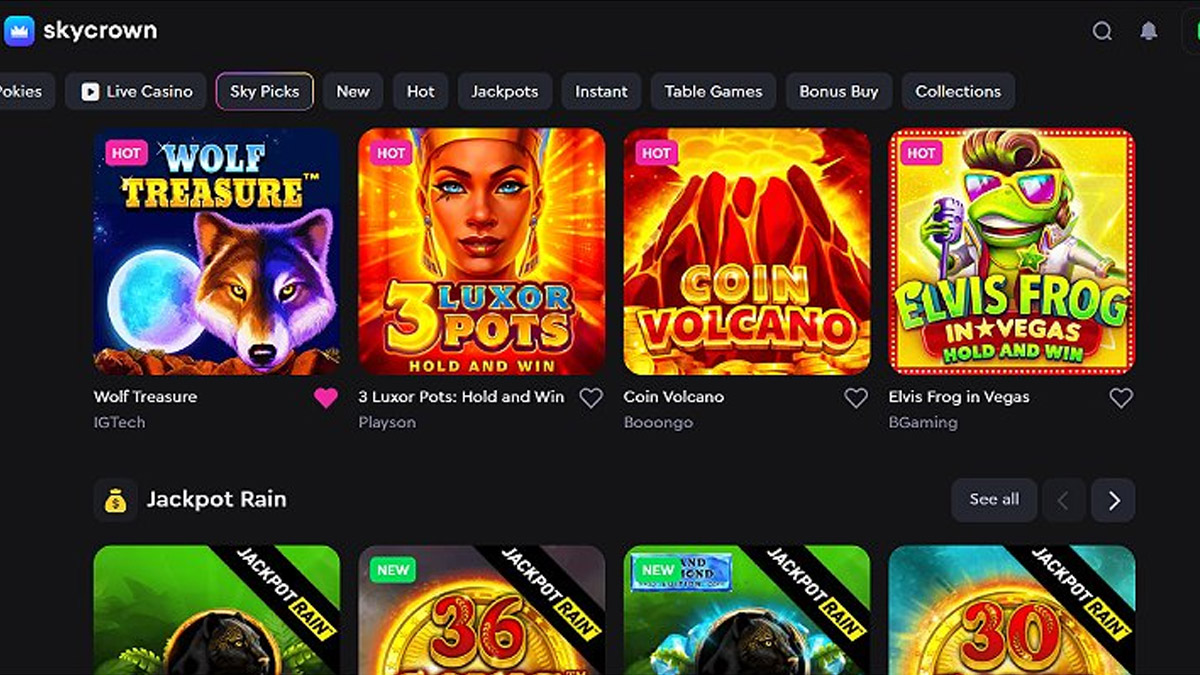
2. Skycrown – Best Australian PayID Pokies Deposit Bonuses
Pros:
- $8,000 welcome bonus with 400 free spins
- 10-minute average payout processing
- Over 6,000 online pokies games
- Easy PayID deposits through great design
- Save your favourite games in a personal collection
Cons:
- Limits on non-crypto payments
- Could feature some more progressive jackpot networks
If you’re in Australia and want to get some great PayID deposit bonuses to play online pokies with, head over to Skycrown. Their welcome offer is one of the best we’ve ever seen, and it’s far from the only offer there.
Pokie Selection: 4.9/5
The total number of online pokies at Skycrown is over 6000, which is a striking figure. It’s one that spans a good mix of different types of games as well, from Megaways to free spins titles.
Not all of these games come from top developers, so you might have to pick out some of your favourite names and sort by these to find the best bits. But if you do that, you’ll find a lot of great jackpot games and more within.
Bonuses & Promotions: 4.95/5
There’s an enormous bonus package worth up to $8,000 and 400 free spins up for grabs for new players at Skycrown. Not only is this one of the largest amounts of bonus cash in Australia, but it’s one of the highest figures of free spins we’ve seen in a single bonus as well.
Despite the fact that there’s such a massive amount of cash up for grabs here, the wagering requirements are actually pretty reasonable, so you won’t have to spend too long worrying about those.
PayID Integration & Other Payment Options: 4.95/5
Skycrown is also one of the fastest online casinos for payouts in Australia. Their average payout processing time is just 10 minutes, so you should get your money back in a short period of time (just a few hours, most of the time) after this.
The maximum amount you can withdraw in one go here is $6,000 for many of the payment methods, too, and that’s a little above average.
It should also be noted that the process of placing a PayID deposit is very straightforward because of some smart design. The Skycrown desktop site and mobile app are really smooth to use, and they look great as well.
3. Casinonic – Best for PayID Mobile Online Pokies in Australia

Pros:
- Tuesday, Wednesday & Friday bonus
- Over 5,000 online pokies games
- Welcome offer worth up to $7,500
- Pokies from Belatra and IGT
- Superb mobile interface
Cons:
- A few low-quality titles
- Some payment options have fees
The best way to keep your bankroll topped up to play more online pokies is with reload offers, and Casinonic has some particularly good examples of these.
Pokie Selection: 4.85/5
We counted a total of over 5,000 online pokies games to play at Casinonic, so this is another strong collection, for sure.
It was particularly impressive for us to see such a wide range of Hold & Win pokies here, including Power Sun 3 x 3 and Diamonds Power 3 x 3.
Again, you won’t find all the best game developers here, so be sure to go to the best ones like IGT and Betsoft. You can easily do this by clicking on their logos at the top of the homepage.
Bonuses & Promotions: 4.9/5
The range of reload bonuses at Casinonic beats most other online casinos in Australia. You can get a 100% deposit match of up to $150 every Tuesday, 200 free spins every Wednesday, and 50% up to $300 on Fridays.
There are further opportunities to get free spins for specific games, a birthday bonus, and more. You’d be hard-pressed to run out of bonus cash or free spins at this site.
But it’s important not to forget the welcome bonus in the first place, as this is well worth grabbing as well. It’s a package worth up to $7,500 plus free spins.
PayID Integration & Other Payment Options: 4.95/5
Using the Casinonic website isn’t the easiest in the world, as the site doesn’t feel as well-designed as one or two of our other top picks. But the good news is that you won’t have to jump through too many hoops to place your PayID deposit.
When it comes to getting paid out, you’re going to have the option of around 10 payment methods, including e-Wallets, transfers to your bank account, and a handful of cryptocurrencies. For most of these methods, payouts are fee-free.
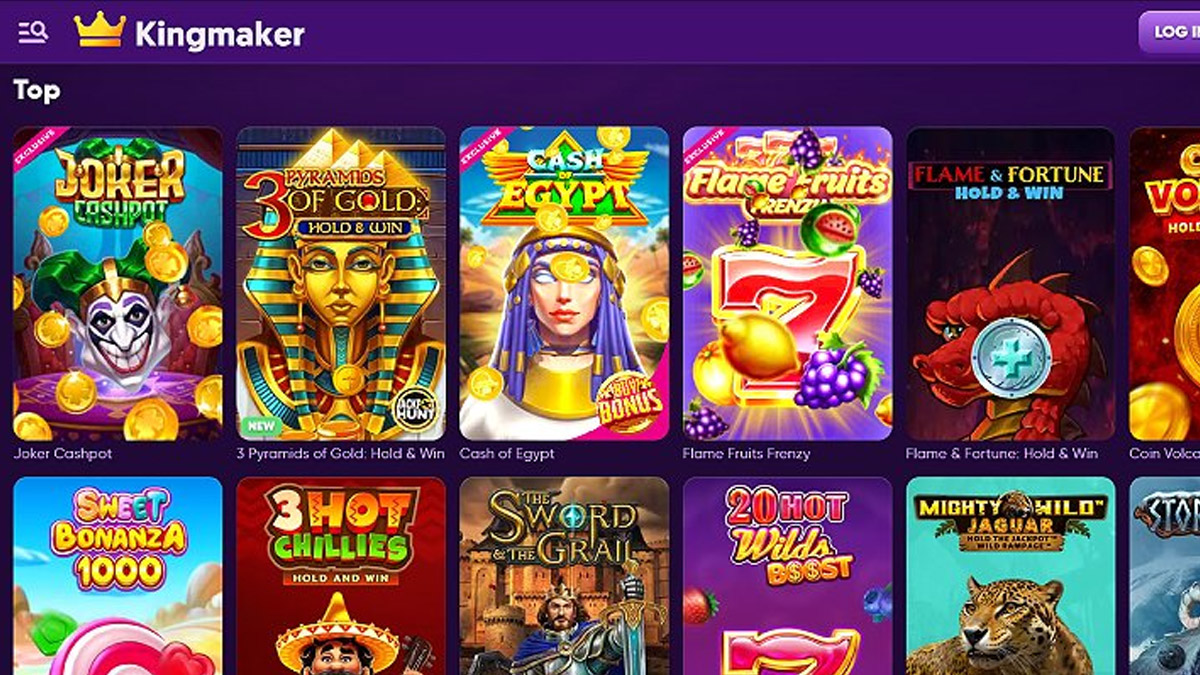
4. Kingmaker – Fastest Payouts of Any AU PayID Pokies Online Casino
Pros:
- Payout processing is automatic
- $2,000 deposit match and 50 spins
- Higher bank transaction limits
- 50 free spins available each week
- Plenty of low-variance pokies
Cons:
- Fewer reload bonuses for pokies
- Not very many progressive jackpots
Fourth place in our rankings of the best places to play PayID online pokies goes to Kingmaker. Here’s why.
Pokie Selection: 4.8/5
Perhaps the best part of the collection of online pokies at Kingmaker is the sheer range of themes available. There are a lot of games here, covering everything from Ancient Egypt through to the jungle.
In fact, the total number of online pokies games at Kingmaker is over 7,000, so you’re not going to be short on choice for any type of game.
When it comes to game mechanics, there are plenty of options as well. You can play lots of high or low variance games, with varying numbers of reels and ways to win. We just would have liked to have seen a few more progressive jackpot online slots.
Bonuses & Promotions: 4.8/5
Kingmaker is currently offering new players a 100% deposit match of up to $2,000, as well as 50 free spins that can be used to have a chance at winning a jackpot of over $1,000,000. Not bad.
The wagering for this offer is going to be 35x, which is pretty much average for a bonus of this size in Australia.
When you’ve used up your bonus, you can come back for 15% cashback of up to $4,500, 50 free spins, plus a handful of other offers for existing customers.
There are a few more PayID casino bonuses to get your hands on here, although there don’t appear to be any specific deposit match reloads. Hopefully, some of these will be added in the future.
PayID Integration & Other Payment Options: 4.9/5
When you want to withdraw winnings at Kingmaker, you shouldn’t have to wait more than a few minutes if you choose the right payment method. They process payouts automatically, which we love to see. You don’t see many instant PayID withdrawal casino sites.
The choice of banking options that you can use for these instant payouts includes Jeton, crypto, and bank transfers. With many of these methods, you can cash out up to $8,800 at a time. That’s a little more than average and will suit higher roller players and jackpot winners.
It’s super easy to place a deposit with PayID when you want to fund your account as well. Kingmaker is one of the best-looking and easiest to use casino sites we’ve ever come across. So, all in all, the banking here is about as good as it gets.
5. MrPacho – Best Aussie Online Pokies PayID Casino for Megaways Games

Pros:
- Dozens of top Megaways games
- $750 welcome bonus plus 200 FS
- Free play pokies available
- Super smooth desktop app
- 50 free spins available every week
Cons:
- Smaller welcome bonus
- Still relatively new
Megaways offer an incredible number of ways to win, as well as all sorts of extra exciting reel mechanics. If you’re new to them, check out some of the best examples at MrPacho.
Pokie Selection: 4.8/5
MrPacho is the top place to play online pokies games with the Megaways feature, with dozens of options available. A few of our favourite Megaways games to play here include Big Bucks Bandits Megaways, Diamond Mine Megaways, and, of course, our top pick, Big Bad Wolf Megaways.
If you haven’t played a Megaways game before, we recommend trying one out for free as a demo so that you can get a feel for it before you play for real money. Fortunately, you can do this with all of the games at MrPacho.
Outside of Megaways, there are still a lot of great pokies to play here. We found plenty of options, spanning all kinds of styles. And many of them come from top-tier developers, such as NetEnt and Microgaming, so we know they’re going to be worth a play.
Bonuses & Promotions: 4.75/5
New players at MrPacho can benefit from another 100% up to $750 deposit match when they first sign up for an account.
The offer also comes with 200 free spins. That’s a much larger amount than you can get at most other Australian online casinos.
Both parts of the bonus need to be wagered 35 times, so even though the bonus is larger than average, the wagering requirements are not.
MrPacho is also offering all players 50 free spins every week, as well as a handful of other bonuses.
PayID Integration & Other Payment Options
It’s particularly easy to place a PayID deposit at MrPacho if you choose to download the desktop app. This is an excellent piece of software that streamlines the banking and gaming experiences.
And when you want to get paid out, you can withdraw instantly to a fair list of methods, including bank transfer and crypto.
>>Get up to $750 and 200 FS [MrPacho]
How We Chose the Best Online Pokies PayID Australia Casinos
Pokie Selection
Having one great pokie is not going to be enough for an online casino to land itself on our list of the best PayID pokies casinos. There should be 1000s of games, covering a wide range of different styles.
Bonuses & Promotions
Hopefully, we’re going to be able to play most of the pokies at each site with a handful of free spins and perhaps some deposit match bonus cash. Most of this will probably come through the welcome offer, but reload bonuses can help out with this sometimes, too.
PayID Integration & Other Payment Options
It’s important that online casinos make it easy for us to place deposits with PayID. Good site design goes a long way to help out with this. There should be plenty of payment methods, like bank transfers, for withdrawals, and the process for achieving these payouts should be fast.
We used similar benchmarks when ranking the best real money online casinos available to Canadian players in this guide.
Bonuses to Use on PayID Pokies in Australia
Let’s take a look at the bonuses you’ll be able to get your hands on when you sign up for the best online casinos for pokies in Australia.
- Neospin: 100% up to $10,000 deposit match with NEO100
- Skycrown: Up to $8,000 in bonus funds and 400 free spins
- Casinonic: Up to $7,500 deposit match package
- Kingmaker: 100% up to $2,000 deposit match and 50 free spins
- MrPacho: 100% up to $750 and 200 free spins
How to Play Australian Online Pokies with PayID
Allow us to walk you through the process of signing up for the best online casinos for pokies down under.
Just carry out these four steps to sign up for our overall top pick, Neospin. Although if you want to try another one of our selections first, you should discover a similar process.
1. Create Your Online Casino Account
- Go to the Neospin homepage
- Locate the registration form
- Agree to the terms and create a password
2. Verify the Account
- Click the link sent out via email
- Confirm your SMS
- Complete KYC if you’re using Fiat
3. Grab the Deposit Bonus
- Choose an amount in the cashier
- Choose a payment method and enter the promo code
- Follow the steps to complete the payment
4. Play Online Pokies for Real Money
- Play some pokies and other casino games
- Wager your bonus by following the terms
- Proceed to cash out
Types of Online Pokies at PayID Australian Casinos
Believe it or not, there are actually dozens of different types of pokies. They’re one of the most diverse forms of online casino games in the world. Here are some common types that you can look out for.
Three-reel Pokies
These are the classic ways to play online pokies games. They resemble the vintage mechanical pokies of old, but you might see them with more modern themes and designs. These games are some of the easiest to play, so they can work out well for those who are new to the world of pokies.
Five-reel Pokies
Most online PayID pokies in Australia these days will have five reels instead of the classic, mechanical three. This means more paylines and a more dynamic experience. Around 80% of all online pokies games will offer this type of setup.
Multi-payline and Multi-reel Pokies
To really ramp up the dynamic experience of playing online pokies, check out games with further reels and paylines, such as Megaways options, which offer up to 117,649 ways to win in most games. These can be super fun, but highly volatile.
3D Pokies
Some video pokies go even further and are designed with 3D graphics. A few years ago, many of these looked a little gimmicky, but as time has gone by and both technology and design have improved, they can actually be quite absorbing and more immersive to play.
Progressive Pokies
The idea of a progressive jackpot pokie is that a small amount of every single stake on it goes into a pot. The value of that pot will then accrue over time, until eventually and randomly, it all gets paid out to one player. That could be to the value of $1,000,000s in some cases.
Branded Pokies
You might find it more fun to play pokies with recognisable brands. Many movies, TV shows or famous bands have online pokies branded after them. Just be aware that some of these pokies have lower RTPs or max wins than non-branded games.
Top Tips for Using PayID to Play Online Pokies in Australia
Ready to find out a little more about how to play instant PayID pokies in Australia for real money? Here are five top tips that you should certainly bear in mind before you get started.
- Choose a Trusted Australian Casino Online: Only sign up for the safest online casinos in Australia, such as the top 10 we have picked out for you today. You could be at risk of unfair treatment if you skip this.
- Confirm Each Casino’s PayID Carefully: Make sure to look up what the PayID code is for your online casino and copy it carefully. Otherwise, you might end up losing your deposit funds.
- Stick to Your Bankroll: Never spend more than your disposable income. If you feel like you’re trying to chase your losses, then it’s time to stop and come back another day. Use deposit limits if you need some further help with this.
- Opt for the Right Withdrawal Method: Make sure to check out which payment methods you can use to cash out from an online casino before you sign up. Choose the payment method that suits your needs the best, whether it be speed or just where you hold your money.
- Make Use of Welcome Offers: Welcome bonuses are your friend if you want to get more time playing pokies, as they boost your bankroll in order to help you do so. It’s worth getting your hands on a few of these while you work out which pokies sites or games to play.
Best Online Pokies Australia PayID – FAQs
What’s the Best PayID Online Casino for Pokies in Australia?
Neospin is the number one online casino to play pokies with PayID right now. It’s super easy to set PayID up, and it has the best pokies games and offers.
Can I Use PayID to Play Pokies at Online Casinos in Australia?
Yes! You can use PayID to play pokies at many online casinos in Australia. You’ll just need to ensure that you reach the minimum deposit for each site.
How Long Do PayID Withdrawals Take at Australian Online Casinos?
You can use PayID to place your deposit and then get your casino winnings back into your bank account in just a few hours at many sites.
However, it should be noted that a lot of Australian casinos will impose a pending period on payouts, and this might require you to wait a few days.
Is Online Gambling With PayID in Australia Safe?
Yes, PayID is super safe to use. Just make sure that you sign up for a legit online casino to use it in the first place.
Which PayID Deposit Bonuses Can I Get to Play Australian Pokies?
There are loads of bonuses that you can get your hands on with PayID. All of our top 10 picks have one for new players at least.
Are Online Pokies in Australia Rigged?
No, you can’t rig online pokies in Australia at licensed and reputable casinos. All players will have a fair chance to win, as long as the game and the casino have been audited for fairness.
What Is the Best Online Pokie Game in Australia?
Ultimate Dragon Inferno Hold & Win is the best online pokie game in Australia, and you can play it at Neospin right now.
Comparing the 5 Best PayID Online Pokies Casinos in Australia
It’s nearly time to finish up here. But before we do that, let’s review. Here are the best online casinos for pokies in Australia, one final time, and a reminder of what you can get in the way of bonus cash and free spins when you sign up for each of them.
Neospin: There simply isn’t a better place to play online pokies in the whole of Australia. And when you sign up here, you can get a 100% up to $10,000 deposit match by using the promo code NEO100 on your first payment.
Skycrown: This is the best online pokies casino for bonuses. The new customer offer here is going to be worth up to a massive $8,000, and you’ll get 400 free spins.
Casinonic: We picked this Aussie online casino out as the best option for mobile pokies and reload bonuses, with plenty of bonus cash and free spins available to all players to play pokies. Don’t forget to get up to $7,500 for the welcome bonus first of all, though.
Kingmaker: The instant payouts at Kingmaker, the wide range of options for that, and the ease of PayID integration are some of the standout factors of this site. The new customer offer here is a 100% up to $2,000 deposit match and 50 free spins.
MrPacho: Check out this online casino in Australia if you want to find the best Megaways pokies. Also, be sure to get the welcome bonus, which is worth 100% up to $750 and 200 free spins.
Ready to Play the Best PayID Online Pokies in Australia?
Playing online PayID pokies in Australia is a heck of an experience. The quality of the online casino sites offering these games means that we’re treated to some immersive designs, excellent bonuses, and pokie selections packed to the brim.
Which Australian online casinos do these things the best? That would be Neospin. There isn’t a better pokie collection in the country, and you can access it with one of the best welcome offers going.
Check it out, but don’t miss out on the rest of our top picks either. There are a lot of quality pokies to be discovered throughout all 10 of them, after all. Good luck, play responsibly, and happy spinning.
DISCLAIMER: The information on this site is for entertainment purposes only. Online gambling comes with risks. There’s no guarantee of financial gain, so you should only gamble with what you can afford to lose.
While gambling can be fun, it can also be addictive. If you or anyone you know suffers from a gambling addiction problem, we recommend that you call the National Gambling Helpline at 1800 858 858 to speak with an advisor. Please remember that our guides and all gambling sites are only for people who are 18+. Also, check your local laws to find out if online gambling is legal in your area.
For free online gambling addiction resources, visit these organizations:
(All articles published here are Syndicated/Partnered/Sponsored feed, LatestLY Staff may not have modified or edited the content body. The views and facts appearing in the articles do not reflect the opinions of LatestLY, also LatestLY does not assume any responsibility or liability for the same.)